EP2519010A2 - Verfahren zur Verarbeitung von Videoeingaben durch Erkennung, ob ein Bild einer Ansicht zu einer bestimmten Präsentationszeit korrekt mit einem anderen Bild einer anderen Ansicht gepaart ist sowie zugehörige Vorrichtung dafür - Google Patents
Verfahren zur Verarbeitung von Videoeingaben durch Erkennung, ob ein Bild einer Ansicht zu einer bestimmten Präsentationszeit korrekt mit einem anderen Bild einer anderen Ansicht gepaart ist sowie zugehörige Vorrichtung dafür Download PDFInfo
- Publication number
- EP2519010A2 EP2519010A2 EP11004616A EP11004616A EP2519010A2 EP 2519010 A2 EP2519010 A2 EP 2519010A2 EP 11004616 A EP11004616 A EP 11004616A EP 11004616 A EP11004616 A EP 11004616A EP 2519010 A2 EP2519010 A2 EP 2519010A2
- Authority
- EP
- European Patent Office
- Prior art keywords
- picture
- video input
- view
- presentation time
- specific
- Prior art date
- Legal status (The legal status is an assumption and is not a legal conclusion. Google has not performed a legal analysis and makes no representation as to the accuracy of the status listed.)
- Ceased
Links
- 238000012545 processing Methods 0.000 title claims abstract description 111
- 238000000034 method Methods 0.000 title claims abstract description 38
- 238000012937 correction Methods 0.000 description 18
- 101000821827 Homo sapiens Sodium/nucleoside cotransporter 2 Proteins 0.000 description 11
- 102100021541 Sodium/nucleoside cotransporter 2 Human genes 0.000 description 11
- 239000013598 vector Substances 0.000 description 11
- 238000001514 detection method Methods 0.000 description 10
- 230000001360 synchronised effect Effects 0.000 description 10
- 101000685663 Homo sapiens Sodium/nucleoside cotransporter 1 Proteins 0.000 description 9
- 102100023116 Sodium/nucleoside cotransporter 1 Human genes 0.000 description 9
- 238000010586 diagram Methods 0.000 description 8
- 238000013461 design Methods 0.000 description 7
- 238000006243 chemical reaction Methods 0.000 description 6
- 238000012856 packing Methods 0.000 description 5
- 230000000007 visual effect Effects 0.000 description 3
- 238000011161 development Methods 0.000 description 2
- 230000018109 developmental process Effects 0.000 description 2
- 230000001419 dependent effect Effects 0.000 description 1
- 230000003287 optical effect Effects 0.000 description 1
- GUGNSJAORJLKGP-UHFFFAOYSA-K sodium 8-methoxypyrene-1,3,6-trisulfonate Chemical compound [Na+].[Na+].[Na+].C1=C2C(OC)=CC(S([O-])(=O)=O)=C(C=C3)C2=C2C3=C(S([O-])(=O)=O)C=C(S([O-])(=O)=O)C2=C1 GUGNSJAORJLKGP-UHFFFAOYSA-K 0.000 description 1
Images



Classifications
-
- H—ELECTRICITY
- H04—ELECTRIC COMMUNICATION TECHNIQUE
- H04N—PICTORIAL COMMUNICATION, e.g. TELEVISION
- H04N13/00—Stereoscopic video systems; Multi-view video systems; Details thereof
- H04N13/10—Processing, recording or transmission of stereoscopic or multi-view image signals
- H04N13/106—Processing image signals
- H04N13/167—Synchronising or controlling image signals
-
- H—ELECTRICITY
- H04—ELECTRIC COMMUNICATION TECHNIQUE
- H04N—PICTORIAL COMMUNICATION, e.g. TELEVISION
- H04N13/00—Stereoscopic video systems; Multi-view video systems; Details thereof
- H04N13/10—Processing, recording or transmission of stereoscopic or multi-view image signals
- H04N13/106—Processing image signals
- H04N13/139—Format conversion, e.g. of frame-rate or size
-
- H—ELECTRICITY
- H04—ELECTRIC COMMUNICATION TECHNIQUE
- H04N—PICTORIAL COMMUNICATION, e.g. TELEVISION
- H04N13/00—Stereoscopic video systems; Multi-view video systems; Details thereof
- H04N13/10—Processing, recording or transmission of stereoscopic or multi-view image signals
- H04N13/106—Processing image signals
- H04N13/161—Encoding, multiplexing or demultiplexing different image signal components
-
- H—ELECTRICITY
- H04—ELECTRIC COMMUNICATION TECHNIQUE
- H04N—PICTORIAL COMMUNICATION, e.g. TELEVISION
- H04N13/00—Stereoscopic video systems; Multi-view video systems; Details thereof
- H04N13/10—Processing, recording or transmission of stereoscopic or multi-view image signals
- H04N13/194—Transmission of image signals
-
- H—ELECTRICITY
- H04—ELECTRIC COMMUNICATION TECHNIQUE
- H04N—PICTORIAL COMMUNICATION, e.g. TELEVISION
- H04N19/00—Methods or arrangements for coding, decoding, compressing or decompressing digital video signals
- H04N19/50—Methods or arrangements for coding, decoding, compressing or decompressing digital video signals using predictive coding
- H04N19/503—Methods or arrangements for coding, decoding, compressing or decompressing digital video signals using predictive coding involving temporal prediction
- H04N19/51—Motion estimation or motion compensation
-
- H—ELECTRICITY
- H04—ELECTRIC COMMUNICATION TECHNIQUE
- H04N—PICTORIAL COMMUNICATION, e.g. TELEVISION
- H04N19/00—Methods or arrangements for coding, decoding, compressing or decompressing digital video signals
- H04N19/50—Methods or arrangements for coding, decoding, compressing or decompressing digital video signals using predictive coding
- H04N19/597—Methods or arrangements for coding, decoding, compressing or decompressing digital video signals using predictive coding specially adapted for multi-view video sequence encoding
Definitions
- the disclosed embodiments of the present invention relate to a method of processing a video input by detecting if a first picture of one view is correctly paired with another picture of another view for specific presentation time and related processing apparatus thereof according to the pre-characterizing clauses of claims 1 and 10.
- the 3D video content may be encoded and transmitted by one of a variety of formats.
- a side-by-side format or a top-and-bottom format is employed, one encoded video frame would include a left-eye picture and a right-eye picture arranged therein.
- the left-eye pictures and right-eye pictures would be produced in pairs in the time domain before displayed.
- the left-eye picture and the right-eye picture are arranged in different encoded video frames.
- a multi-track storage scheme may be used for storing encoded video frames having the MVC format. Therefore, encoded video frames which transmit left-eye pictures are stored in one track, and encoded video frames which transmit right-eye pictures are stored in another track.
- decoding of the encoded video frames having the MVC format it is not guaranteed that the left-eye pictures and right-eye pictures would be produced in pairs in the time domain before displayed.
- one left-eye picture included in a decoder output may not be correctly paired with one right-eye picture included in the decoder output for following playback, and vice versa.
- one left-eye picture and one right-eye picture generated in a pair due to decoding of the encoded video frames may have different presentation time stamps (i.e., different playback time points).
- one left-eye picture included in the decoder output is not paired with any right-eye picture, and vice versa. Therefore, at one particular presentation time, only one of the left-eye picture and the right-eye picture is available in the decoder output.
- the present invention aims at providing a method of processing a video input by detecting if a first picture of one view is correctly paired with another picture of another view for specific presentation time and related processing apparatus thereof, to solve the above-mentioned problem.
- the claimed method of processing a video input which transmits pictures of a first view and pictures of a second view includes: checking the video input to detect if a first picture of one of the first and second views is correctly paired with a second picture of the other of the first and second views for a specific presentation time, and accordingly generating a detecting result; and referring to the detecting result for selectively performing a predetermined processing operation upon the video input.
- the claimed processing apparatus of processing a video input which transmits pictures of a first view and pictures of a second view includes a checking circuit and a processing circuit.
- the checking circuit is arranged for checking the video input to detect if a first picture of one of the first and second views is correctly paired with a second picture of the other of the first and second views for a specific presentation time, and accordingly generating a detecting result.
- the processing circuit is coupled to the checking circuit and arranged for referring to the detecting result for selectively performing a predetermined processing operation upon the video input.
- the main conception of the present invention is to detect the pairing errors existing in a video input (e.g., a decoder output) that transmits pictures of different views.
- a video input e.g., a decoder output
- the video input may be properly processed/adjusted to generate a video output which is capable of meeting the requirement of a particular application.
- the pairing errors may be removed from the video input, and a corresponding video output generated from the video input would be properly displayed for providing the user with improved 3D visual experience. Further details are described as below.
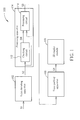
- FIG. 1 is a block diagram illustrating a three-dimensional (3D) video playback system according to an exemplary embodiment of the present invention.
- the 3D video playback system 100 includes a video decoding apparatus 102, a processing apparatus 104, a video packing apparatus 106, and a 3D display module (e.g., a display apparatus) 108.
- the video decoding apparatus 102 and the processing apparatus 104 may be disposed in a same device.
- the video decoding apparatus 102 and the processing apparatus 104 may be disposed in different devices, and video decoding apparatus 102 may communicate with the processing apparatus 104 via a connection interface such as a high-definition multimedia interface (HDMI).
- HDMI high-definition multimedia interface
- the video decoding apparatus 102 is arranged for decoding an encoded video bitstream S1 and accordingly generating a video input S2 to the following processing apparatus 104.
- the encoded video bitstream S1 may transmit encoded video frames having the side-by-side format, the top-and-bottom format, or the MVC format. Therefore, the video decoding apparatus 102 may include one or more video decoders according to actual design requirement/consideration.
- the video input S2 is a decoder output which includes a first video stream transmitting pictures of a first view and a second video stream transmitting pictures of a second view.
- one of the first view and the second view corresponds to the left-eye vision
- the other of the first view and the second view corresponds to the right-eye vision.
- this is for illustrative purposes only, and is not meant to be a limitation of the present invention.
- the conception of the present invention may be applied to any application which requires pictures of at least two different views to be properly paired with each other. These alternative designs all fall within the scope of the present invention.
- the processing apparatus 104 is coupled between the preceding video decoding apparatus 102 and the following video packing apparatus 106, and is arranged for generating a video output S3 according to the video input S2.
- the processing apparatus 104 includes, but is not limited to, a checking circuit 112 and a processing circuit 114.
- the checking circuit 112 is arranged for checking the video input S2 to detect if a first picture of one of the first and second views is correctly paired with a second picture of the other of the first and second views for specific presentation time, and accordingly generating a detecting result DR.
- the processing circuit 114 is coupled to the checking circuit 112 and arranged to refer to the detecting result DR for selectively performing a predetermined processing operation upon the video input S2.
- the checking circuit 112 is implemented to detect any pairing error existing in the video input S2 that transmits pictures of different views.
- the video input S2 may be properly processed/adjusted by the processing circuit 114. Further details will be described later.
- the video output S3 would be the same as the video output S2 when the video input S2 has no pairing error.
- the video packing apparatus 106 is arranged for receiving the video output S3 generated from the processing apparatus 104, and preparing the video data which is compatible with the 3D display module 108. That is, the video packing apparatus 106 is implemented for generating the video data with a data format supported by the 3D display module 108.
- the 3D display module 108 is arranged for presenting the 3D video to the viewer according to the video data.
- the checking circuit 112 may employ one of a plurality of feasible detection schemes. For example, when a first detection scheme is employed, the checking circuit 112 detects if a first picture of one of the first and second views is correctly paired with a second picture of the other of the first and second views for specific presentation time by referring to a presentation time stamp (PTS) value of the first picture for determining whether the video input includes the second picture that is correctly paired with the first picture for the specific presentation time due to having a PTS value identical to the PTS value of the first picture.
- PTS presentation time stamp
- the video input S2 includes successively transmitted pictures P 11 -P 13 and P 15 -P 111 of one view, and also includes successively transmitted pictures P 21 -P 24 , P 26 -P 27 , P 29 , and P 210 -P 211 of another view.
- the pictures (e.g., left-eye pictures) P 11 -P 13 and P 15 -P 111 have PTS values equal to presentation time PTS 1 -PTS 3 and PTS 5 -PTS 11 , respectively, and the pictures (e.g., right-eye pictures) P 21 -P 24 , P 26 -P 27 , P 29 , and P 210 -P 211 have PTS values equal to presentation time PTS 1 -PTS 4 , PTS 6 -PTS 7 , PTS 9 , and PTS 10 -PTS 11 , respectively.
- the pictures P 11 and P 21 are correctly paired with each other for the presentation time PTS 1
- the pictures P 12 and P 22 are correctly paired with each other for the presentation time PTS 2
- the pictures P 17 and P 27 are correctly paired with each other for the presentation time PTS 7
- the pictures P 110 and P 210 are correctly paired with each other for the presentation time PTS 10
- the pictures P 111 and P 211 are correctly paired with each other for the presentation time PTS 11 .
- pairing errors PE1-PE6 there are several pairing errors PE1-PE6 existing in the video input S2, and would be identified by the checking circuit 112.
- the pairing errors PE1-PE4 may be found under a condition where each of the first video bitstream including pictures P 11 -P 13 and P 15 -P 19 and the second video bitstream including pictures P 21 -P 24 , P 26 -P 27 , and P 29 is processed under an audio-video synchronization mode
- the pairing errors PE5-PE6 may be found under another condition where at least one of the first video bitstream and the second video bitstream is not processed under the audio-video synchronization mode.
- the audio-video synchronization operation indicates that the playback of the first video bitstream is not synchronized with the playback of the audio bitstream (not shown) at the presentation time PTS 3
- the audio-video synchronization operation indicates that the playback of the second video bitstream is synchronized with the playback of the audio bitstream at the presentation time PTS 3 .
- the checking circuit 112 Based on the information given from the audio-video synchronization operation which may be performed by the checking circuit 112 or other circuit, the checking circuit 112 detects that the picture P 23 is not correctly paired with a picture of a different view for the presentation time PTS 3 . Thus, the pairing error PE1 is identified by the checking circuit 112.
- the PTS value of the picture P 13 indicates the presentation time PTS 3 which is prior to the current presentation time PTS 4
- the PTS value of the picture P 23 indicates the presentation time PTS 4 which is identical to the current presentation time PTS 4 . Therefore, the audio-video synchronization operation indicates that the picture P 13 should be skipped/dropped, implying that the playback of the first video bitstream is not synchronized with the playback of the audio bitstream at the presentation time PTS 4 . However, the audio-video synchronization operation indicates that the playback of the second video bitstream is synchronized with the playback of the audio bitstream at the presentation time PTS 4 . Based on the information given from the audio-video synchronization operation, the checking circuit 112 detects that the picture P 24 is not correctly paired with the picture P 13 for the presentation time PTS 4 . Thus, the pairing error PE2 is identified by the checking circuit 112.
- the PTS value of the picture P 26 indicates the presentation time PTS 6 which is later than the current presentation time PTS 5
- the PTS value of the picture P 15 indicates the presentation time PTS 5 which is identical to the current presentation time PTS 5 . Therefore, the audio-video synchronization operation indicates that the picture P 26 should be repeated, implying that the playback of the second video bitstream is not synchronized with the playback of the audio bitstream at the presentation time PTS 5 .
- the audio-video synchronization operation indicates that the playback of the first video bitstream is synchronized with the playback of the audio bitstream at the presentation time PTS 5 .
- the checking circuit 112 Based on the information given from the audio-video synchronization operation, the checking circuit 112 detects that the picture P 15 is not correctly paired with the picture P 26 for the presentation time PTS 5 . Thus, the pairing error PE3 is identified by the checking circuit 112.
- the audio-video synchronization operation indicates that the playback of the second video bitstream is not synchronized with the playback of the audio bitstream at the presentation time PTS 6 ; however, the audio-video synchronization operation indicates that the playback of the first video bitstream is synchronized with the playback of the audio bitstream at the presentation time PTS 6 .
- the checking circuit 112 Based on the information given from the audio-video synchronization operation, the checking circuit 112 detects that the picture P 16 is not correctly paired with a picture of a different view for the presentation time PTS 6 . Thus, the pairing error PE4 is identified by the checking circuit 112.
- the audio-video synchronization operation indicates that the playback of the second video bitstream is synchronized with the playback of the audio bitstream at the presentation time PTS 6 .
- the audio-video synchronization operation indicates that the playback of the first video bitstream is also synchronized with the playback of the audio bitstream at the presentation time PTS 6 .
- the checking circuit 112 does not find any pairing error (e.g., the aforementioned pairing error PE4) at the current presentation time PTS 6 .
- the checking circuit 112 may still refer to the PTS value of each picture to identify the pairing error. For example, the PTS value of the picture P 17 of one view is identical to PTS value of the picture P 27 of another view. The checking circuit 112 therefore determines that the pictures P 17 and P 27 are correctly paired with each other for the presentation time PTS 7 .
- the PTS value of the picture P 29 is different from the PTS value of the picture P 18 . Therefore, the checking circuit 112 determines that the pictures P 18 and P 29 are not correctly paired with each other for the presentation time PTS 8 , and identifies the pairing error PE5 accordingly. Moreover, due to the encoding error at the encoder side and/or the decoding error at the decoder side, a picture which should immediately follow the picture P 29 is not correctly produced in the second video bitstream of the video input S2.
- the checking circuit 112 determines that the picture P 19 is not correctly paired with a picture of a different view for the presentation time PTS 9 , and identifies the pairing error PE6 accordingly.
- the checking circuit 112 which employs the first detection scheme is capable of identifying the pairing error.
- the checking circuit 112 which employs the first detection scheme is capable of identifying different types of pairing errors existing in the video input S2 by checking PTS values of the pictures.
- the checking circuit 112 may employ a second detection scheme and therefore perform a content comparison upon a first picture and a second picture to determine whether the first picture and the second picture are correctly paired with each other for specific presentation time.
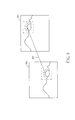
- FIG. 3 is a diagram illustrating the operation of the checking circuit 102 which employs the second detection scheme.
- the checking circuit 102 performs a motion estimation between the first picture (e.g., one of a left-eye picture and a right-eye picture) 302 and the second picture (e.g., the other of the left-eye picture and the right-eye picture) 304, and accordingly generates a motion estimation result (e.g., at least one estimated motion vector MV), and determines whether the first picture 302 and the second picture 304 are paired with each other for the specific presentation time according to the motion estimation result.
- a motion estimation result e.g., at least one estimated motion vector MV
- the checking circuit 112 determines that the first picture 302 and the second picture 304 are not correctly paired with each other for the specific presentation time.
- the checking circuit 112 may find more than one motion vector between the first picture 302 and the second picture 304 and then judges whether the first picture 302 and the second picture 304 are correctly paired with each other according to the found motion vectors.
- the checking circuit 112 determines that the first picture 302 and the second picture 304 are not correctly paired with each other for the specific presentation time when at least one of the found motion vectors has a motion vector component in a vertical direction that is larger than the predetermined threshold value.
- FIG. 4 is a diagram illustrating the video output S3 generated from the processing apparatus 104 according to an exemplary embodiment of the present invention.
- the detecting result DR generated from the checking circuit 112 indicates that the picture P 23 of one view is not correctly paired with a picture of another view for the presentation time PTS 3 .
- the processing circuit 114 is operated in an auto-correction mode.
- the processing circuit 114 therefore searches the video input S2 for a specific picture (e.g., the picture P 13 ) that is capable of being paired with the picture P 23 , and transmits both of the picture P 23 and the specific picture (e.g., the picture P 13 ) for the presentation time PTS 3 , as shown in FIG. 4 .
- a specific picture e.g., the picture P 13
- the specific picture e.g., the picture P 13
- the processing circuit 114 skips/drops the existing picture P 23 and repeats previous pictures of different views that are correctly paired with each other. More specifically, as the video input S2 does not transmit a picture of a different view while transmitting the picture P 23 , the processing circuit 114 replaces the picture P 23 by one of the previous pictures P 12 and P 22 .
- the detecting result DR generated from the checking circuit 112 indicates that the picture P 24 is not correctly paired with the picture P 13 for the presentation time PTS 4 .
- the processing circuit 114 therefore searches the video input S2 for a specific picture that is capable of being paired with the picture P 24 .
- searching the video input S2 for a specific picture with a PTS value equal to the presentation time PTS 4 fails to successfully find the desired specific picture, the processing circuit 114 skips/drops both of the pictures P 13 and P 24 , and repeats previous pictures of different views that are correctly paired with each other.
- the processing circuit 114 replaces both of the pictures P 13 and P 24 by previous pictures P 13 and P 23 , respectively.
- the processing circuit 114 further updates a first count value CNT1 which is used to record the number of successive times one picture of one view is not correctly paired with another picture of another view, and checks if the updated first count value CNT1 is greater than a first predetermined threshold value THRD1.
- the first predetermined threshold value THRD1 may be 1 in one exemplary implementation.
- the first predetermined threshold value THRD1 may be adjusted according to actual design requirement/consideration.
- the first count value CNT1 updated by the processing circuit 114 would be 1 due to the fact that the pairing error PE1 is the first pairing error found in the video input S2.
- the processing circuit 114 is operated in a first correction mode to repeat previous pictures P 13 and P 23 for correcting the pairing error PE1.
- the detecting result DR generated from the checking circuit 112 indicates that the picture P 15 is not correctly paired with the picture P 26 for the presentation time PTS 5 .
- the processing circuit 114 updates the first count value CNT1 in response to the successive pairing errors found by the checking circuit 112. Therefore, the updated first count value CNT1 becomes 2, and is greater than the predetermined threshold value THRD1.
- the processing circuit 114 is operated in a second correction mode to correct the pairing error PE2 by creating a picture to be paired with a selected picture of the pictures P 15 and P 26 and skipping/dropping an unselected picture of the pictures P 15 and P 26 .
- the selected picture belongs to one of the first video bitstream and the second video bitstream that has less contribution to identified pairing errors in the video input S2.
- the selected picture would be the picture P 26 . Therefore, the picture P 15 will be replaced by the created picture P 15 '.
- the detecting result DR generated from the checking circuit 112 indicates that the picture P 16 is not correctly paired with a picture of a different view for the presentation time PTS 6 .
- the processing circuit 114 corrects the pairing error PE4 by generating a duplicate of the existing picture P 16 as the picture P 16 ' to be paired with the existing picture P 16 , or performing a 2D-to-3D conversion upon the existing picture P 16 to generate the picture P 16 ' to be paired with the existing picture P 16 .
- the processing circuit 114 leaves the auto-correction mode, and enters the first correction mode for correcting the detected pairing error by repeating previous pictures that are correctly paired with each other. However, after the updated first error count CNT1 is greater than the first predetermined threshold value THRD1, the processing circuit 114 leaves the first correction mode, and enters the second correction mode for correcting the detected pairing error by creating a picture through picture duplication or 2D-to-3D conversion.
- the processing circuit 114 when the processing circuit 114 is operated in the second correction mode, the processing circuit 114 further updates a second count value CNT2 which is used to record the number of successive times one picture of one view is correctly paired with another picture of another view.
- the processing circuit 114 does not stopping creating a picture to be paired with an existing picture for correcting a detected pairing error until the second count value CNT2 is greater than a second predetermined threshold value THRD2.
- the predetermined threshold value THRD2 may be 1 in one exemplary implementation. Please note that the predetermined threshold value THRD2 may be adjusted according to actual design requirement/consideration.
- the correctly paired pictures found in the video input S2 will not be directly outputted as part of the video output S3 unless the second count value CNT2 is greater than the second predetermined threshold value THRD2.
- the frequent toggling between the normal 3D mode and the pairing error correction mode i.e., the aforementioned auto-correction mode or second correction mode
- the pairing error correction mode i.e., the aforementioned auto-correction mode or second correction mode
- the second count value CNT2 is updated to be 1 due to the fact that the pair of pictures P 17 and P 27 is the first correct pair found after the pairing error PE4 is detected.
- the picture P 17 ' is created to be paired with the existing picture P 17 , as shown in FIG. 4 . Additional pairing errors PE 5 and PE6 are successively detected after the correctly paired pictures P 17 and P 27 are detected.
- the second count value CNT2 will not exceed the second predetermined threshold value THRD2.
- the second count value CNT2 is set by 1 due to the fact that the pair of pictures P 110 and P 210 is the first correct pair found after the pairing error PE6 is identified.
- the picture P 110 ' is created to be paired with the existing picture P 110 , as shown in FIG. 4 .
- pictures P 111 and P 211 are correctly paired with each other for the presentation time PTS 11 .
- the second count value CNT2 is updated to be 2 which is greater than the second predetermined threshold value THRD2. Therefore, the processing circuit 114 leaves the second correction mode, and enters the normal 3D mode for outputting the correct pair of pictures P 110 and P 210 as part of the video output S3.
- FIG. 5 is a flowchart illustrating a method of processing a video input that includes a first video bitstream transmitting pictures of a first view and a second video bitstream transmitting pictures of a second view according to an exemplary embodiment of the present invention. Provided that the result is substantially the same, the steps are not required to be executed in the exact order shown in FIG. 5 .
- the exemplary method may be employed by the exemplary processing apparatus 104 shown in FIG. 1 , and may be briefly summarized as below.
- Steps 502 and 504 may be performed by the checking circuit 112 shown in FIG. 1
- steps 506-528 may be performed by the processing circuit 114 shown in FIG. 1 .
- steps 502 and 504 may be performed by the checking circuit 112 shown in FIG. 1
- steps 506-528 may be performed by the processing circuit 114 shown in FIG. 1 .
- the video output S3 is generated for following 3D video playback.
- the output of the processing apparatus 104 is not limited to such an application only.
- the video output S3 generated from the processing apparatus 104 may be recorded in a storage medium (e.g., a memory device, an optical disc, or a hard disk) rather than transmitted to the video packing apparatus 106.
Landscapes
- Engineering & Computer Science (AREA)
- Multimedia (AREA)
- Signal Processing (AREA)
- Testing, Inspecting, Measuring Of Stereoscopic Televisions And Televisions (AREA)
- Closed-Circuit Television Systems (AREA)
- Television Signal Processing For Recording (AREA)
- Two-Way Televisions, Distribution Of Moving Picture Or The Like (AREA)
- Compression Or Coding Systems Of Tv Signals (AREA)
Applications Claiming Priority (1)
| Application Number | Priority Date | Filing Date | Title |
|---|---|---|---|
| US13/094,803 US8643699B2 (en) | 2011-04-26 | 2011-04-26 | Method for processing video input by detecting if picture of one view is correctly paired with another picture of another view for specific presentation time and related processing apparatus thereof |
Publications (2)
| Publication Number | Publication Date |
|---|---|
| EP2519010A2 true EP2519010A2 (de) | 2012-10-31 |
| EP2519010A3 EP2519010A3 (de) | 2013-09-04 |
Family
ID=45622736
Family Applications (1)
| Application Number | Title | Priority Date | Filing Date |
|---|---|---|---|
| EP11004616.6A Ceased EP2519010A3 (de) | 2011-04-26 | 2011-06-07 | Verfahren zur Verarbeitung von Videoeingaben durch Erkennung, ob ein Bild einer Ansicht zu einer bestimmten Präsentationszeit korrekt mit einem anderen Bild einer anderen Ansicht gepaart ist sowie zugehörige Vorrichtung dafür |
Country Status (4)
| Country | Link |
|---|---|
| US (2) | US8643699B2 (de) |
| EP (1) | EP2519010A3 (de) |
| CN (1) | CN102761762B (de) |
| TW (1) | TWI489854B (de) |
Families Citing this family (3)
| Publication number | Priority date | Publication date | Assignee | Title |
|---|---|---|---|---|
| JP2008106185A (ja) * | 2006-10-27 | 2008-05-08 | Shin Etsu Chem Co Ltd | 熱伝導性シリコーン組成物の接着方法、熱伝導性シリコーン組成物接着用プライマー及び熱伝導性シリコーン組成物の接着複合体の製造方法 |
| KR101723235B1 (ko) * | 2010-10-04 | 2017-04-04 | 삼성전자주식회사 | 입체 영상의 입체감을 감쇠하기 위한 장치 및 방법 |
| TWI499292B (zh) * | 2012-02-21 | 2015-09-01 | Mstar Semiconductor Inc | 影像處理系統及影像處理方法 |
Citations (1)
| Publication number | Priority date | Publication date | Assignee | Title |
|---|---|---|---|---|
| EP0838959A2 (de) * | 1996-10-24 | 1998-04-29 | Nextlevel Systems, Inc. | Synchronisierung einer stereoskopischen Videosequenz |
Family Cites Families (12)
| Publication number | Priority date | Publication date | Assignee | Title |
|---|---|---|---|---|
| JP3992533B2 (ja) | 2002-04-25 | 2007-10-17 | シャープ株式会社 | 立体視を可能とする立体動画像用のデータ復号装置 |
| KR100488804B1 (ko) | 2002-10-07 | 2005-05-12 | 한국전자통신연구원 | Mpeg-4 기반의 양안식 3차원 동영상 데이터 처리시스템 및 그 방법 |
| US8885017B2 (en) | 2005-07-14 | 2014-11-11 | 3Ality Digital Systems, Llc | Real-time process and technology using image processing to maintain and ensure viewer comfort during capture, live transmission, and post-production of stereoscopic 3D imagery |
| CN101472190B (zh) * | 2007-12-28 | 2013-01-23 | 华为终端有限公司 | 多视角摄像及图像处理装置、系统 |
| KR101506217B1 (ko) | 2008-01-31 | 2015-03-26 | 삼성전자주식회사 | 스테레오스코픽 영상의 부분 데이터 구간 재생을 위한스테레오스코픽 영상 데이터스트림 생성 방법과 장치, 및스테레오스코픽 영상의 부분 데이터 구간 재생 방법과 장치 |
| JPWO2010038409A1 (ja) * | 2008-09-30 | 2012-03-01 | パナソニック株式会社 | 再生装置、記録媒体、及び集積回路 |
| JP4984183B2 (ja) * | 2009-04-07 | 2012-07-25 | ソニー株式会社 | 再生装置、再生方法、および記録方法 |
| CN102197655B (zh) * | 2009-06-10 | 2014-03-12 | Lg电子株式会社 | 暂停模式中的立体图像再现方法及使用该方法的立体图像再现装置 |
| JP5299111B2 (ja) | 2009-06-19 | 2013-09-25 | ソニー株式会社 | 画像処理装置、および画像処理方法、並びにプログラム |
| US8508580B2 (en) * | 2009-07-31 | 2013-08-13 | 3Dmedia Corporation | Methods, systems, and computer-readable storage media for creating three-dimensional (3D) images of a scene |
| US20110050869A1 (en) * | 2009-09-01 | 2011-03-03 | Yoshiho Gotoh | Stereoscopic display control device, integrated circuit, and stereoscopic display control method |
| US8600151B2 (en) * | 2011-01-03 | 2013-12-03 | Apple Inc. | Producing stereoscopic image |
-
2011
- 2011-04-26 US US13/094,803 patent/US8643699B2/en not_active Expired - Fee Related
- 2011-06-07 EP EP11004616.6A patent/EP2519010A3/de not_active Ceased
-
2012
- 2012-04-24 CN CN201210122087.0A patent/CN102761762B/zh not_active Expired - Fee Related
- 2012-04-25 TW TW101114673A patent/TWI489854B/zh not_active IP Right Cessation
-
2013
- 2013-12-23 US US14/138,154 patent/US8908010B2/en active Active
Patent Citations (1)
| Publication number | Priority date | Publication date | Assignee | Title |
|---|---|---|---|---|
| EP0838959A2 (de) * | 1996-10-24 | 1998-04-29 | Nextlevel Systems, Inc. | Synchronisierung einer stereoskopischen Videosequenz |
Non-Patent Citations (3)
| Title |
|---|
| ANONYMOUS: "Presentation timestamp", WIKIPEDIA, THE FREE ENCYCLOPEDIA, 23 August 2010 (2010-08-23), XP055276797, Retrieved from the Internet <URL:https://en.wikipedia.org/w/index.php?title=Presentation_timestamp&oldid=380566916> [retrieved on 20160531] * |
| CHEN X ET AL: "MPEG-2 MULTI-VIEW PROFILE AND ITS APPLICATION IN 3DTV", OPTOMECHATRONIC MICRO/NANO DEVICES AND COMPONENTS III : 8 - 10 OCTOBER 2007, LAUSANNE, SWITZERLAND; [PROCEEDINGS OF SPIE , ISSN 0277-786X], SPIE, BELLINGHAM, WASH, vol. 3021, 12 February 1997 (1997-02-12), pages 212 - 223, XP000648215, ISBN: 978-1-62841-730-2, DOI: 10.1117/12.263514 * |
| HSUEH-SZU YANG ET AL: "Time Stamp Synchronization in Video Systems", INTERNATIONAL FOUNDATION FOR TELEMETERING, 1 October 2010 (2010-10-01), XP055276424 * |
Also Published As
| Publication number | Publication date |
|---|---|
| US8643699B2 (en) | 2014-02-04 |
| TW201244460A (en) | 2012-11-01 |
| EP2519010A3 (de) | 2013-09-04 |
| US20140104384A1 (en) | 2014-04-17 |
| US20120274740A1 (en) | 2012-11-01 |
| CN102761762A (zh) | 2012-10-31 |
| CN102761762B (zh) | 2014-11-19 |
| TWI489854B (zh) | 2015-06-21 |
| US8908010B2 (en) | 2014-12-09 |
Similar Documents
| Publication | Publication Date | Title |
|---|---|---|
| US8780173B2 (en) | Method and apparatus for reducing fatigue resulting from viewing three-dimensional image display, and method and apparatus for generating data stream of low visual fatigue three-dimensional image | |
| RU2530346C2 (ru) | Устройство передачи данных стереоскопического изображения, способ передачи данных стереоскопического изображения и устройство для приёма данных стереоскопического изображения | |
| RU2462771C2 (ru) | Устройство и способ для генерации и отображения медиа-файлов | |
| US20090219282A1 (en) | Method and apparatus for encoding datastream including additional information on multiview image and method and apparatus for decoding datastream by using the same | |
| US20130127990A1 (en) | Video processing apparatus for generating video output satisfying display capability of display device according to video input and related method thereof | |
| US20080310762A1 (en) | System and method for generating and regenerating 3d image files based on 2d image media standards | |
| EP2088789A2 (de) | Vorrichtung und Verfahren zur Erzeugung und Anzeige von Mediendateien | |
| JP2011523285A (ja) | カメラ・パラメータを利用したステレオスコピック映像データ・ストリーム生成方法及びその装置、並びにステレオスコピック映像復元方法及びその装置 | |
| KR20060104671A (ko) | 카메라 파라미터를 이용한 다시점 영상의 부호화 장치 및생성 장치, 그 방법과, 이를 수행하기 위한 프로그램이기록된 기록 매체 | |
| CN103402107A (zh) | 记录再现装置和变换装置 | |
| US8908010B2 (en) | Method for processing video input by detecting if picture of one view is correctly paired with another picture of another view for specific presentation time and related processing apparatus thereof | |
| WO2011039927A1 (ja) | 三次元映像処理装置及び三次元映像処理方法 | |
| US20120212589A1 (en) | Playback methods and playback apparatuses for processing multi-view content | |
| US9681117B2 (en) | Receiver apparatus and method for receiving a three-dimensional broadcast signal in a mobile environment | |
| CN102209251A (zh) | 信息处理设备和方法、重现设备和方法、及程序 | |
| KR20130057974A (ko) | 데이터 구조, 화상 처리 장치, 화상 처리 방법 및 프로그램 | |
| KR101720320B1 (ko) | 다중 스트림 기반 3차원 영상의 에러 보정 방법 및 장치 | |
| KR100959534B1 (ko) | Maf 파일 포맷을 구성하는 방법 및 이를 이용한 비디오 신호의 디코딩 장치 | |
| KR20120131137A (ko) | 카메라 파라미터를 이용한 다시점 영상의 부호화 장치 및 생성 장치, 그 방법과, 이를 수행하기 위한 프로그램이 기록된 기록 매체 | |
| KR101313224B1 (ko) | 카메라 파라미터를 이용한 다시점 영상의 부호화 장치 및 생성 장치, 그 방법과, 이를 수행하기 위한 프로그램이 기록된 기록 매체 | |
| US20150138316A1 (en) | Image processing apparatus, image processing method, and program | |
| KR20110035810A (ko) | 디지털 데이터 인터페이스를 통한 무압축 3차원 비디오 데이터 전송 방법 및 그 장치, 디지털 데이터 인터페이스를 통한 무압축 3차원 비디오 데이터 수신 방법 및 그 장치 | |
| KR101591179B1 (ko) | 3d 영상 재생 장치 및 방법 | |
| HK1172177A (en) | Reproducing device, reproducing method, recording device, recording method, and program |
Legal Events
| Date | Code | Title | Description |
|---|---|---|---|
| PUAI | Public reference made under article 153(3) epc to a published international application that has entered the european phase |
Free format text: ORIGINAL CODE: 0009012 |
|
| AK | Designated contracting states |
Kind code of ref document: A2 Designated state(s): AL AT BE BG CH CY CZ DE DK EE ES FI FR GB GR HR HU IE IS IT LI LT LU LV MC MK MT NL NO PL PT RO RS SE SI SK SM TR |
|
| AX | Request for extension of the european patent |
Extension state: BA ME |
|
| PUAL | Search report despatched |
Free format text: ORIGINAL CODE: 0009013 |
|
| AK | Designated contracting states |
Kind code of ref document: A3 Designated state(s): AL AT BE BG CH CY CZ DE DK EE ES FI FR GB GR HR HU IE IS IT LI LT LU LV MC MK MT NL NO PL PT RO RS SE SI SK SM TR |
|
| AX | Request for extension of the european patent |
Extension state: BA ME |
|
| RIC1 | Information provided on ipc code assigned before grant |
Ipc: H04N 13/00 20060101AFI20130801BHEP |
|
| 17P | Request for examination filed |
Effective date: 20131210 |
|
| RBV | Designated contracting states (corrected) |
Designated state(s): AL AT BE BG CH CY CZ DE DK EE ES FI FR GB GR HR HU IE IS IT LI LT LU LV MC MK MT NL NO PL PT RO RS SE SI SK SM TR |
|
| 17Q | First examination report despatched |
Effective date: 20151120 |
|
| STAA | Information on the status of an ep patent application or granted ep patent |
Free format text: STATUS: THE APPLICATION HAS BEEN REFUSED |
|
| 18R | Application refused |
Effective date: 20170117 |