EP2515118A1 - User interaction with automated analytical apparatus - Google Patents
User interaction with automated analytical apparatus Download PDFInfo
- Publication number
- EP2515118A1 EP2515118A1 EP12155892A EP12155892A EP2515118A1 EP 2515118 A1 EP2515118 A1 EP 2515118A1 EP 12155892 A EP12155892 A EP 12155892A EP 12155892 A EP12155892 A EP 12155892A EP 2515118 A1 EP2515118 A1 EP 2515118A1
- Authority
- EP
- European Patent Office
- Prior art keywords
- display
- module
- analytical
- overlapping
- access
- Prior art date
- Legal status (The legal status is an assumption and is not a legal conclusion. Google has not performed a legal analysis and makes no representation as to the accuracy of the status listed.)
- Withdrawn
Links
Images



Classifications
-
- G—PHYSICS
- G01—MEASURING; TESTING
- G01N—INVESTIGATING OR ANALYSING MATERIALS BY DETERMINING THEIR CHEMICAL OR PHYSICAL PROPERTIES
- G01N35/00—Automatic analysis not limited to methods or materials provided for in any single one of groups G01N1/00 - G01N33/00; Handling materials therefor
- G01N35/00584—Control arrangements for automatic analysers
- G01N35/00722—Communications; Identification
-
- G—PHYSICS
- G01—MEASURING; TESTING
- G01N—INVESTIGATING OR ANALYSING MATERIALS BY DETERMINING THEIR CHEMICAL OR PHYSICAL PROPERTIES
- G01N35/00—Automatic analysis not limited to methods or materials provided for in any single one of groups G01N1/00 - G01N33/00; Handling materials therefor
- G01N35/00584—Control arrangements for automatic analysers
- G01N35/00722—Communications; Identification
- G01N2035/00891—Displaying information to the operator
-
- G—PHYSICS
- G01—MEASURING; TESTING
- G01N—INVESTIGATING OR ANALYSING MATERIALS BY DETERMINING THEIR CHEMICAL OR PHYSICAL PROPERTIES
- G01N35/00—Automatic analysis not limited to methods or materials provided for in any single one of groups G01N1/00 - G01N33/00; Handling materials therefor
- G01N35/00584—Control arrangements for automatic analysers
- G01N35/00722—Communications; Identification
- G01N2035/00891—Displaying information to the operator
- G01N2035/0091—GUI [graphical user interfaces]
Definitions
- the present invention relates to user interaction with an automated analytical apparatus.
- Automated analytical apparatuses are well known in the art. Such apparatuses often comprise displays for interaction of the user with the apparatus. Commonly, displays for user interaction with automated analytical apparatuses are mounted with movable arms with a single fixed attachment site on the analyzer. Such analyzers often comprise additional lights, sensors and / or acoustic signals on the apparatus that control parts of the actions required for performing the analytical process.
- the present invention provides an improved user interaction with an automated analytical apparatus via display.
- the present invention relates to a method of interaction between an automated analytical apparatus for performing an analytical process in at least one analytical module, and a user, said method comprising displaying all features necessary for performing said analytical process on a display, wherein said display is mounted in front of said automated analytical apparatus.
- the mount of said display is constructed and arranged to move the display laterally along at least one of said modules. Moving the display into a position overlapping with a module, prevents access to the module. Moving the display into a position not overlapping with a module enables access to the module.
- the present invention also relates to a fully automated analytical apparatus comprising at least one module for performing an analytical process, a control unit and a display, wherein said display is mounted in front of said analytical apparatus and wherein said mount of said display is constructed and arranged to move the display laterally along at least one module of said apparatus.
- a fully automated analytical apparatus comprising at least one module for performing an analytical process, a control unit and a display, wherein said display is mounted in front of said analytical apparatus and wherein said mount of said display is constructed and arranged to move the display laterally along at least one module of said apparatus.
- the present invention relates to a method of interaction between an automated analytical apparatus for performing an analytical process in at least one analytical module, and a user, said method comprising displaying all features necessary for performing said analytical process on a display, wherein said display is mounted in front of said automated analytical apparatus.
- the mount of said display is constructed and arranged to move the display laterally along at least one of said modules. Moving the display into a position overlapping with a module, prevents access to the module. Moving the display into a position not overlapping with a module enables access to the module.
- a further advantage is that the display, which is mounted in front of the analytical apparatus and can be moved laterally along at least part of said apparatus can be brought into a position close to the module which needs to be accessed by the user without interfering with access. Accessing may e.g. opening of a stacker and loading of consumables, or loading of reagent containers into the apparatus. As the display is mounted such that it is positioned in front of the apparatus, access of the module in front of which the display is located cannot be accessed from the front. Positioning of the display in a non overlapping position can be achieved as described herein. During moving and in any position in front of the apparatus, the display always displays all features necessary for performing the analytical process. The display may also be moved sideways in one end position to enable access to a module.
- the analytical apparatus comprises a module for loading sample vials onto the analytical apparatus.
- This module is considered a pre-analytical module, and the process of loading sample vials into the analyzer is considered a pre-analytical process, as opposed to an analytical process, which relates to processes such as liquid transfer, transfer of receptacles in which processing of a sample occurs, reactions etc.
- the interaction between any pre-analytical module and the analytical apparatus may be performed via the display, or such interaction may be autonomous.
- “all features necessary for performing an analytical process” relates to the analytical processes herein described, not to pre-analytical processes. However, the features necessary for performing the analytical process also comprise processes such as loading of reagents and consumables which are required to perform the analytical process.
- module as used herein relates to any spatially defined location within the analyzer.
- Two modules e.g. 8,9) can be separated by walls, or can be in open relationship.
- Any one module (7,8,9,10,11) can be either autonomously controlled, or control of the module (7,8,9,10,11) can be shared with other modules (7,8,9,10,11). In one embodiment, all modules (7,8,9,10,11) are controlled centrally. Transfer between modules (7,8,9,10,11) can be manual or automated.
- in front of said automated analytical apparatus is meant to refer to the side of the analytical apparatus where the user interaction during operation of the analytical apparatus occurs. Interaction with the analytical apparatus for maintenance or repair when the analytical apparatus is not in operation may also occur on other sides than the front of the automated analytical apparatus.
- the display (5) comprises a touchscreen (5a).
- One analytical process comprises reacting an analyte with a compound.
- reacting as used herein relates to any type of chemical reaction of the analyte with reagents that is necessary to obtain a detectable signal.
- said reacting comprises amplification.
- Amplification may be understood as any type of enhancement of a signal.
- amplification can be a conversion of a molecule by an enzyme, wherein said enzyme is coupled or bound to the analyte, leading to a detectable signal, wherein more signal molecules are formed than analyte molecules are present.
- a chemiluminescent dye e.g. using ECL.
- amplification further relates to nucleic acid amplification, if the analyte is a nucleic acid. This includes both linear, isothermal and exponential amplifications.
- nucleic acid amplification methods are TMA, SDA, NASBA, PCR, including real-time PCR. Such methods are well known to the skilled person.
- Another analytical process comprises isolating and separating an analyte from other other material.
- the mount of said display is constructed and arranged to move the display laterally along at least one of said modules.
- the display (5) is mounted on a rail (3) which extends along the front of the top side of at least one module (7,8,9), see Figs. 1 and 2 .
- the display (5) can be moved along the rail (3), resulting in a horizontal movement of the display (5) along the at least one module (7,8,9,10,11).
- the rail (3) extends along at least two modules (7,8).
- the method comprises accessing a module (eg 7), wherein said display is moved to a position not overlapping with said module (7).
- a module eg 7
- the rail (3) extends along at least two modules (e.g. 7 and 8)
- the display is moved to a second module (8) in order to access the first module (7).
- eatures (15) displayed by said display comprise the loading status (15) of the apparatus (400), and / or the loaded consumable amount, and /or information on when the modules are accessible for loading or unloading of consumables and / or reagents (16).
- An exemplary display (5) with features (15) is shown in Fig. 5 .
- the advantage of displaying all features necessary for performing the analytical process is that the user can control the analytical process entirely from the display.
- the apparatus may additionally comprise optional lights or indicators for easier and quicker identification of the part of the apparatus requiring action
- the display allows controlling all modules required for performing the analytical process in the analytical apparatus from the display.
- the user does not need to check controls in different locations of the apparatus before performing an action. This makes it easier for the user to safely operate the analytical apparatus.
- Specific actions controlled by said display comprise unlocking a drawer by requesting drawer unlock via the display (5).
- a drawer is, in one embodiment, a drawer comprising a stacker unit (66) for loading and stacking consumables.
- a user interface (16) on the display (5) to display loading step guidance of stacker units (66) may also be included (see Fig. 3 ).
- One stacker unit may comprise at least one stacker (600).
- Further specific actions are: automatic opening of housing (2), wherein a request for opening and action to open the housing (2) are entered and controlled via the display (5).
- a button (17) on the side of the display (5) is present (see Fig. 5 ), wherein said button (17) has to be engaged simultaneously with a button (18) on the touchscreen of the display (5). This requires the user (19) to use both hands, thus reducing the risk of opening the lid accidentally, and prevents the user from being close to the automated door.
- consumables relates to plastic consumables for storing other consumables, such a pipette tips or single tubes, of for holding reagents and samples, or consumables (101,301,302) holding reaction mixes in which the processing or analyzing of the analyte are performed.
- consumables include racks (60, 70) or multiwell plates (101,301,302), see Fig. 4 .
- Different types of multiwell plates (101,301,302) with identical footprint can, in one embodiment, be used in the system (440).
- Such types of multiwell plates are multiwell plates for storing samples or reagents, multiwell plates for isolating and analyzing an analyte, and/or multiwell plates for reacting an analyte to obtain a detectable signal.
- the analyte is a nucleic acid
- the reacting may be any type of amplification of nucleic acids known to the person skilled in the art.
- said consumables (60, 70, 101,301,302) comprise at least one tip rack (60, 70) and one multiwell plate (101, 301).
- said footprint comprises a length and width of the base corresponding to ANSI SBS footprint format. In one embodiment, the length is 127.76mm +/- 0.25 mm, and the width is 85.48 mm +/- 0.25 mm.
- control and operation of at least the analytical part of the apparatus are fully managed via said display.
- additional control devices are absent.
- supplementary optional control lights and/or light barriers are present on selected parts.
- Further specific features displayed by the display comprise walk-away time until reload of the apparatus, and/or displaying next required user action by showing differently colored time windows for different user action on said display.
- the analytical process is not stopped during reloading of the apparatus.
- the timing of the reload is, thus, defined solely by the requirement for new consumables or reagents, but not by the status of the analytical process.
- the present invention also relates to a fully automated analytical apparatus (400) comprising at least one module (7,8,9) for performing an analytical process, a control unit (14) and a display (5), wherein said display (5) is mounted in front of said analytical apparatus (400) and wherein said mount of said display (5) is constructed and arranged to move the display (5) laterally along at least one module (7,8,9) of said apparatus (400).
- a fully automated analytical apparatus 400
- the mount of the display (5) is coupled to at least one guiding rail (3) or rails (3) on at least one module of said apparatus (400).
- the mount (4) of the display (5) is coupled to a double rail (3).
- the mount of said display may be coupled to an upper track for guidance, specifically, a cable conduit, and a lower track.
- the upper track or rail (3) comprises an arrestor (13) at least at one end of the at least one module. This arrestor (13) allows arrest the display in the end position.
- the display mount is rotatable to the side of the modules. This allows rotation of the display to the side to not block doors that need to be accessed.
- the mount comprises a first arm (4), wherein said first arm (4) is connected to the rail (3), and a second arm (6), wherein said second arm (6) is connected to said first arm (4), comprises a pivot (12) to which the display (5) is connected.
- the pivot (12) permits lateral adjustment of the display (5).
- the connection between pivot (12) and display (5) is constructed and arranged to allow vertical / incline adjustment of the display (5). This has the advantage that the display (5) can be adjusted vertically for optimal reach by the user (19), and for providing free access to the bottom level for loading and unloading.
- the analytical apparatus may comprise additional pre-analytical modules (1).
- Pre-analytical modules are modules which do not participate in the analytical process.
- Such pre-analytical modules may be modules which sort sample tubes, provide sample tubes comprising samples to be analyzed to the analytical modules.
- the rail (3) in this embodiment, may run along all modules (1, 7, 8, 9, 10, 11), or it runs only along the top of modules (7, 8, 9, 10, 11) or only along one or more modules comprising a separation station (7,8,9).
- a "separation station” is understood to be a station where an analyte is separated from a solid support.
- the processing area comprises a station for isolating an analyte.
- the display (5) may be provided with or without a keyboard. In one embodiment, the display (5) is non-detachable.
- the apparatus unit recognizes which drawer is open and the control unit (14) of the apparatus controls the automatic movement of the display (5) to a position where action is required.
- This has the advantage that the user does not need to first go to the display (5) and move it to an appropriate position to carry out a task, but can immediately go to the display (5) and take care of the required action.
- the display (5) may also recognize its position along the system (440) and display (5) context and/or position related information. The display (5) may also automatically recognize where an action is required and automatically move to the respective position.
Landscapes
- Physics & Mathematics (AREA)
- Health & Medical Sciences (AREA)
- Life Sciences & Earth Sciences (AREA)
- Chemical & Material Sciences (AREA)
- Analytical Chemistry (AREA)
- Biochemistry (AREA)
- General Health & Medical Sciences (AREA)
- General Physics & Mathematics (AREA)
- Immunology (AREA)
- Pathology (AREA)
- Automatic Analysis And Handling Materials Therefor (AREA)
Abstract
A method of interaction between an automated analytical apparatus for performing an analytical process and a user is disclosed comprising displaying all features necessary for performing the analytical process on a display which is mounted on the apparatus.
Description
- The present invention relates to user interaction with an automated analytical apparatus.
- Automated analytical apparatuses are well known in the art. Such apparatuses often comprise displays for interaction of the user with the apparatus. Commonly, displays for user interaction with automated analytical apparatuses are mounted with movable arms with a single fixed attachment site on the analyzer. Such analyzers often comprise additional lights, sensors and / or acoustic signals on the apparatus that control parts of the actions required for performing the analytical process.
- The present invention provides an improved user interaction with an automated analytical apparatus via display.
- The present invention relates to a method of interaction between an automated analytical apparatus for performing an analytical process in at least one analytical module, and a user, said method comprising displaying all features necessary for performing said analytical process on a display, wherein said display is mounted in front of said automated analytical apparatus. The mount of said display is constructed and arranged to move the display laterally along at least one of said modules. Moving the display into a position overlapping with a module, prevents access to the module. Moving the display into a position not overlapping with a module enables access to the module.
- The present invention also relates to a fully automated analytical apparatus comprising at least one module for performing an analytical process, a control unit and a display, wherein said display is mounted in front of said analytical apparatus and wherein said mount of said display is constructed and arranged to move the display laterally along at least one module of said apparatus. When the position of the display overlaps with a module, access to the module is prohibited and when the display is located in a non-overlapping position of said module, access to said module is enabled. All features necessary for performing said analytical process are displayed on said display.
-
-
Fig. 1 shows a system comprising an analytical apparatus with a preanalytical module and several analytical modules. A display is attached to a rail which is mounted on top of three of the modules. -
Fig. 2 shows a side view of the apparatus with the device attached to a first and a second arm, and a pivot for adjusting the position of the display for optimal user interaction. -
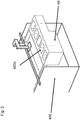
Fig. 3 shows a drawer of the analytical apparatus. -
Fig. 4 shows exemplary consumables. -
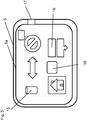
Fig. 5 shows a display with a touch screen and different features displayed thereon for user interaction with the analytical system. - The present invention relates to a method of interaction between an automated analytical apparatus for performing an analytical process in at least one analytical module, and a user, said method comprising displaying all features necessary for performing said analytical process on a display, wherein said display is mounted in front of said automated analytical apparatus. The mount of said display is constructed and arranged to move the display laterally along at least one of said modules. Moving the display into a position overlapping with a module, prevents access to the module. Moving the display into a position not overlapping with a module enables access to the module.
- This has the advantage that all user interaction relating to performing the analytical process can be guided entirely by the display. A further advantage is that the display, which is mounted in front of the analytical apparatus and can be moved laterally along at least part of said apparatus can be brought into a position close to the module which needs to be accessed by the user without interfering with access. Accessing may e.g. opening of a stacker and loading of consumables, or loading of reagent containers into the apparatus. As the display is mounted such that it is positioned in front of the apparatus, access of the module in front of which the display is located cannot be accessed from the front. Positioning of the display in a non overlapping position can be achieved as described herein. During moving and in any position in front of the apparatus, the display always displays all features necessary for performing the analytical process. The display may also be moved sideways in one end position to enable access to a module.
- In one embodiment, the analytical apparatus comprises a module for loading sample vials onto the analytical apparatus. This module is considered a pre-analytical module, and the process of loading sample vials into the analyzer is considered a pre-analytical process, as opposed to an analytical process, which relates to processes such as liquid transfer, transfer of receptacles in which processing of a sample occurs, reactions etc. The interaction between any pre-analytical module and the analytical apparatus may be performed via the display, or such interaction may be autonomous. Thus, "all features necessary for performing an analytical process" relates to the analytical processes herein described, not to pre-analytical processes. However, the features necessary for performing the analytical process also comprise processes such as loading of reagents and consumables which are required to perform the analytical process.
- The term "module" as used herein relates to any spatially defined location within the analyzer. Two modules (e.g. 8,9) can be separated by walls, or can be in open relationship. Any one module (7,8,9,10,11) can be either autonomously controlled, or control of the module (7,8,9,10,11) can be shared with other modules (7,8,9,10,11). In one embodiment, all modules (7,8,9,10,11) are controlled centrally. Transfer between modules (7,8,9,10,11) can be manual or automated.
- The term "in front of said automated analytical apparatus" is meant to refer to the side of the analytical apparatus where the user interaction during operation of the analytical apparatus occurs. Interaction with the analytical apparatus for maintenance or repair when the analytical apparatus is not in operation may also occur on other sides than the front of the automated analytical apparatus.
- Displays are well known in the art. In one embodiment, the display (5) comprises a touchscreen (5a).
- One analytical process comprises reacting an analyte with a compound. The term "reacting" as used herein relates to any type of chemical reaction of the analyte with reagents that is necessary to obtain a detectable signal. In one embodiment, said reacting comprises amplification. Amplification may be understood as any type of enhancement of a signal. Thus, amplification can be a conversion of a molecule by an enzyme, wherein said enzyme is coupled or bound to the analyte, leading to a detectable signal, wherein more signal molecules are formed than analyte molecules are present. One such non-limiting example is a formation of a chemiluminescent dye, e.g. using ECL. The term amplification further relates to nucleic acid amplification, if the analyte is a nucleic acid. This includes both linear, isothermal and exponential amplifications. Non-limiting examples of nucleic acid amplification methods are TMA, SDA, NASBA, PCR, including real-time PCR. Such methods are well known to the skilled person.
- Another analytical process comprises isolating and separating an analyte from other other material.
- In one embodiment of said method herein described, the mount of said display is constructed and arranged to move the display laterally along at least one of said modules. In one embodiment, the display (5) is mounted on a rail (3) which extends along the front of the top side of at least one module (7,8,9), see
Figs. 1 and2 . The display (5) can be moved along the rail (3), resulting in a horizontal movement of the display (5) along the at least one module (7,8,9,10,11). In one embodiment, the rail (3) extends along at least two modules (7,8). - In one embodiment of the method herein described, the method comprises accessing a module (eg 7), wherein said display is moved to a position not overlapping with said module (7). In one embodiment, when the rail (3) extends along at least two modules (e.g. 7 and 8), the display is moved to a second module (8) in order to access the first module (7).
- Specifically, eatures (15) displayed by said display comprise the loading status (15) of the apparatus (400), and / or the loaded consumable amount, and /or information on when the modules are accessible for loading or unloading of consumables and / or reagents (16). An exemplary display (5) with features (15) is shown in
Fig. 5 . - The advantage of displaying all features necessary for performing the analytical process is that the user can control the analytical process entirely from the display. Although the apparatus may additionally comprise optional lights or indicators for easier and quicker identification of the part of the apparatus requiring action, the display allows controlling all modules required for performing the analytical process in the analytical apparatus from the display. Thus, the user does not need to check controls in different locations of the apparatus before performing an action. This makes it easier for the user to safely operate the analytical apparatus.
- Specific actions controlled by said display comprise unlocking a drawer by requesting drawer unlock via the display (5). A drawer is, in one embodiment, a drawer comprising a stacker unit (66) for loading and stacking consumables. A user interface (16) on the display (5) to display loading step guidance of stacker units (66) may also be included (see
Fig. 3 ). One stacker unit may comprise at least one stacker (600). Further specific actions are: automatic opening of housing (2), wherein a request for opening and action to open the housing (2) are entered and controlled via the display (5). In one embodiment, a button (17) on the side of the display (5) is present (seeFig. 5 ), wherein said button (17) has to be engaged simultaneously with a button (18) on the touchscreen of the display (5). This requires the user (19) to use both hands, thus reducing the risk of opening the lid accidentally, and prevents the user from being close to the automated door. - The term "consumables" relates to plastic consumables for storing other consumables, such a pipette tips or single tubes, of for holding reagents and samples, or consumables (101,301,302) holding reaction mixes in which the processing or analyzing of the analyte are performed. Embodiments of such consumables include racks (60, 70) or multiwell plates (101,301,302), see
Fig. 4 . Different types of multiwell plates (101,301,302) with identical footprint can, in one embodiment, be used in the system (440). Such types of multiwell plates (101,301,302) are multiwell plates for storing samples or reagents, multiwell plates for isolating and analyzing an analyte, and/or multiwell plates for reacting an analyte to obtain a detectable signal. In one embodiment, if the analyte is a nucleic acid, the reacting may be any type of amplification of nucleic acids known to the person skilled in the art. In one embodiment, said consumables (60, 70, 101,301,302) comprise at least one tip rack (60, 70) and one multiwell plate (101, 301). In one embodiment, said footprint comprises a length and width of the base corresponding to ANSI SBS footprint format. In one embodiment, the length is 127.76mm +/- 0.25 mm, and the width is 85.48 mm +/- 0.25 mm. - According to the method of the present invention, control and operation of at least the analytical part of the apparatus are fully managed via said display. In one embodiment, additional control devices are absent. In another embodiment, supplementary optional control lights and/or light barriers are present on selected parts.
- Further specific features displayed by the display comprise walk-away time until reload of the apparatus, and/or displaying next required user action by showing differently colored time windows for different user action on said display. In one embodiment, the analytical process is not stopped during reloading of the apparatus. The timing of the reload is, thus, defined solely by the requirement for new consumables or reagents, but not by the status of the analytical process.
- Further features can be comprised on said display which are either required for controlling the function of the automated analytical apparatus or provide the user with information which allows optimization of walk-away time.
- The present invention also relates to a fully automated analytical apparatus (400) comprising at least one module (7,8,9) for performing an analytical process, a control unit (14) and a display (5), wherein said display (5) is mounted in front of said analytical apparatus (400) and wherein said mount of said display (5) is constructed and arranged to move the display (5) laterally along at least one module (7,8,9) of said apparatus (400). When the position of the display (5) overlaps with a module (7,8,9), access to the module (7,8,9) is prohibited and when the display (5) is located in a non-overlapping position of said module (7,8,9), access to said module(7,8,9) is enabled. All features (15) necessary for performing said analytical process are displayed on said display (5). In one embodiment, the mount of the display (5) is coupled to at least one guiding rail (3) or rails (3) on at least one module of said apparatus (400). In one embodiment the mount (4) of the display (5) is coupled to a double rail (3).
- In one embodiment, the mount of said display may be coupled to an upper track for guidance, specifically, a cable conduit, and a lower track.
- In one embodiment, the upper track or rail (3) comprises an arrestor (13) at least at one end of the at least one module. This arrestor (13) allows arrest the display in the end position. In one embodiment, the display mount is rotatable to the side of the modules. This allows rotation of the display to the side to not block doors that need to be accessed.
- In one embodiment of the mount of the display, the mount comprises a first arm (4), wherein said first arm (4) is connected to the rail (3), and a second arm (6), wherein said second arm (6) is connected to said first arm (4), comprises a pivot (12) to which the display (5) is connected. The pivot (12) permits lateral adjustment of the display (5). The connection between pivot (12) and display (5) is constructed and arranged to allow vertical / incline adjustment of the display (5). This has the advantage that the display (5) can be adjusted vertically for optimal reach by the user (19), and for providing free access to the bottom level for loading and unloading.
- In one embodiment, the analytical apparatus may comprise additional pre-analytical modules (1). Pre-analytical modules are modules which do not participate in the analytical process. Such pre-analytical modules may be modules which sort sample tubes, provide sample tubes comprising samples to be analyzed to the analytical modules. The rail (3), in this embodiment, may run along all modules (1, 7, 8, 9, 10, 11), or it runs only along the top of modules (7, 8, 9, 10, 11) or only along one or more modules comprising a separation station (7,8,9). A "separation station" is understood to be a station where an analyte is separated from a solid support. In one embodiment, the processing area comprises a station for isolating an analyte.
- The display (5) may be provided with or without a keyboard. In one embodiment, the display (5) is non-detachable.
- In one embodiment, the apparatus unit recognizes which drawer is open and the control unit (14) of the apparatus controls the automatic movement of the display (5) to a position where action is required. This has the advantage that the user does not need to first go to the display (5) and move it to an appropriate position to carry out a task, but can immediately go to the display (5) and take care of the required action. The display (5) may also recognize its position along the system (440) and display (5) context and/or position related information. The display (5) may also automatically recognize where an action is required and automatically move to the respective position.
Claims (13)
- A method of interaction between an automated analytical apparatus for performing an analytical process in at least one analytical module, and a user, said method comprising displaying all features necessary for performing said analytical process on a display, wherein said display is mounted in front of said automated analytical apparatus, wherein said mount of said display is constructed and arranged to move the display laterally along at least one of said modules, and wherein when moving the display into a position overlapping with a module, access to the module is prevented, and when moving the display into a position not overlapping with a module, access to the module is enabled.
- The method according to claim 1, comprising accessing a module, wherein said display is moved to a position not overlapping with said module.
- The method according to claims 1 or 2, wherein said display comprises display of the loading status of the apparatus.
- The method according to claims 1 to 3, wherein said display comprises display of the loaded consumable amount.
- The method according to claims 1 to 4, wherein said display comprises information on when the modules are accessible for loading or unloading of consumables and / or reagents.
- The method according to claims 1 to 5, comprising unlocking a drawer by requesting drawer unlock via the display.
- The method according to claims 1 to 6, wherein control and operation of the apparatus are fully managed via said display.
- The method according to claim 7, wherein additional control devices are absent.
- The method according to claims 1 to 8, comprising displaying walk-away time until reload of the apparatus.
- The method according to claims 1 to 9, comprising displaying next required user action by showing differently colored time windows for different user action on said display.
- An automated analytical apparatus comprising at least one module for performing an analytical process, a control unit and a display, wherein said display is mounted in front of said analytical apparatus, wherein said mount of said display is constructed and arranged to move the display laterally along at least one module of said apparatus, wherein, when the position of the display is overlapping with a module, access to the module is prohibited and when the display is located in a non-overlapping position of said module, access to said module is enabled, and wherein all features necessary for performing the analytical process are displayed on said display.
- The analytical apparatus of claim 11, wherein said mount of said display is coupled to a guiding rail on at least one module of said apparatus.
- The analytical apparatus of claims 11 or 12 wherein said guiding rail is mounted on top of said at least one module.
Priority Applications (1)
| Application Number | Priority Date | Filing Date | Title |
|---|---|---|---|
| EP12155892A EP2515118A1 (en) | 2011-04-19 | 2012-02-17 | User interaction with automated analytical apparatus |
Applications Claiming Priority (2)
| Application Number | Priority Date | Filing Date | Title |
|---|---|---|---|
| EP11163032 | 2011-04-19 | ||
| EP12155892A EP2515118A1 (en) | 2011-04-19 | 2012-02-17 | User interaction with automated analytical apparatus |
Publications (1)
| Publication Number | Publication Date |
|---|---|
| EP2515118A1 true EP2515118A1 (en) | 2012-10-24 |
Family
ID=44483992
Family Applications (1)
| Application Number | Title | Priority Date | Filing Date |
|---|---|---|---|
| EP12155892A Withdrawn EP2515118A1 (en) | 2011-04-19 | 2012-02-17 | User interaction with automated analytical apparatus |
Country Status (3)
| Country | Link |
|---|---|
| US (1) | US9207251B2 (en) |
| EP (1) | EP2515118A1 (en) |
| JP (1) | JP6113959B2 (en) |
Cited By (1)
| Publication number | Priority date | Publication date | Assignee | Title |
|---|---|---|---|---|
| US9207251B2 (en) | 2011-04-19 | 2015-12-08 | Roche Molecular Systems, Inc. | User interaction with automated analytical apparatus |
Families Citing this family (6)
| Publication number | Priority date | Publication date | Assignee | Title |
|---|---|---|---|---|
| US9665956B2 (en) | 2011-05-27 | 2017-05-30 | Abbott Informatics Corporation | Graphically based method for displaying information generated by an instrument |
| KR20140139521A (en) * | 2012-03-29 | 2014-12-05 | 무 시그마 비지니스 솔루션스 피브이티 엘티디 | Data solutions system |
| JP2014211401A (en) * | 2013-04-22 | 2014-11-13 | 株式会社日立ハイテクノロジーズ | Automatic analyzer |
| EP3701270B1 (en) | 2017-10-23 | 2024-08-14 | F. Hoffmann-La Roche AG | Laboratory system for automatically processing biological samples, use thereof and method for processing biological samples by means of such a laboratory system |
| WO2021026062A1 (en) * | 2019-08-05 | 2021-02-11 | Siemens Healthcare Diagnostics Inc. | Walk-away time visualization methods and systems |
| CN112666361A (en) * | 2019-09-29 | 2021-04-16 | 深圳迈瑞生物医疗电子股份有限公司 | Method for processing consumable information and related equipment |
Citations (5)
| Publication number | Priority date | Publication date | Assignee | Title |
|---|---|---|---|---|
| EP0549905A1 (en) * | 1991-12-06 | 1993-07-07 | Cell Analysis Systems, Inc. | Method and apparatus for automated cell analysis |
| JPH10227797A (en) * | 1997-02-13 | 1998-08-25 | Toshiba Corp | Automatic analyzer |
| US20080063570A1 (en) * | 2006-08-18 | 2008-03-13 | Hiroyuki Fujino | Sample analyzer |
| WO2010056903A1 (en) * | 2008-11-12 | 2010-05-20 | Qiagen | Open platform automated sample processing system |
| JP2010223810A (en) * | 2009-03-24 | 2010-10-07 | Hitachi High-Technologies Corp | Automatic analyzer |
Family Cites Families (8)
| Publication number | Priority date | Publication date | Assignee | Title |
|---|---|---|---|---|
| JP3228645B2 (en) | 1994-09-21 | 2001-11-12 | 株式会社日立製作所 | Immune analyzer |
| DE10041230A1 (en) | 2000-08-22 | 2002-03-07 | Leica Microsystems | Handling apparatus for cytological or histological preparations has feed stations and/or removal stations allocated to several processing stations |
| US7045288B2 (en) * | 2001-03-23 | 2006-05-16 | Ortho-Mcneil Pharmaceutical, Inc | Apparatus for the automation of chemical reaction kinetics studies |
| JP2008026051A (en) * | 2006-07-19 | 2008-02-07 | Furuno Electric Co Ltd | Biochemical automatic analyzer |
| JP2006284610A (en) * | 2006-07-31 | 2006-10-19 | Hitachi High-Technologies Corp | Automatic analyzer |
| US8222048B2 (en) * | 2007-11-05 | 2012-07-17 | Abbott Laboratories | Automated analyzer for clinical laboratory |
| US9164114B2 (en) * | 2011-04-19 | 2015-10-20 | Roche Molecular Systems, Inc. | Supply unit for continuous loading |
| US9207251B2 (en) | 2011-04-19 | 2015-12-08 | Roche Molecular Systems, Inc. | User interaction with automated analytical apparatus |
-
2012
- 2012-02-16 US US13/397,899 patent/US9207251B2/en active Active
- 2012-02-17 EP EP12155892A patent/EP2515118A1/en not_active Withdrawn
- 2012-02-17 JP JP2012032925A patent/JP6113959B2/en active Active
Patent Citations (5)
| Publication number | Priority date | Publication date | Assignee | Title |
|---|---|---|---|---|
| EP0549905A1 (en) * | 1991-12-06 | 1993-07-07 | Cell Analysis Systems, Inc. | Method and apparatus for automated cell analysis |
| JPH10227797A (en) * | 1997-02-13 | 1998-08-25 | Toshiba Corp | Automatic analyzer |
| US20080063570A1 (en) * | 2006-08-18 | 2008-03-13 | Hiroyuki Fujino | Sample analyzer |
| WO2010056903A1 (en) * | 2008-11-12 | 2010-05-20 | Qiagen | Open platform automated sample processing system |
| JP2010223810A (en) * | 2009-03-24 | 2010-10-07 | Hitachi High-Technologies Corp | Automatic analyzer |
Cited By (1)
| Publication number | Priority date | Publication date | Assignee | Title |
|---|---|---|---|---|
| US9207251B2 (en) | 2011-04-19 | 2015-12-08 | Roche Molecular Systems, Inc. | User interaction with automated analytical apparatus |
Also Published As
| Publication number | Publication date |
|---|---|
| US9207251B2 (en) | 2015-12-08 |
| JP6113959B2 (en) | 2017-04-12 |
| US20130043361A1 (en) | 2013-02-21 |
| JP2012225902A (en) | 2012-11-15 |
Similar Documents
| Publication | Publication Date | Title |
|---|---|---|
| US9207251B2 (en) | User interaction with automated analytical apparatus | |
| US9164114B2 (en) | Supply unit for continuous loading | |
| EP1582874B1 (en) | Modular analysing apparatus | |
| US10107806B2 (en) | Apparatus for the automatic performance of immunohaematology analysis on gel cards | |
| EP2251697B1 (en) | Analysis apparatus | |
| CN116136541A (en) | Automated analysis system for processing biological samples | |
| EP2182362B1 (en) | Specimen analyzing apparatus and specimen analyzing method | |
| CN114561279B (en) | Fully automatic gene detection processing system and method | |
| EP2187220A2 (en) | Transporting apparatus and specimen analyzing apparatus | |
| CA3057325C (en) | Cover assembly and related methods of use | |
| EP2884285B1 (en) | Supply module for an automated analyzer | |
| US9804180B2 (en) | Incubation device and methods for automatic movement of a reaction vessel therein for an automatic analysis apparatus | |
| EP3825697B1 (en) | In-vitro diagnostic analysis method and system | |
| US12296330B2 (en) | Pipetting unit and pipetting method for closed liquid containers | |
| EP2848944B1 (en) | Installation of analytical apparatus | |
| EP2952903A1 (en) | Automated analyzer | |
| EP2367012B1 (en) | Analyzer assembly concept | |
| JP5875875B2 (en) | Automatic analyzer | |
| CN115106202A (en) | Centrifugation device, gene detection system, and method for using gene detection system | |
| EP4644907A1 (en) | Automatic analysis device | |
| EP4357785A1 (en) | Laboratory instrument | |
| US20250306053A1 (en) | Sample analysis module and sample analysis system | |
| JP2024127635A (en) | Sample analyzer and sample processing system |
Legal Events
| Date | Code | Title | Description |
|---|---|---|---|
| PUAI | Public reference made under article 153(3) epc to a published international application that has entered the european phase |
Free format text: ORIGINAL CODE: 0009012 |
|
| AK | Designated contracting states |
Kind code of ref document: A1 Designated state(s): AL AT BE BG CH CY CZ DE DK EE ES FI FR GB GR HR HU IE IS IT LI LT LU LV MC MK MT NL NO PL PT RO RS SE SI SK SM TR |
|
| AX | Request for extension of the european patent |
Extension state: BA ME |
|
| 17P | Request for examination filed |
Effective date: 20130424 |
|
| 17Q | First examination report despatched |
Effective date: 20170419 |
|
| STAA | Information on the status of an ep patent application or granted ep patent |
Free format text: STATUS: THE APPLICATION HAS BEEN WITHDRAWN |
|
| 18W | Application withdrawn |
Effective date: 20181002 |