EP2511863A1 - Portable device inventory tracking - Google Patents
Portable device inventory tracking Download PDFInfo
- Publication number
- EP2511863A1 EP2511863A1 EP12157737A EP12157737A EP2511863A1 EP 2511863 A1 EP2511863 A1 EP 2511863A1 EP 12157737 A EP12157737 A EP 12157737A EP 12157737 A EP12157737 A EP 12157737A EP 2511863 A1 EP2511863 A1 EP 2511863A1
- Authority
- EP
- European Patent Office
- Prior art keywords
- satellite
- satellite devices
- devices
- mother
- identity information
- Prior art date
- Legal status (The legal status is an assumption and is not a legal conclusion. Google has not performed a legal analysis and makes no representation as to the accuracy of the status listed.)
- Granted
Links
Images


Classifications
-
- G—PHYSICS
- G06—COMPUTING OR CALCULATING; COUNTING
- G06Q—INFORMATION AND COMMUNICATION TECHNOLOGY [ICT] SPECIALLY ADAPTED FOR ADMINISTRATIVE, COMMERCIAL, FINANCIAL, MANAGERIAL OR SUPERVISORY PURPOSES; SYSTEMS OR METHODS SPECIALLY ADAPTED FOR ADMINISTRATIVE, COMMERCIAL, FINANCIAL, MANAGERIAL OR SUPERVISORY PURPOSES, NOT OTHERWISE PROVIDED FOR
- G06Q10/00—Administration; Management
- G06Q10/08—Logistics, e.g. warehousing, loading or distribution; Inventory or stock management
- G06Q10/087—Inventory or stock management, e.g. order filling, procurement or balancing against orders
Definitions
- the field generally relates to inventory tracking, and more specifically to systems and methods for portable device inventory tracking.
- a nurse may wish to track that a correct dosage of medicine is given to a correct patient at a precise time.
- a mechanic may wish to track which cars have had their oil changed, the quantity of oil that each car had received, and the time that the oil change was completed as they are walking around inspecting the shop.
- the tracking of data from remote locations will also be of importance and vital to increase productivity.
- computer-readable storage medium encompasses any tangible storage medium which may store instructions which are executable by a processor of a computing device.
- the computer-readable storage medium may be referred to as a computer-readable non-transitory storage medium.
- the computer-readable storage medium may also be referred to as a tangible computer readable medium.
- a computer-readable storage medium may also be able to store data which is able to be accessed by the processor of the computing device.
- Examples of computer-readable storage media include, but are not limited to: a floppy disk, punched tape, punch cards, a magnetic hard disk drive, a solid state hard disk, flash memory, a USB thumb drive, Random Access Memory (RAM), Read Only Memory (ROM), an optical disk, a magneto-optical disk, and the register file of the processor.
- Examples of optical disks include Compact Disks (CD) and Digital Versatile Disks (DVD), for example CD-ROM, CD-RW, CD-R, DVD-ROM, DVD-RW, or DVD-R disks.
- the term computer readable-storage medium also refers to various types of recording media capable of being accessed by the computer device via a network or communication link.
- data may be retrieved over a modem, over the internet, or over a local area network.
- References to a computer-readable storage medium should be interpreted as possibly comprising multiple computer-readable storage mediums.
- Various executable components of a program or programs may be stored in different locations.
- the computer-readable storage medium may for instance comprise multiple computer-readable storage medium within the same computer system.
- the computer-readable storage medium may also be computer-readable storage medium distributed amongst multiple computer systems or computing devices.
- Computer memory is any memory which is accessible by a processor. Examples of computer memory include, but are not limited to: RAM memory, registers, and register files. In some instances a computer memory may also include: a hard disk drive, a floppy drive or a solid state hard drive. For instance, part of a memory may in fact be swap space on a hard drive. References to "computer memory” or “memory” should be interpreted as possibly comprise multiple memories. The memory may for instance comprise multiple memories within the same computer system. The memory may also comprise multiple memories distributed amongst multiple computer systems or computing devices.
- short range communication may be a Radio Frequency Identification (RFID) communication, Infrared communication, Wireless Local Area Network (WLAN), Bluetooth communication or the like.
- RFID Radio Frequency Identification
- WLAN Wireless Local Area Network
- the present invention relates to a computer-implemented method for enabling a user of a mother device to track one or more satellite devices that are in a short range communication with the mother device, wherein respective identity information is assigned to the one or more satellite devices, wherein the mother device and the one or more satellite devices are portable devices.
- the method comprises at the mother device:
- the present invention provides a new method for regularly checking the reachability of the devices (i.e. satellite devices) belonging to the user by the mother device.
- the mother device is a mobile phone, which is frequently used, and thus constantly carried, by the user. Therefore, it can be used to track other devices of the user.
- This mother device may establish a short range communication, such as a near field communication with the satellite devices in order to test for their reachability. This is supported by an alerting system to alert the user in case he or she drops one of the satellite devices.
- the satellite device may be, for example, a wallet or a backpack with an RFID tag. This is advantageous in that it provides a method to track personal belongings, so that if they are lost, they can be found again.
- the respective identity information is assigned by the method comprising at the mother device scanning for the one or more satellite devices; receiving an acknowledgement from each of the one or more satellite devices; presenting the one or more satellite devices on the mother device; and assigning the respective identity information to each of the one or more satellite devices.
- the mother device is used to identify the satellite devices that the user may wish to track. This is done by scanning a limited area around the mother device, such as the house of the user, and detecting all devices which can establish a short range communication with the mother device. Those devices are then registered for further regular tracking by the mother device. This embodiment is advantageous as it is automatically performed by the mother device. Also it detects only the short range communication enabled devices that can be tracked by the mother device.
- the respective identity information is assigned by the method comprising at the mother device receiving the respective identity information by prompting the user to indicate the respective identity information of each of the one or more satellite devices and assigning the respective identity information to each of the one or more satellite devices.
- the user may manually specify all the devices he or she wanted to track by the mother device. This is advantageous in that the automatic scanning is not required. That is, the registering of the satellite devices is performed without constraints on the position of the satellite devices with respect to the mother device.
- the respective identity information comprises an owner identifier value.
- the owner identifier value is a value to indicate to the satellite device which mother device it is registered to.
- the owner identifier value may be the same for all the satellite devices.
- the respective identity information further comprises an item identifier value.
- the item identifier value is a unique number that is given by the mother device to indicate its authenticity in a list of registered satellite devices.
- An item identifier value may be incremental.
- a satellite device may be a mobile phone that is given an item identifier value of 23001 by the mother device. If a second mobile phone is registered on the mother device, it will be assigned the value of 23002.
- the item identifier value comprises a serial number of the satellite device.
- the Bluetooth channel may be used to obtain the device serial number, and to authenticate the device. This can be used, for example, by the mother device to reject satellite devices that cannot authenticate themselves in an initial registration list.
- alerting comprises generating a text message on a display of the mother device followed by a sound signal.
- the text message comprises the identity information of the at least one satellite device.
- sending the reachability request is performed according to at least one rule configured on the mother device.
- One or more set of rules can be configured to check reachability of a satellite device registered on the mother device. For example, if the satellite device tends to be stationary, such as a device having an electronic transceiver attached to an automobile parked in a parking lot for some time, then the rule can be configured to check its reachability less often or only at certain time intervals. This increases the tracking efficiency of the mother device.
- the method further comprises receiving a reachability request acknowledgement, wherein the reachability request acknowledgement contains a time stamp and a location of the one or more satellite devices registered on the mother device.
- the method further comprises displaying a set of directions in conjunction with the location.
- the short range communication comprises a near field communication.
- the near field communication is the RFID transmission.
- the short range communication comprises a Bluetooth transmission.
- Said embodiments may be advantageous in that they support multiple communication technologies such as RFID, Bluetooth and infrared.
- the invention relates to a computer-readable non-transitory storage medium comprising computer-readable instructions which, when executed by a processor, cause the processor to perform the method steps of anyone of the above embodiments.
- the invention relates to a portable device for enabling a user to track one or more satellite devices that are in near field communication with the portable device, wherein respective identity information are assigned to the one or more satellite devices, the portable device comprising:
- the invention in another aspect relates to a system comprising the portable device as described above, wherein the system further comprises one or more satellite portable devices configured to:
- the invention in another aspect, relates to an article of manufacture including a tangible computer readable storage medium to physically store instructions, which when executed by a computer, cause the computer to scan a vicinity of a mother device for one or more satellite devices to be registered on the mother device; receive an acknowledgement from the one or more satellite devices; present the one or more satellite devices on the mother device; register the one or more satellite devices with the mother device; test for reachability of the one or more satellite devices registered on the mother device; and generate an alert message if at least one of the one or more satellite devices does not respond to a reachability request.
- receiving an acknowledgement from the plurality of satellite devices comprises assigning an owner identifier value to the one or more satellite devices; and assigning an item identifier value to the one or more satellite devices.
- registering the one or more satellite devices comprises saving a list of at least one owner identifier value and at least one item identifier value.
- testing for reachability further comprises sending a reachability request to be acknowledged by the one or more satellite devices registered on the mother device.
- the article of manufacture further comprises sending the reachability request according to at least one rule configured on the mother device.
- the article of manufacture further comprises receiving a reachability request acknowledgement comprising a time stamp and a location.
- the article of manufacture further comprises displaying a set of directions in conjunction with the location of the one or more satellite devices registered on the mother device.
- the invention in another aspect, relates to a computer implemented method for mobile inventory tracking.
- the method comprises scanning a vicinity of a mother device for one or more satellite devices to be registered on the mother device; receiving an acknowledgement from the one or more satellite devices; presenting the one or more satellite devices on the mother device; registering the one or more satellite devices on the mother device; testing for reachability of the one or more satellite devices registered on the mother device; and generating an alert message if at least one of the one or more satellite devices do not respond to a reachability request.
- receiving an acknowledgement from the plurality of satellite devices item further comprises assigning an owner identifier value to the one or more satellite devices; and assigning an item identifier value to the one or more satellite devices.
- registering the one or more satellite devices comprises saving a list of at least one owner identifier value and at least one item identifier value.
- testing for reachability comprises sending a reachability request to be acknowledged by the one or more satellite devices registered on the mother device.
- the method further comprises configuring at least one rule for when to send the reachability request.
- the method further comprises receiving a reachability request acknowledgement, wherein the reachability request acknowledgement containing a time stamp and a location.
- the method of further comprises displaying a set of directions in conjunction with the location of the one or more satellite devices registered on the mother device.
- the invention in another aspect, relates to a computer system device network comprising a mother device configured to scan its vicinity for one or more satellite devices to be registered on the mother device; send a reachability request from the mother device to test reachability of the one or more satellite devices; and generate an alert message if at least one of the one or more satellite devices do not respond to the reachability request by sending a reachability request acknowledgement; and the one or more satellite devices configured to: self register on the mother device by responding to the scan by the mother device; and send the acknowledgement in response to receiving the reachability request by the mother device.
- the mother device is further configured to receive a time stamp and a location of a last received reachability request acknowledgement of the one or more satellite devices.
- the mother device is configured to assign an owner identifier value and an item identifier value to initiate a registration process.
- the mother device is configured to display a set of directions in conjunction with the location of the satellite device registered on the mother device.
- the mother device comprises a portable device with an electronic signals transceiver to establish a communication channel.
- the satellite device comprises a portable device with an electronic signals transceiver to establish a communication channel.
- aspects of the present invention may be embodied as a system, method or computer program product. Accordingly, if not explicitly stated otherwise, aspects of the present invention may take the form of an entirely hardware embodiment, an entirely software embodiment (including firmware, resident software, micro-code, etc.) or an embodiment combining software and hardware aspects that may all generally be referred to herein as a 'module' or 'system'. Any combination of one or more computer-readable medium(s) may be utilized.
- the system and method for portable device inventory tracking allows registering a plurality of satellite devices onto a mother device and track the satellite devices from the mother device using a RFID, Bluetooth, infrared, or other such current and near future technologies for communication channels between portable devices.
- a mother device and a satellite device may comprise electronic portable devices, such as an electronic notepad, a mobile phone, a Global Positioning System (GPS) receiver, and the like, with integrated electronic transceivers that have the means of emitting and receiving electronic carrier waves in order to establish a communication channel with another electronic device.
- GPS Global Positioning System
- a satellite device may also comprise of separate electronic transceivers attached to personal belongings that are contained within for similar tracking purposes. Satellite devices may be manually registered (i.e. checked in) and deregistered (i.e.
- the mother device may also track data stored on a satellite device.
- a satellite device may be an electronic notepad, an e-book, a mobile phone, or other such portable devices.
- portable devices may store data of the name and quantity of medicine that each patient should be administered, when the medicine was administered, and at what time. This data may be transmitted from a satellite device to the mother device, therefore tacking the stored data.
- One or more set of rules can be configured to check reachability of a satellite device registered on the mother device.
- the rule can be configured to check its reachability less often or only at certain time intervals. If a satellite device does not respond to a reachability request, an alert message can be generated to notify the user that the satellite device is not within reach.
- the alert message can consist of a timestamp and a location of a last successfully received reachability request acknowledgement from the satellite device. The location is received by the use of a GPS receiver or some similar technology for global positioning. In conjunction with some type of GPS software or the like, the mother device can display step by step directions to the location of where the last reachability request acknowledgement was successfully received.
- a portable device for inventory tracking comprise a mother device 102, which scans the vicinity for satellite devices 104 A-D and 106A-C in order to establish a communication channel.
- RFID, Bluetooth, infrared, or other such current technologies can be used to configure a signal range 108 to be recognized by the satellite devices (e.g., 104 A-D and 106A-C).
- the technology being used and its capabilities will influence the signal strength that the mother device 102 emits and the distance that it reaches.
- FIG. 2 is a block diagram illustrating a communication process between a mother device 202 and a satellite device 204. Once a communication channel is established between the mother device 202 and the satellite device 204 through the use of a transceiver 218, a registration process can begin. The mother device 202 assigns an owner identifier value 206 and an item identifier value 208 to the satellite device 204.
- the owner identifier value 206 is a value to indicate to the satellite device 204 which mother device 202 it is registered to.
- the item identifier value 208 is a unique number that is given by the mother device 202 to indicate its authenticity in a list of registered satellite devices.
- An item identifier value 208 can be incremental.
- a within range satellite device 204 may be a mobile phone that is given an item identifier value of 23001 by the mother device 202. If a second mobile phone is registered on the mother device 202, it will be assigned the value of 23002.
- the mother device 202 may send out a reachability request 210 to the registered satellite device 204 to determine whether it is within communication range.
- the satellite device 204 may respond with a reachability request acknowledgement 216 confirming that the initial reachability request 210 sent from the mother device 202 has been received.
- a reachability request acknowledgement 216 confirming that the initial reachability request 210 sent from the mother device 202 has been received.
- an item time stamp 212 and an item location 214 may also be sent out by the satellite device 204.
- the item time stamp 212 is the date and time in which the satellite device 204 has received the last successful reachability request 210.
- an item location 214 can indicate the location of the last received reachability request acknowledgement 216 successfully sent from the satellite device 204.
- the location of the mother device 202 can be used as a location for the satellite device 204 if the reachability request acknowledgement 216 has been received by the mother device 202.
- the assumption is that the satellite device 204 is within communication range of the mother device 202, therefore they both share a similar location.
- this method can take advantage of lower hardware costs for the inventory tracking process between a mother device 202 and a satellite device 204.
- FIG. 3 is a block diagram illustrating a mother device tracking data stored on a satellite device according to various embodiments.
- a mother device for inventory tracking may consist of a mobile phone 302, while a satellite device may consist of an electronic notepad 304.
- the mobile phone 302 may communicate with the electronic notepad 304 to download data 306 that has been stored on the electronic notepad 304.
- the data may be data about tracking medicine that has been administered to patients at a local hospital. Data such as, the name, date, time, location and type of medicine can be accessed by the mobile phone 302 and download on the local storage device of the mother device. A user may then view this data or wish to upload it onto a database or server for collaboration purposes.
- the user can also configure a set of rules of when to transfer data between the mobile phone 302 and the electronic notepad 304. For example, a configured rule may be a certain time interval, a certain amount of transfers per hour, and other such similar rules.
- FIG. 4 is a flow diagram illustrating an exemplary method of a portable device inventory tracking.
- a mother device scans a vicinity for one or more satellite devices to be registered.
- the mother device can use RFID, Bluetooth, infrared, or other such current and near future technologies for mobile communication to establish a connection.
- the mother device then receives an acknowledgement from the one or more satellite devices, as in process block 404.
- the one or more satellite devices are presented on the mother device, as in process block 406, and a user can choose to register one or more satellite devices on the mother device, as in process block 408.
- a periodical test for reachability of the one or more satellite devices registered on the mother device can be performed.
- An alert message is generated if the one or more satellite devices do not respond to a reachability request, as in process block 412.
- the registration of the satellite devices may run in parallel to the repetitive reachability tests for the satellite devices.
- FIG. 5 is a flow diagram illustrating an exemplary method of registering a satellite device and testing for reachability of the satellite device.
- a mother device scans a vicinity for one or more satellite devices to be registered, as in process block 502.
- the mother device receives an acknowledgement from the one or more satellite devices, as in process block 504, it assigns an owner identifier value, as in process block 506, and assigns an item identifier value, as in process block 508 to each registered satellite device.
- a list of satellite devices are presented on the mother device and a user can save the satellite devices that he or she wishes to be registered.
- a user When registering, a user is saving at least one owner identifier value and one item identifier value, as in process block 510, assigned to the satellite device.
- the assigned owner identifier value and the item identifier value are saved on the mother device.
- the owner identifier value may be the same for both phones, but the item identifier values may be similar in value, but with an increment of one, for instance.
- Satellite devices can be registered (i.e. checked-in) or deregistered (i.e. checked-out) manually by the user or can be configured to automatically. A user can configure the mother device to determine when to automatically register or deregister a satellite device.
- the mother device can send a reachability request to the registered satellite devices, as in process block 512.
- the reachability request can be configured to be sent out a number of different ways. For instance, at certain time intervals, a certain amount of requests per a specific time period, and other such rules.
- a reachability request acknowledgement is expected from the satellite device. If a reachability request acknowledgement has been received, as in process block 514, then a time stamp and location is generated, as in process block 516. If a reachability request 512 has not been acknowledged by one or more satellite devices then an alert message is generated, as in process block 518.
- An alert message can be preconfigured to be prioritized based on importance (i.e. low, medium, and high).
- an alert message can also consist of a log entry that displays more detailed information about the alert itself, or can be a time stamp and a location of the last reachability request acknowledgement successfully sent from the satellite device.
- the registration of the satellite devices may run in parallel to the repetitive reachability tests for the satellite devices.
- Some embodiments of the invention may include the above-described methods being written as one or more software components. These components, and the functionality associated with each, may be used by client, server, distributed, or peer computer systems. These components may be written in a computer language corresponding to one or more programming languages such as, functional, declarative, procedural, object-oriented, lower level languages and the like. They may be linked to other components via various application programming interfaces and then compiled into one complete application for a server or a client. Alternatively, the components maybe implemented in server and client applications. Further, these components may be linked together via various distributed programming protocols. Some example embodiments of the invention may include remote procedure calls being used to implement one or more of these components across a distributed programming environment.
- a logic level may reside on a first computer system that is remotely located from a second computer system containing an interface level (e.g., a graphical user interface).
- interface level e.g., a graphical user interface
- first and second computer systems can be configured in a server-client, peer-to-peer, or some other configuration.
- the clients can vary in complexity from mobile and handheld devices, to thin clients and on to thick clients or even other servers.
- FIG. 6 is a block diagram of an exemplary computer system 600.
- the computer system 600 includes a processor 605 that executes software instructions or code stored on a computer readable storage medium 655 to perform the above-illustrated methods of the invention.
- the computer system 600 includes a media reader 640 to read the instructions from the computer readable storage medium 655 and store the instructions in storage 610 or in random access memory (RAM) 615.
- the storage 610 provides a large space for keeping static data where at least some instructions could be stored for later execution.
- the stored instructions may be further compiled to generate other representations of the instructions and dynamically stored in the RAM 615.
- the processor 605 reads instructions from the RAM 615 and performs actions as instructed.
- the computer system 600 further includes an output device 625 (e.g., a display) to provide at least some of the results of the execution as output including, but not limited to, visual information to users and an input device 630 to provide a user or another device with means for entering data and/or otherwise interact with the computer system 600.
- an output device 625 e.g., a display
- an input device 630 to provide a user or another device with means for entering data and/or otherwise interact with the computer system 600.
- Each of these output devices 625 and input devices 630 could be joined by one or more additional peripherals to further expand the capabilities of the computer system 600.
- a network communicator 635 may be provided to connect the computer system 600 to a network 650 and in turn to other devices connected to the network 650 including other clients, servers, data stores, and interfaces, for instance.
- the modules of the computer system 600 are interconnected via a bus 645.
- Computer system 600 includes a data source interface 620 to access data source 660.
- the data source 660 can be accessed via one or more abstraction layers implemented in hardware or software.
- the data source 660 may be accessed by network 650.
- the data source 660 may be accessed via an abstraction layer, such as, a semantic layer.
- Data sources include sources of data that enable data storage and retrieval.
- Data sources may include databases, such as, relational, transactional, hierarchical, multi-dimensional (e.g., OLAP), object oriented databases, and the like.
- Further data sources include tabular data (e.g., spreadsheets, delimited text files), data tagged with a markup language (e.g., XML data), transactional data, unstructured data (e.g., text files, screen scrapings), hierarchical data (e.g., data in a file system, XML data), files, a plurality of reports, and any other data source accessible through an established protocol, such as, Open DataBase Connectivity (ODBC), produced by an underlying software system (e.g., ERP system), and the like.
- Data sources may also include a data source where the data is not tangibly stored or otherwise ephemeral such as data streams, broadcast data, and the like. These data sources can include associated data foundations, semantic layers, management systems,
- the computer readable medium may be a computer readable signal medium or a computer readable storage medium.
- a computer readable storage medium may be, for example, but not limited to, an electronic, magnetic, optical, electromagnetic, infrared, or semiconductor system, apparatus, or device, or any suitable combination of the foregoing.
- a computer readable storage medium may be any tangible medium that can contain, or store a program for use by or in connection with an instruction execution system, apparatus, or device.
- a computer readable signal medium may include a propagated data signal with computer readable program code embodied therein, for example, in baseband or as part of a carrier wave. Such a propagated signal may take any of a variety of forms, including, but not limited to, electro-magnetic, optical, or any suitable combination thereof.
- a computer readable signal medium may be any computer readable medium that is not a computer readable storage medium and that can communicate, propagate, or transport a program for use by or in connection with an instruction execution system, apparatus, or device.
- Program code embodied on a computer readable medium may be transmitted using any appropriate medium, including but not limited to wireless, wireline, optical fiber cable, RF, etc., or any suitable combination of the foregoing.
- Computer program code for carrying out operations for aspects of the present invention may be written in any combination of one or more programming languages, including an object oriented programming language such as Java, Smalltalk, C++ or the like and conventional procedural programming languages, such as the "C" programming language or similar programming languages.
- the program code may execute entirely on the user's computer, partly on the user's computer, as a stand-alone software package, partly on the user's computer and partly on a remote computer or entirely on the remote computer or server.
- the remote computer may be connected to the user's computer through any type of network, including a local area network (LAN) or a wide area network (WAN), or the connection may be made to an external computer (for example, through the Internet using an Internet Service Provider).
- LAN local area network
- WAN wide area network
- Internet Service Provider for example, AT&T, MCI, Sprint, EarthLink, MSN, GTE, etc.
- These computer program instructions may also be stored in a computer readable medium that can direct a computer, other programmable data processing apparatus, or other devices to function in a particular manner, such that the instructions stored in the computer readable medium produce an article of manufacture including instructions which implement the function/act specified in the flowchart and/or block diagram block or blocks.
- the computer program instructions may also be loaded onto a computer, other programmable data processing apparatus, or other devices to cause a series of operational steps to be performed on the computer, other programmable apparatus or other devices to produce a computer implemented process such that the instructions which execute on the computer or other programmable apparatus provide processes for implementing the functions/acts specified in the flowchart and/or block diagram block or blocks.
- each block in the block diagrams may represent a module, segment, or portion of code, which comprises one or more executable instructions for implementing the specified logical function(s).
- the functions discussed hereinabove may occur out of the disclosed order. For example, two functions taught in succession may, in fact, be executed substantially concurrently, or the functions may sometimes be executed in the reverse order, depending upon the functionality involved.
- each block of the block diagrams, and combinations of blocks in the block diagrams can be implemented by special purpose hardware-based systems that perform the specified functions or acts, or combinations of special purpose hardware and computer instructions.
Landscapes
- Business, Economics & Management (AREA)
- Economics (AREA)
- Engineering & Computer Science (AREA)
- Marketing (AREA)
- Quality & Reliability (AREA)
- Finance (AREA)
- Entrepreneurship & Innovation (AREA)
- Human Resources & Organizations (AREA)
- Accounting & Taxation (AREA)
- Operations Research (AREA)
- Development Economics (AREA)
- Strategic Management (AREA)
- Tourism & Hospitality (AREA)
- Physics & Mathematics (AREA)
- General Business, Economics & Management (AREA)
- General Physics & Mathematics (AREA)
- Theoretical Computer Science (AREA)
- Mobile Radio Communication Systems (AREA)
- Position Fixing By Use Of Radio Waves (AREA)
Abstract
Description
- The field generally relates to inventory tracking, and more specifically to systems and methods for portable device inventory tracking.
- People are always loosing and dropping important and precious items everyday throughout their lives. Many people tend to drop their wallets after paying at the grocery store, leaving their purse behind in a dressing room, and losing other such essential items at inappropriate places. Such items are often of great importance and their contents can sometimes be more valuable than the item lost. In other situations, people can tend to misplace their set of keys to their house, forget where they have parked their car in an enormous parking lot at a shopping mall, or even misplace a second mobile phone that they frequently use. There is always a need to track personal belongings, so that if they are lost, they can be found again.
In addition to tracking personal belongings, one may wish to track data stored on a portable device. A nurse may wish to track that a correct dosage of medicine is given to a correct patient at a precise time. At an auto repair shop, a mechanic may wish to track which cars have had their oil changed, the quantity of oil that each car had received, and the time that the oil change was completed as they are walking around inspecting the shop. As businesses begin to use portable devices to monitor their inventory and work processes, the tracking of data from remote locations will also be of importance and vital to increase productivity. - It is an objective of embodiments of the invention to provide for a computer implemented method for enabling a user of a mother device to track one or more satellite devices, data processing system, portable device and corresponding computer-readable storage medium. Said objective is solved by the subject matter of the independent claims. Advantageous embodiments are described in the dependent claims.
- The term "computer-readable storage medium," as used herein encompasses any tangible storage medium which may store instructions which are executable by a processor of a computing device. The computer-readable storage medium may be referred to as a computer-readable non-transitory storage medium. The computer-readable storage medium may also be referred to as a tangible computer readable medium. In some embodiments, a computer-readable storage medium may also be able to store data which is able to be accessed by the processor of the computing device. Examples of computer-readable storage media include, but are not limited to: a floppy disk, punched tape, punch cards, a magnetic hard disk drive, a solid state hard disk, flash memory, a USB thumb drive, Random Access Memory (RAM), Read Only Memory (ROM), an optical disk, a magneto-optical disk, and the register file of the processor. Examples of optical disks include Compact Disks (CD) and Digital Versatile Disks (DVD), for example CD-ROM, CD-RW, CD-R, DVD-ROM, DVD-RW, or DVD-R disks. The term computer readable-storage medium also refers to various types of recording media capable of being accessed by the computer device via a network or communication link. For example data may be retrieved over a modem, over the internet, or over a local area network. References to a computer-readable storage medium should be interpreted as possibly comprising multiple computer-readable storage mediums. Various executable components of a program or programs may be stored in different locations. The computer-readable storage medium may for instance comprise multiple computer-readable storage medium within the same computer system. The computer-readable storage medium may also be computer-readable storage medium distributed amongst multiple computer systems or computing devices.
- The term "Computer memory" or "memory" is an example of a computer-readable storage medium. Computer memory is any memory which is accessible by a processor. Examples of computer memory include, but are not limited to: RAM memory, registers, and register files. In some instances a computer memory may also include: a hard disk drive, a floppy drive or a solid state hard drive. For instance, part of a memory may in fact be swap space on a hard drive. References to "computer memory" or "memory" should be interpreted as possibly comprise multiple memories. The memory may for instance comprise multiple memories within the same computer system. The memory may also comprise multiple memories distributed amongst multiple computer systems or computing devices.
- The term "short range communication" as used herein may be a Radio Frequency Identification (RFID) communication, Infrared communication, Wireless Local Area Network (WLAN), Bluetooth communication or the like.
- In one aspect, the present invention relates to a computer-implemented method for enabling a user of a mother device to track one or more satellite devices that are in a short range communication with the mother device, wherein respective identity information is assigned to the one or more satellite devices, wherein the mother device and the one or more satellite devices are portable devices. The method comprises at the mother device:
- storing the identity information on the mother device, thereby registering the one or more satellite devices;
- sending a reachability request to each of the registered one or more satellite devices by using the short range communication; and
- alerting the user if at least one satellite device of the one or more satellite devices does not respond to the reachability request.
- As technology evolves, new and several types of portable devices are being developed with specific setups that enhance the communication capability via, for example, RFID technologies. It is thus not unusual that a user acquires more than one of those devices such as a mobile phone and a Personal Digital Assistant (PDA) for his or her own usage. However, the more devices the user has, the more likely the user is to lose one or more of the devices. To overcome this issue, the present invention provides a new method for regularly checking the reachability of the devices (i.e. satellite devices) belonging to the user by the mother device. An example of the mother device is a mobile phone, which is frequently used, and thus constantly carried, by the user. Therefore, it can be used to track other devices of the user. This mother device may establish a short range communication, such as a near field communication with the satellite devices in order to test for their reachability. This is supported by an alerting system to alert the user in case he or she drops one of the satellite devices. The satellite device may be, for example, a wallet or a backpack with an RFID tag. This is advantageous in that it provides a method to track personal belongings, so that if they are lost, they can be found again.
- According to one embodiment, the respective identity information is assigned by the method comprising at the mother device scanning for the one or more satellite devices; receiving an acknowledgement from each of the one or more satellite devices; presenting the one or more satellite devices on the mother device; and assigning the respective identity information to each of the one or more satellite devices.
- The mother device is used to identify the satellite devices that the user may wish to track. This is done by scanning a limited area around the mother device, such as the house of the user, and detecting all devices which can establish a short range communication with the mother device. Those devices are then registered for further regular tracking by the mother device. This embodiment is advantageous as it is automatically performed by the mother device. Also it detects only the short range communication enabled devices that can be tracked by the mother device.
- According to one embodiment, the respective identity information is assigned by the method comprising at the mother device receiving the respective identity information by prompting the user to indicate the respective identity information of each of the one or more satellite devices and assigning the respective identity information to each of the one or more satellite devices.
- The user may manually specify all the devices he or she wanted to track by the mother device. This is advantageous in that the automatic scanning is not required. That is, the registering of the satellite devices is performed without constraints on the position of the satellite devices with respect to the mother device.
- According to one embodiment, the respective identity information comprises an owner identifier value.
- The owner identifier value is a value to indicate to the satellite device which mother device it is registered to. The owner identifier value may be the same for all the satellite devices.
- According to one embodiment, the respective identity information further comprises an item identifier value.
- The item identifier value is a unique number that is given by the mother device to indicate its authenticity in a list of registered satellite devices. An item identifier value may be incremental. For example, a satellite device may be a mobile phone that is given an item identifier value of 23001 by the mother device. If a second mobile phone is registered on the mother device, it will be assigned the value of 23002. According to an alternative embodiment, the item identifier value comprises a serial number of the satellite device. In an active technology like Bluetooth, the Bluetooth channel may be used to obtain the device serial number, and to authenticate the device. This can be used, for example, by the mother device to reject satellite devices that cannot authenticate themselves in an initial registration list.
- According to one embodiment, alerting comprises generating a text message on a display of the mother device followed by a sound signal.
- According to one embodiment, the text message comprises the identity information of the at least one satellite device.
- These embodiments may be advantageous, because the user is alerted and thus informed of a missing device that he or she could recuperate following the content of the alert message.
- According to one embodiment, sending the reachability request is performed according to at least one rule configured on the mother device.
- One or more set of rules can be configured to check reachability of a satellite device registered on the mother device. For example, if the satellite device tends to be stationary, such as a device having an electronic transceiver attached to an automobile parked in a parking lot for some time, then the rule can be configured to check its reachability less often or only at certain time intervals. This increases the tracking efficiency of the mother device.
- According to one embodiment, the method further comprises receiving a reachability request acknowledgement, wherein the reachability request acknowledgement contains a time stamp and a location of the one or more satellite devices registered on the mother device.
According to one embodiment, the method further comprises displaying a set of directions in conjunction with the location. - These embodiments may be advantageous, because the user can easily find the location of the missing device.
- According to one embodiment, the short range communication comprises a near field communication.
- An example of the near field communication is the RFID transmission. According to an alternative embodiment, the short range communication comprises a Bluetooth transmission.
- Said embodiments may be advantageous in that they support multiple communication technologies such as RFID, Bluetooth and infrared.
- In another aspect, the invention relates to a computer-readable non-transitory storage medium comprising computer-readable instructions which, when executed by a processor, cause the processor to perform the method steps of anyone of the above embodiments.
- In another aspect, the invention relates to a portable device for enabling a user to track one or more satellite devices that are in near field communication with the portable device, wherein respective identity information are assigned to the one or more satellite devices, the portable device comprising:
- a storing unit for storing the identity information on the portable device, thereby registering the one or more satellite devices;
- a sending unit for sending a reachability request to each of the registered one or more satellite devices; and
- an alerting unit for alerting the user if at least one satellite device of the one or more satellite devices does not respond to the reachability request.
- In another aspect the invention relates to a system comprising the portable device as described above, wherein the system further comprises one or more satellite portable devices configured to:
- send an acknowledgement in response to a scanning for the one or more satellite devices by the portable device; and
- send an acknowledgement in response to receiving the reachability request by the mother device.
- In another aspect, the invention relates to an article of manufacture including a tangible computer readable storage medium to physically store instructions, which when executed by a computer, cause the computer to scan a vicinity of a mother device for one or more satellite devices to be registered on the mother device; receive an acknowledgement from the one or more satellite devices; present the one or more satellite devices on the mother device; register the one or more satellite devices with the mother device; test for reachability of the one or more satellite devices registered on the mother device; and generate an alert message if at least one of the one or more satellite devices does not respond to a reachability request.
- According to one embodiment, receiving an acknowledgement from the plurality of satellite devices comprises assigning an owner identifier value to the one or more satellite devices; and assigning an item identifier value to the one or more satellite devices.
- According to one embodiment, registering the one or more satellite devices comprises saving a list of at least one owner identifier value and at least one item identifier value.
- According to one embodiment, testing for reachability further comprises sending a reachability request to be acknowledged by the one or more satellite devices registered on the mother device.
- According to one embodiment, the article of manufacture further comprises sending the reachability request according to at least one rule configured on the mother device.
- According to one embodiment, the article of manufacture further comprises receiving a reachability request acknowledgement comprising a time stamp and a location.
- According to one embodiment, the article of manufacture further comprises displaying a set of directions in conjunction with the location of the one or more satellite devices registered on the mother device.
- In another aspect, the invention relates to a computer implemented method for mobile inventory tracking. The method comprises scanning a vicinity of a mother device for one or more satellite devices to be registered on the mother device; receiving an acknowledgement from the one or more satellite devices; presenting the one or more satellite devices on the mother device; registering the one or more satellite devices on the mother device; testing for reachability of the one or more satellite devices registered on the mother device; and generating an alert message if at least one of the one or more satellite devices do not respond to a reachability request.
- According to one embodiment, receiving an acknowledgement from the plurality of satellite devices item further comprises assigning an owner identifier value to the one or more satellite devices; and assigning an item identifier value to the one or more satellite devices.
- According to one embodiment, registering the one or more satellite devices comprises saving a list of at least one owner identifier value and at least one item identifier value.
- According to one embodiment, testing for reachability comprises sending a reachability request to be acknowledged by the one or more satellite devices registered on the mother device.
- According to one embodiment, the method further comprises configuring at least one rule for when to send the reachability request.
- According to one embodiment, the method further comprises receiving a reachability request acknowledgement, wherein the reachability request acknowledgement containing a time stamp and a location.
- According to one embodiment, the method of further comprises displaying a set of directions in conjunction with the location of the one or more satellite devices registered on the mother device.
- In another aspect, the invention relates to a computer system device network comprising a mother device configured to scan its vicinity for one or more satellite devices to be registered on the mother device; send a reachability request from the mother device to test reachability of the one or more satellite devices; and generate an alert message if at least one of the one or more satellite devices do not respond to the reachability request by sending a reachability request acknowledgement; and the one or more satellite devices configured to: self register on the mother device by responding to the scan by the mother device; and send the acknowledgement in response to receiving the reachability request by the mother device.
- According to one embodiment, the mother device is further configured to receive a time stamp and a location of a last received reachability request acknowledgement of the one or more satellite devices.
- According to one embodiment, the mother device is configured to assign an owner identifier value and an item identifier value to initiate a registration process. According to one embodiment, the mother device is configured to display a set of directions in conjunction with the location of the satellite device registered on the mother device.
- According to one embodiment, the mother device comprises a portable device with an electronic signals transceiver to establish a communication channel.
- According to one embodiment, the satellite device comprises a portable device with an electronic signals transceiver to establish a communication channel.
- As will be appreciated by one skilled in the art, aspects of the present invention may be embodied as a system, method or computer program product. Accordingly, if not explicitly stated otherwise, aspects of the present invention may take the form of an entirely hardware embodiment, an entirely software embodiment (including firmware, resident software, micro-code, etc.) or an embodiment combining software and hardware aspects that may all generally be referred to herein as a 'module' or 'system'. Any combination of one or more computer-readable medium(s) may be utilized.
- In the following, preferred embodiments of the invention will be described in greater detail by way of example only making reference to the drawings in which:
-
FIG. 1 is a block diagram illustrating a mother device scanning a vicinity for one or more satellite devices to be registered on the mother device, -
FIG. 2 is a block diagram illustrating a communication process between a mother device and a satellite device, -
FIG. 3 is a block diagram illustrating a mother device tracking data stored on a satellite device, -
FIG. 4 is a flow diagram illustrating an exemplary method of a portable device inventory tracking, -
FIG. 5 is a flow diagram illustrating an exemplary method of registering a satellite device and testing for reachability of the satellite device, and -
FIG. 6 is a block diagram of an exemplary computer system. - The system and method for portable device inventory tracking allows registering a plurality of satellite devices onto a mother device and track the satellite devices from the mother device using a RFID, Bluetooth, infrared, or other such current and near future technologies for communication channels between portable devices. A mother device and a satellite device may comprise electronic portable devices, such as an electronic notepad, a mobile phone, a Global Positioning System (GPS) receiver, and the like, with integrated electronic transceivers that have the means of emitting and receiving electronic carrier waves in order to establish a communication channel with another electronic device. A satellite device may also comprise of separate electronic transceivers attached to personal belongings that are contained within for similar tracking purposes.
Satellite devices may be manually registered (i.e. checked in) and deregistered (i.e. checked out) by a user or may be configured to automatically register or deregister. The mother device may also track data stored on a satellite device. For example, a satellite device may be an electronic notepad, an e-book, a mobile phone, or other such portable devices. In the line of business of medicine, for example, such portable devices may store data of the name and quantity of medicine that each patient should be administered, when the medicine was administered, and at what time. This data may be transmitted from a satellite device to the mother device, therefore tacking the stored data.
One or more set of rules can be configured to check reachability of a satellite device registered on the mother device. For example, if the satellite device tends to be stationary, such as a device having an electronic transceiver attached to an automobile parked in a parking lot for some time, then the rule can be configured to check its reachability less often or only at certain time intervals. If a satellite device does not respond to a reachability request, an alert message can be generated to notify the user that the satellite device is not within reach. The alert message can consist of a timestamp and a location of a last successfully received reachability request acknowledgement from the satellite device. The location is received by the use of a GPS receiver or some similar technology for global positioning. In conjunction with some type of GPS software or the like, the mother device can display step by step directions to the location of where the last reachability request acknowledgement was successfully received.
FIG. 1 is a block diagram illustrating a mother device scanning a vicinity for one or more satellite devices (e.g., 104A-D) to be registered on the mother device. Referring toFIG. 1 , a portable device for inventory tracking comprise amother device 102, which scans the vicinity for satellite devices 104 A-D and 106A-C in order to establish a communication channel. RFID, Bluetooth, infrared, or other such current technologies can be used to configure asignal range 108 to be recognized by the satellite devices (e.g., 104 A-D and 106A-C). The technology being used and its capabilities will influence the signal strength that themother device 102 emits and the distance that it reaches. If a satellite device (e.g., 104 A-D) is withinrange 108 of themother device 102, then a connection and tracking process may be established. If the satellite device (e.g., 106 A-C) is out ofrange 108 of themother device 102 then a connection cannot be made as it is not within the range capabilities of themother device 102.
FIG. 2 is a block diagram illustrating a communication process between amother device 202 and asatellite device 204. Once a communication channel is established between themother device 202 and thesatellite device 204 through the use of atransceiver 218, a registration process can begin. Themother device 202 assigns anowner identifier value 206 and anitem identifier value 208 to thesatellite device 204. Theowner identifier value 206 is a value to indicate to thesatellite device 204 whichmother device 202 it is registered to. Theitem identifier value 208 is a unique number that is given by themother device 202 to indicate its authenticity in a list of registered satellite devices. Anitem identifier value 208 can be incremental. For example, a withinrange satellite device 204 may be a mobile phone that is given an item identifier value of 23001 by themother device 202. If a second mobile phone is registered on themother device 202, it will be assigned the value of 23002.
Once a registration process has been successfully completed, themother device 202 may send out areachability request 210 to the registeredsatellite device 204 to determine whether it is within communication range. If within range, thesatellite device 204 may respond with areachability request acknowledgement 216 confirming that theinitial reachability request 210 sent from themother device 202 has been received. Along with thereachability request acknowledgement 216, anitem time stamp 212 and anitem location 214 may also be sent out by thesatellite device 204. Theitem time stamp 212 is the date and time in which thesatellite device 204 has received the lastsuccessful reachability request 210. In conjunction with a GPS receiver, anitem location 214 can indicate the location of the last receivedreachability request acknowledgement 216 successfully sent from thesatellite device 204. Furthermore, if thesatellite device 204 does not include a GPS receiver, the location of themother device 202 can be used as a location for thesatellite device 204 if thereachability request acknowledgement 216 has been received by themother device 202. The assumption is that thesatellite device 204 is within communication range of themother device 202, therefore they both share a similar location. As not everysatellite device 204 has a GPS receiver, this method can take advantage of lower hardware costs for the inventory tracking process between amother device 202 and asatellite device 204. -
FIG. 3 is a block diagram illustrating a mother device tracking data stored on a satellite device according to various embodiments. Referring toFIG. 3 , a mother device for inventory tracking may consist of amobile phone 302, while a satellite device may consist of anelectronic notepad 304. When a communication channel is established, themobile phone 302 may communicate with theelectronic notepad 304 to downloaddata 306 that has been stored on theelectronic notepad 304. In the example, the data may be data about tracking medicine that has been administered to patients at a local hospital. Data such as, the name, date, time, location and type of medicine can be accessed by themobile phone 302 and download on the local storage device of the mother device. A user may then view this data or wish to upload it onto a database or server for collaboration purposes. The user can also configure a set of rules of when to transfer data between themobile phone 302 and theelectronic notepad 304. For example, a configured rule may be a certain time interval, a certain amount of transfers per hour, and other such similar rules. -
FIG. 4 is a flow diagram illustrating an exemplary method of a portable device inventory tracking. Referring toFIG. 4 , atprocess block 402, a mother device scans a vicinity for one or more satellite devices to be registered. The mother device can use RFID, Bluetooth, infrared, or other such current and near future technologies for mobile communication to establish a connection. The mother device then receives an acknowledgement from the one or more satellite devices, as inprocess block 404. The one or more satellite devices are presented on the mother device, as inprocess block 406, and a user can choose to register one or more satellite devices on the mother device, as inprocess block 408. Inprocess block 410, a periodical test for reachability of the one or more satellite devices registered on the mother device can be performed. An alert message is generated if the one or more satellite devices do not respond to a reachability request, as inprocess block 412. The registration of the satellite devices may run in parallel to the repetitive reachability tests for the satellite devices. -
FIG. 5 is a flow diagram illustrating an exemplary method of registering a satellite device and testing for reachability of the satellite device. Referring toFIG 5 , a mother device scans a vicinity for one or more satellite devices to be registered, as inprocess block 502. When the mother device receives an acknowledgement from the one or more satellite devices, as inprocess block 504, it assigns an owner identifier value, as inprocess block 506, and assigns an item identifier value, as in process block 508 to each registered satellite device. A list of satellite devices are presented on the mother device and a user can save the satellite devices that he or she wishes to be registered. - When registering, a user is saving at least one owner identifier value and one item identifier value, as in
process block 510, assigned to the satellite device. For example, in the case of registering a mobile phone, the assigned owner identifier value and the item identifier value are saved on the mother device. In the case of registering two mobile phones, the owner identifier value may be the same for both phones, but the item identifier values may be similar in value, but with an increment of one, for instance. Satellite devices can be registered (i.e. checked-in) or deregistered (i.e. checked-out) manually by the user or can be configured to automatically. A user can configure the mother device to determine when to automatically register or deregister a satellite device. - The mother device can send a reachability request to the registered satellite devices, as in
process block 512. The reachability request can be configured to be sent out a number of different ways. For instance, at certain time intervals, a certain amount of requests per a specific time period, and other such rules. Once a request has been sent, a reachability request acknowledgement is expected from the satellite device. If a reachability request acknowledgement has been received, as inprocess block 514, then a time stamp and location is generated, as inprocess block 516. If areachability request 512 has not been acknowledged by one or more satellite devices then an alert message is generated, as inprocess block 518. An alert message can be preconfigured to be prioritized based on importance (i.e. low, medium, and high). For example, when tracking a satellite device, such as an electronic transceiver attached to a wallet, the wallet can be of higher importance that a set of car keys to an automobile. An alert message can also consist of a log entry that displays more detailed information about the alert itself, or can be a time stamp and a location of the last reachability request acknowledgement successfully sent from the satellite device. The registration of the satellite devices may run in parallel to the repetitive reachability tests for the satellite devices. - Some embodiments of the invention may include the above-described methods being written as one or more software components. These components, and the functionality associated with each, may be used by client, server, distributed, or peer computer systems. These components may be written in a computer language corresponding to one or more programming languages such as, functional, declarative, procedural, object-oriented, lower level languages and the like. They may be linked to other components via various application programming interfaces and then compiled into one complete application for a server or a client. Alternatively, the components maybe implemented in server and client applications. Further, these components may be linked together via various distributed programming protocols. Some example embodiments of the invention may include remote procedure calls being used to implement one or more of these components across a distributed programming environment. For example, a logic level may reside on a first computer system that is remotely located from a second computer system containing an interface level (e.g., a graphical user interface). These first and second computer systems can be configured in a server-client, peer-to-peer, or some other configuration. The clients can vary in complexity from mobile and handheld devices, to thin clients and on to thick clients or even other servers.
-
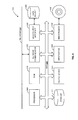
FIG. 6 is a block diagram of anexemplary computer system 600. Thecomputer system 600 includes aprocessor 605 that executes software instructions or code stored on a computerreadable storage medium 655 to perform the above-illustrated methods of the invention. Thecomputer system 600 includes amedia reader 640 to read the instructions from the computerreadable storage medium 655 and store the instructions instorage 610 or in random access memory (RAM) 615. Thestorage 610 provides a large space for keeping static data where at least some instructions could be stored for later execution. The stored instructions may be further compiled to generate other representations of the instructions and dynamically stored in theRAM 615. Theprocessor 605 reads instructions from theRAM 615 and performs actions as instructed. According to one embodiment of the invention, thecomputer system 600 further includes an output device 625 (e.g., a display) to provide at least some of the results of the execution as output including, but not limited to, visual information to users and aninput device 630 to provide a user or another device with means for entering data and/or otherwise interact with thecomputer system 600. Each of theseoutput devices 625 andinput devices 630 could be joined by one or more additional peripherals to further expand the capabilities of thecomputer system 600. Anetwork communicator 635 may be provided to connect thecomputer system 600 to anetwork 650 and in turn to other devices connected to thenetwork 650 including other clients, servers, data stores, and interfaces, for instance. The modules of thecomputer system 600 are interconnected via a bus 645.Computer system 600 includes adata source interface 620 to accessdata source 660. Thedata source 660 can be accessed via one or more abstraction layers implemented in hardware or software. For example, thedata source 660 may be accessed bynetwork 650. In some embodiments thedata source 660 may be accessed via an abstraction layer, such as, a semantic layer. - A data source is an information resource. Data sources include sources of data that enable data storage and retrieval. Data sources may include databases, such as, relational, transactional, hierarchical, multi-dimensional (e.g., OLAP), object oriented databases, and the like. Further data sources include tabular data (e.g., spreadsheets, delimited text files), data tagged with a markup language (e.g., XML data), transactional data, unstructured data (e.g., text files, screen scrapings), hierarchical data (e.g., data in a file system, XML data), files, a plurality of reports, and any other data source accessible through an established protocol, such as, Open DataBase Connectivity (ODBC), produced by an underlying software system (e.g., ERP system), and the like. Data sources may also include a data source where the data is not tangibly stored or otherwise ephemeral such as data streams, broadcast data, and the like. These data sources can include associated data foundations, semantic layers, management systems, security systems and so on.
- The computer readable medium may be a computer readable signal medium or a computer readable storage medium. A computer readable storage medium may be, for example, but not limited to, an electronic, magnetic, optical, electromagnetic, infrared, or semiconductor system, apparatus, or device, or any suitable combination of the foregoing. More specific examples (a non-exhaustive list) of the computer readable storage medium would include the following: an electrical connection having one or more wires, a portable computer diskette, a hard disk, a random access memory (RAM), a read-only memory (ROM), an erasable programmable read-only memory (EPROM or Flash memory), an optical fiber, a portable compact disc read-only memory (CD-ROM), an optical storage device, a magnetic storage device, or any suitable combination of the foregoing. In the context of this document, a computer readable storage medium may be any tangible medium that can contain, or store a program for use by or in connection with an instruction execution system, apparatus, or device.
- A computer readable signal medium may include a propagated data signal with computer readable program code embodied therein, for example, in baseband or as part of a carrier wave. Such a propagated signal may take any of a variety of forms, including, but not limited to, electro-magnetic, optical, or any suitable combination thereof. A computer readable signal medium may be any computer readable medium that is not a computer readable storage medium and that can communicate, propagate, or transport a program for use by or in connection with an instruction execution system, apparatus, or device.
- Program code embodied on a computer readable medium may be transmitted using any appropriate medium, including but not limited to wireless, wireline, optical fiber cable, RF, etc., or any suitable combination of the foregoing.
- Computer program code for carrying out operations for aspects of the present invention may be written in any combination of one or more programming languages, including an object oriented programming language such as Java, Smalltalk, C++ or the like and conventional procedural programming languages, such as the "C" programming language or similar programming languages. The program code may execute entirely on the user's computer, partly on the user's computer, as a stand-alone software package, partly on the user's computer and partly on a remote computer or entirely on the remote computer or server. In the latter scenario, the remote computer may be connected to the user's computer through any type of network, including a local area network (LAN) or a wide area network (WAN), or the connection may be made to an external computer (for example, through the Internet using an Internet Service Provider).
- Aspects of the present disclosure are described with reference to flowchart illustrations and/or block diagrams of methods, apparatus (systems) and computer program products according to embodiments of the present disclosure. It will be understood that each block of the flowchart illustrations and/or block diagrams, and combinations of blocks in the flowchart illustrations and/or block diagrams, can be implemented by computer program instructions. These computer program instructions may be provided to a processor of a general purpose computer, special purpose computer, or other programmable data processing apparatus to produce a machine, such that the instructions, which execute via the processor of the computer or other programmable data processing apparatus, create means for implementing the functions/acts specified in the flowchart and/or block diagram block or blocks.
- These computer program instructions may also be stored in a computer readable medium that can direct a computer, other programmable data processing apparatus, or other devices to function in a particular manner, such that the instructions stored in the computer readable medium produce an article of manufacture including instructions which implement the function/act specified in the flowchart and/or block diagram block or blocks.
- The computer program instructions may also be loaded onto a computer, other programmable data processing apparatus, or other devices to cause a series of operational steps to be performed on the computer, other programmable apparatus or other devices to produce a computer implemented process such that the instructions which execute on the computer or other programmable apparatus provide processes for implementing the functions/acts specified in the flowchart and/or block diagram block or blocks.
- The block diagrams in the Figures illustrate the architecture, functionality, and operation of possible implementations of systems, methods and computer program products according to various embodiments of the present disclosure. In this regard, each block in the block diagrams may represent a module, segment, or portion of code, which comprises one or more executable instructions for implementing the specified logical function(s). It should also be noted that, in some alternative implementations, the functions discussed hereinabove may occur out of the disclosed order. For example, two functions taught in succession may, in fact, be executed substantially concurrently, or the functions may sometimes be executed in the reverse order, depending upon the functionality involved. It will also be noted that each block of the block diagrams, and combinations of blocks in the block diagrams, can be implemented by special purpose hardware-based systems that perform the specified functions or acts, or combinations of special purpose hardware and computer instructions.
- The terminology used herein is for the purpose of describing particular embodiments only and is not intended to be limiting of the invention. As used herein, the singular forms "a", "an" and "the" are intended to include the plural forms as well, unless the context clearly indicates otherwise. It will be further understood that the terms "comprises" and/or "comprising," when used in this specification, specify the presence of stated features, integers, steps, operations, elements, and/or components, but do not preclude the presence or addition of one or more other features, integers, steps, operations, elements, components, and/or groups thereof.
- The corresponding structures, materials, acts, and equivalents of all means or step plus function elements in the claims below are intended to include any structure, material, or act for performing the function in combination with other claimed elements as specifically claimed. The description of the present invention has been presented for purposes of illustration and description, but is not intended to be exhaustive or limited to the invention in the form disclosed. Many modifications and variations will be apparent to those of ordinary skill in the art without departing from the scope and spirit of the invention. The embodiment was chosen and described in order to best explain the principles of the invention and the practical application, and to enable others of ordinary skill in the art to understand the invention for various embodiments with various modifications as are suited to the particular use contemplated.
-
- 102
- mother device
- 104
- satellite device
- 106
- satellite device
- 108
- signal range
- 202
- mother device
- 204
- satellite device
- 206
- owner identifier value
- 208
- item identifier value
- 210
- reachability request
- 212
- item time stamp
- 214
- item location
- 216
- reachability request acknowledgement
- 218
- transceiver
- 302
- mobile phone
- 304
- notepad
- 306
- data
- 402-412
- process blocks
- 502-518
- process blocks
- 600
- computer system
- 605
- processor
- 610
- storage
- 615
- RAM
- 620
- data source interface
- 625
- output device
- 630
- input device
- 635
- network communicator
- 640
- media reader
- 645
- bus
- 650
- network
- 655
- computer readable storage medium
- 660
- data source
Claims (14)
- A computer-implemented method for enabling a user of a mother device (102) to track one or more satellite devices (104) that are in a short range communication with the mother device (102), wherein respective identity information is assigned to the one or more satellite devices (104), wherein the mother device (102) and the one or more satellite devices (104) are portable devices, the method comprising at the mother device:- storing the identity information on the mother device (102), thereby registering the one or more satellite devices (104);- sending a reachability request (210) to each of the registered one or more satellite devices (104) by using the short range communication; and- alerting the user if at least one satellite device (104) of the one or more satellite devices (104) does not respond to the reachability request (210).
- The method of claim 1, wherein the respective identity information is assigned by the method comprising at the mother device:- scanning for the one or more satellite devices (104);- receiving an acknowledgement from each of the one or more satellite devices (104);- presenting the one or more satellite devices (104) on the mother device (102); and- assigning the respective identity information to each of the one or more satellite devices (104).
- The method according to claim 1, wherein the respective identity information is assigned by the method comprising at the mother device:- receiving the respective identity information by prompting the user to indicate the respective identity information of each of the one or more satellite devices (104).- assigning the respective identity information to each of the one or more satellite devices (104).
- The method according to any one of the previous claims, wherein the respective identity information comprises an owner identifier value (206).
- The method according to any one of the previous claims, wherein the respective identity information further comprises an item identifier value (208).
- The method according to claim 1, wherein alerting comprises generating a text message on a display of the mother device (102) followed by a sound signal.
- The method according to claim 6, wherein the text message comprises the identity information of the at least one satellite device (104).
- The method according to claim 1, wherein sending the reachability request (210) is performed according to at least one rule configured on the mother device (102).
- The method according to claim 1, further comprising receiving a reachability request acknowledgement (216), wherein the reachability request acknowledgement (216) contains a time stamp and a location of the one or more satellite devices (104) registered on the mother device (102).
- The method according to claim 9, further comprising displaying a set of directions in conjunction with the location.
- The method according to any one of the previous claims, wherein the short range communication comprises a near field communication.
- A computer-readable non-transitory storage medium comprising computer-readable instructions which, when executed by a processor (605), cause the processor (605) to perform the method steps of anyone of the previous claims.
- A portable device (102) for enabling a user to track one or more satellite devices (104) that are in near field communication with the portable device (102), wherein respective identity information are assigned to the one or more satellite devices (104), the portable device comprising :- a storing unit for storing the identity information on the portable device (102), thereby registering the one or more satellite devices (104);- a sending unit for sending a reachability request (210) to each of the registered one or more satellite devices (104); and- an alerting unit for alerting the user if at least one satellite device (104) of the one or more satellite devices (104) does not respond to the reachability request (210).
- A system comprising the portable device (102) of claim 13, wherein the system further comprises one or more satellite portable devices (104) configured to:- send an acknowledgement in response to a scanning for the one or more satellite devices (104) by the portable device (102); and- send an acknowledgement in response to receiving the reachability request (210) by the mother device (102).
Applications Claiming Priority (1)
| Application Number | Priority Date | Filing Date | Title |
|---|---|---|---|
| US13/086,432 US20120262292A1 (en) | 2011-04-14 | 2011-04-14 | Portable device inventory tracking |
Publications (2)
| Publication Number | Publication Date |
|---|---|
| EP2511863A1 true EP2511863A1 (en) | 2012-10-17 |
| EP2511863B1 EP2511863B1 (en) | 2021-04-21 |
Family
ID=45808221
Family Applications (1)
| Application Number | Title | Priority Date | Filing Date |
|---|---|---|---|
| EP12157737.3A Active EP2511863B1 (en) | 2011-04-14 | 2012-03-01 | Portable device inventory tracking |
Country Status (2)
| Country | Link |
|---|---|
| US (1) | US20120262292A1 (en) |
| EP (1) | EP2511863B1 (en) |
Families Citing this family (5)
| Publication number | Priority date | Publication date | Assignee | Title |
|---|---|---|---|---|
| US9916560B2 (en) | 2013-06-28 | 2018-03-13 | Wal-Mart Stores, Inc. | Inventory tracking |
| US9773223B2 (en) | 2013-06-28 | 2017-09-26 | Wal-Mart Stores, Inc. | Inventory cache |
| US9430753B2 (en) | 2013-06-28 | 2016-08-30 | Wal-Mart Stores, Inc. | Inventory tracking |
| US9638787B2 (en) | 2014-04-25 | 2017-05-02 | Palo Alto Research Center Incorporated | Computer-implemented system and method for tracking objects via identifier-tracker pairings |
| WO2018152174A1 (en) * | 2017-02-14 | 2018-08-23 | Systems And Software Enterprises, Llc | Method for line-replaceable unit identification, localization and status retrieval |
Family Cites Families (33)
| Publication number | Priority date | Publication date | Assignee | Title |
|---|---|---|---|---|
| CA2297194A1 (en) * | 1997-06-09 | 1998-12-17 | William R. Haller | Portable system for inventory identification and control |
| US6714121B1 (en) * | 1999-08-09 | 2004-03-30 | Micron Technology, Inc. | RFID material tracking method and apparatus |
| US7336174B1 (en) * | 2001-08-09 | 2008-02-26 | Key Control Holding, Inc. | Object tracking system with automated system control and user identification |
| US7019663B2 (en) * | 2002-08-08 | 2006-03-28 | Symbol Technologies, Inc. | RF tracking system and method |
| US7151979B2 (en) * | 2002-11-26 | 2006-12-19 | International Paper Company | System and method for tracking inventory |
| US8495180B2 (en) * | 2002-12-11 | 2013-07-23 | Broadcom Corporation | Server architecture supporting a personal media exchange network |
| US20050134449A1 (en) * | 2003-12-18 | 2005-06-23 | Intel Corporation | Two stage radio frequency identification |
| CN1316326C (en) * | 2003-12-19 | 2007-05-16 | 国际商业机器公司 | Method and system for securing an electronic device |
| US7911346B1 (en) * | 2004-10-01 | 2011-03-22 | Emc Corporation | Inventory control using anonymous transaction tokens |
| US20060122004A1 (en) * | 2004-12-06 | 2006-06-08 | Hsin-Hua Chen | Weight adjustable golf club head |
| WO2006122004A1 (en) * | 2005-05-06 | 2006-11-16 | Omnilink Systems, Inc. | System and method of tracking the movement of individuals and assets |
| US8296413B2 (en) * | 2006-05-31 | 2012-10-23 | Sap Ag | Device registration in a hierarchical monitor service |
| ATE484145T1 (en) * | 2006-06-26 | 2010-10-15 | Accenture Global Services Gmbh | FLEXIBLE POSITION TRACKING SYSTEM AND TRACKING AND INVESTIGATION METHODS USING SUCH SYSTEMS |
| US9386269B2 (en) * | 2006-09-07 | 2016-07-05 | Rateze Remote Mgmt Llc | Presentation of data on multiple display devices using a wireless hub |
| US20080079581A1 (en) * | 2006-10-03 | 2008-04-03 | Tom Price | Lost item notification and recovery system |
| US7932824B2 (en) * | 2006-10-13 | 2011-04-26 | RFID Mexico, S.A. DE C.V. | Item tracking system |
| US8376226B2 (en) * | 2007-04-03 | 2013-02-19 | International Business Machines Corporation | System and method for interactive marketing to consumers |
| US7782207B2 (en) * | 2007-06-12 | 2010-08-24 | Checkpoint Systems, Inc. | Comprehensive theft security system |
| EP2218211B1 (en) * | 2007-12-06 | 2020-07-08 | Suhayya Abu-Hakima | Processing of network content and services for mobile or fixed devices |
| US8219121B2 (en) * | 2008-03-22 | 2012-07-10 | Aeris Communications, Inc. | Broadcast data and event triggers over a digital cellular network |
| US8274030B2 (en) * | 2008-09-16 | 2012-09-25 | D-Rev Design for the Other Ninety Percent | Solar concentrator and portable tracking device |
| US8058988B1 (en) * | 2008-09-22 | 2011-11-15 | United Services Automobile Association (Usaa) | Systems and methods for wireless object tracking |
| GB2497028B (en) * | 2008-10-02 | 2013-07-03 | Certusview Technologies Llc | Methods and apparatus for generating electronic records of locate operations |
| US8478617B2 (en) * | 2008-10-02 | 2013-07-02 | Certusview Technologies, Llc | Methods and apparatus for generating alerts on a locate device, based on comparing electronic locate information to facilities map information and/or other image information |
| US8316091B2 (en) * | 2008-12-01 | 2012-11-20 | At&T Mobility Ii Llc | Content management for wireless digital media frames |
| US20100277313A1 (en) * | 2009-04-29 | 2010-11-04 | Dimitry Vaysburg | Light Emitting Device History Log |
| US8073438B2 (en) * | 2009-06-03 | 2011-12-06 | Mcnally Christopher | Method and system for disabling a wireless communication device |
| US8508367B2 (en) * | 2009-09-21 | 2013-08-13 | Checkpoint Systems, Inc. | Configurable monitoring device |
| EP2483877B1 (en) * | 2009-09-28 | 2015-10-21 | Checkpoint Systems, Inc. | System, method, and apparatus for triggering an alarm |
| US9357328B1 (en) * | 2010-06-15 | 2016-05-31 | Thales Avionics, Inc. | Systems and methods for distributing content using attributes |
| US20120229273A1 (en) * | 2011-03-08 | 2012-09-13 | Standing Bear Ii Michael Douglas Rea | Pretty paw detectables and detectable clothing apparel (analog, digital and global positioning detection) |
| US8942213B2 (en) * | 2011-03-18 | 2015-01-27 | Verizon Patent And Licensing Inc. | Method and system for accessing storage devices |
| US8115623B1 (en) * | 2011-03-28 | 2012-02-14 | Robert M Green | Method and system for hand basket theft detection |
-
2011
- 2011-04-14 US US13/086,432 patent/US20120262292A1/en not_active Abandoned
-
2012
- 2012-03-01 EP EP12157737.3A patent/EP2511863B1/en active Active
Non-Patent Citations (1)
| Title |
|---|
| The claimed subject matter, with due regard to the description and drawings, relates to the automation of processes comprised in the list of subject matter and activities excluded from patentability under Art.52(2) and (3) EPC. The only identifiable technical aspects of the claimed invention relate to the use of conventional, general-purpose data processing technology for processing data of an inherently non-technical nature according to criteria which are administrative. The information technology employed is considered to have been generally known as it was widely available to everyone at the date of filing/priority of the present application. The notoriety of such prior art cannot reasonably be contested. * |
Also Published As
| Publication number | Publication date |
|---|---|
| US20120262292A1 (en) | 2012-10-18 |
| EP2511863B1 (en) | 2021-04-21 |
Similar Documents
| Publication | Publication Date | Title |
|---|---|---|
| US10586216B2 (en) | User work schedule identification | |
| US9805342B2 (en) | System and method to track time and attendance of an individual at a workplace for a scheduled workshift | |
| US20160358189A1 (en) | Data acquisition and analytics reporting | |
| Papshev et al. | Electronic prescribing in ambulatory practice: promises, pitfalls, and potential solutions. | |
| JP6285010B2 (en) | Method and apparatus for managing applications using semantic modeling and tagging | |
| US20190043064A1 (en) | Real-time qualitative analysis | |
| EP2511863B1 (en) | Portable device inventory tracking | |
| CN105579994A (en) | Interoperability mechanisms for Internet of Things integration platform | |
| US20150072704A1 (en) | Mechanism for facilitating dynamic detection and communication of geo-locations for devices | |
| Moreira et al. | SAREF4health: Towards IoT standard-based ontology-driven cardiac e-health systems | |
| US20160150375A1 (en) | Devices and Methods for Locating Missing Items with a Wireless Signaling Device | |
| US10621175B2 (en) | Rule execution based on context data | |
| US20210365680A1 (en) | Systems and methods for determining trailer status | |
| AU2014412031B2 (en) | Techniques to associate user data with a mobile device | |
| de Matos et al. | Context-aware systems: technologies and challenges in internet of everything environments | |
| De Sarkar | Internet of Things (IOT) and library services | |
| Machorro-Cano et al. | A brief review of IoT platforms and applications in industry | |
| Giunchiglia et al. | A context model for personal data streams | |
| López | RFID and sensor integration standards: State and future prospects | |
| CN118153610A (en) | Standardized asset location tracking | |
| Rouchdi et al. | Complex event processing and role-based access control implementation in ESN middleware | |
| Shlyakhetko et al. | Model of smart locating application for small businesses | |
| Rosi et al. | Integrating social sensors and pervasive services: approaches and perspectives | |
| Zervoudakis et al. | SmartProduct: a prototype platform for product monitoring-as-a-service, leveraging IoT technologies and the EPCIS standard | |
| El Khaddar et al. | RFID middleware design and architecture |
Legal Events
| Date | Code | Title | Description |
|---|---|---|---|
| PUAI | Public reference made under article 153(3) epc to a published international application that has entered the european phase |
Free format text: ORIGINAL CODE: 0009012 |
|
| AK | Designated contracting states |
Kind code of ref document: A1 Designated state(s): AL AT BE BG CH CY CZ DE DK EE ES FI FR GB GR HR HU IE IS IT LI LT LU LV MC MK MT NL NO PL PT RO RS SE SI SK SM TR |
|
| AX | Request for extension of the european patent |
Extension state: BA ME |
|
| 17P | Request for examination filed |
Effective date: 20120920 |
|
| 17Q | First examination report despatched |
Effective date: 20121015 |
|
| APBK | Appeal reference recorded |
Free format text: ORIGINAL CODE: EPIDOSNREFNE |
|
| APBN | Date of receipt of notice of appeal recorded |
Free format text: ORIGINAL CODE: EPIDOSNNOA2E |
|
| APBR | Date of receipt of statement of grounds of appeal recorded |
Free format text: ORIGINAL CODE: EPIDOSNNOA3E |
|
| APAV | Appeal reference deleted |
Free format text: ORIGINAL CODE: EPIDOSDREFNE |
|
| RAP1 | Party data changed (applicant data changed or rights of an application transferred) |
Owner name: SAP SE |
|
| APBT | Appeal procedure closed |
Free format text: ORIGINAL CODE: EPIDOSNNOA9E |
|
| GRAP | Despatch of communication of intention to grant a patent |
Free format text: ORIGINAL CODE: EPIDOSNIGR1 |
|
| STAA | Information on the status of an ep patent application or granted ep patent |
Free format text: STATUS: GRANT OF PATENT IS INTENDED |
|
| INTG | Intention to grant announced |
Effective date: 20201120 |
|
| GRAS | Grant fee paid |
Free format text: ORIGINAL CODE: EPIDOSNIGR3 |
|
| GRAA | (expected) grant |
Free format text: ORIGINAL CODE: 0009210 |
|
| STAA | Information on the status of an ep patent application or granted ep patent |
Free format text: STATUS: THE PATENT HAS BEEN GRANTED |
|
| AK | Designated contracting states |
Kind code of ref document: B1 Designated state(s): AL AT BE BG CH CY CZ DE DK EE ES FI FR GB GR HR HU IE IS IT LI LT LU LV MC MK MT NL NO PL PT RO RS SE SI SK SM TR |
|
| REG | Reference to a national code |
Ref country code: GB Ref legal event code: FG4D |
|
| REG | Reference to a national code |
Ref country code: CH Ref legal event code: EP |
|
| REG | Reference to a national code |
Ref country code: DE Ref legal event code: R096 Ref document number: 602012075279 Country of ref document: DE Ref country code: IE Ref legal event code: FG4D |
|
| REG | Reference to a national code |
Ref country code: AT Ref legal event code: REF Ref document number: 1385426 Country of ref document: AT Kind code of ref document: T Effective date: 20210515 |
|
| REG | Reference to a national code |
Ref country code: LT Ref legal event code: MG9D |
|
| REG | Reference to a national code |
Ref country code: AT Ref legal event code: MK05 Ref document number: 1385426 Country of ref document: AT Kind code of ref document: T Effective date: 20210421 |
|
| REG | Reference to a national code |
Ref country code: NL Ref legal event code: MP Effective date: 20210421 |
|
| PG25 | Lapsed in a contracting state [announced via postgrant information from national office to epo] |
Ref country code: FI Free format text: LAPSE BECAUSE OF FAILURE TO SUBMIT A TRANSLATION OF THE DESCRIPTION OR TO PAY THE FEE WITHIN THE PRESCRIBED TIME-LIMIT Effective date: 20210421 Ref country code: NL Free format text: LAPSE BECAUSE OF FAILURE TO SUBMIT A TRANSLATION OF THE DESCRIPTION OR TO PAY THE FEE WITHIN THE PRESCRIBED TIME-LIMIT Effective date: 20210421 Ref country code: LT Free format text: LAPSE BECAUSE OF FAILURE TO SUBMIT A TRANSLATION OF THE DESCRIPTION OR TO PAY THE FEE WITHIN THE PRESCRIBED TIME-LIMIT Effective date: 20210421 Ref country code: AT Free format text: LAPSE BECAUSE OF FAILURE TO SUBMIT A TRANSLATION OF THE DESCRIPTION OR TO PAY THE FEE WITHIN THE PRESCRIBED TIME-LIMIT Effective date: 20210421 Ref country code: BG Free format text: LAPSE BECAUSE OF FAILURE TO SUBMIT A TRANSLATION OF THE DESCRIPTION OR TO PAY THE FEE WITHIN THE PRESCRIBED TIME-LIMIT Effective date: 20210721 Ref country code: HR Free format text: LAPSE BECAUSE OF FAILURE TO SUBMIT A TRANSLATION OF THE DESCRIPTION OR TO PAY THE FEE WITHIN THE PRESCRIBED TIME-LIMIT Effective date: 20210421 |
|
| PG25 | Lapsed in a contracting state [announced via postgrant information from national office to epo] |
Ref country code: PL Free format text: LAPSE BECAUSE OF FAILURE TO SUBMIT A TRANSLATION OF THE DESCRIPTION OR TO PAY THE FEE WITHIN THE PRESCRIBED TIME-LIMIT Effective date: 20210421 Ref country code: NO Free format text: LAPSE BECAUSE OF FAILURE TO SUBMIT A TRANSLATION OF THE DESCRIPTION OR TO PAY THE FEE WITHIN THE PRESCRIBED TIME-LIMIT Effective date: 20210721 Ref country code: PT Free format text: LAPSE BECAUSE OF FAILURE TO SUBMIT A TRANSLATION OF THE DESCRIPTION OR TO PAY THE FEE WITHIN THE PRESCRIBED TIME-LIMIT Effective date: 20210823 Ref country code: ES Free format text: LAPSE BECAUSE OF FAILURE TO SUBMIT A TRANSLATION OF THE DESCRIPTION OR TO PAY THE FEE WITHIN THE PRESCRIBED TIME-LIMIT Effective date: 20210421 Ref country code: IS Free format text: LAPSE BECAUSE OF FAILURE TO SUBMIT A TRANSLATION OF THE DESCRIPTION OR TO PAY THE FEE WITHIN THE PRESCRIBED TIME-LIMIT Effective date: 20210821 Ref country code: GR Free format text: LAPSE BECAUSE OF FAILURE TO SUBMIT A TRANSLATION OF THE DESCRIPTION OR TO PAY THE FEE WITHIN THE PRESCRIBED TIME-LIMIT Effective date: 20210722 Ref country code: LV Free format text: LAPSE BECAUSE OF FAILURE TO SUBMIT A TRANSLATION OF THE DESCRIPTION OR TO PAY THE FEE WITHIN THE PRESCRIBED TIME-LIMIT Effective date: 20210421 Ref country code: RS Free format text: LAPSE BECAUSE OF FAILURE TO SUBMIT A TRANSLATION OF THE DESCRIPTION OR TO PAY THE FEE WITHIN THE PRESCRIBED TIME-LIMIT Effective date: 20210421 Ref country code: SE Free format text: LAPSE BECAUSE OF FAILURE TO SUBMIT A TRANSLATION OF THE DESCRIPTION OR TO PAY THE FEE WITHIN THE PRESCRIBED TIME-LIMIT Effective date: 20210421 |
|
| REG | Reference to a national code |
Ref country code: DE Ref legal event code: R097 Ref document number: 602012075279 Country of ref document: DE |
|
| PG25 | Lapsed in a contracting state [announced via postgrant information from national office to epo] |
Ref country code: RO Free format text: LAPSE BECAUSE OF FAILURE TO SUBMIT A TRANSLATION OF THE DESCRIPTION OR TO PAY THE FEE WITHIN THE PRESCRIBED TIME-LIMIT Effective date: 20210421 Ref country code: EE Free format text: LAPSE BECAUSE OF FAILURE TO SUBMIT A TRANSLATION OF THE DESCRIPTION OR TO PAY THE FEE WITHIN THE PRESCRIBED TIME-LIMIT Effective date: 20210421 Ref country code: CZ Free format text: LAPSE BECAUSE OF FAILURE TO SUBMIT A TRANSLATION OF THE DESCRIPTION OR TO PAY THE FEE WITHIN THE PRESCRIBED TIME-LIMIT Effective date: 20210421 Ref country code: DK Free format text: LAPSE BECAUSE OF FAILURE TO SUBMIT A TRANSLATION OF THE DESCRIPTION OR TO PAY THE FEE WITHIN THE PRESCRIBED TIME-LIMIT Effective date: 20210421 Ref country code: SK Free format text: LAPSE BECAUSE OF FAILURE TO SUBMIT A TRANSLATION OF THE DESCRIPTION OR TO PAY THE FEE WITHIN THE PRESCRIBED TIME-LIMIT Effective date: 20210421 Ref country code: SM Free format text: LAPSE BECAUSE OF FAILURE TO SUBMIT A TRANSLATION OF THE DESCRIPTION OR TO PAY THE FEE WITHIN THE PRESCRIBED TIME-LIMIT Effective date: 20210421 |
|
| PLBE | No opposition filed within time limit |
Free format text: ORIGINAL CODE: 0009261 |
|
| STAA | Information on the status of an ep patent application or granted ep patent |
Free format text: STATUS: NO OPPOSITION FILED WITHIN TIME LIMIT |
|
| 26N | No opposition filed |
Effective date: 20220124 |
|
| PG25 | Lapsed in a contracting state [announced via postgrant information from national office to epo] |
Ref country code: IS Free format text: LAPSE BECAUSE OF FAILURE TO SUBMIT A TRANSLATION OF THE DESCRIPTION OR TO PAY THE FEE WITHIN THE PRESCRIBED TIME-LIMIT Effective date: 20210821 Ref country code: AL Free format text: LAPSE BECAUSE OF FAILURE TO SUBMIT A TRANSLATION OF THE DESCRIPTION OR TO PAY THE FEE WITHIN THE PRESCRIBED TIME-LIMIT Effective date: 20210421 |
|
| PG25 | Lapsed in a contracting state [announced via postgrant information from national office to epo] |
Ref country code: IT Free format text: LAPSE BECAUSE OF FAILURE TO SUBMIT A TRANSLATION OF THE DESCRIPTION OR TO PAY THE FEE WITHIN THE PRESCRIBED TIME-LIMIT Effective date: 20210421 |
|
| PG25 | Lapsed in a contracting state [announced via postgrant information from national office to epo] |
Ref country code: MC Free format text: LAPSE BECAUSE OF FAILURE TO SUBMIT A TRANSLATION OF THE DESCRIPTION OR TO PAY THE FEE WITHIN THE PRESCRIBED TIME-LIMIT Effective date: 20210421 |
|
| REG | Reference to a national code |
Ref country code: CH Ref legal event code: PL |
|
| REG | Reference to a national code |
Ref country code: BE Ref legal event code: MM Effective date: 20220331 |
|
| PG25 | Lapsed in a contracting state [announced via postgrant information from national office to epo] |
Ref country code: LU Free format text: LAPSE BECAUSE OF NON-PAYMENT OF DUE FEES Effective date: 20220301 Ref country code: LI Free format text: LAPSE BECAUSE OF NON-PAYMENT OF DUE FEES Effective date: 20220331 Ref country code: IE Free format text: LAPSE BECAUSE OF NON-PAYMENT OF DUE FEES Effective date: 20220301 Ref country code: CH Free format text: LAPSE BECAUSE OF NON-PAYMENT OF DUE FEES Effective date: 20220331 |
|
| PG25 | Lapsed in a contracting state [announced via postgrant information from national office to epo] |
Ref country code: BE Free format text: LAPSE BECAUSE OF NON-PAYMENT OF DUE FEES Effective date: 20220331 |
|
| PG25 | Lapsed in a contracting state [announced via postgrant information from national office to epo] |
Ref country code: HU Free format text: LAPSE BECAUSE OF FAILURE TO SUBMIT A TRANSLATION OF THE DESCRIPTION OR TO PAY THE FEE WITHIN THE PRESCRIBED TIME-LIMIT; INVALID AB INITIO Effective date: 20120301 |
|
| PG25 | Lapsed in a contracting state [announced via postgrant information from national office to epo] |
Ref country code: MK Free format text: LAPSE BECAUSE OF FAILURE TO SUBMIT A TRANSLATION OF THE DESCRIPTION OR TO PAY THE FEE WITHIN THE PRESCRIBED TIME-LIMIT Effective date: 20210421 Ref country code: CY Free format text: LAPSE BECAUSE OF FAILURE TO SUBMIT A TRANSLATION OF THE DESCRIPTION OR TO PAY THE FEE WITHIN THE PRESCRIBED TIME-LIMIT Effective date: 20210421 |
|
| PG25 | Lapsed in a contracting state [announced via postgrant information from national office to epo] |
Ref country code: TR Free format text: LAPSE BECAUSE OF FAILURE TO SUBMIT A TRANSLATION OF THE DESCRIPTION OR TO PAY THE FEE WITHIN THE PRESCRIBED TIME-LIMIT Effective date: 20210421 |
|
| PG25 | Lapsed in a contracting state [announced via postgrant information from national office to epo] |
Ref country code: MT Free format text: LAPSE BECAUSE OF FAILURE TO SUBMIT A TRANSLATION OF THE DESCRIPTION OR TO PAY THE FEE WITHIN THE PRESCRIBED TIME-LIMIT Effective date: 20210421 |
|
| PGFP | Annual fee paid to national office [announced via postgrant information from national office to epo] |
Ref country code: GB Payment date: 20260324 Year of fee payment: 15 |
|
| PGFP | Annual fee paid to national office [announced via postgrant information from national office to epo] |
Ref country code: DE Payment date: 20260319 Year of fee payment: 15 |
|
| PGFP | Annual fee paid to national office [announced via postgrant information from national office to epo] |
Ref country code: FR Payment date: 20260320 Year of fee payment: 15 |