EP2510430B1 - Storage device and method for using a virtual file in a public memory area to access a plurality of protected files in a private memory area - Google Patents
Storage device and method for using a virtual file in a public memory area to access a plurality of protected files in a private memory area Download PDFInfo
- Publication number
- EP2510430B1 EP2510430B1 EP10800795.6A EP10800795A EP2510430B1 EP 2510430 B1 EP2510430 B1 EP 2510430B1 EP 10800795 A EP10800795 A EP 10800795A EP 2510430 B1 EP2510430 B1 EP 2510430B1
- Authority
- EP
- European Patent Office
- Prior art keywords
- file
- memory area
- host
- virtual file
- storage device
- Prior art date
- Legal status (The legal status is an assumption and is not a legal conclusion. Google has not performed a legal analysis and makes no representation as to the accuracy of the status listed.)
- Active
Links
Images









Classifications
-
- G—PHYSICS
- G06—COMPUTING OR CALCULATING; COUNTING
- G06F—ELECTRIC DIGITAL DATA PROCESSING
- G06F21/00—Security arrangements for protecting computers, components thereof, programs or data against unauthorised activity
-
- G—PHYSICS
- G06—COMPUTING OR CALCULATING; COUNTING
- G06F—ELECTRIC DIGITAL DATA PROCESSING
- G06F21/00—Security arrangements for protecting computers, components thereof, programs or data against unauthorised activity
- G06F21/10—Protecting distributed programs or content, e.g. vending or licensing of copyrighted material ; Digital rights management [DRM]
-
- G—PHYSICS
- G06—COMPUTING OR CALCULATING; COUNTING
- G06F—ELECTRIC DIGITAL DATA PROCESSING
- G06F21/00—Security arrangements for protecting computers, components thereof, programs or data against unauthorised activity
- G06F21/30—Authentication, i.e. establishing the identity or authorisation of security principals
- G06F21/31—User authentication
-
- G—PHYSICS
- G06—COMPUTING OR CALCULATING; COUNTING
- G06F—ELECTRIC DIGITAL DATA PROCESSING
- G06F21/00—Security arrangements for protecting computers, components thereof, programs or data against unauthorised activity
- G06F21/60—Protecting data
- G06F21/62—Protecting access to data via a platform, e.g. using keys or access control rules
- G06F21/6218—Protecting access to data via a platform, e.g. using keys or access control rules to a system of files or objects, e.g. local or distributed file system or database
-
- G—PHYSICS
- G06—COMPUTING OR CALCULATING; COUNTING
- G06F—ELECTRIC DIGITAL DATA PROCESSING
- G06F21/00—Security arrangements for protecting computers, components thereof, programs or data against unauthorised activity
- G06F21/70—Protecting specific internal or peripheral components, in which the protection of a component leads to protection of the entire computer
- G06F21/78—Protecting specific internal or peripheral components, in which the protection of a component leads to protection of the entire computer to assure secure storage of data
- G06F21/79—Protecting specific internal or peripheral components, in which the protection of a component leads to protection of the entire computer to assure secure storage of data in semiconductor storage media, e.g. directly-addressable memories
-
- G—PHYSICS
- G06—COMPUTING OR CALCULATING; COUNTING
- G06F—ELECTRIC DIGITAL DATA PROCESSING
- G06F3/00—Input arrangements for transferring data to be processed into a form capable of being handled by the computer; Output arrangements for transferring data from processing unit to output unit, e.g. interface arrangements
- G06F3/06—Digital input from, or digital output to, record carriers, e.g. RAID, emulated record carriers or networked record carriers
-
- G—PHYSICS
- G06—COMPUTING OR CALCULATING; COUNTING
- G06F—ELECTRIC DIGITAL DATA PROCESSING
- G06F3/00—Input arrangements for transferring data to be processed into a form capable of being handled by the computer; Output arrangements for transferring data from processing unit to output unit, e.g. interface arrangements
- G06F3/06—Digital input from, or digital output to, record carriers, e.g. RAID, emulated record carriers or networked record carriers
- G06F3/0601—Interfaces specially adapted for storage systems
- G06F3/0602—Interfaces specially adapted for storage systems specifically adapted to achieve a particular effect
- G06F3/062—Securing storage systems
- G06F3/0622—Securing storage systems in relation to access
-
- G—PHYSICS
- G06—COMPUTING OR CALCULATING; COUNTING
- G06F—ELECTRIC DIGITAL DATA PROCESSING
- G06F3/00—Input arrangements for transferring data to be processed into a form capable of being handled by the computer; Output arrangements for transferring data from processing unit to output unit, e.g. interface arrangements
- G06F3/06—Digital input from, or digital output to, record carriers, e.g. RAID, emulated record carriers or networked record carriers
- G06F3/0601—Interfaces specially adapted for storage systems
- G06F3/0628—Interfaces specially adapted for storage systems making use of a particular technique
- G06F3/0638—Organizing or formatting or addressing of data
- G06F3/0644—Management of space entities, e.g. partitions, extents, pools
-
- G—PHYSICS
- G06—COMPUTING OR CALCULATING; COUNTING
- G06F—ELECTRIC DIGITAL DATA PROCESSING
- G06F3/00—Input arrangements for transferring data to be processed into a form capable of being handled by the computer; Output arrangements for transferring data from processing unit to output unit, e.g. interface arrangements
- G06F3/06—Digital input from, or digital output to, record carriers, e.g. RAID, emulated record carriers or networked record carriers
- G06F3/0601—Interfaces specially adapted for storage systems
- G06F3/0668—Interfaces specially adapted for storage systems adopting a particular infrastructure
- G06F3/0671—In-line storage system
- G06F3/0673—Single storage device
- G06F3/0674—Disk device
- G06F3/0676—Magnetic disk device
Definitions
- Storage devices such as memory cards, are often used to store content, such as digital audio (e.g., music) and/or video (e.g., movies) files.
- content can be stored in a private memory area in the storage device, which is accessible only by authenticated hosts.
- a host presents its credentials to the storage device for authentication. If the host is authenticated, the storage device allows the host to access the content stored in the private memory area. While this security system prevents unauthorized hosts from accessing the content stored in the private memory area, a problem can occur if an authenticated host has a virus or other malicious software on it.
- US2008195797A1 discloses to extend the functionality of SD cards beyond the local storage functionality. US2008195797A1 provides access to a downloaded file via a virtual file.
- the embodiments described below generally relate to a storage device and method for using a virtual file in a public memory area to access a plurality of protected files in a private memory area according to the attached claims.
- the following embodiments generally relate to a storage device and method for using a virtual file in a public memory area to access a plurality of protected files in a private memory area.
- the public memory area contains a virtual file that acts as a gateway to the plurality of protected files in the private memory area.
- Java and other predefined application program interfaces (such as those used in many handheld devices and mobile phones) only allow file-based commands and do not use low-level commands that can be used to control the storage device to provide access to a specific protected file in the private memory area. That is why some storage devices may grant the host access to the entire private memory area, which can lead to unauthorized actions when malicious software on the host takes advantage of this open access to the private storage area. While a proprietary API can be written that supports streaming of a protected file out of the private storage area, relatively few mobile devices would permit such an API.
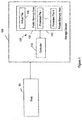
- FIG. 1 is a block diagram of a host 50 in communication with a storage device 100 of an embodiment.
- the host 50 can take any suitable form, such as, but not limited to, a dedicated content player, a mobile phone, a personal computer (PC), a game device, a personal digital assistant (PDA), a kiosk, and a TV system.
- the storage device 100 can also take any suitable form, such as, but not limited to, a handheld, removable memory card (e.g., a flash storage card), a universal serial bus (USB) device, and a solid-state drive.
- the storage device 100 is removably connected to the host 50, so a user can use the storage device 100 with a variety of hosts.
- the storage device 100 comprises a controller 110 and a memory 120.
- the controller 110 can be implemented in any suitable manner.
- the controller 110 can take the form of a microprocessor or processor and a computer-readable medium that stores computer-readable program code (e.g., software or firmware) executable by the (micro)processor, logic gates, switches, an application specific integrated circuit (ASIC), a programmable logic controller, and an embedded microcontroller, for example.
- Examples of controllers include, but are not limited to, the following microcontrollers: ARC 625D, Atmel AT91SAM, Microchip PIC18F26K20, and Silicon Labs C8051F320. Examples of various components that can be used in a controller are described in the embodiments discussed below and are shown in the associated drawings.
- the controller 110 can also be implemented as part of the memory control logic.
- the storage device 100 comprises a memory 120, which can take any suitable form.
- the memory 120 takes the form of a solid-state (e.g., flash) memory and can be one-time programmable, few-time programmable, or many-time programmable.
- other forms of memory such as optical memory and magnetic memory, can be used.
- the controller 110 and/or memory 120 can be implemented with several components.
- the memory 120 comprises a public memory area 130 and a private memory area 140.
- the public and private memory areas 130, 140 are different partitions of a single memory device; however, in other embodiments, the public and private memory areas 130, 140 are different memory devices.
- the public memory area 130 is generally accessible without restriction, while the private memory area 140 can only be accessed by authorized entities and is typically invisible to a host (e.g., a hidden partition). As such, the private memory area 140 can be used to store a plurality of content files (here, files 1-N) that should only be accessed by authorized entities.
- files 1-N content files
- a “content file” can take any suitable form, such as, but not limited to, digital video (with or without accompanying audio) (e.g., a movie, an episode of a TV show, a news program, etc.), audio (e.g., a song, a podcast, one or a series of sounds, an audio book, etc.), still or moving images (e.g., a photograph, a computer-generated display, etc.), text (with or without graphics) (e.g., an article, a text file, etc.), a video game or other software, and a hybrid multi-media presentation of two or more of these forms.
- digital video with or without accompanying audio
- audio e.g., a song, a podcast, one or a series of sounds, an audio book, etc.
- still or moving images e.g., a photograph, a computer-generated display, etc.
- text with or without graphics
- a video game or other software e.g., a hybrid multi-media presentation of two
- the public memory area 130 contains a virtual file 150.
- the virtual file 150 is "virtual" in the sense that it exists as allocated logical block addresses in the file allocation table (FAT) for the public memory area 130 but it does not contain any data and is not actually accessible. There may not even be any physical storage locations allocated in the public memory area 130 for the virtual file 150 (although, as discussed below, in some embodiments, a relatively small amount of physical storage locations (e.g., 15 MB) may be allocated in the public memory area 130 for the virtual file 150). However, since the virtual file 150 has logical block addresses allocated to it the FAT table in the public memory area 130, the virtual file 150 will appear as a regular file to the host 50.
- FAT file allocation table
- the virtual file 150 serves as a gateway to the plurality of protected files 1-N in the private memory area 140. That is, when the controller 110 recognizes that an attempt is being made to access the virtual file 150 (e.g., from logical block addresses specified in a read command), the controller 110 will take a special action instead of providing the host 50 with access to the virtual file 150 itself. For example, when the controller 110 receives a request from the host 50 for access to the virtual file 150, the controller 110 can select one of the plurality of protected files 1-N stored in the private memory area 140 and respond to the request by providing the host 50 with access to the selected protected file. When the same virtual file 150 is later accessed, the controller 110 can select and provide access to a different one of the plurality of protected files 1-N.
- the controller 110 can select and provide access to another song on the playlist.
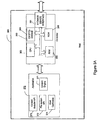
- an application (or caplet 160) stores a set of rules that determines the way the controller 110 manages the protected content in the private memory area 140 (e.g., what protected content to access and when).
- the caplet 160 is stored in the private memory area 140 to prevent a hacker from tampering with the set of rules.
- the controller 110 uses the set of rules in the caplet 160 to determine how to react to a request from the host 50 to access the virtual file 150.
- the private memory area 140 also stores a database 170 that associates the plurality of protected files 1-N with the virtual file 150.
- the database 170 acts as a playlist of the plurality of protected files 1-N.
- the database 170 is preloaded into the storage device 100 along with the plurality of protected files 1-N. If the database 170 is encrypted, the caplet 160 can hold the key to decrypt the database 170.
- the caplet 160 programs the controller 110 to control access attempts made by the host 50 to the virtual file 150 according to the preloaded database 170. For example, in response to a request to access the virtual file 150, the controller 110 can select and provide access to one of the plurality for protected files 1-N based on the database 170. As another example, the controller 110 can determine whether the host 50 is authorized or unauthorized and can provide access to different types of content accordingly, which may be desirable if the storage device 100 is a portable memory card that can be used with a variety of hosts that may or may not be authorized. So, if the host 50 is an authorized player, the controller 110 can respond to the request from the host 50 to access the virtual file 150 by providing access to protected content.
- the controller 110 can respond to the host request by providing access to an alternate file.
- the set of rules can specify that the controller 110 should provide access to a protected file (e.g., a movie) if an application on the host 50 is authorized; otherwise, the controller 110 can provide access to an alternate file (e.g., a trailer for the movie), which may be stored in the public or private memory areas 130, 140.
- a similar host request to access the virtual file 150 can be handled differently by the controller 110 based on whether the host 50 is an authorized or unauthorized entity (e.g., the storage device 100 can return a dedicated commercial if the user has not logged-in or has not been authenticated by the storage device 100).
- the selection of the file can be based on time, information about the user, whether and how the host logged into the storage device 50, or any other suitable condition.
- the virtual file 150 can be treated differently in different situations, and a single virtual file 150 in the public memory area 130 can be used to provide access to one or more protected files in the private memory area 140.
- the host 50 runs a host application 60 and a media player (here, a Java player 70).
- the host application 60 controls the Java player 70 and also sends additional instructions to the controller 110 of the storage device 100, which will be described below.
- a virtual file 150 (e.g., named "audio.MP3") is associated with the plurality of protected files 1-N stored in the private memory area 140. Every time the host 50 request access to "audio.MP3," the controller 110 can select and provide access to a different one of the plurality of protected files 1-N.
- the size of the virtual file 150 is at least as large as the size of the largest protected file in the private memory area 140.
- the controller 110 can pad the content with valid data, so that the Java player 70 in the host 50 does not malfunction.
- the controller 110 can, on the fly, pad the audio file with valid data, such as silent MP3 frames or expected header information. This is done to be able to support different host cache-ahead mechanisms.
- the controller 110 can inform the host 50 of the actual play length of the file, and the host 50 can stop the playback of the file before it reaches the padded data.
- the Java player 70 sends a request to the storage device 110 using the JSR-135 protocol to read the virtual file 150, which it thinks is an audio file.
- the controller 110 in the storage device 100 detects that an attempt is being made to access the virtual file 150 (e.g., from the logical block address specified in the request) and, based on the rule in the caplet 160, the controller 110 selects and provides the Java player 70 with access to Song A.
- the controller 100 also informs the host application 60 of the actual size of Song A, which may be less than the size of the virtual file 150, as discussed above.
- the host application 60 monitors the playback and when Song A is complete, the host application 60 sends a command to the controller 110 via the JSR-75 protocol to stop streaming data and to skip to the next song. (The JSR-135 protocol does not support this type of command.)
- the controller 110 updates the database 170 to point to the next song (Song B).
- the host application 60 instructs the Java player 70 to again request access to the virtual file 150. However, this time, the controller 110 selects and provides the Java player 70 with access to Song B (not Song A). The process described above then repeats as the Java player 70 continues to request playback of additional songs.
- the storage device 100 uses a "dedicated file system" for playback of preloaded protected files to minimize the time it takes the storage device 100 to locate and access the preloaded protected files and to minimize the time it takes to extract details on the preloaded protected files (e.g., track name, artist name, album name, track duration, etc.).
- time to access the virtual file 150 should be about the same as the time to access another type of file, in spite of the controller 110 overhead involved in providing the gateway functionality to the protected files.
- protected files can be preloaded into the private memory area 140 in continuous logical block address (LBA) order. Tables can then be built during production to specify the exact starting LBA for each protected file, along with any other relevant data, such as file duration. Because reading such tables is faster than opening files to gather needed information, the use of this dedicated file system provides a faster response time.
- LBA logical block address
- the "dedicated file system” can be used to reduce the amount of time that is required for locating and accessing different preloaded content. This can be done by defining a dedicated structure (e.g., a table) for saving, in a specific way, only the needed data for playback. This data can change between different products according to product-specific requirements (e.g., track name, artist name, album name, track duration, etc.).
- This data structure can be preloaded into a secure location in the storage device 100, in continuous LBA order, with the tables holding the data located in the exact starting LBA for each file alongside other data specified before. Every entry in the table can represent a specific file which can be identified using a entry key in the table.
- the file Upon a request to access a specific file, the file is located in the table, and the relevant data is retrieved. For example, playing a song from the beginning using the virtual file 150 may require knowledge of the starting LBA of the file, its actual duration, and the album name to be displayed. In this way of handling files, the required amount of time to locate and playback a file dramatically decreases as compared to the time needed to handle a FAT table and parse the file content.
- the storage device 100 can support the use of a "compound command.”
- a compound command is a single command that incorporates two or more commands that control different aspects of the playback system, such as, for example, changing both the virtual file state and the song that is being played.
- the use of compound commands may be especially desirable in environments, such as audio streaming, where a fast response time is desired.
- a compound command can specify "skip channel” and "skip two songs ahead” or "skip song and go into pause.”
- several mode changes may need to occur at the same time. For example, the sequence of "playing a song, going into pause mode, then skipping to the next song” may require the next song to start instantly after the skip occur.
- two commands may need to be sent over the bus in order for this change to take place.
- different aspects of the system may need to be controlled at the same time, such as changing both the virtual file state and the song that is being played. Again, the idea is to reduce the amount of time needed for handling state changes on the storage device 100 and the amount of time it takes to transport the command from the host 50 to the storage device 100 and back.
- memory consumption can be reduced by having the public memory area 130 emulate itself to the host 50 as an extended storage area, so that a host request to the extended (emulated) storage area is handled by the controller 110 as if it were a host request to the private memory area 140 of the storage device.
- the virtual file 150 does not consume real memory in the public memory area 130. This allows storing large files (e.g., movies) without consuming valuable memory.
- the storage device 100 can identify itself as having a 45 MB public memory area 130, in which 30 MB are mapped to physical addresses and 15 MB are not.
- the virtual file 150 is used to add new content in the private memory area 140, if the host 50 is authorized to do so. For example, when a user buys a song, the host application 70 can control the private memory area 140 to add new content in its free space and then use the virtual file 150 to write the new song data to the private memory area 140.
- a stored commercial can be updated to a new commercial. This can be achieved by linking the virtual file 150 to this private file and then changing its content by writing to the virtual file 150.
- the storage device 100 can intercept the write command and channel the write operation to the correct place on the private memory area 140. This enables updating the private memory area 140 to hold updated content and purchased content in a secure way
- Additional alternatives relate to copy protection mechanisms. Because the virtual file 150 is accessible in the public memory area 130, the virtual file 150 can be easily copied by a simple copy command from any host. The following alternatives can be used to prevent copying of the virtual file 150, thereby assuring that access to protected content stored in the private memory area 140 is only given to an authenticated entity allowed to access the content. Otherwise, the host 50 can simply copy the virtual file 150 to another address range in the public memory area 130 and freely access the protected content.
- One exemplary copy protection mechanism uses an encryption scheme to encrypt the protected content sent out of the storage device 100 by read operations of the virtual file 150. This can be done by using a session key that is updated each time an authentication process is applied between the host application 60 and the storage device 100 (e.g., during log in). This session key is known both to the host 50 and the storage device 100, so the storage device 100 can use the session key to encrypt the protected content, and the host 50 can use the session key to decrypt the protected content. The use of the session key in this way creates a secure channel between the storage device 100 and the host application 60.
- Another exemplary copy protection mechanism uses a counter in the storage device 100 to count sectors that have been read by the host 50.
- the storage device 100 can start sending buffers of silent audio.
- the host 50 after proper authentication, can instruct the storage device 100, over playback time, to increase the counter.
- This operation of setting the counter can be done during the reading of the file (e.g., during playback of a song).
- the storage device 100 can detect the attempt and start returning invalid data to the host 50. This prevents copying of the song because a hacker can only retrieve a certain amount of the song (e.g., 1 MB of audio of a 5 MB song) without the counter being increased.
- a data rate control is enforced by the storage device 100 after examining a pattern of read operations from the host 50 to the virtual file 150. If these read operations do not occur as expected (e.g., the storage device 100 detects that copying of the virtual file 150 is taking place due to fast and rapid file access), the storage device 100 can return invalid data or fail the read process. In this way, the storage device 100 enforces data rate control on the protected file read from the storage device 100.
- the host 50 may be able to configure the storage device DRC mechanism to fit the specific traits of the current host 50 after having proper authentication to the storage device 100.
- a “sliding window” can also be used as an exemplary copy protection scheme.
- the storage device 100 allows the host 50 to read real data only within a specific LBA range. Accessing data outside this LBA range returns buffers of silent audio.
- the host 50 can reconfigure the allowed range, after proper authentication. Since the allowed range moves, it is referred to here as a "sliding window.”
- the concept of the counter discussed above can be used as a sliding window (e.g., copy from 1 to 500 for now), or playback of data can be allowed from only a specific location inside the virtual file 150.
- the virtual file 150 can be used for playback from native media players. This can be done by using a relatively large virtual file for each playlist of content. This virtual file can be concatenate on-the-fly song-after-song.
- the storage device 100 can also provide an ID3 tag for each channel of content to be displayed in the host native player. In this way, the storage device 100 can be used on each host (e.g., handset) or operating system that is available. This solution can be enhanced by allowing the storage device a way to sense attempts to skip a song (e.g., by detecting when the user tries to fast-forward / rewind / drag the progress bar).
- Figures 3A and 3B are block diagrams of a storage device 300 and host 350 of an embodiment.
- the storage device 300 comprises a controller 310 and a memory 320.
- the controller 310 comprises a memory interface 311 for interfacing with the memory 320 and a host interface 312 for interfacing with the host 350.
- the controller 310 also comprises a central processing unit (CPU) 313, a crypto-engine 314 operative to provide encryption and/or decryption operations, read access memory (RAM) 315, read only memory (ROM) 316 which stores firmware (logic) for the basic operations of the storage device 300, and a non-volatile memory (NVM) 317 which stores a device-specific key used for encryption/decryption operations.
- CPU central processing unit
- crypto-engine 314 operative to provide encryption and/or decryption operations
- RAM random access memory
- ROM read only memory
- NVM non-volatile memory
- the storage device-specific key can be stored in other memory areas within the storage device.
- the components shown in Figure 3B can be implemented in any suitable manner.
- the memory 320 comprises a public partition 325 that is managed by a file system on the host 350 and a hidden protected system area 335 that is internally managed by the controller 310.
- the hidden protected system area 335 stores content encryption keys (CEKs) 340, content, a database, and a caplet 342, as discussed above.
- CEKs content encryption keys
- the hidden protected system area 335 is "hidden” because it is internally managed by the controller 310 (and not by the host controller 360) and is "protected” because objects stored in that area 335 are encrypted with the unique key stored in the non-volatile memory 317 of the controller 310.
- the storage device hardware unique key can be stored in the non-volatile memory 317 of the controller 310 or other areas within the storage device 300.
- the controller 310 would use the crypto-engine 314 and the key stored in the non-volatile memory 317 to decrypt the encrypted objects.
- the storage device 300 takes the form of a secure product from the family of products built on the TrustedFlashTM platform by SanDisk Corporation.
- the public partition 325 contains the virtual file 330.
- the host 350 comprises a controller 360 that has a storage device interface 361 for interfacing with the storage device 300.
- the controller 360 also comprises a central processing unit (CPU) 363, a crypto-engine 364 operative to provide encryption and/or decryption operations, read access memory (RAM) 365, and read only memory (ROM) 366.
- CPU central processing unit
- RAM read access memory
- ROM read only memory
- each component in box 360 can be implemented as separate chips in the overall host system.
- the host 350 also comprises an application 370 comprising a content engine 371, a file system API 372, a content decoder API 373, and host certificates 374.
- the storage device 300 and the host 350 communicate with each other via the storage device interface 361 and the host interface 312.
- the crypto-engines 314, 364 in the storage device 300 and host 350 be used to mutually authenticate each other and provide a key exchange.
- the mutual authentication process calls for the host 350 and storage device 300 to exchange unique certification IDs. After mutual authentication is complete, it is preferred that a session key be used to establish a secure channel for communication between the storage device 350 and host 300.
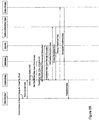
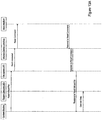
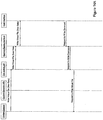
- Figure 4A to 14B are flow diagrams of several exemplary process flows of an embodiment using the memory device 300 and host 350 in Figures 3A and 3B .
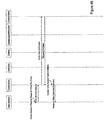
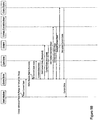
- Figures 4A and 4B are flow diagrams of a log-in process of an embodiment
- Figures 5A and 5B are flow diagrams of a reading-after-log-in process of an embodiment
- Figures 6A and 6B are flow diagrams of a reading-without-log-in process of an embodiment
- Figure 7 is a flow diagram of a process for accessing a regular file of an embodiment
- Figures 8A and 8B are flow diagrams of a process of an embodiment for accessing data that is out of range and padding a file with additional data
- Figures 9A and 9B are flow diagrams of a process of determining an actual length of a file of an embodiment
- Figures 10A and 10B are flow diagrams of a protection process of an embodiment using encryption
- Figures 11A and 11B are flow diagrams of a protection process of an embodiment using a counter
Landscapes
- Engineering & Computer Science (AREA)
- Theoretical Computer Science (AREA)
- Computer Security & Cryptography (AREA)
- Computer Hardware Design (AREA)
- Software Systems (AREA)
- Physics & Mathematics (AREA)
- General Engineering & Computer Science (AREA)
- General Physics & Mathematics (AREA)
- Databases & Information Systems (AREA)
- Health & Medical Sciences (AREA)
- Bioethics (AREA)
- General Health & Medical Sciences (AREA)
- Multimedia (AREA)
- Technology Law (AREA)
- Human Computer Interaction (AREA)
- Storage Device Security (AREA)
Description
- Storage devices, such as memory cards, are often used to store content, such as digital audio (e.g., music) and/or video (e.g., movies) files. To protect content from unauthorized access, the content can be stored in a private memory area in the storage device, which is accessible only by authenticated hosts. In general, a host presents its credentials to the storage device for authentication. If the host is authenticated, the storage device allows the host to access the content stored in the private memory area. While this security system prevents unauthorized hosts from accessing the content stored in the private memory area, a problem can occur if an authenticated host has a virus or other malicious software on it. In that situation, once the authenticated host is allowed access to the private memory area, malicious software on the host can take advantage of that access to perform unauthorized acts on the data stored in the private memory
US2008195797A1 discloses to extend the functionality of SD cards beyond the local storage functionality.US2008195797A1 provides access to a downloaded file via a virtual file. - Embodiments of the present invention are defined by the claims, and nothing in this section should be taken as a limitation on those claims.
- By way of example, the embodiments described below generally relate to a storage device and method for using a virtual file in a public memory area to access a plurality of protected files in a private memory area according to the attached claims.
- Other embodiments are provided, and each of the embodiments can be used alone or together in combination. Various embodiments will now be described with reference to the attached drawings.
-
-
Figure 1 is a block diagram of a host and a storage device of an embodiment. -
Figure 2 is a block diagram of a host and a storage device of an embodiment. -
Figure 3A is a block diagram of a host of an embodiment. -
Figure 3B is a block diagram of a storage device of an embodiment. -
Figures 4A and4B are flow diagrams of a log-in process of an embodiment. -
Figures 5A and5B are flow diagrams of a reading-after-log-in process of an embodiment. -
Figures 6A and6B are flow diagrams of a reading-without-log-in process of an embodiment. -
Figure 7 is a flow diagram of a process for accessing a regular file of an embodiment. -
Figures 8A and8B are flow diagrams of a process of an embodiment for accessing data that is out of range and padding a file with additional data. -
Figures 9A and9B are flow diagrams of a process of determining an actual length of a file of an embodiment. -
Figures 10A and10B are flow diagrams of a protection process of an embodiment using encryption. -
Figures 11A and11B are flow diagrams of a protection process of an embodiment using a counter. -
Figures 12A and12B are flow diagrams of a protection process of an embodiment using a sliding window. -
Figures 13A and13B are flow diagrams of a process of an embodiment for data rate control. -
Figures 14A and14B are flow diagrams of a process of an embodiment for adding content. - The following embodiments generally relate to a storage device and method for using a virtual file in a public memory area to access a plurality of protected files in a private memory area. In these embodiments, the public memory area contains a virtual file that acts as a gateway to the plurality of protected files in the private memory area. When a controller in the storage device detects that the host is attempting to access the virtual file (e.g., from an attempt to access the logical block addresses of the virtual file), the controller determines which of the plurality of protected files, if any, should be provided to the host.
- There are several advantages associated with these embodiments. For instance, Java and other predefined application program interfaces (APIs) (such as those used in many handheld devices and mobile phones) only allow file-based commands and do not use low-level commands that can be used to control the storage device to provide access to a specific protected file in the private memory area. That is why some storage devices may grant the host access to the entire private memory area, which can lead to unauthorized actions when malicious software on the host takes advantage of this open access to the private storage area. While a proprietary API can be written that supports streaming of a protected file out of the private storage area, relatively few mobile devices would permit such an API. Using the virtual file in the public memory area as a gateway to protected files in the private memory area overcomes this problem, since the file-based commands used by Java and other predefined APIs can be used to access the virtual file, with the controller in the storage device taking responsibility for selecting and providing the host with access to the appropriate protected file. In this way, these embodiments provide a generic solution that can be used on multiple hosts as well as on different operating system, all while enabling the storage device to control streaming of data in to and out of the storage device in a secured way.
- Turning now to the drawings,
Figure 1 is a block diagram of ahost 50 in communication with astorage device 100 of an embodiment. As used herein, the phrase "in communication with" means directly in communication with or indirectly in communication with through one or more components, which may or may not be shown or described herein. Thehost 50 can take any suitable form, such as, but not limited to, a dedicated content player, a mobile phone, a personal computer (PC), a game device, a personal digital assistant (PDA), a kiosk, and a TV system. Thestorage device 100 can also take any suitable form, such as, but not limited to, a handheld, removable memory card (e.g., a flash storage card), a universal serial bus (USB) device, and a solid-state drive. Preferably, thestorage device 100 is removably connected to thehost 50, so a user can use thestorage device 100 with a variety of hosts. - As shown in
Figure 1 , thestorage device 100 comprises acontroller 110 and amemory 120. Thecontroller 110 can be implemented in any suitable manner. For example, thecontroller 110 can take the form of a microprocessor or processor and a computer-readable medium that stores computer-readable program code (e.g., software or firmware) executable by the (micro)processor, logic gates, switches, an application specific integrated circuit (ASIC), a programmable logic controller, and an embedded microcontroller, for example. Examples of controllers include, but are not limited to, the following microcontrollers: ARC 625D, Atmel AT91SAM, Microchip PIC18F26K20, and Silicon Labs C8051F320. Examples of various components that can be used in a controller are described in the embodiments discussed below and are shown in the associated drawings. Thecontroller 110 can also be implemented as part of the memory control logic. - As also shown in
Figure 1 , thestorage device 100 comprises amemory 120, which can take any suitable form. In one embodiment, thememory 120 takes the form of a solid-state (e.g., flash) memory and can be one-time programmable, few-time programmable, or many-time programmable. However, other forms of memory, such as optical memory and magnetic memory, can be used. Although shown as single components inFigure 1 , thecontroller 110 and/ormemory 120 can be implemented with several components. InFigure 1 , thememory 120 comprises apublic memory area 130 and aprivate memory area 140. In this embodiment, the public andprivate memory areas private memory areas public memory area 130 is generally accessible without restriction, while theprivate memory area 140 can only be accessed by authorized entities and is typically invisible to a host (e.g., a hidden partition). As such, theprivate memory area 140 can be used to store a plurality of content files (here, files 1-N) that should only be accessed by authorized entities. A "content file" can take any suitable form, such as, but not limited to, digital video (with or without accompanying audio) (e.g., a movie, an episode of a TV show, a news program, etc.), audio (e.g., a song, a podcast, one or a series of sounds, an audio book, etc.), still or moving images (e.g., a photograph, a computer-generated display, etc.), text (with or without graphics) (e.g., an article, a text file, etc.), a video game or other software, and a hybrid multi-media presentation of two or more of these forms. The terms "content," "content file," and "file" will be used interchangeably herein, and a file stored in theprivate memory area 140 will be referred to as a "protected file." - In this embodiment, the
public memory area 130 contains avirtual file 150. Thevirtual file 150 is "virtual" in the sense that it exists as allocated logical block addresses in the file allocation table (FAT) for thepublic memory area 130 but it does not contain any data and is not actually accessible. There may not even be any physical storage locations allocated in thepublic memory area 130 for the virtual file 150 (although, as discussed below, in some embodiments, a relatively small amount of physical storage locations (e.g., 15 MB) may be allocated in thepublic memory area 130 for the virtual file 150). However, since thevirtual file 150 has logical block addresses allocated to it the FAT table in thepublic memory area 130, thevirtual file 150 will appear as a regular file to thehost 50. - In this embodiment, the
virtual file 150 serves as a gateway to the plurality of protected files 1-N in theprivate memory area 140. That is, when thecontroller 110 recognizes that an attempt is being made to access the virtual file 150 (e.g., from logical block addresses specified in a read command), thecontroller 110 will take a special action instead of providing thehost 50 with access to thevirtual file 150 itself. For example, when thecontroller 110 receives a request from thehost 50 for access to thevirtual file 150, thecontroller 110 can select one of the plurality of protected files 1-N stored in theprivate memory area 140 and respond to the request by providing thehost 50 with access to the selected protected file. When the samevirtual file 150 is later accessed, thecontroller 110 can select and provide access to a different one of the plurality of protected files 1-N. For example, if thevirtual file 150 is named "audio.MP3" and is associated with a playlist of 20 songs stored in theprivate memory area 140, every time thehost 50 requests access to "audio.MP3," thecontroller 110 can select and provide access to another song on the playlist. - Any suitable implementation can be used to allow the
controller 110 to handle a host request for thevirtual file 150. For example, in one embodiment shown inFigure 2 , an application (or caplet 160) stores a set of rules that determines the way thecontroller 110 manages the protected content in the private memory area 140 (e.g., what protected content to access and when). In this embodiment, thecaplet 160 is stored in theprivate memory area 140 to prevent a hacker from tampering with the set of rules. Thecontroller 110 uses the set of rules in thecaplet 160 to determine how to react to a request from thehost 50 to access thevirtual file 150. Theprivate memory area 140 also stores adatabase 170 that associates the plurality of protected files 1-N with thevirtual file 150. In this way, thedatabase 170 acts as a playlist of the plurality of protected files 1-N. In one embodiment, thedatabase 170 is preloaded into thestorage device 100 along with the plurality of protected files 1-N. If thedatabase 170 is encrypted, thecaplet 160 can hold the key to decrypt thedatabase 170. - In operation, when the
storage device 100 is powered-up, thecaplet 160 programs thecontroller 110 to control access attempts made by thehost 50 to thevirtual file 150 according to thepreloaded database 170. For example, in response to a request to access thevirtual file 150, thecontroller 110 can select and provide access to one of the plurality for protected files 1-N based on thedatabase 170. As another example, thecontroller 110 can determine whether thehost 50 is authorized or unauthorized and can provide access to different types of content accordingly, which may be desirable if thestorage device 100 is a portable memory card that can be used with a variety of hosts that may or may not be authorized. So, if thehost 50 is an authorized player, thecontroller 110 can respond to the request from thehost 50 to access thevirtual file 150 by providing access to protected content. Otherwise, thecontroller 110 can respond to the host request by providing access to an alternate file. In this way, the set of rules can specify that thecontroller 110 should provide access to a protected file (e.g., a movie) if an application on thehost 50 is authorized; otherwise, thecontroller 110 can provide access to an alternate file (e.g., a trailer for the movie), which may be stored in the public orprivate memory areas virtual file 150 can be handled differently by thecontroller 110 based on whether thehost 50 is an authorized or unauthorized entity (e.g., thestorage device 100 can return a dedicated commercial if the user has not logged-in or has not been authenticated by the storage device 100). Of course, this is just one example, and other types of rules and conditions can be used. For example, the selection of the file can be based on time, information about the user, whether and how the host logged into thestorage device 50, or any other suitable condition. As seen from these examples, thevirtual file 150 can be treated differently in different situations, and a singlevirtual file 150 in thepublic memory area 130 can be used to provide access to one or more protected files in theprivate memory area 140. - Returning now to
Figure 2 , in this embodiment, thehost 50 runs ahost application 60 and a media player (here, a Java player 70). Thehost application 60 controls theJava player 70 and also sends additional instructions to thecontroller 110 of thestorage device 100, which will be described below. As mentioned above, in this embodiment, a virtual file 150 (e.g., named "audio.MP3") is associated with the plurality of protected files 1-N stored in theprivate memory area 140. Every time thehost 50 request access to "audio.MP3," thecontroller 110 can select and provide access to a different one of the plurality of protected files 1-N. In this embodiment, the size of thevirtual file 150 is at least as large as the size of the largest protected file in theprivate memory area 140. If the selected protected content is smaller than the size of thevirtual file 150, thecontroller 110 can pad the content with valid data, so that theJava player 70 in thehost 50 does not malfunction. For example, if the protected file is an audio file, thecontroller 110 can, on the fly, pad the audio file with valid data, such as silent MP3 frames or expected header information. This is done to be able to support different host cache-ahead mechanisms. To prevent thecontroller 110 from playing the padded data, thecontroller 110 can inform thehost 50 of the actual play length of the file, and thehost 50 can stop the playback of the file before it reaches the padded data. - Consider an example in which the
Java player 70 sends a request to thestorage device 110 using the JSR-135 protocol to read thevirtual file 150, which it thinks is an audio file. Thecontroller 110 in thestorage device 100 detects that an attempt is being made to access the virtual file 150 (e.g., from the logical block address specified in the request) and, based on the rule in thecaplet 160, thecontroller 110 selects and provides theJava player 70 with access to Song A. Thecontroller 100 also informs thehost application 60 of the actual size of Song A, which may be less than the size of thevirtual file 150, as discussed above. Thehost application 60 monitors the playback and when Song A is complete, thehost application 60 sends a command to thecontroller 110 via the JSR-75 protocol to stop streaming data and to skip to the next song. (The JSR-135 protocol does not support this type of command.) In response to this command, thecontroller 110 updates thedatabase 170 to point to the next song (Song B). Thehost application 60 instructs theJava player 70 to again request access to thevirtual file 150. However, this time, thecontroller 110 selects and provides theJava player 70 with access to Song B (not Song A). The process described above then repeats as theJava player 70 continues to request playback of additional songs. - There are many alternatives that can be used with these embodiments. For example, in one embodiment, the
storage device 100 uses a "dedicated file system" for playback of preloaded protected files to minimize the time it takes thestorage device 100 to locate and access the preloaded protected files and to minimize the time it takes to extract details on the preloaded protected files (e.g., track name, artist name, album name, track duration, etc.). In this way, time to access thevirtual file 150 should be about the same as the time to access another type of file, in spite of thecontroller 110 overhead involved in providing the gateway functionality to the protected files. To implement this dedicated file system, protected files can be preloaded into theprivate memory area 140 in continuous logical block address (LBA) order. Tables can then be built during production to specify the exact starting LBA for each protected file, along with any other relevant data, such as file duration. Because reading such tables is faster than opening files to gather needed information, the use of this dedicated file system provides a faster response time. - As understood from the above description, the "dedicated file system" can be used to reduce the amount of time that is required for locating and accessing different preloaded content. This can be done by defining a dedicated structure (e.g., a table) for saving, in a specific way, only the needed data for playback. This data can change between different products according to product-specific requirements (e.g., track name, artist name, album name, track duration, etc.). This data structure can be preloaded into a secure location in the
storage device 100, in continuous LBA order, with the tables holding the data located in the exact starting LBA for each file alongside other data specified before. Every entry in the table can represent a specific file which can be identified using a entry key in the table. Upon a request to access a specific file, the file is located in the table, and the relevant data is retrieved. For example, playing a song from the beginning using thevirtual file 150 may require knowledge of the starting LBA of the file, its actual duration, and the album name to be displayed. In this way of handling files, the required amount of time to locate and playback a file dramatically decreases as compared to the time needed to handle a FAT table and parse the file content. - As another alternative to provide a faster response time, the
storage device 100 can support the use of a "compound command." A compound command is a single command that incorporates two or more commands that control different aspects of the playback system, such as, for example, changing both the virtual file state and the song that is being played. The use of compound commands may be especially desirable in environments, such as audio streaming, where a fast response time is desired. For example, a compound command can specify "skip channel" and "skip two songs ahead" or "skip song and go into pause." In many situations, several mode changes may need to occur at the same time. For example, the sequence of "playing a song, going into pause mode, then skipping to the next song" may require the next song to start instantly after the skip occur. In this case, two commands may need to be sent over the bus in order for this change to take place. In another example, different aspects of the system may need to be controlled at the same time, such as changing both the virtual file state and the song that is being played. Again, the idea is to reduce the amount of time needed for handling state changes on thestorage device 100 and the amount of time it takes to transport the command from thehost 50 to thestorage device 100 and back. - In yet another alternative, instead of allocating actual memory in the
public memory area 130 for thevirtual file 150, memory consumption can be reduced by having thepublic memory area 130 emulate itself to thehost 50 as an extended storage area, so that a host request to the extended (emulated) storage area is handled by thecontroller 110 as if it were a host request to theprivate memory area 140 of the storage device. As a result, thevirtual file 150 does not consume real memory in thepublic memory area 130. This allows storing large files (e.g., movies) without consuming valuable memory. Consider, for example, the situation in which thevirtual file 150 is 15 MB and thepublic memory area 130 is 30 MB. Using the technique described above, thestorage device 100 can identify itself as having a 45 MBpublic memory area 130, in which 30 MB are mapped to physical addresses and 15 MB are not. - While the examples discussed above relate to reading a protected file out of the storage device, in an alternate embodiment, the
virtual file 150 is used to add new content in theprivate memory area 140, if thehost 50 is authorized to do so. For example, when a user buys a song, thehost application 70 can control theprivate memory area 140 to add new content in its free space and then use thevirtual file 150 to write the new song data to theprivate memory area 140. In another example, a stored commercial can be updated to a new commercial. This can be achieved by linking thevirtual file 150 to this private file and then changing its content by writing to thevirtual file 150. Thestorage device 100 can intercept the write command and channel the write operation to the correct place on theprivate memory area 140. This enables updating theprivate memory area 140 to hold updated content and purchased content in a secure way - Additional alternatives relate to copy protection mechanisms. Because the
virtual file 150 is accessible in thepublic memory area 130, thevirtual file 150 can be easily copied by a simple copy command from any host. The following alternatives can be used to prevent copying of thevirtual file 150, thereby assuring that access to protected content stored in theprivate memory area 140 is only given to an authenticated entity allowed to access the content. Otherwise, thehost 50 can simply copy thevirtual file 150 to another address range in thepublic memory area 130 and freely access the protected content. - One exemplary copy protection mechanism uses an encryption scheme to encrypt the protected content sent out of the
storage device 100 by read operations of thevirtual file 150. This can be done by using a session key that is updated each time an authentication process is applied between thehost application 60 and the storage device 100 (e.g., during log in). This session key is known both to thehost 50 and thestorage device 100, so thestorage device 100 can use the session key to encrypt the protected content, and thehost 50 can use the session key to decrypt the protected content. The use of the session key in this way creates a secure channel between thestorage device 100 and thehost application 60. - Another exemplary copy protection mechanism uses a counter in the
storage device 100 to count sectors that have been read by thehost 50. When the counter reaches zero, thestorage device 100 can start sending buffers of silent audio. Thehost 50, after proper authentication, can instruct thestorage device 100, over playback time, to increase the counter. This operation of setting the counter can be done during the reading of the file (e.g., during playback of a song). In case an attempt to copy the file is made, thestorage device 100 can detect the attempt and start returning invalid data to thehost 50. This prevents copying of the song because a hacker can only retrieve a certain amount of the song (e.g., 1 MB of audio of a 5 MB song) without the counter being increased. - In yet another exemplary copy protection mechanism, a data rate control ("DRC") is enforced by the
storage device 100 after examining a pattern of read operations from thehost 50 to thevirtual file 150. If these read operations do not occur as expected (e.g., thestorage device 100 detects that copying of thevirtual file 150 is taking place due to fast and rapid file access), thestorage device 100 can return invalid data or fail the read process. In this way, thestorage device 100 enforces data rate control on the protected file read from thestorage device 100. Thehost 50 may be able to configure the storage device DRC mechanism to fit the specific traits of thecurrent host 50 after having proper authentication to thestorage device 100. - A "sliding window" can also be used as an exemplary copy protection scheme. With this mechanism, the
storage device 100 allows thehost 50 to read real data only within a specific LBA range. Accessing data outside this LBA range returns buffers of silent audio. Thehost 50 can reconfigure the allowed range, after proper authentication. Since the allowed range moves, it is referred to here as a "sliding window." The concept of the counter discussed above can be used as a sliding window (e.g., copy from 1 to 500 for now), or playback of data can be allowed from only a specific location inside thevirtual file 150. - In yet another embodiment, the
virtual file 150 can be used for playback from native media players. This can be done by using a relatively large virtual file for each playlist of content. This virtual file can be concatenate on-the-fly song-after-song. Thestorage device 100 can also provide an ID3 tag for each channel of content to be displayed in the host native player. In this way, thestorage device 100 can be used on each host (e.g., handset) or operating system that is available. This solution can be enhanced by allowing the storage device a way to sense attempts to skip a song (e.g., by detecting when the user tries to fast-forward / rewind / drag the progress bar). - As noted above, the storage device of these embodiments can be implemented in any suitable manner. The following paragraphs and referenced drawings describe one exemplary implementation. It should be understood that this implementation is merely an example and that details shown and described herein should not be read into the claims unless explicitly recited therein.
- Returning to the drawings,
Figures 3A and3B are block diagrams of astorage device 300 and host 350 of an embodiment. Starting first withFigure 3B , thestorage device 300 comprises acontroller 310 and amemory 320. Thecontroller 310 comprises amemory interface 311 for interfacing with thememory 320 and ahost interface 312 for interfacing with thehost 350. Thecontroller 310 also comprises a central processing unit (CPU) 313, a crypto-engine 314 operative to provide encryption and/or decryption operations, read access memory (RAM) 315, read only memory (ROM) 316 which stores firmware (logic) for the basic operations of thestorage device 300, and a non-volatile memory (NVM) 317 which stores a device-specific key used for encryption/decryption operations. It should be noted that the storage device-specific key can be stored in other memory areas within the storage device. The components shown inFigure 3B can be implemented in any suitable manner. - In this embodiment, the
memory 320 comprises apublic partition 325 that is managed by a file system on thehost 350 and a hidden protectedsystem area 335 that is internally managed by thecontroller 310. The hidden protectedsystem area 335 stores content encryption keys (CEKs) 340, content, a database, and acaplet 342, as discussed above. The hidden protectedsystem area 335 is "hidden" because it is internally managed by the controller 310 (and not by the host controller 360) and is "protected" because objects stored in thatarea 335 are encrypted with the unique key stored in thenon-volatile memory 317 of thecontroller 310. (The storage device hardware unique key can be stored in thenon-volatile memory 317 of thecontroller 310 or other areas within thestorage device 300.) Accordingly, to access objects stored in thatarea 335, thecontroller 310 would use the crypto-engine 314 and the key stored in thenon-volatile memory 317 to decrypt the encrypted objects. Preferably, thestorage device 300 takes the form of a secure product from the family of products built on the TrustedFlash™ platform by SanDisk Corporation. Thepublic partition 325 contains thevirtual file 330. - Turning now to the
host 350 inFigure 3A , thehost 350 comprises acontroller 360 that has astorage device interface 361 for interfacing with thestorage device 300. Thecontroller 360 also comprises a central processing unit (CPU) 363, a crypto-engine 364 operative to provide encryption and/or decryption operations, read access memory (RAM) 365, and read only memory (ROM) 366. It should be noted that each component inbox 360 can be implemented as separate chips in the overall host system. Thehost 350 also comprises anapplication 370 comprising acontent engine 371, afile system API 372, acontent decoder API 373, andhost certificates 374. - The
storage device 300 and thehost 350 communicate with each other via thestorage device interface 361 and thehost interface 312. For operations that involve the secure transfer of data, it is preferred that the crypto-engines storage device 300 and host 350 be used to mutually authenticate each other and provide a key exchange. The mutual authentication process calls for thehost 350 andstorage device 300 to exchange unique certification IDs. After mutual authentication is complete, it is preferred that a session key be used to establish a secure channel for communication between thestorage device 350 andhost 300. -
Figure 4A to 14B are flow diagrams of several exemplary process flows of an embodiment using thememory device 300 andhost 350 inFigures 3A and3B . Specifically,Figures 4A and4B are flow diagrams of a log-in process of an embodiment,Figures 5A and5B are flow diagrams of a reading-after-log-in process of an embodiment,Figures 6A and6B are flow diagrams of a reading-without-log-in process of an embodiment,Figure 7 is a flow diagram of a process for accessing a regular file of an embodiment,Figures 8A and8B are flow diagrams of a process of an embodiment for accessing data that is out of range and padding a file with additional data,Figures 9A and9B are flow diagrams of a process of determining an actual length of a file of an embodiment,Figures 10A and10B are flow diagrams of a protection process of an embodiment using encryption,Figures 11A and11B are flow diagrams of a protection process of an embodiment using a counter,Figures 12A and12B are flow diagrams of a protection process of an embodiment using a sliding window,Figures 13A and13B are a flow diagrams of a process of an embodiment for data rate control, andFigures 14A and14B are flow diagrams of a process of an embodiment for adding content. - It is intended that the foregoing detailed description be understood as an illustration of selected forms that the invention can take and not as a definition of the invention. It is only the following claims that are intended to define the scope of the claimed invention. Finally, it should be noted that any aspect of any of the preferred embodiments described herein can be used alone or in combination with one another.
Claims (15)
- A method for using a virtual file (150) in a public memory area (130) of a storage device (100) to access a plurality of protected files in a private memory area (140) of the storage device (100), wherein the virtual file (150) is allocated a logical block address in a file allocation table for the public memory area (130) but does not contain any data and appears as a regular file to a host (50) and wherein the virtual file (150) is associated with a plurality of protected files stored in the private memory area (140) by a set of rules stored in an application (160), the set of rules determining how a controller (110) of the storage device (100) manages the plurality of protected files in the private memory area (140), wherein the private memory area (140) also stores a database (170) that associates the plurality of protected files with the virtual file, the method comprising:
performing in the controller (110):(a) receiving a request from the host (50) for access to the virtual file (150) in the public memory area (130);(b) responding to the request for access to the virtual file (150) using said rules to select and provide the host (50) with access to one of the plurality of protected files stored in the private memory area (140) according to the association in the database; and(c) receiving an additional request from the host (50) for access to the virtual file (150), wherein the controller (110) responds to the additional request by, using said rules, selecting and providing the host (50) with access to a different one of the plurality of protected files stored in the private memory area (140) according to the association specified by the database. - The method of Claim 1, wherein (b)-(c) are performed if the host (50) has been authenticated to the storage device (100), and wherein the controller (110) responds to the request by providing a dedicated commercial if the host (50) has not been authenticated to the storage device (100).
- The method of Claim 1, wherein the protected file is accessed using a dedicated file system.
- The method of Claim 1, wherein the request from the host (50) comprises a compound command of two or more commands.
- The method of Claim 1 further comprising performing at least one of the following:modifying a protected file stored in the private memory area (140) by writing modified data to the virtual file (150); andadding a new protected file to the private memory area (140) by writing the new protected file to the virtual file (150).
- The method of Claim 1 further comprising using a counter to protect the virtual file (150) from being copied.
- The method of Claim 1 further comprising using a data rate control mechanism to protect the virtual file (150) from being copied.
- The method of Claim 1 further comprising using a sliding window to protect the virtual file (150) from being copied.
- A storage device (100) comprising:a private memory area (140) comprising a plurality of protected files; anda public memory area (130) comprising a virtual file (150), wherein the virtual file (150) is allocated a logical block address in a file allocation table for the public memory area (130) but does not contain any data and appears as a regular file to a host (50) and wherein the virtual file (150) is associated with a plurality of protected files stored in the private memory area (140) by a set of rules stored in an application (160);wherein the private memory area (140) also stores a database (170) that associates the plurality of protected files with the virtual file; the storage device (100) further comprising a controller (110) in communication with the public (130) and private (140) memory areas, wherein the set of rules determines how the controller (110) manages the plurality of protected files in the private memory area (140) and wherein the controller (110) is configured to:(a) receive a request from the host (50) for access to the virtual file (150);(b) respond to the request for access to the virtual file (150) using said rules to select and provide the host (50) with access to one of the plurality of protected files stored in the private memory area (140) according to the association specified by the database; and(c) receive an additional request from the host (50) for access to the virtual file (150), wherein the controller (110) is configured to respond to the additional request by, using said rules, selecting and providing the host (50) with access to a different one of the plurality of protected files stored in the private memory area (140) according to the association specified by the database.
- The storage device of Claim 9, wherein the size of the virtual file (150) is at least as large as the size of the largest protected file.
- The storage device of Claim 10, wherein the controller (110) is further operative to provide the host (50) with the size of the selected protected file.
- The storage device of Claim 10, wherein the size of the selected protected file is less than the size of the virtual file (150), and wherein the controller (110) is further operative to pad the protected file with data to accommodate the difference in sizes.
- The storage device of Claim 9, wherein the virtual file (150) is allocated to physical areas in the public memory area (130).
- The storage device of Claim 9, wherein the virtual file (150) is not allocated to physical areas in the public memory area (130).
- The storage device of Claim 9, wherein the protected file is encrypted.
Applications Claiming Priority (2)
| Application Number | Priority Date | Filing Date | Title |
|---|---|---|---|
| US12/634,470 US9092597B2 (en) | 2009-12-09 | 2009-12-09 | Storage device and method for using a virtual file in a public memory area to access a plurality of protected files in a private memory area |
| PCT/US2010/057438 WO2011071678A1 (en) | 2009-12-09 | 2010-11-19 | Storage device and method for using a virtual file in a public memory area to access a plurality of protected files in a private memory area |
Publications (2)
| Publication Number | Publication Date |
|---|---|
| EP2510430A1 EP2510430A1 (en) | 2012-10-17 |
| EP2510430B1 true EP2510430B1 (en) | 2018-05-23 |
Family
ID=43639109
Family Applications (1)
| Application Number | Title | Priority Date | Filing Date |
|---|---|---|---|
| EP10800795.6A Active EP2510430B1 (en) | 2009-12-09 | 2010-11-19 | Storage device and method for using a virtual file in a public memory area to access a plurality of protected files in a private memory area |
Country Status (7)
| Country | Link |
|---|---|
| US (1) | US9092597B2 (en) |
| EP (1) | EP2510430B1 (en) |
| JP (1) | JP5579274B2 (en) |
| KR (1) | KR20120117747A (en) |
| CN (1) | CN102656550B (en) |
| TW (1) | TW201131467A (en) |
| WO (1) | WO2011071678A1 (en) |
Families Citing this family (19)
| Publication number | Priority date | Publication date | Assignee | Title |
|---|---|---|---|---|
| TWI413898B (en) * | 2009-09-15 | 2013-11-01 | Phison Electronics Corp | Method and system for data protection, storage device, and storage device controller |
| US9092597B2 (en) | 2009-12-09 | 2015-07-28 | Sandisk Technologies Inc. | Storage device and method for using a virtual file in a public memory area to access a plurality of protected files in a private memory area |
| JP5018919B2 (en) * | 2010-03-19 | 2012-09-05 | コニカミノルタビジネステクノロジーズ株式会社 | Information processing apparatus, content management method, and content management program |
| US8301715B2 (en) | 2010-05-20 | 2012-10-30 | Sandisk Il Ltd. | Host device and method for accessing a virtual file in a storage device by bypassing a cache in the host device |
| US8301694B2 (en) * | 2010-05-20 | 2012-10-30 | Sandisk Il Ltd. | Host device and method for accessing a virtual file in a storage device by bypassing a cache in the host device |
| EP2795513A4 (en) * | 2011-12-22 | 2015-12-16 | Intel Corp | Systems and methods for providing anti-malware protection on storage devices |
| US9390278B2 (en) * | 2012-09-14 | 2016-07-12 | Freescale Semiconductor, Inc. | Systems and methods for code protection in non-volatile memory systems |
| CN103678959A (en) * | 2013-11-12 | 2014-03-26 | 杭州晟元芯片技术有限公司 | Data protecting method based on portable storage device |
| US10073972B2 (en) | 2014-10-25 | 2018-09-11 | Mcafee, Llc | Computing platform security methods and apparatus |
| US9690928B2 (en) | 2014-10-25 | 2017-06-27 | Mcafee, Inc. | Computing platform security methods and apparatus |
| US20160360417A1 (en) * | 2014-11-17 | 2016-12-08 | Solid State System Co., Ltd. | Storage device with access control device and method for accessing storage device |
| JP6478800B2 (en) * | 2015-05-18 | 2019-03-06 | 三菱電機株式会社 | Digital content editing device, digital content playback device, digital content decryption device, digital content encryption / decryption system, and digital content encryption / decryption method |
| CN105763745A (en) * | 2016-04-26 | 2016-07-13 | 努比亚技术有限公司 | Data protection method and apparatus thereof, and mobile terminal |
| US10474391B2 (en) | 2017-09-05 | 2019-11-12 | Western Digital Technologies, Inc. | Storage system and method for executing file-based firmware commands and collecting response data |
| US10318438B1 (en) * | 2017-12-07 | 2019-06-11 | Nuvoton Technology Corporation | Secure memory access using memory read restriction |
| US11023601B2 (en) * | 2018-04-20 | 2021-06-01 | Rohde & Schwarz Gmbh & Co. Kg | System and method for secure data handling |
| CN109992539B (en) * | 2019-03-13 | 2023-03-10 | 苏州盛科通信股份有限公司 | Double-host cooperative working device |
| CN113591139A (en) * | 2021-10-08 | 2021-11-02 | 北京海誉动想科技股份有限公司 | File access control method and device |
| CN119739435B (en) * | 2024-12-31 | 2026-04-17 | 苏州元脑智能科技有限公司 | A firmware configuration verification method, apparatus, management controller, and storage medium. |
Family Cites Families (61)
| Publication number | Priority date | Publication date | Assignee | Title |
|---|---|---|---|---|
| US6868495B1 (en) * | 1996-09-12 | 2005-03-15 | Open Security Solutions, Llc | One-time pad Encryption key Distribution |
| US6574618B2 (en) * | 1998-07-22 | 2003-06-03 | Appstream, Inc. | Method and system for executing network streamed application |
| US7392234B2 (en) * | 1999-05-18 | 2008-06-24 | Kom, Inc. | Method and system for electronic file lifecycle management |
| US6976165B1 (en) * | 1999-09-07 | 2005-12-13 | Emc Corporation | System and method for secure storage, transfer and retrieval of content addressable information |
| US7917628B2 (en) * | 1999-12-02 | 2011-03-29 | Western Digital Technologies, Inc. | Managed peer-to-peer applications, systems and methods for distributed data access and storage |
| US6466944B1 (en) * | 1999-12-02 | 2002-10-15 | Novell, Inc. | Method for creation, management, and use of files containing multiple virtual data streams using standard file system APIs |
| US20060161725A1 (en) * | 2005-01-20 | 2006-07-20 | Lee Charles C | Multiple function flash memory system |
| US7376740B1 (en) * | 2000-06-13 | 2008-05-20 | Microsoft Corporation | Phone application state management mechanism |
| AU7182701A (en) * | 2000-07-06 | 2002-01-21 | David Paul Felsher | Information record infrastructure, system and method |
| GB2373067A (en) * | 2000-11-29 | 2002-09-11 | Ruslan Gennadievich Fedorovsky | File transfer method and system using segmented transfer and targeted content |
| US20060129933A1 (en) * | 2000-12-19 | 2006-06-15 | Sparkpoint Software, Inc. | System and method for multimedia authoring and playback |
| US20020157010A1 (en) * | 2001-04-24 | 2002-10-24 | International Business Machines Corporation | Secure system and method for updating a protected partition of a hard drive |
| US20060167985A1 (en) * | 2001-04-26 | 2006-07-27 | Albanese Michael J | Network-distributed data routing |
| US6941456B2 (en) * | 2001-05-02 | 2005-09-06 | Sun Microsystems, Inc. | Method, system, and program for encrypting files in a computer system |
| US7395436B1 (en) * | 2002-01-31 | 2008-07-01 | Kerry Nemovicher | Methods, software programs, and systems for electronic information security |
| US20030212542A1 (en) * | 2002-05-08 | 2003-11-13 | Amikai, Inc. | Platform-independent automated machine translation system |
| US6732171B2 (en) * | 2002-05-31 | 2004-05-04 | Lefthand Networks, Inc. | Distributed network storage system with virtualization |
| US7181744B2 (en) * | 2002-10-24 | 2007-02-20 | International Business Machines Corporation | System and method for transferring data between virtual machines or other computer entities |
| US20080177994A1 (en) * | 2003-01-12 | 2008-07-24 | Yaron Mayer | System and method for improving the efficiency, comfort, and/or reliability in Operating Systems, such as for example Windows |
| GB2404486A (en) * | 2003-07-31 | 2005-02-02 | Sony Uk Ltd | Access control for digital storage medium content |
| JP4342242B2 (en) | 2003-08-15 | 2009-10-14 | 日本電信電話株式会社 | Secure file sharing method and apparatus |
| JP4241485B2 (en) | 2004-04-15 | 2009-03-18 | ソニー株式会社 | Information processing apparatus, information processing method, program, and recording medium |
| US20050240993A1 (en) | 2004-04-22 | 2005-10-27 | Treadwell William S | Methodology, system and computer readable medium for streams-based packet filtering |
| US20070110074A1 (en) * | 2004-06-04 | 2007-05-17 | Bob Bradley | System and Method for Synchronizing Media Presentation at Multiple Recipients |
| US7761863B2 (en) * | 2004-06-08 | 2010-07-20 | Covia Labs, Inc. | Method system and data structure for content renditioning adaptation and interoperability segmentation model |
| US20050281404A1 (en) * | 2004-06-17 | 2005-12-22 | Matsushita Electric Industrial Co., Ltd. | Scalable streaming media authentication |
| WO2006051037A1 (en) * | 2004-11-09 | 2006-05-18 | Thomson Licensing | Bonding contents on separate storage media |
| US20060129496A1 (en) * | 2004-12-14 | 2006-06-15 | Motorola, Inc. | Method and apparatus for providing digital rights management |
| US7529816B2 (en) * | 2005-06-03 | 2009-05-05 | Hewlett-Packard Development Company, L.P. | System for providing multi-path input/output in a clustered data storage network |
| JP4613739B2 (en) | 2005-08-01 | 2011-01-19 | ソニー株式会社 | Information processing apparatus, information processing method, information recording medium, and computer program |
| US7634629B2 (en) * | 2005-12-19 | 2009-12-15 | Intel Corporation | Mechanism to control access to a storage device |
| JP2007257047A (en) * | 2006-03-20 | 2007-10-04 | Sony Corp | Information processing apparatus and information processing method, program storage medium, program, data structure, and recording medium manufacturing method |
| EP1840512B1 (en) * | 2006-03-31 | 2013-03-06 | Research In Motion Limited | Method and apparatus for providing map locations in user applications using URL strings |
| US8992304B2 (en) * | 2006-04-13 | 2015-03-31 | Igt | Methods and systems for tracking an event of an externally controlled interface |
| US20070288535A1 (en) * | 2006-06-13 | 2007-12-13 | Hitachi, Ltd. | Long-term data archiving system and method |
| US8874145B2 (en) * | 2006-08-02 | 2014-10-28 | Telecommunication Systems, Inc. | Personal location code broker |
| US7957751B2 (en) * | 2006-08-02 | 2011-06-07 | Telecommunication Systems, Inc. | Personal location code |
| CN101366038A (en) * | 2006-09-11 | 2009-02-11 | 松下电器产业株式会社 | IC card and its access control method |
| JP2008107965A (en) | 2006-10-24 | 2008-05-08 | Sony Corp | Information processing apparatus, information processing method, program, and program recording medium |
| US8171502B2 (en) | 2006-11-29 | 2012-05-01 | Sony Ericsson Mobile Communications Ab | Methods, devices and computer program products for automatically installing device drivers from a peripheral device onto a host computer |
| US8423794B2 (en) | 2006-12-28 | 2013-04-16 | Sandisk Technologies Inc. | Method and apparatus for upgrading a memory card that has security mechanisms for preventing copying of secure content and applications |
| US20080189554A1 (en) * | 2007-02-05 | 2008-08-07 | Asad Ali | Method and system for securing communication between a host computer and a secure portable device |
| US7966355B2 (en) * | 2007-02-13 | 2011-06-21 | Modu Ltd. | Interface for extending functionality of memory cards |
| US8566695B2 (en) * | 2007-03-30 | 2013-10-22 | Sandisk Technologies Inc. | Controlling access to digital content |
| WO2008135969A1 (en) | 2007-05-03 | 2008-11-13 | Sandisk Il Ltd. | Storage device and method for data-smuggling |
| US7822935B2 (en) * | 2007-05-03 | 2010-10-26 | Sandisk Il Ltd. | Methods for data-smuggling |
| CN101315674B (en) * | 2007-05-31 | 2010-11-03 | 深圳市江波龙电子有限公司 | Method for protecting and reading issued data of memory card |
| US20090119782A1 (en) * | 2007-11-07 | 2009-05-07 | Sandisk Il Ltd. | Method and device for digital rights protection |
| US8037110B2 (en) * | 2007-12-27 | 2011-10-11 | Microsoft Corporation | Business data access client for online/offline client use |
| US8315950B2 (en) * | 2007-12-31 | 2012-11-20 | Sandisk Technologies Inc. | Powerfully simple digital media player and methods for use therewith |
| TWI366096B (en) * | 2008-01-04 | 2012-06-11 | Fineart Technology Co Ltd | Common storage device accessed by personal information and using method thereof |
| US7899793B2 (en) * | 2008-01-09 | 2011-03-01 | Hitachi, Ltd. | Management of quality of services in storage systems |
| US8332951B2 (en) * | 2008-02-12 | 2012-12-11 | International Business Machines Corporation | Section based security for a sectioned surface-based computing device |
| JP4346670B1 (en) | 2008-05-20 | 2009-10-21 | 株式会社東芝 | Electronic device and content data providing method |
| US8046550B2 (en) * | 2008-07-14 | 2011-10-25 | Quest Software, Inc. | Systems and methods for performing backup operations of virtual machine files |
| US20100274772A1 (en) * | 2009-04-23 | 2010-10-28 | Allen Samuels | Compressed data objects referenced via address references and compression references |
| US8090690B2 (en) * | 2009-05-27 | 2012-01-03 | MiMedia LLC | Systems and methods for data upload and download |
| US7984122B2 (en) * | 2009-06-04 | 2011-07-19 | Microsoft Corporation | Dedicated processor core request |
| US9092597B2 (en) | 2009-12-09 | 2015-07-28 | Sandisk Technologies Inc. | Storage device and method for using a virtual file in a public memory area to access a plurality of protected files in a private memory area |
| US8301694B2 (en) * | 2010-05-20 | 2012-10-30 | Sandisk Il Ltd. | Host device and method for accessing a virtual file in a storage device by bypassing a cache in the host device |
| US8301715B2 (en) * | 2010-05-20 | 2012-10-30 | Sandisk Il Ltd. | Host device and method for accessing a virtual file in a storage device by bypassing a cache in the host device |
-
2009
- 2009-12-09 US US12/634,470 patent/US9092597B2/en active Active
-
2010
- 2010-11-19 EP EP10800795.6A patent/EP2510430B1/en active Active
- 2010-11-19 JP JP2012543134A patent/JP5579274B2/en not_active Expired - Fee Related
- 2010-11-19 WO PCT/US2010/057438 patent/WO2011071678A1/en not_active Ceased
- 2010-11-19 CN CN201080056217.4A patent/CN102656550B/en active Active
- 2010-11-19 KR KR20127013038A patent/KR20120117747A/en not_active Withdrawn
- 2010-12-06 TW TW99142406A patent/TW201131467A/en unknown
Non-Patent Citations (1)
| Title |
|---|
| ANONYMOUS: "RTFM ln(1)", 19 December 2007 (2007-12-19), XP055215148, Retrieved from the Internet <URL:http://web.archive.org/web/20071219235935/http://mirbsd.org/htman/i386/man1/ln.htm> [retrieved on 20150922] * |
Also Published As
| Publication number | Publication date |
|---|---|
| KR20120117747A (en) | 2012-10-24 |
| US20110138487A1 (en) | 2011-06-09 |
| WO2011071678A1 (en) | 2011-06-16 |
| US9092597B2 (en) | 2015-07-28 |
| TW201131467A (en) | 2011-09-16 |
| EP2510430A1 (en) | 2012-10-17 |
| JP2013513863A (en) | 2013-04-22 |
| CN102656550A (en) | 2012-09-05 |
| CN102656550B (en) | 2015-04-08 |
| JP5579274B2 (en) | 2014-08-27 |
Similar Documents
| Publication | Publication Date | Title |
|---|---|---|
| US9092597B2 (en) | Storage device and method for using a virtual file in a public memory area to access a plurality of protected files in a private memory area | |
| US8301694B2 (en) | Host device and method for accessing a virtual file in a storage device by bypassing a cache in the host device | |
| US8694598B2 (en) | Host device and method for accessing a virtual file in a storage device by bypassing a cache in the host device | |
| CN101689120B (en) | Auto start configuration with portable mass storage device | |
| US20140082324A1 (en) | Method and Storage Device for Using File System Data to Predict Host Device Operations | |
| KR20090095909A (en) | Data storage device and data management method thereof | |
| CN103797488B (en) | Method and apparatus for using non-volatile storage device | |
| EP2165285A2 (en) | Method of storing and accessing header data from memory | |
| TW201025050A (en) | Device and method for filtering a file system | |
| JP2010533910A (en) | Digital information memory card encryption structure and method | |
| KR20120007012A (en) | Memory device and method for adaptive protection of content | |
| US10331365B2 (en) | Accessing a serial number of a removable non-volatile memory device | |
| US20140372653A1 (en) | Storage Device with Multiple Interfaces and Multiple Levels of Data Protection and Related Method Thereof | |
| CN102073813B (en) | Method and device for controlling application on mobile device to run | |
| JP2008541219A (en) | Data structure of flash memory having system area having variable size capable of data update, USB memory device having flash memory, and method for controlling system area | |
| CN102375958B (en) | Ways to Restrict File Access | |
| JPWO2016031456A1 (en) | Reader / writer apparatus, information processing apparatus, data transfer control method, and program | |
| KR100400546B1 (en) | Recording and access method for digital file | |
| TWI424330B (en) | Limit the way files are accessed | |
| TW200809503A (en) | Apparatus and method for digital content protection and universally play using hidden data area |
Legal Events
| Date | Code | Title | Description |
|---|---|---|---|
| PUAI | Public reference made under article 153(3) epc to a published international application that has entered the european phase |
Free format text: ORIGINAL CODE: 0009012 |
|
| 17P | Request for examination filed |
Effective date: 20120502 |
|
| AK | Designated contracting states |
Kind code of ref document: A1 Designated state(s): AL AT BE BG CH CY CZ DE DK EE ES FI FR GB GR HR HU IE IS IT LI LT LU LV MC MK MT NL NO PL PT RO RS SE SI SK SM TR |
|
| DAX | Request for extension of the european patent (deleted) | ||
| 17Q | First examination report despatched |
Effective date: 20151008 |
|
| RIC1 | Information provided on ipc code assigned before grant |
Ipc: G06F 21/31 20130101ALI20170915BHEP Ipc: G06F 21/79 20130101ALI20170915BHEP Ipc: G06F 21/00 20130101ALI20170915BHEP Ipc: G06F 21/10 20130101ALI20170915BHEP Ipc: G06F 21/62 20130101ALI20170915BHEP Ipc: G06F 3/06 20060101AFI20170915BHEP |
|
| GRAP | Despatch of communication of intention to grant a patent |
Free format text: ORIGINAL CODE: EPIDOSNIGR1 |
|
| STAA | Information on the status of an ep patent application or granted ep patent |
Free format text: STATUS: GRANT OF PATENT IS INTENDED |
|
| INTG | Intention to grant announced |
Effective date: 20171106 |
|
| GRAS | Grant fee paid |
Free format text: ORIGINAL CODE: EPIDOSNIGR3 |
|
| GRAJ | Information related to disapproval of communication of intention to grant by the applicant or resumption of examination proceedings by the epo deleted |
Free format text: ORIGINAL CODE: EPIDOSDIGR1 |
|
| GRAL | Information related to payment of fee for publishing/printing deleted |
Free format text: ORIGINAL CODE: EPIDOSDIGR3 |
|
| STAA | Information on the status of an ep patent application or granted ep patent |
Free format text: STATUS: EXAMINATION IS IN PROGRESS |
|
| GRAR | Information related to intention to grant a patent recorded |
Free format text: ORIGINAL CODE: EPIDOSNIGR71 |
|
| STAA | Information on the status of an ep patent application or granted ep patent |
Free format text: STATUS: GRANT OF PATENT IS INTENDED |
|
| GRAA | (expected) grant |
Free format text: ORIGINAL CODE: 0009210 |
|
| STAA | Information on the status of an ep patent application or granted ep patent |
Free format text: STATUS: THE PATENT HAS BEEN GRANTED |
|
| INTC | Intention to grant announced (deleted) | ||
| AK | Designated contracting states |
Kind code of ref document: B1 Designated state(s): AL AT BE BG CH CY CZ DE DK EE ES FI FR GB GR HR HU IE IS IT LI LT LU LV MC MK MT NL NO PL PT RO RS SE SI SK SM TR |
|
| INTG | Intention to grant announced |
Effective date: 20180416 |
|
| REG | Reference to a national code |
Ref country code: GB Ref legal event code: FG4D |
|
| REG | Reference to a national code |
Ref country code: CH Ref legal event code: EP |
|
| REG | Reference to a national code |
Ref country code: IE Ref legal event code: FG4D |
|
| REG | Reference to a national code |
Ref country code: AT Ref legal event code: REF Ref document number: 1002032 Country of ref document: AT Kind code of ref document: T Effective date: 20180615 |
|
| REG | Reference to a national code |
Ref country code: DE Ref legal event code: R096 Ref document number: 602010050806 Country of ref document: DE |
|
| REG | Reference to a national code |
Ref country code: NL Ref legal event code: FP |
|
| REG | Reference to a national code |
Ref country code: LT Ref legal event code: MG4D |
|
| PG25 | Lapsed in a contracting state [announced via postgrant information from national office to epo] |
Ref country code: BG Free format text: LAPSE BECAUSE OF FAILURE TO SUBMIT A TRANSLATION OF THE DESCRIPTION OR TO PAY THE FEE WITHIN THE PRESCRIBED TIME-LIMIT Effective date: 20180823 Ref country code: FI Free format text: LAPSE BECAUSE OF FAILURE TO SUBMIT A TRANSLATION OF THE DESCRIPTION OR TO PAY THE FEE WITHIN THE PRESCRIBED TIME-LIMIT Effective date: 20180523 Ref country code: NO Free format text: LAPSE BECAUSE OF FAILURE TO SUBMIT A TRANSLATION OF THE DESCRIPTION OR TO PAY THE FEE WITHIN THE PRESCRIBED TIME-LIMIT Effective date: 20180823 Ref country code: SE Free format text: LAPSE BECAUSE OF FAILURE TO SUBMIT A TRANSLATION OF THE DESCRIPTION OR TO PAY THE FEE WITHIN THE PRESCRIBED TIME-LIMIT Effective date: 20180523 Ref country code: ES Free format text: LAPSE BECAUSE OF FAILURE TO SUBMIT A TRANSLATION OF THE DESCRIPTION OR TO PAY THE FEE WITHIN THE PRESCRIBED TIME-LIMIT Effective date: 20180523 Ref country code: LT Free format text: LAPSE BECAUSE OF FAILURE TO SUBMIT A TRANSLATION OF THE DESCRIPTION OR TO PAY THE FEE WITHIN THE PRESCRIBED TIME-LIMIT Effective date: 20180523 |
|
| PG25 | Lapsed in a contracting state [announced via postgrant information from national office to epo] |
Ref country code: LV Free format text: LAPSE BECAUSE OF FAILURE TO SUBMIT A TRANSLATION OF THE DESCRIPTION OR TO PAY THE FEE WITHIN THE PRESCRIBED TIME-LIMIT Effective date: 20180523 Ref country code: RS Free format text: LAPSE BECAUSE OF FAILURE TO SUBMIT A TRANSLATION OF THE DESCRIPTION OR TO PAY THE FEE WITHIN THE PRESCRIBED TIME-LIMIT Effective date: 20180523 Ref country code: HR Free format text: LAPSE BECAUSE OF FAILURE TO SUBMIT A TRANSLATION OF THE DESCRIPTION OR TO PAY THE FEE WITHIN THE PRESCRIBED TIME-LIMIT Effective date: 20180523 Ref country code: GR Free format text: LAPSE BECAUSE OF FAILURE TO SUBMIT A TRANSLATION OF THE DESCRIPTION OR TO PAY THE FEE WITHIN THE PRESCRIBED TIME-LIMIT Effective date: 20180824 |
|
| REG | Reference to a national code |
Ref country code: AT Ref legal event code: MK05 Ref document number: 1002032 Country of ref document: AT Kind code of ref document: T Effective date: 20180523 |
|
| PG25 | Lapsed in a contracting state [announced via postgrant information from national office to epo] |
Ref country code: PL Free format text: LAPSE BECAUSE OF FAILURE TO SUBMIT A TRANSLATION OF THE DESCRIPTION OR TO PAY THE FEE WITHIN THE PRESCRIBED TIME-LIMIT Effective date: 20180523 Ref country code: EE Free format text: LAPSE BECAUSE OF FAILURE TO SUBMIT A TRANSLATION OF THE DESCRIPTION OR TO PAY THE FEE WITHIN THE PRESCRIBED TIME-LIMIT Effective date: 20180523 Ref country code: SK Free format text: LAPSE BECAUSE OF FAILURE TO SUBMIT A TRANSLATION OF THE DESCRIPTION OR TO PAY THE FEE WITHIN THE PRESCRIBED TIME-LIMIT Effective date: 20180523 Ref country code: AT Free format text: LAPSE BECAUSE OF FAILURE TO SUBMIT A TRANSLATION OF THE DESCRIPTION OR TO PAY THE FEE WITHIN THE PRESCRIBED TIME-LIMIT Effective date: 20180523 Ref country code: DK Free format text: LAPSE BECAUSE OF FAILURE TO SUBMIT A TRANSLATION OF THE DESCRIPTION OR TO PAY THE FEE WITHIN THE PRESCRIBED TIME-LIMIT Effective date: 20180523 Ref country code: RO Free format text: LAPSE BECAUSE OF FAILURE TO SUBMIT A TRANSLATION OF THE DESCRIPTION OR TO PAY THE FEE WITHIN THE PRESCRIBED TIME-LIMIT Effective date: 20180523 Ref country code: CZ Free format text: LAPSE BECAUSE OF FAILURE TO SUBMIT A TRANSLATION OF THE DESCRIPTION OR TO PAY THE FEE WITHIN THE PRESCRIBED TIME-LIMIT Effective date: 20180523 |
|
| REG | Reference to a national code |
Ref country code: DE Ref legal event code: R097 Ref document number: 602010050806 Country of ref document: DE |
|
| PG25 | Lapsed in a contracting state [announced via postgrant information from national office to epo] |
Ref country code: SM Free format text: LAPSE BECAUSE OF FAILURE TO SUBMIT A TRANSLATION OF THE DESCRIPTION OR TO PAY THE FEE WITHIN THE PRESCRIBED TIME-LIMIT Effective date: 20180523 Ref country code: IT Free format text: LAPSE BECAUSE OF FAILURE TO SUBMIT A TRANSLATION OF THE DESCRIPTION OR TO PAY THE FEE WITHIN THE PRESCRIBED TIME-LIMIT Effective date: 20180523 |
|
| PLBE | No opposition filed within time limit |
Free format text: ORIGINAL CODE: 0009261 |
|
| STAA | Information on the status of an ep patent application or granted ep patent |
Free format text: STATUS: NO OPPOSITION FILED WITHIN TIME LIMIT |
|
| 26N | No opposition filed |
Effective date: 20190226 |
|
| PG25 | Lapsed in a contracting state [announced via postgrant information from national office to epo] |
Ref country code: SI Free format text: LAPSE BECAUSE OF FAILURE TO SUBMIT A TRANSLATION OF THE DESCRIPTION OR TO PAY THE FEE WITHIN THE PRESCRIBED TIME-LIMIT Effective date: 20180523 |
|
| REG | Reference to a national code |
Ref country code: CH Ref legal event code: PL |
|
| PG25 | Lapsed in a contracting state [announced via postgrant information from national office to epo] |
Ref country code: LU Free format text: LAPSE BECAUSE OF NON-PAYMENT OF DUE FEES Effective date: 20181119 Ref country code: MC Free format text: LAPSE BECAUSE OF FAILURE TO SUBMIT A TRANSLATION OF THE DESCRIPTION OR TO PAY THE FEE WITHIN THE PRESCRIBED TIME-LIMIT Effective date: 20180523 |
|
| REG | Reference to a national code |
Ref country code: BE Ref legal event code: MM Effective date: 20181130 |
|
| REG | Reference to a national code |
Ref country code: IE Ref legal event code: MM4A |
|
| PG25 | Lapsed in a contracting state [announced via postgrant information from national office to epo] |
Ref country code: CH Free format text: LAPSE BECAUSE OF NON-PAYMENT OF DUE FEES Effective date: 20181130 Ref country code: LI Free format text: LAPSE BECAUSE OF NON-PAYMENT OF DUE FEES Effective date: 20181130 |
|
| PG25 | Lapsed in a contracting state [announced via postgrant information from national office to epo] |
Ref country code: IE Free format text: LAPSE BECAUSE OF NON-PAYMENT OF DUE FEES Effective date: 20181119 Ref country code: FR Free format text: LAPSE BECAUSE OF NON-PAYMENT OF DUE FEES Effective date: 20181130 |
|
| PG25 | Lapsed in a contracting state [announced via postgrant information from national office to epo] |
Ref country code: AL Free format text: LAPSE BECAUSE OF FAILURE TO SUBMIT A TRANSLATION OF THE DESCRIPTION OR TO PAY THE FEE WITHIN THE PRESCRIBED TIME-LIMIT Effective date: 20180523 Ref country code: BE Free format text: LAPSE BECAUSE OF NON-PAYMENT OF DUE FEES Effective date: 20181130 |
|
| PG25 | Lapsed in a contracting state [announced via postgrant information from national office to epo] |
Ref country code: MT Free format text: LAPSE BECAUSE OF NON-PAYMENT OF DUE FEES Effective date: 20181119 |
|
| PG25 | Lapsed in a contracting state [announced via postgrant information from national office to epo] |
Ref country code: TR Free format text: LAPSE BECAUSE OF FAILURE TO SUBMIT A TRANSLATION OF THE DESCRIPTION OR TO PAY THE FEE WITHIN THE PRESCRIBED TIME-LIMIT Effective date: 20180523 |
|
| PG25 | Lapsed in a contracting state [announced via postgrant information from national office to epo] |
Ref country code: PT Free format text: LAPSE BECAUSE OF FAILURE TO SUBMIT A TRANSLATION OF THE DESCRIPTION OR TO PAY THE FEE WITHIN THE PRESCRIBED TIME-LIMIT Effective date: 20180523 |
|
| PG25 | Lapsed in a contracting state [announced via postgrant information from national office to epo] |
Ref country code: MK Free format text: LAPSE BECAUSE OF NON-PAYMENT OF DUE FEES Effective date: 20180523 Ref country code: HU Free format text: LAPSE BECAUSE OF FAILURE TO SUBMIT A TRANSLATION OF THE DESCRIPTION OR TO PAY THE FEE WITHIN THE PRESCRIBED TIME-LIMIT; INVALID AB INITIO Effective date: 20101119 Ref country code: CY Free format text: LAPSE BECAUSE OF FAILURE TO SUBMIT A TRANSLATION OF THE DESCRIPTION OR TO PAY THE FEE WITHIN THE PRESCRIBED TIME-LIMIT Effective date: 20180523 |
|
| PG25 | Lapsed in a contracting state [announced via postgrant information from national office to epo] |
Ref country code: IS Free format text: LAPSE BECAUSE OF FAILURE TO SUBMIT A TRANSLATION OF THE DESCRIPTION OR TO PAY THE FEE WITHIN THE PRESCRIBED TIME-LIMIT Effective date: 20180923 |
|
| REG | Reference to a national code |
Ref country code: NL Ref legal event code: HC Owner name: WESTERN DIGITAL ISRAEL LTD.; IL Free format text: DETAILS ASSIGNMENT: CHANGE OF OWNER(S), CHANGE OF OWNER(S) NAME; FORMER OWNER NAME: SANDISK IL LTD. Effective date: 20200928 |
|
| REG | Reference to a national code |
Ref country code: DE Ref legal event code: R081 Ref document number: 602010050806 Country of ref document: DE Owner name: SANDISK TECHNOLOGIES, INC. (N.D.GES.D. STAATES, US Free format text: FORMER OWNER: SANDISK IL LTD., KFAR SABA, IL Ref country code: DE Ref legal event code: R081 Ref document number: 602010050806 Country of ref document: DE Owner name: WESTERN DIGITAL ISRAEL LTD., IL Free format text: FORMER OWNER: SANDISK IL LTD., KFAR SABA, IL |
|
| REG | Reference to a national code |
Ref country code: DE Ref legal event code: R082 Ref document number: 602010050806 Country of ref document: DE |
|
| P01 | Opt-out of the competence of the unified patent court (upc) registered |
Effective date: 20230606 |
|
| REG | Reference to a national code |
Ref country code: DE Ref legal event code: R081 Ref document number: 602010050806 Country of ref document: DE Owner name: SANDISK TECHNOLOGIES, INC. (N.D.GES.D. STAATES, US Free format text: FORMER OWNER: WESTERN DIGITAL ISRAEL LTD., KFAR SABA, IL |
|
| REG | Reference to a national code |
Ref country code: GB Ref legal event code: 732E Free format text: REGISTERED BETWEEN 20241107 AND 20241113 |
|
| REG | Reference to a national code |
Ref country code: NL Ref legal event code: PD Owner name: SANDISK TECHNOLOGIES, INC.; US Free format text: DETAILS ASSIGNMENT: CHANGE OF OWNER(S), ASSIGNMENT; FORMER OWNER NAME: WESTERN DIGITAL ISRAEL LTD. Effective date: 20250114 |
|
| PGFP | Annual fee paid to national office [announced via postgrant information from national office to epo] |
Ref country code: GB Payment date: 20250925 Year of fee payment: 16 |
|
| PGFP | Annual fee paid to national office [announced via postgrant information from national office to epo] |
Ref country code: NL Payment date: 20251003 Year of fee payment: 16 |
|
| PGFP | Annual fee paid to national office [announced via postgrant information from national office to epo] |
Ref country code: DE Payment date: 20250923 Year of fee payment: 16 |