EP2502688A1 - Apparatus and method for the production of particle-stabilized, closed-cell, shaped metal foam products with a metal foam injector - Google Patents
Apparatus and method for the production of particle-stabilized, closed-cell, shaped metal foam products with a metal foam injector Download PDFInfo
- Publication number
- EP2502688A1 EP2502688A1 EP11002393A EP11002393A EP2502688A1 EP 2502688 A1 EP2502688 A1 EP 2502688A1 EP 11002393 A EP11002393 A EP 11002393A EP 11002393 A EP11002393 A EP 11002393A EP 2502688 A1 EP2502688 A1 EP 2502688A1
- Authority
- EP
- European Patent Office
- Prior art keywords
- metal foam
- injector
- foam
- mould
- metal
- Prior art date
- Legal status (The legal status is an assumption and is not a legal conclusion. Google has not performed a legal analysis and makes no representation as to the accuracy of the status listed.)
- Withdrawn
Links
- 239000006262 metallic foam Substances 0.000 title claims abstract description 158
- 238000004519 manufacturing process Methods 0.000 title claims abstract description 45
- 238000000034 method Methods 0.000 title claims abstract description 30
- 239000006260 foam Substances 0.000 claims abstract description 66
- 238000005187 foaming Methods 0.000 claims abstract description 46
- 238000010438 heat treatment Methods 0.000 claims abstract description 15
- 239000000919 ceramic Substances 0.000 claims description 47
- 229910052751 metal Inorganic materials 0.000 claims description 37
- 239000002184 metal Substances 0.000 claims description 37
- 239000002243 precursor Substances 0.000 claims description 28
- 239000011148 porous material Substances 0.000 claims description 18
- 239000002245 particle Substances 0.000 claims description 11
- 238000002844 melting Methods 0.000 claims description 8
- 230000008018 melting Effects 0.000 claims description 8
- 150000003839 salts Chemical class 0.000 claims description 8
- 238000004381 surface treatment Methods 0.000 claims description 6
- 239000000463 material Substances 0.000 claims description 5
- 239000011159 matrix material Substances 0.000 claims description 5
- HBMJWWWQQXIZIP-UHFFFAOYSA-N silicon carbide Chemical compound [Si+]#[C-] HBMJWWWQQXIZIP-UHFFFAOYSA-N 0.000 claims description 5
- OKTJSMMVPCPJKN-UHFFFAOYSA-N Carbon Chemical compound [C] OKTJSMMVPCPJKN-UHFFFAOYSA-N 0.000 claims description 4
- 238000001816 cooling Methods 0.000 claims description 4
- 229910010271 silicon carbide Inorganic materials 0.000 claims description 4
- 230000000087 stabilizing effect Effects 0.000 claims description 4
- 229910052799 carbon Inorganic materials 0.000 claims description 3
- 238000007731 hot pressing Methods 0.000 claims description 3
- 239000011248 coating agent Substances 0.000 claims description 2
- 238000000576 coating method Methods 0.000 claims description 2
- 239000011224 oxide ceramic Substances 0.000 claims description 2
- 229910052574 oxide ceramic Inorganic materials 0.000 claims description 2
- 239000000956 alloy Substances 0.000 claims 5
- 229910045601 alloy Inorganic materials 0.000 claims 5
- XEEYBQQBJWHFJM-UHFFFAOYSA-N Iron Chemical compound [Fe] XEEYBQQBJWHFJM-UHFFFAOYSA-N 0.000 claims 2
- PXHVJJICTQNCMI-UHFFFAOYSA-N Nickel Chemical compound [Ni] PXHVJJICTQNCMI-UHFFFAOYSA-N 0.000 claims 2
- XUIMIQQOPSSXEZ-UHFFFAOYSA-N Silicon Chemical compound [Si] XUIMIQQOPSSXEZ-UHFFFAOYSA-N 0.000 claims 1
- RTAQQCXQSZGOHL-UHFFFAOYSA-N Titanium Chemical compound [Ti] RTAQQCXQSZGOHL-UHFFFAOYSA-N 0.000 claims 1
- HCHKCACWOHOZIP-UHFFFAOYSA-N Zinc Chemical compound [Zn] HCHKCACWOHOZIP-UHFFFAOYSA-N 0.000 claims 1
- 239000004411 aluminium Substances 0.000 claims 1
- 229910052782 aluminium Inorganic materials 0.000 claims 1
- XAGFODPZIPBFFR-UHFFFAOYSA-N aluminium Chemical compound [Al] XAGFODPZIPBFFR-UHFFFAOYSA-N 0.000 claims 1
- 229910002804 graphite Inorganic materials 0.000 claims 1
- 239000010439 graphite Substances 0.000 claims 1
- 229910052742 iron Inorganic materials 0.000 claims 1
- 229910052759 nickel Inorganic materials 0.000 claims 1
- 239000010936 titanium Substances 0.000 claims 1
- 229910052719 titanium Inorganic materials 0.000 claims 1
- 229910052725 zinc Inorganic materials 0.000 claims 1
- 239000011701 zinc Substances 0.000 claims 1
- 239000007789 gas Substances 0.000 description 52
- 239000000047 product Substances 0.000 description 37
- 238000007789 sealing Methods 0.000 description 16
- 210000004027 cell Anatomy 0.000 description 10
- 239000000155 melt Substances 0.000 description 5
- 238000007664 blowing Methods 0.000 description 4
- 210000002421 cell wall Anatomy 0.000 description 4
- 238000005516 engineering process Methods 0.000 description 4
- 230000005484 gravity Effects 0.000 description 4
- PNEYBMLMFCGWSK-UHFFFAOYSA-N Alumina Chemical compound [O-2].[O-2].[O-2].[Al+3].[Al+3] PNEYBMLMFCGWSK-UHFFFAOYSA-N 0.000 description 3
- 239000004604 Blowing Agent Substances 0.000 description 3
- 238000010521 absorption reaction Methods 0.000 description 3
- 238000011049 filling Methods 0.000 description 3
- 238000013012 foaming technology Methods 0.000 description 3
- 239000010410 layer Substances 0.000 description 3
- 238000003825 pressing Methods 0.000 description 3
- 229910000838 Al alloy Inorganic materials 0.000 description 2
- 239000003054 catalyst Substances 0.000 description 2
- 239000002131 composite material Substances 0.000 description 2
- 238000007667 floating Methods 0.000 description 2
- 239000012530 fluid Substances 0.000 description 2
- 230000008595 infiltration Effects 0.000 description 2
- 238000001764 infiltration Methods 0.000 description 2
- 238000002360 preparation method Methods 0.000 description 2
- 238000000926 separation method Methods 0.000 description 2
- 238000010008 shearing Methods 0.000 description 2
- 239000000126 substance Substances 0.000 description 2
- UFHFLCQGNIYNRP-UHFFFAOYSA-N Hydrogen Chemical compound [H][H] UFHFLCQGNIYNRP-UHFFFAOYSA-N 0.000 description 1
- 229910020148 K2ZrF6 Inorganic materials 0.000 description 1
- 229960005363 aluminium oxide Drugs 0.000 description 1
- 239000007864 aqueous solution Substances 0.000 description 1
- 235000008429 bread Nutrition 0.000 description 1
- 239000000872 buffer Substances 0.000 description 1
- 239000000969 carrier Substances 0.000 description 1
- 238000005266 casting Methods 0.000 description 1
- 238000001311 chemical methods and process Methods 0.000 description 1
- 238000010276 construction Methods 0.000 description 1
- 238000013016 damping Methods 0.000 description 1
- 230000007812 deficiency Effects 0.000 description 1
- 230000008021 deposition Effects 0.000 description 1
- 238000009826 distribution Methods 0.000 description 1
- 238000001035 drying Methods 0.000 description 1
- 239000012467 final product Substances 0.000 description 1
- 210000000497 foam cell Anatomy 0.000 description 1
- 238000005087 graphitization Methods 0.000 description 1
- 229910052739 hydrogen Inorganic materials 0.000 description 1
- 239000001257 hydrogen Substances 0.000 description 1
- 238000002347 injection Methods 0.000 description 1
- 239000007924 injection Substances 0.000 description 1
- 238000009434 installation Methods 0.000 description 1
- 230000010354 integration Effects 0.000 description 1
- 239000007788 liquid Substances 0.000 description 1
- 229910052987 metal hydride Inorganic materials 0.000 description 1
- 150000004681 metal hydrides Chemical class 0.000 description 1
- 239000011156 metal matrix composite Substances 0.000 description 1
- 230000035699 permeability Effects 0.000 description 1
- 239000000843 powder Substances 0.000 description 1
- 230000001105 regulatory effect Effects 0.000 description 1
- 230000000630 rising effect Effects 0.000 description 1
- 229920006395 saturated elastomer Polymers 0.000 description 1
- 238000007493 shaping process Methods 0.000 description 1
- 239000008259 solid foam Substances 0.000 description 1
- 230000006641 stabilisation Effects 0.000 description 1
- 238000011105 stabilization Methods 0.000 description 1
- 230000003068 static effect Effects 0.000 description 1
- 239000002344 surface layer Substances 0.000 description 1
- 238000009827 uniform distribution Methods 0.000 description 1
Images


Classifications
-
- B—PERFORMING OPERATIONS; TRANSPORTING
- B22—CASTING; POWDER METALLURGY
- B22D—CASTING OF METALS; CASTING OF OTHER SUBSTANCES BY THE SAME PROCESSES OR DEVICES
- B22D25/00—Special casting characterised by the nature of the product
- B22D25/005—Casting metal foams
-
- B—PERFORMING OPERATIONS; TRANSPORTING
- B22—CASTING; POWDER METALLURGY
- B22D—CASTING OF METALS; CASTING OF OTHER SUBSTANCES BY THE SAME PROCESSES OR DEVICES
- B22D19/00—Casting in, on, or around objects which form part of the product
Definitions
- the subject of the invention is an apparatus and a method for the production of particle-stabilized, closed-cell, shaped metal foam products with a metal foam injector, which apparatus and method can be used for the production of shaped metal foam products for applications where the aim is the highest possible energy absorption and vibration damping at a low density.
- Metal foams are nowadays used in the largest volume in the construction industry, to cover the inside of tunnels, the outside of buildings, as they have excellent sound absorbing properties and are non-flammable. They are utilized for their extremely high specific surface area and good chemical resistance in catalyst manufacturing, where accumulator manufacturing plays an important role.
- the excellent energy absorption properties of metal foams are utilized by the automotive industry, where buffers, bumpers, energy absorbing cabins are made of them.
- Industrially applicable metal foams can have an open or closed cell structure. In open-cell foams all the pores are permeable, there are only rod-like connecting elements in place of the cell walls. These types are used as filters and catalyst carriers.
- Closed-cell foams are characterized by the impermeability or very low permeability of the cells, the cell walls are continuous, and the density and strength of these foams is also higher than those of open-cell foams. Because of their high static strength, primarily high compressive strength and rigidity achievable at a low density, the targeted fields of application of shaped metal foam products include the space industry as well, where the energy absorption properties can also play an important role.
- a number of metal foaming technologies have been developed in the past decades, from which now several methods are available for the production of shaped metal foam products. In spite of this, the volume of metal foam production on an industrial scale is still low. The reason for this is probably that the production of metal foam products having an even, homogeneous cell structure is still highly costly, and the structure of metal foams that can be produced in large quantities is uneven and therefore not exactly reproducible.
- the first known method of production was metal foaming by introducing a foaming gas into a molten bath. Foaming by introducing gas into a molten bath became popular after the 1980s, when ceramic particles were added to the molten metal, resulting in lower energetic conditions, and thus the production of so called particle-stabilized metal foams.
- the foam stabilizing particles are added to the metal prior to foaming, during the so called precursor manufacturing. Primarily oxide ceramic, or perhaps SiC particles smaller than 100 ⁇ m are evenly dispersed in the molten metal. On this way a metal matrix-ceramic composite is produced, which after melting is suitable for foaming, and stabilizes the structure.
- the stabilization of the foam structure occurs in the cell walls and the Plateau borders in such a way that the particles accumulate at the molten metal-gas interface, thus reducing the free enthalpy of the system.
- blowing agent is for example the metal hydrides, which produce the metal foam structure by releasing hydrogen.
- US patent No. 6866084 B2 discloses a method and means for producing moulded bodies of metal foam by using a rotor impeller for delivering gas or by injecting gas through a porous ceramic plug.
- the inventors have developed a foaming technology where gas led to a rotor impeller through an internal pipe in its axle forms gas bubbles in a molten bath, which due to their density rise through the buoyant force and accumulate in a shaped mould.
- the foaming mould is removed from the molten bath to cool and solidify the foam inside, thus the foam structure becomes permanent.
- the scope of the same patent protection also covers the injection of gas into the melt through a ceramic plug.
- Gas bubbles are generated above the porous plug in the melt, where smaller or larger bubbles rise from the surface of the plug in an uncontrollable manner.
- the ceramic plug is fed by a gas distribution chamber located under it.
- the disadvantage of this patent is that a large quantity of molten bath is required for producing the metal foam, in which the gas bubbles can freely rise and accumulate.
- the cell sizes are uncontrollable, they can be influenced only by regulating the pressure and the quantity of the gas.
- US patent application No. 20060150771 discloses a special method for producing metal foam bodies with a novel technology. A foaming gas is dissolved in fluid metal, then this special melt is filled into a mould. Pressure is reduced in the mould, as a result of which the dissolved gas is released and forms bubbles. A shaped body can be produced with this method by using an appropriate moulds.
- the disadvantage of the method is that dissolving gas in fluid metal in large quantities is economically inefficient and requires a complex process.
- ceramic particles are dispersed in a molten metal. Gas is introduced below the surface of the molten metal, and distributed evenly. The formed bubbles float to the top surface of the molten metal, the produced metal foam is drawn off by a belt. After cooling the final product is a solid foam slab.
- the disadvantage of this method is that the produced metal foam is not shaped, making it difficult to install.
- US patent No. 6932146 discloses a method for casting articles from metal foam.
- the shaped metal foam article is produced in a closed system, by introducing a foaming gas into a molten metal bath through a porous plug.
- the die itself is also filled with molten metal, therefore the gas bubbles rising up a tube produce the metal foam in the die.
- the die is filled with metal foam, it is allowed to cool and the foam hardens.
- the disadvantage of the technology is that for successful foaming a large quantity of molten metal is required.
- US patent No. 7144636 discloses a process and a foaming device comprising a plurality of feed pipes for manufacturing a metal foam having a monomodal, that is uniform distribution of cell dimensions.
- the metal foam that is the closed cells are generated in a significant quantity of melt, where the closed cells are formed by gas introduced through the feed pipes.
- the size of the individual rows of gas bubbles is determined by the shape, size of the feed pipes and the distance between adjacent feed pipes.
- particle-stabilized shaped metal foam articles can be produced, where the internal cell sizes and cell wall thicknesses can be well controlled.
- foaming requires a significant quantity of molten metal.
- US patent No. 0198827 discloses a process of foaming into a shaped mould cavity by means of nozzles.
- foam is generated by introducing gas into a large quantity of melt through a gas inlet device, that is nozzles as described above, and the floating foam cells fill the shaped mould cavity in a controlled manner under controlled pressure using the phenomenon of floating caused by the density difference.
- the foam can be either removed from the mould, or it can be used together with a thin-walled mould, joined metallically to it. Due to the structure of the process, foaming and the filling of the mould cavity can occur only in a vertical position, otherwise the melt flows away from the nozzles and foaming becomes impossible, as the mould cavity is filled with gas only.
- the object of the present invention is to eliminate the deficiencies of the prior art methods and to provide an apparatus for the production of closed-cell, shaped metal foam products, that allows metal foaming in a mould cavity in one or several directions, at one or several points of the mould by means of a metal foam injector, without the presence of a molten metal bath.
- the subject of the invention is furthermore a method for the production of closed-cell metal foam using the said apparatus.
- the apparatus according to the invention for the production of shaped metal foam consists of two distinct parts, a metal foam injector and a mould.
- the metal foam injector contains a foam generator prepared in advance.
- the housing of the metal foam injector is hollow, it has a gas inlet opening, an injector head, and injector heating.
- a pipe and a gas inlet valve are connected to the gas inlet opening.
- Injector heating is installed on the outside of the injector housing, heating the injector head as well.
- the injector head is at the end of the metal foam injector, and there is a foaming opening on it corresponding to the desired shape for producing the shaped metal foam product, connecting the metal foam injector to the mould.
- the foam generator can be placed into and forms a part of the injector head.
- connection between the mould and the metal foam injector is such that after the generation of the foam, when it is still in a molten state, the mould can be separated from the injector head by shearing.
- the housing of the metal foam injector is sealed.
- the injector head connected to the injector housing on the top, the mould side, has double sealing, the foam generator is sealed into the metal foam injector on the one hand by a metal sealing directly next to the foaming opening, and on the other by a thread sealing at the connection surface.
- the foam generator placed into the metal foam injector consists of a porous ceramic having open porosity or a porous surface-treated ceramic, and a precursor infiltrated into the pores.
- the precursor is a metal matrix composite including ceramic particles.
- the metal foam is shaped and thus the closed-cell shaped metal foam product is produced in the mould.
- the closed-cell, particle-stabilized metal foam is generated in the metal foam injector by means of the foam generator.
- First the foam generator is placed into the metal foam injector of the apparatus in a cold state.
- the foam generator is prepared in advance from a porous ceramic or a porous surface-treated ceramic and a precursor by the hot pressing technique, that is by means of infiltration.
- the porous ceramic is used either without surface treatment, or surface treatment is applied prior to infiltration.
- the surface treatment is a salt bath, or metallo-chemical coating, or graphitization.
- the skeleton of the porous ceramic that is the surface of the open pores is coated with salt, or metal or carbide, or carbon.
- the prepared foam generator is placed into the metal foam injector.
- the foam generator can be placed into the metal foam injector upon removing the head part thereof. With the installation of the thread sealing and the metal sealing, as well as the sealing of the injector housing, the metal foam injector becomes gas-tight even at high temperatures. Then the foam generator is heated with the injector heating above the melting point of the precursor. A foaming gas is introduced through the gas inlet opening into the injector housing of the apparatus, to the foam generator.
- a mould comprising one or more elements is connected to the foaming opening of the metal foam injector with a releasable joint, allowing integral foaming or the filling of the shaped mould with metal foam.
- the metal foam injector is heated and pressurized gas is introduced to generate metal foam from the foam generator by melting the precursor infiltrated into the porous ceramic and blowing it out with the gas. No molten bath is formed during the foam blowing, thus the apparatus can be operated in any angular position.
- the mould connected to the metal foam injector is filled with metal foam. In the mould cavity the metal foam keeps the shape of the mould even in the molten state. After the mould is filled with foam, it is separated from the metal foam injector and cooled.
- the cooled mould is opened and the shaped metal foam product is removed.
- the produced metal foam product is in a form suitable for use.
- metal foam can also be produced in a mould that cannot be disassembled. Then the mould itself forms the outer shell of the metal foam product, and the metal foam forms the inside part.
- the apparatus for the production of shaped metal foam comprises a metal foam injector 16 and a mould 18.
- a foam generator 4 is placed into the metal foam injector 16, the foaming opening 7 of which is connected to the mould 18.
- a foot 9 forms a part of the injector housing 12.
- the foot 9 with mounting screws 14 and locking nuts 15, and a foot sealing 13 makes the injector housing 12 of the metal foam injector 16 gas-tight.
- the injector housing 12 has a gas inlet opening 28 allowing the introduction of a foaming gas.
- the injector housing 12 is surrounded on the outside by injector heating 6.
- An injector pipe 25 is installed at the gas inlet opening 28 of the metal foam injector 16, which with respect to its gas space is in direct connection with the foam generator 4.
- the foaming gas can be introduced into the metal foam injector 16 by means of a valve 27.
- the injector housing 12 is closed on the top by an injector head 10, in the centre of which is the foaming opening 7.
- a thread sealing 19 is installed between the injector head 10 and the injector housing 12, and a metal sealing 11 is installed next to the foaming opening 7, between the injector head 10 and the foam generator 4.
- the mould 18 is connected with a joint to the injector head 10 forming a part of the metal foam injector 16.
- the connection between the mould cavity 26 and the metal foam injector 16 is provided by the foaming opening 7.
- Figure 2 shows the apparatus for the production of shaped metal foam in a state when the mould cavity 26 of the mould 18 is filled to the half with metal foam 5.
- the foaming gas flows through the pipe 25 to the injector housing 12 of the metal foam injector 16.
- Metal foam 5 is generated from the foam generator 4 heated above the melting point with the injector heating 6, without a molten metal bath.
- the gas valve 27 is in an open position. No molten metal bath is formed during the foaming, thus the metal foam injector 16 can be turned in any spatial direction different from the direction of gravity.
- the metal foam injector 16 can be connected to the mould 18 in any angular position, if the mould 18 has a receiving opening developed for this purpose.
- Figure 3 shows the apparatus for the production of shaped metal foam and the metal foam injector 16 with the mould 18 in a state when the metal foam 5 has filled the available mould cavity 26 completely.
- the gas valve 27 is in a closed position.
- Figure 4 shows the apparatus for the production of shaped metal foam with the metal foam injector 16 and the mould 18 in a state when the mould 18 has been displaced along its axis, that is the mould filled with metal foam 5 has been mechanically separated from the injector head 10 forming the upper part of the metal foam injector 16.
- Figure 5 shows the apparatus for the production of shaped metal foam with the mould 18 separated from the metal foam injector 16 in an open state, also showing the good filling of the mould by the metal foam product 17.
- the gas valve 27 for introducing gas into the metal foam injector 16 is closed, the injector heating 6 is not operating.
- the metal foam product 17 is in a free position suitable for use.
- the metal foam is generated during the operation of the apparatus for the production of shaped metal foam.
- the metal foam injector 16 is prepared for use in such a way that the foam generator 4 is placed into the injector housing 12, under the injector head 10.
- the injector housing 12 is closed on the gas side by the foot 9, which is made gas-tight with a foot sealing 13.
- Mounting screws 14 and locking nuts 15 are used for fixing it.
- the injector head 10 is sealed in a' gas-tight manner on the foam generator side with a metal sealing 11, and on the injector housing 12 side with a thread sealing 19. These sealings have to be installed in the metal foam injector 16 before the start of foaming.
- the gas valve 27 is closed, and by switching on the injector heating 6 the foam generator 4 is heated above the melting point of the precursor.
- the gas valve 27 is opened, the foaming gas is introduced into the injector housing 12 through the gas inlet opening 28, and particle-stabilized metal foam generated from the foam generator 4 flows through the foaming opening 7 into the mould cavity 26 of the mould 18.
- the foaming - as it is shown in Figure 5 - the mould 18 with the metal foam product 17 produced in the mould cavity 26 is separated from the metal foam injector 16 by shearing.
- the mould 18 is cooled to the ambient temperature and the metal foam product 17 is removed by opening the mould 18.
- the finished metal foam product 17 is then installed in its place of use.
- the precursor material for the method for the production of shaped metal foam products is an A359 aluminium alloy, containing 20 vol. % of evenly dispersed 20 ⁇ m SiC particles.
- This precursor is infiltrated into an aluminium-oxide ceramic by pressing.
- the ceramic has a porosity of 80%, 100% of the pores are open, it has a pore size of 80 PPI (pores per inch) and a macroscopic size of: 045 x 15 mm.
- the porous ceramic and the precursor are heated in a press die to a temperature between 650°C-700°C, where the precursor melts, then the precursor is infiltrated into the pores of the ceramic with a force of 500 N, and cooled.
- the foam generator prepared in this way is placed into the metal foam injector. The injector allows the foaming gas to pass through the foam generator and to generate metal foam on the other side thereof.
- Air compressed with a compressor is used as a foaming gas, introduced into the metal foam injector at a relative pressure of 0.2 bar, where it passes through the generator heated to 650°C-700°C, blowing a metal foam on the outlet side of the metal foam injector in any direction independently of gravity.
- the generated metal foam is a closed-cell foam, and fills a mould having a volume of 150 cm 3 and also heated to 650°C-700°C.
- the metal foam obtained after the opening of the mould has a uniform cell structure, with an average cell size of 5 mm.
- the precursor material for the method for the production of shaped metal foam products is an A356 aluminium alloy, containing 13 vol. % of evenly dispersed 15 ⁇ m SiC particles.
- This precursor is infiltrated into a silicon carbide (SiC) ceramic by pressing.
- the ceramic has a porosity of 80%, 100% of the pores are open, it has a pore size of 60 PPI (pores per inch) and a macroscopic size of: 045 x 15 mm.
- the porous ceramic is placed into a saturated aqueous solution of K 2 ZrF 6 salt, then after the deposition of salt, it is dried outside the bath.
- the porous ceramic and the precursor are heated in a press die to a temperature between 650°C-700°C, where the precursor melts, then the precursor is infiltrated into the pores of the ceramic with a force of 500 N, and cooled.
- the foam generator prepared in this way is placed into the metal foam injector.
- the injector allows the foaming gas to pass through the foam generator and generate metal foam on the other side thereof.
- Air compressed with a compressor is used as a foaming gas, introduced into the metal foam injector at a relative pressure of 0.2 bar, where it passes through the generator heated to 650°C-700°C, blowing a metal foam on the outlet side of the metal foam injector in any direction independently of gravity.
- the generated metal foam is a closed-cell foam, and fills a thin-walled mould having a volume of 50 cm 3 and also heated to 650°C-700°C.
- the product obtained after the separation of the mould and cooling is a metal foam integrated into a thin (1 mm) metal layer.
- the method according to the invention for the production of shaped metal foam provides a technique that can be preferably used with a foam generator for the production of shaped metal foam without using a molten bath.
- foam can be generated in any direction independently of gravity, that is foaming is possible with the foaming opening facing in the horizontal, vertical or any other direction.
- the foam generator prepared according to the invention is a compact foam generating unit, no other blowing agent needs to be introduced into the foam generator after heating, thus the technology becomes simple and easy to apply. Due to the direction independence, several metal foam injectors can be used on a single mould at the same time. This allows the controlled production of an inhomogeneous structure corresponding to the load conditions.
- a load-bearing neck part can be produced from a higher density foam using a specially prepared foam generator, that is the neck will have higher strength than the other parts of the metal foam product.
- the foam generator allows the production of integrated metal foam products as well, that is metal foam can be blown into closed sections, shell structures, or hollow ceramic architectural components.
- the technology allows the generation of closed-cell foams with a homogeneous pore size, a thin or a thick outer shell, as a result of which the method and apparatus described herein for the production of shaped metal foam products allow the production of shaped metal foam products in an easy-to-use and economically efficient manner.
Landscapes
- Engineering & Computer Science (AREA)
- Mechanical Engineering (AREA)
- Manufacture Of Alloys Or Alloy Compounds (AREA)
Abstract
The subject of the invention is an apparatus for the production of particle-stabilized, closed-cell, shaped metal foam products, having a metal foam injector (16) as a heatable foam generating device, comprising a gas-tight injector housing (12) and a foam generator (4) placed into the injector head (10), where the injector head (10) is connected to a mould (18) through a foaming opening (7), and the injector housing (12) is surrounded on the outside by injector heating (6) and is equipped with a gas inlet opening (28). The subject of the invention is furthermore a method for the production of particle-stabilized, closed-cell, shaped metal foam products.
Description
- The subject of the invention is an apparatus and a method for the production of particle-stabilized, closed-cell, shaped metal foam products with a metal foam injector, which apparatus and method can be used for the production of shaped metal foam products for applications where the aim is the highest possible energy absorption and vibration damping at a low density.
- Metal foams are nowadays used in the largest volume in the construction industry, to cover the inside of tunnels, the outside of buildings, as they have excellent sound absorbing properties and are non-flammable. They are utilized for their extremely high specific surface area and good chemical resistance in catalyst manufacturing, where accumulator manufacturing plays an important role. The excellent energy absorption properties of metal foams are utilized by the automotive industry, where buffers, bumpers, energy absorbing cabins are made of them. Industrially applicable metal foams can have an open or closed cell structure. In open-cell foams all the pores are permeable, there are only rod-like connecting elements in place of the cell walls. These types are used as filters and catalyst carriers. Closed-cell foams are characterized by the impermeability or very low permeability of the cells, the cell walls are continuous, and the density and strength of these foams is also higher than those of open-cell foams. Because of their high static strength, primarily high compressive strength and rigidity achievable at a low density, the targeted fields of application of shaped metal foam products include the space industry as well, where the energy absorption properties can also play an important role. A number of metal foaming technologies have been developed in the past decades, from which now several methods are available for the production of shaped metal foam products. In spite of this, the volume of metal foam production on an industrial scale is still low. The reason for this is probably that the production of metal foam products having an even, homogeneous cell structure is still highly costly, and the structure of metal foams that can be produced in large quantities is uneven and therefore not exactly reproducible.
- The first known method of production was metal foaming by introducing a foaming gas into a molten bath. Foaming by introducing gas into a molten bath became popular after the 1980s, when ceramic particles were added to the molten metal, resulting in lower energetic conditions, and thus the production of so called particle-stabilized metal foams. The foam stabilizing particles are added to the metal prior to foaming, during the so called precursor manufacturing. Primarily oxide ceramic, or perhaps SiC particles smaller than 100 µm are evenly dispersed in the molten metal. On this way a metal matrix-ceramic composite is produced, which after melting is suitable for foaming, and stabilizes the structure. The stabilization of the foam structure occurs in the cell walls and the Plateau borders in such a way that the particles accumulate at the molten metal-gas interface, thus reducing the free enthalpy of the system.
- Another well known method is to mix a blowing agent into a metal powder, compact it, and heat it above the melting point, as a result of which gas bubbles are formed inside, that is the metal foam rises like bread. Such blowing agents are for example the metal hydrides, which produce the metal foam structure by releasing hydrogen.
- Nowadays integrated metal foaming technologies are also becoming widespread, where the metal foam is generated inside an outer enclosing metal structural element or mould, ensuring excellent mechanical properties for the special novel metal-metal foam composite product, and allowing integration into more complex products.
-
US patent No. 6866084 B2 discloses a method and means for producing moulded bodies of metal foam by using a rotor impeller for delivering gas or by injecting gas through a porous ceramic plug. The inventors have developed a foaming technology where gas led to a rotor impeller through an internal pipe in its axle forms gas bubbles in a molten bath, which due to their density rise through the buoyant force and accumulate in a shaped mould. The foaming mould is removed from the molten bath to cool and solidify the foam inside, thus the foam structure becomes permanent. The scope of the same patent protection also covers the injection of gas into the melt through a ceramic plug. Gas bubbles are generated above the porous plug in the melt, where smaller or larger bubbles rise from the surface of the plug in an uncontrollable manner. The ceramic plug is fed by a gas distribution chamber located under it. The disadvantage of this patent is that a large quantity of molten bath is required for producing the metal foam, in which the gas bubbles can freely rise and accumulate. The cell sizes are uncontrollable, they can be influenced only by regulating the pressure and the quantity of the gas. -
US patent application No. 20060150771 discloses a special method for producing metal foam bodies with a novel technology. A foaming gas is dissolved in fluid metal, then this special melt is filled into a mould. Pressure is reduced in the mould, as a result of which the dissolved gas is released and forms bubbles. A shaped body can be produced with this method by using an appropriate moulds. The disadvantage of the method is that dissolving gas in fluid metal in large quantities is economically inefficient and requires a complex process. - According to
US patent No. 5112697 ceramic particles are dispersed in a molten metal. Gas is introduced below the surface of the molten metal, and distributed evenly. The formed bubbles float to the top surface of the molten metal, the produced metal foam is drawn off by a belt. After cooling the final product is a solid foam slab. The disadvantage of this method is that the produced metal foam is not shaped, making it difficult to install. -
US patent No. 6932146 discloses a method for casting articles from metal foam. According to the patent the shaped metal foam article is produced in a closed system, by introducing a foaming gas into a molten metal bath through a porous plug. The die itself is also filled with molten metal, therefore the gas bubbles rising up a tube produce the metal foam in the die. When the die is filled with metal foam, it is allowed to cool and the foam hardens. The disadvantage of the technology is that for successful foaming a large quantity of molten metal is required. -
US patent No. 7144636 discloses a process and a foaming device comprising a plurality of feed pipes for manufacturing a metal foam having a monomodal, that is uniform distribution of cell dimensions. According to this patent the metal foam, that is the closed cells are generated in a significant quantity of melt, where the closed cells are formed by gas introduced through the feed pipes. The size of the individual rows of gas bubbles is determined by the shape, size of the feed pipes and the distance between adjacent feed pipes. According to this patent particle-stabilized shaped metal foam articles can be produced, where the internal cell sizes and cell wall thicknesses can be well controlled. However, foaming requires a significant quantity of molten metal. -
US patent No. 0198827 discloses a process of foaming into a shaped mould cavity by means of nozzles. During the process foam is generated by introducing gas into a large quantity of melt through a gas inlet device, that is nozzles as described above, and the floating foam cells fill the shaped mould cavity in a controlled manner under controlled pressure using the phenomenon of floating caused by the density difference. When the mould cavity is filled, the foam can be either removed from the mould, or it can be used together with a thin-walled mould, joined metallically to it. Due to the structure of the process, foaming and the filling of the mould cavity can occur only in a vertical position, otherwise the melt flows away from the nozzles and foaming becomes impossible, as the mould cavity is filled with gas only. - The object of the present invention is to eliminate the deficiencies of the prior art methods and to provide an apparatus for the production of closed-cell, shaped metal foam products, that allows metal foaming in a mould cavity in one or several directions, at one or several points of the mould by means of a metal foam injector, without the presence of a molten metal bath. The subject of the invention is furthermore a method for the production of closed-cell metal foam using the said apparatus.
- The apparatus according to the invention for the production of shaped metal foam consists of two distinct parts, a metal foam injector and a mould. The metal foam injector contains a foam generator prepared in advance. The housing of the metal foam injector is hollow, it has a gas inlet opening, an injector head, and injector heating. A pipe and a gas inlet valve are connected to the gas inlet opening. Injector heating is installed on the outside of the injector housing, heating the injector head as well. The injector head is at the end of the metal foam injector, and there is a foaming opening on it corresponding to the desired shape for producing the shaped metal foam product, connecting the metal foam injector to the mould. The foam generator can be placed into and forms a part of the injector head. The connection between the mould and the metal foam injector is such that after the generation of the foam, when it is still in a molten state, the mould can be separated from the injector head by shearing. The housing of the metal foam injector is sealed. The injector head connected to the injector housing on the top, the mould side, has double sealing, the foam generator is sealed into the metal foam injector on the one hand by a metal sealing directly next to the foaming opening, and on the other by a thread sealing at the connection surface. The foam generator placed into the metal foam injector consists of a porous ceramic having open porosity or a porous surface-treated ceramic, and a precursor infiltrated into the pores. The precursor is a metal matrix composite including ceramic particles.
- With the apparatus the metal foam is shaped and thus the closed-cell shaped metal foam product is produced in the mould. During the operation of the apparatus the closed-cell, particle-stabilized metal foam is generated in the metal foam injector by means of the foam generator. First the foam generator is placed into the metal foam injector of the apparatus in a cold state. The foam generator is prepared in advance from a porous ceramic or a porous surface-treated ceramic and a precursor by the hot pressing technique, that is by means of infiltration. The porous ceramic is used either without surface treatment, or surface treatment is applied prior to infiltration. The surface treatment is a salt bath, or metallo-chemical coating, or graphitization. During the surface treatment the skeleton of the porous ceramic, that is the surface of the open pores is coated with salt, or metal or carbide, or carbon. The prepared foam generator is placed into the metal foam injector. The foam generator can be placed into the metal foam injector upon removing the head part thereof. With the installation of the thread sealing and the metal sealing, as well as the sealing of the injector housing, the metal foam injector becomes gas-tight even at high temperatures. Then the foam generator is heated with the injector heating above the melting point of the precursor. A foaming gas is introduced through the gas inlet opening into the injector housing of the apparatus, to the foam generator. A mould comprising one or more elements is connected to the foaming opening of the metal foam injector with a releasable joint, allowing integral foaming or the filling of the shaped mould with metal foam. The metal foam injector is heated and pressurized gas is introduced to generate metal foam from the foam generator by melting the precursor infiltrated into the porous ceramic and blowing it out with the gas. No molten bath is formed during the foam blowing, thus the apparatus can be operated in any angular position. During the foaming the mould connected to the metal foam injector is filled with metal foam. In the mould cavity the metal foam keeps the shape of the mould even in the molten state. After the mould is filled with foam, it is separated from the metal foam injector and cooled. The cooled mould is opened and the shaped metal foam product is removed. The produced metal foam product is in a form suitable for use. With the apparatus metal foam can also be produced in a mould that cannot be disassembled. Then the mould itself forms the outer shell of the metal foam product, and the metal foam forms the inside part.
- The apparatus according to the invention for the production of shaped metal foam products will be described in detail below with reference to the following figures, in which
-
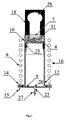
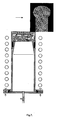
Figure 1 shows a longitudinal section of the apparatus for the production of closed-cell metal foam products, -
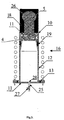
Figure 2 shows the apparatus for the production of closed-cell metal foam products in a state partially filled with metal foam, -
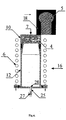
Figure 3 shows the apparatus for the production of closed-cell metal foam products upon the completion of foaming, -
Figure 4 shows the apparatus for the production of closed-cell metal foam products and the separation of the mould, -
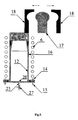
Figure 5 shows the apparatus for the production of closed-cell metal foam products and the metal foam product during the opening of the mould, and -
Figure 6 shows the technological scheme of the preparation of the foam generator. - As it is shown in
Figure 1 , the apparatus for the production of shaped metal foam comprises ametal foam injector 16 and amould 18. Afoam generator 4 is placed into themetal foam injector 16, the foamingopening 7 of which is connected to themould 18. Afoot 9 forms a part of theinjector housing 12. Thefoot 9 with mountingscrews 14 and lockingnuts 15, and a foot sealing 13 makes theinjector housing 12 of themetal foam injector 16 gas-tight. Theinjector housing 12 has a gas inlet opening 28 allowing the introduction of a foaming gas. Theinjector housing 12 is surrounded on the outside byinjector heating 6. Aninjector pipe 25 is installed at the gas inlet opening 28 of themetal foam injector 16, which with respect to its gas space is in direct connection with thefoam generator 4. The foaming gas can be introduced into themetal foam injector 16 by means of avalve 27. Theinjector housing 12 is closed on the top by aninjector head 10, in the centre of which is the foamingopening 7. In order to ensure perfect gas-tightness, a thread sealing 19 is installed between theinjector head 10 and theinjector housing 12, and a metal sealing 11 is installed next to thefoaming opening 7, between theinjector head 10 and thefoam generator 4. Themould 18 is connected with a joint to theinjector head 10 forming a part of themetal foam injector 16. The connection between themould cavity 26 and themetal foam injector 16 is provided by the foamingopening 7. -
Figure 2 shows the apparatus for the production of shaped metal foam in a state when themould cavity 26 of themould 18 is filled to the half withmetal foam 5. The foaming gas flows through thepipe 25 to theinjector housing 12 of themetal foam injector 16.Metal foam 5 is generated from thefoam generator 4 heated above the melting point with theinjector heating 6, without a molten metal bath. During the foaming themetal foam 5 fills themould cavity 26. Thegas valve 27 is in an open position. No molten metal bath is formed during the foaming, thus themetal foam injector 16 can be turned in any spatial direction different from the direction of gravity. Themetal foam injector 16 can be connected to themould 18 in any angular position, if themould 18 has a receiving opening developed for this purpose. -
Figure 3 shows the apparatus for the production of shaped metal foam and themetal foam injector 16 with themould 18 in a state when themetal foam 5 has filled theavailable mould cavity 26 completely. Thegas valve 27 is in a closed position. -
Figure 4 shows the apparatus for the production of shaped metal foam with themetal foam injector 16 and themould 18 in a state when themould 18 has been displaced along its axis, that is the mould filled withmetal foam 5 has been mechanically separated from theinjector head 10 forming the upper part of themetal foam injector 16. -
Figure 5 shows the apparatus for the production of shaped metal foam with themould 18 separated from themetal foam injector 16 in an open state, also showing the good filling of the mould by themetal foam product 17. Thegas valve 27 for introducing gas into themetal foam injector 16 is closed, theinjector heating 6 is not operating. Upon the opening of themould 18 themetal foam product 17 is in a free position suitable for use. - The method for the production of shaped metal foam products will be described together with the operation of the apparatus for the production of shaped metal foam products:
- The method for the production of shaped metal foam covers the preparation of the
foam generator 4 and the operation of the apparatus for the production of shaped metal foam. The operation of the apparatus for the production of shaped metal foam means the shaping of the metal foam product in the mould that is the generation of foam from thefoam generator 4. According to the method, first thefoam generator 4 is prepared from a precursor 3 and a porous ceramic 1 according toFigure 6 . As it is shown inFigure 6 , thepores 31 of theporous ceramic 1 are surface-treated, for example put into asalt bath 8, and thus the walls of itsopen pores 31 are coated with a surface layer. Upon removing the ceramic from the salt bath and drying it, a surface-treatedceramic 2 is obtained. Theporous ceramic 1 is also suitable for the following technological steps without surface treatment. If thesalt bath 8 is omitted, the walls of thepores 31 of the porous ceramic 1 can be coated in a metallo-chemical process with a metal or carbide layer, or with a carbon layer. The porous ceramic 1 or the surface-treatedceramic 2 is placed into a heated press die 20. Precursor 3 elements are also placed into the press die 20 under and above the surface-treatedceramic 2, then hot pressing is performed in the press die 20 with a force F. The material of the precursor infiltrates into the porous ceramic. The precursor itself consists of a metal matrix and evenly distributed stabilizing particles, and upon the melting of the metal matrix it turns into a liquid state and infiltrates into thepores 31 of the porous ceramic 1 or surface-treatedceramic 2. As it is shown inFigure 6 , the press die 20 consists of a die 22, anupper punch 21 and alower punch 23. For heating, thedie 22 is equipped withdie heating 24. After the pressing thefoam generator 4 is removed from the press die 20. - The metal foam is generated during the operation of the apparatus for the production of shaped metal foam. For this the
metal foam injector 16 is prepared for use in such a way that thefoam generator 4 is placed into theinjector housing 12, under theinjector head 10. Theinjector housing 12 is closed on the gas side by thefoot 9, which is made gas-tight with a foot sealing 13. Mounting screws 14 and lockingnuts 15 are used for fixing it. Theinjector head 10 is sealed in a' gas-tight manner on the foam generator side with a metal sealing 11, and on theinjector housing 12 side with a thread sealing 19. These sealings have to be installed in themetal foam injector 16 before the start of foaming. Thegas valve 27 is closed, and by switching on theinjector heating 6 thefoam generator 4 is heated above the melting point of the precursor. Then thegas valve 27 is opened, the foaming gas is introduced into theinjector housing 12 through the gas inlet opening 28, and particle-stabilized metal foam generated from thefoam generator 4 flows through the foamingopening 7 into themould cavity 26 of themould 18. After the foaming - as it is shown inFigure 5 - themould 18 with themetal foam product 17 produced in themould cavity 26 is separated from themetal foam injector 16 by shearing. Themould 18 is cooled to the ambient temperature and themetal foam product 17 is removed by opening themould 18. The finishedmetal foam product 17 is then installed in its place of use. - The precursor material for the method for the production of shaped metal foam products is an A359 aluminium alloy, containing 20 vol. % of evenly dispersed 20 µm SiC particles.
- This precursor is infiltrated into an aluminium-oxide ceramic by pressing. The ceramic has a porosity of 80%, 100% of the pores are open, it has a pore size of 80 PPI (pores per inch) and a macroscopic size of: 045 x 15 mm. The porous ceramic and the precursor are heated in a press die to a temperature between 650°C-700°C, where the precursor melts, then the precursor is infiltrated into the pores of the ceramic with a force of 500 N, and cooled. The foam generator prepared in this way is placed into the metal foam injector. The injector allows the foaming gas to pass through the foam generator and to generate metal foam on the other side thereof. Air compressed with a compressor is used as a foaming gas, introduced into the metal foam injector at a relative pressure of 0.2 bar, where it passes through the generator heated to 650°C-700°C, blowing a metal foam on the outlet side of the metal foam injector in any direction independently of gravity. The generated metal foam is a closed-cell foam, and fills a mould having a volume of 150 cm3 and also heated to 650°C-700°C. The metal foam obtained after the opening of the mould has a uniform cell structure, with an average cell size of 5 mm.
- The precursor material for the method for the production of shaped metal foam products is an A356 aluminium alloy, containing 13 vol. % of evenly dispersed 15 µm SiC particles. This precursor is infiltrated into a silicon carbide (SiC) ceramic by pressing. The ceramic has a porosity of 80%, 100% of the pores are open, it has a pore size of 60 PPI (pores per inch) and a macroscopic size of: 045 x 15 mm. The porous ceramic is placed into a saturated aqueous solution of K2ZrF6 salt, then after the deposition of salt, it is dried outside the bath. The porous ceramic and the precursor are heated in a press die to a temperature between 650°C-700°C, where the precursor melts, then the precursor is infiltrated into the pores of the ceramic with a force of 500 N, and cooled. The foam generator prepared in this way is placed into the metal foam injector. The injector allows the foaming gas to pass through the foam generator and generate metal foam on the other side thereof. Air compressed with a compressor is used as a foaming gas, introduced into the metal foam injector at a relative pressure of 0.2 bar, where it passes through the generator heated to 650°C-700°C, blowing a metal foam on the outlet side of the metal foam injector in any direction independently of gravity. The generated metal foam is a closed-cell foam, and fills a thin-walled mould having a volume of 50 cm3 and also heated to 650°C-700°C. The product obtained after the separation of the mould and cooling is a metal foam integrated into a thin (1 mm) metal layer.
- The method according to the invention for the production of shaped metal foam provides a technique that can be preferably used with a foam generator for the production of shaped metal foam without using a molten bath. With this method foam can be generated in any direction independently of gravity, that is foaming is possible with the foaming opening facing in the horizontal, vertical or any other direction. The foam generator prepared according to the invention is a compact foam generating unit, no other blowing agent needs to be introduced into the foam generator after heating, thus the technology becomes simple and easy to apply. Due to the direction independence, several metal foam injectors can be used on a single mould at the same time. This allows the controlled production of an inhomogeneous structure corresponding to the load conditions. For example, in the case of a shaped metal foam product a load-bearing neck part can be produced from a higher density foam using a specially prepared foam generator, that is the neck will have higher strength than the other parts of the metal foam product. The foam generator allows the production of integrated metal foam products as well, that is metal foam can be blown into closed sections, shell structures, or hollow ceramic architectural components. The technology allows the generation of closed-cell foams with a homogeneous pore size, a thin or a thick outer shell, as a result of which the method and apparatus described herein for the production of shaped metal foam products allow the production of shaped metal foam products in an easy-to-use and economically efficient manner.
-
- 1 -
- porous ceramic
- 2 -
- surface-treated ceramic
- 3 -
- precursor
- 4 -
- foam generator
- 5 -
- metal foam
- 6 -
- injector heating
- 7 -
- foaming opening
- 8 -
- salt bath
- 9 -
- foot
- 10 -
- injector head
- 11 -
- metal sealing
- 12 -
- injector housing
- 13 -
- foot sealing
- 14 -
- mounting screw
- 15 -
- locking nut
- 16 -
- metal foam injector
- 17 -
- metal foam product
- 18 -
- mould
- 19 -
- thread sealing
- 20 -
- press die
- 21 -
- upper punch
- 22 -
- die
- 23 -
- lower punch
- 24 -
- die heating
- 25 -
- pipe
- 26 -
- mould cavity
- 27 -
- gas valve
- 28 -
- gas inlet opening
- 29 -
- stabilizing particle
- 30 -
- metal matrix
- 31 -
- pore
Claims (7)
- An apparatus for the production of particle-stabilized, closed-cell, shaped metal foam products, having a heatable foam generating device and a metal foaming mould, wherein the foam generating device is a metal foam injector (16), comprising a gas-tight injector housing (12) and a foam generator (4) placed into the injector head (10), where the injector head (10) is connected to the mould (18) through a foaming opening (7), and the injector housing (12) is surrounded on the outside by injector heating (6) and is equipped with a gas inlet opening (28).
- The apparatus according to claim 1, wherein the foam generator (4) comprises a porous ceramic (1) or a porous surface-treated ceramic (2) and a precursor (3).
- The apparatus according to claims 1-2, wherein the precursor (3) of the foam generator (4) comprises a metal matrix (30) and evenly dispersed stabilizing particles (29).
- The apparatus according to claims 1-3, wherein the metal matrix (30) of the precursor (3) is aluminium and its alloys, or iron and its alloys, or zinc and its alloys, or titanium and its alloys, or nickel and its alloys.
- The apparatus according to claims 1-4, wherein the material of the porous ceramic (1) or surface-treated ceramic (2) of the foam generator (4) is oxide ceramic, or carbide ceramic, or graphite.
- The apparatus according to claims 1-5, wherein the material for the surface treatment and coating of the pores (31) of the porous surface-treated ceramic (2) is salt, silicon carbide, metal, or carbon.
- A method for the production of particle-stabilized, closed-cell, shaped metal foam products from a precursor by means of a porous ceramic, a foaming gas and a mould, wherein the precursor (3) is infiltrated into the porous ceramic (1) or porous surface-treated ceramic (2) by hot pressing to prepare a foam generator (4), then the foam generator (4) is placed into a metal foam injector (16), the metal foam injector (16) is heated above the melting point of the precursor (3) and with the metal foam injector in any spatial angular position, by introducing gas through a gas inlet opening (28), metal foam (5) is generated in the mould cavity (26) of the mould (18) installed on the injector head (10) of the metal foam injector (16), the mould is separated from the metal foam injector, then the mould is cooled, and after cooling the mould (18) is opened and the metal foam product is removed from the mould cavity (26), or after cooling the mould (18) is left on the metal foam product, and the shaped metal foam product (17) is used in this form.
Priority Applications (1)
| Application Number | Priority Date | Filing Date | Title |
|---|---|---|---|
| EP11002393A EP2502688A1 (en) | 2011-03-23 | 2011-03-23 | Apparatus and method for the production of particle-stabilized, closed-cell, shaped metal foam products with a metal foam injector |
Applications Claiming Priority (1)
| Application Number | Priority Date | Filing Date | Title |
|---|---|---|---|
| EP11002393A EP2502688A1 (en) | 2011-03-23 | 2011-03-23 | Apparatus and method for the production of particle-stabilized, closed-cell, shaped metal foam products with a metal foam injector |
Publications (1)
| Publication Number | Publication Date |
|---|---|
| EP2502688A1 true EP2502688A1 (en) | 2012-09-26 |
Family
ID=44278752
Family Applications (1)
| Application Number | Title | Priority Date | Filing Date |
|---|---|---|---|
| EP11002393A Withdrawn EP2502688A1 (en) | 2011-03-23 | 2011-03-23 | Apparatus and method for the production of particle-stabilized, closed-cell, shaped metal foam products with a metal foam injector |
Country Status (1)
| Country | Link |
|---|---|
| EP (1) | EP2502688A1 (en) |
Citations (4)
| Publication number | Priority date | Publication date | Assignee | Title |
|---|---|---|---|---|
| DE19717894A1 (en) * | 1996-05-02 | 1997-11-27 | Mepura Metallpulver | Porous metal especially aluminium matrix material production |
| US6391250B1 (en) * | 1998-04-09 | 2002-05-21 | Mepura Metallpulvergesellschaft Mbh Ranshofen | Method for producing forms and foamed metal forms |
| US6866084B2 (en) * | 2000-02-25 | 2005-03-15 | Cymat Corporation | Method and means for producing moulded foam bodies |
| WO2006021082A1 (en) * | 2004-08-24 | 2006-03-02 | Cymat Corp. | Apparatus for metal foam casting and methods therefor |
-
2011
- 2011-03-23 EP EP11002393A patent/EP2502688A1/en not_active Withdrawn
Patent Citations (4)
| Publication number | Priority date | Publication date | Assignee | Title |
|---|---|---|---|---|
| DE19717894A1 (en) * | 1996-05-02 | 1997-11-27 | Mepura Metallpulver | Porous metal especially aluminium matrix material production |
| US6391250B1 (en) * | 1998-04-09 | 2002-05-21 | Mepura Metallpulvergesellschaft Mbh Ranshofen | Method for producing forms and foamed metal forms |
| US6866084B2 (en) * | 2000-02-25 | 2005-03-15 | Cymat Corporation | Method and means for producing moulded foam bodies |
| WO2006021082A1 (en) * | 2004-08-24 | 2006-03-02 | Cymat Corp. | Apparatus for metal foam casting and methods therefor |
Similar Documents
| Publication | Publication Date | Title |
|---|---|---|
| JP4322665B2 (en) | Manufacturing method of metal / foam metal composite parts | |
| Srivastava et al. | Processing, stabilization and applications of metallic foams. Art of science | |
| CN100418672C (en) | A preparation method of aluminum-based porous composite material containing tiny closed pores | |
| US6659162B2 (en) | Production of large-area metallic integral foams | |
| CN101504249B (en) | A multifunctional vacuum-positive pressure melting and solidification equipment | |
| JP2005500162A (en) | Manufacturing method of metal molded parts | |
| CN103896561B (en) | Preparation method of silica heat insulating material with regular layered structure | |
| JP2004098170A (en) | Method and device for manufacturing flowable metal bubble | |
| CN103627920B (en) | A kind of preparation method of nickel porous | |
| JP2002129204A (en) | Method for manufacturing porous metal | |
| CN101818278A (en) | Device and method for preparing porous foam metal by metal melt inflation process | |
| KR102391939B1 (en) | A method for manufacturing a component from a metal foam, a component manufactured by the method and a mold for implementing the method | |
| CN1424416A (en) | High strength foam composite aluminum materials and preparation thereof | |
| CN107321981A (en) | A kind of method that powder metallurgic method prepares closed-cell foam copper-based material | |
| EP2502688A1 (en) | Apparatus and method for the production of particle-stabilized, closed-cell, shaped metal foam products with a metal foam injector | |
| CN102773302A (en) | Continuous preparation method for foamed aluminum rod | |
| KR100913434B1 (en) | Method of manufacturing foamed metal with controlled pore | |
| HUP0900629A2 (en) | Apparatus and method for producing shaped metal foam articles of closed cell by metal foam injector | |
| CN102242287A (en) | Production method of foam magnesium alloy section bar | |
| CN213135046U (en) | A foam metal manufacturing device based on powder metallurgy and extrusion technology | |
| Surace¹ et al. | Investigation and comparison of aluminium foams manufactured by different techniques | |
| CA2445660C (en) | Method for manufacturing closed-wall cellular metal | |
| Baumgartner et al. | Industrialisation of P/M foaming process | |
| CN201753363U (en) | Porous foam metal preparation device using molten metal aeration method | |
| Raja et al. | Processing of cellular materials—An overview |
Legal Events
| Date | Code | Title | Description |
|---|---|---|---|
| PUAI | Public reference made under article 153(3) epc to a published international application that has entered the european phase |
Free format text: ORIGINAL CODE: 0009012 |
|
| AK | Designated contracting states |
Kind code of ref document: A1 Designated state(s): AL AT BE BG CH CY CZ DE DK EE ES FI FR GB GR HR HU IE IS IT LI LT LU LV MC MK MT NL NO PL PT RO RS SE SI SK SM TR |
|
| AX | Request for extension of the european patent |
Extension state: BA ME |
|
| STAA | Information on the status of an ep patent application or granted ep patent |
Free format text: STATUS: THE APPLICATION IS DEEMED TO BE WITHDRAWN |
|
| 18D | Application deemed to be withdrawn |
Effective date: 20130327 |