EP2496494B1 - Peel-off packaging system for fresh foodstuffs - Google Patents
Peel-off packaging system for fresh foodstuffs Download PDFInfo
- Publication number
- EP2496494B1 EP2496494B1 EP10778549.5A EP10778549A EP2496494B1 EP 2496494 B1 EP2496494 B1 EP 2496494B1 EP 10778549 A EP10778549 A EP 10778549A EP 2496494 B1 EP2496494 B1 EP 2496494B1
- Authority
- EP
- European Patent Office
- Prior art keywords
- sealing
- layer
- product according
- average thickness
- intermediate layer
- Prior art date
- Legal status (The legal status is an assumption and is not a legal conclusion. Google has not performed a legal analysis and makes no representation as to the accuracy of the status listed.)
- Not-in-force
Links
- 238000004806 packaging method and process Methods 0.000 title description 2
- 239000010410 layer Substances 0.000 claims description 97
- 238000007789 sealing Methods 0.000 claims description 83
- 239000000463 material Substances 0.000 claims description 19
- 229920003023 plastic Polymers 0.000 claims description 17
- 239000004033 plastic Substances 0.000 claims description 17
- 229920000139 polyethylene terephthalate Polymers 0.000 claims description 11
- 239000005020 polyethylene terephthalate Substances 0.000 claims description 11
- 239000000835 fiber Substances 0.000 claims description 10
- 229920002292 Nylon 6 Polymers 0.000 claims description 7
- -1 polyethylene terephthalate Polymers 0.000 claims description 7
- 229920000728 polyester Polymers 0.000 claims description 5
- 239000000853 adhesive Substances 0.000 claims description 4
- 230000001070 adhesive effect Effects 0.000 claims description 4
- 235000013311 vegetables Nutrition 0.000 claims description 4
- 239000004952 Polyamide Substances 0.000 claims description 3
- 239000012790 adhesive layer Substances 0.000 claims description 3
- 229920002647 polyamide Polymers 0.000 claims description 3
- 239000003566 sealing material Substances 0.000 claims description 3
- 229920001169 thermoplastic Polymers 0.000 claims description 3
- 239000004416 thermosoftening plastic Substances 0.000 claims description 3
- 239000002657 fibrous material Substances 0.000 claims description 2
- 239000000123 paper Substances 0.000 description 24
- 239000004698 Polyethylene Substances 0.000 description 8
- 239000011230 binding agent Substances 0.000 description 8
- 229920000573 polyethylene Polymers 0.000 description 8
- 239000002253 acid Substances 0.000 description 6
- 229920001897 terpolymer Polymers 0.000 description 6
- 229920006225 ethylene-methyl acrylate Polymers 0.000 description 5
- 229910052782 aluminium Inorganic materials 0.000 description 4
- XAGFODPZIPBFFR-UHFFFAOYSA-N aluminium Chemical compound [Al] XAGFODPZIPBFFR-UHFFFAOYSA-N 0.000 description 4
- 150000002148 esters Chemical class 0.000 description 4
- 239000005043 ethylene-methyl acrylate Substances 0.000 description 4
- 229910052500 inorganic mineral Inorganic materials 0.000 description 4
- 239000011707 mineral Substances 0.000 description 4
- 229910000838 Al alloy Inorganic materials 0.000 description 3
- 150000001875 compounds Chemical class 0.000 description 3
- 229920001577 copolymer Polymers 0.000 description 3
- 238000005520 cutting process Methods 0.000 description 3
- 235000013365 dairy product Nutrition 0.000 description 3
- 239000005038 ethylene vinyl acetate Substances 0.000 description 3
- 229920006245 ethylene-butyl acrylate Polymers 0.000 description 3
- 229920006244 ethylene-ethyl acrylate Polymers 0.000 description 3
- FPYJFEHAWHCUMM-UHFFFAOYSA-N maleic anhydride Chemical compound O=C1OC(=O)C=C1 FPYJFEHAWHCUMM-UHFFFAOYSA-N 0.000 description 3
- 229940044600 maleic anhydride Drugs 0.000 description 3
- 230000002093 peripheral effect Effects 0.000 description 3
- 229920001200 poly(ethylene-vinyl acetate) Polymers 0.000 description 3
- 239000004743 Polypropylene Substances 0.000 description 2
- 229920006226 ethylene-acrylic acid Polymers 0.000 description 2
- 239000005042 ethylene-ethyl acrylate Substances 0.000 description 2
- 235000013305 food Nutrition 0.000 description 2
- 239000011521 glass Substances 0.000 description 2
- 238000004519 manufacturing process Methods 0.000 description 2
- 229920001155 polypropylene Polymers 0.000 description 2
- 229920000915 polyvinyl chloride Polymers 0.000 description 2
- 229920006395 saturated elastomer Polymers 0.000 description 2
- 230000035939 shock Effects 0.000 description 2
- 230000007704 transition Effects 0.000 description 2
- OKTJSMMVPCPJKN-UHFFFAOYSA-N Carbon Chemical compound [C] OKTJSMMVPCPJKN-UHFFFAOYSA-N 0.000 description 1
- 239000004793 Polystyrene Substances 0.000 description 1
- 241000206607 Porphyra umbilicalis Species 0.000 description 1
- QYMGIIIPAFAFRX-UHFFFAOYSA-N butyl prop-2-enoate;ethene Chemical compound C=C.CCCCOC(=O)C=C QYMGIIIPAFAFRX-UHFFFAOYSA-N 0.000 description 1
- 229910052799 carbon Inorganic materials 0.000 description 1
- 230000000052 comparative effect Effects 0.000 description 1
- 239000002131 composite material Substances 0.000 description 1
- 239000004020 conductor Substances 0.000 description 1
- 238000005336 cracking Methods 0.000 description 1
- 238000002788 crimping Methods 0.000 description 1
- 230000007547 defect Effects 0.000 description 1
- 238000001125 extrusion Methods 0.000 description 1
- 239000012530 fluid Substances 0.000 description 1
- 229920001903 high density polyethylene Polymers 0.000 description 1
- 239000004700 high-density polyethylene Substances 0.000 description 1
- 229920000554 ionomer Polymers 0.000 description 1
- 239000002655 kraft paper Substances 0.000 description 1
- 229920001684 low density polyethylene Polymers 0.000 description 1
- 239000004702 low-density polyethylene Substances 0.000 description 1
- 229910052751 metal Inorganic materials 0.000 description 1
- 239000002184 metal Substances 0.000 description 1
- 239000008267 milk Substances 0.000 description 1
- 235000013336 milk Nutrition 0.000 description 1
- 210000004080 milk Anatomy 0.000 description 1
- 238000000465 moulding Methods 0.000 description 1
- 239000005022 packaging material Substances 0.000 description 1
- 238000009928 pasteurization Methods 0.000 description 1
- 229920000098 polyolefin Polymers 0.000 description 1
- 229920002223 polystyrene Polymers 0.000 description 1
- 229920005989 resin Polymers 0.000 description 1
- 239000011347 resin Substances 0.000 description 1
- 230000001954 sterilising effect Effects 0.000 description 1
- 238000004659 sterilization and disinfection Methods 0.000 description 1
- 239000000454 talc Substances 0.000 description 1
- 229910052623 talc Inorganic materials 0.000 description 1
Images
Classifications
-
- B—PERFORMING OPERATIONS; TRANSPORTING
- B65—CONVEYING; PACKING; STORING; HANDLING THIN OR FILAMENTARY MATERIAL
- B65D—CONTAINERS FOR STORAGE OR TRANSPORT OF ARTICLES OR MATERIALS, e.g. BAGS, BARRELS, BOTTLES, BOXES, CANS, CARTONS, CRATES, DRUMS, JARS, TANKS, HOPPERS, FORWARDING CONTAINERS; ACCESSORIES, CLOSURES, OR FITTINGS THEREFOR; PACKAGING ELEMENTS; PACKAGES
- B65D77/00—Packages formed by enclosing articles or materials in preformed containers, e.g. boxes, cartons, sacks or bags
- B65D77/10—Container closures formed after filling
- B65D77/20—Container closures formed after filling by applying separate lids or covers, i.e. flexible membrane or foil-like covers
- B65D77/2024—Container closures formed after filling by applying separate lids or covers, i.e. flexible membrane or foil-like covers the cover being welded or adhered to the container
-
- B—PERFORMING OPERATIONS; TRANSPORTING
- B32—LAYERED PRODUCTS
- B32B—LAYERED PRODUCTS, i.e. PRODUCTS BUILT-UP OF STRATA OF FLAT OR NON-FLAT, e.g. CELLULAR OR HONEYCOMB, FORM
- B32B1/00—Layered products having a non-planar shape
-
- B—PERFORMING OPERATIONS; TRANSPORTING
- B32—LAYERED PRODUCTS
- B32B—LAYERED PRODUCTS, i.e. PRODUCTS BUILT-UP OF STRATA OF FLAT OR NON-FLAT, e.g. CELLULAR OR HONEYCOMB, FORM
- B32B15/00—Layered products comprising a layer of metal
- B32B15/04—Layered products comprising a layer of metal comprising metal as the main or only constituent of a layer, which is next to another layer of the same or of a different material
- B32B15/08—Layered products comprising a layer of metal comprising metal as the main or only constituent of a layer, which is next to another layer of the same or of a different material of synthetic resin
-
- B—PERFORMING OPERATIONS; TRANSPORTING
- B32—LAYERED PRODUCTS
- B32B—LAYERED PRODUCTS, i.e. PRODUCTS BUILT-UP OF STRATA OF FLAT OR NON-FLAT, e.g. CELLULAR OR HONEYCOMB, FORM
- B32B15/00—Layered products comprising a layer of metal
- B32B15/20—Layered products comprising a layer of metal comprising aluminium or copper
-
- B—PERFORMING OPERATIONS; TRANSPORTING
- B32—LAYERED PRODUCTS
- B32B—LAYERED PRODUCTS, i.e. PRODUCTS BUILT-UP OF STRATA OF FLAT OR NON-FLAT, e.g. CELLULAR OR HONEYCOMB, FORM
- B32B27/00—Layered products comprising a layer of synthetic resin
- B32B27/06—Layered products comprising a layer of synthetic resin as the main or only constituent of a layer, which is next to another layer of the same or of a different material
- B32B27/08—Layered products comprising a layer of synthetic resin as the main or only constituent of a layer, which is next to another layer of the same or of a different material of synthetic resin
-
- B—PERFORMING OPERATIONS; TRANSPORTING
- B32—LAYERED PRODUCTS
- B32B—LAYERED PRODUCTS, i.e. PRODUCTS BUILT-UP OF STRATA OF FLAT OR NON-FLAT, e.g. CELLULAR OR HONEYCOMB, FORM
- B32B27/00—Layered products comprising a layer of synthetic resin
- B32B27/34—Layered products comprising a layer of synthetic resin comprising polyamides
-
- B—PERFORMING OPERATIONS; TRANSPORTING
- B32—LAYERED PRODUCTS
- B32B—LAYERED PRODUCTS, i.e. PRODUCTS BUILT-UP OF STRATA OF FLAT OR NON-FLAT, e.g. CELLULAR OR HONEYCOMB, FORM
- B32B27/00—Layered products comprising a layer of synthetic resin
- B32B27/36—Layered products comprising a layer of synthetic resin comprising polyesters
-
- B—PERFORMING OPERATIONS; TRANSPORTING
- B65—CONVEYING; PACKING; STORING; HANDLING THIN OR FILAMENTARY MATERIAL
- B65D—CONTAINERS FOR STORAGE OR TRANSPORT OF ARTICLES OR MATERIALS, e.g. BAGS, BARRELS, BOTTLES, BOXES, CANS, CARTONS, CRATES, DRUMS, JARS, TANKS, HOPPERS, FORWARDING CONTAINERS; ACCESSORIES, CLOSURES, OR FITTINGS THEREFOR; PACKAGING ELEMENTS; PACKAGES
- B65D51/00—Closures not otherwise provided for
- B65D51/18—Arrangements of closures with protective outer cap-like covers or of two or more co-operating closures
- B65D51/20—Caps, lids, or covers co-operating with an inner closure arranged to be opened by piercing, cutting, or tearing
-
- B—PERFORMING OPERATIONS; TRANSPORTING
- B65—CONVEYING; PACKING; STORING; HANDLING THIN OR FILAMENTARY MATERIAL
- B65D—CONTAINERS FOR STORAGE OR TRANSPORT OF ARTICLES OR MATERIALS, e.g. BAGS, BARRELS, BOTTLES, BOXES, CANS, CARTONS, CRATES, DRUMS, JARS, TANKS, HOPPERS, FORWARDING CONTAINERS; ACCESSORIES, CLOSURES, OR FITTINGS THEREFOR; PACKAGING ELEMENTS; PACKAGES
- B65D2251/00—Details relating to container closures
- B65D2251/0003—Two or more closures
- B65D2251/0006—Upper closure
- B65D2251/0018—Upper closure of the 43-type
-
- B—PERFORMING OPERATIONS; TRANSPORTING
- B65—CONVEYING; PACKING; STORING; HANDLING THIN OR FILAMENTARY MATERIAL
- B65D—CONTAINERS FOR STORAGE OR TRANSPORT OF ARTICLES OR MATERIALS, e.g. BAGS, BARRELS, BOTTLES, BOXES, CANS, CARTONS, CRATES, DRUMS, JARS, TANKS, HOPPERS, FORWARDING CONTAINERS; ACCESSORIES, CLOSURES, OR FITTINGS THEREFOR; PACKAGING ELEMENTS; PACKAGES
- B65D2251/00—Details relating to container closures
- B65D2251/0003—Two or more closures
- B65D2251/0068—Lower closure
- B65D2251/0093—Membrane
-
- B—PERFORMING OPERATIONS; TRANSPORTING
- B65—CONVEYING; PACKING; STORING; HANDLING THIN OR FILAMENTARY MATERIAL
- B65D—CONTAINERS FOR STORAGE OR TRANSPORT OF ARTICLES OR MATERIALS, e.g. BAGS, BARRELS, BOTTLES, BOXES, CANS, CARTONS, CRATES, DRUMS, JARS, TANKS, HOPPERS, FORWARDING CONTAINERS; ACCESSORIES, CLOSURES, OR FITTINGS THEREFOR; PACKAGING ELEMENTS; PACKAGES
- B65D2577/00—Packages formed by enclosing articles or materials in preformed containers, e.g. boxes, cartons, sacks, bags
- B65D2577/10—Container closures formed after filling
- B65D2577/20—Container closures formed after filling by applying separate lids or covers
- B65D2577/2041—Pull tabs
- B65D2577/205—Pull tabs integral with the closure
Definitions
- the invention relates to the field of lids designed to seal containers. It concerns more particularly lids which take the form of peel-off lids designed to seal containers, typically pots or bottles, which contain fluid products such as fresh dairy products or other food products with a limited shelf life, requiring neither pasteurization nor sterilization.
- foodstuffs with a limited shelf life like non-sterilized or non-pasteurized dairy products, for example fresh milk products are poured into containers (pots, or bottles) typically made of glass or plastic. These containers are then covered with a lid which is made either from a metalloplastic sheet including a layer of aluminum alloy, or from a composite sheet comprising paper and plastic (typically PET: polyethylene terephthalate), and which is heat-sealed onto a zone of the container which surrounds the upper edge of the cavity of the container, that we will thereafter refer to as the "ring-shape sealing zone".
- a lid which is made either from a metalloplastic sheet including a layer of aluminum alloy, or from a composite sheet comprising paper and plastic (typically PET: polyethylene terephthalate), and which is heat-sealed onto a zone of the container which surrounds the upper edge of the cavity of the container, that we will thereafter refer to as the "ring-shape sealing zone”.
- lids adhere to the container with enough force to ensure leak tightness, in particular against steam, but sufficiently weakly to allow them to be separated from said ring-shaped sealing zone by peeling.
- this invention lends itself particularly well to containers provided with a collar (or neck) surrounding a dispensing opening, we will also indicate said ring-shaped sealing zone by the term "mouth", which usually indicates the upper edge of the neck which surrounds said dispensing opening.
- Typical rates of filling for such pots or containers for non-pasteurized or non-sterilized dairy products and other foodstuffs with a limited shelf life are typically about 30 containers per minute.
- said containers can be filled and sealed simultaneously, so that the same machine, able to function for example with 24 tracks, is typically able to supply 40,000 pots per hour. It is clear that, for such rates, the conditions of positioning and heat sealing of the lid on the container are of paramount influence on the quality of the leak-tightness of the containers sealed in this way.
- the sealing product used may be either a sealing sheet which is placed on several containers at the same time before carrying out the simultaneous heat sealing of said containers, or a customized lid that is placed on the opening of one container alone.
- Patent application WO2006/016038 describes the structure of a sealing product, whether a customized lid or a sealing sheet, which comprises:
- a non-metalloplastic structure had the disadvantage of not being able to be crimped onto the neck, so that it was necessary either to accept unattractive overlapping lids, unreliable because they were likely to be inopportunely torn off during handling of the containers, or to precut lids of smaller diameter and to thus run the risk of having many badly sealed containers
- the purpose of the invention is to procure sealing products, in the form of sealing sheets or precut lids, which, while not having the above-mentioned disadvantages of the lids which have a metallo-plastic structure, allow sealing at high rates which is satisfactory from the standpoint of both the leak-tightness of the products sealed and that of appearance and reliability.
- Another object of the invention is to provide lids that are economical to manufacture and that comply with current directives for packaging materials concerning their respect for the environment.
- the sealing product has the features of claim 1.
- the sealing product according to the invention is either a customized stamped lid, or a sheet or rather a plaque including several stamped cavities. It is made from a sealing sheet of which the structure comprises several layers of plastic and at least one support layer of paper or, more generally, a material mainly comprising vegetable fibers.
- the material of the support layer is inexpensive and withstands better than a plastic the thermal shock caused by the heat sealing tool, with which it is directly in contact.
- the thermal shock is all the greater as this material, a poor heat conductor, requires the heat sealing tool to be brought up to a temperature higher than that used for heat sealing lids with a metalloplastic structure used in prior art.
- This is what is meant by "mainly includes vegetable fibers”: it may contain other fibers, synthetic organic fibers for example, but it must be able to withstand the temperatures and the pressure imposed by the heat sealing tool during heat sealing, which can exceed 210-230 °C.
- This material includes at least 80% of vegetable fibers.
- the fibrous material is selected from materials comprising long fibers, such as paper commonly called "kraft paper", and having good elongation at rupture characteristics for a paper, greater than 5%, whatever the direction of the test is (length direction, width direction).
- kraft paper paper commonly called "kraft paper”
- the base of the stamped cavity is advantageously toroid in shape with a fillet radius typically greater than 5 times the total thickness of the sealing sheet.
- the tilted wall of the relief does not have too abrupt a slope in relation to the plans of the sealing sheet. Typically, one should aim for a tilted wall of less than 45° in relation to said plane.
- Said support layer has an average thickness which, expressed in terms of mass per surface unit, i.e. in terms of "surface density”, also called “basic weight” or “grammage”, lies between 40 and 110 g/m 2 .
- surface density also called “basic weight” or “grammage”
- a layer having a thickness close to 70 g/m 2 will be chosen.
- the sealing product according to the invention includes a multi-layer structure, typically co-extruded, with an adhesive material chosen so as to adhere, by one of its faces, to said support layer, and a sealing material chosen so as to adhere, by its other face, to the ring- shaped sealing zone during said heat sealing.
- This multi-layer structure also comprises, preferably adjacent to the adhesive layer made up of a binder having an affinity for the support layer, an intermediate layer made of plastic with a high strength and able to undergo plastic deformation, the thickness of which is such that it endows the entire sealing product with sufficient malleability and resistance for it to be possible to stamp it to the desired form without tearing.
- This intermediate layer makes it possible to peel off the lid without defibering or tearing.
- the average thickness of said intermediate layer is greater than a tenth of the average thickness of the support layer, and preferably greater than a fifth of the average thickness of the support layer.
- the strength is greater than 60 MPa, and preferably still greater than 80 MPa.
- the high malleability of the material advantageously results in an elongation at rupture greater than 5%, and preferably greater than 10%.
- Said material belongs to the group of polyamides and thermoplastic polyesters.
- polyamides polyamide 6 turns out to be particularly suitable because it endows the sealing sheet with very good tearing strength, even at low thicknesses.
- thermoplastic polyesters saturated polyesters
- a PET polyethylene terephthalate
- cooled quickly in order to give an amorphous structure or one with a low rate of crystallinity
- the layer of adhesive contains a binder including at least one of the following compounds: grafted copolymers and/or copolymers and/or terpolymers including acid groups or ionomers, maleic-anhydride grafted PE metallocene, maleic-anhydride grafted linear PE, EVA copolymers, EMA copolymers, EEA copolymers, EBA copolymers.
- Said support layer may have an average thickness which, expressed in terms of surface density, lies between 3 and 15 g/m 2 and preferably in the region of 5 g/m 2 .
- Said sealing layer may, depending on the material of the container onto which said lid must be sealed, contain at least one of the following compounds: ethylene vinyl acetate copolymer (EVA), ethylene-methyl acrylate copolymer (EMA), ethylene-butyl acrylate copolymer (EBA), ethylene-ethyl acrylate copolymer (EEA), the functionalized terpolymers including acid groups or esters, acid copolymers of type EAA (ethylene-acrylic acid), EMA (ethylene-methyl acrylate), terpolymers including maleic anhydride.
- EAA ethylene vinyl acetate copolymer
- EMA ethylene-methyl acrylate copolymer
- EBA ethylene-butyl acrylate copolymer
- EAA ethylene-ethyl acrylate copolymer
- Said sealing layer may include at least one of said compounds and, optionally, a tackifying resin.
- Said sealing layer may have an average thickness which, translated into terms of surface density, lies between 3 and 20 g/m 2 and preferably in the region of 10 g/m 2 .
- Said sealing layer may also include a mineral or organic load, for example talc, with a content by weight ranging typically from 5% to 30%, so as to encourage the cohesive rupture of said sealing layer when opening said packaging.
- Said intermediate layer may have an average thickness ranging between 3 and 20 g/m 2 , preferably in the vicinity of 15 g/m 2 for a support layer with an average thickness close to 70 g/m 2 .
- Said multi-layer structure typically obtained by co-extrusion, may have an average thickness ranging between 12 and 65 g/m 2 , preferably in the vicinity of 35 g/m 2 for a support layer with an average thickness close to 70 g/m 2 .
- the container may be made of glass, metal or plastic, single or multi-layer or spiral.
- the plastic(s) is (are) chosen from saturated polystyrenes (SP), polyesters (for example PET), polyolefins, in particular polyethylene (PE) or polypropylene (PP), and polyvinyl chlorides (PVC).
- FIGS 1 to 3 schematically illustrate an example of an embodiment of the invention.
- Lids (1) were made by cutting from a sealing sheet, the structure of which is shown schematically in figure 1 .
- the lids were stamped in order to obtain the shape represented in Figure 2a .
- the sealing sheet has a structure (10) which includes a support layer (11) made of paper and, adjacent to this, a multi-layer structure (16) made of plastic.
- the paper used to make the support layer (11) is a paper with long fibers with a weight per square meter, i.e. a surface density, of 70 g/m 2 .
- This paper has large quantities of long fibers which endow it with improved mechanical characteristics as compared to a standard paper of the same surface density.
- the paper chosen within the context of the invention has mechanical properties that are less anisotropic than standard paper of the same weight per square meter, a much better tearing strength, and in particular a particularly good elongation at rupture in the length direction (MD), as compared to standard paper, and it is this last property which appears as best characterizing the quality of the special paper which is required to make up the support layer of the sealing product according to the invention:
- the multi-layer structure (16) comprises:
- FIG 3 shows how the lid (20) fits onto the open end (2) of a cylindrical jar (1): the base (21) of the stamped relief (24) follows - here over the entire circumference - a contour close to that of the inner edge (41) of the ring-shaped sealing zone (4), which corresponds here to the mouth (5).
- the contour of the inner edge (41) corresponds to the inside (3) of the cavity (6) designed to contain the foodstuff.
- the peripheral edge (22) of the lid is the not stamped part of the lid which remains in the plane of the sealing sheet. It is placed above the mouth (5) then held up against this during heat sealing by means of the heat sealing tool (100).
- the stamped central part (27) has a depth (h) of approximately 2 mm in relation to the peripheral edge (22).
- the tilted wall (23) of the cavity (25) is tilted at an angle ⁇ , here around 50°, in relation to said plane of the sealing sheet.
- the transition zone between the tilted wall (23) and the stamped central part (27) is also toroid in shape with a fillet radius (R') close to R.
- the lid (20) was cut out from the sealing sheet according to a shape such that it also has a gripping tab (26), making it possible to grip the tab to detach the lid by peeling off.
- Lids of identical general shape but not stamped were also manufactured and heat -sealed onto the same containers, made by molding in high density polyethylene (HD PE). These lids had the following structures:
- the material of the intermediate layer a PA6 in this case, endows the paper / plastic complex according to the invention with tear-proof qualities as good as the metalloplastic structure, without the disadvantage of being expensive and difficult to recycle.
- a metalloplastic structure (of type A) could also be stamped but this would require a thicker layer of aluminum (at least 40 ⁇ m) and would consequently increase the disadvantages referred to above.
- lids of identical general shape were produced by cutting out from several sealing sheets (I, J, K, L, M) whose globally identical structures differ only by the thickness of the intermediate layer (13) made of polyamide 6: a paper support layer (11) identical to that described previously: paper with long fibers, of weight per square meter 70 g/m 2 , with the slightly anisotropic mechanical characteristics indicated above: .1 force at rupture MD: 5.6 kN/m; CD: 4.0 kN/m; .2 elongation at break MD: 5.5 %; CD: 9.0 % a layer (12) of binder, made of functionalized terpolymer containing acid groups and esters, binding the support layer and the intermediate layer, of average thickness 5 g/m 2 ; an intermediate layer (13) made of polyamide 6 (PA6), of average thickness 5 g/m 2 (structure I); 7 g/m 2 (structure J); 10 g/m 2 (structure K); 15 g/m 2 (structure L); 20 g/m 2 (structure
- structure I does not make it possible to obtain lids without folds and tears after stamping.
- the results are clearly better as of structure J, i.e. as soon as the thickness of the intermediate layer PA 6 reaches one-tenth of the average thickness of the paper support layer.
- the results are excellent with structures that have an intermediate layer of thickness greater than, or equal to 15 g/m 2 .
Landscapes
- Engineering & Computer Science (AREA)
- Mechanical Engineering (AREA)
- Laminated Bodies (AREA)
- Closures For Containers (AREA)
- Packages (AREA)
- Wrappers (AREA)
Description
- The invention relates to the field of lids designed to seal containers. It concerns more particularly lids which take the form of peel-off lids designed to seal containers, typically pots or bottles, which contain fluid products such as fresh dairy products or other food products with a limited shelf life, requiring neither pasteurization nor sterilization.
- Generally, foodstuffs with a limited shelf life like non-sterilized or non-pasteurized dairy products, for example fresh milk products, are poured into containers (pots, or bottles) typically made of glass or plastic. These containers are then covered with a lid which is made either from a metalloplastic sheet including a layer of aluminum alloy, or from a composite sheet comprising paper and plastic (typically PET: polyethylene terephthalate), and which is heat-sealed onto a zone of the container which surrounds the upper edge of the cavity of the container, that we will thereafter refer to as the "ring-shape sealing zone". These lids adhere to the container with enough force to ensure leak tightness, in particular against steam, but sufficiently weakly to allow them to be separated from said ring-shaped sealing zone by peeling. As this invention lends itself particularly well to containers provided with a collar (or neck) surrounding a dispensing opening, we will also indicate said ring-shaped sealing zone by the term "mouth", which usually indicates the upper edge of the neck which surrounds said dispensing opening.
- Typical rates of filling for such pots or containers for non-pasteurized or non-sterilized dairy products and other foodstuffs with a limited shelf life are typically about 30 containers per minute. Moreover, said containers can be filled and sealed simultaneously, so that the same machine, able to function for example with 24 tracks, is typically able to supply 40,000 pots per hour. It is clear that, for such rates, the conditions of positioning and heat sealing of the lid on the container are of paramount influence on the quality of the leak-tightness of the containers sealed in this way. The sealing product used may be either a sealing sheet which is placed on several containers at the same time before carrying out the simultaneous heat sealing of said containers, or a customized lid that is placed on the opening of one container alone.
- Patent application
WO2006/016038 describes the structure of a sealing product, whether a customized lid or a sealing sheet, which comprises: - ▪ a support structure, which may include a layer of aluminum alloy, or a layer of paper, or a plastic layer having sufficient mechanical characteristics, typically PET (polyethylene terephthalate);
- ▪ a multi-layer structure, typically co-extruded, including, on one of its faces, an adhesive layer including an adhesive material chosen so as to adhere to said support layer, and, on its other face, a sealing layer including a sealing material chosen so as to adhere, after heat sealing, to the ring-shaped sealing zone.
- In particular for customized lids, which are generally precut in the form of discs whose diameter is greater than that of the dispensing opening, the problem arises of placing said lids above the ring-shaped sealing zone with a high degree of accuracy. A badly positioned lid is likely, after heat sealing, not to adhere perfectly to the entire circumference of the ring-shaped sealing zone, so that the container cannot be sure to provide proper conservation of the product which it contains. It is all the more important to solve the problem in that production rates are high, that the positioning of the lid and controlling said positioning must be made in a fraction of a second and that, by the time that it is realized that a slight positioning defect has occurred, a very large number of rejects may have resulted.
- The solution proposed up until now involved precutting the lid to a diameter significantly higher than the external diameter of the container mouth and folding back the "overlapping" part along the cylindrical wall outside the collar or neck. Only a metalloplastic structure could be appropriate for such a solution. Its aluminum support layer, of a minimum thickness of 30 micrometers, made it possible to permanently fold back said overlapping edge by crimping around the neck of the container, without damaging the sealed zone. On the other hand, a non-metalloplastic structure had the disadvantage of not being able to be crimped onto the neck, so that it was necessary either to accept unattractive overlapping lids, unreliable because they were likely to be inopportunely torn off during handling of the containers, or to precut lids of smaller diameter and to thus run the risk of having many badly sealed containers
- But the metalloplastic structure used to solve this problem had disadvantages:
- it is not easy to recycle;
- as it contains a large amount of aluminum, its cost is relatively high, and its carbon footprint is high so that it is not in line with current concerns relating to sustainable development;
- it has a metallic appearance, difficult or expensive to modify (lacquering, printing, etc.);
- it has a low crack strength which may be observed in particular during the transportation of sealed containers: because of the vibrations occurring during transport, the aluminum alloy layer may be subjected to strong forces and is therefore likely to present cracking which no longer guarantees the desired sealing.
- The purpose of the invention is to procure sealing products, in the form of sealing sheets or precut lids, which, while not having the above-mentioned disadvantages of the lids which have a metallo-plastic structure, allow sealing at high rates which is satisfactory from the standpoint of both the leak-tightness of the products sealed and that of appearance and reliability. Another object of the invention is to provide lids that are economical to manufacture and that comply with current directives for packaging materials concerning their respect for the environment.
- According to the invention, the sealing product has the features of claim 1.
- The sealing product according to the invention is either a customized stamped lid, or a sheet or rather a plaque including several stamped cavities. It is made from a sealing sheet of which the structure comprises several layers of plastic and at least one support layer of paper or, more generally, a material mainly comprising vegetable fibers.
- The material of the support layer is inexpensive and withstands better than a plastic the thermal shock caused by the heat sealing tool, with which it is directly in contact. The thermal shock is all the greater as this material, a poor heat conductor, requires the heat sealing tool to be brought up to a temperature higher than that used for heat sealing lids with a metalloplastic structure used in prior art. This is what is meant by "mainly includes vegetable fibers": it may contain other fibers, synthetic organic fibers for example, but it must be able to withstand the temperatures and the pressure imposed by the heat sealing tool during heat sealing, which can exceed 210-230 °C. This material includes at least 80% of vegetable fibers.
- But such a material is poorly suited to stamping because it tears very easily. It is very important to be able to center the lid in relation to the ring-shaped sealing zone and this problem can easily be solved, without calling upon the use of sophisticated display and positioning tools, by creating a relief whose base is, at least intermittently, close to the interior of the cavity designed to contain the food product, which cavity is itself bordered by said ring- shaped sealing zone, so that the relief must have a base whose contour is close to that of the internal edge of said ring-shaped sealing zone. It can be deduced from the latter for example
by designing a "parallel" contour, also called offset contour. It may also, while being inside the contour of the internal edge of the ring-shaped sealing zone, include only some suitably placed zones in the vicinity of said contour. Said zones are suitably placed in the meaning that, once the lid is placed on the upper edge of the container with said relief inserted into the container cavity and the base thereof being in contact - at least at some points - with the internal wall of the container at the level of its open end, the said lid cannot easily move in relation to said open end of the container. - Naturally, to limit the risks of tearing, the fibrous material is selected from materials comprising long fibers, such as paper commonly called "kraft paper", and having good elongation at rupture characteristics for a paper, greater than 5%, whatever the direction of the test is (length direction, width direction). This requires the use of a nonstandard paper because, in general, and as the example below shows, the elongation at rupture in the length direction - also called the machine direction - of a standard paper is lower. Additionally, the base of the stamped cavity is advantageously toroid in shape with a fillet radius typically greater than 5 times the total thickness of the sealing sheet. Also, advantageously, the tilted wall of the relief does not have too abrupt a slope in relation to the plans of the sealing sheet. Typically, one should aim for a tilted wall of less than 45° in relation to said plane.
- Said support layer has an average thickness which, expressed in terms of mass per surface unit, i.e. in terms of "surface density", also called "basic weight" or "grammage", lies between 40 and 110 g/m2. Preferably, a layer having a thickness close to 70 g/m2 will be chosen.
- The sealing product according to the invention includes a multi-layer structure, typically co-extruded, with an adhesive material chosen so as to adhere, by one of its faces, to said support layer, and a sealing material chosen so as to adhere, by its other face, to the ring- shaped sealing zone during said heat sealing. This multi-layer structure also comprises, preferably adjacent to the adhesive layer made up of a binder having an affinity for the support layer, an intermediate layer made of plastic with a high strength and able to undergo plastic deformation, the thickness of which is such that it endows the entire sealing product with sufficient malleability and resistance for it to be possible to stamp it to the desired form without tearing. This intermediate layer makes it possible to peel off the lid without defibering
or tearing. Expressed in terms of surface density, the average thickness of said intermediate layer is greater than a tenth of the average thickness of the support layer, and preferably greater than a fifth of the average thickness of the support layer. Preferably, the strength is greater than 60 MPa, and preferably still greater than 80 MPa. The high malleability of the material advantageously results in an elongation at rupture greater than 5%, and preferably greater than 10%. - Said material belongs to the group of polyamides and thermoplastic polyesters. Of the polyamides,
polyamide 6 turns out to be particularly suitable because it endows the sealing sheet with very good tearing strength, even at low thicknesses. Of the thermoplastic polyesters (saturated polyesters), a PET (polyethylene terephthalate) should preferably be chosen, cooled quickly (in order to give an amorphous structure or one with a low rate of crystallinity) and not bi-axially oriented. - The layer of adhesive contains a binder including at least one of the following compounds: grafted copolymers and/or copolymers and/or terpolymers including acid groups or ionomers, maleic-anhydride grafted PE metallocene, maleic-anhydride grafted linear PE, EVA copolymers, EMA copolymers, EEA copolymers, EBA copolymers. Said support layer may have an average thickness which, expressed in terms of surface density, lies between 3 and 15 g/m2 and preferably in the region of 5 g/m2.
- Said sealing layer may, depending on the material of the container onto which said lid must be sealed, contain at least one of the following compounds: ethylene vinyl acetate copolymer (EVA), ethylene-methyl acrylate copolymer (EMA), ethylene-butyl acrylate copolymer (EBA), ethylene-ethyl acrylate copolymer (EEA), the functionalized terpolymers including acid groups or esters, acid copolymers of type EAA (ethylene-acrylic acid), EMA (ethylene-methyl acrylate), terpolymers including maleic anhydride. Said sealing layer may include at least one of said compounds and, optionally, a tackifying resin. Said sealing layer may have an average thickness which, translated into terms of surface density, lies between 3 and 20 g/m2 and preferably in the region of 10 g/m2. Said sealing layer may also include a mineral or organic load, for example talc, with a content by weight ranging typically from 5% to 30%, so as to encourage the cohesive rupture of said sealing layer when opening said packaging.
- Said intermediate layer may have an average thickness ranging between 3 and 20 g/m2, preferably in the vicinity of 15 g/m2 for a support layer with an average thickness close to 70 g/m2. Said multi-layer structure, typically obtained by co-extrusion, may have an average thickness ranging between 12 and 65 g/m2, preferably in the vicinity of 35 g/m2 for a support layer with an average thickness close to 70 g/m2.
- The container may be made of glass, metal or plastic, single or multi-layer or spiral. The plastic(s) is (are) chosen from saturated polystyrenes (SP), polyesters (for example PET), polyolefins, in particular polyethylene (PE) or polypropylene (PP), and polyvinyl chlorides (PVC).
-
Figures 1 to 3 schematically illustrate an example of an embodiment of the invention. -
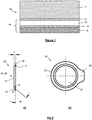
Figure 1 represents the structure of the sealing sheet from which the lid offigure 2 was cut out and stamped.Figure 2a is a vertical cross section of a lid according to the invention. -
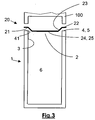
Figure 2b is a top view of the same lid.Figures 2a and 2b illustrate an example of a lid with specific dimensions, which should not be taken as limiting the scope of the patent.Figure 3 shows how the lid offigure 2 fits onto the open end of a cylindrical jar. - Lids (1) were made by cutting from a sealing sheet, the structure of which is shown schematically in
figure 1 . The lids were stamped in order to obtain the shape represented inFigure 2a . - The sealing sheet has a structure (10) which includes a support layer (11) made of paper and, adjacent to this, a multi-layer structure (16) made of plastic.
- The paper used to make the support layer (11) is a paper with long fibers with a weight per square meter, i.e. a surface density, of 70 g/m2. This paper has large quantities of long fibers which endow it with improved mechanical characteristics as compared to a standard paper of the same surface density. In the table below, it can be seen that the paper chosen within the context of the invention has mechanical properties that are less anisotropic than standard paper of the same weight per square meter, a much better tearing strength, and in particular a particularly good elongation at rupture in the length direction (MD), as compared to standard paper, and it is this last property which appears as best characterizing the quality of the special paper which is required to make up the support layer of the sealing product according to the invention:
Standard paper Paper used within the context of the invention Force at rupture (kN/m) Force at rupture (kN/m) MD 6.4 MD 5.6 CD 3.4 CD 4.0 Elongation at rupture (%) Elongation at rupture (%) MD 1.8 MD 5.5 CD 8.4 CD 9.0 Tearing strength (mN) Tearing strength (mN) MD 525 MD 950 CD 490 CD 1050 MD (machine direction) = length direction; CD = (cross direction) width direction - The multi-layer structure (16) comprises:
- ▪ a layer (12) of binder, made of functionalized terpolymer containing acid groups and esters, binding the support layer and the intermediate layer, of average thickness 5 g/m2 ;
- ▪ an intermediate layer (13) of polyamide 6 (PA6), of average thickness 15 g/m2;
- ▪ a layer (14) of binder, made of a material identical to that of
layer 12, binding the intermediate layer and the sealing layer; of average thickness 5 g/m2 ; - ▪ a sealing layer (15) made of modified PE, including mineral loads, of average thickness 10 g/m2.
- Thanks to its stamped shape, as illustrated in
figure 2a , the lid (20) can be easily centered in relation to the ring-shaped sealing zone (4) of the container (1) which it is designed to cover, without it being necessary to call upon sophisticated display and positioning tools.Figure 3 shows how the lid (20) fits onto the open end (2) of a cylindrical jar (1): the base (21) of the stamped relief (24) follows - here over the entire circumference - a contour close to that of the inner edge (41) of the ring-shaped sealing zone (4), which corresponds here to the mouth (5). The contour of the inner edge (41) corresponds to the inside (3) of the cavity (6) designed to contain the foodstuff. The peripheral edge (22) of the lid, is the not stamped part of the lid which remains in the plane of the sealing sheet. It is placed above the mouth (5) then held up against this during heat sealing by means of the heat sealing tool (100). - For an external diameter (not including the tab) of around 34 mm, the stamped central part (27) has a depth (h) of approximately 2 mm in relation to the peripheral edge (22). The base (21) of the stamped cavity (25), a transition zone between the cavity (25) and said peripheral edge (22), advantageously toroid in shape with a fillet radius (R) of 0.5 mm. The tilted wall (23) of the cavity (25) is tilted at an angle α, here around 50°, in relation to said plane of the sealing sheet. The transition zone between the tilted wall (23) and the stamped central part (27) is also toroid in shape with a fillet radius (R') close to R.
- The lid (20) was cut out from the sealing sheet according to a shape such that it also has a gripping tab (26), making it possible to grip the tab to detach the lid by peeling off.
- Lids of identical general shape but not stamped were also manufactured and heat -sealed onto the same containers, made by molding in high density polyethylene (HD PE). These lids had the following structures:
- A) a metalloplastic structure: aluminum layer (30 g/m2)/co-extruded multi-layer (30 g/m2)
- B) a paper /co-extruded multi-layer structure, in which
- the paper is the standard paper whose mechanical properties were presented above

- the extruded multi-layer has the following structure:
- a. a layer of binder, made of functionalized terpolymer containing acid groups and esters, binding the support layer and the intermediate layer, of average thickness 5 g/m2;
- b. an intermediate layer (13) of low density polyethylene, of average thickness 15 g/m2;
- c. a layer of binder, made from a material identical to that of layer a) average thickness 5 g/m2
- d. a sealing layer made of modified PE, including mineral loads, of average thickness 10 g/m2.
-
- Comparative peelability tests were carried out and led to the following observations:
- Type A lids: Easy peeling, cohesive opening without tearing of material;
- Type B lids: Peeling impossible because the material tears;
- Lids of the example according to the invention: Easy peeling, cohesive opening without tearing of material.
- It is observed that the material of the intermediate layer, a PA6 in this case, endows the paper / plastic complex according to the invention with tear-proof qualities as good as the metalloplastic structure, without the disadvantage of being expensive and difficult to recycle. Additionally, a metalloplastic structure (of type A) could also be stamped but this would require a thicker layer of aluminum (at least 40 µm) and would consequently increase the disadvantages referred to above.
- In addition, lids of identical general shape were produced by cutting out from several sealing sheets (I, J, K, L, M) whose globally identical structures differ only by the thickness of the intermediate layer (13) made of polyamide 6:
a paper support layer (11) identical to that described previously: paper with long fibers, of weight per square meter 70 g/m2, with the slightly anisotropic mechanical characteristics indicated above:
.1 force at rupture MD: 5.6 kN/m; CD: 4.0 kN/m; .2 elongation at break MD: 5.5 %; CD: 9.0 %
a layer (12) of binder, made of functionalized terpolymer containing acid groups and esters, binding the support layer and the intermediate layer, of average thickness 5 g/m2 ;
an intermediate layer (13) made of polyamide 6 (PA6), of average thickness 5 g/m2 (structure I); 7 g/m2 (structure J); 10 g/m2 (structure K); 15 g/m2 (structure L); 20 g/m2(structure M) respectively;
a layer (14) of binder, made of a material identical to that oflayer 12, binding the intermediate layer and the sealing layer; of average thickness 5 g/m2 ;
a sealing layer (15) made of modified PE, including mineral loads, of average thickness 10 g/m2. - After cutting, 20 lids from each structure were stamped with the same stamping tool, giving the form described above. After stamping, the following observation was made:
Structure I J K L M Thickness of intermediate layer (13): 5g/m2 7 g/m2 10 g/m2 15 g/m2 20 g/m2 Ratio intermediate laver (13) thickness support layer (11) thickness 7% 10% 14% 21% 29 % Number of lids with folds and/or tears 19 2 1 0 0 - It can be noted that structure I does not make it possible to obtain lids without folds and tears after stamping. The results are clearly better as of structure J, i.e. as soon as the thickness of the
intermediate layer PA 6 reaches one-tenth of the average thickness of the paper support layer. The results are excellent with structures that have an intermediate layer of thickness greater than, or equal to 15 g/m2.
Claims (13)
- Sealing product (20), designed to be sealed on at least one ring-shaped sealing zone (4) which surrounds the opening (2) of a container (1), made from a sealing sheet comprising:a) a support layer (11);b) a typically co-extruded multi-layer structure (16), comprisingcharacterized in that:i. on one of its faces, an adhesive layer (12) including an adhesive material chosen so as to adhere to said support layer,ii. an intermediate layer (13) made of plastic, andiii. on its other face, a sealing layer (15) including a sealing material chosen so as to adhere, after heat sealing, to the ring-shaped sealing zone,c) said support layer (11) is a fibrous material comprising at least 80% of vegetable fibers, has an average thickness expressed in terms of surface density of between 40 and 110 g/m2 and has an elongation at rupture of at least 5% in whatever test direction;d) said intermediate layer (13) is made of a plastic belonging to the group of polyamides and thermoplastic polyesters with good strength, able to undergo plastic deformation, the average thickness of the intermediate layer (13) is greater than a tenth of the average thickness of the support layer (11) when said average thicknesses are expressed in terms of surface density such that it endows the entire sealing product with sufficient malleability and resistance for it to be possible to stamp it without tearing so as to make a relief (24) whose form is such that its base (21) follows, at least discontinuously, a contour close to that of the internal edge (41) of said ring-shaped sealing zone.
- Sealing product according to claim 1, characterized in that said intermediate layer is made of plastic having a strength greater than 60 MPa, preferably greater than 80 MPa.
- Sealing product according to claim 1 or 2, characterized in that said intermediate layer is made of plastic having an elongation at rupture greater than 5%, preferably greater than 10 %.
- Sealing product according to claim 1 in which said intermediate layer is made of polyamide 6 (PA6).
- Sealing product according to claim 1 in which said intermediate layer is of polyethylene terephthalate (PET) not bi-axially oriented.
- Sealing product according to claim 5 in which said polyethylene terephthalate (PET) has been suddenly cooled in order to give an amorphous or slightly crystallized structure.
- Sealing product according to any of claims 1 to 6, characterized in that the average thickness of said intermediate layer is greater than a fifth of the average thickness of said support layer when said average thicknesses are expressed in terms of surface density.
- Sealing product according to any of claims 1 to 7, in which said support layer (11) has an average thickness, expressed in terms of surface density, close to 70 g/m2.
- Sealing product according to any of claims 1 to 8, in which said intermediate layer (13) has an average thickness ranging between 3 and 20 g/m2, and preferably in the vicinity of 15 g/m2 for a support layer having an average thickness close to 70 g/m2.
- Sealing product according to any of claims 1 to 9, in which said sealing layer (15) has an average thickness which, expressed in terms of surface density, ranges between 3 and 20 g/m2, and preferably in the vicinity of 10 g/m2.
- Sealing product according to any of claims 1 to 10, in which the base (21) of the relief (24) is toroid in shape with a fillet radius typically greater than 5 times the total thickness of the sealing sheet.
- Sealing product according to any of claims 1 to 11, in which the tilted wall (23) of relief (24) is tilted by less than 45° in relation to the plane of the sealing sheet.
- Sealing product according to any of claims 1 to 12, characterized in that it also comprises a gripping tab (26).
Priority Applications (1)
| Application Number | Priority Date | Filing Date | Title |
|---|---|---|---|
| PL10778549T PL2496494T3 (en) | 2009-11-06 | 2010-10-27 | Peel-off packaging system for fresh foodstuffs |
Applications Claiming Priority (2)
| Application Number | Priority Date | Filing Date | Title |
|---|---|---|---|
| FR0905334A FR2952358B1 (en) | 2009-11-06 | 2009-11-06 | PELABLE PACKAGING SYSTEM FOR FRESH FOOD WITH LOW DURATION OF STORAGE. |
| PCT/EP2010/006571 WO2011054470A1 (en) | 2009-11-06 | 2010-10-27 | Peel-off packaging system for fresh foodstuffs |
Publications (2)
| Publication Number | Publication Date |
|---|---|
| EP2496494A1 EP2496494A1 (en) | 2012-09-12 |
| EP2496494B1 true EP2496494B1 (en) | 2017-06-21 |
Family
ID=42224753
Family Applications (1)
| Application Number | Title | Priority Date | Filing Date |
|---|---|---|---|
| EP10778549.5A Not-in-force EP2496494B1 (en) | 2009-11-06 | 2010-10-27 | Peel-off packaging system for fresh foodstuffs |
Country Status (11)
| Country | Link |
|---|---|
| US (1) | US20120241458A1 (en) |
| EP (1) | EP2496494B1 (en) |
| AR (1) | AR081145A1 (en) |
| CA (1) | CA2779650A1 (en) |
| ES (1) | ES2637957T3 (en) |
| FR (1) | FR2952358B1 (en) |
| MX (1) | MX2012005194A (en) |
| PL (1) | PL2496494T3 (en) |
| PT (1) | PT2496494T (en) |
| RU (1) | RU2551079C2 (en) |
| WO (1) | WO2011054470A1 (en) |
Families Citing this family (3)
| Publication number | Priority date | Publication date | Assignee | Title |
|---|---|---|---|---|
| EP3476591B1 (en) * | 2017-10-26 | 2020-05-27 | Amcor Flexibles Singen GmbH | Composite film |
| EP4065485A4 (en) * | 2019-11-29 | 2023-01-04 | Selig Sealing Products, Inc. | TAB SEAL WITHOUT METALLIC FOIL |
| KR102884993B1 (en) | 2020-05-29 | 2025-11-12 | 셀리그 실링 프로덕츠, 아이엔씨. | Discharge liner |
Family Cites Families (3)
| Publication number | Priority date | Publication date | Assignee | Title |
|---|---|---|---|---|
| KR910002152B1 (en) * | 1986-09-30 | 1991-04-06 | 이데미쓰세끼유가가꾸 가부시끼가이샤 | Easy-opening packaging container and its lead |
| US5342684A (en) * | 1991-08-15 | 1994-08-30 | R. J. Reynolds Tobacco Company | Polymeric die-cuttable lidding materials |
| FR2872788B1 (en) * | 2004-07-09 | 2007-09-07 | Alsacienne D Aluminium Sa Soc | PACKAGING COMPRISING A PLASTIC CONTAINER OBTAINED BY A THERMOSCELLET PELABLE OPERATOR RECIPIENT AUDIT |
-
2009
- 2009-11-06 FR FR0905334A patent/FR2952358B1/en active Active
-
2010
- 2010-10-27 PT PT107785495T patent/PT2496494T/en unknown
- 2010-10-27 US US13/508,386 patent/US20120241458A1/en not_active Abandoned
- 2010-10-27 ES ES10778549.5T patent/ES2637957T3/en active Active
- 2010-10-27 MX MX2012005194A patent/MX2012005194A/en not_active Application Discontinuation
- 2010-10-27 WO PCT/EP2010/006571 patent/WO2011054470A1/en not_active Ceased
- 2010-10-27 PL PL10778549T patent/PL2496494T3/en unknown
- 2010-10-27 CA CA2779650A patent/CA2779650A1/en not_active Abandoned
- 2010-10-27 EP EP10778549.5A patent/EP2496494B1/en not_active Not-in-force
- 2010-10-27 RU RU2012123374/12A patent/RU2551079C2/en not_active IP Right Cessation
- 2010-11-05 AR ARP100104117A patent/AR081145A1/en unknown
Also Published As
| Publication number | Publication date |
|---|---|
| MX2012005194A (en) | 2012-06-25 |
| PT2496494T (en) | 2017-07-31 |
| US20120241458A1 (en) | 2012-09-27 |
| FR2952358B1 (en) | 2012-01-20 |
| PL2496494T3 (en) | 2017-10-31 |
| CA2779650A1 (en) | 2011-05-12 |
| EP2496494A1 (en) | 2012-09-12 |
| RU2012123374A (en) | 2013-12-20 |
| RU2551079C2 (en) | 2015-05-20 |
| AR081145A1 (en) | 2012-07-04 |
| WO2011054470A1 (en) | 2011-05-12 |
| ES2637957T3 (en) | 2017-10-18 |
| FR2952358A1 (en) | 2011-05-13 |
Similar Documents
| Publication | Publication Date | Title |
|---|---|---|
| Brown | Plastics in food patkaging: properties: design and fabrication | |
| FI117748B (en) | Lid for packaging, process for making this and with lid closed packaging | |
| KR101034945B1 (en) | Containers, packages and methods of making containers | |
| US10857769B2 (en) | Laminated packaging material comprising a barrier film and packaging containers manufactured therefrom | |
| EP2067705B1 (en) | Deep drawn packaging container and method for production of the packaging container | |
| CN102066105A (en) | Sealing of a cap on a glass container | |
| CN112978005B (en) | Cup Container | |
| WO2002102670A1 (en) | Hermetically closed container and process for its manufacture | |
| US20120241458A1 (en) | Peel-off packaging system for fresh foodstuffs | |
| JP5542508B2 (en) | Hot beverage container lid material | |
| EP1819604B1 (en) | A packaging laminate for a retortable packaging container | |
| JPH09221177A (en) | Microwave cooking packaging | |
| EP2592012B1 (en) | A closure system | |
| US20190161262A1 (en) | Packages with controlled drainage function | |
| EP3368300B1 (en) | Laminated packaging material comprising a barrier film and packaging containers manufactured therefrom | |
| JP2000264331A (en) | Composite tray container | |
| JP5046380B2 (en) | Container lid with excellent straw piercing properties | |
| JP2513817B2 (en) | Heat resistant container | |
| EP3368302B1 (en) | Laminated packaging material comprising a barrier film and packaging containers manufactured therefrom | |
| JP4152037B2 (en) | Laminate and sealed container | |
| TWI917627B (en) | Laminates, molded containers, and packaging for use in forming containers. | |
| JP3146856B2 (en) | Liquid paper container | |
| TW202304782A (en) | Multilayer body for molding containers, molding container and package | |
| WO2016038254A1 (en) | A packaging laminate, a package and a method for providing a packaging laminate | |
| JP4729932B2 (en) | Manufacturing method of easily openable container |
Legal Events
| Date | Code | Title | Description |
|---|---|---|---|
| PUAI | Public reference made under article 153(3) epc to a published international application that has entered the european phase |
Free format text: ORIGINAL CODE: 0009012 |
|
| 17P | Request for examination filed |
Effective date: 20120604 |
|
| AK | Designated contracting states |
Kind code of ref document: A1 Designated state(s): AL AT BE BG CH CY CZ DE DK EE ES FI FR GB GR HR HU IE IS IT LI LT LU LV MC MK MT NL NO PL PT RO RS SE SI SK SM TR |
|
| DAX | Request for extension of the european patent (deleted) | ||
| RAP1 | Party data changed (applicant data changed or rights of an application transferred) |
Owner name: AMCOR FLEXIBLES SELESTAT SAS |
|
| 17Q | First examination report despatched |
Effective date: 20160219 |
|
| GRAP | Despatch of communication of intention to grant a patent |
Free format text: ORIGINAL CODE: EPIDOSNIGR1 |
|
| INTG | Intention to grant announced |
Effective date: 20170130 |
|
| GRAS | Grant fee paid |
Free format text: ORIGINAL CODE: EPIDOSNIGR3 |
|
| GRAA | (expected) grant |
Free format text: ORIGINAL CODE: 0009210 |
|
| AK | Designated contracting states |
Kind code of ref document: B1 Designated state(s): AL AT BE BG CH CY CZ DE DK EE ES FI FR GB GR HR HU IE IS IT LI LT LU LV MC MK MT NL NO PL PT RO RS SE SI SK SM TR |
|
| REG | Reference to a national code |
Ref country code: GB Ref legal event code: FG4D |
|
| REG | Reference to a national code |
Ref country code: CH Ref legal event code: EP |
|
| REG | Reference to a national code |
Ref country code: IE Ref legal event code: FG4D |
|
| REG | Reference to a national code |
Ref country code: AT Ref legal event code: REF Ref document number: 902717 Country of ref document: AT Kind code of ref document: T Effective date: 20170715 |
|
| REG | Reference to a national code |
Ref country code: PT Ref legal event code: SC4A Ref document number: 2496494 Country of ref document: PT Date of ref document: 20170731 Kind code of ref document: T Free format text: AVAILABILITY OF NATIONAL TRANSLATION Effective date: 20170725 |
|
| REG | Reference to a national code |
Ref country code: DE Ref legal event code: R096 Ref document number: 602010043149 Country of ref document: DE |
|
| REG | Reference to a national code |
Ref country code: FR Ref legal event code: PLFP Year of fee payment: 8 |
|
| REG | Reference to a national code |
Ref country code: NL Ref legal event code: FP |
|
| REG | Reference to a national code |
Ref country code: ES Ref legal event code: FG2A Ref document number: 2637957 Country of ref document: ES Kind code of ref document: T3 Effective date: 20171018 |
|
| PG25 | Lapsed in a contracting state [announced via postgrant information from national office to epo] |
Ref country code: HR Free format text: LAPSE BECAUSE OF FAILURE TO SUBMIT A TRANSLATION OF THE DESCRIPTION OR TO PAY THE FEE WITHIN THE PRESCRIBED TIME-LIMIT Effective date: 20170621 Ref country code: GR Free format text: LAPSE BECAUSE OF FAILURE TO SUBMIT A TRANSLATION OF THE DESCRIPTION OR TO PAY THE FEE WITHIN THE PRESCRIBED TIME-LIMIT Effective date: 20170922 Ref country code: NO Free format text: LAPSE BECAUSE OF FAILURE TO SUBMIT A TRANSLATION OF THE DESCRIPTION OR TO PAY THE FEE WITHIN THE PRESCRIBED TIME-LIMIT Effective date: 20170921 Ref country code: LT Free format text: LAPSE BECAUSE OF FAILURE TO SUBMIT A TRANSLATION OF THE DESCRIPTION OR TO PAY THE FEE WITHIN THE PRESCRIBED TIME-LIMIT Effective date: 20170621 Ref country code: FI Free format text: LAPSE BECAUSE OF FAILURE TO SUBMIT A TRANSLATION OF THE DESCRIPTION OR TO PAY THE FEE WITHIN THE PRESCRIBED TIME-LIMIT Effective date: 20170621 |
|
| REG | Reference to a national code |
Ref country code: LT Ref legal event code: MG4D |
|
| REG | Reference to a national code |
Ref country code: AT Ref legal event code: MK05 Ref document number: 902717 Country of ref document: AT Kind code of ref document: T Effective date: 20170621 |
|
| PG25 | Lapsed in a contracting state [announced via postgrant information from national office to epo] |
Ref country code: SE Free format text: LAPSE BECAUSE OF FAILURE TO SUBMIT A TRANSLATION OF THE DESCRIPTION OR TO PAY THE FEE WITHIN THE PRESCRIBED TIME-LIMIT Effective date: 20170621 Ref country code: RS Free format text: LAPSE BECAUSE OF FAILURE TO SUBMIT A TRANSLATION OF THE DESCRIPTION OR TO PAY THE FEE WITHIN THE PRESCRIBED TIME-LIMIT Effective date: 20170621 Ref country code: BG Free format text: LAPSE BECAUSE OF FAILURE TO SUBMIT A TRANSLATION OF THE DESCRIPTION OR TO PAY THE FEE WITHIN THE PRESCRIBED TIME-LIMIT Effective date: 20170921 Ref country code: LV Free format text: LAPSE BECAUSE OF FAILURE TO SUBMIT A TRANSLATION OF THE DESCRIPTION OR TO PAY THE FEE WITHIN THE PRESCRIBED TIME-LIMIT Effective date: 20170621 |
|
| PG25 | Lapsed in a contracting state [announced via postgrant information from national office to epo] |
Ref country code: CZ Free format text: LAPSE BECAUSE OF FAILURE TO SUBMIT A TRANSLATION OF THE DESCRIPTION OR TO PAY THE FEE WITHIN THE PRESCRIBED TIME-LIMIT Effective date: 20170621 Ref country code: AT Free format text: LAPSE BECAUSE OF FAILURE TO SUBMIT A TRANSLATION OF THE DESCRIPTION OR TO PAY THE FEE WITHIN THE PRESCRIBED TIME-LIMIT Effective date: 20170621 Ref country code: RO Free format text: LAPSE BECAUSE OF FAILURE TO SUBMIT A TRANSLATION OF THE DESCRIPTION OR TO PAY THE FEE WITHIN THE PRESCRIBED TIME-LIMIT Effective date: 20170621 Ref country code: SK Free format text: LAPSE BECAUSE OF FAILURE TO SUBMIT A TRANSLATION OF THE DESCRIPTION OR TO PAY THE FEE WITHIN THE PRESCRIBED TIME-LIMIT Effective date: 20170621 Ref country code: EE Free format text: LAPSE BECAUSE OF FAILURE TO SUBMIT A TRANSLATION OF THE DESCRIPTION OR TO PAY THE FEE WITHIN THE PRESCRIBED TIME-LIMIT Effective date: 20170621 |
|
| PG25 | Lapsed in a contracting state [announced via postgrant information from national office to epo] |
Ref country code: SM Free format text: LAPSE BECAUSE OF FAILURE TO SUBMIT A TRANSLATION OF THE DESCRIPTION OR TO PAY THE FEE WITHIN THE PRESCRIBED TIME-LIMIT Effective date: 20170621 Ref country code: IT Free format text: LAPSE BECAUSE OF FAILURE TO SUBMIT A TRANSLATION OF THE DESCRIPTION OR TO PAY THE FEE WITHIN THE PRESCRIBED TIME-LIMIT Effective date: 20170621 Ref country code: IS Free format text: LAPSE BECAUSE OF FAILURE TO SUBMIT A TRANSLATION OF THE DESCRIPTION OR TO PAY THE FEE WITHIN THE PRESCRIBED TIME-LIMIT Effective date: 20171021 |
|
| PGFP | Annual fee paid to national office [announced via postgrant information from national office to epo] |
Ref country code: PT Payment date: 20171016 Year of fee payment: 8 |
|
| REG | Reference to a national code |
Ref country code: DE Ref legal event code: R097 Ref document number: 602010043149 Country of ref document: DE |
|
| PLBE | No opposition filed within time limit |
Free format text: ORIGINAL CODE: 0009261 |
|
| STAA | Information on the status of an ep patent application or granted ep patent |
Free format text: STATUS: NO OPPOSITION FILED WITHIN TIME LIMIT |
|
| PG25 | Lapsed in a contracting state [announced via postgrant information from national office to epo] |
Ref country code: DK Free format text: LAPSE BECAUSE OF FAILURE TO SUBMIT A TRANSLATION OF THE DESCRIPTION OR TO PAY THE FEE WITHIN THE PRESCRIBED TIME-LIMIT Effective date: 20170621 |
|
| 26N | No opposition filed |
Effective date: 20180322 |
|
| PG25 | Lapsed in a contracting state [announced via postgrant information from national office to epo] |
Ref country code: MC Free format text: LAPSE BECAUSE OF FAILURE TO SUBMIT A TRANSLATION OF THE DESCRIPTION OR TO PAY THE FEE WITHIN THE PRESCRIBED TIME-LIMIT Effective date: 20170621 |
|
| REG | Reference to a national code |
Ref country code: CH Ref legal event code: PL |
|
| GBPC | Gb: european patent ceased through non-payment of renewal fee |
Effective date: 20171027 |
|
| REG | Reference to a national code |
Ref country code: IE Ref legal event code: MM4A |
|
| PG25 | Lapsed in a contracting state [announced via postgrant information from national office to epo] |
Ref country code: CH Free format text: LAPSE BECAUSE OF NON-PAYMENT OF DUE FEES Effective date: 20171031 Ref country code: LU Free format text: LAPSE BECAUSE OF NON-PAYMENT OF DUE FEES Effective date: 20171027 Ref country code: LI Free format text: LAPSE BECAUSE OF NON-PAYMENT OF DUE FEES Effective date: 20171031 Ref country code: GB Free format text: LAPSE BECAUSE OF NON-PAYMENT OF DUE FEES Effective date: 20171027 |
|
| REG | Reference to a national code |
Ref country code: BE Ref legal event code: MM Effective date: 20171031 |
|
| PG25 | Lapsed in a contracting state [announced via postgrant information from national office to epo] |
Ref country code: SI Free format text: LAPSE BECAUSE OF FAILURE TO SUBMIT A TRANSLATION OF THE DESCRIPTION OR TO PAY THE FEE WITHIN THE PRESCRIBED TIME-LIMIT Effective date: 20170621 Ref country code: BE Free format text: LAPSE BECAUSE OF NON-PAYMENT OF DUE FEES Effective date: 20171031 |
|
| PG25 | Lapsed in a contracting state [announced via postgrant information from national office to epo] |
Ref country code: MT Free format text: LAPSE BECAUSE OF NON-PAYMENT OF DUE FEES Effective date: 20171027 |
|
| REG | Reference to a national code |
Ref country code: FR Ref legal event code: PLFP Year of fee payment: 9 |
|
| PG25 | Lapsed in a contracting state [announced via postgrant information from national office to epo] |
Ref country code: IE Free format text: LAPSE BECAUSE OF NON-PAYMENT OF DUE FEES Effective date: 20171027 |
|
| PG25 | Lapsed in a contracting state [announced via postgrant information from national office to epo] |
Ref country code: HU Free format text: LAPSE BECAUSE OF FAILURE TO SUBMIT A TRANSLATION OF THE DESCRIPTION OR TO PAY THE FEE WITHIN THE PRESCRIBED TIME-LIMIT; INVALID AB INITIO Effective date: 20101027 |
|
| PG25 | Lapsed in a contracting state [announced via postgrant information from national office to epo] |
Ref country code: PT Free format text: LAPSE BECAUSE OF NON-PAYMENT OF DUE FEES Effective date: 20190429 |
|
| PG25 | Lapsed in a contracting state [announced via postgrant information from national office to epo] |
Ref country code: CY Free format text: LAPSE BECAUSE OF NON-PAYMENT OF DUE FEES Effective date: 20170621 |
|
| PG25 | Lapsed in a contracting state [announced via postgrant information from national office to epo] |
Ref country code: MK Free format text: LAPSE BECAUSE OF FAILURE TO SUBMIT A TRANSLATION OF THE DESCRIPTION OR TO PAY THE FEE WITHIN THE PRESCRIBED TIME-LIMIT Effective date: 20170621 |
|
| PG25 | Lapsed in a contracting state [announced via postgrant information from national office to epo] |
Ref country code: TR Free format text: LAPSE BECAUSE OF FAILURE TO SUBMIT A TRANSLATION OF THE DESCRIPTION OR TO PAY THE FEE WITHIN THE PRESCRIBED TIME-LIMIT Effective date: 20170621 |
|
| PG25 | Lapsed in a contracting state [announced via postgrant information from national office to epo] |
Ref country code: AL Free format text: LAPSE BECAUSE OF FAILURE TO SUBMIT A TRANSLATION OF THE DESCRIPTION OR TO PAY THE FEE WITHIN THE PRESCRIBED TIME-LIMIT Effective date: 20170621 |
|
| PGFP | Annual fee paid to national office [announced via postgrant information from national office to epo] |
Ref country code: NL Payment date: 20211026 Year of fee payment: 12 |
|
| PGFP | Annual fee paid to national office [announced via postgrant information from national office to epo] |
Ref country code: ES Payment date: 20211102 Year of fee payment: 12 Ref country code: DE Payment date: 20211027 Year of fee payment: 12 |
|
| PGFP | Annual fee paid to national office [announced via postgrant information from national office to epo] |
Ref country code: FR Payment date: 20211025 Year of fee payment: 12 |
|
| PGFP | Annual fee paid to national office [announced via postgrant information from national office to epo] |
Ref country code: PL Payment date: 20211004 Year of fee payment: 12 |
|
| REG | Reference to a national code |
Ref country code: DE Ref legal event code: R119 Ref document number: 602010043149 Country of ref document: DE |
|
| REG | Reference to a national code |
Ref country code: NL Ref legal event code: MM Effective date: 20221101 |
|
| PG25 | Lapsed in a contracting state [announced via postgrant information from national office to epo] |
Ref country code: NL Free format text: LAPSE BECAUSE OF NON-PAYMENT OF DUE FEES Effective date: 20221101 Ref country code: FR Free format text: LAPSE BECAUSE OF NON-PAYMENT OF DUE FEES Effective date: 20221031 Ref country code: DE Free format text: LAPSE BECAUSE OF NON-PAYMENT OF DUE FEES Effective date: 20230503 |
|
| REG | Reference to a national code |
Ref country code: ES Ref legal event code: FD2A Effective date: 20231201 |
|
| PG25 | Lapsed in a contracting state [announced via postgrant information from national office to epo] |
Ref country code: ES Free format text: LAPSE BECAUSE OF NON-PAYMENT OF DUE FEES Effective date: 20221028 |
|
| PG25 | Lapsed in a contracting state [announced via postgrant information from national office to epo] |
Ref country code: ES Free format text: LAPSE BECAUSE OF NON-PAYMENT OF DUE FEES Effective date: 20221028 |
|
| PG25 | Lapsed in a contracting state [announced via postgrant information from national office to epo] |
Ref country code: PL Free format text: LAPSE BECAUSE OF NON-PAYMENT OF DUE FEES Effective date: 20221027 |