EP2491922A1 - Immediate-release tablet formulations of a thrombin receptor antagonist - Google Patents
Immediate-release tablet formulations of a thrombin receptor antagonist Download PDFInfo
- Publication number
- EP2491922A1 EP2491922A1 EP12159636A EP12159636A EP2491922A1 EP 2491922 A1 EP2491922 A1 EP 2491922A1 EP 12159636 A EP12159636 A EP 12159636A EP 12159636 A EP12159636 A EP 12159636A EP 2491922 A1 EP2491922 A1 EP 2491922A1
- Authority
- EP
- European Patent Office
- Prior art keywords
- pharmaceutical formulation
- compound
- formulation according
- formulation
- weight
- Prior art date
- Legal status (The legal status is an assumption and is not a legal conclusion. Google has not performed a legal analysis and makes no representation as to the accuracy of the status listed.)
- Granted
Links
- 0 CC1O*C(CC2C3CC[C@@](**)C2)C1*3C=C[C@@]1NC(c2cc(F)ccc2)=CC1 Chemical compound CC1O*C(CC2C3CC[C@@](**)C2)C1*3C=C[C@@]1NC(c2cc(F)ccc2)=CC1 0.000 description 2
Images


Classifications
-
- A—HUMAN NECESSITIES
- A61—MEDICAL OR VETERINARY SCIENCE; HYGIENE
- A61K—PREPARATIONS FOR MEDICAL, DENTAL OR TOILETRY PURPOSES
- A61K31/00—Medicinal preparations containing organic active ingredients
- A61K31/33—Heterocyclic compounds
- A61K31/395—Heterocyclic compounds having nitrogen as a ring hetero atom, e.g. guanethidine or rifamycins
- A61K31/435—Heterocyclic compounds having nitrogen as a ring hetero atom, e.g. guanethidine or rifamycins having six-membered rings with one nitrogen as the only ring hetero atom
- A61K31/44—Non condensed pyridines; Hydrogenated derivatives thereof
- A61K31/4427—Non condensed pyridines; Hydrogenated derivatives thereof containing further heterocyclic ring systems
- A61K31/443—Non condensed pyridines; Hydrogenated derivatives thereof containing further heterocyclic ring systems containing a five-membered ring with oxygen as a ring hetero atom
-
- A—HUMAN NECESSITIES
- A61—MEDICAL OR VETERINARY SCIENCE; HYGIENE
- A61K—PREPARATIONS FOR MEDICAL, DENTAL OR TOILETRY PURPOSES
- A61K31/00—Medicinal preparations containing organic active ingredients
- A61K31/33—Heterocyclic compounds
- A61K31/395—Heterocyclic compounds having nitrogen as a ring hetero atom, e.g. guanethidine or rifamycins
- A61K31/435—Heterocyclic compounds having nitrogen as a ring hetero atom, e.g. guanethidine or rifamycins having six-membered rings with one nitrogen as the only ring hetero atom
- A61K31/44—Non condensed pyridines; Hydrogenated derivatives thereof
- A61K31/4418—Non condensed pyridines; Hydrogenated derivatives thereof having a carbocyclic group directly attached to the heterocyclic ring, e.g. cyproheptadine
-
- A—HUMAN NECESSITIES
- A61—MEDICAL OR VETERINARY SCIENCE; HYGIENE
- A61K—PREPARATIONS FOR MEDICAL, DENTAL OR TOILETRY PURPOSES
- A61K31/00—Medicinal preparations containing organic active ingredients
- A61K31/33—Heterocyclic compounds
- A61K31/395—Heterocyclic compounds having nitrogen as a ring hetero atom, e.g. guanethidine or rifamycins
- A61K31/435—Heterocyclic compounds having nitrogen as a ring hetero atom, e.g. guanethidine or rifamycins having six-membered rings with one nitrogen as the only ring hetero atom
- A61K31/44—Non condensed pyridines; Hydrogenated derivatives thereof
- A61K31/4427—Non condensed pyridines; Hydrogenated derivatives thereof containing further heterocyclic ring systems
- A61K31/444—Non condensed pyridines; Hydrogenated derivatives thereof containing further heterocyclic ring systems containing a six-membered ring with nitrogen as a ring heteroatom, e.g. amrinone
-
- A—HUMAN NECESSITIES
- A61—MEDICAL OR VETERINARY SCIENCE; HYGIENE
- A61K—PREPARATIONS FOR MEDICAL, DENTAL OR TOILETRY PURPOSES
- A61K31/00—Medicinal preparations containing organic active ingredients
- A61K31/33—Heterocyclic compounds
- A61K31/395—Heterocyclic compounds having nitrogen as a ring hetero atom, e.g. guanethidine or rifamycins
- A61K31/535—Heterocyclic compounds having nitrogen as a ring hetero atom, e.g. guanethidine or rifamycins having six-membered rings with at least one nitrogen and one oxygen as the ring hetero atoms, e.g. 1,2-oxazines
- A61K31/5375—1,4-Oxazines, e.g. morpholine
- A61K31/5377—1,4-Oxazines, e.g. morpholine not condensed and containing further heterocyclic rings, e.g. timolol
-
- A—HUMAN NECESSITIES
- A61—MEDICAL OR VETERINARY SCIENCE; HYGIENE
- A61K—PREPARATIONS FOR MEDICAL, DENTAL OR TOILETRY PURPOSES
- A61K9/00—Medicinal preparations characterised by special physical form
- A61K9/0012—Galenical forms characterised by the site of application
- A61K9/0053—Mouth and digestive tract, i.e. intraoral and peroral administration
-
- A—HUMAN NECESSITIES
- A61—MEDICAL OR VETERINARY SCIENCE; HYGIENE
- A61K—PREPARATIONS FOR MEDICAL, DENTAL OR TOILETRY PURPOSES
- A61K9/00—Medicinal preparations characterised by special physical form
- A61K9/20—Pills, tablets, discs, rods
-
- A—HUMAN NECESSITIES
- A61—MEDICAL OR VETERINARY SCIENCE; HYGIENE
- A61K—PREPARATIONS FOR MEDICAL, DENTAL OR TOILETRY PURPOSES
- A61K9/00—Medicinal preparations characterised by special physical form
- A61K9/20—Pills, tablets, discs, rods
- A61K9/2004—Excipients; Inactive ingredients
- A61K9/2013—Organic compounds, e.g. phospholipids, fats
- A61K9/2018—Sugars, or sugar alcohols, e.g. lactose, mannitol; Derivatives thereof, e.g. polysorbates
-
- A—HUMAN NECESSITIES
- A61—MEDICAL OR VETERINARY SCIENCE; HYGIENE
- A61K—PREPARATIONS FOR MEDICAL, DENTAL OR TOILETRY PURPOSES
- A61K9/00—Medicinal preparations characterised by special physical form
- A61K9/20—Pills, tablets, discs, rods
- A61K9/2004—Excipients; Inactive ingredients
- A61K9/2022—Organic macromolecular compounds
- A61K9/2027—Organic macromolecular compounds obtained by reactions only involving carbon-to-carbon unsaturated bonds, e.g. polyvinyl pyrrolidone, poly(meth)acrylates
-
- A—HUMAN NECESSITIES
- A61—MEDICAL OR VETERINARY SCIENCE; HYGIENE
- A61K—PREPARATIONS FOR MEDICAL, DENTAL OR TOILETRY PURPOSES
- A61K9/00—Medicinal preparations characterised by special physical form
- A61K9/20—Pills, tablets, discs, rods
- A61K9/2004—Excipients; Inactive ingredients
- A61K9/2022—Organic macromolecular compounds
- A61K9/205—Polysaccharides, e.g. alginate, gums; Cyclodextrin
- A61K9/2054—Cellulose; Cellulose derivatives, e.g. hydroxypropyl methylcellulose
-
- A—HUMAN NECESSITIES
- A61—MEDICAL OR VETERINARY SCIENCE; HYGIENE
- A61P—SPECIFIC THERAPEUTIC ACTIVITY OF CHEMICAL COMPOUNDS OR MEDICINAL PREPARATIONS
- A61P11/00—Drugs for disorders of the respiratory system
-
- A—HUMAN NECESSITIES
- A61—MEDICAL OR VETERINARY SCIENCE; HYGIENE
- A61P—SPECIFIC THERAPEUTIC ACTIVITY OF CHEMICAL COMPOUNDS OR MEDICINAL PREPARATIONS
- A61P25/00—Drugs for disorders of the nervous system
- A61P25/28—Drugs for disorders of the nervous system for treating neurodegenerative disorders of the central nervous system, e.g. nootropic agents, cognition enhancers, drugs for treating Alzheimer's disease or other forms of dementia
-
- A—HUMAN NECESSITIES
- A61—MEDICAL OR VETERINARY SCIENCE; HYGIENE
- A61P—SPECIFIC THERAPEUTIC ACTIVITY OF CHEMICAL COMPOUNDS OR MEDICINAL PREPARATIONS
- A61P29/00—Non-central analgesic, antipyretic or antiinflammatory agents, e.g. antirheumatic agents; Non-steroidal antiinflammatory drugs [NSAID]
-
- A—HUMAN NECESSITIES
- A61—MEDICAL OR VETERINARY SCIENCE; HYGIENE
- A61P—SPECIFIC THERAPEUTIC ACTIVITY OF CHEMICAL COMPOUNDS OR MEDICINAL PREPARATIONS
- A61P43/00—Drugs for specific purposes, not provided for in groups A61P1/00-A61P41/00
-
- A—HUMAN NECESSITIES
- A61—MEDICAL OR VETERINARY SCIENCE; HYGIENE
- A61P—SPECIFIC THERAPEUTIC ACTIVITY OF CHEMICAL COMPOUNDS OR MEDICINAL PREPARATIONS
- A61P7/00—Drugs for disorders of the blood or the extracellular fluid
- A61P7/02—Antithrombotic agents; Anticoagulants; Platelet aggregation inhibitors
-
- A—HUMAN NECESSITIES
- A61—MEDICAL OR VETERINARY SCIENCE; HYGIENE
- A61P—SPECIFIC THERAPEUTIC ACTIVITY OF CHEMICAL COMPOUNDS OR MEDICINAL PREPARATIONS
- A61P9/00—Drugs for disorders of the cardiovascular system
-
- A—HUMAN NECESSITIES
- A61—MEDICAL OR VETERINARY SCIENCE; HYGIENE
- A61P—SPECIFIC THERAPEUTIC ACTIVITY OF CHEMICAL COMPOUNDS OR MEDICINAL PREPARATIONS
- A61P9/00—Drugs for disorders of the cardiovascular system
- A61P9/04—Inotropic agents, i.e. stimulants of cardiac contraction; Drugs for heart failure
-
- A—HUMAN NECESSITIES
- A61—MEDICAL OR VETERINARY SCIENCE; HYGIENE
- A61P—SPECIFIC THERAPEUTIC ACTIVITY OF CHEMICAL COMPOUNDS OR MEDICINAL PREPARATIONS
- A61P9/00—Drugs for disorders of the cardiovascular system
- A61P9/06—Antiarrhythmics
-
- A—HUMAN NECESSITIES
- A61—MEDICAL OR VETERINARY SCIENCE; HYGIENE
- A61P—SPECIFIC THERAPEUTIC ACTIVITY OF CHEMICAL COMPOUNDS OR MEDICINAL PREPARATIONS
- A61P9/00—Drugs for disorders of the cardiovascular system
- A61P9/10—Drugs for disorders of the cardiovascular system for treating ischaemic or atherosclerotic diseases, e.g. antianginal drugs, coronary vasodilators, drugs for myocardial infarction, retinopathy, cerebrovascula insufficiency, renal arteriosclerosis
-
- A—HUMAN NECESSITIES
- A61—MEDICAL OR VETERINARY SCIENCE; HYGIENE
- A61P—SPECIFIC THERAPEUTIC ACTIVITY OF CHEMICAL COMPOUNDS OR MEDICINAL PREPARATIONS
- A61P9/00—Drugs for disorders of the cardiovascular system
- A61P9/12—Antihypertensives
Definitions
- the invention relates to immediate-release tablet formulations for delivery of loading and maintenance doses of a thrombin receptor antagonist.
- thrombin receptor antagonists also known as protease activated receptor (PAR) antagonists will be useful in the treatment of thrombotic, inflammatory, atherosclerotic and fibroproliferative disorders, as well as other disorders in which thrombin and its receptor play a pathological role.
- PAR protease activated receptor
- Thrombin receptor antagonists have been suggested in the literature as being potentially useful in treating a variety of cardiovascular diseases or conditions including, for example, thrombosis, vascular restenosis, deep venous thrombosis, lung embolism, cerebral infarction, heart disease, disseminated intravascular coagulation syndrome, hypertension ( Suzuki, Shuichi, PCT Int. Appls. WO 0288092 (2002 ), WO 0285850 (2002 ) and WO 0285855 (2002 )), arrhythmia, inflammation, angina, stroke, atherosclerosis, ischemic conditions ( Zhang, Han-cheng, PCT Int. Appl. WO 0100659 (2001 ), WO 0100657(2001 ) and WO 0100656 (2001 )).
- COMPOUND 1 has the following structure:
- COMPOUND 1 exhibits good thrombin receptor antagonist activity (potency) and selectivity, and the bisulfate salt of COMPOUND 1 is currently in development by Schering Corp.
- a crystalline form of the bisulfate salt of COMPOUND 1 is disclosed in U.S. pat. no. 7,235,567 .
- the present invention is directed to a solid pharmaceutical formulation for oral administration comprising COMPOUND 1 or a pharmaceutically acceptable salt thereof and at least one disintegrant, wherein the amount of COMPOUND 1 is less than about 10% of the weight of the formulation.
- the formulation is a tablet.
- the amount of COMPOUND 1 is less than about 7% of the weight of the formulation.
- the ratio of disintegrant to COMPOUND 1 is between about 0.6 and about 12 on a weight/weight basis. In some embodiments, the ratio is between about 0.75 and about 1.0. In some embodiments, the ratio is about 0.9. In some embodiments, the ratio is about 2.4.
- the weight of COMPOUND 1 is between about 10 and about 50 mg and the total weight of the formulation is between about 200 and about 1500 mg.
- the weight of COMPOUND 1 is about 40 mg and the total weight of the formulation is between about 400 and about 800 mg.
- the weight of COMPOUND 1 is about 40 mg and the total weight of the formulation is about 600 mg.
- the weight of COMPOUND 1 is between about 0.5 mg and about 10 mg and the total weight of the formulation is between about 100 mg and 400 mg.
- the weight of COMPOUND 1 is about 2.5 mg and the total weight of the formulation is about 100 mg.
- the COMPOUND 1 is a bisulfate salt.
- the formulation results in a 30-minute dissolution of at least about 80%. In some embodiments, the formulation results in a 30-minute dissolution of at least about 85%.
- the disintegrant is selected from the group consisting of croscarmellose sodium, starch, sodium starch glycolate, crospovidone and microcrystalline cellulose. In some embodiments, the disintegrant is croscarmellose sodium.
- the formulation further comprises at least one diluent, at least one binder and at least one lubricant.
- the diluent is selected from one or more of the group consisting of lactose monohydrate, microcrystalline cellulose, mannitol, sorbitol, tribasic calcium phosphate, diabasic calcium phosphate, compressible sugar, starch, and calcium sulfate.
- the diluent is selected from one or more of the group consisting of lactose monohydrate and microcrystalline cellulose.
- the binder is selected from the group consisting of povidone, acacia, tragacanth, hydroxypropylcellulose, pregelatinized starch, gelatin, hydroxypropylcellulose, hydroxypropylmethylcellulose, methylcellulose, sugar solutions, such as sucrose and sorbitol, and ethylcellulose.
- the binder is povidone.
- the lubricant is selected from the group consisting of magnesium stearate, stearic acid and talc. In some embodiments, the lubricant is magnesium stearate.
- the formulation comprises about 40 mg of Compound 1 or a pharmaceutically acceptable salt thereof and at least about 5 wt percent of a disintegrant. In some embodiments, the total weight of said formulation is between about 100 mg and about 1000 mg. In some embodiments, the total weight of said formulation is about 600 mg.
- the formulation is a tablet.
- the formulation comprises: Ingredient Amount (mg) COMPOUND 1 Bisulfate 40 Lactose Monohydrate 383 Microcrystalline Cellulose 120 Croscarmellose Sodium 36 Povidone 18 Magnesium Stearate 3.
- the formulation fcomprises about 2.5 mg of Compound 1 or a pharmaceutically acceptable salt thereof and at least about 5 weight percent of a disintegrant. In some embodiments, the total weight of said formulation is between about 50 mg and about 400 mg. In some embodiments, the total weight of said formulation is about 100 mg.
- the formulation comprises: Ingredient Amount (mg) COMPOUND 1 Bisulfate 2.5 Lactose Monohydrate 68 Microcrystalline Cellulose 20 Croscarmellose Sodium 6 Povidone 3 Magnesium Stearate 0.5.
- the invention is directed to methods of treating acute coronary syndrome or peripheral arterial disease, or of treating a patient in need of secondary prevention by orally administering to a patient in need of such treating the pharmaceutical formulation.
- the invention is directed to an immediate-release tablet formulation of a thrombin receptor antagonist that results in a 30-minute dissolution of at least about 80%, wherein said thrombin receptor antagonist is selected from the group consisting of:
- Schering Corp. is developing a thrombin receptor antagonist for use in a variety of cardiovascular applications, including acute coronary syndrome and prevention of later coronary events subsequent to initial coronary events ("secondary prevention”).
- the active pharmaceutical ingredient (“API”), COMPOUND 1 has been evaluated in phase II clinical trials.
- Dosing regimens being considered for commercialization include potential loading doses of 10, 20 and 40 mg and maintenance doses of 0.5, 1, 2.5 and 5 mg, in solid, immediate-release tablet formulations for oral administration. Immediate-release formulations are sought in order to ensure rapid delivery of a thrombin receptor antagonist to the patient.
- a loading dose of the thrombin receptor antagonist may be crucial. It is believed that the risk of such cardiovascular consequences can be mitigated by rapidly delivering to such a patient a therapeutically effective amount of a thrombin receptor antagonist, and that this can be achieved by an immediate-release formulation of acceptable pharmaceutical characteristics. Based on clinical data, it appears that a loading dose of 20 or 40 mg will safely achieve therapeutically effective blood levels of COMPOUND 1 in a patient in the desired time frame. Thus, the development of formulations of suitable pharmaceutical characteristics is a necessary step in the commercialization of this thrombin receptor antagonist.
- Acute coronary syndrome includes any group of clinical symptoms compatible with acute myocardial ischemia.
- Acute myocardial ischemia is chest pain due to insufficient blood supply to the heart muscle that results from coronary artery disease (also called coronary heart disease).
- Acute coronary syndrome thus covers the spectrum of clinical conditions ranging from unstable angina to non-Q-wave myocardial infarction and Q-wave myocardial infarction.
- Symptoms may include chest pain, shortness of breath, nausea, vomiting, diaphoresis (sweating), palpitations, anxiety or a sense of impending doom and a feeling of being acutely ill.
- “Secondary prevention” refers to the treatment of patients who have already suffered a significant cardiovascular event, such as a heart attack or stroke, to prevent another future, potentially more serious, perhaps lethal, cardiovascular or cerebrovascular event.
- POD peripheral arterial disease
- PVD peripheral vascular disease
- rate of dissolution One pharmaceutical characteristic that is always important in orally administered formulations is rate of dissolution.
- Typical immediate-release formulation specifications require that not less than 75-80% of the active be dissolved within a 30-minute period.
- an undesired reduction in dissolution rates was detected regarding some formulated tablets after having been subjected to stability evaluation.
- a significant change in dissolution rate profiles was noted between initial and 1-month stability 10 mg batches (formulated to a total formulation weight of 100 mg).
- API loading ( i , e ., the weight ratio of API to the total tablet core).
- API loading i , e ., the weight ratio of API to the total tablet core.
- a loading dose of COMPOUND 1 may be appropriate, and that this loading dose may be in the range of 20 to 40 mg.
- a loading dose of 40 mg is planned for evaluation in phase III clinical trials.
- the question facing the formulators was what size tablet would be required, particularly for the 40 mg formulation.
- higher API loadings may be desirable in order to achieve reasonable tablet size, avoid content uniformity issues, and control the cost of goods sold.
- additional understanding of the dissolution characteristics of COMPOUND 1 was sought.
- dissolution data suggest that API loading was not the sole factor in the observed dissolution slow-down. It was hypothesized that the dissolution slow down was related to the ratio of disintegrant to API and moisture. Hence dissolution could be controlled by adjusting the ratio of disintegrant to API in the formulation.
- each tablet contained 40 mg of COMPOUND 1 bisulfate, and the tablets weighed a total of 400, 600, and 800 mg, respectively.
- Each of the prototypes contained identical percentages of the following inactive excipients: Microcrystalline Cellulose as a diluent (20%), Croscarmellose Sodium as a disintegrant (6%), Povidone as a binder (3%), and Magnesium Stearate as a lubricant (0.5%).
- the amount of Lactose Monohydrate as a diluent was varied in each formulation based upon the total tablet weight and the sum total of the individual excipient amounts listed above.
- Table 2 displays these three prototype formulations.
- tablet samples were also stored under stressed conditions (i . e ,, 40°C temperature and 75% relative humidity) and tested for dissolution.
- stressed conditions i . e , 40°C temperature and 75% relative humidity
- the results of dissolution rate analyses of both standard and stressed samples of each of the three initial prototype formulations are displayed in FIG. 3 . It is of note that some of the dissolution data associated with later time points display values greater than the theoretical label claim of 100%. This is attributed to variability in both the manufacturing process and the dissolution testing methodology. As a reference, a majority of immediate-release pharmaceutical aritcles have commercial assay specification ranges of 95-105% of the stated label claim.
- the 400 mg tablets (1A) exhibited a significant drop in dissolution after being exposed to accelerated temperature and humidity conditions, i . e ., upon uptake of increased amounts of moisture. Approximately 68% of the API had dissolved within 30 minutes from the stressed 400 mg formulation, as compared to >95% from all the other samples.
- the stressed 400 mg formulation is the only one that failed to meet the 30-minute standard of 75-80% dissolution.
- Visual observations of the stressed 40/400 mg test samples revealed inadequate disintegration of the tablet granules into primary API and excipient particles.
- a gel-like layer was found to exist on the surface of the tablet granules, theorized to be related to moisture uptake. Based upon these observations, the hypothesis of the combination of the disintegrant-to-API ratio and moisture content of the tablets affecting dissolution rates in these COMPOUND 1 formulations was further supported.
- Table 3 displays these three additional prototype formulations as 3A, 3B and 3C.
- the 400 and 500 mg formulations ( 3A and 3B, respectively) have sufficiently robust dissolution profiles, displaying greater than 95% and 90% dissolutions after 30 minutes, respectively.
- a 600 mg tablet weight (Formulation 2B in Table 2) was selected as the 40 mg dose formulation for administration in phase III clinical trials planned for the evaluation of COMPOUND 1 in the treatment of acute coronary syndrome and secondary prevention.
- the maintenance dose of COMPOUND 1 can be varied within a range of about 0.5 to about 10 mg, preferably about 1 to about 2.5 mg.
- the loading dose of COMPOUND 1 can be varied within a range of about 10 to about 50 mg, preferably about 20 to about 40 mg. Total weights of such tablets will range from about 200 mg to about 1500 mg, preferably from about 200 mg to about 800 mg.
- the ratio of disintegrant to API will range from about 0.6 (Formulation No. 2A ) to about 12 (Formulation No. 1A).
- a range disintegrant-to-API ratios of between about 0.75 and about 1.0 appears to be favored.
- For the maintenance dose formulation a range disintegrant-to-API ratios of between about 1 and about 3 appears to be favored.
- the amounts of individual excipients in the formulations can be adjusted within acceptable ranges, as understood by those skilled in the art.
- These tablets are manufactured via a process involving high-shear wet granulation with an aqueous povidone solution, drying the granulation to a final moisture content of 0.5-2.0% in a fluid-bed processor, blending with the referenced lubricant in a tumble blender or equivalent, and compressing on a rotary tablet press into tablets of the desired weight.
- Preferred diluents comprise lactose, including lactose monohydrate (impalpable powder), microcrystalline cellulose ( e . g ., Avicel PH 102), mannitol, sorbitol, tribasic calcium phosphate, diabasic calcium phosphate, compressible sugar, starch, and calcium sulfate. Lactose monohydrate originates from bovine sources and can be obtained from Foremost Farms.
- Preferred binders comprise povidone ( e .
- the term "diluent" with respect to powdered formulations refers to a substance that usually makes up the major portion of the formulation or dosage form. Suitable diluents include sugars such as lactose, sucrose, mannitol, and sorbitol; starches derived from wheat, corn rice, and potato; and celluloses such as microcrystalline cellulose. As exemplified in the formulations 1A-3D, more than one diluents may be used a single formulation. The total amount of diluent in the formulations can range from about 60% to about 95% by weight of the total formulations, preferably from about 80% to about 90%.
- disintegrant refers to a substance added to the dosage form to help it break apart (disintegrate) and release the medicinal agent(s).
- Suitable disintegrants include: microcrystalline celluloses and cross-linked celluloses such as sodium croscarmellose; starches; "cold water soluble” modified starches such as sodium carboxymethyl starch; natural and synthetic gums such as locust bean, karaya, guar, tragacanth, and agar, cellulose derivatives such as methylcellulose and sodium carboxymethylcellulose; alginates such as alginic acid and sodium alginate; clays such as bentonites; and effervescent mixtures.
- Preferred disintegrants comprise croscarmellose sodium, starch, sodium starch glycolate, crospovidone and croscarmelose sodium and microcrystalline cellulose.
- the amount of disintegrant in the formulation can range from about 2% to about 12% by weight of the formulation, more preferably from about 3.5% to about 6% by weight.
- lubricant refers to a substance added to the dosage form to enable the tablet after it has been compressed, to release from the mold or die by reducing friction or wear.
- Suitable lubricants include metallic stearates such as magnesium stearate (vegetable grade), calcium stearate or potassium stearate; stearic acid; high melting point waxes; and water soluble lubricants such as sodium chloride, sodium benzoate, sodium acetate, sodium oleate, polyethylene glycols, and d'I-leucine.
- Preferred lubricants comprise magnesium stearate, stearic acid and talc.
- the amount of lubricant in the formulation can range from about 0.1% to about 2% by weight of the formulations, preferably about 0.5% by weight.
- glidant refers to a substance that prevents caking and improves the flow characteristics of granulations, so that flow is smooth and uniform. Suitable glidants include silicon dioxide and talc. The amount of glidant in the formulation can range from about 0.1% to about 5% by weight of the total formulation, preferably from about 0.5% to about 2% by weight.
- the phrase "coloring agent” refers to a substance that provides coloration to the formulation or the dosage form.
- Such substances can include food grade dyes and food grade dyes adsorbed onto a suitable adsorbent such as clay or aluminium oxide.
- the amount of the coloring agent can vary from about 0.1 % to about 5% by weight of the formulation, preferably from about 0.1% to about 1%.
- the present invention encompasses immediate-release tablet formulations of any thrombin receptor antagonist.
- a variety of compounds have been demonstrated as displaying activity as thrombin receptor antagonists, many being himbacine analogs.
- a subset of particularly preferred compounds of Formula I is as follows: and the pharmaceutically acceptable isomers, salts, solvates and polymorphs thereof.
- U.S. publication no. 03/0216437 discloses a subset of thrombin receptor antagonists of Formula II which are both particularly active and selective. These compounds are as follows: and the pharmaceutically acceptable isomers, salts, solvates and polymorphs thereof.
- the following compounds are particularly favored based on their pharmacokinetics and phamacodynamic characteristics: and the pharmaceutically acceptable isomers, salts, solvates and polymorphs thereof.
- the bisulfate salt of COMPOUND 1 is currently in development as a thrombin receptor antagonist by Schering Corp. Its synthesis is disclosed in U.S. publication no. 03/0216437, published Nov. 20, 2003 , which publication also discloses Compound 3.
- Compound 2 is disclosed in U.S. Patent no. 6,645,987 .
- salt(s) denotes acidic salts formed with inorganic and/or organic acids. Pharmaceutically acceptable (i.e., non-toxic, physiologically acceptable) salts are preferred, although other salts are also useful. Salts of the compound of the above active agents may be formed, for example, by reacting the above active agents with an equivalent amount of acid or base in a medium such as one in which the salt precipitates or in an aqueous medium followed by lyophilization.
- Exemplary acid addition salts include acetates, ascorbates, benzoates, benzenesulfonates, bisulfates, borates, butyrates, citrates, camphorates, camphorsulfonates, fumarates, hydrochlorides, hydrobromides, hydroiodides, lactates, maleates, methanesulfonates, naphthalenesulfonates, nitrates, oxalates, phosphates, propionates, salicylates, succinates, sulfates, tartarates, thiocyanates, toluenesulfonates (also known as tosylates), and the like.
- All isomers, including diastereomers and rotational isomers are contemplated as being part of this invention.
- the invention includes (+)- and (-)-isomers in both pure form and in admixture, including racemic mixtures.
- All stereoisomers (for example, geometric isomers, optical isomers and the like) of the present compounds (including those of the salts and solvates of the compounds), such as those which may exist due to asymmetric carbons on various substituents, including enantiomeric forms (which may exist even in the absence of asymmetric carbons), rotameric forms, atropisomers, and diastereomeric forms, are contemplated within the scope of this invention.
- Individual stereoisomers of the compounds of the invention may, for example, be substantially free of other isomers, or may be admixed, for example, as racemates or with all other, or other selected, stereoisomers.
- the chiral centers of the present invention can have the S or R configuration as defined by the IUPAC 1974 Recommendations.
- the use of the terms "salt”, “solvate,” “prodrug” and the like, is intended to equally apply to the salt, solvate and prodrug of enantiomers, stereoisomers, rotamers, tautomers, racemates or prodrugs of the inventive compounds.
- emb. 1 A solid pharmaceutical formulation for oral administration comprising COMPOUND 1 or a pharmaceutically acceptable salt or solvate thereof and at least one disintegrant, wherein the amount of COMPOUND 1 is less than about 10% of the weight of the formulation.
- emb. 2. The pharmaceutical formulation according to emb. 1, wherein said formulation is a tablet.
- emb. 3 The pharmaceutical formulation according to emb. 1, wherein the amount of COMPOUND 1 or a pharmaceutically acceptable salt or solvate thereof is less than about 7% of the weight of the formulation.
- emb. 4 The pharmaceutical formulation according to emb.
- emb. 18 The pharmaceutical formulation according to emb. 1 further comprising at least one diluent, at least one binder and at least one lubricant.
- emb. 19 The pharmaceutical formulation according to emb. 18 wherein said diluent is selected from one or more of the group consisting of lactose monohydrate, microcrystalline cellulose, mannitol, sorbitol, tribasic calcium phosphate, diabasic calcium phosphate, compressible sugar, starch, and calcium sulfate.
- emb. 20 The pharmaceutical formulation according to emb. 18 wherein said diluent is selected from one or more of the group consisting of lactose monohydrate and microcrystalline cellulose.
- the pharmaceutical formulation according to emb. 18 wherein said binder is selected from the group consisting of povidone, acacia, tragacanth, hydroxypropylcellulose, pregelatinized starch, gelatin, hydroxypropylcellulose, hydroxypropylmethylcellulose, methylcellulose, sucrose, sorbitol, and ethylcellulose.
- the pharmaceutical formulation according to emb. 18 wherein said binder is povidone.
- said lubricant is selected from the group consisting of magnesium stearate, stearic acid and talc. emb.
- the pharmaceutical formulation according to emb. 18 wherein said lubricant is magnesium stearate. emb. 25.
- a solid pharmaceutical formulation for oral administration comprising about 40 mg of Compound 1 or a pharmaceutically acceptable salt thereof and at least about 5 wt percent of a disintegrant.
- the formulation according to emb. 25, wherein the total weight of said formulation is between about 100 mg and about 1000 mg. emb. 27.
- the formulation according to emb. 25, wherein the total weight of said formulation is about 600 mg. emb. 28.
- the formulation according to emb. 25, wherein said formulation is a tablet. emb. 29.
- a solid pharmaceutical formulation for oral administration comprising: Ingredient Amount (mg) COMPOUND 1 Bisulfate 40 Lactose Monohydrate 383 Microcrystalline Cellulose 120 Croscarmellose Sodium 36 Povidone 18 Magnesium Stearate 3. emb. 30.
- a solid pharmaceutical formulation for oral administration comprising about 2.5 mg of Compound 1 or a pharmaceutically acceptable salt thereof and at least about 5 weight percent of a disintegrant.
- the formulation according to emb. 30, wherein the total weight of said formulation is between about 50 mg and about 400 mg. emb. 32.
- the formulation according to emb. 30, wherein the total weight of said formulation is about 100 mg. emb. 33.
- a solid pharmaceutical formulation for oral administration comprising: Ingredient Amount (mg) COMPOUND 1 Bisulfate 2.5 Lactose Monohydrate 68 Microcrystalline Cellulose 20 Croscarmellose Sodium 6 Povidone 3 Magnesium Stearate 0.5. emb. 35.
- An immediate-release tablet formulation of a thrombin receptor antagonist that results in a 30-minute dissolution of said thrombin receptor antagonist of at least about 80%, wherein said thrombin receptor antagonist is selected from the group consisting of: or a pharmaceutically acceptable isomer, salt or solvate thereof.
- emb. 36 A method of treating acute coronary syndrome by orally administering to a patient in need of such treating the pharmaceutical formulation according to any of embs. 1, 3, 5, 9, 12, 25, 30 and 35.
- emb. 37 A method of treating a patient in need of secondary prevention by orally administering to said patient the pharmaceutical formulation according to any of embs. 1 , 3, 5, 9, 12, 25, 30 and 35.
- emb. 38 A method of treating peripheral arterial disease by orally administering to a patient in need of such treating the pharmaceutical formulation according to any of embs. 1, 3, 5, 9, 12, 25, 30 and 35.
Landscapes
- Health & Medical Sciences (AREA)
- Life Sciences & Earth Sciences (AREA)
- Chemical & Material Sciences (AREA)
- General Health & Medical Sciences (AREA)
- Animal Behavior & Ethology (AREA)
- Veterinary Medicine (AREA)
- Public Health (AREA)
- Pharmacology & Pharmacy (AREA)
- Medicinal Chemistry (AREA)
- Epidemiology (AREA)
- Bioinformatics & Cheminformatics (AREA)
- Engineering & Computer Science (AREA)
- General Chemical & Material Sciences (AREA)
- Nuclear Medicine, Radiotherapy & Molecular Imaging (AREA)
- Chemical Kinetics & Catalysis (AREA)
- Organic Chemistry (AREA)
- Cardiology (AREA)
- Heart & Thoracic Surgery (AREA)
- Neurosurgery (AREA)
- Molecular Biology (AREA)
- Biophysics (AREA)
- Hospice & Palliative Care (AREA)
- Biomedical Technology (AREA)
- Neurology (AREA)
- Physiology (AREA)
- Nutrition Science (AREA)
- Urology & Nephrology (AREA)
- Psychiatry (AREA)
- Pulmonology (AREA)
- Rheumatology (AREA)
- Pain & Pain Management (AREA)
- Hematology (AREA)
- Diabetes (AREA)
- Vascular Medicine (AREA)
- Medicinal Preparation (AREA)
- Pharmaceuticals Containing Other Organic And Inorganic Compounds (AREA)
- Medicines That Contain Protein Lipid Enzymes And Other Medicines (AREA)
Abstract
Description
- The invention relates to immediate-release tablet formulations for delivery of loading and maintenance doses of a thrombin receptor antagonist.
- Thrombin is known to have a variety of activities in different cell types and thrombin receptors are known to be present in such cell types as human platelets, vascular smooth muscle cells, endothelial cells and fibroblasts. It is therefore possible that thrombin receptor antagonists, also known as protease activated receptor (PAR) antagonists will be useful in the treatment of thrombotic, inflammatory, atherosclerotic and fibroproliferative disorders, as well as other disorders in which thrombin and its receptor play a pathological role.
- Thrombin receptor antagonists have been suggested in the literature as being potentially useful in treating a variety of cardiovascular diseases or conditions including, for example, thrombosis, vascular restenosis, deep venous thrombosis, lung embolism, cerebral infarction, heart disease, disseminated intravascular coagulation syndrome, hypertension (
Suzuki, Shuichi, PCT Int. Appls. WO 0288092 (2002 WO 0285850 (2002 WO 0285855 (2002 Zhang, Han-cheng, PCT Int. Appl. WO 0100659 (2001 WO 0100657(2001 WO 0100656 (2001 -
U.S. Application No. 10/412,982 discloses a specific thrombin receptor antagonist compound identified as Example 2, herein identified asCOMPOUND 1.COMPOUND 1 has the following structure:
- COMPOUND 1 exhibits good thrombin receptor antagonist activity (potency) and selectivity, and the bisulfate salt of COMPOUND 1 is currently in development by Schering Corp. A crystalline form of the bisulfate salt of
COMPOUND 1 is disclosed inU.S. pat. no. 7,235,567 . - The use of a small subset of thrombin receptor antagonists to treat a variety of conditions and diseases is disclosed in
U.S. publication no. 04/0192753 U.S. application no. 11/613.450 . Substituted thrombin receptor antagonists are disclosed inUS patent nos. 6,063,847 ;6,326,380 ; and6,645,987 andU.S. publication nos. 03/0203927 04/0216437A1 04/0152736 03/0216437 - It would be beneficial to provide a set of thrombin receptor antagonist immediate-release formulations of acceptable dissolution characterics, including such formulations of COMPOUND 1. The invention seeks to provide these and other benefits, which will become apparent as the description progresses.
- In some embodiments, the present invention is directed to a solid pharmaceutical formulation for oral administration comprising COMPOUND 1 or a pharmaceutically acceptable salt thereof and at least one disintegrant, wherein the amount of
COMPOUND 1 is less than about 10% of the weight of the formulation. - In some embodiments, the formulation is a tablet.
- In some embodiments, the the amount of COMPOUND 1 is less than about 7% of the weight of the formulation.
- In some embodiments, the ratio of disintegrant to
COMPOUND 1 is between about 0.6 and about 12 on a weight/weight basis. In some embodiments, the ratio is between about 0.75 and about 1.0. In some embodiments, the ratio is about 0.9. In some embodiments, the ratio is about 2.4. - In some embodiments, the weight of COMPOUND 1 is between about 10 and about 50 mg and the total weight of the formulation is between about 200 and about 1500 mg.
- In some embodiments, the weight of COMPOUND 1 is about 40 mg and the total weight of the formulation is between about 400 and about 800 mg.
- In some embodiments, the weight of COMPOUND 1 is about 40 mg and the total weight of the formulation is about 600 mg.
- In some embodiments, the weight of COMPOUND 1 is between about 0.5 mg and about 10 mg and the total weight of the formulation is between about 100 mg and 400 mg.
- In some embodiments, the weight of COMPOUND 1 is about 2.5 mg and the total weight of the formulation is about 100 mg.
- In some embodiments, the COMPOUND 1 is a bisulfate salt.
- In some embodiments, the formulation results in a 30-minute dissolution of at least about 80%. In some embodiments, the formulation results in a 30-minute dissolution of at least about 85%.
- In some embodiments, the disintegrant is selected from the group consisting of croscarmellose sodium, starch, sodium starch glycolate, crospovidone and microcrystalline cellulose. In some embodiments, the disintegrant is croscarmellose sodium.
- In some embodiments, the formulation further comprises at least one diluent, at least one binder and at least one lubricant. In some embodiments, the diluent is selected from one or more of the group consisting of lactose monohydrate, microcrystalline cellulose, mannitol, sorbitol, tribasic calcium phosphate, diabasic calcium phosphate, compressible sugar, starch, and calcium sulfate. In some embodiments, the diluent is selected from one or more of the group consisting of lactose monohydrate and microcrystalline cellulose.
- In some embodiments, the binder is selected from the group consisting of povidone, acacia, tragacanth, hydroxypropylcellulose, pregelatinized starch, gelatin, hydroxypropylcellulose, hydroxypropylmethylcellulose, methylcellulose, sugar solutions, such as sucrose and sorbitol, and ethylcellulose. In some embodiments, the binder is povidone.
- In some embodiments, the lubricant is selected from the group consisting of magnesium stearate, stearic acid and talc. In some embodiments, the lubricant is magnesium stearate.
- In some embodiments, the formulation comprises about 40 mg of Compound 1 or a pharmaceutically acceptable salt thereof and at least about 5 wt percent of a disintegrant. In some embodiments, the total weight of said formulation is between about 100 mg and about 1000 mg. In some embodiments, the total weight of said formulation is about 600 mg.
- In some embodiments, the formulation is a tablet.
- In some embodiments, the formulation comprises:
Ingredient Amount (mg) COMPOUND 1 Bisulfate 40 Lactose Monohydrate 383 Microcrystalline Cellulose 120 Croscarmellose Sodium 36 Povidone 18 Magnesium Stearate 3. - In some embodiments, the formulation fcomprises about 2.5 mg of Compound 1 or a pharmaceutically acceptable salt thereof and at least about 5 weight percent of a disintegrant. In some embodiments, the total weight of said formulation is between about 50 mg and about 400 mg. In some embodiments, the total weight of said formulation is about 100 mg.
- In some embodiments, the formulation comprises:
Ingredient Amount (mg) COMPOUND 1 Bisulfate 2.5 Lactose Monohydrate 68 Microcrystalline Cellulose 20 Croscarmellose Sodium 6 Povidone 3 Magnesium Stearate 0.5. - In some embodiments, the invention is directed to methods of treating acute coronary syndrome or peripheral arterial disease, or of treating a patient in need of secondary prevention by orally administering to a patient in need of such treating the pharmaceutical formulation.
- In some embodiments, the invention is directed to an immediate-release tablet formulation of a thrombin receptor antagonist that results in a 30-minute dissolution of at least about 80%, wherein said thrombin receptor antagonist is selected from the group consisting of:


- A further understanding of the invention will be had from the following drawings, description and claims.
-
-
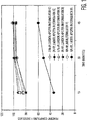
FIG. 1 is a graph of percent dissolution ofCOMPOUND 1 vs time for tablet formulations of various API loadings. -
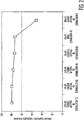
FIG. 2 is a graph of percent dissolution ofCOMPOUND 1 after 30 minutes for various prototype tablet formulations. -
FIG. 3 is a graph of percent dissolution ofCOMPOUND 1 vs time of controlled disintegrant-to-API ratio prototype tablet formulations. -
FIG. 4 is a graph of percent dissolution ofCOMPOUND 1 vs time of controlled disintegrant concentration prototype tablet formulations. - Schering Corp. is developing a thrombin receptor antagonist for use in a variety of cardiovascular applications, including acute coronary syndrome and prevention of later coronary events subsequent to initial coronary events ("secondary prevention"). The active pharmaceutical ingredient ("API"),
COMPOUND 1, has been evaluated in phase II clinical trials. Dosing regimens being considered for commercialization include potential loading doses of 10, 20 and 40 mg and maintenance doses of 0.5, 1, 2.5 and 5 mg, in solid, immediate-release tablet formulations for oral administration. Immediate-release formulations are sought in order to ensure rapid delivery of a thrombin receptor antagonist to the patient. In the case of a patient who may have just suffered an acute coronary event (e.g., a stroke), and who is thus at risk for serious imminent further cardiovascular consequences (e.g., coronary ischemia), rapid delivery of a loading dose of the thrombin receptor antagonist may be crucial. It is believed that the risk of such cardiovascular consequences can be mitigated by rapidly delivering to such a patient a therapeutically effective amount of a thrombin receptor antagonist, and that this can be achieved by an immediate-release formulation of acceptable pharmaceutical characteristics. Based on clinical data, it appears that a loading dose of 20 or 40 mg will safely achieve therapeutically effective blood levels ofCOMPOUND 1 in a patient in the desired time frame. Thus, the development of formulations of suitable pharmaceutical characteristics is a necessary step in the commercialization of this thrombin receptor antagonist. - In preparation for phase II clinical trials (and prior to the appreciation gained from examination of the results of those trials that distinct loading and maintenance doses would be appropriate), several immediate-release formulations were prepared. Formula selection was based on dissolution results from formulation screening studies to support the formulation content uniformity/assay, active/excipient compatibility studies, and longer term data from stability screening trials. The manufacturing processes for these formulations involve the steps of wet granulation, drying, blending, and compression, followed by an optional film-coating operation. Table 1 displays the formulations of
COMPOUND 1 bisulfate tablets of doses of 0.5, 1, 2.5, 10 and 20 mg.Table 1. Ingredient Function Theoretical mg/tablet 0.5 mg Tablet 1 mg Tablet 2.5 mg Tablet 10 mg Tablet 20 mg Tablet 10 mg Tablet 10 mg Tablet Formulation No. → 1A 1B 1C 1D 1E 1F 1G COMPOUN D 1 bisulfate Active 0.5 1.0 2.5 10.0 20.0 10.0 10.0 Lactose Monohydrate (Impalpable Powder) Diluent 70 69.5 68.0 272.0 262.0 60.5 131.0 Microcrystalline Cellulose Diluent 20.0 20.0 20.0 80.0 80.0 20.0 40.0 Croscarmellose Sodium Disintegrant 6.0 6.0 6.0 24.0 24.0 6.0 12.0 Povidone K-30 Binder 3.0 3.0 3.0 12.0 12.0 3.0 6.0 Magnesium Stearate Lubricant 0.5 0.5 0.5 2.0 2.0 0.5 1.0 Purified Water Solvent (—)a (—)a (—)a (—)a (—)a (—)a (—)a Theoretical Total Core Tablet Weight 100.0 100.0 100.0 400.0 400.0 100.0 200.0 Opadry Coating System Coating Agent See footnote b. a: Evaporates during the drying and coating processes b: Coating is optional, but may be used for cosmetic reasons. Expected coating level is between 2.5 -10%, preferably between 3 - 6%. Applies to all formulations herein. - These prototype tablets were tested for standard pharmaceutical quality attributes, including dissolution (employing a basket type dissolution apparatus equipped with a suitable ultraviolet spectrophotometer, with agitation at 50 rpm and an acidic dissolution test media containing 0.05N HCl).
- In phase III clinical trials planned for the evaluation of
COMPOUND 1 in the treatment of acute coronary syndrome and secondary prevention, the 2.5 mg dose ofFormulation 1 C is planned for administration as a maintenance dose. - "Acute coronary syndrome" includes any group of clinical symptoms compatible with acute myocardial ischemia. Acute myocardial ischemia is chest pain due to insufficient blood supply to the heart muscle that results from coronary artery disease (also called coronary heart disease). Acute coronary syndrome thus covers the spectrum of clinical conditions ranging from unstable angina to non-Q-wave myocardial infarction and Q-wave myocardial infarction. Symptoms may include chest pain, shortness of breath, nausea, vomiting, diaphoresis (sweating), palpitations, anxiety or a sense of impending doom and a feeling of being acutely ill.
- "Secondary prevention" refers to the treatment of patients who have already suffered a significant cardiovascular event, such as a heart attack or stroke, to prevent another future, potentially more serious, perhaps lethal, cardiovascular or cerebrovascular event.
- Another cardiovascular condition for which thrombin receptor antagonists may be useful is peripheral arterial disease ("PAD"), also known as peripheral vascular disease ("PVD"), which occurs when cholesterol and scar tissue build up, forming plaque inside the arteries that narrows and clogs the arteries. The clogged arteries cause decreased blood flow to the legs, which can result in pain when walking, and eventually gangrene and amputation.
- One pharmaceutical characteristic that is always important in orally administered formulations is rate of dissolution. Typical immediate-release formulation specifications require that not less than 75-80% of the active be dissolved within a 30-minute period. In certain formulations similar to those enumerated in Table 1, an undesired reduction in dissolution rates was detected regarding some formulated tablets after having been subjected to stability evaluation. In particular, a significant change in dissolution rate profiles was noted between initial and 1-
month stability 10 mg batches (formulated to a total formulation weight of 100 mg). - One parameter which can affect dissolution of the active in a solid dosage form is API loading (i,e., the weight ratio of API to the total tablet core). To determine whether API loading was a factor in the drop in dissolution displayed in some of the
COMPOUND 1 tablets, several formulations of varying API loading were prepared and dissolutions were then measured for both fresh batches and those having been in various Stability conditions. The results are displayed inFIGS. 1 and2 . The dissolution data suggest that at high temperature/humidity conditions API loading should be less than 10% in order to meet the 80% dissolution criterion. An API loading of as high as 8% was found to meet this criterion, and the data suggest that it would be possible to exceed 8% without failing the 80% dissolution criterion, if required. It was concluded that with futher exploration of the excipients and their levels, an API loading in excess of 10%, perhaps up to about 12%, could be engineered into a tablet that would demonstrate satisfactory dissolution characteristics. - After pharmacokinetic data from phase II clinical trials were examined, it was determined that a loading dose of
COMPOUND 1 may be appropriate, and that this loading dose may be in the range of 20 to 40 mg. A loading dose of 40 mg is planned for evaluation in phase III clinical trials. The question facing the formulators was what size tablet would be required, particularly for the 40 mg formulation. For higher dose tablets, higher API loadings may be desirable in order to achieve reasonable tablet size, avoid content uniformity issues, and control the cost of goods sold. Thus for the 40 mg formulation, additional understanding of the dissolution characteristics ofCOMPOUND 1 was sought. - The dissolution data also suggest that API loading was not the sole factor in the observed dissolution slow-down. It was hypothesized that the dissolution slow down was related to the ratio of disintegrant to API and moisture. Hence dissolution could be controlled by adjusting the ratio of disintegrant to API in the formulation.
- For initial evaluation of the effects of disintegrant-to-API ratio and moisture content, three preliminary formulation prototype tablets were initially developed. Each tablet contained 40 mg of
COMPOUND 1 bisulfate, and the tablets weighed a total of 400, 600, and 800 mg, respectively. Each of the prototypes contained identical percentages of the following inactive excipients: Microcrystalline Cellulose as a diluent (20%), Croscarmellose Sodium as a disintegrant (6%), Povidone as a binder (3%), and Magnesium Stearate as a lubricant (0.5%). The amount of Lactose Monohydrate as a diluent was varied in each formulation based upon the total tablet weight and the sum total of the individual excipient amounts listed above. Table 2 displays these three prototype formulations.Table 2. Ingredient Function Concentration (mg/tablet) Formulation No. → 2A 2B 2C COMPOUND 1 Bisulfate API 40 40 40 Lactose Monohydrate Diluent 242 383 524 Microcrystalline Cellulose Diluent 80 120 160 Croscarmellose Sodium Disintegrant 24 36 48 Povidone Binder 12 18 24 Magnesium Stearate Lubricant 2 3 4 Total 400 600 800 Disintegrant/APl 0.6:1 0.9:1 1.2:1 API Loading (API/Total) 0.1 .067 .05 - These prototype tablets were tested for standard pharmaceutical quality attributes, including dissolution (employing a Distek 2100/5100 paddle type dissolution apparatus equipped with a suitable ultraviolet spectrophotometer, with agitation at 50 rpm and an acidic dissolution test media containing 0.01 N HCl).
- Additionally, tablet samples were also stored under stressed conditions (i.e,, 40°C temperature and 75% relative humidity) and tested for dissolution. The results of dissolution rate analyses of both standard and stressed samples of each of the three initial prototype formulations are displayed in
FIG. 3 . It is of note that some of the dissolution data associated with later time points display values greater than the theoretical label claim of 100%. This is attributed to variability in both the manufacturing process and the dissolution testing methodology. As a reference, a majority of immediate-release pharmaceutical aritcles have commercial assay specification ranges of 95-105% of the stated label claim. - Inspection of the dissolution data leads to the following observations. The 400 mg tablets (1A) exhibited a significant drop in dissolution after being exposed to accelerated temperature and humidity conditions, i.e., upon uptake of increased amounts of moisture. Approximately 68% of the API had dissolved within 30 minutes from the stressed 400 mg formulation, as compared to >95% from all the other samples. The stressed 400 mg formulation is the only one that failed to meet the 30-minute standard of 75-80% dissolution. Visual observations of the stressed 40/400 mg test samples revealed inadequate disintegration of the tablet granules into primary API and excipient particles. In addition, a gel-like layer was found to exist on the surface of the tablet granules, theorized to be related to moisture uptake. Based upon these observations, the hypothesis of the combination of the disintegrant-to-API ratio and moisture content of the tablets affecting dissolution rates in these
COMPOUND 1 formulations was further supported. - In order to test this hypothesis, a series of experiments involving both positive and negative controls was devised. Three additional prototype tablets were formulated as follows:
- ○ 400 mg tablets containing disintegrant at a 10% level, with a disintegrant-to-API ratio of 1:1. This prototype served as a positive control, i.e., to assess whether the dissolution rate of a previously "failing" sample could be increased by increasing the disintegrant-to-API ratio, all other factors being equal.
- ○ 500 mg tablets containing disintegrant at a nominal 6% level, with a disintegrant-to-API ratio of 0.75.
- ○ 800 mg tablets containing disintegrant at a 3% level, to yield a disintegrant-to-API ratio of 0.6. This prototype served as a negative control, i.e., to assess whether the dissolution rate of a previously "passing" sample could be decreased by decreasing the disintegrant-to-API ratio.
- Table 3 displays these three additional prototype formulations as 3A, 3B and 3C.
Table 3. Ingredient Function Concentration (mg/tablet) Formulation No. → 3A 3B 3C COMPOUND 1 Bisulfate API 40 40 40 Lactose Monohydrate Diluent 234 588 588 Microcrystalline Cellulose Diluent 72 160 160 Croscarmellose Sodium Disintegrant 40 24 24 Povidone Binder 12 24 24 Magnesium Stearate Lubricant 2 4 4 Water Solvent -a -a -a Total 400 800 800 Disintegrant/API 1:1 0.75:1 0.6:1 API Loading (API/Total) .10 .08 0.05 a: Evaporates during the manufacturing process - These additional prototypes were also stored under standard and accelerated conditions, as referenced above. Dissolution profiles of all three prototypes are displayed in
FIG. 4 . The data show that the dissolution rates of the stressed 40/400 mg tablets were significantly improved by increasing the disintegrant-to-API ratio to 1:1 (comparingFIGS. 3 and4 ). Conversely, by decreasing the disintegrant-to-API ratio of the stressed 40/800 mg tablets, the dissolution rate was significantly retarded. These data suggest that manipulation of the moisture content of the tablets and the disintegrant-to-API ratio within the formulation has an influence on tablet dissolution rates. - Based upon the results of the studies described above, it was concluded that, for the 40 mg dose formulation, a threshold disintegrant-to-API ratio was warranted in order to minimize moisture-mediated drop in dissolution under standard pharmaceutical product storage conditions. As shown in
FIG. 4 , the 400 and 500 mg formulations (3A and 3B, respectively) have sufficiently robust dissolution profiles, displaying greater than 95% and 90% dissolutions after 30 minutes, respectively. Based on the above, and a desire to achieve superior dissolution characteristics in a reasonably sized tablet, a 600 mg tablet weight (Formulation 2B in Table 2) was selected as the 40 mg dose formulation for administration in phase III clinical trials planned for the evaluation ofCOMPOUND 1 in the treatment of acute coronary syndrome and secondary prevention. - A range of formulations is within the scope of this invention. The maintenance dose of
COMPOUND 1 can be varied within a range of about 0.5 to about 10 mg, preferably about 1 to about 2.5 mg. The loading dose ofCOMPOUND 1 can be varied within a range of about 10 to about 50 mg, preferably about 20 to about 40 mg. Total weights of such tablets will range from about 200 mg to about 1500 mg, preferably from about 200 mg to about 800 mg. The ratio of disintegrant to API will range from about 0.6 (Formulation No. 2A) to about 12 (Formulation No. 1A). For the loading dose formulation, a range disintegrant-to-API ratios of between about 0.75 and about 1.0 appears to be favored. For the maintenance dose formulation, a range disintegrant-to-API ratios of between about 1 and about 3 appears to be favored. The amounts of individual excipients in the formulations can be adjusted within acceptable ranges, as understood by those skilled in the art. - These tablets are manufactured via a process involving high-shear wet granulation with an aqueous povidone solution, drying the granulation to a final moisture content of 0.5-2.0% in a fluid-bed processor, blending with the referenced lubricant in a tumble blender or equivalent, and compressing on a rotary tablet press into tablets of the desired weight.
- By way of example, a manufacturing process for the 1 mg formulation (1B) is as follows:
- 1. Dissolve the povidone in purified water. Mix until a clear solution is obtained.
- 2. Pass the
COMPOUND 1 bisulfate, lactose monohydrate, microcrystalline cellulose, and croscarmelose sodium through suitably sized screen(s) - 3. Charge the screened ingredients from Step 2 into a suitably sized granulator and blend.
- 4. Spray the povidone solution from
Step 1 on to the blend. Additional water may be added to achieve a satisfactory granulation. Mix the wet granulation in the granulator. - 5. Pass the granulation through a screen into a suitably sized fluid bed processor.
- 6. Dry the granulation until a suitable loss on drying is achieved.
- 7. Pass the dried granulation through a screen into a suitably sized tumble blender.
- 8. Pass the magnesium stearate through a screen into a suitably sized screen into the blender from Step 7 and blend.
- 9. Compress the tablets from Step 9 into a suitable sized pan coater.
- 10. Prepare a suspension of Opadry II in purified water.
- 11. Coat the tablets using the suspension from Step 11.
- The specific diluents, disintegrants, binders and lubricants listed above are not thought to be exclusively applicable to providing acceptable pharmaceutical characteristics in formulations of
COMPOUND 1, and other functional equivalents may be substituted for those listed. Preferred diluents comprise lactose, including lactose monohydrate (impalpable powder), microcrystalline cellulose (e.g., Avicel PH 102), mannitol, sorbitol, tribasic calcium phosphate, diabasic calcium phosphate, compressible sugar, starch, and calcium sulfate. Lactose monohydrate originates from bovine sources and can be obtained from Foremost Farms. Preferred binders comprise povidone (e.g., PVP K-30), acacia, tragacanth, hydroxypropylcellulose, pregelatinized starch, gelatin, hydroxypropylcellulose, hydroxypropylmethylcellulose, methylcellulose, sugar solutions, such as sucrose and sorbitol, and ethylcellulose. Additional agents such as diluents, glidants, coloring agents, and the like, known to a skilled formulator may be combined with the above listed ingredients. Seal coats (e.g., Opadry II Blue) may be applied to tablet cores. - As used herein for solid oral dosage forms of the present invention, the term "diluent" with respect to powdered formulations refers to a substance that usually makes up the major portion of the formulation or dosage form. Suitable diluents include sugars such as lactose, sucrose, mannitol, and sorbitol; starches derived from wheat, corn rice, and potato; and celluloses such as microcrystalline cellulose. As exemplified in the formulations 1A-3D, more than one diluents may be used a single formulation. The total amount of diluent in the formulations can range from about 60% to about 95% by weight of the total formulations, preferably from about 80% to about 90%.
- As used herein for solid oral dosage forms of the present invention, the term "disintegrant" refers to a substance added to the dosage form to help it break apart (disintegrate) and release the medicinal agent(s). Suitable disintegrants include: microcrystalline celluloses and cross-linked celluloses such as sodium croscarmellose; starches; "cold water soluble" modified starches such as sodium carboxymethyl starch; natural and synthetic gums such as locust bean, karaya, guar, tragacanth, and agar, cellulose derivatives such as methylcellulose and sodium carboxymethylcellulose; alginates such as alginic acid and sodium alginate; clays such as bentonites; and effervescent mixtures. Preferred disintegrants comprise croscarmellose sodium, starch, sodium starch glycolate, crospovidone and croscarmelose sodium and microcrystalline cellulose. The amount of disintegrant in the formulation can range from about 2% to about 12% by weight of the formulation, more preferably from about 3.5% to about 6% by weight.
- As used herein for solid oral dosage forms of the present invention, the term "lubricant" refers to a substance added to the dosage form to enable the tablet after it has been compressed, to release from the mold or die by reducing friction or wear. Suitable lubricants include metallic stearates such as magnesium stearate (vegetable grade), calcium stearate or potassium stearate; stearic acid; high melting point waxes; and water soluble lubricants such as sodium chloride, sodium benzoate, sodium acetate, sodium oleate, polyethylene glycols, and d'I-leucine. Preferred lubricants comprise magnesium stearate, stearic acid and talc. The amount of lubricant in the formulation can range from about 0.1% to about 2% by weight of the formulations, preferably about 0.5% by weight.
- As used herein for solid oral dosage forms of the present invention, the term "glidant" refers to a substance that prevents caking and improves the flow characteristics of granulations, so that flow is smooth and uniform. Suitable glidants include silicon dioxide and talc. The amount of glidant in the formulation can range from about 0.1% to about 5% by weight of the total formulation, preferably from about 0.5% to about 2% by weight.
- As used herein for solid oral dosage forms of the present invention, the phrase "coloring agent" refers to a substance that provides coloration to the formulation or the dosage form. Such substances can include food grade dyes and food grade dyes adsorbed onto a suitable adsorbent such as clay or aluminium oxide. The amount of the coloring agent can vary from about 0.1 % to about 5% by weight of the formulation, preferably from about 0.1% to about 1%.
- The present invention encompasses immediate-release tablet formulations of any thrombin receptor antagonist. A variety of compounds have been demonstrated as displaying activity as thrombin receptor antagonists, many being himbacine analogs. As disclosed in
U.S. publication no. 04/0152736 


U.S. publication no. 03/0216437 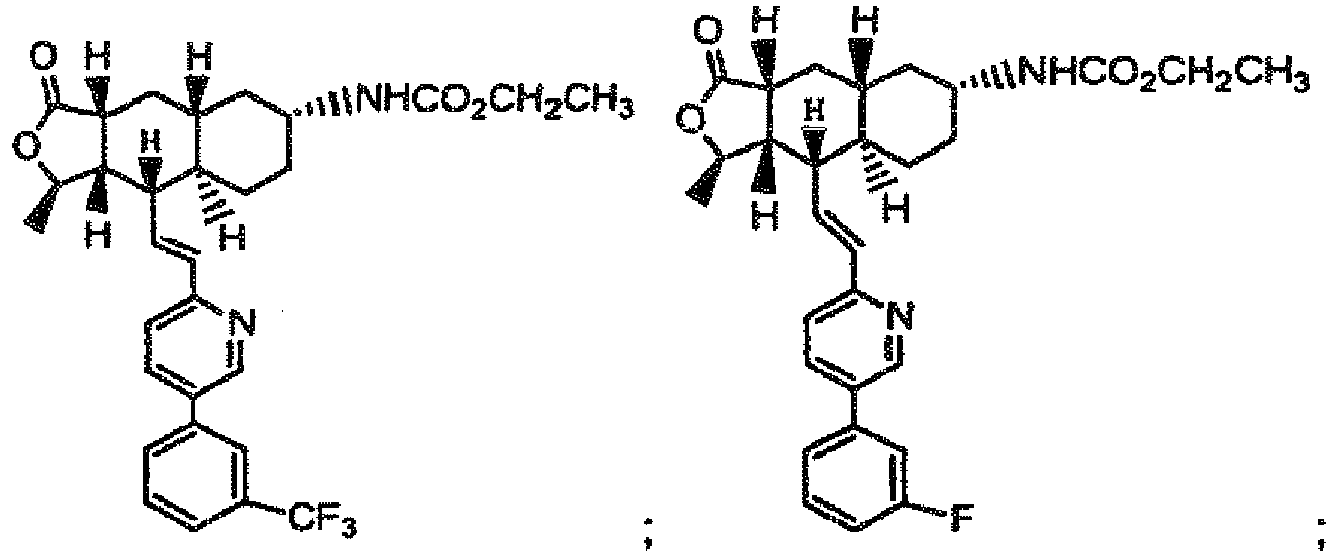


- The following compounds are particularly favored based on their pharmacokinetics and phamacodynamic characteristics:

COMPOUND 1 is currently in development as a thrombin receptor antagonist by Schering Corp. Its synthesis is disclosed inU.S. publication no. 03/0216437, published Nov. 20, 2003 Compound 3. Compound 2 is disclosed inU.S. Patent no. 6,645,987 . - Other compounds for use in the combinations of the present invention are disclosed in any of
U.S. Patent Nos. 6,063,847 and6,326,380 ,U.S. Patent Publications 03/0203927, 03/0216437 04/0192753 04/0176418 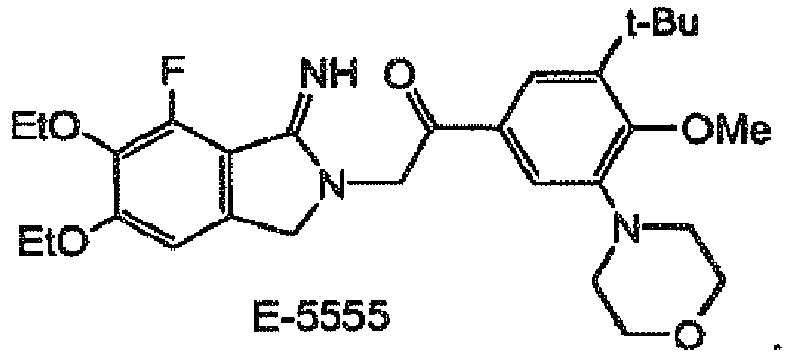
- It will be understood that unless otherwise specified, the term "thrombin receptor antagonist:" and any compounds identified as such, including
COMPOUND 1, encompasses any chemically stable and pharmaceutically acceptable free base, salt, isomer or solvate form thereof. The term "salt(s)", as employed herein, denotes acidic salts formed with inorganic and/or organic acids. Pharmaceutically acceptable (i.e., non-toxic, physiologically acceptable) salts are preferred, although other salts are also useful. Salts of the compound of the above active agents may be formed, for example, by reacting the above active agents with an equivalent amount of acid or base in a medium such as one in which the salt precipitates or in an aqueous medium followed by lyophilization. - Exemplary acid addition salts include acetates, ascorbates, benzoates, benzenesulfonates, bisulfates, borates, butyrates, citrates, camphorates, camphorsulfonates, fumarates, hydrochlorides, hydrobromides, hydroiodides, lactates, maleates, methanesulfonates, naphthalenesulfonates, nitrates, oxalates, phosphates, propionates, salicylates, succinates, sulfates, tartarates, thiocyanates, toluenesulfonates (also known as tosylates), and the like. Additionally, acids which are generally considered suitable for the formation of pharmaceutically useful salts from basic pharmaceutical compounds are discussed, for example, by S. Berge et al, Journal of Pharmaceutical Sciences (1977) 66(1) 1-19; P. Gould, International J. of Pharmaceutics (1986) 33 201-217; Anderson et al, The Practice of Medicinal Chemistry (1996), Academic Press, New York; and in The Orange Book (Food & Drug Administration, Washington, D.C. on their website). These disclosures are incorporated herein by reference thereto.
- All such acid salts are intended to be pharmaceutically acceptable salts within the scope of the invention and all acid and base salts are considered equivalent to the free forms of the corresponding compounds for purposes of the invention.
- All isomers, including diastereomers and rotational isomers are contemplated as being part of this invention. The invention includes (+)- and (-)-isomers in both pure form and in admixture, including racemic mixtures. All stereoisomers (for example, geometric isomers, optical isomers and the like) of the present compounds (including those of the salts and solvates of the compounds), such as those which may exist due to asymmetric carbons on various substituents, including enantiomeric forms (which may exist even in the absence of asymmetric carbons), rotameric forms, atropisomers, and diastereomeric forms, are contemplated within the scope of this invention. Individual stereoisomers of the compounds of the invention may, for example, be substantially free of other isomers, or may be admixed, for example, as racemates or with all other, or other selected, stereoisomers. The chiral centers of the present invention can have the S or R configuration as defined by the IUPAC 1974 Recommendations. The use of the terms "salt", "solvate," "prodrug" and the like, is intended to equally apply to the salt, solvate and prodrug of enantiomers, stereoisomers, rotamers, tautomers, racemates or prodrugs of the inventive compounds.
- The term "solvate" will be understood to encompass hydrates.
- Other than as shown in the operating example or as otherwise indicated, all numbers used in the specification and claims expressing quantities of ingredients, reaction conditions, and so forth, are understood as being modified in all instances by the term "about." The above description is not intended to detail all modifications and variations of the invention. It will be appreciated by those skilled in the art that changes can be made to the embodiments described above without departing from the inventive concept. It is understood, therefore, that the invention is not limited to the particular embodiments described above, but is intended to cover modifications that are within the spirit and scope of the invention, as defined by the language of the following claims.
- The present invention can be summarized by reference to the following embodiments (embs.):
emb. 1. A solid pharmaceutical formulation for oraladministration comprising COMPOUND 1 or a pharmaceutically acceptable salt or solvate thereof and at least one disintegrant, wherein the amount ofCOMPOUND 1 is less than about 10% of the weight of the formulation.
emb. 2. The pharmaceutical formulation according to emb. 1, wherein said formulation is a tablet.
emb. 3. The pharmaceutical formulation according to emb. 1, wherein the amount ofCOMPOUND 1 or a pharmaceutically acceptable salt or solvate thereof is less than about 7% of the weight of the formulation.
emb. 4. The pharmaceutical formulation according to emb. 1, wherein the ratio of disintegrant to COMPOUND 1 or a pharmaceutically acceptable salt or solvate thereof is between about 0.6 and about 12 on a weight/weight basis.
emb. 5. The pharmaceutical formulation according to emb. 1. wherein said ratio is between about 0.75 and about 1.0.
emb. 6. The pharmaceutical formulation according to emb. 5, wherein said ratio is about 0.9.
emb. 7. The pharmaceutical formulation according to emb. 4, wherein said ratio is about 2.4.
emb. 8. The pharmaceutical formulation according to emb. 1, wherein the weight ofCOMPOUND 1 or a pharmaceutically acceptable salt or solvate thereof is between about 10 and about 50 mg and the total weight of the formulation is between about 200 and about 1500 mg.
emb. 9. The pharmaceutical formulation according to emb. 1, wherein the weight ofCOMPOUND 1 or a pharmaceutically acceptable salt or solvate thereof is about 40 mg and the total weight of the formulation is between about 400 and about 800 mg.
emb. 10. The pharmaceutical formulation according to emb. 1, wherein the weight ofCOMPOUND 1 or a pharmaceutically acceptable salt or solvate thereof is about 40 mg and the total weight of the formulation is about 600 mg.
emb. 11. The pharmaceutical formulation according to emb. 1, wherein the weight ofCOMPOUND 1 or a pharmaceutically acceptable salt or solvate thereof is between about 0.5 mg and about 10 mg and the total weight of the formulation is between about 100 mg and 400 mg.
emb. 12. The pharmaceutical formulation according to emb. 1, wherein the weight ofCOMPOUND 1 or a pharmaceutically acceptable salt or solvate thereof is about 2.5 mg and the total weight of the formulation is about 100 mg.
emb. 13. The pharmaceutical formulation according to emb. 1, wherein theCOMPOUND 1 is a bisulfate salt.
emb. 14. The pharmaceutical formulation according to emb. 1 resulting in a 30-minute dissolution ofCOMPOUND 1 of at least about 80%.
emb. 15. The pharmaceutical formulation according to emb. 1 resulting in a 30-minute dissolution ofCOMPOUND 1 of at least about 85%.
emb. 16. The pharmaceutical formulation according to emb. 1 wherein said disintegrant is selected from the group consisting of croscarmellose sodium, starch, sodium starch glycolate, crospovidone and microcrystalline cellulose.
emb. 17. The pharmaceutical formulation according to emb. 1 wherein said disintegrant is croscarmellose sodium.
emb. 18. The pharmaceutical formulation according to emb. 1 further comprising at least one diluent, at least one binder and at least one lubricant.
emb. 19. The pharmaceutical formulation according to emb. 18 wherein said diluent is selected from one or more of the group consisting of lactose monohydrate, microcrystalline cellulose, mannitol, sorbitol, tribasic calcium phosphate, diabasic calcium phosphate, compressible sugar, starch, and calcium sulfate.
emb. 20. The pharmaceutical formulation according to emb. 18 wherein said diluent is selected from one or more of the group consisting of lactose monohydrate and microcrystalline cellulose.
emb. 21. The pharmaceutical formulation according to emb. 18 wherein said binder is selected from the group consisting of povidone, acacia, tragacanth, hydroxypropylcellulose, pregelatinized starch, gelatin, hydroxypropylcellulose, hydroxypropylmethylcellulose, methylcellulose, sucrose, sorbitol, and ethylcellulose.
emb. 22. The pharmaceutical formulation according to emb. 18 wherein said binder is povidone.
emb. 23. The pharmaceutical formulation according to emb. 18 wherein said lubricant is selected from the group consisting of magnesium stearate, stearic acid and talc.
emb. 24. The pharmaceutical formulation according to emb. 18 wherein said lubricant is magnesium stearate.
emb. 25. A solid pharmaceutical formulation for oral administration comprising about 40 mg ofCompound 1 or a pharmaceutically acceptable salt thereof and at least about 5 wt percent of a disintegrant.
emb. 26. The formulation according to emb. 25, wherein the total weight of said formulation is between about 100 mg and about 1000 mg.
emb. 27. The formulation according to emb. 25, wherein the total weight of said formulation is about 600 mg.
emb. 28. The formulation according to emb. 25, wherein said formulation is a tablet.
emb. 29. A solid pharmaceutical formulation for oral administration comprising:Ingredient Amount (mg) COMPOUND 1Bisulfate 40 Lactose Monohydrate 383 Microcrystalline Cellulose 120 Croscarmellose Sodium 36 Povidone 18 Magnesium Stearate 3. Compound 1 or a pharmaceutically acceptable salt thereof and at least about 5 weight percent of a disintegrant.
emb. 31. The formulation according to emb. 30, wherein the total weight of said formulation is between about 50 mg and about 400 mg.
emb. 32. The formulation according to emb. 30, wherein the total weight of said formulation is about 100 mg.
emb. 33. The formulation according to emb. 30, wherein said formulation is a tablet.
emb. 34. A solid pharmaceutical formulation for oral administration comprising:Ingredient Amount (mg) COMPOUND 1 Bisulfate2.5 Lactose Monohydrate 68 Microcrystalline Cellulose 20 Croscarmellose Sodium 6 Povidone 3 Magnesium Stearate 0.5. 

emb. 36. A method of treating acute coronary syndrome by orally administering to a patient in need of such treating the pharmaceutical formulation according to any of embs. 1, 3, 5, 9, 12, 25, 30 and 35.
emb. 37. A method of treating a patient in need of secondary prevention by orally administering to said patient the pharmaceutical formulation according to any of embs. 1 , 3, 5, 9, 12, 25, 30 and 35.
emb. 38. A method of treating peripheral arterial disease by orally administering to a patient in need of such treating the pharmaceutical formulation according to any of embs. 1, 3, 5, 9, 12, 25, 30 and 35.
Claims (15)
- A solid pharmaceutical formulation for oral administration, comprising COMPOUND 1 or a pharmaceutically acceptable salt or solvate thereof and at least one disintegrant, wherein the amount of COMPOUND 1 is less than about 10% of the weight of the formulation, wherein the ratio of disintegrant to COMPOUND 1 or a pharmaceutically acceptable salt or solvate thereof is between about 0.6 and about 12 on a weight/weight basis, wherein COMPOUND 1 is:

- The pharmaceutical formulation according to claim 1, wherein said formulation is a tablet.
- The pharmaceutical formulation according to claim 1, wherein the amount of COMPOUND 1 or a pharmaceutically acceptable salt or solvate thereof is less than about 7% of the weight of the formulation.
- The pharmaceutical formulation according to claim 1, wherein said ratio is (i) between about 0.75 and about 1.0, (ii) about 0.9, or (iii) about 2.4.
- The pharmaceutical formulation according to claim 1, wherein the weight of COMPOUND 1 or a pharmaceutically acceptable salt or solvate thereof is (i) between about 10 and about 50 mg and the total weight of the formulation is between about 200 and about 1500 mg, (ii) about 40 mg and the total weight of the formulation is between about 400 and about 800 mg, (iii) about 40 mg and the total weight of the formulation is about 600 mg, (iv) between about 0.5 mg and about 10 mg and the total weight of the formulation is between about 100 mg and 400 mg, or (v) about 2.5 mg and the total weight of the formulation is about 100 mg.
- The pharmaceutical formulation according to claim 1, wherein the COMPOUND 1 is a bisulfate salt.
- The pharmaceutical formulation according to claim 1, wherein said disintegrant is selected from the group consisting of croscarmellose sodium, starch, sodium starch glycolate, crospovidone and microcrystalline cellulose, and preferably croscarmellose sodium.
- The pharmaceutical formulation according to claim 1, further comprising at least one diluent, at least one binder and at least one lubricant.
- The pharmaceutical formulation according to claim 8, wherein said diluent is selected from one or more of the group consisting of lactose monohydrate, microcrystalline cellulose, mannitol, sorbitol, tribasic calcium phosphate, dibasic calcium phosphate, compressible sugar, starch, and calcium sulphate, and preferably lactose monohydrate and microcrystalline cellulose.
- The pharmaceutical formulation according to claim 8, wherein said binder is selected from the group consisting of povidone, acacia, tragacanth, hydroxypropylcellulose, pregelatinized starch, gelatin, hydroxypropylmethylcellulose, methylcellulose, sucrose, sorbitol, and ethylcellulose, and preferably povidone.
- The pharmaceutical formulation according to claim 8, wherein said lubricant is selected from the group consisting of magnesium stearate, stearic acid and talc, and preferably magnesium stearate.
- A solid pharmaceutical formulation for oral administration comprising:
Ingredient Amount (mg) COMPOUND 1 Bisulfate 2.5 Lactose Monohydrate 68 Microcrystalline Cellulose 20 Croscarmellose Sodium 6 Povidone 3 Magnesium Stearate 0.5. - A solid pharmaceutical formulation according to any preceding claim for use in a method of treating acute coronary syndrome by orally administering to a patient in need of such treating the pharmaceutical formulation.
- A solid pharmaceutical formulation according to any of claims 1-12 for use in a method of treating a patient in need of secondary prevention from acute coronary syndrome by orally administering to said patient the pharmaceutical formulation.
- A solid pharmaceutical formulation according to any of claims 1-12 for use in a method of treating peripheral arterial disease by orally administering to a patient in need of such treating the pharmaceutical formulation.
Applications Claiming Priority (2)
| Application Number | Priority Date | Filing Date | Title |
|---|---|---|---|
| US81782106P | 2006-06-30 | 2006-06-30 | |
| EP07796595.2A EP2034969B1 (en) | 2006-06-30 | 2007-06-29 | Immediate-release tablet formulations of a thrombin receptor antagonist |
Related Parent Applications (2)
| Application Number | Title | Priority Date | Filing Date |
|---|---|---|---|
| EP07796595.2A Division EP2034969B1 (en) | 2006-06-30 | 2007-06-29 | Immediate-release tablet formulations of a thrombin receptor antagonist |
| EP07796595.2A Division-Into EP2034969B1 (en) | 2006-06-30 | 2007-06-29 | Immediate-release tablet formulations of a thrombin receptor antagonist |
Publications (2)
| Publication Number | Publication Date |
|---|---|
| EP2491922A1 true EP2491922A1 (en) | 2012-08-29 |
| EP2491922B1 EP2491922B1 (en) | 2017-01-04 |
Family
ID=38895141
Family Applications (2)
| Application Number | Title | Priority Date | Filing Date |
|---|---|---|---|
| EP07796595.2A Active EP2034969B1 (en) | 2006-06-30 | 2007-06-29 | Immediate-release tablet formulations of a thrombin receptor antagonist |
| EP12159636.5A Active EP2491922B1 (en) | 2006-06-30 | 2007-06-29 | Immediate-release tablet formulations of a thrombin receptor antagonist |
Family Applications Before (1)
| Application Number | Title | Priority Date | Filing Date |
|---|---|---|---|
| EP07796595.2A Active EP2034969B1 (en) | 2006-06-30 | 2007-06-29 | Immediate-release tablet formulations of a thrombin receptor antagonist |
Country Status (18)
| Country | Link |
|---|---|
| US (2) | US20080031943A1 (en) |
| EP (2) | EP2034969B1 (en) |
| JP (2) | JP5116764B2 (en) |
| KR (1) | KR20090023670A (en) |
| CN (2) | CN101511345A (en) |
| AR (1) | AR061790A1 (en) |
| AU (1) | AU2007269733B2 (en) |
| BR (1) | BRPI0713935A2 (en) |
| CA (1) | CA2656395C (en) |
| CL (1) | CL2007001923A1 (en) |
| CO (1) | CO6150126A2 (en) |
| ES (2) | ES2616354T3 (en) |
| MX (1) | MX2009000131A (en) |
| NO (1) | NO20090467L (en) |
| PE (1) | PE20080376A1 (en) |
| TW (1) | TWI367112B (en) |
| WO (1) | WO2008005353A2 (en) |
| ZA (1) | ZA200900350B (en) |
Families Citing this family (10)
| Publication number | Priority date | Publication date | Assignee | Title |
|---|---|---|---|---|
| TWI343262B (en) * | 2006-09-26 | 2011-06-11 | Schering Corp | Rapidly disintegrating lyophilized oral formulations of a thrombin receptor antagonist |
| WO2008079260A2 (en) * | 2006-12-22 | 2008-07-03 | Schering Corporation | Disintegration promoters in solid dose wet granulation formulations |
| US8624050B2 (en) * | 2007-06-22 | 2014-01-07 | General Electric Company | Solution process for transparent conductive oxide coatings |
| WO2009078999A1 (en) | 2007-12-17 | 2009-06-25 | Janssen Pharmaceutica N.V. | Imidazolo-, oxazolo-, and thiazolopyrimidine modulators of trpv1 |
| ES2437100T3 (en) | 2009-06-04 | 2014-01-08 | Merck Sharp & Dohme Corp. | Active metabolite of a thrombin receptor antagonist |
| MX2011013091A (en) | 2009-06-08 | 2012-01-12 | Schering Corp | A thrombin receptor antagonist and clopidogrel fixed dose tablet. |
| CN102442965B (en) * | 2010-09-30 | 2013-12-11 | 天津药物研究院 | PAR-1 (protease-activated receptor-1) antagonists for treating thrombotic diseases, as well as preparation and application thereof |
| TR201601548A2 (en) | 2016-02-05 | 2018-03-21 | Sanovel Ilac Sanayi Ve Ticaret Anonim Sirketi | A PHARMACEUTICAL COMPOSITION OF VORAPAKSAR AND METOPROLOL |
| WO2017134200A1 (en) | 2016-02-05 | 2017-08-10 | Sanovel Ilac Sanayi Ve Ticaret A.S. | A novel pharmaceutical composition of vorapaxar and metoprolol |
| EP3746078A4 (en) * | 2018-02-02 | 2021-11-17 | Eustralis Pharmaceuticals Limited (Trading as Pressura Neuro) | Oral formulations and uses thereof |
Citations (12)
| Publication number | Priority date | Publication date | Assignee | Title |
|---|---|---|---|---|
| US6063847A (en) | 1997-11-25 | 2000-05-16 | Schering Corporation | Thrombin receptor antagonists |
| WO2001000657A2 (en) | 1999-06-29 | 2001-01-04 | Ortho-Mcneil Pharmaceutical, Inc. | Novel indole peptidomimetics as thrombin receptor antagonists |
| WO2001000656A2 (en) | 1999-06-29 | 2001-01-04 | Ortho-Mcneil Pharmaceutical, Inc. | Novel indazole peptidomimetics as thrombin receptor antagonists |
| WO2001000659A1 (en) | 1999-06-29 | 2001-01-04 | Ortho-Mcneil Pharmaceutical, Inc. | Benzimidazolone peptidomimetics as thrombin receptor antagonists |
| WO2002085855A1 (en) | 2001-04-19 | 2002-10-31 | Eisai Co., Ltd. | 2-iminopyrrolidine derivatives |
| US20030203927A1 (en) | 2001-10-18 | 2003-10-30 | Schering Corporation | Thrombin receptor antagonists |
| US6645987B2 (en) | 2000-06-15 | 2003-11-11 | Schering Corporation | Nor-seco himbacine derivatives useful as thrombin receptor antagonists |
| US20030216437A1 (en) | 2002-04-16 | 2003-11-20 | Schering Corporation | Thrombin receptor antagonists |
| US20040152736A1 (en) | 2000-06-15 | 2004-08-05 | Samuel Chackalamannil | Thrombin receptor antagonists |
| US20040176418A1 (en) | 2000-06-15 | 2004-09-09 | Schering Corporation | Crystalline polymorph of a bisulfate salt of a thrombin receptor antagonist |
| US20040192753A1 (en) | 2000-06-15 | 2004-09-30 | Samuel Chackalamannil | Methods of use of thrombin receptor antagonists |
| US20040216437A1 (en) | 2003-04-16 | 2004-11-04 | Huber Erdmann | Forage harvester with positionable operator's cabin |
Family Cites Families (15)
| Publication number | Priority date | Publication date | Assignee | Title |
|---|---|---|---|---|
| JPS61137813A (en) * | 1984-12-07 | 1986-06-25 | Sawai Seiyaku Kk | Long acting cephradine pharmaceutical preparation |
| JPS63162620A (en) * | 1986-12-25 | 1988-07-06 | Teisan Seiyaku Kk | Delayed soluble granule and sustained release complex granule using said granule |
| GB9414045D0 (en) * | 1994-07-12 | 1994-08-31 | Berwind Pharma Service | Moisture barrier film coating composition, method, and coated form |
| US20010003588A1 (en) * | 1996-09-12 | 2001-06-14 | Smithkline Beecham Corporation | Controlled release dosage form of [R-(Z)]-alpha-(methoxyimino)-alpha-(1-azabicyclo[2.2.2.]oct-3-yl)acetonitrile monohydrochloride |
| JPH10130142A (en) * | 1996-10-31 | 1998-05-19 | Zensei Yakuhin Kogyo Kk | Sustained release type compressed preparation |
| JPH10298062A (en) * | 1997-04-24 | 1998-11-10 | Pfizer Pharmaceut Co Ltd | Oral fast dissolving tablets |
| KR100393492B1 (en) * | 1997-11-25 | 2003-08-02 | 쉐링 코포레이션 | Thrombin receptor antagonists |
| JP2005500253A (en) * | 2001-02-23 | 2005-01-06 | オーソ−マクニール・フアーマシユーチカル・インコーポレーテツド | Aminomethylpyrroloquinazoline compounds as thrombin receptor antagonists |
| CZ300438B6 (en) * | 2003-11-25 | 2009-05-20 | Pliva Hrvatska D.O.O. | Process for preparing solid medicament form for oral administration with instantaneous release of active substance and containing as the active substance finasteride polymorphous form |
| EP1971336A2 (en) * | 2005-12-22 | 2008-09-24 | Shering Corporation | Thrombin receptor antagonists as phophylaxis to complications from cardiopulmonary surgery |
| TW200812619A (en) * | 2006-04-06 | 2008-03-16 | Schering Corp | TRA combination therapies |
| WO2008005352A2 (en) * | 2006-06-30 | 2008-01-10 | Schering Corporation | Solid dose formulations of a thrombin receptor antagonist |
| TWI343262B (en) * | 2006-09-26 | 2011-06-11 | Schering Corp | Rapidly disintegrating lyophilized oral formulations of a thrombin receptor antagonist |
| WO2008079260A2 (en) * | 2006-12-22 | 2008-07-03 | Schering Corporation | Disintegration promoters in solid dose wet granulation formulations |
| WO2008118320A1 (en) * | 2007-03-23 | 2008-10-02 | Schering Corporation | Reduction of adverse events.after percutaneous intervention by use of a thrombin receptor antagonist |
-
2007
- 2007-06-28 TW TW096123547A patent/TWI367112B/en not_active IP Right Cessation
- 2007-06-29 WO PCT/US2007/015168 patent/WO2008005353A2/en not_active Ceased
- 2007-06-29 ES ES12159636.5T patent/ES2616354T3/en active Active
- 2007-06-29 CN CNA2007800325694A patent/CN101511345A/en active Pending
- 2007-06-29 JP JP2009518301A patent/JP5116764B2/en not_active Expired - Fee Related
- 2007-06-29 MX MX2009000131A patent/MX2009000131A/en unknown
- 2007-06-29 AU AU2007269733A patent/AU2007269733B2/en not_active Ceased
- 2007-06-29 AR ARP070102934A patent/AR061790A1/en not_active Application Discontinuation
- 2007-06-29 US US11/771,520 patent/US20080031943A1/en not_active Abandoned
- 2007-06-29 EP EP07796595.2A patent/EP2034969B1/en active Active
- 2007-06-29 CL CL200701923A patent/CL2007001923A1/en unknown
- 2007-06-29 CN CN201510409546.7A patent/CN104922054A/en active Pending
- 2007-06-29 EP EP12159636.5A patent/EP2491922B1/en active Active
- 2007-06-29 KR KR1020097000084A patent/KR20090023670A/en not_active Withdrawn
- 2007-06-29 ES ES07796595.2T patent/ES2616405T3/en active Active
- 2007-06-29 BR BRPI0713935-7A patent/BRPI0713935A2/en not_active IP Right Cessation
- 2007-06-29 CA CA2656395A patent/CA2656395C/en active Active
- 2007-07-02 PE PE2007000840A patent/PE20080376A1/en not_active Application Discontinuation
-
2009
- 2009-01-15 ZA ZA200900350A patent/ZA200900350B/en unknown
- 2009-01-29 NO NO20090467A patent/NO20090467L/en not_active Application Discontinuation
- 2009-01-30 CO CO09008875A patent/CO6150126A2/en unknown
-
2012
- 2012-03-30 JP JP2012082021A patent/JP2012126752A/en not_active Withdrawn
-
2016
- 2016-03-10 US US15/066,726 patent/US20170224666A9/en not_active Abandoned
Patent Citations (16)
| Publication number | Priority date | Publication date | Assignee | Title |
|---|---|---|---|---|
| US6063847A (en) | 1997-11-25 | 2000-05-16 | Schering Corporation | Thrombin receptor antagonists |
| US6326380B1 (en) | 1997-11-25 | 2001-12-04 | Schering Corporation | Thrombin receptor antagonists |
| WO2001000657A2 (en) | 1999-06-29 | 2001-01-04 | Ortho-Mcneil Pharmaceutical, Inc. | Novel indole peptidomimetics as thrombin receptor antagonists |
| WO2001000656A2 (en) | 1999-06-29 | 2001-01-04 | Ortho-Mcneil Pharmaceutical, Inc. | Novel indazole peptidomimetics as thrombin receptor antagonists |
| WO2001000659A1 (en) | 1999-06-29 | 2001-01-04 | Ortho-Mcneil Pharmaceutical, Inc. | Benzimidazolone peptidomimetics as thrombin receptor antagonists |
| US20040176418A1 (en) | 2000-06-15 | 2004-09-09 | Schering Corporation | Crystalline polymorph of a bisulfate salt of a thrombin receptor antagonist |
| US6645987B2 (en) | 2000-06-15 | 2003-11-11 | Schering Corporation | Nor-seco himbacine derivatives useful as thrombin receptor antagonists |
| US20040152736A1 (en) | 2000-06-15 | 2004-08-05 | Samuel Chackalamannil | Thrombin receptor antagonists |
| US20040192753A1 (en) | 2000-06-15 | 2004-09-30 | Samuel Chackalamannil | Methods of use of thrombin receptor antagonists |
| US7235567B2 (en) | 2000-06-15 | 2007-06-26 | Schering Corporation | Crystalline polymorph of a bisulfate salt of a thrombin receptor antagonist |
| WO2002085850A1 (en) | 2001-04-19 | 2002-10-31 | Eisai Co., Ltd. | Cyclic amidine derivative |
| WO2002088092A1 (en) | 2001-04-19 | 2002-11-07 | Eisai Co., Ltd. | 2-iminoimidazole derivative (2) |
| WO2002085855A1 (en) | 2001-04-19 | 2002-10-31 | Eisai Co., Ltd. | 2-iminopyrrolidine derivatives |
| US20030203927A1 (en) | 2001-10-18 | 2003-10-30 | Schering Corporation | Thrombin receptor antagonists |
| US20030216437A1 (en) | 2002-04-16 | 2003-11-20 | Schering Corporation | Thrombin receptor antagonists |
| US20040216437A1 (en) | 2003-04-16 | 2004-11-04 | Huber Erdmann | Forage harvester with positionable operator's cabin |
Non-Patent Citations (4)
| Title |
|---|
| "The Orange Book", article "Food & Drug Administration" |
| ANDERSON ET AL.: "The Practice of Medicinal Chemistry", 1996, ACADEMIC PRESS |
| P. GOULD, INTERNATIONAL J. OF PHARMACEUTICS, vol. 33, 1986, pages 201 - 217 |
| S. BERGE ET AL., JOURNAL OF PHARMACEUTICAL SCIENCES, vol. 66, no. 1, 1977, pages 1 - 19 |
Also Published As
| Publication number | Publication date |
|---|---|
| US20170224666A9 (en) | 2017-08-10 |
| CN104922054A (en) | 2015-09-23 |
| PE20080376A1 (en) | 2008-06-13 |
| AR061790A1 (en) | 2008-09-24 |
| ES2616354T3 (en) | 2017-06-12 |
| US20080031943A1 (en) | 2008-02-07 |
| KR20090023670A (en) | 2009-03-05 |
| EP2491922B1 (en) | 2017-01-04 |
| BRPI0713935A2 (en) | 2012-12-04 |
| JP2009542678A (en) | 2009-12-03 |
| NO20090467L (en) | 2009-03-19 |
| TWI367112B (en) | 2012-07-01 |
| MX2009000131A (en) | 2009-01-26 |
| US20160193196A1 (en) | 2016-07-07 |
| WO2008005353A2 (en) | 2008-01-10 |
| ES2616405T3 (en) | 2017-06-13 |
| JP2012126752A (en) | 2012-07-05 |
| JP5116764B2 (en) | 2013-01-09 |
| CL2007001923A1 (en) | 2008-02-08 |
| CA2656395A1 (en) | 2008-01-10 |
| CA2656395C (en) | 2016-12-13 |
| ZA200900350B (en) | 2010-01-27 |
| EP2034969A2 (en) | 2009-03-18 |
| CO6150126A2 (en) | 2010-04-20 |
| EP2034969B1 (en) | 2017-01-11 |
| WO2008005353A3 (en) | 2008-06-26 |
| TW200810792A (en) | 2008-03-01 |
| AU2007269733B2 (en) | 2013-02-21 |
| AU2007269733A1 (en) | 2008-01-10 |
| CN101511345A (en) | 2009-08-19 |
Similar Documents
| Publication | Publication Date | Title |
|---|---|---|
| EP2491922B1 (en) | Immediate-release tablet formulations of a thrombin receptor antagonist | |
| RU2376988C2 (en) | Pharmaceutical composition of slow release, containing aplindor and its derivatives | |
| EP3313187B1 (en) | Sustained release formulation and tablets prepared therefrom | |
| JP6125567B2 (en) | Nitrite pharmaceutical formulations and their use | |
| JPWO2008066102A1 (en) | Sustained release formulation | |
| KR20230057388A (en) | Compositions of SGLT-2 inhibitors and angiotensin receptor antagonists and uses thereof | |
| KR100780553B1 (en) | Metformin sustained-release tablet and preparation method thereof | |
| US20080026050A1 (en) | Solid dose formulations of a thrombin receptor antagonist | |
| EP4079297A1 (en) | Pharmaceutical formulation comprising cibenzoline or salt thereof | |
| KR20200077956A (en) | Pharmaceutical composition containing Ticagrelor or its salts | |
| HK1172571A (en) | Immediate-release tablet formulations of a thrombin receptor antagonist | |
| WO2022123592A1 (en) | Stable pharmaceutical composition of azilsartan medoxomil or pharmaceutical acceptable salt and processes for preparing thereof | |
| KR20150088771A (en) | Pharmaceutical combination preparation | |
| KR101750689B1 (en) | Pharmaceutical combination preparation | |
| WO2011126327A2 (en) | Pharmaceutical composition with controlled-release properties comprising mosapride or levodropropizine, and preparing method thereof | |
| HK40080329A (en) | Pharmaceutical composition containing dorzagliatin and glucagon-like peptide-1 analog | |
| WO2025132571A1 (en) | Immediate release monolayer tablet comprising telmisartan and one or more other antihypertensive agents, method of manufacturing the same, and its use | |
| HK40072164A (en) | Pharmaceutical formulation comprising cibenzoline or salt thereof |
Legal Events
| Date | Code | Title | Description |
|---|---|---|---|
| PUAI | Public reference made under article 153(3) epc to a published international application that has entered the european phase |
Free format text: ORIGINAL CODE: 0009012 |
|
| 17P | Request for examination filed |
Effective date: 20120315 |
|
| AC | Divisional application: reference to earlier application |
Ref document number: 2034969 Country of ref document: EP Kind code of ref document: P |
|
| AK | Designated contracting states |
Kind code of ref document: A1 Designated state(s): AT BE BG CH CY CZ DE DK EE ES FI FR GB GR HU IE IS IT LI LT LU LV MC MT NL PL PT RO SE SI SK TR |
|
| AX | Request for extension of the european patent |
Extension state: AL BA HR MK RS |
|
| 17Q | First examination report despatched |
Effective date: 20160520 |
|
| GRAP | Despatch of communication of intention to grant a patent |
Free format text: ORIGINAL CODE: EPIDOSNIGR1 |
|
| INTG | Intention to grant announced |
Effective date: 20160720 |
|
| STAA | Information on the status of an ep patent application or granted ep patent |
Free format text: STATUS: GRANT OF PATENT IS INTENDED |
|
| GRAS | Grant fee paid |
Free format text: ORIGINAL CODE: EPIDOSNIGR3 |
|
| GRAA | (expected) grant |
Free format text: ORIGINAL CODE: 0009210 |
|
| STAA | Information on the status of an ep patent application or granted ep patent |
Free format text: STATUS: THE PATENT HAS BEEN GRANTED |
|
| AC | Divisional application: reference to earlier application |
Ref document number: 2034969 Country of ref document: EP Kind code of ref document: P |
|
| AK | Designated contracting states |
Kind code of ref document: B1 Designated state(s): AT BE BG CH CY CZ DE DK EE ES FI FR GB GR HU IE IS IT LI LT LU LV MC MT NL PL PT RO SE SI SK TR |
|
| AX | Request for extension of the european patent |
Extension state: AL BA HR MK RS |
|
| REG | Reference to a national code |
Ref country code: GB Ref legal event code: FG4D |
|
| REG | Reference to a national code |
Ref country code: CH Ref legal event code: EP |
|
| REG | Reference to a national code |
Ref country code: AT Ref legal event code: REF Ref document number: 858561 Country of ref document: AT Kind code of ref document: T Effective date: 20170115 |
|
| REG | Reference to a national code |
Ref country code: IE Ref legal event code: FG4D |
|
| REG | Reference to a national code |
Ref country code: CH Ref legal event code: NV Representative=s name: SERVOPATENT GMBH, CH |
|
| REG | Reference to a national code |
Ref country code: DE Ref legal event code: R096 Ref document number: 602007049460 Country of ref document: DE |
|
| REG | Reference to a national code |
Ref country code: NL Ref legal event code: FP |
|
| REG | Reference to a national code |
Ref country code: LT Ref legal event code: MG4D |
|
| REG | Reference to a national code |
Ref country code: FR Ref legal event code: PLFP Year of fee payment: 11 |
|
| REG | Reference to a national code |
Ref country code: ES Ref legal event code: FG2A Ref document number: 2616354 Country of ref document: ES Kind code of ref document: T3 Effective date: 20170612 |
|
| REG | Reference to a national code |
Ref country code: AT Ref legal event code: MK05 Ref document number: 858561 Country of ref document: AT Kind code of ref document: T Effective date: 20170104 |
|
| PG25 | Lapsed in a contracting state [announced via postgrant information from national office to epo] |
Ref country code: GR Free format text: LAPSE BECAUSE OF FAILURE TO SUBMIT A TRANSLATION OF THE DESCRIPTION OR TO PAY THE FEE WITHIN THE PRESCRIBED TIME-LIMIT Effective date: 20170405 Ref country code: FI Free format text: LAPSE BECAUSE OF FAILURE TO SUBMIT A TRANSLATION OF THE DESCRIPTION OR TO PAY THE FEE WITHIN THE PRESCRIBED TIME-LIMIT Effective date: 20170104 Ref country code: LT Free format text: LAPSE BECAUSE OF FAILURE TO SUBMIT A TRANSLATION OF THE DESCRIPTION OR TO PAY THE FEE WITHIN THE PRESCRIBED TIME-LIMIT Effective date: 20170104 Ref country code: IS Free format text: LAPSE BECAUSE OF FAILURE TO SUBMIT A TRANSLATION OF THE DESCRIPTION OR TO PAY THE FEE WITHIN THE PRESCRIBED TIME-LIMIT Effective date: 20170504 |
|
| PGFP | Annual fee paid to national office [announced via postgrant information from national office to epo] |
Ref country code: GB Payment date: 20170526 Year of fee payment: 11 Ref country code: CH Payment date: 20170424 Year of fee payment: 11 Ref country code: FR Payment date: 20170518 Year of fee payment: 11 |
|
| PG25 | Lapsed in a contracting state [announced via postgrant information from national office to epo] |
Ref country code: BG Free format text: LAPSE BECAUSE OF FAILURE TO SUBMIT A TRANSLATION OF THE DESCRIPTION OR TO PAY THE FEE WITHIN THE PRESCRIBED TIME-LIMIT Effective date: 20170404 Ref country code: PL Free format text: LAPSE BECAUSE OF FAILURE TO SUBMIT A TRANSLATION OF THE DESCRIPTION OR TO PAY THE FEE WITHIN THE PRESCRIBED TIME-LIMIT Effective date: 20170104 Ref country code: SE Free format text: LAPSE BECAUSE OF FAILURE TO SUBMIT A TRANSLATION OF THE DESCRIPTION OR TO PAY THE FEE WITHIN THE PRESCRIBED TIME-LIMIT Effective date: 20170104 Ref country code: PT Free format text: LAPSE BECAUSE OF FAILURE TO SUBMIT A TRANSLATION OF THE DESCRIPTION OR TO PAY THE FEE WITHIN THE PRESCRIBED TIME-LIMIT Effective date: 20170504 Ref country code: LV Free format text: LAPSE BECAUSE OF FAILURE TO SUBMIT A TRANSLATION OF THE DESCRIPTION OR TO PAY THE FEE WITHIN THE PRESCRIBED TIME-LIMIT Effective date: 20170104 Ref country code: AT Free format text: LAPSE BECAUSE OF FAILURE TO SUBMIT A TRANSLATION OF THE DESCRIPTION OR TO PAY THE FEE WITHIN THE PRESCRIBED TIME-LIMIT Effective date: 20170104 |
|
| PGFP | Annual fee paid to national office [announced via postgrant information from national office to epo] |
Ref country code: IT Payment date: 20170612 Year of fee payment: 11 Ref country code: NL Payment date: 20170613 Year of fee payment: 11 |
|
| PGFP | Annual fee paid to national office [announced via postgrant information from national office to epo] |
Ref country code: TR Payment date: 20170531 Year of fee payment: 11 |
|
| REG | Reference to a national code |
Ref country code: DE Ref legal event code: R097 Ref document number: 602007049460 Country of ref document: DE |
|
| PG25 | Lapsed in a contracting state [announced via postgrant information from national office to epo] |
Ref country code: CZ Free format text: LAPSE BECAUSE OF FAILURE TO SUBMIT A TRANSLATION OF THE DESCRIPTION OR TO PAY THE FEE WITHIN THE PRESCRIBED TIME-LIMIT Effective date: 20170104 Ref country code: RO Free format text: LAPSE BECAUSE OF FAILURE TO SUBMIT A TRANSLATION OF THE DESCRIPTION OR TO PAY THE FEE WITHIN THE PRESCRIBED TIME-LIMIT Effective date: 20170104 Ref country code: EE Free format text: LAPSE BECAUSE OF FAILURE TO SUBMIT A TRANSLATION OF THE DESCRIPTION OR TO PAY THE FEE WITHIN THE PRESCRIBED TIME-LIMIT Effective date: 20170104 Ref country code: SK Free format text: LAPSE BECAUSE OF FAILURE TO SUBMIT A TRANSLATION OF THE DESCRIPTION OR TO PAY THE FEE WITHIN THE PRESCRIBED TIME-LIMIT Effective date: 20170104 |
|
| PGFP | Annual fee paid to national office [announced via postgrant information from national office to epo] |
Ref country code: DE Payment date: 20170623 Year of fee payment: 11 Ref country code: ES Payment date: 20170705 Year of fee payment: 11 |
|
| PLBE | No opposition filed within time limit |
Free format text: ORIGINAL CODE: 0009261 |
|
| STAA | Information on the status of an ep patent application or granted ep patent |
Free format text: STATUS: NO OPPOSITION FILED WITHIN TIME LIMIT |
|
| PG25 | Lapsed in a contracting state [announced via postgrant information from national office to epo] |
Ref country code: DK Free format text: LAPSE BECAUSE OF FAILURE TO SUBMIT A TRANSLATION OF THE DESCRIPTION OR TO PAY THE FEE WITHIN THE PRESCRIBED TIME-LIMIT Effective date: 20170104 |
|
| 26N | No opposition filed |
Effective date: 20171005 |
|
| PG25 | Lapsed in a contracting state [announced via postgrant information from national office to epo] |
Ref country code: MC Free format text: LAPSE BECAUSE OF FAILURE TO SUBMIT A TRANSLATION OF THE DESCRIPTION OR TO PAY THE FEE WITHIN THE PRESCRIBED TIME-LIMIT Effective date: 20170104 |
|
| PG25 | Lapsed in a contracting state [announced via postgrant information from national office to epo] |
Ref country code: SI Free format text: LAPSE BECAUSE OF FAILURE TO SUBMIT A TRANSLATION OF THE DESCRIPTION OR TO PAY THE FEE WITHIN THE PRESCRIBED TIME-LIMIT Effective date: 20170104 |
|
| REG | Reference to a national code |
Ref country code: IE Ref legal event code: MM4A |
|
| PG25 | Lapsed in a contracting state [announced via postgrant information from national office to epo] |
Ref country code: IE Free format text: LAPSE BECAUSE OF NON-PAYMENT OF DUE FEES Effective date: 20170629 Ref country code: LU Free format text: LAPSE BECAUSE OF NON-PAYMENT OF DUE FEES Effective date: 20170629 |
|
| REG | Reference to a national code |
Ref country code: BE Ref legal event code: MM Effective date: 20170630 |
|
| PG25 | Lapsed in a contracting state [announced via postgrant information from national office to epo] |
Ref country code: BE Free format text: LAPSE BECAUSE OF NON-PAYMENT OF DUE FEES Effective date: 20170630 |
|
| PG25 | Lapsed in a contracting state [announced via postgrant information from national office to epo] |
Ref country code: MT Free format text: LAPSE BECAUSE OF NON-PAYMENT OF DUE FEES Effective date: 20170629 |
|
| REG | Reference to a national code |
Ref country code: DE Ref legal event code: R119 Ref document number: 602007049460 Country of ref document: DE |
|
| REG | Reference to a national code |
Ref country code: HK Ref legal event code: WD Ref document number: 1172571 Country of ref document: HK |
|
| REG | Reference to a national code |
Ref country code: CH Ref legal event code: PL |
|
| REG | Reference to a national code |
Ref country code: NL Ref legal event code: MM Effective date: 20180701 |
|
| GBPC | Gb: european patent ceased through non-payment of renewal fee |
Effective date: 20180629 |
|
| PG25 | Lapsed in a contracting state [announced via postgrant information from national office to epo] |
Ref country code: NL Free format text: LAPSE BECAUSE OF NON-PAYMENT OF DUE FEES Effective date: 20180701 |
|
| PG25 | Lapsed in a contracting state [announced via postgrant information from national office to epo] |
Ref country code: LI Free format text: LAPSE BECAUSE OF NON-PAYMENT OF DUE FEES Effective date: 20180630 Ref country code: GB Free format text: LAPSE BECAUSE OF NON-PAYMENT OF DUE FEES Effective date: 20180629 Ref country code: CH Free format text: LAPSE BECAUSE OF NON-PAYMENT OF DUE FEES Effective date: 20180630 Ref country code: DE Free format text: LAPSE BECAUSE OF NON-PAYMENT OF DUE FEES Effective date: 20190101 Ref country code: IT Free format text: LAPSE BECAUSE OF NON-PAYMENT OF DUE FEES Effective date: 20180629 Ref country code: FR Free format text: LAPSE BECAUSE OF NON-PAYMENT OF DUE FEES Effective date: 20180630 |
|
| PG25 | Lapsed in a contracting state [announced via postgrant information from national office to epo] |
Ref country code: HU Free format text: LAPSE BECAUSE OF FAILURE TO SUBMIT A TRANSLATION OF THE DESCRIPTION OR TO PAY THE FEE WITHIN THE PRESCRIBED TIME-LIMIT; INVALID AB INITIO Effective date: 20070629 |
|
| REG | Reference to a national code |
Ref country code: ES Ref legal event code: FD2A Effective date: 20190916 |
|
| PG25 | Lapsed in a contracting state [announced via postgrant information from national office to epo] |
Ref country code: ES Free format text: LAPSE BECAUSE OF NON-PAYMENT OF DUE FEES Effective date: 20180630 Ref country code: CY Free format text: LAPSE BECAUSE OF NON-PAYMENT OF DUE FEES Effective date: 20170104 |
|
| PG25 | Lapsed in a contracting state [announced via postgrant information from national office to epo] |
Ref country code: TR Free format text: LAPSE BECAUSE OF NON-PAYMENT OF DUE FEES Effective date: 20180629 |