EP2489763A1 - Zinc-iron alloy layer material - Google Patents
Zinc-iron alloy layer material Download PDFInfo
- Publication number
- EP2489763A1 EP2489763A1 EP11154475A EP11154475A EP2489763A1 EP 2489763 A1 EP2489763 A1 EP 2489763A1 EP 11154475 A EP11154475 A EP 11154475A EP 11154475 A EP11154475 A EP 11154475A EP 2489763 A1 EP2489763 A1 EP 2489763A1
- Authority
- EP
- European Patent Office
- Prior art keywords
- zinc
- iron
- plating bath
- iron alloy
- alkaline aqueous
- Prior art date
- Legal status (The legal status is an assumption and is not a legal conclusion. Google has not performed a legal analysis and makes no representation as to the accuracy of the status listed.)
- Withdrawn
Links
- KFZAUHNPPZCSCR-UHFFFAOYSA-N iron zinc Chemical compound [Fe].[Zn] KFZAUHNPPZCSCR-UHFFFAOYSA-N 0.000 title claims abstract description 49
- 229910000640 Fe alloy Inorganic materials 0.000 title claims abstract description 45
- 239000000463 material Substances 0.000 title claims abstract description 31
- XEEYBQQBJWHFJM-UHFFFAOYSA-N Iron Chemical compound [Fe] XEEYBQQBJWHFJM-UHFFFAOYSA-N 0.000 claims abstract description 79
- 229910052742 iron Inorganic materials 0.000 claims abstract description 44
- 238000007747 plating Methods 0.000 claims abstract description 38
- 239000000758 substrate Substances 0.000 claims abstract description 33
- 239000013078 crystal Substances 0.000 claims abstract description 8
- 229910001297 Zn alloy Inorganic materials 0.000 claims abstract description 3
- -1 iron ions Chemical class 0.000 claims description 21
- 238000000034 method Methods 0.000 claims description 12
- 229920000642 polymer Polymers 0.000 claims description 11
- 238000000151 deposition Methods 0.000 claims description 9
- 125000001453 quaternary ammonium group Chemical group 0.000 claims description 9
- 150000003839 salts Chemical class 0.000 claims description 9
- PTFCDOFLOPIGGS-UHFFFAOYSA-N Zinc dication Chemical compound [Zn+2] PTFCDOFLOPIGGS-UHFFFAOYSA-N 0.000 claims description 7
- 239000008139 complexing agent Substances 0.000 claims description 7
- 150000001875 compounds Chemical class 0.000 claims description 6
- BVKZGUZCCUSVTD-UHFFFAOYSA-N carbonic acid Chemical class OC(O)=O BVKZGUZCCUSVTD-UHFFFAOYSA-N 0.000 claims description 5
- 125000002496 methyl group Chemical group [H]C([H])([H])* 0.000 claims description 3
- HZAXFHJVJLSVMW-UHFFFAOYSA-N 2-Aminoethan-1-ol Chemical compound NCCO HZAXFHJVJLSVMW-UHFFFAOYSA-N 0.000 claims description 2
- GAWIXWVDTYZWAW-UHFFFAOYSA-N C[CH]O Chemical group C[CH]O GAWIXWVDTYZWAW-UHFFFAOYSA-N 0.000 claims description 2
- OPKOKAMJFNKNAS-UHFFFAOYSA-N N-methylethanolamine Chemical compound CNCCO OPKOKAMJFNKNAS-UHFFFAOYSA-N 0.000 claims description 2
- WUGQZFFCHPXWKQ-UHFFFAOYSA-N Propanolamine Chemical compound NCCCO WUGQZFFCHPXWKQ-UHFFFAOYSA-N 0.000 claims description 2
- NSOXQYCFHDMMGV-UHFFFAOYSA-N Tetrakis(2-hydroxypropyl)ethylenediamine Chemical compound CC(O)CN(CC(C)O)CCN(CC(C)O)CC(C)O NSOXQYCFHDMMGV-UHFFFAOYSA-N 0.000 claims description 2
- GSEJCLTVZPLZKY-UHFFFAOYSA-N Triethanolamine Chemical compound OCCN(CCO)CCO GSEJCLTVZPLZKY-UHFFFAOYSA-N 0.000 claims description 2
- ZBCBWPMODOFKDW-UHFFFAOYSA-N diethanolamine Chemical compound OCCNCCO ZBCBWPMODOFKDW-UHFFFAOYSA-N 0.000 claims description 2
- 125000001495 ethyl group Chemical group [H]C([H])([H])C([H])([H])* 0.000 claims description 2
- 238000005260 corrosion Methods 0.000 abstract description 15
- 230000007797 corrosion Effects 0.000 abstract description 15
- 239000000203 mixture Substances 0.000 description 14
- 239000010949 copper Substances 0.000 description 11
- 238000002161 passivation Methods 0.000 description 10
- 229910000831 Steel Inorganic materials 0.000 description 9
- 238000002441 X-ray diffraction Methods 0.000 description 9
- 239000010959 steel Substances 0.000 description 9
- 229910045601 alloy Inorganic materials 0.000 description 8
- 239000000956 alloy Substances 0.000 description 8
- RYGMFSIKBFXOCR-UHFFFAOYSA-N Copper Chemical compound [Cu] RYGMFSIKBFXOCR-UHFFFAOYSA-N 0.000 description 6
- HEMHJVSKTPXQMS-UHFFFAOYSA-M Sodium hydroxide Chemical compound [OH-].[Na+] HEMHJVSKTPXQMS-UHFFFAOYSA-M 0.000 description 6
- 230000008021 deposition Effects 0.000 description 6
- 239000007921 spray Substances 0.000 description 6
- 241001163841 Albugo ipomoeae-panduratae Species 0.000 description 5
- 229910000905 alloy phase Inorganic materials 0.000 description 5
- 230000015572 biosynthetic process Effects 0.000 description 5
- 229910052802 copper Inorganic materials 0.000 description 5
- XLYOFNOQVPJJNP-UHFFFAOYSA-N water Substances O XLYOFNOQVPJJNP-UHFFFAOYSA-N 0.000 description 5
- 229910000990 Ni alloy Inorganic materials 0.000 description 4
- XLOMVQKBTHCTTD-UHFFFAOYSA-N Zinc monoxide Chemical compound [Zn]=O XLOMVQKBTHCTTD-UHFFFAOYSA-N 0.000 description 4
- 238000005259 measurement Methods 0.000 description 4
- 229910052751 metal Inorganic materials 0.000 description 4
- 239000002184 metal Substances 0.000 description 4
- 230000007935 neutral effect Effects 0.000 description 4
- QELJHCBNGDEXLD-UHFFFAOYSA-N nickel zinc Chemical compound [Ni].[Zn] QELJHCBNGDEXLD-UHFFFAOYSA-N 0.000 description 4
- 239000011701 zinc Substances 0.000 description 4
- KCXVZYZYPLLWCC-UHFFFAOYSA-N EDTA Chemical compound OC(=O)CN(CC(O)=O)CCN(CC(O)=O)CC(O)=O KCXVZYZYPLLWCC-UHFFFAOYSA-N 0.000 description 2
- CWYNVVGOOAEACU-UHFFFAOYSA-N Fe2+ Chemical compound [Fe+2] CWYNVVGOOAEACU-UHFFFAOYSA-N 0.000 description 2
- VEXZGXHMUGYJMC-UHFFFAOYSA-N Hydrochloric acid Chemical compound Cl VEXZGXHMUGYJMC-UHFFFAOYSA-N 0.000 description 2
- DGAQECJNVWCQMB-PUAWFVPOSA-M Ilexoside XXIX Chemical compound C[C@@H]1CC[C@@]2(CC[C@@]3(C(=CC[C@H]4[C@]3(CC[C@@H]5[C@@]4(CC[C@@H](C5(C)C)OS(=O)(=O)[O-])C)C)[C@@H]2[C@]1(C)O)C)C(=O)O[C@H]6[C@@H]([C@H]([C@@H]([C@H](O6)CO)O)O)O.[Na+] DGAQECJNVWCQMB-PUAWFVPOSA-M 0.000 description 2
- PXHVJJICTQNCMI-UHFFFAOYSA-N Nickel Chemical compound [Ni] PXHVJJICTQNCMI-UHFFFAOYSA-N 0.000 description 2
- ZLMJMSJWJFRBEC-UHFFFAOYSA-N Potassium Chemical compound [K] ZLMJMSJWJFRBEC-UHFFFAOYSA-N 0.000 description 2
- KWYUFKZDYYNOTN-UHFFFAOYSA-M Potassium hydroxide Chemical compound [OH-].[K+] KWYUFKZDYYNOTN-UHFFFAOYSA-M 0.000 description 2
- HCHKCACWOHOZIP-UHFFFAOYSA-N Zinc Chemical compound [Zn] HCHKCACWOHOZIP-UHFFFAOYSA-N 0.000 description 2
- 238000007373 indentation Methods 0.000 description 2
- 230000003287 optical effect Effects 0.000 description 2
- 229910052700 potassium Inorganic materials 0.000 description 2
- 239000011591 potassium Substances 0.000 description 2
- 229910052708 sodium Inorganic materials 0.000 description 2
- 239000011734 sodium Substances 0.000 description 2
- 230000001988 toxicity Effects 0.000 description 2
- 231100000419 toxicity Toxicity 0.000 description 2
- XFNJVJPLKCPIBV-UHFFFAOYSA-N trimethylenediamine Chemical compound NCCCN XFNJVJPLKCPIBV-UHFFFAOYSA-N 0.000 description 2
- 150000003751 zinc Chemical class 0.000 description 2
- 229910052725 zinc Inorganic materials 0.000 description 2
- JIAARYAFYJHUJI-UHFFFAOYSA-L zinc dichloride Chemical compound [Cl-].[Cl-].[Zn+2] JIAARYAFYJHUJI-UHFFFAOYSA-L 0.000 description 2
- ONDPHDOFVYQSGI-UHFFFAOYSA-N zinc nitrate Chemical compound [Zn+2].[O-][N+]([O-])=O.[O-][N+]([O-])=O ONDPHDOFVYQSGI-UHFFFAOYSA-N 0.000 description 2
- 239000011787 zinc oxide Substances 0.000 description 2
- VHUUQVKOLVNVRT-UHFFFAOYSA-N Ammonium hydroxide Chemical compound [NH4+].[OH-] VHUUQVKOLVNVRT-UHFFFAOYSA-N 0.000 description 1
- OCUCCJIRFHNWBP-IYEMJOQQSA-L Copper gluconate Chemical class [Cu+2].OC[C@@H](O)[C@@H](O)[C@H](O)[C@@H](O)C([O-])=O.OC[C@@H](O)[C@@H](O)[C@H](O)[C@@H](O)C([O-])=O OCUCCJIRFHNWBP-IYEMJOQQSA-L 0.000 description 1
- KRHYYFGTRYWZRS-UHFFFAOYSA-M Fluoride anion Chemical compound [F-] KRHYYFGTRYWZRS-UHFFFAOYSA-M 0.000 description 1
- 229910021578 Iron(III) chloride Inorganic materials 0.000 description 1
- 229910002651 NO3 Inorganic materials 0.000 description 1
- VEQPNABPJHWNSG-UHFFFAOYSA-N Nickel(2+) Chemical compound [Ni+2] VEQPNABPJHWNSG-UHFFFAOYSA-N 0.000 description 1
- NHNBFGGVMKEFGY-UHFFFAOYSA-N Nitrate Chemical compound [O-][N+]([O-])=O NHNBFGGVMKEFGY-UHFFFAOYSA-N 0.000 description 1
- VYPSYNLAJGMNEJ-UHFFFAOYSA-N Silicium dioxide Chemical compound O=[Si]=O VYPSYNLAJGMNEJ-UHFFFAOYSA-N 0.000 description 1
- QAOWNCQODCNURD-UHFFFAOYSA-L Sulfate Chemical compound [O-]S([O-])(=O)=O QAOWNCQODCNURD-UHFFFAOYSA-L 0.000 description 1
- WHMDKBIGKVEYHS-IYEMJOQQSA-L Zinc gluconate Chemical compound [Zn+2].OC[C@@H](O)[C@@H](O)[C@H](O)[C@@H](O)C([O-])=O.OC[C@@H](O)[C@@H](O)[C@H](O)[C@@H](O)C([O-])=O WHMDKBIGKVEYHS-IYEMJOQQSA-L 0.000 description 1
- QTBSBXVTEAMEQO-UHFFFAOYSA-N acetic acid Substances CC(O)=O QTBSBXVTEAMEQO-UHFFFAOYSA-N 0.000 description 1
- 239000002253 acid Substances 0.000 description 1
- 239000002318 adhesion promoter Substances 0.000 description 1
- 239000010953 base metal Substances 0.000 description 1
- 150000001860 citric acid derivatives Chemical class 0.000 description 1
- 238000004140 cleaning Methods 0.000 description 1
- 239000011248 coating agent Substances 0.000 description 1
- 238000000576 coating method Methods 0.000 description 1
- 239000008119 colloidal silica Substances 0.000 description 1
- 230000000052 comparative effect Effects 0.000 description 1
- 238000004090 dissolution Methods 0.000 description 1
- 238000009713 electroplating Methods 0.000 description 1
- 239000011790 ferrous sulphate Substances 0.000 description 1
- 235000003891 ferrous sulphate Nutrition 0.000 description 1
- 125000005612 glucoheptonate group Chemical group 0.000 description 1
- 238000007689 inspection Methods 0.000 description 1
- 150000002500 ions Chemical class 0.000 description 1
- RBTARNINKXHZNM-UHFFFAOYSA-K iron trichloride Chemical compound Cl[Fe](Cl)Cl RBTARNINKXHZNM-UHFFFAOYSA-K 0.000 description 1
- 229910052759 nickel Inorganic materials 0.000 description 1
- 229910001453 nickel ion Inorganic materials 0.000 description 1
- MGFYIUFZLHCRTH-UHFFFAOYSA-N nitrilotriacetic acid Chemical compound OC(=O)CN(CC(O)=O)CC(O)=O MGFYIUFZLHCRTH-UHFFFAOYSA-N 0.000 description 1
- 230000003647 oxidation Effects 0.000 description 1
- 238000007254 oxidation reaction Methods 0.000 description 1
- 239000003973 paint Substances 0.000 description 1
- 238000005554 pickling Methods 0.000 description 1
- 230000010287 polarization Effects 0.000 description 1
- 230000005855 radiation Effects 0.000 description 1
- 238000007789 sealing Methods 0.000 description 1
- 229910021653 sulphate ion Inorganic materials 0.000 description 1
- 150000003892 tartrate salts Chemical class 0.000 description 1
- 238000010998 test method Methods 0.000 description 1
- WGIWBXUNRXCYRA-UHFFFAOYSA-H trizinc;2-hydroxypropane-1,2,3-tricarboxylate Chemical compound [Zn+2].[Zn+2].[Zn+2].[O-]C(=O)CC(O)(CC([O-])=O)C([O-])=O.[O-]C(=O)CC(O)(CC([O-])=O)C([O-])=O WGIWBXUNRXCYRA-UHFFFAOYSA-H 0.000 description 1
- 238000004846 x-ray emission Methods 0.000 description 1
- 239000011592 zinc chloride Substances 0.000 description 1
- 235000005074 zinc chloride Nutrition 0.000 description 1
- 239000011746 zinc citrate Substances 0.000 description 1
- 235000006076 zinc citrate Nutrition 0.000 description 1
- 229940068475 zinc citrate Drugs 0.000 description 1
- 239000011670 zinc gluconate Substances 0.000 description 1
- 235000011478 zinc gluconate Nutrition 0.000 description 1
- 229960000306 zinc gluconate Drugs 0.000 description 1
- NWONKYPBYAMBJT-UHFFFAOYSA-L zinc sulfate Chemical compound [Zn+2].[O-]S([O-])(=O)=O NWONKYPBYAMBJT-UHFFFAOYSA-L 0.000 description 1
- 239000011686 zinc sulphate Substances 0.000 description 1
- 235000009529 zinc sulphate Nutrition 0.000 description 1
Images

Classifications
-
- C—CHEMISTRY; METALLURGY
- C25—ELECTROLYTIC OR ELECTROPHORETIC PROCESSES; APPARATUS THEREFOR
- C25D—PROCESSES FOR THE ELECTROLYTIC OR ELECTROPHORETIC PRODUCTION OF COATINGS; ELECTROFORMING; APPARATUS THEREFOR
- C25D3/00—Electroplating: Baths therefor
- C25D3/02—Electroplating: Baths therefor from solutions
- C25D3/56—Electroplating: Baths therefor from solutions of alloys
- C25D3/565—Electroplating: Baths therefor from solutions of alloys containing more than 50% by weight of zinc
-
- C—CHEMISTRY; METALLURGY
- C25—ELECTROLYTIC OR ELECTROPHORETIC PROCESSES; APPARATUS THEREFOR
- C25D—PROCESSES FOR THE ELECTROLYTIC OR ELECTROPHORETIC PRODUCTION OF COATINGS; ELECTROFORMING; APPARATUS THEREFOR
- C25D3/00—Electroplating: Baths therefor
- C25D3/02—Electroplating: Baths therefor from solutions
- C25D3/56—Electroplating: Baths therefor from solutions of alloys
-
- B—PERFORMING OPERATIONS; TRANSPORTING
- B32—LAYERED PRODUCTS
- B32B—LAYERED PRODUCTS, i.e. PRODUCTS BUILT-UP OF STRATA OF FLAT OR NON-FLAT, e.g. CELLULAR OR HONEYCOMB, FORM
- B32B15/00—Layered products comprising a layer of metal
- B32B15/01—Layered products comprising a layer of metal all layers being exclusively metallic
- B32B15/013—Layered products comprising a layer of metal all layers being exclusively metallic one layer being formed of an iron alloy or steel, another layer being formed of a metal other than iron or aluminium
-
- C—CHEMISTRY; METALLURGY
- C25—ELECTROLYTIC OR ELECTROPHORETIC PROCESSES; APPARATUS THEREFOR
- C25D—PROCESSES FOR THE ELECTROLYTIC OR ELECTROPHORETIC PRODUCTION OF COATINGS; ELECTROFORMING; APPARATUS THEREFOR
- C25D5/00—Electroplating characterised by the process; Pretreatment or after-treatment of workpieces
- C25D5/48—After-treatment of electroplated surfaces
-
- Y—GENERAL TAGGING OF NEW TECHNOLOGICAL DEVELOPMENTS; GENERAL TAGGING OF CROSS-SECTIONAL TECHNOLOGIES SPANNING OVER SEVERAL SECTIONS OF THE IPC; TECHNICAL SUBJECTS COVERED BY FORMER USPC CROSS-REFERENCE ART COLLECTIONS [XRACs] AND DIGESTS
- Y10—TECHNICAL SUBJECTS COVERED BY FORMER USPC
- Y10T—TECHNICAL SUBJECTS COVERED BY FORMER US CLASSIFICATION
- Y10T428/00—Stock material or miscellaneous articles
- Y10T428/12—All metal or with adjacent metals
- Y10T428/12493—Composite; i.e., plural, adjacent, spatially distinct metal components [e.g., layers, joint, etc.]
- Y10T428/12771—Transition metal-base component
- Y10T428/12785—Group IIB metal-base component
- Y10T428/12792—Zn-base component
Definitions
- the invention relates to a hard zinc-iron alloy layer material having a bright appearance and which is useful to provide corrosion protection to a metallic substrate.
- Zinc-nickel alloys are well known as corrosion protection layers for metallic substrates. Such alloys are deposited from alkaline plating baths by electroplating. Typical plating bath compositions are disclosed for example in US 5,405,523 , US 5,435,898 , US 6,652,728 B1 and US 6,706,167 B1 . The nickel content in zinc-nickel alloy layers deposited from such plating bath compositions ranges from 12 to 16 wt.-%. Zinc-nickel alloy layers provide a sufficient corrosion protection to metallic substrates such as iron based alloys and at the same time have a bright appearance and a Vickers hardness of >500 HV0.0025.
- Plating bath compositions as those disclosed in US 5,405,523 , US 5,435,898 , US 6.652,728 B1 and US 6,706,167 B1 can be used to deposit zinc-iron alloys as well.
- zinc-iron alloys deposited from such plating bath compositions have an iron content of ⁇ 1 wt.-% iron and do not fulfil the requirements in terms of corrosion protection and hardness of the alloy layer.
- Zinc-iron alloys having a higher iron content deposited from such plating bath compositions show an inhomogeneous iron distribution in the deposited layers and therefore provide no sufficient corrosion protection to the underlying substrate.
- a plating bath for deposition of zinc-iron alloy layers having an iron content of 17-20 wt.-% is disclosed in CN 101545125 A .
- a zinc-iron alloy layer material deposited from such a plating bath and successively coated with a Cr 3+ ion containing passivation layer provides a corrosion protection which is not sufficient for most applications. Formation of 5 % white rust in a neutral salt spray test was already observed after 65 h in case of a zinc-iron layer material containing 17.5 wt.-% iron. Furthermore, use of up to 1 g/I EDTA in the process is a severe limitation for industrial application.
- Another object of the present invention is to provide an alkaline aqueous plating bath suitable for deposition of a zinc-iron alloy layer material with a high homogeneity in terms of alloy composition, corrosion protection properties, hardness and bright appearance.
- Still another object of the present invention is to provide a process for deposition of zinc-iron alloy layer material with a high homogeneity in terms of alloy composition, corrosion protection properties, hardness and bright appearance.
- the first objective is solved by a zinc-iron alloy layer material having a body centred cubic crystal structure of the ⁇ -phase with a (330) texture and an iron content in the range of 12 to 20 wt.-%.
- the third objective is solved by a process for depositing a zinc-iron alloy layer material having a body centred cubic crystal structure of the ⁇ -phase with a (330) texture and an iron content in the range of 12 to 20 wt.-% comprising the steps
- the zinc-iron alloy layer material has a bright appearance and a Vickers hardness exceeding 380 HV0.0025.
- the zinc-iron alloy layer material shows a narrow range of 12 to 20 wt.-% iron.
- the average concentration of iron is 16 wt.-%.
- the observed concentration of iron and further evidence by X-ray diffraction measurements of zinc-iron alloy layers having an iron content in the range of 12 to 20 wt.-% show that an exclusive presence of the body centred cubic ⁇ -ZnFe alloy phase is obtained by the process according to the present invention.
- Figure 1 shows the peak position of the (330) reflection of the ⁇ -ZnFe alloy phase as determined by X-ray diffraction measurements using Cu k alpha radiation. The average (330) reflection position is 42.8° (Cu k alpha).
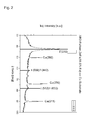
- the zinc-iron alloy layer material according to the present invention has a strong crystallographic (330) texture which is reflected by the exclusive occurrence of the (330) reflection of the ⁇ -ZnFe alloy phase determined by X-ray diffraction measurements ( Fig. 2 ). All other reflections observed belong to the underlying copper substrate coated for the measurement.
- the term "texture” as used herein carries the meaning that would be understood by those of skill in the crystallographic arts.
- the crystallographic texture is caused by a preferred orientation of individual crystallites in the polycrystalline zinc-iron layer material according to the present invention.
- the (330) plane has the highest density of atoms in the body centred cubic crystal structure of the ⁇ -ZnFe alloy phase. Said strong crystallographic (330) texture is observed within the whole current density range of 0.01 to 10 A/dm 2 which means on all areas of a substrate having a complex shape. Accordingly, the zinc-iron alloy layer material shows very homogeneous corrosion protection properties for an underlying substrate, a high hardness and a bright appearance.
- the body centred cubic crystal structure of the ⁇ -phase with a (330) texture and an iron content in the range of 12 to 20 wt.-% is obtained in a current density range from 0.01 to 10 A/dm 2 .
- the homogeneous properties are also achieved in case of substrates having a complex shape, such as fasteners, fixing elements, door hinges, lock casings, and the like.
- Typical metallic substrate materials are steel and other ferrous base metals.
- the zinc-iron alloy layer material has a bright appearance and a Vickers hardness exceeding 380 HV0.001.
- the zinc-iron alloy layer material having a body centred cubic crystal structure of the ⁇ -phase with a (330) texture and an iron content in the range of 12 to 20 wt.-% is obtainable by a process comprising the steps of
- the aqueous plating bath comprises zinc ions in a concentration of 4 to 6 g/l.
- Suitable sources for the zinc ions are water soluble zinc salts, zinc oxide and zinc metal.
- the water soluble zinc salts are selected from the group comprising zinc sulphate, zinc chloride, zinc nitrate, zinc gluconate and zinc citrate.
- the preferred sources of zinc ions are ZnO and zinc metal.
- the Zn content is generally maintained during use of the alkaline plating bath by dissolution of Zn metal.
- the concentration of iron ions in the aqueous plating bath ranges from 1 to 3 g/l, more preferably from 1.5 g/l to 2.5 g/l.
- Suitable sources for iron ions are water soluble salts of iron, such as ferrous sulphate, ferric sulphate and ferric chloride.
- the oxidation state of iron in the source material of the iron ions is not important as long as the source if iron ions is soluble in the alkaline plating bath.
- the aqueous plating bath contains 25 to 35 g/I hydroxyl ions which can be added as NaOH, KOH and NH 4 OH.
- the aqueous plating bath further contains a quaternary ammonium polymer in a concentration of 0.5 to 5 g/l, more preferably from 1 g/I to 2 g/l.
- the quaternary ammonium polymer is an ureylene quaternary ammonium polymer.
- the quaternary ammonium polymer is selected from polymers according formula (1) wherein m is 2 or 3, n is at least 2, R 1 , R 2 , R 3 and R 4 are the same and are selected from methyl, ethyl and hydroxyethyl, p ranges from 3 to 12 and X- is selected from Cl - , Br - and I - .
- the aqueous plating bath contains at least one complexing agent which is selected from hydroxyl carboxylic acid salts with sodium and potassium.
- the concentration of the at least one hydroxyl carboxylic acid salt ranges from 5 to 15 g/I, more preferably from 7 g/I to 12 g/I.
- Suitable complexing agents are selected from the group comprising citrates, tartrates, gluconates, glucoheptonates and glycollates of sodium and potassium.
- the aqueous zinc-iron plating bath further comprises at least one alkanolamine compound.
- concentration of the at least one optional alkanolamine compound ranges from 5 to 20 g/I, more preferably 8 g/I to 12 g/l.
- the at least one optional alkanolamine compound is selected from the group comprising monoethanolamine, diethanolamine, triethanolamine, propanolamine, N-methylethanolamine and N,N,N',N'-tetrakis-(2-hydroxypropyl)-ethylenediamine.
- the aqueous plating bath according to the present invention is free of strong complexing agents such as ethylenediamine tetraacetic acid, (nitrilo-triacetic acid, diethyl triamine penta-acetic acid, 1,3-propylene diamine penta-acetic acid and salts thereof.
- the process for depositing a zinc-iron alloy having an iron content of 12 to 20 wt.-% comprises the steps
- the substrate to be plated is cleaned by a typical pretreatment cycle for ferrous base materials, i.e. soak cleaning, electrocleaning, pickling and rinsing.
- the substrate to be coated with the zinc-iron alloy layer material having an iron content of 12 to 20 wt.-% is contacted with the aqueous plating bath described above.
- a direct current is passed from an anode to the cathodic substrate during deposition.
- the current density applied ranges from 0.01 to 10 A/dm 2 , more preferably from 1 to 3 A/dm 2 .
- the aqueous plating bath is held at a temperature in the range of 15 to 45 °C, more preferably 20 to 30 °C, during deposition.
- the zinc-iron alloy layer material is coated with a passivation layer.
- a passivation layer Such a passivation increases the corrosion protection for the underlying substrate material.
- Preferred passivation layers comprise Cr 3+ ions which can be deposited from aqueous composition containing 2 to 10 g/I of Cr 3+ ions, 2 to 20 g/I of nitrate, 0.5 to 2 g/I of fluoride and optionally 5 to 10 g/I of acid soluble colloidal silica and/or 0.2 g/I CO 2+ ions.
- the passivation solution is kept in a pH range of 1.5 to 4.0 at 20 to 60 °C.
- the passivation layer is coated with a sealing layer which even further enhances the corrosion protection of the underlying substrate and/or serves as a adhesion promoter for a paint.
- Steel sheets having a size of 70 x 70 x 1 mm 3 were immersed in soak cleaner Uniclean 155 at 70°C for 30 min, rinsed, pickled in 15% hydrochloric acid for 30 s, rinsed, electrolytically cleaned in Nonacid 701 electrocleaner at 22°C for 30 s under cathodic and 30 s anodic polarization at current density of 2 A/dm 2 , and finally rinsed in a 3 stage cascade rinse.
- a zinc-iron alloy layer was deposited from a plating baths discussed in the respective examples.
- the substrates were rinsed with water and then a passivation layer containing Cr 3+ ions was deposited onto the zinc-iron alloy layer from a passivation bath EcoTri ® HC2 or Tridur ® Ultra (products of Atotech GmbH).
- the steel sheets were rinsed again with water and dried.
- alloy composition For determination of alloy composition, separate samples made from Cu substrate were coated under same conditions as respective steel test samples. The alloy composition was measured on the Cu substrates with XRF spectrometry.
- Neutral salt spray tests were performed according to ISO 9227 NSS and evaluated according to ISO 3000258. The results are given with the respective examples.
- the hardness of zinc-iron alloy layer was determined with a Fischerscope H100C by instrumented indentation test according to ISO 14577.
- the applied stencil force was 10 to 50 mN.
- Optical appearance was determined by optical inspection of the coated steel sheets. The desired appearance is denoted “bright” whereas “technically bright” means less bright than “bright”.
- a zinc-iron alloy layer was deposited onto a steel sheet from a plating bath composition disclosed in Example 17 in US 6.652,728 B1 .
- the iron content of the zinc-iron alloy is 0.6 wt.-%.
- the hardness of the layer ranges from 150 to 220 HV0.0025.
- the layer has a technically bright appearance.
- the iron content of the zinc-iron alloy is 16 wt.-%
- the hardness of the layer is 440 HV0.001.
- the layer has a bright appearance.
- Different zinc-iron alloy layer materials having an iron content in the range of 8 to 24 wt.-% were deposited onto sample holders made of copper.
- the as deposited zinc-iron alloy layers deposited onto copper sample holders were investigated by means of X-ray diffraction (XRD) measurements.
- the (330) reflection of the ⁇ -ZnFe phase observed in the range of 12 to 20 wt.-% iron in the deposit.
- a maximum height of the (330) reflection was observed for a deposit having an iron content of approx. 18 wt.%.
- a zinc-iron alloy layer material having an iron content of 15.5 wt.-% was deposited onto a sample holder made of copper and subjected to a X-ray diffraction measurement.
- the X-ray diffraction pattern of the zinc-iron alloy layer material having an iron content of 15.5 wt.-% is shown in Fig. 2 together with lines representing calculated reflection positions and relative intensities of the reflections for a ⁇ -ZnFe phase (data used for calculation taken from De Wit et al., J. Mater. Engineering and Performance, 8 (1999), 531 ). Reflections of the sample holder made of copper are also present in the diffraction pattern.
- Fig. 2 shows that the layered material of a ⁇ -ZnFe phase having an iron content of 15.5 wt.-% which was obtained by a process according to the present invention has a (330) texture.
Landscapes
- Chemical & Material Sciences (AREA)
- Engineering & Computer Science (AREA)
- Chemical Kinetics & Catalysis (AREA)
- Electrochemistry (AREA)
- Materials Engineering (AREA)
- Metallurgy (AREA)
- Organic Chemistry (AREA)
- Electroplating And Plating Baths Therefor (AREA)
- Paints Or Removers (AREA)
- Coating With Molten Metal (AREA)
Abstract
The invention discloses a zinc-iron alloy layer material having a body centred cubic crystal structure of the Γ-phase, a (330) texture and an iron content of 12 to 20 wt.-% deposited from an alkaline aqueous plating bath. The zinc alloy layer material provides a high corrosion protection to metallic substrates, has a high hardness and a bright appearance.
Description
- The invention relates to a hard zinc-iron alloy layer material having a bright appearance and which is useful to provide corrosion protection to a metallic substrate.
- Zinc-nickel alloys are well known as corrosion protection layers for metallic substrates. Such alloys are deposited from alkaline plating baths by electroplating. Typical plating bath compositions are disclosed for example in
US 5,405,523 ,US 5,435,898 ,US 6,652,728 B1 andUS 6,706,167 B1 . The nickel content in zinc-nickel alloy layers deposited from such plating bath compositions ranges from 12 to 16 wt.-%. Zinc-nickel alloy layers provide a sufficient corrosion protection to metallic substrates such as iron based alloys and at the same time have a bright appearance and a Vickers hardness of >500 HV0.0025. - Due to the toxicity of nickel ions released in small quantities from such zinc-nickel alloy layers alternative zinc alloy layers with lower toxicity but similar properties in terms of corrosion protection, bright appearance and sufficient hardness are needed.
- Plating bath compositions as those disclosed in
US 5,405,523 ,US 5,435,898 ,US 6.652,728 B1 andUS 6,706,167 B1 can be used to deposit zinc-iron alloys as well. However, zinc-iron alloys deposited from such plating bath compositions have an iron content of ≤ 1 wt.-% iron and do not fulfil the requirements in terms of corrosion protection and hardness of the alloy layer. Zinc-iron alloys having a higher iron content deposited from such plating bath compositions show an inhomogeneous iron distribution in the deposited layers and therefore provide no sufficient corrosion protection to the underlying substrate. - In case of a higher iron ion concentration in such zinc-iron alloy plating bath compositions a mixture of various intermetallic zinc-iron phases is deposited. Furthermore, a non-uniform grain structure is obtained. This leads to a poor reproducibility of deposit properties such as corrosion protection properties, hardness and appearance.
- An alkaline process for deposition of zinc-iron alloy layers having an iron content of 15-25 wt.-% is described by V. Narasimhamurthy, B.S. Sheshadri, Metal Finishing (1997) 44. However, the process suffers from a steep increase of iron content in the coating at current densities lower than 1 A/dm2. Hence, such a plating bath is unsuitable for plating of substrates having a complex shape.
- A plating bath for deposition of zinc-iron alloy layers having an iron content of 17-20 wt.-% is disclosed in
CN 101545125 A . A zinc-iron alloy layer material deposited from such a plating bath and successively coated with a Cr3+ ion containing passivation layer provides a corrosion protection which is not sufficient for most applications. Formation of 5 % white rust in a neutral salt spray test was already observed after 65 h in case of a zinc-iron layer material containing 17.5 wt.-% iron. Furthermore, use of up to 1 g/I EDTA in the process is a severe limitation for industrial application. - It is therefore the objective of the present invention to provide a zinc-iron alloy layer material having a high homogeneity in terms of alloy composition, corrosion protection properties, hardness and bright appearance.
- Another object of the present invention is to provide an alkaline aqueous plating bath suitable for deposition of a zinc-iron alloy layer material with a high homogeneity in terms of alloy composition, corrosion protection properties, hardness and bright appearance.
- Still another object of the present invention is to provide a process for deposition of zinc-iron alloy layer material with a high homogeneity in terms of alloy composition, corrosion protection properties, hardness and bright appearance.
- The first objective is solved by a zinc-iron alloy layer material having a body centred cubic crystal structure of the Γ-phase with a (330) texture and an iron content in the range of 12 to 20 wt.-%.
- The second objective is solved by an alkaline aqueous zinc-iron alloy plating bath comprising
- 4 to 6 g/l zinc ions
- 1 to 3 g/I iron ions
- 25 to 35 g/I hydroxyl ions,
- 0.5 to 2.5 g/I of a quaternary ammonium polymer and
- at least one complexing agent selected from the group consisting of hydroxyl carboxylic acid salts.
- The third objective is solved by a process for depositing a zinc-iron alloy layer material having a body centred cubic crystal structure of the Γ-phase with a (330) texture and an iron content in the range of 12 to 20 wt.-% comprising the steps
- (i) providing a metallic substrate and
- (ii) contacting the substrate with said alkaline aqueous plating bath and simultaneously applying a current to the substrate.
- Formation of less than 1 % white rust in a neutral salt spray test according to ISO 9227 NSS of a steel substrate coated with a zinc-iron alloy layer material according to the present invention and a passivation layer containing Cr3+ ions is only observed after 672 h.
- The zinc-iron alloy layer material has a bright appearance and a Vickers hardness exceeding 380 HV0.0025.
-
-
Figure 1 shows the position and height of the Γ-ZnFe alloy phase (330) reflection (Cu k alpha) as a function of the iron content in the deposited layer. -
Figure 2 shows the results from X-ray diffraction measurements (Cu k alpha) of a zinc-iron alloy layer having an iron content of 15.5 wt.-% deposited by the process according to the present invention. - The zinc-iron alloy layer material shows a narrow range of 12 to 20 wt.-% iron. The average concentration of iron is 16 wt.-%. The observed concentration of iron and further evidence by X-ray diffraction measurements of zinc-iron alloy layers having an iron content in the range of 12 to 20 wt.-% show that an exclusive presence of the body centred cubic Γ-ZnFe alloy phase is obtained by the process according to the present invention.
Figure 1 shows the peak position of the (330) reflection of the Γ-ZnFe alloy phase as determined by X-ray diffraction measurements using Cu k alpha radiation. The average (330) reflection position is 42.8° (Cu k alpha). - Surprisingly, the zinc-iron alloy layer material according to the present invention has a strong crystallographic (330) texture which is reflected by the exclusive occurrence of the (330) reflection of the Γ-ZnFe alloy phase determined by X-ray diffraction measurements (
Fig. 2 ). All other reflections observed belong to the underlying copper substrate coated for the measurement. - The term "texture" as used herein carries the meaning that would be understood by those of skill in the crystallographic arts. The crystallographic texture is caused by a preferred orientation of individual crystallites in the polycrystalline zinc-iron layer material according to the present invention.
- The (330) plane has the highest density of atoms in the body centred cubic crystal structure of the Γ-ZnFe alloy phase. Said strong crystallographic (330) texture is observed within the whole current density range of 0.01 to 10 A/dm2 which means on all areas of a substrate having a complex shape. Accordingly, the zinc-iron alloy layer material shows very homogeneous corrosion protection properties for an underlying substrate, a high hardness and a bright appearance.
- The body centred cubic crystal structure of the Γ-phase with a (330) texture and an iron content in the range of 12 to 20 wt.-% is obtained in a current density range from 0.01 to 10 A/dm2.
- Hence, the homogeneous properties are also achieved in case of substrates having a complex shape, such as fasteners, fixing elements, door hinges, lock casings, and the like.
- Typical metallic substrate materials are steel and other ferrous base metals.
- Formation of less than 1 % white rust in a neutral salt spray test according to ISO 9227 NSS of a steel substrate coated with a zinc-iron alloy layer material according to the present invention and a passivation layer containing Cr3+ ions is only observed after 600 to 1000 h.
- The zinc-iron alloy layer material has a bright appearance and a Vickers hardness exceeding 380 HV0.001.
- The zinc-iron alloy layer material having a body centred cubic crystal structure of the Γ-phase with a (330) texture and an iron content in the range of 12 to 20 wt.-% is obtainable by a process comprising the steps of
- (i) providing a metallic substrate,
- (ii) contacting the substrate with said alkaline aqueous plating bath comprising
- 4 to 6 g/I zinc ions
- 1 to 3 g/I iron ions
- 25 to 35 g/I hydroxyl ions,
- 0.5 to 2.5 g/I of a quaternary ammonium polymer and
- at least one complexing agent selected from the group consisting of hydroxyl carboxylic acid salts
- The aqueous plating bath comprises zinc ions in a concentration of 4 to 6 g/l. Suitable sources for the zinc ions are water soluble zinc salts, zinc oxide and zinc metal. The water soluble zinc salts are selected from the group comprising zinc sulphate, zinc chloride, zinc nitrate, zinc gluconate and zinc citrate.
- The preferred sources of zinc ions are ZnO and zinc metal.
- The Zn content is generally maintained during use of the alkaline plating bath by dissolution of Zn metal.
- The concentration of iron ions in the aqueous plating bath ranges from 1 to 3 g/l, more preferably from 1.5 g/l to 2.5 g/l. Suitable sources for iron ions are water soluble salts of iron, such as ferrous sulphate, ferric sulphate and ferric chloride. The oxidation state of iron in the source material of the iron ions is not important as long as the source if iron ions is soluble in the alkaline plating bath.
- The aqueous plating bath contains 25 to 35 g/I hydroxyl ions which can be added as NaOH, KOH and NH4OH.
- The aqueous plating bath further contains a quaternary ammonium polymer in a concentration of 0.5 to 5 g/l, more preferably from 1 g/I to 2 g/l.
- Preferably, the quaternary ammonium polymer is an ureylene quaternary ammonium polymer.
- More preferably, the quaternary ammonium polymer is selected from polymers according formula (1)

- The aqueous plating bath contains at least one complexing agent which is selected from hydroxyl carboxylic acid salts with sodium and potassium. The concentration of the at least one hydroxyl carboxylic acid salt ranges from 5 to 15 g/I, more preferably from 7 g/I to 12 g/I. Suitable complexing agents are selected from the group comprising citrates, tartrates, gluconates, glucoheptonates and glycollates of sodium and potassium.
- Optionally the aqueous zinc-iron plating bath further comprises at least one alkanolamine compound. The concentration of the at least one optional alkanolamine compound ranges from 5 to 20 g/I, more preferably 8 g/I to 12 g/l. The at least one optional alkanolamine compound is selected from the group comprising monoethanolamine, diethanolamine, triethanolamine, propanolamine, N-methylethanolamine and N,N,N',N'-tetrakis-(2-hydroxypropyl)-ethylenediamine. The aqueous plating bath according to the present invention is free of strong complexing agents such as ethylenediamine tetraacetic acid, (nitrilo-triacetic acid, diethyl triamine penta-acetic acid, 1,3-propylene diamine penta-acetic acid and salts thereof.
- The process for depositing a zinc-iron alloy having an iron content of 12 to 20 wt.-% comprises the steps
- (i) providing a metallic substrate,
- (ii) contacting the substrate with said alkaline aqueous plating bath comprising
- The substrate to be plated is cleaned by a typical pretreatment cycle for ferrous base materials, i.e. soak cleaning, electrocleaning, pickling and rinsing.
- The substrate to be coated with the zinc-iron alloy layer material having an iron content of 12 to 20 wt.-% is contacted with the aqueous plating bath described above. A direct current is passed from an anode to the cathodic substrate during deposition. The current density applied ranges from 0.01 to 10 A/dm2, more preferably from 1 to 3 A/dm2. The aqueous plating bath is held at a temperature in the range of 15 to 45 °C, more preferably 20 to 30 °C, during deposition.
- In a preferred embodiment of the present invention the zinc-iron alloy layer material is coated with a passivation layer. Such a passivation increases the corrosion protection for the underlying substrate material. Preferred passivation layers comprise Cr3+ ions which can be deposited from aqueous composition containing 2 to 10 g/I of Cr3+ ions, 2 to 20 g/I of nitrate, 0.5 to 2 g/I of fluoride and optionally 5 to 10 g/I of acid soluble colloidal silica and/or 0.2 g/I CO2+ ions. The passivation solution is kept in a pH range of 1.5 to 4.0 at 20 to 60 °C.
- In another embodiment of the present invention the passivation layer is coated with a sealing layer which even further enhances the corrosion protection of the underlying substrate and/or serves as a adhesion promoter for a paint.
- The invention will now be illustrated by reference to the following non-limiting examples.
- Steel sheets having a size of 70 x 70 x 1 mm3 were immersed in soak cleaner Uniclean 155 at 70°C for 30 min, rinsed, pickled in 15% hydrochloric acid for 30 s, rinsed, electrolytically cleaned in Nonacid 701 electrocleaner at 22°C for 30 s under cathodic and 30 s anodic polarization at current density of 2 A/dm2, and finally rinsed in a 3 stage cascade rinse. Next, a zinc-iron alloy layer was deposited from a plating baths discussed in the respective examples.
- The substrates were rinsed with water and then a passivation layer containing Cr3+ ions was deposited onto the zinc-iron alloy layer from a passivation bath EcoTri® HC2 or Tridur® Ultra (products of Atotech Deutschland GmbH).
- The steel sheets were rinsed again with water and dried.
- For determination of alloy composition, separate samples made from Cu substrate were coated under same conditions as respective steel test samples. The alloy composition was measured on the Cu substrates with XRF spectrometry.
- Neutral salt spray tests were performed according to ISO 9227 NSS and evaluated according to ISO 3000258. The results are given with the respective examples.
- The hardness of zinc-iron alloy layer was determined with a Fischerscope H100C by instrumented indentation test according to ISO 14577. The applied stencil force was 10 to 50 mN. Vickers hardness was calculated from the measured indentation hardness HIT according to the theoretical equation HV = 0.0945 HIT.
- Optical appearance was determined by optical inspection of the coated steel sheets. The desired appearance is denoted "bright" whereas "technically bright" means less bright than "bright".
- A Bruker D8 Discover diffractometer was used for all measurements in Examples 3 and 4. The XRD settings were the following:
- anode: copper - λ = 1.5406 A;
- detector: Vantec-1 (Position Sensitive Detector, PSD)
- divergence slits: Goebel mirror (parallel beam) - 0.6 mm slit + soller slit
- PSD angle: 3°
- receiving slit width: 14 mm
- anti-scattering slit width: 10 mm
- theta/theta configuration - locked coupled 2 theta scan from 30° to 150° with a 0.04° step and 1 s.
- A zinc-iron alloy layer was deposited onto a steel sheet from a plating bath composition disclosed in Example 17 in
US 6.652,728 B1 . - The iron content of the zinc-iron alloy is 0.6 wt.-%.
- Formation of white rust was observed after 240 h salt spray test.
- The hardness of the layer ranges from 150 to 220 HV0.0025.
- The layer has a technically bright appearance.
- A zinc-iron alloy layer was deposited onto a steel sheet from a plating bath comprising 6 g/I zinc ions, 2 g/I iron ions, 70 g/I NaOH, 25 ml/I of complexing agent, 1.2 g/I of a polymer according to formula (1) wherein R1, R2, R3 and R4 are methyl, m = 3 and p = 4.
- The iron content of the zinc-iron alloy is 16 wt.-%
- The hardness of the layer is 440 HV0.001.
- Formation of 1 % white rust was observed after 672 h salt spray test.
- The layer has a bright appearance.
- Different zinc-iron alloy layer materials having an iron content in the range of 8 to 24 wt.-% were deposited onto sample holders made of copper.
- The as deposited zinc-iron alloy layers deposited onto copper sample holders were investigated by means of X-ray diffraction (XRD) measurements.
- The occurrence of the (330) reflection of the Γ-ZnFe phase was investigated in respect to the iron content in the deposit by determining the position of said reflection and the relative intensity of said reflection. The data are summarized in
Fig. 1 . - The (330) reflection of the Γ-ZnFe phase observed in the range of 12 to 20 wt.-% iron in the deposit. A maximum height of the (330) reflection was observed for a deposit having an iron content of approx. 18 wt.%.
- A zinc-iron alloy layer material having an iron content of 15.5 wt.-% was deposited onto a sample holder made of copper and subjected to a X-ray diffraction measurement.
- The X-ray diffraction pattern of the zinc-iron alloy layer material having an iron content of 15.5 wt.-% is shown in
Fig. 2 together with lines representing calculated reflection positions and relative intensities of the reflections for a Γ-ZnFe phase (data used for calculation taken from De Wit et al., J. Mater. Engineering and Performance, 8 (1999), 531). Reflections of the sample holder made of copper are also present in the diffraction pattern. -
Fig. 2 shows that the layered material of a Γ-ZnFe phase having an iron content of 15.5 wt.-% which was obtained by a process according to the present invention has a (330) texture.
Claims (7)
- A zinc-iron alloy layer material having a body centred cubic crystal structure of the Γ-phase, a (330) texture and an iron content of 12 to 20 wt.-%.
- An alkaline aqueous zinc-iron alloy plating bath comprising- 4 to 6 g/l zinc ions- 1 to 3 g/l iron ions- 25 to 35 g/l hydroxyl ions,- 0.5 to 2.5 g/l of a quaternary ammonium polymer and- at least one complexing agent selected from the group consisting of hydroxyl carboxylic acids and salts thereof.
- An alkaline aqueous zinc alloy plating bath according to claim 2 wherein the quaternary ammonium polymer is an ureylene quaternary ammonium polymer according to formula (1)

- An alkaline aqueous zinc-iron alloy plating bath according to any of claims 2 and 3 further comprising an alkanolamine compound.
- An alkaline aqueous zinc-iron alloy plating bath according to any of claims 2 to 4 wherein the alkanolamine compound is selected from the group comprising monoethanolamine, diethanolamine, triethanolamine, propanolamine, N-methylethanolamine and N,N,N',N'-tetrakis-(2-hydroxypropyl)-ethylenediamine.
- An alkaline aqueous zinc-iron alloy plating bath according to any of claims 2 to 5 wherein the concentration of the alkanolamine compound ranges from 8 to 20 g/l.
- A process for depositing having a body centred cubic crystal structure of the Γ-phase, a (330) texture and an iron content of 12 to 20 wt.-% comprising the steps(i) providing a metallic substrate,(ii) contacting the substrate with an alkaline aqueous plating bath according to any of claims 2 to 6 and simultaneously applying a current to the substrate.
Priority Applications (14)
| Application Number | Priority Date | Filing Date | Title |
|---|---|---|---|
| EP11154475A EP2489763A1 (en) | 2011-02-15 | 2011-02-15 | Zinc-iron alloy layer material |
| ES12703030.2T ES2581355T3 (en) | 2011-02-15 | 2012-01-30 | Zinc-iron alloy aqueous alkaline electroplating bath and procedure using the same |
| EP12703030.2A EP2675942B1 (en) | 2011-02-15 | 2012-01-30 | Alkaline aqueous zinc-iron alloy plating bath and method using the same |
| KR1020137024417A KR101948946B1 (en) | 2011-02-15 | 2012-01-30 | Zinc-iron alloy layer material |
| PL12703030.2T PL2675942T3 (en) | 2011-02-15 | 2012-01-30 | Alkaline aqueous zinc-iron alloy plating bath and method using the same |
| CA2826487A CA2826487C (en) | 2011-02-15 | 2012-01-30 | Zinc-iron alloy layer material |
| PT127030302T PT2675942T (en) | 2011-02-15 | 2012-01-30 | Alkaline aqueous zinc-iron alloy plating bath and method using the same |
| US13/985,294 US20130316190A1 (en) | 2011-02-15 | 2012-01-30 | Zinc-iron alloy layer material |
| CN201280009126.4A CN103429794B (en) | 2011-02-15 | 2012-01-30 | Zinc-iron alloy layer material |
| PCT/EP2012/051468 WO2012110304A1 (en) | 2011-02-15 | 2012-01-30 | Zinc-iron alloy layer material |
| BR112013020654-3A BR112013020654B1 (en) | 2011-02-15 | 2012-01-30 | alkaline aqueous ferro-zinc alloy coating bath and process for depositing a ferro-zinc alloy layer material |
| CN201510736928.0A CN105386098B (en) | 2011-02-15 | 2012-01-30 | Zinc-iron alloy layer material |
| TW101104965A TWI545232B (en) | 2011-02-15 | 2012-02-15 | Zinc-iron alloy layer material |
| US15/290,058 US20170029971A1 (en) | 2011-02-15 | 2016-10-11 | Process to deposit zinc-iron alloy layer material |
Applications Claiming Priority (1)
| Application Number | Priority Date | Filing Date | Title |
|---|---|---|---|
| EP11154475A EP2489763A1 (en) | 2011-02-15 | 2011-02-15 | Zinc-iron alloy layer material |
Publications (1)
| Publication Number | Publication Date |
|---|---|
| EP2489763A1 true EP2489763A1 (en) | 2012-08-22 |
Family
ID=43983758
Family Applications (2)
| Application Number | Title | Priority Date | Filing Date |
|---|---|---|---|
| EP11154475A Withdrawn EP2489763A1 (en) | 2011-02-15 | 2011-02-15 | Zinc-iron alloy layer material |
| EP12703030.2A Active EP2675942B1 (en) | 2011-02-15 | 2012-01-30 | Alkaline aqueous zinc-iron alloy plating bath and method using the same |
Family Applications After (1)
| Application Number | Title | Priority Date | Filing Date |
|---|---|---|---|
| EP12703030.2A Active EP2675942B1 (en) | 2011-02-15 | 2012-01-30 | Alkaline aqueous zinc-iron alloy plating bath and method using the same |
Country Status (11)
| Country | Link |
|---|---|
| US (2) | US20130316190A1 (en) |
| EP (2) | EP2489763A1 (en) |
| KR (1) | KR101948946B1 (en) |
| CN (2) | CN103429794B (en) |
| BR (1) | BR112013020654B1 (en) |
| CA (1) | CA2826487C (en) |
| ES (1) | ES2581355T3 (en) |
| PL (1) | PL2675942T3 (en) |
| PT (1) | PT2675942T (en) |
| TW (1) | TWI545232B (en) |
| WO (1) | WO2012110304A1 (en) |
Families Citing this family (5)
| Publication number | Priority date | Publication date | Assignee | Title |
|---|---|---|---|---|
| EP2784189A1 (en) | 2013-03-28 | 2014-10-01 | Coventya SAS | Electroplating bath for zinc-iron alloys, method for depositing zinc-iron alloy on a device and such a device |
| CN104190938A (en) * | 2014-08-20 | 2014-12-10 | 常熟市良益金属材料有限公司 | Method for preparing texture composite metal materials |
| EP3135709B1 (en) * | 2015-08-31 | 2018-01-10 | ATOTECH Deutschland GmbH | Imidazoyl urea polymers and their use in metal or metal alloy plating bath compositions |
| CN105223952B (en) * | 2015-09-28 | 2019-03-29 | 小米科技有限责任公司 | The control method and device of balance car |
| EP3491177A4 (en) * | 2016-07-29 | 2020-08-12 | Simon Fraser University | METHOD OF ELECTROCHEMICAL DEPOSITION |
Citations (10)
| Publication number | Priority date | Publication date | Assignee | Title |
|---|---|---|---|---|
| US4540472A (en) * | 1984-12-03 | 1985-09-10 | United States Steel Corporation | Method for the electrodeposition of an iron-zinc alloy coating and bath therefor |
| US4541903A (en) * | 1983-12-03 | 1985-09-17 | Kawasaki Steel Corporation | Process for preparing Zn-Fe base alloy electroplated steel strips |
| US4581110A (en) * | 1984-02-27 | 1986-04-08 | Nippon Surface Treatment Chemicals Co. Ltd. | Method for electroplating a zinc-iron alloy from an alkaline bath |
| US5405523A (en) | 1993-12-15 | 1995-04-11 | Taskem Inc. | Zinc alloy plating with quaternary ammonium polymer |
| US5435898A (en) | 1994-10-25 | 1995-07-25 | Enthone-Omi Inc. | Alkaline zinc and zinc alloy electroplating baths and processes |
| US6652728B1 (en) | 1998-09-02 | 2003-11-25 | Atotech Deutschland Gmbh | Cyanide-free aqueous alkaline bath used for the galvanic application of zinc or zinc-alloy coatings |
| US6706167B1 (en) | 1999-02-25 | 2004-03-16 | Trevor Pearson | Zinc and zinc alloy electroplating additives and electroplating methods |
| US20040067314A1 (en) * | 2002-10-07 | 2004-04-08 | Joshi Nayan H. | Aqueous alkaline zincate solutions and methods |
| DE102007060200A1 (en) * | 2007-12-14 | 2009-06-18 | Coventya Gmbh | Galvanic bath, process for electrodeposition and use of a bipolar membrane for separation in a galvanic bath |
| CN101545125A (en) | 2009-03-31 | 2009-09-30 | 华南理工大学 | Bright corrosion resisting zinc-iron alloy plating process |
Family Cites Families (3)
| Publication number | Priority date | Publication date | Assignee | Title |
|---|---|---|---|---|
| RO108477B1 (en) * | 1993-12-21 | 1994-05-31 | Inst Cercetari Stiintifice | Non cyaniding alkaline electrolyte for zinc-iron alloy deposits making |
| TWI245815B (en) * | 2000-07-20 | 2005-12-21 | Macdermid Plc | Zinc and zinc alloy electroplating additives and electroplating methods |
| DE102005060030A1 (en) * | 2005-12-15 | 2007-06-21 | Coventya Gmbh | New polymer with at least a partially cross-linked polymer main chains obtained from amine or methylene repeat units useful as an additive for the galvanic separation of metals and/or metal alloys |
-
2011
- 2011-02-15 EP EP11154475A patent/EP2489763A1/en not_active Withdrawn
-
2012
- 2012-01-30 CA CA2826487A patent/CA2826487C/en active Active
- 2012-01-30 US US13/985,294 patent/US20130316190A1/en not_active Abandoned
- 2012-01-30 CN CN201280009126.4A patent/CN103429794B/en active Active
- 2012-01-30 WO PCT/EP2012/051468 patent/WO2012110304A1/en not_active Ceased
- 2012-01-30 BR BR112013020654-3A patent/BR112013020654B1/en active IP Right Grant
- 2012-01-30 CN CN201510736928.0A patent/CN105386098B/en active Active
- 2012-01-30 PT PT127030302T patent/PT2675942T/en unknown
- 2012-01-30 KR KR1020137024417A patent/KR101948946B1/en active Active
- 2012-01-30 PL PL12703030.2T patent/PL2675942T3/en unknown
- 2012-01-30 ES ES12703030.2T patent/ES2581355T3/en active Active
- 2012-01-30 EP EP12703030.2A patent/EP2675942B1/en active Active
- 2012-02-15 TW TW101104965A patent/TWI545232B/en active
-
2016
- 2016-10-11 US US15/290,058 patent/US20170029971A1/en not_active Abandoned
Patent Citations (10)
| Publication number | Priority date | Publication date | Assignee | Title |
|---|---|---|---|---|
| US4541903A (en) * | 1983-12-03 | 1985-09-17 | Kawasaki Steel Corporation | Process for preparing Zn-Fe base alloy electroplated steel strips |
| US4581110A (en) * | 1984-02-27 | 1986-04-08 | Nippon Surface Treatment Chemicals Co. Ltd. | Method for electroplating a zinc-iron alloy from an alkaline bath |
| US4540472A (en) * | 1984-12-03 | 1985-09-10 | United States Steel Corporation | Method for the electrodeposition of an iron-zinc alloy coating and bath therefor |
| US5405523A (en) | 1993-12-15 | 1995-04-11 | Taskem Inc. | Zinc alloy plating with quaternary ammonium polymer |
| US5435898A (en) | 1994-10-25 | 1995-07-25 | Enthone-Omi Inc. | Alkaline zinc and zinc alloy electroplating baths and processes |
| US6652728B1 (en) | 1998-09-02 | 2003-11-25 | Atotech Deutschland Gmbh | Cyanide-free aqueous alkaline bath used for the galvanic application of zinc or zinc-alloy coatings |
| US6706167B1 (en) | 1999-02-25 | 2004-03-16 | Trevor Pearson | Zinc and zinc alloy electroplating additives and electroplating methods |
| US20040067314A1 (en) * | 2002-10-07 | 2004-04-08 | Joshi Nayan H. | Aqueous alkaline zincate solutions and methods |
| DE102007060200A1 (en) * | 2007-12-14 | 2009-06-18 | Coventya Gmbh | Galvanic bath, process for electrodeposition and use of a bipolar membrane for separation in a galvanic bath |
| CN101545125A (en) | 2009-03-31 | 2009-09-30 | 华南理工大学 | Bright corrosion resisting zinc-iron alloy plating process |
Non-Patent Citations (3)
| Title |
|---|
| DE WIT ET AL., J. MATER. ENGINEERING AND PERFORMANCE, vol. 8, 1999, pages 531 |
| NARASIMHAMURTHY V ET AL: "Electrodeposition of Zinc-Iron from an Alkaline Sulfate Bath Containing Triethanolamine", METAL FINISHING, ELSEVIER, NEW YORK, NY, US, vol. 95, no. 9, 1 September 1997 (1997-09-01), pages 44 - 47, XP004092423, ISSN: 0026-0576, DOI: 10.1016/S0026-0576(97)85858-8 * |
| V. NARASIMHAMURTHY, B.S. SHESHADRI, METAL FINISHING, vol. 44, 1997 |
Also Published As
| Publication number | Publication date |
|---|---|
| WO2012110304A1 (en) | 2012-08-23 |
| CN105386098A (en) | 2016-03-09 |
| US20170029971A1 (en) | 2017-02-02 |
| TW201239139A (en) | 2012-10-01 |
| EP2675942B1 (en) | 2016-04-06 |
| BR112013020654A2 (en) | 2016-10-18 |
| TWI545232B (en) | 2016-08-11 |
| PL2675942T3 (en) | 2016-10-31 |
| US20130316190A1 (en) | 2013-11-28 |
| CA2826487A1 (en) | 2012-08-23 |
| CN103429794B (en) | 2016-11-09 |
| PT2675942T (en) | 2016-07-07 |
| KR101948946B1 (en) | 2019-02-15 |
| ES2581355T3 (en) | 2016-09-05 |
| CN103429794A (en) | 2013-12-04 |
| CN105386098B (en) | 2018-06-22 |
| EP2675942A1 (en) | 2013-12-25 |
| KR20140007438A (en) | 2014-01-17 |
| BR112013020654B1 (en) | 2020-06-30 |
| CA2826487C (en) | 2020-08-18 |
Similar Documents
| Publication | Publication Date | Title |
|---|---|---|
| CN103339296B (en) | Substrate with corrosion-resistant coating and method for its production | |
| EP2855732B1 (en) | Plating bath for electroless deposition of nickel layers | |
| US20170029971A1 (en) | Process to deposit zinc-iron alloy layer material | |
| CA3006141C (en) | Compositionally modulated zinc-iron multilayered coatings | |
| EP2096193B1 (en) | Process for the preparation of corrosion resistant zinc and zinc-nickel plated linear or complex shaped parts | |
| KR101692262B1 (en) | BLACKENING TREATMENT SOLUTION FOR BLACK Cr-Co ALLOY PLATING FILM | |
| EP3015571A1 (en) | Acidic zinc and zinc-nickel alloy plating bath composition and electroplating method | |
| CN110291229B (en) | Aqueous alkaline electrolyte for depositing zinc-containing layers on metal blank surfaces | |
| WO2012052832A2 (en) | Electroless nickel plating bath and electroless nickel plating method using same | |
| EP2784189A1 (en) | Electroplating bath for zinc-iron alloys, method for depositing zinc-iron alloy on a device and such a device | |
| EP4703500A1 (en) | Trivalent chromium plating bath | |
| US11661666B2 (en) | Electrodeposited zinc and iron coatings for corrosion resistance | |
| JP6660421B2 (en) | Nickel electroplating composition containing copolymer of arginine and bisepoxide and method for electroplating nickel | |
| JP2636589B2 (en) | Zinc-nickel-chromium alloy electroplated steel sheet with excellent corrosion resistance, plating adhesion and chemical conversion treatment | |
| JP5863659B2 (en) | Compositions and methods for improved zincate treatment of magnesium and magnesium alloy substrates | |
| JPS6140315B2 (en) | ||
| Popescu et al. | Morphology and corrosion behavior of Zn-Ni-P thin films electrolessly deposited from chloride baths | |
| HK1204664B (en) | Blackening treatment solution for black cr-co alloy plating film | |
| JPH03134197A (en) | Production of steel sheet electroplated on one side | |
| JPH04154982A (en) | Zn-cr-ni-p alloy electroplated steel sheet excellent in corrosion resistance, welding property and chemical convertibility after working | |
| JPH02285056A (en) | Production of duplex alloyed hot dip galvanized steel sheet excellent in coating suitability |
Legal Events
| Date | Code | Title | Description |
|---|---|---|---|
| PUAI | Public reference made under article 153(3) epc to a published international application that has entered the european phase |
Free format text: ORIGINAL CODE: 0009012 |
|
| AK | Designated contracting states |
Kind code of ref document: A1 Designated state(s): AL AT BE BG CH CY CZ DE DK EE ES FI FR GB GR HR HU IE IS IT LI LT LU LV MC MK MT NL NO PL PT RO RS SE SI SK SM TR |
|
| AX | Request for extension of the european patent |
Extension state: BA ME |
|
| STAA | Information on the status of an ep patent application or granted ep patent |
Free format text: STATUS: THE APPLICATION HAS BEEN WITHDRAWN |
|
| 18W | Application withdrawn |
Effective date: 20120814 |