EP2489658A1 - 3-Heteroaryl-3-hydroxy-2-amino-propyl amines and related compounds having analgesic and/or immuno stimulant activity - Google Patents
3-Heteroaryl-3-hydroxy-2-amino-propyl amines and related compounds having analgesic and/or immuno stimulant activity Download PDFInfo
- Publication number
- EP2489658A1 EP2489658A1 EP12161266A EP12161266A EP2489658A1 EP 2489658 A1 EP2489658 A1 EP 2489658A1 EP 12161266 A EP12161266 A EP 12161266A EP 12161266 A EP12161266 A EP 12161266A EP 2489658 A1 EP2489658 A1 EP 2489658A1
- Authority
- EP
- European Patent Office
- Prior art keywords
- carbons
- alkyl
- compound
- threo
- groups
- Prior art date
- Legal status (The legal status is an assumption and is not a legal conclusion. Google has not performed a legal analysis and makes no representation as to the accuracy of the status listed.)
- Granted
Links
- 0 *N(*)C(C*O*)O Chemical compound *N(*)C(C*O*)O 0.000 description 4
- OBGRHXISWJYZJX-LSDHHAIUSA-N CC(N[C@@H](CN1CCOCC1)[C@@H](c1ccccc1)O)=O Chemical compound CC(N[C@@H](CN1CCOCC1)[C@@H](c1ccccc1)O)=O OBGRHXISWJYZJX-LSDHHAIUSA-N 0.000 description 1
- OBGRHXISWJYZJX-GJZGRUSLSA-N CC(N[C@@H](CN1CCOCC1)[C@H](c1ccccc1)O)=O Chemical compound CC(N[C@@H](CN1CCOCC1)[C@H](c1ccccc1)O)=O OBGRHXISWJYZJX-GJZGRUSLSA-N 0.000 description 1
- MPFMJUMGGYKCPT-AKQCAMDVSA-N CC1C(CC2(C)S[C@]2(CN2CCOCC2)NC(OCc2ccccc2)=O)CC=CC1 Chemical compound CC1C(CC2(C)S[C@]2(CN2CCOCC2)NC(OCc2ccccc2)=O)CC=CC1 MPFMJUMGGYKCPT-AKQCAMDVSA-N 0.000 description 1
- YRNJEIGNLYDKQJ-UHFFFAOYSA-N CCC1C=CC=CC1 Chemical compound CCC1C=CC=CC1 YRNJEIGNLYDKQJ-UHFFFAOYSA-N 0.000 description 1
- FQZRTYKSSFDBIN-AZKKKJBWSA-N CCCCCCCCCC(NC(CC1CCCCCC1)[C@H](c(cc1)cc2c1OCCO2)O)=O Chemical compound CCCCCCCCCC(NC(CC1CCCCCC1)[C@H](c(cc1)cc2c1OCCO2)O)=O FQZRTYKSSFDBIN-AZKKKJBWSA-N 0.000 description 1
- SITRQELWGFMWDD-GFCCVEGCSA-N N[C@H](Cc1ccncc1)CN1CCCC1 Chemical compound N[C@H](Cc1ccncc1)CN1CCCC1 SITRQELWGFMWDD-GFCCVEGCSA-N 0.000 description 1
Classifications
-
- C—CHEMISTRY; METALLURGY
- C07—ORGANIC CHEMISTRY
- C07D—HETEROCYCLIC COMPOUNDS
- C07D265/00—Heterocyclic compounds containing six-membered rings having one nitrogen atom and one oxygen atom as the only ring hetero atoms
- C07D265/28—1,4-Oxazines; Hydrogenated 1,4-oxazines
- C07D265/30—1,4-Oxazines; Hydrogenated 1,4-oxazines not condensed with other rings
-
- C—CHEMISTRY; METALLURGY
- C07—ORGANIC CHEMISTRY
- C07D—HETEROCYCLIC COMPOUNDS
- C07D401/00—Heterocyclic compounds containing two or more hetero rings, having nitrogen atoms as the only ring hetero atoms, at least one ring being a six-membered ring with only one nitrogen atom
- C07D401/02—Heterocyclic compounds containing two or more hetero rings, having nitrogen atoms as the only ring hetero atoms, at least one ring being a six-membered ring with only one nitrogen atom containing two hetero rings
- C07D401/10—Heterocyclic compounds containing two or more hetero rings, having nitrogen atoms as the only ring hetero atoms, at least one ring being a six-membered ring with only one nitrogen atom containing two hetero rings linked by a carbon chain containing aromatic rings
-
- A—HUMAN NECESSITIES
- A61—MEDICAL OR VETERINARY SCIENCE; HYGIENE
- A61K—PREPARATIONS FOR MEDICAL, DENTAL OR TOILETRY PURPOSES
- A61K31/00—Medicinal preparations containing organic active ingredients
- A61K31/33—Heterocyclic compounds
- A61K31/38—Heterocyclic compounds having sulfur as a ring hetero atom
- A61K31/381—Heterocyclic compounds having sulfur as a ring hetero atom having five-membered rings
-
- A—HUMAN NECESSITIES
- A61—MEDICAL OR VETERINARY SCIENCE; HYGIENE
- A61K—PREPARATIONS FOR MEDICAL, DENTAL OR TOILETRY PURPOSES
- A61K31/00—Medicinal preparations containing organic active ingredients
- A61K31/33—Heterocyclic compounds
- A61K31/395—Heterocyclic compounds having nitrogen as a ring hetero atom, e.g. guanethidine or rifamycins
- A61K31/40—Heterocyclic compounds having nitrogen as a ring hetero atom, e.g. guanethidine or rifamycins having five-membered rings with one nitrogen as the only ring hetero atom, e.g. sulpiride, succinimide, tolmetin, buflomedil
-
- A—HUMAN NECESSITIES
- A61—MEDICAL OR VETERINARY SCIENCE; HYGIENE
- A61K—PREPARATIONS FOR MEDICAL, DENTAL OR TOILETRY PURPOSES
- A61K31/00—Medicinal preparations containing organic active ingredients
- A61K31/33—Heterocyclic compounds
- A61K31/395—Heterocyclic compounds having nitrogen as a ring hetero atom, e.g. guanethidine or rifamycins
- A61K31/40—Heterocyclic compounds having nitrogen as a ring hetero atom, e.g. guanethidine or rifamycins having five-membered rings with one nitrogen as the only ring hetero atom, e.g. sulpiride, succinimide, tolmetin, buflomedil
- A61K31/4025—Heterocyclic compounds having nitrogen as a ring hetero atom, e.g. guanethidine or rifamycins having five-membered rings with one nitrogen as the only ring hetero atom, e.g. sulpiride, succinimide, tolmetin, buflomedil not condensed and containing further heterocyclic rings, e.g. cromakalim
-
- A—HUMAN NECESSITIES
- A61—MEDICAL OR VETERINARY SCIENCE; HYGIENE
- A61K—PREPARATIONS FOR MEDICAL, DENTAL OR TOILETRY PURPOSES
- A61K31/00—Medicinal preparations containing organic active ingredients
- A61K31/33—Heterocyclic compounds
- A61K31/395—Heterocyclic compounds having nitrogen as a ring hetero atom, e.g. guanethidine or rifamycins
- A61K31/435—Heterocyclic compounds having nitrogen as a ring hetero atom, e.g. guanethidine or rifamycins having six-membered rings with one nitrogen as the only ring hetero atom
- A61K31/44—Non condensed pyridines; Hydrogenated derivatives thereof
- A61K31/4409—Non condensed pyridines; Hydrogenated derivatives thereof only substituted in position 4, e.g. isoniazid, iproniazid
-
- A—HUMAN NECESSITIES
- A61—MEDICAL OR VETERINARY SCIENCE; HYGIENE
- A61K—PREPARATIONS FOR MEDICAL, DENTAL OR TOILETRY PURPOSES
- A61K31/00—Medicinal preparations containing organic active ingredients
- A61K31/33—Heterocyclic compounds
- A61K31/395—Heterocyclic compounds having nitrogen as a ring hetero atom, e.g. guanethidine or rifamycins
- A61K31/435—Heterocyclic compounds having nitrogen as a ring hetero atom, e.g. guanethidine or rifamycins having six-membered rings with one nitrogen as the only ring hetero atom
- A61K31/44—Non condensed pyridines; Hydrogenated derivatives thereof
- A61K31/4427—Non condensed pyridines; Hydrogenated derivatives thereof containing further heterocyclic ring systems
- A61K31/4439—Non condensed pyridines; Hydrogenated derivatives thereof containing further heterocyclic ring systems containing a five-membered ring with nitrogen as a ring hetero atom, e.g. omeprazole
-
- A—HUMAN NECESSITIES
- A61—MEDICAL OR VETERINARY SCIENCE; HYGIENE
- A61K—PREPARATIONS FOR MEDICAL, DENTAL OR TOILETRY PURPOSES
- A61K31/00—Medicinal preparations containing organic active ingredients
- A61K31/33—Heterocyclic compounds
- A61K31/395—Heterocyclic compounds having nitrogen as a ring hetero atom, e.g. guanethidine or rifamycins
- A61K31/435—Heterocyclic compounds having nitrogen as a ring hetero atom, e.g. guanethidine or rifamycins having six-membered rings with one nitrogen as the only ring hetero atom
- A61K31/44—Non condensed pyridines; Hydrogenated derivatives thereof
- A61K31/445—Non condensed piperidines, e.g. piperocaine
- A61K31/4523—Non condensed piperidines, e.g. piperocaine containing further heterocyclic ring systems
- A61K31/4545—Non condensed piperidines, e.g. piperocaine containing further heterocyclic ring systems containing a six-membered ring with nitrogen as a ring hetero atom, e.g. pipamperone, anabasine
-
- A—HUMAN NECESSITIES
- A61—MEDICAL OR VETERINARY SCIENCE; HYGIENE
- A61K—PREPARATIONS FOR MEDICAL, DENTAL OR TOILETRY PURPOSES
- A61K31/00—Medicinal preparations containing organic active ingredients
- A61K31/33—Heterocyclic compounds
- A61K31/395—Heterocyclic compounds having nitrogen as a ring hetero atom, e.g. guanethidine or rifamycins
- A61K31/435—Heterocyclic compounds having nitrogen as a ring hetero atom, e.g. guanethidine or rifamycins having six-membered rings with one nitrogen as the only ring hetero atom
- A61K31/47—Quinolines; Isoquinolines
- A61K31/4709—Non-condensed quinolines and containing further heterocyclic rings
-
- A—HUMAN NECESSITIES
- A61—MEDICAL OR VETERINARY SCIENCE; HYGIENE
- A61K—PREPARATIONS FOR MEDICAL, DENTAL OR TOILETRY PURPOSES
- A61K31/00—Medicinal preparations containing organic active ingredients
- A61K31/33—Heterocyclic compounds
- A61K31/395—Heterocyclic compounds having nitrogen as a ring hetero atom, e.g. guanethidine or rifamycins
- A61K31/495—Heterocyclic compounds having nitrogen as a ring hetero atom, e.g. guanethidine or rifamycins having six-membered rings with two or more nitrogen atoms as the only ring heteroatoms, e.g. piperazine or tetrazines
- A61K31/496—Non-condensed piperazines containing further heterocyclic rings, e.g. rifampin, thiothixene or sparfloxacin
-
- A—HUMAN NECESSITIES
- A61—MEDICAL OR VETERINARY SCIENCE; HYGIENE
- A61K—PREPARATIONS FOR MEDICAL, DENTAL OR TOILETRY PURPOSES
- A61K31/00—Medicinal preparations containing organic active ingredients
- A61K31/33—Heterocyclic compounds
- A61K31/395—Heterocyclic compounds having nitrogen as a ring hetero atom, e.g. guanethidine or rifamycins
- A61K31/535—Heterocyclic compounds having nitrogen as a ring hetero atom, e.g. guanethidine or rifamycins having six-membered rings with at least one nitrogen and one oxygen as the ring hetero atoms, e.g. 1,2-oxazines
- A61K31/5375—1,4-Oxazines, e.g. morpholine
-
- A—HUMAN NECESSITIES
- A61—MEDICAL OR VETERINARY SCIENCE; HYGIENE
- A61K—PREPARATIONS FOR MEDICAL, DENTAL OR TOILETRY PURPOSES
- A61K31/00—Medicinal preparations containing organic active ingredients
- A61K31/33—Heterocyclic compounds
- A61K31/395—Heterocyclic compounds having nitrogen as a ring hetero atom, e.g. guanethidine or rifamycins
- A61K31/535—Heterocyclic compounds having nitrogen as a ring hetero atom, e.g. guanethidine or rifamycins having six-membered rings with at least one nitrogen and one oxygen as the ring hetero atoms, e.g. 1,2-oxazines
- A61K31/5375—1,4-Oxazines, e.g. morpholine
- A61K31/5377—1,4-Oxazines, e.g. morpholine not condensed and containing further heterocyclic rings, e.g. timolol
-
- A—HUMAN NECESSITIES
- A61—MEDICAL OR VETERINARY SCIENCE; HYGIENE
- A61K—PREPARATIONS FOR MEDICAL, DENTAL OR TOILETRY PURPOSES
- A61K31/00—Medicinal preparations containing organic active ingredients
- A61K31/33—Heterocyclic compounds
- A61K31/395—Heterocyclic compounds having nitrogen as a ring hetero atom, e.g. guanethidine or rifamycins
- A61K31/54—Heterocyclic compounds having nitrogen as a ring hetero atom, e.g. guanethidine or rifamycins having six-membered rings with at least one nitrogen and one sulfur as the ring hetero atoms, e.g. sulthiame
- A61K31/541—Non-condensed thiazines containing further heterocyclic rings
-
- A—HUMAN NECESSITIES
- A61—MEDICAL OR VETERINARY SCIENCE; HYGIENE
- A61P—SPECIFIC THERAPEUTIC ACTIVITY OF CHEMICAL COMPOUNDS OR MEDICINAL PREPARATIONS
- A61P25/00—Drugs for disorders of the nervous system
-
- A—HUMAN NECESSITIES
- A61—MEDICAL OR VETERINARY SCIENCE; HYGIENE
- A61P—SPECIFIC THERAPEUTIC ACTIVITY OF CHEMICAL COMPOUNDS OR MEDICINAL PREPARATIONS
- A61P25/00—Drugs for disorders of the nervous system
- A61P25/04—Centrally acting analgesics, e.g. opioids
-
- A—HUMAN NECESSITIES
- A61—MEDICAL OR VETERINARY SCIENCE; HYGIENE
- A61P—SPECIFIC THERAPEUTIC ACTIVITY OF CHEMICAL COMPOUNDS OR MEDICINAL PREPARATIONS
- A61P29/00—Non-central analgesic, antipyretic or antiinflammatory agents, e.g. antirheumatic agents; Non-steroidal antiinflammatory drugs [NSAID]
-
- A—HUMAN NECESSITIES
- A61—MEDICAL OR VETERINARY SCIENCE; HYGIENE
- A61P—SPECIFIC THERAPEUTIC ACTIVITY OF CHEMICAL COMPOUNDS OR MEDICINAL PREPARATIONS
- A61P29/00—Non-central analgesic, antipyretic or antiinflammatory agents, e.g. antirheumatic agents; Non-steroidal antiinflammatory drugs [NSAID]
- A61P29/02—Non-central analgesic, antipyretic or antiinflammatory agents, e.g. antirheumatic agents; Non-steroidal antiinflammatory drugs [NSAID] without antiinflammatory effect
-
- A—HUMAN NECESSITIES
- A61—MEDICAL OR VETERINARY SCIENCE; HYGIENE
- A61P—SPECIFIC THERAPEUTIC ACTIVITY OF CHEMICAL COMPOUNDS OR MEDICINAL PREPARATIONS
- A61P37/00—Drugs for immunological or allergic disorders
- A61P37/02—Immunomodulators
-
- A—HUMAN NECESSITIES
- A61—MEDICAL OR VETERINARY SCIENCE; HYGIENE
- A61P—SPECIFIC THERAPEUTIC ACTIVITY OF CHEMICAL COMPOUNDS OR MEDICINAL PREPARATIONS
- A61P37/00—Drugs for immunological or allergic disorders
- A61P37/02—Immunomodulators
- A61P37/04—Immunostimulants
-
- C—CHEMISTRY; METALLURGY
- C07—ORGANIC CHEMISTRY
- C07D—HETEROCYCLIC COMPOUNDS
- C07D207/00—Heterocyclic compounds containing five-membered rings not condensed with other rings, with one nitrogen atom as the only ring hetero atom
- C07D207/02—Heterocyclic compounds containing five-membered rings not condensed with other rings, with one nitrogen atom as the only ring hetero atom with only hydrogen or carbon atoms directly attached to the ring nitrogen atom
- C07D207/04—Heterocyclic compounds containing five-membered rings not condensed with other rings, with one nitrogen atom as the only ring hetero atom with only hydrogen or carbon atoms directly attached to the ring nitrogen atom having no double bonds between ring members or between ring members and non-ring members
- C07D207/08—Heterocyclic compounds containing five-membered rings not condensed with other rings, with one nitrogen atom as the only ring hetero atom with only hydrogen or carbon atoms directly attached to the ring nitrogen atom having no double bonds between ring members or between ring members and non-ring members with hydrocarbon radicals, substituted by hetero atoms, attached to ring carbon atoms
- C07D207/09—Radicals substituted by nitrogen atoms, not forming part of a nitro radical
-
- C—CHEMISTRY; METALLURGY
- C07—ORGANIC CHEMISTRY
- C07D—HETEROCYCLIC COMPOUNDS
- C07D213/00—Heterocyclic compounds containing six-membered rings, not condensed with other rings, with one nitrogen atom as the only ring hetero atom and three or more double bonds between ring members or between ring members and non-ring members
- C07D213/02—Heterocyclic compounds containing six-membered rings, not condensed with other rings, with one nitrogen atom as the only ring hetero atom and three or more double bonds between ring members or between ring members and non-ring members having three double bonds between ring members or between ring members and non-ring members
- C07D213/04—Heterocyclic compounds containing six-membered rings, not condensed with other rings, with one nitrogen atom as the only ring hetero atom and three or more double bonds between ring members or between ring members and non-ring members having three double bonds between ring members or between ring members and non-ring members having no bond between the ring nitrogen atom and a non-ring member or having only hydrogen or carbon atoms directly attached to the ring nitrogen atom
- C07D213/60—Heterocyclic compounds containing six-membered rings, not condensed with other rings, with one nitrogen atom as the only ring hetero atom and three or more double bonds between ring members or between ring members and non-ring members having three double bonds between ring members or between ring members and non-ring members having no bond between the ring nitrogen atom and a non-ring member or having only hydrogen or carbon atoms directly attached to the ring nitrogen atom with hetero atoms or with carbon atoms having three bonds to hetero atoms with at the most one bond to halogen, e.g. ester or nitrile radicals, directly attached to ring carbon atoms
- C07D213/62—Oxygen or sulfur atoms
- C07D213/63—One oxygen atom
- C07D213/64—One oxygen atom attached in position 2 or 6
-
- C—CHEMISTRY; METALLURGY
- C07—ORGANIC CHEMISTRY
- C07D—HETEROCYCLIC COMPOUNDS
- C07D295/00—Heterocyclic compounds containing polymethylene-imine rings with at least five ring members, 3-azabicyclo [3.2.2] nonane, piperazine, morpholine or thiomorpholine rings, having only hydrogen atoms directly attached to the ring carbon atoms
- C07D295/04—Heterocyclic compounds containing polymethylene-imine rings with at least five ring members, 3-azabicyclo [3.2.2] nonane, piperazine, morpholine or thiomorpholine rings, having only hydrogen atoms directly attached to the ring carbon atoms with substituted hydrocarbon radicals attached to ring nitrogen atoms
- C07D295/12—Heterocyclic compounds containing polymethylene-imine rings with at least five ring members, 3-azabicyclo [3.2.2] nonane, piperazine, morpholine or thiomorpholine rings, having only hydrogen atoms directly attached to the ring carbon atoms with substituted hydrocarbon radicals attached to ring nitrogen atoms substituted by singly or doubly bound nitrogen atoms
-
- C—CHEMISTRY; METALLURGY
- C07—ORGANIC CHEMISTRY
- C07D—HETEROCYCLIC COMPOUNDS
- C07D295/00—Heterocyclic compounds containing polymethylene-imine rings with at least five ring members, 3-azabicyclo [3.2.2] nonane, piperazine, morpholine or thiomorpholine rings, having only hydrogen atoms directly attached to the ring carbon atoms
- C07D295/04—Heterocyclic compounds containing polymethylene-imine rings with at least five ring members, 3-azabicyclo [3.2.2] nonane, piperazine, morpholine or thiomorpholine rings, having only hydrogen atoms directly attached to the ring carbon atoms with substituted hydrocarbon radicals attached to ring nitrogen atoms
- C07D295/12—Heterocyclic compounds containing polymethylene-imine rings with at least five ring members, 3-azabicyclo [3.2.2] nonane, piperazine, morpholine or thiomorpholine rings, having only hydrogen atoms directly attached to the ring carbon atoms with substituted hydrocarbon radicals attached to ring nitrogen atoms substituted by singly or doubly bound nitrogen atoms
- C07D295/125—Heterocyclic compounds containing polymethylene-imine rings with at least five ring members, 3-azabicyclo [3.2.2] nonane, piperazine, morpholine or thiomorpholine rings, having only hydrogen atoms directly attached to the ring carbon atoms with substituted hydrocarbon radicals attached to ring nitrogen atoms substituted by singly or doubly bound nitrogen atoms with the ring nitrogen atoms and the substituent nitrogen atoms attached to the same carbon chain, which is not interrupted by carbocyclic rings
- C07D295/13—Heterocyclic compounds containing polymethylene-imine rings with at least five ring members, 3-azabicyclo [3.2.2] nonane, piperazine, morpholine or thiomorpholine rings, having only hydrogen atoms directly attached to the ring carbon atoms with substituted hydrocarbon radicals attached to ring nitrogen atoms substituted by singly or doubly bound nitrogen atoms with the ring nitrogen atoms and the substituent nitrogen atoms attached to the same carbon chain, which is not interrupted by carbocyclic rings to an acyclic saturated chain
-
- C—CHEMISTRY; METALLURGY
- C07—ORGANIC CHEMISTRY
- C07D—HETEROCYCLIC COMPOUNDS
- C07D295/00—Heterocyclic compounds containing polymethylene-imine rings with at least five ring members, 3-azabicyclo [3.2.2] nonane, piperazine, morpholine or thiomorpholine rings, having only hydrogen atoms directly attached to the ring carbon atoms
- C07D295/04—Heterocyclic compounds containing polymethylene-imine rings with at least five ring members, 3-azabicyclo [3.2.2] nonane, piperazine, morpholine or thiomorpholine rings, having only hydrogen atoms directly attached to the ring carbon atoms with substituted hydrocarbon radicals attached to ring nitrogen atoms
- C07D295/14—Heterocyclic compounds containing polymethylene-imine rings with at least five ring members, 3-azabicyclo [3.2.2] nonane, piperazine, morpholine or thiomorpholine rings, having only hydrogen atoms directly attached to the ring carbon atoms with substituted hydrocarbon radicals attached to ring nitrogen atoms substituted by carbon atoms having three bonds to hetero atoms with at the most one bond to halogen, e.g. ester or nitrile radicals
- C07D295/145—Heterocyclic compounds containing polymethylene-imine rings with at least five ring members, 3-azabicyclo [3.2.2] nonane, piperazine, morpholine or thiomorpholine rings, having only hydrogen atoms directly attached to the ring carbon atoms with substituted hydrocarbon radicals attached to ring nitrogen atoms substituted by carbon atoms having three bonds to hetero atoms with at the most one bond to halogen, e.g. ester or nitrile radicals with the ring nitrogen atoms and the carbon atoms with three bonds to hetero atoms attached to the same carbon chain, which is not interrupted by carbocyclic rings
- C07D295/15—Heterocyclic compounds containing polymethylene-imine rings with at least five ring members, 3-azabicyclo [3.2.2] nonane, piperazine, morpholine or thiomorpholine rings, having only hydrogen atoms directly attached to the ring carbon atoms with substituted hydrocarbon radicals attached to ring nitrogen atoms substituted by carbon atoms having three bonds to hetero atoms with at the most one bond to halogen, e.g. ester or nitrile radicals with the ring nitrogen atoms and the carbon atoms with three bonds to hetero atoms attached to the same carbon chain, which is not interrupted by carbocyclic rings to an acyclic saturated chain
-
- C—CHEMISTRY; METALLURGY
- C07—ORGANIC CHEMISTRY
- C07D—HETEROCYCLIC COMPOUNDS
- C07D319/00—Heterocyclic compounds containing six-membered rings having two oxygen atoms as the only ring hetero atoms
- C07D319/10—1,4-Dioxanes; Hydrogenated 1,4-dioxanes
- C07D319/14—1,4-Dioxanes; Hydrogenated 1,4-dioxanes condensed with carbocyclic rings or ring systems
- C07D319/16—1,4-Dioxanes; Hydrogenated 1,4-dioxanes condensed with carbocyclic rings or ring systems condensed with one six-membered ring
- C07D319/18—Ethylenedioxybenzenes, not substituted on the hetero ring
-
- C—CHEMISTRY; METALLURGY
- C07—ORGANIC CHEMISTRY
- C07D—HETEROCYCLIC COMPOUNDS
- C07D405/00—Heterocyclic compounds containing both one or more hetero rings having oxygen atoms as the only ring hetero atoms, and one or more rings having nitrogen as the only ring hetero atom
- C07D405/02—Heterocyclic compounds containing both one or more hetero rings having oxygen atoms as the only ring hetero atoms, and one or more rings having nitrogen as the only ring hetero atom containing two hetero rings
- C07D405/06—Heterocyclic compounds containing both one or more hetero rings having oxygen atoms as the only ring hetero atoms, and one or more rings having nitrogen as the only ring hetero atom containing two hetero rings linked by a carbon chain containing only aliphatic carbon atoms
-
- C—CHEMISTRY; METALLURGY
- C07—ORGANIC CHEMISTRY
- C07D—HETEROCYCLIC COMPOUNDS
- C07D409/00—Heterocyclic compounds containing two or more hetero rings, at least one ring having sulfur atoms as the only ring hetero atoms
- C07D409/02—Heterocyclic compounds containing two or more hetero rings, at least one ring having sulfur atoms as the only ring hetero atoms containing two hetero rings
- C07D409/10—Heterocyclic compounds containing two or more hetero rings, at least one ring having sulfur atoms as the only ring hetero atoms containing two hetero rings linked by a carbon chain containing aromatic rings
Definitions
- the present invention relates to derivatives of 1-aryl-1-hydroxy-2,3-diamino-propyl amines, 1-heteroaryl-1-hydroxy-2,3-diamino-propyl amines and to related compounds having analgesic and in some cases immunostimulant activity.
- the present invention also relates to pharmaceutical compositions containing these compounds as active ingredient for alleviating or eliminating pain in mammals and/or stimulating the immune system in mammals and to methods of using said pharmaceutical compositions as analgesics and or immunostimulants.
- PDMP 1-Phenyl-2-decanoylamino-3-morpholino-1-propanol
- glucosylceramide (GlcCer) formation by inhibiting the enzyme GlcCer synthase, thereby lowering the level of glycosphingolipids.)
- the isomers most active have the R,R -(D -threo )-configuration. Four enantiomers are produced during the synthesis. Because only the D- threo enantiomers are active in inhibiting the glucosylceramide synthase, resolution of the active D- threo inhibitors was performed by chiral chromatography.
- D- threo -PDMP has antitumor activity via inhibition of glycosphingolipid biosynthesis as described by Inokuchi J., Cancer Letters 38(1-2), 23-30, 1987 .
- D- threo -PDMP suppresses synaptic function by Mizutani A. et al., Biochem. Biophys. Res. Commun., 222, 494-498, 1996 .
- L-threo-PDMP is an agent for treating neuronal diseases WO 95/05177 .
- This compound is also described to be an agent for protecting brain in US 6407064 .
- treatment with L- threo -PDMP after transient forebrain ischemia in rats ameliorated the deficit of a well learned spatial memory by an 8-arm maze task, suggesting a potential for neurodegenerative disorders as described by Inokuchi et al., Ann. N.Y. Acad. Sci., 845(1), 219-224, 1998 and JP 10324671 (Seikagaku Kogyo Co.).
- L- threo -PDMP is an agent for treating neuronal diseases WO 95/05177 .
- This compound is also described to be an agent for protecting brain in US 6407064 .
- treatment with L -threo- PDMP after transient forebrain ischemia in rats ameliorated the deficit of a well learned spatial memory by an 8-arm maze task, suggesting a potential for neurodegenerative disorders as described by Inokuchi et al., Ann. N.Y. Acad. Sci., 845(1), 219-224, 1998 and JP 10324671 (Seikagaku Kogyo Co.).
- Novel prodrugs of P4 derivatives were described in US 20020198240 and WO 2002062777 .
- methyl isocyanoacetate CNCH 2 CO 2 Me was treated with pyrrolidine and the amide was treated with 1,4-benzodioxane-6-carboxaldehyde, followed by hydrolysis of the oxazoline using HCl in methanol, reduction of the keto group of amide II using LiAlH 4 , and acylation with palmitoyl chloride to give D,L- threo -ethylenedioxy-P4 III.
- D- threo -ethylenedioxy-P4 was prepared via a multistep synthetic sequence starting from S- (+)-Ph glycinol, phenyl- ⁇ -bromoacetate, 1,4-benzodioxan-6-carboxaldehyde, pyrrolidine and palmitoyl chloride.
- New D- threo -P4 analogues that bear ether substituents on the aromatic ring have been recently synthesized from D-serine and found to suppress neurite extension in an embryonic insect cell line as described by Slavish., J. P. et al., Bioorg. Med. Chem. Lett., 14, 1487-1490, 2004 .
- the present invention is directed to compounds of Formula 1 where R 1 is H or alkyl of 1 to 6 carbons, R 2 is H, alkyl of 1 to 6 carbons or the R 1 and R 2 groups together with the nitrogen form a saturated or unsaturated 4, 5, 6 or 7 membered ring that optionally includes one or two heteroatoms independently selected from N, O and S, said 4, 5, 6 or 7 membered ring optionally being substituted with a halogen, COOH, CH 2 OH, OH, B(OH) 2 , cyano or with an alkyl group having 1 to 6 alkyl groups;
- R 3 is independently selected from H, alkyl of 1 to 20 carbons, aryl or heteroaryl, aryl-alkyl or heteroaryl-alkyl where the alkyl moiety is has 1 to 4 carbons, cycloalkyl of 3 to 6 carbons, said aryl or heteroaryl groups being optionally substituted with 1 to 3 groups independently selected from the groups consisting of halogen, alkyl
- the present invention is also directed to pharmaceutical compositions containing the above-noted novel compound to be used as analgesics and/or immuno stimulants in mammals, and to methods of using said pharmaceutical compositions as analgesics and/or as immuno stimulants.
- the designation "DL” or “(+/-)” or “ ( ⁇ )” in this application includes the pure dextrorotatory enantiomer, the pure levorotatory enantiomer and all racemic mixtures, including mixtures where the two enantiomers are present in equal or in unequal proportions. Moreover, for simplicity sake in many of the structural formulas, such as in the example below, only one of the enantiomers is actually shown but when the designation "DL” (or “(+/-)” or “( ⁇ )”) appears it also includes the enantiomeric form (mirror image) of the structure actually shown in the formula.
- one enantiomer of the threo, and in some cases of the erythro is significantly more active as an analgesic or immuno stimulant than the other enantiomer of the same pair.
- the isolated enantiomer which is significantly more active than the other is considered a novel and inventive composition even if the racemic mixture or one single enantiomer of the same compounds have already been described in the prior art.
- novel compounds of the present invention may contain three or more asymmetric centers.
- alkyl in the general description and definition of the compounds includes straight chain as well as branch-chained alkyl groups.
- the compounds of the invention may form salts with pharmaceutically acceptable acids or bases, and such pharmaceutically acceptable salts of the compounds of Formula 1 are also within the scope of the invention.
- the R 5 and R 6 groups preferably both are independently selected from H, alkyl, alkoxy and still more preferably are H.
- the R 3 groups are preferably both H, or one of the R 3 groups is H and the other is an acyl group or an arylalkylcarbamoyl groups.
- the R 4 group is preferably H (but see the "proviso" in the Summary section) or alkanoyl, and the R 1 and R 2 groups preferably are pyrrolidino or morpholino.
- novel compounds of the invention have analgesic and/or immunostimulant activity in mammals.
- Some of the compounds described in the introductory section which per se are known in the art have been discovered by the present inventors to also have analgesic effect in mammals.
- the analgesic or immunostimulant biological activity of the known compounds was not known before the present discovery.
- An art-accepted model or assay for measuring an analgesic effect of a compound in chronic pain is the model known as Kim and Chung 1992, Pain 150, pp 355-363 ( Chung model).
- This model involves the surgical ligation of the L5 (and optionally the L6) spinal nerves on one side in experimental animals. Rats recovering from the surgery gain weight and display a level of general activity similar to that of normal rats. However, these rats develop abnormalities of the foot, wherein the hindpaw is moderately everted and the toes are held together. More importantly, the hindpaw on the side affected by the surgery appears to become sensitive to low-threshold mechanical stimuli and will perceive pain instead of the faint sensation of touch.
- rats are anesthetized before surgery.
- the surgical site is shaved and prepared either with betadine or Novacaine.
- Incision is made from the thoracic vertebra XIII down toward the sacrum.
- Muscle tissue is separated from the spinal vertebra (left side) at the L4 - S2 levels.
- the L6 vertebra is located and the transverse process is carefully removed with a small rongeur to expose the L4 - L6 spinal nerves.
- the L5 and L6 spinal nerves are isolated and tightly ligated with 6-0 silk thread. The same procedure is done on the right side as a control, except no ligation of the spinal nerves is performed.
- the wounds are sutured.
- a small amount of antibiotic ointment is applied to the incised area, and the rat is transferred to the recovery plastic cage under a regulated heat-temperature lamp.
- the test drugs are administered by intraperitoneal (i.p.) injection or oral gavage (p.o.).
- i.p. administration the compounds are formulated in H 2 O and given in a volume of 1 ml/kg body weight by injecting into the intraperitoneal cavity.
- p.o. administration the compounds are formulated in H 2 O and given in a volume of 1 ml/kg body weight using an 18-gauge, 3 inch gavage needle that is slowly inserted through the esophagus into the stomach.
- Tactile allodynia is assessed via von Frey hairs, which are a series of fine hairs with incremental differences in stiffness. Rats are placed in a plastic cage with a wire mesh bottom and allowed to acclimate for approximately 30 minutes. To establish the pre-drug baseline, the von Frey hairs are applied perpendicularly through the mesh to the mid-plantar region of the rats' hindpaw with sufficient force to cause slight buckling and held for 6-8 seconds. The applied force has been calculated to range from 0.41 to 15.1 grams. If the paw is sharply withdrawn, it is considered a positive response. A normal animal will not respond to stimuli in this range, but a surgically ligated paw will be withdrawn in response to a 1-2 gram hair.
- the 50 % paw withdrawal threshold is determined using the method of Dixon, W.J., Ann. Rev. Pharmacol. Toxicol. 20:441-462 (1980 ) hereby incorporated by reference. Tactile allodynia is measured prior to and 15, 30, and 60 minutes after drug administration. The post-drug threshold is compared to the pre-drug threshold and the percent reversal of tactile sensitivity is calculated based on a normal threshold of 15.1 grams.
- Table 1 below indicates the degree of pain reversal obtained in the Chung model with exemplary compounds of the invention.
- the intraperitonial (i.p.) and/or intravenous (iv) administration of the compounds was in doses ranging from 1 ⁇ g/kg to 300 ⁇ g/kg or 3mg/kg PO and the peak percentage of reversal of allodynia was measured at 15, 30 or 60 minutes after administration, as is indicated in the table. Data are expressed as the highest % allodynia reversal (out of 3 time points: 15 min, 30 min, or 60 min. post-drug) with a minimum of a 20% allodynia reversal in the rat Chung model. Comparisons between groups (drug treated vs.
- An art accepted method for measuring immuno stimulation comprises systemic administration of compounds to assay for the ability to stimulate the immune system, possibly due to nonspecific upregulation of the hemolymphoreticular system. This upregulation could result in increased numbers of lymphocytes of both T- and B-cell lineage.
- actual immunostimulatory efficacy of the compounds can be demonstrated in vivo by assaying splenic size in response to administration of the test compound to laboratory test species rats. Generally speaking any compound that exhibits splenic enlargement following dosing of 200 mg/kg or less may be considered an immunostimluant.
- the compounds of the invention may be administered at pharmaceutically effective dosages.
- dosages are normally the minimum dose necessary to achieve the desired therapeutic effect; in the treatment of chromic pain, this amount would be roughly that necessary to reduce the discomfort caused by the pain to tolerable levels.
- doses generally will be in the range 0.1-5000 mg/day; more preferably in the range 1 to 3000 mg/day, still more preferably in the range of 10 mg to 1000 mg/day.
- the actual amount of the compound to be administered in any given case will be determined by a physician taking into account the relevant circumstances, such as the severity of the pain, the age and weight of the patient, the patient's general physical condition, the cause of the pain, and the route of administration.
- the compounds are useful in the treatment of pain in a mammal; particularly a human being.
- the patient will be given the compound orally in any acceptable form, such as a tablet, liquid, capsule, powder and the like.
- other routes may be desirable or necessary, particularly if the patient suffers from nausea.
- Such other routes may include, without exception, transdermal, intraperitonial, parenteral, subcutaneous, intranasal, intrathecal, intramuscular, intravenous and intrarectal modes of delivery.
- Another aspect of the invention is drawn to therapeutic compositions comprising the novel compounds of the invention and pharmaceutically acceptable salts of these compounds and a pharmaceutically acceptable excipient.
- Such an excipient may be a carrier or a diluent; this is usually mixed with the active compound, or permitted to dilute or enclose the active compound.
- the carrier may be solid, semi-solid, or liquid material that acts as an excipient or vehicle for the active compound.
- the formulations may also include wetting agents, emulsifying agents, preserving agents, sweetening agents, and/or flavoring agents. If used as in an ophthalmic or infusion format, the formulation will usually contain one or more salt to influence the osmotic pressure of the formulation.
- the invention is directed to methods for the treatment of pain, particularly chronic pain, through the administration of one or more of the novel or otherwise known compounds of the invention, or of pharmaceutically acceptable salts thereof to a mammal in need thereof.
- the compound will usually be formulated in a form consistent with the desired mode of delivery.
- Compounds of the invention which are immuno stimulants are administered subject to the same basic principles as the compounds having analgesic activity, in doses which are best determined on a case-by-case and/or species-by-species and, in case of humans, at times on a patient-by-patient basis.
- the effective dose will be in the range of 10 ⁇ g/kg to 200 mg/kg.
- the compound of the invention can be synthesized by utilizing the synthetic methods described in the experimental below, or such modifications of the below described experimental methods which will become readily apparent to those skilled in the art in light of the present disclosure.
- the HPLC method used was a gradient of 5 % solvent B to 100 % in 7 min.
- Solvent A was H 2 O with 0.05% TFA and solvent B was CH 3 CN with 0.05 % TFA (Method A).
- the compound of the invention can be synthesized by utilizing the synthetic methods described in a general sense immediately below and in more detail in the experimental section of the present application, or by such modifications of the below described general and experimental methods which will become readily apparent to those skilled in the art in light of the present disclosure.
- a general synthetic route to the compound of the present invention which are substituted "1-hydroxyl-propyl amines” may lead through the synthesis of the corresponding substituted "3-hydroxyl-propyl amide” compounds, followed by reduction of the carbonyl group of the "carboxylic acid amide” moiety with a reducing agent such as lithium aluminum hydride, or like reducing agent.
- a reducing agent such as lithium aluminum hydride, or like reducing agent.
- methyl isocyanoacetate (or ethyl isocyanoacetate available commercially) is reacted with an "amine" which includes the R 1 and R 2 groups to provide the 2-isocyanoacetic acid amide derivative shown in General Reaction Scheme 1.
- amines used in the reaction are pyrrolidine, piperidine, azetidine, morpholine, 2,5-dihydro-1 H -pyrrole, dialkylamines such as diethylamine, 3-fluoro-, 3,3-difluoro or 3-hydroxy substituted pyrrolidines.
- the 2-isocyanoacetic acid amide derivative is then reacted in methanol in the presence of base (such as KOH) with an "aldehyde” which includes the R 10 group to provide a trans "oxazoline” with high diastereoselectivity ( trans:cis ratios generally > 97:3) as shown in General Reaction Scheme 1.
- the trans oxazoline is then treated in methanol with a strong acid, such as HCl, to open the ring and to provide the threo -3-substituted-3-hydroxy-2-amino-propionic acid amide intermediates (with a threo : erythio ratios generally > 97:3) as shown in General Reaction Scheme 1.
- EDCI stands for 1-(3-dimethylaminopropyl)-ethylcarbodiimide hydrochloride
- HOBT stands for 1-hydroxybenzotriazole
- BOC 2 O stands for di-t-butyl-dicarbonate
- TEA stands for triethylamine.
- Compounds 242 and 243 can be reduced, as illustrated in General Synthetic Scheme A to provide compounds of the invention.
- Isomerically pure and/or enantiomerically pure compounds and further derivatives of the 3-substituted-3-hydroxy-2-amino-propionic acid amide intermediates or of the substituted 1-hydroxy propylamines of the invention are obtained by separation techniques and reactions which, per se, are well known to the synthetic chemist. Some of the typical separation techniques and reactions are generally described below.
- Separation of threo and erythro isomers, when both are formed in the reactions leading to the compounds of the invention, can typically be performed by chromatographic methods.
- the chromatographic separation may occur the level of the substituted 3-hydroxyl-propionic acid amide intermediate compounds or at the level of the substituted 1-hydroxyl propyl amine compounds of the invention.
- threo isomers can also be converted into the erythro isomers by oxidizing to the ketone level the hydroxyl group in the 3 position of the propanoic acid moiety and subsequently reducing the resulting ketone to the hydroxyl level in the intermediate 3-substituted-3-hydroxy-2-amino-propionic acid amide compounds or in the compounds of the invention.
- acylated derivatives of the 2-amino function can be prepared by using acyl chlorides such as acetyl chloride and hexanoyl chloride. Or the 1-hydroxy and 2-amino groups of the compounds of the invention can be acylated in the same reaction.
- Carbamate derivatives of the 2-amino function can be obtained by using chloroformates, such as benzylchloroformate.
- a tertiary butyl carbamoyl function or benzyl-carbamoyl function can also serve as a removable protecting group of the 2-amino function.
- Alkylation of the 2-amino function can be performed by condensing the compound bearing the 2-NH 2 group with an aldehyde to obtain a Schiff base intermediate which can be reduced, without isolation, to provide the N -alkyl, arylalkyl or heteroaryl-alkyl compounds of the invention.
- a three neck, 250 mL round bottom flask was equipped with a low temperature thermometer and two (2) equalizing dropping funnels. One of these was connected to a nitrogen line and charged with a solution of ((R)-1-((S)-1-phenylethyl)aziridin-2-yl)methanol EBE 06046 (7.0 g, 39.5 mmol) in CH 2 Cl 2 (75 mL), the other was charged with a solution of DMSO (9.25 g, 118.5 mmol) in CH 2 Cl 2 (11 mL).
- D- threo -2-((S)-1-phenylethylamino)-3-morpholino-1-phenylpropan-1-ol EBE 06068A (0.831 g, 42 %) as a pale brown solid.
- D- threo -2-((S)-1-phenylethylamino)-3-morpholino-1-phenylpropan-1-ol EBE 06068A (0 .100 g, 0.294 mmol) in methanol (1 mL) was added a solution of HCl (0.8 M, 0.816 mL) in EtOH.
- EBE 06070A the acetate salt of (2R)-amino-3-morpholin-4-yl-(1R)-phenyl-propan-1-ol (0.279 g, 98 % yield).
- solution of EBE 06070A the acetate salt of (2R)-amino-3-morpholin-4-yl-(1R)-phenyl-propan-1-ol (0.100 g, 0.338 mmol) in ethanol (1 mL) was added a solution of HCl (0.8 M, 0.930 mL) in ETOH.
- the hydrochloride salt was obtained from 83 mg of the free base in diethylether at 0 °C using 0.3 M HCl in diethylether.
- the hydrochloride salt was obtained from 45 mg of the free base in diethylether at 0 °C using a solution of 0.3 M HCl in diethylether. The precipitate was filtered and dry to give benzyl L- threo-1-acetoxy-3- morpholino-1-phenylpropan-2-ylcarbamate hydrochloride Compound 3 as a white solid (40 mg, 82 % yield).
- the white suspension was then concentrated to remove THF and taken back up in a mixture of 300 mL CH 2 Cl 2 and 1N aqueous hydrochloric acid (50 mL).
- the organic layer was removed, combined with additional CH 2 Cl 2 extracts (4 x 200 mL) and dried over MgSO 4 , filtered and evaporated.
- the organic layer was removed; two more extracts were combined and dried over MgSO 4 , filtered and evaporated. Concentration afforded to a crude product as a yellow oil.
- a general method D for oxazolines formation is illustrated by the preparation of BLE 04110B: To a stirred and cooled (0°C) solution of potassium hydroxide (0.55 g, 9.80 mmol) in methanol (10 mL) were added a mixture of 3-pyridine carboxaldehyde (1.03 mL, 10.84 mmol) and 2-isocyano-1-(pyrrolidin-1-yl)ethanone BLE 04098 (1.50 g, 10.86 mmol). The solution was stirred 3 h at 0°C and then concentrated. The residue was partitioned between ethyl acetate (100 mL) and water.
- Method E A general method for the acidic hydrolysis of oxazolines (Method E) is illustrated in the preparation of Compound 20 which is a substituted propionic acid amide and is made from the oxazoline intermediate BLE 0411 0B which can be prepared in accordance with General Synthetic Scheme 1.
- Compound 22 was prepared following method E with trans -(4,5-dihydro-5-(pyridin-4-yl)oxazol-4-yl)(pyrrolidin-1-yl)methanone Compound 19 (0.750 g, 3.07 mmol); hydrochloric acid 37 % (1.0 mL) and methanol (10 mL). After 3.0 h at 50 °C and work-up DL- threo -2-amino-3-hydroxy-3-(pyridin-4-yl)-1-(pyrrolidin-1-yl)propan-1-one dihydrochloride Compound 22 was obtained as a white solid (0.935 g, 99 %).
Landscapes
- Health & Medical Sciences (AREA)
- Chemical & Material Sciences (AREA)
- Organic Chemistry (AREA)
- Medicinal Chemistry (AREA)
- Pharmacology & Pharmacy (AREA)
- Life Sciences & Earth Sciences (AREA)
- Animal Behavior & Ethology (AREA)
- General Health & Medical Sciences (AREA)
- Public Health (AREA)
- Veterinary Medicine (AREA)
- Epidemiology (AREA)
- Nuclear Medicine, Radiotherapy & Molecular Imaging (AREA)
- General Chemical & Material Sciences (AREA)
- Chemical Kinetics & Catalysis (AREA)
- Immunology (AREA)
- Engineering & Computer Science (AREA)
- Bioinformatics & Cheminformatics (AREA)
- Pain & Pain Management (AREA)
- Neurosurgery (AREA)
- Neurology (AREA)
- Rheumatology (AREA)
- Biomedical Technology (AREA)
- Pharmaceuticals Containing Other Organic And Inorganic Compounds (AREA)
- Acyclic And Carbocyclic Compounds In Medicinal Compositions (AREA)
- Pyridine Compounds (AREA)
- Plural Heterocyclic Compounds (AREA)
- Organic Low-Molecular-Weight Compounds And Preparation Thereof (AREA)
- Heterocyclic Compounds That Contain Two Or More Ring Oxygen Atoms (AREA)
- Heterocyclic Compounds Containing Sulfur Atoms (AREA)
- Quinoline Compounds (AREA)
- Furan Compounds (AREA)
- Heterocyclic Carbon Compounds Containing A Hetero Ring Having Oxygen Or Sulfur (AREA)
- Hydrogenated Pyridines (AREA)
- Medicines That Contain Protein Lipid Enzymes And Other Medicines (AREA)
Abstract
Description
- Claim of Priority: The present application claims the priority of United States provisional application serial number
60/647,271 filed on January 26,2005 - The present invention relates to derivatives of 1-aryl-1-hydroxy-2,3-diamino-propyl amines, 1-heteroaryl-1-hydroxy-2,3-diamino-propyl amines and to related compounds having analgesic and in some cases immunostimulant activity.
- The present invention also relates to pharmaceutical compositions containing these compounds as active ingredient for alleviating or eliminating pain in mammals and/or stimulating the immune system in mammals and to methods of using said pharmaceutical compositions as analgesics and or immunostimulants.
- 1-Phenyl-2-decanoylamino-3-morpholino-1-propanol (PDMP) was discovered by Vunam, R. R. and Radin, N., Chem. Phys. Lipids, 26,265-278, 1980. Preparation of PDMP is described in Inokucbi, J. et al., J. Lipid Res. 28, 565-571, 1987; Radin, A. et al., NeuroProtocols, 3(2), 145-55,1993; Radin, A. et al., J. Lipid Res. 36, 611-621, 1995 and
US 5916911 .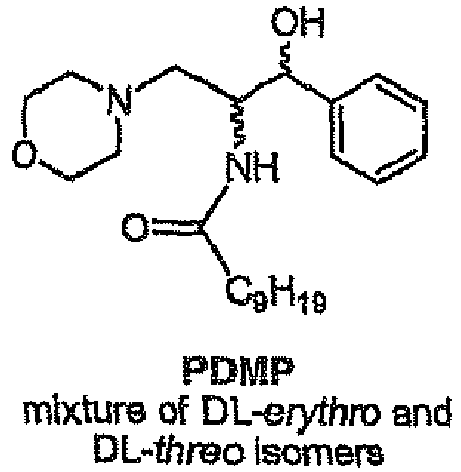
- These derivatives inhibit glucosylceramide (GlcCer) formation by inhibiting the enzyme GlcCer synthase, thereby lowering the level of glycosphingolipids.) The isomers most active have the R,R-(D-threo)-configuration. Four enantiomers are produced during the synthesis. Because only the D-threo enantiomers are active in inhibiting the glucosylceramide synthase, resolution of the active D-threo inhibitors was performed by chiral chromatography.
- Moreover, D-threo-PDMP has antitumor activity via inhibition of glycosphingolipid biosynthesis as described by Inokuchi J., Cancer Letters 38(1-2), 23-30, 1987.

- Furthermore, it was also reported that D-threo-PDMP suppresses synaptic function by Mizutani A. et al., Biochem. Biophys. Res. Commun., 222, 494-498, 1996.
- Preparation of enantiomerically pure D-threo-PDMP has been reported by Mitchell, Scott A.[J. Org. Chem., 63 (24), 8837-9842, 1998];
- Miura, T. et al, [Bioorg. Med. Chem., 6, 1481-1498, 1998]; Shin, S. et al., [Tetrahedron asymmetry, 11, 3293-3301, 2000];
WO 2002012185 - L-threo-PDMP is an agent for treating neuronal diseases
WO 95/05177 US 6407064 . Moreover treatment with L-threo-PDMP after transient forebrain ischemia in rats ameliorated the deficit of a well learned spatial memory by an 8-arm maze task, suggesting a potential for neurodegenerative disorders as described by Inokuchi et al., Ann. N.Y. Acad. Sci., 845(1), 219-224, 1998 andJP 10324671 - A stereoselective synthesis of enantiomerically pure D-threo-PDMP has also been described by Shin, S. et al., Tetrahedron asymmetry, 11, 3293-3301, 2000 and
WO 2002012185 the key step is the regioselective cleavage by nitrogen nucleophiles, as morpholine, of the C(3)-N-bond of non-activated enantiomerically pure aziridine-2-methanols.
- On the other hand, the synthesis of enantiomerically pure (1S,2S)-1-phenyl-2-decanoylamino-3-morpholino-1-propanol (L-threo-PDMP) from L-serine has also been described by Mitchell, Scott A., J. Org. Chem., 63 (24), 8837-8842, 1998.

- Other known methods to obtain L-threo-PDMP are described by Miura, T. et al, Bioorg. Med. Chem., 6, 1481-1498, 1998 and in
JP-A-9-216858 WO 95/05177 US 6407064 . Moreover treatment with L-threo-PDMP after transient forebrain ischemia in rats ameliorated the deficit of a well learned spatial memory by an 8-arm maze task, suggesting a potential for neurodegenerative disorders as described by Inokuchi et al., Ann. N.Y. Acad. Sci., 845(1), 219-224, 1998 andJP 10324671 - Synthesis of (1S,2S)- threo- and (1R,2S)-erythro-1-phenyl-2-palmitoylamino-3-N-morpholino-1-propanol (PPMP) were described starting from Garner aldehyde of L-serine, by Nishida, A., Synlett, 4, 389-390, 1998.

- Compounds with longer chain fatty acyl groups (than decanoyl) have been found to be substancially more effective as inhibitor of GCS. D-threo-1-phenyl-2-palmitoylamino-3-pyrrolidino-1-propanol (P4 or PPPP) analogues were first obtained by a Mannich reaction as described
-
- Preparation of D-threo-4'-hydroxy-P4, one of the most potent inhibitor of GCS, was described by Lee, L. et al., J. Biol. Chem., 274, 21, 14662-14669, 1999. In addition, a series of dioxane substitutions was designed and tested. These included 3',4'-methylenedioxyphenyl-3',4'- ethylenedioxyphenyl-, and 3',4'-trimethylenedioxyphenyl-substituted homologues.

- Synthesis of enantiomerically pure D-threo-1-phenyl-2-benzyloxycarbonylamino-3-pyrrolidino-1-propanol (PBPP) and D-threo-P4 and its analogues from N-benzyloxycarbonyl-D-serine, was described by Jimbo M. et al, J. Biochem., 127(3), 485-91, 2000 and
EP 782992 
- Novel prodrugs of P4 derivatives were described in
US 20020198240 andWO 2002062777 . - Synthesis of enantiomerically pure of D-threo-ethylenedioxy-P4 and D-threo-p-methoxy-P4 were described by Husain A. and Ganem B., Tetrahedron Lett., 43, 8621-8623, 2002. The key step is a highly syn-selective additions of aryl Grignard reagents to Garner aldehyde.

- Diastereoselective synthesis of P4 analogues were described in
US 03/0153768 WO 2003045928 (Genzyme Corp.); Oxazolines I [R1 = (un)substituted aryl; R2, R3 = H, (un)substituted aliphatic; NR2R3 = heterocyclic] are prepared as intermediates for P4 glucosyltransferase inhibitors from R1 CHO and R2R3NCOCH2CN. Thus, methyl isocyanoacetate CNCH2CO2Me was treated with pyrrolidine and the amide was treated with 1,4-benzodioxane-6-carboxaldehyde, followed by hydrolysis of the oxazoline using HCl in methanol, reduction of the keto group of amide II using LiAlH4, and acylation with palmitoyl chloride to give D,L-threo-ethylenedioxy-P4 III.
- Synthesis of enantiopure P4 analogues were described in
WO 2003008399 (Genzyme Corp.). - P4 derivatives, such as I [R1, R5 = un(substituted) aromatic; R2, R3 = H, un(substituted) aliphatic; NR2R3 = (un)substituted non-aromatic heterocyclic ring; R4 = O, H2], were prepared for their therapeutic use as GCS inhibitors. Thus, D-threo-ethylenedioxy-P4 was prepared via a multistep synthetic sequence starting from S-(+)-Ph glycinol, phenyl-α-bromoacetate, 1,4-benzodioxan-6-carboxaldehyde, pyrrolidine and palmitoyl chloride.

- New D-threo-P4 analogues that bear ether substituents on the aromatic ring have been recently synthesized from D-serine and found to suppress neurite extension in an embryonic insect cell line as described by Slavish., J. P. et al., Bioorg. Med. Chem. Lett., 14, 1487-1490, 2004.
- Further references which serve as background to the present invention are United States Patent Nos.
5,945,442 ;5,952,370 ;6,030,995 and6,051,598 ; Journal of Labelled Compounds & Radiopharmaceuticals (1996), 38(3), 285-97; PublishedPCT application WO 01/38228 - Significantly, according to the best knowledge of the present inventors none of the compounds of the prior art which are structurally similar to the novel compounds of the present invention are known in the prior art as analgesics or immuno stimulants.
- The present invention is directed to compounds of Formula 1

R2 is H, alkyl of 1 to 6 carbons or the R1 and R2 groups together with the nitrogen form a saturated or unsaturated 4, 5, 6 or 7 membered ring that optionally includes one or two heteroatoms independently selected from N, O and S, said 4, 5, 6 or 7 membered ring optionally being substituted with a halogen, COOH, CH2OH, OH, B(OH)2, cyano or with an alkyl group having 1 to 6 alkyl groups;
R3 is independently selected from H, alkyl of 1 to 20 carbons, aryl or heteroaryl, aryl-alkyl or heteroaryl-alkyl where the alkyl moiety is has 1 to 4 carbons, cycloalkyl of 3 to 6 carbons, said aryl or heteroaryl groups being optionally substituted with 1 to 3 groups independently selected from the groups consisting of halogen, alkyl of I to 6 carbons, alkoxy of 1 to 6 carbons and thioxy of I to 6 carbons, or
R3 is CO-R7 or CO-O-R7 where R7 is H, alkyl of 1 to to 20 carbons, benzyl, alkyl of 1 to 20 carbons substituted with and NH2 group, with a NHCOOalkyl or with an NH-COalkyl group where the alkyl group has one to 6 carbons, or R7 is aryl, heteroaryl, aryl-alkyl or heteroaryl-alkyl where the alkyl moiety is branched or unbranched and has 1 to 4 carbons, said aryl or heteroaryl groups being optionally substituted with 1 to 3 groups independently selected from the group consisting of halogen, alkyl of 1 to 6 carbons, alkoxy of 1 to 6 carbons and thioxy of 1 to 6 carbons;
R4 is H, alkyl of 1 to 6 carbons or CO-R8 where R8 is alkyl of 1 to 6 carbons;
the wavy lines represent bonds connected to carbons having R or S configuration, and
R10 is selected from the groups of formulas (i) and (ii)
- that when R10 has formula (ii) then Formula 1 does not include compounds where R4 is hydrogen and R1 and R2 jointly with the nitrogen form a morpholin or a pyrrolidine ring and where R5 and R6 both are H or one of R5 and R6 is OCH3 and the other is H,
- and the present invention is also directed to all pharmaceutically acceptable salts of said compounds.
- The present invention is also directed to pharmaceutical compositions containing the above-noted novel compound to be used as analgesics and/or immuno stimulants in mammals, and to methods of using said pharmaceutical compositions as analgesics and/or as immuno stimulants.
- A general description of the compounds of the invention is provided in the Summary Section of the present application for patent. Most compounds of the invention contain one or more asymmetric centers, such that the compounds may exist in enantiomeric as well as in diastereomeric forms. In fact, most of the compounds of the present invention have two asymmetric carbons adjacent to one another and therefore can exist in erythro or threo form, with each of these two forms having dextrorotatory (D) or levorotary (L) enantiomers. Although the threo form is generally preferred in accordance with the present invention for analgesic activity, unless it is specifically noted otherwise, the scope of the present invention includes all enantiomers, diastereomers and diastereomeric and racemic mixtures. In light of the foregoing, it should be clearly understood that the designation "DL" or "(+/-)" or " (±)" in this application includes the pure dextrorotatory enantiomer, the pure levorotatory enantiomer and all racemic mixtures, including mixtures where the two enantiomers are present in equal or in unequal proportions. Moreover, for simplicity sake in many of the structural formulas, such as in the example below, only one of the enantiomers is actually shown but when the designation "DL" (or "(+/-)" or "(±)") appears it also includes the enantiomeric form (mirror image) of the structure actually shown in the formula.
- For Example:

- Thus, in the example above, only one enantiomer is shown, but because the designation "DL" (or "(+/-)" or "(±)") appears below the formula, its optical isomer

- In the case of some compounds of the present invention one enantiomer of the threo, and in some cases of the erythro, is significantly more active as an analgesic or immuno stimulant than the other enantiomer of the same pair. For this reason the isolated enantiomer which is significantly more active than the other is considered a novel and inventive composition even if the racemic mixture or one single enantiomer of the same compounds have already been described in the prior art.
- Some of the novel compounds of the present invention may contain three or more asymmetric centers.
- Keeping the foregoing examples in mind a person of ordinary skill in the art should readily understand the scope of each described example, although in a broad sense all isomers, enantiomers and racemic mixtures are within the scope of the invention.
- The term "alkyl" in the general description and definition of the compounds includes straight chain as well as branch-chained alkyl groups.
- Generally speaking the compounds of the invention may form salts with pharmaceutically acceptable acids or bases, and such pharmaceutically acceptable salts of the compounds of Formula 1 are also within the scope of the invention.
- Referring now to the novel compounds of Formula 1, the R5 and R6 groups preferably both are independently selected from H, alkyl, alkoxy and still more preferably are H. In the preferred compounds the R3 groups are preferably both H, or one of the R3 groups is H and the other is an acyl group or an arylalkylcarbamoyl groups. The R4 group is preferably H (but see the "proviso" in the Summary section) or alkanoyl, and the R1 and R2 groups preferably are pyrrolidino or morpholino.
- The presently most preferred novel compounds of the invention are disclosed with their structural formulas in the ensuing Table and or description, showing activity of exemplary compounds relevant to their ability to act as analgesics.
- The novel compounds of the invention have analgesic and/or immunostimulant activity in mammals. Some of the compounds described in the introductory section which per se are known in the art have been discovered by the present inventors to also have analgesic effect in mammals. To the best of the knowledge of the present inventors the analgesic or immunostimulant biological activity of the known compounds was not known before the present discovery.
- An art-accepted model or assay for measuring an analgesic effect of a compound in chronic pain (in particular peripheral neuropathy) is the model known as Kim and Chung 1992, Pain 150, pp 355-363 (Chung model). This model involves the surgical ligation of the L5 (and optionally the L6) spinal nerves on one side in experimental animals. Rats recovering from the surgery gain weight and display a level of general activity similar to that of normal rats. However, these rats develop abnormalities of the foot, wherein the hindpaw is moderately everted and the toes are held together. More importantly, the hindpaw on the side affected by the surgery appears to become sensitive to low-threshold mechanical stimuli and will perceive pain instead of the faint sensation of touch. This sensitivity to normally non-painful touch, called "tactile allodynia", develops within the first week after surgery and lasts for at least two months. The allodynia response includes lifting the affected hindpaw to escape from the stimulus, licking the paw and holding it in the air for many seconds. None of these responses is normally seen in the control group.
- To produce the tactile allodynia, rats are anesthetized before surgery. The surgical site is shaved and prepared either with betadine or Novacaine. Incision is made from the thoracic vertebra XIII down toward the sacrum. Muscle tissue is separated from the spinal vertebra (left side) at the L4 - S2 levels. The L6 vertebra is located and the transverse process is carefully removed with a small rongeur to expose the L4 - L6 spinal nerves. The L5 and L6 spinal nerves are isolated and tightly ligated with 6-0 silk thread. The same procedure is done on the right side as a control, except no ligation of the spinal nerves is performed.
- After a complete hemostasis is confirmed, the wounds are sutured. A small amount of antibiotic ointment is applied to the incised area, and the rat is transferred to the recovery plastic cage under a regulated heat-temperature lamp.
- On the day of the experiment at least seven days after the surgery, typically six rats per test group are administered the test drugs by intraperitoneal (i.p.) injection or oral gavage (p.o.). For i.p. administration, the compounds are formulated in H2O and given in a volume of 1 ml/kg body weight by injecting into the intraperitoneal cavity. For p.o. administration, the compounds are formulated in H2O and given in a volume of 1 ml/kg body weight using an 18-gauge, 3 inch gavage needle that is slowly inserted through the esophagus into the stomach.
- Tactile allodynia is assessed via von Frey hairs, which are a series of fine hairs with incremental differences in stiffness. Rats are placed in a plastic cage with a wire mesh bottom and allowed to acclimate for approximately 30 minutes. To establish the pre-drug baseline, the von Frey hairs are applied perpendicularly through the mesh to the mid-plantar region of the rats' hindpaw with sufficient force to cause slight buckling and held for 6-8 seconds. The applied force has been calculated to range from 0.41 to 15.1 grams. If the paw is sharply withdrawn, it is considered a positive response. A normal animal will not respond to stimuli in this range, but a surgically ligated paw will be withdrawn in response to a 1-2 gram hair. The 50 % paw withdrawal threshold is determined using the method of Dixon, W.J., Ann. Rev. Pharmacol. Toxicol. 20:441-462 (1980) hereby incorporated by reference. Tactile allodynia is measured prior to and 15, 30, and 60 minutes after drug administration. The post-drug threshold is compared to the pre-drug threshold and the percent reversal of tactile sensitivity is calculated based on a normal threshold of 15.1 grams.
- Table 1 below indicates the degree of pain reversal obtained in the Chung model with exemplary compounds of the invention. The intraperitonial (i.p.) and/or intravenous (iv) administration of the compounds was in doses ranging from 1 µg/kg to 300µg/kg or 3mg/kg PO and the peak percentage of reversal of allodynia was measured at 15, 30 or 60 minutes after administration, as is indicated in the table. Data are expressed as the highest % allodynia reversal (out of 3 time points: 15 min, 30 min, or 60 min. post-drug) with a minimum of a 20% allodynia reversal in the rat Chung model. Comparisons between groups (drug treated vs. saline treated) were made using a two-tailed, 2-sample, unpaired t-test. Compounds that are not shown which were not statistically analgesic following an IP dose of 300 ug/kg, but may still be analgesic. Compounds that do not exhibit significant analgesia at 100 mg/kg are not considered to be analgesic.
TABLE 1 Compound # Chemical Formula Peak % Pain reversal: time post dose Dose µg/kg, Mode of administ. 
44% 300 µg/kg IP 1 30 min 
92% 3 60 min 300 µg/kg IP 
96% 30 µg/kg IP 46 60 min - An art accepted method for measuring immuno stimulation comprises systemic administration of compounds to assay for the ability to stimulate the immune system, possibly due to nonspecific upregulation of the hemolymphoreticular system. This upregulation could result in increased numbers of lymphocytes of both T- and B-cell lineage. Although applicant does not wish to be bound by the biological theory of the immuno stimulation, actual immunostimulatory efficacy of the compounds can be demonstrated in vivo by assaying splenic size in response to administration of the test compound to laboratory test species rats. Generally speaking any compound that exhibits splenic enlargement following dosing of 200 mg/kg or less may be considered an immunostimluant.
- The compounds of the invention may be administered at pharmaceutically effective dosages. Such dosages are normally the minimum dose necessary to achieve the desired therapeutic effect; in the treatment of chromic pain, this amount would be roughly that necessary to reduce the discomfort caused by the pain to tolerable levels. For human adults such doses generally will be in the range 0.1-5000 mg/day; more preferably in the range 1 to 3000 mg/day, still more preferably in the range of 10 mg to 1000 mg/day. However, the actual amount of the compound to be administered in any given case will be determined by a physician taking into account the relevant circumstances, such as the severity of the pain, the age and weight of the patient, the patient's general physical condition, the cause of the pain, and the route of administration.
- The compounds are useful in the treatment of pain in a mammal; particularly a human being. Preferably, the patient will be given the compound orally in any acceptable form, such as a tablet, liquid, capsule, powder and the like. However, other routes may be desirable or necessary, particularly if the patient suffers from nausea. Such other routes may include, without exception, transdermal, intraperitonial, parenteral, subcutaneous, intranasal, intrathecal, intramuscular, intravenous and intrarectal modes of delivery. Another aspect of the invention is drawn to therapeutic compositions comprising the novel compounds of the invention and pharmaceutically acceptable salts of these compounds and a pharmaceutically acceptable excipient. Such an excipient may be a carrier or a diluent; this is usually mixed with the active compound, or permitted to dilute or enclose the active compound. If a diluent, the carrier may be solid, semi-solid, or liquid material that acts as an excipient or vehicle for the active compound. The formulations may also include wetting agents, emulsifying agents, preserving agents, sweetening agents, and/or flavoring agents. If used as in an ophthalmic or infusion format, the formulation will usually contain one or more salt to influence the osmotic pressure of the formulation.
- In another aspect, the invention is directed to methods for the treatment of pain, particularly chronic pain, through the administration of one or more of the novel or otherwise known compounds of the invention, or of pharmaceutically acceptable salts thereof to a mammal in need thereof. As indicated above, the compound will usually be formulated in a form consistent with the desired mode of delivery.
- Compounds of the invention which are immuno stimulants are administered subject to the same basic principles as the compounds having analgesic activity, in doses which are best determined on a case-by-case and/or species-by-species and, in case of humans, at times on a patient-by-patient basis. Generally speaking the effective dose will be in the range of 10 µg/kg to 200 mg/kg.
- The compound of the invention can be synthesized by utilizing the synthetic methods described in the experimental below, or such modifications of the below described experimental methods which will become readily apparent to those skilled in the art in light of the present disclosure.
- 1H NMR spectra were recorded at ambient temperature with an Avance 300 (Bruker) spectrometer. The compounds were analyzed by reverse phase high performance liquid chromatography (HPLC) using a Waters Autopurification System equipped with a Waters 2525 Pump, a Waters 2696 photodiode array detector, and a XTerra column (Part. No. 186000482, 5 µm, C18, 4.5 × 50 mm).
- The HPLC method used was a gradient of 5 % solvent B to 100 % in 7 min. Solvent A was H2O with 0.05% TFA and solvent B was CH3CN with 0.05 % TFA (Method A).
- Melting points were measured with a Büchi B-545 melting point apparatus and were uncorrected. To isolate reaction products the solvent were removed by evaporation using a vacuum rotatory evaporator, the water bath temperature not exceeding 40°C.
- The compound of the invention can be synthesized by utilizing the synthetic methods described in a general sense immediately below and in more detail in the experimental section of the present application, or by such modifications of the below described general and experimental methods which will become readily apparent to those skilled in the art in light of the present disclosure.
- A general synthetic route to the compound of the present invention which are substituted "1-hydroxyl-propyl amines" may lead through the synthesis of the corresponding substituted "3-hydroxyl-propyl amide" compounds, followed by reduction of the carbonyl group of the "carboxylic acid amide" moiety with a reducing agent such as lithium aluminum hydride, or like reducing agent.

- This reaction is illustrated in General Synthetic Scheme A, where, generally speaking, the variables have the meaning described in the Summary Section of the present application for patent. A person of ordinary skill in the art of organic synthesis will nevertheless readily understand that depending on the nature of the substituents designated R1, R2 and R10 certain groups may need to be protected for the performance of the reduction step.
- The substituted "3-hydroxyl-propyl amide" compounds can, generally speaking, be synthesized as described below in the following General Reaction Scheme 1 and General Reaction Scheme 2.

- Thus, in accordance with General Scheme 1, methyl isocyanoacetate (or ethyl isocyanoacetate available commercially) is reacted with an "amine" which includes the R1 and R2 groups to provide the 2-isocyanoacetic acid amide derivative shown in General Reaction Scheme 1. Typical examples for the amines used in the reaction are pyrrolidine, piperidine, azetidine, morpholine, 2,5-dihydro-1H-pyrrole, dialkylamines such as diethylamine, 3-fluoro-, 3,3-difluoro or 3-hydroxy substituted pyrrolidines. The 2-isocyanoacetic acid amide derivative is then reacted in methanol in the presence of base (such as KOH) with an "aldehyde" which includes the R10 group to provide a trans "oxazoline" with high diastereoselectivity (trans:cis ratios generally > 97:3) as shown in General Reaction Scheme 1. The trans oxazoline is then treated in methanol with a strong acid, such as HCl, to open the ring and to provide the threo-3-substituted-3-hydroxy-2-amino-propionic acid amide intermediates (with a threo : erythio ratios generally > 97:3) as shown in General Reaction Scheme 1.
- Compounds of Formula 1 and or of General Structure 1, where the amino group of formula NHR1R2 is a weaker nuleophile, such as indoline, thiomorpholine and the like, can be made as illustrated in Reaction Scheme 2 for the synthesis of intermediate compounds (±)-threo-2-amino-3-hydroxy-11-(indolin-1-yl)-3-(pyridin-4-yl)propan-1-one dihydrochloride Compound 243 and (±)-threo-2-amino-3-hydroxy- 1-(thiazolidin-3-yl)-3-(pyridin-4-yl)propan-1-one dihydrochloride Compound 242.

- In Reaction Scheme 2 EDCI stands for 1-(3-dimethylaminopropyl)-ethylcarbodiimide hydrochloride; HOBT stands for 1-hydroxybenzotriazole; BOC2O stands for di-t-butyl-dicarbonate and TEA stands for triethylamine. Compounds 242 and 243 can be reduced, as illustrated in General Synthetic Scheme A to provide compounds of the invention.
- Another general synthetic route may follow in general terms the synthesis of Compound 1, Compound 2 and Compound 3, specifically described in detail in the experimental section below, modified with such modifications which in light of the present disclosure will become readily apparent to a person of ordinary skill in the art.
- Isomerically pure and/or enantiomerically pure compounds and further derivatives of the 3-substituted-3-hydroxy-2-amino-propionic acid amide intermediates or of the substituted 1-hydroxy propylamines of the invention are obtained by separation techniques and reactions which, per se, are well known to the synthetic chemist. Some of the typical separation techniques and reactions are generally described below.
- Separation of threo and erythro isomers, when both are formed in the reactions leading to the compounds of the invention, can typically be performed by chromatographic methods. The chromatographic separation may occur the level of the substituted 3-hydroxyl-propionic acid amide intermediate compounds or at the level of the substituted 1-hydroxyl propyl amine compounds of the invention.
- The more abundantly formed threo isomers can also be converted into the erythro isomers by oxidizing to the ketone level the hydroxyl group in the 3 position of the propanoic acid moiety and subsequently reducing the resulting ketone to the hydroxyl level in the intermediate 3-substituted-3-hydroxy-2-amino-propionic acid amide compounds or in the compounds of the invention.
- Separation of enantiomeric mixtures can be performed on Chiralpack columns which are well known in the art.
- The amino function in the 2-position of the propyl amine moiety is, generally speaking, more reactive towards acylation and carbamoylation than the hydroxyl group in the 1 position. Therefore, acylated derivatives of the 2-amino function can be prepared by using acyl chlorides such as acetyl chloride and hexanoyl chloride. Or the 1-hydroxy and 2-amino groups of the compounds of the invention can be acylated in the same reaction. Carbamate derivatives of the 2-amino function can be obtained by using chloroformates, such as benzylchloroformate. A tertiary butyl carbamoyl function or benzyl-carbamoyl function can also serve as a removable protecting group of the 2-amino function.
- Alkylation of the 2-amino function can be performed by condensing the compound bearing the 2-NH2 group with an aldehyde to obtain a Schiff base intermediate which can be reduced, without isolation, to provide the N-alkyl, arylalkyl or heteroaryl-alkyl compounds of the invention.
- To solution of methyl 2,3-dibromopropionate (25 mL, 198 mmol) in toluene at 5 °C was added triethylamine (55 mL, 0.39 mmol) in toluene (100 mL). After stirring for 5 min (S)-(1)-phenethylaimne (25 mL, 198 mmol) in toluene (100 mL) was added dropwise. The suspension was refluxed for 3 h and allowed to cool down, filtered and the volatiles were evaporated under reduced pressure to give a residue that was purified by column chromatography (950 g of silica gel) with a gradient of 0-20 % EtOAc in cyclohexane to yield to (S)-methyl 1-((S)- 1-phenylethyl)azindine-2-carboxylate EBE 06044A as a yellow oil (17.31 g, 43 % yield) and (R)-methyl 1-((S)-1-phenylethyl)aziridine-2-carboxylate EBE 06044B as a yellow oil (15.14 g, 37 % yield).

- MW: 205.3; Yield EBE 06044B: 37 %; Yellow Oil. Yield: EBE 06044A: 43 %, Yellow Oil.
- Rf: EBE 06044A = 0.5; R f : EBE 06044B = 0.35 (EtOAc:cyclohexane = 25:75).
- 1H-NMR (CDCl3, δ) EBE 06044A: 1.47 (d, 3H, J= 6.6 Hz, CH3), 1.60 (d, 1H, J= 6.4 Hz, CH), 2.13 (d, 1H, J= 2.6 Hz), 2.21 (dd, 1H, J = 3.2 Hz, J = 6.4Hz), 2.54 (q, 1H, J = 6.6 Hz), 3.75 (s, 3H, OCH3) 7.23-7.40 (m, 5H, ArH).
- 1H-NMR (CDCl3, δ) EBE 06044B: 1.46 (d, 3H, J= 6.6 Hz, CH3), 1.79 (d, 1H, J= 6.6 Hz, CH), 2.08 (d,1H, J= 3.11Hz, 6.6 Hz), 2.34 (dd, 1H, J = 3.1 Hz, J= 1.0 Hz), 2.56 (q, 1H, J= 6.6 Hz), 3.67 (s, 3H, OCH3) 7.24-7.36 (m, 5H, ArH).
- 13C-NMR (CDCl3, δ) EBE 06044B: 23.5, 35.0, 36.9, 52.2, 69.8, 126.5, 127.2, 128.5, 143.6, 171.1.
- HPLC: Method A, detection at 254 nm, EEE 06044B RT = 6.11 min, peak area 92.9 %.
- A 250 mL round bottom flask was charged with anhydrous THF (100mL) and LiAlH4 (2.77 g, 73.1 mmol). While the suspension is stirred at 0 °C, a solution of (S)-methyl 1-((S)-1-phenylethyl)aziridine-2-carboxylate EBE 06044B (10.0 g, 48.7 mmol) in THF (50 mL) was added dropwise over 20 min The dropping funnel was washed with THF (2 × 3 mL) and allowed to react 20 min. at 0°C. Maintaining the reaction mixture at 0°C, a solution of KOH (10 %, 20 mL) was added dropwise for 20 min (caution the reaction is exothermic). The mixture was stirred for 0.5 h at 25 °C and the white precipitate removed by filtration through a celite pad that was washed with methyl ether (30 mL). The combined organic filtrates were washed with NaH2PO4 and the aqueous layer was extracted with Et2O (3 × 30 mL). The combined organic phase were dried with Na2SO4 and concentrated to give ((R)-1-((S)-1-phenylethyl)aziridin-2-yl)methanol EBE 06046 as a white solid (10.4 g, 90 % yield).

- MW: 177.2; Yield: 90 %; White Solid; Mp (°C): 37.7.
- 1H-NMR (CDCl3, δ): 1.43 (d, 3H, J= 6.6 Hz, CH3), 1.49 (d, 1H, J= 6.5 Hz, CH), 1.65-1.71 (m, 1H, CH), 1.92 (d, 1H, J=3,5 Hz, NCH), 2.26 (s, 1H, OH), 2.53 (q, 1H, J= 6.6 Hz, NCH), 3.32-3.37 (m, 1H, OCH2), 3.56 (m, 1H, OCH2), 7.23-7.35 (m, 5H, ArH).
- 13C-NMR (CDCl3, δ): 22.9, 31.4, 39.3, 62.5, 69.4, 126.6, 127.3, 128.6, 144.5.
- A three neck, 250 mL round bottom flask was equipped with a low temperature thermometer and two (2) equalizing dropping funnels. One of these was connected to a nitrogen line and charged with a solution of ((R)-1-((S)-1-phenylethyl)aziridin-2-yl)methanol EBE 06046 (7.0 g, 39.5 mmol) in CH2Cl2 (75 mL), the other was charged with a solution of DMSO (9.25 g, 118.5 mmol) in CH2Cl2 (11 mL). To a solution of oxalyl chloride (7.5 g, 59.3 mmol) in CH2Cl2 (90 mL) under N2 at -78 °C, the DMSO solution was added dropwise during 20 min and stirred for 20 min. EBE 06046 (7.0 g, 39.5 mmol)) in CH2Cl2 (75 mL) was added dropwise over 50 min. then the dropping funnel was charged with DIEA (42.6 mL, 237 mmol) in CH2Cl2 (10 mL) and the reaction mixture was stirred for 30 min at -45°C. The DIEA solution was added over 5 min with the reaction mixture at -78 °C and the reaction was allowed to warm to room temperature. The reaction mixture was washed with H2O (3 × 50 mL), dried over MgSO4, filtered, evaporated. The crude product obtained was purified by column chromatography on silica with a gradient of 0-20 % [v/v] EtOAc in cyclohexane to give (R)-1-(S)-1-phenylethyl)aziridine-2-carbaldehyde EBE 06048 as a yellow oil (5.59 g, 81 % yield).


- MW: 175.2; Yield: 81 %; Yellow Oil.
- R f : EBB 06048: 0.3 (EtOAc:cyclohexane = 20:80).
- 1H-NMR (CDCl3, δ): 1.47 (d, 3H, J = 6.6 Hz, CH3), 1.94 (d, 1H, J = 6.7 Hz, NCH2), 2.08 (dt, J= 2.9 Hz, J= 6.4 Hz, NCH), 2.37 (d, 1H, J= 2.6 Hz, NCH2), 2.61 (q, 1H, J = 6.6 Hz, NCH), 7.20-7.38 (m, 5H, ArH), 8.92 (d, 1H, J = 6.2 Hz).
- 13C-NMR (CDCl3, δ): 22.7, 32.1, 43.2, 68.1, 125.5, 126.5, 127.6, 142.4, 198.7.
- To a solution of bromobenzene (4.93 g, 31.4 mmol) in THF 125 mL under nitrogen at - 78 °C was added t-BuLi (1.7 M in pentane, 50 mL). The mixture was stirred for 0.5 h at room temperature. The mixture was cooled down to -78 °C and a solution of (R)-1-((S)-1-phenylethyl)aziridine-2-carbaldehyde EBE 06048 (2.5 g, 14.3 mmol) in THF (16.7 mL) at -78 °C was added dropwise. The reaction mixture was treated with H2O (20 mL), the organic layer was separated and the aqueous phase was extracted with EtOAc. The combined organic layers were dried over MgSO4, filtered and concentrated in vacuo to give a residue that was purified by column chromatography using a gradient of 0-20 % [v/v] EtOAc in cyclohexane to give (R)-phenyl((R)-1-((S)-1-phenylethyl)aziridin-2-yl)methanol EBE 06066 (3.13 g, 86 % yield).

- MW: 253.3; Yield: 86 %.
- Rf: = 0.3 (EtOAc:cyclohexane = 20:80).
- 1H-NMR (CDCl3, δ): 1.47 (d, 3H, J= 6.6 Hz, CH3), 1.57 (d,1H, J= 6.5 Hz, CH), 1.79 (dt, 1H, J= 3.5 Hz, J= 8.7 Hz, CH), 2.04 (d, 1H, J= 3.5 Hz, OCH), 2.35 (bs, 1H, OH), 2.53 (q, 1H, J= 6.5 Hz, CH), 4.23 (d, 1H, J = 5.7Hz, OCH), 7.07-7.13 (m, 2H, Arm , 7.16-7.20 (m, 3H, ArH), 7.24-7.34 (m, 5H, ArR).
- 13C-NMR (CDCl3, δ): 22.4, 32.0, 44.6, 69.4, 74.1, 125.8(2xC), 126.9 (2xC), 127.3, 127.6, 128.2 (2xC), 128.7 (2xC), 142.0, 144.2.
- [α]22 D = - 71.53 (c = 0.59, CHCl3).
- To a solution of (R)-phenyl((R)-1-((S)-1-phenylethyl)aziridin-2-yl)methanol EBE 06066 (1.5 g, 5.92 mmol) in CH3CN (19 mL) at RT was added iodotrimethylsilane (3.55 g, 17.8 mmol). The solution was stirred for 2 h and morpholine (1.032 g, 11.84 mmol) was added. After 2 h at reflux, the reaction mixture was treated with HCl (1M) to reach pH = 1 and stirred for 10 min. After a slow addition of NaHCO3 to reach pH = 9, the product was extracted with EtOAc, dried over Na2SO4, filtered to give after evaporation a crude brown oil that was purified by column chromatography using a gradient of 0-20% [v/v] MeOH in EtOAc to give
- D-threo-2-((S)-1-phenylethylamino)-3-morpholino-1-phenylpropan-1-ol EBE 06068A (0.831 g, 42 %) as a pale brown solid. To a solution of D-threo-2-((S)-1-phenylethylamino)-3-morpholino-1-phenylpropan-1-ol EBE 06068A (0 .100 g, 0.294 mmol) in methanol (1 mL) was added a solution of HCl (0.8 M, 0.816 mL) in EtOH. Evaporation of the volatiles afforded to D-threo-2-((S)-1-phenylethylamino)-3-morpholino-1-phenylpropan-1-ol dihydrochloride Compound 5 as white solid (0.125 g, 100 %).

- MW: 412.37; Yield: 42 %; White Solid; Mp (°C): 157.2 (dec).
- R f : 0.3 (MeOH:EtOAc = 20:80) EBE 06068A.
- 1H-NMR (CD3OD, δ): 119 (t, 2H, J= 7.0 Hz, NCH2), 1.71 (d, 3H, J = 6.8 Hz, CH3), 3.45 (m, 2H, J= 7.1 Hz, NCH2), 3.62 (q, 2H, J = 7.1 Hz, N-CH2), 3.97 (t, 4H, J= 4.5 Hz, OCH2), 4.06 (m, 1H, CH-N), 4.75 (q, 1H, J = 6.8 Hz, CH-N), 5.21 (d, 1H, J = 5.1 Hz, CH-O), 7.44-7.56 (m, 10H, ArH).
- MS-ESI m/z (% rel. Int.): 341.1 ([MH]+, 20).
- 13C-NMR (CD3OD, δ): 24.4, 54.5 (2xC), 55.5, 55.9, 60.0, 67.0 (2xC), 75.6, 126.3 (2xC), 126.5 (2xC), 127.0, 127.1, 128.1 (2xC), 128.5 (2xC), 142.2, 145.3.
- HPLC: Method A, detection at 254 nm, Compound 5 RT = 4.41 min, peak area 99 %.
- To a solution of D-threo-2-((S)-1-phenylethylamino)-3-morpholino-1-phenylpropan-1-ol EBE 06068A (0.400 g, 1.17 mmol) in MeOH (6 mL) at RT was added acetic acid (0.133 mL, 2.35 mmol). The reaction vessel was flushed with nitrogen and Pd(OH)2 (25 % weight, 0.150 g) was added. The nitrogen atmosphere was exchanged with hydrogen using three cycle of vacuum and hydrogen addition using a balloon of hydrogen. After stirring for 16 h under hydrogen the reaction mixture was filtrated through celite to give EBE 06070A the acetate salt of (2R)-amino-3-morpholin-4-yl-(1R)-phenyl-propan-1-ol (0.279 g, 98 % yield). To as solution of EBE 06070A the acetate salt of (2R)-amino-3-morpholin-4-yl-(1R)-phenyl-propan-1-ol (0.100 g, 0.338 mmol) in ethanol (1 mL) was added a solution of HCl (0.8 M, 0.930 mL) in ETOH. Evaporation of the volatiles afforded to D-threo-2-amimo-3-morpholino-1-phenylpropan-1-ol dihydrochloride Compound 4 (0.104 g, 100 % yield) as an off white solid. (Adapted from Shin, S-H.; Han, E.Y.; Park, C.S.; Lee, W.K.; Ha, H.-J. Tetrahedron Asymmetry, 2000, 11, 3293-3301).

- MW: 309.23; Yield: 99 %; Off White Solid; Mp (°C): 183.4. 1H-NMR (CD3OD, δ): 3.30-3.77 (m, 6H, CH2N), 3.92-4.05 (m, 4H, CH2O), 4.05-4.16 (m, 1H, CH), 4.85-4.98 (m, 1H, CH), 7.35-7.60 (m, 5H, ArH).
- 13C-NMR (CD3OD, δ): 53.2, 58.3, 58.5 (2xC), 64.9 (2xC), 72.6, 128.0 (2xC), 130.2 (2xC), 140.3.
- MS-ESI m/z (% rel. int.): 237.1 (100, [MH]+).
- HPLC: Isocratic 10 % CH3CN in H2O (pH 10, [NH4OH] = 5 mM), detection UV 254 nm, Compound 4 RT = 6.63 min, peak area 97.3 %. [α]22 D = - 10.7 (c = 1.00, MeOH).
- To a stirred solution of Z-L-Ser-OH (6.00 g, 25.08 mmol) in 32 mL of anhydrous THF at 0°C under nitrogen was added dropwise 1 M phenylmagnesium bromide in THF (32 mL, 200 mmol). (The symbol Z designates a benzylcarbamoyl group). The mixture was stirred 15 h at RT under nitrogen. A solution of 2 M HCl (100 mL) was slowly added at 0°C and the mixture was partitioned between ethyl acetate (750 mL) and acidic water. The organic layer was washed with water (2 x 20 mL), 1 N aqueous sodium bicarbonate (2 x 20 mL), brine (2 x 20 mL) and dried over MgSO4. After removing ethyl acetate by evaporation at 30-35 °C, the crude product (4.50 g, 60 % yield) was cristallized in a mixture of ethyl acetate:hexane = 25 mL:20 mL to give benzyl (S)-3-hydroxy-1-oxo-1-phenylpropan-2-ylcarbamate TTA 08010B as a white solid (1.40 g, 20 % yield).

- MW: 299.32; Yield: 20 %; White Solid; Mp (°C): 106.5.
- R f : 0.75 (CH2Cl2:MeOH = 9:1).
- 1H-NMR (CDCl3, δ): 2.78 (s, 1H, OH), 3.85-3.93 (m, 1H, CH2O), 4.00-4.09 (m, 1H, CH2O), 5.14 (s, 2H, ArCH2O), 5.40 (t, 1H, J = 3.3 Hz, CH), 6.17 (d, 1H, J = 6.4 Hz, NH), 7.35 (s, 5H, ArH), 7.49 (t, 2H, J= 7.60 Hz, ArH), 7.62 (t, 1H, J = 7.1 Hz, ArH), 8.99 (t, 2H, J = 7.6 Hz, ArH). 13C-NMR (CDCl3, δ): 58.3, 64.6, 67.3, 128.1, 128.3, 128.6, 128.7, 129.0, 134.1, 136.0, 156.6, 196.6.
- MS-ESI m/z (% rel. Int.): 300.1 ([MH]+, 5), 256.1 (100).
- HPLC: Method A, detection UV 254 nm, TTA 08010B RT = 5.40 min, peak area 98.5 %.
- [α]22 D = - 5.8 (c = 1.00, MeOH).
- Benzyl L-threo-1,3--dihydroxy-1-phenylpropan-2-ylcarbamate TTA 08012.
- To a stirred solution of benzyl (S)-3-hydroxy-1-oxo-1-phenylpropan-2-ylcarbamate TTA 08010B (1.40 g, 4.70 mmol) in 28 mL of anhydrous THF at -78 °C under nitrogen was added slowly dropwise 1 M DIBAL-H in hexane (18.8 mL, 18.80 mmol). The mixture was stirred 2 h at -78 °C then 1.5 h at RT. A solution of 2 M HCl (35 mL) was slowly added at -20 °C and the mixture was partitioned between ethyl acetate (750 mL) and acidic water. The organic phase was washed with water (2x20 mL), brine (2x20 mL) and dried over MgSO4. After removing ethyl acetate by evaporation at 30-35 °C, the crude product was purified by column chromatography on silica (CH2Cl2:MeOH = 98:2 to 97:3) to give benzyl L-threo-1;3-dihydroxy-1-phenylpropan-2-, ylcarbamate TTA 08012 as a white solid (1.10 g, 78 % yield).

- MW: 301.34; Yield: 78 %; White Solid; Mp (°C): 102.5.
- R f : 0.30 (CH2Cl2:MeOH = 95/5).
- 1H-NMR (CDCl3, δ): 3.08 (t, 1H, J= 5.0 Hz, OH), 3.59 (d, 1H, J= 3.1 Hz, OH), 3.64-3.78 (m, 2H, CH2O), 3.80-3.89 (m, 1H, CH), 4.95 (s, 2H, ArCH2O), 5.57 (d, 1H, J = 8.3 Hz, NH), 7.17-7.38 (m, 10H, ArH). 13C-NMR (CDCl3, δ): 57.5, 63.6, 66.9, 73.8, 126.0, 127.8, 127.9, 128.1, 128.5, 128.6, 136.2, 141.0, 156.9.
- MS-ESI m/z (% rel. Int.): 302.0 ([MH]+, 5); 132.0 (100).
- HPLC: Method A, detection UV 254 nm, TTA 08012 RT = 5.00 min, peak area 99.5 %.
- [α]22 D = + 39.4 (c=1.00, MeOH).
- To a stirred solution of benzyl L-threo-1,3-dihydroxy-1-phenylpropan-2-ylcarbamate TTA 08012 (1.00 g, 3,30 mmol) in 13 mL of pyridine at -10 °C was added dropwise methanesulfonyl chloride (0.27 mL, 3.50 mmol). The mixture was stirred 6 h at 20 °C under nitrogen. Pyridine was removed by evaporation at 30-35 °C and the residue was partitioned between ethyl acetate (250 mL) and 0.1 N HCl (20 mL). The organic phase was washed with water (20 mL), brine (20 mL), dried over MgSO4 and evaporated to give after drying L-threo-1-hydroxy-3-methanesulfonyl-1-phenylpropan-2-ylcarbamate TTA 08014 (1.25 g , 65% yield).
- To a stirred solution of crude benzyl L-threo-1-hydroxy-3-methanesulfonyl-1-phenylpropan-2-ylcarbamate TTA 08014 (1.25 g, 3.30 mmol) in 6 mL of DMF at RT was added morpholine (1.2 mL, 13.20 mmol). The mixture was stirred 15 h at 50 °C under nitrogen. DMF was evaporated and the residue was partitioned between ethyl acetate (250 mL) and 1 N aqueous sodium bicarbonate (20 mL). The organic phase was washed with water (20 mL), brine (20 mL) and dried over MgSO4. After evaporation the crude product was purified by column chromatography on silica (CH2Cl2:MeOH = 98:2 to 97:3) to give benzyl L-threo-1-hydroxy-3-morpholino-1-phenylpropan-2-ylcarbamate as an oil (380 mg, 31 % yield). The hydrochloride salt was obtained from 100 mg of the free base in diethylether at 0°C using a solution 0.3 M HCl in diethylether. The precipitate was filtered and dry to give benzyl L-threo-1-hydroxy-3-morpholino-1-phenylpropan-2-ylcarbamate hydrochloride Compound 1 as a white solid (70 mg, 65 % yield).

- MW: 406.90; Yield: 20 %; White Solid; Mp (°C): 144.5.
- R f : 0.40 (CH2Cl2:MeOH = 95:5).
- 1H-NMR (CD3OD, δ): 3.14-3.77 (m, 6H, CH2N, 3.70-4.07 (m, 4H, CH2O), 4.30-4.33 (m, 1H, CH), 4.90-5.06 (m, 3H, CH, ArCH2O), 7.20-7.43 (m, 10H, ArH).
- 13C-NMR (CD3OD, δ): 51.2, 51.8, 53.2, 59.3, 63.2, 66.3, 72.5, 125.8, 127.2, 127.3, 127.5, 127.8, 127.9.
- MS-ESI m/z (% rel. Int.): 371.0 ([MH]+, 100).
- HPLC: Method A, detection UV 254 nm, Compound 1 RT = 4.40 min, peak area 96.5 %.
- [α]22 D = +13.9 (c = 1.00, MeOH).
- To a stirred solution of benzyl L-threo-1-hydroxy-3-morpholino-1-phenylpropan-2-ylcarbamate (Compound 1, 0.26 g, 0.70 mmol) in 20 mL of MeOH at RT was added Pd-C 10 % (140 mg). The mixture was satured with hydrogen and stirred for 24 h at RT under hydrogen atmosphere (balloon). The catalyst Pd-C 10% was removed by filtration on celite and the solution was evaporated. The crude product was purified by column chromatography on silica (CH2Cl2:MeOH:NH4OH = 79:20:1 to 15:20:5) to give L-threo-2-amino-3-morpholino-1-phenylpropan-1-ol as an oil (100 mg, 60 % yield). The hydrochloride salt was obtained from 83 mg of the free base in diethylether at 0 °C using 0.3 M HCl in diethylether. After precipitation in diethylether, filtration and drying L-threo-2-amino-3-morpholino-1-phenylpropan-1-ol dihydrochloride Compound 2 was obtained as a white solid (80 mg, 74 % yield).

- MW: 309.23; Yield: 44 %; White Solid; Mp (°C): 166.4-170.9.
- R f:0.20 (CH2Cl2:MeOH = 9:1).
- 1H-NMR (CD3OD, δ): 3.30-3.77 (m, 6H, CH2N), 3.92-4.05 (m, 4H, CH2O), 4.05-4.16 (m, 1H, CH), 4.85-4.98 (m, 1H, CH), 7.35-7.60 (m, 5H, ArH).
- 13C-NMR (CD3OD, δ): 53.1, 54.9, 58.5, 64.8, 72.6, 127.2, 128,0, 130.2, 140.3.
- MS-ESI m/z (% rel. Int.): 237.0 ([MH]+, 100).
- HPLC: Method A, detection UV 254 nm, Compound 2 RT = 0.90 min, peak area 98.0 %.
- [a]22 D = +10.8 (c = 1.00, MeOH), free base: [α]22 D = - 6.1 (c = 0.25, CHCl3).
- To a stirred solution of benzyl L-threo-1-hydroxy-3-morpholino-1-phenylpropan-2-ylcarbamate hydrochloride (Compound 1, 0.510 g, 1.25 mmol) in 30 mL of CHCl3 at RT were added slowly triethylamine (700 µL, 5.00 mmol) and acetyl chloride (145 µL, 2.00 mmol). The mixture was stirred 10 h at RT under nitrogen and partitioned between a mixture of ice-water (20 mL) and CH2-Cl2 (100 mL). The organic layer was washed with brine (20 mL) and dried over MgSO4. After evaporation the crude product was purified by column chromatography on silica (CH2Cl2:MeOH = 99.5:0.5 to 98:2) to give benzyl L-threo-1-acetoxy-3-morpholino-1-phenylpropan-2-ylcarbamate as an oil (0.420 g, 81 % yield).
- The hydrochloride salt was obtained from 45 mg of the free base in diethylether at 0 °C using a solution of 0.3 M HCl in diethylether. The precipitate was filtered and dry to give benzyl L-threo-1-acetoxy-3-morpholino-1-phenylpropan-2-ylcarbamate hydrochloride Compound 3 as a white solid (40 mg, 82 % yield).

- MW: 448.94; Yield: 66 %; White Solid; Mp °C): 69.9.
- R f : 0.70 (CH2Cl2:MeOH = 95:5).
- 1H-NMR (CD3OD, δ): 2.10 (s, 3H, CH3), 3.14-3.44 (m, 4H, CH2N), 3.70-4.00 (m, 4H, CH2O), 4.51-4.53 (m, 1H, CH), 4.90-5.13 (m, 2H, ArCH2O), 5.89 (d, 1H, CH), 7.28-7.48 (m, 10H, ArH). 13C-NMR(CD3OD, δ): 20.8, 52.0, 52.6, 59.7, 64.6, 68.0, 76.5, 127.7, 129.0, 129.2, 129.5, 129.8, 137.9, 158.7, 171.3.
- MS-ESI m/z (% rel. Int.): 413.0 ([MH]+, 100).
- HPLC: (Method A, detection UV 254 nm, Compound 3 RT = 4.70 min, peak area 98.5 %.
- To stirred and cooled (0°C) methyl isocyanoacetate (96 % technical grade, 5.0 g, 47.8 mmol) was slowly added in 0.75 h pyrrolidine (6.5 mL, 78 mmol). The mixture was stirred for 1.5 h with continued cooling and then concentrated. The resulting oil was co-evaporated twice from CH2Cl2:hexane to remove residual pyrrolidine. 2-Isocyano-1-(pyrrolidin-1-yl)ethanone BLE 04098 was obtained as a yellow solid (6.85 g, 98 % yield) and used in the next step without purification.

- MW: 138.17; Yield: 98 %; yellow solid; Mp (°C) = 73.9.
- 1H-NMR (CDCl3, δ): 1.81-2.08 (m, 4H, 2xCH2), 3.35-3.45 (m, 2H, - NCH2), 3.50-3.50 (m, 2H, -NCH2), 4.23 (s, 2H, CH2CO). Trans-(4,5-dihydro-5-(pyridin-3-yl)oxazol-4-yl)(pyrrolidin-1-yl)methanone BLE 04110B. trans-(4,5-Dihydro-5-(4-methoxyphenyl)oxazol-4-yl)(pyrrolidin-1-yl)methanone SLA 07074.
- To a stirred and cooled (0°C) solution of potassium hydroxide (0.37 g, 6.57 mmol) in methanol (30 mL) was added a mixture of 4-methoxy-benzaldehyde (0.88 mL, 7.23 mmol) and 2-isacyano-1-(pyirolidin-1-yl)ethanone BLE 04098 (1.0 g, 6.57 mmol). The solution was stirred 4 h with continued cooling and then concentrated. The residue was partitioned between methyl acetate and water. The organic layer was combined with additional ethyl acetate extracts, washed with aqueous sodium chloride and dried over MgSO4. Concentration afforded a crude product as a glassy solid. Flash chromatography over silica (ethyl acetate) yielded to trans-(4,5-dihydro-5-(4-methoxyphenyl)oxazol-4-yl)(pyrrolidin-1-yl)methanone SLA 07074 as a pale yellow solid (1.2 g, 90.5 %).

- MW: 274.32; Yield: 90.5 %; pale yellow solid.; Mp (°C): 91.2. Rf: 0.30 (EtOAc).
- 1H-NMR (CDCl3, δ): 1.75-2.08 (m, 4H, 2xCH2), 3.40-3.58 (m, 3H, CH2N), 3.52 (s, 3H, CH3O), 3.88-3.98 (m, 1H, CH2N), 4.59 (dd, 1H, J = 7.6 Hz, J = 2.2 Hz, CH-N), 6.06 (d, 1H, J = 7.6 Hz, CH-0), 6.90 (d, 2H, J = 8.7 Hz, ArH), 7.01 (d, 1H, J = 2.2 Hz, CH=N), 7.25 (d, 2H, J = 8.7 Hz, ArH).
- MS-ESI m/z (% rel. Int.): 275.1 ([MH]+, 10), 247.1 (100).
- HPLC: Method A, detection UV 280 nm, SLA 07074 RT = 5.2 min, peak area 92 %. DL-threo-2-Amino-3-hydroxy-3-(4-methoxyphenyl)-1-(pyrrolidin-1-yl)propan-1-one hydrochloride SLA 07078.
- To a stirred solution of trans-(4,5-dihydro-5-(4-methoxyphenyl)oxazol-4-yl)(pyrrolidin-1-yl)methanone SLA 07074 (1.61 g, 5.93 mmol) in methanol (13 mL) was added hydrochloric acid (1mL). After heating at 50 °C for 3 h the mixture reaction was concentrated and the resulting yellow oil was co-evaporated twice with ethyl acetate before solidifying, Trituration (ethyl acetate) and drying afforded DL-threo-2-amino-3-hydroxy-3-(4-methoxyphenyl)-1-(pyrrolidin-1-yl)propan-1-one hydrochloride SLA 07078 as a white solid (1.64 g, 93 %).

- MW: 300.78; Yield: 93 %; white Solid; Mp (°C): 177.0.
- 1H-NMR (CD3OD, δ): 1.32-1.50 (m, 1H, CH2), 1.50-1.88 (m, 3H, CH2), 2.15-2.28 (m, 1H, CH2N), 3.15-3.42 (m, 4H, 2xCH2N), 3.79 (s, 3H, CH3O), 4.06 (d, 1H, J = 9.2 Hz, CH-N), 4.78 (d, 1H, J = 9.2 Hz, CHO), 6.94 (d, 2H, J = 8.5 Hz, ArH), 7.34 (d, 2H, J = 8.5 Hz, ArH). 13C-NMR (CD3OD, δ): 24.8, 26.6, 47.2, 47.6, 55.9, 59.6, 73.9, 115.0 (2xC), 128.9 (2xC), 132.5, 61.7,166.4.
- To a stirred suspension of DL-threo-[5-(4-methoxy-phenyl)-4,5-dihydro-oxazol-4-yl]-pyrrolidin-1-yl-methanone SLA 07078 (1.61 g, 5.35 mmol) in tetrahydrofuran (200 mL) under Nitrogen atmosphere was slowly added, in two portions, lithium aluminium hydride (1.22 g, 32.12 mmol) at 0 °C. The mixture reaction was stirred at RT for 17 h, and then quenched by a slow, dropwise addition of water (50 mL). The white suspension was then concentrated to remove THF and taken back up in a mixture of 300 mL CH2Cl2 and 1N aqueous hydrochloric acid (50 mL). The aqueous layer was basified to pH = 10-11 by a slow addition of 1N aqueous sodium hydroxyde. The organic layer was removed, combined with additional CH2Cl2 extracts (4 x 200 mL) and dried over MgSO4, filtered and evaporated. The crude product was purified by column chromatography on silica (CH2Cl2:MeOH:NH3 = 94:05:01). After evaporation and drying, DL-threo-2-amino-1-(4methoxyphenyl)-3-(pyrrolidin-1-yl)propan-1-ol Compound 9 was obtained (0.62 g, 46 %) as a pale yellow solid.

- MW: 250.34; Yield: 46 %; Pale Yellow Solid; Mp (°C): 77.7.
- R f : 0.35 (CH2Cl2:MeOH:NH3 = 94:05:01).
- 1H-NMR (CDCl3, δ): 1.65-1.87 (s, 4H, 2xCH2), 2.40-2.90 (m, 9H, CH2N, NH2 & OH), 3.11-3.17 (m, 1H, CH-N), 3.81 (s, 3H, CH3O), 4.61 (d, 1H, J = 3.8 Hz, CH-O), 7.89 (d, 2H, J = 8.6 Hz, ArH), 7.26 (d, 2H, J= 8.5 Hz, ArH).
- 13C-NMR (CDCl3, δ): 23.6 (2xC), 54.5, 54.7 (2xC), 55.3, 60.1, 75.9, 113.6, 127.4, 134.4, 158.8.
- MS-ESI m/z (% rel. Int.): 251.1 ([MH]+ 100).
- To a stirred solution of DL-threo-2-amino-1-(4-methoxy-phenyl)-3-pyrrolidin-1-propan-1-ol Compound 9 (0.15 g, 0.60 mmol) in dichloromethane (10 mL) were added N-hydroxysuccinimide (0.07 g, (0.60 mmol), triethylamine (0.10 mL, 0.63 mmol) and decanoyl chloride (112 µL, 0.54 mmol) under nitrogen atmosphere. The mixture reaction was stirred at RT for 22 h and partitioned between methylene chloride and 1 N aqueous sodium hydroxide. The organic layer was dried over MgSO4, filtered and evaporated. The crude product was purified by column chromatography on silica (CH2Cl2:MeOH = 95:05). DL-threo-2-(Decanamido)-1-(4-methoxyphenyl)-3-(pyrrolidin-1-)propyl decanoate Compound 10 was obtained as a white oil (0.104 g, 31 10%).

- MW: 558.84; Yield: 40 %; White Oil.
- R f : 0.35 (CH2Cl2:MeOH = 95:05).
- 1H-NMR (CDCl3, δ): 0.88 (t, 6H, J = 0.7 Hz, 2xCH3), 1.26 (s, 14H, 7xCH2), 1.57-1.59 (m, 4H, 2xCH2), 1.80 (m, 4H, 2xCH2), 2.10-2.50 (m, 5H, CH2), 2.65-2.76 (m, 5H, CH2), 3.79 (s, 3H, CH3O), 4.54 (m, 1H, CH-N), 5.89 (d, 1H, J= 6.2 Hz, CH-O), 6.16 (d broad, 1H, J = 8.8 Hz, NH), 6.85 (d, 2H, J= 8.7 Hz, ArH), 7.24 (d, 2H, J = 8.7 Hz, ArH).
- MS-ESI m/z (% rel. int.): 559.5 ([MH]+, 100).
- HPLC: Method A, detection UV 280 nm, Compound 10 RT - 6.99 min, peak area 96.4 %.
- To a stirred solution of DL-threo-2-amino-1-(4-methoxyphenyl)-3-(pyrrolidin-1-y1)propan-1-ol Compound 9 (015 g, 0.60 mmol) in dichloromethane (10 mL) were successively added N-hydroxysuccinimide (0.07 g, 0.60 mmol), triethylamine (0.100 mL, 0.63 mmol) and palmitoyl chloride (0.15 g, 0.54 mmol) under nitrogen atmosphere. The mixture reaction was stirred at RT for 17 h and partitioned between methylene chloride and 1N aqueous sodium hydroxide. The organic layer was dried over MgSO4, filtered and evaporated. The crude product was purified by column chromatograph on silica (CH2Cl2:MeOH = 95:05). N-(DL-threo-1-Hydroxy-1-(4-methoxyphenyl)-3-(pyrrolidin-1-yl)propan-2-yl)palmitanmide Compound 11 was obtained as a white solid (0.117 g, 40 %).

- MW: 488.75; Yield: 40 %; White Solid; Mp (°C): 82.3. Rf : 0.35 (CH2Cl2: MeOH = 95:05).
- 1H-NMR (CDCl3, δ: 0.88 (t, 3H, J = 7.0 Hz, CH3), 1.22-1.33 (m, 16H, 8xCH2), 1.47-1.54 (m, 2H, CH2), 1.81 (m, 4H, 2xCH2), 2.09 (t, 2H, J = 7.0 Hz, COCH2), 2.60-2.80 (m, 4H, 2xCH2), 2.84 (d, 2H, J = 5.1 Hz, CH2), 3.80 (s, 3H, CH3O), 4.23 (m, 1H, CH-N), 5.00 (d, 1H, J = 2.2 Hz, CH-O), 5.90 1H, J= 7.4 Hz, NH), 6.87 (d, 2H, J = 8.7 Hz, ArH), 7.24 (d, 2H, J = 8.7 Hz, ArH).
- 13C-NMR (CDCl3, δ): 14.1, 22.7, 23.6, 25.6, 29.1, 29.3, 29.4, 29.5, 29.7, 29.7, 31.9, 36.8, 52.3, 55.2, 57.8, 75.4, 113.7 (2xC), 127.0 (2xC), 133.1, 158.9, 173.6.
- MS-ESI m/z (rel. int.): 489.2 ([MR]+, 100).
- HP LC: Method A, detection UV 280 mm Compound 11 RT = 6.55 min, peak area 96.4 %.
- To a stirred and cooled (0°C) solution of potassium hydroxide (0.43 mg, 7.60 mmol) in MeOH (6.5 mL) were added successively 1,4-benzodioxan-6-carboxaldehyde (1.31 g, 7.96 mmol) and 2-isocyano-1-(pyrrolidin-1-yl)ethanone BLE 04098 (1.0 g, 6.57 mmol). The solution was stirred 3 h at 0°C. and then concentrated. The residue was partitioned between EtOAc (100 mL) and water. The organic layer was combined with 2 additional EtOAc extracts (2 x 100 mL), washed with brine, died over MgSO4, filtered and evaporated. Concentration afford to a crude product which was purified by column chromatography on silica (EtOAc) to yield, after evaporation and drying, to trans-4,5-dihydro-5-(2,3-dihydrobenzo[b][1,4]dioxin-6-yl)oxazol-4-yl)(pyrrolidin-1-yl)methanone BLE 04100 as a colourless oil (1.76 g, 89 % yield).

- MW: 440.49; Yield: 89 %; colourless oil.
- 1H-NMR (CDCl3, δ): 1.75-210 (m, 4H, 2xCH2), 3.40-3.59 (m, 6H, 3xCH2N), 3.85-4.00 (m, 1H, CHN), 4.26 (s, 4H, CH2O), 4.59 (dd, 1H, J = 7.5 Hz, J = 2.2 Hz, CH-N), 6.00 (d, 1H, J = 7.5 Hz, CH-O), 6.75-6.90 (m, 3H, ArH), 7.00 (d, 1H, J = 2.2 Hz, CH=N).
- To a stirred solution of trans-4,5-dihydro-5-(2,3-dihydrobenzo[b][1,4]dioxin-6-yl)oxazol-4-yl)(pyrrolidin-1-yl)methanone BLE 04100 (1.74 g, 5.77 mmol) in methanol (15 mL) was added hydrochloric acid (1mL). After heating at 50°C for 3h the mixture reaction was concentrated and the resulting yellow oil was co-evaporated twice with ethyl acetate before solidifying. Trituration (ethyl acetate) and drying afforded DL-threo-2-amino-3-(2,3-dihydrobenzo[b][1,4]dioxin-6-yl)-3-hydroxy-1-(pyrroliidn-1-yl)propan-1-one hydrochloride Compound 12 as a white solid (1.85 g, 95 %).

- MW: 328.79; Yield: 95.0 %; White Solid; Mp (°C): 176.2.
- 1H-NMR (CD3OD, δ): 1.42-1.58 (m, 1H, CH2), 1.58-1.70 (m, 1H, CH2, 1.70-1.88 (m, 2H, CH2), 3.20-3.45(m, 4H, N-CH2), 4.06 (d, 1H, J = 9.1 Hz, CH-N), 4.25 (s, 2H, CH2), 4.75 (d, 1H, J = 9.2 Hz, CH-O), 4.89 (s, 2H, CH2), 6.82-6.95 (m, 3H, ArH).
- 13C-NMR (CD3OD, δ): 24.9, 26.7, 47.3, 47.6, 59.5, 65.7, 73.6, 116.4, 118.3, 120.3, 133.7, 145.1, 145.6, 166.4.
- To a stirred suspension of trans-(4,5-dihydro-5-(4-methoxyphanyl)oxazol-4-yl)(pyrrolidin-1-yl)methanone SLA 07080 (1.79 g, 5.44 mmol) in THF (220 mL) was slowly added at 0 °C, in two portions, LiAlH4 (1.28 g, 33.7 mmol). The mixture was stirred at RT for 3.5 h and quenched by a slow addition of water at 0 °C (350 mL). The white suspension was concentrated to remove THF and taken back in a mixture of CH2Cl2 (300 mL) and 1 N aqueous HCl (50 mL). The aqueous layer was basified to pH = 10-11 by slow addition of 1 N aqueous NaOH. The organic layer was removed; two more extracts were combined and dried over MgSO4, filtered and evaporated. Concentration afforded to a crude product as a yellow oil. This material was purified by column chromatography on silica (CH2Cl2:MeOH:NH4OH 20% = 94:5:1) to led to DL-threo-2-amino-1-(2,3-dihydrobenzo[b][1,4]dioxin-6-yl)-3-(pyrrolidin-1-yl)propan-1-ol Compound 6 (0.705 g, 46.5 % yield) as a near colorless gum.

- MW: 278.35; Yield: 46.5 %; Colorless Gum.
- R f : 0.20 (CH2Cl2:MeOH:NH4OH 20 % = 94:5:1).
- 1H-NMR (CDCl3, δ): 1.70-1.85 (m, 4H, 2xCH2), 2.40-2.70 (m, 6H, 3xCH2N-), 3.05-3.15 (m, 1H, CH-N), 4.25 (s, 4H, CH2O), 4.55 (d, 1H, J = 2.2 Hz, CH-O), 5.30 (s, 1H, -OH), 6.75-6.90 (m, 3H, ArH).
- To a stirred solution of DL-threo-2-amino-1-(2,3-dihydrobenzo[b][1,4]dioxin-6-yl)-3-(pyrrolidin-1-yl)propan-1-ol BLE 04104 (0.186 g, 0.67 mmol) in 10 mL CH2Cl2 were added, in order, N-hydroxysuccinimide (0.081 g, 0.70 mmol) in 2 mL CH2Cl2, triethylamine (112 µL, 0.80 mmol) and decanoyl chloride (125, µL, 0.60 mmol). The mixture was stirred overnight at RT and then partitioned between CH2Cl2 and 1 N aqueous sodium hydroxide. The organic layer was dried over MgSO4, filtered and evaporated and the residue obtained was purified by column chromatography on silica (CH2Cl2:MeOH = 95:5). A white solid N-(DL-threo-1-(2,3-dihydrobenzo[b][1,4]dioxin-6-yl)-1-hydroxy-3-(pyrrolidin-1-yl)propan-2-yl)palmitamide Compound 7 was obtained (126 mg, 43.5 % yield).

- MW: 516.76; Yield: 43.5 %; White Solid; Mp (°C): 84.6.
- R f : 0.40 (MeOH:CH2Cl2 = 10:90).
- 1H-NMR (CDCl3, δ): 0.88 (t, 3H, J = 6.7 Hz, CH3), 1.12-1.39 (m, 12 H), 1.40-1.60 (m, 2H, CH2), 1.72-1.90 (m, 4H, 2xCH2), 2.10 (t, 2H, J = 6.7 Hz, CH2), 2.55-2.90 (m, 6H), 4.13-4.30 (m, 1H, CH-N), 4.24 (s, 4H, CH2N), 4.91 (d, 1H, J = 3.3 Hz, CH-O), 5.90 (d, 1H, J = 7.4 Hz, MH), 6.75-6.88 (m, 3H, ArH), OH not seen.
- 13C-NMR (CDCl3, δ): 14.1, 22.7, 23.6 (2xC), 25.6, 29.1, 29.3, 31.9, 36.8, 52.3, 55.1 (2xC), 57.7, 64.3 (2xC), 75.2, 77.2, 115.0, 117.0, 118.9, 134.4, 142.8, 143.4, 173.5, 174.8.
- MS-ESI m/z (% rel. Int.): 433.1 ([MH]+, 100).
- HPLC: Method A, detection UV 280 nm, Compound 7, RT = 5.2 min, peak area 96.2 %.
- To a stirred solution of DL-threo-2-amino-1-(2,3-dihydrobenzo[b][1,4]dioxin-6-yl)-3-(pyrrolidin-1-yl)propan-1-ol BLE 04104 (0.158 g, 0.57 mmol) in 10 mL CH2Cl2 were added, in order, N-hydroxysuccinimide (0.068 g, 0.59 mmol) in 2 ml CH2Cl2, triethylamine (95 µL, 0.68 mmol) and palmitoyl chloride (155 µL, 0.511 mmol) in 3 mL CH2Cl2. The mixture was stirred overnight at RT and then partitioned between CH2Cl2 and 1 N aqueous sodium hydroxyde. The organic layer was purified by column chromatography on silica using as eluent CH2Cl2:MeOH = 95:5. A white solid N-(DL-theo-1-(2,3-dihydrobenzo[b][1,4]dioxin-6-yl)-1-hydroxy-3-(pyrrolidin-1-yl)propan-2-yl)palmitamide Compound 8 was obtained (148 mg, 50.4 % yield).


- MW: 516,7; Yield: 50.4 %; White Solid; Mp (°C): 66.4.
- R f : 0.50 (MeOH:CH2Cl2 = 10:90).
- 1H-NMR (CDCl3, δ): 0.88 (t, 3H, J = 6.7 Hz, CH3), 1,15-1.35 (m, 24 H), 1.45-1.58 (m, 2H, CH2), 1.75-1.90 (m, 4H, 2xCH2), 2.10 (t, 2H, J = 7.4 Hz, CH2), 2.61 (s, 1H, OH), 2.52-2.72 (m, 4H), 2.72-2.92 (m, 2H), 4.15-4.22 (m, 1H, CH-N), 4.24 (s, 4H, CH2N), 4.92 (d, 1H, J = 3.3 Hz, CH-O), 6.08 (d, 1H, J = 7.4 Hz, NH), 6.75-6.90 (m, 3H, ArH).
- MS-ESI m/z (% rel. Int): 517.2 ([MH]+, 100).
- HPLC: Method A, detection UV 280 nm, Compound 8 RT = 6.60 min, peak area 97.2 %.
- A general method D for oxazolines formation is illustrated by the preparation of BLE 04110B: To a stirred and cooled (0°C) solution of potassium hydroxide (0.55 g, 9.80 mmol) in methanol (10 mL) were added a mixture of 3-pyridine carboxaldehyde (1.03 mL, 10.84 mmol) and 2-isocyano-1-(pyrrolidin-1-yl)ethanone BLE 04098 (1.50 g, 10.86 mmol). The solution was stirred 3 h at 0°C and then concentrated. The residue was partitioned between ethyl acetate (100 mL) and water. The organic layer was combined with two additional ethyl acetate extracts (2x100 mL), washed with aqueous sodium chloride and dried over MgSO4, filtered and evaporated. Concentration afforded a crude product which was purified by column chromatography on silica (CH2Cl2:MeOH = 98:2) to yield to trans-(4,5-dihydro-5-(pyridin-3-yl)oxazol-4-yl)(pyrrolidin-1-yl)methanone BLE 04110B (0.95 g, 39 %) as a pale yellow pale solid.

- MW: 245.28; Yield: 39 %; Yellow Pale Solid; Mp (°C): 107.0. 1H-NMR (CDCl3, δ): 1.78-2.10 (m, 4H, 2xCH2), 3.40-3.61 (m, 3H, CH2N), 3.90-4.04 (m, 1H, CH2N), 4.59 (dd, 1H, J = 7.7 Hz, J = 2.2 Hz, CH-N), 6.21 (d, 1H, J = 7.7 Hz, CH-O), 7.04 (d, 1H, J = 2.2 Hz, O-CH=N), 7.33 (m, 1H, ArH), 7.64 (m, 1H, ArH), 8.59 (d, 2H, J = 2.8 Hz, ArH).
- 13C-NMR (CDCl3, δ): 24.2, 26.0, 46.4, 46.6, 75.7, 79.3, 123.7, 133.5, 135.3, 147.6, 149.9, 155.2, 166.2.
- Compound 1.9 was prepared in accordance with method D using pyridine-4-carbaldehyde (1.88 mL, 19.76 mmol), KOH (1.01 g, 18.00 mmol) in methanol (18 mL) and 2-isocyana-1-(pyrrolidin-1-yl)ethanone BLE 04098 (2.73 g, 19.76 mmol). The residue was partitioned between ethyl acetate (200 mL) and water (150 mL). The organic layer was combined with additional ethyl acetate extracts (2 x 150 mL), washed with aqueous sodium chloride (2 x 150 mL) and dried over MgSO4 filtered and evaporated. Trans-(4,5-dihydro-5-(pyridin-4-yl)oxazol-4-yl)(pyrrolidin-1-yl)methanone Compound 19 was obtained as a white solid (4.32 g, 98 % yield).

- MW: 245.28; Yield: 98 %; White Solid; Mp (°C) = 69.2.
- R f : 0.65 (MeOH:CH2Cl2 = 10:90).
- 1H-NMR (CDCl3, δ): 1.78-2.06 (m, 4H, 2xCH2), 3.44-3.60 (m, 3H, CH2N), 3.90-4.01 (m, 1H, CH2N), 4.52 (dd, 1H, J = 7.9 Hz, J = 2.2 Hz, CH-N), 6.19 (d, J = 7.9 Hz, 1H, CH-O), 7.03 (d, 1H, J = 2.2 Hz, N=CHO), 7.24 (dd, 2H, J = 4.5 Hz, J = 1.5 Hz, ArH), 8.61 (dd, 2H, J = 4.5 Hz, J = 1.5 Hz, ArH).
- A general method for the acidic hydrolysis of oxazolines (Method E) is illustrated in the preparation of Compound 20 which is a substituted propionic acid amide and is made from the oxazoline intermediate BLE 0411 0B which can be prepared in accordance with General Synthetic Scheme 1.

- To a solution of trans-(4,5-dihydro-5-(pyridin-3-yl)oxazol-4-yl)(pyrrolidin-1-yl)methanone BLE 04110B (0.932 g, 3.80 mmol) in methanol (10 mL) was added hydrochloric acid 37 % (1.2 mL). After heating (50 °C) the mixture for 2.25 h the reaction mixture was concentrated and the crude product was coevaporated, twice with ethyl acetate. After trituration with ethyl acetate, filtration and drying DL-threo-2-amino-3-hydroxy-3-(pyridin-3-yl)-1-(pyrrolidin-1-yl)propan-1-one dihydrochloride Compound 20 was obtained as a white solid (1.10 g, 94 % yield).

- MW: 308.2; Yield: 94 %; White Solid; Mp (°C): 123.4.
- 1H-NMR (CD3OD, δ): 1.65-2.00 (m, 4H, 2xCH2), 2.82-3.11 (m, 1H, - CH2N), 3.30-3.57 (m, 2H, CH2N), 3.57-3.77 (m, 1H, CH2N), 4.54 (d, 1H, J = 5.3 Hz, CH-N), 5.38 (d, 1H, J = 5.3 Hz, CH-O), 8.15 (dd, 1H, J = 7.6 Hz, J = 5.0 Hz, ArH), 8.68 (d, 1H, J = 7.6 Hz, ArH), 8.89 (d, 1H, J = 7.6 Hz, ArH), 8.96 (s, 1H, ArH).
- 13C-NMR (CD3OD, δ): 24.9, 26.9, 47.7, 48.2, 58.1, 69.6,128.7, 141.5, 141.6, 143.1, 146.5, 165.4.
- Compound 22 was prepared following method E with trans-(4,5-dihydro-5-(pyridin-4-yl)oxazol-4-yl)(pyrrolidin-1-yl)methanone Compound 19 (0.750 g, 3.07 mmol); hydrochloric acid 37 % (1.0 mL) and methanol (10 mL). After 3.0 h at 50 °C and work-up DL-threo-2-amino-3-hydroxy-3-(pyridin-4-yl)-1-(pyrrolidin-1-yl)propan-1-one dihydrochloride Compound 22 was obtained as a white solid (0.935 g, 99 %).

- MW: 308.28; Yield: 99 %; White Solid; Mp (°C): 117.0.
- 1H-NMR (CD3OD, δ): 1.75-2.03 (m, 4H, 2xCH2), 2.93-3.08 (m, 1H, CHN), 3.32.-3.75 (m, 3H, 2xCH2), 4.54 (d, 1H, J = 5.9 Hz, CH-N), 5.40 (d, 1H, J = 5.9 Hz, CH-O), 8.21 (d, 2H, J = 5.8 Hz, ArH), 8.94 (d, 2H, J = 5.8 Hz, ArH).
- MS-ESI m/z (% rel. int.): 236.1 ([MH]+, 17), 219 (25), 148 (100). HPLC: Method A, detection UV 254 nm, Compound 22 RT = 0.8 min, peak area 96.3 %.
- To a stirred suspension of DL-threo-2-amino-3-hydroxy-3-(pyridin-4-yl)-1-(pyrrolidin-1-yl)propan-1-one dihydrochloride Compound 22 (0.86 g, 2.80 mmol) in tetrahydrofuran (108 mL) under nitrogen atmosphere was slowly added, in two portions, lithium aluminium hydride (0.64 g, 16.82 mmol) at 0 °C. The mixture reaction was stirred at RT for 20 h and quenched by a slow, dropwise addition of 2 N aqueous sodium hydroxyde (8.4 mL, 6 eq). The yellow precipitate was filtered. The organic layer was washed by water (80 mL) and the organic layer was removed and combined with additional ethyl acetate extracts (4 x 200 mL) and dried over MgSO4, filtered and evaporated. The crude product was purified by column chromatography on silica (CH2Cl2:MeOH:NH3 = 94:05:01). After evaporation and drying DL-threo-2-amino-1-(pyridin-4-yl)-3-(pyrrolidin-1-yl)propan-1-ol Compound 46 was obtained (0. 075 g, 12 %) as a pale yellow solid.

- MW: 221.30; Yield: 12 %; Pale Yellow Solid.
- R f . 0.35 (CH2Cl2:MeOH:NH3 = 90:08:02).
- 1H-NMR (CD3OD, δ): 1.60-1.80 (m, 4H, 2xCH2), 2.30-2.80 (m, 6H, 3xCH2N), 3.14-3.19 (m, 1H, CH-NH2), 4.68 (d, 1H, J = 3.0 Hz, CH-O), 7.30 (d, 2H, J = 6.0 Hz, ArH), 8.55 (d, 2H, J = 6.0 Hz, ArH). 13C-NMR (CD3OD, δ): 23.5 (2xC), 54.1,54.7 (2xC), 60.1,74.5,121.4 (2xC), 149.5 (2xC), 152.1.
- MS-ESI m/z (rel. int.): 222.1 ([MH]+, 100), 205.0 (80), 189.0 (45), 151.0 (70), 134.0 (42), 121.9 (100), 107.9 (40).
- The present application can be summarized by reference of the following embodiments (embs.):
- Emb. 1. A compound of the formula

R2 is H, alkyl of 1 to 6 carbons or the R1 and R2 groups together with the nitrogen form a saturated or unsaturated 4, 5, 6 or 7 membered ring that optionally includes one or two heteroatoms independently selected from N, O and S, said 4, 5, 6 or 7 membered ring optionally being substituted with a halogen or with an alkyl group having 1 to 6 alkyl groups;
R3 is independently selected from H, alkyl of 1 to 20 carbons, aryl or heteroaryl, aryl-alkyl or heteroaryl-alkyl where the alkyl moiety is has 1 to 4 carbons, cycloalkyl of 3 to 6 carbons, said aryl or heteroaryl groups being optionally substituted with 1 to 3 groups independently selected from the group consisting of halogen, alkyl of 1 to 6 carbons, alkoxy of 1 to 6 carbons and thioxy of 1 to 6 carbons, or
R3 is CO-R7 or CO-O-R7 where R7 is H, alkyl of 1 to 1 to 20 carbons, benzyl,
alkyl of 1 to 20 carbons substituted with and NH2 group, with a NHCOOalkyl or with an NH-COalkyl group where the alkyl group has one to 6 carbons, or R7 is aryl, heteroaryl, aryl-alkyl or heteroaryl-alkyl where the alkyl moiety is branched or unbranched and has 1 to 4 carbons, said aryl or heteroaryl groups being optionally substituted with 1 to 3
groups independently selected from the group consisting of halogen, alkyl of 1 to 6 carbons, alkoxy of 1 to 6 carbons and thioxy of 1 to 6 carbons;
R4 is H, alkyl of 1 to 6 carbons or CO-R8 where is is alkyl of 1 to 6 carbons;
the wavy lines represent bonds connected to carbons having R or S configuration, and
R10 is selected from the groups of formulas (i) and (ii)
that when R10 has formula (ii) then the claim does not include compounds where R4 is hydrogen and R1 and R2 jointly with the nitrogen form a morpholin or a pyrrolidin ring and where R5 and R6 both are H or one of R5 and R6 is OCH3 and the other is H. - Emb. 2. A compound in accordance with emb. 1 where R10 represents the formula (i).
- Emb. 3. A compound in accordance with emb. 1 where R10 represents the formula (ii).
- Emb. 4. A compound in accordance with emb. 2 having the formula

- Emb. 5. A compound in accordance with emb. 4 having the formula

- Emb. 6. A compound in accordance with emb. 3 having the formula

- Emb. 7. A compound in accordance with emb. 6 having the formula

- Emb. 8. A compound of the formula

- Emb. 9. A compound of the formula

- Emb. 10. A method of treating a mammal in need of such treatment with a pharmaceutical composition having an analgesic effect, the composition including a compound in accordance with emb.1.
- Emb. 11. A method of treating a mammal in need of such treatment with a pharmaceutical composition having an analgesic effect, the composition including a compound in accordance with emb. 2.
- Emb. 12. A method of treating a mammal in need of such treatment with a pharmaceutical composition having an analgesic effect, the composition including a compound in accordance with emb. 3.
- Emb. 13. A method of treating a mammal in need of such treatment with a pharmaceutical composition having an analgesic effect, the composition including a compound in accordance with emb. 4.
- Emb. 14. A method of treating a mammal in need of such treatment with a pharmaceutical composition having an analgesic effect, the composition including a compound in accordance with emb. 5.
- Emb. 15. A method of treating a mammal in need of such treatment with a pharmaceutical composition having an analgesic effect, the composition including a compound in accordance with emb. 6.
- Emb. 16. A method of treating a mammal in need of such treatment with a pharmaceutical composition having an analgesic effect, the composition including a compound in accordance with emb. 7.
- Emb. 17. A method of treating a mammal in need of such treatment with a pharmaceutical composition having an analgesic effect, the composition including a compound in accordance with emb. 8.
- Emb. 18. A method of treating a mammal in need of such treatment with a pharmaceutical composition having an analgesic effect, the composition including a compound in accordance with emb. 9.
- Emb. 19. A pharmaceutical composition for treating pain in a mammal, the composition comprising a compound in accordance with emb. 1 and a pharmaceutically acceptable excipient.
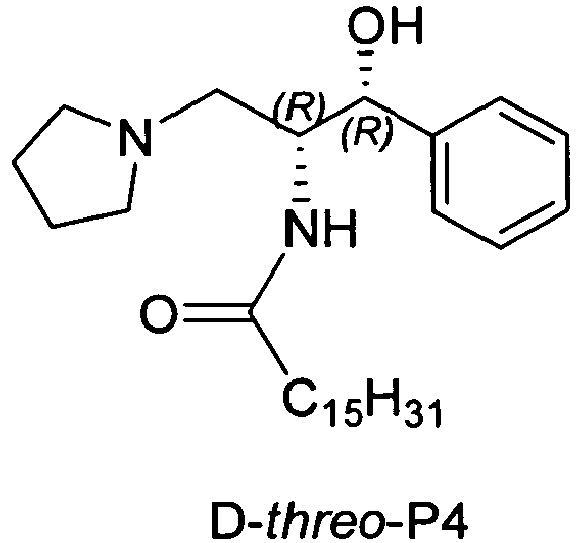
Claims (9)
- A compound of the formula

R2 is H, alkyl of 1 to 6 carbons or the R1 and R2 groups together with the nitrogen form a saturated or unsaturated 4, 5, 6 or 7 membered ring that optionally includes one or two heteroatoms independently selected from N, O and S, said 4, 5, 6 or 7 membered ring optionally being substituted with a halogen or with an alkyl group having 1 to 6 alkyl groups;
R3 is independently selected from H, alkyl of 1 to 20 carbons, aryl or heteroaryl, aryl-alkyl or heteroaryl-alkyl where the alkyl moiety is has 1 to 4 carbons, cycloalkyl of 3 to 6 carbons, said aryl or heteroaryl groups being optionally substituted with 1 to 3 groups independently selected from the group consisting of halogen, alkyl of 1 to 6 carbons, alkoxy of 1 to 6 carbons and thioxy of 1 to 6 carbons, or
R3 is CO-R7 or CO-O-R7 where R7 is H, alkyl of 1 to 1 to 20 carbons, benzyl, alkyl of 1 to 20 carbons substituted with and NH2 group, with a NHCOOalkyl or with an NH-COalkyl group where the alkyl group has one to 6 carbons, or R7 is aryl, heteroaryl, aryl-alkyl or heteroaryl-alkyl where the alkyl moiety is branched or unbranched and has 1 to 4 carbons, said aryl or heteroaryl groups being optionally substituted with 1 to 3 groups independently selected from the group consisting of halogen, alkyl of 1 to 6 carbons, alkoxy of 1 to 6 carbons and thioxy of 1 to 6 carbons;
R4 is H, alkyl of 1 to 6 carbons or CO-R8 where R8 is alkyl of 1 to 6 carbons;
the wavy lines represent bonds connected to carbons having R or S configuration, and
R10 is selected from the groups of formulas (i) and (ii)
R5 and R6 independently are H, alkyl of 1 to 6 carbons, halogen, alkoxy of 1 to 6 carbons or the R5 and R6 groups together with the atoms to which they are attached jointly form a carbocyclic or a heterocyclic ring, the carbocyclic ring having 5 or 6 atoms in the ring, the heterocyclic ring having 5 or 6 atoms in the ring and 1 to 3 heteroatoms independently selected from N, O and S, and
said carbocyclic or heterocyclic ring jointly formed by R5 and R6 being optionally substituted with 1 to 6 R9 groups where R9 is independently selected from halogen, alkyl of 1 to 6 carbons, alkoxy of 1 to 6 carbons, or a pharmaceutically acceptable salt of said compound;
with the proviso:that when R10 has formula (ii) then the claim does not include compounds where R4 is hydrogen and R1 and R2 jointly with the nitrogen form a morpholin or a pyrrolidin ring and where R5 and R6 both are H or one of R5 and R6 is OCH3 and the other is H. - A compound in accordance with Claim 1 where R10 represents the formula (i) or formula (ii).
- A compound in accordance with Claim 1 having the formula

- A compound in accordance with Claim 3 having the formula

- A compound for the formula
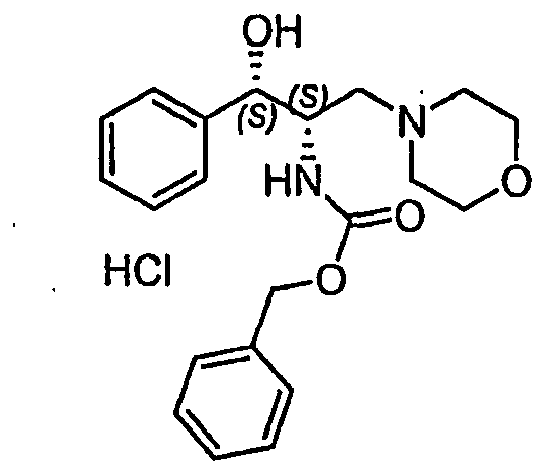
- A compound of the formula

- A compound according to any one of Claims 1-6 for use in therapy.
- A compound according to any of Claims 1-6 for use in a method requiring an analgesic effect.
- A pharmaceutical composition for treating pain in a mammal, the composition comprising a compound in accordance with Claim 1 and a pharmaceutically acceptable excipient.
Applications Claiming Priority (2)
| Application Number | Priority Date | Filing Date | Title |
|---|---|---|---|
| US64727105P | 2005-01-26 | 2005-01-26 | |
| EP06719433.2A EP1841742B1 (en) | 2005-01-26 | 2006-01-25 | 3-heteroaryl-3-hydroxy-2-amino-propyl amines and related compounds having analgesic and/or immuno stimulant activity |
Related Parent Applications (1)
| Application Number | Title | Priority Date | Filing Date |
|---|---|---|---|
| EP06719433.2A Division EP1841742B1 (en) | 2005-01-26 | 2006-01-25 | 3-heteroaryl-3-hydroxy-2-amino-propyl amines and related compounds having analgesic and/or immuno stimulant activity |
Publications (2)
| Publication Number | Publication Date |
|---|---|
| EP2489658A1 true EP2489658A1 (en) | 2012-08-22 |
| EP2489658B1 EP2489658B1 (en) | 2014-04-09 |
Family
ID=36250723
Family Applications (7)
| Application Number | Title | Priority Date | Filing Date |
|---|---|---|---|
| EP06719422.5A Expired - Lifetime EP1841743B1 (en) | 2005-01-26 | 2006-01-25 | 3-Aryl-3-hydroxy-2-amino-propionic acid amides, 3-heteroaryl-3-hydroxy-2-amino-propionic acid amides and related compounds having analgesic and/or immuno stimulant activity |
| EP06719390A Expired - Lifetime EP1841423B1 (en) | 2005-01-26 | 2006-01-25 | Use of 1- benzyl-1- hydroxy-2, 3-diamino-propyl amines, 3-benzyl-3-hydroxy-2-amino propionic acid amides and related compounds as analgesics |
| EP12161266.7A Expired - Lifetime EP2489658B1 (en) | 2005-01-26 | 2006-01-25 | 3-Heteroaryl-3-hydroxy-2-amino-propyl amines and related compounds having analgesic and/or immuno stimulant activity |
| EP12159632.4A Expired - Lifetime EP2474534B1 (en) | 2005-01-26 | 2006-01-25 | 3-Aryl-3-hydroxy-2-amino-propionic acid amides, 3-heteroaryl-3-hydroxy-2-amino-propionic acid amides and related compounds having analgesic and/or immunostimulant activity |
| EP06719438A Expired - Lifetime EP1841756B1 (en) | 2005-01-26 | 2006-01-25 | 3-heterocyclyl-3-hydroxy-2-amino-propionic acid amides and related compounds having analgesic and/or immuno stimulant activity |
| EP06719433.2A Expired - Lifetime EP1841742B1 (en) | 2005-01-26 | 2006-01-25 | 3-heteroaryl-3-hydroxy-2-amino-propyl amines and related compounds having analgesic and/or immuno stimulant activity |
| EP10155753A Expired - Lifetime EP2198864B1 (en) | 2005-01-26 | 2006-01-25 | Pharmaceutical compositions having an analgesic effect and containing 1-benzyl-1-hydroxy-2,3-diamino-propyl amines, 3-benzyl-3-hydroxy-2-amino propionic acid amides or related compounds |
Family Applications Before (2)
| Application Number | Title | Priority Date | Filing Date |
|---|---|---|---|
| EP06719422.5A Expired - Lifetime EP1841743B1 (en) | 2005-01-26 | 2006-01-25 | 3-Aryl-3-hydroxy-2-amino-propionic acid amides, 3-heteroaryl-3-hydroxy-2-amino-propionic acid amides and related compounds having analgesic and/or immuno stimulant activity |
| EP06719390A Expired - Lifetime EP1841423B1 (en) | 2005-01-26 | 2006-01-25 | Use of 1- benzyl-1- hydroxy-2, 3-diamino-propyl amines, 3-benzyl-3-hydroxy-2-amino propionic acid amides and related compounds as analgesics |
Family Applications After (4)
| Application Number | Title | Priority Date | Filing Date |
|---|---|---|---|
| EP12159632.4A Expired - Lifetime EP2474534B1 (en) | 2005-01-26 | 2006-01-25 | 3-Aryl-3-hydroxy-2-amino-propionic acid amides, 3-heteroaryl-3-hydroxy-2-amino-propionic acid amides and related compounds having analgesic and/or immunostimulant activity |
| EP06719438A Expired - Lifetime EP1841756B1 (en) | 2005-01-26 | 2006-01-25 | 3-heterocyclyl-3-hydroxy-2-amino-propionic acid amides and related compounds having analgesic and/or immuno stimulant activity |
| EP06719433.2A Expired - Lifetime EP1841742B1 (en) | 2005-01-26 | 2006-01-25 | 3-heteroaryl-3-hydroxy-2-amino-propyl amines and related compounds having analgesic and/or immuno stimulant activity |
| EP10155753A Expired - Lifetime EP2198864B1 (en) | 2005-01-26 | 2006-01-25 | Pharmaceutical compositions having an analgesic effect and containing 1-benzyl-1-hydroxy-2,3-diamino-propyl amines, 3-benzyl-3-hydroxy-2-amino propionic acid amides or related compounds |
Country Status (19)
| Country | Link |
|---|---|
| US (11) | US8013000B2 (en) |
| EP (7) | EP1841743B1 (en) |
| JP (6) | JP5042039B2 (en) |
| KR (1) | KR101395382B1 (en) |
| CN (2) | CN102718748B (en) |
| AT (3) | ATE549020T1 (en) |
| AU (4) | AU2006209197A1 (en) |
| BR (5) | BRPI0607304A2 (en) |
| CA (4) | CA2595544C (en) |
| DE (1) | DE602006012801D1 (en) |
| DK (3) | DK1841743T3 (en) |
| ES (5) | ES2380904T3 (en) |
| HU (1) | HUE028654T2 (en) |
| MX (1) | MX2007008955A (en) |
| NZ (1) | NZ556614A (en) |
| PL (2) | PL383715A1 (en) |
| RU (1) | RU2433999C2 (en) |
| WO (4) | WO2006081252A2 (en) |
| ZA (1) | ZA200706010B (en) |
Families Citing this family (28)
| Publication number | Priority date | Publication date | Assignee | Title |
|---|---|---|---|---|
| BRPI0517701A8 (en) | 2004-11-10 | 2018-01-23 | Genzyme Corp | diabetes mellitus treatment methods |
| PL383715A1 (en) * | 2005-01-26 | 2008-05-12 | Allergan, Inc. | Amides of 3-arylo-3-hydroxy-2-amino-propionate acid, amides of 3-heteroarylo-3-hydroxy-2-amino-propionate acid and their derivative compounds with analgesic activity and/or improving immunity |
| ES2546181T3 (en) | 2006-05-09 | 2015-09-21 | Genzyme Corporation | Methods of treating fatty liver disease by inhibiting the synthesis of glycosphingolipids |
| WO2008011485A2 (en) * | 2006-07-19 | 2008-01-24 | Allergan, Inc. | Methods for treating chronic pain |
| WO2008011478A2 (en) * | 2006-07-19 | 2008-01-24 | Allergan, Inc. | Methods for treating chronic pain using 3-aryl-3-hydroxy-2-amino-propionic acid amides, 3-heteroaryl-3-hydroxy-2-amino-propionic acid amides and related compounds |
| WO2008011487A2 (en) * | 2006-07-19 | 2008-01-24 | Allergan, Inc. | L-benzyl-l-hydr0xy-2, 3-diamin0-propyl amines and 3-benzyl-3-hydroxy-2-amino-propionicacid amides for chronic pain |
| WO2008011483A2 (en) * | 2006-07-19 | 2008-01-24 | Allergan, Inc. | Methods for treating chronic pain using 1- (hetero) aryl-1-hydroxy 2,3-diamino-propyl amines and related compounds |
| WO2008109610A1 (en) * | 2007-03-06 | 2008-09-12 | Allergan, Inc. | Methods for treating cognitive disorders using 3-aryl-3-hydroxy-2-amino-propionic acid amides, 3-heteroaryl-3-hydroxy-2-amino-propionic acid amides and related compounds |
| US8173683B2 (en) * | 2007-03-06 | 2012-05-08 | Allergan, Inc. | Methods for treating cognitive disorders |
| US20140179925A1 (en) | 2009-09-04 | 2014-06-26 | Allergan, Inc. | Methods for treating cognitive disorders using 3-aryl-3-hydroxy-2-amino-propionic acid amides, 3-heteroaryl-3-hydroxy-2-amino-propionic acid amides and related compounds |
| US9314466B2 (en) | 2007-03-06 | 2016-04-19 | Allergan, Inc. | Methods for treating cognitive disorders using 1-benzyl-1-hydroxy-2,3-diamino-propyl amines, 3-benzyl-3-hydroxy-2-amino-propionic acid amides and related compounds |
| CN101279955B (en) * | 2007-04-03 | 2012-11-28 | 北京摩力克科技有限公司 | N-substituted thiamorpholine derivate as DPP-IV inhibitor and medical use thereof |
| EP2594565B1 (en) | 2007-05-31 | 2018-10-24 | Genzyme Corporation | 2-acylaminopropanol-type glucosylceramide synthase inhibitors |
| CA2693369A1 (en) | 2007-07-17 | 2009-01-22 | Allergan, Inc. | Methods for treating anxiety |
| KR101640263B1 (en) | 2007-10-05 | 2016-07-15 | 젠자임 코포레이션 | Method of treating polycystic kidney diseases with ceramide derivatives |
| US8168631B2 (en) | 2008-02-05 | 2012-05-01 | Allergan, Inc. | 3-(4-fluorophenyl)-3-hydroxy-2-amino-propionic acid amides and related compounds having analgesic activity |
| JP2011529500A (en) | 2008-07-28 | 2011-12-08 | ジェンザイム コーポレーション | Glucosylceramide synthase inhibition for the treatment of collapsing glomerulopathy and other glomerular diseases |
| CN102271678B (en) | 2008-10-03 | 2017-06-30 | 简詹姆公司 | 2-amidopropanol-type glucosylceramide synthetase inhibitor |
| EP2453890B1 (en) | 2009-07-17 | 2020-05-27 | Allergan, Inc. | Compositions comprising a cholinesterase inhibitor for treating cognitive disorders |
| EP2477623A1 (en) * | 2009-09-16 | 2012-07-25 | Allergan, Inc. | Compositions and methods for treating disorders of gastrointestinal motility |
| BR112012006073A2 (en) * | 2009-09-16 | 2016-05-31 | Allergan Inc | compositions and methods for treating spasticity. |
| JP2013505248A (en) | 2009-09-16 | 2013-02-14 | アラーガン インコーポレイテッド | Compositions and methods for treating seizure disorders |
| CA2776849A1 (en) * | 2009-11-18 | 2011-05-26 | Fab Pharma S.A.S. | Novel heterocyclic acrylamides and their use as pharmaceuticals |
| CA2921385C (en) | 2013-08-15 | 2021-10-19 | Allergan, Inc. | (-)-(2r,3s)-2-amino-3-hydroxy-3-pyridin-4-yl-1-pyrrolidin-1-yl-propan-1-one (l)-(+) tartrate salt, its method of production and use |
| CN110372636B (en) | 2013-09-20 | 2023-03-28 | 生物马林药物股份有限公司 | Glucose ceramide synthase inhibitors for the treatment of diseases |
| JP6152816B2 (en) * | 2014-03-26 | 2017-06-28 | ソニー株式会社 | SEMICONDUCTOR DEVICE, DISPLAY PANEL, DISPLAY DEVICE, ELECTRONIC DEVICE, AND SEMICONDUCTOR DEVICE MANUFACTURING METHOD |
| DE102015217629A1 (en) * | 2015-09-15 | 2017-03-16 | Tridonic Gmbh & Co Kg | PFC module for intermittent operation |
| EP3805206B1 (en) * | 2019-10-08 | 2026-08-05 | Novaled GmbH | Compound and an organic semiconducting layer, an organic electronic device, a display device and a lighting device comprising the same |
Citations (14)
| Publication number | Priority date | Publication date | Assignee | Title |
|---|---|---|---|---|
| WO1995005177A1 (en) | 1993-08-13 | 1995-02-23 | Seikagaku Corporation | Remedy for nervous diseases |
| EP0765865A1 (en) * | 1994-06-10 | 1997-04-02 | Seikagaku Corporation | 2-acylaminopropanol compound and medicinal composition |
| EP0782992A1 (en) | 1995-12-08 | 1997-07-09 | Seikagaku Kogyo Kabushiki Kaisha (Seikagaku Corporation) | Amino alcohol derivative and method for preparing the same |
| JPH09216858A (en) | 1996-01-19 | 1997-08-19 | Gruenenthal Gmbh | How to split the racemate of tramadol |
| JPH10324671A (en) | 1997-05-23 | 1998-12-08 | Seikagaku Kogyo Co Ltd | Amino alcohol derivatives and pharmaceuticals containing them |
| US5916911A (en) | 1995-09-20 | 1999-06-29 | The Regents Of The University Of Michigan | Amino ceramide--like compounds and therapeutic methods of use |
| WO2001004108A1 (en) | 1999-07-09 | 2001-01-18 | Regents Of The University Of Michigan | Amino ceramide-like compounds and therapeutic methods of use |
| WO2001038228A1 (en) | 1999-11-22 | 2001-05-31 | Amersham Biosciences Ab | A method for anion-exchange adsorption and thioether anion-exchangers |
| WO2002012185A1 (en) | 2000-08-10 | 2002-02-14 | Chembionex Co., Ltd. | Process for preparing 2,3-diaminopropanols and synthesis of other compounds using 2,3-diaminopropanols |
| US6407064B2 (en) | 1999-12-06 | 2002-06-18 | Seikagaku Corporation | Aminoalcohol derivative and medicament comprising the same |
| WO2002062777A2 (en) | 2001-01-10 | 2002-08-15 | The Regents Of The University Of Michigan | Amino ceramide-like compounds and therapeutic methods of use |
| US20020198240A1 (en) | 2001-01-10 | 2002-12-26 | Shayman James A. | Amino ceramide - like compounds and therapeutic methods of use |
| WO2003008399A1 (en) | 2001-07-16 | 2003-01-30 | Genzyme Corporation | Synthesis of udp-glucose: n-acylsphingosine glucosyltransferase inhibitors |
| WO2003045928A1 (en) | 2001-11-26 | 2003-06-05 | Genzyme Corporation | Diastereoselective synthesis of udp-glucose : n-acylsphingosine glucosyltransferase inhibitors |
Family Cites Families (48)
| Publication number | Priority date | Publication date | Assignee | Title |
|---|---|---|---|---|
| US2514380A (en) * | 1946-12-26 | 1950-07-11 | Hoffmann La Roche | Diamines and method of production |
| DE1001261C2 (en) | 1954-08-05 | 1957-07-04 | Thomae Gmbh Dr K | Process for the preparation of basic esters of endocyclically substituted almond acids and their salts |
| US2918466A (en) | 1955-05-24 | 1959-12-22 | Univ St Johns | Antimicrobial chemical compounds derived from alkoxyphenyl glycidic acid |
| US3065265A (en) | 1957-07-04 | 1962-11-20 | Hoffmann La Roche | Amino acid hydrazides |
| SU1063026A1 (en) | 1982-05-19 | 1990-12-07 | Институт биохимии АН ЛитССР | N-benzosulphonyl derivatives of treo-dl-phenylserine as antiinflammatory agent |
| EP0144290A3 (en) * | 1983-12-01 | 1987-05-27 | Ciba-Geigy Ag | Substituted ethylenediamine derivatives |
| JPS60132935A (en) | 1983-12-20 | 1985-07-16 | Sumitomo Chem Co Ltd | Phenylserine derivative and production thereof |
| JPS61145148A (en) | 1984-12-19 | 1986-07-02 | Sumitomo Seiyaku Kk | Phenylseprine derivative |
| GB8618188D0 (en) * | 1986-07-25 | 1986-09-03 | Ici Plc | Diamine compounds |
| GB8622352D0 (en) * | 1986-09-17 | 1986-10-22 | Zambeleetti Spa Dr L | Compounds |
| JPH02250845A (en) | 1989-03-22 | 1990-10-08 | Sumitomo Pharmaceut Co Ltd | Production of 3-(4-fluorophenyl)propionaldehyde |
| EP0522606B1 (en) * | 1991-05-10 | 1996-04-03 | Takeda Chemical Industries, Ltd. | Pyridine derivatives, their production and use |
| JPH0550499A (en) | 1991-08-27 | 1993-03-02 | Kuwabara Yasunaga | Trimming method in mold and container |
| US6696486B1 (en) | 1992-01-22 | 2004-02-24 | Glaxo Group Limited | Medical use for atypical β-adrenoceptor agonists |
| JPH09506610A (en) | 1993-12-17 | 1997-06-30 | ディーエスエム エヌ.ブイ. | Preparation of phenylserine amide and phenylserine / phenylserine amide |
| WO1996009405A1 (en) | 1994-09-19 | 1996-03-28 | The Board Of Trustees Of Leland Stanford, Junior University | Treatment of plasmodium |
| US5585388A (en) | 1995-04-07 | 1996-12-17 | Sibia Neurosciences, Inc. | Substituted pyridines useful as modulators of acetylcholine receptors |
| FR2732894B1 (en) | 1995-04-13 | 1997-07-04 | Sanofi Sa | NEW USE OF BETA9-ADRENERGIC AGONIST COMPOUNDS |
| JPH08337569A (en) * | 1995-06-15 | 1996-12-24 | Sankyo Co Ltd | Analgesic active substance |
| JP3993908B2 (en) * | 1995-12-08 | 2007-10-17 | 生化学工業株式会社 | Amino alcohol derivative and method for producing the derivative |
| EP0848059A1 (en) | 1996-12-12 | 1998-06-17 | Vetigen | Mammalian ICYP (Iodocyanopindolol) receptor and its applications |
| WO1998033501A1 (en) * | 1997-01-31 | 1998-08-06 | Avid Therapeutics Inc. | 2-benzoylamino-3-phenylpropenamide derivatives and methods of using the same |
| WO1998042657A1 (en) | 1997-03-21 | 1998-10-01 | The Scripps Research Institute | SYNTHESIS OF α,β-SUBSTITUTED AMINO AMIDES, ESTERS AND ACIDS |
| US6617340B1 (en) | 1999-07-29 | 2003-09-09 | Novartis Ag | N-(substituted glycyl)-pyrrolidines, pharmaceutical compositions containing them and their use in inhibiting dipeptidyl peptidase-IV |
| ES2216644T3 (en) * | 1999-10-06 | 2004-10-16 | Torrent Pharmaceuticals Ltd | USEFUL PIRIDINY DERIVATIVES FOR THE TREATMENT OF VASCULAR COMPLICATIONS RELATED TO THE AGING AND PROCEDURE OF PREPARATION AND USE OF THE SAME. |
| AU2207001A (en) * | 1999-12-24 | 2001-07-09 | Smithkline Beecham Plc | Novel compounds and process |
| US6380398B2 (en) | 2000-01-04 | 2002-04-30 | Novo Nordisk A/S | Therapeutically active and selective heterocyclic compounds that are inhibitors of the enzyme DPP-IV |
| GB0010188D0 (en) | 2000-04-26 | 2000-06-14 | Ferring Bv | Inhibitors of dipeptidyl peptidase IV |
| WO2003013571A1 (en) | 2001-08-10 | 2003-02-20 | Palatin Technologies, Inc. | Peptidomimetics of biologically active metallopeptides |
| JP2006021997A (en) | 2002-07-09 | 2006-01-26 | Ono Pharmaceut Co Ltd | CysLT1 / cysLT2 both receptor antagonist respiratory disease therapeutic agent |
| JP2006510630A (en) | 2002-12-04 | 2006-03-30 | メルク エンド カムパニー インコーポレーテッド | Phenylalanine derivatives as dipeptidyl peptidase inhibitors for treating or preventing diabetes |
| ES2387803T3 (en) | 2003-01-08 | 2012-10-02 | Novartis Vaccines And Diagnostics, Inc. | Antibacterial agents |
| WO2005056541A1 (en) | 2003-12-11 | 2005-06-23 | Mitsubishi Pharma Corporation | α-AMINO ACID DERIVATIVES AND USE THEREOF AS MEDICINES |
| US20070270350A1 (en) | 2003-12-23 | 2007-11-22 | Musc Foundation For Research Development | Methods and Compositions for the Prevention and Treatment of Inflammatory Diseases or Conditions |
| US20070093492A1 (en) | 2004-03-09 | 2007-04-26 | Weir-Torn Jiaang | Pyrrolidine derivatives |
| CA2576255A1 (en) | 2004-08-09 | 2006-02-16 | Universite Catholique De Louvain | Use of agonists and antagonists of beta-adrenoceptors for treating arterial diseases |
| DE102004053409A1 (en) | 2004-11-05 | 2006-05-11 | Bayer Healthcare Ag | Process for the targeted production of lysobactin fragments |
| PL383715A1 (en) | 2005-01-26 | 2008-05-12 | Allergan, Inc. | Amides of 3-arylo-3-hydroxy-2-amino-propionate acid, amides of 3-heteroarylo-3-hydroxy-2-amino-propionate acid and their derivative compounds with analgesic activity and/or improving immunity |
| US7858825B2 (en) | 2007-02-15 | 2010-12-28 | Colorado State University Research Foundation | Acid and base stable diphenylmethanol derivatives and methods of use |
| US8173683B2 (en) * | 2007-03-06 | 2012-05-08 | Allergan, Inc. | Methods for treating cognitive disorders |
| WO2008109286A1 (en) * | 2007-03-06 | 2008-09-12 | Allergan, Inc. | Methods for treating cognitive disorders using 1-aryl-1-hydroxy-2,3-diamino-propyl amines, 1-heteroaryl-1-hydroxy-2,3-diamino-propyl amines and related compounds |
| WO2008109610A1 (en) * | 2007-03-06 | 2008-09-12 | Allergan, Inc. | Methods for treating cognitive disorders using 3-aryl-3-hydroxy-2-amino-propionic acid amides, 3-heteroaryl-3-hydroxy-2-amino-propionic acid amides and related compounds |
| CA2693369A1 (en) * | 2007-07-17 | 2009-01-22 | Allergan, Inc. | Methods for treating anxiety |
| US8168631B2 (en) | 2008-02-05 | 2012-05-01 | Allergan, Inc. | 3-(4-fluorophenyl)-3-hydroxy-2-amino-propionic acid amides and related compounds having analgesic activity |
| EP2285775B1 (en) * | 2008-05-20 | 2017-03-22 | Allergan, Inc. | Lactams and their use in the treatment of inter alia ocular hypertension or baldness |
| BR112012006073A2 (en) * | 2009-09-16 | 2016-05-31 | Allergan Inc | compositions and methods for treating spasticity. |
| JP2013505248A (en) * | 2009-09-16 | 2013-02-14 | アラーガン インコーポレイテッド | Compositions and methods for treating seizure disorders |
| EP2477623A1 (en) * | 2009-09-16 | 2012-07-25 | Allergan, Inc. | Compositions and methods for treating disorders of gastrointestinal motility |
-
2006
- 2006-01-25 PL PL383715A patent/PL383715A1/en unknown
- 2006-01-25 KR KR1020077019382A patent/KR101395382B1/en not_active Expired - Lifetime
- 2006-01-25 ES ES10155753T patent/ES2380904T3/en not_active Expired - Lifetime
- 2006-01-25 BR BRPI0607304-2A patent/BRPI0607304A2/en not_active Application Discontinuation
- 2006-01-25 ES ES06719422.5T patent/ES2565236T3/en not_active Expired - Lifetime
- 2006-01-25 PL PL06719422T patent/PL1841743T3/en unknown
- 2006-01-25 JP JP2007553188A patent/JP5042039B2/en not_active Expired - Lifetime
- 2006-01-25 WO PCT/US2006/002505 patent/WO2006081252A2/en not_active Ceased
- 2006-01-25 AU AU2006209197A patent/AU2006209197A1/en not_active Abandoned
- 2006-01-25 ES ES06719433.2T patent/ES2436612T3/en not_active Expired - Lifetime
- 2006-01-25 JP JP2007553193A patent/JP5107058B2/en not_active Expired - Fee Related
- 2006-01-25 JP JP2007553191A patent/JP5042040B2/en not_active Expired - Fee Related
- 2006-01-25 AU AU2006209209A patent/AU2006209209B2/en not_active Expired
- 2006-01-25 WO PCT/US2006/002570 patent/WO2006081276A1/en not_active Ceased
- 2006-01-25 ES ES06719390T patent/ES2340196T3/en not_active Expired - Lifetime
- 2006-01-25 HU HUE06719422A patent/HUE028654T2/en unknown
- 2006-01-25 DK DK06719422.5T patent/DK1841743T3/en active
- 2006-01-25 AT AT10155753T patent/ATE549020T1/en active
- 2006-01-25 DE DE602006012801T patent/DE602006012801D1/en not_active Expired - Lifetime
- 2006-01-25 JP JP2007553179A patent/JP5039564B2/en not_active Expired - Fee Related
- 2006-01-25 WO PCT/US2006/002580 patent/WO2006081280A1/en not_active Ceased
- 2006-01-25 MX MX2007008955A patent/MX2007008955A/en active IP Right Grant
- 2006-01-25 US US11/814,601 patent/US8013000B2/en active Active
- 2006-01-25 EP EP06719422.5A patent/EP1841743B1/en not_active Expired - Lifetime
- 2006-01-25 EP EP06719390A patent/EP1841423B1/en not_active Expired - Lifetime
- 2006-01-25 DK DK06719438.1T patent/DK1841756T3/en active
- 2006-01-25 ES ES06719438T patent/ES2371265T3/en not_active Expired - Lifetime
- 2006-01-25 CA CA2595544A patent/CA2595544C/en not_active Expired - Fee Related
- 2006-01-25 US US11/814,604 patent/US20090088433A1/en not_active Abandoned
- 2006-01-25 BR BR122018068138A patent/BR122018068138B8/en active IP Right Grant
- 2006-01-25 BR BRPI0607379A patent/BRPI0607379B8/en not_active IP Right Cessation
- 2006-01-25 CN CN201210113463.XA patent/CN102718748B/en not_active Expired - Lifetime
- 2006-01-25 CA CA2595519A patent/CA2595519C/en not_active Expired - Fee Related
- 2006-01-25 NZ NZ556614A patent/NZ556614A/en unknown
- 2006-01-25 EP EP12161266.7A patent/EP2489658B1/en not_active Expired - Lifetime
- 2006-01-25 CN CN2006800098658A patent/CN101151248B/en not_active Expired - Lifetime
- 2006-01-25 DK DK06719390.4T patent/DK1841423T3/en active
- 2006-01-25 US US11/814,598 patent/US8288556B2/en active Active
- 2006-01-25 EP EP12159632.4A patent/EP2474534B1/en not_active Expired - Lifetime
- 2006-01-25 EP EP06719438A patent/EP1841756B1/en not_active Expired - Lifetime
- 2006-01-25 WO PCT/US2006/002557 patent/WO2006081273A1/en not_active Ceased
- 2006-01-25 AT AT06719438T patent/ATE523491T1/en not_active IP Right Cessation
- 2006-01-25 CA CA2595522A patent/CA2595522C/en not_active Expired - Lifetime
- 2006-01-25 RU RU2007128313/04A patent/RU2433999C2/en active
- 2006-01-25 EP EP06719433.2A patent/EP1841742B1/en not_active Expired - Lifetime
- 2006-01-25 BR BRPI0606111A patent/BRPI0606111B8/en active IP Right Grant
- 2006-01-25 CA CA002595542A patent/CA2595542A1/en not_active Abandoned
- 2006-01-25 AT AT06719390T patent/ATE460159T1/en not_active IP Right Cessation
- 2006-01-25 EP EP10155753A patent/EP2198864B1/en not_active Expired - Lifetime
- 2006-01-25 AU AU2006209208A patent/AU2006209208B2/en not_active Ceased
- 2006-01-25 AU AU2006209207A patent/AU2006209207C1/en not_active Ceased
- 2006-01-25 US US11/814,593 patent/US8153666B2/en active Active
- 2006-01-25 BR BRPI0606112A patent/BRPI0606112B8/en not_active IP Right Cessation
-
2007
- 2007-07-20 ZA ZA200706010A patent/ZA200706010B/en unknown
-
2011
- 2011-08-02 US US13/196,132 patent/US8513288B2/en not_active Expired - Fee Related
-
2012
- 2012-03-01 US US13/409,853 patent/US8835463B2/en active Active
- 2012-04-04 JP JP2012085680A patent/JP2012162547A/en active Pending
- 2012-04-04 JP JP2012085676A patent/JP2012162546A/en active Pending
- 2012-04-19 US US13/450,854 patent/US9278943B2/en not_active Expired - Lifetime
- 2012-09-12 US US13/612,260 patent/US8431599B2/en not_active Expired - Lifetime
-
2013
- 2013-03-15 US US13/834,336 patent/US8927589B2/en not_active Expired - Lifetime
- 2013-07-24 US US13/949,468 patent/US9399628B2/en not_active Expired - Lifetime
-
2015
- 2015-11-30 US US14/954,263 patent/US9828349B2/en not_active Expired - Lifetime
Patent Citations (19)
| Publication number | Priority date | Publication date | Assignee | Title |
|---|---|---|---|---|
| WO1995005177A1 (en) | 1993-08-13 | 1995-02-23 | Seikagaku Corporation | Remedy for nervous diseases |
| EP0765865A1 (en) * | 1994-06-10 | 1997-04-02 | Seikagaku Corporation | 2-acylaminopropanol compound and medicinal composition |
| US6051598A (en) | 1995-09-20 | 2000-04-18 | The Regents Of The University Of Michigan | Amino ceramide-like compounds and therapeutic methods of use |
| US5916911A (en) | 1995-09-20 | 1999-06-29 | The Regents Of The University Of Michigan | Amino ceramide--like compounds and therapeutic methods of use |
| US5945442A (en) | 1995-09-20 | 1999-08-31 | The Regents Of The University Of Michigan | Amino ceramide-like compounds and therapeutic methods of use |
| US5952370A (en) | 1995-09-20 | 1999-09-14 | The Regents Of University Of Michigan | Amino ceramide-like compounds and therapeutic methods of use |
| US6030995A (en) | 1995-09-20 | 2000-02-29 | The Regents Of The University Of Michigan | Amino ceramide-like compounds and therapeutic methods of use |
| EP0782992A1 (en) | 1995-12-08 | 1997-07-09 | Seikagaku Kogyo Kabushiki Kaisha (Seikagaku Corporation) | Amino alcohol derivative and method for preparing the same |
| JPH09216858A (en) | 1996-01-19 | 1997-08-19 | Gruenenthal Gmbh | How to split the racemate of tramadol |
| JPH10324671A (en) | 1997-05-23 | 1998-12-08 | Seikagaku Kogyo Co Ltd | Amino alcohol derivatives and pharmaceuticals containing them |
| WO2001004108A1 (en) | 1999-07-09 | 2001-01-18 | Regents Of The University Of Michigan | Amino ceramide-like compounds and therapeutic methods of use |
| WO2001038228A1 (en) | 1999-11-22 | 2001-05-31 | Amersham Biosciences Ab | A method for anion-exchange adsorption and thioether anion-exchangers |
| US6407064B2 (en) | 1999-12-06 | 2002-06-18 | Seikagaku Corporation | Aminoalcohol derivative and medicament comprising the same |
| WO2002012185A1 (en) | 2000-08-10 | 2002-02-14 | Chembionex Co., Ltd. | Process for preparing 2,3-diaminopropanols and synthesis of other compounds using 2,3-diaminopropanols |
| WO2002062777A2 (en) | 2001-01-10 | 2002-08-15 | The Regents Of The University Of Michigan | Amino ceramide-like compounds and therapeutic methods of use |
| US20020198240A1 (en) | 2001-01-10 | 2002-12-26 | Shayman James A. | Amino ceramide - like compounds and therapeutic methods of use |
| WO2003008399A1 (en) | 2001-07-16 | 2003-01-30 | Genzyme Corporation | Synthesis of udp-glucose: n-acylsphingosine glucosyltransferase inhibitors |
| WO2003045928A1 (en) | 2001-11-26 | 2003-06-05 | Genzyme Corporation | Diastereoselective synthesis of udp-glucose : n-acylsphingosine glucosyltransferase inhibitors |
| US20030153768A1 (en) | 2001-11-26 | 2003-08-14 | Genzyme Corporation | Diastereoselective synthesis of UDP-glucose: N-acylsphingosine glucosyltransferase inhibitors |
Non-Patent Citations (26)
| Title |
|---|
| ABE, A., J. BIOCHEM., vol. 111, 1992, pages 191 - 196 |
| DATABASE CA [online] CHEMICAL ABSTRACTS SERVICE, COLUMBUS, OHIO, US; INOKUCHI, KIMIKAZU ET AL: "Amino alcohol esters as ceramide analogs and pharmaceuticals containing them for treatment of nerve diseases", XP002381282, retrieved from STN Database accession no. 1998:786189 * |
| DIXON, W.J., ANN. REV. PHARMACOL. TOXICOL., vol. 20, 1980, pages 441 - 462 |
| HUSAIN A.; GANEM B., TETRAHEDRON LETT., vol. 43, 2002, pages 8621 - 8623 |
| INOKUCBI, J. ET AL., J. LIPID RES., vol. 28, 1987, pages 565 - 571 |
| INOKUCHI ET AL., ANN. N.Y. ACAD, SCI., vol. 845, no. 1, 1998, pages 219 - 224 |
| INOKUCHI ET AL., ANN. N.Y. ACAD. SCI., vol. 845, no. 1, 1998, pages 219 - 224 |
| INOKUCHI J., CANCER LETTERS, vol. 38, no. 1-2, 1987, pages 23 - 30 |
| JIMBO M. ET AL., J. BIOCHEM., vol. 127, no. 3, 2000, pages 485 - 91 |
| JOURNAL OF LABELLED COMPOUNDS & RADIOPHARMACEUTICALS, vol. 38, no. 3, 1996, pages 285 - 97 |
| KASTRON ET AL., LATVIJAS PSR ZINATNU AKADEMIJAS VESTIS, 1965, pages 474 - 7 |
| KIM; CHUNG, PAIN, vol. 150, 1992, pages 355 - 363 |
| LEE, L. ET AL., J. BIOL. CHEM., vol. 274, no. 21, 1999, pages 14662 - 14669 |
| MITCHELL S A ET AL: "Glycosyltransferase Inhibitors: synthesis of D-threo-PDMP, L-threo-PDMP and other brain glucosylceramide synthase inhibitors from D- or L-serine", JOURNAL OF ORGANIC CHEMISTRY, AMERICAN CHEMICAL SOCIETY. EASTON, US, vol. 63, 1998, pages 8837 - 8842, XP002216878, ISSN: 0022-3263 * |
| MITCHELL, SCOTT A, J. ORG. CHEM., vol. 63, no. 24, 1998, pages 8837 - 8842 |
| MITCHELL, SCOTT A., J. ORG. CHEM., vol. 63, no. 24, 1998, pages 8837 - 8842 |
| MIURA, T. ET AL., BIOORG. MED. CHEM., vol. 6, 1998, pages 1481 - 1498 |
| MIZUTANI A. ET AL., BIOCHEM. BIOPHYS. RES. COMMUN., vol. 222, 1996, pages 494 - 498 |
| NISHIDA, A., SYNLETT, vol. 4, 1998, pages 389 - 390 |
| RADIN, A. ET AL., J. LIPIDRES., vol. 36, 1995, pages 611 - 621 |
| RADIN, A. ET AL., NEUROPROTOCOLS, vol. 3, no. 2, 1993, pages 145 - 55 |
| SHIN S-H ET AL: "Stereoselective synthesis of enantiomerically pure d-threo-PDMP; manipulation of a core 2,3-diamino alcohol unit", TETRAHEDRON: ASYMMETRY, ELSEVIER SCIENCE PUBLISHERS, AMSTERDAM, NL, vol. 11, no. 16, 25 August 2000 (2000-08-25), pages 3293 - 3301, XP004217396, ISSN: 0957-4166 * |
| SHIN, S. ET AL., TETRAHEDRON ASYMMETRY, vol. 11, 2000, pages 3293 - 3301 |
| SHIN, S-H.; HAN, E.Y.; PARK, C.S.; LEE, W.K; HA, H.-J., TETRAHEDRON ASYMMETRY, vol. 11, 2000, pages 3293 - 3301 |
| SLAVISH., J. P. ET AL., BLOORG. MED. CHEM, LETT., vol. 14, 2004, pages 1487 - 1490 |
| VUNAM, R. R.; RADIN, N., CHEM. PHYS. LIPIDS, vol. 26, 1980, pages 265 - 278 |
Also Published As
Similar Documents
| Publication | Publication Date | Title |
|---|---|---|
| US9828349B2 (en) | 1-aryl-1-hydroxy-2,3-diamino-propyl amines, 1-heteroaryl-1-hydroxy-2,3-diamino-propyl amines and related compounds having analgesic and/or immuno stimulant activity | |
| US20100105687A1 (en) | Methods for treating cognitive disorders using 1-aryl-1-hydroxy-2,3-diamino-propyl amines, 1-heteroaryl-1-hydroxy-2,3-diamino-propyl amines and related compounds | |
| AU2018203022B2 (en) | 3-aryl-3-hydroxy-2-amino-propionic acid amides, 3-heteroaryl-3-hydroxy-2-amino-propionic acid amides and related compounds having analgesic and/or immunostimulant activity | |
| AU2012208996A1 (en) | 3-heteroaryl-3-hydroxy-2-amino-propyl amines and related compounds having analgesic and/or immuno stimulant activity | |
| HK1145628B (en) | Pharmaceutical compositions having an analgesic effect and containing 1-benzyl-1-hydroxy-2, 3-diamino-propyl amines, 3-benzyl-3-hydroxy-2-amino propionic acid amides or related compounds | |
| AU2012201628A1 (en) | Use of 1-benzyl-1-hydroxy-2, 3-diamino-propyl amines, 3-benzyl-3-hydroxy-2-amino-propionic acid amides and related compounds as analgesics | |
| HK1173721B (en) | 3-aryl-3-hydroxy-2-amino-propionic acid amides, 3-heteroaryl-3-hydroxy-2-amino-propionic acid amides and related compounds having analgesic and/or immunostimulant activity | |
| HK1113796B (en) | 3-aryl-3-hydroxy-2-amino-propionic acid amides, 3-heteroaryl-3-hydroxy-2-amino-propionic acid amides and related compounds having analgesic and/or immuno stimulant activity | |
| AU2012241156A1 (en) | 3-aryl-3-hydroxy-2-amino-propionic acid amides, 3-heteroaryl-3-hydroxy-2-amino-propionic acid amides and related compounds having analgesic and/or immunostimulant activity |
Legal Events
| Date | Code | Title | Description |
|---|---|---|---|
| PUAI | Public reference made under article 153(3) epc to a published international application that has entered the european phase |
Free format text: ORIGINAL CODE: 0009012 |
|
| AC | Divisional application: reference to earlier application |
Ref document number: 1841742 Country of ref document: EP Kind code of ref document: P |
|
| AK | Designated contracting states |
Kind code of ref document: A1 Designated state(s): AT BE BG CH CY CZ DE DK EE ES FI FR GB GR HU IE IS IT LI LT LU LV MC NL PL PT RO SE SI SK TR |
|
| RIN1 | Information on inventor provided before grant (corrected) |
Inventor name: LEBLOND, BERTRAND Inventor name: TAVERNE, THIERRY Inventor name: BEAUSOLEIL, ERIC Inventor name: DONELLO, JOHN E. |
|
| 17P | Request for examination filed |
Effective date: 20130118 |
|
| 17Q | First examination report despatched |
Effective date: 20130503 |
|
| GRAP | Despatch of communication of intention to grant a patent |
Free format text: ORIGINAL CODE: EPIDOSNIGR1 |
|
| INTG | Intention to grant announced |
Effective date: 20131018 |
|
| RIN1 | Information on inventor provided before grant (corrected) |
Inventor name: LEBLOND, BERTRAND Inventor name: DONELLO, JOHN E. Inventor name: TAVERNE, THIERRY Inventor name: BEAUSOLEIL, ERIC |
|
| GRAS | Grant fee paid |
Free format text: ORIGINAL CODE: EPIDOSNIGR3 |
|
| GRAA | (expected) grant |
Free format text: ORIGINAL CODE: 0009210 |
|
| AC | Divisional application: reference to earlier application |
Ref document number: 1841742 Country of ref document: EP Kind code of ref document: P |
|
| AK | Designated contracting states |
Kind code of ref document: B1 Designated state(s): AT BE BG CH CY CZ DE DK EE ES FI FR GB GR HU IE IS IT LI LT LU LV MC NL PL PT RO SE SI SK TR |
|
| REG | Reference to a national code |
Ref country code: GB Ref legal event code: FG4D |
|
| REG | Reference to a national code |
Ref country code: AT Ref legal event code: REF Ref document number: 661291 Country of ref document: AT Kind code of ref document: T Effective date: 20140415 Ref country code: CH Ref legal event code: NV Representative=s name: E. BLUM AND CO. AG PATENT- UND MARKENANWAELTE , CH Ref country code: CH Ref legal event code: EP |
|
| REG | Reference to a national code |
Ref country code: NL Ref legal event code: T3 |
|
| REG | Reference to a national code |
Ref country code: DE Ref legal event code: R096 Ref document number: 602006041054 Country of ref document: DE Effective date: 20140515 |
|
| REG | Reference to a national code |
Ref country code: IE Ref legal event code: FG4D |
|
| REG | Reference to a national code |
Ref country code: AT Ref legal event code: MK05 Ref document number: 661291 Country of ref document: AT Kind code of ref document: T Effective date: 20140409 |
|
| REG | Reference to a national code |
Ref country code: LT Ref legal event code: MG4D |
|
| PG25 | Lapsed in a contracting state [announced via postgrant information from national office to epo] |
Ref country code: GR Free format text: LAPSE BECAUSE OF FAILURE TO SUBMIT A TRANSLATION OF THE DESCRIPTION OR TO PAY THE FEE WITHIN THE PRESCRIBED TIME-LIMIT Effective date: 20140710 Ref country code: IS Free format text: LAPSE BECAUSE OF FAILURE TO SUBMIT A TRANSLATION OF THE DESCRIPTION OR TO PAY THE FEE WITHIN THE PRESCRIBED TIME-LIMIT Effective date: 20140809 Ref country code: FI Free format text: LAPSE BECAUSE OF FAILURE TO SUBMIT A TRANSLATION OF THE DESCRIPTION OR TO PAY THE FEE WITHIN THE PRESCRIBED TIME-LIMIT Effective date: 20140409 Ref country code: LT Free format text: LAPSE BECAUSE OF FAILURE TO SUBMIT A TRANSLATION OF THE DESCRIPTION OR TO PAY THE FEE WITHIN THE PRESCRIBED TIME-LIMIT Effective date: 20140409 Ref country code: BG Free format text: LAPSE BECAUSE OF FAILURE TO SUBMIT A TRANSLATION OF THE DESCRIPTION OR TO PAY THE FEE WITHIN THE PRESCRIBED TIME-LIMIT Effective date: 20140709 |
|
| PG25 | Lapsed in a contracting state [announced via postgrant information from national office to epo] |
Ref country code: LV Free format text: LAPSE BECAUSE OF FAILURE TO SUBMIT A TRANSLATION OF THE DESCRIPTION OR TO PAY THE FEE WITHIN THE PRESCRIBED TIME-LIMIT Effective date: 20140409 Ref country code: ES Free format text: LAPSE BECAUSE OF FAILURE TO SUBMIT A TRANSLATION OF THE DESCRIPTION OR TO PAY THE FEE WITHIN THE PRESCRIBED TIME-LIMIT Effective date: 20140409 Ref country code: SE Free format text: LAPSE BECAUSE OF FAILURE TO SUBMIT A TRANSLATION OF THE DESCRIPTION OR TO PAY THE FEE WITHIN THE PRESCRIBED TIME-LIMIT Effective date: 20140409 Ref country code: PL Free format text: LAPSE BECAUSE OF FAILURE TO SUBMIT A TRANSLATION OF THE DESCRIPTION OR TO PAY THE FEE WITHIN THE PRESCRIBED TIME-LIMIT Effective date: 20140409 Ref country code: AT Free format text: LAPSE BECAUSE OF FAILURE TO SUBMIT A TRANSLATION OF THE DESCRIPTION OR TO PAY THE FEE WITHIN THE PRESCRIBED TIME-LIMIT Effective date: 20140409 |
|
| PG25 | Lapsed in a contracting state [announced via postgrant information from national office to epo] |
Ref country code: PT Free format text: LAPSE BECAUSE OF FAILURE TO SUBMIT A TRANSLATION OF THE DESCRIPTION OR TO PAY THE FEE WITHIN THE PRESCRIBED TIME-LIMIT Effective date: 20140811 |
|
| REG | Reference to a national code |
Ref country code: DE Ref legal event code: R097 Ref document number: 602006041054 Country of ref document: DE |
|
| PG25 | Lapsed in a contracting state [announced via postgrant information from national office to epo] |
Ref country code: RO Free format text: LAPSE BECAUSE OF FAILURE TO SUBMIT A TRANSLATION OF THE DESCRIPTION OR TO PAY THE FEE WITHIN THE PRESCRIBED TIME-LIMIT Effective date: 20140409 Ref country code: BE Free format text: LAPSE BECAUSE OF FAILURE TO SUBMIT A TRANSLATION OF THE DESCRIPTION OR TO PAY THE FEE WITHIN THE PRESCRIBED TIME-LIMIT Effective date: 20140409 Ref country code: SK Free format text: LAPSE BECAUSE OF FAILURE TO SUBMIT A TRANSLATION OF THE DESCRIPTION OR TO PAY THE FEE WITHIN THE PRESCRIBED TIME-LIMIT Effective date: 20140409 Ref country code: DK Free format text: LAPSE BECAUSE OF FAILURE TO SUBMIT A TRANSLATION OF THE DESCRIPTION OR TO PAY THE FEE WITHIN THE PRESCRIBED TIME-LIMIT Effective date: 20140409 Ref country code: CZ Free format text: LAPSE BECAUSE OF FAILURE TO SUBMIT A TRANSLATION OF THE DESCRIPTION OR TO PAY THE FEE WITHIN THE PRESCRIBED TIME-LIMIT Effective date: 20140409 Ref country code: EE Free format text: LAPSE BECAUSE OF FAILURE TO SUBMIT A TRANSLATION OF THE DESCRIPTION OR TO PAY THE FEE WITHIN THE PRESCRIBED TIME-LIMIT Effective date: 20140409 |
|
| PLBE | No opposition filed within time limit |
Free format text: ORIGINAL CODE: 0009261 |
|
| STAA | Information on the status of an ep patent application or granted ep patent |
Free format text: STATUS: NO OPPOSITION FILED WITHIN TIME LIMIT |
|
| 26N | No opposition filed |
Effective date: 20150112 |
|
| PG25 | Lapsed in a contracting state [announced via postgrant information from national office to epo] |
Ref country code: IT Free format text: LAPSE BECAUSE OF FAILURE TO SUBMIT A TRANSLATION OF THE DESCRIPTION OR TO PAY THE FEE WITHIN THE PRESCRIBED TIME-LIMIT Effective date: 20140409 |
|
| REG | Reference to a national code |
Ref country code: DE Ref legal event code: R097 Ref document number: 602006041054 Country of ref document: DE Effective date: 20150112 |
|
| PG25 | Lapsed in a contracting state [announced via postgrant information from national office to epo] |
Ref country code: SI Free format text: LAPSE BECAUSE OF FAILURE TO SUBMIT A TRANSLATION OF THE DESCRIPTION OR TO PAY THE FEE WITHIN THE PRESCRIBED TIME-LIMIT Effective date: 20140409 |
|
| PG25 | Lapsed in a contracting state [announced via postgrant information from national office to epo] |
Ref country code: LU Free format text: LAPSE BECAUSE OF FAILURE TO SUBMIT A TRANSLATION OF THE DESCRIPTION OR TO PAY THE FEE WITHIN THE PRESCRIBED TIME-LIMIT Effective date: 20150125 |
|
| PG25 | Lapsed in a contracting state [announced via postgrant information from national office to epo] |
Ref country code: MC Free format text: LAPSE BECAUSE OF FAILURE TO SUBMIT A TRANSLATION OF THE DESCRIPTION OR TO PAY THE FEE WITHIN THE PRESCRIBED TIME-LIMIT Effective date: 20140409 |
|
| REG | Reference to a national code |
Ref country code: FR Ref legal event code: PLFP Year of fee payment: 11 |
|
| PG25 | Lapsed in a contracting state [announced via postgrant information from national office to epo] |
Ref country code: IE Free format text: LAPSE BECAUSE OF NON-PAYMENT OF DUE FEES Effective date: 20150125 |
|
| REG | Reference to a national code |
Ref country code: FR Ref legal event code: PLFP Year of fee payment: 12 |
|
| PG25 | Lapsed in a contracting state [announced via postgrant information from national office to epo] |
Ref country code: HU Free format text: LAPSE BECAUSE OF FAILURE TO SUBMIT A TRANSLATION OF THE DESCRIPTION OR TO PAY THE FEE WITHIN THE PRESCRIBED TIME-LIMIT; INVALID AB INITIO Effective date: 20060125 |
|
| PG25 | Lapsed in a contracting state [announced via postgrant information from national office to epo] |
Ref country code: CY Free format text: LAPSE BECAUSE OF FAILURE TO SUBMIT A TRANSLATION OF THE DESCRIPTION OR TO PAY THE FEE WITHIN THE PRESCRIBED TIME-LIMIT Effective date: 20140409 |
|
| PG25 | Lapsed in a contracting state [announced via postgrant information from national office to epo] |
Ref country code: TR Free format text: LAPSE BECAUSE OF FAILURE TO SUBMIT A TRANSLATION OF THE DESCRIPTION OR TO PAY THE FEE WITHIN THE PRESCRIBED TIME-LIMIT Effective date: 20140409 |
|
| REG | Reference to a national code |
Ref country code: FR Ref legal event code: PLFP Year of fee payment: 13 |
|
| P01 | Opt-out of the competence of the unified patent court (upc) registered |
Effective date: 20230331 |
|
| PGFP | Annual fee paid to national office [announced via postgrant information from national office to epo] |
Ref country code: GB Payment date: 20231218 Year of fee payment: 19 |
|
| PGFP | Annual fee paid to national office [announced via postgrant information from national office to epo] |
Ref country code: NL Payment date: 20231220 Year of fee payment: 19 Ref country code: FR Payment date: 20231214 Year of fee payment: 19 |
|
| PGFP | Annual fee paid to national office [announced via postgrant information from national office to epo] |
Ref country code: DE Payment date: 20231215 Year of fee payment: 19 Ref country code: CH Payment date: 20240202 Year of fee payment: 19 |
|
| REG | Reference to a national code |
Ref country code: DE Ref legal event code: R119 Ref document number: 602006041054 Country of ref document: DE |
|
| REG | Reference to a national code |
Ref country code: CH Ref legal event code: PL |
|
| REG | Reference to a national code |
Ref country code: NL Ref legal event code: MM Effective date: 20250201 |
|
| GBPC | Gb: european patent ceased through non-payment of renewal fee |
Effective date: 20250125 |
|
| PG25 | Lapsed in a contracting state [announced via postgrant information from national office to epo] |
Ref country code: DE Free format text: LAPSE BECAUSE OF NON-PAYMENT OF DUE FEES Effective date: 20250801 |
|
| PG25 | Lapsed in a contracting state [announced via postgrant information from national office to epo] |
Ref country code: NL Free format text: LAPSE BECAUSE OF NON-PAYMENT OF DUE FEES Effective date: 20250201 |
|
| PG25 | Lapsed in a contracting state [announced via postgrant information from national office to epo] |
Ref country code: GB Free format text: LAPSE BECAUSE OF NON-PAYMENT OF DUE FEES Effective date: 20250125 |
|
| PG25 | Lapsed in a contracting state [announced via postgrant information from national office to epo] |
Ref country code: FR Free format text: LAPSE BECAUSE OF NON-PAYMENT OF DUE FEES Effective date: 20250131 |
|
| PG25 | Lapsed in a contracting state [announced via postgrant information from national office to epo] |
Ref country code: CH Free format text: LAPSE BECAUSE OF NON-PAYMENT OF DUE FEES Effective date: 20250131 |