EP2487748A2 - Metal-air cell charging apparatus, metal-air cell assembly, and metal-air cell charging system comprising same - Google Patents
Metal-air cell charging apparatus, metal-air cell assembly, and metal-air cell charging system comprising same Download PDFInfo
- Publication number
- EP2487748A2 EP2487748A2 EP10822210A EP10822210A EP2487748A2 EP 2487748 A2 EP2487748 A2 EP 2487748A2 EP 10822210 A EP10822210 A EP 10822210A EP 10822210 A EP10822210 A EP 10822210A EP 2487748 A2 EP2487748 A2 EP 2487748A2
- Authority
- EP
- European Patent Office
- Prior art keywords
- metal
- air
- air cell
- humidified
- unit
- Prior art date
- Legal status (The legal status is an assumption and is not a legal conclusion. Google has not performed a legal analysis and makes no representation as to the accuracy of the status listed.)
- Granted
Links
Images



Classifications
-
- H—ELECTRICITY
- H01—ELECTRIC ELEMENTS
- H01M—PROCESSES OR MEANS, e.g. BATTERIES, FOR THE DIRECT CONVERSION OF CHEMICAL ENERGY INTO ELECTRICAL ENERGY
- H01M12/00—Hybrid cells; Manufacture thereof
- H01M12/08—Hybrid cells; Manufacture thereof composed of a half-cell of a fuel-cell type and a half-cell of the secondary-cell type
-
- H—ELECTRICITY
- H01—ELECTRIC ELEMENTS
- H01M—PROCESSES OR MEANS, e.g. BATTERIES, FOR THE DIRECT CONVERSION OF CHEMICAL ENERGY INTO ELECTRICAL ENERGY
- H01M10/00—Secondary cells; Manufacture thereof
- H01M10/42—Methods or arrangements for servicing or maintenance of secondary cells or secondary half-cells
- H01M10/46—Accumulators structurally combined with charging apparatus
-
- H—ELECTRICITY
- H01—ELECTRIC ELEMENTS
- H01M—PROCESSES OR MEANS, e.g. BATTERIES, FOR THE DIRECT CONVERSION OF CHEMICAL ENERGY INTO ELECTRICAL ENERGY
- H01M50/00—Constructional details or processes of manufacture of the non-active parts of electrochemical cells other than fuel cells, e.g. hybrid cells
- H01M50/10—Primary casings; Jackets or wrappings
- H01M50/138—Primary casings; Jackets or wrappings adapted for specific cells, e.g. electrochemical cells operating at high temperature
- H01M50/1385—Hybrid cells
-
- H—ELECTRICITY
- H01—ELECTRIC ELEMENTS
- H01M—PROCESSES OR MEANS, e.g. BATTERIES, FOR THE DIRECT CONVERSION OF CHEMICAL ENERGY INTO ELECTRICAL ENERGY
- H01M4/00—Electrodes
- H01M4/02—Electrodes composed of, or comprising, active material
- H01M2004/023—Gel electrode
-
- Y—GENERAL TAGGING OF NEW TECHNOLOGICAL DEVELOPMENTS; GENERAL TAGGING OF CROSS-SECTIONAL TECHNOLOGIES SPANNING OVER SEVERAL SECTIONS OF THE IPC; TECHNICAL SUBJECTS COVERED BY FORMER USPC CROSS-REFERENCE ART COLLECTIONS [XRACs] AND DIGESTS
- Y02—TECHNOLOGIES OR APPLICATIONS FOR MITIGATION OR ADAPTATION AGAINST CLIMATE CHANGE
- Y02E—REDUCTION OF GREENHOUSE GAS [GHG] EMISSIONS, RELATED TO ENERGY GENERATION, TRANSMISSION OR DISTRIBUTION
- Y02E60/00—Enabling technologies; Technologies with a potential or indirect contribution to GHG emissions mitigation
- Y02E60/10—Energy storage using batteries
Definitions
- the present invention relates to a metal-air cell recharge apparatus, a metal-air cell assembly and a metal-air cell recharge system including the same. More specifically, a metal-air cell recharge apparatus for electrically recharging a secondary metal-air cell, which is a rechargeable metal-air cell, if the secondary metal-air cell is discharged, a metal-air cell assembly including the secondary metal-air cell recharged by the metal-air cell recharge apparatus, and a metal-air cell recharge system including the metal-air cell recharge apparatus and the metal-air cell assembly.
- An electrochemical power source is an apparatus for generating electrical energy by electrochemical reaction.
- This apparatus includes a metal-air cell such as a zinc-air cell or an-aluminum-air cell.
- the metal-air cell employs an anode constructed using a metal transformed into a metal oxide while discharging, and an air cathode membrane, i.e., a permeable membrane containing water molecules, which generates hydroxyl ions by contacting with oxygen in the air is employed as a cathode.
- Such a metal-air cell has a lot of advantages compared with conventional hydrogen fuel cells. Particularly, since fuels such as zinc may exist abundantly as a metal or a metal oxide, it is advantageous in that the energies supplied by the metal-air cell are not visibly drained.
- the metal-air cell may be used by electrically recharging the cell, and the metal-air cell may deliver an output voltage (1 to 4.5 Volts) higher than those of conventional fuel cells ( ⁇ 0.8V).
- FIG. 1 is a view showing a secondary metal-air cell 100 including a cathode 110 containing a cathode current collector 112 and formed along the inner surface, an anode 120 containing anode gel 122, i.e., a mixture of a zinc metal and an electrolyte, and an anode current collector 124, and a separator 130 which separates the cathode 110 and the anode 120.
- the air cathode membrane described above may be used as the cathode 110.
- the secondary metal-air cell 100 described above supplies power to a load, i.e., discharges, through the cathode current collector 112 contained in the cathode 110 and the anode current collector 124 contained in the anode 120.
- oxygen supplied through the air or other power source is used as a reactant for the cathode 110 of the secondary metal-air cell 100.
- the oxygen arrives at a reactive site in the cathode 110, the oxygen is transformed into hydroxyl ions together with water.
- Such a reaction can be expressed as a chemical formula shown below.
- the secondary metal-air cell 100 discharges and supplies electrical energy to the outside. Then, if the secondary metal-air cell 100 reaches a discharge limit and stops supplying electrical energy to the outside, the secondary metal-air cell 100 can be reused by electrically recharging the secondary metal-air cell 100 using the cathode current collector 112 and the anode current collector 124.
- the secondary metal-air cell 100 described above is repeatedly discharged and recharged, moisture in the anode gel 122 contained in the anode 120 decreases, and thus the anode gel 122, i.e., a mixture of an electrolyte and a zinc metal, is hardened. Therefore, the secondary metal-air cell 100 cannot be reused.
- the number of discharges and recharges of the secondary metal-air cell 100 until the anode gel 122 is hardened is smaller than those of existing rechargeable batteries such as Nickel-Metal Hydride rechargeable batteries, lithium ion rechargeable batteries, and the like. That is, the lifespan of the secondary metal-air cell 100 is shorter than those of the existing rechargeable batteries.
- the present invention has been made in view of the above problems, and it is an object of the present invention to provide a metal-air cell recharge apparatus for recharging a secondary metal-air cell by supplying the secondary metal-air cell with power and simultaneously preventing hardening of anode gel contained in the secondary metal-air cell by supplying the secondary metal-air cell with air containing a certain amount of moisture.
- the present invention also provides a metal-air cell assembly including the secondary metal-air cell and being provided with the power and the humidified air containing a certain amount of moisture from the metal-air cell recharge apparatus, and a metal-air cell recharge system including the metal-air cell recharge apparatus and the metal-air cell assembly.
- a metal-air cell recharge apparatus for recharging a metal-air cell assembly including a secondary metal-air cell containing anode gel and a case accommodating the secondary metal-air cell therein, the apparatus comprising: a recharge unit for generating supply power supplied to the metal-air cell assembly using an external power source, and supplying the metal-air cell assembly with the supply power; and a humidified-air supply unit for generating humidified air containing a certain amount of moisture and supplying the humidified air inside the case through a humidified-air supply hole connected to the metal-air cell assembly.
- the metal-air cell recharge apparatus may further comprise a switch capable of selectively operating either or both of the recharge unit and the humidified-air supply unit.
- the humidified-air supply unit may include: a water tank for storing water needed for generating the humidified air; and a humidified-air generation and exhaustion unit for generating the humidified air using the water supplied from the water tank and exhausting the humidified air through the humidified-air supply hole.
- the humidified-air supply unit may further include: a humidity control unit for controlling humidity of the humidified air generated by the humidified-air generation and exhaustion unit depending on a degree of hardness of the anode gel.
- the humidity control unit may store humidity control data including information on an amount of incoming current corresponding to a degree of hardness of the anode gel and information on humidity corresponding to the degree of hardness.
- the humidity control unit may acquire an amount of supply current supplied by the recharge unit to the metal-air cell assembly, from the recharge unit, extract specific humidity control data corresponding to the amount of supply current from the humidity control data, and control humidity of the humidified air generated by the humidified-air generation and exhaustion unit using the information on humidity included in the specific humidity control data.
- a metal-air cell assembly including a secondary metal-air cell containing anode gel, a cathode current collector and an anode current collector, the assembly comprising: a case shaping an appearance of the metal-air cell assembly, having an accommodation space for accommodating the secondary metal-air cell therein, forming an inlet on one side, and forming an outlet on the other side; and a power receive and feed unit for supplying an external load with discharge power outputted through the cathode current collector and the anode current collector, and receiving supply power for recharging the secondary metal-air cell from a metal-air cell recharge apparatus and delivering the supply power to the cathode current collector and the anode current collector.
- the case may include an inlet cover for opening and closing the inlet and an outlet cover for opening and closing the outlet.
- the case may accommodate one or more secondary metal-air cells.
- the power receive and feed unit may have connectors or terminals, one ends of which are respectively connected to the cathode current collector and the anode current collector, and the other ends of which are electrically connected to the external load or the metal-air cell recharge apparatus.
- a metal-air cell recharge system comprising: a metal-air cell assembly including: a secondary metal-air cell having anode gel, a cathode current collector and an anode current collector; a case having an accommodation space for accommodating the secondary metal-air cell therein, forming an inlet on one side, and forming an outlet on the other side; and a power receive and feed unit for supplying an external load with discharge power outputted through the cathode current collector and the anode current collector and delivering supply power for recharging the secondary metal-air cell to the cathode current collector and the anode current collector; and a metal-air cell recharge apparatus including: a recharge unit for generating the supply power and supplying the metal-air cell assembly with the supply power; and a humidified-air supply unit for generating humidified air containing a certain amount of moisture and supplying the inlet with the humidified air through a humidified-air supply hole.
- the metal-air cell recharge system may further comprise: a switch capable of selectively operating either or both of the recharge unit and the humidified-air supply unit.
- the present invention when the secondary metal-air cell included in the metal-air cell assembly is recharged by the metal-air cell recharge apparatus, humidified air containing a certain amount of moisture is supplied to the metal-air cell assembly, and the anode gel of the secondary metal-air cell may absorb the moisture contained in the humidified air. Therefore, hardening of the anode gel caused by repetitive use of the secondary metal-air cell may be delayed or prevented.
- FIG. 1 is a view briefly showing the configuration of a secondary metal-air cell.
- FIG. 2 is a block diagram briefly showing the configuration of a metal-air cell recharge apparatus according to an embodiment of the present invention.
- FIG. 3 is a block diagram briefly showing the configuration of a humidified-air supply unit according to an embodiment of the present invention.
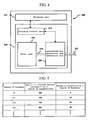
- FIG. 4 is a block diagram briefly showing the configuration of a humidified-air supply unit further comprising a humidity control unit according to an embodiment of the present invention.
- FIG. 5 is a view exemplarily showing humidity control data according to an embodiment of the present invention.
- FIG. 6 is a block diagram briefly showing the configuration of a metal-air cell assembly according to an embodiment of the present invention.
- FIG. 7 is a block diagram briefly showing the configuration of a metal-air cell recharge system according to an embodiment of the present invention.
- FIG. 2 is a block diagram briefly showing the configuration of a metal-air cell recharge apparatus according to an embodiment of the present invention.
- the metal-air cell recharge apparatus 200 includes a recharge unit 210 and a humidified-air supply unit 220.
- the recharge unit 210 generates supply power that will be supplied to a metal-air cell assembly 600 using an external power source and supplies the metal-air cell assembly 600 with the supply power through power supply lines 212.
- the metal-air cell assembly 600 includes a secondary metal-air cell 100 containing anode gel and a case 610 for accommodating the secondary metal-air cell 100 therein.
- the recharge unit 210 recharges the secondary metal-air cell 100 included in the metal-air cell assembly 600.
- the recharge unit 210 may include a connector connected to the external power source, an adapter for converting alternating current (AC) power inputted through the connector into direct current (DC) power, a regulator for maintaining the DC power outputted from the adapter to be constant, and a recharge drive circuit for receiving the DC power from the regulator, converting the DC power into the supply power, and outputting the supply power.
- AC alternating current
- DC direct current
- a recharge drive circuit for receiving the DC power from the regulator, converting the DC power into the supply power, and outputting the supply power.
- the humidified-air supply unit 220 generates humidified air containing a certain amount of moisture and supplies the metal-air cell assembly 600 with the humidified air through a humidified-air supply hole 222.
- the humidified-air supply unit 220 preferably supplies the metal-air cell assembly 600 with the humidified air, i.e., operates in parallel to the recharge unit 210.
- the present invention is not necessarily limited thereto, but the humidified-air supply unit 220 may operate independently without connection to the operation of the recharge unit 210.
- the metal-air cell recharge apparatus 200 preferably further includes a switch (not shown) that can selectively operate either or both of the recharge unit 210 and the humidified-air supply unit 220.
- the humidified-air supply unit 220 includes the humidified-air supply hole 222, a water tank 224, a humidified-air generation and exhaustion unit 226, and a water supply pipe 228.
- the water tank 224 stores water needed for generating humidified air by the humidified-air generation and exhaustion unit 226 described below.
- the humidified-air generation and exhaustion unit 226 generates humidified air using the water supplied from the water tank 224 and exhausts the humidified air through the humidified-air supply hole 222.
- the humidified-air generation and exhaustion unit 226 may include an evaporation unit for evaporating the water and a fan motor for exhausting the humidified air through the humidified-air supply hole 222.
- the humidified-air supply unit 220 may further include a humidity control unit 410 for controlling humidity of the humidified air generated by the humidified-air generation and exhaustion unit 226 depending on a degree of hardness of the anode gel as shown in FIG. 4 .
- the degree of hardness of the anode gel may be known through the amount of supply current supplied by the recharge unit 210 to the metal-air cell assembly 600.
- the humidity control unit 410 acquires an amount of supply current supplied by the recharge unit 210 to the metal-air cell assembly 600, from the recharge unit 210, extracts specific humidity control data corresponding to the amount of supply current from humidity control data including information on an amount of incoming current corresponding to a degree of hardness and information on humidity corresponding to the degree of hardness, as shown in FIG. 5 , and controls humidity of the humidified air generated by the humidified-air generation and exhaustion unit 226 using the information on humidity included in the specific humidity control data.
- the humidity control unit 410 controls the humidified-air generation and exhaustion unit 226 based on the information on humidity, and thus the humidified-air generation and exhaustion unit 226 may humidify the air to humidity corresponding to the information on humidity.
- FIG. 6 is a block diagram briefly showing the configuration of a metal-air cell assembly according to an embodiment of the present invention.
- the metal-air cell assembly 600 includes a case 610, a power receive and feed unit 620, and a secondary metal-air cell 100.
- a case 610 a case 610
- a power receive and feed unit 620 a power receive and feed unit 620
- a secondary metal-air cell 100 a secondary metal-air cell 100.
- the case 610 shapes an appearance of the metal-air cell assembly 600, has an accommodation space for accommodating the secondary metal-air cell 100 therein, forms an inlet 612 for taking in outside air or humidified air containing a certain amount of moisture on one side, and forms an outlet 614 for exhausting the outside air or the humidified air taken into the metal-air cell assembly 600 on the other side.
- the humidified air is supplied by the metal-air cell recharge apparatus 200 described above.
- the case 610 accommodates the secondary metal-air cell 100 in the accommodation space provided inside the case 610, discharges the secondary metal-air cell 100 by taking in the outside air or the humidified air inside the case 610 through the inlet 612, and exhausts the outside air or the humidified air taken inside the case 610 to the outside of the case 610 through the outlet 614.
- case 610 may include an inlet cover (not shown) for opening and closing the inlet 612 and an outlet cover (not shown) for opening and closing the outlet 614.
- case 610 accommodates only one secondary metal-air cell 100 for the convenience of explanation, it is apparent that the case 610 may accommodate one or more secondary metal-air cells 100 when the present invention is applied in practice.
- the power receive and feed unit 620 supplies an external load with discharge power of the secondary metal-air cell 100 outputted through a cathode current collector 112 and an anode current collector 124 of the secondary metal-air cell 100 described above, and delivers the supply power supplied by the metal-air cell recharge apparatus 200 to the cathode current collector 112 and the anode current collector 124.
- the power receive and feed unit 620 has connectors or terminals, one ends of which are respectively connected to the cathode current collector 112 and the anode current collector 124, and the other ends of which are electrically connected to the external load or the metal-air cell recharge apparatus 200. Accordingly, the discharge power outputted from the secondary metal-air cell 100 included in the metal-air cell assembly 600 is delivered to the external load connected to the connectors or the terminals, or the supply power supplied by the metal-air cell recharge apparatus 200 connected to the connectors or the terminals is delivered to the cathode current collector 112 and the anode current collector 124 respectively connected to one ends of the connectors or the terminals.
- the secondary metal-air cell 100 is recharged using the supply power received through the cathode current collector 112 and the anode current collector 124.
- the metal-air cell assembly 600 takes in and exhausts the humidified air inside and outside thereof through the inlet 612 and the outlet 614 formed on the case 610 so that the humidified air may be filled in the inner space accommodating the secondary metal-air cell 100. Therefore, the anode gel of the secondary metal-air cell 100 in the process of hardening by repetitive discharge and recharge may be softened again by absorbing an appropriate amount of moisture from the humidified air filled in the inner space of the case 610.
- FIG. 7 is a block diagram briefly showing the configuration of a metal-air cell recharge system according to an embodiment of the present invention.
- the metal-air cell recharge system 700 includes a metal-air cell assembly 600 and a metal-air cell recharge apparatus 200.
- the metal-air cell assembly 600 includes a secondary metal-air cell 100 having anode gel, a cathode current collector 112 and an anode current collector 124; a case 610 having an accommodation space for accommodating the secondary metal-air cell 100 therein, forming an inlet 612 on one side, and forming an outlet 614 on the other side; and a power receive and feed unit 620 for supplying an external load with discharge power outputted through the cathode current collector 112 and the anode current collector 124 and delivering supply power for recharging the secondary metal-air cell 100 to the cathode current collector 112 and the anode current collector 124.
- the metal-air cell recharge apparatus 200 includes a recharge unit 210 for generating supply power and supplying the metal-air cell assembly 600 with the supply power, and a humidified-air supply unit 220 for generating humidified air containing a certain amount of moisture and supplying the inlet 612 with the humidified air through a humidified-air supply hole 222.
- the recharge unit 210 of the metal-air cell recharge apparatus 200 connects to the power receive and feed unit 620 of the metal-air cell assembly 600 through power supply lines 212 and delivers the supply power to the power receive and feed unit 620, and the secondary metal-air cell 100 included in metal-air cell assembly 600 is recharged by the supply power delivered through the power receive and feed unit 620.
- the humidified-air supply unit 220 of the metal-air cell recharge apparatus 200 is connected to an inlet 612 of the metal-air cell assembly 600 through the humidified-air supply hole 222 and delivers the humidified air containing a certain amount of moisture to the inlet 612.
- the humidified air delivered inside the case 610 of the metal-air cell assembly 600 through the inlet 612 is uniformly filled inside the case 610 like the arrows shown in FIG. 7 and exhausted to the outside of the case 610 through the outlet 614.
- the anode gel of the secondary metal-air cell 100 in the process of hardening by repetitive discharge and recharge is softened by absorbing the moisture contained in the humidified air, and thus lifespan of the secondary metal-air cell 100 can be extended longer than before.
- inventive concept of the present invention should not be limited to the exemplary embodiments described herein, and the inventive concept should include not only the claims but also other similar features or aspects in other embodiments.
Landscapes
- Chemical & Material Sciences (AREA)
- Chemical Kinetics & Catalysis (AREA)
- Electrochemistry (AREA)
- General Chemical & Material Sciences (AREA)
- Engineering & Computer Science (AREA)
- Manufacturing & Machinery (AREA)
- Hybrid Cells (AREA)
- Sealing Battery Cases Or Jackets (AREA)
- Secondary Cells (AREA)
- Charge And Discharge Circuits For Batteries Or The Like (AREA)
Abstract
Description
- The present invention relates to a metal-air cell recharge apparatus, a metal-air cell assembly and a metal-air cell recharge system including the same. More specifically, a metal-air cell recharge apparatus for electrically recharging a secondary metal-air cell, which is a rechargeable metal-air cell, if the secondary metal-air cell is discharged, a metal-air cell assembly including the secondary metal-air cell recharged by the metal-air cell recharge apparatus, and a metal-air cell recharge system including the metal-air cell recharge apparatus and the metal-air cell assembly.
- An electrochemical power source is an apparatus for generating electrical energy by electrochemical reaction. This apparatus includes a metal-air cell such as a zinc-air cell or an-aluminum-air cell. The metal-air cell employs an anode constructed using a metal transformed into a metal oxide while discharging, and an air cathode membrane, i.e., a permeable membrane containing water molecules, which generates hydroxyl ions by contacting with oxygen in the air is employed as a cathode.
- Such a metal-air cell has a lot of advantages compared with conventional hydrogen fuel cells. Particularly, since fuels such as zinc may exist abundantly as a metal or a metal oxide, it is advantageous in that the energies supplied by the metal-air cell are not visibly drained. In addition, while the conventional hydrogen fuel cells are required to be refilled, the metal-air cell may be used by electrically recharging the cell, and the metal-air cell may deliver an output voltage (1 to 4.5 Volts) higher than those of conventional fuel cells (< 0.8V).
-
FIG. 1 is a view showing a secondary metal-air cell 100 including acathode 110 containing a cathodecurrent collector 112 and formed along the inner surface, ananode 120 containinganode gel 122, i.e., a mixture of a zinc metal and an electrolyte, and an anodecurrent collector 124, and aseparator 130 which separates thecathode 110 and theanode 120. Here, the air cathode membrane described above may be used as thecathode 110. - The secondary metal-
air cell 100 described above supplies power to a load, i.e., discharges, through the cathodecurrent collector 112 contained in thecathode 110 and the anodecurrent collector 124 contained in theanode 120. - Describing in further detail, oxygen supplied through the air or other power source is used as a reactant for the
cathode 110 of the secondary metal-air cell 100. When the oxygen arrives at a reactive site in thecathode 110, the oxygen is transformed into hydroxyl ions together with water. Such a reaction can be expressed as a chemical formula shown below. -
O2 + 2H2O + 4e- ↔ 4OH- [Chemical formula 1] - At the same time, electrons are released so as to flow as electricity in an external circuit. The hydroxyl ions move to the
anode 120 containing theanode gel 122. When the hydroxyl ions arrive at theanode 120, zinc hydroxide is formed on the surface of theanode 120. The zinc hydroxide is decomposed into zinc oxide and discharges water to be alkaline solution. Such a reaction can be expressed as a chemical formula shown below. -
Zn + 2OH- ↔ Zn(OH)2 + 2e-
Zn + 2OH- ↔ ZnO + H2O2 + 2e- [Chemical formula 2] - By the reaction described above, the secondary metal-
air cell 100 discharges and supplies electrical energy to the outside. Then, if the secondary metal-air cell 100 reaches a discharge limit and stops supplying electrical energy to the outside, the secondary metal-air cell 100 can be reused by electrically recharging the secondary metal-air cell 100 using the cathodecurrent collector 112 and the anodecurrent collector 124. - However, if the secondary metal-
air cell 100 described above is repeatedly discharged and recharged, moisture in theanode gel 122 contained in theanode 120 decreases, and thus theanode gel 122, i.e., a mixture of an electrolyte and a zinc metal, is hardened. Therefore, the secondary metal-air cell 100 cannot be reused. - Furthermore, there is a problem in that the number of discharges and recharges of the secondary metal-
air cell 100 until theanode gel 122 is hardened is smaller than those of existing rechargeable batteries such as Nickel-Metal Hydride rechargeable batteries, lithium ion rechargeable batteries, and the like. That is, the lifespan of the secondary metal-air cell 100 is shorter than those of the existing rechargeable batteries. - Therefore, the present invention has been made in view of the above problems, and it is an object of the present invention to provide a metal-air cell recharge apparatus for recharging a secondary metal-air cell by supplying the secondary metal-air cell with power and simultaneously preventing hardening of anode gel contained in the secondary metal-air cell by supplying the secondary metal-air cell with air containing a certain amount of moisture. The present invention also provides a metal-air cell assembly including the secondary metal-air cell and being provided with the power and the humidified air containing a certain amount of moisture from the metal-air cell recharge apparatus, and a metal-air cell recharge system including the metal-air cell recharge apparatus and the metal-air cell assembly.
- To accomplish the above object, according to one aspect of the present invention, there is provided a metal-air cell recharge apparatus for recharging a metal-air cell assembly including a secondary metal-air cell containing anode gel and a case accommodating the secondary metal-air cell therein, the apparatus comprising: a recharge unit for generating supply power supplied to the metal-air cell assembly using an external power source, and supplying the metal-air cell assembly with the supply power; and a humidified-air supply unit for generating humidified air containing a certain amount of moisture and supplying the humidified air inside the case through a humidified-air supply hole connected to the metal-air cell assembly.
- The metal-air cell recharge apparatus may further comprise a switch capable of selectively operating either or both of the recharge unit and the humidified-air supply unit.
- The humidified-air supply unit may include: a water tank for storing water needed for generating the humidified air; and a humidified-air generation and exhaustion unit for generating the humidified air using the water supplied from the water tank and exhausting the humidified air through the humidified-air supply hole.
- The humidified-air supply unit may further include: a humidity control unit for controlling humidity of the humidified air generated by the humidified-air generation and exhaustion unit depending on a degree of hardness of the anode gel.
- The humidity control unit may store humidity control data including information on an amount of incoming current corresponding to a degree of hardness of the anode gel and information on humidity corresponding to the degree of hardness.
- The humidity control unit may acquire an amount of supply current supplied by the recharge unit to the metal-air cell assembly, from the recharge unit, extract specific humidity control data corresponding to the amount of supply current from the humidity control data, and control humidity of the humidified air generated by the humidified-air generation and exhaustion unit using the information on humidity included in the specific humidity control data.
- According to another aspect of the present invention, there is provided a metal-air cell assembly including a secondary metal-air cell containing anode gel, a cathode current collector and an anode current collector, the assembly comprising: a case shaping an appearance of the metal-air cell assembly, having an accommodation space for accommodating the secondary metal-air cell therein, forming an inlet on one side, and forming an outlet on the other side; and a power receive and feed unit for supplying an external load with discharge power outputted through the cathode current collector and the anode current collector, and receiving supply power for recharging the secondary metal-air cell from a metal-air cell recharge apparatus and delivering the supply power to the cathode current collector and the anode current collector.
- The case may include an inlet cover for opening and closing the inlet and an outlet cover for opening and closing the outlet.
- The case may accommodate one or more secondary metal-air cells.
- The power receive and feed unit may have connectors or terminals, one ends of which are respectively connected to the cathode current collector and the anode current collector, and the other ends of which are electrically connected to the external load or the metal-air cell recharge apparatus.
- According to still another aspect of the present invention, there is provided a metal-air cell recharge system comprising: a metal-air cell assembly including: a secondary metal-air cell having anode gel, a cathode current collector and an anode current collector; a case having an accommodation space for accommodating the secondary metal-air cell therein, forming an inlet on one side, and forming an outlet on the other side; and a power receive and feed unit for supplying an external load with discharge power outputted through the cathode current collector and the anode current collector and delivering supply power for recharging the secondary metal-air cell to the cathode current collector and the anode current collector; and a metal-air cell recharge apparatus including: a recharge unit for generating the supply power and supplying the metal-air cell assembly with the supply power; and a humidified-air supply unit for generating humidified air containing a certain amount of moisture and supplying the inlet with the humidified air through a humidified-air supply hole.
- The metal-air cell recharge system may further comprise: a switch capable of selectively operating either or both of the recharge unit and the humidified-air supply unit.
- According to the present invention, when the secondary metal-air cell included in the metal-air cell assembly is recharged by the metal-air cell recharge apparatus, humidified air containing a certain amount of moisture is supplied to the metal-air cell assembly, and the anode gel of the secondary metal-air cell may absorb the moisture contained in the humidified air. Therefore, hardening of the anode gel caused by repetitive use of the secondary metal-air cell may be delayed or prevented.
-
FIG. 1 is a view briefly showing the configuration of a secondary metal-air cell. -
FIG. 2 is a block diagram briefly showing the configuration of a metal-air cell recharge apparatus according to an embodiment of the present invention. -
FIG. 3 is a block diagram briefly showing the configuration of a humidified-air supply unit according to an embodiment of the present invention. -
FIG. 4 is a block diagram briefly showing the configuration of a humidified-air supply unit further comprising a humidity control unit according to an embodiment of the present invention. -
FIG. 5 is a view exemplarily showing humidity control data according to an embodiment of the present invention. -
FIG. 6 is a block diagram briefly showing the configuration of a metal-air cell assembly according to an embodiment of the present invention. -
FIG. 7 is a block diagram briefly showing the configuration of a metal-air cell recharge system according to an embodiment of the present invention. - In the following detailed description, references are made to the accompanying drawings that show, by way of illustration, specific embodiments in which the invention may be practiced. These embodiments are described in sufficient detail to enable those skilled in the art to practice the invention. It is to be understood that the various embodiments of the invention, although different, are not necessarily mutually exclusive. For example, a particular feature, structure, or characteristic described herein, in connection with one embodiment, may be implemented within other embodiments without departing from the spirit and scope of the invention. In addition, it is to be understood that the location or arrangement of individual elements within each disclosed embodiment may be modified without departing from the spirit and scope of the invention. The following detailed description is, therefore, not to be taken in a limiting sense, and the scope of the present invention is defined only by the appended claims, appropriately interpreted, along with the full range of equivalents to which the claims are entitled. In the drawings, like numbers refer to the same or similar functionality throughout the several views.
- The preferred embodiments of the present invention will be hereafter described in detail, with reference to the accompanying drawings so that those skilled in the art may easily embody the present invention.
-
FIG. 2 is a block diagram briefly showing the configuration of a metal-air cell recharge apparatus according to an embodiment of the present invention. - The metal-air
cell recharge apparatus 200 according to an embodiment of the present invention includes arecharge unit 210 and a humidified-air supply unit 220. - The
recharge unit 210 generates supply power that will be supplied to a metal-air cell assembly 600 using an external power source and supplies the metal-air cell assembly 600 with the supply power throughpower supply lines 212. The metal-air cell assembly 600 includes a secondary metal-air cell 100 containing anode gel and acase 610 for accommodating the secondary metal-air cell 100 therein. In other words, therecharge unit 210 recharges the secondary metal-air cell 100 included in the metal-air cell assembly 600. - Although it is not shown in
FIG. 2 , therecharge unit 210 may include a connector connected to the external power source, an adapter for converting alternating current (AC) power inputted through the connector into direct current (DC) power, a regulator for maintaining the DC power outputted from the adapter to be constant, and a recharge drive circuit for receiving the DC power from the regulator, converting the DC power into the supply power, and outputting the supply power. - The humidified-
air supply unit 220 according to an embodiment of the present invention generates humidified air containing a certain amount of moisture and supplies the metal-air cell assembly 600 with the humidified air through a humidified-air supply hole 222. Here, when the secondary metal-air cell 100 included in the metal-air cell assembly 600 is recharged, the humidified-air supply unit 220 preferably supplies the metal-air cell assembly 600 with the humidified air, i.e., operates in parallel to therecharge unit 210. However, the present invention is not necessarily limited thereto, but the humidified-air supply unit 220 may operate independently without connection to the operation of therecharge unit 210. - If the humidified-
air supply unit 220 operates independently without connection to the operation of therecharge unit 210, the metal-aircell recharge apparatus 200 preferably further includes a switch (not shown) that can selectively operate either or both of therecharge unit 210 and the humidified-air supply unit 220. - In the embodiment of the present invention, the humidified-
air supply unit 220 includes the humidified-air supply hole 222, awater tank 224, a humidified-air generation andexhaustion unit 226, and awater supply pipe 228. - The
water tank 224 stores water needed for generating humidified air by the humidified-air generation andexhaustion unit 226 described below. - The humidified-air generation and
exhaustion unit 226 generates humidified air using the water supplied from thewater tank 224 and exhausts the humidified air through the humidified-air supply hole 222. Although it is not shown inFIG. 3 , the humidified-air generation andexhaustion unit 226 may include an evaporation unit for evaporating the water and a fan motor for exhausting the humidified air through the humidified-air supply hole 222. - Meanwhile, the humidified-
air supply unit 220 according to an embodiment of the present invention may further include ahumidity control unit 410 for controlling humidity of the humidified air generated by the humidified-air generation andexhaustion unit 226 depending on a degree of hardness of the anode gel as shown inFIG. 4 . Here, the degree of hardness of the anode gel may be known through the amount of supply current supplied by therecharge unit 210 to the metal-air cell assembly 600. - In other words, the higher the degree of hardness of the anode gel is, the more the amount of the supply current decreases. Accordingly, an amount of incoming current (the same as the amount of supply current) flowing into the anode gel having a different degree of hardness depending on a degree of using the metal-
air cell assembly 600 is measured for each degree of usage, and an amount of incoming current corresponding to each degree of hardness may be generated as data. Therefore, the degree of hardness of the anode gel corresponding to the amount of supply current may be identified using the data. - Describing in further detail, the
humidity control unit 410 acquires an amount of supply current supplied by therecharge unit 210 to the metal-air cell assembly 600, from therecharge unit 210, extracts specific humidity control data corresponding to the amount of supply current from humidity control data including information on an amount of incoming current corresponding to a degree of hardness and information on humidity corresponding to the degree of hardness, as shown inFIG. 5 , and controls humidity of the humidified air generated by the humidified-air generation andexhaustion unit 226 using the information on humidity included in the specific humidity control data. - In other words, the
humidity control unit 410 controls the humidified-air generation andexhaustion unit 226 based on the information on humidity, and thus the humidified-air generation andexhaustion unit 226 may humidify the air to humidity corresponding to the information on humidity. -
FIG. 6 is a block diagram briefly showing the configuration of a metal-air cell assembly according to an embodiment of the present invention. - The metal-
air cell assembly 600 according to an embodiment of the present invention includes acase 610, a power receive andfeed unit 620, and a secondary metal-air cell 100. Here, since the configuration of the secondary metal-air cell 100 is described above already, details thereof will not be described. - The
case 610 shapes an appearance of the metal-air cell assembly 600, has an accommodation space for accommodating the secondary metal-air cell 100 therein, forms aninlet 612 for taking in outside air or humidified air containing a certain amount of moisture on one side, and forms anoutlet 614 for exhausting the outside air or the humidified air taken into the metal-air cell assembly 600 on the other side. Here, it is apparent that the humidified air is supplied by the metal-aircell recharge apparatus 200 described above. - The
case 610 accommodates the secondary metal-air cell 100 in the accommodation space provided inside thecase 610, discharges the secondary metal-air cell 100 by taking in the outside air or the humidified air inside thecase 610 through theinlet 612, and exhausts the outside air or the humidified air taken inside thecase 610 to the outside of thecase 610 through theoutlet 614. - In addition, when the secondary metal-
air cell 100 accommodated in the accommodation space is recharged, humidity inside thecase 610 is increased by taking the humidified air into thecase 610 through theinlet 612 so that a certain amount of moisture is absorbed into the anode gel of the secondary metal-air cell 100. - Here, the
case 610 may include an inlet cover (not shown) for opening and closing theinlet 612 and an outlet cover (not shown) for opening and closing theoutlet 614. - Meanwhile, although it is described in
FIG. 6 that thecase 610 accommodates only one secondary metal-air cell 100 for the convenience of explanation, it is apparent that thecase 610 may accommodate one or more secondary metal-air cells 100 when the present invention is applied in practice. - The power receive and
feed unit 620 supplies an external load with discharge power of the secondary metal-air cell 100 outputted through a cathodecurrent collector 112 and an anodecurrent collector 124 of the secondary metal-air cell 100 described above, and delivers the supply power supplied by the metal-aircell recharge apparatus 200 to the cathodecurrent collector 112 and the anodecurrent collector 124. - Describing in further detail, the power receive and
feed unit 620 has connectors or terminals, one ends of which are respectively connected to the cathodecurrent collector 112 and the anodecurrent collector 124, and the other ends of which are electrically connected to the external load or the metal-aircell recharge apparatus 200. Accordingly, the discharge power outputted from the secondary metal-air cell 100 included in the metal-air cell assembly 600 is delivered to the external load connected to the connectors or the terminals, or the supply power supplied by the metal-aircell recharge apparatus 200 connected to the connectors or the terminals is delivered to the cathodecurrent collector 112 and the anodecurrent collector 124 respectively connected to one ends of the connectors or the terminals. Through the configuration described above, the secondary metal-air cell 100 is recharged using the supply power received through the cathodecurrent collector 112 and the anodecurrent collector 124. - As described above, the metal-
air cell assembly 600 according to an embodiment of the present invention takes in and exhausts the humidified air inside and outside thereof through theinlet 612 and theoutlet 614 formed on thecase 610 so that the humidified air may be filled in the inner space accommodating the secondary metal-air cell 100. Therefore, the anode gel of the secondary metal-air cell 100 in the process of hardening by repetitive discharge and recharge may be softened again by absorbing an appropriate amount of moisture from the humidified air filled in the inner space of thecase 610. - Details thereof will be described with reference to
FIG. 7 . -
FIG. 7 is a block diagram briefly showing the configuration of a metal-air cell recharge system according to an embodiment of the present invention. - The metal-air
cell recharge system 700 according to an embodiment of the present invention includes a metal-air cell assembly 600 and a metal-aircell recharge apparatus 200. As described above, the metal-air cell assembly 600 includes a secondary metal-air cell 100 having anode gel, a cathodecurrent collector 112 and an anodecurrent collector 124; acase 610 having an accommodation space for accommodating the secondary metal-air cell 100 therein, forming aninlet 612 on one side, and forming anoutlet 614 on the other side; and a power receive andfeed unit 620 for supplying an external load with discharge power outputted through the cathodecurrent collector 112 and the anodecurrent collector 124 and delivering supply power for recharging the secondary metal-air cell 100 to the cathodecurrent collector 112 and the anodecurrent collector 124. The metal-aircell recharge apparatus 200 includes arecharge unit 210 for generating supply power and supplying the metal-air cell assembly 600 with the supply power, and a humidified-air supply unit 220 for generating humidified air containing a certain amount of moisture and supplying theinlet 612 with the humidified air through a humidified-air supply hole 222. - In the metal-air
cell recharge system 700 described above, therecharge unit 210 of the metal-aircell recharge apparatus 200 connects to the power receive andfeed unit 620 of the metal-air cell assembly 600 throughpower supply lines 212 and delivers the supply power to the power receive andfeed unit 620, and the secondary metal-air cell 100 included in metal-air cell assembly 600 is recharged by the supply power delivered through the power receive andfeed unit 620. - Meanwhile, the humidified-
air supply unit 220 of the metal-aircell recharge apparatus 200 is connected to aninlet 612 of the metal-air cell assembly 600 through the humidified-air supply hole 222 and delivers the humidified air containing a certain amount of moisture to theinlet 612. - The humidified air delivered inside the
case 610 of the metal-air cell assembly 600 through theinlet 612 is uniformly filled inside thecase 610 like the arrows shown inFIG. 7 and exhausted to the outside of thecase 610 through theoutlet 614. - If humidified air is filled inside the
case 610 of the metal-air cell assembly 600 as described above when the metal-air cell assembly 600 is recharged, the anode gel of the secondary metal-air cell 100 in the process of hardening by repetitive discharge and recharge is softened by absorbing the moisture contained in the humidified air, and thus lifespan of the secondary metal-air cell 100 can be extended longer than before. - While the present invention has been described with reference to the particular illustrative embodiments, it is not to be restricted by the embodiments but only by the appended claims. It is to be appreciated that those skilled in the art can change or modify the embodiments without departing from the scope and spirit of the present invention.
- It should be understood that the inventive concept of the present invention should not be limited to the exemplary embodiments described herein, and the inventive concept should include not only the claims but also other similar features or aspects in other embodiments.
Claims (12)
- A metal-air cell recharge apparatus for recharging a metal-air cell assembly including a secondary metal-air cell containing anode gel and a case accommodating the secondary metal-air cell therein, the apparatus comprising:a recharge unit for generating supply power supplied to the metal-air cell assembly using an external power source and supplying the metal-air cell assembly with the supply power; anda humidified-air supply unit for generating humidified air containing a certain amount of moisture and supplying the humidified air inside the case through a humidified-air supply hole connected to the metal-air cell assembly.
- The apparatus according to claim 1, further comprising a switch capable of selectively operating either or both of the recharge unit and the humidified-air supply unit.
- The apparatus according to claim 1, wherein the humidified-air supply unit comprises:a water tank for storing water needed for generating the humidified air; anda humidified-air generation and exhaustion unit for generating the humidified air using the water supplied from the water tank and exhausting the humidified air through the humidified-air supply hole.
- The apparatus according to claim 3, wherein the humidified-air supply unit further comprises a humidity control unit for controlling humidity of the humidified air generated by the humidified-air generation and exhaustion unit, depending on a degree of hardness of the anode gel.
- The apparatus according to claim 4, wherein the humidity control unit stores humidity control data including information on an amount of incoming current corresponding to a degree of hardness of the anode gel and information on humidity corresponding to the degree of hardness.
- The apparatus according to claim 5, wherein the humidity control unit acquires an amount of supply current supplied by the recharge unit to the metal-air cell assembly, from the recharge unit, extracts specific humidity control data corresponding to the amount of supply current from the humidity control data, and controls humidity of the humidified air generated by the humidified-air generation and exhaustion unit using the information on humidity included in the specific humidity control data.
- A metal-air cell assembly including a secondary metal-air cell containing anode gel, a cathode current collector and an anode current collector, the assembly comprising:a case shaping an appearance of the metal-air cell assembly, the case having an accommodation space for accommodating the secondary metal-air cell therein, an inlet on one side, and an outlet on the other side; anda power receive and feed unit for supplying an external load with discharge power outputted through the cathode current collector and the anode current collector, and receiving supply power for recharging the secondary metal-air cell from a metal-air cell recharge apparatus anddelivering the supply power to the cathode current collector and the anode current collector.
- The assembly according to claim 7, wherein the case comprises an inlet cover for opening and closing the inlet and an outlet cover for opening and closing the outlet.
- The assembly according to claim 7, wherein the case accommodates one or more secondary metal-air cells.
- The assembly according to claim 7, wherein the power receive and feed unit has connectors or terminals, one ends of which are respectively connected to the cathode current collector and the anode current collector, and the other ends of which are electrically connected to the external load or the metal-air cell recharge apparatus.
- A metal-air cell recharge system comprising:a metal-air cell assembly comprising: a secondary metal-air cell having anode gel, a cathode current collector and an anode current collector; a case having an accommodation space for accommodating the secondary metal-air cell therein, an inlet on one side, and an outlet on the other side; and a power receive and feed unit for supplying an external load with discharge power outputted through the cathode current collector and the anode current collector anddelivering supply power for recharging the secondary metal-air cell to the cathode current collector and the anode current collector; anda metal-air cell recharge apparatus comprising: a recharge unit for generating the supply power and supplying the metal-air cell assembly with the supply power; and a humidified-air supply unit for generating humidified air containing a certain amount of moisture and supplying the inlet with the humidified air through a humidified-air supply hole.
- The system according to claim 11, further comprising a switch capable of selectively operating either or both of the recharge unit and the humidified-air supply unit.
Applications Claiming Priority (2)
| Application Number | Priority Date | Filing Date | Title |
|---|---|---|---|
| KR1020090095064A KR101119514B1 (en) | 2009-10-07 | 2009-10-07 | Apparatus for Charging Metal Air Cell and Metal Air Cell Assembly and System for Charging Metal Air Cell Comprising the Same |
| PCT/KR2010/006746 WO2011043565A2 (en) | 2009-10-07 | 2010-10-04 | Metal-air cell charging apparatus, metal-air cell assembly, and metal-air cell charging system comprising same |
Publications (3)
| Publication Number | Publication Date |
|---|---|
| EP2487748A2 true EP2487748A2 (en) | 2012-08-15 |
| EP2487748A4 EP2487748A4 (en) | 2014-02-19 |
| EP2487748B1 EP2487748B1 (en) | 2017-07-12 |
Family
ID=43857259
Family Applications (1)
| Application Number | Title | Priority Date | Filing Date |
|---|---|---|---|
| EP10822210.0A Not-in-force EP2487748B1 (en) | 2009-10-07 | 2010-10-04 | Metal-air cell charging apparatus, metal-air cell assembly, and metal-air cell charging system comprising same |
Country Status (6)
| Country | Link |
|---|---|
| US (1) | US9373874B2 (en) |
| EP (1) | EP2487748B1 (en) |
| JP (1) | JP5474201B2 (en) |
| KR (1) | KR101119514B1 (en) |
| CN (1) | CN102511108B (en) |
| WO (1) | WO2011043565A2 (en) |
Cited By (2)
| Publication number | Priority date | Publication date | Assignee | Title |
|---|---|---|---|---|
| WO2015197347A1 (en) * | 2014-06-25 | 2015-12-30 | Robert Bosch Gmbh | Device and method for regenerating a rechargeable metal-air battery, rechargeable metal-air battery, and vehicle |
| EP3651244A1 (en) * | 2018-11-07 | 2020-05-13 | Samsung Electronics Co., Ltd. | Metal air battery and method of operating the metal air battery |
Families Citing this family (5)
| Publication number | Priority date | Publication date | Assignee | Title |
|---|---|---|---|---|
| TWI570989B (en) | 2015-08-21 | 2017-02-11 | 財團法人工業技術研究院 | Electrolyte composition, and sodium secondary battery |
| KR101800208B1 (en) * | 2016-02-12 | 2017-11-22 | 주식회사 이엠따블유에너지 | Air-Zinc secondary battery |
| JP6547723B2 (en) * | 2016-03-17 | 2019-07-24 | 株式会社デンソー | Lithium air battery system |
| KR101943469B1 (en) * | 2016-06-20 | 2019-04-18 | 김동환 | Air injectable zinc air secondary battery |
| KR102771618B1 (en) | 2018-11-09 | 2025-02-25 | 삼성전자주식회사 | Metal-air battery |
Family Cites Families (17)
| Publication number | Priority date | Publication date | Assignee | Title |
|---|---|---|---|---|
| US5721064A (en) * | 1993-04-30 | 1998-02-24 | Aer Energy Resources Inc. | Air manager system for reducing gas concentrations in a metal-air battery |
| AU6823294A (en) * | 1993-04-30 | 1994-11-21 | Aer Energy Resources, Inc. | Cathode air recirculation and moisture control |
| US5560999A (en) * | 1993-04-30 | 1996-10-01 | Aer Energy Resources, Inc. | Air manager system for recirculating reactant air in a metal-air battery |
| JP3246596B2 (en) | 1996-03-05 | 2002-01-15 | キヤノン株式会社 | Rechargeable battery |
| KR100588756B1 (en) * | 1997-10-06 | 2006-06-13 | 리베오 인코포레이티드 | Metal-Air Fuel Cell Battery System Using Metal Fuel Card |
| US6472093B2 (en) | 1997-10-06 | 2002-10-29 | Reveo, Inc. | Metal-air fuel cell battery systems having a metal-fuel card storage cartridge, insertable within a fuel cartridge insertion port, containing a supply of substantially planar discrete metal-fuel cards, and fuel card transport mechanisms therein |
| US6296960B1 (en) | 1997-10-06 | 2001-10-02 | Reveo, Inc. | System and method for producing electrical power using metal-air fuel cell battery technology |
| CN1280712A (en) | 1997-10-06 | 2001-01-17 | 里维奥公司 | Metal-air fuel cell stack system utilizing metal-fuel cards |
| JP3523506B2 (en) | 1998-10-23 | 2004-04-26 | 日本電信電話株式会社 | Rechargeable air battery |
| US6127061A (en) | 1999-01-26 | 2000-10-03 | High-Density Energy, Inc. | Catalytic air cathode for air-metal batteries |
| JP2001176564A (en) | 1999-10-07 | 2001-06-29 | Sekisui Chem Co Ltd | Air battery |
| JP2001266961A (en) | 2000-03-24 | 2001-09-28 | Sekisui Chem Co Ltd | Air battery |
| US7056617B2 (en) * | 2001-02-01 | 2006-06-06 | The Gillette Company | Batteries and battery systems |
| CN1791999A (en) * | 2001-09-26 | 2006-06-21 | 异能公司 | Rechargeable and refuelable metal air electrochemical cell |
| CN1581567A (en) | 2003-08-06 | 2005-02-16 | 明志技术学院 | Preparation method of solid polymer zinc-air battery |
| US20080193851A1 (en) * | 2007-02-09 | 2008-08-14 | Rovcal, Inc. | Alkaline electrochemical cell having improved gelled anode |
| WO2013090680A2 (en) * | 2011-12-14 | 2013-06-20 | Eos Energy Storage, Llc | Electrically rechargeable, metal anode cell and battery systems and methods |
-
2009
- 2009-10-07 KR KR1020090095064A patent/KR101119514B1/en not_active Expired - Fee Related
-
2010
- 2010-10-04 CN CN201080041310.8A patent/CN102511108B/en not_active Expired - Fee Related
- 2010-10-04 WO PCT/KR2010/006746 patent/WO2011043565A2/en not_active Ceased
- 2010-10-04 EP EP10822210.0A patent/EP2487748B1/en not_active Not-in-force
- 2010-10-04 US US13/500,908 patent/US9373874B2/en active Active
- 2010-10-04 JP JP2012530790A patent/JP5474201B2/en not_active Expired - Fee Related
Cited By (3)
| Publication number | Priority date | Publication date | Assignee | Title |
|---|---|---|---|---|
| WO2015197347A1 (en) * | 2014-06-25 | 2015-12-30 | Robert Bosch Gmbh | Device and method for regenerating a rechargeable metal-air battery, rechargeable metal-air battery, and vehicle |
| EP3651244A1 (en) * | 2018-11-07 | 2020-05-13 | Samsung Electronics Co., Ltd. | Metal air battery and method of operating the metal air battery |
| US11258120B2 (en) | 2018-11-07 | 2022-02-22 | Samsung Electronics Co., Ltd. | Metal air battery and method of operating the metal air battery |
Also Published As
| Publication number | Publication date |
|---|---|
| EP2487748A4 (en) | 2014-02-19 |
| KR101119514B1 (en) | 2012-02-28 |
| US20120200253A1 (en) | 2012-08-09 |
| WO2011043565A2 (en) | 2011-04-14 |
| CN102511108A (en) | 2012-06-20 |
| EP2487748B1 (en) | 2017-07-12 |
| KR20110037567A (en) | 2011-04-13 |
| CN102511108B (en) | 2015-01-21 |
| WO2011043565A3 (en) | 2011-07-14 |
| JP2013505554A (en) | 2013-02-14 |
| US9373874B2 (en) | 2016-06-21 |
| JP5474201B2 (en) | 2014-04-16 |
Similar Documents
| Publication | Publication Date | Title |
|---|---|---|
| EP2487748B1 (en) | Metal-air cell charging apparatus, metal-air cell assembly, and metal-air cell charging system comprising same | |
| KR101231676B1 (en) | Metal Air Secondary Cell Unit and Moudle for Metal Air Secondary Cell Comprising the Same | |
| US6887596B2 (en) | Portable disposable fuel-battery unit for a fuel cell system | |
| US7728545B2 (en) | Equipment with a built-in fuel cell | |
| US20040086755A1 (en) | Portable fuel cell system | |
| KR101649915B1 (en) | Secondary cell and method for controlling the same | |
| JP2004265862A (en) | Fuel cell system | |
| EP2528150A1 (en) | Fuel cell system | |
| US7788925B2 (en) | Vehicle power supply system | |
| US20090325009A1 (en) | Electric power supply apparatus and portable electronic device having the same | |
| US10938072B2 (en) | Zinc-air secondary battery | |
| KR101153715B1 (en) | Apparatus for Charging Metal Air Cell and System fApparatus for Charging Metal Air Cell and System for Charging Metal Air Cell Comprising the Same or Charging Metal Air Cell Comprising the Same | |
| KR101793907B1 (en) | Air-Zinc secondary battery | |
| JP2010211942A (en) | Portable feeder system | |
| KR101204118B1 (en) | Method and Apparatus of Power Control | |
| KR100343392B1 (en) | Portable electric power supplier by using a direct alcohol fuel cell | |
| KR101061057B1 (en) | Air metal battery case and air metal battery assembly comprising the same | |
| US10511044B2 (en) | Alkaline hybrid redox flow battery with high energy density | |
| KR101653751B1 (en) | Hybrid electrochemical cell and method for controlling the same | |
| US20250266479A1 (en) | Fuel cell power generation control system | |
| US10756402B2 (en) | Zinc-air secondary battery | |
| WO2025149379A1 (en) | Electrical power supply system | |
| JP6510339B2 (en) | Fuel cell system | |
| JP2017016833A (en) | Fuel cell system | |
| KR20120064939A (en) | Metal-air battery assembly |
Legal Events
| Date | Code | Title | Description |
|---|---|---|---|
| PUAI | Public reference made under article 153(3) epc to a published international application that has entered the european phase |
Free format text: ORIGINAL CODE: 0009012 |
|
| 17P | Request for examination filed |
Effective date: 20120413 |
|
| AK | Designated contracting states |
Kind code of ref document: A2 Designated state(s): AL AT BE BG CH CY CZ DE DK EE ES FI FR GB GR HR HU IE IS IT LI LT LU LV MC MK MT NL NO PL PT RO RS SE SI SK SM TR |
|
| DAX | Request for extension of the european patent (deleted) | ||
| A4 | Supplementary search report drawn up and despatched |
Effective date: 20140122 |
|
| RIC1 | Information provided on ipc code assigned before grant |
Ipc: H01M 2/02 20060101ALI20140116BHEP Ipc: H01M 12/08 20060101AFI20140116BHEP Ipc: H01M 10/46 20060101ALI20140116BHEP Ipc: H01M 4/02 20060101ALI20140116BHEP |
|
| GRAP | Despatch of communication of intention to grant a patent |
Free format text: ORIGINAL CODE: EPIDOSNIGR1 |
|
| RIC1 | Information provided on ipc code assigned before grant |
Ipc: H01M 4/02 20060101ALI20170118BHEP Ipc: H01M 12/08 20060101AFI20170118BHEP Ipc: H01M 2/02 20060101ALI20170118BHEP Ipc: H01M 10/46 20060101ALI20170118BHEP |
|
| INTG | Intention to grant announced |
Effective date: 20170215 |
|
| GRAS | Grant fee paid |
Free format text: ORIGINAL CODE: EPIDOSNIGR3 |
|
| GRAA | (expected) grant |
Free format text: ORIGINAL CODE: 0009210 |
|
| AK | Designated contracting states |
Kind code of ref document: B1 Designated state(s): AL AT BE BG CH CY CZ DE DK EE ES FI FR GB GR HR HU IE IS IT LI LT LU LV MC MK MT NL NO PL PT RO RS SE SI SK SM TR |
|
| REG | Reference to a national code |
Ref country code: GB Ref legal event code: FG4D |
|
| REG | Reference to a national code |
Ref country code: CH Ref legal event code: EP |
|
| REG | Reference to a national code |
Ref country code: AT Ref legal event code: REF Ref document number: 909140 Country of ref document: AT Kind code of ref document: T Effective date: 20170715 |
|
| REG | Reference to a national code |
Ref country code: IE Ref legal event code: FG4D |
|
| REG | Reference to a national code |
Ref country code: DE Ref legal event code: R096 Ref document number: 602010043638 Country of ref document: DE |
|
| REG | Reference to a national code |
Ref country code: FR Ref legal event code: PLFP Year of fee payment: 8 |
|
| REG | Reference to a national code |
Ref country code: NL Ref legal event code: MP Effective date: 20170712 |
|
| REG | Reference to a national code |
Ref country code: LT Ref legal event code: MG4D |
|
| REG | Reference to a national code |
Ref country code: AT Ref legal event code: MK05 Ref document number: 909140 Country of ref document: AT Kind code of ref document: T Effective date: 20170712 |
|
| PG25 | Lapsed in a contracting state [announced via postgrant information from national office to epo] |
Ref country code: FI Free format text: LAPSE BECAUSE OF FAILURE TO SUBMIT A TRANSLATION OF THE DESCRIPTION OR TO PAY THE FEE WITHIN THE PRESCRIBED TIME-LIMIT Effective date: 20170712 Ref country code: NO Free format text: LAPSE BECAUSE OF FAILURE TO SUBMIT A TRANSLATION OF THE DESCRIPTION OR TO PAY THE FEE WITHIN THE PRESCRIBED TIME-LIMIT Effective date: 20171012 Ref country code: HR Free format text: LAPSE BECAUSE OF FAILURE TO SUBMIT A TRANSLATION OF THE DESCRIPTION OR TO PAY THE FEE WITHIN THE PRESCRIBED TIME-LIMIT Effective date: 20170712 Ref country code: NL Free format text: LAPSE BECAUSE OF FAILURE TO SUBMIT A TRANSLATION OF THE DESCRIPTION OR TO PAY THE FEE WITHIN THE PRESCRIBED TIME-LIMIT Effective date: 20170712 Ref country code: SE Free format text: LAPSE BECAUSE OF FAILURE TO SUBMIT A TRANSLATION OF THE DESCRIPTION OR TO PAY THE FEE WITHIN THE PRESCRIBED TIME-LIMIT Effective date: 20170712 Ref country code: AT Free format text: LAPSE BECAUSE OF FAILURE TO SUBMIT A TRANSLATION OF THE DESCRIPTION OR TO PAY THE FEE WITHIN THE PRESCRIBED TIME-LIMIT Effective date: 20170712 Ref country code: LT Free format text: LAPSE BECAUSE OF FAILURE TO SUBMIT A TRANSLATION OF THE DESCRIPTION OR TO PAY THE FEE WITHIN THE PRESCRIBED TIME-LIMIT Effective date: 20170712 |
|
| PG25 | Lapsed in a contracting state [announced via postgrant information from national office to epo] |
Ref country code: IS Free format text: LAPSE BECAUSE OF FAILURE TO SUBMIT A TRANSLATION OF THE DESCRIPTION OR TO PAY THE FEE WITHIN THE PRESCRIBED TIME-LIMIT Effective date: 20171112 Ref country code: GR Free format text: LAPSE BECAUSE OF FAILURE TO SUBMIT A TRANSLATION OF THE DESCRIPTION OR TO PAY THE FEE WITHIN THE PRESCRIBED TIME-LIMIT Effective date: 20171013 Ref country code: BG Free format text: LAPSE BECAUSE OF FAILURE TO SUBMIT A TRANSLATION OF THE DESCRIPTION OR TO PAY THE FEE WITHIN THE PRESCRIBED TIME-LIMIT Effective date: 20171012 Ref country code: ES Free format text: LAPSE BECAUSE OF FAILURE TO SUBMIT A TRANSLATION OF THE DESCRIPTION OR TO PAY THE FEE WITHIN THE PRESCRIBED TIME-LIMIT Effective date: 20170712 Ref country code: LV Free format text: LAPSE BECAUSE OF FAILURE TO SUBMIT A TRANSLATION OF THE DESCRIPTION OR TO PAY THE FEE WITHIN THE PRESCRIBED TIME-LIMIT Effective date: 20170712 Ref country code: RS Free format text: LAPSE BECAUSE OF FAILURE TO SUBMIT A TRANSLATION OF THE DESCRIPTION OR TO PAY THE FEE WITHIN THE PRESCRIBED TIME-LIMIT Effective date: 20170712 Ref country code: PL Free format text: LAPSE BECAUSE OF FAILURE TO SUBMIT A TRANSLATION OF THE DESCRIPTION OR TO PAY THE FEE WITHIN THE PRESCRIBED TIME-LIMIT Effective date: 20170712 |
|
| REG | Reference to a national code |
Ref country code: DE Ref legal event code: R097 Ref document number: 602010043638 Country of ref document: DE |
|
| PG25 | Lapsed in a contracting state [announced via postgrant information from national office to epo] |
Ref country code: RO Free format text: LAPSE BECAUSE OF FAILURE TO SUBMIT A TRANSLATION OF THE DESCRIPTION OR TO PAY THE FEE WITHIN THE PRESCRIBED TIME-LIMIT Effective date: 20170712 Ref country code: DK Free format text: LAPSE BECAUSE OF FAILURE TO SUBMIT A TRANSLATION OF THE DESCRIPTION OR TO PAY THE FEE WITHIN THE PRESCRIBED TIME-LIMIT Effective date: 20170712 Ref country code: CZ Free format text: LAPSE BECAUSE OF FAILURE TO SUBMIT A TRANSLATION OF THE DESCRIPTION OR TO PAY THE FEE WITHIN THE PRESCRIBED TIME-LIMIT Effective date: 20170712 |
|
| PLBE | No opposition filed within time limit |
Free format text: ORIGINAL CODE: 0009261 |
|
| STAA | Information on the status of an ep patent application or granted ep patent |
Free format text: STATUS: NO OPPOSITION FILED WITHIN TIME LIMIT |
|
| PG25 | Lapsed in a contracting state [announced via postgrant information from national office to epo] |
Ref country code: EE Free format text: LAPSE BECAUSE OF FAILURE TO SUBMIT A TRANSLATION OF THE DESCRIPTION OR TO PAY THE FEE WITHIN THE PRESCRIBED TIME-LIMIT Effective date: 20170712 Ref country code: SK Free format text: LAPSE BECAUSE OF FAILURE TO SUBMIT A TRANSLATION OF THE DESCRIPTION OR TO PAY THE FEE WITHIN THE PRESCRIBED TIME-LIMIT Effective date: 20170712 Ref country code: SM Free format text: LAPSE BECAUSE OF FAILURE TO SUBMIT A TRANSLATION OF THE DESCRIPTION OR TO PAY THE FEE WITHIN THE PRESCRIBED TIME-LIMIT Effective date: 20170712 Ref country code: MC Free format text: LAPSE BECAUSE OF FAILURE TO SUBMIT A TRANSLATION OF THE DESCRIPTION OR TO PAY THE FEE WITHIN THE PRESCRIBED TIME-LIMIT Effective date: 20170712 Ref country code: IT Free format text: LAPSE BECAUSE OF FAILURE TO SUBMIT A TRANSLATION OF THE DESCRIPTION OR TO PAY THE FEE WITHIN THE PRESCRIBED TIME-LIMIT Effective date: 20170712 |
|
| REG | Reference to a national code |
Ref country code: CH Ref legal event code: PL |
|
| 26N | No opposition filed |
Effective date: 20180413 |
|
| REG | Reference to a national code |
Ref country code: IE Ref legal event code: MM4A |
|
| PG25 | Lapsed in a contracting state [announced via postgrant information from national office to epo] |
Ref country code: LU Free format text: LAPSE BECAUSE OF NON-PAYMENT OF DUE FEES Effective date: 20171004 Ref country code: LI Free format text: LAPSE BECAUSE OF NON-PAYMENT OF DUE FEES Effective date: 20171031 Ref country code: CH Free format text: LAPSE BECAUSE OF NON-PAYMENT OF DUE FEES Effective date: 20171031 |
|
| REG | Reference to a national code |
Ref country code: BE Ref legal event code: MM Effective date: 20171031 |
|
| PG25 | Lapsed in a contracting state [announced via postgrant information from national office to epo] |
Ref country code: SI Free format text: LAPSE BECAUSE OF FAILURE TO SUBMIT A TRANSLATION OF THE DESCRIPTION OR TO PAY THE FEE WITHIN THE PRESCRIBED TIME-LIMIT Effective date: 20170712 Ref country code: BE Free format text: LAPSE BECAUSE OF NON-PAYMENT OF DUE FEES Effective date: 20171031 |
|
| PG25 | Lapsed in a contracting state [announced via postgrant information from national office to epo] |
Ref country code: MT Free format text: LAPSE BECAUSE OF NON-PAYMENT OF DUE FEES Effective date: 20171004 |
|
| REG | Reference to a national code |
Ref country code: FR Ref legal event code: PLFP Year of fee payment: 9 |
|
| PG25 | Lapsed in a contracting state [announced via postgrant information from national office to epo] |
Ref country code: IE Free format text: LAPSE BECAUSE OF NON-PAYMENT OF DUE FEES Effective date: 20171004 |
|
| PGFP | Annual fee paid to national office [announced via postgrant information from national office to epo] |
Ref country code: DE Payment date: 20181029 Year of fee payment: 9 |
|
| PGFP | Annual fee paid to national office [announced via postgrant information from national office to epo] |
Ref country code: GB Payment date: 20181024 Year of fee payment: 9 Ref country code: FR Payment date: 20181026 Year of fee payment: 9 |
|
| PG25 | Lapsed in a contracting state [announced via postgrant information from national office to epo] |
Ref country code: HU Free format text: LAPSE BECAUSE OF FAILURE TO SUBMIT A TRANSLATION OF THE DESCRIPTION OR TO PAY THE FEE WITHIN THE PRESCRIBED TIME-LIMIT; INVALID AB INITIO Effective date: 20101004 |
|
| PG25 | Lapsed in a contracting state [announced via postgrant information from national office to epo] |
Ref country code: CY Free format text: LAPSE BECAUSE OF NON-PAYMENT OF DUE FEES Effective date: 20170712 |
|
| PG25 | Lapsed in a contracting state [announced via postgrant information from national office to epo] |
Ref country code: MK Free format text: LAPSE BECAUSE OF FAILURE TO SUBMIT A TRANSLATION OF THE DESCRIPTION OR TO PAY THE FEE WITHIN THE PRESCRIBED TIME-LIMIT Effective date: 20170712 |
|
| PG25 | Lapsed in a contracting state [announced via postgrant information from national office to epo] |
Ref country code: TR Free format text: LAPSE BECAUSE OF FAILURE TO SUBMIT A TRANSLATION OF THE DESCRIPTION OR TO PAY THE FEE WITHIN THE PRESCRIBED TIME-LIMIT Effective date: 20170712 |
|
| REG | Reference to a national code |
Ref country code: DE Ref legal event code: R119 Ref document number: 602010043638 Country of ref document: DE |
|
| PG25 | Lapsed in a contracting state [announced via postgrant information from national office to epo] |
Ref country code: PT Free format text: LAPSE BECAUSE OF FAILURE TO SUBMIT A TRANSLATION OF THE DESCRIPTION OR TO PAY THE FEE WITHIN THE PRESCRIBED TIME-LIMIT Effective date: 20170712 |
|
| PG25 | Lapsed in a contracting state [announced via postgrant information from national office to epo] |
Ref country code: AL Free format text: LAPSE BECAUSE OF FAILURE TO SUBMIT A TRANSLATION OF THE DESCRIPTION OR TO PAY THE FEE WITHIN THE PRESCRIBED TIME-LIMIT Effective date: 20170712 Ref country code: DE Free format text: LAPSE BECAUSE OF NON-PAYMENT OF DUE FEES Effective date: 20200501 |
|
| GBPC | Gb: european patent ceased through non-payment of renewal fee |
Effective date: 20191004 |
|
| PG25 | Lapsed in a contracting state [announced via postgrant information from national office to epo] |
Ref country code: GB Free format text: LAPSE BECAUSE OF NON-PAYMENT OF DUE FEES Effective date: 20191004 Ref country code: FR Free format text: LAPSE BECAUSE OF NON-PAYMENT OF DUE FEES Effective date: 20191031 |