EP2487031A1 - Rubber laminate - Google Patents
Rubber laminate Download PDFInfo
- Publication number
- EP2487031A1 EP2487031A1 EP09850268A EP09850268A EP2487031A1 EP 2487031 A1 EP2487031 A1 EP 2487031A1 EP 09850268 A EP09850268 A EP 09850268A EP 09850268 A EP09850268 A EP 09850268A EP 2487031 A1 EP2487031 A1 EP 2487031A1
- Authority
- EP
- European Patent Office
- Prior art keywords
- rubber
- layer
- molecular weight
- high molecular
- ultra high
- Prior art date
- Legal status (The legal status is an assumption and is not a legal conclusion. Google has not performed a legal analysis and makes no representation as to the accuracy of the status listed.)
- Granted
Links
Images
Classifications
-
- B—PERFORMING OPERATIONS; TRANSPORTING
- B32—LAYERED PRODUCTS
- B32B—LAYERED PRODUCTS, i.e. PRODUCTS BUILT-UP OF STRATA OF FLAT OR NON-FLAT, e.g. CELLULAR OR HONEYCOMB, FORM
- B32B25/00—Layered products comprising a layer of natural or synthetic rubber
- B32B25/04—Layered products comprising a layer of natural or synthetic rubber comprising rubber as the main or only constituent of a layer, which is next to another layer of the same or of a different material
- B32B25/08—Layered products comprising a layer of natural or synthetic rubber comprising rubber as the main or only constituent of a layer, which is next to another layer of the same or of a different material of synthetic resin
-
- B—PERFORMING OPERATIONS; TRANSPORTING
- B32—LAYERED PRODUCTS
- B32B—LAYERED PRODUCTS, i.e. PRODUCTS BUILT-UP OF STRATA OF FLAT OR NON-FLAT, e.g. CELLULAR OR HONEYCOMB, FORM
- B32B1/00—Layered products having a non-planar shape
- B32B1/08—Tubular products
-
- B—PERFORMING OPERATIONS; TRANSPORTING
- B32—LAYERED PRODUCTS
- B32B—LAYERED PRODUCTS, i.e. PRODUCTS BUILT-UP OF STRATA OF FLAT OR NON-FLAT, e.g. CELLULAR OR HONEYCOMB, FORM
- B32B25/00—Layered products comprising a layer of natural or synthetic rubber
- B32B25/14—Layered products comprising a layer of natural or synthetic rubber comprising synthetic rubber copolymers
-
- B—PERFORMING OPERATIONS; TRANSPORTING
- B32—LAYERED PRODUCTS
- B32B—LAYERED PRODUCTS, i.e. PRODUCTS BUILT-UP OF STRATA OF FLAT OR NON-FLAT, e.g. CELLULAR OR HONEYCOMB, FORM
- B32B25/00—Layered products comprising a layer of natural or synthetic rubber
- B32B25/16—Layered products comprising a layer of natural or synthetic rubber comprising polydienes homopolymers or poly-halodienes homopolymers
-
- B—PERFORMING OPERATIONS; TRANSPORTING
- B32—LAYERED PRODUCTS
- B32B—LAYERED PRODUCTS, i.e. PRODUCTS BUILT-UP OF STRATA OF FLAT OR NON-FLAT, e.g. CELLULAR OR HONEYCOMB, FORM
- B32B25/00—Layered products comprising a layer of natural or synthetic rubber
- B32B25/18—Layered products comprising a layer of natural or synthetic rubber comprising butyl or halobutyl rubber
-
- B—PERFORMING OPERATIONS; TRANSPORTING
- B32—LAYERED PRODUCTS
- B32B—LAYERED PRODUCTS, i.e. PRODUCTS BUILT-UP OF STRATA OF FLAT OR NON-FLAT, e.g. CELLULAR OR HONEYCOMB, FORM
- B32B27/00—Layered products comprising a layer of synthetic resin
- B32B27/32—Layered products comprising a layer of synthetic resin comprising polyolefins
- B32B27/327—Layered products comprising a layer of synthetic resin comprising polyolefins comprising polyolefins obtained by a metallocene or single-site catalyst
-
- B—PERFORMING OPERATIONS; TRANSPORTING
- B65—CONVEYING; PACKING; STORING; HANDLING THIN OR FILAMENTARY MATERIAL
- B65G—TRANSPORT OR STORAGE DEVICES, e.g. CONVEYORS FOR LOADING OR TIPPING, SHOP CONVEYOR SYSTEMS OR PNEUMATIC TUBE CONVEYORS
- B65G15/00—Conveyors having endless load-conveying surfaces, i.e. belts and like continuous members, to which tractive effort is transmitted by means other than endless driving elements of similar configuration
- B65G15/30—Belts or like endless load-carriers
- B65G15/32—Belts or like endless load-carriers made of rubber or plastics
- B65G15/34—Belts or like endless load-carriers made of rubber or plastics with reinforcing layers, e.g. of fabric
-
- F—MECHANICAL ENGINEERING; LIGHTING; HEATING; WEAPONS; BLASTING
- F16—ENGINEERING ELEMENTS AND UNITS; GENERAL MEASURES FOR PRODUCING AND MAINTAINING EFFECTIVE FUNCTIONING OF MACHINES OR INSTALLATIONS; THERMAL INSULATION IN GENERAL
- F16L—PIPES; JOINTS OR FITTINGS FOR PIPES; SUPPORTS FOR PIPES, CABLES OR PROTECTIVE TUBING; MEANS FOR THERMAL INSULATION IN GENERAL
- F16L11/00—Hoses, i.e. flexible pipes
- F16L11/04—Hoses, i.e. flexible pipes made of rubber or flexible plastics
- F16L11/08—Hoses, i.e. flexible pipes made of rubber or flexible plastics with reinforcements embedded in the wall
-
- B—PERFORMING OPERATIONS; TRANSPORTING
- B32—LAYERED PRODUCTS
- B32B—LAYERED PRODUCTS, i.e. PRODUCTS BUILT-UP OF STRATA OF FLAT OR NON-FLAT, e.g. CELLULAR OR HONEYCOMB, FORM
- B32B2270/00—Resin or rubber layer containing a blend of at least two different polymers
-
- B—PERFORMING OPERATIONS; TRANSPORTING
- B32—LAYERED PRODUCTS
- B32B—LAYERED PRODUCTS, i.e. PRODUCTS BUILT-UP OF STRATA OF FLAT OR NON-FLAT, e.g. CELLULAR OR HONEYCOMB, FORM
- B32B2307/00—Properties of the layers or laminate
- B32B2307/50—Properties of the layers or laminate having particular mechanical properties
- B32B2307/554—Wear resistance
-
- B—PERFORMING OPERATIONS; TRANSPORTING
- B32—LAYERED PRODUCTS
- B32B—LAYERED PRODUCTS, i.e. PRODUCTS BUILT-UP OF STRATA OF FLAT OR NON-FLAT, e.g. CELLULAR OR HONEYCOMB, FORM
- B32B2307/00—Properties of the layers or laminate
- B32B2307/70—Other properties
- B32B2307/71—Resistive to light or to UV
-
- B—PERFORMING OPERATIONS; TRANSPORTING
- B32—LAYERED PRODUCTS
- B32B—LAYERED PRODUCTS, i.e. PRODUCTS BUILT-UP OF STRATA OF FLAT OR NON-FLAT, e.g. CELLULAR OR HONEYCOMB, FORM
- B32B2307/00—Properties of the layers or laminate
- B32B2307/70—Other properties
- B32B2307/712—Weather resistant
-
- B—PERFORMING OPERATIONS; TRANSPORTING
- B32—LAYERED PRODUCTS
- B32B—LAYERED PRODUCTS, i.e. PRODUCTS BUILT-UP OF STRATA OF FLAT OR NON-FLAT, e.g. CELLULAR OR HONEYCOMB, FORM
- B32B2433/00—Closed loop articles
- B32B2433/02—Conveyor belts
-
- B—PERFORMING OPERATIONS; TRANSPORTING
- B32—LAYERED PRODUCTS
- B32B—LAYERED PRODUCTS, i.e. PRODUCTS BUILT-UP OF STRATA OF FLAT OR NON-FLAT, e.g. CELLULAR OR HONEYCOMB, FORM
- B32B2597/00—Tubular articles, e.g. hoses, pipes
-
- Y—GENERAL TAGGING OF NEW TECHNOLOGICAL DEVELOPMENTS; GENERAL TAGGING OF CROSS-SECTIONAL TECHNOLOGIES SPANNING OVER SEVERAL SECTIONS OF THE IPC; TECHNICAL SUBJECTS COVERED BY FORMER USPC CROSS-REFERENCE ART COLLECTIONS [XRACs] AND DIGESTS
- Y10—TECHNICAL SUBJECTS COVERED BY FORMER USPC
- Y10T—TECHNICAL SUBJECTS COVERED BY FORMER US CLASSIFICATION
- Y10T428/00—Stock material or miscellaneous articles
- Y10T428/13—Hollow or container type article [e.g., tube, vase, etc.]
- Y10T428/1352—Polymer or resin containing [i.e., natural or synthetic]
- Y10T428/1386—Natural or synthetic rubber or rubber-like compound containing
-
- Y—GENERAL TAGGING OF NEW TECHNOLOGICAL DEVELOPMENTS; GENERAL TAGGING OF CROSS-SECTIONAL TECHNOLOGIES SPANNING OVER SEVERAL SECTIONS OF THE IPC; TECHNICAL SUBJECTS COVERED BY FORMER USPC CROSS-REFERENCE ART COLLECTIONS [XRACs] AND DIGESTS
- Y10—TECHNICAL SUBJECTS COVERED BY FORMER USPC
- Y10T—TECHNICAL SUBJECTS COVERED BY FORMER US CLASSIFICATION
- Y10T428/00—Stock material or miscellaneous articles
- Y10T428/29—Coated or structually defined flake, particle, cell, strand, strand portion, rod, filament, macroscopic fiber or mass thereof
- Y10T428/2913—Rod, strand, filament or fiber
- Y10T428/2933—Coated or with bond, impregnation or core
- Y10T428/2936—Wound or wrapped core or coating [i.e., spiral or helical]
-
- Y—GENERAL TAGGING OF NEW TECHNOLOGICAL DEVELOPMENTS; GENERAL TAGGING OF CROSS-SECTIONAL TECHNOLOGIES SPANNING OVER SEVERAL SECTIONS OF THE IPC; TECHNICAL SUBJECTS COVERED BY FORMER USPC CROSS-REFERENCE ART COLLECTIONS [XRACs] AND DIGESTS
- Y10—TECHNICAL SUBJECTS COVERED BY FORMER USPC
- Y10T—TECHNICAL SUBJECTS COVERED BY FORMER US CLASSIFICATION
- Y10T428/00—Stock material or miscellaneous articles
- Y10T428/31504—Composite [nonstructural laminate]
- Y10T428/31678—Of metal
- Y10T428/31692—Next to addition polymer from unsaturated monomers
- Y10T428/31696—Including polyene monomers [e.g., butadiene, etc.]
-
- Y—GENERAL TAGGING OF NEW TECHNOLOGICAL DEVELOPMENTS; GENERAL TAGGING OF CROSS-SECTIONAL TECHNOLOGIES SPANNING OVER SEVERAL SECTIONS OF THE IPC; TECHNICAL SUBJECTS COVERED BY FORMER USPC CROSS-REFERENCE ART COLLECTIONS [XRACs] AND DIGESTS
- Y10—TECHNICAL SUBJECTS COVERED BY FORMER USPC
- Y10T—TECHNICAL SUBJECTS COVERED BY FORMER US CLASSIFICATION
- Y10T428/00—Stock material or miscellaneous articles
- Y10T428/31504—Composite [nonstructural laminate]
- Y10T428/31855—Of addition polymer from unsaturated monomers
- Y10T428/31909—Next to second addition polymer from unsaturated monomers
- Y10T428/31913—Monoolefin polymer
-
- Y—GENERAL TAGGING OF NEW TECHNOLOGICAL DEVELOPMENTS; GENERAL TAGGING OF CROSS-SECTIONAL TECHNOLOGIES SPANNING OVER SEVERAL SECTIONS OF THE IPC; TECHNICAL SUBJECTS COVERED BY FORMER USPC CROSS-REFERENCE ART COLLECTIONS [XRACs] AND DIGESTS
- Y10—TECHNICAL SUBJECTS COVERED BY FORMER USPC
- Y10T—TECHNICAL SUBJECTS COVERED BY FORMER US CLASSIFICATION
- Y10T428/00—Stock material or miscellaneous articles
- Y10T428/31504—Composite [nonstructural laminate]
- Y10T428/31855—Of addition polymer from unsaturated monomers
- Y10T428/31909—Next to second addition polymer from unsaturated monomers
- Y10T428/31913—Monoolefin polymer
- Y10T428/31917—Next to polyene polymer
Definitions
- the present invention relates to a rubber laminate, and particularly relates to a rubber laminate such as a hose or a conveyer belt having improved abrasion resistance and weatherability.
- High pressure hoses used in construction machinery and the like and conveyer belts used in transporting particulates and the like may repeatedly come in contact with surrounding metal frames and metal piping due to vibrations and the like exerted on surrounding equipment. Therefore, the high pressure hoses and the conveyer belts that are used under such conditions need to have high abrasion resistance.
- Covering surfaces of the hoses and the conveyer belts with a material having superior abrasion resistance such as an ultra high molecular weight polyethylene (UHMwPE) is conceivable to improve abrasion resistance, but there is a problem in that adhesiveness between some rubber compositions and the ultra high molecular weight polyethylene is low.
- UHMwPE ultra high molecular weight polyethylene
- Patent Document 1 describes a hose having an outer surface rubber layer that is formed from a rubber composition having a styrene-butadiene rubber (SBR) compounded with from 10 to 50 parts by mass of a softener and/or a plasticizer as a main component and that is covered with an ultra high molecular weight polyethylene.
- SBR styrene-butadiene rubber
- the softener and/or the plasticizer that permeated the ultra high molecular weight polyethylene layer during vulcanization may bleed onto a surface of the ultra high molecular weight polyethylene layer after vulcanization. As a result, there is a possibility of not being able to distinguish this bleeding from actual damage to the hose.
- An object of the present invention is to provide a rubber laminate that can improve abrasion resistance and weatherability and is arranged so that the softener does not bleed onto a hose surface after vulcanization.
- a rubber laminate of the present invention comprises a reinforcing layer and a second rubber layer laminated sequentially on a first rubber layer, at least one outer surface of the first rubber layer and the second rubber layer being covered with an ultra high molecular weight polyethylene layer, wherein the rubber layers covered with the ultra high molecular weight polyethylene layer are formed from a rubber composition comprising from 20 to 40 parts by mass of a softener per 100 parts by mass of a mixed rubber including from 60 to 80% by mass ratio of a diene rubber and 20 to 40% by mass ratio of a ethylene-propylene-diene rubber and/or a butyl rubber.
- the ultra high molecular weight polyethylene has a molecular weight of 1,000,000 or more.
- the rubber laminate of the present invention can be preferably used in a hose, wherein the first rubber layer and the second rubber layer are configured as an inner surface rubber layer and an outer surface rubber layer, respectively, the outer surface rubber layer is formed from the rubber composition, and a surface thereof is covered with the ultra high molecular weight polyethylene layer.
- the rubber laminate of the present invention can be preferably used in a conveyer belt, wherein the first rubber layer and the second rubber layer are configured as an inner side rubber layer and an outer side rubber layer, respectively, at least the outer side rubber layer is formed from the rubber composition, and a surface thereof is covered with the ultra high molecular weight polyethylene layer.
- the rubber layer that is covered with the ultra high molecular weight polyethylene layer is formed from the rubber composition comprising from 20 to 40 parts by mass of the softener per 100 parts by mass of the mixed rubber including from 60 to 80% by mass ratio of a diene rubber and 20 to 40% by mass ratio of a ethylene-propylene-diene rubber and/or a butyl rubber.
- the adhesive strength between the rubber layer and the ultra high molecular weight polyethylene layer increases and the ultra high molecular weight polyethylene layer does not easily peel off. Therefore, abrasion resistance can be enhanced.
- an interdiffusion layer that provides an adhesiveness is formed between the rubber layer and the ultra high molecular weight polyethylene layer, and because the ethylene-propylene-diene rubber and/or the butyl rubber that has excellent weatherability enters the interdiffusion layer, weatherability can be enhanced.
- the softener that permeated into the ultra high molecular weight polyethylene layer during vulcanization can return to the outer surface rubber layer or the outer side rubber layer after vulcanization because the ethylene-propylene-diene rubber and the butyl rubber are highly compatible with the softener. Therefore, the softener can be made so as not to bleed onto a surface of the hose or the conveyer belt.
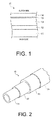
- FIG. 1 shows a rubber laminate according to an embodiment of the present invention.
- a rubber laminate 10 of the present invention comprises a first rubber layer 11 that is located on an inner side, a reinforcing layer 12 and a second rubber layer 13 laminated sequentially on the first rubber layer 11, and an ultra high molecular weight polyethylene layer 14 covering one outer surface of the second rubber layer 13, wherein the second rubber layer 13, covered with the ultra high molecular weight polyethylene layer 14, is formed from a rubber composition comprising from 20 to 40 parts by mass of a softener per 100 parts by mass of a mixed rubber including from 60 to 80% by mass ratio of a diene rubber and 20 to 40% by mass ratio of a ethylene-propylene-diene rubber and/or a butyl rubber.
- the second rubber layer 13 that is covered with the ultra high molecular weight polyethylene layer 14 is formed from the rubber composition comprising from 20 to 40 parts by mass of the softener per 100 parts by mass of the mixed rubber including from 60 to 80% by mass ratio of the diene rubber and 20 to 40% by mass ratio of the ethylene-propylene-diene rubber and/or the butyl rubber. Therefore, the adhesive strength between the second rubber layer 13 and the ultra high molecular weight polyethylene layer 14 increases and the ultra high molecular weight polyethylene layer 14 does not easily peel off. As a result, abrasion resistance can be greatly enhanced.
- an interdiffusion layer 15 that provides an adhesion effect is formed between the second rubber layer 13 and the ultra high molecular weight polyethylene layer 14.
- the ethylene-propylene-diene rubber and/or the butyl rubber that has excellent weatherability enters the interdiffusion layer 15, weatherability can be enhanced.
- the softener that permeated into the ultra high molecular weight polyethylene layer 14 during vulcanization can return to the second rubber layer 13 after vulcanization because the ethylene-propylene-diene rubber and the butyl rubber are highly compatible with the softener. Therefore, the softener can be made so as not to bleed onto a surface of the rubber laminate 10.
- the rubber laminate has been described as having the first rubber layer 11 that is located on the inner side, the reinforcing layer 12 and the second rubber layer 13 laminated sequentially on the first rubber layer 11, and the ultra high molecular weight polyethylene layer 14 covering one outer surface of the second rubber layer 13, but the present invention is not limited to this configuration of the first rubber laminate and can also be configured as described below.
- Examples of configurations of the rubber laminate include a second rubber laminate having a first rubber layer 11 that is located on an inner side, a reinforcing layer 12 and a second rubber layer 13 laminated sequentially on the first rubber layer 11, and an ultra high molecular weight polyethylene layer 14 covering one outer surface of the first rubber layer 11, or a third rubber laminate having a first rubber layer 11 that is located on an inner side, a reinforcing layer 12 and a second rubber layer 13 laminated sequentially on the first rubber layer 11, and an ultra high molecular weight polyethylene layer 14 covering one outer surface of each of the first rubber layer 11 and the second rubber layer 13.
- the rubber laminate may be configured so that a thin insulation rubber layer is provided between the ultra high molecular weight polyethylene layer 14 and the reinforcing layer 12.
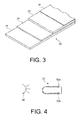
- FIG. 2 is a perspective view showing a structure of a hose that is the rubber laminate of the present invention.
- a hose 20 that is a rubber laminate has an inner surface rubber layer 21 that is a first rubber layer, and a reinforcing layer 22 and an outer surface rubber layer 23 that is a second rubber layer laminated sequentially on the inner surface rubber layer 21.
- the outer surface rubber layer 23 is covered with an ultra high molecular weight polyethylene layer 24.
- the outer surface rubber layer 23 side is a surface that is exposed to the outdoor environment.
- the outer surface rubber layer 23 that is the second rubber layer is formed from a second rubber composition comprising from 20 to 40 parts by mass of a softener per 100 parts by mass of a mixed rubber including from 60 to 80% by mass ratio of a diene rubber and 20 to 40% by mass ratio of a ethylene-propylene-diene rubber (EPDM) and/or a butyl rubber (IIR).
- the butyl rubber (IIR) also includes a halogenated butyl rubber such as Br-butyl rubber (Br-IIR), Cl-butyl rubber (Cl-IIR), or the like.
- the diene rubber include natural rubbers (NR), isoprene rubbers (IR), butadiene rubbers (BR), styrene-butadiene rubbers (SBR), and the like.
- a first rubber composition that forms the inner surface rubber layer 21 that is the first rubber layer is not particularly limited and examples include rubber compositions with excellent oil resistance, chemical resistance, gas permeation resistance, and refrigerant permeation resistance such as butyl copolymer rubbers and acrylonitrile-butadiene copolymer rubbers (NBR), chlorinated polyethylene rubbers (CM), chlorosulfonated polyethylene rubbers (CSM), and the like.
- NBR butyl copolymer rubbers and acrylonitrile-butadiene copolymer rubbers
- CM chlorinated polyethylene rubbers
- CSM chlorosulfonated polyethylene rubbers
- the reinforcing layer 22 is also not particularly limited and at least one layer of a braid or a spiral formed from brass plated wires, steel cords, or organic fiber cords can be used.
- the outer surface rubber layer 23 of the hose 20 is formed from the second rubber composition as described above.
- a critical surface tension Yc of the ethylene-propylene-diene rubber and the butyl rubber is closer than the styrene-butadiene rubber to a critical surface tension Yc of the ultra high molecular weight polyethylene. Therefore, the adhesive strength increases, the ultra high molecular weight polyethylene layer 24 does not peel off easily, and abrasion resistance can be enhanced.
- the ethylene-propylene-diene rubber and/or the butyl rubber with excellent weatherability enters the interdiffusion layer that provides the adhesiveness (omitted from the drawings) between the outer surface rubber layer 23 and the ultra high molecular weight polyethylene layer 24. Therefore, the weatherability of the hose 20 can be enhanced.
- the softener that permeated into the ultra high molecular weight polyethylene layer 24 during vulcanization can return to the outer surface rubber layer 23 after vulcanization because the ethylene-propylene-diene rubber and the butyl rubber are highly compatible with the softener. Therefore, the softener will not bleed onto a hose surface.
- the adhesiveness between the outer surface rubber layer 23 and the ultra high molecular weight polyethylene layer 24, the weatherability of the hose 20, the bleeding of the softener, and the adhesiveness between the outer surface rubber layer 23 and the brass plated wires are preferably well balanced.
- the unvulcanized inner surface rubber layer 21 is cylindrically applied on a mandrel and the reinforcing layer 22 is wrapped cylindrically thereon. Then, the unvulcanized outer surface rubber layer 23 formed from the second rubber composition is cylindrically applied on the reinforcing layer 22.
- an identification mark (not shown) may be either pre-printed on the outer surface rubber layer 23 using ink or the like; or the identification mark may be printed on the outer surface rubber layer 23 after the outer surface rubber layer 23 is applied.
- an ultra high molecular weight polyethylene film that constitutes the ultra high molecular weight polyethylene layer 24 is cylindrically wrapped on the outer surface rubber layer 23.
- a covering material (conventionally known materials such as fabrics, metallic materials such as lead, resin materials, and the like are usable) is applied in a ribbon form or a tape form, and then vulcanization is performed.
- the hose 20 being integrally formed by each layer, specifically the inner surface rubber layer 21, the reinforcing layer 22, the outer surface rubber layer 23, and the ultra high molecular weight polyethylene layer 24, being adhered, can be obtained.
- the interdiffusion layer that provides the adhesive strength is formed between the outer surface rubber layer 23 and the ultra high molecular weight polyethylene layer 24. Therefore, the adhesiveness increases, the ultra high molecular weight polyethylene layer 24 does not peel off easily, and the abrasion resistance can be enhanced. Additionally, the ethylene-propylene-diene rubber and/or the butyl rubber with excellent weatherability enters the interdiffusion layer that is between the outer surface rubber layer 23 and the ultra high molecular weight polyethylene layer 24. Therefore, the weatherability can be enhanced.
- the softener that permeated into the ultra high molecular weight polyethylene layer 24 during vulcanization can return to the outer surface rubber layer 23 after vulcanization because the ethylene-propylene-diene rubber and the butyl rubber is highly compatible with the softener. Therefore, the softener can be made so as not to bleed onto a surface of the hose 20.
- FIG. 3 is a perspective view showing a structure of a conveyer belt that is the rubber laminate of the present invention.
- FIG. 3 shows a rubber laminate according to another embodiment of the present invention.
- a conveyer belt 30 that is a rubber laminate has an inner side rubber layer 31 that is a first rubber layer, and a reinforcing layer 32 and an outer side rubber layer 33 that is a second rubber layer laminated sequentially on the inner side rubber layer 31. Moreover, the outer side rubber layer 33 is covered with an ultra high molecular weight polyethylene layer 34. During operation, the outer side rubber layer 33 side is a transporting surface.
- the outer side rubber layer 33 is formed from the second rubber composition described above.
- a first rubber composition that forms the inner side rubber layer 31 is not particularly limited and examples include rubber compositions with excellent heat resistance and strength such as natural rubbers, butadiene rubbers, and the like. Additionally, the reinforcing layer 32 is also not particularly limited and at least one layer of steel cords, a canvas formed from organic fiber cords, a cord fabric formed from organic fiber cords, or the like can be used.
- the outer side rubber layer 33 is formed in such a way from the second rubber composition. Therefore, the abrasion resistance and the weatherability of the conveyer belt 30 can be enhanced and the softener can be prevented from bleeding onto a surface of the conveyer belt 30.
- the inner side rubber layer 31 is also formed from the same second rubber composition as the outer side rubber layer 33 and may be configured so that a surface thereof is covered with the ultra high molecular weight polyethylene layer 34.
- the adhesiveness between the outer side rubber layer 33 and the ultra high molecular weight polyethylene layer 34, the weatherability of the conveyer belt 30, the bleeding of the softener, and the adhesiveness between the outer side rubber layer 33 and the steel cords are preferably well balanced.
- a paraffin oil is preferably used as the softener.
- the identification marks printed on the surface of the outer surface rubber layer 23 of the hose 20 or the outer side rubber layer 33 of the conveyer belt 30 will not become discolored because a hue of the paraffin oil is less than 0.5 on the ASTM color scale (ASTM D1500). Therefore, interpretation of the identification marks after vulcanization will not be inhibited.
- an ultra high molecular weight polyethylene having a molecular weight of 1,000,000 or more is preferably used as the ultra high molecular weight polyethylene that forms the ultra high molecular weight polyethylene layers 24 and 34. If the molecular weight is less than 1,000,000 the polyethylene will foam during vulcanization and the ultra high molecular weight polyethylene layers 24 or 34 will breakdown. Therefore it is not preferable that the molecular weight be less than 1,000,000.
- a hose and a conveyer belt as the rubber laminate of the present invention have been given, but the present invention is not limited to these and can be applied to, for example, pneumatic fenders, rubber bearings, tires, rubber rolls, rubber gaskets, expansion/contraction devices for road bridges, flexible joints for concrete structures, aseismic/vibration dampening rubbers, water sealing sheets, industrial-use pneumatic springs, outer diaphragms of train car connecting sections, flap belts, tank linings, and the like.
- examples of applications as a hose include high pressure hoses for use in construction machinery and the like.
- Adhesiveness with the ultra high molecular weight polyethylene A clipping having a width of 25 mm was cut from the sheet-like test sample. Resistance force (N/25 mm) when the rubber layer was peeled off at a rate of 50 mm/min and adhesion appearance (area ratio) of the rubber composition to the ultra high molecular weight polyethylene film after peeling were measured at temperatures of 25°C and 100°C.
- the sheet-like test sample was folded in half so that the ultra high molecular weight polyethylene film was on an outer side (light source side) and was used to measure weatherability under a condition of the SA method (reproduction of direct outdoor exposure) of the open-flame carbon-arc lamp weatherability test as stipulated in Japanese Industrial Standard (JIS) K 6266. Exposure conditions were as follows. An overview of the test method is shown in FIG. 4 . As shown in FIG. 4 , a sheet-like test sample 51 was placed a predetermined distance from an arc lamp 50, which is a light source. Note that the test sample 51 was curved, ends thereof were secured by clips 52a,52b, and a surface curved in a "U" shape was arranged so as to be exposed to the arc lamp 50.
- raw materials shown in Table 2 were varied as shown in Table 3 and Table 4 and hose-like test samples having outer surface rubber layers formed from an unvulcanized rubber composition compounded with the additives shown in Table 2 and reinforcing layers formed from brass plated wires were produced as follows.
- a clipping having a width of 25 mm was cut from the hose-like test sample. Resistance force (N/25 mm) when the outer surface rubber layer was peeled off at a rate of 50 mm/min and adhesion appearance (area ratio) of the rubber composition to the reinforcing layer after peeling were measured.
- Stearic acid 1.0 Lunac S 25 Kao Corporation Antiaging agent 3.0 Irganox 1010 Ciba Geigy Wax 2.0 OZOACE-0015 Nippon Seiro Co., Ltd. Sulfur 2.0 Oil-treated sulfur Hosoi Chemical Industry Co., Ltd.
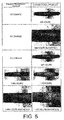
- Example 3 and Comparative example 1 were compared using the former as a product according to the present invention and the latter as a conventional product. As shown in FIG. 5 , even after 1,440 hours had passed, the visual appearance of the product according to the present invention (Example 3) was able to maintain soundness over a long period of time, regardless of fine cracks that formed. On the other hand, cracks formed in the conventional product (Comparative example 1) that is the comparative product after 480 hours had passed and the cracks enlarged as time passed thereafter. At 1,440 hours, significant damage had been done. Therefore, it was confirmed that the product according to the present invention is greatly superior.
- EPDM in terms of polymer properties, EPDM, IIR, and Br-IIR have less of a diene rubber component than SBR, and therefore have superior weatherability. Therefore, it was identified that when the amount of EPDM increases, weatherability of the polymer-compatible interdiffusion layer between the ultra high molecular weight polyethylene and the rubber composition increases; and that because the interdiffusion layer does not break down, the ultra high molecular weight polyethylene does not easily peel off.
- EPDM, IIR, and Br-IIR displayed higher affinity to the softener (paraffin oil) than SBR. Therefore, it was identified that as the amount of EPDM increases, an amount of oil that is expelled under pressure decreases.
- Example 3 is preferable because there is little bleeding.
Landscapes
- Engineering & Computer Science (AREA)
- Mechanical Engineering (AREA)
- General Engineering & Computer Science (AREA)
- Chemical & Material Sciences (AREA)
- Chemical Kinetics & Catalysis (AREA)
- Laminated Bodies (AREA)
- Rigid Pipes And Flexible Pipes (AREA)
- Belt Conveyors (AREA)
Abstract
Description
- The present invention relates to a rubber laminate, and particularly relates to a rubber laminate such as a hose or a conveyer belt having improved abrasion resistance and weatherability.
- High pressure hoses used in construction machinery and the like and conveyer belts used in transporting particulates and the like may repeatedly come in contact with surrounding metal frames and metal piping due to vibrations and the like exerted on surrounding equipment. Therefore, the high pressure hoses and the conveyer belts that are used under such conditions need to have high abrasion resistance. Covering surfaces of the hoses and the conveyer belts with a material having superior abrasion resistance such as an ultra high molecular weight polyethylene (UHMwPE) is conceivable to improve abrasion resistance, but there is a problem in that adhesiveness between some rubber compositions and the ultra high molecular weight polyethylene is low.
- In order to solve this sort of problem, Patent Document 1 describes a hose having an outer surface rubber layer that is formed from a rubber composition having a styrene-butadiene rubber (SBR) compounded with from 10 to 50 parts by mass of a softener and/or a plasticizer as a main component and that is covered with an ultra high molecular weight polyethylene. With this hose, because the softener and/or the plasticizer permeate and wet the ultra high molecular weight polyethylene layer and promote interdiffusion and entanglement of molecules between the rubber composition and the ultra high molecular weight polyethylene during vulcanization, the adhesive strength of both components after vulcanization is improved.
-
- Patent Document 1: Japanese Unexamined Patent Application Publication No.
2003-207078A - However, with the hose of Patent Document 1, there is a problem in that when a temperature of the hose rises greatly or the hose is subjected to large amounts of UV light from sunlight, mainly the polymers in the rubber composition degrade, and the adhesive strength between the rubber composition and the ultra high molecular weight polyethylene decreases. When the adhesive strength decreases in this way and the ultra high molecular weight polyethylene layer peels off, visual appearance is considerably damaged, which makes it impossible to visually identify cracks and the like that may have formed on a main body of the hose. Additionally, because compatibility between the softener and/or the plasticizer and the styrene-butadiene rubber is low, the softener and/or the plasticizer that permeated the ultra high molecular weight polyethylene layer during vulcanization may bleed onto a surface of the ultra high molecular weight polyethylene layer after vulcanization. As a result, there is a possibility of not being able to distinguish this bleeding from actual damage to the hose.
- An object of the present invention is to provide a rubber laminate that can improve abrasion resistance and weatherability and is arranged so that the softener does not bleed onto a hose surface after vulcanization.
- In order to achieve the aforementioned object, a rubber laminate of the present invention comprises a reinforcing layer and a second rubber layer laminated sequentially on a first rubber layer, at least one outer surface of the first rubber layer and the second rubber layer being covered with an ultra high molecular weight polyethylene layer, wherein the rubber layers covered with the ultra high molecular weight polyethylene layer are formed from a rubber composition comprising from 20 to 40 parts by mass of a softener per 100 parts by mass of a mixed rubber including from 60 to 80% by mass ratio of a diene rubber and 20 to 40% by mass ratio of a ethylene-propylene-diene rubber and/or a butyl rubber.
- It is preferable that a paraffin oil is used as the softener. Additionally, it is preferable that the ultra high molecular weight polyethylene has a molecular weight of 1,000,000 or more.
- The rubber laminate of the present invention can be preferably used in a hose, wherein the first rubber layer and the second rubber layer are configured as an inner surface rubber layer and an outer surface rubber layer, respectively, the outer surface rubber layer is formed from the rubber composition, and a surface thereof is covered with the ultra high molecular weight polyethylene layer.
- Alternatively, the rubber laminate of the present invention can be preferably used in a conveyer belt, wherein the first rubber layer and the second rubber layer are configured as an inner side rubber layer and an outer side rubber layer, respectively, at least the outer side rubber layer is formed from the rubber composition, and a surface thereof is covered with the ultra high molecular weight polyethylene layer.
- According to the rubber laminate of the present invention, in the rubber laminate, the rubber layer that is covered with the ultra high molecular weight polyethylene layer is formed from the rubber composition comprising from 20 to 40 parts by mass of the softener per 100 parts by mass of the mixed rubber including from 60 to 80% by mass ratio of a diene rubber and 20 to 40% by mass ratio of a ethylene-propylene-diene rubber and/or a butyl rubber. As a result, the adhesive strength between the rubber layer and the ultra high molecular weight polyethylene layer increases and the ultra high molecular weight polyethylene layer does not easily peel off. Therefore, abrasion resistance can be enhanced.
Additionally, an interdiffusion layer that provides an adhesiveness is formed between the rubber layer and the ultra high molecular weight polyethylene layer, and because the ethylene-propylene-diene rubber and/or the butyl rubber that has excellent weatherability enters the interdiffusion layer, weatherability can be enhanced.
Furthermore, the softener that permeated into the ultra high molecular weight polyethylene layer during vulcanization can return to the outer surface rubber layer or the outer side rubber layer after vulcanization because the ethylene-propylene-diene rubber and the butyl rubber are highly compatible with the softener. Therefore, the softener can be made so as not to bleed onto a surface of the hose or the conveyer belt. -
- FIG. 1
- is a schematic view of a rubber laminate of the present invention.
- FIG. 2
- is a perspective view showing a structure of a hose that is the rubber laminate of the present invention.
- FIG. 3
- is a perspective view showing a structure of a conveyer belt that is the rubber laminate of the present invention.
- FIG. 4
- is a schematic view of a test method.
- FIG. 5
- is an illustration showing conditions of appearances of the results of weatherability tests.
- Embodiments and examples of the rubber laminate according to the present invention are described below in detail based on the drawings. However, the present invention is not limited to these embodiments and examples.
-
FIG. 1 shows a rubber laminate according to an embodiment of the present invention.
As shown inFIG. 1 , arubber laminate 10 of the present invention comprises afirst rubber layer 11 that is located on an inner side, a reinforcinglayer 12 and asecond rubber layer 13 laminated sequentially on thefirst rubber layer 11, and an ultra high molecularweight polyethylene layer 14 covering one outer surface of thesecond rubber layer 13, wherein thesecond rubber layer 13, covered with the ultra high molecularweight polyethylene layer 14, is formed from a rubber composition comprising from 20 to 40 parts by mass of a softener per 100 parts by mass of a mixed rubber including from 60 to 80% by mass ratio of a diene rubber and 20 to 40% by mass ratio of a ethylene-propylene-diene rubber and/or a butyl rubber. - According to the rubber laminate of the present invention, in the rubber laminate, the
second rubber layer 13 that is covered with the ultra high molecularweight polyethylene layer 14 is formed from the rubber composition comprising from 20 to 40 parts by mass of the softener per 100 parts by mass of the mixed rubber including from 60 to 80% by mass ratio of the diene rubber and 20 to 40% by mass ratio of the ethylene-propylene-diene rubber and/or the butyl rubber. Therefore, the adhesive strength between thesecond rubber layer 13 and the ultra high molecularweight polyethylene layer 14 increases and the ultra high molecularweight polyethylene layer 14 does not easily peel off. As a result, abrasion resistance can be greatly enhanced. - Additionally, an
interdiffusion layer 15 that provides an adhesion effect is formed between thesecond rubber layer 13 and the ultra high molecularweight polyethylene layer 14. As the ethylene-propylene-diene rubber and/or the butyl rubber that has excellent weatherability enters theinterdiffusion layer 15, weatherability can be enhanced.
Furthermore, the softener that permeated into the ultra high molecularweight polyethylene layer 14 during vulcanization can return to thesecond rubber layer 13 after vulcanization because the ethylene-propylene-diene rubber and the butyl rubber are highly compatible with the softener. Therefore, the softener can be made so as not to bleed onto a surface of therubber laminate 10. - As shown in
FIG. 1 , the rubber laminate has been described as having thefirst rubber layer 11 that is located on the inner side, the reinforcinglayer 12 and thesecond rubber layer 13 laminated sequentially on thefirst rubber layer 11, and the ultra high molecularweight polyethylene layer 14 covering one outer surface of thesecond rubber layer 13, but the present invention is not limited to this configuration of the first rubber laminate and can also be configured as described below.
Examples of configurations of the rubber laminate include a second rubber laminate having afirst rubber layer 11 that is located on an inner side, a reinforcinglayer 12 and asecond rubber layer 13 laminated sequentially on thefirst rubber layer 11, and an ultra high molecularweight polyethylene layer 14 covering one outer surface of thefirst rubber layer 11, or a third rubber laminate having afirst rubber layer 11 that is located on an inner side, a reinforcinglayer 12 and asecond rubber layer 13 laminated sequentially on thefirst rubber layer 11, and an ultra high molecularweight polyethylene layer 14 covering one outer surface of each of thefirst rubber layer 11 and thesecond rubber layer 13. Furthermore, the rubber laminate may be configured so that a thin insulation rubber layer is provided between the ultra high molecularweight polyethylene layer 14 and the reinforcinglayer 12. - Next, an embodiment in which the rubber laminate of the present invention is applied to a hose will be described while referencing
FIG. 2. FIG. 2 is a perspective view showing a structure of a hose that is the rubber laminate of the present invention.
As shown inFIG. 2 , ahose 20 that is a rubber laminate has an innersurface rubber layer 21 that is a first rubber layer, and a reinforcinglayer 22 and an outersurface rubber layer 23 that is a second rubber layer laminated sequentially on the innersurface rubber layer 21. Moreover, the outersurface rubber layer 23 is covered with an ultra high molecularweight polyethylene layer 24. During use, the outersurface rubber layer 23 side is a surface that is exposed to the outdoor environment. - With such a
hose 20, the outersurface rubber layer 23 that is the second rubber layer is formed from a second rubber composition comprising from 20 to 40 parts by mass of a softener per 100 parts by mass of a mixed rubber including from 60 to 80% by mass ratio of a diene rubber and 20 to 40% by mass ratio of a ethylene-propylene-diene rubber (EPDM) and/or a butyl rubber (IIR). Here, the butyl rubber (IIR) also includes a halogenated butyl rubber such as Br-butyl rubber (Br-IIR), Cl-butyl rubber (Cl-IIR), or the like. Examples of the diene rubber include natural rubbers (NR), isoprene rubbers (IR), butadiene rubbers (BR), styrene-butadiene rubbers (SBR), and the like. - A first rubber composition that forms the inner
surface rubber layer 21 that is the first rubber layer is not particularly limited and examples include rubber compositions with excellent oil resistance, chemical resistance, gas permeation resistance, and refrigerant permeation resistance such as butyl copolymer rubbers and acrylonitrile-butadiene copolymer rubbers (NBR), chlorinated polyethylene rubbers (CM), chlorosulfonated polyethylene rubbers (CSM), and the like. - Additionally, the reinforcing
layer 22 is also not particularly limited and at least one layer of a braid or a spiral formed from brass plated wires, steel cords, or organic fiber cords can be used. - The outer
surface rubber layer 23 of thehose 20 is formed from the second rubber composition as described above. As shown in the following Table 1, a critical surface tension Yc of the ethylene-propylene-diene rubber and the butyl rubber is closer than the styrene-butadiene rubber to a critical surface tension Yc of the ultra high molecular weight polyethylene. Therefore, the adhesive strength increases, the ultra high molecularweight polyethylene layer 24 does not peel off easily, and abrasion resistance can be enhanced. -
Table 1 Material Ultra high molecular weight polyethylene EPDM IIR SBR Yc (mN/m) 29 28 27 33 - Additionally, the ethylene-propylene-diene rubber and/or the butyl rubber with excellent weatherability enters the interdiffusion layer that provides the adhesiveness (omitted from the drawings) between the outer
surface rubber layer 23 and the ultra high molecularweight polyethylene layer 24. Therefore, the weatherability of thehose 20 can be enhanced. - Furthermore, the softener that permeated into the ultra high molecular
weight polyethylene layer 24 during vulcanization can return to the outersurface rubber layer 23 after vulcanization because the ethylene-propylene-diene rubber and the butyl rubber are highly compatible with the softener. Therefore, the softener will not bleed onto a hose surface. - Moreover, when brass plated wires are used for the reinforcing
layer 22, the adhesiveness between the outersurface rubber layer 23 and the ultra high molecularweight polyethylene layer 24, the weatherability of thehose 20, the bleeding of the softener, and the adhesiveness between the outersurface rubber layer 23 and the brass plated wires are preferably well balanced. - With the
hose 20 as described above, for example, the unvulcanized innersurface rubber layer 21 is cylindrically applied on a mandrel and the reinforcinglayer 22 is wrapped cylindrically thereon. Then, the unvulcanized outersurface rubber layer 23 formed from the second rubber composition is cylindrically applied on the reinforcinglayer 22. Additionally, an identification mark (not shown) may be either pre-printed on the outersurface rubber layer 23 using ink or the like; or the identification mark may be printed on the outersurface rubber layer 23 after the outersurface rubber layer 23 is applied. - Next, an ultra high molecular weight polyethylene film that constitutes the ultra high molecular
weight polyethylene layer 24 is cylindrically wrapped on the outersurface rubber layer 23. Following this, a covering material (conventionally known materials such as fabrics, metallic materials such as lead, resin materials, and the like are usable) is applied in a ribbon form or a tape form, and then vulcanization is performed. In such a way, thehose 20, being integrally formed by each layer, specifically the innersurface rubber layer 21, the reinforcinglayer 22, the outersurface rubber layer 23, and the ultra high molecularweight polyethylene layer 24, being adhered, can be obtained. - According to the
hose 20 of the present embodiment, the interdiffusion layer that provides the adhesive strength is formed between the outersurface rubber layer 23 and the ultra high molecularweight polyethylene layer 24. Therefore, the adhesiveness increases, the ultra high molecularweight polyethylene layer 24 does not peel off easily, and the abrasion resistance can be enhanced. Additionally, the ethylene-propylene-diene rubber and/or the butyl rubber with excellent weatherability enters the interdiffusion layer that is between the outersurface rubber layer 23 and the ultra high molecularweight polyethylene layer 24. Therefore, the weatherability can be enhanced. Furthermore, the softener that permeated into the ultra high molecularweight polyethylene layer 24 during vulcanization can return to the outersurface rubber layer 23 after vulcanization because the ethylene-propylene-diene rubber and the butyl rubber is highly compatible with the softener. Therefore, the softener can be made so as not to bleed onto a surface of thehose 20. - Next, an embodiment in which the rubber laminate of the present invention is applied to a conveyer belt will be described while referencing
FIG. 3. FIG. 3 is a perspective view showing a structure of a conveyer belt that is the rubber laminate of the present invention.FIG. 3 shows a rubber laminate according to another embodiment of the present invention. - As shown in
FIG. 3 , aconveyer belt 30 that is a rubber laminate has an innerside rubber layer 31 that is a first rubber layer, and a reinforcinglayer 32 and an outerside rubber layer 33 that is a second rubber layer laminated sequentially on the innerside rubber layer 31. Moreover, the outerside rubber layer 33 is covered with an ultra high molecularweight polyethylene layer 34. During operation, the outerside rubber layer 33 side is a transporting surface. - With such a conveyer belt, the outer
side rubber layer 33 is formed from the second rubber composition described above. - A first rubber composition that forms the inner
side rubber layer 31 is not particularly limited and examples include rubber compositions with excellent heat resistance and strength such as natural rubbers, butadiene rubbers, and the like. Additionally, the reinforcinglayer 32 is also not particularly limited and at least one layer of steel cords, a canvas formed from organic fiber cords, a cord fabric formed from organic fiber cords, or the like can be used. - The outer
side rubber layer 33 is formed in such a way from the second rubber composition. Therefore, the abrasion resistance and the weatherability of theconveyer belt 30 can be enhanced and the softener can be prevented from bleeding onto a surface of theconveyer belt 30. - Furthermore, note that with the
conveyer belt 30, the innerside rubber layer 31 is also formed from the same second rubber composition as the outerside rubber layer 33 and may be configured so that a surface thereof is covered with the ultra high molecularweight polyethylene layer 34. - Moreover, when steel cords are used for the reinforcing
layer 32, the adhesiveness between the outerside rubber layer 33 and the ultra high molecularweight polyethylene layer 34, the weatherability of theconveyer belt 30, the bleeding of the softener, and the adhesiveness between the outerside rubber layer 33 and the steel cords are preferably well balanced. - In all of the embodiments described above, a paraffin oil is preferably used as the softener. The identification marks printed on the surface of the outer
surface rubber layer 23 of thehose 20 or the outerside rubber layer 33 of theconveyer belt 30 will not become discolored because a hue of the paraffin oil is less than 0.5 on the ASTM color scale (ASTM D1500). Therefore, interpretation of the identification marks after vulcanization will not be inhibited. - Additionally, an ultra high molecular weight polyethylene having a molecular weight of 1,000,000 or more is preferably used as the ultra high molecular weight polyethylene that forms the ultra high molecular weight polyethylene layers 24 and 34. If the molecular weight is less than 1,000,000 the polyethylene will foam during vulcanization and the ultra high molecular weight polyethylene layers 24 or 34 will breakdown. Therefore it is not preferable that the molecular weight be less than 1,000,000.
- Descriptions of a hose and a conveyer belt as the rubber laminate of the present invention have been given, but the present invention is not limited to these and can be applied to, for example, pneumatic fenders, rubber bearings, tires, rubber rolls, rubber gaskets, expansion/contraction devices for road bridges, flexible joints for concrete structures, aseismic/vibration dampening rubbers, water sealing sheets, industrial-use pneumatic springs, outer diaphragms of train car connecting sections, flap belts, tank linings, and the like. Additionally, examples of applications as a hose include high pressure hoses for use in construction machinery and the like.
- Raw materials shown in Table 2 (rubbers and softener) were varied as shown in Table 3 and Table 4. After attaching an ultra high molecular weight polyethylene film having a thickness of 100 µm to an unvulcanized rubber composition compounded with additives shown in Table 2, vulcanization under pressure was performed at 148°C for 60 minutes, and sheet-like test samples having a size of 6 in. × 6 in and a thickness of 2.5 mm for Examples 1 to 9 (products according to the present invention) and Comparative examples 1 to 5 were produced. The adhesiveness, the weatherability, and the bleeding of the softener onto a surface of the ultra high molecular weight polyethylene (leakage) of these 14 sheet-like test samples were measured and evaluated according to the following methods.
- Adhesiveness with the ultra high molecular weight polyethylene A clipping having a width of 25 mm was cut from the sheet-like test sample. Resistance force (N/25 mm) when the rubber layer was peeled off at a rate of 50 mm/min and adhesion appearance (area ratio) of the rubber composition to the ultra high molecular weight polyethylene film after peeling were measured at temperatures of 25°C and 100°C.
- The sheet-like test sample was folded in half so that the ultra high molecular weight polyethylene film was on an outer side (light source side) and was used to measure weatherability under a condition of the SA method (reproduction of direct outdoor exposure) of the open-flame carbon-arc lamp weatherability test as stipulated in Japanese Industrial Standard (JIS) K 6266. Exposure conditions were as follows.
An overview of the test method is shown inFIG. 4 .
As shown inFIG. 4 , a sheet-like test sample 51 was placed a predetermined distance from anarc lamp 50, which is a light source. Note that thetest sample 51 was curved, ends thereof were secured byclips arc lamp 50. - ■ Glass filter: Type II
- ■ Test sample surface irradiance: 255 W/m2
- ■ Test durations: 480 hrs, 600 hrs, 1440 hrs
- ■ Spray cycle: After 102 minutes of irradiation, 18 minutes of irradiation and spraying of water
- ⊙: 0% (no peeling)
- o: 10 to 40% (slight peeling)
- Δ: 40 to 80% (significant peeling)
- ×: 100% (complete peeling)
- After clamping the sheet-like test sample in a vice and letting it sit for one day at a temperature of 25°C, an amount of bleeding of the softener onto the surface of the ultra high molecular weight polyethylene film was visually confirmed. The evaluation results are shown as an index with Comparative example 1 being 100. Smaller index values indicate less bleeding. The bleeding test was performed using a surface pressure of 10 MPa.
- Additionally, raw materials shown in Table 2 (rubbers and softener) were varied as shown in Table 3 and Table 4 and hose-like test samples having outer surface rubber layers formed from an unvulcanized rubber composition compounded with the additives shown in Table 2 and reinforcing layers formed from brass plated wires were produced as follows.
- A reinforcing layer was formed by spirally wrapping brass plated wire on a mandrel having an outer diameter of 34 mm. After applying an unvulcanized rubber sheet (thickness = 2.5 mm) that is prepared from each rubber composition on the reinforcing layer, vulcanization under pressure was performed at 148°C for 60 minutes and hose-like test samples for Examples 1 to 9 (products according to the present invention) and Comparative examples 1 to 5 were produced. Adhesiveness between the rubber and the wire of these 14 hose-like test samples was measured and evaluated according to the following method.
- A clipping having a width of 25 mm was cut from the hose-like test sample. Resistance force (N/25 mm) when the outer surface rubber layer was peeled off at a rate of 50 mm/min and adhesion appearance (area ratio) of the rubber composition to the reinforcing layer after peeling were measured.
-
Table 2 Raw materials Composition (parts by mass) Product name Manufacturer NR Tables 3 and 4 STR-20 TECK BEE HANG Co. LTD. SBR Same as above NIPOL 1502 Zeon Corporation BR Same as above NIPOL BR1220 Zeon Corporation EPDM Same as above Esprene 505 Sumitomo Chemical Co., Ltd. IIR Same as above Exxon Butyl 268 Japan BUTYL Co., Ltd. Br-IIR Same as above Exxon Bromobutyl 2255 Japan BUTYL Co., Ltd. Softener Same as above Diana Process PW-90 Idemitsu Kosan Co., Ltd. Carbon black 60 Shoblack N220 Cabot Japan K. K. Zinc oxide 3.0 Zinc Oxide #3 Seido Chemical Industry Co., Ltd. Stearic acid 1.0 Lunac S 25 Kao Corporation Antiaging agent 3.0 Irganox 1010 Ciba Geigy Wax 2.0 OZOACE-0015 Nippon Seiro Co., Ltd. Sulfur 2.0 Oil-treated sulfur Hosoi Chemical Industry Co., Ltd. Vulcanization accelerator (NS) 1.5 Nocceler NS-P Ouchi Shinko Chemical Industrial Co., Ltd. Vulcanization accelerator (DM) 0.5 (added only in Ex. 5) Nocceler DM-P Ouchi Shinko Chemical Industrial Co., Ltd. -
Table 3 Item Ex. 1 Ex. 2 Ex. 3 Ex. 4 Ex. 5 Ex. 6 Ex. 7 Ex. 8 Ex. 9 NR - - - - 70 - - - - SBR 80 70 60 - - 70 70 60 60 BR - - - 70 - - - - - EPDM 20 30 40 30 30 - - 40 40 IIR - - - - - 30 - - - Br-IIR - - - - - - 30 - - Softener 30 30 30 30 30 30 30 20 40 UHMwPE adhesiveness test Resistance force (25°C) 77 68 55 52 82 55 61 58 51 Adhesion ratio (25°C) 100 100 100 100 100 100 100 100 100 Resistance force (100°C) 20 19 15 13 29 18 22 19 11 Adhesion ratio (100°C) 80 100 100 100 100 100 100 100 100 Weatherability test 480 hrs ⊙ ⊙ ⊙ ⊙ ⊙ ⊙ ⊙ ⊙ ⊙ 600 hrs ⊙ ⊙ ⊙ ⊙ ⊙ ⊙ ⊙ ⊙ ⊙ 1440 hrs o to ⊙ ⊙ ⊙ ⊙ ⊙ ⊙ ⊙ ⊙ ⊙ Bleeding test 50 40 30 40 40 30 30 20 40 Wire adhesiveness test Resistance force 80 75 60 46 56 41 45 65 54 Adhesion ratio 100 90 80 80 80 70 70 80 90 -
Table 4 Item CE 1 CE 2 CE 3 CE 4CE 5 NR - - - - - SBR 100 90 50 60 60 BR - - - - - EPDM - 10 50 40 40 IIR - - - - - Br-IIR - - - - - Softener 30 30 30 10 50 UHMwPE adhesiveness test Resistance force (25°C) 88 82 48 64 45 Adhesion ratio (25°C) 100 100 100 100 100 Resistance force (100°C) 24 21 12 25 7 Adhesion ratio (100°C) 0 20 100 100 100 Weatherability test 480 hrs Δ to o o ⊙ ⊙ ⊙ 600 hrs A Δ ⊙ ⊙ ⊙ 1440 hrs x × ⊙ O ⊙ Bleeding test 100 80 20 10 70 Wire adhesiveness test Resistance force 90 83 39 70 48 Adhesion ratio 100 100 50 80 90 - It is clear from the evaluation results shown in Table 3 and Table 4 that the sheet-like test samples of the present invention, when compared to the sheet-like test samples of the Comparative examples, have superior weatherability and adhesiveness with the ultra high molecular weight polyethylene and little bleeding onto the surface of the ultra high molecular weight polyethylene film. Additionally, it was identified that the hose-like test samples of the present invention, when compared to the hose-like test samples of the Comparative examples (especially Comparative example 3), have superior adhesiveness with the brass plated wires.
- Conditions of appearances of the results of weatherability tests are shown in
FIG. 5 . Example 3 and Comparative example 1 were compared using the former as a product according to the present invention and the latter as a conventional product. As shown inFIG. 5 , even after 1,440 hours had passed, the visual appearance of the product according to the present invention (Example 3) was able to maintain soundness over a long period of time, regardless of fine cracks that formed. On the other hand, cracks formed in the conventional product (Comparative example 1) that is the comparative product after 480 hours had passed and the cracks enlarged as time passed thereafter. At 1,440 hours, significant damage had been done. Therefore, it was confirmed that the product according to the present invention is greatly superior. - In the ultra high molecular weight polyethylene adhesiveness tests, in terms of polymer properties, SBR has a higher strength than EPDM and from a comparison of a Yc of each, when it comes to affinity with the ultra high molecular weight polyethylene, compounding with EPDM is superior. Therefore, it was identified that when an amount of EPDM increases, resistance force decreases and the adhesion ratio increases.
- Additionally, in the weatherability tests, in terms of polymer properties, EPDM, IIR, and Br-IIR have less of a diene rubber component than SBR, and therefore have superior weatherability. Therefore, it was identified that when the amount of EPDM increases, weatherability of the polymer-compatible interdiffusion layer between the ultra high molecular weight polyethylene and the rubber composition increases; and that because the interdiffusion layer does not break down, the ultra high molecular weight polyethylene does not easily peel off.
- In the bleeding tests, EPDM, IIR, and Br-IIR displayed higher affinity to the softener (paraffin oil) than SBR. Therefore, it was identified that as the amount of EPDM increases, an amount of oil that is expelled under pressure decreases.
- In the wire adhesiveness tests, in terms of polymer properties, SBR has a higher strength than EPDM, IIR, and Br-IIR and SBR also has superior adhesiveness with the wires. Therefore, it was identified that when an amount of EPDM increases, the resistance force and the adhesion ratio decrease.
- Thus, when comparing Examples 1 to 4, it is clear that the mixtures of SBR and EPDM in the SBR-compounded product Examples 1 to 3 are superior over the BR-compounded product. Particularly, Example 3 is preferable because there is little bleeding.
-
- 10
- Rubber laminate
- 11
- First rubber layer
- 12, 22, 32
- Reinforcing layer
- 13
- Second rubber layer
- 14, 24, 34
- Ultra high molecular weight polyethylene layer
- 15
- Interdiffusion layer
- 20
- Hose
- 21
- Inner surface rubber layer
- 23
- Outer surface rubber layer
- 30
- Conveyer belt
- 31
- Inner side rubber layer
- 33
- Outer side rubber layer
Claims (5)
- A rubber laminate comprising:a reinforcing layer and a second rubber layer laminated sequentially on a first rubber layer, at least one outer surface of the first rubber layer and the second rubber layer being covered with an ultra high molecular weight polyethylene layer, whereinthe rubber layers covered with the ultra high molecular weight polyethylene layer are formed from a rubber composition comprising from 20 to 40 parts by mass of a softener per 100 parts by mass of a mixed rubber including from 60 to 80% by mass ratio of a diene rubber and 20 to 40% by mass ratio of a ethylene-propylene-diene rubber and/or a butyl rubber.
- The rubber laminate according to Claim 1, wherein
the softener is a paraffin oil. - The rubber laminate according to Claim 1 or 2, wherein
a molecular weight of the ultra high molecular weight polyethylene is 1,000,000 or more. - The rubber laminate according to any one of Claims 1 to 3, which is a hose, wherein
the first rubber layer and the second rubber layer are configured as an inner surface rubber layer and an outer surface rubber layer, respectively, the outer surface rubber layer is formed from the rubber composition, and a surface thereof is covered with the ultra high molecular weight polyethylene layer. - The rubber laminate according to any one of Claims 1 to 3, which is a conveyer belt, wherein
the first rubber layer and the second rubber layer are configured as an inner side rubber layer and an outer side rubber layer, respectively, at least the outer side rubber layer is formed from the rubber composition, and a surface thereof is covered with the ultra high molecular weight polyethylene layer.
Applications Claiming Priority (2)
| Application Number | Priority Date | Filing Date | Title |
|---|---|---|---|
| JP2009232883 | 2009-10-06 | ||
| PCT/JP2009/071917 WO2011042998A1 (en) | 2009-10-06 | 2009-12-28 | Rubber laminate |
Publications (3)
| Publication Number | Publication Date |
|---|---|
| EP2487031A1 true EP2487031A1 (en) | 2012-08-15 |
| EP2487031A4 EP2487031A4 (en) | 2013-04-03 |
| EP2487031B1 EP2487031B1 (en) | 2013-10-23 |
Family
ID=43856486
Family Applications (1)
| Application Number | Title | Priority Date | Filing Date |
|---|---|---|---|
| EP20090850268 Active EP2487031B1 (en) | 2009-10-06 | 2009-12-28 | Rubber laminate |
Country Status (6)
| Country | Link |
|---|---|
| US (1) | US8865316B2 (en) |
| EP (1) | EP2487031B1 (en) |
| JP (1) | JP4626727B1 (en) |
| CN (1) | CN102548759B (en) |
| TW (1) | TWI430884B (en) |
| WO (1) | WO2011042998A1 (en) |
Cited By (1)
| Publication number | Priority date | Publication date | Assignee | Title |
|---|---|---|---|---|
| CN104449453A (en) * | 2014-12-23 | 2015-03-25 | 常熟市联动工程材料有限公司 | Wear-resistant non-slip strip |
Families Citing this family (12)
| Publication number | Priority date | Publication date | Assignee | Title |
|---|---|---|---|---|
| WO2011042998A1 (en) | 2009-10-06 | 2011-04-14 | 横浜ゴム株式会社 | Rubber laminate |
| JP5126395B1 (en) * | 2011-07-20 | 2013-01-23 | 横浜ゴム株式会社 | Rubber laminate |
| JP6128550B2 (en) * | 2013-03-26 | 2017-05-17 | 住友理工株式会社 | hose |
| CN103264560B (en) * | 2013-05-20 | 2015-09-30 | 合肥希创电子科技有限公司 | A kind of overlay film rubber and preparation method thereof |
| JP2015063615A (en) * | 2013-09-25 | 2015-04-09 | 凸版印刷株式会社 | Barrier molding |
| CN107351489B (en) * | 2017-06-27 | 2019-07-26 | 浙江欧尔赛斯科技有限公司 | Natural rubber, butyl rubber, membrane-clad gasket and its production process |
| JP6960086B2 (en) * | 2017-11-08 | 2021-11-05 | 住友ゴム工業株式会社 | Rubber composition for fender |
| CN108276837B (en) * | 2018-02-12 | 2023-10-20 | 无锡百年通工业输送有限公司 | Anti-adhesion conveyer belt with ultra-high molecular polyethylene coating and preparation method thereof |
| JP7446965B2 (en) | 2020-09-29 | 2024-03-11 | グローブライド株式会社 | Spinal fixation rod |
| JP7432538B2 (en) * | 2021-01-05 | 2024-02-16 | グローブライド株式会社 | Rod for spinal fixation device and spinal fixation device equipped with the same |
| JP7432541B2 (en) * | 2021-01-25 | 2024-02-16 | グローブライド株式会社 | Rod for spinal fixation device and spinal fixation device equipped with the same |
| US20240084932A1 (en) * | 2022-09-13 | 2024-03-14 | Saudi Arabian Oil Company | Functionalized thermoplastic composite layer for the production of pipes and pressure vessels |
Family Cites Families (10)
| Publication number | Priority date | Publication date | Assignee | Title |
|---|---|---|---|---|
| GB2256615B (en) | 1991-06-12 | 1995-03-01 | Yokohama Rubber Co Ltd | Process for the production of a rubber/rubber bonded composite sheet structure |
| JP2816909B2 (en) | 1991-12-24 | 1998-10-27 | 横浜ゴム株式会社 | Method for producing rubber-rubber bonded composite |
| JP3747344B2 (en) * | 1997-04-25 | 2006-02-22 | 株式会社ブリヂストン | Low hardness rubber composition, paper feeding member and paper feeding device |
| US6334466B1 (en) * | 1998-10-09 | 2002-01-01 | The Gates Corporation | Abrasion-resistant material handling hose |
| US6800691B2 (en) | 2001-09-26 | 2004-10-05 | Cooper Technology Services, Llc | Blend of EPDM and SBR using an EPDM of different origin as a compatibilizer |
| JP4841796B2 (en) * | 2002-01-11 | 2011-12-21 | 横浜ゴム株式会社 | Abrasion resistant hose for construction machinery and method for manufacturing the same |
| US7478654B2 (en) * | 2006-08-17 | 2009-01-20 | Veyance Technologies, Inc. | Hose |
| JP4299881B2 (en) * | 2007-03-07 | 2009-07-22 | 横浜ゴム株式会社 | Vulcanized rubber products and hoses |
| CN101480856A (en) * | 2009-02-06 | 2009-07-15 | 武汉工程大学 | Gradient composite material containing ultra-high molecular weight polyethylene and rubber and preparation method thereof |
| WO2011042998A1 (en) | 2009-10-06 | 2011-04-14 | 横浜ゴム株式会社 | Rubber laminate |
-
2009
- 2009-12-28 WO PCT/JP2009/071917 patent/WO2011042998A1/en not_active Ceased
- 2009-12-28 CN CN200980161832.9A patent/CN102548759B/en active Active
- 2009-12-28 EP EP20090850268 patent/EP2487031B1/en active Active
- 2009-12-28 US US13/500,190 patent/US8865316B2/en active Active
- 2009-12-28 JP JP2010512861A patent/JP4626727B1/en active Active
-
2010
- 2010-10-06 TW TW99134037A patent/TWI430884B/en not_active IP Right Cessation
Non-Patent Citations (4)
| Title |
|---|
| DATABASE WPI Week 199904 Thomson Scientific, London, GB; AN 1999-040828 XP002692540, & JP 10 298353 A (BRIDGESTONE CORP) 10 November 1998 (1998-11-10) * |
| DATABASE WPI Week 200373 Thomson Scientific, London, GB; AN 2003-771618 XP002692523, -& JP 2003 207078 A (YOKOHAMA RUBBER CO LTD) 25 July 2003 (2003-07-25) * |
| DATABASE WPI Week 200873 Thomson Scientific, London, GB; AN 2008-M49165 XP002692531, & WO 2008/108198 A1 (YOKOHAMA RUBBER CO LTD) 12 September 2008 (2008-09-12) * |
| See also references of WO2011042998A1 * |
Cited By (1)
| Publication number | Priority date | Publication date | Assignee | Title |
|---|---|---|---|---|
| CN104449453A (en) * | 2014-12-23 | 2015-03-25 | 常熟市联动工程材料有限公司 | Wear-resistant non-slip strip |
Also Published As
| Publication number | Publication date |
|---|---|
| EP2487031B1 (en) | 2013-10-23 |
| EP2487031A4 (en) | 2013-04-03 |
| JPWO2011042998A1 (en) | 2013-02-28 |
| TWI430884B (en) | 2014-03-21 |
| JP4626727B1 (en) | 2011-02-09 |
| WO2011042998A1 (en) | 2011-04-14 |
| CN102548759A (en) | 2012-07-04 |
| CN102548759B (en) | 2014-10-29 |
| US20120196068A1 (en) | 2012-08-02 |
| TW201114589A (en) | 2011-05-01 |
| US8865316B2 (en) | 2014-10-21 |
Similar Documents
| Publication | Publication Date | Title |
|---|---|---|
| EP2487031B1 (en) | Rubber laminate | |
| CN101754867B (en) | Pneumatic tire | |
| CN101511609B (en) | Pneumatic tire | |
| CN101272902B (en) | Low air permeability rubber laminate of low air permeability resin/rubber composition and manufacturing method thereof | |
| JP4299881B2 (en) | Vulcanized rubber products and hoses | |
| JP5258759B2 (en) | Layered vulcanizates based on hydrogenated vinyl polybutadiene. | |
| CN105143333A (en) | Rubber composition adhesive to metallic surface, rubber composition metal laminate, vulcanized rubber product, and method for producing vulcanized rubber product | |
| US8691386B2 (en) | Bonded body of a carbon thin film covered article and a rubber | |
| EP2871068B1 (en) | Laminate for tires | |
| JP2000234054A (en) | Thermoplastic elastomer composition and laminate using this | |
| EP0552620B1 (en) | Rubber-rubber bonded composite structure | |
| JP5218277B2 (en) | Laminated hose of thermoplastic resin composition and rubber composition | |
| JPH11124471A (en) | Pneumatic tire | |
| AU2017406729B2 (en) | Rubber coating composition for use in conveyor belt, laminate, and conveyor belt | |
| US10160263B2 (en) | Tire with non-spliced multilayered film innerliner | |
| JP2011235520A (en) | Rubber composition-polyamide laminate and flexible hose for vehicle using the laminate | |
| JP4945322B2 (en) | Inner liner for pneumatic tire and pneumatic tire | |
| JP2000094583A (en) | Rubber product and method for producing rubber product | |
| JP3262813B2 (en) | Marine hose | |
| TWI662083B (en) | Rubber composition, rubber composition metal laminate, and vulcanized rubber product | |
| CA1188971A (en) | Marks for use in rubber articles | |
| JP2000127298A5 (en) |
Legal Events
| Date | Code | Title | Description |
|---|---|---|---|
| PUAI | Public reference made under article 153(3) epc to a published international application that has entered the european phase |
Free format text: ORIGINAL CODE: 0009012 |
|
| 17P | Request for examination filed |
Effective date: 20120405 |
|
| AK | Designated contracting states |
Kind code of ref document: A1 Designated state(s): AT BE BG CH CY CZ DE DK EE ES FI FR GB GR HR HU IE IS IT LI LT LU LV MC MK MT NL NO PL PT RO SE SI SK SM TR |
|
| DAX | Request for extension of the european patent (deleted) | ||
| A4 | Supplementary search report drawn up and despatched |
Effective date: 20130306 |
|
| RIC1 | Information provided on ipc code assigned before grant |
Ipc: B32B 25/14 20060101ALI20130225BHEP Ipc: B32B 25/16 20060101ALI20130225BHEP Ipc: B32B 25/18 20060101ALI20130225BHEP Ipc: B32B 27/32 20060101AFI20130225BHEP Ipc: B32B 25/08 20060101ALI20130225BHEP Ipc: B32B 1/08 20060101ALN20130225BHEP Ipc: B65G 15/34 20060101ALN20130225BHEP Ipc: F16L 11/08 20060101ALN20130225BHEP |
|
| REG | Reference to a national code |
Ref country code: DE Ref legal event code: R079 Ref document number: 602009019721 Country of ref document: DE Free format text: PREVIOUS MAIN CLASS: B32B0025080000 Ipc: B32B0027320000 |
|
| GRAP | Despatch of communication of intention to grant a patent |
Free format text: ORIGINAL CODE: EPIDOSNIGR1 |
|
| RIC1 | Information provided on ipc code assigned before grant |
Ipc: B32B 25/14 20060101ALI20130618BHEP Ipc: B32B 25/08 20060101ALI20130618BHEP Ipc: B32B 27/32 20060101AFI20130618BHEP Ipc: B32B 25/16 20060101ALI20130618BHEP Ipc: F16L 11/08 20060101ALN20130618BHEP Ipc: B32B 1/08 20060101ALN20130618BHEP Ipc: B32B 25/18 20060101ALI20130618BHEP Ipc: B65G 15/34 20060101ALN20130618BHEP |
|
| INTG | Intention to grant announced |
Effective date: 20130711 |
|
| GRAS | Grant fee paid |
Free format text: ORIGINAL CODE: EPIDOSNIGR3 |
|
| GRAA | (expected) grant |
Free format text: ORIGINAL CODE: 0009210 |
|
| AK | Designated contracting states |
Kind code of ref document: B1 Designated state(s): AT BE BG CH CY CZ DE DK EE ES FI FR GB GR HR HU IE IS IT LI LT LU LV MC MK MT NL NO PL PT RO SE SI SK SM TR |
|
| REG | Reference to a national code |
Ref country code: GB Ref legal event code: FG4D |
|
| REG | Reference to a national code |
Ref country code: CH Ref legal event code: EP |
|
| REG | Reference to a national code |
Ref country code: AT Ref legal event code: REF Ref document number: 637313 Country of ref document: AT Kind code of ref document: T Effective date: 20131115 |
|
| REG | Reference to a national code |
Ref country code: IE Ref legal event code: FG4D |
|
| REG | Reference to a national code |
Ref country code: DE Ref legal event code: R096 Ref document number: 602009019721 Country of ref document: DE Effective date: 20131219 |
|
| REG | Reference to a national code |
Ref country code: NL Ref legal event code: VDEP Effective date: 20131023 |
|
| REG | Reference to a national code |
Ref country code: AT Ref legal event code: MK05 Ref document number: 637313 Country of ref document: AT Kind code of ref document: T Effective date: 20131023 |
|
| REG | Reference to a national code |
Ref country code: LT Ref legal event code: MG4D |
|
| PG25 | Lapsed in a contracting state [announced via postgrant information from national office to epo] |
Ref country code: HR Free format text: LAPSE BECAUSE OF FAILURE TO SUBMIT A TRANSLATION OF THE DESCRIPTION OR TO PAY THE FEE WITHIN THE PRESCRIBED TIME-LIMIT Effective date: 20131023 Ref country code: NO Free format text: LAPSE BECAUSE OF FAILURE TO SUBMIT A TRANSLATION OF THE DESCRIPTION OR TO PAY THE FEE WITHIN THE PRESCRIBED TIME-LIMIT Effective date: 20140123 Ref country code: IS Free format text: LAPSE BECAUSE OF FAILURE TO SUBMIT A TRANSLATION OF THE DESCRIPTION OR TO PAY THE FEE WITHIN THE PRESCRIBED TIME-LIMIT Effective date: 20140223 Ref country code: SE Free format text: LAPSE BECAUSE OF FAILURE TO SUBMIT A TRANSLATION OF THE DESCRIPTION OR TO PAY THE FEE WITHIN THE PRESCRIBED TIME-LIMIT Effective date: 20131023 Ref country code: BE Free format text: LAPSE BECAUSE OF FAILURE TO SUBMIT A TRANSLATION OF THE DESCRIPTION OR TO PAY THE FEE WITHIN THE PRESCRIBED TIME-LIMIT Effective date: 20131023 Ref country code: FI Free format text: LAPSE BECAUSE OF FAILURE TO SUBMIT A TRANSLATION OF THE DESCRIPTION OR TO PAY THE FEE WITHIN THE PRESCRIBED TIME-LIMIT Effective date: 20131023 Ref country code: LT Free format text: LAPSE BECAUSE OF FAILURE TO SUBMIT A TRANSLATION OF THE DESCRIPTION OR TO PAY THE FEE WITHIN THE PRESCRIBED TIME-LIMIT Effective date: 20131023 Ref country code: NL Free format text: LAPSE BECAUSE OF FAILURE TO SUBMIT A TRANSLATION OF THE DESCRIPTION OR TO PAY THE FEE WITHIN THE PRESCRIBED TIME-LIMIT Effective date: 20131023 |
|
| PG25 | Lapsed in a contracting state [announced via postgrant information from national office to epo] |
Ref country code: AT Free format text: LAPSE BECAUSE OF FAILURE TO SUBMIT A TRANSLATION OF THE DESCRIPTION OR TO PAY THE FEE WITHIN THE PRESCRIBED TIME-LIMIT Effective date: 20131023 Ref country code: ES Free format text: LAPSE BECAUSE OF FAILURE TO SUBMIT A TRANSLATION OF THE DESCRIPTION OR TO PAY THE FEE WITHIN THE PRESCRIBED TIME-LIMIT Effective date: 20131023 Ref country code: CY Free format text: LAPSE BECAUSE OF FAILURE TO SUBMIT A TRANSLATION OF THE DESCRIPTION OR TO PAY THE FEE WITHIN THE PRESCRIBED TIME-LIMIT Effective date: 20131023 Ref country code: LV Free format text: LAPSE BECAUSE OF FAILURE TO SUBMIT A TRANSLATION OF THE DESCRIPTION OR TO PAY THE FEE WITHIN THE PRESCRIBED TIME-LIMIT Effective date: 20131023 |
|
| PG25 | Lapsed in a contracting state [announced via postgrant information from national office to epo] |
Ref country code: PT Free format text: LAPSE BECAUSE OF FAILURE TO SUBMIT A TRANSLATION OF THE DESCRIPTION OR TO PAY THE FEE WITHIN THE PRESCRIBED TIME-LIMIT Effective date: 20140224 |
|
| REG | Reference to a national code |
Ref country code: DE Ref legal event code: R097 Ref document number: 602009019721 Country of ref document: DE |
|
| PG25 | Lapsed in a contracting state [announced via postgrant information from national office to epo] |
Ref country code: EE Free format text: LAPSE BECAUSE OF FAILURE TO SUBMIT A TRANSLATION OF THE DESCRIPTION OR TO PAY THE FEE WITHIN THE PRESCRIBED TIME-LIMIT Effective date: 20131023 |
|
| REG | Reference to a national code |
Ref country code: CH Ref legal event code: PL |
|
| PG25 | Lapsed in a contracting state [announced via postgrant information from national office to epo] |
Ref country code: LU Free format text: LAPSE BECAUSE OF FAILURE TO SUBMIT A TRANSLATION OF THE DESCRIPTION OR TO PAY THE FEE WITHIN THE PRESCRIBED TIME-LIMIT Effective date: 20131228 Ref country code: RO Free format text: LAPSE BECAUSE OF FAILURE TO SUBMIT A TRANSLATION OF THE DESCRIPTION OR TO PAY THE FEE WITHIN THE PRESCRIBED TIME-LIMIT Effective date: 20131023 Ref country code: SK Free format text: LAPSE BECAUSE OF FAILURE TO SUBMIT A TRANSLATION OF THE DESCRIPTION OR TO PAY THE FEE WITHIN THE PRESCRIBED TIME-LIMIT Effective date: 20131023 Ref country code: CZ Free format text: LAPSE BECAUSE OF FAILURE TO SUBMIT A TRANSLATION OF THE DESCRIPTION OR TO PAY THE FEE WITHIN THE PRESCRIBED TIME-LIMIT Effective date: 20131023 Ref country code: PL Free format text: LAPSE BECAUSE OF FAILURE TO SUBMIT A TRANSLATION OF THE DESCRIPTION OR TO PAY THE FEE WITHIN THE PRESCRIBED TIME-LIMIT Effective date: 20131023 |
|
| PLBE | No opposition filed within time limit |
Free format text: ORIGINAL CODE: 0009261 |
|
| STAA | Information on the status of an ep patent application or granted ep patent |
Free format text: STATUS: NO OPPOSITION FILED WITHIN TIME LIMIT |
|
| GBPC | Gb: european patent ceased through non-payment of renewal fee |
Effective date: 20140123 |
|
| REG | Reference to a national code |
Ref country code: IE Ref legal event code: MM4A |
|
| REG | Reference to a national code |
Ref country code: FR Ref legal event code: ST Effective date: 20140829 |
|
| PG25 | Lapsed in a contracting state [announced via postgrant information from national office to epo] |
Ref country code: DK Free format text: LAPSE BECAUSE OF FAILURE TO SUBMIT A TRANSLATION OF THE DESCRIPTION OR TO PAY THE FEE WITHIN THE PRESCRIBED TIME-LIMIT Effective date: 20131023 |
|
| 26N | No opposition filed |
Effective date: 20140724 |
|
| PG25 | Lapsed in a contracting state [announced via postgrant information from national office to epo] |
Ref country code: IE Free format text: LAPSE BECAUSE OF NON-PAYMENT OF DUE FEES Effective date: 20131228 Ref country code: CH Free format text: LAPSE BECAUSE OF NON-PAYMENT OF DUE FEES Effective date: 20131231 Ref country code: LI Free format text: LAPSE BECAUSE OF NON-PAYMENT OF DUE FEES Effective date: 20131231 |
|
| REG | Reference to a national code |
Ref country code: DE Ref legal event code: R097 Ref document number: 602009019721 Country of ref document: DE Effective date: 20140724 |
|
| PG25 | Lapsed in a contracting state [announced via postgrant information from national office to epo] |
Ref country code: FR Free format text: LAPSE BECAUSE OF NON-PAYMENT OF DUE FEES Effective date: 20131231 Ref country code: GB Free format text: LAPSE BECAUSE OF NON-PAYMENT OF DUE FEES Effective date: 20140123 |
|
| PG25 | Lapsed in a contracting state [announced via postgrant information from national office to epo] |
Ref country code: SI Free format text: LAPSE BECAUSE OF FAILURE TO SUBMIT A TRANSLATION OF THE DESCRIPTION OR TO PAY THE FEE WITHIN THE PRESCRIBED TIME-LIMIT Effective date: 20131023 |
|
| PG25 | Lapsed in a contracting state [announced via postgrant information from national office to epo] |
Ref country code: MC Free format text: LAPSE BECAUSE OF FAILURE TO SUBMIT A TRANSLATION OF THE DESCRIPTION OR TO PAY THE FEE WITHIN THE PRESCRIBED TIME-LIMIT Effective date: 20131023 |
|
| PG25 | Lapsed in a contracting state [announced via postgrant information from national office to epo] |
Ref country code: SM Free format text: LAPSE BECAUSE OF FAILURE TO SUBMIT A TRANSLATION OF THE DESCRIPTION OR TO PAY THE FEE WITHIN THE PRESCRIBED TIME-LIMIT Effective date: 20131023 |
|
| PG25 | Lapsed in a contracting state [announced via postgrant information from national office to epo] |
Ref country code: HU Free format text: LAPSE BECAUSE OF FAILURE TO SUBMIT A TRANSLATION OF THE DESCRIPTION OR TO PAY THE FEE WITHIN THE PRESCRIBED TIME-LIMIT; INVALID AB INITIO Effective date: 20091228 Ref country code: BG Free format text: LAPSE BECAUSE OF FAILURE TO SUBMIT A TRANSLATION OF THE DESCRIPTION OR TO PAY THE FEE WITHIN THE PRESCRIBED TIME-LIMIT Effective date: 20131023 Ref country code: MK Free format text: LAPSE BECAUSE OF FAILURE TO SUBMIT A TRANSLATION OF THE DESCRIPTION OR TO PAY THE FEE WITHIN THE PRESCRIBED TIME-LIMIT Effective date: 20131023 |
|
| PG25 | Lapsed in a contracting state [announced via postgrant information from national office to epo] |
Ref country code: GR Free format text: LAPSE BECAUSE OF NON-PAYMENT OF DUE FEES Effective date: 20131023 Ref country code: MT Free format text: LAPSE BECAUSE OF FAILURE TO SUBMIT A TRANSLATION OF THE DESCRIPTION OR TO PAY THE FEE WITHIN THE PRESCRIBED TIME-LIMIT Effective date: 20131023 |
|
| PGFP | Annual fee paid to national office [announced via postgrant information from national office to epo] |
Ref country code: IT Payment date: 20151221 Year of fee payment: 7 |
|
| PG25 | Lapsed in a contracting state [announced via postgrant information from national office to epo] |
Ref country code: GR Free format text: LAPSE BECAUSE OF FAILURE TO SUBMIT A TRANSLATION OF THE DESCRIPTION OR TO PAY THE FEE WITHIN THE PRESCRIBED TIME-LIMIT Effective date: 20140124 |
|
| PG25 | Lapsed in a contracting state [announced via postgrant information from national office to epo] |
Ref country code: TR Free format text: LAPSE BECAUSE OF FAILURE TO SUBMIT A TRANSLATION OF THE DESCRIPTION OR TO PAY THE FEE WITHIN THE PRESCRIBED TIME-LIMIT Effective date: 20131023 |
|
| PG25 | Lapsed in a contracting state [announced via postgrant information from national office to epo] |
Ref country code: IT Free format text: LAPSE BECAUSE OF NON-PAYMENT OF DUE FEES Effective date: 20161228 |
|
| P01 | Opt-out of the competence of the unified patent court (upc) registered |
Effective date: 20230512 |
|
| PGFP | Annual fee paid to national office [announced via postgrant information from national office to epo] |
Ref country code: DE Payment date: 20251104 Year of fee payment: 17 |