EP2485520A1 - Method and device for coordinated scheduling - Google Patents
Method and device for coordinated scheduling Download PDFInfo
- Publication number
- EP2485520A1 EP2485520A1 EP10819890A EP10819890A EP2485520A1 EP 2485520 A1 EP2485520 A1 EP 2485520A1 EP 10819890 A EP10819890 A EP 10819890A EP 10819890 A EP10819890 A EP 10819890A EP 2485520 A1 EP2485520 A1 EP 2485520A1
- Authority
- EP
- European Patent Office
- Prior art keywords
- base station
- sub
- scheduling
- cooperative cell
- bands
- Prior art date
- Legal status (The legal status is an assumption and is not a legal conclusion. Google has not performed a legal analysis and makes no representation as to the accuracy of the status listed.)
- Granted
Links
Images





Classifications
-
- H—ELECTRICITY
- H04—ELECTRIC COMMUNICATION TECHNIQUE
- H04B—TRANSMISSION
- H04B7/00—Radio transmission systems, i.e. using radiation field
- H04B7/02—Diversity systems; Multi-antenna system, i.e. transmission or reception using multiple antennas
- H04B7/022—Site diversity; Macro-diversity
- H04B7/026—Co-operative diversity, e.g. using fixed or mobile stations as relays
-
- H—ELECTRICITY
- H04—ELECTRIC COMMUNICATION TECHNIQUE
- H04B—TRANSMISSION
- H04B7/00—Radio transmission systems, i.e. using radiation field
- H04B7/02—Diversity systems; Multi-antenna system, i.e. transmission or reception using multiple antennas
- H04B7/04—Diversity systems; Multi-antenna system, i.e. transmission or reception using multiple antennas using two or more spaced independent antennas
- H04B7/06—Diversity systems; Multi-antenna system, i.e. transmission or reception using multiple antennas using two or more spaced independent antennas at the transmitting station
- H04B7/0613—Diversity systems; Multi-antenna system, i.e. transmission or reception using multiple antennas using two or more spaced independent antennas at the transmitting station using simultaneous transmission
- H04B7/0615—Diversity systems; Multi-antenna system, i.e. transmission or reception using multiple antennas using two or more spaced independent antennas at the transmitting station using simultaneous transmission of weighted versions of same signal
- H04B7/0619—Diversity systems; Multi-antenna system, i.e. transmission or reception using multiple antennas using two or more spaced independent antennas at the transmitting station using simultaneous transmission of weighted versions of same signal using feedback from receiving side
- H04B7/0636—Feedback format
- H04B7/0639—Using selective indices, e.g. of a codebook, e.g. pre-distortion matrix index [PMI] or for beam selection
-
- H—ELECTRICITY
- H04—ELECTRIC COMMUNICATION TECHNIQUE
- H04W—WIRELESS COMMUNICATION NETWORKS
- H04W72/00—Local resource management
- H04W72/50—Allocation or scheduling criteria for wireless resources
- H04W72/54—Allocation or scheduling criteria for wireless resources based on quality criteria
-
- H—ELECTRICITY
- H04—ELECTRIC COMMUNICATION TECHNIQUE
- H04W—WIRELESS COMMUNICATION NETWORKS
- H04W72/00—Local resource management
- H04W72/12—Wireless traffic scheduling
-
- H—ELECTRICITY
- H04—ELECTRIC COMMUNICATION TECHNIQUE
- H04W—WIRELESS COMMUNICATION NETWORKS
- H04W72/00—Local resource management
- H04W72/12—Wireless traffic scheduling
- H04W72/121—Wireless traffic scheduling for groups of terminals or users
-
- H—ELECTRICITY
- H04—ELECTRIC COMMUNICATION TECHNIQUE
- H04W—WIRELESS COMMUNICATION NETWORKS
- H04W92/00—Interfaces specially adapted for wireless communication networks
- H04W92/16—Interfaces between hierarchically similar devices
- H04W92/20—Interfaces between hierarchically similar devices between access points
Definitions
- the present invention relates generally to the field of communication technology, and more particularly to method and device for coordinated scheduling.
- ITU International Telecommunication Union
- 3rd Generation Partnership Project proposes using multi-points coordinated transmission technology to improve capability of system in its next generation mobile cellular communication system that long term evolution advanced (LTE-Advanced).
- Multi-points coordinated transmission technology is the cooperation between multiple transmission points which are separated from each other geometrically. Generally speaking, the multiple transmission points are base stations of different cells or base stations within the same cell. Multi-points coordinated transmission technology comprises downlink coordinated transmission and uplink joint reception. Downlink multi-points coordinated transmission technology comprises two types: joint transmission and coordinated scheduling/ beamforming.
- FIG 1 shows a diagram that two cells implement joint transmission by cooperation.
- the two cells send effective data to user equipment (UE) at the same time, the signals sent by the two cells merge in the air and received by the UE. That reduces the interference between cells, improves quality of the transmission signal, thereby, improves the average spectral efficiency and the cell edge transmission rate.
- UE user equipment
- FIG2 shows a diagram that two cooperative cells prevent interference sending signal beam direction of service UE, according to coordination scheduling.
- each cooperative cell need to send scheduling information of sub-bands in each sub-frame to neighboring cells through X2 interface
- the overhead of X2 interface is very large, it proposes higher requirement to delay and capacity of the X2 interface, then affects the application of the CBF solution in actual system.
- the embodiment of the present invention provides a method and device for coordinated scheduling, to implement that less scheduling information is transmitted via an X2 interface, and thus promotes the application of the CBF solution in an actual system.
- the embodiment of the present invention provides a method for coordinated scheduling, comprising:
- the embodiment of the present invention provides a device for coordinated scheduling, comprising:
- the embodiment of the present invention have at least the following advantage:
- base station obtains the precoding matrix indicator (PMI), worst precoding matrix indicator (WPI), or direction information of UE in its serving cell, groups UE according to PMI, WPI, or direction information, UEs in the same group have same/similar PMI, WPI, or direction information; the base station allocates sub-band resource to UE in each group, one sub-band is corresponding to the same/similar PMI, WPI, or direction information, obtains direction which generates strong interference to said cooperative cell, and/or direction which suffers strong interference from said cooperative cell, to implement avoidance or interference suppression in scheduling.
- PMI precoding matrix indicator
- WPI worst precoding matrix indicator
- the embodiment 1 of the present invention provides a method for coordinated scheduling, as it is shown in FIG3a , comprising the following steps:
- the embodiment 2 of the present invention provides a method for coordinated scheduling, as it is shown in FIG3b , comprising the following steps:
- Said base station establishing the correspondences between sub-bands and spatial information, comprising: said base station groups the user equipments in serving cell, user equipments in same group are corresponding to same/similar spatial information; said base station establishes the correspondences between sub-bands and groups of user equipments, thereby establishes the correspondences between sub-bands and spatial information.
- Said user equipments in same group are corresponding to same/similar spatial information, is: user equipments in same group being corresponding to same/similar PMI, WPI, best precoding matrix indicator (BPI), or direction information.
- the user equipments in serving cell further comprising:
- Said base station receives PMI that user equipment in serving cell chooses according to the channel from said base station to said user equipment and reports, and WPI that user equipment in serving cell chooses according to the channel from the base station of said cooperative cell to said user equipment and reports.
- Said base station receives the channel sounding reference signal reported by user equipment, to get the channel information and direction information of the user equipment.
- Step 304 said base station implements coordinated scheduling with the base station of said cooperative cell according to the correspondences between sub-bands and spatial information.
- Said base station implements coordinated scheduling with the base station of said cooperative cell according to the correspondences between sub-bands and spatial information, comprising:
- Said base station obtains precoding matrix or beamforming direction/weight in a sub-band which generates strong interference to cooperative cell, and/or UE in a sub-band which suffers strong interference from cooperative cell;
- Said cooperative cell prevents using the precoding matrix or beamforming direction/weight which generates strong interference to the cooperative cell, and/or prevents scheduling the UE which suffers strong interference from cooperative cell.
- said base station implements coordinated scheduling with the base station of said cooperative cell according to the correspondences between sub-bands and spatial information, comprising:
- said base station When the WPI of cooperative cell reported by a UE is same as or similar to the PMI sent by the base station of said cooperative cell, said base station prevents scheduling the said UE on this sub-band; or, when the PMI reported by a UE is same as or similar to the WPI sent by the base station of said cooperative cell, said base station prevents using the precoding matrix corresponding to this PMI, that is to say, it should prevent scheduling these UEs.
- Said base station implements coordinated scheduling with the base station of said cooperative cell according to the correspondences between sub-bands and spatial information, comprising:
- Said base station obtains direction which generates strong interference to said cooperative cell, and/or direction which suffers strong interference from said cooperative cell, according to direction information of user equipments in its serving cell and direction information sent by the base station of said cooperative cell;
- Said base station prevents implementing scheduling on the obtained direction.
- the embodiment 3 of the present invention provides a method for coordinated scheduling, base station and base station of cooperative cell communicate the PMI will be used, when base station learns that the WPI of some sub-band reported by UE in its serving cell is same as or similar to the PMI will be used on the sub-band of some cooperative cell, the base station prevents scheduling UE on this sub-band. Thereby, it could reduce possibility of suffering strong interference from cooperative cell, then implements coordinated scheduling between cooperative cells by less information communication, improves spectral efficiency of cell edge UE.
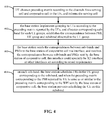
- the embodiment 3 of the present invention provides a method for coordinated scheduling, as it is shown in FIG4 , comprising the following steps:
- UE could have one cooperative cell or multiple different cooperative cells.
- UE chooses precoding matrix according to channels from the different cooperative cells to the UE, the chosen precoding matrix could be same or different. This moment, when UE reports the precoding matrix to the serving cell, the UE could add identification information of the cooperative cell corresponding to the precoding matrix into the information reported to the serving cell.
- UE chooses precoding matrix according to channel from base station of serving cell to UE, reports the index of the precoding matrix in a codebook (the index is exactly the PMI) to the serving cell.
- PMI argmax k ⁇ 1 , 2 , ... N ⁇ ⁇ H 1 ⁇ V k ⁇ 2
- N is the number of elements in the codebook
- ⁇ V 1 , ⁇ , V N ⁇ is pre-defined codeword
- H 1 is channel matrix between the base station of serving cell and UE.
- the UE chooses precoding matrix according the channel from the base station of cooperative cell to the UE, the chosen precoding matrix is the precoding matrix which generates biggest interference to the UE, the precoding matrix is also chosen from a same codebook, the index of the chosen precoding matrix in the codebook is exactly the WPI, the UE reports the WPI to the serving cell.
- the meaning of the WPI could be as follow, if the UE is scheduled on some sub-band, then, that base station of cooperative cell sends data on the sub-band using the precoding matrix corresponding to the WPI, will generate strong interference to the UE, that is to say, the base station of the cooperative cell should prevent using the precoding matrix corresponding to this WPI as far as possible.
- WPI argmax k ⁇ 1 , 2 , ... N ⁇ ⁇ H 2 ⁇ V k ⁇ 2
- H 2 is the channel matrix between the base station of cooperative cell and UE.
- the PMI and WPI could be reported for wideband, also could be reported for sub-band.
- the codebook of PMI and WPI could be same or different.
- Step 402 the base station implements grouping to UEs according to the precoding matrix reported by the UEs, and allocates corresponding sub-band for each UE groups, establishes the correspondence between PMI, UE group and sub-band allocated to the UE group.
- the base station obtains the PMI reported by UE, groups UEs with same PMI or UEs whose precoding matrix distance to each other is less than default value into one group, the measurement of distance is Euclidean distance.
- the UE participates in the grouping could be all the UEs in the cell, also could be part of the UEs, such as cell edge UE.
- the base station allocates sub-band to each UE group, establishes correspondence between sub-bands, UE groups and PMIs.
- the method that base station allocates sub-band resource to UE group could be set according to the actual needs, such as allocating sub-band to the UE group with biggest total rate on the sub-band.
- the base station could periodically renew the UE groups according to the PMI reported by the UE, or renew the UE groups right after receiving the PMI, or renew the UE groups according to the preset trigger event.
- interval of renewing UE groups is longer than transmission delay of X2 interface.
- Step 403 the base station sends the correspondences between sub-bands and PMIs to the base station of cooperative cell via interface, and receives the correspondences between sub-bands and PMIs sent by the base station of cooperative cell, this interface could specially be X2 interface or other interfaces set according to actual requirements.
- Step 404 on each sub-band, the base station schedules UEs in the UE group corresponding to the sub-band, and when the precoding matrix corresponding to the PMI reported by UE is same as or similar to the precoding matrix corresponding to the WPI sent by the base station of cooperative cell, the base station prevents scheduling the UE on this sub-band.
- the base station when the base station implements scheduling, on each sub-band, the base station schedules UEs in the UE group corresponding to the sub-band. Besides, the base station receives the PMI information of this sub-band sent by the base station of cooperative cell.
- the WPI of this sub-band received by the base station reported by the UE is same as or similar to the PMI of this sub-band sent by the base station of the cooperative cell, it is s shown that, if the base station schedules this UE on this sub-band, then the UE would suffer strong interference from this cooperative cell. Therefore, when scheduling, the base station should prevent scheduling UE, the WPI reported by which is same as or is similar to the PMI sent by the base station of the cooperative cell.
- the cooperative cell would use PMI1to transmit, ifWPIs of the cooperative cell reported by any UEs in serving cell is same as or similar to PMI1, then the base station would prevent scheduling these UEs onto this sub-band as far as possible, or schedule these UEs onto this sub-band with low priority.
- the embodiment 4 of the present invention provides a method for coordinated scheduling, as it is shown in FIG 5 , comprising the following steps:
- step 501-503 is similar to step 401-403, so the specific content could be referenced in step 401-403
- Step 504 on each sub-band, the base station schedules UEs in the UE group corresponding to the sub-band, and when the precoding matrix corresponding to the PMI reported by UE is same as or similar to the precoding matrix corresponding to the WPI sent by the base station of cooperative cell, the base station prevents scheduling the UE on this sub-band.
- the base station when the base station implements scheduling, on each sub-band, the base station schedules UEs in the UE group corresponding to the sub-band. Besides, the base station receives the WPI information of this sub-band sent by the base station of cooperative cell. When scheduling, the base station should prevent scheduling UE, the WPI reported by which is same as or is similar to the PMI sent by the base station of the cooperative cell.
- the WPI on some sub-band is WPI1
- precoding matrices corresponding to PMIs reported by any UEs in home cell are equal or close to the precoding matrix corresponding to WPI1, such as that the difference between precoding matrix corresponding to the PMI reported by UE and precoding matrix corresponding to the WPI1 is in the default value range
- the base station would prevent scheduling these UEs onto this sub-band as far as possible, or schedule these UEs onto this sub-band with low priority.
- the base station also could communicate BPI with the base station of the cooperative cell, that the base station of the cooperative cell uses precoding matrix corresponding to this BPI could generate minimum interference to UEs in the home cell. In this way, when scheduling, the base station should use the precoding matrix corresponding to the BPI on corresponding sub-band of the base station of the cooperative cell.
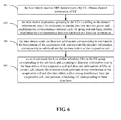
- the embodiment 5 of the present invention provides a method for coordinated scheduling, the base station estimates the channel between the base station and the UE and the direction information of UE according to the sounding reference signal (SRS) reported by the UE, and further implements grouping and scheduling to the UE according to the direction information of UE, specifically, as it is shown in FIG6 , the method comprises the following steps:
- the UE sends SRS signal according to the resource indicated by serving cell, the serving cell of UE receives SRS signal and estimates the channel, further determines the direction information of UE.
- Step 602 the base station implements grouping to the UEs according to the channel information, puts UEs with same or similar direction into one group, and establishes the correspondence between each UE group and sub-band, thereby establishes the correspondence between sub-band and direction information.
- the base station groups UEs in the cell into any groups according to the channel information of UE, the directions of UEs in a same group are same or similar, for example, the difference between angles between the base station normal direction and the direction from different UEs in same group to the base station is less than a standard value set according actual requirement.
- the base station allocates sub-band resource to each UE, to make each sub-band correspond to a direction, and correspond to a UE group.
- the method that base station allocates sub-band resource to UE group could be set according to the actual needs, such as allocating sub-band to the UE group with biggest total rate on the sub-band.
- the base station set trigger event according actual requirement to renew the UE groups preferably, interval of renewing UE groups is longer than transmission delay of X2 interface, the renewal of the UE groups could also be periodicity renewal.
- Step 603 the base station sends the direction information corresponding to sub-band to the base station of the cooperative cell, and receives the direction information corresponding to sub-band sent by the base station of the cooperative cell.
- Step 604 on each sub-band, the base station schedules UEs in the UE group corresponding to the sub-band, and according to direction information sent by the base station of the cooperative cell and direction information of UEs in serving cell, obtains the direction which generates strong interference to the cooperative cell and direction which suffers strong interference from the cooperative cell, then prevents scheduling UE corresponding to these directions.
- the base station implements grouping to UEs in serving cell, establishes the correspondence between each UE group and sub-band, and the correspondence between sub-band and PMI, or WPI, or direction information, and according to each sub-band, scheduling the corresponding UE, obtains the scheduling sub-bands which generate strong interference to other cells and the scheduling sub-bands which suffer strong interference from other cells, and implements corresponding process, to implement that less scheduling information is transmitted via an X2 interface, and thus promotes the application of the CBF solution in an actual system.
- the embodiment 6 of the present invention provides a method for coordinated scheduling, as it is shown in FIG7 , comprising the following steps:
- the UE sends SRS signal according to the resource indicated by serving cell, the serving cell of UE receives SRS signal and estimates the channel.
- Step 702 the base station calculates precoding matrix according to the channel information of UE, puts UEs with same and similar precoding matrix into one group, and establishes the correspondence between each UE group and sub-band, thereby establishes the correspondence between sub-band and precoding matrix.
- Step 703 UE chooses precoding matrix according channel between cooperative cell and the UE, and informs the base station.
- This precoding matrix is the precoding matrix which generates maximum interference to the UE, the index of the precoding matrix in codebook is exactly the WPI.
- Step 704 the base station sends the correspondences between sub-bands and precoding matrices to the base station of cooperative cell via interface, and receives the correspondences between sub-bands and precoding matrices sent by the base station of cooperative cell, this interface could specially be X2 interface or other interfaces set according to actual requirements.
- This precoding matrix could also be PMI, which is the index of the precoding matrix in codebook.
- Step 705 on each sub-band, the base station schedules UEs in the UE group corresponding to the sub-band, and when the precoding matrix corresponding to the WPI to the cooperative cell reported by UE is same as or similar to the precoding matrix sent by the base station of the cooperative cell, the base station prevents scheduling the UE on this sub-band.
- step 705 is similar to step 504, so the specific content could be referenced in step 504.
- the embodiment 7 of the present invention provides a coordinated scheduling device, as it is shown in FIG.8 , the device comprises:
- said correspondence establishing module 10 comprising:
- Said user equipments in same group being corresponding to same/similar spatial information, is:
- Said receiving module 30 is further used for:
- Said scheduling module 20 comprising:
- Said scheduling module 20 is specifically used for:
- Said scheduling module 20 is specifically used for:
- the base station implements grouping to UEs in serving cell, establishes the correspondence between each UE group and sub-band, and the correspondence between sub-band and PMI, or WPI, or direction information, and according to each sub-band, scheduling the corresponding UE, obtains the scheduling sub-bands which generate strong interference to other cells and the scheduling sub-bands which suffer strong interference from other cells, and implements corresponding process, to implement that less scheduling information is transmitted via an X2 interface, and thus promotes the application of the CBF solution in an actual system.
- modules of the devices in the embodiments can be set in the devices according to the description of the embodiments, also can be set in one or more devices different from the embodiments. Modules in the above-mentioned embodiments can be combined into one module, also can be further split into multiple sub-modules.
Landscapes
- Engineering & Computer Science (AREA)
- Computer Networks & Wireless Communication (AREA)
- Signal Processing (AREA)
- Physics & Mathematics (AREA)
- Mathematical Physics (AREA)
- Quality & Reliability (AREA)
- Mobile Radio Communication Systems (AREA)
Abstract
Description
- The present application claims the priority of the Chinese patent application with the application date of September 29, 2009, the application number of
200910235535.6 - The present invention relates generally to the field of communication technology, and more particularly to method and device for coordinated scheduling.
- International Telecommunication Union (ITU) proposes very high requirement to the next generation mobile communication system that international mobile telecommunications-advanced (IMT-Advanced), such as the maximum system bandwidth need to reach 100MHz, peak data rate of uplink and downlink data transmission respectively need to reach 1Gbps and 500Mbps; at the same time, it proposes very high requirement to average spectral efficiency of system, especially to edge spectral efficiency. To satisfy the requirement of IMT-Advanced system, 3rd Generation Partnership Project (3GPP) propose using multi-points coordinated transmission technology to improve capability of system in its next generation mobile cellular communication system that long term evolution advanced (LTE-Advanced).
- Multi-points coordinated transmission technology is the cooperation between multiple transmission points which are separated from each other geometrically. Generally speaking, the multiple transmission points are base stations of different cells or base stations within the same cell. Multi-points coordinated transmission technology comprises downlink coordinated transmission and uplink joint reception. Downlink multi-points coordinated transmission technology comprises two types: joint transmission and coordinated scheduling/ beamforming.
- Therein, in joint transmission solution, all cells in cooperative cell set send same or different data in same radio resource block to user equipment, that is to say multiple cooperative cells send data to the same user equipment at the same time. By joint transmission, the interference signals between different cells in long term evolution (LTE) system become useful signals, thereby the interference between cells is reduced.
FIG 1 shows a diagram that two cells implement joint transmission by cooperation. In the figure, the two cells send effective data to user equipment (UE) at the same time, the signals sent by the two cells merge in the air and received by the UE. That reduces the interference between cells, improves quality of the transmission signal, thereby, improves the average spectral efficiency and the cell edge transmission rate. - In coordinated scheduling/ beamforming (CS/CBF) solution, only serving cell of UE sends data to the UE, at this point it is the same as transmission mode of the existing LTE standard. Other cells in cooperative cell set could use same radio resource block to serve different UE. But in LTE standard, each cell sends signal without considering interference to transmission signal of other cells, cells don't implement coordination to transmitting direction and resource between each other. However, in CBF solution, when each cell in cooperative cell set sends signal, it need to implement coordination, according to interference to signal of other cell, to reduce interference to UE in other cells as far as possible. According to the coordination of sending signal beam direction between cooperative cells, it effectively prevents the beam with strong interference, then reduces mutual interference, improves quality of receiving signal.
FIG2 shows a diagram that two cooperative cells prevent interference sending signal beam direction of service UE, according to coordination scheduling. - But, in the existing CBF solution, each cooperative cell need to send scheduling information of sub-bands in each sub-frame to neighboring cells through X2 interface, the overhead of X2 interface is very large, it proposes higher requirement to delay and capacity of the X2 interface, then affects the application of the CBF solution in actual system.
- The embodiment of the present invention provides a method and device for coordinated scheduling, to implement that less scheduling information is transmitted via an X2 interface, and thus promotes the application of the CBF solution in an actual system.
- The embodiment of the present invention provides a method for coordinated scheduling, comprising:
- base station establishing the correspondences between sub-bands and spatial information, and communicating the correspondences between sub-bands and spatial information with the base station of a cooperative cell;
- said base station implementing coordinated scheduling with the base station of said cooperative cell according to the correspondences between sub-bands and spatial information.
- The embodiment of the present invention provides a device for coordinated scheduling, comprising:
- correspondence establishing module, is used for establishing the correspondences between sub-bands and spatial information, and communicating the correspondences between sub-bands and spatial information with the base station of a cooperative cell;
- scheduling module, is used for implementing coordinated scheduling with the base station of said cooperative cell according to the correspondences between sub-bands and spatial information established by the correspondence establishing module.
- Comparing with existing technology, the embodiment of the present invention have at least the following advantage:
- Base station establishes the correspondences between sub-bands and spatial information, communicates the correspondences between sub-bands and spatial information with the base station of a cooperative cell, and implements coordinated scheduling with the base station of said cooperative cell according to the correspondences between sub-bands and spatial information, thereby, implements that less scheduling information is transmitted via an X2 interface, and thus promotes the application of the CBF solution in an actual system.
-
-
FIG.1 is an existing technology diagram that two cells implement joint transmission by cooperation; -
FIG.2 is an existing technology diagram that two cooperative cells prevent interference sending signal beam direction of service UE, according to coordination scheduling -
FIG.3a is a flow diagram of the coordinated scheduling method provided in embodiment 1 of the present invention; -
FIG.3b is a flow diagram of the coordinated scheduling method provided in embodiment 2 of the present invention; -
FIG.4 is a flow diagram of the coordinated scheduling method provided in embodiment 3 of the present invention; -
FIG.5 is a flow diagram of the coordinated scheduling method provided in embodiment 4 of the present invention; -
FIG.6 is a flow diagram of the coordinated scheduling method provided in embodiment 5 of the present invention; -
FIG.7 is a flow diagram of the coordinated scheduling method provided in embodiment 6 of the present invention; -
FIG.8 is a structure diagram of the coordinated scheduling device provided in embodiment 7 of the present invention. - Embodiment of this invention will be clearly and completely described with pictures in the following. Apparently, the following embodiment is only a part of this invention, but not the whole invention. All the embodiments achieved by general technical personnel in this field based on this application without creative work belong to the protection scope of the present application.
- The core idea of the embodiment of the present invention is: base station obtains the precoding matrix indicator (PMI), worst precoding matrix indicator (WPI), or direction information of UE in its serving cell, groups UE according to PMI, WPI, or direction information, UEs in the same group have same/similar PMI, WPI, or direction information; the base station allocates sub-band resource to UE in each group, one sub-band is corresponding to the same/similar PMI, WPI, or direction information, obtains direction which generates strong interference to said cooperative cell, and/or direction which suffers strong interference from said cooperative cell, to implement avoidance or interference suppression in scheduling.
- The embodiment 1 of the present invention provides a method for coordinated scheduling, as it is shown in
FIG3a , comprising the following steps: -
Step 301. base station establishes the correspondences between sub-bands and spatial information, and communicates the correspondences between sub-bands and spatial information with the base station of a cooperative cell. -
Step 302, said base station implements coordinated scheduling with the base station of said cooperative cell according to the correspondences between sub-bands and spatial information. - The embodiment 2 of the present invention provides a method for coordinated scheduling, as it is shown in
FIG3b , comprising the following steps: -
Step 303, base station establishes the correspondences between sub-bands and spatial information, and communicates the correspondences between sub-bands and spatial information with the base station of a cooperative cell. - Said base station establishing the correspondences between sub-bands and spatial information, comprising: said base station groups the user equipments in serving cell, user equipments in same group are corresponding to same/similar spatial information; said base station establishes the correspondences between sub-bands and groups of user equipments, thereby establishes the correspondences between sub-bands and spatial information.
- Said user equipments in same group are corresponding to same/similar spatial information, is: user equipments in same group being corresponding to same/similar PMI, WPI, best precoding matrix indicator (BPI), or direction information.
- Before said base station groups the user equipments in serving cell, further comprising:
- Said base station receives PMI that user equipment in serving cell chooses according to the channel from said base station to said user equipment and reports, and WPI that user equipment in serving cell chooses according to the channel from the base station of said cooperative cell to said user equipment and reports.
- Said base station receives the channel sounding reference signal reported by user equipment, to get the channel information and direction information of the user equipment.
-
Step 304, said base station implements coordinated scheduling with the base station of said cooperative cell according to the correspondences between sub-bands and spatial information. - Said base station implements coordinated scheduling with the base station of said cooperative cell according to the correspondences between sub-bands and spatial information, comprising:
- Said base station obtains precoding matrix or beamforming direction/weight in a sub-band which generates strong interference to cooperative cell, and/or UE in a sub-band which suffers strong interference from cooperative cell;
- Said cooperative cell prevents using the precoding matrix or beamforming direction/weight which generates strong interference to the cooperative cell, and/or prevents scheduling the UE which suffers strong interference from cooperative cell.
- Specifically, said base station implements coordinated scheduling with the base station of said cooperative cell according to the correspondences between sub-bands and spatial information, comprising:
- When the WPI of cooperative cell reported by a UE is same as or similar to the PMI sent by the base station of said cooperative cell, said base station prevents scheduling the said UE on this sub-band; or, when the PMI reported by a UE is same as or similar to the WPI sent by the base station of said cooperative cell, said base station prevents using the precoding matrix corresponding to this PMI, that is to say, it should prevent scheduling these UEs.
- Said base station implements coordinated scheduling with the base station of said cooperative cell according to the correspondences between sub-bands and spatial information, comprising:
- Said base station obtains direction which generates strong interference to said cooperative cell, and/or direction which suffers strong interference from said cooperative cell, according to direction information of user equipments in its serving cell and direction information sent by the base station of said cooperative cell;
- Said base station prevents implementing scheduling on the obtained direction.
- The embodiment 3 of the present invention provides a method for coordinated scheduling, base station and base station of cooperative cell communicate the PMI will be used, when base station learns that the WPI of some sub-band reported by UE in its serving cell is same as or similar to the PMI will be used on the sub-band of some cooperative cell, the base station prevents scheduling UE on this sub-band. Thereby, it could reduce possibility of suffering strong interference from cooperative cell, then implements coordinated scheduling between cooperative cells by less information communication, improves spectral efficiency of cell edge UE.
- Specifically, the embodiment 3 of the present invention provides a method for coordinated scheduling, as it is shown in
FIG4 , comprising the following steps: -
Step 401, UE chooses precoding matrix according to the channels from serving cell and cooperative cell to the UE, and informs the serving cell. - Specifically, UE could have one cooperative cell or multiple different cooperative cells. When UE has multiple different cooperative cells, UE chooses precoding matrix according to channels from the different cooperative cells to the UE, the chosen precoding matrix could be same or different. This moment, when UE reports the precoding matrix to the serving cell, the UE could add identification information of the cooperative cell corresponding to the precoding matrix into the information reported to the serving cell.
- UE chooses precoding matrix according to channel from base station of serving cell to UE, reports the index of the precoding matrix in a codebook (the index is exactly the PMI) to the serving cell.
- A possible choosing method for PMI is:

- Therein, N is the number of elements in the codebook, {V 1,···,VN } is pre-defined codeword, H 1 is channel matrix between the base station of serving cell and UE.
- UE chooses precoding matrix according the channel from the base station of cooperative cell to the UE, the chosen precoding matrix is the precoding matrix which generates biggest interference to the UE, the precoding matrix is also chosen from a same codebook, the index of the chosen precoding matrix in the codebook is exactly the WPI, the UE reports the WPI to the serving cell. The meaning of the WPI could be as follow, if the UE is scheduled on some sub-band, then, that base station of cooperative cell sends data on the sub-band using the precoding matrix corresponding to the WPI, will generate strong interference to the UE, that is to say, the base station of the cooperative cell should prevent using the precoding matrix corresponding to this WPI as far as possible.
- The choosing formula of WPI is:

- Therein, H 2 is the channel matrix between the base station of cooperative cell and UE.
- The PMI and WPI could be reported for wideband, also could be reported for sub-band. The codebook of PMI and WPI could be same or different.
-
Step 402, the base station implements grouping to UEs according to the precoding matrix reported by the UEs, and allocates corresponding sub-band for each UE groups, establishes the correspondence between PMI, UE group and sub-band allocated to the UE group. - Specifically, the base station obtains the PMI reported by UE, groups UEs with same PMI or UEs whose precoding matrix distance to each other is less than default value into one group, the measurement of distance is Euclidean distance.
- The UE participates in the grouping could be all the UEs in the cell, also could be part of the UEs, such as cell edge UE.
- The base station allocates sub-band to each UE group, establishes correspondence between sub-bands, UE groups and PMIs.
- The method that base station allocates sub-band resource to UE group could be set according to the actual needs, such as allocating sub-band to the UE group with biggest total rate on the sub-band.
- If UE reports sub-band PMI, then the grouping condition of UE on each sub-band could be different.
- The base station could periodically renew the UE groups according to the PMI reported by the UE, or renew the UE groups right after receiving the PMI, or renew the UE groups according to the preset trigger event. In the embodiment of the present invention, interval of renewing UE groups is longer than transmission delay of X2 interface.
-
Step 403, the base station sends the correspondences between sub-bands and PMIs to the base station of cooperative cell via interface, and receives the correspondences between sub-bands and PMIs sent by the base station of cooperative cell, this interface could specially be X2 interface or other interfaces set according to actual requirements. -
Step 404, on each sub-band, the base station schedules UEs in the UE group corresponding to the sub-band, and when the precoding matrix corresponding to the PMI reported by UE is same as or similar to the precoding matrix corresponding to the WPI sent by the base station of cooperative cell, the base station prevents scheduling the UE on this sub-band. - Specifically, when the base station implements scheduling, on each sub-band, the base station schedules UEs in the UE group corresponding to the sub-band. Besides, the base station receives the PMI information of this sub-band sent by the base station of cooperative cell. When the WPI of this sub-band received by the base station reported by the UE is same as or similar to the PMI of this sub-band sent by the base station of the cooperative cell, it is s shown that, if the base station schedules this UE on this sub-band, then the UE would suffer strong interference from this cooperative cell. Therefore, when scheduling, the base station should prevent scheduling UE, the WPI reported by which is same as or is similar to the PMI sent by the base station of the cooperative cell. For example, according to the information sent by cooperative cell, on some sub-band, the cooperative cell would use PMI1to transmit, ifWPIs of the cooperative cell reported by any UEs in serving cell is same as or similar to PMI1, then the base station would prevent scheduling these UEs onto this sub-band as far as possible, or schedule these UEs onto this sub-band with low priority.
- Specifically, the embodiment 4 of the present invention provides a method for coordinated scheduling, as it is shown in
FIG 5 , comprising the following steps: -
Step 501, UE chooses precoding matrix according to the channel from serving cell and cooperative cell to the UE, and reports the precoding matrix to serving cell. The specific content could be referenced instep 401. -
Step 502, the base station groups the UEs according to the precoding matrix reported by the UE, and allocates corresponding sub-band to each UE group, establishes correspondence between PMI, UE group and sub-band allocated to this UE. -
Step 503, the base station sends the correspondences between sub-bands and PMIs to the base station of cooperative cell via interface, and receives the correspondences between sub-bands and PMIs sent by the base station of cooperative cell, this interface could specially be X2 interface or other interfaces set according to actual requirements. - Specifically, step 501-503 is similar to step 401-403, so the specific content could be referenced in step 401-403
-
Step 504, on each sub-band, the base station schedules UEs in the UE group corresponding to the sub-band, and when the precoding matrix corresponding to the PMI reported by UE is same as or similar to the precoding matrix corresponding to the WPI sent by the base station of cooperative cell, the base station prevents scheduling the UE on this sub-band. - Specifically, when the base station implements scheduling, on each sub-band, the base station schedules UEs in the UE group corresponding to the sub-band. Besides, the base station receives the WPI information of this sub-band sent by the base station of cooperative cell. When scheduling, the base station should prevent scheduling UE, the WPI reported by which is same as or is similar to the PMI sent by the base station of the cooperative cell. For example, according to the information sent by cooperative cell, the WPI on some sub-band is WPI1, if precoding matrices corresponding to PMIs reported by any UEs in home cell are equal or close to the precoding matrix corresponding to WPI1, such as that the difference between precoding matrix corresponding to the PMI reported by UE and precoding matrix corresponding to the WPI1 is in the default value range, then the base station would prevent scheduling these UEs onto this sub-band as far as possible, or schedule these UEs onto this sub-band with low priority.
- In the embodiment of the present invention, the base station also could communicate BPI with the base station of the cooperative cell, that the base station of the cooperative cell uses precoding matrix corresponding to this BPI could generate minimum interference to UEs in the home cell. In this way, when scheduling, the base station should use the precoding matrix corresponding to the BPI on corresponding sub-band of the base station of the cooperative cell.
- The embodiment 5 of the present invention provides a method for coordinated scheduling, the base station estimates the channel between the base station and the UE and the direction information of UE according to the sounding reference signal (SRS) reported by the UE, and further implements grouping and scheduling to the UE according to the direction information of UE, specifically, as it is shown in
FIG6 , the method comprises the following steps: -
Step 601, the base station receives SRS signal reported by UE, obtains channel information of UE. - UE sends SRS signal according to the resource indicated by serving cell, the serving cell of UE receives SRS signal and estimates the channel, further determines the direction information of UE.
-
Step 602, the base station implements grouping to the UEs according to the channel information, puts UEs with same or similar direction into one group, and establishes the correspondence between each UE group and sub-band, thereby establishes the correspondence between sub-band and direction information. - Specifically, the base station groups UEs in the cell into any groups according to the channel information of UE, the directions of UEs in a same group are same or similar, for example, the difference between angles between the base station normal direction and the direction from different UEs in same group to the base station is less than a standard value set according actual requirement.
- The base station allocates sub-band resource to each UE, to make each sub-band correspond to a direction, and correspond to a UE group.
- The method that base station allocates sub-band resource to UE group could be set according to the actual needs, such as allocating sub-band to the UE group with biggest total rate on the sub-band.
- In the embodiment of the present invention, the base station set trigger event according actual requirement to renew the UE groups, preferably, interval of renewing UE groups is longer than transmission delay of X2 interface, the renewal of the UE groups could also be periodicity renewal.
-
Step 603, the base station sends the direction information corresponding to sub-band to the base station of the cooperative cell, and receives the direction information corresponding to sub-band sent by the base station of the cooperative cell. -
Step 604, on each sub-band, the base station schedules UEs in the UE group corresponding to the sub-band, and according to direction information sent by the base station of the cooperative cell and direction information of UEs in serving cell, obtains the direction which generates strong interference to the cooperative cell and direction which suffers strong interference from the cooperative cell, then prevents scheduling UE corresponding to these directions. - By using the method provided by the embodiment of the present invention, the base station implements grouping to UEs in serving cell, establishes the correspondence between each UE group and sub-band, and the correspondence between sub-band and PMI, or WPI, or direction information, and according to each sub-band, scheduling the corresponding UE, obtains the scheduling sub-bands which generate strong interference to other cells and the scheduling sub-bands which suffer strong interference from other cells, and implements corresponding process, to implement that less scheduling information is transmitted via an X2 interface, and thus promotes the application of the CBF solution in an actual system.
- The embodiment 6 of the present invention provides a method for coordinated scheduling, as it is shown in
FIG7 , comprising the following steps: -
Step 701, the base station receives SRS signal reported by UE, obtains channel information of UE. - UE sends SRS signal according to the resource indicated by serving cell, the serving cell of UE receives SRS signal and estimates the channel.
-
Step 702, the base station calculates precoding matrix according to the channel information of UE, puts UEs with same and similar precoding matrix into one group, and establishes the correspondence between each UE group and sub-band, thereby establishes the correspondence between sub-band and precoding matrix. -
Step 703, UE chooses precoding matrix according channel between cooperative cell and the UE, and informs the base station. - This precoding matrix is the precoding matrix which generates maximum interference to the UE, the index of the precoding matrix in codebook is exactly the WPI.
-
Step 704, the base station sends the correspondences between sub-bands and precoding matrices to the base station of cooperative cell via interface, and receives the correspondences between sub-bands and precoding matrices sent by the base station of cooperative cell, this interface could specially be X2 interface or other interfaces set according to actual requirements. This precoding matrix could also be PMI, which is the index of the precoding matrix in codebook. -
Step 705, on each sub-band, the base station schedules UEs in the UE group corresponding to the sub-band, and when the precoding matrix corresponding to the WPI to the cooperative cell reported by UE is same as or similar to the precoding matrix sent by the base station of the cooperative cell, the base station prevents scheduling the UE on this sub-band. - Specifically,
step 705 is similar to step 504, so the specific content could be referenced instep 504. - The embodiment 7 of the present invention provides a coordinated scheduling device, as it is shown in
FIG.8 , the device comprises: -
correspondence establishing module 10, is used for establishing the correspondences between sub-bands and spatial information, and communicating the correspondences between sub-bands and spatial information with the base station of a cooperative cell; -
scheduling module 20, is used for implementing coordinated scheduling with the base station of said cooperative cell according to the correspondences between sub-bands and spatial information established by thecorrespondence establishing module 10. - In the embodiment of the present invention, said
correspondence establishing module 10 comprising: - grouping
submodule 11, is used for grouping the user equipments in serving cell, user equipments in same group being corresponding to same/similar spatial information; - establishing
submodule 12, is used for establishing the correspondences between sub-bands and groups of user equipments, thereby establishing the correspondences between sub-bands and spatial information. - Said user equipments in same group being corresponding to same/similar spatial information, is:
- user equipments in same group being corresponding to same/similar precoding matrix indicator (PMI), same/similar worst precoding matrix indicator (WPI) of same cooperative cell, same/similar best precoding matrix indicator (BPI) of same cooperative cell, or direction information.
- In the embodiment of the present invention, further comprising:
- receiving
module 30, is used for receiving PMI that user equipment in serving cell chooses according to the channel from said base station to said user equipment and reports, and WPI or BPI that user equipment in serving cell chooses according to the channel from the base station of said cooperative cell to said user equipment and reports. - Said receiving
module 30 is further used for: - receiving the channel sounding reference signal reported by user equipment, to get the channel information and direction information of the user equipment.
-
Said scheduling module 20 comprising: - sub-band obtaining
submodule 21, is used for obtaining the scheduling sub-band which generates strong interference to said cooperative cell, and/or scheduling sub-band which suffers strong interference from said cooperative cell, according to the correspondences between sub-bands and spatial information; -
scheduling submodule 22, is used for preventing implementing scheduling on said scheduling sub-band which generates strong interference to said cooperative cell, and/or scheduling sub-band which suffers strong interference from said cooperative cell. -
Said scheduling module 20 is specifically used for: - when the WPI reported by user equipment in serving cell is same as or similar to the PMI sent by the base station of said cooperative cell, preventing scheduling this user equipment on the sub-band corresponding to this WPI; or,
- when the PMI reported by user equipment in serving cell is same as or similar to the WPI sent by the base station of said cooperative cell, preventing scheduling this user equipment on sub-band of this PMI.
-
Said scheduling module 20 is specifically used for: - obtaining direction which generates strong interference to said cooperative cell, and/or direction which suffers strong interference from said cooperative cell, according to direction information of user equipments in serving cell and direction information sent by the base station of said cooperative cell;
- preventing implementing scheduling on the obtained direction.
- By using the device provided by the embodiment of the present invention, the base station implements grouping to UEs in serving cell, establishes the correspondence between each UE group and sub-band, and the correspondence between sub-band and PMI, or WPI, or direction information, and according to each sub-band, scheduling the corresponding UE, obtains the scheduling sub-bands which generate strong interference to other cells and the scheduling sub-bands which suffer strong interference from other cells, and implements corresponding process, to implement that less scheduling information is transmitted via an X2 interface, and thus promotes the application of the CBF solution in an actual system.
- Through the description of the embodiments above, the technical personnel in this field can understand clearly that the present invention can be implemented by software and necessary current hardware platform. Of course, it also can be implemented by hardware, but in many situations the former is the better. Based on this understanding, essence or section with contribution to existing technology of the technical program of the present invention can be embodied by a form of software product which can be stored in a storage medium, including a number of instructions for making a computer device (such as mobile phone, personal computers, servers, or network equipments, etc.) implement the methods described in the embodiments of the present invention.
- The technical personnel in this field can understand the figures are only the diagrams of preferable embodiments, the modules or process in the figures is not necessary to implement the present invention.
- The technical personnel in this field can understand the modules of the devices in the embodiments can be set in the devices according to the description of the embodiments, also can be set in one or more devices different from the embodiments. Modules in the above-mentioned embodiments can be combined into one module, also can be further split into multiple sub-modules.
- Serial numbers of the above-mentioned embodiments of the present invention are only used for description, it does not express whether the embodiment is excellent or poor.
- The public content is only some specific embodiments of the present invention. However, the invention is not limited by these, whatever modifications can be imagined by the technical personnel in this field all should be in the protective range of the present invention.
Claims (15)
- A method for coordinated scheduling, wherein, comprising:base station establishing the correspondences between sub-bands and spatial information, and communicating the correspondences between sub-bands and spatial information with the base station of a cooperative cell;said base station implementing coordinated scheduling with the base station of said cooperative cell according to the correspondences between sub-bands and spatial information.
- The method according to claim 1, wherein, said base station establishing the correspondences between sub-bands and spatial information, comprising:said base station grouping the user equipments in serving cell, user equipments in same group being corresponding to same/similar spatial information;said base station establishing the correspondences between sub-bands and groups of user equipments, thereby establishing the correspondences between sub-bands and spatial information.
- The method according to claim 2, wherein, said user equipments in same group being corresponding to same/similar spatial information, is:user equipments in same group being corresponding to same/similar precoding matrix indicator (PMI), same/similar worst precoding matrix indicator (WPI) of same cooperative cell, same/similar best precoding matrix indicator (BPI) of same cooperative cell, or direction information.
- The method according to claim 3, wherein, before said base station grouping the user equipments in serving cell, further comprising:said base station receiving PMI that user equipment in serving cell chooses according to the channel from said base station to said user equipment and reports, and WPI or BPI that user equipment in serving cell chooses according to the channel from the base station of said cooperative cell to said user equipment and reports.
- The method according to claim 3, wherein, before said base station grouping the user equipments in serving cell, further comprising:said base station receiving the channel sounding reference signal reported by user equipment, to get the channel information and direction information of the user equipment.
- The method according to claim 1, wherein, said base station implementing coordinated scheduling with the base station of said cooperative cell according to the correspondences between sub-bands and spatial information, comprising:said base station obtaining the scheduling sub-band which generates strong interference to said cooperative cell, and/or scheduling sub-band which suffers strong interference from said cooperative cell, according to the correspondences between sub-bands and spatial information;said base station preventing implementing scheduling on said scheduling sub-band which generates strong interference to said cooperative cell, and/or scheduling sub-band which suffers strong interference from said cooperative cell.
- The method according to claim 4, wherein, said base station implementing coordinated scheduling with the base station of said cooperative cell according to the correspondences between sub-bands and spatial information, comprising:when the WPI reported by user equipment in serving cell is same as or similar to the PMI sent by the base station of said cooperative cell, said base station preventing scheduling this user equipment on the sub-band corresponding to this WPI; or,when the PMI reported by user equipment in serving cell is same as or similar to the WPI sent by the base station of said cooperative cell, said base station preventing scheduling this user equipment on sub-band of this PMI.
- The method according to claim 5, wherein, said base station implementing coordinated scheduling with the base station of said cooperative cell according to the correspondences between sub-bands and spatial information, comprising:said base station obtaining information of direction which generates strong interference to said cooperative cell, and/or direction which suffers strong interference from said cooperative cell, according to direction information of user equipments in serving cell and direction information sent by the base station of said cooperative cell;said base station preventing implementing scheduling on the obtained direction.
- A device for coordinated scheduling, wherein, comprising:correspondence establishing module, is used for establishing the correspondences between sub-bands and spatial information, and communicating the correspondences between sub-bands and spatial information with the base station of a cooperative cell;scheduling module, is used for implementing coordinated scheduling with the base station of said cooperative cell according to the correspondences between sub-bands and spatial information established by the correspondence establishing module.
- The device according to claim 9, wherein, said correspondence establishing module comprising:grouping submodule, is used for grouping the user equipments in serving cell, user equipments in same group being corresponding to same/similar spatial information;establishing submodule, is used for establishing the correspondences between sub-bands and groups of user equipments, thereby establishing the correspondences between sub-bands and spatial information.
- The device according to claim 9, wherein, further comprising:receiving module, is used for receiving PMI that user equipment in serving cell chooses according to the channel from said base station to said user equipment and reports, and WPI or BPI that user equipment in serving cell chooses according to the channel from the base station of said cooperative cell to said user equipment and reports.
- The device according to claim 11, wherein, said receiving module is further used for:receiving the channel sounding reference signal reported by user equipment, to get the channel information and direction information of the user equipment.
- The device according to claim 9, wherein, said scheduling module comprising:sub-band obtaining submodule, is used for obtaining the scheduling sub-band which generates strong interference to said cooperative cell, and/or scheduling sub-band which suffers strong interference from said cooperative cell, according to the correspondences between sub-bands and spatial information;scheduling submodule, is used for preventing implementing scheduling on said scheduling sub-band which generates strong interference to said cooperative cell, and/or scheduling sub-band which suffers strong interference from said cooperative cell.
- The device according to claim 11, wherein, said scheduling module is specifically used for:when the WPI reported by user equipment in serving cell is same as or similar to the PMI sent by the base station of said cooperative cell, preventing scheduling this user equipment on the sub-band corresponding to this WPI; or,when the PMI reported by user equipment in serving cell is same as or similar to the WPI sent by the base station of said cooperative cell, preventing scheduling this user equipment on sub-band of this PMI.
- The device according to claim 12, wherein, said scheduling module is specifically used for:obtaining direction which generates strong interference to said cooperative cell, and/or direction which suffers strong interference from said cooperative cell, according to direction information of user equipments in serving cell and direction information sent by the base station of said cooperative cell;preventing implementing scheduling on the obtained direction.
Applications Claiming Priority (2)
| Application Number | Priority Date | Filing Date | Title |
|---|---|---|---|
| CN200910235535.6A CN102013905B (en) | 2009-09-29 | 2009-09-29 | The method and apparatus of cooperative scheduling |
| PCT/CN2010/077290 WO2011038661A1 (en) | 2009-09-29 | 2010-09-25 | Method and device for coordinated scheduling |
Publications (3)
| Publication Number | Publication Date |
|---|---|
| EP2485520A1 true EP2485520A1 (en) | 2012-08-08 |
| EP2485520A4 EP2485520A4 (en) | 2016-11-02 |
| EP2485520B1 EP2485520B1 (en) | 2019-09-18 |
Family
ID=43825564
Family Applications (1)
| Application Number | Title | Priority Date | Filing Date |
|---|---|---|---|
| EP10819890.4A Active EP2485520B1 (en) | 2009-09-29 | 2010-09-25 | Method and device for coordinated scheduling |
Country Status (4)
| Country | Link |
|---|---|
| US (1) | US9800299B2 (en) |
| EP (1) | EP2485520B1 (en) |
| CN (1) | CN102013905B (en) |
| WO (1) | WO2011038661A1 (en) |
Cited By (1)
| Publication number | Priority date | Publication date | Assignee | Title |
|---|---|---|---|---|
| CN110754107A (en) * | 2017-06-16 | 2020-02-04 | 瑞典爱立信有限公司 | Radio network node, wireless device and method performed therein |
Families Citing this family (13)
| Publication number | Priority date | Publication date | Assignee | Title |
|---|---|---|---|---|
| CN102231659A (en) * | 2011-06-22 | 2011-11-02 | 中兴通讯股份有限公司 | Precoding method, system and equipment of COMP (coordinated multiple point) transmission |
| CN103001677B (en) * | 2011-09-08 | 2017-05-10 | 中兴通讯股份有限公司 | Pre-coding method and pre-coding device for multi-point coordinated transmission |
| CN103023605A (en) * | 2011-09-22 | 2013-04-03 | 中兴通讯股份有限公司 | Method and device for precoding coordinated-multiple-point transmission |
| CN103024821B (en) * | 2011-09-23 | 2017-05-24 | 中兴通讯股份有限公司 | Multi-user-collaboration multi-point transmission method and device |
| CN103369539B (en) | 2012-04-06 | 2016-10-05 | 华为技术有限公司 | The method and apparatus of interference coordination |
| CN103945555B (en) | 2013-01-21 | 2018-03-20 | 电信科学技术研究院 | Resource regulating method and equipment under coordinated multipoint transmission |
| CN103945556B (en) | 2013-01-21 | 2017-10-31 | 电信科学技术研究院 | A kind of method of scheduling of resource, system and equipment |
| WO2016023235A1 (en) * | 2014-08-15 | 2016-02-18 | 上海贝尔股份有限公司 | Method, apparatus, and system for scheduling user device |
| WO2016026119A1 (en) * | 2014-08-21 | 2016-02-25 | 华为技术有限公司 | Coordinated multi-point transmission method and apparatus |
| US11191090B2 (en) * | 2016-01-13 | 2021-11-30 | Parallel Wireless, Inc. | Inter-cell fractional frequency reuse scheduler |
| US10694531B2 (en) * | 2016-05-13 | 2020-06-23 | Qualcomm Incorporated | Grouping user equipment based on precoding matrix indicators for combined transmission |
| CN108024377B (en) * | 2016-11-04 | 2022-10-18 | 中兴通讯股份有限公司 | Spatial information processing method and device |
| CN113677003B (en) * | 2021-08-10 | 2022-05-31 | 上海移远通信技术股份有限公司 | Wireless communication method, apparatus, device and storage medium |
Family Cites Families (12)
| Publication number | Priority date | Publication date | Assignee | Title |
|---|---|---|---|---|
| CN100442904C (en) * | 2005-06-13 | 2008-12-10 | 大唐移动通信设备有限公司 | Downlink beamforming method for multicast service system |
| US8179775B2 (en) * | 2007-08-14 | 2012-05-15 | Texas Instruments Incorporated | Precoding matrix feedback processes, circuits and systems |
| KR101478362B1 (en) * | 2007-08-10 | 2015-01-28 | 엘지전자 주식회사 | Method of transmitting feedback data in a multi-antenna system |
| CN101828359B (en) * | 2007-12-03 | 2012-11-14 | 中兴通讯股份有限公司 | Resource Coordination Method Between Cells |
| US8204442B2 (en) * | 2007-12-04 | 2012-06-19 | Wi-Lan Inc. | Intercell interference mitigation |
| KR101520685B1 (en) * | 2008-07-04 | 2015-05-15 | 엘지전자 주식회사 | A method for avoiding inter-cell interference in a multi-cell environment using multiple codebook |
| CN101772176B (en) | 2008-12-30 | 2012-05-02 | 电信科学技术研究院 | Interference coordination method and access network equipment |
| KR101632211B1 (en) * | 2009-01-06 | 2016-07-01 | 엘지전자 주식회사 | Method and apparatus for cell selection for PMI restriction in a coordinated multi-point transmission system |
| US8396006B2 (en) * | 2009-01-13 | 2013-03-12 | Futurewei Technologies, Inc. | System and method for enabling wireless communications with cell coordination |
| US8649344B2 (en) * | 2009-04-15 | 2014-02-11 | Lg Electronics Inc. | Method of coordinating precoding matrixes in a wireless communication system |
| US8379592B2 (en) * | 2009-04-28 | 2013-02-19 | Futurewei Technologies, Inc. | System and method for coordinating electronic devices in a wireless communications system |
| US8538482B2 (en) * | 2009-05-14 | 2013-09-17 | Lg Electronics Inc. | Apparatus and method for transmitting CoMP feedback information |
-
2009
- 2009-09-29 CN CN200910235535.6A patent/CN102013905B/en active Active
-
2010
- 2010-09-25 EP EP10819890.4A patent/EP2485520B1/en active Active
- 2010-09-25 WO PCT/CN2010/077290 patent/WO2011038661A1/en not_active Ceased
- 2010-09-25 US US13/386,425 patent/US9800299B2/en active Active
Non-Patent Citations (1)
| Title |
|---|
| See references of WO2011038661A1 * |
Cited By (3)
| Publication number | Priority date | Publication date | Assignee | Title |
|---|---|---|---|---|
| CN110754107A (en) * | 2017-06-16 | 2020-02-04 | 瑞典爱立信有限公司 | Radio network node, wireless device and method performed therein |
| US11937112B2 (en) | 2017-06-16 | 2024-03-19 | Telefonaktiebolaget Lm Ericsson (Publ) | Radio network node, wireless device and methods performed therein |
| US12342210B2 (en) | 2017-06-16 | 2025-06-24 | Telefonaktiebolaget Lm Ericsson (Publ) | Radio network node, wireless device and methods performed therein |
Also Published As
| Publication number | Publication date |
|---|---|
| CN102013905A (en) | 2011-04-13 |
| US20120122468A1 (en) | 2012-05-17 |
| CN102013905B (en) | 2016-09-21 |
| WO2011038661A1 (en) | 2011-04-07 |
| EP2485520A4 (en) | 2016-11-02 |
| US9800299B2 (en) | 2017-10-24 |
| EP2485520B1 (en) | 2019-09-18 |
Similar Documents
| Publication | Publication Date | Title |
|---|---|---|
| EP2485520B1 (en) | Method and device for coordinated scheduling | |
| US9042927B2 (en) | Method and device for performing space coordination among cells | |
| US10999753B2 (en) | CSI measurement, reporting and collision handling | |
| EP3800824B1 (en) | Method and apparatus for transmitting and receiving feedback information in a mobile communication system | |
| CN102684835B (en) | Method and equipment for reporting multi-point channel state information | |
| KR101971079B1 (en) | Method and apparatus for transmitting and receivintg feedback information in mobile communication system based on full dimension mimo | |
| EP3018961B1 (en) | Scheduling method, coordinated-transmission node and central coordination node for downlink coordinated-transmission | |
| US20170208568A1 (en) | Method and apparatus for frame structure for advanced communication systems | |
| JP5952419B2 (en) | Mobile communication system and communication control method | |
| EP2981143A1 (en) | Interference suppression method, related device, and system | |
| EP3355509B1 (en) | Method and apparatus for generating feedback in a communication system | |
| CN104221301B (en) | Method and apparatus for sending and receiving feedback signal in mobile communication system | |
| CN102035619B (en) | Method, system and the equipment of channel quality information feedback | |
| EP2713540A1 (en) | Channel information feedback method, terminal and base station | |
| CN102457358B (en) | A kind of dispatching method of cooperative transmission and system | |
| EP2947939B1 (en) | Method and device for scheduling resource in coordinated multi-point transmission | |
| Kwak et al. | Adaptive and distributed CoMP scheduling in LTE-advanced systems | |
| CN101931965A (en) | Method and device for reporting and acquiring received power and resource allocation of multiple cells | |
| US10419097B2 (en) | CSI receiving method and access network device | |
| CN103517421B (en) | Transfer control method and relevant apparatus and communication system | |
| CN101945443B (en) | A kind of information notice method and system |
Legal Events
| Date | Code | Title | Description |
|---|---|---|---|
| PUAI | Public reference made under article 153(3) epc to a published international application that has entered the european phase |
Free format text: ORIGINAL CODE: 0009012 |
|
| 17P | Request for examination filed |
Effective date: 20120329 |
|
| AK | Designated contracting states |
Kind code of ref document: A1 Designated state(s): AL AT BE BG CH CY CZ DE DK EE ES FI FR GB GR HR HU IE IS IT LI LT LU LV MC MK MT NL NO PL PT RO SE SI SK SM TR |
|
| AX | Request for extension of the european patent |
Extension state: BA ME RS |
|
| RA4 | Supplementary search report drawn up and despatched (corrected) |
Effective date: 20160929 |
|
| RIC1 | Information provided on ipc code assigned before grant |
Ipc: H04B 7/06 20060101ALI20160923BHEP Ipc: H04W 92/20 20090101ALN20160923BHEP Ipc: H04W 72/12 20090101AFI20160923BHEP Ipc: H04B 7/02 20060101ALN20160923BHEP |
|
| STAA | Information on the status of an ep patent application or granted ep patent |
Free format text: STATUS: EXAMINATION IS IN PROGRESS |
|
| 17Q | First examination report despatched |
Effective date: 20171017 |
|
| REG | Reference to a national code |
Ref country code: DE Ref legal event code: R079 Ref document number: 602010061147 Country of ref document: DE Free format text: PREVIOUS MAIN CLASS: H04W0016280000 Ipc: H04W0072120000 |
|
| GRAP | Despatch of communication of intention to grant a patent |
Free format text: ORIGINAL CODE: EPIDOSNIGR1 |
|
| STAA | Information on the status of an ep patent application or granted ep patent |
Free format text: STATUS: GRANT OF PATENT IS INTENDED |
|
| RIC1 | Information provided on ipc code assigned before grant |
Ipc: H04W 72/12 20090101AFI20190329BHEP Ipc: H04W 92/20 20090101ALN20190329BHEP Ipc: H04B 7/02 20180101ALN20190329BHEP Ipc: H04B 7/06 20060101ALI20190329BHEP |
|
| INTG | Intention to grant announced |
Effective date: 20190418 |
|
| GRAS | Grant fee paid |
Free format text: ORIGINAL CODE: EPIDOSNIGR3 |
|
| GRAA | (expected) grant |
Free format text: ORIGINAL CODE: 0009210 |
|
| STAA | Information on the status of an ep patent application or granted ep patent |
Free format text: STATUS: THE PATENT HAS BEEN GRANTED |
|
| AK | Designated contracting states |
Kind code of ref document: B1 Designated state(s): AL AT BE BG CH CY CZ DE DK EE ES FI FR GB GR HR HU IE IS IT LI LT LU LV MC MK MT NL NO PL PT RO SE SI SK SM TR |
|
| AX | Request for extension of the european patent |
Extension state: BA ME RS |
|
| REG | Reference to a national code |
Ref country code: GB Ref legal event code: FG4D |
|
| REG | Reference to a national code |
Ref country code: CH Ref legal event code: EP |
|
| REG | Reference to a national code |
Ref country code: DE Ref legal event code: R096 Ref document number: 602010061147 Country of ref document: DE |
|
| REG | Reference to a national code |
Ref country code: AT Ref legal event code: REF Ref document number: 1182833 Country of ref document: AT Kind code of ref document: T Effective date: 20191015 |
|
| REG | Reference to a national code |
Ref country code: IE Ref legal event code: FG4D |
|
| REG | Reference to a national code |
Ref country code: NL Ref legal event code: MP Effective date: 20190918 |
|
| PG25 | Lapsed in a contracting state [announced via postgrant information from national office to epo] |
Ref country code: BG Free format text: LAPSE BECAUSE OF FAILURE TO SUBMIT A TRANSLATION OF THE DESCRIPTION OR TO PAY THE FEE WITHIN THE PRESCRIBED TIME-LIMIT Effective date: 20191218 Ref country code: SE Free format text: LAPSE BECAUSE OF FAILURE TO SUBMIT A TRANSLATION OF THE DESCRIPTION OR TO PAY THE FEE WITHIN THE PRESCRIBED TIME-LIMIT Effective date: 20190918 Ref country code: FI Free format text: LAPSE BECAUSE OF FAILURE TO SUBMIT A TRANSLATION OF THE DESCRIPTION OR TO PAY THE FEE WITHIN THE PRESCRIBED TIME-LIMIT Effective date: 20190918 Ref country code: NO Free format text: LAPSE BECAUSE OF FAILURE TO SUBMIT A TRANSLATION OF THE DESCRIPTION OR TO PAY THE FEE WITHIN THE PRESCRIBED TIME-LIMIT Effective date: 20191218 Ref country code: LT Free format text: LAPSE BECAUSE OF FAILURE TO SUBMIT A TRANSLATION OF THE DESCRIPTION OR TO PAY THE FEE WITHIN THE PRESCRIBED TIME-LIMIT Effective date: 20190918 Ref country code: HR Free format text: LAPSE BECAUSE OF FAILURE TO SUBMIT A TRANSLATION OF THE DESCRIPTION OR TO PAY THE FEE WITHIN THE PRESCRIBED TIME-LIMIT Effective date: 20190918 |
|
| REG | Reference to a national code |
Ref country code: LT Ref legal event code: MG4D |
|
| PG25 | Lapsed in a contracting state [announced via postgrant information from national office to epo] |
Ref country code: LV Free format text: LAPSE BECAUSE OF FAILURE TO SUBMIT A TRANSLATION OF THE DESCRIPTION OR TO PAY THE FEE WITHIN THE PRESCRIBED TIME-LIMIT Effective date: 20190918 Ref country code: GR Free format text: LAPSE BECAUSE OF FAILURE TO SUBMIT A TRANSLATION OF THE DESCRIPTION OR TO PAY THE FEE WITHIN THE PRESCRIBED TIME-LIMIT Effective date: 20191219 Ref country code: AL Free format text: LAPSE BECAUSE OF FAILURE TO SUBMIT A TRANSLATION OF THE DESCRIPTION OR TO PAY THE FEE WITHIN THE PRESCRIBED TIME-LIMIT Effective date: 20190918 |
|
| REG | Reference to a national code |
Ref country code: AT Ref legal event code: MK05 Ref document number: 1182833 Country of ref document: AT Kind code of ref document: T Effective date: 20190918 |
|
| PG25 | Lapsed in a contracting state [announced via postgrant information from national office to epo] |
Ref country code: ES Free format text: LAPSE BECAUSE OF FAILURE TO SUBMIT A TRANSLATION OF THE DESCRIPTION OR TO PAY THE FEE WITHIN THE PRESCRIBED TIME-LIMIT Effective date: 20190918 Ref country code: PT Free format text: LAPSE BECAUSE OF FAILURE TO SUBMIT A TRANSLATION OF THE DESCRIPTION OR TO PAY THE FEE WITHIN THE PRESCRIBED TIME-LIMIT Effective date: 20200120 Ref country code: PL Free format text: LAPSE BECAUSE OF FAILURE TO SUBMIT A TRANSLATION OF THE DESCRIPTION OR TO PAY THE FEE WITHIN THE PRESCRIBED TIME-LIMIT Effective date: 20190918 Ref country code: AT Free format text: LAPSE BECAUSE OF FAILURE TO SUBMIT A TRANSLATION OF THE DESCRIPTION OR TO PAY THE FEE WITHIN THE PRESCRIBED TIME-LIMIT Effective date: 20190918 Ref country code: EE Free format text: LAPSE BECAUSE OF FAILURE TO SUBMIT A TRANSLATION OF THE DESCRIPTION OR TO PAY THE FEE WITHIN THE PRESCRIBED TIME-LIMIT Effective date: 20190918 Ref country code: IT Free format text: LAPSE BECAUSE OF FAILURE TO SUBMIT A TRANSLATION OF THE DESCRIPTION OR TO PAY THE FEE WITHIN THE PRESCRIBED TIME-LIMIT Effective date: 20190918 Ref country code: NL Free format text: LAPSE BECAUSE OF FAILURE TO SUBMIT A TRANSLATION OF THE DESCRIPTION OR TO PAY THE FEE WITHIN THE PRESCRIBED TIME-LIMIT Effective date: 20190918 Ref country code: RO Free format text: LAPSE BECAUSE OF FAILURE TO SUBMIT A TRANSLATION OF THE DESCRIPTION OR TO PAY THE FEE WITHIN THE PRESCRIBED TIME-LIMIT Effective date: 20190918 |
|
| PG25 | Lapsed in a contracting state [announced via postgrant information from national office to epo] |
Ref country code: IS Free format text: LAPSE BECAUSE OF FAILURE TO SUBMIT A TRANSLATION OF THE DESCRIPTION OR TO PAY THE FEE WITHIN THE PRESCRIBED TIME-LIMIT Effective date: 20200224 Ref country code: SM Free format text: LAPSE BECAUSE OF FAILURE TO SUBMIT A TRANSLATION OF THE DESCRIPTION OR TO PAY THE FEE WITHIN THE PRESCRIBED TIME-LIMIT Effective date: 20190918 Ref country code: CZ Free format text: LAPSE BECAUSE OF FAILURE TO SUBMIT A TRANSLATION OF THE DESCRIPTION OR TO PAY THE FEE WITHIN THE PRESCRIBED TIME-LIMIT Effective date: 20190918 Ref country code: SK Free format text: LAPSE BECAUSE OF FAILURE TO SUBMIT A TRANSLATION OF THE DESCRIPTION OR TO PAY THE FEE WITHIN THE PRESCRIBED TIME-LIMIT Effective date: 20190918 |
|
| REG | Reference to a national code |
Ref country code: CH Ref legal event code: PL |
|
| REG | Reference to a national code |
Ref country code: DE Ref legal event code: R097 Ref document number: 602010061147 Country of ref document: DE |
|
| PLBE | No opposition filed within time limit |
Free format text: ORIGINAL CODE: 0009261 |
|
| STAA | Information on the status of an ep patent application or granted ep patent |
Free format text: STATUS: NO OPPOSITION FILED WITHIN TIME LIMIT |
|
| PG2D | Information on lapse in contracting state deleted |
Ref country code: IS |
|
| PG25 | Lapsed in a contracting state [announced via postgrant information from national office to epo] |
Ref country code: LU Free format text: LAPSE BECAUSE OF NON-PAYMENT OF DUE FEES Effective date: 20190925 Ref country code: IE Free format text: LAPSE BECAUSE OF NON-PAYMENT OF DUE FEES Effective date: 20190925 Ref country code: DK Free format text: LAPSE BECAUSE OF FAILURE TO SUBMIT A TRANSLATION OF THE DESCRIPTION OR TO PAY THE FEE WITHIN THE PRESCRIBED TIME-LIMIT Effective date: 20190918 Ref country code: LI Free format text: LAPSE BECAUSE OF NON-PAYMENT OF DUE FEES Effective date: 20190930 Ref country code: CH Free format text: LAPSE BECAUSE OF NON-PAYMENT OF DUE FEES Effective date: 20190930 Ref country code: IS Free format text: LAPSE BECAUSE OF FAILURE TO SUBMIT A TRANSLATION OF THE DESCRIPTION OR TO PAY THE FEE WITHIN THE PRESCRIBED TIME-LIMIT Effective date: 20200119 |
|
| REG | Reference to a national code |
Ref country code: BE Ref legal event code: MM Effective date: 20190930 |
|
| 26N | No opposition filed |
Effective date: 20200619 |
|
| PG25 | Lapsed in a contracting state [announced via postgrant information from national office to epo] |
Ref country code: BE Free format text: LAPSE BECAUSE OF NON-PAYMENT OF DUE FEES Effective date: 20190930 Ref country code: MC Free format text: LAPSE BECAUSE OF FAILURE TO SUBMIT A TRANSLATION OF THE DESCRIPTION OR TO PAY THE FEE WITHIN THE PRESCRIBED TIME-LIMIT Effective date: 20190918 Ref country code: SI Free format text: LAPSE BECAUSE OF FAILURE TO SUBMIT A TRANSLATION OF THE DESCRIPTION OR TO PAY THE FEE WITHIN THE PRESCRIBED TIME-LIMIT Effective date: 20190918 |
|
| PG25 | Lapsed in a contracting state [announced via postgrant information from national office to epo] |
Ref country code: CY Free format text: LAPSE BECAUSE OF FAILURE TO SUBMIT A TRANSLATION OF THE DESCRIPTION OR TO PAY THE FEE WITHIN THE PRESCRIBED TIME-LIMIT Effective date: 20190918 |
|
| PG25 | Lapsed in a contracting state [announced via postgrant information from national office to epo] |
Ref country code: MT Free format text: LAPSE BECAUSE OF FAILURE TO SUBMIT A TRANSLATION OF THE DESCRIPTION OR TO PAY THE FEE WITHIN THE PRESCRIBED TIME-LIMIT Effective date: 20190918 Ref country code: HU Free format text: LAPSE BECAUSE OF FAILURE TO SUBMIT A TRANSLATION OF THE DESCRIPTION OR TO PAY THE FEE WITHIN THE PRESCRIBED TIME-LIMIT; INVALID AB INITIO Effective date: 20100925 |
|
| REG | Reference to a national code |
Ref country code: DE Ref legal event code: R081 Ref document number: 602010061147 Country of ref document: DE Owner name: DATANG MOBILE COMMUNICATIONS EQUIPMENT CO., LT, CN Free format text: FORMER OWNER: CHINA ACADEMY OF TELECOMMUNICATIONS TECHNOLOGY, BEIJING, CN |
|
| REG | Reference to a national code |
Ref country code: GB Ref legal event code: 732E Free format text: REGISTERED BETWEEN 20210729 AND 20210804 |
|
| PG25 | Lapsed in a contracting state [announced via postgrant information from national office to epo] |
Ref country code: TR Free format text: LAPSE BECAUSE OF FAILURE TO SUBMIT A TRANSLATION OF THE DESCRIPTION OR TO PAY THE FEE WITHIN THE PRESCRIBED TIME-LIMIT Effective date: 20190918 |
|
| PG25 | Lapsed in a contracting state [announced via postgrant information from national office to epo] |
Ref country code: MK Free format text: LAPSE BECAUSE OF FAILURE TO SUBMIT A TRANSLATION OF THE DESCRIPTION OR TO PAY THE FEE WITHIN THE PRESCRIBED TIME-LIMIT Effective date: 20190918 |
|
| PGFP | Annual fee paid to national office [announced via postgrant information from national office to epo] |
Ref country code: DE Payment date: 20250919 Year of fee payment: 16 |
|
| PGFP | Annual fee paid to national office [announced via postgrant information from national office to epo] |
Ref country code: GB Payment date: 20250918 Year of fee payment: 16 |
|
| PGFP | Annual fee paid to national office [announced via postgrant information from national office to epo] |
Ref country code: FR Payment date: 20250922 Year of fee payment: 16 |