EP2479281B1 - Process for treating lignocellulosic material - Google Patents
Process for treating lignocellulosic material Download PDFInfo
- Publication number
- EP2479281B1 EP2479281B1 EP10841943.3A EP10841943A EP2479281B1 EP 2479281 B1 EP2479281 B1 EP 2479281B1 EP 10841943 A EP10841943 A EP 10841943A EP 2479281 B1 EP2479281 B1 EP 2479281B1
- Authority
- EP
- European Patent Office
- Prior art keywords
- lignocellulose
- suspension
- granules
- particle size
- yield
- Prior art date
- Legal status (The legal status is an assumption and is not a legal conclusion. Google has not performed a legal analysis and makes no representation as to the accuracy of the status listed.)
- Active
Links
Images

Classifications
-
- C—CHEMISTRY; METALLURGY
- C12—BIOCHEMISTRY; BEER; SPIRITS; WINE; VINEGAR; MICROBIOLOGY; ENZYMOLOGY; MUTATION OR GENETIC ENGINEERING
- C12P—FERMENTATION OR ENZYME-USING PROCESSES TO SYNTHESISE A DESIRED CHEMICAL COMPOUND OR COMPOSITION OR TO SEPARATE OPTICAL ISOMERS FROM A RACEMIC MIXTURE
- C12P19/00—Preparation of compounds containing saccharide radicals
- C12P19/14—Preparation of compounds containing saccharide radicals produced by the action of a carbohydrase (EC 3.2.x), e.g. by alpha-amylase, e.g. by cellulase, hemicellulase
-
- C—CHEMISTRY; METALLURGY
- C12—BIOCHEMISTRY; BEER; SPIRITS; WINE; VINEGAR; MICROBIOLOGY; ENZYMOLOGY; MUTATION OR GENETIC ENGINEERING
- C12P—FERMENTATION OR ENZYME-USING PROCESSES TO SYNTHESISE A DESIRED CHEMICAL COMPOUND OR COMPOSITION OR TO SEPARATE OPTICAL ISOMERS FROM A RACEMIC MIXTURE
- C12P19/00—Preparation of compounds containing saccharide radicals
- C12P19/02—Monosaccharides
-
- Y—GENERAL TAGGING OF NEW TECHNOLOGICAL DEVELOPMENTS; GENERAL TAGGING OF CROSS-SECTIONAL TECHNOLOGIES SPANNING OVER SEVERAL SECTIONS OF THE IPC; TECHNICAL SUBJECTS COVERED BY FORMER USPC CROSS-REFERENCE ART COLLECTIONS [XRACs] AND DIGESTS
- Y02—TECHNOLOGIES OR APPLICATIONS FOR MITIGATION OR ADAPTATION AGAINST CLIMATE CHANGE
- Y02E—REDUCTION OF GREENHOUSE GAS [GHG] EMISSIONS, RELATED TO ENERGY GENERATION, TRANSMISSION OR DISTRIBUTION
- Y02E50/00—Technologies for the production of fuel of non-fossil origin
- Y02E50/10—Biofuels, e.g. bio-diesel
Definitions
- the invention relates to the field of bio-processing, and more particularly to a method for processing lignocellulose material.
- China is a large agricultural country, about 700 million tons of agricultural wastes are produced each year, including 110 million tons of wheat straws, 180 million tons of rice straws, 13 million tons of cotton straws, and 15 million tons of soybean straws.
- the yield of wheat straws accounts for about 18% of the total amount of straws.
- Most straws are stacked or directly burnt, which causes a great waste of biomass resources and serious environmental pollution.
- Using these rural straws for developing the cellulosic ethanol and biochemical products is sufficient to solve the problem of energy crisis, and meanwhile, raw materials can be provided for the development of biochemical industry.
- the processing method mainly includes an acid method, an alkaline method, a steam explosion method, a wet oxidation method, an organic solvent method, etc.
- Chinese Patent Number CN101348804 (Beijing Forestry University) discloses a method for separating the shrub stalks into major components by low-intensity steam explosion. A steam explosion device and a steam generator are required in the method, and the safety requirement of operation is high.
- Chinese Patent Number CN1443141 (Riso National Laboratory) discloses the same problems in wet oxidation or steam explosion as in Chinese Patent Number CN101348804 , and a special device for explosion is required.
- Chinese Patent Number CN101343648 (Shanghai Jiaotong University) discloses a method through which the straws can be crushed to 10-20 ⁇ m through a nano-scale crusher, the hydrolysis efficiency is improved, and the chemical reagent method can be replaced for processing.
- a lot of energy is required to be consumed during the crushing process of the nano-scale crusher, and the problem of temperature rise of a motor is easily caused during the dry milling process.
- the intercooling time is long, and the production efficiency is low.
- Chinese Patent Number CN 101285106 (Nanjing University of Technology) discloses a method for extracting lignin with an organic solvent after hydrolysis with phosphoric acid. The neutralization, filtering, etc., are also required after acid hydrolysis.
- Chinese Patent Number CN 101255479 (Nanjing University of Technology) discloses a processing method for effectively saccharifying lignocellulose.
- the method includes the following steps of coarse crushing, wet-milling with alkali liquor, alkali recovery, and enzymolysis.
- the alkali liquor is added during processing, an electrodialysis method is used for recovering alkali liquor, and the cost of power consumption is higher.
- Chinese Patent Number CN101235606 discloses a method for acid hydrolysis of lignocellulose through a recirculation reactor.
- Chinese Patent Number CN101148458 discloses a method for acid hydrolysis of lignocelluloses. The above two methods both require a special pretreatment equipment.
- page 57 recites a method for processing a lignocellulose material and the method includes grinding the lignocellulose material using a colloid mill and requires alkali treatment of the lignocellulose material.
- the invention provides a method for processing a lignocellulose material.
- a method for processing a lignocellulose material comprising the following steps:
- the lignocellulose material is coarsely crushed, then the crushed materials are mixed through a colloid mill, and finally, the plant cell wall is ruptured under high pressure under the action of homogenization, so as to release cellulose.
- the crystallinity of cellulose is decreased, thereby facilitating the enzymolysis and the improvement of saccharification yield of cellulose.
- the homogenization is defined as follows: a premixing material enters a valve area at a low flow speed under high pressure, when the material enters a tiny gap between a controllable valve seat and a valve stem, the flow speed suddenly increases and can reach 300 m/second, and meanwhile, a huge pressure reduction is correspondingly generated.
- the strong void effect and vortex action are formed in a small space in extremely short time and hit a homogenizing ring with a high speed to exert the powerful shearing and breaking effects on the material granules.
- the original coarse granules in the suspension are processed into super-micro-fine, uniform, and stable liquid-solid phase dispersion.
- the lignocellulose material comprises straws, grass, wood, corn cob, marc, and/or bagasse.
- the concentration of the cellulase is 10-60 enzyme units per gram of the lignocellulose particles in the second lignocellulose suspension.
- the concentration of the ⁇ -glucosidase is 40-100 enzyme units per gram of the lignocellulose particles in the second lignocellulose suspension.
- the concentration of the xylanase is 60-120 enzyme units per gram of the lignocellulose particles in the second lignocellulose suspension.
- the pH value of sodium acetate and acetic acid buffer solution is 4.8-5.8.
- the zymolysis is performed at a temperature of 40-55°C.
- biomass resources such as maize straws, wheat straws, bagasse, marc, wood chip and other agricultural, industrial and domestic wastes are crushed into granules with different size ranges.
- Some of the samples with a particle size of 80-100 ⁇ m are added to water and dispersed with a colloid mill. The fineness is controlled between 40 ⁇ m and 80 ⁇ m.
- the crushed mixture is put into a homogenizer and the cell wall is directly ruptured to release lignin and hemicelluloses.
- the cellulose crystal grains clad inside are exposed.
- the grain size is controlled within 10-40 ⁇ m, so that cellulase is hydrolyzed directly.
- the sodium acetate-acetic acid buffer solution sample is added, the pH value is controlled within 4.8-5.5, and then the combined cellulase and xylanase are added for enzymolysis.
- the lignocellulose type samples are crushed into granules with different size ranges through a crusher used for crushing the samples.
- the crushed samples with different size ranges are screened out with a mesh sieve to yield partial samples with a particle size of 80-100 ⁇ m after sieving with a 0.08 mm-0.1 mm sieve.
- High dispersion of samples is carried out as follows: the samples are mixed with water in certain proportion, and the resulting mixture is pumped to a split colloid mill. The crushed samples are obtained after shearing, grinding, and high-frequency vibration, and the particle size of removed materials is 40-80 ⁇ m.
- the enzymolysis is carried out under the action of mixed enzymes.
- the concentration of fermentable sugar in the hydrolysate reaches 148-155 g/L, and the hydrolysis ratio is 95%-98%.
- the method of the invention overcomes the defects of complex byproducts, more requirements on equipment, high temperature and high cost in the processing method in the prior art. Not only the cost can be reduced, but also the chemical reagent or high-temperature environment is avoided, the environmental pollution or byproducts are avoided, therefore, the method is a pollution-free and effective processing method and provides a practical and feasible way for the commercial production of fuel ethanol and biochemical products.
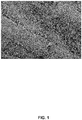
- FIG. 1 is a scanning electron micrograph for a straw material before pretreatment
- FIG. 2 is a scanning electron micrograph for a straw material after being milled with a colloid mill and dispersed with a homogenizer
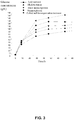
- FIG. 3 is a curve of saccharification for a straw material treated with different methods.
- the lignocellulose type samples are crushed into granules with different size ranges through a crusher used for crushing the samples.
- the crushed samples with different size ranges are screened out with a mesh sieve, and then the partial samples with 80-100 ⁇ m are obtained after sieving with a 0.08 mm-0.1 mm sieve.
- the yield is 2 tons per hour, and the power of equipment is 15 kw.
- High dispersion of samples is carried out as follows: the samples are mixed with water in certain proportion, and then the mixture is put into a split colloid mill. The crushed samples are obtained after shearing, grinding and high-frequency vibration, and the particle size of removed materials is 40-80 ⁇ m.
- the required maximal size of feeding granules is smaller than 500 microns, the highest feeding temperature is lower than 90°C, the yield is 1 ton per hour, and the power of equipment is 5.5 kw.
- High-pressure breaking the slurry crushed through a colloid mill is pumped to a high-pressure homogenizer.
- the homogenization is carried out in a homogenizing valve.
- the non-homogenized premixing material enters the valve area through a reciprocating pump at a low flow speed under high pressure, when the material enters into a tiny gap between a controllable valve seat and a valve stem, the flow speed suddenly increases and can reach 300 m/second, meanwhile, the huge pressure reduction is correspondingly generated, the strong void effect and vortex action are formed in a small space in extremely short time and hit a homogenizing ring with a high speed to exert the powerful shearing and breaking effects on the material granules.
- the original more coarse granules in the suspension are processed into super-micro-fine, uniform, and stable liquid-solid phase dispersion.
- the particle size of removed materials is 10-40 ⁇ m, thereby facilitating the saccharification of enzymes.
- the maximum pressure is 100 atm, the processing capacity is 120 L/hour, and the power of equipment is 3.0 kw.
- the lignocelluloses materials used herein are maize straws, wheat straws, marc, wood chip, etc. purchased from neighboring areas of Yichang City, Hubei province. The materials are air dried and shaken to remove mud.
- the straws are crushed with a crusher and sieved with 1 mm, 0.5 mm, 0.1 mm and 0.08 mm sieves, and then the granules with a particle size of 100-800 ⁇ m are collected.
- Water is added to the straw granules with a particle size of 80-100 ⁇ m according to the ratio of 1:1.
- the mixture is evenly stirred and pumped into a colloid mill, the dispersing time is an hour, the processing temperature is controlled at 70° C, and the evenly dispersed suspension with a particle size of 40-80 ⁇ m.
- the evenly dispersed suspension with a particle size of 40-80 ⁇ m is pumped to a high-pressure homogenizer, the homogenization pressure is 50 atm, the processing time is 2 hours, the temperature is controlled at 60° C, and the straw cell wall is broken under high pressure.
- the suspension with a particle size of 10-40 ⁇ m is obtained. After the temperature cools down to 50° C, the corresponding mixed enzymes can be added for enzymolysis.
- the evenly dispersed suspension with a particle size of 10-40 ⁇ m is pumped to an enzymolysis reaction kettle, the enzymolysis temperature is 40°C, and the rotational speed is 80 rpm.
- the cellulase, ⁇ -glucosidase, and xylanase are added.
- the addition of cellulase is 10 international units per gram of lignocellulose material.
- the addition of ⁇ -glucosidase is 40 international units per gram of lignocellulose material, and the addition of xylanase is 60 international units per gram of lignocellulose material.
- the content of sugar in the hydrolysate is determined with a high performance liquid chromatography-evaporative light scattering detection S-method. 150 grams of fermentable sugar is contained in each liter of hydrolysate, and the hydrolysis ratio of cellulose is 95%.
- the hydrolysis ratio of cellulose is calculated according to the following formula:
- Hydrolysis ratio of cellulose mass of glucose after enzymolysis/(mass of cellulose in the lignocellulose material ⁇ 1.1) ⁇ 100%
- Straws are crushed with a crusher and sieved with 1 mm, 0.5 mm, 0.1 mm and 0.08 mm sieves, and then the granules with a particle size of 100-800 ⁇ m are collected.
- the straw granules with a particle size of 80-100 ⁇ m are added with water according to the ratio of 1:5 and evenly stirred, then the mixture is pumped into a colloid mill, the dispersing time is 2 hours, the processing temperature is controlled at 90° C, and the evenly dispersed suspension with a particle size of 40-80 ⁇ m.
- the evenly dispersed suspension with a particle size of 40-80 ⁇ m is pumped to a high-pressure homogenizer, the homogenization pressure is 100 atm, the processing time is 1 hour, the temperature is controlled at 85° C, and the high-pressure breaking of the straw cell wall is further realized.
- the suspension with a particle size of 10-40 ⁇ m is obtained.
- the corresponding mixed enzymes can be added, so as to enter the enzymolysis stage.
- the granules in the suspension are taken and observed with an electron microscope, as shown in FIG. 2 ; compared with the scanning electron micrograph for the straw materials before pretreatment in FIG. 1 , it can be seen that the void ratio of the straws treated with the method of the invention is increased and the structure of cellulose becomes loose.
- the structural change is favorable for improving the saccharification rate.
- the evenly dispersed suspension with a particle size of 10-40 ⁇ m is pumped to an enzymolysis reaction kettle, the enzymolysis temperature is 55° C, and the rotational speed is 160 rpm.
- the cellulase, ⁇ -glucosidase, and xylanase are added, the addition of cellulase is 60 international units per gram of lignocellulose material, the addition of ⁇ -glucosidase is 100 international units per gram of lignocellulose material, and the addition of xylanase is 120 international units per gram of lignocellulose material.
- the content of sugar in the hydrolysate is determined with a high performance liquid chromatography-evaporative light scattering detection S-method, 160 grams of fermentable sugar is contained in each liter of hydrolysate, and the hydrolysis ratio of cellulose is 98%.
- the hydrolysis ratio of cellulose is calculated according to the following formula:
- Hydrolysis ratio of cellulose mass of glucose after enzymolysis/(mass of cellulose in the lignocellulose material ⁇ 1.1) ⁇ 100%
- Dilute sulfuric acid with volume fraction of 4%, and lignocellulose material and water with a ratio of 1:3 are put into a reaction kettle. After reaction for 10-30 mins at the temperature of 140-160° C, the mixture is filtered using an air pump, the pH value is adjusted to be neutral to yield a lignocelluloses. The lignocellulose is dried at room temperature and then hydrolyzed with an enzymolysis method. The content of sugar in the hydrolysate is determined with a high performance liquid chromatography-evaporative light scattering detection S-method.
- Sodium hydroxide with volume fraction of 1.0%, and lignocellulose material and water with a ratio of 1:3 are put into a reaction kettle. After reaction for 2.5 hours at the temperature of 70-90° C, the mixture is filtered using an air pump, the pH value of is adjusted to be neutral to yield a lignocelluloses.
- the lignocellulose is dried at room temperature and then hydrolyzed with an enzymolysis method; the content of sugar in the hydrolysate is determined with a high performance liquid chromatography-evaporative light scattering detection S-method.
- the lignocellulose material and water are put in an explosive kettle according to the ratio of 1:1. Steam is introduced in the mixture for reaction for 8-15 minutes under the raising pressure of 0.8 MP097382a-1.8 MP097382a.
- the pneumatic control valve is pressure-released in an instant, and the lignocellulose material enters a receiving vessel through a cyclone separator under the action of pressure difference.
- the lignocellulose material is cooled to obtain filter residue; the filter residue is dried at room temperature and then hydrolyzed with the enzymolysis method; the content of sugar in the hydrolysate is determined with a high performance liquid chromatography-evaporative light scattering detection S-method.
- FIG. 3 shows the comparison of the saccharification effect of the straws treated using the acid method, alkaline method, and steam explosion method. The results show that the saccharification effect in the method of the invention is better than that in other four processing methods, and the concentration of sugar can reach about 150 g/L.
Landscapes
- Organic Chemistry (AREA)
- Chemical & Material Sciences (AREA)
- Engineering & Computer Science (AREA)
- Zoology (AREA)
- Life Sciences & Earth Sciences (AREA)
- Wood Science & Technology (AREA)
- Chemical Kinetics & Catalysis (AREA)
- Microbiology (AREA)
- General Chemical & Material Sciences (AREA)
- Biotechnology (AREA)
- Health & Medical Sciences (AREA)
- Biochemistry (AREA)
- Bioinformatics & Cheminformatics (AREA)
- General Engineering & Computer Science (AREA)
- General Health & Medical Sciences (AREA)
- Genetics & Genomics (AREA)
- Preparation Of Compounds By Using Micro-Organisms (AREA)
- Paper (AREA)
- Polysaccharides And Polysaccharide Derivatives (AREA)
Description
- The invention relates to the field of bio-processing, and more particularly to a method for processing lignocellulose material.
- With the decreasing oil resources, the growing food shortage, and the huge demands of liquid fuels such as ethanol and butanol and other biochemical products such as lactic acid and succinic acid, the use of lignocellulose material for producing fermentable sugar has aroused more and more attention. The research and development of biochemical products through biotransformation becomes a hot topic in the scientific circles and industrial circles of China, America, and other big energy-consuming countries in the world.
- China is a large agricultural country, about 700 million tons of agricultural
wastes are produced each year, including 110 million tons of wheat straws, 180 million tons of rice straws, 13 million tons of cotton straws, and 15 million tons of soybean straws. The yield of wheat straws accounts for about 18% of the total amount of straws. Except for a small number of straws used as animal feeding stuffs, farmyard manure, and rural fuels, most straws are stacked or directly burnt, which causes a great waste of biomass resources and serious environmental pollution. Using these rural straws for developing the cellulosic ethanol and biochemical products is sufficient to solve the problem of energy crisis, and meanwhile, raw materials can be provided for the development of biochemical industry. - Before the saccharification of cellulose by an enzyme process, a special pre-treatment is required because of the special structure of lignocelluloses to loosen the structure of crystalline cellulose. The processing method mainly includes an acid method, an alkaline method, a steam explosion method, a wet oxidation method, an organic solvent method, etc.
- For example, Chinese Patent Number
CN101348804 (Beijing Forestry University) discloses a method for separating the shrub stalks into major components by low-intensity steam explosion. A steam explosion device and a steam generator are required in the method, and the safety requirement of operation is high. Chinese Patent NumberCN1443141 (Riso National Laboratory) discloses the same problems in wet oxidation or steam explosion as in Chinese Patent NumberCN101348804 , and a special device for explosion is required. - Chinese Patent Number
CN101343648 (Shanghai Jiaotong University) discloses a method through which the straws can be crushed to 10-20 µm through a nano-scale crusher, the hydrolysis efficiency is improved, and the chemical reagent method can be replaced for processing. However, a lot of energy is required to be consumed during the crushing process of the nano-scale crusher, and the problem of temperature rise of a motor is easily caused during the dry milling process. The intercooling time is long, and the production efficiency is low. - Chinese Patent Number
CN 101285106 (Nanjing University of Technology) discloses a method for extracting lignin with an organic solvent after hydrolysis with phosphoric acid. The neutralization, filtering, etc., are also required after acid hydrolysis. - Chinese Patent Number
CN 101255479 (Nanjing University of Technology) discloses a processing method for effectively saccharifying lignocellulose. The method includes the following steps of coarse crushing, wet-milling with alkali liquor, alkali recovery, and enzymolysis. The alkali liquor is added during processing, an electrodialysis method is used for recovering alkali liquor, and the cost of power consumption is higher. - Chinese Patent Number
CN101235606 (China Petroleum & Chemical Corporation) discloses a method for acid hydrolysis of lignocellulose through a recirculation reactor. Chinese Patent NumberCN101148458 (Graduate University of Chinese Academy of Sciences) discloses a method for acid hydrolysis of lignocelluloses. The above two methods both require a special pretreatment equipment. - Moriyama et al., Continuous Hydrolysis of Cellulosic Materials, Ethanol Production. Abstr. Pap. Am. Chem. Soc., Vol. 186, August 1983, page 57 recites a method for processing a lignocellulose material and the method includes grinding the lignocellulose material using a colloid mill and requires alkali treatment of the lignocellulose material.
- Therefore, at present, there is an urgent need to find a processing method with low price and high productivity and involves no environmental pollution, no acid and base, and no high-temperature conditions.
- To overcome the defects of complex byproducts, more requirements on equipment and high processing temperature in the prior art, the invention provides a method for processing a lignocellulose material.
- The objective of the invention is achieved according to the following technical scheme.
- A method for processing a lignocellulose material, comprising the following steps:
- Step (1): Crushing and sieving the lignocellulose material to yield lignocellulose granules, and collecting the lignocellulose granules having a particle size of 0.08 -0.1 mm;
- Step (2): Mixing the lignocellulose granules obtained in the step (1) with water, a mass ratio of the lignocellulose granules to water being from 1:1 to 1:5, to yield a mixture of the lignocellulose granules and water, and grinding the mixture of the lignocellulose and water through a colloid mill at a temperature of 70-90°C for 1-2 hours to yield a first lignocellulose suspension comprising lignocellulose particles having a particle size of 40-80 µm;
- Step (3): Homogenizing the first lignocellulose suspension obtained in the step (2) at a pressure of 50-100 atm and a temperature of 60-85°C for 1-2 hours to yield a second lignocellulose suspension comprising lignocellulose particles having a particle size of 10-40 µm; and
- Step (4): Buffering the second lignocellulose suspension obtained in the step (3) with a buffer solution of sodium acetate and acetic-acid, adding cellulase, β-glucosidase, and xylanase, and performing zymolysis of the second lignocellulose suspension for 36-72 hours.
- In the method of the invention, the lignocellulose material is coarsely crushed, then the crushed materials are mixed through a colloid mill, and finally, the plant cell wall is ruptured under high pressure under the action of homogenization, so as to release cellulose. The crystallinity of cellulose is decreased, thereby facilitating the enzymolysis and the improvement of saccharification yield of cellulose.
- The homogenization is defined as follows: a premixing material enters a valve area at a low flow speed under high pressure, when the material enters a tiny gap between a controllable valve seat and a valve stem, the flow speed suddenly increases and can reach 300 m/second, and meanwhile, a huge pressure reduction is correspondingly generated. Thus, the strong void effect and vortex action are formed in a small space in extremely short time and hit a homogenizing ring with a high speed to exert the powerful shearing and breaking effects on the material granules. Thus, the original coarse granules in the suspension are processed into super-micro-fine, uniform, and stable liquid-solid phase dispersion.
- The lignocellulose material comprises straws, grass, wood, corn cob, marc, and/or bagasse.
- In the step (4), the concentration of the cellulase is 10-60 enzyme units per gram of the lignocellulose particles in the second lignocellulose suspension.
- In the step (4), the concentration of the β-glucosidase is 40-100 enzyme units per gram of the lignocellulose particles in the second lignocellulose suspension.
- In the step (4), the concentration of the xylanase is 60-120 enzyme units per gram of the lignocellulose particles in the second lignocellulose suspension.
- In the step (4), the pH value of sodium acetate and acetic acid buffer solution is 4.8-5.8.
- In the step (4), the zymolysis is performed at a temperature of 40-55°C.
- In the method of the invention, biomass resources such as maize straws, wheat straws, bagasse, marc, wood chip and other agricultural, industrial and domestic wastes are crushed into granules with different size ranges. Some of the samples with a particle size of 80-100 µm are added to water and dispersed with a colloid mill. The fineness is controlled between 40 µm and 80 µm. Thereafter, the crushed mixture is put into a homogenizer and the cell wall is directly ruptured to release lignin and hemicelluloses. The cellulose crystal grains clad inside are exposed. The grain size is controlled within 10-40 µm, so that cellulase is hydrolyzed directly. The sodium acetate-acetic acid buffer solution sample is added, the pH value is controlled within 4.8-5.5, and then the combined cellulase and xylanase are added for enzymolysis.
- The lignocellulose type samples are crushed into granules with different size ranges through a crusher used for crushing the samples. The crushed samples with different size ranges are screened out with a mesh sieve to yield partial samples with a particle size of 80-100 µm after sieving with a 0.08 mm-0.1 mm sieve.
- High dispersion of samples is carried out as follows: the samples are mixed with water in certain proportion, and the resulting mixture is pumped to a split colloid mill. The crushed samples are obtained after shearing, grinding, and high-frequency vibration, and the particle size of removed materials is 40-80 µm.
- According to the method of the invention, after the lignocellulose materials are dispersed to have a particle size of 10-40 µm, the enzymolysis is carried out under the action of mixed enzymes. The concentration of fermentable sugar in the hydrolysate reaches 148-155 g/L, and the hydrolysis ratio is 95%-98%.
- The method of the invention overcomes the defects of complex byproducts, more requirements on equipment, high temperature and high cost in the processing method in the prior art. Not only the cost can be reduced, but also the chemical reagent or high-temperature environment is avoided, the environmental pollution or byproducts are avoided, therefore, the method is a pollution-free and effective processing method and provides a practical and feasible way for the commercial production of fuel ethanol and biochemical products.
-
FIG. 1 is a scanning electron micrograph for a straw material before pretreatment;
FIG. 2 is a scanning electron micrograph for a straw material after being milled with a colloid mill and dispersed with a homogenizer; and
FIG. 3 is a curve of saccharification for a straw material treated with different methods. - The following embodiments aim to serve as the further description of the invention.
- The detailed description and process are provided for the implementation of the technical scheme of the invention according to the specific implementation. The experimental methods without specified conditions in the following embodiments generally follow the normal conditions or conditions suggested by the manufacturer.
- The lignocellulose type samples are crushed into granules with different size ranges through a crusher used for crushing the samples. The crushed samples with different size ranges are screened out with a mesh sieve, and then the partial samples with 80-100 µm are obtained after sieving with a 0.08 mm-0.1 mm sieve. The yield is 2 tons per hour, and the power of equipment is 15 kw.
- High dispersion of samples is carried out as follows: the samples are mixed with water in certain proportion, and then the mixture is put into a split colloid mill. The crushed samples are obtained after shearing, grinding and high-frequency vibration, and the particle size of removed materials is 40-80 µm. The required maximal size of feeding granules is smaller than 500 microns, the highest feeding temperature is lower than 90°C, the yield is 1 ton per hour, and the power of equipment is 5.5 kw.
- High-pressure breaking: the slurry crushed through a colloid mill is pumped to a high-pressure homogenizer. The homogenization is carried out in a homogenizing valve. The non-homogenized premixing material enters the valve area through a reciprocating pump at a low flow speed under high pressure, when the material enters into a tiny gap between a controllable valve seat and a valve stem, the flow speed suddenly increases and can reach 300 m/second, meanwhile, the huge pressure reduction is correspondingly generated, the strong void effect and vortex action are formed in a small space in extremely short time and hit a homogenizing ring with a high speed to exert the powerful shearing and breaking effects on the material granules. Thus, the original more coarse granules in the suspension are processed into super-micro-fine, uniform, and stable liquid-solid phase dispersion. The particle size of removed materials is 10-40 µm, thereby facilitating the saccharification of enzymes. The maximum pressure is 100 atm, the processing capacity is 120 L/hour, and the power of equipment is 3.0 kw.
- The lignocelluloses materials used herein are maize straws, wheat straws, marc, wood chip, etc. purchased from neighboring areas of Yichang City, Hubei province. The materials are air dried and shaken to remove mud.
- The straws are crushed with a crusher and sieved with 1 mm, 0.5 mm, 0.1 mm and 0.08 mm sieves, and then the granules with a particle size of 100-800 µm are collected.
- Water is added to the straw granules with a particle size of 80-100 µm according to the ratio of 1:1. The mixture is evenly stirred and pumped into a colloid mill, the dispersing time is an hour, the processing temperature is controlled at 70° C, and the evenly dispersed suspension with a particle size of 40-80 µm.
- The evenly dispersed suspension with a particle size of 40-80 µm is pumped to a high-pressure homogenizer, the homogenization pressure is 50 atm, the processing time is 2 hours, the temperature is controlled at 60° C, and the straw cell wall is broken under high pressure. The suspension with a particle size of 10-40 µm is obtained. After the temperature cools down to 50° C, the corresponding mixed enzymes can be added for enzymolysis.
- The evenly dispersed suspension with a particle size of 10-40 µm is pumped to an enzymolysis reaction kettle, the enzymolysis temperature is 40°C, and the rotational speed is 80 rpm. The cellulase, β-glucosidase, and xylanase are added. The addition of cellulase is 10 international units per gram of lignocellulose material. The addition of β-glucosidase is 40 international units per gram of lignocellulose material, and the addition of xylanase is 60 international units per gram of lignocellulose material. After enzymolysis for 36 hours, the content of sugar in the hydrolysate is determined with a high performance liquid chromatography-evaporative light scattering detection S-method. 150 grams of fermentable sugar is contained in each liter of hydrolysate, and the hydrolysis ratio of cellulose is 95%. The hydrolysis ratio of cellulose is calculated according to the following formula:
- Hydrolysis ratio of cellulose = mass of glucose after enzymolysis/(mass of cellulose in the lignocellulose material × 1.1) × 100%
- Straws are crushed with a crusher and sieved with 1 mm, 0.5 mm, 0.1 mm and 0.08 mm sieves, and then the granules with a particle size of 100-800 µm are collected.
- The straw granules with a particle size of 80-100 µm are added with water according to the ratio of 1:5 and evenly stirred, then the mixture is pumped into a colloid mill, the dispersing time is 2 hours, the processing temperature is controlled at 90° C, and the evenly dispersed suspension with a particle size of 40-80 µm.
- The evenly dispersed suspension with a particle size of 40-80 µm is pumped to a high-pressure homogenizer, the homogenization pressure is 100 atm, the processing time is 1 hour, the temperature is controlled at 85° C, and the high-pressure breaking of the straw cell wall is further realized. The suspension with a particle size of 10-40 µm is obtained. After the temperature reduction, the corresponding mixed enzymes can be added, so as to enter the enzymolysis stage. The granules in the suspension are taken and observed with an electron microscope, as shown in
FIG. 2 ; compared with the scanning electron micrograph for the straw materials before pretreatment inFIG. 1 , it can be seen that the void ratio of the straws treated with the method of the invention is increased and the structure of cellulose becomes loose. The structural change is favorable for improving the saccharification rate. - The evenly dispersed suspension with a particle size of 10-40 µm is pumped to an enzymolysis reaction kettle, the enzymolysis temperature is 55° C, and the rotational speed is 160 rpm. The cellulase, β-glucosidase, and xylanase are added, the addition of cellulase is 60 international units per gram of lignocellulose material, the addition of β-glucosidase is 100 international units per gram of lignocellulose material, and the addition of xylanase is 120 international units per gram of lignocellulose material. After enzymolysis for 72 hours, the content of sugar in the hydrolysate is determined with a high performance liquid chromatography-evaporative light scattering detection S-method, 160 grams of fermentable sugar is contained in each liter of hydrolysate, and the hydrolysis ratio of cellulose is 98%. The hydrolysis ratio of cellulose is calculated according to the following formula:
- Hydrolysis ratio of cellulose = mass of glucose after enzymolysis/(mass of cellulose in the lignocellulose material × 1.1) × 100%
- Dilute sulfuric acid with volume fraction of 4%, and lignocellulose material and water with a ratio of 1:3 are put into a reaction kettle. After reaction for 10-30 mins at the temperature of 140-160° C, the mixture is filtered using an air pump, the pH value is adjusted to be neutral to yield a lignocelluloses. The lignocellulose is dried at room temperature and then hydrolyzed with an enzymolysis method. The content of sugar in the hydrolysate is determined with a high performance liquid chromatography-evaporative light scattering detection S-method.
- Sodium hydroxide with volume fraction of 1.0%, and lignocellulose material and water with a ratio of 1:3 are put into a reaction kettle. After reaction for 2.5 hours at the temperature of 70-90° C, the mixture is filtered using an air pump, the pH value of is adjusted to be neutral to yield a lignocelluloses. The lignocellulose is dried at room temperature and then hydrolyzed with an enzymolysis method; the content of sugar in the hydrolysate is determined with a high performance liquid chromatography-evaporative light scattering detection S-method.
- The lignocellulose material and water are put in an explosive kettle according to the ratio of 1:1. Steam is introduced in the mixture for reaction for 8-15 minutes under the raising pressure of 0.8 MP097382a-1.8 MP097382a. The pneumatic control valve is pressure-released in an instant, and the lignocellulose material enters a receiving vessel through a cyclone separator under the action of pressure difference. The lignocellulose material is cooled to obtain filter residue; the filter residue is dried at room temperature and then hydrolyzed with the enzymolysis method; the content of sugar in the hydrolysate is determined with a high performance liquid chromatography-evaporative light scattering detection S-method.
- The straws treated in the examples 1 and 2 are saccharified as required.
FIG. 3 shows the comparison of the saccharification effect of the straws treated using the acid method, alkaline method, and steam explosion method. The results show that the saccharification effect in the method of the invention is better than that in other four processing methods, and the concentration of sugar can reach about 150 g/L.
Claims (7)
- A method for processing a lignocellulose material, comprising the following steps:Step (1): crushing and sieving the lignocellulose material to yield lignocellulose granules, and collecting the lignocellulose granules having a particle size of 0.08 -0.1 mm;Step (2): mixing the lignocellulose granules obtained in the step (1) with water, a mass ratio of the lignocellulose granules to water being from 1:1 to 1:5, to yield a mixture of the lignocellulose granules and water, and grinding the mixture of the lignocellulose and water through a colloid mill at a temperature of 70-90°C for 1-2 hours to yield a first lignocellulose suspension comprising lignocellulose particles having a particle size of 40-80 µm;Step (3): homogenizing the first lignocellulose suspension obtained in the step (2) at a pressure of 50-100 atm and a temperature of 60-85°C for 1-2 hours to yield a second lignocellulose suspension comprising lignocellulose particles having a particle size of 10-40 µm; andStep (4): buffering the second lignocellulose suspension obtained in the step (3) with a buffer solution of sodium acetate and acetic-acid, adding cellulase, β-glucosidase, and xylanase, and performing zymolysis of the second lignocellulose suspension for 36-72 hours.
- The method of claim 1, characterized in that the lignocellulose material comprises straws, grass, wood, corn cob, marc, and/or bagasse.
- The method of claim 1, characterized in that in the step (4), the concentration of the cellulase is 10-60 enzyme units per gram of the lignocellulose particles in the second lignocellulose suspension.
- The method of claim 1, characterized in that in the step (4), the concentration of the β-glucosidase is 40-100 enzyme units per gram of the lignocellulose particles in the second lignocellulose suspension.
- The method of claim 1, characterized in that in the step (4), the concentration of the xylanase is 60-120 enzyme units per gram of the lignocellulose particles in the second lignocellulose suspension.
- The method of claim 1, characterized in that in the step (4), the pH value of the buffer solution of sodium acetate and acetic acid is 4.8-5.8.
- The method of claim 1, characterized in that in the step (4), the zymolysis is performed at a temperature of 40-55°C.
Applications Claiming Priority (2)
| Application Number | Priority Date | Filing Date | Title |
|---|---|---|---|
| CN201010003009A CN102115994B (en) | 2010-01-06 | 2010-01-06 | Method for treating lignocellulose raw material |
| PCT/CN2010/077668 WO2011082600A1 (en) | 2010-01-06 | 2010-10-12 | Process for treating lignocellulosic material |
Publications (3)
| Publication Number | Publication Date |
|---|---|
| EP2479281A1 EP2479281A1 (en) | 2012-07-25 |
| EP2479281A4 EP2479281A4 (en) | 2016-11-23 |
| EP2479281B1 true EP2479281B1 (en) | 2018-08-15 |
Family
ID=44214907
Family Applications (1)
| Application Number | Title | Priority Date | Filing Date |
|---|---|---|---|
| EP10841943.3A Active EP2479281B1 (en) | 2010-01-06 | 2010-10-12 | Process for treating lignocellulosic material |
Country Status (6)
| Country | Link |
|---|---|
| US (1) | US8828187B2 (en) |
| EP (1) | EP2479281B1 (en) |
| CN (1) | CN102115994B (en) |
| BR (1) | BR112012011647B1 (en) |
| RU (1) | RU2518305C2 (en) |
| WO (1) | WO2011082600A1 (en) |
Families Citing this family (14)
| Publication number | Priority date | Publication date | Assignee | Title |
|---|---|---|---|---|
| CN102876571B (en) * | 2011-07-12 | 2014-11-05 | 上海众伟生化有限公司 | High-capacity double-systematic-circulation cellulose enzymolysis reactor and its application |
| CN102703531B (en) * | 2012-05-21 | 2015-08-12 | 济南国力生物科技有限公司 | A kind of method utilizing Mierocrystalline cellulose rapid deep zone fermentative production acetic acid |
| CN103696308B (en) * | 2012-09-27 | 2015-12-02 | 湖南桃花江实业有限公司 | The environmental protection separating technology of valuable component in biomass material |
| CN103103847B (en) * | 2013-01-18 | 2016-01-20 | 中南林业科技大学 | A kind of biological enzymolysis combines the method preparing Cellulose nanocrystal body with mechanical shearing |
| CN103652458B (en) * | 2013-12-09 | 2016-01-20 | 平顶山中宏华龙饲料有限公司 | Utilize the method for maize straw fermenting and producing milk cow forage |
| CN104278065A (en) * | 2014-09-16 | 2015-01-14 | 南京林业大学 | Method for improving yield of enzymatic hydrolysis of plant fiber materials |
| FI127675B (en) | 2015-02-06 | 2018-11-30 | Upm Kymmene Corp | A method and an apparatus for increasing concentration of soluble carbohyrate containing fraction, a soluble carbohyrate containing fraction, a solid fraction and their use |
| CN106047947A (en) * | 2016-06-01 | 2016-10-26 | 卞佳林 | Preparation method of plant fiber nano-particles |
| CN109182418B (en) * | 2018-09-25 | 2020-02-07 | 中国农业科学院麻类研究所 | Method for saccharifying straw through microbial enzymolysis |
| EP3947567A1 (en) * | 2019-03-28 | 2022-02-09 | LignoPure GmbH | Method for producing ultrafine lignin particles |
| CN110607334B (en) * | 2019-10-11 | 2021-03-16 | 中国农业大学 | Lignocellulose pretreatment method in fluid shear-driven urea/alkali system and application thereof |
| CN114921999B (en) * | 2022-05-19 | 2023-07-25 | 陕西科技大学 | A method for preparing filling paper by adding wheat straw straw to OCC pulp resource utilization |
| CN121380020B (en) * | 2025-12-24 | 2026-07-07 | 安琪酵母股份有限公司 | Vomitoxin hydrolase and method for degrading vomitoxin |
| CN121609932A (en) * | 2026-02-03 | 2026-03-06 | 安琪酵母股份有限公司 | Preparation method and application of biomass ultrafine powder |
Family Cites Families (14)
| Publication number | Priority date | Publication date | Assignee | Title |
|---|---|---|---|---|
| AT350986B (en) * | 1976-07-20 | 1979-06-25 | Projektierung Chem Verfahrenst | PROCESS FOR OBTAINING GLUCOSE FROM CELLULOSIC VEGETABLE RAW MATERIALS |
| US5562777A (en) * | 1993-03-26 | 1996-10-08 | Arkenol, Inc. | Method of producing sugars using strong acid hydrolysis of cellulosic and hemicellulosic materials |
| DE69510937T2 (en) * | 1994-06-01 | 2000-02-17 | The Procter & Gamble Co., Cincinnati | METHOD FOR PRODUCING POLYHYDROXYALKANOATS BY MEANS OF CENTRIFUGAL FACTION |
| TW408153B (en) * | 1998-01-09 | 2000-10-11 | Asahi Chemical Ind | Cellulose-containing composite, process for its preparation and use thereof |
| ES2184432T3 (en) * | 1998-04-16 | 2003-04-01 | Pulp Paper Res Inst | PROCEDURE WITH OXIDASE FOR OXIDATION OF WOODEN PASTE AND COLORS. |
| CN1952162A (en) * | 2005-10-21 | 2007-04-25 | 中国科学院过程工程研究所 | Method for improving straw enzymolysis efficiency by synergistic pretreatment of Steam Explosion and ultra micro-pulverization |
| US8017373B2 (en) * | 2006-08-31 | 2011-09-13 | Iogen Energy Corporation | Process for enzymatic hydrolysis of pretreated lignocellulosic feedstocks |
| AU2008242769B2 (en) * | 2007-04-19 | 2013-10-17 | Mascoma Corporation | Combined thermochemical pretreatment and refining of lignocellulosic biomass |
| CN101307159B (en) * | 2007-05-18 | 2011-06-15 | 杜昱光 | Process for preparing fibre with high adsorption capacity by using stalk as raw material |
| CN102203271B (en) * | 2008-08-27 | 2015-09-09 | 易登尼有限公司 | Materials and methods for converting biomass to biofuels |
| CN101343648B (en) * | 2008-08-28 | 2011-02-02 | 上海交通大学 | Pretreatment method for biomass raw material |
| CN101463571A (en) * | 2008-12-08 | 2009-06-24 | 广西科学院 | Pretreatment method for ultra-high pressure blasting wood fiber material |
| CN101434977A (en) * | 2008-12-23 | 2009-05-20 | 中国石油化工股份有限公司 | Novel method for saccharification of ligno-cellulose |
| CN101434976A (en) * | 2008-12-23 | 2009-05-20 | 中国石油化工股份有限公司 | Novel method for saccharification of ligno-cellulose |
-
2010
- 2010-01-06 CN CN201010003009A patent/CN102115994B/en active Active
- 2010-10-12 BR BR112012011647-9A patent/BR112012011647B1/en active IP Right Grant
- 2010-10-12 RU RU2012118496/10A patent/RU2518305C2/en active
- 2010-10-12 WO PCT/CN2010/077668 patent/WO2011082600A1/en not_active Ceased
- 2010-10-12 EP EP10841943.3A patent/EP2479281B1/en active Active
-
2012
- 2012-04-12 US US13/445,894 patent/US8828187B2/en active Active
Non-Patent Citations (1)
| Title |
|---|
| None * |
Also Published As
| Publication number | Publication date |
|---|---|
| CN102115994A (en) | 2011-07-06 |
| RU2012118496A (en) | 2013-11-10 |
| US20120193049A1 (en) | 2012-08-02 |
| BR112012011647B1 (en) | 2018-12-26 |
| US8828187B2 (en) | 2014-09-09 |
| EP2479281A1 (en) | 2012-07-25 |
| BR112012011647A2 (en) | 2015-09-29 |
| EP2479281A4 (en) | 2016-11-23 |
| RU2518305C2 (en) | 2014-06-10 |
| CN102115994B (en) | 2012-08-29 |
| WO2011082600A1 (en) | 2011-07-14 |
Similar Documents
| Publication | Publication Date | Title |
|---|---|---|
| US8828187B2 (en) | Method for processing lignocellulose material | |
| US8563282B2 (en) | Materials and methods for converting biomass to biofuel | |
| CN102272318B (en) | Saccharide production process and ethanol production process | |
| EP2612920B1 (en) | Method for enzymatic saccharification of lignocellulosic biomass, and method for manufacturing ethanol from lignocellulosic biomass | |
| EP2785853A2 (en) | Compositions and methods for biomass liquefaction | |
| JP5621528B2 (en) | Enzymatic saccharification method of lignocellulosic material | |
| CN103443284A (en) | Processes and systems for enzymatically isolating lignin and other bioproducts from herbaceous plants | |
| CN101555667B (en) | Biorefinery method of wood fiber material | |
| CN104498562A (en) | Method for pretreating agricultural waste biomass by adopting sodium hydroxide/urea/water system | |
| CN112029112A (en) | Method for preparing high-yield high-aryl ether bond structure lignin from wood fiber biomass | |
| CN116179613A (en) | Method for improving high-solid enzymolysis sugar production and fermentation ethanol production of straw | |
| JP2014132052A (en) | Fuel composition | |
| BR112013008189A2 (en) | process for treating lignocellulosic material | |
| CN112608950A (en) | Preparation method of cellulosic ethanol | |
| JP2014090707A (en) | Method for enzymatic saccharification of biomass containing lignocellulose and method of producing ethanol with biomass containing lignocellulose | |
| CN107523596B (en) | Method for realizing efficient enzymatic hydrolysis of biomass raw material and preparing fermentable sugar | |
| JP5910427B2 (en) | Method for producing ethanol from lignocellulose-containing biomass | |
| CN118292293B (en) | A method for grading lignocellulose at room temperature | |
| JP2015167480A (en) | Method for enzymatic saccharification of biomass containing lignocellulose | |
| CN102864192B (en) | Method for extracting sugar from wood fiber substances | |
| JP5910367B2 (en) | Method for producing ethanol from lignocellulose-containing biomass | |
| CN116162672A (en) | Cellobiose production method based on straw fermentation biogas residues | |
| JP2015159755A (en) | Method for producing ethanol from lignocellulose-containing biomass | |
| JP6343967B2 (en) | Method for producing ferulic acid | |
| CN121108463A (en) | A method for preparing polylactic acid (PLA) using straw lignocellulose |
Legal Events
| Date | Code | Title | Description |
|---|---|---|---|
| PUAI | Public reference made under article 153(3) epc to a published international application that has entered the european phase |
Free format text: ORIGINAL CODE: 0009012 |
|
| 17P | Request for examination filed |
Effective date: 20120331 |
|
| AK | Designated contracting states |
Kind code of ref document: A1 Designated state(s): AL AT BE BG CH CY CZ DE DK EE ES FI FR GB GR HR HU IE IS IT LI LT LU LV MC MK MT NL NO PL PT RO RS SE SI SK SM TR |
|
| DAX | Request for extension of the european patent (deleted) | ||
| REG | Reference to a national code |
Ref country code: DE Ref legal event code: R079 Ref document number: 602010052856 Country of ref document: DE Free format text: PREVIOUS MAIN CLASS: C12P0019140000 Ipc: C12P0019020000 |
|
| STAA | Information on the status of an ep patent application or granted ep patent |
Free format text: STATUS: EXAMINATION IS IN PROGRESS |
|
| RA4 | Supplementary search report drawn up and despatched (corrected) |
Effective date: 20161024 |
|
| RIC1 | Information provided on ipc code assigned before grant |
Ipc: C12P 19/14 20060101ALI20161014BHEP Ipc: C12P 19/02 20060101AFI20161014BHEP |
|
| 17Q | First examination report despatched |
Effective date: 20161109 |
|
| GRAP | Despatch of communication of intention to grant a patent |
Free format text: ORIGINAL CODE: EPIDOSNIGR1 |
|
| STAA | Information on the status of an ep patent application or granted ep patent |
Free format text: STATUS: GRANT OF PATENT IS INTENDED |
|
| INTG | Intention to grant announced |
Effective date: 20180409 |
|
| GRAS | Grant fee paid |
Free format text: ORIGINAL CODE: EPIDOSNIGR3 |
|
| GRAA | (expected) grant |
Free format text: ORIGINAL CODE: 0009210 |
|
| STAA | Information on the status of an ep patent application or granted ep patent |
Free format text: STATUS: THE PATENT HAS BEEN GRANTED |
|
| AK | Designated contracting states |
Kind code of ref document: B1 Designated state(s): AL AT BE BG CH CY CZ DE DK EE ES FI FR GB GR HR HU IE IS IT LI LT LU LV MC MK MT NL NO PL PT RO RS SE SI SK SM TR |
|
| REG | Reference to a national code |
Ref country code: CH Ref legal event code: EP Ref country code: GB Ref legal event code: FG4D Ref country code: AT Ref legal event code: REF Ref document number: 1029807 Country of ref document: AT Kind code of ref document: T Effective date: 20180815 |
|
| REG | Reference to a national code |
Ref country code: IE Ref legal event code: FG4D |
|
| REG | Reference to a national code |
Ref country code: DE Ref legal event code: R096 Ref document number: 602010052856 Country of ref document: DE |
|
| REG | Reference to a national code |
Ref country code: NL Ref legal event code: MP Effective date: 20180815 |
|
| REG | Reference to a national code |
Ref country code: LT Ref legal event code: MG4D |
|
| REG | Reference to a national code |
Ref country code: AT Ref legal event code: MK05 Ref document number: 1029807 Country of ref document: AT Kind code of ref document: T Effective date: 20180815 |
|
| PG25 | Lapsed in a contracting state [announced via postgrant information from national office to epo] |
Ref country code: IS Free format text: LAPSE BECAUSE OF FAILURE TO SUBMIT A TRANSLATION OF THE DESCRIPTION OR TO PAY THE FEE WITHIN THE PRESCRIBED TIME-LIMIT Effective date: 20181215 Ref country code: RS Free format text: LAPSE BECAUSE OF FAILURE TO SUBMIT A TRANSLATION OF THE DESCRIPTION OR TO PAY THE FEE WITHIN THE PRESCRIBED TIME-LIMIT Effective date: 20180815 Ref country code: FI Free format text: LAPSE BECAUSE OF FAILURE TO SUBMIT A TRANSLATION OF THE DESCRIPTION OR TO PAY THE FEE WITHIN THE PRESCRIBED TIME-LIMIT Effective date: 20180815 Ref country code: GR Free format text: LAPSE BECAUSE OF FAILURE TO SUBMIT A TRANSLATION OF THE DESCRIPTION OR TO PAY THE FEE WITHIN THE PRESCRIBED TIME-LIMIT Effective date: 20181116 Ref country code: SE Free format text: LAPSE BECAUSE OF FAILURE TO SUBMIT A TRANSLATION OF THE DESCRIPTION OR TO PAY THE FEE WITHIN THE PRESCRIBED TIME-LIMIT Effective date: 20180815 Ref country code: AT Free format text: LAPSE BECAUSE OF FAILURE TO SUBMIT A TRANSLATION OF THE DESCRIPTION OR TO PAY THE FEE WITHIN THE PRESCRIBED TIME-LIMIT Effective date: 20180815 Ref country code: NL Free format text: LAPSE BECAUSE OF FAILURE TO SUBMIT A TRANSLATION OF THE DESCRIPTION OR TO PAY THE FEE WITHIN THE PRESCRIBED TIME-LIMIT Effective date: 20180815 Ref country code: NO Free format text: LAPSE BECAUSE OF FAILURE TO SUBMIT A TRANSLATION OF THE DESCRIPTION OR TO PAY THE FEE WITHIN THE PRESCRIBED TIME-LIMIT Effective date: 20181115 Ref country code: BG Free format text: LAPSE BECAUSE OF FAILURE TO SUBMIT A TRANSLATION OF THE DESCRIPTION OR TO PAY THE FEE WITHIN THE PRESCRIBED TIME-LIMIT Effective date: 20181115 Ref country code: LT Free format text: LAPSE BECAUSE OF FAILURE TO SUBMIT A TRANSLATION OF THE DESCRIPTION OR TO PAY THE FEE WITHIN THE PRESCRIBED TIME-LIMIT Effective date: 20180815 |
|
| PG25 | Lapsed in a contracting state [announced via postgrant information from national office to epo] |
Ref country code: HR Free format text: LAPSE BECAUSE OF FAILURE TO SUBMIT A TRANSLATION OF THE DESCRIPTION OR TO PAY THE FEE WITHIN THE PRESCRIBED TIME-LIMIT Effective date: 20180815 Ref country code: AL Free format text: LAPSE BECAUSE OF FAILURE TO SUBMIT A TRANSLATION OF THE DESCRIPTION OR TO PAY THE FEE WITHIN THE PRESCRIBED TIME-LIMIT Effective date: 20180815 Ref country code: LV Free format text: LAPSE BECAUSE OF FAILURE TO SUBMIT A TRANSLATION OF THE DESCRIPTION OR TO PAY THE FEE WITHIN THE PRESCRIBED TIME-LIMIT Effective date: 20180815 |
|
| PG25 | Lapsed in a contracting state [announced via postgrant information from national office to epo] |
Ref country code: ES Free format text: LAPSE BECAUSE OF FAILURE TO SUBMIT A TRANSLATION OF THE DESCRIPTION OR TO PAY THE FEE WITHIN THE PRESCRIBED TIME-LIMIT Effective date: 20180815 Ref country code: CZ Free format text: LAPSE BECAUSE OF FAILURE TO SUBMIT A TRANSLATION OF THE DESCRIPTION OR TO PAY THE FEE WITHIN THE PRESCRIBED TIME-LIMIT Effective date: 20180815 Ref country code: PL Free format text: LAPSE BECAUSE OF FAILURE TO SUBMIT A TRANSLATION OF THE DESCRIPTION OR TO PAY THE FEE WITHIN THE PRESCRIBED TIME-LIMIT Effective date: 20180815 Ref country code: RO Free format text: LAPSE BECAUSE OF FAILURE TO SUBMIT A TRANSLATION OF THE DESCRIPTION OR TO PAY THE FEE WITHIN THE PRESCRIBED TIME-LIMIT Effective date: 20180815 Ref country code: EE Free format text: LAPSE BECAUSE OF FAILURE TO SUBMIT A TRANSLATION OF THE DESCRIPTION OR TO PAY THE FEE WITHIN THE PRESCRIBED TIME-LIMIT Effective date: 20180815 |
|
| REG | Reference to a national code |
Ref country code: DE Ref legal event code: R119 Ref document number: 602010052856 Country of ref document: DE |
|
| PG25 | Lapsed in a contracting state [announced via postgrant information from national office to epo] |
Ref country code: SM Free format text: LAPSE BECAUSE OF FAILURE TO SUBMIT A TRANSLATION OF THE DESCRIPTION OR TO PAY THE FEE WITHIN THE PRESCRIBED TIME-LIMIT Effective date: 20180815 Ref country code: DK Free format text: LAPSE BECAUSE OF FAILURE TO SUBMIT A TRANSLATION OF THE DESCRIPTION OR TO PAY THE FEE WITHIN THE PRESCRIBED TIME-LIMIT Effective date: 20180815 Ref country code: SK Free format text: LAPSE BECAUSE OF FAILURE TO SUBMIT A TRANSLATION OF THE DESCRIPTION OR TO PAY THE FEE WITHIN THE PRESCRIBED TIME-LIMIT Effective date: 20180815 |
|
| REG | Reference to a national code |
Ref country code: CH Ref legal event code: PL |
|
| PLBE | No opposition filed within time limit |
Free format text: ORIGINAL CODE: 0009261 |
|
| STAA | Information on the status of an ep patent application or granted ep patent |
Free format text: STATUS: NO OPPOSITION FILED WITHIN TIME LIMIT |
|
| REG | Reference to a national code |
Ref country code: BE Ref legal event code: MM Effective date: 20181031 |
|
| PG25 | Lapsed in a contracting state [announced via postgrant information from national office to epo] |
Ref country code: MC Free format text: LAPSE BECAUSE OF FAILURE TO SUBMIT A TRANSLATION OF THE DESCRIPTION OR TO PAY THE FEE WITHIN THE PRESCRIBED TIME-LIMIT Effective date: 20180815 Ref country code: LU Free format text: LAPSE BECAUSE OF NON-PAYMENT OF DUE FEES Effective date: 20181012 |
|
| 26N | No opposition filed |
Effective date: 20190516 |
|
| GBPC | Gb: european patent ceased through non-payment of renewal fee |
Effective date: 20181115 |
|
| REG | Reference to a national code |
Ref country code: IE Ref legal event code: MM4A |
|
| PG25 | Lapsed in a contracting state [announced via postgrant information from national office to epo] |
Ref country code: DE Free format text: LAPSE BECAUSE OF NON-PAYMENT OF DUE FEES Effective date: 20190501 |
|
| PG25 | Lapsed in a contracting state [announced via postgrant information from national office to epo] |
Ref country code: BE Free format text: LAPSE BECAUSE OF NON-PAYMENT OF DUE FEES Effective date: 20181031 Ref country code: FR Free format text: LAPSE BECAUSE OF NON-PAYMENT OF DUE FEES Effective date: 20181015 Ref country code: SI Free format text: LAPSE BECAUSE OF FAILURE TO SUBMIT A TRANSLATION OF THE DESCRIPTION OR TO PAY THE FEE WITHIN THE PRESCRIBED TIME-LIMIT Effective date: 20180815 Ref country code: LI Free format text: LAPSE BECAUSE OF NON-PAYMENT OF DUE FEES Effective date: 20181031 Ref country code: CH Free format text: LAPSE BECAUSE OF NON-PAYMENT OF DUE FEES Effective date: 20181031 |
|
| PG25 | Lapsed in a contracting state [announced via postgrant information from national office to epo] |
Ref country code: IE Free format text: LAPSE BECAUSE OF NON-PAYMENT OF DUE FEES Effective date: 20181012 |
|
| PG25 | Lapsed in a contracting state [announced via postgrant information from national office to epo] |
Ref country code: GB Free format text: LAPSE BECAUSE OF NON-PAYMENT OF DUE FEES Effective date: 20181115 |
|
| PG25 | Lapsed in a contracting state [announced via postgrant information from national office to epo] |
Ref country code: MT Free format text: LAPSE BECAUSE OF NON-PAYMENT OF DUE FEES Effective date: 20181012 |
|
| PG25 | Lapsed in a contracting state [announced via postgrant information from national office to epo] |
Ref country code: TR Free format text: LAPSE BECAUSE OF FAILURE TO SUBMIT A TRANSLATION OF THE DESCRIPTION OR TO PAY THE FEE WITHIN THE PRESCRIBED TIME-LIMIT Effective date: 20180815 |
|
| PG25 | Lapsed in a contracting state [announced via postgrant information from national office to epo] |
Ref country code: PT Free format text: LAPSE BECAUSE OF FAILURE TO SUBMIT A TRANSLATION OF THE DESCRIPTION OR TO PAY THE FEE WITHIN THE PRESCRIBED TIME-LIMIT Effective date: 20180815 |
|
| PG25 | Lapsed in a contracting state [announced via postgrant information from national office to epo] |
Ref country code: HU Free format text: LAPSE BECAUSE OF FAILURE TO SUBMIT A TRANSLATION OF THE DESCRIPTION OR TO PAY THE FEE WITHIN THE PRESCRIBED TIME-LIMIT; INVALID AB INITIO Effective date: 20101012 Ref country code: CY Free format text: LAPSE BECAUSE OF FAILURE TO SUBMIT A TRANSLATION OF THE DESCRIPTION OR TO PAY THE FEE WITHIN THE PRESCRIBED TIME-LIMIT Effective date: 20180815 Ref country code: MK Free format text: LAPSE BECAUSE OF NON-PAYMENT OF DUE FEES Effective date: 20180815 |
|
| PGFP | Annual fee paid to national office [announced via postgrant information from national office to epo] |
Ref country code: IT Payment date: 20251008 Year of fee payment: 16 |