EP2478913A1 - Synthetic HLA binding peptide analogues and uses thereof - Google Patents
Synthetic HLA binding peptide analogues and uses thereof Download PDFInfo
- Publication number
- EP2478913A1 EP2478913A1 EP11189059A EP11189059A EP2478913A1 EP 2478913 A1 EP2478913 A1 EP 2478913A1 EP 11189059 A EP11189059 A EP 11189059A EP 11189059 A EP11189059 A EP 11189059A EP 2478913 A1 EP2478913 A1 EP 2478913A1
- Authority
- EP
- European Patent Office
- Prior art keywords
- cells
- peptide
- seq
- cancer
- synthetic peptide
- Prior art date
- Legal status (The legal status is an assumption and is not a legal conclusion. Google has not performed a legal analysis and makes no representation as to the accuracy of the status listed.)
- Withdrawn
Links
Images




Classifications
-
- C—CHEMISTRY; METALLURGY
- C07—ORGANIC CHEMISTRY
- C07K—PEPTIDES
- C07K14/00—Peptides having more than 20 amino acids; Gastrins; Somatostatins; Melanotropins; Derivatives thereof
- C07K14/82—Translation products from oncogenes
-
- A—HUMAN NECESSITIES
- A61—MEDICAL OR VETERINARY SCIENCE; HYGIENE
- A61P—SPECIFIC THERAPEUTIC ACTIVITY OF CHEMICAL COMPOUNDS OR MEDICINAL PREPARATIONS
- A61P35/00—Antineoplastic agents
-
- A—HUMAN NECESSITIES
- A61—MEDICAL OR VETERINARY SCIENCE; HYGIENE
- A61P—SPECIFIC THERAPEUTIC ACTIVITY OF CHEMICAL COMPOUNDS OR MEDICINAL PREPARATIONS
- A61P35/00—Antineoplastic agents
- A61P35/02—Antineoplastic agents specific for leukemia
-
- C—CHEMISTRY; METALLURGY
- C07—ORGANIC CHEMISTRY
- C07K—PEPTIDES
- C07K14/00—Peptides having more than 20 amino acids; Gastrins; Somatostatins; Melanotropins; Derivatives thereof
- C07K14/435—Peptides having more than 20 amino acids; Gastrins; Somatostatins; Melanotropins; Derivatives thereof from animals; from humans
- C07K14/46—Peptides having more than 20 amino acids; Gastrins; Somatostatins; Melanotropins; Derivatives thereof from animals; from humans from vertebrates
- C07K14/47—Peptides having more than 20 amino acids; Gastrins; Somatostatins; Melanotropins; Derivatives thereof from animals; from humans from vertebrates from mammals
- C07K14/4701—Peptides having more than 20 amino acids; Gastrins; Somatostatins; Melanotropins; Derivatives thereof from animals; from humans from vertebrates from mammals not used
- C07K14/4702—Regulators; Modulating activity
-
- C—CHEMISTRY; METALLURGY
- C07—ORGANIC CHEMISTRY
- C07K—PEPTIDES
- C07K14/00—Peptides having more than 20 amino acids; Gastrins; Somatostatins; Melanotropins; Derivatives thereof
- C07K14/435—Peptides having more than 20 amino acids; Gastrins; Somatostatins; Melanotropins; Derivatives thereof from animals; from humans
- C07K14/46—Peptides having more than 20 amino acids; Gastrins; Somatostatins; Melanotropins; Derivatives thereof from animals; from humans from vertebrates
- C07K14/47—Peptides having more than 20 amino acids; Gastrins; Somatostatins; Melanotropins; Derivatives thereof from animals; from humans from vertebrates from mammals
- C07K14/4701—Peptides having more than 20 amino acids; Gastrins; Somatostatins; Melanotropins; Derivatives thereof from animals; from humans from vertebrates from mammals not used
- C07K14/4748—Tumour specific antigens; Tumour rejection antigen precursors [TRAP], e.g. MAGE
-
- A—HUMAN NECESSITIES
- A61—MEDICAL OR VETERINARY SCIENCE; HYGIENE
- A61K—PREPARATIONS FOR MEDICAL, DENTAL OR TOILETRY PURPOSES
- A61K38/00—Medicinal preparations containing peptides
Definitions
- This invention relates to the fields of immunology and leukemia therapy. More specifically, this invention relates to the use of synthetic analogue peptides to induce heteroclitic human T cell responses against native peptides of the synthetic analogues.
- Chronic myelogenous leukemia is a pluripotent stem cell disorder characterized by the presence of the Philadelphia chromosome (Ph).
- the Philadelphia chromosome represents a translocation in which the c-ab1 oncogene has moved from chromosome 9 into the breakpoint cluster region (bcr) within the bcr gene on chromosome 22, resulting in a chimeric bcr-ab1 gene.
- the fused genes encode an 8.5 kb chimeric mRNA which is usually translated into a 210-kDa or 190-kDa protein.
- This bcr-abl protein is a tyrosine-kinase which is uniquely present in the leukemia cells of chronic myelogenous leukemia patients and is necessary and sufficient for transformation.
- the breakpoint in the bcr gene occurs either between bcr exon 2 (b2) and 3 (b3) or between bcr exon 3(b3) and 4(b4).
- bcr-abl fusion genes and bcr-abl mRNA splicing can occur, the majority of patients with chronic myelogenous leukemia therefore express p210-b3a2 or p210-b2a2; often both p210 and p190 proteins are expressed together with low levels of p190-ela2 bcr-abl proteins.
- Ph1 positive acute lymphocytic leukemia ALL
- the predominant breakpoint is at the ela2 site.
- the chimeric fusion proteins are potential antigens.
- the proteins are uniquely expressed in chronic myelogenous leukemia cells in which the junctional regions contain a sequence of amino acids that is not expressed on any normal protein.
- a new amino acid, lysine in b3a2, and a conserved amino acid, glutamic acid in b2a2 is present at the exact fusion point in each of the proteins. Therefore, the unique amino acid sequences encompassing the b3a2 and b2a2 breakpoint region can be considered truly tumor specific antigens.
- short peptides produced by cellular processing of the products of the fusion proteins can be presented on the cell surface within the cleft of HLA molecules and in this form they can be recognized by T cells.
- a tumor specific, bcr-abl derived multivalent vaccine may be safely administered to patients with chronic phase chronic myelogenous leukemia.
- the vaccine reliably elicits a bcr-abl peptide-specific CD4 immune response as measured by DTH in vivo, by CD4+ T cell proliferation ex vivo and by gamma interferon secretion in an ELISPOT assay.
- a sensitive gamma interferon ELISPOT assay no CD8 responses in HLA A0201 patients and only weak responses in HLA A0301 patients were detected using a sensitive gamma interferon ELISPOT assay.
- WT1 Wilms tumor protein 1
- WT1 Wilms tumor protein 1
- hematopoietic stem cells myoepithelial progenitor cells
- renal podocytes some cells in testis and ovary.
- WT1 would be an attractive target for immunotherapy.
- Three peptide nonamers from WT1 have been identified to generate a WT1 specific cytotoxic response in the context of HLA 0201 and HLA 2402.
- breaking tolerance is a potential concern.
- CD8 responses For stimulation of responses the strength of CD8 responses depends upon the binding affinity of the target peptide to class I MHC molecules, the peptide-HLA complex stability, and the avidity of the T cell receptor binding for the peptide complex. Killing of native CML cells also requires adequate processing and presentation of the natural antigen. Therefore the lack of reproducible CD8 responses in these clinical trials could be the result of the biochemistry of these class I peptide-HLA interactions, which results in their weak immunogenicity to cytotoxic CD8 cells. None of the native CML peptides reported to bind to human MHC bound the HLA pocket with high affinity. This may explain, in part, the lack of a detectable immune response to bcr-abl peptides as proteins seen in patients with chronic myelogenous leukemia despite the appearance of this antigen in the CML cells.
- peptide analogues are used to circumvent a poor immunogenic response.
- a high correlation has been found between overall analogue peptide affinities for MHC class I molecules and in vivo peptide immunogenicity in HLA-A2Kb transgenic mice.
- a better correlation with a peptide's ability to form stable HLA-A0201 complexes and immunogenicity has been reported.
- Improved immunogenicity in HLA-A0201/Kb transgenic mice also has been reported for analogues of a self-peptide, gp100154-162, displaying both higher affinity and more prolonged complex stability than the natural peptide.
- Simple motifs and the statistical binding matrices can be used to perform a crude search for MHC-binding peptides. Unfortunately, the presence of a simple sequence motif does not correlate well with binding. Therefore these simple motifs are not always necessary or sufficient for binding. Only 30% of the peptides that carry such simple motifs bind well when examined in a biochemical binding assay. Predictions of binding can be improved considerably when extended motifs are used, rather than the simple motifs. About 70% of the peptides carrying an extended motif bind well.
- the prior art is deficient in the lack of synthetic analogue peptides that could generate an immune response that not only recognizes the immunizing epitopes, but that also cross reacts with the original native peptides.
- the prior art is deficient in synthetic peptide analogs with both improved HLA binding and improved ability to elicit a greater immunogenic response against cancer cells.
- the present invention fulfills this longstanding need and desire in the art
- the present invention is directed to a synthetic peptide comprising a sequence of amino acids containing at least a segment that is an analogue of a native peptide that specifically binds to HLA A0201 or HLA A0301 molecules on a cell characteristic of a pathophysiologic state in a mammal.
- the synthetic peptide may be derived from native peptides comprising a breakpoint region of the bcr-abl fusion protein or of the WT1 protein.
- the present invention also is directed to a related synthetic peptide with an amino acid sequence selected from YLKALQRPV (SEQ ID NO: 2), KQSSKALQV (SEQ ID NO: 4), KLSSKALQV (SEQ ID NO: 5), KLLQRPVAV (SEQ ID NO:7), TLFKQSSKV (SEQ ID NO: 9), YLFKQSSKV (SEQ ID NO: 10), LLINKEEAL (SEQ ID NO: 12), LTINKVEAL (SEQ ID NO: 13), YLINKEEAL (SEQ ID NO: 14), YLINKEEAV (SEQ ID NO: 15), or YLINKVEAL (SEQ ID NO: 16), NMYQRNMTK (SEQ ID NO: 36), NMHQRVMTK (SEQ ID NO: 37), NMYQRVMTK (SEQ ID NO: 38), QMYLGATLK (SEQ ID NO: 40), QMNLGVTLK (SEQ ID NO: 41), QMYLGVTLK (
- the present invention also is directed to pharmaceutical composition
- pharmaceutical composition comprising a therapeutically effective amount of the synthetic peptides described herein or a DNA encoding the synthetic peptide and a suitable carrier.
- the present invention is directed further to an immunogenic composition
- an immunogenic composition comprising an immunogenically effective amount of the synthetic peptide described herein and a pharmaceutically acceptable carrier, adjuvant or diluent or a combination thereof.
- the present invention is directed further still to a method of treating a cancer in a human.
- the pharmaceutical compositions described herein are administered to the human.
- a heteroclitic response is induced by cytotoxic T-cells that recognize at least the analogue segment of the synthetic peptides described herein against cancer cells presenting a native peptide from which the analogue segment is derived.
- the cytotoxic T-cells recognize or kill the cancer cells thereby treating the cancer.
- the present invention is directed to a method of treating leukemia in a human using the pharmaceutical compositions comprising the synthetic peptide containing at least the analogue segment derived from a native peptide of a WT1 protein or a DNA encoding the synthetic peptide.
- the present invention is directed further still to a method of inducing formation and proliferation of human cytotoxic T cells that produce a heteroclitic immune response against cancer cells.
- Human immune cells are contacted with a synthetic peptide containing at least the analogue segment described herein.
- a synthetic peptide containing at least the analogue segment described herein thereby the formation and proliferation of human cytotoxic T cells reactive against the activated cells presenting the analogue segment of the synthetic peptide is induced.
- the proliferating T cells will cross react with the cancer cells presenting a native peptide from which the analogue segment is derived such that the human cytotoxic T cells are thereby produce a heteroclitic immune response against the cancer cells.
- the present invention also is directed further to a related method of inducing formation and proliferation of human cytotoxic T cells that produce a heteroclitic immune response against leukemic cells in a human as described in the method for inducing formation and proliferation of cytotoxic T cells against a cancer cell.
- the present invention is directed to a related method of inducing a heteroclitic response in a human.
- the immunogenic compositions described herein are administered to a human to activate human immune cells.
- the formation and proliferation of cytotoxic T cells against the activated cells presenting the analogue segment of the synthetic peptide described herein that comprises the immunogenic composition is induced thereby.
- the cytotoxic T cells will cross-react with a cancer cell presenting a native peptide from which the analogue segment is derived to induce the heteroclitic response.
- the present invention is directed further to a related method of inducing a heteroclitic response in a human against leukemic cells as described in the method for inducing such heteroclitic response against a cancer cell.
- a synthetic peptide comprising a sequence of amino acids containing at least a segment that is analogue of a native peptide that specifically binds HLA A0201 or HLA A0301 molecules on a cell characteristic of a pathophysiologic state in a mammal.
- the analogue segment may have a number of amino acids that is about 70% to about 130% of the number of amino acids in the native peptide. The number of amino acids may be about 8 to about 12.
- the pathophysiologic state may be a cancer.
- the cancer may be a leukemia such as a chronic myelogenous leukemic.
- the cancer may breast cancer, lymphoma, mesothelioma, lung cancer, testicular cancer, or ovarian cancer.
- the mammal may be a human.
- the synthetic peptide may comprise an immunogenic carrier linked thereto.
- carriers are a protein, a peptide or an antigen-presenting cell.
- Representative examples of a protein or peptide are keyhole limpet hemocyanin, an albumin or a polyamino acid.
- a representative example of an antigen-presenting cell is a dendritic cell.
- the amino acids comprise a precursor to the analogue segment which is a degradation product thereof.
- the presursor may be a bcr-abl fusion protein where the analogue segment spans the breakpoint region of the fusion protein.
- the precursor may be WT1 where the analogue segment replaces a native peptide of WT1.
- the analogue segment is derived from a native peptide comprising a breakpoint region of a bcr-abl fusion protein.
- the native peptide may be a native p190-31a2 peptide.
- the native peptide may be a native p210-b3a2 peptide and the amino acid sequence of the analogue segment may be YLKALQRPV (SEQ ID NO: 2), KQSSKALQV (SEQ ID NO: 4), KLSSKALQV (SEQ ID NO: 5), KLLQRPVAV (SEQ ID NO: 7), TLFKQSSKV (SEQ ID NO: 9), or YLFKQSSKV (SEQ ID NO: 10).
- the amino acid sequence is YLKALQRPV (SEQ ID NO: 2), KLLQRPVAV (SEQ ID NO: 7) or YLFKQSSKV (SEQ ID NO: 10)
- the native peptide may be a native p210-b2a2 peptide and the amino acid sequence of the analogue segment may be LLINKEEAL (SEQ ID NO: 12), LTINKVEAL (SEQ ID NO: 13), YLINKEEAL (SEQ ID NO: 14), YLINKEEAV (SEQ ID NO: 15), and YLINKVEAL (SEQ ID NO: 16).
- the amino acid sequence is YLINKEEAL (SEQ ID NO: 14).
- the analogue segment is derived from a native peptide comprising a WT1 protein.
- the amino acid sequence of the WT1 derived analogue segment may be YMFPNAPYL (SEQ ID NO: 18), YLGEQQYSV (SEQ ID NO: 20), YLLPAVPSL (SEQ ID NO: 22), YLGATLKGV (SEQ ID NO: 24), YLNALLPAV (SEQ ID NO: 26), GLRRGIQDV (SEQ ID NO: 28), KLYFKLSHL (SEQ ID NO: 30), ALLLRTPYV (SEQ ID NO: 32), YMTWNQMNL (SEQ ID NO: 34), NMYQRNMTK (SEQ ID NO: 36), NMHQRVMTK (SEQ ID NO: 37), NMYQRVMTK (SEQ ID NO: 38), QMYLGATLK (SEQ ID NO: 40), QMNLGVTLK (SEQ ID NO: 41), QMYLGVTLK (SEQ ID NO:
- a synthetic peptide with an amino acid sequence that may be one or more of YLKALQRPV (SEQ ID NO: 2), KQSSKALQV (SEQ ID NO: 4), KLSSKALQV (SEQ ID NO: 5), KLLQRPVAV (SEQ ID NO: 7), TLFKQSSKV (SEQ ID NO: 9), YLFKQSSKV (SEQ ID NO: 10), LLINKEEAL (SEQ ID NO: 12), LTINKVEAL (SEQ ID NO: 13), YLINKEEAL (SEQ ID NO: 14), YLINKEEAV (SEQ ID NO: 15), or YLINKVEAL (SEQ ID NO: 16).
- a synthetic peptide is provided with an amino acid sequence that may be one or more of NMYQRNMTK (SEQ ID NO: 36), NMHQRVMTK (SEQ ID NO: 37), NMYQRVMTK (SEQ ID NO: 38), QMYLGATLK (SEQ ID NO: 40), QMNLGVTLK (SEQ ID NO: 41), QMYLGVTLK (SEQ ID NO: 42), FMYAYPGCNK (SEQ ID NO: 44), FMCAYPFCNK (SEQ ID NO: 45), FMYAYPFCNK (SEQ ID NO: 46), KLYHLQMHSR (SEQ ID NO: 48), KLSHLQMHSK (SEQ ID NO: 49), or KLYHLQMHSK (SEQ ID NO: 50).
- NMYQRNMTK SEQ ID NO: 36
- NMHQRVMTK SEQ ID NO: 37
- NMYQRVMTK SEQ ID NO: 38
- QMYLGATLK SEQ ID NO: 40
- a pharmaceutical composition comprising a therapeutically effective amount of the synthetic peptide of claim 1 or a DNA encoding the synthetic peptide; and a pharmaceutically acceptable carrier.
- the pharmaceutical composition comprises a DNA encoding the synthetic peptide
- the DNA may be inserted into a vector or into an antigen-presenting cell.
- An example of an antigen presenting cell is a dendritic cell.
- an analogue segment comprising the synthetic peptide is derived from a native p210-b3a2 peptide, a native p210-b2a2 peptide or a native p190-e1a2 peptide.
- the amino acid sequences for these analogue segments are as identified supra for p210-b3a2 and p210-b2a2 derived analogues.
- an analogue segment comprising the synthetic peptide is derived from a native peptide comprising the WT-1 protein. These amino acid sequences for these WT1-derived analogue segments are as identified supra for WT-1 derived analogues.
- an immunogenic composition comprising an immunogenically effective amount of the synthetic peptides described supra and a pharmaceutically acceptable carrier, adjuvant or diluent or a combination thereof.
- the carrier may be a protein, a peptide or an antigen-presenting cell linked to the synthetic peptide.
- a protein or peptide carrier are keyhole limpet hemocyanin, an albumin or a polyamino acid.
- An example of an antigen-presenting cell is a dendritic cell.
- the synthetic peptides and analogue segments comprising the synthetic peptides are as described supra. In aspects of this embodiment, the analogue segments may be derived from those native peptides and the amino acid sequences may be those sequences described supra for a pharmaceutical composition.
- a method of inducing formation and proliferation of human cytotoxic T cells that produce a heteroclitic immune response against cancer cells comprising contacting human immune cells with the synthetic peptides described supra to activate the immune cells; and inducing formation and proliferation of human cytotoxic T cells reactive against the activated cells presenting at least the analogue segment of the synthetic peptide, where the proliferating T cells will cross react with the cancer cells presenting a native peptide from which said analogue segment is derived such that the human cytotoxic T cells are capable of producing a heteroclitic immune response against the cancer cells.
- the method further comprises providing a DNA encoding the synthetic peptide and expressing the DNA.
- the DNA may be inserted into a suitable vector.
- the DNA may be inserted into an antigen-presenting cell.
- An example of an antigen-presenting cell is a dendritic cell.
- the human immune cells are contacted in vivo in an individual having a cancer.
- the human immune cells are contacted in vivo in a donor and the method further comprises obtaining the cytotoxic T cells from the donor and infusing the cytotoxic T cells into a recipient having a cancer.
- the cells are contacted ex vivo and the method further comprises obtaining the human immune cells from a donor prior to the contacting the human immune cells with the pharmaceutical composition and infusing the activated immune cells into an individual having a cancer prior to the inducing formation and proliferation of cytotoxic T cells.
- the cells are contacted ex vivo and the method further comprises obtaining human immune cells from a donor prior to contacting the human immune cells.
- both contacting the human immune cells and formation and proliferation of the cytotoxic T-cells occurs ex vivo , infusing the cytotoxic T-cells into an individual having a cancer.
- representative human immune cells may be peripheral blood mononuclear cells, bone marrow cells, dendritic cells, or macrophages.
- the synthetic peptides and analogue segments comprising the synthetic peptides are as described supra.
- the analogue segments comprising the synthetic peptide may be derived from a native p210-b3a2 peptide, a native p210-b2a2 peptide, a native p190-ela2 peptide or from a native WT-1 peptide as described supra.
- amino acid sequences of these synthetic peptides or the analogue segments comprising the synthetic peptides may have an amino acid sequence as identified supra for p210-b3a2-, p210-b2a2- or WT-1-derived analogues.
- WT-1 analogue segments and p210-b3a2 and p210-b2a2 derived analogue segments may induce a heteroclitic response against leukemic cells.
- Representative leukemic cells are chronic myelogenous leukemic cells.
- WT-1 analogue segments may induce a heteroclitic response against from breast cancer, lymphoma, mesothelioma, lung cancer, testicular cancer, or ovarian cancer.
- a method of treating a cancer in a human comprising administering the pharmaceutical compositions described herein to the human; and inducing a heteroclitic response by cytotoxic T-cells that recognize at least the analogue segment of said synthetic peptide against cancer cells presenting a native peptide from which said analogue segment is derived, said cytotoxic T-cells recognizing or killing said cancer cells thereby treating the cancer.
- the synthetic peptides or DNAs encoding the synthetic peptides are as described supra.
- the analogue segment comprising the synthetic peptides may be derived from a native p190 ela2 peptide, a native p210-b3a2 peptide, a native p210-b2a2 peptide, or from a native WT-1 peptide as described supra.
- the amino acid sequences of these synthetic peptide or the analogue segments comprising the synthetic peptides are as identified supra for p210-b3a2-, p210-b2a2- or WT-1-denived analogue segments.
- WT-1 at least the analogue segments comprising the synthetic peptides and p210-b3a2 and p210-b2a2 derived synthetic peptides may treat a leukemia.
- a representative leukemia is chronic myelogenous leukemic.
- WT-1 at least the analogue segments comprising the synthetic peptides may treat breast cancer, lymphoma, mesothelioma, lung cancer, testicular cancer, or ovarian cancer.
- a method of inducing a heteroclitic immune response in a human comprising administering to the human an effective amount of the immunogenic compositions described supra; activating human immune cells with the immunogenic composition; and inducing formation and proliferation of human cytotoxic T cells against the activated cells presenting at least the analogue segment of the synthetic peptide comprising the immunogenic composition.
- the human cytotoxic T cells will cross-react with a cell comprising a cancer presenting a native peptide from which said analogue segment is derived, thereby inducing the heteroclitic immune response.
- the human may have an active cancer, may be in remission from cancer or may be at risk of developing a cancer.
- human donates the cytotoxic T-cells to an individual having an active cancer, is in remission from cancer or is at risk of developing a cancer.
- the immunogenic compositions, the human immune cells and the synthetic peptides and the analogue segments comprising the synthetic peptides are as described supra.
- at least WT-1 analogue segments and p210-b3a2 and p210-b2a2 derived analogue segment comprising synthetic peptides may induce a heteroclitic response in the human against leukemia.
- a representative leukemia is chronic myelogenous leukemic.
- at least WT-1 analogue segments may induce a heteroclitic response in the human against breast cancer, lymphoma, mesothelioma, lung cancer, testicular cancer, or ovarian cancer.
- synthetic immunogenic peptides with an amino acid sequence containing at least an analogue segment of a native peptide that demonstrates improved binding over the native peptides to HLA A0201 or to HLA A0301 complexes.
- These synthetic peptides or analogue segments can stimulate T-cells to cross-react with the native peptides thus eliciting a heteroclitic immune response that will recognize or kill cells presenting the native peptides.
- Such cells are characteristic of a pathophysiological state, for example, but not limited to, a cancer.
- At least the analogue segments comprising the synthetic peptides will bind with more affinity to the HLA class I and class II molecules that are instrumental in presenting the analogue segments to the T-cells than the native peptide itself.
- the synthetic peptide analogue segments are designed by making one or two amino acid substitutions in anchor or auxiliary residues.
- analogues may be designed having about 70% to about 130% of the amino acids in the native peptide.
- the synthetic peptide analogues may have about 8-12 amino acids.
- Such substitutions are determined by a bioinformatic model system (BIMAS) which uses a matrix approach to predict binding and ranks the peptides based on predicted binding to the HLA molecule.
- BIMAS bioinformatic model system
- amino acid sequences and predicted score for binding to HLA A0201 and HLA A0301 are generated by online software BIMAS available at http://bimas.dcrt.nih.gov/cgi-bin/molbio/ken parker comboform and SYFPEITHI available at http://syfpeithi.bmi-heidelberg.com/.
- the synthetic peptide may be a precursor to the analogue segment which may be a degradation product of the synthetic peptide.
- Such precursor may be a bcr-able fusion protein such that the synthetic analogue spans the breakpoint region of the fusion protein.
- the precursor may be a WT1 protein such that the analogue segments replaces a native peptide sequence within WT1.
- the synthetic peptide is or comprises analogue segments that may be analogues of the breakpoint region of the bcr-abl fusion protein, which is the oncogenic protein required for neoplasia in chronic myelogenous leukemia.
- the synthetic peptides are or comprise analogue segments derived from the junctional sequences of p210-b3a2, p210-b2a2 and p190-ela2. More preferably, the synthetic peptides or the analogue segments are derived from p210-b3a2 and p210-b2a2 in which single or double amino acid substitutions were introduced into the peptides at key HLA A0201 binding positions.
- Preferred synthetic peptides or analogue segments are the p210-b3a2 analogues p210C, p210D, p210E, and p210F, more preferably p210C, and the p210-b2a2 analogues b2a2 A3, b2a2 A4 and b2a2 A5, more preferably b2a2 A3.
- Table 1 shows the amino acid sequences and binding predictions of native and synthetic analogues.
- the underlined K in the b3a2 and underlined blue E in b2a2 are the amino acids in the breakpoint. Highlighted residues represent modifications from the native sequence.
- the synthetic immunogenic peptides may be analogue segments or comprise analogue segments derived from WT1 protein.
- Computer prediction analysis as described herein, predicted synthetic peptides analogues derived from nonamer sequences of the WT1 protein in which single amino-acid substitutions were introduced at HLA A0201 binding and single or double amino acid substitutions were introduced at A0301 binding positions.
- These synthetic peptide analogues or analogue segments were able to generate specific CD8+ or CD3+ T cells far more efficiently than the native peptides and are capable of stimulating human CD8+ or CD3+ CTL heteroclitic responses that cross-react with the native sequences presented on leukemic cells or on other cells that present these native WT-1 peptides.
- Tables 2 and 3 show the amino acid sequences and binding predictions of native WT-1 and synthetic WT-1 peptide analogues. Highlighted residues represent modifications from the native sequence.
- TABLE 2 HLA 0201 native peptides from WT-1 and synthetic analogues Name Native sequence Analogue sequence BIMAS score WT-1A RMFPNAPYL 313 SEQ ID NO: 17 WT-1 A1 YMFPNAPYL 1444 SEQ ID NO: 18 WT-1B SLGEQQYSV 285 SEQ ID NO:19 WT-1 B1 YLGEQQYSV 1311 SEQ ID NO:20 WT-1C ALLPAVPSL 181 SEQ ID NO : 21 WT-1 C1 YLLPAVPSL SEQ ID NO: 22 836 WT-1D NLGATLKGV 159 SEQ ID NO: 23 WT-1 D1 YLGATLKGV SEQ ID NO: 24 735 WT-1E DLNALLPAV 11 SEQ ID NO: 25 WT-1 E1 YLNALLPAV S
- the present invention also provides a pharmaceutical composition of a therapeutic amount of the synthetic peptides or analogue segments or a genetic sequence or DNA encoding the same and a pharmaceutical carrier, as is known in the art.
- the pharmaceutical composition may be formulated with the pharmaceutical carrier for administration by any of the many techniques known to those of skill in the art.
- the pharmaceutical composition may be administered parenterally, intravenously, subcutaneously, intradermally, intramucosally, topically, orally, or by inhalation.
- the synthetic peptides or analogue segments or pharmaceutical compositions thereof may be used in the preparation of an immunogenic composition suitable to effect immunization of a subject.
- the immunogenic composition may comprise a carrier or a suitable adjuvant to boost immune response or a combination thereof, as are known in the art.
- the immunogenic composition further may comprise a diluent standard in the art as described herein.
- the immunogenic composition may comprise a vaccine.
- a carrier may comprise one or more proteins or peptides.
- carriers are well known and may be, although not limited to keyhole limpet hemocyanin, an albumin, such as human serum albumin or a polyamino acid.
- a carrier may comprise a live antigen-presenting cell, such as a dendritic cell, which presents the synthetic peptides described herein.
- a suitable adjuvant may be Freund's adjuvant, aluminum phosphate, aluminum hydroxide, alum, QS21, BCG.
- compositions further may comprise a physiologically acceptable diluent, e.g., water, phosphate buffered saline or saline.
- a genetic sequence encoding a synthetic peptide or an analogue segment thereof may be delivered as naked DNA to an individual via appropriate methods known in the art.
- the genetic sequence may be introduced or inserted into a suitable vector, such as for example, but not limited to, attenuated viral or bacterial vectors, as are standard in the art.
- the naked DNA or vectors comprising the genetic sequence or DNA may be transduced into an antigen-presenting cell, e.g., a dendritic cell.
- the genetic sequence, DNA, vector or transduced antigen-presenting cell may be introduced into an individual in need of the treatment or into a healthy donor whereupon the DNA encoding the genetic sequence expresses the synthetic peptide to elicit a cytotoxic T-cell response.
- Donor T-cells may then be infused into a patient in need thereof.
- the pharmaceutical or immunogenic compositions may be used to treat a disease or a condition such as cancer.
- Administration of the synthetic peptides or analogue segments comprising the pharmaceutical compositions induces a heteroclitic response against native peptides expressed on the cancer cells thereby effecting a therapeutic result.
- Native peptides of the breakpoint region of bcr-abl proteins and native peptides of WT-1 protein are expressed on leukemic cells in chronic myelogenous leukemia.
- Native WT-1 peptides are expressed on other leukemic cells and, additionally, on cancerous cells of different solid tumors.
- Such cancers may be, although not limited to, breast, lymphoma, mesothelioma, lung, testicular, or ovarian cancers.
- the synthetic peptides or synthetic analogue segments thereof or genetic sequences encoding the same or the pharmaceutical or the immunogenic compositions thereof can induce human cytotoxic T cells to produce a heteroclitic immune response against cancerous cells, for example, leukemic cells.
- cytotoxic T cells can induce human cytotoxic T cells to produce a heteroclitic immune response against cancerous cells, for example, leukemic cells.
- Contacting human immune cells with at least the analogue segment that is or comprises the synthetic peptides activates the immune cells to induce formation and proliferation of human cytotoxic T cells that will recognize or react against a cell presenting the synthetic peptide.
- Such cytotoxic T cells cross react with human cells presenting the native peptides from which the analogue segment is derived thereby producing a heteroclitic response.
- contacting in terms of activating target immune cells to elicit a subsequent immune response as referring to any suitable delivery method of bringing an immunogenic agent into contact with the target cells. In vitro or ex vivo this is achieved by exposing the target cells to the agent in a suitable medium. For in vivo applications, any known method of administration is suitable as described herein.
- the synthetic peptides or analogue segments thereof described herein may be used to activate T-cells ex vivo or in vivo.
- the synthetic peptides or analogue segments thereof or DNA encoding the same may be administered to a patient or to a healthy donor to induce cytotoxic T-cells. If administered to a donor these cytotoxic T-cells are obtained from the donor and infused into an individual in need of them, such as an individual with an active cancer, in remission from a cancer or at risk for developing a cancer.
- the T cells are obtained from a patient or from a healthy donor and are incubated in the presence of antigen presenting cells and a synthetic peptide or at least an analogue segment thereof to activate the T-cells.
- the activated T-cells subsequently are infused back into the patient where they will recognize and/or destroy cells presenting the native peptide.
- human immune cells may be incubated with the synthetic peptide or at least an analogue segment thereof whereupon the activated immune cells are infused back into the patient to induce T-cell production against both the activated cells and cell presenting the native peptide.
- immune cells may be peripheral blood mononuclear monocytic cells, bone marrow cells, dendritic cells, or macrophages.
- the synthetic peptide or at least an analogue segment thereof or pharmaceutical compositions thereof induces an immune response in a subject, preferably, although not limited to, a CD8/HLA A or CD3/HLA A class I immune response.
- the synthetic peptides or at least an analogue segment thereof may be used in a method of immunizing a subject against a pathophysiologic condition or disease presenting HLA molecules, e.g., a leukemia, such as chronic myelogenous leukemia.
- WT-1 synthetic peptides or at least analogue segments thereof may be used to induce an immune response in a subject with other leukemias or cancers such as, although not limited to, breast, lymphoma, mesothelioma, lung, testicular, or ovarian cancers.
- immunizing or immunization of a subject encompasses full and partial immunization whereby the subject becomes fully immune to the condition or partially immune to the condition.
- the subject may be a mammal, preferably a human.
- the subject may have a condition or disease which may be active or in remission, prior to immunization. Alternatively, if at risk for developing the disease or condition, the subject may be immunized prior to such development.
- risk factors such as environmental risk factors or personal risk factors, such as family history, genetic makeup or behavior, to make a determination of risk in the subject.
- compositions and immunogenic compositions may be administered one or more times to achieve a therapeutic or an immunogenic effect. It is well within the skill of an artisan to determine dosage or whether a suitable dosage comprises a single administered dose or multiple administered doses. An appropriate dosage depends on the subject's health, the progression or remission of the disease, the route of administration and the formulation used.
- peptides utilized in this study were purchased and was synthesized by Genemed Synthesis Inc, CA using fluorenylmethoxycarbonyl chemistry, solid phase synthesis and purified by high pressure liquid chromatography. The quality of the peptides was assessed by high-performance liquid chromatography analysis and the expected molecular weight was observed using matrix-assisted laser desorption mass spectrometry. Peptides were sterile and > 90% pure. The peptides were dissolved in DMSO and diluted in phosphate-buffered saline (PBS) at pH 7.4 or saline to give a concentration of 5 mg/ml and were stored at - 80°C. For in vitro experiments an irrelevant control peptide, HLA A24 consensus, was used.
- PBS phosphate-buffered saline
- SKLY-16 is a human B cell lymphoma expressing HLA A0201 and T2 is a human cell line lacking TAP1 and TAP2 and therefore unable to present peptides derived from cytosolic proteins.
- T2 cells (TAP -, HLA-A0201 +) were incubated overnight at 27 °C at 1 x 10E6 cells/ml in FCS-free RPMI medium supplemented with 5 ⁇ g/ml human ⁇ 2m (Sigma, St Louis, MO) in the absence, i.e., negative control, or presence of either a positive reference tyrosinase peptide or test peptides at various final concentrations of 50, 10, 1, and 0.1 ⁇ g/ml.
- T2 cells were labeled for 30 min at 4 °C with a saturating concentration of anti-HLA-A2.1 (BB7.2) mAb, then washed twice. The cells then were incubated for 30 min at 4 °C with a saturating concentration of FITC-conjugated goat IgG F(ab')2 anti-mouse Ig (Caltag, South San Francisco, CA), washed twice, fixed in PBS/1 % paraformaldehyde and analyzed using a FACS Calibur cytofluorometer (Becton Dickinson, Immunocytometry systems, San Jose, CA).
- BB7.2 anti-HLA-A2.1
- the mean intensity of fluorescence (MIF) observed for each peptide concentration was used as an estimate of peptide binding. Stabilization assays were performed similarly. Following initial evaluation of peptide binding at time 0, cells were washed in RPMI complete medium to remove free peptides and incubated in the continuous presence of 0.5 ⁇ g/ml brefeldin-A for 2,4,6, and 8 hours. The amount of stable peptide-HLA-A2.1 complexes was estimated as described above by indirect immunofluorescence analysis. The half time of complexes is an estimate of the time required for a 50% reduction of the time 0 mean intensity of fluorescence value.
- Target cells were washed two times in PBS with 1% bovine serum albumin (Fisher Chemicals, Fairlawn, NJ). Cells were resuspended at 10 7 /ml on ice and the native cell surface bound peptides were stripped for 2 minutes at 0° C using citrate-phosphate buffer in the presence of beta 2 microglobulin 3 mg/ml. The pellet was resuspended at 5 to 10x10 6 cells/ml in PBS/1% BSA in the presence of 3 mg/ml beta 2 microglobulin and 30 mg/ml deoxyribonuclease and 200 ml aliquots were incubated with HLA-specific peptides for 10 min at 20°C.
- bovine serum albumin Fisher Chemicals, Fairlawn, NJ
- Binding of 125 I-labeled peptide with or without competitive unlabeled peptide was done for 30 min at 20°C. Total bound 125 I was determined after two washes using PBS/2% BSA and one wash with PBS. Relative affinities were determined by comparison of escalating concentrations of the test peptide versus a known binding peptide. Peptides of affinities ⁇ 500 nM were chosen for use.
- SKLY-16 A specificity analysis of the binding of peptide to HLA on the live cell surface (SKLY-16) was conducted to confirm that the binding was to the appropriate HLA molecule and to characterize its restriction. This included competition with excess unlabeled peptides known to bind to the same or disparate HLA molecules and use of target cells which expressed the same or disparate HLA types. This assay was performed on live fresh or 0.25% paraformaldehyde-fixed human peripheral blood mononuclear cells (PBMC), leukemia cell lines and EBV-transformed T-cell lines of specific HLA types.
- PBMC peripheral blood mononuclear cells
- the relative avidity of the peptides found to bind MHC molecules on the specific cells were assayed by competition assays as described above against 125 I-labeled peptides of known high affinity for the relevant HLA molecule, e.g., tyrosinase or HBV peptide sequence.
- peripheral blood mononuclear cells from HLA-A0201 positive healthy donors and chronic myeloid leukemia patients were obtained by Ficoll-density centrifugation.
- Peripheral blood dendritic cells were generated as follows: Monocyte-enriched peripheral blood mononuclear cell fractions were isolated, using a plastic adherence technique, from total peripheral blood mononuclear cells.
- the plastic-adherent cells were cultured further in RPMI 1640 medium supplemented with 1-5% autologous plasma, 1000 U/mL recombinant human interleukin (IL)-4 (Shering-Plough, NJ), and 1000 U/mL recombinant human granulocyte-macrophage colony-stimulating factor (GM-CSF) (Immunex, Seattle).
- IL human interleukin
- GM-CSF granulocyte-macrophage colony-stimulating factor
- T lymphocytes were isolated from the same donors by use of negative selection by depletion with an anti-CD11b, anti-CD56 and CD19 monoclonal antibody (Miltenyi, CA).
- a total of 1x10E6 of pure T lymphocytes were cultured with 1x10E5 autologous dendritic cells in RPMI 1640 medium supplemented with 5% heat-inactivated human autologous plasma with bcr-abl synthetic peptides at a concentration of 10 ⁇ g/mL and b2 microglobulin at 2 ⁇ g/ml in a 24 well plates in the presence of 5-10 ng/mL recombinant human IL-7 (Genzyme) and 0.1 ng/ml ofIL-12.
- IL-2 After culture for 3 days 20 U/ml of IL-2 was added. After 10 days, 1x10E6 cells were stimulated again by adding 2x10e5 autologous magnetically isolated CD14+ monocytes together with 10 ng/ml of IL-7 and 20U/ml of IL-2 and peptide at a concentration of 10 ⁇ g/mL. In some cases, after culture for another 7 days, the cells were stimulated a third time in the same manner. After the second or third stimulation, CD8 T cells were isolated magnetically and cytotoxicity and gamma-IFN secretion of these cells were examined.
- HA-Multiscreen plates (Millipore, Burlington, MA) were coated with 100 ⁇ l of mouse-anti-human IFN-gamma antibody (10 ⁇ g/ml; clone 1-D1K, Mabtech, Sweden) in PBS, incubated overnight at 4°C, washed with PBS to remove unbound antibody and blocked with RPMI/ autologous plasma for 1 h at 37 °C.
- Purified CD8+ T cells more than 95% pure, were plated at a concentration of 1x10 5 /well. T cells were stimulated with 1x10E4 T2 cells per well, pulsed with 10 ⁇ g/ml of ß2-microglobulin (Sigma, St.
- Control wells contained T2 cells with or without CD8+ cells. Additional controls included medium or CD8+ alone plus PBS/5% DMSO diluted according to the concentrations of peptides used for pulsing T2 cells.
- 4x10E6 targets were labeled with 300 ⁇ Ci of Na 2 51 CrO 4 (NEN Life Science Products, Inc. Boston, MA) for 1 hour at 37 °C. After washing, cells at 2x10E6/ml were incubated with or without synthetic peptides at a concentration of 10 ⁇ g/ml for 2 hours at 20°C in presence of ß 2 microglobulin at 3 ⁇ g/ml.
- target cells were resuspended in complete media at 5x10E4 cells per ml and plated in a 96 well U-bottom plate (Becton Dickinson ® , NY) at 5x10E3 cells per well with effector cells at effector to target ratios (E/T) ranging from 100:1 to 10:1. Plates were incubated for 5 hours at 37C in 5% CO 2 .
- HLA-A0201 Amino acid sequences of the human b3a2 and b2a2 fusion proteins were scanned for peptides with potential binding capacity for HLA A0201, a subtype encompassing 95% of the HLA-A02 allele. HLA-A0201 is expressed in about 40% of the Caucasian population. No peptides with high or intermediate affinity were identified in the native b3a2 or b2a2 fusion proteins with > than 1 minute of predicted half life. One peptide that does not exhibit the consensus HLA 0201 binding motifs has been described but it has weak avidity to MHC.
- the predicted half life for binding to HLA A0201 was greater than 240 minutes in four synthetic peptides and less than 240 in seven. All the native peptides were predicted to have less than an hour of half life. Most of the substitutions affected the primary or secondary anchor motifs, i.e., leucine in position 2 or valine in position 9 or position 6, but in some cases, a tyrosine was substituted in position 1. This substitution has been shown to stabilize the binding of position 2 anchor residue.
- the immunogenicity of MHC class I-restricted peptides requires the capacity to bind and stabilize MHC class I molecules on the live cell surface. Moreover the computer prediction models above have only 60-80% predictive accuracy. Direct measurement of the strength of the interaction between the peptides and the HLA-A0201 molecule was made using a conventional binding and stabilization assay that uses the antigen-transporting deficient (TAP2-) HLA-A0201 human T2 cells. T2 cells lack TAP function and consequently are defective in properly loading class I molecules with antigenic peptides generated in the cytosol. The association of exogenously added peptides with thermolabile, empty HLA-A2 molecules stabilizes them and results in an increase in the level of surface HLA-A0201 recognizable by specific mAb such as BB7.2.
- TAP2- antigen-transporting deficient
- p210C One of the peptides derived from b3a2, p210C, was mutated from a peptide that did not have a good prediction score. However, the native sequence is able to bind HLA A0201 weakly and at the same level that the previously described CMLA2 peptide.
- a neutral alanine in position two was substituted by a leucine and a serine in position nine was substituted by a valine.
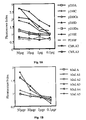
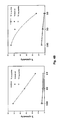
- p210C has a high BIMAS score that correlated with T2 binding assay data ( Figure 1A ).
- p210F is a peptide derived from the sequence previously described by Yotonda et al. CMLA2, shown to be a weak binder in the T2 assay.
- CMLA2 a peptide derived from the sequence previously described by Yotonda et al.
- CMLA2 shown to be a weak binder in the T2 assay.
- the two serines in position one and two were substituted by a tyrosine and a leucine.
- the BIMAS prediction showed a 700 fold improvement and the binding to T2 cell revealed an excellent avidity for HLA A0201 molecules ( Figure 1A ).
- the immunogenicity of peptide antigens depends on a low dissociation rate of MHC/peptide complexes.
- the stability of complexes formed between HLA-A0201 and the b3a2 analogue peptides was assayed on T2 cells over time. Overnight incubation of T2 cells with saturating amounts of HLA-A0201 binding peptides and human ⁇ 2 microglobulin resulted in increased surface expression of HLA-A0201 molecules. After peptide removal and addition of Brefeldin A to inhibit protein synthesis, T2 cells were incubated at 37 °C and the amount of HLA-A0201 molecules remaining at the cell surface was determined after various incubation times.
- HLA-A0201 complexes formed with peptides p210A and p210B were unstable, reaching background levels in less than 1 h of incubation at 37°C.
- peptides p210C, p210D, p210E and p210F formed complexes that were relatively stable over 6-8 hours.
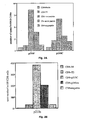
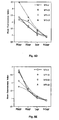
- the spot numbers were consistently higher with peptides that bound with higher affinity to HLA 0201 molecules as determined by T2 assay. More importantly, T cells generated in the presence of the new synthetic analogues were able to recognize the native sequences. p210C and p210F were able to stimulate T cells to recognize their respective native sequences ( Figure 2A ). CML A2, the native sequence from p210F is a natural weak binder and there is indirect evidence that it can be naturally expressed in the surface of chronic myelogenous leukemia blasts. No immune response could be generated against the p210A and p210B, despite attempts using different donors. This result is consistent with their reduced affinity for MHC.
- a chronic myelogenous leukemia patient in chronic phase HLA A0201 responded to p210C stimulation of T cells and demonstrated T-cell cross-reactivity with native p210cn peptide. Response was observed after the second round of T-cell stimulation in vitro ( Figure 2B ).
- the peptides derived from b2a2 also generated a significant immune response as measured by gamma interferon secretion CD3+ T cells.
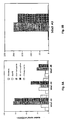
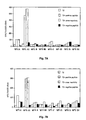
- Peptides b2a2A3, A4 and A5 generated an immune response in two healthy donors ( Figure 3A ).
- the response against b2a2 A3 was more consistent between donors.
- T cells generated in the presence of b2a2 A3 were able to identify the original native sequence. This is of special relevance because the native sequence is a weak/intermediate binder to HLA.
- a CML patient in chronic phase HLA A0201 responded to b2a2 A3 stimulation of T cells and demonstrated T-cell cross-reactivity with native b2a2 A peptide ( Figure 3B ).
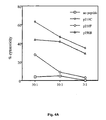
- T cell lines obtained after several stimulations with the analogue peptide were tested in a classic chromium-51 assay using peptide pulsed target cell lines.
- T cells generated in vitro in the presence of p210C ( Figure 4A ) and b2a2 A3 ( Figure 4B ) were able to kill T2 cell line pulsed with specific peptides but not without peptide or with control peptide.
- This experiment was also performed using HLA matched chronic myelogenous leukemia cell lines or CML blasts expressing the respective translocation b3a2 or b2a2.
- Significant cytotoxicity was generated raising the possibility that the native peptides were not naturally processed and/or sufficiently expressed in the surface of the leukemic cells.
- Thermostabilization assays using a TAP1/2 negative cell line (T2) and a modified protocol using Raji A0301 cells showed that several peptides that were predicted to be good binders to HLA A0201 or A0301 molecules, could stabilize MHC class I A0201 or A0301 molecules (Table 2).
- the synthetic analogues WT1-A1, -B1, C1, and -D1 all predicted to bind HLA A0201 better than the respective native WT-1 peptides demonstrated similar or increased binding compared to WT1-A, -B, C, and D ( Figure 5A ).
- WT1-D1 demonstrated a significantly higher level of binding to HLA-A0201 over WT1-D which was similar to control.
- a comparison of HLA A0301 binding of A3WT1-A, -B, -C, and -D with each of their respective three analogues demonstrated relatively similar binding ( Figures 5B-5E ).
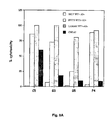
- CD8+ CTL lines were assessed by either IFN alpha ELISPOT or a chromium release assay using pulsed, HLA-matched leukemic cell lines ( Figures 6A-6B ).
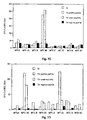
- analogue peptides generated greater immune responses, i.e., increased CD8 T cell precursor frequency, in comparison with the native peptides ( Figures 7A-7D ).
- CD8+ T cells stimulated with the new synthetic peptides cross-reacted with the native WT1 peptide sequence and are able to kill HLA matched chronic myelogenous leukemia blasts ( Figures 8A-8B ).
Landscapes
- Health & Medical Sciences (AREA)
- Chemical & Material Sciences (AREA)
- Organic Chemistry (AREA)
- Life Sciences & Earth Sciences (AREA)
- Medicinal Chemistry (AREA)
- General Health & Medical Sciences (AREA)
- Biochemistry (AREA)
- Gastroenterology & Hepatology (AREA)
- Biophysics (AREA)
- Genetics & Genomics (AREA)
- Molecular Biology (AREA)
- Proteomics, Peptides & Aminoacids (AREA)
- Zoology (AREA)
- Toxicology (AREA)
- Oncology (AREA)
- Veterinary Medicine (AREA)
- Immunology (AREA)
- Nuclear Medicine, Radiotherapy & Molecular Imaging (AREA)
- Pharmacology & Pharmacy (AREA)
- Animal Behavior & Ethology (AREA)
- Public Health (AREA)
- General Chemical & Material Sciences (AREA)
- Chemical Kinetics & Catalysis (AREA)
- Hematology (AREA)
- Medicines That Contain Protein Lipid Enzymes And Other Medicines (AREA)
- Peptides Or Proteins (AREA)
- Medicines Containing Antibodies Or Antigens For Use As Internal Diagnostic Agents (AREA)
- Measuring Or Testing Involving Enzymes Or Micro-Organisms (AREA)
- Medicines Containing Material From Animals Or Micro-Organisms (AREA)
- Micro-Organisms Or Cultivation Processes Thereof (AREA)
Applications Claiming Priority (2)
| Application Number | Priority Date | Filing Date | Title |
|---|---|---|---|
| US52595503P | 2003-12-01 | 2003-12-01 | |
| EP04812790.6A EP1708732B2 (en) | 2003-12-01 | 2004-11-30 | Synthetic hla binding peptide analogues and uses thereof |
Related Parent Applications (2)
| Application Number | Title | Priority Date | Filing Date |
|---|---|---|---|
| EP04812790.6 Division | 2004-11-30 | ||
| EP04812790.6A Division-Into EP1708732B2 (en) | 2003-12-01 | 2004-11-30 | Synthetic hla binding peptide analogues and uses thereof |
Publications (1)
| Publication Number | Publication Date |
|---|---|
| EP2478913A1 true EP2478913A1 (en) | 2012-07-25 |
Family
ID=34652399
Family Applications (2)
| Application Number | Title | Priority Date | Filing Date |
|---|---|---|---|
| EP04812790.6A Expired - Lifetime EP1708732B2 (en) | 2003-12-01 | 2004-11-30 | Synthetic hla binding peptide analogues and uses thereof |
| EP11189059A Withdrawn EP2478913A1 (en) | 2003-12-01 | 2004-11-30 | Synthetic HLA binding peptide analogues and uses thereof |
Family Applications Before (1)
| Application Number | Title | Priority Date | Filing Date |
|---|---|---|---|
| EP04812790.6A Expired - Lifetime EP1708732B2 (en) | 2003-12-01 | 2004-11-30 | Synthetic hla binding peptide analogues and uses thereof |
Country Status (7)
| Country | Link |
|---|---|
| US (3) | US7488718B2 (enExample) |
| EP (2) | EP1708732B2 (enExample) |
| JP (1) | JP2007516966A (enExample) |
| AU (1) | AU2004294345B2 (enExample) |
| CA (1) | CA2548135C (enExample) |
| ES (1) | ES2402184T5 (enExample) |
| WO (1) | WO2005053618A2 (enExample) |
Families Citing this family (44)
| Publication number | Priority date | Publication date | Assignee | Title |
|---|---|---|---|---|
| US20060127409A1 (en) * | 2003-12-01 | 2006-06-15 | Scheinberg David A | Bcr-abl vaccines and methods of use thereof |
| JP2007516966A (ja) * | 2003-12-01 | 2007-06-28 | スローン−ケターリング インスティチュート フォー キャンサー リサーチ | 合成hla結合ペプチド類似体及びその使用方法 |
| US7612162B2 (en) | 2004-09-21 | 2009-11-03 | University Of Pittsburgh - Of The Commonwealth System Of Higher Education | Peptide analogs capable of enhancing stimulation of a glioma-specific CTL response |
| WO2007047764A2 (en) | 2005-10-17 | 2007-04-26 | Sloan Kettering Institute For Cancer Research | Wt1 hla class ii-binding peptides and compositions and methods comprising same |
| EP2010209B1 (en) * | 2006-04-10 | 2016-06-15 | Sloan Kettering Institute For Cancer Research | Immunogenic wt-1 peptides and methods of use thereof |
| WO2008048410A2 (en) * | 2006-09-19 | 2008-04-24 | Human Biomolecular Research Institute | Diagnostic methods and genetic markers for alzheimer disease |
| PL2119778T3 (pl) * | 2007-02-27 | 2016-04-29 | Int Inst Cancer Immunology Inc | Sposób aktywacji pomocniczej komórki T oraz kompozycja do zastosowania w tym sposobie |
| EP2216041A4 (en) * | 2007-11-20 | 2012-10-24 | Nec Corp | METHOD OF INDUCING A CYTOTOXIC T-CELL, CYTOTOXIC T-CELL INDUCTOR AND PHARMACEUTICAL COMPOSITION, AND VACCINE WITH THE INDUCTOR |
| CN101888852B (zh) | 2007-12-05 | 2017-02-08 | 株式会社癌免疫研究所 | 癌症疫苗组合物 |
| WO2009137872A1 (en) * | 2008-05-14 | 2009-11-19 | Simons Haplomics Limited | Methods and compositions for the treatment of cancer |
| EP2608799B1 (en) | 2010-08-24 | 2018-12-12 | University of Pittsburgh - Of the Commonwealth System of Higher Education | Interleukin-13 receptor alpha 2 peptide-based brain cancer vaccines |
| AU2012291101B2 (en) | 2011-07-29 | 2016-04-07 | Riken | Cell for use in immunotherapy which contains modified nucleic acid construct encoding Wilms tumor gene product or fragment thereof, method for producing said cell, and said nucleic acid construct |
| US9539299B2 (en) * | 2011-10-27 | 2017-01-10 | International Institute Of Cancer Immunology, Inc. | Combination therapy with WT1 peptide vaccine and temozolomide |
| CN104684577B (zh) | 2012-01-13 | 2018-05-08 | 纪念斯隆凯特林癌症中心 | 免疫原性wt-1肽及其使用方法 |
| EP2914278B1 (en) | 2012-11-05 | 2021-06-02 | Dana-Farber Cancer Institute, Inc. | Xbp1, cd138, and cs1 peptides, pharmaceutical compositions that include the peptides, and methods of using such peptides and compositions |
| PL2945647T3 (pl) | 2013-01-15 | 2021-03-08 | Memorial Sloan Kettering Cancer Center | Immunogenne peptydy wt-1 i sposoby ich zastosowania |
| US10815273B2 (en) | 2013-01-15 | 2020-10-27 | Memorial Sloan Kettering Cancer Center | Immunogenic WT-1 peptides and methods of use thereof |
| US9228207B2 (en) | 2013-09-06 | 2016-01-05 | President And Fellows Of Harvard College | Switchable gRNAs comprising aptamers |
| US10077453B2 (en) | 2014-07-30 | 2018-09-18 | President And Fellows Of Harvard College | CAS9 proteins including ligand-dependent inteins |
| EP3365356B1 (en) | 2015-10-23 | 2023-06-28 | President and Fellows of Harvard College | Nucleobase editors and uses thereof |
| KR20250099263A (ko) | 2015-11-20 | 2025-07-01 | 메모리얼 슬로안 케터링 캔서 센터 | 암 치료 방법 및 조성물 |
| CA3034666A1 (en) | 2016-08-23 | 2018-03-01 | Oncopep, Inc. | Peptide vaccines and durvalumab for treating breast cancer |
| WO2018039203A1 (en) | 2016-08-23 | 2018-03-01 | Oncopep, Inc. | Peptide vaccines and durvalumab for treating multiple myeloma |
| JP7209963B2 (ja) | 2016-11-30 | 2023-01-23 | 住友ファーマ株式会社 | Wt1ヘルパーペプチド及びこれと癌抗原ペプチドコンジュゲート体との組合せ |
| WO2018165631A1 (en) | 2017-03-09 | 2018-09-13 | President And Fellows Of Harvard College | Cancer vaccine |
| KR20190127797A (ko) | 2017-03-10 | 2019-11-13 | 프레지던트 앤드 펠로우즈 오브 하바드 칼리지 | 시토신에서 구아닌으로의 염기 편집제 |
| JPWO2018181648A1 (ja) | 2017-03-30 | 2020-02-13 | 大日本住友製薬株式会社 | Wt1癌抗原ペプチドおよびこれを含むペプチドコンジュゲート体 |
| WO2019023680A1 (en) | 2017-07-28 | 2019-01-31 | President And Fellows Of Harvard College | METHODS AND COMPOSITIONS FOR EVOLUTION OF BASIC EDITORS USING PHAGE-ASSISTED CONTINUOUS EVOLUTION (PACE) |
| WO2019083960A1 (en) | 2017-10-24 | 2019-05-02 | Oncopep, Inc. | PEPTIDE VACCINES AND HDAC INHIBITORS FOR THE TREATMENT OF MULTIPLE MYELOMA |
| EP3700575A1 (en) | 2017-10-24 | 2020-09-02 | Oncopep, Inc. | Peptide vaccines and pembrolizumab for treating breast cancer |
| WO2019118949A1 (en) | 2017-12-15 | 2019-06-20 | The Broad Institute, Inc. | Systems and methods for predicting repair outcomes in genetic engineering |
| CN113382746A (zh) | 2018-09-28 | 2021-09-10 | 大日本住友制药株式会社 | 注射用组合物 |
| US12281338B2 (en) | 2018-10-29 | 2025-04-22 | The Broad Institute, Inc. | Nucleobase editors comprising GeoCas9 and uses thereof |
| WO2020154500A1 (en) | 2019-01-23 | 2020-07-30 | The Broad Institute, Inc. | Supernegatively charged proteins and uses thereof |
| MX2021011426A (es) | 2019-03-19 | 2022-03-11 | Broad Inst Inc | Metodos y composiciones para editar secuencias de nucleótidos. |
| EP3956349A1 (en) | 2019-04-17 | 2022-02-23 | The Broad Institute, Inc. | Adenine base editors with reduced off-target effects |
| US12435330B2 (en) | 2019-10-10 | 2025-10-07 | The Broad Institute, Inc. | Methods and compositions for prime editing RNA |
| CA3182959A1 (en) | 2020-05-12 | 2021-11-18 | Sumitomo Pharma Co., Ltd. | Pharmaceutical composition for treating cancer |
| US11058751B1 (en) | 2020-11-20 | 2021-07-13 | Think Therapeutics, Inc. | Compositions for optimized RAS peptide vaccines |
| US11421015B2 (en) | 2020-12-07 | 2022-08-23 | Think Therapeutics, Inc. | Method of compact peptide vaccines using residue optimization |
| CN116710115A (zh) | 2020-11-20 | 2023-09-05 | 思维疗法股份有限公司 | 用于优化的肽疫苗的组合物和方法 |
| US11464842B1 (en) | 2021-04-28 | 2022-10-11 | Think Therapeutics, Inc. | Compositions and method for optimized peptide vaccines using residue optimization |
| CN118076382A (zh) | 2021-08-12 | 2024-05-24 | 株式会社癌免疫研究所 | 用于治疗或预防癌症的药用组合物和方法 |
| CN114149970B (zh) * | 2021-11-09 | 2024-06-18 | 因诺伟(北京)生物医疗科技有限公司 | 一种外周血造血干细胞来源致敏树突状细胞的制备方法及应用 |
Citations (3)
| Publication number | Priority date | Publication date | Assignee | Title |
|---|---|---|---|---|
| US6156316A (en) * | 1995-05-08 | 2000-12-05 | Sloan-Kettering Institute For Cancer Research | Oncogene fusion protein peptide vaccines |
| WO2001062920A2 (en) * | 2000-02-22 | 2001-08-30 | Corixa Corporation | Compositions and methods for diagnosis and therapy of malignant mesothelioma |
| WO2003037060A2 (en) * | 2001-10-30 | 2003-05-08 | Corixa Corporation | Compositions and methods for wt1 specific immunotherapy |
Family Cites Families (2)
| Publication number | Priority date | Publication date | Assignee | Title |
|---|---|---|---|---|
| GB9823897D0 (en) * | 1998-11-02 | 1998-12-30 | Imp College Innovations Ltd | Immunotherapeutic methods and molecules |
| JP2007516966A (ja) * | 2003-12-01 | 2007-06-28 | スローン−ケターリング インスティチュート フォー キャンサー リサーチ | 合成hla結合ペプチド類似体及びその使用方法 |
-
2004
- 2004-11-30 JP JP2006542741A patent/JP2007516966A/ja active Pending
- 2004-11-30 ES ES04812790.6T patent/ES2402184T5/es not_active Expired - Lifetime
- 2004-11-30 EP EP04812790.6A patent/EP1708732B2/en not_active Expired - Lifetime
- 2004-11-30 WO PCT/US2004/040347 patent/WO2005053618A2/en not_active Ceased
- 2004-11-30 US US10/999,425 patent/US7488718B2/en active Active
- 2004-11-30 CA CA2548135A patent/CA2548135C/en not_active Expired - Lifetime
- 2004-11-30 AU AU2004294345A patent/AU2004294345B2/en not_active Expired
- 2004-11-30 EP EP11189059A patent/EP2478913A1/en not_active Withdrawn
-
2005
- 2005-09-12 US US11/223,139 patent/US7598221B2/en active Active
-
2009
- 2009-10-06 US US12/574,555 patent/US20100239547A1/en not_active Abandoned
Patent Citations (3)
| Publication number | Priority date | Publication date | Assignee | Title |
|---|---|---|---|---|
| US6156316A (en) * | 1995-05-08 | 2000-12-05 | Sloan-Kettering Institute For Cancer Research | Oncogene fusion protein peptide vaccines |
| WO2001062920A2 (en) * | 2000-02-22 | 2001-08-30 | Corixa Corporation | Compositions and methods for diagnosis and therapy of malignant mesothelioma |
| WO2003037060A2 (en) * | 2001-10-30 | 2003-05-08 | Corixa Corporation | Compositions and methods for wt1 specific immunotherapy |
Non-Patent Citations (16)
| Title |
|---|
| BLOOD, vol. 102, no. 11, 16 November 2003 (2003-11-16), 45TH ANNUAL MEETING OF THE AMERICAN SOCIETY OF HEMATOLOGY; SAN DIEGO, CA, USA; DECEMBER 06-09, 2003, pages 654a, ISSN: 0006-4971 * |
| BLOOD, vol. 102, no. 11, 16 November 2003 (2003-11-16), 45TH ANNUAL MEETING OF THE AMERICAN SOCIETY OF HEMATOLOGY; SAN DIEGO, CA, USA; DECEMBER 06-09, 2003, pages 655a, ISSN: 0006-4971 * |
| BUZYN AGNES ET AL: "Peptides derived from the whole sequence of BCR-ABL bind to several class I molecules allowing specific induction of human cytotoxic T lymphocytes", EUROPEAN JOURNAL OF IMMUNOLOGY, WILEY - V C H VERLAG GMBH & CO. KGAA, DE, vol. 27, no. 8, 1 January 1997 (1997-01-01), pages 2066 - 2072, XP009120101, ISSN: 0014-2980 * |
| CATHCART KATHLEEN ET AL: "A multivalent bcr-abl fusion peptide vaccination trial in patients with chronic myeloid leukemia", BLOOD, AMERICAN SOCIETY OF HEMATOLOGY, US, vol. 103, no. 3, 1 February 2004 (2004-02-01), pages 1037 - 1042, XP002355965, ISSN: 0006-4971 * |
| DATABASE BIOSIS [online] BIOSCIENCES INFORMATION SERVICE, PHILADELPHIA, PA, US; 16 November 2003 (2003-11-16), PINILLA JAVIER ET AL: "Breaking tolerance to the bcr/abl p210 b2a2 protein by use of mutated, heteroclitic breakpoint peptides.", XP002537321, Database accession no. PREV200400147740 * |
| DATABASE BIOSIS [online] BIOSCIENCES INFORMATION SERVICE, PHILADELPHIA, PA, US; 16 November 2003 (2003-11-16), PINILLA JAVIER ET AL: "Human T cell responses against synthetic HLA 0201 and 0301 heteroclitic peptides derived from the WT1 oncoprotein.", XP002537320, Database accession no. PREV200400147743 * |
| DYALL ET AL., J EXP MED, vol. 188, no. 9, 1998, pages 1553 - 61 |
| GRAFF-DUBOIS S ET AL: "GENERATION OF CTL RECOGNIZING AN HLA-A 0201-RESTRICTED EPITOPE SHARED BY MAGE-A1, -A2, -A3, -A4, -A6, -A10, AND -A12 TUMOR ANTIGENS: IMPLICATION IN A BROAD-SPECTRUM TUMOR IMMUNOTHERAPY", JOURNAL OF IMMUNOLOGY, AMERICAN ASSOCIATION OF IMMUNOLOGISTS, US, vol. 169, no. 1, 1 January 2002 (2002-01-01), pages 575 - 580, XP001109368, ISSN: 0022-1767 * |
| GRECO G ET AL: "Two bcr-abl junction peptides bind HLA-A3 molecules and allow specific induction of human cytotoxic T lymphocytes", LEUKEMIA, MACMILLAN PRESS LTD, US, vol. 10, no. 4, 1 January 1996 (1996-01-01), pages 693 - 699, XP009120096, ISSN: 0887-6924 * |
| KESSLER ET AL., J EXP MED, vol. 185, no. 4, 1997, pages 629 - 40 |
| PINILLA ET AL., CURR OPIN IMMUNOL, vol. 11, no. 2, 1999, pages 193 - 202 |
| SCARDINO A ET AL: "HER-2/NEU AND HTERT CRYPTIC EPITOPES AS NOVEL TARGETS FOR BROAD SPECTRUM TUMOR IMMUNOTHERAPY", JOURNAL OF IMMUNOLOGY, AMERICAN ASSOCIATION OF IMMUNOLOGISTS, US, vol. 168, no. 11, 1 June 2000 (2000-06-01), pages 5900 - 5906, XP001126974, ISSN: 0022-1767 * |
| TOURDOT S ET AL: "A general strategy to enhance immunogenicity of low-affinity HLA-A2.1-associated peptides: Implication in the identification of cryptic tumor epitopes", EUROPEAN JOURNAL OF IMMUNOLOGY, WILEY - V C H VERLAG GMBH & CO. KGAA, DE, vol. 30, 1 January 2000 (2000-01-01), pages 3411 - 3421, XP002237054, ISSN: 0014-2980 * |
| TROJAN A ET AL: "Generation of cytotoxic T lymphocytes against native and altered peptides of human leukocyte antigen-A*0201 restricted epitopes from the human epithelial cell adhesion molecule", CANCER RESEARCH, AMERICAN ASSOCIATION FOR CANCER RESEARCH, BALTIMORE, MD., US, vol. 61, no. 12, 15 June 2001 (2001-06-15), pages 4761 - 4765, XP002349228, ISSN: 0008-5472 * |
| VALMORI ET AL., J IMMUNOL, vol. 164, no. 2, 2000, pages 1125 - 31 |
| VALMORI ET AL., J IMMUNOL, vol. 165, no. 1, 2000, pages 533 - 8 |
Also Published As
| Publication number | Publication date |
|---|---|
| AU2004294345A1 (en) | 2005-06-16 |
| EP1708732B2 (en) | 2016-05-18 |
| EP1708732A4 (en) | 2009-09-02 |
| CA2548135C (en) | 2014-04-22 |
| EP1708732A2 (en) | 2006-10-11 |
| WO2005053618A3 (en) | 2006-02-23 |
| ES2402184T5 (es) | 2016-10-25 |
| WO2005053618A2 (en) | 2005-06-16 |
| US20050119185A1 (en) | 2005-06-02 |
| ES2402184T3 (es) | 2013-04-29 |
| US20060084609A1 (en) | 2006-04-20 |
| CA2548135A1 (en) | 2005-06-16 |
| JP2007516966A (ja) | 2007-06-28 |
| US7488718B2 (en) | 2009-02-10 |
| EP1708732B1 (en) | 2013-01-02 |
| AU2004294345B2 (en) | 2012-02-23 |
| US7598221B2 (en) | 2009-10-06 |
| US20100239547A1 (en) | 2010-09-23 |
Similar Documents
| Publication | Publication Date | Title |
|---|---|---|
| EP1708732B1 (en) | Synthetic hla binding peptide analogues and uses thereof | |
| US10221224B2 (en) | WT1 HLA class II-binding peptides and compositions and methods comprising same | |
| CN104684577B (zh) | 免疫原性wt-1肽及其使用方法 | |
| CN110078813B (zh) | 免疫原性wt-1肽和其使用方法 | |
| EP2010209B1 (en) | Immunogenic wt-1 peptides and methods of use thereof | |
| JP4051602B2 (ja) | 腫瘍抗原 | |
| JPWO2001011044A1 (ja) | 腫瘍抗原 | |
| WO2007047653A2 (en) | Synthetic hla binding peptide analogues of mutant v617f jak2 enzyme and uses therefor | |
| WO2007120603A2 (en) | Immunogenic bcr-abl peptides and methods of use thereof | |
| AU2012202819A1 (en) | Synthetic HLA binding peptide analogues and uses thereof | |
| US20060134129A1 (en) | Synthetic HLA binding peptide analogues and uses thereof | |
| US20060127409A1 (en) | Bcr-abl vaccines and methods of use thereof | |
| HK40054568A (en) | Immunogenic wt-1 peptides and uses thereof | |
| HK40045843A (en) | Immunogenic wt-1 peptides and methods of use thereof | |
| HK40012212A (en) | Immunogenic wt-1 peptides and methods of use thereof | |
| HK40012212B (en) | Immunogenic wt-1 peptides and methods of use thereof |
Legal Events
| Date | Code | Title | Description |
|---|---|---|---|
| PUAI | Public reference made under article 153(3) epc to a published international application that has entered the european phase |
Free format text: ORIGINAL CODE: 0009012 |
|
| AC | Divisional application: reference to earlier application |
Ref document number: 1708732 Country of ref document: EP Kind code of ref document: P |
|
| AK | Designated contracting states |
Kind code of ref document: A1 Designated state(s): AT BE BG CH CY CZ DE DK EE ES FI FR GB GR HU IE IS IT LI LU MC NL PL PT RO SE SI SK TR |
|
| RIN1 | Information on inventor provided before grant (corrected) |
Inventor name: PINILLA-IBARZ, JAVIER Inventor name: SCHEINBERG, DAVID |
|
| STAA | Information on the status of an ep patent application or granted ep patent |
Free format text: STATUS: THE APPLICATION IS DEEMED TO BE WITHDRAWN |
|
| 18D | Application deemed to be withdrawn |
Effective date: 20130126 |