EP2478718B1 - Gezielte kommunikation in einem femtozellennetz - Google Patents
Gezielte kommunikation in einem femtozellennetz Download PDFInfo
- Publication number
- EP2478718B1 EP2478718B1 EP10752674.1A EP10752674A EP2478718B1 EP 2478718 B1 EP2478718 B1 EP 2478718B1 EP 10752674 A EP10752674 A EP 10752674A EP 2478718 B1 EP2478718 B1 EP 2478718B1
- Authority
- EP
- European Patent Office
- Prior art keywords
- hnb
- message
- target
- devices
- network
- Prior art date
- Legal status (The legal status is an assumption and is not a legal conclusion. Google has not performed a legal analysis and makes no representation as to the accuracy of the status listed.)
- Not-in-force
Links
- 238000004891 communication Methods 0.000 title claims description 62
- 230000008685 targeting Effects 0.000 title description 6
- 238000000034 method Methods 0.000 claims description 30
- 230000005540 biological transmission Effects 0.000 claims description 9
- 125000004122 cyclic group Chemical group 0.000 claims description 7
- 230000000116 mitigating effect Effects 0.000 claims description 4
- 230000001902 propagating effect Effects 0.000 claims 5
- 238000007726 management method Methods 0.000 description 17
- 238000010586 diagram Methods 0.000 description 10
- 230000010355 oscillation Effects 0.000 description 10
- 238000005516 engineering process Methods 0.000 description 9
- 230000008901 benefit Effects 0.000 description 8
- 230000000644 propagated effect Effects 0.000 description 7
- 238000004519 manufacturing process Methods 0.000 description 6
- 230000011664 signaling Effects 0.000 description 5
- 238000012986 modification Methods 0.000 description 4
- 230000004048 modification Effects 0.000 description 4
- 230000001413 cellular effect Effects 0.000 description 3
- 238000004590 computer program Methods 0.000 description 3
- 238000013461 design Methods 0.000 description 3
- 230000006870 function Effects 0.000 description 3
- 230000008569 process Effects 0.000 description 3
- 238000012545 processing Methods 0.000 description 3
- 230000004044 response Effects 0.000 description 3
- 230000001360 synchronised effect Effects 0.000 description 3
- 238000013475 authorization Methods 0.000 description 2
- 230000008859 change Effects 0.000 description 2
- 230000000694 effects Effects 0.000 description 2
- 230000007246 mechanism Effects 0.000 description 2
- 230000003287 optical effect Effects 0.000 description 2
- 239000013589 supplement Substances 0.000 description 2
- 101150012579 ADSL gene Proteins 0.000 description 1
- 102100020775 Adenylosuccinate lyase Human genes 0.000 description 1
- 108700040193 Adenylosuccinate lyases Proteins 0.000 description 1
- 102100020960 E3 ubiquitin-protein transferase RMND5A Human genes 0.000 description 1
- 101000854471 Homo sapiens E3 ubiquitin-protein transferase RMND5A Proteins 0.000 description 1
- 101000854467 Homo sapiens E3 ubiquitin-protein transferase RMND5B Proteins 0.000 description 1
- 101100282746 Oryza sativa subsp. japonica GID1 gene Proteins 0.000 description 1
- 101100156295 Saccharomyces cerevisiae (strain ATCC 204508 / S288c) VID30 gene Proteins 0.000 description 1
- 230000004075 alteration Effects 0.000 description 1
- 238000013473 artificial intelligence Methods 0.000 description 1
- 210000001072 colon Anatomy 0.000 description 1
- 150000001875 compounds Chemical class 0.000 description 1
- 238000013500 data storage Methods 0.000 description 1
- 238000011161 development Methods 0.000 description 1
- 230000018109 developmental process Effects 0.000 description 1
- 230000004069 differentiation Effects 0.000 description 1
- 230000000977 initiatory effect Effects 0.000 description 1
- 238000012423 maintenance Methods 0.000 description 1
- 238000010295 mobile communication Methods 0.000 description 1
- 239000013307 optical fiber Substances 0.000 description 1
- 230000000737 periodic effect Effects 0.000 description 1
- 239000000047 product Substances 0.000 description 1
- 230000001737 promoting effect Effects 0.000 description 1
- 239000002096 quantum dot Substances 0.000 description 1
- 238000007670 refining Methods 0.000 description 1
- 238000001228 spectrum Methods 0.000 description 1
- 230000003068 static effect Effects 0.000 description 1
- 238000012546 transfer Methods 0.000 description 1
- 239000002699 waste material Substances 0.000 description 1
- 238000013316 zoning Methods 0.000 description 1
Images




Classifications
-
- H—ELECTRICITY
- H04—ELECTRIC COMMUNICATION TECHNIQUE
- H04W—WIRELESS COMMUNICATION NETWORKS
- H04W40/00—Communication routing or communication path finding
- H04W40/02—Communication route or path selection, e.g. power-based or shortest path routing
-
- H—ELECTRICITY
- H04—ELECTRIC COMMUNICATION TECHNIQUE
- H04W—WIRELESS COMMUNICATION NETWORKS
- H04W48/00—Access restriction; Network selection; Access point selection
- H04W48/02—Access restriction performed under specific conditions
-
- H—ELECTRICITY
- H04—ELECTRIC COMMUNICATION TECHNIQUE
- H04W—WIRELESS COMMUNICATION NETWORKS
- H04W40/00—Communication routing or communication path finding
- H04W40/24—Connectivity information management, e.g. connectivity discovery or connectivity update
- H04W40/248—Connectivity information update
-
- H—ELECTRICITY
- H04—ELECTRIC COMMUNICATION TECHNIQUE
- H04W—WIRELESS COMMUNICATION NETWORKS
- H04W4/00—Services specially adapted for wireless communication networks; Facilities therefor
- H04W4/12—Messaging; Mailboxes; Announcements
-
- H—ELECTRICITY
- H04—ELECTRIC COMMUNICATION TECHNIQUE
- H04W—WIRELESS COMMUNICATION NETWORKS
- H04W8/00—Network data management
- H04W8/26—Network addressing or numbering for mobility support
-
- H—ELECTRICITY
- H04—ELECTRIC COMMUNICATION TECHNIQUE
- H04W—WIRELESS COMMUNICATION NETWORKS
- H04W84/00—Network topologies
- H04W84/02—Hierarchically pre-organised networks, e.g. paging networks, cellular networks, WLAN [Wireless Local Area Network] or WLL [Wireless Local Loop]
- H04W84/04—Large scale networks; Deep hierarchical networks
- H04W84/042—Public Land Mobile systems, e.g. cellular systems
- H04W84/045—Public Land Mobile systems, e.g. cellular systems using private Base Stations, e.g. femto Base Stations, home Node B
Definitions
- the present application relates generally to a Universal Mobile Telecommunications System (UMTS) Terrestrial Radio Access Network (UTRAN), and more specifically to directing communications to specific recipients within a UTRAN network while reducing macro network resource utilization.
- UMTS Universal Mobile Telecommunications System
- UTRAN Universal Mobile Telecommunications System Terrestrial Radio Access Network
- SAIs service area identifiers
- HNBs home nodeBs
- femtocell network platforms rely upon various nodes or femtocells (e.g., home nodeBs (HNBs)).
- HNBs arc building-based wireless access points interfaced with a wired broadband network.
- HNBs are generally deployed to improve indoor wireless coverage and to offload a mobility radio access network (RAN) operated by a wireless network and service provider.
- RAN mobility radio access network
- coverage of a HNB device is generally intended to be approximately confined within the bounds of an indoor compound such as a residential or commercial building.
- the subject matter disclosed herein in one aspect thereof, comprises an architecture that can leverage Universal Mobile Telecommunication System (UMTS) Terrestrial Radio Access Network (UTRAN) features in order to facilitate more efficient or more robust communication for a femtocell network.
- UMTS Universal Mobile Telecommunication System
- UTRAN Universal Mobile Telecommunication System
- the architecture can leverage the fact that home nodeB (HNB) devices within a femtocell network remain relatively stationary and that today's HNB devices often provide availability of a UMTS localized common pilot channel, which can operate as a dedicated channel for communications.
- HNB home nodeB
- Various other UTRAN features can also be leveraged to provide a number of benefits over conventional femtocell communications.
- the architecture can be configured to interface to a set of HNB devices that employ an UMTS localized common pilot channel.
- This set of HNB device can represent all or a portion of a UTRAN network.
- the architecture can also be configured to receive a message originating from, or forwarded by, a messaging center or another suitable element of the host communication network.
- the message can include a target ID that identifies a subset of HNB devices included in the set of HNB devices.
- this subset of HNB devices can constitute one or more of the HNB devices included in the set and, moreover, are specifically identified as intended recipient(s) of the message, as indicated by the target ID.
- the architecture can thus facilitate transmission of all or a portion of the message to only the subset of HNB devices identified by the target ID.
- messages need not be duplicated and transmitted by surrounding nodeBs, either at the macro network level or the femtocell network level. Rather, messages can be specifically targeted only to and delivered only to a single HNB device or a collection of HNB devices based upon a logical assignment that accounts for substantially any criteria desired.
- Such targeted messaging can be employed in connection with home/office utility management or substantially any other suitable purpose.
- system As used in this application, the terms “system,” “platform,” “component,” “service,” “framework,” “interface,” “driver,” “tier,” “layer,” “node” and the like are intended to refer to a computer-related entity or an entity related to an operational machine with one or more specific functionalities.
- the entities disclosed herein can be either hardware, a combination of hardware and software, software, or software in execution.
- a component may be, but is not limited to being, a process running on a processor, a processor, an object, an executable, a thread of execution, a program, and/or a computer.
- an application running on a server and the server can be a component.
- One or more components may reside within a process and/or thread of execution and a component may be localized on one computer and/or distributed between two or more computers. These components also can execute from various computer readable media having various data structures stored thereon. The components may communicate via local and/or remote processes such as in accordance with a signal having one or more data packets (e.g., data from one component interacting with another component in a local system, distributed system, and/or across a network such as the Internet with other systems via the signal).
- a signal having one or more data packets (e.g., data from one component interacting with another component in a local system, distributed system, and/or across a network such as the Internet with other systems via the signal).
- a component can be an apparatus with specific functionality provided by mechanical parts operated by electric or electronic circuitry that is operated by software or firmware application(s) executed by a processor, wherein the processor can be internal or external to the apparatus and executes at least a part of the software or firmware application.
- a component can be an apparatus that provides specific functionality through electronic components without mechanical parts, the electronic components can include a processor therein to execute software or firmware that confers at least in part the functionality of the electronic components.
- An interface can include input/output (I/O) components as well as associated processor, application, and/or API components.
- the disclosed subject matter may be implemented as a method, apparatus, or article of manufacture using standard programming and/or engineering techniques to produce software, firmware, hardware, or any combination thereof to control a computer to implement the disclosed subject matter.
- article of manufacture as used herein is intended to encompass a computer program accessible from any computer-readable device, carrier, or media.
- computer readable media can include but are not limited to magnetic storage devices (e.g., hard disk, floppy disk, magnetic strips%), optical disks (e . g ., compact disk (CD), digital versatile disk (DVD)...), smart cards, and flash memory devices (e.g., card, stick, key drive).
- a carrier wave can be employed to carry computer-readable electronic data such as those used in transmitting and receiving electronic mail or in accessing a network such as the Internet or a local area network (LAN).
- LAN local area network
- the word "exemplary” is used herein to mean serving as an example, instance, or illustration. Any aspect or design described herein as “exemplary” is not necessarily to be construed as preferred or advantageous over other aspects or designs. Rather, use of the word exemplary is intended to present concepts in a concrete fashion.
- the term “or” is intended to mean an inclusive “or” rather than an exclusive “or”. That is, unless specified otherwise, or clear from context, "X employs A or B” is intended to mean any of the natural inclusive permutations. That is, if X employs A; X employs B; or X employs both A and B, then "X employs A or B" is satisfied under any of the foregoing instances.
- the articles “a” and “an” as used in this application and the appended claims should generally be construed to mean “one or more” unless specified otherwise or clear from context to be directed to a singular form.
- terms like "user equipment,” “mobile station,” “mobile,” subscriber station,” “access terminal,” “terminal,” “handset,” and similar terminology refer to a wireless device utilized by a subscriber or user of a wireless communication service to receive or convey data, control, voice, video, sound, gaming, or substantially any data-stream or signaling-stream.
- the foregoing terms are utilized interchangeably in the subject specification and related drawings.
- the terms “access point,” “base station,” “femtocell,” “home Node B (HNB),” and the like are utilized interchangeably in the subject application, and refer to a wireless network component or appliance that serves and receives data, control, voice, video, sound, gaming, or substantially any data-stream or signaling-stream from a set of subscriber stations.
- Data and signaling streams can be packetized or frame-based flows. It is noted that in the subject specification and drawings, context or explicit distinction provides differentiation with respect to access points or base stations that serve and receive data from a mobile device in an outdoor environment, and access points or base stations that operate in a confined, primarily indoor environment overlaid in an outdoor coverage area. Data and signaling streams can be packetized or frame-based flows.
- wireless network and “network” are used interchangeable in the subject application, when context wherein the term is utilized warrants distinction for clarity purposes such distinction is made explicit.
- system 100 that can leverage Universal Mobile Telecommunication System (UMTS) Terrestrial Radio Network (UTRAN) features to facilitate more efficient or robust communication employing a femtocell network is depicted.
- system 100 can be implemented in or coupled to a femtocell network and/or an operating support system (OSS) for a femtocell network.
- system 100 can include interface component 102.
- Interface component 102 can be configured to interface to set 104 of home nodeB (HNB) devices that employ UMTS localized common pilot channel 106.
- set 104 can include all or a portion of HNB devices operating within a UTRAN network.
- UMTS localized common pilot channel 106 can operate as a dedicated signal for an associated HNB that can facilitate numerous advantages in wireless communication systems.
- HNB devices e.g., femtocells
- femtocells can provide or enhance indoor network coverage, and thus, typically, remain at a static location such as at a network subscriber's home or office.
- UE user equipment
- pilot channel 106 can be leveraged to facilitate more efficient communication, which is further detailed herein.
- system 100 can also include reception component 108 that can receive message 110.
- Message 110 can originate from or be forwarded by a messaging center (not shown) associated with the wireless network.
- message 110 can include target ID 112, wherein target ID 112 can identify subset 114 of HNB devices included in set 104 of HNB devices.
- target ID 112 can identify subset 114 of HNB devices included in set 104 of HNB devices.
- system 100 can further include filter component 116 that can facilitate transmission of message 110 to only subset 114 of HNB devices identified by target ID 112.
- filter component 116 can, for example, employ interface component 102 to transmit message 110 (or suitable contents or portions) to and only to the HNB devices included in subset 114.
- communications e.g., message 110
- HNB devices e.g., subset 114
- flood broadcasting can be avoided for an associated UTRAN network.
- RAN resources of an associated macro network e.g., macro network 118
- nodeB's or Radio Network Controllers RNCs
- message 110 originates inter-system such as an associated messaging center (e.g., short message service (SMS)) or originates from a disparate source such as third party network 120 and is then forwarded to the host network for delivery to the intended recipient(s).
- an associated messaging center e.g., short message service (SMS)
- SMS short message service
- a further benefit of the features described herein is that inter-system registration oscillations can be avoided.
- one problem in conventional femtocell networks is that a mobile UE served by a particular HNB device, say at the subscriber's home or office, will often attempt to reselect to the macro network that provides wide area coverage even while substantially within the coverage area of the HNB. These attempted reselections can "ping-pong" back and forth between the femtocell network and the macro network.
- the UE is generally unable to receive communications for which it is an intended recipient.
- registration oscillation can be substantially mitigated.
- system 200 illustrates additional features, aspects, or detail in connection with communication employing a femtocell network.
- System 200 can include interface component 102 that can be configured to interface to set 104 of HNB devices as substantially described supra. Depicted here, however, are HNB devices 114 1 - 114 N , which are intended to be only those HNB devices included in subset 114 rather than the entire set 104. In other words, only the HNB devices referred to by target ID 112. Thus, while four distinct HNB devices are illustrated in the diagram, it should be appreciated that N can be substantially any positive integer. Hence, subset 114 can be comprised of a single HNB device or multiple HNB devices.
- system 200 can also include reception component 108 that can receive message 110 that includes target ID 112, wherein target ID identifies the specific (one or more) HNB device(s) to which message 110 is intended to be directed.
- Message 110 can originate from third party network 120 such as, e.g., a utility company or service provider; or from inter-system network 206 such as a message center for the host communication platform providing or maintaining the femtocell network and/or macro cell network 118.
- system 200 can further include filter component 116 as substantially described above.
- filter component 116 can identify the intended recipient(s) of message 110 based upon target ID 112, and employ interface component 102 to propagate message 110 only to those intended recipient(s).
- target ID 112 can be a UTRAN Service Area Identifier (SAI), which is illustrated as "Case 1" and denoted by reference numeral 202.
- SAI is defined in the 3GPP technical specifications, which provides unified telecommunications standards. The June 2009 3GPP technical specification can be found at http colon slash slash www dot 3gpp dot org slash specifications, and is included herein by reference.
- a SAI represents a value or a localized cell ID for an individual HNB or site.
- the SAI can represent an identifier associated with a single HNB device.
- filter component 116 can facilitate transmission (e.g., via interface component 102) of message 110 only to the single HNB device.
- subset 114 of HNB devices identified by target ID 112 is a single HNB device.
- each and every HNB device included in set 104 can be assigned one or more unique identifier(s).
- each HNB device included in subset 114 (e.g., a subset of set 104) will be assigned one or more unique identifier that identifies the associated single HNB device, which is illustrated as single identifier 1 (SID1), single identifier 2 (SID2), and so on for HNB devices 114 1 - 114 N , wherein each of the HNB devices 114 1 - 114 3 have multiple SIDs (in this case SID1 and SID2 yet more can exist), while HNB device 114 N has only one SID (in this case SID1).
- SID1 single identifier 1
- SID2 single identifier 2
- target ID 112 represents an SAI equal to "1234" or "9876”
- filter component 116 can ensure that interface component 102 transmits message 110 only to HNB device 114 1 .
- target ID 112 represents an SAI equal to the values "1235" or "9877”
- message 110 can be delivered only to HNB device 114 2 , and so on.
- four digit base-ten numbers such as "1234" are selected for illustrative purposes only and that actual SAI values can be implemented in substantially any format desired and/or in conformity with the 3GPP standards.
- identifiers can be logically assigned according to any scheme desired.
- a SAI can be designated as a group identifier even though the 3GPP specification does not necessarily envision such use.
- one or more unique group identifiers are illustrated by HNB devices 114 1 - 114 N as GID1, GID2 (and additional GIDs can also exist) according to substantially any logical grouping assignment desired.
- GID a single SAI, say, GID "1111” can identify a block or range of other single SAIs, say those SIDs from "1234" to "1237".
- the SAI that represents a GID can denote all or a portion of HNB devices within a particular zip code.
- the SAI that represents a GID can represent subscribers to third party products or services, such as street addresses with a particular garbage collection service, utilities provider, lawn care service, club member for a local business or vendor, a public or private community, a particular zoning area, or the like as well as for substantially any localized weather, news, or advertisements.
- the disclosed features can be readily integrated with or supplement future developments such as regulation or controls relating to, as well as actual deployment of, "Smart Grid.”
- GID 1111
- billing notifications or other information from the garbage collection service can be included in message 110 along with target ID 112 of "1111" such that only the targeted parties will receive message 110, in this case at least HNB devices 114 1 , 114 2 , 114 3 , and 114 N .
- notifications or information from the gas utility company included in message 110 with a target ID 112 of "2222" can be delivered only to HNB devices 114 1 and 114 3 , and so
- target ID 112 can be a UTRAN Routing Area (URA) ID, which is illustrated as "Case 2" and denoted by reference numeral 204.
- URA ID is typically associated with multiple HNB devices included in a specified logical routing area.
- SAI's which are typically associated with a single HNB device
- URA IDs customarily inherently define a collection of HNB devices such as those within a logical routing area.
- a URA ID can be similar to SAIs that represent group identifiers (e.g., GIDs), and can therefore be implemented with all or some of the features described supra in connection with GIDs.
- target ID 112 can be a URA ID associated with a single HNB device in which a URA paging channel is enabled.
- typical URA IDs relate to collections or groups of HNB devices, when the URA paging channel is enabled, an individualized URA ID can be assigned to a single HNB device. Therefore, all or some of the features detailed above with respect to SAIs can be implemented in this case as well.
- Employing URA IDs can be especially convenient when message 110 originates at (or is forwarded by) an inter-system source such as an SMS messaging center, in which case message 110 can be an SMS message.
- Data store 208 can also include other unique identifiers associated with HNB device hardware such as a serial number, a Media Access Control (MAC) address, or the like, any of which can be associated with one or more SAI or URA ID in data store 208.
- HNB device hardware such as a serial number, a Media Access Control (MAC) address, or the like, any of which can be associated with one or more SAI or URA ID in data store 208.
- MAC Media Access Control
- system 300 that can allocate a SAI or an URA ID is illustrated.
- system 300 can include interface component 102 and filter component 116 as substantially described supra, as well as other components described herein.
- system 300 can also include management component 302 that can assign (e.g., allocate or update) one or more target ID (e.g., a SAI or an URA ID) to each HNB device included in set 104, and depicted here as HNB devices 104 1 - 104 M , wherein M is a positive integer, generally greater than N as described in connection with FIG. 2 .
- target ID e.g., a SAI or an URA ID
- target ID 112 represents a SAI or an URA ID
- message 110 can be specifically targeted and delivered to only the intended recipient(s).
- single or individual HNB devices to be targeted as well as any number of groups or collections of HNB devices, a rich and efficient means for delivering message 110 only to specified parties can be achieved.
- individual households or even individual mobile devices, discussed infra
- management component 302 can provide assignment 304 to data store 208 that allocates one or more SAI or URA ID (e.g., target ID 112) to any given HNB device included in set 104 and can do so based upon any trait a network operator desires, which is further discussed with reference to FIG. 3B .
- SAI or URA ID e.g., target ID 112
- illustration 320 provides example criteria for assignment of target IDs is depicted.
- illustration 320 provides example criteria that can be useful or convenient for management component 302 when assigning target IDs to specific HNB devices. Such criteria can be based upon, e.g., a customer, commercial, public, private, or another type of relationship (denoted relationship 322) or a subscription or good or service provision (denoted by reference numeral 324).
- relationship 322 and subscription/provision 324 will generally relate to examples provided previously such as waste removal services or utilities provision, but can also be based upon warranty features of goods or services, familial relationships, friends, acquaintances, or colleague relationships, club or membership relationships, location-based relationships and so forth.
- management component 302 can produce assignment 304 based upon request or query 326. For example, consider an ad hoc community based upon a television audience who employ an UE to respond to a poll or voting request advertised by the televised program. Management component 302 can allocate a target ID 112 for such an ad hoc community and associate that target ID 112 to the appropriate subset 114 of HNB devices. Thus, results of the poll or vote or other data can be later delivered only to those HNB devices from which a vote or poll response originated or for which that particular target ID 112 is otherwise applicable (e.g., the subset 114 of HNB devices from which votes were sent).
- management component 302 can also allocate assignment 304 based upon a demographic or interest 328 for the residence or business hosting one or more HNB devices.
- Demographic/interest 328 can be, e.g., based upon age, gender, income, political views, likes, dislikes and so forth, and can be particularly relevant for advertisements included in message 110.
- management component 302 can design a particular community based upon a certain demographic/interest 328 and provision a SAI or URA ID for that community.
- SAI or URA ID for that community.
- any message 110 deemed suitable can be targeted expressly to that community based upon the particular demographic/interest 328.
- all suitable information can be stored to data store 208.
- management component 302 can build profiles for each HNB device that can relate to relationships 322, subscriptions/provisions 324, requests/queries 326, and/or demographic/interests 328 of a user of that particular HNB device.
- HNB devices might well each serve a single UE (e.g., a preferred mobile device utilized by a single individual) as illustrated by HNB 104 1 and HNB 104 2 respectively serving UE 306 1 and UE 306 2
- a single HNB device can serve many UE terminals.
- HNB device 104 M serving multiple UE, specifically UE 306 3 - 306 5 , any or all of which can be utilized by a different individual, such as multiple individuals in the same household or multiple employees at the same place of business.
- target ID 112 typically only identifies a particular HNB device and therefore generally cannot distinguish between individual recipients in this latter case.
- HNB devices often maintain an access control list or a "whitelist" that identifies the UE devices authorized to access the HNB device.
- access control lists are populated by way of customer input (e.g., inputting authorized phone numbers or other identification), however any suitable discovery mechanism can be employed to automatically populate an access control list.
- message 110 can further include a UE ID (e.g., recorded in an access control list) that identifies a specific wireless communication device served by a particular HNB device included in subset 114 of HNB devices.
- filter component 116 can determine a specific individual to whom message 110 is directed and employ interface component 102 to deliver message 110 only to a specific UE utilized by or otherwise associated with that specific individual.
- system 400 that can employ acknowledgement requests for further mitigating registration oscillations and/or reducing inter-system messaging is provided.
- a dedicated resource such as a URA or a SAI range can eliminate or reduce unnecessary resource loading/communications to the macro network since a connection is already known and established with the femtocell network. As long as that connection exists, there is no need to broadcast communications on the macro network, since the location of (and therefore the path to) the designated target is already known.
- registration oscillation can be mitigated by targeting communications to the femtocell network while the UE is utilizing the femtocell network (e.g., an associated HNB device).
- registration oscillation can be further mitigated by facilitating acknowledgements in connection with certain communications.
- messages delivered by way of flood broadcasting are not typically acknowledged.
- most systems employ a retry mechanism to transmit the broadcasts a certain number of times (e.g., three retries) before timing out. With respect to the features described herein much of this activity can be viewed as an unnecessary utilization of resources.
- acknowledgement request 402 can relate to a cyclic acknowledgement that mitigates inter-system reselection between a femtocell network and an associated macro network.
- cyclic acknowledgements e.g., propagated from a UE to the associated HNB device and then up to management component 302
- the location of the UE can be re-verified over time.
- implementing a cyclic acknowledgement on a dedicated HNB - UE basis as described can also contribute to reducing inter-system messaging such as that for paging traffic. For instance, as long as acknowledgement requests 402 are met with acknowledgement 404, there is no need to listen for a particular UE on the macro network since a dedicated stream to the associated HNB device is already operating.
- management component 302 is conceptually depicted transmitting acknowledgement request 402 to and receiving acknowledgement 404 from subset 114 of HNB devices, interface component 102 can be employed to perform the actual transmitting and receiving on behalf of management component 302.
- HNB device 500 which represents a HNB device that can facilitate more efficient or robust communication
- HNB device 500 can include registration component 502 that can maintain access control list 504, sometimes referred to as a "whitelist.”
- Access control list 504 can include multiple UE IDs, wherein each of the multiple UE IDs can represent one or more specific wireless communication device(s) authorized to be served by HNB device 500.
- HNB device 500 can operate in a household with three distinct subscribers to the host communications network.
- Examples of wireless communication devices or terminals 506 can include cellular phones, smart phones, mobile terminals, or the like.
- HNB device 500 include an interface to a remote network (e.g., first interface component 508) as well as an interface (e.g., second interface component 514) to the hosted UE devices or terminals 506 registered to HNB device 500, in this case 3 terminals 506 are depicted, but it should be appreciated that substantially any number of terminals 506 can be served.
- First interface component 508 can receive message 510 that can include UE ID 512.
- Message 512 can be substantially similar to or a portion of message 110 discussed supra, which can include target ID 112. While target ID 112 can identify intended recipients defined as subset 114, of which HNB device 500 is a member, UE ID 512 can identify a specific wireless communication device from among multiple registered wireless communication devices or terminals 506 served by HNB device 500.
- second interface component 514 that is included in HNB device 500 can transmit message 510 only to the specific wireless communication device(s) identified by UE ID 512 included in message 510.
- message 510 can be selectively transmitted to any one or more of these 3 terminals based upon the UE ID 512.
- System 600 can include registration component 502 that can maintain access control list 504 and second interface component 514 that can transmit message 510 to only specified terminals 506 identified by UE ID as substantially detailed supra, as well as other components detailed in connection with HNB device 500 of FIG. 5 .
- system 600 can further include memory 602 that can store message 510 when the specific wireless communication device or terminal 506 identified by UE ID 512 is not present (or camped on its home femtocell). Furthermore, system 600 can also include polling component 606 that can detect the presence of the specific wireless communications device (e.g., any or all terminals indentified by access control list 504). In accordance with the above, when one or more wireless communication terminals identified by UE ID 512 is not present (in this case, the middle terminal 506 with an "X" to denote a lack of current presence on HNB device 500), second interface component 514 can store message 510 intended for the absent terminal 506 to memory 602.
- polling component 606 can detect the presence of the specific wireless communications device (e.g., any or all terminals indentified by access control list 504).
- second interface component 514 can store message 510 intended for the absent terminal 506 to memory 602.
- polling component 606 can actively or persistently maintain a presence or absence list, which can be readily compared to UE ID(s) 512 when message 510 is received in order to ascertain whether message 510 can be forwarded directly to the specific wireless communication terminal(s) 506 or stored to memory 602. Moreover, if message 510 is received when a terminal 506 identified by UE ID 512 is absent, polling component 606 can facilitate transmission (e.g., by way of second interface component 514) of messaged 510 previously stored to memory 602 once it is detected that the specific terminal is no longer absent.
- system 600 can also receive an acknowledgement request 608, which can be received by first interface component 508 and can be substantially similar to acknowledgement request 402 discussed in connection with FIG. 4 .
- polling component 606 can forward the acknowledgement request 608 to the one or more recipient(s) among terminals 506 of message 510.
- terminals 506 who received acknowledgement request 608 can reply with acknowledgement 610, which can be received by second interface component 514 and forward along the uplink by first interface component 508 of HNB device 500.
- Acknowledgement 610 can verify that message 510 was received by a specific terminal 506 identified by UE ID 512, and thus mitigate registration oscillation and reduce inter-system messaging by establishing a dedicated path between a particular UE and other communication sources.
- both acknowledgement request 608 and acknowledgement 610 can be of a periodic or cyclic nature, thus potentially refining the duration of this dedicated path more suitably.
- FIGS. 7 , 8 , and 9 illustrate various methodologies in accordance with the disclosed subject matter. While, for purposes of simplicity of explanation, the methodologies are shown and described as a series of acts, it is to be understood and appreciated that the disclosed subject matter is not limited by the order of acts, as some acts may occur in different orders and/or concurrently with other acts from that shown and described herein. For example, those skilled in the art will understand and appreciate that a methodology could alternatively be represented as a series of interrelated states or events, such as in a state diagram. Moreover, not all illustrated acts may be required to implement a methodology in accordance with the disclosed subject matter.
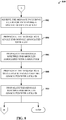
- FIG. 7 an exemplary method 700 for leveraging Universal Mobile Telecommunication System (UMTS) Terrestrial Radio Access Network (UTRAN) features for facilitating more efficient or robust communication with a femtocell network is illustrated.
- UMTS Universal Mobile Telecommunication System
- UTRAN Universal Mobile Telecommunication System
- a set of home nodeB (HNB) modules that employ a UMTS localized common pilot channel can be interfaced to.
- the set of HNB modules can include a portion of or all HNB modules operating in a UTRAN network, any or all of which can be controlled remotely by way of an OSS or other suitable network elements.
- a message that includes a target ID can be received.
- the target ID can identify a subset of HNB modules included in the set of HNB modules.
- a particular subset e.g., one or more
- the message received at reference numeral 704 in its entirety or in part, can be propagated to only the subset of HNB modules identified by the target ID, rather than to all or additional HNB modules included in the set.
- a number of advantages can be provided. For example, communications can be more efficient since flood broadcasting is no longer needed and, in fact, duplicate messages delivered to non-targeted recipients are not necessary. Moreover, selective propagation of the message can be inherently more secure as non-targeted individuals will not generally be recipients of the message at all. Furthermore, inter-system messaging and registration oscillations can also be mitigated or reduced as substantially detailed supra. Furthermore, the disclosed subject matter can be readily integrated with or supplement future technologies or regulation such as the proposals relating to Smart Grid.
- the message received at reference numeral 704 of FIG. 7 can further include (e.g., in addition to the target ID) a UE ID, the UE ID identifying one or more specific wireless communication device(s) based upon an access control list provided by the serving HNB module.
- the target ID can be sufficient to select a specific HNB module or femtocell, the UE ID can provide additional granularity to select a specific mobile device associated with a specific individual.
- the message can be propagated to a single HNB module that is associated with a SAI matching the target ID.
- the message can be propagated to multiple HNB modules, each of which is associated with a group SAI matching the target ID.
- an SAI can be employed to define a single HNB module as detailed at reference numeral 804 as well as a collection or group of HNB modules as discussed in connection with reference numeral 806.
- the message can be propagated to a single HNB module with a URA paging channel enabled, wherein the single HNB module is associated with a URA ID matching the target ID.
- the message can be propagated to multiple HNB modules, each of which is associated with a URA ID matching the target ID. Accordingly, as with the case in which the target ID reflects a SAI, when the target ID reflects a URA ID, both individual and group HNB modules can be targeted.
- one or more target ID can be assigned to each HNB module included in the set of HNB modules.
- every HNB module included in the set will have at least an individual or single target ID (SID) assigned thereto, whether the single ID is based upon a SAI or an URA ID.
- SID single target ID
- some HNB modules can have more than one SID, e.g., one based upon a SAI and another based upon a URA ID, or for any other suitable reason.
- the first or primary SID can be assigned, e.g., incrementally according to a location zip code of the HNB.
- each HNB module can potentially have a great many group IDs (GIDs), for example, one assigned based upon a customer subscription to a local gas company, another assigned based upon a relationship with a local condominium community, and another based upon an ad hoc or temporary relationship.
- GIDs group IDs
- the one or more target ID can be assigned based upon a customer relationship, a commercial relationship, a social network relationship, or another type of relationship.
- the one or more target ID can also be assigned based upon a subscription or a good or service provision.
- Other examples can include a request or query, a demographic or interest, and so on.
- an acknowledgement request can be transmitted to the subset of HNB modules for acknowledging that the message has been received.
- an acknowledgement request can be transmitted for instructing the subset of HNB devices to provide a cyclic acknowledgement in response to the acknowledgement request.
- the cyclic acknowledgement can be employed for mitigating inter-system reselection between a femtocell network and an associated macro network as well as for reducing inter-system message traffic between the femtocell network and the macro network.
- FIG. 10 illustrates an example wireless communication environment 1000, with associated components that can enable operation of a femtocell enterprise network in accordance with aspects described herein.
- Wireless communication environment 1000 includes two wireless network platforms: (i) A macro network platform 1010 that serves, or facilitates communication) with user equipment 1075 via a macro radio access network (RAN) 1070.
- RAN radio access network
- macro network platform 1010 is embodied in a Core Network, (ii) A femto network platform 1080, which can provide communication with UE 1075 through a femto RAN 1090, linked to the femto network platform 1080 through a routing platform 102 via backhaul pipe(s) 1085, wherein backhaul pipe(s) are substantially the same a backhaul link 3853 below.
- femto network platform 1080 typically offloads UE 1075 from macro network, once UE 1075 attaches ( e . g ., through macro-to-femto handover, or via a scan of channel resources in idle mode) to femto RAN.
- RAN includes base station(s), or access point(s), and its associated electronic circuitry and deployment site(s), in addition to a wireless radio link operated in accordance with the base station(s).
- macro RAN 1070 can comprise various coverage cells like cell 1205, while femto RAN 1090 can comprise multiple femto access points.
- deployment density in femto RAN 1090 is substantially higher than in macro RAN 1070.
- both macro and femto network platforms 1010 and 1080 include components, e . g ., nodes, gateways, interfaces, servers, or platforms, that facilitate both packet-switched (PS) (e.g., internet protocol (IP), frame relay, asynchronous transfer mode (ATM)) and circuit-switched (CS) traffic (e.g., voice and data) and control generation for networked wireless communication.
- PS packet-switched
- IP internet protocol
- ATM asynchronous transfer mode
- CS circuit-switched
- macro network platform 1010 includes CS gateway node(s) 1012 which can interface CS traffic received from legacy networks like telephony network(s) 1040 (e.g., public switched telephone network (PSTN), or public land mobile network (PLMN)) or a SS7 network 1060.
- PSTN public switched telephone network
- PLMN public land mobile network
- Circuit switched gateway 1012 can authorize and authenticate traffic (e.g., voice) arising from such networks. Additionally, CS gateway 1012 can access mobility, or roaming, data generated through SS7 network 1060; for instance, mobility data stored in a VLR, which can reside in memory 1030. Moreover, CS gateway node(s) 1012 interfaces CS-based traffic and signaling and gateway node(s) 1018. As an example, in a 3GPP UMTS network, gateway node(s) 1018 can be embodied in gateway GPRS support node(s) (GGSN).
- GGSN gateway GPRS support node(s)
- gateway node(s) 1018 can authorize and authenticate PS-based data sessions with served (e.g., through macro RAN) wireless devices.
- Data sessions can include traffic exchange with networks external to the macro network platform 1010, like wide area network(s) (WANs) 1050; it should be appreciated that local area network(s) (LANs) can also be interfaced with macro network platform 1010 through gateway node(s) 1018.
- Gateway node(s) 1018 generates packet data contexts when a data session is established.
- gateway node(s) 1018 can include a tunnel interface (e.g., tunnel termination gateway (TTG) in 3GPP UMTS network(s); not shown) which can facilitate packetized communication with disparate wireless network(s), such as Wi-Fi networks. It should be further appreciated that the packetized communication can include multiple flows that can be generated through server(s) 1014. It is to be noted that in 3GPP UMTS network(s), gateway node(s) 1018 (e.g., GGSN) and tunnel interface (e.g., TTG) comprise a packet data gateway (PDG).
- PGW packet data gateway
- Macro network platform 1010 also includes serving node(s) 1016 that convey the various packetized flows of information or data streams, received through gateway node(s) 1018.
- serving node(s) can be embodied in serving GPRS support node(s) (SGSN).
- SGSN serving GPRS support node
- server(s) 1014 in macro network platform 1010 can execute numerous applications (e . g ., location services, online gaming, wireless banking, wireless device management%) that generate multiple disparate packetized data streams or flows, and manage ( e . g ., schedule, queue, format%) such flows.
- Such application(s) for example can include add-on features to standard services provided by macro network platform 1010.
- Data streams can be conveyed to gateway node(s) 1018 for authorization/authentication and initiation of a data session, and to serving node(s) 1016 for communication thereafter.
- Server(s) 1014 can also effect security ( e .
- server(s) 1014 can provision services from external network(s), e . g ., WAN 1050, or Global Positioning System (GPS) network(s) (not shown). It is to be noted that server(s) 1014 can include one or more processor configured to confer at least in part the functionality of macro network platform 1010. To that end, the one or more processor can execute code instructions stored in memory 1030, for example.
- memory 1030 stores information related to operation of macro network platform 1010.
- Information can include business data associated with subscribers; market plans and strategies, e.g., promotional campaigns, business partnerships; operational data for mobile devices served through macro network platform; service and privacy policies; end-user service logs for law enforcement; and so forth.
- Memory 1030 can also store information from at least one of telephony network(s) 1040, WAN(s) 1050, or SS7 network 1060, enterprise NW(s) 1065, or service NW(s) 1067.
- Femto gateway node(s) 1084 have substantially the same functionality as PS gateway node(s) 1018. Additionally, femto gateway node(s) 1084 can also include substantially all functionality of serving node(s) 1016. In an aspect, femto gateway node(s) 1084 facilitates handover resolution, e . g ., assessment and execution. Further, control node(s) 1020 can receive handover requests and relay them to a handover component (not shown) via gateway node(s) 1084. According to an aspect, control node(s) 1020 can support RNC capabilities and can be substantially similar to the control component 320 ( FIG. 3 ) and can include functionality thereof.
- Server(s) 1082 have substantially the same functionality as described in connection with server(s) 1014.
- server(s) 1082 can execute multiple application(s) that provide service (e . g ., voice and data) to wireless devices served through femto RAN 1090.
- Server(s) 1082 can also provide security features to femto network platform.
- server(s) 1082 can manage (e . g ., schedule, queue, format%) substantially all packetized flows (e.g., IP-based, frame relay-based, ATM-based) it generates in addition to data received from macro network platform 1010.
- server(s) 1082 can include one or more processor configured to confer at least in part the functionality of macro network platform 1010. To that end, the one or more processor can execute code instructions stored in memory 1086, for example.
- Memory 1086 can include information relevant to operation of the various components of femto network platform 1080.
- operational information that can be stored in memory 1086 can comprise, but is not limited to, subscriber information; contracted services; maintenance and service records; femto cell configuration (e . g ., devices served through femto RAN 1090; access control lists, or white lists); service policies and specifications; privacy policies; add-on features; and so forth.
- femto network platform 1080 and macro network platform 1010 can be functionally connected through one or more reference link(s) or reference interface(s).
- femto network platform 1080 can be functionally coupled directly (not illustrated) to one or more of external network(s) 1040, 1050, 1060, 1065 or 1067.
- Reference link(s) or interface(s) can functionally link at least one of gateway node(s) 1084 or server(s) 1086 to the one or more external networks 1040, 1050, 1060, 1065 or 1067.
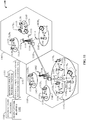
- FIG. 11 illustrates a wireless environment that includes macro cells and femtocells for wireless coverage in accordance with aspects described herein.
- wireless environment 1150 two areas 1105 represent "macro" cell coverage, each macro cell is served by a base station 1110.
- macro cell coverage area 1105 and base station 1110 can include functionality, as more fully described herein, for example, with regard to system 1100.
- Macro coverage is generally intended to serve mobile wireless devices, like UE 1120 A , 1120 B , in outdoors locations.
- An over-the-air wireless link 115 provides such coverage, the wireless link 1215 comprises a downlink (DL) and an uplink (UL), and utilizes a predetermined band, licensed or unlicensed, of the radio frequency (RF) spectrum.
- DL downlink
- UL uplink
- RF radio frequency
- UE 1120 A , 1120 B can be a 3GPP Universal Mobile Telecommunication System (UMTS) mobile phone.
- UMTS 3GPP Universal Mobile Telecommunication System
- RAN radio access network
- base station 1110 communicates via backhaul link(s) 1151 with a macro network platform 1160, which in cellular wireless technologies (e.g ., 3rd Generation Partnership Project (3GPP) Universal Mobile Telecommunication System (UMTS), Global System for Mobile Communication (GSM)) represents a core network.
- 3GPP 3rd Generation Partnership Project
- UMTS Universal Mobile Telecommunication System
- GSM Global System for Mobile Communication
- macro network platform 1160 controls a set of base stations 1110 that serve either respective cells or a number of sectors within such cells.
- Base station 1110 comprises radio equipment 1114 for operation in one or more radio technologies, and a set of antennas 1112 (e.g., smart antennas, microwave antennas, satellite dish(es) ...) that can serve one or more sectors within a macro cell 1105.
- antennas 1112 e.g., smart antennas, microwave antennas, satellite dish(es) .
- a set of radio network control node(s) which can be a part of macro network platform; a set of base stations (e.g., Node B 1110) that serve a set of macro cells 1105; electronics, circuitry or components associated with the base stations in the set of base stations; a set of respective OTA wireless links (e.g., links 1115 or 1116) operated in accordance to a radio technology through the base stations; and backhaul link(s) 1155 and 1151 form a macro radio access network (RAN).
- Macro network platform 1160 also communicates with other base stations (not shown) that serve other cells (not shown).
- Backhaul link(s) 1151 or 1153 can include a wired backbone link ( e .
- Backhaul pipe(s) 1155 link disparate base stations 1110.
- backhaul link 1153 can connect multiple femto access points 1130 and/or controller components (CC) 1101 to the femto network platform 1102.
- multiple femto APs can be connected to a routing platform (RP) 1087, which in turn can be connect to a controller component (CC) 1101.
- RP routing platform
- CC controller component
- the information from UEs 1120 A can be routed by the RP 102, for example, internally, to another UE 1120 A connected to a disparate femto AP connected to the RP 1087, or, externally, to the femto network platform 1102 via the CC 1101, as discussed in detail supra.
- a set of femtocells 1145 served by respective femto access points (APs) 1130 can be deployed.
- APs femto access points
- aspects of the subject innovation are geared to femtocell deployments with substantive femto AP density, e . g ., 10 4 -10 7 femto APs 1130 per base station 1110.
- a set of femto access points 1130 1 -3730 N with N a natural number, can be functionally connected to a routing platform 1087, which can be functionally coupled to a controller component 1101.
- the controller component 1101 can be operationally linked to the femto network platform 330 by employing backhaul link(s) 1153. Accordingly, UEs UE 3720 A connected to femto APs 1130 1 -3830 N can communicate internally within the femto enterprise via the routing platform (RP) 1087 and/or can also communicate with the femto network platform 1102 via the RP 1087, controller component 1101 and the backhaul link(s) 1153. It can be appreciated that although only one femto enterprise is depicted in FIG. 11 , multiple femto enterprise networks can be deployed within a macro cell 1105.
- HAPs home access point(s)
- Wi-Fi wireless fidelity
- picocell telecommunication telecommunication
- aspects, features, or advantages of the subject innovation can be exploited in substantially any wireless telecommunication, or radio, technology; for example, Wi-Fi, Worldwide Interoperability for Microwave Access (WiMAX), Enhanced General Packet Radio Service (Enhanced GPRS), 3GPP LTE, 3GPP2 UMB, 3GPP UMTS, HSPA, HSDPA, HSUPA, or LTE Advanced.
- substantially all aspects of the subject innovation can include legacy telecommunication technologies.
- aspects or features described herein can be implemented as a method, apparatus, or article of manufacture using standard programming and/or engineering techniques.
- various aspects disclosed in the subject specification can also be implemented through program modules stored in a memory and executed by a processor, or other combination of hardware and software, or hardware and firmware.
- the term "article of manufacture” as used herein is intended to encompass a computer program accessible from any computer-readable device, carrier, or media.
- computer readable media can include but are not limited to magnetic storage devices (e.g., hard disk, floppy disk, magnetic strips%), optical disks (e.g., compact disc (CD), digital versatile disc (DVD), blu-ray disc (BD) %), smart cards, and flash memory devices (e.g., card, stick, key drive).
- a carrier wave can be employed to carry computer-readable electronic data such as those used in transmitting and receiving electronic mail or in accessing a network such as the internet or a local area network (LAN).
- LAN local area network
- processor can refer to substantially any computing processing unit or device comprising, but not limited to comprising, single-core processors; single-processors with software multithread execution capability; multi-core processors; multi-core processors with software multithread execution capability; multi-core processors with hardware multithread technology; parallel platforms; and parallel platforms with distributed shared memory.
- a processor can refer to an integrated circuit, an application specific integrated circuit (ASIC), a digital signal processor (DSP), a field programmable gate array (FPGA), a programmable logic controller (PLC), a complex programmable logic device (CPLD), a discrete gate or transistor logic, discrete hardware components, or any combination thereof designed to perform the functions described herein.
- ASIC application specific integrated circuit
- DSP digital signal processor
- FPGA field programmable gate array
- PLC programmable logic controller
- CPLD complex programmable logic device
- processors can exploit nanoscale architectures such as, but not limited to, molecular and quantum-dot based transistors, switches and gates
- memory components described herein can be either volatile memory or nonvolatile memory, or can include both volatile and nonvolatile memory.
- memory components or memory elements can be removable or stationary.
- memory can be internal or external to a device or component, or removable or stationary.
- Memory can include various types of media that are readable by a computer, such as hard-disc drives, zip drives, magnetic cassettes, flash memory cards or other types of memory cards, cartridges, or the like.
- nonvolatile memory can include read only memory (ROM), programmable ROM (PROM), electrically programmable ROM (EPROM), electrically erasable ROM (EEPROM), or flash memory.
- Volatile memory can include random access memory (RAM), which acts as external cache memory.
- RAM is available in many forms such as synchronous RAM (SRAM), dynamic RAM (DRAM), synchronous DRAM (SDRAM), double data rate SDRAM (DDR SDRAM), enhanced SDRAM (ESDRAM), Synchlink DRAM (SLDRAM), and direct Rambus RAM (DRRAM).
- SRAM synchronous RAM
- DRAM dynamic RAM
- SDRAM synchronous DRAM
- DDR SDRAM double data rate SDRAM
- ESDRAM enhanced SDRAM
- SLDRAM Synchlink DRAM
- DRRAM direct Rambus RAM
- the terms (including a reference to a "means") used to describe such components are intended to correspond, unless otherwise indicated, to any component which performs the specified function of the described component.
- the embodiments includes a system as well as a computer-readable medium having computer-executable instructions for performing the acts and/or events of the various methods.
Landscapes
- Engineering & Computer Science (AREA)
- Computer Networks & Wireless Communication (AREA)
- Signal Processing (AREA)
- Computer Security & Cryptography (AREA)
- Mobile Radio Communication Systems (AREA)
Claims (14)
- System (100), das Merkmale von Universal Mobile Telecommunication System, UMTS, Terrestrial Radio Access Network, UTRAN, wirksam einsetzt, um eine effizientere oder robustere Kommunikation mit einem Femtozellennetzwerk zu erleichtern, umfassend:eine Schnittstellenkomponente (102), die konfiguriert ist, an eine Menge von Heim-B-Knoten- bzw. HNB-Vorrichtungen (104) anzubinden, die einen lokalisierten gemeinsamen UMTS-Pilotkanal nutzen;eine Verwaltungskomponente (302), die angeordnet ist, Teilmengen von HNB-Vorrichtungen jeweilige Ziel-IDs zuzuweisen, wobei HNB-Vorrichtungen in einer Teilmenge von HNB-Vorrichtungen ein gemeinsames Charakteristikum aufweisen, basierend darauf, welche Ziel-ID der Teilmenge von HNB-Vorrichtungen zugewiesen ist;eine Empfangskomponente (108), angeordnet zum Empfangen einer Nachricht (110), die eine Ziel-ID (112) enthält, wobei die Ziel-ID (112) eine Teilmenge von HNB-Vorrichtungen (114) angibt, die in der Menge von HNB-Vorrichtungen (104) enthalten ist; undeine Filterkomponente (116), angeordnet zum Erleichtern der Übertragung der Nachricht (110) nur an die durch die Ziel-ID (112) identifizierte Teilmenge von HNB-Vorrichtungen (114).
- System nach Anspruch 1, wobei die Ziel-ID eine UTRAN-Dienstbereichskennung, SAI, ist.
- System nach Anspruch 2, wobei die SAI eine mit einer einzelnen HNB-Vorrichtung assoziierte Kennung repräsentiert; und wobei die Filterkomponente Übertragung der Nachricht nur an die einzelne HNB-Vorrichtung erleichtert.
- System nach Anspruch 2, wobei die SAI eine mit mehreren HNB-Vorrichtungen assoziierte eindeutige Gruppenkennung repräsentiert; und wobei die Filterkomponente Übertragung der Nachricht nur an die mehreren HNB-Vorrichtungen erleichtert.
- System nach Anspruch 4, wobei jede der mehreren HNB-Vorrichtungen ferner mit einer oder mehreren zusätzlichen SAI assoziiert ist.
- System nach Anspruch 1, wobei die Ziel-ID eine mit mehreren HNB-Vorrichtungen, die in einem logischen Routingbereich enthalten sind, assoziierte UTRAN-Routing-Area- bzw. URA-ID ist.
- System nach Anspruch 1, wobei die Ziel-ID eine mit einer einzelnen HNB-Vorrichtung, in der ein URA-Funkrufkanal aktiviert ist, assoziierte URA-ID ist.
- System nach Anspruch 1, wobei die Nachricht eine Kurznachrichtendienst- bzw. SMS-Nachricht ist.
- System nach Anspruch 1, wobei das gemeinsame Charakteristikum ist, dass eine der HNB-Vorrichtungen in der Teilmenge von HNB-Vorrichtungen:als in einem gemeinsamen Nachrichtenabdeckungsbereich angeordnet bestimmt wird;mit Teilnehmerkennungen assoziiert ist, die eine gleiche definierte politische Ansicht haben;mit Teilnehmerkennungen assoziiert ist, die eine definierte familiäre Beziehung zueinander haben;als in einem gemeinsamen Wetterabdeckungsbereich angeordnet bestimmt wird;mit Teilnehmerkennungen assoziiert ist, von denen bestimmt wird, dass sie ein gleiches definiertes Einkommenskriterium erfüllen;mit Teilnehmerkennungen assoziiert ist, von denen bestimmt wird, dass sie ein gleiches definiertes Alterskriterium erfüllen.
- System nach Anspruch 1, wobei die Verwaltungskomponente angeordnet ist zum Erleichtern der Übertragung einer Bestätigungsanforderung an die Teilmenge von HNB-Vorrichtungen, um zu bestätigen, dass die Nachricht empfangen wurde.
- System nach Anspruch 1, wobei die Nachricht ferner eine Benutzerausrüstung- bzw. UE-ID enthält, die eine spezifische drahtlose Kommunikationsvorrichtung identifiziert, die durch eine in der Teilmenge von HNB-Vorrichtungen enthaltene HNB-Vorrichtung versorgt.
- Verfahren zum wirksamen Einsetzen von Merkmalen von Universal Mobile Telecommunication System, UMTS, Terrestrial Radio Access Network, UTRAN, um eine effizientere oder robustere Kommunikation mit einem Femtozellennetzwerk zu erleichtern, umfassend:Anbinden (702) an eine Menge von Heim-B-Knoten- bzw. HNB-Modulen, die einen lokalisierten gemeinsamen UMTS-Pilotkanal nutzen;Zuweisen, an einer Verwaltungskomponente (302), jeweiliger Ziel-IDs zu Teilmengen von HNB-Modulen, wobei HNB-Module in einer Teilmenge von HNB-Modulen ein gemeinsames Charakteristikum aufweisen, basierend darauf, welche Ziel-ID, die der Teilmenge von HNB-Modulen zugewiesen ist, den HNB-Modulen zugewiesen ist;Empfangen (704) einer Nachricht, die eine Ziel-ID (112) zum Identifizieren einer Teilmenge von HNB-Modulen, die in der Menge von HNB-Modulen enthalten ist, enthält; undVerbreiten (706) der Nachricht nur an die durch die Ziel-ID identifizierte Teilmenge von HNB-Module.
- Verfahren nach Anspruch 12, ferner umfassend mindestens eine der folgenden Vorgänge:Empfangen der Nachricht, wobei die Nachricht ferner eine Benutzerausrüstung-ID zum Identifizieren einer spezifischen drahtlosen Kommunikationsvorrichtung basierend auf einer durch das versorgende HNB-Modul bereitgestellten Zugangssteuerliste enthält;Verbreiten der Nachricht an ein einzelnes HNB-Modul, das mit einer UTRAN-Dienstbereichskennung, SAI, die der Ziel-ID entspricht, assoziiert ist;Verbreiten der Nachricht an mehrere HNB-Module, die jeweils mit einer Gruppen-SAI, die der Ziel-ID entspricht, assoziiert sind;Verbreiten der Nachricht an ein einzelnes HNB-Modul mit einem aktivierten UTRAN-Routingbereich- bzw. URA-Funkrufkanal, wobei das einzelne HNB-Modul mit einer URA-ID, die der Ziel-ID entspricht, assoziiert ist; oderVerbreiten der Nachricht an mehrere HNB-Module, die jeweils mit einer URA-ID, die der Ziel-ID entspricht, assoziiert sind.
- Verfahren nach Anspruch 12, ferner umfassend mindestens einen der folgenden Vorgänge:Zuweisen der einen oder mehreren Ziel-IDs basierend auf mindestens einem von (1) einem Kunden, einer Werbung oder einem anderen Typ von Verhältnis; (2) einem Abonnement oder einer Ware oder einer Dienstbereitstellung; (3) einer Anforderung oder Anfrage; oder (4) einer Demographie oder einem Interesse;wobei das gemeinsame Charakteristikum ist, dass die HNB-Module in der Teilmenge von HNB-Modulen: als in einem gemeinsamen Nachrichtenabdeckungsbereich angeordnet bestimmt werden; mit Teilnehmerkennungen assoziiert sind, die eine gleiche definierte politische Ansicht haben; mit Teilnehmerkennungen assoziiert sind, die eine definierte familiäre Beziehung zueinander haben; mit Teilnehmerkennungen assoziiert sind, die ein gleiches definiertes Geschlecht haben; als in einem gemeinsamen Wetterabdeckungsbereich angeordnet bestimmt werden; mit Teilnehmerkennungen assoziiert sind, von denen bestimmt wird, dass sie ein gleiches definiertes Einkommenskriterium erfüllen;Übertragen einer Bestätigungsanforderung an die Teilmenge von HNB-Modulen, um zu bestätigen, dass die Nachricht empfangen wurde; oderÜbertragen einer Bestätigungsanforderung, um die Teilmenge von HNB-Vorrichtungen anzuweisen, eine zyklische Bestätigung zum Mäßigen von Zwischensystem-Neuauswahl zwischen einem Femtonetzwerk und einem assoziierten Makronetzwerk bereitzustellen.
Applications Claiming Priority (2)
| Application Number | Priority Date | Filing Date | Title |
|---|---|---|---|
| US12/560,670 US8824364B2 (en) | 2009-09-16 | 2009-09-16 | Targeting communications in a femtocell network |
| PCT/US2010/047190 WO2011034719A1 (en) | 2009-09-16 | 2010-08-30 | Targeting communications in a femtocell network |
Publications (2)
| Publication Number | Publication Date |
|---|---|
| EP2478718A1 EP2478718A1 (de) | 2012-07-25 |
| EP2478718B1 true EP2478718B1 (de) | 2018-12-19 |
Family
ID=43067135
Family Applications (1)
| Application Number | Title | Priority Date | Filing Date |
|---|---|---|---|
| EP10752674.1A Not-in-force EP2478718B1 (de) | 2009-09-16 | 2010-08-30 | Gezielte kommunikation in einem femtozellennetz |
Country Status (5)
| Country | Link |
|---|---|
| US (5) | US8824364B2 (de) |
| EP (1) | EP2478718B1 (de) |
| JP (2) | JP6049457B2 (de) |
| CN (1) | CN102640523A (de) |
| WO (1) | WO2011034719A1 (de) |
Cited By (1)
| Publication number | Priority date | Publication date | Assignee | Title |
|---|---|---|---|---|
| US12432589B2 (en) | 2022-09-22 | 2025-09-30 | T-Mobile Usa, Inc. | Increasing utilization of UEs used in testing a wireless telecommunication network |
Families Citing this family (14)
| Publication number | Priority date | Publication date | Assignee | Title |
|---|---|---|---|---|
| WO2009132709A1 (en) * | 2008-04-30 | 2009-11-05 | Nokia Siemens Networks Oy | Transmitting node b load status information in a self organising network |
| US9279699B2 (en) | 2009-09-16 | 2016-03-08 | At&T Mobility Ii Llc | Leveraging a femtocell network for premises management or monitoring |
| US8824364B2 (en) * | 2009-09-16 | 2014-09-02 | At&T Mobility Ii Llc | Targeting communications in a femtocell network |
| FR2952252B1 (fr) * | 2009-11-05 | 2011-12-09 | Canon Kk | Procede et dispositif de decodage, produit programme d'ordinateur, moyen de stockage correspondants et noeud destination correspondants |
| US8626180B2 (en) * | 2010-02-23 | 2014-01-07 | Lg Electronics Inc. | Method for setting up a channel between femto base stations |
| GB201114079D0 (en) * | 2011-06-13 | 2011-09-28 | Neul Ltd | Mobile base station |
| CA2846353A1 (en) | 2011-08-23 | 2013-02-28 | Audience Partners, Llc | Targeting online ads based on political demographics |
| WO2013036943A1 (en) * | 2011-09-08 | 2013-03-14 | Optivon Inc. | Method and system for communicating information associated with an incident to a designated government public safety agency |
| GB2495700B (en) * | 2011-10-10 | 2014-01-29 | Ip Access Ltd | Method for enabling the management of an access control list, a home nodeb management system and cellular communication system therefor |
| US9392598B2 (en) * | 2012-03-09 | 2016-07-12 | Qualcomm Incorporated | Method and system for communicating between small cells using over-the-air transmissions |
| US20150236805A1 (en) * | 2012-11-02 | 2015-08-20 | Telefonaktiebolaget L M Ericsson (Publ) | Methods, a broadcast management unit and a user equipment for handling digital content in a cellular communications network |
| WO2015009915A2 (en) * | 2013-07-19 | 2015-01-22 | AppCard, Inc. | Methods and apparatus for cellular-based identification of individuals within a vicinity |
| KR101727279B1 (ko) * | 2015-07-22 | 2017-04-26 | (주)신성테크 | 애완동물 먹이 자동 공급장치 |
| CN109547110B (zh) * | 2018-12-07 | 2021-11-02 | 英华达(上海)科技有限公司 | 社群通信系统、方法及用于社群通信的光终端、现场终端 |
Family Cites Families (42)
| Publication number | Priority date | Publication date | Assignee | Title |
|---|---|---|---|---|
| US7084903B2 (en) | 1998-05-18 | 2006-08-01 | International Business Machines Corporation | Image capturing system and method for automatically watermarking recorded parameters for providing digital image verification |
| US7185131B2 (en) | 1999-06-10 | 2007-02-27 | Amron Technologies, Inc. | Host-client utility meter systems and methods for communicating with the same |
| KR100364078B1 (ko) | 1999-12-21 | 2002-12-12 | 주식회사 블루맥스 커뮤니케이션 | 적산 계량기의 무선 원격 검침시스템 및 무선 원격 검침방법 |
| US7487282B2 (en) | 2000-06-09 | 2009-02-03 | Leach Mark A | Host-client utility meter systems and methods for communicating with the same |
| FI112022B (fi) | 2000-12-15 | 2003-10-15 | Nokia Corp | Sijaintitietoon perustuvan informaation välittäminen matkaviestimen näytölle |
| US7099291B2 (en) * | 2001-06-22 | 2006-08-29 | Motorola, Inc. | Dispatch call origination and set up in a CDMA mobile communication system |
| US6985087B2 (en) | 2002-03-15 | 2006-01-10 | Qualcomm Inc. | Method and apparatus for wireless remote telemetry using ad-hoc networks |
| US20070013547A1 (en) | 2003-02-14 | 2007-01-18 | Boaz Jon A | Automated meter reading system, communication and control network from automated meter reading, meter data collector, and associated methods |
| US20060293956A1 (en) * | 2003-12-09 | 2006-12-28 | Walker Jay S | Systems and methods for e-mail marketing via vending machines |
| US20060036967A1 (en) | 2004-04-26 | 2006-02-16 | Crichlow Henry B | Remote meter reading using transmitted visual graphics. |
| US20060195506A1 (en) | 2005-02-26 | 2006-08-31 | Li Deng | Simplified scheme of mobile to mobile rich content messaging |
| ES2261078B1 (es) | 2005-04-25 | 2007-11-16 | Servicios Informaticos Kifer, S.L. | Metodo y sistema universal y reconfigurable de lectura remota de contadores o equipos provistos de indicadores visuales. |
| US8144027B2 (en) | 2005-07-12 | 2012-03-27 | Avaak, Inc. | Remote meter reader using a network sensor system and protocol |
| KR100871853B1 (ko) * | 2006-06-05 | 2008-12-03 | 삼성전자주식회사 | 비압축 av 데이터 전송을 위한 데이터 슬롯 할당 방법,비압축 av 데이터 전송 방법, 및 상기 방법을 이용하는장치 |
| EP2084877B1 (de) * | 2006-10-10 | 2011-04-20 | QUALCOMM Incorporated | Aufwärts-Pilotmultiplexing in SU-MIMO und SDMA für SC-FDMA-Systeme |
| FR2907290A1 (fr) | 2006-10-17 | 2008-04-18 | France Telecom | Procede de configuration d'une borne d'acces a un service, controleur, reseau d'acces, borne d'acces et programme d'ordinateur associes |
| US7795877B2 (en) | 2006-11-02 | 2010-09-14 | Current Technologies, Llc | Power line communication and power distribution parameter measurement system and method |
| CN101206789A (zh) | 2006-12-22 | 2008-06-25 | 上海润金数码科技发展有限公司 | 无线智能抄表系统 |
| WO2008096418A1 (ja) * | 2007-02-06 | 2008-08-14 | Panasonic Corporation | 移動通信装置及び通信システム選択方法 |
| US8019331B2 (en) | 2007-02-26 | 2011-09-13 | Kineto Wireless, Inc. | Femtocell integration into the macro network |
| WO2008108717A1 (en) | 2007-03-08 | 2008-09-12 | Telefonaktiebolaget Lm Ericsson (Publ) | A method and apparatus for selecting a service area identifier for a user equipment in a wireless system |
| US8204506B2 (en) | 2007-03-08 | 2012-06-19 | Telefonaktiebolaget L M Ericsson (Publ) | Method and apparatuses for allocating service area identifiers in a wireless system |
| US8089400B1 (en) * | 2007-06-11 | 2012-01-03 | Zte (Usa) Inc. | Network assisted GPS positioning for Femto Cells in wireless networks |
| US8176112B2 (en) | 2007-10-12 | 2012-05-08 | At&T Intellectual Property I, L.P. | Systems, methods, and products for multimedia applications gateways |
| US8489102B2 (en) | 2007-10-12 | 2013-07-16 | Alcatel Lucent | Methods of locating, paging and routing calls to wireless users in femto system |
| CN103607793B (zh) | 2007-10-25 | 2017-08-25 | 思达伦特网络有限责任公司 | 用于移动节点的互通网关 |
| WO2009054058A1 (ja) | 2007-10-25 | 2009-04-30 | Fujitsu Limited | 送信方法、無線基地局および移動局 |
| JP5543073B2 (ja) | 2008-01-30 | 2014-07-09 | 京セラ株式会社 | 移動体通信システムの基地局 |
| US20090262704A1 (en) * | 2008-04-18 | 2009-10-22 | Amit Khetawat | Method and Apparatus for Establishment of Asynchronous Transfer Mode Based Bearer Connection between a Network Controller and Core Network |
| US20090269063A1 (en) | 2008-04-25 | 2009-10-29 | Tellabs Vienna, Inc. | Method and apparatus for enabling activation of services via an Optical Network Terminal (ONT) |
| US20090273462A1 (en) | 2008-05-01 | 2009-11-05 | Honeywell International Inc. | Using fixed mobile convergence femtocells for alarm reporting |
| US8965338B2 (en) * | 2008-06-09 | 2015-02-24 | Apple Inc | Network access control methods and apparatus |
| US8515037B2 (en) * | 2008-06-12 | 2013-08-20 | Verizon Patent And Licensing Inc. | Method and system for providing managed caller identification services |
| EP2304893A4 (de) | 2008-07-11 | 2016-11-02 | Genesis Technical Systems Corp | Synchronisierung einer kommunikationsanlage |
| US8271014B2 (en) * | 2008-08-11 | 2012-09-18 | Qualcomm Incorporated | Automated parameter adjustment to compensate self adjusting transmit power and sensitivity level at the node B |
| EA201170254A1 (ru) | 2008-08-29 | 2011-08-30 | Шанкер Сингх Хари | Способ и система интеграции нескольких услуг домоуправления и услуг бытовой автоматизации с услугами многоканальной передачи данных на основе работы сети нейтрального доступа |
| US20100130209A1 (en) | 2008-11-25 | 2010-05-27 | Cynthia Florkey | Methods for facilitating user control of handoffs |
| US20100179877A1 (en) * | 2009-01-15 | 2010-07-15 | International Business Machines Corporation | Providing promotional data to registered wireless communication devices |
| US8248267B2 (en) | 2009-01-29 | 2012-08-21 | Itron, Inc. | Systems and methods for improving reception of data in wireless communication environments |
| US8498267B2 (en) | 2009-05-01 | 2013-07-30 | At&T Mobility Ii Llc | Access control for macrocell to femtocell handover |
| US8538407B2 (en) | 2009-06-30 | 2013-09-17 | Honeywell International Inc. | Fixed mobile convergence home control system |
| US8824364B2 (en) * | 2009-09-16 | 2014-09-02 | At&T Mobility Ii Llc | Targeting communications in a femtocell network |
-
2009
- 2009-09-16 US US12/560,670 patent/US8824364B2/en active Active
-
2010
- 2010-08-30 EP EP10752674.1A patent/EP2478718B1/de not_active Not-in-force
- 2010-08-30 JP JP2012529784A patent/JP6049457B2/ja not_active Expired - Fee Related
- 2010-08-30 WO PCT/US2010/047190 patent/WO2011034719A1/en not_active Ceased
- 2010-08-30 CN CN201080041252.9A patent/CN102640523A/zh active Pending
-
2014
- 2014-07-30 US US14/446,593 patent/US9072028B2/en active Active
- 2014-08-27 JP JP2014173032A patent/JP5897085B2/ja not_active Expired - Fee Related
-
2015
- 2015-05-22 US US14/719,959 patent/US9402221B2/en active Active
-
2016
- 2016-06-23 US US15/190,322 patent/US9756546B2/en not_active Expired - Fee Related
-
2017
- 2017-08-17 US US15/679,817 patent/US10034219B2/en active Active
Non-Patent Citations (1)
| Title |
|---|
| None * |
Cited By (1)
| Publication number | Priority date | Publication date | Assignee | Title |
|---|---|---|---|---|
| US12432589B2 (en) | 2022-09-22 | 2025-09-30 | T-Mobile Usa, Inc. | Increasing utilization of UEs used in testing a wireless telecommunication network |
Also Published As
| Publication number | Publication date |
|---|---|
| EP2478718A1 (de) | 2012-07-25 |
| JP5897085B2 (ja) | 2016-03-30 |
| US10034219B2 (en) | 2018-07-24 |
| US20150257079A1 (en) | 2015-09-10 |
| US9072028B2 (en) | 2015-06-30 |
| JP2014239543A (ja) | 2014-12-18 |
| WO2011034719A1 (en) | 2011-03-24 |
| JP2013505638A (ja) | 2013-02-14 |
| US20170347306A1 (en) | 2017-11-30 |
| US20140342743A1 (en) | 2014-11-20 |
| JP6049457B2 (ja) | 2016-12-21 |
| US20160302133A1 (en) | 2016-10-13 |
| US20110064021A1 (en) | 2011-03-17 |
| CN102640523A (zh) | 2012-08-15 |
| US9402221B2 (en) | 2016-07-26 |
| US8824364B2 (en) | 2014-09-02 |
| US9756546B2 (en) | 2017-09-05 |
Similar Documents
| Publication | Publication Date | Title |
|---|---|---|
| US10034219B2 (en) | Targeting communications in a femtocell network | |
| US8719420B2 (en) | Administration of access lists for femtocell service | |
| US8254368B2 (en) | Femtocell architecture for information management | |
| US8620361B2 (en) | Intelligent routing of SMS and MMS messages to short codes | |
| US8655361B2 (en) | Femtocell service registration, activation, and provisioning | |
| US9232397B2 (en) | Home networking using LTE radio | |
| US10448293B2 (en) | Virtual neighbor objects for managing idle mode mobility in a wireless network | |
| US9699693B2 (en) | Long-term evolution circuit switched fall back enhancements | |
| US20130143541A1 (en) | Centralized femtocell optimization | |
| CN101897221A (zh) | 用于服务重定向的方法和系统 | |
| US20120083270A1 (en) | Femtocell approved user list management via short message service (sms) | |
| GB2502340A (en) | Providing a location presence service in a cellular communication system comprising attaching a flag to a registration request acknowledgement message | |
| KR20150096031A (ko) | 이동단말의 소형셀 진입 방법 |
Legal Events
| Date | Code | Title | Description |
|---|---|---|---|
| PUAI | Public reference made under article 153(3) epc to a published international application that has entered the european phase |
Free format text: ORIGINAL CODE: 0009012 |
|
| 17P | Request for examination filed |
Effective date: 20120322 |
|
| AK | Designated contracting states |
Kind code of ref document: A1 Designated state(s): AL AT BE BG CH CY CZ DE DK EE ES FI FR GB GR HR HU IE IS IT LI LT LU LV MC MK MT NL NO PL PT RO SE SI SK SM TR |
|
| DAX | Request for extension of the european patent (deleted) | ||
| 17Q | First examination report despatched |
Effective date: 20150407 |
|
| STAA | Information on the status of an ep patent application or granted ep patent |
Free format text: STATUS: EXAMINATION IS IN PROGRESS |
|
| REG | Reference to a national code |
Ref country code: DE Ref legal event code: R079 Ref document number: 602010055928 Country of ref document: DE Free format text: PREVIOUS MAIN CLASS: H04W0004060000 Ipc: H04W0048020000 |
|
| GRAP | Despatch of communication of intention to grant a patent |
Free format text: ORIGINAL CODE: EPIDOSNIGR1 |
|
| STAA | Information on the status of an ep patent application or granted ep patent |
Free format text: STATUS: GRANT OF PATENT IS INTENDED |
|
| RIC1 | Information provided on ipc code assigned before grant |
Ipc: H04W 8/26 20090101ALN20180612BHEP Ipc: H04W 48/02 20090101AFI20180612BHEP Ipc: H04W 4/12 20090101ALN20180612BHEP Ipc: H04W 84/04 20090101ALN20180612BHEP |
|
| INTG | Intention to grant announced |
Effective date: 20180627 |
|
| GRAS | Grant fee paid |
Free format text: ORIGINAL CODE: EPIDOSNIGR3 |
|
| GRAA | (expected) grant |
Free format text: ORIGINAL CODE: 0009210 |
|
| STAA | Information on the status of an ep patent application or granted ep patent |
Free format text: STATUS: THE PATENT HAS BEEN GRANTED |
|
| AK | Designated contracting states |
Kind code of ref document: B1 Designated state(s): AL AT BE BG CH CY CZ DE DK EE ES FI FR GB GR HR HU IE IS IT LI LT LU LV MC MK MT NL NO PL PT RO SE SI SK SM TR |
|
| REG | Reference to a national code |
Ref country code: GB Ref legal event code: FG4D |
|
| REG | Reference to a national code |
Ref country code: CH Ref legal event code: EP |
|
| REG | Reference to a national code |
Ref country code: DE Ref legal event code: R096 Ref document number: 602010055928 Country of ref document: DE |
|
| REG | Reference to a national code |
Ref country code: IE Ref legal event code: FG4D |
|
| REG | Reference to a national code |
Ref country code: AT Ref legal event code: REF Ref document number: 1080040 Country of ref document: AT Kind code of ref document: T Effective date: 20190115 |
|
| REG | Reference to a national code |
Ref country code: NL Ref legal event code: MP Effective date: 20181219 |
|
| PG25 | Lapsed in a contracting state [announced via postgrant information from national office to epo] |
Ref country code: FI Free format text: LAPSE BECAUSE OF FAILURE TO SUBMIT A TRANSLATION OF THE DESCRIPTION OR TO PAY THE FEE WITHIN THE PRESCRIBED TIME-LIMIT Effective date: 20181219 Ref country code: BG Free format text: LAPSE BECAUSE OF FAILURE TO SUBMIT A TRANSLATION OF THE DESCRIPTION OR TO PAY THE FEE WITHIN THE PRESCRIBED TIME-LIMIT Effective date: 20190319 Ref country code: HR Free format text: LAPSE BECAUSE OF FAILURE TO SUBMIT A TRANSLATION OF THE DESCRIPTION OR TO PAY THE FEE WITHIN THE PRESCRIBED TIME-LIMIT Effective date: 20181219 Ref country code: LV Free format text: LAPSE BECAUSE OF FAILURE TO SUBMIT A TRANSLATION OF THE DESCRIPTION OR TO PAY THE FEE WITHIN THE PRESCRIBED TIME-LIMIT Effective date: 20181219 Ref country code: LT Free format text: LAPSE BECAUSE OF FAILURE TO SUBMIT A TRANSLATION OF THE DESCRIPTION OR TO PAY THE FEE WITHIN THE PRESCRIBED TIME-LIMIT Effective date: 20181219 Ref country code: NO Free format text: LAPSE BECAUSE OF FAILURE TO SUBMIT A TRANSLATION OF THE DESCRIPTION OR TO PAY THE FEE WITHIN THE PRESCRIBED TIME-LIMIT Effective date: 20190319 |
|
| REG | Reference to a national code |
Ref country code: LT Ref legal event code: MG4D |
|
| REG | Reference to a national code |
Ref country code: AT Ref legal event code: MK05 Ref document number: 1080040 Country of ref document: AT Kind code of ref document: T Effective date: 20181219 |
|
| PG25 | Lapsed in a contracting state [announced via postgrant information from national office to epo] |
Ref country code: AL Free format text: LAPSE BECAUSE OF FAILURE TO SUBMIT A TRANSLATION OF THE DESCRIPTION OR TO PAY THE FEE WITHIN THE PRESCRIBED TIME-LIMIT Effective date: 20181219 Ref country code: SE Free format text: LAPSE BECAUSE OF FAILURE TO SUBMIT A TRANSLATION OF THE DESCRIPTION OR TO PAY THE FEE WITHIN THE PRESCRIBED TIME-LIMIT Effective date: 20181219 Ref country code: GR Free format text: LAPSE BECAUSE OF FAILURE TO SUBMIT A TRANSLATION OF THE DESCRIPTION OR TO PAY THE FEE WITHIN THE PRESCRIBED TIME-LIMIT Effective date: 20190320 |
|
| PG25 | Lapsed in a contracting state [announced via postgrant information from national office to epo] |
Ref country code: NL Free format text: LAPSE BECAUSE OF FAILURE TO SUBMIT A TRANSLATION OF THE DESCRIPTION OR TO PAY THE FEE WITHIN THE PRESCRIBED TIME-LIMIT Effective date: 20181219 |
|
| PG25 | Lapsed in a contracting state [announced via postgrant information from national office to epo] |
Ref country code: CZ Free format text: LAPSE BECAUSE OF FAILURE TO SUBMIT A TRANSLATION OF THE DESCRIPTION OR TO PAY THE FEE WITHIN THE PRESCRIBED TIME-LIMIT Effective date: 20181219 Ref country code: IT Free format text: LAPSE BECAUSE OF FAILURE TO SUBMIT A TRANSLATION OF THE DESCRIPTION OR TO PAY THE FEE WITHIN THE PRESCRIBED TIME-LIMIT Effective date: 20181219 Ref country code: PT Free format text: LAPSE BECAUSE OF FAILURE TO SUBMIT A TRANSLATION OF THE DESCRIPTION OR TO PAY THE FEE WITHIN THE PRESCRIBED TIME-LIMIT Effective date: 20190419 Ref country code: ES Free format text: LAPSE BECAUSE OF FAILURE TO SUBMIT A TRANSLATION OF THE DESCRIPTION OR TO PAY THE FEE WITHIN THE PRESCRIBED TIME-LIMIT Effective date: 20181219 Ref country code: PL Free format text: LAPSE BECAUSE OF FAILURE TO SUBMIT A TRANSLATION OF THE DESCRIPTION OR TO PAY THE FEE WITHIN THE PRESCRIBED TIME-LIMIT Effective date: 20181219 |
|
| PG25 | Lapsed in a contracting state [announced via postgrant information from national office to epo] |
Ref country code: SK Free format text: LAPSE BECAUSE OF FAILURE TO SUBMIT A TRANSLATION OF THE DESCRIPTION OR TO PAY THE FEE WITHIN THE PRESCRIBED TIME-LIMIT Effective date: 20181219 Ref country code: IS Free format text: LAPSE BECAUSE OF FAILURE TO SUBMIT A TRANSLATION OF THE DESCRIPTION OR TO PAY THE FEE WITHIN THE PRESCRIBED TIME-LIMIT Effective date: 20190419 Ref country code: RO Free format text: LAPSE BECAUSE OF FAILURE TO SUBMIT A TRANSLATION OF THE DESCRIPTION OR TO PAY THE FEE WITHIN THE PRESCRIBED TIME-LIMIT Effective date: 20181219 Ref country code: SM Free format text: LAPSE BECAUSE OF FAILURE TO SUBMIT A TRANSLATION OF THE DESCRIPTION OR TO PAY THE FEE WITHIN THE PRESCRIBED TIME-LIMIT Effective date: 20181219 Ref country code: EE Free format text: LAPSE BECAUSE OF FAILURE TO SUBMIT A TRANSLATION OF THE DESCRIPTION OR TO PAY THE FEE WITHIN THE PRESCRIBED TIME-LIMIT Effective date: 20181219 |
|
| REG | Reference to a national code |
Ref country code: DE Ref legal event code: R097 Ref document number: 602010055928 Country of ref document: DE |
|
| PLBE | No opposition filed within time limit |
Free format text: ORIGINAL CODE: 0009261 |
|
| STAA | Information on the status of an ep patent application or granted ep patent |
Free format text: STATUS: NO OPPOSITION FILED WITHIN TIME LIMIT |
|
| PG25 | Lapsed in a contracting state [announced via postgrant information from national office to epo] |
Ref country code: AT Free format text: LAPSE BECAUSE OF FAILURE TO SUBMIT A TRANSLATION OF THE DESCRIPTION OR TO PAY THE FEE WITHIN THE PRESCRIBED TIME-LIMIT Effective date: 20181219 Ref country code: DK Free format text: LAPSE BECAUSE OF FAILURE TO SUBMIT A TRANSLATION OF THE DESCRIPTION OR TO PAY THE FEE WITHIN THE PRESCRIBED TIME-LIMIT Effective date: 20181219 |
|
| PGFP | Annual fee paid to national office [announced via postgrant information from national office to epo] |
Ref country code: FR Payment date: 20190717 Year of fee payment: 10 Ref country code: DE Payment date: 20190715 Year of fee payment: 10 |
|
| 26N | No opposition filed |
Effective date: 20190920 |
|
| PGFP | Annual fee paid to national office [announced via postgrant information from national office to epo] |
Ref country code: GB Payment date: 20190728 Year of fee payment: 10 |
|
| PG25 | Lapsed in a contracting state [announced via postgrant information from national office to epo] |
Ref country code: SI Free format text: LAPSE BECAUSE OF FAILURE TO SUBMIT A TRANSLATION OF THE DESCRIPTION OR TO PAY THE FEE WITHIN THE PRESCRIBED TIME-LIMIT Effective date: 20181219 |
|
| PG25 | Lapsed in a contracting state [announced via postgrant information from national office to epo] |
Ref country code: TR Free format text: LAPSE BECAUSE OF FAILURE TO SUBMIT A TRANSLATION OF THE DESCRIPTION OR TO PAY THE FEE WITHIN THE PRESCRIBED TIME-LIMIT Effective date: 20181219 |
|
| PG25 | Lapsed in a contracting state [announced via postgrant information from national office to epo] |
Ref country code: MC Free format text: LAPSE BECAUSE OF FAILURE TO SUBMIT A TRANSLATION OF THE DESCRIPTION OR TO PAY THE FEE WITHIN THE PRESCRIBED TIME-LIMIT Effective date: 20181219 Ref country code: LI Free format text: LAPSE BECAUSE OF NON-PAYMENT OF DUE FEES Effective date: 20190831 Ref country code: LU Free format text: LAPSE BECAUSE OF NON-PAYMENT OF DUE FEES Effective date: 20190830 Ref country code: CH Free format text: LAPSE BECAUSE OF NON-PAYMENT OF DUE FEES Effective date: 20190831 |
|
| REG | Reference to a national code |
Ref country code: BE Ref legal event code: MM Effective date: 20190831 |
|
| PG25 | Lapsed in a contracting state [announced via postgrant information from national office to epo] |
Ref country code: IE Free format text: LAPSE BECAUSE OF NON-PAYMENT OF DUE FEES Effective date: 20190830 |
|
| PG25 | Lapsed in a contracting state [announced via postgrant information from national office to epo] |
Ref country code: BE Free format text: LAPSE BECAUSE OF NON-PAYMENT OF DUE FEES Effective date: 20190831 |
|
| REG | Reference to a national code |
Ref country code: DE Ref legal event code: R119 Ref document number: 602010055928 Country of ref document: DE |
|
| GBPC | Gb: european patent ceased through non-payment of renewal fee |
Effective date: 20200830 |
|
| PG25 | Lapsed in a contracting state [announced via postgrant information from national office to epo] |
Ref country code: CY Free format text: LAPSE BECAUSE OF FAILURE TO SUBMIT A TRANSLATION OF THE DESCRIPTION OR TO PAY THE FEE WITHIN THE PRESCRIBED TIME-LIMIT Effective date: 20181219 |
|
| PG25 | Lapsed in a contracting state [announced via postgrant information from national office to epo] |
Ref country code: FR Free format text: LAPSE BECAUSE OF NON-PAYMENT OF DUE FEES Effective date: 20200831 Ref country code: HU Free format text: LAPSE BECAUSE OF FAILURE TO SUBMIT A TRANSLATION OF THE DESCRIPTION OR TO PAY THE FEE WITHIN THE PRESCRIBED TIME-LIMIT; INVALID AB INITIO Effective date: 20100830 Ref country code: MT Free format text: LAPSE BECAUSE OF FAILURE TO SUBMIT A TRANSLATION OF THE DESCRIPTION OR TO PAY THE FEE WITHIN THE PRESCRIBED TIME-LIMIT Effective date: 20181219 Ref country code: DE Free format text: LAPSE BECAUSE OF NON-PAYMENT OF DUE FEES Effective date: 20210302 |
|
| PG25 | Lapsed in a contracting state [announced via postgrant information from national office to epo] |
Ref country code: GB Free format text: LAPSE BECAUSE OF NON-PAYMENT OF DUE FEES Effective date: 20200830 |
|
| PG25 | Lapsed in a contracting state [announced via postgrant information from national office to epo] |
Ref country code: MK Free format text: LAPSE BECAUSE OF FAILURE TO SUBMIT A TRANSLATION OF THE DESCRIPTION OR TO PAY THE FEE WITHIN THE PRESCRIBED TIME-LIMIT Effective date: 20181219 |