EP2475386B1 - Hypoallergenic hybrid polypeptides for the treatment of allergy - Google Patents
Hypoallergenic hybrid polypeptides for the treatment of allergy Download PDFInfo
- Publication number
- EP2475386B1 EP2475386B1 EP10752799.6A EP10752799A EP2475386B1 EP 2475386 B1 EP2475386 B1 EP 2475386B1 EP 10752799 A EP10752799 A EP 10752799A EP 2475386 B1 EP2475386 B1 EP 2475386B1
- Authority
- EP
- European Patent Office
- Prior art keywords
- phl
- terminal
- polypeptide
- allergens
- construct
- Prior art date
- Legal status (The legal status is an assumption and is not a legal conclusion. Google has not performed a legal analysis and makes no representation as to the accuracy of the status listed.)
- Not-in-force
Links
Images


Classifications
-
- G—PHYSICS
- G01—MEASURING; TESTING
- G01N—INVESTIGATING OR ANALYSING MATERIALS BY DETERMINING THEIR CHEMICAL OR PHYSICAL PROPERTIES
- G01N33/00—Investigating or analysing materials by specific methods not covered by groups G01N1/00 - G01N31/00
- G01N33/48—Biological material, e.g. blood, urine; Haemocytometers
- G01N33/50—Chemical analysis of biological material, e.g. blood, urine; Testing involving biospecific ligand binding methods; Immunological testing
- G01N33/68—Chemical analysis of biological material, e.g. blood, urine; Testing involving biospecific ligand binding methods; Immunological testing involving proteins, peptides or amino acids
- G01N33/6854—Immunoglobulins
-
- A—HUMAN NECESSITIES
- A61—MEDICAL OR VETERINARY SCIENCE; HYGIENE
- A61K—PREPARATIONS FOR MEDICAL, DENTAL OR TOILETRY PURPOSES
- A61K39/00—Medicinal preparations containing antigens or antibodies
- A61K39/35—Allergens
-
- A—HUMAN NECESSITIES
- A61—MEDICAL OR VETERINARY SCIENCE; HYGIENE
- A61K—PREPARATIONS FOR MEDICAL, DENTAL OR TOILETRY PURPOSES
- A61K39/00—Medicinal preparations containing antigens or antibodies
- A61K39/35—Allergens
- A61K39/36—Allergens from pollen
-
- A—HUMAN NECESSITIES
- A61—MEDICAL OR VETERINARY SCIENCE; HYGIENE
- A61P—SPECIFIC THERAPEUTIC ACTIVITY OF CHEMICAL COMPOUNDS OR MEDICINAL PREPARATIONS
- A61P37/00—Drugs for immunological or allergic disorders
- A61P37/02—Immunomodulators
- A61P37/04—Immunostimulants
-
- A—HUMAN NECESSITIES
- A61—MEDICAL OR VETERINARY SCIENCE; HYGIENE
- A61P—SPECIFIC THERAPEUTIC ACTIVITY OF CHEMICAL COMPOUNDS OR MEDICINAL PREPARATIONS
- A61P37/00—Drugs for immunological or allergic disorders
- A61P37/08—Antiallergic agents
-
- C—CHEMISTRY; METALLURGY
- C07—ORGANIC CHEMISTRY
- C07K—PEPTIDES
- C07K14/00—Peptides having more than 20 amino acids; Gastrins; Somatostatins; Melanotropins; Derivatives thereof
- C07K14/415—Peptides having more than 20 amino acids; Gastrins; Somatostatins; Melanotropins; Derivatives thereof from plants
-
- C—CHEMISTRY; METALLURGY
- C07—ORGANIC CHEMISTRY
- C07K—PEPTIDES
- C07K16/00—Immunoglobulins [IG], e.g. monoclonal or polyclonal antibodies
- C07K16/16—Immunoglobulins [IG], e.g. monoclonal or polyclonal antibodies against material from plants
-
- G—PHYSICS
- G01—MEASURING; TESTING
- G01N—INVESTIGATING OR ANALYSING MATERIALS BY DETERMINING THEIR CHEMICAL OR PHYSICAL PROPERTIES
- G01N33/00—Investigating or analysing materials by specific methods not covered by groups G01N1/00 - G01N31/00
- G01N33/48—Biological material, e.g. blood, urine; Haemocytometers
- G01N33/50—Chemical analysis of biological material, e.g. blood, urine; Testing involving biospecific ligand binding methods; Immunological testing
- G01N33/5005—Chemical analysis of biological material, e.g. blood, urine; Testing involving biospecific ligand binding methods; Immunological testing involving human or animal cells
- G01N33/5008—Chemical analysis of biological material, e.g. blood, urine; Testing involving biospecific ligand binding methods; Immunological testing involving human or animal cells for testing or evaluating the effect of chemical or biological compounds, e.g. drugs, cosmetics
- G01N33/5044—Chemical analysis of biological material, e.g. blood, urine; Testing involving biospecific ligand binding methods; Immunological testing involving human or animal cells for testing or evaluating the effect of chemical or biological compounds, e.g. drugs, cosmetics involving specific cell types
- G01N33/5047—Cells of the immune system
- G01N33/505—Cells of the immune system involving T-cells
-
- C—CHEMISTRY; METALLURGY
- C07—ORGANIC CHEMISTRY
- C07K—PEPTIDES
- C07K2319/00—Fusion polypeptide
Definitions
- IgE-mediated allergies represent a worldwide health problem with increasing prevalence (1).
- the hallmark of allergic disease is the production of IgE antibodies specific for environmental allergens, mainly from pollen, mites, animal dander, and moulds (1).
- Allergic symptoms occur, when receptor-bound IgE on mast cells or basophils is cross-linked by multivalent allergen, leading to the release of inflammatory mediators (2).
- IgE-facilitated presentation via Fc ⁇ RI and Fc ⁇ RII on antigen presenting cells strongly enhances the activation of allergen-specific T cells contributing to T cell mediated allergic inflammation (3, 4).
- Allergen-specific immunotherapy currently represents the only causative treatment of allergies with a long-term effect, although its success is impaired by the use of crude allergen extracts (5, 6).
- Linhart et al. prepared a hypoallergenic hybrid molecule with increased immunogenicity by combining hypoallergenic derivatives of the two major grass pollen allergens Phl p 2 and Phl p 6, namely a Phl p 2 mosaic molecule and a deletion mutant of Phl p 6, which was not surprising in light of previous data (Ref. 15, 17).
- EP 1219301 A1 discloses hybrid polypeptides consisting of at least two different allergenic proteins or fragments thereof.
- WO 2007/124526 A1 describes methods for producing derivatives of the wild type protein allergen Phl p 1 with reduced allergenic activity, comprising fragmenting the wild type protein allergen and rejoining the fragments in a different order.
- EP 1440979 A1 discloses a process for the preparation of hypoallergenic mosaic proteins comprising fragmenting the allergen into fragments with no IgE reactivity and rejoining the fragments in a different order.
- the present inventors now have found that a combination of the hybrid technology and the mosaic technology does not in all cases lead to hypoallergenic molecules. Surprisingly, it has been observed that two fusion polypeptides which consisted of the same fragments but in a different order exhibited very different IgE reactivities.
- the present invention therefore provides a method for identifying polypeptides that have hypoallergenic properties and can serve as a potential vaccine.
- the present invention relates to a hypoallergenic polypeptide comprising an amino acid sequence selected from the group consisting of SEQ ID NOs:22, 23, 24, 25, 36 and 37.
- hypoallergenic polypeptide consists of an amino acid sequence selected from the group consisting of SEQ ID NOs:39, 40, 41, 42, 53 and 54.
- Another aspect of the invention is a pharmaceutical composition
- a pharmaceutical composition comprising the polypeptide of the invention and a pharmaceutically acceptable diluent or excipient.
- Another aspect of the invention is a nucleic acid encoding the polypeptide of the present invention.
- the method of the present disclosure is a method for identifying hypoallergenic polypeptides.
- the method of the present disclosure is a screening method to identifiy hypoallergenic polypeptides.
- hypoallergenic as used herein, means the reduction of IgE reactivity and ability to induce IgE-mediated mast cell or basophil degranulation.
- the method of the present disclosure comprises providing a group of polypeptides, wherein each polypeptide within said group independently comprises N fragments derived from at least two different allergens.
- the group of polypeptides consists of at least two different polypeptides.
- the group of polypeptides consists of 2 to 100, preferably of 3 to 75, more preferably of 4 to 50, most preferably of 5 to 30 different polypeptides.
- Each polypeptide independently comprises or consists of N fragments derived from at least two different allergens.
- N is an integer greater than 3, preferably N is 4 to 25, more preferably 4 to 20, still more preferably 4 to 15, most preferably 4 to 10 (e.g. 4, 5, 6, 7, 8, 9 or 10).
- the polypeptides within the group may comprise or consist of the same or a different number of fragments. That is, N may be the same or different for the respective polypeptides within the group. Preferably, all fragments within a given polypeptide are different from each other.
- Each fragment consists of at least 8, preferably of 8 to 100, more preferably of 10 to 90, still more preferably of 12 to 80, more preferably of 15 to 70, more preferably of 20 to 60 consecutive amino acids from an allergen amino acid sequence.
- the polypeptide prepared in accordance with this invention does not necessarily consist only of amino acid sequences derived from the allergens. It is possible that non-native sequences (e.g. spacer sequences) are inserted between the fragments (which fragments are consecutive amino acid sequences from different allergens). It is also possible that the polypeptides comprise a tag sequence which facilitates the purification of the polypeptide upon expression in a host cell. An example of such a tag sequence is a hexahistidine tag which allows purification by Ni 2+ chelate chromatography. Other tags are known to those of skill in the art. Furthermore, the polypeptide may contain a foreign methionine residue at amino acid position 1 which results from expression in host cells. The methionine will often be present if the N-terminal portion of the polypeptide is an internal or C-terminal allergen fragment
- polypeptide may consist of any one of the following structures (I) to (VII):
- the polypeptide in accordance with this invention may be prepared by various methods.
- the polypeptide is prepared by expressing a polynucleotide in a host cell.
- the host cell may be a prokaryotic or eukaryotic cell. If prokaryotic cells are used the host cell is preferably E . coli. Examples of eukaryotic cells include yeast, insect cells or cell lines such as CHO cells.
- After introducing a suitable polynucleotide encoding the polypeptide of the invention into a host cell the host cell is cultured under conditions such that the polypeptide is expressed in the cell.
- the polypeptide may be secreted by the cell or accumulate inside the cell. Known purification techniques can be used to recover the polypeptide from the cell or from the culture medium.
- polypeptide is prepared by chemical synthesis, e.g. by solid phase synthesis according to techniques that are known per se.
- allergen denotes a substance capable of eliciting a type I-hypersensitivity reaction in atopic individuals.
- IgE Immunoglobulin E
- non-parasitic antigens stimulate inappropriate IgE production, leading to type I hypersensitivity.
- allergens in the sense of the present disclosure include allergens from plants and animals (Allergome database: www.allergome.org).
- the allergens are usually wildtype allergens.
- the allergens may be allergens from one or more of the following species: Acarus siro, Blomia tropicalis, Dermatophagoides farinae, Dermafophagoides microceras, Dermatophagoides pteronyssinus, Euroglyphus maynei, Glycyphagus domesticus, Lepidoglyphus destructor, Tyrophagus putrescentiae, Blattella germanica, Periplaneta americana, Harmonia axyridis, Archaeopotamobius sibiriensis, Artemia franciscana, Charybdis feriatus, Crangon crangon, Homarus americanus, Litopenaeus vannamei, Metapenaeus ensis, Panulirus stimpsoni, Penae
- one or more allergens of the present disclosure are allergens from the species Phleum pratense, Betula verrucosa, Dermatophagoides pteronyssinus. Most preferably, one or more allergens are allergens from the species Phleum pratense.
- all allergens from which the fragments are derived are from a single species from the list recited above. That is, the different 'source allergens' are all derived from the same species.
- a preferred group of allergens in accordance with this disclosure are grass pollen allergens, for example allergens from the species Phleum pratensae.
- the allergens are selected from the group consisting of Phl p 1, Phl p 2, Phl p 3, Phl p 4, Phl p 5, Phl p 6, Phl p 7, Phl p 11, Phl p 12 and Phl p 13.
- the allergens of the present invention are selected from the group consisting of Phl p 1, Phl p 2, Phl p 5 and Phl p 6.
- the fragments are derived from at least two different allergens, preferably from 2 to 10 different allergens, more preferably from 2 to 5 different allergens, e.g. from 2, 3, 4 or 5 different allergens.
- the group of polypeptides comprises at least 2 polypeptides which consist of the same fragments but wherein the fragments are assembled in a different order.
- the method of the present disclosure comprises determining the IgE reactivity of the polypeptides.
- IgE reactivity denotes the capability of a substance to bind to IgE antibodies. More specifically, as used herein, the phrase “IgE reactivity” refers to the capability of the polypeptide to bind to IgE antibodies from individuals that are allergic against one or more of the allergens from which the fragments within the polypeptide are derived.
- IgE reactivity and allergenic activity may be determined by analysing the expression of CD203c on human basophils that were isolated from individuals allergic to one or more of said allergens. See example 4 and reference (20).
- the method of the present disclosure comprises determining the T cell reactivity of the polypeptides.
- T cell reactivity refers to the capability of a substance to specifically bind to T cell receptors. More specifically, “T cell reactivity” means the capability of the polypeptide to induce proliferation of T cells.
- the T cell reactivity of the polypeptides can be measured by (1) providing peripheral blood mononuclear cells (PBMCs) isolated from individuals allergic against one or more of the allergens from which the fragments are derived, and (2) determining the degree of proliferation of T cells contained in said PBMCs. See example 5 and reference (16).
- PBMCs peripheral blood mononuclear cells
- the method of the present disclosure comprises determining the capability of the polypeptides to induce an IgG response against one or more of the allergens from which the fragments are derived. This may be done by (1) immunizing a non-human mammal (e.g. a mouse, rat or rabbit) with the polypeptide, and (2) determining the amount of IgG antibodies raised in said non-human mammal, which are specific to said one or more allergen(s) from which the fragments are derived.
- the IgG antibodies measured are preferably IgG1 antibodies.
- step (2) is performed using an ELISA assay. See example 6.
- the method further comprises determining to which extent the polypeptides are capable of inducing a protective IgG response. This may be done by (1) providing a composition containing IgG antibodies by immunizing a non-human mammal (e.g. a mouse, rat or rabbit) with the polypeptide; (2) providing a composition containing IgE antibodies from individuals that are allergic against one or more of said allergens from which the fragments of the polypeptide are derived, and (3) measuring whether and/or to which extent said composition containing IgG antibodies can block the binding of said IgE antibodies to one or more of said allergens.
- a non-human mammal e.g. a mouse, rat or rabbit
- This test is preferably performed using an ELISA assay.
- the wild type allergens from which the fragments are derived may be immobilized on an ELISA plate.
- the thus pre-treated ELISA plate may then be contacted with said composition containing the IgG antibodies to allow binding of IgG antibodies to said immobilized allergens. After washing the composition containing said IgE antibodies is contacted with the ELISA plate. After washing the amount of IgE antibodies are determined. See Example 7.
- the method of the present disclosure comprises the final step of selecting those polypeptides which exhibit favourable properties and are thus useful for the potential use as a vaccine.
- a polypeptide must have the following properties:
- the polypeptide is selected if its IgE reactivity is less than that of at least one allergen from which it is derived. Preferably, the polypeptide is selected only if its IgE reactivity is less than that of each allergen from which it is derived. For example, if the polypeptide consists of fragments derived from Phl p 2 and Phl p 5, the polypeptide must have a lower IgE reactivity than Phl p 2, and it must have a lower IgE reactivity than Phl p 5 to be selected.
- the IgE reactivity and allergenic activity are preferably reduced by at least 25%, more preferably by at least 50%, most preferably by at least 90 %, determined by quantitative IgE measurements as described in Ref. 16, and as described in Example 4.
- the polypeptide is selected only if it can elicit allergen-specific T cell activation (Example 5).
- the polypeptide is selected only if it can induce an allergen-specific IgG response upon immunization (see, e.g. Example 6).
- the polypeptide is selected only if the IgG antibodies induced by immunization can inhibit allergic patients' IgE binding to the wildtype allergen (see, e.g., Example 7).
- the present disclosure relates to a hypoallergenic polypeptide identified and produced in accordance with this disclosure.
- the hypoallergenic polypeptide may comprise or consist of at least four fragments derived from at least two different allergens, wherein the amino acid sequence of any pair of two adjacent fragments within the polypeptide is not present as a consecutive amino acid sequence in said allergens, characterized in that at least one fragment is derived from Phl p 1 or Phl p 5.
- the number of fragments may be N, wherein N has the meaning as defined above.
- the hypoallergenic polypeptide of the present disclosure may comprise or consist of at least four fragments derived from at least two different allergens, wherein the amino acid sequence of any pair of two adjacent fragments within the fusion polypeptide is not present as a consecutive amino acid sequence in said allergens, characterized in that each of said fragments consists of an amino acid sequence selected from the group consisting of SEQ ID NOs: 55 through 76.
- SEQ ID NOs: 55 through 76 amino acid sequence selected from the group consisting of SEQ ID NOs: 55 through 76.
- the number of fragments may be N, wherein N has the meaning as defined above.
- the hypoallergenic polypeptide may consist of any one of the following structures (VIII) to (XIV):
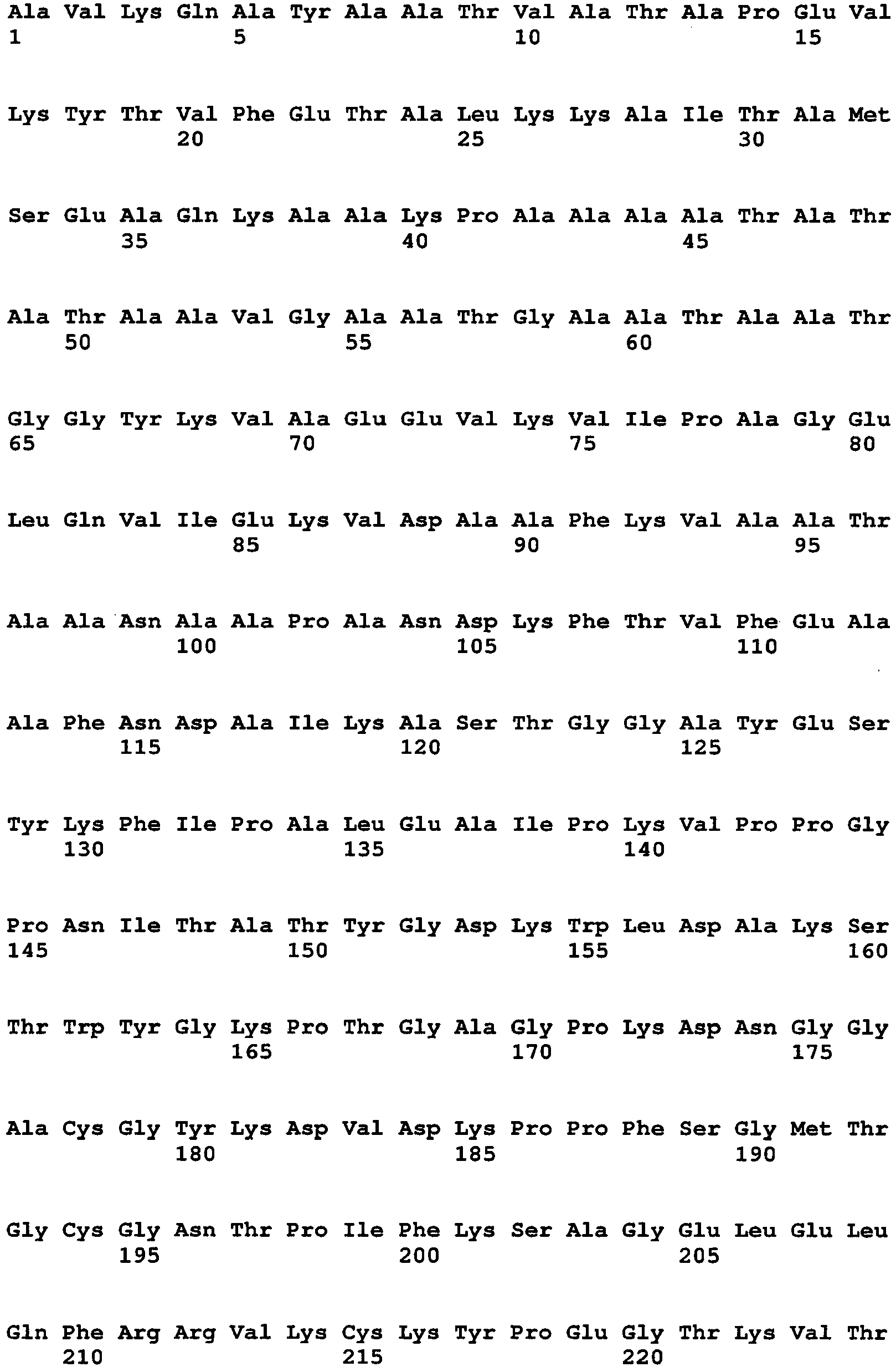
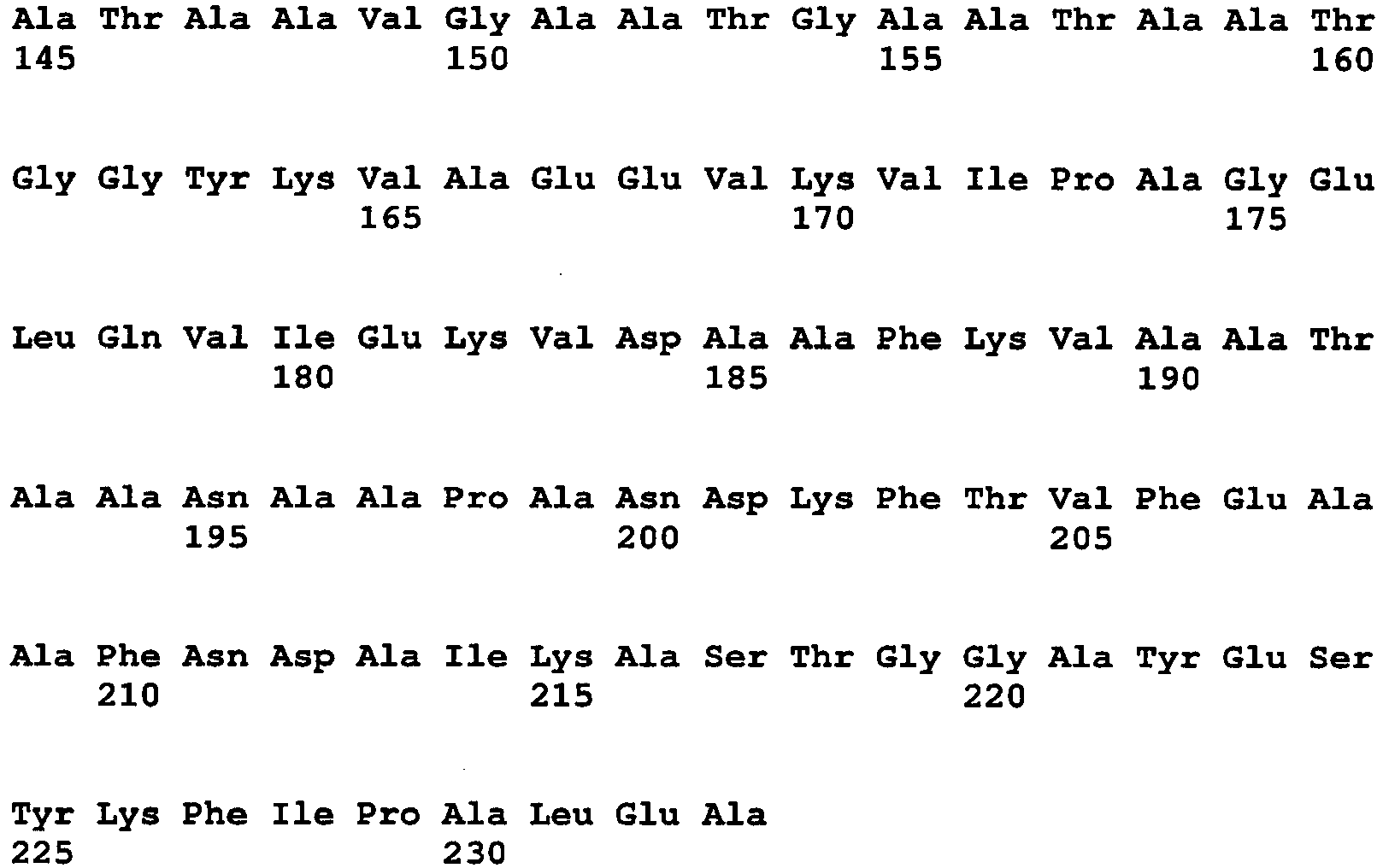
- the hypoallergenic polypeptide of the present invention comprises an amino acid sequence selected from the group consisting of SEQ ID NOs:22, 23, 24, 25, 36 and 37. These amino acid sequences are comprised in constructs B, C, D, E, P and Q, respectively (see Examples).
- the hypoallergenic polypeptide may consist of any one of the following structures (XV) to (XXI):
- the polypeptide may consist of an amino acid sequence selected from the group consisting of SEQ ID NOs:39, 40, 41, 42, 53 and 54.
- the constructs B, C, D, E, P and Q consist of these amino acid sequences, respectively (see Examples). These embodiments correspond to structure (VIII) or (XV) above.
- the invention further concerns a polynucleotide encoding the polypeptide of the present invention. Due to the degeneracy of the genetic code many different polynucleotide molecules may encode a single polypeptide.
- the polynucleotide of the invention preferably is an expression construct for obtaining the polypeptide after expression in host cells.
- the expression construct may further comprise components which are generally known in the art such as promoter sequences, genes encoding resistance factors against antibiotics, a replication origin and the like.
- the present disclosure also relates to a method for the preparation of the polypeptide of the invention.
- the method comprises providing a polynucleotide encoding the polypeptide, introducing said polynucleotide into a host cell, culturing the host cell thus obtained under conditions such that the hybrid polypeptide is expressed, in recovering the expression product from the cell.
- the polynucleotide may be prepared by methods known in the art. It may be preferred that PCR technology is used to prepare the polynucleotide encoding the polypeptide of the invention.
- the cDNA sequences of the grass pollen allergens Phl p 1, 2, 3, 4, 5, 6, 7, 11, 12, and 13 are shown in SEQ ID NO:11 to 20, respectively. Based on these sequences and on the disclosure in the present application, the skilled person can easily design suitable nucleic acids encoding polypeptides of the present disclosure.
- orthologous cells transformed with suitable vectors are used.
- One mode of application may be the subcutaneous injection of adjuvant-bound polypeptide.
- Another possibility is oral or nasal administration of the polypeptide in order to induce immunological tolerance or anergy against the components of the polypeptide.
- All the possible formulations can be prepared according to measures which are known to those of skill in the art (dosage adjuvants scheme of administration).
- the present disclosure further relates to the use of the polypeptide described herein or of a polypeptide or a cell described herein for the preparation of a medicament for prophylactic vaccination or tolerance induction.
- Prophylactic administration of hybrid polypeptides means the administration of the polypeptide to individuals, preferably children who do not yet suffer from Type 1 allergy in order to induce a state of immunological tolerance, anergy or non-responsiveness, or a protective immunity against the components of the hybrid vaccine. This may be achieved by the various protocols outlined for treatment of an established allergic disorder.
- the prophylactic treatment may be performed with the polypeptides or polynucleotides described herein above.
- the present disclosure relates to the use of a polypeptide described herein for the detection of antibodies against an allergenic protein in a sample.
- the antibody may be an IgM IgE, IgG or IgA antibody.
- the concentration of the antibody may be determined from a sample which has been obtained from a body fluid.
- the sample may be derived from animals or humans.
- Such tests may rely on a solid phase immobilized polypeptide or the polypeptide in the fluid phase. Examples for such tests include ELISA tests, Western blotting tests or any other tests where the polypeptide is immobilized to bind to specific antibodies out from the sample.
- the polypeptide is added directly to the antibody containing fluid in order to adsorb specific antibodies as, e.g., in competitive immunological assays.
- amino acid sequences SEQ ID NO:1-10 show the mature peptides lacking the signal peptide, where applicable.
- Example 1 Design, expression, and purification of the hybrid molecules
- hypoallergenic hybrid molecules seventeen different hybrid molecules were designed by the assembly of allergen fragments derived from the major timothy grass pollen allergens Phl p 1, Phl p 2, Phl p 5, and Phl p 6 as shown in Figure 1 .
- the amino acid sequences of the resulting proteins are listed in Table 1.
- P1M and P2M refer to previously designed allergen derivatives (References 15, 16). All sequences were codon-optimized for expression in Escherichia coli, a start-codon (ATG) was added at the 5' end and a 6xHistidine tag was added at the 3'end of each sequence, followed by a stop-codon.
- CD203c has previously been described as an activation marker on human basophils, which is upregulated upon allergen-induced cross-linking of receptor-bound IgE (20).
- the cells tolerated an at least 10 fold higher concentration of the hybrid molecules compared to the equimolar amount of the wildtype allergens (Patients 1-12).
- PBMC from grass pollen allergic patients respond to the hybrid molecules 20 ⁇ g/ml 10 ⁇ g/ml 5 ⁇ g/ml 2.5 ⁇ g/ml 1.25 ⁇ g/ml rPhlp1+rPhlp 5 2.5 ( ⁇ 1.5) 2.6 ( ⁇ 1.8) 2..0 ( ⁇ 1.1) 1.3 ( ⁇ 0.1) 1.6 ( ⁇ 0.7) B+C 1.7 ( ⁇ 1.1) 2.1 ( ⁇ 1.5) 2.2 ( ⁇ 1.4) 2.0 ( ⁇ 0.9) 1.4 ( ⁇ 0.3) P 2.0 ( ⁇ 1.5) 2.2 ( ⁇ 1.4) 2.0 ( ⁇ 0.6) 2.7 ( ⁇ 1.2) 2.5 ( ⁇ 1.2) rPhlp2+rPhlp6 1.6 ( ⁇ 0.9) 1.3 ( ⁇ 0.69) 1.5 ( ⁇ 0.6) 1.3 ( ⁇ 0.7) 1.5 ( ⁇ 0.4) O 1.4 ( ⁇ 1.0) 1.6 ( ⁇ 0.8) 2.0 ( ⁇ 0.5) 2.9 ( ⁇ 1.0) 2.8 ( ⁇ 0.7)
- Example 6 Immunization with the hybrid molecules B, C, P, and Q induced an IgG response directed against the wildtype allergens
- the hybrids B+C, as well as P and Q were able to induce a Phl p 1, Phl p 2, Phl p 5, and Phl p 6-specific IgG 1 antibody response, which were higher than the antibody response induced by the wildtype allergens themselves.
- Example 7 Immunization with the hybrid allergens B, C, P, and Q induced a protective-InG response blocking allergic patients' IgE binding to the wild-type allergens and grass pollen extract
- Example 8 Immunization with the hybrid molecules B,_ C, and P induced an IgG response directed against the wildtyp allergen Phl p 1
Landscapes
- Health & Medical Sciences (AREA)
- Life Sciences & Earth Sciences (AREA)
- Chemical & Material Sciences (AREA)
- Immunology (AREA)
- Engineering & Computer Science (AREA)
- General Health & Medical Sciences (AREA)
- Medicinal Chemistry (AREA)
- Molecular Biology (AREA)
- Biomedical Technology (AREA)
- Organic Chemistry (AREA)
- Biochemistry (AREA)
- Hematology (AREA)
- Urology & Nephrology (AREA)
- Microbiology (AREA)
- Cell Biology (AREA)
- Proteomics, Peptides & Aminoacids (AREA)
- Veterinary Medicine (AREA)
- Pharmacology & Pharmacy (AREA)
- Animal Behavior & Ethology (AREA)
- Public Health (AREA)
- Epidemiology (AREA)
- Mycology (AREA)
- Genetics & Genomics (AREA)
- Physics & Mathematics (AREA)
- Biophysics (AREA)
- Pathology (AREA)
- General Physics & Mathematics (AREA)
- Biotechnology (AREA)
- Analytical Chemistry (AREA)
- Botany (AREA)
- Food Science & Technology (AREA)
- Bioinformatics & Cheminformatics (AREA)
- Gastroenterology & Hepatology (AREA)
- Tropical Medicine & Parasitology (AREA)
- Toxicology (AREA)
- Chemical Kinetics & Catalysis (AREA)
- General Chemical & Material Sciences (AREA)
- Nuclear Medicine, Radiotherapy & Molecular Imaging (AREA)
- Pulmonology (AREA)
- Peptides Or Proteins (AREA)
Description
- More than 10% of the world population suffer from allergy to grass pollen. Here we describe the development of a vaccine based on recombinant hypoallergenic hybrid molecules which were constructed out of elements derived from the four major timothy grass pollen
allergens Phl p 1,Phl p 2,Phl p 5, andPhl p 6 for the treatment of grass pollen allergy. Codon-optimized synthetic genes encoding building blocks and combinations of the four allergens were designed according to epitope mapping studies and structural data and subsequently expressed in Escherichia coli. Seventeen recombinant hybrid molecules were purified by affinity chromatography and evaluated regarding expression, purity and fold, solubility, and reduced allergenic activity. Four hypoallergenic hybrid molecules consisting of reassembled elements of the four grass pollen allergens were identified which upon immunization in different animal models induced IgG antibodies blocking IgE recognition of the grass pollen allergens by allergic patients. These hypoallergenic hybrid molecules represent safe vaccines for immunotherapy of grass pollen allergy. - IgE-mediated allergies represent a worldwide health problem with increasing prevalence (1). The hallmark of allergic disease is the production of IgE antibodies specific for environmental allergens, mainly from pollen, mites, animal dander, and moulds (1). Allergic symptoms occur, when receptor-bound IgE on mast cells or basophils is cross-linked by multivalent allergen, leading to the release of inflammatory mediators (2). In addition, IgE-facilitated presentation via FcεRI and FcεRII on antigen presenting cells strongly enhances the activation of allergen-specific T cells contributing to T cell mediated allergic inflammation (3, 4). Allergen-specific immunotherapy currently represents the only causative treatment of allergies with a long-term effect, although its success is impaired by the use of crude allergen extracts (5, 6). These preparations contain allergenic and non-allergenic material in varying amounts, whereby the presence of biologically active compounds increases the risk of anaphylactic side effects. In addition, the lack or poor immunogenicity of clinically relevant allergens reduces the efficacy of extract-based vaccines (7). Substantial progress has been made in the field of allergen characterization during the last 20 years through the application of immunochemical and molecular biological techniques. Today, the most common and important allergens have been characterized regarding their structure and immunological properties. Recombinant allergens closely resembling the properties of the natural allergens have been produced and can now be used for the diagnosis and therapy of allergy (5). In addition it has been shown that allergen derivatives with beneficial immunological properties can be engineered (8). Modified variants of allergens with reduced allergenic activity have been generated, in order to avoid IgE-mediated side effects in the course of immunotherapy and recombinant Bet v 1-derived fragments with strongly reduced IgE-binding capacity have already been used in a clinical trial (9). Hybrid molecules consisting of combinations of different allergens have been shown to increase the immunogenicity of their single components (10-12).
- Linhart et al. (Ref. 21) prepared a hypoallergenic hybrid molecule with increased immunogenicity by combining hypoallergenic derivatives of the two major grass pollen
allergens Phl p 2 andPhl p 6, namely aPhl p 2 mosaic molecule and a deletion mutant ofPhl p 6, which was not surprising in light of previous data (Ref. 15, 17). -
EP 1219301 A1 discloses hybrid polypeptides consisting of at least two different allergenic proteins or fragments thereof. -
WO 2007/124526 A1 describes methods for producing derivatives of the wild type proteinallergen Phl p 1 with reduced allergenic activity, comprising fragmenting the wild type protein allergen and rejoining the fragments in a different order. -
EP 1440979 A1 discloses a process for the preparation of hypoallergenic mosaic proteins comprising fragmenting the allergen into fragments with no IgE reactivity and rejoining the fragments in a different order. - Schramm et al. (1999) The Journal of Immunology, 162, pages 2406-2414 describe the production of variants of the
allergen Phl p 5 with reduced IgE-binding capacity but conserved T cell reactivity. - Westritschnig et al. (2007) The Journal of Immunology, 179, pages 7624-7634 investigate a hypoallergenic vaccine obtained by tail-to-head restructuring of
Phl p 12 for the treatment of cross-sensitization to profilin. - The present inventors now have found that a combination of the hybrid technology and the mosaic technology does not in all cases lead to hypoallergenic molecules. Surprisingly, it has been observed that two fusion polypeptides which consisted of the same fragments but in a different order exhibited very different IgE reactivities. The present invention therefore provides a method for identifying polypeptides that have hypoallergenic properties and can serve as a potential vaccine.
- The present invention relates to a hypoallergenic polypeptide comprising an amino acid sequence selected from the group consisting of SEQ ID NOs:22, 23, 24, 25, 36 and 37.
- In one embodiment the hypoallergenic polypeptide consists of an amino acid sequence selected from the group consisting of SEQ ID NOs:39, 40, 41, 42, 53 and 54.
- Another aspect of the invention is a pharmaceutical composition comprising the polypeptide of the invention and a pharmaceutically acceptable diluent or excipient.
- Another aspect of the invention is the use of the polypeptide of the invention for the manufacture of a medicament for the prevention and/or treatment of allergy, preferably of grass pollen allergy.
- Another aspect of the invention is a nucleic acid encoding the polypeptide of the present invention.
-
-
Figure 1 depicts the design of hybrid molecules by the assembly of allergen fragments derived from the major timothy grass pollenallergens Phl p 1,Phl p 2,Phl p 5, and Phl p 6 (see Example 1). -
Figure 2 shows a Coomassie-stained PAA-Gel containing the purified hybrid proteins A-Q (see Example 1). Molecular weights are indicated on the left margin (m, molecular weight marker). -
Figure 3 shows far UV CD spectra of the proteins B, C, P, and Q dissolved in water were collected on a Jasco J-810 spectropolarimeter (Japan Spectroscopic Co., Tokyo, Japan), see Example 2. -
Figure 4 depicts IgE-reactivity to nitrocellulose bound hybrids and control proteins for three representative grass pollen allergic patients (see Example 3). -
Figure 5 depicts reduced allergenic reactivity of hybrids in comparison to the wild-type allergens as detected by CD203c expression (see Example 4). -
Figure 6 depicts IgG reactivity after immunization of mice with a mixture of Phl p1 andPhl p 5, or a mixture ofPhl p 2 andPhl p 6, or a mixture of B and C, or P, or Q. The development of Phl p1-, Phl p 2-, Phl p 5-, and Phl p 6-specific IgG1 antibody levels was compared by ELISA measurements (see Example 6). -
Figure 7 shows results from Example 7. The figure depicts IgG reactivity after immunization of rabbits with B, C, P, or Q, namely IgG antibody responses to the wild-type allergens Phl p 1 (Figure 7A ), Phl p 5 (Figure 7B ),Phl p 2, and Phl p 6 (Figure 7C ). -
Figure 8 depicts IgG reactivity after immunization of rabbits with B, C, P, or GPH (a grass pollen allergen-derived hybrid described in Ref. 11) namely IgG antibody responses to the wildtype allergen Phl p 1 (see Example 8). - The method of the present disclosure is a method for identifying hypoallergenic polypeptides. Alternatively, the method of the present disclosure is a screening method to identifiy hypoallergenic polypeptides. The term "hypoallergenic" as used herein, means the reduction of IgE reactivity and ability to induce IgE-mediated mast cell or basophil degranulation.
- In its first step, the method of the present disclosure comprises providing a group of polypeptides, wherein each polypeptide within said group independently comprises N fragments derived from at least two different allergens.
- The group of polypeptides consists of at least two different polypeptides. Preferably, the group of polypeptides consists of 2 to 100, preferably of 3 to 75, more preferably of 4 to 50, most preferably of 5 to 30 different polypeptides.
- Each polypeptide independently comprises or consists of N fragments derived from at least two different allergens. N is an integer greater than 3, preferably N is 4 to 25, more preferably 4 to 20, still more preferably 4 to 15, most preferably 4 to 10 (e.g. 4, 5, 6, 7, 8, 9 or 10). The polypeptides within the group may comprise or consist of the same or a different number of fragments. That is, N may be the same or different for the respective polypeptides within the group. Preferably, all fragments within a given polypeptide are different from each other.
- Each fragment consists of at least 8, preferably of 8 to 100, more preferably of 10 to 90, still more preferably of 12 to 80, more preferably of 15 to 70, more preferably of 20 to 60 consecutive amino acids from an allergen amino acid sequence.
- The polypeptide prepared in accordance with this invention does not necessarily consist only of amino acid sequences derived from the allergens. It is possible that non-native sequences (e.g. spacer sequences) are inserted between the fragments (which fragments are consecutive amino acid sequences from different allergens). It is also possible that the polypeptides comprise a tag sequence which facilitates the purification of the polypeptide upon expression in a host cell. An example of such a tag sequence is a hexahistidine tag which allows purification by Ni2+ chelate chromatography. Other tags are known to those of skill in the art. Furthermore, the polypeptide may contain a foreign methionine residue at
amino acid position 1 which results from expression in host cells. The methionine will often be present if the N-terminal portion of the polypeptide is an internal or C-terminal allergen fragment - In one embodiment of the present disclosure, the polypeptide may consist of any one of the following structures (I) to (VII):
- (I) Met-F1-F2- ... -FN-tag,
- (II) Met-F1-F2- ... -FN,
- (III) F1-F2- ... -FN-tag,
- (IV) Met-tag-F1-F2- ... -FN,
- (V) tag-F1-F2- ... -FN,
- (VI) tag-F1-F2- ... -FN-tag,
- (VII) F1-F2- ... -FN
- The polypeptide in accordance with this invention may be prepared by various methods. In one embodiment the polypeptide is prepared by expressing a polynucleotide in a host cell. The host cell may be a prokaryotic or eukaryotic cell. If prokaryotic cells are used the host cell is preferably E. coli. Examples of eukaryotic cells include yeast, insect cells or cell lines such as CHO cells. After introducing a suitable polynucleotide encoding the polypeptide of the invention into a host cell the host cell is cultured under conditions such that the polypeptide is expressed in the cell. The polypeptide may be secreted by the cell or accumulate inside the cell. Known purification techniques can be used to recover the polypeptide from the cell or from the culture medium.
- In another embodiment the polypeptide is prepared by chemical synthesis, e.g. by solid phase synthesis according to techniques that are known per se.
- The term "allergen" as used herein denotes a substance capable of eliciting a type I-hypersensitivity reaction in atopic individuals. Most humans mount significant Immunoglobulin E (IgE) responses only as a defense against parasitic infections. However, some individuals mount an IgE response against common environmental antigens. This hereditary predisposition is called atopy. In atopic individuals, non-parasitic antigens stimulate inappropriate IgE production, leading to type I hypersensitivity.
- Allergens in the sense of the present disclosure include allergens from plants and animals (Allergome database: www.allergome.org). The allergens are usually wildtype allergens. The allergens may be allergens from one or more of the following species: Acarus siro, Blomia tropicalis, Dermatophagoides farinae, Dermafophagoides microceras, Dermatophagoides pteronyssinus, Euroglyphus maynei, Glycyphagus domesticus, Lepidoglyphus destructor, Tyrophagus putrescentiae, Blattella germanica, Periplaneta americana, Harmonia axyridis, Archaeopotamobius sibiriensis, Artemia franciscana, Charybdis feriatus, Crangon crangon, Homarus americanus, Litopenaeus vannamei, Metapenaeus ensis, Panulirus stimpsoni, Penaeus aztecus, Penaeus indicus, Penaeus monodon, Pontastacus leptodactylus, Aedes aegypti, Chironomus kiiensis, Chironomus thummi thummi, Forcipomyia taiwana, Triatoma protracta, Apis cerana, Apis dorsata, Apis mellifera, Bombus pennsylvanicus, Bombus terrestris, Dolichovespula arenaria, Dolichovespula maculata, Myrmecia pilosula, Polistes annularis, Polistes dominulus, Polistes exclamans, Polistes fuscatus, Polistes gallicus, Polistes metricus, Polybia paulista, Polybia scutellaris, Solenopsis geminata, Solenopsis invicta, Solenopsis richteri, Solenopsis saevissima, Vespa crabro, Vespa mandarinia, Vespula flavopilosa, Vespula germanica, Vespula maculifrons, Vespula pensylvanica, Vespula squamosa, Vespula vidua, Vespula vulgaris, Argas reflexus, Thaumetopoea pityocampa, Ctenocephalides felis felis, Lepisma saccharina, Rana esculenta, Canis familiaris, Felis domesticus, Bos domesticus, Sardinops sagax, Gadus callarias, Gallus domesticus, Oryctolagus cuniculus, Xiphias gladius, Equus caballus, Lepidorhombus whiffiagonis, Cavia porcellus, Mus musculus, Rattus norvegius, Salmo salar, Dendronephthya nipponica, Todarodes pacificus, Helix aspersa, Haliotis midae, Anisakis simplex, Ascaris suum, Alternaria alternata, Cladosporium cladosporioides, Cladosporium herbarum, Curvularia lunata, Aspergillus flavus, Aspergillus fumigatus, Aspergillus niger, Aspergillus oryzae, Penicillium brevicompactum, Penicillium chrysogenum, Penicillium citrinum, Penicillium oxalicum, Fusarium culmorum, Trichophyton rubrum, Trichophyton tonsurans, Candida albicans, Candida boidinii, Epicoccum purpurascens, Coprinus comatus, Psilocybe cubensis, Rhodotorula mucilaginosa, Malassezia furfur, Malassezia sympodialis, Chamaecyparis obtusa, Cryptomeria japonica, Cupressus arizonica, Cupressus sempervirens, Juniperus ashei, Juniperus oxycedrus, Juniperus sabinoides, Juniperus virginiana, Phoenix dactylifera, Asparagus officinalis, Crocus sativus, Ananas comosus, Anthoxanthum odoratum, Cynodon dactylon, Dactylis glomerata, Festuca pratensis, Holcus lanatus, Hordeum vulgare, Lolium perenne, Oryza sativa, Paspalum notatum, Phalaris aquatica, Phleum pratense, Poa pratensis, Secale cereale, Sorghum halepense, Triticum aestivum, Zea mays, Musa acuminata, Apium graveolens, Daucus carota, Ambrosia artemisiifolia, Ambrosia psilostachya, Ambrosia trifida, Artemisia vulgaris, Helianthus annuus, Lactuca sativa, Brassica juncea, Brassica napus, Brassica oleracea, Brassica rapa, Sinapis alba, Beta vulgaris, Chenopodium album, Salsola kali, Cucumis melo, Actinidia chinensis, Actinidia deliciosa, Bertholletia excelsa, Arachis hypogaea, Glycine max, Lens culinaris, Lupinus angustifolius, Pisum sativum, Phaseolus vulgaris, Vigna radiata, Alnus glutinosa, Betula verrucosa, Carpinus betulus, Castanea sativa, Corylus avellana, Juglans nigra, Juglans regia, Quercus alba, Catharanthus roseus, Fraxinus excelsior, Ligustrum vulgare, Olea europea, Plantago lanceolata, Sesamum indicum, Syringa vulgaris, Persea americana, Hevea brasiliensis, Mercurialis annua, Ricinus communis, Platanus acerifolia, Platanus orientalis, Fragaria ananassa, Humulus japonicus, Malus domestica, Morus nigra, Parietaria judaica, Parietaria officinalis, Prunus armeniaca, Prunus avium, Prunus domestica, Prunus dulcis, Prunus persica, Pyrus communis, Rubus idaeus, Ziziphus mauritiana, Vitis vinifera, Anacardium occidentale, Citrus limon, Citrus reticulata, Citrus sinensis, Litchi chinensis, Pistacia vera, Capsicum annuum, Lycopersicon esculentum, Solanum tuberosum.
- Preferably, one or more allergens of the present disclosure are allergens from the species Phleum pratense, Betula verrucosa, Dermatophagoides pteronyssinus. Most preferably, one or more allergens are allergens from the species Phleum pratense.
- In a preferred embodiment of the method of the present disclosure, all allergens from which the fragments are derived are from a single species from the list recited above. That is, the different 'source allergens' are all derived from the same species.
- A preferred group of allergens in accordance with this disclosure are grass pollen allergens, for example allergens from the species Phleum pratensae. Preferably, the allergens are selected from the group consisting of
Phl p 1,Phl p 2,Phl p 3,Phl p 4,Phl p 5,Phl p 6,Phl p 7,Phl p 11,Phl p 12 and Phl p 13. The allergens of the present invention are selected from the group consisting ofPhl p 1,Phl p 2,Phl p 5 andPhl p 6. - The fragments are derived from at least two different allergens, preferably from 2 to 10 different allergens, more preferably from 2 to 5 different allergens, e.g. from 2, 3, 4 or 5 different allergens.
- In a special embodiment the group of polypeptides comprises at least 2 polypeptides which consist of the same fragments but wherein the fragments are assembled in a different order.
- In a further step the method of the present disclosure comprises determining the IgE reactivity of the polypeptides. In a broad sense, the phrase "IgE reactivity" denotes the capability of a substance to bind to IgE antibodies. More specifically, as used herein, the phrase "IgE reactivity" refers to the capability of the polypeptide to bind to IgE antibodies from individuals that are allergic against one or more of the allergens from which the fragments within the polypeptide are derived.
- IgE reactivity may be measured by determining the degree of binding between (1) serum IgE from individuals that are allergic against one or more of the allergens from which the fragments are derived and (2) the polypeptide. This may be done by the method described in reference (18) or (19).
- Alternatively, IgE reactivity and allergenic activity may be determined by analysing the expression of CD203c on human basophils that were isolated from individuals allergic to one or more of said allergens. See example 4 and reference (20).
- In a further step the method of the present disclosure comprises determining the T cell reactivity of the polypeptides. The phrase "T cell reactivity" as used herein refers to the capability of a substance to specifically bind to T cell receptors. More specifically, "T cell reactivity" means the capability of the polypeptide to induce proliferation of T cells.
- The T cell reactivity of the polypeptides can be measured by (1) providing peripheral blood mononuclear cells (PBMCs) isolated from individuals allergic against one or more of the allergens from which the fragments are derived, and (2) determining the degree of proliferation of T cells contained in said PBMCs. See example 5 and reference (16).
- In a further step the method of the present disclosure comprises determining the capability of the polypeptides to induce an IgG response against one or more of the allergens from which the fragments are derived. This may be done by (1) immunizing a non-human mammal (e.g. a mouse, rat or rabbit) with the polypeptide, and (2) determining the amount of IgG antibodies raised in said non-human mammal, which are specific to said one or more allergen(s) from which the fragments are derived. The IgG antibodies measured are preferably IgG1 antibodies. Preferably, step (2) is performed using an ELISA assay. See example 6.
- The method further comprises determining to which extent the polypeptides are capable of inducing a protective IgG response. This may be done by (1) providing a composition containing IgG antibodies by immunizing a non-human mammal (e.g. a mouse, rat or rabbit) with the polypeptide; (2) providing a composition containing IgE antibodies from individuals that are allergic against one or more of said allergens from which the fragments of the polypeptide are derived, and (3) measuring whether and/or to which extent said composition containing IgG antibodies can block the binding of said IgE antibodies to one or more of said allergens.
- This test is preferably performed using an ELISA assay. For example, the wild type allergens from which the fragments are derived may be immobilized on an ELISA plate. The thus pre-treated ELISA plate may then be contacted with said composition containing the IgG antibodies to allow binding of IgG antibodies to said immobilized allergens. After washing the composition containing said IgE antibodies is contacted with the ELISA plate. After washing the amount of IgE antibodies are determined. See Example 7.
- The method of the present disclosure comprises the final step of selecting those polypeptides which exhibit favourable properties and are thus useful for the potential use as a vaccine. To be selected a polypeptide must have the following properties:
- (i) lower IgE reactivity than one or more of the allergens from which the fragments of the polypeptide are derived;
- (ii) T cell reactivity
- (iii) capability to induce an IgG response directed against the allergens from which the fragments of the polypeptide are derived; and
- (iv) capability to induce a protective IgG response blocking allergic patients' IgE binding to said allergens from which the fragments of the polypeptide are derived.
- Regarding item (i) above, the polypeptide is selected if its IgE reactivity is less than that of at least one allergen from which it is derived. Preferably, the polypeptide is selected only if its IgE reactivity is less than that of each allergen from which it is derived. For example, if the polypeptide consists of fragments derived from
Phl p 2 andPhl p 5, the polypeptide must have a lower IgE reactivity thanPhl p 2, and it must have a lower IgE reactivity thanPhl p 5 to be selected. - To be selected the IgE reactivity and allergenic activity are preferably reduced by at least 25%, more preferably by at least 50%, most preferably by at least 90 %, determined by quantitative IgE measurements as described in Ref. 16, and as described in Example 4.
- Regarding requirement (ii), the polypeptide is selected only if it can elicit allergen-specific T cell activation (Example 5).
- Regarding condition (iii), the polypeptide is selected only if it can induce an allergen-specific IgG response upon immunization (see, e.g. Example 6).
- Regarding condition (iv), the polypeptide is selected only if the IgG antibodies induced by immunization can inhibit allergic patients' IgE binding to the wildtype allergen (see, e.g., Example 7).
- In a further aspect the present disclosure relates to a hypoallergenic polypeptide identified and produced in accordance with this disclosure.
- The hypoallergenic polypeptide may comprise or consist of at least four fragments derived from at least two different allergens, wherein the amino acid sequence of any pair of two adjacent fragments within the polypeptide is not present as a consecutive amino acid sequence in said allergens, characterized in that at least one fragment is derived from
Phl p 1 orPhl p 5. The number of fragments may be N, wherein N has the meaning as defined above. - In another embodiment, the hypoallergenic polypeptide of the present disclosure may comprise or consist of at least four fragments derived from at least two different allergens, wherein the amino acid sequence of any pair of two adjacent fragments within the fusion polypeptide is not present as a consecutive amino acid sequence in said allergens, characterized in that each of said fragments consists of an amino acid sequence selected from the group consisting of SEQ ID NOs: 55 through 76. These amino acid sequences are comprised in the fragments used in the examples of the present application. The number of fragments may be N, wherein N has the meaning as defined above. Preferably, The hypoallergenic polypeptide may consist of any one of the following structures (VIII) to (XIV):
- (VIII) Met-F1-F2- ... -FN-tag,
- (IX) Met-F1-F2- ... -FN,
- (X) F1-F2- ... -FN-tag,
- (XI) Met-tag-F1-F2- ... -FN,
- (XII) tag-F1-F2- ... -FN,
- (XIII) tag-F1-F2- ... -FN-tag,
- (XIV) F1-F2- ... -FN
- The hypoallergenic polypeptide of the present invention comprises an amino acid sequence selected from the group consisting of SEQ ID NOs:22, 23, 24, 25, 36 and 37. These amino acid sequences are comprised in constructs B, C, D, E, P and Q, respectively (see Examples). The hypoallergenic polypeptide may consist of any one of the following structures (XV) to (XXI):
- (XV) Met-SEQ-tag,
- (XVI) Met-SEQ,
- (XVII) SEQ-tag,
- (XVIII) Met-tag-SEQ,
- (XIX) tag-SEQ,
- (XX) tag-SEQ-tag,
- (XXI) SEQ
- The polypeptide may consist of an amino acid sequence selected from the group consisting of SEQ ID NOs:39, 40, 41, 42, 53 and 54. The constructs B, C, D, E, P and Q consist of these amino acid sequences, respectively (see Examples). These embodiments correspond to structure (VIII) or (XV) above.
- All embodiments described above in connection with the method of the present disclosure are applicable to the hypoallergenic polypeptide of the invention and vice versa.
- The invention further concerns a polynucleotide encoding the polypeptide of the present invention. Due to the degeneracy of the genetic code many different polynucleotide molecules may encode a single polypeptide. The polynucleotide of the invention preferably is an expression construct for obtaining the polypeptide after expression in host cells. The expression construct may further comprise components which are generally known in the art such as promoter sequences, genes encoding resistance factors against antibiotics, a replication origin and the like.
- The present disclosure further concerns a cell transfected or transformed with a polynucleotide of the present invention. Suitable cells include eukaryotic cells and prokaryotic cells. Eukaryotic cells may be transfected by methods known in the art such as calcium phosphate mediated transfection, electroporation, lipofection etc.
- The invention further relates to a pharmaceutical composition containing the polypeptide according to this invention. The pharmaceutical composition may further contain one or more pharmaceutically acceptable carrier(s) or diluents(s) such as a buffer or salt solution. Preferably the pharmaceutical composition of the invention is a vaccine composition. In a particular embodiment the pharmaceutical composition further contains an adjuvant such as aluminium hydroxide.
- The present disclosure also relates to a method for the preparation of the polypeptide of the invention. The method comprises providing a polynucleotide encoding the polypeptide, introducing said polynucleotide into a host cell, culturing the host cell thus obtained under conditions such that the hybrid polypeptide is expressed, in recovering the expression product from the cell. The polynucleotide may be prepared by methods known in the art. It may be preferred that PCR technology is used to prepare the polynucleotide encoding the polypeptide of the invention. The cDNA sequences of the grass pollen
allergens Phl p - The invention further relates to the use of the polypeptide described herein for the preparation of a medicament for the treatment and/or prevention of an allergic disorder. Such a medicament may be composed of the polynucleotide encoding a vaccine which can be used directly for the DNA-based vaccination against
Type 1 allergy. The recombinant or synthetic polypeptide may be used to prepare formulations for the oral, sublingual or parenteral treatment ofType 1 allergic disorders as they are now routinely used for immunotherapy. Examples of formulations for sublingual immunotherapy or adjuvant bound hybrid polypeptide for injection immunotherapy. Possible applications include also cell-based forms of immunotherapy which may be based on e.g. dendritic cells or other antigen presenting cells. Those cells are transformed and expressed to antigen in vivo. Preferably orthologous cells transformed with suitable vectors are used. One mode of application may be the subcutaneous injection of adjuvant-bound polypeptide. Another possibility is oral or nasal administration of the polypeptide in order to induce immunological tolerance or anergy against the components of the polypeptide. All the possible formulations can be prepared according to measures which are known to those of skill in the art (dosage adjuvants scheme of administration). - The present disclosure further relates to the use of the polypeptide described herein or of a polypeptide or a cell described herein for the preparation of a medicament for prophylactic vaccination or tolerance induction. Prophylactic administration of hybrid polypeptides means the administration of the polypeptide to individuals, preferably children who do not yet suffer from
Type 1 allergy in order to induce a state of immunological tolerance, anergy or non-responsiveness, or a protective immunity against the components of the hybrid vaccine. This may be achieved by the various protocols outlined for treatment of an established allergic disorder. The prophylactic treatment may be performed with the polypeptides or polynucleotides described herein above. - In a further embodiment the present disclosure relates to the use of a polypeptide described herein for the detection of antibodies against an allergenic protein in a sample. The antibody may be an IgM IgE, IgG or IgA antibody. The concentration of the antibody may be determined from a sample which has been obtained from a body fluid. The sample may be derived from animals or humans. Such tests may rely on a solid phase immobilized polypeptide or the polypeptide in the fluid phase. Examples for such tests include ELISA tests, Western blotting tests or any other tests where the polypeptide is immobilized to bind to specific antibodies out from the sample. Alternatively the polypeptide is added directly to the antibody containing fluid in order to adsorb specific antibodies as, e.g., in competitive immunological assays.
- The polypeptide of the invention may also be used for cellular tests such as a T cell proliferation test, etc.
- Summary of the amino acid and nucleotide sequences shown in the sequence listing:
SEQ ID NO: sequence / construct 1 Phl p 1 amino acid sequence 2 Phl p 2 amino acid sequence 3 Phl p 3 amino acid sequence 4 Phl p 4 amino acid sequence 5 Phl p 5 amino acid sequence 6 Phl p 6 amino acid sequence 7 Phl p 7 amino acid sequence 8 Phl p 11 amino acid sequence 9 Phl p 12 amino acid sequence 10 Phl p 13 amino acid sequence 11 Phl p 1 cDNA 12 Phl p 2 cDNA 13 Phl p 3 cDNA 14 Phl p 4 cDNA 15 Phl p 5 cDNA 16 Phl p 6 cDNA 17 Phl p 7 cDNA 18 Phl p 11 cDNA 19 Phl p 12 cDNA 20 Phl p 13 cDNA 21 construct A without N-terminal Met and C-terminal (His)6 22 construct B without N-terminal Met and C-terminal (His)6 23 construct C without N-terminal Met and C-terminal (His)6 24 construct D without N-terminal Met and C-terminal (His)6 25 construct E without N-terminal Met and C-terminal (His)6 26 construct F without N-terminal Met and C-terminal (His)6 27 construct G without N-terminal Met and C-terminal (His)6 28 construct H without N-terminal Met and C-terminal (His)6 29 construct I without N-terminal Met and C-terminal (His)6 30 construct J without N-terminal Met and C-terminal (His)6 31 construct K without N-terminal Met and C-terminal (His)6 32 construct L without N-terminal Met and C-terminal (His)6 33 construct M without N-terminal Met and C-terminal (His)6 34 construct N without N-terminal Met and C-terminal (His)6 35 construct O without N-terminal Met and C-terminal (His)6 36 construct P without N-terminal Met and C-terminal (His)6 37 construct Q without N-terminal Met and C-terminal (His)6 38 construct A with N-terminal Met and C-terminal (His)6 39 construct B with N-terminal Met and C-terminal (His)6 40 construct C with N-terminal Met and C-terminal (His)6 41 construct D with N-terminal Met and C-terminal (His)6 42 construct E with N-terminal Met and C-terminal (His)6 43 construct F with N-terminal Met and C-terminal (His)6 44 construct G with N-terminal Met and C-terminal (His)6 45 construct H with N-terminal Met and C-terminal (His)6 46 construct I with N-terminal Met and C-terminal (His)6 47 construct J with N-terminal Met and C-terminal (His)6 48 construct K with N-terminal Met and C-terminal (His)6 49 construct L with N-terminal Met and C-terminal (His)6 50 construct M with N-terminal Met and C-terminal (His)6 51 construct N with N-terminal Met and C-terminal (His)6 52 construct O with N-terminal Met and C-terminal (His)6 53 construct P with N-terminal Met and C-terminal (His)6 54 construct Q with N-terminal Met and C-terminal (His)6 55 P1a 56 P1b 57 P1c 58 P1d 59 P1a1 60 P1a2 61 P1c1 62 P1c2 63 P2A 64 P2B 65 P2a 66 P2b 67 P2c 68 P2a1 69 P2b2 70 P5a 71 P5b 72 P5c 73 P5d 74 P5c1 75 P5c2 76 P6b - The amino acid sequences SEQ ID NO:1-10 show the mature peptides lacking the signal peptide, where applicable.
- The following examples further illustrate the invention.
- In this study we demonstrate that these approaches can be combined and extended for a complex allergen source like grass pollen. We constructed a vaccine based on the four major allergens from timothy grass (
Phl p 1,Phl p 2,Phl p 5, Phl p 6) for the treatment of grass pollen allergy (13, 14). Referring to structural data and epitope mapping studies the allergens were split into fragments with reduced allergenic activity. We describe the production of different combinations of these fragments as hybrid proteins, their biochemical and immunological properties and how four hybrid proteins were selected as candidate molecules for vaccination against grass pollen allergy. - For construction of hypoallergenic hybrid molecules seventeen different hybrid molecules were designed by the assembly of allergen fragments derived from the major timothy grass pollen
allergens Phl p 1,Phl p 2,Phl p 5, andPhl p 6 as shown inFigure 1 . The amino acid sequences of the resulting proteins (designated A-Q) are listed in Table 1. P1M and P2M refer to previously designed allergen derivatives (References 15, 16). All sequences were codon-optimized for expression in Escherichia coli, a start-codon (ATG) was added at the 5' end and a 6xHistidine tag was added at the 3'end of each sequence, followed by a stop-codon. The resulting genes encoding the hybrid molecules A-Q were cloned into the expression vector pET17b (Novagen) and expressed in liquid culture in Eschericha coli BL21 (DE3) cells (Stratagene). All proteins were purified by affinity chromatography using a standard protocol (Qiagen). The purity of the expressed hybrid molecules was analyzed by SDS-PAGE. (Figure 2 )Table I. Amino acid sequences of Phl p 1-, Phl p 2-, Phl p 5-, and Phl p 6-derived fragments. Phl p 1-derived fragments Pla IPKVPPGPNTTATYGDKLDAKSTWYGKPTGAGPKDNGGACGYKDVDKPPFSGMTGCGNTPIFK Plb SGRGCGSCFEIKCTKPEACSGEPVVVHITDDNEEPIAPYHFDLSGHAFGAMAKKGDEQKLR Plc SAGELELQFRRVKCKYPEGTKVIFHVEKGSNPNYLALLVKYVNGDGDVVANDIKEKGKDKWIELKESWGAIWRIDTPDKL Pld TGPFTVRYTTEGGTKTEAEDVIPEGWKADTSYESK Pla1 IPKPPGPNTTATYGDKWLDAKSTWYGKPTGA Pla2 GPKDNGGACGYKDVDKPPFSGMTGCGNTPIFK Plc1 SAGELELQFRRVKCKYPEGTKVTFHVEKGSNPNYLLALLV Plc2 KYVNGDGDVVAVDIKEKGKDKWIELKESWGAIWRIDTPDKL Phl p 5-derived fragments P5a ADLGYGPATPAAPAAGYTPATPAAPAEAAPAGKATTEEQKLIEKINAGFKAALAAAAGVQPADKYRTFVATF P5b GAASNKAFAEGLSGEPKGAAESSSKAALTSKLDAAYKLAYKTAEGATPEAKYDAYVATLSEALRHAGTLEVHAVKPA P5c ADDVKVIPAGELQVIEKVDAAFKVAATAANAAPANDKFTVFEAAFNDAIKASTGGAYESYKFIPALEA P5d AVKQAYAATVATAPEVKYTVFETALKKAITAMSEAQKAAKPAAAATATATAAVGAATGAATAATGGYKV P5c1 AEEVKVIPAGELQVIEKVDAAFKVAATAANAAPA P5c2 NDKFTVFEAAFNDAIKASTGGAYESYKFIPALEA Phl p 2-derived fragments P2A VPKVTFTVEKGSNEKHLAVLVKYEGDTMAEVELREHGSDEWVAMTKGEG P2B GVWTFDSEEPLQGPFNFRFLTEKGMKNVFDDVVPDKYTIGATYAPEE P2a VPKVTFTVEKGSNEKHLAVLVKYEGDTMAEVEL P2b REHGSDEWVAMTKGEGGVWTFDSEEPLQGPFN P2c FRFLTEKGMKNVFDDVVPEKYTIGATYAPEE P2a1 VPKVTFTVEKGSNEKHLAVLVKYTEGDTMAEVELREHGS P2b2 DEWVAMTKGEGGVTTFDSEEPlQGPFN Phl p 6-derived fragment P6b ADKYKTFEAAFTVSSKRNLADAVSKAPQLVPKLDEVYNAAYNAADHAAPEDKYEAFVLHFSEALRILAGTPEVHAVKPGA - To evaluate the secondary structure of hybrid molecules far UV CD spectra of the proteins B, C, P, and Q dissolved in water were collected on a Jasco J-810 spectropolarimeter (Japan Spectroscopic Co., Tokyo, Japan) as described (16). All hybrid proteins, which were analyzed regarding their secondary structure, exhibited a random coiled structure, which has been observed previously for several other allergen derivatives (18, 19).
- To analyze the IgE reactivity of hybrid molecules the direct binding of serum IgE from grass pollen allergic patients to the
Phl p 1,Phl p 2, Phl p 5-, and Phl p 6-derived hybrid molecules A-Q, orrPhl p 1,rPhl p 2,rPhl p 5, andrPhl p 6, or HSA as negative control, was investigated by non-denaturing dot blot experiments as described (18, 19). Patients' IgE antibodies bound to the recombinant 'wild type'allergens Phl p 1,Phl p 2,Phl p 5, andPhl p 6, but not to the control protein HSA. Unexpectedly, we observed different IgE-reactivities of allergic patients' IgE to the hybrid molecules A-Q, which could not be explained by the primary structure (e.g. hybrids A and C, and hybrids E and F contain exactly the same allergen-derived fragments). - Four hybrid molecules, B,C,P, and Q were selected for further analysis. To determine the IgE-reactivity of the hybrids B, C, P, and Q on IgE-dependent effector cell activation CD203c expression on human basophils isolated from grass pollen allergic patients was analyzed. CD203c has previously been described as an activation marker on human basophils, which is upregulated upon allergen-induced cross-linking of receptor-bound IgE (20). As shown in
Figure 5 , the cells tolerated an at least 10 fold higher concentration of the hybrid molecules compared to the equimolar amount of the wildtype allergens (Patients 1-12). These data suggest a strongly reduced allergenic activity of the four hybrid molecules B, C, P, and Q. - To evaluate the T cell reactivity of hybrid molecules in vitro proliferation experiments with PBMC isolated from four grass pollen allergic patients were performed as described (16). Although the allergenic activity of the hybrid molecules was reduced, most of the T cell epitopes of the
wildtype Phl p 1,Phl p 2,Phl p 5, andPhl p 6 allergens were preserved. (TableII).Table. II. PBMC from grass pollen allergic patients respond to the hybrid molecules 20µg/ml 10µg/ml 5µg/ml 2.5µg/ml 1.25µg/ml rPhlp1+ rPhlp 52.5 (±1.5) 2.6 (±1.8) 2..0 (±1.1) 1.3 (±0.1) 1.6 (±0.7) B+C 1.7 (±1.1) 2.1 (±1.5) 2.2 (±1.4) 2.0 (±0.9) 1.4 (±0.3) P 2.0 (±1.5) 2.2 (±1.4) 2.0 (±0.6) 2.7 (±1.2) 2.5 (±1.2) rPhlp2+rPhlp6 1.6 (±0.9) 1.3 (±0.69) 1.5 (±0.6) 1.3 (±0.7) 1.5 (±0.4) O 1.4 (±1.0) 1.6 (±0.8) 2.0 (±0.5) 2.9 (±1.0) 2.8 (±0.7) - To investigate whether IgG antibodies induced by immunization with B, C, P, or Q were able to recognize the
rPhl p 1,rPhl p 2,rPhl p 5, andrPhl p 6 wildtype allergens two different animal models (BALB/c mice, rabbits) were used. We immunized BALB/c mice with a mixture of Phl p1 andPhl p 5, or a mixture ofPhl p 2 andPhl p 6, or a mixture of B and C, or P, or Q, and compared the development of Phl p1-, Phl p 2-, Phl p 5-, and Phl p 6-specific IgG1 antibody levels by ELISA measurements (Figure 6 ). The hybrids B+C, as well as P and Q were able to induce aPhl p 1,Phl p 2,Phl p 5, and Phl p 6-specific IgG1 antibody response, which were higher than the antibody response induced by the wildtype allergens themselves. - The development of allergen-specific IgG antibody responses was also investigated by immunization of rabbits with B, C, P, or Q. Serial dilutions of rabbit antisera were tested for Phl p 1- Phl p 2- Phl p 5- and Phl p 6-specific IgG antibodies by ELISA. The constructs B, C, P, and Q were able to induce an IgG antibody response to the wildtype allergens Phl p 1 (
Figure 7A ), Phl p 5 (Figure 7B ),Phl p 2, and Phl p 6 (Figure 7C ). - To examine the ability of IgG antibodies induced with the hybrid molecules B, C, P, and Q to inhibit grass pollen allergic patients' IgE binding to
rPhl p 1,Phl p 2,Phl p 5, andrPhl p 6, or to a natural grass pollen extract. In ELISA inhibition experiments we therefore preincubated an ELISA plate-bound natural grass pollen extract with a mixture of rabbit anti-P and Q antiserum, or a mixture of anti-B, C, and Q antiserum, or a rabbit antiserum obtained by immunization with a previously described grass pollen hybrid (GPH) (11) consisting ofPhl p 1,Phl p 2,Phl p 5, andPhl p 6 or the corresponding preimmunesera. These rabbit IgG antibodies could inhibit IgE binding of 14 grass pollen allergic patients to the grass pollen extract as follows: P+Q: 73%; B+C+Q: 78%; GPH: 75% (Table III). Similar experiments were performed with ELISA plate-boundrPhl p 1,rPhl p 2,rPhl p 5, andPhl p 6, leading to an average inhibition of 81-94% for Phl p 1 (Table IV), 86-90% for Phl p 5 (Table V), 45% for Phl p 2 (Table VI), and 34% for Phl p 6 (Table VII).Table III. % Inhibition of patients' IgE binding to GPE after preincubation with rabbit antisera patient P+Q B+C+Q GPH 1 90 93 92 2 28 23 14 3 84 89 87 4 75 81 78 5 61 71 70 6 78 84 86 7 81 86 86 8 80 80 80 9 76 83 73 10 66 71 75 11 76 87 86 12 70 80 72 13 72 81 75 14 84 89 82 mean 73 78 75 SD 15,0 17,1 18,9 Table IV.% Inhibition of patients' IgE binding to rphl p 1 after preincubation with rabbit antisera patient B+C B C P GPH 1 84 86 91 90 66 2 97 82 97 94 46 3 92 77 93 90 44 4 73 69 79 76 47 5 90 86 91 89 57 6 94 80 96 92 43 7 93 81 98 96 44 8 98 93 100 99 67 9 96 82 98 92 44 10 98 78 99 94 44 mean 92 81 94 91 50 SD 7.8 6.4 6.2 6.1 9.5 Table V.% Inhibition of patients' IgE binding to rPhl p 5 after preincubation with rabbit antisera patient B+C B C P GPH 1 92 93 94 94 94 2 93 91 90 95 97 3 92 86 90 92 93 4 86 82 86 89 89 5 87 83 90 91 92 6 93 88 91 94 96 7 95 91 95 96 98 8 95 92 94 97 98 9 68 63 66 52 52 10 95 90 92 97 99 mean 90 86 89 90 91 SD 8.2 8.9 8.4 13.5 14.0 Table VI. % Inhibition of patients' IgE binding to rPhl p 2 after preicubation With rabbit antiserapatient Q GPH 1 52 86 2 50 87 3 41 71 4 60 76 5 46 83 6 43 74 7 47 60 8 31 45 9 30 54 mean 45 71 SD 8,7 14,8 Table VII. % Inhibition of patients' IgE binding to rPhl p 6 after preincubation with rabit antiserapatient Q GPH 1 38 55 2 38 53 3 36 52 4 29 47 5 32 46 6 40 51 7 32 38 8 41 59 9 23 32 mean 34 48 SD 5,9 8,5 - Serial dilutions of rabbit antisera were tested for Phl p 1-specific IgG antibodies by ELISA. The constructs B, C, and P, were able to induce an IgG antibody response to the wildtype allergen
Phl p 1. The IgG response was compared to IgG antibody levels induced by immunization with a hybrid molecule consisting of the wildtypeallergens Phl p 1,Phl p 2,Phl p 5, and Phl p 6 (grass pollen hybrid, GPH), which has previously been described as a highly immunogenic molecule (11). Unexpectedly, C and P induced even higher levels of Phl p 1-specific IgG antibodies in rabbits. The results are shown inFigure 8 . -
- 1. Kay AB., Kaplan AP, Bousquet J, Holt PJ. Allergy and Allergic Diseases. Blackwell Scientific Publ./ Oxford, United Kingdom;2008.
- 2. Bischoff SC. Role of mast cells in allergic and non-allergic immune responses: comparison of human and murine data. Nat Rev Immunol. 2007.7:93-104.
- 3. van Nerveen, R.J., Knol, E.F., Ejrnaes, A., Würtzen, P.A. IgE-mediated allergen presentation and blocking antibodies: regulation of T-cell activation in allergy. Int. Arch. Allergy Immunol. 2006. 141: 119.
- 4. Bieber T. Fc epsilon RI on human epidermal Langerhans cells: an old receptor with new structure and functions. Int Arch Allergy Immunol. 1997.113:30-4:
- 5. Valenta, R. and Niederberger, V. (2007).Recombinant allergens for immunotherapy. J. Allergy Clin. Immunol. 119, 826-830.
- 6. Focke M, Marth K, Flicker S, Valenta R. Heterogeneity of commercial timothy grass pollen extracts. Clin Exp Allergy. 2008, 38:1400-8.
- 7. Mothes, N., Heinzkill, M., Drachenberg, K.J., Sperr, W.R., Krauth, M.T., Majlesi, Y., Semper, H., Valent, P., Niederberger, V., Kraft, D., and Valenta, R. (2003). Allergen-specific immunotherapy with a monophosphoryl lipid A-adjuvanted vaccine: reduced seasonally boosted immunoglobulin E production and inhibition of basophil histamine release by therapy-induced blocking antibodies. Clin. Exp. Allergy 33, 1198-1208.
- 8. Linhart B., and Valenta, R. (2005). Molecular design of allergy vaccines. Curr. Opin. Immunol. 17, 646-655.
- 9. Niederberger, V., Horak, F., Vrtala, S., Spitzauer, S., Krauth, M.T., Valent, P., Reisinger, J., Pelzmann, M., Hayek,B., Kronqvist, M., Gafvelin, G., Gronlund, H., Purohit, A., Suck, R., Fiebig, H., Cromwell, O., Pauli, G., van Hage-Hamsten, M., and Valenta, R. (2004). Vaccination with genetically engineered allergens prevents progression of allergic disease. Proc. Natl. Acad. Sci. 101, 14677-14682.
- 10. Linhart, B., Jahn-Schmid, B., Verdino, P., Keller, W., Ebner, C., Kraft, D., and Valenta, R. (2002). Combination vaccines for the treatment of grass pollen allergy consisting of genetically engineered hybrid molecules with increased immunogenicity. FASEB J. 16, 1301-1303.
- 11. Linhart, B., Hartl, A., Jahn-Schmid, B., Verdino, P., Keller, W., Krauth, M.T., Valent, P., Horak, F., Wiedermann, U., Thalhammer, J., Ebner, C., Kraft, D., and Valenta, R. (2005). A hybrid molecule resembling the epitope spectrum of grass pollen for allergy vaccination. J. Allergy Clin. Immunol. 115, 1010-1016.
- 12. Linhart, B. and Valenta, R. (2004). Vaccine engineering improved by hybrid technology. Int. Arch. Allergy lmmunol. 134, 324-331.
- 13. Vrtala S., Susani M., Sperr W.R., Valent P., Laffer S., Dolecek C., Kraft D., and Valenta R. (1996) Immunologic characterization of purified recombinant timothy grass pollen (Phleum pratense) allergens (.
- 14. Vrtala S., Fischer S., Grote M., Vangelista L., Pastore A., Sperr W.R., Valent P., Reichelt R., Kraft D., and Valenta R. (1999) Molecular, immunological, and structural characterization of
- 15. Mothes-Luksch, N., S. Stumvoll, B. Linhart, M. Focke, M.T. Krauth, A. Hauswirth, P. Valent, P. Verdino, T. Pavkov, W. Keller, M. Grote, R. Valenta. 2008. Disruption of allergenic activity of the major grass pollen allergen .
- 16. Ball, T., B. Linhart, K. Sonneck, . Blatt, H. Hermann, P. Valent, A. Stoecklinger, C. Lupinek, J. Thalhamer, A.A. Fedorov, S.C. Almo, R. Valenta. 2009. Reducing allergenicity by altering allergen fold: A mosaic protein of .
- 17. Vrtala S., Focke M, Kopec J, Verdino P, Hartl A, Sperr WR, Fedorov AA, Ball T, Almo S, Valent P, Thalhamer J, Keller W, Valenta R. Genetic engineering of the major timothy grass pollen allergen,
- 18. Vrtala, S., K. Hirtenlehner, L. Vangelista, A. Pastore, H.-G. Eichler, W. R. Sperr, P. Valent, C. Ebner, D. Kraft, R. Valenta. 1997. Conversion of the major birch pollen allergen, .
- 19. Swoboda I, Bugajska-Schretter A, Linhart B, Verdino P, Keller W, Schulmeister U, Sperr WR, Valent P, Peltre G, Quirce S, Douladiris N, Papadopoulos NG, Valenta R, Spitzauer S. A recombinant hypoallergenic parvalbumin mutant for immunotherapy of IgE-mediated fish allergy. J Immunol. 2007.178:6290-6.
- 20. Hauswirth AW, Natter S, Ghannadan M, Majlesi Y, Schernthaner GH, Sperr WR, Bühring HJ, Valenta R, Valent P.J. Recombinant allergens promote expression of CD203c on basophils in sensitized individuals. Allergy Clin Immunol. 2002. 110:102-9.
- 21. Linhart, B., Mothes-Luksch, N., Vrtala, S., Kneidinger, M., Valent, P., and Valenta, R. 2008. A hypoallergenic hybrid molecule with increased immunogenicity consisting of derivatives of the major grass pollen allergens, .
-
- <110> Biomay AG
- <120> Hypoallergenic Hybrid Polypeptides for the Treatment of Allergy
- <130> hypoallergenic hybrid molecules
- <160> 76
- <170> PatentIn version 3.5
- <210> 1
<211> 240
<212> PRT
<213> Phleum pratense - <400> 1


- <210> 2
<211> 96
<212> PRT
<213> Phleum pratense - <400> 2

- <210> 3
<211> 97
<212> PRT
<213> Phleum pratense - <400> 3


- <210> 4
<211> 508
<212> PRT
<213> Phleum pratense - <400> 4


- <210> 5
<211> 287
<212> PRT
<213> Phleum pratense - <400> 5

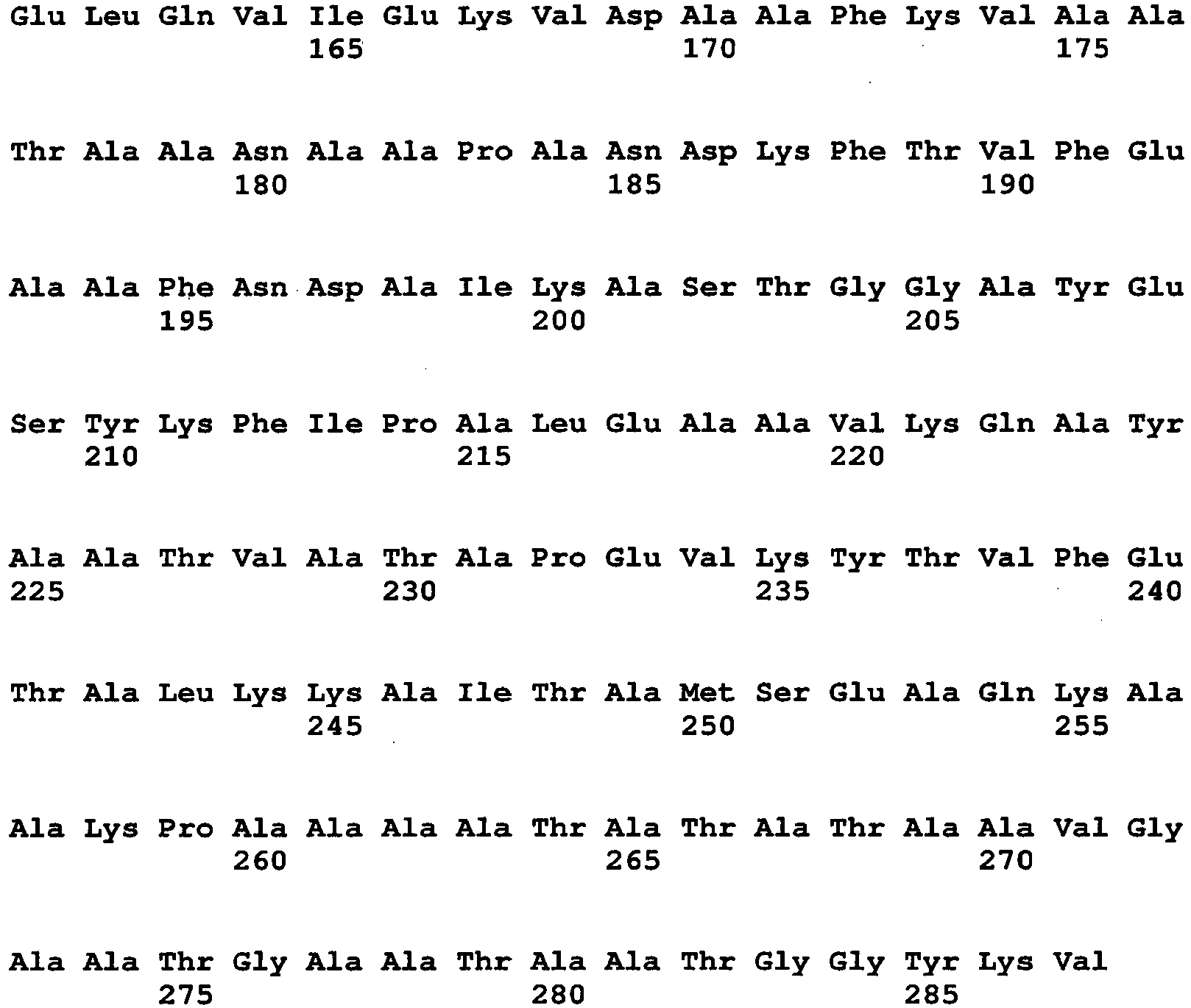
- <210> 6
<211> 110
<212> PRT
<213> Phleum pratense - <400> 6


- <210> 7
<211> 78
<212> PRT
<213> Phleum pratense - <400> 7

- <210> 8
<211> 143
<212> PRT
<213> Phleum pratense - <400> 8


- <210> 9
<211> 131
<212> PRT
<213> Phleum pratense - <400> 9

- <210> 10
<211> 360
<212> PRT
<213> Phleum pratense - <400> 10


- <210> 11
<211> 1066
<212> DNA
<213> Phleum pratense - <400> 11

- <210> 12
<211> 525
<212> DNA
<213> Phleum pratense - <400> 12

- <210> 13
<211> 294
<212> DNA
<213> Phleum pratense - <400> 13
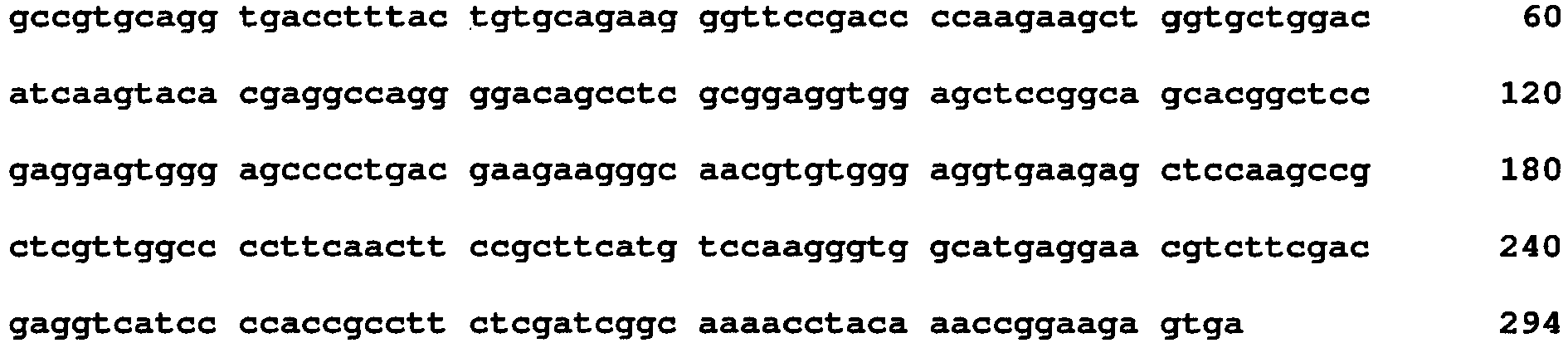
- <210> 14
<211> 1567
<212> DNA
<213> Phleum pratense - <400> 14

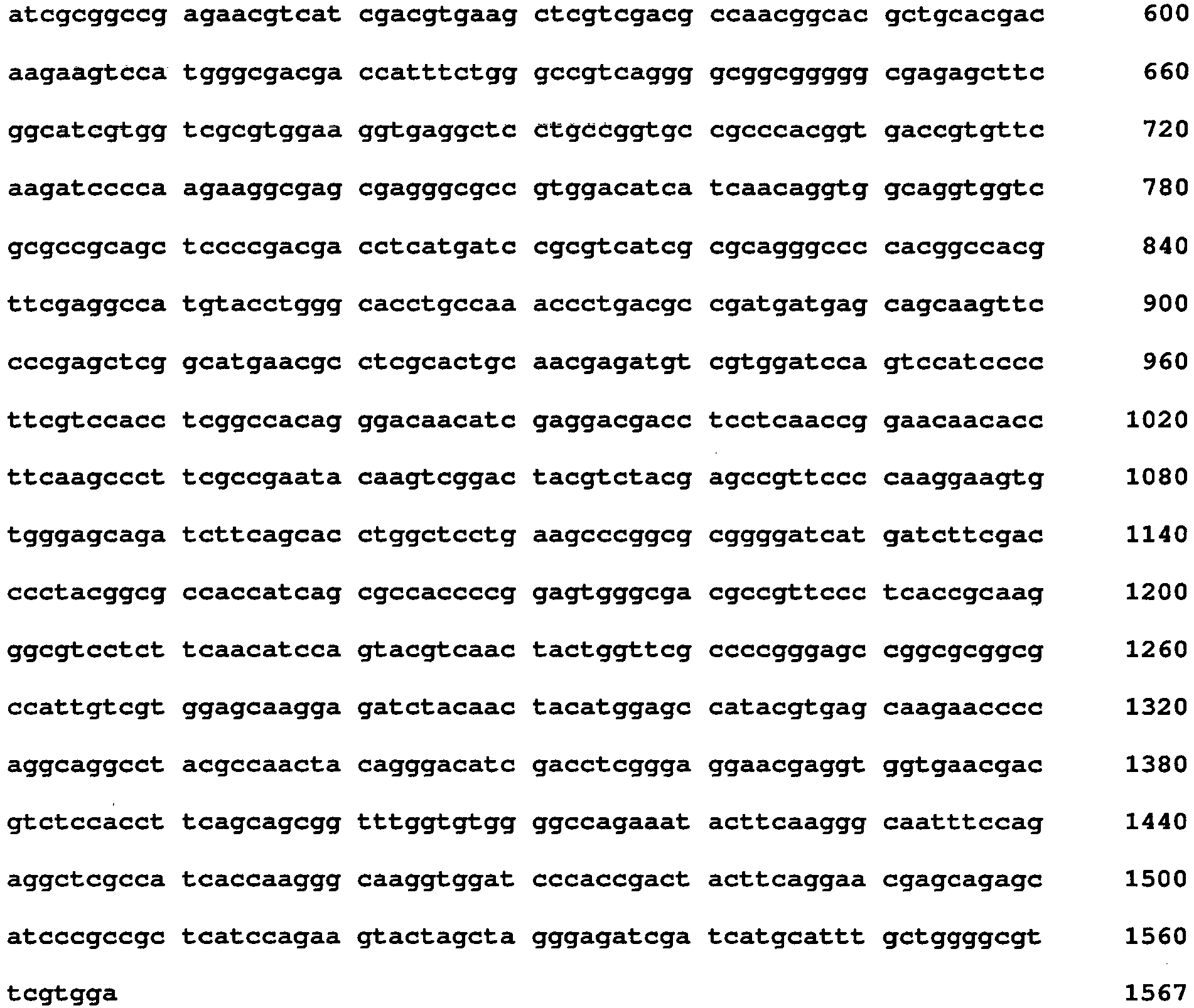
- <210> 15
<211> 1192
<212> DNA
<213> Phleum pratense - <400> 15


- <210> 16
<211> 571
<212> DNA
<213> Phleum pratense - <400> 16

- <210> 17
<211> 575
<212> DNA
<213> Phleum pratense - <400> 17


- <210> 18
<211> 786
<212> DNA
<213> Phleum pratense - <400> 18

- <210> 19
<211> 396
<212> DNA
<213> Phleum pratense - <400> 19

- <210> 20
<211> 1492
<212> DNA
<213> Phleum pratense - <400> 20
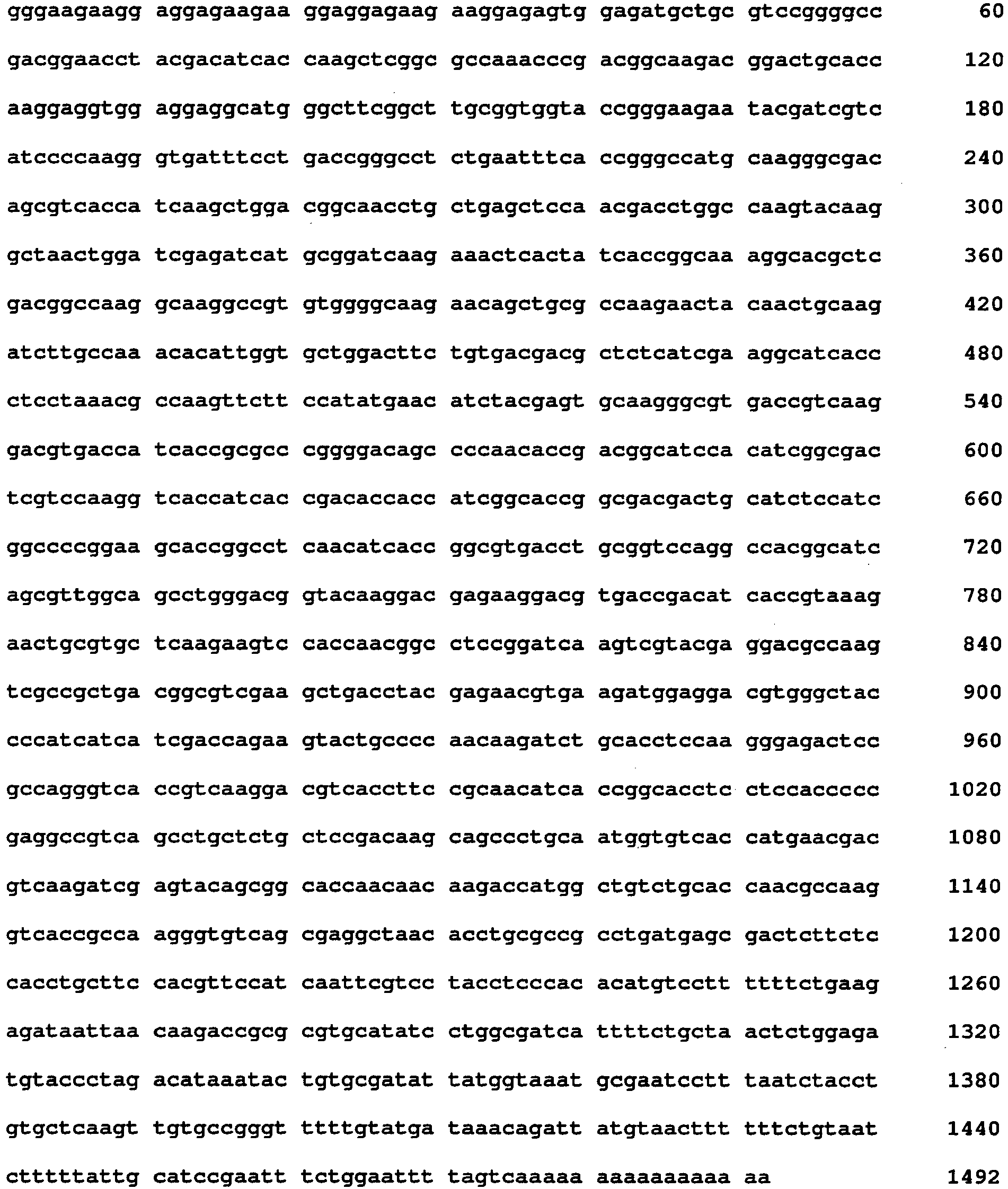
- <210> 21
<211> 246
<212> PRT
<213> Artificial Sequence - <220>
<223> construct A without N-terminal Met and C-terminal hexahistidine - <400> 21

- <210> 22
<211> 281
<212> PRT
<213> Artificial Sequence - <220>
<223> construct B without N-terminal Met and C-terminal hexahistidine - <400> 22

- <210> 23
<211> 246
<212> PRT
<213> Artificial Sequence - <220>
<223> construct C without N-terminal Met and C-terminal hexahistidine - <400> 23


- <210> 24
<211> 281
<212> PRT
<213> Artificial Sequence - <220>
<223> construct D without N-terminal Met and C-terminal hexahistidine - <400> 24


- <210> 25
<211> 294
<212> PRT
<213> Artificial Sequence - <220>
<223> construct E without N-terminal Met and C-terminal hexahistidine - <400> 25


- <210> 26
<211> 294
<212> PRT
<213> Artificial Sequence - <220>
<223> construct F without N-terminal Met and C-terminal hexahistidine - <400> 26


- <210> 27
<211> 233
<212> PRT
<213> Artificial Sequence - <220>
<223> construct G without N-terminal Met and C-terminal hexahistidine - <400> 27

- <210> 28
<211> 233
<212> PRT
<213> Artificial Sequence - <220>
<223> construct H without N-terminal Met and C-terminal hexahistidine - <400> 28


- <210> 29
<211> 176
<212> PRT
<213> Artificial Sequence - <220>
<223> construct I without N-terminal Met and C-terminal hexahistidine - <400> 29


- <210> 30
<211> 176
<212> PRT
<213> Artificial Sequence - <220>
<223> construct J without N-terminal Met and C-terminal hexahistidine - <400> 30


- <210> 31
<211> 176
<212> PRT
<213> Artificial Sequence - <220>
<223> construct K without N-terminal Met and C-terminal hexahistidine - <400> 31

- <210> 32
<211> 176
<212> PRT
<213> Artificial Sequence - <220>
<223> construct L without N-terminal Met and C-terminal hexahistidine - <400> 32

- <210> 33
<211> 703
<212> PRT
<213> Artificial Sequence - <220>
<223> construct M without N-terminal Met and C-terminal hexahistidine - <400> 33


- <210> 34
<211> 703
<212> PRT
<213> Artificial Sequence - <220>
<223> construct N without N-terminal Met and C-terminal hexahistidine - <400> 34


- <210> 35
<211> 527
<212> PRT
<213> Artificial Sequence - <220>
<223> construct O without N-terminal Met and C-terminal hexahistidine - <400> 35


- <210> 36
<211> 527
<212> PRT
<213> Artificial Sequence - <220>
<223> construct P without N-terminal Met and C-terminal hexahistidine - <400> 36


- <210> 37
<211> 176
<212> PRT
<213> Artificial Sequence - <220>
<223> construct Q without N-terminal Met and C-terminal hexahistidine - <400> 37

- <210> 38
<211> 253
<212> PRT
<213> Artificial Sequence - <220>
<223> construct A with N-terminal Met and C-terminal hexahistidine - <400> 38


- <210> 39
<211> 288
<212> PRT
<213> Artificial Sequence - <220>
<223> construct B with N-terminal Met and C-terminal hexahistidine - <400> 39


- <210> 40
<211> 253
<212> PRT
<213> Artificial Sequence - <220>
<223> construct C with N-terminal Met and C-terminal hexahistidine - <400> 40


- <210> 41
<211> 288
<212> PRT
<213> Artificial Sequence - <220>
<223> construct D with N-terminal Met and C-terminal hexahistidine - <400> 41

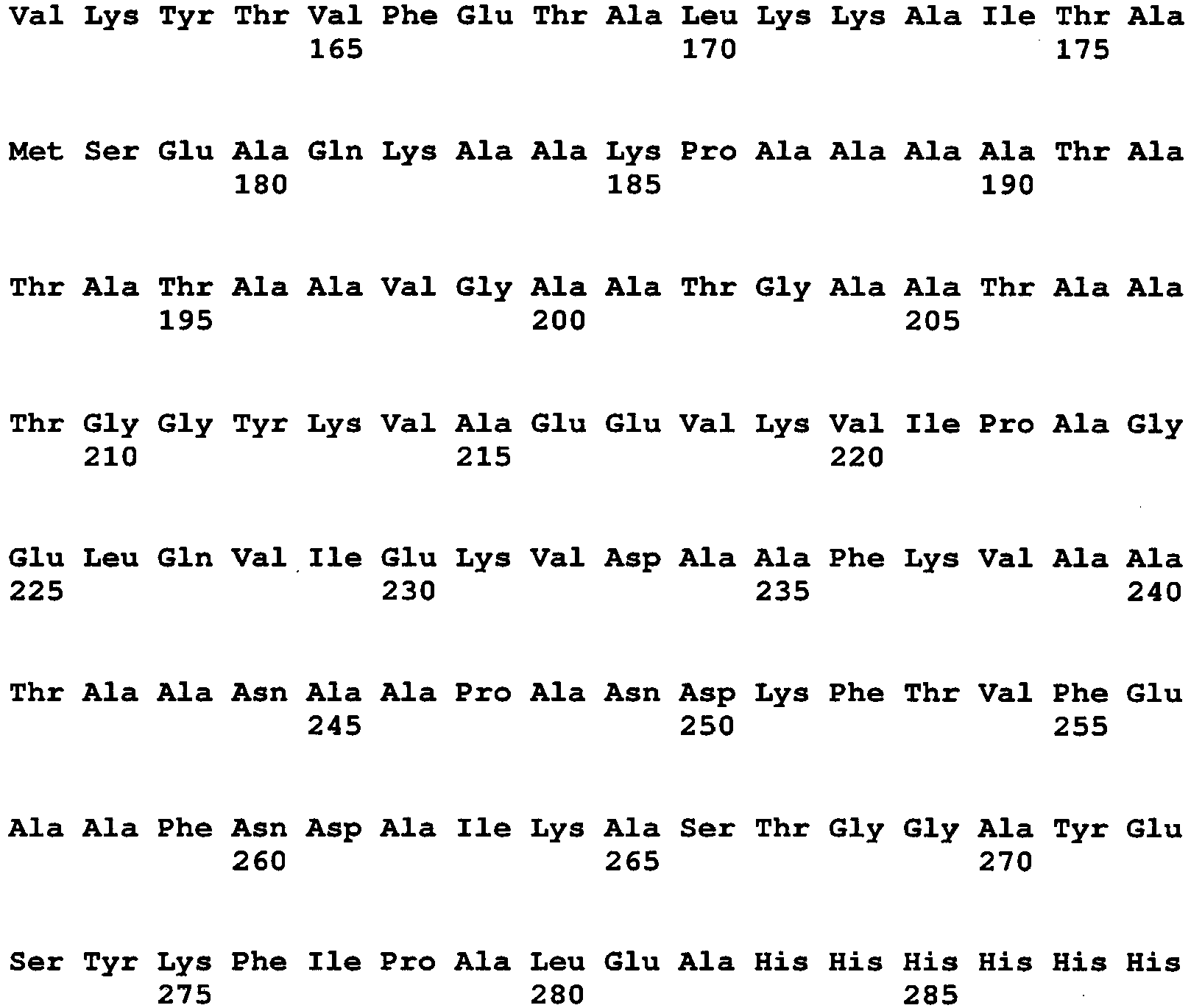
- <210> 42
<211> 301
<212> PRT
<213> Artificial Sequence - <220>
<223> construct E with N-terminal Met and C-terminal hexahistidine - <400> 42


- <210> 43
<211> 301
<212> PRT
<213> Artificial Sequence - <220>
<223> construct F with N-terminal Met and C-terminal hexahistidine - <400> 43


- <210> 44
<211> 240
<212> PRT
<213> Artificial Sequence - <220>
<223> construct G with N-terminal Met and C-terminal hexahistidine - <400> 44


- <210> 45
<211> 240
<212> PRT
<213> Artificial Sequence - <220>
<223> construct H with N-terminal Met and C-terminal hexahistidine - <400> 45


- <210> 46
<211> 183
<212> PRT
<213> Artificial Sequence - <220>
<223> construct I with N-terminal Met and C-terminal hexahistidine - <400> 46


- <210> 47
<211> 183
<212> PRT
<213> Artificial Sequence - <220>
<223> construct J with N-terminal Met and C-terminal hexahistidine - <400> 47


- <210> 48
<211> 183
<212> PRT
<213> Artificial Sequence - <220>
<223> construct K with N-terminal Met and C-terminal hexahistidine - <400> 48

- <210> 49
<211> 183
<212> PRT
<213> Artificial Sequence - <220>
<223> construct L with N-terminal Met and C-terminal hexahistidine - <400> 49

- <210> 50
<211> 710
<212> PRT
<213> Artificial Sequence - <220>
<223> construct M with N-terminal Met and C-terminal hexahistidine - <400> 50


- <210> 51
<211> 710
<212> PRT
<213> Artificial Sequence - <220>
<223> construct N with N-terminal Met and C-terminal hexahistidine - <400> 51

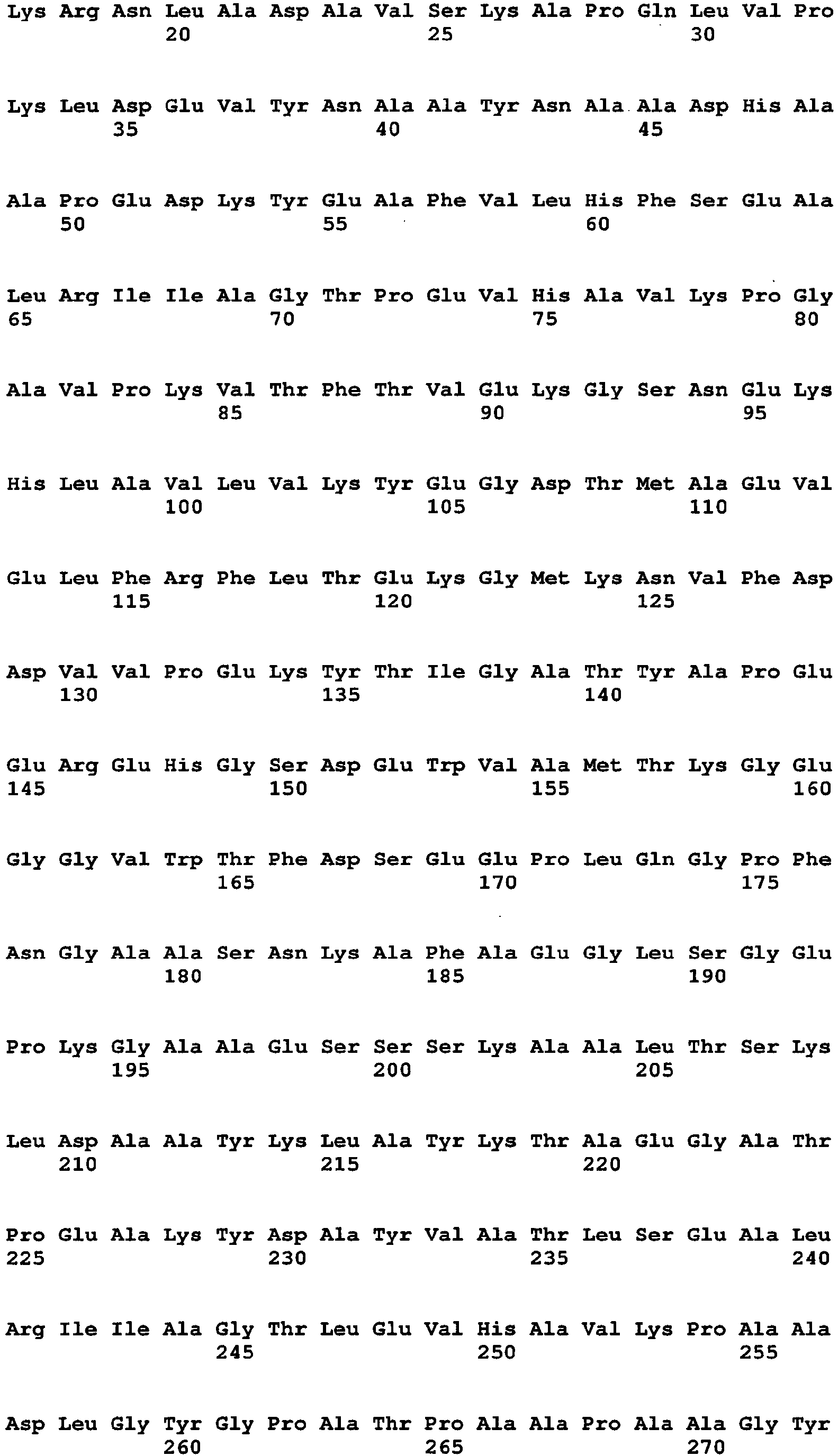
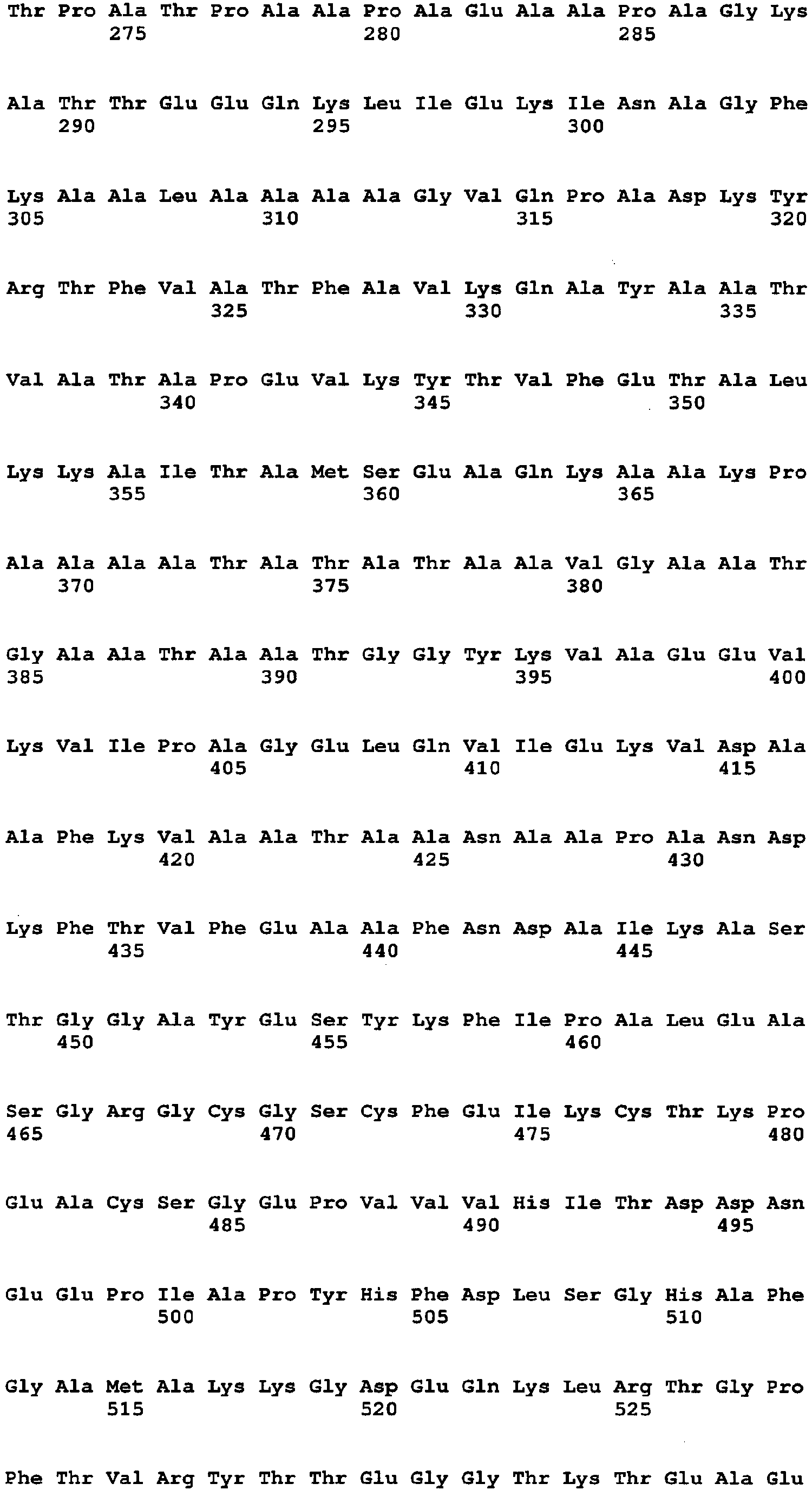

- <210> 52
<211> 534
<212> PRT
<213> Artificial Sequence - <220>
<223> construct O with N-terminal Met and C-terminal hexahistidine - <400> 52


- <210> 53
<211> 534
<212> PRT
<213> Artificial Sequence - <220>
<223> construct P with N-terminal Met and C-terminal hexahistidine - <400> 53


- <210> 54
<211> 183
<212> PRT
<213> Artificial Sequence - <220>
<223> construct Q with N-terminal Met and C-terminal hexahistidine - <400> 54


- <210> 55
<211> 64
<212> PRT
<213> Artificial Sequence - <220>
<223> fragment P1a - <400> 55

- <210> 56
<211> 61
<212> PRT
<213> Artificial Sequence - <220>
<223> fragment P1b - <400> 56

- <210> 57
<211> 80
<212> PRT
<213> Artificial Sequence - <220>
<223> fragment P1c - <400> 57

- <210> 58
<211> 35
<212> PRT
<213> Artificial Sequence - <220>
<223> fragment P1d - <400> 58

- <210> 59
<211> 32
<212> PRT
<213> Artificial Sequence - <220>
<223> fragment P1a1 - <400> 59

- <210> 60
<211> 32
<212> PRT
<213> Artificial Sequence - <220>
<223> fragment P1a2 - <400> 60

- <210> 61
<211> 39
<212> PRT
<213> Artificial Sequence - <220>
<223> fragment P1c1 - <400> 61

- <210> 62
<211> 41
<212> PRT
<213> Artificial Sequence - <220>
<223> fragment P1c2 - <400> 62

- <210> 63
<211> 49
<212> PRT
<213> Artificial Sequence - <220>
<223> fragment P2A - <400> 63

- <210> 64
<211> 47
<212> PRT
<213> Artificial Sequence - <220>
<223> fragment P2B - <400> 64

- <210> 65
<211> 33
<212> PRT
<213> Artificial Sequence - <220>
<223> fragment P2a - <400> 65

- <210> 66
<211> 32
<212> PRT
<213> Artificial Sequence - <220>
<223> fragment P2b - <400> 66

- <210> 67
<211> 31
<212> PRT
<213> Artificial Sequence - <220>
<223> fragment P2c - <400> 67

- <210> 68
<211> 38
<212> PRT
<213> Artificial Sequence - <220>
<223> fragment P2a1 - <400> 68

- <210> 69
<211> 27
<212> PRT
<213> Artificial Sequence - <220>
<223> fragment P2b2 - <400> 69

- <210> 70
<211> 72
<212> PRT
<213> Artificial Sequence - <220>
<223> fragment P5a - <400> 70

- <210> 71
<211> 78
<212> PRT
<213> Artificial Sequence - <220>
<223> fragment P5b - <400> 71


- <210> 72
<211> 68
<212> PRT
<213> Artificial Sequence - <220>
<223> fragment P5c - <400> 72
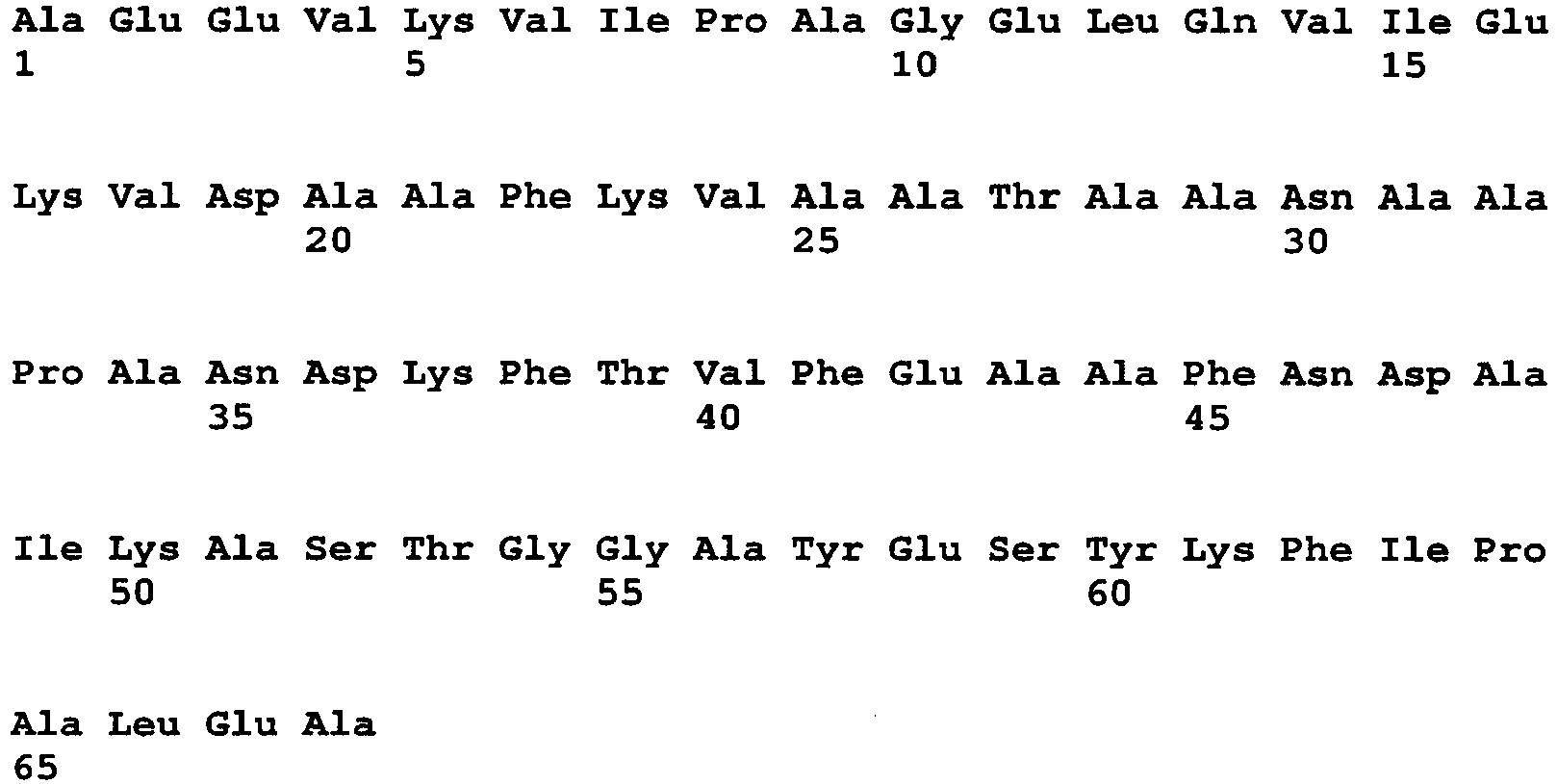
- <210> 73
<211> 69
<212> PRT
<213> Artificial Sequence - <220>
<223> fragment P5d - <400> 73

- <210> 74
<211> 34
<212> PRT
<213> Artificial Sequence - <220>
<223> fragment P5c1 - <400> 74

- <210> 75
<211> 34
<212> PRT
<213> Artificial Sequence - <220>
<223> fragment P5c2 - <400> 75

- <210> 76
<211> 80
<212> PRT
<213> Artificial Sequence - <220>
<223> fragment P6b - <400> 76


Claims (6)
- A hypoallergenic polypeptide comprising an amino acid sequence selected from the group consisting of SEQ ID NOs:22, 23, 24, 25, 36 and 37.
- The hypoallergenic polypeptide of claim 1, consisting of an amino acid sequence selected from the group consisting of SEQ ID NOs:39, 40, 41, 42, 53 and 54.
- A pharmaceutical composition comprising the polypeptide of claim 1 or 2 and a pharmaceutically acceptable diluent or excipient.
- The use of the polypeptide of claim 1 or 2 for the manufacture of a medicament for the prevention and/or treatment of allergy.
- The use of claim 4, wherein said allergy is grass pollen allergy.
- A nucleic acid encoding the polypeptide of claim 1 or 2.
Priority Applications (1)
| Application Number | Priority Date | Filing Date | Title |
|---|---|---|---|
| EP10752799.6A EP2475386B1 (en) | 2009-09-10 | 2010-09-09 | Hypoallergenic hybrid polypeptides for the treatment of allergy |
Applications Claiming Priority (4)
| Application Number | Priority Date | Filing Date | Title |
|---|---|---|---|
| US24104909P | 2009-09-10 | 2009-09-10 | |
| EP09169958A EP2295076A1 (en) | 2009-09-10 | 2009-09-10 | Hypoallergenic hybrid polypeptides for the treatment of allergy |
| PCT/EP2010/063230 WO2011029869A1 (en) | 2009-09-10 | 2010-09-09 | Hypoallergenic hybrid polypeptides for the treatment of allergy |
| EP10752799.6A EP2475386B1 (en) | 2009-09-10 | 2010-09-09 | Hypoallergenic hybrid polypeptides for the treatment of allergy |
Publications (2)
| Publication Number | Publication Date |
|---|---|
| EP2475386A1 EP2475386A1 (en) | 2012-07-18 |
| EP2475386B1 true EP2475386B1 (en) | 2014-04-09 |
Family
ID=42138777
Family Applications (2)
| Application Number | Title | Priority Date | Filing Date |
|---|---|---|---|
| EP09169958A Withdrawn EP2295076A1 (en) | 2009-09-10 | 2009-09-10 | Hypoallergenic hybrid polypeptides for the treatment of allergy |
| EP10752799.6A Not-in-force EP2475386B1 (en) | 2009-09-10 | 2010-09-09 | Hypoallergenic hybrid polypeptides for the treatment of allergy |
Family Applications Before (1)
| Application Number | Title | Priority Date | Filing Date |
|---|---|---|---|
| EP09169958A Withdrawn EP2295076A1 (en) | 2009-09-10 | 2009-09-10 | Hypoallergenic hybrid polypeptides for the treatment of allergy |
Country Status (7)
| Country | Link |
|---|---|
| US (1) | US9103835B2 (en) |
| EP (2) | EP2295076A1 (en) |
| JP (1) | JP5824452B2 (en) |
| AU (1) | AU2010294248A1 (en) |
| CA (1) | CA2773424A1 (en) |
| ES (1) | ES2463828T3 (en) |
| WO (1) | WO2011029869A1 (en) |
Families Citing this family (6)
| Publication number | Priority date | Publication date | Assignee | Title |
|---|---|---|---|---|
| EP2295076A1 (en) | 2009-09-10 | 2011-03-16 | Biomay Ag | Hypoallergenic hybrid polypeptides for the treatment of allergy |
| WO2012168487A1 (en) * | 2011-06-09 | 2012-12-13 | Biomay Ag | Peptide carrier fusion proteins as allergy vaccines |
| ITMI20112301A1 (en) | 2011-12-19 | 2013-06-20 | Lofarma Spa | HYPOALLERGENIC VARIATIONS OF THE ALLERGEN HIGHER PHL P 5 OF PHLEUM PRATENSE |
| US11013781B2 (en) | 2015-07-01 | 2021-05-25 | Alk-Abelló As | Peptide combinations and uses thereof for treating grass allergy |
| US20200199207A1 (en) | 2017-06-23 | 2020-06-25 | Mabylon Ag | Anti-allergen antibodies |
| EP3569612A1 (en) * | 2018-05-18 | 2019-11-20 | Biomay Ag | Treatment and prevention of house dust mite allergies |
Family Cites Families (9)
| Publication number | Priority date | Publication date | Assignee | Title |
|---|---|---|---|---|
| IT1212892B (en) * | 1983-10-11 | 1989-11-30 | Della Valle Francesco | HYALURONIC ACID OBTAINED BY MEANS OF MOLECULAR FILTRATION WITHOUT INFLAMMATORY ACTIVITY AND ITS THERAPEUTIC USE |
| GB8416048D0 (en) * | 1984-06-22 | 1984-07-25 | Johnson Matthey Plc | Anti-tumour compounds of platinum |
| JPS6133320A (en) * | 1984-07-25 | 1986-02-17 | Kinugawa Rubber Ind Co Ltd | Structure around window for car |
| EP1221317A1 (en) * | 2000-12-28 | 2002-07-10 | SHAN-Beteiligungsgesellschaft m.b.H. | Vaccines containing hybrid polypeptides consisting of at least two different allergenic proteins |
| ATE307141T1 (en) * | 2003-01-21 | 2005-11-15 | Biomay Prod & Handel | METHOD FOR PREPARING HYPOALLERGENIC MOSAIC PROTEINS |
| US8709435B2 (en) | 2003-01-21 | 2014-04-29 | Biomay Ag | Hypallergenic mosaic antigens and methods of making same |
| AT501101B1 (en) * | 2004-12-02 | 2008-01-15 | Biomay Ag | PROTEIN ALLERGEN DERIVATIVE |
| AT503296B1 (en) * | 2006-05-03 | 2007-09-15 | Biomay Ag | Producing derivatives of wild-type protein allergen Phl p 1 with reduced allergenic activity by fragmenting wild-type protein allergen, the fragments having reduced allergenic activity, and rejoining the fragments |
| EP2295076A1 (en) | 2009-09-10 | 2011-03-16 | Biomay Ag | Hypoallergenic hybrid polypeptides for the treatment of allergy |
-
2009
- 2009-09-10 EP EP09169958A patent/EP2295076A1/en not_active Withdrawn
-
2010
- 2010-09-09 EP EP10752799.6A patent/EP2475386B1/en not_active Not-in-force
- 2010-09-09 US US13/395,596 patent/US9103835B2/en not_active Expired - Fee Related
- 2010-09-09 JP JP2012528359A patent/JP5824452B2/en not_active Expired - Fee Related
- 2010-09-09 AU AU2010294248A patent/AU2010294248A1/en not_active Abandoned
- 2010-09-09 WO PCT/EP2010/063230 patent/WO2011029869A1/en not_active Ceased
- 2010-09-09 ES ES10752799.6T patent/ES2463828T3/en active Active
- 2010-09-09 CA CA2773424A patent/CA2773424A1/en not_active Abandoned
Also Published As
| Publication number | Publication date |
|---|---|
| WO2011029869A1 (en) | 2011-03-17 |
| EP2295076A1 (en) | 2011-03-16 |
| CA2773424A1 (en) | 2011-03-17 |
| AU2010294248A1 (en) | 2012-03-29 |
| ES2463828T3 (en) | 2014-05-29 |
| JP5824452B2 (en) | 2015-11-25 |
| US20120207788A1 (en) | 2012-08-16 |
| US9103835B2 (en) | 2015-08-11 |
| JP2013504307A (en) | 2013-02-07 |
| EP2475386A1 (en) | 2012-07-18 |
Similar Documents
| Publication | Publication Date | Title |
|---|---|---|
| KR101699554B1 (en) | Peptides for vaccine | |
| EP2153841B1 (en) | Vaccine comprising Amb a 1 peptides for use in the treatment of ragweed allergy | |
| EP2388269B1 (en) | Recombinant Der p 2 expressed in Pichia pastoris as a "natural-like" allergen for immunotherapy and diagnostic purposes | |
| US9103835B2 (en) | Hypoallergenic hybrid polypeptides for the treatment of allergy | |
| MX2013014439A (en) | Peptide carrier fusion proteins as allergy vaccines. | |
| PT2035457E (en) | Vaccine carrier | |
| KR20140129124A (en) | Timothy grass allergens and methods and uses for immune response modulation | |
| Wallner et al. | Allergy multivaccines created by DNA shuffling of tree pollen allergens | |
| EP2838556B1 (en) | Plant profilin polypeptides for use in non-specific allergy immunotherapy | |
| AT501347B1 (en) | METHOD AND SET FOR EVALUATING THE ALLERGENSIBILITY OF AN INDIVIDUAL | |
| AT501101B1 (en) | PROTEIN ALLERGEN DERIVATIVE | |
| EP2723373B1 (en) | Contiguous overlapping peptides for treatment of ragweed pollen allergy | |
| Cantillo et al. | From Molecular Cloning to Vaccine Development for Allergic Diseases | |
| US20160287696A1 (en) | Pan pollen immunogens and methods and uses for immune response modulation | |
| ITMI20112301A1 (en) | HYPOALLERGENIC VARIATIONS OF THE ALLERGEN HIGHER PHL P 5 OF PHLEUM PRATENSE | |
| ITMI20091411A1 (en) | HYBRID PROTEIN HYPOALLERGENIC AND ITS USES | |
| HK1205949B (en) | Plant profilin polypeptides for use in non-specific allergy immunotherapy |
Legal Events
| Date | Code | Title | Description |
|---|---|---|---|
| PUAI | Public reference made under article 153(3) epc to a published international application that has entered the european phase |
Free format text: ORIGINAL CODE: 0009012 |
|
| 17P | Request for examination filed |
Effective date: 20120229 |
|
| AK | Designated contracting states |
Kind code of ref document: A1 Designated state(s): AL AT BE BG CH CY CZ DE DK EE ES FI FR GB GR HR HU IE IS IT LI LT LU LV MC MK MT NL NO PL PT RO SE SI SK SM TR |
|
| DAX | Request for extension of the european patent (deleted) | ||
| 17Q | First examination report despatched |
Effective date: 20130214 |
|
| REG | Reference to a national code |
Ref country code: DE Ref legal event code: R079 Ref document number: 602010015049 Country of ref document: DE Free format text: PREVIOUS MAIN CLASS: A61K0039360000 Ipc: A61K0039350000 |
|
| GRAP | Despatch of communication of intention to grant a patent |
Free format text: ORIGINAL CODE: EPIDOSNIGR1 |
|
| RIC1 | Information provided on ipc code assigned before grant |
Ipc: C12N 15/62 20060101ALI20130919BHEP Ipc: G01N 33/68 20060101ALI20130919BHEP Ipc: C07K 14/415 20060101ALI20130919BHEP Ipc: A61K 39/36 20060101ALI20130919BHEP Ipc: A61K 39/35 20060101AFI20130919BHEP Ipc: C07K 16/16 20060101ALI20130919BHEP |
|
| INTG | Intention to grant announced |
Effective date: 20131017 |
|
| GRAS | Grant fee paid |
Free format text: ORIGINAL CODE: EPIDOSNIGR3 |
|
| GRAA | (expected) grant |
Free format text: ORIGINAL CODE: 0009210 |
|
| AK | Designated contracting states |
Kind code of ref document: B1 Designated state(s): AL AT BE BG CH CY CZ DE DK EE ES FI FR GB GR HR HU IE IS IT LI LT LU LV MC MK MT NL NO PL PT RO SE SI SK SM TR |
|
| REG | Reference to a national code |
Ref country code: GB Ref legal event code: FG4D |
|
| REG | Reference to a national code |
Ref country code: CH Ref legal event code: EP Ref country code: AT Ref legal event code: REF Ref document number: 660959 Country of ref document: AT Kind code of ref document: T Effective date: 20140415 |
|
| REG | Reference to a national code |
Ref country code: NL Ref legal event code: T3 |
|
| REG | Reference to a national code |
Ref country code: IE Ref legal event code: FG4D |
|
| REG | Reference to a national code |
Ref country code: DE Ref legal event code: R096 Ref document number: 602010015049 Country of ref document: DE Effective date: 20140522 |
|
| REG | Reference to a national code |
Ref country code: ES Ref legal event code: FG2A Ref document number: 2463828 Country of ref document: ES Kind code of ref document: T3 Effective date: 20140529 |
|
| REG | Reference to a national code |
Ref country code: LT Ref legal event code: MG4D |
|
| PG25 | Lapsed in a contracting state [announced via postgrant information from national office to epo] |
Ref country code: BG Free format text: LAPSE BECAUSE OF FAILURE TO SUBMIT A TRANSLATION OF THE DESCRIPTION OR TO PAY THE FEE WITHIN THE PRESCRIBED TIME-LIMIT Effective date: 20140709 Ref country code: GR Free format text: LAPSE BECAUSE OF FAILURE TO SUBMIT A TRANSLATION OF THE DESCRIPTION OR TO PAY THE FEE WITHIN THE PRESCRIBED TIME-LIMIT Effective date: 20140710 Ref country code: IS Free format text: LAPSE BECAUSE OF FAILURE TO SUBMIT A TRANSLATION OF THE DESCRIPTION OR TO PAY THE FEE WITHIN THE PRESCRIBED TIME-LIMIT Effective date: 20140809 Ref country code: NO Free format text: LAPSE BECAUSE OF FAILURE TO SUBMIT A TRANSLATION OF THE DESCRIPTION OR TO PAY THE FEE WITHIN THE PRESCRIBED TIME-LIMIT Effective date: 20140709 Ref country code: LT Free format text: LAPSE BECAUSE OF FAILURE TO SUBMIT A TRANSLATION OF THE DESCRIPTION OR TO PAY THE FEE WITHIN THE PRESCRIBED TIME-LIMIT Effective date: 20140409 Ref country code: FI Free format text: LAPSE BECAUSE OF FAILURE TO SUBMIT A TRANSLATION OF THE DESCRIPTION OR TO PAY THE FEE WITHIN THE PRESCRIBED TIME-LIMIT Effective date: 20140409 |
|
| PG25 | Lapsed in a contracting state [announced via postgrant information from national office to epo] |
Ref country code: LV Free format text: LAPSE BECAUSE OF FAILURE TO SUBMIT A TRANSLATION OF THE DESCRIPTION OR TO PAY THE FEE WITHIN THE PRESCRIBED TIME-LIMIT Effective date: 20140409 Ref country code: SE Free format text: LAPSE BECAUSE OF FAILURE TO SUBMIT A TRANSLATION OF THE DESCRIPTION OR TO PAY THE FEE WITHIN THE PRESCRIBED TIME-LIMIT Effective date: 20140409 Ref country code: PL Free format text: LAPSE BECAUSE OF FAILURE TO SUBMIT A TRANSLATION OF THE DESCRIPTION OR TO PAY THE FEE WITHIN THE PRESCRIBED TIME-LIMIT Effective date: 20140409 Ref country code: HR Free format text: LAPSE BECAUSE OF FAILURE TO SUBMIT A TRANSLATION OF THE DESCRIPTION OR TO PAY THE FEE WITHIN THE PRESCRIBED TIME-LIMIT Effective date: 20140409 |
|
| PG25 | Lapsed in a contracting state [announced via postgrant information from national office to epo] |
Ref country code: PT Free format text: LAPSE BECAUSE OF FAILURE TO SUBMIT A TRANSLATION OF THE DESCRIPTION OR TO PAY THE FEE WITHIN THE PRESCRIBED TIME-LIMIT Effective date: 20140811 |
|
| REG | Reference to a national code |
Ref country code: DE Ref legal event code: R097 Ref document number: 602010015049 Country of ref document: DE |
|
| PG25 | Lapsed in a contracting state [announced via postgrant information from national office to epo] |
Ref country code: EE Free format text: LAPSE BECAUSE OF FAILURE TO SUBMIT A TRANSLATION OF THE DESCRIPTION OR TO PAY THE FEE WITHIN THE PRESCRIBED TIME-LIMIT Effective date: 20140409 Ref country code: BE Free format text: LAPSE BECAUSE OF FAILURE TO SUBMIT A TRANSLATION OF THE DESCRIPTION OR TO PAY THE FEE WITHIN THE PRESCRIBED TIME-LIMIT Effective date: 20140409 Ref country code: SK Free format text: LAPSE BECAUSE OF FAILURE TO SUBMIT A TRANSLATION OF THE DESCRIPTION OR TO PAY THE FEE WITHIN THE PRESCRIBED TIME-LIMIT Effective date: 20140409 Ref country code: CZ Free format text: LAPSE BECAUSE OF FAILURE TO SUBMIT A TRANSLATION OF THE DESCRIPTION OR TO PAY THE FEE WITHIN THE PRESCRIBED TIME-LIMIT Effective date: 20140409 Ref country code: RO Free format text: LAPSE BECAUSE OF FAILURE TO SUBMIT A TRANSLATION OF THE DESCRIPTION OR TO PAY THE FEE WITHIN THE PRESCRIBED TIME-LIMIT Effective date: 20140409 Ref country code: DK Free format text: LAPSE BECAUSE OF FAILURE TO SUBMIT A TRANSLATION OF THE DESCRIPTION OR TO PAY THE FEE WITHIN THE PRESCRIBED TIME-LIMIT Effective date: 20140409 |
|
| PLBE | No opposition filed within time limit |
Free format text: ORIGINAL CODE: 0009261 |
|
| STAA | Information on the status of an ep patent application or granted ep patent |
Free format text: STATUS: NO OPPOSITION FILED WITHIN TIME LIMIT |
|
| 26N | No opposition filed |
Effective date: 20150112 |
|
| REG | Reference to a national code |
Ref country code: DE Ref legal event code: R097 Ref document number: 602010015049 Country of ref document: DE Effective date: 20150112 |
|
| PG25 | Lapsed in a contracting state [announced via postgrant information from national office to epo] |
Ref country code: LU Free format text: LAPSE BECAUSE OF FAILURE TO SUBMIT A TRANSLATION OF THE DESCRIPTION OR TO PAY THE FEE WITHIN THE PRESCRIBED TIME-LIMIT Effective date: 20140909 Ref country code: MC Free format text: LAPSE BECAUSE OF FAILURE TO SUBMIT A TRANSLATION OF THE DESCRIPTION OR TO PAY THE FEE WITHIN THE PRESCRIBED TIME-LIMIT Effective date: 20140409 |
|
| REG | Reference to a national code |
Ref country code: IE Ref legal event code: MM4A |
|
| PG25 | Lapsed in a contracting state [announced via postgrant information from national office to epo] |
Ref country code: SI Free format text: LAPSE BECAUSE OF FAILURE TO SUBMIT A TRANSLATION OF THE DESCRIPTION OR TO PAY THE FEE WITHIN THE PRESCRIBED TIME-LIMIT Effective date: 20140409 |
|
| PG25 | Lapsed in a contracting state [announced via postgrant information from national office to epo] |
Ref country code: IE Free format text: LAPSE BECAUSE OF NON-PAYMENT OF DUE FEES Effective date: 20140909 |
|
| PG25 | Lapsed in a contracting state [announced via postgrant information from national office to epo] |
Ref country code: SM Free format text: LAPSE BECAUSE OF FAILURE TO SUBMIT A TRANSLATION OF THE DESCRIPTION OR TO PAY THE FEE WITHIN THE PRESCRIBED TIME-LIMIT Effective date: 20140409 |
|
| PG25 | Lapsed in a contracting state [announced via postgrant information from national office to epo] |
Ref country code: MT Free format text: LAPSE BECAUSE OF FAILURE TO SUBMIT A TRANSLATION OF THE DESCRIPTION OR TO PAY THE FEE WITHIN THE PRESCRIBED TIME-LIMIT Effective date: 20140409 Ref country code: CY Free format text: LAPSE BECAUSE OF FAILURE TO SUBMIT A TRANSLATION OF THE DESCRIPTION OR TO PAY THE FEE WITHIN THE PRESCRIBED TIME-LIMIT Effective date: 20140409 |
|
| PG25 | Lapsed in a contracting state [announced via postgrant information from national office to epo] |
Ref country code: HU Free format text: LAPSE BECAUSE OF FAILURE TO SUBMIT A TRANSLATION OF THE DESCRIPTION OR TO PAY THE FEE WITHIN THE PRESCRIBED TIME-LIMIT; INVALID AB INITIO Effective date: 20100909 Ref country code: TR Free format text: LAPSE BECAUSE OF FAILURE TO SUBMIT A TRANSLATION OF THE DESCRIPTION OR TO PAY THE FEE WITHIN THE PRESCRIBED TIME-LIMIT Effective date: 20140409 |
|
| REG | Reference to a national code |
Ref country code: FR Ref legal event code: PLFP Year of fee payment: 7 |
|
| REG | Reference to a national code |
Ref country code: FR Ref legal event code: PLFP Year of fee payment: 8 |
|
| PGFP | Annual fee paid to national office [announced via postgrant information from national office to epo] |
Ref country code: CH Payment date: 20170925 Year of fee payment: 8 Ref country code: IT Payment date: 20170926 Year of fee payment: 8 Ref country code: FR Payment date: 20170925 Year of fee payment: 8 Ref country code: DE Payment date: 20170825 Year of fee payment: 8 Ref country code: GB Payment date: 20170925 Year of fee payment: 8 |
|
| PGFP | Annual fee paid to national office [announced via postgrant information from national office to epo] |
Ref country code: AT Payment date: 20170920 Year of fee payment: 8 Ref country code: NL Payment date: 20170925 Year of fee payment: 8 |
|
| PGFP | Annual fee paid to national office [announced via postgrant information from national office to epo] |
Ref country code: ES Payment date: 20171003 Year of fee payment: 8 |
|
| PG25 | Lapsed in a contracting state [announced via postgrant information from national office to epo] |
Ref country code: MK Free format text: LAPSE BECAUSE OF FAILURE TO SUBMIT A TRANSLATION OF THE DESCRIPTION OR TO PAY THE FEE WITHIN THE PRESCRIBED TIME-LIMIT Effective date: 20140409 |
|
| PG25 | Lapsed in a contracting state [announced via postgrant information from national office to epo] |
Ref country code: AL Free format text: LAPSE BECAUSE OF FAILURE TO SUBMIT A TRANSLATION OF THE DESCRIPTION OR TO PAY THE FEE WITHIN THE PRESCRIBED TIME-LIMIT Effective date: 20140409 |
|
| REG | Reference to a national code |
Ref country code: DE Ref legal event code: R119 Ref document number: 602010015049 Country of ref document: DE |
|
| REG | Reference to a national code |
Ref country code: CH Ref legal event code: PL |
|
| REG | Reference to a national code |
Ref country code: NL Ref legal event code: MM Effective date: 20181001 |
|
| REG | Reference to a national code |
Ref country code: AT Ref legal event code: MM01 Ref document number: 660959 Country of ref document: AT Kind code of ref document: T Effective date: 20180909 |
|
| GBPC | Gb: european patent ceased through non-payment of renewal fee |
Effective date: 20180909 |
|
| PG25 | Lapsed in a contracting state [announced via postgrant information from national office to epo] |
Ref country code: NL Free format text: LAPSE BECAUSE OF NON-PAYMENT OF DUE FEES Effective date: 20181001 |
|
| PG25 | Lapsed in a contracting state [announced via postgrant information from national office to epo] |
Ref country code: DE Free format text: LAPSE BECAUSE OF NON-PAYMENT OF DUE FEES Effective date: 20190402 Ref country code: IT Free format text: LAPSE BECAUSE OF NON-PAYMENT OF DUE FEES Effective date: 20180909 |
|
| PG25 | Lapsed in a contracting state [announced via postgrant information from national office to epo] |
Ref country code: FR Free format text: LAPSE BECAUSE OF NON-PAYMENT OF DUE FEES Effective date: 20180930 Ref country code: LI Free format text: LAPSE BECAUSE OF NON-PAYMENT OF DUE FEES Effective date: 20180930 Ref country code: CH Free format text: LAPSE BECAUSE OF NON-PAYMENT OF DUE FEES Effective date: 20180930 |
|
| REG | Reference to a national code |
Ref country code: ES Ref legal event code: FD2A Effective date: 20191030 |
|
| PG25 | Lapsed in a contracting state [announced via postgrant information from national office to epo] |
Ref country code: AT Free format text: LAPSE BECAUSE OF NON-PAYMENT OF DUE FEES Effective date: 20180909 Ref country code: GB Free format text: LAPSE BECAUSE OF NON-PAYMENT OF DUE FEES Effective date: 20180909 |
|
| PG25 | Lapsed in a contracting state [announced via postgrant information from national office to epo] |
Ref country code: ES Free format text: LAPSE BECAUSE OF NON-PAYMENT OF DUE FEES Effective date: 20180910 |