EP2471840A1 - Cross-linked polyphosphonate, method of preparing the same, and flame retardant thermoplastic resin composition including the same - Google Patents
Cross-linked polyphosphonate, method of preparing the same, and flame retardant thermoplastic resin composition including the same Download PDFInfo
- Publication number
- EP2471840A1 EP2471840A1 EP11195798A EP11195798A EP2471840A1 EP 2471840 A1 EP2471840 A1 EP 2471840A1 EP 11195798 A EP11195798 A EP 11195798A EP 11195798 A EP11195798 A EP 11195798A EP 2471840 A1 EP2471840 A1 EP 2471840A1
- Authority
- EP
- European Patent Office
- Prior art keywords
- same
- cross
- independently
- different
- integer
- Prior art date
- Legal status (The legal status is an assumption and is not a legal conclusion. Google has not performed a legal analysis and makes no representation as to the accuracy of the status listed.)
- Withdrawn
Links
- 229920005992 thermoplastic resin Polymers 0.000 title claims abstract description 28
- 239000011342 resin composition Substances 0.000 title claims abstract description 24
- 239000003063 flame retardant Substances 0.000 title claims description 30
- RNFJDJUURJAICM-UHFFFAOYSA-N 2,2,4,4,6,6-hexaphenoxy-1,3,5-triaza-2$l^{5},4$l^{5},6$l^{5}-triphosphacyclohexa-1,3,5-triene Chemical compound N=1P(OC=2C=CC=CC=2)(OC=2C=CC=CC=2)=NP(OC=2C=CC=CC=2)(OC=2C=CC=CC=2)=NP=1(OC=1C=CC=CC=1)OC1=CC=CC=C1 RNFJDJUURJAICM-UHFFFAOYSA-N 0.000 title claims description 21
- 238000000034 method Methods 0.000 title claims description 17
- 125000000753 cycloalkyl group Chemical group 0.000 claims description 20
- 125000002947 alkylene group Chemical group 0.000 claims description 17
- 125000000217 alkyl group Chemical group 0.000 claims description 14
- WUEAMTVQNGYLRI-UHFFFAOYSA-N 2-dichlorophosphoryl-1,3,5-tri(propan-2-yl)benzene Chemical compound CC(C)C1=CC(C(C)C)=C(P(Cl)(Cl)=O)C(C(C)C)=C1 WUEAMTVQNGYLRI-UHFFFAOYSA-N 0.000 claims description 13
- WYURNTSHIVDZCO-UHFFFAOYSA-N Tetrahydrofuran Chemical compound C1CCOC1 WYURNTSHIVDZCO-UHFFFAOYSA-N 0.000 claims description 12
- 239000004971 Cross linker Substances 0.000 claims description 9
- 238000002485 combustion reaction Methods 0.000 claims description 9
- 239000001257 hydrogen Substances 0.000 claims description 9
- 229910052739 hydrogen Inorganic materials 0.000 claims description 9
- 239000000203 mixture Substances 0.000 claims description 9
- 238000006116 polymerization reaction Methods 0.000 claims description 9
- 125000001118 alkylidene group Chemical group 0.000 claims description 8
- 239000003054 catalyst Substances 0.000 claims description 8
- 150000002009 diols Chemical class 0.000 claims description 8
- 150000002989 phenols Chemical class 0.000 claims description 7
- 125000000008 (C1-C10) alkyl group Chemical group 0.000 claims description 6
- 125000004169 (C1-C6) alkyl group Chemical group 0.000 claims description 6
- 125000002993 cycloalkylene group Chemical group 0.000 claims description 6
- 125000005843 halogen group Chemical group 0.000 claims description 6
- YLQBMQCUIZJEEH-UHFFFAOYSA-N tetrahydrofuran Natural products C=1C=COC=1 YLQBMQCUIZJEEH-UHFFFAOYSA-N 0.000 claims description 5
- USFRYJRPHFMVBZ-UHFFFAOYSA-M benzyl(triphenyl)phosphanium;chloride Chemical compound [Cl-].C=1C=CC=CC=1[P+](C=1C=CC=CC=1)(C=1C=CC=CC=1)CC1=CC=CC=C1 USFRYJRPHFMVBZ-UHFFFAOYSA-M 0.000 claims description 4
- 238000012695 Interfacial polymerization Methods 0.000 claims description 3
- JRMUNVKIHCOMHV-UHFFFAOYSA-M tetrabutylammonium bromide Chemical compound [Br-].CCCC[N+](CCCC)(CCCC)CCCC JRMUNVKIHCOMHV-UHFFFAOYSA-M 0.000 claims description 3
- DPKBAXPHAYBPRL-UHFFFAOYSA-M tetrabutylazanium;iodide Chemical compound [I-].CCCC[N+](CCCC)(CCCC)CCCC DPKBAXPHAYBPRL-UHFFFAOYSA-M 0.000 claims description 3
- 230000000379 polymerizing effect Effects 0.000 claims description 2
- 125000004435 hydrogen atom Chemical class [H]* 0.000 claims 4
- 125000001183 hydrocarbyl group Chemical group 0.000 claims 3
- YMWUJEATGCHHMB-UHFFFAOYSA-N Dichloromethane Chemical compound ClCCl YMWUJEATGCHHMB-UHFFFAOYSA-N 0.000 description 12
- IISBACLAFKSPIT-UHFFFAOYSA-N bisphenol A Chemical compound C=1C=C(O)C=CC=1C(C)(C)C1=CC=C(O)C=C1 IISBACLAFKSPIT-UHFFFAOYSA-N 0.000 description 12
- -1 alkyl radical Chemical class 0.000 description 11
- 229920005989 resin Polymers 0.000 description 8
- 239000011347 resin Substances 0.000 description 8
- 239000000654 additive Substances 0.000 description 7
- OAICVXFJPJFONN-UHFFFAOYSA-N Phosphorus Chemical compound [P] OAICVXFJPJFONN-UHFFFAOYSA-N 0.000 description 6
- 238000006243 chemical reaction Methods 0.000 description 6
- 238000000465 moulding Methods 0.000 description 6
- 229910052698 phosphorus Inorganic materials 0.000 description 6
- 239000011574 phosphorus Substances 0.000 description 6
- 230000000996 additive effect Effects 0.000 description 5
- 150000005840 aryl radicals Chemical class 0.000 description 5
- 150000002431 hydrogen Chemical class 0.000 description 5
- 239000000243 solution Substances 0.000 description 5
- 230000000052 comparative effect Effects 0.000 description 4
- 150000002430 hydrocarbons Chemical group 0.000 description 4
- 230000000704 physical effect Effects 0.000 description 4
- 239000004033 plastic Substances 0.000 description 4
- 229920003023 plastic Polymers 0.000 description 4
- 229920005668 polycarbonate resin Polymers 0.000 description 4
- 239000004431 polycarbonate resin Substances 0.000 description 4
- 239000000047 product Substances 0.000 description 4
- HEMHJVSKTPXQMS-UHFFFAOYSA-M Sodium hydroxide Chemical compound [OH-].[Na+] HEMHJVSKTPXQMS-UHFFFAOYSA-M 0.000 description 3
- 238000002347 injection Methods 0.000 description 3
- 239000007924 injection Substances 0.000 description 3
- VLKZOEOYAKHREP-UHFFFAOYSA-N n-Hexane Chemical compound CCCCCC VLKZOEOYAKHREP-UHFFFAOYSA-N 0.000 description 3
- 239000004417 polycarbonate Substances 0.000 description 3
- 238000002411 thermogravimetry Methods 0.000 description 3
- YHZQOKUDQQISEW-UHFFFAOYSA-N 4-Cumylphenol Natural products C1=CC(C(C)C)=CC=C1C1=CC=C(O)C=C1 YHZQOKUDQQISEW-UHFFFAOYSA-N 0.000 description 2
- BRPSWMCDEYMRPE-UHFFFAOYSA-N 4-[1,1-bis(4-hydroxyphenyl)ethyl]phenol Chemical compound C=1C=C(O)C=CC=1C(C=1C=CC(O)=CC=1)(C)C1=CC=C(O)C=C1 BRPSWMCDEYMRPE-UHFFFAOYSA-N 0.000 description 2
- SDDLEVPIDBLVHC-UHFFFAOYSA-N Bisphenol Z Chemical compound C1=CC(O)=CC=C1C1(C=2C=CC(O)=CC=2)CCCCC1 SDDLEVPIDBLVHC-UHFFFAOYSA-N 0.000 description 2
- PEDCQBHIVMGVHV-UHFFFAOYSA-N Glycerine Chemical compound OCC(O)CO PEDCQBHIVMGVHV-UHFFFAOYSA-N 0.000 description 2
- VEXZGXHMUGYJMC-UHFFFAOYSA-N Hydrochloric acid Chemical compound Cl VEXZGXHMUGYJMC-UHFFFAOYSA-N 0.000 description 2
- QIGBRXMKCJKVMJ-UHFFFAOYSA-N Hydroquinone Chemical compound OC1=CC=C(O)C=C1 QIGBRXMKCJKVMJ-UHFFFAOYSA-N 0.000 description 2
- 238000005481 NMR spectroscopy Methods 0.000 description 2
- KWYUFKZDYYNOTN-UHFFFAOYSA-M Potassium hydroxide Chemical compound [OH-].[K+] KWYUFKZDYYNOTN-UHFFFAOYSA-M 0.000 description 2
- PPBRXRYQALVLMV-UHFFFAOYSA-N Styrene Chemical compound C=CC1=CC=CC=C1 PPBRXRYQALVLMV-UHFFFAOYSA-N 0.000 description 2
- KYPYTERUKNKOLP-UHFFFAOYSA-N Tetrachlorobisphenol A Chemical compound C=1C(Cl)=C(O)C(Cl)=CC=1C(C)(C)C1=CC(Cl)=C(O)C(Cl)=C1 KYPYTERUKNKOLP-UHFFFAOYSA-N 0.000 description 2
- 239000002253 acid Substances 0.000 description 2
- 239000003513 alkali Substances 0.000 description 2
- 238000011109 contamination Methods 0.000 description 2
- 230000003247 decreasing effect Effects 0.000 description 2
- IBDMRHDXAQZJAP-UHFFFAOYSA-N dichlorophosphorylbenzene Chemical compound ClP(Cl)(=O)C1=CC=CC=C1 IBDMRHDXAQZJAP-UHFFFAOYSA-N 0.000 description 2
- 230000007613 environmental effect Effects 0.000 description 2
- 238000001125 extrusion Methods 0.000 description 2
- 239000007789 gas Substances 0.000 description 2
- 238000007429 general method Methods 0.000 description 2
- QBDSZLJBMIMQRS-UHFFFAOYSA-N p-Cumylphenol Chemical compound C=1C=C(O)C=CC=1C(C)(C)C1=CC=CC=C1 QBDSZLJBMIMQRS-UHFFFAOYSA-N 0.000 description 2
- 239000008188 pellet Substances 0.000 description 2
- 239000003444 phase transfer catalyst Substances 0.000 description 2
- 229920000515 polycarbonate Polymers 0.000 description 2
- 238000002360 preparation method Methods 0.000 description 2
- GHMLBKRAJCXXBS-UHFFFAOYSA-N resorcinol Chemical compound OC1=CC=CC(O)=C1 GHMLBKRAJCXXBS-UHFFFAOYSA-N 0.000 description 2
- 238000005406 washing Methods 0.000 description 2
- XLYOFNOQVPJJNP-UHFFFAOYSA-N water Substances O XLYOFNOQVPJJNP-UHFFFAOYSA-N 0.000 description 2
- 239000003643 water by type Substances 0.000 description 2
- SCYULBFZEHDVBN-UHFFFAOYSA-N 1,1-Dichloroethane Chemical compound CC(Cl)Cl SCYULBFZEHDVBN-UHFFFAOYSA-N 0.000 description 1
- WSLDOOZREJYCGB-UHFFFAOYSA-N 1,2-Dichloroethane Chemical compound ClCCCl WSLDOOZREJYCGB-UHFFFAOYSA-N 0.000 description 1
- OCJBOOLMMGQPQU-UHFFFAOYSA-N 1,4-dichlorobenzene Chemical compound ClC1=CC=C(Cl)C=C1 OCJBOOLMMGQPQU-UHFFFAOYSA-N 0.000 description 1
- WMYINDVYGQKYMI-UHFFFAOYSA-N 2-[2,2-bis(hydroxymethyl)butoxymethyl]-2-ethylpropane-1,3-diol Chemical compound CCC(CO)(CO)COCC(CC)(CO)CO WMYINDVYGQKYMI-UHFFFAOYSA-N 0.000 description 1
- TXBCBTDQIULDIA-UHFFFAOYSA-N 2-[[3-hydroxy-2,2-bis(hydroxymethyl)propoxy]methyl]-2-(hydroxymethyl)propane-1,3-diol Chemical compound OCC(CO)(CO)COCC(CO)(CO)CO TXBCBTDQIULDIA-UHFFFAOYSA-N 0.000 description 1
- XBQRPFBBTWXIFI-UHFFFAOYSA-N 2-chloro-4-[2-(3-chloro-4-hydroxyphenyl)propan-2-yl]phenol Chemical compound C=1C=C(O)C(Cl)=CC=1C(C)(C)C1=CC=C(O)C(Cl)=C1 XBQRPFBBTWXIFI-UHFFFAOYSA-N 0.000 description 1
- VPWNQTHUCYMVMZ-UHFFFAOYSA-N 4,4'-sulfonyldiphenol Chemical class C1=CC(O)=CC=C1S(=O)(=O)C1=CC=C(O)C=C1 VPWNQTHUCYMVMZ-UHFFFAOYSA-N 0.000 description 1
- NIRYBKWMEWFDPM-UHFFFAOYSA-N 4-[3-(4-hydroxyphenyl)-3-methylbutyl]phenol Chemical compound C=1C=C(O)C=CC=1C(C)(C)CCC1=CC=C(O)C=C1 NIRYBKWMEWFDPM-UHFFFAOYSA-N 0.000 description 1
- NDWUBGAGUCISDV-UHFFFAOYSA-N 4-hydroxybutyl prop-2-enoate Chemical compound OCCCCOC(=O)C=C NDWUBGAGUCISDV-UHFFFAOYSA-N 0.000 description 1
- 239000004925 Acrylic resin Substances 0.000 description 1
- 229930185605 Bisphenol Natural products 0.000 description 1
- NJLHHACGWKAWKL-UHFFFAOYSA-N ClP(Cl)=O Chemical compound ClP(Cl)=O NJLHHACGWKAWKL-UHFFFAOYSA-N 0.000 description 1
- PIICEJLVQHRZGT-UHFFFAOYSA-N Ethylenediamine Chemical compound NCCN PIICEJLVQHRZGT-UHFFFAOYSA-N 0.000 description 1
- 238000005033 Fourier transform infrared spectroscopy Methods 0.000 description 1
- 238000001157 Fourier transform infrared spectrum Methods 0.000 description 1
- AFCARXCZXQIEQB-UHFFFAOYSA-N N-[3-oxo-3-(2,4,6,7-tetrahydrotriazolo[4,5-c]pyridin-5-yl)propyl]-2-[[3-(trifluoromethoxy)phenyl]methylamino]pyrimidine-5-carboxamide Chemical compound O=C(CCNC(=O)C=1C=NC(=NC=1)NCC1=CC(=CC=C1)OC(F)(F)F)N1CC2=C(CC1)NN=N2 AFCARXCZXQIEQB-UHFFFAOYSA-N 0.000 description 1
- 239000004419 Panlite Substances 0.000 description 1
- ISWSIDIOOBJBQZ-UHFFFAOYSA-N Phenol Chemical compound OC1=CC=CC=C1 ISWSIDIOOBJBQZ-UHFFFAOYSA-N 0.000 description 1
- ZJCCRDAZUWHFQH-UHFFFAOYSA-N Trimethylolpropane Chemical compound CCC(CO)(CO)CO ZJCCRDAZUWHFQH-UHFFFAOYSA-N 0.000 description 1
- 150000008044 alkali metal hydroxides Chemical class 0.000 description 1
- 230000004075 alteration Effects 0.000 description 1
- 239000003963 antioxidant agent Substances 0.000 description 1
- 230000003078 antioxidant effect Effects 0.000 description 1
- 239000010425 asbestos Substances 0.000 description 1
- 239000002585 base Substances 0.000 description 1
- AMARPPFNHQPNGB-UHFFFAOYSA-N benzene-1,3-diol;phenol;phosphoric acid Chemical compound OP(O)(O)=O.OC1=CC=CC=C1.OC1=CC=CC=C1.OC1=CC=CC(O)=C1 AMARPPFNHQPNGB-UHFFFAOYSA-N 0.000 description 1
- VCCBEIPGXKNHFW-UHFFFAOYSA-N biphenyl-4,4'-diol Chemical group C1=CC(O)=CC=C1C1=CC=C(O)C=C1 VCCBEIPGXKNHFW-UHFFFAOYSA-N 0.000 description 1
- 238000005266 casting Methods 0.000 description 1
- 230000015556 catabolic process Effects 0.000 description 1
- 230000001413 cellular effect Effects 0.000 description 1
- 239000000919 ceramic Substances 0.000 description 1
- 239000007795 chemical reaction product Substances 0.000 description 1
- 239000003795 chemical substances by application Substances 0.000 description 1
- 238000000354 decomposition reaction Methods 0.000 description 1
- 238000006731 degradation reaction Methods 0.000 description 1
- 230000006866 deterioration Effects 0.000 description 1
- 229940117389 dichlorobenzene Drugs 0.000 description 1
- 238000000113 differential scanning calorimetry Methods 0.000 description 1
- 239000012153 distilled water Substances 0.000 description 1
- 238000001035 drying Methods 0.000 description 1
- 239000012467 final product Substances 0.000 description 1
- 239000003365 glass fiber Substances 0.000 description 1
- 235000011187 glycerol Nutrition 0.000 description 1
- 229910052736 halogen Inorganic materials 0.000 description 1
- 150000002367 halogens Chemical class 0.000 description 1
- 239000012760 heat stabilizer Substances 0.000 description 1
- 125000002887 hydroxy group Chemical group [H]O* 0.000 description 1
- 239000004611 light stabiliser Substances 0.000 description 1
- 239000000314 lubricant Substances 0.000 description 1
- 238000004519 manufacturing process Methods 0.000 description 1
- 238000005259 measurement Methods 0.000 description 1
- 238000012986 modification Methods 0.000 description 1
- 230000004048 modification Effects 0.000 description 1
- PSHKMPUSSFXUIA-UHFFFAOYSA-N n,n-dimethylpyridin-2-amine Chemical compound CN(C)C1=CC=CC=N1 PSHKMPUSSFXUIA-UHFFFAOYSA-N 0.000 description 1
- 239000012299 nitrogen atmosphere Substances 0.000 description 1
- WXZMFSXDPGVJKK-UHFFFAOYSA-N pentaerythritol Chemical compound OCC(CO)(CO)CO WXZMFSXDPGVJKK-UHFFFAOYSA-N 0.000 description 1
- 239000000049 pigment Substances 0.000 description 1
- 239000004014 plasticizer Substances 0.000 description 1
- 229920006122 polyamide resin Polymers 0.000 description 1
- 229920001225 polyester resin Polymers 0.000 description 1
- 239000004645 polyester resin Substances 0.000 description 1
- 229920000642 polymer Polymers 0.000 description 1
- 239000002952 polymeric resin Substances 0.000 description 1
- 229920005862 polyol Polymers 0.000 description 1
- 229920005672 polyolefin resin Polymers 0.000 description 1
- 150000003077 polyols Chemical class 0.000 description 1
- 229920001955 polyphenylene ether Polymers 0.000 description 1
- 239000004800 polyvinyl chloride Substances 0.000 description 1
- 229920000915 polyvinyl chloride Polymers 0.000 description 1
- 238000000425 proton nuclear magnetic resonance spectrum Methods 0.000 description 1
- 230000035484 reaction time Effects 0.000 description 1
- 229910052895 riebeckite Inorganic materials 0.000 description 1
- 239000007787 solid Substances 0.000 description 1
- 238000007711 solidification Methods 0.000 description 1
- 230000008023 solidification Effects 0.000 description 1
- 239000002904 solvent Substances 0.000 description 1
- 238000006467 substitution reaction Methods 0.000 description 1
- 150000003467 sulfuric acid derivatives Chemical class 0.000 description 1
- 229920003002 synthetic resin Polymers 0.000 description 1
- 239000000454 talc Substances 0.000 description 1
- 229910052623 talc Inorganic materials 0.000 description 1
- 230000007704 transition Effects 0.000 description 1
- QXJQHYBHAIHNGG-UHFFFAOYSA-N trimethylolethane Chemical compound OCC(C)(CO)CO QXJQHYBHAIHNGG-UHFFFAOYSA-N 0.000 description 1
- XZZNDPSIHUTMOC-UHFFFAOYSA-N triphenyl phosphate Chemical compound C=1C=CC=CC=1OP(OC=1C=CC=CC=1)(=O)OC1=CC=CC=C1 XZZNDPSIHUTMOC-UHFFFAOYSA-N 0.000 description 1
Images

Classifications
-
- C—CHEMISTRY; METALLURGY
- C08—ORGANIC MACROMOLECULAR COMPOUNDS; THEIR PREPARATION OR CHEMICAL WORKING-UP; COMPOSITIONS BASED THEREON
- C08G—MACROMOLECULAR COMPOUNDS OBTAINED OTHERWISE THAN BY REACTIONS ONLY INVOLVING UNSATURATED CARBON-TO-CARBON BONDS
- C08G79/00—Macromolecular compounds obtained by reactions forming a linkage containing atoms other than silicon, sulfur, nitrogen, oxygen, and carbon with or without the latter elements in the main chain of the macromolecule
- C08G79/02—Macromolecular compounds obtained by reactions forming a linkage containing atoms other than silicon, sulfur, nitrogen, oxygen, and carbon with or without the latter elements in the main chain of the macromolecule a linkage containing phosphorus
- C08G79/04—Phosphorus linked to oxygen or to oxygen and carbon
-
- C—CHEMISTRY; METALLURGY
- C08—ORGANIC MACROMOLECULAR COMPOUNDS; THEIR PREPARATION OR CHEMICAL WORKING-UP; COMPOSITIONS BASED THEREON
- C08L—COMPOSITIONS OF MACROMOLECULAR COMPOUNDS
- C08L85/00—Compositions of macromolecular compounds obtained by reactions forming a linkage in the main chain of the macromolecule containing atoms other than silicon, sulfur, nitrogen, oxygen and carbon; Compositions of derivatives of such polymers
- C08L85/02—Compositions of macromolecular compounds obtained by reactions forming a linkage in the main chain of the macromolecule containing atoms other than silicon, sulfur, nitrogen, oxygen and carbon; Compositions of derivatives of such polymers containing phosphorus
Definitions
- the present invention relates to cross-linked polyphosphonate, a method of preparing the same, and a flame retardant thermoplastic resin composition including the same. More specifically, the present invention relates to cross-linked polyphosphonate, which has excellent flame retardancy even when present in a small amount, does not emit a halogenated gas and thus is environmentally friendly, does not volatilize into a monomolecular flame retardant, and exhibits excellent balance between physical properties including flame retardancy, impact strength, heat resistance and fluidity when applied to a thermoplastic resin. The present invention also relates to a method of preparing the same, and a flame retardant thermoplastic resin composition including the same.
- phosphorus flame retardants are used.
- monomolecular phosphorus flame retardants such as triphenyl phosphate and resorcinol bisphenol phosphate
- monomolecular phosphorus flame retardants have a low molecular weight and thus volatilize at a high molding temperature in molding plastic, causing appearance deterioration of the plastic.
- monomolecular phosphorus flame retardants may escape into the outside environment during use of products containing the same, causing environmental contamination.
- polyphosphonate receives increasing attention as a polymerizable phosphorus flame retardant.
- Polyphosphonate in a polymer form exhibits excellent flame retardancy, mechanical properties, heat resistance, and transparency and has high compatibility with a polymer resin as compared with a monomolecular phosphorus flame retardant, thus being properly applied to resins requiring high heat resistance and high transparency, particularly polycarbonate resins.
- Such polyphosphonate may be prepared by deoxidation of a diol and phosphonic dichloride. In this reaction, linear polyphosphonate is produced.
- the linear polyphosphonate exhibits excellent flame retardancy, but has limitations in improving heat resistance and impact strength.
- the object of the present invention to provide a cross-linked polyphosphonate which substantially improves flame retardancy even when used in a small amount, exhibits excellent balance between physical properties including flame retardancy, heat resistance, impact strength and pleasing appearance, and does not volatilize into a halogenated gas or monomolecular flame retardant, which causes environmental contamination when processed or combusted, to be environmentally friendly, and to provide a method of preparing the same.
- aspects of the present invention provide a flame retardant thermoplastic resin composition, which uses the cross-linked polyphosphonate as a flame retardant to exhibit excellent balance between physical properties including flame retardancy, mechanical strength, pleasing appearance, and heat resistance.
- Z may be a greater than trivalent C1 to C30 alkyl radical, a greater than trivalent C5 to C30 cycloalkyl radical or a C6 to C30 aryl radical.
- the cross-linked polyphosphonate may have a solubility of 0 to 0.0001 g/10ml in tetrahydrofuran when deposited at 25°C for 17 hours.
- the cross-linked polyphosphonate may have a weight average molecular weight of 1,000 to 300,000 g/mol.
- Q may be present in an amount of 50 to 98 wt% based on the total weight of the cross-linked polyphosphonate.
- a method of preparing the cross-linked polyphosphonate includes polymerizing a diol and phosphonic dichloride with a crosslinker represented by Formula 4: where Z represents a greater than trivalent C1 to C30 hydrocarbon residue, each Y is the same or different and is independently hydrogen, C1 to C5 linear or branched alkyl, C5 to C6 cycloalkyl or C6 to C20 aryl, each X is the same or different and is independently C1 to C5 linear or branched alkyl, C5 to C6 cycloalkyl or C6 to C20 aryl, k represents an integer from 0 to 10, and m represents an integer from 3 to 10.
- Z represents a greater than trivalent C1 to C30 hydrocarbon residue
- each Y is the same or different and is independently hydrogen, C1 to C5 linear or branched alkyl, C5 to C6 cycloalkyl or C6 to C20 aryl
- each X is the same or different and is independently C
- the crosslinker may be reacted with the phosphonic dichloride in an equivalent ratio of 0.01 ⁇ 1 to 1.
- polymerization may be carried out in the presence of a basic catalyst.
- the polymerization may be carried out using interfacial polymerization in the presence of at least one catalyst selected from the group consisting of tetrabutylammonium iodide, tetrabutylammonium bromide and benzyltriphenylphosphonium chloride.
- at least one catalyst selected from the group consisting of tetrabutylammonium iodide, tetrabutylammonium bromide and benzyltriphenylphosphonium chloride.
- the method may further include adjusting a terminal group using a phenolic compound.
- the phenolic compound may be reacted with phosphonic dichloride in an equivalent ratio of 0.03 ⁇ 0.3 to 1.
- the present invention also provides a flame retardant thermoplastic resin composition including the cross-linked polyphosphonate.
- the composition may include 0.01 to 30 parts by weight of the cross-linked polyphosphonate based on 100 parts by weight of thermoplastic resin.
- the flame retardant thermoplastic resin composition may have an IZOD impact strength of 80 kgf ⁇ cm/cm or more as measured on a 1/8" thick specimen according to ASTM D256, a total combustion time of less than 3 seconds as measured on a 1/8" thick specimen according to UL-94, and a Vicat softening temperature (VST) of 150°C or higher as measured using a 5 kg weight according to ISO R 306.
- IZOD impact strength 80 kgf ⁇ cm/cm or more as measured on a 1/8" thick specimen according to ASTM D256
- a total combustion time of less than 3 seconds as measured on a 1/8" thick specimen according to UL-94
- VST Vicat softening temperature
- Cross-linked polyphosphonate includes a unit represented by Formula 1: where Z represents a greater than trivalent C1 to C30 hydrocarbon residue, each Y is the same or different and is independently hydrogen, C1 to C5 linear or branched alkyl,
- each X is the same or different and is independently C1 to C5 linear or branched alkylene, C5 to C6 cycloalkylene or C6 to C20 arylene
- each Q is the same or different and is independently (where A represents a single bond, C1 to C5 alkylene, C1 to C5 alkylidene, C5 to C6 cycloalkylidene, -S- or ⁇ SO2-
- R is a C1 to C10 alkyl group, a C6 to C20 aryl group or a C6 to C20 aryloxy group
- R 1 and R 2 each independently represent a substituted or unsubstituted C1 to C6 alkyl group, a substituted or unsubstituted C3 to C6 cycloalkyl group, a substituted or unsubstituted C6 to C12 aryl group or a halogen atom, a and
- Z may be a greater than trivalent C1 to C30 alkyl radical, a greater than trivalent C5 to C30 cycloalkyl radical, or a C6 to C30 aryl radical.
- Z may be a tetravalent to heptavalent, for example, tetravalent or pentavalent, C1 to C30 alkyl radical, a C5 to C30 cycloalkyl radical, or a C6 to C30 aryl radical.
- k may be an integer from 0 to 2.
- n may be an integer from 10 to 1,500.
- m may be an integer from 3 to 5.
- Z may be represented by the following units: where * is as defined herein and wherein Y is the same defined herein.
- Formula 1 may have a unit represented by Formula 1-1: where Z represents C1 to C5 linear or branched alkyl, C5 or C6 cycloalkyl, or C6 to C20 aryl, each Y is the same or different and is independently hydrogen, C1 to C5 linear of branched alkyl, C5 or C6 cycloalkyl, or C6 to C20 aryl, each X is the same or different and is independently C1 to C5 linear or branched alkylene, C5 or C6 cycloalkylene, or C6 to C20 arylene, A represents a single bond, C1 to C5 alkylene, C1 to C5 alkylidene, C5 or C6 cycloalkylidene, -S-, or ⁇ SO2-, each R the same or different and is independently is a C1 to C10 alkyl group, a C6 to C20 aryl group, or a C6 to C20 aryloxy group, and each n
- the cross-linked polyphosphonate has a solubility of 0 to 0.0001 g/10ml in tetrahydrofuran when deposited at 25°C for 17 hours.
- a linear polyphosphonate has a solubility of 0.01 to 0.4 g/10ml in tetrahydrofuran when deposited at 25°C for 17 hours.
- the cross-linked polyphosphonate may have a weight average molecular weight of 1,000 to 300,000 g/mol.
- the weight average molecular weight is measured by GPC using a Waters 515.
- a unit Q may be present in an amount of 50 to 98 wt%, preferably 60 to 90 wt% in the entirety of the cross-linked polyphosphonate. Within this range, the resin composition can exhibit excellent flame retardancy and property balance.
- the cross-linked polyphosphonate may be prepared by polymerization of a diol and phosphonic chloride with a polyol having at least three hydroxyl groups as a crosslinker.
- the diol may be represented by Formula 2: where A represents a single bond, C1 to C5 alkylene, C1 to C5 alkylidene, C5 to C6 cycloalkylidene, -S- or ⁇ SO2-, R 1 and R 2 each independently represent a substituted or unsubstituted C1 to C6 alkyl group, a substituted or unsubstituted C3 to C6 cycloalkyl group, a substituted or unsubstituted C6 to C12 aryl group or a halogen atom, and a and b are the same or different and are each independently an integer from 0 to 4.
- diol examples include 4,4'-dihydroxydiphenyl, 2,2-bis-(4-hydroxyphenyl)-propane, 2,4-bis-(4-hydroxyphenyl)-2-methylbutane, 1,1-bis-(4-hydroxyphenyl)-cyclohexane, 2,2-bis-(3-chloro-4-hydroxyphenyl)-propane, and 2,2-bis-(3,5-dichloro-4-hydroxyphenyl)-propane.
- diphenol compound hydroquinone and resorcinol may be used as a diphenol compound.
- bisphenols such as 2,2-bis-(4-hydroxyphenyl)-propane, 2,2-bis-(3,5-dichloro-4-hydroxyphenyl)-propane, and 1,1-bis-(4-hydroxyphenyl)-cyclohexane are preferable; and 2,2-bis-(4-hydroxyphenyl)-propane, referred to as bisphenol A, is more preferable.
- the phosphonic dichloride may be represented by Formula 3: where R represents a C6 to C20 aryl group or C6 to C20 aryloxy group.
- the phosphonic dichloride may be reacted with the diol in an equivalent ratio of 1 to 1.
- the crosslinker may be represented by Formula 4: where Z represents a greater than trivalent C1 to C30 hydrocarbon residue, each Y is the same or different and is independently hydrogen, C1 to C5 linear or branched alkyl, C5 to C6 cycloalkyl or C6 to C20 aryl, each X is the same or different and is independently C1 to C5 linear or branched alkyl, C5 to C6 cycloalkyl or C6 to C20 aryl, k represents an integer from 0 to 10, and m represents an integer from 3 to 10.
- Z may be a greater than trivalent C1 to C30 alkyl radical, a greater than trivalent C5 to C30 cycloalkyl radical, or a greater than trivalent C6 to C30 aryl radical.
- Z may be a tetravalent to heptavalent, for example, tetravalent or pentavalent, C1 to C30 alkyl radical, a greater than trivalent C5 to C30 cycloalkyl radical, or a C6 to C30 aryl radical.
- k may be an integer from 0 to 2.
- n may be an integer from 10 to 1,500.
- m may be an integer from 3 to 5.
- crosslinker may include 1,1,1-tris(4-hydroxyphenyl)ethane, 3- or 4-hydroxy aromatic compounds including 4-hydroxybutyl acrylate, trimethylolpropane, trimethylolethane, pentaerythritol, oxypropylated ethylene diamine, ditrimethylolpropane, dipentaerythritol, and glycerin, without being limited thereto.
- These crosslinkers may be used alone or in combination of two or more thereof.
- the crosslinker may be reacted with the phosphonic dichloride in an equivalent ratio of 0.01 ⁇ 1 to 1. Within this range, post-treatment can be simplified.
- reaction of the diol and the phosphonic dichloride may be carried out by a general method in the presence of a basic catalyst.
- a basic catalyst for example, dimethylaminopyridine and alkali metal hydroxides may be used as a catalyst, without being limited thereto.
- the catalyst may be reacted with the phosphonic dichloride in an equivalent ratio of 0.03 ⁇ 0.3 to 1, preferably 0.05 ⁇ 0.1 to 1.
- the amount of the cross-linked polyphosphonate may increase according to the amount of the catalyst. However, if the cross-linked polyphosphonate is added in an equivalent ratio of greater than 0.3 to 1, the increase rate can be decreased.
- phase transfer catalyst may include tetrabutylammonium iodide, tetrabutylammonium bromide and benzyltriphenylphosphonium chloride, without being limited thereto. Specifically, benzyltriphenylphosphonium chloride may be used.
- the reaction may be carried out at -40 to 40°C, preferably -10 to 5°C. Further, the reaction may be carried out in a nitrogen atmosphere. Reaction time may be 1 to 24 hours, preferably 2 to 3 hours.
- Applicable solvents in the reaction may include methylene chloride, 1,2-dichloroethane, and dichlorobenzene, without being limited thereto.
- dichloroethane and water may be used together.
- hydrochloric acid generated in the course of polymerization may be neutralized with an alkali solution.
- alkali solution may include a sodium hydroxide solution and a potassium hydroxide solution.
- adjusting a terminal group with a phenolic compound may further be carried out.
- the phenolic compound may be reacted with the phosphonic dichloride in an equivalent ratio of 0.03 ⁇ 0.3 to 1, preferably 0.04 ⁇ 0.08 to 1.
- 4-cumylphenol may be used as the phenolic compound.
- post-treatment with alkylene oxide may further be carried out.
- the alkylene oxide may be added in an equivalent of 2 to 7, preferably 3 to 5 of the acid value of the reaction product.
- the cross-linked polyphosphonate thus prepared may be obtained via washing, solidification, and drying.
- Another aspect of the present invention relates to a flame retardant thermoplastic resin composition including cross-linked polyphosphonate.
- the composition may include 0.01 to 30 parts by weight of the cross-linked polyphosphonate based on 100 parts by weight of a thermoplastic resin.
- thermoplastic resin there is no particular limitation as to the kind of the thermoplastic resin.
- the thermoplastic resin may include a styrene resin, a polyester resin, a (meth)acrylate resin, a polyamide resin, a polyphenylene ether resin, a polycarbonate resin, a polyolefin resin, and a polyvinyl chloride resin, without being limited thereto. These resins may be used alone or in combination of two or more thereof.
- the cross-linked polyphosphonate prepared by the method according to the present invention exhibits excellent mechanical strength and has flame retardancy, heat resistance and transparency and thus may be properly applied to resins requiring high heat resistance and high transparency, particularly polycarbonate.
- the flame retardant thermoplastic resin composition may include 0.01 to 30 parts by weight, preferably 0.1 to 15 parts by weight, and more preferably 0.5 to 10 parts by weight of the cross-linked polyphosphonate based on 100 parts by weight of polycarbonate resin.
- the flame retardant thermoplastic resin composition may have an IZOD impact strength of 80 kgf ⁇ cm/cm or more measured on a 1/8" thick specimen according to ASTM D256, a total combustion time of less than 3 seconds as measured on a 1/8" thick specimen according to UL-94, and a Vicat softening temperature (VST) of 150°C or higher as measured using a 5 kg weight according to ISO R 306.
- IZOD impact strength 80 kgf ⁇ cm/cm or more measured on a 1/8" thick specimen according to ASTM D256
- a total combustion time of less than 3 seconds as measured on a 1/8" thick specimen according to UL-94
- VST Vicat softening temperature
- the flame retardant thermoplastic resin composition may have an IZOD impact strength of 82 to 150 kgf ⁇ cm/cm or more as measured on a 1/8" thick specimen according to ASTM D256, a total combustion time of less than 0 to 2 seconds as measured on a 1/8" thick specimen according to UL-94, and a Vicat softening temperature (VST) of 150 to 180°C or higher as measured using a 5 kg weight according to ISO R 306.
- IZOD impact strength 82 to 150 kgf ⁇ cm/cm or more as measured on a 1/8" thick specimen according to ASTM D256
- a total combustion time of less than 0 to 2 seconds as measured on a 1/8" thick specimen according to UL-94
- VST Vicat softening temperature
- the thermoplastic resin composition having excellent flame retardancy may further include an additive depending on the purpose thereof.
- the additive may include an auxiliary flame retardant, a lubricant, a plasticizer, a heat stabilizer, an antidripping agent, an antioxidant, a compatibilizer, a light stabilizer, a pigment, a dye, and an inorganic additive, without being limited thereto. These additives may be used alone or in combination of two or more thereof.
- the inorganic additive may include asbestos, glass fiber, talc, ceramic, and sulfates.
- the additive may be present in an amount of 30 parts by weight or less, for example 0.01 to 25 parts by weight based on 100 parts by weight of the base resin.
- thermoplastic resin composition having excellent flame retardancy may be prepared by a general method of preparing a resin composition.
- the components and other additives may be mixed at the same time and melt-extruded into pellets or chips using an extruder.
- thermoplastic resin composition having excellent flame retardancy.
- the thermoplastic resin composition has excellent flame retardancy and superior heat resistance and thus may be widely used for manufacturing housings of electric and electronic products, such as TVs, stereo systems, cellular phones, digital cameras, navigation systems, washing machines, computers, monitors, MP3 players, video players, CD players and dishwashers, office automation equipment, and other large-sized injection molded products.
- thermoplastic resin composition there is no particular limitation as to a method of molding a plastic molded article using the thermoplastic resin composition.
- extrusion, injection, or casting molding methods may be used.
- the molding may be readily carried out by a person having ordinary skill in the art to which the present invention pertains.
- the produced cross-linked polyphosphonate was analyzed as follows.
- the cross-linked polyphosphonate prepared in Preparative Example was added according to compositions listed in Table 2 to 100 parts by weight of polycarbonate having a weight average molecular weight of 25,000 g/mol (PANLITE L-1250W, Teijin Kasei K.K., Japan), followed by extrusion at 200 to 280°C using a general biaxial extruder, thereby preparing pellets.
- These pallets were dried at 70°C for 2 hours and formed into a specimen using a 10 oz injection molder at a molding temperature of 180 to 280°C and a mold temperature of 40 to 80°C.
- Example 1 Example 2
- Example 3 Polycarbonate resin 100 100 100 Cross-linked polyphosphonate 2 3 5 Flame retardancy (UL94, 1/8") V-0 V-0 V-0 Total combustion time (sec) 1 0 0 Heat resistance (°C) 151 151 150 IZOD (room temperature) 85 83 82
- Example 3 The same process as in Example 1 was carried out except that the following flame retardants were used according to compositions listed in Table 3 instead of the cross-linked polyphosphonate. Results of measurement are shown in Table 3. Table 3 Comparative Example 1 2 3 4 5 6 7 8 9 PC 100 100 100 100 100 100 100 100 100 Flame retardant (a) 2 3 5 - - - - - - Flame retardant (b) - - - 2 3 5 - - - Flame retardant (c) - - - - - - - 2 3 5 Flame retardancy V-2 (drip) V-2 (drip) V-2 (drip) V-2 (drip) V-2 (drip) V-2 (drip) V-2 (drip) V-2 (drip) V-2 (drip) V-0 V-0 V-0 Total combustion time (sec) 48 34 26 61 45 32 11 3 1 Heat resistance (°C) 141 139 131 144 140 138 145 144 141 IZOD (room temperature) 68 66
- thermoplastic resin compositions using the cross-linked polyphosphonate according to Examples 1 to 3 have excellent flame retardancy, heat resistance, and impact strength.
- the compositions using monomolecular flame retardants according to Comparative Examples 1 to 6 have deteriorated flame retardancy of V-2 or a decreased total combustion time, and the compositions using a linear polyphosphonate according to Comparative Examples 7 to 9 also have reduced heat resistance and impact strength.
Landscapes
- Chemical & Material Sciences (AREA)
- Health & Medical Sciences (AREA)
- Chemical Kinetics & Catalysis (AREA)
- Medicinal Chemistry (AREA)
- Polymers & Plastics (AREA)
- Organic Chemistry (AREA)
- Compositions Of Macromolecular Compounds (AREA)
Abstract
The present disclosure provides a cross-linked polyphosphonate. A thermoplastic resin composition using the cross-linked polyphosphonate may have excellent flame retardancy and mechanical strength and superior appearance and heat resistance.
Description
- The present invention relates to cross-linked polyphosphonate, a method of preparing the same, and a flame retardant thermoplastic resin composition including the same. More specifically, the present invention relates to cross-linked polyphosphonate, which has excellent flame retardancy even when present in a small amount, does not emit a halogenated gas and thus is environmentally friendly, does not volatilize into a monomolecular flame retardant, and exhibits excellent balance between physical properties including flame retardancy, impact strength, heat resistance and fluidity when applied to a thermoplastic resin. The present invention also relates to a method of preparing the same, and a flame retardant thermoplastic resin composition including the same.
- To impart flame retardancy without use of halogen flame retardants, phosphorus flame retardants are used. Conventionally, monomolecular phosphorus flame retardants, such as triphenyl phosphate and resorcinol bisphenol phosphate, are used. However, such monomolecular phosphorus flame retardants have a low molecular weight and thus volatilize at a high molding temperature in molding plastic, causing appearance deterioration of the plastic. Further, monomolecular phosphorus flame retardants may escape into the outside environment during use of products containing the same, causing environmental contamination.
- Accordingly, polyphosphonate receives increasing attention as a polymerizable phosphorus flame retardant. Polyphosphonate in a polymer form exhibits excellent flame retardancy, mechanical properties, heat resistance, and transparency and has high compatibility with a polymer resin as compared with a monomolecular phosphorus flame retardant, thus being properly applied to resins requiring high heat resistance and high transparency, particularly polycarbonate resins.
- Such polyphosphonate may be prepared by deoxidation of a diol and phosphonic dichloride. In this reaction, linear polyphosphonate is produced. The linear polyphosphonate exhibits excellent flame retardancy, but has limitations in improving heat resistance and impact strength.
- Thus, it is the object of the present invention to provide a cross-linked polyphosphonate which substantially improves flame retardancy even when used in a small amount, exhibits excellent balance between physical properties including flame retardancy, heat resistance, impact strength and pleasing appearance, and does not volatilize into a halogenated gas or monomolecular flame retardant, which causes environmental contamination when processed or combusted, to be environmentally friendly, and to provide a method of preparing the same. Further, aspects of the present invention provide a flame retardant thermoplastic resin composition, which uses the cross-linked polyphosphonate as a flame retardant to exhibit excellent balance between physical properties including flame retardancy, mechanical strength, pleasing appearance, and heat resistance.
- Above object has been achieved by the provision of a cross-linked polyphosphonate containing a unit represented by Formula 1:


- Z may be a greater than trivalent C1 to C30 alkyl radical, a greater than trivalent C5 to C30 cycloalkyl radical or a C6 to C30 aryl radical.
- The cross-linked polyphosphonate may have a solubility of 0 to 0.0001 g/10ml in tetrahydrofuran when deposited at 25°C for 17 hours.
- In one embodiment, the cross-linked polyphosphonate may have a weight average molecular weight of 1,000 to 300,000 g/mol.
- In one embodiment, Q may be present in an amount of 50 to 98 wt% based on the total weight of the cross-linked polyphosphonate.
- Furthermore, a method of preparing the cross-linked polyphosphonate is provided. The method includes polymerizing a diol and phosphonic dichloride with a crosslinker represented by Formula 4:

- The crosslinker may be reacted with the phosphonic dichloride in an equivalent ratio of 0.01 ~ 1 to 1.
- In one embodiment, polymerization may be carried out in the presence of a basic catalyst.
- In another embodiment, the polymerization may be carried out using interfacial polymerization in the presence of at least one catalyst selected from the group consisting of tetrabutylammonium iodide, tetrabutylammonium bromide and benzyltriphenylphosphonium chloride.
- The method may further include adjusting a terminal group using a phenolic compound.
- In one embodiment, the phenolic compound may be reacted with phosphonic dichloride in an equivalent ratio of 0.03 ~ 0.3 to 1.
- The present invention also provides a flame retardant thermoplastic resin composition including the cross-linked polyphosphonate.
- In one embodiment, the composition may include 0.01 to 30 parts by weight of the cross-linked polyphosphonate based on 100 parts by weight of thermoplastic resin.
- The flame retardant thermoplastic resin composition may have an IZOD impact strength of 80 kgf· cm/cm or more as measured on a 1/8" thick specimen according to ASTM D256, a total combustion time of less than 3 seconds as measured on a 1/8" thick specimen according to UL-94, and a Vicat softening temperature (VST) of 150°C or higher as measured using a 5 kg weight according to ISO R 306.
-
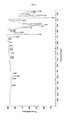
Figure 1 shows the proton nuclear magnetic resonance results of the cross-linked polyphosphonate obtained from Preparative Example according to our invention. -
Figure 2 shows the Fourier Transform Infrared Spectra of the cross-linked polyphosphonate obtained from Preparative Example according to our invention. - Cross-linked polyphosphonate according to an aspect of the present invention includes a unit represented by Formula 1:

- C5 to C6 cycloalkyl or C6 to C20 aryl, each X is the same or different and is independently C1 to C5 linear or branched alkylene, C5 to C6 cycloalkylene or C6 to C20 arylene, each Q is the same or different and is independently

- Z may be a greater than trivalent C1 to C30 alkyl radical, a greater than trivalent C5 to C30 cycloalkyl radical, or a C6 to C30 aryl radical. Specifically, Z may be a tetravalent to heptavalent, for example, tetravalent or pentavalent, C1 to C30 alkyl radical, a C5 to C30 cycloalkyl radical, or a C6 to C30 aryl radical.
k may be an integer from 0 to 2.
n may be an integer from 10 to 1,500.
m may be an integer from 3 to 5. - In one embodiment, Z may be represented by the following units:


- Specifically,
Formula 1 may have a unit represented by Formula 1-1:
- The cross-linked polyphosphonate has a solubility of 0 to 0.0001 g/10ml in tetrahydrofuran when deposited at 25°C for 17 hours. A linear polyphosphonate has a solubility of 0.01 to 0.4 g/10ml in tetrahydrofuran when deposited at 25°C for 17 hours.
- The cross-linked polyphosphonate may have a weight average molecular weight of 1,000 to 300,000 g/mol. In the present invention, the weight average molecular weight is measured by GPC using a Waters 515.
- In one embodiment, a unit Q may be present in an amount of 50 to 98 wt%, preferably 60 to 90 wt% in the entirety of the cross-linked polyphosphonate. Within this range, the resin composition can exhibit excellent flame retardancy and property balance.
- The cross-linked polyphosphonate may be prepared by polymerization of a diol and phosphonic chloride with a polyol having at least three hydroxyl groups as a crosslinker.
- In one embodiment, the diol may be represented by Formula 2:

- Examples of the diol may include 4,4'-dihydroxydiphenyl, 2,2-bis-(4-hydroxyphenyl)-propane, 2,4-bis-(4-hydroxyphenyl)-2-methylbutane, 1,1-bis-(4-hydroxyphenyl)-cyclohexane, 2,2-bis-(3-chloro-4-hydroxyphenyl)-propane, and 2,2-bis-(3,5-dichloro-4-hydroxyphenyl)-propane. Further, as a diphenol compound, hydroquinone and resorcinol may be used. Among these, bisphenols such as 2,2-bis-(4-hydroxyphenyl)-propane, 2,2-bis-(3,5-dichloro-4-hydroxyphenyl)-propane, and 1,1-bis-(4-hydroxyphenyl)-cyclohexane are preferable; and 2,2-bis-(4-hydroxyphenyl)-propane, referred to as bisphenol A, is more preferable.
- The phosphonic dichloride may be represented by Formula 3:

- Specifically, the phosphonic dichloride may be reacted with the diol in an equivalent ratio of 1 to 1.
- The crosslinker may be represented by Formula 4:

- Z may be a greater than trivalent C1 to C30 alkyl radical, a greater than trivalent C5 to C30 cycloalkyl radical, or a greater than trivalent C6 to C30 aryl radical. Specifically, Z may be a tetravalent to heptavalent, for example, tetravalent or pentavalent, C1 to C30 alkyl radical, a greater than trivalent C5 to C30 cycloalkyl radical, or a C6 to C30 aryl radical.
- k may be an integer from 0 to 2.
n may be an integer from 10 to 1,500.
m may be an integer from 3 to 5. - Examples of the crosslinker may include 1,1,1-tris(4-hydroxyphenyl)ethane, 3- or 4-hydroxy aromatic compounds including 4-hydroxybutyl acrylate, trimethylolpropane, trimethylolethane, pentaerythritol, oxypropylated ethylene diamine, ditrimethylolpropane, dipentaerythritol, and glycerin, without being limited thereto. These crosslinkers may be used alone or in combination of two or more thereof.
- The crosslinker may be reacted with the phosphonic dichloride in an equivalent ratio of 0.01 ~ 1 to 1. Within this range, post-treatment can be simplified.
- In one embodiment, reaction of the diol and the phosphonic dichloride may be carried out by a general method in the presence of a basic catalyst. For example, dimethylaminopyridine and alkali metal hydroxides may be used as a catalyst, without being limited thereto. The catalyst may be reacted with the phosphonic dichloride in an equivalent ratio of 0.03 ~ 0.3 to 1, preferably 0.05 ~ 0.1 to 1. The amount of the cross-linked polyphosphonate may increase according to the amount of the catalyst. However, if the cross-linked polyphosphonate is added in an equivalent ratio of greater than 0.3 to 1, the increase rate can be decreased.
- In another embodiment, polymerization may be carried out by interfacial polymerization using a phase transfer catalyst. Examples of the phase transfer catalyst may include tetrabutylammonium iodide, tetrabutylammonium bromide and benzyltriphenylphosphonium chloride, without being limited thereto. Specifically, benzyltriphenylphosphonium chloride may be used.
- The reaction may be carried out at -40 to 40°C, preferably -10 to 5°C. Further, the reaction may be carried out in a nitrogen atmosphere. Reaction time may be 1 to 24 hours, preferably 2 to 3 hours.
- Applicable solvents in the reaction may include methylene chloride, 1,2-dichloroethane, and dichlorobenzene, without being limited thereto. In one embodiment, dichloroethane and water may be used together.
- In one embodiment, hydrochloric acid generated in the course of polymerization may be neutralized with an alkali solution. Here, examples of the alkali solution may include a sodium hydroxide solution and a potassium hydroxide solution.
- In another embodiment, after the polymerization reaction is terminated, adjusting a terminal group with a phenolic compound may further be carried out. In one embodiment, the phenolic compound may be reacted with the phosphonic dichloride in an equivalent ratio of 0.03 ~ 0.3 to 1, preferably 0.04 ~ 0.08 to 1. 4-cumylphenol may be used as the phenolic compound.
- Alternatively, after the polymerization reaction is terminated, post-treatment with alkylene oxide may further be carried out. The alkylene oxide may be added in an equivalent of 2 to 7, preferably 3 to 5 of the acid value of the reaction product. By conducting post-treatment with the alkylene oxide, the acid value of the final product may be remarkably reduced and decomposition of a mixed resin may be prevented.
- The cross-linked polyphosphonate thus prepared may be obtained via washing, solidification, and drying.
- Another aspect of the present invention relates to a flame retardant thermoplastic resin composition including cross-linked polyphosphonate.
- In one embodiment, the composition may include 0.01 to 30 parts by weight of the cross-linked polyphosphonate based on 100 parts by weight of a thermoplastic resin.
- There is no particular limitation as to the kind of the thermoplastic resin. Examples of the thermoplastic resin may include a styrene resin, a polyester resin, a (meth)acrylate resin, a polyamide resin, a polyphenylene ether resin, a polycarbonate resin, a polyolefin resin, and a polyvinyl chloride resin, without being limited thereto. These resins may be used alone or in combination of two or more thereof. The cross-linked polyphosphonate prepared by the method according to the present invention exhibits excellent mechanical strength and has flame retardancy, heat resistance and transparency and thus may be properly applied to resins requiring high heat resistance and high transparency, particularly polycarbonate.
- In one embodiment, the flame retardant thermoplastic resin composition may include 0.01 to 30 parts by weight, preferably 0.1 to 15 parts by weight, and more preferably 0.5 to 10 parts by weight of the cross-linked polyphosphonate based on 100 parts by weight of polycarbonate resin.
- In one embodiment, the flame retardant thermoplastic resin composition may have an IZOD impact strength of 80 kgf· cm/cm or more measured on a 1/8" thick specimen according to ASTM D256, a total combustion time of less than 3 seconds as measured on a 1/8" thick specimen according to UL-94, and a Vicat softening temperature (VST) of 150°C or higher as measured using a 5 kg weight according to ISO R 306.
- For example, the flame retardant thermoplastic resin composition may have an IZOD impact strength of 82 to 150 kgf· cm/cm or more as measured on a 1/8" thick specimen according to ASTM D256, a total combustion time of less than 0 to 2 seconds as measured on a 1/8" thick specimen according to UL-94, and a Vicat softening temperature (VST) of 150 to 180°C or higher as measured using a 5 kg weight according to ISO R 306.
- The thermoplastic resin composition having excellent flame retardancy may further include an additive depending on the purpose thereof. Examples of the additive may include an auxiliary flame retardant, a lubricant, a plasticizer, a heat stabilizer, an antidripping agent, an antioxidant, a compatibilizer, a light stabilizer, a pigment, a dye, and an inorganic additive, without being limited thereto. These additives may be used alone or in combination of two or more thereof. Examples of the inorganic additive may include asbestos, glass fiber, talc, ceramic, and sulfates. The additive may be present in an amount of 30 parts by weight or less, for example 0.01 to 25 parts by weight based on 100 parts by weight of the base resin.
- The thermoplastic resin composition having excellent flame retardancy may be prepared by a general method of preparing a resin composition. For example, the components and other additives may be mixed at the same time and melt-extruded into pellets or chips using an extruder.
- A further aspect of the invention provides a plastic molded article formed of the thermoplastic resin composition having excellent flame retardancy. The thermoplastic resin composition has excellent flame retardancy and superior heat resistance and thus may be widely used for manufacturing housings of electric and electronic products, such as TVs, stereo systems, cellular phones, digital cameras, navigation systems, washing machines, computers, monitors, MP3 players, video players, CD players and dishwashers, office automation equipment, and other large-sized injection molded products.
- There is no particular limitation as to a method of molding a plastic molded article using the thermoplastic resin composition. For example, extrusion, injection, or casting molding methods may be used. The molding may be readily carried out by a person having ordinary skill in the art to which the present invention pertains.
- Next, the present invention will be explained in more detail with reference to the following examples. These examples are provided for illustrative purposes only and are not to be in any way construed as limiting the present invention.
- 2,2-bis-(4-hydroxyphenyl)-propane (100 g, 0.438 mol), 1,1,1-tris(4-hydroxyphenyl)ethane (2.68 g, 0.009 mol) and phenol (4.12 g, 0.44 mol) were dissolved in a IN aqueous potassium hydroxide solution, and then the mixture solution was cooled to 0°C. Phenylphosphonic dichloride (85.4 g, 0.438 mol) and methylene chloride were gently dropped to the mixture solution and stirred for 2 hours. The product was washed twice with methylene chloride and distilled water. Then, a methylene chloride layer was isolated, concentrated under reduced pressure, and deposited in hexane, thereby obtaining white solid cross-linked polyphosphonate at a yield of 92 %.
- The produced cross-linked polyphosphonate was analyzed as follows.
- (1) Proton NMR: NMR from Bruker AVANCE III & Ultrashield Magnet was used, and results are shown in
Fig. 1 . - (2) IR: A Fourier Transform Infrared Spectrometer was used, and results are shown in
Fig. 2 . - (3) Molecular weight (g/mol): Number average molecular weight (Mn) and weight average molecular weight (Mw) were measured by GPC (using WATERS 515 and Shodex LF-804 columns), after which PDI (Mw/Mn) was calculated and results are shown in Table 1.
- (4) Thermogravimetric analysis: Thermogravimetric analysis (TGA, Equipment:
- METTLER TOLEDO) and differential scanning calorimetry (DSC, Equipment: DSC Q100 TA INSTRUMENTS) were used, and results are shown in Table 1.
- (5) Solubility: The cross-linked polyphosphonate prepared in Preparative Example was deposited in tetrahydrofuran at 25 °C for 17 hours, followed by measuring solubility.
- The cross-linked polyphosphonate prepared in Preparative Example was added according to compositions listed in Table 2 to 100 parts by weight of polycarbonate having a weight average molecular weight of 25,000 g/mol (PANLITE L-1250W, Teijin Kasei K.K., Japan), followed by extrusion at 200 to 280°C using a general biaxial extruder, thereby preparing pellets. These pallets were dried at 70°C for 2 hours and formed into a specimen using a 10 oz injection molder at a molding temperature of 180 to 280°C and a mold temperature of 40 to 80°C.
- Physical properties of the prepared specimens were evaluated as follows, and results are shown in Table 2.
(1) Flame retardancy: Flame retardancy was measured on a 1/8" thick specimen according to UL 94 VB standards.
(2) Total combustion time: Total combustion time was measured on a 1/8" thick specimen according to UL 94 standards.
(3) Heat resistance: Vicat softening temperature (VST) was measured using a 5 kg weight according to ISO R 306.
(4) IZOD impact strength: IZOD impact strength was measured on a 1/8" thick notched specimen at room temperature according to ASTM D256 (kgf·cm/cm).Table 2 Example 1 Example 2 Example 3 Polycarbonate resin 100 100 100 Cross-linked polyphosphonate 2 3 5 Flame retardancy (UL94, 1/8") V-0 V-0 V-0 Total combustion time (sec) 1 0 0 Heat resistance (°C) 151 151 150 IZOD (room temperature) 85 83 82 - The same process as in Example 1 was carried out except that the following flame retardants were used according to compositions listed in Table 3 instead of the cross-linked polyphosphonate. Results of measurement are shown in Table 3.
Table 3 Comparative Example 1 2 3 4 5 6 7 8 9 PC 100 100 100 100 100 100 100 100 100 Flame retardant (a) 2 3 5 - - - - - - Flame retardant (b) - - - 2 3 5 - - - Flame retardant (c) - - - - - - 2 3 5 Flame retardancy V-2 (drip) V-2 (drip) V-2 (drip) V-2 (drip) V-2 (drip) V-2 (drip) V-0 V-0 V-0 Total combustion time (sec) 48 34 26 61 45 32 11 3 1 Heat resistance (°C) 141 139 131 144 140 138 145 144 141 IZOD (room temperature) 68 66 63 78 75 71 80 77 76 (a) CR-741S (Trade name, Daihachi, Japan) (b) PX-200 (Trade name, Daihachi, Japan) (c) Polyphosphonate having molecular weight (Mw) of 12,000 obtained by reaction of 2,2-bis-(4-hydroxyphenyl)-propane with phenylphosphonic acid dichloride and substitution of a terminal group by 4-cumylphenol - As shown in Tables 2 and 3, the thermoplastic resin compositions using the cross-linked polyphosphonate according to Examples 1 to 3 have excellent flame retardancy, heat resistance, and impact strength. However, the compositions using monomolecular flame retardants according to Comparative Examples 1 to 6 have deteriorated flame retardancy of V-2 or a decreased total combustion time, and the compositions using a linear polyphosphonate according to Comparative Examples 7 to 9 also have reduced heat resistance and impact strength.
- Although some embodiments have been disclosed herein, it should be understood that these embodiments are provided by way of illustration only, and that various modifications, changes, and alterations can be made without departing from the spirit and scope of the invention. Therefore, the scope of the invention should be limited only by the accompanying claims and equivalents thereof.
| Molecular weight (Kg/mol) | Thermogravimetric analysis | Solubility in THF mg/100ml | ||||
| Mn | Mw | PDI | Temperature of fast degradation | Char percentage at 700°C | Transition Temperature | |
| 21 | 56 | 2.7 | 330°C - 630°C | 18wt% | 116° | 2 |
Claims (15)
- Cross-linked polyphosphonate comprising a unit represented by Formula 1:

each Y is the same or different and is independently hydrogen, C1 to C5 linear or branched alkyl, C5 to C6 cycloalkyl or C6 to C20 aryl, each X is the same or different and is independently C1 to C5 linear or branched alkylene, C5 to C6 cycloalkylene or C6 to C20 arylene, each Q is the same or different and is independently
- The cross-linked polyphosphonate of claim 1, wherein the cross-linked polyphosphonate has a solubility of 0 to 0.0001 g/10ml in tetrahydrofuran when deposited at 25°C for 17 hours.
- The cross-linked polyphosphonate of claim 1 or 2, wherein the cross-linked polyphosphonate has a weight average molecular weight of 1,000 to 300,000 g/mol.
- The cross-linked polyphosphonate of any of claims 1 to 3, wherein Q is present in an amount of 50 to 98 wt% in the entirety of the cross-linked polyphosphonate.
- The cross-linked polyphosphonate of any of claims 1 to 4, wherein the cross-linked polyphosphonate is represented by Formula 1-1:

- The cross-linked polyphosphonate of any of claims 1 to 5, wherein Z comprises one or more of the following units:


- A method of preparing cross-linked polyphosphonate comprising a unit represented by Formula 1, comprising: polymerizing a diol represented by Formula 2 and phosphonic dichloride represented by Formula 3 with a crosslinker represented by Formula 4:


- The method of claim 7, wherein the crosslinker is reacted with the phosphonic dichloride in an equivalent ratio of 0.01 ~ 1 to 1.
- The method of claim 7 or 8, wherein the polymerization is carried out in the presence of a basic catalyst.
- The method of any of claims 7 to 9, wherein the polymerization is carried out by interfacial polymerization in the presence of at least one catalyst comprising tetrabutylammonium iodide, tetrabutylammonium bromide and benzyltriphenylphosphonium chloride or a combination thereof.
- The method of any of claims 7 to 10, further comprising adjusting a terminal group with a phenolic compound.
- The method of claim 11, wherein the phenolic compound is reacted with the phosphonic dichloride in an equivalent ratio of 0.03 ~ 0.3 to 1.
- A flame retardant thermoplastic resin composition comprising the cross-linked polyphosphonate of any one of claims 1 to 6.
- The flame retardant thermoplastic resin composition of claim 13, wherein the composition comprises 0.01 to 30 parts by weight of the cross-linked polyphosphonate based on 100 parts by weight of thermoplastic resin.
- The flame retardant thermoplastic resin composition of claim 13 or 14, wherein the flame retardant thermoplastic resin composition has an IZOD impact strength of 80 kgf· cm/cm or more as measured on a 1/8" thick specimen according to ASTM D256, a total combustion time of less than 3 seconds as measured on a 1/8" thick specimen according to UL-94, and a Vicat softening temperature (VST) of 150°C or higher as measured using a 5 kg weight according to ISO R 306.
Applications Claiming Priority (1)
| Application Number | Priority Date | Filing Date | Title |
|---|---|---|---|
| KR1020100138353A KR101362871B1 (en) | 2010-12-29 | 2010-12-29 | Cross-linked polyphosphonate, method for preparing thereof and flame retardant thermoplastic resin composition comprising the same |
Publications (1)
| Publication Number | Publication Date |
|---|---|
| EP2471840A1 true EP2471840A1 (en) | 2012-07-04 |
Family
ID=45491318
Family Applications (1)
| Application Number | Title | Priority Date | Filing Date |
|---|---|---|---|
| EP11195798A Withdrawn EP2471840A1 (en) | 2010-12-29 | 2011-12-27 | Cross-linked polyphosphonate, method of preparing the same, and flame retardant thermoplastic resin composition including the same |
Country Status (4)
| Country | Link |
|---|---|
| US (1) | US20120172547A1 (en) |
| EP (1) | EP2471840A1 (en) |
| KR (1) | KR101362871B1 (en) |
| CN (1) | CN102532555A (en) |
Cited By (2)
| Publication number | Priority date | Publication date | Assignee | Title |
|---|---|---|---|---|
| EP2746317A1 (en) * | 2012-12-20 | 2014-06-25 | Cheil Industries Inc. | Phosphorous copolymer, method for preparing the same, and flame retardant thermoplastic resin composition including the same |
| EP3565822A4 (en) * | 2017-01-05 | 2020-08-05 | FRX Polymers, Inc. | Curing of epoxy resins with phosphonate oligomers |
Families Citing this family (5)
| Publication number | Priority date | Publication date | Assignee | Title |
|---|---|---|---|---|
| KR101344807B1 (en) * | 2009-12-30 | 2013-12-26 | 제일모직주식회사 | Thermoplastic resin composition including polyphosphonate compound, plastic molded article produced therefrom and method for preparing polyphosphonate compound |
| US20130172471A1 (en) * | 2011-12-29 | 2013-07-04 | Cheil Industries Inc. | Biphenyl Polyphosphonate, Method for Preparing the Same and Thermoplastic Resin Composition Including the Same |
| KR20160128725A (en) * | 2015-04-29 | 2016-11-08 | 삼성에스디아이 주식회사 | Heat-resistant and nonflammable separator and electrochemical battery |
| WO2019084532A1 (en) * | 2017-10-27 | 2019-05-02 | Frx Polymers, Inc. | Phosphonate based halogen-free compositions for printed circuit board applications |
| CN112759966B (en) * | 2020-12-25 | 2022-04-01 | 苏州太湖电工新材料股份有限公司 | Halogen-free flame-retardant insulating paint and preparation method thereof |
Citations (3)
| Publication number | Priority date | Publication date | Assignee | Title |
|---|---|---|---|---|
| US20040167284A1 (en) * | 2003-02-24 | 2004-08-26 | Michael Vinciguerra | Branched polyphosphonates that exhibit an advantageous combination of properties, and methods related thereto |
| US20070203269A1 (en) * | 2005-10-17 | 2007-08-30 | Dieter Freitag | Compositions comprising polyphosphonates and additives that exhibit an advantageous combination of properties, and methods related thereto |
| US20080114127A1 (en) * | 2005-04-25 | 2008-05-15 | Dieter Freitag | Method for producing branched polyphosphonates with narrow molecular weight distributions |
Family Cites Families (7)
| Publication number | Priority date | Publication date | Assignee | Title |
|---|---|---|---|---|
| US3326852A (en) * | 1964-08-10 | 1967-06-20 | Owens Illinois Inc | Resinous polymeric phosphonates |
| US3799953A (en) * | 1972-09-01 | 1974-03-26 | Bayer Ag | 1,4-bis(4,'4''-dihydroxy-triphenylmethyl)benzene |
| DE2925207A1 (en) * | 1979-06-22 | 1981-01-29 | Bayer Ag | THERMOPLASTIC, BRANCHED, AROMATIC POLYPHOSPHONATES, THEIR USE AND A METHOD FOR THE PRODUCTION THEREOF |
| DE2944093A1 (en) * | 1979-10-31 | 1981-05-14 | Bayer Ag, 5090 Leverkusen | METHOD FOR PRODUCING THERMOPLASTIC AROMATIC POLYPHOSPHONATES OF IMPROVED THERMAL AGING RESISTANCE AND USE THEREOF |
| EP0785966B1 (en) | 1994-10-13 | 2006-03-01 | Akzo Nobel N.V. | Polycarbonate-containing polymers flame retarded with oligomeric phosphate esters |
| ES2549732T3 (en) * | 2007-07-30 | 2015-11-02 | Frx Polymers, Inc. | Insoluble and branched polyphosphonates and related methods |
| KR101004668B1 (en) * | 2007-12-28 | 2011-01-04 | 제일모직주식회사 | Flame retardant thermoplastic resin composition and preparation method thereof |
-
2010
- 2010-12-29 KR KR1020100138353A patent/KR101362871B1/en not_active Expired - Fee Related
-
2011
- 2011-12-14 US US13/325,210 patent/US20120172547A1/en not_active Abandoned
- 2011-12-19 CN CN2011104280972A patent/CN102532555A/en active Pending
- 2011-12-27 EP EP11195798A patent/EP2471840A1/en not_active Withdrawn
Patent Citations (3)
| Publication number | Priority date | Publication date | Assignee | Title |
|---|---|---|---|---|
| US20040167284A1 (en) * | 2003-02-24 | 2004-08-26 | Michael Vinciguerra | Branched polyphosphonates that exhibit an advantageous combination of properties, and methods related thereto |
| US20080114127A1 (en) * | 2005-04-25 | 2008-05-15 | Dieter Freitag | Method for producing branched polyphosphonates with narrow molecular weight distributions |
| US20070203269A1 (en) * | 2005-10-17 | 2007-08-30 | Dieter Freitag | Compositions comprising polyphosphonates and additives that exhibit an advantageous combination of properties, and methods related thereto |
Non-Patent Citations (1)
| Title |
|---|
| SCHMIDT M ET AL: "AROMATISCHE POLYPHOSPHONATE: THERMOPLASTISCHE POLYMERE VON EXTREMER BRANDWIDRIGKEIT//AROMATIC POLYPHOSPHONATES: EXCEPTIONALLY FLAME-RESISTANT THERMOPLASTIC POLYMERS", ANGEWANDTE MAKROMOLEKULARE CHEMIE. APPLIED MACROMOLECULARCHEMISTRY AND PHYSICS, WILEY VCH, WEINHEIM, DE, vol. 132, no. 2165, 1 January 1985 (1985-01-01), pages 1 - 18, XP009044253, ISSN: 0003-3146, DOI: 10.1002/APMC.1985.051320101 * |
Cited By (2)
| Publication number | Priority date | Publication date | Assignee | Title |
|---|---|---|---|---|
| EP2746317A1 (en) * | 2012-12-20 | 2014-06-25 | Cheil Industries Inc. | Phosphorous copolymer, method for preparing the same, and flame retardant thermoplastic resin composition including the same |
| EP3565822A4 (en) * | 2017-01-05 | 2020-08-05 | FRX Polymers, Inc. | Curing of epoxy resins with phosphonate oligomers |
Also Published As
| Publication number | Publication date |
|---|---|
| KR101362871B1 (en) | 2014-02-14 |
| KR20120076273A (en) | 2012-07-09 |
| US20120172547A1 (en) | 2012-07-05 |
| CN102532555A (en) | 2012-07-04 |
Similar Documents
| Publication | Publication Date | Title |
|---|---|---|
| US9056978B2 (en) | Non-halogen flame retardant and high rigidity polycarbonate resin composition | |
| EP2870196B1 (en) | Halogen free flame retardant polyamide composition | |
| KR101362871B1 (en) | Cross-linked polyphosphonate, method for preparing thereof and flame retardant thermoplastic resin composition comprising the same | |
| EP2520613A2 (en) | Thermoplastic resin composition including a polymerized phosphorus compound, plastic molded part made from the composition, and method for manufacturing a polymerized phosphorus compound | |
| US20120172506A1 (en) | Polyphosphonate, Method of Preparing the Same, and Flame Retardant Thermoplastic Resin Composition Including the Same | |
| KR101795136B1 (en) | Polycarbonate resin and method for preparing the same | |
| EP2468814A1 (en) | Novel Phosphorus Compound, Method of Preparing the Same and Flame Retardant Thermoplastic Resin Composition Including the Same | |
| KR101204883B1 (en) | Polycarbonate Resin Composition with Good warpage and Flame Retardancy | |
| KR101685245B1 (en) | Copolymerized polycarbonate resin, method for preparing the same and article comprising the same | |
| US12466955B2 (en) | Polyphosphonate resin composition and molded article prepared therefrom | |
| CN115715309B (en) | Polyphosphonate resin composition and molded article made therefrom | |
| KR101629093B1 (en) | Synthetic product, polycarbonate resin therefrom and molded product using the same | |
| KR101611002B1 (en) | Flame retardant polyamide resin composition and article comprising the same | |
| KR20130031702A (en) | Polycarbonate and method for preparing the same | |
| KR20130077706A (en) | Biphenyl polyphosphonate, method for preparing thereof and thermoplastic resin composition comprising the same | |
| KR101469270B1 (en) | Polyphosphonate copolymer, method for preparing thereof and flame retardant thermoplastic resin composition comprising the same | |
| KR102834749B1 (en) | Thermoplastic resin composition and article produced therefrom | |
| KR102824966B1 (en) | Carbonate phosphonate copolymer and thermoplastic resin composition comprising the same | |
| KR101749793B1 (en) | Thermoplastic resin composition and article comprising the same | |
| KR100974015B1 (en) | Non-halogen flame retardant polycarbonate resin composition and plastic molded article | |
| CN1164678C (en) | Flame-retardant thermoplastic resin composition and use thereof | |
| KR20250026320A (en) | Flame retardant impact-modified thermoplastic composition | |
| KR20220086279A (en) | Polycarbonate and molded article formed therefrom | |
| JP2010059349A (en) | Fire-resistant polyarylate resin composition and method of producing the same | |
| KR20180079065A (en) | Copolymerized polycarbonate resin having excellent weather resistance and method for preparing the same |
Legal Events
| Date | Code | Title | Description |
|---|---|---|---|
| 17P | Request for examination filed |
Effective date: 20111227 |
|
| AK | Designated contracting states |
Kind code of ref document: A1 Designated state(s): AL AT BE BG CH CY CZ DE DK EE ES FI FR GB GR HR HU IE IS IT LI LT LU LV MC MK MT NL NO PL PT RO RS SE SI SK SM TR |
|
| AX | Request for extension of the european patent |
Extension state: BA ME |
|
| PUAI | Public reference made under article 153(3) epc to a published international application that has entered the european phase |
Free format text: ORIGINAL CODE: 0009012 |
|
| STAA | Information on the status of an ep patent application or granted ep patent |
Free format text: STATUS: THE APPLICATION HAS BEEN WITHDRAWN |
|
| 18W | Application withdrawn |
Effective date: 20130103 |