EP2471804A1 - Diadenosine antibacterial compounds - Google Patents
Diadenosine antibacterial compounds Download PDFInfo
- Publication number
- EP2471804A1 EP2471804A1 EP10290679A EP10290679A EP2471804A1 EP 2471804 A1 EP2471804 A1 EP 2471804A1 EP 10290679 A EP10290679 A EP 10290679A EP 10290679 A EP10290679 A EP 10290679A EP 2471804 A1 EP2471804 A1 EP 2471804A1
- Authority
- EP
- European Patent Office
- Prior art keywords
- compound
- formula
- alkyl
- alkenyl
- alkynyl
- Prior art date
- Legal status (The legal status is an assumption and is not a legal conclusion. Google has not performed a legal analysis and makes no representation as to the accuracy of the status listed.)
- Granted
Links
- 0 *CC(C(C1O)O)OC1[n]1c(ncnc2N)c2nc1 Chemical compound *CC(C(C1O)O)OC1[n]1c(ncnc2N)c2nc1 0.000 description 5
Images

Classifications
-
- C—CHEMISTRY; METALLURGY
- C07—ORGANIC CHEMISTRY
- C07H—SUGARS; DERIVATIVES THEREOF; NUCLEOSIDES; NUCLEOTIDES; NUCLEIC ACIDS
- C07H19/00—Compounds containing a hetero ring sharing one ring hetero atom with a saccharide radical; Nucleosides; Mononucleotides; Anhydro-derivatives thereof
- C07H19/02—Compounds containing a hetero ring sharing one ring hetero atom with a saccharide radical; Nucleosides; Mononucleotides; Anhydro-derivatives thereof sharing nitrogen
- C07H19/04—Heterocyclic radicals containing only nitrogen atoms as ring hetero atom
- C07H19/16—Purine radicals
-
- A—HUMAN NECESSITIES
- A61—MEDICAL OR VETERINARY SCIENCE; HYGIENE
- A61P—SPECIFIC THERAPEUTIC ACTIVITY OF CHEMICAL COMPOUNDS OR MEDICINAL PREPARATIONS
- A61P31/00—Antiinfectives, i.e. antibiotics, antiseptics, chemotherapeutics
- A61P31/04—Antibacterial agents
-
- A—HUMAN NECESSITIES
- A61—MEDICAL OR VETERINARY SCIENCE; HYGIENE
- A61P—SPECIFIC THERAPEUTIC ACTIVITY OF CHEMICAL COMPOUNDS OR MEDICINAL PREPARATIONS
- A61P43/00—Drugs for specific purposes, not provided for in groups A61P1/00-A61P41/00
-
- C—CHEMISTRY; METALLURGY
- C07—ORGANIC CHEMISTRY
- C07H—SUGARS; DERIVATIVES THEREOF; NUCLEOSIDES; NUCLEOTIDES; NUCLEIC ACIDS
- C07H19/00—Compounds containing a hetero ring sharing one ring hetero atom with a saccharide radical; Nucleosides; Mononucleotides; Anhydro-derivatives thereof
- C07H19/02—Compounds containing a hetero ring sharing one ring hetero atom with a saccharide radical; Nucleosides; Mononucleotides; Anhydro-derivatives thereof sharing nitrogen
- C07H19/04—Heterocyclic radicals containing only nitrogen atoms as ring hetero atom
- C07H19/16—Purine radicals
- C07H19/167—Purine radicals with ribosyl as the saccharide radical
-
- C—CHEMISTRY; METALLURGY
- C12—BIOCHEMISTRY; BEER; SPIRITS; WINE; VINEGAR; MICROBIOLOGY; ENZYMOLOGY; MUTATION OR GENETIC ENGINEERING
- C12Q—MEASURING OR TESTING PROCESSES INVOLVING ENZYMES, NUCLEIC ACIDS OR MICROORGANISMS; COMPOSITIONS OR TEST PAPERS THEREFOR; PROCESSES OF PREPARING SUCH COMPOSITIONS; CONDITION-RESPONSIVE CONTROL IN MICROBIOLOGICAL OR ENZYMOLOGICAL PROCESSES
- C12Q1/00—Measuring or testing processes involving enzymes, nucleic acids or microorganisms; Compositions therefor; Processes of preparing such compositions
- C12Q1/48—Measuring or testing processes involving enzymes, nucleic acids or microorganisms; Compositions therefor; Processes of preparing such compositions involving transferase
- C12Q1/485—Measuring or testing processes involving enzymes, nucleic acids or microorganisms; Compositions therefor; Processes of preparing such compositions involving transferase involving kinase
Definitions
- the present invention relates to compounds for use in the prevention and/or treatment of bacterial infections, pharmaceutical compositions comprising them, and processes for the preparation thereof.
- NAD kinases represent an attractive and novel drug target for antibiotic discovery.
- NADKs are ubiquitous enzymes involved in the last step of the biosynthesis of NADP catalyzing the transfer of a phosphate group on the substrate NAD to produce NADP in the presence of both ATP and Mg 2+ NADKs are also involved in the tight regulation of the NADH/NADPH ratio (8).
- Both NAD(P) and NAD(P)H are essential cofactors for a large number of enzymes involved in various metabolic pathways such as oxidoreductases.
- NADKs were recently shown to be essential for growth in many bacteria (2-4) including various human pathogens such as Mycobacterium tuberculosis (5), Staphylococcus aureus (6), Streptococcus pneumoniae (7), Salmonella enterica (8), and Pseudomonas aeruginosa.
- human pathogens such as Mycobacterium tuberculosis (5), Staphylococcus aureus (6), Streptococcus pneumoniae (7), Salmonella enterica (8), and Pseudomonas aeruginosa.
- NADKs were well known for decades, their genes were cloned only recently (9), subsequently leading to rapid identification of NADK orthologs in many organisms from bacteria, Archaea, plants, and human (Pfam PF01513).
- DTA Di-5'-thioadenosine
- the present invention is thus directed, in one aspect, to various compounds of structure: and its tautomeric, stereoisomeric forms, mixtures of stereoisomeric forms, or pharmaceutically acceptable salt forms thereof, wherein the constituent members are defined infra.
- Another object of the present invention is to provide pharmaceutical compositions comprising the compounds of the present invention wherein the compositions comprise one or more pharmaceutically acceptable excipients and a therapeutically effective amount of at least one of the compounds of the present invention, or a pharmaceutically acceptable salt thereof.
- Another object of the present invention is to provide compounds of formula (I) for use in the prevention and/or treatment of bacterial infections.
- Another object of the present invention is to provide methods of treating or preventing bacterial infections comprising the administration of a therapeutically effective amount of a compound of formula (I) to a patient in need thereof.
- R 1 , R 2 , R 3 , R 4 , X 2 , X 3 and Z are as defined above.
- R 1 , R 2 , R 3 , R 4 , X 2 , and Z are as defined above.
- the compound of formula (I) for use in the prevention or treatment of bacterial infections is selected from:
- the present invention relates to a pharmaceutical composition
- a pharmaceutical composition comprising a compound of formula (I) as defined above, in admixture with one or more pharmaceutically acceptable excipients.
- the present invention relates to a compound of formula (I) for use in the prevention and/or treatment of bacterial infections, notably Gram positive infections, in particular Gram positive coccus infections
- the compounds of the present invention may be prepared in a number of methods well known to those skilled in the art, including, but not limited to those described below, or through modifications of these methods by applying standard techniques known to those skilled in the art of organic synthesis.
- the reagents and starting materials are commercially available, or readily synthesized by well-known techniques by one of ordinary skill in the arts. All substituents, unless otherwise indicated, are as previously defined. All processes disclosed in association with the present invention are contemplated to be practiced on any scale, including milligram, gram, multigram, or commercial industrial scale.
- the compounds of the present invention may contain one or more asymmetrically substituted carbon atoms, and may be isolated in optically active or racemic forms.
- optically active or racemic forms all chiral, diastereomeric, racemic forms and all geometric isomeric forms of a structure are intended, unless the specific stereochemistry or isomeric form is specifically indicated.
- optically active forms mixtures of stereoisomers may be separated by standard techniques including, but not limited to, resolution of racemic forms, normal, reverse-phase, and chiral chromatography, preferential salt formation, recrystallization, and the like, or by chiral synthesis either from active starting materials or by deliberate chiral synthesis of target centers.
- protecting groups are known per se as chemical functional groups that can be selectively appended to and removed from functionalities, such as hydroxyl groups and carboxyl groups. These groups are present in a chemical compound to render such functionality inert to chemical reaction conditions to which the compound is exposed. Any of a variety of protecting groups may be employed with the present invention. Other preferred protecting groups according to the invention may be found in Greene, T.W. and Wuts, P.G.M., "Protective Groups in Organic Synthesis” 2d. Ed., Wiley & Sons, 1991 , or in P.J. Kocienski, “Protecting Groups", 3rd. Ed., Thieme, Stuttgart, NY, 2004 .
- the compound thus prepared may be recovered from the reaction mixture by conventional means.
- the compounds may be recovered by distilling off the solvent from the reaction mixture or, if necessary after distilling off the solvent from the reaction mixture, pouring the residue into water followed by extraction with a water-immiscible organic solvent and distilling off the solvent from the extract.
- the product can, if desired, be further purified by various well known techniques, such as recrystallization, reprecipitation or the various chromatography techniques, notably column chromatography or preparative thin layer chromatography, in particular High Performance Liquid Chromatography (HPLC).
- HPLC High Performance Liquid Chromatography
- the present invention relates to a method for preparing a compound of formula (Ia) as defined above, said method comprising the steps of:
- step i) is a Sonogashira coupling which method is well known to those skilled in the art.
- this coupling may be carried out in the presence of triethylamine (TEA), CuI and Pd(PPh 3 ) 4 in a polar aprotic solvent such as THF.
- the hydroxyl groups can be protected by acetyl groups (Ac). After coupling according to step i), these protecting groups can be removed, for example by contacting the obtained product with aqueous ammonia in methanol, at 50°C.
- the compound of formula (IIIa) can be obtained from the corresponding compound of formula (IVa): Wherein R 1 , R 2 , R 4 , and X 3 are as defined above,
- reaction of conversion of (IVa) into (IIIa) is performed in the presence of HC ⁇ C-X 2 -Br, such as propargyl bromide, a base, in a polar aprotic solvent.
- HC ⁇ C-X 2 -Br such as propargyl bromide
- the invention relates to a method for preparing a compound of formula (Ib) as defined above, said method comprising the steps of:
- activated ester means an ester which can easily undergo a peptide coupling with the amine of formula (IIIb).
- the negatively charged oxygen is first "activated” into a better leaving group.
- activated esters can be obtained according to methods well known from those skilled in the art, notably by reacting the carboxylate compound with an activating agent.
- activating agents mention may be made notably of carbodiimides, such as dicyclohexylcarbodiimide (DCC), 1-ethyl-3-(3-dimethylaminopropyl)carbodiimide hydrochloride (EDC. HCl), or triazoles, such as 1-hydroxy-benzotriazole (HOBt) or 1-hydroxy-7-aza-benzotriazole (HOAt).
- the compound of formula (IIb) can be obtained from the corresponding compound of formula (IVb) :
- R 3 and Z are as defined above, and Hal is Cl, Br or I.
- reaction is carried out in the presence of thioglycolic acid, NaH, in a polar aprotic solvent such as DMF, at room temperature, ie between 20 - 25°C.
- a polar aprotic solvent such as DMF
- the compound of formula (IVb) can be obtained from the corresponding compound of formula (Vb) :
- R 3 and Z are as defined above.
- reaction of converting the compound (Vb) into (IVb) is carried out in the presence of NBS in a polar aprotic solvent, such as DMF.
- the invention also relates to a chemical probe comprising a compound of formula (I) as defined above, coupled to a detectable label.
- the compound of formula (I) is a compound wherein R 16 is NH 2 or N 3 .
- the compound of formula (I) may be coupled to a fluorescent molecule, such as fluorescein or rhodamin, either directly or indirectly via a homo- or heterobifunctional linker such as biotine.
- a fluorescent molecule such as fluorescein or rhodamin
- the detectable label is preferably coupled to the compound of formula (I) via a covalent bond, either directly or indirectly via a homo- or heterobifunctional agent, for example via glutaraldehyde.
- the invention also relates to a method for screening molecules inhibiting NAD kinase, said method comprising the steps of:
- alkyl refers to a straight-chain, or branched alkyl group having 1 to 8 carbon atoms, such as methyl, ethyl, propyl, isopropyl, butyl, isobutyl, sec-butyl, tert-butyl, pentyl, isoamyl, neopentyl, 1-ethylpropyl, 3-methylpentyl, 2,2-dimethylbutyl, 2,3-dimethylbutyl, hexyl, octyl, etc.
- alkyl moiety of alkyl-containing groups such as alkoxy, alkoxycarbonyl, and alkylaminocarbonyl groups, has the same meaning as alkyl defined above.
- Lower alkyl groups which are preferred, are alkyl groups as defined above which contain 1 to 4 carbons.
- a designation such as "C 1 -C 6 alkyl” refers to an alkyl radical containing from 1 to 6 carbon atoms.
- alkenyl refers to a straight chain, or branched hydrocarbon chains of 2 to 6 carbon atoms having at least one carbon-carbon double bond.
- a designation "C 2 -C 6 alkenyl” refers to an alkenyl radical containing from 2 to 6 carbon atoms. Examples of alkenyl groups include ethenyl, propenyl, isopropenyl, 2,4-pentadienyl. "C 2 -C 4 alkenyl" are particularly preferred.
- alkynyl refers to a straight chain, or branched hydrocarbon chains of 2 to 6 carbon atoms having at least one carbon-carbon triple bond.
- a designation "C 2 -C 6 alkynyl” refers to an alkynyl radical containing from 2 to 6 carbon atoms. Examples include ethynyl, propynyl, isopropynyl. "C 2 -C 4 alkynyl" are particularly preferred.
- alkylene refers to a substituted or unsubstituted, branched or straight chained hydrocarbon of 1 to 4 carbon atoms, which is formed by the removal of two hydrogen atoms.
- alkynylene refers to a divalent group derived by the removal of two hydrogen atoms from a straight or branched chain acyclic hydrocarbon group containing a carbon-carbon triple bond.
- aryl refers to a substituted or unsubstituted, mono- or bicyclic hydrocarbon aromatic ring system having 6 to 10 ring carbon atoms. Examples include phenyl and naphthyl.
- heteroaryl refers to an aromatic group containing 5 to 10 ring carbon atoms, preferably 5 to 7, in which one or more ring carbon atoms are replaced by at least one hetero atom such as -O-, -N-, or -S-.
- heteroaryl groups include pyrrolyl, furanyl, thienyl, pyrazolyl, imidazolyl, thiazolyl, isothiazolyl, isoxazolyl, oxazolyl, oxathiolyl, oxadiazolyl, triazolyl, oxatriazolyl, furazanyl, tetrazolyl, pyridyl, pyrazinyl, pyrimidinyl, pyridazinyl, triazinyl, indolyl, isoindolyl, indazolyl, benzofuranyl, isobenzofuranyl, purinyl, quinazolinyl, quinolyl, isoquinolyl, benzoimidazolyl, benzothiazolyl, benzothiophenyl, thianaphthenyl, benzoxazolyl, benzisoxazolyl, cinnolin
- fused ring systems including, for example, ring systems in which an aromatic ring is fused to a heterocycloalkyl ring.
- fused ring systems include, for example, phthalamide, phthalic anhydride, indoline, isoindoline, tetrahydroisoquinoline, chroman, isochroman, chromene, and isochromene.
- the term "subject” refers to a warm blooded animal such as a mammal, preferably a human, or a human child, which is afflicted with, or has the potential to be afflicted with one or more diseases and conditions described herein.
- a "therapeutically effective amount” refers to an amount of a compound of the present invention effective to prevent or treat the symptoms of particular disorder.
- disorders include, but are not limited to, those pathological and neurological disorders associated with the aberrant activity of the receptors described herein, wherein the treatment or prevention comprises inhibiting, inducing, or enhancing the activity thereof by contacting the receptor with a compound of the present invention.
- the term "pharmaceutically acceptable” refers to those compounds, materials, compositions, and/or dosage forms which are, within the scope of sound medical judgment, suitable for contact with the tissues of human beings and animals without excessive toxicity, irritation, allergic response, or other problem complications commensurate with a reasonable benefit/risk ratio.
- the present invention is directed to pharmaceutically acceptable salts of the compounds described above.
- pharmaceutically acceptable salts includes salts of compounds of the present invention derived from the combination of such compounds with non-toxic acid or base addition salts.
- Acid addition salts include inorganic acids such as hydrochloric, hydrobromic, hydroiodic, sulfuric, nitric and phosphoric acid, as well as organic acids such as acetic, citric, propionic, tartaric, glutamic, salicylic, oxalic, methanesulfonic, paratoluenesulfonic, succinic, and benzoic acid, and related inorganic and organic acids.
- inorganic acids such as hydrochloric, hydrobromic, hydroiodic, sulfuric, nitric and phosphoric acid
- organic acids such as acetic, citric, propionic, tartaric, glutamic, salicylic, oxalic, methanesulfonic, paratoluenesulfonic, succinic, and benzoic acid, and related inorganic and organic acids.
- Base addition salts include those derived from inorganic bases such as ammonium and alkali and alkaline earth metal hydroxides, carbonates, bicarbonates, and the like, as well as salts derived from basic organic amines such as aliphatic and aromatic amines, aliphatic diamines, hydroxy alkamines, and the like.
- bases useful in preparing the salts of this invention thus include ammonium hydroxide, potassium carbonate, sodium bicarbonate, calcium hydroxide, methylamine, diethylamine, ethylenediamine, cyclohexylamine, ethanolamine and the like.
- salts are included in the invention. They may serve as intermediates in the purification of the compounds, in the preparation of other salts, or in the identification and characterization of the compounds or intermediates.
- Reagents and solvents for synthesis were obtained from commercial suppliers and used without further purification. Standard nucleosides and nucleotides were obtained from commercial suppliers. 5'-Methylthio-5'-deoxyadenosine (MTA, 1 ) was commercially available. Flash chromatography was performed using silica gel 60 (Merck) and the indicated solvent mixtures.
- Preparative and analytical HPLC were carried out on an Agilent system (1100 series) using a C18 reverse phase column (Kromasil, 5 ⁇ 100 ⁇ ) at a flow rate of 4.0 ml/min or 1 ml/min and a linear gradient of CH 3 CN in 20 mM triethylammonium acetate buffer (TEAA) at pH 7.0 over 20 min.
- 1 H and 13 C NMR spectra were recorded on a Bruker Avance 400 spectrometer, operating at 400.13 MHz and 100.62 MHz, respectively. Chemical shifts are given in ppm ( ⁇ ), coupling constants ( J ) are reported in Hertz and the normal abbreviations are used.
- High resolution mass spectra were recorded on a Waters Q-TOF micro MS instrument using a mobile phase of acetonitrile/water with 0.1 % formic acid.
- 5'-Bromo-5'-deoxyadenosine ( 2 ) was synthesized by direct halogenation of adenosine [12].
- 5'-Fluoro-5'-deoxyadenosine ( 3 ) [13] and 5'-azido-5'-deoxyadenosine ( 6 ) were prepared starting from 2',3'- O- isopopylidene-adenosine.
- 5'-Amino-5'-deoxyadenosine ( 7 ) was obtained by catalytic hydrogenation of 5'-azido-5'-deoxyadenosine ( 6 ).
- 8-Bromo nucleosides 8 and 9 were obtained by reacting 6 and 7 with NBS in anhydrous DMF.
- 5'- O -Propargylic derivative 4 was obtained by reacting propargyl bromide in the presence of NaH with N 6 -benzoyl-2',3'- O -isopopylidene-adenosine according to reported procedure [14], followed by removal of protecting groups.
- bi-ligand 17 is outlined in Scheme 2. Reaction of phthalimidoadenylate 11 4 with NBS (2 eq.) in anhydrous DMF at room temperature for 2 days afforded 14 in 40% yield after purification by flash chromatography (CH 2 Cl 2 /MeOH, 95/5). To a stirred solution of thioglycolic acid (2 mmol) and NaH (60% in oil, 4 mmol) in anhydrous DMF (10 mL) was added compound 14 (0.51 g, 1 mmol) in DMF (1 mL). After stirring overnight at room temperature, the reaction mixture was concentrated to dryness. The residue was taken up in water and extracted with AcOEt (3 times).
- His-tagged LmNADK1 wild-type and His-tagged SaNADK were expressed and purified on cobalt-based IMAC resins (Clontech) as previously published 13 .
- the NAD kinase activity was determined by measuring the absorbance at 340 nm to follow the formation of reduced NADP produced by a coupling enzyme (Glucose-6-phosphate dehydrogenase from yeast). Coupling enzyme and its substrate were purchased from Sigma-Aldrich.
- the assay was performed in a 0.5 mL sample of (50 mM Tris-HCl pH 7.4, 10 mM MgCl2, 1mM Glucose-6-phosphate, 2mM sodium citrate) containing Glucose-6-phosphate dehydrogenase and NADK at 30°C using a spectrophotometer Eppendorf ECOM 6122.
- IC50 was determined, in the presence of 1 mM NAD and 4 mM ATP (for LmNADK1) or 2mM ATP (for SaNADK).
- Dixon plots were used to determine KI in the presence of 4 mM ATP (for LmNADK1) or 2mM ATP (for Sa NADK) and three NAD concentrations (0.2, 0.5 and 1 mM), It was also checked that the inhibitors had no effect on the coupling enzyme activity.
- each bacterial suspension was serially diluted in BHI and plated on BHI agar plates in duplicates. Plates were incubated at 37°C for 24h to 48h and the number of colony forming units was determined.
- the human cervical carcinoma HeLa cells were maintained in a humidified atmosphere at 37 °C in 5% CO 2 in 75-cm 2 plastic flasks in Dulbecco's Modified Eagle Medium (DMEM, Gibco) supplemented with 10% foetal bovine serum (FBS, APP), 100 U/mL penicillin, and 10 ⁇ g/mL streptomycin.
- DMEM Dulbecco's Modified Eagle Medium
- FBS foetal bovine serum
- streptomycin 10 ⁇ g/mL
- HeLa cells were seeded in 96-well plates at low density in presence of DMEM supplemented with 10% FBS and treated with different compounds at 10 ⁇ M for 96h.
- the final concentration of DMSO in the culture medium was at 0.1 % (v/v) to avoid toxicity of the solvent. Cell shape and adherence were monitored and all assays were performed in duplicate. DMSO was used as negative control.
- Adenosine derivatives 1-10 were tested on the purified enzyme as previously described [11]. Only compound 9 exhibited very weak inhibition (IC 50 value of 0.3 mM).
- NADK inhibitors 17, 19 and 22 were assayed for bactericidal activity against a human pathogenic strain of S . aureus.
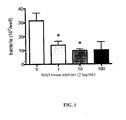
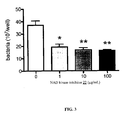
- NADK inhibitors present a significant bactericidal activity at 1 ⁇ g/mL for inhibitors 17 and 22, and at 10 ⁇ g/mL for inhibitor 19. Besides, further increasing the concentration of the inhibitors do not lead to any increase in bactericidal activity. These efficiencies compare favorably with that of reference compounds such as vancomycin (8 ⁇ g/mL).
Landscapes
- Chemical & Material Sciences (AREA)
- Organic Chemistry (AREA)
- Health & Medical Sciences (AREA)
- Life Sciences & Earth Sciences (AREA)
- Engineering & Computer Science (AREA)
- General Health & Medical Sciences (AREA)
- Biochemistry (AREA)
- Biotechnology (AREA)
- Genetics & Genomics (AREA)
- Molecular Biology (AREA)
- Wood Science & Technology (AREA)
- Zoology (AREA)
- Proteomics, Peptides & Aminoacids (AREA)
- Bioinformatics & Cheminformatics (AREA)
- Public Health (AREA)
- Veterinary Medicine (AREA)
- Animal Behavior & Ethology (AREA)
- Pharmacology & Pharmacy (AREA)
- Nuclear Medicine, Radiotherapy & Molecular Imaging (AREA)
- Medicinal Chemistry (AREA)
- Chemical Kinetics & Catalysis (AREA)
- General Chemical & Material Sciences (AREA)
- General Engineering & Computer Science (AREA)
- Biophysics (AREA)
- Immunology (AREA)
- Physics & Mathematics (AREA)
- Analytical Chemistry (AREA)
- Microbiology (AREA)
- Communicable Diseases (AREA)
- Oncology (AREA)
- Pharmaceuticals Containing Other Organic And Inorganic Compounds (AREA)
- Investigating Or Analysing Biological Materials (AREA)
- Saccharide Compounds (AREA)
Abstract

Description
- The present invention relates to compounds for use in the prevention and/or treatment of bacterial infections, pharmaceutical compositions comprising them, and processes for the preparation thereof.
- The search for new antibacterial compounds has become increasingly important with the emergence of antibiotic resistance worldwide (1).
- In this regard, NAD kinases (NADKs, EC 2.7.1.23) represent an attractive and novel drug target for antibiotic discovery. NADKs are ubiquitous enzymes involved in the last step of the biosynthesis of NADP catalyzing the transfer of a phosphate group on the substrate NAD to produce NADP in the presence of both ATP and Mg2+ NADKs are also involved in the tight regulation of the NADH/NADPH ratio (8). Both NAD(P) and NAD(P)H are essential cofactors for a large number of enzymes involved in various metabolic pathways such as oxidoreductases. It is therefore not surprising that NADKs were recently shown to be essential for growth in many bacteria (2-4) including various human pathogens such as Mycobacterium tuberculosis (5), Staphylococcus aureus (6), Streptococcus pneumoniae (7), Salmonella enterica (8), and Pseudomonas aeruginosa. Besides, while the activity of NADKs has been well known for decades, their genes were cloned only recently (9), subsequently leading to rapid identification of NADK orthologs in many organisms from bacteria, Archaea, plants, and human (Pfam PF01513). Advantageously, it has been shown that bacterial and human enzymes show significant functional and sequence divergences, and the NADK activity in human cells is low (10). Inhibitors of NADKs should therefore prove to be useful as antibiotics, thereby warranting the search for such inhibitors.
- Di-5'-thioadenosine (DTA) has thus been recently reported to be a synthetic inhibitor of the NADK from Listeria monocytogenes (11). This compound inhibits NADK with a micromolar affinity (Ki ≈ 0.02 mM). However, its antibacterial activity, and hence its potential efficiency as an antibiotic have not been assessed.
- Accordingly, it is an object of the present invention to provide alternative compounds useful for treating bacterial infections.
- The present invention is thus directed, in one aspect, to various compounds of structure:

- Another object of the present invention is to provide pharmaceutical compositions comprising the compounds of the present invention wherein the compositions comprise one or more pharmaceutically acceptable excipients and a therapeutically effective amount of at least one of the compounds of the present invention, or a pharmaceutically acceptable salt thereof.
- Another object of the present invention is to provide compounds of formula (I) for use in the prevention and/or treatment of bacterial infections.
- Another object of the present invention is to provide methods of treating or preventing bacterial infections comprising the administration of a therapeutically effective amount of a compound of formula (I) to a patient in need thereof.
- These and other objects, features and advantages of the compounds of formula (I) will be disclosed in the following detailed description of the patent disclosure.
- In a first object, the present invention provides compounds of formula (I):

- R1 is H, C1-C6 alkyl, C2-C6 alkenyl, or C2-C6 alkynyl, said alkyl, alkenyl or alkynyl being optionally substituted by SR5, NR5R5A or OR5;
- R2 is H, F, Cl, Br, I, OR6, or NHR7;
- R3 is H, Cl, Br, F, I, OR8, or NHR9;
- R4 is H, Cl, Br, F, I, CH3, SCH2COOH, SR10, SeR11, CH2R12, C≡CR13, or CH=CHR14;
- X1 is -S-, -Se-, -CH2-, -CH=CH-, or -C≡C-;
- X2 is C1-C4 alkylene, C2-C4 alkenylene, or C2-C4 alkynylene;
- X3 is -NHC(=O)-, -C(=O)NH-, -NR15-, -SO2NH- -NHSO2- -CH2-, -O-, - S-;
- Z is

- or Z is C6-C10 aryl or 5 to 7 membered heteroaryl, wherein said aryl and heteroaryl are optionally substituted with 1 to 3 R0 groups;
- R0 is F, Cl, Br, I, OH, NH2, NO2, C1-C6 alkyl, C2-C6 alkenyl, or C2-C6 alkynyl;
- R5, R5A, R6, R7, R8, R9, R15 are each independently selected from H, C1-C6 alkyl, C2-C6 alkenyl, or C2-C6 alkynyl;
- R10, R11, R12, R13 and R14 are each independently selected from H, C1-C6 alkyl, C2-C6 alkenyl, or C2-C6 alkynyl;
- R16 is H, F, Cl, Br, I, OH, NH2, N3 or OCH2C≡CH;
- and the tautomeric, stereoisomeric forms, mixtures of stereoisomeric forms or pharmaceutically acceptable salt forms thereof.
- In certain aspects, there are included compounds of formula (Ia):
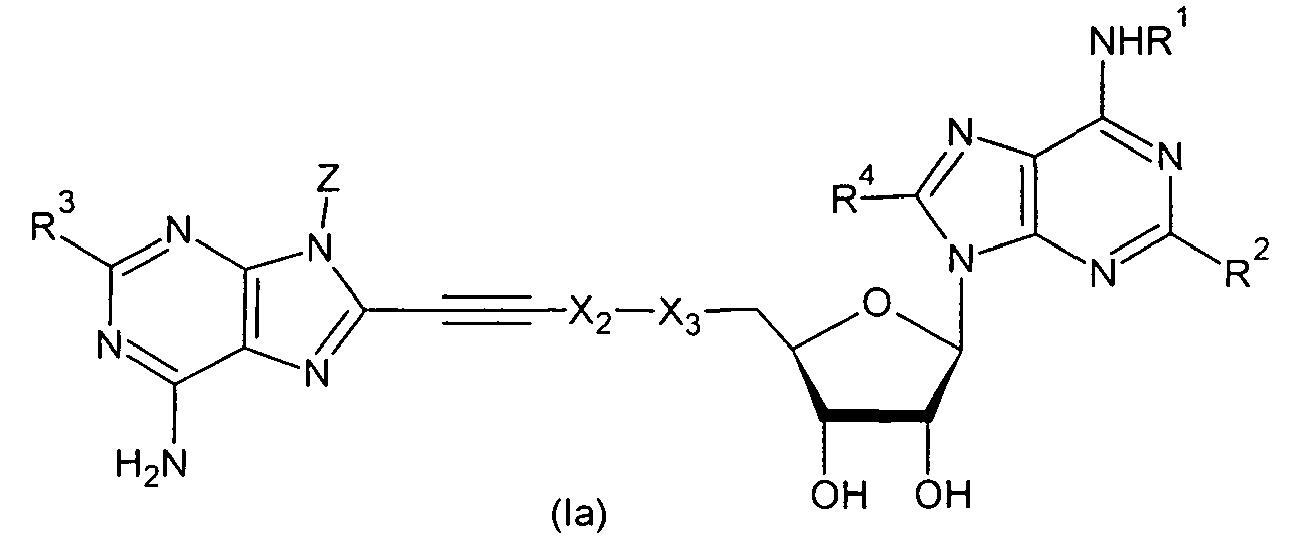
- Wherein R1, R2, R3, R4, X2, X3 and Z are as defined above.
- In another aspect, there are included compounds of formula (Ia) wherein X3 is -O- or -NH-.
- In yet another aspect, there are included compounds of formula (Ib):

- Wherein R1, R2, R3, R4, X2, and Z are as defined above.
- In a preferred aspect, there are included compound of formula (I) wherein X2 is C1-C4 alkylene, more preferably -CH2-.
- In other aspects of the present invention, there are included compounds of formula (I) wherein Z is

- In other aspects of the present invention, there are included compounds of formula (I) wherein R16 is OH or NH2, notably NH2.
- In additional aspects of the present invention, there are included compounds of formula (I) wherein R1 is H.
- In certain aspects, there are included compounds of formula (I) wherein R3 is H.
- In other aspects of the present invention, there are included compounds of formula (I) wherein R2 is H.
- In other aspects of the present invention, there are included compounds of formula (I) wherein R4 is H.
- Preferably, the compound of formula (I) for use in the prevention or treatment of bacterial infections is selected from:
- 5'-amino-5'-deoxyadenosin-8-yl-thio-N-[(5'-amino-5'-deoxyadenosine)methyl]acetamide ;
- 8-[3-N-(5'-deoxyadenosyl)aminoprop-1-ynyl]adenosine ;
- 8-[3-(5'-deoxyadenosyl)methoxyprop-1-ynyl]adenosine.
- In another object, the present invention relates to a pharmaceutical composition comprising a compound of formula (I) as defined above, in admixture with one or more pharmaceutically acceptable excipients.
- In another object, the present invention relates to a compound of formula (I) for use in the prevention and/or treatment of bacterial infections, notably Gram positive infections, in particular Gram positive coccus infections
- The compounds of the present invention may be prepared in a number of methods well known to those skilled in the art, including, but not limited to those described below, or through modifications of these methods by applying standard techniques known to those skilled in the art of organic synthesis. The reagents and starting materials are commercially available, or readily synthesized by well-known techniques by one of ordinary skill in the arts. All substituents, unless otherwise indicated, are as previously defined. All processes disclosed in association with the present invention are contemplated to be practiced on any scale, including milligram, gram, multigram, or commercial industrial scale.
- It will be appreciated that the compounds of the present invention may contain one or more asymmetrically substituted carbon atoms, and may be isolated in optically active or racemic forms. Thus, all chiral, diastereomeric, racemic forms and all geometric isomeric forms of a structure are intended, unless the specific stereochemistry or isomeric form is specifically indicated. It is well known in the art how to prepare such optically active forms. For example, mixtures of stereoisomers may be separated by standard techniques including, but not limited to, resolution of racemic forms, normal, reverse-phase, and chiral chromatography, preferential salt formation, recrystallization, and the like, or by chiral synthesis either from active starting materials or by deliberate chiral synthesis of target centers.
- As will be readily understood, functional groups present on the compounds of Formula I may contain protecting groups. Protecting groups are known per se as chemical functional groups that can be selectively appended to and removed from functionalities, such as hydroxyl groups and carboxyl groups. These groups are present in a chemical compound to render such functionality inert to chemical reaction conditions to which the compound is exposed. Any of a variety of protecting groups may be employed with the present invention. Other preferred protecting groups according to the invention may be found in Greene, T.W. and Wuts, P.G.M., "Protective Groups in Organic Synthesis" 2d. Ed., Wiley & Sons, 1991, or in P.J. Kocienski, "Protecting Groups", 3rd. Ed., Thieme, Stuttgart, NY, 2004.
- The compound thus prepared may be recovered from the reaction mixture by conventional means. For example, the compounds may be recovered by distilling off the solvent from the reaction mixture or, if necessary after distilling off the solvent from the reaction mixture, pouring the residue into water followed by extraction with a water-immiscible organic solvent and distilling off the solvent from the extract. Additionally, the product can, if desired, be further purified by various well known techniques, such as recrystallization, reprecipitation or the various chromatography techniques, notably column chromatography or preparative thin layer chromatography, in particular High Performance Liquid Chromatography (HPLC).
- In another object, the present invention relates to a method for preparing a compound of formula (Ia) as defined above, said method comprising the steps of:
- i. Coupling a compound of formula (IIa) with a compound of formula (IIIa),


- R1, R2, R3, R4, X2, X3 and Z are as defined above,
- Hal is Br, I, or Cl,
- the hydroxyl groups, when present, being protected by a hydroxyl protecting group (Pr),
- ii. Deprotecting the hydroxyl groups of the obtained compound, and optionally
- iii. Recovering the obtained compound of formula (Ia).
- In a preferred aspect, step i) is a Sonogashira coupling which method is well known to those skilled in the art. In particular, this coupling may be carried out in the presence of triethylamine (TEA), CuI and Pd(PPh3)4 in a polar aprotic solvent such as THF.
- The hydroxyl groups can be protected by acetyl groups (Ac). After coupling according to step i), these protecting groups can be removed, for example by contacting the obtained product with aqueous ammonia in methanol, at 50°C.
- In still further aspects, the compound of formula (IIIa) can be obtained from the corresponding compound of formula (IVa):

- Generally, the reaction of conversion of (IVa) into (IIIa) is performed in the presence of HC≡C-X2-Br, such as propargyl bromide, a base, in a polar aprotic solvent.
- In another object, the invention relates to a method for preparing a compound of formula (Ib) as defined above, said method comprising the steps of:
- i. Coupling a compound of formula (IIb) with a compound of formula (IIIb),

- R1 is OR18, or Hal,
- Hal is Br, Cl, or I , preferably Cl,
- R18 is H, C1-C6 alkyl, or is such that C(=O)OR18 forms an activated ester;
- Z is as defined above, the hydroxyl groups, when present, being protected by an hydroxyl protecting group;
- i. Deprotecting the hydroxyl groups of the obtained product; and optionally
- ii. Recovering the obtained compound of formula (Ib).
- As used herein, "activated ester" means an ester which can easily undergo a peptide coupling with the amine of formula (IIIb). Thus, to enhance the electrophilicity of the corresponding carboxylate group, the negatively charged oxygen is first "activated" into a better leaving group. Such activated esters can be obtained according to methods well known from those skilled in the art, notably by reacting the carboxylate compound with an activating agent. As examples of activating agents, mention may be made notably of carbodiimides, such as dicyclohexylcarbodiimide (DCC), 1-ethyl-3-(3-dimethylaminopropyl)carbodiimide hydrochloride (EDC. HCl), or triazoles, such as 1-hydroxy-benzotriazole (HOBt) or 1-hydroxy-7-aza-benzotriazole (HOAt).
- According to a further aspect, the compound of formula (IIb) can be obtained from the corresponding compound of formula (IVb) :

- Wherein R3 and Z are as defined above, and Hal is Cl, Br or I.
- Generally, the reaction is carried out in the presence of thioglycolic acid, NaH, in a polar aprotic solvent such as DMF, at room temperature, ie between 20 - 25°C.
- In still further aspects of the present invention, the compound of formula (IVb) can be obtained from the corresponding compound of formula (Vb) :

- Wherein, R3 and Z are as defined above.
- Generally the reaction of converting the compound (Vb) into (IVb) is carried out in the presence of NBS in a polar aprotic solvent, such as DMF.
- The above reactions can be carried out by the skilled person by applying or adapting the methods illustrated in the examples hereinafter.
- In another object, the invention also relates to a chemical probe comprising a compound of formula (I) as defined above, coupled to a detectable label.
- Preferably, the compound of formula (I) is a compound wherein R16 is NH2 or N3.
- A wide variety of detectable labels may be used, such as those disclosed notably in "The Molecular Probes® Handbook", 11th. Edition Thus, the compound of formula (I) may be coupled to a fluorescent molecule, such as fluorescein or rhodamin, either directly or indirectly via a homo- or heterobifunctional linker such as biotine.
- The detectable label is preferably coupled to the compound of formula (I) via a covalent bond, either directly or indirectly via a homo- or heterobifunctional agent, for example via glutaraldehyde. This covalent bond may be notably a -NH-C(=O)- bond.
- In another object, the invention also relates to a method for screening molecules inhibiting NAD kinase, said method comprising the steps of:
- i. contacting NAD kinase with a chemical probe as defined above with a molecule to be screened ;
- ii. determining the quantity of chemical probe bound or unbound to said NAD kinase ; and
- iii. deducing therefrom if the screened molecule is an inhibitor of the said NAD kinase.
- The following terms and expressions contained herein are defined as follows:
- As used herein, the term "alkyl" refers to a straight-chain, or branched alkyl group having 1 to 8 carbon atoms, such as methyl, ethyl, propyl, isopropyl, butyl, isobutyl, sec-butyl, tert-butyl, pentyl, isoamyl, neopentyl, 1-ethylpropyl, 3-methylpentyl, 2,2-dimethylbutyl, 2,3-dimethylbutyl, hexyl, octyl, etc. The alkyl moiety of alkyl-containing groups, such as alkoxy, alkoxycarbonyl, and alkylaminocarbonyl groups, has the same meaning as alkyl defined above. Lower alkyl groups, which are preferred, are alkyl groups as defined above which contain 1 to 4 carbons. A designation such as "C1-C6 alkyl" refers to an alkyl radical containing from 1 to 6 carbon atoms.
- As used herein, the term "alkenyl" refers to a straight chain, or branched hydrocarbon chains of 2 to 6 carbon atoms having at least one carbon-carbon double bond. A designation "C2-C6 alkenyl" refers to an alkenyl radical containing from 2 to 6 carbon atoms. Examples of alkenyl groups include ethenyl, propenyl, isopropenyl, 2,4-pentadienyl. "C2-C4 alkenyl" are particularly preferred.
- As used herein, the term "alkynyl" refers to a straight chain, or branched hydrocarbon chains of 2 to 6 carbon atoms having at least one carbon-carbon triple bond. A designation "C2-C6 alkynyl" refers to an alkynyl radical containing from 2 to 6 carbon atoms. Examples include ethynyl, propynyl, isopropynyl. "C2-C4 alkynyl" are particularly preferred.
- As used herein, the term "alkylene" refers to a substituted or unsubstituted, branched or straight chained hydrocarbon of 1 to 4 carbon atoms, which is formed by the removal of two hydrogen atoms. A designation such as "C1-C4 alkylene" refers to an alkylene radical containing from 1 to 4 carbon atoms. Examples include methylene (-CH2-), propylidene (CH3CH2CH=), 1,2-ethandiyl (-CH2CH2-), etc.
- As used herein, "alkenylene" refers to a divalent group derived from a straight or branched chain hydrocarbon containing at least one carbon-carbon double bond. Examples of alkenylene include -CH=CH-, -CH2CH=CH-, -C(CH3)=CH-, -CH2 CH=CHCH2-, and the like.
- As used herein, "alkynylene" refers to a divalent group derived by the removal of two hydrogen atoms from a straight or branched chain acyclic hydrocarbon group containing a carbon-carbon triple bond.
- As used herein, the term "aryl" refers to a substituted or unsubstituted, mono- or bicyclic hydrocarbon aromatic ring system having 6 to 10 ring carbon atoms. Examples include phenyl and naphthyl.
- As used herein, the term "heteroaryl" refers to an aromatic group containing 5 to 10 ring carbon atoms, preferably 5 to 7, in which one or more ring carbon atoms are replaced by at least one hetero atom such as -O-, -N-, or -S-. Examples of heteroaryl groups include pyrrolyl, furanyl, thienyl, pyrazolyl, imidazolyl, thiazolyl, isothiazolyl, isoxazolyl, oxazolyl, oxathiolyl, oxadiazolyl, triazolyl, oxatriazolyl, furazanyl, tetrazolyl, pyridyl, pyrazinyl, pyrimidinyl, pyridazinyl, triazinyl, indolyl, isoindolyl, indazolyl, benzofuranyl, isobenzofuranyl, purinyl, quinazolinyl, quinolyl, isoquinolyl, benzoimidazolyl, benzothiazolyl, benzothiophenyl, thianaphthenyl, benzoxazolyl, benzisoxazolyl, cinnolinyl, phthalazinyl, naphthyridinyl, and quinoxalinyl. Included within the definition of "heteroaryl" are fused ring systems, including, for example, ring systems in which an aromatic ring is fused to a heterocycloalkyl ring. Examples of such fused ring systems include, for example, phthalamide, phthalic anhydride, indoline, isoindoline, tetrahydroisoquinoline, chroman, isochroman, chromene, and isochromene.
- As used herein, the term "subject" refers to a warm blooded animal such as a mammal, preferably a human, or a human child, which is afflicted with, or has the potential to be afflicted with one or more diseases and conditions described herein.
- As used herein, a "therapeutically effective amount" refers to an amount of a compound of the present invention effective to prevent or treat the symptoms of particular disorder. Such disorders include, but are not limited to, those pathological and neurological disorders associated with the aberrant activity of the receptors described herein, wherein the treatment or prevention comprises inhibiting, inducing, or enhancing the activity thereof by contacting the receptor with a compound of the present invention.
- As used herein, the term "pharmaceutically acceptable" refers to those compounds, materials, compositions, and/or dosage forms which are, within the scope of sound medical judgment, suitable for contact with the tissues of human beings and animals without excessive toxicity, irritation, allergic response, or other problem complications commensurate with a reasonable benefit/risk ratio.
- The meanings of all the other terms used in the description of the present invention are well known in the art.
- In another aspect, the present invention is directed to pharmaceutically acceptable salts of the compounds described above. As used herein, "pharmaceutically acceptable salts" includes salts of compounds of the present invention derived from the combination of such compounds with non-toxic acid or base addition salts.
- Acid addition salts include inorganic acids such as hydrochloric, hydrobromic, hydroiodic, sulfuric, nitric and phosphoric acid, as well as organic acids such as acetic, citric, propionic, tartaric, glutamic, salicylic, oxalic, methanesulfonic, paratoluenesulfonic, succinic, and benzoic acid, and related inorganic and organic acids.
- Base addition salts include those derived from inorganic bases such as ammonium and alkali and alkaline earth metal hydroxides, carbonates, bicarbonates, and the like, as well as salts derived from basic organic amines such as aliphatic and aromatic amines, aliphatic diamines, hydroxy alkamines, and the like. Such bases useful in preparing the salts of this invention thus include ammonium hydroxide, potassium carbonate, sodium bicarbonate, calcium hydroxide, methylamine, diethylamine, ethylenediamine, cyclohexylamine, ethanolamine and the like.
- In addition to pharmaceutically acceptable salts, other salts are included in the invention. They may serve as intermediates in the purification of the compounds, in the preparation of other salts, or in the identification and characterization of the compounds or intermediates.
- Other features of the invention will become apparent in the course of the following descriptions of exemplary embodiments. These examples are given for illustration of the invention and are not intended to be limiting thereof.
- 100 µL suspensions of S. aureus corresponding to 2.103 bacteria were incubated overnight at 37°C with increasing concentrations of inhibitor (1 to 100 µg/mL). Bacterial killing (percent) was determined as the ratio of colony forming units after incubation with inhibitor to that of colony forming units after incubation with buffer alone. Data are mean values ±SD from three separate experiments. * indicates a statistical significance in Student's t-test of p < 0.05.
- Reagents and solvents for synthesis were obtained from commercial suppliers and used without further purification. Standard nucleosides and nucleotides were obtained from commercial suppliers. 5'-Methylthio-5'-deoxyadenosine (MTA, 1) was commercially available. Flash chromatography was performed using silica gel 60 (Merck) and the indicated solvent mixtures. Preparative and analytical HPLC were carried out on an Agilent system (1100 series) using a C18 reverse phase column (Kromasil, 5µ 100Å) at a flow rate of 4.0 ml/min or 1 ml/min and a linear gradient of CH3CN in 20 mM triethylammonium acetate buffer (TEAA) at pH 7.0 over 20 min. 1H and 13C NMR spectra were recorded on a Bruker Avance 400 spectrometer, operating at 400.13 MHz and 100.62 MHz, respectively. Chemical shifts are given in ppm (δ), coupling constants (J) are reported in Hertz and the normal abbreviations are used. High resolution mass spectra were recorded on a Waters Q-TOF micro MS instrument using a mobile phase of acetonitrile/water with 0.1 % formic acid.
-

- 5'-Bromo-5'-deoxyadenosine (2) was synthesized by direct halogenation of adenosine [12]. 5'-Fluoro-5'-deoxyadenosine (3) [13] and 5'-azido-5'-deoxyadenosine (6) were prepared starting from 2',3'-O-isopopylidene-adenosine. 5'-Amino-5'-deoxyadenosine (7) was obtained by catalytic hydrogenation of 5'-azido-5'-deoxyadenosine (6). 8-Bromo nucleosides 8 and 9 were obtained by reacting 6 and 7 with NBS in anhydrous DMF. 5'-O-Propargylic derivative 4 was obtained by reacting propargyl bromide in the presence of NaH with N 6-benzoyl-2',3'-O-isopopylidene-adenosine according to reported procedure [14], followed by removal of protecting groups.
-

- The synthesis of compound 5 is outlined in
Scheme 1. Amino 12 was synthesized in two steps from 2',3'-O-isopropylidene-adenosine via the phthalimidoadenylate 11 according to Kolb and co-workers [15]. To a solution of 12 (0.31 g, 0.8 mmol) in anhydrous DMF (8 mL) was added propargyl bromide (80% in toluene) (1.1 eq.) and DIEA (4 eq.) at 0°C. After stirring overnight at 4°C, the reaction mixture was evaporated to dryness and purified by flash chromatography (CH2Cl2/MeOH, 9/1) gave 13 (0.18 g, 65%). Treatment of 13 (90 mg, 0.26 mmol) with 80% formic acid in water (3 mL) at 30°C overnight gave 5 (68 mg, 85%) after purification by flash chromatography (CH2Cl2/MeOH/NH4OH, 90/10/1). 1H NMR (MeOD) δ 2.73 (t, 1H, CH), 3.10 (d, 2H, H5' and H5'), 3.53 (t, 2H, NCH2), 4.24 (m, 1H, H4'), 4.34 (t, 1H, H3'), 4.87 (t, 1H, H2'), 5.98 (d, 1H, H1', J = 4.4 Hz), 8.25 (s, 1H, H2), 8.29 (s, 1H, H8); 13C NMR (MeOD) δ 37.17 (NCH2), 49.85 (C5'), 71.95 (C3'), 72.60 (CH), 73.20 (C2'), 79.90 (Cq), 83.48 (C4'), 89.51 (C1'), 119.48 (C5), 140.63 (C8), 149.06 (C4), 152.44 (C2), 155.96 (C6); HRMS (ESI-TOF) m/z calcd for C13H16N6O3 (M+H) 305.1362; found 305.1348. -

- A solution of thioglycolic acid (0.2 mmol) and NaH (0.4 mmol, 60% in oil) in anhydrous DMF (2 mL) was stirred for 10 min, then 8-bromo-5'-azido-5'-deoxyadenosine (8) (50 mg, 0.13 mmol) in DMF (1 mL) was added at 0°C. After 8 h at room temperature, more thioglycolate (0.2 mmol) in DMF was added. After stirring overnight, the reaction mixture was concentrated to dryness and the residue purified by reverse phase HPLC (10-30% ACN in TEAA over 20 min) to give 10 (28 mg, 56%); UV λmax 279 nm; HRMS (ESI-TOF) m/z calcd for C12H14N8O5S (M+H) 383.0886; found 383.0890.
-

- The synthesis of bi-ligand 17 is outlined in Scheme 2. Reaction of phthalimidoadenylate 114 with NBS (2 eq.) in anhydrous DMF at room temperature for 2 days afforded 14 in 40% yield after purification by flash chromatography (CH2Cl2/MeOH, 95/5). To a stirred solution of thioglycolic acid (2 mmol) and NaH (60% in oil, 4 mmol) in anhydrous DMF (10 mL) was added compound 14 (0.51 g, 1 mmol) in DMF (1 mL). After stirring overnight at room temperature, the reaction mixture was concentrated to dryness. The residue was taken up in water and extracted with AcOEt (3 times). The organic layers were dried, concentrated and purified by flash chromatography (CH2Cl2/MeOH) to give 15 (0.27 g, 51%). To compound 15 (29 mg) and 5'-amino-2',3'-O-isopropylidene-adenosine (12) (22 mg, 1.3 eq.) in anhydrous DMF (2 mL) were added PyPOB (29 mg, 1 eq.) and DIEA (3 eq.). After stirring overnight at room temperature, the reaction mixture was concentrated to dryness. The residue was purified by flash chromatography (CH2Cl2/MeOH, 95/5) to give 16 (38 mg, 85%). Compound 16 (34 mg) was treated with hydrazine hydrate (0.02 mL, 16 eq.) in abs. ethanol (2 mL). After 90 min at 80°C, the reaction was complete and the solvent was removed by evaporation. The residue was taken up in water, acetic acid was added until pH 4, then the reaction mixture was lyophilized. The crude product (30 mg) was treated with 80% aq. formic acid (1.5 mL) at 30°C for 5 h. The reaction mixture was neutralized by addition of aq. ammonia and then lyophilized. Purification by reverse phase HPLC (5-40% ACN in TEAA over 20 min) gave compound 17 (10 mg, 38% two steps). Rt (5 to 40% ACN in TEAA in 20 min) 5.1 min; 1H NMR (DMSO-d 6) δ: 2.82 (m, 2H, H5'a and H5"a), 3.47 (m, 2H, H5'b and H5"b), 3.88 (m, 1H, H4'a), 4.01 (m, 1H, H4'b), 4.12 (m, 3H, H3'b and CH2), 4.21 (dd, 2H, H3'a), 4.71 (t, 1H, H2'b), 5.04 (t, 1H, H2'a), 5.77 (d, 1H, H1'a, J = 6.2Hz), 5.87 (d, 1H, H1'b, J = 6.0 Hz), 7.07 (bs, 2H, NH2), 7.28 (bs, 2H, NH2), 8.08 (s, 1H, H2), 8.28 (s, 1H, H2), 8.33 (s, 1H, H8), 8.63 (bs, 1H, NH); 13C NMR (DMSO-d6) δ: 36.61 (CH2), 41.97 (C5'a), 44.11 (C5'b), 70.75 (CH2), 71.26 (C3'b), 71.47 (C2'b), 71.70 (C3'a), 73.15 (C2'a), 83.77 (C4'a), 86.48 (C4'b), 88.64 (C1'a), 89.05 (C1'b), 119.71 and 119.99 (C5), 140.87 (CH8), 148.81, 149.65 and 151.69 (C8, C4), 152.17 and 153.15 (C2), 154.73 and 156.63 (C6), 167.47 (CO); UV λmax 287 nm; HRMS (ESI-TOF) m/z calcd for C22H29N12O7S (M+H) 604.2030; found 604.2012.

- Treatment of commercial 8-bromo-adenosine with acetic anhydride (4 eq.) in pyridine gave after purification by flash chromatography (CH2Cl2 /MeOH) 8-bromo-2',3',5'-tri-O-acetyl-adenosine in 62% yield. To a degassed (3 times) solution of the bromo derivative (0.21 g, 0.45 mmol), alkyne 13 (0.20 g, 0.58 mmol) and triethylamine (3 eq.) in THF (10 mL) was added CuI (10% mol) and Pd(PPh3)4 (5% mol). After stirring under Ar at 60°C overnight, the solvent was evaporated under reduced pressure. The residue was purified by flash chromatography (CH2Cl2/MeOH) to give the coupling product 18 (0.17 g, 52%). A solution of 18 (0.13 g, 0.18 mmol) in MeOH (4 mL) and 36% aq. ammonia (2 mL) was heated at 50°C. After 3 h the reaction was complete and the solvent was evaporated under reduced pressure. Purification by flash chromatography (CH2Cl2/MeOH) afforded deacetylated product (58 mg, 51% yield). This compound (48 mg) was treated with 80% aq. formic acid (1 mL) at 30°C. After 7h, the reaction was complete and the reaction mixture was neutralized by addition of aq. ammonia before lyophilisation. The crude product was purified by reverse phase HPLC to give 19 (6 mg, 16%) as a white powder. Rt (5-25% ACN in 20 mM TEAA buffer) 12.3 min; 1H NMR (DMSO-d 6) δ: 2.88 (m, 1H, H5'a), 3.01 (m, 1H, H5'a), 3.53 (m, 1H, H5'b), 3.70 (m, 1H, H5'b), 3.76 (d, 2H, NCH2), 3.98 (m, 1H, H4'b), 4.06 (m, 1H, H4'a), 4.17 (m, 1H, H3'a), 4.21 (m, 1H, H3'b), 4.72 (m, 1H, H2'a), 4.99 (m, 1H, H2'b), 5.18 (bs, 2H, OH), 5.40 (bs, 2H, OH), 5.50 (bs, 1H, OH), 5.86 (d, 1H, H1'a, J = 6.1 Hz), 5.96 (d, 1H, H1'b, J = 6.7 Hz), 7.24 (bs, 2H, NH2), 7.57 (bs, 2H, NH2), 8.15 (s, 1H, H2), 8.17 (s, 1H, H2), 8.35 (s, 1H, H8); UV λmax 262 nm, 279 nm; 1HRMS (ESI-TOF) m/z calcd for C23H28N11O7 (M+H) 570.2173; found 570.2174.
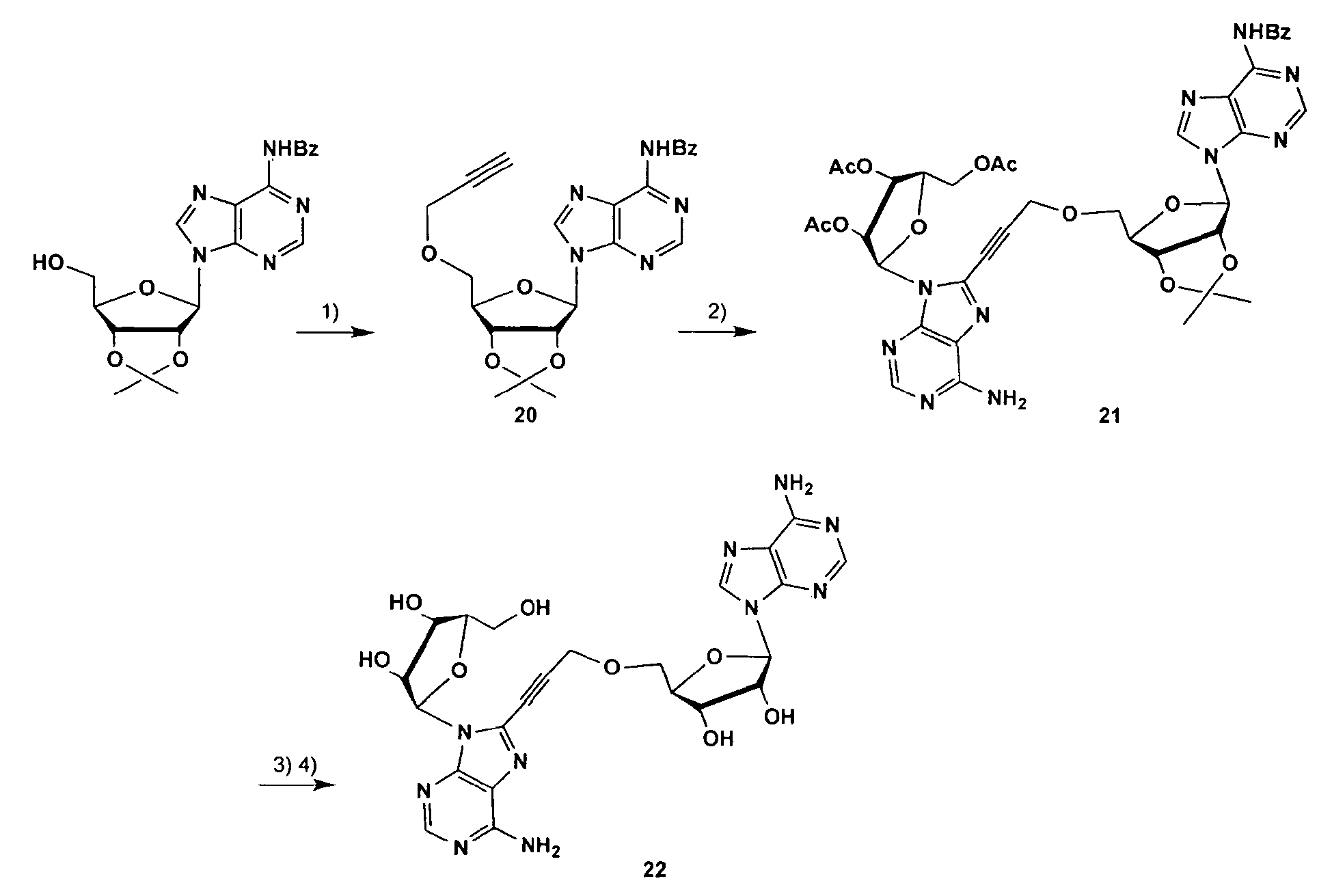

- To a degassed (3 times) solution of 8-bromo-2',3',5'-tri-O-acetyl-adenosine (0.14 g, 0.30 mmol), alkyne 20 [3] (0.20 g, 0.44 mmol)) and triethylamine (3 eq.) in THF (10 mL) was added CuI (10% mol) and Pd(PPh3)4 (5% mol). After stirring under Ar at 60°C overnight, the solvent was evaporated under reduced pressure. The residue was purified by flash chromatography (CH2Cl2/MeOH) to give 21 (0.15 g, 61%) and the dialkyne compound as a secondary product (25%). Compound 21 (54 mg) was reacted with 36% aq. ammonia (2 mL) in methanol (2 mL) at room temperature overnight. After evaporation of the solvent, the crude product was treated with 80% aq. formic acid (1.5 ml) at 30°C. After 2h the reaction was complete, the reaction mixture was neutalized by addition of diluted acetic acid, then lyophilized. Purification by reverse phase HPLC (13% isocratic) of the crude product gave biligand 22 in 46%. Rt (5 to 40% A in TEAA in 20 min) 13.0 min. 1H NMR (DMSO-d6) δ: 3.54 (m, 1H, H5'a), 3.67 (m, 1H, H5"a), 3.77 (m, 1H, H5'b), 3.85 (m, 1H, H5"b), 4.00 (m, 1H, H4'a), 4.10 (m, 1H, H4'b), 4.21 (m, 2H, H3'a and H3'b), 4.60 (m, 2H, CCH2), 4.62 (m, 1H, H2'a), 5.00 (m, 1H, H2'b), 5.50 (bs, 5H, OH), 5.92 (d, 1H, H1'a, J = 5.3 Hz), 5.95 (d, 1H, H1'b, J = 6.7 Hz), 7.23 (bs, 4H, NH2), 7.63 (bs, 2H, NH2), 8.17 and 8.16 (each s, 2H, 2 H2), 8.32 (s, 1H, H8); 13C NMR (DMSO-d6) δ: 58.75 (C5'a), 62.65 (C5'b), 70.75 (CH2), 71.03 and 71.44 (C4'a, C4'b), 72.15 (C2'a), 73.71 (C2'b), 83.30 (C4'a), 87.18 (C4'b), 87.94 (C1'b), 89.94 (C1'a), 119.50 and 119.84 (C5), 133.43 (C8), 139.83 (CH8), 148.90 and 149.96 (C4), 153.19 and 153.90 (C2), 154.73 and 156.64 (C6); UV λmax 265 nm, 279 nm; HRMS (ESI-TOF) m/z calcd for C23H27N10O8 (M+H) 571.2013; found 571.1993.
- Expression, purification and activity assay. His-tagged LmNADK1 wild-type and His-tagged SaNADK were expressed and purified on cobalt-based IMAC resins (Clontech) as previously published13. The NAD kinase activity was determined by measuring the absorbance at 340 nm to follow the formation of reduced NADP produced by a coupling enzyme (Glucose-6-phosphate dehydrogenase from yeast). Coupling enzyme and its substrate were purchased from Sigma-Aldrich. The assay was performed in a 0.5 mL sample of (50 mM Tris-HCl pH 7.4, 10 mM MgCl2, 1mM Glucose-6-phosphate, 2mM sodium citrate) containing Glucose-6-phosphate dehydrogenase and NADK at 30°C using a spectrophotometer Eppendorf ECOM 6122.
- For inhibitor assays, IC50 was determined, in the presence of 1 mM NAD and 4 mM ATP (for LmNADK1) or 2mM ATP (for SaNADK). Dixon plots were used to determine KI in the presence of 4 mM ATP (for LmNADK1) or 2mM ATP (for Sa NADK) and three NAD concentrations (0.2, 0.5 and 1 mM), It was also checked that the inhibitors had no effect on the coupling enzyme activity.
- The Staphylococcus aureus S25 strain, a human clinical isolate, was grown overnight in brain heart infusion (BHI) broth at 200 rpm and 37°C. Overnight cultures were diluted to OD600nm= 0.05 in BHI-phosphate buffer saline (25% v/v). Bacteria were grown at 200 rpm and 37°C until cultures reached OD600nm= 0.5. Bacterial suspensions were adjusted to a concentration of 2.105 bacteria/mL. In a microtiter plate, 2.103 bacteria were incubated overnight at 200 rpm and 37°C with increasing concentrations of NADK inhibitor in 0.1 mL BHI-phosphate buffer saline (25% v/v) per well. To quantify the bactericidal activity, each bacterial suspension was serially diluted in BHI and plated on BHI agar plates in duplicates. Plates were incubated at 37°C for 24h to 48h and the number of colony forming units was determined.
- The human cervical carcinoma HeLa cells were maintained in a humidified atmosphere at 37 °C in 5% CO2 in 75-cm2 plastic flasks in Dulbecco's Modified Eagle Medium (DMEM, Gibco) supplemented with 10% foetal bovine serum (FBS, APP), 100 U/mL penicillin, and 10 µg/mL streptomycin. To evaluate the cytotoxicity of the chemical compounds, HeLa cells were seeded in 96-well plates at low density in presence of DMEM supplemented with 10% FBS and treated with different compounds at 10 µM for 96h. The final concentration of DMSO in the culture medium was at 0.1 % (v/v) to avoid toxicity of the solvent. Cell shape and adherence were monitored and all assays were performed in duplicate. DMSO was used as negative control.
- Adenosine derivatives 1-10 were tested on the purified enzyme as previously described [11]. Only compound 9 exhibited very weak inhibition (IC50 value of 0.3 mM).
- In contrast, inhibitions in the micromolar range were detected with the bi-ligands 17, 19 and 22 (see table 1). These compounds appear thus as the best inhibitors of a bacterial NAD kinase described so far.
Table 1 : Ki of inhibitors 22 17 and 19 of NADK from Lysteria monocytogenes (Lm) and Staphylococcus aureus (Sa) Inhibitor 22 Inhibitor 17 Inhibitor 19 NADK from Lm 20 µM 30 µM 10 µM NADK from Sa 15 µM 50 µM 5 µM - NADK inhibitors 17, 19 and 22 were assayed for bactericidal activity against a human pathogenic strain of S. aureus.
- It can be seen from
Figures 1 to 3 that these NADK inhibitors, present a significant bactericidal activity at 1 µg/mL for inhibitors 17 and 22, and at 10 µg/mL for inhibitor 19. Besides, further increasing the concentration of the inhibitors do not lead to any increase in bactericidal activity. These efficiencies compare favorably with that of reference compounds such as vancomycin (8 µg/mL). - In parallel, cytotoxicity was assayed on Hela cells in culture for 96 hrs. No change in cell shape and multiplication rate was observed when tested at 10 micromolar.
-
- 1. Pucci, M. J. (2006) Biochem. Pharmacol. 71, 1066-1072
- 2. Gerdes, S. Y., Scholle, M. D., D'Souza, M., Bernal, A., Baev, M. V., Farrell, M., Kumasov, O. V., Daugherty, M. D., Mseeh, F., Polanuyer, B. M., Campbelli, J. W., Anantha, S., Shatalin, K. Y., Chowdhury, S. A., Fonstein, M. Y., and Osterman, A. L. (2002) J. Bacteriol. 184, 4555-4572
- 3. Kobayashi, K., Ehrlich, S. D., Albertini, A., Amati, G., Andersen, K. K., Arnaud, M., Asai, K., Ashikaga, S., Aymerich, S., Bessieres, P., Boland, F., et al. (2003) Proc. Natl. Acad. Sci. U. S. A. 100, 4678-4683
- 4. Suzuki, N., Okai, N., Nonaka, H., Tsuge, Y., Inui, M., and Yukawa, H. (2006) Appl. Environ. Microbiol. 72, 3750-3755
- 5. Sassetti, C. M., Boyd, D. H., and Rubin, E. J. (2003) Mol. Microbiol. 48, 77-84
- 6. Thanassi, J. A., Hartman-Neumann, S. L., Dougherty, T. J., Dougherty, B. A., and Pucci, M. J. (2002) Nucleic Acids Res. 30, 3152-3162
- 7. Zalacain, M., Biswas, S., Ingraham, K. A., Ambrad, J., Bryant, A., Chalker, A. F., Iordanescu, S., Fan, J., Fan, F., and Lunsford, R. D. (2003) J. Mol. Microbiol. Biotechnol. 6, 109-126
- 8. Grose, J. H., Joss, L., Velick, S. F., and Roth, J. R. (2006) Proc. Natl. Acad. Sci. U S. A. 103, 7601-7606
- 9. Kawai, S., Mori, S., Mukai, T., Suzuki, S., Yamada, T., Hashimoto, W., and Murata, K. (2000) Biochem. Biophys. Res. Commun. 276, 57-63
- 10. Lerner, F., Niere, M., Ludwig, A., and Ziegler, M. (2001) Biochem. Biophys. Res. Commun. 288, 69-74
- 11. Poncet-Montange, G., Assairi, L., Arold, S., Pochet, S., Labesse, G., (2007), J. Biol. Chem, Vol. 282, No. 47, pp. 33925-33934.
- 12. Kikugawa, K. and Ichino, M. Direct halogenation of sugar moiety of nucleosides. Tet. Lett. 12, 87-90 (1971).
- 13. Schaffrath, C., S. Cobb, L. , et al.. Cell-Free Biosynthesis of Fluoroacetate and 4-Fluorothreonine in Streptomyces Cattleya 13. Angew. Chem. Int. Ed. 41, 3913-3915 (2002).
- 14. Jawalekar, A. M., N. Meeuwenoord, et al. Conjugation of Nucleosides and Oligonucleotides by [3+2] Cycloaddition. J. Org. Chem., 73, 287-290 (2008).
- 15. Kolb, M., C. Danzin, et al. Synthesis and biochemical properties of chemically stable product analogs of the reaction catalyzed by S-adenosyl-L-methionine decarboxylase. J Med. Chem. 25, 550-556 (1982).
Claims (18)
- A compound of formula (I) :
 R1 is H, C1-C6 alkylC2-C6 alkenyl, or C2-C6 alkynyl, said alkyl, alkenyl or alkynyl being optionally substituted by SR5, NR5R5A or OR5 ;R2 is H, F, Cl, Br, I, OR6, or NHR7 ;R3 is H, Cl, Br, F, I, OR8, or NHR9 ;R4 is H, Cl, Br, F, I, CH3, SCH2COOH, SR10, SeR11, CH2R12, C≡CR13, or CH=CHR14 ;X1 is -S-, -Se-, -CH2-, -CH=CH-, or -C≡C- ;X2 is C1-C4 alkylene, C2-C4 alkenylene, or C2-C4 alkynylene ;X3 is -NHC(=O)-, -C(=O)NH-, -NR15-, -SO2NH-, -NHSO2- -CH2-, -O-, - S- ;Z is selected from
 Or Z is C6-C10 aryl or 5 to 7 membered heteroaryl, wherein said aryl and heteroaryl are optionally substituted with 1 to 3 R0 groups;R0 is F, Cl, Br, I, OH, NH2, NO2 C1-C6 alkyl, C2-C6 alkenyl, or C2-C6 alkynyl ;R5, R5A, R6, R7, R8, R9, R15 are each independently selected from H, C1-C6 alkyl, C2-C6 alkenyl, or C2-C6 alkynyl;R10, R11, R12, R13 and R14 are each independently selected from C1-C6 alkyl, C2-C6 alkenyl, or C2-C6 alkynyl ;R16 is OH, NH2, N3 or OCH2CH≡CH ;and the tautomeric, stereoisomeric forms, mixtures of stereoisomeric forms or pharmaceutically acceptable salt forms thereof.
 - The compound of claim 1, which is of formula (Ia) :

- The compound of claim 2, wherein X3 is -O- or -NH-.
- The compound of claim 1, which is of formula (Ib):

- The compound of any of claims 1 to 4, wherein X2 is -CH2-.
- The compound of any of claims 1 to 5, wherein R16 is NH2 or OH.
- The compound of any of claims 1 to 6, wherein R2 is H .
- The compound of any of claims 1 to 7, wherein R1 is H.
- The compound of any of claims 1 to 8, wherein R3 is H.
- The compound of any of claims 1 to 9, wherein R4 is H.
- The compound of claim 1 selected from :- 5'-amino-5'-deoxyadenosin-8-yl-thio-N-[(5'-amino-5'-deoxyadenosine)methyl]acetamide ;- 8-[3-N-(5'-deoxyadenosyl)aminoprop-1-ynyl]adenosine ; and- 8-[3-(5'-deoxyadenosyl)methoxyprop-1-ynyl]adenosine.
- A pharmaceutical composition comprising a compound of formula (I) according to any of claims 1 to 11, in admixture with one or more pharmaceutically acceptable excipients.
- A compound of formula (I) according to any of claims 1 to 11, for use in the prevention and/or treatment of bacterial infections.
- A method for preparing a compound of formula (Ia) according to claim 2, said method comprising the steps of :i. Coupling a compound of formula (IIa) with a compound of formula (IIIa),

 R1, R2, R3, R4, X2, and X3 are as defined above,Hal is Br, I, or Cl,Z is as defined above, the hydroxyl groups, when present,being protected by a hydroxyl protecting group (Pr),ii. Deprotecting the hydroxyl groups of the obtained compound, and optionallyiii. Recovering the obtained compound of formula (Ia).
 - A method for preparing a compound of formula (Ib) according to claim 4, said method comprising the steps of:i. Coupling a compound of formula (IIb) with a compound of formula (IIIb),
 R1, R2, R3, R4, X2, X3 are as defined above,R17 is OR18, or Hal,R18 is H, C1-C6 alkyl, or is such that C(=O)OR18 forms an activated ester;Z is as defined above, the hydroxyl groups, when present, being protected by an hydroxyl protecting group;ii. Deprotecting the hydroxyl groups of the obtained product ; and optionallyiii. Recovering the obtained compound of formula (Ib).
 - A chemical probe comprising a compound of formula (I) as defined in any of claims 1 to 11, coupled to a detectable label.
- A use of a chemical probe according to claim 16 for in vitro screening of inhibitors of NAD kinases.
- A method for screening molecules inhibiting NAD kinase, said method comprising the steps of :i. contacting NAD kinase with a chemical probe as defined in claim 16 with a molecule to be screened;ii. determining the quantity of chemical probe bound or unbounded to said NAD kinase; andiii. deducing therefrom if the screened molecule is an inhibitor of the said NAD kinase.
Priority Applications (6)
| Application Number | Priority Date | Filing Date | Title |
|---|---|---|---|
| EP10290679.9A EP2471804B1 (en) | 2010-12-27 | 2010-12-27 | Diadenosine antibacterial compounds |
| ES10290679.9T ES2444438T3 (en) | 2010-12-27 | 2010-12-27 | Antibacterial Diadenosine Compounds |
| PCT/IB2011/055905 WO2012090136A1 (en) | 2010-12-27 | 2011-12-22 | Novel antibacterial compounds |
| US13/976,826 US8927520B2 (en) | 2010-12-27 | 2011-12-22 | Antibacterial compounds |
| EP11813426.1A EP2658863A1 (en) | 2010-12-27 | 2011-12-22 | Novel antibacterial compounds |
| JP2013546801A JP6071901B2 (en) | 2010-12-27 | 2011-12-22 | New antibacterial compounds |
Applications Claiming Priority (1)
| Application Number | Priority Date | Filing Date | Title |
|---|---|---|---|
| EP10290679.9A EP2471804B1 (en) | 2010-12-27 | 2010-12-27 | Diadenosine antibacterial compounds |
Publications (2)
| Publication Number | Publication Date |
|---|---|
| EP2471804A1 true EP2471804A1 (en) | 2012-07-04 |
| EP2471804B1 EP2471804B1 (en) | 2013-11-06 |
Family
ID=43618168
Family Applications (2)
| Application Number | Title | Priority Date | Filing Date |
|---|---|---|---|
| EP10290679.9A Active EP2471804B1 (en) | 2010-12-27 | 2010-12-27 | Diadenosine antibacterial compounds |
| EP11813426.1A Withdrawn EP2658863A1 (en) | 2010-12-27 | 2011-12-22 | Novel antibacterial compounds |
Family Applications After (1)
| Application Number | Title | Priority Date | Filing Date |
|---|---|---|---|
| EP11813426.1A Withdrawn EP2658863A1 (en) | 2010-12-27 | 2011-12-22 | Novel antibacterial compounds |
Country Status (5)
| Country | Link |
|---|---|
| US (1) | US8927520B2 (en) |
| EP (2) | EP2471804B1 (en) |
| JP (1) | JP6071901B2 (en) |
| ES (1) | ES2444438T3 (en) |
| WO (1) | WO2012090136A1 (en) |
Cited By (1)
| Publication number | Priority date | Publication date | Assignee | Title |
|---|---|---|---|---|
| WO2024013349A1 (en) * | 2022-07-15 | 2024-01-18 | Institut National de la Santé et de la Recherche Médicale | Benzamide adenine dinucleoside compounds and their uses |
Families Citing this family (2)
| Publication number | Priority date | Publication date | Assignee | Title |
|---|---|---|---|---|
| NZ552451A (en) | 2004-07-09 | 2010-07-30 | Robert Sabin | Compositions and methods of use for treatment of mammalian diseases |
| CN114014901A (en) * | 2021-12-07 | 2022-02-08 | 天津科技大学 | A novel halogenated adenosine analog 5`-bromodeoxyadenosine and its preparation method and application |
Family Cites Families (1)
| Publication number | Priority date | Publication date | Assignee | Title |
|---|---|---|---|---|
| WO2006040558A1 (en) * | 2004-10-15 | 2006-04-20 | Astrazeneca Ab | Substituted adenines and the use thereof |
-
2010
- 2010-12-27 ES ES10290679.9T patent/ES2444438T3/en active Active
- 2010-12-27 EP EP10290679.9A patent/EP2471804B1/en active Active
-
2011
- 2011-12-22 EP EP11813426.1A patent/EP2658863A1/en not_active Withdrawn
- 2011-12-22 JP JP2013546801A patent/JP6071901B2/en not_active Expired - Fee Related
- 2011-12-22 US US13/976,826 patent/US8927520B2/en active Active
- 2011-12-22 WO PCT/IB2011/055905 patent/WO2012090136A1/en not_active Ceased
Non-Patent Citations (19)
| Title |
|---|
| GERDES, S. Y.; SCHOLLE, M. D.; D'SOUZA, M.; BERNAL, A.; BAEV, M. V.; FARRELL, M.; KUMASOV, 0. V.; DAUGHERTY, M. D.; MSEEH, F.; POL, BACTERIOL., vol. 184, 2002, pages 4555 - 4572 |
| GREENE, T.W.; WUTS, P.G.M.: "Protective Groups in Organic Synthesis", 1991, WILEY & SONS |
| GROSE, J. H.; JOSS, L.; VELICK, S. F.; ROTH, J. R., PROC. NATL. ACAD SCI. U S. A., vol. 103, 2006, pages 7601 - 7606 |
| JAWALEKAR, A. M.; N. MEEUWENOORD ET AL.: "Conjugation of Nucleosides and Oligonucleotides by [3+2] Cycloaddition", J ORG. CHEM., vol. 73, 2008, pages 287 - 290 |
| KAWAI, S.; MORI, S.; MUKAI, T.; SUZUKI, S.; YAMADA, T.; HASHIMOTO, W.; MURATA, K., BIOCHEM. BIOPHYS. RES. COMMUN., vol. 276, 2000, pages 57 - 63 |
| KIKUGAWA, K.; ICHINO, M., DIRECT HALOGENATION OF SUGAR MOIETY OF NUCLEOSIDES. TET. LETT., vol. 12, 1971, pages 87 - 90 |
| KOBAYASHI, K.; EHRLICH, S. D.; ALBERTINI, A.; AMATI, G.; ANDERSEN, K. K.; ARNAUD, M.; ASAI, K.; ASHIKAGA, S.; AYMERICH, S.; BESSIE, PROC. NATL. ACAD SCI. U S. A., vol. 100, 2003, pages 4678 - 4683 |
| KOLB, M.; C. DANZIN ET AL.: "Synthesis and biochemical properties of chemically stable product analogs of the reaction catalyzed by S-adenosyl-L-methionine decarboxylase", J MED. CHEM., vol. 25, 1982, pages 550 - 556 |
| LERNER, F.; NIERE, M.; LUDWIG, A.; ZIEGLER, M., BIOCHEM. BIOPHYS. RES. COMMUN., vol. 288, 2001, pages 69 - 74 |
| P.J. KOCIENSKI: "Protecting Groups", 2004, THIEME |
| PONCET-MONTANGE G. ET AL: "NAD Kinases Use Substrate-assisted Catalysis for Specific Recognition of NAD", THE JOURNAL OF BIOLOGICAL CHEMISTRY, vol. 282, no. 47, 8 August 2007 (2007-08-08), pages 33925 - 33934, XP002626205, DOI: 10.1074/jbc.M701394200 * |
| PONCET-MONTANGE, G.; ASSAIRI, L.; AROLD, S.; POCHET, S.; LABESSE, G., J. BIOL. CHEM, vol. 282, no. 47, 2007, pages 33925 - 33934 |
| PUCCI, M. J., BIOCHEM. PHARMACOL., vol. 71, 2006, pages 1066 - 1072 |
| SASSETTI, C. M.; BOYD, D. H.; RUBIN, E. J., MOL. MICROBIOL., vol. 48, 2003, pages 77 - 84 |
| SCHAFFRATH, C.; S. COBB, L. ET AL.: "Cell-Free Biosynthesis of Fluoroacetate and 4-Fluorothreonine in Streptomyces Cattleya 13", ANGEW. CHEM. INT. ED., vol. 41, 2002, pages 3913 - 3915 |
| SUZUKI, N.; OKAI, N.; NONAKA, H.; TSUGE, Y.; INUI, M.; YUKAWA, H., APPL. ENVIRON. MICROBIOL., vol. 72, 2006, pages 3750 - 3755 |
| THANASSI, J. A.; HARTMAN-NEUMANN, S. L.; DOUGHERTY, T. J.; DOUGHERTY, B. A.; PUCCI, M. J., NUCLEIC ACIDS RES., vol. 30, 2002, pages 3152 - 3162 |
| VASELLA, ANDREA T.: "Oligonucleosides with Integrated Backbone and Base: Foldamers with a Novel Architecture", CHIMIA, vol. 59, no. 11, 1 November 2005 (2005-11-01), pages 785 - 793, XP001525720, DOI: 10.2533/000942905777675606 * |
| ZALACAIN, M.; BISWAS, S.; INGRAHAM, K. A.; AMBRAD, J.; BRYANT, A.; CHALKER, A. F.; LORDANESCU, S.; FAN, J.; FAN, F.; LUNSFORD, R., J MOL. MICROBIOL. BIOTECHNOL., vol. 6, 2003, pages 109 - 126 |
Cited By (1)
| Publication number | Priority date | Publication date | Assignee | Title |
|---|---|---|---|---|
| WO2024013349A1 (en) * | 2022-07-15 | 2024-01-18 | Institut National de la Santé et de la Recherche Médicale | Benzamide adenine dinucleoside compounds and their uses |
Also Published As
| Publication number | Publication date |
|---|---|
| US8927520B2 (en) | 2015-01-06 |
| US20130331351A1 (en) | 2013-12-12 |
| EP2471804B1 (en) | 2013-11-06 |
| EP2658863A1 (en) | 2013-11-06 |
| JP6071901B2 (en) | 2017-02-01 |
| JP2014506251A (en) | 2014-03-13 |
| ES2444438T3 (en) | 2014-02-25 |
| WO2012090136A1 (en) | 2012-07-05 |
Similar Documents
| Publication | Publication Date | Title |
|---|---|---|
| JP4682314B2 (en) | Inhibitors of nucleoside phosphorylase and nucleosidase | |
| EP2646454B1 (en) | 7-deazapurine modulators of histone methyltransferase, and methods of use thereof | |
| HU217611B (en) | New indolopyrrolocarbazole derivatives, pharmaceutical compositions containing such compounds, and a method for their preparation | |
| JP2021512913A (en) | Alkoxybenzo five-membered (six-membered) heterocyclic amine compounds and their pharmaceutical uses | |
| Plitta et al. | New cytosine derivatives as inhibitors of DNA methylation | |
| EP2471804B1 (en) | Diadenosine antibacterial compounds | |
| FI81357B (en) | FOERFARANDE FOER FRAMSTAELLNING AV GRISEOLINSYRADERIVAT. | |
| JP6767011B2 (en) | Nucleoside derivative with physiological activity such as anti-DNA virus activity | |
| US20110086813A1 (en) | Compounds for treating bacterial infections | |
| KR102394934B1 (en) | Salt form and crystal form thereof as Akt inhibitor | |
| CN107536835A (en) | Application and medicine of 1,3 diaminourea 7H pyrroles [3,2 f] quinazoline derivant as antibacterials | |
| CN107628975B (en) | Lysine derivative histone deacetylases inhibitor and its synthesis and application | |
| US5650407A (en) | Selected soluble esters of hydroxyl-containing indolocarbazoles | |
| Yenil et al. | Synthesis and antimicrobial activities of two novel amino sugars derived from chloraloses | |
| WO2008157438A1 (en) | Inhibitors of s-adenosyl-l-methionine decarboxylase | |
| US5686444A (en) | Selected soluble esters of hydroxyl-containing indolocarbazoles | |
| EP2045258A1 (en) | 3'-ethynylcytidine derivative | |
| WO2006086103A2 (en) | Synthesis of inhibitors of p90rsk | |
| Silamkoti et al. | Synthesis and biological activity of 2-fluoro adenine and 6-methyl purine nucleoside analogs as prodrugs for suicide gene therapy of cancer | |
| RU2527457C2 (en) | Inhibitors of human poly(adp-riboso)polymerase-1 based on uracyl derivatives | |
| CN104837855B (en) | The macrolide with PDE4 inhibitory activity selecting | |
| Baker et al. | An evaluation of certain chain-extended analogs of 9-. beta.-D-arabinofuranosyladenine for antiviral and cardiovascular activity | |
| Aoyama et al. | Development of tubulin-polymerization inhibitors based on the thalidomide skeleton | |
| EP3172216A1 (en) | 2,3'-Anhydro-2'-deoxy-5-fluorouridine derivatives with cytotoxic activity, a manufacturing process and application | |
| El-Farargy et al. | Synthesis of some new C-nucleosides from L-arabinose and D-glucose |
Legal Events
| Date | Code | Title | Description |
|---|---|---|---|
| AK | Designated contracting states |
Kind code of ref document: A1 Designated state(s): AL AT BE BG CH CY CZ DE DK EE ES FI FR GB GR HR HU IE IS IT LI LT LU LV MC MK MT NL NO PL PT RO RS SE SI SK SM TR |
|
| AX | Request for extension of the european patent |
Extension state: BA ME |
|
| PUAI | Public reference made under article 153(3) epc to a published international application that has entered the european phase |
Free format text: ORIGINAL CODE: 0009012 |
|
| 17P | Request for examination filed |
Effective date: 20130103 |
|
| GRAP | Despatch of communication of intention to grant a patent |
Free format text: ORIGINAL CODE: EPIDOSNIGR1 |
|
| INTG | Intention to grant announced |
Effective date: 20130606 |
|
| GRAS | Grant fee paid |
Free format text: ORIGINAL CODE: EPIDOSNIGR3 |
|
| GRAA | (expected) grant |
Free format text: ORIGINAL CODE: 0009210 |
|
| AK | Designated contracting states |
Kind code of ref document: B1 Designated state(s): AL AT BE BG CH CY CZ DE DK EE ES FI FR GB GR HR HU IE IS IT LI LT LU LV MC MK MT NL NO PL PT RO RS SE SI SK SM TR |
|
| REG | Reference to a national code |
Ref country code: GB Ref legal event code: FG4D |
|
| REG | Reference to a national code |
Ref country code: CH Ref legal event code: EP |
|
| REG | Reference to a national code |
Ref country code: AT Ref legal event code: REF Ref document number: 639432 Country of ref document: AT Kind code of ref document: T Effective date: 20131215 |
|
| REG | Reference to a national code |
Ref country code: IE Ref legal event code: FG4D |
|
| REG | Reference to a national code |
Ref country code: DE Ref legal event code: R096 Ref document number: 602010011462 Country of ref document: DE Effective date: 20140102 |
|
| REG | Reference to a national code |
Ref country code: SE Ref legal event code: TRGR |
|
| REG | Reference to a national code |
Ref country code: CH Ref legal event code: NV Representative=s name: ISLER AND PEDRAZZINI AG, CH |
|
| REG | Reference to a national code |
Ref country code: NL Ref legal event code: T3 |
|
| REG | Reference to a national code |
Ref country code: ES Ref legal event code: FG2A Ref document number: 2444438 Country of ref document: ES Kind code of ref document: T3 Effective date: 20140225 |
|
| REG | Reference to a national code |
Ref country code: AT Ref legal event code: MK05 Ref document number: 639432 Country of ref document: AT Kind code of ref document: T Effective date: 20131106 |
|
| REG | Reference to a national code |
Ref country code: LT Ref legal event code: MG4D |
|
| PG25 | Lapsed in a contracting state [announced via postgrant information from national office to epo] |
Ref country code: LT Free format text: LAPSE BECAUSE OF FAILURE TO SUBMIT A TRANSLATION OF THE DESCRIPTION OR TO PAY THE FEE WITHIN THE PRESCRIBED TIME-LIMIT Effective date: 20131106 Ref country code: HR Free format text: LAPSE BECAUSE OF FAILURE TO SUBMIT A TRANSLATION OF THE DESCRIPTION OR TO PAY THE FEE WITHIN THE PRESCRIBED TIME-LIMIT Effective date: 20131106 Ref country code: IS Free format text: LAPSE BECAUSE OF FAILURE TO SUBMIT A TRANSLATION OF THE DESCRIPTION OR TO PAY THE FEE WITHIN THE PRESCRIBED TIME-LIMIT Effective date: 20140306 Ref country code: NO Free format text: LAPSE BECAUSE OF FAILURE TO SUBMIT A TRANSLATION OF THE DESCRIPTION OR TO PAY THE FEE WITHIN THE PRESCRIBED TIME-LIMIT Effective date: 20140206 Ref country code: FI Free format text: LAPSE BECAUSE OF FAILURE TO SUBMIT A TRANSLATION OF THE DESCRIPTION OR TO PAY THE FEE WITHIN THE PRESCRIBED TIME-LIMIT Effective date: 20131106 |
|
| PG25 | Lapsed in a contracting state [announced via postgrant information from national office to epo] |
Ref country code: RS Free format text: LAPSE BECAUSE OF FAILURE TO SUBMIT A TRANSLATION OF THE DESCRIPTION OR TO PAY THE FEE WITHIN THE PRESCRIBED TIME-LIMIT Effective date: 20131106 Ref country code: LV Free format text: LAPSE BECAUSE OF FAILURE TO SUBMIT A TRANSLATION OF THE DESCRIPTION OR TO PAY THE FEE WITHIN THE PRESCRIBED TIME-LIMIT Effective date: 20131106 Ref country code: AT Free format text: LAPSE BECAUSE OF FAILURE TO SUBMIT A TRANSLATION OF THE DESCRIPTION OR TO PAY THE FEE WITHIN THE PRESCRIBED TIME-LIMIT Effective date: 20131106 |
|
| PG25 | Lapsed in a contracting state [announced via postgrant information from national office to epo] |
Ref country code: PT Free format text: LAPSE BECAUSE OF FAILURE TO SUBMIT A TRANSLATION OF THE DESCRIPTION OR TO PAY THE FEE WITHIN THE PRESCRIBED TIME-LIMIT Effective date: 20140306 |
|
| PG25 | Lapsed in a contracting state [announced via postgrant information from national office to epo] |
Ref country code: EE Free format text: LAPSE BECAUSE OF FAILURE TO SUBMIT A TRANSLATION OF THE DESCRIPTION OR TO PAY THE FEE WITHIN THE PRESCRIBED TIME-LIMIT Effective date: 20131106 |
|
| REG | Reference to a national code |
Ref country code: DE Ref legal event code: R097 Ref document number: 602010011462 Country of ref document: DE |
|
| PG25 | Lapsed in a contracting state [announced via postgrant information from national office to epo] |
Ref country code: CZ Free format text: LAPSE BECAUSE OF FAILURE TO SUBMIT A TRANSLATION OF THE DESCRIPTION OR TO PAY THE FEE WITHIN THE PRESCRIBED TIME-LIMIT Effective date: 20131106 Ref country code: RO Free format text: LAPSE BECAUSE OF FAILURE TO SUBMIT A TRANSLATION OF THE DESCRIPTION OR TO PAY THE FEE WITHIN THE PRESCRIBED TIME-LIMIT Effective date: 20131106 Ref country code: PL Free format text: LAPSE BECAUSE OF FAILURE TO SUBMIT A TRANSLATION OF THE DESCRIPTION OR TO PAY THE FEE WITHIN THE PRESCRIBED TIME-LIMIT Effective date: 20131106 Ref country code: SK Free format text: LAPSE BECAUSE OF FAILURE TO SUBMIT A TRANSLATION OF THE DESCRIPTION OR TO PAY THE FEE WITHIN THE PRESCRIBED TIME-LIMIT Effective date: 20131106 |
|
| PLBE | No opposition filed within time limit |
Free format text: ORIGINAL CODE: 0009261 |
|
| STAA | Information on the status of an ep patent application or granted ep patent |
Free format text: STATUS: NO OPPOSITION FILED WITHIN TIME LIMIT |
|
| REG | Reference to a national code |
Ref country code: IE Ref legal event code: MM4A |
|
| PG25 | Lapsed in a contracting state [announced via postgrant information from national office to epo] |
Ref country code: DK Free format text: LAPSE BECAUSE OF FAILURE TO SUBMIT A TRANSLATION OF THE DESCRIPTION OR TO PAY THE FEE WITHIN THE PRESCRIBED TIME-LIMIT Effective date: 20131106 |
|
| 26N | No opposition filed |
Effective date: 20140807 |
|
| PG25 | Lapsed in a contracting state [announced via postgrant information from national office to epo] |
Ref country code: IE Free format text: LAPSE BECAUSE OF NON-PAYMENT OF DUE FEES Effective date: 20131227 |
|
| REG | Reference to a national code |
Ref country code: DE Ref legal event code: R097 Ref document number: 602010011462 Country of ref document: DE Effective date: 20140807 |
|
| PG25 | Lapsed in a contracting state [announced via postgrant information from national office to epo] |
Ref country code: SI Free format text: LAPSE BECAUSE OF FAILURE TO SUBMIT A TRANSLATION OF THE DESCRIPTION OR TO PAY THE FEE WITHIN THE PRESCRIBED TIME-LIMIT Effective date: 20131106 |
|
| PG25 | Lapsed in a contracting state [announced via postgrant information from national office to epo] |
Ref country code: MC Free format text: LAPSE BECAUSE OF FAILURE TO SUBMIT A TRANSLATION OF THE DESCRIPTION OR TO PAY THE FEE WITHIN THE PRESCRIBED TIME-LIMIT Effective date: 20131106 |
|
| PG25 | Lapsed in a contracting state [announced via postgrant information from national office to epo] |
Ref country code: SM Free format text: LAPSE BECAUSE OF FAILURE TO SUBMIT A TRANSLATION OF THE DESCRIPTION OR TO PAY THE FEE WITHIN THE PRESCRIBED TIME-LIMIT Effective date: 20131106 |
|
| PG25 | Lapsed in a contracting state [announced via postgrant information from national office to epo] |
Ref country code: CY Free format text: LAPSE BECAUSE OF FAILURE TO SUBMIT A TRANSLATION OF THE DESCRIPTION OR TO PAY THE FEE WITHIN THE PRESCRIBED TIME-LIMIT Effective date: 20131106 |
|
| PG25 | Lapsed in a contracting state [announced via postgrant information from national office to epo] |
Ref country code: MK Free format text: LAPSE BECAUSE OF FAILURE TO SUBMIT A TRANSLATION OF THE DESCRIPTION OR TO PAY THE FEE WITHIN THE PRESCRIBED TIME-LIMIT Effective date: 20131106 Ref country code: BG Free format text: LAPSE BECAUSE OF FAILURE TO SUBMIT A TRANSLATION OF THE DESCRIPTION OR TO PAY THE FEE WITHIN THE PRESCRIBED TIME-LIMIT Effective date: 20131106 Ref country code: HU Free format text: LAPSE BECAUSE OF FAILURE TO SUBMIT A TRANSLATION OF THE DESCRIPTION OR TO PAY THE FEE WITHIN THE PRESCRIBED TIME-LIMIT; INVALID AB INITIO Effective date: 20101227 |
|
| PG25 | Lapsed in a contracting state [announced via postgrant information from national office to epo] |
Ref country code: GR Free format text: LAPSE BECAUSE OF NON-PAYMENT OF DUE FEES Effective date: 20131106 Ref country code: MT Free format text: LAPSE BECAUSE OF FAILURE TO SUBMIT A TRANSLATION OF THE DESCRIPTION OR TO PAY THE FEE WITHIN THE PRESCRIBED TIME-LIMIT Effective date: 20131106 |
|
| REG | Reference to a national code |
Ref country code: FR Ref legal event code: PLFP Year of fee payment: 6 |
|
| PG25 | Lapsed in a contracting state [announced via postgrant information from national office to epo] |
Ref country code: GR Free format text: LAPSE BECAUSE OF FAILURE TO SUBMIT A TRANSLATION OF THE DESCRIPTION OR TO PAY THE FEE WITHIN THE PRESCRIBED TIME-LIMIT Effective date: 20140207 |
|
| PG25 | Lapsed in a contracting state [announced via postgrant information from national office to epo] |
Ref country code: TR Free format text: LAPSE BECAUSE OF FAILURE TO SUBMIT A TRANSLATION OF THE DESCRIPTION OR TO PAY THE FEE WITHIN THE PRESCRIBED TIME-LIMIT Effective date: 20131106 |
|
| REG | Reference to a national code |
Ref country code: FR Ref legal event code: PLFP Year of fee payment: 7 |
|
| REG | Reference to a national code |
Ref country code: FR Ref legal event code: PLFP Year of fee payment: 8 |
|
| PG25 | Lapsed in a contracting state [announced via postgrant information from national office to epo] |
Ref country code: AL Free format text: LAPSE BECAUSE OF FAILURE TO SUBMIT A TRANSLATION OF THE DESCRIPTION OR TO PAY THE FEE WITHIN THE PRESCRIBED TIME-LIMIT Effective date: 20131106 |
|
| PGFP | Annual fee paid to national office [announced via postgrant information from national office to epo] |
Ref country code: LU Payment date: 20191118 Year of fee payment: 10 |
|
| PGFP | Annual fee paid to national office [announced via postgrant information from national office to epo] |
Ref country code: SE Payment date: 20200102 Year of fee payment: 10 |
|
| REG | Reference to a national code |
Ref country code: SE Ref legal event code: EUG |
|
| PG25 | Lapsed in a contracting state [announced via postgrant information from national office to epo] |
Ref country code: LU Free format text: LAPSE BECAUSE OF NON-PAYMENT OF DUE FEES Effective date: 20201227 |
|
| PG25 | Lapsed in a contracting state [announced via postgrant information from national office to epo] |
Ref country code: SE Free format text: LAPSE BECAUSE OF NON-PAYMENT OF DUE FEES Effective date: 20201228 |
|
| PGFP | Annual fee paid to national office [announced via postgrant information from national office to epo] |
Ref country code: NL Payment date: 20221124 Year of fee payment: 13 Ref country code: GB Payment date: 20221219 Year of fee payment: 13 Ref country code: FR Payment date: 20221220 Year of fee payment: 13 Ref country code: DE Payment date: 20221209 Year of fee payment: 13 |
|
| PGFP | Annual fee paid to national office [announced via postgrant information from national office to epo] |
Ref country code: BE Payment date: 20221213 Year of fee payment: 13 |
|
| PGFP | Annual fee paid to national office [announced via postgrant information from national office to epo] |
Ref country code: ES Payment date: 20230105 Year of fee payment: 13 Ref country code: CH Payment date: 20221229 Year of fee payment: 13 |
|
| PGFP | Annual fee paid to national office [announced via postgrant information from national office to epo] |
Ref country code: IT Payment date: 20221209 Year of fee payment: 13 |
|
| REG | Reference to a national code |
Ref country code: DE Ref legal event code: R119 Ref document number: 602010011462 Country of ref document: DE |
|
| REG | Reference to a national code |
Ref country code: CH Ref legal event code: PL |
|
| REG | Reference to a national code |
Ref country code: NL Ref legal event code: MM Effective date: 20240101 |
|
| GBPC | Gb: european patent ceased through non-payment of renewal fee |
Effective date: 20231227 |
|
| REG | Reference to a national code |
Ref country code: BE Ref legal event code: MM Effective date: 20231231 |
|
| PG25 | Lapsed in a contracting state [announced via postgrant information from national office to epo] |
Ref country code: NL Free format text: LAPSE BECAUSE OF NON-PAYMENT OF DUE FEES Effective date: 20240101 |
|
| PG25 | Lapsed in a contracting state [announced via postgrant information from national office to epo] |
Ref country code: NL Free format text: LAPSE BECAUSE OF NON-PAYMENT OF DUE FEES Effective date: 20240101 |
|
| PG25 | Lapsed in a contracting state [announced via postgrant information from national office to epo] |
Ref country code: DE Free format text: LAPSE BECAUSE OF NON-PAYMENT OF DUE FEES Effective date: 20240702 |
|
| PG25 | Lapsed in a contracting state [announced via postgrant information from national office to epo] |
Ref country code: GB Free format text: LAPSE BECAUSE OF NON-PAYMENT OF DUE FEES Effective date: 20231227 |
|
| PG25 | Lapsed in a contracting state [announced via postgrant information from national office to epo] |
Ref country code: BE Free format text: LAPSE BECAUSE OF NON-PAYMENT OF DUE FEES Effective date: 20231231 |
|
| PG25 | Lapsed in a contracting state [announced via postgrant information from national office to epo] |
Ref country code: FR Free format text: LAPSE BECAUSE OF NON-PAYMENT OF DUE FEES Effective date: 20231231 |
|
| PG25 | Lapsed in a contracting state [announced via postgrant information from national office to epo] |
Ref country code: CH Free format text: LAPSE BECAUSE OF NON-PAYMENT OF DUE FEES Effective date: 20231231 |
|
| PG25 | Lapsed in a contracting state [announced via postgrant information from national office to epo] |
Ref country code: GB Free format text: LAPSE BECAUSE OF NON-PAYMENT OF DUE FEES Effective date: 20231227 Ref country code: FR Free format text: LAPSE BECAUSE OF NON-PAYMENT OF DUE FEES Effective date: 20231231 Ref country code: DE Free format text: LAPSE BECAUSE OF NON-PAYMENT OF DUE FEES Effective date: 20240702 Ref country code: CH Free format text: LAPSE BECAUSE OF NON-PAYMENT OF DUE FEES Effective date: 20231231 Ref country code: BE Free format text: LAPSE BECAUSE OF NON-PAYMENT OF DUE FEES Effective date: 20231231 |
|
| REG | Reference to a national code |
Ref country code: ES Ref legal event code: FD2A Effective date: 20250205 |
|
| PG25 | Lapsed in a contracting state [announced via postgrant information from national office to epo] |
Ref country code: ES Free format text: LAPSE BECAUSE OF NON-PAYMENT OF DUE FEES Effective date: 20231228 |
|
| PG25 | Lapsed in a contracting state [announced via postgrant information from national office to epo] |
Ref country code: IT Free format text: LAPSE BECAUSE OF NON-PAYMENT OF DUE FEES Effective date: 20231227 |