EP2469737A2 - Method and apparatus for adjusting signal transmission starting point of terminal in wireless network - Google Patents
Method and apparatus for adjusting signal transmission starting point of terminal in wireless network Download PDFInfo
- Publication number
- EP2469737A2 EP2469737A2 EP10810212.0A EP10810212A EP2469737A2 EP 2469737 A2 EP2469737 A2 EP 2469737A2 EP 10810212 A EP10810212 A EP 10810212A EP 2469737 A2 EP2469737 A2 EP 2469737A2
- Authority
- EP
- European Patent Office
- Prior art keywords
- terminal
- terminals
- transmission time
- time point
- response
- Prior art date
- Legal status (The legal status is an assumption and is not a legal conclusion. Google has not performed a legal analysis and makes no representation as to the accuracy of the status listed.)
- Granted
Links
Images





Classifications
-
- H—ELECTRICITY
- H04—ELECTRIC COMMUNICATION TECHNIQUE
- H04W—WIRELESS COMMUNICATION NETWORKS
- H04W56/00—Synchronisation arrangements
- H04W56/004—Synchronisation arrangements compensating for timing error of reception due to propagation delay
- H04W56/0045—Synchronisation arrangements compensating for timing error of reception due to propagation delay compensating for timing error by altering transmission time
-
- H—ELECTRICITY
- H04—ELECTRIC COMMUNICATION TECHNIQUE
- H04W—WIRELESS COMMUNICATION NETWORKS
- H04W56/00—Synchronisation arrangements
- H04W56/0055—Synchronisation arrangements determining timing error of reception due to propagation delay
- H04W56/0065—Synchronisation arrangements determining timing error of reception due to propagation delay using measurement of signal travel time
-
- H—ELECTRICITY
- H04—ELECTRIC COMMUNICATION TECHNIQUE
- H04B—TRANSMISSION
- H04B17/00—Monitoring; Testing
- H04B17/20—Monitoring; Testing of receivers
- H04B17/25—Monitoring; Testing of receivers taking multiple measurements
- H04B17/254—Monitoring; Testing of receivers taking multiple measurements measuring at different reception times
-
- H—ELECTRICITY
- H04—ELECTRIC COMMUNICATION TECHNIQUE
- H04L—TRANSMISSION OF DIGITAL INFORMATION, e.g. TELEGRAPHIC COMMUNICATION
- H04L65/00—Network arrangements, protocols or services for supporting real-time applications in data packet communication
- H04L65/60—Network streaming of media packets
- H04L65/61—Network streaming of media packets for supporting one-way streaming services, e.g. Internet radio
- H04L65/611—Network streaming of media packets for supporting one-way streaming services, e.g. Internet radio for multicast or broadcast
-
- H—ELECTRICITY
- H04—ELECTRIC COMMUNICATION TECHNIQUE
- H04W—WIRELESS COMMUNICATION NETWORKS
- H04W4/00—Services specially adapted for wireless communication networks; Facilities therefor
- H04W4/80—Services using short range communication, e.g. near-field communication [NFC], radio-frequency identification [RFID] or low energy communication
-
- H—ELECTRICITY
- H04—ELECTRIC COMMUNICATION TECHNIQUE
- H04W—WIRELESS COMMUNICATION NETWORKS
- H04W56/00—Synchronisation arrangements
- H04W56/001—Synchronization between nodes
- H04W56/0015—Synchronization between nodes one node acting as a reference for the others
-
- H—ELECTRICITY
- H04—ELECTRIC COMMUNICATION TECHNIQUE
- H04W—WIRELESS COMMUNICATION NETWORKS
- H04W56/00—Synchronisation arrangements
- H04W56/0055—Synchronisation arrangements determining timing error of reception due to propagation delay
- H04W56/0065—Synchronisation arrangements determining timing error of reception due to propagation delay using measurement of signal travel time
- H04W56/007—Open loop measurement
- H04W56/0075—Open loop measurement based on arrival time vs. expected arrival time
-
- H—ELECTRICITY
- H04—ELECTRIC COMMUNICATION TECHNIQUE
- H04W—WIRELESS COMMUNICATION NETWORKS
- H04W72/00—Local resource management
- H04W72/04—Wireless resource allocation
- H04W72/044—Wireless resource allocation based on the type of the allocated resource
- H04W72/0446—Resources in time domain, e.g. slots or frames
-
- H—ELECTRICITY
- H04—ELECTRIC COMMUNICATION TECHNIQUE
- H04W—WIRELESS COMMUNICATION NETWORKS
- H04W74/00—Wireless channel access
-
- H—ELECTRICITY
- H04—ELECTRIC COMMUNICATION TECHNIQUE
- H04W—WIRELESS COMMUNICATION NETWORKS
- H04W84/00—Network topologies
- H04W84/02—Hierarchically pre-organised networks, e.g. paging networks, cellular networks, WLAN [Wireless Local Area Network] or WLL [Wireless Local Loop]
- H04W84/10—Small scale networks; Flat hierarchical networks
- H04W84/12—WLAN [Wireless Local Area Networks]
-
- H—ELECTRICITY
- H04—ELECTRIC COMMUNICATION TECHNIQUE
- H04W—WIRELESS COMMUNICATION NETWORKS
- H04W88/00—Devices specially adapted for wireless communication networks, e.g. terminals, base stations or access point devices
- H04W88/02—Terminal devices
Definitions
- the present invention relates to a method and apparatus for adjusting transmission time of a terminal in a wireless network.
- a wireless local area network uses a technique of allowing a user to wirelessly the Internet at homes, in officers, or in a particular service providing area by using a terminal based on a radio frequency technique.
- a wireless personal area network uses a technique for wirelessly connecting devices within a relatively short distance to allow for data transmission and control.
- the WPAN includes, for example, Bluetooth TM , ZigBee TM , ultra-wide band (UWB), and the like.
- a plurality of terminals operate independently.
- a technique that may causes signals transmitted by the plurality of independently operating terminals reach a particular terminal at the same time point is required.
- the present invention has been made in an effort to provide a method for adjusting time points at which a plurality of independently operating terminals transmit signals in a wireless network..
- An exemplary embodiment of the present invention provides a method for adjusting, by a first terminal, a transmission time point of at least one second terminal in a wireless network, the method comprising: settling a transmission time point of the second terminal and transmuting a first request frame including information on the transmission time point to the second terminal; receiving a first response frame transmitted according to the transmission time point from the second terminal; and adjusting the transmission time point based to an arrival time of the first response frame.
- Another embodiment of the present invention providers a method for synchronous transmission of a terminal in a wireless network, the method comprising: transmitting a first request frame including transmission time point information to a plurality of terminals that independently operate; receiving first response frames transmitted according to the transmission time point information from the plurality of terminals; calculating an arrival time of each of the first response frames; adjusting the transmission time point information such that the difference between the arrival time an an estimated arrival time is within an allowable error range; and retransmitting a second request frame including the adjusted transmission time point information to the plurality of terminals.
- Yet another embodiment of the present invention providers a terminal including: a wireless communication unit transmitting a request frame including transmission time point information with respect to a plurality of terminals to the plurality of terminals and receiving response frames transmitted from the plurality of terminals according to the transmission time point information; and a controller calculating the difference between an actual arrival time and an estimated arrival time of each of the response frames, adjusting the transmission time point information by reflecting the difference, and configuring a request frame such that the request frame includes the adjusted transmission time point.
- signals transmitter by a plurality of terminals that operate independently in a wireless network can arrive at a particular terminal at the same time point. Therefore, cooperative communication can occur, and the terminal receiving the signals from the plurality of terminals can obtain good reception performance.
- a terminal may be preferred to as a mobile station (MS), a mobile terminal (MT), a subscriber station (SS), a portable subscriber station (PSS), user equipment (UE), an access terminal (AT), and the like, or may include entire or partial functions of the MS, MT, SS, PSS, UE, AT, and the like.
- MS mobile station
- MT mobile terminal
- SS subscriber station
- PSS portable subscriber station
- UE user equipment
- AT access terminal
- an access point may be referred to as a base station (BS), a radio access station (RAS), a Node B, an evolved Node B (eNodeB), a transceiver station (BTS), a mobile multihop relay (MMR)-BS, and the like, and include the entire or partial functions of the BS, RAS, Node B, eNodeB, BTS, MMR-BS, and the like.
- BS base station
- RAS radio access station
- eNodeB evolved Node B
- BTS transceiver station
- MMR mobile multihop relay
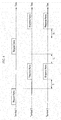
- FIG. 1 is a view illustrating transmission of signals by a plurality of terminals to a common terminal in a wireless network.
- terminal 1 transmits a request message to terminals 2 and 3.
- the request message may be transmitted in a multicast or broadcast manner.
- the terminals 2 and 3 transmit it a response with respect to the request massage, respectively.
- the terminals 2 and 3 use a short inter-frame space (SIFS) for synchronous transmission. That is, when the terminals 2 and 3 receive the request from the terminal 1, they transmit the response with respect to the request message after the lapse of SIFS.
- SIFS short inter-frame space
- the synchronous transmission refers signals being transmitted by a plurality of terminals (e.g., the terminals 2 and 3), which independently operate, simultaneously arriving at a common terminal (e.g., the terminal 1) within a certain error range.
- the plurality of terminals transmitting signals to the common terminal by using synchronous transmission may also be called synchronous transmission terminals.
- Such a synchronous transmission may be applicable to cooperative communication using a relay, and in this case, one of the terminals 2 and 3 may serve as a relay.
- the SIFS may have a certain margin of error.
- the SIFS may have a margin of error within a range of approximately +10% to - 10% in one slot time. Assuming that the SIFS is 10 ⁇ s and one slot time is 20 ⁇ s, the SIFS may have a value ranging from 8 ⁇ s to 12 ⁇ s. Thus, there may be a time difference of a maximum of 4 ⁇ s between a time at which the signal transmitted by the terminal 2 arrives at the terminal 1 and a time at which the signal transmitted by the terminal 3 arrives at the terminal 1.
- the terminal 1 may have difficulty in precisely restoring the signals commonly received from the terminals 1 and 2. Therefore, a novel method for adjusting transmission time points of terminals is required in order to make the signals transmitted by the plurality of terminals, which independently operate, simultaneously arrive at the common terminal.
- OFDM orthogonal frequency division multiplexing
- FIG. 2 is a schematic block diagram of a terminal according to an exemplary embodiment of the present invention
- FIG. 3 is a flowchart illustrating the process of a method for adjusting transmission time points of terminals according to an exemplary embodiment of the present invention.
- a terminal 200 includes a wireless communication unit 210, a controller 220, a storage unit 230, an input unit 240, and an output unit 250.
- the wireless communication unit 210 performs a wireless communication function of the terminal 200.
- the wireless communication unit 210 may include an RF unit for transmitting and receiving a radio frequency (RF) signal.
- RF radio frequency
- the controller 220 controls the general operation of the terminal 200.
- the controller 220 may include a data processing unit for cooing and modulating a transmitted signal or demodulating and decoding a received signal.
- the storage unit 230 stores programs for operating the controller 220, and inputted or outputted data.
- the input unit 240 receives data or information for controlling operations of the terminal from the user.
- the output unit 250 displays information processed in the terminal 200 as various types of signals (e.g., audio signal, visual signal, etc.) to the user.
- signals e.g., audio signal, visual signal, etc.
- the wireless communication unit 210 of the terminal 200 transmits a request frame for adjusting transmission time points to a plurality of synchronous transmission terminals (S300).
- the request frame includes information regarding a transmission time point at which the synchronous transmission terminal is to transmit a response frame.
- the transmission time point information may be previously set.
- the request frame may be multicast or broadcast to the plurality of synchronous transmission terminal, or may be separately transmitted to the plurality of synchronous transmission terminals.
- the synchronous transmission terminal transmit a response frame based on the transmission time point, respectively, and the wireless communication unit 210 of the terminal 200 receives the response frames from the plurality of synchronous transmission terminals (S310).
- the controller 220 of the terminal 200 calculates the difference in arrival time of the response frames (S320). The difference in arrival time may be calculated, for example, by using a preamble included in each of the response frame.
- the controller 220 of the terminal 200 resets the transmission time point information by reflecting the difference in arrival time (S330).
- the wireless communication unit 210 of the terminal 200 retransmits a request frame including the reset transmission time point information to the plurality of synchronous transmission terminals (S340).
- the steps S310 to S340 may be repeatedly performed until such time as the difference in arrival time of the response frames is within an allowable error range.
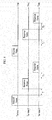
- FIGS. 4 and 5 are views illustrating adjusting, by a common terminal, time points of signal transmissions of a plurality of synchronous transmission terminals according to an exemplary embodiment of the present invention
- FIG. 6 is a view illustrating time points at which signals transmitted by the synchronous transmission terminals according to the exemplary embodiments of FIGS. 4 and 5 arrive at the common terminal.
- the terminal 1 transmits a request frame including transmission time point information to the terminals 2 and 3, an the terminals 2 and 3 transmit a response frame after the lapse of a certain time interval T 1 according to the transmission time point information.
- alter the terminal receives the response frame, it successively transmits the request frame after the lapse of a certain time T a .
- the terminal 1 receives the response frame, and when a new transmission opportunity is allocate after the laps of a certain time, the terminal 1 again transmits a request frame.
- no other terminal may be involved white the terminal 1 adjusts the transmission time points with the terminals 2 and 3.
- the locations of the terminals 2 an 3 or communication environments of the terminals 2 and 3 may be different.
- the terminal 1 adjusts the time points at which the terminals 2 and 3 are to transmit the response frames by reflecting the difference in arrival time, and retransmits a request frame including information regarding the adjusted transmission time point to the terminals 2 and 3.
- the terminals 2 and 3 retransmit a response frame alter the lapse of the time interval according to the adjusted transmission time point, respectively.
- the terminal 1 can receive the response frame alter the lapse of the adjusted time interval T 1 '.
- the process may be repeatedly performer until such time as the difference in arrival time is within an allowable error range.
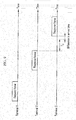
- FIGS. 7 and 8 are views illustrating adjusting, by a common terminal, transmission time points of a plurality of synchronous transmission terminals according to another exemplary embodiment of the present invention
- FIG. 9 is a view illustrating time points at which signals transmitter by the synchronous transmission terminals according to the exemplary embodiments of FIGS. 7 and arrive at the common terminal.
- the terminal 1 transmits a request frame for adjusting a transmission time point to the terminals 2 and 3, and the terminals 2 and 3 transmit a response frame at a response time allocated by the terminal 1, respectively.
- the terminal 1 may allocate a response time, that is, a transmission time point, such that the terminal 2 can transmit a response frame alter the lapse of time T 1 , from the request frame, and allocate a response time such that the terminal 3 can transmit a response frame alter the lapse of time T 2 from the response frame. Then, the terminals 2 and 3 can transmit a response frame alter the lapse of the allocated response time, respectively.
- a response time that is, a transmission time point
- the terminal 1 after the terminal 1 receives the response frame, it successively transmits a request frame after the lapse of a certain time T a .
- the terminal 1 after the terminal 1 receives the response frame, it again transmits a request frame when a new transmission opportunity is allocate after the lapse of a certain time.
- no other terminal may be involve while the terminal 1 adjusts the transmission time points with the terminals 2 and 3.
- the terminals 2 and 3 transmit a response frame at the allocate response time, respectively, there may be an error in time at which the response frames arrive at the terminal 1.
- the difference between the actual arrival time of the response frame transmitted from the terminal 2 and the actual arrival time of the response frame transmitted from the terminal 3 may be different from a difference T 2 in the estimated arrival time.
- the terminal 1 resets the response time, that is, the transmission time points, of the terminals 2 and 3 by reflecting the difference in arrival time, and retransmits a request frame including information regarding the reset response time.
- the terminals 2 and 3 may retransmit a response frame after the lapse of the allocated response time, respectively. This process may be repeatedly performed until such time as the difference in arrival time is within an allowable error range.
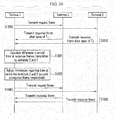
- FIG. 10 is a flowchart illustrating the process of a method for adjusting a signal transmission time point by the common terminal and the plurality of synchronous transmission terminals according to an exemplary embodiment of the present invention.
- the terminal 1 transmits request frames for adjusting transmission time points to the terminals 2 and 3 (S1000).
- the request frames may include information regarding transmission time points of response frames of the terminals 2 and 3.
- the information regarding the transmission time points of the response frames may be a certain time interval T 1 from a time point at which the request frame is transmitted to a time point at which a response frame is to be transmitted, and the certain time interval T 1 may be previously set.
- the terminals 2 and 3 transmit a response frame to the terminal 1, respectively, after the lapse of the certain time interval T 1 (S1010).
- the terminals 2 and 3 may acquire a synchronization time point by using a preamble included in each of the request frames received from the terminal 1, and start a timer based on the synchronization time point.
- the terminals 2 and 3 may transmit a response frame, respectively, by using the individually allocate preamble after the lapse of a predetermines time.
- the terminal 1 calculates the difference between an arrival time of the response frame transmitted by the terminal 2 and an arrival time of the response frame transmitted by the terminal 3 (S1020).
- the response frames transmitted by the terminals 2 and 3 include a preamble, respectively, distinguishes by terminals.
- the terminal 1 can calculate the difference in arrival time by performing a correlation operation on the preambles included in the response frames.
- the terminal 1 adjusts information regarding transmission time points of the response frames of the terminals 2 and 3 by reflecting the difference in arrival time (S1030), and transmits request frames including the adjusted information to the terminals 2 and 3 (S1040).
- an example of the adjusted information may include information regarding a synchronous transmission terminal as a reference terminal, information regarding a synchronous transmission terminal as a non-reference terminal, and the information regarding difference in arrival time of the synchronous transmission terminals (or transmission time point adjustment information).
- the synchronous transmission terminal as a reference terminal may be one of a synchronous transmission terminal of which a response frame has arrived first, a synchronous transmission terminal of which a response frame has arrived at a time closest to an average value, and a synchronous transmission terminal of which a response frame has arrived latest.
- adjusted information may include information regarding the respective synchronous transmission terminals and the difference value in arrival time between the respective synchronous transmission terminals (or transmission time point adjustment information).
- Still another example of the adjusted information may include information regarding the respective synchronous transmission terminals and the difference value in arrival time of the respective synchronous transmission terminals over an average arrival time of all the synchronous transmission terminals (or transmission time point adjustment information).
- the terminals 2 and 3 may transmit a response frame to the terminal 1 according to the adjusted information, respectively (S1050), and the terminal 1 repeatedly performs steps S1020 to S1040 until such time as the difference in arrival time is within an allowable error range.
- FIG. 11 is a flowchart illustrating the process of a method for adjusting a signal transmission time point by the common terminal and the plurality of synchronous transmission terminals according to another exemplary embodiment of the present invention.
- the terminal 1 transmits request frames for adjusting transmission time points to the terminals 2 and 3 (S1100).
- the request frames may include a response time allocate to each terminal, that is, transmission time point information.
- the terminal 1 may allocate the response time, that is, a transmission time point, such that the terminal 2 can transmit a response frame after the lapse of time T 1 from the request frame, and allocate the response time such that the terminal 3 can transmit a response frame alter the lapse of time T 2 from the response frame of the terminal 2.
- the terminals 2 and 3 transmit response frames to the terminal 1 at the respective allocated response time (S1110).
- the terminals 2 and 3 may acquire a synchronization time point by using a preamble included in each of the request frames receive from the terminal 1, and start a timer based on the synchronization time point.
- the terminals 2 and 3 may transmit a response frame, respectively, by using the individually allocate preamble after the lapse of a predetermines time.
- the preambles individually allocate to the terminals 2 and 3 may be the same or different.
- the terminal 1 calculates an arrival time of each of the response frames transmitted by the terminal 2 and the terminal 3 (S1120).
- the terminal 1 can calculate the arrival time of each of the response frames by performing a correlation operation on the preambles included in the response frames.
- the terminal 1 calculates the arrival time difference in by using the calculated arrival time (S1130).
- the arrival time difference may be a difference value between an estimated arrival time difference and an actual arrival time difference.
- the terminal 1 adjusts information regarding transmission time points with respect to a response time allocate to each terminal by deflecting the difference in arrival time (S1140), and transmits request frames including the adjusted transmission time information to the terminals 2 and 3 (S1150).
- an example of the adjusted transmission time point information may include information regarding a synchronous transmission terminal as a reference terminal, information regarding a synchronous transmission terminal as a non-reference terminal, and the information regarding difference in arrival time of the synchronous transmission terminals (or transmission time point adjustment information).
- the synchronous transmission terminal as a reference terminal may be one of a synchronous transmission terminal of which a response frame has arrived first, a synchronous transmission terminal of which a response frame has arrived at a time closest to an average value, and a synchronous transmission terminal of which a response frame has arrived latest.
- adjusted transmission time point information may include information regarding the respective synchronous transmission terminals and information regarding the difference in arrival time (or transmission time point adjustment information).
- the terminals 2 and 3 transmit a response frame to the terminal 1 according to the adjusted information (S1160), and the terminal 1 may repeatedly perform the steps S1120 to S1150 until such time that the difference in arrival time is within an allowable error range.
- the exemplary embodiments of the present invention as described are not implemented only through a device or a method, but may be implemented through a grogram that can realize a function corresponding to the configuration of the exemplary embodiments of the present invention or a recording medium storin the program.
Landscapes
- Engineering & Computer Science (AREA)
- Computer Networks & Wireless Communication (AREA)
- Signal Processing (AREA)
- Multimedia (AREA)
- Physics & Mathematics (AREA)
- Electromagnetism (AREA)
- Mobile Radio Communication Systems (AREA)
Abstract
Description
- The present invention relates to a method and apparatus for adjusting transmission time of a terminal in a wireless network.
- In line with the advancement in information communication technology, various wireless communication techniques are being developed. Among them, a wireless local area network (WLAN) uses a technique of allowing a user to wirelessly the Internet at homes, in officers, or in a particular service providing area by using a terminal based on a radio frequency technique. A wireless personal area network (WPAN) uses a technique for wirelessly connecting devices within a relatively short distance to allow for data transmission and control. The WPAN includes, for example, Bluetooth™, ZigBee™, ultra-wide band (UWB), and the like.
- In a wireless network environment such as the WLAN, the WPAN, and the like, a plurality of terminals operate independently. Thus, in order for the terminals to cooperatively communicate within the wireless network, a technique that may causes signals transmitted by the plurality of independently operating terminals reach a particular terminal at the same time point is required.
- The above information disclosed in this Background section is only for enhancement of understanding of the background of the invention and therefore it may contain information that does not form the prior art that is already known in this country to a person of ordinary skill in the art.
- The present invention has been made in an effort to provide a method for adjusting time points at which a plurality of independently operating terminals transmit signals in a wireless network..
- An exemplary embodiment of the present invention provides a method for adjusting, by a first terminal, a transmission time point of at least one second terminal in a wireless network, the method comprising: settling a transmission time point of the second terminal and transmuting a first request frame including information on the transmission time point to the second terminal; receiving a first response frame transmitted according to the transmission time point from the second terminal; and adjusting the transmission time point based to an arrival time of the first response frame.
- Another embodiment of the present invention providers a method for synchronous transmission of a terminal in a wireless network, the method comprising: transmitting a first request frame including transmission time point information to a plurality of terminals that independently operate; receiving first response frames transmitted according to the transmission time point information from the plurality of terminals; calculating an arrival time of each of the first response frames; adjusting the transmission time point information such that the difference between the arrival time an an estimated arrival time is within an allowable error range; and retransmitting a second request frame including the adjusted transmission time point information to the plurality of terminals.
- Yet another embodiment of the present invention providers a terminal including: a wireless communication unit transmitting a request frame including transmission time point information with respect to a plurality of terminals to the plurality of terminals and receiving response frames transmitted from the plurality of terminals according to the transmission time point information; and a controller calculating the difference between an actual arrival time and an estimated arrival time of each of the response frames, adjusting the transmission time point information by reflecting the difference, and configuring a request frame such that the request frame includes the adjusted transmission time point.
- According to exemplary embodiments of the present invention, signals transmitter by a plurality of terminals that operate independently in a wireless network can arrive at a particular terminal at the same time point. Therefore, cooperative communication can occur, and the terminal receiving the signals from the plurality of terminals can obtain good reception performance.
-
-
FIG. 1 is a view illustrating transmission of signals by a plurality of terminals to a common terminal in a wireless network. -
FIG. 2 is a schematic block diagram of a terminal according to an exemplary embodiment of the present invention. -
FIG. 3 is a flowchart illustrating the process of a method for adjusting transmission time points of terminals according to an exemplary embodiment of the present invention. -
FIGS. 4 and5 are views illustrating adjusting, by a common terminal, time points of signal transmissions of a plurality of synchronous transmission terminals according to an exemplary embodiment of the present invention. -
FIG. 6 is a view illustrating time points at which signals transmitted by the synchronous transmission terminals according to the exemplary embodiments ofFIGS. 4 and5 arrive at the common terminal. -
FIGS. 7 and8 are views illustrating adjusting, by a common terminal, transmission time points of a plurality of synchronous transmission terminals according to another exemplary embodiment of the present invention. -
FIG. 9 is a view illustrating time points at which signals transmitted by the synchronous transmission terminals according to the exemplary embodiments ofFIGS. 7 and8 arrive at the common terminal. -
FIG. 10 is a flowchart illustrating the process of a method for adjusting a signal transmission time point by the common terminal and the plurality of synchronous transmission terminals according to an exemplary embodiment of the present invention. -
FIG. 11 is a flowchart illustrating the process of a method for adjusting a signal transmission time point by the common terminal and the plurality of synchronous transmission terminals according to another exemplary embodiment of the present invention. - In the following detailed description, only certain exemplary embodiments of the present invention have been shown and described, simply by way of illustration. As those skilled in the art would realize, the described embodiments may be modified in various different ways, all without departing from the spirit or scope of the present invention. Accordingly, the drawings and description are to be regarded as illustrative in nature and not restrictive. Like reference numerals designate like elements throughout the specification.
- Throughout the specification, unless explicitly described to the contrary, the word "comprise" and variations such as "comprises" or "comprising" will be understood to imply the inclusion of stated elements but not the exclusion of any other elements.
- In the present disclosure, a terminal may be preferred to as a mobile station (MS), a mobile terminal (MT), a subscriber station (SS), a portable subscriber station (PSS), user equipment (UE), an access terminal (AT), and the like, or may include entire or partial functions of the MS, MT, SS, PSS, UE, AT, and the like.
- In the present disclosure, an access point (AP) may be referred to as a base station (BS), a radio access station (RAS), a Node B, an evolved Node B (eNodeB), a transceiver station (BTS), a mobile multihop relay (MMR)-BS, and the like, and include the entire or partial functions of the BS, RAS, Node B, eNodeB, BTS, MMR-BS, and the like.
-
FIG. 1 is a view illustrating transmission of signals by a plurality of terminals to a common terminal in a wireless network. - With reference to
FIG. 1 ,terminal 1 transmits a request message toterminals terminals terminals terminals terminal 1, they transmit the response with respect to the request message after the lapse of SIFS. - Here, the synchronous transmission refers signals being transmitted by a plurality of terminals (e.g., the
terminals 2 and 3), which independently operate, simultaneously arriving at a common terminal (e.g., the terminal 1) within a certain error range. The plurality of terminals transmitting signals to the common terminal by using synchronous transmission may also be called synchronous transmission terminals. Such a synchronous transmission may be applicable to cooperative communication using a relay, and in this case, one of theterminals - In this case, the SIFS may have a certain margin of error. For example, the SIFS may have a margin of error within a range of approximately +10% to - 10% in one slot time. Assuming that the SIFS is 10µs and one slot time is 20µs, the SIFS may have a value ranging from 8µs to 12µs. Thus, there may be a time difference of a maximum of 4µs between a time at which the signal transmitted by the
terminal 2 arrives at theterminal 1 and a time at which the signal transmitted by theterminal 3 arrives at theterminal 1. In this respect, in an orthogonal frequency division multiplexing (OFDM) system, because the length of a cyclic prefix (CP) is 800ns, the difference between the time at which the signal from theterminal 2 arrives and the time at which the signal from theterminal 3 arrives may be longer than the length of the CP. Thus, theterminal 1 may have difficulty in precisely restoring the signals commonly received from theterminals -
FIG. 2 is a schematic block diagram of a terminal according to an exemplary embodiment of the present invention, andFIG. 3 is a flowchart illustrating the process of a method for adjusting transmission time points of terminals according to an exemplary embodiment of the present invention. - With reference to
FIG. 2 , aterminal 200 includes awireless communication unit 210, acontroller 220, astorage unit 230, aninput unit 240, and anoutput unit 250. - The
wireless communication unit 210 performs a wireless communication function of theterminal 200. Thewireless communication unit 210 may include an RF unit for transmitting and receiving a radio frequency (RF) signal. - The
controller 220 controls the general operation of theterminal 200. Thecontroller 220 may include a data processing unit for cooing and modulating a transmitted signal or demodulating and decoding a received signal. - The
storage unit 230 stores programs for operating thecontroller 220, and inputted or outputted data. - The
input unit 240 receives data or information for controlling operations of the terminal from the user. - The
output unit 250 displays information processed in theterminal 200 as various types of signals (e.g., audio signal, visual signal, etc.) to the user. - With reference to
FIGS. 2 and3 , thewireless communication unit 210 of theterminal 200 transmits a request frame for adjusting transmission time points to a plurality of synchronous transmission terminals (S300). The request frame includes information regarding a transmission time point at which the synchronous transmission terminal is to transmit a response frame. The transmission time point information may be previously set. The request frame may be multicast or broadcast to the plurality of synchronous transmission terminal, or may be separately transmitted to the plurality of synchronous transmission terminals. - The synchronous transmission terminal transmit a response frame based on the transmission time point, respectively, and the
wireless communication unit 210 of theterminal 200 receives the response frames from the plurality of synchronous transmission terminals (S310). Thecontroller 220 of the terminal 200 calculates the difference in arrival time of the response frames (S320). The difference in arrival time may be calculated, for example, by using a preamble included in each of the response frame. - The
controller 220 of the terminal 200 resets the transmission time point information by reflecting the difference in arrival time (S330). Thewireless communication unit 210 of the terminal 200 retransmits a request frame including the reset transmission time point information to the plurality of synchronous transmission terminals (S340). The steps S310 to S340 may be repeatedly performed until such time as the difference in arrival time of the response frames is within an allowable error range. -
FIGS. 4 and5 are views illustrating adjusting, by a common terminal, time points of signal transmissions of a plurality of synchronous transmission terminals according to an exemplary embodiment of the present invention, andFIG. 6 is a view illustrating time points at which signals transmitted by the synchronous transmission terminals according to the exemplary embodiments ofFIGS. 4 and5 arrive at the common terminal. - With reference to
FIGS. 4 and5 , theterminal 1 transmits a request frame including transmission time point information to theterminals terminals FIG. 4 , alter the terminal receives the response frame, it successively transmits the request frame after the lapse of a certain time Ta. In contrast, in the case illustrated inFIG. 5 , theterminal 1 receives the response frame, and when a new transmission opportunity is allocate after the laps of a certain time, theterminal 1 again transmits a request frame. In the case illustrate inFIG. 4 , no other terminal may be involved white theterminal 1 adjusts the transmission time points with theterminals - The locations of the
terminals 2 an 3 or communication environments of theterminals FIG. 6 , althoug theterminals terminals terminal 1, respectively. Thus, theterminal 1 adjusts the time points at which theterminals terminals terminals terminal 1 can receive the response frame alter the lapse of the adjusted time interval T1'. The process may be repeatedly performer until such time as the difference in arrival time is within an allowable error range. -
FIGS. 7 and8 are views illustrating adjusting, by a common terminal, transmission time points of a plurality of synchronous transmission terminals according to another exemplary embodiment of the present invention, andFIG. 9 is a view illustrating time points at which signals transmitter by the synchronous transmission terminals according to the exemplary embodiments ofFIGS. 7 and arrive at the common terminal. - With reference to
FIGS. 7 and8 , theterminal 1 transmits a request frame for adjusting a transmission time point to theterminals terminals terminal 1, respectively. For example, theterminal 1 may allocate a response time, that is, a transmission time point, such that theterminal 2 can transmit a response frame alter the lapse of time T1, from the request frame, and allocate a response time such that theterminal 3 can transmit a response frame alter the lapse of time T2 from the response frame. Then, theterminals FIG. 7 , after theterminal 1 receives the response frame, it successively transmits a request frame after the lapse of a certain time Ta. In contrast, in the case illustrate inFIG. 8 , after theterminal 1 receives the response frame, it again transmits a request frame when a new transmission opportunity is allocate after the lapse of a certain time. In the case illustrated inFIG. 7 , no other terminal may be involve while theterminal 1 adjusts the transmission time points with theterminals - As shown in
FIG. 9 , although theterminals terminal 1. For example, the difference between the actual arrival time of the response frame transmitted from theterminal 2 and the actual arrival time of the response frame transmitted from theterminal 3 may be different from a difference T2 in the estimated arrival time. Then, theterminal 1 resets the response time, that is, the transmission time points, of theterminals terminals -
FIG. 10 is a flowchart illustrating the process of a method for adjusting a signal transmission time point by the common terminal and the plurality of synchronous transmission terminals according to an exemplary embodiment of the present invention. - With reference to
FIG. 10 , theterminal 1 transmits request frames for adjusting transmission time points to theterminals 2 and 3 (S1000). The request frames may include information regarding transmission time points of response frames of theterminals - The
terminals terminal 1, respectively, after the lapse of the certain time interval T1 (S1010). In this case, theterminals terminal 1, and start a timer based on the synchronization time point. Theterminals - The
terminal 1 calculates the difference between an arrival time of the response frame transmitted by theterminal 2 and an arrival time of the response frame transmitted by the terminal 3 (S1020). The response frames transmitted by theterminals terminal 1 can calculate the difference in arrival time by performing a correlation operation on the preambles included in the response frames. - The
terminal 1 adjusts information regarding transmission time points of the response frames of theterminals terminals 2 and 3 (S1040). - Here, an example of the adjusted information may include information regarding a synchronous transmission terminal as a reference terminal, information regarding a synchronous transmission terminal as a non-reference terminal, and the information regarding difference in arrival time of the synchronous transmission terminals (or transmission time point adjustment information). Here, the synchronous transmission terminal as a reference terminal may be one of a synchronous transmission terminal of which a response frame has arrived first, a synchronous transmission terminal of which a response frame has arrived at a time closest to an average value, and a synchronous transmission terminal of which a response frame has arrived latest.
- Another example of the adjusted information may include information regarding the respective synchronous transmission terminals and the difference value in arrival time between the respective synchronous transmission terminals (or transmission time point adjustment information).
- Still another example of the adjusted information may include information regarding the respective synchronous transmission terminals and the difference value in arrival time of the respective synchronous transmission terminals over an average arrival time of all the synchronous transmission terminals (or transmission time point adjustment information).
- The
terminals terminal 1 according to the adjusted information, respectively (S1050), and theterminal 1 repeatedly performs steps S1020 to S1040 until such time as the difference in arrival time is within an allowable error range. -
FIG. 11 is a flowchart illustrating the process of a method for adjusting a signal transmission time point by the common terminal and the plurality of synchronous transmission terminals according to another exemplary embodiment of the present invention. - With reference to
FIG. 11 , theterminal 1 transmits request frames for adjusting transmission time points to theterminals 2 and 3 (S1100). The request frames may include a response time allocate to each terminal, that is, transmission time point information. For example, theterminal 1 may allocate the response time, that is, a transmission time point, such that theterminal 2 can transmit a response frame after the lapse of time T1 from the request frame, and allocate the response time such that theterminal 3 can transmit a response frame alter the lapse of time T2 from the response frame of theterminal 2. - The
terminals terminal 1 at the respective allocated response time (S1110). In this case, theterminals terminal 1, and start a timer based on the synchronization time point. Theterminals terminals - The
terminal 1 calculates an arrival time of each of the response frames transmitted by theterminal 2 and the terminal 3 (S1120). Theterminal 1 can calculate the arrival time of each of the response frames by performing a correlation operation on the preambles included in the response frames. - The
terminal 1 calculates the arrival time difference in by using the calculated arrival time (S1130). In this case, as illustrated inFIGS. 7 to 9 , the arrival time difference may be a difference value between an estimated arrival time difference and an actual arrival time difference. - The
terminal 1 adjusts information regarding transmission time points with respect to a response time allocate to each terminal by deflecting the difference in arrival time (S1140), and transmits request frames including the adjusted transmission time information to theterminals 2 and 3 (S1150). - Here, an example of the adjusted transmission time point information may include information regarding a synchronous transmission terminal as a reference terminal, information regarding a synchronous transmission terminal as a non-reference terminal, and the information regarding difference in arrival time of the synchronous transmission terminals (or transmission time point adjustment information). Here, the synchronous transmission terminal as a reference terminal may be one of a synchronous transmission terminal of which a response frame has arrived first, a synchronous transmission terminal of which a response frame has arrived at a time closest to an average value, and a synchronous transmission terminal of which a response frame has arrived latest.
- Another example of the adjusted transmission time point information may include information regarding the respective synchronous transmission terminals and information regarding the difference in arrival time (or transmission time point adjustment information).
- The
terminals terminal 1 according to the adjusted information (S1160), and theterminal 1 may repeatedly perform the steps S1120 to S1150 until such time that the difference in arrival time is within an allowable error range. - The exemplary embodiments of the present invention as described are not implemented only through a device or a method, but may be implemented through a grogram that can realize a function corresponding to the configuration of the exemplary embodiments of the present invention or a recording medium storin the program.
- While this invention has been described in connection with what is presently considered to be practical exemplary embodiments, it is to be understood that the invention is not limited to the disclosed embodiments, but, on the contrary, is intended to cover various modifications and equivalent arrangements included within the spirit and scope of the appended claims.
Claims (17)
- A method for adjusting , by a first terminal, a transmission time point of at least on second terminal in a wireless network, the method comprising:setting a transmission time point of the second terminal and transmitting a first request frame including information on the transmission time point to the second terminal;receiving a first response frame transmitted according to the transmission time point from the second terminal; andadjusting the transmission time point based to an arrival time of the first response frame.
- The method of claim 1, further comprising
calculating the arrival time by performing a correlation operation on a preamble included in the first response frame. - The method of claim 1, wherein the second terminal comprises a plurality of second terminals, and preambles included in the first response frames from the plurality of second terminals are distinguishes from each other.
- The method of claim 1, wherein the second terminal comprises a plurality of second terminals, and the transmission time point is set such that the plurality of second terminals simultaneously transmit the first response frame, respectively.
- The method of claim 4, wherein the adjusting of the transmission time point comprises:calculating a arrival time difference of the first response frames received from the plurality of second terminals; andadjusting the transmission time points of the plurality of second terminals by using the arrival time difference.
- The method of claim 1, wherein the second terminal comprises a plurality of second terminals, and the transmission time points are set such that the plurality of terminals transmit the first response frames such that the first response frames do not overlap with each other.
- The method of claim 6, wherein the adjusting of the transmission time points comprises:calculating an arrival time of each of the first response frames received from the plurality of second terminals;calculating a difference value between an estimated arrival time difference and an actual arrival time difference of the first response frames by using the arrival time of each of the first response frames; andadjusting the transmission time points of the plurality of second terminals by using the difference value.
- The method of claim 1, further comprising:transmitting a second request frame including information on the adjusted transmission time point to the second terminal;receiving a second response frame transmitted according to the adjusted transmission time point from the second terminal;checking whether an arrival time of the second response frame is within an allowable error range; andwhen the arrival time of the second response frame is not within the allowable error range, readjusting the transmission time point based on the arrival time of the second response frame.
- The method of claim 8, wherein the second request frame is successively transmitted after the first response frame is received, or the second request frame is transmitted after the elapse of a certain time.
- The method of claim 8, wherein the second terminal comprises a plurality of second terminals, and the second request frame comprises information on a reference terminal among the plurality of second terminals.
- The method of claim 10, wherein the reference terminal is one of the second terminal of which the first response frame has arrived first, the second terminal of which the first response frame has arrived latest, and the second terminal of which the first response frame has arrived at a time closest to an average arrival time of the plurality of second terminals.
- A method for synchronous transmission of a terminal in a wireless network, the method comprising:transmitting a first request frame including transmission time point information to a plurality of terminals that independently operate;receiving first response frames transmitted according to the transmission time point information from the plurality of terminals;calculating an arrival time of each of the first response frames;adjusting the transmission time point information such that the difference between the arrival time an an estimated arrival time is within an allowable error range; andretransmitting a second request frame including the adjusted transmission time point information to the plurality of terminals.
- The method of claim 12, wherein the first request frame further comprises a preamble for synchronizing of the plurality of terminals.
- The method of claim 12, wherein the arrival time is calculated by performing a correlation operation on preambles included in the first response frames.
- A terminal comprising:a wireless communication unit transmitting a request frame including transmission time point information with respect to a plurality of terminals to the plurality of terminals and receiving response frames transmitted from the plurality of terminals according to the transmission time point information; anda controller calculating the difference between an actual arrival time and an estimated arrival time of each of the response frames, adjusting the transmission time point information by reflecting the difference, and configuring a request frame such that the request frame includes the adjusted transmission time point.
- The terminal of claim 15, wherein the controller adjusts the transmission time point information such that the difference is within an allowable error range.
- The terminal of claim 15, wherein the controller calculates the difference by using a correlation operation of a preamble included in each of the response frames.
Priority Applications (1)
| Application Number | Priority Date | Filing Date | Title |
|---|---|---|---|
| EP18195029.6A EP3451778B1 (en) | 2009-08-21 | 2010-08-20 | Method and apparatus for adjusting signal transmission starting point of terminal in wireless network |
Applications Claiming Priority (3)
| Application Number | Priority Date | Filing Date | Title |
|---|---|---|---|
| KR20090077490 | 2009-08-21 | ||
| PCT/KR2010/005561 WO2011021904A2 (en) | 2009-08-21 | 2010-08-20 | Method and apparatus for adjusting signal transmission starting point of terminal in wireless network |
| KR1020100080713A KR20110020200A (en) | 2009-08-21 | 2010-08-20 | Method and apparatus for adjusting signal transmission time of a terminal in a wireless network |
Related Child Applications (2)
| Application Number | Title | Priority Date | Filing Date |
|---|---|---|---|
| EP18195029.6A Division EP3451778B1 (en) | 2009-08-21 | 2010-08-20 | Method and apparatus for adjusting signal transmission starting point of terminal in wireless network |
| EP18195029.6A Division-Into EP3451778B1 (en) | 2009-08-21 | 2010-08-20 | Method and apparatus for adjusting signal transmission starting point of terminal in wireless network |
Publications (3)
| Publication Number | Publication Date |
|---|---|
| EP2469737A2 true EP2469737A2 (en) | 2012-06-27 |
| EP2469737A4 EP2469737A4 (en) | 2016-10-19 |
| EP2469737B1 EP2469737B1 (en) | 2019-01-09 |
Family
ID=43929558
Family Applications (2)
| Application Number | Title | Priority Date | Filing Date |
|---|---|---|---|
| EP10810212.0A Active EP2469737B1 (en) | 2009-08-21 | 2010-08-20 | Method and apparatus for adjusting signal transmission starting point of terminal in wireless network |
| EP18195029.6A Active EP3451778B1 (en) | 2009-08-21 | 2010-08-20 | Method and apparatus for adjusting signal transmission starting point of terminal in wireless network |
Family Applications After (1)
| Application Number | Title | Priority Date | Filing Date |
|---|---|---|---|
| EP18195029.6A Active EP3451778B1 (en) | 2009-08-21 | 2010-08-20 | Method and apparatus for adjusting signal transmission starting point of terminal in wireless network |
Country Status (5)
| Country | Link |
|---|---|
| US (3) | US8837457B2 (en) |
| EP (2) | EP2469737B1 (en) |
| KR (7) | KR20110020200A (en) |
| CN (1) | CN102577175B (en) |
| WO (1) | WO2011021904A2 (en) |
Families Citing this family (8)
| Publication number | Priority date | Publication date | Assignee | Title |
|---|---|---|---|---|
| EP2469737B1 (en) * | 2009-08-21 | 2019-01-09 | Electronics and Telecommunications Research Institute | Method and apparatus for adjusting signal transmission starting point of terminal in wireless network |
| KR20140075978A (en) * | 2012-12-11 | 2014-06-20 | 한국전자통신연구원 | Method for controlling time of reference in mesh network |
| KR102152308B1 (en) * | 2013-10-29 | 2020-10-26 | 삼성전자주식회사 | A method and an apparatus for scheduling of an access point on the Wireless Local Area Network |
| US10440598B2 (en) * | 2016-03-24 | 2019-10-08 | Marvell World Trade Ltd. | Methods and apparatus for clock drift mitigation with snoop-based ranging |
| WO2020032763A1 (en) * | 2018-08-10 | 2020-02-13 | 엘지전자 주식회사 | Method and apparatus for adjusting transmission timing by anchor node in wireless communication system |
| EP3852449A4 (en) | 2018-11-05 | 2021-12-15 | Shenzhen Goodix Technology Co., Ltd. | DATA SYNCHRONIZATION METHOD AND DEVICE AND STORAGE MEDIUM |
| US11690107B2 (en) * | 2020-04-06 | 2023-06-27 | Mediatek Singapore Pte. Ltd | Synchronous multi-link wireless TXOP procedure |
| KR102755339B1 (en) * | 2023-01-27 | 2025-01-21 | 서울시립대학교 산학협력단 | Device and method for controlling frame transmission timing |
Family Cites Families (17)
| Publication number | Priority date | Publication date | Assignee | Title |
|---|---|---|---|---|
| JP3970467B2 (en) | 1999-03-18 | 2007-09-05 | 富士通株式会社 | Wireless communication system |
| US6405047B1 (en) * | 1999-12-01 | 2002-06-11 | Samsung Electronics, Co., Ltd. | Device and method for tracking mobile station's position in mobile communication system |
| US6873662B2 (en) * | 2002-02-14 | 2005-03-29 | Interdigital Technology Corporation | Wireless communication system having adaptive threshold for timing deviation measurement and method |
| US7133647B2 (en) * | 2002-09-23 | 2006-11-07 | Ericsson Inc. | Chiprate correction in digital transceivers |
| US7564826B2 (en) | 2005-07-13 | 2009-07-21 | Texas Instruments Incorporated | Apparatus for and method of synchronization and beaconing in a WLAN mesh network |
| CA2619382A1 (en) | 2005-09-01 | 2007-03-08 | Peter El Kwan Chow | Media access control architecture |
| EP2134006B1 (en) * | 2005-10-26 | 2014-10-08 | Mitsubishi Electric R&D Centre Europe B.V. | Method for communicating downlink and uplink sub-frames in a half duplex communication system |
| EP1958394A2 (en) * | 2005-12-02 | 2008-08-20 | Koninklijke Philips Electronics N.V. | Wireless systems and methods including cooperative communication medium access control |
| KR101166416B1 (en) | 2006-06-19 | 2012-07-19 | 가부시키가이샤 엔티티 도코모 | Base station, mobile station, synchronization control method, and ic chip |
| US7869421B2 (en) * | 2006-07-14 | 2011-01-11 | Qualcomm Incorporated | Uplink access request in an OFDM communication environment |
| EP2156574B1 (en) * | 2007-06-21 | 2013-02-27 | Nokia Corporation | Methods, computer program products and apparatus providing improved use of relays in wireless communication |
| US8780885B2 (en) * | 2007-07-09 | 2014-07-15 | Qualcomm Incorporated | Synchronization of a peer-to-peer communication network |
| JP4941753B2 (en) * | 2007-08-31 | 2012-05-30 | 横河電機株式会社 | Field control system |
| KR101389277B1 (en) * | 2007-10-16 | 2014-04-28 | 삼성전자주식회사 | Method for controlling broadcasting in wireless sensor network |
| KR101434585B1 (en) * | 2008-01-03 | 2014-08-27 | 삼성전자주식회사 | Communication system for transmitting data using cooperative communication relay |
| KR100904533B1 (en) | 2008-01-11 | 2009-06-25 | 엘지전자 주식회사 | Transmission timing adjustment method, continuous packet transmission method and mobile communication terminal |
| EP2469737B1 (en) * | 2009-08-21 | 2019-01-09 | Electronics and Telecommunications Research Institute | Method and apparatus for adjusting signal transmission starting point of terminal in wireless network |
-
2010
- 2010-08-20 EP EP10810212.0A patent/EP2469737B1/en active Active
- 2010-08-20 KR KR1020100080713A patent/KR20110020200A/en not_active Ceased
- 2010-08-20 US US13/391,622 patent/US8837457B2/en active Active
- 2010-08-20 EP EP18195029.6A patent/EP3451778B1/en active Active
- 2010-08-20 WO PCT/KR2010/005561 patent/WO2011021904A2/en not_active Ceased
- 2010-08-20 CN CN201080047773.5A patent/CN102577175B/en active Active
-
2014
- 2014-08-20 US US14/463,703 patent/US9265045B2/en active Active
-
2016
- 2016-02-03 US US15/014,315 patent/US9497723B2/en active Active
-
2017
- 2017-05-04 KR KR1020170056856A patent/KR101862366B1/en active Active
-
2018
- 2018-05-23 KR KR1020180058316A patent/KR102026961B1/en active Active
-
2019
- 2019-09-24 KR KR1020190117669A patent/KR102151140B1/en active Active
-
2020
- 2020-08-27 KR KR1020200108566A patent/KR20200105462A/en not_active Ceased
-
2022
- 2022-04-06 KR KR1020220042851A patent/KR20220051140A/en not_active Ceased
-
2023
- 2023-10-19 KR KR1020230140412A patent/KR20230150922A/en not_active Withdrawn
Non-Patent Citations (1)
| Title |
|---|
| See references of WO2011021904A2 * |
Also Published As
| Publication number | Publication date |
|---|---|
| EP3451778B1 (en) | 2021-02-24 |
| CN102577175A (en) | 2012-07-11 |
| KR102026961B1 (en) | 2019-09-30 |
| KR20110020200A (en) | 2011-03-02 |
| KR20170055457A (en) | 2017-05-19 |
| EP3451778A1 (en) | 2019-03-06 |
| KR101862366B1 (en) | 2018-05-31 |
| KR20200105462A (en) | 2020-09-07 |
| CN102577175B (en) | 2015-12-02 |
| KR20180059408A (en) | 2018-06-04 |
| KR20230150922A (en) | 2023-10-31 |
| KR20220051140A (en) | 2022-04-26 |
| US9265045B2 (en) | 2016-02-16 |
| EP2469737A4 (en) | 2016-10-19 |
| KR102151140B1 (en) | 2020-09-02 |
| US8837457B2 (en) | 2014-09-16 |
| EP2469737B1 (en) | 2019-01-09 |
| WO2011021904A2 (en) | 2011-02-24 |
| KR20190112691A (en) | 2019-10-07 |
| US20140355510A1 (en) | 2014-12-04 |
| WO2011021904A3 (en) | 2011-07-14 |
| US20160157200A1 (en) | 2016-06-02 |
| US9497723B2 (en) | 2016-11-15 |
| US20120207146A1 (en) | 2012-08-16 |
Similar Documents
| Publication | Publication Date | Title |
|---|---|---|
| US9497723B2 (en) | Method and apparatus for adjusting signal transmission starting point of terminal in wireless network | |
| US10966199B2 (en) | Method and apparatus for receiving or transmitting data | |
| US10349410B2 (en) | Methods of UL TDM for inter-eNodeB carrier aggregation | |
| CN110475358B (en) | Communication method and communication device | |
| WO2018059394A1 (en) | Timing adjustment free solution to uplink synchronous operations | |
| US20150103702A1 (en) | Frame format in communications | |
| CN111095820A (en) | Wireless communication system, base station and user side equipment | |
| US12143341B2 (en) | Control using NR TDD | |
| CN111201824A (en) | Media access control for full duplex communication | |
| CN110896346B (en) | Method for transmitting PUSCH, user equipment and base station | |
| US20250385768A1 (en) | Communications devices, network infrastructure equipment, wireless communications networks and methods | |
| CN109861744A (en) | Data return method, device, terminal, drone and readable storage medium | |
| US20120147792A1 (en) | Relaying node, time division duplex communication system and communication method | |
| KR20170088287A (en) | Method and apparatus for receiving or transmitting data | |
| US20110237284A1 (en) | Communication Method and System | |
| CN101803445A (en) | Improved uplink access in a wireless communications tdd system | |
| KR20180124599A (en) | Period determination method for sub-frame using control signal of radio frame and apparatus thereof |
Legal Events
| Date | Code | Title | Description |
|---|---|---|---|
| PUAI | Public reference made under article 153(3) epc to a published international application that has entered the european phase |
Free format text: ORIGINAL CODE: 0009012 |
|
| 17P | Request for examination filed |
Effective date: 20120321 |
|
| AK | Designated contracting states |
Kind code of ref document: A2 Designated state(s): AL AT BE BG CH CY CZ DE DK EE ES FI FR GB GR HR HU IE IS IT LI LT LU LV MC MK MT NL NO PL PT RO SE SI SK SM TR |
|
| DAX | Request for extension of the european patent (deleted) | ||
| A4 | Supplementary search report drawn up and despatched |
Effective date: 20160915 |
|
| RIC1 | Information provided on ipc code assigned before grant |
Ipc: H04W 72/12 20090101AFI20160909BHEP |
|
| REG | Reference to a national code |
Ref country code: DE Ref legal event code: R079 Ref document number: 602010056475 Country of ref document: DE Free format text: PREVIOUS MAIN CLASS: H04B0007260000 Ipc: H04W0072120000 |
|
| GRAP | Despatch of communication of intention to grant a patent |
Free format text: ORIGINAL CODE: EPIDOSNIGR1 |
|
| STAA | Information on the status of an ep patent application or granted ep patent |
Free format text: STATUS: GRANT OF PATENT IS INTENDED |
|
| RIC1 | Information provided on ipc code assigned before grant |
Ipc: H04W 56/00 20090101ALI20180424BHEP Ipc: H04W 74/00 20090101ALI20180424BHEP Ipc: H04W 72/12 20090101AFI20180424BHEP Ipc: H04W 4/80 20180101ALI20180424BHEP |
|
| INTG | Intention to grant announced |
Effective date: 20180518 |
|
| GRAS | Grant fee paid |
Free format text: ORIGINAL CODE: EPIDOSNIGR3 |
|
| GRAA | (expected) grant |
Free format text: ORIGINAL CODE: 0009210 |
|
| STAA | Information on the status of an ep patent application or granted ep patent |
Free format text: STATUS: THE PATENT HAS BEEN GRANTED |
|
| AK | Designated contracting states |
Kind code of ref document: B1 Designated state(s): AL AT BE BG CH CY CZ DE DK EE ES FI FR GB GR HR HU IE IS IT LI LT LU LV MC MK MT NL NO PL PT RO SE SI SK SM TR |
|
| REG | Reference to a national code |
Ref country code: GB Ref legal event code: FG4D |
|
| REG | Reference to a national code |
Ref country code: CH Ref legal event code: EP Ref country code: AT Ref legal event code: REF Ref document number: 1088928 Country of ref document: AT Kind code of ref document: T Effective date: 20190115 |
|
| REG | Reference to a national code |
Ref country code: IE Ref legal event code: FG4D |
|
| REG | Reference to a national code |
Ref country code: DE Ref legal event code: R096 Ref document number: 602010056475 Country of ref document: DE |
|
| REG | Reference to a national code |
Ref country code: NL Ref legal event code: MP Effective date: 20190109 |
|
| REG | Reference to a national code |
Ref country code: LT Ref legal event code: MG4D |
|
| PG25 | Lapsed in a contracting state [announced via postgrant information from national office to epo] |
Ref country code: NL Free format text: LAPSE BECAUSE OF FAILURE TO SUBMIT A TRANSLATION OF THE DESCRIPTION OR TO PAY THE FEE WITHIN THE PRESCRIBED TIME-LIMIT Effective date: 20190109 |
|
| REG | Reference to a national code |
Ref country code: AT Ref legal event code: MK05 Ref document number: 1088928 Country of ref document: AT Kind code of ref document: T Effective date: 20190109 |
|
| PG25 | Lapsed in a contracting state [announced via postgrant information from national office to epo] |
Ref country code: PT Free format text: LAPSE BECAUSE OF FAILURE TO SUBMIT A TRANSLATION OF THE DESCRIPTION OR TO PAY THE FEE WITHIN THE PRESCRIBED TIME-LIMIT Effective date: 20190509 Ref country code: SE Free format text: LAPSE BECAUSE OF FAILURE TO SUBMIT A TRANSLATION OF THE DESCRIPTION OR TO PAY THE FEE WITHIN THE PRESCRIBED TIME-LIMIT Effective date: 20190109 Ref country code: FI Free format text: LAPSE BECAUSE OF FAILURE TO SUBMIT A TRANSLATION OF THE DESCRIPTION OR TO PAY THE FEE WITHIN THE PRESCRIBED TIME-LIMIT Effective date: 20190109 Ref country code: PL Free format text: LAPSE BECAUSE OF FAILURE TO SUBMIT A TRANSLATION OF THE DESCRIPTION OR TO PAY THE FEE WITHIN THE PRESCRIBED TIME-LIMIT Effective date: 20190109 Ref country code: NO Free format text: LAPSE BECAUSE OF FAILURE TO SUBMIT A TRANSLATION OF THE DESCRIPTION OR TO PAY THE FEE WITHIN THE PRESCRIBED TIME-LIMIT Effective date: 20190409 Ref country code: ES Free format text: LAPSE BECAUSE OF FAILURE TO SUBMIT A TRANSLATION OF THE DESCRIPTION OR TO PAY THE FEE WITHIN THE PRESCRIBED TIME-LIMIT Effective date: 20190109 Ref country code: LT Free format text: LAPSE BECAUSE OF FAILURE TO SUBMIT A TRANSLATION OF THE DESCRIPTION OR TO PAY THE FEE WITHIN THE PRESCRIBED TIME-LIMIT Effective date: 20190109 |
|
| PG25 | Lapsed in a contracting state [announced via postgrant information from national office to epo] |
Ref country code: IS Free format text: LAPSE BECAUSE OF FAILURE TO SUBMIT A TRANSLATION OF THE DESCRIPTION OR TO PAY THE FEE WITHIN THE PRESCRIBED TIME-LIMIT Effective date: 20190509 Ref country code: HR Free format text: LAPSE BECAUSE OF FAILURE TO SUBMIT A TRANSLATION OF THE DESCRIPTION OR TO PAY THE FEE WITHIN THE PRESCRIBED TIME-LIMIT Effective date: 20190109 Ref country code: GR Free format text: LAPSE BECAUSE OF FAILURE TO SUBMIT A TRANSLATION OF THE DESCRIPTION OR TO PAY THE FEE WITHIN THE PRESCRIBED TIME-LIMIT Effective date: 20190410 Ref country code: LV Free format text: LAPSE BECAUSE OF FAILURE TO SUBMIT A TRANSLATION OF THE DESCRIPTION OR TO PAY THE FEE WITHIN THE PRESCRIBED TIME-LIMIT Effective date: 20190109 Ref country code: BG Free format text: LAPSE BECAUSE OF FAILURE TO SUBMIT A TRANSLATION OF THE DESCRIPTION OR TO PAY THE FEE WITHIN THE PRESCRIBED TIME-LIMIT Effective date: 20190409 |
|
| REG | Reference to a national code |
Ref country code: DE Ref legal event code: R097 Ref document number: 602010056475 Country of ref document: DE |
|
| PG25 | Lapsed in a contracting state [announced via postgrant information from national office to epo] |
Ref country code: SK Free format text: LAPSE BECAUSE OF FAILURE TO SUBMIT A TRANSLATION OF THE DESCRIPTION OR TO PAY THE FEE WITHIN THE PRESCRIBED TIME-LIMIT Effective date: 20190109 Ref country code: IT Free format text: LAPSE BECAUSE OF FAILURE TO SUBMIT A TRANSLATION OF THE DESCRIPTION OR TO PAY THE FEE WITHIN THE PRESCRIBED TIME-LIMIT Effective date: 20190109 Ref country code: EE Free format text: LAPSE BECAUSE OF FAILURE TO SUBMIT A TRANSLATION OF THE DESCRIPTION OR TO PAY THE FEE WITHIN THE PRESCRIBED TIME-LIMIT Effective date: 20190109 Ref country code: CZ Free format text: LAPSE BECAUSE OF FAILURE TO SUBMIT A TRANSLATION OF THE DESCRIPTION OR TO PAY THE FEE WITHIN THE PRESCRIBED TIME-LIMIT Effective date: 20190109 Ref country code: AT Free format text: LAPSE BECAUSE OF FAILURE TO SUBMIT A TRANSLATION OF THE DESCRIPTION OR TO PAY THE FEE WITHIN THE PRESCRIBED TIME-LIMIT Effective date: 20190109 Ref country code: RO Free format text: LAPSE BECAUSE OF FAILURE TO SUBMIT A TRANSLATION OF THE DESCRIPTION OR TO PAY THE FEE WITHIN THE PRESCRIBED TIME-LIMIT Effective date: 20190109 Ref country code: DK Free format text: LAPSE BECAUSE OF FAILURE TO SUBMIT A TRANSLATION OF THE DESCRIPTION OR TO PAY THE FEE WITHIN THE PRESCRIBED TIME-LIMIT Effective date: 20190109 Ref country code: AL Free format text: LAPSE BECAUSE OF FAILURE TO SUBMIT A TRANSLATION OF THE DESCRIPTION OR TO PAY THE FEE WITHIN THE PRESCRIBED TIME-LIMIT Effective date: 20190109 |
|
| PLBE | No opposition filed within time limit |
Free format text: ORIGINAL CODE: 0009261 |
|
| STAA | Information on the status of an ep patent application or granted ep patent |
Free format text: STATUS: NO OPPOSITION FILED WITHIN TIME LIMIT |
|
| PG25 | Lapsed in a contracting state [announced via postgrant information from national office to epo] |
Ref country code: SM Free format text: LAPSE BECAUSE OF FAILURE TO SUBMIT A TRANSLATION OF THE DESCRIPTION OR TO PAY THE FEE WITHIN THE PRESCRIBED TIME-LIMIT Effective date: 20190109 |
|
| 26N | No opposition filed |
Effective date: 20191010 |
|
| PG25 | Lapsed in a contracting state [announced via postgrant information from national office to epo] |
Ref country code: SI Free format text: LAPSE BECAUSE OF FAILURE TO SUBMIT A TRANSLATION OF THE DESCRIPTION OR TO PAY THE FEE WITHIN THE PRESCRIBED TIME-LIMIT Effective date: 20190109 |
|
| PG25 | Lapsed in a contracting state [announced via postgrant information from national office to epo] |
Ref country code: TR Free format text: LAPSE BECAUSE OF FAILURE TO SUBMIT A TRANSLATION OF THE DESCRIPTION OR TO PAY THE FEE WITHIN THE PRESCRIBED TIME-LIMIT Effective date: 20190109 |
|
| PG25 | Lapsed in a contracting state [announced via postgrant information from national office to epo] |
Ref country code: LI Free format text: LAPSE BECAUSE OF NON-PAYMENT OF DUE FEES Effective date: 20190831 Ref country code: CH Free format text: LAPSE BECAUSE OF NON-PAYMENT OF DUE FEES Effective date: 20190831 Ref country code: MC Free format text: LAPSE BECAUSE OF FAILURE TO SUBMIT A TRANSLATION OF THE DESCRIPTION OR TO PAY THE FEE WITHIN THE PRESCRIBED TIME-LIMIT Effective date: 20190109 Ref country code: LU Free format text: LAPSE BECAUSE OF NON-PAYMENT OF DUE FEES Effective date: 20190820 |
|
| REG | Reference to a national code |
Ref country code: BE Ref legal event code: MM Effective date: 20190831 |
|
| PG25 | Lapsed in a contracting state [announced via postgrant information from national office to epo] |
Ref country code: IE Free format text: LAPSE BECAUSE OF NON-PAYMENT OF DUE FEES Effective date: 20190820 |
|
| PG25 | Lapsed in a contracting state [announced via postgrant information from national office to epo] |
Ref country code: BE Free format text: LAPSE BECAUSE OF NON-PAYMENT OF DUE FEES Effective date: 20190831 |
|
| PG25 | Lapsed in a contracting state [announced via postgrant information from national office to epo] |
Ref country code: CY Free format text: LAPSE BECAUSE OF FAILURE TO SUBMIT A TRANSLATION OF THE DESCRIPTION OR TO PAY THE FEE WITHIN THE PRESCRIBED TIME-LIMIT Effective date: 20190109 |
|
| PG25 | Lapsed in a contracting state [announced via postgrant information from national office to epo] |
Ref country code: MT Free format text: LAPSE BECAUSE OF FAILURE TO SUBMIT A TRANSLATION OF THE DESCRIPTION OR TO PAY THE FEE WITHIN THE PRESCRIBED TIME-LIMIT Effective date: 20190109 Ref country code: HU Free format text: LAPSE BECAUSE OF FAILURE TO SUBMIT A TRANSLATION OF THE DESCRIPTION OR TO PAY THE FEE WITHIN THE PRESCRIBED TIME-LIMIT; INVALID AB INITIO Effective date: 20100820 |
|
| PG25 | Lapsed in a contracting state [announced via postgrant information from national office to epo] |
Ref country code: MK Free format text: LAPSE BECAUSE OF FAILURE TO SUBMIT A TRANSLATION OF THE DESCRIPTION OR TO PAY THE FEE WITHIN THE PRESCRIBED TIME-LIMIT Effective date: 20190109 |
|
| P01 | Opt-out of the competence of the unified patent court (upc) registered |
Effective date: 20230625 |
|
| PGFP | Annual fee paid to national office [announced via postgrant information from national office to epo] |
Ref country code: DE Payment date: 20250721 Year of fee payment: 16 |
|
| PGFP | Annual fee paid to national office [announced via postgrant information from national office to epo] |
Ref country code: GB Payment date: 20250722 Year of fee payment: 16 |
|
| PGFP | Annual fee paid to national office [announced via postgrant information from national office to epo] |
Ref country code: FR Payment date: 20250725 Year of fee payment: 16 |