EP2468024B1 - Method for handling ciphering keys in a mobile station - Google Patents
Method for handling ciphering keys in a mobile station Download PDFInfo
- Publication number
- EP2468024B1 EP2468024B1 EP10752924.0A EP10752924A EP2468024B1 EP 2468024 B1 EP2468024 B1 EP 2468024B1 EP 10752924 A EP10752924 A EP 10752924A EP 2468024 B1 EP2468024 B1 EP 2468024B1
- Authority
- EP
- European Patent Office
- Prior art keywords
- cksn
- new
- usim
- stored
- ciphering
- Prior art date
- Legal status (The legal status is an assumption and is not a legal conclusion. Google has not performed a legal analysis and makes no representation as to the accuracy of the status listed.)
- Active
Links
Images

Classifications
-
- H—ELECTRICITY
- H04—ELECTRIC COMMUNICATION TECHNIQUE
- H04L—TRANSMISSION OF DIGITAL INFORMATION, e.g. TELEGRAPHIC COMMUNICATION
- H04L9/00—Cryptographic mechanisms or cryptographic arrangements for secret or secure communications; Network security protocols
- H04L9/14—Cryptographic mechanisms or cryptographic arrangements for secret or secure communications; Network security protocols using a plurality of keys or algorithms
-
- H—ELECTRICITY
- H04—ELECTRIC COMMUNICATION TECHNIQUE
- H04L—TRANSMISSION OF DIGITAL INFORMATION, e.g. TELEGRAPHIC COMMUNICATION
- H04L63/00—Network architectures or network communication protocols for network security
-
- H—ELECTRICITY
- H04—ELECTRIC COMMUNICATION TECHNIQUE
- H04L—TRANSMISSION OF DIGITAL INFORMATION, e.g. TELEGRAPHIC COMMUNICATION
- H04L9/00—Cryptographic mechanisms or cryptographic arrangements for secret or secure communications; Network security protocols
- H04L9/32—Cryptographic mechanisms or cryptographic arrangements for secret or secure communications; Network security protocols including means for verifying the identity or authority of a user of the system or for message authentication, e.g. authorization, entity authentication, data integrity or data verification, non-repudiation, key authentication or verification of credentials
-
- H—ELECTRICITY
- H04—ELECTRIC COMMUNICATION TECHNIQUE
- H04W—WIRELESS COMMUNICATION NETWORKS
- H04W12/00—Security arrangements; Authentication; Protecting privacy or anonymity
- H04W12/02—Protecting privacy or anonymity, e.g. protecting personally identifiable information [PII]
-
- H—ELECTRICITY
- H04—ELECTRIC COMMUNICATION TECHNIQUE
- H04W—WIRELESS COMMUNICATION NETWORKS
- H04W12/00—Security arrangements; Authentication; Protecting privacy or anonymity
- H04W12/03—Protecting confidentiality, e.g. by encryption
- H04W12/033—Protecting confidentiality, e.g. by encryption of the user plane, e.g. user's traffic
-
- H—ELECTRICITY
- H04—ELECTRIC COMMUNICATION TECHNIQUE
- H04W—WIRELESS COMMUNICATION NETWORKS
- H04W12/00—Security arrangements; Authentication; Protecting privacy or anonymity
- H04W12/03—Protecting confidentiality, e.g. by encryption
- H04W12/037—Protecting confidentiality, e.g. by encryption of the control plane, e.g. signalling traffic
-
- H—ELECTRICITY
- H04—ELECTRIC COMMUNICATION TECHNIQUE
- H04W—WIRELESS COMMUNICATION NETWORKS
- H04W12/00—Security arrangements; Authentication; Protecting privacy or anonymity
- H04W12/04—Key management, e.g. using generic bootstrapping architecture [GBA]
- H04W12/041—Key generation or derivation
-
- H—ELECTRICITY
- H04—ELECTRIC COMMUNICATION TECHNIQUE
- H04W—WIRELESS COMMUNICATION NETWORKS
- H04W12/00—Security arrangements; Authentication; Protecting privacy or anonymity
- H04W12/04—Key management, e.g. using generic bootstrapping architecture [GBA]
- H04W12/043—Key management, e.g. using generic bootstrapping architecture [GBA] using a trusted network node as an anchor
- H04W12/0431—Key distribution or pre-distribution; Key agreement
-
- H—ELECTRICITY
- H04—ELECTRIC COMMUNICATION TECHNIQUE
- H04W—WIRELESS COMMUNICATION NETWORKS
- H04W12/00—Security arrangements; Authentication; Protecting privacy or anonymity
- H04W12/04—Key management, e.g. using generic bootstrapping architecture [GBA]
- H04W12/043—Key management, e.g. using generic bootstrapping architecture [GBA] using a trusted network node as an anchor
- H04W12/0433—Key management protocols
-
- H—ELECTRICITY
- H04—ELECTRIC COMMUNICATION TECHNIQUE
- H04L—TRANSMISSION OF DIGITAL INFORMATION, e.g. TELEGRAPHIC COMMUNICATION
- H04L2463/00—Additional details relating to network architectures or network communication protocols for network security covered by H04L63/00
- H04L2463/061—Additional details relating to network architectures or network communication protocols for network security covered by H04L63/00 applying further key derivation, e.g. deriving traffic keys from a pair-wise master key
-
- Y—GENERAL TAGGING OF NEW TECHNOLOGICAL DEVELOPMENTS; GENERAL TAGGING OF CROSS-SECTIONAL TECHNOLOGIES SPANNING OVER SEVERAL SECTIONS OF THE IPC; TECHNICAL SUBJECTS COVERED BY FORMER USPC CROSS-REFERENCE ART COLLECTIONS [XRACs] AND DIGESTS
- Y04—INFORMATION OR COMMUNICATION TECHNOLOGIES HAVING AN IMPACT ON OTHER TECHNOLOGY AREAS
- Y04S—SYSTEMS INTEGRATING TECHNOLOGIES RELATED TO POWER NETWORK OPERATION, COMMUNICATION OR INFORMATION TECHNOLOGIES FOR IMPROVING THE ELECTRICAL POWER GENERATION, TRANSMISSION, DISTRIBUTION, MANAGEMENT OR USAGE, i.e. SMART GRIDS
- Y04S40/00—Systems for electrical power generation, transmission, distribution or end-user application management characterised by the use of communication or information technologies, or communication or information technology specific aspects supporting them
- Y04S40/20—Information technology specific aspects, e.g. CAD, simulation, modelling, system security
Definitions
- the present invention relates generally to ciphering in wireless communication systems, and more particularly relates to techniques for handling ciphering keys in UMTS mobile stations.
- Kc-128 A key derivation function to derive a 128-bit ciphering key (Kc-128) in the mobile equipment and in the network has been defined in the 3GPP document 3GPP TS 33.102, "3G security; Security architecture ,” for Release 9.
- the Kc-128 is derived from the UMTS security keys (i.e., the ciphering key, CK, and the integrity key, IK), which are associated with the corresponding 64-bit GSM ciphering key in the current setting.
- the user since the UMTS security keys are needed to derive the 128-bit key, the user must have a Universal Subscriber Identity Module (USIM) in use in the user equipment (UE) and the network needs to initiate the UMTS AKA (authentication) procedure towards the UE, in order to be able to use the encryption algorithms A5/4 and GEA4 for GSM and GSM GPRS services.
- USIM Universal Subscriber Identity Module
- 3GPP TS 33.102 has also specified that the Kc-128 is stored only in the mobile equipment (ME) and not in the USIM, and that this ciphering key is deleted when the ME is powered down as well as when the USIM is removed from the UE.
- ME mobile equipment
- Figure 7 is taken from 3GPP TS 33.102, and illustrates the scenarios in which a Kc-128 is derived from CK and IK by the ME and network. While the 3GPP specifications outline the basis usage scenarios for the Kc-128, complete analysis and specification of the handling of the Kc-128 by the ME has not been performed prior to the development of the present invention.
- a method includes obtaining a UMTS cipher key (CK), integrity key (IK), and ciphering key sequence number (CKSN) from the USIM, deriving a 128-bit ciphering key (Kc-128) from the obtained UMTS CK and the obtained UMTS IK, and storing the derived Kc-128 and the obtained UMTS CKSN on the mobile equipment, separate from the USIM.
- the stored CKSN is associated with the stored Kc-128, so that the Kc-128's correspondence to the most current UMTS security context can be tracked.
- the Kc-128 is applied to either a global system for mobile communications, GSM, ciphering algorithm or a general packet radio service, GPRS, ciphering algorithm.
- the method applies to the generation and storage of a 128-bit ciphering key for either the packet- switched or circuit-switched domains.
- the obtaining, deriving, and storing steps discussed above are performed in response to a determination that a ciphering algorithm requiring a 128-bit ciphering key is to be taken into use. In others, these steps are performed in response to determining that a new UMTS security context has been established. In still others, these steps are performed at the same time as or in response to determining that a 64-bit ciphering key is generated.
- the stored Kc-128 is applied to a 128-bit ciphering algorithm in response to determining that the ciphering algorithm is to be taken into use.
- the validity of the stored Kc-128 is verified by obtaining a most recent CKSN from the USIM and comparing the most recent CKSN to the stored CKSN to verify a match, prior to applying the stored Kc-128 to the ciphering algorithm.
- the ME obtains a new UMTS cipher key (CK), new integrity key (IK), and new ciphering key sequence number (CKSN) from the USIM, derives a new Kc-128 from the new CK and the new IK, and stores the new Kc-128 and the new CKSN on the mobile equipment.
- CK new UMTS cipher key
- IK new integrity key
- CKSN new ciphering key sequence number
- more than one Kc-128 may be stored on the ME.
- some embodiment include the steps of obtaining a new CK, new IK, and new CKSN from the USIM, deriving a new Kc-128) from the new CK and the new IK, and storing the new Kc-128 and the new CKSN on the mobile equipment, in addition to the previously stored Kc-128 and CKSN.
- the ME is configured to track the Kc-128 that corresponds to the most recent successful UMTS authentication and key agreement process.
- some of these embodiments are configured to overwrite the previously stored Kc-128 and CKSN with the new Kc-128 and new CKSN.
- the stored CKSN may become invalid under a number of circumstances.
- various embodiments are configured to delete the stored CKSN.
- the determination that the stored CKSN is invalid may result from detecting that the corresponding CKSN on the USIM has been or is to be deleted, detecting that the update status on USIM for circuit-switched services is changed to "U2 NOT UPDATED,” “U3 ROAMING NOT ALLOWED,” or “U4 UPDATING DISABLED,” detecting that the update status on USIM for packet-switched services is changed to "GU2 NOT UPDATED” or "GU3 ROAMING NOT ALLOWED,” or detecting that the USIM has been disabled.
- Mobile station apparatus corresponding generally to the methods summarized above are also disclosed, and include processing circuits configured to carry out one or more of the key-handling techniques described herein.
- the radio access terminal can also be called a system, subscriber unit, subscriber station, mobile station, mobile, remote station, remote terminal, mobile device, user terminal, terminal, wireless communication device, user agent, or user device, and is commonly referred to as user equipment (UE) in the 3GPP specifications.
- An access terminal can be a cellular telephone, a cordless telephone, a Session Initiation Protocol (SIP) phone, a wireless local loop (WLL) station, a personal digital assistant (PDA), a handheld device having wireless connection capability, computing device, or other processing device connected to a wireless modem.
- SIP Session Initiation Protocol
- WLL wireless local loop
- PDA personal digital assistant
- a complete UE comprises a mobile equipment (ME) coupled to a Universal Subscriber Identity Module (USIM).
- ME mobile equipment
- USIM Universal Subscriber Identity Module
- UE 100 comprises ME 105 and USIM 150.
- ME 105 comprises one or more radio transceivers 110, each configured for operation in one or more frequency bands according to one or more particular wireless standards such as GSM, GPRS, EDGE, W-CDMA, HSPA, etc.
- ME 105 further comprises processing circuits 120, which in turn may include one or several microprocessors, microcontrollers, digital signal processors, and the like, configured with appropriate firmware and/or software. As shown in Figure 1 , these processing circuits 120 are configured for one or more terminal applications, which may include, for example, user interface-related programs for allowing a user to operate the device, personal information management programs, multimedia applications, etc.
- the processing circuits are also configured to carry out one or more radio protocols 124, which control the UE's communications with base stations according to one or more wireless telecommunication standards.
- the ME 105 includes a Kc-128 handling application 126, the details of which will be described more fully below.
- USIM 150 includes, inter alia, a UMTS key derivation and storage function 155.
- a UMTS authentication and key agreement (AKA) process the USIM and the network agree on a 128-bit cipher key known as CK, as well as a 128-bit integrity key known as IK.
- CKSN ciphering key sequence number
- IK integrity key
- the UMTS key derivation and storage function 155 may include a circuit-switched domain cipher key (CS-CK) 210, a circuit-switched domain integrity key (CS-IK) 220, a circuit-switched domain CKSN (CS-CKSN) 230, a packet-switched domain cipher key (PS-CK) 240, a packet-switched domain integrity key (PS-IK) 250, and a packet-switched domain CKSN (CS-CKSN) 260.
- CS-CKSN circuit-switched domain cipher key
- PS-CKSN packet-switched domain integrity key
- CS-CKSN packet-switched domain CKSN
- Kc-128 is derived from the UMTS security keys CK and IK.
- CK and IK Prior to the addition of 128-bit encryption algorithms to the standards, the use of CK and IK to generate a 64-bit GSM ciphering key has already been standardized. Because the UMTS security keys are needed to generate the 128-bit ciphering key Kc-128, the UE obviously is required to be coupled to a USIM, with an active UMTS security context, in order to begin the use of either of the encryption algorithms A5/4 and GEA4 in the network.
- Figure 7 is taken from 3GPP TS 33.102, and illustrates the scenarios in which a Kc-128 is derived from CK and IK by the ME and network. While the 3GPP specifications outline the basis usage scenarios for the Kc-128, complete analysis and specification of the handling of the Kc-128 by the ME has not been performed prior to the development of the present invention.
- 3GPP TS 33.102 has specified that the Kc-128 is stored only in the mobile equipment (ME) and not in the USIM.
- the stored Kc-128 should be associated with a CKSN, which is also stored in the ME.
- the CKSN provided by the network to the ME during the UMTS AKA procedure is linked to any derived Kc-128 bit ciphering key, as well as to any corresponding 64-bit ciphering key.
- an ME may store a Kc-128 and an associated CKSN (and Kc-64) for the circuit-switched domain, a Kc-128 and associated CKSN (and Kc-64) for the packet-switched domain, both, or neither.
- the Kc-128 (for either or both domains, as applicable) is deleted when the ME is powered down, as well as when the USIM is removed from the UE.
- the CKSN of the corresponding UMTS security context is deleted, the linked Kc-128 bit ciphering key, if exists, is deleted from the ME as well.
- both the CKSN and associated Kc-128 should be deleted when the USIM is removed from the device or when the USIM's operation is disabled (e.g., by user command).
- a UMTS security context may be invalidated under certain circumstances.
- the ME shall delete any Kc-128 ciphering key for circuit-switched services stored in the ME when the update status on USIM for circuit switched services is changed to "U2 NOT UPDATED", “U3 ROAMING NOT ALLOWED,” or "U4 UPDATING DISABLED,” as result of a Non-Access Stratum (NAS) signaling procedure such as a Location Area Update procedure, Authentication Failure, CM service reject.
- NAS Non-Access Stratum
- the ME shall delete any Kc-128 ciphering key when the update status on the USIM for GPRS services is changed to "GU2 NOT UPDATED," or "GU3 ROAMING NOT ALLOWED,” as a result of a NAS signaling procedure such as GPRS Attach, NW initiated Detach, Authentication procedure or Routing Area Update procedure.
- An ME with a USIM in use shall apply the Kc-128 bit ciphering key for circuit-switched services when, in A/Gb mode, an A5 ciphering algorithm (or other algorithm) that requires a 128-bit ciphering key is taken into use.
- an ME with a USIM in use shall apply the Kc-128 bit ciphering key for GPRS when, in A/Gb mode, a GEA ciphering algorithm (or other algorithm) that requires a 128-bit ciphering key is taken into use.
- the Kc-128 that is applied when the use of a 128-bit ciphering algorithm is begun should always be based on the most recent successful UMTS authentication procedure.
- the actual generation of the Kc-128 (for either the CS or PS domains) from the CK and the IK can be at any of several times, however.
- the Kc-128 for the circuit-switched or packet-switched domain can be generated:
- the ME Upon derivation of a new Kc-128 for either domain, the ME should generally overwrite the existing Kc-128 bit ciphering key for that domain with the newly derived Kc-128 bit ciphering key.
- some implementations of the ME may provide for the storage of two Kc-128 ciphering keys for each domain - a first one corresponding to the key currently in active use, and a second one corresponding to the most recently completed authentication and key agreement procedure. In such implementations, care must be taken to ensure that the proper key is taken into use upon initiation of a 128-bit encryption algorithm, and that a stored Kc-128 ciphering key is overwritten or marked when it is no longer valid.
- FIG. 3 is a process flow diagram illustrating a general method for handling ciphering keys in a mobile station comprising an ME and a USIM.
- the method begins with the obtaining of the current UMTS security context for the circuit-switched context or packet-switched context from the USIM. This includes the cipher key CK, the integrity key IK, and the cipher key sequence number CKSN.
- the Kc-128 for the given domain is derived from CK and IK, as shown at block 320, using the key derivation function specified in 3GPP TS 33.12 for Release 9. As indicated at block 330, the derived Kc-128 is then stored on the ME (not in the USIM), in association with the CKSN.
- the generation of the Kc-128 for a given domain can take place at any of several times.
- One approach is illustrated in Figure 4 .
- the derivation of a Kc-128 for a given domain is triggered by an indication that an algorithm requiring the 128-bit ciphering key is to be taken into use.
- the ME determines that a GSM ciphering algorithm or GPRS ciphering algorithm requiring a Kc-128 is being taken into use. If so, then the Kc-128 is generated from the most recent UMTS security context stored on the USIM, as shown at block 420. (This generation is as shown in Figure 3 .) Then, the newly derived Kc-128 is applied to the indicated ciphering algorithm, as shown at block 430.
- Figure 5 illustrates a different approach.
- the generation of the Kc-128 for a given domain is triggered by the successful completion of a UMTS AKA procedure for that domain.
- the illustrated approach is applicable to either or both of the circuit-switched and packet-switched domains.
- the procedure begins with a determination that a new UMTS security context exists. If so, then a Kc-128 is generated from the most recent UMTS security context on the USIM, as shown at block 520. This Kc-128 is stored on the ME, in association with the corresponding CKSN, for subsequent use in ciphering operations.
- FIG. 6 illustrates one possible method for verifying the validity of the stored Kc-128.
- the procedure begins with the determination that a 128-bit algorithm is being taken into use. If so, then the stored CKSN for the appropriate domain is compared with the most recent CKSN, which is obtained from the USIM. This is shown at block 620. If these values match, then the stored Kc-128 is valid, and can be applied to the indicated ciphering algorithm, as shown at block 630. Otherwise, as indicated at block 640, a new Kc-128 must be generated from the latest UMTS security context, existing on the USIM.
- the ME in the packet-switched domain, after an inter-system change from lu mode to A/Gb mode, when a GEA algorithm is taken into use that requires a 128-bit ciphering key then the ME must also take care to apply the Kc-128 bit ciphering key (for GPRS) derived by the ME from the UMTS security keys from the latest successful authentication procedure. In either case, this may be done in several ways, such as by generating a new Kc-128 upon activation of the 128-bit ciphering algorithm (e.g., as shown in Figure 4 ) or by verifying that the stored Kc-128 corresponds to the latest successful UMTS AKA procedure (e.g., as shown in Figure 6 ).
- SR-VCC Single Radio Voice Call Continuity
- the ME shall use the derived UMTS security keys CK' and IK' for the circuit-switched domain (derived from the CK and IK in use in the packet-switched domain at the time of the handover) to derive a Kc-128 bit ciphering key for CS domain.
- the security keys CK' and IK' for the circuit-switched domain are derived in the same manner currently specified for generating Kc-64 after a SR-VCC handover; the derived CK' and IK' are used to generate the circuit-switched Kc-128 using the key derivation function specified in 3GPP TS 33.102.
- the ME shall apply the new derived Kc-128 bit ciphering key for CS domain.
- the case of inter-system change from S1 mode to A/Gb mode must also be considered.
- the ME's behavior depends on whether the inter-system change occurs in connected mode or in idle mode, and if in idle mode whether the TIN variable indicates "GUTI" or "RAT-related TMSI.”
- the ME In connected mode, or in idle mode when the TIN variable indicates "GUTI,” then if a GEA algorithm is taken into use that requires a 128-bit ciphering key, the ME shall apply the Kc-128 bit ciphering key for GPRS derived by the ME from the new derived UMTS security keys. Note that at inter-system change from S1 to A/Gb mode in connected mode or in idle mode when the TIN variable indicates "GUTI", the ME always derives new UMTS security keys for GPRS from the EPS security context. (See 3GPP TS 33.401.)
- the ME In idle mode, when the TIN variable indicates "RAT-related TMSI," then if a GEA algorithm is taken into use that requires a 128-bit ciphering key, the ME shall apply the Kc-128 bit ciphering key for GPRS derived by the ME from the UMTS security keys from the latest successful authentication procedure.
- some MEs are configured to carry out the following procedure for determining which Kc-128 to use in A/Gb mode.
- A/Gb mode when an established UMTS security context for GPRS exists, and if the network indicates in the AUTHENTICATION AND CIPHERING REQUEST message to the ME that a GEA ciphering algorithm that requires a 128-bit ciphering key shall be taken into use, then the ME shall take the following actions:
- the addition of 128-bit ciphering capability to A/Gb mode requires modifications to the Logical Link Control layer in the ME.
- the GMM entity in the ME should be modified to either indicate to LLC which ciphering key to use (the Kc-64 ciphering key or the Kc-128 ciphering key), or to provide the appropriate ciphering key directly to LLC.
- the primitives LLGMM-ASSIGN and LLGMM-PSHO should be modified so they can indicate a Kc-64 bit or a Kc-128 ciphering key or carry a Kc-64 bit or a Kc-128 ciphering key. At present, only Kc-64 is considered.
- the Input Offset Value which is an LLC layer parameter used for ciphering
- IOV Input Offset Value
- the rules applying to default IOV values also consider the case of a Kc-128 ciphering key.
- Kc-64 is considered.
- the ciphering algorithm must be modified so the input parameter can be not only a Kc-64 ciphering key, but also a Kc-128 ciphering key.
- some MEs according to the current invention may be configured to store two Kc-128 for the circuit-switched domain or for the packet-switched domain, or both.
- one stored Kc-128 ciphering key for the circuit-switched is for current use in encryption, while the other corresponds to the latest UMTS AKA procedure, but is not activated or in use yet.
- the ME needs to keep track of which stored Kc-128 is the one derived from the latest successful authentication procedure for proper operation.
- the old key stored and designated as corresponding to the latest UMTS security context should be overwritten with the newly derived key.
- the stored Kc-128 designated as corresponding to the active Kc-128 should be overwritten with the key just taken into use.
- processing circuits 120 comprise one or several microprocessors, digital signal processors, and the like, as well as other digital hardware and digital memory.
- the memory in turn may comprise one or several types of memory such as read-only memory (ROM), random-access memory, cache memory, flash memory devices, optical storage devices, etc., and is configured to store program code for executing one or more telecommunications and/or data communications protocols and for carrying out one or more of the key handling techniques described herein.
- the memory further stores program data and user data received from the wireless base station and to be transmitted to the base station, and may further store various parameters, pre-determined threshold values, and/or other program data for controlling the operation of the mobile station.
- Mobile equipment 105 obviously includes various other features that are not shown, such as user interface circuitry, positioning circuits, and the like. However, these features are well known to those skilled in the art and are therefore not illustrated.
Landscapes
- Engineering & Computer Science (AREA)
- Computer Security & Cryptography (AREA)
- Computer Networks & Wireless Communication (AREA)
- Signal Processing (AREA)
- Computer Hardware Design (AREA)
- Computing Systems (AREA)
- General Engineering & Computer Science (AREA)
- Mobile Radio Communication Systems (AREA)
- Telephone Function (AREA)
Description
- This application claims priority to United States Provisional Patent Application Serial No.
61/234489, filed 17 August 2009 61/331003, filed 4 May 2010 - The present invention relates generally to ciphering in wireless communication systems, and more particularly relates to techniques for handling ciphering keys in UMTS mobile stations.
- Members of the 3rd-Generation Partnership Project (3GPP) are currently developing
Release 9 improvements to the family of standards for the Universal Mobile Telecommunications System (UMTS). As part of this work, new encryption algorithms have been introduced, including the A5/4 algorithm for GSM circuit-switched services and the GEA4 for GSM GPRS (packet-switched) services. These algorithms are defined in the 3GPP document 3GPP TS 55.226, "3G Security; Specification of the A5/4 Encryption Algorithms for GSM and ECSD, and the GEA4 Encryption Algorithm for GPRS." As specified in that document, the new encryption algorithms A5/4 and GEA4 each require a full 128-bit ciphering key. - A key derivation function to derive a 128-bit ciphering key (Kc-128) in the mobile equipment and in the network has been defined in the 3GPP document 3GPP TS 33.102, "3G security; Security architecture," for
Release 9. The Kc-128 is derived from the UMTS security keys (i.e., the ciphering key, CK, and the integrity key, IK), which are associated with the corresponding 64-bit GSM ciphering key in the current setting. Therefore, since the UMTS security keys are needed to derive the 128-bit key, the user must have a Universal Subscriber Identity Module (USIM) in use in the user equipment (UE) and the network needs to initiate the UMTS AKA (authentication) procedure towards the UE, in order to be able to use the encryption algorithms A5/4 and GEA4 for GSM and GSM GPRS services. - 3GPP TS 33.102 has also specified that the Kc-128 is stored only in the mobile equipment (ME) and not in the USIM, and that this ciphering key is deleted when the ME is powered down as well as when the USIM is removed from the UE.
-
Figure 7 is taken from 3GPP TS 33.102, and illustrates the scenarios in which a Kc-128 is derived from CK and IK by the ME and network. While the 3GPP specifications outline the basis usage scenarios for the Kc-128, complete analysis and specification of the handling of the Kc-128 by the ME has not been performed prior to the development of the present invention. - "Digital cellular telecommunications system (Phase 2+); Universal Mobile Telecommunications System (UMTS); LTE; 3GPP System Architecture Evolution (SAE); Security architecture (3GPP TS 33.401 version 8.4.0 Release 8)", Technical Specification, 2009-07-01, XP014044737, European Telecommunications Standards Institute (ETSI), 650, route des Lucioles; F-06921 Sophia-Antipolis; France describes handling of ciphering keys in a GSM and LTE/SAE context.
- The present invention is defined in the independent claims. Developments are set forth in the dependent claims.
- Techniques for handling ciphering keys in a mobile station comprising a mobile equipment (ME) and a Universal Subscriber Identity Module (USIM) are disclosed. A method includes obtaining a UMTS cipher key (CK), integrity key (IK), and ciphering key sequence number (CKSN) from the USIM, deriving a 128-bit ciphering key (Kc-128) from the obtained UMTS CK and the obtained UMTS IK, and storing the derived Kc-128 and the obtained UMTS CKSN on the mobile equipment, separate from the USIM. The stored CKSN is associated with the stored Kc-128, so that the Kc-128's correspondence to the most current UMTS security context can be tracked. The Kc-128 is applied to either a global system for mobile communications, GSM, ciphering algorithm or a general packet radio service, GPRS, ciphering algorithm. The method applies to the generation and storage of a 128-bit ciphering key for either the packet- switched or circuit-switched domains.
- In some embodiments, the obtaining, deriving, and storing steps discussed above are performed in response to a determination that a ciphering algorithm requiring a 128-bit ciphering key is to be taken into use. In others, these steps are performed in response to determining that a new UMTS security context has been established. In still others, these steps are performed at the same time as or in response to determining that a 64-bit ciphering key is generated.
- In various embodiments, the stored Kc-128 is applied to a 128-bit ciphering algorithm in response to determining that the ciphering algorithm is to be taken into use. In some of these embodiments, the validity of the stored Kc-128 is verified by obtaining a most recent CKSN from the USIM and comparing the most recent CKSN to the stored CKSN to verify a match, prior to applying the stored Kc-128 to the ciphering algorithm. In some of these embodiments, if the most recent CKSN does not match the stored CKSN, then the ME obtains a new UMTS cipher key (CK), new integrity key (IK), and new ciphering key sequence number (CKSN) from the USIM, derives a new Kc-128 from the new CK and the new IK, and stores the new Kc-128 and the new CKSN on the mobile equipment.
- In some embodiments, more than one Kc-128 may be stored on the ME. Thus, some embodiment include the steps of obtaining a new CK, new IK, and new CKSN from the USIM, deriving a new Kc-128) from the new CK and the new IK, and storing the new Kc-128 and the
new CKSN on the mobile equipment, in addition to the previously stored Kc-128 and CKSN. In these embodiments, the ME is configured to track the Kc-128 that corresponds to the most recent successful UMTS authentication and key agreement process. Upon determining that a ciphering algorithm requiring a 128-bit ciphering key is to be activated, some of these embodiments are configured to overwrite the previously stored Kc-128 and CKSN with the new Kc-128 and new CKSN. - The stored CKSN may become invalid under a number of circumstances. In response to determining that the CKSN is invalid, various embodiments are configured to delete the stored CKSN. The determination that the stored CKSN is invalid may result from detecting that the corresponding CKSN on the USIM has been or is to be deleted, detecting that the update status on USIM for circuit-switched services is changed to "U2 NOT UPDATED," "U3 ROAMING NOT ALLOWED," or "U4 UPDATING DISABLED," detecting that the update status on USIM for packet-switched services is changed to "GU2 NOT UPDATED" or "GU3 ROAMING NOT ALLOWED," or detecting that the USIM has been disabled.
- Mobile station apparatus corresponding generally to the methods summarized above are also disclosed, and include processing circuits configured to carry out one or more of the key-handling techniques described herein.
-
-
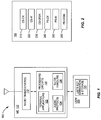
Figure 1 illustrates a user equipment, including a mobile equipment (ME) and Universal Subscriber Identity Module (USIM), according to some embodiments of the present invention. -
Figure 2 illustrates the storing of a Universal Mobile Telecommunications System (UMTS) security context in the USIM, for each of the circuit-switched and packet-switched domains. -
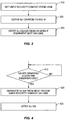
Figure 3 is a process flow diagram illustrating a method for handling ciphering keys in a mobile station comprising a mobile equipment and a USIM. -
Figure 4 is another process flow diagram illustrating a method for handling ciphering keys, in which the Kc-128 is derived in response to determining that a 128-bit ciphering algorithm is taken into use. -
Figure 5 is another process flow diagram illustrating a method for handling ciphering keys, in which the Kc-128 is derived in response to determining that a new UMTS security context has been established. -
Figure 6 is another process flow diagram illustrating another method for handling ciphering keys. -
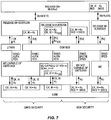
Figure 7 illustrates key agreement scenarios in UMTS and GSM networks. - Various embodiments of the present invention are now described with reference to the drawings, wherein like reference numerals are used to refer to like elements throughout. In the following description, numerous specific details are set forth for purposes of explanation, in order to provide a thorough understanding of one or more embodiments. It may be evident to one of ordinary skill in the art, however, that one or more embodiments of the present invention may be implemented or practiced without one or more of these specific details. In other instances, well-known structures and devices are shown in block diagram form in order to facilitate describing one or more embodiments.
- While the techniques and solutions described herein are described generally in the context of the application of the A5/4 and GEA4 ciphering algorithms, those skilled in the art will appreciate that additional new encryption algorithms may be supported in UMTS and/or GSM networks in future. The techniques described herein are intended to support these new encryption algorithms and the present invention is thus not limited to the use of these already specified algorithms.
- Several of the embodiments are described herein in connection with a radio access terminal, which communicates wirelessly with fixed base stations in the wireless network. The radio access terminal can also be called a system, subscriber unit, subscriber station, mobile station, mobile, remote station, remote terminal, mobile device, user terminal, terminal, wireless communication device, user agent, or user device, and is commonly referred to as user equipment (UE) in the 3GPP specifications. An access terminal can be a cellular telephone, a cordless telephone, a Session Initiation Protocol (SIP) phone, a wireless local loop (WLL) station, a personal digital assistant (PDA), a handheld device having wireless connection capability, computing device, or other processing device connected to a wireless modem. In the context of UMTS-capable terminals, a complete UE comprises a mobile equipment (ME) coupled to a Universal Subscriber Identity Module (USIM).
- One such UE 100 is illustrated in
Figure 1 ; UE 100 comprisesME 105 and USIM 150.ME 105 comprises one ormore radio transceivers 110, each configured for operation in one or more frequency bands according to one or more particular wireless standards such as GSM, GPRS, EDGE, W-CDMA, HSPA, etc. ME 105 further comprisesprocessing circuits 120, which in turn may include one or several microprocessors, microcontrollers, digital signal processors, and the like, configured with appropriate firmware and/or software. As shown inFigure 1 , theseprocessing circuits 120 are configured for one or more terminal applications, which may include, for example, user interface-related programs for allowing a user to operate the device, personal information management programs, multimedia applications, etc. The processing circuits are also configured to carry out one ormore radio protocols 124, which control the UE's communications with base stations according to one or more wireless telecommunication standards. Finally, theME 105 includes a Kc-128handling application 126, the details of which will be described more fully below. - USIM 150 includes, inter alia, a UMTS key derivation and
storage function 155. During a UMTS authentication and key agreement (AKA) process, the USIM and the network agree on a 128-bit cipher key known as CK, as well as a 128-bit integrity key known as IK. These keys, along with a ciphering key sequence number (CKSN), make up a UMTS security context. (Note that in the UMTS context, the CKSN is sometimes called the key set identifier, or KSI. The term CKSN is used herein.) A separate UMTS security context may be obtained for each of the circuit-switched (CS) domain and the packet-switched (PS) domain. Thus, as shown inFigure 2 , the UMTS key derivation andstorage function 155 may include a circuit-switched domain cipher key (CS-CK) 210, a circuit-switched domain integrity key (CS-IK) 220, a circuit-switched domain CKSN (CS-CKSN) 230, a packet-switched domain cipher key (PS-CK) 240, a packet-switched domain integrity key (PS-IK) 250, and a packet-switched domain CKSN (CS-CKSN) 260. At various times, depending on the activities theUE 100 is engaged in, and depending on the configuration of the supporting network, one, both, or neither of these UMTS security contexts may exist in theUSIM 150. - As noted above, a key derivation function to derive a 128-bit ciphering key (Kc-128) in the ME and in the network has been defined in the 3GPP TS 33.102 for
Release 9. The Kc-128 is derived from the UMTS security keys CK and IK. Prior to the addition of 128-bit encryption algorithms to the standards, the use of CK and IK to generate a 64-bit GSM ciphering key has already been standardized. Because the UMTS security keys are needed to generate the 128-bit ciphering key Kc-128, the UE obviously is required to be coupled to a USIM, with an active UMTS security context, in order to begin the use of either of the encryption algorithms A5/4 and GEA4 in the network. -
Figure 7 is taken from 3GPP TS 33.102, and illustrates the scenarios in which a Kc-128 is derived from CK and IK by the ME and network. While the 3GPP specifications outline the basis usage scenarios for the Kc-128, complete analysis and specification of the handling of the Kc-128 by the ME has not been performed prior to the development of the present invention. - So far, 3GPP TS 33.102 has specified that the Kc-128 is stored only in the mobile equipment (ME) and not in the USIM. In order to allow the ME to determine whether a particular Kc-128 is still valid, the stored Kc-128 should be associated with a CKSN, which is also stored in the ME. Thus, in both of the circuit-switched and packet-switched domains, the CKSN provided by the network to the ME during the UMTS AKA procedure is linked to any derived Kc-128 bit ciphering key, as well as to any corresponding 64-bit ciphering key. As a result, at any given time an ME may store a Kc-128 and an associated CKSN (and Kc-64) for the circuit-switched domain, a Kc-128 and associated CKSN (and Kc-64) for the packet-switched domain, both, or neither.
- For security reasons, the Kc-128 (for either or both domains, as applicable) is deleted when the ME is powered down, as well as when the USIM is removed from the UE. However, these are not the only scenarios in which the Kc-128 should be deleted. In both the circuit-switched and packet-switched domains, whenever the CKSN of the corresponding UMTS security context is deleted, the linked Kc-128 bit ciphering key, if exists, is deleted from the ME as well. In addition, both the CKSN and associated Kc-128 (for either or both domains, as applicable) should be deleted when the USIM is removed from the device or when the USIM's operation is disabled (e.g., by user command).
- Furthermore, a UMTS security context may be invalidated under certain circumstances. Accordingly, in the circuit-switched domain, the ME shall delete any Kc-128 ciphering key for circuit-switched services stored in the ME when the update status on USIM for circuit switched services is changed to "U2 NOT UPDATED", "U3 ROAMING NOT ALLOWED," or "U4 UPDATING DISABLED," as result of a Non-Access Stratum (NAS) signaling procedure such as a Location Area Update procedure, Authentication Failure, CM service reject. Likewise, in the packet-switched domain, the ME shall delete any Kc-128 ciphering key when the update status on the USIM for GPRS services is changed to "GU2 NOT UPDATED," or "GU3 ROAMING NOT ALLOWED," as a result of a NAS signaling procedure such as GPRS Attach, NW initiated Detach, Authentication procedure or Routing Area Update procedure.
- An ME with a USIM in use shall apply the Kc-128 bit ciphering key for circuit-switched services when, in A/Gb mode, an A5 ciphering algorithm (or other algorithm) that requires a 128-bit ciphering key is taken into use. Likewise, an ME with a USIM in use shall apply the Kc-128 bit ciphering key for GPRS when, in A/Gb mode, a GEA ciphering algorithm (or other algorithm) that requires a 128-bit ciphering key is taken into use. In either case, the Kc-128 that is applied when the use of a 128-bit ciphering algorithm is begun should always be based on the most recent successful UMTS authentication procedure. The actual generation of the Kc-128 (for either the CS or PS domains) from the CK and the IK can be at any of several times, however.
- For example, the Kc-128 for the circuit-switched or packet-switched domain can be generated:
- the first time when the key is actually needed for use (e.g., the first time 128-bit encryption for a particular UMTS security context for the circuit-switched or packet-switched domain is activated);
- every time the key is actually needed for use (i.e., every time 128-bit encryption is activated for the circuit-switched or packet-switched domain);
- when the Kc-64 bit ciphering key for a given domain is derived by the USIM or provided to the ME by the USIM;
- when the Kc-64 bit ciphering key for a given domain is first put into use (i.e., the first time 64-bit encryption for a particular UMTS security context for circuit-switched or packet-switched domain is activated); or
- as soon as a UMTS security context for a given domain is established (i.e., upon completion of the authentication procedure for UMTS AKA).
- Upon derivation of a new Kc-128 for either domain, the ME should generally overwrite the existing Kc-128 bit ciphering key for that domain with the newly derived Kc-128 bit ciphering key. However, as will be discussed in further detail below, some implementations of the ME may provide for the storage of two Kc-128 ciphering keys for each domain - a first one corresponding to the key currently in active use, and a second one corresponding to the most recently completed authentication and key agreement procedure. In such implementations, care must be taken to ensure that the proper key is taken into use upon initiation of a 128-bit encryption algorithm, and that a stored Kc-128 ciphering key is overwritten or marked when it is no longer valid.
-
Figure 3 is a process flow diagram illustrating a general method for handling ciphering keys in a mobile station comprising an ME and a USIM. As shown atblock 310, the method begins with the obtaining of the current UMTS security context for the circuit-switched context or packet-switched context from the USIM. This includes the cipher key CK, the integrity key IK, and the cipher key sequence number CKSN. The Kc-128 for the given domain is derived from CK and IK, as shown atblock 320, using the key derivation function specified in 3GPP TS 33.12 forRelease 9. As indicated atblock 330, the derived Kc-128 is then stored on the ME (not in the USIM), in association with the CKSN. - As noted above, the generation of the Kc-128 for a given domain can take place at any of several times. One approach is illustrated in
Figure 4 . In this approach, the derivation of a Kc-128 for a given domain is triggered by an indication that an algorithm requiring the 128-bit ciphering key is to be taken into use. Thus, as shown atblock 410, the ME determines that a GSM ciphering algorithm or GPRS ciphering algorithm requiring a Kc-128 is being taken into use. If so, then the Kc-128 is generated from the most recent UMTS security context stored on the USIM, as shown atblock 420. (This generation is as shown inFigure 3 .) Then, the newly derived Kc-128 is applied to the indicated ciphering algorithm, as shown atblock 430. -
Figure 5 illustrates a different approach. In this case, the generation of the Kc-128 for a given domain is triggered by the successful completion of a UMTS AKA procedure for that domain. Again, the illustrated approach is applicable to either or both of the circuit-switched and packet-switched domains. As shown atblock 510, then, the procedure begins with a determination that a new UMTS security context exists. If so, then a Kc-128 is generated from the most recent UMTS security context on the USIM, as shown atblock 520. This Kc-128 is stored on the ME, in association with the corresponding CKSN, for subsequent use in ciphering operations. - MEs that use the approach of
Figure 5 will generally have a stored Kc-128 on the ME. Upon activation of a 128-bit ciphering algorithm, the ME must take care to ensure that the stored Kc-128 is up to date.Figure 6 illustrates one possible method for verifying the validity of the stored Kc-128. As shown atblock 610, the procedure begins with the determination that a 128-bit algorithm is being taken into use. If so, then the stored CKSN for the appropriate domain is compared with the most recent CKSN, which is obtained from the USIM. This is shown atblock 620. If these values match, then the stored Kc-128 is valid, and can be applied to the indicated ciphering algorithm, as shown atblock 630. Otherwise, as indicated atblock 640, a new Kc-128 must be generated from the latest UMTS security context, existing on the USIM. - Special consideration should be given to ensuring that an ME is using the appropriate key after inter-system handovers to A/Gb mode. There are several possible handovers that should be considered. For instance, in the circuit-switched domain, after an inter-system change from lu mode to A/Gb mode, when an A5/4 algorithm is taken into use that requires a 128-bit ciphering key then the ME shall apply the Kc-128 bit ciphering key (for the circuit-switched domain) derived by the ME from the UMTS security keys from the latest successful authentication procedure. Similarly, in the packet-switched domain, after an inter-system change from lu mode to A/Gb mode, when a GEA algorithm is taken into use that requires a 128-bit ciphering key then the ME must also take care to apply the Kc-128 bit ciphering key (for GPRS) derived by the ME from the UMTS security keys from the latest successful authentication procedure. In either case, this may be done in several ways, such as by generating a new Kc-128 upon activation of the 128-bit ciphering algorithm (e.g., as shown in
Figure 4 ) or by verifying that the stored Kc-128 corresponds to the latest successful UMTS AKA procedure (e.g., as shown inFigure 6 ). - In the circuit-switched domain, a Single Radio Voice Call Continuity (SR-VCC) handover from lu mode to A/Gb mode must also be considered. Those skilled in the art will recognize that this is something of a special case, since this handover represents a transition from a packet-switched voice call to a circuit-switched voice call. After such a handover, if an A5 algorithm is taken into use that requires a 128-bit ciphering key then the ME shall use the derived UMTS security keys CK' and IK' for the circuit-switched domain (derived from the CK and IK in use in the packet-switched domain at the time of the handover) to derive a Kc-128 bit ciphering key for CS domain. The security keys CK' and IK' for the circuit-switched domain are derived in the same manner currently specified for generating Kc-64 after a SR-VCC handover; the derived CK' and IK' are used to generate the circuit-switched Kc-128 using the key derivation function specified in 3GPP TS 33.102. After that, the ME shall apply the new derived Kc-128 bit ciphering key for CS domain.
- In the packet-switched domain, the case of inter-system change from S1 mode to A/Gb mode must also be considered. In this scenario the ME's behavior depends on whether the inter-system change occurs in connected mode or in idle mode, and if in idle mode whether the TIN variable indicates "GUTI" or "RAT-related TMSI."
- In connected mode, or in idle mode when the TIN variable indicates "GUTI," then if a GEA algorithm is taken into use that requires a 128-bit ciphering key, the ME shall apply the Kc-128 bit ciphering key for GPRS derived by the ME from the new derived UMTS security keys. Note that at inter-system change from S1 to A/Gb mode in connected mode or in idle mode when the TIN variable indicates "GUTI", the ME always derives new UMTS security keys for GPRS from the EPS security context. (See 3GPP TS 33.401.)
- In idle mode, when the TIN variable indicates "RAT-related TMSI," then if a GEA algorithm is taken into use that requires a 128-bit ciphering key, the ME shall apply the Kc-128 bit ciphering key for GPRS derived by the ME from the UMTS security keys from the latest successful authentication procedure.
- In the packet-switched domain, another consideration stems from the fact that an authentication and ciphering procedure may be used by the network in A/Gb mode to enable encryption (ciphering) without any new authentication and key agreement (AKA). Therefore in the context of the Kc-128 bit ciphering key for GPRS:
- if an 64-bit ciphering algorithm is in use and a switch to a 128-bit algorithm is indicated, this means that the UE is using the latest UMTS security context for GPRS, and then the Kc-128 bit ciphering key for GPRS to apply is derived from the same UMTS security context for GPRS currently in use. Thus, the currently stored Kc-128 may be used, as it is derived from the same context from which the currently used Kc-64 key for GPRS was derived;
- if an authentication (UMTS AKA) has taken place (producing a new UMTS security context in the USIM) and ciphering is disabled, and then later ciphering is enabled by means of an authentication and ciphering procedure without a new authentication taking place, then the ME has to derive the Kc-128 bit ciphering key for GPRS from the UMTS security context for GPRS stored in USIM.
- In view of the preceding considerations, then, some MEs are configured to carry out the following procedure for determining which Kc-128 to use in A/Gb mode. In A/Gb mode, when an established UMTS security context for GPRS exists, and if the network indicates in the AUTHENTICATION AND CIPHERING REQUEST message to the ME that a GEA ciphering algorithm that requires a 128-bit ciphering key shall be taken into use, then the ME shall take the following actions:
- if authentication is not requested and a GEA ciphering algorithm that requires 64-bit ciphering key is in use, the Me shall take into use the Kc-128 bit ciphering key for GPRS derived by the ME from the GPRS UMTS ciphering key and GPRS UMTS integrity key of the established UMTS security context in use before the AUTHENTICATION AND CIPHERING RESPONSE message is transmitted;
- if authentication is not requested and a GEA ciphering algorithm that requires 128-bit ciphering key is in use, the Kc-128 bit ciphering key for GPRS of the established UMTS security context in use still applies;
- otherwise, the ME shall take into use the Kc-128 bit ciphering key for GPRS derived by the ME from the CK and IK provided by the USIM during the latest successful authentication procedure before the AUTHENTICATION AND CIPHERING RESPONSE message is transmitted.
- Finally, the addition of 128-bit ciphering capability to A/Gb mode requires modifications to the Logical Link Control layer in the ME. In particular, at least three modifications are needed. First, the GMM entity in the ME should be modified to either indicate to LLC which ciphering key to use (the Kc-64 ciphering key or the Kc-128 ciphering key), or to provide the appropriate ciphering key directly to LLC. Thus, the primitives LLGMM-ASSIGN and LLGMM-PSHO should be modified so they can indicate a Kc-64 bit or a Kc-128 ciphering key or carry a Kc-64 bit or a Kc-128 ciphering key. At present, only Kc-64 is considered. Second, the Input Offset Value (IOV), which is an LLC layer parameter used for ciphering, shall be modified so the rules applying to default IOV values also consider the case of a Kc-128 ciphering key. Again, at present, only Kc-64 is considered. Finally, the ciphering algorithm must be modified so the input parameter can be not only a Kc-64 ciphering key, but also a Kc-128 ciphering key.
- As suggested above, some MEs according to the current invention may be configured to store two Kc-128 for the circuit-switched domain or for the packet-switched domain, or both. For instance, one stored Kc-128 ciphering key for the circuit-switched is for current use in encryption, while the other corresponds to the latest UMTS AKA procedure, but is not activated or in use yet. The same may be true for the GPRS Kc-128. In these embodiments, the ME needs to keep track of which stored Kc-128 is the one derived from the latest successful authentication procedure for proper operation. When a Kc-128 is derived from a new UMTS security context, the old key stored and designated as corresponding to the latest UMTS security context should be overwritten with the newly derived key. Likewise, when a Kc-128 is taken into use for the first time for a 128-bit ciphering algorithm, the stored Kc-128 designated as corresponding to the active Kc-128 should be overwritten with the key just taken into use.
- The techniques described herein are generally implemented in one or more processing circuits in an ME, such as the
processing circuits 120 pictured in theME 105 ofFigure 1 . In some embodiments, processingcircuits 120 comprise one or several microprocessors, digital signal processors, and the like, as well as other digital hardware and digital memory. The memory in turn may comprise one or several types of memory such as read-only memory (ROM), random-access memory, cache memory, flash memory devices, optical storage devices, etc., and is configured to store program code for executing one or more telecommunications and/or data communications protocols and for carrying out one or more of the key handling techniques described herein. The memory further stores program data and user data received from the wireless base station and to be transmitted to the base station, and may further store various parameters, pre-determined threshold values, and/or other program data for controlling the operation of the mobile station.Mobile equipment 105 obviously includes various other features that are not shown, such as user interface circuitry, positioning circuits, and the like. However, these features are well known to those skilled in the art and are therefore not illustrated. - Examples of several embodiments of the present invention have been described in detail above, with reference to the attached illustrations of specific embodiments. Because it is not possible, of course, to describe every conceivable combination of components or techniques, those skilled in the art will appreciate that the present invention may be implemented in other ways than those specifically set forth herein, without departing from essential characteristics of the invention. The present embodiments are thus to be considered in all respects as illustrative and not restrictive, and all modifications and variations that fall within the scope of the appended claims are intended to be embraced therein.
Claims (26)
- A method for handling ciphering keys in a mobile station (100) comprising a mobile equipment (105), ME, and a Universal Subscriber Identity Module (150), USIM, the method comprising:obtaining (310) a UMTS cipher key (210, 240), CK, a UMTS integrity key (220, 250), IK, and a UMTS ciphering key sequence number (230, 260), CKSN, from the USIM;deriving (320) a 128-bit ciphering key, Kc-128, from the obtained UMTS CK and the obtained UMTS IK;storing (330) the derived Kc-128 and the obtained UMTS CKSN on the mobile equipment, separate from the USIM, wherein the stored UMTS CKSN is associated with the stored Kc-128; andapplying the Kc-128 to either a global system for mobile communications, GSM, ciphering algorithm or a general packet radio service, GPRS, ciphering algorithm.
- The method of claim 1 wherein the CK and the IK are for operation in the packet-switched, PS, domain.
- The method of claim 1, wherein the CK and the IK are for operation in the circuit-switched, CS, domain.
- The method of any of claims 1-3, further comprising determining (410) that a ciphering algorithm requiring a 128-bit ciphering key is to be taken into use, wherein said obtaining, deriving, and storing steps are performed in response to said determining.
- The method of any of claims 1-3, further comprising determining (510) that a new UMTS security context has been established, wherein said obtaining, deriving, and storing steps are performed in response to said determining.
- The method of any of claims 1-3, further comprising determining that the USIM has generated a 64-bit ciphering key, wherein said obtaining, deriving, and storing steps are performed in response to said determining.
- The method of any of claims 1-3, further comprising:determining (610) that a ciphering algorithm requiring a 128-bit ciphering key is to be taken into use; andapplying (630) the stored Kc-128 to the ciphering algorithm.
- The method of claim 7, further comprising obtaining a most recent CKSN from the USIM and comparing the most recent CKSN to the stored CKSN to verify a match, prior to applying the stored Kc-128 to the ciphering algorithm.
- The method of any of claims 1-3, further comprising:determining (610) that a ciphering algorithm requiring a 128-bit ciphering key is to be taken into use;obtaining a most recent CKSN from the USIM and comparing the most recent CKSN to the stored CKSN; and,in response to determining (620) that the most recent CKSN does not match the stored CKSN:obtaining (640) a new UMTS cipher key, CK, new integrity key, IK, and new ciphering key sequence number, CKSN, from the USIM;deriving (640) a new Kc-128 from the new CK and the new IK; andstoring (640) the new Kc-128 and the new CKSN on the mobile equipment.
- The method of any of claims 1-3, further comprising:obtaining a new CK, new IK, and new CKSN from the USIM;deriving a new Kc-128 from the new CK and the new IK; andstoring the new Kc-128 and the new CKSN on the mobile equipment, in addition to the previously stored Kc-128 and CKSN.
- The method of claim 10, further comprising determining that a ciphering algorithm requiring a 128-bit ciphering key is to be activated and, in response to said determining, overwriting the previously stored Kc-128 and CKSN with the new Kc-128 and new CKSN.
- The method of any of claims 1-3, further comprising determining that the stored Kc-128 is invalid and, in response to said determining, deleting the stored Kc-128.
- The method of claim 12, wherein determining that the stored Kc-128 is invalid comprises one or more steps selected from:detecting that the corresponding CKSN on the USIM has been or is to be deleted;detecting that the update status on USIM for circuit-switched services is changed to "U2 NOT UPDATED," "U3 ROAMING NOT ALLOWED," or "U4 UPDATING DISABLED";detecting that the update status on USIM for packet-switched services is changed to "GU2 NOT UPDATED" or "GU3 ROAMING NOT ALLOWED"; anddetecting that the USIM has been disabled.
- A mobile station (100), comprising:a Universal Subscriber Identity Module (150), USIM; anda mobile equipment (105), ME, coupled to the USIM via a USIM interface,wherein the mobile equipment comprises one or more processing circuits (120) configured to:obtain (310) a UMTS cipher key (210, 240), CK, a UMTS integrity key (220, 250), IK, and a UMTS ciphering key sequence number (230, 260), CKSN, from the USIM;derive (320) a 128-bit ciphering key, Kc-128, from the obtained UMTS CK and the obtained UMTS IK; andstore (330) the derived Kc-128 and the obtained UMTS CKSN on the mobile equipment, separate from the USIM, wherein the stored UMTS CKSN is associated with the stored Kc-128; andapply the Kc-128 to either a global system for mobile communications, GSM, ciphering algorithm or a general packet radio service, GPRS, ciphering algorithm.
- The mobile station of claim 14, wherein the CK and the IK are for operation in the packet-switched, PS, domain.
- The mobile station of claim 14, wherein the CK and the IK are for operation in the circuit-switched, CS, domain.
- The mobile station of any of claims 14-16, wherein the one or more processing circuits are further configured to determine (410) that a ciphering algorithm requiring a 128-bit ciphering key is to be taken into use and to perform said obtaining, deriving, and storing in response to said determining.
- The mobile station of any of claims 14-16, wherein the one or more processing circuits are further configured to determine (510) that a new UMTS security context has been established, and to perform said obtaining, deriving, and storing in response to said determining.
- The mobile station of any of claims 14-16, wherein the one or more processing circuits are further configured to determine that the USIM has generated a 64-bit ciphering key, Kc-64, and to perform said obtaining, deriving, and storing in response to said determining.
- The mobile station of any of claims 14-16, wherein the one or more processing circuits are further configured to:determine (610) that a ciphering algorithm requiring a 128-bit ciphering key is to be taken into use; andapply (630) the stored Kc-128 to the ciphering algorithm.
- The mobile station of claim 20, wherein the one or more processing circuits are further configured to obtain a most recent CKSN from the USIM and to compare the most recent CKSN to the stored CKSN to verify a match, prior to applying the stored Kc-128 to the ciphering algorithm.
- The mobile station of any of claims 14-16, wherein the one or more processing circuits are further configured to:determine (610) that a ciphering algorithm requiring a 128-bit ciphering key is to be taken into use;obtain a most recent CKSN from the USIM and compare the most recent CKSN to the stored CKSN; and,in response to determining (620) that the most recent CKSN does not match the stored CKSN, to:obtain (640) a new CK, new IK, and new CKSN from the USIM;derive (640) a new Kc-128 from the new CK and the new IK; andstore (640) the new Kc-128 and the new CKSN on the mobile equipment.
- The mobile station of any of claims 14-16, wherein the one or more processing circuits are further configured to:obtain a new CK, new IK, and new CKSN from the USIM;derive a new Kc-128 from the new CK and the new IK; andstore the new Kc-128 and the new CKSN on the mobile equipment, in addition to the previously stored Kc-128 and CKSN.
- The mobile station of claim 23, wherein the one or more processing circuits are further configured to determine that a ciphering algorithm requiring a 128-bit ciphering key is to be activated and, in response to said determining, overwrite the previously stored Kc-128 and CKSN with the new Kc-128 and new CKSN.
- The mobile station of any of claims 14-16, wherein the one or more processing circuits are further configured to determine that the stored Kc-128 is invalid and, in response to said determining, delete the stored Kc-128.
- The mobile station of claim 25, wherein the one or more processing circuits are configured to determine that the stored Kc-128 is invalid by performing a step selected from:detecting that the corresponding CKSN on the USIM has been or is to be deleted;detecting that the update status on USIM for circuit-switched services is changed to "U2 NOT UPDATED," "U3 ROAMING NOT ALLOWED," or "U4 UPDATING DISABLED";detecting that the update status on USIM for packet-switched services is changed to "GU2 NOT UPDATED" or "GU3 ROAMING NOT ALLOWED"; anddetecting that the USIM has been disabled.
Applications Claiming Priority (3)
| Application Number | Priority Date | Filing Date | Title |
|---|---|---|---|
| US23448909P | 2009-08-17 | 2009-08-17 | |
| US33100310P | 2010-05-04 | 2010-05-04 | |
| PCT/IB2010/002038 WO2011021091A1 (en) | 2009-08-17 | 2010-08-17 | Method for handling ciphering keys in a mobile station |
Publications (2)
| Publication Number | Publication Date |
|---|---|
| EP2468024A1 EP2468024A1 (en) | 2012-06-27 |
| EP2468024B1 true EP2468024B1 (en) | 2018-08-15 |
Family
ID=43348519
Family Applications (1)
| Application Number | Title | Priority Date | Filing Date |
|---|---|---|---|
| EP10752924.0A Active EP2468024B1 (en) | 2009-08-17 | 2010-08-17 | Method for handling ciphering keys in a mobile station |
Country Status (10)
| Country | Link |
|---|---|
| US (1) | US9681292B2 (en) |
| EP (1) | EP2468024B1 (en) |
| JP (2) | JP5636050B2 (en) |
| KR (1) | KR101723701B1 (en) |
| CN (1) | CN102668609B (en) |
| AU (1) | AU2010286125B2 (en) |
| CA (1) | CA2769938C (en) |
| IN (1) | IN2012DN01367A (en) |
| MY (1) | MY159193A (en) |
| WO (1) | WO2011021091A1 (en) |
Families Citing this family (10)
| Publication number | Priority date | Publication date | Assignee | Title |
|---|---|---|---|---|
| US9167424B2 (en) * | 2010-01-18 | 2015-10-20 | Htc Corporation | Method of handling security in SRVCC handover and related communication device |
| US9131412B2 (en) * | 2010-05-07 | 2015-09-08 | Nokia Technologies Oy | Signaling radio bearer security handling for single radio voice call continuity operation |
| EP3328136B1 (en) * | 2010-08-18 | 2020-04-08 | BlackBerry Limited | Method to maintain call continuity |
| US20120198227A1 (en) * | 2010-09-30 | 2012-08-02 | Alec Brusilovsky | Cipher key generation in communication system |
| CN102413467B (en) * | 2011-11-29 | 2017-10-27 | 中兴通讯股份有限公司 | A kind of SRVCC switching handling methods, device and its terminal |
| KR101790586B1 (en) * | 2014-04-28 | 2017-10-26 | 인텔 아이피 코포레이션 | Solution to skip authentication procedure during circuit- switched fallback (csfb) to shorten call setup time |
| GB2527518A (en) * | 2014-06-23 | 2015-12-30 | Nec Corp | Communication system |
| JP6548348B2 (en) * | 2015-08-13 | 2019-07-24 | ホアウェイ・テクノロジーズ・カンパニー・リミテッド | Message protection method and related device and system |
| US10312747B2 (en) * | 2015-09-10 | 2019-06-04 | Cpg Technologies, Llc | Authentication to enable/disable guided surface wave receive equipment |
| US11832107B2 (en) * | 2020-07-30 | 2023-11-28 | Apple Inc. | Recovering devices from limited service due to mis-configuration |
Family Cites Families (11)
| Publication number | Priority date | Publication date | Assignee | Title |
|---|---|---|---|---|
| US5586185A (en) * | 1994-03-15 | 1996-12-17 | Mita Industrial Co., Ltd. | Communications system capable of communicating encrypted information |
| US6857075B2 (en) * | 2000-12-11 | 2005-02-15 | Lucent Technologies Inc. | Key conversion system and method |
| US20050176431A1 (en) * | 2004-02-11 | 2005-08-11 | Telefonaktiebolaget L M Ericsson (Publ) | Method for handling key sets during handover |
| US7623658B2 (en) * | 2004-08-23 | 2009-11-24 | Broadcom Corporation | Method and system for implementing the A5/3 encryption algorithm for GSM and EDGE compliant handsets |
| US8630420B2 (en) * | 2005-05-31 | 2014-01-14 | Telecom Italia S.P.A. | Method for auto-configuration of a network terminal address |
| CN100550725C (en) * | 2005-06-17 | 2009-10-14 | 中兴通讯股份有限公司 | A method for negotiating a shared key between a user and an application server |
| CN100596084C (en) * | 2006-04-20 | 2010-03-24 | 华为技术有限公司 | System for mobile circuit domain user to access IMS network and registration method for access |
| CN101080051B (en) * | 2006-05-24 | 2010-05-12 | 联芯科技有限公司 | Method for service station indication of terminal |
| CN101299884B (en) * | 2008-06-16 | 2012-10-10 | 中兴通讯股份有限公司 | Method and system for generating cryptographic-key identification identifier when transferring user equipment |
| US9344924B2 (en) * | 2008-11-27 | 2016-05-17 | Htc Corporation | Method of handling handover security configuration and related communication device |
| US20120198227A1 (en) * | 2010-09-30 | 2012-08-02 | Alec Brusilovsky | Cipher key generation in communication system |
-
2010
- 2010-08-17 WO PCT/IB2010/002038 patent/WO2011021091A1/en not_active Ceased
- 2010-08-17 JP JP2012525220A patent/JP5636050B2/en active Active
- 2010-08-17 MY MYPI2012000517A patent/MY159193A/en unknown
- 2010-08-17 CN CN201080037328.0A patent/CN102668609B/en active Active
- 2010-08-17 CA CA2769938A patent/CA2769938C/en active Active
- 2010-08-17 IN IN1367DEN2012 patent/IN2012DN01367A/en unknown
- 2010-08-17 AU AU2010286125A patent/AU2010286125B2/en not_active Ceased
- 2010-08-17 EP EP10752924.0A patent/EP2468024B1/en active Active
- 2010-08-17 KR KR1020127004071A patent/KR101723701B1/en not_active Expired - Fee Related
- 2010-08-17 US US13/388,890 patent/US9681292B2/en active Active
-
2014
- 2014-09-08 JP JP2014182468A patent/JP2015015754A/en active Pending
Non-Patent Citations (1)
| Title |
|---|
| None * |
Also Published As
| Publication number | Publication date |
|---|---|
| KR101723701B1 (en) | 2017-04-05 |
| JP5636050B2 (en) | 2014-12-03 |
| JP2013502795A (en) | 2013-01-24 |
| CN102668609A (en) | 2012-09-12 |
| CN102668609B (en) | 2015-08-19 |
| US9681292B2 (en) | 2017-06-13 |
| IN2012DN01367A (en) | 2015-06-05 |
| AU2010286125B2 (en) | 2015-01-22 |
| US20120163601A1 (en) | 2012-06-28 |
| CA2769938C (en) | 2017-09-05 |
| EP2468024A1 (en) | 2012-06-27 |
| JP2015015754A (en) | 2015-01-22 |
| AU2010286125A1 (en) | 2012-03-08 |
| CA2769938A1 (en) | 2011-02-24 |
| KR20120054017A (en) | 2012-05-29 |
| WO2011021091A1 (en) | 2011-02-24 |
| MY159193A (en) | 2016-12-30 |
Similar Documents
| Publication | Publication Date | Title |
|---|---|---|
| EP2468024B1 (en) | Method for handling ciphering keys in a mobile station | |
| CN110945886B (en) | Anti-Boot Method and System for Detecting Roaming Activity in a Wireless Communication Network | |
| CN101378591B (en) | Method, system and device for security capability negotiation when terminal moves | |
| CA2688397C (en) | Method, system, and apparatus for preventing bidding down attacks during motion of user equipment | |
| CN109803350B (en) | A secure communication method and device | |
| EP3146741B1 (en) | Cellular network authentication control | |
| US12439248B2 (en) | Authentication result update method and communications apparatus | |
| CA2775509C (en) | Method and apparatus for source identification for key handling following a handover failure | |
| WO2014032570A1 (en) | Method, user equipment and remote management platform for switching operator network | |
| US11576092B2 (en) | Handover handling method and apparatus | |
| CN114915407A (en) | PC5 root key processing method and device, AUSF and remote terminal | |
| EP2218271A1 (en) | Method for updating ue capability information in a mobile telecommunications network | |
| TW200415901A (en) | Method for storing a security start value in a wireless communications system | |
| KR20140129353A (en) | Radio access system and portable terminal device | |
| JP2022501973A (en) | How and equipment to handle security contexts during system-to-system changes | |
| CN101645877A (en) | Method, system and network node for consulting cipher key derivative function | |
| CN109842881B (en) | Communication method, related device, and system | |
| CN104683981A (en) | Safety capability verification method, safety capability verification equipment and safety capability verification system | |
| KR20130143728A (en) | Secure network connection | |
| US20250386187A1 (en) | Authentication method | |
| Zhang et al. | A Methodology of Fake Cell Test Based on the RRC Redirection or Reselection Priorities from the 5G Network | |
| CN110248359A (en) | A kind of encipherment scheme, terminal, network element device and computer storage medium |
Legal Events
| Date | Code | Title | Description |
|---|---|---|---|
| PUAI | Public reference made under article 153(3) epc to a published international application that has entered the european phase |
Free format text: ORIGINAL CODE: 0009012 |
|
| 17P | Request for examination filed |
Effective date: 20120228 |
|
| AK | Designated contracting states |
Kind code of ref document: A1 Designated state(s): AL AT BE BG CH CY CZ DE DK EE ES FI FR GB GR HR HU IE IS IT LI LT LU LV MC MK MT NL NO PL PT RO SE SI SK SM TR |
|
| DAX | Request for extension of the european patent (deleted) | ||
| 17Q | First examination report despatched |
Effective date: 20140407 |
|
| REG | Reference to a national code |
Ref country code: DE Ref legal event code: R079 Ref document number: 602010052763 Country of ref document: DE Free format text: PREVIOUS MAIN CLASS: H04W0012040000 Ipc: H04W0012020000 |
|
| GRAP | Despatch of communication of intention to grant a patent |
Free format text: ORIGINAL CODE: EPIDOSNIGR1 |
|
| RIC1 | Information provided on ipc code assigned before grant |
Ipc: H04W 12/02 20090101AFI20180222BHEP Ipc: H04W 12/04 20090101ALI20180222BHEP |
|
| INTG | Intention to grant announced |
Effective date: 20180308 |
|
| GRAS | Grant fee paid |
Free format text: ORIGINAL CODE: EPIDOSNIGR3 |
|
| GRAA | (expected) grant |
Free format text: ORIGINAL CODE: 0009210 |
|
| AK | Designated contracting states |
Kind code of ref document: B1 Designated state(s): AL AT BE BG CH CY CZ DE DK EE ES FI FR GB GR HR HU IE IS IT LI LT LU LV MC MK MT NL NO PL PT RO SE SI SK SM TR |
|
| REG | Reference to a national code |
Ref country code: AT Ref legal event code: REF Ref document number: 1031213 Country of ref document: AT Kind code of ref document: T Effective date: 20180815 Ref country code: GB Ref legal event code: FG4D Ref country code: CH Ref legal event code: EP |
|
| REG | Reference to a national code |
Ref country code: CH Ref legal event code: NV Representative=s name: ISLER AND PEDRAZZINI AG, CH |
|
| REG | Reference to a national code |
Ref country code: IE Ref legal event code: FG4D |
|
| REG | Reference to a national code |
Ref country code: DE Ref legal event code: R096 Ref document number: 602010052763 Country of ref document: DE |
|
| REG | Reference to a national code |
Ref country code: NL Ref legal event code: FP |
|
| REG | Reference to a national code |
Ref country code: LT Ref legal event code: MG4D |
|
| REG | Reference to a national code |
Ref country code: AT Ref legal event code: MK05 Ref document number: 1031213 Country of ref document: AT Kind code of ref document: T Effective date: 20180815 |
|
| PG25 | Lapsed in a contracting state [announced via postgrant information from national office to epo] |
Ref country code: SE Free format text: LAPSE BECAUSE OF FAILURE TO SUBMIT A TRANSLATION OF THE DESCRIPTION OR TO PAY THE FEE WITHIN THE PRESCRIBED TIME-LIMIT Effective date: 20180815 Ref country code: NO Free format text: LAPSE BECAUSE OF FAILURE TO SUBMIT A TRANSLATION OF THE DESCRIPTION OR TO PAY THE FEE WITHIN THE PRESCRIBED TIME-LIMIT Effective date: 20181115 Ref country code: GR Free format text: LAPSE BECAUSE OF FAILURE TO SUBMIT A TRANSLATION OF THE DESCRIPTION OR TO PAY THE FEE WITHIN THE PRESCRIBED TIME-LIMIT Effective date: 20181116 Ref country code: AT Free format text: LAPSE BECAUSE OF FAILURE TO SUBMIT A TRANSLATION OF THE DESCRIPTION OR TO PAY THE FEE WITHIN THE PRESCRIBED TIME-LIMIT Effective date: 20180815 Ref country code: BG Free format text: LAPSE BECAUSE OF FAILURE TO SUBMIT A TRANSLATION OF THE DESCRIPTION OR TO PAY THE FEE WITHIN THE PRESCRIBED TIME-LIMIT Effective date: 20181115 Ref country code: IS Free format text: LAPSE BECAUSE OF FAILURE TO SUBMIT A TRANSLATION OF THE DESCRIPTION OR TO PAY THE FEE WITHIN THE PRESCRIBED TIME-LIMIT Effective date: 20181215 Ref country code: FI Free format text: LAPSE BECAUSE OF FAILURE TO SUBMIT A TRANSLATION OF THE DESCRIPTION OR TO PAY THE FEE WITHIN THE PRESCRIBED TIME-LIMIT Effective date: 20180815 Ref country code: LT Free format text: LAPSE BECAUSE OF FAILURE TO SUBMIT A TRANSLATION OF THE DESCRIPTION OR TO PAY THE FEE WITHIN THE PRESCRIBED TIME-LIMIT Effective date: 20180815 |
|
| PG25 | Lapsed in a contracting state [announced via postgrant information from national office to epo] |
Ref country code: HR Free format text: LAPSE BECAUSE OF FAILURE TO SUBMIT A TRANSLATION OF THE DESCRIPTION OR TO PAY THE FEE WITHIN THE PRESCRIBED TIME-LIMIT Effective date: 20180815 Ref country code: LV Free format text: LAPSE BECAUSE OF FAILURE TO SUBMIT A TRANSLATION OF THE DESCRIPTION OR TO PAY THE FEE WITHIN THE PRESCRIBED TIME-LIMIT Effective date: 20180815 Ref country code: AL Free format text: LAPSE BECAUSE OF FAILURE TO SUBMIT A TRANSLATION OF THE DESCRIPTION OR TO PAY THE FEE WITHIN THE PRESCRIBED TIME-LIMIT Effective date: 20180815 |
|
| PG25 | Lapsed in a contracting state [announced via postgrant information from national office to epo] |
Ref country code: RO Free format text: LAPSE BECAUSE OF FAILURE TO SUBMIT A TRANSLATION OF THE DESCRIPTION OR TO PAY THE FEE WITHIN THE PRESCRIBED TIME-LIMIT Effective date: 20180815 Ref country code: ES Free format text: LAPSE BECAUSE OF FAILURE TO SUBMIT A TRANSLATION OF THE DESCRIPTION OR TO PAY THE FEE WITHIN THE PRESCRIBED TIME-LIMIT Effective date: 20180815 Ref country code: LU Free format text: LAPSE BECAUSE OF NON-PAYMENT OF DUE FEES Effective date: 20180817 Ref country code: PL Free format text: LAPSE BECAUSE OF FAILURE TO SUBMIT A TRANSLATION OF THE DESCRIPTION OR TO PAY THE FEE WITHIN THE PRESCRIBED TIME-LIMIT Effective date: 20180815 Ref country code: EE Free format text: LAPSE BECAUSE OF FAILURE TO SUBMIT A TRANSLATION OF THE DESCRIPTION OR TO PAY THE FEE WITHIN THE PRESCRIBED TIME-LIMIT Effective date: 20180815 Ref country code: IT Free format text: LAPSE BECAUSE OF FAILURE TO SUBMIT A TRANSLATION OF THE DESCRIPTION OR TO PAY THE FEE WITHIN THE PRESCRIBED TIME-LIMIT Effective date: 20180815 |
|
| REG | Reference to a national code |
Ref country code: BE Ref legal event code: MM Effective date: 20180831 |
|
| REG | Reference to a national code |
Ref country code: DE Ref legal event code: R097 Ref document number: 602010052763 Country of ref document: DE |
|
| REG | Reference to a national code |
Ref country code: IE Ref legal event code: MM4A |
|
| PG25 | Lapsed in a contracting state [announced via postgrant information from national office to epo] |
Ref country code: SK Free format text: LAPSE BECAUSE OF FAILURE TO SUBMIT A TRANSLATION OF THE DESCRIPTION OR TO PAY THE FEE WITHIN THE PRESCRIBED TIME-LIMIT Effective date: 20180815 Ref country code: DK Free format text: LAPSE BECAUSE OF FAILURE TO SUBMIT A TRANSLATION OF THE DESCRIPTION OR TO PAY THE FEE WITHIN THE PRESCRIBED TIME-LIMIT Effective date: 20180815 Ref country code: SM Free format text: LAPSE BECAUSE OF FAILURE TO SUBMIT A TRANSLATION OF THE DESCRIPTION OR TO PAY THE FEE WITHIN THE PRESCRIBED TIME-LIMIT Effective date: 20180815 |
|
| PLBE | No opposition filed within time limit |
Free format text: ORIGINAL CODE: 0009261 |
|
| STAA | Information on the status of an ep patent application or granted ep patent |
Free format text: STATUS: NO OPPOSITION FILED WITHIN TIME LIMIT |
|
| PG25 | Lapsed in a contracting state [announced via postgrant information from national office to epo] |
Ref country code: MC Free format text: LAPSE BECAUSE OF FAILURE TO SUBMIT A TRANSLATION OF THE DESCRIPTION OR TO PAY THE FEE WITHIN THE PRESCRIBED TIME-LIMIT Effective date: 20180815 |
|
| 26N | No opposition filed |
Effective date: 20190516 |
|
| PG25 | Lapsed in a contracting state [announced via postgrant information from national office to epo] |
Ref country code: IE Free format text: LAPSE BECAUSE OF NON-PAYMENT OF DUE FEES Effective date: 20180817 |
|
| PG25 | Lapsed in a contracting state [announced via postgrant information from national office to epo] |
Ref country code: SI Free format text: LAPSE BECAUSE OF FAILURE TO SUBMIT A TRANSLATION OF THE DESCRIPTION OR TO PAY THE FEE WITHIN THE PRESCRIBED TIME-LIMIT Effective date: 20180815 Ref country code: BE Free format text: LAPSE BECAUSE OF NON-PAYMENT OF DUE FEES Effective date: 20180831 Ref country code: FR Free format text: LAPSE BECAUSE OF NON-PAYMENT OF DUE FEES Effective date: 20181015 |
|
| PG25 | Lapsed in a contracting state [announced via postgrant information from national office to epo] |
Ref country code: MT Free format text: LAPSE BECAUSE OF NON-PAYMENT OF DUE FEES Effective date: 20180817 |
|
| PG25 | Lapsed in a contracting state [announced via postgrant information from national office to epo] |
Ref country code: HU Free format text: LAPSE BECAUSE OF FAILURE TO SUBMIT A TRANSLATION OF THE DESCRIPTION OR TO PAY THE FEE WITHIN THE PRESCRIBED TIME-LIMIT; INVALID AB INITIO Effective date: 20100817 Ref country code: PT Free format text: LAPSE BECAUSE OF FAILURE TO SUBMIT A TRANSLATION OF THE DESCRIPTION OR TO PAY THE FEE WITHIN THE PRESCRIBED TIME-LIMIT Effective date: 20180815 |
|
| PG25 | Lapsed in a contracting state [announced via postgrant information from national office to epo] |
Ref country code: CY Free format text: LAPSE BECAUSE OF FAILURE TO SUBMIT A TRANSLATION OF THE DESCRIPTION OR TO PAY THE FEE WITHIN THE PRESCRIBED TIME-LIMIT Effective date: 20180815 Ref country code: MK Free format text: LAPSE BECAUSE OF NON-PAYMENT OF DUE FEES Effective date: 20180815 |
|
| PGFP | Annual fee paid to national office [announced via postgrant information from national office to epo] |
Ref country code: TR Payment date: 20220812 Year of fee payment: 13 Ref country code: CZ Payment date: 20220805 Year of fee payment: 13 |
|
| PGFP | Annual fee paid to national office [announced via postgrant information from national office to epo] |
Ref country code: CH Payment date: 20220905 Year of fee payment: 13 |
|
| P01 | Opt-out of the competence of the unified patent court (upc) registered |
Effective date: 20230523 |
|
| REG | Reference to a national code |
Ref country code: CH Ref legal event code: PL |
|
| PG25 | Lapsed in a contracting state [announced via postgrant information from national office to epo] |
Ref country code: CZ Free format text: LAPSE BECAUSE OF NON-PAYMENT OF DUE FEES Effective date: 20230817 Ref country code: CH Free format text: LAPSE BECAUSE OF NON-PAYMENT OF DUE FEES Effective date: 20230831 |
|
| PGFP | Annual fee paid to national office [announced via postgrant information from national office to epo] |
Ref country code: NL Payment date: 20250826 Year of fee payment: 16 |
|
| PGFP | Annual fee paid to national office [announced via postgrant information from national office to epo] |
Ref country code: DE Payment date: 20250827 Year of fee payment: 16 |
|
| PGFP | Annual fee paid to national office [announced via postgrant information from national office to epo] |
Ref country code: GB Payment date: 20250827 Year of fee payment: 16 |