EP2467358B1 - Neuer komplex zur behandlung und/oder prophylaxe von parasiteninfektionen - Google Patents
Neuer komplex zur behandlung und/oder prophylaxe von parasiteninfektionen Download PDFInfo
- Publication number
- EP2467358B1 EP2467358B1 EP10809659.5A EP10809659A EP2467358B1 EP 2467358 B1 EP2467358 B1 EP 2467358B1 EP 10809659 A EP10809659 A EP 10809659A EP 2467358 B1 EP2467358 B1 EP 2467358B1
- Authority
- EP
- European Patent Office
- Prior art keywords
- complex
- atovaquone
- proguanil
- optionally
- present
- Prior art date
- Legal status (The legal status is an assumption and is not a legal conclusion. Google has not performed a legal analysis and makes no representation as to the accuracy of the status listed.)
- Not-in-force
Links
Images


Classifications
-
- C—CHEMISTRY; METALLURGY
- C07—ORGANIC CHEMISTRY
- C07C—ACYCLIC OR CARBOCYCLIC COMPOUNDS
- C07C279/00—Derivatives of guanidine, i.e. compounds containing the group, the singly-bound nitrogen atoms not being part of nitro or nitroso groups
- C07C279/20—Derivatives of guanidine, i.e. compounds containing the group, the singly-bound nitrogen atoms not being part of nitro or nitroso groups containing any of the groups, X being a hetero atom, Y being any atom, e.g. acylguanidines
- C07C279/24—Y being a hetero atom
- C07C279/26—X and Y being nitrogen atoms, i.e. biguanides
-
- A—HUMAN NECESSITIES
- A61—MEDICAL OR VETERINARY SCIENCE; HYGIENE
- A61P—SPECIFIC THERAPEUTIC ACTIVITY OF CHEMICAL COMPOUNDS OR MEDICINAL PREPARATIONS
- A61P33/00—Antiparasitic agents
- A61P33/02—Antiprotozoals, e.g. for leishmaniasis, trichomoniasis, toxoplasmosis
-
- A—HUMAN NECESSITIES
- A61—MEDICAL OR VETERINARY SCIENCE; HYGIENE
- A61P—SPECIFIC THERAPEUTIC ACTIVITY OF CHEMICAL COMPOUNDS OR MEDICINAL PREPARATIONS
- A61P33/00—Antiparasitic agents
- A61P33/02—Antiprotozoals, e.g. for leishmaniasis, trichomoniasis, toxoplasmosis
- A61P33/06—Antimalarials
-
- C—CHEMISTRY; METALLURGY
- C07—ORGANIC CHEMISTRY
- C07C—ACYCLIC OR CARBOCYCLIC COMPOUNDS
- C07C50/00—Quinones
- C07C50/26—Quinones containing groups having oxygen atoms singly bound to carbon atoms
- C07C50/32—Quinones containing groups having oxygen atoms singly bound to carbon atoms the quinoid structure being part of a condensed ring system having two rings
Definitions
- the invention relates to novel complex compounds composed of an antipneumocystic compound and an antimalarial compound, process for their preparation, pharmaceutical compositions and uses of said complexes for the treatment and/or prophylaxis of parasitic infections.
- Malaria is an infectious disease that causes severe morbidity and mortality with an estimated 300-500 million cases worldwide and more than I million deaths annually in sub-Saharan Africa alone and affected patients are of all age groups.
- the disease is caused by protozoan parasites of the genus Plasmodium, transmitted by mosquitoes.
- the most serious forms of malaria are caused by Plasmodium falciparum and Plasmodium vivax, but other species (e.g., Plasmodium ovale, Plasmodium malariae, and Plasmodium knowles [ iota ]) can also infect humans.
- the commonly used drugs are, for example Atovaquone, Proguanil as hydrochloride salt, Primaquine, for the treatment / prophylaxis of malaria.
- Atovaquone (Formula I), chemical name being trans -2-[4-(4-chlorophenyl)cyclohexyl]-3-hydroxy-1,4-naphthoquinone, is a hydroxy-1,4-naphthoquinone, an analog of Ubiquinone, with antipneumocystic and anti-malarial activity. It has previously been disclosed, for example, in European Patent No. 1,23,238 that Atovaquone is active (in animals and in vitro) against Pneumocystis (carinii) jirovecii, Plasmodia, and tachyzoite and cyst forms of Toxoplasma gondii.
- Proguanil (Formula II) as hydrochloride salt is a well-known drug mainly for prophylaxis, but not commonly used for treatment of malaria. Cycloguanil is a metabolite of Proguanil and its formation in vivo has been thought to be responsible for the antimalarial activity of Proguanil. It is one of the safest antimalarial drugs and may be given to young children and pregnant women.
- Atovaquone is a highly lipophilic compound with very poor solubility & bioavailability, classified according to the biopharmaceutical classification system (BCS) as class II drug.
- BCS biopharmaceutical classification system
- US6018080 & US6649659 mentions that efficacy of Atovaquone as a therapeutic agent is limited because of its poor bio-availability due to poor solubility of the crystals in common organic/aqueous solvents. It is noted that the label information of Malarone from US FDA shows that absolute bioavailability of the tablet formulation of Atovaquone is only 23%, meaning almost 67% of Atovaquone is not absorbed in the body.
- Proguanil hydrochloride exhibits poor solubility in common organic/aqueous solvents and thus a mere physical admixture composition of these two molecules, like in Malarone, does not alter individual properties and thus the above existing combination exhibits poor solubility and hence less bio-availability.
- the present invention provides novel complex(es) of at least two active principles, Atovaquone and Proguanil, with improved properties that can influence therapeutic efficacy and pharmacokinetic properties.
- the beneficial physico-chemical properties of the novel complex of the present invention provides a broader therapeutic applicability, a potentiation or synergism of the activity of each of the components of the complex, resulting in the enhancement of pharmacokinetic properties.
- the complexes of the present invention comprises Atovaquone and Proguanil characterized in that the molar ratio of each drug in complex/s is in the range of 1:4 to 4:1, respectively.
- the complex(es) according to the invention can be well characterized and differentiated from physical mixtures using standard analytical tools analysing differences in physico-chemical properties.
- a process for preparation of novel complex(es) comprises contacting Atovaquone and Proguanil in predefined quantities in a suitable medium or carrier and recovering the complex(es) of the present invention from the medium or carrier.
- the process for preparation of complex(es) comprises the steps of: i) forming a solution of each component in an appropriate solvent; ii) mixing said solution of each component, at a suitable temperature; iii) isolating complex of the present invention, for example, by crystallization, evaporating the solvent or by adding a precipitating solvent.
- Complexes of different molar ratios are obtained by adjusting the molar amounts of each component in step (i).
- the process comprises suspending or triturating / grinding both components in appropriate molar amounts in a suitable solvent, and then isolating the formed complex by filtration or adding an inert solvent.
- the present invention provides treatment and/or prophylaxis of a protozoal parasitic infection, e.g. malaria or toxoplasmosis, or an infection caused by Pneumocystis (carinii) jirovecii in mammals, including humans, by administering a therapeutically effective amount of complex(es) of the present invention.
- a protozoal parasitic infection e.g. malaria or toxoplasmosis
- the invention also provides pharmaceutical compositions comprising the complex according to the present invention.
- the complex according to the invention may be formulated in a therapeutically effective amount into a suitable dosage form such as tablets, capsules, suspensions etc., using known techniques.
- the dosage forms prepared by the process of the present invention may be administered to a mammal in need, for treatment and / or prophylaxis of parasitic infections by any suitable means.
- any of the words “including,” “includes,” “comprising,” and “comprises” mean “including without limitation” and shall not be construed to limit any general statement that it follows to the specific or similar items or matters immediately following it.
- Embodiments of the invention are not mutually exclusive, but may be implemented in various combinations. The described embodiments of the invention and the disclosed examples are given for the purpose of illustration rather than limitation of the invention as set forth the appended claims.
- the term 'complex' refers to a structure consisting of a molecule weakly connected to surrounding atom(s) or molecule(s), wherein the molecule(s) or atom(s) are interconnected to each other non-covalently by any connective forces.
- the term encompasses co-ordination complex, chelate, salt, preferential arrangement of molecules in a crystal, for example, a co-crystal, and any other forms of non-covalent binding between the molecules, thereby said structure exhibits at least one physico-chemical property different from individual components.
- isolated is used to indicate separation or collection or recovery of the compound of the invention being isolated in the specified form.
- separating from a solvent with respect to the solids described herein means obtaining a solid of specified characteristics from a solution or a partial solution.
- treating means adding or combining or mixing or grinding the stated reagents or materials to the things being treated.
- forming a solution” or “solution” means obtaining a solution of a substance in a solvent in any manner. It encompasses partial solutions.
- 'stable' refers to the tendency to remain substantially in the same physical form for at least a month, preferably at least 6 months, more preferably at least a year, still more preferably at least 3 years, when stored under ambient conditions (20 °C/60% RH) without external treatment.
- patient whenever referred to herein means mammals including humans.
- novel complexes of antipneumocystic compound and an antimalarial compound in particular is provided complexes of Atovaquone (Formula I) and Proguanil (Formula II).
- the complexes of Atovaquone and Proguanil, according to the present invention are differentiated among each other based on the molar amounts of each component in the complex(es).
- Each complex according to the invention comprises a molar ratio of Atovaquone to Proguanil in the range of 1:4 to 4:1, respectively.
- a particularly preferred complex comprises molar ratio of Atovaquone to Proguanil in the range of 1:1 or 4: 1, respectively. More particularly the ratio of Atovaquone to Proguanil is 1:1.
- Atovaquone of Formula I may exist as cis or trans isomer, that is to say that the cyclohexyl ring may be cis or trans substituted by the naphthoquinone nucleus and the chlorophenyl group. Both cis and trans isomers and mixtures thereof in any ratio may be used in accordance with the present invention. In general, when the compound is in the form of a mixture of isomers the trans isomer will be present in an amount of about 50% or will be predominant isomer but the mixtures in which the cis isomer predominates can also be used to form the complexes of the present invention.
- the specific ratio of isomers may be varied as required; typical mixtures include those in which the cis / trans isomer ratio is about 0:100, and 100:0.
- the trans- isomer of the compound of formula (I), or a mixture of its cis or trans isomers containing at least 95% e.g. 99% of the trans isomer is preferred.
- the complexes of the present invention possess entirely different physico-chemical properties compared to individual Atovaquone or Proguanil or its admixture.
- the complexes of the present invention can be identified and well characterized by methods known in the art per se such as X-Ray Powder Diffraction, Fourier Transform Infrared (FT-IR) spectra, Melting Point etc. It should be understood that operator, instrument and other similar changes may result in some margin of error with respect to analytical characterization of the solid.
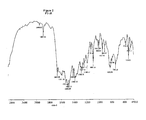
- FTIR spectra of novel complex were recorded directly on untreated powder by means of FTIR spectrometer. Spectra was recorded at room temperature from 4000 cm -1 to 650 cm -1 , for each sample 32 scans were collected at a spectral resolution of 4 cm-1 .
- Analytical characterization of the compound according to the invention was carried out by using X-ray powder diffraction using a PANalytical XpertPRO (PANalytical B.V, Almelo) X-ray powder diffractometer.
- the X-ray powder diffraction patterns were recorded with Cu K-Alphal radiation source (voltage of 45 kV; current: 40 mA).
- the step scan mode was performed with a step size of 0.008°, at a scan rate of 14.59 s/step.
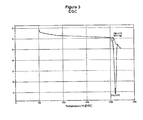
- the compound of the invention may be characterized by the positions of the major peaks in the X-ray powder diffractogram (PXRD), but may also be characterized by conventional FT-IR spectroscopy and endotherms in DSC diagram.
- PXRD X-ray powder diffractogram
- the character of complex is confirmed either by PXRD patterns, DSC endotherms and FT-IR spectra obtained from a 1:1 complex of Atovaquone-Proguanil, which are provided as Figures 1 to 3 respectively.
- the PXRD pattern shows at least one characteristic and exclusive peak at about 5.72 ⁇ 0.20 degrees 2 ⁇ angles. More particularly the PXRD pattern shows characteristic and exclusive peaks at 5.72, 12.56, 13.86, and 14.09 ⁇ 0.20 degrees 2 ⁇ angles.
- the complex of present invention is further characterized by characteristic absorption in FT-IR spectra at least at wavelength about 3468 ⁇ 3 and 141 ⁇ 3 cm -1 . More particularly the complex is characterized by wavelength at about 3468 ⁇ 3, 3343 ⁇ 3, 1668 ⁇ 3, 1411 ⁇ 3 cm -1
- the complex of present invention is further characterized by endotherms in a DSC.
- Thermal analysis results in a differential scanning calorimeter thermogram obtained at a heating rate of 10°C per minute in an open pan that exhibits a single melting endotherm with a peak temperature of about 210°C.
- the position of the endotherm can shift the position depending upon the heating rate and any contaminations resulting there from.
- the main peaks with positions and relative intensities, extracted from the diffractogram in FIG. 1 . are given below in table 1.
- the relative intensities may change from sample to sample or analyses and some additional very weak peaks found in the diffractogram have been omitted from table 1.
- the complex of the present invention shows improved physico-chemical properties, for example, pKa, pH and solubility pattern compared to individual drugs, thus resulting into better pharmaco-kinetic profile.
- the 1:1 complex exhibits pKa value of 7.5 whereas pKa value for Atovaquone and Proguanil are 8.39 and 10.64 respectively.
- the complex of the present invention shows better physico-chemical properties and improved the solubility of poorly soluble Atovaquone in the physical mixture.
- more Atovaquone gets dissolved from the complex of present invention and made available for simultaneous delivery / absorption in higher proportion in the combination of Atovaquone-Proguanil, resulting in a potentiation or synergism of the activity.
- the complex of the present invention can exhibit better pharmacokinetic profile and enhanced bioavailability.
- AUC 0-inf of Atovaquone calculated from Rat PK profile of trans -Atovaquone-Proguanil complex (1:1) and a physical mixture (Malarone).
- Complex (1:1) 6.166mg/kg 298501.894 ⁇ 117805.568 2.
- the present invention provides processes for the preparation of the complex(es).
- the process comprises contacting Atovaquone and Proguanil in predefined quantities in a suitable medium or carrier and recovering the complex(es) of the present invention from the medium or carrier.
- the process comprises; i) forming a solution of each components in an appropriate molar amounts in one or more solvents; ii) mixing said solution at a suitable temperature and iii) isolating the complex from said solution.
- preparation of complex of the present invention comprises; i) forming a solution of Atovaquone, or isomers thereof, in an appropriate solvent; ii) adding said solution to a solution of Proguanil in an appropriate solvent, at a suitable temperature and stirring for a suitable time; iii) isolating the complex.
- the solution of Proguanil may also be added to solution of Atovaquone or isomers thereof.
- the solvent used for the dissolution of Atovaquone and Proguanil may be either same or different.
- the process comprises suspending or triturating both components in appropriate molar amounts in presence of a suitable solvent, and then isolating the formed complex by filtration or adding an inert solvent.
- the complex of the present invention is optionally purified in inert solvent.
- the molar ratios of Atovaquone and Proguanil are altered to form different complexes each having different molar amounts.
- the complex formation reaction may be carried out at a temperature ranging from ambient to reflux temperature of the solvent, though lower temperature can be used.
- reaction solvent inert solvent
- precipitating solvent incipitating solvent
- appropriate solvent refers to a solvent or mixture of solvents which does not interact with starting materials, reagents, intermediates or products in a manner which adversely affects the yield and quality of the desired product.
- the inert or appropriate solvent may be selected from, but not limited to, a ketone like acetone, methyl ethyl ketone, or methyl propyl ketone, a halogenated hydrocarbon like chloroform, ethylenedichloride, or methylenechloride; an ester like ethylacetate; C1-4 alcohol, like methanol, ethanol, propanol, butanol; or mixtures thereof.
- the less polar solvent may be selected from, but not limited to, hydrocarbon like hexane, heptane, toluene; or mixtures thereof. The amount of solvent is not crucial and will depend on the process conversion & conditions desired.
- a suitable temperature is meant a temperature at which the solution can be formed and be able to induce the transformation of Atovaquone and Proguanil into the novel complex.
- suitable temperatures include, but are not limited to, room temperature to reflux temperature of the reaction media.
- a suitable time is meant a time that results in complete conversion of the starting material into novel complex without causing any decomposition of either compounds, i.e. results in a good yield. This suitable time can be established by routine experimentation.
- the isolation of the complex is accomplished by conventional techniques such as crystallization, evaporation, adding a precipitating solvent etc. In a preferred embodiment crystallization is accomplished either by evaporation of reaction solvent or by the addition of less polar solvents to afford the complex according to the present invention.
- the complex is isolated at an ambient temperature, preferably lower than room temperature, still preferably less than 15°C and more preferably at 0-5°C.
- the present invention provides a treatment and/or prophylaxis of a protozoal parasitic infection, e.g. malaria or toxoplasmosis, or an infection caused by Pneumocystis (carinii) jirovecii in mammals, including humans, by administering a therapeutically effective amount of complex(es) of the present invention.
- a protozoal parasitic infection e.g. malaria or toxoplasmosis
- the present invention reduces the protozoal count in infected blood of a mammal, by administering a therapeutically effective amount of complex(es) of the present invention.
- the invention provides a the use of a therapeutically effective amount of the complex according to the present invention for the prevention, control and treatment of diseases or disorders of a protozoal parasitic infection, e.g. malaria or toxoplasmosis, or an infection caused by Pneumocystis (carinii) jirovecii in mammals, including humans.
- a protozoal parasitic infection e.g. malaria or toxoplasmosis
- Pneumocystis (carinii) jirovecii in mammals, including humans e.g. malaria or toxoplasmosis
- the invention provides use of Atovaquone-Proguanil complex according to the present invention for the preparation of medicament useful for the treatment or prophylaxis or both of a protozoal parasitic infection or an infection caused by Pneumocystis ( carinii ) jirovecii in mammals.
- the invention also provides pharmaceutical compositions comprising a complex according to the present invention.
- the complex according to the invention may be formulated in a therapeutically effective amount, optionally together with a pharmaceutical acceptable agent / carrier / excipients, for example with an inorganic or organic, solid or optionally liquid pharmaceutically acceptable carrier, into a suitable dosage form such as tablets, capsules, pills, granules, powders, emulsions, suspensions, syrups, pellets etc., using known techniques.
- Such agents / carriers / excipients may be selected from, but not limited to, cellulose, hydroxypropyl cellulose, hydroxypropyl methyl cellulose, lactose, starch, sodium starch glycollate, povidone-K30, magnesium stearate, magnesium aluminum silicate, sodium saccharin, titanium dioxide and polyethylene glycol.
- the dosage forms prepared by the process of the present invention may be administered to a mammal in need, for treatment and / or prophylaxis of protozoal parasitic infections e.g. malaria or toxoplasmosis, or an infection caused by Pneumocystis (carinii) jirovecii.
- Pharmaceutical formulations include those suitable for oral, nasal, topical (including dermal, buccal and sublingual), rectal and parenteral (including subcutaneous, intradermal, intramuscular and intravenous), administration as well as administration by nasogastric tube.
- the formulation may, where appropriate, be conventionally presented in discrete dosage units and may be prepared by any of the methods well known in the art of pharmacy. All methods include the step of bringing into association the active ingredients with liquid carriers or finely divided solid carriers or both and then, if necessary, shaping the product into the desired formulation.
- a suitable effective dose of the complex of present invention for administration to human for treatment of malaria is in the range of 1 to 20 mg/kg/day, preferably from 1.3 to 15 mg/kg/day of the complex, more preferably from 1.4 to 12.5 mg/kg/day of the complex.
- a suitable effective dose of the complex of present invention for administration to human for prophylaxis of malaria is in the range of I to 4.5 mg/kg/day, preferably from 1.3 to 3.5 mg/kg/day of the complex, more preferably 1.4 to 3 mg/kg/day of the complex.
- the complex(es) according to the invention occurs as a solvate e.g. a hydrate. Said solvates and hydrates are also within the scope of this invention.
- the complex(es) according to the invention exist in a form selected from the group consisting of a crystalline form, partly crystalline form and polymorphous form.
- the complex(es) according to the invention exist also in amorphous form.
- Trans -Atovaquone 3.0 gm (0.00818 mole) was dissolved in 120 ml methylenedichloride and 24 ml methanol. To this was added drop-wise a solution of 2.07gm(0.00818 mole) Proguanil in 24 ml methylenedichloride and 6 ml methanol, mixture refluxed, methylenedichloride was distilled out, 10 ml hexane added and cooled to 0-5 °C. Filtered, washed with hexane, and dried at 60-65 °C to yield 5.0 gm.
- Atovaquone 1.0 gm (0.00272 mole) in 60 ml chloroform was added 0.692 gm (0.00272 mole) Proguanil in 10 ml methanol drop wise and the reaction mass was refluxed. Solvent was distilled out, 20 ml hexane and 3 ml methanol added and filtered, washed with hexane. Dried at 60-65 °C. Yield 1.5 gm (88.7%).
- Atovaquone 0.00272 mole
- 10 ml methanol 1.0 gm Atovaquone (0.00272 mole) was dissolved in 40ml methylenedichloride and 10 ml methanol.
- Proguanil 0.000678 mole
- 8 ml methylenedichloride and 2 ml methanol was added drop wise and refluxed.
- Methylene chloride was distilled out, contents cooled to 30 ⁇ 2 °C, filtered, washed with hexane, and dried the product at 60-65 °C. Yield 0.8 gm
- Trans -Atovaquone 1 kg was dissolved in 40 litres of methylenedichloride and 8 litres of methanol. To this was added solution of 0.69 kg of Proguanil in 8.0 litres of methylenedichloride and 2 litres of methanol drop wise, refluxed, methylenedichloride was distilled out, 3.3 litres of hexane added and cooled to 0-5 °C. Filtered, washed with hexane, dried at 60-65 °C to yield 1.67 kg.
- Example II Complex of Example I 211 mg (Atovaquone - 125 mg) (Proguanil - 86 mg) Microcrystalline cellulose (Avicel PH 101) q.s. Hydroxypropyl cellulose, Lo-sub, (LHPC, LHII) q.s. Sodium starch glycollate (Explotab) q.s. Povidone K30 q.s. Magnesium Stearate q.s. Compression weight 288 mg
- Coating Polymer dispersion 10 mg (Hydroxypropylmethyl cellulose and titanium dioxide and polyethylene glycol 400 and colourant) Polishing: Polyethylene glycol 8000 2 mg Total weight 300 mg
- Example I 211 mg (Atovaquone - 125 mg) (Proguanil - 86 mg) Microcrystalline cellulose (Avicel PH 101) q.s. Hydroxypropyl cellulose, Lo-sub, (LHPC, LHII) q.s. Sodium starch glycollate (Explotab) q.s. Povidone K30 q.s. Magnesium Stearate q.s. Magnesium aluminium silicate (Veegum F) q.s. Sodium saccharin q.s. Compression weight 288 mg Coating: Polymer dispersion 10 mg (Hydroxypropylmethyl cellulose and titanium dioxide and polyethylene glycol 400 and colourant) Polishing: Polyethylene glycol 8000 2 mg Total weight 300 mg
- Orbital sinus was used as blood collection site and the blood was collected in EDTA coated microcentrifuge tubes at different time points between 0 min (pre dose) to 240 hrs. Plasma samples were analyzed by LC MS/MS. Comparative pharmacokinetic profiles of Atovaquone, Proguanil and Cycloguanil are as given below in table 3, 4, and 5 respectively: Table 4: Comparative rat pharmacokinetic profile of Atovaquone from complex of example-I, physical mixture (1:1) and physical mixture (Malarone).
Landscapes
- Organic Chemistry (AREA)
- Chemical & Material Sciences (AREA)
- Health & Medical Sciences (AREA)
- Veterinary Medicine (AREA)
- Tropical Medicine & Parasitology (AREA)
- Chemical Kinetics & Catalysis (AREA)
- Medicinal Chemistry (AREA)
- Nuclear Medicine, Radiotherapy & Molecular Imaging (AREA)
- General Chemical & Material Sciences (AREA)
- Pharmacology & Pharmacy (AREA)
- Life Sciences & Earth Sciences (AREA)
- Animal Behavior & Ethology (AREA)
- General Health & Medical Sciences (AREA)
- Public Health (AREA)
- Acyclic And Carbocyclic Compounds In Medicinal Compositions (AREA)
- Organic Low-Molecular-Weight Compounds And Preparation Thereof (AREA)
- Pharmaceuticals Containing Other Organic And Inorganic Compounds (AREA)
- Medicinal Preparation (AREA)
Claims (15)
- Atovaquon-Proguanil-Komplex.
- Komplex nach Anspruch 1, worin das Molverhältnis von Atovaquon und Proguanil im Komplex jeweils im Bereich von 1 : 4 bis 4 : 1 liegt, wobei das Verhältnis optional 1 : 1 beträgt.
- Komplex nach Anspruch 1 oder 2, worin der Komplex in einer Form vorliegt, die aus der Gruppe ausgewählt ist, die aus kristallin, teilkristallin und polymorph besteht, oder in amorpher Form und als Solvate davon vorliegt.
- Komplex nach einem der Ansprüche 1 bis 3, worin Atovaquon aus cis/trans-Isomeren ausgewählt ist, die ein Isomerenverhältnis von cis- zu trans-Isomer im Bereich von 0 : 100 bis 100 : 0 aufweisen.
- Komplex nach Anspruch 4, der trans-Atovaquon und Proguanil in einem Molverhältnis von 1 : 1 umfasst.
- Komplex nach einem der Ansprüche 1 bis 5, worin der Komplex durch Folgendes gekennzeichnet ist:• ein Pulverröntgendiffraktometrie-Muster mit charakteristischen Peaks bei 5,72, 2,56, 13,86 und 14,09 ± 0,20 Grad Zwei-Theta,• ein Thermogramm der dynamischen Differenzkalorimetrie, das einen endothermen Peak bei 210°C aufweist, und/oder• ein FT-IR-Spektrum mit Peaks bei 1665, 1091, 820 und 528 cm-1.
- Verfahren zur Herstellung eines Komplexes von Atovaquon und Proguanil, das Folgendes umfasst:a. Inkontaktbringen von Atovaquon und Proguanil in einem geeigneten Medium;b. Bewirken der Bildung des genannten Komplexes für eine geeignete Zeit; undc. Gewinnung der genannten Komplexverbindung aus dem Medium.
- Verfahren nach Anspruch 7, worin das Inkontaktbringen, wie im Schritt (a), das Lösen, Suspendieren oder Befeuchten jeder Komponente in entsprechenden molaren Mengen in einem oder mehreren Lösungsmitteln, entweder getrennt oder zusammen, und das Mischen dieser bei einer geeigneten Temperatur umfasst.
- Verfahren nach Anspruch 7, worin das Inkontaktbringen, wie im Schritt (a), das Triturieren/Vermahlen jeder Komponente in Gegenwart oder Abwesenheit eines Lösungsmittels umfasst.
- Verfahren nach einem der Ansprüche 7 bis 9, worin die Gewinnung, wie im Schritt (c), die Kristallisation, Filtration, Eindampfung oder Zugabe eines ausfällenden Lösungsmittels umfasst.
- Verfahren nach einem der Ansprüche 7 bis 10, worin das geeignete Medium ein organisches Lösungsmittel ist, das aus einem Keton, einem halogenierten Kohlenwasserstoff, einem Ester, einem C1-C4-Alkohol oder einer Mischung davon ausgewählt ist.
- Verfahren nach Anspruch 11, worin das genannte Keton aus Aceton, Methylethylketon und Methylpropylketon ausgewählt ist; der genannte halogenierte Kohlenwasserstoff aus Chloroform, Ethylendichlorid und Methylendichlorid ausgewählt ist; der genannte Ester Ethylacetat ist; und der C1-C4-Alkohol aus Methanol, Ethanol, Propanol und Butanol ausgewählt ist.
- Verfahren nach Anspruch 10, worin das ausfällende Lösungsmittel aus Kohlenwasserstoff, optional Hexan, Heptan oder Toluol, oder einer Mischung davon ausgewählt ist.
- Pharmazeutische Zusammensetzung, die eine therapeutisch wirksame Menge des Atovaquon-Proguanil-Komplexes, optional zusammen mit einem pharmazeutisch verträglichen Mittel oder Hilfsstoff umfasst, das/der für die Verabreichung durch orale, rektale, nasale, topische oder parenterale Anwendung geeignet ist, wobei die Dosis des Atovaquon-Proguanil-Komplexes optional im Bereich von 1 bis 20 mg/kg/Tag beträgt.
- Komplex nach einem der Ansprüche 1 bis 6 oder die Zusammensetzung nach Anspruch 14 zur Verwendung bei der Behandlung oder Prophylaxe oder beidem von einer parasitären Protozoeninfektion oder einer Infektion, die durch Pneumocystis (carinii) jirovecii verursacht wird, bei Säugern, wobei die parasitäre Protozoeninfektion optional Malaria oder Toxoplasmose ist und/oder die Dosis des Komplexes optional im Bereich von 1 bis 20 mg/kg/Tag liegt.
Applications Claiming Priority (2)
| Application Number | Priority Date | Filing Date | Title |
|---|---|---|---|
| IN1930MU2009 | 2009-08-20 | ||
| PCT/IN2010/000554 WO2011021230A2 (en) | 2009-08-20 | 2010-08-20 | Novel complex for treatment and/or prophylaxis of parasitic infections |
Publications (3)
| Publication Number | Publication Date |
|---|---|
| EP2467358A2 EP2467358A2 (de) | 2012-06-27 |
| EP2467358A4 EP2467358A4 (de) | 2013-01-02 |
| EP2467358B1 true EP2467358B1 (de) | 2014-07-23 |
Family
ID=43607414
Family Applications (1)
| Application Number | Title | Priority Date | Filing Date |
|---|---|---|---|
| EP10809659.5A Not-in-force EP2467358B1 (de) | 2009-08-20 | 2010-08-20 | Neuer komplex zur behandlung und/oder prophylaxe von parasiteninfektionen |
Country Status (4)
| Country | Link |
|---|---|
| US (1) | US8987234B2 (de) |
| EP (1) | EP2467358B1 (de) |
| ES (1) | ES2517366T3 (de) |
| WO (1) | WO2011021230A2 (de) |
Families Citing this family (2)
| Publication number | Priority date | Publication date | Assignee | Title |
|---|---|---|---|---|
| US9492406B2 (en) | 2012-09-20 | 2016-11-15 | Ipca Laboratories Ltd. | Pharmaceutical composition |
| WO2020081997A1 (en) * | 2018-10-18 | 2020-04-23 | Tulex Pharmaceuticals Inc. | Atovaquone nanoparticulate compositions |
Family Cites Families (6)
| Publication number | Priority date | Publication date | Assignee | Title |
|---|---|---|---|---|
| GB8310141D0 (en) | 1983-04-14 | 1983-05-18 | Wellcome Found | Naphthoquinone derivatives |
| GB9224739D0 (en) * | 1992-11-26 | 1993-01-13 | Wellcome Found | Medicaments |
| GB9226905D0 (en) | 1992-12-24 | 1993-02-17 | Wellcome Found | Pharmaceutical preparation |
| WO2000061133A1 (en) | 1999-04-09 | 2000-10-19 | Glaxo Group Limited | Combination preparation for treating malaria |
| US20100152302A1 (en) | 2007-06-26 | 2010-06-17 | Hetero Drugs Limited | Novel crystalline forms of atovaquone |
| US20090087483A1 (en) | 2007-09-27 | 2009-04-02 | Sison Raymundo A | Oral dosage combination pharmaceutical packaging |
-
2010
- 2010-08-20 EP EP10809659.5A patent/EP2467358B1/de not_active Not-in-force
- 2010-08-20 ES ES10809659.5T patent/ES2517366T3/es active Active
- 2010-08-20 US US13/388,729 patent/US8987234B2/en active Active
- 2010-08-20 WO PCT/IN2010/000554 patent/WO2011021230A2/en not_active Ceased
Also Published As
| Publication number | Publication date |
|---|---|
| US8987234B2 (en) | 2015-03-24 |
| WO2011021230A3 (en) | 2011-05-05 |
| EP2467358A4 (de) | 2013-01-02 |
| EP2467358A2 (de) | 2012-06-27 |
| US20120136062A1 (en) | 2012-05-31 |
| WO2011021230A2 (en) | 2011-02-24 |
| ES2517366T3 (es) | 2014-11-03 |
Similar Documents
| Publication | Publication Date | Title |
|---|---|---|
| EP4041713B1 (de) | Feste kristalline formen eines selektiven kaliumkanalmodulators | |
| HUE034996T2 (en) | Ivabradine hydrochloride Form IV | |
| WO2012080195A2 (en) | Polymorphic forms of asenapine maleate and processes for their preparation | |
| EP2467358B1 (de) | Neuer komplex zur behandlung und/oder prophylaxe von parasiteninfektionen | |
| US20100081847A1 (en) | New process for preparation of atovaquone and novel intermediates thereof | |
| US11098013B2 (en) | Small molecule N-(α-peroxy) carbazole compounds and methods of use | |
| AU2018349284B2 (en) | New salt and solid state forms of escitalopram | |
| EP3515454B1 (de) | Kristalline polymorphe form von 3-hydroxy-4,5-bis-benzyloxy-6-benzyloxymethyl-2-phenyl-2-oxo-2lambda5-[1,2]oxaphosphinan | |
| EP3455208B1 (de) | Klein molekul n-(alpha-peroxy)-indol verbindungen und verfahren zu ihrer verwendung | |
| EP2160376B1 (de) | Neue kristalline formen von atovaquon | |
| EP3184516A1 (de) | Kristalliner inclusionskomplex von mirabegron mit beta-cyclodextrin | |
| US20090221715A1 (en) | Novel polymorph of atovaquone | |
| US20240101520A1 (en) | Pyrimethamine crystal form | |
| US9688625B2 (en) | Amorphous form of a thiocolchicine derivative | |
| WO2024213129A1 (zh) | 一种酰乙酯多环化合物及其药物组合物和用途 | |
| US20100256199A1 (en) | Crystalline form of an Antimalarial Compound | |
| HK40078032B (en) | Solid state crystalline forms of a selective potassium channel modulator | |
| HK40078032A (en) | Solid state crystalline forms of a selective potassium channel modulator | |
| EP1645274A1 (de) | Verfahren zur Herstellung von Gatifloxacinform Omega |
Legal Events
| Date | Code | Title | Description |
|---|---|---|---|
| PUAI | Public reference made under article 153(3) epc to a published international application that has entered the european phase |
Free format text: ORIGINAL CODE: 0009012 |
|
| 17P | Request for examination filed |
Effective date: 20120119 |
|
| AK | Designated contracting states |
Kind code of ref document: A2 Designated state(s): AL AT BE BG CH CY CZ DE DK EE ES FI FR GB GR HR HU IE IS IT LI LT LU LV MC MK MT NL NO PL PT RO SE SI SK SM TR |
|
| DAX | Request for extension of the european patent (deleted) | ||
| A4 | Supplementary search report drawn up and despatched |
Effective date: 20121130 |
|
| RIC1 | Information provided on ipc code assigned before grant |
Ipc: C07C 257/10 20060101AFI20121126BHEP Ipc: A61K 31/155 20060101ALI20121126BHEP Ipc: C07C 50/12 20060101ALI20121126BHEP Ipc: A61P 33/06 20060101ALI20121126BHEP Ipc: A61K 31/122 20060101ALI20121126BHEP |
|
| 17Q | First examination report despatched |
Effective date: 20130508 |
|
| GRAP | Despatch of communication of intention to grant a patent |
Free format text: ORIGINAL CODE: EPIDOSNIGR1 |
|
| INTG | Intention to grant announced |
Effective date: 20140122 |
|
| GRAS | Grant fee paid |
Free format text: ORIGINAL CODE: EPIDOSNIGR3 |
|
| GRAA | (expected) grant |
Free format text: ORIGINAL CODE: 0009210 |
|
| AK | Designated contracting states |
Kind code of ref document: B1 Designated state(s): AL AT BE BG CH CY CZ DE DK EE ES FI FR GB GR HR HU IE IS IT LI LT LU LV MC MK MT NL NO PL PT RO SE SI SK SM TR |
|
| REG | Reference to a national code |
Ref country code: GB Ref legal event code: FG4D |
|
| REG | Reference to a national code |
Ref country code: CH Ref legal event code: EP |
|
| REG | Reference to a national code |
Ref country code: IE Ref legal event code: FG4D |
|
| REG | Reference to a national code |
Ref country code: AT Ref legal event code: REF Ref document number: 678781 Country of ref document: AT Kind code of ref document: T Effective date: 20140815 |
|
| REG | Reference to a national code |
Ref country code: DE Ref legal event code: R096 Ref document number: 602010017790 Country of ref document: DE Effective date: 20140904 |
|
| REG | Reference to a national code |
Ref country code: ES Ref legal event code: FG2A Ref document number: 2517366 Country of ref document: ES Kind code of ref document: T3 Effective date: 20141103 |
|
| REG | Reference to a national code |
Ref country code: NL Ref legal event code: T3 |
|
| REG | Reference to a national code |
Ref country code: AT Ref legal event code: MK05 Ref document number: 678781 Country of ref document: AT Kind code of ref document: T Effective date: 20140723 |
|
| REG | Reference to a national code |
Ref country code: LT Ref legal event code: MG4D |
|
| PG25 | Lapsed in a contracting state [announced via postgrant information from national office to epo] |
Ref country code: NO Free format text: LAPSE BECAUSE OF FAILURE TO SUBMIT A TRANSLATION OF THE DESCRIPTION OR TO PAY THE FEE WITHIN THE PRESCRIBED TIME-LIMIT Effective date: 20141023 Ref country code: FI Free format text: LAPSE BECAUSE OF FAILURE TO SUBMIT A TRANSLATION OF THE DESCRIPTION OR TO PAY THE FEE WITHIN THE PRESCRIBED TIME-LIMIT Effective date: 20140723 Ref country code: PT Free format text: LAPSE BECAUSE OF FAILURE TO SUBMIT A TRANSLATION OF THE DESCRIPTION OR TO PAY THE FEE WITHIN THE PRESCRIBED TIME-LIMIT Effective date: 20141124 Ref country code: GR Free format text: LAPSE BECAUSE OF FAILURE TO SUBMIT A TRANSLATION OF THE DESCRIPTION OR TO PAY THE FEE WITHIN THE PRESCRIBED TIME-LIMIT Effective date: 20141024 Ref country code: BG Free format text: LAPSE BECAUSE OF FAILURE TO SUBMIT A TRANSLATION OF THE DESCRIPTION OR TO PAY THE FEE WITHIN THE PRESCRIBED TIME-LIMIT Effective date: 20141023 Ref country code: SE Free format text: LAPSE BECAUSE OF FAILURE TO SUBMIT A TRANSLATION OF THE DESCRIPTION OR TO PAY THE FEE WITHIN THE PRESCRIBED TIME-LIMIT Effective date: 20140723 Ref country code: LT Free format text: LAPSE BECAUSE OF FAILURE TO SUBMIT A TRANSLATION OF THE DESCRIPTION OR TO PAY THE FEE WITHIN THE PRESCRIBED TIME-LIMIT Effective date: 20140723 |
|
| PG25 | Lapsed in a contracting state [announced via postgrant information from national office to epo] |
Ref country code: IS Free format text: LAPSE BECAUSE OF FAILURE TO SUBMIT A TRANSLATION OF THE DESCRIPTION OR TO PAY THE FEE WITHIN THE PRESCRIBED TIME-LIMIT Effective date: 20141123 Ref country code: AT Free format text: LAPSE BECAUSE OF FAILURE TO SUBMIT A TRANSLATION OF THE DESCRIPTION OR TO PAY THE FEE WITHIN THE PRESCRIBED TIME-LIMIT Effective date: 20140723 Ref country code: PL Free format text: LAPSE BECAUSE OF FAILURE TO SUBMIT A TRANSLATION OF THE DESCRIPTION OR TO PAY THE FEE WITHIN THE PRESCRIBED TIME-LIMIT Effective date: 20140723 Ref country code: CY Free format text: LAPSE BECAUSE OF FAILURE TO SUBMIT A TRANSLATION OF THE DESCRIPTION OR TO PAY THE FEE WITHIN THE PRESCRIBED TIME-LIMIT Effective date: 20140723 Ref country code: LV Free format text: LAPSE BECAUSE OF FAILURE TO SUBMIT A TRANSLATION OF THE DESCRIPTION OR TO PAY THE FEE WITHIN THE PRESCRIBED TIME-LIMIT Effective date: 20140723 Ref country code: HR Free format text: LAPSE BECAUSE OF FAILURE TO SUBMIT A TRANSLATION OF THE DESCRIPTION OR TO PAY THE FEE WITHIN THE PRESCRIBED TIME-LIMIT Effective date: 20140723 |
|
| REG | Reference to a national code |
Ref country code: CH Ref legal event code: PL |
|
| REG | Reference to a national code |
Ref country code: DE Ref legal event code: R097 Ref document number: 602010017790 Country of ref document: DE |
|
| PG25 | Lapsed in a contracting state [announced via postgrant information from national office to epo] |
Ref country code: MC Free format text: LAPSE BECAUSE OF FAILURE TO SUBMIT A TRANSLATION OF THE DESCRIPTION OR TO PAY THE FEE WITHIN THE PRESCRIBED TIME-LIMIT Effective date: 20140723 Ref country code: EE Free format text: LAPSE BECAUSE OF FAILURE TO SUBMIT A TRANSLATION OF THE DESCRIPTION OR TO PAY THE FEE WITHIN THE PRESCRIBED TIME-LIMIT Effective date: 20140723 Ref country code: CH Free format text: LAPSE BECAUSE OF NON-PAYMENT OF DUE FEES Effective date: 20140831 Ref country code: RO Free format text: LAPSE BECAUSE OF FAILURE TO SUBMIT A TRANSLATION OF THE DESCRIPTION OR TO PAY THE FEE WITHIN THE PRESCRIBED TIME-LIMIT Effective date: 20140723 Ref country code: CZ Free format text: LAPSE BECAUSE OF FAILURE TO SUBMIT A TRANSLATION OF THE DESCRIPTION OR TO PAY THE FEE WITHIN THE PRESCRIBED TIME-LIMIT Effective date: 20140723 Ref country code: SK Free format text: LAPSE BECAUSE OF FAILURE TO SUBMIT A TRANSLATION OF THE DESCRIPTION OR TO PAY THE FEE WITHIN THE PRESCRIBED TIME-LIMIT Effective date: 20140723 Ref country code: LI Free format text: LAPSE BECAUSE OF NON-PAYMENT OF DUE FEES Effective date: 20140831 Ref country code: DK Free format text: LAPSE BECAUSE OF FAILURE TO SUBMIT A TRANSLATION OF THE DESCRIPTION OR TO PAY THE FEE WITHIN THE PRESCRIBED TIME-LIMIT Effective date: 20140723 |
|
| REG | Reference to a national code |
Ref country code: IE Ref legal event code: MM4A |
|
| PLBE | No opposition filed within time limit |
Free format text: ORIGINAL CODE: 0009261 |
|
| STAA | Information on the status of an ep patent application or granted ep patent |
Free format text: STATUS: NO OPPOSITION FILED WITHIN TIME LIMIT |
|
| 26N | No opposition filed |
Effective date: 20150424 |
|
| REG | Reference to a national code |
Ref country code: FR Ref legal event code: PLFP Year of fee payment: 6 |
|
| PG25 | Lapsed in a contracting state [announced via postgrant information from national office to epo] |
Ref country code: IE Free format text: LAPSE BECAUSE OF NON-PAYMENT OF DUE FEES Effective date: 20140820 |
|
| PGFP | Annual fee paid to national office [announced via postgrant information from national office to epo] |
Ref country code: NL Payment date: 20150809 Year of fee payment: 6 |
|
| PGFP | Annual fee paid to national office [announced via postgrant information from national office to epo] |
Ref country code: ES Payment date: 20150810 Year of fee payment: 6 |
|
| PG25 | Lapsed in a contracting state [announced via postgrant information from national office to epo] |
Ref country code: SI Free format text: LAPSE BECAUSE OF FAILURE TO SUBMIT A TRANSLATION OF THE DESCRIPTION OR TO PAY THE FEE WITHIN THE PRESCRIBED TIME-LIMIT Effective date: 20140723 |
|
| PGFP | Annual fee paid to national office [announced via postgrant information from national office to epo] |
Ref country code: BE Payment date: 20150811 Year of fee payment: 6 |
|
| PG25 | Lapsed in a contracting state [announced via postgrant information from national office to epo] |
Ref country code: SM Free format text: LAPSE BECAUSE OF FAILURE TO SUBMIT A TRANSLATION OF THE DESCRIPTION OR TO PAY THE FEE WITHIN THE PRESCRIBED TIME-LIMIT Effective date: 20140723 |
|
| PGFP | Annual fee paid to national office [announced via postgrant information from national office to epo] |
Ref country code: IT Payment date: 20150827 Year of fee payment: 6 |
|
| PG25 | Lapsed in a contracting state [announced via postgrant information from national office to epo] |
Ref country code: MT Free format text: LAPSE BECAUSE OF FAILURE TO SUBMIT A TRANSLATION OF THE DESCRIPTION OR TO PAY THE FEE WITHIN THE PRESCRIBED TIME-LIMIT Effective date: 20140723 |
|
| PG25 | Lapsed in a contracting state [announced via postgrant information from national office to epo] |
Ref country code: LU Free format text: LAPSE BECAUSE OF NON-PAYMENT OF DUE FEES Effective date: 20140820 Ref country code: TR Free format text: LAPSE BECAUSE OF FAILURE TO SUBMIT A TRANSLATION OF THE DESCRIPTION OR TO PAY THE FEE WITHIN THE PRESCRIBED TIME-LIMIT Effective date: 20140723 Ref country code: HU Free format text: LAPSE BECAUSE OF FAILURE TO SUBMIT A TRANSLATION OF THE DESCRIPTION OR TO PAY THE FEE WITHIN THE PRESCRIBED TIME-LIMIT; INVALID AB INITIO Effective date: 20100820 |
|
| REG | Reference to a national code |
Ref country code: FR Ref legal event code: PLFP Year of fee payment: 7 |
|
| PG25 | Lapsed in a contracting state [announced via postgrant information from national office to epo] |
Ref country code: BE Free format text: LAPSE BECAUSE OF NON-PAYMENT OF DUE FEES Effective date: 20160831 |
|
| REG | Reference to a national code |
Ref country code: NL Ref legal event code: MM Effective date: 20160901 |
|
| PG25 | Lapsed in a contracting state [announced via postgrant information from national office to epo] |
Ref country code: NL Free format text: LAPSE BECAUSE OF NON-PAYMENT OF DUE FEES Effective date: 20160901 |
|
| REG | Reference to a national code |
Ref country code: FR Ref legal event code: PLFP Year of fee payment: 8 |
|
| PG25 | Lapsed in a contracting state [announced via postgrant information from national office to epo] |
Ref country code: IT Free format text: LAPSE BECAUSE OF NON-PAYMENT OF DUE FEES Effective date: 20160820 |
|
| PG25 | Lapsed in a contracting state [announced via postgrant information from national office to epo] |
Ref country code: ES Free format text: LAPSE BECAUSE OF NON-PAYMENT OF DUE FEES Effective date: 20160821 |
|
| PG25 | Lapsed in a contracting state [announced via postgrant information from national office to epo] |
Ref country code: MK Free format text: LAPSE BECAUSE OF FAILURE TO SUBMIT A TRANSLATION OF THE DESCRIPTION OR TO PAY THE FEE WITHIN THE PRESCRIBED TIME-LIMIT Effective date: 20140723 |
|
| REG | Reference to a national code |
Ref country code: FR Ref legal event code: PLFP Year of fee payment: 9 |
|
| PG25 | Lapsed in a contracting state [announced via postgrant information from national office to epo] |
Ref country code: AL Free format text: LAPSE BECAUSE OF FAILURE TO SUBMIT A TRANSLATION OF THE DESCRIPTION OR TO PAY THE FEE WITHIN THE PRESCRIBED TIME-LIMIT Effective date: 20140723 |
|
| PGFP | Annual fee paid to national office [announced via postgrant information from national office to epo] |
Ref country code: FR Payment date: 20180813 Year of fee payment: 9 |
|
| REG | Reference to a national code |
Ref country code: ES Ref legal event code: FD2A Effective date: 20181116 |
|
| PG25 | Lapsed in a contracting state [announced via postgrant information from national office to epo] |
Ref country code: FR Free format text: LAPSE BECAUSE OF NON-PAYMENT OF DUE FEES Effective date: 20190831 |
|
| PGFP | Annual fee paid to national office [announced via postgrant information from national office to epo] |
Ref country code: GB Payment date: 20220922 Year of fee payment: 13 Ref country code: DE Payment date: 20220923 Year of fee payment: 13 |
|
| REG | Reference to a national code |
Ref country code: DE Ref legal event code: R119 Ref document number: 602010017790 Country of ref document: DE |
|
| GBPC | Gb: european patent ceased through non-payment of renewal fee |
Effective date: 20230820 |
|
| PG25 | Lapsed in a contracting state [announced via postgrant information from national office to epo] |
Ref country code: GB Free format text: LAPSE BECAUSE OF NON-PAYMENT OF DUE FEES Effective date: 20230820 |
|
| PG25 | Lapsed in a contracting state [announced via postgrant information from national office to epo] |
Ref country code: GB Free format text: LAPSE BECAUSE OF NON-PAYMENT OF DUE FEES Effective date: 20230820 Ref country code: DE Free format text: LAPSE BECAUSE OF NON-PAYMENT OF DUE FEES Effective date: 20240301 |