EP2460898A1 - Chemical method for removing copper sulphide (Cu2S) deposited onto insulating material in a transformer - Google Patents
Chemical method for removing copper sulphide (Cu2S) deposited onto insulating material in a transformer Download PDFInfo
- Publication number
- EP2460898A1 EP2460898A1 EP10193771A EP10193771A EP2460898A1 EP 2460898 A1 EP2460898 A1 EP 2460898A1 EP 10193771 A EP10193771 A EP 10193771A EP 10193771 A EP10193771 A EP 10193771A EP 2460898 A1 EP2460898 A1 EP 2460898A1
- Authority
- EP
- European Patent Office
- Prior art keywords
- treatment solution
- chemical treatment
- chelating agent
- copper
- polar solvent
- Prior art date
- Legal status (The legal status is an assumption and is not a legal conclusion. Google has not performed a legal analysis and makes no representation as to the accuracy of the status listed.)
- Withdrawn
Links
Images
Classifications
-
- C—CHEMISTRY; METALLURGY
- C01—INORGANIC CHEMISTRY
- C01G—COMPOUNDS CONTAINING METALS NOT COVERED BY SUBCLASSES C01D OR C01F
- C01G3/00—Compounds of copper
- C01G3/12—Sulfides
-
- C—CHEMISTRY; METALLURGY
- C22—METALLURGY; FERROUS OR NON-FERROUS ALLOYS; TREATMENT OF ALLOYS OR NON-FERROUS METALS
- C22B—PRODUCTION AND REFINING OF METALS; PRETREATMENT OF RAW MATERIALS
- C22B3/00—Extraction of metal compounds from ores or concentrates by wet processes
- C22B3/04—Extraction of metal compounds from ores or concentrates by wet processes by leaching
- C22B3/16—Extraction of metal compounds from ores or concentrates by wet processes by leaching in organic solutions
- C22B3/1608—Leaching with acyclic or carbocyclic agents
- C22B3/1616—Leaching with acyclic or carbocyclic agents of a single type
- C22B3/1633—Leaching with acyclic or carbocyclic agents of a single type with oximes
-
- C—CHEMISTRY; METALLURGY
- C22—METALLURGY; FERROUS OR NON-FERROUS ALLOYS; TREATMENT OF ALLOYS OR NON-FERROUS METALS
- C22B—PRODUCTION AND REFINING OF METALS; PRETREATMENT OF RAW MATERIALS
- C22B3/00—Extraction of metal compounds from ores or concentrates by wet processes
- C22B3/04—Extraction of metal compounds from ores or concentrates by wet processes by leaching
- C22B3/16—Extraction of metal compounds from ores or concentrates by wet processes by leaching in organic solutions
- C22B3/1608—Leaching with acyclic or carbocyclic agents
- C22B3/1616—Leaching with acyclic or carbocyclic agents of a single type
- C22B3/1641—Leaching with acyclic or carbocyclic agents of a single type with ketones or aldehydes
-
- C—CHEMISTRY; METALLURGY
- C22—METALLURGY; FERROUS OR NON-FERROUS ALLOYS; TREATMENT OF ALLOYS OR NON-FERROUS METALS
- C22B—PRODUCTION AND REFINING OF METALS; PRETREATMENT OF RAW MATERIALS
- C22B3/00—Extraction of metal compounds from ores or concentrates by wet processes
- C22B3/20—Treatment or purification of solutions, e.g. obtained by leaching
- C22B3/26—Treatment or purification of solutions, e.g. obtained by leaching by liquid-liquid extraction using organic compounds
- C22B3/30—Oximes
-
- C—CHEMISTRY; METALLURGY
- C22—METALLURGY; FERROUS OR NON-FERROUS ALLOYS; TREATMENT OF ALLOYS OR NON-FERROUS METALS
- C22B—PRODUCTION AND REFINING OF METALS; PRETREATMENT OF RAW MATERIALS
- C22B3/00—Extraction of metal compounds from ores or concentrates by wet processes
- C22B3/20—Treatment or purification of solutions, e.g. obtained by leaching
- C22B3/26—Treatment or purification of solutions, e.g. obtained by leaching by liquid-liquid extraction using organic compounds
- C22B3/32—Carboxylic acids
-
- H—ELECTRICITY
- H01—ELECTRIC ELEMENTS
- H01F—MAGNETS; INDUCTANCES; TRANSFORMERS; SELECTION OF MATERIALS FOR THEIR MAGNETIC PROPERTIES
- H01F27/00—Details of transformers or inductances, in general
- H01F27/08—Cooling; Ventilating
- H01F27/10—Liquid cooling
- H01F27/12—Oil cooling
- H01F27/14—Expansion chambers; Oil conservators; Gas cushions; Arrangements for purifying, drying, or filling
-
- C—CHEMISTRY; METALLURGY
- C01—INORGANIC CHEMISTRY
- C01P—INDEXING SCHEME RELATING TO STRUCTURAL AND PHYSICAL ASPECTS OF SOLID INORGANIC COMPOUNDS
- C01P2002/00—Crystal-structural characteristics
- C01P2002/80—Crystal-structural characteristics defined by measured data other than those specified in group C01P2002/70
- C01P2002/89—Crystal-structural characteristics defined by measured data other than those specified in group C01P2002/70 by mass-spectroscopy
-
- C—CHEMISTRY; METALLURGY
- C01—INORGANIC CHEMISTRY
- C01P—INDEXING SCHEME RELATING TO STRUCTURAL AND PHYSICAL ASPECTS OF SOLID INORGANIC COMPOUNDS
- C01P2006/00—Physical properties of inorganic compounds
- C01P2006/40—Electric properties
-
- C—CHEMISTRY; METALLURGY
- C01—INORGANIC CHEMISTRY
- C01P—INDEXING SCHEME RELATING TO STRUCTURAL AND PHYSICAL ASPECTS OF SOLID INORGANIC COMPOUNDS
- C01P2006/00—Physical properties of inorganic compounds
- C01P2006/80—Compositional purity
-
- H—ELECTRICITY
- H01—ELECTRIC ELEMENTS
- H01F—MAGNETS; INDUCTANCES; TRANSFORMERS; SELECTION OF MATERIALS FOR THEIR MAGNETIC PROPERTIES
- H01F27/00—Details of transformers or inductances, in general
- H01F27/23—Corrosion protection
-
- Y—GENERAL TAGGING OF NEW TECHNOLOGICAL DEVELOPMENTS; GENERAL TAGGING OF CROSS-SECTIONAL TECHNOLOGIES SPANNING OVER SEVERAL SECTIONS OF THE IPC; TECHNICAL SUBJECTS COVERED BY FORMER USPC CROSS-REFERENCE ART COLLECTIONS [XRACs] AND DIGESTS
- Y02—TECHNOLOGIES OR APPLICATIONS FOR MITIGATION OR ADAPTATION AGAINST CLIMATE CHANGE
- Y02P—CLIMATE CHANGE MITIGATION TECHNOLOGIES IN THE PRODUCTION OR PROCESSING OF GOODS
- Y02P10/00—Technologies related to metal processing
- Y02P10/20—Recycling
Definitions
- the present invention relates to a method of removing copper sulphide deposits present in electrically insulating layers in an electrical apparatus, such as transformers, bushings or the like, wherein a substantial amount of an electrically insulating oil, normally present in the electrical apparatus has been removed.
- Insulating oils are widely used in a number of apparatus in the field of electrical power transmission and electrical power generation, for example; power transformers, distribution transformers, tap changers, switchgear and reactors. Such electrically insulating oils often contain traces of reactive sulphur compounds, which may react with copper, forming copper sulphide (Cu 2 S). Copper sulphide is insoluble in oil and may form deposits on surfaces and materials in contact with the electrically insulating oils inside the electrical apparatus. Copper sulphide is a conductor and the formation of a semi-conducting deposit on surfaces and materials in the electrical apparatus may degrade or disrupt the operation of the apparatus.
- the semi-conducting copper sulphide is deposited on the isolation material (usually cellulose material e.g. paper) used to cover the copper conductors in the electrical apparatus, this might lead to a degrading of the insulation properties of the isolation material which could lead to leak currents or short circuits.
- Semi-conducting copper sulphide deposits on surfaces of solid isolation materials, such as cellulose-based material, ceramic, polymer and composite inside the electrical apparatus may also create similar problems. Copper sulphide deposits can also occur on other surfaces in an electrical apparatus, such as pressboards, spacers and magnetic cores.
- the present invention relates to a method for removing copper sulphide (Cu 2 S) deposited onto electrically insulating materials of components in an electrical apparatus, such as a transformer or a bushing, wherein normally present electrically insulating oil has been substantially removed, and on other surfaces of such apparatus, comprising the following steps:
- a non-polar solvent within the meaning of the present invention relates to a solvent that has a low dielectric constant and displays a low miscibility with water, i.e. equal to or below 1 g per 100 g of water at 20°C and a pressure of 1 atmosphere.
- the method may further comprise the steps of rinsing the insulating material with at least one non-polar solvent, and drying with at least one non polar solvent at a temperature of at least 15°C, at a pressure below atmospheric pressure.
- a chemical treatment solution comprising at least one chelating agent in an amount of 0,01-99 % by weight of the at least one non-polar solvent, preferably 2 to 85 % by weight , most preferably 20 to 70 % by weight is suitable.
- the chemical treatment solution preferably comprises at least one chelating agent in an amount of at least 0,1 % by weight based upon the entire treatment solution.
- Chelating agents which have a solubility of at least 0,05 mol/L in the at least one non-polar solvent, preferably at least 0,1 mol/L, most preferably at least 0,2 mol/L at the temperature chosen for the treatment, viz. 30-130°C, are suitable for use in the present method.
- the chelating agent preferably comprises at least one group which contains free electrons capable of bonding toward Cu, or, optionally, toward both Cu and sulphur, said group being amine, hydroxy, carboxylate, ketone, phosphorous-containing, nitril, aldoxime, ketoxime or sulfur-containing groups, and may be chosen among: amine based carboxylic acids with a solubility in water equal or below 1 g/L at 25°C, salicylidene compounds, e.g.
- diisooctylphosphinic acid diisooctylphosphinic acid; porphyrin, tetrabenzoporphyrin, tetraazaporphyrine and phthalocyanine-type molecules, diketones such beta-diketones, e.g.
- diphenyl diketone 1-phenyldecan-1,3-dione or 1-(4-Methoxyphenyl)-3-(4-tert-butylphenyl)propane-1,3-dione, aldoxime or oxime, such as 5,8-diethyl-7-hydroxydodecan-6-oxime, 5-nonyl salicylaldoxime, 5-docecyl salicylaldoxime or 2-hydroxy-5-nonyl acetophenone oxime.
- aldoxime or oxime such as 5,8-diethyl-7-hydroxydodecan-6-oxime, 5-nonyl salicylaldoxime, 5-docecyl salicylaldoxime or 2-hydroxy-5-nonyl acetophenone oxime.
- Preferred chelating agents are 5-nonyl salicylaldoxime, 5-docecyl salicylaldoxime, and 1,2-cyclohexanediamino-N,N'-bis(3,5-di-t-butylsalicylidene).
- the at least one non-polar solvent suitably has a flash point above 50 °C, preferably above 80 °C, and is advantageously selected from the group consisting of linear or branched hydrocarbons having 8 or more carbons in the main chain; alkylated or non-alkylated cycloalkanes or aromatic hydrocarbons having 8 or more carbons; alkyl or cyclic acetate or acetoacetate based solvent with more than 8 carbons; cyclic or aliphatic phenols or ketones of more than 8 carbons, for instance Shellsol TM D70, dodecyl acetate, branched or linear octadecane, phenylcyclohexane, or cyclodecanone or any combinations thereof.
- the chemical treatment solution may be fed to a space in which the insulation material to be treated is located, and wherein the chemical treatment solution is sprayed through spray nozzles over the surface to be treated, such that it flows over the surface having the C U2 S deposit, and is collected at the bottom of the space, and is recirculated to the spray nozzles.
- the chemical treatment solution may alternatively be fed to a space in which the insulation material to be treated is located, such that said insulation material is substantially immersed in chemical treatment solution, and that the chemical treatment solution is circulated through said space, by taking out treatment solution through an outlet opening arranged in the space, leading it through a circulation conduit, and returning it through an inlet opening arranged in the space, while keeping the amount of chemical treatment solution inside the space at a level ensuring that the insulation material is substantially immersed in the solution.
- the electrically insulating material is heated, using for instance low frequency heating converter, to a temperature of between 30-130 °C, preferably 50-90°C, and the chemical treatment solution is maintained at a temperature lower than 50°C, preferably lower than 30°C, through connecting a cooling system to the circulation conduit, which enhances the removal process at the same time as the remaining parts of the electrical apparatus are not exposed to significantly elevated temperatures.
- the isolation material usually cellulose material e.g. paper
- the present invention relates to a method for removing copper sulphide (Cu 2 S) deposited onto electrically insulating materials of components in an electrical apparatus, such as a transformer or a bushing, wherein normally present electrically insulating oil has been substantially removed, and on other surfaces of such apparatus.
- the method comprises the steps of providing a chemical treatment solution, subjecting the insulating materials having the Cu 2 S deposits to the solution at a predetermined temperature and time, and removing the chemical treatment solution.
- the electrically insulating material may be a cellulose material, e.g. winding paper, or solid isolation materials, such as cellulose-based material, ceramic, polymer and composite. It is important to ensure that the electrically insulating material of the electrical apparatus is not damaged by the treatment, and that metal parts are not affected by corrosion. Some of the electrical apparatus, like transformers, cables, or bushings contain oil impregnated paper. For insulating cellulose-based materials, such as e.g. paper it is important to maintain the degree of polymerisation of the component contained in the insulating paper, as well as mechanical, electrical and dielectric properties.
- a chemical treatment solution comprising at least one non-polar solvent is effective for removing Cu 2 S deposits from electrically insulating materials.
- non-polar solvent is in this context meant a solvent having low dielectric constants and displaying a low miscibility with water, i.e. below 1 g per 100 g of water at 20°C and a pressure of 1 atmosphere.
- the inventors have discovered that the use of various other types of treatment solutions may negatively impacts certain parts of the electrical apparatus.
- the present invention represents a mild but efficient treatment.
- a novel type of Cu 2 S treatment solution and methods for Cu 2 S removal have been developed in the present invention, in order to provide a more efficient and advantageous alternative for Cu 2 S removal processes.
- the chelating agents can be solubilized by the at least one non-polar solvents.
- the solvents do not cause swelling of cellulose-based materials or hydrolysis, meaning that the treatment solutions and the methods of the present invention exhibit the important, advantageous property of not swelling the paper.
- the at least one non-polar solvents as per the present invention may, advantageously, be used on-site without excessive electrical caution, since the non-polarity of the solvents is associated with low, or essentially no risk, for adverse electrical events, such as burnouts and/or short circuits.
- the at least one non-polar solvent has a flash point above 50 °C, preferably above 80 °C.
- a high flash point allows for kinetics that are sufficiently efficient, since the temperature is allowed to increase as long as the flash point is above that temperature.
- the reaction temperature should preferably be kept below its flash point of the solvent so as to decrease the risk of explosion of a flammable solvent in contact with air.
- Preferred non-polar solvents may be selected from the group consisting of linear and/or branched hydrocarbons having 8 or more carbons in the main chain; aliphatic (linear, branched or cyclic) and/or aromatic hydrocarbons having 8 or more carbons; alkyl (linear, branched or cyclic) and/or aromatic acetate or acetoacetate based solvent with more than 8 carbons; alkyl (linear, branched or cyclic) and/or aromatic ketones or diketones of more than 8 carbons, for instance C11-C14 paraffins and naphthenes (Shellsol TM D70), isoparaffinic fluid (Isopar TM M), dodecyl acetate.
- the chemical treatment solution used within the method of the present invention preferably comprises at least one chelating agent, which is capable of forming complexes with copper from the surface of Cu 2 S deposited onto the isolation material.
- the chelating agent should contain free electrons capable of forming a complexation with Cu, or, optionally, with both Cu and sulphur, and should be at least a bidentate, but preferably a multidentate, i.e. being able of forming complexes with Cu from more than one point in the chelating agent.
- the chelating agent should have a solubility in the at least one non-polar solvent of at least 0,05 mol/L, preferably at least 0,1 mol/L and most preferably at least 0,2 mol/L at the temperature chosen for the treatment, namely 30-130°C, to allow for extraction of copper by solvation of the formed copper-chelating complex. If desired additional components may optionally be included.
- the chemical treatment solution should preferably not comprise oxidizing agents, since that may cause undesired corrosion on metal parts of the electrical apparatus and partial degradation of paper and other cellulose-based materials. Strong oxidants could also damage some polymers and composites. Chelating agents used for the treatment are soluble enough in the solvent to not stick on the surface of the paper.
- the copper in the Cu 2 S deposit is very mobile, which means that when there is a depletion of copper from the top layer of the deposit, a concentration gradient of copper throughout the thickness of the deposit is created, which will be a driving force for the migration of copper from inner layers of the deposit to an outer layer where the copper is scavenged by the chelating agent and the solvent.
- the chemical treatment solution preferably comprises at least one chelating agent in an amount of 0,1-99,9 % by weight of the at least one non-polar solvent, in order to increase the removal efficiency.
- a content of chelating agent above 0,1 % by weight decreases the time needed for the reaction.
- the chemical treatment solution more preferably comprises 2 to 85 % by weight, most preferably 40 to 75 % by weight, in order to obtain an efficient treatment at reasonable temperatures and time periods.
- the concentration may vary with the type of chelating agent, the number of wrapped paper layers to be treated in the electrical apparatus, and the temperature.
- the chemical treatment solution advantageously comprises at least one chelating agent in an amount of at least 0, 1 % by weight based upon the entire treatment solution, in order to increase the removal efficiency as compared to the solvent without addition of chelating agent.
- the chelating agent preferably has a solubility of at least 0,05 mol/L in the at least one non-polar solvent, preferably at least 0,1 mol/L, most preferably at least 0,2 mol/L, in order to be able to effectively extract the copper by solvation of the formed copper-chelating agent complex.
- the chelating agent comprises at least one group containing free electrons capable of bonding toward Cu, or optionally, both Cu and sulphur, suitably amine, hydroxy, carboxylate, ketone, phosphorous-containing, nitril, aldoxime, ketoxime, or sulfur-containing groups.
- 5-nonyl salicylaldoxime 5-docecyl salicylaldoxime and 1,2-cyclohexanediamino-N,N'-bis(3,5-di-t-butylsalicylidene) are particularly preferred as excellent results have been obtained using these chelating agents.
- the chelating agents of the present invention appear to display a high equilibrium constant to form the Cu, or, optionally, Cu and sulphur, complexations, which could, without wishing to be bound by any particular theory, derive from the formation of a cage-shaped complexation site.
- Certain chelating agents of the present invention may bind both towards Cu and towards sulphur, which may result in facilitated removal of the Cu 2 S deposits.
- similar effects may be obtained by using a combination of at least two chelating agents that may, or may not, display certain differences in their chelating affinities (wherein, for instance, a first chelating agent preferentially binds towards Cu and a second chelating agent preferentially binds towards sulphur), so as to improve the removal of the C U2 S deposits.
- the at least one non-polar solvent in accordance with the present invention may be selected from the group consisting of linear or branched hydrocarbons having 8 or more carbons in the main chain; alkanes and/or alkylated or non-alkylated cycloalkanes or alkylated or non-alkylated aromatic hydrocarbons having 8 or more carbons; alkyl or cyclic or aromatic acetate or acetoacetate based solvent with more than 8 carbons; aliphatic (linear or cyclic) and/or aromatic ketones or diketones of more than 8 carbons, for instance dodecyl acetate, branched or linear octadecane, phenylcyclohexane, ShellsolTM D70, and Isopar TM M, Isopar TM L, cyclodecanone and any combinations thereof.
- any insulating oil contained in the electrical apparatus is substantially drained. Cleaning of the surfaces is typically not necessary.
- the insulating materials to be treated may be subjected to the chemical treatment solution described above at a predetermined temperature, suitably 30-130 °C. At temperatures below 30°C, the reaction may be too slow, but this depends on a number of different factors, for instance the exact composition and concentration of the treatment solution. While above 130°C the insulating material may be damaged. Above 130°C the degradation rate of paper may become significant, with the treatment times that are needed. If the temperature is too low (for instance below 30°C) the kinetics of extraction would be too slow.
- the treatment temperature is more preferably 50-90°C.
- the treatment is performed for a predetermined time period, preferably 1 to 15 days, more preferably 3 to 7 days.
- the time period depends mostly on the efficiency of the chelating agent, the temperature, the number of wrapped paper layer to treat, and the chelating agent concentration.
- a short treatment time is advantageous from an economical point of view.
- Cellulose-based insulating materials such as winding paper should not be subjected to too high temperatures for a too long time. Treatment at temperatures of 130 °C or lower for up to fifteen days will not harm the insulating material.
- the chemical treatment solution is removed from the insulating material.
- the method may include steps of rinsing the insulating material with at least one non-polar solvent at a temperature varying from 30 to 130 °C, and drying with a non polar solvent at a temperature of at least 15°C, at a pressure below atmospheric pressure. Drying can also be performed with non-polar solvent in vapour phase. By rinsing or cleaning with at least one non-polar solvent residual chelating agent can be effectively removed.
- the chelating agent which is partly polar, but still soluble in the at least one non-polar solvent, may crystallize in the insulation material.
- the insulating material is suitably located inside a space enclosing the insulating material during the treatment.
- the treatment is performed by feeding chemical treatment solution directly to the electrical apparatus, after having substantially removed any normally present electrically insulating oil.
- the space in which the insulting material is located during treatment is the electrical apparatus. Cleaning of the insulating material surface is not necessary before subjecting it to the treatment solution.
- the chemical treatment solution may be fed to the space in which the insulation material to be treated is located, e.g. the electrical apparatus, such that said insulation material is substantially immersed in chemical treatment solution.
- the chemical treatment solution is preferably circulated through the space, in order to enhance the rate of Cu 2 S deposit removal, by taking out treatment solution through an outlet opening arranged in the space, leading it through a circulation conduit, and returning it through an inlet opening arranged in the space, while keeping the amount of chemical treatment solution inside the space at a level ensuring that the insulation material is immersed in the solution.
- the outlet opening is arranged at or near the bottom of the space, and the inlet opening is arranged at or near the top of the space, so that the treatment solution is taken out in the lower part of the space, and is pumped through the circulation conduit to the upper part of the space.
- the inlet and outlet openings may be desired, depending e.g. on how the insulating material is oriented inside the space.
- the chemical treatment solution can be sprayed through spray nozzles over the surface to be treated, such that it flows over the surface having the Cu 2 S deposit, and is collected at the bottom of the space, and is recirculated to the spray nozzles.
- spraying a smaller amount of treatment solution is required for performing the method, thus decreasing the expenses for chemical treatment solution.
- several spray nozzles may be arranged such that all parts of the surface to be treated will come into contact with the treatment solution.
- the chemical solution treatment may be recirculated in and out of an electrical apparatus, for instance a transformer, in a circulating conduit that leads the solution in and out of the electrical apparatus.
- the circulating conduit may be connected to a cooling system that aids in maintaining the chemical treatment solution in the circulating conduit below a certain temperature.
- the electrically insulating material may be heated, using for instance low frequency heating converter, in order to optimize the temperature conditions for the removal of Cu 2 S deposits whilst the remaining parts of the electrical apparatus are maintained at a lower temperature.
- heating the electrically insulating material, to enhance the removal of the Cu 2 S deposits, and at the same time maintaining the chemical treatment solution at a lower temperature when not actually exposed to the electrically insulating material results both in efficient Cu 2 S removal and less harsh conditions for the remaining parts of the electrical apparatus.
- the electrically insulating material from which the Cu 2 S deposits are to be removed may advantageously be heated, using for instance low frequency heating converter, to a temperature of between 30-130 °C, preferably 50-90°C. Additionally, the chemical treatment solution may simultaneously be maintained at a temperature lower than 50°C, preferably lower than 30°C, through connecting a cooling system to the circulation conduit.
- a corrosive oil was prepared by mixing 1 liter of Nytro10 XN and 1 L of Nytro 10GBN oil (both from Terna, Italy) with 2.7 g of 2,6-ditert-butyl-4-methphenol (antioxidant) and adding 440 mg of dibenzyldisulfide, such that the total content of DBDS in the oil mixture was approximately 350 ppm (the initial content in Nytro 10GBN is approximately 200 ppm, Nytro 10XN does not contain DBDS).
- test tubes Three windings made of two layers of kraft paper wrapped around neat copper pieces having a length of about 15 cm were immersed in the corrosive oil mixture in test tubes.
- the test tubes were degassed under vacuum over night, and then placed in a heating block at 120 °C.
- a gas flow of 2% of oxygen in nitrogen at a rate of approximately 17 mL/min was continuously injected through the oil over a period of about 500 h.
- the collected copper sulphide (Cu 2 S) deposited papers were washed in cyclohexane to remove oil and were allowed to dry in air.
- the amount of copper and sulphur deposited on the paper was measured by ICP-OES, as described below in the characterization section: the amount of copper measured was 65 to 67 ⁇ g/cm 2 and the amount of sulphur measured was 13 to 15 ⁇ g/cm 2 .
- the Cu 2 S deposited paper was treated with chemical solutions as it is, while in other experiments the Cu 2 S deposited paper was wrapped around a piece of copper as described below to evaluate the efficiency of the chemical treatment to diffuse through paper layers.
- a strip of Cu 2 S deposited paper (90 mm long and 20 mm broad) was tightly wrapped around a piece of neat copper (from an electrical winding, surface: 10x9 mm 2 and 1 mm thick) to form 4 layers of paper, in such a way that the Cu 2 S deposit was facing toward the copper wire on every turn.
- the lateral paper edges were sewn together with cotton thread to avoid free contact of the copper with the treatment solution.
- the ICP equipment was calibrated with 4 pieces of reference paper (no Cu 2 S deposit) of 8 cm 2 surface area each, which were cut into pieces and placed in 4 Teflon tubes. In each tube, both copper and sulphur reference standards were added at the following concentrations 0; 2; 6; and 20 mg/mL. In each tube 8 mL of concentrated nitric acid (HNO 3 ) added.
- HNO 3 concentrated nitric acid
- Teflon tube was prepared with 8 cm 2 of reference paper cut into pieces, 10 mg/mL of both Cu and S standard references and 8 mL of concentrated nitric acid.
- the paper samples to be analyzed were of 25 to 33 cm 2 surface area, cut in pieces, and placed into Teflon tubes with 8 mL of concentrated nitric acid.
- the copper reference standard was Accu Trace 1000 mg/mL of Cu in water and 2 % HNO 3 (according to standard NIST SRM# 928).
- the sulphur reference standard was purchased from Alfa Aesar (Specpure®) : 1000 mg/mL of sulfur in water and 1002 mg/L of (NH 4 ) 2 SO 4 (according to standard NIST SRM 3154).
- the iron reference standard was purchased from Alfa Aesar (Specpure®): 1000 mg/mL of Fe in water and 2-5 % HNO 3 (according to standard NIST SRM# 3126a).
- the ICP equipment was calibrated with 5 reference samples prepared in 10 mL graduated flasks such that each flask contained 2 mL of NMP and each of the three copper, sulphur and iron reference standards at the following concentrations: 0; 3; 10; 30 and 100 mg/mL.
- concentrations 0; 3; 10; 30 and 100 mg/mL.
- 0,5 mL of concentrated nitric acid was added and the solutions were diluted up to a volume of 10 mL with demineralised water.
- a sixth graduated flask was prepared with 2 mL of a solution that had been used for treatment of Cu 2 S deposit (already containing a measured amount of copper, sulphur and iron), into which all three standards (Cu, S and Fe) were added at a concentration of 10 mg/mL. 8 mL of concentrated nitric acid was added and the solution was diluted up to 10 mL with demineralised water. After analysis by ICP it was checked that the values of Cu, S and Fe did increased by 10 mg/mL.
- the treatment solutions having unknown amounts of dissolved copper, sulphur and iron were prepared as follows: 2 mL of the solution to be analyzed was added in a 10 mL graduated flask with 0,5 mL of concentrated nitric acid and the solution was diluted up to a volume of 10 mL. Each prepared sample was then ready to be analyzed by ICP-OES.
- This measurement was performed according to the IEC 60450 standard, i.e. measurement of the average viscometric degree of polymerization of new and aged cellulosic electrically insulating materials.
- the solvent was degassed under nitrogen for 30 min prior to being added into the reaction flask.
- Example 1 Removal of Cu 2 S on unwrapped paper with non polar solvent and chelating agents
- Cu 2 S deposited papers of 4 cm length and 2 cm width were immersed in solution containing the following components listed in Table 1.
- the flasks were heated to 90 °C for 7 days.
- the solution was then removed from the flask, and the paper was washed 3 times with cyclohexane.
- the paper samples were dried at 70 °C over night and the obtained surface resistivity values are given in Table 1 and 2.
- octanoic acid, isostearic acid and the reagent solutions LIX® tested give the best results. It was observed that the reaction time could have been shortened to 3 days for these chelating agents to get the similar surface resistivity values.
- Table 1 Experimental parameters and surface resistivity calculated from the surface resistance measurements performed on the unwrapped paper treated with various chelating agents at 90 °C. Chelatant Non polar solvent Weight of chelatant (g) Volume of solvent (mL) Surface resistivity (Ohm) after treatment.
- the flask was heated to 90 °C for 14 days. After treatment, the solution was removed from the flask, and the wrapped sample was washed 5 times with hot cyclohexane (60 °C) and dried at 70 °C over night.
- the surface resistivity was measured on each of the paper layers and compared with reference samples: (a) clean Kraft paper and (b) Kraft paper with Cu 2 S deposit. The results are given in Table 4 below. It was observed that the Cu 2 S deposit is successively removed from every layer, except for the 4 th layer in contact with the copper wire as shown in Figure 1 .
- the amount of the copper and sulphur dissolved in the solution after treatment for each of the three samples is in the range of 250-300 and 20-40 wt% respectively of the initial copper and sulphur amount measured in the initial Cu 2 S deposited paper (ICP measurements).
- the excess of dissolved copper originates from the dissolution of copper from the neat copper wire placed in the middle of the sample.
- the remaining sulphur amount in the treated paper is in the range of 60 -80 wt% of the initial sulphur contained in the Cu 2 S deposited paper.
- Table 3 Experimental parameters performed on the wrapped paper treated with various chelating agent solutions at 90 °C.
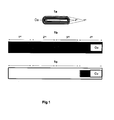
- Figure 1a illustrates the copper having paper wrapped around it (cross-section)
- Figures 1 b and 1 c illustrate the Cu 2 S deposit on the paper, before ( Fig 1 b) and after ( Fig 1 c) treatment, where the copper piece is shown in one end of the wrapping paper and the outermost paper layer is located at the other end of the paper.
- Table 4 Surface resistivity calculated from the surface resistance measurements performed on the wrapped paper treated with the chelating agent solution given in Table 2.
Landscapes
- Engineering & Computer Science (AREA)
- Chemical & Material Sciences (AREA)
- Organic Chemistry (AREA)
- Materials Engineering (AREA)
- Geology (AREA)
- Geochemistry & Mineralogy (AREA)
- Manufacturing & Machinery (AREA)
- General Life Sciences & Earth Sciences (AREA)
- Life Sciences & Earth Sciences (AREA)
- Mechanical Engineering (AREA)
- Metallurgy (AREA)
- Environmental & Geological Engineering (AREA)
- Power Engineering (AREA)
- Inorganic Chemistry (AREA)
- Paper (AREA)
- Cleaning By Liquid Or Steam (AREA)
Abstract
A method for removing copper sulphide (Cu2S) deposited onto electrically insulating materials of components in an electrical apparatus, such as a transformer or a bushing, wherein normally present electrically insulating oil has been substantially removed, and on other surfaces of such apparatus, comprising the following steps: providing a chemical treatment solution comprising at least one non-polar solvent and at least one chelating agent being able of forming complexes with copper from the surface of Cu2S deposited onto the insulating material, said chelating agent containing free electrons capable of forming a complexation with Cu, being at least a bidentate, but preferably a multidentate, i.e. being able of forming complexes with Cu from more than one point in the chelating agent, and having a solubility in the non-polar solvent of at least 0,05 mol/L to allow extraction of copper by solvation of the formed copper-chelating complex; and optionally additional components; subjecting the insulating material to the solution, preferably at a temperature of 30-130 °C, more preferably 50-90°C, for a predetermined time period, preferably 1 to 15 days, more preferably 3 to 7 days; and removing the chemical treatment solution from the insulating material.
Description
- The present invention relates to a method of removing copper sulphide deposits present in electrically insulating layers in an electrical apparatus, such as transformers, bushings or the like, wherein a substantial amount of an electrically insulating oil, normally present in the electrical apparatus has been removed.
- Insulating oils are widely used in a number of apparatus in the field of electrical power transmission and electrical power generation, for example; power transformers, distribution transformers, tap changers, switchgear and reactors. Such electrically insulating oils often contain traces of reactive sulphur compounds, which may react with copper, forming copper sulphide (Cu2S). Copper sulphide is insoluble in oil and may form deposits on surfaces and materials in contact with the electrically insulating oils inside the electrical apparatus. Copper sulphide is a conductor and the formation of a semi-conducting deposit on surfaces and materials in the electrical apparatus may degrade or disrupt the operation of the apparatus.
- If the semi-conducting copper sulphide is deposited on the isolation material (usually cellulose material e.g. paper) used to cover the copper conductors in the electrical apparatus, this might lead to a degrading of the insulation properties of the isolation material which could lead to leak currents or short circuits. Semi-conducting copper sulphide deposits on surfaces of solid isolation materials, such as cellulose-based material, ceramic, polymer and composite inside the electrical apparatus may also create similar problems. Copper sulphide deposits can also occur on other surfaces in an electrical apparatus, such as pressboards, spacers and magnetic cores.
- Attempts have been made to overcome the problem of formation of Cu2S deposits by method for removing sulphur-containing compounds from the insulating oil, see e.g.
WO2005115082 . Further, attempts have been made to treat Cu2S deposits already formed.WO2008024060 discloses a method of treating Cu2S deposits with an oxidizing gas. However, these attempts have some undesirable side effects, e.g. in that oxidizing treatments are aggressive and may cause corrosion and degradation of the electrically insulating material. - There is a need for a method of removing Cu2S deposits from insulating cellulose-based materials, such as winding paper, without significantly damaging the properties of the insulating material and causing corrosion of the metal parts contained in the transformer.
- The present invention relates to a method for removing copper sulphide (Cu2S) deposited onto electrically insulating materials of components in an electrical apparatus, such as a transformer or a bushing, wherein normally present electrically insulating oil has been substantially removed, and on other surfaces of such apparatus, comprising the following steps:
- providing a chemical treatment solution comprising at least one non-polar solvent, and preferably at least one chelating agent being able of forming complexes with copper from the surface of Cu2S deposited onto the insulating material, said at least one chelating agent containing free electrons capable of forming a complexation with Cu, being at least a bidentate, but preferably a multidentate, i.e. being able of forming complexes with Cu from more than one point in the chelating agent, and having a solubility in the at least one non-polar solvent of at least 0,05 mol/L, at the temperature used during the treatment, namely 30-130°C, to allow extraction of copper by solvation of the formed copper-chelating complex; and optionally additional components,
said chemical treatment solution being non-aqueous, i.e. comprising an amount of water corresponding to the environmental humidity dissolved in the solvent; - subjecting the insulating material to the solution, preferably at a temperature of 30-130 °C, more preferably 50-90°C, for a predetermined time period, preferably 1 to 15 days, more preferably 3 to 7 days; and
- removing the chemical treatment solution from the insulating material. By means of this method Cu2S deposits can be removed from insulating cellulose-based materials, without significantly damaging the properties of the insulating material and causing corrosion of the metal parts contained in the transformer.
- A non-polar solvent within the meaning of the present invention relates to a solvent that has a low dielectric constant and displays a low miscibility with water, i.e. equal to or below 1 g per 100 g of water at 20°C and a pressure of 1 atmosphere.
- The method may further comprise the steps of rinsing the insulating material with at least one non-polar solvent, and drying with at least one non polar solvent at a temperature of at least 15°C, at a pressure below atmospheric pressure. A chemical treatment solution comprising at least one chelating agent in an amount of 0,01-99 % by weight of the at least one non-polar solvent, preferably 2 to 85 % by weight , most preferably 20 to 70 % by weight is suitable. The chemical treatment solution preferably comprises at least one chelating agent in an amount of at least 0,1 % by weight based upon the entire treatment solution.
- Chelating agents, which have a solubility of at least 0,05 mol/L in the at least one non-polar solvent, preferably at least 0,1 mol/L, most preferably at least 0,2 mol/L at the temperature chosen for the treatment, viz. 30-130°C, are suitable for use in the present method.
- The chelating agent preferably comprises at least one group which contains free electrons capable of bonding toward Cu, or, optionally, toward both Cu and sulphur, said group being amine, hydroxy, carboxylate, ketone, phosphorous-containing, nitril, aldoxime, ketoxime or sulfur-containing groups, and may be chosen among: amine based carboxylic acids with a solubility in water equal or below 1 g/L at 25°C, salicylidene compounds, e.g. 1,2-cyclohexanediamino-N,N'-bis(3,5-di-t-butylsalicylidene), N,N'-Bis(salicylidene)ethylenediamine, or pyridylazo naphthol; amine-based compounds such as triaza molecule, e.g.Triazabicyclo dec-5-ene; mono or bidentate carboxylic acids, e.g. hexadecyl malonic acid, or isostearic acid or octanoic acid, carbazones and thiocarbazones, e.g. diphenyl thiocarbazone (dithizone); phosphinic acid derivatives, e.g. diisooctylphosphinic acid; porphyrin, tetrabenzoporphyrin, tetraazaporphyrine and phthalocyanine-type molecules, diketones such beta-diketones, e.g. diphenyl diketone, 1-phenyldecan-1,3-dione or 1-(4-Methoxyphenyl)-3-(4-tert-butylphenyl)propane-1,3-dione, aldoxime or oxime, such as 5,8-diethyl-7-hydroxydodecan-6-oxime, 5-nonyl salicylaldoxime, 5-docecyl salicylaldoxime or 2-hydroxy-5-nonyl acetophenone oxime.
- Preferred chelating agents are 5-nonyl salicylaldoxime, 5-docecyl salicylaldoxime, and 1,2-cyclohexanediamino-N,N'-bis(3,5-di-t-butylsalicylidene).
- The at least one non-polar solvent suitably has a flash point above 50 °C, preferably above 80 °C, and is advantageously selected from the group consisting of linear or branched hydrocarbons having 8 or more carbons in the main chain; alkylated or non-alkylated cycloalkanes or aromatic hydrocarbons having 8 or more carbons; alkyl or cyclic acetate or acetoacetate based solvent with more than 8 carbons; cyclic or aliphatic phenols or ketones of more than 8 carbons, for instance Shellsol™ D70, dodecyl acetate, branched or linear octadecane, phenylcyclohexane, or cyclodecanone or any combinations thereof.
- In the method the chemical treatment solution may be fed to a space in which the insulation material to be treated is located, and wherein the chemical treatment solution is sprayed through spray nozzles over the surface to be treated, such that it flows over the surface having the CU2S deposit, and is collected at the bottom of the space, and is recirculated to the spray nozzles. The chemical treatment solution may alternatively be fed to a space in which the insulation material to be treated is located, such that said insulation material is substantially immersed in chemical treatment solution, and that the chemical treatment solution is circulated through said space, by taking out treatment solution through an outlet opening arranged in the space, leading it through a circulation conduit, and returning it through an inlet opening arranged in the space, while keeping the amount of chemical treatment solution inside the space at a level ensuring that the insulation material is substantially immersed in the solution.
- Further in accordance with the method of the present invention, the electrically insulating material is heated, using for instance low frequency heating converter, to a temperature of between 30-130 °C, preferably 50-90°C, and the chemical treatment solution is maintained at a temperature lower than 50°C, preferably lower than 30°C, through connecting a cooling system to the circulation conduit, which enhances the removal process at the same time as the remaining parts of the electrical apparatus are not exposed to significantly elevated temperatures.
- Conducting copper sulphide deposited on the isolation material (usually cellulose material e.g. paper) used to cover the copper conductors in an electrical apparatus, might lead to degradation of the insulation properties of the insulating material, which could lead to leak currents or short circuits. Therefore, such copper sulphide deposits on surfaces and materials in the electrical apparatus may degrade or disrupt the operation of the apparatus.
- The present invention relates to a method for removing copper sulphide (Cu2S) deposited onto electrically insulating materials of components in an electrical apparatus, such as a transformer or a bushing, wherein normally present electrically insulating oil has been substantially removed, and on other surfaces of such apparatus. The method comprises the steps of providing a chemical treatment solution, subjecting the insulating materials having the Cu2S deposits to the solution at a predetermined temperature and time, and removing the chemical treatment solution.
- The electrically insulating material may be a cellulose material, e.g. winding paper, or solid isolation materials, such as cellulose-based material, ceramic, polymer and composite. It is important to ensure that the electrically insulating material of the electrical apparatus is not damaged by the treatment, and that metal parts are not affected by corrosion. Some of the electrical apparatus, like transformers, cables, or bushings contain oil impregnated paper. For insulating cellulose-based materials, such as e.g. paper it is important to maintain the degree of polymerisation of the component contained in the insulating paper, as well as mechanical, electrical and dielectric properties.
- It has been found within the present invention that a chemical treatment solution comprising at least one non-polar solvent is effective for removing Cu2S deposits from electrically insulating materials. By non-polar solvent is in this context meant a solvent having low dielectric constants and displaying a low miscibility with water, i.e. below 1 g per 100 g of water at 20°C and a pressure of 1 atmosphere. The inventors have discovered that the use of various other types of treatment solutions may negatively impacts certain parts of the electrical apparatus.The present invention, however, represents a mild but efficient treatment. Thus, a novel type of Cu2S treatment solution and methods for Cu2S removal have been developed in the present invention, in order to provide a more efficient and advantageous alternative for Cu2S removal processes.
- As a function of the hydrophobic moieties present in the chelating agents in accordance with the present invention, the chelating agents can be solubilized by the at least one non-polar solvents. Additionally, as a result of the inherent aprotic and non-polar nature of the at least one non-polar solvents of the present invention, the solvents do not cause swelling of cellulose-based materials or hydrolysis, meaning that the treatment solutions and the methods of the present invention exhibit the important, advantageous property of not swelling the paper. Furthermore, the at least one non-polar solvents as per the present invention may, advantageously, be used on-site without excessive electrical caution, since the non-polarity of the solvents is associated with low, or essentially no risk, for adverse electrical events, such as burnouts and/or short circuits.
- Preferably, the at least one non-polar solvent has a flash point above 50 °C, preferably above 80 °C. A high flash point allows for kinetics that are sufficiently efficient, since the temperature is allowed to increase as long as the flash point is above that temperature.. The reaction temperature should preferably be kept below its flash point of the solvent so as to decrease the risk of explosion of a flammable solvent in contact with air. Preferred non-polar solvents may be selected from the group consisting of linear and/or branched hydrocarbons having 8 or more carbons in the main chain; aliphatic (linear, branched or cyclic) and/or aromatic hydrocarbons having 8 or more carbons; alkyl (linear, branched or cyclic) and/or aromatic acetate or acetoacetate based solvent with more than 8 carbons; alkyl (linear, branched or cyclic) and/or aromatic ketones or diketones of more than 8 carbons, for instance C11-C14 paraffins and naphthenes (Shellsol™ D70), isoparaffinic fluid (Isopar™ M), dodecyl acetate.
- The chemical treatment solution used within the method of the present invention preferably comprises at least one chelating agent, which is capable of forming complexes with copper from the surface of Cu2S deposited onto the isolation material. The chelating agent should contain free electrons capable of forming a complexation with Cu, or, optionally, with both Cu and sulphur, and should be at least a bidentate, but preferably a multidentate, i.e. being able of forming complexes with Cu from more than one point in the chelating agent. Further the chelating agent should have a solubility in the at least one non-polar solvent of at least 0,05 mol/L, preferably at least 0,1 mol/L and most preferably at least 0,2 mol/L at the temperature chosen for the treatment, namely 30-130°C, to allow for extraction of copper by solvation of the formed copper-chelating complex. If desired additional components may optionally be included. The chemical treatment solution should preferably not comprise oxidizing agents, since that may cause undesired corrosion on metal parts of the electrical apparatus and partial degradation of paper and other cellulose-based materials. Strong oxidants could also damage some polymers and composites. Chelating agents used for the treatment are soluble enough in the solvent to not stick on the surface of the paper. The copper in the Cu2S deposit is very mobile, which means that when there is a depletion of copper from the top layer of the deposit, a concentration gradient of copper throughout the thickness of the deposit is created, which will be a driving force for the migration of copper from inner layers of the deposit to an outer layer where the copper is scavenged by the chelating agent and the solvent.
- The chemical treatment solution preferably comprises at least one chelating agent in an amount of 0,1-99,9 % by weight of the at least one non-polar solvent, in order to increase the removal efficiency. A content of chelating agent above 0,1 % by weight, decreases the time needed for the reaction. The chemical treatment solution more preferably comprises 2 to 85 % by weight, most preferably 40 to 75 % by weight, in order to obtain an efficient treatment at reasonable temperatures and time periods. The concentration may vary with the type of chelating agent, the number of wrapped paper layers to be treated in the electrical apparatus, and the temperature.
- The chemical treatment solution advantageously comprises at least one chelating agent in an amount of at least 0, 1 % by weight based upon the entire treatment solution, in order to increase the removal efficiency as compared to the solvent without addition of chelating agent.
- The chelating agent preferably has a solubility of at least 0,05 mol/L in the at least one non-polar solvent, preferably at least 0,1 mol/L, most preferably at least 0,2 mol/L, in order to be able to effectively extract the copper by solvation of the formed copper-chelating agent complex.
- As indicated above, the chelating agent comprises at least one group containing free electrons capable of bonding toward Cu, or optionally, both Cu and sulphur, suitably amine, hydroxy, carboxylate, ketone, phosphorous-containing, nitril, aldoxime, ketoxime, or sulfur-containing groups.
- It has been found within the present invention that the chelating agents listed below are particularly suitable for use in the chemical treatment solution:
- amine based carboxylic acids with a solubility in water below 1 g/100 g at 25°C
- mono or bidentate carboxylic acids, e.g. hexadecyl malonic acid, or isostearic acid or octanoic acid or decanoic acid or dodecanoic acid;
- salicylidene compounds, e.g. 1,2-cyclohexanediamino-N,N'-bis(3,5-di-t-butylsalicylidene), N,N'-Bis(salicylidene)ethylenediamine, or pyridylazo naphthol;
- amine-based compounds such as triaza molecule, e.g.Triazabicyclo dec-5-ene;
- carbazones and thiocarbazones, e.g. diphenyl thiocarbazone (= dithizone);
- phosphinic acid derivatives, e.g. diisooctylphosphinic acid;
- porphyrin, tetrabenzoporphyrin, tetraazaporphyrine and phthalocyanine-type molecules.
- diketones such beta-diketones, e.g. diphenyl diketone, 1-phenyldecan-1,3-dione or 1-(4-Methoxyphenyl)-3-(4-tert-butylphenyl)propane-1,3-dione,
- aldoximes or oximes, such as 5,8-diethyl-7-hydroxydodecan-6-oxime, 5-nonyl salicylaldoxime, 5-docecyl salicylaldoxime or 2-hydroxy-5-nonyl acetophenone oxime.
- Among these 5-nonyl salicylaldoxime, 5-docecyl salicylaldoxime and 1,2-cyclohexanediamino-N,N'-bis(3,5-di-t-butylsalicylidene) are particularly preferred as excellent results have been obtained using these chelating agents. The chelating agents of the present invention appear to display a high equilibrium constant to form the Cu, or, optionally, Cu and sulphur, complexations, which could, without wishing to be bound by any particular theory, derive from the formation of a cage-shaped complexation site.
- Certain chelating agents of the present invention may bind both towards Cu and towards sulphur, which may result in facilitated removal of the Cu2S deposits. Optionally, without wishing to be bound by any particular theory, similar effects may be obtained by using a combination of at least two chelating agents that may, or may not, display certain differences in their chelating affinities (wherein, for instance, a first chelating agent preferentially binds towards Cu and a second chelating agent preferentially binds towards sulphur), so as to improve the removal of the CU2S deposits.
- The at least one non-polar solvent in accordance with the present invention may be selected from the group consisting of linear or branched hydrocarbons having 8 or more carbons in the main chain; alkanes and/or alkylated or non-alkylated cycloalkanes or alkylated or non-alkylated aromatic hydrocarbons having 8 or more carbons; alkyl or cyclic or aromatic acetate or acetoacetate based solvent with more than 8 carbons; aliphatic (linear or cyclic) and/or aromatic ketones or diketones of more than 8 carbons, for instance dodecyl acetate, branched or linear octadecane, phenylcyclohexane, ShellsolTM D70, and Isopar™ M, Isopar™ L, cyclodecanone and any combinations thereof.
- Before initiating the treatment for removing Cu2S deposits from the insulating material, any insulating oil contained in the electrical apparatus is substantially drained. Cleaning of the surfaces is typically not necessary.
- The insulating materials to be treated may be subjected to the chemical treatment solution described above at a predetermined temperature, suitably 30-130 °C. At temperatures below 30°C, the reaction may be too slow, but this depends on a number of different factors, for instance the exact composition and concentration of the treatment solution. While above 130°C the insulating material may be damaged. Above 130°C the degradation rate of paper may become significant, with the treatment times that are needed. If the temperature is too low (for instance below 30°C) the kinetics of extraction would be too slow. The treatment temperature is more preferably 50-90°C. The treatment is performed for a predetermined time period, preferably 1 to 15 days, more preferably 3 to 7 days. The time period depends mostly on the efficiency of the chelating agent, the temperature, the number of wrapped paper layer to treat, and the chelating agent concentration. A short treatment time is advantageous from an economical point of view. Cellulose-based insulating materials such as winding paper should not be subjected to too high temperatures for a too long time. Treatment at temperatures of 130 °C or lower for up to fifteen days will not harm the insulating material.
- After the treatment, the chemical treatment solution is removed from the insulating material. The method may include steps of rinsing the insulating material with at least one non-polar solvent at a temperature varying from 30 to 130 °C, and drying with a non polar solvent at a temperature of at least 15°C, at a pressure below atmospheric pressure. Drying can also be performed with non-polar solvent in vapour phase. By rinsing or cleaning with at least one non-polar solvent residual chelating agent can be effectively removed. The chelating agent which is partly polar, but still soluble in the at least one non-polar solvent, may crystallize in the insulation material. By effectively removing the chelating agent, the risk of electrical failure after refilling with oil, caused by local electric stress due to different dielectric constants between such crystals and the oil in the equipment is reduced. Drying with at least one non-polar solvent leads to creation of an azeotrope with any residual water that may be present in the electrical apparatus, so that any water can be removed at a temperature below 100°C, thus preventing ageing of the insulating material.
- The insulating material is suitably located inside a space enclosing the insulating material during the treatment. Typically, the treatment is performed by feeding chemical treatment solution directly to the electrical apparatus, after having substantially removed any normally present electrically insulating oil. Thus, the space in which the insulting material is located during treatment is the electrical apparatus. Cleaning of the insulating material surface is not necessary before subjecting it to the treatment solution.
- The chemical treatment solution may be fed to the space in which the insulation material to be treated is located, e.g. the electrical apparatus, such that said insulation material is substantially immersed in chemical treatment solution. By immersing the insulating material in the treatment solution it can be ensured that all parts of the insulating material surface area is in contact with the treatment solution, such that effective removal of Cu2S deposits can be achieved. The chemical treatment solution is preferably circulated through the space, in order to enhance the rate of Cu2S deposit removal, by taking out treatment solution through an outlet opening arranged in the space, leading it through a circulation conduit, and returning it through an inlet opening arranged in the space, while keeping the amount of chemical treatment solution inside the space at a level ensuring that the insulation material is immersed in the solution. Conveniently, the outlet opening is arranged at or near the bottom of the space, and the inlet opening is arranged at or near the top of the space, so that the treatment solution is taken out in the lower part of the space, and is pumped through the circulation conduit to the upper part of the space. However, other locations for the inlet and outlet openings may be desired, depending e.g. on how the insulating material is oriented inside the space.
- Alternatively, the chemical treatment solution can be sprayed through spray nozzles over the surface to be treated, such that it flows over the surface having the Cu2S deposit, and is collected at the bottom of the space, and is recirculated to the spray nozzles. By spraying, a smaller amount of treatment solution is required for performing the method, thus decreasing the expenses for chemical treatment solution. In order to obtain effective treatment, several spray nozzles may be arranged such that all parts of the surface to be treated will come into contact with the treatment solution.
- In order to successfully control the reaction kinetics, for the removal of the Cu2S deposits, and the temperature in the transformer, the chemical solution treatment may be recirculated in and out of an electrical apparatus, for instance a transformer, in a circulating conduit that leads the solution in and out of the electrical apparatus. The circulating conduit may be connected to a cooling system that aids in maintaining the chemical treatment solution in the circulating conduit below a certain temperature. Simultaneously, the electrically insulating material may be heated, using for instance low frequency heating converter, in order to optimize the temperature conditions for the removal of Cu2S deposits whilst the remaining parts of the electrical apparatus are maintained at a lower temperature. Thus, heating the electrically insulating material, to enhance the removal of the Cu2S deposits, and at the same time maintaining the chemical treatment solution at a lower temperature when not actually exposed to the electrically insulating material results both in efficient Cu2S removal and less harsh conditions for the remaining parts of the electrical apparatus.
- The electrically insulating material from which the Cu2S deposits are to be removed may advantageously be heated, using for instance low frequency heating converter, to a temperature of between 30-130 °C, preferably 50-90°C. Additionally, the chemical treatment solution may simultaneously be maintained at a temperature lower than 50°C, preferably lower than 30°C, through connecting a cooling system to the circulation conduit.
- The following abbreviations will be used in the description of the experiments:
- ShellSol™ D70: a low aromatic, inert hydrocarbon solvent consisting predominantly of C11- C14 paraffins and naphthenes. Shellsol™ D70 was provided by Shell Chemicals.
- DBDS: dibenzyl disulfide
- Cu2S: copper sulphide
- Commercial solutions from the LIX® series was generously provided from Cognis, ACORGA®M5640 was generously provided by Cytec.
- A corrosive oil was prepared by mixing 1 liter of Nytro10 XN and 1 L of Nytro 10GBN oil (both from Terna, Italy) with 2.7 g of 2,6-ditert-butyl-4-methphenol (antioxidant) and adding 440 mg of dibenzyldisulfide, such that the total content of DBDS in the oil mixture was approximately 350 ppm (the initial content in Nytro 10GBN is approximately 200 ppm, Nytro 10XN does not contain DBDS).
- Three windings made of two layers of kraft paper wrapped around neat copper pieces having a length of about 15 cm were immersed in the corrosive oil mixture in test tubes. The test tubes were degassed under vacuum over night, and then placed in a heating block at 120 °C. A gas flow of 2% of oxygen in nitrogen at a rate of approximately 17 mL/min was continuously injected through the oil over a period of about 500 h. The collected copper sulphide (Cu2S) deposited papers were washed in cyclohexane to remove oil and were allowed to dry in air. The amount of copper and sulphur deposited on the paper was measured by ICP-OES, as described below in the characterization section: the amount of copper measured was 65 to 67 µg/cm2 and the amount of sulphur measured was 13 to 15 µg/cm2.
- In some experiments described below the Cu2S deposited paper was treated with chemical solutions as it is, while in other experiments the Cu2S deposited paper was wrapped around a piece of copper as described below to evaluate the efficiency of the chemical treatment to diffuse through paper layers.
- A strip of Cu2S deposited paper (90 mm long and 20 mm broad) was tightly wrapped around a piece of neat copper (from an electrical winding, surface: 10x9 mm2 and 1 mm thick) to form 4 layers of paper, in such a way that the Cu2S deposit was facing toward the copper wire on every turn. The lateral paper edges were sewn together with cotton thread to avoid free contact of the copper with the treatment solution.
- Some of the paper samples were impregnated in oil (Nytro 10XN) under vacuum over night to minimize residual air bubbles. The paper was then removed from the oil, and excess oil was removed into an absorbing paper.
- 2.1 Concentrations of copper and sulphur deposited on the paper were measured by ICP-OES (Inductively Coupled Plasma with Optical Emission Spectrometers) Varian "Vista-Pro CCD simultaneous" with radial plasma. The copper reference standard was Accu Trace 1000 mg/mL of Cu in water and 2 % HNO3 (according to standard NIST SRM# 928). The sulphur reference standard was purchased from Alfa Aesar (Specpure®) : 1000 mg/mL of sulphur in water and 1002 mg/L of (NH4)2SO4 (according to standard NIST SRM 3154).
- The ICP equipment was calibrated with 4 pieces of reference paper (no Cu2S deposit) of 8 cm2 surface area each, which were cut into pieces and placed in 4 Teflon tubes. In each tube, both copper and sulphur reference standards were added at the following concentrations 0; 2; 6; and 20 mg/mL. In each tube 8 mL of concentrated nitric acid (HNO3) added.
- To check the calibration curve a fifth Teflon tube was prepared with 8 cm2 of reference paper cut into pieces, 10 mg/mL of both Cu and S standard references and 8 mL of concentrated nitric acid.
- The paper samples to be analyzed (with Cu2S) were of 25 to 33 cm2 surface area, cut in pieces, and placed into Teflon tubes with 8 mL of concentrated nitric acid.
- All the tubes were then placed in a microwave oven of 600 W power with the following temperature steps: heating from 23 °C to 130 °C in 60 min, holding at 130 °C for 15 min and cooling down back to 23 °C in about 50 min. The resulting solutions became completely transparent. All the tubes were then diluted up to 25 mL with demineralised water and ready to be analyzed by ICP-OES.
- 2.2 Concentrations of copper, sulphur and iron dissolved in the solutions, after treatment of Cu2S deposited paper, were measured by ICP-OES (Inductively Coupled Plasma with Optical Emission Spectrometers) Varian "Vista-Pro CCD simultaneous" with radial plasma. The copper reference standard was Accu Trace 1000 mg/mL of Cu in water and 2 % HNO3 (according to standard NIST SRM# 928). The sulphur reference standard was purchased from Alfa Aesar (Specpure®) : 1000 mg/mL of sulfur in water and 1002 mg/L of (NH4)2SO4 (according to standard NIST SRM 3154). The iron reference standard was purchased from Alfa Aesar (Specpure®): 1000 mg/mL of Fe in water and 2-5 % HNO3 (according to standard NIST SRM# 3126a).
- The ICP equipment was calibrated with 5 reference samples prepared in 10 mL graduated flasks such that each flask contained 2 mL of NMP and each of the three copper, sulphur and iron reference standards at the following concentrations: 0; 3; 10; 30 and 100 mg/mL. In each flask, 0,5 mL of concentrated nitric acid was added and the solutions were diluted up to a volume of 10 mL with demineralised water.
- To confirm the calibration curve a sixth graduated flask was prepared with 2 mL of a solution that had been used for treatment of Cu2S deposit (already containing a measured amount of copper, sulphur and iron), into which all three standards (Cu, S and Fe) were added at a concentration of 10 mg/mL. 8 mL of concentrated nitric acid was added and the solution was diluted up to 10 mL with demineralised water. After analysis by ICP it was checked that the values of Cu, S and Fe did increased by 10 mg/mL.
- The treatment solutions having unknown amounts of dissolved copper, sulphur and iron were prepared as follows: 2 mL of the solution to be analyzed was added in a 10 mL graduated flask with 0,5 mL of concentrated nitric acid and the solution was diluted up to a volume of 10 mL. Each prepared sample was then ready to be analyzed by ICP-OES.
- This measurement was performed according to the IEC 60450 standard, i.e. measurement of the average viscometric degree of polymerization of new and aged cellulosic electrically insulating materials.
- Surface resistance was measured using a concentric ring probe geometry consisting of a center measuring electrode (outer diameter = 2 mm) and an outer voltage ring electrode (inner diameter of the electrode = 4 mm), which leads to a measuring distance of 1 mm. A Keithley 617 electrometer was used for voltage supply and resistance measurement. The relationship between surface resistivity and the surface resistance for cylindrical electrodes geometry is given by the following equation:

With
p= surface resistivity (Ohm)
R= surface resistance (Ohm)
r1= inner radius of the outer ring electrode
r2= outer radius of the center electrode - For each reaction of the examples described below, the solvent was degassed under nitrogen for 30 min prior to being added into the reaction flask.
- Example 1 - Removal of Cu2S on unwrapped paper with non polar solvent and chelating agents Cu2S deposited papers of 4 cm length and 2 cm width were immersed in solution containing the following components listed in Table 1. The flasks were heated to 90 °C for 7 days. The solution was then removed from the flask, and the paper was washed 3 times with cyclohexane. The paper samples were dried at 70 °C over night and the obtained surface resistivity values are given in Table 1 and 2. At these given condition parameters, octanoic acid, isostearic acid and the reagent solutions LIX® tested give the best results. It was observed that the reaction time could have been shortened to 3 days for these chelating agents to get the similar surface resistivity values.
Table 1: Experimental parameters and surface resistivity calculated from the surface resistance measurements performed on the unwrapped paper treated with various chelating agents at 90 °C. Chelatant Non polar solvent Weight of chelatant (g) Volume of solvent (mL) Surface resistivity (Ohm) after treatment. - Dodecyl acetate 0 3.70 20.103 
Dodecyl acetate 0.0115 3.68 450·109 
Dodecyl acetate 0.1520 3.34 110·109 
Dodecyl acetate 0.1712 7.00 > 1.8·1012 
Dodecyl acetate 0.3360 3.50 > 1.8·1012 
Shellsol™ D70 0.1455 3.5 > 1.8·1012 Table 2: Experimental parameters and surface resistivity calculated from the surface resistance measurements performed on the unwrapped paper treated with various chelating agent solutions at 90 °C. Chelating agent solution Dilution with solvent: Volume of chelating agent solution (mL) Volume of added solvent (mL) Surface resistivity (Ohm) after treatment. LIX®612 N-LV - 5.00 - > 1.8·1012 LlX®860 N-IC - 5.00 - > 1.8·1012 LIX®860IC - 5.00 - > 1.8·1012 LIX®973 N - 5.00 - > 1.8·1012 LIX®984 N-C - 5.00 - > 1.8·1012 LlX®54-100 - 5.00 - > 1.8·1012 LIX®860 IC Dodecyl acetate 1.166 2.340 360·109 LIX®860 IC Dodecyl acetate 1.684 1.820 > 1.8·1012 - A Cu2S deposited paper wrapped around a copper piece to form 4 layers, as described in the sample preparation above, was immersed in a solution as described in Table 3 below. The flask was heated to 90 °C for 14 days. After treatment, the solution was removed from the flask, and the wrapped sample was washed 5 times with hot cyclohexane (60 °C) and dried at 70 °C over night. The surface resistivity was measured on each of the paper layers and compared with reference samples: (a) clean Kraft paper and (b) Kraft paper with Cu2S deposit. The results are given in Table 4 below. It was observed that the Cu2S deposit is successively removed from every layer, except for the 4th layer in contact with the copper wire as shown in
Figure 1 . Since the fourth layer is in direct contact with the copper wire, the remaining Cu2S on that layer does not present a serious electrical weakness for the system. The amount of the copper and sulphur dissolved in the solution after treatment for each of the three samples is in the range of 250-300 and 20-40 wt% respectively of the initial copper and sulphur amount measured in the initial Cu2S deposited paper (ICP measurements). The excess of dissolved copper originates from the dissolution of copper from the neat copper wire placed in the middle of the sample. The remaining sulphur amount in the treated paper is in the range of 60 -80 wt% of the initial sulphur contained in the Cu2S deposited paper.Table 3: Experimental parameters performed on the wrapped paper treated with various chelating agent solutions at 90 °C. Sample # Chelating agent solution Dilution with solvent: Volume of chelating agent solution (mL) Volume of added solvent (mL) 1 LIX®860 IC - 7.00 - 2 LIX®860 IC Shellsol™ D70 1.10 5.00 3 ACORGA®M5640 - 5.00 - -
Figure 1a illustrates the copper having paper wrapped around it (cross-section), andFigures 1 b and 1 c illustrate the Cu2S deposit on the paper, before (Fig 1 b) and after (Fig 1 c) treatment, where the copper piece is shown in one end of the wrapping paper and the outermost paper layer is located at the other end of the paper.Table 4: Surface resistivity calculated from the surface resistance measurements performed on the wrapped paper treated with the chelating agent solution given in Table 2. Sample Layer # Surface Resistivity before treatment (Ohm) Surface Resistivity after treatment (Ohm) Cu2S contaminated Kraft paper wrapped around copper wire and treated with treatment solution: 1 1 14·103 >1.8*1012 2 6·103 >1.8*1012 3 11·103 >1.8*1012 4 13·103 15*103 Cu2S contaminated Kraft paper wrapped around copper wire and treated with treatment solution: 2 1 11·103 >1.8*1012 2 9·103 >1.8*1012 3 13·103 >1.8*1012 4 8·103 13*103 Cu2S contaminated Kraft paper wrapped around copper wire and treated with treatment solution: 3 1 10·103 >1.8*1012 2 11·103 >1.8*1012 3 9·103 >1.8*1012 4 8·103 14*103 Reference Kraft paper (no Cu2S contamination) wrapped around copper wire 1 >1.8*1012 >1.8*1012 2 >1.8*1012 >1.8*1012 3 >1.8*1012 >1.8*1012 4 >1.8*1012 >1.8*1012 - As can be seen from Table 4 the treatments are very efficient, since the surface resistivity is substantially increased.
- An iron metal plate of 2 cm2 surface and 0,35 mm thick coated with enamel on its upper and lower surface but not in the edges was immersed in a solution containing the characteristics of the samples described in Table 3. The flask was heated to 90 °C for 14 days. The solution was then removed from the flask, and the metal plate was washed 3 times with hot cyclohexane (70 °C) The plate was dried at 70 °C over night, the surface resistance of the metal plate was measured to 5.1011 Ohm. The reference untreated metal plate shows a surface resistance of the same value: 5·1011 Ohm. The dissolved iron in the solution after treatment was measured in the range of 0.00050-0.00080 g/mL. No corrosion was observed on the neat edge by optical microscope.
- The degree of polymerization of papers treated according to the above procedures were measured by viscosimetry:
- Reference kraft paper before any treatment: DP= 1175 ±25
- Kraft paper aged according to the Cu2S deposition procedure (see sample prepartion above), but where no neat copper was in contact with the paper, so that the paper does not contain Cu2S deposit : DP = 860 ±25.
Claims (15)
- A method for removing copper sulphide (Cu2S) deposited onto electrically insulating materials of components in an electrical apparatus, such as a transformer or a bushing, wherein normally present electrically insulating oil has been substantially removed, and on other surfaces of such apparatus, comprising the following steps:- providing a chemical treatment solution comprising at least one non-polar solvent, and at least one chelating agent being able of forming complexes with copper from the surface of Cu2S deposited onto the insulating material, said at least one chelating agent containing free electrons capable of forming a complexation with Cu, preferably_being at least a bidentate, more preferably a multidentate, i.e. being able of forming complexes with Cu from more than one point in the chelating agent, and having a solubility in the at least one non-polar solvent of at least 0,05 mol/L to allow extraction of copper by solvation of the formed copper-chelating complex; and optionally additional components;- subjecting the insulating material to the solution, preferably at a temperature of 30-130 °C, more preferably 50-90°C, for a predetermined time period, preferably 1 to 15 days, more preferably 3 to 7 days;- removing the chemical treatment solution from the insulating material.
- The method of claim 1, further comprising the steps of rinsing the insulating material with at least one non-polar solvent, and drying with at least one non-polar solvent at a temperature of at least 15°C, at a pressure below atmospheric pressure.
- The method of claim 1 or 2, wherein the chemical treatment solution comprises at least one chelating agent in an amount of 0,1- 99,9 % by weight of the at least one non-polar solvent, preferably 2 to 85 % by weight, most preferably 40-75 % by weight.
- The method of claim 3, wherein the chemical treatment solution comprises at least one chelating agent in an amount of at least 0,1 % by weight based upon the entire treatment solution.
- The method of claim 3 or 4, wherein the at least one chelating agent has a solubility of at least 0,05 mol/L in the at least one non-polar solvent, preferably at least 0,1 mol/L, most preferably at least 0,2 mol/L.
- The method of any one of claims 3-5, wherein the at least one chelating agent comprises at least one group which contains free electrons capable of bonding toward Cu, said group being amine, hydroxy, carboxylate, ketone, phosphorous-containing, nitril, aldoxime, ketoxime or sulfur-containing groups.
- The method of any one of claims 3-6, wherein the at least one chelating agent is chosen among:• amine based carboxylic acids with a solubility in water below 1 g/L at 25°C;• mono or bidentate carboxylic acids, e.g. hexadecyl malonic acid, or isostearic acid or octanoic acid or decanoic acid or dodecanoic.• salicylidene compounds, e.g. 1,2-cyclohexanediamino-N,N'-bis(3,5-di-t-butylsalicylidene), N,N'-Bis(salicylidene)ethylenediamine, or pyridylazo naphthol;• amine-based compounds such as triaza molecule, e.g.Triazabicyclo dec-5-ene;• carbazones and thiocarbazones, e.g. diphenyl thiocarbazone (= dithizone);• phosphinic acid derivatives, e.g. diisooctylphosphinic acid;• porphyrin, tetrabenzoporphyrin, tetraazaporphyrine and phthalocyanine-type molecules• diketones such beta-diketones, e.g. diphenyl diketone, 1-phenyldecan-1,3-dione or 1-(4-Methoxyphenyl)-3-(4-tert-butylphenyl)propane-1,3-dione;• aldoxime or oxime, such as 5,8-diethyl-7-hydroxydodecan-6-oxime, 5-nonyl salicylaldoxime, 5-docecyl salicylaldoxime or 2-hydroxy-5-nonyl acetophenone oxime;• and any combinations thereof.
- The method of any one of claims 3-7, wherein the at least one chelating agent is either 5-nonyl salicylaldoxime, 5-docecyl salicylaldoxime or 1,2-cyclohexanediamino-N,N'-bis(3,5-di-t-butylsalicylidene).
- The method of any one of claims 1-8, wherein the at least one non-polar solvent has a flash point above 50 °C, preferably above 80 °C.
- The method of any one of claims 1-9, wherein the at least one non-polar solvent is selected from the group consisting of linear or branched hydrocarbons having 8 or more carbons in the main chain; alkanes and/or alkylated or non-alkylated cycloalkanes or alkylated or non-alkylated aromatic hydrocarbons having 8 or more carbons; alkyl or cyclic or aromatic acetate or acetoacetate based solvent with more than 8 carbons; aliphatic (linear or cyclic) and/or aromatic ketones or diketones of more than 8 carbons.
- The method of any one of claims 1-10, wherein the at least one non-polar solvent is selected from the group consisting of dodecyl acetate, branched or linear octadecane, phenylcyclohexane, ShellsolTM D70, and Isopar™ M, Isopar™ L, cyclodecanone, and any combinations thereof.
- The method of any one of claims 1-11, wherein the chemical treatment solution is fed to a space in which the insulation material to be treated is located, and wherein the chemical treatment solution is sprayed through spray nozzles over the surface to be treated, such that it flows over the surface having the Cu2S deposit, and is collected at the bottom of the space, and is recirculated to the spray nozzles.
- The method of any one of claims 1-11, wherein the chemical treatment solution is fed to a space in which the insulation material to be treated is located, such that said insulation material is substantially immersed in chemical treatment solution, and that the chemical treatment solution is circulated through said space, by taking out treatment solution through an outlet opening arranged in the space, leading it through a circulation conduit, and returning it through an inlet opening arranged in the space, while keeping the amount of chemical treatment solution inside the space at a level ensuring that the insulation material is substantially immersed in the solution.
- The method of claim 13, wherein the electrically insulating material is heated to a temperature of between 30-130 °C, preferably 50-90°C, and the chemical treatment solution is maintained at a temperature lower than 50°C, preferably lower than 30°C, through connecting a cooling system to the circulation conduit.
- The method of claim 14, wherein the electrically insulating material is heated using low frequency heating converter.
Priority Applications (2)
| Application Number | Priority Date | Filing Date | Title |
|---|---|---|---|
| EP10193771A EP2460898A1 (en) | 2010-12-06 | 2010-12-06 | Chemical method for removing copper sulphide (Cu2S) deposited onto insulating material in a transformer |
| PCT/EP2011/069503 WO2012107116A1 (en) | 2010-12-06 | 2011-12-02 | Chemical method for removing copper sulphide (cu2s) deposited onto cellulose -based material in transformer using a copper complexant |
Applications Claiming Priority (1)
| Application Number | Priority Date | Filing Date | Title |
|---|---|---|---|
| EP10193771A EP2460898A1 (en) | 2010-12-06 | 2010-12-06 | Chemical method for removing copper sulphide (Cu2S) deposited onto insulating material in a transformer |
Publications (1)
| Publication Number | Publication Date |
|---|---|
| EP2460898A1 true EP2460898A1 (en) | 2012-06-06 |
Family
ID=43903935
Family Applications (1)
| Application Number | Title | Priority Date | Filing Date |
|---|---|---|---|
| EP10193771A Withdrawn EP2460898A1 (en) | 2010-12-06 | 2010-12-06 | Chemical method for removing copper sulphide (Cu2S) deposited onto insulating material in a transformer |
Country Status (2)
| Country | Link |
|---|---|
| EP (1) | EP2460898A1 (en) |
| WO (1) | WO2012107116A1 (en) |
Cited By (2)
| Publication number | Priority date | Publication date | Assignee | Title |
|---|---|---|---|---|
| CN106241855A (en) * | 2016-08-04 | 2016-12-21 | 合肥中科富华新材料有限公司 | A kind of preparation method of cuprous sulfide nanometer rose flower |
| CN108704580A (en) * | 2018-07-20 | 2018-10-26 | 河南龙昌机械制造有限公司 | Organic fertilizer rotary drum prilling process and organic fertilizer drum granulating production line |
Families Citing this family (1)
| Publication number | Priority date | Publication date | Assignee | Title |
|---|---|---|---|---|
| CN115819782B (en) * | 2022-12-06 | 2023-09-22 | 江苏中电创新环境科技有限公司 | Liquid resin, preparation method and application thereof in copper-containing wastewater treatment |
Citations (5)
| Publication number | Priority date | Publication date | Assignee | Title |
|---|---|---|---|---|
| JPH0423886A (en) * | 1990-05-17 | 1992-01-28 | Kasei Optonix Co Ltd | Treatment of electro-luminescent fluorescent material |
| JPH04158271A (en) * | 1990-10-22 | 1992-06-01 | Mitsubishi Electric Corp | Apparatus for detecting internal failure of gas insulated electric device |
| US6537440B1 (en) * | 1998-07-24 | 2003-03-25 | Western Metals Copper Ltd | Processing copper sulphide ores |
| WO2005115082A2 (en) | 2004-04-30 | 2005-12-08 | Abb Technology Ltd. | Method for removal of reactive sulfur from insulating oil by exposing the oil to a sulfur scanvenger and a polar sorbent |
| WO2008024060A1 (en) | 2006-08-25 | 2008-02-28 | Abb Research Ltd | A method of treating copper sulphide deposits in an electrical apparatus by the use of oxidising agents |
Family Cites Families (2)
| Publication number | Priority date | Publication date | Assignee | Title |
|---|---|---|---|---|
| PL117268B1 (en) * | 1978-07-26 | 1981-07-31 | Politechnika Gdanska | Method of recovery of copper and accompanying metals from sulphide ores,post-flotation deposits and waste products in metallurgical processing of copper oresiz sernistykh rud,flotacionnykh osadkov i iz proizvodstvennykh otchodov metallurgicheskojj pererabotki mednykh rud |
| EP0599911A1 (en) * | 1991-08-14 | 1994-06-08 | Henkel Corporation | Copper recovery process |
-
2010
- 2010-12-06 EP EP10193771A patent/EP2460898A1/en not_active Withdrawn
-
2011
- 2011-12-02 WO PCT/EP2011/069503 patent/WO2012107116A1/en not_active Ceased
Patent Citations (5)
| Publication number | Priority date | Publication date | Assignee | Title |
|---|---|---|---|---|
| JPH0423886A (en) * | 1990-05-17 | 1992-01-28 | Kasei Optonix Co Ltd | Treatment of electro-luminescent fluorescent material |
| JPH04158271A (en) * | 1990-10-22 | 1992-06-01 | Mitsubishi Electric Corp | Apparatus for detecting internal failure of gas insulated electric device |
| US6537440B1 (en) * | 1998-07-24 | 2003-03-25 | Western Metals Copper Ltd | Processing copper sulphide ores |
| WO2005115082A2 (en) | 2004-04-30 | 2005-12-08 | Abb Technology Ltd. | Method for removal of reactive sulfur from insulating oil by exposing the oil to a sulfur scanvenger and a polar sorbent |
| WO2008024060A1 (en) | 2006-08-25 | 2008-02-28 | Abb Research Ltd | A method of treating copper sulphide deposits in an electrical apparatus by the use of oxidising agents |
Non-Patent Citations (2)
| Title |
|---|
| CLAES BENGTSSON ABB POWER TECHNOLOGIES AB LUDVIKA: "Oil corrosion and cu2s deposition in power transformers", CIGRE MOSCOW SYMPOSIUM, 2005 - 2005, pages 1 - 5, XP003018682 * |
| DATABASE WPI Week 199210, Derwent World Patents Index; AN 1992-077292, XP002635253 * |
Cited By (3)
| Publication number | Priority date | Publication date | Assignee | Title |
|---|---|---|---|---|
| CN106241855A (en) * | 2016-08-04 | 2016-12-21 | 合肥中科富华新材料有限公司 | A kind of preparation method of cuprous sulfide nanometer rose flower |
| CN108704580A (en) * | 2018-07-20 | 2018-10-26 | 河南龙昌机械制造有限公司 | Organic fertilizer rotary drum prilling process and organic fertilizer drum granulating production line |
| CN108704580B (en) * | 2018-07-20 | 2020-10-27 | 河南龙昌机械制造有限公司 | Organic fertilizer rotary drum granulation process and organic fertilizer rotary drum granulation production line |
Also Published As
| Publication number | Publication date |
|---|---|
| WO2012107116A1 (en) | 2012-08-16 |
Similar Documents
| Publication | Publication Date | Title |
|---|---|---|
| JP5259895B1 (en) | Electrolytic capacitor and manufacturing method thereof | |
| EP2460898A1 (en) | Chemical method for removing copper sulphide (Cu2S) deposited onto insulating material in a transformer | |
| Badicu et al. | Assessment of transformer mineral oil condition based on dc and ac conductivity | |
| Wan et al. | Influence of copper ions in transformer oil properties and adsorption treatment | |
| KR20170012003A (en) | Method for evaluating water resistance in cable | |
| Samarasinghe et al. | Investigating passivator effectiveness for preventing silver sulfide corrosion in power transformer on-load tap changers | |
| Yang et al. | Inhibition method for the degradation of oil–paper insulation and corrosive sulphur in a transformer using adsorption treatment | |
| CN103325570B (en) | The preparation method of high temperature resistant capacitor | |
| CN1136208A (en) | Conductive Paste | |
| Gao et al. | Corrosion mechanism for copper sulfide formation induced by dibenzyl disulfide in oil-immersed insulation | |
| CN110592637B (en) | Preparation method and application of chemical foil | |
| US3676383A (en) | Non-aqueous electrophoretic compositions comprising liquid nitroalkanes as a solvent | |
| EP2333043A1 (en) | Method for removing copper sulphide (cu2s) deposited onto cellulose-based material in transformer | |
| JP6271233B2 (en) | Surface treatment liquid | |
| CN101484561A (en) | A method of treating an electrically insulating oil | |
| Samarasinghe et al. | A review on influencing factors of sulphur corrosion and metal passivation in power transformers | |
| CN103140756B (en) | Inspection method of electrical insulating oil, treatment method of electrical insulating oil, and maintenance method of oil-immersed electrical equipment | |
| JPH0949000A (en) | Detergent composition | |
| WO2020062550A1 (en) | Water-soluble flux and method for pickling copper material | |
| CN105914972A (en) | Paint dipping process for stator for shield pump | |
| Bramantyo et al. | Thermal ageing and corrosive sulphur effect on partial discharge and electrical conductivity of oil impregnated paper | |
| CN107523408A (en) | The chemical treatment method of active sulfur compound in a kind of elimination insulating oil | |
| CN118441230B (en) | A method for inhibiting the interaction between C5F10O and metal interface and its application | |
| Hao et al. | Copper catalytic effect on the thermal deterioration and surface morphology performance of transformer oil–paper insulation | |
| CA2633933A1 (en) | Improved method for on-line removal of corrosive components of transformer oil |
Legal Events
| Date | Code | Title | Description |
|---|---|---|---|
| PUAI | Public reference made under article 153(3) epc to a published international application that has entered the european phase |
Free format text: ORIGINAL CODE: 0009012 |
|
| AK | Designated contracting states |
Kind code of ref document: A1 Designated state(s): AL AT BE BG CH CY CZ DE DK EE ES FI FR GB GR HR HU IE IS IT LI LT LU LV MC MK MT NL NO PL PT RO RS SE SI SK SM TR |
|
| AX | Request for extension of the european patent |
Extension state: BA ME |
|
| 17P | Request for examination filed |
Effective date: 20121206 |
|
| STAA | Information on the status of an ep patent application or granted ep patent |
Free format text: STATUS: THE APPLICATION HAS BEEN WITHDRAWN |
|
| 18W | Application withdrawn |
Effective date: 20130114 |