EP2460826A1 - Motilin-like peptide compound having transmucosal absorbability imparted thereto - Google Patents
Motilin-like peptide compound having transmucosal absorbability imparted thereto Download PDFInfo
- Publication number
- EP2460826A1 EP2460826A1 EP10804474A EP10804474A EP2460826A1 EP 2460826 A1 EP2460826 A1 EP 2460826A1 EP 10804474 A EP10804474 A EP 10804474A EP 10804474 A EP10804474 A EP 10804474A EP 2460826 A1 EP2460826 A1 EP 2460826A1
- Authority
- EP
- European Patent Office
- Prior art keywords
- motilin
- compound
- seq
- amino acid
- native
- Prior art date
- Legal status (The legal status is an assumption and is not a legal conclusion. Google has not performed a legal analysis and makes no representation as to the accuracy of the status listed.)
- Granted
Links
Images

Classifications
-
- C—CHEMISTRY; METALLURGY
- C07—ORGANIC CHEMISTRY
- C07K—PEPTIDES
- C07K14/00—Peptides having more than 20 amino acids; Gastrins; Somatostatins; Melanotropins; Derivatives thereof
- C07K14/435—Peptides having more than 20 amino acids; Gastrins; Somatostatins; Melanotropins; Derivatives thereof from animals; from humans
- C07K14/575—Hormones
- C07K14/63—Motilins
-
- A—HUMAN NECESSITIES
- A61—MEDICAL OR VETERINARY SCIENCE; HYGIENE
- A61P—SPECIFIC THERAPEUTIC ACTIVITY OF CHEMICAL COMPOUNDS OR MEDICINAL PREPARATIONS
- A61P1/00—Drugs for disorders of the alimentary tract or the digestive system
-
- A—HUMAN NECESSITIES
- A61—MEDICAL OR VETERINARY SCIENCE; HYGIENE
- A61P—SPECIFIC THERAPEUTIC ACTIVITY OF CHEMICAL COMPOUNDS OR MEDICINAL PREPARATIONS
- A61P1/00—Drugs for disorders of the alimentary tract or the digestive system
- A61P1/04—Drugs for disorders of the alimentary tract or the digestive system for ulcers, gastritis or reflux esophagitis, e.g. antacids, inhibitors of acid secretion, mucosal protectants
-
- A—HUMAN NECESSITIES
- A61—MEDICAL OR VETERINARY SCIENCE; HYGIENE
- A61P—SPECIFIC THERAPEUTIC ACTIVITY OF CHEMICAL COMPOUNDS OR MEDICINAL PREPARATIONS
- A61P1/00—Drugs for disorders of the alimentary tract or the digestive system
- A61P1/14—Prodigestives, e.g. acids, enzymes, appetite stimulants, antidyspeptics, tonics, antiflatulents
-
- A—HUMAN NECESSITIES
- A61—MEDICAL OR VETERINARY SCIENCE; HYGIENE
- A61P—SPECIFIC THERAPEUTIC ACTIVITY OF CHEMICAL COMPOUNDS OR MEDICINAL PREPARATIONS
- A61P31/00—Antiinfectives, i.e. antibiotics, antiseptics, chemotherapeutics
- A61P31/04—Antibacterial agents
-
- A—HUMAN NECESSITIES
- A61—MEDICAL OR VETERINARY SCIENCE; HYGIENE
- A61K—PREPARATIONS FOR MEDICAL, DENTAL OR TOILETRY PURPOSES
- A61K38/00—Medicinal preparations containing peptides
Definitions
- the present invention relates to motilin-like peptide compounds that have such a higher activity on stimulation of gastrointestinal motility and higher absorbability upon transmucosal administration that are useful in the treatment of conditions characterized by functional abnormalities in the gastrointestinal tract, such as functional dyspepsia, diabetic gastroparesis, gastro-esophageal reflux disease, irritable bowel syndrome, small intestinal bacterial overgrowth, colonic pseudo-obstruction, paralytic ileus, chronic idiopathic intestinal pseudo-obstruction, and post-operative ileus.
- functional abnormalities in the gastrointestinal tract such as functional dyspepsia, diabetic gastroparesis, gastro-esophageal reflux disease, irritable bowel syndrome, small intestinal bacterial overgrowth, colonic pseudo-obstruction, paralytic ileus, chronic idiopathic intestinal pseudo-obstruction, and post-operative ileus.
- Motilin is a physiologically active peptide of 22 amino acids isolated from the abdominal smooth muscle and its structure was first identified in 1973 by isolation of porcine motilin (Non-Patent Documents 1 and 2). In 1995, human motilin was isolated and identified to have the same structure as the porcine motilin (Non-Patent Document 3).
- Motilin is known to have a physiological function that is associated with the interdigestive migrating complex (hereinafter abbreviated as IMC) which occurs in a fasting stage.
- IMC is a physiological function by which the contents of the gastrointestinal tract such as the epithelium and mucous membrane that have been peeled off from its internal wall, as well as the secretory fluids therefrom are forced to flow down to its lower part, thereby cleaning up its interior.
- Non-Patent Document 4 In healthy persons, motilin is secreted from the duodenum and jejunum at approximately 100-min intervals in a fasting stage, with IMC occurring with an increase in the plasma motilin level (Non-Patent Document 4); IMC is induced when motilin is administered to a dog, monkey, or a human (Non-Patent Documents, 5, 6 and 7); physiological IMC occurrence is suppressed by administering anti-motilin serum; in view of these and other findings, it is held that gastrointestinal functions such as the digestion of foods and the secretion of digestive juice are maintained normally as the result of motilin secretion which induces IMC, causing the debris to be removed from within the gastrointestinal tract (Non-Patent Document 8).
- Non-Patent Document 9 Regarding the relations between IMC abnormality and a disease, it has been reported that, when IMC is reduced, the debris within the gastrointestinal tract accumulates within the intestinal tract to cause an abnormal growth of intestinal bacteria, whereupon endotoxins are produced by the intestinal bacteria to induce gastrointestinal conditions such as excessive evolution of gas, abdominal bloating, diarrhea, and abdominal pain.
- Non-Patent Document 13 a decrease in the secretion of endogenous motilin in vivo or a decrease in the motilin action is related to abnormalities or reduction in the gastrointestinal motility functions.
- Irritable bowel syndrome is a chronic intestinal disorder which, in the absence of any underlying diseases such as inflammations and tumors but on account of functional abnormalities in the lower gastrointestinal tract, typically the large intestine, causes chronic abdominal discomfort as exemplified by abdominal pain and abdominal bloating, or bowel movement abnormalities such as constipation and diarrhea. It has been reported that in at least some of the patients who developed irritable bowel syndrome, the intestinal flora had altered to cause a change in bacterial species, abnormal bacterial growth, etc. (Non-Patent Document 9) and the accumulation of the gastrointestinal debris within the intestinal tract on account of reduced occurrence of IMC may be a cause of the change in the intestinal flora.
- the currently available drugs of first choice against diseases associated with the aforementioned functional abnormalities in the gastrointestinal tract are medicines for internal use to improve gastrointestinal motility function, as exemplified by dopamine receptor antagonists, selective serotonin 5-HT4 receptor agonists, and parasympathetic stimulating agents.
- dopamine receptor antagonists as exemplified by dopamine receptor antagonists, selective serotonin 5-HT4 receptor agonists, and parasympathetic stimulating agents.
- Non-Patent Documents 19 and 20 there are also a plurality of such low-molecular weight motilin agonists that were subjected to clinical trials as oral drugs.
- Non-Patent Documents 15 and 16 Clinical trials were also performed on patients with functional abnormalities in the gastrointestinal tract, using native motilin or peptide motilin agonists as peptide compounds.
- the only route of administration that has ever been reported in connection with the clinical trials and animal experiments using these peptide compounds is an intravenous one and on account of the difficulty in realizing prolonged, repeated administration to patients, the therapeutic efficacy of the compounds is yet to be verified.
- motilin-like peptide compounds that have so far been developed are atilmotin of Baxter (Patent Document 1) and SK-896 of SANWA KAGAKU (Patent Document 2).
- the former is a compound created with a view to improving the in vivo half-life and by means of a metabolism experiment using a homogenate supernatant of the kidney which is conceived as a primary organ for motilin metabolism (Non-Patent Document 17), the compound has been verified to have better metabolic stability (Patent Document 1) and its half-life in plasma is about 10 minutes, approximately three times as long as that of motilin (Non-Patent Document 18).
- the latter is a compound designed to realize more efficient production.
- Patent Document 3 A peptide having a substitution of leucine for methionine at position 13 of motilin has been developed (Patent Document 3).
- the biological activity of this peptide is comparable to that of motilin and the route of its administration is limited to an intravenous one, thus leaving the problem of impossibility of prolonged use still unsolved.
- a peptidic motilin agonist should be provided as a pharmaceutical agent that can be administered for a prolonged period of time via a noninvasive route.
- a problem of the present invention is to provide motilin-like peptide compounds that maintain the gastrointestinal motility stimulating activity of native motilin and which are adapted to have higher absorbability upon transmucosal administration.
- motilin might be degraded after noninvasive transmucosal administration and performed a motilin degradation experiemnt using a lung homogenate supernatant.
- motilin was found to be degraded and by identifying the degradation product, the pathway of motilin degradation was estimated to be such that its C terminal would undergo degradation by dicarboxy peptidase.
- the present inventors substituted proline for glycine at position 21 of motilin so that the dicarboxy peptidase mediated degradation of the C terminal would be inhibited to produce motilin-like peptide compounds showing higher absorbability upon transmucosal administration, which led to the accomplishment of the present invention.
- the N terminal side of phenylalanine was found to undergo degradation, it was shown that replacing the amide bond between the first and the second amino acids from the N terminal by a non-peptide bond, -psi[CH 2 NH]- bond, would also contribute to a further improvement in metabolic stability.
- the present invention has revealed that the above-stated problem can be attained by preparing peptide compounds that maintain a gastrointestinal motility stimulating activity comparable to that of native motilin and which yet have higher absorbability upon transmucosal administration, said compounds being compounds comprising the sequence represented by the following formula 1 which is characterized by a substitution with proline at the 21th position amino acid:
- the present invention further encompasses the following:
- the novel motilin-like peptide compounds according to the present invention have the motilin-like gastrointestinal motility stimulating activity and show higher absorption efficiency upon transmucosal administration. Therefore, the compounds of the present invention can be used to treat diseases associated with functional abnormalities in the gastrointestinal tract (for example, conditions characterized by a drop in the baseline of gastrointestinal motility activity.) Diseases associated with functional abnormalities in the gastrointestinal tract include conditions such as functional dyspepsia, diabetic gastroparesis, gastro-esophageal reflux disease, irritable bowel syndrome, small intestinal bacterial overgrowth, colonic pseudo-obstruction, paralytic ileus, chronic idiopathic intestinal pseudo-obstruction, and post-operative ileus. In addition, the compounds of the present invention have higher absorption efficiency than native motilin upon transmucosal administration, and need be administered in lower doses to attain plasma concentrations effective for the treatment of patients.
- Native motilin is known to have the N-terminal portion as an essential site for developing its activity, and it is also known that while native motilin forms an ⁇ -helical structure in solution in a C terminal region extending from the vicinity of the 6th-position threonine [ Andersson A. & Maler L., J. Biomol. NMR, 24, 103-112 (2002 )], derivatives having mutations introduced into the ⁇ -helical structure which is away from the active center are reduced in their ability to activate the receptor [ Miller P et al., Peptides, 16, 11-18 (1995 )]. Based on the findings provided in these documents, the present inventors assumed that the ⁇ -helical structure would contribute to stabilizing the active center at the N terminal. In other words, they thought that the presence of the ⁇ -helical structure would serve to protect the structure of the active center at the N terminal.
- the present inventors selected sites that would be independent of a possible drop in activity that might result from destabilization of the ⁇ -helical structure.
- the 1st-position amino acid at the N terminal of motilin (which is hereinafter referred to as X1) is essential for activating the receptor and hence desirably protected against degradation.
- X1 The 1st-position amino acid at the N terminal of motilin
- the present inventors thought that in order to confer resistance to the degradative enzyme, extending the distance from the N-terminal amino group to the X1-Val peptide bond or replacing the X1-Val peptide bond with a non-amide bond would be useful for acquisition of resistance to degradation.
- X2 in native motilin is proline and defines the conformational structure of the compound, so the present inventors thought that by enhancing its degree of freedom, it might be possible to control the receptor activating ability.
- X3 is glutamic acid and forms a hydrogen bond with a side chain between the 6th-position threonine, apparently contributing to the formation of the ⁇ -helical structure in the region extending from the 6th-position toward the C terminal end [ Andersson A. & Maler L.,J. Biomol. NMR, 24, 103-112 (2002 )]. Since it is known that a substitution of X3 with alanine or D-glutamic acid caused a substantial drop in the receptor activating ability [ Miller P.
- X3 is desirably selected from L-acidic amino acids.
- X4 it is methionine in native motilin and will reduce the receptor activating ability by the side chain oxidation.
- methionine is desirably replaced by leucine which is substantially comparable to it in terms of the size of the side chain.
- Motilin is degraded by dicarboxy peptidase, starting from the C terminal end.
- the present inventors thought that substituting amino acids with proline on the C terminal side of native motilin would fix the dihedral angle around the peptide bond and offer resistance to degradation by virtue of steric hindrance that will accompany coordination to the substrate-binding site at which dicarboxy peptidase binds the substrate or to the active center.
- the peptide compounds of the present invention are compounds comprising the sequence represented by the following general formula 1 which is characterized by a substitution of proline for the 21-position amino acid:
- X1 is an aromatic amino acid or a heteroaromatic amino acid.
- the aromatic amino acid or heteroaromatic amino acid refers to any amino acid that contains an aromatic ring in the it and examples include, for example, ⁇ -amino acids such as phenylalanine (Phe), tyrosine (Tyr), and tryptophan (Trp), as well as or ⁇ -homophenylglycine (Phg(C#CH 2 )), acetylnaphthylalanine (Ac-Nal), and the like.
- phenylalanine (Phe), ⁇ -homophenylglycine (Phg(C#CH 2 )) and acetylnaphthylalanine (Ac-Nal) may be mentioned as more preferred examples of the amino acid X1.
- X1 may be an L-amino acid or a D-amino acid.
- variants have so far been prepared by substituting L-amino acids with D-amino acids as the amino acid at position 1 of motilin ( Miller P. et al., Peptides, 16, 11-18 (1995 )) and those variants have been shown to maintain the activity of motilin.
- X2 is proline (Pro) or sarcosine (Sar, also called N-methylglycine or MeGly);
- X3 is glutamic acid (Glu) or aspartic acid (Asp);
- X4 is methionine (Met) or leucine (Leu); and
- X5 is asparagine (Asn) or proline (Pro).
- the amino acids labeled X1 to X5 may be used in any combinations.
- the bond between the first amino acid (X1) and the second amino acid (Val) is an amide bond or a bond represented by the following formula 2
- the bond of formula 2 is also called a -psi[CH 2 NH]- bond.
- the X1-Val bond may be either an amide bond or the -psi[CH 2 NH]- bond irrespective of the type of the amino acid that constitutes X1.
- the compounds of above formula 1 of the present invention include, for example, the compounds depicted by the following sequences or pharmaceutically acceptable salts thereof.
- the compounds according to the present invention can be obtained by conventional methods. For example, they can be produced by chemical synthesis, recombinant DNA technology (in the case of peptides solely composed of L-amino acids), or combinations thereof.
- peptides and the compounds of the present invention can also be produced easily by known methods.
- classical peptide synthesis methods and solid-phase methods can be employed. Specifically, amino acids with protective groups are concentrated by a liquid-phase method and/or a solid-phase method, then the peptide chain is extended and after optionally cleaving the N-terminal protective group with a base such as piperazine, all protective groups and resin are removed with an acid and the resulting crude product is purified by a separating/purifying procedure such as gel filtration, ultrafiltration, dialysis, SDS-PAGE, or various chromatographic techniques, whereupon the peptides of the present invention can be obtained.
- a separating/purifying procedure such as gel filtration, ultrafiltration, dialysis, SDS-PAGE, or various chromatographic techniques, whereupon the peptides of the present invention can be obtained.
- the ones having the -psi[CH 2 NH]-bond of formula 2 as a bond between amino acids can also be obtained by chemical synthesis.
- the above-described method is applied to extend the peptide chain from the C terminal to the 2-position amino acid (Val in formula 1) and then the protective group on the ⁇ -amino group in the 2-position amino acid is cleaved chemically; thereafter, Boc- or Fmoc-amino acid aldehyde is introduced by reductive alkylation reaction with sodium cyanotrihydroborate/1% acetic acid, followed by resin removal and deprotection with an acid in the same way as described above to obtain a crude product, which is subsequently purified by a separating/purifying procedure such as gel filtration, ultrafiltration, dialysis, SDS-PAGE, or various separating/purifying procedure such as gel filtration, ultrafiltration, dialysis, SDS-PAGE, or various separating/purifying procedure such as gel filtration, ultrafiltration, dialysis, SDS-
- Peptides solely composed of L-form natural amino acids can be produced by recombinant DNA technology.
- a host cell transformed with an expression vector having DNA coding for the peptide sequence according to the present invention can be cultured to harvest the desired peptide from the resulting culture.
- Examples of the vector into which the gene is to be incorporated include E. coli vectors (e.g. pBR322, pUC18, and pUC19), B. subtilis vectors (e.g. pUB110, pTP5, and pC194), yeast vectors (e.g. YEp, YRp, and YIp types), and animal cell vectors (e.g. retrovirus and vaccinia virus) but any other vectors can be used as long as they are capable of retaining the desired gene stably within the host cell.
- the vector of interest is introduced into a suitable host cell.
- Various methods can be utilized to incorporate the desired gene into a plasmid or to introduce it into a host cell and exemplary methods are described in Molecular Cloning (Sambrook et al., 1989).
- a promoter is functionally linked upstream of that gene.
- Any promoters can be used in the present invention as long as they are appropriate for the host cell that is used to express the desired gene.
- the host cell to be transformed is of the genus Escherichia, a lac promoter, a trp promoter, an 1pp promoter, a ⁇ PL promoter, a recA promoter, etc. may be used; in the case of the genus Bacillus, an SP01 promoter, an SP02 promoter, a penP promoter, etc.
- a GAP promoter in the case of yeasts, a GAP promoter, a PH05 promoter, an ADH promoter, etc. may be used; and in the case of animal cells, an SV40 promoter, a CMV promoter, a retrovirus-derived promoter, etc. may be used.
- the host cell to be used may be bacterial (e.g. the genus Escherichia and the genus Bacillus ), yeasts (the genus Saccharomyces, the genus Pichia, and the genus Candida ), animal cells (CHO cell, COS cell, etc.), and the like.
- Liquid media are suitable as the culture medium and it is particularly preferred for them to contain the carbon sources, nitrogen sources and other nutrients that are required for the growth of the transformed cell being cultured. If desired, vitamins, growth promoting factors, sera, etc. may be added.
- the same separating/purifying procedures as those used to obtain peptide compounds by chemical synthesis may be employed.
- the compounds of the present invention can be used to treat diseases that involve functional abnormalities in the gastrointestinal tract (for example, conditions that are characterized by a drop in the baseline of gastrointestinal motility activity).
- Functional abnormalities in the gastrointestinal tract are conditions that present uncomfortable symptoms in the gastrointestinal tract although no apparent organic abnormalities such as inflammations and ulcers are detected by endoscopy, blood testing, etc. and a group of diseases that are collectively called "functional gastrointestinal disorders" are finely classified and defined by their symptoms according to the ROME III criteria ( Gastroenterology 130: 1377-1556, 2006 ).
- Diseases that involve functional abnormalities in the gastrointestinal tract include such conditions as functional dyspepsia, diabetic gastroparesis, gastro-esophageal reflux disease, irritable bowel syndrome, small intestinal bacterial overgrowth, colonic pseudo-obstruction, paralytic ileus, chronic idiopathic intestinal pseudo-obstruction, and post-operative ileus.
- the compounds of the present invention or pharmaceutically acceptable salts thereof can be used in animals including man in sufficient amounts to confer the desired gastrointestinal motility stimulating activity, either alone or in admixture with known, pharmaceutically acceptable carriers, excipients, fillers, etc.
- the pharmaceutically acceptable salts include, for example, salts with inorganic bases, salts with organic bases, salts with inorganic acids, salts with organic acids, and salts with basic or acidic amino acids, but these are not the sole examples and any common salts may be used.
- the peptide compounds according to the present invention can also be administered by various routes of injection such as subcutaneous injection, intramuscular injection, and intravenous injection.
- routes of injection such as subcutaneous injection, intramuscular injection, and intravenous injection.
- the peptide compounds according to the present invention provide high absorption upon transmucosal administration, they can be administered by transmucosal routes, namely non-injection routes such as oral, intranasal, pulmonary, transoromucosal, and transvaginal routes, as well as ocular instillation.
- the compounds are administered orally, intranasally or pulmonarily, and most desirably, they are administered pulmonarily or intranasally.
- the dosage depends on the condition of the patient, the degree of the desired therapeutic effect, the route of administration, the frequency of administration, etc. and , in the case of administration to man, the dosage can be varied from a low level of 0.01 ⁇ g/kg.
- a preferred dosage may be 0.01-500 ⁇ g/kg, more preferably 0.05-100 ⁇ g/kg. Amounts in these ranges may be desirably administered 1-3 times per day.
- peptide compounds of the present invention or pharmaceutically acceptable salts thereof can be used in combination with pharmaceutically acceptable carriers.
- Pharmaceutically acceptable carriers include various organic or inorganic carrier substances that are conventional as pharmaceutical necessities and they are compounded as excipients, lubricants, binders, disintegrants, or the like in solid preparations, and as solvents, solubilizers, suspending agents, tonicity agents, buffers, antiseptics, antioxidants, or the like in liquid preparations.
- excipients is lactose
- typical examples of lubricants are talc and colloidal silica.
- solvents are water for injection, proline glycol, sesame oil, and corn oil; suspending agents include surfactants such as stearyl triethanolamine, sodium lauryl sulfate, laurylaminopropionic acid, lecithin, and glyceryl monostearate, but other common pharmaceutical necessities may of course be used.
- surfactants such as stearyl triethanolamine, sodium lauryl sulfate, laurylaminopropionic acid, lecithin, and glyceryl monostearate, but other common pharmaceutical necessities may of course be used.
- a peptide synthesizer (433A, product of Applied Biosystems) was mainly used and a protected peptide derivative/resin was constructed by the Fmoc method and a Boc-amino acid was finally introduced at the N terminal end.
- the resulting protected peptide resin was deprotected with trifluoroacetic acid (TFA) or diluted TFA containing various scavengers and the liberated peptide was subjected to a purification procedure.
- TFA trifluoroacetic acid
- peptide compounds of the present invention can be synthesized by ordinary peptide synthesis methods; as typical examples, syntheses of compound 1 (MT095) and compound 6 (MT140) are described below.
- This example was conducted with a view to synthesizing compound 1 (MT095, SEQ ID NO: 3) chemically.
- Boc-Phe-OH was introduced by means of DCC/HOBt and to the resulting protected peptide resin, a deprotecting reagent (5.0 mL) containing not only 90% trifluoroacetic acid but also phenol, water and TIPS was added and the mixture was stirred for 2 hours at room temperature. The resin was filtered off and the filtrate was concentrated; thereafter, ether was added to the residue to form a precipitate. The precipitate was recovered by filtration and dried to give about 30 mg of a crude peptide product.
- the crude peptide product was dissolved in 1.0 mL of 1 N acetic acid and after loading the solution on an Inertsil PREP ODS column ( ⁇ 20 mmx250 mm; product of GL Sciences, Inc.), elution was conducted at a linear gradient of 0% to 50% acetonitrile in 0.1% trifluoroacetic acid for 50 minutes (flow rate: 10 mL/min). With UV (220 nm) monitoring, the desired fractions were sorted to recover and freeze-dried to give about 5.0 mg of the end product.
- the obtained end product was loaded on an Inertsil PREP ODS column ( ⁇ 4.6 mmx250 mm; product of GL Sciences, Inc.), elution was conducted at a linear gradient of 5% to 65% acetonitrile in 0.1% trifluoroacetic acid for 30 minutes (flow rate: 1.5 mL/min).
- UV (220 nm) monitoring the purity of the end product was measured.
- the obtained end product was subjected to MALDI TOF-MS (Daltonics BIFLEX III, product of Bruker) for verification of its molecular weight and to an amino acid analysis (consisting of treatment in 6 N-HCl at 110 °C for 24 hours until the product was hydrolyzed to amino acids, which were respectively quantified by HPLC) to verify the peptide content.
- MALDI TOF MS 2738.718 (theoretical, 2739.2)
- purity from analytical HPLC 96.0%
- peptide content by amino acid analysis 643 ⁇ g/mg.
- This example was conducted with a view to synthesizing compound 6 (MT140, SEQ ID NO: 8) chemically.
- Boc-Phe aldehyde was introduced by means of sodium cyanotrihydroborate/1% acetic acid and to the resulting protected peptide resin, a deprotecting reagent (5.0 mL) containing not only 90% trifluoroacetic acid but also phenol, water and TIPS was added and the mixture was stirred for 2 hours at room temperature. The resin was filtered off and the filtrate was concentrated; thereafter, ether was added to the residue to form a precipitate. The precipitate was recovered by filtration and dried to give about 30 mg of a crude peptide product.
- the crude product was dissolved in 1.0 mL of 1 N acetic acid and after loading the solution on an Inertsil PREP ODS column ( ⁇ 20 mmx250 mm; product of GL Sciences Inc.), elution was conducted at a linear gradient of 0% to 50% acetonitrile in 0.1% trifluoroacetic acid for 50 minutes (flow rate: 10 mL/min). With UV (220 nm) monitoring, the desired fractions were recovered and freeze-dried to give about 5.0 mg of the end product.
- the obtained end product was loaded on an Inertsil PREP ODS column ( ⁇ 4.6 mmx250 mm; product of GL Sciences Inc.), elution was conducted at a linear gradient of 5% to 65% acetonitrile in 0.1% trifluoroacetic acid for 30 minutes (flow rate: 1.5 mL/min).
- UV (220 nm) monitoring the purity of the end product was measured.
- the obtained end product was subjected to MALDI TOF-MS (Daltonics BIFLEX III, product of Bruker) for verification of its molecular weight.
- Measured value from MALDI-TOF MS 2725.040 (theoretical, 2725.2); purity from analytical HPLC: 98.7%; peptide content by amino acid analysis: 707 ⁇ g/mg.
- Table 1 MS Values and Peptide Contents of Compounds Compound name Structure Peptide content (%) (Amino acid analysis) Measured MS values (Theoretical) Native motilin FVPIFTYGELQRMQEKERNKGQ (SEQ ID NO: 1) 88.6 2698.382 (2699.1) Comparative compound 1 ( 13 Leu_motilin) FVPIFTYGELQRLQEKERNKGQ (SEQ ID NO: 16) 73.1 2680.432 (2681.0) Comparative compound 2 (MT139) F*VPIFTYGELQRMQEKERNKGQ (SEQ ID NO: 17) 71.8 2683.998 (2685.1) Compound 1 (MT095) FVPIFTYGELQRMQEKERNKPQ (SEQ ID NO: 3) 64.3 2738.718 (2739.2) Compound 2 (MT114) FVPIFTYGELQRLQEKERNKPQ (SEQ ID NO: 4) 75.8 2720.544 (2721.1)
- the fasting IMC inducing activity of the compounds was evaluated by measuring the contractile movement of a conscious dog's gastrointestinal tract to which force transducers had been sutured. More specifically, dogs under anesthesia were subjected to a surgical operation in which force transducers were sutured to the serous membranes of the gastric antrum, duodenum, jejunum and ileum along the ring-shaped muscle and, thereafter, the strain from each transducer was sent to a recorder via an amplifier.
- FIG. 1 depicts patterns for the fasting IMC inducing activity as observed when native motilin as well as compound 4 (MT124) and compound 6 (MT140) were intravenously administered at a dose of 0.1 ⁇ g/kg
- Table 2 shows the results of checking native motilin and selected motilin derivative compounds for the fasting IMC inducing activity.
- the arrows indicate the timing on which native motilin as well as compounds 4 and 6 were administered.
- the gastric antrum started to contract when the native motilin was administered (at the point in time indicated by ⁇ ) and the contraction continued for about 10 minutes.
- Table 2 Fasting IMC Inducing Activity in Dogs Administered Intravenously with Native Motilin and Motilin Derivatives Compound name Dose ( ⁇ g/kg) IMC Inducing activity Native motilin 0.1 Positive Comparative compound 1 ( 13 Leu-motilin) 0.1 Positive Comparative compound 2 (MT139) 0.1 Positive Compound 1 (MT095) 0.1 Positive Compound 2 (MT114) 0.1 Positive Compound 3 (MT116) 0.1 Positive Compound 4 (MT124) 0.1 Positive Compound 5 (MT126) 0.1 Positive Compound 6 (MT140) 0.1 Positive Compound 7 (MT141) 0.1 Positive Compound 8 (MT107) 0.1 Positive Compound 9 (MT115) 0.1 Positive Compound 10 (MT125) 0.1 Positive
- Native motilin was administered intravenously to rats and its plasma levels were measured.
- Intravenous administration was performed on rats that had a polyethylene tube (PE-50; product of Clay Adams) preliminarily inserted into the femoral artery.
- PE-50 polyethylene tube
- 7-wk old male SD rats purchased from CHARLES RIVER LABORATORIES JAPAN, INC.
- Native motilin was dissolved in a 5% mannitol solution to prepare a solution at a concentration of 100 ⁇ g/mL and this solution was administered to each rat at a dose of 1 mL/kg through the tail vein by means of a syringe and a 26G needle (both being products of TERUMO).
- blood was sampled through the polyethylene tube inserted into the femoral artery.
- a 10% EDTA ⁇ 2Na ⁇ 2H 2 O solution was immediately added at a volume ratio of 1:100 and the plasma was separated by centrifugation.
- the plasma was immediately mixed with a 5,000 IU/mL aprotinin solution at a volume ratio of 1:10 and stored at -80 °C until use in measurement.
- the obtained profile of the concentration of native motilin in plasma is depicted in FIG. 2 .
- the plasma concentration at time zero (C0) and the area under curve for plasma concentrations (AUC) were calculated as pharmacokinetic parameters; C0 was determined by extrapolation and AUC by the trapezoidal method.
- the values of C0 and AUC that resulted from intravenous administration of native motilin at a dose of 100 ⁇ g/kg were calculated to be 1797 ng/mL and 3598 ng ⁇ min/mL, respectively.
- a polyethylene tube (PE-240; product of Clay Adams) was inserted into the trachea of 7-wk old male SD rats (purchased from CHARLES RIVER LABORATORIES JAPAN, INC.); native motilin or compound 2 (MT114) was dissolved in an aqueous solution of 0.1 N acetic acid to prepare a solution at a concentration of 1 mg/mL and 25 ⁇ L of the solution was administered into the polyethylene tube through the trachea by means of an intratracheal liquid spraying device (MicroSprayer; product of Penn Century). Five minutes after the administration, blood was sampled through the abdominal aorta and treated as in Comparative Example 1 to separate plasma.
- PE-240 polyethylene tube
- MT114 native motilin or compound 2
- the plasma was fractionated by being injected into HPLC (LC-10A; product of Shimadzu Corporation) equipped with Cosmosil 5C18 column (product of nacalai tesque).
- HPLC LC-10A; product of Shimadzu Corporation
- Cosmosil 5C18 column product of nacalai tesque
- Pulmonary administration of samples was also performed as described above using rats that had a polyethylene tube preliminarily inserted into the femoral artery.
- As test animals 7- to 10-wk old male SD rats (purchased from CHARLES RIVER LABORATORIES JAPAN, INC.) that consisted of 3 rats per a group were subjected to the following experiment.
- Native motilin or motilin derivative compounds were dissolved in an aqueous solution of 0.1 N acetic acid to prepare a solution at a concentration of 1 mg/mL and 25 ⁇ L of the solution was administered into the polyethylene tube through the trachea by means of an intratracheal liquid spraying device (MicroSprayer; product of Penn Century).
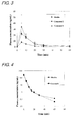
- FIG. 3 The profiles for the plasma concentrations of native motilin as well as compound 2 (M114) and compound 6 (MT140) after pulmonary administration are shown in FIG. 3 .
- the plasma concentrations of compound 2 (MT114) and compound 6 (MT140) after pulmonary administration to the rats had high peak levels, showing that those compounds could maintain higher in vivo concentrations for a longer period than the native motilin.
- Cmax maximum plasma concentration
- AUC area under curve for plasma concentrations
- Table 3 Pharmacokinetic Parameters of Pulmonarily Administered Native Motilin and Motilin Derivative Compounds in Rats Compound name Dose Cmax (ng/mL) AUC (ng ⁇ min/mL) BA (%) ( ⁇ g/rat) ( ⁇ g/kg) Native motilin 25 80.7 ⁇ 2.6 7.84 ⁇ 0.98 94.9 ⁇ 5.7 3.3 ⁇ 0.1 Comparative compound 1 ( 13 Leu_motilin) 25 62.5 ⁇ 0.0 4.53 ⁇ 2.86 63.3 ⁇ 36.6 2.8 ⁇ 1.6 Comparative compound 2 (MT139) 25 81.6 ⁇ 3.0 9.30 ⁇ 3.09 118.6 ⁇ 41.0 4.1 ⁇ 1.6 Compound 1 (MT095) 25 62.6 ⁇ 2.6 9.09 ⁇ 0.53 119.3 ⁇ 15.0 5.3 ⁇ 0.6 Compound 2 (MT114) 25 92.7 ⁇ 3.4 26.60 ⁇ 11.30 350.4 ⁇ 146.6 10.4 ⁇ 4.3 Compound 3 (MT116) 25 82.4 ⁇ 1.6 24.60 ⁇ 5.80 281.8 ⁇ 24.0 9.5 ⁇ 0.9 Compound 4 (MT124) 25 7
- Compound 2 (with leucine substituted for methionine as the amino acid at position 13 of native motilin, and with proline substituted for the 21-position amino acid; 13 Leu_ 21 Pro-motilin; SEQ ID NO: 4) had BA of 10.4% upon pulmonary administration to rats, a marked improvement over comparative compound 1 ( 3 Leu-motilin; SEQ ID NO: 16) (2.8%). Further in addition, compound 6 (-psi[CH 2 NH]-bond; 21 Pro-motilin; SEQ ID NO: 8) had BA of 11.5% upon pulmonary administration, a marked improvement over comparative compound 2 (-psi[CH 2 NH]-motilin; SEQ ID NO: 17) (4.1%).
- native motilin and a motilin derivative compound were administered intravenously to monkeys and their plasma concentrations were measured.
- a 10% EDTA ⁇ 2Na ⁇ 2H 2 O solution was immediately added at a volume ratio of 1:100 and the plasma was separated by centrifugation.
- the plasma was immediately mixed with a 5,000 IU/mL aprotinin solution at a volume ratio of 1:10 and stored at -80 °C until use in measurement.
- the obtained profile of the concentration of native motilin in plasma is depicted in FIG. 4 .
- the plasma concentration at time zero (C0) and the area under curve for plasma concentrations (AUC) were calculated as pharmacokinetic parameters; C0 was determined by extrapolation and AUC by the trapezoidal method.
- the values of C0 and AUC that resulted from intravenous administration of native motilin at a dose of 10 ⁇ g/kg were calculated to be 233 ng/mL and 786 ng ⁇ min/mL, respectively, and the counterparts for compound 2 were 273 ng/mL and 926 ng ⁇ min/mL.
- This example was conducted with a view to measuring by RIA the changes that occurred in monkeys in terms of the plasma concentrations of transnasally administered native motilin and a motilin derivative compound.
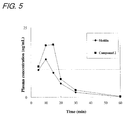
- FIG. 5 The profiles for the plasma concentrations of native motilin and compound 2 (MT114) in the monkeys after intranasal administration are shown in FIG. 5 .
- the plasma concentration of compound 2 (MT114) after intranasal administration to the monkeys had a high peak level, showing that the compound could maintain a higher in vivo concentration for a longer period than the native motilin.
- the present invention relates to novel motilin-like peptide compounds.
- the motilin-like peptide compounds of the present invention or pharmaceutically acceptable salts thereof have effective gastrointestinal motility stimulating activity and higher absorbability upon transmucosal administration, so they can be used to treat diseases caused by functional abnormalities in the gastrointestinal tract (for example, conditions characterized by a drop in the baseline of gastrointestinal motility activity.)
- Diseases caused by functional abnormalities in the gastrointestinal tract include conditions such as functional dyspepsia, diabetic gastroparesis, gastro-esophageal reflux disease, irritable bowel syndrome, small intestinal bacterial overgrowth, colonic pseudo-obstruction, paralytic ileus, chronic idiopathic intestinal pseudo-obstruction, and post-operative ileus.
- the conventional peptidic motilin agonists including native motilin have been applicable only by direct intravenous injection but the compounds of the present invention can be administered via transmucosal and other non-intravenous routes and can reduce the burden on patients. Therefore, the present invention offers great industrial utility over the prior art.
- SEQ ID NO: 1 is the amino acid sequence of human motilin.
- SEQ ID NO: 2 is the amino acid sequence of a motilin analog.
- SEQ ID NO: 3 is the amino acid sequence of compound 1 (MT095).
- SEQ ID NO: 4 is the amino acid sequence of compound 2 (MT114).
- SEQ ID NO: 5 is the amino acid sequence of compound 3 (MT116).
- SEQ ID NO: 6 is the amino acid sequence of compound 4 (MT124).
- SEQ ID NO: 7 is the amino acid sequence of compound 5 (MT126).
- SEQ ID NO: 8 is the amino acid sequence of compound 6 (MT140).
- SEQ ID NO: 9 is the amino acid sequence of compound 7 (MT141).
- SEQ ID NO: 10 is the amino acid sequence of compound 8 (MT107).
- SEQ ID NO: 11 is the amino acid sequence of compound 9 (MT115).
- SEQ ID NO: 12 is the amino acid sequence of compound 10 (MT125).
- SEQ ID NO: 13 is the amino acid sequence of compound 11 (MT128).
- SEQ ID NO: 14 is the amino acid sequence of compound 12 (MT154).
- SEQ ID NO: 15 is the amino acid sequence of compound 13 (MT155).
- SEQ ID NO: 16 is the amino acid sequence of comparative compound 1 ( 13 Leu-motilin).
- SEQ ID NO: 17 is the amino acid sequence of comparative compound 2 (MT139).
Landscapes
- Health & Medical Sciences (AREA)
- Chemical & Material Sciences (AREA)
- Organic Chemistry (AREA)
- Life Sciences & Earth Sciences (AREA)
- Medicinal Chemistry (AREA)
- General Health & Medical Sciences (AREA)
- General Chemical & Material Sciences (AREA)
- Public Health (AREA)
- Nuclear Medicine, Radiotherapy & Molecular Imaging (AREA)
- Chemical Kinetics & Catalysis (AREA)
- Pharmacology & Pharmacy (AREA)
- Veterinary Medicine (AREA)
- Animal Behavior & Ethology (AREA)
- Bioinformatics & Cheminformatics (AREA)
- Engineering & Computer Science (AREA)
- Biochemistry (AREA)
- Genetics & Genomics (AREA)
- Proteomics, Peptides & Aminoacids (AREA)
- Endocrinology (AREA)
- Toxicology (AREA)
- Zoology (AREA)
- Gastroenterology & Hepatology (AREA)
- Biophysics (AREA)
- Molecular Biology (AREA)
- Communicable Diseases (AREA)
- Oncology (AREA)
- Nutrition Science (AREA)
- Medicines That Contain Protein Lipid Enzymes And Other Medicines (AREA)
- Peptides Or Proteins (AREA)
- Medicinal Preparation (AREA)
- Pharmaceuticals Containing Other Organic And Inorganic Compounds (AREA)
- Acyclic And Carbocyclic Compounds In Medicinal Compositions (AREA)
Abstract
Description
- The present invention relates to motilin-like peptide compounds that have such a higher activity on stimulation of gastrointestinal motility and higher absorbability upon transmucosal administration that are useful in the treatment of conditions characterized by functional abnormalities in the gastrointestinal tract, such as functional dyspepsia, diabetic gastroparesis, gastro-esophageal reflux disease, irritable bowel syndrome, small intestinal bacterial overgrowth, colonic pseudo-obstruction, paralytic ileus, chronic idiopathic intestinal pseudo-obstruction, and post-operative ileus.
- Motilin is a physiologically active peptide of 22 amino acids isolated from the abdominal smooth muscle and its structure was first identified in 1973 by isolation of porcine motilin (
Non-Patent Documents 1 and 2). In 1995, human motilin was isolated and identified to have the same structure as the porcine motilin (Non-Patent Document 3). - Motilin is known to have a physiological function that is associated with the interdigestive migrating complex (hereinafter abbreviated as IMC) which occurs in a fasting stage. IMC is a physiological function by which the contents of the gastrointestinal tract such as the epithelium and mucous membrane that have been peeled off from its internal wall, as well as the secretory fluids therefrom are forced to flow down to its lower part, thereby cleaning up its interior. In healthy persons, motilin is secreted from the duodenum and jejunum at approximately 100-min intervals in a fasting stage, with IMC occurring with an increase in the plasma motilin level (Non-Patent Document 4); IMC is induced when motilin is administered to a dog, monkey, or a human (Non-Patent Documents, 5, 6 and 7); physiological IMC occurrence is suppressed by administering anti-motilin serum; in view of these and other findings, it is held that gastrointestinal functions such as the digestion of foods and the secretion of digestive juice are maintained normally as the result of motilin secretion which induces IMC, causing the debris to be removed from within the gastrointestinal tract (Non-Patent Document 8).
- Regarding the relations between IMC abnormality and a disease, it has been reported that, when IMC is reduced, the debris within the gastrointestinal tract accumulates within the intestinal tract to cause an abnormal growth of intestinal bacteria, whereupon endotoxins are produced by the intestinal bacteria to induce gastrointestinal conditions such as excessive evolution of gas, abdominal bloating, diarrhea, and abdominal pain (Non-Patent Document 9). Particularly in diseases that are associated with functional abnormalities in the gastrointestinal tract, such as functional dyspepsia, post-operative ileus, and chronic idiopathic intestinal pseudo-obstruction, it has been reported that IMC occurrence is reduced or not observed at all (Non-Patent Document 13) and that a decrease in the secretion of endogenous motilin in vivo or a decrease in the motilin action is related to abnormalities or reduction in the gastrointestinal motility functions (Non-Patent Document 14). Irritable bowel syndrome is a chronic intestinal disorder which, in the absence of any underlying diseases such as inflammations and tumors but on account of functional abnormalities in the lower gastrointestinal tract, typically the large intestine, causes chronic abdominal discomfort as exemplified by abdominal pain and abdominal bloating, or bowel movement abnormalities such as constipation and diarrhea. It has been reported that in at least some of the patients who developed irritable bowel syndrome, the intestinal flora had altered to cause a change in bacterial species, abnormal bacterial growth, etc. (Non-Patent Document 9) and the accumulation of the gastrointestinal debris within the intestinal tract on account of reduced occurrence of IMC may be a cause of the change in the intestinal flora.
- The currently available drugs of first choice against diseases associated with the aforementioned functional abnormalities in the gastrointestinal tract are medicines for internal use to improve gastrointestinal motility function, as exemplified by dopamine receptor antagonists, selective serotonin 5-HT4 receptor agonists, and parasympathetic stimulating agents. There are indeed some cases where treatment with these therapeutic drugs showed a temporary improvement of the symptoms but in many other cases, no therapeutic effect was observed and doctors and patients are getting only low satisfaction from those internal medicines used to improve gastrointestinal motility. Therefore, it is strongly desired to provide therapeutics based on a new mechanism of action and it is expected to lead to amelioration of the symptoms or curing of the disease by externally administering motilin receptor agonists to patients with functional abnormalities in the gastrointestinal tract so as to normalize their gastrointestinal functions.
- Ever since it was reported that erythromycin and its related compounds have an activity as motilin agonists, clinical trials have been conducted with low-molecular weight motilin agonists on patients with functional abnormalities in the gastrointestinal tract (Non-Patent Documents 19 and 20) and there are also a plurality of such low-molecular weight motilin agonists that were subjected to clinical trials as oral drugs (Non-Patent Documents 21 and 22). However, for one or another reason such as the development of side-effects that have nothing to do with the action as motilin agonists (i.e., HERG inhibition, spermatogenic defect, and carcinogenic effect) or the attenuation of the drug efficacy due to repeated administration, the development of pharmaceuticals containing the motilin agonists as the active ingredient has been suspended and none of them have so far been put on the market as medicines for improving gastrointestinal functions.
- Clinical trials were also performed on patients with functional abnormalities in the gastrointestinal tract, using native motilin or peptide motilin agonists as peptide compounds (Non-Patent
Documents 15 and 16). However, the only route of administration that has ever been reported in connection with the clinical trials and animal experiments using these peptide compounds is an intravenous one and on account of the difficulty in realizing prolonged, repeated administration to patients, the therapeutic efficacy of the compounds is yet to be verified. - Examples of motilin-like peptide compounds that have so far been developed are atilmotin of Baxter (Patent Document 1) and SK-896 of SANWA KAGAKU (Patent Document 2). The former is a compound created with a view to improving the in vivo half-life and by means of a metabolism experiment using a homogenate supernatant of the kidney which is conceived as a primary organ for motilin metabolism (Non-Patent Document 17), the compound has been verified to have better metabolic stability (Patent Document 1) and its half-life in plasma is about 10 minutes, approximately three times as long as that of motilin (Non-Patent Document 18). The latter is a compound designed to realize more efficient production. Both compounds maintain a gastrointestinal motility enhancing activity comparable to that of motilin. However, as in the case of motilin, the route of administration of these compounds is limited to an intravenous one and each compound has the problem that its use is limited to the treatment in medical facilities where it cannot be used for a prolonged period of time. Hence, there has been accomplished no drug discovery that is based on the inherent action of motilin, i.e., maintaining the gastrointestinal functions in a normal way by removing the debris from the inside of the gastrointestinal tract, with the result that the therapeutic efficacy of either compound is yet to be verified.
- A peptide having a substitution of leucine for methionine at position 13 of motilin has been developed (Patent Document 3). However, the biological activity of this peptide is comparable to that of motilin and the route of its administration is limited to an intravenous one, thus leaving the problem of impossibility of prolonged use still unsolved.
- In view of the foregoing, it is desired that in order to develop a novel therapeutic drug based on the inherent action of motilin, a peptidic motilin agonist should be provided as a pharmaceutical agent that can be administered for a prolonged period of time via a noninvasive route.
-
- Patent Document 1:
JP Hei 7-70178 A - Patent Document 2:
JP Hei 7-42319 B - Patent Document 3:
JP Sho 52-46068 A -
- Non-Patent Document 1: Brown J et al., Can J Biochem, 51, 533 (1973)
- Non-Patent Document 2: Schubert H et al., Can J Biochem, 52, 7 (1974)
- Non-Patent Document 3: De Clercq et al., Regul Pept, 55, 79 (1995)
- Non-Patent Document 4: Itoh, Nisshoushi (Journal of the Japanese Society of Gastrogenterology) 93, 517 (1996)
- Non-Patent Document 5: Nakaya M et al., Peptides, 4, 439 (1983)
- Non-Patent Document 6: Yogo K et al., Dig Dis Sci, 52, 3112 (2007)
- Non-Patent Document 7: Haans J et al., Neurogastroenterol Motil, 18, 637 (2006)
- Non-Patent Document 8: Kusano et al, MB Gastro, 1, 47 (1991)
- Non-Patent Document 9: Pimentel M et al., Dig Dis Sci, 47, 2639 (2002)
- Non-Patent Document 10: Pardo A et al., Hepatology 31, 858 (2000)
- Non-Patent Document 11: Castiglione F et al., Aliment Pharmacol Ther. 18, 1107 (2003)
- Non-Patent Document 12: Henry C. Lin, JAMA. 292, 852 (2004)
- Non-Patent Document 13: Labo G et al., Gastroenterology, 90, 20 (1986)
- Non-Patent Document 14: Kusano M et al., Am J Gastroenterol ,92, 481 (1997)
- Non-Patent Document 15: Kamerling I et al., Am J Physiol Gastrointest Liver Physiol, 284, G776 (2003)
- Non-Patent Document 16: Park M-I et al., Neurogastroenterol Motil, 18, 28 (2006)
- Non-Patent Document 17: Jenssen TG et al., Scand J Gastroenterol, 19, 717 (1984)
- Non-Patent Document 18: Peeters TL et al., Neurogastroenterol Motil, 18, 1 (2006)
- Non-Patent Document 19: Janssens J et al., N Engl J Med, 322, 1028 (1990)
- Non-Patent Document 20: Stacher G et al., Gut, 34, 166 (1993)
- Non-Patent Document 21: Choi MG et al., J Pharmacol Exp Ther, 285, 37 (1998)
- Non-Patent Document 22: Netzer P et al., Aliment Pharmacol Ther, 16, 1481 (2002)
- A problem of the present invention is to provide motilin-like peptide compounds that maintain the gastrointestinal motility stimulating activity of native motilin and which are adapted to have higher absorbability upon transmucosal administration.
- To solve this problem, the present inventors first assumed that motilin might be degraded after noninvasive transmucosal administration and performed a motilin degradation experiemnt using a lung homogenate supernatant. As a result, motilin was found to be degraded and by identifying the degradation product, the pathway of motilin degradation was estimated to be such that its C terminal would undergo degradation by dicarboxy peptidase.
- Based on these results, the present inventors substituted proline for glycine at position 21 of motilin so that the dicarboxy peptidase mediated degradation of the C terminal would be inhibited to produce motilin-like peptide compounds showing higher absorbability upon transmucosal administration, which led to the accomplishment of the present invention. In addition, since the N terminal side of phenylalanine was found to undergo degradation, it was shown that replacing the amide bond between the first and the second amino acids from the N terminal by a non-peptide bond, -psi[CH2NH]- bond, would also contribute to a further improvement in metabolic stability.
- (i) Specifically, the present invention has revealed that the above-stated problem can be attained by preparing peptide compounds that maintain a gastrointestinal motility stimulating activity comparable to that of native motilin and which yet have higher absorbability upon transmucosal administration, said compounds being compounds comprising the sequence represented by the following
formula 1 which is characterized by a substitution with proline at the 21th position amino acid: - X1 Val X2 Ile Phe Thr Tyr Gly X3 Leu Gln Arg X4 Gln Glu Lys Glu Arg X5 Lys Pro Gln (formula 1) (SEQ ID NO: 2)
[wherein all bonds between amino acids, other than the X1-Val bond, are amide bonds; - X1 is an aromatic amino acid or a heteroaromatic amino acid;
- the X1-Val bond is an amide bond or a bond represented by the following
formula 2
- X2 is proline or sarcosine;
- X3 is glutamic acid or aspartic acid;
- X4 is methionine or leucine;
- X5 is asparagine or proline]
- The present invention further encompasses the following:
- (ii) The compound or pharmaceutically acceptable salt thereof as recited in (i), wherein X1 in
formula 1 is an α-amino acid such as phenylalanine (Phe), tyrosine (Tyr), or tryptophan (Trp), or β-homophenylglycine (Phg(C#CH2)) or acetylnaphthylalanine (Ac-Nal). - (iii) The compound or pharmaceutically acceptable salt thereof as recited in (ii), wherein X1 in
formula 1 is phenylalanine (Phe) or β-homophenylglycine. - (iv) A compound which is depicted by the sequence selected from the group consisting of SEQ ID NOS: 3 to 15 or a pharmaceutically acceptable salt thereof.
- (v) A compound which is depicted by SEQ ID NO: 4 or a pharmaceutically acceptable salt thereof.
- (vi) A compound which is depicted by SEQ ID NO: 6 or a pharmaceutically acceptable salt thereof.
- (vii) A compound which is depicted by SEQ ID NO: 8 or a pharmaceutically acceptable salt thereof.
- (viii) A pharmaceutical composition for the treatment of a disease associated with a functional abnormality in the gastrointestinal tract, which comprises the peptide compound or pharmaceutically acceptable salt thereof as recited in any one of (i) to (vii).
- (ix) The pharmaceutical composition as recited in (viii), wherein the disease associated with a functional abnormality in the gastrointestinal tract involves a drop in the baseline of gastrointestinal motility activity.
- (x) The pharmaceutical composition as recited in (viii) wherein the disease associated with a functional abnormality in the gastrointestinal tract is functional dyspepsia, diabetic gastroparesis, gastro-esophageal reflux disease, irritable bowel syndrome, small intestinal bacterial overgrowth, colonic pseudo-obstruction, paralytic ileus, chronic idiopathic intestinal pseudo-obstruction, or post-operative ileus.
- (xi) The pharmaceutical composition as recited in any one of (viii) to (x) which is intended for transmucosal administration.
- (xii) The pharmaceutical composition as recited in (xi) wherein the transmucosal administration is pulmonary or intranasal administration.
- (xiii) The pharmaceutical composition as recited in (xii) wherein the transmucosal administration is intranasal administration.
- (xiv) A method of treating conditions characterized by a drop in the baseline of gastrointestinal motility activity, such as functional dyspepsia, diabetic gastroparesis, gastro-esophageal reflux disease, irritable bowel syndrome, small intestinal bacterial overgrowth, colonic pseudo-obstruction, paralytic ileus, chronic idiopathic intestinal pseudo-obstruction, and post-operative ileus, the method comprising administering the pharmaceutical composition as recited in (viii) to an individual.
- The novel motilin-like peptide compounds according to the present invention have the motilin-like gastrointestinal motility stimulating activity and show higher absorption efficiency upon transmucosal administration. Therefore, the compounds of the present invention can be used to treat diseases associated with functional abnormalities in the gastrointestinal tract (for example, conditions characterized by a drop in the baseline of gastrointestinal motility activity.) Diseases associated with functional abnormalities in the gastrointestinal tract include conditions such as functional dyspepsia, diabetic gastroparesis, gastro-esophageal reflux disease, irritable bowel syndrome, small intestinal bacterial overgrowth, colonic pseudo-obstruction, paralytic ileus, chronic idiopathic intestinal pseudo-obstruction, and post-operative ileus. In addition, the compounds of the present invention have higher absorption efficiency than native motilin upon transmucosal administration, and need be administered in lower doses to attain plasma concentrations effective for the treatment of patients.
-
-
FIG. 1 is a graph showing the fasting IMC inducing activity as exhibited when native motilin,compound 4 andcompound 6 were administered intravenously. -
FIG. 2 is a graph showing a profile of plasma levels in rats that were intravenously administered with native motilin. -
FIG. 3 is a graph showing profiles of plasma levels after pulmonary administration of native motilin, compound 2 (MT 114) and compound 6 (MT 140). -
FIG. 4 is a graph showing profiles of plasma levels in monkeys that were intravenously administered with native motilin and compound 2 (MT 114). -
FIG. 5 is a graph showing profiles of plasma levels in monkeys that were intranasally administered with native motilin and compound 2 (MT 114). - Native motilin is known to have the N-terminal portion as an essential site for developing its activity, and it is also known that while native motilin forms an α-helical structure in solution in a C terminal region extending from the vicinity of the 6th-position threonine [Andersson A. & Maler L., J. Biomol. NMR, 24, 103-112 (2002)], derivatives having mutations introduced into the α-helical structure which is away from the active center are reduced in their ability to activate the receptor [Miller P et al., Peptides, 16, 11-18 (1995)]. Based on the findings provided in these documents, the present inventors assumed that the α-helical structure would contribute to stabilizing the active center at the N terminal. In other words, they thought that the presence of the α-helical structure would serve to protect the structure of the active center at the N terminal.
- Therefore, when effecting structural modifications that would interrupt the pathway of motilin degradation, the present inventors selected sites that would be independent of a possible drop in activity that might result from destabilization of the α-helical structure.
- The 1st-position amino acid at the N terminal of motilin (which is hereinafter referred to as X1) is essential for activating the receptor and hence desirably protected against degradation. The present inventors thought that in order to confer resistance to the degradative enzyme, extending the distance from the N-terminal amino group to the X1-Val peptide bond or replacing the X1-Val peptide bond with a non-amide bond would be useful for acquisition of resistance to degradation.
- In addition, X2 in native motilin is proline and defines the conformational structure of the compound, so the present inventors thought that by enhancing its degree of freedom, it might be possible to control the receptor activating ability. In native motilin, X3 is glutamic acid and forms a hydrogen bond with a side chain between the 6th-position threonine, apparently contributing to the formation of the α-helical structure in the region extending from the 6th-position toward the C terminal end [Andersson A. & Maler L.,J. Biomol. NMR, 24, 103-112 (2002)]. Since it is known that a substitution of X3 with alanine or D-glutamic acid caused a substantial drop in the receptor activating ability [Miller P. et al., Peptides, 16, 11-18 (1995), and Peeters T.L., et al., Peptides, 13, 1103-1107 (1992)], X3 is desirably selected from L-acidic amino acids. As for X4, it is methionine in native motilin and will reduce the receptor activating ability by the side chain oxidation. Hence, methionine is desirably replaced by leucine which is substantially comparable to it in terms of the size of the side chain.
- Motilin is degraded by dicarboxy peptidase, starting from the C terminal end. The present inventors thought that substituting amino acids with proline on the C terminal side of native motilin would fix the dihedral angle around the peptide bond and offer resistance to degradation by virtue of steric hindrance that will accompany coordination to the substrate-binding site at which dicarboxy peptidase binds the substrate or to the active center.
- On the other hand, since the α-helical structure of motilin is important for the receptor activating capability, those sites for substitution of proline which make it difficult for motilin to form the α-helical structure are considered to be limited. From these viewpoints, the present inventors conceived of a substitution of X5 and/or the 21-position amino acid with proline.
- It was from such viewpoints that the present inventors designed and synthesized derivatives and subjected them to a degradation experiment using a lung homogenate supernatant and a contraction experiment using an extracted intestinal tract. A series of motilin-like peptide compounds according to the present invention that had a substitution of glycine at position 21 of motilin with proline were subjected to an experiment for transmucosal administration in vivo, whereby the present inventors confirmed that those compounds showed higher absorbability than native motilin and yet maintaining IMC inducing activity comparable to that of the native motilin; the present invention has been accomplished on the basis of this finding.
- The peptide compounds of the present invention are compounds comprising the sequence represented by the following
general formula 1 which is characterized by a substitution of proline for the 21-position amino acid: - X1 Val X2 Ile Phe Thr Tyr Gly X3 Leu Gln Arg X4 Gln Glu Lys Glu Arg X5 Lys Pro Gln (formula 1) (SEQ ID NO: 2)
[wherein all bonds between amino acids, other than the X1-Val bond, are amide bonds; - the X1-Val bond is an amide bond or a bond represented by the following
formula 2
- X1 is an aromatic amino acid or a heteroaromatic amino acid;
- X2 is proline or sarcosine;
- X3 is glutamic acid or aspartic acid;
- X4 is methionine or leucine;
- X5 is asparagine or proline]
- In
above formula 1, X1 is an aromatic amino acid or a heteroaromatic amino acid. The aromatic amino acid or heteroaromatic amino acid refers to any amino acid that contains an aromatic ring in the it and examples include, for example, α-amino acids such as phenylalanine (Phe), tyrosine (Tyr), and tryptophan (Trp), as well as or β-homophenylglycine (Phg(C#CH2)), acetylnaphthylalanine (Ac-Nal), and the like. In the present invention, phenylalanine (Phe), β-homophenylglycine (Phg(C#CH2)) and acetylnaphthylalanine (Ac-Nal) may be mentioned as more preferred examples of the amino acid X1. - In
above formula 1, X1 may be an L-amino acid or a D-amino acid. In the prior art, variants have so far been prepared by substituting L-amino acids with D-amino acids as the amino acid atposition 1 of motilin (Miller P. et al., Peptides, 16, 11-18 (1995)) and those variants have been shown to maintain the activity of motilin. - In
above formula 1, X2 is proline (Pro) or sarcosine (Sar, also called N-methylglycine or MeGly); X3 is glutamic acid (Glu) or aspartic acid (Asp); X4 is methionine (Met) or leucine (Leu); and X5 is asparagine (Asn) or proline (Pro). The amino acids labeled X1 to X5 may be used in any combinations. - In the peptide compounds of
above formula 1, the bond between the first amino acid (X1) and the second amino acid (Val) is an amide bond or a bond represented by the followingformula 2
formula 2 is also called a -psi[CH2NH]- bond. The X1-Val bond may be either an amide bond or the -psi[CH2NH]- bond irrespective of the type of the amino acid that constitutes X1. - The compounds of
above formula 1 of the present invention include, for example, the compounds depicted by the following sequences or pharmaceutically acceptable salts thereof.








- The compounds according to the present invention can be obtained by conventional methods. For example, they can be produced by chemical synthesis, recombinant DNA technology (in the case of peptides solely composed of L-amino acids), or combinations thereof.
- Various methods have already been established for chemical synthesis of peptides and the compounds of the present invention can also be produced easily by known methods. For example, classical peptide synthesis methods and solid-phase methods can be employed. Specifically, amino acids with protective groups are concentrated by a liquid-phase method and/or a solid-phase method, then the peptide chain is extended and after optionally cleaving the N-terminal protective group with a base such as piperazine, all protective groups and resin are removed with an acid and the resulting crude product is purified by a separating/purifying procedure such as gel filtration, ultrafiltration, dialysis, SDS-PAGE, or various chromatographic techniques, whereupon the peptides of the present invention can be obtained. For example, they can be produced by the methods described in books such as "
Seikagaku Jikken Koza 1 Tanpakushitu no Kagaku (Course ofBiochemical Experimentation 1, Chemistry of Protein)," Vol. 4,Chapters 2 and 3 (written in Japanese, Tokyo Kagaku Doj - Among the compounds of the present invention, the ones having the -psi[CH2NH]-bond of
formula 2 as a bond between amino acids can also be obtained by chemical synthesis. For example, in the case of synthesizing a compound in which the X1-Val bond informula 1 is the -psi[CH2NH]- bond, the above-described method is applied to extend the peptide chain from the C terminal to the 2-position amino acid (Val in formula 1) and then the protective group on the α-amino group in the 2-position amino acid is cleaved chemically; thereafter, Boc- or Fmoc-amino acid aldehyde is introduced by reductive alkylation reaction with sodium cyanotrihydroborate/1% acetic acid, followed by resin removal and deprotection with an acid in the same way as described above to obtain a crude product, which is subsequently purified by a separating/purifying procedure such as gel filtration, ultrafiltration, dialysis, SDS-PAGE, or various chromatographic techniques, whereupon the desired peptide analogs of the present invention can be obtained. - Peptides solely composed of L-form natural amino acids can be produced by recombinant DNA technology. Specifically, a host cell transformed with an expression vector having DNA coding for the peptide sequence according to the present invention can be cultured to harvest the desired peptide from the resulting culture.
- Examples of the vector into which the gene is to be incorporated include E. coli vectors (e.g. pBR322, pUC18, and pUC19), B. subtilis vectors (e.g. pUB110, pTP5, and pC194), yeast vectors (e.g. YEp, YRp, and YIp types), and animal cell vectors (e.g. retrovirus and vaccinia virus) but any other vectors can be used as long as they are capable of retaining the desired gene stably within the host cell. The vector of interest is introduced into a suitable host cell. Various methods can be utilized to incorporate the desired gene into a plasmid or to introduce it into a host cell and exemplary methods are described in Molecular Cloning (Sambrook et al., 1989).
- To express the desired peptide gene in the plasmid mentioned above, a promoter is functionally linked upstream of that gene. Any promoters can be used in the present invention as long as they are appropriate for the host cell that is used to express the desired gene. For example, if the host cell to be transformed is of the genus Escherichia, a lac promoter, a trp promoter, an 1pp promoter, a λPL promoter, a recA promoter, etc. may be used; in the case of the genus Bacillus, an SP01 promoter, an SP02 promoter, a penP promoter, etc. may be used; in the case of yeasts, a GAP promoter, a PH05 promoter, an ADH promoter, etc. may be used; and in the case of animal cells, an SV40 promoter, a CMV promoter, a retrovirus-derived promoter, etc. may be used.
- When a host cell is to be transformed with the thus obtained vector containing a gene of interest, the host cell to be used may be bacterial (e.g. the genus Escherichia and the genus Bacillus), yeasts (the genus Saccharomyces, the genus Pichia, and the genus Candida), animal cells (CHO cell, COS cell, etc.), and the like. Liquid media are suitable as the culture medium and it is particularly preferred for them to contain the carbon sources, nitrogen sources and other nutrients that are required for the growth of the transformed cell being cultured. If desired, vitamins, growth promoting factors, sera, etc. may be added. In order to purify the compound of the present invention from the culture medium containing the peptide derivative of the present invention, the same separating/purifying procedures as those used to obtain peptide compounds by chemical synthesis may be employed.
- The compounds of the present invention can be used to treat diseases that involve functional abnormalities in the gastrointestinal tract (for example, conditions that are characterized by a drop in the baseline of gastrointestinal motility activity). Functional abnormalities in the gastrointestinal tract are conditions that present uncomfortable symptoms in the gastrointestinal tract although no apparent organic abnormalities such as inflammations and ulcers are detected by endoscopy, blood testing, etc. and a group of diseases that are collectively called "functional gastrointestinal disorders" are finely classified and defined by their symptoms according to the ROME III criteria (Gastroenterology 130: 1377-1556, 2006). Diseases that involve functional abnormalities in the gastrointestinal tract include such conditions as functional dyspepsia, diabetic gastroparesis, gastro-esophageal reflux disease, irritable bowel syndrome, small intestinal bacterial overgrowth, colonic pseudo-obstruction, paralytic ileus, chronic idiopathic intestinal pseudo-obstruction, and post-operative ileus.
- It should be mentioned that functional abnormalities in the gastrointestinal tract are diagnosed not only by subjective symptoms such as abdominal pain, nausea, vomiting, diarrhea, constipation, heartburn, abdominal bloating, and poor appetite but also by objective assays such as measurement of the pressure in the gastrointestinal tract, gastric juice testing, gastric pH monitoring, gastric emptying assay, gastrointestinal X-ray analysis, and endoscopy.
- The compounds of the present invention or pharmaceutically acceptable salts thereof can be used in animals including man in sufficient amounts to confer the desired gastrointestinal motility stimulating activity, either alone or in admixture with known, pharmaceutically acceptable carriers, excipients, fillers, etc.
- For the purposes of the present invention, the pharmaceutically acceptable salts include, for example, salts with inorganic bases, salts with organic bases, salts with inorganic acids, salts with organic acids, and salts with basic or acidic amino acids, but these are not the sole examples and any common salts may be used.
- The peptide compounds according to the present invention can also be administered by various routes of injection such as subcutaneous injection, intramuscular injection, and intravenous injection. In addition, since the peptide compounds according to the present invention provide high absorption upon transmucosal administration, they can be administered by transmucosal routes, namely non-injection routes such as oral, intranasal, pulmonary, transoromucosal, and transvaginal routes, as well as ocular instillation. Desirably, the compounds are administered orally, intranasally or pulmonarily, and most desirably, they are administered pulmonarily or intranasally.
- When the present compounds are used to treat the diseases mentioned above, their dosage depends on the condition of the patient, the degree of the desired therapeutic effect, the route of administration, the frequency of administration, etc. and , in the case of administration to man, the dosage can be varied from a low level of 0.01 µg/kg. A preferred dosage may be 0.01-500 µg/kg, more preferably 0.05-100 µg/kg. Amounts in these ranges may be desirably administered 1-3 times per day.
- The peptide compounds of the present invention or pharmaceutically acceptable salts thereof can be used in combination with pharmaceutically acceptable carriers. Pharmaceutically acceptable carriers that may be used include various organic or inorganic carrier substances that are conventional as pharmaceutical necessities and they are compounded as excipients, lubricants, binders, disintegrants, or the like in solid preparations, and as solvents, solubilizers, suspending agents, tonicity agents, buffers, antiseptics, antioxidants, or the like in liquid preparations. A typical example of excipients is lactose; typical examples of lubricants are talc and colloidal silica. Typical examples of solvents are water for injection, proline glycol, sesame oil, and corn oil; suspending agents include surfactants such as stearyl triethanolamine, sodium lauryl sulfate, laurylaminopropionic acid, lecithin, and glyceryl monostearate, but other common pharmaceutical necessities may of course be used.
- On the following pages, the present invention is described more specifically by reference to working examples, comparative examples and the like but it should be understood that the present invention is by no means limited to the working examples.
- The meanings of the main abbreviations used in the working examples are shown below.
Phg(C#CH2): L-β-homophenylglycine
Ac-Nal: acetylnaphthylalanine
Sar: L-sarcosine
CH2-NH: -psi[CH2NH]- bond (also called a pseudo bond)
Fmoc: fluorenylmethyloxycarbonyl
Boc: t-butyloxycarbonyl
TFA: trifluoroacetic acid
Trt: trityl
HBTU: N-[(1H-benzotriazol-1-yl)dimethylaminomethylene)]-N-methylmethaneaminium
N-oxide hexafluorophosphate
HOBt: 1-hydroxybenzotriazole
DCC: N,N'-dicyclohexylcarbodiimide
TIPS: triisopropylsilane - Considering the pathway of motilin degradation by the degradative enzyme, the stability of the 13th-position methionine, the retention of motilin's physiological activity, and other factors, the motilin-like peptide compounds identified below were synthesized. In addition, native motilin was synthesized as the reference for comparison.
Comparative compounds - Native motilin: Phe Val Pro Ile Phe Thr Tyr Gly Glu Leu Gln Arg Met Gln Glu Lys Glu Arg Asn Lys Gly Gln (SEQ ID NO: 1);
Comparative compound 1 (13Leu-motilin): Phe Val Pro Ile Phe Thr Tyr Gly Glu Leu Gln Arg Leu Gln Glu Lys Glu Arg Asn Lys Gly Gln (SEQ ID NO: 16);
Comparative compound 2 (MT139): Phe*Val Pro Ile Phe Thr Tyr Gly Glu Leu Gln Arg Met Gln Glu Lys Glu Arg Asn Lys Gly Gln (SEQ ID NO: 17);
Compound 1 (MT095): Phe Val Pro Ile Phe Thr Tyr Gly Glu Leu Gln Arg Met Gln Glu Lys Glu Arg Asn Lys Pro Gln (SEQ ID NO: 3);
Compound 2 (MT114): Phe Val Pro Ile Phe Thr Tyr Gly Glu Leu Gln Arg Leu Gln Glu Lys Glu Arg Asn Lys Pro Gln (SEQ ID NO: 4);
Compound 3 (MT116): Phe Val Pro Ile Phe Thr Tyr Gly Asp Leu Gln Arg Leu Gln Glu Lys Glu Arg Pro Lys Pro Gln (SEQ ID NO: 5);
Compound 4 (MT124): Phg(C#CH2) Val Pro Ile Phe Thr Tyr Gly Glu Leu Gln Arg Leu Gln Glu Lys Glu Arg Pro Lys Pro Gln (SEQ ID NO: 6);
Compound 5 (MT126): Phg(C#CH2) Val Sar Ile Phe Thr Tyr Gly Glu Leu Gln Arg Leu Gln Glu Lys Glu Arg Pro Lys Pro Gln (SEQ ID NO: 7);
Compound 6 (MT140): Phe*Val Pro Ile Phe Thr Tyr Gly Glu Leu Gln Arg Met Gln Glu Lys Glu Arg Asn Lys Pro Gln (SEQ ID NO: 8);
Compound 7 (MT141): Phe*Val Pro Ile Phe Thr Tyr Gly Glu Leu Gln Arg Leu Gln Glu Lys Glu Arg Asn Lys Pro Gln (SEQ ID NO: 9);
Compound 8 (MT107): Phe Val Pro Ile Phe Thr Tyr Gly Glu Leu Gln Arg Met Gln Glu Lys Glu Arg Pro Lys Pro Gln (SEQ ID NO: 10);
Compound 9 (MT115): Phe Val Pro Ile Phe Thr Tyr Gly Glu Leu Gln Arg Leu Gln Glu Lys Glu Arg Pro Lys Pro Gln (SEQ ID NO: 11);
Compound 10 (M125): Phg(C#CH2) Val Sar Ile Phe Thr Tyr Gly Glu Leu Gln Arg Met Gln Glu Lys Glu Arg Pro Lys Pro Gln (SEQ ID NO: 12);
Compound 11 (MT128): Ac-Nal Val Pro Ile Phe Thr Tyr Gly Glu Leu Gln Arg Met Gln Glu Lys Glu Arg Asn Lys Pro Gln (SEQ ID NO: 13);
Compound 12 (MT154): Phe*Val Pro Ile Phe Thr Tyr Gly Asp Leu Gln Arg Leu Gln Glu Lys Glu Arg Pro Lys Pro Gln (SEQ ID NO: 14);
Compound 13 (MT155): Phe*Val Pro Ile Phe Thr Tyr Gly Asp Leu Gln Arg Met Gln Glu Lys Glu Arg Pro Lys Pro Gln (SEQ ID NO: 15). - If the -psi[CH2NH]- bond is used as the bond between the first amino acid (corresponding to X1) and Val is used in any of the compounds identified above, the bond is represented by the asterisk (*).
- To extend the peptide chain, a peptide synthesizer (433A, product of Applied Biosystems) was mainly used and a protected peptide derivative/resin was constructed by the Fmoc method and a Boc-amino acid was finally introduced at the N terminal end. The resulting protected peptide resin was deprotected with trifluoroacetic acid (TFA) or diluted TFA containing various scavengers and the liberated peptide was subjected to a purification procedure. By reverse-phase HPLC using a C18 column, both purification and purity check were performed; then, structure was verified by mass analysis.
- The peptide compounds of the present invention can be synthesized by ordinary peptide synthesis methods; as typical examples, syntheses of compound 1 (MT095) and compound 6 (MT140) are described below.
- This example was conducted with a view to synthesizing compound 1 (MT095, SEQ ID NO: 3) chemically.
- An Fmoc-Gln(Trt)-Alko resin (product of WATANABE CHEMICAL; 47.6 mg, 0.03 mmol) was treated with 20% piperazine for 20 minutes and then introduction of Fmoc-amino acids by means of HBTU/HOBt and Fmoc removal by means of piperazine were repeated, starting from the C terminal end of SEQ ID NO: 3 in a sequential manner to thereby construct an Fmoc-peptide-resin. Finally, Boc-Phe-OH was introduced by means of DCC/HOBt and to the resulting protected peptide resin, a deprotecting reagent (5.0 mL) containing not only 90% trifluoroacetic acid but also phenol, water and TIPS was added and the mixture was stirred for 2 hours at room temperature. The resin was filtered off and the filtrate was concentrated; thereafter, ether was added to the residue to form a precipitate. The precipitate was recovered by filtration and dried to give about 30 mg of a crude peptide product.
- The crude peptide product was dissolved in 1.0 mL of 1 N acetic acid and after loading the solution on an Inertsil PREP ODS column (Φ20 mmx250 mm; product of GL Sciences, Inc.), elution was conducted at a linear gradient of 0% to 50% acetonitrile in 0.1% trifluoroacetic acid for 50 minutes (flow rate: 10 mL/min). With UV (220 nm) monitoring, the desired fractions were sorted to recover and freeze-dried to give about 5.0 mg of the end product.
- The obtained end product was loaded on an Inertsil PREP ODS column (Φ4.6 mmx250 mm; product of GL Sciences, Inc.), elution was conducted at a linear gradient of 5% to 65% acetonitrile in 0.1% trifluoroacetic acid for 30 minutes (flow rate: 1.5 mL/min). By UV (220 nm) monitoring, the purity of the end product was measured.
- The obtained end product was subjected to MALDI TOF-MS (Daltonics BIFLEX III, product of Bruker) for verification of its molecular weight and to an amino acid analysis (consisting of treatment in 6 N-HCl at 110 °C for 24 hours until the product was hydrolyzed to amino acids, which were respectively quantified by HPLC) to verify the peptide content. Measured value from MALDI-TOF MS: 2738.718 (theoretical, 2739.2); purity from analytical HPLC: 96.0%; peptide content by amino acid analysis: 643 µg/mg.
- This example was conducted with a view to synthesizing compound 6 (MT140, SEQ ID NO: 8) chemically.
- An Fmoc-Gln(Trt)-Alko resin (product of WATANABE CHEMICAL; 47.6 mg, 0.03 mmol) was treated with 20% piperazine for 20 minutes and then introduction of Fmoc-amino acids by means of HBTU/HOBt and Fmoc removal by means of piperazine were repeated, starting from the C terminal end of SEQ ID NO: 8 in a sequential manner to thereby construct an Fmoc-peptide-resin. Finally, Boc-Phe aldehyde was introduced by means of sodium cyanotrihydroborate/1% acetic acid and to the resulting protected peptide resin, a deprotecting reagent (5.0 mL) containing not only 90% trifluoroacetic acid but also phenol, water and TIPS was added and the mixture was stirred for 2 hours at room temperature. The resin was filtered off and the filtrate was concentrated; thereafter, ether was added to the residue to form a precipitate. The precipitate was recovered by filtration and dried to give about 30 mg of a crude peptide product.
- The crude product was dissolved in 1.0 mL of 1 N acetic acid and after loading the solution on an Inertsil PREP ODS column (Φ20 mmx250 mm; product of GL Sciences Inc.), elution was conducted at a linear gradient of 0% to 50% acetonitrile in 0.1% trifluoroacetic acid for 50 minutes (flow rate: 10 mL/min). With UV (220 nm) monitoring, the desired fractions were recovered and freeze-dried to give about 5.0 mg of the end product.
- The obtained end product was loaded on an Inertsil PREP ODS column (Φ4.6 mmx250 mm; product of GL Sciences Inc.), elution was conducted at a linear gradient of 5% to 65% acetonitrile in 0.1% trifluoroacetic acid for 30 minutes (flow rate: 1.5 mL/min). By UV (220 nm) monitoring, the purity of the end product was measured.
- The obtained end product was subjected to MALDI TOF-MS (Daltonics BIFLEX III, product of Bruker) for verification of its molecular weight. Measured value from MALDI-TOF MS: 2725.040 (theoretical, 2725.2); purity from analytical HPLC: 98.7%; peptide content by amino acid analysis: 707 µg/mg.
- By similar techniques, native motilin as well as compounds 1-13 (of SEQ ID NOS: 3-15, respectively) and
comparative compounds 1 and 2 (of SEQ ID NOS: 16 and 17, respectively) were produced. Their MS values are listed in Table 1 together with the peptide values as determined by amino acid analysis. - [Table 1]
Table 1: MS Values and Peptide Contents of Compounds Compound name Structure Peptide content (%) (Amino acid analysis) Measured MS values (Theoretical) Native motilin FVPIFTYGELQRMQEKERNKGQ (SEQ ID NO: 1) 88.6 2698.382 (2699.1) Comparative compound 1 (13Leu_motilin) FVPIFTYGELQRLQEKERNKGQ (SEQ ID NO: 16) 73.1 2680.432 (2681.0) Comparative compound 2 (MT139) F*VPIFTYGELQRMQEKERNKGQ (SEQ ID NO: 17) 71.8 2683.998 (2685.1) Compound 1 (MT095) FVPIFTYGELQRMQEKERNKPQ (SEQ ID NO: 3) 64.3 2738.718 (2739.2) Compound 2 (MT114) FVPIFTYGELQRLQEKERNKPQ (SEQ ID NO: 4) 75.8 2720.544 (2721.1) Compound 3 (MT116) FVPIFTYGDLQRLQEKERPKPQ (SEQ ID NO: 5) 76.8 2689.574 (2690.1) Compound 4 (MT124) Phg(C#CH2)-VPIFTYGELQRLQEKERPKPQ (SEQ ID NO: 6) 75.7 2703.920 (2704.1) Compound 5 (MT126) 
58.3 2677.60 (2677.0) Compound 6 (MT140) F*VPIFTYGELQRMQEKERNKPQ (SEQ ID NO: 8) 70.7 2725.040 (2725.2) Compound 7 (MT141) F*VPIFTYGELQRLQEKERNKPQ (SEQ ID NO: 9) 70.3 2706.980 (2707.1) Compound 8 (MT107) FVPIFTYGELQRMQEKERPKPQ (SEQ ID NO: 10) - 2721.272 (2722.2) Compound 9 (MT115) FVPIFTYGELQRLQEKERPKPQ (SEQ ID NO: 11) - 2703.463 (2704.1) Compound 10 (MT125) 
- 2695.845 (2695.1) Compound 11 (MT128) Ac-Nal-VPIFTYGELQRMQEKERNKPQ (SEQ ID NO: 13) - 2830.62 (2831.2) Compound 12 (MT154) F*VPIFTYGDLQRLQEKERPKPQ (SEQ ID NO: 14) - 2676.598 (2676.1) Compound 13 (MT155) F*VPIFTYGDLQRMQEKERPKPQ (SEQ ID NO: 15) - 2693.923 (2694.2) Notes: Amino acid content was not measured for compounds 8-13. The asterisk (*) in the structures of comparative compound 2 as well ascompounds 6, 7, 12 and 13 indicates that the bond between adjacent amino acids is a -psi[CH2NH]- bond. - This example was conducted with a view to measuring the fasting IMC inducing activity in the dog's body of the compounds prepared by the methods described in Examples 1 and 2.
- In accordance with the method of ITOH et al. (Zen Itoh et al, Gastroenterologia Japonica 12; 275-283, 1977), the fasting IMC inducing activity of the compounds was evaluated by measuring the contractile movement of a conscious dog's gastrointestinal tract to which force transducers had been sutured. More specifically, dogs under anesthesia were subjected to a surgical operation in which force transducers were sutured to the serous membranes of the gastric antrum, duodenum, jejunum and ileum along the ring-shaped muscle and, thereafter, the strain from each transducer was sent to a recorder via an amplifier.
- About 10 minutes after the end of spontaneous IMC in the fasting period (10 minutes after strong contractions of the stomach), conscious dogs were rapidly injected intravenously with 0.1 µg/kg of native motilin or selected motilin derivative compounds and the resulting gastrointestinal contractile movements were observed. The administered test compounds induced strong contractions of the stomach and their propagation to the duodenum was defined as IMC; a compound was evaluated as "positive in IMC inducing activity" when it induced IMC at a dose of 0.1µg/kg.
-
FIG. 1 depicts patterns for the fasting IMC inducing activity as observed when native motilin as well as compound 4 (MT124) and compound 6 (MT140) were intravenously administered at a dose of 0.1µg/kg, and Table 2 shows the results of checking native motilin and selected motilin derivative compounds for the fasting IMC inducing activity. InFIG. 1 , the arrows indicate the timing on which native motilin as well ascompounds FIG. 1 , the gastric antrum started to contract when the native motilin was administered (at the point in time indicated by ↑) and the contraction continued for about 10 minutes. Immediately after its start in the gastric antrum, the contraction propagated to the duodenum which, like the gastric antrum, continued to contract for about 10 minutes. When compound 4 (MT124) and compound 6 (MT140) were administered intravenously, contractions occurred in the same pattern as described above for the administration of native motilin. As is also clear fromFIG. 1 and Table 2, not only native motilin and compound 4 (MT124) and compound 6 (MT140) but also any other motilin derivative compounds of the present invention induced fasting IMC similar to spontaneous IMC and its intensity was almost comparable to that of IMC induced by the native motilin. - [Table 2]
Table 2: Fasting IMC Inducing Activity in Dogs Administered Intravenously with Native Motilin and Motilin Derivatives Compound name Dose (µg/kg) IMC Inducing activity Native motilin 0.1 Positive Comparative compound 1 (13Leu-motilin) 0.1 Positive Comparative compound 2 (MT139) 0.1 Positive Compound 1 (MT095) 0.1 Positive Compound 2 (MT114) 0.1 Positive Compound 3 (MT116) 0.1 Positive Compound 4 (MT124) 0.1 Positive Compound 5 (MT126) 0.1 Positive Compound 6 (MT140) 0.1 Positive Compound 7 (MT141) 0.1 Positive Compound 8 (MT107) 0.1 Positive Compound 9 (MT115) 0.1 Positive Compound 10 (MT125) 0.1 Positive - From these results, it became clear that all compounds that were prepared in Examples 1 and 2 had the same level of fasting IMC inducing activity as native motilin.
- Native motilin was administered intravenously to rats and its plasma levels were measured.
- Intravenous administration was performed on rats that had a polyethylene tube (PE-50; product of Clay Adams) preliminarily inserted into the femoral artery. As test animals, 7-wk old male SD rats (purchased from CHARLES RIVER LABORATORIES JAPAN, INC.) that consisted of 3 rats per a group were subjected to the following experiment. Native motilin was dissolved in a 5% mannitol solution to prepare a solution at a concentration of 100 µg/mL and this solution was administered to each rat at a dose of 1 mL/kg through the tail vein by means of a syringe and a 26G needle (both being products of TERUMO). Before administration and 1, 3, 5, 10, 20, 30 and 60 minutes after administration, blood was sampled through the polyethylene tube inserted into the femoral artery.
- To the collected blood sample, a 10% EDTA·2Na·2H2O solution was immediately added at a volume ratio of 1:100 and the plasma was separated by centrifugation. The plasma was immediately mixed with a 5,000 IU/mL aprotinin solution at a volume ratio of 1:10 and stored at -80 °C until use in measurement.
- Measurement of the plasma concentration of native motilin was conducted by the radioimmunoassay (RIA) technique using an anti-motilin antibody. Stated more specifically, after adding an anti-motilin antibody to the plasma sample, [125I-Tyr7] motilin was added for a competitive reaction to take place. By subsequent addition of a secondary antibody, the motilin binding to the anti-motilin antibody was precipitated and after separating the supernatant, the radioactivity in the precipitating faction was measured with a γ-counter (product of PerkinElmer).
- The obtained profile of the concentration of native motilin in plasma is depicted in
FIG. 2 . From this profile, the plasma concentration at time zero (C0) and the area under curve for plasma concentrations (AUC) were calculated as pharmacokinetic parameters; C0 was determined by extrapolation and AUC by the trapezoidal method. The values of C0 and AUC that resulted from intravenous administration of native motilin at a dose of 100 µg/kg were calculated to be 1797 ng/mL and 3598 ng·min/mL, respectively. - This example was conducted with a view to measuring by RIA the changes that occurred in rats in terms of the plasma concentrations of pulmonarily administered native motilin and motilin derivative compounds. When the RIA technique is applied, all substances that react with the anti-motilin antibody are detected, so aside from unaltered forms, metabolites that react with the antibody are also likely to be detected. Thus, after pulmonary administration of native motilin and motilin derivative compounds into rats, the collected plasma was fractionated by HPLC and the immunological activity in each fraction was measured to demonstrate that the substance reacting with the antibody was in an unaltered form, which verified the suitability of the RIA technique as a method to measure the changes in plasma concentration.
- To be more specific, a polyethylene tube (PE-240; product of Clay Adams) was inserted into the trachea of 7-wk old male SD rats (purchased from CHARLES RIVER LABORATORIES JAPAN, INC.); native motilin or compound 2 (MT114) was dissolved in an aqueous solution of 0.1 N acetic acid to prepare a solution at a concentration of 1 mg/mL and 25 µL of the solution was administered into the polyethylene tube through the trachea by means of an intratracheal liquid spraying device (MicroSprayer; product of Penn Century). Five minutes after the administration, blood was sampled through the abdominal aorta and treated as in Comparative Example 1 to separate plasma. After pretreatment with a Sep-Pak C18 cartridge (product of Waters), the plasma was fractionated by being injected into HPLC (LC-10A; product of Shimadzu Corporation) equipped with Cosmosil 5C18 column (product of nacalai tesque). For each sample, an eluate was sampled at one-minute intervals from just after the sample injection to a 40-minute after sample injection and the immunological activity in each fraction was measured by RIA. As a result, in each of the plasma samples, an immunological activity peak was detected only at the elution point corresponding to the administered compound (in unaltered form) and no other peaks were observed. Since these results suggest that the compound detected in plasma after pulmonary administration was in an unaltered form with a very small likelihood for the presence of metabolites, the RIA technique was shown to be suitable as an assay method for use in the example under consideration.
- Pulmonary administration of samples was also performed as described above using rats that had a polyethylene tube preliminarily inserted into the femoral artery. As test animals, 7- to 10-wk old male SD rats (purchased from CHARLES RIVER LABORATORIES JAPAN, INC.) that consisted of 3 rats per a group were subjected to the following experiment. Native motilin or motilin derivative compounds were dissolved in an aqueous solution of 0.1 N acetic acid to prepare a solution at a concentration of 1 mg/mL and 25 µL of the solution was administered into the polyethylene tube through the trachea by means of an intratracheal liquid spraying device (MicroSprayer; product of Penn Century). Before administration and 5, 10, 20, 30 and 60 minutes after administration, blood was sampled through the polyethylene tube inserted into the femoral artery. The collected blood sample was treated as in Comparative Example 1 to separate plasma and the concentrations of native motilin and motilin derivative compounds in plasma were measured by RIA. In the measurement, the respective derivatives were used as standard substances to construct calibration curves for determining the plasma levels.
- The profiles for the plasma concentrations of native motilin as well as compound 2 (M114) and compound 6 (MT140) after pulmonary administration are shown in
FIG. 3 . As is also clear fromFIG. 3 , compared with the profile of motilin concentration in plasma after pulmonary administration of the native motilin to the rats, the plasma concentrations of compound 2 (MT114) and compound 6 (MT140) after pulmonary administration to the rats had high peak levels, showing that those compounds could maintain higher in vivo concentrations for a longer period than the native motilin. - On the basis of the profiles for native motilin or motilin derivative compounds in plasma as obtained by the tests described above, a maximum plasma concentration (Cmax) and the area under curve for plasma concentrations (AUC) were calculated as pharmacokinetic parameters; Cmax was determined from observed values and AUC by the trapezoidal method. Using these values, bioavailability (BA (%)) was calculated by the following equation:

- AUC: AUC (ng·min/mL) after pulmonary administration
- Dose: dose (µg/kg) in pulmonary administration
- AUC (motilin_iv): AUC (ng·min/mL) after intravenous administration of native motilin
- Dose (motilin_iv): dose (µg/kg) in intravenous administration of native motilin.
- The pharmacokinetic parameters of native motilin and motilin derivative compounds are shown in Table 3 below.
- [Table 3]
Table 3: Pharmacokinetic Parameters of Pulmonarily Administered Native Motilin and Motilin Derivative Compounds in Rats Compound name Dose Cmax (ng/mL) AUC (ng·min/mL) BA (%) (µg/rat) (µg/kg) Native motilin 25 80.7±2.6 7.84±0.98 94.9±5.7 3.3±0.1 Comparative compound 1 (13Leu_motilin) 25 62.5±0.0 4.53±2.86 63.3±36.6 2.8±1.6 Comparative compound 2 (MT139) 25 81.6±3.0 9.30±3.09 118.6±41.0 4.1±1.6 Compound 1 (MT095) 25 62.6±2.6 9.09±0.53 119.3±15.0 5.3±0.6 Compound 2 (MT114) 25 92.7±3.4 26.60±11.30 350.4±146.6 10.4±4.3 Compound 3 (MT116) 25 82.4±1.6 24.60±5.80 281.8±24.0 9.5±0.9 Compound 4 (MT124) 25 70.4±9.9 14.61±8.23 281.3±201.7 11.0±7.2 Compound 5 (MT126) 25 86.2±0.0 14.81±7.78 175.3±90.7 5.7±2.9 Compound 6 (MT140) 25 92.7±3.4 34.22±19.97 380.4±191.5 11.5±6.1 Compound 7 (MT141) 25 83.5±4.7 17.20±7.18 194.3±47.9 6.4±1.3 Compound 9 (MT115) 25 56.4±1.5 8.99±5.99 115.5±64.2 5.7±3.1 Compound 10 (MT125) 25 89.3±0.0 6.10±1.50 189.5±25.5 5.9±0.8 Compound 12 (MT154) 25 83.6±5.6 30.09±15.79 565.3±341.1 18.7±10.7 Compound 13 (MT155) 25 91.5±1.9 18.42±10.40 185.4±48.5 5.6±1.5 - As is clear from the data shown in Table 3, the bioavailability (hereinafter abbreviated as BA) of compound 1 (with proline substituted for glycine as the amino acid at position 21 of native motilin; 21Pro-motilin; SEQ ID NO: 3) was 5.3% upon pulmonary administration to rats and this value was higher than the BA which was achieved by native motilin upon pulmonary administration (3.3%). Compound 2 (with leucine substituted for methionine as the amino acid at position 13 of native motilin, and with proline substituted for the 21-position amino acid; 13Leu_21Pro-motilin; SEQ ID NO: 4) had BA of 10.4% upon pulmonary administration to rats, a marked improvement over comparative compound 1 (3Leu-motilin; SEQ ID NO: 16) (2.8%). Further in addition, compound 6 (-psi[CH2NH]-bond; 21Pro-motilin; SEQ ID NO: 8) had BA of 11.5% upon pulmonary administration, a marked improvement over comparative compound 2 (-psi[CH2NH]-motilin; SEQ ID NO: 17) (4.1%). In summary, compounds 1-13 which were motilin derivatives with a substitution of proline at position 21 had BA values of 5.3-18.7%, all being improved over the BA of native motilin (3.3%). From these results, absorbability upon pulmonary administration was found to improve when proline was substituted for the amino acid at position 21 of native motilin or motilin-like peptide compounds.
- Thus, when compounds 1-13, i.e., motilin derivatives with a substitution of proline at position 21, were administered pulmonarily to rats, the efficiency of absorption into the body through the mucous membrane improved so markedly (see Table 3) that the in vivo concentrations of the absorbed compounds were shown to be maintained at higher levels for a longer period than that of native motilin.
- In this example, native motilin and a motilin derivative compound were administered intravenously to monkeys and their plasma concentrations were measured.
- As test animals, 8- to 9-year old male cynomolgus monkeys (N = 1-2 per group) were subjected to the following experiment. Native motilin and
compound 2 were each dissolved in a 5% mannitol solution to prepare solutions at a concentration of 100 µg/mL; the solutions were administered to the animals at a dose of 0.1 mL/kg through the right cephalic vein by means of a syringe and a needle (both being products of TERUMO). Before administration and 5, 10, 15, 20, 30 and 60 minutes after administration, blood was sampled through the left cephalic vein. - To the collected sample, a 10% EDTA·2Na·2H2O solution was immediately added at a volume ratio of 1:100 and the plasma was separated by centrifugation. The plasma was immediately mixed with a 5,000 IU/mL aprotinin solution at a volume ratio of 1:10 and stored at -80 °C until use in measurement.
- Measurement of the plasma concentrations of native motilin and the motilin derivative compound was conducted by the radioimmunoassay (RIA) technique using an anti-motilin antibody. Stated more specifically, after adding an anti-motilin antibody to the plasma sample, [125I-Tyr7] motilin was added for a competitive reaction to take place. By subsequent addition of a secondary antibody, the motilin binding to the anti-motilin antibody was precipitated and after separating the supernatant, the radioactivity in the precipitating faction was measured with a γ-counter (product of PerkinElmer).
- The obtained profile of the concentration of native motilin in plasma is depicted in
FIG. 4 . From the obtained profiles for the plasma concentrations of native motilin and the motilin derivative compound, the plasma concentration at time zero (C0) and the area under curve for plasma concentrations (AUC) were calculated as pharmacokinetic parameters; C0 was determined by extrapolation and AUC by the trapezoidal method. The values of C0 and AUC that resulted from intravenous administration of native motilin at a dose of 10 µg/kg were calculated to be 233 ng/mL and 786 ng·min/mL, respectively, and the counterparts forcompound 2 were 273 ng/mL and 926 ng·min/mL. - This example was conducted with a view to measuring by RIA the changes that occurred in monkeys in terms of the plasma concentrations of transnasally administered native motilin and a motilin derivative compound.
- In the experiment, 10- to 11-year old male cynomolgus monkeys were used. Native motilin or
compound 2 and microcrystalline cellulose were mixed at a ratio of 1:40 to prepare intranasal preparations, 20-mg portions of which were filled into gelatin capsules. Each capsule was administered into the right nasal cavity of each animal by means of an intranasal administration device (product of Hitachi Automotive Systems, Ltd.). Before administration and 5, 10, 15, 20, 30, 60, 120 and 180 minutes after administration, blood was sampled through the cephalic vein. The collected blood sample was treated as in Comparative Example 2 to separate plasma and the concentrations of native motilin and the motilin derivative compound in plasma were measured by RIA. In the measurement, the respective derivatives were used as standard substances to construct calibration curves for determining the plasma levels. - The profiles for the plasma concentrations of native motilin and compound 2 (MT114) in the monkeys after intranasal administration are shown in
FIG. 5 . As is also clear fromFIG. 5 , compared with the profile of motilin concentration in plasma after intranasal administration of the native motilin to the monkeys, the plasma concentration of compound 2 (MT114) after intranasal administration to the monkeys had a high peak level, showing that the compound could maintain a higher in vivo concentration for a longer period than the native motilin. - On the basis of the profiles for native motilin and the motilin derivative compound in plasma as obtained by the tests described above, a maximum plasma concentration (Cmax) and the area under curve for plasma concentrations (AUC) were calculated as pharmacokinetic parameters; Cmax was determined from observed values and AUC by the trapezoidal method. Using these values, bioavailability (BA (%)) was calculated by the following equation:

- AUC: AUC (ng·min/mL) after intranasal administration
- Dose: dose (µg/kg) in intranasal administration
- AUC (iv): AUC (ng·min/mL) after intravenous administration of each compound
- Dose (iv): dose (µg/kg) in intravenous administration of each compound.
- The pharmacokinetic parameters of native motilin and the motilin derivative compound are shown in Table 4 below.
- [Table 4]
Table 4: Pharmacokinetic Parameters of Intranasally Administered Native Motilin and A Motilin Derivative Compound in Monkeys (Mean for N=1-2) Compound name Dose Cmax AUC BA (µg/monkey) (µg/kg) (ng/mL) (ng·min/mL) (%) Native motilin 523 85.0 13.6 241 3.6 Compound 2 (MT114) 540 80.6 23.5 361 5.1 - As is clear from the data shown in Table 4, the bioavailability (hereinafter abbreviated as BA) of
compound 2 was 5.1 % upon intranasal administration to monkeys and this value was higher than the BA which was achieved by native motilin upon intranasal administration (3.6%). Thus, whencompound 2 or a motilin derivative with a substitution of proline at position 21 was administered intranasally to monkeys, the efficiency of absorption into the body through the mucous membrane improved so markedly that the in vivo concentration of the absorbed compound was shown to be maintained at a higher level for a longer period than that of native motilin. - The present invention relates to novel motilin-like peptide compounds. The motilin-like peptide compounds of the present invention or pharmaceutically acceptable salts thereof have effective gastrointestinal motility stimulating activity and higher absorbability upon transmucosal administration, so they can be used to treat diseases caused by functional abnormalities in the gastrointestinal tract (for example, conditions characterized by a drop in the baseline of gastrointestinal motility activity.) Diseases caused by functional abnormalities in the gastrointestinal tract include conditions such as functional dyspepsia, diabetic gastroparesis, gastro-esophageal reflux disease, irritable bowel syndrome, small intestinal bacterial overgrowth, colonic pseudo-obstruction, paralytic ileus, chronic idiopathic intestinal pseudo-obstruction, and post-operative ileus. The conventional peptidic motilin agonists including native motilin have been applicable only by direct intravenous injection but the compounds of the present invention can be administered via transmucosal and other non-intravenous routes and can reduce the burden on patients. Therefore, the present invention offers great industrial utility over the prior art.
- SEQ ID NO: 1 is the amino acid sequence of human motilin.
- SEQ ID NO: 2 is the amino acid sequence of a motilin analog.
- SEQ ID NO: 3 is the amino acid sequence of compound 1 (MT095).
- SEQ ID NO: 4 is the amino acid sequence of compound 2 (MT114).
- SEQ ID NO: 5 is the amino acid sequence of compound 3 (MT116).
- SEQ ID NO: 6 is the amino acid sequence of compound 4 (MT124).
- SEQ ID NO: 7 is the amino acid sequence of compound 5 (MT126).
- SEQ ID NO: 8 is the amino acid sequence of compound 6 (MT140).
- SEQ ID NO: 9 is the amino acid sequence of compound 7 (MT141).
- SEQ ID NO: 10 is the amino acid sequence of compound 8 (MT107).
- SEQ ID NO: 11 is the amino acid sequence of compound 9 (MT115).
- SEQ ID NO: 12 is the amino acid sequence of compound 10 (MT125).
- SEQ ID NO: 13 is the amino acid sequence of compound 11 (MT128).
- SEQ ID NO: 14 is the amino acid sequence of compound 12 (MT154).
- SEQ ID NO: 15 is the amino acid sequence of compound 13 (MT155).
- SEQ ID NO: 16 is the amino acid sequence of comparative compound 1 (13Leu-motilin).
- SEQ ID NO: 17 is the amino acid sequence of comparative compound 2 (MT139).
Claims (7)
- A compound comprising the sequence represented by the following general formula 1:X1 Val X2 Ile Phe Thr Tyr Gly X3 Leu Gln Arg X4 Gln Glu Lys Glu Arg X5 Lys Pro Gln (formula 1)
[wherein all bonds between amino acids, except the X1-Val bond, are amide bonds;the X1-Val bond is an amide bond or a bond represented by the following formula 2 X1 is an aromatic amino acid or a heteroaromatic amino acid;X2 is proline or sarcosine;X3 is glutamic acid or aspartic acid;X4 is methionine or leucine;X5 is asparagine or proline]or a pharmaceutically acceptable salt thereof.
 - The compound or pharmaceutically acceptable salt thereof according to claim 1, wherein
X1 is phenylalanine or β-homophenylglycine. - A compound which is depicted by the sequence selected from the group consisting of SEQ ID NOS: 3 to 15 or a pharmaceutically acceptable salt thereof.
- A pharmaceutical composition for the treatment of a disease associated with a functional abnormality in the gastrointestinal tract, which comprises the compound or pharmaceutically acceptable salt thereof according to any one of claims 1 to 3.
- The pharmaceutical composition according to claim 4, wherein the disease associated with a functional abnormality in the gastrointestinal tract is selected from the group consisting of functional dyspepsia, diabetic gastroparesis, gastro-esophageal reflux disease, irritable bowel syndrome, small intestinal bacterial overgrowth, colonic pseudo-obstruction, paralytic ileus, chronic idiopathic intestinal pseudo-obstruction, and post-operative ileus.
- The pharmaceutical composition according to claim 4 or 5 which is intended for transmucosal administration.
- The pharmaceutical composition according to claim 6, wherein the transmucosal administration is pulmonary or intranasal administration.
Applications Claiming Priority (2)
| Application Number | Priority Date | Filing Date | Title |
|---|---|---|---|
| JP2009177107 | 2009-07-29 | ||
| PCT/JP2010/062746 WO2011013728A1 (en) | 2009-07-29 | 2010-07-29 | Motilin-like peptide compound having transmucosal absorbability imparted thereto |
Publications (3)
| Publication Number | Publication Date |
|---|---|
| EP2460826A1 true EP2460826A1 (en) | 2012-06-06 |
| EP2460826A4 EP2460826A4 (en) | 2013-11-20 |
| EP2460826B1 EP2460826B1 (en) | 2017-10-18 |
Family
ID=43529381
Family Applications (1)
| Application Number | Title | Priority Date | Filing Date |
|---|---|---|---|
| EP10804474.4A Not-in-force EP2460826B1 (en) | 2009-07-29 | 2010-07-29 | Motilin-like peptide compound having transmucosal absorbability imparted thereto |
Country Status (21)
| Country | Link |
|---|---|
| US (1) | US8710184B2 (en) |
| EP (1) | EP2460826B1 (en) |
| JP (1) | JP5647609B2 (en) |
| KR (1) | KR101789605B1 (en) |
| CN (1) | CN102574904B (en) |
| AU (1) | AU2010279076B2 (en) |
| BR (1) | BR112012000719A2 (en) |
| CA (1) | CA2769013C (en) |
| CO (1) | CO6430471A2 (en) |
| ES (1) | ES2653523T3 (en) |
| IL (1) | IL217781A (en) |
| IN (1) | IN2012DN00569A (en) |
| MX (1) | MX2012001193A (en) |
| MY (1) | MY161842A (en) |
| NZ (1) | NZ597777A (en) |
| PH (1) | PH12012500169A1 (en) |
| RU (1) | RU2540012C2 (en) |
| SG (1) | SG177592A1 (en) |
| TW (1) | TWI471138B (en) |
| WO (1) | WO2011013728A1 (en) |
| ZA (1) | ZA201200440B (en) |
Families Citing this family (5)
| Publication number | Priority date | Publication date | Assignee | Title |
|---|---|---|---|---|
| JP5670430B2 (en) * | 2010-03-19 | 2015-02-18 | 第一三共株式会社 | Composition for nasal administration and method for producing the same |
| US10195289B2 (en) * | 2013-07-31 | 2019-02-05 | Rinat Neuroscience Corp. | Engineered polypeptide conjugates using transglutaminase |
| KR101470793B1 (en) | 2014-06-30 | 2014-12-08 | 순천향대학교 산학협력단 | Peptide as permeation enhancer and composition including the same |
| RU2662310C9 (en) * | 2015-12-04 | 2018-09-21 | Виктор Вениаминович Тец | Means (options) and methods of microflora recovery |
| CN107383169A (en) * | 2017-04-24 | 2017-11-24 | 青岛大学 | A kind of polypeptide with gastrointestinal motility stimulating activity |
Family Cites Families (16)
| Publication number | Priority date | Publication date | Assignee | Title |
|---|---|---|---|---|
| DE2544348C3 (en) * | 1975-10-03 | 1979-12-13 | Max-Planck-Gesellschaft Zur Foerderung Der Wissenschaften E.V., 3400 Goettingen | L-leucine-13-motiline, process for its preparation and agent containing the same |
| JP2753274B2 (en) * | 1988-08-24 | 1998-05-18 | 株式会社三和化学研究所 | Method for producing motilin-like polypeptide, recombinant DNA therefor and plasmid for expression |
| EP0378078A1 (en) * | 1989-01-06 | 1990-07-18 | Sanwa Kagaku Kenkyusho Co., Ltd. | Motilin-like polypeptide and use thereof |
| JPH0742319B2 (en) * | 1989-01-06 | 1995-05-10 | 株式会社三和化学研究所 | Polypeptide having motilin-like activity and use thereof |
| DE3922764A1 (en) | 1989-07-11 | 1991-01-17 | Babcock Werke Ag | METHOD AND DEVICE FOR SEPARATING SOLID FROM A GAS |
| JPH04364131A (en) * | 1991-04-03 | 1992-12-16 | Sanwa Kagaku Kenkyusho Co Ltd | Readily absorbable motiline pharmaceutical preparation |
| US5422341A (en) | 1993-08-06 | 1995-06-06 | Ohmeda Pharmaceutical Products Division Inc. | Motilin-like polypeptides with gastrointestinal motor stimulating activity |
| AU726423B2 (en) * | 1997-03-24 | 2000-11-09 | Zymogenetics Inc. | Motilin homologs |
| US5972939A (en) * | 1997-10-28 | 1999-10-26 | Ortho-Mcneil Pharmaceutical, Inc. | Cyclopentene derivatives useful as antagonists of the motilin receptor |
| SE9802080D0 (en) * | 1998-06-11 | 1998-06-11 | Hellstroem | Pharmaceutical composition for the treatment of functional dyspepsia and / or irritable bowel syndrome and new use of substances therein |
| US6887470B1 (en) * | 1999-09-10 | 2005-05-03 | Conjuchem, Inc. | Protection of endogenous therapeutic peptides from peptidase activity through conjugation to blood components |
| US6849714B1 (en) * | 1999-05-17 | 2005-02-01 | Conjuchem, Inc. | Protection of endogenous therapeutic peptides from peptidase activity through conjugation to blood components |
| AU765753B2 (en) * | 1999-05-17 | 2003-09-25 | Conjuchem Biotechnologies Inc. | Protection of endogenous therapeutic peptides from peptidase activity through conjugation to blood components |
| US6511980B2 (en) * | 2000-05-05 | 2003-01-28 | Ortho Mcneil Pharmaceutical, Inc. | Substituted diamine derivatives useful as motilin antagonists |
| RU2252779C1 (en) * | 2003-09-23 | 2005-05-27 | Институт Молекулярной Генетики Российской Академии Наук (Имг Ран) | Method for preventing and treating ulcers of gastro-intestinal tract |
| JP5670430B2 (en) * | 2010-03-19 | 2015-02-18 | 第一三共株式会社 | Composition for nasal administration and method for producing the same |
-
2010
- 2010-07-29 WO PCT/JP2010/062746 patent/WO2011013728A1/en not_active Ceased
- 2010-07-29 TW TW99125019A patent/TWI471138B/en not_active IP Right Cessation
- 2010-07-29 ES ES10804474.4T patent/ES2653523T3/en active Active
- 2010-07-29 MX MX2012001193A patent/MX2012001193A/en active IP Right Grant
- 2010-07-29 BR BR112012000719A patent/BR112012000719A2/en not_active Application Discontinuation
- 2010-07-29 NZ NZ597777A patent/NZ597777A/en not_active IP Right Cessation
- 2010-07-29 EP EP10804474.4A patent/EP2460826B1/en not_active Not-in-force
- 2010-07-29 PH PH1/2012/500169A patent/PH12012500169A1/en unknown
- 2010-07-29 CA CA2769013A patent/CA2769013C/en not_active Expired - Fee Related
- 2010-07-29 JP JP2011524821A patent/JP5647609B2/en not_active Expired - Fee Related
- 2010-07-29 IN IN569DEN2012 patent/IN2012DN00569A/en unknown
- 2010-07-29 AU AU2010279076A patent/AU2010279076B2/en not_active Ceased
- 2010-07-29 SG SG2012001715A patent/SG177592A1/en unknown
- 2010-07-29 US US13/388,021 patent/US8710184B2/en not_active Expired - Fee Related
- 2010-07-29 RU RU2012107290/10A patent/RU2540012C2/en not_active IP Right Cessation
- 2010-07-29 CN CN201080043683.9A patent/CN102574904B/en not_active Expired - Fee Related
- 2010-07-29 MY MYPI2012000392A patent/MY161842A/en unknown
- 2010-07-29 KR KR1020127002980A patent/KR101789605B1/en not_active Expired - Fee Related
-
2012
- 2012-01-19 ZA ZA2012/00440A patent/ZA201200440B/en unknown
- 2012-01-26 IL IL217781A patent/IL217781A/en not_active IP Right Cessation
- 2012-02-13 CO CO12024411A patent/CO6430471A2/en active IP Right Grant
Also Published As
| Publication number | Publication date |
|---|---|
| KR20120052274A (en) | 2012-05-23 |
| IL217781A0 (en) | 2012-03-29 |
| CN102574904A (en) | 2012-07-11 |
| BR112012000719A2 (en) | 2016-11-01 |
| JPWO2011013728A1 (en) | 2013-01-10 |
| WO2011013728A1 (en) | 2011-02-03 |
| AU2010279076B2 (en) | 2014-09-25 |
| MX2012001193A (en) | 2012-03-14 |
| CA2769013A1 (en) | 2011-02-03 |
| NZ597777A (en) | 2013-03-28 |
| IN2012DN00569A (en) | 2015-06-12 |
| EP2460826B1 (en) | 2017-10-18 |
| EP2460826A4 (en) | 2013-11-20 |
| TW201106964A (en) | 2011-03-01 |
| ES2653523T3 (en) | 2018-02-07 |
| ZA201200440B (en) | 2013-04-24 |
| CN102574904B (en) | 2014-11-26 |
| TWI471138B (en) | 2015-02-01 |
| US20120129762A1 (en) | 2012-05-24 |
| CA2769013C (en) | 2015-04-07 |
| MY161842A (en) | 2017-05-15 |
| US8710184B2 (en) | 2014-04-29 |
| RU2012107290A (en) | 2013-09-10 |
| SG177592A1 (en) | 2012-02-28 |
| RU2540012C2 (en) | 2015-01-27 |
| KR101789605B1 (en) | 2017-10-25 |
| JP5647609B2 (en) | 2015-01-07 |
| AU2010279076A1 (en) | 2012-03-01 |
| IL217781A (en) | 2015-09-24 |
| PH12012500169A1 (en) | 2019-07-10 |
| CO6430471A2 (en) | 2012-04-30 |
Similar Documents
| Publication | Publication Date | Title |
|---|---|---|
| JP7541600B2 (en) | GIP agonist compounds and methods | |
| AU2017371516C1 (en) | Acylated GLP-1/GLP-2 dual agonists | |
| KR101200227B1 (en) | Glucagon-like-peptide-2glp-2 analogues | |
| US9023986B2 (en) | Glucose-dependent insulinotropic peptide analogs | |
| JP2016540741A (en) | GIP-GLP-1 dual agonist compounds and methods | |
| AU2014345569A1 (en) | GIP-GLP-1 dual agonist compounds and methods | |
| KR20110043686A (en) | Analogs of Glucose-dependent Insulin Secretory Stimulating Polypeptides | |
| US12257287B2 (en) | Glucagon-derived peptide and use thereof | |
| EP2460826B1 (en) | Motilin-like peptide compound having transmucosal absorbability imparted thereto | |
| AU673431B2 (en) | Motilin-like polypeptides that inhibit gastrointestinal motor activity | |
| CN120981479A (en) | GIP/GLP1/GCG Triad Receptor Agonists and Their Uses | |
| WO2001060862A1 (en) | Vasoactive intestinal peptide analogs | |
| HK1167670A (en) | Motilin-like peptide compound having transmucosal absorbability imparted thereto | |
| HK1167670B (en) | Motilin-like peptide compound having transmucosal absorbability imparted thereto | |
| US6949513B2 (en) | Polypeptides of covalently linked synthetic bioactive peptide analog(s) for treatment of cancer | |
| WO2024213022A1 (en) | Incretin analogues and preparation method therefor, and application |
Legal Events
| Date | Code | Title | Description |
|---|---|---|---|
| PUAI | Public reference made under article 153(3) epc to a published international application that has entered the european phase |
Free format text: ORIGINAL CODE: 0009012 |
|
| 17P | Request for examination filed |
Effective date: 20120123 |
|
| AK | Designated contracting states |
Kind code of ref document: A1 Designated state(s): AL AT BE BG CH CY CZ DE DK EE ES FI FR GB GR HR HU IE IS IT LI LT LU LV MC MK MT NL NO PL PT RO SE SI SK SM TR |
|
| DAX | Request for extension of the european patent (deleted) | ||
| REG | Reference to a national code |
Ref country code: HK Ref legal event code: DE Ref document number: 1167670 Country of ref document: HK |
|
| A4 | Supplementary search report drawn up and despatched |
Effective date: 20131021 |
|
| RIC1 | Information provided on ipc code assigned before grant |
Ipc: A61K 38/22 20060101ALI20131015BHEP Ipc: A61P 1/00 20060101ALI20131015BHEP Ipc: C07K 14/63 20060101AFI20131015BHEP |
|
| 17Q | First examination report despatched |
Effective date: 20160901 |
|
| GRAP | Despatch of communication of intention to grant a patent |
Free format text: ORIGINAL CODE: EPIDOSNIGR1 |
|
| INTG | Intention to grant announced |
Effective date: 20170220 |
|
| GRAS | Grant fee paid |
Free format text: ORIGINAL CODE: EPIDOSNIGR3 |
|
| GRAJ | Information related to disapproval of communication of intention to grant by the applicant or resumption of examination proceedings by the epo deleted |
Free format text: ORIGINAL CODE: EPIDOSDIGR1 |
|
| GRAL | Information related to payment of fee for publishing/printing deleted |
Free format text: ORIGINAL CODE: EPIDOSDIGR3 |
|
| RAP1 | Party data changed (applicant data changed or rights of an application transferred) |
Owner name: DAIICHI SANKYO COMPANY, LIMITED |
|
| RIN1 | Information on inventor provided before grant (corrected) |
Inventor name: HANADA, TAKESHI Inventor name: HARADA, YURIKO Inventor name: MASUDA, YUTAKA Inventor name: SATO, SEIJI Inventor name: WAKABAYASHI, NAOMI |
|
| INTC | Intention to grant announced (deleted) | ||
| GRAR | Information related to intention to grant a patent recorded |
Free format text: ORIGINAL CODE: EPIDOSNIGR71 |
|
| GRAA | (expected) grant |
Free format text: ORIGINAL CODE: 0009210 |
|
| INTG | Intention to grant announced |
Effective date: 20170907 |
|
| AK | Designated contracting states |
Kind code of ref document: B1 Designated state(s): AL AT BE BG CH CY CZ DE DK EE ES FI FR GB GR HR HU IE IS IT LI LT LU LV MC MK MT NL NO PL PT RO SE SI SK SM TR |
|
| REG | Reference to a national code |
Ref country code: GB Ref legal event code: FG4D |
|
| REG | Reference to a national code |
Ref country code: CH Ref legal event code: EP |
|
| REG | Reference to a national code |
Ref country code: AT Ref legal event code: REF Ref document number: 937864 Country of ref document: AT Kind code of ref document: T Effective date: 20171115 Ref country code: IE Ref legal event code: FG4D |
|
| REG | Reference to a national code |
Ref country code: DE Ref legal event code: R096 Ref document number: 602010046080 Country of ref document: DE |
|
| REG | Reference to a national code |
Ref country code: ES Ref legal event code: FG2A Ref document number: 2653523 Country of ref document: ES Kind code of ref document: T3 Effective date: 20180207 |
|
| REG | Reference to a national code |
Ref country code: NL Ref legal event code: MP Effective date: 20171018 |
|
| REG | Reference to a national code |
Ref country code: LT Ref legal event code: MG4D |
|
| REG | Reference to a national code |
Ref country code: AT Ref legal event code: MK05 Ref document number: 937864 Country of ref document: AT Kind code of ref document: T Effective date: 20171018 |
|
| PG25 | Lapsed in a contracting state [announced via postgrant information from national office to epo] |
Ref country code: NL Free format text: LAPSE BECAUSE OF FAILURE TO SUBMIT A TRANSLATION OF THE DESCRIPTION OR TO PAY THE FEE WITHIN THE PRESCRIBED TIME-LIMIT Effective date: 20171018 |
|
| PG25 | Lapsed in a contracting state [announced via postgrant information from national office to epo] |
Ref country code: NO Free format text: LAPSE BECAUSE OF FAILURE TO SUBMIT A TRANSLATION OF THE DESCRIPTION OR TO PAY THE FEE WITHIN THE PRESCRIBED TIME-LIMIT Effective date: 20180118 Ref country code: SE Free format text: LAPSE BECAUSE OF FAILURE TO SUBMIT A TRANSLATION OF THE DESCRIPTION OR TO PAY THE FEE WITHIN THE PRESCRIBED TIME-LIMIT Effective date: 20171018 Ref country code: FI Free format text: LAPSE BECAUSE OF FAILURE TO SUBMIT A TRANSLATION OF THE DESCRIPTION OR TO PAY THE FEE WITHIN THE PRESCRIBED TIME-LIMIT Effective date: 20171018 Ref country code: LT Free format text: LAPSE BECAUSE OF FAILURE TO SUBMIT A TRANSLATION OF THE DESCRIPTION OR TO PAY THE FEE WITHIN THE PRESCRIBED TIME-LIMIT Effective date: 20171018 |
|
| PG25 | Lapsed in a contracting state [announced via postgrant information from national office to epo] |
Ref country code: BG Free format text: LAPSE BECAUSE OF FAILURE TO SUBMIT A TRANSLATION OF THE DESCRIPTION OR TO PAY THE FEE WITHIN THE PRESCRIBED TIME-LIMIT Effective date: 20180118 Ref country code: IS Free format text: LAPSE BECAUSE OF FAILURE TO SUBMIT A TRANSLATION OF THE DESCRIPTION OR TO PAY THE FEE WITHIN THE PRESCRIBED TIME-LIMIT Effective date: 20180218 Ref country code: AT Free format text: LAPSE BECAUSE OF FAILURE TO SUBMIT A TRANSLATION OF THE DESCRIPTION OR TO PAY THE FEE WITHIN THE PRESCRIBED TIME-LIMIT Effective date: 20171018 Ref country code: HR Free format text: LAPSE BECAUSE OF FAILURE TO SUBMIT A TRANSLATION OF THE DESCRIPTION OR TO PAY THE FEE WITHIN THE PRESCRIBED TIME-LIMIT Effective date: 20171018 Ref country code: LV Free format text: LAPSE BECAUSE OF FAILURE TO SUBMIT A TRANSLATION OF THE DESCRIPTION OR TO PAY THE FEE WITHIN THE PRESCRIBED TIME-LIMIT Effective date: 20171018 Ref country code: GR Free format text: LAPSE BECAUSE OF FAILURE TO SUBMIT A TRANSLATION OF THE DESCRIPTION OR TO PAY THE FEE WITHIN THE PRESCRIBED TIME-LIMIT Effective date: 20180119 |
|
| REG | Reference to a national code |
Ref country code: HK Ref legal event code: GR Ref document number: 1167670 Country of ref document: HK |
|
| REG | Reference to a national code |
Ref country code: FR Ref legal event code: PLFP Year of fee payment: 9 |
|
| REG | Reference to a national code |
Ref country code: DE Ref legal event code: R097 Ref document number: 602010046080 Country of ref document: DE |
|
| PG25 | Lapsed in a contracting state [announced via postgrant information from national office to epo] |
Ref country code: SK Free format text: LAPSE BECAUSE OF FAILURE TO SUBMIT A TRANSLATION OF THE DESCRIPTION OR TO PAY THE FEE WITHIN THE PRESCRIBED TIME-LIMIT Effective date: 20171018 Ref country code: DK Free format text: LAPSE BECAUSE OF FAILURE TO SUBMIT A TRANSLATION OF THE DESCRIPTION OR TO PAY THE FEE WITHIN THE PRESCRIBED TIME-LIMIT Effective date: 20171018 Ref country code: EE Free format text: LAPSE BECAUSE OF FAILURE TO SUBMIT A TRANSLATION OF THE DESCRIPTION OR TO PAY THE FEE WITHIN THE PRESCRIBED TIME-LIMIT Effective date: 20171018 Ref country code: CZ Free format text: LAPSE BECAUSE OF FAILURE TO SUBMIT A TRANSLATION OF THE DESCRIPTION OR TO PAY THE FEE WITHIN THE PRESCRIBED TIME-LIMIT Effective date: 20171018 |
|
| PLBE | No opposition filed within time limit |
Free format text: ORIGINAL CODE: 0009261 |
|
| STAA | Information on the status of an ep patent application or granted ep patent |
Free format text: STATUS: NO OPPOSITION FILED WITHIN TIME LIMIT |
|
| PG25 | Lapsed in a contracting state [announced via postgrant information from national office to epo] |
Ref country code: SM Free format text: LAPSE BECAUSE OF FAILURE TO SUBMIT A TRANSLATION OF THE DESCRIPTION OR TO PAY THE FEE WITHIN THE PRESCRIBED TIME-LIMIT Effective date: 20171018 Ref country code: RO Free format text: LAPSE BECAUSE OF FAILURE TO SUBMIT A TRANSLATION OF THE DESCRIPTION OR TO PAY THE FEE WITHIN THE PRESCRIBED TIME-LIMIT Effective date: 20171018 Ref country code: PL Free format text: LAPSE BECAUSE OF FAILURE TO SUBMIT A TRANSLATION OF THE DESCRIPTION OR TO PAY THE FEE WITHIN THE PRESCRIBED TIME-LIMIT Effective date: 20171018 |
|
| 26N | No opposition filed |
Effective date: 20180719 |
|
| PG25 | Lapsed in a contracting state [announced via postgrant information from national office to epo] |
Ref country code: SI Free format text: LAPSE BECAUSE OF FAILURE TO SUBMIT A TRANSLATION OF THE DESCRIPTION OR TO PAY THE FEE WITHIN THE PRESCRIBED TIME-LIMIT Effective date: 20171018 |
|
| REG | Reference to a national code |
Ref country code: CH Ref legal event code: PL |
|
| PG25 | Lapsed in a contracting state [announced via postgrant information from national office to epo] |
Ref country code: MC Free format text: LAPSE BECAUSE OF FAILURE TO SUBMIT A TRANSLATION OF THE DESCRIPTION OR TO PAY THE FEE WITHIN THE PRESCRIBED TIME-LIMIT Effective date: 20171018 Ref country code: LU Free format text: LAPSE BECAUSE OF NON-PAYMENT OF DUE FEES Effective date: 20180729 |
|
| REG | Reference to a national code |
Ref country code: BE Ref legal event code: MM Effective date: 20180731 |
|
| PG25 | Lapsed in a contracting state [announced via postgrant information from national office to epo] |
Ref country code: CH Free format text: LAPSE BECAUSE OF NON-PAYMENT OF DUE FEES Effective date: 20180731 Ref country code: LI Free format text: LAPSE BECAUSE OF NON-PAYMENT OF DUE FEES Effective date: 20180731 |
|
| REG | Reference to a national code |
Ref country code: IE Ref legal event code: MM4A |
|
| PG25 | Lapsed in a contracting state [announced via postgrant information from national office to epo] |
Ref country code: BE Free format text: LAPSE BECAUSE OF NON-PAYMENT OF DUE FEES Effective date: 20180731 |
|
| PG25 | Lapsed in a contracting state [announced via postgrant information from national office to epo] |
Ref country code: IE Free format text: LAPSE BECAUSE OF NON-PAYMENT OF DUE FEES Effective date: 20180729 |
|
| PG25 | Lapsed in a contracting state [announced via postgrant information from national office to epo] |
Ref country code: MT Free format text: LAPSE BECAUSE OF NON-PAYMENT OF DUE FEES Effective date: 20180729 |
|
| PG25 | Lapsed in a contracting state [announced via postgrant information from national office to epo] |
Ref country code: TR Free format text: LAPSE BECAUSE OF FAILURE TO SUBMIT A TRANSLATION OF THE DESCRIPTION OR TO PAY THE FEE WITHIN THE PRESCRIBED TIME-LIMIT Effective date: 20171018 |
|
| PG25 | Lapsed in a contracting state [announced via postgrant information from national office to epo] |
Ref country code: PT Free format text: LAPSE BECAUSE OF FAILURE TO SUBMIT A TRANSLATION OF THE DESCRIPTION OR TO PAY THE FEE WITHIN THE PRESCRIBED TIME-LIMIT Effective date: 20171018 Ref country code: HU Free format text: LAPSE BECAUSE OF FAILURE TO SUBMIT A TRANSLATION OF THE DESCRIPTION OR TO PAY THE FEE WITHIN THE PRESCRIBED TIME-LIMIT; INVALID AB INITIO Effective date: 20100729 |
|
| PG25 | Lapsed in a contracting state [announced via postgrant information from national office to epo] |
Ref country code: MK Free format text: LAPSE BECAUSE OF NON-PAYMENT OF DUE FEES Effective date: 20171018 Ref country code: CY Free format text: LAPSE BECAUSE OF FAILURE TO SUBMIT A TRANSLATION OF THE DESCRIPTION OR TO PAY THE FEE WITHIN THE PRESCRIBED TIME-LIMIT Effective date: 20171018 |
|
| PG25 | Lapsed in a contracting state [announced via postgrant information from national office to epo] |
Ref country code: AL Free format text: LAPSE BECAUSE OF FAILURE TO SUBMIT A TRANSLATION OF THE DESCRIPTION OR TO PAY THE FEE WITHIN THE PRESCRIBED TIME-LIMIT Effective date: 20171018 |
|
| PGFP | Annual fee paid to national office [announced via postgrant information from national office to epo] |
Ref country code: FR Payment date: 20200611 Year of fee payment: 11 |
|
| PGFP | Annual fee paid to national office [announced via postgrant information from national office to epo] |
Ref country code: DE Payment date: 20200714 Year of fee payment: 11 Ref country code: GB Payment date: 20200722 Year of fee payment: 11 Ref country code: ES Payment date: 20200803 Year of fee payment: 11 |
|
| PGFP | Annual fee paid to national office [announced via postgrant information from national office to epo] |
Ref country code: IT Payment date: 20200610 Year of fee payment: 11 |
|
| REG | Reference to a national code |
Ref country code: DE Ref legal event code: R119 Ref document number: 602010046080 Country of ref document: DE |
|
| GBPC | Gb: european patent ceased through non-payment of renewal fee |
Effective date: 20210729 |
|
| PG25 | Lapsed in a contracting state [announced via postgrant information from national office to epo] |
Ref country code: GB Free format text: LAPSE BECAUSE OF NON-PAYMENT OF DUE FEES Effective date: 20210729 Ref country code: DE Free format text: LAPSE BECAUSE OF NON-PAYMENT OF DUE FEES Effective date: 20220201 |
|
| PG25 | Lapsed in a contracting state [announced via postgrant information from national office to epo] |
Ref country code: FR Free format text: LAPSE BECAUSE OF NON-PAYMENT OF DUE FEES Effective date: 20210731 |
|
| PG25 | Lapsed in a contracting state [announced via postgrant information from national office to epo] |
Ref country code: IT Free format text: LAPSE BECAUSE OF NON-PAYMENT OF DUE FEES Effective date: 20210729 |
|
| REG | Reference to a national code |
Ref country code: ES Ref legal event code: FD2A Effective date: 20220930 |
|
| PG25 | Lapsed in a contracting state [announced via postgrant information from national office to epo] |
Ref country code: ES Free format text: LAPSE BECAUSE OF NON-PAYMENT OF DUE FEES Effective date: 20210730 |