EP2458572A2 - Traffic-related information dictionary creating device, traffic-related information dictionary creating method, and traffic-related information dictionary creating program - Google Patents
Traffic-related information dictionary creating device, traffic-related information dictionary creating method, and traffic-related information dictionary creating program Download PDFInfo
- Publication number
- EP2458572A2 EP2458572A2 EP20110189352 EP11189352A EP2458572A2 EP 2458572 A2 EP2458572 A2 EP 2458572A2 EP 20110189352 EP20110189352 EP 20110189352 EP 11189352 A EP11189352 A EP 11189352A EP 2458572 A2 EP2458572 A2 EP 2458572A2
- Authority
- EP
- European Patent Office
- Prior art keywords
- information
- traffic
- phrase
- related information
- dictionary
- Prior art date
- Legal status (The legal status is an assumption and is not a legal conclusion. Google has not performed a legal analysis and makes no representation as to the accuracy of the status listed.)
- Granted
Links
- 238000000034 method Methods 0.000 title claims abstract description 37
- 238000012545 processing Methods 0.000 claims description 22
- 230000001186 cumulative effect Effects 0.000 claims description 8
- 238000004590 computer program Methods 0.000 claims description 6
- 238000013500 data storage Methods 0.000 description 8
- 238000004891 communication Methods 0.000 description 7
- 241000237858 Gastropoda Species 0.000 description 5
- 230000000694 effects Effects 0.000 description 4
- 230000001934 delay Effects 0.000 description 3
- 239000000284 extract Substances 0.000 description 3
- 238000012986 modification Methods 0.000 description 3
- 230000004048 modification Effects 0.000 description 3
- 238000010586 diagram Methods 0.000 description 2
- 230000001419 dependent effect Effects 0.000 description 1
- 230000006870 function Effects 0.000 description 1
- 238000013507 mapping Methods 0.000 description 1
- 230000000877 morphologic effect Effects 0.000 description 1
- 230000006855 networking Effects 0.000 description 1
- 230000003287 optical effect Effects 0.000 description 1
- 239000000523 sample Substances 0.000 description 1
- 239000004065 semiconductor Substances 0.000 description 1
- 239000000126 substance Substances 0.000 description 1
Images


Classifications
-
- G—PHYSICS
- G08—SIGNALLING
- G08G—TRAFFIC CONTROL SYSTEMS
- G08G1/00—Traffic control systems for road vehicles
- G08G1/01—Detecting movement of traffic to be counted or controlled
- G08G1/0104—Measuring and analyzing of parameters relative to traffic conditions
- G08G1/0125—Traffic data processing
- G08G1/0133—Traffic data processing for classifying traffic situation
Definitions
- the present invention relates to a traffic-related information dictionary creating device, a traffic-related information dictionary creating method, and a traffic-related information dictionary creating computer program product.
- a word registration system has been proposed in which at least part of word data not registered in a user dictionary among word data received from a word data receiving unit is added and registered to the user dictionary.
- word data in which a word "reading" and corresponding kanji (Chinese characters) are pre-associated is received from a website through the internet. If the received word data is not registered in the user dictionary, the word data is added and registered in the user dictionary (see Japanese Patent Application Publication No. JP-A-2002-99531 , for example).
- a traffic-related information dictionary can be created by associating traffic-related events and phrases that express such traffic-related events, and registering the associated traffic-related events and phrases.
- the traffic-related events include traffic congestion, traffic restrictions, road work, accidents, public events, weather, road slipperiness, space availability in parking lots, status of train delays, and the like.
- a system according to related art as described above is used to register phrases in the traffic-related information dictionary, unless data that pre-associates the phrases with the corresponding traffic-related events is used, the phrases cannot be registered in the dictionary.
- phrases that are not pre-associated with traffic-related events because such phrases are not generally used to express traffic-related events e.g., phrases used only in a particular region or phrases used only by a particular user
- phrases that are not generally used to express traffic-related events cannot be registered in the dictionary as associated with such traffic-related events.
- the present invention was devised in light of the foregoing, and provides a traffic-related information dictionary creating device according to claim 1, a traffic-related information dictionary creating method according to claim 5, and a computer program product according to claim 6, which can register a phrase not generally used to express a traffic-related event as a phrase expressing such a traffic-related event in a traffic-related information dictionary. Further features and advantageous modifications are shown in the dependent claims.
- a traffic-related information dictionary creating device of a first aspect of the present invention a traffic-related information dictionary creating method of a fifth aspect, and a traffic-related information dictionary creating program of a sixth aspect, based on position information acquired by a provided information acquisition unit and traffic-related information acquired by a traffic-related information acquisition unit, the provided information that is provided within a range of an occurring traffic-related event is specified. At least part of a phrase included in the specified provided information is associated with the occurring traffic-related event, and the associated at least partial phrase and traffic-related event are stored in a traffic-related information phrase storage unit that stores the phrase and the traffic-related event as associated with each other. Therefore, even a phrase not generally used as a phrase to express a traffic-related event can be stored in the traffic-related information phrase storage unit as a phrase that expresses that particular traffic-related event.
- a traffic-related information dictionary registration unit determines whether to store the phrase in the traffic-related information phrase storage unit based on a cumulative number of times the same phrase is included in the provided information that is provided within the range of the same type of occurring traffic-related event. Therefore, only a phrase used to a certain extent for the same type of traffic-related event can be stored in the traffic-related information phrase storage unit, which increases the reliability of the traffic-related information phrase storage unit.
- the traffic-related information dictionary registration unit associates the phrase included in the provided information that is provided within the range of the occurring traffic-related event with provider identifying information that corresponds to the provided information including the phrase, and stores the associated phrase and provider identifying information in the traffic-related information phrase storage unit. Therefore, a phrase used only by a prescribed information provider and not generally used as a phrase that expresses the traffic-related event can also be stored in the traffic-related information phrase storage unit as an information provider-specific phrase that expresses the traffic-related event.
- the traffic-related information dictionary registration unit based on the position information acquired by the provided information acquisition unit, associates the phrase included in the provided information that is provided within the range of the occurring traffic-related event with an area that includes the position at which the provided information including the phrase is provided, and stores the associated phrase and area in the traffic-related information phrase storage unit. Therefore, a phrase used only in a prescribed area and not generally used as a phrase that expresses the traffic-related event can also be stored in the traffic-related information phrase storage unit as an area-specific phrase that expresses the traffic-related event.
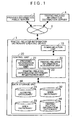
- FIG. 1 is a block diagram that illustrates the traffic-related information dictionary creating device according to the present embodiment.
- a traffic-related information dictionary creating device 1 is connected in a communicable manner through a network 2 to a provided information public server 3 and a traffic-related information distribution server 4.
- the provided information public server 3 is a provided information storage unit that associates provided information from an information provider with position information that specifies a position at which the provided information is provided, and stores the associated provided information and position information.
- the specific content of the provided information public server 3 may take on any form, for example, a Social Networking Service (SNS) server or a server that hosts various blog sites may be used.
- a terminal (not shown in the drawing) is connected through the network 2 to the provided information public server 3.
- the provided information is uploaded in a text format by the information provider from the terminal to the provided information public server 3, and the provided information is readably stored in the provided information public server 3.
- the traffic-related information distribution server 4 is a traffic-related information distribution unit that distributes traffic-related information.
- the traffic-related information includes information that specifies traffic-related events (e.g., traffic congestion, traffic restrictions, road work, accidents, public events, weather, road slipperiness, space availability in parking lots, and status of train delays), and information that specifies a range of the occurring traffic-related events.
- traffic-related information distribution server 4 for example, a distribution server that distributes the traffic-related information through FM multiplex broadcasting, beacons, or the like in the Vehicle Information and Communication System (VICS) may be used.
- VICS Vehicle Information and Communication System
- the traffic-related information distribution server 4 acquires the traffic-related information based on information provided by the police, road administrators, various public transportation administrators and the like, and probe information gathered from vehicles.
- the traffic-related information dictionary creating device 1 includes a communication unit 10, a control unit 20, and a data storage unit 30.
- the communication unit 10 communicates through the network 2 with the provided information public server 3 and the traffic-related information distribution server 4.
- a known communication device may be used as the communication unit 10.
- the control unit 20 controls the traffic-related information dictionary creating device 1.
- the control unit 20 is a computer configured to include a CPU, various programs that are interpreted and executed in the CPU (including an OS and other basic control programs, and application programs that are activated in the OS to carry out specific functions), and an internal memory such as a RAM for storing the programs and various data.
- the traffic-related information dictionary creating program according to the present embodiment is installed in the traffic-related information dictionary creating device 1 through any storage medium or the network 2, and configures various portions of the control unit 20 in substance.
- the control unit 20 includes a provided information acquisition unit 21, a traffic-related information acquisition unit 22, and a traffic-related information dictionary registration unit 23 in terms of functional concept.
- the provided information acquisition unit 21 acquires the provided information and the position information that corresponds to the provided information from the provided information public server 3.
- the traffic-related information acquisition unit 22 acquires the traffic-related information from the traffic-related information distribution server 4.
- the traffic-related information dictionary registration unit 23 registers prescribed phrases in a traffic-related information dictionary. The processes executed by the various portions of the control unit 20 will be described in detail later.
- the data storage unit 30 is a storage unit that stores programs and various data required for operation of the traffic-related information dictionary creating device 1, and has a configuration that uses a magnetic storage medium such as a hard disk (not shown) as an external memory device, for example.
- a magnetic storage medium such as a hard disk (not shown)
- any other storage mediums including a semiconductor storage medium such as a flash memory or an optical storage medium such as a DVD or Blu-ray disc, can be used in place of or in combination with the hard disk.
- the data storage unit 30 includes a keyword dictionary 31, a user dictionary 32, an area dictionary 33, and a traffic-related information dictionary 34.
- the keyword dictionary 31 is a storage unit that stores phrases included in the provided information acquired by the provided information acquisition unit 21 from the provided information public server 3.
- FIG. 2 is a table that illustrates information stored in the keyword dictionary 31. As shown in FIG. 2 , information that corresponds to the table item of Phrase, information that corresponds to the table item of Event, and information that corresponds to the table item of Total Usage are associated with each other and stored in the keyword dictionary 31.
- Information stored as corresponding to the Phrase item is a phrase included in the provided information acquired by the provided information acquisition unit 21 from the provided information public server 3 (e.g., "traffic congestion" and "jammed” in FIG. 2 ).
- Information stored as corresponding to the Event item specifies traffic-related events occurring at the position at which the provided information that includes the corresponding phrase is provided ("traffic congestion" in FIG. 2 ).
- Information stored as corresponding to the Total Usage item specifies the cumulative number of times the same phrase is included in the provided information that is provided within the range of the same type of occurring traffic-related event (e.g., "532" as the cumulative number of times the same phrase "traffic congestion” is included in the provided information that is provided within the range of the same type of occurring traffic-related event of "traffic congestion” in FIG. 2 ).
- the user dictionary 32 is a storage unit that stores, per information provider of the provided information, phrases included in the provided information acquired by the provided information acquisition unit 21 from the provided information public server 3.
- FIG. 3 is a table that illustrates information stored in the user dictionary 32 for an information provider "AA".
- information that corresponds to the table item of Phrase and information that corresponds to the table item of User Usage are associated with each other and stored in the user dictionary 32.
- Information stored as corresponding to the Phrase item is a phrase included in the provided information from an information provider that corresponds to the user dictionary 32, among the provided information acquired by the provided information acquisition unit 21 from the provided information public server 3 (e.g., "traffic congestion" and "jammed” in FIG. 3 ).
- Information stored as corresponding to the User Usage item specifies the number of times a corresponding phrase is included in the provided information from the information provider that corresponds to the user dictionary 32 (e.g., "30" for the phrase "traffic congestion” in FIG. 3 ).
- the area dictionary 33 is a storage unit that stores, per area that includes the position at which the provided information is provided, phrases included in the provided information acquired by the provided information acquisition unit 21 from the provided information public server 3.
- area is a concept that indicates, for example, a region of a given range such as an "AC district” or a zone that is delineated by any sort of boundary, including a given road section such as "from DB interchange to CA interchange” or the like. In the following description, a region of a given range will be used as an example.
- FIG. 4 is a table that illustrates information stored in the area dictionary 33 for the area "AC district" of a given range. As shown in FIG.
- information that corresponds to the table item of Phrase and information that corresponds to the table item of Area Usage are associated with each other and stored in the area dictionary 33.
- Information stored as corresponding to the Phrase item is a phrase included in the provided information that is provided from a position included in an area that corresponds to the area dictionary 33 ("AC district” in the example of FIG. 4 ), among the provided information acquired by the provided information acquisition unit 21 from the provided information public server 3 (e.g., "traffic congestion” and "jammed” in FIG. 4 ).
- Information stored as corresponding to the Area Usage item specifies the number of times a corresponding phrase is included in the provided information that is provided from the position included in the area that corresponds to the area dictionary 33 (e.g., "145" for the phrase "traffic congestion” in FIG. 4 ). Note that information for specifying a range of an area that corresponds to the area dictionary 33 is added to each area dictionary 33 (e.g., coordinates for specifying the boundaries of the relevant area).
- the traffic-related information dictionary 34 is a traffic-related information phrase storage unit that stores a phrase and a traffic-related event as associated with each other.
- FIG. 5 is a table that illustrates information stored in the traffic-related information dictionary 34. As shown in FIG. 5 , information that corresponds to the table item of Phrase, information that corresponds to the table item of Event, and information that corresponds to the table item of Class are associated with each other and stored in the traffic-related information dictionary 34. Information stored as corresponding to the Phrase item is at least part of a phrase included in the provided information acquired by the provided information acquisition unit 21 from the provided information public server 3 (e.g., "traffic congestion" and "jammed” in FIG. 5 ).
- Information stored as corresponding to the Event item specifies traffic-related events occurring at the position at which the provided information that includes the corresponding phrase is provided ("traffic congestion" in FIG. 5 ).
- Information stored as corresponding to the Class item specifies the class of the corresponding phrase.
- Information that specifies a phrase generally used to express the corresponding traffic-related event (“all areas” in FIG. 5 ), provider identifying information that uniquely identifies the information provider of the provided information that includes the corresponding phrase ("AA" in FIG. 5 ), or information that specifies the area that includes the position at which the provided information that includes the corresponding phrase is provided (“AC district”) is stored.
- the processing executed by the traffic-related information dictionary creating device 1 is divided into a keyword dictionary registration process and a traffic-related information dictionary registration process.
- FIG. 6 is a flowchart of the keyword dictionary registration process (steps in the following description of each process are abbreviated as "S").
- the keyword dictionary registration process is repeatedly initiated in a predetermined cycle after the traffic-related information dictionary creating device 1 is powered on, for example.
- the provided information acquisition unit 21 acquires from the provided information public server 3 the provided information, the position information that specifies the position at which the provided information is provided, and the provider identifying information that uniquely identifies the information provider of the provided information (SA1).
- FIG. 7 is a table that illustrates the provided information that is uploaded from the terminal to the provided information public server 3 and stored in the provided information public server 3.
- information that corresponds to the User item information that corresponds to the Provided Information item, and information that corresponds to the Position Information item are associated with each other and stored by the provided information public server 3.
- Information that corresponds to the User item is the provider identifying information that uniquely identifies the information provider (e.g., "AA" in FIG. 7 ).
- a user ID required by the provider to access the provided information public server 3 from the terminal can be used as the provider identifying information, for example.
- the user ID is transmitted together with the provided information to the provided information public server 3 when the provided information is uploaded from the terminal to the provided information public server 3.
- Information that corresponds to the Provided Information item is provided by the information provider (e.g., "snail's pace! in FIG. 7 ).
- Information that corresponds to the Position Information item specifies the position at which the provided information is provided (e.g., "x1, y1" in FIG. 7 ). Coordinates that indicate the current position of the specified terminal using GPS can be used as the position information, for example.
- the coordinates are transmitted together with the provided information to the provided information public server 3 when the provided information is uploaded from the terminal to the provided information public server 3. Each time the above information is uploaded from the terminal of each user to the provided information public server 3, the information is released in turn to the public.
- the provided information acquisition unit 21 acquires from the provided information public server 3 the provided information released by the provided information public server 3 during a period since the previous execution of the processing at SA1 until the current execution of the processing at SA1, as well as the provider identifying information and the position information associated with the provided information.
- the provided information acquisition unit 21 specifies the position at which the provided information acquired by the provided information acquisition unit 21 at SA1 is provided and performs mapping on a map (SA2).
- the traffic-related information acquisition unit 22 acquires the traffic-related information from the traffic-related information distribution server 4 (SA3).
- the traffic-related information acquisition unit 22 acquires, through the communication unit 10, the traffic-related information that corresponds to an occurring traffic-related event during the period since the previous execution of the processing at SA1 until the current execution of the processing at SA1, which is the traffic-related information distributed from the traffic-related information distribution server 4, for example.
- the traffic-related information dictionary registration unit 23 specifies the provided information that is provided within the range of the occurring traffic-related event, based on the position information acquired by the provided information acquisition unit 21 at SA1 and the traffic-related information acquired by the traffic-related information acquisition unit 22 at SA3 (SA4).
- the traffic-related information dictionary registration unit 23 specifies the range in which the traffic-related event is occurring based on the information that specifies the range of the occurring traffic-related event.
- the "information that specifies the range of the occurring traffic-related event” is link data included in map information used by a known navigation system, for example, and is configured using the link data that corresponds to a section in which the traffic-related event is occurring.
- the traffic-related information dictionary registration unit 23 specifies the provided information that is provided within the range of the occurring traffic-related event by comparing the range in which the specified traffic-related occurred and the positions mapped on the map by the provided information acquisition unit 21 at SA2 (positions at which the provided information acquired by the provided information acquisition unit 21 at SA1 is provided). At such time, the traffic-related information dictionary registration unit 23 associates the traffic-related event and the provided information that is provided within the range of the occurring traffic-related event with each other, and stores the associated traffic-related event and provided information in the RAM or the like.
- the traffic-related information dictionary registration unit 23 executes, for each piece of provided information that was specified in the processing at SA4 as provided within the range of the occurring traffic-related event, a classification process for classifying a phrase included in the provided information (SA5).
- SA5 a classification process for classifying a phrase included in the provided information
- FIG. 8 is a flowchart of the classification process.
- the traffic-related information dictionary registration unit 23 extracts a phrase included in the provided information that is provided within the range of the occurring traffic-related event (SB1). For example, using a known language processing technique, such as a morphological analysis, the traffic-related information dictionary registration unit 23 extracts self-sufficient words such as verbs, adjectives, and nouns among the phase included in the provided information.
- the traffic-related information dictionary registration unit 23 determines whether the phrase extracted at SB1 is stored in the keyword dictionary 31 as associated with the traffic-related event occurring at the position at which the provided information including the phrase is provided (SB2). For example, the traffic-related information dictionary registration unit 23 acquires the traffic-related event stored in the RAM at SA4 in FIG. 6 as associated with the provided information including the phrase extracted at SB1, and determines whether the acquired traffic-related event and the phrase extracted at SB1 are associated with each other and stored in the keyword dictionary 31 shown in FIG. 2 .
- the traffic-related information dictionary registration unit 23 adds one to the information that corresponds to the Total Usage item, which is stored as associated with the phrase in the keyword dictionary 31 shown in FIG. 2 (SB3). For example, if the phrase "traffic congestion" is extracted at SB1 from the provided information that is provided within the range of the occurring traffic-related event "traffic congestion”, one is added to the total usage of "532" that is stored as associated with the phrase "traffic congestion” in the keyword dictionary 31 of FIG. 2 , such that the total usage becomes "533".
- the traffic-related information dictionary registration unit 23 registers the phrase extracted at SB1 in the keyword dictionary 31 (SB4). That is, the traffic-related information dictionary registration unit 23 stores the phrase extracted at SB1 in the keyword dictionary 31 as associated with the traffic-related event occurring at the position at which the provided information including the phrase is provided, and stores "1" as the corresponding total usage.
- the traffic-related information dictionary registration unit 23 determines whether the phrase extracted at SB1 is stored in the user dictionary 32 for the information provider of the provided information including the phrase (SB5). For example, based on the provided information including the phrase extracted at SB1 and the provider identifying information acquired by the provided information acquisition unit 21 at SA1, the traffic-related information dictionary registration unit 23 specifies the information provider of the provided information including the phrase extracted at SB1, and determines whether the phrase extracted at SB1 is stored in the user dictionary 32 for the specified information provider.
- the traffic-related information dictionary registration unit 23 adds one to the information that corresponds to the User Usage item, which is stored as associated with the phrase in the user dictionary 32 shown in FIG. 3 (SB6).
- the phrase "traffic congestion” is extracted at SB1 from the provided information from the information provider "AA”
- one is added to the user usage of "30” that is stored as associated with the phrase "traffic congestion” in the user dictionary 32 of FIG. 3 , such that the user usage becomes "31 ".
- the traffic-related information dictionary registration unit 23 registers the phrase extracted at SB1 in the user dictionary 32 for the information provider (SB7). That is, the traffic-related information dictionary registration unit 23 stores the phrase extracted at SB1 in the user dictionary 32 for the information provider, and stores "1" as the corresponding user usage. Note that if there is no user dictionary 32 in the data storage unit 30 for the information provider of the provided information including the phrase, the traffic-related information dictionary registration unit 23 newly provides the user dictionary 32 for the information provider in the data storage unit 30, and registers the phrase extracted at SB1 in that particular user dictionary 32.
- the traffic-related information dictionary registration unit 23 determines whether the phrase extracted at SB1 is stored in the area dictionary 33 for the area that includes the position at which the provided information including the phrase is provided (SB8). For example, based on the provided information including the phrase extracted at SB1 and the position information acquired by the provided information acquisition unit 21 at SA1, the traffic-related information dictionary registration unit 23 specifies the position at which the provided information including the phrase extracted at SB1 is provided, and determines whether the phrase extracted at SB1 is stored in the area dictionary 33 for the area that includes the specified position.
- the traffic-related information dictionary registration unit 23 determines whether the areas that respectively correspond to the area dictionaries 33 are "the area that includes the position at which the provided information is provided" based on information for specifying the range of the area that corresponds to a particular area dictionary 33 added to the area dictionaries 33.
- the traffic-related information dictionary registration unit 23 adds one to the information that corresponds to the Area Usage item, which is stored as associated with the phrase in the area dictionary 33 shown in FIG. 4 (SB9).
- the phrase "traffic congestion” is extracted at SB1 from the provided information that is provided at the position included in the area "AC district", one is added to the area usage of "145" that is stored as associated with the phrase "traffic congestion” in the area dictionary 33 of FIG. 4 , such that the area usage becomes "146".
- the traffic-related information dictionary registration unit 23 registers the phrase extracted at SB1 in the area dictionary 33 for the area (SB10). That is, the traffic-related information dictionary registration unit 23 stores the phrase extracted at SB1 in the area dictionary 33 for the area, and stores "1" as the corresponding area usage.
- the traffic-related information dictionary registration unit 23 newly provides the area dictionary 33 for the area in the data storage unit 30, and registers the phrase extracted at SB1 in that particular area dictionary 33.
- control unit 20 ends the classification process and returns to the main routine.
- FIG. 9 is a flowchart of the traffic-related information dictionary registration process. After the traffic-related information dictionary creating device 1 is powered on, the traffic-related information dictionary registration process is repeatedly initiated each time the keyword dictionary registration process is executed a prescribed number of times, for example.
- the traffic-related information dictionary registration unit 23 extracts a phrase not stored in the traffic-related information dictionary 34 from among the phrases stored in the keyword dictionary 31 (SC1).
- the traffic-related information dictionary registration unit 23 determines whether the cumulative number of times the same phrase extracted at SC1 is included in the provided information that is provided within the range of the same type of occurring traffic-related event is equal to or greater than a threshold (SC2). That is, the traffic-related information dictionary registration unit 23 refers to the keyword dictionary 31 illustrated in FIG. 2 to determine whether the Total Usage item stored as associated with the phrase extracted at SC1 is equal to or greater than the threshold.
- the threshold may be any specific value, for example, a value of 10 may be used.
- the traffic-related information dictionary registration unit 23 determines that the phrase is not yet used enough to be registered in the traffic-related information dictionary 34, and ends the traffic-related information dictionary registration process.
- the traffic-related information dictionary registration unit 23 determines that the phrase is used enough to be registered in the traffic-related information dictionary 34, and determines whether the number of information providers of the provided information including the phrase is greater than one (SC3). Specifically, if the number of user dictionaries 32 that store the phrase extracted at SC1 is greater than one, the traffic-related information dictionary registration unit 23 determines that the number of information providers of the provided information including the phrase is greater than one.
- the traffic-related information dictionary registration unit 23 classifies the phrase as a phrase unique to the information provider of the provided information including the phrase (SC4). At such time, the traffic-related information dictionary registration unit 23 stores the classification result in the RAM, for example.
- the traffic-related information dictionary registration unit 23 determines whether the number of areas that include the position at which the provided information including the phrase is provided is greater than one (SC5). Specifically, if the number of area dictionaries 33 that store the phrase extracted at SC1 is greater than one, the traffic-related information dictionary registration unit 23 determines that the number of areas that include the position at which the provided information including the phrase is provided is greater than one.
- the traffic-related information dictionary registration unit 23 classifies the phrase as a phrase unique to the area that includes the position at which the provided information including the phrase is provided (SC6). At such time, the traffic-related information dictionary registration unit 23 stores the classification result in the RAM, for example.
- the traffic-related information dictionary registration unit 23 determines that the extracted phrase is a phrase generally used to express the traffic-related event that corresponds to the extracted phrase, and classifies the extracted phrase as a phrase of "all areas", which indicates a general phrase (SC7). At such time, the traffic-related information dictionary registration unit 23 stores the classification result in the RAM, for example.
- the traffic-related information dictionary registration unit 23 stores the phrase extracted at SC1 in the traffic-related information dictionary 34 in accordance with the classification result at SC4, SC6, or SC7 (SC8). That is, the traffic-related information dictionary registration unit 23 stores information that specifies the traffic-related event associated with the phrase extracted at SC1 and stored in the keyword dictionary 31, and information that corresponds to the classification result at SC4, SC6, or SC7.
- the phrase "traffic congestion” may be extracted at SC1 from the keyword dictionary 31 illustrated in FIG. 2 , and the classification of the phrase “traffic congestion” may be designated as "all areas” at SC7.
- the traffic-related information dictionary registration unit 23 associates the phrase "traffic congestion” with the traffic-related event "traffic congestion” stored in the keyword dictionary 31 as associated with the phrase, and also with the classification "all areas” indicative of the classification result at SC7, and stores the associated phrase, event, and classification in the traffic-related information dictionary 34.
- the phrase “BA congestion” may be extracted at SC1 from the keyword dictionary 31 illustrated in FIG. 2 (e.g., a phrase that refers to traffic congestion occurring near a facility BA), and the classification of the phrase “BA congestion” may be designated as "unique to the area that includes the position at which the provided information including the phrase is provided” at SC6.
- the traffic-related information dictionary registration unit 23 associates the phrase "BA congestion” with the traffic-related event "BA congestion” stored in the keyword dictionary 31 as associated with the phrase, and, as information that corresponds to the classification result at SC7, with the classification "AC district” indicative of the area that includes the position at which the provided information including the phrase is provided.
- the traffic-related information dictionary registration unit 23 also stores the associated phrase, event, and classification in the traffic-related information dictionary 34.
- phrases generally used to express the traffic-related event phrases used only in a prescribed area can also be registered in the traffic-related information dictionary 34 as area-specific phrases that express the traffic-related event.
- the phrase "snail's pace” may be extracted at SC1 from the keyword dictionary 31 illustrated in FIG. 2 , and the classification of the phrase “snail's pace” may be designated as "unique to the information provider of the provided information including the phrase” at SC4.
- the traffic-related information dictionary registration unit 23 associates the phrase "snail's pace” with the traffic-related event "snail's pace” stored in the keyword dictionary 31 as associated with the phrase, and, as information that corresponds to the classification result at SC4, with the classification "AA" indicative of the information provider of the provided information including the phrase.
- the traffic-related information dictionary registration unit 23 also stores the associated phrase, event, and classification in the traffic-related information dictionary 34.
- phrases used only by a prescribed information provider can also be registered in the traffic-related information dictionary 34 as information provider-specific phrases that express the traffic-related event.
- control unit 20 ends the traffic-related information dictionary registration process.
- the provided information that is provided within the range of the occurring traffic-related event is specified.
- at least part of a phrase included in the specified provided information is associated with the occurring traffic-related event, and the associated at least partial phrase and traffic-related event are stored in the traffic-related information dictionary 34. Therefore, even a phrase not generally used as a phrase to express a traffic-related event can be registered in the traffic-related information dictionary 34 as a phrase that expresses that particular traffic-related event.
- the traffic-related information dictionary registration unit 23 determines whether to store the phrase in the traffic-related information dictionary 34 based on the cumulative number of times the same phrase is included in the provided information that is provided within the range of the same type of occurring traffic-related event. Therefore, only a phrase used to a certain extent for the same type of traffic-related event can be registered in the traffic-related information dictionary 34, which increases the reliability of the traffic-related information dictionary 34.
- the traffic-related information dictionary registration unit 23 associates the phrase included in the provided information that is provided within the range of the occurring traffic-related event with the provider identifying information that corresponds to the provided information including the phrase, and stores the associated phrase and provider identifying information in the traffic-related information dictionary 34. Therefore, a phrase used only by a prescribed information provider and not generally used as a phrase that expresses the traffic-related event can also be registered in the traffic-related information dictionary 34 as an information provider-specific phrase that expresses the traffic-related event.
- the traffic-related information dictionary registration unit 23 Based on the position information acquired by the provided information acquisition unit 21, the traffic-related information dictionary registration unit 23 associates the phrase included in the provided information that is provided within the range of the occurring traffic-related event with the area that includes the position at which the provided information including the phrase is provided, and stores the associated phrase and area in the traffic-related information dictionary 34. Therefore, a phrase used only in a prescribed area and not generally used as a phrase that expresses the traffic-related event can also be registered in the traffic-related information dictionary 34 as an area-specific phrase that expresses the traffic-related event.
- the traffic-related information dictionary creating device 1 may be mounted in a vehicle as part of a car navigation device, or mounted in a portable type of information terminal such as a smartphone, for example.
- the provided information is provided within the range of the occurring traffic congestion serving as the traffic-related event.
- the relevant traffic-related events are not limited to traffic congestion.
- a phrase that expresses the traffic-related event can be registered in the traffic-related information dictionary 34 even when the provided information is provided within the range of any other occurring traffic-related event (e.g., traffic restrictions, road work, accidents, public events, weather, road slipperiness, space availability in parking lots, and status of train delays).
- the position information that specifies the position at which the provided information is provided
- coordinates indicative of the current position of the terminal specified using GPS are transmitted from the terminal to the provided information public server 3 together with the provided information.
- other information may be used as the position information.
- information intentionally added by the information provider to the provided information in order to indicate the position at which the provided information is provided e.g., a link to a webpage that displays a specific position on a map
- information indicative of the position included in the provided information itself e.g., "BB" in the provided information of "I am now at BB"
- BB information indicative of the position included in the provided information itself
- a traffic-related information dictionary creating device, method and program are provided, wherein, based on position information acquired by a provided information acquisition unit and traffic-related information acquired by a traffic-related information acquisition unit, the provided information that is provided within a range of an occurring traffic-related event is specified. At least part of a phrase included in the specified provided information is associated with the occurring traffic-related event, and the associated at least partial phrase and traffic-related event are stored in a traffic-related information phrase storage unit that stores the phrase and the traffic-related event as associated with each other.
Landscapes
- Chemical & Material Sciences (AREA)
- Analytical Chemistry (AREA)
- Physics & Mathematics (AREA)
- General Physics & Mathematics (AREA)
- Traffic Control Systems (AREA)
- Information Retrieval, Db Structures And Fs Structures Therefor (AREA)
- Navigation (AREA)
- Information Transfer Between Computers (AREA)
- Machine Translation (AREA)
- Document Processing Apparatus (AREA)
- Management, Administration, Business Operations System, And Electronic Commerce (AREA)
- Alarm Systems (AREA)
Abstract
Description
- The present invention relates to a traffic-related information dictionary creating device, a traffic-related information dictionary creating method, and a traffic-related information dictionary creating computer program product.
- According to related art, prescribed words included in a sentence are extracted and registered to a dictionary. For example, a word registration system has been proposed in which at least part of word data not registered in a user dictionary among word data received from a word data receiving unit is added and registered to the user dictionary. According to this word registration system, word data in which a word "reading" and corresponding kanji (Chinese characters) are pre-associated is received from a website through the internet. If the received word data is not registered in the user dictionary, the word data is added and registered in the user dictionary (see Japanese Patent Application Publication No.
JP-A-2002-99531 - A traffic-related information dictionary can be created by associating traffic-related events and phrases that express such traffic-related events, and registering the associated traffic-related events and phrases. The traffic-related events include traffic congestion, traffic restrictions, road work, accidents, public events, weather, road slipperiness, space availability in parking lots, status of train delays, and the like. However, if a system according to related art as described above is used to register phrases in the traffic-related information dictionary, unless data that pre-associates the phrases with the corresponding traffic-related events is used, the phrases cannot be registered in the dictionary. Thus, phrases that are not pre-associated with traffic-related events because such phrases are not generally used to express traffic-related events (e.g., phrases used only in a particular region or phrases used only by a particular user) cannot be registered in the dictionary as associated with such traffic-related events.
- The present invention was devised in light of the foregoing, and provides a traffic-related information dictionary creating device according to
claim 1, a traffic-related information dictionary creating method according to claim 5, and a computer program product according to claim 6, which can register a phrase not generally used to express a traffic-related event as a phrase expressing such a traffic-related event in a traffic-related information dictionary. Further features and advantageous modifications are shown in the dependent claims. - According a traffic-related information dictionary creating device of a first aspect of the present invention, a traffic-related information dictionary creating method of a fifth aspect, and a traffic-related information dictionary creating program of a sixth aspect, based on position information acquired by a provided information acquisition unit and traffic-related information acquired by a traffic-related information acquisition unit, the provided information that is provided within a range of an occurring traffic-related event is specified. At least part of a phrase included in the specified provided information is associated with the occurring traffic-related event, and the associated at least partial phrase and traffic-related event are stored in a traffic-related information phrase storage unit that stores the phrase and the traffic-related event as associated with each other. Therefore, even a phrase not generally used as a phrase to express a traffic-related event can be stored in the traffic-related information phrase storage unit as a phrase that expresses that particular traffic-related event.
- According to the traffic-related information dictionary creating device of a second aspect of the present invention, a traffic-related information dictionary registration unit determines whether to store the phrase in the traffic-related information phrase storage unit based on a cumulative number of times the same phrase is included in the provided information that is provided within the range of the same type of occurring traffic-related event. Therefore, only a phrase used to a certain extent for the same type of traffic-related event can be stored in the traffic-related information phrase storage unit, which increases the reliability of the traffic-related information phrase storage unit.
- According to the traffic-related information dictionary creating device of a third aspect of the present invention, the traffic-related information dictionary registration unit associates the phrase included in the provided information that is provided within the range of the occurring traffic-related event with provider identifying information that corresponds to the provided information including the phrase, and stores the associated phrase and provider identifying information in the traffic-related information phrase storage unit. Therefore, a phrase used only by a prescribed information provider and not generally used as a phrase that expresses the traffic-related event can also be stored in the traffic-related information phrase storage unit as an information provider-specific phrase that expresses the traffic-related event.
- According to the traffic-related information dictionary creating device of a fourth aspect of the present invention, based on the position information acquired by the provided information acquisition unit, the traffic-related information dictionary registration unit associates the phrase included in the provided information that is provided within the range of the occurring traffic-related event with an area that includes the position at which the provided information including the phrase is provided, and stores the associated phrase and area in the traffic-related information phrase storage unit. Therefore, a phrase used only in a prescribed area and not generally used as a phrase that expresses the traffic-related event can also be stored in the traffic-related information phrase storage unit as an area-specific phrase that expresses the traffic-related event.
-
-
FIG. 1 is a block diagram that illustrates a traffic-related information dictionary creating device according to an embodiment; -
FIG. 2 is a table that illustrates information stored in a keyword dictionary; -
FIG. 3 is a table that illustrates information stored in a user dictionary for an information provider "AA"; -
FIG. 4 is a table that illustrates information stored in an area dictionary for an area "AC district" of a given range; -
FIG. 5 is a table that illustrates information stored in a traffic-related information dictionary; -
FIG. 6 is a flowchart of a keyword dictionary registration process; -
FIG. 7 is a table that illustrates provided information that is uploaded from a terminal to a provided information public server and stored in the provided information public server; -
FIG. 8 is a flowchart of a classification process; and -
FIG. 9 is a flowchart of a traffic-related information dictionary registration process. - Hereinafter, an embodiment of a traffic-related information dictionary creating device, a traffic-related information dictionary creating method, and a traffic-related information dictionary creating program according to the present invention will be described in detail with reference to the drawings. However, the scope of the present invention is not limited by such an embodiment.
- First, the constitution of the traffic-related information dictionary creating device according to the embodiment will be described.
FIG. 1 is a block diagram that illustrates the traffic-related information dictionary creating device according to the present embodiment. As shown inFIG. 1 , a traffic-related informationdictionary creating device 1 is connected in a communicable manner through anetwork 2 to a provided informationpublic server 3 and a traffic-relatedinformation distribution server 4. - The provided information
public server 3 is a provided information storage unit that associates provided information from an information provider with position information that specifies a position at which the provided information is provided, and stores the associated provided information and position information. The specific content of the provided informationpublic server 3 may take on any form, for example, a Social Networking Service (SNS) server or a server that hosts various blog sites may be used. A terminal (not shown in the drawing) is connected through thenetwork 2 to the provided informationpublic server 3. The provided information is uploaded in a text format by the information provider from the terminal to the provided informationpublic server 3, and the provided information is readably stored in the provided informationpublic server 3. - The traffic-related
information distribution server 4 is a traffic-related information distribution unit that distributes traffic-related information. The traffic-related information includes information that specifies traffic-related events (e.g., traffic congestion, traffic restrictions, road work, accidents, public events, weather, road slipperiness, space availability in parking lots, and status of train delays), and information that specifies a range of the occurring traffic-related events. As the traffic-relatedinformation distribution server 4, for example, a distribution server that distributes the traffic-related information through FM multiplex broadcasting, beacons, or the like in the Vehicle Information and Communication System (VICS) may be used. Note that the traffic-relatedinformation distribution server 4 acquires the traffic-related information based on information provided by the police, road administrators, various public transportation administrators and the like, and probe information gathered from vehicles. - As shown in
FIG. 1 , the traffic-related informationdictionary creating device 1 includes acommunication unit 10, acontrol unit 20, and adata storage unit 30. - The
communication unit 10 communicates through thenetwork 2 with the provided informationpublic server 3 and the traffic-relatedinformation distribution server 4. A known communication device may be used as thecommunication unit 10. - The
control unit 20 controls the traffic-related informationdictionary creating device 1. Specifically, thecontrol unit 20 is a computer configured to include a CPU, various programs that are interpreted and executed in the CPU (including an OS and other basic control programs, and application programs that are activated in the OS to carry out specific functions), and an internal memory such as a RAM for storing the programs and various data. In particular, the traffic-related information dictionary creating program according to the present embodiment is installed in the traffic-related informationdictionary creating device 1 through any storage medium or thenetwork 2, and configures various portions of thecontrol unit 20 in substance. - The
control unit 20 includes a providedinformation acquisition unit 21, a traffic-relatedinformation acquisition unit 22, and a traffic-related informationdictionary registration unit 23 in terms of functional concept. The providedinformation acquisition unit 21 acquires the provided information and the position information that corresponds to the provided information from the provided informationpublic server 3. The traffic-relatedinformation acquisition unit 22 acquires the traffic-related information from the traffic-relatedinformation distribution server 4. The traffic-related informationdictionary registration unit 23 registers prescribed phrases in a traffic-related information dictionary. The processes executed by the various portions of thecontrol unit 20 will be described in detail later. - The
data storage unit 30 is a storage unit that stores programs and various data required for operation of the traffic-related informationdictionary creating device 1, and has a configuration that uses a magnetic storage medium such as a hard disk (not shown) as an external memory device, for example. However, any other storage mediums, including a semiconductor storage medium such as a flash memory or an optical storage medium such as a DVD or Blu-ray disc, can be used in place of or in combination with the hard disk. - The
data storage unit 30 includes akeyword dictionary 31, auser dictionary 32, anarea dictionary 33, and a traffic-relatedinformation dictionary 34. - The
keyword dictionary 31 is a storage unit that stores phrases included in the provided information acquired by the providedinformation acquisition unit 21 from the provided informationpublic server 3.FIG. 2 is a table that illustrates information stored in thekeyword dictionary 31. As shown inFIG. 2 , information that corresponds to the table item of Phrase, information that corresponds to the table item of Event, and information that corresponds to the table item of Total Usage are associated with each other and stored in thekeyword dictionary 31. Information stored as corresponding to the Phrase item is a phrase included in the provided information acquired by the providedinformation acquisition unit 21 from the provided information public server 3 (e.g., "traffic congestion" and "jammed" inFIG. 2 ). Information stored as corresponding to the Event item specifies traffic-related events occurring at the position at which the provided information that includes the corresponding phrase is provided ("traffic congestion" inFIG. 2 ). Information stored as corresponding to the Total Usage item specifies the cumulative number of times the same phrase is included in the provided information that is provided within the range of the same type of occurring traffic-related event (e.g., "532" as the cumulative number of times the same phrase "traffic congestion" is included in the provided information that is provided within the range of the same type of occurring traffic-related event of "traffic congestion" inFIG. 2 ). - The
user dictionary 32 is a storage unit that stores, per information provider of the provided information, phrases included in the provided information acquired by the providedinformation acquisition unit 21 from the provided informationpublic server 3.FIG. 3 is a table that illustrates information stored in theuser dictionary 32 for an information provider "AA". As shown inFIG. 3 , information that corresponds to the table item of Phrase and information that corresponds to the table item of User Usage are associated with each other and stored in theuser dictionary 32. Information stored as corresponding to the Phrase item is a phrase included in the provided information from an information provider that corresponds to theuser dictionary 32, among the provided information acquired by the providedinformation acquisition unit 21 from the provided information public server 3 (e.g., "traffic congestion" and "jammed" inFIG. 3 ). Information stored as corresponding to the User Usage item specifies the number of times a corresponding phrase is included in the provided information from the information provider that corresponds to the user dictionary 32 (e.g., "30" for the phrase "traffic congestion" inFIG. 3 ). - The
area dictionary 33 is a storage unit that stores, per area that includes the position at which the provided information is provided, phrases included in the provided information acquired by the providedinformation acquisition unit 21 from the provided informationpublic server 3. Here, "area" is a concept that indicates, for example, a region of a given range such as an "AC district" or a zone that is delineated by any sort of boundary, including a given road section such as "from DB interchange to CA interchange" or the like. In the following description, a region of a given range will be used as an example.FIG. 4 is a table that illustrates information stored in thearea dictionary 33 for the area "AC district" of a given range. As shown inFIG. 4 , information that corresponds to the table item of Phrase and information that corresponds to the table item of Area Usage are associated with each other and stored in thearea dictionary 33. Information stored as corresponding to the Phrase item is a phrase included in the provided information that is provided from a position included in an area that corresponds to the area dictionary 33 ("AC district" in the example ofFIG. 4 ), among the provided information acquired by the providedinformation acquisition unit 21 from the provided information public server 3 (e.g., "traffic congestion" and "jammed" inFIG. 4 ). Information stored as corresponding to the Area Usage item specifies the number of times a corresponding phrase is included in the provided information that is provided from the position included in the area that corresponds to the area dictionary 33 (e.g., "145" for the phrase "traffic congestion" inFIG. 4 ). Note that information for specifying a range of an area that corresponds to thearea dictionary 33 is added to each area dictionary 33 (e.g., coordinates for specifying the boundaries of the relevant area). - The traffic-related
information dictionary 34 is a traffic-related information phrase storage unit that stores a phrase and a traffic-related event as associated with each other.FIG. 5 is a table that illustrates information stored in the traffic-relatedinformation dictionary 34. As shown inFIG. 5 , information that corresponds to the table item of Phrase, information that corresponds to the table item of Event, and information that corresponds to the table item of Class are associated with each other and stored in the traffic-relatedinformation dictionary 34. Information stored as corresponding to the Phrase item is at least part of a phrase included in the provided information acquired by the providedinformation acquisition unit 21 from the provided information public server 3 (e.g., "traffic congestion" and "jammed" inFIG. 5 ). Information stored as corresponding to the Event item specifies traffic-related events occurring at the position at which the provided information that includes the corresponding phrase is provided ("traffic congestion" inFIG. 5 ). Information stored as corresponding to the Class item specifies the class of the corresponding phrase. Information that specifies a phrase generally used to express the corresponding traffic-related event ("all areas" inFIG. 5 ), provider identifying information that uniquely identifies the information provider of the provided information that includes the corresponding phrase ("AA" inFIG. 5 ), or information that specifies the area that includes the position at which the provided information that includes the corresponding phrase is provided ("AC district") is stored. - The timing at which various information is stored in the
keyword dictionary 31, theuser dictionary 32, thearea dictionary 33, and the traffic-relatedinformation dictionary 34, and the source of the various information acquired will be described in detail later. - Next, processing executed by the traffic-related information
dictionary creating device 1 thus configured will be described. The processing executed by the traffic-related informationdictionary creating device 1 is divided into a keyword dictionary registration process and a traffic-related information dictionary registration process. - First, the keyword dictionary registration process will be described.
FIG. 6 is a flowchart of the keyword dictionary registration process (steps in the following description of each process are abbreviated as "S"). The keyword dictionary registration process is repeatedly initiated in a predetermined cycle after the traffic-related informationdictionary creating device 1 is powered on, for example. - As shown in
FIG. 6 , after starting up the keyword dictionary registration process, the providedinformation acquisition unit 21 acquires from the provided informationpublic server 3 the provided information, the position information that specifies the position at which the provided information is provided, and the provider identifying information that uniquely identifies the information provider of the provided information (SA1). -
FIG. 7 is a table that illustrates the provided information that is uploaded from the terminal to the provided informationpublic server 3 and stored in the provided informationpublic server 3. As shown inFIG. 7 , information that corresponds to the User item, information that corresponds to the Provided Information item, and information that corresponds to the Position Information item are associated with each other and stored by the provided informationpublic server 3. Information that corresponds to the User item is the provider identifying information that uniquely identifies the information provider (e.g., "AA" inFIG. 7 ). A user ID required by the provider to access the provided informationpublic server 3 from the terminal can be used as the provider identifying information, for example. The user ID is transmitted together with the provided information to the provided informationpublic server 3 when the provided information is uploaded from the terminal to the provided informationpublic server 3. Information that corresponds to the Provided Information item is provided by the information provider (e.g., "snail's pace!" inFIG. 7 ). Information that corresponds to the Position Information item specifies the position at which the provided information is provided (e.g., "x1, y1" inFIG. 7 ). Coordinates that indicate the current position of the specified terminal using GPS can be used as the position information, for example. The coordinates are transmitted together with the provided information to the provided informationpublic server 3 when the provided information is uploaded from the terminal to the provided informationpublic server 3. Each time the above information is uploaded from the terminal of each user to the provided informationpublic server 3, the information is released in turn to the public. The providedinformation acquisition unit 21 acquires from the provided informationpublic server 3 the provided information released by the provided informationpublic server 3 during a period since the previous execution of the processing at SA1 until the current execution of the processing at SA1, as well as the provider identifying information and the position information associated with the provided information. - Returning to
FIG. 6 , based on the position information that corresponds to the provided information, the providedinformation acquisition unit 21 specifies the position at which the provided information acquired by the providedinformation acquisition unit 21 at SA1 is provided and performs mapping on a map (SA2). - Next, the traffic-related
information acquisition unit 22 acquires the traffic-related information from the traffic-related information distribution server 4 (SA3). The traffic-relatedinformation acquisition unit 22 acquires, through thecommunication unit 10, the traffic-related information that corresponds to an occurring traffic-related event during the period since the previous execution of the processing at SA1 until the current execution of the processing at SA1, which is the traffic-related information distributed from the traffic-relatedinformation distribution server 4, for example. - Next, the traffic-related information
dictionary registration unit 23 specifies the provided information that is provided within the range of the occurring traffic-related event, based on the position information acquired by the providedinformation acquisition unit 21 at SA1 and the traffic-related information acquired by the traffic-relatedinformation acquisition unit 22 at SA3 (SA4). - Specifically, among the information included in the traffic-related information acquired by the traffic-related
information acquisition unit 22 at SA3, the traffic-related informationdictionary registration unit 23 specifies the range in which the traffic-related event is occurring based on the information that specifies the range of the occurring traffic-related event. Here, the "information that specifies the range of the occurring traffic-related event" is link data included in map information used by a known navigation system, for example, and is configured using the link data that corresponds to a section in which the traffic-related event is occurring. The traffic-related informationdictionary registration unit 23 specifies the provided information that is provided within the range of the occurring traffic-related event by comparing the range in which the specified traffic-related occurred and the positions mapped on the map by the providedinformation acquisition unit 21 at SA2 (positions at which the provided information acquired by the providedinformation acquisition unit 21 at SA1 is provided). At such time, the traffic-related informationdictionary registration unit 23 associates the traffic-related event and the provided information that is provided within the range of the occurring traffic-related event with each other, and stores the associated traffic-related event and provided information in the RAM or the like. - Following the processing at SA4, the traffic-related information
dictionary registration unit 23 executes, for each piece of provided information that was specified in the processing at SA4 as provided within the range of the occurring traffic-related event, a classification process for classifying a phrase included in the provided information (SA5). Following the processing at SA5, thecontrol unit 20 ends the keyword dictionary registration process. - Here, the classification process will be described.
FIG. 8 is a flowchart of the classification process. As shown inFIG. 8 , after the classification process is started up, the traffic-related informationdictionary registration unit 23 extracts a phrase included in the provided information that is provided within the range of the occurring traffic-related event (SB1). For example, using a known language processing technique, such as a morphological analysis, the traffic-related informationdictionary registration unit 23 extracts self-sufficient words such as verbs, adjectives, and nouns among the phase included in the provided information. - Next, the traffic-related information
dictionary registration unit 23 determines whether the phrase extracted at SB1 is stored in thekeyword dictionary 31 as associated with the traffic-related event occurring at the position at which the provided information including the phrase is provided (SB2). For example, the traffic-related informationdictionary registration unit 23 acquires the traffic-related event stored in the RAM at SA4 inFIG. 6 as associated with the provided information including the phrase extracted at SB1, and determines whether the acquired traffic-related event and the phrase extracted at SB1 are associated with each other and stored in thekeyword dictionary 31 shown inFIG. 2 . - Returning to
FIG. 8 , if the determination result at SB2 is that the phrase extracted at SB1 is stored in thekeyword dictionary 31 as associated with the traffic-related event occurring at the position at which the provided information including the phrase is provided (SB2: Yes), the traffic-related informationdictionary registration unit 23 adds one to the information that corresponds to the Total Usage item, which is stored as associated with the phrase in thekeyword dictionary 31 shown inFIG. 2 (SB3). For example, if the phrase "traffic congestion" is extracted at SB1 from the provided information that is provided within the range of the occurring traffic-related event "traffic congestion", one is added to the total usage of "532" that is stored as associated with the phrase "traffic congestion" in thekeyword dictionary 31 ofFIG. 2 , such that the total usage becomes "533". - Returning to
FIG. 8 , if the determination result at SB2 is that the phrase extracted atSB 1 is not stored in thekeyword dictionary 31 as associated with the traffic-related event occurring at the position at which the provided information including the phrase is provided (SB2: No), the traffic-related informationdictionary registration unit 23 registers the phrase extracted at SB1 in the keyword dictionary 31 (SB4). That is, the traffic-related informationdictionary registration unit 23 stores the phrase extracted at SB1 in thekeyword dictionary 31 as associated with the traffic-related event occurring at the position at which the provided information including the phrase is provided, and stores "1" as the corresponding total usage. - Following the processing at SB3 or SB4, the traffic-related information
dictionary registration unit 23 determines whether the phrase extracted at SB1 is stored in theuser dictionary 32 for the information provider of the provided information including the phrase (SB5). For example, based on the provided information including the phrase extracted at SB1 and the provider identifying information acquired by the providedinformation acquisition unit 21 at SA1, the traffic-related informationdictionary registration unit 23 specifies the information provider of the provided information including the phrase extracted at SB1, and determines whether the phrase extracted at SB1 is stored in theuser dictionary 32 for the specified information provider. - Accordingly, if the phrase extracted at SB1 is stored in the
user dictionary 32 for the information provider of the provided information including the phrase (SB5: Yes), the traffic-related informationdictionary registration unit 23 adds one to the information that corresponds to the User Usage item, which is stored as associated with the phrase in theuser dictionary 32 shown inFIG. 3 (SB6). For example, if the phrase "traffic congestion" is extracted at SB1 from the provided information from the information provider "AA", one is added to the user usage of "30" that is stored as associated with the phrase "traffic congestion" in theuser dictionary 32 ofFIG. 3 , such that the user usage becomes "31 ". - Returning to
FIG. 8 , if the determination result at SB5 is that the phrase extracted at SB1 is not stored in theuser dictionary 32 for the information provider of the provided information including the phrase (SB5: No), the traffic-related informationdictionary registration unit 23 registers the phrase extracted at SB1 in theuser dictionary 32 for the information provider (SB7). That is, the traffic-related informationdictionary registration unit 23 stores the phrase extracted at SB1 in theuser dictionary 32 for the information provider, and stores "1" as the corresponding user usage. Note that if there is nouser dictionary 32 in thedata storage unit 30 for the information provider of the provided information including the phrase, the traffic-related informationdictionary registration unit 23 newly provides theuser dictionary 32 for the information provider in thedata storage unit 30, and registers the phrase extracted at SB1 in thatparticular user dictionary 32. - Following the processing at SB6 or SB7, the traffic-related information
dictionary registration unit 23 determines whether the phrase extracted at SB1 is stored in thearea dictionary 33 for the area that includes the position at which the provided information including the phrase is provided (SB8). For example, based on the provided information including the phrase extracted at SB1 and the position information acquired by the providedinformation acquisition unit 21 at SA1, the traffic-related informationdictionary registration unit 23 specifies the position at which the provided information including the phrase extracted at SB1 is provided, and determines whether the phrase extracted at SB1 is stored in thearea dictionary 33 for the area that includes the specified position. Note that, for example, whether the areas that respectively correspond to thearea dictionaries 33 are "the area that includes the position at which the provided information is provided" is determined by the traffic-related informationdictionary registration unit 23 based on information for specifying the range of the area that corresponds to aparticular area dictionary 33 added to the area dictionaries 33. - Accordingly, if the phrase extracted at SB1 is stored in the
area dictionary 33 for the area that includes the position at which the provided information including the phrase is provided (SB8: Yes), the traffic-related informationdictionary registration unit 23 adds one to the information that corresponds to the Area Usage item, which is stored as associated with the phrase in thearea dictionary 33 shown inFIG. 4 (SB9). For example, if the phrase "traffic congestion" is extracted at SB1 from the provided information that is provided at the position included in the area "AC district", one is added to the area usage of "145" that is stored as associated with the phrase "traffic congestion" in thearea dictionary 33 ofFIG. 4 , such that the area usage becomes "146". - Returning to
FIG. 8 , if the determination result at SB8 is that the phrase extracted at SB1 is not stored in thearea dictionary 33 for the area that includes the position at which the provided information including the phrase is provided (SB8: No), the traffic-related informationdictionary registration unit 23 registers the phrase extracted at SB1 in thearea dictionary 33 for the area (SB10). That is, the traffic-related informationdictionary registration unit 23 stores the phrase extracted at SB1 in thearea dictionary 33 for the area, and stores "1" as the corresponding area usage. Note that if there is noarea dictionary 33 in thedata storage unit 30 for the area that includes the position at which the provided information including the phrase is provided, the traffic-related informationdictionary registration unit 23 newly provides thearea dictionary 33 for the area in thedata storage unit 30, and registers the phrase extracted at SB1 in thatparticular area dictionary 33. - Following the processing at SB9 or SB10, the
control unit 20 ends the classification process and returns to the main routine. - Next, the traffic-related information dictionary registration process will be described.
FIG. 9 is a flowchart of the traffic-related information dictionary registration process. After the traffic-related informationdictionary creating device 1 is powered on, the traffic-related information dictionary registration process is repeatedly initiated each time the keyword dictionary registration process is executed a prescribed number of times, for example. - As shown in
FIG. 9 , after the traffic-related information dictionary registration process is started up, the traffic-related informationdictionary registration unit 23 extracts a phrase not stored in the traffic-relatedinformation dictionary 34 from among the phrases stored in the keyword dictionary 31 (SC1). - Next, the traffic-related information
dictionary registration unit 23 determines whether the cumulative number of times the same phrase extracted at SC1 is included in the provided information that is provided within the range of the same type of occurring traffic-related event is equal to or greater than a threshold (SC2). That is, the traffic-related informationdictionary registration unit 23 refers to thekeyword dictionary 31 illustrated inFIG. 2 to determine whether the Total Usage item stored as associated with the phrase extracted at SC1 is equal to or greater than the threshold. The threshold may be any specific value, for example, a value of 10 may be used. - Accordingly, if the cumulative number of times the same phrase extracted at SC1 is included in the provided information that is provided within the range of the same type of occurring traffic-related event is not equal to or greater than the threshold (is less than the threshold) (SC2: No), the traffic-related information
dictionary registration unit 23 determines that the phrase is not yet used enough to be registered in the traffic-relatedinformation dictionary 34, and ends the traffic-related information dictionary registration process. - However, if the cumulative number of times the same phrase extracted at SC1 is included in the provided information that is provided within the range of the same type of occurring traffic-related event is equal to or greater than the threshold (SC2: Yes), the traffic-related information
dictionary registration unit 23 determines that the phrase is used enough to be registered in the traffic-relatedinformation dictionary 34, and determines whether the number of information providers of the provided information including the phrase is greater than one (SC3). Specifically, if the number ofuser dictionaries 32 that store the phrase extracted at SC1 is greater than one, the traffic-related informationdictionary registration unit 23 determines that the number of information providers of the provided information including the phrase is greater than one. - Accordingly, if the number of information providers of the provided information including the phrase extracted at SC1 is not greater than one (SC3: No), that is, if the number of
user dictionaries 32 that store the phrase extracted at SC1 is one, the traffic-related informationdictionary registration unit 23 classifies the phrase as a phrase unique to the information provider of the provided information including the phrase (SC4). At such time, the traffic-related informationdictionary registration unit 23 stores the classification result in the RAM, for example. - However, if it is determined at SC3 that the number of information providers of the provided information including the phrase extracted at SC1 is greater than one (SC3: Yes), that is, if the number of
user dictionaries 32 that store the phrase extracted at SC1 is greater than one, the traffic-related informationdictionary registration unit 23 determines whether the number of areas that include the position at which the provided information including the phrase is provided is greater than one (SC5). Specifically, if the number ofarea dictionaries 33 that store the phrase extracted at SC1 is greater than one, the traffic-related informationdictionary registration unit 23 determines that the number of areas that include the position at which the provided information including the phrase is provided is greater than one. - Accordingly, if the number of areas that include the position at which the provided information including the phrase extracted at
SC 1 is provided is not greater than one (SC5: No), that is, if the number ofarea dictionaries 33 that store the phrase extracted at SC1 is one, the traffic-related informationdictionary registration unit 23 classifies the phrase as a phrase unique to the area that includes the position at which the provided information including the phrase is provided (SC6). At such time, the traffic-related informationdictionary registration unit 23 stores the classification result in the RAM, for example. - However, if the number of areas that include the position at which the provided information including the phrase extracted at SC1 is provided is greater than one (SC5: Yes), that is, if the number of
area dictionaries 33 that store the phrase extracted at SC1 is greater than one, the traffic-related informationdictionary registration unit 23 determines that the extracted phrase is a phrase generally used to express the traffic-related event that corresponds to the extracted phrase, and classifies the extracted phrase as a phrase of "all areas", which indicates a general phrase (SC7). At such time, the traffic-related informationdictionary registration unit 23 stores the classification result in the RAM, for example. - Following the processing at SC4, SC6, or SC7, the traffic-related information
dictionary registration unit 23 stores the phrase extracted at SC1 in the traffic-relatedinformation dictionary 34 in accordance with the classification result at SC4, SC6, or SC7 (SC8). That is, the traffic-related informationdictionary registration unit 23 stores information that specifies the traffic-related event associated with the phrase extracted at SC1 and stored in thekeyword dictionary 31, and information that corresponds to the classification result at SC4, SC6, or SC7. - For example, the phrase "traffic congestion" may be extracted at SC1 from the
keyword dictionary 31 illustrated inFIG. 2 , and the classification of the phrase "traffic congestion" may be designated as "all areas" at SC7. In such case, as shown inFIG. 5 , the traffic-related informationdictionary registration unit 23 associates the phrase "traffic congestion" with the traffic-related event "traffic congestion" stored in thekeyword dictionary 31 as associated with the phrase, and also with the classification "all areas" indicative of the classification result at SC7, and stores the associated phrase, event, and classification in the traffic-relatedinformation dictionary 34. - Alternatively, the phrase "BA congestion" may be extracted at SC1 from the
keyword dictionary 31 illustrated inFIG. 2 (e.g., a phrase that refers to traffic congestion occurring near a facility BA), and the classification of the phrase "BA congestion" may be designated as "unique to the area that includes the position at which the provided information including the phrase is provided" at SC6. In such case, as shown inFIG. 5 , the traffic-related informationdictionary registration unit 23 associates the phrase "BA congestion" with the traffic-related event "BA congestion" stored in thekeyword dictionary 31 as associated with the phrase, and, as information that corresponds to the classification result at SC7, with the classification "AC district" indicative of the area that includes the position at which the provided information including the phrase is provided. The traffic-related informationdictionary registration unit 23 also stores the associated phrase, event, and classification in the traffic-relatedinformation dictionary 34. Thus, in addition to phrases generally used to express the traffic-related event, phrases used only in a prescribed area can also be registered in the traffic-relatedinformation dictionary 34 as area-specific phrases that express the traffic-related event. - As another example, the phrase "snail's pace" may be extracted at SC1 from the
keyword dictionary 31 illustrated inFIG. 2 , and the classification of the phrase "snail's pace" may be designated as "unique to the information provider of the provided information including the phrase" at SC4. In such case, as shown inFIG. 5 , the traffic-related informationdictionary registration unit 23 associates the phrase "snail's pace" with the traffic-related event "snail's pace" stored in thekeyword dictionary 31 as associated with the phrase, and, as information that corresponds to the classification result at SC4, with the classification "AA" indicative of the information provider of the provided information including the phrase. The traffic-related informationdictionary registration unit 23 also stores the associated phrase, event, and classification in the traffic-relatedinformation dictionary 34. Thus, in addition to phrases generally used to express the traffic-related event, phrases used only by a prescribed information provider can also be registered in the traffic-relatedinformation dictionary 34 as information provider-specific phrases that express the traffic-related event. - Following the processing at SC8, the
control unit 20 ends the traffic-related information dictionary registration process. - According to the present embodiment as described above, based on the position information acquired by the provided
information acquisition unit 21 and the traffic-related information acquired by the traffic-relatedinformation acquisition unit 22, the provided information that is provided within the range of the occurring traffic-related event is specified. In addition, at least part of a phrase included in the specified provided information is associated with the occurring traffic-related event, and the associated at least partial phrase and traffic-related event are stored in the traffic-relatedinformation dictionary 34. Therefore, even a phrase not generally used as a phrase to express a traffic-related event can be registered in the traffic-relatedinformation dictionary 34 as a phrase that expresses that particular traffic-related event. - In addition, the traffic-related information
dictionary registration unit 23 determines whether to store the phrase in the traffic-relatedinformation dictionary 34 based on the cumulative number of times the same phrase is included in the provided information that is provided within the range of the same type of occurring traffic-related event. Therefore, only a phrase used to a certain extent for the same type of traffic-related event can be registered in the traffic-relatedinformation dictionary 34, which increases the reliability of the traffic-relatedinformation dictionary 34. - The traffic-related information
dictionary registration unit 23 associates the phrase included in the provided information that is provided within the range of the occurring traffic-related event with the provider identifying information that corresponds to the provided information including the phrase, and stores the associated phrase and provider identifying information in the traffic-relatedinformation dictionary 34. Therefore, a phrase used only by a prescribed information provider and not generally used as a phrase that expresses the traffic-related event can also be registered in the traffic-relatedinformation dictionary 34 as an information provider-specific phrase that expresses the traffic-related event. - Based on the position information acquired by the provided
information acquisition unit 21, the traffic-related informationdictionary registration unit 23 associates the phrase included in the provided information that is provided within the range of the occurring traffic-related event with the area that includes the position at which the provided information including the phrase is provided, and stores the associated phrase and area in the traffic-relatedinformation dictionary 34. Therefore, a phrase used only in a prescribed area and not generally used as a phrase that expresses the traffic-related event can also be registered in the traffic-relatedinformation dictionary 34 as an area-specific phrase that expresses the traffic-related event. - An embodiment of the present invention was explained above. However, the specific configuration and units for implementing the present invention may be modified and improved in any manner or form within the scope of the technical ideas of the present invention as set forth in the claims thereof. Examples of such modifications are explained below.
- The problems to be solved by the present invention and the effects of the present invention are not limited to the content described above and may vary depending on the environment in which the present invention is practiced and the detailed configuration thereof. The above problems may be only partially solved, and the above effects only partially achieved.
- Although a location at which to install the traffic-related information
dictionary creating device 1 is not specifically mentioned in the embodiment described above, the traffic-related informationdictionary creating device 1 may be mounted in a vehicle as part of a car navigation device, or mounted in a portable type of information terminal such as a smartphone, for example. - In the embodiment described above, as an example, the provided information is provided within the range of the occurring traffic congestion serving as the traffic-related event. However, the relevant traffic-related events are not limited to traffic congestion. Using the traffic-related information
dictionary creating device 1 similar to the above embodiment, a phrase that expresses the traffic-related event can be registered in the traffic-relatedinformation dictionary 34 even when the provided information is provided within the range of any other occurring traffic-related event (e.g., traffic restrictions, road work, accidents, public events, weather, road slipperiness, space availability in parking lots, and status of train delays). - In the embodiment described above, as an example of the position information that specifies the position at which the provided information is provided, coordinates indicative of the current position of the terminal specified using GPS are transmitted from the terminal to the provided information
public server 3 together with the provided information. However, other information may be used as the position information. For example, as the position information, information intentionally added by the information provider to the provided information in order to indicate the position at which the provided information is provided (e.g., a link to a webpage that displays a specific position on a map) may be used, or information indicative of the position included in the provided information itself (e.g., "BB" in the provided information of "I am now at BB") may be specified using a known language analysis technique and such information used as the position information. - A traffic-related information dictionary creating device, method and program are provided, wherein, based on position information acquired by a provided information acquisition unit and traffic-related information acquired by a traffic-related information acquisition unit, the provided information that is provided within a range of an occurring traffic-related event is specified. At least part of a phrase included in the specified provided information is associated with the occurring traffic-related event, and the associated at least partial phrase and traffic-related event are stored in a traffic-related information phrase storage unit that stores the phrase and the traffic-related event as associated with each other.
Claims (8)
- A traffic-related information dictionary creating device (1) that is communicably connected through a network (2) to a provided information storage unit (3) that associates provided information from an information provider with position information that specifies a position at which the provided information is provided and stores the associated provided information and position information, and to a traffic-related information distribution unit (4) that distributes traffic-related information including information that specifies a traffic-related event and information that specifies a range of the occurring traffic-related event, the traffic-related information dictionary creating device comprising:a provided information acquisition unit (21) that acquires the provided information and the position information that corresponds to the provided information from the provided information storage unit (3);a traffic-related information acquisition unit (22) that acquires the traffic-related information from the traffic-related information distribution unit (4); anda traffic-related information dictionary registration unit (23) that is adapted to, based on the position information acquired by the provided information acquisition unit (21) and the traffic-related information acquired by the traffic-related information acquisition unit (22), specify the provided information that is provided within the range of the occurring traffic-related event, associate at least part of a phrase included in the specified provided information with the occurring traffic-related event, and store the associated at least partial phrase and traffic-related event in a traffic-related information phrase storage unit (34) that stores the phrase and the traffic-related event as associated with each other.
- The traffic-related information dictionary creating device according to claim 1, wherein
the traffic-related information dictionary registration unit (23) is adapted to determine whether to store the phrase in the traffic-related information phrase storage unit (34) based on a cumulative number of times the same phrase is included in the provided information that is provided within the range of the same type of occurring traffic-related event. - The traffic-related information dictionary creating device according to claim 1 or 2, wherein
if the provided information storage unit (3) associates provider identifying information that uniquely identifies the information provider with the provided information from the information provider, and stores the associated provider identifying information and provided information,
the provided information acquisition unit (21) is adapted to acquire the provider identifying information from the provided information storage unit (3), and
the traffic-related information dictionary registration unit (23) is adapted to associate the phrase with the provider identifying information that corresponds to the provided information including the phrase, and stores the associated phrase and provider identifying information in the traffic-related information phrase storage unit (34). - The traffic-related information dictionary creating device according to any one of claims 1 to 3, wherein
the traffic-related information dictionary registration unit (23) is adapted to, based on the position information acquired by the provided information acquisition unit (21), associate the phrase with an area that includes the position at which the provided information including the phrase is provided, and stores the associated phrase and area in the traffic-related information phrase storage unit (34). - A traffic-related information dictionary creating method comprising the steps of:acquiring (SA1) provided information from an information provider and position information that specifies a position at which the provided information is provided from a provided information storage unit that associates the provided information and the position information with each other and stores the associated provided information and position information;acquiring (SA3) traffic-related information including information that specifies a traffic-related event and information that specifies a range of the occurring traffic-related event from a traffic-related information distribution unit that distributes the traffic-related information; andbased on the position information acquired at the provided information acquisition step and the traffic-related information acquired at the traffic-related information acquisition step, specifying (SA4) the provided information that is provided within the range of the occurring traffic-related event, associating at least part of a phrase included in the specified provided information with the occurring traffic-related event, and storing the associated at least partial phrase and traffic-related event in a storage unit.
- A computer program product including a program for a processing device, comprising software code portions for performing the steps according to claim 5 when the program is run on the processing device.
- The computer program product according to claim 6, wherein the computer program product comprises a computer-readable medium on which the software code portions are stored.
- The computer program product according to claim 6, wherein the program is directly loadable into an internal memory of the processing device.
Applications Claiming Priority (1)
| Application Number | Priority Date | Filing Date | Title |
|---|---|---|---|
| JP2010267810A JP5776169B2 (en) | 2010-11-30 | 2010-11-30 | Traffic environment information dictionary creation device, traffic environment information dictionary creation method, and traffic environment information dictionary creation program |
Publications (3)
| Publication Number | Publication Date |
|---|---|
| EP2458572A2 true EP2458572A2 (en) | 2012-05-30 |
| EP2458572A3 EP2458572A3 (en) | 2014-10-01 |
| EP2458572B1 EP2458572B1 (en) | 2016-04-13 |
Family
ID=45346226
Family Applications (1)
| Application Number | Title | Priority Date | Filing Date |
|---|---|---|---|
| EP11189352.5A Not-in-force EP2458572B1 (en) | 2010-11-30 | 2011-11-16 | Traffic-related information dictionary creating device, traffic-related information dictionary creating method, and traffic-related information dictionary creating program |
Country Status (4)
| Country | Link |
|---|---|
| US (1) | US9318019B2 (en) |
| EP (1) | EP2458572B1 (en) |
| JP (1) | JP5776169B2 (en) |
| CN (1) | CN102591902B (en) |
Families Citing this family (3)
| Publication number | Priority date | Publication date | Assignee | Title |
|---|---|---|---|---|
| DE112013006503B4 (en) | 2013-01-25 | 2018-10-25 | Mitsubishi Electric Corporation | Movement assistance device and movement assistance method |
| KR101504182B1 (en) * | 2013-02-26 | 2015-03-24 | 주식회사 케이티 | Method and system to control M2M devices based on social media services interworking |
| US10789366B2 (en) * | 2013-06-24 | 2020-09-29 | Nippon Telegraph And Telephone Corporation | Security information management system and security information management method |
Citations (1)
| Publication number | Priority date | Publication date | Assignee | Title |
|---|---|---|---|---|
| JP2002099531A (en) | 2000-09-22 | 2002-04-05 | Sony Corp | Word registration system, word registration device and word transmission device used therefor, and word registration method |
Family Cites Families (13)
| Publication number | Priority date | Publication date | Assignee | Title |
|---|---|---|---|---|
| US7432830B2 (en) * | 1994-06-24 | 2008-10-07 | Navteq North America, Llc | Electronic navigation system and method |
| JPH11250067A (en) * | 1998-02-26 | 1999-09-17 | Nippon Telegr & Teleph Corp <Ntt> | Information classification method and apparatus, and storage medium storing information classification program |
| US6615130B2 (en) * | 2000-03-17 | 2003-09-02 | Makor Issues And Rights Ltd. | Real time vehicle guidance and traffic forecasting system |
| US7213048B1 (en) | 2000-04-05 | 2007-05-01 | Microsoft Corporation | Context aware computing devices and methods |
| JP2003099456A (en) * | 2001-09-20 | 2003-04-04 | Hitachi Ltd | Information distribution method and distribution system |
| US7899615B2 (en) * | 2002-10-21 | 2011-03-01 | Johnson Controls Technology Company | Point of interest display system |
| JP2004354260A (en) * | 2003-05-29 | 2004-12-16 | Clarion Co Ltd | Automobile navigation system, method and program |
| US7277028B1 (en) | 2003-10-20 | 2007-10-02 | Garth Janke | Method and system for inter-vehicular communications and information reporting |
| JP4263215B2 (en) | 2004-03-25 | 2009-05-13 | 株式会社ザナヴィ・インフォマティクス | NAVIGATION DEVICE, TERMINAL, SYSTEM HAVING INFORMATION CENTER DEVICE, AND NAVIGATION DEVICE USED FOR THE SYSTEM |
| US20070055441A1 (en) * | 2005-08-12 | 2007-03-08 | Facet Technology Corp. | System for associating pre-recorded images with routing information in a navigation system |
| US20070050128A1 (en) * | 2005-08-31 | 2007-03-01 | Garmin Ltd., A Cayman Islands Corporation | Method and system for off-board navigation with a portable device |
| JP4468964B2 (en) * | 2006-04-07 | 2010-05-26 | パナソニック株式会社 | Point name generating apparatus and point name generating method |
| US7760112B2 (en) * | 2006-05-30 | 2010-07-20 | International Business Machines Corporation | System and method based on short range wireless communications for notifying drivers of abnormal road traffic conditions |
-
2010
- 2010-11-30 JP JP2010267810A patent/JP5776169B2/en not_active Expired - Fee Related
-
2011
- 2011-11-16 US US13/297,935 patent/US9318019B2/en not_active Expired - Fee Related
- 2011-11-16 EP EP11189352.5A patent/EP2458572B1/en not_active Not-in-force
- 2011-11-23 CN CN201110375548.0A patent/CN102591902B/en not_active Expired - Fee Related
Patent Citations (1)
| Publication number | Priority date | Publication date | Assignee | Title |
|---|---|---|---|---|
| JP2002099531A (en) | 2000-09-22 | 2002-04-05 | Sony Corp | Word registration system, word registration device and word transmission device used therefor, and word registration method |
Also Published As
| Publication number | Publication date |
|---|---|
| CN102591902B (en) | 2016-05-04 |
| JP5776169B2 (en) | 2015-09-09 |
| EP2458572B1 (en) | 2016-04-13 |
| US9318019B2 (en) | 2016-04-19 |
| US20120136560A1 (en) | 2012-05-31 |
| JP2012118754A (en) | 2012-06-21 |
| CN102591902A (en) | 2012-07-18 |
| EP2458572A3 (en) | 2014-10-01 |
Similar Documents
| Publication | Publication Date | Title |
|---|---|---|
| US8433504B2 (en) | Traffic information generation method, traffic information generation device, and navigation system | |
| EP3315912B1 (en) | Candidate route providing system, vehicle-mounted device, and candidate route providing method | |
| CN103955534B (en) | Map inquiry method and device | |
| US10971011B2 (en) | Database creation apparatus, parking lot search apparatus, and database creation method | |
| US20190043348A1 (en) | Identification of traffic control mechanisms using machine learning | |
| US11713976B2 (en) | Guidance system | |
| CN105183908A (en) | Point of interest (POI) data classifying method and device | |
| WO2014163977A1 (en) | Systems, methods and computer-readable media for interpreting geographical search queries | |
| US8200418B2 (en) | Screen formation system, screen formation method, and program | |
| EP2458572B1 (en) | Traffic-related information dictionary creating device, traffic-related information dictionary creating method, and traffic-related information dictionary creating program | |
| CN104995672B (en) | Map differential data dispensing device and map differential data dissemination system | |
| US10701513B2 (en) | Raising priorities of information based on social media relationships | |
| KR101747532B1 (en) | Method and system for recommending course for travel related query | |
| JP5192413B2 (en) | Data integration apparatus and data integration method | |
| EP3435255A1 (en) | Server device, information system, and vehicle-mounted device | |
| CN107084728B (en) | Method and device for detecting digital map | |
| CA3112012A1 (en) | Methods and systems for automatic generation and distribution of curbside map data | |
| US20140278098A1 (en) | Display Control Device, Display Control Method, and Tangible Non-Transitory Computer-Readable Storage Medium | |
| US20090327881A1 (en) | Facility information display systems, methods, and programs | |
| JP6705645B2 (en) | Guidance system, guidance method, and guidance program | |
| WO2015170385A1 (en) | Transportation means identification system, transportation means identification method, and computer-readable non-transient storage medium | |
| CN110750610A (en) | Destination processing method and device, electronic terminal and medium | |
| US20160335116A1 (en) | Task generation method, task generation apparatus, and non-transitory computer-readable recording medium storing program | |
| JP2015049198A (en) | Terminal device, information processing method, and program | |
| CN114661873A (en) | Query method, device, equipment and medium |
Legal Events
| Date | Code | Title | Description |
|---|---|---|---|
| PUAI | Public reference made under article 153(3) epc to a published international application that has entered the european phase |
Free format text: ORIGINAL CODE: 0009012 |
|
| AK | Designated contracting states |
Kind code of ref document: A2 Designated state(s): AL AT BE BG CH CY CZ DE DK EE ES FI FR GB GR HR HU IE IS IT LI LT LU LV MC MK MT NL NO PL PT RO RS SE SI SK SM TR |
|
| AX | Request for extension of the european patent |
Extension state: BA ME |
|
| PUAL | Search report despatched |
Free format text: ORIGINAL CODE: 0009013 |
|
| AK | Designated contracting states |
Kind code of ref document: A3 Designated state(s): AL AT BE BG CH CY CZ DE DK EE ES FI FR GB GR HR HU IE IS IT LI LT LU LV MC MK MT NL NO PL PT RO RS SE SI SK SM TR |
|
| AX | Request for extension of the european patent |
Extension state: BA ME |
|
| RIC1 | Information provided on ipc code assigned before grant |
Ipc: G08G 1/01 20060101AFI20140827BHEP |
|
| 17P | Request for examination filed |
Effective date: 20150325 |
|
| RBV | Designated contracting states (corrected) |
Designated state(s): AL AT BE BG CH CY CZ DE DK EE ES FI FR GB GR HR HU IE IS IT LI LT LU LV MC MK MT NL NO PL PT RO RS SE SI SK SM TR |
|
| 17Q | First examination report despatched |
Effective date: 20150505 |
|
| GRAJ | Information related to disapproval of communication of intention to grant by the applicant or resumption of examination proceedings by the epo deleted |
Free format text: ORIGINAL CODE: EPIDOSDIGR1 |
|
| GRAP | Despatch of communication of intention to grant a patent |
Free format text: ORIGINAL CODE: EPIDOSNIGR1 |
|
| INTG | Intention to grant announced |
Effective date: 20151021 |
|
| RAP1 | Party data changed (applicant data changed or rights of an application transferred) |
Owner name: AISIN AW CO., LTD. |
|
| RIN1 | Information on inventor provided before grant (corrected) |
Inventor name: MURAMATSU, RYUYA Inventor name: YAMADA, HIDEO Inventor name: NOMOTO, HIROKAZU |
|
| GRAS | Grant fee paid |
Free format text: ORIGINAL CODE: EPIDOSNIGR3 |
|
| GRAA | (expected) grant |
Free format text: ORIGINAL CODE: 0009210 |
|
| AK | Designated contracting states |
Kind code of ref document: B1 Designated state(s): AL AT BE BG CH CY CZ DE DK EE ES FI FR GB GR HR HU IE IS IT LI LT LU LV MC MK MT NL NO PL PT RO RS SE SI SK SM TR |
|
| REG | Reference to a national code |
Ref country code: GB Ref legal event code: FG4D |
|
| REG | Reference to a national code |
Ref country code: AT Ref legal event code: REF Ref document number: 790874 Country of ref document: AT Kind code of ref document: T Effective date: 20160415 Ref country code: CH Ref legal event code: EP |
|
| REG | Reference to a national code |
Ref country code: IE Ref legal event code: FG4D |
|
| REG | Reference to a national code |
Ref country code: DE Ref legal event code: R096 Ref document number: 602011025225 Country of ref document: DE |
|
| REG | Reference to a national code |
Ref country code: LT Ref legal event code: MG4D |
|
| REG | Reference to a national code |
Ref country code: AT Ref legal event code: MK05 Ref document number: 790874 Country of ref document: AT Kind code of ref document: T Effective date: 20160413 |
|
| REG | Reference to a national code |
Ref country code: NL Ref legal event code: MP Effective date: 20160413 |
|
| REG | Reference to a national code |
Ref country code: FR Ref legal event code: PLFP Year of fee payment: 6 |
|
| PG25 | Lapsed in a contracting state [announced via postgrant information from national office to epo] |
Ref country code: LT Free format text: LAPSE BECAUSE OF FAILURE TO SUBMIT A TRANSLATION OF THE DESCRIPTION OR TO PAY THE FEE WITHIN THE PRESCRIBED TIME-LIMIT Effective date: 20160413 Ref country code: FI Free format text: LAPSE BECAUSE OF FAILURE TO SUBMIT A TRANSLATION OF THE DESCRIPTION OR TO PAY THE FEE WITHIN THE PRESCRIBED TIME-LIMIT Effective date: 20160413 Ref country code: NO Free format text: LAPSE BECAUSE OF FAILURE TO SUBMIT A TRANSLATION OF THE DESCRIPTION OR TO PAY THE FEE WITHIN THE PRESCRIBED TIME-LIMIT Effective date: 20160713 Ref country code: NL Free format text: LAPSE BECAUSE OF FAILURE TO SUBMIT A TRANSLATION OF THE DESCRIPTION OR TO PAY THE FEE WITHIN THE PRESCRIBED TIME-LIMIT Effective date: 20160413 Ref country code: PL Free format text: LAPSE BECAUSE OF FAILURE TO SUBMIT A TRANSLATION OF THE DESCRIPTION OR TO PAY THE FEE WITHIN THE PRESCRIBED TIME-LIMIT Effective date: 20160413 |
|
| PG25 | Lapsed in a contracting state [announced via postgrant information from national office to epo] |
Ref country code: SE Free format text: LAPSE BECAUSE OF FAILURE TO SUBMIT A TRANSLATION OF THE DESCRIPTION OR TO PAY THE FEE WITHIN THE PRESCRIBED TIME-LIMIT Effective date: 20160413 Ref country code: HR Free format text: LAPSE BECAUSE OF FAILURE TO SUBMIT A TRANSLATION OF THE DESCRIPTION OR TO PAY THE FEE WITHIN THE PRESCRIBED TIME-LIMIT Effective date: 20160413 Ref country code: LV Free format text: LAPSE BECAUSE OF FAILURE TO SUBMIT A TRANSLATION OF THE DESCRIPTION OR TO PAY THE FEE WITHIN THE PRESCRIBED TIME-LIMIT Effective date: 20160413 Ref country code: AT Free format text: LAPSE BECAUSE OF FAILURE TO SUBMIT A TRANSLATION OF THE DESCRIPTION OR TO PAY THE FEE WITHIN THE PRESCRIBED TIME-LIMIT Effective date: 20160413 Ref country code: ES Free format text: LAPSE BECAUSE OF FAILURE TO SUBMIT A TRANSLATION OF THE DESCRIPTION OR TO PAY THE FEE WITHIN THE PRESCRIBED TIME-LIMIT Effective date: 20160413 Ref country code: RS Free format text: LAPSE BECAUSE OF FAILURE TO SUBMIT A TRANSLATION OF THE DESCRIPTION OR TO PAY THE FEE WITHIN THE PRESCRIBED TIME-LIMIT Effective date: 20160413 Ref country code: PT Free format text: LAPSE BECAUSE OF FAILURE TO SUBMIT A TRANSLATION OF THE DESCRIPTION OR TO PAY THE FEE WITHIN THE PRESCRIBED TIME-LIMIT Effective date: 20160816 Ref country code: GR Free format text: LAPSE BECAUSE OF FAILURE TO SUBMIT A TRANSLATION OF THE DESCRIPTION OR TO PAY THE FEE WITHIN THE PRESCRIBED TIME-LIMIT Effective date: 20160714 |
|
| PG25 | Lapsed in a contracting state [announced via postgrant information from national office to epo] |
Ref country code: BE Free format text: LAPSE BECAUSE OF FAILURE TO SUBMIT A TRANSLATION OF THE DESCRIPTION OR TO PAY THE FEE WITHIN THE PRESCRIBED TIME-LIMIT Effective date: 20160413 Ref country code: IT Free format text: LAPSE BECAUSE OF FAILURE TO SUBMIT A TRANSLATION OF THE DESCRIPTION OR TO PAY THE FEE WITHIN THE PRESCRIBED TIME-LIMIT Effective date: 20160413 |
|
| REG | Reference to a national code |
Ref country code: DE Ref legal event code: R097 Ref document number: 602011025225 Country of ref document: DE |
|
| PG25 | Lapsed in a contracting state [announced via postgrant information from national office to epo] |
Ref country code: CZ Free format text: LAPSE BECAUSE OF FAILURE TO SUBMIT A TRANSLATION OF THE DESCRIPTION OR TO PAY THE FEE WITHIN THE PRESCRIBED TIME-LIMIT Effective date: 20160413 Ref country code: SK Free format text: LAPSE BECAUSE OF FAILURE TO SUBMIT A TRANSLATION OF THE DESCRIPTION OR TO PAY THE FEE WITHIN THE PRESCRIBED TIME-LIMIT Effective date: 20160413 Ref country code: EE Free format text: LAPSE BECAUSE OF FAILURE TO SUBMIT A TRANSLATION OF THE DESCRIPTION OR TO PAY THE FEE WITHIN THE PRESCRIBED TIME-LIMIT Effective date: 20160413 Ref country code: RO Free format text: LAPSE BECAUSE OF FAILURE TO SUBMIT A TRANSLATION OF THE DESCRIPTION OR TO PAY THE FEE WITHIN THE PRESCRIBED TIME-LIMIT Effective date: 20160413 Ref country code: DK Free format text: LAPSE BECAUSE OF FAILURE TO SUBMIT A TRANSLATION OF THE DESCRIPTION OR TO PAY THE FEE WITHIN THE PRESCRIBED TIME-LIMIT Effective date: 20160413 |
|
| PLBE | No opposition filed within time limit |
Free format text: ORIGINAL CODE: 0009261 |
|
| STAA | Information on the status of an ep patent application or granted ep patent |
Free format text: STATUS: NO OPPOSITION FILED WITHIN TIME LIMIT |
|
| PG25 | Lapsed in a contracting state [announced via postgrant information from national office to epo] |
Ref country code: SM Free format text: LAPSE BECAUSE OF FAILURE TO SUBMIT A TRANSLATION OF THE DESCRIPTION OR TO PAY THE FEE WITHIN THE PRESCRIBED TIME-LIMIT Effective date: 20160413 |
|
| 26N | No opposition filed |
Effective date: 20170116 |
|
| PG25 | Lapsed in a contracting state [announced via postgrant information from national office to epo] |
Ref country code: SI Free format text: LAPSE BECAUSE OF FAILURE TO SUBMIT A TRANSLATION OF THE DESCRIPTION OR TO PAY THE FEE WITHIN THE PRESCRIBED TIME-LIMIT Effective date: 20160413 |
|
| REG | Reference to a national code |
Ref country code: CH Ref legal event code: PL |
|
| PG25 | Lapsed in a contracting state [announced via postgrant information from national office to epo] |
Ref country code: CH Free format text: LAPSE BECAUSE OF NON-PAYMENT OF DUE FEES Effective date: 20161130 Ref country code: LI Free format text: LAPSE BECAUSE OF NON-PAYMENT OF DUE FEES Effective date: 20161130 |
|
| REG | Reference to a national code |
Ref country code: IE Ref legal event code: MM4A |
|
| PG25 | Lapsed in a contracting state [announced via postgrant information from national office to epo] |
Ref country code: LU Free format text: LAPSE BECAUSE OF NON-PAYMENT OF DUE FEES Effective date: 20161130 |
|
| REG | Reference to a national code |
Ref country code: FR Ref legal event code: PLFP Year of fee payment: 7 |
|
| PG25 | Lapsed in a contracting state [announced via postgrant information from national office to epo] |
Ref country code: IE Free format text: LAPSE BECAUSE OF NON-PAYMENT OF DUE FEES Effective date: 20161116 |
|
| PG25 | Lapsed in a contracting state [announced via postgrant information from national office to epo] |
Ref country code: CY Free format text: LAPSE BECAUSE OF FAILURE TO SUBMIT A TRANSLATION OF THE DESCRIPTION OR TO PAY THE FEE WITHIN THE PRESCRIBED TIME-LIMIT Effective date: 20160413 Ref country code: HU Free format text: LAPSE BECAUSE OF FAILURE TO SUBMIT A TRANSLATION OF THE DESCRIPTION OR TO PAY THE FEE WITHIN THE PRESCRIBED TIME-LIMIT; INVALID AB INITIO Effective date: 20111116 |
|
| PG25 | Lapsed in a contracting state [announced via postgrant information from national office to epo] |
Ref country code: MC Free format text: LAPSE BECAUSE OF FAILURE TO SUBMIT A TRANSLATION OF THE DESCRIPTION OR TO PAY THE FEE WITHIN THE PRESCRIBED TIME-LIMIT Effective date: 20160413 Ref country code: TR Free format text: LAPSE BECAUSE OF FAILURE TO SUBMIT A TRANSLATION OF THE DESCRIPTION OR TO PAY THE FEE WITHIN THE PRESCRIBED TIME-LIMIT Effective date: 20160413 Ref country code: IS Free format text: LAPSE BECAUSE OF FAILURE TO SUBMIT A TRANSLATION OF THE DESCRIPTION OR TO PAY THE FEE WITHIN THE PRESCRIBED TIME-LIMIT Effective date: 20160413 Ref country code: MK Free format text: LAPSE BECAUSE OF FAILURE TO SUBMIT A TRANSLATION OF THE DESCRIPTION OR TO PAY THE FEE WITHIN THE PRESCRIBED TIME-LIMIT Effective date: 20160413 |
|
| PG25 | Lapsed in a contracting state [announced via postgrant information from national office to epo] |
Ref country code: BG Free format text: LAPSE BECAUSE OF FAILURE TO SUBMIT A TRANSLATION OF THE DESCRIPTION OR TO PAY THE FEE WITHIN THE PRESCRIBED TIME-LIMIT Effective date: 20160413 |
|
| PG25 | Lapsed in a contracting state [announced via postgrant information from national office to epo] |
Ref country code: MT Free format text: LAPSE BECAUSE OF NON-PAYMENT OF DUE FEES Effective date: 20161116 |
|
| REG | Reference to a national code |
Ref country code: FR Ref legal event code: PLFP Year of fee payment: 8 |
|
| PG25 | Lapsed in a contracting state [announced via postgrant information from national office to epo] |
Ref country code: AL Free format text: LAPSE BECAUSE OF FAILURE TO SUBMIT A TRANSLATION OF THE DESCRIPTION OR TO PAY THE FEE WITHIN THE PRESCRIBED TIME-LIMIT Effective date: 20160413 |
|
| PGFP | Annual fee paid to national office [announced via postgrant information from national office to epo] |
Ref country code: DE Payment date: 20191105 Year of fee payment: 9 |
|
| PGFP | Annual fee paid to national office [announced via postgrant information from national office to epo] |
Ref country code: FR Payment date: 20191014 Year of fee payment: 9 |
|
| PGFP | Annual fee paid to national office [announced via postgrant information from national office to epo] |
Ref country code: GB Payment date: 20191115 Year of fee payment: 9 |
|
| REG | Reference to a national code |
Ref country code: DE Ref legal event code: R119 Ref document number: 602011025225 Country of ref document: DE |
|
| GBPC | Gb: european patent ceased through non-payment of renewal fee |
Effective date: 20201116 |
|
| PG25 | Lapsed in a contracting state [announced via postgrant information from national office to epo] |
Ref country code: FR Free format text: LAPSE BECAUSE OF NON-PAYMENT OF DUE FEES Effective date: 20201130 |
|
| PG25 | Lapsed in a contracting state [announced via postgrant information from national office to epo] |
Ref country code: GB Free format text: LAPSE BECAUSE OF NON-PAYMENT OF DUE FEES Effective date: 20201116 Ref country code: DE Free format text: LAPSE BECAUSE OF NON-PAYMENT OF DUE FEES Effective date: 20210601 |