EP2455237A1 - Pneumatic tire carcass with non-continuous ply in the bead areas - Google Patents
Pneumatic tire carcass with non-continuous ply in the bead areas Download PDFInfo
- Publication number
- EP2455237A1 EP2455237A1 EP11189959A EP11189959A EP2455237A1 EP 2455237 A1 EP2455237 A1 EP 2455237A1 EP 11189959 A EP11189959 A EP 11189959A EP 11189959 A EP11189959 A EP 11189959A EP 2455237 A1 EP2455237 A1 EP 2455237A1
- Authority
- EP
- European Patent Office
- Prior art keywords
- ply
- continuous
- continuous ply
- tire
- segment
- Prior art date
- Legal status (The legal status is an assumption and is not a legal conclusion. Google has not performed a legal analysis and makes no representation as to the accuracy of the status listed.)
- Withdrawn
Links
- 239000011324 bead Substances 0.000 title claims abstract description 61
- 101100412856 Mus musculus Rhod gene Proteins 0.000 claims abstract description 18
- 229920001971 elastomer Polymers 0.000 description 6
- 230000003014 reinforcing effect Effects 0.000 description 3
- 241000254043 Melolonthinae Species 0.000 description 2
- 125000004122 cyclic group Chemical group 0.000 description 2
- 239000012467 final product Substances 0.000 description 2
- 239000000463 material Substances 0.000 description 2
- 230000002787 reinforcement Effects 0.000 description 2
- 230000015556 catabolic process Effects 0.000 description 1
- 238000010276 construction Methods 0.000 description 1
- 238000006731 degradation reaction Methods 0.000 description 1
- 230000001419 dependent effect Effects 0.000 description 1
- 239000000806 elastomer Substances 0.000 description 1
- 239000004744 fabric Substances 0.000 description 1
- 239000000047 product Substances 0.000 description 1
- 238000007493 shaping process Methods 0.000 description 1
Images



Classifications
-
- B—PERFORMING OPERATIONS; TRANSPORTING
- B60—VEHICLES IN GENERAL
- B60C—VEHICLE TYRES; TYRE INFLATION; TYRE CHANGING; CONNECTING VALVES TO INFLATABLE ELASTIC BODIES IN GENERAL; DEVICES OR ARRANGEMENTS RELATED TO TYRES
- B60C15/00—Tyre beads, e.g. ply turn-up or overlap
- B60C15/0009—Tyre beads, e.g. ply turn-up or overlap features of the carcass terminal portion
- B60C15/0018—Tyre beads, e.g. ply turn-up or overlap features of the carcass terminal portion not folded around the bead core, e.g. floating or down ply
-
- B—PERFORMING OPERATIONS; TRANSPORTING
- B60—VEHICLES IN GENERAL
- B60C—VEHICLE TYRES; TYRE INFLATION; TYRE CHANGING; CONNECTING VALVES TO INFLATABLE ELASTIC BODIES IN GENERAL; DEVICES OR ARRANGEMENTS RELATED TO TYRES
- B60C15/00—Tyre beads, e.g. ply turn-up or overlap
- B60C15/06—Flipper strips, fillers, or chafing strips and reinforcing layers for the construction of the bead
- B60C15/0628—Flipper strips, fillers, or chafing strips and reinforcing layers for the construction of the bead comprising a bead reinforcing layer
- B60C15/0635—Flipper strips, fillers, or chafing strips and reinforcing layers for the construction of the bead comprising a bead reinforcing layer using chippers between the carcass layer and chafer rubber wrapped around the bead
Definitions
- This invention generally relates to a carcass ply arrangement for a pneumatic tire.
- the invention relates to a pneumatic tire and a carcass for such a tire in accordance with claim 1.
- a carcass for a pneumatic tire may comprise: first and second annular beads; a continuous ply having a first end proximal to the first annular bead and a second end proximal to the second annular bead; and, a non-continuous ply with a first portion and a second portion separate and distinct from the first portion.
- the first portion of the non-continuous ply (1) may extend around the first annular bead; (2) may not extend above the RhoM line of the carcass for a pneumatic tire; and, (3) may have first and second ends.
- the first end of the continuous ply may be positioned between the first and second ends of the first portion of the non-continuous ply.
- the second portion of the non-continuous ply (1) may extend around the second annular bead; (2) may not extend above the RhoM line of the carcass for a pneumatic tire; and, (3) may have first and second ends.
- the second end of the continuous ply may be positioned between the first and second ends of the second end of the continuous ply.
- a carcass for a pneumatic tire may comprise: first and second annular beads; a first ply segment positioned proximal to the first annular bead; a second ply segment positioned proximal to the second annular bead; and, a non-continuous ply with a first portion and a second portion separate and distinct from the first portion.
- the first portion of the non-continuous ply may extend around the first annular bead; and, may have first and second ends.
- the first ply segment may be positioned between the first and second ends of the first portion of the non-continuous ply.
- the second portion of the non-continuous ply may extend around the second annular bead; and, may have first and second ends.
- the second ply segment may be positioned between the first and second ends of the second portion of the non-continuous ply.
- a carcass for a pneumatic tire may comprise: first and second annular beads; a continuous radial ply having a first end proximal to the first annular bead and a second end proximal to the second annular bead; and, a non-continuous radial ply with a first portion and a second portion separate and distinct from the first portion.
- the first portion of the non-continuous radial ply (1) may extend around the first annular bead; (2) may not extend above the RhoM line of the carcass for a pneumatic tire; and, (3) may have first and second ends.
- the first end of the continuous radial ply may be positioned between the first and second ends of the first portion of the non-continuous radial ply.
- the second portion of the non-continuous radial ply (1) may extend around the second annular bead; (2) may not extend above the RhoM line of the carcass for a pneumatic tire; and, (3) may have first and second ends.
- the second end of the continuous radial ply may be positioned between the first and second ends of the second portion of the non-continuous radial ply.
- the first end of the continuous radial ply may be positioned between the first annular bead and the first portion of the non-continuous radial ply.
- the second end of the continuous radial ply may be positioned between the second annular bead and the second portion of the non-continuous radial ply.
- One advantage of this invention is that the over engineered overlaps required with known non-continuous plies are eliminated thus reducing tire weight and cost.
- Another advantage of this invention is that the overlap of non-continuous plies can be moved away from the sidewall and upper crown area of the tire. This prevents the overworking in known non-continuous carcasses.
- Yet another advantage of this invention is that a carcass with a non-continuous ply can be built on standard tire building equipment.
- Ex means an elastomer component positioned radially above a bead core.
- Axial and “axially” mean lines or directions that are parallel to the axis of rotation of the tire.
- “Axially inward” means lines or directions that are parallel to the axis of rotation of the tire and relatively toward the inside of the tire.
- “Axially outward” means lines or directions that are parallel to the axis of rotation of the tire and relatively toward the outside of the tire.
- Bead means that part of the tire comprising an annular tensile member and shaped to fit the design rim.
- Carcass means the tire structure apart from the belt structure, tread, undertread, and sidewall rubber, but including the beads and plies.
- “Chafers” refers to narrow strips of material placed around the outside of the bead to protect cord plies from degradation and chaffing caused by movement of the rim against the tire.
- “Circumferential” means lines or directions extending along the perimeter of the surface of the annular tread perpendicular to the axial direction.
- Core means one of the reinforcement strands which the plies in the tire comprise.
- Equatorial plane means the plane perpendicular to the tire's axis of rotation and passing through the center of its tread.
- Plastic means a continuous layer of rubber-coated cords.
- Ring and radially mean directions radially toward or away from the axis of rotation of the tire.
- Ring-ply tire means a belted or circumferentially-restricted pneumatic tire in which the ply cords (which may or may not extend from bead to bead) are laid at cord angles between 65 degrees and 90 degrees with respect to the equatorial plane of the tire.
- RhoM is defined, see FIGURE 5 , by finding the center point between the ply line bead pivot point (45 degrees from the bead center at the ply line centerline) and the ply line centerline at the tire radial centerline.
- RhoM To calculate RhoM, one must first locate two points on the tire: the ply line pivot point (P) and ply line centerpoint (C).
- the ply line pivot point (P) is located at the intersection of the ply line centerline and a line (Lp) drawn at an angle theta of 45 degrees relative to the axis of rotation and extending from the bead center.
- the ply line centerpoint (C) is located at the ply line centerline at cross-sectional centerline (CL).
- the minimum gauge (MG) is determined for a given tire by summing the following: 1) desired tread depths; 2) required under tread gauge; 3) reinforcing belt gauges; 4) any insulating gum layers between the above components; and 5) one half of the thickness of the ply. For the embodiment shown, this point is located at the cross-sectional centerline (CL) at the minimum gauge (MG) to the top of the reinforcing ply plus one-half of the ply gauge.
- the minimum gauge (MG) is determined for a given tire by summing the following: 1) desired tread depth; 2) required undertread gauge; 3) reinforcing belt gauges; 4) any insulating gum layers between the above components; and 5) one-half the thickness of the ply.
- a line extending between these points defines the line PC.
- the RhoM line At the midpoint of the PC line, parallel to the axis of rotation is the RhoM line.
- the distance from the tire's axis of rotation (AR) and the RhoM line is RhoM (or the midline radius).
- TAW tread arc width
- Thread means a molded rubber component which, when bonded to the rest of the tire, includes that portion of the tire that comes into contact with the road when the tire is normally inflated and under normal load, that is, the footprint.
- FIGURE 1 shows a pneumatic tire 10 having a carcass 30 according to one embodiment of this invention.
- the non-carcass portion of the tire 10 may be of any conventional design and includes an inner liner 12 positioned on an inner surface of the carcass 30 and sidewall rubber portions 14, 14 positioned on sides of an outer surface of the carcass 30. Chafers 18, 18 may positioned below the sidewall rubber 14 on lower sides of the outer surface of the carcass 30.
- a belt package 16 may be positioned on the crown portion 32 of the outer surface of the carcass 30 and a tread 20 may be positioned on the belt package 16.
- the pneumatic tire 10 has an equatorial plane EP along its centerline and a RhoM line RL. The meaning of "RhoM line" is explained in the definition section above and its determination for a generic tire is shown in FIGURE 5 .
- the carcass 30 includes first and second annular beads 34, 34 and may include first and second apexes 36, 36 positioned radially above the first and second annular beads 34, 34, respectively.
- the carcass 30 also includes a continuous radial ply 38 extending from a first end 40 proximal to the first annular bead 34, through the crown portion 32, and to a second end 42 proximal to the second annular bead 34, as shown.
- the carcass 30 also includes a non-continuous radial ply 44 comprising a first portion 46 and a second portion 48 separate and distinct from the first portion 46.
- the first portion 46 of the non-continuous radial ply 44 extends around the first annular bead 34 and does not extend above the RhoM line.
- the second portion 48 of the non-continuous radial ply 44 may similarly extend around the second annular bead 34 and similarly may not extend above the RhoM line. This positioning of the non-continuous ply 44 portions 44, 46 in the bead areas of the tire 10 prevents the non-continuous ply 44 from going through the cyclic deformation that known non-continuous plies experience.
- the first and second portions 46, 48 of the non-continuous ply 44 have first and second ends 50, 52 and 54, 56, respectively.
- the first ends 50, 54 are positioned axially inward of the second ends 52, 56, as shown.
- the first end 40 of the continuous radial ply 38 may be positioned between the first and second ends 50, 52 of the first portion 46.
- the second end 42 of the continuous radial ply 38 may be positioned between the first and second ends 54, 56 of the second portion 48.
- the first end 50 of the first portion 46 of the non-continuous ply 44 contacts an axially inward side of the first end 40 of the continuous ply 38 and the second end 52 of the first portion 46 of the non-continuous ply 44 contacts an axially outward side of the first end 40 of the continuous ply 38.
- the first end 54 of the second portion 48 of the non-continuous ply 44 contacts an axially inward side of the second end 42 of the continuous ply 38 and the second end 56 of the second portion 48 of the non-continuous ply 44 contacts an axially outward side of the second end 42 of the continuous ply 38.
- This contact improves the connection between the plies.
- the actual dimensions of the lengths L1 and L2 can be any chosen with the proficiency of a person of skill in the art. In a specific embodiment, shown, the lengths L1 and/or L2 may be positioned radially above the apexes 36, 36, respectively.
- the first end 40 of the continuous radial ply 38 is positioned between the first annular bead 34 and the first portion 46 of the non-continuous radial ply 44 (see especially FIGURES 2 and 4 ).
- the second end 42 of the continuous radial ply 38 is positioned between the second annular bead 34 and the second portion 48 of the non-continuous radial ply 44.
- the first end 40 of the continuous ply 38 contacts the first bead 34 on one side and contacts the first portion 46 of the non-continuous ply 44 on the other side, as shown.
- the second end 42 of the continuous ply 38 may contact the second bead 34 on one side and contact the second portion 48 of the non-continuous ply 44 on the other side. This close contact of the ends of the continuous ply 38 between the beads 34, 34 and the portions 46, 48 of the non-continuous ply 44 serves to "clamp" the continuous ply 38 to the beads 34, 34.
- first and second ends 40, 42 of the continuous ply 38 extend at least partially along axially inward sides of the first and second apexes 36, 36, respectively.
- first and second ends 40, 42 of the continuous ply 38 extend at least partially along axially outward sides of the first and second apexes 36, 36, respectively.
- either end 40 or 42 of the continuous ply 38 may extend along the axially inward side of an apex 36 while the other end 42 or 40 extends along the axially outward side of the opposite apex 36. This positioning of the continuous ply 38 with respect to the apexes 36, 36 is a design option for the tire designer.
- the total length as well as the absolute and relative positioning of the first and second portions 46, 48 of the non-continuous ply 44 can be altered by the tire designer to adjust tire performance as desired.
- the second end 52 of the first portion 46 of the non-continuous ply 44 extends radially above the first end 50 and similarly the second end 56 of the second portion 48 of the non-continuous ply 44 extends radially above the first end 56 of the second portion 48 of the non-continuous ply 44.
- one or both of the plies 38, 44 may not be radial plies.
- the continuous ply 38 may be replaced with a non-continuous ply comprising a first segment positioned proximal to the first annular bead 34 and a second segment positioned proximal to the second annular bead 34.
- the tire designer may also alter the cord angles of the plies 38, 44 and the materials (including fabric and denier) that comprise the cords.
Landscapes
- Engineering & Computer Science (AREA)
- Mechanical Engineering (AREA)
- Tires In General (AREA)
Abstract
A pneumatic tire comprising a carcass (30) comprising first and second annular beads (34) is disclosed. The carcass (30) comprises at least one a continuous ply (38) having a first end (40) proximal to the first annular bead and a second end (42) proximal to the second annular bead, and at least one non-continuous ply (44) with a first portion (46) and a second portion (48) separate and distinct from the first portion (46). The first portion (46) of the non-continuous ply (44) extends around the first annular bead, does not extend above the RhoM line of the carcass (30) and has first and second ends (50, 52). The second portion (48) of the non-continuous ply (44) extends around the second annular bead, does not extend above the RhoM line of the carcass (30) and has first and second ends (54, 56). The second end (42) of the continuous ply (38) is positioned between the first and second ends (54, 56) of the second end (42) of the non-continuous ply (38) and/or the first end (40) of the continuous ply (38) is positioned between the first and second ends (50, 52) of the first portion (46) of the non-continuous ply (44).
Description
- This invention generally relates to a carcass ply arrangement for a pneumatic tire.
- It is now well known to build pneumatic radial tire carcasses with split or non-continuous plies. Pneumatic radial tires are typically built on tire building drums that are approximately one half of the tire's finished diameter. The tire diameter is then greatly increased through gas pressure as it is shaped into the belt package. This pressure causes ply overlaps to become stressed. To overcome this stress, tire designers are forced to "over engineer" the amount of overlap between the non-continuous plies to allow for the shaping stress. This additional overlap causes excessive tire weight and cost to be added to the final product and provides little, if any, benefit in the final product.
- It is also known that the sidewall and upper crown area of a tire undergoes cyclic deformation as the tire goes into and out of the footprint. Overlap of the non-continuous plies in this region could cause the tire's reinforcement to become overworked and thus provide less product performance than desired.
- It is further known that for existing non-continuous ply constructions the corresponding tire building machine must be capable of providing relatively high turn-up capability. Thus, non-standard tire building machines are required to build such carcasses.
- What is needed, then, is a tire carcass with a non-continuous ply that overcomes these disadvantages while providing good performance and easy tuneability for the tire designer.
- The invention relates to a pneumatic tire and a carcass for such a tire in accordance with claim 1.
- Dependent claims refer to preferred embodiments of the invention.
- According to one embodiment of this invention, a carcass for a pneumatic tire may comprise: first and second annular beads; a continuous ply having a first end proximal to the first annular bead and a second end proximal to the second annular bead; and, a non-continuous ply with a first portion and a second portion separate and distinct from the first portion. The first portion of the non-continuous ply: (1) may extend around the first annular bead; (2) may not extend above the RhoM line of the carcass for a pneumatic tire; and, (3) may have first and second ends. The first end of the continuous ply may be positioned between the first and second ends of the first portion of the non-continuous ply. The second portion of the non-continuous ply: (1) may extend around the second annular bead; (2) may not extend above the RhoM line of the carcass for a pneumatic tire; and, (3) may have first and second ends. The second end of the continuous ply may be positioned between the first and second ends of the second end of the continuous ply.
- According to another embodiment of this invention, a carcass for a pneumatic tire may comprise: first and second annular beads; a first ply segment positioned proximal to the first annular bead; a second ply segment positioned proximal to the second annular bead; and, a non-continuous ply with a first portion and a second portion separate and distinct from the first portion. The first portion of the non-continuous ply: may extend around the first annular bead; and, may have first and second ends. The first ply segment may be positioned between the first and second ends of the first portion of the non-continuous ply. The second portion of the non-continuous ply: may extend around the second annular bead; and, may have first and second ends. The second ply segment may be positioned between the first and second ends of the second portion of the non-continuous ply.
- According to yet another embodiment of this invention, a carcass for a pneumatic tire may comprise: first and second annular beads; a continuous radial ply having a first end proximal to the first annular bead and a second end proximal to the second annular bead; and, a non-continuous radial ply with a first portion and a second portion separate and distinct from the first portion. The first portion of the non-continuous radial ply: (1) may extend around the first annular bead; (2) may not extend above the RhoM line of the carcass for a pneumatic tire; and, (3) may have first and second ends. The first end of the continuous radial ply may be positioned between the first and second ends of the first portion of the non-continuous radial ply. The second portion of the non-continuous radial ply: (1) may extend around the second annular bead; (2) may not extend above the RhoM line of the carcass for a pneumatic tire; and, (3) may have first and second ends. The second end of the continuous radial ply may be positioned between the first and second ends of the second portion of the non-continuous radial ply. The first end of the continuous radial ply may be positioned between the first annular bead and the first portion of the non-continuous radial ply. The second end of the continuous radial ply may be positioned between the second annular bead and the second portion of the non-continuous radial ply.
- One advantage of this invention is that the over engineered overlaps required with known non-continuous plies are eliminated thus reducing tire weight and cost.
- Another advantage of this invention is that the overlap of non-continuous plies can be moved away from the sidewall and upper crown area of the tire. This prevents the overworking in known non-continuous carcasses.
- Yet another advantage of this invention is that a carcass with a non-continuous ply can be built on standard tire building equipment.
- Other benefits and advantages of the invention will become apparent to those skilled in the art to which it pertains upon a reading and understanding of the following detailed specification.
- The invention may take physical form in certain parts and arrangement of parts, embodiments of which will be described in detail in this specification and illustrated in the accompanying drawings which form a part hereof and wherein:
-
FIGURE 1 is a cross-section of a first example tire constructed in accordance with this invention; -
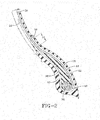
FIGURE 2 is a magnified view of section A-A fromFIGURE 1 . -
FIGURE 3 is a cross-section of a second example tire constructed in accordance with this invention; -
FIGURE 4 is a magnified view of section B-B fromFIGURE 3 ; and, -
FIGURE 5 is an exemplary view of a tire showing how RhoM may be calculated. - "Apex" means an elastomer component positioned radially above a bead core.
- "Axial" and "axially" mean lines or directions that are parallel to the axis of rotation of the tire. "Axially inward" means lines or directions that are parallel to the axis of rotation of the tire and relatively toward the inside of the tire. "Axially outward" means lines or directions that are parallel to the axis of rotation of the tire and relatively toward the outside of the tire.
- "Bead" means that part of the tire comprising an annular tensile member and shaped to fit the design rim.
- "Carcass" means the tire structure apart from the belt structure, tread, undertread, and sidewall rubber, but including the beads and plies.
- "Chafers" refers to narrow strips of material placed around the outside of the bead to protect cord plies from degradation and chaffing caused by movement of the rim against the tire.
- "Circumferential" means lines or directions extending along the perimeter of the surface of the annular tread perpendicular to the axial direction.
- "Cord" means one of the reinforcement strands which the plies in the tire comprise.
- "Equatorial plane (EP)" means the plane perpendicular to the tire's axis of rotation and passing through the center of its tread.
- "Ply" means a continuous layer of rubber-coated cords.
- "Radial" and "radially" mean directions radially toward or away from the axis of rotation of the tire.
- "Radial-ply tire" means a belted or circumferentially-restricted pneumatic tire in which the ply cords (which may or may not extend from bead to bead) are laid at cord angles between 65 degrees and 90 degrees with respect to the equatorial plane of the tire.
- "RhoM" is defined, see
FIGURE 5 , by finding the center point between the ply line bead pivot point (45 degrees from the bead center at the ply line centerline) and the ply line centerline at the tire radial centerline. To calculate RhoM, one must first locate two points on the tire: the ply line pivot point (P) and ply line centerpoint (C). The ply line pivot point (P) is located at the intersection of the ply line centerline and a line (Lp) drawn at an angle theta of 45 degrees relative to the axis of rotation and extending from the bead center. The ply line centerpoint (C) is located at the ply line centerline at cross-sectional centerline (CL). The minimum gauge (MG) is determined for a given tire by summing the following: 1) desired tread depths; 2) required under tread gauge; 3) reinforcing belt gauges; 4) any insulating gum layers between the above components; and 5) one half of the thickness of the ply. For the embodiment shown, this point is located at the cross-sectional centerline (CL) at the minimum gauge (MG) to the top of the reinforcing ply plus one-half of the ply gauge. The minimum gauge (MG) is determined for a given tire by summing the following: 1) desired tread depth; 2) required undertread gauge; 3) reinforcing belt gauges; 4) any insulating gum layers between the above components; and 5) one-half the thickness of the ply. A line extending between these points defines the line PC. At the midpoint of the PC line, parallel to the axis of rotation is the RhoM line. The distance from the tire's axis of rotation (AR) and the RhoM line is RhoM (or the midline radius). The description of the ply line and other tire geometry parameters are discussed in more detail inUS-A- 5,261,474 . - "TAW" means tread arc width.
- "Tread" means a molded rubber component which, when bonded to the rest of the tire, includes that portion of the tire that comes into contact with the road when the tire is normally inflated and under normal load, that is, the footprint.
- Referring now to the drawings wherein the showings are for purposes of illustrating embodiments of the invention only and wherein like reference numerals are understood to refer to like components,
FIGURE 1 shows apneumatic tire 10 having acarcass 30 according to one embodiment of this invention. The non-carcass portion of thetire 10 may be of any conventional design and includes aninner liner 12 positioned on an inner surface of thecarcass 30 andsidewall rubber portions carcass 30.Chafers sidewall rubber 14 on lower sides of the outer surface of thecarcass 30. Abelt package 16 may be positioned on thecrown portion 32 of the outer surface of thecarcass 30 and atread 20 may be positioned on thebelt package 16. Thepneumatic tire 10 has an equatorial plane EP along its centerline and a RhoM line RL. The meaning of "RhoM line" is explained in the definition section above and its determination for a generic tire is shown inFIGURE 5 . - With reference now to
FIGURES 1-4 , thecarcass 30 includes first and secondannular beads second apexes annular beads carcass 30 also includes a continuousradial ply 38 extending from afirst end 40 proximal to the firstannular bead 34, through thecrown portion 32, and to asecond end 42 proximal to the secondannular bead 34, as shown. Thecarcass 30 also includes a non-continuousradial ply 44 comprising afirst portion 46 and asecond portion 48 separate and distinct from thefirst portion 46. For the embodiment shown, thefirst portion 46 of the non-continuousradial ply 44 extends around the firstannular bead 34 and does not extend above the RhoM line. Thesecond portion 48 of the non-continuousradial ply 44 may similarly extend around the secondannular bead 34 and similarly may not extend above the RhoM line. This positioning of the non-continuous ply 44portions tire 10 prevents thenon-continuous ply 44 from going through the cyclic deformation that known non-continuous plies experience. - With continuing reference to
FIGURES 1-4 , the first andsecond portions non-continuous ply 44 have first and second ends 50, 52 and 54, 56, respectively. In one embodiment, the first ends 50, 54 are positioned axially inward of the second ends 52, 56, as shown. Thefirst end 40 of the continuousradial ply 38 may be positioned between the first and second ends 50, 52 of thefirst portion 46. Similarly, thesecond end 42 of the continuousradial ply 38 may be positioned between the first and second ends 54, 56 of thesecond portion 48. This positioning of thecontinuous ply 38 with respect to the first andsecond portions non-continuous ply 44 provides a stronger connection between the plies and thus reduces the chance for ply slip. - Still referring to
FIGURES 1-4 , in one embodiment, along a length L1 of thefirst end 40 of thecontinuous ply 38 thefirst end 50 of thefirst portion 46 of thenon-continuous ply 44 contacts an axially inward side of thefirst end 40 of thecontinuous ply 38 and thesecond end 52 of thefirst portion 46 of thenon-continuous ply 44 contacts an axially outward side of thefirst end 40 of thecontinuous ply 38. Similarly, along a length L2 of thesecond end 42 of thecontinuous ply 38 thefirst end 54 of thesecond portion 48 of thenon-continuous ply 44 contacts an axially inward side of thesecond end 42 of thecontinuous ply 38 and thesecond end 56 of thesecond portion 48 of thenon-continuous ply 44 contacts an axially outward side of thesecond end 42 of thecontinuous ply 38. This contact improves the connection between the plies. The actual dimensions of the lengths L1 and L2 can be any chosen with the proficiency of a person of skill in the art. In a specific embodiment, shown, the lengths L1 and/or L2 may be positioned radially above theapexes - With continuing reference to
FIGURES 1-4 , in one embodiment, thefirst end 40 of the continuousradial ply 38 is positioned between the firstannular bead 34 and thefirst portion 46 of the non-continuous radial ply 44 (see especiallyFIGURES 2 and4 ). Similarly, thesecond end 42 of the continuousradial ply 38 is positioned between the secondannular bead 34 and thesecond portion 48 of the non-continuousradial ply 44. This positioning of thecontinuous ply 38 with respect to the first andsecond portions annular beads continuous ply 38 and thus reduces the chance for thecontinuous ply 38 to slip. In one specific embodiment, thefirst end 40 of thecontinuous ply 38 contacts thefirst bead 34 on one side and contacts thefirst portion 46 of thenon-continuous ply 44 on the other side, as shown. Similarly, thesecond end 42 of thecontinuous ply 38 may contact thesecond bead 34 on one side and contact thesecond portion 48 of thenon-continuous ply 44 on the other side. This close contact of the ends of thecontinuous ply 38 between thebeads portions non-continuous ply 44 serves to "clamp" thecontinuous ply 38 to thebeads - In one embodiment, shown in
FIGURES 1-2 , the first and second ends 40, 42 of thecontinuous ply 38 extend at least partially along axially inward sides of the first andsecond apexes FIGURES 3-4 , the first and second ends 40, 42 of thecontinuous ply 38 extend at least partially along axially outward sides of the first andsecond apexes continuous ply 38 may extend along the axially inward side of an apex 36 while theother end opposite apex 36. This positioning of thecontinuous ply 38 with respect to theapexes - Referring again to
FIGURES 1-4 , it should be noted that the total length as well as the absolute and relative positioning of the first andsecond portions non-continuous ply 44 can be altered by the tire designer to adjust tire performance as desired. In one embodiment, shown, thesecond end 52 of thefirst portion 46 of thenon-continuous ply 44 extends radially above thefirst end 50 and similarly thesecond end 56 of thesecond portion 48 of thenon-continuous ply 44 extends radially above thefirst end 56 of thesecond portion 48 of thenon-continuous ply 44. - With continuing reference to
FIGURES 1-4 , it should be noted that other embodiments are contemplated to enable tire designers to adjust tire performance. In one embodiment, one or both of theplies continuous ply 38 may be replaced with a non-continuous ply comprising a first segment positioned proximal to the firstannular bead 34 and a second segment positioned proximal to the secondannular bead 34. The tire designer may also alter the cord angles of theplies
Claims (15)
- A pneumatic tire comprising a carcass (30), the carcass (30) comprising first and second annular beads (34), the carcass further comprising:(A) at least one a continuous ply (38) having a first end (40) proximal to the first annular bead and a second end (42) proximal to the second annular bead, and at least one non-continuous ply (44) with a first portion (46) and a second portion (48) separate and distinct from the first portion (46), wherein:the first portion (46) of the non-continuous ply (44) extends around the first annular bead, does not extend above the RhoM line of the carcass (30) and has first and second ends (50, 52);the second portion (48) of the non-continuous ply (44) extends around the second annular bead, does not extend above the RhoM line of the carcass (30) and has first and second ends (54, 56); andthe second end (42) of the continuous ply (38) is positioned between the first and second ends (54, 56) of the second end (42) of the non-continuous ply (38) and/or the first end (40) of the continuous ply (38) is positioned between the first and second ends (50, 52) of the first portion (46) of the non-continuous ply (44); or(B) a first ply segment positioned proximal to the first annular bead, a second ply segment positioned proximal to the second annular bead, and a non-continuous ply (38) with a first portion (46) and a second portion (48) separate and distinct from the first portion (46), wherein:the first portion (46) of the non-continuous ply (44) extends around the first annular bead and has first and second ends (50, 52);the second portion (48) of the non-continuous ply (44) extends around the second annular bead and has first and second ends (54, 56); andthe first ply segment is positioned between the first and second ends (50, 52) of the first portion (46) of the non-continuous ply (44) and/or the second ply segment is positioned between the first and second ends (54, 56) of the second portion (48) of the non-continuous ply (44).
- The tire having the features of option (A) of claim 1.
- The tire having the features of option (B) of claim 1.
- The tire of at least one of the previous claims wherein the second end (42) of the continuous ply (38) is positioned between the first and second ends (54, 56) of the second end (42) of the non-continuous ply (38) and wherein the first end (40) of the continuous ply (38) is positioned between the first and second ends (50, 52) of the first portion (46) of the non-continuous ply (44).
- The tire of at least one of the previous claims wherein the second end (42) of the continuous ply (38) is positioned between the first and second ends (54, 56) of the second end (42) of the non-continuous ply (38) and wherein the first end (40) of the continuous ply (38) is not positioned between the first and second ends (50, 52) of the first portion (46) of the non-continuous ply (44).
- The tire of at least one of the previous claims wherein the continuous ply (38) is a continuous radial ply and the non-continuous ply (44) is a non-continuous radial ply.
- The tire of at least one of the previous claims wherein the first ply segment and the second ply segment are radial ply segments.
- The tire of at least one of the previous claims further comprising first and second apexes (36) positioned radially above the first and second annular beads (34), respectively, and wherein the first and second ends (40, 42) of the continuous ply (38) extend at least partially along axially inward sides of the first and second apexes (36), respectively.
- The tire of at least one of the previous claims further comprising first and second apexes (36) positioned radially above the first and second annular beads (34), respectively, and wherein the first and second ends (40, 42) of the continuous ply (38) extend at least partially along axially outward inward sides of the first and second apexes (36), respectively.
- The tire of at least one of the previous claims wherein:the first end (50) of the first portion (46) of the non-continuous ply (44) is positioned axially inward of the second end (52) of the first portion (46) of the non-continuous ply (44);the first end (54) of the second portion (48) of the non-continuous ply (44) is positioned axially inward of the second end (56) of the second portion (48) of the non-continuous ply (44);along a length of the first end (40) of the continuous ply (38), the first end (50) of the first portion (46) of the non-continuous ply (44) contacts an axially inward side of the first end (40) of the continuous ply (38) and the second end (52) of the first portion (46) of the non-continuous ply (44) contacts an axially outward side of the first end (40) of the continuous ply (38); and,along a length of the second end (42) of the continuous ply (38), the first end (54) of the second portion (48) of the non-continuous ply (44) contacts an axially inward side of the second end (42) of the continuous ply (38) and the second end (52) of the second portion (48) of the non-continuous ply (44) contacts an axially outward side of the second end (42) of the continuous ply (38).
- The tire of at least one of the previous claims wherein:the first end (50) of the first portion (46) of the non-continuous ply (44) is positioned axially inward of the second end (52) of the first portion (46) of the non-continuous ply (44);the second end (52) of the first portion (46) of the non-continuous ply (44) extends radially above the first end (50) of the first portion (46) of the non-continuous ply (44);the first end (54) of the second portion (48) of the non-continuous ply (44) is positioned axially inward of the second end (56) of the second portion (48) of the non-continuous ply (44); andthe second end (56) of the second portion (48) of the non-continuous ply (44) extends radially above the first end (54) of the second portion (48) of the non-continuous ply (44).
- The tire of at least one of the previous claims wherein the first end (40) of the continuous ply (38) is positioned between the first annular bead and the first portion (46) of the non-continuous ply (44); and the second end (42) of the continuous ply (38) is positioned between the second annular bead and the second portion (48) of the non-continuous ply (38).
- The tire of at least one of the previous claims wherein:the first end (50) of the first portion (46) of the non-continuous ply (44) is positioned axially inward of the second end (52) of the first portion (46) of the non-continuous ply (44);the first end (54) of the second portion (48) of the non-continuous ply (44) is positioned axially inward of the second end (56) of the second portion (48) of the non-continuous ply (44);along a length of the first ply segment, the first end (50) of the first portion (46) of the non-continuous ply (44) contacts an axially inward side of the first ply segment and the second end (52) of the first portion (46) of the non-continuous ply (44) contacts an axially outward side of the first ply segment; andalong a length of the second ply segment, the first end (54) of the second portion (48) of the non-continuous ply (44) contacts an axially inward side of the second ply segment and the second end (56) of the second portion (48) of the non-continuous ply (44) contacts an axially outward side of the second ply segment.
- The tire of at least one of the previous claims wherein:the first ply segment is positioned between the first annular bead and the first portion (46) of the non-continuous ply (44); andthe second ply segment is positioned between the second annular bead and the second portion (48) of the non-continuous ply (44).
- The tire of at least one of the previous claims wherein the first ply segment is a first portion of a second non-continuous ply and the second ply segment is a second portion of the second non-continuous ply.
Applications Claiming Priority (1)
| Application Number | Priority Date | Filing Date | Title |
|---|---|---|---|
| US12/952,370 US20120125511A1 (en) | 2010-11-23 | 2010-11-23 | Pneumatic tire carcass with non-continuous ply in the bead areas |
Publications (1)
| Publication Number | Publication Date |
|---|---|
| EP2455237A1 true EP2455237A1 (en) | 2012-05-23 |
Family
ID=45217251
Family Applications (1)
| Application Number | Title | Priority Date | Filing Date |
|---|---|---|---|
| EP11189959A Withdrawn EP2455237A1 (en) | 2010-11-23 | 2011-11-21 | Pneumatic tire carcass with non-continuous ply in the bead areas |
Country Status (4)
| Country | Link |
|---|---|
| US (1) | US20120125511A1 (en) |
| EP (1) | EP2455237A1 (en) |
| CN (1) | CN102555688B (en) |
| BR (1) | BRPI1105624A2 (en) |
Cited By (1)
| Publication number | Priority date | Publication date | Assignee | Title |
|---|---|---|---|---|
| WO2016046069A1 (en) * | 2014-09-24 | 2016-03-31 | Compagnie Generale Des Etablissements Michelin | Tyre having greater resistance to unseating |
Families Citing this family (1)
| Publication number | Priority date | Publication date | Assignee | Title |
|---|---|---|---|---|
| CN108081878A (en) * | 2017-12-18 | 2018-05-29 | 安徽佳通乘用子午线轮胎有限公司 | A kind of pneumatic tire with double triangle rubbers |
Citations (3)
| Publication number | Priority date | Publication date | Assignee | Title |
|---|---|---|---|---|
| US5261474A (en) | 1992-12-31 | 1993-11-16 | The Goodyear Tire & Rubber Company | Earthmover tire |
| JP2001301429A (en) * | 2000-04-25 | 2001-10-31 | Yokohama Rubber Co Ltd:The | Pneumatic tire for heavy load |
| FR2912346A1 (en) * | 2007-02-12 | 2008-08-15 | Michelin Soc Tech | Tire for heavy truck, has connecting reinforcement that is formed of set of reinforcements oriented along average direction making angle equal to fifty degree with circumferential direction |
Family Cites Families (3)
| Publication number | Priority date | Publication date | Assignee | Title |
|---|---|---|---|---|
| US6142205A (en) * | 1998-03-13 | 2000-11-07 | The Goodyear Tire & Rubber Company | Tire with composite ply structure |
| US6709540B1 (en) * | 1999-06-17 | 2004-03-23 | The Goodyear Tire & Rubber Company | Composite ply structure for tires and method of manufacture |
| US7017635B2 (en) * | 2002-12-27 | 2006-03-28 | The Goodyear Tire & Rubber Company | Tire with outside-in ply construction |
-
2010
- 2010-11-23 US US12/952,370 patent/US20120125511A1/en not_active Abandoned
-
2011
- 2011-11-17 BR BRPI1105624-0A patent/BRPI1105624A2/en not_active IP Right Cessation
- 2011-11-21 EP EP11189959A patent/EP2455237A1/en not_active Withdrawn
- 2011-11-23 CN CN201110375538.7A patent/CN102555688B/en not_active Expired - Fee Related
Patent Citations (3)
| Publication number | Priority date | Publication date | Assignee | Title |
|---|---|---|---|---|
| US5261474A (en) | 1992-12-31 | 1993-11-16 | The Goodyear Tire & Rubber Company | Earthmover tire |
| JP2001301429A (en) * | 2000-04-25 | 2001-10-31 | Yokohama Rubber Co Ltd:The | Pneumatic tire for heavy load |
| FR2912346A1 (en) * | 2007-02-12 | 2008-08-15 | Michelin Soc Tech | Tire for heavy truck, has connecting reinforcement that is formed of set of reinforcements oriented along average direction making angle equal to fifty degree with circumferential direction |
Cited By (4)
| Publication number | Priority date | Publication date | Assignee | Title |
|---|---|---|---|---|
| WO2016046069A1 (en) * | 2014-09-24 | 2016-03-31 | Compagnie Generale Des Etablissements Michelin | Tyre having greater resistance to unseating |
| CN106715156A (en) * | 2014-09-24 | 2017-05-24 | 米其林集团总公司 | Tyre having greater resistance to unseating |
| CN106715156B (en) * | 2014-09-24 | 2019-02-19 | 米其林集团总公司 | Tires with better lap resistance |
| US10792959B2 (en) | 2014-09-24 | 2020-10-06 | Compagnie Generale Des Etablissements Michelin | Tire having greater resistance to unseating |
Also Published As
| Publication number | Publication date |
|---|---|
| BRPI1105624A2 (en) | 2013-05-28 |
| US20120125511A1 (en) | 2012-05-24 |
| CN102555688A (en) | 2012-07-11 |
| CN102555688B (en) | 2015-08-26 |
Similar Documents
| Publication | Publication Date | Title |
|---|---|---|
| CN100503278C (en) | Tyre for heavy vehicles | |
| JP4670880B2 (en) | Heavy duty pneumatic tire | |
| CN100519232C (en) | Tire for heavy vehicles | |
| JP4195332B2 (en) | Pneumatic tire | |
| JP2005212563A (en) | Pneumatic tire and manufacturing method thereof | |
| JP6988415B2 (en) | Pneumatic tires | |
| US20060118220A1 (en) | Pneumatic tire with elliptical shoulder | |
| US9073389B2 (en) | All steel fabric radial construction for agricultural tires | |
| US8578991B2 (en) | Tire bead geometry | |
| CN109982868A (en) | Hoop reinforcement for tires of heavy civil engineering vehicles | |
| US11554615B2 (en) | Pneumatic tire | |
| US20090090449A1 (en) | Pneumatic tire | |
| EP2455237A1 (en) | Pneumatic tire carcass with non-continuous ply in the bead areas | |
| EP2156966A1 (en) | Pneumatic tire with single non-continuous carcass ply | |
| EP3031630B1 (en) | Aircraft tire | |
| CN101213092B (en) | Tyre for heavy vehicle | |
| EP2199108A1 (en) | Pneumatic tire | |
| JP2007015638A (en) | Pneumatic tire | |
| CN101213093B (en) | Tyre for heavy vehicle | |
| CN108367636B (en) | Pneumatic tires | |
| CN101213095B (en) | tires for heavy vehicles | |
| EP2159077A1 (en) | Modular two-ply tire with directional side plies | |
| US20080163969A1 (en) | Pneumatic tire with buttressed sidewall | |
| JP2013184654A (en) | Pneumatic tire for light truck | |
| CN109952211A (en) | The hoop reinforcement of tire for heavy civil engineering vehicle |
Legal Events
| Date | Code | Title | Description |
|---|---|---|---|
| PUAI | Public reference made under article 153(3) epc to a published international application that has entered the european phase |
Free format text: ORIGINAL CODE: 0009012 |
|
| AK | Designated contracting states |
Kind code of ref document: A1 Designated state(s): AL AT BE BG CH CY CZ DE DK EE ES FI FR GB GR HR HU IE IS IT LI LT LU LV MC MK MT NL NO PL PT RO RS SE SI SK SM TR |
|
| AX | Request for extension of the european patent |
Extension state: BA ME |
|
| STAA | Information on the status of an ep patent application or granted ep patent |
Free format text: STATUS: THE APPLICATION IS DEEMED TO BE WITHDRAWN |
|
| 18D | Application deemed to be withdrawn |
Effective date: 20121123 |