EP2450289A1 - Opening device for straws for liquid food containers - Google Patents
Opening device for straws for liquid food containers Download PDFInfo
- Publication number
- EP2450289A1 EP2450289A1 EP10794070A EP10794070A EP2450289A1 EP 2450289 A1 EP2450289 A1 EP 2450289A1 EP 10794070 A EP10794070 A EP 10794070A EP 10794070 A EP10794070 A EP 10794070A EP 2450289 A1 EP2450289 A1 EP 2450289A1
- Authority
- EP
- European Patent Office
- Prior art keywords
- opening
- straws
- container
- thickness
- opening device
- Prior art date
- Legal status (The legal status is an assumption and is not a legal conclusion. Google has not performed a legal analysis and makes no representation as to the accuracy of the status listed.)
- Granted
Links
Images






Classifications
-
- B—PERFORMING OPERATIONS; TRANSPORTING
- B65—CONVEYING; PACKING; STORING; HANDLING THIN OR FILAMENTARY MATERIAL
- B65D—CONTAINERS FOR STORAGE OR TRANSPORT OF ARTICLES OR MATERIALS, e.g. BAGS, BARRELS, BOTTLES, BOXES, CANS, CARTONS, CRATES, DRUMS, JARS, TANKS, HOPPERS, FORWARDING CONTAINERS; ACCESSORIES, CLOSURES, OR FITTINGS THEREFOR; PACKAGING ELEMENTS; PACKAGES
- B65D15/00—Containers having bodies formed by interconnecting or uniting two or more rigid, or substantially rigid, sections made of different materials
- B65D15/22—Containers having bodies formed by interconnecting or uniting two or more rigid, or substantially rigid, sections made of different materials of polygonal cross-section
-
- B—PERFORMING OPERATIONS; TRANSPORTING
- B65—CONVEYING; PACKING; STORING; HANDLING THIN OR FILAMENTARY MATERIAL
- B65D—CONTAINERS FOR STORAGE OR TRANSPORT OF ARTICLES OR MATERIALS, e.g. BAGS, BARRELS, BOTTLES, BOXES, CANS, CARTONS, CRATES, DRUMS, JARS, TANKS, HOPPERS, FORWARDING CONTAINERS; ACCESSORIES, CLOSURES, OR FITTINGS THEREFOR; PACKAGING ELEMENTS; PACKAGES
- B65D47/00—Closures with filling and discharging, or with discharging, devices
- B65D47/04—Closures with discharging devices other than pumps
- B65D47/06—Closures with discharging devices other than pumps with pouring spouts or tubes; with discharge nozzles or passages
-
- B—PERFORMING OPERATIONS; TRANSPORTING
- B65—CONVEYING; PACKING; STORING; HANDLING THIN OR FILAMENTARY MATERIAL
- B65D—CONTAINERS FOR STORAGE OR TRANSPORT OF ARTICLES OR MATERIALS, e.g. BAGS, BARRELS, BOTTLES, BOXES, CANS, CARTONS, CRATES, DRUMS, JARS, TANKS, HOPPERS, FORWARDING CONTAINERS; ACCESSORIES, CLOSURES, OR FITTINGS THEREFOR; PACKAGING ELEMENTS; PACKAGES
- B65D2231/00—Means for facilitating the complete expelling of the contents
- B65D2231/02—Precut holes or weakened zones
-
- B—PERFORMING OPERATIONS; TRANSPORTING
- B65—CONVEYING; PACKING; STORING; HANDLING THIN OR FILAMENTARY MATERIAL
- B65D—CONTAINERS FOR STORAGE OR TRANSPORT OF ARTICLES OR MATERIALS, e.g. BAGS, BARRELS, BOTTLES, BOXES, CANS, CARTONS, CRATES, DRUMS, JARS, TANKS, HOPPERS, FORWARDING CONTAINERS; ACCESSORIES, CLOSURES, OR FITTINGS THEREFOR; PACKAGING ELEMENTS; PACKAGES
- B65D2231/00—Means for facilitating the complete expelling of the contents
- B65D2231/02—Precut holes or weakened zones
- B65D2231/022—Precut holes or weakened zones for permitting the insertion of a tubular contents-removing device, e.g. a drinking straw
Definitions
- This invention relates to an opening device for straws of a liquid food container which fills up and packages beverages etc.
- thermoplastics lid of the paper container filled up with liquid food such as cow's milk and soft drinks.
- a paper substrate is covered by an outer layer and an inner layer of thermoplastics
- a straw hole is covered with thermoplastics and a straw hole sealing part is formed.
- the straw hole sealing part is formed by injection molding. In the straw hole sealing part, it is required for the straw to penetrate easily without sliding, and for the straw hole sealing part to be soft and to keep the tip of the straw from bending, when sticking the straw.
- the straw hole sealing part can be easily penetrated with a straw by using the conventional thin-walled groove portion, there are risks that the thin-walled groove portion may break by shock etc. in carrying / distribution process of the liquid food container. If thickness of the thin-walled groove portion is made thin, the straw hole sealing part cannot inconveniently penetrate easily.
- the object of the present invention is to provide an opening device for a straw of a liquid food container being capable of easily opening a straw hole by sticking without leaking and breaking by external forces of vibrations and the like at the transportation, in the liquid food container having a thermoplastic resin top formed in an upper end edge of a body of the packaging material laminated on paper substrate with thermoplastic resin.
- An opening device for straws of a liquid food container of this invention is the opening device for straws of a liquid food container which comprises a bottom and a main body formed with an packaging material laminated both sides of a paper substrate with thermoplastic resin, and a top formed with thermoplastic resin and joined to a upper end of the main body; is characterized by that the opening of the opening device for straws is integrally formed with the top and comprises a plurality of steps and level differences on the front side and the back side of the opening, the level differences on the front side and the level differences on the back side are formed at edges of the level differences on the back and the front with overlaps, lengths of the overlaps of edges of the level differences are thinner than thickness of the steps, the level differences are easy fracture parts, the steps have 190% - 650% of thickness to the lengths of the overlaps of the edges, and the overlap of the edge is 0.09-0.11 millimeter in length.
- the step on the front side of the opening is flat on the surface
- the step on the back side of the opening is flat on the surface
- the step on the front side of the opening is roundish on the surface
- the step on the back side of the opening is roundish on the surface
- the step on the front side of the opening is rounded on the surface, and the step on the back side of the opening is flat on the surface.
- the projection is formed in one of the steps on the front side.
- thermoplastic resin which forms the top, and the thermoplastic resin laminated on the paper substrate of the packaging material consist of the same or different kind of low density polyethylene.
- the liquid food container of the opening device for straws in this invention comprises the bottom and the main body formed with the packaging material laminated the both sides of the paper substrate with thermoplastic resin, and the top joined to the upper end of the main body, and formed, for example with injection molding with thermoplastic resin. Since the top is formed with thermoplastic resin, the shape and the thinness can be controlled / designed easily.
- the opening of the opening device for straws is integrally formed with the top and comprises a plurality of steps and level differences on the front side and the back side of the opening.
- the step on the front side is touched first, and it slides easily, and moves to the level difference, and the tip of the straw stops there.
- force is applied to the level difference, it is pushed into the inside of the liquid food container so that the opening may curve, and the edges of the level differences of the both sides covering the level difference on the back side which adjoins from the level difference on the front side are extended gradually, and the straw tip is further stuffed into the portion.
- the level difference is fractured by the straw tip further stuffed in.
- the straw is further stuffed in and fracture area further spreads as a starting point of the fracture point.
- the edge of the level difference is protected by the step, and since the step is thickly, an opening is not damaged nor broken carelessly.
- the opening is not simply fractured by an external force, such as vibration at the delivery, and does not leak, and the thrust of the straw can open the straw hole easily.
- the thickness of the edge of the level difference is thinner than the thickness of the step, and the step has 190% - 650%, preferably 190% - 350% of thickness to the length of the overlap of the edge.
- the step has thinner thickness than 190%, there is a risk that the step may embrittle relatively and the step may break with the straw.
- the step has thicker thickness than 650%, there is a risk that the step has too much thickness, and the thickness may stop to open the whole opening after fracturing from a level difference.
- the overlap of the edges is 0.09-0.11 millimeter in length.
- the opening does not break simply and does not leak with this length of the overlap of the edges, and the straw hole is easily opened by the thrust of the straw.
- the step on the front side of the opening is flat on the surface, and the step on the back side of the opening is flat on the surface.
- the design is simple and advantageous to manufacture of the mold etc.
- the step on the front side of the opening is roundish on the surface
- the step on the back side of the opening is roundish on the surface. Since the step is roundish on the surface and the straw point is guided to the level difference on the front side, it is advantageous to breaking with the straw. Since the step on the back side is roundish on the surface, it can raise mechanical strength with the swelling.
- the step on the front side of the opening is roundish on the surface, and the step on the back side of the opening is flat on the surface.
- the consumers can stick the straw into the mark of the projection, and the straw tip from the projection can slide on the step, can run against the level difference, can stop there, and can open the opening easily.
- This container consists of the main body 2 of the paper container, and the dome-like container top 3 of the thermoplastic resin joined to the upper end of the main body 2 and formed by injection, and the lid 5 for the spouts is integrally formed in the center of the top of the container top 3.
- the opening 4 is integrally formed with the lid 5, and is formed in shape dented from the top face of the lid.
- the whole container is outlined with reference to the reference example of Fig. 2 .
- the package body 2 is obtained from the packaging material in which the thermoplastic resin is laminated in both sides of the paper substrate.
- the tube shape packaging material is transversally sealed, the flaps and fins formed with the transversal seal are folded up, and the bottom of the package body 2 is formed.
- the lid 5 for the spouts is formed integrally.
- the gripper 6 is pulled up, the fragile weak line (thin part) surroundings around the outer edge of the lid 5 is torn, the lid 5 is pulled up, and the spout is opened.
- the straw hole opening device for the straws
- the opening 4 of the opening device for the straws is integrally formed with the top 3 (and lid 5).
- the thermoplastic resin by which the top is formed, and the thermoplastic resin which is laminated on the paper substrate of an packaging material include for example, polyolefin resin, such as polyethylene, polypropylene, and ethylenic copolymer, co-extrusion polymer or blend polymer containing low density polyethylene (LDPE), linear low density polyethylene (LLDPE), medium density polyethylene, and polyethylene, linear low density polyethylene (mLLDPE) having the narrow molecular weight distribution polymerized using the metallocene catalyst, and blend polymer containing at least mLLDPE etc.
- the thermoplastic resin consists of the same kind or different kind of low density polyethylene.
- Container 1 of Example is obtained by an apparatus etc. which manufactures the composite container shown, for example in Fig. 6 .
- Web-like lamination paper packaging material 31 is cut out into the predetermined configuration 32, and container sleeve 33 having longitudinal seal to the container lengthwise direction is obtained.
- Container top 3 having thin container wall is formed in the top end of the sleeve body 2 with plastic injection molding 35. From the opening of the container bottom of the bottom end of the sleeve, a food product is filled up with the filling apparatus 37, and the bottom is sealed.
- the container 1 having the main body 2 and the top 3 is obtained.
- the opening 4 of the opening device for the straws is integrally formed with top 3, and has a plurality of steps 7 and level differences 8 on the front side and the back side of the opening 4, and the level difference on the front side and the level difference on the back side are overlapped and formed at the back and front of the edge 9 of the level differences.
- the thickness of the edge 9 of the level difference 8 is thinner than the thickness of the step 7, and the level difference 8 is the easy fracture part.
- the appearance of the container, and the opening device for straws according to Example 1 is shown in Fig. 3 .
- the container consists of the paper package body 2 and the dome-like container top 3 of thermoplastic resin joined to the upper end of the main body 2, and formed by injection, and the lid 5 for a spout is integrally formed in the center of the top of container top 3.
- the opening 4 is integrally formed with the lid 5, and is formed in shape dented from the top face of the lid.
- the bottom surface of the dent of the opening 4 comprises three flat surface steps 7, and a plurality of the level differences 8 on the back side and the front side at the bottom surface (the back side not shown in Fig. 3 ).
- the flat surface shape of the opening 4 is the fan shape spreading in the outer edge of the lid 5.
- the level difference 8 is formed in parallel with the circular arc of a fan shape, and the step 7 also has the shape of a partial fan shape. Since the flat surface shape of the opening 4 is the fan shape which spreads in the outer edge of the lid 5, the straw 10 can be certainly struck not in the center section but in the circumference part of the dome-like lid 5 of the dome-like lid 5 which is easy to deform relative. Since the straight-line wall contributed to reinforcement is formed to the edge of the opening 4 from the center of the lid, the mechanical strength of the top and the lid is reinforced.
- the level difference 8 is formed in parallel with the circular arc of fan shape, and the breaking easily level difference 8 certainly traps the tip of the straw 10.
- the thickness of the edge 9 of the level difference 8 is 0.1 mm.
- the thickness of the step 7 is 0.2 mm.
- the thickness of the edge of the level difference is thinner than the thickness of the step, and the step has 200% of thickness to the length of the overlap of the edge.
- the level difference 8 is the easy fracture part.
- the appearance of the opening device for the container and the straws according to this Example 2 is shown in Fig. 5 .
- the container consists of the main body 2 of the paper container, and the dome-like container top 3 of the thermoplastic resin which is joined to the upper end of the main body 2 and is formed by injection, and the lid 5 for the spouts is integrally formed in the center top of the container top 3.
- the opening 4 is integrally formed with the lid 5, and is formed in shape dented from the top face of the lid.
- the bottom surface of the dent of the opening 4 comprises three flat surface steps 7, and three level differences 8 on the back side and the front side at the bottom surface (the back side not shown in Fig. 5 ).
- the flat surface shape of the opening 4 is a fan shape which spreads in the outer edge of the lid 5, and lacks the center section of the lid 5.
- the level difference 8 is formed in parallel with the circular arc of the fan shape, and the step 7 has the shape of the partial fan shape. Since the flat surface shape of the opening 4 is the fan shape which spreads in the outer edge of the lid 5, the straw 10 can be certainly struck not in the center section but in the circumference part of the dome-like lid 5 of the dome-like lid 5 which is easy to deform relative. Since the straight-line wall contributed to reinforcement is formed to the edge from the center of the lid, the mechanical strength of the top and the lid is reinforced.
- any level difference which has the low unsealing possibility and does not contribute to unsealing is not formed at the center section and near the fan shape of the lid 5.
- the fan shape is the shape missing in the center section of the lid 5, it can avoid that the consumers strike the straw 10 in the needless part, and take time in unsealing.
- the level difference 8 is formed in parallel with the circular arc of fan shape, and the breaking easily level difference 8 certainly traps the tip of the straw 10.
- the thickness of the edge 9 of the level difference 8 is 0.1 mm.
- the thickness of the step 7 is 0.2 mm.
- the thickness of the edge of the level difference is thinner than the thickness of the step, and the step has 200% of thickness to the length of the overlap of the edge.
- the level difference 8 is the easy fracture part.
- FIG. 7 The appearance of the opening device for the container and the straws according to the reference example 3 is shown in Fig. 7 .
- This container consists of the main body 2 of the paper container, and the dome-like container top 3 of the thermoplastic resin which is joined to the upper end of the main body 2, and is formed by injection, and the lid 5 for spouts is integrally formed in the center of the container top 3.
- the opening 4 is integrally formed with the lid 5, and is formed in shape dented from the top face of the lid.
- the bottom surface of the dent of the opening 4 comprise a plurality of roundish surface steps 7 and level differences 8 on the back side and the front side at the bottom surface (the back side not shown in Fig. 7 ).
- the thickness of the edge 9 of the level difference 8 is 0.1 mm.
- the thickness of the step 7 is 0.3 mm.
- the steps 7 by both sides of the back and front has completely overlapped, and there is no overlap in the edges 9 of the level differences 8.
- the opening is fractured simply and leaks easily.
- FIG. 8 The appearance of the container, and the opening device for straws according to Example 4 is shown in Fig. 8 .
- This container consists of the main body 2 of the paper container, and the dome-like container top 3 of the thermoplastic resin which is joined to the upper end of the main body 2, and is formed by injection, and the lid 5 for the spouts is integrally formed in the center of the container top 3.
- the opening 4 is integrally formed with the lid 5, and is formed in shape dented from the top face of the lid.
- the bottom surface of the dent of the opening 4 comprises six flat surface steps 7, and five level differences 8 on the back side and the front side at the bottom surface (the back side not shown in Fig. 8 ).
- the thickness of the edge 9 of the level difference 8 is 0.1 mm.
- the thickness of the step 7 is 0.2 mm.
- the thickness of the edge of the level difference is thinner than the thickness of the step, and the step has 200% of thickness to the length of the overlap of the edges.
- the level difference 8 is the easy fracture part.
- FIG. 9 The appearance of the container, and the opening device for the straws according to Example 5 is shown in Fig. 9 .
- This container consists of the main body 2 of the paper container, and the dome-like container top 3 of the thermoplastic resin which is joined to the upper end of the main body 2, and is formed by injection, and the lid 5 for the spouts is integrally formed in the center of the container top 3.
- the opening 4 is integrally formed with the lid 5, and is formed in shape dented from the top face of the lid.
- the bottom surface of the dent of the opening 4 comprises five roundish surface steps 7, and a plurality of level differences 8 on the back side and the front side at the bottom surface (the back side not shown in Fig. 9 ).
- the thickness of the edge 9 of the level difference 8 is 0.1 mm.
- the thickness of the step 7 is 0.6 mm.
- the thickness of the edge of the level difference is thinner than the thickness of the step, and the step has 600% of thickness to the length of the overlap of the edge.
- the level difference 8 is the easy fracture part.
- Fig. 10 (a) The appearance of the container, and the opening device for the straws according to Example 6 is shown in Fig. 10 (a) .
- This container consists of the main body of the paper container, and the dome-like container top 3 of the thermoplastic resin which is joined to the upper end of the main body and formed by injection, and the lid 5 for the spouts is integrally formed in the center of the container top 3.
- the opening 4 is integrally formed with the lid 5, and is formed in shape dented from the top face of the lid.
- the bottom surface of the dent of the opening 4 comprises four roundish surface steps 7, and a plurality of level differences 8 on the front side at the bottom surface.
- On the back side shown in Fig. 10 (b) it has the flat step 7 and the level difference 8.
- the thickness of the edge 9 of the level difference 8 is 0.1 mm.
- the thickness of the step 7 on the front side and the back side is 0.6 mm.
- the thickness of the edge of the level difference is thinner than the thickness of the step, and the step has 600% of thickness to the length of the overlap of the edge.
- the level difference 8 is the easy fracture part.
- FIG. 11 The appearance of the container, and the opening device for the straws according to the reference example 7 is shown in Fig. 11 .
- This container consists of the main body 2 of the paper container, and the dome-like container top 3 of the thermoplastic resin which is joined to the upper end of the main body 2, and is formed by injection, and the lid 5 for the spouts is integrally formed in the center of the container top 3.
- the opening 4 is integrally formed with the lid 5, and is formed in shape dented from the top face of the lid.
- the bottom surface of the dent of the opening 4 comprises one flat surface steps 7, and one level difference 8 on the back side and the front side at the bottom surface (the back side not shown in Fig. 11 ).
- the thickness of the edge 9 of the level difference 8 is 0.1 mm.
- the thickness of the step 7 is 0.2 mm.
- the number of the steps 7 by the side of the back and front is one, respectively, and the level difference 8 is one. Since the number of the step and the level difference is the singular number as compared with the example, breaking with the straw is difficult.
- FIG. 12 The appearance of the container, and the opening device for the straws according to Example 8 is shown in Fig. 12 .
- This container consists of the main body of the paper container, and the dome-like container top 3 of the thermoplastic resin which is joined to the upper end of the main body and formed by injection, and the lid 5 for the spouts is integrally formed in the center of the container top 3.
- the opening 4 is integrally formed with the lid 5, and is formed in shape dented from the top face of the lid.
- the bottom surface of the dent of the opening 4 comprises some flat surface steps 7, and a plurality of level differences 8 on the back side and the front side at the bottom surface (the back side not shown in Fig. 12 ).
- the thickness of the edge 9 of the level difference 8 is 0.1 mm.
- the thickness of the step 7 is 0.2 mm.
- the thickness of the edge of the level difference is thinner than the thickness of the step, and the step has 200% of thickness to the length of the overlap of the edge.
- the level difference 8 is the easy fracture part.
- FIG. 13 The appearance of the container, and the opening device for the straws according to Example 9 is shown in Fig. 13 .
- This container consists of the main body of the paper container, and the dome-like container top 3 of the thermoplastic resin which is joined to the upper end of the main body and formed by injection, and the lid 5 for the spouts is integrally formed in the center of the top of the container top 3.
- the opening 4 is integrally formed with the lid 5, and is formed in shape dented from the top face of the lid.
- the bottom surface of the dent of the opening 4 comprises some flat surface steps 7, and a plurality of level differences 8 on the front side at the bottom surface.
- the thickness of the edge 9 of the level difference 8 is 0.1 mm.
- the thicknesses of the steps 7 on the front side and the back side are 0.2 mm.
- the thickness of the edge of the level difference is thinner than the thickness of the step, and the step has 200% of thickness to the length of the overlap of the edge.
- the level difference 8 is the easy fracture part.
- the opening 4 of the opening device for the straws is integrally formed with the top 3 (and lid 5).
- the projection 11 is formed in the front side of the step 7.
- the edge of the level difference is protected by the step, and since the step is thickly, an opening is not damaged nor broken carelessly.
- the opening is not simply fractured by an external force, such as vibration at the delivery, and does not leak, and the thrust of the straw can open the straw hole easily.
- the consumers can stick the straw into the mark of the projection, and the straw tip from the projection can slide on the step, can run against the level difference, can stop there, and can open the opening easily.
- the present invention is not limited to the above-mentioned embodiment, and it is possible to make it deform variously based on the object of the present invention, and it does not eliminate them from the scope of the present invention.
- This invention is applicable to manufacture of the container packaged and filled up with the liquid food etc.
Landscapes
- Engineering & Computer Science (AREA)
- Mechanical Engineering (AREA)
- Packages (AREA)
- Cartons (AREA)
- Closures For Containers (AREA)
- Containers Opened By Tearing Frangible Portions (AREA)
- Wrappers (AREA)
Abstract
Description
- This invention relates to an opening device for straws of a liquid food container which fills up and packages beverages etc.
- Conventionally, there are opening devices for straws formed in the thermoplastics lid of the paper container filled up with liquid food, such as cow's milk and soft drinks.
In the opening device for straws, as for the packaging material of the liquid food container, a paper substrate is covered by an outer layer and an inner layer of thermoplastics, a straw hole is covered with thermoplastics and a straw hole sealing part is formed. The straw hole sealing part is formed by injection molding. In the straw hole sealing part, it is required for the straw to penetrate easily without sliding, and for the straw hole sealing part to be soft and to keep the tip of the straw from bending, when sticking the straw. - Therefore, a thin-walled groove portion is formed in the straw hole sealing part to such an extent that sealing performance is not damaged. (Reference patent documents 1)
- Patent documents 1:
JP,2002-362548 - Although the straw hole sealing part can be easily penetrated with a straw by using the conventional thin-walled groove portion, there are risks that the thin-walled groove portion may break by shock etc. in carrying / distribution process of the liquid food container. If thickness of the thin-walled groove portion is made thin, the straw hole sealing part cannot inconveniently penetrate easily.
- The object of the present invention is to provide an opening device for a straw of a liquid food container being capable of easily opening a straw hole by sticking without leaking and breaking by external forces of vibrations and the like at the transportation, in the liquid food container having a thermoplastic resin top formed in an upper end edge of a body of the packaging material laminated on paper substrate with thermoplastic resin.
- An opening device for straws of a liquid food container of this invention is the opening device for straws of a liquid food container which comprises a bottom and a main body formed with an packaging material laminated both sides of a paper substrate with thermoplastic resin, and a top formed with thermoplastic resin and joined to a upper end of the main body; is characterized by that
the opening of the opening device for straws is integrally formed with the top and comprises a plurality of steps and level differences on the front side and the back side of the opening, the level differences on the front side and the level differences on the back side are formed at edges of the level differences on the back and the front with overlaps,
lengths of the overlaps of edges of the level differences are thinner than thickness of the steps, the level differences are easy fracture parts,
the steps have 190% - 650% of thickness to the lengths of the overlaps of the edges, and the overlap of the edge is 0.09-0.11 millimeter in length. - In the preferable embodiment of this invention, the step on the front side of the opening is flat on the surface, and the step on the back side of the opening is flat on the surface.
- In the preferable embodiment of this invention, the step on the front side of the opening is roundish on the surface, and the step on the back side of the opening is roundish on the surface.
- In the preferable embodiment of this invention, the step on the front side of the opening is rounded on the surface, and the step on the back side of the opening is flat on the surface.
- In the preferable embodiment of this invention, the projection is formed in one of the steps on the front side.
- In the preferable embodiment of this invention, the thermoplastic resin which forms the top, and the thermoplastic resin laminated on the paper substrate of the packaging material consist of the same or different kind of low density polyethylene.
- According to the above present invention, the following operation functions are exhibited and an advantageous effect is acquired.
The liquid food container of the opening device for straws in this invention comprises the bottom and the main body formed with the packaging material laminated the both sides of the paper substrate with thermoplastic resin, and the top joined to the upper end of the main body, and formed, for example with injection molding with thermoplastic resin.
Since the top is formed with thermoplastic resin, the shape and the thinness can be controlled / designed easily. - In the feature of the present invention, the opening of the opening device for straws is integrally formed with the top and comprises a plurality of steps and level differences on the front side and the back side of the opening.
When the straw is stuck into the opening, the step on the front side is touched first, and it slides easily, and moves to the level difference, and the tip of the straw stops there. When force is applied to the level difference, it is pushed into the inside of the liquid food container so that the opening may curve, and the edges of the level differences of the both sides covering the level difference on the back side which adjoins from the level difference on the front side are extended gradually, and the straw tip is further stuffed into the portion. - In the feature of the present invention, since the thickness of the edge of the level difference is thinner than the thickness of the step and the level difference is an easy fracture part, the level difference is fractured by the straw tip further stuffed in. The straw is further stuffed in and fracture area further spreads as a starting point of the fracture point.
The edge of the level difference is protected by the step, and since the step is thickly, an opening is not damaged nor broken carelessly.
The opening is not simply fractured by an external force, such as vibration at the delivery, and does not leak, and the thrust of the straw can open the straw hole easily. - In the feature of the present invention, the thickness of the edge of the level difference is thinner than the thickness of the step, and the step has 190% - 650%, preferably 190% - 350% of thickness to the length of the overlap of the edge.
When the step has thinner thickness than 190%, there is a risk that the step may embrittle relatively and the step may break with the straw.
On the other hand, when the step has thicker thickness than 650%, there is a risk that the step has too much thickness, and the thickness may stop to open the whole opening after fracturing from a level difference. - In the feature of the present invention, the overlap of the edges is 0.09-0.11 millimeter in length.
In the liquid food container in which the top of thermoplastic resin is formed, by an external force, such as a shock at the delivery, the opening does not break simply and does not leak with this length of the overlap of the edges, and the straw hole is easily opened by the thrust of the straw. - In the preferable embodiment of this invention, the step on the front side of the opening is flat on the surface, and the step on the back side of the opening is flat on the surface.
The design is simple and advantageous to manufacture of the mold etc. - In the preferable embodiment of this invention, the step on the front side of the opening is roundish on the surface, and the step on the back side of the opening is roundish on the surface.
Since the step is roundish on the surface and the straw point is guided to the level difference on the front side, it is advantageous to breaking with the straw. Since the step on the back side is roundish on the surface, it can raise mechanical strength with the swelling. - In the preferable embodiment of this invention, the step on the front side of the opening is roundish on the surface, and the step on the back side of the opening is flat on the surface.
This embodiment can produce the same effect as the above-mentioned embodiment. - In the preferable embodiment by which the projection is formed in the front side of the step, the consumers can stick the straw into the mark of the projection, and the straw tip from the projection can slide on the step, can run against the level difference, can stop there, and can open the opening easily.
-
- [
Fig. 1 ]
A sectional view of the opening of Examples 1, 2, and 4 of the opening device for the straws according to this invention. - [
Fig. 2 ]
A side view, a front view, a top view, and a bottom view of the reference example showing the appearance of the opening device for the straws, and the liquid food container. - [
Fig. 3 ]
An outline view showing Example 1 of the top of the liquid food container of this invention. - [
Fig. 4 ]
A sectional view showing breaking operation of the opening of an example of the opening device for the straws according to this invention. - [
Fig. 5 ]
An outline view showing Example 2 of the top of the liquid food container of this invention. - [
Fig. 6 ]
An outline view showing the manufacturing process of the liquid food container of the reference example. - [
Fig. 7 ]
An outline view showing the reference example 3 of the top of the liquid food container. - [
Fig. 8 ]
An outline view showing Example 4 of the top of the liquid food container of this invention. - [
Fig. 9 ]
An outline view showing Example 5 of the top of the liquid food container of this invention. - [
Fig. 10 ]
An outline view showing Example 6 of the top of the liquid food container of this invention. - [
Fig. 11 ]
An outline view showing the reference example 7 of the top of the liquid food container. - [
Fig. 12 ]
An outline view showing Example 8 of the top of the liquid food container of this invention. - [
Fig. 13 ]
An outline view showing Example 9 of the top of the liquid food container of this invention. - [
Fig. 14 ]
A sectional view showing the dimensions of Examples 1, 2, and 4 of the opening of the opening device for the straws of this invention. - [
Fig. 15 ]
A sectional view showing the dimensions of the reference example 3 of the opening of the opening device for the straws. - [
Fig. 16 ]
A sectional view showing the dimensions of Example 5 of the opening of the opening device for the straws of this invention. - [
Fig. 17 ]
A sectional view showing the dimensions of Example 6 of the opening of the opening device for the straws of this invention. - [
Fig. 18 ]
A sectional view showing the dimensions of the reference example 7 of the opening of the opening device for the straws. - [
Fig. 19 ]
A sectional view showing the dimensions of Example 8 of the opening of the opening device for the straws of this invention. - [
Fig. 20 ]
A sectional view showing the dimensions of Example 9 of the opening of the opening device for the straws of this invention. -
- 1 ... Container
- 2 ... Main body of the container
- 3 ... Top
- 4 ... Opening
- 5 ... Lid
- 7 ... Step
- 8 ... Level difference
- 9 ... Edge
- Hereinafter, the embodiment of the invention is described in detail, referring to the drawings. The appearance of the opening device for the container and the straws according to this embodiment is explained by the reference example shown in
Fig. 2 (the side view (a), the front view (b), the top view (c), and the bottom view (d)). This container consists of themain body 2 of the paper container, and the dome-like container top 3 of the thermoplastic resin joined to the upper end of themain body 2 and formed by injection, and thelid 5 for the spouts is integrally formed in the center of the top of thecontainer top 3. Theopening 4 is integrally formed with thelid 5, and is formed in shape dented from the top face of the lid. - The whole container is outlined with reference to the reference example of
Fig. 2 . Thepackage body 2 is obtained from the packaging material in which the thermoplastic resin is laminated in both sides of the paper substrate. As shown inFig. 2 (d) , the tube shape packaging material is transversally sealed, the flaps and fins formed with the transversal seal are folded up, and the bottom of thepackage body 2 is formed.
In the center of the top of thecontainer top 3, thelid 5 for the spouts is formed integrally. At the time of usages (unsealing) of the lid, thegripper 6 is pulled up, the fragile weak line (thin part) surroundings around the outer edge of thelid 5 is torn, thelid 5 is pulled up, and the spout is opened.
In the non-use or using in combination of the spout, the straw hole (opening device for the straws) is used. Theopening 4 of the opening device for the straws is integrally formed with the top 3 (and lid 5). - In this embodiment, the thermoplastic resin by which the top is formed, and the thermoplastic resin which is laminated on the paper substrate of an packaging material include for example, polyolefin resin, such as polyethylene, polypropylene, and ethylenic copolymer, co-extrusion polymer or blend polymer containing low density polyethylene (LDPE), linear low density polyethylene (LLDPE), medium density polyethylene, and polyethylene, linear low density polyethylene (mLLDPE) having the narrow molecular weight distribution polymerized using the metallocene catalyst, and blend polymer containing at least mLLDPE etc..
Preferably, the thermoplastic resin consists of the same kind or different kind of low density polyethylene. -
Container 1 of Example is obtained by an apparatus etc. which manufactures the composite container shown, for example inFig. 6 . Web-like laminationpaper packaging material 31 is cut out into thepredetermined configuration 32, andcontainer sleeve 33 having longitudinal seal to the container lengthwise direction is obtained.Container top 3 having thin container wall is formed in the top end of thesleeve body 2 withplastic injection molding 35. From the opening of the container bottom of the bottom end of the sleeve, a food product is filled up with the fillingapparatus 37, and the bottom is sealed. Thecontainer 1 having themain body 2 and the top 3 is obtained. - As shown in
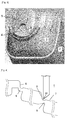
Fig. 1 of the sectional view of the opening of Examples 1, 2, and 4, in this embodiment, theopening 4 of the opening device for the straws is integrally formed with top 3, and has a plurality ofsteps 7 andlevel differences 8 on the front side and the back side of theopening 4, and the level difference on the front side and the level difference on the back side are overlapped and formed at the back and front of theedge 9 of the level differences.
In the embodiment of this invention, the thickness of theedge 9 of thelevel difference 8 is thinner than the thickness of thestep 7, and thelevel difference 8 is the easy fracture part. - As shown in
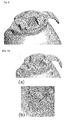
Fig. 4 , when thestraw 10 is stuck into theopening 4, although thetip 10 of the straw touches to thestep 7 on the front side first, it slides easily, and moves to thelevel difference 8, and it stops there. Since the force is applied to thelevel difference 8, theopening 4 is stuffed into the inside of the liquid food container so that it may curve. Theedge 9 of both level differences ranging from thelevel difference 8 on the front side to thelevel difference 8 on the adjacent back side is extended gradually, and thestraw tip 10 is further stuffed into theportion 9. Theedge 9 of the level difference is fractured by the further stuffed-instraw tip 10. Thestraw 10 is further pushed at the fractured point as the starting point, and the fractured surface further spreads. - The appearance of the container, and the opening device for straws according to Example 1 is shown in
Fig. 3 . The container consists of thepaper package body 2 and the dome-like container top 3 of thermoplastic resin joined to the upper end of themain body 2, and formed by injection, and thelid 5 for a spout is integrally formed in the center of the top ofcontainer top 3. Theopening 4 is integrally formed with thelid 5, and is formed in shape dented from the top face of the lid. In this embodiment, the bottom surface of the dent of theopening 4 comprises threeflat surface steps 7, and a plurality of thelevel differences 8 on the back side and the front side at the bottom surface (the back side not shown inFig. 3 ). - In Example 1 shown in
Fig. 3 , the flat surface shape of theopening 4 is the fan shape spreading in the outer edge of thelid 5. Thelevel difference 8 is formed in parallel with the circular arc of a fan shape, and thestep 7 also has the shape of a partial fan shape.
Since the flat surface shape of theopening 4 is the fan shape which spreads in the outer edge of thelid 5, thestraw 10 can be certainly struck not in the center section but in the circumference part of the dome-like lid 5 of the dome-like lid 5 which is easy to deform relative. Since the straight-line wall contributed to reinforcement is formed to the edge of theopening 4 from the center of the lid, the mechanical strength of the top and the lid is reinforced.
Thelevel difference 8 is formed in parallel with the circular arc of fan shape, and the breaking easilylevel difference 8 certainly traps the tip of thestraw 10. - As shown in
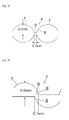
Fig. 14 , in Example 1, the thickness of theedge 9 of thelevel difference 8 is 0.1 mm. The thickness of thestep 7 is 0.2 mm. The thickness of the edge of the level difference is thinner than the thickness of the step, and the step has 200% of thickness to the length of the overlap of the edge. Thelevel difference 8 is the easy fracture part. - The appearance of the opening device for the container and the straws according to this Example 2 is shown in
Fig. 5 . The container consists of themain body 2 of the paper container, and the dome-like container top 3 of the thermoplastic resin which is joined to the upper end of themain body 2 and is formed by injection, and thelid 5 for the spouts is integrally formed in the center top of thecontainer top 3. Theopening 4 is integrally formed with thelid 5, and is formed in shape dented from the top face of the lid.
In this embodiment, the bottom surface of the dent of theopening 4 comprises threeflat surface steps 7, and threelevel differences 8 on the back side and the front side at the bottom surface (the back side not shown inFig. 5 ). - In the embodiment shown in
Fig. 5 , the flat surface shape of theopening 4 is a fan shape which spreads in the outer edge of thelid 5, and lacks the center section of thelid 5. Thelevel difference 8 is formed in parallel with the circular arc of the fan shape, and thestep 7 has the shape of the partial fan shape.
Since the flat surface shape of theopening 4 is the fan shape which spreads in the outer edge of thelid 5, thestraw 10 can be certainly struck not in the center section but in the circumference part of the dome-like lid 5 of the dome-like lid 5 which is easy to deform relative.
Since the straight-line wall contributed to reinforcement is formed to the edge from the center of the lid, the mechanical strength of the top and the lid is reinforced. Any level difference which has the low unsealing possibility and does not contribute to unsealing is not formed at the center section and near the fan shape of thelid 5. In Example 2, since the fan shape is the shape missing in the center section of thelid 5, it can avoid that the consumers strike thestraw 10 in the needless part, and take time in unsealing.
Thelevel difference 8 is formed in parallel with the circular arc of fan shape, and the breaking easilylevel difference 8 certainly traps the tip of thestraw 10. - As shown in
Fig. 14 , in Example 2, the thickness of theedge 9 of thelevel difference 8 is 0.1 mm. The thickness of thestep 7 is 0.2 mm. The thickness of the edge of the level difference is thinner than the thickness of the step, and the step has 200% of thickness to the length of the overlap of the edge. Thelevel difference 8 is the easy fracture part. - The appearance of the opening device for the container and the straws according to the reference example 3 is shown in
Fig. 7 . This container consists of themain body 2 of the paper container, and the dome-like container top 3 of the thermoplastic resin which is joined to the upper end of themain body 2, and is formed by injection, and thelid 5 for spouts is integrally formed in the center of thecontainer top 3. Theopening 4 is integrally formed with thelid 5, and is formed in shape dented from the top face of the lid.
In this embodiment, the bottom surface of the dent of theopening 4 comprise a plurality ofroundish surface steps 7 andlevel differences 8 on the back side and the front side at the bottom surface (the back side not shown inFig. 7 ). - As shown in
Fig. 15 , in the reference example 3, the thickness of theedge 9 of thelevel difference 8 is 0.1 mm. The thickness of thestep 7 is 0.3 mm. Unlike this invention, thesteps 7 by both sides of the back and front has completely overlapped, and there is no overlap in theedges 9 of thelevel differences 8. As compared with Examples, by external force, such as the shock at the delivery, the opening is fractured simply and leaks easily. - The appearance of the container, and the opening device for straws according to Example 4 is shown in
Fig. 8 . This container consists of themain body 2 of the paper container, and the dome-like container top 3 of the thermoplastic resin which is joined to the upper end of themain body 2, and is formed by injection, and thelid 5 for the spouts is integrally formed in the center of thecontainer top 3. Theopening 4 is integrally formed with thelid 5, and is formed in shape dented from the top face of the lid.
In this embodiment, the bottom surface of the dent of theopening 4 comprises sixflat surface steps 7, and fivelevel differences 8 on the back side and the front side at the bottom surface (the back side not shown inFig. 8 ). - As shown in
Fig. 14 , in Example 4, the thickness of theedge 9 of thelevel difference 8 is 0.1 mm. The thickness of thestep 7 is 0.2 mm. The thickness of the edge of the level difference is thinner than the thickness of the step, and the step has 200% of thickness to the length of the overlap of the edges. Thelevel difference 8 is the easy fracture part. - The appearance of the container, and the opening device for the straws according to Example 5 is shown in
Fig. 9 . This container consists of themain body 2 of the paper container, and the dome-like container top 3 of the thermoplastic resin which is joined to the upper end of themain body 2, and is formed by injection, and thelid 5 for the spouts is integrally formed in the center of thecontainer top 3. Theopening 4 is integrally formed with thelid 5, and is formed in shape dented from the top face of the lid.
In this embodiment, the bottom surface of the dent of theopening 4 comprises fiveroundish surface steps 7, and a plurality oflevel differences 8 on the back side and the front side at the bottom surface (the back side not shown inFig. 9 ). - As shown in
Fig. 16 , in Example 5, the thickness of theedge 9 of thelevel difference 8 is 0.1 mm. The thickness of thestep 7 is 0.6 mm. The thickness of the edge of the level difference is thinner than the thickness of the step, and the step has 600% of thickness to the length of the overlap of the edge. Thelevel difference 8 is the easy fracture part. - The appearance of the container, and the opening device for the straws according to Example 6 is shown in
Fig. 10 (a) . This container consists of the main body of the paper container, and the dome-like container top 3 of the thermoplastic resin which is joined to the upper end of the main body and formed by injection, and thelid 5 for the spouts is integrally formed in the center of thecontainer top 3. Theopening 4 is integrally formed with thelid 5, and is formed in shape dented from the top face of the lid.
In this embodiment, the bottom surface of the dent of theopening 4 comprises fourroundish surface steps 7, and a plurality oflevel differences 8 on the front side at the bottom surface. On the back side shown inFig. 10 (b) , it has theflat step 7 and thelevel difference 8. - As shown in
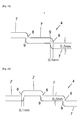
Fig. 17 , in Example 6, the thickness of theedge 9 of thelevel difference 8 is 0.1 mm. The thickness of thestep 7 on the front side and the back side is 0.6 mm. The thickness of the edge of the level difference is thinner than the thickness of the step, and the step has 600% of thickness to the length of the overlap of the edge. Thelevel difference 8 is the easy fracture part. - The appearance of the container, and the opening device for the straws according to the reference example 7 is shown in
Fig. 11 . This container consists of themain body 2 of the paper container, and the dome-like container top 3 of the thermoplastic resin which is joined to the upper end of themain body 2, and is formed by injection, and thelid 5 for the spouts is integrally formed in the center of thecontainer top 3. Theopening 4 is integrally formed with thelid 5, and is formed in shape dented from the top face of the lid.
In this embodiment, the bottom surface of the dent of theopening 4 comprises oneflat surface steps 7, and onelevel difference 8 on the back side and the front side at the bottom surface (the back side not shown inFig. 11 ). - As shown in
Fig. 18 , in this reference example 7, the thickness of theedge 9 of thelevel difference 8 is 0.1 mm. The thickness of thestep 7 is 0.2 mm. Unlike this invention, the number of thesteps 7 by the side of the back and front is one, respectively, and thelevel difference 8 is one. Since the number of the step and the level difference is the singular number as compared with the example, breaking with the straw is difficult. - The appearance of the container, and the opening device for the straws according to Example 8 is shown in
Fig. 12 . This container consists of the main body of the paper container, and the dome-like container top 3 of the thermoplastic resin which is joined to the upper end of the main body and formed by injection, and thelid 5 for the spouts is integrally formed in the center of thecontainer top 3. Theopening 4 is integrally formed with thelid 5, and is formed in shape dented from the top face of the lid.
In this embodiment, the bottom surface of the dent of theopening 4 comprises someflat surface steps 7, and a plurality oflevel differences 8 on the back side and the front side at the bottom surface (the back side not shown inFig. 12 ). - As shown in
Fig. 19 , in Example 8, the thickness of theedge 9 of thelevel difference 8 is 0.1 mm. The thickness of thestep 7 is 0.2 mm. The thickness of the edge of the level difference is thinner than the thickness of the step, and the step has 200% of thickness to the length of the overlap of the edge. Thelevel difference 8 is the easy fracture part. - The appearance of the container, and the opening device for the straws according to Example 9 is shown in
Fig. 13 . This container consists of the main body of the paper container, and the dome-like container top 3 of the thermoplastic resin which is joined to the upper end of the main body and formed by injection, and thelid 5 for the spouts is integrally formed in the center of the top of thecontainer top 3. Theopening 4 is integrally formed with thelid 5, and is formed in shape dented from the top face of the lid.
In this embodiment, the bottom surface of the dent of theopening 4 comprises someflat surface steps 7, and a plurality oflevel differences 8 on the front side at the bottom surface. - As shown in
Fig. 20 , in Example 9, the thickness of theedge 9 of thelevel difference 8 is 0.1 mm. The thicknesses of thesteps 7 on the front side and the back side are 0.2 mm. The thickness of the edge of the level difference is thinner than the thickness of the step, and the step has 200% of thickness to the length of the overlap of the edge. Thelevel difference 8 is the easy fracture part. - In Examples, such as Examples 1 and 2, the
opening 4 of the opening device for the straws is integrally formed with the top 3 (and lid 5). Theprojection 11 is formed in the front side of thestep 7. - As mentioned above, the edge of the level difference is protected by the step, and since the step is thickly, an opening is not damaged nor broken carelessly.
The opening is not simply fractured by an external force, such as vibration at the delivery, and does not leak, and the thrust of the straw can open the straw hole easily. The consumers can stick the straw into the mark of the projection, and the straw tip from the projection can slide on the step, can run against the level difference, can stop there, and can open the opening easily. - The present invention is not limited to the above-mentioned embodiment, and it is possible to make it deform variously based on the object of the present invention, and it does not eliminate them from the scope of the present invention.
- This invention is applicable to manufacture of the container packaged and filled up with the liquid food etc.
Claims (6)
- An opening device for straws of a liquid food container which comprises a bottom and a main body formed with an packaging material laminated on both sides of a paper substrate with thermoplastic resin, and a top formed with thermoplastic resin and joined to a upper end of the main body; characterized by that
an opening of the opening device for straws is integrally formed with the top and comprises a plurality of steps and level differences on the front side and the back side of the opening, the level differences on the front side and the level differences on the back side are formed at edges of the level differences of the back and the front with overlaps, lengths of the overlaps of the edges of the level differences are thinner than thickness of the steps, the level differences are easy fracture parts,
the steps have 190% - 650% of thickness to the lengths of the overlaps of the edges, and
the overlap of the edge is 0.09-0.11 millimeter in length. - The opening device for the straws according to claim 1, the step on the front side of the opening is flat on the surface, and the step on the back side of the opening is flat on the surface.
- The opening device for the straws according to claim 1, the step on the front side of the opening is roundish on the surface, and the step on the back side of the opening is roundish on the surface.
- The opening device for the straws according to claim 1, the step on the front side of the opening is rounded on the surface, and the step on the back side of the opening is flat on the surface.
- The opening device for the straws according to claim 1, the projection is formed in one of the steps on the front side.
- The opening device for the straws according to claim 1, the thermoplastic resin by which the top is formed, and the thermoplastic resin which is laminated on the paper substrate of an packaging material consist of the same or different kind of low density polyethylene.
Applications Claiming Priority (2)
| Application Number | Priority Date | Filing Date | Title |
|---|---|---|---|
| JP2009153078 | 2009-06-28 | ||
| PCT/JP2010/060785 WO2011001901A1 (en) | 2009-06-28 | 2010-06-24 | Opening device for straws for liquid food containers |
Publications (3)
| Publication Number | Publication Date |
|---|---|
| EP2450289A1 true EP2450289A1 (en) | 2012-05-09 |
| EP2450289A4 EP2450289A4 (en) | 2012-11-28 |
| EP2450289B1 EP2450289B1 (en) | 2014-01-22 |
Family
ID=43410976
Family Applications (1)
| Application Number | Title | Priority Date | Filing Date |
|---|---|---|---|
| EP10794070.2A Not-in-force EP2450289B1 (en) | 2009-06-28 | 2010-06-24 | Opening device for straws for liquid food containers |
Country Status (9)
| Country | Link |
|---|---|
| US (1) | US8701917B2 (en) |
| EP (1) | EP2450289B1 (en) |
| JP (1) | JP5464705B2 (en) |
| CN (1) | CN102470953B (en) |
| BR (1) | BRPI1011926B1 (en) |
| ES (1) | ES2444293T3 (en) |
| MX (1) | MX2011012848A (en) |
| RU (1) | RU2523981C2 (en) |
| WO (1) | WO2011001901A1 (en) |
Family Cites Families (17)
| Publication number | Priority date | Publication date | Assignee | Title |
|---|---|---|---|---|
| JPS4727017Y1 (en) * | 1969-09-03 | 1972-08-18 | ||
| JPS58136425U (en) * | 1982-03-11 | 1983-09-13 | 尼崎製罐株式会社 | Can opening sealing material |
| JPH0727017Y2 (en) * | 1989-12-20 | 1995-06-21 | 松下工業株式会社 | A mechanism that pushes the material into the crease tape at the folded part of the material that forms both collars of the clothes jacket and scoops it |
| JPH09142468A (en) * | 1995-11-15 | 1997-06-03 | Seijirou Koie | Can with pull-top |
| CN2321752Y (en) * | 1997-06-17 | 1999-06-02 | 韩卫中 | Disposable sanitary safety beverage bottle |
| CN2312210Y (en) * | 1997-08-28 | 1999-03-31 | 张绍文 | Suction drinking tupe liquid beverage container |
| US5997177A (en) * | 1997-11-25 | 1999-12-07 | Kraft Foods, Inc. | Tamper-evident opening system for beverage container |
| DE10000335A1 (en) * | 1999-01-09 | 2000-07-20 | Datograf Appbau | Sealed dispensing port for drinks container comprising a plastic molding clipped into the container and with a removable plastic seal |
| RU10528U1 (en) * | 1999-01-14 | 1999-08-16 | Листвин Сергей Борисович | CAP |
| CN2367563Y (en) * | 1999-03-19 | 2000-03-08 | 广东今日集团有限公司 | Suction-nozzle type bottle cover safety for drinking |
| JP2002225902A (en) * | 2001-01-25 | 2002-08-14 | Shikoku Kakoki Co Ltd | Vessel for liquid |
| JP4636518B2 (en) | 2001-06-04 | 2011-02-23 | 日本テトラパック株式会社 | Container and container manufacturing method |
| NO315644B1 (en) * | 2002-01-21 | 2003-10-06 | Kolbjoern Naesje | Sealing device of a beverage container and method of making the sealing device |
| JP4426224B2 (en) * | 2003-07-17 | 2010-03-03 | 日本テトラパック株式会社 | Packaging container |
| JP2005212864A (en) * | 2004-01-30 | 2005-08-11 | Daiwa Can Co Ltd | Simple open container lid |
| JP4868449B2 (en) * | 2006-12-22 | 2012-02-01 | 日本テトラパック株式会社 | Packaging container and opening device for packaging container |
| JP5216539B2 (en) * | 2008-11-11 | 2013-06-19 | 日本テトラパック株式会社 | Straw opening structure of liquid food container |
-
2010
- 2010-06-24 EP EP10794070.2A patent/EP2450289B1/en not_active Not-in-force
- 2010-06-24 MX MX2011012848A patent/MX2011012848A/en not_active Application Discontinuation
- 2010-06-24 CN CN201080029118.7A patent/CN102470953B/en active Active
- 2010-06-24 WO PCT/JP2010/060785 patent/WO2011001901A1/en not_active Ceased
- 2010-06-24 JP JP2010144288A patent/JP5464705B2/en active Active
- 2010-06-24 US US13/380,299 patent/US8701917B2/en active Active
- 2010-06-24 RU RU2012103022/12A patent/RU2523981C2/en active IP Right Revival
- 2010-06-24 BR BRPI1011926-4A patent/BRPI1011926B1/en active IP Right Grant
- 2010-06-24 ES ES10794070.2T patent/ES2444293T3/en active Active
Non-Patent Citations (2)
| Title |
|---|
| No further relevant documents disclosed * |
| See also references of WO2011001901A1 * |
Also Published As
| Publication number | Publication date |
|---|---|
| ES2444293T3 (en) | 2014-02-24 |
| JP5464705B2 (en) | 2014-04-09 |
| MX2011012848A (en) | 2012-01-12 |
| CN102470953B (en) | 2014-02-19 |
| WO2011001901A1 (en) | 2011-01-06 |
| EP2450289A4 (en) | 2012-11-28 |
| BRPI1011926B1 (en) | 2019-08-06 |
| EP2450289B1 (en) | 2014-01-22 |
| CN102470953A (en) | 2012-05-23 |
| US8701917B2 (en) | 2014-04-22 |
| BRPI1011926A2 (en) | 2016-04-19 |
| RU2012103022A (en) | 2013-08-10 |
| JP2011026006A (en) | 2011-02-10 |
| US20120091137A1 (en) | 2012-04-19 |
| RU2523981C2 (en) | 2014-07-27 |
Similar Documents
| Publication | Publication Date | Title |
|---|---|---|
| US8740000B2 (en) | Opening device for liquid food container and liquid food container | |
| CN102666284B (en) | Packaging container manufacturing method, spout stopper, and packaging container | |
| KR102782575B1 (en) | Tube container and method for manufacturing the same | |
| CN101263059B (en) | container for dispensing substances | |
| WO2009130916A1 (en) | Packaging container and package using the same | |
| JP5177846B2 (en) | Packaging container | |
| CN105916777A (en) | Package material blank, package with opening device and method for manufacturing the opening device | |
| KR20160084435A (en) | Container body, container, and method for producing container | |
| CN101139022A (en) | Packaging container, its manufacturing method and manufacturing device | |
| EP3237294B1 (en) | Package material and package container formed with said material | |
| EP2154080B1 (en) | Package bag and spout member | |
| KR102141539B1 (en) | Refillable container | |
| US8701917B2 (en) | Opening device for straws of liquid food container | |
| JP2011084330A (en) | Sealing lid and package using this | |
| JP5375291B2 (en) | Folded packaging container | |
| KR101648360B1 (en) | Sealing material for vessel and method therefore | |
| JP7408946B2 (en) | container with lid | |
| KR200307698Y1 (en) | the opening structure on spout of Blister package | |
| JP7119530B2 (en) | Packaging bag with resealing function | |
| JP6877990B2 (en) | Container packaging | |
| JP2011020716A (en) | Opening device for straw of liquid food container | |
| JP2006021787A (en) | Self-supporting bag | |
| JP2021054533A (en) | Tube container |
Legal Events
| Date | Code | Title | Description |
|---|---|---|---|
| PUAI | Public reference made under article 153(3) epc to a published international application that has entered the european phase |
Free format text: ORIGINAL CODE: 0009012 |
|
| 17P | Request for examination filed |
Effective date: 20111202 |
|
| AK | Designated contracting states |
Kind code of ref document: A1 Designated state(s): AL AT BE BG CH CY CZ DE DK EE ES FI FR GB GR HR HU IE IS IT LI LT LU LV MC MK MT NL NO PL PT RO SE SI SK SM TR |
|
| DAX | Request for extension of the european patent (deleted) | ||
| A4 | Supplementary search report drawn up and despatched |
Effective date: 20121025 |
|
| RIC1 | Information provided on ipc code assigned before grant |
Ipc: B65D 47/06 20060101ALI20121019BHEP Ipc: B65D 47/36 20060101ALI20121019BHEP Ipc: B65D 17/28 20060101AFI20121019BHEP |
|
| GRAP | Despatch of communication of intention to grant a patent |
Free format text: ORIGINAL CODE: EPIDOSNIGR1 |
|
| INTG | Intention to grant announced |
Effective date: 20130912 |
|
| GRAS | Grant fee paid |
Free format text: ORIGINAL CODE: EPIDOSNIGR3 |
|
| GRAA | (expected) grant |
Free format text: ORIGINAL CODE: 0009210 |
|
| RIN1 | Information on inventor provided before grant (corrected) |
Inventor name: ITO, KOSHAKU Inventor name: MORIYAMA, YASUYUKI |
|
| AK | Designated contracting states |
Kind code of ref document: B1 Designated state(s): AL AT BE BG CH CY CZ DE DK EE ES FI FR GB GR HR HU IE IS IT LI LT LU LV MC MK MT NL NO PL PT RO SE SI SK SM TR |
|
| REG | Reference to a national code |
Ref country code: GB Ref legal event code: FG4D |
|
| REG | Reference to a national code |
Ref country code: CH Ref legal event code: EP |
|
| REG | Reference to a national code |
Ref country code: AT Ref legal event code: REF Ref document number: 650684 Country of ref document: AT Kind code of ref document: T Effective date: 20140215 |
|
| REG | Reference to a national code |
Ref country code: ES Ref legal event code: FG2A Ref document number: 2444293 Country of ref document: ES Kind code of ref document: T3 Effective date: 20140224 |
|
| REG | Reference to a national code |
Ref country code: IE Ref legal event code: FG4D |
|
| REG | Reference to a national code |
Ref country code: DE Ref legal event code: R096 Ref document number: 602010013357 Country of ref document: DE Effective date: 20140306 |
|
| REG | Reference to a national code |
Ref country code: NL Ref legal event code: VDEP Effective date: 20140122 |
|
| REG | Reference to a national code |
Ref country code: AT Ref legal event code: MK05 Ref document number: 650684 Country of ref document: AT Kind code of ref document: T Effective date: 20140122 |
|
| REG | Reference to a national code |
Ref country code: LT Ref legal event code: MG4D |
|
| PG25 | Lapsed in a contracting state [announced via postgrant information from national office to epo] |
Ref country code: NO Free format text: LAPSE BECAUSE OF FAILURE TO SUBMIT A TRANSLATION OF THE DESCRIPTION OR TO PAY THE FEE WITHIN THE PRESCRIBED TIME-LIMIT Effective date: 20140422 Ref country code: LT Free format text: LAPSE BECAUSE OF FAILURE TO SUBMIT A TRANSLATION OF THE DESCRIPTION OR TO PAY THE FEE WITHIN THE PRESCRIBED TIME-LIMIT Effective date: 20140122 Ref country code: IS Free format text: LAPSE BECAUSE OF FAILURE TO SUBMIT A TRANSLATION OF THE DESCRIPTION OR TO PAY THE FEE WITHIN THE PRESCRIBED TIME-LIMIT Effective date: 20140522 |
|
| PG25 | Lapsed in a contracting state [announced via postgrant information from national office to epo] |
Ref country code: PT Free format text: LAPSE BECAUSE OF FAILURE TO SUBMIT A TRANSLATION OF THE DESCRIPTION OR TO PAY THE FEE WITHIN THE PRESCRIBED TIME-LIMIT Effective date: 20140522 Ref country code: CY Free format text: LAPSE BECAUSE OF FAILURE TO SUBMIT A TRANSLATION OF THE DESCRIPTION OR TO PAY THE FEE WITHIN THE PRESCRIBED TIME-LIMIT Effective date: 20140122 Ref country code: NL Free format text: LAPSE BECAUSE OF FAILURE TO SUBMIT A TRANSLATION OF THE DESCRIPTION OR TO PAY THE FEE WITHIN THE PRESCRIBED TIME-LIMIT Effective date: 20140122 Ref country code: AT Free format text: LAPSE BECAUSE OF FAILURE TO SUBMIT A TRANSLATION OF THE DESCRIPTION OR TO PAY THE FEE WITHIN THE PRESCRIBED TIME-LIMIT Effective date: 20140122 Ref country code: FI Free format text: LAPSE BECAUSE OF FAILURE TO SUBMIT A TRANSLATION OF THE DESCRIPTION OR TO PAY THE FEE WITHIN THE PRESCRIBED TIME-LIMIT Effective date: 20140122 Ref country code: SE Free format text: LAPSE BECAUSE OF FAILURE TO SUBMIT A TRANSLATION OF THE DESCRIPTION OR TO PAY THE FEE WITHIN THE PRESCRIBED TIME-LIMIT Effective date: 20140122 |
|
| PG25 | Lapsed in a contracting state [announced via postgrant information from national office to epo] |
Ref country code: LV Free format text: LAPSE BECAUSE OF FAILURE TO SUBMIT A TRANSLATION OF THE DESCRIPTION OR TO PAY THE FEE WITHIN THE PRESCRIBED TIME-LIMIT Effective date: 20140122 Ref country code: BE Free format text: LAPSE BECAUSE OF FAILURE TO SUBMIT A TRANSLATION OF THE DESCRIPTION OR TO PAY THE FEE WITHIN THE PRESCRIBED TIME-LIMIT Effective date: 20140122 Ref country code: HR Free format text: LAPSE BECAUSE OF FAILURE TO SUBMIT A TRANSLATION OF THE DESCRIPTION OR TO PAY THE FEE WITHIN THE PRESCRIBED TIME-LIMIT Effective date: 20140122 |
|
| REG | Reference to a national code |
Ref country code: DE Ref legal event code: R097 Ref document number: 602010013357 Country of ref document: DE |
|
| PG25 | Lapsed in a contracting state [announced via postgrant information from national office to epo] |
Ref country code: EE Free format text: LAPSE BECAUSE OF FAILURE TO SUBMIT A TRANSLATION OF THE DESCRIPTION OR TO PAY THE FEE WITHIN THE PRESCRIBED TIME-LIMIT Effective date: 20140122 Ref country code: CZ Free format text: LAPSE BECAUSE OF FAILURE TO SUBMIT A TRANSLATION OF THE DESCRIPTION OR TO PAY THE FEE WITHIN THE PRESCRIBED TIME-LIMIT Effective date: 20140122 Ref country code: DK Free format text: LAPSE BECAUSE OF FAILURE TO SUBMIT A TRANSLATION OF THE DESCRIPTION OR TO PAY THE FEE WITHIN THE PRESCRIBED TIME-LIMIT Effective date: 20140122 Ref country code: RO Free format text: LAPSE BECAUSE OF FAILURE TO SUBMIT A TRANSLATION OF THE DESCRIPTION OR TO PAY THE FEE WITHIN THE PRESCRIBED TIME-LIMIT Effective date: 20140122 |
|
| PG25 | Lapsed in a contracting state [announced via postgrant information from national office to epo] |
Ref country code: PL Free format text: LAPSE BECAUSE OF FAILURE TO SUBMIT A TRANSLATION OF THE DESCRIPTION OR TO PAY THE FEE WITHIN THE PRESCRIBED TIME-LIMIT Effective date: 20140122 Ref country code: SK Free format text: LAPSE BECAUSE OF FAILURE TO SUBMIT A TRANSLATION OF THE DESCRIPTION OR TO PAY THE FEE WITHIN THE PRESCRIBED TIME-LIMIT Effective date: 20140122 |
|
| PLBE | No opposition filed within time limit |
Free format text: ORIGINAL CODE: 0009261 |
|
| STAA | Information on the status of an ep patent application or granted ep patent |
Free format text: STATUS: NO OPPOSITION FILED WITHIN TIME LIMIT |
|
| 26N | No opposition filed |
Effective date: 20141023 |
|
| REG | Reference to a national code |
Ref country code: DE Ref legal event code: R119 Ref document number: 602010013357 Country of ref document: DE |
|
| PG25 | Lapsed in a contracting state [announced via postgrant information from national office to epo] |
Ref country code: MC Free format text: LAPSE BECAUSE OF FAILURE TO SUBMIT A TRANSLATION OF THE DESCRIPTION OR TO PAY THE FEE WITHIN THE PRESCRIBED TIME-LIMIT Effective date: 20140122 Ref country code: LU Free format text: LAPSE BECAUSE OF FAILURE TO SUBMIT A TRANSLATION OF THE DESCRIPTION OR TO PAY THE FEE WITHIN THE PRESCRIBED TIME-LIMIT Effective date: 20140624 |
|
| REG | Reference to a national code |
Ref country code: CH Ref legal event code: PL |
|
| REG | Reference to a national code |
Ref country code: DE Ref legal event code: R097 Ref document number: 602010013357 Country of ref document: DE Effective date: 20141023 |
|
| GBPC | Gb: european patent ceased through non-payment of renewal fee |
Effective date: 20140624 |
|
| REG | Reference to a national code |
Ref country code: IE Ref legal event code: MM4A |
|
| REG | Reference to a national code |
Ref country code: DE Ref legal event code: R119 Ref document number: 602010013357 Country of ref document: DE Effective date: 20150101 |
|
| REG | Reference to a national code |
Ref country code: FR Ref legal event code: ST Effective date: 20150227 |
|
| REG | Reference to a national code |
Ref country code: FR Ref legal event code: PLFP Year of fee payment: 5 |
|
| PG25 | Lapsed in a contracting state [announced via postgrant information from national office to epo] |
Ref country code: DE Free format text: LAPSE BECAUSE OF NON-PAYMENT OF DUE FEES Effective date: 20150101 Ref country code: CH Free format text: LAPSE BECAUSE OF NON-PAYMENT OF DUE FEES Effective date: 20140630 Ref country code: IE Free format text: LAPSE BECAUSE OF NON-PAYMENT OF DUE FEES Effective date: 20140624 Ref country code: IT Free format text: LAPSE BECAUSE OF NON-PAYMENT OF DUE FEES Effective date: 20140624 Ref country code: LI Free format text: LAPSE BECAUSE OF NON-PAYMENT OF DUE FEES Effective date: 20140630 |
|
| PG25 | Lapsed in a contracting state [announced via postgrant information from national office to epo] |
Ref country code: FR Free format text: LAPSE BECAUSE OF NON-PAYMENT OF DUE FEES Effective date: 20140630 Ref country code: SI Free format text: LAPSE BECAUSE OF FAILURE TO SUBMIT A TRANSLATION OF THE DESCRIPTION OR TO PAY THE FEE WITHIN THE PRESCRIBED TIME-LIMIT Effective date: 20140122 Ref country code: GB Free format text: LAPSE BECAUSE OF NON-PAYMENT OF DUE FEES Effective date: 20140624 |
|
| REG | Reference to a national code |
Ref country code: FR Ref legal event code: RN Effective date: 20150429 |
|
| REG | Reference to a national code |
Ref country code: ES Ref legal event code: FD2A Effective date: 20150724 |
|
| REG | Reference to a national code |
Ref country code: FR Ref legal event code: PLFP Year of fee payment: 6 |
|
| REG | Reference to a national code |
Ref country code: FR Ref legal event code: FC Effective date: 20150721 |
|
| PG25 | Lapsed in a contracting state [announced via postgrant information from national office to epo] |
Ref country code: ES Free format text: LAPSE BECAUSE OF NON-PAYMENT OF DUE FEES Effective date: 20140625 |
|
| PGRI | Patent reinstated in contracting state [announced from national office to epo] |
Ref country code: FR Effective date: 20151207 |
|
| PG25 | Lapsed in a contracting state [announced via postgrant information from national office to epo] |
Ref country code: MT Free format text: LAPSE BECAUSE OF FAILURE TO SUBMIT A TRANSLATION OF THE DESCRIPTION OR TO PAY THE FEE WITHIN THE PRESCRIBED TIME-LIMIT Effective date: 20140122 |
|
| PG25 | Lapsed in a contracting state [announced via postgrant information from national office to epo] |
Ref country code: SM Free format text: LAPSE BECAUSE OF FAILURE TO SUBMIT A TRANSLATION OF THE DESCRIPTION OR TO PAY THE FEE WITHIN THE PRESCRIBED TIME-LIMIT Effective date: 20140122 |
|
| REG | Reference to a national code |
Ref country code: FR Ref legal event code: PLFP Year of fee payment: 7 |
|
| PG25 | Lapsed in a contracting state [announced via postgrant information from national office to epo] |
Ref country code: GR Free format text: LAPSE BECAUSE OF FAILURE TO SUBMIT A TRANSLATION OF THE DESCRIPTION OR TO PAY THE FEE WITHIN THE PRESCRIBED TIME-LIMIT Effective date: 20140423 Ref country code: BG Free format text: LAPSE BECAUSE OF FAILURE TO SUBMIT A TRANSLATION OF THE DESCRIPTION OR TO PAY THE FEE WITHIN THE PRESCRIBED TIME-LIMIT Effective date: 20140122 |
|
| PG25 | Lapsed in a contracting state [announced via postgrant information from national office to epo] |
Ref country code: TR Free format text: LAPSE BECAUSE OF FAILURE TO SUBMIT A TRANSLATION OF THE DESCRIPTION OR TO PAY THE FEE WITHIN THE PRESCRIBED TIME-LIMIT Effective date: 20140122 Ref country code: HU Free format text: LAPSE BECAUSE OF FAILURE TO SUBMIT A TRANSLATION OF THE DESCRIPTION OR TO PAY THE FEE WITHIN THE PRESCRIBED TIME-LIMIT; INVALID AB INITIO Effective date: 20100624 |
|
| REG | Reference to a national code |
Ref country code: FR Ref legal event code: PLFP Year of fee payment: 8 |
|
| REG | Reference to a national code |
Ref country code: FR Ref legal event code: PLFP Year of fee payment: 9 |
|
| PG25 | Lapsed in a contracting state [announced via postgrant information from national office to epo] |
Ref country code: MK Free format text: LAPSE BECAUSE OF FAILURE TO SUBMIT A TRANSLATION OF THE DESCRIPTION OR TO PAY THE FEE WITHIN THE PRESCRIBED TIME-LIMIT Effective date: 20140122 |
|
| PGFP | Annual fee paid to national office [announced via postgrant information from national office to epo] |
Ref country code: FR Payment date: 20180511 Year of fee payment: 9 |
|
| PG25 | Lapsed in a contracting state [announced via postgrant information from national office to epo] |
Ref country code: AL Free format text: LAPSE BECAUSE OF FAILURE TO SUBMIT A TRANSLATION OF THE DESCRIPTION OR TO PAY THE FEE WITHIN THE PRESCRIBED TIME-LIMIT Effective date: 20140122 |
|
| PG25 | Lapsed in a contracting state [announced via postgrant information from national office to epo] |
Ref country code: FR Free format text: LAPSE BECAUSE OF NON-PAYMENT OF DUE FEES Effective date: 20190630 |