EP2444120B1 - Spirocyclic amiloride analogues as ENac blockers - Google Patents
Spirocyclic amiloride analogues as ENac blockers Download PDFInfo
- Publication number
- EP2444120B1 EP2444120B1 EP11184004.7A EP11184004A EP2444120B1 EP 2444120 B1 EP2444120 B1 EP 2444120B1 EP 11184004 A EP11184004 A EP 11184004A EP 2444120 B1 EP2444120 B1 EP 2444120B1
- Authority
- EP
- European Patent Office
- Prior art keywords
- carboxylic acid
- chloro
- diamino
- pyrazine
- triaza
- Prior art date
- Legal status (The legal status is an assumption and is not a legal conclusion. Google has not performed a legal analysis and makes no representation as to the accuracy of the status listed.)
- Active
Links
- 0 CCN(CC)C(C[n]1c2cccc(C(N(CC3)CCC3(CN3)NC3=NC(c3nc(*)c(N)nc3N)=O)=O)c2cc1)=O Chemical compound CCN(CC)C(C[n]1c2cccc(C(N(CC3)CCC3(CN3)NC3=NC(c3nc(*)c(N)nc3N)=O)=O)c2cc1)=O 0.000 description 7
- ITLIAFAYEFGAIU-UHFFFAOYSA-N CC(C)NC(Nc(cc1)ncc1C(N(CC1)CCC1(CN1)N/C1=N/C(c(nc1Cl)c(N)nc1N)=O)=O)=O Chemical compound CC(C)NC(Nc(cc1)ncc1C(N(CC1)CCC1(CN1)N/C1=N/C(c(nc1Cl)c(N)nc1N)=O)=O)=O ITLIAFAYEFGAIU-UHFFFAOYSA-N 0.000 description 4
- PUZCZFZEFUQSRD-UHFFFAOYSA-N COc1cc(OC)nc(COc(cc2)ccc2C(N(CC2)CCC2(CN2)N/C2=N/C(c2nc(Cl)c(N)nc2N)=O)=O)n1 Chemical compound COc1cc(OC)nc(COc(cc2)ccc2C(N(CC2)CCC2(CN2)N/C2=N/C(c2nc(Cl)c(N)nc2N)=O)=O)n1 PUZCZFZEFUQSRD-UHFFFAOYSA-N 0.000 description 4
- QUJYCSSXQCRQQU-UHFFFAOYSA-N Nc(c(C(/N=C(\NC1)/NC1(CC1)CCN1C(c1ccnc2c1cc[nH]2)=O)=O)n1)nc(N)c1Cl Chemical compound Nc(c(C(/N=C(\NC1)/NC1(CC1)CCN1C(c1ccnc2c1cc[nH]2)=O)=O)n1)nc(N)c1Cl QUJYCSSXQCRQQU-UHFFFAOYSA-N 0.000 description 4
- VYEJBBBTJIVBCO-UHFFFAOYSA-N Nc(c(C(/N=C(\NC1)/NC1(CC1)CCN1C(c1cccc2c1cc[n]2CCO)=O)=O)n1)nc(N)c1Cl Chemical compound Nc(c(C(/N=C(\NC1)/NC1(CC1)CCN1C(c1cccc2c1cc[n]2CCO)=O)=O)n1)nc(N)c1Cl VYEJBBBTJIVBCO-UHFFFAOYSA-N 0.000 description 3
- VKEOMHDGVHOQIB-UHFFFAOYSA-N Cc1c(C(N(CC2)CCC2(CN2)N/C2=N/C(c2nc(Cl)c(N)nc2N)=O)=O)c(-c(cc2)ccc2F)n[o]1 Chemical compound Cc1c(C(N(CC2)CCC2(CN2)N/C2=N/C(c2nc(Cl)c(N)nc2N)=O)=O)c(-c(cc2)ccc2F)n[o]1 VKEOMHDGVHOQIB-UHFFFAOYSA-N 0.000 description 2
- XIMCCXFBTQAMRD-UHFFFAOYSA-N Nc(c(C(/N=C(\NC1)/NC1(CC1)CCN1C(C(C=C1)=CN(Cc2cccc(C(F)(F)F)c2)C1=O)=O)=O)n1)nc(N)c1Cl Chemical compound Nc(c(C(/N=C(\NC1)/NC1(CC1)CCN1C(C(C=C1)=CN(Cc2cccc(C(F)(F)F)c2)C1=O)=O)=O)n1)nc(N)c1Cl XIMCCXFBTQAMRD-UHFFFAOYSA-N 0.000 description 2
- FWNKOJCBBMXBNG-UHFFFAOYSA-N Nc(c(C(/N=C(\NC1)/NC1(CC1)CCN1C(NCc1ccc(CN2CCOCC2)cc1)=O)=O)n1)nc(N)c1Cl Chemical compound Nc(c(C(/N=C(\NC1)/NC1(CC1)CCN1C(NCc1ccc(CN2CCOCC2)cc1)=O)=O)n1)nc(N)c1Cl FWNKOJCBBMXBNG-UHFFFAOYSA-N 0.000 description 2
- AMGIHLZMKSDYNC-UHFFFAOYSA-N Nc(c(C(/N=C(\NC1)/NC1(CC1)CCN1C(c(cc1)ccc1OCc1ccccc1)=O)=O)n1)nc(N)c1Cl Chemical compound Nc(c(C(/N=C(\NC1)/NC1(CC1)CCN1C(c(cc1)ccc1OCc1ccccc1)=O)=O)n1)nc(N)c1Cl AMGIHLZMKSDYNC-UHFFFAOYSA-N 0.000 description 2
- KJQDZKSNZMIMAN-UHFFFAOYSA-N Nc(c(C(/N=C(\NC1)/NC1(CC1)CCN1C(c1cccc2c1cc[n]2CCC1OCCCO1)=O)=O)n1)nc(N)c1Cl Chemical compound Nc(c(C(/N=C(\NC1)/NC1(CC1)CCN1C(c1cccc2c1cc[n]2CCC1OCCCO1)=O)=O)n1)nc(N)c1Cl KJQDZKSNZMIMAN-UHFFFAOYSA-N 0.000 description 2
- YPXPIEBJWRAXSY-UHFFFAOYSA-N Nc(nc1N)c(C(/N=C(\NC2)/NC2(CC2)CCN2C(CCCc2n[nH]c3ccccc23)=O)=O)nc1Cl Chemical compound Nc(nc1N)c(C(/N=C(\NC2)/NC2(CC2)CCN2C(CCCc2n[nH]c3ccccc23)=O)=O)nc1Cl YPXPIEBJWRAXSY-UHFFFAOYSA-N 0.000 description 2
- YVFKZPVGKBGVDF-UHFFFAOYSA-N Nc(nc1N)c(C(/N=C(\NC2)/NC2(CC2)CCN2C(Cc(cc2)ccc2OCc2ccccc2)=O)=O)nc1Cl Chemical compound Nc(nc1N)c(C(/N=C(\NC2)/NC2(CC2)CCN2C(Cc(cc2)ccc2OCc2ccccc2)=O)=O)nc1Cl YVFKZPVGKBGVDF-UHFFFAOYSA-N 0.000 description 2
- ZBZPZESDTGDGTM-UHFFFAOYSA-N CC(C)(C)OC(C(C)(C)Oc1ccc(CCC(N(CC2)CCC2(CN2)N/C2=N/C(c2nc(Cl)c(N)nc2N)=O)=O)cc1)=O Chemical compound CC(C)(C)OC(C(C)(C)Oc1ccc(CCC(N(CC2)CCC2(CN2)N/C2=N/C(c2nc(Cl)c(N)nc2N)=O)=O)cc1)=O ZBZPZESDTGDGTM-UHFFFAOYSA-N 0.000 description 1
- FNZIIYSVRWAEQR-UHFFFAOYSA-N CC(C)(C)OC(N(C(CC1)C2)C1CC2(CN1)N/C1=N/C(c(nc1Cl)c(N)nc1N)=O)=O Chemical compound CC(C)(C)OC(N(C(CC1)C2)C1CC2(CN1)N/C1=N/C(c(nc1Cl)c(N)nc1N)=O)=O FNZIIYSVRWAEQR-UHFFFAOYSA-N 0.000 description 1
- IJFOQOCABZXNNP-UHFFFAOYSA-N CC(C)(C)c(cc1)ccc1OCC[n]1c2cccc(C(N(CC3)CCC3(CN3)N/C3=N/C(c(nc3Cl)c(N)nc3N)=O)=O)c2cc1 Chemical compound CC(C)(C)c(cc1)ccc1OCC[n]1c2cccc(C(N(CC3)CCC3(CN3)N/C3=N/C(c(nc3Cl)c(N)nc3N)=O)=O)c2cc1 IJFOQOCABZXNNP-UHFFFAOYSA-N 0.000 description 1
- YAYFTKUVNLTAIT-UHFFFAOYSA-N CC(C)C(C(N(CC1)CCC1(CN1)N/C1=N/C(c1nc(Cl)c(N)nc1N)=O)=O)N(CC1)CCS1(=O)=O Chemical compound CC(C)C(C(N(CC1)CCC1(CN1)N/C1=N/C(c1nc(Cl)c(N)nc1N)=O)=O)N(CC1)CCS1(=O)=O YAYFTKUVNLTAIT-UHFFFAOYSA-N 0.000 description 1
- FEPVPDNRCIVDEE-UHFFFAOYSA-O CC(C)C(C(N(CC1)CCC1(CN1)NC1=NC(c1nc(Cl)c(N)nc1N)=O)=O)N(CC1)CC[SH+]1=O Chemical compound CC(C)C(C(N(CC1)CCC1(CN1)NC1=NC(c1nc(Cl)c(N)nc1N)=O)=O)N(CC1)CC[SH+]1=O FEPVPDNRCIVDEE-UHFFFAOYSA-O 0.000 description 1
- COEIJJXPSOYSGV-UHFFFAOYSA-N CC(C)C(N(CC1)CCC1(CN1)N/C1=N/C(c1nc(Cl)c(N)nc1N)=O)=O Chemical compound CC(C)C(N(CC1)CCC1(CN1)N/C1=N/C(c1nc(Cl)c(N)nc1N)=O)=O COEIJJXPSOYSGV-UHFFFAOYSA-N 0.000 description 1
- NQROSQIQCRZXQQ-UHFFFAOYSA-N CC(C)NC(Nc1cc(C(N(CC2)CCC2(CN2)N/C2=N/C(c(nc2Cl)c(N)nc2N)=O)=O)ccn1)=O Chemical compound CC(C)NC(Nc1cc(C(N(CC2)CCC2(CN2)N/C2=N/C(c(nc2Cl)c(N)nc2N)=O)=O)ccn1)=O NQROSQIQCRZXQQ-UHFFFAOYSA-N 0.000 description 1
- VWMKRYYKFNXGOS-UHFFFAOYSA-N CC(C)OCCNc(cc1)ccc1C(N(CC1)CCC1(CN1)N/C1=N/C(c1nc(Cl)c(N)nc1N)=O)=O Chemical compound CC(C)OCCNc(cc1)ccc1C(N(CC1)CCC1(CN1)N/C1=N/C(c1nc(Cl)c(N)nc1N)=O)=O VWMKRYYKFNXGOS-UHFFFAOYSA-N 0.000 description 1
- RZKBROKBXZLVHC-SFHVURJKSA-N CC(C)Oc1ccc(C[C@@H](C(N(CC2)CCC2(CN2)N/C2=N/C(c2nc(Cl)c(N)nc2N)=O)=O)NC(C)=O)cc1 Chemical compound CC(C)Oc1ccc(C[C@@H](C(N(CC2)CCC2(CN2)N/C2=N/C(c2nc(Cl)c(N)nc2N)=O)=O)NC(C)=O)cc1 RZKBROKBXZLVHC-SFHVURJKSA-N 0.000 description 1
- XCKSTIDRUICJPV-UHFFFAOYSA-N CC(CNS(c1cccc(C(N(CC2)CCC2(CN2)N/C2=N/C(c2nc(Cl)c(N)nc2N)=O)=O)c1)(=O)=O)Oc1cnccc1 Chemical compound CC(CNS(c1cccc(C(N(CC2)CCC2(CN2)N/C2=N/C(c2nc(Cl)c(N)nc2N)=O)=O)c1)(=O)=O)Oc1cnccc1 XCKSTIDRUICJPV-UHFFFAOYSA-N 0.000 description 1
- QTTYPYAVLXCKMK-UHFFFAOYSA-N CC(N(C)N1c2ccccc2)=C(C(N(CC2)CCC2(CN2)N/C2=N/C(c(nc2Cl)c(N)nc2N)=O)=O)C1=O Chemical compound CC(N(C)N1c2ccccc2)=C(C(N(CC2)CCC2(CN2)N/C2=N/C(c(nc2Cl)c(N)nc2N)=O)=O)C1=O QTTYPYAVLXCKMK-UHFFFAOYSA-N 0.000 description 1
- DPLWXJMEVPZTLZ-UHFFFAOYSA-N CC(N(CC1)CCC1NS(c1cc(C(N(CC2)CCC2(CN2)N/C2=N/C(c2nc(Cl)c(N)nc2N)=O)=O)ccc1)(=O)=O)=O Chemical compound CC(N(CC1)CCC1NS(c1cc(C(N(CC2)CCC2(CN2)N/C2=N/C(c2nc(Cl)c(N)nc2N)=O)=O)ccc1)(=O)=O)=O DPLWXJMEVPZTLZ-UHFFFAOYSA-N 0.000 description 1
- SZASZZYTYVWLCC-QGZVFWFLSA-N CC(N[C@H](Cc1c[nH]c2c1cccc2)C(N(CC1)CCC1(CN1)N/C1=N/C(c1nc(Cl)c(N)nc1N)=O)=O)=O Chemical compound CC(N[C@H](Cc1c[nH]c2c1cccc2)C(N(CC1)CCC1(CN1)N/C1=N/C(c1nc(Cl)c(N)nc1N)=O)=O)=O SZASZZYTYVWLCC-QGZVFWFLSA-N 0.000 description 1
- QSHSNXKNVOPKLJ-UHFFFAOYSA-N CC(c1ccccc1)N(CC1)CCC1(CN1)N/C1=N/C(c1nc(Cl)c(N)nc1N)=O Chemical compound CC(c1ccccc1)N(CC1)CCC1(CN1)N/C1=N/C(c1nc(Cl)c(N)nc1N)=O QSHSNXKNVOPKLJ-UHFFFAOYSA-N 0.000 description 1
- ORUZIGUXCFIAPG-XYPYZODXSA-N CCN(CC)S(NC[C@H](CC1)CC[C@@H]1C(O)=O)(=O)=O Chemical compound CCN(CC)S(NC[C@H](CC1)CC[C@@H]1C(O)=O)(=O)=O ORUZIGUXCFIAPG-XYPYZODXSA-N 0.000 description 1
- HUQRVRVVVVSYHJ-UHFFFAOYSA-N CCOC(CCc1ccc(CCC(N(CC2)CCC2(CN2)N/C2=N/C(c2nc(Cl)c(N)nc2N)=O)=O)cc1)=O Chemical compound CCOC(CCc1ccc(CCC(N(CC2)CCC2(CN2)N/C2=N/C(c2nc(Cl)c(N)nc2N)=O)=O)cc1)=O HUQRVRVVVVSYHJ-UHFFFAOYSA-N 0.000 description 1
- MXWILGPNLQGEMT-UHFFFAOYSA-N CN(C1CCCCC1)S(c(cc(cc1)C(N(CC2)CCC2(CN2)N/C2=N/C(c2nc(Cl)c(N)nc2N)=O)=O)c1OC)(=O)=O Chemical compound CN(C1CCCCC1)S(c(cc(cc1)C(N(CC2)CCC2(CN2)N/C2=N/C(c2nc(Cl)c(N)nc2N)=O)=O)c1OC)(=O)=O MXWILGPNLQGEMT-UHFFFAOYSA-N 0.000 description 1
- OPJVRTXDNYUNFD-UHFFFAOYSA-N CNc(c(C(/N=C(\NC1)/NC1(CC1)CCN1C(CCCc1nc(-c(cc2)ccc2OC)n[o]1)=O)=O)n1)nc(N)c1Cl Chemical compound CNc(c(C(/N=C(\NC1)/NC1(CC1)CCN1C(CCCc1nc(-c(cc2)ccc2OC)n[o]1)=O)=O)n1)nc(N)c1Cl OPJVRTXDNYUNFD-UHFFFAOYSA-N 0.000 description 1
- NHBJNQSZCOSKRL-UHFFFAOYSA-N CNc(c(C(/N=C(\NC1)/NC1(CC1)CCN1C(c1ccnc2c1cc[nH]2)=O)=O)n1)nc(N)c1Cl Chemical compound CNc(c(C(/N=C(\NC1)/NC1(CC1)CCN1C(c1ccnc2c1cc[nH]2)=O)=O)n1)nc(N)c1Cl NHBJNQSZCOSKRL-UHFFFAOYSA-N 0.000 description 1
- HBYNWXMPSGMUGP-UHFFFAOYSA-N COC(CCc1ccc(CCC(N(CC2)CCC2(CN2)N/C2=N/C(c2nc(Cl)c(N)nc2N)=O)=O)cc1)=O Chemical compound COC(CCc1ccc(CCC(N(CC2)CCC2(CN2)N/C2=N/C(c2nc(Cl)c(N)nc2N)=O)=O)cc1)=O HBYNWXMPSGMUGP-UHFFFAOYSA-N 0.000 description 1
- RZEKCFQOHKFUCA-UHFFFAOYSA-N COCCCOc1cc(C(N(CC2)CCC2(CN2)N/C2=N/C(c2nc(Cl)c(N)nc2N)=O)=O)ccc1 Chemical compound COCCCOc1cc(C(N(CC2)CCC2(CN2)N/C2=N/C(c2nc(Cl)c(N)nc2N)=O)=O)ccc1 RZEKCFQOHKFUCA-UHFFFAOYSA-N 0.000 description 1
- QMONDXSHMFRAOI-UHFFFAOYSA-N COCCOCOCC[n]1c2cccc(C(N(CC3)CCC3(CN3)N/C3=N/C(c(nc3Cl)c(N)nc3N)=O)=O)c2cc1 Chemical compound COCCOCOCC[n]1c2cccc(C(N(CC3)CCC3(CN3)N/C3=N/C(c(nc3Cl)c(N)nc3N)=O)=O)c2cc1 QMONDXSHMFRAOI-UHFFFAOYSA-N 0.000 description 1
- QOELYGJQIFZUFO-UHFFFAOYSA-N COCCOCOc1ccc(CC(N(CC2)CCC2(CN2)N/C2=N/C(c2nc(Cl)c(N=N)nc2N=C)=O)=O)cc1 Chemical compound COCCOCOc1ccc(CC(N(CC2)CCC2(CN2)N/C2=N/C(c2nc(Cl)c(N=N)nc2N=C)=O)=O)cc1 QOELYGJQIFZUFO-UHFFFAOYSA-N 0.000 description 1
- YOOLPXJSPCPENF-UHFFFAOYSA-N COCCOCOc1ccc(CCC(N(CC2)CCC2(CN2)N/C2=N/C(c2nc(Cl)c(N)nc2N)=O)=O)cc1 Chemical compound COCCOCOc1ccc(CCC(N(CC2)CCC2(CN2)N/C2=N/C(c2nc(Cl)c(N)nc2N)=O)=O)cc1 YOOLPXJSPCPENF-UHFFFAOYSA-N 0.000 description 1
- DBIFIFPVPSUORG-UHFFFAOYSA-N COc1cc(CCNC(N(CC2)CCC2(CN2)N/C2=N/C(c2nc(Cl)c(N=C)nc2N=C)=O)=O)cc(OC)c1 Chemical compound COc1cc(CCNC(N(CC2)CCC2(CN2)N/C2=N/C(c2nc(Cl)c(N=C)nc2N=C)=O)=O)cc(OC)c1 DBIFIFPVPSUORG-UHFFFAOYSA-N 0.000 description 1
- WETWXDGZOIZQFT-UHFFFAOYSA-N COc1ccc(CCC(N(CC2)CCC2(CN2)N/C2=N/C(c2nc(Cl)c(N)nc2N)=O)=O)cc1 Chemical compound COc1ccc(CCC(N(CC2)CCC2(CN2)N/C2=N/C(c2nc(Cl)c(N)nc2N)=O)=O)cc1 WETWXDGZOIZQFT-UHFFFAOYSA-N 0.000 description 1
- HPUNOBZHVFYLJD-UHFFFAOYSA-N CS(c(cc1)cc(CC2)c1N2C(CCC(N(CC1)CCC1(CN1)N/C1=N/C(c(nc1Cl)c(N)nc1N)=O)=O)=O)(=O)=O Chemical compound CS(c(cc1)cc(CC2)c1N2C(CCC(N(CC1)CCC1(CN1)N/C1=N/C(c(nc1Cl)c(N)nc1N)=O)=O)=O)(=O)=O HPUNOBZHVFYLJD-UHFFFAOYSA-N 0.000 description 1
- QBQRZQQQNKCLNV-UHFFFAOYSA-N Cc(c(C)c1)cc2c1nc[n]2CC(N(CC1)CCC1(CN1)N/C1=N/C(c(nc1Cl)c(N)nc1N)=O)=O Chemical compound Cc(c(C)c1)cc2c1nc[n]2CC(N(CC1)CCC1(CN1)N/C1=N/C(c(nc1Cl)c(N)nc1N)=O)=O QBQRZQQQNKCLNV-UHFFFAOYSA-N 0.000 description 1
- NWBGPQUOPCIUHK-UHFFFAOYSA-N Cc(c1c2)c(C)[n](CCO)c1ccc2C(N(CC1)CCC1(CN1)N/C1=N/C(c1nc(Cl)c(N)nc1N)=O)=O Chemical compound Cc(c1c2)c(C)[n](CCO)c1ccc2C(N(CC1)CCC1(CN1)N/C1=N/C(c1nc(Cl)c(N)nc1N)=O)=O NWBGPQUOPCIUHK-UHFFFAOYSA-N 0.000 description 1
- FESSKVGRFQRIDY-UHFFFAOYSA-N Cc(cc1)ccc1S(NCCCC(N(CC1)CCC1(CN1)N/C1=N/C(c1nc(Cl)c(N)nc1N)=O)=O)(=O)=O Chemical compound Cc(cc1)ccc1S(NCCCC(N(CC1)CCC1(CN1)N/C1=N/C(c1nc(Cl)c(N)nc1N)=O)=O)(=O)=O FESSKVGRFQRIDY-UHFFFAOYSA-N 0.000 description 1
- IXGKAYUYXNSVFO-UHFFFAOYSA-N Cc(nc1C(/N=C(\NC2)/NC2(CC2)CCN2C(NCCCc2ncccc2)=O)=O)c(N)nc1N Chemical compound Cc(nc1C(/N=C(\NC2)/NC2(CC2)CCN2C(NCCCc2ncccc2)=O)=O)c(N)nc1N IXGKAYUYXNSVFO-UHFFFAOYSA-N 0.000 description 1
- ZQCKMEWNHKVUPK-UHFFFAOYSA-N Cc1cc(C)nc(NS(c(cc2)ccc2NC(CCC(N(CC2)CCC2(CN2)N/C2=N/C(c2nc(Cl)c(N)nc2N)=O)=O)=O)(=O)=O)n1 Chemical compound Cc1cc(C)nc(NS(c(cc2)ccc2NC(CCC(N(CC2)CCC2(CN2)N/C2=N/C(c2nc(Cl)c(N)nc2N)=O)=O)=O)(=O)=O)n1 ZQCKMEWNHKVUPK-UHFFFAOYSA-N 0.000 description 1
- UYPVQXFYJUCCPL-UHFFFAOYSA-N Cc1ncc(CNS(c2cccc(C(N(CC3)CCC3(CN3)N/C3=N/C(c3nc(Cl)c(N)nc3N)=O)=O)c2)(=O)=O)nc1 Chemical compound Cc1ncc(CNS(c2cccc(C(N(CC3)CCC3(CN3)N/C3=N/C(c3nc(Cl)c(N)nc3N)=O)=O)c2)(=O)=O)nc1 UYPVQXFYJUCCPL-UHFFFAOYSA-N 0.000 description 1
- ZWPAVIGDOZUFII-UHFFFAOYSA-N Nc(c(C(/N=C(/NC1)\NC11CCN(Cc2ccccc2)CC1)=O)n1)nc(N)c1Cl Chemical compound Nc(c(C(/N=C(/NC1)\NC11CCN(Cc2ccccc2)CC1)=O)n1)nc(N)c1Cl ZWPAVIGDOZUFII-UHFFFAOYSA-N 0.000 description 1
- XANAKOGBJQNQNR-UHFFFAOYSA-N Nc(c(C(/N=C(\NC1)/NC1(CC1)CCN1C(C(C1)CN(Cc(cc2)ccc2Cl)C1=O)=O)=N)n1)nc(N)c1Cl Chemical compound Nc(c(C(/N=C(\NC1)/NC1(CC1)CCN1C(C(C1)CN(Cc(cc2)ccc2Cl)C1=O)=O)=N)n1)nc(N)c1Cl XANAKOGBJQNQNR-UHFFFAOYSA-N 0.000 description 1
- FFBJUITWLQARNK-UHFFFAOYSA-N Nc(c(C(/N=C(\NC1)/NC1(CC1)CCN1C(CCC(N(CC1)c(cc2)c1cc2F)=O)=O)=O)n1)nc(N)c1Cl Chemical compound Nc(c(C(/N=C(\NC1)/NC1(CC1)CCN1C(CCC(N(CC1)c(cc2)c1cc2F)=O)=O)=O)n1)nc(N)c1Cl FFBJUITWLQARNK-UHFFFAOYSA-N 0.000 description 1
- OQBCCWQDVJABDX-UHFFFAOYSA-N Nc(c(C(/N=C(\NC1)/NC1(CC1)CCN1C(CCC(N1CCCC1)=O)=O)=O)n1)nc(N)c1Cl Chemical compound Nc(c(C(/N=C(\NC1)/NC1(CC1)CCN1C(CCC(N1CCCC1)=O)=O)=O)n1)nc(N)c1Cl OQBCCWQDVJABDX-UHFFFAOYSA-N 0.000 description 1
- PCKAHLGTYNAEOG-UHFFFAOYSA-N Nc(c(C(/N=C(\NC1)/NC1(CC1)CCN1C(CCC[n]1ncnc1)=O)=O)n1)nc(N)c1Cl Chemical compound Nc(c(C(/N=C(\NC1)/NC1(CC1)CCN1C(CCC[n]1ncnc1)=O)=O)n1)nc(N)c1Cl PCKAHLGTYNAEOG-UHFFFAOYSA-N 0.000 description 1
- CTDMGNJGUSGOPH-UHFFFAOYSA-N Nc(c(C(/N=C(\NC1)/NC1(CC1)CCN1C(CCCc1cc(-c2ccccc2)n[o]1)=O)=O)n1)nc(N)c1Cl Chemical compound Nc(c(C(/N=C(\NC1)/NC1(CC1)CCN1C(CCCc1cc(-c2ccccc2)n[o]1)=O)=O)n1)nc(N)c1Cl CTDMGNJGUSGOPH-UHFFFAOYSA-N 0.000 description 1
- QWSUJUIMWPRKFQ-UHFFFAOYSA-N Nc(c(C(/N=C(\NC1)/NC1(CC1)CCN1C(CCc(cc1)ccc1O)=O)=O)n1)nc(N)c1Cl Chemical compound Nc(c(C(/N=C(\NC1)/NC1(CC1)CCN1C(CCc(cc1)ccc1O)=O)=O)n1)nc(N)c1Cl QWSUJUIMWPRKFQ-UHFFFAOYSA-N 0.000 description 1
- MIFNHOWXHOWLCA-UHFFFAOYSA-N Nc(c(C(/N=C(\NC1)/NC1(CC1)CCN1C(CCc(cc1)ccc1OCc1ccccc1)=O)=O)n1)nc(N)c1Cl Chemical compound Nc(c(C(/N=C(\NC1)/NC1(CC1)CCN1C(CCc(cc1)ccc1OCc1ccccc1)=O)=O)n1)nc(N)c1Cl MIFNHOWXHOWLCA-UHFFFAOYSA-N 0.000 description 1
- MGYZVTCABBLDPT-UHFFFAOYSA-N Nc(c(C(/N=C(\NC1)/NC1(CC1)CCN1C(CCc(cc1)ccc1OCc1ccncc1)=O)=O)n1)nc(N)c1Cl Chemical compound Nc(c(C(/N=C(\NC1)/NC1(CC1)CCN1C(CCc(cc1)ccc1OCc1ccncc1)=O)=O)n1)nc(N)c1Cl MGYZVTCABBLDPT-UHFFFAOYSA-N 0.000 description 1
- JPXKCLPADSYGIE-UHFFFAOYSA-N Nc(c(C(/N=C(\NC1)/NC1(CC1)CCN1C(CCc1cccnc1)=O)=O)n1)nc(N)c1Cl Chemical compound Nc(c(C(/N=C(\NC1)/NC1(CC1)CCN1C(CCc1cccnc1)=O)=O)n1)nc(N)c1Cl JPXKCLPADSYGIE-UHFFFAOYSA-N 0.000 description 1
- KTKCFXZIMASDLK-UHFFFAOYSA-N Nc(c(C(/N=C(\NC1)/NC1(CC1)CCN1C(CCc1nc(-c(cc2)ccc2Cl)n[o]1)=O)=O)n1)nc(N)c1Cl Chemical compound Nc(c(C(/N=C(\NC1)/NC1(CC1)CCN1C(CCc1nc(-c(cc2)ccc2Cl)n[o]1)=O)=O)n1)nc(N)c1Cl KTKCFXZIMASDLK-UHFFFAOYSA-N 0.000 description 1
- ZUSKTQHCPITTAF-UHFFFAOYSA-N Nc(c(C(/N=C(\NC1)/NC1(CC1)CCN1C(NCCc1cccc(OCC2=CCCC=C2)c1)=O)=O)n1)nc(N)c1Cl Chemical compound Nc(c(C(/N=C(\NC1)/NC1(CC1)CCN1C(NCCc1cccc(OCC2=CCCC=C2)c1)=O)=O)n1)nc(N)c1Cl ZUSKTQHCPITTAF-UHFFFAOYSA-N 0.000 description 1
- RIQBJGMKUSVZTL-UHFFFAOYSA-N Nc(c(C(/N=C(\NC1)/NC1(CC1)CCN1C(NCCc1cccc(OCc2ccccc2)c1)=O)=O)n1)nc(N)c1Cl Chemical compound Nc(c(C(/N=C(\NC1)/NC1(CC1)CCN1C(NCCc1cccc(OCc2ccccc2)c1)=O)=O)n1)nc(N)c1Cl RIQBJGMKUSVZTL-UHFFFAOYSA-N 0.000 description 1
- XWLPRUMRXVOQDS-UHFFFAOYSA-N Nc(c(C(/N=C(\NC1)/NC1(CC1)CCN1C(NCc1cccc(COc(cc2)ccc2Cl)c1)=O)=O)n1)nc(N)c1Cl Chemical compound Nc(c(C(/N=C(\NC1)/NC1(CC1)CCN1C(NCc1cccc(COc(cc2)ccc2Cl)c1)=O)=O)n1)nc(N)c1Cl XWLPRUMRXVOQDS-UHFFFAOYSA-N 0.000 description 1
- HLYXFFJGOPETCA-UHFFFAOYSA-N Nc(c(C(/N=C(\NC1)/NC1(CC1)CCN1C(Nc1ccccc1)=O)=O)n1)nc(N)c1Cl Chemical compound Nc(c(C(/N=C(\NC1)/NC1(CC1)CCN1C(Nc1ccccc1)=O)=O)n1)nc(N)c1Cl HLYXFFJGOPETCA-UHFFFAOYSA-N 0.000 description 1
- ZOZTWKYVZGFOKM-UHFFFAOYSA-N Nc(c(C(/N=C(\NC1)/NC1(CC1)CCN1C(c(cc1)cnc1-[n]1nccc1)=O)=O)n1)nc(N)c1Cl Chemical compound Nc(c(C(/N=C(\NC1)/NC1(CC1)CCN1C(c(cc1)cnc1-[n]1nccc1)=O)=O)n1)nc(N)c1Cl ZOZTWKYVZGFOKM-UHFFFAOYSA-N 0.000 description 1
- CPBBAJTYYKCXSS-UHFFFAOYSA-N Nc(c(C(/N=C(\NC1)/NC1(CC1)CCN1C(c(nccc1)c1O)=O)=O)n1)nc(N)c1Cl Chemical compound Nc(c(C(/N=C(\NC1)/NC1(CC1)CCN1C(c(nccc1)c1O)=O)=O)n1)nc(N)c1Cl CPBBAJTYYKCXSS-UHFFFAOYSA-N 0.000 description 1
- FNAWOXYUVDNIHA-UHFFFAOYSA-N Nc(c(C(/N=C(\NC1)/NC1(CC1)CCN1C(c1cc(S(N(CCC2)CCN2c2ccc(C(F)(F)F)cn2)(O)=O)ccc1)=O)=O)n1)nc(N)c1Cl Chemical compound Nc(c(C(/N=C(\NC1)/NC1(CC1)CCN1C(c1cc(S(N(CCC2)CCN2c2ccc(C(F)(F)F)cn2)(O)=O)ccc1)=O)=O)n1)nc(N)c1Cl FNAWOXYUVDNIHA-UHFFFAOYSA-N 0.000 description 1
- DYFSOAOVZVFLQL-UHFFFAOYSA-N Nc(c(C(/N=C(\NC1)/NC1(CC1)CCN1C(c1cc(S(NCC2OCCC2)(=O)=O)ccc1)=O)=O)n1)nc(N)c1Cl Chemical compound Nc(c(C(/N=C(\NC1)/NC1(CC1)CCN1C(c1cc(S(NCC2OCCC2)(=O)=O)ccc1)=O)=O)n1)nc(N)c1Cl DYFSOAOVZVFLQL-UHFFFAOYSA-N 0.000 description 1
- LTVWELGPGIHXMC-UHFFFAOYSA-N Nc(c(C(/N=C(\NC1)/NC1(CC1)CCN1C(c1cccc(S(N(CCC2)CC2C(O)=O)(=O)=O)c1)=O)=O)n1)nc(N)c1Cl Chemical compound Nc(c(C(/N=C(\NC1)/NC1(CC1)CCN1C(c1cccc(S(N(CCC2)CC2C(O)=O)(=O)=O)c1)=O)=O)n1)nc(N)c1Cl LTVWELGPGIHXMC-UHFFFAOYSA-N 0.000 description 1
- MDTZLCMADCFZFA-UHFFFAOYSA-N Nc(c(C(/N=C(\NC1)/NC1(CC1)CCN1C(c1cccc(S(NC2CCCC2)(=O)=O)c1)=O)=O)n1)nc(N)c1Cl Chemical compound Nc(c(C(/N=C(\NC1)/NC1(CC1)CCN1C(c1cccc(S(NC2CCCC2)(=O)=O)c1)=O)=O)n1)nc(N)c1Cl MDTZLCMADCFZFA-UHFFFAOYSA-N 0.000 description 1
- SRIUTPLXPLFTBC-UHFFFAOYSA-N Nc(c(C(/N=C(\NC1)/NC1(CC1)CCN1C(c1cccc(S(NCCc2c[nH]c3c2cccc3)(=O)=O)c1)=O)=O)n1)nc(N)c1Cl Chemical compound Nc(c(C(/N=C(\NC1)/NC1(CC1)CCN1C(c1cccc(S(NCCc2c[nH]c3c2cccc3)(=O)=O)c1)=O)=O)n1)nc(N)c1Cl SRIUTPLXPLFTBC-UHFFFAOYSA-N 0.000 description 1
- LIKIIXWTSSXCIZ-UHFFFAOYSA-N Nc(c(C(/N=C(\NC1)/NC1(CC1)CCN1C(c1n[nH]c2c1cccc2)=O)=O)n1)nc(N)c1Cl Chemical compound Nc(c(C(/N=C(\NC1)/NC1(CC1)CCN1C(c1n[nH]c2c1cccc2)=O)=O)n1)nc(N)c1Cl LIKIIXWTSSXCIZ-UHFFFAOYSA-N 0.000 description 1
- MOFNMODLXGIKGP-UHFFFAOYSA-N Nc(c(C(/N=C(\NC1)/NC1(CC1)CCN1S(CCc(cc1)ccc1Cl)(=O)=O)=O)n1)nc(N)c1Cl Chemical compound Nc(c(C(/N=C(\NC1)/NC1(CC1)CCN1S(CCc(cc1)ccc1Cl)(=O)=O)=O)n1)nc(N)c1Cl MOFNMODLXGIKGP-UHFFFAOYSA-N 0.000 description 1
- IHWAOKOZWCLJOC-UHFFFAOYSA-N Nc(c(C(/N=C(\NC1)/NC1(CC1)CCN1S(CCc1ccccc1)(=O)=O)=O)n1)nc(N)c1Cl Chemical compound Nc(c(C(/N=C(\NC1)/NC1(CC1)CCN1S(CCc1ccccc1)(=O)=O)=O)n1)nc(N)c1Cl IHWAOKOZWCLJOC-UHFFFAOYSA-N 0.000 description 1
- BEHXLENLVZVJLQ-UHFFFAOYSA-N Nc(c(C(/N=C(\NC1)/NC11CCN(CC2CCCCC2)CC1)=O)n1)nc(N)c1Cl Chemical compound Nc(c(C(/N=C(\NC1)/NC11CCN(CC2CCCCC2)CC1)=O)n1)nc(N)c1Cl BEHXLENLVZVJLQ-UHFFFAOYSA-N 0.000 description 1
- XXMKLGKVOFLYMM-UHFFFAOYSA-N Nc(c(C(/N=C(\NC1)/NC11CCN(CCCc2ccccc2)CC1)=O)n1)nc(N)c1Cl Chemical compound Nc(c(C(/N=C(\NC1)/NC11CCN(CCCc2ccccc2)CC1)=O)n1)nc(N)c1Cl XXMKLGKVOFLYMM-UHFFFAOYSA-N 0.000 description 1
- SRIUTPLXPLFTBC-UHFFFAOYSA-O Nc(c(C(N=C(NC1)NC1(CC1)CCN1C(c1cc(S([NH2+]CCc2c[nH]c3c2cccc3)(=O)=O)ccc1)=O)=O)n1)nc(N)c1Cl Chemical compound Nc(c(C(N=C(NC1)NC1(CC1)CCN1C(c1cc(S([NH2+]CCc2c[nH]c3c2cccc3)(=O)=O)ccc1)=O)=O)n1)nc(N)c1Cl SRIUTPLXPLFTBC-UHFFFAOYSA-O 0.000 description 1
- TWLQYSCXBXRFQE-VOTSOKGWSA-N Nc(nc1N)c(C(/N=C(\NC2)/NC2(CC2)CCN2C(/C=C/c2ccccc2)=O)=O)nc1Cl Chemical compound Nc(nc1N)c(C(/N=C(\NC2)/NC2(CC2)CCN2C(/C=C/c2ccccc2)=O)=O)nc1Cl TWLQYSCXBXRFQE-VOTSOKGWSA-N 0.000 description 1
- XCSIQMDRLSSMBO-UHFFFAOYSA-N Nc(nc1N)c(C(/N=C(\NC2)/NC2(CC2)CCN2C(C#Cc2ccccc2)=O)=O)nc1Cl Chemical compound Nc(nc1N)c(C(/N=C(\NC2)/NC2(CC2)CCN2C(C#Cc2ccccc2)=O)=O)nc1Cl XCSIQMDRLSSMBO-UHFFFAOYSA-N 0.000 description 1
- ZXJLSMILIYDGIF-UHFFFAOYSA-N Nc(nc1N)c(C(/N=C(\NC2)/NC2(CC2)CCN2C(C(C2)CN(Cc3ccccc3)C2=O)=O)=O)nc1Cl Chemical compound Nc(nc1N)c(C(/N=C(\NC2)/NC2(CC2)CCN2C(C(C2)CN(Cc3ccccc3)C2=O)=O)=O)nc1Cl ZXJLSMILIYDGIF-UHFFFAOYSA-N 0.000 description 1
- NNEOSAXPEAENAI-UHFFFAOYSA-N Nc(nc1N)c(C(/N=C(\NC2)/NC2(CC2)CCN2C(CCCN2c3ccccc3C(Cc3cccnc3)C2=O)=O)=O)nc1Cl Chemical compound Nc(nc1N)c(C(/N=C(\NC2)/NC2(CC2)CCN2C(CCCN2c3ccccc3C(Cc3cccnc3)C2=O)=O)=O)nc1Cl NNEOSAXPEAENAI-UHFFFAOYSA-N 0.000 description 1
- JUAOSEMDVMWBSM-UHFFFAOYSA-N Nc(nc1N)c(C(/N=C(\NC2)/NC2(CC2)CCN2C(Cc2ccccc2)=O)=O)nc1Cl Chemical compound Nc(nc1N)c(C(/N=C(\NC2)/NC2(CC2)CCN2C(Cc2ccccc2)=O)=O)nc1Cl JUAOSEMDVMWBSM-UHFFFAOYSA-N 0.000 description 1
- LWBGTJAMPBECJK-UHFFFAOYSA-N Nc(nc1N)c(C(/N=C(\NC2)/NC2(CC2)CCN2C(c(cc2)ccc2Cl)=O)=O)nc1Cl Chemical compound Nc(nc1N)c(C(/N=C(\NC2)/NC2(CC2)CCN2C(c(cc2)ccc2Cl)=O)=O)nc1Cl LWBGTJAMPBECJK-UHFFFAOYSA-N 0.000 description 1
- NMCIXZBFZSJHPZ-UHFFFAOYSA-N Nc(nc1N)c(C(/N=C(\NC2)/NC2(CC2)CCN2C(c(cc2)ccc2OCCCc(cc2)ccc2OCC(CO)O)=O)=O)nc1Cl Chemical compound Nc(nc1N)c(C(/N=C(\NC2)/NC2(CC2)CCN2C(c(cc2)ccc2OCCCc(cc2)ccc2OCC(CO)O)=O)=O)nc1Cl NMCIXZBFZSJHPZ-UHFFFAOYSA-N 0.000 description 1
- PTNJQYSEAJIYOG-UHFFFAOYSA-N Nc(nc1N)c(C(/N=C(\NC2)/NC2(CC2)CCN2C(c(cc2)ccc2OCc(ccc2c3)cc2ccc3OCC(CO)O)=O)=O)nc1Cl Chemical compound Nc(nc1N)c(C(/N=C(\NC2)/NC2(CC2)CCN2C(c(cc2)ccc2OCc(ccc2c3)cc2ccc3OCC(CO)O)=O)=O)nc1Cl PTNJQYSEAJIYOG-UHFFFAOYSA-N 0.000 description 1
- RDJMJZMVPSNJCG-UHFFFAOYSA-N Nc(nc1N)c(C(/N=C(\NC2)/NC2(CC2)CCN2C(c2cc3ccccc3[nH]2)=O)=O)nc1Cl Chemical compound Nc(nc1N)c(C(/N=C(\NC2)/NC2(CC2)CCN2C(c2cc3ccccc3[nH]2)=O)=O)nc1Cl RDJMJZMVPSNJCG-UHFFFAOYSA-N 0.000 description 1
- RTUFXOILRSKXIJ-UHFFFAOYSA-N Nc(nc1N)c(C(/N=C(\NC2)/NC2(CC2)CCN2[NH+](C2OCCN(Cc3ccccc3)C2)[O-])=O)nc1Cl Chemical compound Nc(nc1N)c(C(/N=C(\NC2)/NC2(CC2)CCN2[NH+](C2OCCN(Cc3ccccc3)C2)[O-])=O)nc1Cl RTUFXOILRSKXIJ-UHFFFAOYSA-N 0.000 description 1
Classifications
-
- C—CHEMISTRY; METALLURGY
- C07—ORGANIC CHEMISTRY
- C07D—HETEROCYCLIC COMPOUNDS
- C07D519/00—Heterocyclic compounds containing more than one system of two or more relevant hetero rings condensed among themselves or condensed with a common carbocyclic ring system not provided for in groups C07D453/00 or C07D455/00
-
- A—HUMAN NECESSITIES
- A61—MEDICAL OR VETERINARY SCIENCE; HYGIENE
- A61K—PREPARATIONS FOR MEDICAL, DENTAL OR TOILETRY PURPOSES
- A61K31/00—Medicinal preparations containing organic active ingredients
- A61K31/33—Heterocyclic compounds
- A61K31/395—Heterocyclic compounds having nitrogen as a ring hetero atom, e.g. guanethidine or rifamycins
- A61K31/495—Heterocyclic compounds having nitrogen as a ring hetero atom, e.g. guanethidine or rifamycins having six-membered rings with two or more nitrogen atoms as the only ring heteroatoms, e.g. piperazine or tetrazines
- A61K31/4965—Non-condensed pyrazines
- A61K31/497—Non-condensed pyrazines containing further heterocyclic rings
-
- A—HUMAN NECESSITIES
- A61—MEDICAL OR VETERINARY SCIENCE; HYGIENE
- A61P—SPECIFIC THERAPEUTIC ACTIVITY OF CHEMICAL COMPOUNDS OR MEDICINAL PREPARATIONS
- A61P1/00—Drugs for disorders of the alimentary tract or the digestive system
- A61P1/02—Stomatological preparations, e.g. drugs for caries, aphtae, periodontitis
-
- A—HUMAN NECESSITIES
- A61—MEDICAL OR VETERINARY SCIENCE; HYGIENE
- A61P—SPECIFIC THERAPEUTIC ACTIVITY OF CHEMICAL COMPOUNDS OR MEDICINAL PREPARATIONS
- A61P11/00—Drugs for disorders of the respiratory system
-
- A—HUMAN NECESSITIES
- A61—MEDICAL OR VETERINARY SCIENCE; HYGIENE
- A61P—SPECIFIC THERAPEUTIC ACTIVITY OF CHEMICAL COMPOUNDS OR MEDICINAL PREPARATIONS
- A61P11/00—Drugs for disorders of the respiratory system
- A61P11/06—Antiasthmatics
-
- A—HUMAN NECESSITIES
- A61—MEDICAL OR VETERINARY SCIENCE; HYGIENE
- A61P—SPECIFIC THERAPEUTIC ACTIVITY OF CHEMICAL COMPOUNDS OR MEDICINAL PREPARATIONS
- A61P11/00—Drugs for disorders of the respiratory system
- A61P11/08—Bronchodilators
-
- A—HUMAN NECESSITIES
- A61—MEDICAL OR VETERINARY SCIENCE; HYGIENE
- A61P—SPECIFIC THERAPEUTIC ACTIVITY OF CHEMICAL COMPOUNDS OR MEDICINAL PREPARATIONS
- A61P27/00—Drugs for disorders of the senses
- A61P27/02—Ophthalmic agents
-
- A—HUMAN NECESSITIES
- A61—MEDICAL OR VETERINARY SCIENCE; HYGIENE
- A61P—SPECIFIC THERAPEUTIC ACTIVITY OF CHEMICAL COMPOUNDS OR MEDICINAL PREPARATIONS
- A61P29/00—Non-central analgesic, antipyretic or antiinflammatory agents, e.g. antirheumatic agents; Non-steroidal antiinflammatory drugs [NSAID]
-
- A—HUMAN NECESSITIES
- A61—MEDICAL OR VETERINARY SCIENCE; HYGIENE
- A61P—SPECIFIC THERAPEUTIC ACTIVITY OF CHEMICAL COMPOUNDS OR MEDICINAL PREPARATIONS
- A61P31/00—Antiinfectives, i.e. antibiotics, antiseptics, chemotherapeutics
-
- A—HUMAN NECESSITIES
- A61—MEDICAL OR VETERINARY SCIENCE; HYGIENE
- A61P—SPECIFIC THERAPEUTIC ACTIVITY OF CHEMICAL COMPOUNDS OR MEDICINAL PREPARATIONS
- A61P35/00—Antineoplastic agents
-
- A—HUMAN NECESSITIES
- A61—MEDICAL OR VETERINARY SCIENCE; HYGIENE
- A61P—SPECIFIC THERAPEUTIC ACTIVITY OF CHEMICAL COMPOUNDS OR MEDICINAL PREPARATIONS
- A61P37/00—Drugs for immunological or allergic disorders
-
- A—HUMAN NECESSITIES
- A61—MEDICAL OR VETERINARY SCIENCE; HYGIENE
- A61P—SPECIFIC THERAPEUTIC ACTIVITY OF CHEMICAL COMPOUNDS OR MEDICINAL PREPARATIONS
- A61P37/00—Drugs for immunological or allergic disorders
- A61P37/08—Antiallergic agents
-
- A—HUMAN NECESSITIES
- A61—MEDICAL OR VETERINARY SCIENCE; HYGIENE
- A61P—SPECIFIC THERAPEUTIC ACTIVITY OF CHEMICAL COMPOUNDS OR MEDICINAL PREPARATIONS
- A61P43/00—Drugs for specific purposes, not provided for in groups A61P1/00-A61P41/00
-
- C—CHEMISTRY; METALLURGY
- C07—ORGANIC CHEMISTRY
- C07D—HETEROCYCLIC COMPOUNDS
- C07D403/00—Heterocyclic compounds containing two or more hetero rings, having nitrogen atoms as the only ring hetero atoms, not provided for by group C07D401/00
- C07D403/02—Heterocyclic compounds containing two or more hetero rings, having nitrogen atoms as the only ring hetero atoms, not provided for by group C07D401/00 containing two hetero rings
- C07D403/12—Heterocyclic compounds containing two or more hetero rings, having nitrogen atoms as the only ring hetero atoms, not provided for by group C07D401/00 containing two hetero rings linked by a chain containing hetero atoms as chain links
-
- C—CHEMISTRY; METALLURGY
- C07—ORGANIC CHEMISTRY
- C07D—HETEROCYCLIC COMPOUNDS
- C07D471/00—Heterocyclic compounds containing nitrogen atoms as the only ring hetero atoms in the condensed system, at least one ring being a six-membered ring with one nitrogen atom, not provided for by groups C07D451/00 - C07D463/00
- C07D471/02—Heterocyclic compounds containing nitrogen atoms as the only ring hetero atoms in the condensed system, at least one ring being a six-membered ring with one nitrogen atom, not provided for by groups C07D451/00 - C07D463/00 in which the condensed system contains two hetero rings
- C07D471/04—Ortho-condensed systems
-
- C—CHEMISTRY; METALLURGY
- C07—ORGANIC CHEMISTRY
- C07D—HETEROCYCLIC COMPOUNDS
- C07D471/00—Heterocyclic compounds containing nitrogen atoms as the only ring hetero atoms in the condensed system, at least one ring being a six-membered ring with one nitrogen atom, not provided for by groups C07D451/00 - C07D463/00
- C07D471/02—Heterocyclic compounds containing nitrogen atoms as the only ring hetero atoms in the condensed system, at least one ring being a six-membered ring with one nitrogen atom, not provided for by groups C07D451/00 - C07D463/00 in which the condensed system contains two hetero rings
- C07D471/10—Spiro-condensed systems
-
- C—CHEMISTRY; METALLURGY
- C07—ORGANIC CHEMISTRY
- C07D—HETEROCYCLIC COMPOUNDS
- C07D471/00—Heterocyclic compounds containing nitrogen atoms as the only ring hetero atoms in the condensed system, at least one ring being a six-membered ring with one nitrogen atom, not provided for by groups C07D451/00 - C07D463/00
- C07D471/12—Heterocyclic compounds containing nitrogen atoms as the only ring hetero atoms in the condensed system, at least one ring being a six-membered ring with one nitrogen atom, not provided for by groups C07D451/00 - C07D463/00 in which the condensed system contains three hetero rings
- C07D471/20—Spiro-condensed systems
-
- C—CHEMISTRY; METALLURGY
- C07—ORGANIC CHEMISTRY
- C07D—HETEROCYCLIC COMPOUNDS
- C07D473/00—Heterocyclic compounds containing purine ring systems
- C07D473/26—Heterocyclic compounds containing purine ring systems with an oxygen, sulphur, or nitrogen atom directly attached in position 2 or 6, but not in both
- C07D473/32—Nitrogen atom
- C07D473/34—Nitrogen atom attached in position 6, e.g. adenine
-
- C—CHEMISTRY; METALLURGY
- C07—ORGANIC CHEMISTRY
- C07D—HETEROCYCLIC COMPOUNDS
- C07D487/00—Heterocyclic compounds containing nitrogen atoms as the only ring hetero atoms in the condensed system, not provided for by groups C07D451/00 - C07D477/00
- C07D487/02—Heterocyclic compounds containing nitrogen atoms as the only ring hetero atoms in the condensed system, not provided for by groups C07D451/00 - C07D477/00 in which the condensed system contains two hetero rings
- C07D487/04—Ortho-condensed systems
-
- C—CHEMISTRY; METALLURGY
- C07—ORGANIC CHEMISTRY
- C07D—HETEROCYCLIC COMPOUNDS
- C07D487/00—Heterocyclic compounds containing nitrogen atoms as the only ring hetero atoms in the condensed system, not provided for by groups C07D451/00 - C07D477/00
- C07D487/02—Heterocyclic compounds containing nitrogen atoms as the only ring hetero atoms in the condensed system, not provided for by groups C07D451/00 - C07D477/00 in which the condensed system contains two hetero rings
- C07D487/10—Spiro-condensed systems
Definitions
- This invention relates to organic compounds, their preparation and use as pharmaceuticals.
- D1 describes pyrazinecarboxamide derivatives being substituted at the carboxamide nitrogen by a triazine moiety.
- the compounds in D1 shall be effective as eukalemic/saluretic agents.
- WO2007/071396 describes pyrazine-carbonyl-guanidino derivates being linked via a multi-valent linker to another pyrazine-carbonyl-guanidino moiety.
- a compound selected from: and or or solvates, hydrates or pharmaceutically acceptable salts thereof.
- a second aspect of the present invention provides for the use of a compound of of the aforementioned embodiments, in free or pharmaceutically acceptable salt form, for the manufacture of a medicament for the treatment of an inflammatory or allergic condition, particularly an inflammatory or obstructive airways disease or mucosal hydration.
- An embodiment of the present invention provides for the use of a compound of the aforementioned embodiments, in free or pharmaceutically acceptable salt form, for the manufacture of a medicament for the treatment of an inflammatory or allergic condition selected from cystic fibrosis, primary ciliary dyskinesia, chronic bronchitis, chronic obstructive pulmonary disease, asthma, respiratory tract infections, lung carcinoma, xerostomia and keratoconjunctivitis sicca.
- an inflammatory or allergic condition selected from cystic fibrosis, primary ciliary dyskinesia, chronic bronchitis, chronic obstructive pulmonary disease, asthma, respiratory tract infections, lung carcinoma, xerostomia and keratoconjunctivitis sicca.
- the compounds of the invention may be capable of forming acid addition salts, particularly pharmaceutically acceptable acid addition salts.
- Pharmaceutically acceptable acid addition salts of the compound of the invention include those of inorganic acids, e.g., hydrohalic acids, such as hydrofluoric acid, hydrochloric acid, hydrobromic acid or hydroiodic acid, nitric acid, sulfuric acid, phosphoric acid; and organic acids, e.g., aliphatic monocarboxylic acids, such as formic acid, acetic acid, trifluoroacetic acid, propionic acid and butyric acid; aliphatic hydroxy acids, such as lactic acid, citric acid, tartaric acid or malic acid; dicarboxylic acids, such as maleic acid or succinic acid; aromatic carboxylic acids, such as benzoic acid, p -chlorobenzoic acid, diphenylacetic acid, para-biphenyl benzoic acid or triphenylacetic acid; aromatic hydroxy acids, such as o
- compositions of the invention which may contain acidic, e.g., carboxyl, groups, are also capable of forming salts with bases, in particular, pharmaceutically acceptable bases, such as those well-known in the art; suitable such salts include metal salts, particularly alkali metal or alkaline earth metal salts, such as sodium, potassium, magnesium or calcium salts; or salts with ammonia or pharmaceutically acceptable organic amines or heterocyclic bases, such as ethanolamines, benzylamines or pyridine. These salts may be prepared from compounds of the invention by known salt-forming procedures.
- Stereoisomers are those compounds where there is an asymmetric carbon atom.
- the compounds exist in individual optically active isomeric forms or as mixtures thereof, e.g., as diastereomeric mixtures.
- the present invention embraces both individual optically active R and S isomers, as well as mixtures thereof.
- Individual isomers can be separated by methods well-known to those skilled in the art, e.g., chiral high performance liquid chromatography (HPLC).
- Tautomers are one of two or more structural isomers that exist in equilibrium and are readily converted from one isomeric form to another.
- tautomers include but are not limited to those compounds defined in the claims.
- the compounds of the invention may exist in both unsolvated and solvated forms.
- solvate is used herein to describe a molecular complex comprising the compound of the invention and one or more pharmaceutically acceptable solvent molecules, e.g., ethanol.
- solvent molecules e.g., ethanol.
- hydrate is employed when said solvent is water.
- intermediate 1 can be reacted with intermediate 2 in an organic solvent to provide compound 3 which can be isolated as the free base.
- the free base can then be converted to a salt form by treatment with an appropriate acid.
- R 1 , R 2 , R 3 , R 4 , R 5 , R 6 and R 11 are as defined above; Y is CR 7 R 8 ; X is CR 9 R 10 ; n is 0; and R 7 , R 8 , R 9 and R 10 are also as defined above.
- n is 1 or 2
- the appropriate methylene or ethylene linking groups are inserted between X and Y in the diamine reactant 2.
- Compounds of the invention in free form, may be converted into salt form, and vice versa, in a conventional manners understood by those skilled in the art.
- the compounds in free or salt form can be obtained in the form of hydrates or solvates containing a solvent used for crystallisation.
- Compounds of the invention can be recovered from reaction mixtures and purified in a conventional manner. Isomers, such as stereoisomers, may be obtained in a conventional manner, e.g., by fractional crystallisation or asymmetric synthesis from correspondingly asymmetrically substituted, e.g., optically active, starting materials.
- the compounds of the invention can be prepared, e.g., using the reactions and techniques described below and in the Examples.
- the reactions may be performed in a solvent appropriate to the reagents and materials employed and suitable for the transformations being effected. It will be understood by those skilled in the art of organic synthesis that the functionality present on the molecule should be consistent with the transformations proposed. This will sometimes require a judgment to modify the order of the synthetic steps or to select one particular process scheme over another in order to obtain a desired compound of the invention.
- compounds of the invention in free or pharmaceutically acceptable salt form, hereinafter alternately referred to as "agents of the invention" are useful in the treatment of conditions which respond to the blockade of the epithelial sodium channel, particularly conditions benefiting from mucosal hydration.
- Diseases mediated by blockade of the epithelial sodium channel include diseases associated with the regulation of fluid volumes across epithelial membranes.
- the volume of airway surface liquid is a key regulator of mucociliary clearance and the maintenance of lung health.
- the blockade of the epithelial sodium channel will promote fluid accumulation on the mucosal side of the airway epithelium thereby promoting mucus clearance and preventing the accumulation of mucus and sputum in respiratory tissues (including lung airways).
- diseases include respiratory diseases, such as cystic fibrosis, primary ciliary dyskinesia, chronic bronchitis, chronic obstructive pulmonary disease (COPD), asthma, respiratory tract infections (acute and chronic; viral and bacterial) and lung carcinoma.
- COPD chronic obstructive pulmonary disease
- Diseases mediated by blockade of the epithelial sodium channel also include diseases other than respiratory diseases that are associated with abnormal fluid regulation across an epithelium, perhaps involving abnormal physiology of the protective surface liquids on their surface, e.g., xerostomia (dry mouth) or keratoconjunctivitis sire (dry eye).
- diseases other than respiratory diseases that are associated with abnormal fluid regulation across an epithelium, perhaps involving abnormal physiology of the protective surface liquids on their surface, e.g., xerostomia (dry mouth) or keratoconjunctivitis sire (dry eye).
- blockade of the epithelial sodium channel in the kidney could be used to promote diuresis and thereby induce a hypotensive effect.
- Treatment in accordance with the invention may be symptomatic or prophylactic.
- Asthma includes both intrinsic (non-allergic) asthma and extrinsic (allergic) asthma, mild asthma, moderate asthma, severe asthma, bronchitic asthma, exercise-induced asthma, occupational asthma and asthma induced following bacterial infection.
- Treatment of asthma is also to be understood as embracing treatment of subjects, e.g., of less than 4 or 5 years of age, exhibiting wheezing symptoms and diagnosed or diagnosable as "whez infants", an established patient category of major medical concern and now often identified as incipient or early-phase asthmatics. (For convenience this particular asthmatic condition is referred to as "whez-infant syndrome".)
- Prophylactic efficacy in the treatment of asthma will be evidenced by reduced frequency or severity of symptomatic attack, e.g., of acute asthmatic or bronchoconstrictor attack, improvement in lung function or improved airways hyperreactivity. It may further be evidenced by reduced requirement for other, symptomatic therapy, i.e., therapy for or intended to restrict or abort symptomatic attack when it occurs, e.g., anti-inflammatory (e.g., cortico-steroid) or bronchodilatory. Prophylactic benefit in asthma may, in particular, be apparent in subjects prone to "morning dipping".
- “Morning dipping” is a recognized asthmatic syndrome, common to a substantial percentage of asthmatics and characterized by asthma attack, e.g., between the hours of about 4-6 am, i.e., at a time normally substantially distant from any previously administered symptomatic asthma therapy.
- Chronic obstructive pulmonary disease includes chronic bronchitis or dyspnea associated therewith, emphysema, as well as exacerbation of airways hyperreactivity consequent to other drug therapy, in particular, other inhaled drug therapy.
- the invention is also applicable to the treatment of bronchitis of whatever type or genesis including, e.g., acute, arachidic, catarrhal, croupus, chronic or phthinoid bronchitis.
- the agents of the invention may also be useful as acid-sensing ion channel (ASIC) blockers. Thus they may be useful in the treatment of conditions which respond to the blockade of the acid-sensing ion channel channel.
- ASIC acid-sensing ion channel
- the suitability of epithelial sodium channel blocker as a treatment of a disease benefiting from mucosal hydration may be tested by determining the inhibitory effect of the channel blocker on ENaC in a suitable cell-based assay.
- ENaC a suitable cell-based assay.
- single cells or confluent epithelia endogenously expressing or engineered to overexpress ENaC can be used to assess channel function using electrophysiological techniques or ion flux studies. See methods described in: Hirsh et al., J Pharm Exp Ther (2004 ); Moody et al., Am J Physiol Cell Physiol (2005 ).
- Epithelial sodium channel blockers including the compounds of formula (I), are also useful as co-therapeutic agents for use in combination with other drug substances, such as anti-inflammatory, bronchodilatory, antihistamine or anti-tussive drug substances, particularly in the treatment of cystic fibrosis or obstructive or inflammatory airways diseases such as those mentioned hereinbefore, e.g., as potentiators of therapeutic activity of such drugs or as a means of reducing required dosaging or potential side effects of such drugs.
- drug substances such as anti-inflammatory, bronchodilatory, antihistamine or anti-tussive drug substances, particularly in the treatment of cystic fibrosis or obstructive or inflammatory airways diseases such as those mentioned hereinbefore, e.g., as potentiators of therapeutic activity of such drugs or as a means of reducing required dosaging or potential side effects of such drugs.
- the epithelial sodium channel blocker may be mixed with the other drug substance in a fixed pharmaceutical composition or it may be administered separately, before, simultaneously with or after the other drug substance.
- the invention includes as a further aspect a combination of epithelial sodium channel blocker with osmotic agents (hypertonic saline, dextran, mannitol, Xylitol) + modifiers of CFTR function, both wild-type and mutant (correctors + potentiators), e.g., those described in WO 2007/021982 , WO 2006/099256 , WO 2006/127588 , WO 2004/080972 , WO 2005/026137 , WO 2005/035514 , WO 2005/075435 , WO 2004/111014 , WO 2006/101740 , WO 2004/110352 , WO 2005/120497 and US 2005/0176761 , an anti-inflammatory, bronchodilatory, antihistamine, anti-tussive, antibiotic or DNase drug substance, said epithelial sodium channel blocker and said drug substance being in the same or different pharmaceutical composition.
- osmotic agents hyperertonic s
- Suitable antibiotics include macrolide antibiotics, e.g., tobramycin (TOBITM).
- TOBITM tobramycin
- Suitable DNase drug substances include dornase alfa (PulmozymeTM), a highly-purified solution of recombinant human deoxyribonuclease I (rhDNase), which selectively cleaves DNA.
- Dornase alfa is used to treat cystic fibrosis.
- epithelial sodium channel blockers with anti-inflammatory drugs are those with antagonists of chemokine receptors, e.g., CCR-1, CCR-2, CCR-3, CCR-4, CCR-5, CCR-6, CCR-7, CCR-8, CCR-9 and CCR10, CXCR1, CXCR2, CXCR3, CXCR4, CXCR5, particularly CCR-5 antagonists, such as Schering-Plough antagonists SC-351125, SCH-55700 and SCH-D; Takeda antagonists, such as N-[[4-[[[[6,7-dihydro-2-(4-methyl-phenyl)-5H-benzo-cyclohepten-8-yl]carbonyl]amino]phenyl]-methyl]tetrahydro- N,N -dimethyl-2 H -pyran-4-amin-ium chloride (TAK-770); and CCR-5 antagonists described in USP 6,166,037 (particularly claims 18 and 19), WO 00
- Suitable anti-inflammatory drugs include steroids, in particular, glucocorticosteroids, such as budesonide, beclamethasone dipropionate, fluticasone propionate, ciclesonide or mometasone furoate, or steroids described in WO 02/88167 , WO 02/12266 , WO 02/100879 , WO 02/00679 (especially those of Examples 3, 11, 14, 17, 19, 26, 34, 37, 39, 51, 60, 67, 72, 73, 90, 99 and 101), WO 03/35668 , WO 03/48181 , WO 03/62259 , WO 03/64445 , WO 03/72592 , WO 04/39827 and WO 04/66920 ; non-steroidal glucocorticoid receptor agonists, such as those described in DE 10261874 , WO 00/00531 , WO 02/10143 , WO 03/82280 , WO 03/82787 , WO 03
- Suitable bronchodilatory drugs include anticholinergic or antimuscarinic agents, in particular, ipratropium bromide, oxitropium bromide, tiotropium salts and CHF 4226 (Chiesi), and glycopyrrolate, but also those described in EP 424021 , USP 3,714,357 , USP 5,171,744 , WO 01/04118 , WO 02/00652 , WO 02/51841 , WO 02/53564 , WO 03/00840 , WO 03/33495 , WO 03/53966 , WO 03/87094 , WO 04/018422 and WO 04/05285 .
- anticholinergic or antimuscarinic agents in particular, ipratropium bromide, oxitropium bromide, tiotropium salts and CHF 4226 (Chiesi), and glycopyrrolate, but also those described in EP 424021 , USP 3,714,357 , US
- Suitable dual anti-inflammatory and bronchodilatory drugs include dual beta-2 adrenoceptor agonist/muscarinic antagonists such as those disclosed in USP 2004/0167167 , WO 04/74246 and WO 04/74812 .
- Suitable antihistamine drug substances include cetirizine hydrochloride, acetaminophen, clemastine fumarate, promethazine, loratidine, desloratidine, diphenhydramine and fexofenadine hydrochloride, activastine, astemizole, azelastine, ebastine, epinastine, mizolastine and tefenadine, as well as those disclosed in JP 2004107299 , WO 03/099807 and WO 04/026841 .
- the invention also describes a method for the treatment of a condition responsive to blockade of the epithelial sodium channel, e.g., diseases associated with the regulation of fluid volumes across epithelial membranes, particularly an obstructive airways disease, which comprises administering to a subject, particularly a human subject, in need thereof a compound of the invention , in free form or in the form of a pharmaceutically acceptable salt.
- a condition responsive to blockade of the epithelial sodium channel e.g., diseases associated with the regulation of fluid volumes across epithelial membranes, particularly an obstructive airways disease
- the invention provides a compound of the invention , in free form or in the form of a pharmaceutically acceptable salt, for use in the manufacture of a medicament for the treatment of a condition responsive to blockade of the epithelial sodium channel, particularly an obstructive airways disease, e.g., cystic fibrosis and COPD.
- a condition responsive to blockade of the epithelial sodium channel particularly an obstructive airways disease, e.g., cystic fibrosis and COPD.
- the agents of the invention may be administered by any appropriate route, e.g. orally, e.g., in the form of a tablet or capsule; parenterally, e.g., intravenously; by inhalation, e.g., in the treatment of an obstructive airways disease; intranasally, e.g., in the treatment of allergic rhinitis; topically to the skin; or rectally.
- the invention also provides a pharmaceutical composition comprising a compound of the invention , in free form or in the form of a pharmaceutically acceptable salt, optionally together with a pharmaceutically acceptable diluent or carrier therefor.
- compositions may contain a co-therapeutic agent, such as an anti-inflammatory, broncho-dilatory, antihistamine or anti-tussive drug as hereinbefore described.
- a co-therapeutic agent such as an anti-inflammatory, broncho-dilatory, antihistamine or anti-tussive drug as hereinbefore described.
- Such compositions may be prepared using conventional diluents or excipients and techniques known in the galenic art.
- oral dosage forms may include tablets and capsules.
- Formulations for topical administration may take the form of creams, ointments, gels or transdermal delivery systems, e.g., patches.
- Compositions for inhalation may comprise aerosol or other atomizable formulations or dry powder formulations.
- the composition comprises an aerosol formulation
- it preferably contains, e.g., a hydro-fluoro-alkane (HFA) propellant, such as HFA134a or HFA227 or a mixture of these, and may contain one or more co-solvents known in the art, such as ethanol (up to 20% by weight), and/or one or more surfactants, such as oleic acid or sorbitan trioleate, and/or one or more bulking agents, such as lactose.
- HFA hydro-fluoro-alkane
- the composition comprises a dry powder formulation, it preferably contains, e.g., the compound of the invention having a particle diameter up to 10 microns, optionally together with a diluent or carrier, such as lactose, of the desired particle size distribution and a compound that helps to protect against product performance deterioration due to moisture, e.g., magnesium stearate.
- a diluent or carrier such as lactose
- the composition comprises a nebulised formulation, it preferably contains, e.g., the compound of the invention either dissolved, or suspended, in a vehicle containing water, a co-solvent, such as ethanol or propylene glycol and a stabilizer, which may be a surfactant.
- Dosages of compounds of the invention employed in practising the present invention will of course vary depending, e.g., on the particular condition to be treated, the effect desired and the mode of administration.
- suitable daily dosages for administration by inhalation are of the order of 0.005-10 mg, while for oral administration suitable daily doses are of the order of 0.05-100 mg.
- agents of the invention are useful as pharmaceuticals.
- the compounds have good ENaC blocker activity and may be tested in the following assays.
- HBECs Human Bronchial Epithelial cells
- HBECs were cultured using a modification of the method described by Gray and colleagues (Gray et al., 1996). Cells were seeded in plastic T-162 flasks and were grown in bronchial epithelial cell growth medium (BEGM; Cambrex) supplemented with bovine pituitary extract (52 ⁇ g/mL), hydrocortisone (0.5 ⁇ g/mL), human recombinant epidermal growth factor (0.5 ng/mL), epinephrine (0.5 ⁇ g/mL), transferrin (10 ⁇ g/mL), insulin (5 ⁇ g/mL), retinoic acid (0.1 ⁇ g/mL), triiodothyronine (6.5 ⁇ g/mL), gentamycin (50 ⁇ g/mL) and amphotericin B (50 ng/mL).
- BEGM bronchial epithelial cell growth medium
- Cambrex bronchial epithelial cell growth medium
- Amphotericin B was removed from all media 3 feeds prior to use in the Ussing Chambers. Cells were used between days 7 and 21 after establishment of the apical-air interface. At all stages of culture, cells were maintained at 37°C in 5% CO 2 in an air incubator.
- ISC Short circuit current
- Snapwell inserts were mounted in Vertical Diffusion Chambers (Costar) and were bathed with continuously gassed Ringer solution (5% CO 2 in O 2 ; pH 7.4) maintained at 37°C containing (in mM): 120 NaCl, 25 NaHCO 3 , 3.3 KH 2 PO 4 , 0.8 K 2 HPO 4 , 1.2 CaCl 2 , 1.2 MgCl 2 , and 10 glucose.
- the solution osmolarity was between 280 and 300 mOsmol/kg H 2 O for all physiological salt solutions used.
- Cells were voltage clamped to 0 mV (model EVC4000; WPI).
- RT was measured by applying a 1- or 2-mV pulse at 30-s intervals and calculating RT by Ohm's law. Data were recorded using a PowerLab workstation (ADInstruments).
- Test compounds were prepared as a 10 mM stock solution in DMSO (95%). Serial 3-fold dilutions were freshly prepared in an appropriate vehicle (distilled H 2 O or Ringers solution). The initial concentration was added to the apical chamber as a 1000x concentrate in 5 ⁇ L, resulting in a final 1x concentration the 5 mL volume of the Ussing chamber. Subsequent additions of compound were added in a 3.3 ⁇ L volume of the 1000x serially diluted stock solution. At the completion of the concentration-response experiment, amiloride (10 ⁇ M) was added into the apical chamber to enable the total amiloride-sensitive current to be measured. An amiloride control IC 50 was established at the start of each experiment.
- Results are expressed as the mean % inhibition of the amiloride-sensitive ISC. Concentration-response curves were plotted and IC 50 values generated using GraphPad Prism 3.02. Cell inserts were typically run in duplicate and the IC 50 calculated on the mean % inhibition data.
- IC 50 values in the data measurements described above below 10 ⁇ M.
- the compounds of the Examples shown below have the indicated IC 50 values.
- Ex IC 50 ( ⁇ M) Ex IC 50 ( ⁇ M) 39 0.0055 94 0.009 40 0.0055 99 0.019 41 0.0095 118 0.175 42 0.011 126 0.025 43 0.013 128 0.0115 44 0.0295 141 0.002 45 0.0426 146 0.006 48 0.0165 147 0.016 58 0.143 185 0.062 61 0.3465 215 0.036 62 0.013 220 0.0085 64 0.0255 228 0.0935 65 0.0395 232 0.054 70 0.074 235 0.364 71 0.042 238 0.119 76 0.012 246 0.025 86 0.008 252 0.028 91 0.0885
- LCMS are recorded using a Phenomenex Gemini 50 mm x 3.0 mm, 3um column.
- Low pH methods use a gradient of 5-95 % acetonitrile in water - 0.1 % TFA, high pH methods use 5-95% acetonitrile in water - 0.1 % NH 3 .
- [M+H] + refer to monoisotopic molecular weights.
- the compounds are recovered from reaction mixtures and purified using conventional techniques such as flash chromatography, filtration, recrystallisation and trituration.
- the reaction mixture is diluted with water (100 ml) and the precipitate that forms is isolated by filtration.
- the crude product is suspended in 2N NaOH and extracted into EtOAc.
- the organic portion is dried over MgSO 4 and concentrated in vacuo to yield a brown solid.
- the solid is suspended in a 1:1 mixture of water (+0.1 % TFA) and acetonitrile.
- a fine brown solid is removed by filtration and the yellow filtrate is concentrated in vacuo until 10 ml of solvent remains and a pale yellow solid has precipitated.
- This solid is washed with 2N NaOH (60 ml) and then suspended in 2N NaOH (100 ml) and extracted into EtOAc (2 x 100 ml).
- the crude product is precipitated from the reaction mixture by adding water (200 ml) and is isolated by filtration. Purification by reverse phase chromatography (IsoluteTM C18, 0-100% MeCN in water -0.1% TFA) yields a yellow semi-solid. This is dissolved in MeOH (100 ml) and left to stand.
- the brown solution is stirred at room temperature for 45 minutes.
- the crude product is precipitated by the addition of 2N NaOH and collected by filtration.
- the solid is purified by reverse phase chromatography (IsoluteTM C18, 0-100% MeCN in water -0.1%TFA). The clean fractions are concentrated in vacuo to approximately 30 ml and 2N NaOH added.
- This compound is prepared analogously to Example 102 by replacing 4-[6-(( R )-2,2-dimethyl-[1,3]dioxolan-4-ylmethoxy)-naphthalen-2-ylmethoxy]-benzoic acid, (Intermediate AY) with 4- ⁇ 3-[4-(( R )-2,2-dimethyl-[1,3]dioxolan-4-ylmethoxy)-phenyl]-propoxy ⁇ -benzoic acid (Intermediate AZ); [M+H]+ 653
- N-methyl morpholine (33 ⁇ l, 0.3 mmol) is added to 3-(3-p-Tolyl-[1,2,4]oxadiazol-5-yl)-propionic acid (0.1 mmol), followed by HATU (41.8 mg, 0.11 mmol) dissolved in peptide grade DMF (250 ⁇ l) and 3,5-Diamino-6-chloro-pyrazine-2-carboxylic acid [1,3,8-triaza-spiro[4.5]dec-(2E)-ylidene]- amide dihydrochloride (Ex. 38) (40 mg, 0.1 mmol) dissolved in peptide grade DMF (250 ⁇ l). The reaction is sealed and shaken overnight at room temperature. Purification is by by mass-directed preparative HPLC to give the title compound; [M+H] + 559.3
- Example 231) are prepared by an analogous procedure to Example 215, replacing benzylamine with the appropriate amines which are either commercially available or synthesized as described in the section 'Preperation of Intermediate compounds'.
- the compounds are recovered from reaction mixtures and purified using conventional techniques such as flash chromatography, filtration, recrystallisation and trituration.
- This compound is prepared analogously to Example 246 by replacing 4-aminomethyl-1-(1-phenyl-ethyl)-piperidin-4-ylamine (Intermediate BM) with 4-aminomethyl-1-(4-methoxy-benzyl)-piperidin-4-ylamine (Intermediate BN) [M+H]+ 445.
- a stirring suspension of lithium 3,5-diamino-6-chloro-pyrazine-2-carboxylic acid (22.6 g, 98.03 mmol) in DMF (400 ml) is treated portionwise with HATU (41 g, 107.83 mmol), under an inert atmosphere of nitrogen.
- the reaction mixture is stirred at room temperature for 2 hours and then tert-butyl amino(methylthio)methylenecarbamate (20.5 g, 107.83 mmol) is added portion wise over a period of 10 minutes.
- the reaction mixture is stirred at room temperature for a further 1.5 hours then heated to 50 °C and stirred overnight.
- reaction mixture is filtered through a plug of CeliteTM (filter material) and the filtrate is concentrated in vacuo to obtain 4-Aminomethyl-4-(2,2,2-trifluoro-acetylamino)-piperidine-1-carboxylic acid tert -butyl ester as a viscous oil that is used crude without further purification.
- 3-Isopropoxypropylamine (1.1 eq.) is dissolved in THF with stirring at room temperature. N,N-diisopropylethylamine (1 eq.) is added follwed by methyl 3-(chlorosulfonyl)benzoic acid (1 eq.). The reaction mixture is stirred at room temperature for 2 hours before the solvent is evaporated in vacuo to yield the crude titled product.
- This compound is prepared analogously to Intermediate Y by replacing ethyl 2-aminoisonicotinate in step 1 with methyl 4-aminobenzoate; [M+H]+ 237.
- This compound is prepared analogously to Intermediate Y by replacing ethyl 2-aminoisonicotinate in step 1 with methyl 6-aminonicotinate; [M+H] + 224.
- reaction mixture is diluted with DCM and washed with 0.5 M HCl, 1 M NaOH and then 0.5 M HCl, dried (MgSO 4 ) and concentrated in vacuo to afford [4-(2-Methoxy-ethoxymethoxy)-phenyl]-acetic acid methyl ester
- This compound is prepared analogously to Intermediate AC by replacing methyl 4-hydroxyphenylacetate in step 1 with methyl-3-(4-hydroxyphenyl)propionate.
- Methyl 3-(4-hydroxyphenyl)propianoate (0.1 g, 0.55 mmol) is dissolved in DMF (5 ml) and NaH (0.033 g of a 60% dispersion in mineral oil, 0.83 mmol) is added. The reaction mixture is stirred at room temperature for 15 minutes then 2-(2-bromethoxy)tehtrahydro-2-H-pyran (0.109 ml, 0.72 mmol) is added and the reaction mixture is left to stir for 18 hours.
- This compound is prepared analogously to Intermediate AL replacing propanol with ethanol.
- This compound is prepared analogously to Intermediate AL replacing propanol with methanol.
- This compound is prepared analogously to Example 97 by replacing 4-benzyloxyphenylacetic acid with 1-Boc-piperidine-4-carboxylic acid; [M+H]+ 536.
- Triphenylphosphine (6.4 g, 24.4 mmol) and DIAD (4.8 ml, 202.2 mmol) are added to a solution of 3-Chloro-4-hydroxy-5-methoxy-benzoic acid methyl ester (2.5 g, 11.5 mmol) in THF (40 ml) at 0 °C and the resulting solution is stirred for 2 hours at 0 °C and 16 hours at room temperature. The solvent is removed in vacuo, and water is added to the residue. The product is extracted in EtOAc, dried (Na 2 SO 4 ) and the solvent removed in vacuo to afford a yellow oil.
- the resin is filtered, washed with water, and the product is released from the resin by washing with MeOH/NH 4 OH.
- the solution is concentrated in vacuo, diluted with DCM and MeOH, dried (Na 2 SO 4 ) and the solvent removed in vacuo to yield the title compound as a light cream solid.
- This compound is prepared as described by G. S. d'Alcontres; C Caristi; A Ferlazzo; M Gattuso, J. Chem. Soc. Perkin 1, (1976) 16, 1694 .
- This compound is prepared as described in US 2008200523 .
- 1-(1-Phenyl-ethyl)-piperidin-4-one is prepared according to the procedure described on page 525 of J. Org. Chem. 1991, 56(2), 513-528 .
- 4-Aminomethyl-1-(1-phenyl-ethyl)-piperidin-4-ylamine is prepared analogously to Intermediate U by replacing 4-amino-4-cyano-piperidine-1-carboxylic acid tert -butyl ester in Step 1 with 4-amino-1-(1-phenyl-ethyl)-piperidine-4-carbonitrile; [M+H]+ 234.
- This compound is prepared analogously to Intermediate BO by replacing - bromomethylpyridine hydrobromide (Step 3) with cyclohexylmethylbromide. This intermediate is used crude in the preparation of Example 250.
- This compound is prepared analogously to Intermediate BM by replacing 1-(1-phenyl-ethyl)-piperidin-4-one (Step 1) with N-Boc-nortropinone; 1 H NMR (DMSO-d6): 1.40 (9H, s), 1.63-1.85 (8H, m), 2.79 (2H, s), 4.06 (2H, s).
Landscapes
- Chemical & Material Sciences (AREA)
- Organic Chemistry (AREA)
- Health & Medical Sciences (AREA)
- Life Sciences & Earth Sciences (AREA)
- General Health & Medical Sciences (AREA)
- Veterinary Medicine (AREA)
- Public Health (AREA)
- Pharmacology & Pharmacy (AREA)
- Medicinal Chemistry (AREA)
- Animal Behavior & Ethology (AREA)
- Chemical Kinetics & Catalysis (AREA)
- General Chemical & Material Sciences (AREA)
- Nuclear Medicine, Radiotherapy & Molecular Imaging (AREA)
- Engineering & Computer Science (AREA)
- Bioinformatics & Cheminformatics (AREA)
- Pulmonology (AREA)
- Epidemiology (AREA)
- Immunology (AREA)
- Oncology (AREA)
- Pain & Pain Management (AREA)
- Rheumatology (AREA)
- Communicable Diseases (AREA)
- Ophthalmology & Optometry (AREA)
- Pharmaceuticals Containing Other Organic And Inorganic Compounds (AREA)
- Acyclic And Carbocyclic Compounds In Medicinal Compositions (AREA)
- Medicines That Contain Protein Lipid Enzymes And Other Medicines (AREA)
- Organic Low-Molecular-Weight Compounds And Preparation Thereof (AREA)
- Nitrogen Condensed Heterocyclic Rings (AREA)
- Nitrogen And Oxygen Or Sulfur-Condensed Heterocyclic Ring Systems (AREA)
- Hydrogenated Pyridines (AREA)
- Plural Heterocyclic Compounds (AREA)
- Heterocyclic Carbon Compounds Containing A Hetero Ring Having Nitrogen And Oxygen As The Only Ring Hetero Atoms (AREA)
- Pyridine Compounds (AREA)
- Image Analysis (AREA)
- Image Processing (AREA)
- Processing Or Creating Images (AREA)
Description
- This invention relates to organic compounds, their preparation and use as pharmaceuticals.
-
US 4,272,537 (D1) describes pyrazinecarboxamide derivatives being substituted at the carboxamide nitrogen by a triazine moiety. The compounds in D1 shall be effective as eukalemic/saluretic agents. -
WO2007/071396 (D2) describes pyrazine-carbonyl-guanidino derivates being linked via a multi-valent linker to another pyrazine-carbonyl-guanidino moiety. -
US 3,577,418 (D3) describes cyclic guanidine compounds with a similar structural motif as sodium-diuretic agents for treating edema, hypertension and other diseases being susceptible to sodium-diuretic therapy. - Andrew J. Hirsch, Advanced Drug Delivery Reviews, Vol 54, 2002, pp1445-1462, (D4) describes the non-cyclic guanidine-derivative Amiloride as ENaC channel blocker for the use in treating airway diseases such as COPD.
- In a first embodiment of the invention there is provided a compound selected from:


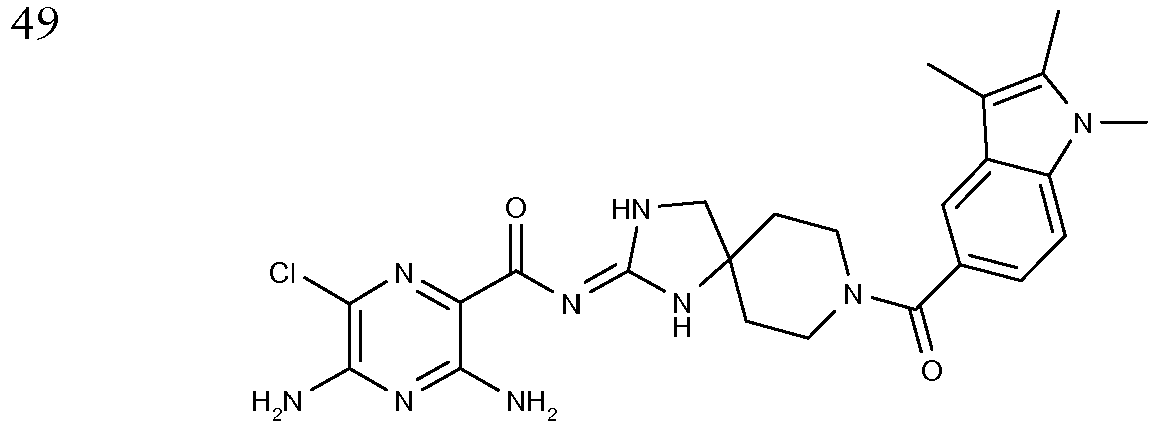


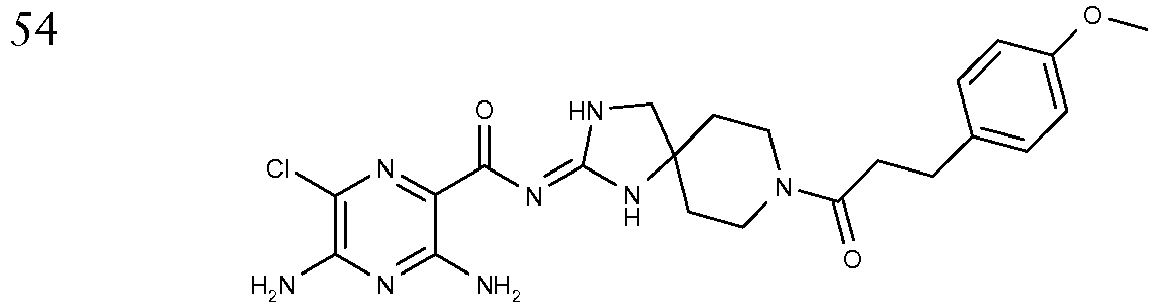


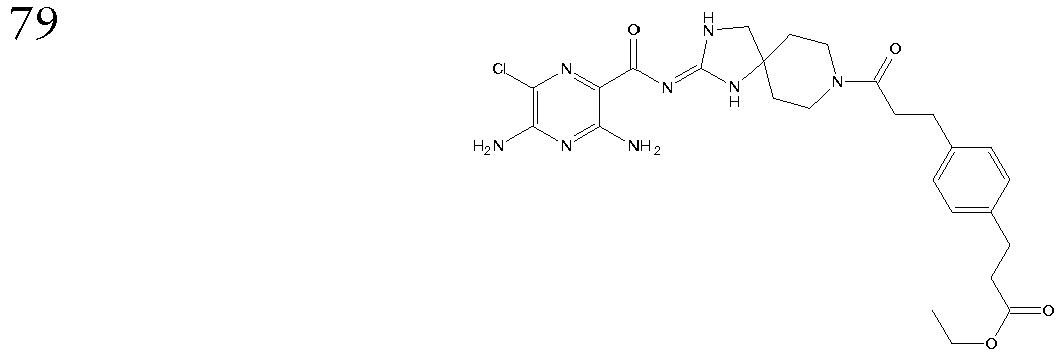





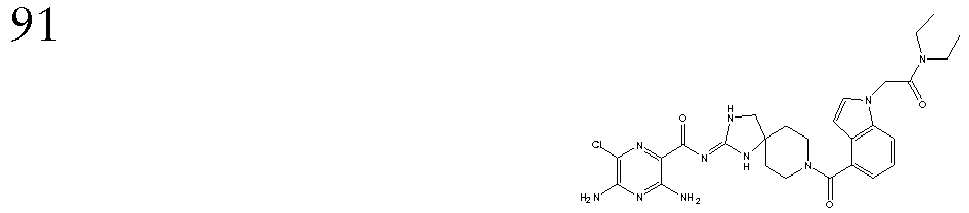


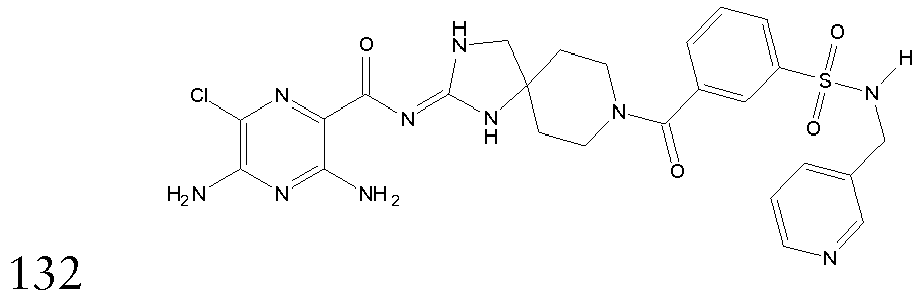


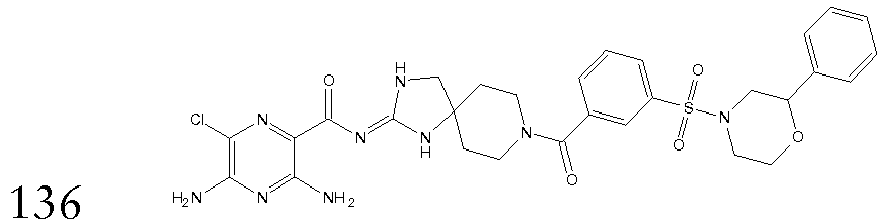


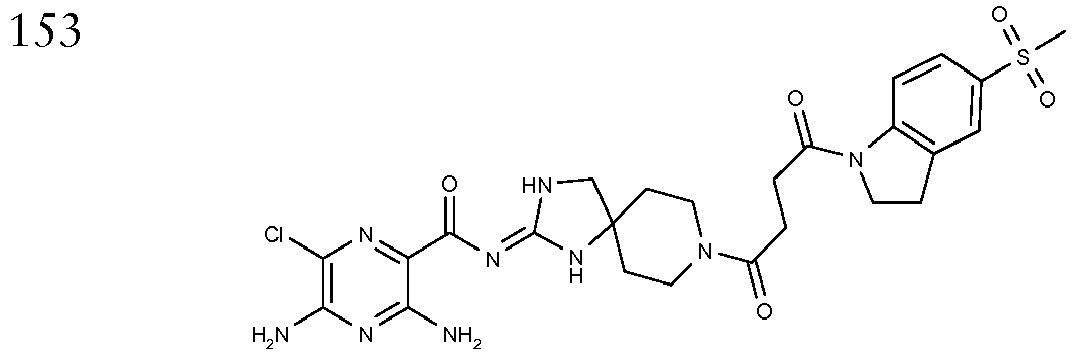


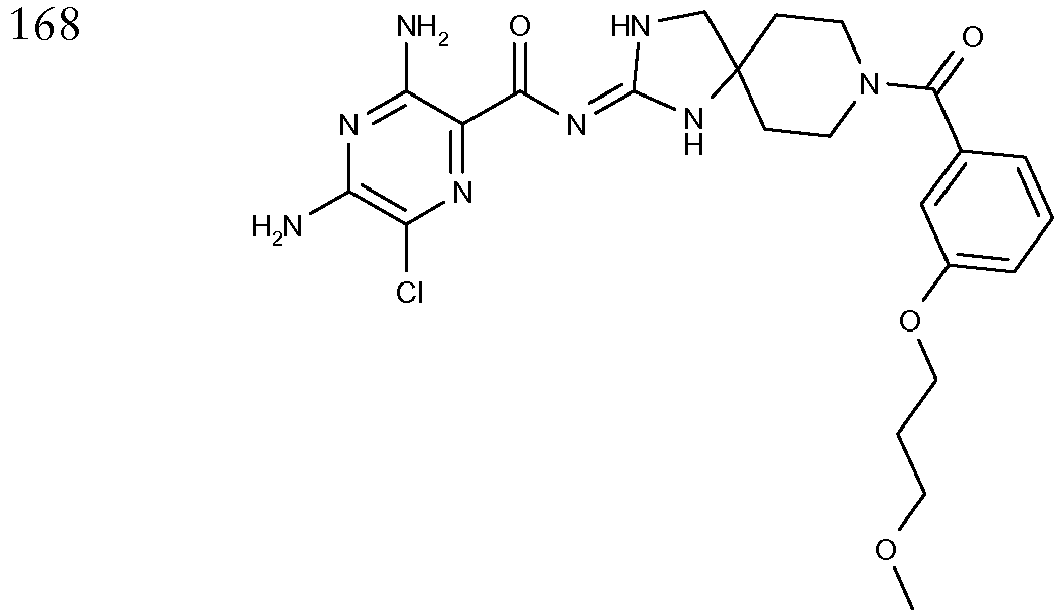
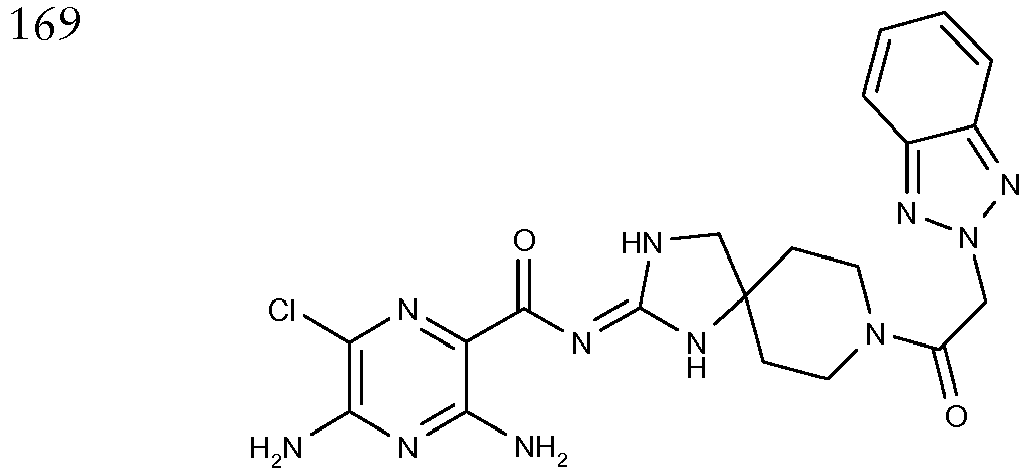


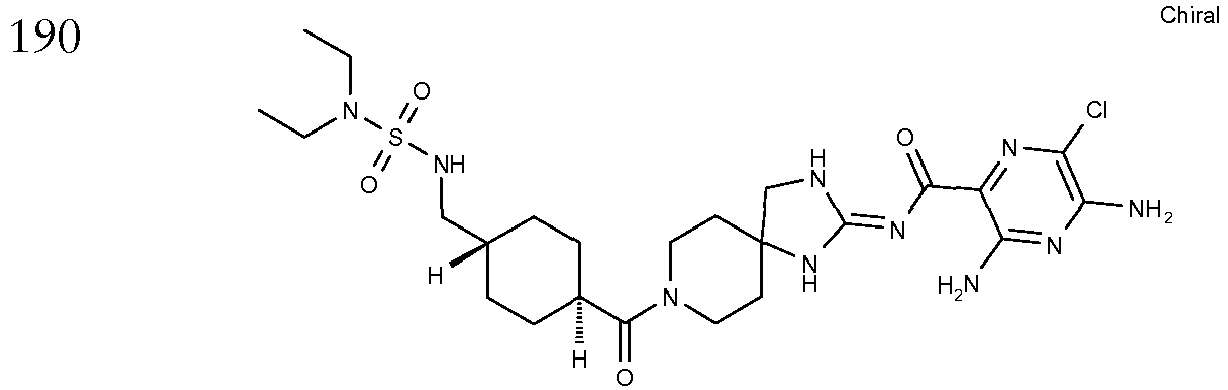


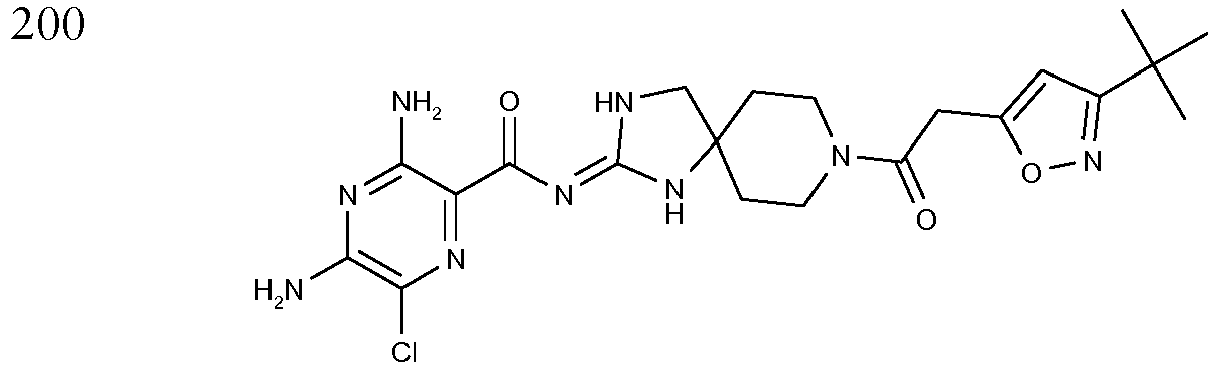


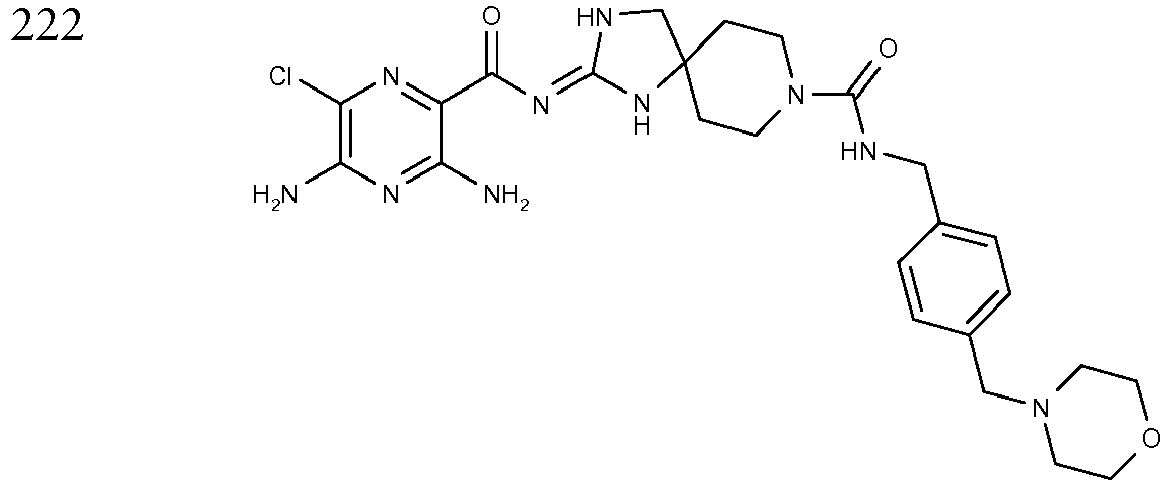


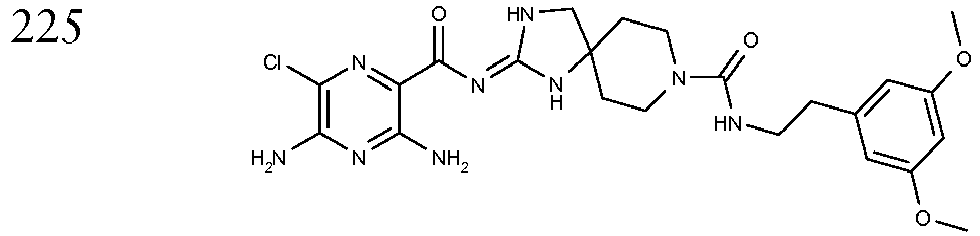


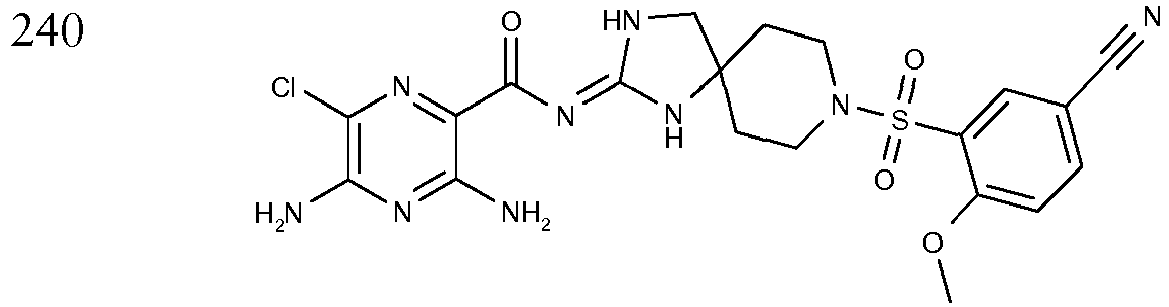


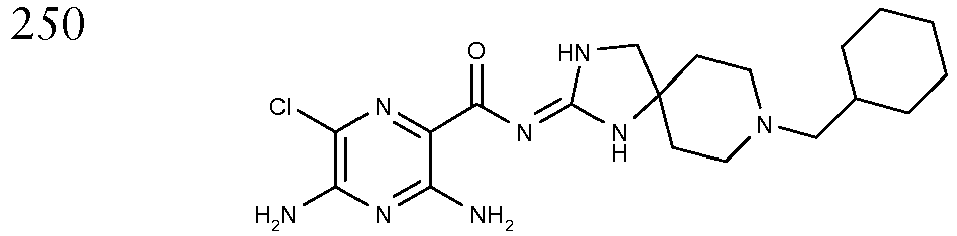


- A second aspect of the present invention provides for the use of a compound of of the aforementioned embodiments, in free or pharmaceutically acceptable salt form, for the manufacture of a medicament for the treatment of an inflammatory or allergic condition, particularly an inflammatory or obstructive airways disease or mucosal hydration.
- An embodiment of the present invention provides for the use of a compound of the aforementioned embodiments, in free or pharmaceutically acceptable salt form, for the manufacture of a medicament for the treatment of an inflammatory or allergic condition selected from cystic fibrosis, primary ciliary dyskinesia, chronic bronchitis, chronic obstructive pulmonary disease, asthma, respiratory tract infections, lung carcinoma, xerostomia and keratoconjunctivitis sicca.
- It is understood that any and all embodiments of the present invention may be taken in conjunction with any other embodiment to describe additional embodiments of the present invention. Furthermore, any elements of an embodiment are meant to be combined with any and all other elements from any of the embodiments to describe additional embodiments. It is understood by those skilled in the art that combinations of substituents where not possible are not an aspect of the present invention.
- Throughout this specification and in the claims that follow, unless the context requires otherwise, the word "comprise", or variations, such as "comprises" or "comprising", will be understood to imply the inclusion of a stated integer or step or group of integers or steps but not the exclusion of any other integer or step or group of integers or steps.
- Especially preferred specific compounds of the invention are those described hereinafter in the Examples.
- The compounds of the invention may be capable of forming acid addition salts, particularly pharmaceutically acceptable acid addition salts. Pharmaceutically acceptable acid addition salts of the compound of the invention include those of inorganic acids, e.g., hydrohalic acids, such as hydrofluoric acid, hydrochloric acid, hydrobromic acid or hydroiodic acid, nitric acid, sulfuric acid, phosphoric acid; and organic acids, e.g., aliphatic monocarboxylic acids, such as formic acid, acetic acid, trifluoroacetic acid, propionic acid and butyric acid; aliphatic hydroxy acids, such as lactic acid, citric acid, tartaric acid or malic acid; dicarboxylic acids, such as maleic acid or succinic acid; aromatic carboxylic acids, such as benzoic acid, p-chlorobenzoic acid, diphenylacetic acid, para-biphenyl benzoic acid or triphenylacetic acid; aromatic hydroxy acids, such as o-hydroxybenzoic acid, p-hydroxybenzoic acid, 1-hydroxynaphthalene-2-carboxylic acid or 3-hydroxynaphthalene-2-carboxylic acid; cinnamic acids, such as 3-(2-naphthalenyl)propenoic acid, para-methoxy cinnamic acid or para-methyl cinnamic acid; and sulfonic acids, such as methanesulfonic acid or benzenesulfonic acid. These salts may be prepared from compounds of formula (I) by known salt-forming procedures.
- Compounds of the invention which may contain acidic, e.g., carboxyl, groups, are also capable of forming salts with bases, in particular, pharmaceutically acceptable bases, such as those well-known in the art; suitable such salts include metal salts, particularly alkali metal or alkaline earth metal salts, such as sodium, potassium, magnesium or calcium salts; or salts with ammonia or pharmaceutically acceptable organic amines or heterocyclic bases, such as ethanolamines, benzylamines or pyridine. These salts may be prepared from compounds of the invention by known salt-forming procedures.
- Stereoisomers are those compounds where there is an asymmetric carbon atom. The compounds exist in individual optically active isomeric forms or as mixtures thereof, e.g., as diastereomeric mixtures. The present invention embraces both individual optically active R and S isomers, as well as mixtures thereof. Individual isomers can be separated by methods well-known to those skilled in the art, e.g., chiral high performance liquid chromatography (HPLC).
- Tautomers are one of two or more structural isomers that exist in equilibrium and are readily converted from one isomeric form to another.
- Compounds of the invention may exist in corresponding tautomeric forms.
- Examples of tautomers include but are not limited to those compounds defined in the claims.
- The compounds of the invention may exist in both unsolvated and solvated forms. The term "solvate" is used herein to describe a molecular complex comprising the compound of the invention and one or more pharmaceutically acceptable solvent molecules, e.g., ethanol. The term "hydrate" is employed when said solvent is water.
- Generally, compounds of the invention can be synthesized by the routes described in Scheme 1 and the Examples.
- For instance, intermediate 1 can be reacted with intermediate 2 in an organic solvent to provide compound 3 which can be isolated as the free base. The free base can then be converted to a salt form by treatment with an appropriate acid.
- Intermediates can be prepared from methods known by those skilled in the art or are commercially available.

- In Scheme 1, R1, R2, R3, R4, R5, R6 and R11 are as defined above; Y is CR7R8 ; X is CR9R10; n is 0; and R7, R8, R9 and R10 are also as defined above. For compounds where n is 1 or 2, then the appropriate methylene or ethylene linking groups are inserted between X and Y in the diamine reactant 2.
- The compounds of Formula 1 and Formula 2 above can be prepared according to conventional routes described in the literature.
- Compounds of the invention, in free form, may be converted into salt form, and vice versa, in a conventional manners understood by those skilled in the art. The compounds in free or salt form can be obtained in the form of hydrates or solvates containing a solvent used for crystallisation. Compounds of the invention can be recovered from reaction mixtures and purified in a conventional manner. Isomers, such as stereoisomers, may be obtained in a conventional manner, e.g., by fractional crystallisation or asymmetric synthesis from correspondingly asymmetrically substituted, e.g., optically active, starting materials.
- The compounds of the invention can be prepared, e.g., using the reactions and techniques described below and in the Examples. The reactions may be performed in a solvent appropriate to the reagents and materials employed and suitable for the transformations being effected. It will be understood by those skilled in the art of organic synthesis that the functionality present on the molecule should be consistent with the transformations proposed. This will sometimes require a judgment to modify the order of the synthetic steps or to select one particular process scheme over another in order to obtain a desired compound of the invention.
- The various substituents on the synthetic intermediates and final products shown in the following reaction schemes can be present in their fully elaborated forms, with suitable protecting groups where required as understood by one skilled in the art, or in precursor forms which can later be elaborated into their final forms by methods familiar to one skilled in the art. The substituents can also be added at various stages throughout the synthetic sequence or after completion of the synthetic sequence. In many cases, commonly used functional group manipulations can be used to transform one intermediate into another intermediate, or one compound of the invention into another compound of formula the invention. Examples of such manipulations are conversion of an ester or a ketone to an alcohol; conversion of an ester to a ketone; interconversions of esters, acids and amides; alkylation, acylation and sulfonylation of alcohols and amines; and many others. Substituents can also be added using common reactions, such as alkylation, acylation, halogenation or oxidation. Such manipulations are well-known in the art, and many reference works summarize procedures and methods for such manipulations. Some reference works which gives examples and references to the primary literature of organic synthesis for many functional group manipulations, as well as other transformations commonly used in the art of organic synthesis are March's Organic Chemistry, 5th Edition, Wiley and Chichester, Eds. (2001); Comprehensive Organic Transformations, Larock, Ed., VCH (1989); Comprehensive Organic Functional Group Transformations, Katritzky et al. (series editors), Pergamon (1995); and Comprehensive Organic Synthesis, Trost and Fleming (series editors), Pergamon (1991). It will also be recognized that another major consideration in the planning of any synthetic route in this field is the judicious choice of the protecting group used for protection of the reactive functional groups present in the compounds described in this invention. Multiple protecting groups within the same molecule can be chosen such that each of these protecting groups can either be removed without removal of other protecting groups in the same molecule, or several protecting groups can be removed using the same reaction step, depending upon the outcome desired. An authoritative account describing many alternatives to the trained practitioner is Greene and Wuts, Protective Groups in Organic Synthesis, Wiley and Sons (1999).
- Having regard to their blockade of the epithelial sodium channel (ENaC), compounds of the invention , in free or pharmaceutically acceptable salt form, hereinafter alternately referred to as "agents of the invention", are useful in the treatment of conditions which respond to the blockade of the epithelial sodium channel, particularly conditions benefiting from mucosal hydration.
- Diseases mediated by blockade of the epithelial sodium channel, include diseases associated with the regulation of fluid volumes across epithelial membranes. For example, the volume of airway surface liquid is a key regulator of mucociliary clearance and the maintenance of lung health. The blockade of the epithelial sodium channel will promote fluid accumulation on the mucosal side of the airway epithelium thereby promoting mucus clearance and preventing the accumulation of mucus and sputum in respiratory tissues (including lung airways). Such diseases include respiratory diseases, such as cystic fibrosis, primary ciliary dyskinesia, chronic bronchitis, chronic obstructive pulmonary disease (COPD), asthma, respiratory tract infections (acute and chronic; viral and bacterial) and lung carcinoma. Diseases mediated by blockade of the epithelial sodium channel also include diseases other than respiratory diseases that are associated with abnormal fluid regulation across an epithelium, perhaps involving abnormal physiology of the protective surface liquids on their surface, e.g., xerostomia (dry mouth) or keratoconjunctivitis sire (dry eye). Furthermore, blockade of the epithelial sodium channel in the kidney could be used to promote diuresis and thereby induce a hypotensive effect.
- Treatment in accordance with the invention may be symptomatic or prophylactic.
- Asthma includes both intrinsic (non-allergic) asthma and extrinsic (allergic) asthma, mild asthma, moderate asthma, severe asthma, bronchitic asthma, exercise-induced asthma, occupational asthma and asthma induced following bacterial infection. Treatment of asthma is also to be understood as embracing treatment of subjects, e.g., of less than 4 or 5 years of age, exhibiting wheezing symptoms and diagnosed or diagnosable as "wheezy infants", an established patient category of major medical concern and now often identified as incipient or early-phase asthmatics. (For convenience this particular asthmatic condition is referred to as "wheezy-infant syndrome".)
- Prophylactic efficacy in the treatment of asthma will be evidenced by reduced frequency or severity of symptomatic attack, e.g., of acute asthmatic or bronchoconstrictor attack, improvement in lung function or improved airways hyperreactivity. It may further be evidenced by reduced requirement for other, symptomatic therapy, i.e., therapy for or intended to restrict or abort symptomatic attack when it occurs, e.g., anti-inflammatory (e.g., cortico-steroid) or bronchodilatory. Prophylactic benefit in asthma may, in particular, be apparent in subjects prone to "morning dipping". "Morning dipping" is a recognized asthmatic syndrome, common to a substantial percentage of asthmatics and characterized by asthma attack, e.g., between the hours of about 4-6 am, i.e., at a time normally substantially distant from any previously administered symptomatic asthma therapy.
- Chronic obstructive pulmonary disease includes chronic bronchitis or dyspnea associated therewith, emphysema, as well as exacerbation of airways hyperreactivity consequent to other drug therapy, in particular, other inhaled drug therapy. The invention is also applicable to the treatment of bronchitis of whatever type or genesis including, e.g., acute, arachidic, catarrhal, croupus, chronic or phthinoid bronchitis.
- The agents of the invention may also be useful as acid-sensing ion channel (ASIC) blockers. Thus they may be useful in the treatment of conditions which respond to the blockade of the acid-sensing ion channel channel.
- The suitability of epithelial sodium channel blocker as a treatment of a disease benefiting from mucosal hydration, may be tested by determining the inhibitory effect of the channel blocker on ENaC in a suitable cell-based assay. For example single cells or confluent epithelia, endogenously expressing or engineered to overexpress ENaC can be used to assess channel function using electrophysiological techniques or ion flux studies. See methods described in: Hirsh et al., J Pharm Exp Ther (2004); Moody et al., Am J Physiol Cell Physiol (2005).
- Epithelial sodium channel blockers, including the compounds of formula (I), are also useful as co-therapeutic agents for use in combination with other drug substances, such as anti-inflammatory, bronchodilatory, antihistamine or anti-tussive drug substances, particularly in the treatment of cystic fibrosis or obstructive or inflammatory airways diseases such as those mentioned hereinbefore, e.g., as potentiators of therapeutic activity of such drugs or as a means of reducing required dosaging or potential side effects of such drugs.
- The epithelial sodium channel blocker may be mixed with the other drug substance in a fixed pharmaceutical composition or it may be administered separately, before, simultaneously with or after the other drug substance.
- Accordingly, the invention includes as a further aspect a combination of epithelial sodium channel blocker with osmotic agents (hypertonic saline, dextran, mannitol, Xylitol) + modifiers of CFTR function, both wild-type and mutant (correctors + potentiators), e.g., those described in
WO 2007/021982 ,WO 2006/099256 ,WO 2006/127588 ,WO 2004/080972 ,WO 2005/026137 ,WO 2005/035514 ,WO 2005/075435 ,WO 2004/111014 ,WO 2006/101740 ,WO 2004/110352 ,WO 2005/120497 andUS 2005/0176761 , an anti-inflammatory, bronchodilatory, antihistamine, anti-tussive, antibiotic or DNase drug substance, said epithelial sodium channel blocker and said drug substance being in the same or different pharmaceutical composition. - Suitable antibiotics include macrolide antibiotics, e.g., tobramycin (TOBI™).
- Suitable DNase drug substances include dornase alfa (Pulmozyme™), a highly-purified solution of recombinant human deoxyribonuclease I (rhDNase), which selectively cleaves DNA. Dornase alfa is used to treat cystic fibrosis.
- Other useful combinations of epithelial sodium channel blockers with anti-inflammatory drugs are those with antagonists of chemokine receptors, e.g., CCR-1, CCR-2, CCR-3, CCR-4, CCR-5, CCR-6, CCR-7, CCR-8, CCR-9 and CCR10, CXCR1, CXCR2, CXCR3, CXCR4, CXCR5, particularly CCR-5 antagonists, such as Schering-Plough antagonists SC-351125, SCH-55700 and SCH-D; Takeda antagonists, such as N-[[4-[[[6,7-dihydro-2-(4-methyl-phenyl)-5H-benzo-cyclohepten-8-yl]carbonyl]amino]phenyl]-methyl]tetrahydro-N,N-dimethyl-2H-pyran-4-amin-ium chloride (TAK-770); and CCR-5 antagonists described in USP
6,166,037 (particularly claims 18 and 19),WO 00/66558 WO 00/66559 WO 04/018425 WO 04/026873 - Suitable anti-inflammatory drugs include steroids, in particular, glucocorticosteroids, such as budesonide, beclamethasone dipropionate, fluticasone propionate, ciclesonide or mometasone furoate, or steroids described in
WO 02/88167 WO 02/12266 WO 02/100879 WO 02/00679 WO 03/35668 WO 03/48181 WO 03/62259 WO 03/64445 WO 03/72592 WO 04/39827 WO 04/66920 DE 10261874 ,WO 00/00531 WO 02/10143 WO 03/82280 WO 03/82787 WO 03/86294 WO 03/104195 WO 03/101932 WO 04/05229 WO 04/18429 WO 04/19935 WO 04/26248 WO 92/19594 WO 93/19749 WO 93/19750 WO 93/19751 WO 98/18796 WO 99/16766 WO 01/13953 WO 03/104204 WO 03/104205 WO 03/39544 WO 04/000814 WO 04/000839 WO 04/005258 WO 04/018450 WO 04/018451 WO 04/018457 WO 04/018465 WO 04/018431 WO 04/018449 WO 04/018450 WO 04/018451 WO 04/018457 WO 04/018465 WO 04/019944 WO 04/019945 WO 04/045607 WO 04/037805 WO 02/42298 WO 0075114 
WO 04/16601 EP 1440966 ,JP 05025045 WO 93/18007 WO 99/64035 2002/0055651 ,WO 01/42193 WO 01/83462 WO 02/66422 WO 02/70490 WO 02/76933 WO 03/24439 WO 03/42160 WO 03/42164 WO 03/72539 WO 03/91204 WO 03/99764 WO 04/16578 WO 04/22547 WO 04/32921 WO 04/33412 WO 04/37768 WO 04/37773 WO 04/37807 WO 04/39762 WO 04/39766 WO 04/45618 WO 04/46083 WO 04/80964 WO 04/108765 WO 04/108676 - Suitable bronchodilatory drugs include anticholinergic or antimuscarinic agents, in particular, ipratropium bromide, oxitropium bromide, tiotropium salts and CHF 4226 (Chiesi), and glycopyrrolate, but also those described in
EP 424021 3,714,357 , USP5,171,744 ,WO 01/04118 WO 02/00652 WO 02/51841 WO 02/53564 WO 03/00840 WO 03/33495 WO 03/53966 WO 03/87094 WO 04/018422 WO 04/05285 - Suitable dual anti-inflammatory and bronchodilatory drugs include dual beta-2 adrenoceptor agonist/muscarinic antagonists such as those disclosed in USP
2004/0167167 ,WO 04/74246 WO 04/74812 - Suitable antihistamine drug substances include cetirizine hydrochloride, acetaminophen, clemastine fumarate, promethazine, loratidine, desloratidine, diphenhydramine and fexofenadine hydrochloride, activastine, astemizole, azelastine, ebastine, epinastine, mizolastine and tefenadine, as well as those disclosed in
JP 2004107299 WO 03/099807 WO 04/026841 - In accordance with the foregoing, the invention also describes a method for the treatment of a condition responsive to blockade of the epithelial sodium channel, e.g., diseases associated with the regulation of fluid volumes across epithelial membranes, particularly an obstructive airways disease, which comprises administering to a subject, particularly a human subject, in need thereof a compound of the invention , in free form or in the form of a pharmaceutically acceptable salt.
- In another aspect the invention provides a compound of the invention , in free form or in the form of a pharmaceutically acceptable salt, for use in the manufacture of a medicament for the treatment of a condition responsive to blockade of the epithelial sodium channel, particularly an obstructive airways disease, e.g., cystic fibrosis and COPD.
- The agents of the invention may be administered by any appropriate route, e.g. orally, e.g., in the form of a tablet or capsule; parenterally, e.g., intravenously; by inhalation, e.g., in the treatment of an obstructive airways disease; intranasally, e.g., in the treatment of allergic rhinitis; topically to the skin; or rectally. In a further aspect, the invention also provides a pharmaceutical composition comprising a compound of the invention , in free form or in the form of a pharmaceutically acceptable salt, optionally together with a pharmaceutically acceptable diluent or carrier therefor. The composition may contain a co-therapeutic agent, such as an anti-inflammatory, broncho-dilatory, antihistamine or anti-tussive drug as hereinbefore described. Such compositions may be prepared using conventional diluents or excipients and techniques known in the galenic art. Thus oral dosage forms may include tablets and capsules. Formulations for topical administration may take the form of creams, ointments, gels or transdermal delivery systems, e.g., patches. Compositions for inhalation may comprise aerosol or other atomizable formulations or dry powder formulations.
- When the composition comprises an aerosol formulation, it preferably contains, e.g., a hydro-fluoro-alkane (HFA) propellant, such as HFA134a or HFA227 or a mixture of these, and may contain one or more co-solvents known in the art, such as ethanol (up to 20% by weight), and/or one or more surfactants, such as oleic acid or sorbitan trioleate, and/or one or more bulking agents, such as lactose. When the composition comprises a dry powder formulation, it preferably contains, e.g., the compound of the invention having a particle diameter up to 10 microns, optionally together with a diluent or carrier, such as lactose, of the desired particle size distribution and a compound that helps to protect against product performance deterioration due to moisture, e.g., magnesium stearate. When the composition comprises a nebulised formulation, it preferably contains, e.g., the compound of the invention either dissolved, or suspended, in a vehicle containing water, a co-solvent, such as ethanol or propylene glycol and a stabilizer, which may be a surfactant.
- Further aspects of the invention include:
- (a) a compound of the invention in inhalable form, e.g., in an aerosol or other atomisable composition or in inhalable particulate, e.g., micronised form;
- (b) an inhalable medicament comprising a compound of the invention in inhalable form;
- (c) a pharmaceutical product comprising a compound of the invention in inhalable form in association with an inhalation device; and
- (d) an inhalation device containing a compound of the invention in inhalable form.
- Dosages of compounds of the invention employed in practising the present invention will of course vary depending, e.g., on the particular condition to be treated, the effect desired and the mode of administration. In general, suitable daily dosages for administration by inhalation are of the order of 0.005-10 mg, while for oral administration suitable daily doses are of the order of 0.05-100 mg.
- Compounds of the invention and their pharmaceutically acceptable salts, hereinafter referred to alternatively as "agents of the invention", are useful as pharmaceuticals. In particular, the compounds have good ENaC blocker activity and may be tested in the following assays.
- Human Bronchial Epithelial cells (HBECs) (Cambrex) were cultured under air-liquid interface conditions to provide a well differentiated mucociliary phenotype.
- HBECs were cultured using a modification of the method described by Gray and colleagues (Gray et al., 1996). Cells were seeded in plastic T-162 flasks and were grown in bronchial epithelial cell growth medium (BEGM; Cambrex) supplemented with bovine pituitary extract (52 µg/mL), hydrocortisone (0.5 µg/mL), human recombinant epidermal growth factor (0.5 ng/mL), epinephrine (0.5 µg/mL), transferrin (10 µg/mL), insulin (5 µg/mL), retinoic acid (0.1 µg/mL), triiodothyronine (6.5 µg/mL), gentamycin (50 µg/mL) and amphotericin B (50 ng/mL). Medium was changed every 48 hours until cells were 90% confluent. Cells were then passaged and seeded (8.25 x 10⁵ cells/insert) on polycarbonate Snapwell inserts (Costar) in differentiation media containing 50% DMEM in BEGM with the same supplements as above but without triiodothyronine and a final retinoic acid concentration of 50 nM (all-trans retinoic acid). Cells were maintained submerged for the first 7 days in culture, after which time they were exposed to an apical air interface for the remainder of the culture period. At this time, media was changed to DMEM:F12 media containing 2% v/v Ultroser G for the remainder of culture. Amphotericin B was removed from all media 3 feeds prior to use in the Ussing Chambers. Cells were used between days 7 and 21 after establishment of the apical-air interface. At all stages of culture, cells were maintained at 37°C in 5% CO2 in an air incubator.
- Snapwell inserts were mounted in Vertical Diffusion Chambers (Costar) and were bathed with continuously gassed Ringer solution (5% CO2 in O2; pH 7.4) maintained at 37°C containing (in mM): 120 NaCl, 25 NaHCO3, 3.3 KH2PO4, 0.8 K2HPO4, 1.2 CaCl2, 1.2 MgCl2, and 10 glucose. The solution osmolarity was between 280 and 300 mOsmol/kg H2O for all physiological salt solutions used. Cells were voltage clamped to 0 mV (model EVC4000; WPI). RT was measured by applying a 1- or 2-mV pulse at 30-s intervals and calculating RT by Ohm's law. Data were recorded using a PowerLab workstation (ADInstruments).
- Test compounds were prepared as a 10 mM stock solution in DMSO (95%). Serial 3-fold dilutions were freshly prepared in an appropriate vehicle (distilled H2O or Ringers solution). The initial concentration was added to the apical chamber as a 1000x concentrate in 5 µL, resulting in a final 1x concentration the 5 mL volume of the Ussing chamber. Subsequent additions of compound were added in a 3.3 µL volume of the 1000x serially diluted stock solution. At the completion of the concentration-response experiment, amiloride (10 µM) was added into the apical chamber to enable the total amiloride-sensitive current to be measured. An amiloride control IC50 was established at the start of each experiment.
- Results are expressed as the mean % inhibition of the amiloride-sensitive ISC. Concentration-response curves were plotted and IC50 values generated using GraphPad Prism 3.02. Cell inserts were typically run in duplicate and the IC50 calculated on the mean % inhibition data.
- Compounds of the Examples, herein below, generally have IC50 values in the data measurements described above below 10 µM. For example, the compounds of the Examples shown below have the indicated IC50 values.
Ex IC50 (µM) Ex IC50 (µM) 39 0.0055 94 0.009 40 0.0055 99 0.019 41 0.0095 118 0.175 42 0.011 126 0.025 43 0.013 128 0.0115 44 0.0295 141 0.002 45 0.0426 146 0.006 48 0.0165 147 0.016 58 0.143 185 0.062 61 0.3465 215 0.036 62 0.013 220 0.0085 64 0.0255 228 0.0935 65 0.0395 232 0.054 70 0.074 235 0.364 71 0.042 238 0.119 76 0.012 246 0.025 86 0.008 252 0.028 91 0.0885 - The invention is illustrated by the following Examples.
- Compounds of the invention
are shown in Table 1. Methods for preparing such compounds are described hereinafter. The table also shows mass spectrometry [M+H]+ data.Table 1 Ex. Structure M/s [M+H]+ 12 
415 37 
425 38 
325 39 
626.4 40 
607.42 41 
607.98 42 
510.4 43 
529.05 44 
499.0 45 
542.91 46 
552.1 47 
469.17 48 
510.23 49 
510.1 50 
483.1 51 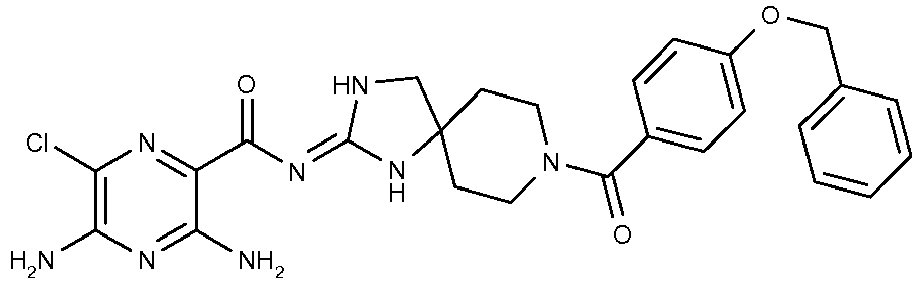
535.1 52 
499.1 53 
469.14 54 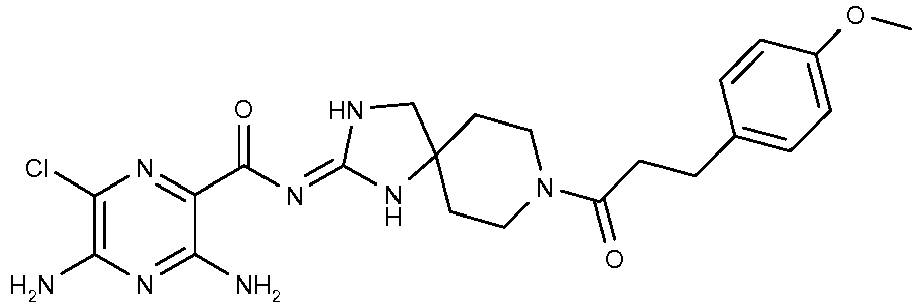
487.0 55 
472.98 56 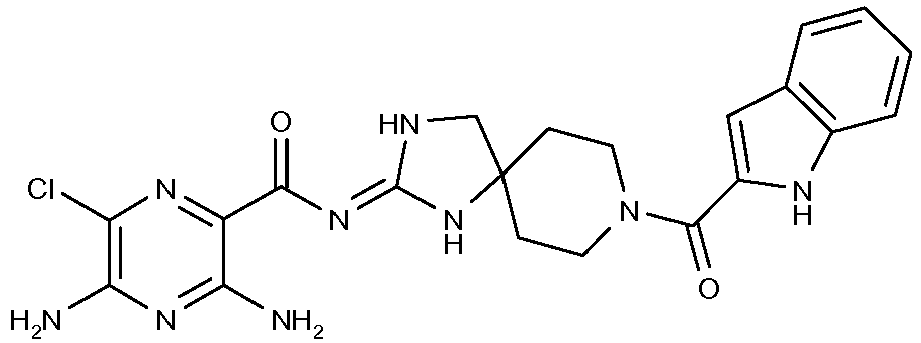
468.1 57 
480.1 58 
521.1 59 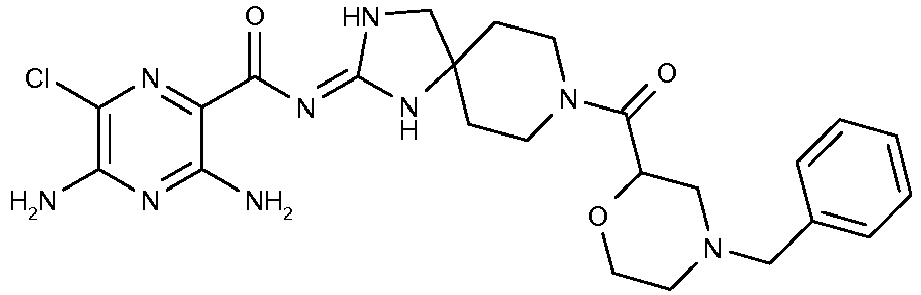
528.2 60 
469.08 61 
597.07 62 
530.21 63 
553.54 64 
529.54 65 
530.46 66 
513.40 67 
547.42 68 
561.04 69 
601.10 70 
564.10 71 
587.50 72 
530.10 73 
599.10 74 
615.20 75 
545.10 76 
529.41 77 
524 78 
571 79 
557 80 
543 81 
529 82 
588 83 
586/588 84 
597 85 
618 86 
644/646 87 
582/584 88 
540 89 
568/570 90 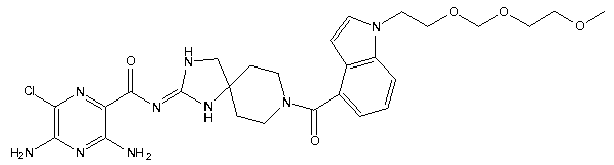
600/602 91 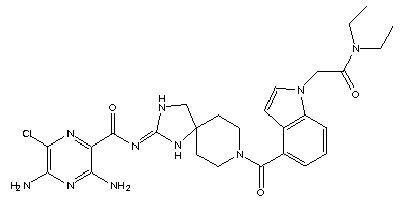
581/583 92 
512/514 97 
549 98 
563 99 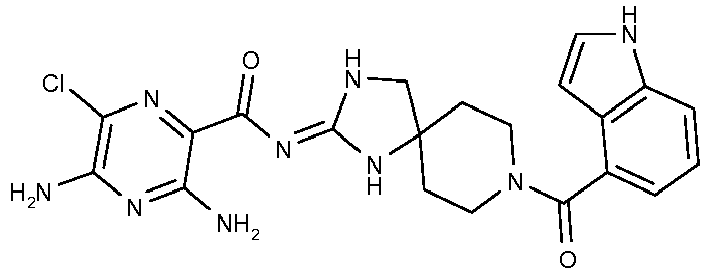
468 100 
468 101 
443 102 
675 103 
463 104 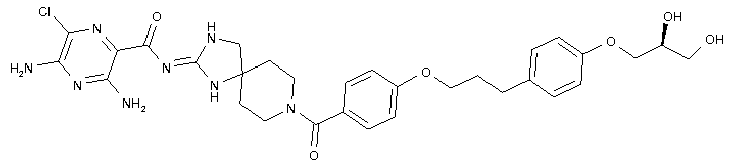
653 105 
455 106 
429 107 
469 108 
423 109 
453 110 
419 111 
395 112 
454 113 
430 114 
487 115 
431 116 
445 117 
435 118 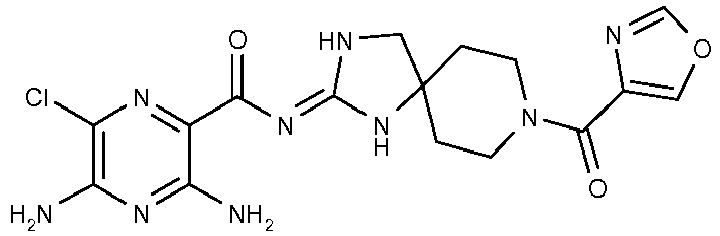
420 119 
430 120 
430 121 
436 122 
419 123 
437 124 
431 125 
420 126 
648.4 127 
651.3 128 
648.3 129 
576.3 130 
633.3 131 
592.3 132 
599.3 133 
610.3 134 
634.3 135 
613.3 136 
654.3 137 
664.3 138 
645.4 139 
614.3 140 
593.4 141 
702.3 142 
594.3 143 
643.3 144 
736.4 145 
626.3 146 
559.3 147 
572.08 148 
572.0 149 
538.4 150 
544.4 151 
569.4 152 
511.4 153 
604.3 154 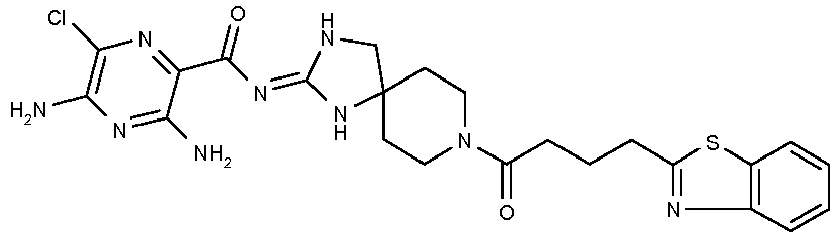
528.3 155 
633.4 156 
526.3 157 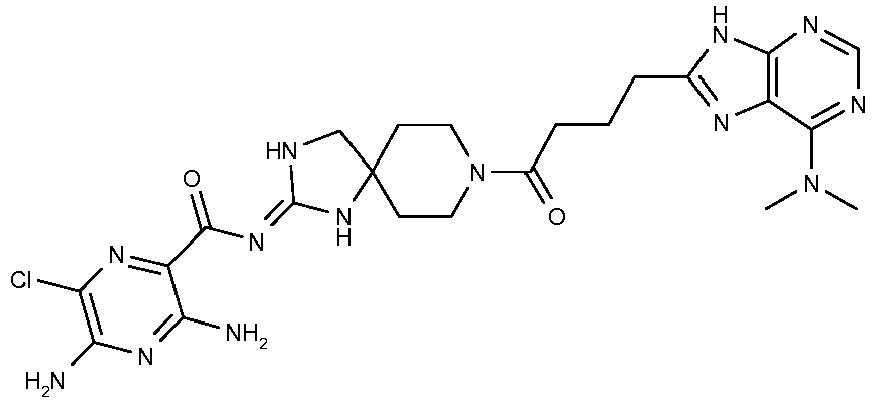
556.4 158 
604.4 159 
617.4 160 
594.4 161 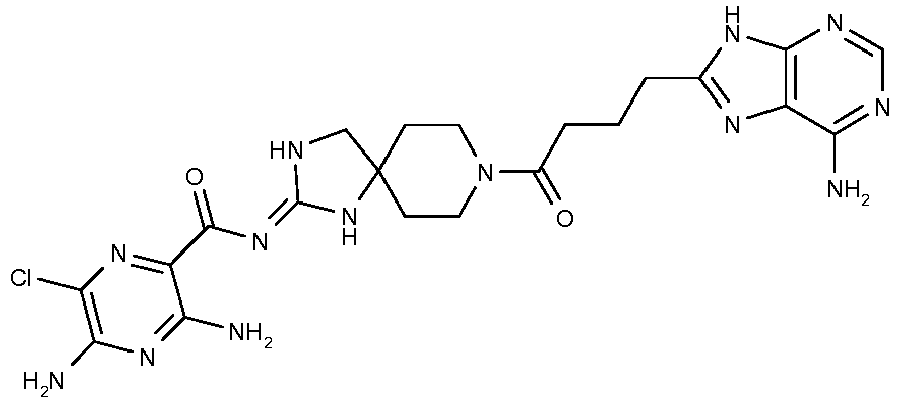
528.4 162 
478.3 163 
462.3 164 
691.04 165 
573.05 166 
648.06 167 
545.3 168 
517.07 169 
484.04 170 
511.04 171 
530.08 172 
603.99 173 
530.19 174 
527.99 175 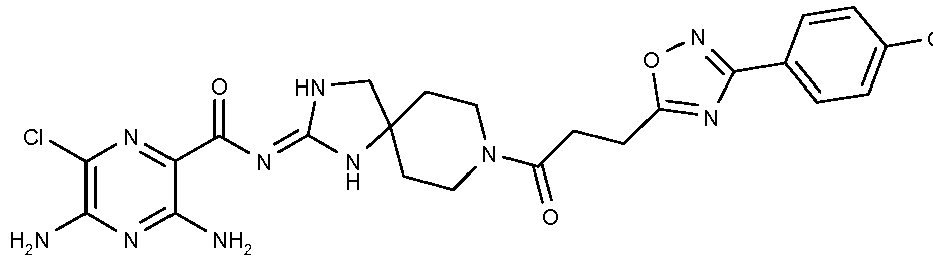
555.07 176 
608.05 177 
527.07 178 
524.1 179 
520.99 180 
545.95 181 
514.98 182 
512.01 183 
478.01 184 
475.08 185 
572.09 186 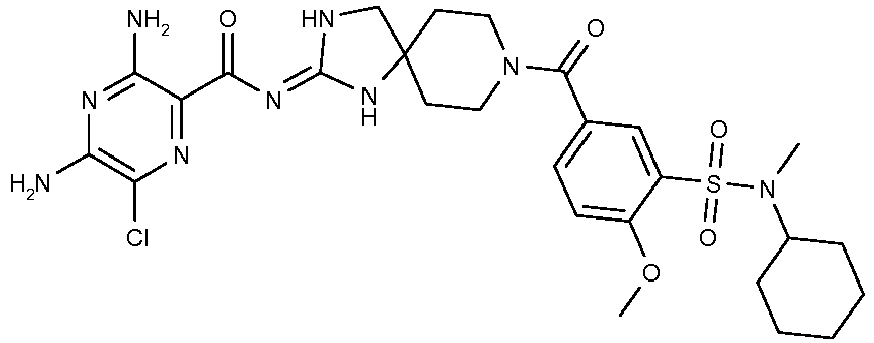
634.09 187 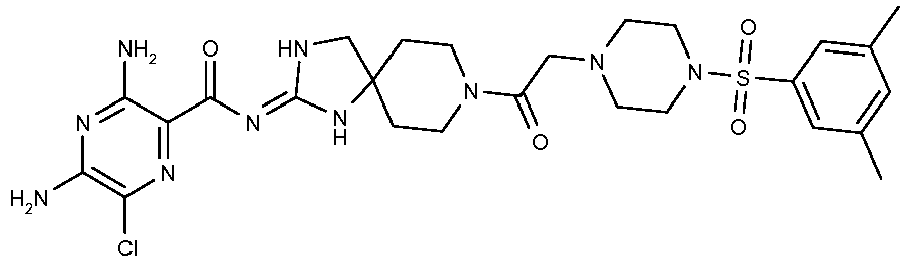
619.12 188 
496.02 189 
685.08 190 
599.2 191 
542.01 192 
579.03 193 
526.05 194 
553.09 195 
614.3 196 
516.06 197 
496.01 198 
528.04 199 
560.14 200 
490.05 201 
528.06 202 
527.02 203 
458.1 204 
540.02 205 
539.11 206 
433.05 207 
635.19 208 
447.09 209 
509.09 210 
542.00 211 
564.06 212 
539.11 213 
445.96 214 
620.1 215 
458.1 216 
217 
637.1 218 
598.05 219 
554.0 220 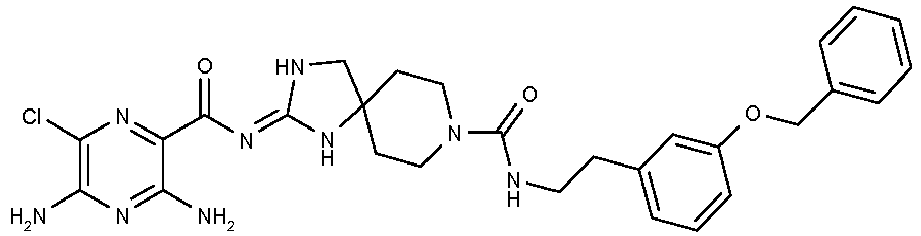
578.2 221 
539.2 222 
557.2 223 
564.1 224 
610.2 225 
532.1 226 
566.1 227 
539.2 228 
487.1 229 
620.2 230 
564.2 231 
578.2 232 
478.98 233 
234 
517.9 235 
518.1 236 
540.9 237 
493.1 238 
652.2 239 
615.1 240 
520.1 241 
527.0 242 
581.1 243 
527.1 244 
616.1 245 
527.0 246 
429 247 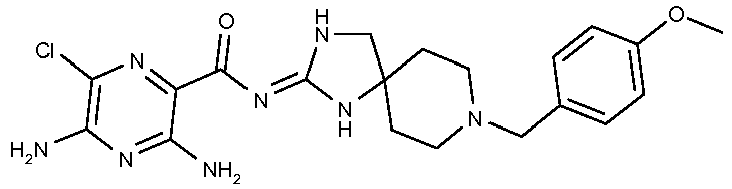
445 248 
416 249 
443 250 
421 251 
451 252 
494.15 253 
589.20 - LCMS are recorded using a Phenomenex Gemini 50 mm x 3.0 mm, 3um column. Low pH methods use a gradient of 5-95 % acetonitrile in water - 0.1 % TFA, high pH methods use 5-95% acetonitrile in water - 0.1 % NH3. [M+H]+ refer to monoisotopic molecular weights.
- 9-BBN
- 9-Borabicyclo[3.3.1]nonane
- DBU
- Diazabicyclo [5.4.0] undec-7-ene
- DMF
- dimethylformamide
- DMSO
- dimethyl sulfoxide
- DCM
- dichloromethane
- DEAD
- diethyl azodicarboxylate
- DIAD
- diisopropyl azodicarboxylate
- DIPEA
- diisopropylethylamine
- EDCI
- 1-ethyl-3-(3'-dimethylaminopropyl) carbodiimide
- EtOAc
- ethyl acetate
- HATU
- 2-(7-Aza-1H-benzotriazole-1-yl)-1,1,3,3-tetramethyluronium hexafluorophosphate
- HPLC
- high performance liquid chromatography
- IPA
- Isopropyl alcohol (iso-propanol)
- MeOH
- methanol
- MEMCl
- 2- methoxyethoxymethyl chloride
- NMR
- nuclear magnetic resonance
- PS
- polymer supported
- PPTS
- Pyridinium para-toluenesulfonate
- PEAX
- PE-anion exchange (e.g. Isolute® PE-AX columns from Biotage)
- SCX-2
- strong cation exchange (e.g. Isolute® SCX-2 columns from Biotage)
- TEA
- triethylamine
- THF
- tetrahydrofuran
- TFA
- trifluoroacetic acid
- For clarity in describing the Examples described below. All examples are single enantiomers of defined stereochemistry.
- Where not stated, the compounds are recovered from reaction mixtures and purified using conventional techniques such as flash chromatography, filtration, recrystallisation and trituration.
- 4-Amino-1-benzyl-piperidine-4-carbonitrile (Intermediate G) (200 mg, 0.91 mmol) in dry propan-2-ol (10 ml) is treated with triethylamine (0.25 ml) followed by 1-(3,5-diamino-6-chloro-pyrazine-2-carbonyl)-2-methyl-isothiourea (Intermediate A) (355 mg, 0.91 mmol). The mixture is heated at 70 °C for 5 hours and then allowed to cool to room temperature. The precipitate is collected and washed with methanol to afford the title compound as a light yellow solid, 190 mg; [M+H]+ 415
- A suspension of 4-amino-4-aminomethyl-piperidine-1-carboxylic acid tert-butyl ester (Intermediate U) (218 g, 0.95 mol) in tert-butanol (6 L) and 1-(3,5-diamino-6-chloropyrazine-2-carbonyl)-2-methyl-isothiourea (Intermediate A) (338 g, 0.82 mol) is stirred at 40 °C overnight. The temperature is then raised to 85 °C and the suspension stirred at this temperature for a further 4 days. The reaction mixture is concentrated in vacuo and the residue is taken up in water (1 L), sonicated and heated to 45-50 °C. The solid is collected by vacuum filtration and washed with ice cold water, then dried under vacuum at 50 °C overnight to afford the title compound as a yellow solid; [M+H]+ 425.1.
- To a stirred solution of 4M HCl in dioxane (1 L) is added 2-[(E)-3,5-diamino-6-chloro-pyrazine-2-carbonylimino]-1,3,8-triaza-spiro[4.5]decane-8-carboxylic acid tert-butyl ester trifluoroacetate (Ex. 37) (104 g, 193 mmol). The resulting thick suspension is stirred at room temperature for 2 hours. The product is isolated by vacuum filtration, rinsing with dioxane. The solid is dried under vacuum at 50 °C to afford the title compound as a dihydrochloride salt as a dark yellow solid; [M+H]+ = 325.
- To a solution of Tosyl-L-phenylalanine (1.0 g, 3.13 mmol) in DMF (25 ml) is added N-methyl morpholine (1.033 ml, 9.39 mmol) and 3,5-Diamino-6-chloro-pyrazine-2-carboxylic acid [1,3,8-triaza-spiro[4.5]dec-(2E)-ylidene]- amide dihydrochloride (Ex. 38) (1.37 g, 3.44 mmol), followed by HATU (1.31 g, 3.44 mmol) and the resulting solution is stirred at room temperature for 20 minutes. The crude product is diluted with water (300 ml) and the resultant solid is isolated. Purification by reverse phase chromatography (Isolute™ C18, 0-100% MeCN in water -0.1%TFA) followed by catch and release resin (SCX-2) eluted with MeOH and 7M NH3 in MeOH yields a yellow solid which is triturated with MeOH and diethyl ether to give the title compound as a free base. The free base is stirred in 5M HCl at 100 °C for 30 minutes forming a gum. MeOH (5 ml) is added to the gum and then all solvent is removed in vacuo. The residue is triturated with MeOH and diethyl ether to give the title compound; [M+H]+ 626.4; 1H NMR (DMSO-d6): 1.12 - 1.71 (4H, m), 2.36 - 2.38 (3H, s), 2.59 - 2.83 (2H, m), 2.93 - 3.52 (4H, m), 3.41 - 3.60 (2H, m), 4.42 (1H, m), 7.12 (2H, d, J = 6.9 Hz), 7.17 - 7.28 (3H, m), 7.35 (2H, d, J = 7.7 Hz), 7.54 - 7.37 (2H, br), 7.57 (2H, d, J = 7.7 Hz), 8.12 (1H, d, J = 9.0 Hz), 7.70 - 8.26 (2H, br), 9.22 (1H, s), 9.95 (1H, s), 10.99 (1H, s).
- To a solution of 1-(phenylsulfonyl)-1H-indole-3-carboxylic acid (1.0 g, 3.32 mmol) in DMF (15 ml) is added HATU (1.388 g, 3.65 mmol) and N-methyl morpholine (1.095 ml, 9.96 mmol) and the solution is stirred at room temperature for 5 minutes. 3,5-Diamino-6-chloro-pyrazine-2-carboxylic acid [1,3,8-triaza-spiro[4.5]dec-(2E)-ylidene]-amide dihydrochloride (Ex. 38) (1.452 g, 3.65 mmol) is added and the reaction stirred at room temperature for 45 minutes. The reaction mixture is diluted with water (100 ml) and the precipitate that forms is isolated by filtration. The crude product is suspended in 2N NaOH and extracted into EtOAc. The organic portion is dried over MgSO4 and concentrated in vacuo to yield a brown solid. The solid is suspended in a 1:1 mixture of water (+0.1 % TFA) and acetonitrile. A fine brown solid is removed by filtration and the yellow filtrate is concentrated in vacuo until 10 ml of solvent remains and a pale yellow solid has precipitated. This solid is washed with 2N NaOH (60 ml) and then suspended in 2N NaOH (100 ml) and extracted into EtOAc (2 x 100 ml). The organic phases are combined, dried over MgSO4 and concentrated in vacuo to yield a pale cream solid. The cream solid is suspended in a 1:4 mixture of EtOAc : iso-hexane (100 ml) and the solid filtered off to give the free base of the title compound, which is suspended in 5 N HCl (20 ml) and stirred for 2 hours. MeOH (20 ml) is added to dissolve all solid and the solvent is concentrated in vacuo until a yellow solid precipitates. This solid is filtered off, rinsed with water and dried at 40 °C for 18 hours to give the title compound; [M+H]+ 607.42; 1H NMR (DMSO-d6): 1.86 - 1.92 (4H, m), 3.42 - 3.63 (4H, m), 3.68 (2H, s), 7.34 (1H, dd, J + 7.5 Hz, J = 7.5 Hz), 7.43 (1H, dd, J = 7.5 Hz, J = 7.5 Hz), 7.36 - 7.55 (2H, br), 7.62 (1H, d, J = 7.5 Hz), 7.63 (2H, m), 7.73 (1H, m), 7.99 (1H, d, J = 7.5 Hz), 8.06 (2H, obs), 8.07 (1H, s), 7.50 - 8.16 (2H, br), 9.18 (1H, s), 9.77 (1H, s), 11.09 (1H, s).
- To a solution of 3-(3-Isopropoxy-propylsulfamoyl)-benzoic acid (Intermediate V) (1.10 g, 3.65 mmol) in DMF (20 ml) is added HATU (1.53 g, 4.02 mmol) and N-methyl morpholine (1.204 ml, 10.95 mmol) and the solution is stirred at room temperature for 5 minutes. 3,5-Diamino-6-chloro-pyrazine-2-carboxylic acid [1,3,8-triaza-spiro[4.5]dec-(2E)-ylidene]- amide dihydrochloride (Ex. 38) (1.60 g, 4.02 mmol) is added and the reaction stirred at room temperature for 45 minutes. The reaction mixture is diluted with 2N NaOH (150 ml) and the crude product extracted into EtOAc (2 x 250 ml). The organic phase is dried over MgSO4 and the solvent evaporated in vacuo to yield a yellow oil. Purification on a Waters preparative Delta 3000 HPLC using a gradient of water (+0.1 % TFA) and acetonitrile yields a yellow oil. 2N NaOH is added to the oil and the product is extracted into EtOAc (2 x 400 ml). The organic phases are combined, dried over MgSO4 and the solvent concentrated in vacuo to a volume of approximately 150 ml. To this solution is added iso-hexane (400 ml) and a pale yellow solid precipitates. This solid is collected by filtration and rinsed with iso-hexane to afford the title compound; [M+H]+ 607.98; 1H Nmr (DMSO): 1.00 (6H, d, J = 6.0 Hz), 1.55 (2H, m), 1.69 - 1.79 (4H, m), 2.81 (2H, t, 5.9 Hz), 3.29 (2H, tr, J = 6.0 Hz), 3.42 (1H, m), 3.44 (2H, br), 3.29 - 3.82 (4H, m), 6.15 - 7.30 (3H, br), 7.66 (1H, d, J = 7.4 Hz), 7.70 (1H, dd, J = 7.4 Hz, J = 7.4 Hz), 7.76 (1H, s), 7.86 (1H, d, J = 7.4 Hz), 7.44 - 8.00 (1H, br), 8.00 - 9.05 (3H, br).
- (5-Phenyl-4H[1,2,4]traizol-3-yl)acetic acid (0.48 g, 2.364 mmol), HATU (0.988 g, 2.6 mmol), 5-Diamino-6-chloro-pyrazine-2-carboxylic acid [1,3,8-triaza-spiro[4.5]dec-(2E)-ylidene]- amide dihydrochloride (Ex. 38) (1.033 g, 2.60 mmol), DMF (20 ml) and N-methyl morpholine (0.78 ml, 7.08 mmol) are added to a round bottomed flask and stirred at room temperature for 20 minutes. The crude product is precipitated from the reaction mixture by adding water (200 ml) and is isolated by filtration. Purification by reverse phase chromatography (Isolute™ C18, 0-100% MeCN in water -0.1% TFA) yields a yellow semi-solid. This is dissolved in MeOH (100 ml) and left to stand. An off white solid precipitates and this is collected by filtration to give the title compound; [M+H]+ 510.0; 1H NMR (DMSO-d6): 1.78 - 1.94 (4H, m), 3.67 (2H, s), 3.30 -3.82 (4H, m), 4.05 - 4.08 (2H, m), 7.45 - 7.55 (3H m), 7.01 - 7.75 (3H, br), 8.05 (2H, d, J = 7.1 Hz), 7.78 - 8.33 (2H, br), 9.24 (1H, s), 9.85 (1H, s), 11.04 (1H, s).
- 3-(3-Isopropyl-ureido)-benzoic acid (Intermediate W) (1.08 g, 4.86 mmol) and HATU (2.03 g, 5.35 mmol) are stirred in DMF (25 ml) at room temperature and N-methyl morpholine (1.60 ml, 14.59 mmol) is added. The solution is stirred at room temperature for 5 minutes and 5-Diamino-6-chloro-pyrazine-2-carboxylic acid [1,3,8-triaza-spiro[4.5]dec-(2E)-ylidene]- amide dihydrochloride (Ex. 38) (2.13 g, 5.35 mmol) is added. The brown solution is stirred at room temperature for 45 minutes. The crude product is precipitated by the addition of 2N NaOH and collected by filtration. The solid is purified by reverse phase chromatography (Isolute™ C18, 0-100% MeCN in water -0.1%TFA). The clean fractions are concentrated in vacuo to approximately 30 ml and 2N NaOH added. The off white solid is collected by filtration and rinsed with water to give the title compound; [M+H]+ 529.05; 1H NMR (DMSO-d6): 1.09 (6H, d, J = 6.5 Hz), 1.67-1.73 (4H, m), 3.42 (2H, br), 3.75 (1H, septet, J = 6.5 Hz), 3.31 - 3.79 (4H, br), 6.15 (1H, d, J = 7.5 Hz), 6.70 (2H, br), 6.40 - 7.01 (1H, br), 6.86 (1H, d, J = 7.2 Hz), 7.26 (1H, dd, J = 8.3 Hz, J = 7.2 Hz), 7.31 (1H, d, J = 8.3 Hz), 7.53 (1H, s), 8.36 (1H, br), 8.48 (1H, br), 8.55 (1H, s), 8.00 - 9.00 (1H, br).
- This compound is prepared analogously to Example 43 by replacing 3-(3-Isopropyl-ureido)-benzoic acid (Intermediate W) with benzo[b]thiophene-3-acetic acid. [M+H]+ 499.0; 1H NMR (DMSO-d6): 1.59 - 1.74 (4H, m), 3.42 (2H, s), 3.48 - 3.95 (4H, m), 3.97 (2H, s), 6.20 - 7.11 (3H, br), 7.38 (1H, m), 7.39 (1H, m), 7.50 (1H, s), 7.83 (1H, d, J = 7.3 Hz), 7.97 (1H, d, J = 7.6 Hz), 7.75 - 9.30 (3H, br).
- A solution of 5-Oxo-1-(3-pyrrol-1-yl-propyl)-pyrrolidine-3-carboxylic acid (Intermediate X) (1.15 g, 4.85 mmol), HATU (2.03 g, 5.33 mmol), DMF (20 ml) and N-methyl morpholine (1.60 ml, 14.54 mmol) is stirred at room temperature for 5 minutes before 5-Diamino-6-chloro-pyrazine-2-carboxylic acid [1,3,8-triaza-spiro[4.5]dec-(2E)-ylidene]- amide dihydrochloride (Ex. 38) (1.731 g, 5.33 mmol) is added. After stirring for 60 minutes at room temperature EtOAc (200 ml) is added and the organic phase is washed with 2N NaOH (2 x 100 ml) and brine (100 ml). The organic phase is dried over MgSO4 and the solvent evaporated in vacuo. Purification by reverse phase chromatography (Isolute™ C18, 0-100% MeCN in water -0.1% TFA) followed by catch and release resin (SCX-2) eluting with MeOH and 7M NH3 in MeOH yields a yellow oil. The oil is dissolved in DCM (10 ml) and product is precipitated out of solution by the addition of iso-hexane to yield a yellow solid which is filtered and rinsed with iso-hexane to yield the title product; [M+H] +542.8; 1H NMR (DMSO-d6): 1.64 - 1.70 (4H, m), 1.84 - 1.89 (2H, m), 2.43 - 2.51 (2H, m), 3.39 - 3.43 (2H, m), 3.43 - 3.50 (2H, m), 3.55 (1H, m), 3.40 - 3.69 (4H, m), 3.84 (2H, m), 5.97 (2H, m), 6.65 - 6.74 (2H, br), 6.75 (2H, m), 6.2 - 7.6 (1H, br), 7.6 - 9.5 (1H, br).
- To a stirring solution of 6,7,8,9-Tetrahydro-5H-carbazole-3-carboxylic acid (0.05 g, 0.25 mmol) and HATU (0.11 g, 0.28 mmol) in dry DMF (5 ml) is added N-methyl morpholine (0.08 ml, 0.76 mmol). After 5 minutes stirring at room temperature, 5-Diamino-6-chloro-pyrazine-2-carboxylic acid [1,3,8-triaza-spiro[4.5]dec-(2E)-ylidene]-amide dihydrochloride (Ex. 38) (0.10 g, 0.28 mmol) is added and the reaction is left to stir at room temperature for 1 hour. Purification by reverse phase chromatography (Isolute™ C18, 0-100% MeCN in water) yields the title compound as a yellow powder; [M+H]+ 524.2
- To a stirring solution of 1H-indazole-3-carboxylic acid (0.041 g, 0.25 mmol) and HATU (0.096 g, 0.25 mmol) in dry DMF (4 ml) is added N-methyl morpholine (0.08 ml, 0.76 mmol). After 5 minutes, 5-Diamino-6-chloro-pyrazine-2-carboxylic acid [1,3,8-triaza-spiro[4.5]dec-(2E)-ylidene]- amide dihydrochloride (Ex. 38) (0.10 g, 0.25 mmol) is added and the reaction left to stir at room temperature for 1 hour. Purification by reverse phase chromatography (Isolute™ C18, 0-100% MeCN in water -0.1% TFA) yields an oily residue that is ultrasonicated in acetonitrile to give a yellow suspension. The yellow solid is collected by filtration and rinsed with acetonitrile to afford the title compound; [M+H]+ 469.17
- This compound is prepared analogously to Example 47 by replacing 1H-indazole-3-carboxylic acid with 2-(2,3-dimethyl-1H-indol-5-yl)acetic acid with2-(2,3-dimethyl-1H-indol-5-yl)acetic acid. [M+H]+ 510.23
- To a stirring solution of 1,2,3-trimethyl-1H-indole-5-carboxylic acid (0.051 g, 0.25 mmol) and HATU (0.11 g, 0.28 mmol) in dry DMF (5 ml) is added N-methyl morpholine (0.083 ml, 0.76 mmol). After 5 minutes 5-Diamino-6-chloro-pyrazine-2-carboxylic acid [1,3,8-triaza-spiro[4.5]dec-(2E)-ylidene]- amide dihydrochloride (Ex. 38) (0.10 g, 0.28 mmol) is added and the reaction left to stir at room temperature for 1 hour. Purification by chromatography (SiO2, MeOH/DCM) yields the title compound; [M+H]+ 510.1
- This compound is prepared analogously to Example 46 by replacing 6,7,8,9-Tetrahydro-5H-carbazole-3-carboxylic acid with 1-methyl-1H-indazole-3-carboxylic acid. [M+H]+ 483.1
- 5-Diamino-6-chloro-pyrazine-2-carboxylic acid [1,3,8-triaza-spiro[4.5]dec-(2E)-ylidene]- amide dihydrochloride (Ex. 38) (0.05 g, 0.13 mmol), 4-(benzyloxy)benzoic acid (0.029 g, 0.13 mmol), HATU (0.05 g, 0.13 mmol), N-methyl morpholine (0.041 ml, 0.38 mmol) and DMF (2 ml) are stirred together at room temperature for 72 hours. The reaction mixture is diluted with EtOAc (25 ml) and washed with water (25 ml) and sat. NaHCO3 (25 ml). The organic phase is dried over MgSO4 and evaporated in vacuo to yield a yellow oil. The oil is dissolved in ethyl acetate and a drop of methanol and iso-hexane are added. The resulting pale yellow solid is collected by filtration to give the title compound; [M+H]+ 535.1
- This compound is prepared analogously to Example 51 by replacing 4-(benzyloxy)benzoic acid with 3-(2,3-dihydrobenzofuran-5-yl)propanoic acid. [M+H]+ 499.1
- This compound is prepared analogously to Example 47 by replacing 1H-indazole-3-carboxylic acid with 1H-pyrrolo[2,3-b]pyridine-4-carboxylic acid; [M+H]+ 469.14
- 5-Diamino-6-chloro-pyrazine-2-carboxylic acid [1,3,8-triaza-spiro[4.5]dec-(2E)-ylidene]- amide dihydrochloride (Ex. 38) (0.05 g, 0.13 mmol), 3-(4-methoxyphenyl)-propionic acid (0.023 g, 0.13 mmol), HATU (0.048 g, 0.13 mmol), N-methyl morpholine (0.041 ml, 0.38 mmol) and DMF (2 ml) are stirred together at room temperature for 48 hours. The reaction mixture is diluted with EtOAc (50 ml) and product is extracted into 1 M HCl. The aqueous phase is basified to pH 12 with 2 N NaOH and product extracted into EtOAc (50 ml). The organic phase is dried over MgSO4 and the solvent evaporated in vacuo to yield a brown glass. The product is triturated with MeOH and EtOAc to give a pale brown solid as the title compound; [M+H]+ 487.0
- This compound is prepared analogously to Example 49 by replacing 1,2,3-trimethyl-1H-indole-5-carboxylic acid with 13-(4-hydroxyphenyl)propionic acid; [M+H]+ 472.98
- This compound is prepared analogously to Example 46 by replacing 6,7,8,9-Tetrahydro-5H-carbazole-3-carboxylic acid with 1H-indole-2-carboxylic acid; [M+H]+ 468.1
- This compound is prepared analogously to Example 46 by replacing 6,7,8,9-Tetrahydro-5H-carbazole-3-carboxylic acid with quinoline-5-carboxylic acid; [M+H]+ 480.1
- This compound is prepared analogously to Example 45 by replacing 5-Oxo-1-(3-pyrrol-1-yl-propyl)-pyrrolidine-3-carboxylic acid (Intermediate X) with 4-methyl-2-phenylpyrimidine-5-carboxylic acid; [M+H]+ 521.1
- This compound is prepared analogously to Example 51 by replacing 4-(benzyloxy)benzoic acid with 4-benzyl-2-morpholinecarboxylic acid hydrochloride;[M+H]+ 528.2
- This compound is prepared analogously to Example 47 by replacing 1H-indazole-3-carboxylic acid with 1H-pyrrolo[2,3-b]pyridine-5-carboxylic acid; [M+H]+ 469.1
- This compound is prepared analogously to Example 51 by replacing 4-(benzyloxy)benzoic acid with 4-((4,6-dimethoxypyrimidin-2-yl)methoxy)benzoic acid; [M+H]+ 597.07
- This compound is prepared analogously to Example 51 by replacing 4-(benzyloxy)benzoic acid with 2-(3-Isopropyl-ureido)-isonicotinic acid (intermediate Y) [M+H]+ 530.2; 1H NMR (DMSO-d6): 1.13 (6H, d, J = 6.5), 1.77-1.94 (4H, m), 3.66 (2H, d, J = 11), 3.25-3.99 (5H, m), 6.97 (1H, br m), 7.50 (1H, br s), 7.31-7.60 (2H, br s), 7.61 (1H, br s), 7.74-8.25 (2H, br s), 8.28 (1H, d, J = 5.5), 9.08-9.21 (1H, br s), 9.60-9.80 (1H, br s), 9.70-10.25 (1H, br s), 11.07 (s, 1H)
- This compound is prepared analogously to Example 51 by replacing 4-(benzyloxy)benzoic acid with 1-isopropylcarbamoyl-1H-indole-4-carboxylic acid (Intermediate Z): [M+H]+ 553.5
- This compound is prepared analogously to Example 51 by replacing 4-(benzyloxy)benzoic acid with 4-(3-isopropyl-ureido)-benzoic acid (Intermediate AA); [M+H]+ 529.5
- This compound is prepared analogously to Example 51 by replacing 4-(benzyloxy)benzoic acid with 6-(3-isopropyl-ureido)-nicotinic acid (Intermediate AB); [M+H]+ 530.5
- This compound is prepared analogously to Example 51 by replacing 4-(benzyloxy)benzoic acid with 3-(4-allyloxy)phenyl)propanoic acid; [M+H]+ 513.4
- This compound is prepared analogously to Example 51 by replacing 4-(benzyloxy)benzoic acid with [4-(2-methoxy-ethoxymethoxy)-phenyl]-acetic acid (Intermediate AC); 547.4
- This compound is prepared analogously to Example 51 by replacing 4-(benzyloxy)benzoic acid with 3-[4-(2-Methoxy-ethoxymethoxy)-phenyl]-propionic acid (Intermediate AD); [M+H]+ 561.0
- This compound is prepared analogously to Example 51 by replacing 4-(benzyloxy)benzoic acid with 3-{4-[2-(tetrahydro-pyran-2-yloxy)-ethoxy]-phenyl}-propionic acid (Intermediate AE); [M+H]+ 601.1
- This compound is prepared analogously to Example 51 by replacing 4-(benzyloxy)benzoic acid with 3-[4-(Pyridin-4-ylmethoxy)-phenyl]-propionic acid (Intermediate AF); [M+H]+ 564.1
- This compound is prepared analogously to Example 51 by replacing 4-(benzyloxy)benzoic acid with 3-(4-tert-butoxycarbonylmethoxy-phenyl)-propionic acid (Intermediate AG); [M+H]+ 587.5
- This compound is prepared analogously to Example 51 by replacing 4-(benzyloxy)benzoic acid with 3-(4-Carbamoylmethoxy-phenyl)-propionic acid (Intermediate AH); [M+H]+ 530.1
- This compound is prepared analogously to Example 51 by replacing 4-(benzyloxy)benzoic acid with 1-[4-(2-Carboxy-ethyl)-phenoxy]-cyclobutanecarboxylic acid ethyl ester (Intermediate AI); [M+H]+ 599.1
- This compound is prepared analogously to Example 51 by replacing 4-(benzyloxy)benzoic acid with 2-[4-(2-Carboxy-ethyl)-phenoxy]-2-methyl-propionic acid tert-butyl ester (Intermediate AJ); [M+H]+ 615.2
- This compound is prepared analogously to Example 51 by replacing 4-(benzyloxy)benzoic acid with 3-(4-Methoxycarbonylmethoxy-phenyl)-propionic acid (Intermediate AK); [M+H]+ 545.1
- This compound is prepared analogously to Example 51 by replacing 4-(benzyloxy)benzoic acid with 4-(tert-Butoxycarbonyl)benzoic acid; [M+H]+ 529.4
- This compound is prepared analogously to Example 51 by replacing 4-(benzyloxy)benzoic acid with 3-isopropyl-2-methyl-1H-indole-5-carboxylic acid; [M+H]+ 524
- This compound is prepared analogously to Example 51 by replacing 4-(benzyloxy)benzoic acid with 3-[4-(2-Propoxycarbonyl-ethyl)-phenyl]-propionic acid (intermediate AL); [M+H]+ 571
- This compound is prepared analogously to Example 51 by replacing 4-(benzyloxy)benzoic acid with 3-[4-(2-Ethoxycarbonyl-ethyl)-phenyl]-propionic acid (intermediate AM); [M+H]+ 557
- This compound is prepared analogously to Example 51 by replacing 4-(benzyloxy)benzoic acid with 3-[4-(2-Methoxycarbonyl-ethyl)-phenyl]-propionic acid (intermediate AN); [M+H]+ 543
- This compound is prepared analogously to Example 51 by replacing 4-(benzyloxy)benzoic acid with 3,3'-(1,4-phenylene)dipropanoic acid; [M+H]+ 529
- This compound is prepared analogously to Example 51 by replacing 4-(benzyloxy)benzoic acid with 1-(2-Phenoxy-ethyl)-1H-indole-4-carboxylic acid (Intermediate AO); [M+H]+ 588
- This compound is prepared analogously to Example 51 by replacing 4-(benzyloxy)benzoic acid with 1-(2-p-Tolyl-ethyl)-1H-indole-4-carboxylic acid (Intermediate AP); [M+H]+ 586
- This compound is prepared analogously to Example 51 by replacing 4-(benzyloxy)benzoic acid with 1-[2-(Tetrahydro-pyran-2-yloxy)-ethyl]-1H-indole-4-carboxylic acid (Intermediate AQ); [M+H]+ 597
- This compound is prepared analogously to Example 51 by replacing 4-(benzyloxy)benzoic acid with 1-[2-(4-Methoxy-phenoxy)-ethyl]-1H-indole-4-carboxylic acid (Intermediate AR); [M+H]+ 618
- This compound is prepared analogously to Example 51 by replacing 4-(benzyloxy)benzoic acid with 1-[2-(4-tert-Butyl-phenoxy)-ethyl]-1H-indole-4-carboxylic acid (Intermediate AS); [M+H]+ 644
- This compound is prepared analogously to Example 51 by replacing 4-(benzyloxy)benzoic acid with 1-(2-[1,3]Dioxan-2-yl-ethyl)-1H-indole-4-carboxylic acid (Intermediate AT; [M+H]+ 582
- This compound is prepared analogously to Example 51 by replacing 4-(benzyloxy)benzoic acid with 2,3-Dimethyl-1-[2-(tetrahydro-pyran-2-yloxy)-ethyl]-1H-indole-5-carboxylic acid (Intermediate AU); [M+H]+ 540
- This compound is prepared analogously to Example 51 by replacing 4-(benzyloxy)benzoic acid with 1-(4,4,4-Trimethoxy-butyl)-1H-indole-4-carboxylic acid (Intermediate AW); [M+H]+ 568
- This compound is prepared analogously to Example 51 by replacing 4-(benzyloxy)benzoic acid with 1-[2-(2-Methoxy-ethoxymethoxy)-ethyl]-1H-indole-4-carboxylic acid (Intermediate AW); [M+H]+ 600
- This compound is prepared analogously to Example 51 by replacing 4-(benzyloxy)benzoic acid with 1-Diethylcarbamoylmethyl-1H-indole-4-carboxylic acid (Intermediate AX); [M+H]+ 581
- p-Toluenesulfonic acid monohydrate (1.6 mg, 0.0084 mmol) is added to a stirred solution of 3,5-diamino-6-chloro-pyrazine-2-carboxylic acid [8-{1-[2-(tetrahydropyran-2-yloxy)-ethyl]-1H-indole-4-carbonyl}-1,3,8-triaza-spiro[4.5]dec-(2E)-ylidene]-amide (Ex. 84) (50 mg, 0.084 mmol) in MeOH (3 ml) and the resulting solution is stirred at room temperature for 3 hrs, then heated at 50 °C for 16 hours. The solvent is removed in vacuo and the residue is dissolved in MeOH (3 ml) and loaded onto a 1 g PEAX cartridge which is eluted with MeOH (20 ml). The filtrate is concentrated in vacuo to afford the title compound; [M+H]+ 512/514
- A mixture of 3,5-diamino-6-chloro-pyrazine-2-carboxylic acid [1,3,8-triaza-spiro[4.5]dec-(2E)-ylidene]-amide dihydrochloride (Ex. 38) (300 mg, 0.83 mmol), 4-benzyloxyphenylacetic acid (200 mg, 0.83 mmol), N-methyl morpholine (0.40 ml, 3.64 mmol) and HATU (315 mg, 0.83 mmol) in anhydrous DMF (20 ml) is stirred at room temperature for 16 hours. The reaction mixture is concentrated in vacuo and subjected to column chromatography (basic alumina, 0-3% MeOH in DCM) to obtain pale yellow solid. The product is dissolved in DCM and MeOH and re-precipitated by adding diethyl ether. The supernatant solvent mixture is decanted and the product is washed again with diethyl ether and dried under vacuum to afford the title compound as a pale yellow solid; [M+H]+ 549.
- This compound is prepared analogously to Example 97 by replacing 4-benzyloxyphenylacetic acid with 3-(4-benzyloxyphenyl)propionic acid; [M+H]+ 563
- This compound is prepared analogously to Example 97 by replacing 4-benzyloxyphenylacetic acid with indole-4-carboxylic acid; [M+H]+ 468
- This compound is prepared analogously to Example 97 by replacing 4-benzyloxyphenylacetic acid with indole-5-carboxylic acid; [M+H]+ 468
- This compound is prepared analogously to Example 97 by replacing 4-benzyloxyphenylacetic acid with phenylacetic acid; [M+H]+ 443
- 3,5-Diamino-6-chloro-pyrazine-2-carboxylic acid [8-{4-[6-((R)-2,2-dimethyl-[1,3]dioxolan-4-ylmethoxy)-naphthalen-2-ylmethoxy]-benzoyl}-1,3,8-triaza-spiro[4.5]dec-(2E)-ylidene]-amide is prepared analogously to Example 97 by replacing 4-benzyloxyphenylacetic acid with 4-[6-((R)-2,2-dimethyl-[1,3]dioxolan-4-ylmethoxy)-naphthalen-2-ylmethoxy]-benzoic acid (Intermediate AY); [M+H]+ 715
- To a solution of 3,5-diamino-6-chloro-pyrazine-2-carboxylic acid [8-{4-[6-((R)-2,2-dimethyl-[1,3]dioxolan-4-ylmethoxy)-naphthalen-2-ylmethoxy]-benzoyl}-1,3, 8-triaza-spiro[4.5]dec-(2E)-ylidene]-amide (0.16 g, 0.22 mmol) in MeOH (10 ml) is added SCX-2 resin (∼2 g), the resultant slurry is stirred for 0.5 hours and then the solvent is removed in vacuo. The slurry is loaded onto a column of SCX-2 resin (∼3 g) and eluted with MeOH and then with 2 M NH3 in MeOH. The methanolic ammonia fractions are concentrated in vacuo and the residue is triturated with diethyl ether to obtain 3,5-Diamino-6-chloro-pyrazine-2-carboxylic acid [8-{4-[6-((S)-2,3-dihydroxy-propoxy)-naphthalen-2-ylmethoxy]-benzoyl}-1,3,8-triaza-spiro[4.5]dec-(2E)-ylidene]-amide as yellow solid; [M+H]+ 675
- This compound is prepared analogously to Example 97 by replacing 4-benzyloxyphenylacetic acid with p-chlorobenzoic acid; [M+H]+ 463
- This compound is prepared analogously to Example 102 by replacing 4-[6-((R)-2,2-dimethyl-[1,3]dioxolan-4-ylmethoxy)-naphthalen-2-ylmethoxy]-benzoic acid, (Intermediate AY) with 4-{3-[4-((R)-2,2-dimethyl-[1,3]dioxolan-4-ylmethoxy)-phenyl]-propoxy}-benzoic acid (Intermediate AZ); [M+H]+ 653
- This compound is prepared analogously to Example 97 by replacing 4-benzyloxyphenylacetic acid with trans-cinnamic acid; [M+H]+ 455
- This compound is prepared analogously to Example 97 by replacing 4-benzyloxyphenylacetic acid with benzoic acid; [M+H]+ 429
- This compound is prepared analogously to Example 97 by replacing 4-benzyloxyphenylacetic acid with benzofuran-5-carboxylic acid; [M+H]+ 469
- This compound is prepared analogously to Example 97 by replacing 4-benzyloxyphenylacetic acid with hexanoic acid; [M+H]+ 423
- This compound is prepared analogously to Example 97 by replacing 4-benzyloxyphenylacetic acid with phenylpropiolic acid; [M+H]+ 453
- This compound is prepared analogously to Example 97 by replacing 4-benzyloxyphenylacetic acid with 2-imidazolecarboxylic acid; [M+H]+ 419
- This compound is prepared analogously to Example 97 by replacing 4-benzyloxyphenylacetic acid with isobuteric acid; [M+H]+ 395
- This compound is prepared analogously to Example 97 by replacing 4-benzyloxyphenylacetic acid with p-cyanobenzoic acid; [M+H]+ 454
- This compound is prepared analogously to Example 97 by replacing 4-benzyloxyphenylacetic acid with nicotinic acid; [M+H]+ 430
- This compound is prepared analogously to Example 97 by replacing 4-benzyloxyphenylacetic acid with monomethyl terephthalate; [M+H]+ 487
- This compound is prepared analogously to Example 97 by replacing 4-benzyloxyphenylacetic acid with pyrimidine-5-carboxylic acid; [M+H]+ 431
- This compound is prepared analogously to Example 97 by replacing 4-benzyloxyphenylacetic acid with 4-hydroxybenzoic acid; [M+H]+ 445
- This compound is prepared analogously to Example 97 by replacing 4-benzyloxyphenylacetic acid with cyclohexanecarboxylic acid; [M+H]+ 435
- This compound is prepared analogously to Example 97 by replacing 4-benzyloxyphenylacetic acid with oxazole-4-carboxylic acid; [M+H]+ 420
- This compound is prepared analogously to Example 97 by replacing 4-benzyloxyphenylacetic acid with 2-picolinic acid; [M+H]+ 430
- This compound is prepared analogously to Example 97 by replacing 4-benzyloxyphenylacetic acid with isonicotinic acid; [M+H]+ 430
- 4 M HCl in dioxane (5 ml) is added to a solution of 4-{2-[(E)-3,5-diamino-6-chloropyrazine-2-carbonylimino]-1,3,8-triaza-spiro[4.5]decane-8-carbonyl}-piperidine-1-carboxylic acid tert-butyl ester (Intermediate BA) (0.14 g, 0.26 mmol) in dioxane (10 ml) and the reaction mixture is stirred at room temperature for 3 hours. The reaction mixture is concentrated in vacuo and the yellow solid obtained is triturated with DCM. The DCM layer is decanted and the compound is washed with MeOH and dried under vacuum to afford the title compound as yellow solid; [M+H]+ 436
- This compound is prepared analogously to Example 97 by replacing 4-benzyloxyphenylacetic acid with 4-imidazolecarboxylic acid; [M+H]+ 419
- This compound is prepared analogously to Example 97 by replacing 4-benzyloxyphenylacetic acid with tetrahydropyran-4-carboxylic acid; [M+H]+ 437
- This compound is prepared analogously to Example 97 by replacing 4-benzyloxyphenylacetic acid with pyrimidine-4-carboxylic acid; [M+H]+ 431
- This compound is prepared analogously to Example 97 by replacing 4-benzyloxyphenylacetic acid with oxazole-5-carboxylic acid; [M+H]+ 420
- A solution of N,N-Diisopropylethylamine (0.0078ml, 0.045mmol) in THF (1ml) is added to 4-Isobutoxy-piperidine (0.008g, 0.05mmol) followed by a solution of 3-(Chlorosulfonyl)benzoic acid (9.93mg, 0.045mmol) and shaken at room temperature for 48 hours. The solution is evaporated under vacuum to afford 3-(4-Isobutoxy-piperidine-1-sulfonyl)-benzoic acid which is used without purification; [M+H]+ 342.00
- 3-(4-Isobutoxy-piperidine-1-sulfonyl)-benzoic acid (0.03 mmol, 10.2 mg) is treated with a solution of HATU (11.4 mg, 0.03 mmol) in DMF (1 ml) followed by a solution of 3,5-Diamino-6-chloro-pyrazine-2-carboxylic acid [1,3,8-triaza-spiro[4.5]dec-(2E)-ylidene]- amide dihydrochloride (Ex. 38) (11.9 mg, 0.03 mmol) and N-methyl morpholine (0.010 ml, 0.03 mmol) in DMF (1 ml) and shaken at room temperature overnight. The solution is evaporated under vacuum, redissolved in DMSO (0.5 ml) and purified by mass-directed preparative HPLC. The purified fractions are evaporated under vacuum to afford the title compound; [M+H]+ 648.4
- These compounds, namely
3,5-Diamino-6-chloro-pyrazine-2-carboxylic acid [8-{3-[2-(1H-indol-3-yl)-ethylsulfamoyl]-benzoyl}-1,3,8-triaza-spiro[4.5]dec-(2E)-ylidene]-amide (Ex. 127); 1-(3-{2-[(E)-3,5-Diamino-6-chloro-pyrazine-2-carbonylimino]-1,3,8-triaza-spiro[4.5]decane-8-carbonyl}-benzenesulfonyl)-piperidine-3-carboxylic acid ethyl ester (Ex. 128);
3,5-Diamino-6-chloro-pyrazine-2-carboxylic acid [8-(3-cyclopentylsulfamoyl-benzoyl)-1,3,8-triaza-spiro[4.5]dec-(2E)-ylidene]-amide (Ex. 127);
3,5-Diamino-6-chloro-pyrazine-2-carboxylic acid [8-[3-(1-acetyl-piperidin-4-ylsulfamoyl)-benzoyl]-1,3,8-triaza-spiro[4.5]dec-(2E)-ylidene]-amide (Ex. 130); 3,5-Diamino-6-chloro-pyrazine-2-carboxylic acid [8-{3-[(tetrahydro-furan-2-ylmethyl)-sulfamoyl]-benzoyl}-1,3,8-triaza-spiro[4.5]dec-(2E)-ylidene]-amide (Ex. 131);
3,5-Diamino-6-chloro-pyrazine-2-carboxylic acid [8-{3-[(pyridin-3-ylmethyl)-sulfamoyl]-benzoyl}-1,3,8-triaza-spiro[4.5]dec-(2E)-ylidene]-amide (Ex. 132); 3,5-Diamino-6-chloro-pyrazine-2-carboxylic acid [8-{3-[(2,2-dimethoxy-ethyl)-methylsulfamoyl]-benzoyl}-1,3,8-triaza-spiro[4.5]dec-(2E)-ylidene]-amide (Ex. 133); 3,5-Diamino-6-chloro-pyrazine-2-carboxylic acid [8-[3-(2,4-difluoro-benzylsulfamoyl)-benzoyl]-1,3,8-triaza-spiro[4.5]dec-(2E)-ylidene]-amide (Ex. 134); 3,5-Diamino-6-chloro-pyrazine-2-carboxylic acid [8-[3-(1-pyridin-4-yl-ethylsulfamoyl)-benzoyl]-1,3,8-triaza-spiro[4.5]dec-(2E)-ylidene]-amide (Ex. 135); 3,5-Diamino-6-chloro-pyrazine-2-carboxylic acid [8-[3-(2-phenyl-morpholine-4-sulfonyl)-benzoyl]-1,3,8-triaza-spiro[4.5]dec-(2E)-ylidene]-amide (Ex. 136); 3,5-Diamino-6-chloro-pyrazine-2-carboxylic acid [8-[3-(3-difluoromethoxy-benzylsulfamoyl)-benzoyl]-1,3,8-triaza-spiro[4.5]dec-(2E)-ylidene]-amide (Ex. 137); 3,5-Diamino-6-chloro-pyrazine-2-carboxylic acid [8-[3-(4-pyrrolidin-1-yl-piperidine-1-sulfonyl)-benzoyl]-1,3,8-triaza-spiro[4.5]dec-(2E)-ylidene]-amide (Ex. 138); 3,5-Diamino-6-chloro-pyrazine-2-carboxylic acid [8-{3-[(5-methyl-pyrazin-2-ylmethyl)-sulfamoyl]-benzoyl}-1,3,8-triaza-spiro[4.5]dec-(2E)-ylidene]-amide (Ex. 139); 3,5-Diamino-6-chloro-pyrazine-2-carboxylic acid [8-[3-(dimethylcarbamoylmethyl-sulfamoyl)-benzoyl]-1,3,8-triaza-spiro[4.5]dec-(2E)-ylidene]-amide (Ex. 140); 3,5-Diamino-6-chloro-pyrazine-2-carboxylic acid [8-[3-(3-benzenesulfonyl-pyrrolidine-1-sulfonyl)-benzoyl]-1,3,8-triaza-spiro[4.5]dec-(2E)-ylidene]-amide (Ex. 141); 3,5-Diamino-6-chloro-pyrazine-2-carboxylic acid [8-{3-[([1,3]dioxolan-2-ylmethyl)-sulfamoyl]-benzoyl}-1,3,8-triaza-spiro[4.5]dec-(2E)-ylidene]-amide (Ex. 142); 3,5-Diamino-6-chloro-pyrazine-2-carboxylic acid [8-{3-[2-(pyridin-3-yloxy)-propylsulfamoyl]-benzoyl}-1,3,8-triaza-spiro[4.5]dec-(2E)-ylidene]-amide (Ex. 143); 3,5-Diamino-6-chloro-pyrazine-2-carboxylic acid [8-{3-[4-(5-trifluoromethyl-pyridin-2-yl)-[1,4]diazepane-1-sulfonyl]-benzoyl}-1,3,8-triaza-spiro[4.5]dec-(2E)-ylidene]-amide (Ex. 144);
3,5-Diamino-6-chloro-pyrazine-2-carboxylic acid [8-[3-(1,1-dioxo-tetrahydro-1lambda*6*-thiophen-3-ylsulfamoyl)-benzoyl]-1,3,8-triaza-spiro[4.5]dec-(2E)-ylidene]-amide (Ex. 145);
are made analogously to Examples 126 replacing 4-isobutoxy-piperidine in step 1 with the appropriate amines which are all commercially available. The compounds are recovered from the reaction mixture and purified using conventional techniques. - N-methyl morpholine (33 µl, 0.3 mmol) is added to 3-(3-p-Tolyl-[1,2,4]oxadiazol-5-yl)-propionic acid (0.1 mmol), followed by HATU (41.8 mg, 0.11 mmol) dissolved in peptide grade DMF (250 µl) and 3,5-Diamino-6-chloro-pyrazine-2-carboxylic acid [1,3,8-triaza-spiro[4.5]dec-(2E)-ylidene]- amide dihydrochloride (Ex. 38) (40 mg, 0.1 mmol) dissolved in peptide grade DMF (250 µl). The reaction is sealed and shaken overnight at room temperature. Purification is by by mass-directed preparative HPLC to give the title compound; [M+H]+ 559.3
- A solution of 1-(Toluene-4-sulfonyl)-1H-pyrrole-3-carboxylic acid (0.023 g, 0.085 mmol) in NMP (850 µl) is added to PS-carbodiimide (190 mg of 1.3 mmol/g loading, 0.24 mmol), followed by a solution of 3,5-Diamino-6-chloro-pyrazine-2-carboxylic acid [1,3,8-triaza-spiro[4.5]dec-(2E)-ylidene]- amide dihydrochloride (Ex. 38) (0.08 mmol) and N-methyl morpholine (8 µl, 0.08 mmol) in NMP (1 ml), and the resulting reaction mixture is shaken at room temperature. The reaction mixture is filtered and the resin is washed with NMP (1 ml). The collected filtrate is concentrated in vacuo and the residues are purified by mass-directed preparative HPLC. The purified fractions are evaporated under vacuum to afford the title compound; [M+H]+ 572.08
- A solution of 1-(3,4-Difluoro-benzyl)-6-oxo-1,6-dihydro-pyridine-3-carboxylic acid (0.15 mmol) in NMP (0.5 ml) is added to a solution of 3,5-Diamino-6-chloro-pyrazine-2-carboxylic acid [1,3,8-triaza-spiro[4.5]dec-(2E)-ylidene]- amide dihydrochloride (Ex. 38) (0.049 g, 0.15 mmol) and N-methyl morpholine (0.033 ml, 0.30 mmol) in NMP (1 ml), followed by a solution of HATU (0.11 g, 0.3 mmol) in NMP (0.5 ml). The reaction mixture is shaken at room temperature overnight. The reaction mixture is purified by mass-directed preparative HPLC. Fractions containing pure product are eluted through SCX-2 cartridges (Biotage 1g/6ml cartridge), and the cartridge is washed with MeOH (4 ml), followed by 3M NH3 in MeOH solution (4 ml) to afford the title compound; [M+H]+ 572.0
- These compounds, namely
3,5-Diamino-6-chloro-pyrazine-2-carboxylic acid [8-[4-(3-phenyl-isoxazol-5-yl) - butyryl]-1,3,8-triaza-spiro[4.5] dec-(2E)-ylidene-amide (Ex. 149); 3,5-Diamino-6-chloro-pyrazine-2-carboxylic acid [8-[4-(5-fluoro-2,3-dihydro-indol-1yl)-4-oxo-butyryl]-1,3,8-triaza-spiro[4.5] dec-(2E)-ylidene-amide (Ex. 150); 3,5-Diamino-6-chloro-pyrazine-2-carboxylic acid [8-{4-[3-(4-methoxy-phenyl)-[1,2,4]oxadiazol-5yl]-butyryl}-1,3,8-triaza-spiro[4.5] dec-(2E)-ylidene-amide (Ex. 151); 3,5-Diamino-6-chloro-pyrazine-2-carboxylic acid [8-(4-1H-indazol-3-yl-butyryl)-1,3,8-triaza-spiro[4.5] dec-(2E)-ylidene-amide (Ex. 152);
3,5-Diamino-6-chloro-pyrazine-2-carboxylic acid [8-[4-(5-methanesulfonyl-2,3-dihydro-indol-1yl)-4-oxo-butyryl]-1,3,8-triaza-spiro[4.5] dec-(2E)-ylidene-amide (Ex. 153);
3,5-Diamino-6-chloro-pyrazine-2-carboxylic acid [8-(4-benzothiazol-2-yl-butyryl)-1,3,8-triaza-spiro[4.5] dec-(2E)-ylidene-amide (Ex. 154);
3,5-Diamino-6-chloro-pyrazine-2-carboxylic acid [8-[4-(5-dimethylsulfamoyl-2,3-dihydro-indol-1yl)-4-oxo-butyryl]-1,3,8-triaza-spiro[4.5] dec-(2E)-ylidene-amide (Ex. 155);
3,5-Diamino-6-chloro-pyrazine-2-carboxylic acid [8-[4-(2-oxo-2,3-dihydro-1H-indol-3yl)-butyryl]-1,3,8-triaza-spiro[4.5] dec-(2E)-ylidene-amide (Ex. 156); 3,5-Diamino-6-chloro-pyrazine-2-carboxylic acid [8-[4-(6-dimethylamino-9H-purin-8yl)-butryrl]-1,3,8-triaza-spiro[4.5] dec-(2E)-ylidene-amide (Ex. 157); 3,5-Diamino-6-chloro-pyrazine-2-carboxylic acid [8-[4-(2-oxo-3-pyridin-3yl-2,3-dihydro-benzoimidazol-1-yl)-butyryl]-1,3,8-triaza-spiro[4.5] dec-(2E)-ylidene-amide (Ex. 158);
3,5-Diamino-6-chloro-pyrazine-2-carboxylic acid [8-[4-(2-oxo-3-pyridine-3ylmethyl-2,3-dihydro-indol-1-yl)-butryrl]-1,3,8-triaza-spiro[4.5] dec-(2E)-ylidene-amide (Ex. 159);
3,5-Diamino-6-chloro-pyrazine-2-carboxylic acid [8-[4-(9-oxo-3,3a,4,9,10,10a-hexahydro-1H-2-aza-benzol[F]azulen-2yl)-butyryl]-1,3,8-triaza-spiro[4.5] dec-(2E)-ylidene-amide (Ex. 160);
3,5-Diamino-6-chloro-pyrazine-2-carboxylic acid [8-[4-(6-amino-9H-purine-8yl)-butyryl]-1,3,8-triaza-spiro[4.5] dec-(2E)-ylidene-amide (Ex. 161); 3,5-Diamino-6-chloro-pyrazine-2-carboxylic acid [8-(4-oxo-4-pyrrolidin-1-yl-butyryl)-1,3,8-triaza-spiro[4.5] dec-(2E)-ylidene-amide (Ex. 162);
3,5-Diamino-6-chloro-pyrazine-2-carboxylic acid [8-(4-[1,2,4]triazol-1-yl-butyryl)-1,3,8-triaza-spiro[4.5] dec-(2E)-ylidene-amide (Ex. 163);
3,5-Diamino-6-chloro-pyrazine-2-carboxylic acid [8-(5-dibenzylsulfamoyl-1-methyl-1H-pyrrole-2-carbonyl)-1,3,8-triaza-spiro[4.5]dec-(2E)-ylidene]-amide (Ex. 164); 3,5-Diamino-6-chloro-pyrazine-2-carboxylic acid [8-{4-[3-(4-chloro-phenyl)-[1,2,4]oxadiazol-5-yl]-butyryl}-1,3,8-triaza-spiro[4.5]dec-(2E)-ylidene]-amide (Ex. 165);
3,5-Diamino-6-chloro-pyrazine-2-carboxylic acid [8-{4-[(naphthalene-1-sulfonylamino)-methyl]-benzoyl}-1,3,8-triaza-spiro[4.5]dec-(2E)-ylidene]-amide (Ex. 166);
3,5-Diamino-6-chloro-pyrazine-2-carboxylic acid [8-{2[3-(4-chlorophenyl)-[1,2,4] oxadiazol-5-yl]-acetyl}-1,3,8-triaza-spiro[4.5] dec-(2E)-ylidene-amide (Ex. 167); 3,5-Diamino-6-chloro-pyrazine-2-carboxylic acid [8-[3-(3-methoxy-propoxy)-benzoyl]-1,3,8-triaza-spiro[4.5]dec-(2E)-ylidene]-amide (Ex. 168);
3,5-Diamino-6-chloro-pyrazine-2-carboxylic acid [8-(2-benzotriazol-2-yl-acetyl)-1,3,8-triaza-spiro[4.5]dec-(2E)-ylidene]-amide (Ex. 169)
3,5-Diamino-6-chloro-pyrazine-2-carboxylic acid [8-(2-benzotriazol-2-yl-acetyl)-1,3,8-triaza-spiro[4.5]dec-(2E)-ylidene]-amide (Ex. 170);
3,5-Diamino-6-chloro-pyrazine-2-carboxylic acid [8-[4-(2-isopropoxy-ethylamino)-benzoyl]-1,3,8-triaza-spiro[4.5]dec-(2E)-ylidene]-amide (Ex. 171); 3,5-Diamino-6-chloro-pyrazine-2-carboxylic acid [8-[6-oxo-1-(3-trifluoromethylbenzyl)-1,6-dihydro-pyridine-3-carbonyl]-1,3,8-triaza-spiro[4.5]dec-(2E)-ylidene]-amide (Ex. 172);
3,5-Diamino-6-chloro-pyrazine-2-carboxylic acid [8-[6-(4-methyl-piperazin-1-yl)-pyridine-3-carbonyl]-1,3,8-triaza-spiro[4.5]dec-(2E)-ylidene]-amide (Ex. 173); 3,5-Diamino-6-chloro-pyrazine-2-carboxylic acid [8-[3-(4-fluoro-phenyl)-5-methylisoxazole-4-carbonyl]-1,3,8-triaza-spiro[4.5]dec-(2E)-ylidene]-amide (Ex. 174);
3,5-Diamino-6-chloro-pyrazine-2-carboxylic acid [8-{3-[3-(4-methoxy-phenyl)-[1,2,4]oxadiazol-5-yl]-propionyl}-1,3,8-triaza-spiro[4.5]dec-(2E)-ylidene]-amide (Ex. 175);
3,5-Diamino-6-chloro-pyrazine-2-carboxylic acid [8-[2-(4-trifluoromethoxy-phenoxy)-acetyl]-1,3,8-triaza-spiro[4.5]dec-(2E)-ylidene]-amide (Ex. 176); 3,5-Diamino-6-chloro-pyrazine-2-carboxylic acid [8-{2-[4-(2-oxo-imidazolidin-1-yl)-phenyl]-acetyl}-1,3,8-triaza-spiro[4.5]dec-(2E)-ylidene]-amide (Ex. 177); 3,5-Diamino-6-chloro-pyrazine-2-carboxylic acid [8-[3-(3-phenyl-isoxazol-5-yl)-propionyl]-1,3,8-triaza-spiro[4.5]dec-(2E)-ylidene]-amide (Ex. 178); 3,5-Diamino-6-chloro-pyrazine-2-carboxylic acid [8-[2-(4-methanesulfonyl-phenyl)-acetyl]-1,3,8-triaza-spiro[4.5]dec-(2E)-ylidene]-amide (Ex. 179); 3,5-Diamino-6-chloro-pyrazine-2-carboxylic acid [8-[2-(4-chloro-phenyl)-thiazole-4-carbonyl]-1,3,8-triaza-spiro[4.5]dec-(2E)-ylidene]-amide (Ex. 180); 3,5-Diamino-6-chloro-pyrazine-2-carboxylic acid [8-[2-(5-methyl-3-trifluoromethyl-pyrazol-1-yl)-acetyl]-1,3,8-triaza-spiro[4.5]dec-(2E)-ylidene]-amide (Ex. 181); 3,5-Diamino-6-chloro-pyrazine-2-carboxylic acid [8-[5-(pyridin-3-yloxy)-furan-2-carbonyl]-1,3,8-triaza-spiro[4.5]dec-(2E)-ylidene]-amide (Ex. 182); 3,5-Diamino-6-chloro-pyrazine-2-carboxylic acid [8-[3-(4-methyl-thiazol-5-yl)-propionyl]-1,3,8-triaza-spiro[4.5]dec-(2E)-ylidene]-amide (Ex. 183); 3,5-Diamino-6-chloro-pyrazine-2-carboxylic acid [8-(2-methyl-5-propyl-2H-pyrazole-3-carbonyl)-1,3,8-triaza-spiro[4.5]dec-(2E)-ylidene]-amide (Ex. 184); 3,5-Diamino-6-chloro-pyrazine-2-carboxylic acid [8-[(S)-2-acetylamino-3-(4-isopropoxy-phenyl)-propionyl]-1,3,8-triaza-spiro[4.5]dec-(2E)-ylidene]-amide (Ex. 185);
3,5-Diamino-6-chloro-pyrazine-2-carboxylic acid [8-[3-(cyclohexyl-methyl-sulfamoyl)-4-methoxy-benzoyl]-1,3,8-triaza-spiro[4.5]dec-(2E)-ylidene]-amide (Ex. 186); 3,5-Diamino-6-chloro-pyrazine-2-carboxylic acid [8-{2-[4-(3,5-dimethyl-benzenesulfonyl)-piperazin-1-yl]-acetyl}-1,3,8-triaza-spiro[4.5]dec-(2E)-ylidene]-amide (Ex. 187);
3,5-Diamino-6-chloro-pyrazine-2-carboxylic acid [8-(3-1H-indol-3-yl-propionyl)-1,3,8-triaza-spiro[4.5]dec-(2E)-ylidene]-amide (Ex. 188);
3,5-Diamino-6-chloro-pyrazine-2-carboxylic acid [8-{3-[4-(4,6-dimethyl-pyrimidin-2-ylsulfamoyl)-phenylcarbamoyl]-propionyl}-1,3,8-triaza-spiro[4.5]dec-(2E)-ylidene]-amide (Ex. 189);
(Ex. 190);
3,5-Diamino-6-chloro-pyrazine-2-carboxylic acid [8-[3-(2-oxo-5-trifluoromethyl-2H-pyridin-1-yl)-propionyl]-1,3,8-triaza-spiro[4.5]dec-(2E)-ylidene]-amide (Ex. 191); 3,5-Diamino-6-chloro-pyrazine-2-carboxylic acid [8-[3-(4-sulfamoyl-phenylcarbamoyl)-propionyl]-1,3,8-triaza-spiro[4.5]dec-(2E)-ylidene]-amide (Ex. 192); 3,5-Diamino-6-chloro-pyrazine-2-carboxylic acid [8-(1-benzyl-5-oxo-pyrrolidine-3-carbonyl)-1,3,8-triaza-spiro[4.5]dec-(2E)-ylidene]-amide (Ex. 193); 3,5-Diamino-6-chloro-pyrazine-2-carboxylic acid [8-[(R)-2-acetylamino-3-(1H-indol-3-yl)-propionyl]-1,3,8-triaza-spiro[4.5]dec-(2E)-ylidene]-amide (Ex. 194); 3,5-Diamino-6-chloro-pyrazine-2-carboxylic acid [8-[4-(1-benzenesulfonyl-1H-pyrrol-3-yl)-4-oxo-butyryl]-1,3,8-triaza-spiro[4.5] dec-(2E)-ylidene-amide (Ex. 195); 3,5-Diamino-6-chloro-pyrazine-2-carboxylic acid [8-(1-furan-2-ylmethyl-5-oxo-pyrrolidine-3-carbonyl)-1,3,8-triaza-spiro[4.5]dec-(2E)-ylidene]-amide (Ex. 196); 3,5-Diamino-6-chloro-pyrazine-2-carboxylic acid [8-(6-pyrazol-1-yl-pyridine-3-carbonyl)-1,3,8-triaza-spiro[4.5]dec-(2E)-ylidene]-amide (Ex. 197); 3,5-Diamino-6-chloro-pyrazine-2-carboxylic acid [8-[3-((R)-1-phenyl-ethylcarbamoyl)-propionyl]-1,3,8-triaza-spiro[4.5]dec-(2E)-ylidene]-amide (Ex. 198); 3,5-Diamino-6-chloro-pyrazine-2-carboxylic acid [8-[1-(4-chloro-benzyl)-5-oxo-pyrrolidine-3-carbonyl]-1,3,8-triaza-spiro[4.5]dec-(2E)-ylidene]-amide (Ex. 199); 3,5-Diamino-6-chloro-pyrazine-2-carboxylic acid [8-[2-(3-tert-butyl-isoxazol-5-yl)-acetyl]-1,3,8-triaza-spiro[4.5]dec-(2E)-ylidene]-amide (Ex. 200); 3,5-Diamino-6-chloro-pyrazine-2-carboxylic acid [8-[6-(2,2,2-trifluoro-ethoxy)-pyridine-3-carbonyl]-1,3,8-triaza-spiro[4.5]dec-(2E)-ylidene]-amide (Ex. 201); 3,5-Diamino-6-chloro-pyrazine-2-carboxylic acid [8-(4-methyl-2-pyridin-3-yl-thiazole-5-carbonyl)-1,3,8-triaza-spiro[4.5]dec-(2E)-ylidene]-amide (Ex. 202); 3,5-Diamino-6-chloro-pyrazine-2-carboxylic acid [8-(3-pyridin-3-yl-propionyl)-1,3,8-triaza-spiro[4.5]dec-(2E)-ylidene]-amide (Ex. 203);
3,5-Diamino-6-chloro-pyrazine-2-carboxylic acid [8-(5-dimethylsulfamoyl-2-methylfuran-3-carbonyl)-1,3,8-triaza-spiro[4.5]dec-(2E)-ylidene]-amide (Ex. 204); 3,5-Diamino-6-chloro-pyrazine-2-carboxylic acid [8-(1-ethyl-7-methyl-4-oxo-1,4-dihydro-[1,8]naphthyridine-3-carbonyl)-1,3,8-triaza-spiro[4.5]dec-(2E)-ylidene]-amide (Ex. 205);
3,5-Diamino-6-chloro-pyrazine-2-carboxylic acid [8-(2-pyrazol-1-yl-acetyl)-1,3,8-triaza-spiro[4.5]dec-(2E)-ylidene]-amide (Ex. 206);
3,5-Diamino-6-chloro-pyrazine-2-carboxylic acid [8-{3-chloro-5-methoxy-4-[2-(4-methyl-piperazin-1-yl)-ethoxy]-benzoyl}-1,3,8-triaza-spiro[4.5]dec-(2E)-ylidene]-amide (Ex. 207);
3,5-Diamino-6-chloro-pyrazine-2-carboxylic acid [8-(3-imidazol-1-yl-propionyl)-1,3,8-triaza-spiro[4.5]dec-(2E)-ylidene]-amide (Ex. 208);
3,5-Diamino-6-chloro-pyrazine-2-carboxylic acid [8-(1-benzyl-1H-imidazole-4-carbonyl)-1,3,8-triaza-spiro[4.5]dec-(2E)-ylidene]-amide (Ex. 209); 3,5-Diamino-6-chloro-pyrazine-2-carboxylic acid [8-[2-(1,1-dioxo-1lambda*6*-thiomorpholin-4-yl)-3-methyl-butyryl]-1,3,8-triaza-spiro[4.5]dec-(2E)-ylidene]-amide (Ex. 210);
3,5-Diamino-6-chloro-pyrazine-2-carboxylic acid [8-[4-(toluene-4-sulfonylamino)-butyryl]-1,3,8-triaza-spiro[4.5]dec-(2E)-ylidene]-amide (Ex. 211); 3,5-Diamino-6-chloro-pyrazine-2-carboxylic acid [8-(1,5-dimethyl-3-oxo-2-phenyl-2,3-dihydro-1H-pyrazole-4-carbonyl)-1,3,8-triaza-spiro[4.5]dec-(2E)-ylidene]-amide (Ex. 212);
3,5-Diamino-6-chloro-pyrazine-2-carboxylic acid [8-(3-hydroxy-pyridine-2-carbonyl)-1,3,8-triaza-spiro[4.5]dec-(2E)-ylidene]-amide (Ex. 213);
are made analogously to Examples 146, 147 or 148 replacing the carboxylic acid reageants with the appropriate carboxylic acids which are all commercially available or prepared as described in section 'Preparation of Intermediate Compounds'. The compounds are recovered from the reaction mixture and purified using conventional techniques. - 1-(3-{2-[(E)-3,5-Diamino-6-chloro-pyrazine-2-carbonylimino]-1,3,8-triaza-spiro[4.5]decane-8-carbonyl}-benzenesulfonyl)-piperidine-3-carboxylic acid ethyl ester (Ex. 128) (0.29 g, 0.45 mmol) is dissolved in THF (4 ml) and 2M LiOH (0.22 ml, 0.45 mmol) added. The yellow solution is stirred at room temperature for 5 hours. On concentration in vacuo the resulting sticky yellow solid is ultrasonicated in water (15 ml) until complete dissolution. The pH is adjusted to pH 2 by addition of 1 N HCl. The resultant yellow solid is collected by filtration and rinsed with water to yield the title compound; [M+H]+ 620.1
- To a solution of benzylamine (0.017 ml, 0.154 mmol) in DMF (1 ml) is added 1,1'-carbonyldiimidazole (0.03 g, 0.17 mmol) and the resulting solution is stirred at room temperature for 45 minutes. To this is added 5-Diamino-6-chloro-pyrazine-2-carboxylic acid [1,3,8-triaza-spiro[4.5]dec-(2E)-ylidene]- amide dihydrochloride (Ex. 38) (0.05 g, 0.15 mmol) and the yellow suspension is stirred for 24 hours. Purification by reverse phase chromatography (Isolute™ C18, 0-100% MeCN in water -0.1% TFA) followed by catch and release resin (SCX-2) eluting with MeOH and 7M NH3 in MeOH affords the title compound as an off white solid; [M+H]+ 458.1
- These compounds, namely
2-[(E)-3,5-Diamino-6-chloro-pyrazine-2-carbonylimino]-1,3,8-triaza-spiro[4.5]decane-8-carboxylic acid phenylamide (Ex. 216),
2-[(E)-3,5-Diamino-6-chloro-pyrazine-2-carbonylimino]-1,3,8-triaza-spiro [4.5]decane-8-carboxylic acid [1-(toluene-4-sulfonyl)-1H-indol-5-yl]-amide (Ex. 217); 2-[(E)-3,5-Diamino-6-chloro-pyrazine-2-carbonylimino]-1,3,8-triaza-spiro[4.5]decane-8-carboxylic acid 3-(4-chloro-phenoxymethyl)-benzylamide (Ex. 218); 2-[(E)-3,5-Diamino-6-chloro-pyrazine-2-carbonylimino]-1,3,8-triaza-spiro[4.5]decane-8-carboxylic acid [3-(2,4-dichloro-phenyl)-propyl]-amide (Ex. 219); 2-[(E)-3,5-Diamino-6-chloro-pyrazine-2-carbonylimino]-1,3,8-triaza-spiro[4.5]decane-8-carboxylic acid [2-(3-benzyloxy-phenyl)-ethyl]-amide (Ex. 220); 2-[(E)-3,5-Diamino-6-chloro-pyrazine-2-carbonylimino]-1,3,8-triaza-spiro[4.5]decane-8-carboxylic acid [2-(5,6-dimethyl-1H-indol-3-yl)-ethyl]-amide (Ex. 221); 2-[(E)-3,5-Diamino-6-chloro-pyrazine-2-carbonylimino]-1,3,8-triaza-spiro[4.5]decane-8-carboxylic acid 4-morpholin-4-ylmethyl-benzylamide (Ex. 222); 2-[(E)-3,5-Diamino-6-chloro-pyrazine-2-carbonylimino]-1,3,8-triaza-spiro[4.5]decane-8-carboxylic acid 3-benzyloxy-benzylamide (Ex. 223);
2-[(E)-3,5-Diamino-6-chloro-pyrazine-2-carbonylimino]-1,3,8-triaza-spiro[4.5]decane-8-carboxylic acid (2-{4-[2-(4-fluoro-phenyl)-ethoxy]-phenyl}-ethyl)-amide (Ex. 224);
2-[(E)-3,5-Diamino-6-chloro-pyrazine-2-carbonylimino]-1,3,8-triaza-spiro[4.5]decane-8-carboxylic acid [2-(3,5-dimethoxy-phenyl)-ethyl]-amide (Ex. 225);
2-[(E)-3,5-Diamino-6-chloro-pyrazine-2-carbonylimino]-1,3,8-triaza-spiro[4.5]decane-8-carboxylic acid [3-(4-methoxy-naphthalen-1-yl)-propyl]-amide (Ex. 226);
2-[(E)-3,5-Diamino-6-chloro-pyrazine-2-carbonylimino]-1,3,8-triaza-spiro[4.5]decane-8-carboxylic acid [2-(4,6-dimethyl-1H-indol-3-yl)-ethyl]-amide (Ex. 227);
2-[(E)-3,5-Diamino-6-chloro-pyrazine-2-carbonylimino]-1,3,8-triaza-spiro[4.5]decane-8-carboxylic acid (3-pyridin-2-yl-propyl)-amide (Ex. 228);
2-[(E)-3,5-Diamino-6-chloro-pyrazine-2-carbonylimino]-1,3,8-triaza-spiro [4.5]decane-8-carboxylic acid {2-[4-(4-phenyl-butoxy)-phenyl]-ethyl}-amide (Ex. 229);
2-[(E)-3,5-Diamino-6-chloro-pyrazine-2-carbonylimino]-1,3,8-triaza-spiro[4.5]decane-8-carboxylic acid [2-(4-phenoxy-phenyl)-ethyl]-amide (Ex. 230);
2-[(E)-3,5-Diamino-6-chloro-pyrazine-2-carbonylimino]-1,3,8-triaza-spiro[4.5]decane-8-carboxylic acid [2-(4-benzyloxy-phenyl)-ethyl]-amide (Ex. 231);
are prepared by an analogous procedure to Example 215, replacing benzylamine with the appropriate amines which are either commercially available or synthesized as described in the section 'Preperation of Intermediate compounds'. The compounds are recovered from reaction mixtures and purified using conventional techniques such as flash chromatography, filtration, recrystallisation and trituration. - To a solution of 5-Diamino-6-chloro-pyrazine-2-carboxylic acid [1,3,8-triaza-spiro[4.5]dec-(2E)-ylidene]- amide dihydrochloride (Ex. 38) (0.05 g, 0.15 mmol) in DMF (2 ml) is added alpha-toluenesulfonyl chloride (0.04 g, 0.20 mmol) and triethylamine (0.02 ml, 0.15 mmol) and the yellow solution is stirred at room temperature for 2 hours. Purification by reverse phase chromatography (Isolute™ C18, 0-100% MeCN in water -0.1% TFA) followed by catch and release resin (SCX-2) eluting with MeOH and 7M NH3 in MeOH affords the title compound as a yellow solid; [M+H]+ 478.98
- The following compounds, namely
3,5-Diamino-6-chloro-pyrazine-2-carboxylic acid [8-benzenesulfonyl-1,3,8-triaza-spiro[4.5]dec-(2E)-ylidene]-amide (Ex. 233);
3,5-Diamino-6-chloro-pyrazine-2-carboxylic acid [8-(1-methyl-1H-indole-4-sulfonyl)-1,3,8-triaza-spiro[4.5]dec-(2E)-ylidene]-amide (Ex. 234);
3,5-Diamino-6-chloro-pyrazine-2-carboxylic acid [8-(1-methyl-1H-indole-5-sulfonyl)-1,3,8-triaza-spiro[4.5]dec-(2E)-ylidene]-amide (Ex. 235);
3,5-Diamino-6-chloro-pyrazine-2-carboxylic acid [8-(7-chloro-benzo[1,2,5]oxadiazole-4-sulfonyl)-1,3,8-triaza-spiro[4.5]dec-(2E)-ylidene]-amide (Ex. 236); 3,5-Diamino-6-chloro-pyrazine-2-carboxylic acid [8-(2-phenyl-ethanesulfonyl)-1,3,8-triaza-spiro[4.5]dec-(2E)-ylidene]-amide (Ex. 237);
3,5-Diamino-6-chloro-pyrazine-2-carboxylic acid [8-[4-(5-methyl-2-phenyl-oxazol-4-ylmethoxy)-benzenesulfonyl]-1,3,8-triaza-spiro[4.5]dec-(2E)-ylidene]-amide (Ex. 238); 3,5-Diamino-6-chloro-pyrazine-2-carboxylic acid [8-(4-phenyl-5-trifluoromethyl-thiophene-3-sulfonyl)-1,3,8-triaza-spiro[4.5]dec-(2E)-ylidene]-amide (Ex. 239); 3,5-Diamino-6-chloro-pyrazine-2-carboxylic acid [8-(5-cyano-2-methoxybenzenesulfonyl)-1,3,8-triaza-spiro[4.5]dec-(2E)-ylidene]-amide (Ex. 240); 3,5-Diamino-6-chloro-pyrazine-2-carboxylic acid [8-[2-(4-chloro-phenyl)-ethanesulfonyl]-1,3,8-triaza-spiro[4.5]dec-(2E)-ylidene]-amide (Ex. 241); 3,5-Diamino-6-chloro-pyrazine-2-carboxylic acid [8-(2-phenyl-3H-benzoimidazole-5-sulfonyl)-1,3,8-triaza-spiro[4.5]dec-(2E)-ylidene]-amide (Ex. 242); 3,5-Diamino-6-chloro-pyrazine-2-carboxylic acid [8-[2-(2-chloro-phenyl)-ethanesulfonyl]-1,3,8-triaza-spiro[4.5]dec-(2E)-ylidene]-amide (Ex. 243); 3,5-Diamino-6-chloro-pyrazine-2-carboxylic acid [8-[2-(2,2,2-trifluoro-acetyl)-1,2,3,4-tetrahydro-isoquinoline-7-sulfonyl]-1,3,8-triaza-spiro[4.5]dec-(2E)-ylidene]-amide (Ex. 244);
3,5-Diamino-6-chloro-pyrazine-2-carboxylic acid [8-[2-(3-chloro-phenyl)-ethanesulfonyl]-1,3,8-triaza-spiro[4.5]dec-(2E)-ylidene]-amide (Ex. 245);
are prepared by an analogous procedure to Example 232, replacing alpha-toluenesulfonyl chloride with the appropriate sulfonyl chlorides which are either commercially available or synthesized as described in the section 'Preperation of Intermediate compounds'. The compounds are recovered from reaction mixtures and purified using conventional techniques such as flash chromatography, filtration, recrystallisation and trituration. - A mixture of 1-(3,5-diamino-6-chloro-pyrazine-2-carbonyl)-2-methyl-isothiourea (Intermediate A)(1.7 g, 4.54 mmol) and 4-aminomethyl-1-(1-phenyl-ethyl)-piperidin-4-ylamine (Intermediate BM) (1.6 g, 4.59 mmol) in propan-2-ol (50 ml) is stirred at 80 °C for 16 hours. The reaction mixture is concentrated in vacuo and purified by column chromatography (basic alumina, 0-2% MeOH in DCM) to obtain pale yellow solid. The compound obtained is further dissolved in MeOH and precipitated by adding diethyl ether. The supernatant solvent mixture is decanted and the product is washed again with diethyl ether and dried under vacuum to afford the title compound as off-white solid; [M+H]+ 429
- This compound is prepared analogously to Example 246 by replacing 4-aminomethyl-1-(1-phenyl-ethyl)-piperidin-4-ylamine (Intermediate BM) with 4-aminomethyl-1-(4-methoxy-benzyl)-piperidin-4-ylamine (Intermediate BN) [M+H]+ 445.
- This compound is prepared analogously to Example 246 by replacing 4-aminomethyl-1-(1-phenyl-ethyl)-piperidin-4-ylamine (Intermediate BM) with 4-aminomethyl-1-pyridin-4-ylmethyl-piperidin-4-ylamine (Intermediate BO); [M+H]+ = 416
- This compound is prepared analogously to Example 246 by replacing 4-aminomethyl-1-(1-phenyl-ethyl)-piperidin-4-ylamine (Intermediate BM) with 4-aminomethyl-1-(3-phenyl-propyl)-piperidin-4-ylamine (Intermediate BP) [M+H]+ 443
- This compound is prepared analogously to Example 246 by replacing 4-aminomethyl-1-(1-phenyl-ethyl)-piperidin-4-ylamine (Intermediate BM) with 4-aminomethyl-1-cyclohexylmethyl-piperidin-4-ylamine (Intermediate BQ) [M+H]+ 421
- This compound is prepared analogously to Example 246 by replacing 4-aminomethyl-1-(1-phenyl-ethyl)-piperidin-4-ylamine (Intermediate BM) with 3-amino-3-aminomethyl-8-aza-bicyclo[3.2.1]octane-8-carboxylic acid tert-butyl ester (Intermediate BR) [M+H]+ 451
- Iodotrimethylsilane (0.23 ml, 1.66 mmol) is added to a suspension of (E)-tert-Butyl 2'-(3,5-diamino-6-chloropyrazine-2-carbonylimino)-8-azaspiro[bicyclo[3.2.1]octane-3,4'-imidazolidine]-8-carboxylate (Ex. 251) (500 mg, 1.11 mmol) in DCM (10 ml). DMF (5 ml) is then added and the reaction is stirred at room temperature overnight. Iodotrimethylsilane (0.5 ml) is added and the reaction mixture is concentrated in vacuo. The yellow solid is suspended in DCM and collected by filtration.The solid is dissolved in 1:1 MeOH/DCM and loaded onto an SCX-2 cartridge eluted with DCM followed by MeOH and NH3/MeOH. The methanolic ammonia fractions are concentrated in vacuo to afford (E)-3,5-diamino-6-chloro-N-(8-azaspiro[bicyclo [3.2.1]octane-3,4'-imidazolidine]-2'-ylidene)pyrazine-2-carboxamide as a yellow gum; [M+H]+ 351
- (E)-3,5-diamino-6-chloro-N-(8-azaspiro[bicyclo[3.2.1]octane-3,4'-imidazolidine]-2'-ylidene)pyrazine-2-carboxamide (170 mg, 0.49 mmol) is dissolved in DMF (10 ml) along with HATU (184 mg, 0.49 mmol) and 4-indole-carboxylic acid (78 mg, 0.49 mmol). N-Methyl morpholine (160 ml, 1.45 mmol) is added and the solution stirred at room temperature overnight. The mixture is then concentrated in vacuo. EtOAc (100 ml) is added and the solution washed with water (100 ml). The organic phase is dried (MgSO4) and concentrated in vacuo. Purification by flash chromatography (SiO2, DCM/MeOH) gives the title compound as a yellow solid; [M+H]+ 494.15, 496.27 for Cl isotopes.
- (E)-3,5-diamino-6-chloro-N-(8-azaspiro [bicyclo [3.2.1]octane-3,4'-imidazolidine]-2'-ylidene)pyrazine-2-carboxamide (prepared as described for Ex. 252) (280 mg, 0.798 mmol) is dissolved in DMF (8 ml) along with HATU (303 mg, 0.798 mmol) and 3-(4-benzyloxy-phenyl)-propionic acid (205 mg, 0.798 mmol). N-Methyl morpholine (0.263 ml, 2.394 mmol) is added and the solution stirred at roomtemperature for 6 hours. The mixture is then concentrated in vacuo. EtOAc (100 ml) is added and the solution washed with water (100 ml). The organic phase is dried (MgSO4) and concentrated. The residue is dissolved in MeOH (20 ml) and dry loaded onto silica (5 g). Purification by flash chromatography (SiO2, DCM/MeOH) gives the title compound as a tan solid; [M+H]+ 589.20, 591.19 for Cl isotopes.
- This compound is prepared according to Cragoe, Edward J., Jr.; Woltersdorf, Otto W., Jr.; De Solms, Susan Jane. Heterocyclic-substituted pyrazinoylguanidines, and a pharmaceutical composition containing them.
EP 17152 - A stirred suspension of 3,5-diamino-6-chloro-pyrazine-2-carboxylic acid methyl ester (110 g, 542.9 mmol) in MeOH (500 ml) at 5-10°C (ice-bath) is treated dropwise with a suspension of lithium hydroxide (46.6 g, 1111 mmol) in water (500 ml). The reaction mixture is heated to 50 °C for 5 hours then cooled to room temperature and stirred overnight. The resulting precipitate is collected by filtration and dried in a vacuum oven to afford Lithium 3,5-diamino-6-chloro-pyrazine-2-carboxylic acid as the lithium salt (di-hydrate); [M-Li]- 187
- A stirred suspension of S-methyl-iso-thiourea sulphate (10 g, 35.9 mmol) in toluene (75 ml) is treated with 4 M NaOH (15 ml) at room temperature. To the two-phase mixture is added di-tert butyl dicarbonate (3.27 g, 15 mmol) in one portion. The reaction mixture is stirred at room temperature for 1 hour, then heated to 60 °C overnight. The organic portion is separated, washed with brine solution, then dried over Na2SO4, filtered and concentrated in vacuo to a viscous oil, which crystallised under high vacuum to afford tert-Butyl amino(methylthio)methylenecarbamate as a colourless solid.
- A stirring suspension of lithium 3,5-diamino-6-chloro-pyrazine-2-carboxylic acid (22.6 g, 98.03 mmol) in DMF (400 ml) is treated portionwise with HATU (41 g, 107.83 mmol), under an inert atmosphere of nitrogen. The reaction mixture is stirred at room temperature for 2 hours and then tert-butyl amino(methylthio)methylenecarbamate (20.5 g, 107.83 mmol) is added portion wise over a period of 10 minutes. The reaction mixture is stirred at room temperature for a further 1.5 hours then heated to 50 °C and stirred overnight. The resulting precipitate is hot filtered, washing with water and dried in a vacuum oven (40°C) overnight to afford tert-Butyl (3,5-diamino-6-chloropyrazine-2-carboxamido)(methylthio) methylene carbamate; [M+H]+ 361
- tert-Butyl (3,5-diamino-6-chloropyrazine-2-carboxamido)(methylthio) methylene carbamate (50 g, 139 mmol) is slurried in DCM (500 ml). TFA (53.4 ml, 693 mmol) is dissolved in DCM (100 ml) and added dropwise over 45 mins to form a brown solution. The solution is stirred at room temperature overnight, after which time a yellow precipitate has formed. The solid is collected by filtration, and dried in vacuo to yield the title compound; [M+H]+ 261.1
- To a solution of ammonium chloride (1.73 g, 32.3 mmol) in water (20 ml) is added a 30% ammonia solution (2 ml) followed by 1-benzyl-4-piperidone. After 20 minutes sodium cyanide (1.47 g, 30 mmol) is added portionwise over 15 minutes. After stirring for one hour, water (50 ml) is added and the products are extracted with DCM (3 x 50 ml), dried (MgSO4) filtered and concentrated in vacuo. Purification by chromatography on silica eluting with 50-100% EtOAc in iso-hexane affords 4-Aminomethyl-1-benzylpiperidine-4-ylamine; [M+H]+ 216
- To a solution of lithium aluminium hydride (1 M in THF, 10.4 ml) in dry diethyl ether (15 ml), cooled to 0 °C, under an argon atmosphere is added dropwise 4-amino methyl-l-benzyl-piperidine-4-ylamine (900 mg, 4.18 mmol) in dry diethyl ether (15 ml). The reaction mixture is heated at reflux for 24 h and then cooled to 0°C. Water (0.25 ml) is added followed by a 15% aqueous NaOH (0. 25 ml) and then water (0.7 ml). After warming to room temperature MgSO4 (150 mg) is added and stirred for 15 minutes. The solids are removed by suction filtration and the filtrate evaporated to give an oil. The solids are extracted with refluxing diethyl ether (80 ml) using a Soxhlet extractor for 14 hours. The diethyl ether is removed in vacuo and the two oils combined and purified by chromatography on silica eluting with 10-25% 2M ammonia in methanol solution in dichloromethane to give 4-Amino-1-benzylpiperidine-4-carbonitrile ; [M+H]+ 220
- To a solution of (4-((R)-4,5-Diamino-pentyl)-phenol (Intermediate K) (775 mg, 1.99 mmol) in DCM (10 ml) is added triethylamine (1.14 ml, 8.08 mmol) and a solution of di-tert-butyl dicarbonate (1.33 g, 6.08 mmol) in DCM (10 ml) and the resulting solution is stirred at room temperature for 18 hours. The solvent is removed in vacuo and the residue purified by chromatography (SiO2, EtOAc/iso-hexane) to afford the title compound; [M+H]+ 395
- This compound is prepared analogously to Intermediate M, (R)-tert-butyl 5-(4-hydroxyphenyl)pentane-1,2-diyldicarbamate replacing Intermediate K, (4-((R)-4,5-Diamino-pentyl)-phenol with Intermediate L, 4-((S)-4,5-Diamino-pentyl)-phenol; [M+H]+ 395
- To a solution of 4-amino-4-cyano-piperidine-1-carboxylic acid tert-butyl ester (11.5 g, 51.0 mmol) in pyridine (20 ml) at 0 °C is added trifluoroacetic anhydride (11.0 ml) slowly and the reaction mixture is stirred at 0 °C for 4 h. The reaction mixture is diluted with DCM, washed with brine, dried over Na2SO4 and concentrated in vacuo. The residue obtained is dissolved in DCM and re-precipitated by adding petroleum ether. The supernatant solvent mixture is decanted and the product is washed again with petroleum ether and dried under vacuum to afford 4-Cyano-4-(2,2,2-trifluoro-acetylamino)-piperidine-1-carboxylic acid tert-butyl ester as an oil; 1H NMR (d 6-DMSO): 1.40 (9H, s), 1.81-1.88 (2H, m), 2.26-2.32 (2H, m), 2.99-3.15 (2H, m), 3.79-3.82 (2H, m), 10.1 (1H, s).
- To a solution of cyano-4-(2,2,2-trifluoro-acetylamino)-piperidine-1-carboxylic acid tert-butyl ester (10.0 g, 31.0 mmol) in EtOH (150 ml) is added Raney nickel (∼1.5 g) and the reaction mixture is stirred under an atmosphere of hydrogen for 3 days. A further quantity of Raney nickel (∼1.5 g) is added and the reaction mixture is further stirred for 2 days. The reaction mixture is filtered through a plug of Celite™ (filter material) and the filtrate is concentrated in vacuo to obtain 4-Aminomethyl-4-(2,2,2-trifluoro-acetylamino)-piperidine-1-carboxylic acid tert-butyl ester as a viscous oil that is used crude without further purification.
- To a solution of 4-aminomethyl-4-(2,2,2-trifluoro-acetylamino)-piperidine-1-carboxylic acid tert-butyl ester in MeOH (70 ml) is added a 30% aqueous solution of ammonia (70 ml) and the reaction mixture is stirred at 80 °C overnight. The reaction mixture is concentrated in vacuo to 4-Amino-4-aminomethyl-piperidine-1-carboxylic acid tert-butyl ester as a brown oil that is used crude without further purification; [M+H]+ 230.
- 3-Isopropoxypropylamine (1.1 eq.) is dissolved in THF with stirring at room temperature. N,N-diisopropylethylamine (1 eq.) is added follwed by methyl 3-(chlorosulfonyl)benzoic acid (1 eq.). The reaction mixture is stirred at room temperature for 2 hours before the solvent is evaporated in vacuo to yield the crude titled product.
- A suspension of 3-Aminobenzoic acid (20 g, 145.8 mmol) in THF (300 ml) is heated to 60 °C to form a clear solution. I-propylisocyanate (14.9 g , 175 mmol) is added over 30 minutes. During the addition the product starts to precipitate. After complete addition toluene (300 ml) is added. The reaction mixture is stirred at 60 °C for 4.5 hours. The heating bath is removed and the mixture is stirred overnight at room temperature. Finally the suspension is filtered and washed with a mixture of 1:1 THF : toluene (200 ml). The product is dried at 60 °C for 18 hours to to yield 3-(3-Isopropyl-ureido)-benzoic acid
- To a solution of 5-Oxo-pyrrolidine-3-carboxylic acid methyl ester (1 eq.) in dry DMF is added NaH (1.1 eq.) followed by 1-(3-bromo-propyl)-1H-pyrrole (1 eq.). The reaction mixture is stirred at room temperature overnight. Purification is by normal phase chromatography to yield 5-Oxo-1-(3-pyrrol-1-yl-propyl)-pyrrolidine-3-carboxylic acid methyl ester.
- To a cooled solution (0 °C) of 5-Oxo-1-(3-pyrrol-1-yl-propyl)-pyrrolidine-3-carboxylic acid methyl ester in THF, 0.2M LiOH is added and RM is stirred for 3 hours gradually warming to room temperature. Reaction mixture is acidified with 1N HCl and product extracted into ethyl acetate. The organic phase is washed with brine, dried over magnesium sulphate and the solvent evaporated in vacuo to yield 5-Oxo-1-(3-pyrrol-1-yl-propyl)-pyrrolidine-3-carboxylic acid.
- To a solution of ethyl 2-aminoisonicotinate (500 mg, 3.01 mmol) in DMF (10 ml) is added triethylamine (1.26 ml, 9.03 mmol) and then isopropyl isocyanate (512 mg, 6.02 mmol). The reaction mixture is heated in a microwave at 140°C for 2 hours. The reaction mixture is diluted with EtOAc, washed with water (x5), brine, dried (MgSO4 and concentrated in vacuo. Chromatography (SiO2, MeOH/DCM) affords 2-(3-Isopropyl-ureido)-isonicotinic acid ethyl ester; [M+H]+ 252
- To a solution of 2-(3-Isopropyl-ureido)-isonicotinic acid ethyl ester (130 mg, 0.52 mmol) in MeOH (5 ml) is added 2 M NaOH (2.5 ml) and the resulting solution is stirred for 1.5 hours at room temperature. The solvent is removed in vacuo and sat. aq. NH4Cl solution is added. The pH of the aqueous phase is adjusted to 1 using 1 M HCl and the product extracted into EtOAc, dried (MgSO4 the solvent removed in vacuo to afford 2-(3-Isopropyl-ureido)-isonicotinic acid as a white solid; [M+H]+ 224
- This compound is prepared analogously to Intermediate Y by replacing ethyl 2-aminoisonicotinate in step 1 with methyl indol-4-carboxylate; [M+H]+ 247
- This compound is prepared analogously to Intermediate Y by replacing ethyl 2-aminoisonicotinate in step 1 with methyl 4-aminobenzoate; [M+H]+ 237.
- This compound is prepared analogously to Intermediate Y by replacing ethyl 2-aminoisonicotinate in step 1 with methyl 6-aminonicotinate; [M+H]+ 224.
- To a solution of methyl 4-hydroxyphenylacetate (200mg, 1.20 mmol) in DCM (5 ml) is added DIPEA (0.315 ml, 1.81 mmol), and then MEMCl (0.204 ml, 1.81 mmol), and the resulting reaction mixture is stirred for 2 hours at room temperature. An additional portion of MEMCl (0.102 ml, 1 mmol) and of DIPEA (0.158 ml, 1 mmol) are added, and the reaction mixture is stirred for a further 16 hours. An additional portion of MEMC1 (0.102 ml, 1 mmol) and of DIPEA (0.158 ml, 1 mmol) are added and the reaction mixture is stirred for 3 hours. The reaction mixture is diluted with DCM and washed with 0.5 M HCl, 1 M NaOH and then 0.5 M HCl, dried (MgSO4) and concentrated in vacuo to afford [4-(2-Methoxy-ethoxymethoxy)-phenyl]-acetic acid methyl ester
- To a solution of [4-(2-Methoxy-ethoxymethoxy)-phenyl]-acetic acid methyl ester (192 mg, 0.76 mmol) in MeOH (3 ml) is added 2 M NaOH (3 ml). The reaction mixture is stirred for 16 hours at room temperature. The solvent is removed in vacuo and the residue dissolved in EtOAc and washed with sat. aq. NH4Cl solution, dried (MgSO4) and concentrated in vacuo to yield [4-(2-Methoxy-ethoxymethoxy)-phenyl]-acetic acid
- This compound is prepared analogously to Intermediate AC by replacing methyl 4-hydroxyphenylacetate in step 1 with methyl-3-(4-hydroxyphenyl)propionate.
- Methyl 3-(4-hydroxyphenyl)propianoate (0.1 g, 0.55 mmol) is dissolved in DMF (5 ml) and NaH (0.033 g of a 60% dispersion in mineral oil, 0.83 mmol) is added. The reaction mixture is stirred at room temperature for 15 minutes then 2-(2-bromethoxy)tehtrahydro-2-H-pyran (0.109 ml, 0.72 mmol) is added and the reaction mixture is left to stir for 18 hours. Dilution with EtOAc (50 ml), washing with water (25 ml), saturated NaHCO3 (25 ml) and brine (25 ml), drying over MgSO4, and concentration in vacuo yields 3-{4-[2-(Tetrahydro-pyran-2-yloxy)-ethoxy]-phenyl}-propionic acid methyl ester as a colourless oil; [M+H]+ 309
- 3-{4-[2-(Tetrahydro-pyran-2-yloxy)-ethoxy]-phenyl}-propionic acid methyl ester (0.12 g, 0.39 mmol) is dissolved in MeOH (3 ml) and 2M NaOH solution (3 ml) is added and the resulting solution is stirred at room temperature for 18 hours. The reaction mixture is diluted with saturated ammonium chloride solution (20 ml) and extracted with EtOAc (100 ml x 2). The organic phased are combined, dried over MgSO4, the solvent removed in vacuo to yield the title compound as a colourless oil; [M+H]+ = 295
- To a solution of Methyl 3-(4-hydroxyphenyl)propanoate (0.5 g, 2.77 mmol) in dry DMF (10 ml) is added potassium carbonate (0.76 g, 5.55 mmol) followed by 4-(bromomethyl)pyridine hydrobromide (0.7 g, 2.77 mmol). The reaction mixture is stirred at room temperature overnight then poured into water (80 ml) and extracted with EtOAc (40 ml). The organic phase is washed with brine, dried (MgSO4) and the solvent removed in vacuo to yield a dark brown oil. Chromatography (SiO2, EtOAc) yields 3-[4-(Pyridin-4-ylmethoxy)-phenyl]-propionic acid methyl ester as a colourless oil; [M+H]+ 272.0
- To a solution of 3-[4-(Pyridin-4-ylmethoxy)-phenyl]-propionic acid methyl ester (0.28 g, 1.03 mmol) in THF (5 ml) and MeOH (5 ml) at room temperature is added 2 N LiOH (0.52 ml, 1.032 mmol) and the resulting solution is stirred overnight. Further 2 N LiOH (0.103 ml) is added and the reaction mixture stirred for a further 1 hour. The reaction mixture is concentrated in vacuo and the residue is diluted with water (50 ml) followed by EtOAc. The aqueous phase is acidified to pH2 with 1 N HCl, and extracted with DCM. The organic phase is concentrated to a third of its volume in vacuo until a white powder precipitates which is collected by filtration to yield the title compound; [M+H]+ 258.0
- To a stirring solution of methyl 3-(4-hydroxyphenyl)propanoate (2 g, 11.10 mmol) in dry DMF (30 ml) at room temperature is added potassium carbonate (1.53 g, 11.10 mmol) followed by tert-butyl 2-bromoacetate (2.17 g, 11.10 mmol). The reaction mixture is purged with nitrogen, then stoppered and left stirring at room temperature for 7 days. The reaction mixture is poured into water (200 ml) and extracted with EtOAc (100 ml), washed with brine, dried (MgSO4), filtered and evaporated in vacuo to yield a pale yellow oil. Flash chromatography (SiO2, EtOAc/iso-hexane) yields 3-(4-tert-Butoxycarbonylmethoxy-phenyl)-propionic acid methyl ester as a clear oil.
- To a solution of 3-(4-tert-Butoxycarbonylmethoxy-phenyl)-propionic acid methyl ester (2.70 g, 9.17 mmol) in THF (80 ml) is added 0.2N lithium hydroxide (45.9 ml, 9.17 mmol) at 0 °C and the reaction mixture is stirred at 0 °C for 4.5 hours. 1M HCl (15 ml) is added and the product is extracted using EtOAc (x3). The organic phase is dried (Na2SO4) and concentrated in vacuo to yield a white solid. Flash chromatography (SiO2, 10% EtOAc in CH2Cl2 , then 20% EtOAc in CH2Cl2) yields 3-(4-tert-Butoxycarbonylmethoxy-phenyl)-propionic acid as a white solid.
- This compound is prepared analogously to Intermediate AG by replacing tert-butyl 2-bromoacetate in step 1 with 2-bromoacetamide; [M+H]+ 530.1
- This compound is prepared analogously to Intermediate AG by replacing tert-butyl 2-bromoacetate in step 1 with ethyl 1-bromocyclobutane-carboxylate; [M+H]+ 293.0
- This compound is prepared analogously to Intermediate AG by replacing tert-butyl 2-bromoacetate in step 1 with tert-butyl 2-bromoisobutyrate. 1H NMR (DMSO-d6): 1.40 (9H, s), 1.48 (6H, s), 2.49 (2H, t, J = 7.5), 2.75 (2H, t, J = 7.5), 6.71 (2H, d, J = 8.5), 7.11 (2H, d, J = 8.50), 12.10 (1H, s).
- To a solution of 3-(4-hydroxyphenyl)propanoic acid (3.32 g, 20 mmol) in dry DMF (20 ml) is carefully added 1,1'-carbonyldiimidazole (3.24 g, 20 mmol) portionwise. The reaction mixture is stirred at 40 °C for 2 hours after which time DBU (6.02 ml, 40 mmol) and tert-butanol (4.78 ml, 50 mmol) are added and the reaction mixture is now stirred at 65 °C for 2 days. The reaction mixture is allowed to cool to room temperature and poured into water (50 ml) and the product is extracted with diethyl ether (3 x 30 ml). The organics are combined, dried (MgSO4) and the solvent removed in vacuo to give a yellow oil. Purification by flash chromatography (SiO2, EtOAc/iso-hexane) yields 3-(4-Hydroxy-phenyl)-propionic acid tert-butyl ester as a colourless oil. 1H NMR (DMSO-d6) 9.1 (1H, s), 7.0 (2H, d, J = 8.45), 6.65 (2H, d, J = 8.45), 2.7 (2H, t, J = 7.28), 2.4 (2H, t, J = 7.28), 1.4 (9H, s).
- To a solution of -(4-Hydroxy-phenyl)-propionic acid tert-butyl ester (1 g, 4.50 mmol) in dry DMF (20 ml) at room temperature under argon is added potassium carbonate (0.62 g, 4.50 mmol) followed by methyl bromoacetate (0.43 ml, 4.50 mmol) and the reaction mixture is stirred at room temperature. The reaction mixture is diluted with EtOAc and washed with water, dried (MgSO4) and evaporated in vacuo to yield a clear colourless liquid. Purification on a Waters 3000 prep HPLC system (C18, MeCN/water) yields 3-(4-Methoxycarbonylmethoxy-phenyl) -propionic acid tert-butyl ester as a pale yellow oil.
- To 3-(4-Methoxycarbonylmethoxy-phenyl)-propionic acid tert-butyl ester (0.097 g, 0.33 mmol) is added a 90% solution of TFA in DCM (2 ml) and the resulting solution is stirred at room temperature for 1 hour. The solvents are removed in vacuo to yield 3-(4-Methoxycarbonylmethoxy-phenyl)-propionic acid as an off-white powder; [M+H-18]+ 256.0
- To a solution of 3,3'-(1,4-phenylene)dipropanoic acid (250 mg, 1.125 mmol) DCM (15 ml) is added 4-dimethylaminopyridine (137 mg, 1.125 mmol) and propanol (3 ml, 40.1 mmol). The solution is cooled to 0 °C and dicyclohexylcarbodiimide (232 mg, 1.125 mmol) is added and the resulting solution is stirred at 0 °C for 30 minutes and 2 hours at room temperature. Concentration in vacuo affords a white solid which is suspended in Et2O (50 ml) and filtered to remove any insoluble material. The filtrate is concentrated in vacuo and purification by chromatography (SiO2, EtOAc/iso-hexane) affords the title compound.
- This compound is prepared analogously to Intermediate AL replacing propanol with ethanol.
- This compound is prepared analogously to Intermediate AL replacing propanol with methanol.
- NaH (60% dispersion in mineral oil, 68.5 mg, 1.71 mmol) is added to solution of methyl indole-4-carboxylate (200 mg, 1.142 mmol) in DMF (5 ml) and the resulting suspension is stirred at room temperature for 20 minutes. After this time (2-bromoethoxy)benzene (298 mg, 1.484 mmol) is added and the reaction is stirred at room temperature for 18 hours. Dilution with EtOAc (50 ml) and washing with water (25 ml x 2), saturated NaHCO3 (25 ml) and brine (25 ml), drying over MgSO4, concentration in vacuo and purification by chromatography (SiO2, EtOAc/iso-hexane) affords 1-(2-Phenoxy-ethyl)-1H-indole-4-carboxylic acid methyl ester; [M+H]+ 296
- 1-(2-Phenoxy-ethyl)-1H-indole-4-carboxylic acid methyl ester (185 mg, 0.626 mmol) is suspended in a mixture of MeOH (3 ml) and 2 M NaOH (2 ml). The suspension is stirred at room temperature for 2 hours, THF (1 ml) is added and the reaction is heated at 60 °C for 1 hour. The reaction is allowed to cool to room temperature and diluted with sat. NH4Cl solution (10 ml), extracted with EtOAc (10 ml x 3), dried over MgSO4, and concentrated in vacuo to give the title compound; [M+H]+ 282
- This compound is prepared analogously to Intermediate AO replacing (2-bromoethoxy)benzene with 4-methylphenethyl bromide; [M+H]+ 280
- This compound is prepared analogously to Intermediate AO replacing (2-bromoethoxy)benzene with 2-(2-bromoethoxy)tetrahydro-2H-pyran; [M+H]+ 290
- This compound is prepared analogously to Intermediate AO replacing (2-bromoethoxy)benzene with 1-(2-bromoethoxy)-4-methoxybenzene; [M+H]+ 312
- This compound is prepared analogously to Intermediate AO replacing (2-bromoethoxy)benzene with 1-(2-bromoethoxy)-4-tert-butylbenzene; [M+H]+ 338
- This compound is prepared analogously to Intermediate AO replacing (2-bromoethoxy)benzene with (2-bromethyl)1,3-dioxane; [M+H]+ 276
- This compound is prepared analogously to Intermediate AO replacing (2-bromoethoxy)benzene with (2-(2-bromoethoxy)tetrahydro-2H-pyran and replacing Methyl indole-4-carboxylate with 2,3-dimethyl-1H-indole-5-carboxylate; [M+H]+ 318
- This compound is prepared analogously to Intermediate AO 1-(2-Phenoxy-ethyl)-1H-indole-4-carboxylic acid replacing (2-bromoethoxy)benzene with trimethyl 4-bromoorthobutyrate.
- NaH (60% dispersion in mineral oil, 86 mg, 2.14 mmol) is added to a solution of methyl indole-4-carboxylate (250 mg, 1.427 mmol) in DMF (20 ml) and the resulting suspension is stirred at room temperature for 30 minutes. After this time (2-(2-bromoethoxy)tetrahydro-2H-pyran (388 mg, 1.86 mmol) is added and the reaction is stirred at room temperature for 22 hours. Dilution with EtOAc (50 ml), washing with water (25 ml x 3), saturated NaHCO3 (25 ml x 2) and brine (25 ml), drying over MgSO4, concentration in vacuo and purification by chromatography (SiO2, DCM/MeOH) affords 1-[2-(Tetrahydro-pyran-2-yloxy)-ethyl]-1H-indole-4-carboxylic acid methyl ester; [M+H]+ 304
- To a solution of 1-[2-(Tetrahydro-pyran-2-yloxy)-ethyl]-1H-indole-4-carboxylic acid methyl ester (120 mg, 0.396 mmol) in MeOH (10 ml) is added p-toluenesulfonic acid monohydrate (7.25 mg, 0.04 mmol). The reaction is stirred at room temperature for 16 hours and the solvent is removed in vacuo. The residue is dissolved in MeOH (3 ml) and loaded onto a 1 g PEAX cartridge washed with MeOH (20 ml). The filtrate is concentrated in vacuo to give 1-(2-Hydroxy-ethyl)-1H-indole-4-carboxylic acid methyl ester; [M+H]+ 220
- To a solution of -(2-Hydroxy-ethyl)-1H-indole-4-carboxylic acid methyl ester in DCM (3 ml) is added DIPEA (0.129 ml, 0.739 mmol) and 1-Chloromethoxy-2-methoxyethane (0.084 ml, 0.739 mmol). The solution is stirred at room temperature for 72 hours. The reaction is diluted with DCM (50 ml) and washed with 0.5 M HCl (20 ml), 1 M NaOH (20 ml) and 0.5 M HCl (20 ml). The organic layer is dried over MgSO4 and the solvent is removed in vacuo. Purification by chromatography (SiO2, DCM/MeOH) affords 1-[2-(2-Methoxy-ethoxymethoxy)-ethyl]-1H-indole-4-carboxylic acid methyl ester; [M+H]+ 308
- To a solution of 1-[2-(2-Methoxy-ethoxymethoxy)-ethyl]-1H-indole-4-carboxylic acid methyl ester (69 mg, 0.225 mmol) in MeOH (2 ml) is added 2 M NaOH (1 ml) and the reaction is stirred at room temperature for 19.5 hours, then for 2 hours at 50 °C. The reaction is allowed to cool to room temperature and the solvent removed in vacuo. To the residue is added sat. NH4Cl (10 ml), and the product is extracted with EtOAc (5 x 25 ml), washed with brine (10 ml), dried over Na2SO4, and the solvent is removed in vacuo, to give the title compound 1-[2-(2-Methoxy-ethoxymethoxy)-ethyl]-1H-indole-4-carboxylic acid; [M+H]+ 294
- Methyl indole-4-carboxylate (50 mg, 2.85 mmol) and 2-chloro-N,N-diethylacetamide (854 mg, 5.71 mmol) are dissolved in DMF (10 ml) and to the solution is added potassium carbonate (986 mg, 7.14 mmol). The reaction is heated using microwave radiation at 100 °C for 2 hours, then diluted with DCM (60 ml) and washed with water (5 x 10 ml). Drying over MgSO4, concentration in vacuo, and trituration with Et2O affords 1-Diethylcarbamoylmethyl-1H-indole-4-carboxylic acid methyl ester; [M+H]+ 289.
- To a solution of Diethylcarbamoylmethyl-1H-indole-4-carboxylic acid methyl ester (480 mg, 1.665 mmol) in MeOH (5 ml) is added 2 M NaOH (5 ml). The reaction is heated at 50 °C for 20 hours and then allowed to cool to room temperature. The solvent is removed in vacuo and the residue dissolved in water (10 ml). The pH of the solution is adjusted to 5 using 1 M HCl and the resulting solid is collected by filtration to give the title compound 1-Diethylcarbamoylmethyl-1H-indole-4-carboxylic acid; [M+H]+ 275
- To a solution of methyl 6-hydroxy-2-naphthoate (4.55 g, 22.5 mmol) in anhydrous acetone (60 ml) are added S-(-)-glycidol (2.0 g, 27.0 mmol) and K2CO3 (9.3 g, 67.3 mmol). The reaction mixture is heated to reflux for 3 days. The reaction mixture is filtered through Celite™ (filter material) and the filtrate is concentrated in vacuo to afford 6-((S)-2,3-Dihydroxy-propoxy)-naphthalene-2-carboxylic acid methyl ester as a white solid; 1H NMR (DMSO-d 6): 3.49 (2H, t, J = 6.0 Hz), 3.85-3.88 (1H, m), 3.89 (3H, s), 4.02 (1H, dd, J = 9.9, 6.0 Hz), 4.16 (1H, dd, J = 9.9, 4.0 Hz), 4.73 (1H, t, J = 6.0 Hz), 5.04 (1H, d, J = 5.2 Hz), 7.26 (1H, dd, J = 9.0, 2.0 Hz), 7.41 (1H, d, J = 2.0 Hz), 7.88-7.94 (2H, m), 8.04 (1H, d, J = 9.0 Hz), 8.55 (1H, s).
- To 6-((S)-2,3-dihydroxy-propoxy)-naphthalene-2-carboxylic acid methyl ester (0.9 g, 3.26 mmol) in anhydrous DMF (10 ml) is added 2,2-dimethoxypropane (2.0 ml, 16.3 mmol) and pyridinium p-toluenesulfonate (0.08 g, 0.32 mmol) and the reaction mixture is stirred at room temperature for 16 hours. The reaction mixture is concentrated in vacuo and the residue is dissolved in EtOAc. The EtOAc layer is washed with 10% NaHCO3, water, and brine, dried over anhydrous Na2SO4 and the solvent is evaporated in vacuo to obtain 6-((R)-2,2-Dimethyl-[1,3]dioxolan-4-ylmethoxy)-naphthalene-2-carboxylic acid methyl ester
as solid; 1H NMR (DMSO-d6): 1.32 (3H, s), 1.37 (3H, s), 3.78-3.82 (1H, m), 3.88 (3H, s), 4.11-4.20 (3H, m), 4.45-4.50 (1H, m), 7.26 (1H, dd, J = 9.0, 2.0 Hz), 7.45 (1H, d, J = 2.0 Hz), 7.88 (1H, d, J = 9.0 Hz), 7.93 (1H, d, J = 9.0 Hz), 8.04 (1H, d, J = 9.0 Hz), 8.55 (1H, s). - To a solution of 6-((R)-2,2-dimethyl-[1,3]dioxolan-4-ylmethoxy)-naphthalene-2-carboxylic acid methyl ester (1.0 g, 3.16 mmol) in anhydrous THF (20 ml) at 0 °C is added LiAlH4 (1.9 ml of a 2M solution in THF, 3.8 mmol). The reaction mixture is stirred at room temperature overnight. The reaction mixture is concentrated in vacuo and the residue is purified by column chromatography (SiO2, DCM) to afford [6-((R)-2,2-Dimethyl-[1,3]dioxolan-4-ylmethoxy)-naphthalen-2-yl]-MeOH as a colourless viscous oil which solidified on standing; 1H NMR (d 6-DMSO): 1.32 (3H, s), 1.37 (3H, s), 3.78 (1H, dd, J = 8.3, 6.0 Hz), 4.01-4.15 (3H, m), 4.45-4.48 (1H, m), 4.60 (2H, d, J = 6.0 Hz), 5.24 (1H, t, J = 6.0 Hz), 7.14 (1H, dd, J = 8.5, 2.5 Hz), 7.32 (1H, d, J = 2.5 Hz), 7.41 (1H, dd, J = 8.5, 1.5 Hz), 7.33-7.80 (3H, m).
- A mixture of methyl 4-hydroxybenzoate (0.5 g, 3.28 mmol), [6-((R)-2,2-dimethyl-[1,3]dioxolan-4-ylmethoxy)-naphthalen-2-yl]-methanol (0.9 g, 3.12 mmol) and triphenylphosphine (0.83 g, 3.16 mmol) in DCM (20 ml) is cooled to 0 °C. Diethyl azodicarboxylate (0.5 ml, 3.17 mmol) is added dropwise. The reaction mixture is stirred at room temperature overnight. The reaction mixture is concentrated in vacuo and purified by column chromatography (SiO2, EtOAc/iso-hexane) to obtain white solid. The product obtained is once again purified by column chromatography (neutral alumina, EtOAc/petroleum ether) to obtain 4-[6-((R)-2,2-Dimethyl-[1,3]dioxolan-4-ylmethoxy)-naphthalen-2-ylmethoxy]-benzoic acid methyl ester as white solid; 1H NMR (d 6-DMSO): 1.32 (3H, s), 1.38 (3H, s), 3.77-3.82 (4H, m), 4.08-4.16 (3H, m), 4.46-4.49 (1H, m), 5.30 (2H, s), 7.15-7.21 (3H, m), 7.37 (1H, d, J = 2.0 Hz), 7.53 (1H, dd, J = 8.50, 1.5 Hz), 7.83 (2H, dd, J = 9.0, 6.0 Hz), 7.92 (3H, m).
- To a solution of 4-[6-((R)-2,2-dimethyl-[1,3]dioxolan-4-ylmethoxy)-naphthalen-2-ylmethoxy]-benzoic acid methyl ester (0.46, 1.09 mmol) in THF/water (10 ml of a 1:1 mixture) is added lithium hydroxide (0.15 g, 3.57 mmol). The reaction mixture is stirred at room temperature overnight, then at 70 °C for 24 h. The reaction mixture is cooled to room temperature, neutralized with 1.5 M HCl and the white solid obtained is collected by vacuum filtration, washed with water and dried under vacuum to afford 4-[6-((R)-2,2-Dimethyl-[1,3]dioxolan-4-ylmethoxy)-naphthalen-2-ylmethoxy]-benzoic acid. [M]- 407.
- This compound is prepared analogously to Intermediate AY by replacing [6-((R)-2,2-dimethyl-[1,3]dioxolan-4-ylmethoxy)-naphthalen-2-yl]-methanol in Step 4 with 3-[4-((R)-2,2-dimethyl-[1,3]dioxolan-4-ylmethoxy)-phenyl]-propan-1-ol; 1H NMR (DMSO-d6): 1.30 (3H, s), 1.35 (3H, s), 1.97-2.01 (2H, m), 2.68 (2H, t, J = 7.5 Hz), 3.72-3.75 (1H, m), 3.93-4.00 (4H, m), 4.06-4.10 (1H, m), 4.38 (1H, dd, J = 6.0, 5.0), 6.87 (2H, d, J = 9.0 Hz), 6.92 (2H, d, J = 9.0 Hz), 7.14 (2H, d, J =, 9.0 Hz), 7.84 (2H, d, J = 9.0 Hz).
- This compound is prepared analogously to Example 97 by replacing 4-benzyloxyphenylacetic acid with 1-Boc-piperidine-4-carboxylic acid; [M+H]+ 536.
- 4 N NaOH solution (30 ml) is added to a suspension of 4-(aminomethyl)benzoic acid (5.01 g, 31.82 mmol) in acetone (100 ml). Toluene (100 ml) is added and the reaction is heated at 40 °C to obtain dissolution. The solution is cooled to 0 °C and treated with 1-naphthalene sulfonyl choride (12 g, 51.35 mmol) in acetone (100 ml) and the resulting reaction mixture is stirred for 3 hours. The reaction is acidified using citric acid and concentrated in vacuo. The residue is taken up in EtOAc and washed with water. The aqueous layer is back extracted with EtOAc and the combined organic layers are washed with water, brine, dried (Na2SO4) and the solvent removed in vacuo to yield a light brown solid. Trituration with Et2O yields the title compound.
- A solution of methyl 3-(chlorosulfonyl)-4-methoxybenzoate (2.0 g, 7.56 mmol) and diisopropylethylamine (1.94 ml, 11.34 mmol) in DCM (50 ml) is treated with N-methyl cyclohexylamine (0.70 ml, 9.07 mmol) at 0 °C. The solution is stirred at room temperature for 3 hours and N-methyl cyclohexylamine (0.70 ml, 9.07 mmol) is added. The solution is partitioned between DCM (250 ml) and 0.5 N HCl (100 ml). The organic layer is washed with 0.5 N HCl (2 x 100 ml), sat. aq. NaHCO3 (2 x 100 ml) and water (100 ml), dried over MgSO4, and the solvent removed in vacuo to yield a yellow oil. Crystallisation (iPr2O/EtOAc) yields 3-(Cyclohexyl-methyl-sulfamoyl)-4-m ethoxy-benzoic acid methyl ester as yellow crystals; [M+H] 342.
- A solution of 3-(Cyclohexyl-methyl-sulfamoyl)-4-methoxy-benzoic acid methyl ester (1.50 g, 4.39 mmol) in 1,4 dioxane (40 ml) is treated with 2 N NaOH (10 ml) and the resulting solution is stirred at room temperature for 21 hours. The solvent is removed in vacuo and ice cold 2 N HCl (25 ml) is added and the white solid which forms is extracted into DCM (150 ml). The organic layer is washed with water, dried (MgSO4) and the solvent removed in vacuo to yield the title compound as a white solid; [M-1]-326.
- A mixture of 5-chlorovanillic acid (5.0 g, 24.6 mmol) and conc. HCl (5 ml) in MeOH (100 ml) is heated at reflux for 48 hours. The solvent is removed in vacuo and water is added to the residue to yield a white precipitate, which is collected by filtration, washed with water, and then dissolved in Et2O. The solution is dried (Na2SO4) and the solven removed in vacuo to yield 3-Chloro-4-hydroxy-5-methoxy-benzoic acid methyl ester as a white solid.
- Triphenylphosphine (6.4 g, 24.4 mmol) and DIAD (4.8 ml, 202.2 mmol) are added to a solution of 3-Chloro-4-hydroxy-5-methoxy-benzoic acid methyl ester (2.5 g, 11.5 mmol) in THF (40 ml) at 0 °C and the resulting solution is stirred for 2 hours at 0 °C and 16 hours at room temperature. The solvent is removed in vacuo, and water is added to the residue. The product is extracted in EtOAc, dried (Na2SO4) and the solvent removed in vacuo to afford a yellow oil. Flash chromatography (SiO2, EtOAc/MeOH) yields 3-Chloro-5-methoxy-4-[2-(4-methyl-piperazin-1-yl)-ethoxy]-benzoic acid methyl ester as an orange solid.
- A solution of 3-Chloro-5-methoxy-4-[2-(4-methyl-piperazin-1-yl)-ethoxy]-benzoic acid methyl ester (3.7 g, 10.7 mmol) in 2 N NaOH (20 ml) and THF (40 ml) is heated at reflux for 1 hour. The reaction mixture is washed with Et2O. The aqueous phase is concentrated in vacuo, and water (50 ml) is added. The pH is adjusted to 3-4 using 2 N HCl. To this solution is added DOWEX 50WX4 (previously washed with MeOH, 2 N HCl and water), and the resulting mixture is stirred at room temperature for 1 hour. The resin is filtered, washed with water, and the product is released from the resin by washing with MeOH/NH4OH. The solution is concentrated in vacuo, diluted with DCM and MeOH, dried (Na2SO4) and the solvent removed in vacuo to yield the title compound as a light cream solid.
-

-

- To a stirred solution of diethyl amine (500 ml, 4.8 mol) in Et2O (1200 ml) is added sulfuryl chloride (177.3 ml, 2.19 mol) over 80 minutes at -15 °C. The reaction is stirred at room temperature for 2.5 hours. Et2O (1000 ml) is added and the white solid present is removed by filtration, and washed with Et2O (2000 ml). The combined filtrates are concentrated under reduced pressure to yield as a colourless oil.
-

- To a stirred solution of trans-4-(aminomethyl)-cyclohexane carboxylic acid (10 g, 63.6 mmol) in 1 N NaOH (153 ml) is added (10.91 g, 63.6 mmol) and the resulting mixture is stirred at room temperature for 15 hours. The reaction is cooled to 10 °C and conc. HCl solution (15 ml) is added and the mixture stirred for 10 minutes at this temperature. White crystals form which are isolated by filtration and washed with Et2O (40 ml) to yield the title compound.
- This compound is prepared as described by G. S. d'Alcontres; C Caristi; A Ferlazzo; M Gattuso, J. Chem. Soc. Perkin 1, (1976) 16, 1694.
- This compound is prepared as described in
US 2008200523 . - A suspension of 4-Hydroxybenzyl cyanide (7.9 g, 59.57 mmol), 1-(2-Bromo-ethyl)-4-fluoro-benzene (17.4 g, 71.48 mmol), potassium carbonate (19.8 g, 143 mmol) and sodium iodide (2.68 g, 17.87 mmol) in acetonitrile (120 ml) is heated at reflux for 44 hours. The reaction mixture is cooled and filtered and the solvent removed in vacuo to yield a dark brown oil. Flash chromatography (SiO2, EtOAc/ iso-hexane) yields {4-[2-(4-Fluoro-phenyl)-ethoxy]-phenyl}-acetonitrile as a yellow oil.
- 2 N NaOH solution (45 .2 ml, 90.3 mmol) is added to a solution of {4-[2-(4-Fluorophenyl)-ethoxy]-phenyl}-acetonitrile (3.29 g, 12.9 mmol) in EtOH (45.2 mol) followed by Al-Ni Alloy (2.5 g) and the resulting reaction mixture is stirred for 1 hour at room temperature. The reaction mixture is filtered and the EtOH removed in vacuo. The product is extracted into DCM (2 x 80 ml), dried (MgSO4) and the solvent removed in vacuo to yield the title compound as a yellow oil.
- This compound is prepared as described in
EP 620222 - This compound is prepared as described in WOP 2004016601
- This compound is prepared as described in
WO 2005026134 - This compound is prepared as described in
EP 1205475 - 1-(1-Phenyl-ethyl)-piperidin-4-one is prepared according to the procedure described on page 525 of J. Org. Chem. 1991, 56(2), 513-528.
- To a mixture of 1-(1-phenyl-ethyl)-piperidin-4-one (10.9 g, 53.6 mmol), ammonium chloride (4.3 g, 80.4 mmol) and 30% aqueous ammonia solution (30 ml) in water (30 ml) at room temperature is added sodium cyanide (4.0 g, 81.6 mmol) portion wise. The reaction mixture is stirred at room temperature for 18 hours, then diluted with water and extracted with DCM. The organic phase is washed with brine, dried over Na2SO4, filtered and concentrated in vacuo to obtain 4-Amino-1-(1-phenyl-ethyl)-piperidine-4-carbonitrile as a brown oil; [M+H]+ 230.
- 4-Aminomethyl-1-(1-phenyl-ethyl)-piperidin-4-ylamine is prepared analogously to Intermediate U by replacing 4-amino-4-cyano-piperidine-1-carboxylic acid tert-butyl ester in Step 1 with 4-amino-1-(1-phenyl-ethyl)-piperidine-4-carbonitrile; [M+H]+ 234.
- This compound is prepared analogously to Intermediate BM by replacing 1-(1-phenyl-ethyl)-piperidin-4-one with 1-(4-methoxybenzyl)piperidin-4-one in step 2; 1H NMR (DMSO-d6): 1.46-1.64 (4H, m), 2.38-2.55 (4H, m), 2.67 (2H, s), 3.26 (2H, s), 4.08 (3H, s), 6.87 (2H, d, J = 8.2 Hz), 7.18 (2H, d, J = 8.2 Hz).
- To a solution of 4-aminomethyl-4-(2,2,2-trifluoro-acetylamino)-piperidine-1-carboxylic acid tert-butyl ester (Intermediate U, Step 2) (5.0 g, 15.4 mmol) in DCM (50 ml) at 0 °C is added pyridine (10 ml) followed by trifluoroacetic anhydride (3.5 ml, 25.3 mmol) and the reaction mixture is stirred at room temperature for 16 hours. The reaction mixture is diluted with DCM, washed with brine, dried over Na2SO4 and concentrated in vacuo. The residue obtained is dissolved in diethyl ether and re-precipitated by adding petroleum ether. The solvent mixture is decanted and the solid dried under vacuum to afford 4-(2,2,2-Trifluoro-acetylamino)-4-[(2,2,2-trifluoro-acetylamino)-methyl]-piperidine-1-carboxylic acid tert-butyl ester; [M+H]+ 420.
- To a solution of 4-(2,2,2-trifluoro-acetylamino)-4-[(2,2,2-trifluoro-acetylamino)-methyl]-piperidine-1-carboxylic acid tert-butyl ester (5.25 g, 12.5 mmol) in dioxane (50 ml) is added 4 M HCl in dioxane (15 ml) and the reaction mixture is stirred at room temperature for 3 hours. The reaction mixture is concentrated in vacuo and the off-white solid obtained dissolved in the minimum amount of MeOH and re-precipitated by adding diethyl ether. The supernatant solvent mixture is decanted and the product is washed again with diethyl ether and dried under vacuum to afford 2,2,2-Trifluoro-N-{4-[(2,2,2-trifluoro-acetylamino)-methyl]-piperidin-4-yl}-acetamide hydrochloride; [M+H]+ 322.
- To a suspension of NaH (170 mg of a 60% dispersion in mineral oil, 4.25 mmol) in anhydrous DMF (20 ml) is added 2,2,2-trifluoro-N-{4-[(2,2,2-trifluoro-acetylamino)-methyl]-piperidin-4-yl}-acetamide hydrochloride) (500 mg, 1.4 mmol) followed by 4-bromomethylpyridine hydrobromide (350 mg, 1.4 mmol). The reaction mixture is stirred at room temperature for 3 hours. The reaction mixture is quenched with sat. NH4Cl solution and is concentrated in vacuo. The residue is purified by column chromatography (basic alumina, MeOH/DCM) to obtain 2,2,2-Trifluoro-N-[1-pyridin-4-ylmethyl-4-(2,2,2-trifluoro-acetylamino)-piperidin-4-ylmethyl]-acetamide as off-white solid; [M+H]+ 413
- To a solution of 2,2,2-trifluoro-N-[1-pyridin-4-ylmethyl-4-(2,2,2-trifluoro-acetylamino)-piperidin-4-ylmethyl]-acetamide (200 mg , 0.49 mmol) in MeOH (10 ml) is added 30% aqueous ammonia solution (10 ml) and the reaction mixture is stirred at 60 °C for 3 h. The reaction mixture is concentrated in vacuo to obtain 4-Aminomethyl-1-pyridin-4-ylmethyl-piperidin-4-ylamine as a colourless gummy oil that is used without further purification; 1H NMR (DMSO-d6): 1.63-1.77 (4H, m), 2.45-2.54 (4H, m), 2.49 (2H, s), 3.57 (3H, s), 7.30 (2H, d, J = 5.5 Hz), 8.68 (2H, d, J = 5.5 Hz).
- This compound is prepared analogously to Intermediate BO by replacing - bromomethylpyridine hydrobromide (Step 3) with 1-bromo-3-phenylpropane; [M+H]+ 248
- This compound is prepared analogously to Intermediate BO by replacing - bromomethylpyridine hydrobromide (Step 3) with cyclohexylmethylbromide. This intermediate is used crude in the preparation of Example 250.
- This compound is prepared analogously to Intermediate BM by replacing 1-(1-phenyl-ethyl)-piperidin-4-one (Step 1) with N-Boc-nortropinone; 1H NMR (DMSO-d6): 1.40 (9H, s), 1.63-1.85 (8H, m), 2.79 (2H, s), 4.06 (2H, s).
Claims (16)
- A compound which is selected from:


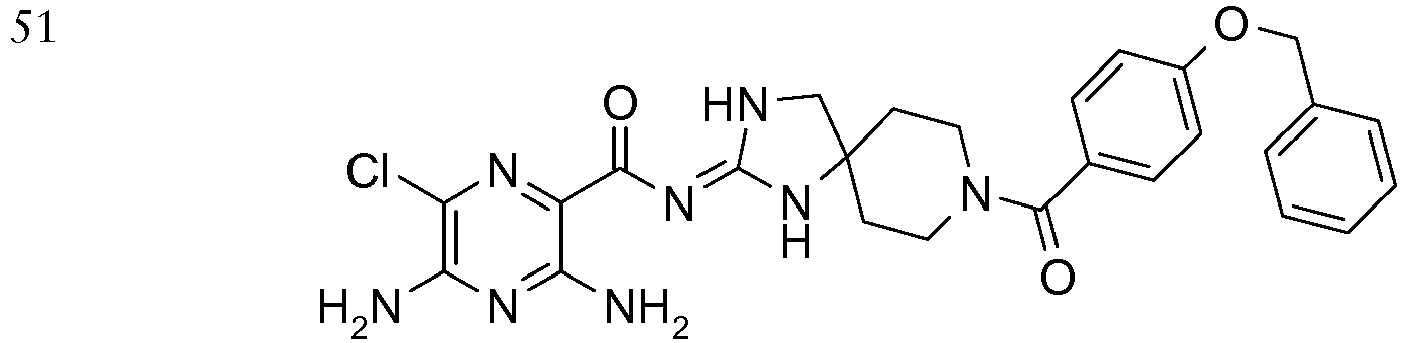




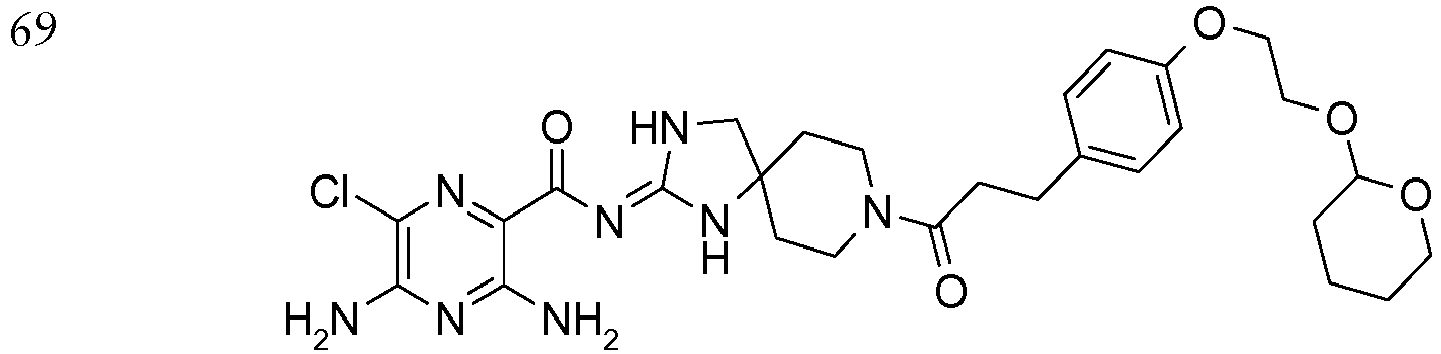


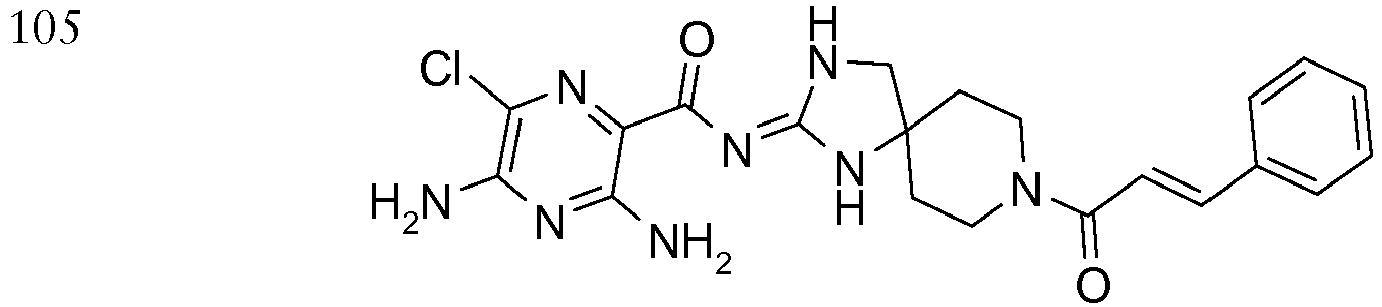


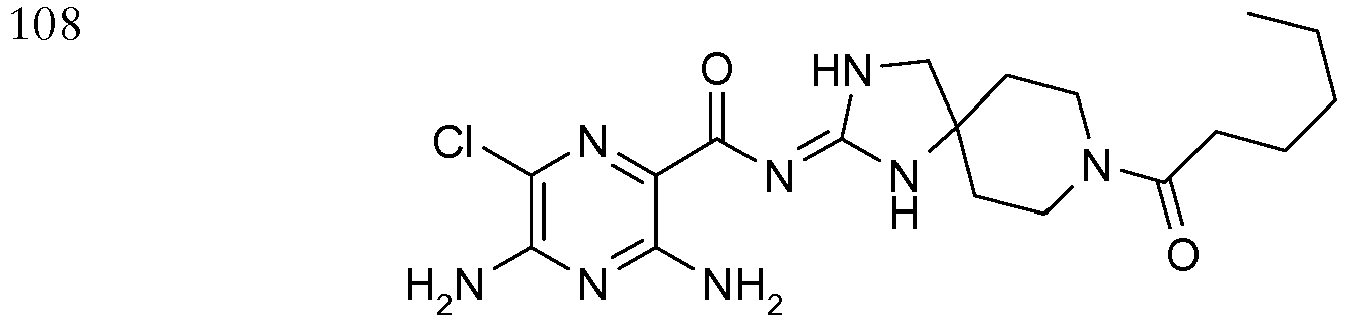


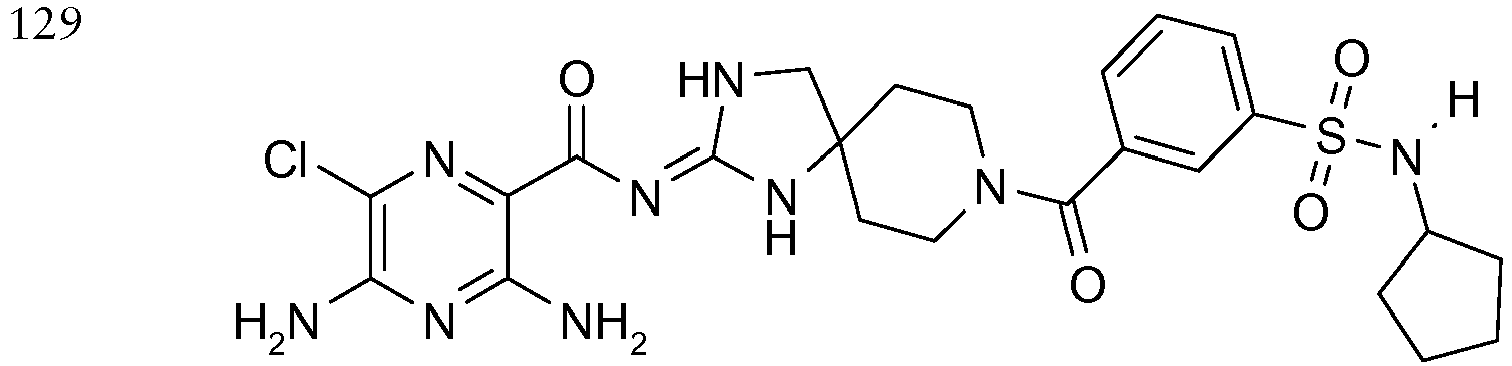


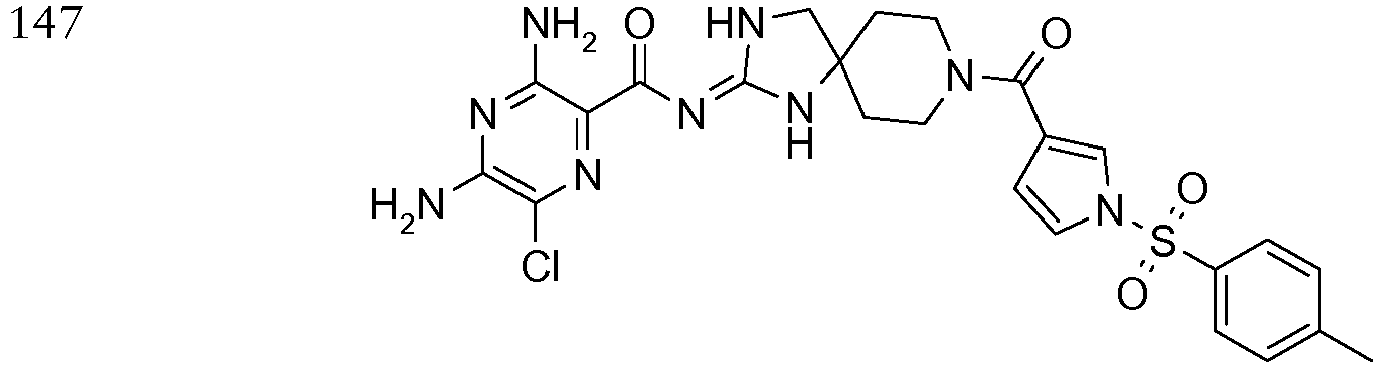
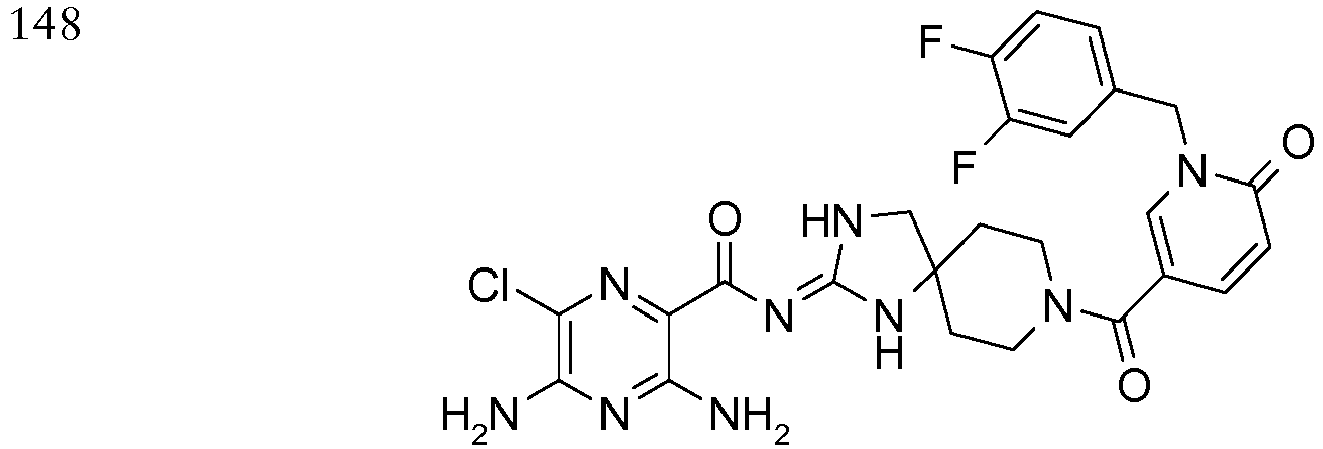


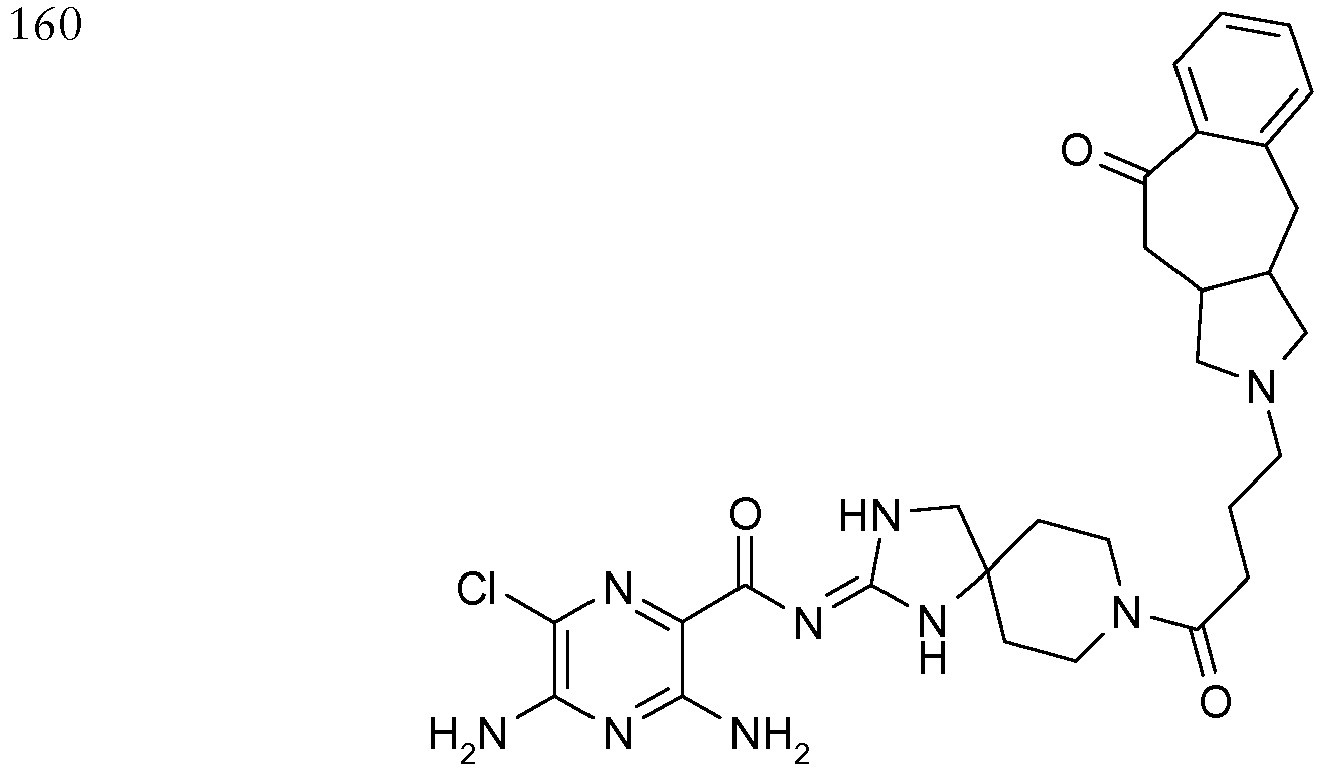


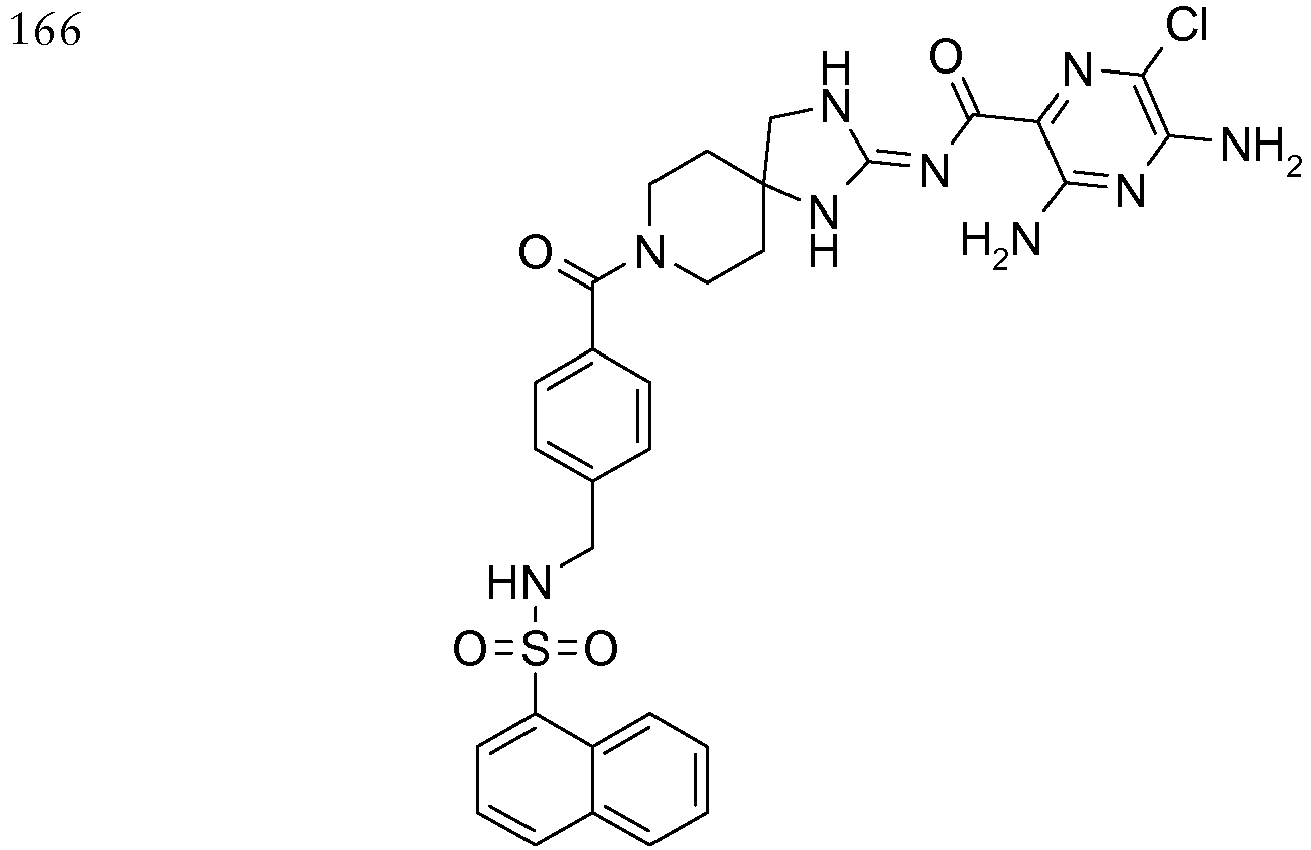


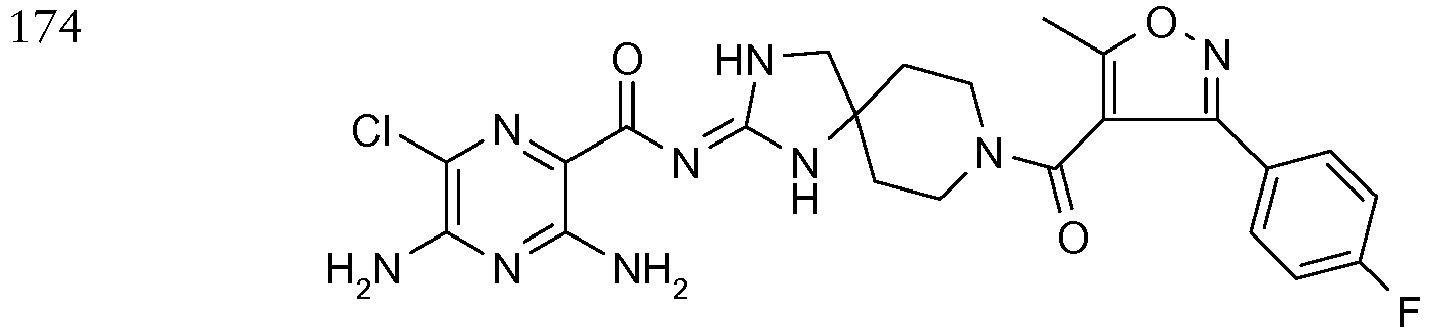


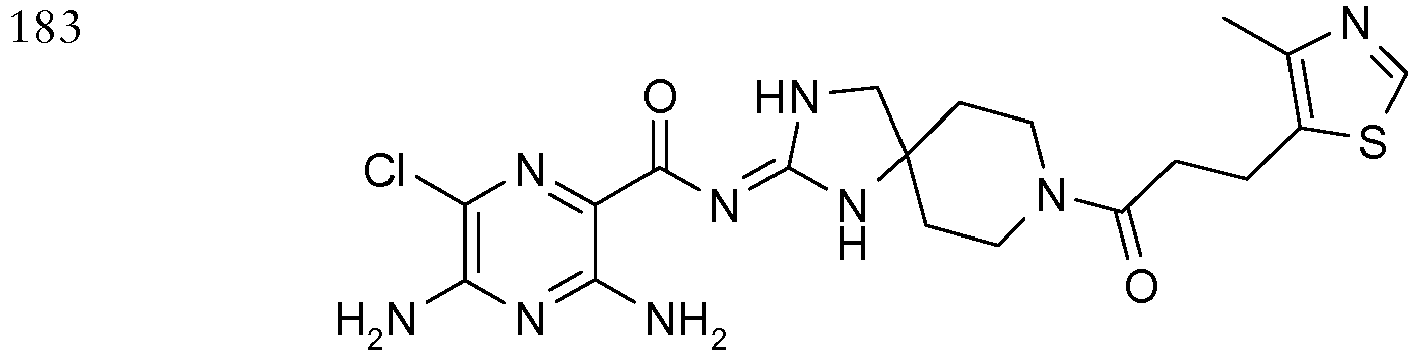


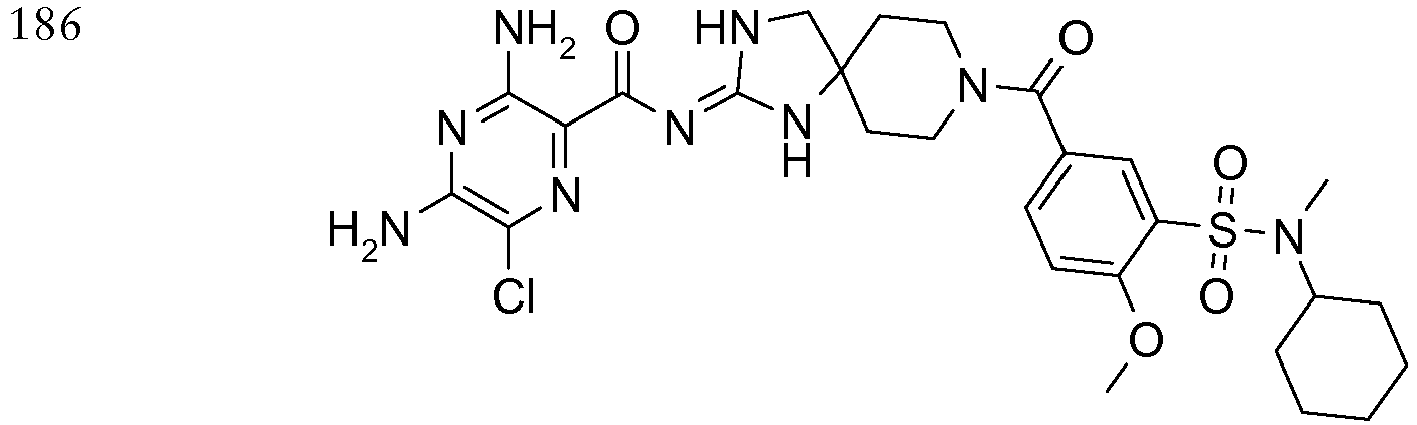


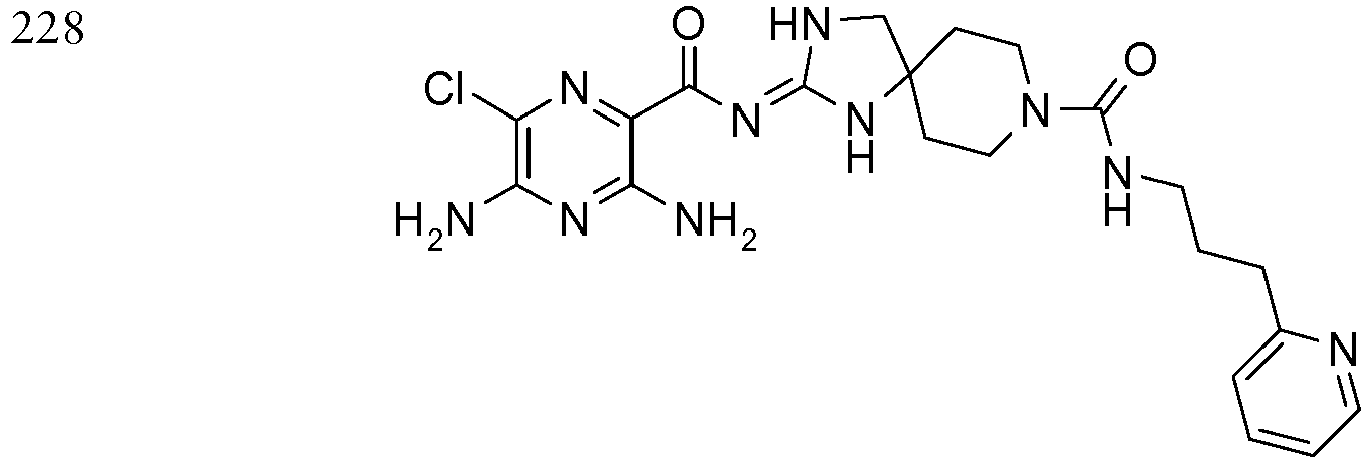


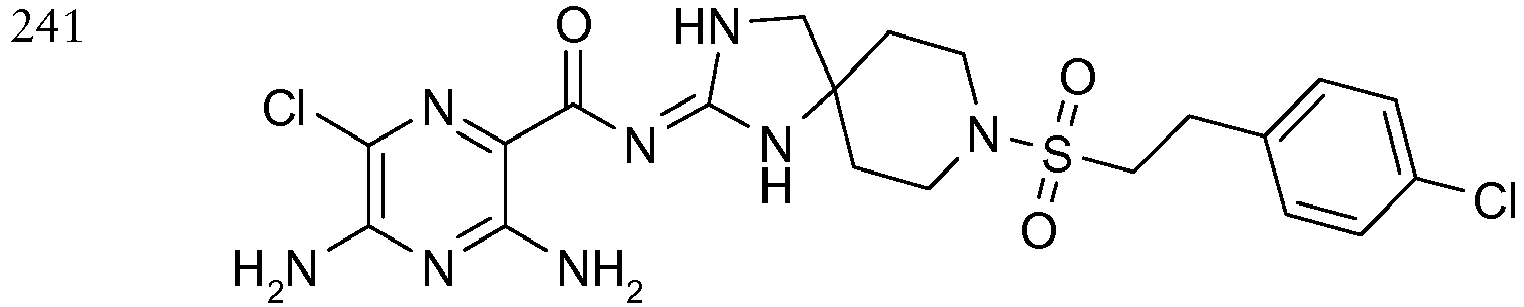


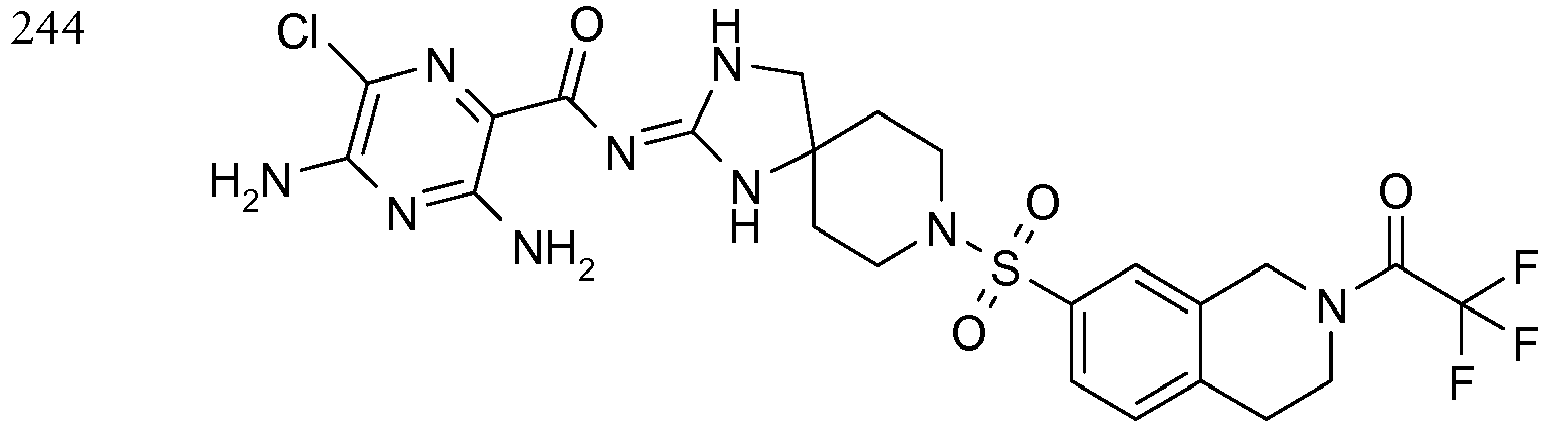


- A compound according to claim 1 wherein the compound selected from the group consisting of
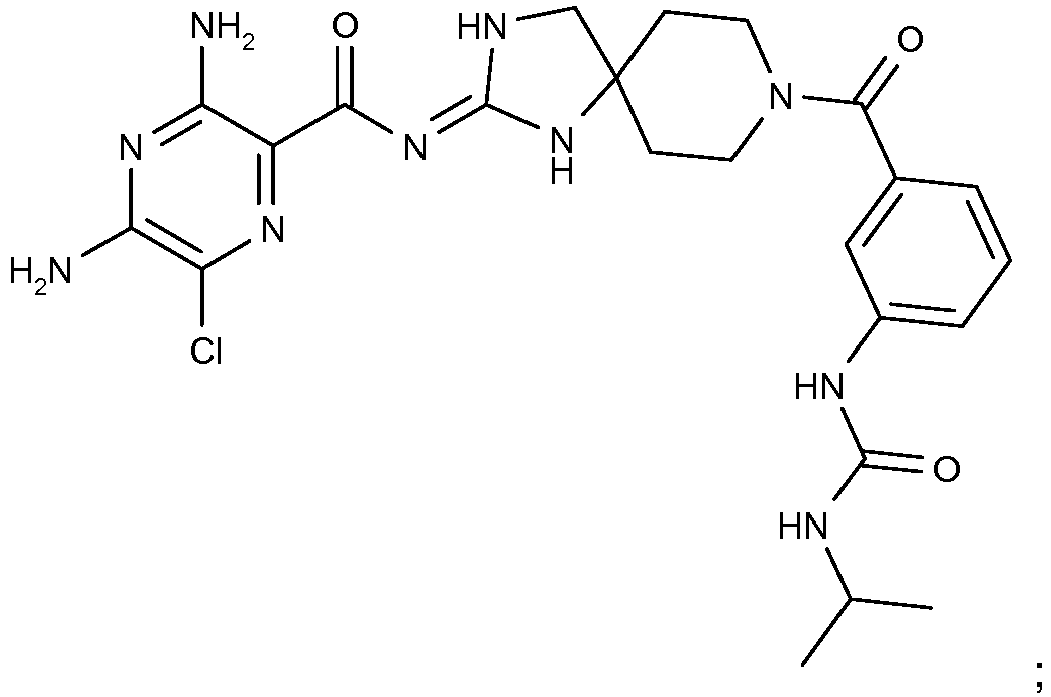


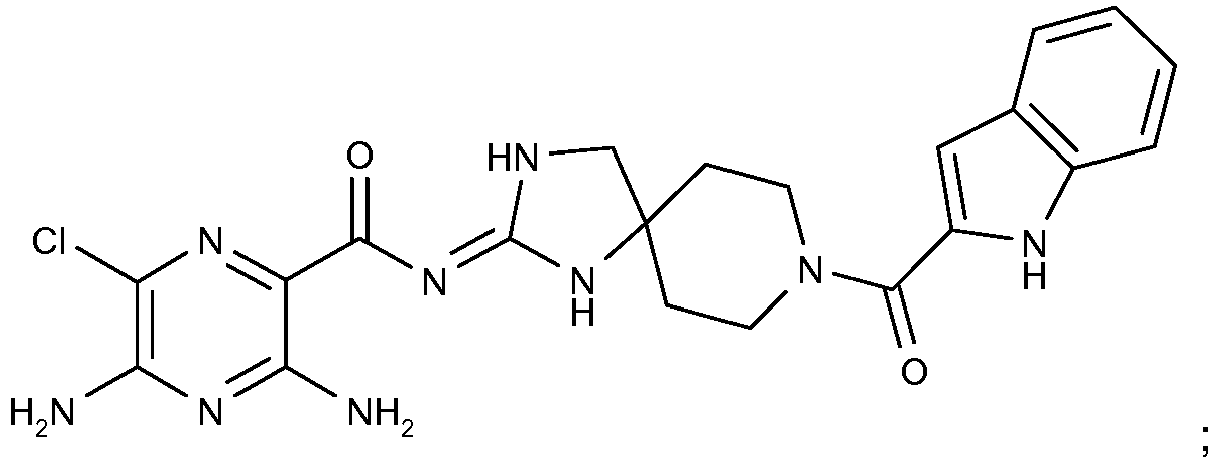


- The compound according to any one of claims 1 to 2, wherein the compound is selected from the group consisting of


- The compound according to claim 1 which is:

- The compound according to claim 1 which is:

- The compound according to claim 1 which is:

- The compound according to claim 1 which is:

- The compound according to claim 1 which is:

- The compound according to claim 1 which is:

- A compound according to any one of Claims 1 to 9 for use as a pharmaceutical.
- The compound according to claim 10 for use in the treatment of a disease mediated by the blockade of an epithelial sodium channel, which is selected from an inflammatory and allergic condition selected from cystic fibrosis, primary ciliary dyskinesia, chronic bronchitis, chronic obstructive pulmonary disease, asthma, respiratory tract infections, lung carcinoma, xerostomia, and keratoconjunctivitis sicca.
- The use of a compound according to any one of Claims 1 to 9, in the manufacture of a medicament for treatment of a disease mediated by the blockade of an epithelial sodium channel, which is selected from an inflammatory and allergic condition selected from cystic fibrosis, primary ciliary dyskinesia, chronic bronchitis, chronic obstructive pulmonary disease, asthma, respiratory tract infections, lung carcinoma, xerostomia, and keratoconjunctivitis sicca.
- The use of a compound according to Claim 12, wherein the treatment is for an inflammatory or allergic condition, particularly an inflammatory or obstructive airways disease.
- The use of a compound according to any one of claims 1 - 9 in the manufacture of a medicament for the treatment of an inflammatory or allergic condition selected from cystic fibrosis, primary ciliary dyskinesia, chronic bronchitis, chronic obstructive pulmonary disease, asthma, respiratory tract infections, lung carcinoma, xerostomia, and keratoconjunctivitis sicca.
- A pharmaceutical composition comprising a compound according to any one of Claims 1 to 9, together with one or pharmaceutical excipients.
- A pharmaceutical combination of a compound according to any of Claims 1 to 9 with an anti-inflammatory, bronchodilatory, antihistamine or anti-tussive drug substance.
Priority Applications (2)
| Application Number | Priority Date | Filing Date | Title |
|---|---|---|---|
| EP11184004.7A EP2444120B1 (en) | 2007-12-10 | 2008-12-09 | Spirocyclic amiloride analogues as ENac blockers |
| PL11184004T PL2444120T3 (en) | 2007-12-10 | 2008-12-09 | Spirocyclic amiloride analogues as ENac blockers |
Applications Claiming Priority (3)
| Application Number | Priority Date | Filing Date | Title |
|---|---|---|---|
| EP07122739 | 2007-12-10 | ||
| EP08860731.2A EP2231280B1 (en) | 2007-12-10 | 2008-12-09 | Amiloride-like Pyrazine-carboxamides as ENaC blockers |
| EP11184004.7A EP2444120B1 (en) | 2007-12-10 | 2008-12-09 | Spirocyclic amiloride analogues as ENac blockers |
Related Parent Applications (3)
| Application Number | Title | Priority Date | Filing Date |
|---|---|---|---|
| EP08860731.2 Division | 2008-12-09 | ||
| EP08860731.2A Division EP2231280B1 (en) | 2007-12-10 | 2008-12-09 | Amiloride-like Pyrazine-carboxamides as ENaC blockers |
| EP08860731.2A Division-Into EP2231280B1 (en) | 2007-12-10 | 2008-12-09 | Amiloride-like Pyrazine-carboxamides as ENaC blockers |
Publications (2)
| Publication Number | Publication Date |
|---|---|
| EP2444120A1 EP2444120A1 (en) | 2012-04-25 |
| EP2444120B1 true EP2444120B1 (en) | 2017-09-27 |
Family
ID=39322745
Family Applications (3)
| Application Number | Title | Priority Date | Filing Date |
|---|---|---|---|
| EP20120173703 Withdrawn EP2520574A1 (en) | 2007-12-10 | 2008-12-09 | Amiloride analogues substituted on the cyclic guanidine moiety as ENaC blockers for treating respiratory diseases |
| EP11184004.7A Active EP2444120B1 (en) | 2007-12-10 | 2008-12-09 | Spirocyclic amiloride analogues as ENac blockers |
| EP08860731.2A Active EP2231280B1 (en) | 2007-12-10 | 2008-12-09 | Amiloride-like Pyrazine-carboxamides as ENaC blockers |
Family Applications Before (1)
| Application Number | Title | Priority Date | Filing Date |
|---|---|---|---|
| EP20120173703 Withdrawn EP2520574A1 (en) | 2007-12-10 | 2008-12-09 | Amiloride analogues substituted on the cyclic guanidine moiety as ENaC blockers for treating respiratory diseases |
Family Applications After (1)
| Application Number | Title | Priority Date | Filing Date |
|---|---|---|---|
| EP08860731.2A Active EP2231280B1 (en) | 2007-12-10 | 2008-12-09 | Amiloride-like Pyrazine-carboxamides as ENaC blockers |
Country Status (30)
| Country | Link |
|---|---|
| US (5) | US8039472B2 (en) |
| EP (3) | EP2520574A1 (en) |
| JP (1) | JP5455922B2 (en) |
| KR (1) | KR101578235B1 (en) |
| CN (1) | CN101939054B (en) |
| AR (1) | AR069637A1 (en) |
| AU (1) | AU2008334629B2 (en) |
| BR (1) | BRPI0820669A2 (en) |
| CA (1) | CA2707857C (en) |
| CL (1) | CL2008003651A1 (en) |
| CO (1) | CO6310968A2 (en) |
| CR (1) | CR11470A (en) |
| CU (1) | CU23967B1 (en) |
| EA (1) | EA017919B1 (en) |
| EC (1) | ECSP10010242A (en) |
| ES (2) | ES2654395T3 (en) |
| HN (1) | HN2010001165A (en) |
| IL (1) | IL206165A0 (en) |
| MA (1) | MA31894B1 (en) |
| MX (1) | MX2010006421A (en) |
| MY (1) | MY152955A (en) |
| NZ (1) | NZ585789A (en) |
| PE (1) | PE20091096A1 (en) |
| PL (1) | PL2444120T3 (en) |
| PT (1) | PT2444120T (en) |
| TN (1) | TN2010000256A1 (en) |
| TW (1) | TWI439462B (en) |
| UA (1) | UA104997C2 (en) |
| WO (1) | WO2009074575A2 (en) |
| ZA (1) | ZA201003837B (en) |
Families Citing this family (90)
| Publication number | Priority date | Publication date | Assignee | Title |
|---|---|---|---|---|
| US6858615B2 (en) | 2002-02-19 | 2005-02-22 | Parion Sciences, Inc. | Phenyl guanidine sodium channel blockers |
| US8354427B2 (en) | 2004-06-24 | 2013-01-15 | Vertex Pharmaceutical Incorporated | Modulators of ATP-binding cassette transporters |
| EA017919B1 (en) * | 2007-12-10 | 2013-04-30 | Новартис Аг | Pyrazine-2 carboxamide derivatives for treating diseases which respond to the blocade of the epithelial sodium channels |
| AU2009246799B2 (en) | 2008-02-26 | 2014-02-27 | Parion Sciences, Inc. | Poly aromatic pyrazinoylguanidine sodium channel blockers |
| UA103198C2 (en) | 2008-08-04 | 2013-09-25 | Новартис Аг | Squaramide derivatives as cxcr2 antagonists |
| EP2421532A4 (en) * | 2008-10-02 | 2012-07-04 | Univ Johns Hopkins | SPIPERONE DERIVATIVES AND METHODS OF TREATING DISORDERS |
| TWI465449B (en) | 2008-10-23 | 2014-12-21 | Vertex Pharma | Modulators of cystic fibrosis transmembrane conductance regulator |
| EP2433940B9 (en) | 2009-04-28 | 2015-10-28 | Chugai Seiyaku Kabushiki Kaisha | Spiroimidazolone derivative |
| WO2010138794A2 (en) | 2009-05-29 | 2010-12-02 | The University Of North Carolina At Chapel Hill | Regulation of sodium channels by plunc proteins |
| EP2813227A1 (en) * | 2009-10-22 | 2014-12-17 | Vertex Pharmaceuticals Incorporated | Compositions for treatment of cystic fibrosis and other chronic diseases |
| JP5789611B2 (en) | 2009-10-23 | 2015-10-07 | バーテックス ファーマシューティカルズ インコーポレイテッドVertex Pharmaceuticals Incorporated | Process for preparing modulators of cystic fibrosis membrane conductance regulators |
| KR20120102645A (en) | 2009-10-23 | 2012-09-18 | 버텍스 파마슈티칼스 인코포레이티드 | Solid forms of n-(4-(7-azabicyclo[2.2.1]heptan-7-yl)-2-(trifluoromethyl)phenyl)-4-oxo-5-(trifluoromethyl)-1,4-dihydroquinoline-3-carboxamide |
| AR081920A1 (en) | 2010-05-20 | 2012-10-31 | Vertex Pharma | PRODUCTION PROCESSES OF TRANSMEMBRANE CHEMICAL FIBROSIS DRIVER REGULATOR MODULATORS |
| US8372845B2 (en) | 2010-09-17 | 2013-02-12 | Novartis Ag | Pyrazine derivatives as enac blockers |
| US9050339B2 (en) | 2010-09-17 | 2015-06-09 | Novartis Ag | Pyrazine derivatives as ENaC blockers |
| AR086745A1 (en) | 2011-06-27 | 2014-01-22 | Parion Sciences Inc | 3,5-DIAMINO-6-CHLORINE-N- (N- (4- (4- (2- (HEXIL (2,3,4,5,6-PENTAHYDROXIHEXIL)) AMINO) ETOXI) PHENYL) BUTIL) CARBAMIMIDOIL) PIRAZINA -2-CARBOXAMIDE |
| EP2760821B1 (en) | 2011-09-02 | 2017-10-11 | Novartis AG | Choline salt of an anti-inflammatory substituted cyclobutenedione compound |
| CN104024231A (en) | 2011-11-02 | 2014-09-03 | 勃林格殷格翰国际有限公司 | Novel process for the preparation of acylguanidines and acylthioureas |
| HRP20171614T1 (en) | 2011-11-02 | 2017-12-01 | Boehringer Ingelheim International Gmbh | HETEROCYCLIC COMPOUNDS, THE MEDICINAL PRODUCTS CONTAINING THESE COMPOUNDS, THEIR APPLICATIONS AND THE PROCEDURES FOR THEIR PRODUCTION |
| US8809340B2 (en) | 2012-03-19 | 2014-08-19 | Novartis Ag | Crystalline form |
| WO2013155406A1 (en) * | 2012-04-12 | 2013-10-17 | The Chinese University Of Hong Kong | Contragestion and treating inflammation by modulating sodium channel activity in the epithelium |
| WO2013158121A1 (en) | 2012-04-20 | 2013-10-24 | Vertex Pharmaceuticals Incorporated | Solid forms of n-[2,4-bis(1,1-dimethylethyl)-5-hydroxyphenyl]-1,4-dihydro-4-oxoquinoline-3-carboxamide |
| EP2897940B1 (en) * | 2012-09-24 | 2019-05-01 | Boehringer Ingelheim International GmbH | Heterocyclic compounds, medicaments containing said compounds, use thereof and processes for the preparation thereof |
| SMT202500078T1 (en) | 2012-11-02 | 2025-03-12 | Vertex Pharma | Pharmaceutical compositions for the treatment of cftr mediated diseases |
| DK2930176T3 (en) | 2012-12-10 | 2018-03-19 | Chugai Pharmaceutical Co Ltd | hydantoin derivatives |
| MX2015007797A (en) | 2012-12-17 | 2015-10-05 | Parion Sciences Inc | 3,5-diamino-6-chloro-n-(n-(4-phenylbutyl)carbamimidoyl) pyrazine-2- carboxamide compounds. |
| PE20151054A1 (en) | 2012-12-17 | 2015-08-07 | Parion Sciences Inc | CHLORINE-PIRAZINE CARBOXAMIDE DERIVATIVES WITH BLOCKING ACTIVITY ON THE EPITHELIAL SODIUM CHANNELS |
| CA2896686A1 (en) * | 2012-12-17 | 2014-06-26 | Parion Sciences, Inc. | 3,5-diamino-6-chloro-n-(n-(4-phenylbutyl)carbamimidoyl) pyrazine-2- carboxamide compounds |
| JP6450323B2 (en) | 2013-01-07 | 2019-01-09 | ユニバーシティ オブ サザン カリフォルニア | Deoxyuridine triphosphatase inhibitor |
| DE202013000888U1 (en) | 2013-01-29 | 2014-05-05 | WKW Erbslöh Automotive GmbH | Device for covering a running in the longitudinal direction of a motor vehicle roof duct |
| US9944700B2 (en) | 2013-03-13 | 2018-04-17 | Novartis Ag | Notch2 binding molecules for treating respiratory diseases |
| JP6353032B2 (en) * | 2013-04-30 | 2018-07-04 | ベーリンガー インゲルハイム インターナショナル ゲゼルシャフト ミット ベシュレンクテル ハフツング | Diaminopyrazine compounds, medicaments containing said compounds, their use and process for their preparation |
| EP2815749A1 (en) | 2013-06-20 | 2014-12-24 | IP Gesellschaft für Management mbH | Solid form of 4-amino-2-(2,6-dioxopiperidine-3-yl)isoindoline-1,3-dione having specified X-ray diffraction pattern |
| CA2915633A1 (en) | 2013-07-02 | 2015-01-08 | The California Institute For Biomedical Research | Compounds for treatment of cystic fibrosis |
| US9102633B2 (en) | 2013-12-13 | 2015-08-11 | Parion Sciences, Inc. | Arylalkyl- and aryloxyalkyl-substituted epithelial sodium channel blocking compounds |
| CA2935717C (en) | 2014-01-03 | 2022-06-21 | University Of Southern California | Uracil isostere and pharmaceutical compositions thereof useful as deoxyuridine triphosphatase inhibitors |
| UY36034A (en) | 2014-03-18 | 2015-09-30 | Astrazeneca Ab | DERIVATIVES OF 3,5-DIAMINO-6-CHLORINE-PIRAZINA-2-CARBOXAMIDE AND PHARMACEUTICALLY ACCEPTABLE SALTS OF THESE |
| EP2932966A1 (en) | 2014-04-16 | 2015-10-21 | Novartis AG | Gamma secretase inhibitors for treating respiratory diseases |
| EP3153166B1 (en) | 2014-06-09 | 2022-08-03 | Chugai Seiyaku Kabushiki Kaisha | Hydantoin derivative-containing pharmaceutical composition |
| RU2017115994A (en) | 2014-10-08 | 2018-11-12 | Дзе Юниверсити Оф Норт Каролина Эт Чепел Хилл | IMPROVED PEPTIDE SODIUM CHANNEL INHIBITORS |
| US9567322B2 (en) | 2014-10-31 | 2017-02-14 | Abbvie S.Á.R.L. | Substituted tetrahydropyrans and method of use |
| JP6671378B2 (en) * | 2015-01-12 | 2020-03-25 | ベーリンガー インゲルハイム インターナショナル ゲゼルシャフト ミット ベシュレンクテル ハフツング | Substituted benzimidazolium compounds useful for the treatment of respiratory diseases |
| US9932324B2 (en) * | 2015-01-12 | 2018-04-03 | Boehringer Ingelheim International Gmbh | Substituted benzimidazolium compounds useful in the treatment of respiratory diseases |
| JP6667537B2 (en) * | 2015-01-12 | 2020-03-18 | ベーリンガー インゲルハイム インターナショナル ゲゼルシャフト ミット ベシュレンクテル ハフツング | Tetra- and penta-substituted benzimidazolium compounds useful for the treatment of respiratory diseases |
| KR20180029204A (en) | 2015-06-02 | 2018-03-20 | 애브비 에스.에이.알.엘. | Substituted pyridines and methods of use |
| FR3038605B1 (en) * | 2015-07-06 | 2018-08-24 | Universite Amiens Picardie Jules Verne | VICINAL PRIMARY DIAMINS ASSOCIATED WITH CHELATING MOTIFS OF METALS AND / OR FREE RADICALS, ACTIVE AGAINST CARBONYL AND OXIDIZING STRESSES AND THEIR USE |
| WO2017006271A1 (en) | 2015-07-08 | 2017-01-12 | University Of Southern California | Deoxyuridine triphosphatase inhibitors containing amino sulfonyl linkage |
| WO2017006270A1 (en) | 2015-07-08 | 2017-01-12 | University Of Southern California | Deoxyuridine triphosphatase inhibitors |
| WO2017006283A1 (en) | 2015-07-08 | 2017-01-12 | Cv6 Therapeutics (Ni) Limited | Deoxyuridine triphosphatase inhibitors containing cyclopropano linkage |
| SI3319939T1 (en) | 2015-07-08 | 2025-04-30 | Cv6 Therapeutics (Ni) Limited | Hydantoin containing deoxyuridine triphosphatase inhibitors |
| US9840513B2 (en) | 2015-07-16 | 2017-12-12 | Abbvie S.Á.R.L. | Substituted tricyclics and method of use |
| EP3359539A1 (en) | 2015-10-09 | 2018-08-15 | AbbVie S.À.R.L. | Substituted pyrazolo[3,4-b]pyridin-6-carboxylic acids and their use |
| WO2017060879A1 (en) | 2015-10-09 | 2017-04-13 | AbbVie S.à.r.l. | Novel compounds for treatment of cystic fibrosis |
| PL3359541T3 (en) | 2015-10-09 | 2021-01-11 | AbbVie Overseas S.à r.l. | N-sulfonylated pyrazolo[3,4-b]pyridin-6-carboxamides and method of use |
| US10402062B2 (en) * | 2016-04-16 | 2019-09-03 | Apple Inc. | Organized timeline |
| AU2017256172A1 (en) | 2016-04-26 | 2018-09-06 | AbbVie S.à.r.l. | Modulators of cystic fibrosis transmembrane conductance regulator protein |
| US10138227B2 (en) | 2016-06-03 | 2018-11-27 | Abbvie S.Á.R.L. | Heteroaryl substituted pyridines and methods of use |
| GB201610854D0 (en) | 2016-06-21 | 2016-08-03 | Entpr Therapeutics Ltd | Compounds |
| US9981910B2 (en) | 2016-10-07 | 2018-05-29 | Abbvie S.Á.R.L. | Substituted pyrrolidines and methods of use |
| US10399940B2 (en) | 2016-10-07 | 2019-09-03 | Abbvie S.Á.R.L. | Substituted pyrrolidines and methods of use |
| GB201619694D0 (en) | 2016-11-22 | 2017-01-04 | Entpr Therapeutics Ltd | Compounds |
| US10858344B2 (en) | 2016-11-23 | 2020-12-08 | Cv6 Therapeutics (Ni) Limited | Hydantoin containing deoxyuridine triphosphatase inhibitors |
| US11014924B2 (en) | 2016-11-23 | 2021-05-25 | Cv6 Therapeutics (Ni) Limited | Hydantoin containing deoxyuridine triphosphatase inhibitors |
| US11174271B2 (en) | 2016-11-23 | 2021-11-16 | Cv6 Therapeutics (Ni) Limited | 6-membered uracil isosteres |
| US11168059B2 (en) | 2016-11-23 | 2021-11-09 | Cv6 Therapeutics (Ni) Limited | Amino sulfonyl compounds |
| WO2018098208A1 (en) | 2016-11-23 | 2018-05-31 | Cv6 Therapeutics (Ni) Limited | Nitrogen ring linked deoxyuridine triphosphatase inhibitors |
| WO2018116185A1 (en) | 2016-12-20 | 2018-06-28 | AbbVie S.à.r.l. | Deuterated cftr modulators and methods of use |
| US11247984B2 (en) | 2017-01-05 | 2022-02-15 | Cv6 Therapeutics (Ni) Limited | Uracil containing compounds |
| TW201831471A (en) | 2017-02-24 | 2018-09-01 | 盧森堡商艾伯維公司 | Modulators of the cystic fibrosis transmembrane conductance regulator protein and methods of use |
| EP3600440A1 (en) | 2017-03-20 | 2020-02-05 | Sienna Biopharmaceuticals, Inc. | Reduced exposure conjugates modulating therapeutic targets |
| WO2018175302A1 (en) | 2017-03-20 | 2018-09-27 | Sienna Biopharmaceuticals, Inc. | Polymer conjugates targeting c-src with reduced exposure |
| US10988454B2 (en) | 2017-09-14 | 2021-04-27 | Abbvie Overseas S.À.R.L. | Modulators of the cystic fibrosis transmembrane conductance regulator protein and methods of use |
| GB201717051D0 (en) | 2017-10-17 | 2017-11-29 | Enterprise Therapeutics Ltd | Compounds |
| WO2019193062A1 (en) | 2018-04-03 | 2019-10-10 | Abbvie S.Á.R.L | Substituted pyrrolidines and their use |
| GB201808093D0 (en) | 2018-05-18 | 2018-07-04 | Enterprise Therapeutics Ltd | Compounds |
| EP3917516A4 (en) * | 2019-01-28 | 2022-10-12 | Flatley Discovery Lab, LLC | Compounds and methods for the treatment of cystic fibrosis |
| US11345691B2 (en) | 2019-06-03 | 2022-05-31 | AbbVie Global Enterprises Ltd. | Prodrug modulators of the cystic fibrosis transmembrane conductance regulator protein and methods of use |
| WO2021011327A1 (en) | 2019-07-12 | 2021-01-21 | Orphomed, Inc. | Compound for treating cystic fibrosis |
| CA3157798A1 (en) | 2019-11-12 | 2021-05-20 | Zhongli Gao | 6-membered heteroarylaminosulfonamides for treating diseases and conditions mediated by deficient cftr activity |
| WO2021113809A1 (en) | 2019-12-05 | 2021-06-10 | Genzyme Corporation | Arylamides and methods of use thereof |
| WO2021113806A1 (en) | 2019-12-05 | 2021-06-10 | Genzyme Corporation | Arylamides and methods of use thereof |
| EP4274828A1 (en) | 2021-01-06 | 2023-11-15 | AbbVie Global Enterprises Ltd. | Modulators of the cystic fibrosis transmembrane conductance regulator protein and methods of use |
| WO2022150173A1 (en) | 2021-01-06 | 2022-07-14 | AbbVie Global Enterprises Ltd. | Modulators of the cystic fibrosis transmembrane conductance regulator protein and methods of use |
| WO2023034946A1 (en) | 2021-09-03 | 2023-03-09 | Genzyme Corporation | Indole compounds and uses thereof in the treatement of cystic fibrosis |
| EP4396179A1 (en) | 2021-09-03 | 2024-07-10 | Genzyme Corporation | Indole compounds and methods of use |
| CN113880735A (en) * | 2021-11-08 | 2022-01-04 | 湖北九宁化学科技有限公司 | Preparation method of lithium bis (fluorosulfonyl) diethylamine |
| AU2023338225A1 (en) | 2022-09-07 | 2025-03-20 | Genzyme Corporation | Macrocyclic compounds, compositions, and methods of using thereof |
| WO2024054851A1 (en) | 2022-09-07 | 2024-03-14 | Sionna Therapeutics | Macrocyclic compounds, compositions and methods of using thereof |
| WO2024054845A1 (en) | 2022-09-07 | 2024-03-14 | Sionna Therapeutics | Macrocycic compounds, compositions, and methods of using thereof |
| WO2025132358A1 (en) | 2023-12-21 | 2025-06-26 | Galapagos Nv | Novel compounds and pharmaceutical compositions thereof for the treatment of infectious diseases |
Family Cites Families (141)
| Publication number | Priority date | Publication date | Assignee | Title |
|---|---|---|---|---|
| US3328404A (en) * | 1966-08-25 | 1967-06-27 | Merck & Co Inc | Derivatives of pyrazine |
| US3432502A (en) * | 1966-08-25 | 1969-03-11 | Merck & Co Inc | Preparation of pyrazinoylguanidine and pyrazinamidoguanidine products |
| IL27897A (en) * | 1966-08-25 | 1972-02-29 | Merck & Co Inc | Preparation of pyrazinoylguanidines and pyrazinamidoguanidines |
| NL6707564A (en) * | 1966-08-25 | 1968-02-26 | ||
| GB1219606A (en) | 1968-07-15 | 1971-01-20 | Rech S Et D Applic Scient Soge | Quinuclidinol derivatives and preparation thereof |
| US3503972A (en) * | 1968-11-04 | 1970-03-31 | Merck & Co Inc | Alkyl n-amidino (or guanidino)-pyrazinimidates |
| US3577418A (en) * | 1969-02-12 | 1971-05-04 | Merck & Co Inc | Pyrazinamide derivatives and processes for their preparation |
| US3573306A (en) * | 1969-03-05 | 1971-03-30 | Merck & Co Inc | Process for preparation of n-substituted 3,5-diamino-6-halopyrazinamides |
| US4085211A (en) * | 1975-12-15 | 1978-04-18 | Merck & Co., Inc. | Pyrazinecarboxamides and processes for preparing same |
| US4246406A (en) | 1979-03-27 | 1981-01-20 | Merck & Co., Inc. | Heterocyclic substituted pyrazinoylguanidines |
| US4277602A (en) * | 1980-07-02 | 1981-07-07 | Merck & Co., Inc. | 3-Amino-5-substituted-6-halo-N-(3,4-dihydro-6-substituted-1,3,5-truazin-2-yl)2-pyrazinecarboxamides |
| US4272537A (en) * | 1980-07-02 | 1981-06-09 | Merck & Co., Inc. | 3-Amino-5-substituted-6-halo-N-(4,4-disubstituted-6-substituted-1,3,5-triazin-2-yl)-2-pyrazinecarboxamides |
| JPS6235216A (en) | 1985-08-09 | 1987-02-16 | Noritoshi Nakabachi | Method and device for measuring thickness of heterogeneous material layer nondestructively |
| EP0300431A3 (en) | 1987-07-22 | 1990-06-27 | Neorx Corporation | Method of radiolabeling chelating compounds comprising sulfur atoms with metal radionuclides |
| GB8923590D0 (en) | 1989-10-19 | 1989-12-06 | Pfizer Ltd | Antimuscarinic bronchodilators |
| PT100441A (en) | 1991-05-02 | 1993-09-30 | Smithkline Beecham Corp | PIRROLIDINONES, ITS PREPARATION PROCESS, PHARMACEUTICAL COMPOSITIONS THAT CONTAIN THEM AND USE |
| WO1993018007A1 (en) | 1992-03-13 | 1993-09-16 | Tokyo Tanabe Company Limited | Novel carbostyril derivative |
| HU225869B1 (en) | 1992-04-02 | 2007-11-28 | Smithkline Beecham Corp | Compounds with antiallergic and antiinflammatory activity and pharmaceutical compns. contg. them |
| US5605923A (en) | 1992-04-02 | 1997-02-25 | Smithkline Beecham Corporation | Compounds useful for treating inflammatory diseases and inhibiting production of tumor necrosis factor |
| JP3192424B2 (en) | 1992-04-02 | 2001-07-30 | スミスクライン・ビーチャム・コーポレイション | Compounds for the treatment of allergic or inflammatory diseases |
| EP0620222A3 (en) | 1993-04-14 | 1995-04-12 | Lilly Co Eli | Tetrahydro-beta-carbolines. |
| EP0702004A2 (en) | 1994-09-15 | 1996-03-20 | Ciba-Geigy Ag | 2,9-diamino- and 2-amino-8-carbamoyl-4-hydroxy-alkanoic acid amid derivatives |
| GB9622386D0 (en) | 1996-10-28 | 1997-01-08 | Sandoz Ltd | Organic compounds |
| US6166037A (en) | 1997-08-28 | 2000-12-26 | Merck & Co., Inc. | Pyrrolidine and piperidine modulators of chemokine receptor activity |
| AU9281298A (en) | 1997-10-01 | 1999-04-23 | Kyowa Hakko Kogyo Co. Ltd. | Benzodioxole derivatives |
| US6541669B1 (en) | 1998-06-08 | 2003-04-01 | Theravance, Inc. | β2-adrenergic receptor agonists |
| BR9815931A (en) | 1998-06-30 | 2001-02-20 | Dow Chemical Co | Polymeric polyols, a process for their production, and polyurethane foam obtained |
| GB9913083D0 (en) | 1999-06-04 | 1999-08-04 | Novartis Ag | Organic compounds |
| TR200103214T2 (en) | 1999-05-04 | 2002-03-21 | Schering Corporation | Useful piperazine transitions as useful CCR5 antagonists. |
| CZ301161B6 (en) | 1999-05-04 | 2009-11-18 | Schering Corporation | Piperidinopiperidyl derivative usable as CCR5 antagonist and pharmaceutical composition in which the derivative is comprised |
| US6683115B2 (en) | 1999-06-02 | 2004-01-27 | Theravance, Inc. | β2-adrenergic receptor agonists |
| ES2165768B1 (en) | 1999-07-14 | 2003-04-01 | Almirall Prodesfarma Sa | NEW DERIVATIVES OF QUINUCLIDINE AND PHARMACEUTICAL COMPOSITIONS THAT CONTAIN THEM. |
| CA2715683A1 (en) | 1999-08-21 | 2001-03-01 | Nycomed Gmbh | Synergistic combination |
| OA11558A (en) | 1999-12-08 | 2004-06-03 | Advanced Medicine Inc | Beta 2-adrenergic receptor agonists. |
| AU5629301A (en) | 2000-04-27 | 2001-11-12 | Boehringer Ingelheim Pharma Gmbh & Co. Kg | Novel, slow-acting betamimetics, a method for their production and their use as medicaments |
| AU6610001A (en) | 2000-06-27 | 2002-01-08 | S A L V A T Lab Sa | Carbamates derived from arylalkylamines |
| GB0015876D0 (en) | 2000-06-28 | 2000-08-23 | Novartis Ag | Organic compounds |
| DE10038639A1 (en) | 2000-07-28 | 2002-02-21 | Schering Ag | New and known N-aryl 2-hydroxy-omega-arylalkanamide derivatives, useful e.g. for treating inflammatory diseases such as rheumatism |
| EP2067784A3 (en) | 2000-08-05 | 2012-08-22 | Glaxo Group Limited | 17.beta.-carbothioate 17.alpha.-arylcarbonyloxyloxy androstane derivatives as anti-inflammatory agents |
| DE10056400A1 (en) | 2000-11-14 | 2002-05-23 | Merck Patent Gmbh | Galenic formulation |
| GB0028383D0 (en) | 2000-11-21 | 2001-01-03 | Novartis Ag | Organic compounds |
| HUP0303529A3 (en) | 2000-12-22 | 2008-03-28 | Almirall Ag | New quinuclidine carbamate derivatives, process for their preparation and pharmaceutical compositions containing them and their use |
| CN1250545C (en) | 2000-12-28 | 2006-04-12 | 阿尔米雷尔普罗迪斯制药有限公司 | Novel quinucidine derivatives and pharmaceutical compositions containing such derivatives |
| GB0103630D0 (en) | 2001-02-14 | 2001-03-28 | Glaxo Group Ltd | Chemical compounds |
| JP2004526720A (en) | 2001-03-08 | 2004-09-02 | グラクソ グループ リミテッド | β-adrenergic receptor agonist |
| WO2002076933A1 (en) | 2001-03-22 | 2002-10-03 | Glaxo Group Limited | Formailide derivatives as beta2-adrenoreceptor agonists |
| WO2002088167A1 (en) | 2001-04-30 | 2002-11-07 | Glaxo Group Limited | Anti-inflammatory 17.beta.-carbothioate ester derivatives of androstane with a cyclic ester group in position 17.alpha |
| ATE399174T1 (en) | 2001-06-12 | 2008-07-15 | Glaxo Group Ltd | NEW ANTI-INFLAMMATORY 17.ALPHA.-HETEROCYCLIC ESTERS OF 17.BETA.-CARBOTHIOATE ANDROSTANE DERIVATIVES |
| EP1578910A4 (en) | 2001-06-21 | 2008-06-04 | Verenium Corp | Nitrilases |
| ATE417606T1 (en) | 2001-09-14 | 2009-01-15 | Glaxo Group Ltd | PHENETHANOLAMINE DERIVATIVES FOR THE TREATMENT OF RESPIRATORY DISEASES |
| RU2004110717A (en) | 2001-10-17 | 2005-10-20 | Юсиби, С.А. (Be) | Quinuclidine derivatives, methods for their preparation and their use as both M2- and / or M3-muscarinic receptors |
| GB0125259D0 (en) | 2001-10-20 | 2001-12-12 | Glaxo Group Ltd | Novel compounds |
| AR037517A1 (en) | 2001-11-05 | 2004-11-17 | Novartis Ag | DERIVATIVES OF NAFTIRIDINES, A PROCESS FOR THE PREPARATION, PHARMACEUTICAL COMPOSITION AND THE USE OF THEM FOR THE PREPARATION OF A MEDICINAL PRODUCT FOR THE TREATMENT OF AN INFLAMMATORY DISEASE |
| TWI249515B (en) | 2001-11-13 | 2006-02-21 | Theravance Inc | Aryl aniline beta2 adrenergic receptor agonists |
| US6653323B2 (en) | 2001-11-13 | 2003-11-25 | Theravance, Inc. | Aryl aniline β2 adrenergic receptor agonists |
| AU2002356759A1 (en) | 2001-12-01 | 2003-06-17 | Glaxo Group Limited | 17.alpha. -cyclic esters of 16-methylpregnan-3,20-dione as anti-inflammatory agents |
| JP4505227B2 (en) | 2001-12-20 | 2010-07-21 | キエシ・フアルマチエウテイチ・ソチエタ・ペル・アチオニ | 1-Alkyl-1-azoniabicyclo [2.2.2] octane carbamate derivatives and their use as muscarinic receptor antagonists |
| AU2003202044A1 (en) | 2002-01-15 | 2003-09-09 | Glaxo Group Limited | 17.alpha-cycloalkyl/cycloylkenyl esters of alkyl-or haloalkyl-androst-4-en-3-on-11.beta.,17.alpha.-diol 17.beta.-carboxylates as anti-inflammatory agents |
| AU2003201693A1 (en) | 2002-01-21 | 2003-09-02 | Glaxo Group Limited | Non-aromatic 17.alpha.-esters of androstane-17.beta.-carboxylate esters as anti-inflammatory agents |
| GB0202216D0 (en) | 2002-01-31 | 2002-03-20 | Glaxo Group Ltd | Novel compounds |
| US6858615B2 (en) * | 2002-02-19 | 2005-02-22 | Parion Sciences, Inc. | Phenyl guanidine sodium channel blockers |
| GB0204719D0 (en) | 2002-02-28 | 2002-04-17 | Glaxo Group Ltd | Medicinal compounds |
| AU2003230700A1 (en) | 2002-03-26 | 2003-10-13 | Boehringer Ingelheim Pharmaceuticals, Inc. | Glucocorticoid mimetics, methods of making them, pharmaceutical compositions, and uses thereof |
| PL373043A1 (en) | 2002-03-26 | 2005-08-08 | Boehringer Ingelheim Pharmaceuticals, Inc. | Glucocorticoid mimetics, methods of making them, pharmaceutical compositions, and uses thereof |
| AU2003221706B2 (en) | 2002-04-11 | 2008-02-28 | Merck Sharp & Dohme Corp. | 1H-Benzo[F]indazol-5-YL derivatives as selective glucocorticoid receptor modulators |
| ES2206021B1 (en) | 2002-04-16 | 2005-08-01 | Almirall Prodesfarma, S.A. | NEW DERIVATIVES OF PIRROLIDINIO. |
| ATE381535T1 (en) | 2002-04-25 | 2008-01-15 | Glaxo Group Ltd | PHENETHANOLAMINE DERIVATIVES |
| EP1507754A1 (en) | 2002-05-28 | 2005-02-23 | Theravance, Inc. | Alkoxy aryl beta-2 adrenergic receptor agonists |
| US7186864B2 (en) | 2002-05-29 | 2007-03-06 | Boehringer Ingelheim Pharmaceuticals, Inc. | Glucocorticoid mimetics, methods of making them, pharmaceutical compositions, and uses thereof |
| ES2201907B1 (en) | 2002-05-29 | 2005-06-01 | Almirall Prodesfarma, S.A. | NEW DERIVATIVES OF INDOLILPIPERIDINE AS POWERFUL ANTIHISTAMINIC AND ANTIALERGIC AGENTS. |
| DE10224888A1 (en) | 2002-06-05 | 2003-12-24 | Merck Patent Gmbh | pyridazine |
| US7074806B2 (en) | 2002-06-06 | 2006-07-11 | Boehringer Ingelheim Pharmaceuticals, Inc. | Glucocorticoid mimetics, methods of making them, pharmaceutical compositions, and uses thereof |
| DE10225574A1 (en) | 2002-06-10 | 2003-12-18 | Merck Patent Gmbh | New 1-acyl-3-phenyl-5,6-dihydro-4H-pyridazine derivatives, are phosphodiesterase IV inhibitors useful e.g. for treating asthma, allergy, inflammation, autoimmune diseases or myocardial diseases |
| DE10227269A1 (en) | 2002-06-19 | 2004-01-08 | Merck Patent Gmbh | thiazole |
| ATE356808T1 (en) | 2002-06-25 | 2007-04-15 | Merck Frosst Canada Ltd | 8-(BIARYL)QUINOLINE PDE4 INHIBITORS |
| ES2204295B1 (en) | 2002-07-02 | 2005-08-01 | Almirall Prodesfarma, S.A. | NEW DERIVATIVES OF QUINUCLIDINE-AMIDE. |
| WO2004005258A1 (en) | 2002-07-02 | 2004-01-15 | Merck Frosst Canada & Co. | Di-aryl-substituted-ethane pyridone pde4 inhibitors |
| ES2518940T3 (en) | 2002-07-08 | 2014-11-06 | Pfizer Products Inc. | Glucocorticoid Receptor Modulators |
| GB0217225D0 (en) | 2002-07-25 | 2002-09-04 | Glaxo Group Ltd | Medicinal compounds |
| PE20050130A1 (en) | 2002-08-09 | 2005-03-29 | Novartis Ag | ORGANIC COMPOUNDS |
| HRP20050197A2 (en) | 2002-08-10 | 2006-06-30 | Altana Pharma Ag | Piperidine-n-oxide-derivatives |
| CA2494650A1 (en) | 2002-08-10 | 2004-03-04 | Altana Pharma Ag | Pyridazinone-derivatives as pde4 inhibitors |
| WO2004018449A1 (en) | 2002-08-10 | 2004-03-04 | Altana Pharma Ag | Piperidine-derivatives as pde4 inhibitors |
| JP2005538140A (en) | 2002-08-10 | 2005-12-15 | アルタナ ファルマ アクチエンゲゼルシャフト | Piperidine-pyridazone and phthalazone as PDE4 inhibitors |
| AU2003263216A1 (en) | 2002-08-17 | 2004-03-11 | Nycomed Gmbh | Benzonaphthyridines with PDE 3/4 inhibiting activity |
| PL374014A1 (en) | 2002-08-17 | 2005-09-19 | Altana Pharma Ag | Novel phenanthridines having pde 3/4 inhibiting properties |
| DE60322713D1 (en) | 2002-08-21 | 2008-09-18 | Boehringer Ingelheim Pharma | SUBSTITUTED DIHYDROCHINOLINS AS GLUCOCORTICOID MMIMETICS, METHOD FOR THE PRODUCTION THEREOF, PHARMACEUTICAL PREPARATIONS AND THEIR USE |
| SE0202483D0 (en) | 2002-08-21 | 2002-08-21 | Astrazeneca Ab | Chemical compounds |
| JP2006501236A (en) | 2002-08-23 | 2006-01-12 | ランバクシー ラボラトリーズ リミテッド | 3,6-disubstituted azabicyclo (3.1.0) hexane derivatives containing fluoro and sulfonylamino as muscarinic receptor antagonists |
| AU2003255493B8 (en) | 2002-08-29 | 2009-03-26 | Takeda Gmbh | 2-hydroxy-6-phenylphenanthridines as PDE-4 inhibitors |
| JP4619786B2 (en) | 2002-08-29 | 2011-01-26 | ベーリンガー インゲルハイム ファーマシューティカルズ インコーポレイテッド | 3- (Sulfonamidoethyl) -indole derivatives for use as glucocorticoid mimetics in the treatment of inflammatory, allergic and proliferative diseases |
| US7423046B2 (en) | 2002-08-29 | 2008-09-09 | Nycomed Gmbh | 3-hydroxy-6-phenylphenanthridines as pde-4 inhibitors |
| GB0220730D0 (en) | 2002-09-06 | 2002-10-16 | Glaxo Group Ltd | Medicinal compounds |
| JP2006096662A (en) | 2002-09-18 | 2006-04-13 | Sumitomo Pharmaceut Co Ltd | Novel 6-substituted uracil derivatives and therapeutic agents for allergic diseases |
| KR20050057408A (en) | 2002-09-18 | 2005-06-16 | 오노 야꾸힝 고교 가부시키가이샤 | Triazaspiro[5.5]undecane derivatives and drugs comprising the same as the active ingredient |
| JP2004107299A (en) | 2002-09-20 | 2004-04-08 | Japan Energy Corp | Novel 1-substituted uracil derivatives and therapeutic agents for allergic diseases |
| CA2499150A1 (en) | 2002-09-20 | 2004-04-01 | Merck & Co., Inc. | Octahydro-2-h-naphtho[1,2-f] indole-4-carboxamide derivatives as selective glucocorticoid receptor modulators |
| DE10246374A1 (en) | 2002-10-04 | 2004-04-15 | Boehringer Ingelheim Pharma Gmbh & Co. Kg | New 4-(2-alkylamino-1-hydroxyethyl)-3-alkoxy-benzene-1,2-diol derivatives, are beta-mimetics having a long duration of action, useful e.g. for treating asthma, chronic obstructive pulmonary disease or arrhythmia |
| EP1440966A1 (en) | 2003-01-10 | 2004-07-28 | Pfizer Limited | Indole derivatives useful for the treatment of diseases |
| ES2302938T3 (en) | 2002-10-11 | 2008-08-01 | Pfizer Inc. | DERIVATIVES OF INDOL AS BETA-2 AGONISTS. |
| US20060205790A1 (en) | 2002-10-22 | 2006-09-14 | Coe Diane M | Medicinal arylethanolamine compounds |
| WO2004037805A1 (en) | 2002-10-23 | 2004-05-06 | Glenmark Pharmaceuticals Ltd. | Novel tricyclic compounds useful for the treatment of inflammatory and allergic disorders: process for their preparation and pharmaceutical compositions containing them |
| US7442839B2 (en) | 2002-10-28 | 2008-10-28 | Glaxo Group Limited | Phenethanolamine derivative for the treatment of respiratory diseases |
| GB0225030D0 (en) | 2002-10-28 | 2002-12-04 | Glaxo Group Ltd | Medicinal compounds |
| GB0225287D0 (en) | 2002-10-30 | 2002-12-11 | Glaxo Group Ltd | Novel compounds |
| GB0225540D0 (en) | 2002-11-01 | 2002-12-11 | Glaxo Group Ltd | Medicinal compounds |
| GB0225535D0 (en) | 2002-11-01 | 2002-12-11 | Glaxo Group Ltd | Medicinal compounds |
| DE10253426B4 (en) | 2002-11-15 | 2005-09-22 | Elbion Ag | Novel hydroxyindoles, their use as inhibitors of phosphodiesterase 4 and methods for their preparation |
| DE10253220A1 (en) | 2002-11-15 | 2004-05-27 | Boehringer Ingelheim Pharma Gmbh & Co. Kg | New 2-(N-phenylalkyl-amino)-1-phenyl-ethanol derivatives, are beta-adrenergic agents especially useful for treating inflammatory and obstructive respiratory diseases such as asthma or COPD |
| DE10253282A1 (en) | 2002-11-15 | 2004-05-27 | Boehringer Ingelheim Pharma Gmbh & Co. Kg | Treatment of chronic obstructive pulmonary disease, using new or known N-substituted 2-amino-1-(benz-(1,4)-oxazin-3-on-8-yl)-ethanol derivative beta-mimetic agents, suitable for once-daily administration |
| DE10261874A1 (en) | 2002-12-20 | 2004-07-08 | Schering Ag | Nonsteroidal anti-inflammatories |
| US7732432B2 (en) | 2003-01-21 | 2010-06-08 | Merck Sharp & Dohme Corp. | 17-carbamoyloxy cortisol derivatives as selective glucocorticoid receptor modulators |
| PE20040950A1 (en) | 2003-02-14 | 2005-01-01 | Theravance Inc | BIPHENYL DERIVATIVES AS AGONISTS OF ß2-ADRENERGIC RECEPTORS AND AS ANTAGONISTS OF MUSCARINAL RECEPTORS |
| US20050113423A1 (en) | 2003-03-12 | 2005-05-26 | Vangoor Frederick F. | Modulators of ATP-binding cassette transporters |
| EP1460064A1 (en) | 2003-03-14 | 2004-09-22 | Pfizer Limited | Indole-2-carboxamide derivatives useful as beta-2 agonists |
| US7696244B2 (en) | 2003-05-16 | 2010-04-13 | The Regents Of The University Of California | Compounds having activity in increasing ion transport by mutant-CFTR and uses thereof |
| GB0312832D0 (en) | 2003-06-04 | 2003-07-09 | Pfizer Ltd | 2-amino-pyridine derivatives useful for the treatment of diseases |
| ATE440825T1 (en) | 2003-06-06 | 2009-09-15 | Vertex Pharma | PYRIMIDINE DERIVATIVES FOR USE AS MODULATORS OF ATP-BINDING CASSETTE TRANSPORTERS |
| JP2007535897A (en) | 2003-06-10 | 2007-12-13 | エース バイオサイエンシズ エー/エス | Extracellular Aspergillus polypeptide |
| MXPA06002567A (en) | 2003-09-06 | 2006-09-04 | Vertex Pharma | Modulators of atp-binding cassette transporters. |
| WO2005026134A1 (en) | 2003-09-17 | 2005-03-24 | Novartis Ag | Organic compounds |
| ZA200603515B (en) | 2003-10-08 | 2007-11-28 | Vertex Pharma | Modulators of ATP-binding cassette transporters |
| US7541466B2 (en) | 2003-12-23 | 2009-06-02 | Genzyme Corporation | Tetrahydroisoquinoline derivatives for treating protein trafficking diseases |
| WO2005075435A1 (en) | 2004-01-30 | 2005-08-18 | Vertex Pharmaceuticals Incorporated | Modulators of atp-binding cassette transporters |
| WO2005120497A2 (en) | 2004-06-04 | 2005-12-22 | The Regents Of The University Of California | Compounds having activity in increasing ion transport by mutant-cftr and uses thereof |
| US20060199828A1 (en) | 2005-03-04 | 2006-09-07 | Georg Jaeschke | Pyrazine-2-carboxyamide derivatives |
| WO2006099256A2 (en) | 2005-03-11 | 2006-09-21 | Vertex Pharmaceuticals Incorporated | Modulators of atp-binding cassette transporters |
| JP2008538107A (en) | 2005-03-18 | 2008-10-09 | ザ リージェンツ オブ ザ ユニバーシティ オブ カリフォルニア | Compounds having activity in correcting mutant CFTR processing and uses thereof |
| JP5426878B2 (en) | 2005-05-24 | 2014-02-26 | バーテックス ファーマシューティカルズ インコーポレイテッド | ATP-binding cassette transporter modulator |
| ATE512145T1 (en) | 2005-08-11 | 2011-06-15 | Vertex Pharma | CYSTIC FIBROSIS TRANSMEMBRANE CONDUCTANCE REGULATOR MODULATORS |
| NL2000284C2 (en) | 2005-11-04 | 2007-09-28 | Pfizer Ltd | Pyrazine derivatives. |
| GB0526244D0 (en) | 2005-12-22 | 2006-02-01 | Novartis Ag | Organic compounds |
| GB0526240D0 (en) * | 2005-12-22 | 2006-02-01 | Novartis Ag | Organic compounds |
| CA2635845A1 (en) | 2005-12-29 | 2007-07-12 | Janssen Pharmaceutica N.V. | Prokineticin 2 receptor antagonists |
| LT2121636T (en) | 2006-12-14 | 2017-05-10 | Janssen Pharmaceutica N.V. | Process for the preparation of piperazinyl and diazepanyl benzamide derivatives |
| US8450348B2 (en) | 2007-02-21 | 2013-05-28 | Forma Tm, Llc | Derivatives of squaric acid with anti-proliferative activity |
| EA017919B1 (en) | 2007-12-10 | 2013-04-30 | Новартис Аг | Pyrazine-2 carboxamide derivatives for treating diseases which respond to the blocade of the epithelial sodium channels |
| CL2008003667A1 (en) | 2007-12-10 | 2010-06-04 | Synthon Bv | Preparation process of ethyl-6,7,8,9-tetrahydro-9-hydroxy-2-methyl-4h-pyrido [1,2-a] pyridin-4-one; and one of the intermediaries considered in the process described; Useful in the preparation of paliperidone. |
| US20110172217A1 (en) | 2008-09-05 | 2011-07-14 | Shionogi & Co., Ltd. | Ring-fused morpholine derivative having pi3k-inhibiting activity |
| US9556201B2 (en) | 2009-10-29 | 2017-01-31 | Glaxosmithkline Llc | Bicyclic pyridines and analogs as sirtuin modulators |
| BR112016008276B1 (en) | 2013-10-25 | 2021-03-02 | Novartis Ag | ring-fused bicyclic pyridyl derivatives, their uses and their intermediate, and pharmaceutical composition |
-
2008
- 2008-12-09 EA EA201000886A patent/EA017919B1/en not_active IP Right Cessation
- 2008-12-09 ES ES11184004.7T patent/ES2654395T3/en active Active
- 2008-12-09 BR BRPI0820669-4A patent/BRPI0820669A2/en not_active IP Right Cessation
- 2008-12-09 CN CN200880126433.4A patent/CN101939054B/en active Active
- 2008-12-09 NZ NZ585789A patent/NZ585789A/en not_active IP Right Cessation
- 2008-12-09 CL CL2008003651A patent/CL2008003651A1/en unknown
- 2008-12-09 WO PCT/EP2008/067110 patent/WO2009074575A2/en not_active Ceased
- 2008-12-09 CA CA2707857A patent/CA2707857C/en not_active Expired - Fee Related
- 2008-12-09 PL PL11184004T patent/PL2444120T3/en unknown
- 2008-12-09 PT PT111840047T patent/PT2444120T/en unknown
- 2008-12-09 JP JP2010537419A patent/JP5455922B2/en active Active
- 2008-12-09 EP EP20120173703 patent/EP2520574A1/en not_active Withdrawn
- 2008-12-09 MY MYPI20102511 patent/MY152955A/en unknown
- 2008-12-09 KR KR1020107015184A patent/KR101578235B1/en not_active Expired - Fee Related
- 2008-12-09 AR ARP080105334 patent/AR069637A1/en unknown
- 2008-12-09 UA UAA201007106A patent/UA104997C2/en unknown
- 2008-12-09 AU AU2008334629A patent/AU2008334629B2/en not_active Ceased
- 2008-12-09 EP EP11184004.7A patent/EP2444120B1/en active Active
- 2008-12-09 MX MX2010006421A patent/MX2010006421A/en active IP Right Grant
- 2008-12-09 TW TW97147843A patent/TWI439462B/en not_active IP Right Cessation
- 2008-12-09 PE PE2008002031A patent/PE20091096A1/en not_active Application Discontinuation
- 2008-12-09 EP EP08860731.2A patent/EP2231280B1/en active Active
- 2008-12-09 ES ES08860731.2T patent/ES2602331T3/en active Active
- 2008-12-10 US US12/332,086 patent/US8039472B2/en active Active
-
2010
- 2010-05-28 ZA ZA2010/03837A patent/ZA201003837B/en unknown
- 2010-05-31 MA MA32874A patent/MA31894B1/en unknown
- 2010-06-01 CR CR11470A patent/CR11470A/en unknown
- 2010-06-03 IL IL206165A patent/IL206165A0/en unknown
- 2010-06-04 TN TN2010000256A patent/TN2010000256A1/en unknown
- 2010-06-10 CU CU20100118A patent/CU23967B1/en not_active IP Right Cessation
- 2010-06-10 CO CO10070372A patent/CO6310968A2/en active IP Right Grant
- 2010-06-10 EC ECSP10010242 patent/ECSP10010242A/en unknown
- 2010-06-10 HN HN2010001165A patent/HN2010001165A/en unknown
-
2011
- 2011-06-10 US US13/157,893 patent/US20110237572A1/en not_active Abandoned
-
2012
- 2012-09-13 US US13/613,495 patent/US8697687B2/en active Active
-
2014
- 2014-02-21 US US14/186,904 patent/US9139586B2/en active Active
-
2015
- 2015-09-08 US US14/847,262 patent/US9643983B2/en active Active
Non-Patent Citations (1)
| Title |
|---|
| None * |
Also Published As
Similar Documents
| Publication | Publication Date | Title |
|---|---|---|
| JP5455922B2 (en) | Organic compounds | |
| EP2155721B1 (en) | Organic compounds | |
| US8664228B2 (en) | 3,5-diamino-6-chloro-pyrazine-2-carboxylic acid derivatives and their use as epithelial sodium channel blockers for the treatment of airway diseases | |
| HK1174329A (en) | Amiloride analogues substituted on the cyclic guanidine moiety as enac blockers for treating respiratory diseases | |
| HK1165740A (en) | Spirocyclic amiloride analogues as enac blockers | |
| HK1141285B (en) | Organic compounds | |
| HK1156307A (en) | Epithelial sodium channel (enac) inhibitors |
Legal Events
| Date | Code | Title | Description |
|---|---|---|---|
| AC | Divisional application: reference to earlier application |
Ref document number: 2231280 Country of ref document: EP Kind code of ref document: P |
|
| AK | Designated contracting states |
Kind code of ref document: A1 Designated state(s): AT BE BG CH CY CZ DE DK EE ES FI FR GB GR HR HU IE IS IT LI LT LU LV MC MT NL NO PL PT RO SE SI SK TR |
|
| AX | Request for extension of the european patent |
Extension state: AL BA RS |
|
| PUAI | Public reference made under article 153(3) epc to a published international application that has entered the european phase |
Free format text: ORIGINAL CODE: 0009012 |
|
| REG | Reference to a national code |
Ref country code: HK Ref legal event code: DE Ref document number: 1165740 Country of ref document: HK |
|
| 17P | Request for examination filed |
Effective date: 20121025 |
|
| STAA | Information on the status of an ep patent application or granted ep patent |
Free format text: STATUS: EXAMINATION IS IN PROGRESS |
|
| 17Q | First examination report despatched |
Effective date: 20161214 |
|
| REG | Reference to a national code |
Ref country code: DE Ref legal event code: R079 Ref document number: 602008052315 Country of ref document: DE Free format text: PREVIOUS MAIN CLASS: A61P0011000000 Ipc: A61K0031497000 |
|
| GRAP | Despatch of communication of intention to grant a patent |
Free format text: ORIGINAL CODE: EPIDOSNIGR1 |
|
| STAA | Information on the status of an ep patent application or granted ep patent |
Free format text: STATUS: GRANT OF PATENT IS INTENDED |
|
| RIC1 | Information provided on ipc code assigned before grant |
Ipc: C07D 471/10 20060101ALI20170328BHEP Ipc: A61K 31/497 20060101AFI20170328BHEP Ipc: C07D 473/34 20060101ALI20170328BHEP Ipc: C07D 403/12 20060101ALI20170328BHEP Ipc: C07D 519/00 20060101ALI20170328BHEP Ipc: C07D 487/04 20060101ALI20170328BHEP Ipc: C07D 471/04 20060101ALI20170328BHEP Ipc: C07D 471/20 20060101ALI20170328BHEP Ipc: C07D 487/10 20060101ALI20170328BHEP |
|
| INTG | Intention to grant announced |
Effective date: 20170413 |
|
| GRAS | Grant fee paid |
Free format text: ORIGINAL CODE: EPIDOSNIGR3 |
|
| GRAA | (expected) grant |
Free format text: ORIGINAL CODE: 0009210 |
|
| STAA | Information on the status of an ep patent application or granted ep patent |
Free format text: STATUS: THE PATENT HAS BEEN GRANTED |
|
| AC | Divisional application: reference to earlier application |
Ref document number: 2231280 Country of ref document: EP Kind code of ref document: P |
|
| AK | Designated contracting states |
Kind code of ref document: B1 Designated state(s): AT BE BG CH CY CZ DE DK EE ES FI FR GB GR HR HU IE IS IT LI LT LU LV MC MT NL NO PL PT RO SE SI SK TR |
|
| AX | Request for extension of the european patent |
Extension state: AL BA RS |
|
| REG | Reference to a national code |
Ref country code: GB Ref legal event code: FG4D |
|
| REG | Reference to a national code |
Ref country code: CH Ref legal event code: EP |
|
| REG | Reference to a national code |
Ref country code: AT Ref legal event code: REF Ref document number: 931365 Country of ref document: AT Kind code of ref document: T Effective date: 20171015 |
|
| REG | Reference to a national code |
Ref country code: IE Ref legal event code: FG4D |
|
| REG | Reference to a national code |
Ref country code: DE Ref legal event code: R096 Ref document number: 602008052315 Country of ref document: DE |
|
| REG | Reference to a national code |
Ref country code: FR Ref legal event code: PLFP Year of fee payment: 10 |
|
| REG | Reference to a national code |
Ref country code: PT Ref legal event code: SC4A Ref document number: 2444120 Country of ref document: PT Date of ref document: 20180103 Kind code of ref document: T Free format text: AVAILABILITY OF NATIONAL TRANSLATION Effective date: 20171220 |
|
| REG | Reference to a national code |
Ref country code: NL Ref legal event code: FP |
|
| PG25 | Lapsed in a contracting state [announced via postgrant information from national office to epo] |
Ref country code: FI Free format text: LAPSE BECAUSE OF FAILURE TO SUBMIT A TRANSLATION OF THE DESCRIPTION OR TO PAY THE FEE WITHIN THE PRESCRIBED TIME-LIMIT Effective date: 20170927 Ref country code: SE Free format text: LAPSE BECAUSE OF FAILURE TO SUBMIT A TRANSLATION OF THE DESCRIPTION OR TO PAY THE FEE WITHIN THE PRESCRIBED TIME-LIMIT Effective date: 20170927 Ref country code: LT Free format text: LAPSE BECAUSE OF FAILURE TO SUBMIT A TRANSLATION OF THE DESCRIPTION OR TO PAY THE FEE WITHIN THE PRESCRIBED TIME-LIMIT Effective date: 20170927 Ref country code: HR Free format text: LAPSE BECAUSE OF FAILURE TO SUBMIT A TRANSLATION OF THE DESCRIPTION OR TO PAY THE FEE WITHIN THE PRESCRIBED TIME-LIMIT Effective date: 20170927 Ref country code: NO Free format text: LAPSE BECAUSE OF FAILURE TO SUBMIT A TRANSLATION OF THE DESCRIPTION OR TO PAY THE FEE WITHIN THE PRESCRIBED TIME-LIMIT Effective date: 20171227 |
|
| PGFP | Annual fee paid to national office [announced via postgrant information from national office to epo] |
Ref country code: NL Payment date: 20171123 Year of fee payment: 10 Ref country code: TR Payment date: 20171208 Year of fee payment: 10 |
|
| REG | Reference to a national code |
Ref country code: LT Ref legal event code: MG4D |
|
| REG | Reference to a national code |
Ref country code: ES Ref legal event code: FG2A Ref document number: 2654395 Country of ref document: ES Kind code of ref document: T3 Effective date: 20180213 |
|
| PG25 | Lapsed in a contracting state [announced via postgrant information from national office to epo] |
Ref country code: LV Free format text: LAPSE BECAUSE OF FAILURE TO SUBMIT A TRANSLATION OF THE DESCRIPTION OR TO PAY THE FEE WITHIN THE PRESCRIBED TIME-LIMIT Effective date: 20170927 Ref country code: BG Free format text: LAPSE BECAUSE OF FAILURE TO SUBMIT A TRANSLATION OF THE DESCRIPTION OR TO PAY THE FEE WITHIN THE PRESCRIBED TIME-LIMIT Effective date: 20171227 |
|
| PGFP | Annual fee paid to national office [announced via postgrant information from national office to epo] |
Ref country code: CH Payment date: 20171212 Year of fee payment: 10 Ref country code: BE Payment date: 20171124 Year of fee payment: 10 Ref country code: PL Payment date: 20171128 Year of fee payment: 10 Ref country code: AT Payment date: 20171128 Year of fee payment: 10 |
|
| PG25 | Lapsed in a contracting state [announced via postgrant information from national office to epo] |
Ref country code: CZ Free format text: LAPSE BECAUSE OF FAILURE TO SUBMIT A TRANSLATION OF THE DESCRIPTION OR TO PAY THE FEE WITHIN THE PRESCRIBED TIME-LIMIT Effective date: 20170927 Ref country code: RO Free format text: LAPSE BECAUSE OF FAILURE TO SUBMIT A TRANSLATION OF THE DESCRIPTION OR TO PAY THE FEE WITHIN THE PRESCRIBED TIME-LIMIT Effective date: 20170927 |
|
| PG25 | Lapsed in a contracting state [announced via postgrant information from national office to epo] |
Ref country code: SK Free format text: LAPSE BECAUSE OF FAILURE TO SUBMIT A TRANSLATION OF THE DESCRIPTION OR TO PAY THE FEE WITHIN THE PRESCRIBED TIME-LIMIT Effective date: 20170927 Ref country code: EE Free format text: LAPSE BECAUSE OF FAILURE TO SUBMIT A TRANSLATION OF THE DESCRIPTION OR TO PAY THE FEE WITHIN THE PRESCRIBED TIME-LIMIT Effective date: 20170927 Ref country code: IS Free format text: LAPSE BECAUSE OF FAILURE TO SUBMIT A TRANSLATION OF THE DESCRIPTION OR TO PAY THE FEE WITHIN THE PRESCRIBED TIME-LIMIT Effective date: 20180127 |
|
| PGFP | Annual fee paid to national office [announced via postgrant information from national office to epo] |
Ref country code: GR Payment date: 20180103 Year of fee payment: 10 Ref country code: PT Payment date: 20180105 Year of fee payment: 10 |
|
| REG | Reference to a national code |
Ref country code: GR Ref legal event code: EP Ref document number: 20170403564 Country of ref document: GR Effective date: 20180518 |
|
| REG | Reference to a national code |
Ref country code: DE Ref legal event code: R097 Ref document number: 602008052315 Country of ref document: DE |
|
| REG | Reference to a national code |
Ref country code: HK Ref legal event code: WD Ref document number: 1165740 Country of ref document: HK |
|
| PG25 | Lapsed in a contracting state [announced via postgrant information from national office to epo] |
Ref country code: DK Free format text: LAPSE BECAUSE OF FAILURE TO SUBMIT A TRANSLATION OF THE DESCRIPTION OR TO PAY THE FEE WITHIN THE PRESCRIBED TIME-LIMIT Effective date: 20170927 |
|
| PLBE | No opposition filed within time limit |
Free format text: ORIGINAL CODE: 0009261 |
|
| STAA | Information on the status of an ep patent application or granted ep patent |
Free format text: STATUS: NO OPPOSITION FILED WITHIN TIME LIMIT |
|
| 26N | No opposition filed |
Effective date: 20180628 |
|
| REG | Reference to a national code |
Ref country code: IE Ref legal event code: MM4A |
|
| PG25 | Lapsed in a contracting state [announced via postgrant information from national office to epo] |
Ref country code: LU Free format text: LAPSE BECAUSE OF NON-PAYMENT OF DUE FEES Effective date: 20171209 Ref country code: MT Free format text: LAPSE BECAUSE OF NON-PAYMENT OF DUE FEES Effective date: 20171209 |
|
| PG25 | Lapsed in a contracting state [announced via postgrant information from national office to epo] |
Ref country code: IE Free format text: LAPSE BECAUSE OF NON-PAYMENT OF DUE FEES Effective date: 20171209 |
|
| PG25 | Lapsed in a contracting state [announced via postgrant information from national office to epo] |
Ref country code: SI Free format text: LAPSE BECAUSE OF FAILURE TO SUBMIT A TRANSLATION OF THE DESCRIPTION OR TO PAY THE FEE WITHIN THE PRESCRIBED TIME-LIMIT Effective date: 20170927 |
|
| PG25 | Lapsed in a contracting state [announced via postgrant information from national office to epo] |
Ref country code: MC Free format text: LAPSE BECAUSE OF FAILURE TO SUBMIT A TRANSLATION OF THE DESCRIPTION OR TO PAY THE FEE WITHIN THE PRESCRIBED TIME-LIMIT Effective date: 20170927 Ref country code: HU Free format text: LAPSE BECAUSE OF FAILURE TO SUBMIT A TRANSLATION OF THE DESCRIPTION OR TO PAY THE FEE WITHIN THE PRESCRIBED TIME-LIMIT; INVALID AB INITIO Effective date: 20081209 |
|
| REG | Reference to a national code |
Ref country code: CH Ref legal event code: PL |
|
| REG | Reference to a national code |
Ref country code: NL Ref legal event code: MM Effective date: 20190101 |
|
| REG | Reference to a national code |
Ref country code: AT Ref legal event code: MM01 Ref document number: 931365 Country of ref document: AT Kind code of ref document: T Effective date: 20181209 |
|
| PG25 | Lapsed in a contracting state [announced via postgrant information from national office to epo] |
Ref country code: NL Free format text: LAPSE BECAUSE OF NON-PAYMENT OF DUE FEES Effective date: 20190101 |
|
| REG | Reference to a national code |
Ref country code: BE Ref legal event code: MM Effective date: 20181231 |
|
| PG25 | Lapsed in a contracting state [announced via postgrant information from national office to epo] |
Ref country code: CY Free format text: LAPSE BECAUSE OF NON-PAYMENT OF DUE FEES Effective date: 20170927 Ref country code: PT Free format text: LAPSE BECAUSE OF NON-PAYMENT OF DUE FEES Effective date: 20190911 |
|
| PG25 | Lapsed in a contracting state [announced via postgrant information from national office to epo] |
Ref country code: BE Free format text: LAPSE BECAUSE OF NON-PAYMENT OF DUE FEES Effective date: 20181231 Ref country code: GR Free format text: LAPSE BECAUSE OF NON-PAYMENT OF DUE FEES Effective date: 20190702 |
|
| PG25 | Lapsed in a contracting state [announced via postgrant information from national office to epo] |
Ref country code: CH Free format text: LAPSE BECAUSE OF NON-PAYMENT OF DUE FEES Effective date: 20181231 Ref country code: LI Free format text: LAPSE BECAUSE OF NON-PAYMENT OF DUE FEES Effective date: 20181231 Ref country code: AT Free format text: LAPSE BECAUSE OF NON-PAYMENT OF DUE FEES Effective date: 20181209 |
|
| PG25 | Lapsed in a contracting state [announced via postgrant information from national office to epo] |
Ref country code: PL Free format text: LAPSE BECAUSE OF NON-PAYMENT OF DUE FEES Effective date: 20181209 |
|
| REG | Reference to a national code |
Ref country code: AT Ref legal event code: UEP Ref document number: 931365 Country of ref document: AT Kind code of ref document: T Effective date: 20170927 |
|
| PG25 | Lapsed in a contracting state [announced via postgrant information from national office to epo] |
Ref country code: TR Free format text: LAPSE BECAUSE OF NON-PAYMENT OF DUE FEES Effective date: 20181209 |
|
| P01 | Opt-out of the competence of the unified patent court (upc) registered |
Effective date: 20230514 |
|
| PGFP | Annual fee paid to national office [announced via postgrant information from national office to epo] |
Ref country code: DE Payment date: 20251119 Year of fee payment: 18 |
|
| PGFP | Annual fee paid to national office [announced via postgrant information from national office to epo] |
Ref country code: GB Payment date: 20251120 Year of fee payment: 18 |
|
| PGFP | Annual fee paid to national office [announced via postgrant information from national office to epo] |
Ref country code: IT Payment date: 20251126 Year of fee payment: 18 |
|
| PGFP | Annual fee paid to national office [announced via postgrant information from national office to epo] |
Ref country code: FR Payment date: 20251124 Year of fee payment: 18 |
|
| PGFP | Annual fee paid to national office [announced via postgrant information from national office to epo] |
Ref country code: ES Payment date: 20260115 Year of fee payment: 18 |