EP2439509A1 - Method for producing standard sample for use in quantitative determination of red phosphorus in resin - Google Patents
Method for producing standard sample for use in quantitative determination of red phosphorus in resin Download PDFInfo
- Publication number
- EP2439509A1 EP2439509A1 EP10783280A EP10783280A EP2439509A1 EP 2439509 A1 EP2439509 A1 EP 2439509A1 EP 10783280 A EP10783280 A EP 10783280A EP 10783280 A EP10783280 A EP 10783280A EP 2439509 A1 EP2439509 A1 EP 2439509A1
- Authority
- EP
- European Patent Office
- Prior art keywords
- red phosphorus
- red
- phosphorus
- sample
- resin
- Prior art date
- Legal status (The legal status is an assumption and is not a legal conclusion. Google has not performed a legal analysis and makes no representation as to the accuracy of the status listed.)
- Granted
Links
Images

Classifications
-
- G—PHYSICS
- G01—MEASURING; TESTING
- G01N—INVESTIGATING OR ANALYSING MATERIALS BY DETERMINING THEIR CHEMICAL OR PHYSICAL PROPERTIES
- G01N1/00—Sampling; Preparing specimens for investigation
- G01N1/28—Preparing specimens for investigation including physical details of (bio-)chemical methods covered elsewhere, e.g. G01N33/50, C12Q
- G01N1/286—Preparing specimens for investigation including physical details of (bio-)chemical methods covered elsewhere, e.g. G01N33/50, C12Q involving mechanical work, e.g. chopping, disintegrating, compacting, homogenising
-
- G—PHYSICS
- G01—MEASURING; TESTING
- G01N—INVESTIGATING OR ANALYSING MATERIALS BY DETERMINING THEIR CHEMICAL OR PHYSICAL PROPERTIES
- G01N30/00—Investigating or analysing materials by separation into components using adsorption, absorption or similar phenomena or using ion-exchange, e.g. chromatography or field flow fractionation
- G01N30/02—Column chromatography
- G01N30/04—Preparation or injection of sample to be analysed
- G01N30/06—Preparation
- G01N30/12—Preparation by evaporation
- G01N2030/125—Preparation by evaporation pyrolising
-
- G—PHYSICS
- G01—MEASURING; TESTING
- G01N—INVESTIGATING OR ANALYSING MATERIALS BY DETERMINING THEIR CHEMICAL OR PHYSICAL PROPERTIES
- G01N31/00—Investigating or analysing non-biological materials by the use of the chemical methods specified in the subgroup; Apparatus specially adapted for such methods
- G01N31/005—Investigating or analysing non-biological materials by the use of the chemical methods specified in the subgroup; Apparatus specially adapted for such methods investigating the presence of an element by oxidation
-
- Y—GENERAL TAGGING OF NEW TECHNOLOGICAL DEVELOPMENTS; GENERAL TAGGING OF CROSS-SECTIONAL TECHNOLOGIES SPANNING OVER SEVERAL SECTIONS OF THE IPC; TECHNICAL SUBJECTS COVERED BY FORMER USPC CROSS-REFERENCE ART COLLECTIONS [XRACs] AND DIGESTS
- Y10—TECHNICAL SUBJECTS COVERED BY FORMER USPC
- Y10T—TECHNICAL SUBJECTS COVERED BY FORMER US CLASSIFICATION
- Y10T436/00—Chemistry: analytical and immunological testing
- Y10T436/10—Composition for standardization, calibration, simulation, stabilization, preparation or preservation; processes of use in preparation for chemical testing
- Y10T436/107497—Preparation composition [e.g., lysing or precipitation, etc.]
-
- Y—GENERAL TAGGING OF NEW TECHNOLOGICAL DEVELOPMENTS; GENERAL TAGGING OF CROSS-SECTIONAL TECHNOLOGIES SPANNING OVER SEVERAL SECTIONS OF THE IPC; TECHNICAL SUBJECTS COVERED BY FORMER USPC CROSS-REFERENCE ART COLLECTIONS [XRACs] AND DIGESTS
- Y10—TECHNICAL SUBJECTS COVERED BY FORMER USPC
- Y10T—TECHNICAL SUBJECTS COVERED BY FORMER US CLASSIFICATION
- Y10T436/00—Chemistry: analytical and immunological testing
- Y10T436/16—Phosphorus containing
-
- Y—GENERAL TAGGING OF NEW TECHNOLOGICAL DEVELOPMENTS; GENERAL TAGGING OF CROSS-SECTIONAL TECHNOLOGIES SPANNING OVER SEVERAL SECTIONS OF THE IPC; TECHNICAL SUBJECTS COVERED BY FORMER USPC CROSS-REFERENCE ART COLLECTIONS [XRACs] AND DIGESTS
- Y10—TECHNICAL SUBJECTS COVERED BY FORMER USPC
- Y10T—TECHNICAL SUBJECTS COVERED BY FORMER US CLASSIFICATION
- Y10T436/00—Chemistry: analytical and immunological testing
- Y10T436/25—Chemistry: analytical and immunological testing including sample preparation
Definitions
- the present invention relates to a method for producing a standard sample that is necessary in quantitative analysis of red phosphorus contained in a resin (resin composition).
- Patent Literature 1 non-halogen resin compositions in which a red-phosphorus flame retardant is blended with a non-halogen resin are used as flame-retarded resin compositions. Consequently, the development of a method for analysis of red phosphorus useful for quality control in producing and shipping a product containing a red-phosphorus flame retardant, an acceptance inspection for purchasers of the product, and the like has been desired.
- Red phosphorus is not dissolved in various types of solvents, and thus it is difficult to separate and collect red phosphorus.
- red phosphorus itself has no infrared absorption in an infrared spectrometer. Even when red phosphorus blended in a resin is analyzed using a Raman spectrometer, information about red phosphorus cannot be distinguished from the results.
- an elemental analysis for example, energy-dispersive X-ray (EDX) elemental analysis using an energy-dispersive X-ray fluorescence analyzer, discrimination between red phosphorus and organic phosphorus cannot be performed. Accordingly, in the case where organic phosphorus such as a phosphate ester may be contained, it is impossible to analyze red phosphorus only. Thus, red phosphorus contained in a resin cannot be analyzed by any of these methods.
- the inventor of the present invention developed, as a method for simply, rapidly, and reliably analyzing red phosphorus, in particular, red phosphorus contained in a resin as a flame retardant, a method in which a sample is gasified with a pyrolysis-gas chromatograph, and a measurement is then performed by gas chromatography, and furthermore, a mass spectrometer is used as means for detecting fractions of the gas chromatography, that is, an analytical method by pyrolysis-gas chromatography/mass spectrometry (pyrolysis-GC/MS), and proposed the method as Japanese Patent Application No. 2007-326840 .
- Patent Literature 1 Japanese Unexamined Patent Application Publication No. 2004-161924
- a calibration curve is prepared in advance by calculating area values of a peak corresponding to a retention time of red phosphorus using standard substances containing predetermined concentrations of red phosphorus, and this calibration curve is compared with an area value of a peak at the same retention time of a measurement sample. Accordingly, in order to accurately perform the quantitative determination, it is necessary to appropriately prepare standard samples and to prepare an accurate calibration curve. However, as for the analysis using pyrolysis-GC/MS, it has been difficult to appropriately prepare these standard samples.
- the amount of sample is 10 mg at most, and usually 0.5 mg or less.
- the concentration of which can be adjusted by dilution since the standard samples are also solid samples, it is difficult to ensure and guarantee a uniform dispersibility. That is, unlike an elemental analysis in which the amount of sample is often about 100 mg, since a very small amount of solid sample is used, it is very difficult to ensure and guarantee a uniform dispersibility even if any of existing kneading technologies is employed.
- the present invention has been made in order to solve this problem in the related art, and an object of the present invention is to provide a method for producing a standard sample in which a uniform dispersion of a predetermined concentration of red phosphorus is guaranteed even in a very small amount in the range of about 0.05 to 10 mg, preferably about 0.1 to 0.5 mg. Also, another object of the present invention is to provide a method for quantitatively determining red phosphorus contained in a resin by pyrolysis-GC/MS, in which this standard sample is used, and with which an accurate quantitative determination can be realized.
- the inventor of the present invention has found that, by kneading a predetermined amount of red phosphorus in a resin to prepare a red-phosphorus-containing compound, and finely pulverizing the compound, it is possible to obtain a standard sample in which a uniform dispersion of a predetermined concentration of red phosphorus is guaranteed even in a very small amount in the range of about 0.05 to 10 mg, preferably about 0.1 to 0.5 mg, and completed the present invention.
- the present invention provides, as a first aspect of invention of the present application thereof, a method for producing a standard sample for quantitatively determining red phosphorus contained in a resin, the method including the steps of:
- the red-phosphorus-containing compound To prepare the red-phosphorus-containing compound, it is necessary to sufficiently uniformly blend (knead) red phosphorus in the resin. In addition, it is necessary to perform the preparation under the condition that the red phosphorus during the blending (kneading) does not sublime. Accordingly, it is necessary to determine the blending temperature to be not higher than 400°C, which is the sublimation temperature of red phosphorus, and not lower than a temperature (melting point) at which the resin can be melted.
- the type of resin used and the blending method are not particularly limited so long as a uniform kneading is ensured and the prepared compound is pulverized and can be used as a sample for pyrolysis-GC/MS.
- the amount of red phosphorus kneaded in the resin is appropriately selected in accordance with a measurement range of the concentration of red phosphorus in a sample.
- concentration of red phosphorus contained in a measurement target sample is assumed to be in the range of 100 to 1,000 ppm
- the amounts of red phosphorus respectively corresponding to several points (for example, 100, 300, 500, 700, and 1,000 ppm) within this range are selected so that a calibration curve in the range of 100 to 1,000 ppm can be prepared.
- the step of pulverizing the red-phosphorus-containing compound is a so-called fine pulverization, and the red-phosphorus-containing compound is pulverized until the number of particles having a maximum diameter of 5 ⁇ m or more is 1/20 or less of the number of particles having a maximum diameter of 1 ⁇ m or more and less than 5 ⁇ m.
- the number of particles having a maximum diameter of 5 ⁇ m or more is preferably smaller, and a case where particles having a maximum diameter of 5 ⁇ m or more are not contained is particularly preferable.
- the shape of the pulverized fine particles is not a spherical shape, the particle diameter varies depending on the measurement direction. However, the term "maximum diameter" refers to the maximum among diameters when the diameter is measured in all directions.
- the red-phosphorus-containing compound that has been finely pulverized in this manner is weighed in an amount of 0.05 to 10 mg to obtain a standard sample. Since the finely pulverized red-phosphorus-containing compound is mainly composed of fine particles having a maximum diameter of less than 5 ⁇ m, even in a very small amount of 0.05 to 10 mg, a uniform dispersion of red phosphorus in the standard sample is guaranteed.
- An invention described in a second aspect of invention of the present application is the method for producing the standard sample for quantitatively determining red phosphorus contained in the resin described in a first aspect of invention of the present application, wherein, in the step of obtaining the standard sample, 0.1 to 0.5 mg of the pulverized red-phosphorus-containing compound is weighed.
- the amount of red-phosphorus-containing compound is preferably 0.5 mg or less in order to suppress contamination of a detector or the like, and is preferably 0.1 mg or more in order to obtain a more accurate calibration curve.
- the finely pulverized red-phosphorus-containing compound is mainly composed of fine particles having a maximum diameter of less than 5 ⁇ m, even in a very small amount of 0.1 to 0.5 mg, a uniform dispersion of red phosphorus in the standard sample is guaranteed.
- An invention described in a third aspect of invention of the present application is the method for producing the standard sample for quantitatively determining red phosphorus contained in the resin described in a first or a second aspect of invention of the present application, wherein the red-phosphorus-containing compound is pulverized by striking the compound and applying a shear stress to the compound.
- pulverization of a resin compound has been conducted by striking the compound with a hammer, crushing the compound with a mortar, or the like. With this method, however, it is impossible to perform pulverization until the pulverized resin compound is mainly composed of fine particles having a maximum diameter of less than 5 ⁇ m.
- the resin compound can be finely pulverized until the pulverized resin compound is mainly composed of fine particles having a maximum diameter of less than 5 ⁇ m.
- a method in which crushing and pulverizing are performed while striking a resin compound and applying a shear stress to the resin compound with a three-dimensional eight-figure motion is preferable.
- the present invention provides, in addition to the method for producing the standard sample, a method for quantitatively determining red phosphorus contained in a resin, wherein this standard sample is used. Specifically, the present invention provides a method for quantitatively determining red phosphorus contained in a resin, the method including the steps of:
- the term "peak area value” refers to a peak area or peak height obtained with a detector.
- the detector is not particularly limited, and any detector commonly used in GC can be used.
- a mass spectrometer MS
- the peak area value is a value of a peak area or peak height of all ions or selected one or a plurality of ions in an ion chromatogram.
- the retention time corresponding to red phosphorus varies depending on the measurement conditions. Therefore, it is preferable to determine the retention time in advance by conducting a measurement of elemental red phosphorus under the same conditions.
- the standard sample obtained by the method for producing a standard sample of the present invention that is, the standard sample in which a uniform dispersibility of red phosphorus is ensured is used, and thus an accurate calibration curve is prepared and red phosphorus contained in a resin can be quantitatively determined accurately.
- the method for producing a standard sample for quantitatively determining red phosphorus contained in a resin of the present invention it is possible to obtain a standard sample in which a uniform dispersion of a predetermined concentration of red phosphorus is guaranteed even in a very small amount of about 0.05 to 10 mg, preferably about 0.1 to 0.5 mg. Accordingly, this method is suitable as a method for producing a standard sample for pyrolysis-GC/MS, in which the amount of sample is about 0.05 to 10 mg, preferably about 0.1 to 0.5 mg.
- red phosphorus contained in a resin can be quantitatively determined accurately by the method for quantitatively determining red phosphorus contained in a resin of the present invention, in which the standard sample thus obtained is used.
- a mixing method used in a step of preparing a red-phosphorus-containing compound is not particularly limited.
- the method include methods using a press kneader, a roll mixer, a twin-screw mixer, or a Banbury mixer.
- a resin that can be used include various types of resins such as thermoplastic resins, thermosetting resins, and rubbers.
- thermoplastic resins examples include polyethylene, polypropylene, polymethylpentene, polybutene, crystalline polybutadiene, polystyrene, polybutadiene, styrene-butadiene resins, polyvinyl chloride, polyvinyl acetate, polyvinylidene chloride, ethylene-vinyl acetate copolymers (ethylene-vinyl acetate (EVA), acrylonitrile-styrene (AS), acrylonitrile-butadiene-styrene (ABS), ionomers, acrylonitrile-acrylate-styrene (AAS), and acrylonitrile-chlorinated polyethylene-styrene (ACS)), polymethylmethacrylate, polytetrafluoroethylene, ethylene-tetrafluoroethylene copolymers, polyoxymethylene, polyamide, polycarbonate, polyphenylene ether, polyethylene terephthalate, polybutadiene
- Elastomers such as styrene-butadiene thermoplastic elastomers, polyolefin thermoplastic elastomers, urethane thermoplastic elastomers, polyester thermoplastic elastomers, and polyamide thermoplastic elastomers can also be used.
- thermosetting resins examples include formaldehyde resins, phenol resins, amino resins (urea resins, melamine resins, and benzoguanamine resins), unsaturated polyester resins, diallyl phthalate resins, alkyd resins, epoxy resins, urethane resins (polyurethanes), and silicon resins (silicone).
- the fine pulverization of the red-phosphorus-containing compound As described above, it is preferable to use a method of performing crushing and pulverizing by striking each sample and applying a shear stress to the sample with a three-dimensional eight-figure motion. Since the degree of crushing and the crushing capacity vary depending on the type of crushing medium, the number of vibrations, the crushing time, and the like, it is preferable to use an apparatus in which conditions such as the number of vibrations and the crushing time can be freely adjusted.
- An example of such an apparatus is a multi-sample precision sample pulverizer that is commercially available as a trade name "Multi-beads shocker" (manufactured by Yasui Kikai Corporation).
- the step of pyrolyzing a standard sample or a measurement sample to gasify the sample is performed by heating the sample to a temperature at which the sample is gasified or higher. Accordingly, the heating temperature is not lower than the sublimation temperature (416°C) of red phosphorus. However, in order to reliably sublime red phosphorus and to perform analysis with a high accuracy, it is necessary to heat at a temperature equal to or higher than the decomposition temperature of the resin.
- the heating temperature is preferably about 600°C to 800°C.
- the heating time is not shorter than a time necessary for completely gasify the sample.
- the heating time varies depending on the heating temperature, the amount of sample, and the like, and is not particularly limited.
- Heating means is not particularly limited, and any heating means used in a usual pyrolysis-gas chromatograph can be used.
- the sample pyrolyzed and gasified is introduced into a column of a gas chromatograph.
- Components in the sample are separated in accordance with a difference in the distribution equilibrium constant from that of a stationary phase, and eluted at times (retention times) that differ for respective components.
- Conditions for this gas chromatography are the same as conditions for usual pyrolysis-gas chromatography used in analysis of resins.
- Either a packed column or a capillary column can be used as the column, but a capillary column is preferably used in qualitative analysis.
- the sample eluted from the column of the gas chromatograph is introduced into a detector, and the presence or absence of elusion (fraction) in accordance with the retention time is detected.
- the analysis of red phosphorus is performed by detecting a fraction at a retention time corresponding to red phosphorus. For example, if a detection peak (fraction) is present at a retention time corresponding to red phosphorus, it is confirmed that red phosphorus is present in the sample.
- the retention time corresponding to red phosphorus varies depending on operating conditions for the pyrolysis-gas chromatograph, the type of column, and the like. Therefore, prior to the measurement of a sample, the same analysis as that described above is performed using standard samples of red phosphorus so that the retention time corresponding to red phosphorus is determined in advance.
- a mass spectrometer (MS) is preferably used as the detector.
- MS mass spectrometer
- a calibration curve is prepared on the basis of the area of a peak or the height of a peak obtained from the standard samples, and a measurement sample is then measured. Quantitative analysis is performed on the basis of the calibration curve and the area of a peak obtained by the measurement of the sample.
- the mass spectrometer includes an interfacing unit, which is a portion connected to the column of the gas chromatograph, an ion source that performs ionization of a sample, a mass separation unit, a detector, and the like.
- an ionization method in the ion source either an electron impact ionization (EI) method or a chemical ionization (CI) method can be employed.
- EI electron impact ionization
- CI chemical ionization
- analyzer of the mass separation unit either a magnetic sector-type analyzer or a quadrupole-type analyzer can be used.
- a measurement mode in the detector either the SCAN mode or the SIM mode can be used.
- red phosphorus reagent manufactured by KANTO CHEMICAL CO., INC. was used as red phosphorus.
- This red phosphorus was added to an ethylene-ethyl-acrylate copolymer (EEA, trade name: EVAFLEX A701) so that the red phosphorus content was 100, 250, 500, or 1,000 ppm.
- EAA ethylene-ethyl-acrylate copolymer
- Each of the mixtures was mixed with a roll mixer at 200°C for five minutes to prepare four red-phosphorus-containing compounds, the red phosphorus contents of which were different from each other.
- Each of the prepared red-phosphorus-containing compounds was finely pulverized with a multi-sample precision sample pulverizer (trade name: Multi-beads shocker manufactured by Yasui Kikai Corporation). Specifically, 1 g of each of the prepared four red-phosphorus-containing compounds was put in a 40-mL titanium pulverization container, and was pulverized under a liquid nitrogen condition at a number of vibrations of 3,000 rpm for 60 seconds. As a result, pulverized products were obtained in which the number of particles having a maximum diameter of 5 ⁇ m or more is 1/20 or less of the number of particles having a maximum diameter of 1 ⁇ m or more and less than 5 ⁇ m.
- Figure 2 shows a SEM photograph of the pulverized product.
- the peak at a retention time of 4.2 minutes was identified as a peak of red phosphorus.
- the peak of the elemental red phosphorus was observed at a retention time of 4.2 minutes.
- a pyrolyzer manufactured by Frontier Laboratories Ltd. was used.
- the pyrolysis condition was 600°C x 0.2 minutes.
- FIG. 1 is a graph showing the relationship between the red phosphorus content (the amount of red phosphorus blended) in the resin and the average of the peak intensity ratios measured three times. As is apparent from Fig. 1 , there is a good relationship between the red phosphorus content in the resin and the peak intensity ratio in the GC/MS analysis, and the correlation coefficient thereof was 0.9965. This result showed that a quantitative analysis with a high accuracy could also be performed by the quantitative analytical method of the present invention.
- a pyrolysis-GC/MS measurement was conducted as in Example except that pulverized products prepared by pulverizing the red-phosphorus-containing compounds using a conventional pulverizer were used instead of using the pulverized products prepared by finely pulverizing the red-phosphorus-containing compounds.
- Figure 3 shows a SEM image of the pulverized product.
- Table II shows the results when the measurement was conducted for each sample three times.
- Example 2 the variation (cv) in the peak intensity ratio in the measurement that was performed three times was in the range of 47.2% (in the case where the amount of red phosphorus blended was 100 ppm) to 65.6% (in the case where the amount of red phosphorus blended was 250 ppm), which was significantly larger than that of Example (example of the present invention).
- the comparison between Example and Comparative Example shows that, according to the present invention, quantitative determination of ref phosphorus contained in a resin can be performed with an accuracy significantly higher than that in the related art.
- a pyrolysis-GC/MS measurement was conducted using an elemental red phosphorus reagent in a sample amount of about 0.1 mg instead of using a red-phosphorus-containing compound.
- Table III shows the results when the measurement was conducted three times.
Landscapes
- General Health & Medical Sciences (AREA)
- Health & Medical Sciences (AREA)
- Life Sciences & Earth Sciences (AREA)
- Chemical & Material Sciences (AREA)
- Analytical Chemistry (AREA)
- Biochemistry (AREA)
- Physics & Mathematics (AREA)
- General Physics & Mathematics (AREA)
- Immunology (AREA)
- Pathology (AREA)
- Other Investigation Or Analysis Of Materials By Electrical Means (AREA)
- Sampling And Sample Adjustment (AREA)
- Investigating Or Analyzing Non-Biological Materials By The Use Of Chemical Means (AREA)
Abstract
Description
- The present invention relates to a method for producing a standard sample that is necessary in quantitative analysis of red phosphorus contained in a resin (resin composition).
- Recently, in consideration of environmental problems, non-halogen resin compositions in which a red-phosphorus flame retardant is blended with a non-halogen resin are used as flame-retarded resin compositions (Patent Literature 1). Consequently, the development of a method for analysis of red phosphorus useful for quality control in producing and shipping a product containing a red-phosphorus flame retardant, an acceptance inspection for purchasers of the product, and the like has been desired.
- Red phosphorus is not dissolved in various types of solvents, and thus it is difficult to separate and collect red phosphorus. In addition, red phosphorus itself has no infrared absorption in an infrared spectrometer. Even when red phosphorus blended in a resin is analyzed using a Raman spectrometer, information about red phosphorus cannot be distinguished from the results. Furthermore, by an elemental analysis, for example, energy-dispersive X-ray (EDX) elemental analysis using an energy-dispersive X-ray fluorescence analyzer, discrimination between red phosphorus and organic phosphorus cannot be performed. Accordingly, in the case where organic phosphorus such as a phosphate ester may be contained, it is impossible to analyze red phosphorus only. Thus, red phosphorus contained in a resin cannot be analyzed by any of these methods.
- Consequently, the inventor of the present invention developed, as a method for simply, rapidly, and reliably analyzing red phosphorus, in particular, red phosphorus contained in a resin as a flame retardant, a method in which a sample is gasified with a pyrolysis-gas chromatograph, and a measurement is then performed by gas chromatography, and furthermore, a mass spectrometer is used as means for detecting fractions of the gas chromatography, that is, an analytical method by pyrolysis-gas chromatography/mass spectrometry (pyrolysis-GC/MS), and proposed the method as Japanese Patent Application No.
2007-326840 - Patent Literature 1: Japanese Unexamined Patent Application Publication No.
2004-161924 - In the quantitative determination of red phosphorus in a resin performed by pyrolysis-GC/MS or the like, a calibration curve is prepared in advance by calculating area values of a peak corresponding to a retention time of red phosphorus using standard substances containing predetermined concentrations of red phosphorus, and this calibration curve is compared with an area value of a peak at the same retention time of a measurement sample. Accordingly, in order to accurately perform the quantitative determination, it is necessary to appropriately prepare standard samples and to prepare an accurate calibration curve. However, as for the analysis using pyrolysis-GC/MS, it has been difficult to appropriately prepare these standard samples.
- Specifically, in the analysis by pyrolysis-GC/MS, when the amount of sample increases, a problem such as contamination of a detector occurs. Therefore, the amount of sample is 10 mg at most, and usually 0.5 mg or less. In addition, unlike standard solution samples, the concentration of which can be adjusted by dilution, since the standard samples are also solid samples, it is difficult to ensure and guarantee a uniform dispersibility. That is, unlike an elemental analysis in which the amount of sample is often about 100 mg, since a very small amount of solid sample is used, it is very difficult to ensure and guarantee a uniform dispersibility even if any of existing kneading technologies is employed.
- The present invention has been made in order to solve this problem in the related art, and an object of the present invention is to provide a method for producing a standard sample in which a uniform dispersion of a predetermined concentration of red phosphorus is guaranteed even in a very small amount in the range of about 0.05 to 10 mg, preferably about 0.1 to 0.5 mg. Also, another object of the present invention is to provide a method for quantitatively determining red phosphorus contained in a resin by pyrolysis-GC/MS, in which this standard sample is used, and with which an accurate quantitative determination can be realized.
- As a result of intensive studies conducted in order to solve the above problem, the inventor of the present invention has found that, by kneading a predetermined amount of red phosphorus in a resin to prepare a red-phosphorus-containing compound, and finely pulverizing the compound, it is possible to obtain a standard sample in which a uniform dispersion of a predetermined concentration of red phosphorus is guaranteed even in a very small amount in the range of about 0.05 to 10 mg, preferably about 0.1 to 0.5 mg, and completed the present invention.
- Specifically, the present invention provides, as a first aspect of invention of the present application thereof, a method for producing a standard sample for quantitatively determining red phosphorus contained in a resin, the method including the steps of:
- preparing a red-phosphorus-containing compound by weighing a predetermined amount of red phosphorus and uniformly mixing the red phosphorus in a resin;
- decreasing the number of particles having a maximum diameter of 5 µm or more to 1/20 or less of the number of particles having a maximum diameter of 1 µm or more and less than 5 µm by pulverizing the red-phosphorus-containing compound; and
- obtaining a standard sample by weighing 0.05 to 10 mg of the pulverized red-phosphorus-containing compound.
- To prepare the red-phosphorus-containing compound, it is necessary to sufficiently uniformly blend (knead) red phosphorus in the resin. In addition, it is necessary to perform the preparation under the condition that the red phosphorus during the blending (kneading) does not sublime. Accordingly, it is necessary to determine the blending temperature to be not higher than 400°C, which is the sublimation temperature of red phosphorus, and not lower than a temperature (melting point) at which the resin can be melted. The type of resin used and the blending method are not particularly limited so long as a uniform kneading is ensured and the prepared compound is pulverized and can be used as a sample for pyrolysis-GC/MS.
- The amount of red phosphorus kneaded in the resin is appropriately selected in accordance with a measurement range of the concentration of red phosphorus in a sample. For example, when the concentration of red phosphorus contained in a measurement target sample is assumed to be in the range of 100 to 1,000 ppm, the amounts of red phosphorus respectively corresponding to several points (for example, 100, 300, 500, 700, and 1,000 ppm) within this range are selected so that a calibration curve in the range of 100 to 1,000 ppm can be prepared.
- The step of pulverizing the red-phosphorus-containing compound is a so-called fine pulverization, and the red-phosphorus-containing compound is pulverized until the number of particles having a maximum diameter of 5 µm or more is 1/20 or less of the number of particles having a maximum diameter of 1 µm or more and less than 5 µm. For the purpose of a more accurate quantitative determination, the number of particles having a maximum diameter of 5 µm or more is preferably smaller, and a case where particles having a maximum diameter of 5 µm or more are not contained is particularly preferable. When the shape of the pulverized fine particles is not a spherical shape, the particle diameter varies depending on the measurement direction. However, the term "maximum diameter" refers to the maximum among diameters when the diameter is measured in all directions.
- The red-phosphorus-containing compound that has been finely pulverized in this manner is weighed in an amount of 0.05 to 10 mg to obtain a standard sample. Since the finely pulverized red-phosphorus-containing compound is mainly composed of fine particles having a maximum diameter of less than 5 µm, even in a very small amount of 0.05 to 10 mg, a uniform dispersion of red phosphorus in the standard sample is guaranteed.
- An invention described in a second aspect of invention of the present application is the method for producing the standard sample for quantitatively determining red phosphorus contained in the resin described in a first aspect of invention of the present application, wherein, in the step of obtaining the standard sample, 0.1 to 0.5 mg of the pulverized red-phosphorus-containing compound is weighed. The amount of red-phosphorus-containing compound is preferably 0.5 mg or less in order to suppress contamination of a detector or the like, and is preferably 0.1 mg or more in order to obtain a more accurate calibration curve. Since the finely pulverized red-phosphorus-containing compound is mainly composed of fine particles having a maximum diameter of less than 5 µm, even in a very small amount of 0.1 to 0.5 mg, a uniform dispersion of red phosphorus in the standard sample is guaranteed.
- An invention described in a third aspect of invention of the present application is the method for producing the standard sample for quantitatively determining red phosphorus contained in the resin described in a first or a second aspect of invention of the present application, wherein the red-phosphorus-containing compound is pulverized by striking the compound and applying a shear stress to the compound.
- Hitherto, pulverization of a resin compound has been conducted by striking the compound with a hammer, crushing the compound with a mortar, or the like. With this method, however, it is impossible to perform pulverization until the pulverized resin compound is mainly composed of fine particles having a maximum diameter of less than 5 µm. However, by striking a resin compound and applying a shear stress to the resin compound, the resin compound can be finely pulverized until the pulverized resin compound is mainly composed of fine particles having a maximum diameter of less than 5 µm. In particular, a method in which crushing and pulverizing are performed while striking a resin compound and applying a shear stress to the resin compound with a three-dimensional eight-figure motion is preferable.
- The present invention provides, in addition to the method for producing the standard sample, a method for quantitatively determining red phosphorus contained in a resin, wherein this standard sample is used. Specifically, the present invention provides a method for quantitatively determining red phosphorus contained in a resin, the method including the steps of:
- producing a plurality of standard samples, the red phosphorus contents of which are varied, by the method for producing the standard sample for quantitatively determining red phosphorus contained in the resin described in any one of first to third aspects of invention of the present application;
- pyrolyzing each of the standard samples to gasify the samples, separating each of the pyrolyzed samples into fractions by gas chromatography, and obtaining a peak intensity ratio by dividing a peak area value obtained with respect to a fraction of a retention time corresponding to red phosphorus by a sample weight;
- preparing a calibration curve showing the relationship between the peak intensity ratio and the red phosphorus content;
- pyrolyzing a measurement target sample to gasify the sample, separating the pyrolyzed sample into fractions by gas chromatography, and obtaining a peak intensity ratio A with respect to a fraction corresponding to red phosphorus; and
- determining a red phosphorus content corresponding to the peak intensity ratio A using the calibration curve (a fourth aspect of invention of the present application).
- Herein, the term "peak area value" refers to a peak area or peak height obtained with a detector. The detector is not particularly limited, and any detector commonly used in GC can be used. Preferably, a mass spectrometer (MS) is used. When the detector is a mass spectrometer, the peak area value is a value of a peak area or peak height of all ions or selected one or a plurality of ions in an ion chromatogram.
- The retention time corresponding to red phosphorus varies depending on the measurement conditions. Therefore, it is preferable to determine the retention time in advance by conducting a measurement of elemental red phosphorus under the same conditions. In this quantitative method, the standard sample obtained by the method for producing a standard sample of the present invention, that is, the standard sample in which a uniform dispersibility of red phosphorus is ensured is used, and thus an accurate calibration curve is prepared and red phosphorus contained in a resin can be quantitatively determined accurately.
- According to the method for producing a standard sample for quantitatively determining red phosphorus contained in a resin of the present invention, it is possible to obtain a standard sample in which a uniform dispersion of a predetermined concentration of red phosphorus is guaranteed even in a very small amount of about 0.05 to 10 mg, preferably about 0.1 to 0.5 mg. Accordingly, this method is suitable as a method for producing a standard sample for pyrolysis-GC/MS, in which the amount of sample is about 0.05 to 10 mg, preferably about 0.1 to 0.5 mg. In addition, red phosphorus contained in a resin can be quantitatively determined accurately by the method for quantitatively determining red phosphorus contained in a resin of the present invention, in which the standard sample thus obtained is used.
-
- [
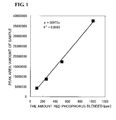
Fig. 1] Figure 1 is a graph showing the relationship between the red phosphorus content and a peak intensity ratio of a GC/MS spectrum. - [
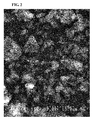
Fig. 2] Figure 2 is a scanning electron microscope (SEM) photograph of a pulverized product obtained in Example. - [
Fig. 3] Figure 3 is a SEM photograph of a pulverized product obtained in Comparative Example. - Next, embodiments for carrying out the present invention will be described.
- A mixing method used in a step of preparing a red-phosphorus-containing compound is not particularly limited. Examples of the method include methods using a press kneader, a roll mixer, a twin-screw mixer, or a Banbury mixer. Examples of a resin that can be used include various types of resins such as thermoplastic resins, thermosetting resins, and rubbers.
- Here, examples of the thermoplastic resins include polyethylene, polypropylene, polymethylpentene, polybutene, crystalline polybutadiene, polystyrene, polybutadiene, styrene-butadiene resins, polyvinyl chloride, polyvinyl acetate, polyvinylidene chloride, ethylene-vinyl acetate copolymers (ethylene-vinyl acetate (EVA), acrylonitrile-styrene (AS), acrylonitrile-butadiene-styrene (ABS), ionomers, acrylonitrile-acrylate-styrene (AAS), and acrylonitrile-chlorinated polyethylene-styrene (ACS)), polymethylmethacrylate, polytetrafluoroethylene, ethylene-tetrafluoroethylene copolymers, polyoxymethylene, polyamide, polycarbonate, polyphenylene ether, polyethylene terephthalate, polybutylene terephthalate, polyarylate (U-polymer), polystyrene, polyethersulfone, polyimide, polyamideimide, polyphenylene sulfide, polyoxybenzoyl, polyether ether ketone, polyetherimide, cellulose acetate, cellulose acetate butyrate, cellophane, and celluloid. Elastomers such as styrene-butadiene thermoplastic elastomers, polyolefin thermoplastic elastomers, urethane thermoplastic elastomers, polyester thermoplastic elastomers, and polyamide thermoplastic elastomers can also be used.
- Examples of the thermosetting resins include formaldehyde resins, phenol resins, amino resins (urea resins, melamine resins, and benzoguanamine resins), unsaturated polyester resins, diallyl phthalate resins, alkyd resins, epoxy resins, urethane resins (polyurethanes), and silicon resins (silicone).
- As for the fine pulverization of the red-phosphorus-containing compound, as described above, it is preferable to use a method of performing crushing and pulverizing by striking each sample and applying a shear stress to the sample with a three-dimensional eight-figure motion. Since the degree of crushing and the crushing capacity vary depending on the type of crushing medium, the number of vibrations, the crushing time, and the like, it is preferable to use an apparatus in which conditions such as the number of vibrations and the crushing time can be freely adjusted. An example of such an apparatus is a multi-sample precision sample pulverizer that is commercially available as a trade name "Multi-beads shocker" (manufactured by Yasui Kikai Corporation).
- In the method of quantitatively determining red phosphorus contained in a resin of the present invention, the step of pyrolyzing a standard sample or a measurement sample to gasify the sample is performed by heating the sample to a temperature at which the sample is gasified or higher. Accordingly, the heating temperature is not lower than the sublimation temperature (416°C) of red phosphorus. However, in order to reliably sublime red phosphorus and to perform analysis with a high accuracy, it is necessary to heat at a temperature equal to or higher than the decomposition temperature of the resin. The heating temperature is preferably about 600°C to 800°C.
- The heating time is not shorter than a time necessary for completely gasify the sample. The heating time varies depending on the heating temperature, the amount of sample, and the like, and is not particularly limited. Heating means is not particularly limited, and any heating means used in a usual pyrolysis-gas chromatograph can be used.
- The sample pyrolyzed and gasified is introduced into a column of a gas chromatograph. Components in the sample are separated in accordance with a difference in the distribution equilibrium constant from that of a stationary phase, and eluted at times (retention times) that differ for respective components. Conditions for this gas chromatography are the same as conditions for usual pyrolysis-gas chromatography used in analysis of resins.
- Either a packed column or a capillary column can be used as the column, but a capillary column is preferably used in qualitative analysis.
- The sample eluted from the column of the gas chromatograph is introduced into a detector, and the presence or absence of elusion (fraction) in accordance with the retention time is detected. The analysis of red phosphorus is performed by detecting a fraction at a retention time corresponding to red phosphorus. For example, if a detection peak (fraction) is present at a retention time corresponding to red phosphorus, it is confirmed that red phosphorus is present in the sample.
- The retention time corresponding to red phosphorus varies depending on operating conditions for the pyrolysis-gas chromatograph, the type of column, and the like. Therefore, prior to the measurement of a sample, the same analysis as that described above is performed using standard samples of red phosphorus so that the retention time corresponding to red phosphorus is determined in advance.
- As described above, a mass spectrometer (MS) is preferably used as the detector. According to mass spectrometry, red phosphorus shows characteristic peaks at m/z = 31, 62, 93, and 124. A calibration curve is prepared on the basis of the area of a peak or the height of a peak obtained from the standard samples, and a measurement sample is then measured. Quantitative analysis is performed on the basis of the calibration curve and the area of a peak obtained by the measurement of the sample.
- The mass spectrometer includes an interfacing unit, which is a portion connected to the column of the gas chromatograph, an ion source that performs ionization of a sample, a mass separation unit, a detector, and the like. As an ionization method in the ion source, either an electron impact ionization (EI) method or a chemical ionization (CI) method can be employed. As an analyzer of the mass separation unit, either a magnetic sector-type analyzer or a quadrupole-type analyzer can be used. Furthermore, as a measurement mode in the detector, either the SCAN mode or the SIM mode can be used.
- Next, embodiments for carrying out the present invention will be described by way of Example, but the scope of the present invention is not limited to only the Example.
- A red phosphorus reagent manufactured by KANTO CHEMICAL CO., INC. was used as red phosphorus. This red phosphorus was added to an ethylene-ethyl-acrylate copolymer (EEA, trade name: EVAFLEX A701) so that the red phosphorus content was 100, 250, 500, or 1,000 ppm. Each of the mixtures was mixed with a roll mixer at 200°C for five minutes to prepare four red-phosphorus-containing compounds, the red phosphorus contents of which were different from each other.
- Each of the prepared red-phosphorus-containing compounds was finely pulverized with a multi-sample precision sample pulverizer (trade name: Multi-beads shocker manufactured by Yasui Kikai Corporation). Specifically, 1 g of each of the prepared four red-phosphorus-containing compounds was put in a 40-mL titanium pulverization container, and was pulverized under a liquid nitrogen condition at a number of vibrations of 3,000 rpm for 60 seconds. As a result, pulverized products were obtained in which the number of particles having a maximum diameter of 5 µm or more is 1/20 or less of the number of particles having a maximum diameter of 1 µm or more and less than 5 µm.
Figure 2 shows a SEM photograph of the pulverized product. - About 0.5 mg of each of the pulverized products thus obtained was weighed. Each of the samples was pyrolyzed (gasified) with the pyrolyzer under the pyrolysis conditions described below. The gasified sample was measured with gas chromatograph/mass spectrometry (GC/MS apparatus) described below. A peak area value for a peak at a retention time of 4.2 minutes was determined, and a ratio peak area value/measurement sample weight (hereinafter referred to as "peak intensity ratio") was calculated. Mass spectrometry (MS) was conducted for the peak at the retention time of 4.2 minutes of the gas chromatograph obtained under these measurement conditions. As a result, peaks were obtained at positions of m/z = 62, 93, and 124. Accordingly, the peak at a retention time of 4.2 minutes was identified as a peak of red phosphorus. In addition, according to a measurement result of pyrolysis-GC/MS conducted using elemental red phosphorus under the same conditions as those described above, the peak of the elemental red phosphorus was observed at a retention time of 4.2 minutes.
- A pyrolyzer manufactured by Frontier Laboratories Ltd. was used. The pyrolysis condition was 600°C x 0.2 minutes.
- An Agilent 6890 manufactured by Agilent Technologies, Inc. was used. Operating conditions for this apparatus are described below.
Column: HP-5MS (inner diameter: 0.25 mm, film thickness: 0.25 µm, length: 30 m)
Column flow rate: Helium (He) gas 1.0 mL/min
Temperature-increasing condition: The temperature was increased from 50°C to 320°C at a rate of 25°C /min and maintained at 320°C for five minutes.
MS temperature: 230°C (MS Source), 150°C (MS Quad)
Interfacing unit temperature: 280°C
Measurement mode: SCAN mode
Note that the measurement by mass spectrometry (MS) was performed in the range of m/z = 33 to 550 in order to avoid peaks of oxygen. - The measurement was conducted for each sample three times. The results are shown in Table I.
-
[Table I] The amount of red phosphorus blended (ppm) 100 250 500 1000 n=1 Peak area : A 2168723 4860241 8491186 19768462 Amount of sample (mg): B 0.53 0.51 0.52 0.52 Peak intensity ratio A/B 4091930 9529884 16329204 38016273 n=2 Peak area : A 2515051 4489632 8932955 18222040 Amount of sample (mg) : B 0.52 0.51 0.53 0.51 Peek intensity ratio A/B 4836637 8803200 16854632 35729490 n=3 Peak area : A 2096525 4037944 9632003 19495334 Amount of sample (mg) : B 0.51 0.50 0.51 0.50 Peak intensity ratio A/B 4110833 8075888 15886280 38990668 Average 4346467 8802991 17356705 37578810 Standard deviation 424605 720998 1350451 1674022 cv 9.8% 8.3% 7.8% 4.5% * The "peak area: A" represents an area value (signal intensity) of a peak at a retention time of 4.2 minutes corresponding to red phosphorus in a total ion chromatogram. - As shown in Table I, the variation (cv) in the peak intensity ratio in the measurement that was performed three times was in the range of 4.5% (in the case where the amount of red phosphorus blended was 1,000 ppm) to 9.8% (in the case where the amount of red phosphorus blended was 100 ppm).
Figure 1 is a graph showing the relationship between the red phosphorus content (the amount of red phosphorus blended) in the resin and the average of the peak intensity ratios measured three times. As is apparent fromFig. 1 , there is a good relationship between the red phosphorus content in the resin and the peak intensity ratio in the GC/MS analysis, and the correlation coefficient thereof was 0.9965. This result showed that a quantitative analysis with a high accuracy could also be performed by the quantitative analytical method of the present invention. - A pyrolysis-GC/MS measurement was conducted as in Example except that pulverized products prepared by pulverizing the red-phosphorus-containing compounds using a conventional pulverizer were used instead of using the pulverized products prepared by finely pulverizing the red-phosphorus-containing compounds.
Figure 3 shows a SEM image of the pulverized product. Furthermore, Table II shows the results when the measurement was conducted for each sample three times. -
[Table II] The amount of red phosphorus blended (ppm) 100 250 500 1000 n=1 Peak area: A 1168723 476041 8491186 9768462 Amount of sample (mg) : B 0.54 0.57 0.52 0.55 A/B 2164302 835160 16329204 17760840 n=2 Peak area : A 3045051 2489632 8932955 13822040 Amount of sample (mg) : B 0.52 0.55 0.58 0.51 A / B 5855867 4526604 15401647 27102039 n=3 Peak area : A 2095525 2437944 2632003 25495334 Amount of sample (mg) : B 0.56 0.50 0.56 0.50 A/B 3742009 4875888 4700005 50990668 Average 3920726 3412550 12143619 31951182 Standard deviation 1852260 2238909 6463020 17137415 cv 47.2% 65.6% 53.2% 53.6% - As shown in Table II, the variation (cv) in the peak intensity ratio in the measurement that was performed three times was in the range of 47.2% (in the case where the amount of red phosphorus blended was 100 ppm) to 65.6% (in the case where the amount of red phosphorus blended was 250 ppm), which was significantly larger than that of Example (example of the present invention). The comparison between Example and Comparative Example shows that, according to the present invention, quantitative determination of ref phosphorus contained in a resin can be performed with an accuracy significantly higher than that in the related art.
- A pyrolysis-GC/MS measurement was conducted using an elemental red phosphorus reagent in a sample amount of about 0.1 mg instead of using a red-phosphorus-containing compound. Table III shows the results when the measurement was conducted three times.
-
[Table III] Elemental red phosphorus reagent Peak area : A 513955782 n = 1 Amount of sample (mg) : B 0.10 A/B 5139557820 Peak area : A 587265799 n = 2 Amount of sample (mg) : B 0.11 A/B 5338779991 Peak area : A 671866809 n = 3 Amount of sample (mg) : B 0.12 A/B 5598890075 Average 5359075962 Standard deviation 230337741 cv 4.3% - As shown in Table III, even in the measurement of the elemental red phosphorus, the variation (cv) was 4.3%, which shows that this analytical method itself causes a variation of about 5%. From the comparison between this result and the results shown in Table I, it is clear that the variations in the concentration in the standard samples in Example are very small.
Claims (4)
- A method for producing a standard sample for quantitatively determining red phosphorus contained in a resin, the method comprising the steps of:preparing a red-phosphorus-containing compound by weighing a predetermined amount of red phosphorus and uniformly mixing the red phosphorus in a resin;decreasing the number of particles having a maximum diameter of 5 µm or more to 1/20 or less of the number of particles having a maximum diameter of 1 µm or more and less than 5 µm by pulverizing the red-phosphorus-containing compound; andobtaining a standard sample by weighing 0.05 to 10 mg of the pulverized red-phosphorus-containing compound.
- The method for producing the standard sample for quantitatively determining red phosphorus contained in the resin according to Claim 1, wherein, in the step of obtaining the standard sample, 0.1 to 0.5 mg of the pulverized red-phosphorus-containing compound is weighed.
- The method for producing the standard sample for quantitatively determining red phosphorus contained in the resin according to Claim 1 or 2, wherein the red-phosphorus-containing compound is pulverized by striking the compound and applying a shear stress to the compound.
- A method for quantitatively determining red phosphorus contained in a resin, the method comprising the steps of:producing a plurality of standard samples, the red phosphorus contents of which are varied, by the method for producing the standard sample for quantitatively determining red phosphorus contained in the resin according to any one of Claims 1 to 3;pyrolyzing each of the standard samples to gasify the samples, separating each of the pyrolyzed samples into fractions by gas chromatography, and obtaining a peak intensity ratio by dividing a peak area value obtained with respect to a fraction of a retention time corresponding to red phosphorus by a sample weight;preparing a calibration curve showing the relationship between the peak intensity ratio and the red phosphorus content;pyrolyzing a measurement target sample to gasify the sample, separating the pyrolyzed sample into fractions by gas chromatography, and obtaining a peak intensity ratio A with respect to a fraction corresponding to red phosphorus; anddetermining a red phosphorus content corresponding to the peak intensity ratio A using the calibration curve.
Applications Claiming Priority (2)
| Application Number | Priority Date | Filing Date | Title |
|---|---|---|---|
| JP2009134086A JP4770968B2 (en) | 2009-06-03 | 2009-06-03 | Method for producing standard sample for determination of red phosphorus in resin |
| PCT/JP2010/058696 WO2010140496A1 (en) | 2009-06-03 | 2010-05-24 | Method for producing standard sample for use in quantitative determination of red phosphorus in resin |
Publications (3)
| Publication Number | Publication Date |
|---|---|
| EP2439509A1 true EP2439509A1 (en) | 2012-04-11 |
| EP2439509A4 EP2439509A4 (en) | 2017-12-27 |
| EP2439509B1 EP2439509B1 (en) | 2018-08-01 |
Family
ID=43297632
Family Applications (1)
| Application Number | Title | Priority Date | Filing Date |
|---|---|---|---|
| EP10783280.0A Active EP2439509B1 (en) | 2009-06-03 | 2010-05-24 | Method for producing standard sample for use in quantitative determination of red phosphorus in resin |
Country Status (6)
| Country | Link |
|---|---|
| US (1) | US8012757B2 (en) |
| EP (1) | EP2439509B1 (en) |
| JP (1) | JP4770968B2 (en) |
| CN (1) | CN102119327B (en) |
| TW (1) | TW201107746A (en) |
| WO (1) | WO2010140496A1 (en) |
Cited By (1)
| Publication number | Priority date | Publication date | Assignee | Title |
|---|---|---|---|---|
| CN106442746A (en) * | 2016-06-17 | 2017-02-22 | 中检集团南方电子产品测试(深圳)股份有限公司 | Method for measuring content of red phosphorus in polymer |
Families Citing this family (12)
| Publication number | Priority date | Publication date | Assignee | Title |
|---|---|---|---|---|
| JP2011203271A (en) * | 2011-06-17 | 2011-10-13 | Sumitomo Electric Ind Ltd | Method for producing standard sample for quantitative determination of red phosphorus in resin |
| CN103499631B (en) * | 2013-07-09 | 2016-05-04 | 广东中烟工业有限责任公司 | The assay method of multiple element Special migration in a kind of cigarette tipping paper |
| JP6303967B2 (en) * | 2014-10-09 | 2018-04-04 | 株式会社島津製作所 | Calibration method for pyrolysis gas chromatograph mass spectrometer |
| US10611967B2 (en) | 2015-05-20 | 2020-04-07 | Saudi Arabian Oil Company | Pyrolysis to determine hydrocarbon expulsion efficiency of hydrocarbon source rock |
| CN104931638B (en) * | 2015-07-01 | 2016-04-13 | 必维申优质量技术服务江苏有限公司 | The detection method of TCEP and TCPP in a kind of textile, leather and plastics |
| CN107024557B (en) * | 2016-01-29 | 2019-11-05 | 深圳市虹彩检测技术有限公司 | The measuring method and application of red phosphorus content |
| JP6366767B1 (en) | 2017-03-24 | 2018-08-01 | 株式会社日立ハイテクサイエンス | Manufacturing method of plastic reference materials |
| CN110869762A (en) * | 2017-06-29 | 2020-03-06 | 沙特阿拉伯石油公司 | Pyrolysis for Determining Hydrocarbon Expulsion Efficiency of Source Rocks |
| CN111157657B (en) * | 2019-12-25 | 2022-05-24 | 通标标准技术服务(青岛)有限公司 | Method for measuring content of red phosphorus in high polymer material |
| CN113514294B (en) * | 2021-04-22 | 2024-06-07 | 济南海关技术中心 | Sudan red standard sample in eggs and preparation method thereof |
| CN114778753B (en) * | 2021-12-31 | 2025-01-24 | 黄河三角洲京博化工研究院有限公司 | A method for detecting residual low-boiling harmful components in POE materials |
| KR102442565B1 (en) * | 2022-04-19 | 2022-09-13 | 재단법인 한국화학융합시험연구원 | Method for preparing high-density polyethylene microplastic standard material |
Family Cites Families (5)
| Publication number | Priority date | Publication date | Assignee | Title |
|---|---|---|---|---|
| JPS5931439A (en) * | 1982-08-16 | 1984-02-20 | Kawasaki Steel Corp | Preparation of standard sample of glass bead for optical x-ray analysis |
| JP2004161924A (en) * | 2002-11-14 | 2004-06-10 | Rin Kagaku Kogyo Kk | Red phosphorus flame retardant, method for producing the same, and flame retardant resin composition containing the same |
| JP5216957B2 (en) | 2006-06-06 | 2013-06-19 | ビーエイチエヌ株式会社 | Mutagenic inhibitor |
| JP4375500B2 (en) * | 2007-04-26 | 2009-12-02 | 住友電気工業株式会社 | Method and apparatus for analyzing red phosphorus contained in organic materials |
| JP2009036550A (en) * | 2007-07-31 | 2009-02-19 | Kankyo Technos Kk | Manufacturing method of soil reference material |
-
2009
- 2009-06-03 JP JP2009134086A patent/JP4770968B2/en active Active
-
2010
- 2010-05-24 EP EP10783280.0A patent/EP2439509B1/en active Active
- 2010-05-24 CN CN2010800022617A patent/CN102119327B/en active Active
- 2010-05-24 WO PCT/JP2010/058696 patent/WO2010140496A1/en not_active Ceased
- 2010-05-24 US US13/062,036 patent/US8012757B2/en active Active
- 2010-06-02 TW TW099117706A patent/TW201107746A/en unknown
Non-Patent Citations (1)
| Title |
|---|
| See references of WO2010140496A1 * |
Cited By (2)
| Publication number | Priority date | Publication date | Assignee | Title |
|---|---|---|---|---|
| CN106442746A (en) * | 2016-06-17 | 2017-02-22 | 中检集团南方电子产品测试(深圳)股份有限公司 | Method for measuring content of red phosphorus in polymer |
| CN106442746B (en) * | 2016-06-17 | 2017-08-08 | 中检集团南方电子产品测试(深圳)股份有限公司 | A kind of method of red phosphorus content in test polymer |
Also Published As
| Publication number | Publication date |
|---|---|
| US8012757B2 (en) | 2011-09-06 |
| CN102119327B (en) | 2013-01-02 |
| EP2439509B1 (en) | 2018-08-01 |
| CN102119327A (en) | 2011-07-06 |
| WO2010140496A1 (en) | 2010-12-09 |
| TW201107746A (en) | 2011-03-01 |
| EP2439509A4 (en) | 2017-12-27 |
| JP2010281632A (en) | 2010-12-16 |
| JP4770968B2 (en) | 2011-09-14 |
| US20110165686A1 (en) | 2011-07-07 |
Similar Documents
| Publication | Publication Date | Title |
|---|---|---|
| EP2439509B1 (en) | Method for producing standard sample for use in quantitative determination of red phosphorus in resin | |
| Fernandez Moreno et al. | Multiresidue method for the analysis of more than 140 pesticide residues in fruits and vegetables by gas chromatography coupled to triple quadrupole mass spectrometry | |
| Steiner et al. | Validation of the direct analysis in real time source for use in forensic drug screening | |
| Andersen et al. | Toward epsilon levels of measurement precision on 234U/238U by using MC-ICPMS | |
| Lehotay | Quick, easy, cheap, effective, rugged, and safe approach for determining pesticide residues | |
| Uclés et al. | Shifting the paradigm in gas chromatography mass spectrometry pesticide analysis using high resolution accurate mass spectrometry | |
| Zhang et al. | Calibration and data processing in gas chromatography combustion isotope ratio mass spectrometry | |
| Kirchner et al. | Possibilities and limitations of quadrupole mass spectrometric detector in fast gas chromatography | |
| Zoccali et al. | Miniaturization of the QuEChERS method in the fast gas chromatography-tandem mass spectrometry analysis of pesticide residues in vegetables | |
| Li et al. | Use of a headspace solid-phase microextraction-based methodology followed by gas chromatography–tandem mass spectrometry for pesticide multiresidue determination in teas | |
| Keller et al. | The organic coating unit, an all-in-one system for reproducible generation of secondary organic matter aerosol | |
| Patel et al. | Argon gas, by near-ambient pressure XPS | |
| KR102799027B1 (en) | Simultaneous determination method of phthalate in foods using gas chromatography and mass spectrometry | |
| EP2439525A1 (en) | Method for quantifying red phosphorus in resin | |
| Harlou et al. | Combined Sr isotope and trace element analysis of melt inclusions at sub-ng levels using micro-milling, TIMS and ICPMS | |
| CN116026958B (en) | High-throughput identification method for medicines and personal care products in blood | |
| Grönlund et al. | Impact of sample pretreatment on analytical representativity in mechanical plastic recycling: A case study on brominated flame retardants | |
| Bennet et al. | VAMAS TWA2 interlaboratory comparison: Surface analysis of TiO2 nanoparticles using ToF-SIMS | |
| Cucu et al. | Analysis of ethylene oxide and 2-chloroethanol in food products: challenges and solutions | |
| JP2011203271A (en) | Method for producing standard sample for quantitative determination of red phosphorus in resin | |
| Yuan et al. | Rapid Determination of 15 Herbicides in Blood and Soil by Direct Analysis in Real Time‐Tandem Mass Spectrometry | |
| Schelles et al. | Direct current glow discharge mass spectrometry for elemental characterization of polymers | |
| Himmel et al. | Determination of formaldehyde release from wood-based panels using SPME-GC-FAIMS | |
| Wissmann | XRF in Agronomy Applications Analysis of Plant Tissues and Fertilizers | |
| Pöhlein et al. | Preparation of reference materials for the determination of RoHS-relevant flame retardants in styrenic polymers |
Legal Events
| Date | Code | Title | Description |
|---|---|---|---|
| PUAI | Public reference made under article 153(3) epc to a published international application that has entered the european phase |
Free format text: ORIGINAL CODE: 0009012 |
|
| 17P | Request for examination filed |
Effective date: 20111102 |
|
| AK | Designated contracting states |
Kind code of ref document: A1 Designated state(s): AL AT BE BG CH CY CZ DE DK EE ES FI FR GB GR HR HU IE IS IT LI LT LU LV MC MK MT NL NO PL PT RO SE SI SK SM TR |
|
| DAX | Request for extension of the european patent (deleted) | ||
| RIC1 | Information provided on ipc code assigned before grant |
Ipc: G01N 1/00 20060101AFI20171005BHEP Ipc: G01N 30/04 20060101ALI20171005BHEP Ipc: G01N 30/72 20060101ALI20171005BHEP Ipc: G01N 30/06 20060101ALI20171005BHEP Ipc: G01N 30/88 20060101ALI20171005BHEP Ipc: G01N 31/00 20060101ALI20171005BHEP Ipc: G01N 30/60 20060101ALI20171005BHEP Ipc: G01N 30/86 20060101ALI20171005BHEP Ipc: G01N 30/54 20060101ALI20171005BHEP Ipc: G01N 33/44 20060101ALI20171005BHEP Ipc: G01N 27/62 20060101ALI20171005BHEP |
|
| RIC1 | Information provided on ipc code assigned before grant |
Ipc: G01N 30/60 20060101ALI20171012BHEP Ipc: G01N 30/72 20060101ALI20171012BHEP Ipc: G01N 27/62 20060101ALI20171012BHEP Ipc: G01N 33/44 20060101ALI20171012BHEP Ipc: G01N 30/04 20060101ALI20171012BHEP Ipc: G01N 1/00 20060101AFI20171012BHEP Ipc: G01N 30/88 20060101ALI20171012BHEP Ipc: G01N 30/06 20060101ALI20171012BHEP Ipc: G01N 30/86 20060101ALI20171012BHEP Ipc: G01N 30/54 20060101ALI20171012BHEP Ipc: G01N 31/00 20060101ALI20171012BHEP |
|
| RIC1 | Information provided on ipc code assigned before grant |
Ipc: G01N 31/00 20060101ALI20171108BHEP Ipc: G01N 30/06 20060101ALI20171108BHEP Ipc: G01N 30/72 20060101ALI20171108BHEP Ipc: G01N 1/00 20060101AFI20171108BHEP Ipc: G01N 30/54 20060101ALI20171108BHEP Ipc: G01N 30/88 20060101ALI20171108BHEP Ipc: G01N 27/62 20060101ALI20171108BHEP Ipc: G01N 30/60 20060101ALI20171108BHEP Ipc: G01N 30/86 20060101ALI20171108BHEP Ipc: G01N 30/04 20060101ALI20171108BHEP Ipc: G01N 33/44 20060101ALI20171108BHEP |
|
| RA4 | Supplementary search report drawn up and despatched (corrected) |
Effective date: 20171129 |
|
| GRAP | Despatch of communication of intention to grant a patent |
Free format text: ORIGINAL CODE: EPIDOSNIGR1 |
|
| STAA | Information on the status of an ep patent application or granted ep patent |
Free format text: STATUS: GRANT OF PATENT IS INTENDED |
|
| INTG | Intention to grant announced |
Effective date: 20180220 |
|
| GRAS | Grant fee paid |
Free format text: ORIGINAL CODE: EPIDOSNIGR3 |
|
| GRAA | (expected) grant |
Free format text: ORIGINAL CODE: 0009210 |
|
| STAA | Information on the status of an ep patent application or granted ep patent |
Free format text: STATUS: THE PATENT HAS BEEN GRANTED |
|
| AK | Designated contracting states |
Kind code of ref document: B1 Designated state(s): AL AT BE BG CH CY CZ DE DK EE ES FI FR GB GR HR HU IE IS IT LI LT LU LV MC MK MT NL NO PL PT RO SE SI SK SM TR |
|
| REG | Reference to a national code |
Ref country code: GB Ref legal event code: FG4D |
|
| REG | Reference to a national code |
Ref country code: CH Ref legal event code: EP Ref country code: AT Ref legal event code: REF Ref document number: 1024869 Country of ref document: AT Kind code of ref document: T Effective date: 20180815 |
|
| REG | Reference to a national code |
Ref country code: IE Ref legal event code: FG4D |
|
| REG | Reference to a national code |
Ref country code: DE Ref legal event code: R096 Ref document number: 602010052371 Country of ref document: DE |
|
| REG | Reference to a national code |
Ref country code: NL Ref legal event code: MP Effective date: 20180801 |
|
| REG | Reference to a national code |
Ref country code: LT Ref legal event code: MG4D |
|
| REG | Reference to a national code |
Ref country code: AT Ref legal event code: MK05 Ref document number: 1024869 Country of ref document: AT Kind code of ref document: T Effective date: 20180801 |
|
| PG25 | Lapsed in a contracting state [announced via postgrant information from national office to epo] |
Ref country code: AT Free format text: LAPSE BECAUSE OF FAILURE TO SUBMIT A TRANSLATION OF THE DESCRIPTION OR TO PAY THE FEE WITHIN THE PRESCRIBED TIME-LIMIT Effective date: 20180801 Ref country code: SE Free format text: LAPSE BECAUSE OF FAILURE TO SUBMIT A TRANSLATION OF THE DESCRIPTION OR TO PAY THE FEE WITHIN THE PRESCRIBED TIME-LIMIT Effective date: 20180801 Ref country code: NL Free format text: LAPSE BECAUSE OF FAILURE TO SUBMIT A TRANSLATION OF THE DESCRIPTION OR TO PAY THE FEE WITHIN THE PRESCRIBED TIME-LIMIT Effective date: 20180801 Ref country code: IS Free format text: LAPSE BECAUSE OF FAILURE TO SUBMIT A TRANSLATION OF THE DESCRIPTION OR TO PAY THE FEE WITHIN THE PRESCRIBED TIME-LIMIT Effective date: 20181201 Ref country code: PL Free format text: LAPSE BECAUSE OF FAILURE TO SUBMIT A TRANSLATION OF THE DESCRIPTION OR TO PAY THE FEE WITHIN THE PRESCRIBED TIME-LIMIT Effective date: 20180801 Ref country code: BG Free format text: LAPSE BECAUSE OF FAILURE TO SUBMIT A TRANSLATION OF THE DESCRIPTION OR TO PAY THE FEE WITHIN THE PRESCRIBED TIME-LIMIT Effective date: 20181101 Ref country code: LT Free format text: LAPSE BECAUSE OF FAILURE TO SUBMIT A TRANSLATION OF THE DESCRIPTION OR TO PAY THE FEE WITHIN THE PRESCRIBED TIME-LIMIT Effective date: 20180801 Ref country code: NO Free format text: LAPSE BECAUSE OF FAILURE TO SUBMIT A TRANSLATION OF THE DESCRIPTION OR TO PAY THE FEE WITHIN THE PRESCRIBED TIME-LIMIT Effective date: 20181101 Ref country code: GR Free format text: LAPSE BECAUSE OF FAILURE TO SUBMIT A TRANSLATION OF THE DESCRIPTION OR TO PAY THE FEE WITHIN THE PRESCRIBED TIME-LIMIT Effective date: 20181102 Ref country code: FI Free format text: LAPSE BECAUSE OF FAILURE TO SUBMIT A TRANSLATION OF THE DESCRIPTION OR TO PAY THE FEE WITHIN THE PRESCRIBED TIME-LIMIT Effective date: 20180801 |
|
| PG25 | Lapsed in a contracting state [announced via postgrant information from national office to epo] |
Ref country code: HR Free format text: LAPSE BECAUSE OF FAILURE TO SUBMIT A TRANSLATION OF THE DESCRIPTION OR TO PAY THE FEE WITHIN THE PRESCRIBED TIME-LIMIT Effective date: 20180801 Ref country code: ES Free format text: LAPSE BECAUSE OF FAILURE TO SUBMIT A TRANSLATION OF THE DESCRIPTION OR TO PAY THE FEE WITHIN THE PRESCRIBED TIME-LIMIT Effective date: 20180801 Ref country code: AL Free format text: LAPSE BECAUSE OF FAILURE TO SUBMIT A TRANSLATION OF THE DESCRIPTION OR TO PAY THE FEE WITHIN THE PRESCRIBED TIME-LIMIT Effective date: 20180801 Ref country code: LV Free format text: LAPSE BECAUSE OF FAILURE TO SUBMIT A TRANSLATION OF THE DESCRIPTION OR TO PAY THE FEE WITHIN THE PRESCRIBED TIME-LIMIT Effective date: 20180801 |
|
| PG25 | Lapsed in a contracting state [announced via postgrant information from national office to epo] |
Ref country code: RO Free format text: LAPSE BECAUSE OF FAILURE TO SUBMIT A TRANSLATION OF THE DESCRIPTION OR TO PAY THE FEE WITHIN THE PRESCRIBED TIME-LIMIT Effective date: 20180801 Ref country code: IT Free format text: LAPSE BECAUSE OF FAILURE TO SUBMIT A TRANSLATION OF THE DESCRIPTION OR TO PAY THE FEE WITHIN THE PRESCRIBED TIME-LIMIT Effective date: 20180801 Ref country code: CZ Free format text: LAPSE BECAUSE OF FAILURE TO SUBMIT A TRANSLATION OF THE DESCRIPTION OR TO PAY THE FEE WITHIN THE PRESCRIBED TIME-LIMIT Effective date: 20180801 Ref country code: EE Free format text: LAPSE BECAUSE OF FAILURE TO SUBMIT A TRANSLATION OF THE DESCRIPTION OR TO PAY THE FEE WITHIN THE PRESCRIBED TIME-LIMIT Effective date: 20180801 |
|
| REG | Reference to a national code |
Ref country code: DE Ref legal event code: R097 Ref document number: 602010052371 Country of ref document: DE |
|
| PG25 | Lapsed in a contracting state [announced via postgrant information from national office to epo] |
Ref country code: SM Free format text: LAPSE BECAUSE OF FAILURE TO SUBMIT A TRANSLATION OF THE DESCRIPTION OR TO PAY THE FEE WITHIN THE PRESCRIBED TIME-LIMIT Effective date: 20180801 Ref country code: SK Free format text: LAPSE BECAUSE OF FAILURE TO SUBMIT A TRANSLATION OF THE DESCRIPTION OR TO PAY THE FEE WITHIN THE PRESCRIBED TIME-LIMIT Effective date: 20180801 Ref country code: DK Free format text: LAPSE BECAUSE OF FAILURE TO SUBMIT A TRANSLATION OF THE DESCRIPTION OR TO PAY THE FEE WITHIN THE PRESCRIBED TIME-LIMIT Effective date: 20180801 |
|
| PLBE | No opposition filed within time limit |
Free format text: ORIGINAL CODE: 0009261 |
|
| STAA | Information on the status of an ep patent application or granted ep patent |
Free format text: STATUS: NO OPPOSITION FILED WITHIN TIME LIMIT |
|
| 26N | No opposition filed |
Effective date: 20190503 |
|
| PG25 | Lapsed in a contracting state [announced via postgrant information from national office to epo] |
Ref country code: SI Free format text: LAPSE BECAUSE OF FAILURE TO SUBMIT A TRANSLATION OF THE DESCRIPTION OR TO PAY THE FEE WITHIN THE PRESCRIBED TIME-LIMIT Effective date: 20180801 |
|
| REG | Reference to a national code |
Ref country code: CH Ref legal event code: PL |
|
| REG | Reference to a national code |
Ref country code: DE Ref legal event code: R082 Ref document number: 602010052371 Country of ref document: DE Representative=s name: MAIER, LL.M., MICHAEL C., DE Ref country code: DE Ref legal event code: R082 Ref document number: 602010052371 Country of ref document: DE Representative=s name: BOULT WADE TENNANT LLP, DE |
|
| PG25 | Lapsed in a contracting state [announced via postgrant information from national office to epo] |
Ref country code: CH Free format text: LAPSE BECAUSE OF NON-PAYMENT OF DUE FEES Effective date: 20190531 Ref country code: MC Free format text: LAPSE BECAUSE OF FAILURE TO SUBMIT A TRANSLATION OF THE DESCRIPTION OR TO PAY THE FEE WITHIN THE PRESCRIBED TIME-LIMIT Effective date: 20180801 Ref country code: LI Free format text: LAPSE BECAUSE OF NON-PAYMENT OF DUE FEES Effective date: 20190531 |
|
| REG | Reference to a national code |
Ref country code: BE Ref legal event code: MM Effective date: 20190531 |
|
| REG | Reference to a national code |
Ref country code: DE Ref legal event code: R082 Ref document number: 602010052371 Country of ref document: DE Representative=s name: BOULT WADE TENNANT LLP, DE |
|
| PG25 | Lapsed in a contracting state [announced via postgrant information from national office to epo] |
Ref country code: LU Free format text: LAPSE BECAUSE OF NON-PAYMENT OF DUE FEES Effective date: 20190524 |
|
| PG25 | Lapsed in a contracting state [announced via postgrant information from national office to epo] |
Ref country code: TR Free format text: LAPSE BECAUSE OF FAILURE TO SUBMIT A TRANSLATION OF THE DESCRIPTION OR TO PAY THE FEE WITHIN THE PRESCRIBED TIME-LIMIT Effective date: 20180801 |
|
| PG25 | Lapsed in a contracting state [announced via postgrant information from national office to epo] |
Ref country code: IE Free format text: LAPSE BECAUSE OF NON-PAYMENT OF DUE FEES Effective date: 20190524 |
|
| PG25 | Lapsed in a contracting state [announced via postgrant information from national office to epo] |
Ref country code: BE Free format text: LAPSE BECAUSE OF NON-PAYMENT OF DUE FEES Effective date: 20190531 |
|
| PG25 | Lapsed in a contracting state [announced via postgrant information from national office to epo] |
Ref country code: PT Free format text: LAPSE BECAUSE OF FAILURE TO SUBMIT A TRANSLATION OF THE DESCRIPTION OR TO PAY THE FEE WITHIN THE PRESCRIBED TIME-LIMIT Effective date: 20181201 |
|
| PG25 | Lapsed in a contracting state [announced via postgrant information from national office to epo] |
Ref country code: CY Free format text: LAPSE BECAUSE OF FAILURE TO SUBMIT A TRANSLATION OF THE DESCRIPTION OR TO PAY THE FEE WITHIN THE PRESCRIBED TIME-LIMIT Effective date: 20180801 |
|
| PG25 | Lapsed in a contracting state [announced via postgrant information from national office to epo] |
Ref country code: HU Free format text: LAPSE BECAUSE OF FAILURE TO SUBMIT A TRANSLATION OF THE DESCRIPTION OR TO PAY THE FEE WITHIN THE PRESCRIBED TIME-LIMIT; INVALID AB INITIO Effective date: 20100524 Ref country code: MT Free format text: LAPSE BECAUSE OF FAILURE TO SUBMIT A TRANSLATION OF THE DESCRIPTION OR TO PAY THE FEE WITHIN THE PRESCRIBED TIME-LIMIT Effective date: 20180801 |
|
| PG25 | Lapsed in a contracting state [announced via postgrant information from national office to epo] |
Ref country code: MK Free format text: LAPSE BECAUSE OF FAILURE TO SUBMIT A TRANSLATION OF THE DESCRIPTION OR TO PAY THE FEE WITHIN THE PRESCRIBED TIME-LIMIT Effective date: 20180801 |
|
| REG | Reference to a national code |
Ref country code: FR Ref legal event code: PLFP Year of fee payment: 14 |
|
| P01 | Opt-out of the competence of the unified patent court (upc) registered |
Effective date: 20230515 |
|
| PGFP | Annual fee paid to national office [announced via postgrant information from national office to epo] |
Ref country code: DE Payment date: 20250402 Year of fee payment: 16 |
|
| PGFP | Annual fee paid to national office [announced via postgrant information from national office to epo] |
Ref country code: GB Payment date: 20250401 Year of fee payment: 16 |
|
| PGFP | Annual fee paid to national office [announced via postgrant information from national office to epo] |
Ref country code: FR Payment date: 20250401 Year of fee payment: 16 |