EP2435397B1 - Composition comprising caffeoylshikimic acids, protocatechuic acid, hydroxytyrosol, hydroxybenzoic acid and their derivatives and method of preparation thereof - Google Patents
Composition comprising caffeoylshikimic acids, protocatechuic acid, hydroxytyrosol, hydroxybenzoic acid and their derivatives and method of preparation thereof Download PDFInfo
- Publication number
- EP2435397B1 EP2435397B1 EP10780847.9A EP10780847A EP2435397B1 EP 2435397 B1 EP2435397 B1 EP 2435397B1 EP 10780847 A EP10780847 A EP 10780847A EP 2435397 B1 EP2435397 B1 EP 2435397B1
- Authority
- EP
- European Patent Office
- Prior art keywords
- acid
- caffeoylshikimic
- acids
- extract
- derivatives
- Prior art date
- Legal status (The legal status is an assumption and is not a legal conclusion. Google has not performed a legal analysis and makes no representation as to the accuracy of the status listed.)
- Active
Links
Images





Classifications
-
- A—HUMAN NECESSITIES
- A61—MEDICAL OR VETERINARY SCIENCE; HYGIENE
- A61K—PREPARATIONS FOR MEDICAL, DENTAL OR TOILETRY PURPOSES
- A61K36/00—Medicinal preparations of undetermined constitution containing material from algae, lichens, fungi or plants, or derivatives thereof, e.g. traditional herbal medicines
- A61K36/18—Magnoliophyta (angiosperms)
- A61K36/88—Liliopsida (monocotyledons)
- A61K36/889—Arecaceae, Palmae or Palmaceae (Palm family), e.g. date or coconut palm or palmetto
Definitions
- the present disclosure relates generally to a composition
- a composition comprising at least 5 major compounds which include the isomers of caffeoylshikimic acid, para hydroxybenzoic acid protocatechuic acid and hydroxytyrosol and a method for preparing the same from oil palm including but not confined to the vegetation liquor of palm oil milling. This includes the separation and purification of caffeoylshikimic acid from the aqeous vegetation liquor.
- Shimikic acid and its derivatives found naturally in some plants play a significant role as a biochemical intermediate compound in plants and also microorganisms. It is known to be an imperative precursor for the synthesis of aromatic amino acids, phenolics and alkaloids amongst many others.
- One of the most pertinent advancements in relation to the exploitation of shikimic acids in the pharmaceutical industry is the production of Tamiflu, a type of drug for use against avian flu in the recent years.
- shikimic acid The demand for shikimic acid is expected to increase dramatically with the increase in world population and thus the need for various industrial and pharmaceutical uses e.g in the use of shikimic acid to manufacture tamiflu or other anti-viral drugs in the event of pandemic flu outbreak.
- the world's demand for shimikic acid is met from fruits of Chinese star anise; however it is generally found in substantially low concentrations.
- the low availability of star anise has hampered the production of tamiflu and stresses the need for other sources of shikimic acid. Accordingly, it would be desirable to explore other sources for shikimic acid so as to aid in fulfilling the global demand.
- Oil palm including the vegetation liquor of palm oil milling offers a source of shikimic acid.
- oil palm is the most important commercial crop in Malaysia and several countries in South East Asia. It has been identified that phenolic compounds extracted from oil palm exhibit diverse health benefits. Thus efforts are being made to further explore these compounds and other extracts of oil palm, including the vegetation liquor of the milling process and palm oil mill effluent (POME) for the development of functional foods, medical, nutraceutical and pharmaceutical preparations in recent times.
- POME palm oil mill effluent
- This disclosure focuses on realizing the value and potential of the vegetation liquor from palm oil milling and palm oil mill effluent (POME) as a source as shikimic acid, and further the possibility of using extracts from oil palm, the vegetation liquor from palm oil milling and and POME as functional foods, medical, nutraceutical and pharmaceutical preparations.
- POME palm oil milling and palm oil mill effluent
- WO02/47703 describes a preparation for stimulating/enhancing the immune system.
- Mansouri et al. (2005) Food Chemistry 89, 3, p411-420 describes the Amsterdamn ripe date palm fruit.
- EP 1 844 666 describes an olive pulp biomass. Harbome et al. (1974) Phytochemistry 13, 8, p1557-1559 describes charged flavones and caffeoylshikimic acid in palmae.
- the present disclosure relates to a composition of at least 5 major phenolic compounds including but not confined to isomers of caffeoylshikimic acids, hydroxy benzoic acids protocatechuic acids and hydroxytyrosol from any part of oil palm, the vegetation liquor from palm oil milling and and palm oil mill effluent.
- the present disclosure relates to a method for the separation and purification of a composition containing caffeoylshikimic acids and their derivatives.
- the said method comprises the steps of pre-concentrating an extract containing said caffeoylshikimic acids and their derivatives and then isolating said caffeoylshikimic acids and their derivatives from said extract by preparatory liquid chromatography.
- the elution time of the fraction containing said caffeoylshikimic acids could vary depending on the conditions of the mobile and stationary phases.
- the disclosed description and examples is directed to a composition, use and method thereof for use various health related purposes, in the form of treatments and/or prophylaxis of diseases using extracts of oil palm and from the vegetation liquor of the palm oil milling process.
- the biologically active extracts of palm vegetation liquor useful in this invention are those obtained from the vegetation liquor of the palm oil milling process according based on, but not confined to the steps involved in the method as disclosed in US Patent Application No 20030031740 .
- the extract may contain a variety of compounds including phenolic compounds, fruit acids, fruit sugars and glycerol, starch, cellulose and hemicellulose , for purposes of standardization the concentrations of the extracts used were measured in terms of phenolic content i.e gallic acid equivalent.
- Embodiments of the present disclosure are predicated in part on a composition comprising caffeoylshikimic acids and other major phenolic compounds obtained from any part of the oil palm including vegetation liquor of palm oil processing and palm oil mill effluent.
- the composition of the present invention is prepared in accordance with several steps of a method, which is another aspect of the present invention. It is expected that the preparation is safe and said composition is suitable for use in, but not limiting to, daily consumption including dietary supplements, nutraceuticals, health promoting purposes, therapeutic applications, immunostimulating, immune system enhancing, neuroprotective, anticancer, antiflammatory, antioxidant and as antiaging agents.
- the caffeoylshikimic acids and their derivatives obtained based on the preferred embodiments of the present invention is suspected to exhibit vascular protective and antidiabetic effects and to lower blood pressure.
- the raw extracts obtained from any part of the oil palm, the vegetation liquor from palm oil milling and and palm oil mill effluent for the purpose of the present disclosure may contain various other phenolic compounds in addition to primary marker compound caffeoylshikimic acids, these compounds may include hydrobenzoic acid, hydroxytyrosol, gallic acids, protocatechuic acid, 2,3-dihydroxybenzoic acid, chlorogenic acid, caffeic acid, ferulic acid, flavonoids, micronutrients and other natural plant components including cellulose and hemicellulose, starch, sugar, lipids, amino acids and proteins.
- Caffeoylshikimic acids and their derivatives are found in low concentration in nature.
- the method of the present disclosure aims to provide caffeoylshikimic acids and their derviatives in substantially purified form for the preparation of the composition of the present disclosure.
- the extracts obtained form oil palm including the vegetation liquor from palm oil milling and palm oil mill effluent when subjected to isolation and purification stages in accordance with the method of the present invention is found to contain at least one of the following compounds; hydroxytyrosol, p-hydroxybenzoic acid, 5-0-caffeoylshikimic acid, 4-0-caffeoylshikimic acid and 3-0-caffeoylshikimic acid.
- the present disclosure extends, therefore to a method for preparation of purified caffeoylshikimic acids, whereby the primary steps of said method are pre-treatment of raw extracts obtained from any part of the oil palm, the vegetation liquor from palm oil milling and palm oil mill effluents and the isolation of caffeoylshikimic acids from said raw extracts.
- This embodiment encompasses isolated or substantially purified caffeoylshikimic acids. It should be noted that an "isolated” or “purified” caffeoylshikimic acid, or biologically active portion thereof, is substantially free of other cellular materials or other components or substantially free of chemical precursors or other chemicals.
- the first step of the method for preparation of the composition is pre-treatment of the raw extracts to obtain pre-concentrated or partially purified extracts. This may be performed with low stringent conditions of subjecting the extracts to a flash chromatography or the likes, or alternatively, subjecting said extracts to ethanol precipitation, prior to separation by high performance liquid chromatography.
- the main steps involved for the first approach is loading a "sep-pal? type column, removing impurities, eluting said extracts with methanol or ethanol and subjecting said extracts for concentration stage in a rotary evaporator.
- the second approach comprises the steps of adding an amount of extract to three volumes of cold ethanol, storing said mixture overnight at a preferred temperature of -20°C, centrifuging at 1500 Xg for at least 15 minutes, dissolving the precipitate obtained from the previous step with a suitably amount of distilled water and concentrating by rotary evaporator at 50° C to obtain the preferred final value of 3 ml. It should be mentioned that these steps for both approaches may be substituted with alternative steps of standard procedures known in the art however to achieve a similar objective.
- the next imperative step of the method for the preparation of the composition comprising caffeoylshikimic acids and their derivatives involves the isolation and purification of caffeoylshikimic acids from the partially purified extracts.
- This can be carried out with the conventional high performance liquid chromatography (HPLC) based on low stringent conditions or parameters of preparing an econosil Cl 8 5 ⁇ m particle size, with the preferred column length of 25cm x 10mm id, flow rate of 3 ml per minute.
- the preferred mobile phase gradient comprises two solvents, at least one solvent consisting of 0.1% trifluoroacetic acid (TFA) with an amount of water and added with another solvent consisting of 10/90 of 0-1% TFA/acetonitrile (ACN) v/v.
- the mixture is subjected to isolation by HPLC and it is observed that there are three major peaks indicating the elution of caffeoylshikimic acids at 40 minutes, 44 minutes and 48 minutes.
- the eluted caffeoylshikimic acids collected may have within 90% to 95% or more purity. It would be understood that the choice of columns and parameters for HPLC may vary however to obtain a similar result of elution time as described. Eluted fraction may be suitably collected and provided in powder or liquid form for use in further analysis.
- the method of the present disclosure may be carried out to isolate and purify caffeoylshikimic acids and their derivatives from any plant or type of sources, including, dates (fruits of Phenix reclinata ), olive ( Olea europaea ) , oats, barley, safflower, fruits, vegetables, juices, coconut ( Cocos nucifera ), corn ( Zea mays ) , seeds, wastes, and tissues obtained from plants.
- Extract from oil palm, vegetation liquor from palm oil milling and palm oil mill effluent was prepared based on a filtration procedure.
- the sample was pre-concentrated with Sample Prep using "Sep pak" cartridges for solvent exchange.
- the selected chromatography used to concentrate the sample was preparative high performance liquid chromatography (HPLC).
- the eluted sample as concentrated three (3) fold using nitrogen.
- the clear sample was then injected into the semi-prep column.
- the preferred column was C18 column with the length of 25 cm and Id of 10mm, used with a flow rate of 3ml/min. In this study, the injection column was 1ml and readings were taken at 280nm.
- the mobile phase gradient is shown below in TABLE 1: Time (minutes) Solvent A (0.1 %TFA) Solvent B (Methanol) 0 90 10 1 90 10 55 60 40 60 0 40 65 0 100 70 90 10
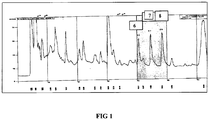
- FIG 1 A chromatogram obtained from the injection of concentrated sample is as shown in FIG 1 .
- the sample is seen to elute at 40 minutes, 44 minutes and 48 minutes thereby resulting to peaks 6, 7, and 8.
- Each eluted fraction was then freeze-dried, whereby 1.8 mg, 1.6 mg and 1, 1 mg of dry sample were obtained from peaks 6, 7 and 8 respectively.
- FIG 2 (a) to (c) provides the analytical chromatograms for peak 6, 7, and 8 respectively.
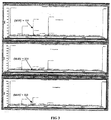
- the molecular weights of the three peaks obtained can be obtained using MALDI Mass Spectra analysis. An amount of 1 ⁇ l of the sample was directly deposited onto the sample holder to determind (M-H). Results obtained from this analysis are shown in FIG 3 .
- HMBC Hetero-nuclear multiple bond correlation
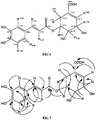
- the confirm structure of peak 6 is 5-O-caffeoylshikimic acid (C 16 H 16 O 8 ) with a molecular mass of 336.
- the identified compound and two positional isomers of caffeoylshikimic acid (3-O-caffeoylshikimic acid and 4-O-caffeoylshikimic acid) can be found in date fruits. Those skilled in the art would be able to determine that these compounds may be formed by the dehydration of the analogous 5-O-caffeoylquinic acid.
- the sample contains at least one of the following compounds, hydroxytyrosol,protocatechuic acid, p-hydroxybenzoic acid, 5-0-caffeoylshikimic acid, 4-O-caffeoylshikimic acid and 3-0-caffeoylshikimic acid .
- FIG 9 shows the chromatogram of the sample, whereby it can be seen that there are 5 major peaks, indicating the presence of hydroxytyrosol, protocatechuic acid, p-hydroxybenzoic acid and three isomers of caffeoylshikimic acid, amongst the minor peaks representing several other phenolic compounds including gallic acid, ferulic acid, and etc.
- the minor peaks may account for at least 20% of the phenolics of the sample. Accordingly, the major peaks were substantially accounted for the quantitation of the phenolics content for the sample.
- the standard used for this study was alpha cyanohydroxycinnamic acid with the retention time of 39 minutes for quantitation.
Landscapes
- Health & Medical Sciences (AREA)
- Natural Medicines & Medicinal Plants (AREA)
- Life Sciences & Earth Sciences (AREA)
- Microbiology (AREA)
- Pharmacology & Pharmacy (AREA)
- Alternative & Traditional Medicine (AREA)
- Biotechnology (AREA)
- Botany (AREA)
- Medical Informatics (AREA)
- Medicinal Chemistry (AREA)
- Chemical & Material Sciences (AREA)
- Mycology (AREA)
- Engineering & Computer Science (AREA)
- Epidemiology (AREA)
- Animal Behavior & Ethology (AREA)
- General Health & Medical Sciences (AREA)
- Public Health (AREA)
- Veterinary Medicine (AREA)
- Organic Low-Molecular-Weight Compounds And Preparation Thereof (AREA)
- Acyclic And Carbocyclic Compounds In Medicinal Compositions (AREA)
- Fats And Perfumes (AREA)
- Medicines Containing Plant Substances (AREA)
Description
- The present disclosure relates generally to a composition comprising at least 5 major compounds which include the isomers of caffeoylshikimic acid, para hydroxybenzoic acid protocatechuic acid and hydroxytyrosol and a method for preparing the same from oil palm including but not confined to the vegetation liquor of palm oil milling. This includes the separation and purification of caffeoylshikimic acid from the aqeous vegetation liquor.
- Shimikic acid and its derivatives, found naturally in some plants play a significant role as a biochemical intermediate compound in plants and also microorganisms. It is known to be an imperative precursor for the synthesis of aromatic amino acids, phenolics and alkaloids amongst many others. One of the most pertinent advancements in relation to the exploitation of shikimic acids in the pharmaceutical industry is the production of Tamiflu, a type of drug for use against avian flu in the recent years.
- The demand for shikimic acid is expected to increase dramatically with the increase in world population and thus the need for various industrial and pharmaceutical uses e.g in the use of shikimic acid to manufacture tamiflu or other anti-viral drugs in the event of pandemic flu outbreak. At present, the world's demand for shimikic acid is met from fruits of Chinese star anise; however it is generally found in substantially low concentrations. The low availability of star anise has hampered the production of tamiflu and stresses the need for other sources of shikimic acid. Accordingly, it would be desirable to explore other sources for shikimic acid so as to aid in fulfilling the global demand. Oil palm including the vegetation liquor of palm oil milling offers a source of shikimic acid.
- It is known that oil palm is the most important commercial crop in Malaysia and several countries in South East Asia. It has been identified that phenolic compounds extracted from oil palm exhibit diverse health benefits. Thus efforts are being made to further explore these compounds and other extracts of oil palm, including the vegetation liquor of the milling process and palm oil mill effluent (POME) for the development of functional foods, medical, nutraceutical and pharmaceutical preparations in recent times.
- This disclosure focuses on realizing the value and potential of the vegetation liquor from palm oil milling and palm oil mill effluent (POME) as a source as shikimic acid, and further the possibility of using extracts from oil palm, the vegetation liquor from palm oil milling and and POME as functional foods, medical, nutraceutical and pharmaceutical preparations.
-
WO02/47703 EP 1 844 666 - The aspects and embodiments of the present invention are set forth in the claims.
- In one embodiment, the present disclosure relates to a composition of at least 5 major phenolic compounds including but not confined to isomers of caffeoylshikimic acids, hydroxy benzoic acids protocatechuic acids and hydroxytyrosol from any part of oil palm, the vegetation liquor from palm oil milling and and palm oil mill effluent.
- In another embodiment, the present disclosure relates to a method for the separation and purification of a composition containing caffeoylshikimic acids and their derivatives. The said method comprises the steps of pre-concentrating an extract containing said caffeoylshikimic acids and their derivatives and then isolating said caffeoylshikimic acids and their derivatives from said extract by preparatory liquid chromatography. The elution time of the fraction containing said caffeoylshikimic acids could vary depending on the conditions of the mobile and stationary phases.
- This invention will be described by way of non-limiting embodiments of the present invention, with reference to the accompanying drawings, in which:
-
FIG 1 shows achromatogram containing peaks -
FIG 2 (a) toFIG 2 (c) show the analytical chromatogram forpeaks FIG 3 shows the MALDI spectra ofpeaks -
FIG 4 shows the UV spectra forpeaks -
FIG 5 shows caffeoylshikimic acid, or a 3,4-dihydroxycinnamoyl ester of shikimic acid; -
FIG 6 shows the carbon and proton chemical shifts; -
FIG 7 shows the selected HMBC correlations;FIG 8 shows the marker compounds; and -
FIG 9 shows the HPLC profile (fingerprint) of the composition. - In line with the above summary, the disclosed description and examples is directed to a composition, use and method thereof for use various health related purposes, in the form of treatments and/or prophylaxis of diseases using extracts of oil palm and from the vegetation liquor of the palm oil milling process.
- The biologically active extracts of palm vegetation liquor useful in this invention are those obtained from the vegetation liquor of the palm oil milling process according based on, but not confined to the steps involved in the method as disclosed in
US Patent Application No 20030031740 . - Although the extract may contain a variety of compounds including phenolic compounds, fruit acids, fruit sugars and glycerol, starch, cellulose and hemicellulose , for purposes of standardization the concentrations of the extracts used were measured in terms of phenolic content i.e gallic acid equivalent.
- Embodiments of the present disclosure are predicated in part on a composition comprising caffeoylshikimic acids and other major phenolic compounds obtained from any part of the oil palm including vegetation liquor of palm oil processing and palm oil mill effluent. The composition of the present invention is prepared in accordance with several steps of a method, which is another aspect of the present invention. It is expected that the preparation is safe and said composition is suitable for use in, but not limiting to, daily consumption including dietary supplements, nutraceuticals, health promoting purposes, therapeutic applications, immunostimulating, immune system enhancing, neuroprotective, anticancer, antiflammatory, antioxidant and as antiaging agents. It is further noted that the caffeoylshikimic acids and their derivatives obtained based on the preferred embodiments of the present invention is suspected to exhibit vascular protective and antidiabetic effects and to lower blood pressure.
- It would be apparent to a person skilled in the art that the raw extracts obtained from any part of the oil palm, the vegetation liquor from palm oil milling and and palm oil mill effluent for the purpose of the present disclosure may contain various other phenolic compounds in addition to primary marker compound caffeoylshikimic acids, these compounds may include hydrobenzoic acid, hydroxytyrosol, gallic acids, protocatechuic acid, 2,3-dihydroxybenzoic acid, chlorogenic acid, caffeic acid, ferulic acid, flavonoids, micronutrients and other natural plant components including cellulose and hemicellulose, starch, sugar, lipids, amino acids and proteins.
- Caffeoylshikimic acids and their derivatives are found in low concentration in nature. The method of the present disclosure aims to provide caffeoylshikimic acids and their derviatives in substantially purified form for the preparation of the composition of the present disclosure.
- The extracts obtained form oil palm including the vegetation liquor from palm oil milling and palm oil mill effluent when subjected to isolation and purification stages in accordance with the method of the present invention is found to contain at least one of the following compounds; hydroxytyrosol, p-hydroxybenzoic acid, 5-0-caffeoylshikimic acid, 4-0-caffeoylshikimic acid and 3-0-caffeoylshikimic acid.
- The present disclosure extends, therefore to a method for preparation of purified caffeoylshikimic acids, whereby the primary steps of said method are pre-treatment of raw extracts obtained from any part of the oil palm, the vegetation liquor from palm oil milling and palm oil mill effluents and the isolation of caffeoylshikimic acids from said raw extracts. This embodiment encompasses isolated or substantially purified caffeoylshikimic acids. It should be noted that an "isolated" or "purified" caffeoylshikimic acid, or biologically active portion thereof, is substantially free of other cellular materials or other components or substantially free of chemical precursors or other chemicals.
- The following examples serve to merely explain different methods of preparing caffeoylshikimic acids and related compounds.
- The first step of the method for preparation of the composition is pre-treatment of the raw extracts to obtain pre-concentrated or partially purified extracts. This may be performed with low stringent conditions of subjecting the extracts to a flash chromatography or the likes, or alternatively, subjecting said extracts to ethanol precipitation, prior to separation by high performance liquid chromatography. The main steps involved for the first approach is loading a "sep-pal? type column, removing impurities, eluting said extracts with methanol or ethanol and subjecting said extracts for concentration stage in a rotary evaporator. The second approach comprises the steps of adding an amount of extract to three volumes of cold ethanol, storing said mixture overnight at a preferred temperature of -20°C, centrifuging at 1500 Xg for at least 15 minutes, dissolving the precipitate obtained from the previous step with a suitably amount of distilled water and concentrating by rotary evaporator at 50° C to obtain the preferred final value of 3 ml. It should be mentioned that these steps for both approaches may be substituted with alternative steps of standard procedures known in the art however to achieve a similar objective.
- The next imperative step of the method for the preparation of the composition comprising caffeoylshikimic acids and their derivatives involves the isolation and purification of caffeoylshikimic acids from the partially purified extracts. This can be carried out with the conventional high performance liquid chromatography (HPLC) based on low stringent conditions or parameters of preparing an
econosil Cl 8 5 µm particle size, with the preferred column length of 25cm x 10mm id, flow rate of 3 ml per minute. The preferred mobile phase gradient comprises two solvents, at least one solvent consisting of 0.1% trifluoroacetic acid (TFA) with an amount of water and added with another solvent consisting of 10/90 of 0-1% TFA/acetonitrile (ACN) v/v. The mixture is subjected to isolation by HPLC and it is observed that there are three major peaks indicating the elution of caffeoylshikimic acids at 40 minutes, 44 minutes and 48 minutes. The eluted caffeoylshikimic acids collected may have within 90% to 95% or more purity. It would be understood that the choice of columns and parameters for HPLC may vary however to obtain a similar result of elution time as described. Eluted fraction may be suitably collected and provided in powder or liquid form for use in further analysis. - Further chemical analysis on determining the structure of caffeoylshikimic acids based on the peaks as obtained in accordance with the method of the present disclosure may be carried out based on conventional or standard procedures known in the art, for instance based on well known the Nuclear Magnetic Resonance (NMR) analysis.
- The method of the present disclosure may be carried out to isolate and purify caffeoylshikimic acids and their derivatives from any plant or type of sources, including, dates (fruits of Phenix reclinata), olive (Olea europaea), oats, barley, safflower, fruits, vegetables, juices, coconut (Cocos nucifera), corn (Zea mays), seeds, wastes, and tissues obtained from plants.
- The present invention is further described in the following Examples.
- Extract from oil palm, vegetation liquor from palm oil milling and palm oil mill effluent was prepared based on a filtration procedure.
- The sample was pre-concentrated with Sample Prep using "Sep pak" cartridges for solvent exchange. The selected chromatography used to concentrate the sample was preparative high performance liquid chromatography (HPLC).
- The solvent exchange was carried out based on the following steps:
- a) Conditioning - involving the flushing the unused separation pack (C18) with methanol and subsequently with water.
- b) Sample Injection - involving injecting an amount of 2 ml of sample into the separation pack and then forced out with a suitable syringe.
- c) Washing - involving injecting 1 ml of water through the pack to remove any form of impurities from the sample.
- d) Eluting - involving injecting 2 ml of methanol through the separation pack so as to elute the remaining sample which had not been eliminated during the previous washing stage.
- In the next step, the eluted sample as concentrated three (3) fold using nitrogen. The clear sample was then injected into the semi-prep column.
- The preferred column was C18 column with the length of 25 cm and Id of 10mm, used with a flow rate of 3ml/min. In this study, the injection column was 1ml and readings were taken at 280nm. The mobile phase gradient is shown below in TABLE 1:
Time (minutes) Solvent A (0.1 %TFA) Solvent B (Methanol) 0 90 10 1 90 10 55 60 40 60 0 40 65 0 100 70 90 10 - A chromatogram obtained from the injection of concentrated sample is as shown in
FIG 1 . The sample is seen to elute at 40 minutes, 44 minutes and 48 minutes thereby resulting topeaks peaks - In the next step, the purities of the peaks were further analysed through Analytical HPLC, at which it was observed that the purity of the peaks is better than 95%.
FIG 2 (a) to (c) provides the analytical chromatograms forpeak - The molecular weights of the three peaks obtained can be obtained using MALDI Mass Spectra analysis. An amount of 1 µl of the sample was directly deposited onto the sample holder to determind (M-H). Results obtained from this analysis are shown in
FIG 3 . - The UV spectrums of
peaks FIG 4 . - The chemical structure of the compound based on these peaks was analysed using NMR analysis. Results obtained indicate that each molecule from
peaks FIG 5 . - It is recorded that the compound has a molecular mass of 336, as confirmed by a prominent peak at (M-H) = 335 in its mass spectrum. Hetero-nuclear multiple bond correlation (HMBC) provides extensive two and three C-H correlations thereby confirming the structure as shown in
FIG 6 and FIG 7 . - The confirm structure of
peak 6 is 5-O-caffeoylshikimic acid (C16H16O8) with a molecular mass of 336. The identified compound and two positional isomers of caffeoylshikimic acid (3-O-caffeoylshikimic acid and 4-O-caffeoylshikimic acid) can be found in date fruits. Those skilled in the art would be able to determine that these compounds may be formed by the dehydration of the analogous 5-O-caffeoylquinic acid. - As shown in
FIG 8 , the sample contains at least one of the following compounds, hydroxytyrosol,protocatechuic acid, p-hydroxybenzoic acid, 5-0-caffeoylshikimic acid, 4-O-caffeoylshikimic acid and 3-0-caffeoylshikimic acid . - In order to carry out further HPLC analysis on the compounds, the sample was prepared as follows:
- a) Preparing 10 mg of alpha -cyano-4-hydroxycinnamic acid, 99% was added to 1ml of ethanol;
- b) The internal standard solution (20µl) was added to 980 µl of the sample; and
- c) 300 µl of this mixture was used for HPLC analysis.
- A reverse phase HPLC was conducted based on the above conditions whereby an
Exsil ODS 5 µm SGE column (250x4.6) was used with a flow rate of 0-8 ml/min and a photodiode detection of 280nm. The injection volume was 20 µl. The mobile phase gradient for this analysis is shown below in TABLE 2 below:Time (minutes) Solvent A (0.1%HOAC) Solvent B (10% water/ACN V/V) 0 100 0 10 95 5 45 70 30 50 0 100 55 0 100 60 100 0 -
FIG 9 shows the chromatogram of the sample, whereby it can be seen that there are 5 major peaks, indicating the presence of hydroxytyrosol, protocatechuic acid, p-hydroxybenzoic acid and three isomers of caffeoylshikimic acid, amongst the minor peaks representing several other phenolic compounds including gallic acid, ferulic acid, and etc. - It is further observed that the minor peaks may account for at least 20% of the phenolics of the sample. Accordingly, the major peaks were substantially accounted for the quantitation of the phenolics content for the sample. The standard used for this study was alpha cyanohydroxycinnamic acid with the retention time of 39 minutes for quantitation.
Claims (10)
- A composition comprising caffeoylshikimic acids, protocatechuic acid, hydroxytyrosol and hydroxybenzoic acid, said caffeoylshikimic acids and their derivatives characterised in that the composition is extracted from vegetation liquor of palm oil milling and palm oil mill effluent.
- The composition as claimed in Claim 1 wherein the composition further contains at least one of the following: hydroxytyrosol, p-hydroxybenzoic acid, 5-0-caffeoylshikimic acid, 4-0-caffeoylshikimic acid and 3-0-caffeoylshikimic acid.
- A method for preparing a composition comprising caffeoylshikimic acids, protocatechuic acid, hydroxytyrosol and hydroxybenzoic acid, said method comprising the steps of: (i)providing an extract from the vegetation liquor of palm oil milling and palm oil mill effluent; (ii) pre-concentrating said extract containing said caffeoylshikimic acids and their derivatives; and (iii) isolating said caffeoylshikimic acids and their derivatives from said extract by liquid chromatography, wherein the elution activity of said caffeoylshikimic acids and their derivatives results to a plurality of peaks on said liquid chromatography.
- The method according to Claim 3, wherein the pre-concentrating step further comprises the steps of loading a column with the extract, removing the impurities, eluting the extract with methanol or ethanol, concentrating in a rotary evaporator, adding an amount of cold ethanol, storing at -20°C, centrifuging said mixture, dissolving the precipitate obtained from centrifuging with an amount of water and concentrating said mixture by rotary evaporator at 50 °C.
- The method as claimed in Claim 4, wherein the amount of cold ethanol is at least 3 volumes of the extract.
- The method as claimed in Claim 4, wherein the amount of water for dissolving the precipitate is approximately 10 ml.
- The method as claimed in any one of Claims 3 to 6, wherein in the isolation step, the following parameters are provided for liquid chromatography; providing a C 18 column with 25 length and 10 mm id, using at least one solvent containing an amount of trifluoroacetic acid with water and another solvent containing another amount of trifluoroacetic acid with acetonitrile for mobile phase gradient.
- The method as claimed in Claim 7, wherein the elution activity occurs at 40, 44 and 48 minutes within at least one fraction of the extract, thereby producing at least three peaks by liquid chromatography.
- The method as claimed in any one of Claims 3 to 8, wherein at least one solvent contains 0.1% trifluoroacetic acid and another solvent contains 10/90 0.1% trifluoroacetic acid per acetonitrile.
- The method as claimed in any one of Claims 3 to 9, wherein the percentage of purity of the caffeoylshikimic acids and their derivatives obtained upon isolated is within 90 to 95%.
Applications Claiming Priority (2)
| Application Number | Priority Date | Filing Date | Title |
|---|---|---|---|
| MYPI20092142A MY170986A (en) | 2009-05-26 | 2009-05-26 | Composition comprising caffeoylshikimic acids, protocatechuic acid, hydroxytyrosol, hydroxybenzoic acid and their derivatives and method of preparation thereof |
| PCT/MY2010/000089 WO2010137943A1 (en) | 2009-05-26 | 2010-05-26 | Composition comprising caffeoylshikimic acids, protocatechuic acid, hydroxytyrosol, hydroxybenzoic acid and their derivatives and method of preparation thereof |
Publications (3)
| Publication Number | Publication Date |
|---|---|
| EP2435397A1 EP2435397A1 (en) | 2012-04-04 |
| EP2435397A4 EP2435397A4 (en) | 2013-02-27 |
| EP2435397B1 true EP2435397B1 (en) | 2018-11-07 |
Family
ID=43222897
Family Applications (1)
| Application Number | Title | Priority Date | Filing Date |
|---|---|---|---|
| EP10780847.9A Active EP2435397B1 (en) | 2009-05-26 | 2010-05-26 | Composition comprising caffeoylshikimic acids, protocatechuic acid, hydroxytyrosol, hydroxybenzoic acid and their derivatives and method of preparation thereof |
Country Status (7)
| Country | Link |
|---|---|
| US (4) | US20120238773A1 (en) |
| EP (1) | EP2435397B1 (en) |
| CN (1) | CN102448925B (en) |
| BR (1) | BRPI1015441A2 (en) |
| CO (1) | CO6480920A2 (en) |
| MY (1) | MY170986A (en) |
| WO (1) | WO2010137943A1 (en) |
Families Citing this family (12)
| Publication number | Priority date | Publication date | Assignee | Title |
|---|---|---|---|---|
| MY170986A (en) * | 2009-05-26 | 2019-09-23 | Malaysian Palm Oil Board | Composition comprising caffeoylshikimic acids, protocatechuic acid, hydroxytyrosol, hydroxybenzoic acid and their derivatives and method of preparation thereof |
| MY160702A (en) * | 2010-06-16 | 2017-03-15 | Malaysian Palm Oil Board | Compositions comprising shikimic acid obtained from oil palm based materials and method of producing thereof |
| MY185831A (en) * | 2012-07-27 | 2021-06-11 | Malaysian Palm Oil Board | Bioactive compound obtained from oil palm base materials and uses thereof |
| MY160083A (en) | 2012-11-26 | 2017-02-15 | Sime Darby Malaysia Berhad | A method for isolating shikimic acid from oil palm waste |
| US20160107123A1 (en) * | 2013-05-31 | 2016-04-21 | Malasian Palm Oil Board | Process of extraction of phytochemicals from vegetation liquors of oil-bearing fruits |
| MY186191A (en) * | 2013-06-28 | 2021-06-30 | Malaysian Palm Oil Board | Isolation of novel bioactive compound obtained from oil palm base materials |
| MY179462A (en) * | 2013-10-11 | 2020-11-06 | Malaysian Palm Oil Board | Protective effects of oil palm composition on alzheimer?s disease |
| CN104678036A (en) * | 2014-05-04 | 2015-06-03 | 普正药业股份有限公司 | Method for detecting quality of woman dysmenorrheal granules |
| CN104215708B (en) * | 2014-09-05 | 2016-08-31 | 广西万寿堂药业有限公司 | For treating the detection method of content of the Chinese native medicine compound prescription pellet of gynecologic blood diseases |
| CN106770865B (en) * | 2015-11-25 | 2018-03-09 | 云南康恩贝植物研究院有限公司 | A kind of organic acid content testing method in ginkgo biloba p.e |
| GB2560710B (en) * | 2017-03-17 | 2021-10-20 | Malaysian Palm Oil Board | Compositions comprising oil palm phenolics and shikimic acid or derivatives thereof and uses thereof |
| CN109069456A (en) * | 2017-03-17 | 2018-12-21 | 马来西亚棕榈油委员会 | Anti-oxidant, anti-inflammatory composition with and application thereof |
Family Cites Families (4)
| Publication number | Priority date | Publication date | Assignee | Title |
|---|---|---|---|---|
| MY134878A (en) * | 1998-09-24 | 2007-12-31 | Palm Oil Res And Dev Board | Treatment of liquors derived from oil-bearing fruit. |
| US6632459B2 (en) * | 2000-12-11 | 2003-10-14 | Nutricia N.V. | Chlorogenic acid and an analog thereof for immune system stimulation |
| ES2283191B1 (en) * | 2005-09-02 | 2008-10-16 | Antas Pharma, S.A. | OLIVE PULP BIOMASS WITH HIGH CONTENT IN PHENOLIC ANTIOXIDANTS, PROCEDURE OF OBTAINING, FORMULATIONS AND USES OF THE SAME. |
| MY170986A (en) * | 2009-05-26 | 2019-09-23 | Malaysian Palm Oil Board | Composition comprising caffeoylshikimic acids, protocatechuic acid, hydroxytyrosol, hydroxybenzoic acid and their derivatives and method of preparation thereof |
-
2009
- 2009-05-26 MY MYPI20092142A patent/MY170986A/en unknown
-
2010
- 2010-05-26 BR BRPI1015441A patent/BRPI1015441A2/en not_active IP Right Cessation
- 2010-05-26 WO PCT/MY2010/000089 patent/WO2010137943A1/en not_active Ceased
- 2010-05-26 CN CN201080023291.6A patent/CN102448925B/en not_active Expired - Fee Related
- 2010-05-26 EP EP10780847.9A patent/EP2435397B1/en active Active
- 2010-05-26 US US13/322,494 patent/US20120238773A1/en not_active Abandoned
-
2011
- 2011-12-22 CO CO11177129A patent/CO6480920A2/en not_active Application Discontinuation
-
2017
- 2017-06-13 US US15/621,078 patent/US9962421B2/en active Active
-
2018
- 2018-04-03 US US15/944,616 patent/US10603348B2/en active Active
-
2020
- 2020-02-28 US US16/805,626 patent/US20200197476A1/en not_active Abandoned
Non-Patent Citations (1)
| Title |
|---|
| None * |
Also Published As
| Publication number | Publication date |
|---|---|
| US20180221429A1 (en) | 2018-08-09 |
| US20200197476A1 (en) | 2020-06-25 |
| US20120238773A1 (en) | 2012-09-20 |
| WO2010137943A1 (en) | 2010-12-02 |
| EP2435397A4 (en) | 2013-02-27 |
| CN102448925B (en) | 2014-12-10 |
| EP2435397A1 (en) | 2012-04-04 |
| MY170986A (en) | 2019-09-23 |
| US20170348373A1 (en) | 2017-12-07 |
| US10603348B2 (en) | 2020-03-31 |
| US9962421B2 (en) | 2018-05-08 |
| CN102448925A (en) | 2012-05-09 |
| CO6480920A2 (en) | 2012-07-16 |
| BRPI1015441A2 (en) | 2016-07-12 |
Similar Documents
| Publication | Publication Date | Title |
|---|---|---|
| EP2435397B1 (en) | Composition comprising caffeoylshikimic acids, protocatechuic acid, hydroxytyrosol, hydroxybenzoic acid and their derivatives and method of preparation thereof | |
| Zhou et al. | Separation and purification of α-glucosidase inhibitors from Polygonatum odoratum by stepwise high-speed counter-current chromatography combined with Sephadex LH-20 chromatography target-guided by ultrafiltration–HPLC screening | |
| Alberti et al. | Characterization of phenolic compounds and antinociceptive activity of Sempervivum tectorum L. leaf juice | |
| JP2009531331A (en) | Extracts and methods comprising cinnamon seeds | |
| EP2010196A2 (en) | Extracts and methods comprising green tea species | |
| EP2923705A1 (en) | Beautyberry total glycosides extract and preparation method and use thereof | |
| CN101239962B (en) | Method for extracting proanthocyanidins from cranberry | |
| Xu et al. | An effective method for preparation of high-purity pelargonidin-3-O-glucoside from strawberry and its protective effect on cellular oxidative stress | |
| CN101062069A (en) | Whole coumarins extract from root of dahuriae angelica and the preparing method thereof | |
| Tong et al. | Use of an online extraction liquid chromatography quadrupole time-of-flight tandem mass spectrometry method for the characterization of polyphenols in Citrus paradisi cv. Changshanhuyu peel | |
| CN106008172A (en) | Preparation method and application of effective part with tyrosinase inhibition effect in mulberry twigs | |
| CN105294623A (en) | Sesquiterpene lactone compound, preparation method and application thereof | |
| Schramm et al. | Gram-scale purification of dehydroevodiamine from Evodia rutaecarpa fruits, and a procedure for selective removal of quaternary indoloquinazoline alkaloids from Evodia extracts | |
| US20250026776A1 (en) | Method for Simultaneously Separating and Purifying Two Galloylated Myricitrins from Morella rubra Leaves, and Use therefor | |
| Widiastuti et al. | Identification of active compounds from Averrhoa bilimbi L.(Belimbing Wuluh) flower using LC-MS and antidiabetic activity test using in vitro and in silico approaches | |
| Sendker et al. | Phenylpropanoid-substituted procyanidins and tentatively identified procyanidin glycosides from hawthorn (Crataegus spp.) | |
| Dang et al. | Preparative separation of 1, 1-diphenyl-2-picrylhydrazyl inhibitors originating from Saxifraga sinomontana employing medium-pressure liquid chromatography in combination with reversed-phase liquid chromatography | |
| Al-Halaseh et al. | Antioxidant activity, phytochemical screening, and LC/MS‐MS characterization of polyphenol content of Jordanian habitat of Pennisetum setaceum aqueous leaf extract | |
| CN102349945A (en) | Method for extracting purified total flavonoids from lindera reflexa hemsl by means of macroporous absorption resin | |
| Liu et al. | Syringin: Plant Source, Traditional Uses, Anti‐Cancer, Brain Protection, and Related Pharmacological Properties | |
| Wang et al. | Trace enrichment and characterization of polyphenols in Bistort Rhizoma using weak anion-exchange solid phase extraction and high performance liquid chromatography-quadrupole time-of-flight mass spectrometry | |
| CN103599144A (en) | Preparation method for effective part of valerianajatamansi epoxy iridoid ester | |
| CN107929544B (en) | Preparation method and application of mileanine part and monomer in bletilla plants | |
| CN105434539A (en) | Composition of lotus flavones | |
| AU714643B2 (en) | A purified extract from harpagophytum procumbens and/or harp agophytum zeyheri DENCE, a process for its preparation and its use |
Legal Events
| Date | Code | Title | Description |
|---|---|---|---|
| PUAI | Public reference made under article 153(3) epc to a published international application that has entered the european phase |
Free format text: ORIGINAL CODE: 0009012 |
|
| 17P | Request for examination filed |
Effective date: 20111223 |
|
| AK | Designated contracting states |
Kind code of ref document: A1 Designated state(s): AL AT BE BG CH CY CZ DE DK EE ES FI FR GB GR HR HU IE IS IT LI LT LU LV MC MK MT NL NO PL PT RO SE SI SK SM TR |
|
| DAX | Request for extension of the european patent (deleted) | ||
| A4 | Supplementary search report drawn up and despatched |
Effective date: 20130130 |
|
| RIC1 | Information provided on ipc code assigned before grant |
Ipc: A61K 36/889 20060101ALI20130124BHEP Ipc: C07C 69/618 20060101AFI20130124BHEP Ipc: C07C 65/03 20060101ALI20130124BHEP Ipc: C07C 39/11 20060101ALI20130124BHEP |
|
| 17Q | First examination report despatched |
Effective date: 20141222 |
|
| STAA | Information on the status of an ep patent application or granted ep patent |
Free format text: STATUS: EXAMINATION IS IN PROGRESS |
|
| GRAP | Despatch of communication of intention to grant a patent |
Free format text: ORIGINAL CODE: EPIDOSNIGR1 |
|
| STAA | Information on the status of an ep patent application or granted ep patent |
Free format text: STATUS: GRANT OF PATENT IS INTENDED |
|
| RIC1 | Information provided on ipc code assigned before grant |
Ipc: C07C 39/11 20060101ALI20180412BHEP Ipc: C07C 69/618 20060101AFI20180412BHEP Ipc: A61K 36/889 20060101ALI20180412BHEP Ipc: C07C 65/03 20060101ALI20180412BHEP |
|
| INTG | Intention to grant announced |
Effective date: 20180516 |
|
| GRAS | Grant fee paid |
Free format text: ORIGINAL CODE: EPIDOSNIGR3 |
|
| GRAA | (expected) grant |
Free format text: ORIGINAL CODE: 0009210 |
|
| STAA | Information on the status of an ep patent application or granted ep patent |
Free format text: STATUS: THE PATENT HAS BEEN GRANTED |
|
| AK | Designated contracting states |
Kind code of ref document: B1 Designated state(s): AL AT BE BG CH CY CZ DE DK EE ES FI FR GB GR HR HU IE IS IT LI LT LU LV MC MK MT NL NO PL PT RO SE SI SK SM TR |
|
| REG | Reference to a national code |
Ref country code: GB Ref legal event code: FG4D |
|
| REG | Reference to a national code |
Ref country code: CH Ref legal event code: EP Ref country code: AT Ref legal event code: REF Ref document number: 1061884 Country of ref document: AT Kind code of ref document: T Effective date: 20181115 |
|
| REG | Reference to a national code |
Ref country code: IE Ref legal event code: FG4D |
|
| REG | Reference to a national code |
Ref country code: DE Ref legal event code: R096 Ref document number: 602010054948 Country of ref document: DE |
|
| REG | Reference to a national code |
Ref country code: CH Ref legal event code: NV Representative=s name: RENTSCH PARTNER AG, CH |
|
| REG | Reference to a national code |
Ref country code: NL Ref legal event code: MP Effective date: 20181107 |
|
| REG | Reference to a national code |
Ref country code: LT Ref legal event code: MG4D |
|
| REG | Reference to a national code |
Ref country code: AT Ref legal event code: MK05 Ref document number: 1061884 Country of ref document: AT Kind code of ref document: T Effective date: 20181107 |
|
| PG25 | Lapsed in a contracting state [announced via postgrant information from national office to epo] |
Ref country code: LV Free format text: LAPSE BECAUSE OF FAILURE TO SUBMIT A TRANSLATION OF THE DESCRIPTION OR TO PAY THE FEE WITHIN THE PRESCRIBED TIME-LIMIT Effective date: 20181107 Ref country code: AT Free format text: LAPSE BECAUSE OF FAILURE TO SUBMIT A TRANSLATION OF THE DESCRIPTION OR TO PAY THE FEE WITHIN THE PRESCRIBED TIME-LIMIT Effective date: 20181107 Ref country code: LT Free format text: LAPSE BECAUSE OF FAILURE TO SUBMIT A TRANSLATION OF THE DESCRIPTION OR TO PAY THE FEE WITHIN THE PRESCRIBED TIME-LIMIT Effective date: 20181107 Ref country code: ES Free format text: LAPSE BECAUSE OF FAILURE TO SUBMIT A TRANSLATION OF THE DESCRIPTION OR TO PAY THE FEE WITHIN THE PRESCRIBED TIME-LIMIT Effective date: 20181107 Ref country code: NO Free format text: LAPSE BECAUSE OF FAILURE TO SUBMIT A TRANSLATION OF THE DESCRIPTION OR TO PAY THE FEE WITHIN THE PRESCRIBED TIME-LIMIT Effective date: 20190207 Ref country code: IS Free format text: LAPSE BECAUSE OF FAILURE TO SUBMIT A TRANSLATION OF THE DESCRIPTION OR TO PAY THE FEE WITHIN THE PRESCRIBED TIME-LIMIT Effective date: 20190307 Ref country code: FI Free format text: LAPSE BECAUSE OF FAILURE TO SUBMIT A TRANSLATION OF THE DESCRIPTION OR TO PAY THE FEE WITHIN THE PRESCRIBED TIME-LIMIT Effective date: 20181107 Ref country code: BG Free format text: LAPSE BECAUSE OF FAILURE TO SUBMIT A TRANSLATION OF THE DESCRIPTION OR TO PAY THE FEE WITHIN THE PRESCRIBED TIME-LIMIT Effective date: 20190207 Ref country code: HR Free format text: LAPSE BECAUSE OF FAILURE TO SUBMIT A TRANSLATION OF THE DESCRIPTION OR TO PAY THE FEE WITHIN THE PRESCRIBED TIME-LIMIT Effective date: 20181107 |
|
| PG25 | Lapsed in a contracting state [announced via postgrant information from national office to epo] |
Ref country code: SE Free format text: LAPSE BECAUSE OF FAILURE TO SUBMIT A TRANSLATION OF THE DESCRIPTION OR TO PAY THE FEE WITHIN THE PRESCRIBED TIME-LIMIT Effective date: 20181107 Ref country code: AL Free format text: LAPSE BECAUSE OF FAILURE TO SUBMIT A TRANSLATION OF THE DESCRIPTION OR TO PAY THE FEE WITHIN THE PRESCRIBED TIME-LIMIT Effective date: 20181107 Ref country code: PT Free format text: LAPSE BECAUSE OF FAILURE TO SUBMIT A TRANSLATION OF THE DESCRIPTION OR TO PAY THE FEE WITHIN THE PRESCRIBED TIME-LIMIT Effective date: 20190307 Ref country code: NL Free format text: LAPSE BECAUSE OF FAILURE TO SUBMIT A TRANSLATION OF THE DESCRIPTION OR TO PAY THE FEE WITHIN THE PRESCRIBED TIME-LIMIT Effective date: 20181107 Ref country code: GR Free format text: LAPSE BECAUSE OF FAILURE TO SUBMIT A TRANSLATION OF THE DESCRIPTION OR TO PAY THE FEE WITHIN THE PRESCRIBED TIME-LIMIT Effective date: 20190208 |
|
| PG25 | Lapsed in a contracting state [announced via postgrant information from national office to epo] |
Ref country code: DK Free format text: LAPSE BECAUSE OF FAILURE TO SUBMIT A TRANSLATION OF THE DESCRIPTION OR TO PAY THE FEE WITHIN THE PRESCRIBED TIME-LIMIT Effective date: 20181107 Ref country code: PL Free format text: LAPSE BECAUSE OF FAILURE TO SUBMIT A TRANSLATION OF THE DESCRIPTION OR TO PAY THE FEE WITHIN THE PRESCRIBED TIME-LIMIT Effective date: 20181107 Ref country code: CZ Free format text: LAPSE BECAUSE OF FAILURE TO SUBMIT A TRANSLATION OF THE DESCRIPTION OR TO PAY THE FEE WITHIN THE PRESCRIBED TIME-LIMIT Effective date: 20181107 Ref country code: IT Free format text: LAPSE BECAUSE OF FAILURE TO SUBMIT A TRANSLATION OF THE DESCRIPTION OR TO PAY THE FEE WITHIN THE PRESCRIBED TIME-LIMIT Effective date: 20181107 |
|
| REG | Reference to a national code |
Ref country code: DE Ref legal event code: R097 Ref document number: 602010054948 Country of ref document: DE |
|
| PG25 | Lapsed in a contracting state [announced via postgrant information from national office to epo] |
Ref country code: RO Free format text: LAPSE BECAUSE OF FAILURE TO SUBMIT A TRANSLATION OF THE DESCRIPTION OR TO PAY THE FEE WITHIN THE PRESCRIBED TIME-LIMIT Effective date: 20181107 Ref country code: EE Free format text: LAPSE BECAUSE OF FAILURE TO SUBMIT A TRANSLATION OF THE DESCRIPTION OR TO PAY THE FEE WITHIN THE PRESCRIBED TIME-LIMIT Effective date: 20181107 Ref country code: SM Free format text: LAPSE BECAUSE OF FAILURE TO SUBMIT A TRANSLATION OF THE DESCRIPTION OR TO PAY THE FEE WITHIN THE PRESCRIBED TIME-LIMIT Effective date: 20181107 Ref country code: SK Free format text: LAPSE BECAUSE OF FAILURE TO SUBMIT A TRANSLATION OF THE DESCRIPTION OR TO PAY THE FEE WITHIN THE PRESCRIBED TIME-LIMIT Effective date: 20181107 |
|
| PLBE | No opposition filed within time limit |
Free format text: ORIGINAL CODE: 0009261 |
|
| STAA | Information on the status of an ep patent application or granted ep patent |
Free format text: STATUS: NO OPPOSITION FILED WITHIN TIME LIMIT |
|
| 26N | No opposition filed |
Effective date: 20190808 |
|
| PG25 | Lapsed in a contracting state [announced via postgrant information from national office to epo] |
Ref country code: SI Free format text: LAPSE BECAUSE OF FAILURE TO SUBMIT A TRANSLATION OF THE DESCRIPTION OR TO PAY THE FEE WITHIN THE PRESCRIBED TIME-LIMIT Effective date: 20181107 |
|
| PG25 | Lapsed in a contracting state [announced via postgrant information from national office to epo] |
Ref country code: MC Free format text: LAPSE BECAUSE OF FAILURE TO SUBMIT A TRANSLATION OF THE DESCRIPTION OR TO PAY THE FEE WITHIN THE PRESCRIBED TIME-LIMIT Effective date: 20181107 |
|
| REG | Reference to a national code |
Ref country code: BE Ref legal event code: MM Effective date: 20190531 |
|
| PG25 | Lapsed in a contracting state [announced via postgrant information from national office to epo] |
Ref country code: LU Free format text: LAPSE BECAUSE OF NON-PAYMENT OF DUE FEES Effective date: 20190526 |
|
| PG25 | Lapsed in a contracting state [announced via postgrant information from national office to epo] |
Ref country code: TR Free format text: LAPSE BECAUSE OF FAILURE TO SUBMIT A TRANSLATION OF THE DESCRIPTION OR TO PAY THE FEE WITHIN THE PRESCRIBED TIME-LIMIT Effective date: 20181107 |
|
| PG25 | Lapsed in a contracting state [announced via postgrant information from national office to epo] |
Ref country code: IE Free format text: LAPSE BECAUSE OF NON-PAYMENT OF DUE FEES Effective date: 20190526 |
|
| PG25 | Lapsed in a contracting state [announced via postgrant information from national office to epo] |
Ref country code: BE Free format text: LAPSE BECAUSE OF NON-PAYMENT OF DUE FEES Effective date: 20190531 |
|
| PG25 | Lapsed in a contracting state [announced via postgrant information from national office to epo] |
Ref country code: CY Free format text: LAPSE BECAUSE OF FAILURE TO SUBMIT A TRANSLATION OF THE DESCRIPTION OR TO PAY THE FEE WITHIN THE PRESCRIBED TIME-LIMIT Effective date: 20181107 |
|
| PG25 | Lapsed in a contracting state [announced via postgrant information from national office to epo] |
Ref country code: HU Free format text: LAPSE BECAUSE OF FAILURE TO SUBMIT A TRANSLATION OF THE DESCRIPTION OR TO PAY THE FEE WITHIN THE PRESCRIBED TIME-LIMIT; INVALID AB INITIO Effective date: 20100526 Ref country code: MT Free format text: LAPSE BECAUSE OF FAILURE TO SUBMIT A TRANSLATION OF THE DESCRIPTION OR TO PAY THE FEE WITHIN THE PRESCRIBED TIME-LIMIT Effective date: 20181107 |
|
| PG25 | Lapsed in a contracting state [announced via postgrant information from national office to epo] |
Ref country code: MK Free format text: LAPSE BECAUSE OF FAILURE TO SUBMIT A TRANSLATION OF THE DESCRIPTION OR TO PAY THE FEE WITHIN THE PRESCRIBED TIME-LIMIT Effective date: 20181107 |
|
| PGFP | Annual fee paid to national office [announced via postgrant information from national office to epo] |
Ref country code: DE Payment date: 20220518 Year of fee payment: 13 |
|
| P01 | Opt-out of the competence of the unified patent court (upc) registered |
Effective date: 20230608 |
|
| REG | Reference to a national code |
Ref country code: DE Ref legal event code: R119 Ref document number: 602010054948 Country of ref document: DE |
|
| PG25 | Lapsed in a contracting state [announced via postgrant information from national office to epo] |
Ref country code: DE Free format text: LAPSE BECAUSE OF NON-PAYMENT OF DUE FEES Effective date: 20231201 |
|
| PGFP | Annual fee paid to national office [announced via postgrant information from national office to epo] |
Ref country code: GB Payment date: 20240507 Year of fee payment: 15 |
|
| PGFP | Annual fee paid to national office [announced via postgrant information from national office to epo] |
Ref country code: CH Payment date: 20240602 Year of fee payment: 15 |
|
| PGFP | Annual fee paid to national office [announced via postgrant information from national office to epo] |
Ref country code: FR Payment date: 20240513 Year of fee payment: 15 |
|
| REG | Reference to a national code |
Ref country code: CH Ref legal event code: H13 Free format text: ST27 STATUS EVENT CODE: U-0-0-H10-H13 (AS PROVIDED BY THE NATIONAL OFFICE) Effective date: 20251223 |
|
| PG25 | Lapsed in a contracting state [announced via postgrant information from national office to epo] |
Ref country code: CH Free format text: LAPSE BECAUSE OF NON-PAYMENT OF DUE FEES Effective date: 20250531 |
|
| GBPC | Gb: european patent ceased through non-payment of renewal fee |
Effective date: 20250526 |
|
| PG25 | Lapsed in a contracting state [announced via postgrant information from national office to epo] |
Ref country code: GB Free format text: LAPSE BECAUSE OF NON-PAYMENT OF DUE FEES Effective date: 20250526 |
|
| PG25 | Lapsed in a contracting state [announced via postgrant information from national office to epo] |
Ref country code: FR Free format text: LAPSE BECAUSE OF NON-PAYMENT OF DUE FEES Effective date: 20250531 |