EP2434726A1 - Module et procédé de collecte d'informations non déclaratives mis en oeuvre par un terminal de télécommunications - Google Patents
Module et procédé de collecte d'informations non déclaratives mis en oeuvre par un terminal de télécommunications Download PDFInfo
- Publication number
- EP2434726A1 EP2434726A1 EP11180843A EP11180843A EP2434726A1 EP 2434726 A1 EP2434726 A1 EP 2434726A1 EP 11180843 A EP11180843 A EP 11180843A EP 11180843 A EP11180843 A EP 11180843A EP 2434726 A1 EP2434726 A1 EP 2434726A1
- Authority
- EP
- European Patent Office
- Prior art keywords
- application
- terminal
- information
- gsm
- alert
- Prior art date
- Legal status (The legal status is an assumption and is not a legal conclusion. Google has not performed a legal analysis and makes no representation as to the accuracy of the status listed.)
- Granted
Links
Images
Classifications
-
- H—ELECTRICITY
- H04—ELECTRIC COMMUNICATION TECHNIQUE
- H04L—TRANSMISSION OF DIGITAL INFORMATION, e.g. TELEGRAPHIC COMMUNICATION
- H04L67/00—Network arrangements or protocols for supporting network services or applications
- H04L67/50—Network services
- H04L67/535—Tracking the activity of the user
-
- H—ELECTRICITY
- H04—ELECTRIC COMMUNICATION TECHNIQUE
- H04L—TRANSMISSION OF DIGITAL INFORMATION, e.g. TELEGRAPHIC COMMUNICATION
- H04L51/00—User-to-user messaging in packet-switching networks, transmitted according to store-and-forward or real-time protocols, e.g. e-mail
- H04L51/04—Real-time or near real-time messaging, e.g. instant messaging [IM]
- H04L51/043—Real-time or near real-time messaging, e.g. instant messaging [IM] using or handling presence information
-
- H—ELECTRICITY
- H04—ELECTRIC COMMUNICATION TECHNIQUE
- H04L—TRANSMISSION OF DIGITAL INFORMATION, e.g. TELEGRAPHIC COMMUNICATION
- H04L65/00—Network arrangements, protocols or services for supporting real-time applications in data packet communication
- H04L65/1066—Session management
- H04L65/1069—Session establishment or de-establishment
-
- H—ELECTRICITY
- H04—ELECTRIC COMMUNICATION TECHNIQUE
- H04L—TRANSMISSION OF DIGITAL INFORMATION, e.g. TELEGRAPHIC COMMUNICATION
- H04L67/00—Network arrangements or protocols for supporting network services or applications
- H04L67/50—Network services
- H04L67/54—Presence management, e.g. monitoring or registration for receipt of user log-on information, or the connection status of the users
-
- H—ELECTRICITY
- H04—ELECTRIC COMMUNICATION TECHNIQUE
- H04L—TRANSMISSION OF DIGITAL INFORMATION, e.g. TELEGRAPHIC COMMUNICATION
- H04L67/00—Network arrangements or protocols for supporting network services or applications
- H04L67/50—Network services
- H04L67/52—Network services specially adapted for the location of the user terminal
Definitions
- the present invention is in the general field of telecommunications networks. It is more particularly aimed at improving the reachability of users of terminals implementing a plurality of applications.
- mobile terminals have only one telephony function, for example a GSM function, native to the terminal.
- a GSM function native to the terminal.
- VoIP voice over IP
- Such applications offer a new line of communication over an Internet connection.
- the different mobile telephony applications operate in a compartmentalized manner, which means that they are perfectly independent, ie they do not communicate with each other within the terminal.
- the invention aims a module and a method for a third party to know or apprehend the actual use that a user makes of its terminal.
- the invention also relates to a telecommunications terminal comprising an information collection module as briefly defined above.
- At least one application among the first application and at least one second application is hosted in a remote server and is used remotely by the terminal.
- the second application is a network gaming application hosted in a remote server on an Internet type communication network
- this application can be used remotely by the terminal via a web browser terminal.
- the terminal implementing the invention may be a fixed or mobile terminal, including a computer, a mobile phone, a personal organizer or a television.
- the invention is particularly advantageous when the applications of this terminal do not communicate with each other (silo mode); but the invention also applies when the applications can communicate with each other.
- the invention proposes to use an information collection module to collect information representative of the actual use of the applications by the user in order to supply a presence server.
- presence servers are used to inform third parties of declarative information of the terminal user in relation to a given application.
- presence servers are now used to enable the user of an instant messaging application to voluntarily inform (so-called declarative information) the third parties of his state of availability on this application (available, busy ,. ..).
- the invention proposes to greatly enrich such presence servers by making available to third parties, and automatically, the usage information of several applications of the terminal.
- the first application within the meaning of the invention may be a mobile telephone application, the associated usage information representing the fact that a call is established or not with this first application; this usage information may also include additional information, for example an identifier of the contact during communication with his first application.
- the first application may be an application capable of generating an alert on receipt of an incoming call received by the terminal, the associated usage information representing a type of this alert.
- the first application may be a messaging application, the associated usage information representing whether or not a message is being written by the terminal.
- a third party can know if the user of the terminal is busy or not writing a message.
- the first application may be a geolocation application, the usage information representing the location of the first terminal.
- a third party can know if the user of the terminal is for example at the office, at the beach, or on the highway.
- Each of the usage information can therefore be communicated automatically to a presence server associated with at least one second application of the terminal.
- This second application may for example be a voice over IP application or a network game application.
- the game partners of the terminal user can understand, if they do not find the latter sufficiently responsive, that this user is in communication, or busy with another task (writing a message , probably driving, ).
- the collection module according to the invention can be integrated with this second application.
- the collection module can be integrated with an IP voice application dynamically installed on the terminal.
- the collection module is integrated into the operating system of the terminal, this collection module offering a programming interface (API in English) to the second applications (gaming or VoIP applications by example).
- API programming interface
- the various steps of the information collection method are determined by computer program instructions.
- the invention also relates to a computer program on an information medium, this program being capable of being implemented by a computer, this program comprising instructions adapted to the implementation of the steps of the method of collection of information as mentioned above.
- This program can use any programming language, and be in the form of source code, object code, or intermediate code between source code and object code, such as in a partially compiled form, or in any other form desirable shape.
- the invention also relates to a computer-readable information medium, comprising instructions of a computer program as mentioned above.
- the information carrier may be any entity or device capable of storing the program.
- the medium may comprise storage means, such as a ROM, for example a CD ROM or a microelectronic circuit ROM, or a magnetic recording medium, for example a diskette (floppy disc) or a disk hard, or a flash type memory, such as a USB key.
- the information medium may be a transmissible medium such as an electrical or optical signal, which may be conveyed via an electrical or optical cable, by radio or by other means.
- the program according to the invention can be downloaded in particular on an Internet type network.
- the information carrier may be an integrated circuit in which the program is incorporated, the circuit being adapted to execute or to be used in the execution of the method in question.
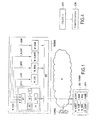
- terminal TERM1 With reference to the figure 1 , there is shown a terminal TERM1 according to the invention.
- the TERM1 terminal is a mobile phone capable of communicating, via a GSM type R telecommunications network, with a presence server SP1, the latter being searchable at any time by a TERM2 terminal.
- the terminal TERM1 comprises a collection module COLL according to the invention.
- this collection module is integrated with an M_VOIP Voice over IP application.
- the collection module COLL comprises a processor 10, a read-only ROM 11 and a random access memory 12.
- the collection module COLL could share these resources with the terminal TERM1.
- the read-only memory 11, readable by the processor 10, constitutes a recording medium in accordance with the invention on which a computer program PG according to the invention is recorded for performing the steps of the information collection method represented in form. organigram at the figure 4 .
- the COLL information collection module is able to obtain non-declarative information representative of at least one use of each of these applications.
- the I_MSG information is obtained from the OS operating system as soon as a message entry window is opened.
- the collection module COLL obtains this usage information either directly from the applications (I_LOC, I_ALERT) or from the operating system OS of the terminal TERM1 (for I_MSG and I_GSM).
- IF1 is called the interface of the collection module COLL able to obtain this usage information.
- the COLL collection module can poll some applications regularly (polling mode); it can also subscribe to alerts to obtain non-declarative information when it is available.
- the COLL collection module also comprises an interface IF2 for communicating this non-declarative usage information to the presence server SP1.
- the presence server SP1 consequently comprises a database BD_TERM1 comprising the non-declarative usage information of the applications of the first terminal, this information being able to be consulted by the user of the terminal TERM2 at any time. moment, and in particular before calling the terminal TERM1.
- This second collection module is in this example only adapted to obtain the I_GSM usage information by directly interrogating the GSM communication module.
- this second collection module COLL feeds a second presence server SP2.
- the two collection modules integrated respectively into the VoIP module M_VOIP and the game module M_JEU could supply the same presence server SP1 or SP2.
- the COLL collection module is integrated into the operating system OS of TERM1 terminal.
- this module provides a programming interface (API) to the developers of the M_VOIP and M_JEU applications.
- API programming interface
- This embodiment is particularly advantageous because the developer of these applications does not have to worry about the other applications implemented by the terminal (location, messaging, native telephony and alert), the OS operating system being able to obtain use information and make them available to the applications via the programming interface.
- the presence servers SP1, SP2 are centralized servers.
- the presence server function could be distributed in the terminals TERM1, TERM2, TERM3 themselves, these terminals thus forming a network of peers.
Landscapes
- Engineering & Computer Science (AREA)
- Computer Networks & Wireless Communication (AREA)
- Signal Processing (AREA)
- Business, Economics & Management (AREA)
- General Business, Economics & Management (AREA)
- Multimedia (AREA)
- Computer Hardware Design (AREA)
- General Engineering & Computer Science (AREA)
- Telephonic Communication Services (AREA)
Abstract
Description
- La présente invention se situe dans le domaine général des réseaux de télécommunications. Elle vise plus particulièrement à améliorer la joignabilité les utilisateurs des terminaux mettant en oeuvre une pluralité d'applications.
- Historiquement, les terminaux mobiles ne comportaient qu'une seule fonction de téléphonie, par exemple une fonction GSM, native sur le terminal.
- Depuis peu, avec l'apparition des terminaux intelligents (en anglais « Smartphone ») il est devenu aisé d'installer de nouvelles applications de communication, par exemple des communications de voix sur IP (VoIP).
- De telles applications offrent une nouvelle ligne de communication via une connexion Internet.
- Dans l'état actuel de la technique, les différentes applications de téléphonie mobile fonctionnent de façon cloisonnée, ce qui signifie qu'elles sont parfaitement indépendantes, autrement dit qu'elles ne communiquent pas entre elles au sein du terminal.
- Par conséquent, lorsque l'utilisateur d'un tel terminal est en communication téléphonique en utilisant la fonction native de téléphonie de son téléphone (communication GSM par exemple), rien n'empêche un tiers de l'appeler sur ce même terminal sur l'application de type voix sur IP.
- Cette situation n'est pas satisfaisante, l'utilisateur n'étant en pratique pas en mesure de répondre à ce deuxième appel.
- L'invention vise un module et un procédé permettant à un tiers de connaître ou d'appréhender l'usage réel qu'un utilisateur fait de son terminal.
- Plus particulièrement et selon un premier aspect, l'invention concerne un module de collecte d'informations mis en oeuvre dans un premier terminal de télécommunications, ce module comportant :
- des moyens pour obtenir une information non déclarative représentative d'un usage d'au moins une première application par ce premier terminal ; et
- des moyens pour communiquer cette information d'usage non déclarative à un serveur de présence accessible par un deuxième terminal pour déterminer un statut de présence associé à au moins une deuxième application utilisable par le premier terminal.
- L'invention vise également un terminal de télécommunications comportant un module de collecte d'informations tel que brièvement défini ci-dessus.
- Selon un mode de réalisation particulier, un tel terminal de télécommunications comporte :
- au moins une première application;
- au moins une deuxième application; et
- un module de collecte tel que mentionné ci-dessus, ce module comportant:
- des moyens pour obtenir au moins une information non déclarative représentative d'un usage de la première application ; et
- des moyens pour communiquer cette information d'usage à un serveur de présence accessible par un deuxième terminal pour déterminer un statut de présence associé à cette deuxième application.
- Selon un autre mode de réalisation de l'invention, au moins une application parmi la première application et au moins une deuxième application, est hébergée dans un serveur distant et est utilisée à distance par le terminal.
- Par exemple, si la deuxième application est une application de jeu en réseau hébergée dans un serveur distant sur un réseau de communication de type Internet, cette application peut être utilisée à distance par le terminal via un navigateur Web du terminal.
- Corrélativement, l'invention concerne un procédé de collecte d'information mis en oeuvre dans un premier terminal de télécommunications, ce procédé comportant :
- une étape pour obtenir au moins une information non déclarative représentative d'un usage d'au moins une première application du premier terminal ; et
- une étape de communication de cette information d'usage non déclarative, à un serveur de présence accessible par un deuxième terminal pour déterminer un statut de présence associé à au moins une de ces applications du premier terminal.
- Le terminal mettant en oeuvre l'invention peut être un terminal fixe ou mobile, et notamment un ordinateur, un téléphone mobile, un organiseur personnel ou une télévision.
- L'invention est particulièrement avantageuse lorsque les applications de ce terminal ne communiquent pas entre elles (mode silo) ; mais l'invention s'applique également lorsque les applications peuvent communiquer entre elles.
- Ainsi, d'une façon générale, l'invention propose d'utiliser un module de collecte d'informations pour collecter des informations représentatives de l'usage réel des applications par l'utilisateur afin d'alimenter un serveur de présence.
- Il est important de bien noter que dans l'état actuel de la technique, les serveurs de présence sont utilisés pour informer les tiers d'informations déclaratives de l'utilisateur du terminal en relation avec une application donnée.
- Par exemple, on utilise aujourd'hui des serveurs de présence pour permettre à l'utilisateur d'une application de messagerie instantanée d'informer volontairement (information dite déclarative) les tiers de son état de disponibilité sur cette application (disponible, occupé,...).
- Mais l'invention propose d'enrichir fortement de tels serveurs de présence en mettant à disposition des tiers, et ce de façon automatique, l'information d'usage de plusieurs applications du terminal.
- Par exemple, la première application au sens de l'invention peut être une application de téléphonie mobile, l'information d'usage associée représentant le fait qu'un appel est établi ou non avec cette première application; cette information d'usage peut aussi comporter des informations complémentaires, par exemple un identifiant du contact en cours de communication avec sa première application.
- Dans un autre mode de réalisation, la première application peut être une application apte à générer une alerte sur réception d'un appel entrant reçu par le terminal, l'information d'usage associée représentant un type de cette alerte.
- Dans ce mode de réalisation, il devient donc possible à un tiers de savoir si le terminal de l'utilisateur est en mode vibreur ou sonnerie par exemple.
- Dans un autre mode de réalisation, la première application peut être une application de messagerie, l'information d'usage associée représentant le fait qu'un message est ou non en cours de rédaction par le terminal.
- Ainsi, un tiers peut savoir si l'utilisateur du terminal est occupé ou non à rédiger un message.
- Dans un autre mode de réalisation, la première application peut être une application de géolocalisation, les informations d'usage représentant la localisation du premier terminal.
- Ainsi, un tiers peut savoir si l'utilisateur du terminal est par exemple au bureau, à la plage, ou sur l'autoroute.
- Chacune des informations d'usage peut donc être communiquée, de façon automatique à un serveur de présence associé à au moins une deuxième application du terminal.
- Cette deuxième application peut par exemple être une application de voix sur IP ou une application de jeu en réseau. Dans ce deuxième exemple, les partenaires de jeu de l'utilisateur du terminal peuvent comprendre, s'ils ne trouvent pas ce dernier suffisamment réactif, que cet utilisateur est en cours de communication,ou occupé à une autre tâche (rédaction d'un message, probablement en train de conduire,...).
- Le module de collecte selon l'invention peut être intégré à cette deuxième application. Par exemple, le module de collecte peut être intégré à une application de voix sur IP installée dynamiquement sur le terminal.
- En variante, dans un mode particulier avantageux, le module de collecte est intégré au système d'exploitation du terminal, ce module de collecte offrant une interface de programmation (API en anglais) aux deuxièmes applications (applications de jeu ou de voix sur IP par exemple).
- Dans un mode particulier de réalisation, les différentes étapes du procédé de collecte d'informations sont déterminées par des instructions de programmes d'ordinateur.
- En conséquence, l'invention vise aussi un programme d'ordinateur sur un support d'informations, ce programme étant susceptible d'être mis en oeuvre par un ordinateur, ce programme comportant des instructions adaptées à la mise en oeuvre des étapes du procédé de collecte d'informations tel que mentionné ci-dessus.
- Ce programme peut utiliser n'importe quel langage de programmation, et être sous la forme de code source, code objet, ou de code intermédiaire entre code source et code objet, tel que dans une forme partiellement compilée, ou dans n'importe quelle autre forme souhaitable.
- L'invention vise aussi un support d'informations lisible par un ordinateur, et comportant des instructions d'un programme d'ordinateur tel que mentionné ci-dessus.
- Le support d'informations peut être n'importe quelle entité ou dispositif capable de stocker le programme. Par exemple, le support peut comporter un moyen de stockage, tel qu'une ROM, par exemple un CD ROM ou une ROM de circuit microélectronique, ou encore un moyen d'enregistrement magnétique, par exemple une disquette (floppy disc) ou un disque dur, ou une mémoire de type flash, telle qu'une clé USB.
- D'autre part, le support d'informations peut être un support transmissible tel qu'un signal électrique ou optique, qui peut être acheminé via un câble électrique ou optique,par radio ou par d'autres moyens. Le programme selon l'invention peut être en particulier téléchargé sur un réseau de type Internet.
- Alternativement, le support d'informations peut être un circuit intégré dans lequel le programme est incorporé, le circuit étant adapté pour exécuter ou pour être utilisé dans l'exécution du procédé en question.
- Sur les figures :
- les
figures 1 à 3 représentent, dans différents modes de réalisation un module de collecte et un terminal conformes à l'invention ; et - la
figure 4 représente, sous forme d'organigramme, les principales étapes d'un procédé de collecte d'informations conforme à un mode particulier de réalisation de l'invention. - D'autres caractéristiques et avantages de l'invention ressortiront de la description faite ci-dessous en référence aux dessins annexés qui en illustrent un exemple de réalisation dépourvu de tout caractère limitatif.
- En référence à la
figure 1 , on a représenté un terminal TERM1 conforme à l'invention. - Dans ce mode de réalisation, le terminal TERM1 est un téléphone mobile apte à communiquer, via un réseau de télécommunications R de type GSM, avec un serveur de présence SP1, ce dernier étant consultable à tout moment par un terminal TERM2.
- Le terminal TERM1 comporte un module de collecte COLL conforme à l'invention.
- Dans le mode de réalisation décrit ici, ce module de collecte est intégré à une application M_VOIP de voix sur IP.
- Dans le mode de réalisation décrit ici, le module de collecte COLL comporte un processeur 10, une mémoire morte de type ROM 11 et une mémoire vive 12. En variante, le module de collecte COLL pourrait partager ces ressources avec le terminal TERM1.
- La mémoire morte 11, lisible par le processeur 10 constitue un support d'enregistrement conforme à l'invention sur lequel est enregistré un programme d'ordinateur PG conforme à l'invention pour exécuter les étapes du procédé de collecte d'informations représenté sous forme d'organigramme à la
figure 4 . - On suppose que le terminal TERM1 de la
figure 1 comporte quatre applications, à savoir : - un module M_GSM de téléphonie mobile conforme au protocole GSM, cette application étant native sur le terminal TERM1 ;
- une application M_ALERT apte à générer une alerte (sonnerie, vibreur,...) sur réception d'un appel entrant reçu par le module M_GSM ;
- une application M_MSG de messagerie (par exemple de type SMS) ; et
- une application M_LOC de géolocatisation.
- Conformément à l'invention, le module de collecte d'informations COLL est apte à obtenir une information non déclarative représentative d'au moins un usage de chacune de ces applications.
- Dans cet exemple, on suppose :
- que le module de communication M_GSM fournit des informations d'usage I_GSM représentatives d'un état d'occupation de l'application (communication établie ou non), et, si l'utilisateur du terminal TERM1 le permet, de son interlocuteur ;
- que l'application M_ALERT fournit le type d'alerte I-ALERT mis en oeuvre par ce module (sonnerie, alerte) ;
- que le module de messagerie M_MSG fournit une information non déclarative selon laquelle l'utilisateur est en train de rédiger un message ; et
- que le module de localisation M_LOC fournit une information de localisation de l'utilisateur.
- Dans cet exemple, l'information I_MSG est obtenue à partir du système d'exploitation OS dès lors qu'une fenêtre de saisie d'un message est ouverte.
- On notera, dans l'exemple de la
figure 1 que le module de collecte COLL obtient ces informations d'usage soit directement à partir des applications (I_LOC, I_ALERT), soit à partir du système d'exploitation OS du terminal TERM1 (pour I_MSG et I_GSM). - On appelle, dans cet exemple IF1 l'interface du module de collecte COLL apte à obtenir ces informations d'usage. Différents modes de réalisation peuvent être mis en oeuvre pour obtenir ces informations. Par exemple, le module de collecte COLL peut interroger régulièrement certaines applications (mode polling) ; il peut aussi s'abonner à des alertes pour obtenir les informations non déclaratives lorsque celles-ci sont disponibles.
- Conformément à l'invention, le module de collecte COLL comporte également une interface IF2 pour communiquer ces informations d'usage non déclaratives au serveur de présence SP1.
- Dans l'exemple de réalisation décrit ici, le serveur de présence SP1 comporte par conséquent une base de données BD_TERM1 comportant les informations d'usage non déclaratives des applications du premier terminal, ces informations pouvant être consultées par l'utilisateur du terminal TERM2 à tout moment, et notamment avant d`appeler le terminal TERM1.
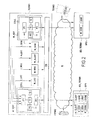
- Dans le mode de réalisation de la
figure 2 , on suppose que l'utilisateur du terminal TERM1 a également téléchargé un module de jeu M_JEU, celui-ci incorporant son propre module de collecte COLL. - Ce deuxième module de collecte est dans cet exemple uniquement adapté à obtenir les informations d'usage I_GSM en interrogeant directement le module de communication GSM.
- On suppose dans cet exemple que ce deuxième module de collecte COLL alimente un deuxième serveur de présence SP2.
- En variante, les deux modules de collecte intégrés respectivement au module de voix sur IP M_VOIP et au module de jeu M_JEU pourraient alimenter le même serveur de présence SP1 ou SP2.
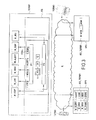
- Dans l'exemple de la
figure 3 , le module de collecte COLL est intégré au système d'exploitation OS du terminal TERM1. - Dans ce mode de réalisation, ce module offre une interface de programmation (API) aux développeurs des applications M_VOIP et M_JEU.
- Ce mode de réalisation est particulièrement avantageux car le développeur de ces applications n'a pas à se soucier des autres applications mises en oeuvre par le terminal (localisation, messagerie, téléphonie native et alerte), le système d'exploitation OS étant apte à obtenir des informations d'usage et à les mettre à disposition des applications via l'interface de programmation.
- En référence à la
figure 4 , on a représenté les principales étapes d'un procédé de collecte de formation conforme à l'invention. - Ce procédé comporte principalement deux étapes, à savoir :
- une étape E10 de collecte des informations d'usage auprès des premières applications, cette obtention pouvant se faire notamment par polling ou par notification ; et
- une étape E20 de communication de ces informations au serveur de présence associé à au moins une autre application, par exemple au moyen d'une interface de programmation API offerte par un module de collecte selon l'invention.
- Dans le mode de réalisation décrit précédemment, les serveurs de présence SP1, SP2 sont des serveurs centralisés. En variante, la fonction serveur de présence pourrait être distribuée dans les terminaux TERM1, TERM2, TERM3 eux-mêmes, ces terminaux formant ainsi un réseau de pairs.
Claims (15)
- Module de collecte d'informations (COLL) mis en oeuvre dans un premier terminal de télécommunications (TERM1), ce module comportant :- des moyens (IF1) pour obtenir de manière automatique au moins une information (I_GSM, I_ALERT, I_LOC) représentative d'un usage d'au moins une première application (M_GSM, M_ALERT, M_MSG, M_LOC) par le premier terminal (TERM1) ; et- des moyens (IF2) pour communiquer de manière automatique ladite au moins une information d'usage à un serveur de présence (SP) accessible par un deuxième terminal (TERM2) pour déterminer un statut de présence associé à au moins une deuxième application (M_VOIP, M_JEU) utilisable par ledit premier terminal.
- Terminal de télécommunications (TERM1) comportant un module de collecte (COLL) selon la revendication 1.
- Terminal selon la revendication 2, ledit terminal étant un téléphone mobile, caractérisé en ce que :- ladite première application (M_GSM) est une application de téléphonie mobile ; et en ce que :- ladite information d'usage (I_GSM) est une information représentant le fait qu'un appel est établi ou non avec ladite première application (M_GSM).
- Terminal selon la revendication 3, caractérisé en ce que :- ladite information d'usage (I_GSM) est une information comportant un identifiant d'un contact en cours de communication en utilisant ladite première application (M_GSM).
- Terminal selon la revendication 2, ledit terminal étant un téléphone mobile, caractérisé en ce que :- ladite première application (M_ALERT) est apte à générer une alerte sur réception d'un appel entrant reçu par ledit terminal (TERM1) ; et en ce que :- ladite information d'usage (I_ALERT) représente un type de ladite alerte.
- Terminal selon la revendication 2, caractérisé en ce que :- ladite première application (M_MSG) est une application de messagerie ; et en ce que :- ladite information d'usage (I_MSG) représente le fait qu'un message est ou non en cours de rédaction.
- Terminal selon la revendication 2, caractérisé en ce que :- ladite première application (M_LOC) est une application de géo-localisation; et en ce que :- ladite information d'usage (I_LOC) représente une information de localisation dudit terminal.
- Terminal selon la revendication 2, caractérisé en ce que ladite deuxième application (M_VOIP) est une application de voix sur Internet.
- Terminal selon la revendication 2, caractérisé en ce que ladite deuxième application (M_JEU) est une application de jeu en réseau.
- Terminal selon la revendication 2, caractérisé en ce que ledit module de collecte (COLL) est intégré à ladite deuxième application (M_VOIP).
- Terminal selon la revendication 2, caractérisé en ce que ledit module de collecte (COLL) est intégré à un système d'exploitation dudit terminal (TERM1), ledit module de collecte (COLL) offrant un point d'entrée (IF2) à ladite au moins une deuxième application (M_JEU, M_VOIP).
- Terminal selon la revendication 2, caractérisé en ce qu'au moins une application parmi la première application et ladite au moins une deuxième application, est hébergée dans un serveur distant et est utilisée à distance par le terminal.
- Procédé de collecte d'informations mis en oeuvre dans un premier terminal de télécommunications (TERM1), ce procédé comportant :- une étape (E10) pour obtenir de manière automatique au moins une information (I_GSM, I_ALERT, I_LOC) représentative d'un usage d'au moins une première application (M_GSM, M_ALERT, M_MSG, M_LOC) par ledit premier terminal (TERM1) ; et- une étape (E20) de communication de ladite au moins une information d'usage à un serveur de présence (SP) accessible par un deuxième terminal (TERM2) pour déterminer un statut de présence associé à au moins une deuxième application (M_VOIP, M_JEU) utilisable par ledit premier terminal.
- Programme d'ordinateur (PG) comportant des instructions pour la mise en oeuvre d'un procédé de collecte d'informations selon la revendication 13 lorsque ce programme est exécuté par un ordinateur.
- Support d'enregistrement (11) lisible par un ordinateur sur lequel est enregistré un programme d'ordinateur comprenant des instructions pour l'exécution des étapes d'un procédé de collecte d'informations selon la revendication 13.
Applications Claiming Priority (1)
| Application Number | Priority Date | Filing Date | Title |
|---|---|---|---|
| FR1057753A FR2965437A1 (fr) | 2010-09-27 | 2010-09-27 | Module et procede de collecte d'informations non declaratives mis en oeuvre par un terminal de telecommunications |
Publications (2)
| Publication Number | Publication Date |
|---|---|
| EP2434726A1 true EP2434726A1 (fr) | 2012-03-28 |
| EP2434726B1 EP2434726B1 (fr) | 2020-05-13 |
Family
ID=43608395
Family Applications (1)
| Application Number | Title | Priority Date | Filing Date |
|---|---|---|---|
| EP11180843.2A Active EP2434726B1 (fr) | 2010-09-27 | 2011-09-12 | Terminal et procédé de collecte d'informations non déclaratives mis en oeuvre par un terminal de télécommunications |
Country Status (4)
| Country | Link |
|---|---|
| US (1) | US10284663B2 (fr) |
| EP (1) | EP2434726B1 (fr) |
| ES (1) | ES2810099T3 (fr) |
| FR (1) | FR2965437A1 (fr) |
Citations (2)
| Publication number | Priority date | Publication date | Assignee | Title |
|---|---|---|---|---|
| US20060015609A1 (en) * | 2004-07-15 | 2006-01-19 | International Business Machines Corporation | Automatically infering and updating an availability status of a user |
| US20060148477A1 (en) * | 2004-12-30 | 2006-07-06 | Nokia Corporation | Presence services in a wireless communications network |
Family Cites Families (4)
| Publication number | Priority date | Publication date | Assignee | Title |
|---|---|---|---|---|
| WO2002093959A1 (fr) * | 2001-05-11 | 2002-11-21 | Nokia Corporation | Service mobile de messagerie instantanee et de presence |
| US7149288B2 (en) * | 2003-02-14 | 2006-12-12 | Convoq, Inc. | Rules based real-time communication system |
| KR20120042719A (ko) * | 2009-03-09 | 2012-05-03 | 조켐 오와이 | 모바일 터미널과 라이프 옵저베이션을 제공하는 방법 그리고 관련 서버구조 및 데이터 분석, 분배 및 터미널 가이딩 특징을 갖는 방법 |
| US8812988B2 (en) * | 2009-06-26 | 2014-08-19 | T-Mobile Usa, Inc. | Dynamic icons associated with remote content |
-
2010
- 2010-09-27 FR FR1057753A patent/FR2965437A1/fr not_active Withdrawn
-
2011
- 2011-09-12 ES ES11180843T patent/ES2810099T3/es active Active
- 2011-09-12 EP EP11180843.2A patent/EP2434726B1/fr active Active
- 2011-09-27 US US13/246,733 patent/US10284663B2/en active Active
Patent Citations (2)
| Publication number | Priority date | Publication date | Assignee | Title |
|---|---|---|---|---|
| US20060015609A1 (en) * | 2004-07-15 | 2006-01-19 | International Business Machines Corporation | Automatically infering and updating an availability status of a user |
| US20060148477A1 (en) * | 2004-12-30 | 2006-07-06 | Nokia Corporation | Presence services in a wireless communications network |
Also Published As
| Publication number | Publication date |
|---|---|
| US20120077458A1 (en) | 2012-03-29 |
| ES2810099T3 (es) | 2021-03-08 |
| EP2434726B1 (fr) | 2020-05-13 |
| US10284663B2 (en) | 2019-05-07 |
| FR2965437A1 (fr) | 2012-03-30 |
Similar Documents
| Publication | Publication Date | Title |
|---|---|---|
| US8473545B2 (en) | Distributing presence information | |
| US10574808B2 (en) | Automatic setting of an alert mode on a wireless device | |
| US9241073B1 (en) | Systems and methods for managing an event scheduling request in a telephony system | |
| US8238922B2 (en) | Location-based address normalization | |
| CA2830200C (fr) | Messagerie pour des clients a base de notifications | |
| US9066216B2 (en) | Methods and apparatus for providing messaging using voicemail | |
| EP2772035B1 (fr) | Procede de gestion d'une communication destinee a un utilisateur et serveur d'application | |
| US20130252636A1 (en) | Hot Spot Detection | |
| EP2504986B1 (fr) | Selection d'un mode de communication | |
| MX2007016572A (es) | Comunicacion a base de borde. | |
| WO2020081614A1 (fr) | Systèmes et procédé de contrôle d'appels téléphoniques via des réseaux cellulaires | |
| EP2487864B1 (fr) | Procédé et dispositif de gestion dynamique de la priorité de réception d'une communication d'un terminal | |
| EP2434726B1 (fr) | Terminal et procédé de collecte d'informations non déclaratives mis en oeuvre par un terminal de télécommunications | |
| WO2012025499A1 (fr) | Systeme de gestion d'appels urgents | |
| FR3071126A1 (fr) | Procede de mise en liaison telephonique d’un terminal de communication a numero multiple | |
| WO2013014679A1 (fr) | Système et procédé pour configurer un message d'état d'utilisateur à titre de sonnerie d'appelant de téléphone mobile | |
| EP2366245B1 (fr) | Traitement d'une demande de mise en communication par un dispositif de routage associe a une pluralite de terminaux | |
| FR3000337A1 (fr) | Procede de gestion des renvois d'appel dans un systeme de communication comprenant des terminaux associes a un identifiant commun | |
| FR2985878A1 (fr) | Procede de selection d'un protocole de transport de messages | |
| EP2058802B1 (fr) | Dispositif et procédé d'obtention de contextes d'utilisateurs de terminaux de communication, à partir de signaux audio captés dans leur environnement | |
| EP3479551A1 (fr) | Procédé de synchronisation de données de contexte de fonctions réseaux dans un réseau mobile | |
| FR2952262A1 (fr) | Autorisation d'etablissement d'appels simultanes | |
| FR3104877A1 (fr) | Procédé d’accès à un terminal associé à un premier réseau à partir d’un identifiant d’accès à un deuxième réseau | |
| FR2887733A1 (fr) | Systeme et procede de personnalisation d'une application de telecommunications, et equipement susceptible d'etre utilise dans un tel systeme | |
| FR3118387A1 (fr) | Procédé de fourniture d’une donnée de localisation d’un terminal appelant |
Legal Events
| Date | Code | Title | Description |
|---|---|---|---|
| PUAI | Public reference made under article 153(3) epc to a published international application that has entered the european phase |
Free format text: ORIGINAL CODE: 0009012 |
|
| AK | Designated contracting states |
Kind code of ref document: A1 Designated state(s): AL AT BE BG CH CY CZ DE DK EE ES FI FR GB GR HR HU IE IS IT LI LT LU LV MC MK MT NL NO PL PT RO RS SE SI SK SM TR |
|
| AX | Request for extension of the european patent |
Extension state: BA ME |
|
| 17P | Request for examination filed |
Effective date: 20120903 |
|
| RAP1 | Party data changed (applicant data changed or rights of an application transferred) |
Owner name: ORANGE |
|
| STAA | Information on the status of an ep patent application or granted ep patent |
Free format text: STATUS: EXAMINATION IS IN PROGRESS |
|
| 17Q | First examination report despatched |
Effective date: 20161021 |
|
| 17Q | First examination report despatched |
Effective date: 20161108 |
|
| GRAP | Despatch of communication of intention to grant a patent |
Free format text: ORIGINAL CODE: EPIDOSNIGR1 |
|
| STAA | Information on the status of an ep patent application or granted ep patent |
Free format text: STATUS: GRANT OF PATENT IS INTENDED |
|
| INTG | Intention to grant announced |
Effective date: 20200107 |
|
| GRAS | Grant fee paid |
Free format text: ORIGINAL CODE: EPIDOSNIGR3 |
|
| GRAA | (expected) grant |
Free format text: ORIGINAL CODE: 0009210 |
|
| STAA | Information on the status of an ep patent application or granted ep patent |
Free format text: STATUS: THE PATENT HAS BEEN GRANTED |
|
| AK | Designated contracting states |
Kind code of ref document: B1 Designated state(s): AL AT BE BG CH CY CZ DE DK EE ES FI FR GB GR HR HU IE IS IT LI LT LU LV MC MK MT NL NO PL PT RO RS SE SI SK SM TR |
|
| REG | Reference to a national code |
Ref country code: GB Ref legal event code: FG4D Free format text: NOT ENGLISH |
|
| REG | Reference to a national code |
Ref country code: CH Ref legal event code: EP |
|
| REG | Reference to a national code |
Ref country code: DE Ref legal event code: R096 Ref document number: 602011066823 Country of ref document: DE |
|
| REG | Reference to a national code |
Ref country code: AT Ref legal event code: REF Ref document number: 1271724 Country of ref document: AT Kind code of ref document: T Effective date: 20200615 |
|
| RAP2 | Party data changed (patent owner data changed or rights of a patent transferred) |
Owner name: ORANGE |
|
| REG | Reference to a national code |
Ref country code: LT Ref legal event code: MG4D |
|
| REG | Reference to a national code |
Ref country code: NL Ref legal event code: MP Effective date: 20200513 |
|
| PG25 | Lapsed in a contracting state [announced via postgrant information from national office to epo] |
Ref country code: PT Free format text: LAPSE BECAUSE OF FAILURE TO SUBMIT A TRANSLATION OF THE DESCRIPTION OR TO PAY THE FEE WITHIN THE PRESCRIBED TIME-LIMIT Effective date: 20200914 Ref country code: IS Free format text: LAPSE BECAUSE OF FAILURE TO SUBMIT A TRANSLATION OF THE DESCRIPTION OR TO PAY THE FEE WITHIN THE PRESCRIBED TIME-LIMIT Effective date: 20200913 Ref country code: SE Free format text: LAPSE BECAUSE OF FAILURE TO SUBMIT A TRANSLATION OF THE DESCRIPTION OR TO PAY THE FEE WITHIN THE PRESCRIBED TIME-LIMIT Effective date: 20200513 Ref country code: GR Free format text: LAPSE BECAUSE OF FAILURE TO SUBMIT A TRANSLATION OF THE DESCRIPTION OR TO PAY THE FEE WITHIN THE PRESCRIBED TIME-LIMIT Effective date: 20200814 Ref country code: NO Free format text: LAPSE BECAUSE OF FAILURE TO SUBMIT A TRANSLATION OF THE DESCRIPTION OR TO PAY THE FEE WITHIN THE PRESCRIBED TIME-LIMIT Effective date: 20200813 Ref country code: FI Free format text: LAPSE BECAUSE OF FAILURE TO SUBMIT A TRANSLATION OF THE DESCRIPTION OR TO PAY THE FEE WITHIN THE PRESCRIBED TIME-LIMIT Effective date: 20200513 Ref country code: LT Free format text: LAPSE BECAUSE OF FAILURE TO SUBMIT A TRANSLATION OF THE DESCRIPTION OR TO PAY THE FEE WITHIN THE PRESCRIBED TIME-LIMIT Effective date: 20200513 |
|
| PG25 | Lapsed in a contracting state [announced via postgrant information from national office to epo] |
Ref country code: BG Free format text: LAPSE BECAUSE OF FAILURE TO SUBMIT A TRANSLATION OF THE DESCRIPTION OR TO PAY THE FEE WITHIN THE PRESCRIBED TIME-LIMIT Effective date: 20200813 Ref country code: HR Free format text: LAPSE BECAUSE OF FAILURE TO SUBMIT A TRANSLATION OF THE DESCRIPTION OR TO PAY THE FEE WITHIN THE PRESCRIBED TIME-LIMIT Effective date: 20200513 Ref country code: RS Free format text: LAPSE BECAUSE OF FAILURE TO SUBMIT A TRANSLATION OF THE DESCRIPTION OR TO PAY THE FEE WITHIN THE PRESCRIBED TIME-LIMIT Effective date: 20200513 Ref country code: LV Free format text: LAPSE BECAUSE OF FAILURE TO SUBMIT A TRANSLATION OF THE DESCRIPTION OR TO PAY THE FEE WITHIN THE PRESCRIBED TIME-LIMIT Effective date: 20200513 |
|
| REG | Reference to a national code |
Ref country code: AT Ref legal event code: MK05 Ref document number: 1271724 Country of ref document: AT Kind code of ref document: T Effective date: 20200513 |
|
| PG25 | Lapsed in a contracting state [announced via postgrant information from national office to epo] |
Ref country code: AL Free format text: LAPSE BECAUSE OF FAILURE TO SUBMIT A TRANSLATION OF THE DESCRIPTION OR TO PAY THE FEE WITHIN THE PRESCRIBED TIME-LIMIT Effective date: 20200513 Ref country code: NL Free format text: LAPSE BECAUSE OF FAILURE TO SUBMIT A TRANSLATION OF THE DESCRIPTION OR TO PAY THE FEE WITHIN THE PRESCRIBED TIME-LIMIT Effective date: 20200513 |
|
| PG25 | Lapsed in a contracting state [announced via postgrant information from national office to epo] |
Ref country code: CZ Free format text: LAPSE BECAUSE OF FAILURE TO SUBMIT A TRANSLATION OF THE DESCRIPTION OR TO PAY THE FEE WITHIN THE PRESCRIBED TIME-LIMIT Effective date: 20200513 Ref country code: RO Free format text: LAPSE BECAUSE OF FAILURE TO SUBMIT A TRANSLATION OF THE DESCRIPTION OR TO PAY THE FEE WITHIN THE PRESCRIBED TIME-LIMIT Effective date: 20200513 Ref country code: EE Free format text: LAPSE BECAUSE OF FAILURE TO SUBMIT A TRANSLATION OF THE DESCRIPTION OR TO PAY THE FEE WITHIN THE PRESCRIBED TIME-LIMIT Effective date: 20200513 Ref country code: AT Free format text: LAPSE BECAUSE OF FAILURE TO SUBMIT A TRANSLATION OF THE DESCRIPTION OR TO PAY THE FEE WITHIN THE PRESCRIBED TIME-LIMIT Effective date: 20200513 Ref country code: SM Free format text: LAPSE BECAUSE OF FAILURE TO SUBMIT A TRANSLATION OF THE DESCRIPTION OR TO PAY THE FEE WITHIN THE PRESCRIBED TIME-LIMIT Effective date: 20200513 Ref country code: DK Free format text: LAPSE BECAUSE OF FAILURE TO SUBMIT A TRANSLATION OF THE DESCRIPTION OR TO PAY THE FEE WITHIN THE PRESCRIBED TIME-LIMIT Effective date: 20200513 |
|
| REG | Reference to a national code |
Ref country code: DE Ref legal event code: R097 Ref document number: 602011066823 Country of ref document: DE |
|
| PG25 | Lapsed in a contracting state [announced via postgrant information from national office to epo] |
Ref country code: PL Free format text: LAPSE BECAUSE OF FAILURE TO SUBMIT A TRANSLATION OF THE DESCRIPTION OR TO PAY THE FEE WITHIN THE PRESCRIBED TIME-LIMIT Effective date: 20200513 Ref country code: SK Free format text: LAPSE BECAUSE OF FAILURE TO SUBMIT A TRANSLATION OF THE DESCRIPTION OR TO PAY THE FEE WITHIN THE PRESCRIBED TIME-LIMIT Effective date: 20200513 |
|
| REG | Reference to a national code |
Ref country code: ES Ref legal event code: FG2A Ref document number: 2810099 Country of ref document: ES Kind code of ref document: T3 Effective date: 20210308 |
|
| PLBE | No opposition filed within time limit |
Free format text: ORIGINAL CODE: 0009261 |
|
| STAA | Information on the status of an ep patent application or granted ep patent |
Free format text: STATUS: NO OPPOSITION FILED WITHIN TIME LIMIT |
|
| 26N | No opposition filed |
Effective date: 20210216 |
|
| PG25 | Lapsed in a contracting state [announced via postgrant information from national office to epo] |
Ref country code: MC Free format text: LAPSE BECAUSE OF FAILURE TO SUBMIT A TRANSLATION OF THE DESCRIPTION OR TO PAY THE FEE WITHIN THE PRESCRIBED TIME-LIMIT Effective date: 20200513 |
|
| REG | Reference to a national code |
Ref country code: CH Ref legal event code: PL |
|
| PG25 | Lapsed in a contracting state [announced via postgrant information from national office to epo] |
Ref country code: SI Free format text: LAPSE BECAUSE OF FAILURE TO SUBMIT A TRANSLATION OF THE DESCRIPTION OR TO PAY THE FEE WITHIN THE PRESCRIBED TIME-LIMIT Effective date: 20200513 |
|
| REG | Reference to a national code |
Ref country code: BE Ref legal event code: MM Effective date: 20200930 |
|
| PG25 | Lapsed in a contracting state [announced via postgrant information from national office to epo] |
Ref country code: LU Free format text: LAPSE BECAUSE OF NON-PAYMENT OF DUE FEES Effective date: 20200912 |
|
| PG25 | Lapsed in a contracting state [announced via postgrant information from national office to epo] |
Ref country code: BE Free format text: LAPSE BECAUSE OF NON-PAYMENT OF DUE FEES Effective date: 20200930 Ref country code: CH Free format text: LAPSE BECAUSE OF NON-PAYMENT OF DUE FEES Effective date: 20200930 Ref country code: IE Free format text: LAPSE BECAUSE OF NON-PAYMENT OF DUE FEES Effective date: 20200912 Ref country code: LI Free format text: LAPSE BECAUSE OF NON-PAYMENT OF DUE FEES Effective date: 20200930 |
|
| REG | Reference to a national code |
Ref country code: DE Ref legal event code: R079 Ref document number: 602011066823 Country of ref document: DE Free format text: PREVIOUS MAIN CLASS: H04L0029080000 Ipc: H04L0065000000 |
|
| PG25 | Lapsed in a contracting state [announced via postgrant information from national office to epo] |
Ref country code: TR Free format text: LAPSE BECAUSE OF FAILURE TO SUBMIT A TRANSLATION OF THE DESCRIPTION OR TO PAY THE FEE WITHIN THE PRESCRIBED TIME-LIMIT Effective date: 20200513 Ref country code: MT Free format text: LAPSE BECAUSE OF FAILURE TO SUBMIT A TRANSLATION OF THE DESCRIPTION OR TO PAY THE FEE WITHIN THE PRESCRIBED TIME-LIMIT Effective date: 20200513 Ref country code: CY Free format text: LAPSE BECAUSE OF FAILURE TO SUBMIT A TRANSLATION OF THE DESCRIPTION OR TO PAY THE FEE WITHIN THE PRESCRIBED TIME-LIMIT Effective date: 20200513 |
|
| PG25 | Lapsed in a contracting state [announced via postgrant information from national office to epo] |
Ref country code: MK Free format text: LAPSE BECAUSE OF FAILURE TO SUBMIT A TRANSLATION OF THE DESCRIPTION OR TO PAY THE FEE WITHIN THE PRESCRIBED TIME-LIMIT Effective date: 20200513 |
|
| PGFP | Annual fee paid to national office [announced via postgrant information from national office to epo] |
Ref country code: DE Payment date: 20250820 Year of fee payment: 15 |
|
| PGFP | Annual fee paid to national office [announced via postgrant information from national office to epo] |
Ref country code: IT Payment date: 20250820 Year of fee payment: 15 |
|
| PGFP | Annual fee paid to national office [announced via postgrant information from national office to epo] |
Ref country code: GB Payment date: 20250822 Year of fee payment: 15 |
|
| PGFP | Annual fee paid to national office [announced via postgrant information from national office to epo] |
Ref country code: FR Payment date: 20250820 Year of fee payment: 15 |
|
| PGFP | Annual fee paid to national office [announced via postgrant information from national office to epo] |
Ref country code: ES Payment date: 20251001 Year of fee payment: 15 |