EP2431020B1 - Processes for the separation and purification of phosphatidylserine - Google Patents
Processes for the separation and purification of phosphatidylserine Download PDFInfo
- Publication number
- EP2431020B1 EP2431020B1 EP11171047.1A EP11171047A EP2431020B1 EP 2431020 B1 EP2431020 B1 EP 2431020B1 EP 11171047 A EP11171047 A EP 11171047A EP 2431020 B1 EP2431020 B1 EP 2431020B1
- Authority
- EP
- European Patent Office
- Prior art keywords
- medium
- ethanol
- concentration
- process according
- solution
- Prior art date
- Legal status (The legal status is an assumption and is not a legal conclusion. Google has not performed a legal analysis and makes no representation as to the accuracy of the status listed.)
- Expired - Lifetime
Links
Images

Classifications
-
- A—HUMAN NECESSITIES
- A23—FOODS OR FOODSTUFFS; TREATMENT THEREOF, NOT COVERED BY OTHER CLASSES
- A23J—PROTEIN COMPOSITIONS FOR FOODSTUFFS; WORKING-UP PROTEINS FOR FOODSTUFFS; PHOSPHATIDE COMPOSITIONS FOR FOODSTUFFS
- A23J7/00—Phosphatide compositions for foodstuffs, e.g. lecithin
-
- A—HUMAN NECESSITIES
- A61—MEDICAL OR VETERINARY SCIENCE; HYGIENE
- A61K—PREPARATIONS FOR MEDICAL, DENTAL OR TOILETRY PURPOSES
- A61K31/00—Medicinal preparations containing organic active ingredients
- A61K31/66—Phosphorus compounds
- A61K31/683—Diesters of a phosphorus acid with two hydroxy compounds, e.g. phosphatidylinositols
- A61K31/685—Diesters of a phosphorus acid with two hydroxy compounds, e.g. phosphatidylinositols one of the hydroxy compounds having nitrogen atoms, e.g. phosphatidylserine, lecithin
-
- A—HUMAN NECESSITIES
- A61—MEDICAL OR VETERINARY SCIENCE; HYGIENE
- A61P—SPECIFIC THERAPEUTIC ACTIVITY OF CHEMICAL COMPOUNDS OR MEDICINAL PREPARATIONS
- A61P25/00—Drugs for disorders of the nervous system
- A61P25/28—Drugs for disorders of the nervous system for treating neurodegenerative disorders of the central nervous system, e.g. nootropic agents, cognition enhancers, drugs for treating Alzheimer's disease or other forms of dementia
-
- C—CHEMISTRY; METALLURGY
- C07—ORGANIC CHEMISTRY
- C07F—ACYCLIC, CARBOCYCLIC OR HETEROCYCLIC COMPOUNDS CONTAINING ELEMENTS OTHER THAN CARBON, HYDROGEN, HALOGEN, OXYGEN, NITROGEN, SULFUR, SELENIUM OR TELLURIUM
- C07F9/00—Compounds containing elements of Groups 5 or 15 of the Periodic Table
- C07F9/02—Phosphorus compounds
- C07F9/06—Phosphorus compounds without P—C bonds
-
- C—CHEMISTRY; METALLURGY
- C07—ORGANIC CHEMISTRY
- C07F—ACYCLIC, CARBOCYCLIC OR HETEROCYCLIC COMPOUNDS CONTAINING ELEMENTS OTHER THAN CARBON, HYDROGEN, HALOGEN, OXYGEN, NITROGEN, SULFUR, SELENIUM OR TELLURIUM
- C07F9/00—Compounds containing elements of Groups 5 or 15 of the Periodic Table
- C07F9/02—Phosphorus compounds
- C07F9/06—Phosphorus compounds without P—C bonds
- C07F9/08—Esters of oxyacids of phosphorus
- C07F9/09—Esters of phosphoric acids
-
- A—HUMAN NECESSITIES
- A61—MEDICAL OR VETERINARY SCIENCE; HYGIENE
- A61K—PREPARATIONS FOR MEDICAL, DENTAL OR TOILETRY PURPOSES
- A61K8/00—Cosmetics or similar toiletry preparations
- A61K8/02—Cosmetics or similar toiletry preparations characterised by special physical form
- A61K8/14—Liposomes; Vesicles
-
- A—HUMAN NECESSITIES
- A61—MEDICAL OR VETERINARY SCIENCE; HYGIENE
- A61K—PREPARATIONS FOR MEDICAL, DENTAL OR TOILETRY PURPOSES
- A61K8/00—Cosmetics or similar toiletry preparations
- A61K8/18—Cosmetics or similar toiletry preparations characterised by the composition
- A61K8/30—Cosmetics or similar toiletry preparations characterised by the composition containing organic compounds
- A61K8/55—Phosphorus compounds
- A61K8/553—Phospholipids, e.g. lecithin
-
- A—HUMAN NECESSITIES
- A61—MEDICAL OR VETERINARY SCIENCE; HYGIENE
- A61Q—SPECIFIC USE OF COSMETICS OR SIMILAR TOILETRY PREPARATIONS
- A61Q19/00—Preparations for care of the skin
-
- C—CHEMISTRY; METALLURGY
- C07—ORGANIC CHEMISTRY
- C07F—ACYCLIC, CARBOCYCLIC OR HETEROCYCLIC COMPOUNDS CONTAINING ELEMENTS OTHER THAN CARBON, HYDROGEN, HALOGEN, OXYGEN, NITROGEN, SULFUR, SELENIUM OR TELLURIUM
- C07F9/00—Compounds containing elements of Groups 5 or 15 of the Periodic Table
- C07F9/02—Phosphorus compounds
- C07F9/06—Phosphorus compounds without P—C bonds
- C07F9/08—Esters of oxyacids of phosphorus
- C07F9/09—Esters of phosphoric acids
- C07F9/10—Phosphatides, e.g. lecithin
-
- C—CHEMISTRY; METALLURGY
- C12—BIOCHEMISTRY; BEER; SPIRITS; WINE; VINEGAR; MICROBIOLOGY; ENZYMOLOGY; MUTATION OR GENETIC ENGINEERING
- C12P—FERMENTATION OR ENZYME-USING PROCESSES TO SYNTHESISE A DESIRED CHEMICAL COMPOUND OR COMPOSITION OR TO SEPARATE OPTICAL ISOMERS FROM A RACEMIC MIXTURE
- C12P13/00—Preparation of nitrogen-containing organic compounds
- C12P13/04—Alpha- or beta- amino acids
- C12P13/06—Alanine; Leucine; Isoleucine; Serine; Homoserine
-
- C—CHEMISTRY; METALLURGY
- C12—BIOCHEMISTRY; BEER; SPIRITS; WINE; VINEGAR; MICROBIOLOGY; ENZYMOLOGY; MUTATION OR GENETIC ENGINEERING
- C12P—FERMENTATION OR ENZYME-USING PROCESSES TO SYNTHESISE A DESIRED CHEMICAL COMPOUND OR COMPOSITION OR TO SEPARATE OPTICAL ISOMERS FROM A RACEMIC MIXTURE
- C12P9/00—Preparation of organic compounds containing a metal or atom other than H, N, C, O, S or halogen
Definitions
- the present invention relates to processes for the purification of phosphatidylserine (PS), to obtain the final product in high yield by means of bivalent metal oxides (BMO).
- PS phosphatidylserine
- BMO bivalent metal oxides
- CNS Central Nervous System
- Phosphatidylserine is the main acidic phospholipid in the brain. Scientific research has therefore been focused for some time on finding a pharmacological treatment for age-related cognitive disorders, based on phospholipids that can prevent (and/or partially reconstruct) the structural and functional deficit of aging neuronal membranes.
- phosphatidylserine is able to combat the increase in the hormone cortisol in subjects undergoing physical stress ( Monteleone P. et al.; Neuroendocrinology; 1990; 52(3):243-8 ), thereby lessening the catabolism of glucose, with greater functional recovery after intense physical effort.
- the present invention relates to a process for the purification of PS and to the use of PS as the active principle in drugs (and/or food supplements) for the prevention of the aforesaid age-related pathologies, and in the preparation of food supplements indicated for all cases of intense physical stress and, moreover, in the production of liposomes for use in the field of cosmetics and/or as a controlled release system for the drugs they contain.
- EP 0776976 describes a process for the enzymatic preparation of PS in a system consisting of water/toluene wherein the organic phase contains the starting phospholipid from which PS is formed, the aqueous phase contains the hydroxy acceptor and the synthesis reaction occurs in the water/solvent interface in the presence of crude phospholipase D from fermentation broths of strains of micro-organisms producing PLD.
- the organic solvent was therefore substituted by a detergent/surfactant capable of dispersing the starting phospholipid in micellar form in order to bring about the enzymatic reaction of synthesis exclusively in an aqueous medium.
- EP 1048738 relates to a process for the enzymatic synthesis of PS in an aqueous medium absolutely free from any contamination by organic solvents, in the presence of given concentrations of specific detergents and calcium salts.
- EP 1310563 discloses a process for the preparation of PS in an aqueous phase without using detergents and/or calcium salts, based on the homogenisation of the starting startingmixture consisting ofof phospholipid, hydroxy acceptor and PLD in water, to give a final homogenate with a structure similar to that of a bi-lamellar phospholipid membrane wherein the transphosphatidylation reaction can subsequently occur.
- EP 1427839 describes the enzymatic synthesis of phospholipids, including PS, in water, without detergents but in the presence of metal ions that are released from the corresponding salts when they are prepared/dissolved in water. Said process occurs in two distinct phases in which, starting from mixtures of phospholipids, a first enzymatic hydrolysis reaction is catalysed by PLD to produce phosphatidic acid, followed by a second transphosphatidylation reaction in which PS is formed in the presence of an excess of serine.
- EP 12312134 claims a process for the enzymatic synthesis of PS using, in water, a fraction of the enzyme PLD produced and purified from the Streptoverticillium hachijoense strain for a more abundant yield in the final production of PS.
- EP 1213294 claims a process of purification based on the use of a mixture consisting of water/polar organic solvent (such as isopropanol) to extract the above said phospholipid from the solution that contains it, which is in turn represented by a hydrocarbon solvent (such as toluene), while EP 0922707 relates to a process for the extraction/purification of PS from a mixture of phospholipids using a diphasic system of organic solvents such as heptane and methanol.
- water/polar organic solvent such as isopropanol
- the present invention relates to processes for the purification of phosphatidylserine (PS) that afford the final product in a very high yield.
- PS phosphatidylserine
- the transphosphatidylation process catalysed by the enzyme PLD enables a high percentage of PC to be converted into PS regardless of the medium in which the enzymatic reaction occurs.
- the parent EP 1890 706 discloses a process for the preparation of PS (formula I), in which a transphosphatidylation is carried out by the enzyme PLD, in the presence of BMO, thereby attaining the transfer of a phosphatidyl moiety from phosphatidylcholine (PC) (formula II) to serine (which in this case represents the hydroxy acceptor); this enzymatic reaction provides the conversion of PC into PS in a very high degree, regardless of the medium in which the enzymatic reaction occurs. Said reaction can therefore take place:
- BMO favours the fissuration of the PC vesicles and, thereby, penetration of the enzyme therein, determining an increase in the percentage of conversion of PC into PS since, by penetrating inside the vesicles, the PLD enzyme can also act on the lipid layer inside the vesicle, which could not formerly be penetrated by hydrophilic solutions such as those that contain the enzyme itself.
- bivalent metal oxides such as Calcium oxide (CaO), Magnesium oxide (MgO) and Zinc oxide (ZnO), both in hydroalcoholic and in aprotic medium, as well as in two-phase systems in which they gave excellent results, as shown in the following preparations, compared to the results obtained by means of the same processes but in the presence of Calcium chloride (CaCl 2 ).
- BMO bismuthilicate
- Cu Copper oxide
- BMO bismuthilicate
- solvents in which the process disclosed in EP 1890706 can be carried out are aliphatic alcohols, such as methyl, ethyl, n-propyl, isopropanols; aprotic polar solvents, such as dimethylsulfoxide (DMSO), dimethylformamide, acetonitrile, N-methyl-pyrrolidone; and organic solvents, such as n-hexane, toluene, n-butanol, benzene.
- aliphatic alcohols such as methyl, ethyl, n-propyl, isopropanols
- aprotic polar solvents such as dimethylsulfoxide (DMSO), dimethylformamide, acetonitrile, N-methyl-pyrrolidone
- organic solvents such as n-hexane, toluene, n-butanol, benzene.
- the preferred alcohol is isopropanol
- the preferred aprotic solvent is DMSO
- the preferred organic solvent is hexane
- Preparation 1 describes the conversion of PC into PS starting from hydroalcoholic medium containing given percentages of isopropanol added to an starting solution consisting of acetate buffer in which CaO (or MgO or ZnO) has been dissolved, compared to the PS production process performed in the same hydroalcoholic medium but in the presence of CaCl 2 salt.
- the percentage of alcohol (isopropanol in particular) that can be used in the present process may vary from 0.1 to 50%, preferably from 1.25 to 20%, and most preferably 10%, in a hydroalcoholic medium containing a concentration of BMO (in particular, CaO) varying between 0.1 and 1M, preferably between 0.3 and 0.6M and most preferably equal to 0.54M.
- BMO in particular, CaO
- the maximum yield from the conversion of PC into PS is 90%, which is far removed from the yield obtained by the same production process but in the presence of CaCl 2 .
- Preparation 2 demonstrates that it is possible to obtain yields even higher than 80% from the conversion of PC/PS, by adding given quantities of DMSO (expressed as % by volume on the volume of buffer used) to the starting buffer solution containing given molar concentrations of CaO (or MgO or ZnO), and that the aforesaid yields of PS are very different from those obtained by the same production process but in the presence of CaCl 2 .
- the percentage of aprotic solvent (and DMSO in particular) to be used may vary from 0.1 al 50%, preferably from 1.25 to 10%, and most preferably be 1.25%, in an aprotic medium containing a concentration of BMO (CaO in particular) varying between 0.1 and 1M, preferably between 0.3 and 0.6 M, and even more preferably, it may be equal to 0.33M.
- Preparation 3 describes the production of PS in a two-phase system consisting of water/hexane, again in the presence of CaO, MgO and ZnO.
- the quantity of solvent used in the processes is very low (as demonstrated hereafter), so low that production costs are limited and it is not difficult to eliminate the solvent from the final product.
- the concentration of solvent to be used in said process may vary from 0.1 to 40% v/v (expressed as % by volume on the volume of starting buffer), preferably from 1 to 5% v/v, and most preferably 1.25% v/v and 2.5% v/v, in the presence of BMO (and CaO in particular) at a concentration varying between 0.1 and 1M, preferably between 0.3 and 0.6M and most preferably equal to 0.54M.
- the transphosphatidylation reaction can be conducted at different temperatures, ranging between 20 and 70°C, preferably at 45 or 55°C.
- the starting phosphatide substrate is represented by phosphatidylcholine of animal and/or vegetal origin, natural or synthetic, present in purified form or as the raw material, at starting concentrations ranging between 10 and 500 mg/ml, preferably between 200 and 300 mg/ml.
- the starting aqueous medium to be mixed/associated with the alcohol, the aprotic solvent or the organic solvent to obtain a hydroalcoholic, aprotic or two-phase final medium is represented by water or an unbuffered saline solution or a buffer solution formed, for example, by sodium acetate trihydrate and acetic acid at concentrations of between 0.02 and 0.2M.
- the hydroxyl acceptor is represented by serine, that may be present in D, L or racemic form.
- the optimal concentration of serine, preferably in L form, may vary between 1 g/g (gg) of starting phosphatide, up to 5 gg, preferably between 2 and 3 gg/gg of phosphatide.
- the optimal pH of the buffer solution may vary between 4 and 9 because it depends on the origin of the PLD used, but preferably between 5 and 6, and most preferably equal to 5.6 if a PLD of fermentative origin derived from the micro-organism Streptoverticillium hachijoense is used.
- Said enzyme can be used in purified or partially purified form, or in a non-purified form after simple filtration of the micro-organism from its culture broth.
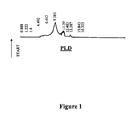
- Preparation 4 (and Figure 1 ) describes a system for the partial purification of PLD to obtain an enzyme that is substantially not contaminated by proteins of a different nature that might interfere with the catalytic activity of PLD, a process which does not involve too many steps, since lengthy processes lead to excessive industrial costs and a consequent lack of feasibility on an industrial scale.
- the partially purified enzyme described in Preparation 4 was tested in the production process described in Preparation 3, in comparison to an enzyme present in non-purified form (after simple elimination of the producer micro-organism) and to highly purified enzymatic preparations (obtained using ion exchange chromatographic resins and mono/polyclonal antibodies directed towards the PLD enzyme, but which may also be purified using all the purification methods known to a skilled in the art): the percentage of PC/PS conversion was equal for all the enzymatic preparations tested (purified, partially purified and non-purified).
- the optimal quantity of PLD to ensure over 80% conversion of PC into PS ranges between 1 and 100 units/g of starting phosphatide, because it depends upon the origin of the PLD used. For example, when PLD from Streptoverticillium hachijoense is used, the optimal concentration varies between 1 and 10 units/g of phosphatide.
- the present invention concerns a process for the separation and purification of PS from serine, PC and PLD (which represent impurities) remaining in the medium in which the transphosphatidylation reaction has taken place.
- Said procedures for the isolation and purification of PS enable elimination of the residues of the substances that are left after enzymatic reaction and were initially contained in the transphosphatidylation medium such as serine, PC, mineral salts, choline that is released from PC, PA, salts/oxides, and, above all, enable the complete purification of the PS from the PLD enzyme, no trace of which, as demonstrated in Example 1, remains.
- the final PS thus obtained has a very high degree of purity.
- antioxidants such as ascorbic acid and/or vitamin E can be included in the process of preparation and purification of PS.
- the PS preparations are disclosed in more detail in the following preparations 1-4 (corresponding to Examples 1-4 of EP 1890706 ).
- the tested oxides and Calcium chloride are dissolved in 40 ml of acetate buffer 0.2 M (pH 5.6) to which is then added 0.5 ml of isopropanol in order to reach 1.25% v/v (only for CaO), or 4 ml of isopropanol in order to reach 10% v/v (the alcohols can also be added to the buffer containing BMO after solubilisation of the Serine).
- DMSO was used at different concentrations varying between a percentage of 1.25 and 10% in terms of the volume of starting buffer, in all cases in the presence of CaO (or MgO or ZnO) 0,33M in comparison with the preparation of PS by the same process but in the presence of CaCl 2 salt.
- the Calcium oxides tested and Calcium chloride are dissolved in 40 ml of acetate butter 0.2 M, at pH 5.6.
- the solutions thus obtained are stirred in a jacketed reactor with condenser. After about 10 minutes' stirring, 20 g of L-serine is added at a temperature of 45°C and then stirring is continued until complete solubilisation is achieved.
- a two-phase system consisting of acetate buffer containing CaO (or MgO or ZnO) 0.54M was prepared, and then a quantity of hexane equal to 1.25% of the starting volume of the buffer was added, compared to the preparation of PS by the same production process but in the presence of CaCl 2 , 0,54M.
- the oxides tested and Calcium chloride are then dissolved in 40 ml of acetate buffer 0.2 M (pH 5.6) to which a quantity of hexane equal to 0.5 ml is then added in order to reach 1.25% v/v (the organic solvent of choice can be added to the buffer containing the BMO before or after solubilisation of the serine).
- a two-phase system consisting of acetate buffer containing CaO 0.54M was prepared and then a quantity of hexane equal to 2.5% of the starting volume of the buffer was added, compared to the preparation of PS by the same production process but in the presence of CaCl 2 , 0,54M. From this point on, the procedure is the same as in Preparation 3 a.
- the PLD enzyme used in the new production process can be partially purified by the following steps:
- Figure 1 shows the findings from chromatographic analysis of enzyme PLD partially purified as described above, compared with analysis of a fermentation broth purified solely from the agent producing the enzyme itself ( Figure 2 ).
- the reaction medium in which the PS has been prepared is supplemented with 1.5 volumes (in terms of the starting reaction volume) of a 5% solution of NaCl, and the mixture is stirred at a temperature of 30°C for at least 30 minutes.
- the PS which has been deposited in the upper part of the reaction medium, is then isolated by separating and eliminating the subnatant.
- the supernatant (PS) is supplemented with 4 volumes of a 3% solution of NaCl and stirred at 30 ⁇ 10°C for at least 30 minutes.
- the supernatant is separated and eliminated (this step has been repeated 2 times), while to the subnatant (represented by PS) is added 2 volumes of a solution of EDTA (ethylene diaminotetraacetic acid) (at a concentration of 40 gg/litre) prepared in an acetate buffer, 0.1 M pH 7.5.
- EDTA ethylene diaminotetraacetic acid
- the reaction medium in which the PS has been prepared is supplemented with 1.5 volumes (in terms of the starting reaction volume) of a 5% solution of NaCl, and the mixture is stirred at a temperature of 20°C for at least 30 minutes.
- the PS which has been deposited in the upper part of the reaction medium, is then isolated by separating and eliminating the subnatant.
- the supernatant (PS) is supplemented with 3 volumes of a 3% solution of NaCl and stirred at 20 ⁇ 10°C for at least 30 minutes.
- the supernatant is separated and eliminated (this step has been repeated 3 times), while to the subnatant (represented by PS) is added 3 volumes of a solution of EDTA (at a concentration of 30 gg/litre) prepared in an acetate buffer, 0.1 M pH 7.0.
- the PS Before adding the NaCl solution, the PS is filtered to eliminate immediately all the residue components of the reaction medium. Then NaCl is added and the isolation and purification process is continued as described in Example 1 a.
- the quantity of PLD in this phase was determined by state of the art methods ( Aurich 1. et al.; Anal Biochem; 1999; 268:337-342 ) and proved to be 2U/g.
- the residue activity of the PLD enzyme was also determined again and proved to be below the limit for determination by this method.
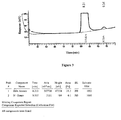
- the calibration chromatogram ( Figure 3 ) was obtained using a standard consisting of ethyl acetate and n-hexane corresponding to 1000 ppm each, equivalent to 100 mg of test product.
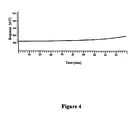
- Figure 4 shows the total absence of n-hexane in the PS purified according to Method 1.
- the reaction medium in which the PS was prepared is supplemented with 1.5 volumes (in terms of the starting reaction volume) of a solution of 5% NaCl and the whole is stirred at 45°C for at least 30 minutes, followed by a period of separation of the PS lasting at least 1 hour.
- Two phases are formed: they are separated and the subnatant is discarded, while the supernatant is supplemented with 2.5 volumes of a solution of EDTA 22 gg/litre, prepared in water. Once a temperature of 28°C has been reached, ultrafiltration is performed.
- filters should be used that have pores of a size that will trap molecules with a molecular weight of 100,000/300,000 Daltons should be used.
- the final product can then be freeze-dried.
- the concentration of serine was measured at the end of the PS purification process previously described and proved to be lower than/equal to 0.2%, while further determination of the residue activity of the PLD enzyme showed it to be below the limit for determination by this method.
Landscapes
- Chemical & Material Sciences (AREA)
- Life Sciences & Earth Sciences (AREA)
- Health & Medical Sciences (AREA)
- Organic Chemistry (AREA)
- General Health & Medical Sciences (AREA)
- Engineering & Computer Science (AREA)
- Biochemistry (AREA)
- Zoology (AREA)
- Wood Science & Technology (AREA)
- Veterinary Medicine (AREA)
- Public Health (AREA)
- Animal Behavior & Ethology (AREA)
- Molecular Biology (AREA)
- Bioinformatics & Cheminformatics (AREA)
- Epidemiology (AREA)
- Chemical Kinetics & Catalysis (AREA)
- General Chemical & Material Sciences (AREA)
- Genetics & Genomics (AREA)
- Birds (AREA)
- General Engineering & Computer Science (AREA)
- Microbiology (AREA)
- Biotechnology (AREA)
- Polymers & Plastics (AREA)
- Food Science & Technology (AREA)
- Biophysics (AREA)
- Neurosurgery (AREA)
- Neurology (AREA)
- Pharmacology & Pharmacy (AREA)
- Dermatology (AREA)
- Biomedical Technology (AREA)
- Medicinal Chemistry (AREA)
- Nuclear Medicine, Radiotherapy & Molecular Imaging (AREA)
- Hospice & Palliative Care (AREA)
- Psychiatry (AREA)
- Preparation Of Compounds By Using Micro-Organisms (AREA)
- Pharmaceuticals Containing Other Organic And Inorganic Compounds (AREA)
- Saccharide Compounds (AREA)
- Medicinal Preparation (AREA)
- Cosmetics (AREA)
- Coloring Foods And Improving Nutritive Qualities (AREA)
Abstract
Description
- The present invention relates to processes for the purification of phosphatidylserine (PS), to obtain the final product in high yield by means of bivalent metal oxides (BMO).
- The functional decline of the Central Nervous System (CNS) that occurs during the physiological process of cerebral aging often causes deterioration of the cognitive functions in the elderly that may in turn cause behavioural disorders and alterations of the temporal and spatial memory.
- This functional decline in CNS activity is linked with both the onset of biochemical and structural alterations in the lipid composition of the neuronal membranes and decreased activity of the cerebral enzymes that may reduce neuronal synapses.
- Phosphatidylserine (PS) is the main acidic phospholipid in the brain. Scientific research has therefore been focused for some time on finding a pharmacological treatment for age-related cognitive disorders, based on phospholipids that can prevent (and/or partially reconstruct) the structural and functional deficit of aging neuronal membranes.
- Preclinical and clinical studies in humans have demonstrated that administering PS orally can, especially in the elderly, determine a significant increase in learning capacity and temporal and spatial memory, even in the case of particularly disabling pathologies such as Alzheimer's disease (Cenacchi T. et al.; Aging Clin Exp Res; 1993; 5:123-133; Nunzi MG et al.; Adv Exp Med Biol; 1992; 318:393-8).
- Moreover, it has been demonstrated that phosphatidylserine is able to combat the increase in the hormone cortisol in subjects undergoing physical stress (Monteleone P. et al.; Neuroendocrinology; 1990; 52(3):243-8), thereby lessening the catabolism of glucose, with greater functional recovery after intense physical effort.
- The present invention relates to a process for the purification of PS and to the use of PS as the active principle in drugs (and/or food supplements) for the prevention of the aforesaid age-related pathologies, and in the preparation of food supplements indicated for all cases of intense physical stress and, moreover, in the production of liposomes for use in the field of cosmetics and/or as a controlled release system for the drugs they contain.
- The processes for producing and purifying PS already known from the scientific literature and patents describe the enzymatic conversion of phosphatidylcholine (PC) into PS by a transphosphatidylation reaction catalysed by the enzyme phospholipase D (PLD), with subsequent purification brought about mainly by extracting the PS with organic solvents.
- In recent years, various processes have been perfected for synthesising PS by enzymatic conversion in two-phase systems of water/organic solvent or in an aqueous medium.
-
EP 0776976 describes a process for the enzymatic preparation of PS in a system consisting of water/toluene wherein the organic phase contains the starting phospholipid from which PS is formed, the aqueous phase contains the hydroxy acceptor and the synthesis reaction occurs in the water/solvent interface in the presence of crude phospholipase D from fermentation broths of strains of micro-organisms producing PLD. - For the first time, in 1990, researchers attempted to sidestep the two-phase system because it required large quantities of solvent that was then difficult to eliminate, with consequently high costs for the production and purification of PS (Comfurius P. et al., Journal of Lipid Research 1990, 31:1719-1721).
- The organic solvent was therefore substituted by a detergent/surfactant capable of dispersing the starting phospholipid in micellar form in order to bring about the enzymatic reaction of synthesis exclusively in an aqueous medium.
- Indeed,
EP 1048738 relates to a process for the enzymatic synthesis of PS in an aqueous medium absolutely free from any contamination by organic solvents, in the presence of given concentrations of specific detergents and calcium salts. -
DE 19917249 describes a method for the enzymatic production of PS in an aqueous medium without using surfactants, exclusively with the addition of calcium chloride salt (CaCl2), however, the percentage of enzymatic conversion and the degree of purity of the PS obtained are not specified. -
EP 1310563 discloses a process for the preparation of PS in an aqueous phase without using detergents and/or calcium salts, based on the homogenisation of the starting startingmixture consisting ofof phospholipid, hydroxy acceptor and PLD in water, to give a final homogenate with a structure similar to that of a bi-lamellar phospholipid membrane wherein the transphosphatidylation reaction can subsequently occur. -
EP 1427839 describes the enzymatic synthesis of phospholipids, including PS, in water, without detergents but in the presence of metal ions that are released from the corresponding salts when they are prepared/dissolved in water. Said process occurs in two distinct phases in which, starting from mixtures of phospholipids, a first enzymatic hydrolysis reaction is catalysed by PLD to produce phosphatidic acid, followed by a second transphosphatidylation reaction in which PS is formed in the presence of an excess of serine. - Lastly,
EP 12312134 - Concerning the purification of PS (obtained either by transphosphatidylation in an aqueous medium/organic solvent or in an aqueous medium),
EP 1213294 claims a process of purification based on the use of a mixture consisting of water/polar organic solvent (such as isopropanol) to extract the above said phospholipid from the solution that contains it, which is in turn represented by a hydrocarbon solvent (such as toluene), whileEP 0922707 relates to a process for the extraction/purification of PS from a mixture of phospholipids using a diphasic system of organic solvents such as heptane and methanol. - The present invention relates to processes for the purification of phosphatidylserine (PS) that afford the final product in a very high yield.
- Moreover, the transphosphatidylation process catalysed by the enzyme PLD, enables a high percentage of PC to be converted into PS regardless of the medium in which the enzymatic reaction occurs.
- The parent
EP 1890 706 discloses a process for the preparation of PS (formula I), in which a transphosphatidylation is carried out by the enzyme PLD, in the presence of BMO, thereby attaining the transfer of a phosphatidyl moiety from phosphatidylcholine (PC) (formula II) to serine (which in this case represents the hydroxy acceptor); this enzymatic reaction provides the conversion of PC into PS in a very high degree, regardless of the medium in which the enzymatic reaction occurs. Said reaction can therefore take place: - in a hydroalcoholic medium consisting of water/aliphatic alcohols that do not form a two-phase system, or
- in an aprotic medium consisting of water/polar aprotic solvents that do not form a two-phase system, or
- in a two-phase system consisting of water/organic solvents.


- It has surprisingly been found that BMO drastically modifies the reaction substrate represented by the starting phosphatidylcholine, determining a change such that the action of enzyme PLD significantly increases in terms of final yield in PS, thus enabling a highly advantageous production of PS on an industrial scale. This substantial change occurs in the structure of the substrate itself, regardless of the medium in which the enzymatic reaction takes place. Indeed, BMO favours the fissuration of the PC vesicles and, thereby, penetration of the enzyme therein, determining an increase in the percentage of conversion of PC into PS since, by penetrating inside the vesicles, the PLD enzyme can also act on the lipid layer inside the vesicle, which could not formerly be penetrated by hydrophilic solutions such as those that contain the enzyme itself.
- Various bivalent metal oxides were tested, such as Calcium oxide (CaO), Magnesium oxide (MgO) and Zinc oxide (ZnO), both in hydroalcoholic and in aprotic medium, as well as in two-phase systems in which they gave excellent results, as shown in the following preparations, compared to the results obtained by means of the same processes but in the presence of Calcium chloride (CaCl2).
- Indeed, it is known that Calcium salts, and in particular CaCl2, as sources of Calcium ions added to the medium in which the transphosphatidylation reaction occurs (Comfurius P. et al., Journal of Lipid Research 1990, 31:1719-1721; Comfurius P. et al., Biochim Biophys Acta, 1977, 488:36-42), promote the catalytic activity of the PLD enzyme and thereby increase the phosphatidylcholine conversion into PS (Okawa Y. et al.al; J Biochem.; 1975; 78:363-372).
- In order to differentiate and clarify that BMO are completely different from metal salts and to demonstrate their efficacy in the production systems, the Applicant has performed experiments comparing the different yields from the conversion of PC into PS in the presence of Calcium salts and in the presence of BMO.
- As can be seen from the results obtained, the yield from the conversion of phosphatidylcholine into PS consistently proved to be not only quite unlike, but also decidedly and significantly higher than that obtained with CaCl2.
- Besides the oxides described above, various different BMO can be used in the process for the production of PS, such as Manganese oxide, bivalent Iron oxide, Cobalt oxide, Copper oxide and all the remaining bivalent metal oxides in the Table of Elements.
- Example of solvents in which the process disclosed in
EP 1890706 can be carried out are aliphatic alcohols, such as methyl, ethyl, n-propyl, isopropanols; aprotic polar solvents, such as dimethylsulfoxide (DMSO), dimethylformamide, acetonitrile, N-methyl-pyrrolidone; and organic solvents, such as n-hexane, toluene, n-butanol, benzene. - The preferred alcohol is isopropanol, the preferred aprotic solvent is DMSO and the preferred organic solvent is hexane.
-
Preparation 1 describes the conversion of PC into PS starting from hydroalcoholic medium containing given percentages of isopropanol added to an starting solution consisting of acetate buffer in which CaO (or MgO or ZnO) has been dissolved, compared to the PS production process performed in the same hydroalcoholic medium but in the presence of CaCl2 salt. - The percentage of alcohol (isopropanol in particular) that can be used in the present process (expressed as % by volume on the volume of the starting buffer) may vary from 0.1 to 50%, preferably from 1.25 to 20%, and most preferably 10%, in a hydroalcoholic medium containing a concentration of BMO (in particular, CaO) varying between 0.1 and 1M, preferably between 0.3 and 0.6M and most preferably equal to 0.54M.
- The maximum yield from the conversion of PC into PS is 90%, which is far removed from the yield obtained by the same production process but in the presence of CaCl2.
-
Preparation 2, on the other hand, demonstrates that it is possible to obtain yields even higher than 80% from the conversion of PC/PS, by adding given quantities of DMSO (expressed as % by volume on the volume of buffer used) to the starting buffer solution containing given molar concentrations of CaO (or MgO or ZnO), and that the aforesaid yields of PS are very different from those obtained by the same production process but in the presence of CaCl2. - The percentage of aprotic solvent (and DMSO in particular) to be used may vary from 0.1 al 50%, preferably from 1.25 to 10%, and most preferably be 1.25%, in an aprotic medium containing a concentration of BMO (CaO in particular) varying between 0.1 and 1M, preferably between 0.3 and 0.6 M, and even more preferably, it may be equal to 0.33M.
- The enzymatic reaction of transphosphatidylation gives a very high yield of PC/PS conversion, even in a two-phase system consisting of water/organic solvent.
- Preparation 3 describes the production of PS in a two-phase system consisting of water/hexane, again in the presence of CaO, MgO and ZnO. The quantity of solvent used in the processes is very low (as demonstrated hereafter), so low that production costs are limited and it is not difficult to eliminate the solvent from the final product.
- The concentration of solvent to be used in said process may vary from 0.1 to 40% v/v (expressed as % by volume on the volume of starting buffer), preferably from 1 to 5% v/v, and most preferably 1.25% v/v and 2.5% v/v, in the presence of BMO (and CaO in particular) at a concentration varying between 0.1 and 1M, preferably between 0.3 and 0.6M and most preferably equal to 0.54M.
- In this case too the maximum yield from the conversion of PC into PS was over 80%, quite different from that obtained by the same process but in the presence of CaCl2.
- The transphosphatidylation reaction can be conducted at different temperatures, ranging between 20 and 70°C, preferably at 45 or 55°C.
- The starting phosphatide substrate is represented by phosphatidylcholine of animal and/or vegetal origin, natural or synthetic, present in purified form or as the raw material, at starting concentrations ranging between 10 and 500 mg/ml, preferably between 200 and 300 mg/ml.
- The starting aqueous medium to be mixed/associated with the alcohol, the aprotic solvent or the organic solvent to obtain a hydroalcoholic, aprotic or two-phase final medium, is represented by water or an unbuffered saline solution or a buffer solution formed, for example, by sodium acetate trihydrate and acetic acid at concentrations of between 0.02 and 0.2M.
- The hydroxyl acceptor is represented by serine, that may be present in D, L or racemic form. The optimal concentration of serine, preferably in L form, may vary between 1 g/g (gg) of starting phosphatide, up to 5 gg, preferably between 2 and 3 gg/gg of phosphatide.
- The optimal pH of the buffer solution may vary between 4 and 9 because it depends on the origin of the PLD used, but preferably between 5 and 6, and most preferably equal to 5.6 if a PLD of fermentative origin derived from the micro-organism Streptoverticillium hachijoense is used.
- Said enzyme can be used in purified or partially purified form, or in a non-purified form after simple filtration of the micro-organism from its culture broth.
- Preparation 4 (and
Figure 1 ) describes a system for the partial purification of PLD to obtain an enzyme that is substantially not contaminated by proteins of a different nature that might interfere with the catalytic activity of PLD, a process which does not involve too many steps, since lengthy processes lead to excessive industrial costs and a consequent lack of feasibility on an industrial scale. - The partially purified enzyme described in Preparation 4 was tested in the production process described in Preparation 3, in comparison to an enzyme present in non-purified form (after simple elimination of the producer micro-organism) and to highly purified enzymatic preparations (obtained using ion exchange chromatographic resins and mono/polyclonal antibodies directed towards the PLD enzyme, but which may also be purified using all the purification methods known to a skilled in the art): the percentage of PC/PS conversion was equal for all the enzymatic preparations tested (purified, partially purified and non-purified).
- The optimal quantity of PLD to ensure over 80% conversion of PC into PS ranges between 1 and 100 units/g of starting phosphatide, because it depends upon the origin of the PLD used. For example, when PLD from Streptoverticillium hachijoense is used, the optimal concentration varies between 1 and 10 units/g of phosphatide.
- The present invention concerns a process for the separation and purification of PS from serine, PC and PLD (which represent impurities) remaining in the medium in which the transphosphatidylation reaction has taken place.
- In order to separate and purify PS, the following methods have been developed.
- 1. at the end of the enzymatic transphosphatidylation reaction, the PS is separated by adding a solution of sodium chloride, at a concentration of between 2 and 6% (preferably 5%), to the reaction medium in which the newly-produced phospholipid is present: two phases will thus be obtained because the PS remains insoluble in this solution while the residue components (that are most soluble) mostly remain in the subnatant. The PS, which has been deposited in the upper part of the reaction medium, is then isolated by separating and eliminating the subnatant.
Alternatively, it is possible to start a new process of separation and purification of PS, object of the present invention, by filtering the PS container in the reaction medium to eliminate immediately all its residue components. A solution of NaCl is then added. Two phases form and the supernatant is eliminated because the PS is found in the subnatant. NaCl washings can be repeated twice or more times, adjusting the salt concentration if necessary. These washing procedures enable the complete elimination of the alcohols, aprotic and organic solvents used in the processes to produce PS described above, as demonstrated in Example 1. Subsequently, after treatment of the ions present in the reaction medium with a chelating agent, the product is precipitated/washed with a ethanol solution (at a percentage of between 50 and 100%, preferably 95%), or with a mixture of ketone solvents (such as acetone) in water (at a percentage of between 50 and 95%); washing with ethanol can be repeated several times (adjusting the percentage of ethanol present, if necessary). Lastly, a final wash is performed with ethanol at between 90 and 100%, after which the finished product may or may not be dried; - 2. the separation and purification of PS is carried out by ultrafiltration, at the end of the transphosphatidylation enzymatic reaction, using a porous membrane of pore size such as to allow the passage of small molecules while trapping large ones. For this reason, it is preferable to use filters with pores small enough to trap molecules with a molecular weight of 100,000/300,000 Daltons or over.
- Said procedures for the isolation and purification of PS enable elimination of the residues of the substances that are left after enzymatic reaction and were initially contained in the transphosphatidylation medium such as serine, PC, mineral salts, choline that is released from PC, PA, salts/oxides, and, above all, enable the complete purification of the PS from the PLD enzyme, no trace of which, as demonstrated in Example 1, remains. The final PS thus obtained has a very high degree of purity.
- Some antioxidants such as ascorbic acid and/or vitamin E can be included in the process of preparation and purification of PS.
- The PS preparations are disclosed in more detail in the following preparations 1-4 (corresponding to Examples 1-4 of
EP 1890706 ). - Two different hydroalcoholic solutions were prepared, formed by two concentrations of isopropanol (equal to 1.25 and 10% of the volume of the starting buffer) in acetate buffer containing CaO (or MgO or ZnO) 0.54M, compared to the preparation of PS by the same procedure but in the presence of CaCl2 salt, 0.54M.
- The tested oxides and Calcium chloride are dissolved in 40 ml of acetate buffer 0.2 M (pH 5.6) to which is then added 0.5 ml of isopropanol in order to reach 1.25% v/v (only for CaO), or 4 ml of isopropanol in order to reach 10% v/v (the alcohols can also be added to the buffer containing BMO after solubilisation of the Serine).
- The resulting solutions are stirred in a jacketed reactor with condenser for about 10 minutes, then 20 g of L-serine is added at a temperature of 55°C, stirring until complete dissolution. Subsequently, 10 g of soy phosphatidylcholine is added and stirred for 10 minutes. 5.5 U of PLD enzyme per gg of PC is then added and the mixture is stirred for 24-48 hours at 55°C.
- Finally, a sample of each product is taken and the successful transformation of PC into PS is tested by Thin Layer Chromatography (TLC).
- Yield from the conversion of PC into PS:
- distribution of the products present at the end of the reaction, expressed as % of PA (phosphatidic acid released by the PC as a result of the action of PLD) and PS obtained following the transphosphatidylation process. PA and PC are to be considered residues from the reaction.
- Yield from the conversion of PC into PS obtained with isopropanol, 1.25% v/v, in the presence of CaO:
- PA 8.0%
- PS 85.5%
- PC 6.5%
- Yield from the conversion of PC into PS obtained with isopropanol, 10% v/v, in the presence of CaO:
- PE-OH 4.0%
- PA 3.5%
- PS 89.5%
- PC 3.0%
- Yield from the conversion of PC into PS obtained with isopropanol, 10% v/v, in the presence of CaCl2:
- PE-OH 15.8%
- PA 10.7%
- PS 70.1%
- PC 3.4%
- Yield from the conversion of PC into PS obtained with isopropanol, 10% v/v, in the presence of MgO:
- PE-OH 9.0%
- PA 4.5%
- PS 84.0%
- PC 2.5%
- Yield from the conversion of PC into PS obtained with isopropanol, 10% v/v, in the presence of ZnO:
- PE-OH 10.0%
- PA 8.0%
- PS 80.0%
- PC 2.0%
- DMSO was used at different concentrations varying between a percentage of 1.25 and 10% in terms of the volume of starting buffer, in all cases in the presence of CaO (or MgO or ZnO) 0,33M in comparison with the preparation of PS by the same process but in the presence of CaCl2 salt.
- The Calcium oxides tested and Calcium chloride are dissolved in 40 ml of acetate butter 0.2 M, at pH 5.6. The solutions thus obtained are stirred in a jacketed reactor with condenser. After about 10 minutes' stirring, 20 g of L-serine is added at a temperature of 45°C and then stirring is continued until complete solubilisation is achieved.
- Subsequently, 10 g of soy PC and 0.5 ml of DMSO (corresponding to 1.25% v/v) or 4 ml of DMSO (corresponding to 10% v/v) are added and the mixture is stirred (the DMSO may be added during the starting phase of the process, after solubilisation of the BMO, as in the previous Preparation). Ten minutes later, 5.5 U of PLD enzyme per gg of PC is added, and the mixture is stirred for 24-48 hours at 45°C.
- Subsequently, samples of the respective products obtained are taken at the end of the reaction and tested for the successful transformation of PC into PS.
- Yield from the conversion of PC into PS:
- Yield from the conversion of PC into PS obtained with DMSO 1.25% v/v in the presence of CaO:
- PA 7.1%
- PS 86.3%
- PC 6.6%
- Yield from the conversion of PC into PS obtained with DMSO 1.25% v/v in the presence of CaCl2:
- PA 8.1%
- PS 66.7%
- PC 25.2%
- Yield from the conversion of PC into PS obtained with DMSO 10% v/v in the presence of CaCl2:
- PA 6%
- PS 69%
- PC 25%
- Yield from the conversion of PC into PS obtained with DMSO 10% v/v in the presence of CaO:
- PA 7.5%
- PS 72.5%
- PC 20%
- Yield from the conversion of PC into PS obtained with DMSO 10% v/v in the presence of MgO:
- PA 9.0%
- PS 71.0%
- PC 20%
- Yield from the conversion of PC into PS obtained with DMSO 10% v/v in the presence of ZnO:
- PA 8.5%
- PS 71.5%
- PC 20%
- A two-phase system consisting of acetate buffer containing CaO (or MgO or ZnO) 0.54M was prepared, and then a quantity of hexane equal to 1.25% of the starting volume of the buffer was added, compared to the preparation of PS by the same production process but in the presence of CaCl2, 0,54M.
- The oxides tested and Calcium chloride are then dissolved in 40 ml of acetate buffer 0.2 M (pH 5.6) to which a quantity of hexane equal to 0.5 ml is then added in order to reach 1.25% v/v (the organic solvent of choice can be added to the buffer containing the BMO before or after solubilisation of the serine).
- The solutions thus obtained are stirred in a jacketed reactor with condenser.
- The procedure then continues as described in
Preparation 1. - Finally, a sample of each product obtained is taken and tested for the successful transformation of PC into PS.
- Yield from the conversion of PC into PS:
- Yield from the conversion of PC into PS obtained with hexane 1.25% v/v in the presence of CaO:
- PA 7.5%
- PS 87.0%
- PC 5.5%
- Yield from the conversion of PC into PS obtained with hexane 1.25% v/v in the presence of CaCl2:
- PA 8.1%
- PS 68.4%
- PC 23.5%
- Yield from the conversion of PC into PS obtained with hexane 1.25% v/v in the presence of MgO:
- PA 8.5%
- PS 82.5%
- PC 9.0%
- Yield from the conversion of PC into PS obtained with hexane 1.25% v/v in the presence of ZnO:
- PA 11.0%
- PS 80.0%
- PC 9.0%
- A two-phase system consisting of acetate buffer containing CaO 0.54M was prepared and then a quantity of hexane equal to 2.5% of the starting volume of the buffer was added, compared to the preparation of PS by the same production process but in the presence of CaCl2, 0,54M. From this point on, the procedure is the same as in Preparation 3 a.
- Yield from the conversion of PC into PS:
- Yield from the conversion of PC into PS obtained with hexane 2.5% v/v in the presence of CaO:
- PA 7.5%
- PS 86.0%
- PC 6.5%
- Yield from the conversion of PC into PS obtained with hexane 2.5% v/v in the presence of CaCl2:
- PA 10.0%
- PS 65.0%
- PC 25.0%
- The PLD enzyme used in the new production process can be partially purified by the following steps:
- elimination of the producing agent by tangential-flow microfiltration through filters (preferably with polyethersulphone membranes: PES) with a pore size of 0,2 µm;
- tangential-flow ultrafiltration through filters (preferably in PES) with a molecular cut-off of 10,000 D;
- tangential-flow ultrafiltration through filters with membranes (preferably in PES) with a molecular cut-off of 300,000 D;
- final tangential-flow ultrafiltration through membranes (preferably in PES) with a molecular cut-off of 10,000 D to re-concentrate the enzyme and dialyse it against TRIS-HCL buffer, 50 mM pH=8.
-
Figure 1 shows the findings from chromatographic analysis of enzyme PLD partially purified as described above, compared with analysis of a fermentation broth purified solely from the agent producing the enzyme itself (Figure 2 ). - The invention is disclosed in more detail in the following Examples:
- The reaction medium in which the PS has been prepared is supplemented with 1.5 volumes (in terms of the starting reaction volume) of a 5% solution of NaCl, and the mixture is stirred at a temperature of 30°C for at least 30 minutes. The PS, which has been deposited in the upper part of the reaction medium, is then isolated by separating and eliminating the subnatant. The supernatant (PS) is supplemented with 4 volumes of a 3% solution of NaCl and stirred at 30 ± 10°C for at least 30 minutes. Following that, the supernatant is separated and eliminated (this step has been repeated 2 times), while to the subnatant (represented by PS) is added 2 volumes of a solution of EDTA (ethylene diaminotetraacetic acid) (at a concentration of 40 gg/litre) prepared in an acetate buffer, 0.1 M pH 7.5.
- After further mixing (at 25 ± 10°C for at least 1 hour) by stirring the mixture thus obtained, the pH is adjusted to 7/7.5 and 2 volumes (in terms of the volume of EDTA) of 95% ethanol are added, stirring the mixture at 25 ± 10°C for at least 1 hour.
- After a period of sedimentation of the PS, it is collected and the supernatant (the phase consisting of ethanol in water) is eliminated because PS will not dissolve in a hydroalcoholic phase. Washing with ethanol/water (with a percentage of ethanol of 70-95%) has been repeated after which a final washing with 100% ethanol is performed, and as a final step the PS can be dried.
- Final product: distribution of the lipid fractions isolated according to
method 1, with PS prepared as described in Preparation 3 with CaO 0.54M. - PA 5.8%
- PS 94.2%
- The reaction medium in which the PS has been prepared is supplemented with 1.5 volumes (in terms of the starting reaction volume) of a 5% solution of NaCl, and the mixture is stirred at a temperature of 20°C for at least 30 minutes. The PS, which has been deposited in the upper part of the reaction medium, is then isolated by separating and eliminating the subnatant. The supernatant (PS) is supplemented with 3 volumes of a 3% solution of NaCl and stirred at 20 ± 10°C for at least 30 minutes. Following that, the supernatant is separated and eliminated (this step has been repeated 3 times), while to the subnatant (represented by PS) is added 3 volumes of a solution of EDTA (at a concentration of 30 gg/litre) prepared in an acetate buffer, 0.1 M pH 7.0.
- After further mixing (at 20 ± 10°C for at least 1 hour) by stirring the mixture thus obtained, the pH is adjusted to 7/7.5 and 2 volumes (in terms of the volume of EDTA) of 100% ethanol are added, stirring the mixture at 20 ± 10°C for at least 1 hour.
- After a period of sedimentation of the PS, it is collected and the supernatant (the phase consisting of ethanol in water) is eliminated. Washing with ethanol/water (with a percentage of ethanol of 70%) has been repeated after which a final washing with 100% ethanol is performed, and as a final step the PS can be dried.
- Final product: distribution of the lipid fractions isolated according to
method 1, with PS prepared as described in Preparation 3 with CaO 0.54M. - PA 6.8%
- PS 93.2%
- Before adding the NaCl solution, the PS is filtered to eliminate immediately all the residue components of the reaction medium. Then NaCl is added and the isolation and purification process is continued as described in Example 1 a.
- Final product: distribution of the lipid fractions isolated according to
method 1, with PS prepared as described in Preparation 3 with CaO 0.54M. - PA 5.0%
- PS 95.0%
- After the transphosphatidylation reaction, TLC analysis of the product obtained (Vitello F. et al.; J Chromatog; 1978; 166(2):637-40) shows a 2% concentration of residue serine.
- The quantity of PLD in this phase was determined by state of the art methods (
Aurich 1. et al.; Anal Biochem; 1999; 268:337-342 - The serine concentration was measured again at the end of the process for the purification of PS described previously and proved to be lower than/equal to 0.2%.
- The residue activity of the PLD enzyme was also determined again and proved to be below the limit for determination by this method.
- To demonstrate the total absence of even the smallest trace of organic solvent used in the process of preparing PS (described in Preparation 3) and thus confirm the novelty and inventive step of the present invention, the Applicant analysed the partially purified PS described in Example 1, in the phase immediately preceding the addition of the alcoholic solution.
- This analysis was performed by the known technique of "Gas chromatography with static head-space injection" as described in the European Pharmacopoeia 5.0, section 2.4.24: Identification and control of residual solvents.
- The calibration chromatogram (
Figure 3 ) was obtained using a standard consisting of ethyl acetate and n-hexane corresponding to 1000 ppm each, equivalent to 100 mg of test product. -
Figure 4 shows the total absence of n-hexane in the PS purified according toMethod 1. - The reaction medium in which the PS was prepared is supplemented with 1.5 volumes (in terms of the starting reaction volume) of a solution of 5% NaCl and the whole is stirred at 45°C for at least 30 minutes, followed by a period of separation of the PS lasting at least 1 hour.
- Two phases are formed: they are separated and the subnatant is discarded, while the supernatant is supplemented with 2.5 volumes of a solution of EDTA 22 gg/litre, prepared in water. Once a temperature of 28°C has been reached, ultrafiltration is performed. Preferably, filters should be used that have pores of a size that will trap molecules with a molecular weight of 100,000/300,000 Daltons should be used.
- The final product can then be freeze-dried.
- Final product: distribution of the lipid fractions isolated according to
method 2, with PS prepared, for example, according toPreparation 1 with CaO 0.54M. - PA 6.0%
- PS 94.0%
- The concentration of serine was measured at the end of the PS purification process previously described and proved to be lower than/equal to 0.2%, while further determination of the residue activity of the PLD enzyme showed it to be below the limit for determination by this method.
Claims (14)
- Process for the separation and purification of phosphatidylserine (PS) of formula

from serine in D, L or racemic form, from a compound of formula
and from a phospholipase D enzyme (PLD) remaining in a medium in which the transphosphatidylation reaction has taken place, said medium being selected from:- a hydroalcoholic medium containing an aliphatic alcohol and in the presence of bivalent metal oxide;- an aprotic medium consisting of water/polar aprotic solvents and in the presence of a bivalent metal oxide; orsaid process involving the following steps:
a two-phase system formed by water/organic solvent and in the presence of a bivalent metal oxide,I) adding a saline solution of sodium chloride to the reaction medium containing the PS that has been produced, with the subsequent mixing and separation of the PS;II) collection and elimination of the subnatant;III) steps I and II can be repeated modifying the starting concentration of sodium chloride solution and eliminating the supernatant;IV) adding a solution of EDTA to chelate the ions present in the solution, and subsequent mixing;V) adding a ethanol solution consisting of ethanol at a percentage of 50 to 100% or a mixture of acetone/water consisting of acetone at a percentage of 50 to 95% with subsequent mixing and sedimentation of the PS;VI) step V can be repeated modifying the percentage of ethanol;VII) adding a ethanol solution consisting of ethanol at a percentage of 90 to 100%;VIII) collection and elimination of the supernatant;IX) drying of the final product. - Process for the separation and purification of phosphatidylserine (PS) of formula

from serine in D, L or racemic form, from a compound of formula
and from phospholipase D enzyme (PLD) remaining in a medium in which the transphosphatidylation reaction has taken place, said medium being selected from :- - a hydroalcoholic medium containing an aliphatic alcohol and in the presence of bivalent metal oxide;- an aprotic medium consisting of water/polar aprotic solvents and in the presence of a bivalent metal oxide; or- a two-phase system formed by water/organic solvent and in the presence of a bivalent metal oxide,said process involving the following steps:I) adding a saline solution of sodium chloride to the PS that has been previously filtered, with the subsequent mixing and separation of the PS;II) collection and elimination of the supernatant;III) steps I and II can be repeated modifying the starting concentration of sodium chloride solution and eliminating the supernatant;IV) adding a solution of EDTA to chelate the ions present in the solution, and subsequent mixing;V) adding a ethanol solution consisting of ethanol at a percentage of 50 to 100% or a mixture of acetone/water consisting of acetone at a percentage of 50 to 95% with subsequent mixing and sedimentation of the PS;VI) step V can be repeated modifying the percentage of ethanol;VII) adding a ethanol solution consisting of ethanol at a percentage of 90 to 100%;VIII) collection and elimination of the supernatant;IX) drying of the final product. - Process for the separation and purification of phosphatidylserine (PS) of formula

from serine in D, L or racemic form, from a compound of formula
and from phospholipase D enzyme (PLD) remaining in a medium in which the transphosphatidylation reaction has taken place, said medium being selected from:- a hydroalcoholic medium containing an aliphatic alcohol and in the presence of bivalent metal oxide;- an aprotic medium consisting of water/polar aprotic solvents and in the presence of a bivalent metal oxide; or- a two-phase system formed by water/organic solvent and in the presence of a bivalent metal oxide,said process involving the following steps:I) adding a saline solution of sodium chloride to the reaction medium containing the PS that has been produced, with subsequent mixing and separation of the PS;II) collection and elimination of the subnatant;III) adding a saline solution of sodium chloride and performing ultrafiltration through a porous membrane;IV) drying the final product. - A process according to claims 1-3 wherein said reaction medium is a hydroalcoholic medium and the alcohols are selected from methanol, ethanol, n-propanol, isopropanol.
- The process according to claim 4 wherein the aliphatic alcohol is isopropanol in a concentration between 0.1 and 50% expressed as a % by volume on the volume of the starting buffer.
- The process according to claim 5 wherein isopropanol concentration is 10%.
- A process according to claims 1-3 wherein said reaction medium contains an aprotic polar solvent selected from dimethylsulphoxide, acetonitrile, dimethylformamide and N-methyl-pyrrolidone.
- The process according to claim 7 wherein the aprotic polar solvent is dimethylsulphoxide in a concentration between 0.1 and 50% expressed as a % by volume on the volume of the starting buffer.
- The process according to claim 8 wherein dimethylsulphoxide concentration is 1.25%.
- A process according to claims 1-3 wherein said reaction medium is a two-phase system formed by water/organic solvent wherein the organic solvents are selected from n-hexane, toluene, benzene and n-butanol.
- The process according to claim 10 wherein the organic solvent is n-hexane in a concentration between 0.1 and 40% expressed as % by volume on the volume of the starting buffer.
- The process according to claim 11 wherein n-hexane concentration is 1.25% or 2.5%.
- The process according to the previous claims 1-12 wherein the bivalent metal oxide is calcium or magnesium or zinc oxide in a concentration between 0.1 and 1 M.
- The process according to claim 13 wherein the concentration of the selected oxides is 0.33 or 0.54 M.
Priority Applications (1)
| Application Number | Priority Date | Filing Date | Title |
|---|---|---|---|
| PL11171047T PL2431020T3 (en) | 2005-05-30 | 2006-05-26 | Processes for the separation and purification of phosphatidylserine |
Applications Claiming Priority (3)
| Application Number | Priority Date | Filing Date | Title |
|---|---|---|---|
| IT000164A ITPD20050164A1 (en) | 2005-05-30 | 2005-05-30 | PROCESS FOR PREPARATION AND ISOLATION OF PHOSPHATIDES |
| US70387005P | 2005-08-01 | 2005-08-01 | |
| EP06753893A EP1890706B1 (en) | 2005-05-30 | 2006-05-26 | Process for the preparation and isolation of phosphatides |
Related Parent Applications (2)
| Application Number | Title | Priority Date | Filing Date |
|---|---|---|---|
| EP06753893A Division EP1890706B1 (en) | 2005-05-30 | 2006-05-26 | Process for the preparation and isolation of phosphatides |
| EP06753893.4 Division | 2006-05-26 |
Publications (2)
| Publication Number | Publication Date |
|---|---|
| EP2431020A1 EP2431020A1 (en) | 2012-03-21 |
| EP2431020B1 true EP2431020B1 (en) | 2014-07-16 |
Family
ID=39449427
Family Applications (2)
| Application Number | Title | Priority Date | Filing Date |
|---|---|---|---|
| EP06753893A Expired - Lifetime EP1890706B1 (en) | 2005-05-30 | 2006-05-26 | Process for the preparation and isolation of phosphatides |
| EP11171047.1A Expired - Lifetime EP2431020B1 (en) | 2005-05-30 | 2006-05-26 | Processes for the separation and purification of phosphatidylserine |
Family Applications Before (1)
| Application Number | Title | Priority Date | Filing Date |
|---|---|---|---|
| EP06753893A Expired - Lifetime EP1890706B1 (en) | 2005-05-30 | 2006-05-26 | Process for the preparation and isolation of phosphatides |
Country Status (17)
| Country | Link |
|---|---|
| US (1) | US7759095B2 (en) |
| EP (2) | EP1890706B1 (en) |
| JP (1) | JP5113042B2 (en) |
| KR (1) | KR101298560B1 (en) |
| CN (1) | CN101184494B (en) |
| AT (1) | ATE546145T1 (en) |
| AU (1) | AU2006254376B2 (en) |
| BR (1) | BRPI0611316B8 (en) |
| CA (1) | CA2610575C (en) |
| ES (2) | ES2501015T3 (en) |
| IL (1) | IL187749A (en) |
| IT (1) | ITPD20050164A1 (en) |
| MX (1) | MX2007015064A (en) |
| NO (1) | NO337009B1 (en) |
| PL (2) | PL2431020T3 (en) |
| PT (2) | PT1890706E (en) |
| WO (1) | WO2006128639A2 (en) |
Families Citing this family (7)
| Publication number | Priority date | Publication date | Assignee | Title |
|---|---|---|---|---|
| ITPD20050164A1 (en) | 2005-05-30 | 2006-11-30 | Fidia Farmaceutici | PROCESS FOR PREPARATION AND ISOLATION OF PHOSPHATIDES |
| KR20150065903A (en) | 2007-06-05 | 2015-06-15 | 뱅크 오브 캐나다 | Ink or toner compositions, methods of use, and products derived therefrom |
| CN102485899A (en) * | 2010-12-03 | 2012-06-06 | 张永志 | Method for preparing high quality Antarctic krill oil rich in phosphatidylserine containing polyunsaturated double-bonded fatty acyl |
| ITPD20120021A1 (en) | 2012-01-26 | 2013-07-27 | Fidia Farmaceutici | "NEW PHARMACEUTICAL COMPOSITIONS CONTAINING PHOSPHATIDHYSERINE AND CURCUMINE". |
| CN104327114A (en) * | 2014-11-06 | 2015-02-04 | 江南大学 | Preparation method of phosphatidyl serine |
| WO2020214588A1 (en) * | 2019-04-16 | 2020-10-22 | Helixbind, Inc. | Methods and devices for ultrasensitive direct detection of microorganisms |
| WO2021134439A1 (en) * | 2019-12-31 | 2021-07-08 | 邦泰生物工程(深圳)有限公司 | Method for improving transesterification activity of phospholipase d and method for producing phosphatidylserine using phospholipase d |
Family Cites Families (22)
| Publication number | Priority date | Publication date | Assignee | Title |
|---|---|---|---|---|
| US3869482A (en) * | 1972-07-31 | 1975-03-04 | Etapharm Chem Pharm Lab G M B | Method of producing highly purified phosphatides |
| AT315359B (en) * | 1972-07-31 | 1974-05-27 | Etapharm Chem Pharm Lab Ges M | Process for the production of highly purified phosphatides from animal organs |
| JPS63245684A (en) | 1987-03-31 | 1988-10-12 | Japanese Res & Dev Assoc Bio Reactor Syst Food Ind | Production of phosphatidic acid derivative |
| DE69011739T2 (en) * | 1989-05-26 | 1995-01-19 | Kao Corp | Process for the preparation of phosphatidic acid. |
| IT1260149B (en) | 1992-04-17 | 1996-03-28 | Fidia Spa | METHOD FOR THE PREPARATION AND PURIFICATION OF MIXTURES OF PHOSPHOLIPIDS WITHOUT CONTAMINANTS FROM NON-CONVENTIONAL VIRUSES |
| JP3053537B2 (en) | 1994-11-08 | 2000-06-19 | 株式会社ヤクルト本社 | Brain function improver |
| US5700668A (en) | 1995-12-08 | 1997-12-23 | Italfarmaco Sud S.P.A. | Process for the industrial preparation of phosphatidylserine |
| DE19917249C2 (en) | 1999-02-26 | 2001-09-27 | Meyer Lucas Gmbh & Co | Process for the preparation of phosphatidylserine products |
| IT1311929B1 (en) | 1999-04-28 | 2002-03-20 | Chemi Spa | PROCEDURE FOR THE PREPARATION OF PHOSPHATIDYLSERINS. |
| DE19926770A1 (en) | 1999-06-11 | 2000-12-14 | Basf Ag | Nucleic acid fragment and vector containing a halogenase, and a method for halogenating chemical compounds |
| IL147077A0 (en) | 1999-06-15 | 2002-08-14 | Yissum Res Dev Co | Enzymatic preparation of phospholipids in aqueous media |
| AU2001261647A1 (en) | 2000-05-15 | 2001-11-26 | Identix Incorporated | Fingerprint imaging device |
| JP4298902B2 (en) | 2000-08-09 | 2009-07-22 | 株式会社ヤクルト本社 | Method for producing phospholipids |
| IT1319679B1 (en) | 2000-12-05 | 2003-10-23 | Chemi Spa | PHOSPHATIDYLSERINE PURIFICATION PROCESS. |
| ITPD20010031A1 (en) | 2001-02-09 | 2002-08-09 | Fidia Farmaceutici | PROCEDURE FOR THE PREPARATION OF PURE PHOSPHATIDES AND THEIR USE IN THE COSMETIC, PHARMACEUTICAL AND FOOD FIELDS. |
| DE10142014B4 (en) * | 2001-08-28 | 2004-11-11 | Degussa Bioactives Deutschland Gmbh & Co. Kg | Process for the preparation of phosphatidylserine |
| DE10149108A1 (en) | 2001-10-05 | 2003-04-30 | Degussa Bioactives Deutschland | Use of phosphatidylserine to treat Attention Deficit Disorder (ADHD) |
| AU2002348971A1 (en) * | 2001-10-12 | 2003-04-28 | Stefana M. Petrescu | Ph-sensitive liposomes for targeted drug delivery |
| DE10217555A1 (en) * | 2002-04-19 | 2004-02-19 | Degussa Bioactives Deutschland Gmbh | Physiologically compatible, phospholipid-containing, stable and hard matrix |
| DE10340740A1 (en) * | 2003-09-04 | 2005-03-31 | Degussa Food Ingredients Gmbh | Physiologically active phosphatidylserine-based composition |
| DE102004002053A1 (en) | 2004-01-15 | 2005-08-04 | Bioghurt Biogarde Gmbh & Co. Kg | Process for the preparation of phosphatidylserine and its purification by extraction |
| ITPD20050164A1 (en) | 2005-05-30 | 2006-11-30 | Fidia Farmaceutici | PROCESS FOR PREPARATION AND ISOLATION OF PHOSPHATIDES |
-
2005
- 2005-05-30 IT IT000164A patent/ITPD20050164A1/en unknown
-
2006
- 2006-05-26 ES ES11171047.1T patent/ES2501015T3/en not_active Expired - Lifetime
- 2006-05-26 WO PCT/EP2006/005030 patent/WO2006128639A2/en not_active Ceased
- 2006-05-26 KR KR1020077027896A patent/KR101298560B1/en not_active Expired - Fee Related
- 2006-05-26 ES ES06753893T patent/ES2382748T3/en not_active Expired - Lifetime
- 2006-05-26 MX MX2007015064A patent/MX2007015064A/en active IP Right Grant
- 2006-05-26 AT AT06753893T patent/ATE546145T1/en active
- 2006-05-26 PL PL11171047T patent/PL2431020T3/en unknown
- 2006-05-26 EP EP06753893A patent/EP1890706B1/en not_active Expired - Lifetime
- 2006-05-26 CN CN2006800186998A patent/CN101184494B/en not_active Expired - Fee Related
- 2006-05-26 PT PT06753893T patent/PT1890706E/en unknown
- 2006-05-26 PT PT111710471T patent/PT2431020E/en unknown
- 2006-05-26 AU AU2006254376A patent/AU2006254376B2/en not_active Ceased
- 2006-05-26 JP JP2008513987A patent/JP5113042B2/en not_active Expired - Fee Related
- 2006-05-26 BR BRPI0611316A patent/BRPI0611316B8/en not_active IP Right Cessation
- 2006-05-26 CA CA2610575A patent/CA2610575C/en not_active Expired - Fee Related
- 2006-05-26 EP EP11171047.1A patent/EP2431020B1/en not_active Expired - Lifetime
- 2006-05-26 US US11/922,680 patent/US7759095B2/en active Active
- 2006-05-26 PL PL06753893T patent/PL1890706T3/en unknown
-
2007
- 2007-11-29 IL IL187749A patent/IL187749A/en active IP Right Grant
- 2007-11-29 NO NO20076158A patent/NO337009B1/en not_active IP Right Cessation
Also Published As
Similar Documents
| Publication | Publication Date | Title |
|---|---|---|
| JP4792154B2 (en) | Method for producing phosphatidylserine | |
| EP2308954B1 (en) | Method for production of highly pure phospholipid, and highly pure sphingomyelin and plasmalogen-type glycerophospholipid produced by the method | |
| IL187749A (en) | Process for the preparation and isolation of phosphatidylserine | |
| EP0575717B1 (en) | A process for the preparation of glycerophospholipids | |
| JP4156228B2 (en) | Purification method of phosphatidylserine | |
| JP2003515346A (en) | Method for producing lysophosphatidylethanolamine | |
| JPH05132490A (en) | Fractionation and purification of lipid fractions | |
| Rathbone et al. | The preparation and properties of lysophosphatidylserine | |
| JP2009227765A (en) | Manufacturing method of plasmalogen containing lipid | |
| HK1119584B (en) | Process for the preparation and isolation of phosphatides | |
| JP2002241385A (en) | Fractionation of phosphatidylserine | |
| JPH07265089A (en) | Method for producing ceramide from fish or shellfish | |
| KR102433277B1 (en) | Method for preparing choline alfoscerate composition using fat | |
| RU2635665C1 (en) | METHOD FOR OBTAINING OF COMPENDIAL GRADE L-a-GLYCEROPHOSPHORYLCHOLINE | |
| KR20040105422A (en) | Process for preparing dha and epa from lingulodinium polyedrum, marine flagellum alga | |
| JPH0597873A (en) | Separation / purification and concentration method of phosphatidylinositol |
Legal Events
| Date | Code | Title | Description |
|---|---|---|---|
| PUAI | Public reference made under article 153(3) epc to a published international application that has entered the european phase |
Free format text: ORIGINAL CODE: 0009012 |
|
| AC | Divisional application: reference to earlier application |
Ref document number: 1890706 Country of ref document: EP Kind code of ref document: P |
|
| AK | Designated contracting states |
Kind code of ref document: A1 Designated state(s): AT BE BG CH CY CZ DE DK EE ES FI FR GB GR HU IE IS IT LI LT LU LV MC NL PL PT RO SE SI SK TR |
|
| AX | Request for extension of the european patent |
Extension state: AL BA HR MK YU |
|
| 17P | Request for examination filed |
Effective date: 20120919 |
|
| GRAP | Despatch of communication of intention to grant a patent |
Free format text: ORIGINAL CODE: EPIDOSNIGR1 |
|
| RIC1 | Information provided on ipc code assigned before grant |
Ipc: C12P 9/00 20060101ALI20140115BHEP Ipc: A61K 8/14 20060101AFI20140115BHEP Ipc: C07F 9/10 20060101ALI20140115BHEP Ipc: A61Q 19/00 20060101ALI20140115BHEP Ipc: A61K 47/48 20060101ALI20140115BHEP Ipc: C12P 13/06 20060101ALI20140115BHEP Ipc: A23J 7/00 20060101ALI20140115BHEP Ipc: A61K 8/55 20060101ALI20140115BHEP |
|
| INTG | Intention to grant announced |
Effective date: 20140218 |
|
| GRAS | Grant fee paid |
Free format text: ORIGINAL CODE: EPIDOSNIGR3 |
|
| GRAA | (expected) grant |
Free format text: ORIGINAL CODE: 0009210 |
|
| AC | Divisional application: reference to earlier application |
Ref document number: 1890706 Country of ref document: EP Kind code of ref document: P |
|
| AK | Designated contracting states |
Kind code of ref document: B1 Designated state(s): AT BE BG CH CY CZ DE DK EE ES FI FR GB GR HU IE IS IT LI LT LU LV MC NL PL PT RO SE SI SK TR |
|
| AX | Request for extension of the european patent |
Extension state: AL BA HR MK YU |
|
| REG | Reference to a national code |
Ref country code: GB Ref legal event code: FG4D |
|
| REG | Reference to a national code |
Ref country code: CH Ref legal event code: EP |
|
| REG | Reference to a national code |
Ref country code: IE Ref legal event code: FG4D |
|
| REG | Reference to a national code |
Ref country code: AT Ref legal event code: REF Ref document number: 677114 Country of ref document: AT Kind code of ref document: T Effective date: 20140815 |
|
| REG | Reference to a national code |
Ref country code: DE Ref legal event code: R096 Ref document number: 602006042363 Country of ref document: DE Effective date: 20140828 |
|
| REG | Reference to a national code |
Ref country code: PT Ref legal event code: SC4A Free format text: AVAILABILITY OF NATIONAL TRANSLATION Effective date: 20140909 |
|
| REG | Reference to a national code |
Ref country code: ES Ref legal event code: FG2A Ref document number: 2501015 Country of ref document: ES Kind code of ref document: T3 Effective date: 20141001 |
|
| REG | Reference to a national code |
Ref country code: GR Ref legal event code: EP Ref document number: 20140401695 Country of ref document: GR Effective date: 20140930 |
|
| REG | Reference to a national code |
Ref country code: NL Ref legal event code: VDEP Effective date: 20140716 |
|
| REG | Reference to a national code |
Ref country code: LT Ref legal event code: MG4D |
|
| PG25 | Lapsed in a contracting state [announced via postgrant information from national office to epo] |
Ref country code: FI Free format text: LAPSE BECAUSE OF FAILURE TO SUBMIT A TRANSLATION OF THE DESCRIPTION OR TO PAY THE FEE WITHIN THE PRESCRIBED TIME-LIMIT Effective date: 20140716 Ref country code: SE Free format text: LAPSE BECAUSE OF FAILURE TO SUBMIT A TRANSLATION OF THE DESCRIPTION OR TO PAY THE FEE WITHIN THE PRESCRIBED TIME-LIMIT Effective date: 20140716 Ref country code: LT Free format text: LAPSE BECAUSE OF FAILURE TO SUBMIT A TRANSLATION OF THE DESCRIPTION OR TO PAY THE FEE WITHIN THE PRESCRIBED TIME-LIMIT Effective date: 20140716 Ref country code: BG Free format text: LAPSE BECAUSE OF FAILURE TO SUBMIT A TRANSLATION OF THE DESCRIPTION OR TO PAY THE FEE WITHIN THE PRESCRIBED TIME-LIMIT Effective date: 20141016 |
|
| REG | Reference to a national code |
Ref country code: PL Ref legal event code: T3 |
|
| PG25 | Lapsed in a contracting state [announced via postgrant information from national office to epo] |
Ref country code: CY Free format text: LAPSE BECAUSE OF FAILURE TO SUBMIT A TRANSLATION OF THE DESCRIPTION OR TO PAY THE FEE WITHIN THE PRESCRIBED TIME-LIMIT Effective date: 20140716 Ref country code: NL Free format text: LAPSE BECAUSE OF FAILURE TO SUBMIT A TRANSLATION OF THE DESCRIPTION OR TO PAY THE FEE WITHIN THE PRESCRIBED TIME-LIMIT Effective date: 20140716 Ref country code: IS Free format text: LAPSE BECAUSE OF FAILURE TO SUBMIT A TRANSLATION OF THE DESCRIPTION OR TO PAY THE FEE WITHIN THE PRESCRIBED TIME-LIMIT Effective date: 20141116 Ref country code: LV Free format text: LAPSE BECAUSE OF FAILURE TO SUBMIT A TRANSLATION OF THE DESCRIPTION OR TO PAY THE FEE WITHIN THE PRESCRIBED TIME-LIMIT Effective date: 20140716 |
|
| REG | Reference to a national code |
Ref country code: DE Ref legal event code: R097 Ref document number: 602006042363 Country of ref document: DE |
|
| PG25 | Lapsed in a contracting state [announced via postgrant information from national office to epo] |
Ref country code: SK Free format text: LAPSE BECAUSE OF FAILURE TO SUBMIT A TRANSLATION OF THE DESCRIPTION OR TO PAY THE FEE WITHIN THE PRESCRIBED TIME-LIMIT Effective date: 20140716 Ref country code: DK Free format text: LAPSE BECAUSE OF FAILURE TO SUBMIT A TRANSLATION OF THE DESCRIPTION OR TO PAY THE FEE WITHIN THE PRESCRIBED TIME-LIMIT Effective date: 20140716 Ref country code: RO Free format text: LAPSE BECAUSE OF FAILURE TO SUBMIT A TRANSLATION OF THE DESCRIPTION OR TO PAY THE FEE WITHIN THE PRESCRIBED TIME-LIMIT Effective date: 20140716 Ref country code: EE Free format text: LAPSE BECAUSE OF FAILURE TO SUBMIT A TRANSLATION OF THE DESCRIPTION OR TO PAY THE FEE WITHIN THE PRESCRIBED TIME-LIMIT Effective date: 20140716 |
|
| PLBE | No opposition filed within time limit |
Free format text: ORIGINAL CODE: 0009261 |
|
| STAA | Information on the status of an ep patent application or granted ep patent |
Free format text: STATUS: NO OPPOSITION FILED WITHIN TIME LIMIT |
|
| 26N | No opposition filed |
Effective date: 20150417 |
|
| PG25 | Lapsed in a contracting state [announced via postgrant information from national office to epo] |
Ref country code: SI Free format text: LAPSE BECAUSE OF FAILURE TO SUBMIT A TRANSLATION OF THE DESCRIPTION OR TO PAY THE FEE WITHIN THE PRESCRIBED TIME-LIMIT Effective date: 20140716 |
|
| REG | Reference to a national code |
Ref country code: CH Ref legal event code: PL |
|
| PG25 | Lapsed in a contracting state [announced via postgrant information from national office to epo] |
Ref country code: LU Free format text: LAPSE BECAUSE OF FAILURE TO SUBMIT A TRANSLATION OF THE DESCRIPTION OR TO PAY THE FEE WITHIN THE PRESCRIBED TIME-LIMIT Effective date: 20150526 Ref country code: MC Free format text: LAPSE BECAUSE OF FAILURE TO SUBMIT A TRANSLATION OF THE DESCRIPTION OR TO PAY THE FEE WITHIN THE PRESCRIBED TIME-LIMIT Effective date: 20140716 Ref country code: CH Free format text: LAPSE BECAUSE OF NON-PAYMENT OF DUE FEES Effective date: 20150531 Ref country code: LI Free format text: LAPSE BECAUSE OF NON-PAYMENT OF DUE FEES Effective date: 20150531 |
|
| REG | Reference to a national code |
Ref country code: IE Ref legal event code: MM4A |
|
| PG25 | Lapsed in a contracting state [announced via postgrant information from national office to epo] |
Ref country code: IE Free format text: LAPSE BECAUSE OF NON-PAYMENT OF DUE FEES Effective date: 20150526 |
|
| REG | Reference to a national code |
Ref country code: FR Ref legal event code: PLFP Year of fee payment: 11 |
|
| PG25 | Lapsed in a contracting state [announced via postgrant information from national office to epo] |
Ref country code: BE Free format text: LAPSE BECAUSE OF FAILURE TO SUBMIT A TRANSLATION OF THE DESCRIPTION OR TO PAY THE FEE WITHIN THE PRESCRIBED TIME-LIMIT Effective date: 20140716 |
|
| REG | Reference to a national code |
Ref country code: FR Ref legal event code: PLFP Year of fee payment: 12 |
|
| PG25 | Lapsed in a contracting state [announced via postgrant information from national office to epo] |
Ref country code: HU Free format text: LAPSE BECAUSE OF FAILURE TO SUBMIT A TRANSLATION OF THE DESCRIPTION OR TO PAY THE FEE WITHIN THE PRESCRIBED TIME-LIMIT; INVALID AB INITIO Effective date: 20060526 |
|
| PG25 | Lapsed in a contracting state [announced via postgrant information from national office to epo] |
Ref country code: TR Free format text: LAPSE BECAUSE OF FAILURE TO SUBMIT A TRANSLATION OF THE DESCRIPTION OR TO PAY THE FEE WITHIN THE PRESCRIBED TIME-LIMIT Effective date: 20140716 |
|
| REG | Reference to a national code |
Ref country code: FR Ref legal event code: PLFP Year of fee payment: 13 |
|
| PGFP | Annual fee paid to national office [announced via postgrant information from national office to epo] |
Ref country code: PT Payment date: 20220510 Year of fee payment: 17 Ref country code: IT Payment date: 20220523 Year of fee payment: 17 Ref country code: GB Payment date: 20220527 Year of fee payment: 17 Ref country code: FR Payment date: 20220525 Year of fee payment: 17 Ref country code: ES Payment date: 20220601 Year of fee payment: 17 Ref country code: DE Payment date: 20220527 Year of fee payment: 17 Ref country code: CZ Payment date: 20220510 Year of fee payment: 17 |
|
| PGFP | Annual fee paid to national office [announced via postgrant information from national office to epo] |
Ref country code: PL Payment date: 20220505 Year of fee payment: 17 Ref country code: GR Payment date: 20220527 Year of fee payment: 17 Ref country code: AT Payment date: 20220504 Year of fee payment: 17 |
|
| P01 | Opt-out of the competence of the unified patent court (upc) registered |
Effective date: 20230517 |
|
| REG | Reference to a national code |
Ref country code: DE Ref legal event code: R119 Ref document number: 602006042363 Country of ref document: DE |
|
| REG | Reference to a national code |
Ref country code: AT Ref legal event code: MM01 Ref document number: 677114 Country of ref document: AT Kind code of ref document: T Effective date: 20230526 |
|
| PG25 | Lapsed in a contracting state [announced via postgrant information from national office to epo] |
Ref country code: GR Free format text: LAPSE BECAUSE OF NON-PAYMENT OF DUE FEES Effective date: 20231208 |
|
| GBPC | Gb: european patent ceased through non-payment of renewal fee |
Effective date: 20230526 |
|
| PG25 | Lapsed in a contracting state [announced via postgrant information from national office to epo] |
Ref country code: PT Free format text: LAPSE BECAUSE OF NON-PAYMENT OF DUE FEES Effective date: 20231127 Ref country code: GR Free format text: LAPSE BECAUSE OF NON-PAYMENT OF DUE FEES Effective date: 20231208 Ref country code: CZ Free format text: LAPSE BECAUSE OF NON-PAYMENT OF DUE FEES Effective date: 20230526 Ref country code: AT Free format text: LAPSE BECAUSE OF NON-PAYMENT OF DUE FEES Effective date: 20230526 |
|
| PG25 | Lapsed in a contracting state [announced via postgrant information from national office to epo] |
Ref country code: IT Free format text: LAPSE BECAUSE OF NON-PAYMENT OF DUE FEES Effective date: 20230526 Ref country code: DE Free format text: LAPSE BECAUSE OF NON-PAYMENT OF DUE FEES Effective date: 20231201 Ref country code: GB Free format text: LAPSE BECAUSE OF NON-PAYMENT OF DUE FEES Effective date: 20230526 |
|
| PG25 | Lapsed in a contracting state [announced via postgrant information from national office to epo] |
Ref country code: FR Free format text: LAPSE BECAUSE OF NON-PAYMENT OF DUE FEES Effective date: 20230531 |
|
| REG | Reference to a national code |
Ref country code: ES Ref legal event code: FD2A Effective date: 20240628 |
|
| PG25 | Lapsed in a contracting state [announced via postgrant information from national office to epo] |
Ref country code: ES Free format text: LAPSE BECAUSE OF NON-PAYMENT OF DUE FEES Effective date: 20230527 |
|
| PG25 | Lapsed in a contracting state [announced via postgrant information from national office to epo] |
Ref country code: ES Free format text: LAPSE BECAUSE OF NON-PAYMENT OF DUE FEES Effective date: 20230527 |
|
| PG25 | Lapsed in a contracting state [announced via postgrant information from national office to epo] |
Ref country code: PL Free format text: LAPSE BECAUSE OF NON-PAYMENT OF DUE FEES Effective date: 20230526 |
|
| PG25 | Lapsed in a contracting state [announced via postgrant information from national office to epo] |
Ref country code: PL Free format text: LAPSE BECAUSE OF NON-PAYMENT OF DUE FEES Effective date: 20230526 |