EP2426131B1 - Intermediates of carbapenem, compositions containing them and preparation methods thereof - Google Patents
Intermediates of carbapenem, compositions containing them and preparation methods thereof Download PDFInfo
- Publication number
- EP2426131B1 EP2426131B1 EP10769220.4A EP10769220A EP2426131B1 EP 2426131 B1 EP2426131 B1 EP 2426131B1 EP 10769220 A EP10769220 A EP 10769220A EP 2426131 B1 EP2426131 B1 EP 2426131B1
- Authority
- EP
- European Patent Office
- Prior art keywords
- acid
- ertapenem
- substituted
- nitrobenzyl
- formula
- Prior art date
- Legal status (The legal status is an assumption and is not a legal conclusion. Google has not performed a legal analysis and makes no representation as to the accuracy of the status listed.)
- Active
Links
- 0 C*(C)(C(C(C1)*CC1NC)=O)c1cc(O)ccc1 Chemical compound C*(C)(C(C(C1)*CC1NC)=O)c1cc(O)ccc1 0.000 description 2
Images
Classifications
-
- C—CHEMISTRY; METALLURGY
- C07—ORGANIC CHEMISTRY
- C07D—HETEROCYCLIC COMPOUNDS
- C07D477/00—Heterocyclic compounds containing 1-azabicyclo [3.2.0] heptane ring systems, i.e. compounds containing a ring system of the formula:, e.g. carbapenicillins, thienamycins; Such ring systems being further condensed, e.g. 2,3-condensed with an oxygen-, nitrogen- or sulphur-containing hetero ring
- C07D477/10—Heterocyclic compounds containing 1-azabicyclo [3.2.0] heptane ring systems, i.e. compounds containing a ring system of the formula:, e.g. carbapenicillins, thienamycins; Such ring systems being further condensed, e.g. 2,3-condensed with an oxygen-, nitrogen- or sulphur-containing hetero ring with hydrogen atoms, hydrocarbon or substituted hydrocarbon radicals, directly attached in position 4, and with a carbon atom having three bonds to hetero atoms with at the most one bond to halogen, e.g. an ester or nitrile radical, directly attached in position 2
- C07D477/12—Heterocyclic compounds containing 1-azabicyclo [3.2.0] heptane ring systems, i.e. compounds containing a ring system of the formula:, e.g. carbapenicillins, thienamycins; Such ring systems being further condensed, e.g. 2,3-condensed with an oxygen-, nitrogen- or sulphur-containing hetero ring with hydrogen atoms, hydrocarbon or substituted hydrocarbon radicals, directly attached in position 4, and with a carbon atom having three bonds to hetero atoms with at the most one bond to halogen, e.g. an ester or nitrile radical, directly attached in position 2 with hydrogen atoms, hydrocarbon or substituted hydrocarbon radicals, attached in position 6
- C07D477/16—Heterocyclic compounds containing 1-azabicyclo [3.2.0] heptane ring systems, i.e. compounds containing a ring system of the formula:, e.g. carbapenicillins, thienamycins; Such ring systems being further condensed, e.g. 2,3-condensed with an oxygen-, nitrogen- or sulphur-containing hetero ring with hydrogen atoms, hydrocarbon or substituted hydrocarbon radicals, directly attached in position 4, and with a carbon atom having three bonds to hetero atoms with at the most one bond to halogen, e.g. an ester or nitrile radical, directly attached in position 2 with hydrogen atoms, hydrocarbon or substituted hydrocarbon radicals, attached in position 6 with hetero atoms or carbon atoms having three bonds to hetero atoms with at the most one bond to halogen, e.g. an ester or nitrile radical, directly attached in position 3
- C07D477/20—Sulfur atoms
-
- A—HUMAN NECESSITIES
- A61—MEDICAL OR VETERINARY SCIENCE; HYGIENE
- A61K—PREPARATIONS FOR MEDICAL, DENTAL OR TOILETRY PURPOSES
- A61K31/00—Medicinal preparations containing organic active ingredients
- A61K31/33—Heterocyclic compounds
- A61K31/395—Heterocyclic compounds having nitrogen as a ring hetero atom, e.g. guanethidine or rifamycins
- A61K31/397—Heterocyclic compounds having nitrogen as a ring hetero atom, e.g. guanethidine or rifamycins having four-membered rings, e.g. azetidine
-
- A—HUMAN NECESSITIES
- A61—MEDICAL OR VETERINARY SCIENCE; HYGIENE
- A61P—SPECIFIC THERAPEUTIC ACTIVITY OF CHEMICAL COMPOUNDS OR MEDICINAL PREPARATIONS
- A61P31/00—Antiinfectives, i.e. antibiotics, antiseptics, chemotherapeutics
- A61P31/04—Antibacterial agents
-
- Y—GENERAL TAGGING OF NEW TECHNOLOGICAL DEVELOPMENTS; GENERAL TAGGING OF CROSS-SECTIONAL TECHNOLOGIES SPANNING OVER SEVERAL SECTIONS OF THE IPC; TECHNICAL SUBJECTS COVERED BY FORMER USPC CROSS-REFERENCE ART COLLECTIONS [XRACs] AND DIGESTS
- Y02—TECHNOLOGIES OR APPLICATIONS FOR MITIGATION OR ADAPTATION AGAINST CLIMATE CHANGE
- Y02P—CLIMATE CHANGE MITIGATION TECHNOLOGIES IN THE PRODUCTION OR PROCESSING OF GOODS
- Y02P20/00—Technologies relating to chemical industry
- Y02P20/50—Improvements relating to the production of bulk chemicals
- Y02P20/55—Design of synthesis routes, e.g. reducing the use of auxiliary or protecting groups
Definitions
- the present invention relates to an intermediate of Ertapenem, and a composition comprising the same and preparation methods thereof.
- Ertapenem of formula (1) has chemical name (4R,5R,6S)-3-[(3S,5S) -5-[(3-carboxyphenyl)amino]formyl]-pyrrolidine-3-yl]thio-6-[(1R)-1-hydro xyethy]-4-methyl-7-oxo-1-azabicyclo[3.2.0]hept-2-ene-2-carboxylate, which is a new carbapenem antibiotic joint developed by Merck and Astrazeneca, and has good antibacterial activity against gram-positive bacteria and gram-negative bacterium.
- Ertapenem is obtained by deprotection of the intermediate of Ertapenem of formula (2).
- Np represents P 1 and P 2 represent carboxyl protecting groups; and P 3 represents carboxyl protecting groups, H or Na.
- Compound 2 is typically prepared by condensing the carbapenem parent nucleus 3 with the side chain of Ertapenem 4 in the presence of base.
- the synthesis route is shown in Scheme 1:
- US 5,478,820A discloses compound 2, wherein P 1 , P 2 and P 3 are all allyl, or compound 2 wherein P 1 and P 2 are p-nitrobenzyl (referred to as PNB hereinafter) and P 3 is allyl, and their preparation methods.
- US 6504027 B1 provides a one-pot-process for producing Ertapenem sodium, which comprises condensing the carbapenem parent nucleus 3 (P 1 is PNB) with the side chain of Ertapenem 4 (Np is and P 3 is H) and deprotection by hydrogenolysis.
- P 1 is PNB
- Np is and P 3 is H
- WO 02/057266 and WO 03/026572 reported similar processes.
- WO 98/02439 provides a process for producing compound 2 wherein P 1 and P 2 are both PNB and P 3 is H, which comprises condensing the carbapenem parent nucleus 3 (P 1 is PNB)with the side chain of Ertapenem 4 ( P 2 is PNB, and P 3 is H) in the presence of base such as diisopropylamine with a conversion rate greater than 98%. But the aftertreatment and products obtained were not reported therein.
- WO 2008/062279 provides a process for producing compound 2 wherein P 1 and P 2 are both PNB and P 3 is H or Na + .
- This application doesn't provide the physicochemical properties of the product, nor perform structure identification of the product.
- This application also reports a process for producing compound 2 with P 3 being Na + and amorphous form thereof.
- the introduction of sodium source results in increase of total amount of inorganic salts in subsequent reactions and thus the aftertreatment is not readily to be performed, which goes against the crystallization of product.
- the present invention provides an intermediate of Ertapenem of formula 2a, preferably, an intermediate of Ertapenem of formula 2a in amorphous form: wherein Np represents P 1 and P 2 represent carboxyl protecting groups.
- the carboxyl protecting group is selected from the group consisting of allyl or substituted allyl; benzyl or substituted benzyl; substituted ethyl; substituted silyl; methyl substituted by an aromatic ring; phenyl or substituted phenyl; acetonyl; t-butyl and other suitable carboxyl protecting group known by the skilled in the art.
- substituted allyl is 2-chloro allyl.
- substituted benzyl is selected from benzyl substituted by nitro and benzyl substituted by methoxyl.
- benzyl substituted by nitro is p-nitrobenzyl.
- substituted ethyl is selected from 2,2,2-trichloroethyl, 2-bromo ethyl and 2-(trimethylsilyl)ethyl.
- methyl substituted by aromatic ring is selected from 2-menaphthyl, benzhydryl, trityl and 4-pyridyl methyl.
- substituted silyl is selected from trimethylsilyl, t-butyl-dimethylsilyl and t-butyl-diphenylsilyl.
- substituted phenyl is p-methyl phenyl.
- the intermediate of Ertapenem of formula 2a includes:
- the intermediate of Ertapenem of formula 2a includes:
- the present invention provides a method for preparing intermediate of Ertapenem of formula 2a, particularly intermediate of Ertapenem of formula 2a in amorphous form.
- the method comprises condensing the carbapenem parent nucleus of formula 3 with the side chain of Ertapenem of formula 4a, characterized in that, when the reaction is finished, the reaction mixture is poured into an aqueous acid solution to yield compound of formula 2a as a solid.
- the side chain of Ertapenem of formula 4a according to the present invention has the following structure: wherein Np represents and P 2 represent carboxyl protecting groups.
- the preparation of the carbapenem parent nucleus 3 is disclosed in, for example, J. Am. Chem. Soc. 1980, 102, 6161-6163 .
- the acid is selected from an inorganic acid, an organic acid or any combination thereof, which exists in any suitable concentrations.
- the inorganic acid is selected from hydrochloride, sulfuric acid, sulfurous acid, phosphoric acid, potassium dihydrogen phosphate, sodium dihydrogen phosphate, or any combination thereof.
- the inorganic acid is selected from hydrochloride, sulfuric acid, phosphoric acid, sodium dihydrogen phosphate, or any combination thereof.
- the inorganic acid is hydrochloride.
- the inorganic acid is sulfuric acid.
- the inorganic acid is phosphoric acid.
- the organic acid is selected from formic acid, acetic acid, propanoic acid, benzenesulfonic acid, p-toluenesulfonic acid, benzoic acid, oxalic acid, chloroacetic acid, trichloroacetic acid, trifluroacetic acid, or any combination thereof.
- the organic acid is selected from acetic acid, p-toluenesulfonic acid, or any combination thereof.
- the pH value of the aqueous acid solution is 2 ⁇ 6.
- the pH value of the aqueous acid solution is 2 ⁇ 5.
- the pH value of the aqueous acid solution is 2.5 ⁇ 4.5.
- the pH value of the aqueous acid solution is 2.5 ⁇ 4.
- the pH value of the aqueous acid solution is pH 3 ⁇ 4.
- the present invention provides a composition, which comprising at least 95%, at least 96%, at least 97%, at least 98%, or at least 99% of the intermediate of Ertapenem of formula 2a, preferably, intermediate of Ertapenem of formula 2a in amorphous form, and the impurity as banlance.
- the impurity includes the unreacted side chain of Ertapenem of formula 4a, raw material and degradation products etc.
- the solvent used is water, such that organic solvent is avoided and thus the method is economic and green; the product is obtained in the form of free acid, thereby reducing the introduction of inorganic salts and thus is good for treatment of the consequent reaction; the product is in amorphous form, and the solid has high purity and is free flowable and readily for storage, and is good for treatment of the subsequent deprotection reaction.
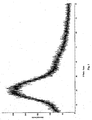
- Fig. 1 is powder X-ray diffraction pattern of the compound 2a obtained in Example 1 of the present invention.
- Example 1 Preparation of compound 2a wherein Np repesents and P 1 and P 2 are both PNB
- FIG. 1 is powder X-ray diffraction pattern of the product.
- H-NMR (DMSO-d 6 ) ⁇ 1.18 (d, 3H) ; 1.20 (d, 3H) : 1.95 (m, 1H) ; 2.81 (m, 1H) ; 3.18-3.47 (m, 3H) ; 3.60-4.50 (m, 6H) ; 5.04-5.44 (m, 5H) ; 7.30-8.30 (m, 12H) ; 10.27 (d, 1H) MS : 788.9 (M-1), 812.7 (M+Na) .
- Example 2 Using the preparation method of Example 1, except that carbapenem parent nucleus 3 and the side chain of Ertapenem 4a(Np represents ) were used as the reactants, wherein P 1 and P 2 are both o-nitrobenzyl, p-methoxylbenzyl, allyl, 2,2,2-trichloroethyl, benzhydryl, trimethylsilyl and t-butyl.
- Table 1 The results of Examples 3-9 Number of example P 1 , P 2 Yield (%) Purity (by HPLC, %) MS (M-1) Description 3 o-nitrobenzyl 98.5 98.3 788.9 4 p-methoxylbenzyl 98.0 98.2 758.9 5 allyl 97.2 97.9 598.8 solid in amorphous form 6 2,2,2-trichloroeth yl 96.2 97.0 781..4 7 benzhydryl 96.5 96.8 851.1 8 trimethylsilyl 95.8 97.2 663.0 9 t-butyl 97.5 97.0 630.9
- Example 2 Using the preparation method of Example 1, except that the pH value of aqueous HCl solution was changed to 2, 2.5, 3, 3.5, 4.5, 5, 5.5 and 6, the results of the experiments are shown in table 2.
- Table 2 The results of Examples 10 ⁇ 17 Number of example pH value of aqueous HCl solution Product Weight (g) Yield (%) HPLC (by purity, %) Description 10 2 46.0 97.2 97.7 white or 11 2.5 46.4 98.1 98.0 off-white amorphous solid 12 3 46.5 98.3 98.4 13 3.5 46.6 98.5 98.3 14 4.5 46.4 98.1 98.1 15 5 46.0 97.2 97.5 16 5.5 45.7 96.6 97.0 17 6 45.2 96.2 96.0
- the pH value of 2 ⁇ 5 of aqueous HCl solution is the preferred concentration of acid, since the yield and purity of the products are both over 97%.
- the pH value of aqueous HCl solution is in the range of 2.5 to 4.5, the yield and purity of the products are both over 98%.
- Example 3 The results of Examples 18 ⁇ 22 Number of example aqueous acid sotion Product Weight (g) Yield (%) HPLC (by purity, %) Description 18 H 2 SO 4 46.3 97.9 98.2 white or off-white amorphous solid 19 H 3 PO 4 46.1 97.5 98.0 20 NaH 2 PO 4 46.2 97.7 97.9 21 acetic acid 46.0 97.2 97.6 22 p-toluenesulfonic acid 45.8 96.8 96.6
- DIPEA diisopropylethylamine
- Comparative example 2 experimental result of example 3 of WO2008062279 8.3g of the side chain of Ertapenem 4a (Np represents and P 2 is PNB) was dissolved in 30mL DMF, to which 10g of carbapenem parent nucleus 3 (P 1 is PNB) was added. To the reaction mixture, 5.4g of diisopropylethylamine (DIPEA) was added at -30 °C and stirred. Upon completion of reaction, the reaction mixture was poured into water and stirred. The product adhered to conglobation. After filtered under reduced pressure, the solid obtained was difficult to wash. The solid was dried and determined to find the purity is 86% (by HPLC). Recrystallization was performed using one or more kinds of solvent system such as ester, ketone, halohydrocarbon, alkane, aromatic hydrocarbon, alcohol, ether, non-protonic solvent and water, and no solid was precipitated.
- solvent system such as ester, ketone, halohydrocarbon, alkane
Landscapes
- Chemical & Material Sciences (AREA)
- Organic Chemistry (AREA)
- Health & Medical Sciences (AREA)
- General Health & Medical Sciences (AREA)
- Public Health (AREA)
- Veterinary Medicine (AREA)
- Medicinal Chemistry (AREA)
- Animal Behavior & Ethology (AREA)
- Life Sciences & Earth Sciences (AREA)
- Pharmacology & Pharmacy (AREA)
- Oncology (AREA)
- Nuclear Medicine, Radiotherapy & Molecular Imaging (AREA)
- Communicable Diseases (AREA)
- Chemical Kinetics & Catalysis (AREA)
- General Chemical & Material Sciences (AREA)
- Epidemiology (AREA)
- Nitrogen Condensed Heterocyclic Rings (AREA)
- Pharmaceuticals Containing Other Organic And Inorganic Compounds (AREA)
Description
- The present invention relates to an intermediate of Ertapenem, and a composition comprising the same and preparation methods thereof.
- Ertapenem of formula (1) has chemical name (4R,5R,6S)-3-[(3S,5S) -5-[(3-carboxyphenyl)amino]formyl]-pyrrolidine-3-yl]thio-6-[(1R)-1-hydro xyethy]-4-methyl-7-oxo-1-azabicyclo[3.2.0]hept-2-ene-2-carboxylate, which is a new carbapenem antibiotic joint developed by Merck and Astrazeneca, and has good antibacterial activity against gram-positive bacteria and gram-negative bacterium.

- Ertapenem is obtained by deprotection of the intermediate of Ertapenem of formula (2).


-
Compound 2 is typically prepared by condensing the carbapenem parent nucleus 3 with the side chain of Ertapenem 4 in the presence of base. The synthesis route is shown in Scheme 1:
-
US 5,478,820A disclosescompound 2, wherein P1, P2 and P3 are all allyl, orcompound 2 wherein P1 and P2 are p-nitrobenzyl (referred to as PNB hereinafter) and P3 is allyl, and their preparation methods. -
US 6504027 B1 provides a one-pot-process for producing Ertapenem sodium, which comprises condensing the carbapenem parent nucleus 3 (P1 is PNB) with the side chain of Ertapenem 4 (Np is
WO 02/057266 WO 03/026572 -
WO 98/02439 compound 2 wherein P1 and P2 are both PNB and P3 is H, which comprises condensing the carbapenem parent nucleus 3 (P1 is PNB)with the side chain of Ertapenem 4 ( P2 is PNB, and P3 is H) in the presence of base such as diisopropylamine with a conversion rate greater than 98%. But the aftertreatment and products obtained were not reported therein. -
WO 2008/062279 provides a process for producingcompound 2 wherein P1 and P2 are both PNB and P3 is H or Na+. For the aftertreatment ofcompound 2 with P3 being H, the reaction mixture was poured into buffer solution (pH=7) or water, or a mixture of buffer solution (pH=7) (or water) with ethyl acetate, andcompound 2 was obtained after subsequent treatment. For the former situation, it is readily to bring about adhesion of the product and result in difficulties in aftertreatment and a poor purity (below 90%) of the product; for the latter situation, the product can not be obtained in form of solid and the process went against environmental protection due to the use of organic solvent. This application doesn't provide the physicochemical properties of the product, nor perform structure identification of the product. This application also reports a process for producingcompound 2 with P3 being Na+ and amorphous form thereof. The introduction of sodium source results in increase of total amount of inorganic salts in subsequent reactions and thus the aftertreatment is not readily to be performed, which goes against the crystallization of product. - Consequently, there is no report on the physicochemical properties of
compound 2 with P3 being H in prior art, andcompound 2 with P3 being H can not be obtained in a high purity by the prior art. In other words, using the prior art,compound 2 with P3 being H can not be obtained thereby structure identification and physicochemical properties measurement can be performed. - In the studies on Ertapenem, it is surprising that the inventors obtained an intermediate of Ertapenem of formula 2a in amorphous form, which has a high purity and good storage stability, and the preparation method used is easy and good for industrialization.
- Accordingly, in one aspect, the present invention provides an intermediate of Ertapenem of formula 2a, preferably, an intermediate of Ertapenem of formula 2a in amorphous form:


- The carboxyl protecting group is selected from the group consisting of allyl or substituted allyl; benzyl or substituted benzyl; substituted ethyl; substituted silyl; methyl substituted by an aromatic ring; phenyl or substituted phenyl; acetonyl; t-butyl and other suitable carboxyl protecting group known by the skilled in the art.
- Preferably, substituted allyl is 2-chloro allyl.
- Preferably, substituted benzyl is selected from benzyl substituted by nitro and benzyl substituted by methoxyl.
- Preferably, benzyl substituted by nitro is p-nitrobenzyl.
- Preferably, substituted ethyl is selected from 2,2,2-trichloroethyl, 2-bromo ethyl and 2-(trimethylsilyl)ethyl.
- Preferably, methyl substituted by aromatic ring is selected from 2-menaphthyl, benzhydryl, trityl and 4-pyridyl methyl.
- Preferably, substituted silyl is selected from trimethylsilyl, t-butyl-dimethylsilyl and t-butyl-diphenylsilyl.
- Preferably, substituted phenyl is p-methyl phenyl.
- Preferably, the intermediate of Ertapenem of formula 2a includes:
- p-nitrobenzyl (4R,5R,6S)-3-[(3S,5S)-5-[(3-carboxyphenyl)carbamoyl]-N -(p-nitrobenzyloxycarbonyl-pyrrolidine-3-yl]thio-6-[(1R)-1-hydroxyethy]-4 -methyl-7-oxo-1-azabicyclo[3.2.0]hept-2-ene-2-carboxylate,
- p-nitrobenzyl (4R,5R,6S)-3-[(3S,5S)-5-[(3-carboxyphenyl) carbamoyl]-pyrrolidine hydrochloride-3-yl]thio-6-[(1R)-1-hydroxyethy]-4-methyl-7-oxo-1-azabicyclo [3.2.0]hept-2-ene-2-carboxylate,
- o-nitrobenzyl (4R,5R,6S)-3-[(3S,5S)-5-[(3-carboxyphenyl)carbamoyl]-N-(o-nitrobenzyloxy)carbonyl-pyrrolidine-3-yl]thio-6-[(1R)-1-hydroxyethy]-4 -methyl-7-oxo-1-azabicyclo[3.2.0]hept-2-ene-2-carboxylate,
- p-methoxybenzyl (4R,5R,6S)-3-[(3S,5S)-5-[(3-carboxyphenyl)carbamoyl]-N-(p-methoxybenzyloxycarbonyl-pyrrolidine-3-yl]thio-6-[(1R)-1-hydroxye thy]-4-methyl-7-oxo-1-azabicyclo[3.2.0]hept-2-ene-2-carboxylate,
- allylmethyl (4R,5R,6S)-3-[(3S,5S)-5-[(3-carboxyphenyl)carbamoyl]-N-(allyloxycarbonyl-pyrrolidine-3-yl)thio-6-[(1R)-1-hydroxyethy]-4-methyl-7 -oxo-1-azabicyclo[3.2.0]hept-2-ene-2-carboxylate,
- 2,2,2-trichloroethyl (4R,5R,6S)-3-[(3S,5S)-5-[(3-carboxyphenyl) carbamoyl]-N-(2,2,2-trichloroethyloxycarbonyl-pyrrolidine-3-yl)thio-6-[(1 R)-1-hydroxyethy]-4-methyl-7-oxo-1-azabicyclo[3.2.0]hept-2-ene-2-carboxyl ate,
- benzhydryl (4R,5R,6S)-3-[(3S,5S)-5-[(3-carboxyphenyl)carbamoyl]-N-(benzhydryloxycarbonyl-pyrrolidine-3-yl)thio-6-[(1R)-1-hydroxyethy]-4-m ethyl-7-oxo-1-azabicyclo[3.2.0]hept-2-ene-2-carboxylate,
- trimethylsilyl (4R,5R,6S)-3-[(3S,5S)-5-[(3-carboxyphenyl)carbamoyl]-N -(trimethylsilyloxycarbonyl-pyrrolidine-3-yl)thio-6-[(1R)-1-hydroxyethy]-4 -methyl-7-oxo-1-azabicyclo[3.2.0]hept-2-ene-2-carboxylate,
- t-butyl (4R,5R,6S)-3-[(3S,5S)-5-[(3-carboxyphenyl)carbamoyl]-N-(t-butyloxycarbonyl-pyrrolidine-3-yl)thio-6-[(1R)-1-hydroxyethy]-4-methyl -7-oxo-1-azabicyclo[3.2.0]hept-2-ene-2-carboxylate,
- More preferably, the intermediate of Ertapenem of formula 2a includes:
- p-nitrobenzyl (4R,5R,6S)-3-[(3S,5S)-5-[(3-carboxyphenyl)carbamoyl]-N-(4-nitrobenzyloxycarbonyl-pyrrolidine-3-yl]thio-6-[(1R)-1-hydroxyethy]-4-methyl-7-oxo-1-azabicyclo[3.2.0]hept-2-ene-2-carboxylate, and
- p-nitrobenzyl (4R,5R,6S)-3-[(3S,5S)-5-[(3-carboxyphenyl)carbamoyl]-pyrrolidine hydrochloride-3-yl]thio-6-[(1R)-1-hydroxyethy]-4-methyl-7-oxo-1-azabicyclo [3.2.0]hept-2-ene-2-carboxylate.
- In another aspect, the present invention provides a method for preparing intermediate of Ertapenem of formula 2a, particularly intermediate of Ertapenem of formula 2a in amorphous form. The method comprises condensing the carbapenem parent nucleus of formula 3 with the side chain of Ertapenem of formula 4a, characterized in that, when the reaction is finished, the reaction mixture is poured into an aqueous acid solution to yield compound of formula 2a as a solid.
- The side chain of Ertapenem of formula 4a according to the present invention has the following structure:


- The preparation of the carbapenem parent nucleus 3 is disclosed in, for example, J. Am. Chem. Soc. 1980, 102, 6161-6163.
- The preparation of the side chain of Ertapenem 4a is disclosed in, for example,
WO98/02439 - The acid is selected from an inorganic acid, an organic acid or any combination thereof, which exists in any suitable concentrations.
- Preferably, the inorganic acid is selected from hydrochloride, sulfuric acid, sulfurous acid, phosphoric acid, potassium dihydrogen phosphate, sodium dihydrogen phosphate, or any combination thereof.
- More preferably, the inorganic acid is selected from hydrochloride, sulfuric acid, phosphoric acid, sodium dihydrogen phosphate, or any combination thereof.
- In one preferable embodiment, the inorganic acid is hydrochloride.
- In one preferable embodiment, the inorganic acid is sulfuric acid.
- In one preferable embodiment, the inorganic acid is phosphoric acid.
- Preferably, the organic acid is selected from formic acid, acetic acid, propanoic acid, benzenesulfonic acid, p-toluenesulfonic acid, benzoic acid, oxalic acid, chloroacetic acid, trichloroacetic acid, trifluroacetic acid, or any combination thereof.
- More preferably, the organic acid is selected from acetic acid, p-toluenesulfonic acid, or any combination thereof.
- The pH value of the aqueous acid solution is 2∼6.
- Preferably, the pH value of the aqueous acid solution is 2∼5.
- More preferably, the pH value of the aqueous acid solution is 2.5∼4.5.
- Further preferably, the pH value of the aqueous acid solution is 2.5∼4.
- Most preferably, the pH value of the aqueous acid solution is pH 3∼4.
- In a further aspect, the present invention provides a composition, which comprising at least 95%, at least 96%, at least 97%, at least 98%, or at least 99% of the intermediate of Ertapenem of formula 2a, preferably, intermediate of Ertapenem of formula 2a in amorphous form, and the impurity as banlance. The impurity includes the unreacted side chain of Ertapenem of formula 4a, raw material and degradation products etc.
- For the method according to the present invention, in the aftertreatment, the solvent used is water, such that organic solvent is avoided and thus the method is economic and green; the product is obtained in the form of free acid, thereby reducing the introduction of inorganic salts and thus is good for treatment of the consequent reaction; the product is in amorphous form, and the solid has high purity and is free flowable and readily for storage, and is good for treatment of the subsequent deprotection reaction.
-
Fig. 1 is powder X-ray diffraction pattern of the compound 2a obtained in Example 1 of the present invention. - The invention will be further described in combination with examples below, which however do not limit the present invention.
-
- Instrument: Rigaku D/MAX 2550 X-Ray diffractometer
- Scan conditions: from 5° to 80°/ step length 0.02°/time spent 0.12 sec, Cu(40KV,150mA), I(max)282 (peak intensity for the strongest peak 1=282 )(counts per sec).
-
- Instrument: Agilent 1100 Series,
- Column: Gemini C18 (5µ, 250×4.6mm)
- Test conditions: wavelength:230nm; mobile phase: 0.05% phosphate aqueous solution / acetonitrile = 40:60 (v/v).
-
- Instrument: BRUKER AVANCE II500MHz NMR Analyzer
- Solvent: DMSO-d6
-
- Instrument: Applied Biosystems API4000 LC-MS,
- Test conditions: Positive ion ALL SCAN MODE (ESI ion source), MW range: 100-1500 amu, curtain gas (CUR): 25L/min, shealthgas (Gs1): 35 L/min, aux gas (Gs2): 45L/min, Ion Source (IS) voltage: 5000V, ion source temperature: 500°C, Declustering Potential (DP): 40V, and ColliSion Cell Entrance Potential (EP): 10V.
- Mobile phase: 2mM ammonium acetate aqueous solution containing 0.5% of formic acid: methanol (50:50, V/V).
- Unless indicated specifically, the above tests were performed according to the recommended program of manufacturer.
- Example 1: Preparation of compound 2a wherein Np repesents
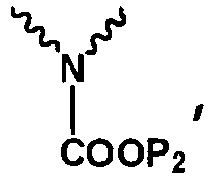
- 36.0g (0.0605mmol) of carbapenem parent nucleus 3 (P1 is PNB) was dissolved in 300ml DMF, then 26.7g (0.0599mol) of the side chain of Ertapenem 4a (P2 is PNB) was added. To the reaction mixture, 9.4g (0.0727mol) of N,N-diisopropylethylamine was added slowly at-35 °C. The reaction was performed under stirring. Upon completion of reaction, the reaction mixture was poured into aqueous HCl solution (pH=4) filtered, 46.6g of solid was obtained as white or off-white powder. Purity: 98.2% (by HPLC). Yield: 98.5%. The obtained solid was analyzed by powder x-ray diffraction and the results showed the solid was in amorphous form.
Figure 1 is powder X-ray diffraction pattern of the product. H-NMR (DMSO-d6) :δ1.18 (d, 3H) ; 1.20 (d, 3H) : 1.95 (m, 1H) ; 2.81 (m, 1H) ; 3.18-3.47 (m, 3H) ; 3.60-4.50 (m, 6H) ; 5.04-5.44 (m, 5H) ; 7.30-8.30 (m, 12H) ; 10.27 (d, 1H) MS : 788.9 (M-1), 812.7 (M+Na) . - Example 2: Preparation of compound 2a wherein Np represents

- Using the preparation method of Example 1, except that carbapenem parent nucleus of formula 3 (P1 represents PNB) and the side chain of Ertapenem 4a(Np represents

- MS : 645.2 (M-1), 669.1 (M+Na) .
- Examples 3∼9: preparation of compound 2a wherein Np represents

- Using the preparation method of Example 1, except that carbapenem parent nucleus 3 and the side chain of Ertapenem 4a(Np represents
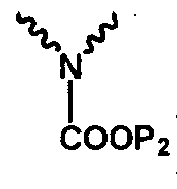
Table 1 The results of Examples 3-9 Number of example P1, P2 Yield (%) Purity (by HPLC, %) MS (M-1) Description 3 o-nitrobenzyl 98.5 98.3 788.9 4 p-methoxylbenzyl 98.0 98.2 758.9 5 allyl 97.2 97.9 598.8 solid in amorphous form 6 2,2,2-trichloroeth yl 96.2 97.0 781..4 7 benzhydryl 96.5 96.8 851.1 8 trimethylsilyl 95.8 97.2 663.0 9 t-butyl 97.5 97.0 630.9 - Conclusion: Using the preparation method of the present invention, condensation of the carbapenem parent nucleus 3 and the side chain of Ertapenem 4a having various protecting groups can obtain solid in amorphous form.
- Examples 10∼17: the effect of concentration of acid on the product
- Using the preparation method of Example 1, except that the pH value of aqueous HCl solution was changed to 2, 2.5, 3, 3.5, 4.5, 5, 5.5 and 6, the results of the experiments are shown in table 2.
Table 2 The results of Examples 10∼17 Number of example pH value of aqueous HCl solution Product Weight (g) Yield (%) HPLC (by purity, %) Description 10 2 46.0 97.2 97.7 white or 11 2.5 46.4 98.1 98.0 off-white amorphous solid 12 3 46.5 98.3 98.4 13 3.5 46.6 98.5 98.3 14 4.5 46.4 98.1 98.1 15 5 46.0 97.2 97.5 16 5.5 45.7 96.6 97.0 17 6 45.2 96.2 96.0 - Conclusion: The pH value of 2∼5 of aqueous HCl solution is the preferred concentration of acid, since the yield and purity of the products are both over 97%. When the pH value of aqueous HCl solution is in the range of 2.5 to 4.5, the yield and purity of the products are both over 98%.
- Examples 18~22 The effect of the kind of acids on the product
- Using the preparation method of Example 1, except that sulfuric acid, phosphoric acid, sodium dihydrogen phosphate, acetic acid and p-toluenesulfonic acid were used instead of hydrochloride, the results were showed in table3.
Table 3 The results of Examples 18~22 Number of example aqueous acid sotion Product Weight (g) Yield (%) HPLC (by purity, %) Description 18 H2SO4 46.3 97.9 98.2 white or off-white amorphous solid 19 H3PO4 46.1 97.5 98.0 20 NaH2PO4 46.2 97.7 97.9 21 acetic acid 46.0 97.2 97.6 22 p-toluenesulfonic acid 45.8 96.8 96.6 - Conclusion: Different kinds of inorganic acid and organic acid can be used in the invention, and the yield and purity of the obtained products are over 96%.
- Comparative examples: experimental results the examples of compound 2a (P1 and P2 are both PNB) in related patent
WO2008062279 . - Comparative example 1: experimental result of example 1 of
WO2008062279 8.3g of the side chain of Ertapenem 4a (Np represents
- Comparative example 2: experimental result of example 3 of
WO2008062279 8.3g of the side chain of Ertapenem 4a (Np represents
- Conclusion: it can be known from the results of comparative examples 1 and 2, by the preparation methods disclosed in the examples 1 and 3 of
WO2008062279 , no solid could be obtained, or the obtained solid has a poor purity which is not suitable for storage, and can not be used for structure identification.
Claims (13)
- An intermediate of Ertapenem of formula 2a in amorphous form:


P1 and P2 represent carboxyl protecting groups. - The intermediate of Ertapenem according to claim 1, wherein the carboxyl protecting group is selected from the group consisting of allyl or substituted allyl, preferably 2-chloro allyl; benzyl or substituted benzyl, preferably benzyl substituted by nitro and benzyl substituted by methoxyl; substituted ethyl, preferably 2,2,2-trichloroethyl, 2-bromo ethyl, 2-trimethylsilyl ethyl; substituted silyl, preferably trimethylsilyl, t-butyl-dimethylsilyl, t-butyl-diphenylsilyl; methyl substituted by aromatic ring, preferably 2-menaphthyl, benzhydryl, trityl, 4-pyridyl methyl; phenyl or substituted phenyl, preferably p-methyl phenyl; acetonyl and t-butyl.
- The intermediate of Ertapenem according to claim 1, wherein Np represents

- The intermediate of Ertapenem according to claim 1, wherein Np represents

- A method for preparing the intermediate of Ertapenem of formula 2a:


comprising condensing the carbapenem parent nucleus of formula 3
with the side chain of Ertapenem of formula 4a,

characterized in that, when the reaction is finished, the reaction mixture is poured into an aqueous acid solution. - The method according to claim 5, characterized in that, the acid is selected from an inorganic acid, an organic acid or a combination thereof, and said acid is presented in any suitable concentration.
- The method according to claim 6, characterized in that, the acid is selected from hydrochloride, sulfuric acid, sulfurous acid, phosphoric acid, potassium dihydrogen phosphate, sodium dihydrogen phosphate, formic acid, acetic acid, propanoic acid, benzenesulfonic acid, p-toluenesulfonic acid, benzoic acid, oxalic acid, chloroacetic acid, trichloroacetic acid, trifluroacetic acid.
- The method according to claim 6, characterized in that, the acid is selected from hydrocholoride, sulfuric acid , phosphoric acid, sodium dihydrogen phosphate, acetic acid and p-toluenesulfonic acid.
- The method according to claim 6, characterized in that, the acid is hydrocholoride.
- The method according to claim 6, characterized in that, the acid is sulfuric acid.
- The method according to claim 6, characterized in that, the acid is phosphoric acid.
- The method according to claim 6, characterized in that, the pH value of the aqueous acid solution is 2∼6, preferably 2∼5, more preferably 2.5∼4.5, further more preferably 2.5∼4, most preferably 3∼4.
- A composition comprising at least 95%, at least 96%, at least 97%, or at least 98% of the intermediate of Ertapenem of formula 2a according to claim 1, together with impurity as balance.
Applications Claiming Priority (2)
| Application Number | Priority Date | Filing Date | Title |
|---|---|---|---|
| CN200910136995 | 2009-04-30 | ||
| PCT/CN2010/000607 WO2010124531A1 (en) | 2009-04-30 | 2010-04-30 | Intermediates of carbapenem, compositions containing them and preparation methods thereof |
Publications (3)
| Publication Number | Publication Date |
|---|---|
| EP2426131A1 EP2426131A1 (en) | 2012-03-07 |
| EP2426131A4 EP2426131A4 (en) | 2013-11-06 |
| EP2426131B1 true EP2426131B1 (en) | 2016-08-17 |
Family
ID=43018357
Family Applications (1)
| Application Number | Title | Priority Date | Filing Date |
|---|---|---|---|
| EP10769220.4A Active EP2426131B1 (en) | 2009-04-30 | 2010-04-30 | Intermediates of carbapenem, compositions containing them and preparation methods thereof |
Country Status (8)
| Country | Link |
|---|---|
| US (1) | US9388184B2 (en) |
| EP (1) | EP2426131B1 (en) |
| JP (2) | JP2012525339A (en) |
| KR (1) | KR101694506B1 (en) |
| CN (1) | CN101875665B (en) |
| IL (1) | IL215980A (en) |
| RU (1) | RU2575979C2 (en) |
| WO (1) | WO2010124531A1 (en) |
Families Citing this family (7)
| Publication number | Priority date | Publication date | Assignee | Title |
|---|---|---|---|---|
| WO2008062279A2 (en) * | 2006-11-20 | 2008-05-29 | Orchid Chemicals & Pharmaceuticals Limited | An improved process for the preparation of carbapenem antibiotic |
| US8729260B2 (en) * | 2010-05-19 | 2014-05-20 | Savior Lifetec Corporation | Process for the preparation of carbapenem using cabapenem intermediates and recovery of cabapenem |
| CN102690266B (en) * | 2011-09-02 | 2014-06-18 | 深圳市海滨制药有限公司 | Method for preparing ertapenem sodium |
| EP2906561A1 (en) * | 2012-10-12 | 2015-08-19 | Sandoz AG | Preparation of ertapenem intermediates |
| CN103772389B (en) * | 2012-10-25 | 2015-12-16 | 浙江医药股份有限公司新昌制药厂 | A kind of preparation method of ertapenem intermediate |
| CN104788452B (en) * | 2014-01-16 | 2017-04-26 | 浙江九洲药业股份有限公司 | Crystal form and preparation process of double-protection ertapenem |
| EP4047000B1 (en) * | 2019-10-15 | 2024-12-04 | Asymchem Laboratories (Tianjin) Co., Ltd. | Continuous post-treatment method and device for penem compound |
Family Cites Families (11)
| Publication number | Priority date | Publication date | Assignee | Title |
|---|---|---|---|---|
| GB9202298D0 (en) | 1992-02-04 | 1992-03-18 | Ici Plc | Antibiotic compounds |
| TW513430B (en) | 1996-07-12 | 2002-12-11 | Merck & Co Inc | Process for synthesizing carbapenem antibiotics |
| AU709409B2 (en) | 1996-07-15 | 1999-08-26 | Bristol-Myers Squibb Company | Thiadioxobenzodiazepine inhibitors of farnesyl protein transferase |
| US5872250A (en) * | 1997-07-30 | 1999-02-16 | Merck & Co., Inc. | Process for synthesizing carbapenem antibiotics |
| US6504027B1 (en) | 1998-03-02 | 2003-01-07 | Merck & Co., Inc. | Decarboxylation process for synthesizing carbapenem antibiotics |
| AR035728A1 (en) | 2001-01-16 | 2004-07-07 | Merck & Co Inc | PERFECTED PROCESS FOR CARBAPENEM SYNTHESIS |
| USRE40794E1 (en) | 2001-09-26 | 2009-06-23 | Merck & Co., Inc. | Crystalline forms of carbapenem antibiotics and methods of preparation |
| WO2006035300A2 (en) * | 2004-09-30 | 2006-04-06 | Ranbaxy Laboratories Limited | A process for the preparation of meropenem |
| EP1934221A4 (en) * | 2005-09-15 | 2011-10-26 | Orchid Chemicals & Pharm Ltd | An improved process for the preparation of beta-lactam antibiotic |
| WO2008062279A2 (en) * | 2006-11-20 | 2008-05-29 | Orchid Chemicals & Pharmaceuticals Limited | An improved process for the preparation of carbapenem antibiotic |
| CN101362760B (en) | 2007-08-07 | 2010-12-15 | 山东轩竹医药科技有限公司 | 1beta-methyl carbapenem compound |
-
2010
- 2010-04-30 JP JP2012507577A patent/JP2012525339A/en active Pending
- 2010-04-30 CN CN2010101739864A patent/CN101875665B/en active Active
- 2010-04-30 WO PCT/CN2010/000607 patent/WO2010124531A1/en not_active Ceased
- 2010-04-30 US US13/266,947 patent/US9388184B2/en active Active
- 2010-04-30 RU RU2011148651/04A patent/RU2575979C2/en active
- 2010-04-30 EP EP10769220.4A patent/EP2426131B1/en active Active
- 2010-04-30 KR KR1020117027994A patent/KR101694506B1/en active Active
-
2011
- 2011-10-27 IL IL215980A patent/IL215980A/en active IP Right Grant
-
2015
- 2015-07-16 JP JP2015142277A patent/JP6085339B2/en active Active
Also Published As
| Publication number | Publication date |
|---|---|
| WO2010124531A1 (en) | 2010-11-04 |
| US9388184B2 (en) | 2016-07-12 |
| CN101875665B (en) | 2013-02-06 |
| EP2426131A1 (en) | 2012-03-07 |
| RU2011148651A (en) | 2013-06-10 |
| KR20120012973A (en) | 2012-02-13 |
| IL215980A (en) | 2015-04-30 |
| EP2426131A4 (en) | 2013-11-06 |
| CN101875665A (en) | 2010-11-03 |
| JP2012525339A (en) | 2012-10-22 |
| JP2016000740A (en) | 2016-01-07 |
| RU2575979C2 (en) | 2016-02-27 |
| KR101694506B1 (en) | 2017-01-10 |
| JP6085339B2 (en) | 2017-02-22 |
| US20120095209A1 (en) | 2012-04-19 |
| IL215980A0 (en) | 2012-01-31 |
Similar Documents
| Publication | Publication Date | Title |
|---|---|---|
| EP2426131A1 (en) | Intermediates of carbapenem, compositions containing them and preparation methods thereof | |
| EP2388261B1 (en) | Improved process for the preparation of carbapenem using carbapenem intermediates and recovery of carbapenem | |
| US20120065392A1 (en) | Method for preparing meropenem using zinc powder | |
| US6642377B1 (en) | Process for the preparation of basic antibiotic-inorganic acid addition salts and intermediate oxalates | |
| US10988438B2 (en) | Process for the preparation of a nitric oxide donating prostaglandin analogue | |
| US20020095034A1 (en) | Imipenem production process | |
| US9169258B2 (en) | Doripenem intermediate compound, preparation process therefor and use thereof, and preparation process for doripenem | |
| EP1926732B1 (en) | A process for the preparation of carbapenem compounds | |
| EP1395587B1 (en) | Process for the preparation of imipenem | |
| WO2006117763A2 (en) | A process for the preparation of doripenem | |
| US20110288289A1 (en) | Preparation of Carbapenem Intermediate and Their Use | |
| KR101142757B1 (en) | Process for preparing meropenem trihydrate | |
| US20170166570A1 (en) | Preparation of ertapenem intermediates | |
| EP1852436A1 (en) | Process for production of carbapenem derivative and crystalline intermediate therefor | |
| KR100781821B1 (en) | Method for preparing carbapenem compound | |
| KR100848751B1 (en) | Method of making imipenem | |
| KR101028689B1 (en) | Novel crystalline 3-mercapto-1- (acetimidoyl) pyrrolidine derivatives and preparation method thereof | |
| EP1862456A1 (en) | Process for producing carbapenem derivative having 1-alkylpyrrolidine structure | |
| HK1108687A (en) | Process for producing carbapenem derivative having 1-alkylpyrrolidine structure |
Legal Events
| Date | Code | Title | Description |
|---|---|---|---|
| PUAI | Public reference made under article 153(3) epc to a published international application that has entered the european phase |
Free format text: ORIGINAL CODE: 0009012 |
|
| 17P | Request for examination filed |
Effective date: 20111130 |
|
| AK | Designated contracting states |
Kind code of ref document: A1 Designated state(s): AT BE BG CH CY CZ DE DK EE ES FI FR GB GR HR HU IE IS IT LI LT LU LV MC MK MT NL NO PL PT RO SE SI SK SM TR |
|
| DAX | Request for extension of the european patent (deleted) | ||
| A4 | Supplementary search report drawn up and despatched |
Effective date: 20131008 |
|
| RIC1 | Information provided on ipc code assigned before grant |
Ipc: C07D 477/20 20060101AFI20131001BHEP |
|
| 17Q | First examination report despatched |
Effective date: 20140630 |
|
| GRAP | Despatch of communication of intention to grant a patent |
Free format text: ORIGINAL CODE: EPIDOSNIGR1 |
|
| INTG | Intention to grant announced |
Effective date: 20160210 |
|
| GRAS | Grant fee paid |
Free format text: ORIGINAL CODE: EPIDOSNIGR3 |
|
| GRAA | (expected) grant |
Free format text: ORIGINAL CODE: 0009210 |
|
| RAP1 | Party data changed (applicant data changed or rights of an application transferred) |
Owner name: CSPC ZHONGQI PHARMACEUTICAL TECHNOLOGY (SHIJIAZHUA |
|
| RIN1 | Information on inventor provided before grant (corrected) |
Inventor name: YU, XIUQIN Inventor name: LV, JIAN Inventor name: SHI, YING Inventor name: ZHAO, XUEBIN Inventor name: XIE, ZAN Inventor name: LI, KUN |
|
| AK | Designated contracting states |
Kind code of ref document: B1 Designated state(s): AT BE BG CH CY CZ DE DK EE ES FI FR GB GR HR HU IE IS IT LI LT LU LV MC MK MT NL NO PL PT RO SE SI SK SM TR |
|
| REG | Reference to a national code |
Ref country code: GB Ref legal event code: FG4D |
|
| REG | Reference to a national code |
Ref country code: CH Ref legal event code: EP |
|
| REG | Reference to a national code |
Ref country code: IE Ref legal event code: FG4D |
|
| REG | Reference to a national code |
Ref country code: AT Ref legal event code: REF Ref document number: 820965 Country of ref document: AT Kind code of ref document: T Effective date: 20160915 |
|
| REG | Reference to a national code |
Ref country code: DE Ref legal event code: R096 Ref document number: 602010035639 Country of ref document: DE |
|
| REG | Reference to a national code |
Ref country code: NL Ref legal event code: MP Effective date: 20160817 |
|
| REG | Reference to a national code |
Ref country code: LT Ref legal event code: MG4D |
|
| REG | Reference to a national code |
Ref country code: AT Ref legal event code: MK05 Ref document number: 820965 Country of ref document: AT Kind code of ref document: T Effective date: 20160817 |
|
| PG25 | Lapsed in a contracting state [announced via postgrant information from national office to epo] |
Ref country code: FI Free format text: LAPSE BECAUSE OF FAILURE TO SUBMIT A TRANSLATION OF THE DESCRIPTION OR TO PAY THE FEE WITHIN THE PRESCRIBED TIME-LIMIT Effective date: 20160817 Ref country code: HR Free format text: LAPSE BECAUSE OF FAILURE TO SUBMIT A TRANSLATION OF THE DESCRIPTION OR TO PAY THE FEE WITHIN THE PRESCRIBED TIME-LIMIT Effective date: 20160817 Ref country code: NO Free format text: LAPSE BECAUSE OF FAILURE TO SUBMIT A TRANSLATION OF THE DESCRIPTION OR TO PAY THE FEE WITHIN THE PRESCRIBED TIME-LIMIT Effective date: 20161117 Ref country code: LT Free format text: LAPSE BECAUSE OF FAILURE TO SUBMIT A TRANSLATION OF THE DESCRIPTION OR TO PAY THE FEE WITHIN THE PRESCRIBED TIME-LIMIT Effective date: 20160817 Ref country code: NL Free format text: LAPSE BECAUSE OF FAILURE TO SUBMIT A TRANSLATION OF THE DESCRIPTION OR TO PAY THE FEE WITHIN THE PRESCRIBED TIME-LIMIT Effective date: 20160817 Ref country code: IT Free format text: LAPSE BECAUSE OF FAILURE TO SUBMIT A TRANSLATION OF THE DESCRIPTION OR TO PAY THE FEE WITHIN THE PRESCRIBED TIME-LIMIT Effective date: 20160817 |
|
| PG25 | Lapsed in a contracting state [announced via postgrant information from national office to epo] |
Ref country code: PL Free format text: LAPSE BECAUSE OF FAILURE TO SUBMIT A TRANSLATION OF THE DESCRIPTION OR TO PAY THE FEE WITHIN THE PRESCRIBED TIME-LIMIT Effective date: 20160817 Ref country code: ES Free format text: LAPSE BECAUSE OF FAILURE TO SUBMIT A TRANSLATION OF THE DESCRIPTION OR TO PAY THE FEE WITHIN THE PRESCRIBED TIME-LIMIT Effective date: 20160817 Ref country code: SE Free format text: LAPSE BECAUSE OF FAILURE TO SUBMIT A TRANSLATION OF THE DESCRIPTION OR TO PAY THE FEE WITHIN THE PRESCRIBED TIME-LIMIT Effective date: 20160817 Ref country code: AT Free format text: LAPSE BECAUSE OF FAILURE TO SUBMIT A TRANSLATION OF THE DESCRIPTION OR TO PAY THE FEE WITHIN THE PRESCRIBED TIME-LIMIT Effective date: 20160817 Ref country code: GR Free format text: LAPSE BECAUSE OF FAILURE TO SUBMIT A TRANSLATION OF THE DESCRIPTION OR TO PAY THE FEE WITHIN THE PRESCRIBED TIME-LIMIT Effective date: 20161118 Ref country code: LV Free format text: LAPSE BECAUSE OF FAILURE TO SUBMIT A TRANSLATION OF THE DESCRIPTION OR TO PAY THE FEE WITHIN THE PRESCRIBED TIME-LIMIT Effective date: 20160817 Ref country code: PT Free format text: LAPSE BECAUSE OF FAILURE TO SUBMIT A TRANSLATION OF THE DESCRIPTION OR TO PAY THE FEE WITHIN THE PRESCRIBED TIME-LIMIT Effective date: 20161219 |
|
| PG25 | Lapsed in a contracting state [announced via postgrant information from national office to epo] |
Ref country code: EE Free format text: LAPSE BECAUSE OF FAILURE TO SUBMIT A TRANSLATION OF THE DESCRIPTION OR TO PAY THE FEE WITHIN THE PRESCRIBED TIME-LIMIT Effective date: 20160817 Ref country code: RO Free format text: LAPSE BECAUSE OF FAILURE TO SUBMIT A TRANSLATION OF THE DESCRIPTION OR TO PAY THE FEE WITHIN THE PRESCRIBED TIME-LIMIT Effective date: 20160817 |
|
| REG | Reference to a national code |
Ref country code: FR Ref legal event code: PLFP Year of fee payment: 8 |
|
| REG | Reference to a national code |
Ref country code: DE Ref legal event code: R097 Ref document number: 602010035639 Country of ref document: DE |
|
| PG25 | Lapsed in a contracting state [announced via postgrant information from national office to epo] |
Ref country code: DK Free format text: LAPSE BECAUSE OF FAILURE TO SUBMIT A TRANSLATION OF THE DESCRIPTION OR TO PAY THE FEE WITHIN THE PRESCRIBED TIME-LIMIT Effective date: 20160817 Ref country code: SM Free format text: LAPSE BECAUSE OF FAILURE TO SUBMIT A TRANSLATION OF THE DESCRIPTION OR TO PAY THE FEE WITHIN THE PRESCRIBED TIME-LIMIT Effective date: 20160817 Ref country code: CZ Free format text: LAPSE BECAUSE OF FAILURE TO SUBMIT A TRANSLATION OF THE DESCRIPTION OR TO PAY THE FEE WITHIN THE PRESCRIBED TIME-LIMIT Effective date: 20160817 Ref country code: BE Free format text: LAPSE BECAUSE OF FAILURE TO SUBMIT A TRANSLATION OF THE DESCRIPTION OR TO PAY THE FEE WITHIN THE PRESCRIBED TIME-LIMIT Effective date: 20160817 Ref country code: BG Free format text: LAPSE BECAUSE OF FAILURE TO SUBMIT A TRANSLATION OF THE DESCRIPTION OR TO PAY THE FEE WITHIN THE PRESCRIBED TIME-LIMIT Effective date: 20161117 Ref country code: SK Free format text: LAPSE BECAUSE OF FAILURE TO SUBMIT A TRANSLATION OF THE DESCRIPTION OR TO PAY THE FEE WITHIN THE PRESCRIBED TIME-LIMIT Effective date: 20160817 |
|
| PLBE | No opposition filed within time limit |
Free format text: ORIGINAL CODE: 0009261 |
|
| STAA | Information on the status of an ep patent application or granted ep patent |
Free format text: STATUS: NO OPPOSITION FILED WITHIN TIME LIMIT |
|
| 26N | No opposition filed |
Effective date: 20170518 |
|
| PG25 | Lapsed in a contracting state [announced via postgrant information from national office to epo] |
Ref country code: SI Free format text: LAPSE BECAUSE OF FAILURE TO SUBMIT A TRANSLATION OF THE DESCRIPTION OR TO PAY THE FEE WITHIN THE PRESCRIBED TIME-LIMIT Effective date: 20160817 |
|
| REG | Reference to a national code |
Ref country code: CH Ref legal event code: PL |
|
| REG | Reference to a national code |
Ref country code: IE Ref legal event code: MM4A |
|
| PG25 | Lapsed in a contracting state [announced via postgrant information from national office to epo] |
Ref country code: MC Free format text: LAPSE BECAUSE OF FAILURE TO SUBMIT A TRANSLATION OF THE DESCRIPTION OR TO PAY THE FEE WITHIN THE PRESCRIBED TIME-LIMIT Effective date: 20160817 |
|
| PG25 | Lapsed in a contracting state [announced via postgrant information from national office to epo] |
Ref country code: LI Free format text: LAPSE BECAUSE OF NON-PAYMENT OF DUE FEES Effective date: 20170430 Ref country code: CH Free format text: LAPSE BECAUSE OF NON-PAYMENT OF DUE FEES Effective date: 20170430 Ref country code: LU Free format text: LAPSE BECAUSE OF NON-PAYMENT OF DUE FEES Effective date: 20170430 |
|
| REG | Reference to a national code |
Ref country code: FR Ref legal event code: PLFP Year of fee payment: 9 |
|
| PG25 | Lapsed in a contracting state [announced via postgrant information from national office to epo] |
Ref country code: IE Free format text: LAPSE BECAUSE OF NON-PAYMENT OF DUE FEES Effective date: 20170430 |
|
| PG25 | Lapsed in a contracting state [announced via postgrant information from national office to epo] |
Ref country code: MT Free format text: LAPSE BECAUSE OF NON-PAYMENT OF DUE FEES Effective date: 20170430 |
|
| PG25 | Lapsed in a contracting state [announced via postgrant information from national office to epo] |
Ref country code: HU Free format text: LAPSE BECAUSE OF FAILURE TO SUBMIT A TRANSLATION OF THE DESCRIPTION OR TO PAY THE FEE WITHIN THE PRESCRIBED TIME-LIMIT; INVALID AB INITIO Effective date: 20100430 |
|
| PG25 | Lapsed in a contracting state [announced via postgrant information from national office to epo] |
Ref country code: CY Free format text: LAPSE BECAUSE OF NON-PAYMENT OF DUE FEES Effective date: 20160817 |
|
| PG25 | Lapsed in a contracting state [announced via postgrant information from national office to epo] |
Ref country code: MK Free format text: LAPSE BECAUSE OF FAILURE TO SUBMIT A TRANSLATION OF THE DESCRIPTION OR TO PAY THE FEE WITHIN THE PRESCRIBED TIME-LIMIT Effective date: 20160817 |
|
| PG25 | Lapsed in a contracting state [announced via postgrant information from national office to epo] |
Ref country code: TR Free format text: LAPSE BECAUSE OF FAILURE TO SUBMIT A TRANSLATION OF THE DESCRIPTION OR TO PAY THE FEE WITHIN THE PRESCRIBED TIME-LIMIT Effective date: 20160817 |
|
| PG25 | Lapsed in a contracting state [announced via postgrant information from national office to epo] |
Ref country code: IS Free format text: LAPSE BECAUSE OF FAILURE TO SUBMIT A TRANSLATION OF THE DESCRIPTION OR TO PAY THE FEE WITHIN THE PRESCRIBED TIME-LIMIT Effective date: 20161217 |
|
| P01 | Opt-out of the competence of the unified patent court (upc) registered |
Effective date: 20230529 |
|
| PGFP | Annual fee paid to national office [announced via postgrant information from national office to epo] |
Ref country code: DE Payment date: 20250417 Year of fee payment: 16 |
|
| PGFP | Annual fee paid to national office [announced via postgrant information from national office to epo] |
Ref country code: GB Payment date: 20260325 Year of fee payment: 17 |
|
| PGFP | Annual fee paid to national office [announced via postgrant information from national office to epo] |
Ref country code: FR Payment date: 20260325 Year of fee payment: 17 |