EP2418099A2 - Non-pneumatic tire and wheel assembly - Google Patents
Non-pneumatic tire and wheel assembly Download PDFInfo
- Publication number
- EP2418099A2 EP2418099A2 EP11171435A EP11171435A EP2418099A2 EP 2418099 A2 EP2418099 A2 EP 2418099A2 EP 11171435 A EP11171435 A EP 11171435A EP 11171435 A EP11171435 A EP 11171435A EP 2418099 A2 EP2418099 A2 EP 2418099A2
- Authority
- EP
- European Patent Office
- Prior art keywords
- tire
- wheel
- tread
- body element
- pneumatic
- Prior art date
- Legal status (The legal status is an assumption and is not a legal conclusion. Google has not performed a legal analysis and makes no representation as to the accuracy of the status listed.)
- Granted
Links
Images



Classifications
-
- B—PERFORMING OPERATIONS; TRANSPORTING
- B29—WORKING OF PLASTICS; WORKING OF SUBSTANCES IN A PLASTIC STATE IN GENERAL
- B29D—PRODUCING PARTICULAR ARTICLES FROM PLASTICS OR FROM SUBSTANCES IN A PLASTIC STATE
- B29D30/00—Producing pneumatic or solid tyres or parts thereof
- B29D30/0061—Accessories, details or auxiliary operations not otherwise provided for
-
- B—PERFORMING OPERATIONS; TRANSPORTING
- B29—WORKING OF PLASTICS; WORKING OF SUBSTANCES IN A PLASTIC STATE IN GENERAL
- B29D—PRODUCING PARTICULAR ARTICLES FROM PLASTICS OR FROM SUBSTANCES IN A PLASTIC STATE
- B29D30/00—Producing pneumatic or solid tyres or parts thereof
- B29D30/02—Solid tyres ; Moulds therefor
-
- B—PERFORMING OPERATIONS; TRANSPORTING
- B60—VEHICLES IN GENERAL
- B60C—VEHICLE TYRES; TYRE INFLATION; TYRE CHANGING; CONNECTING VALVES TO INFLATABLE ELASTIC BODIES IN GENERAL; DEVICES OR ARRANGEMENTS RELATED TO TYRES
- B60C7/00—Non-inflatable or solid tyres
- B60C7/10—Non-inflatable or solid tyres characterised by means for increasing resiliency
- B60C7/107—Non-inflatable or solid tyres characterised by means for increasing resiliency comprising lateral openings
-
- B—PERFORMING OPERATIONS; TRANSPORTING
- B60—VEHICLES IN GENERAL
- B60C—VEHICLE TYRES; TYRE INFLATION; TYRE CHANGING; CONNECTING VALVES TO INFLATABLE ELASTIC BODIES IN GENERAL; DEVICES OR ARRANGEMENTS RELATED TO TYRES
- B60C7/00—Non-inflatable or solid tyres
- B60C7/10—Non-inflatable or solid tyres characterised by means for increasing resiliency
- B60C7/14—Non-inflatable or solid tyres characterised by means for increasing resiliency using springs
- B60C7/16—Non-inflatable or solid tyres characterised by means for increasing resiliency using springs of helical or flat coil form
- B60C7/18—Non-inflatable or solid tyres characterised by means for increasing resiliency using springs of helical or flat coil form disposed radially relative to wheel axis
-
- Y—GENERAL TAGGING OF NEW TECHNOLOGICAL DEVELOPMENTS; GENERAL TAGGING OF CROSS-SECTIONAL TECHNOLOGIES SPANNING OVER SEVERAL SECTIONS OF THE IPC; TECHNICAL SUBJECTS COVERED BY FORMER USPC CROSS-REFERENCE ART COLLECTIONS [XRACs] AND DIGESTS
- Y10—TECHNICAL SUBJECTS COVERED BY FORMER USPC
- Y10T—TECHNICAL SUBJECTS COVERED BY FORMER US CLASSIFICATION
- Y10T152/00—Resilient tires and wheels
- Y10T152/10—Tires, resilient
- Y10T152/10279—Cushion
- Y10T152/10288—Sectional
- Y10T152/10297—Annular
-
- Y—GENERAL TAGGING OF NEW TECHNOLOGICAL DEVELOPMENTS; GENERAL TAGGING OF CROSS-SECTIONAL TECHNOLOGIES SPANNING OVER SEVERAL SECTIONS OF THE IPC; TECHNICAL SUBJECTS COVERED BY FORMER USPC CROSS-REFERENCE ART COLLECTIONS [XRACs] AND DIGESTS
- Y10—TECHNICAL SUBJECTS COVERED BY FORMER USPC
- Y10T—TECHNICAL SUBJECTS COVERED BY FORMER US CLASSIFICATION
- Y10T29/00—Metal working
- Y10T29/49—Method of mechanical manufacture
- Y10T29/49481—Wheel making
- Y10T29/49492—Land wheel
- Y10T29/49494—Assembling tire to wheel body
-
- Y—GENERAL TAGGING OF NEW TECHNOLOGICAL DEVELOPMENTS; GENERAL TAGGING OF CROSS-SECTIONAL TECHNOLOGIES SPANNING OVER SEVERAL SECTIONS OF THE IPC; TECHNICAL SUBJECTS COVERED BY FORMER USPC CROSS-REFERENCE ART COLLECTIONS [XRACs] AND DIGESTS
- Y10—TECHNICAL SUBJECTS COVERED BY FORMER USPC
- Y10T—TECHNICAL SUBJECTS COVERED BY FORMER US CLASSIFICATION
- Y10T29/00—Metal working
- Y10T29/49—Method of mechanical manufacture
- Y10T29/49481—Wheel making
- Y10T29/49492—Land wheel
- Y10T29/49538—Tyre making
Definitions
- Tactical military vehicles are subject to extreme environments and the potential for combat damage.
- Existing pneumatic tires in use on many vehicles may be vulnerable to blast and fragmentation effects from improvised explosive devices (IED) and other explosive or penetrating threats which render military vehicles inoperable and can leave their crew stranded in harms way.
- IED improvised explosive devices
- flexing of tire walls in pneumatic tires may create heating that may increase detectable thermal emissions.
- Armor shielding provides protection from small arms fire and fragments, but greatly increases vehicle weight, reduces payload, reduces mobility and maneuverability, and reduces vehicle range.
- Existing wheel/tire covers are mounted outboard of the pneumatic tire due to the tire wall bulge where they are vulnerable to terrain obstacles and may be damaged or destroyed in the course of rugged terrain operations.
- Non-pneumatic tires have been introduced for improved durability and puncture resistance on vehicles for many applications including tactical military vehicles for the ability to withstand blast effects and projectile punctures that could disable a vehicle with pneumatic tires.
- Solid rubber tires provide desired puncture resistance but may be heavy and have excessive rotating inertia for many desired applications. Wheel/tire combinations created from plastic or composite matrix materials are entering use but may be difficult to fabricate in a manner to be interchangeable with existing pneumatic tire and wheel systems on vehicles.
- Pneumatic tires allow mounting to a range of conventional wheel for use on various vehicles using well established tools and mounting machines. Additionally, such capability allows easy replacement of tires that do become damaged or reach end of life wear. Non-pneumatic tire systems are not currently mountable to convention vehicle wheels.
- non-pneumatic tire/wheel combinations which exhibit the desired survivability capabilities. It is also desirable to provide non-pneumatic tire/wheel combinations that are mountable to existing convention wheels for pneumatic tire/wheel systems.
- Embodiments disclosed herein provide a non-pneumatic tire and wheel assembly incorporating a tire tread and a conventional vehicle wheel with a molded elastomer tire body element received in the tread and having integral wall elements extending radially inward from the tire body element for sealing engagement with the wheel.
- the tire body element includes multiple concentric layers with alternating spokes.
- the molded elastomer tire body element has an outer surface recessed from the tire tread and further incorporates a bonded multilayer cover received within the recess.
- An attachment plate is bonded to the cover and attached to the wheel.
- Fabrication of an enhanced survivability tire assembly of the embodiments disclosed is accomplished by forming inner and outer mold elements with strut and aperture dimensions adapted for the desired spoke design and mating rubber cast blocks.
- a center plug is formed and releasably carried chamber forms are attached thereto.
- a tread is then prepared for casting and the tread, outer mold element, center 3v1 plug with chamber forms, inner mold element and rubber casting blocks are assembled.
- An elastomer is then introduced into the mold assembly through fill tubes inserted in fill apertures in the center plug and chamber forms to cast concentric layers with spokes around the rubber cast blocks and integral side walls around the chamber forms. The elastomer is then allowed to dry.
- the rubber blocks and mold elements are then disassembled from the tire assembly which is cured at high temperature.
- the tire assembly is then mounted on a conventional wheel with conventional mounting tools to deform the integral side walls.
- a pneumatic chamber formed by the side walls is then inflated.
- the embodiments described herein with respect to tactical vehicle use provide a non-pneumatic tire element with hollow spokes that do not block blast pressure, instead allowing the pressure wave to pass-through the tire venting the pressure and reducing likelihood of the tire being blown off the wheel during a blast event.
- the exemplary urethane cast tire is resistant to small arms fire and is not compromised from minor small arms bullet impacts.
- the urethane spokes are durable and of sufficient number and strength to provide redundant functionality even after punctures from bullets, nails or other small projectiles. Concentric spoke layers allow a greater number of load paths and flexibility. These redundant load paths provide greater tolerance to IED blast protection and small arms fire. "Run flat or damaged" capability is inherent by eliminating the need for the tire to contain pressurized air.
- the embodiments additionally include a pneumatic interface between the tire element and wheel created by integrally molded sidewalls extending over an inner portion of the tire radial extent which engage standard mounting beads on conventional wheel rims and are inflatable to engage the wheel in a conventional manner.
- This allows the complete structure of the embodiment to be mounted to any Original Equipment Manufacturer (OEM) wheel using standard tire mounting equipment.
- OEM Original Equipment Manufacturer
- this pneumatic interface allows the driver in an appropriately equipped tactical vehicle to adjust air pressure and ride smoothness/traction while in motion using the existing Central Tire Inflation (CTI) system as in a conventional pneumatic tire/wheel system.
- CTI Central Tire Inflation
- the embodiments further may incorporate a cover that mounts inset to the wheel tread providing high durability since the cover does not protrude beyond the outer profile of the tire tread reducing exposure to potentially damaging debris such as rocks and sticks during operations.
- Convex shape of the cover and durable material returns to original form after buckling during compression of the tire/wheel in operation.
- the cover keeps the tire spokes from filling with mud and dirt thereby maintaining wheel balance and ride smoothness.
- Armor may be included in the cover for the pneumatic interface portion of the embodiment. The limited radial extent of the pneumatic interface reduces the size and weight of such armor significantly over any conventional pneumatic tire armor.
- the fabrication process for the disclosed embodiments allows for ease of manufacture of the wheel/tire combination and design parameters such as spoke thickness/reinforcing fibers can easily be varied to match vehicle load requirements and ride flexibility. Further, the tire/wheel as fabricated may then be mounted on OEM rims and therefore can be built for any wheeled vehicle, including tactical vehicles such as HMMWV or Stryker providing design and manufacturing cost savings.
- tactical vehicles such as HMMWV or Stryker providing design and manufacturing cost savings.
- the embodiment shown provides a non-pneumatic tire and wheel assembly 8 which incorporates a molded elastomer tire body element 10 having concentric layers 12 and 14 with alternating spokes 16 of elastomer web.
- urethane is employed as the elastomer.
- the tire body element 10 is engaged at an outer circumference 21 by a tread 22 of vulcanized rubber or similar material having a traction lug and groove pattern comparable to conventional pneumatic tires.
- the tread may be similar in design and construction to a tread blank employed in retreading of conventional pneumatic tires.
- Integral wall elements 17, 18 extend radially inward from the tire body element 10 and include outer and inner engagement beads 19, 20 on an inner circumference to engage a conventional tire rim 24 of a conventional vehicle wheel 26 which may be constructed in conventional fashion with forged, pressed or cast steel or aluminum structure.
- a conventional tire rim 24 of a conventional vehicle wheel 26 which may be constructed in conventional fashion with forged, pressed or cast steel or aluminum structure.
- two concentric layers of spokes are shown for the non-pneumatic tire body elements with a radial length comparable to one layer for the integral wall elements.
- the number of concentric layers and the relative radial length of the integral wall elements may vary for alternative embodiments wherein a sufficient resilient bight length is maintained in the integral wall elements for mounting over a conventional wheel rim.
- An outer circumferential engagement dome 32 is present on the outer circumference of the tire body element 10 which engages a mating depression in the inner wall 34 of the tread to enhance engagement of the tire body element to the tread to prevent separation during operation.
- additional adherence features may be employed in tread for additional engagement of the molded tire body element or the tread may be integrally molded with the tire body element.
- the wheel incorporates a web 36 extending from rim 24 for standard engagement of a vehicle axle hub 38.
- the web may include ventilating perforations 40 for brake cooling or wheel weight reduction and includes standard lug bores 42 for attachment of the wheel to the hub.
- Inner bead ring 44 and outer bead ring 45 terminate the rim profile.
- Engagement beads 19, 20 on the integral wall elements 17, 18 are received by the bead rings 44 and 45 in a manner comparable to a conventional tire allowing pneumatic inflation of chamber 46 created by the integral wall elements, an inner circumferential surface 47 of the tire body element 10 and the wheel rim 24 effectively forming a pneumatic bladder.
- an inner tube 48 (shown in phantom in FIG. 2 ) may be employed for enhanced pneumatic sealing of the bladder.
- a relief 49 associated with the outer bead ring receives a mounting ring 50.
- a cover 52 is received on an outer surface 54 of the tire body element and attached to mounting ring 50 with fasteners 51.
- the outer surface is inset from the tread side wall 56 placing the cover in a protected relief in the tread and tire body element 10 to reduce exposure to potentially damaging debris such as rocks and sticks during operations.
- the cover reduces mud and dirt introduction into the tire body element spokes 16 from the exterior of the mounted wheel thereby maintaining wheel balance and ride smoothness.
- Cover 52 is convex with respect to outer surface 54 thereby providing resiliency to return to original form after buckling during compression of the tire/wheel in operation.
- the cover is a multilayered concentric composite structure. Attachment plate 50 is bonded to cover 52 for attachment to the wheel.
- a ring of armor 53 may be embedded in the cover for protection of the pneumatic portion created by the integral wall elements extending from the tire body element.
- fasteners 51 are quick release ball lock alignment pins extending through the attachment plate and into the wheel rim.
- the elastomeric material employed for the tire body element is urethane such as PR1664D two-part, castable 100% solids, polyurethane elastomer produced by PRC-DeSoto International, Inc., CDP Division, 2817 Empire Avenue, Burbank, CA 91504.
- Materials for alternative embodiments may include Two Component Polyurethane Cast Elastomer Systems such as Tadco S Series with Shore Hardness from A70 to A99 produced by T.A.
- the resiliency of the tire body element 10 is determined based on the urethane composition and spoke design. Thickness of the web for the spokes in the exemplary embodiments ranges from approximately 1/16" to 1/2" depending on specific application and may be varied in the adj acent concentric layers of alternative embodiments for tailoring overall wheel/tire body element flexure during operation.
- the radial spokes in the concentric layers are 0.375"and the concentric rings between the spokes are 0.3125".
- the spokes 16 alternate for symmetrical adjacent support of spokes in adjacent layers.
- a simple rectangular or trapezoidal design is shown for the cross section of the spokes. In alternative embodiments a profiled cross section may be employed for performance enhancement.
- Hardness (or flexibility) of tire body element may be of constant durometer throughout the concentric layers, or may vary by up to 50% to optimize performance for flexibility.
- the elastomer mix can be varied in real time as the pour proceeds with material of differing durometers injected in to the different spoke layers.
- the integral wall elements 17, 18 are approximately 2 inches in height or about 1/4 of the overall radial extent of the total tire body element 10 extending from the wheel rim.
- the wall thickness in the exemplary embodiment varies from approximately 0.25" at the innermost edge (the tire bead) to approximately 0.125" for most of the 2" wall height, and back to 0.25" at the outermost corner of the wall where it transitions to the spokes.
- Wall height and flexibility are determined to accommodate necessary resiliency for expansion over the wheel rim during mounting or removal while limiting the overall height of the wall to minimize the depth of the pneumatic portion of the tire element and thereby the area presented for potential damage by projectiles or blast and to enhance the run flat/damaged capability of the non-pneumatic tire system as a whole.
- the spoke design provides a net open area of 61 % to 78% of the total surface of the tire body element depending on the number of concentric layers retained and the radial extent of the required bladder wall thereby reducing the likelihood of penetration of the tire body element by projectiles such as small arms fire and maximizing the blow through open area for blast survivability.
- the alternating symmetrical adjacent support allows fracture or destruction of a number of spokes in the wheel without a disabling performance reduction in the wheel/tire body element system.
- the combination of the tire body element 10 and cover 52 in the embodiments shown reduces heat emissions associated with pneumatic tires by eliminating the rubber sidewalls found on pneumatic tires and by masking the tire body element 10 and wheel 26 with the wheel cover.
- outer mold element 70 is received within the tread 22.
- outer mold element 70 may extend from a flat plate 72 with the thickness of the outer mold element corresponding to the recess depth of the tire body element outer surface 54 from the tread outer wall 56 or have an outer rim for engagement of the tread outer wall 56 for accurate depth placement within the tread to create the recess of the tire body element outer surface 54.
- the outer mold element incorporates struts 74 corresponding to the spoke locations in the tire body element with apertures 76 to receive rubber mold blocks as will be described in greater detail subsequently.
- a center plug 78 is centered on the outer mold element.
- Pneumatic chamber forms 79 are releasably carried by the center plug to form the pneumatic chamber within the integral walls of the tire assembly.
- An inner mold element 80 is concentrically received over tread 22.
- the inner mold element incorporates struts 82 and apertures 84 symmetrical with the outer mold element.
- Molding material fill tube 86 interfaces with apertures 88 and 89 in the center plug and pneumatic chamber forms. For the embodiment shown, three mating apertures through the pneumatic chamber forms from a central fill tube are employed.
- Rubber casting blocks 90 are inserted through apertures 84 in the inner mold element 80 to be received in the corresponding apertures in the outer mold element 70 to complete the casting mold. Sizing of the struts and apertures in the outer and inner mold elements and the rubber casting blocks provides corresponding sizing of the spokes in the tire body element as cast.
- the chamber forms determine the configuration and sizing of the pneumatic chamber and the associated integral walls of the tire assembly. For casting, the elastomeric is introduced through the fill tubes to completely fill the interstitial spaces between the rubber mold blocks.
- the cast non-pneumatic tire assembly is then allowed to dry at room temperature.
- the rubber mold blocks and outer and inner mold elements are then removed.
- the chamber forms are released form the center plug and the plug is removed.
- the chamber forms may then be collapsed out of the chamber for removal.
- the cast non-pneumatic tire and wheel assembly is then cured at high temperature
- high temperature cure may be accomplished in 3 hours at 212°F or 12 hours at 180°F or 16 hours at 160°F.
- injection molding of the tire body element in standard split molds may be accomplished with bonding of the tread to the tire body element after cure.
- the tread may be cast in conjunction with the tire body element using tooling for pressure injection molding.
- FIG. 5 demonstrates the manufacturing process for the cast non-pneumatic tire with pneumatic bladder and wheel assembly as described.
- the inner and outer mold elements are machined or cast from aluminum or other appropriate tooling material with strut and aperture dimensions adapted for the desired spoke design and integral wall height established to achieve required structural properties for service use.
- Mating rubber cast blocks are prepared for insertion into the apertures in the inner and outer mold elements.
- the tread is then prepared for casting, step 502. Tread from a conventional off the shelf (COTS) tire tread such as that employed for convention tire retreading may be employed.
- COTS off the shelf
- the tread, outer mold element, center plug with chamber forms, inner mold element and rubber casting blocks are then assembled for molding, step 506.
- COTS off the shelf
- the outer mold element is received within the tire tread to create a recess for protective mounting of a cover as described subsequently. Mounting of the outer mold element on a tooling plate allows the tire tread to be supported by the tooling plate with the outer mold inserted.
- the elastomer, urethane for the exemplary embodiment as previously described, is then introduced into the mold assembly through the fill tubes, step 508. The elastomer is allowed to dry, step 510, and the tooling is then disassembled from the non-pneumatic tire assembly 512. A high temperature cure is then accomplished for the non-pneumatic tire assembly, step 514, providing a completed system.
- the tire assembly is then mounted on a conventional wheel using convention mounting equipment and tools, step 516, and the pneumatic bladder is inflated, step 518.
- a cover may then be mounted to the wheel, step 520.
Landscapes
- Engineering & Computer Science (AREA)
- Mechanical Engineering (AREA)
- Tires In General (AREA)
- Moulds For Moulding Plastics Or The Like (AREA)
Abstract
Description
- This application is co-pending with
US Patent application serial no. 11/855,622 entitled NON-PNEUMATIC SURVIVABLE TIRE, COVER AND FABRICATION PROCESSES by Daniel J Perron, Eldon C. Rogers, Darrell M. Storvick, Timothy L. Williams, Dennis Yee and D'Arcy R. Chadwick, filed substantially concurrently herewith. - Embodiments of the disclosure relate generally to the field of non-pneumatic tires and more particularly to embodiments for a survivable non-pneumatic tire having molded construction with a flexible spoke structure for tactical wheeled vehicle application with an integral pneumatic interface for mounting to conventional wheels
- Tactical military vehicles are subject to extreme environments and the potential for combat damage. Existing pneumatic tires in use on many vehicles may be vulnerable to blast and fragmentation effects from improvised explosive devices (IED) and other explosive or penetrating threats which render military vehicles inoperable and can leave their crew stranded in harms way. Additionally, flexing of tire walls in pneumatic tires may create heating that may increase detectable thermal emissions. Armor shielding provides protection from small arms fire and fragments, but greatly increases vehicle weight, reduces payload, reduces mobility and maneuverability, and reduces vehicle range. Existing wheel/tire covers are mounted outboard of the pneumatic tire due to the tire wall bulge where they are vulnerable to terrain obstacles and may be damaged or destroyed in the course of rugged terrain operations.
- Non-pneumatic tires have been introduced for improved durability and puncture resistance on vehicles for many applications including tactical military vehicles for the ability to withstand blast effects and projectile punctures that could disable a vehicle with pneumatic tires. Solid rubber tires provide desired puncture resistance but may be heavy and have excessive rotating inertia for many desired applications. Wheel/tire combinations created from plastic or composite matrix materials are entering use but may be difficult to fabricate in a manner to be interchangeable with existing pneumatic tire and wheel systems on vehicles.
- Pneumatic tires allow mounting to a range of conventional wheel for use on various vehicles using well established tools and mounting machines. Additionally, such capability allows easy replacement of tires that do become damaged or reach end of life wear. Non-pneumatic tire systems are not currently mountable to convention vehicle wheels.
- It is therefore desirable to provide non-pneumatic tire/wheel combinations which exhibit the desired survivability capabilities. It is also desirable to provide non-pneumatic tire/wheel combinations that are mountable to existing convention wheels for pneumatic tire/wheel systems.
- Embodiments disclosed herein provide a non-pneumatic tire and wheel assembly incorporating a tire tread and a conventional vehicle wheel with a molded elastomer tire body element received in the tread and having integral wall elements extending radially inward from the tire body element for sealing engagement with the wheel. The tire body element includes multiple concentric layers with alternating spokes.
- In certain embodiments the molded elastomer tire body element has an outer surface recessed from the tire tread and further incorporates a bonded multilayer cover received within the recess. An attachment plate is bonded to the cover and attached to the wheel.
- Fabrication of an enhanced survivability tire assembly of the embodiments disclosed is accomplished by forming inner and outer mold elements with strut and aperture dimensions adapted for the desired spoke design and mating rubber cast blocks. A center plug is formed and releasably carried chamber forms are attached thereto. A tread is then prepared for casting and the tread, outer mold element, center 3v1 plug with chamber forms, inner mold element and rubber casting blocks are assembled. An elastomer is then introduced into the mold assembly through fill tubes inserted in fill apertures in the center plug and chamber forms to cast concentric layers with spokes around the rubber cast blocks and integral side walls around the chamber forms. The elastomer is then allowed to dry. The rubber blocks and mold elements are then disassembled from the tire assembly which is cured at high temperature. The tire assembly is then mounted on a conventional wheel with conventional mounting tools to deform the integral side walls. A pneumatic chamber formed by the side walls is then inflated.
- The features, functions, and advantages that have been discussed can be achieved independently in various embodiments of the present disclosure or may be combined in yet other embodiments further details of which can be seen with reference to the following description and drawings.
-
-
FIG. 1 is a side view of an embodiment of the non-pneumatic tire and wheel assembly with cover; -
FIG. 2 is a front section view of the embodiment ofFIG. 1 ; -
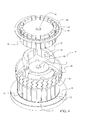
FIG. 3 is an isometric exploded view of the elements of the embodiment ofFIG. 1 ; -
FIG. 4 is an exploded view of the tooling for fabrication of the embodiments described; and, -
FIG. 5 is a flow chart depicting the fabrication and mounting of the embodiment ofFIG. 1 . - The embodiments described herein with respect to tactical vehicle use provide a non-pneumatic tire element with hollow spokes that do not block blast pressure, instead allowing the pressure wave to pass-through the tire venting the pressure and reducing likelihood of the tire being blown off the wheel during a blast event. The exemplary urethane cast tire is resistant to small arms fire and is not compromised from minor small arms bullet impacts. The urethane spokes are durable and of sufficient number and strength to provide redundant functionality even after punctures from bullets, nails or other small projectiles. Concentric spoke layers allow a greater number of load paths and flexibility. These redundant load paths provide greater tolerance to IED blast protection and small arms fire. "Run flat or damaged" capability is inherent by eliminating the need for the tire to contain pressurized air.
- The embodiments additionally include a pneumatic interface between the tire element and wheel created by integrally molded sidewalls extending over an inner portion of the tire radial extent which engage standard mounting beads on conventional wheel rims and are inflatable to engage the wheel in a conventional manner. This allows the complete structure of the embodiment to be mounted to any Original Equipment Manufacturer (OEM) wheel using standard tire mounting equipment. Additionally, this pneumatic interface allows the driver in an appropriately equipped tactical vehicle to adjust air pressure and ride smoothness/traction while in motion using the existing Central Tire Inflation (CTI) system as in a conventional pneumatic tire/wheel system.
- The embodiments further may incorporate a cover that mounts inset to the wheel tread providing high durability since the cover does not protrude beyond the outer profile of the tire tread reducing exposure to potentially damaging debris such as rocks and sticks during operations. Convex shape of the cover and durable material returns to original form after buckling during compression of the tire/wheel in operation. The cover keeps the tire spokes from filling with mud and dirt thereby maintaining wheel balance and ride smoothness. The combination of the elements in the embodiments reduces heat emissions associated with pneumatic tires by eliminating the rubber sidewalls found on pneumatic tires and masking the tire/wheel with the wheel cover. Armor may be included in the cover for the pneumatic interface portion of the embodiment. The limited radial extent of the pneumatic interface reduces the size and weight of such armor significantly over any conventional pneumatic tire armor.
- The fabrication process for the disclosed embodiments allows for ease of manufacture of the wheel/tire combination and design parameters such as spoke thickness/reinforcing fibers can easily be varied to match vehicle load requirements and ride flexibility. Further, the tire/wheel as fabricated may then be mounted on OEM rims and therefore can be built for any wheeled vehicle, including tactical vehicles such as HMMWV or Stryker providing design and manufacturing cost savings.
- Referring to
FIGs. 1, 2 and3 , the embodiment shown provides a non-pneumatic tire and wheel assembly 8 which incorporates a molded elastomertire body element 10 havingconcentric layers tire body element 10 is engaged at anouter circumference 21 by atread 22 of vulcanized rubber or similar material having a traction lug and groove pattern comparable to conventional pneumatic tires. The tread may be similar in design and construction to a tread blank employed in retreading of conventional pneumatic tires.Integral wall elements tire body element 10 and include outer andinner engagement beads conventional tire rim 24 of aconventional vehicle wheel 26 which may be constructed in conventional fashion with forged, pressed or cast steel or aluminum structure. For the embodiment shown in the drawings, two concentric layers of spokes are shown for the non-pneumatic tire body elements with a radial length comparable to one layer for the integral wall elements. The number of concentric layers and the relative radial length of the integral wall elements may vary for alternative embodiments wherein a sufficient resilient bight length is maintained in the integral wall elements for mounting over a conventional wheel rim. - An outer
circumferential engagement dome 32 is present on the outer circumference of thetire body element 10 which engages a mating depression in theinner wall 34 of the tread to enhance engagement of the tire body element to the tread to prevent separation during operation. In alternative embodiments additional adherence features may be employed in tread for additional engagement of the molded tire body element or the tread may be integrally molded with the tire body element. - As best seen in
FIG. 2 , the wheel incorporates aweb 36 extending fromrim 24 for standard engagement of avehicle axle hub 38. The web may include ventilatingperforations 40 for brake cooling or wheel weight reduction and includes standard lug bores 42 for attachment of the wheel to the hub.Inner bead ring 44 and outer bead ring 45 terminate the rim profile.Engagement beads integral wall elements chamber 46 created by the integral wall elements, an inner circumferential surface 47 of thetire body element 10 and thewheel rim 24 effectively forming a pneumatic bladder. In alternative embodiments an inner tube 48 (shown in phantom inFIG. 2 ) may be employed for enhanced pneumatic sealing of the bladder. - A
relief 49 associated with the outer bead ring receives a mountingring 50. Acover 52 is received on anouter surface 54 of the tire body element and attached to mountingring 50 withfasteners 51. The outer surface is inset from thetread side wall 56 placing the cover in a protected relief in the tread andtire body element 10 to reduce exposure to potentially damaging debris such as rocks and sticks during operations. The cover reduces mud and dirt introduction into the tire body element spokes 16 from the exterior of the mounted wheel thereby maintaining wheel balance and ride smoothness.Cover 52 is convex with respect toouter surface 54 thereby providing resiliency to return to original form after buckling during compression of the tire/wheel in operation. The cover is a multilayered concentric composite structure.Attachment plate 50 is bonded to cover 52 for attachment to the wheel. In alternative embodiments, a ring ofarmor 53 may be embedded in the cover for protection of the pneumatic portion created by the integral wall elements extending from the tire body element. For the embodiment shown,fasteners 51 are quick release ball lock alignment pins extending through the attachment plate and into the wheel rim. - For exemplary embodiments, the elastomeric material employed for the tire body element is urethane such as PR1664D two-part, castable 100% solids, polyurethane elastomer produced by PRC-DeSoto International, Inc., CDP Division, 2817 Empire Avenue, Burbank, CA 91504. Materials for alternative embodiments may include Two Component Polyurethane Cast Elastomer Systems such as Tadco S Series with Shore Hardness from A70 to A99 produced by T.A. Davies Company, 19500 S Alameda St., East Rancho Dominguez CA (having Polyether (PTMEG) Polyol Mixture and Polyether or Polyester / MDI Quasi-Prepolymer Isocyanate) and industrial tire rubber compounds such as natural rubber, styrene butadiene rubber, and polybutadiene rubber.
- The resiliency of the
tire body element 10 is determined based on the urethane composition and spoke design. Thickness of the web for the spokes in the exemplary embodiments ranges from approximately 1/16" to 1/2" depending on specific application and may be varied in the adj acent concentric layers of alternative embodiments for tailoring overall wheel/tire body element flexure during operation. For the exemplary embodiment shown in the drawings, the radial spokes in the concentric layers are 0.375"and the concentric rings between the spokes are 0.3125". In the embodiment shown, the spokes 16 alternate for symmetrical adjacent support of spokes in adjacent layers. Additionally, a simple rectangular or trapezoidal design is shown for the cross section of the spokes. In alternative embodiments a profiled cross section may be employed for performance enhancement. Hardness (or flexibility) of tire body element may be of constant durometer throughout the concentric layers, or may vary by up to 50% to optimize performance for flexibility. The elastomer mix can be varied in real time as the pour proceeds with material of differing durometers injected in to the different spoke layers. For the exemplary embodiments, theintegral wall elements tire body element 10 extending from the wheel rim. The wall thickness in the exemplary embodiment varies from approximately 0.25" at the innermost edge (the tire bead) to approximately 0.125" for most of the 2" wall height, and back to 0.25" at the outermost corner of the wall where it transitions to the spokes. Wall height and flexibility are determined to accommodate necessary resiliency for expansion over the wheel rim during mounting or removal while limiting the overall height of the wall to minimize the depth of the pneumatic portion of the tire element and thereby the area presented for potential damage by projectiles or blast and to enhance the run flat/damaged capability of the non-pneumatic tire system as a whole. - The spoke design provides a net open area of 61 % to 78% of the total surface of the tire body element depending on the number of concentric layers retained and the radial extent of the required bladder wall thereby reducing the likelihood of penetration of the tire body element by projectiles such as small arms fire and maximizing the blow through open area for blast survivability. The alternating symmetrical adjacent support allows fracture or destruction of a number of spokes in the wheel without a disabling performance reduction in the wheel/tire body element system.
- The combination of the
tire body element 10 and cover 52 in the embodiments shown reduces heat emissions associated with pneumatic tires by eliminating the rubber sidewalls found on pneumatic tires and by masking thetire body element 10 andwheel 26 with the wheel cover. - Fabrication of the non-pneumatic tire assembly of the exemplary embodiments is accomplished by casting with a pour molding process. As shown in
FIG.4 , anouter mold element 70 is received within thetread 22. In various embodiments,outer mold element 70 may extend from aflat plate 72 with the thickness of the outer mold element corresponding to the recess depth of the tire body elementouter surface 54 from the treadouter wall 56 or have an outer rim for engagement of the treadouter wall 56 for accurate depth placement within the tread to create the recess of the tire body elementouter surface 54. The outer mold element incorporatesstruts 74 corresponding to the spoke locations in the tire body element with apertures 76 to receive rubber mold blocks as will be described in greater detail subsequently. Acenter plug 78 is centered on the outer mold element. Pneumatic chamber forms 79 are releasably carried by the center plug to form the pneumatic chamber within the integral walls of the tire assembly. - An
inner mold element 80 is concentrically received overtread 22. The inner mold element incorporatesstruts 82 andapertures 84 symmetrical with the outer mold element. Molding material filltube 86 interfaces withapertures - Rubber casting blocks 90 are inserted through
apertures 84 in theinner mold element 80 to be received in the corresponding apertures in theouter mold element 70 to complete the casting mold. Sizing of the struts and apertures in the outer and inner mold elements and the rubber casting blocks provides corresponding sizing of the spokes in the tire body element as cast. The chamber forms determine the configuration and sizing of the pneumatic chamber and the associated integral walls of the tire assembly. For casting, the elastomeric is introduced through the fill tubes to completely fill the interstitial spaces between the rubber mold blocks. - The cast non-pneumatic tire assembly is then allowed to dry at room temperature. The rubber mold blocks and outer and inner mold elements are then removed. The chamber forms are released form the center plug and the plug is removed. The chamber forms may then be collapsed out of the chamber for removal. The cast non-pneumatic tire and wheel assembly is then cured at high temperature For the exemplary PR1664D Urethane material, high temperature cure may be accomplished in 3 hours at 212°F or 12 hours at 180°F or 16 hours at 160°F.
- While disclosed for the embodiments herein as a pour casting process, in alternative fabrication methods injection molding of the tire body element in standard split molds may be accomplished with bonding of the tread to the tire body element after cure. In other alternative embodiments, the tread may be cast in conjunction with the tire body element using tooling for pressure injection molding.
-
FIG. 5 demonstrates the manufacturing process for the cast non-pneumatic tire with pneumatic bladder and wheel assembly as described. Instep 500 the inner and outer mold elements are machined or cast from aluminum or other appropriate tooling material with strut and aperture dimensions adapted for the desired spoke design and integral wall height established to achieve required structural properties for service use. Mating rubber cast blocks are prepared for insertion into the apertures in the inner and outer mold elements. The tread is then prepared for casting,step 502. Tread from a conventional off the shelf (COTS) tire tread such as that employed for convention tire retreading may be employed. The tread, outer mold element, center plug with chamber forms, inner mold element and rubber casting blocks are then assembled for molding,step 506. The outer mold element is received within the tire tread to create a recess for protective mounting of a cover as described subsequently. Mounting of the outer mold element on a tooling plate allows the tire tread to be supported by the tooling plate with the outer mold inserted. The elastomer, urethane for the exemplary embodiment as previously described, is then introduced into the mold assembly through the fill tubes,step 508. The elastomer is allowed to dry,step 510, and the tooling is then disassembled from thenon-pneumatic tire assembly 512. A high temperature cure is then accomplished for the non-pneumatic tire assembly,step 514, providing a completed system. The tire assembly is then mounted on a conventional wheel using convention mounting equipment and tools,step 516, and the pneumatic bladder is inflated,step 518. For protection of the non-pneumatic and bladder elements of the tire, a cover may then be mounted to the wheel, step 520. - Having now described various embodiments of the disclosure in detail as required by the patent statutes, those skilled in the art will recognize modifications and substitutions to the specific embodiments disclosed herein. Such modifications are within the scope and intent of the present disclosure as defined in the following claims.
Claims (10)
- A non-pneumatic tire and wheel assembly comprising:a tire tread;a conventional vehicle wheel;a molded elastomer tire body element received in the tread and having a plurality of concentric layers with alternating spokes; and,integral wall elements extending radially inward from the tire body element for sealing engagement with the wheel.
- The non-pneumatic tire and wheel assembly as defined in claim 1 wherein the elastomer tire body element and integral wall elements are molded from urethane.
- The non-pneumatic tire and wheel assembly as defined in claim 1 wherein the elastomer tire body element and integral wall elements are molded from an elastomer with durometer ranging from approximately 40 to 90.
- The non-pneumatic tire and wheel assembly as defined in claim 1 wherein the wheel incorporates a rim with inner an outer bead rings and the integral wall elements include beads for sealing engagement on the bead rings to form a pneumatic chamber.
- The non-pneumatic tire and wheel assembly as defined in claim 1 wherein an outer circumference of the tire body element incorporates an outer circumferential engagement dome engaging a mating depression in an inner wall of the tread.
- The non-pneumatic tire and wheel assembly as defined in claim 1 wherein the molded elastomer tire body element has an outer surface recessed from the tire tread and further comprising:a cover received within the recess; and,an attachment plate engaged to the cover and attached to the wheel.
- The non-pneumatic tire and wheel assembly as defined in claim 6 wherein the outer bead ring has a relief and said attachment plate is received within the relief.
- The non-pneumatic tire and wheel assembly as defined in claim 4 further comprising an inner tube received within the chamber.
- A method for fabrication of an enhanced survivability tire assembly comprising:forming inner and outer mold elements with strut and aperture dimensions adapted for the desired spoke design and mating rubber cast blocks;forming a center plug and releasably carried chamber forms;preparing a tread for casting;assembling the tread, outer mold element, center plug with chamber forms, wheel, inner mold element and rubber casting blocks;introducing an elastomer into the mold assembly through fill tubes inserted in fill apertures in the center plug and chamber forms to cast concentric layers with spokes around the rubber cast blocks and integral side walls around the chamber forms;allowing the elastomer to dry;disassembling the rubber blocks and mold elements from the tire assembly;curing at high temperature;mounting the tire assembly on a conventional wheel with conventional mounting tools to deform the integral side walls; and,inflating a pneumatic chamber formed by the side walls.
- The method of claim 9 wherein the step of forming the inner and outer mold elements further comprises:concentrically receiving the inner and outer mold elements with the tread, the outer mold intruding into the tread to create a recess of the tire body element outer surface;mounting the outer mold element on a tooling plate; and,mounting a cover received within the recess.
Applications Claiming Priority (1)
| Application Number | Priority Date | Filing Date | Title |
|---|---|---|---|
| US12/855,628 US8567461B2 (en) | 2010-08-12 | 2010-08-12 | Non-pneumatic survivable tire mounting system for conventional wheels |
Publications (3)
| Publication Number | Publication Date |
|---|---|
| EP2418099A2 true EP2418099A2 (en) | 2012-02-15 |
| EP2418099A3 EP2418099A3 (en) | 2012-09-26 |
| EP2418099B1 EP2418099B1 (en) | 2015-03-18 |
Family
ID=44785167
Family Applications (1)
| Application Number | Title | Priority Date | Filing Date |
|---|---|---|---|
| EP11171435.8A Active EP2418099B1 (en) | 2010-08-12 | 2011-06-27 | Tire and wheel assembly |
Country Status (3)
| Country | Link |
|---|---|
| US (2) | US8567461B2 (en) |
| EP (1) | EP2418099B1 (en) |
| AU (1) | AU2011202186B1 (en) |
Cited By (10)
| Publication number | Priority date | Publication date | Assignee | Title |
|---|---|---|---|---|
| CN104118276A (en) * | 2014-07-08 | 2014-10-29 | 清华大学 | Space truss type non-pneumatic tire |
| CN104626876A (en) * | 2013-11-06 | 2015-05-20 | 韩国轮胎株式会社 | Non-pneumatic tire for vehicle |
| CN104999862A (en) * | 2015-06-26 | 2015-10-28 | 青岛科技大学 | Non-pneumatic safety tire |
| EP2987645A3 (en) * | 2014-08-13 | 2016-04-20 | Hankook Tire Co., Ltd. | Non-pneumatic tire having improved riding comfort |
| CN106004251A (en) * | 2016-06-22 | 2016-10-12 | 青岛科技大学 | Inflation-free tire and machining method |
| WO2018007658A1 (en) * | 2016-07-06 | 2018-01-11 | Advantaria, Sl | Mixed pneumatic–airless tyre with increased safety |
| ES2662695R1 (en) * | 2016-10-04 | 2018-05-11 | Advantaria S.L. | Mixed wheel with rigid outer ring structure and increased safety |
| ES2665819R1 (en) * | 2016-07-06 | 2018-06-14 | Advantaria S.L. | Wheel with mixed damping structure and increased safety |
| EP3034322B1 (en) * | 2014-12-18 | 2019-05-15 | Kuhn S.A. | Improved wheel for agricultural machines |
| CN115284535A (en) * | 2022-07-22 | 2022-11-04 | 杭州巨星科技股份有限公司 | Layered injection molding pouring gate device and injection molding process adopting same |
Families Citing this family (53)
| Publication number | Priority date | Publication date | Assignee | Title |
|---|---|---|---|---|
| US8109308B2 (en) * | 2007-03-27 | 2012-02-07 | Resilient Technologies LLC. | Tension-based non-pneumatic tire |
| JP6002568B2 (en) * | 2012-12-19 | 2016-10-05 | 株式会社ブリヂストン | Non pneumatic tire |
| US9242509B2 (en) * | 2013-02-07 | 2016-01-26 | Alice Chang | Non pneumatic vehicle tires and pneumatic vehicle tires with tread patterns |
| KR101356326B1 (en) * | 2013-02-28 | 2014-01-29 | 한국타이어 주식회사 | Non-pneumatic tire having reinforcing material of plate wire structure |
| JP2014213789A (en) * | 2013-04-26 | 2014-11-17 | 株式会社ブリヂストン | Non-pneumatic tire |
| EP3007909A4 (en) | 2013-06-15 | 2017-03-01 | Ronald Thompson | Annular ring and non-pneumatic tire |
| WO2015047780A1 (en) | 2013-09-24 | 2015-04-02 | Bridgestone Americas Tire Operations, Llc | Tire with toroidal element |
| EP3086948B1 (en) | 2013-12-24 | 2020-03-11 | Bridgestone Americas Tire Operations, LLC | Airless tire construction having variable stiffness |
| US9919874B2 (en) | 2014-03-10 | 2018-03-20 | Goodrich Corporation | Compliant tire |
| CN106457886B (en) | 2014-06-24 | 2019-04-23 | 株式会社普利司通 | Non-pneumatic tires |
| JP6534795B2 (en) * | 2014-08-08 | 2019-06-26 | 株式会社ブリヂストン | Non pneumatic tire |
| US10406860B2 (en) | 2014-12-03 | 2019-09-10 | Bridgestone Americas Tire Operations, Llc | Non-pneumatic tire |
| WO2016099474A1 (en) | 2014-12-17 | 2016-06-23 | Compagnie Generale Des Etablissements Michelin | Method and apparatus for molding non-pneumatic wheels |
| WO2016099476A1 (en) | 2014-12-17 | 2016-06-23 | Compagnie Generale Des Etablissements Michelin | Method and apparatus for molding non-pneumatic wheels |
| JP2016113078A (en) * | 2014-12-17 | 2016-06-23 | 株式会社ブリヂストン | Non-pneumatic tire |
| WO2016099480A1 (en) * | 2014-12-17 | 2016-06-23 | Compagnie Generale Des Etablissements Michelin | A non-pneumatic tire with integrated polymeric flexible wheel center mount |
| USD812552S1 (en) | 2014-12-18 | 2018-03-13 | Bridgestone Americas Tire Operations, Llc | Non-pneumatic tire |
| USD813151S1 (en) | 2014-12-18 | 2018-03-20 | Bridgestone Americas Tire Operations, Llc | Non-pneumatic tire |
| WO2016100017A1 (en) | 2014-12-18 | 2016-06-23 | Bridgestone Americas Tire Operations, Llc | Tire with arched spokes |
| USD813152S1 (en) | 2014-12-18 | 2018-03-20 | Bridgestone Americas Tire Operations, Llc | Non-pneumatic tire |
| FR3031931B1 (en) * | 2015-01-22 | 2017-02-03 | Michelin & Cie | PNEUMATIC TYPE DEVICE FOR VEHICLE |
| US10899169B2 (en) | 2015-01-27 | 2021-01-26 | Mtd Products Inc | Wheel assemblies with non-pneumatic tires |
| USD792332S1 (en) | 2015-06-03 | 2017-07-18 | Mtd Products Inc | Non-pneumatic tire |
| US20160214435A1 (en) * | 2015-01-27 | 2016-07-28 | Mtd Products Inc | Wheel assemblies with non-pneumatic tires |
| EP3253591B1 (en) | 2015-02-04 | 2021-06-30 | Camso Inc. | Non-pneumatic tire and other annular devices |
| USD784917S1 (en) | 2015-06-03 | 2017-04-25 | Mtd Products Inc | Non-pneumatic tire |
| US11999419B2 (en) | 2015-12-16 | 2024-06-04 | Camso Inc. | Track system for traction of a vehicle |
| CN109789725A (en) | 2016-09-27 | 2019-05-21 | 普利司通美国轮胎运营有限责任公司 | Wheel with bead lock |
| US10519857B2 (en) * | 2016-10-24 | 2019-12-31 | Rolls-Royce Corporation | Disk with lattice features adapted for use in gas turbine engines |
| US10279628B2 (en) * | 2016-11-17 | 2019-05-07 | Mach II Company, LLC | Combination one-piece molded tire and mounting plate |
| CN106541784B (en) * | 2016-12-06 | 2018-06-05 | 安徽江淮汽车集团股份有限公司 | Air-free tyre and automobile |
| JP6827880B2 (en) | 2017-05-11 | 2021-02-10 | 株式会社ブリヂストン | Non-pneumatic tires |
| EP3638515B1 (en) | 2017-06-15 | 2023-04-05 | Camso Inc. | Wheel comprising a non-pneumatic tire |
| JP2019031243A (en) * | 2017-08-09 | 2019-02-28 | 本田技研工業株式会社 | Non pneumatic tire |
| JP6965055B2 (en) * | 2017-08-09 | 2021-11-10 | 本田技研工業株式会社 | Non-pneumatic tires |
| CN107791550A (en) * | 2017-10-31 | 2018-03-13 | 风神轮胎股份有限公司 | A kind of method for preventing tyre non-circularity design defect |
| US11260257B2 (en) * | 2018-01-31 | 2022-03-01 | Sound Shore Innovations L.L.C. | Modified weight training equipment |
| CN108248300A (en) * | 2018-03-09 | 2018-07-06 | 青岛双星轮胎工业有限公司 | Tire inner support unit |
| WO2020023235A1 (en) | 2018-07-27 | 2020-01-30 | Bridgestone Americas Tire Operations, Llc | Reusable rim for non-pneumatic tires |
| CN113195255B (en) | 2018-11-14 | 2024-01-19 | 普利司通美国轮胎运营有限责任公司 | Tire rim assembly having inner rim component and outer rim component |
| CN111231583A (en) * | 2018-11-28 | 2020-06-05 | 黄勇贤 | A hollow shock-absorbing tire |
| KR102610327B1 (en) * | 2019-02-28 | 2023-12-06 | 현대자동차주식회사 | flexible wheel |
| CN111823784A (en) * | 2019-04-19 | 2020-10-27 | 山东泰斯福德科技发展有限公司 | Tire puncture emergency safety device and wheel for split rim |
| JP7037522B2 (en) * | 2019-07-11 | 2022-03-16 | Toyo Tire株式会社 | Protective gear and wheels for non-pneumatic tires |
| CN110435358B (en) * | 2019-08-09 | 2021-08-31 | 浙江竤屹科技有限公司 | Airless tire and production process thereof |
| CN114867616A (en) * | 2019-12-30 | 2022-08-05 | 普利司通美国轮胎运营有限责任公司 | Non-pneumatic tire with molded sidewall cap |
| WO2021137957A1 (en) * | 2019-12-30 | 2021-07-08 | Bridgestone Americas Tire Operations, Llc | Non-pneumatic tire having sidewall covers |
| CN111055623A (en) * | 2020-01-20 | 2020-04-24 | 厦门连科工业有限公司 | Novel tire and rim matching structure |
| CN111086357A (en) * | 2020-03-04 | 2020-05-01 | 青岛朗道轮履技术有限公司 | Pneumatic tires and vehicles |
| CN112060840A (en) * | 2020-09-30 | 2020-12-11 | 李林 | Tyre for baby carriage |
| CN114683758A (en) * | 2020-12-25 | 2022-07-01 | 华人运通(江苏)技术有限公司 | Protection device, wheel and vehicle |
| CN113829802B (en) * | 2021-11-03 | 2023-11-03 | 李祉谌 | Quick-detachable special vehicle tire with inflation-free function and manufacturing method thereof |
| CN114987104A (en) * | 2022-06-30 | 2022-09-02 | 黄山中乔汽车零配件有限公司 | A new type of aluminum alloy wheel skeleton |
Citations (1)
| Publication number | Priority date | Publication date | Assignee | Title |
|---|---|---|---|---|
| CA91504A (en) | 1904-07-26 | 1905-02-14 | Gerald Edward Holland | Elevating machinery |
Family Cites Families (20)
| Publication number | Priority date | Publication date | Assignee | Title |
|---|---|---|---|---|
| US1343684A (en) | 1920-06-15 | Wheel-cushion and means for mounting same | ||
| US811232A (en) | 1904-11-14 | 1906-01-30 | Jules Lang | Vehicle-tire. |
| DE2456420C2 (en) * | 1974-11-29 | 1984-04-05 | Continental Gummi-Werke Ag, 3000 Hannover | Vehicle wheel with a solid tire |
| US4033395A (en) * | 1975-03-06 | 1977-07-05 | Berg Winfred M | Continuous plastic tire body and tire |
| US4235270A (en) * | 1978-06-30 | 1980-11-25 | The Goodyear Tire & Rubber Company | Tire with supporting and cushioning walls |
| US5139066A (en) * | 1987-12-15 | 1992-08-18 | Altrack Limited | Tire construction |
| US4945962A (en) * | 1989-06-09 | 1990-08-07 | The Uniroyal Goodrich Tire Company | Honeycomb non-pneumatic tire with a single web on one side |
| FR2652310A1 (en) * | 1989-09-28 | 1991-03-29 | Michelin & Cie | NON-PNEUMATIC DEFORMABLE BANDAGE. |
| CA2043082A1 (en) * | 1991-02-27 | 1992-08-28 | James Edward Duddey | Non-pneumatic spare tire |
| US5460213A (en) * | 1992-03-18 | 1995-10-24 | Uniroyal Goodrich Licensing Services, Inc. | Multiple non-pneumatic tire and process for making it |
| HUP9902483A3 (en) * | 1999-01-05 | 2003-10-28 | New Tech Tire Llc New York | Tyre |
| US7418988B2 (en) | 1999-12-10 | 2008-09-02 | Michelin Recherche Et Technique S.A. | Non-pneumatic tire |
| US7650919B2 (en) * | 1999-12-10 | 2010-01-26 | Michelin Recherche of Technique S.A. | Non-pneumatic tire having web spokes |
| US20060118223A1 (en) * | 2004-12-08 | 2006-06-08 | Maeda Shell Service Co., Ltd. | Renewed solid tire and method of producing same |
| US7523773B2 (en) | 2005-10-21 | 2009-04-28 | The Boeing Company | Non-pneumatic wheel |
| US8109308B2 (en) | 2007-03-27 | 2012-02-07 | Resilient Technologies LLC. | Tension-based non-pneumatic tire |
| US8104524B2 (en) | 2007-03-27 | 2012-01-31 | Resilient Technologies Llc | Tension-based non-pneumatic tire |
| US8056593B2 (en) * | 2007-10-26 | 2011-11-15 | Chemtura Corporation | Non-pneumatic tire |
| JP4506853B2 (en) * | 2008-02-25 | 2010-07-21 | 横浜ゴム株式会社 | Non-pneumatic tire |
| US8555941B2 (en) * | 2010-08-12 | 2013-10-15 | The Boeing Company | Non-pneumatic survivable tire, cover and fabrication processes |
-
2010
- 2010-08-12 US US12/855,628 patent/US8567461B2/en active Active
-
2011
- 2011-05-11 AU AU2011202186A patent/AU2011202186B1/en active Active
- 2011-06-27 EP EP11171435.8A patent/EP2418099B1/en active Active
-
2013
- 2013-09-24 US US14/035,630 patent/US9475244B2/en active Active
Patent Citations (1)
| Publication number | Priority date | Publication date | Assignee | Title |
|---|---|---|---|---|
| CA91504A (en) | 1904-07-26 | 1905-02-14 | Gerald Edward Holland | Elevating machinery |
Cited By (12)
| Publication number | Priority date | Publication date | Assignee | Title |
|---|---|---|---|---|
| CN104626876A (en) * | 2013-11-06 | 2015-05-20 | 韩国轮胎株式会社 | Non-pneumatic tire for vehicle |
| CN104118276A (en) * | 2014-07-08 | 2014-10-29 | 清华大学 | Space truss type non-pneumatic tire |
| CN104118276B (en) * | 2014-07-08 | 2016-08-10 | 清华大学 | A kind of space truss type non-inflatable tyre |
| EP2987645A3 (en) * | 2014-08-13 | 2016-04-20 | Hankook Tire Co., Ltd. | Non-pneumatic tire having improved riding comfort |
| EP3034322B1 (en) * | 2014-12-18 | 2019-05-15 | Kuhn S.A. | Improved wheel for agricultural machines |
| CN104999862A (en) * | 2015-06-26 | 2015-10-28 | 青岛科技大学 | Non-pneumatic safety tire |
| CN106004251A (en) * | 2016-06-22 | 2016-10-12 | 青岛科技大学 | Inflation-free tire and machining method |
| CN106004251B (en) * | 2016-06-22 | 2018-06-29 | 青岛科技大学 | A kind of non-inflatable tyre and processing method |
| WO2018007658A1 (en) * | 2016-07-06 | 2018-01-11 | Advantaria, Sl | Mixed pneumatic–airless tyre with increased safety |
| ES2665819R1 (en) * | 2016-07-06 | 2018-06-14 | Advantaria S.L. | Wheel with mixed damping structure and increased safety |
| ES2662695R1 (en) * | 2016-10-04 | 2018-05-11 | Advantaria S.L. | Mixed wheel with rigid outer ring structure and increased safety |
| CN115284535A (en) * | 2022-07-22 | 2022-11-04 | 杭州巨星科技股份有限公司 | Layered injection molding pouring gate device and injection molding process adopting same |
Also Published As
| Publication number | Publication date |
|---|---|
| US20120038207A1 (en) | 2012-02-16 |
| US20140020817A1 (en) | 2014-01-23 |
| EP2418099A3 (en) | 2012-09-26 |
| US9475244B2 (en) | 2016-10-25 |
| EP2418099B1 (en) | 2015-03-18 |
| AU2011202186B1 (en) | 2011-11-17 |
| US8567461B2 (en) | 2013-10-29 |
Similar Documents
| Publication | Publication Date | Title |
|---|---|---|
| US8567461B2 (en) | Non-pneumatic survivable tire mounting system for conventional wheels | |
| US8555941B2 (en) | Non-pneumatic survivable tire, cover and fabrication processes | |
| US7143797B2 (en) | Airless tire | |
| US10710411B2 (en) | Tension-based non-pneumatic tire | |
| US8104524B2 (en) | Tension-based non-pneumatic tire | |
| CN104884270B (en) | Tire/wheel assembly and tread rings | |
| US9487046B2 (en) | Laminated non-pneumatic tire | |
| US20090211677A1 (en) | Modular tire assembly | |
| US20150034225A1 (en) | Reinforced non-pneumatic tire and system for molding reinforced non-pneumatic tire | |
| US11014407B2 (en) | Tension-based non-pneumatic tire | |
| JP6106428B2 (en) | Non pneumatic tire | |
| EP4094956B1 (en) | Non-pneumatic tire and rim assembly | |
| CN116890571B (en) | A biomimetic structure, an airless explosion-proof safety tire and its preparation method | |
| US9586446B2 (en) | Ballistic resilient run-flat tire, kit and method thereof | |
| CN101602318B (en) | Nanophase bulletproof environment friendly solid tyre and manufacture method thereof | |
| CN111225805A (en) | Pneumatic tire | |
| CN101434180A (en) | Profile modeling internal supporting body of bullet-proof tire |
Legal Events
| Date | Code | Title | Description |
|---|---|---|---|
| 17P | Request for examination filed |
Effective date: 20110627 |
|
| AK | Designated contracting states |
Kind code of ref document: A2 Designated state(s): AL AT BE BG CH CY CZ DE DK EE ES FI FR GB GR HR HU IE IS IT LI LT LU LV MC MK MT NL NO PL PT RO RS SE SI SK SM TR |
|
| AX | Request for extension of the european patent |
Extension state: BA ME |
|
| PUAI | Public reference made under article 153(3) epc to a published international application that has entered the european phase |
Free format text: ORIGINAL CODE: 0009012 |
|
| PUAL | Search report despatched |
Free format text: ORIGINAL CODE: 0009013 |
|
| AK | Designated contracting states |
Kind code of ref document: A3 Designated state(s): AL AT BE BG CH CY CZ DE DK EE ES FI FR GB GR HR HU IE IS IT LI LT LU LV MC MK MT NL NO PL PT RO RS SE SI SK SM TR |
|
| AX | Request for extension of the european patent |
Extension state: BA ME |
|
| RIC1 | Information provided on ipc code assigned before grant |
Ipc: B60C 7/18 20060101ALI20120823BHEP Ipc: B60C 7/24 20060101ALI20120823BHEP Ipc: B60C 7/12 20060101AFI20120823BHEP |
|
| GRAP | Despatch of communication of intention to grant a patent |
Free format text: ORIGINAL CODE: EPIDOSNIGR1 |
|
| RIC1 | Information provided on ipc code assigned before grant |
Ipc: B60C 7/24 20060101ALI20130517BHEP Ipc: B60C 7/18 20060101ALI20130517BHEP Ipc: B60C 7/12 20060101AFI20130517BHEP |
|
| GRAJ | Information related to disapproval of communication of intention to grant by the applicant or resumption of examination proceedings by the epo deleted |
Free format text: ORIGINAL CODE: EPIDOSDIGR1 |
|
| GRAP | Despatch of communication of intention to grant a patent |
Free format text: ORIGINAL CODE: EPIDOSNIGR1 |
|
| INTG | Intention to grant announced |
Effective date: 20130617 |
|
| INTG | Intention to grant announced |
Effective date: 20130716 |
|
| GRAP | Despatch of communication of intention to grant a patent |
Free format text: ORIGINAL CODE: EPIDOSNIGR1 |
|
| INTG | Intention to grant announced |
Effective date: 20140306 |
|
| GRAP | Despatch of communication of intention to grant a patent |
Free format text: ORIGINAL CODE: EPIDOSNIGR1 |
|
| INTG | Intention to grant announced |
Effective date: 20141009 |
|
| GRAS | Grant fee paid |
Free format text: ORIGINAL CODE: EPIDOSNIGR3 |
|
| GRAA | (expected) grant |
Free format text: ORIGINAL CODE: 0009210 |
|
| AK | Designated contracting states |
Kind code of ref document: B1 Designated state(s): AL AT BE BG CH CY CZ DE DK EE ES FI FR GB GR HR HU IE IS IT LI LT LU LV MC MK MT NL NO PL PT RO RS SE SI SK SM TR |
|
| REG | Reference to a national code |
Ref country code: GB Ref legal event code: FG4D |
|
| REG | Reference to a national code |
Ref country code: CH Ref legal event code: EP |
|
| REG | Reference to a national code |
Ref country code: IE Ref legal event code: FG4D |
|
| REG | Reference to a national code |
Ref country code: AT Ref legal event code: REF Ref document number: 716317 Country of ref document: AT Kind code of ref document: T Effective date: 20150415 |
|
| REG | Reference to a national code |
Ref country code: DE Ref legal event code: R096 Ref document number: 602011014726 Country of ref document: DE Effective date: 20150430 |
|
| REG | Reference to a national code |
Ref country code: NL Ref legal event code: VDEP Effective date: 20150318 |
|
| REG | Reference to a national code |
Ref country code: NL Ref legal event code: VDEP Effective date: 20150318 |
|
| PG25 | Lapsed in a contracting state [announced via postgrant information from national office to epo] |
Ref country code: LT Free format text: LAPSE BECAUSE OF FAILURE TO SUBMIT A TRANSLATION OF THE DESCRIPTION OR TO PAY THE FEE WITHIN THE PRESCRIBED TIME-LIMIT Effective date: 20150318 Ref country code: NO Free format text: LAPSE BECAUSE OF FAILURE TO SUBMIT A TRANSLATION OF THE DESCRIPTION OR TO PAY THE FEE WITHIN THE PRESCRIBED TIME-LIMIT Effective date: 20150618 Ref country code: FI Free format text: LAPSE BECAUSE OF FAILURE TO SUBMIT A TRANSLATION OF THE DESCRIPTION OR TO PAY THE FEE WITHIN THE PRESCRIBED TIME-LIMIT Effective date: 20150318 Ref country code: SE Free format text: LAPSE BECAUSE OF FAILURE TO SUBMIT A TRANSLATION OF THE DESCRIPTION OR TO PAY THE FEE WITHIN THE PRESCRIBED TIME-LIMIT Effective date: 20150318 Ref country code: HR Free format text: LAPSE BECAUSE OF FAILURE TO SUBMIT A TRANSLATION OF THE DESCRIPTION OR TO PAY THE FEE WITHIN THE PRESCRIBED TIME-LIMIT Effective date: 20150318 |
|
| REG | Reference to a national code |
Ref country code: AT Ref legal event code: MK05 Ref document number: 716317 Country of ref document: AT Kind code of ref document: T Effective date: 20150318 |
|
| REG | Reference to a national code |
Ref country code: LT Ref legal event code: MG4D |
|
| PG25 | Lapsed in a contracting state [announced via postgrant information from national office to epo] |
Ref country code: LV Free format text: LAPSE BECAUSE OF FAILURE TO SUBMIT A TRANSLATION OF THE DESCRIPTION OR TO PAY THE FEE WITHIN THE PRESCRIBED TIME-LIMIT Effective date: 20150318 Ref country code: RS Free format text: LAPSE BECAUSE OF FAILURE TO SUBMIT A TRANSLATION OF THE DESCRIPTION OR TO PAY THE FEE WITHIN THE PRESCRIBED TIME-LIMIT Effective date: 20150318 Ref country code: GR Free format text: LAPSE BECAUSE OF FAILURE TO SUBMIT A TRANSLATION OF THE DESCRIPTION OR TO PAY THE FEE WITHIN THE PRESCRIBED TIME-LIMIT Effective date: 20150619 |
|
| PG25 | Lapsed in a contracting state [announced via postgrant information from national office to epo] |
Ref country code: NL Free format text: LAPSE BECAUSE OF FAILURE TO SUBMIT A TRANSLATION OF THE DESCRIPTION OR TO PAY THE FEE WITHIN THE PRESCRIBED TIME-LIMIT Effective date: 20150318 |
|
| PG25 | Lapsed in a contracting state [announced via postgrant information from national office to epo] |
Ref country code: PT Free format text: LAPSE BECAUSE OF FAILURE TO SUBMIT A TRANSLATION OF THE DESCRIPTION OR TO PAY THE FEE WITHIN THE PRESCRIBED TIME-LIMIT Effective date: 20150720 Ref country code: CZ Free format text: LAPSE BECAUSE OF FAILURE TO SUBMIT A TRANSLATION OF THE DESCRIPTION OR TO PAY THE FEE WITHIN THE PRESCRIBED TIME-LIMIT Effective date: 20150318 Ref country code: SK Free format text: LAPSE BECAUSE OF FAILURE TO SUBMIT A TRANSLATION OF THE DESCRIPTION OR TO PAY THE FEE WITHIN THE PRESCRIBED TIME-LIMIT Effective date: 20150318 Ref country code: EE Free format text: LAPSE BECAUSE OF FAILURE TO SUBMIT A TRANSLATION OF THE DESCRIPTION OR TO PAY THE FEE WITHIN THE PRESCRIBED TIME-LIMIT Effective date: 20150318 Ref country code: ES Free format text: LAPSE BECAUSE OF FAILURE TO SUBMIT A TRANSLATION OF THE DESCRIPTION OR TO PAY THE FEE WITHIN THE PRESCRIBED TIME-LIMIT Effective date: 20150318 Ref country code: RO Free format text: LAPSE BECAUSE OF FAILURE TO SUBMIT A TRANSLATION OF THE DESCRIPTION OR TO PAY THE FEE WITHIN THE PRESCRIBED TIME-LIMIT Effective date: 20150318 |
|
| PG25 | Lapsed in a contracting state [announced via postgrant information from national office to epo] |
Ref country code: PL Free format text: LAPSE BECAUSE OF FAILURE TO SUBMIT A TRANSLATION OF THE DESCRIPTION OR TO PAY THE FEE WITHIN THE PRESCRIBED TIME-LIMIT Effective date: 20150318 Ref country code: IS Free format text: LAPSE BECAUSE OF FAILURE TO SUBMIT A TRANSLATION OF THE DESCRIPTION OR TO PAY THE FEE WITHIN THE PRESCRIBED TIME-LIMIT Effective date: 20150718 Ref country code: AT Free format text: LAPSE BECAUSE OF FAILURE TO SUBMIT A TRANSLATION OF THE DESCRIPTION OR TO PAY THE FEE WITHIN THE PRESCRIBED TIME-LIMIT Effective date: 20150318 |
|
| REG | Reference to a national code |
Ref country code: DE Ref legal event code: R097 Ref document number: 602011014726 Country of ref document: DE |
|
| PG25 | Lapsed in a contracting state [announced via postgrant information from national office to epo] |
Ref country code: IT Free format text: LAPSE BECAUSE OF FAILURE TO SUBMIT A TRANSLATION OF THE DESCRIPTION OR TO PAY THE FEE WITHIN THE PRESCRIBED TIME-LIMIT Effective date: 20150318 |
|
| PLBE | No opposition filed within time limit |
Free format text: ORIGINAL CODE: 0009261 |
|
| STAA | Information on the status of an ep patent application or granted ep patent |
Free format text: STATUS: NO OPPOSITION FILED WITHIN TIME LIMIT |
|
| PG25 | Lapsed in a contracting state [announced via postgrant information from national office to epo] |
Ref country code: MC Free format text: LAPSE BECAUSE OF FAILURE TO SUBMIT A TRANSLATION OF THE DESCRIPTION OR TO PAY THE FEE WITHIN THE PRESCRIBED TIME-LIMIT Effective date: 20150318 Ref country code: DK Free format text: LAPSE BECAUSE OF FAILURE TO SUBMIT A TRANSLATION OF THE DESCRIPTION OR TO PAY THE FEE WITHIN THE PRESCRIBED TIME-LIMIT Effective date: 20150318 |
|
| REG | Reference to a national code |
Ref country code: CH Ref legal event code: PL |
|
| 26N | No opposition filed |
Effective date: 20151221 |
|
| PG25 | Lapsed in a contracting state [announced via postgrant information from national office to epo] |
Ref country code: SI Free format text: LAPSE BECAUSE OF FAILURE TO SUBMIT A TRANSLATION OF THE DESCRIPTION OR TO PAY THE FEE WITHIN THE PRESCRIBED TIME-LIMIT Effective date: 20150318 Ref country code: LU Free format text: LAPSE BECAUSE OF FAILURE TO SUBMIT A TRANSLATION OF THE DESCRIPTION OR TO PAY THE FEE WITHIN THE PRESCRIBED TIME-LIMIT Effective date: 20150627 |
|
| REG | Reference to a national code |
Ref country code: IE Ref legal event code: MM4A |
|
| PG25 | Lapsed in a contracting state [announced via postgrant information from national office to epo] |
Ref country code: IE Free format text: LAPSE BECAUSE OF NON-PAYMENT OF DUE FEES Effective date: 20150627 Ref country code: LI Free format text: LAPSE BECAUSE OF NON-PAYMENT OF DUE FEES Effective date: 20150630 Ref country code: CH Free format text: LAPSE BECAUSE OF NON-PAYMENT OF DUE FEES Effective date: 20150630 |
|
| REG | Reference to a national code |
Ref country code: FR Ref legal event code: PLFP Year of fee payment: 6 |
|
| PG25 | Lapsed in a contracting state [announced via postgrant information from national office to epo] |
Ref country code: BE Free format text: LAPSE BECAUSE OF FAILURE TO SUBMIT A TRANSLATION OF THE DESCRIPTION OR TO PAY THE FEE WITHIN THE PRESCRIBED TIME-LIMIT Effective date: 20150318 |
|
| PG25 | Lapsed in a contracting state [announced via postgrant information from national office to epo] |
Ref country code: MT Free format text: LAPSE BECAUSE OF FAILURE TO SUBMIT A TRANSLATION OF THE DESCRIPTION OR TO PAY THE FEE WITHIN THE PRESCRIBED TIME-LIMIT Effective date: 20150318 |
|
| PG25 | Lapsed in a contracting state [announced via postgrant information from national office to epo] |
Ref country code: SM Free format text: LAPSE BECAUSE OF FAILURE TO SUBMIT A TRANSLATION OF THE DESCRIPTION OR TO PAY THE FEE WITHIN THE PRESCRIBED TIME-LIMIT Effective date: 20150318 Ref country code: BG Free format text: LAPSE BECAUSE OF FAILURE TO SUBMIT A TRANSLATION OF THE DESCRIPTION OR TO PAY THE FEE WITHIN THE PRESCRIBED TIME-LIMIT Effective date: 20150318 Ref country code: HU Free format text: LAPSE BECAUSE OF FAILURE TO SUBMIT A TRANSLATION OF THE DESCRIPTION OR TO PAY THE FEE WITHIN THE PRESCRIBED TIME-LIMIT; INVALID AB INITIO Effective date: 20110627 |
|
| REG | Reference to a national code |
Ref country code: FR Ref legal event code: PLFP Year of fee payment: 7 |
|
| PG25 | Lapsed in a contracting state [announced via postgrant information from national office to epo] |
Ref country code: CY Free format text: LAPSE BECAUSE OF FAILURE TO SUBMIT A TRANSLATION OF THE DESCRIPTION OR TO PAY THE FEE WITHIN THE PRESCRIBED TIME-LIMIT Effective date: 20150318 |
|
| PG25 | Lapsed in a contracting state [announced via postgrant information from national office to epo] |
Ref country code: TR Free format text: LAPSE BECAUSE OF FAILURE TO SUBMIT A TRANSLATION OF THE DESCRIPTION OR TO PAY THE FEE WITHIN THE PRESCRIBED TIME-LIMIT Effective date: 20150318 |
|
| REG | Reference to a national code |
Ref country code: FR Ref legal event code: PLFP Year of fee payment: 8 |
|
| PG25 | Lapsed in a contracting state [announced via postgrant information from national office to epo] |
Ref country code: MK Free format text: LAPSE BECAUSE OF FAILURE TO SUBMIT A TRANSLATION OF THE DESCRIPTION OR TO PAY THE FEE WITHIN THE PRESCRIBED TIME-LIMIT Effective date: 20150318 |
|
| PG25 | Lapsed in a contracting state [announced via postgrant information from national office to epo] |
Ref country code: AL Free format text: LAPSE BECAUSE OF FAILURE TO SUBMIT A TRANSLATION OF THE DESCRIPTION OR TO PAY THE FEE WITHIN THE PRESCRIBED TIME-LIMIT Effective date: 20150318 |
|
| REG | Reference to a national code |
Ref country code: DE Ref legal event code: R082 Ref document number: 602011014726 Country of ref document: DE Representative=s name: KILBURN & STRODE LLP, NL |
|
| P01 | Opt-out of the competence of the unified patent court (upc) registered |
Effective date: 20230516 |
|
| PGFP | Annual fee paid to national office [announced via postgrant information from national office to epo] |
Ref country code: DE Payment date: 20250627 Year of fee payment: 15 |
|
| PGFP | Annual fee paid to national office [announced via postgrant information from national office to epo] |
Ref country code: GB Payment date: 20250627 Year of fee payment: 15 |
|
| PGFP | Annual fee paid to national office [announced via postgrant information from national office to epo] |
Ref country code: FR Payment date: 20250625 Year of fee payment: 15 |