EP2417552B1 - Malware determination - Google Patents
Malware determination Download PDFInfo
- Publication number
- EP2417552B1 EP2417552B1 EP10717574.7A EP10717574A EP2417552B1 EP 2417552 B1 EP2417552 B1 EP 2417552B1 EP 10717574 A EP10717574 A EP 10717574A EP 2417552 B1 EP2417552 B1 EP 2417552B1
- Authority
- EP
- European Patent Office
- Prior art keywords
- malware
- electronic file
- signature information
- database
- stored
- Prior art date
- Legal status (The legal status is an assumption and is not a legal conclusion. Google has not performed a legal analysis and makes no representation as to the accuracy of the status listed.)
- Active
Links
Images

Classifications
-
- G—PHYSICS
- G06—COMPUTING OR CALCULATING; COUNTING
- G06F—ELECTRIC DIGITAL DATA PROCESSING
- G06F21/00—Security arrangements for protecting computers, components thereof, programs or data against unauthorised activity
- G06F21/50—Monitoring users, programs or devices to maintain the integrity of platforms, e.g. of processors, firmware or operating systems
- G06F21/55—Detecting local intrusion or implementing counter-measures
- G06F21/56—Computer malware detection or handling, e.g. anti-virus arrangements
- G06F21/562—Static detection
-
- G—PHYSICS
- G06—COMPUTING OR CALCULATING; COUNTING
- G06F—ELECTRIC DIGITAL DATA PROCESSING
- G06F21/00—Security arrangements for protecting computers, components thereof, programs or data against unauthorised activity
- G06F21/50—Monitoring users, programs or devices to maintain the integrity of platforms, e.g. of processors, firmware or operating systems
- G06F21/55—Detecting local intrusion or implementing counter-measures
- G06F21/56—Computer malware detection or handling, e.g. anti-virus arrangements
- G06F21/562—Static detection
- G06F21/564—Static detection by virus signature recognition
Definitions
- the present invention relates to the field of determining if an electronic file is malware.
- Malware is short for malicious software and is used as a term to refer to any software designed to infiltrate or damage a computer system without the owner's informed consent. Malware can include viruses, worms, trojan horses, rootkits, adware, spyware and any other malicious and unwanted software. Any client device, such as a desktop personal computer (PC), laptop, personal data assistant (PDA) or mobile phone, can be at risk from malware.
- PC personal computer
- PDA personal data assistant
- malware When a device is infected by malware the user may notice unwanted behaviour and degradation of system performance as the infection can create unwanted processor activity, memory usage, and network traffic. This can also cause stability issues leading to application or system-wide crashes.
- the user of an infected device may incorrectly assume that poor performance is a result of software flaws or hardware problems, taking inappropriate remedial action, when the actual cause is a malware infection of which they are unaware.
- Current malware typically tries to stay invisible to the user so that whoever controls the malware can use it for their benefit, for example by capturing user credentials to online banks, sending spam, distributing malware to other users and so on.
- Pre-infection detection involves analyzing a piece of software before it is allowed to execute to determine whether it is malicious.
- Post-infection detection involves analyzing a computer system for a malware infection already present on the system by scanning through the files present in the system, looking at the processes in the system, searching possibly hidden files and processes, analysing network traffic leaving the computer and looking at other signs of a malware infection.
- Behavioural analysis can be performed on a running computer system by looking at actions performed by various processes and then determining whether the actions taken by the process are typical for a piece of malware.
- Detecting malware in the post-infection phase is especially challenging (it's also challenging at the pre-infection phase), as the malware authors design their software to be difficult to detect, often employing technology that deliberately hides the presence of malware on a system.
- the malware application may not show up on the operating system tables that list currently running processes.
- Client devices make use of anti-virus software to detect and possibly remove malware.
- This anti-virus software can make use of various methods to detect malware including scanning, integrity checking and heuristic analysis.
- malware scanning involves the anti-virus software examining files for a virus fingerprint or "signature" that is characteristic of an individual malware program. Typically, this requires that the anti-virus software has a database containing the signatures.
- the provider of the anti-virus software identifies a new malware threat, the threat is analysed and its signature is extracted. The malware is then "known" and its signature can be supplied as updates to the anti-virus software database.
- scanning files for malware can consume significant processing resources potentially resulting in a reduction in the performance of a computing device. Recently, the number of malware samples has increased greatly, with the result that the size of the signature databases for anti-virus products has grown significantly.
- a problem with detecting malware using signature methods is that malware authors may specifically create large amounts of unique samples to make the traditional local signature mechanisms obsolete.
- malware is increasingly written with a specific target in mind, and so malware infecting a client device may be unique. They are created to target a specific company or even an individual. As the malware is unique, it becomes more difficult to detect. It is also typically tested against the anti-virus software used by the target company / individual to make sure the signature and other mechanisms don't detect the sample.
- the payload of two malware samples created by the same person will be the same.
- malware is often protected by using a protective layer using an obfuscating packer to obfuscate or encode the malware in a way that makes it difficult to detect using a signature for the payload.
- each malware can be uniquely tailored to a particular target whilst the malware payload remains the same.
- two different samples of unique malware may have completely different outer level signatures despite having the same payload.
- malware protected by an obfuscating packer There are different methods for handling malware protected by an obfuscating packer.
- One is to detect the malware by the type of obfuscation layer being used. This method works well where the the protective layer is used only by the malware, but causes problems if the protective layer is used both by the malware and by legitimate applications.
- the other method is to remove the protection layer (by emulation or otherwise) to reveal the malware payload code. This can consume more processing resources than is desirable, especially on client devices such as mobile telephones that have limited processing resources. There might also be code that bypasses the unpacking mechanisms or breaks out from the emulation environment.
- malware payload In addition to unique malware created by using a unique protective layer, it is also possible for the malware payload to be written specifically with a target in mind. In this case it will have a unique signature regardless of whether a protective layer is used.
- US 2004/0153644 discloses a system, computer program product and method for detecting potentially malicious software and preventing said potentially malicious software from installing and/or executing on client devices.
- a software developer distributes software to client devices.
- a client device asks an execution authority whether the software is malicious.
- the execution authority maintains a database specifying the status of certain software. If the status of the software at the client device is in the database, the execution authority reports it to the client device.
- the execution authority can also analyse the frequency of software execution requests from client devices to determine whether the software is malicious.
- a method of making a determination of whether an electronic file stored at a client device is malware A server receives a request message from the client device. The request message includes signature information of the electronic file. The server queries a database used for storing signature information of a multiplicity of electronic files. If the signature information of the electronic file corresponds to signature information stored on the database, a determination is made as to whether the electronic file is malware.
- the signature information of the multiplicity of electronic files stored at the database includes signature information of clean copies of electronic files, and if the signature information relating to the electronic file corresponds to signature information of a clean copy of an electronic file stored at the database then it is determined that the electronic file is not malware, and/or known malware, and if the signature information relating to the electronic file corresponds to signature information of known malware stored at the database it is determined that the electronic file is malware. If, on the other hand, the signature information of the electronic file does not correspond to signature information stored on the database, a determination is made as to whether a predetermined number of further request messages relating to the electronic file are received from further client devices within a predetermined time period. If fewer than the predetermined number of further request messages are received within the predetermined time period, it is likely that the electronic file is malware. The result of the determination is then sent to the client device.
- the method comprises performing further malware checks.
- the server may send a request to the client device for the client device to send the file to a verification server for verification that the electronic file is not infected with malware.
- a server for use in a communication network.
- the server is provided with a receiver for receiving from a client device a request message that includes information relating to an electronic file.
- a processor is also provided for querying a database storing signature information of a multiplicity of electronic files. The processor is arranged to determine if the signature information of the electronic file corresponds to signature information stored on the database. If such a determination is made, then the processor determines whether the electronic file is malware.
- the signature information of the multiplicity of electronic files stored at the database includes signature information of clean copies of electronic files, and the processor is arranged to, in event that the signature information relating to the electronic file corresponds to signature information of a clean copy of an electronic file stored at the database, determine that the electronic file is not malware; and/or known malware, and the processor is arranged to, in the event that the signature information relating to the electronic file corresponds to signature information of known malware stored at the database, determine that the electronic file is malware. If it is determined that signature information relating to the electronic file does not correspond to signature information stored on the database, then the processor is arranged to determine whether a predetermined number of further request messages relating to the electronic file are received from further client devices within a predetermined time period. If fewer than the predetermined number of further request messages are received within a predetermined time period, then the processor is arranged to determine that the electronic file is likely to be malware.
- the server is provided with a transmitter for sending the result of the determination to the client device.
- the processor is optionally arranged to, in the event that fewer than a predetermined number of further requests are received within a predetermined time period, perform further malware checks.
- a computer program comprising computer readable code which, when run on a server, causes the server to behave as a server as described above in the second aspect of the invention.
- a computer program product comprising a computer readable medium and a computer program as described in the third aspect of the invention, wherein the computer program is stored on the computer readable medium.
- the inventors have realised that whilst there are many unique (or rare) examples of malware in existence, it is much less likely that a binary associated with a regular application will be unique among the users of a communication network such as the Internet.
- the binaries associated with Microsoft Windows XPTM are the same for all users who have the same version of Windows XP installed (for example, a version using the same language and the same service pack) on their client device.
- the binaries for third party applications such as Adobe AcrobatTM are the same for all users who have Windows XP installed on their client device.
- a binary stored at the client device is unique, then there is an increased likelihood that the binary is suspicious and may in fact be unique malware.
- the term "unique" is used for the malware in the examples described below, the invention encompasses malware that is aimed at a handful of users or companies, and not generic malware.
- Figure 1 illustrates a client device 1 having a computer readable medium in the form of a memory 2 for storing electronic files, a processor 3, a transmitter 4 for sending signalling to external nodes, and a receiver 5 for receiving signalling from external nodes.
- An anti-virus application is installed into the memory 2 of the client device 1.
- the anti-virus application starts to scan electronic files in the memory 2 (or received from a network, a removable memory or otherwise).
- an electronic file is identified that may be a legitimate file or may be associated with malware, a network look-up is performed base on key parts of the file.
- the key parts of the file are signature information that can be used to identify the file and to describe the structure of the file. Examples of signature information include an electronic fingerprint (SHA-1, MD5 or similar, of the whole file or parts of it), file name, location, author, date of creation, date of modification, associated registry settings, version number and so on.
- the network lookup is performed by sending a request message using the transmitter 4 to a server 6.
- the server 6 has a receiver 7 that receives the request message, which is processed by a processor 8.
- the server 6 has access to a database 9.
- the database 9 is shown as part of the server 6, although it will be appreciated that the database may be accessed remotely by the server.
- the database 9 holds information on known malware and also on files provided by trusted software vendors. Examples of electronic files for major operating systems, applications, games and so on are stored in the database.
- the processor 8 compares the received electronic file information with information retrieved from the database. If it is determined that the electronic file stored in the memory 2 matches a corresponding clean electronic file retrieved from the database 9, then the electronic file stored in the client device memory 2 is unlikely to be infected with malware, and a response message is sent to the client device via a transmitter 10 confirming that the electronic file is not infected with malware.
- the electronic file stored in the memory 2 does not match a file stored in the database 9, then the file is either unknown to the database 9 or is a unique piece of software. In this case, further action is taken.
- the server 6 informs the client device 1 that the electronic file stored in the memory is suspicious and may ask the client device 1 to recheck the status after a predetermined time period. Alternatively, the server 6 may simply send updates of the file status to the client device 1. In one embodiment of the invention, the client device 1 is requested to send a copy of the file to the server 6 or to another server for further analysis to determine whether or not it is infected with malware.
- the server 6 waits for a predetermined period of time (for example, 15 minutes) to ascertain whether request messages for that file are received from other client devices. If a sufficient number of other client devices send a request message for the same electronic file, then it is likely that the electronic file is part of a new legitimate application, or is not unique malware. In this case, other methods (not described herein) may be used to ascertain whether the file is clean. If no other request messages (or very few request messages) are received in the predetermined time period, then it is more likely that the electronic file is infected with malware (or is malware).
- a predetermined period of time for example, 15 minutes
- the client device 1 is prompted to verify that the electronic file stored in the memory comes from a trusted source and is not malware or infected with malware.
- the memory 2 at the client device 1 may also be used to store a computer programme 10 comprising instructions that causes the client device 1 to describe above.
- the server 6 may also be provided with a computer readable medium in the form of a memory 11.
- a computer programme 12 is stored in the memory which, when executed by the processor 8, causes the server 6 to run as described above.
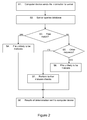
- Figure 2 is a flow chart illustrating steps of the invention, with the following numbering corresponding to the numbering of Figure 2 :
- the client device having only one memory.
- the memory may be a hard drive, an optical drive, a Random Access Memory, or any other type of memory, and that more than one memory may be provided.
- the memory may be remotely connected to the client device.
Landscapes
- Engineering & Computer Science (AREA)
- Computer Security & Cryptography (AREA)
- Computer Hardware Design (AREA)
- General Engineering & Computer Science (AREA)
- Software Systems (AREA)
- Theoretical Computer Science (AREA)
- Health & Medical Sciences (AREA)
- Virology (AREA)
- General Health & Medical Sciences (AREA)
- Physics & Mathematics (AREA)
- General Physics & Mathematics (AREA)
- Storage Device Security (AREA)
Description
- The present invention relates to the field of determining if an electronic file is malware.
- Malware is short for malicious software and is used as a term to refer to any software designed to infiltrate or damage a computer system without the owner's informed consent. Malware can include viruses, worms, trojan horses, rootkits, adware, spyware and any other malicious and unwanted software. Any client device, such as a desktop personal computer (PC), laptop, personal data assistant (PDA) or mobile phone, can be at risk from malware.
- When a device is infected by malware the user may notice unwanted behaviour and degradation of system performance as the infection can create unwanted processor activity, memory usage, and network traffic. This can also cause stability issues leading to application or system-wide crashes. The user of an infected device may incorrectly assume that poor performance is a result of software flaws or hardware problems, taking inappropriate remedial action, when the actual cause is a malware infection of which they are unaware. Current malware typically tries to stay invisible to the user so that whoever controls the malware can use it for their benefit, for example by capturing user credentials to online banks, sending spam, distributing malware to other users and so on.
- Malware detection happens primarily at two different stages: pre-infection and post-infection. Pre-infection detection involves analyzing a piece of software before it is allowed to execute to determine whether it is malicious. Post-infection detection involves analyzing a computer system for a malware infection already present on the system by scanning through the files present in the system, looking at the processes in the system, searching possibly hidden files and processes, analysing network traffic leaving the computer and looking at other signs of a malware infection.
- Behavioural analysis can be performed on a running computer system by looking at actions performed by various processes and then determining whether the actions taken by the process are typical for a piece of malware.
- Detecting malware in the post-infection phase is especially challenging (it's also challenging at the pre-infection phase), as the malware authors design their software to be difficult to detect, often employing technology that deliberately hides the presence of malware on a system. For example, the malware application may not show up on the operating system tables that list currently running processes.
- Client devices make use of anti-virus software to detect and possibly remove malware. This anti-virus software can make use of various methods to detect malware including scanning, integrity checking and heuristic analysis. Of these methods, malware scanning involves the anti-virus software examining files for a virus fingerprint or "signature" that is characteristic of an individual malware program. Typically, this requires that the anti-virus software has a database containing the signatures. When the provider of the anti-virus software identifies a new malware threat, the threat is analysed and its signature is extracted. The malware is then "known" and its signature can be supplied as updates to the anti-virus software database. However, scanning files for malware can consume significant processing resources potentially resulting in a reduction in the performance of a computing device. Recently, the number of malware samples has increased greatly, with the result that the size of the signature databases for anti-virus products has grown significantly.
- A problem with detecting malware using signature methods is that malware authors may specifically create large amounts of unique samples to make the traditional local signature mechanisms obsolete.
- A further problem is that malware is increasingly written with a specific target in mind, and so malware infecting a client device may be unique. They are created to target a specific company or even an individual. As the malware is unique, it becomes more difficult to detect. It is also typically tested against the anti-virus software used by the target company / individual to make sure the signature and other mechanisms don't detect the sample. Typically, the payload of two malware samples created by the same person will be the same. However, malware is often protected by using a protective layer using an obfuscating packer to obfuscate or encode the malware in a way that makes it difficult to detect using a signature for the payload. By varying the method or manner of obfuscation, each malware can be uniquely tailored to a particular target whilst the malware payload remains the same. However, two different samples of unique malware may have completely different outer level signatures despite having the same payload.
- There are different methods for handling malware protected by an obfuscating packer. One is to detect the malware by the type of obfuscation layer being used. This method works well where the the protective layer is used only by the malware, but causes problems if the protective layer is used both by the malware and by legitimate applications. The other method is to remove the protection layer (by emulation or otherwise) to reveal the malware payload code. This can consume more processing resources than is desirable, especially on client devices such as mobile telephones that have limited processing resources. There might also be code that bypasses the unpacking mechanisms or breaks out from the emulation environment.
- In addition to unique malware created by using a unique protective layer, it is also possible for the malware payload to be written specifically with a target in mind. In this case it will have a unique signature regardless of whether a protective layer is used.
-
US 2004/0153644 discloses a system, computer program product and method for detecting potentially malicious software and preventing said potentially malicious software from installing and/or executing on client devices. A software developer distributes software to client devices. A client device asks an execution authority whether the software is malicious. The execution authority maintains a database specifying the status of certain software. If the status of the software at the client device is in the database, the execution authority reports it to the client device. The execution authority can also analyse the frequency of software execution requests from client devices to determine whether the software is malicious. - It is an object of the invention to provide a method of detecting malware where the malware is unique or rare. According to a first aspect of the invention, there is provided a method of making a determination of whether an electronic file stored at a client device is malware. A server receives a request message from the client device. The request message includes signature information of the electronic file. The server queries a database used for storing signature information of a multiplicity of electronic files. If the signature information of the electronic file corresponds to signature information stored on the database, a determination is made as to whether the electronic file is malware. The signature information of the multiplicity of electronic files stored at the database includes signature information of clean copies of electronic files, and if the signature information relating to the electronic file corresponds to signature information of a clean copy of an electronic file stored at the database then it is determined that the electronic file is not malware, and/or known malware, and if the signature information relating to the electronic file corresponds to signature information of known malware stored at the database it is determined that the electronic file is malware. If, on the other hand, the signature information of the electronic file does not correspond to signature information stored on the database, a determination is made as to whether a predetermined number of further request messages relating to the electronic file are received from further client devices within a predetermined time period. If fewer than the predetermined number of further request messages are received within the predetermined time period, it is likely that the electronic file is malware. The result of the determination is then sent to the client device.
- As a preferred option, in the event that fewer than the predetermined number of further requests are received within the predetermined time period, the method comprises performing further malware checks.
- The server may send a request to the client device for the client device to send the file to a verification server for verification that the electronic file is not infected with malware.
- According to a second aspect of the present invention, there is provided a server for use in a communication network. The server is provided with a receiver for receiving from a client device a request message that includes information relating to an electronic file. A processor is also provided for querying a database storing signature information of a multiplicity of electronic files. The processor is arranged to determine if the signature information of the electronic file corresponds to signature information stored on the database. If such a determination is made, then the processor determines whether the electronic file is malware. The signature information of the multiplicity of electronic files stored at the database includes signature information of clean copies of electronic files, and the processor is arranged to, in event that the signature information relating to the electronic file corresponds to signature information of a clean copy of an electronic file stored at the database, determine that the electronic file is not malware; and/or known malware, and the processor is arranged to, in the event that the signature information relating to the electronic file corresponds to signature information of known malware stored at the database, determine that the electronic file is malware. If it is determined that signature information relating to the electronic file does not correspond to signature information stored on the database, then the processor is arranged to determine whether a predetermined number of further request messages relating to the electronic file are received from further client devices within a predetermined time period. If fewer than the predetermined number of further request messages are received within a predetermined time period, then the processor is arranged to determine that the electronic file is likely to be malware.
- As an option, the server is provided with a transmitter for sending the result of the determination to the client device.
- The processor is optionally arranged to, in the event that fewer than a predetermined number of further requests are received within a predetermined time period, perform further malware checks.
- According to a third aspect of the invention, there is provided a computer program, comprising computer readable code which, when run on a server, causes the server to behave as a server as described above in the second aspect of the invention.
- According to a fourth aspect of the invention, there is provided a computer program product comprising a computer readable medium and a computer program as described in the third aspect of the invention, wherein the computer program is stored on the computer readable medium.
-
-
Figure 1 illustrates schematically in a block diagram a network architecture according to an embodiment of the invention; and -
Figure 2 is a flow diagram showing the steps of an embodiment of the invention. - The inventors have realised that whilst there are many unique (or rare) examples of malware in existence, it is much less likely that a binary associated with a regular application will be unique among the users of a communication network such as the Internet. For example, the binaries associated with Microsoft Windows XP™ are the same for all users who have the same version of Windows XP installed (for example, a version using the same language and the same service pack) on their client device. Similarly, the binaries for third party applications such as Adobe Acrobat™ are the same for all users who have Windows XP installed on their client device. If a binary stored at the client device is unique, then there is an increased likelihood that the binary is suspicious and may in fact be unique malware. Note that whilst the term "unique" is used for the malware in the examples described below, the invention encompasses malware that is aimed at a handful of users or companies, and not generic malware.
- A typical application when released will be taken into use by several users within minutes of its release.
-
Figure 1 illustrates aclient device 1 having a computer readable medium in the form of amemory 2 for storing electronic files, aprocessor 3, atransmitter 4 for sending signalling to external nodes, and a receiver 5 for receiving signalling from external nodes. - An anti-virus application is installed into the
memory 2 of theclient device 1. When the anti-virus application is run, it starts to scan electronic files in the memory 2 (or received from a network, a removable memory or otherwise). When an electronic file is identified that may be a legitimate file or may be associated with malware, a network look-up is performed base on key parts of the file. The key parts of the file are signature information that can be used to identify the file and to describe the structure of the file. Examples of signature information include an electronic fingerprint (SHA-1, MD5 or similar, of the whole file or parts of it), file name, location, author, date of creation, date of modification, associated registry settings, version number and so on. - The network lookup is performed by sending a request message using the
transmitter 4 to aserver 6. Theserver 6 has areceiver 7 that receives the request message, which is processed by a processor 8. Theserver 6 has access to a database 9. In the example ofFigure 1 , the database 9 is shown as part of theserver 6, although it will be appreciated that the database may be accessed remotely by the server. - The database 9 holds information on known malware and also on files provided by trusted software vendors. Examples of electronic files for major operating systems, applications, games and so on are stored in the database.
- The processor 8 compares the received electronic file information with information retrieved from the database. If it is determined that the electronic file stored in the
memory 2 matches a corresponding clean electronic file retrieved from the database 9, then the electronic file stored in theclient device memory 2 is unlikely to be infected with malware, and a response message is sent to the client device via atransmitter 10 confirming that the electronic file is not infected with malware. - If, on the other hand, the electronic file stored in the
memory 2 does not match a file stored in the database 9, then the file is either unknown to the database 9 or is a unique piece of software. In this case, further action is taken. - The
server 6 informs theclient device 1 that the electronic file stored in the memory is suspicious and may ask theclient device 1 to recheck the status after a predetermined time period. Alternatively, theserver 6 may simply send updates of the file status to theclient device 1. In one embodiment of the invention, theclient device 1 is requested to send a copy of the file to theserver 6 or to another server for further analysis to determine whether or not it is infected with malware. - In the case where the electronic file stored at the
memory 2 does not match with a file stored in the database 9, there is a chance that the electronic file is part of a new legitimate application that is previously unknown to the database 9. Theserver 6 waits for a predetermined period of time (for example, 15 minutes) to ascertain whether request messages for that file are received from other client devices. If a sufficient number of other client devices send a request message for the same electronic file, then it is likely that the electronic file is part of a new legitimate application, or is not unique malware. In this case, other methods (not described herein) may be used to ascertain whether the file is clean. If no other request messages (or very few request messages) are received in the predetermined time period, then it is more likely that the electronic file is infected with malware (or is malware). - In a further embodiment of the invention, once it is determined that the electronic file stored at the
memory 2 does not match with a file stored in the database, theclient device 1 is prompted to verify that the electronic file stored in the memory comes from a trusted source and is not malware or infected with malware. - The
memory 2 at theclient device 1 may also be used to store acomputer programme 10 comprising instructions that causes theclient device 1 to describe above. Similarly, theserver 6 may also be provided with a computer readable medium in the form of amemory 11. Acomputer programme 12 is stored in the memory which, when executed by the processor 8, causes theserver 6 to run as described above. -
Figure 2 is a flow chart illustrating steps of the invention, with the following numbering corresponding to the numbering ofFigure 2 : - S1. The
client device 1 determines that an electronic file stored in the memory may be infected with malware, and sends information relating to the electronic file or key parts from the electronic file to theserver 6. - S2. The
server 6 queries the database 9 to look for similar electronic files. - S3. A determination is made of whether a corresponding version of the file exists on the database 9. This determination may be made against known malware or clean versions of files stored at the database 9.
- S4. If a corresponding clean version of the electronic file exists on the database 9, the electronic file is unlikely to be malware, and the process moves to step S8. Similarly, if a corresponding version of malware exists on the database 9, then the electronic file is determined to be malware, and the process moves to step S8.
- S5. If a corresponding clean version of the electronic file does not exist on the database 9, then a check is made to ascertain whether any other client devices have sent information relating to the electronic file within a predetermined time period.
- S6. If enough other client devices have sent the information relating to the electronic file, then the electronic file is unlikely to be unique malware and is more likely to be a new file that is not yet provisioned on the database 9 (which may be clean or malware). Further checks may be made, and if it is determined that the electronic file is not malware or infected with malware, a copy is stored at the database 9 and marked as clean. If, on the other hand, it is determined that the file is malware or infected with malware, then the file is marked as being malware. The process then continues at step S8.
- S7. If no (or only a few) other client devices have sent the information relating to the electronic file, then the electronic file is likely to be malware. Further checks may be made on the file.
- S8. The results of the determination are sent to the
client device 1. - It will be appreciated by the person of skill in the art that various modifications may be made to the above described embodiment without departing from the scope of the present invention. For example, the examples given above show the client device having only one memory. It will be appreciated that the memory may be a hard drive, an optical drive, a Random Access Memory, or any other type of memory, and that more than one memory may be provided. Furthermore, the memory may be remotely connected to the client device.
Claims (8)
- A method of making a determination of whether an electronic file stored at a client device is malware, the method comprising:receiving at a server from the client device a request message comprising signature information of the electronic file (S1);querying a database storing signature information of a multiplicity of electronic files (S2);if the signature information of the electronic file corresponds to signature information stored on the database (S3), determining whether the electronic file is malware, wherein the signature information of the multiplicity of electronic files stored at the database includes signature information ofclean copies of electronic files, and if the signature information relating to the electronic file corresponds to signature information of a clean copy of an electronic file stored at the database, determining that the electronic file is not malware, and/orknown malware, and if the signature information relating to the electronic file corresponds to signature information of known malware stored at the database, determining that the electronic file is malware, the method being characterized by:in the event that the signature information of the electronic file does not correspond to signature information stored on the database, determining whether a predetermined number of further request messages relating to the electronic file are received from further client devices within a predetermined time period (S5), and in the event that fewer than the predetermined number of further request messages are received within the predetermined time period,determining that the electronic file is likely to be malware (S7); andsending the result of the determination to the client device (S8).
- The method according to claim 1, further comprising:in the event that fewer than the predetermined number of further requests are received within the predetermined time period, performing further malware checks.
- The method according to claim 1 or 2, further comprising:sending to the client device a request for the client device to send the file to a verification server for verification that the electronic file is not malware.
- A server (6) for use in a communication network, the server comprising:a receiver (7) for receiving from a client device a request message, the request message including information relating to an electronic file; anda processor (8) for querying a database (9) storing signature information of a multiplicity of electronic files, the processor being arranged to determine if the signature information of the electronic file corresponds to signature information stored on the database, and in the event that such a determination is made,determining whether the electronic file is malware, wherein the signature information of the multiplicity of electronic files stored at the database (9) includes signature information ofclean copies of electronic files, and the processor (8) is arranged to, in event that the signature information relating to the electronic file corresponds to signature information of a clean copy of an electronic file stored at the database, determine that the electronic file is not malware, and/orknown malware, and the processor (8) is arranged to, in event that the signature information relating to the electronic file corresponds to signature information of known malware stored at the database, determine that the electronic file is malware,and characterised by:the processor being arranged to, if is determined that signature information relating to the electronic file does not correspond to signature information stored on the database, determine whether a predetermined number of further request messages relating to the electronic file are received from further client devices within a predetermined time period, and in the event that fewer than the predetermined number of further request messages are received within a predetermined time period, determine that the electronic file is likely to be malware.
- The server according to claim 4, further comprising a transmitter (10) for sending the result of the determination to the client device.
- The server according to claim 4, wherein the processor (8) is further arranged to, in the event that fewer than a predetermined number of further requests are received within a predetermined time period, perform further malware checks .
- A computer program, comprising computer readable code which, when run on a server, causes the server to behave as a server as claimed in any one of claims 4 to 6.
- A computer program product comprising a computer readable medium and a computer program according to claim 7, wherein the computer program is stored on the computer readable medium.
Applications Claiming Priority (2)
| Application Number | Priority Date | Filing Date | Title |
|---|---|---|---|
| GB0906180.5A GB2469322B (en) | 2009-04-09 | 2009-04-09 | Malware determination |
| PCT/EP2010/054649 WO2010115960A1 (en) | 2009-04-09 | 2010-04-08 | Malware determination |
Publications (2)
| Publication Number | Publication Date |
|---|---|
| EP2417552A1 EP2417552A1 (en) | 2012-02-15 |
| EP2417552B1 true EP2417552B1 (en) | 2016-11-16 |
Family
ID=40750380
Family Applications (1)
| Application Number | Title | Priority Date | Filing Date |
|---|---|---|---|
| EP10717574.7A Active EP2417552B1 (en) | 2009-04-09 | 2010-04-08 | Malware determination |
Country Status (4)
| Country | Link |
|---|---|
| US (1) | US8726377B2 (en) |
| EP (1) | EP2417552B1 (en) |
| GB (1) | GB2469322B (en) |
| WO (1) | WO2010115960A1 (en) |
Families Citing this family (7)
| Publication number | Priority date | Publication date | Assignee | Title |
|---|---|---|---|---|
| US9218461B2 (en) * | 2010-12-01 | 2015-12-22 | Cisco Technology, Inc. | Method and apparatus for detecting malicious software through contextual convictions |
| US9100425B2 (en) | 2010-12-01 | 2015-08-04 | Cisco Technology, Inc. | Method and apparatus for detecting malicious software using generic signatures |
| US8726388B2 (en) * | 2011-05-16 | 2014-05-13 | F-Secure Corporation | Look ahead malware scanning |
| US20140283046A1 (en) * | 2013-03-13 | 2014-09-18 | Mcafee, Inc. | Anti-malware scanning of database tables |
| CN103281325B (en) * | 2013-06-04 | 2018-03-02 | 北京奇虎科技有限公司 | Document handling method and device based on cloud security |
| GB2518636B (en) * | 2013-09-26 | 2016-03-09 | F Secure Corp | Distributed sample analysis |
| GB2531514B (en) | 2014-10-17 | 2019-10-30 | F Secure Corp | Malware detection method |
Family Cites Families (6)
| Publication number | Priority date | Publication date | Assignee | Title |
|---|---|---|---|---|
| US7152164B1 (en) * | 2000-12-06 | 2006-12-19 | Pasi Into Loukas | Network anti-virus system |
| US6963978B1 (en) * | 2001-07-26 | 2005-11-08 | Mcafee, Inc. | Distributed system and method for conducting a comprehensive search for malicious code in software |
| EP1315066A1 (en) * | 2001-11-21 | 2003-05-28 | BRITISH TELECOMMUNICATIONS public limited company | Computer security system |
| US20040153644A1 (en) * | 2003-02-05 | 2004-08-05 | Mccorkendale Bruce | Preventing execution of potentially malicious software |
| US7257842B2 (en) | 2003-07-21 | 2007-08-14 | Mcafee, Inc. | Pre-approval of computer files during a malware detection |
| US8214895B2 (en) | 2007-09-26 | 2012-07-03 | Microsoft Corporation | Whitelist and blacklist identification data |
-
2009
- 2009-04-09 GB GB0906180.5A patent/GB2469322B/en not_active Expired - Fee Related
-
2010
- 2010-04-08 EP EP10717574.7A patent/EP2417552B1/en active Active
- 2010-04-08 US US13/263,437 patent/US8726377B2/en active Active
- 2010-04-08 WO PCT/EP2010/054649 patent/WO2010115960A1/en not_active Ceased
Also Published As
| Publication number | Publication date |
|---|---|
| EP2417552A1 (en) | 2012-02-15 |
| US8726377B2 (en) | 2014-05-13 |
| GB2469322A (en) | 2010-10-13 |
| US20120117648A1 (en) | 2012-05-10 |
| WO2010115960A1 (en) | 2010-10-14 |
| GB0906180D0 (en) | 2009-05-20 |
| GB2469322B (en) | 2014-04-16 |
Similar Documents
| Publication | Publication Date | Title |
|---|---|---|
| JP7460696B2 (en) | Real-time detection and protection from malware and steganography in kernel mode | |
| US20240386109A1 (en) | Analysis of Malware | |
| US8590045B2 (en) | Malware detection by application monitoring | |
| EP2452287B1 (en) | Anti-virus scanning | |
| US8392996B2 (en) | Malicious software detection | |
| US8196201B2 (en) | Detecting malicious activity | |
| US8726387B2 (en) | Detecting a trojan horse | |
| US8561190B2 (en) | System and method of opportunistically protecting a computer from malware | |
| US7620990B2 (en) | System and method for unpacking packed executables for malware evaluation | |
| US20130067577A1 (en) | Malware scanning | |
| US8627404B2 (en) | Detecting addition of a file to a computer system and initiating remote analysis of the file for malware | |
| US8726377B2 (en) | Malware determination | |
| EP2417551B1 (en) | Providing information to a security application | |
| Gandotra et al. | Malware intelligence: beyond malware analysis | |
| Wu et al. | Self-healing spyware: detection, and remediation | |
| AU2007204089A1 (en) | Malicious software detection | |
| Güven | Patterns of malware and digital attacks: A guideline for the security enthusiast | |
| AU2007203373A1 (en) | Detecting malicious activity |
Legal Events
| Date | Code | Title | Description |
|---|---|---|---|
| PUAI | Public reference made under article 153(3) epc to a published international application that has entered the european phase |
Free format text: ORIGINAL CODE: 0009012 |
|
| 17P | Request for examination filed |
Effective date: 20111024 |
|
| AK | Designated contracting states |
Kind code of ref document: A1 Designated state(s): AT BE BG CH CY CZ DE DK EE ES FI FR GB GR HR HU IE IS IT LI LT LU LV MC MK MT NL NO PL PT RO SE SI SK SM TR |
|
| RIN1 | Information on inventor provided before grant (corrected) |
Inventor name: NIEMELAE, JARNO Inventor name: CARRERA, ERO Inventor name: KALLIO, JUSSI Inventor name: KESTI, VELI-JUSSI Inventor name: PALOMAEKI, PIRKKA |
|
| DAX | Request for extension of the european patent (deleted) | ||
| 17Q | First examination report despatched |
Effective date: 20150218 |
|
| REG | Reference to a national code |
Ref country code: DE Ref legal event code: R079 Ref document number: 602010038013 Country of ref document: DE Free format text: PREVIOUS MAIN CLASS: G06F0021000000 Ipc: G06F0021560000 |
|
| GRAP | Despatch of communication of intention to grant a patent |
Free format text: ORIGINAL CODE: EPIDOSNIGR1 |
|
| RIC1 | Information provided on ipc code assigned before grant |
Ipc: G06F 21/56 20130101AFI20160520BHEP |
|
| INTG | Intention to grant announced |
Effective date: 20160615 |
|
| GRAS | Grant fee paid |
Free format text: ORIGINAL CODE: EPIDOSNIGR3 |
|
| GRAA | (expected) grant |
Free format text: ORIGINAL CODE: 0009210 |
|
| AK | Designated contracting states |
Kind code of ref document: B1 Designated state(s): AT BE BG CH CY CZ DE DK EE ES FI FR GB GR HR HU IE IS IT LI LT LU LV MC MK MT NL NO PL PT RO SE SI SK SM TR |
|
| REG | Reference to a national code |
Ref country code: GB Ref legal event code: FG4D |
|
| REG | Reference to a national code |
Ref country code: CH Ref legal event code: EP |
|
| REG | Reference to a national code |
Ref country code: IE Ref legal event code: FG4D |
|
| REG | Reference to a national code |
Ref country code: AT Ref legal event code: REF Ref document number: 846536 Country of ref document: AT Kind code of ref document: T Effective date: 20161215 |
|
| REG | Reference to a national code |
Ref country code: DE Ref legal event code: R096 Ref document number: 602010038013 Country of ref document: DE |
|
| PG25 | Lapsed in a contracting state [announced via postgrant information from national office to epo] |
Ref country code: LV Free format text: LAPSE BECAUSE OF FAILURE TO SUBMIT A TRANSLATION OF THE DESCRIPTION OR TO PAY THE FEE WITHIN THE PRESCRIBED TIME-LIMIT Effective date: 20161116 |
|
| REG | Reference to a national code |
Ref country code: NL Ref legal event code: MP Effective date: 20161116 |
|
| REG | Reference to a national code |
Ref country code: LT Ref legal event code: MG4D |
|
| REG | Reference to a national code |
Ref country code: FR Ref legal event code: PLFP Year of fee payment: 8 |
|
| REG | Reference to a national code |
Ref country code: AT Ref legal event code: MK05 Ref document number: 846536 Country of ref document: AT Kind code of ref document: T Effective date: 20161116 |
|
| PG25 | Lapsed in a contracting state [announced via postgrant information from national office to epo] |
Ref country code: NL Free format text: LAPSE BECAUSE OF FAILURE TO SUBMIT A TRANSLATION OF THE DESCRIPTION OR TO PAY THE FEE WITHIN THE PRESCRIBED TIME-LIMIT Effective date: 20161116 Ref country code: NO Free format text: LAPSE BECAUSE OF FAILURE TO SUBMIT A TRANSLATION OF THE DESCRIPTION OR TO PAY THE FEE WITHIN THE PRESCRIBED TIME-LIMIT Effective date: 20170216 Ref country code: GR Free format text: LAPSE BECAUSE OF FAILURE TO SUBMIT A TRANSLATION OF THE DESCRIPTION OR TO PAY THE FEE WITHIN THE PRESCRIBED TIME-LIMIT Effective date: 20170217 Ref country code: LT Free format text: LAPSE BECAUSE OF FAILURE TO SUBMIT A TRANSLATION OF THE DESCRIPTION OR TO PAY THE FEE WITHIN THE PRESCRIBED TIME-LIMIT Effective date: 20161116 Ref country code: SE Free format text: LAPSE BECAUSE OF FAILURE TO SUBMIT A TRANSLATION OF THE DESCRIPTION OR TO PAY THE FEE WITHIN THE PRESCRIBED TIME-LIMIT Effective date: 20161116 |
|
| PG25 | Lapsed in a contracting state [announced via postgrant information from national office to epo] |
Ref country code: PT Free format text: LAPSE BECAUSE OF FAILURE TO SUBMIT A TRANSLATION OF THE DESCRIPTION OR TO PAY THE FEE WITHIN THE PRESCRIBED TIME-LIMIT Effective date: 20170316 Ref country code: ES Free format text: LAPSE BECAUSE OF FAILURE TO SUBMIT A TRANSLATION OF THE DESCRIPTION OR TO PAY THE FEE WITHIN THE PRESCRIBED TIME-LIMIT Effective date: 20161116 Ref country code: HR Free format text: LAPSE BECAUSE OF FAILURE TO SUBMIT A TRANSLATION OF THE DESCRIPTION OR TO PAY THE FEE WITHIN THE PRESCRIBED TIME-LIMIT Effective date: 20161116 Ref country code: FI Free format text: LAPSE BECAUSE OF FAILURE TO SUBMIT A TRANSLATION OF THE DESCRIPTION OR TO PAY THE FEE WITHIN THE PRESCRIBED TIME-LIMIT Effective date: 20161116 Ref country code: AT Free format text: LAPSE BECAUSE OF FAILURE TO SUBMIT A TRANSLATION OF THE DESCRIPTION OR TO PAY THE FEE WITHIN THE PRESCRIBED TIME-LIMIT Effective date: 20161116 Ref country code: PL Free format text: LAPSE BECAUSE OF FAILURE TO SUBMIT A TRANSLATION OF THE DESCRIPTION OR TO PAY THE FEE WITHIN THE PRESCRIBED TIME-LIMIT Effective date: 20161116 |
|
| PG25 | Lapsed in a contracting state [announced via postgrant information from national office to epo] |
Ref country code: CZ Free format text: LAPSE BECAUSE OF FAILURE TO SUBMIT A TRANSLATION OF THE DESCRIPTION OR TO PAY THE FEE WITHIN THE PRESCRIBED TIME-LIMIT Effective date: 20161116 Ref country code: RO Free format text: LAPSE BECAUSE OF FAILURE TO SUBMIT A TRANSLATION OF THE DESCRIPTION OR TO PAY THE FEE WITHIN THE PRESCRIBED TIME-LIMIT Effective date: 20161116 Ref country code: DK Free format text: LAPSE BECAUSE OF FAILURE TO SUBMIT A TRANSLATION OF THE DESCRIPTION OR TO PAY THE FEE WITHIN THE PRESCRIBED TIME-LIMIT Effective date: 20161116 Ref country code: SK Free format text: LAPSE BECAUSE OF FAILURE TO SUBMIT A TRANSLATION OF THE DESCRIPTION OR TO PAY THE FEE WITHIN THE PRESCRIBED TIME-LIMIT Effective date: 20161116 Ref country code: EE Free format text: LAPSE BECAUSE OF FAILURE TO SUBMIT A TRANSLATION OF THE DESCRIPTION OR TO PAY THE FEE WITHIN THE PRESCRIBED TIME-LIMIT Effective date: 20161116 |
|
| REG | Reference to a national code |
Ref country code: DE Ref legal event code: R097 Ref document number: 602010038013 Country of ref document: DE |
|
| PG25 | Lapsed in a contracting state [announced via postgrant information from national office to epo] |
Ref country code: BE Free format text: LAPSE BECAUSE OF FAILURE TO SUBMIT A TRANSLATION OF THE DESCRIPTION OR TO PAY THE FEE WITHIN THE PRESCRIBED TIME-LIMIT Effective date: 20161116 Ref country code: SM Free format text: LAPSE BECAUSE OF FAILURE TO SUBMIT A TRANSLATION OF THE DESCRIPTION OR TO PAY THE FEE WITHIN THE PRESCRIBED TIME-LIMIT Effective date: 20161116 Ref country code: IT Free format text: LAPSE BECAUSE OF FAILURE TO SUBMIT A TRANSLATION OF THE DESCRIPTION OR TO PAY THE FEE WITHIN THE PRESCRIBED TIME-LIMIT Effective date: 20161116 Ref country code: BG Free format text: LAPSE BECAUSE OF FAILURE TO SUBMIT A TRANSLATION OF THE DESCRIPTION OR TO PAY THE FEE WITHIN THE PRESCRIBED TIME-LIMIT Effective date: 20170216 |
|
| PLBE | No opposition filed within time limit |
Free format text: ORIGINAL CODE: 0009261 |
|
| STAA | Information on the status of an ep patent application or granted ep patent |
Free format text: STATUS: NO OPPOSITION FILED WITHIN TIME LIMIT |
|
| 26N | No opposition filed |
Effective date: 20170817 |
|
| PG25 | Lapsed in a contracting state [announced via postgrant information from national office to epo] |
Ref country code: SI Free format text: LAPSE BECAUSE OF FAILURE TO SUBMIT A TRANSLATION OF THE DESCRIPTION OR TO PAY THE FEE WITHIN THE PRESCRIBED TIME-LIMIT Effective date: 20161116 |
|
| REG | Reference to a national code |
Ref country code: CH Ref legal event code: PL |
|
| REG | Reference to a national code |
Ref country code: IE Ref legal event code: MM4A |
|
| PG25 | Lapsed in a contracting state [announced via postgrant information from national office to epo] |
Ref country code: MC Free format text: LAPSE BECAUSE OF FAILURE TO SUBMIT A TRANSLATION OF THE DESCRIPTION OR TO PAY THE FEE WITHIN THE PRESCRIBED TIME-LIMIT Effective date: 20161116 |
|
| PG25 | Lapsed in a contracting state [announced via postgrant information from national office to epo] |
Ref country code: LI Free format text: LAPSE BECAUSE OF NON-PAYMENT OF DUE FEES Effective date: 20170430 Ref country code: LU Free format text: LAPSE BECAUSE OF NON-PAYMENT OF DUE FEES Effective date: 20170408 Ref country code: CH Free format text: LAPSE BECAUSE OF NON-PAYMENT OF DUE FEES Effective date: 20170430 |
|
| REG | Reference to a national code |
Ref country code: FR Ref legal event code: PLFP Year of fee payment: 9 |
|
| PG25 | Lapsed in a contracting state [announced via postgrant information from national office to epo] |
Ref country code: IE Free format text: LAPSE BECAUSE OF NON-PAYMENT OF DUE FEES Effective date: 20170408 |
|
| PG25 | Lapsed in a contracting state [announced via postgrant information from national office to epo] |
Ref country code: MT Free format text: LAPSE BECAUSE OF NON-PAYMENT OF DUE FEES Effective date: 20170408 |
|
| PG25 | Lapsed in a contracting state [announced via postgrant information from national office to epo] |
Ref country code: HU Free format text: LAPSE BECAUSE OF FAILURE TO SUBMIT A TRANSLATION OF THE DESCRIPTION OR TO PAY THE FEE WITHIN THE PRESCRIBED TIME-LIMIT; INVALID AB INITIO Effective date: 20100408 |
|
| PG25 | Lapsed in a contracting state [announced via postgrant information from national office to epo] |
Ref country code: CY Free format text: LAPSE BECAUSE OF NON-PAYMENT OF DUE FEES Effective date: 20161116 |
|
| PG25 | Lapsed in a contracting state [announced via postgrant information from national office to epo] |
Ref country code: MK Free format text: LAPSE BECAUSE OF FAILURE TO SUBMIT A TRANSLATION OF THE DESCRIPTION OR TO PAY THE FEE WITHIN THE PRESCRIBED TIME-LIMIT Effective date: 20161116 |
|
| PG25 | Lapsed in a contracting state [announced via postgrant information from national office to epo] |
Ref country code: TR Free format text: LAPSE BECAUSE OF FAILURE TO SUBMIT A TRANSLATION OF THE DESCRIPTION OR TO PAY THE FEE WITHIN THE PRESCRIBED TIME-LIMIT Effective date: 20161116 |
|
| PG25 | Lapsed in a contracting state [announced via postgrant information from national office to epo] |
Ref country code: IS Free format text: LAPSE BECAUSE OF FAILURE TO SUBMIT A TRANSLATION OF THE DESCRIPTION OR TO PAY THE FEE WITHIN THE PRESCRIBED TIME-LIMIT Effective date: 20170316 |
|
| REG | Reference to a national code |
Ref country code: DE Ref legal event code: R081 Ref document number: 602010038013 Country of ref document: DE Owner name: WITHSECURE CORPORATION, FI Free format text: FORMER OWNER: F-SECURE CORP., HELSINKI, FI |
|
| REG | Reference to a national code |
Ref country code: FR Ref legal event code: PLFP Year of fee payment: 14 |
|
| PGFP | Annual fee paid to national office [announced via postgrant information from national office to epo] |
Ref country code: DE Payment date: 20250423 Year of fee payment: 16 |
|
| PGFP | Annual fee paid to national office [announced via postgrant information from national office to epo] |
Ref country code: FR Payment date: 20250417 Year of fee payment: 16 |
|
| PGFP | Annual fee paid to national office [announced via postgrant information from national office to epo] |
Ref country code: GB Payment date: 20260325 Year of fee payment: 17 |