EP2410404A2 - System und Verfahren zur Datenelementfilterung basierend auf einer Zeichenfolgeneingabe - Google Patents
System und Verfahren zur Datenelementfilterung basierend auf einer Zeichenfolgeneingabe Download PDFInfo
- Publication number
- EP2410404A2 EP2410404A2 EP11168752A EP11168752A EP2410404A2 EP 2410404 A2 EP2410404 A2 EP 2410404A2 EP 11168752 A EP11168752 A EP 11168752A EP 11168752 A EP11168752 A EP 11168752A EP 2410404 A2 EP2410404 A2 EP 2410404A2
- Authority
- EP
- European Patent Office
- Prior art keywords
- character
- characters
- user
- sequence
- collection
- Prior art date
- Legal status (The legal status is an assumption and is not a legal conclusion. Google has not performed a legal analysis and makes no representation as to the accuracy of the status listed.)
- Withdrawn
Links
Images




Classifications
-
- G—PHYSICS
- G06—COMPUTING OR CALCULATING; COUNTING
- G06F—ELECTRIC DIGITAL DATA PROCESSING
- G06F3/00—Input arrangements for transferring data to be processed into a form capable of being handled by the computer; Output arrangements for transferring data from processing unit to output unit, e.g. interface arrangements
- G06F3/01—Input arrangements or combined input and output arrangements for interaction between user and computer
- G06F3/02—Input arrangements using manually operated switches, e.g. using keyboards or dials
- G06F3/023—Arrangements for converting discrete items of information into a coded form, e.g. arrangements for interpreting keyboard generated codes as alphanumeric codes, operand codes or instruction codes
- G06F3/0233—Character input methods
- G06F3/0237—Character input methods using prediction or retrieval techniques
-
- G—PHYSICS
- G06—COMPUTING OR CALCULATING; COUNTING
- G06F—ELECTRIC DIGITAL DATA PROCESSING
- G06F40/00—Handling natural language data
- G06F40/20—Natural language analysis
- G06F40/274—Converting codes to words; Guess-ahead of partial word inputs
Definitions
- the invention relates to a system and method for data item filtering based on a character sequence entry.
- a particular data item such as a data file or an audio and/or video recording
- a search mechanism by which the user begins entering via a user interface of the device an identifier for the item, such as a file name, a title, or the like.
- an identifier for the item such as a file name, a title, or the like.
- the device may provide a keyboard-like interface in which a collection or array of characters is presented, wherein any one or more of the characters may be selected or activated by the user.
- a keyboard-like interface in which a collection or array of characters is presented, wherein any one or more of the characters may be selected or activated by the user.
- selecting or activating each desired character in the proper order may present a challenge for the user.
- This difficulty may be further exacerbated by the physical nature of the user interface being employed. For example, the selection area for each character may be small, and the selection areas may be positioned in close proximity to each other, making user selection of any specific character somewhat difficult.
- a method of filtering a plurality of data items according to user input comprising presenting a collection of individual characters to a user, wherein any of the individual characters may be selected by the user; receiving a character sequence from the user, wherein the character sequence comprises at least one character selection selected from the collection of individual characters; for each character selection of the sequence, associating more than one character from the collection of individual characters with the character selection; and filtering the plurality of data items based on the associated characters corresponding to each character selection.
- Associating the more than one character with the character selection may comprise associating the selected character and at least one other character of the collection of individual characters, wherein the at least one other character is adjacent to the selected character based on the relative positioning of the collection of individual characters as presented to the user.
- Filtering the plurality of data items may comprise comparing a character of the identifier of each of the plurality of data items with the characters associated with the first character selection of the sequence; comparing each subsequent character of the identifier with the characters associated with each subsequent character selection of the sequence in order; and based on the comparison, filtering out the data items with identifiers having at least one character not matching one of the associated characters of the corresponding character selection of the sequence.
- the first character of the identifier may be compared with the characters associated with the first character selection of the sequence.
- the method may also comprise displaying the identifiers for the plurality of data items prior to receiving the character sequence; and updating the identifiers being displayed as each character selection of the sequence is received based on the filtering.
- the method may also comprise: displaying the identifiers for the data items as each character selection of the sequence is received, wherein the identifiers that match the character selections of the sequence are displayed before the identifiers that do not match the character selections of the sequence.
- the collection of individual characters can be organized into multiple distinct groups of characters, wherein all characters of a group are associated with a character selection if the selected character comprises one of the characters of the group.
- the collection of individual characters as presented to the user can be organized in rows; and each group of characters is located within one of the rows.
- the collection of individual characters can be organized into multiple overlapping groups of characters, wherein the selected character determines the remaining characters of the group.
- the data items may comprise media content files.
- the data items may comprise contact information entries.
- the data items may comprise words of text.
- an electronic device comprising: control circuitry configured to process data items, wherein each of the data items is identified by an identifier comprising a series of characters; an output interface configured to output the identifiers of the data items for presentation to a user; and a user input interface configured to receive a character sequence from the user via a collection of individual characters visible to the user, wherein the character sequence comprises at least one character selection selected from the collection of individual characters; wherein the control circuitry is configured to: associate more than one character from the collection of individual characters with each character selected by the user from the collection of individual characters; and filter the identifiers being presented based on the associated characters corresponding to each character selection.
- the control circuitry can be configured to display the identifiers remaining after filtering via the output interface.
- the control circuitry can be configured to prioritize for display the identifiers that match the character sequence over the rest of the identifiers remaining after filtering.
- the output interface may comprise a display; and
- the user input interface can be incorporated within the display so that each of the collection of individual characters is selectable by the user via the display.
- the user interface may comprise a plurality of depressible keys; and each of the keys corresponds to one of the characters of the collection of individual characters.
- a television receiver comprising: an input interface configured to receive television programs, wherein each of the television programs is associated with a title comprising a series of textual characters; an output interface configured to process and transmit the received television programs to a television for presentation to a user; a user interface configured to receive a search request from the user for one of the television programs, wherein the search request comprises a character sequence entered via a collection of individual characters presented to the user via the output interface, wherein the character sequence comprises at least one character selection selected from the collection of individual characters; and control logic configured to: associate more than one character from the collection of individual characters with each character selected by the user; filter the titles for the television programs based on the associated characters corresponding to each character selection; and present the identifiers remaining after the filtering via the output interface for presentation to the user.
- the control circuitry can be configured to present the identifiers remaining after the filtering in an electronic program guide indicating when the television programs are accessible at the input interface.
- the television receiver may further comprise: data storage configured to store the television programs; wherein the control circuitry is configured to present the identifiers remaining after the filtering for the stored television programs.
- a corresponding computer program is also provided.
- the computer program is operable to filter a plurality of data items according to user input, wherein each of the data items is identified by a multiple-character identifier.
- the computer program When executed on a computer, the computer program carries out the method of: presenting a collection of individual characters to a user, wherein any of the individual characters may be selected by the user, receiving a character sequence from the user, wherein the character sequence comprises at least one character selection selected from the collection of individual characters; for each character selection of the sequence, associating more than one character from the collection of individual characters with the character selections and filtering the plurality of data items based on the associated characters corresponding to each character selection.
- a user may want to access a particular data item from many such items available through the device.
- the data items may include, but are not limited to data files, media content programs, contact information entries, or any other set of items in which each item may be identified or labeled by way of a unique sequence of characters. Presuming the number of data items available to the user is large enough to make a manual search of the items burdensome, the user may filter the set of data items to reduce the number of items shown to a more manageable level by submitting at least a portion of the identifier of the desired data item as search criteria.
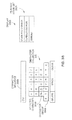
- Fig. 1 illustrates a character collection 102 to be used as input for filtering a set of data items.
- the collection 102 of individual characters 101 is organized as a QWERTY-style keyboard, although any other arrangement and set of characters may be used in other implementations.
- the characters 101 may include any or all of letters, numbers, special-purpose characters, and so on.
- the characters 101 are organized into a number of character groups 106. As is discussed in greater detail below, the groups 106 allow some inaccuracy in the entry of search criteria while facilitating reasonable search results. More specifically, when a user selects a character 104, all of the characters 101 in the group 106 in which the selected character 104 is located are employed as part of the search criteria.
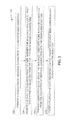
- Fig. 2 presents a method 200 of filtering a plurality of data items according to user input.
- Each of the data items is identified by way of a multiple-character identifier, such as a name, label, title, or some form of metadata associated with the data item.
- a collection 102 of individual characters 101 is presented to the user for selection (operation 202).
- a character sequence is received from the user, wherein the sequence includes at least one character 101 selected from the collection 102 of individual characters 101 (operation 204).
- For each character selection of the sequence more than one character 101 from the collection 102 of individual characters 101 is associated with the character selection (operation 206).
- the plurality of data items is filtered based on the associated characters corresponding to each character selection (operation 208).
- a computer-readable storage medium may have encoded thereon instructions for a processor or other control circuitry of an electronic device to implement the method 200.
- the user may input a character sequence to search for a particular data item with some level of inaccuracy while the desired data item still remains accessible after the filtering of the data items has occurred. Additional advantages may be recognized from the various implementations of the invention discussed in greater detail below.
- Figs. 3A through 3C depict a display 300 of the progression a specific example of a user entering a character sequence to search for a particular movie or program.
- numerous movies are available for viewing via an electronic device, such as a computer, television receiver, mobile device, or the like.
- the user may use a search facility such as that portrayed in Figs. 3A through 3C , in which the user employs an onscreen character collection 302 to begin entering a character sequence 308 representing the first few letters of the title of the desired movie.
- search results are presented in the filtered movie list 320 appearing on the right side of the display 300.
- the filtered list 320 is filtered and updated as directed by the character sequence 308.
- Alternatives to a simple list, such as graphic representations of the movies may be employed in other examples.
- a first character 304A for the character sequence 308A for the character sequence 308A; a "D".
- the user selects the character 304A by way of a cursor-driven interface, such as by way of a mouse, touchpad, or other graphical interface means, either directly provided by way of the electronic device or via a remote control unit.
- a cursor-driven interface such as by way of a mouse, touchpad, or other graphical interface means, either directly provided by way of the electronic device or via a remote control unit.
- the user may not always select the intended character 304.
- each of the characters of the character collection 302 is associated with a character group 306.
- the letter "D" resides within a character group 306A that also includes the letters "C", ''I'', and "J".
- the particular group 306A including the selected character 304A is highlighted or outlined as a courtesy to the user: in other examples, such highlighting, may not be used.
- the character 304 to be is emphasized in bold and italics for the user's benefit.
- the groups 306 extend over both multiple rows and multiple columns. Other embodiments may provide groups 306 that arc contained within a single row or column. Further, the same number of characters need not be included in each of the groups 306 of the character collection 302.
- each group 306 may be determined by the specific character 304 selected by the user. For example, if the user selects the letter “D", other characters surrounding the letter “D”, such as “C”, “E”, “I”, “J”, and '"K'” (or, alternatively, “C”, “E”, and “J") may be incorporated within the same group 306 along with the letter "D”. If, instead, the user selects the letter "C”, other letters added to the same group 306 as “C” may include "B", “D", “H”, “I", and “J” (or, alternatively, "B”. "D", and “I”). As a result, many of the possible groups 306 may overlap. One possible rationale for defining the groups in this is that the character that the user most likely wanted to select may be either the actual character selected, or some character locate adjacent to the selected character.
- the user has entered a second selected character 304B (i.e., the letter "I j"), which has been added to the character sequence 308B.
- the selected character 304B constitutes part of a larger character group 306B that also includes the letters "M", "N", "S", and "T”' in addition to the selected "U”.
- the filtered movie list 320B includes all movies whose first letter is within the first character group 306A, and whose second letter lies within the second character group 306B.
- the movie titles whose first two letters match the character sequence 308B i.e., "DU" are presented first in the list 320B, followed by other combinations in some predetermined order, such as alphabetical order.
- Fig. 3C the user has entered a third selected character 304C (i.e., the letter "M”), which is part of the same character group 306B in which the second selected character 304B (i.e., the letter "U") was located.
- the first entry of the list 320C exactly matches the character sequence 308C, while the second entry is present as a result of the filtering associated with other letters within the character groups 306A, 306B.
- the first selected character 304A of the sequence 308C is compared to the first letter of each of the movie titles, with each subsequent character 304B, 304C of the sequence 308C being compared with each corresponding letter of the titles.
- the first selected character 304A of the sequence 308C may be compared against any Nth letter of each title, with subsequent characters of the sequence being compared against subsequent letters N+1, N+2, and so on, in the title, Such implementations would not only allow minor inaccuracies in user entry of the search sequence, as described above, but also would allow matching of the search sequence with interior portions of me various movies titles.
- the user may be somewhat inaccurate in entering the desired character sequence 308 in searching for a particular program, and yet have the intended program provided within the filtered list 320.
- the position of the intended program within the list 320 may depend at least in part on how accurately the user entered the sequence, with more prominent areas of the list being associated with program titles that more closely match the character sequence 308.
- Fig. 4 presents a block diagram of an electronic device 400, such as a general-purpose computer, television receiver or set-top box, mobile communication device, personal digital assistant (PDA), digital video recorder (DVR), digital video disk (DVD) player, digital still camera, digital video camcorder, or any other device capable of filtering data items as discussed above.
- the data items to be filtered or searched may be any items associated with a unique name, title, or label including multiple characters, such as letters, numbers, and punctuation or other special characters.
- any set of media content files such audio and/or video television programs, movies, and the like, may be searched as described herein.
- SMS Short Message Service
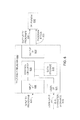
- the electronic device 400 includes control circuitry 402. a user input interface 404, and an output interface 406.
- the user input interface 404 is configured to receive a character sequence 418 from the user to be used to search for a particular data item accessible via the device 400.
- the output interface 406 provides the data item identifiers 420, filtered, unfiltered, or both, to the user, either directly by way of a display component, or indirectly via an external display device, such as a television or monitor.
- the electronic device 400 may also include other circuitry necessary to perform various functions, such as a communication or network interface and various data processing circuits. However, such circuitry is not shown in Fig. 4 nor described further here in to simplify the following discussion.
- the user input interface 404 may be any input interface configured to receive a character sequence from a user for searching or filtering purposes.
- the user input interface 404 may be a keyboard-type input mechanism presenting a of characters, any of which the user may press or otherwise activate.
- the keyboard may be integrated the electronic device 400, or coupled thereto via wired or wireless means.
- Fig. 5 provides a particular example of a wireless communication device 500 having a display 502 that may be employed as the output interface 406 of Fig. 4 .
- the device 500 provides a separate physical keyboard area 504 presenting individual characters for user selection.
- the display 502 may represent a touch screen or similar user input/output device by which the user may view the data item identifiers 420 as well as a character collection through which the user may enter the character sequence described above.
- the touch screen would be employed as both the user input interface 404 and the output interface 406 of the electronic device 400.
- the user input interface 404 may be a remote control interlace configured to receive user input by way of infrared (IR), radio frequency (RF), optical, acoustic, or other wireless signals.
- IR infrared
- RF radio frequency
- Such a user input interface may allow the user to manipulate a cursor or similar character selection means about a display such as that shown in Figs. 3A through 3C , which may be viewable via the output interface 406.
- the control circuitry 402 is configured to process the various data items to be filtered or searched.
- the control circuitry 402 is also structured to communicate with the user input interface 404 to receive the character sequence 418, and to employ the sequence 418 to search or filter the data items via their corresponding identifiers as discussed in greater detail above.
- the control circuitry 402 also presents the data items identifiers 420, such as in a filtered, and possibly unfiltered, state via the output interface 406 to the user.
- the control circuitry 402 may include one or more processors, such as a microprocessor, microcontroller, or digital signal processor (DSP), configured to execute instructions directing the processor to perform the functions associated with the control circuitry 402.
- DSP digital signal processor
- FIG. 6 A more specific example of an electronic device capable of filtering a plurality of data items is presented in the block diagram of a television receiver or set-top box 600 presented in Fig. 6 .
- the television receiver 600 include terrestrial, cable, and satellite television receivers.
- the television receiver 600 includes control circuitry 602, a user interface 604, an output interface 606, and an input interface 608, possibly along with data storage 610 for television programs.
- the input interface 608 is configured to receive television programs 602 by way of a satellite, cable head-end, terrestrial antenna, or other television signal source.
- the input interface 608 may be coupled to a parabolic antenna with an attached low-noise block-converter (LNB) that receives the signals, down-converts the frequencies thereof, and forwards the resulting intermediate-frequency (IF) signals carrying the television programs 622 to the input interface 608.
- LNB low-noise block-converter
- IF intermediate-frequency
- the input interface 608 may demodulate, demultiplex, decrypt, and otherwise process the television signals for use by the output interface 606.
- the demultiplexing process may involve the selection of one or more channels of television programming based on user input for viewing and/or recording of the programming carried on the selected channel.
- the signal carries multiple television programming channels whose data is formatted according to one of the Motion Picture Experts Group (MPEG) formats, such as MPEG-2 or MPEG-4. although other television content format standards may be utilized in other embodiments.
- MPEG Motion Picture Experts Group
- the output interface 606 reformats and delivers the television programs from the input interface 608 as output television programs 624 to the television 630.
- the output interface 608 may encode the television programs 624 in accordance with one or more television output formats.
- the output interface 606 may format the programs 624 for one or more of a composite or component video connection with associated audio connection, a modulated radio frequency (RF) connection, a High-Definition Multimedia Interface (HDMI) connection, or any other format compatible with the television 630.
- RF modulated radio frequency
- HDMI High-Definition Multimedia Interface
- the user interface 604 may facilitate the entry of commands by way of user input 621.
- the user interface 604 may be a remote control interface configured to receive such input 621 by way of infrared (IR), radio frequency (RF), acoustic, or other wireless signal technologies.
- IR infrared
- RF radio frequency
- the receiver 600 may provide a menu system presented to the user via the television 630.
- the user interface 612 may also include any of a keyboard, mouse, and/or other user input device.
- the receiver 600 may also include data storage 610 for storing one or more of the input television programs 622 for subsequent viewing by the user.
- the data storage 610 may be operated as an integrated digital video recorder (DVR).
- the data storage 610 may include any kind of volatile data memory (such as static random-access memory (SRAM) and dynamic random-access memory (DRAM)) and/or non-volatile memory (including, but not limited to, flash memory, hard disk drive storage, and optical disk storage).
- volatile data memory such as static random-access memory (SRAM) and dynamic random-access memory (DRAM)
- non-volatile memory including, but not limited to, flash memory, hard disk drive storage, and optical disk storage.
- the control circuitry 602 is configured to control and/or access other components of the receiver 304, including, but not limited to, the user interface 604, the output interface 606, the input interface 608, and the data storage 610 (if included).
- the control circuitry 602 may include one or more processors, such as a microprocessor, microcontroller, or DSP, configured to execute instructions directing the processor to perform the functions associated with the control circuitry 602.
- the control circuitry 602 may be completely hardware-based logic, or may include a combination of hardware, firmware, and/or software elements.
- the control circuitry 602 may present a search menu or similar visual interface via the output interface 606 and the television 630 to the user.
- the control circuitry 602 may present an electronic program guide (EPG) identifying programs expected to be broadcast over some future time period, such as the following ten days.
- EPG electronic program guide
- the user may navigate to the search menu EPG, such as the display 300 shown in Figs. 3A-3C .
- the user may enter a character sequence 618 as described in detail above to find a particular program of interest.
- the control circuitry 602 may then process the programs identified in the EPG based on the character sequence 618 to generate a list of program titles 620 indicated by the character sequence 618 and present that list 620 via the EPG, as shown via the output interface 606 and the television 630, to the user.
- the user may then select one of the programs 622 from the list of titles 620 via the user interface 604 for the purpose of viewing or recording the program, setting a reminder to view the program, or perform some other function regarding the program.
- the user may navigate to a menu providing a list of previous recorded programs 622 stored in the data storage 610 of the receiver 600.
- the user may then employ a similar search interface to that illustrated in Figs. 3A-3C and more fully described above to locate a desired program in the data storage 610 for playback.
- program identifiers other than the title of the program may be used to select a particular program. Any other identifying information associated with a television program or movie, including but not limited to the release date, the names of actors, and the name of the director or producer, may be employed as information to be compared against a character sequence for search purposes. Further, such information need not be unique for each program, thus resulting in several programs possibly matching the character sequence provided by the user,
- the data items to be searched or filtered need not be restricted to television programs or other types of data files, but may be any data item that may be identified or associated with a character string.
- the data items to be searched or filtered need not be restricted to television programs or other types of data files, but may be any data item that may be identified or associated with a character string.
- multiple data items of personal contact information wherein each item is a data structure containing the name, address, phone number, e-mail address, and/or other identifying information associated with a particular person or entity, may be searched or filtered in a manner similar to that described above using any of these data fields.
- text may be generated in a mobile or other communication device by way of a word bank or dictionary being searched via a similar mechanism.
- the user may begin typing a desired word into a keyboard-formatted display.
- the control circuitry of the device may present a list of words exactly or nearly matching the characters input by the user according to the concepts described above. The user may then select one of the listed words rather than continue to type in the desired. Such a device would thus allow the user to select the correct word even if the characters already entered did not exactly match the desired word.
- At least some embodiments as described herein thus provide a search or filtering functionality, operational upon multiple data items, wherein the user is not required to specify the search characters with complete accuracy.
- the resulting filtered items may be arranged in such an order that the items exactly matching the search characters are listed more prominently than others, thus rewarding more accurate character sequence entry.
- the remaining displayed items not matching the character sequence exactly may be further prioritized by ranking the results according to how closely the sequence matches the identifiers associated with the data items. As a result, faster searches of data items may occur, as the user need not reenter a search term or character sequence if the characters were not entered correctly.
Landscapes
- Engineering & Computer Science (AREA)
- Theoretical Computer Science (AREA)
- General Engineering & Computer Science (AREA)
- Physics & Mathematics (AREA)
- General Physics & Mathematics (AREA)
- Human Computer Interaction (AREA)
- Health & Medical Sciences (AREA)
- Artificial Intelligence (AREA)
- Audiology, Speech & Language Pathology (AREA)
- Computational Linguistics (AREA)
- General Health & Medical Sciences (AREA)
- User Interface Of Digital Computer (AREA)
- Input From Keyboards Or The Like (AREA)
Applications Claiming Priority (1)
| Application Number | Priority Date | Filing Date | Title |
|---|---|---|---|
| US36564610P | 2010-07-19 | 2010-07-19 |
Publications (2)
| Publication Number | Publication Date |
|---|---|
| EP2410404A2 true EP2410404A2 (de) | 2012-01-25 |
| EP2410404A3 EP2410404A3 (de) | 2013-02-20 |
Family
ID=44503517
Family Applications (1)
| Application Number | Title | Priority Date | Filing Date |
|---|---|---|---|
| EP11168752A Withdrawn EP2410404A3 (de) | 2010-07-19 | 2011-06-06 | System und Verfahren zur Datenelementfilterung basierend auf einer Zeichenfolgeneingabe |
Country Status (2)
| Country | Link |
|---|---|
| US (2) | US10013077B2 (de) |
| EP (1) | EP2410404A3 (de) |
Families Citing this family (1)
| Publication number | Priority date | Publication date | Assignee | Title |
|---|---|---|---|---|
| US10013077B2 (en) | 2010-07-19 | 2018-07-03 | DISH Technologies L.L.C. | System and method for data item filtering based on character sequence entry |
Family Cites Families (8)
| Publication number | Priority date | Publication date | Assignee | Title |
|---|---|---|---|---|
| GB9827930D0 (en) | 1998-12-19 | 1999-02-10 | Symbian Ltd | Keyboard system for a computing device with correction of key based input errors |
| WO2002069629A2 (en) * | 2001-02-28 | 2002-09-06 | Thomson Licensing S.A. | System and method for simplifying searches in electronic program guide |
| US6690140B2 (en) * | 2001-08-30 | 2004-02-10 | International Truck Intellectual Property Company, Llc | Vehicle electrical system |
| US7885963B2 (en) * | 2003-03-24 | 2011-02-08 | Microsoft Corporation | Free text and attribute searching of electronic program guide (EPG) data |
| US7130846B2 (en) | 2003-06-10 | 2006-10-31 | Microsoft Corporation | Intelligent default selection in an on-screen keyboard |
| US7957955B2 (en) * | 2007-01-05 | 2011-06-07 | Apple Inc. | Method and system for providing word recommendations for text input |
| CN101266520B (zh) | 2008-04-18 | 2013-03-27 | 上海触乐信息科技有限公司 | 一种可实现灵活键盘布局的系统 |
| US10013077B2 (en) | 2010-07-19 | 2018-07-03 | DISH Technologies L.L.C. | System and method for data item filtering based on character sequence entry |
-
2011
- 2011-05-18 US US13/110,715 patent/US10013077B2/en active Active
- 2011-06-06 EP EP11168752A patent/EP2410404A3/de not_active Withdrawn
-
2018
- 2018-04-27 US US15/965,536 patent/US10606371B2/en active Active
Non-Patent Citations (1)
| Title |
|---|
| None |
Also Published As
| Publication number | Publication date |
|---|---|
| US20120013804A1 (en) | 2012-01-19 |
| US20180246583A1 (en) | 2018-08-30 |
| EP2410404A3 (de) | 2013-02-20 |
| US10013077B2 (en) | 2018-07-03 |
| US10606371B2 (en) | 2020-03-31 |
Similar Documents
| Publication | Publication Date | Title |
|---|---|---|
| US9641901B2 (en) | Method for displaying electronic program guide optimized for user convenience | |
| US7979879B2 (en) | Video contents display system, video contents display method, and program for the same | |
| US9544528B2 (en) | Matrix search of video using closed caption information | |
| US9396213B2 (en) | Method for providing keywords, and video apparatus applying the same | |
| US11589122B2 (en) | System and method for providing a list of video-on-demand programs | |
| US20070074254A1 (en) | Locating content in a television environment | |
| EP1715685A2 (de) | Sendeprogrammaufzeicnungsgerät | |
| US20250373884A1 (en) | Apparatus, systems and methods for electronic program guide information presented on a display | |
| EP2715482A1 (de) | Benutzerschnittstelle und vorrichtung für visuelle suchen und empfehlungen | |
| US20080244654A1 (en) | System and Method for Providing a Directory of Advertisements | |
| US20170045953A1 (en) | Text Entry Using Rollover Character Row | |
| US8782522B2 (en) | Video display device and menu screen display method | |
| US10606371B2 (en) | System and method for data item filtering based on character sequence entry | |
| US20120146777A1 (en) | Electronic equipment providing electronic manual and control method thereof | |
| US8793734B2 (en) | Method and apparatus for providing filtering interface for recording and/or searching for broadcast content | |
| US20080030488A1 (en) | Display control device, content output system, method for controlling display of image used in retrieval operation, and program | |
| KR100937416B1 (ko) | Pvr 장치 및 방법 | |
| US20070245381A1 (en) | Broadcasting receiving device | |
| EP3876086A1 (de) | Anzeigesteuerungsvorrichtung, anzeigesteuerungsverfahren und programm | |
| EP2378438A1 (de) | Videoanzeigevorrichtung und Videoanzeigeverfahren | |
| KR20050005908A (ko) | 그룹화된 화면을 제공하는 전자 프로그램 가이드 장치 및그 방법 | |
| WO2011042946A1 (ja) | 類似コンテンツ検索装置及びプログラム | |
| JP2009076988A (ja) | コンテンツ情報表示装置、コンテンツ情報の表示方法 | |
| JP4373678B2 (ja) | 情報閲覧装置 | |
| US20070212020A1 (en) | Timer reservation device and information recording apparatus |
Legal Events
| Date | Code | Title | Description |
|---|---|---|---|
| AK | Designated contracting states |
Kind code of ref document: A2 Designated state(s): AL AT BE BG CH CY CZ DE DK EE ES FI FR GB GR HR HU IE IS IT LI LT LU LV MC MK MT NL NO PL PT RO RS SE SI SK SM TR |
|
| AX | Request for extension of the european patent |
Extension state: BA ME |
|
| PUAI | Public reference made under article 153(3) epc to a published international application that has entered the european phase |
Free format text: ORIGINAL CODE: 0009012 |
|
| PUAL | Search report despatched |
Free format text: ORIGINAL CODE: 0009013 |
|
| AK | Designated contracting states |
Kind code of ref document: A3 Designated state(s): AL AT BE BG CH CY CZ DE DK EE ES FI FR GB GR HR HU IE IS IT LI LT LU LV MC MK MT NL NO PL PT RO RS SE SI SK SM TR |
|
| AX | Request for extension of the european patent |
Extension state: BA ME |
|
| RIC1 | Information provided on ipc code assigned before grant |
Ipc: G06F 3/023 20060101AFI20130111BHEP Ipc: H04N 5/445 20110101ALI20130111BHEP Ipc: G06F 17/27 20060101ALI20130111BHEP |
|
| STAA | Information on the status of an ep patent application or granted ep patent |
Free format text: STATUS: THE APPLICATION IS DEEMED TO BE WITHDRAWN |
|
| 18D | Application deemed to be withdrawn |
Effective date: 20130821 |