EP2409971A1 - Method for separating hexafluoropropylene oxide from hexafluoropropylene - Google Patents
Method for separating hexafluoropropylene oxide from hexafluoropropylene Download PDFInfo
- Publication number
- EP2409971A1 EP2409971A1 EP10753360A EP10753360A EP2409971A1 EP 2409971 A1 EP2409971 A1 EP 2409971A1 EP 10753360 A EP10753360 A EP 10753360A EP 10753360 A EP10753360 A EP 10753360A EP 2409971 A1 EP2409971 A1 EP 2409971A1
- Authority
- EP
- European Patent Office
- Prior art keywords
- solvent
- hfp
- hfpo
- fraction
- hexafluoropropylene
- Prior art date
- Legal status (The legal status is an assumption and is not a legal conclusion. Google has not performed a legal analysis and makes no representation as to the accuracy of the status listed.)
- Granted
Links
Images
Classifications
-
- C—CHEMISTRY; METALLURGY
- C07—ORGANIC CHEMISTRY
- C07C—ACYCLIC OR CARBOCYCLIC COMPOUNDS
- C07C21/00—Acyclic unsaturated compounds containing halogen atoms
- C07C21/02—Acyclic unsaturated compounds containing halogen atoms containing carbon-to-carbon double bonds
- C07C21/18—Acyclic unsaturated compounds containing halogen atoms containing carbon-to-carbon double bonds containing fluorine
-
- B—PERFORMING OPERATIONS; TRANSPORTING
- B01—PHYSICAL OR CHEMICAL PROCESSES OR APPARATUS IN GENERAL
- B01D—SEPARATION
- B01D3/00—Distillation or related exchange processes in which liquids are contacted with gaseous media, e.g. stripping
- B01D3/34—Distillation or related exchange processes in which liquids are contacted with gaseous media, e.g. stripping with one or more auxiliary substances
- B01D3/40—Extractive distillation
-
- C—CHEMISTRY; METALLURGY
- C07—ORGANIC CHEMISTRY
- C07C—ACYCLIC OR CARBOCYCLIC COMPOUNDS
- C07C17/00—Preparation of halogenated hydrocarbons
- C07C17/38—Separation; Purification; Stabilisation; Use of additives
- C07C17/383—Separation; Purification; Stabilisation; Use of additives by distillation
- C07C17/386—Separation; Purification; Stabilisation; Use of additives by distillation with auxiliary compounds
-
- C—CHEMISTRY; METALLURGY
- C07—ORGANIC CHEMISTRY
- C07D—HETEROCYCLIC COMPOUNDS
- C07D301/00—Preparation of oxiranes
- C07D301/32—Separation; Purification
-
- C—CHEMISTRY; METALLURGY
- C07—ORGANIC CHEMISTRY
- C07D—HETEROCYCLIC COMPOUNDS
- C07D303/00—Compounds containing three-membered rings having one oxygen atom as the only ring hetero atom
- C07D303/02—Compounds containing oxirane rings
- C07D303/08—Compounds containing oxirane rings with hydrocarbon radicals, substituted by halogen atoms, nitro radicals or nitroso radicals
Definitions
- the present invention relates to a method for separating hexafluoropropylene oxide (hereinafter also referred to as HFPO) from hexafluoropropylene (hereinafter also referred to as HFP), and more particularly to a method for obtaining hexafluoropropylene oxide from a mixture of hexafluoropropylene oxide and hexafluoropropylene.
- HFPO hexafluoropropylene oxide
- HFP hexafluoropropylene
- Hexafluoropropylene oxide is an important compound in the production of fluorine-containing compounds, since it is used, for example, as a raw material for perfluorovinyl ether.
- An oligomer of the hexafluoropropylene oxide is utilized as a lubricating oil, a heating medium and the like.
- hexafluoropropylene oxide is produced by using hexafluoropropylene as a raw material and oxidizing the hexafluoropropylene according to various methods (see, for example, Patent Literature 1).
- the reaction mixture obtained in such a production method contains HFPO as the objective product, and the unreacted HFP. It is preferable to purify the reaction mixture to obtain high purity HFPO, and it is also preferable to recover the unreacted HFP to reuse it as a raw material for the production of HFPO.
- HCFC-141b 1,1-dichloro-1-fluoroethane
- HCFC-123 2,2-dichloro-1,1,1-trifluoroethane
- HCFC-123a 1,2-dichloro-1,1,2-trifluoroethane
- HCFC-225ca 3,3-dichloro-1,1,1,2,2-pentafluoropropane
- HCFC-225cb 1,3-dichloro-1,1,2,2,3-pentafluoropropane
- the above extractive distillation may also use, as the solvent, chlorine-containing compounds such as CH 2 Cl 2 , CHCl 3 , CCl 4 and CH 2 ClCH 2 Cl.
- the above-mentioned chlorine-containing compound may exerts adverse impact on environment, Particularly, the chlorine-containing compound represented by the above general formula (Y) may cause destruction of the ozone layer and, for example, 1,1-dichloro-1-fluoroethane (HCFC-141b) has an ozone depletion potential of about 0.1.
- An object of the present invention is to provide a novel method for separating hexafluoropropylene oxide from hexafluoropropylene, which is capable of reducing the burden on the environment.
- a solvent having a high relative volatility of HFPO to HFP is preferably used.
- a solvent having a high relative volatility of HFPO to HFP is preferably used.
- the present inventors have intensively studied on various substances, and thus the present invention has been completed.
- a fluorine-containing saturated compound hereinafter also may be simply referred to as a fluorine-containing compound
- a fluorine-containing compound containing no chlorine has never been studied as the solvent for extractive distillation since it has a small polarity as compared with a chlorine-containing compound.
- the above fluorine-containing compound exhibits a high relative volatility of HFPO to HFP.
- HFPO is separated from a mixture including HFPO and HFP in the form of the first fraction by an extractive distillation operation using such a fluorine-containing compound as the solvent, thus obtained HFPO is able to have a purity at least higher than that of an original mixture, and also the burden on the environment can be reduced as compared with a conventional method using the chlorine-containing compound.
- such a fluorine-containing compound has an advantage of generally exhibiting a small ozone depletion potential as compared with a chlorine-containing compound represented by the above general formula (Y).
- the above fluorine-containing compound can have a boiling point not less than -5°C and not more than 100°C (under 0.1 MPa or an atmospheric pressure, hereinafter the same shall apply unless otherwise specified).
- the fluorine-containing compound having a boiling point not less than -5°C has sufficiently higher boiling point than that of both HFPO and HFP, and is capable of efficiently separating them from each other by the extractive distillation operation.
- the fluorine-containing compound having a boiling point not more than 100°C is capable of changing its state of a liquid phase into a vapor phase (steam) without requiring an excessively high temperature, and thus it can prevent decomposition of HFP and HFPO and also can decrease requisite amount of heat as small as possible.
- the above fluorine-containing compound is a saturated compound.
- the above fluorine-containing compound preferably contains hydrogen, that is, a so-called hydrofluorocarbon (HFC) (in the above general formula (X), a is an integer which satisfies: 1 ⁇ a ⁇ 2n + 1).
- HFC hydrofluorocarbon
- the hydrofluorocarbon has a feature of generally having a high polarity as compared with perfluorocarbon, so that it can dissolve a polar substance therein.
- Such the hydrofluorocarbon can be selected from the group consisting of 1,1,1,3,3-pentafluoropropane (CHF 2 CH 2 CF 3 : HFC-245fa), 1,1,1,3,3-pentafluorobutane (CH 3 CF 2 CH 2 CF 3 : HFC-365mfc), 1,1,1,2,2,3,4,5,5,5-decafluoropentane (CF 3 CHFCFCF 2 CF 3 : HFC-43-10mee) and 1,1,2,2,3,3,4-heptafluorocyclopentane (c-CH 2 CHFCF 2 CF 2 CF 2 : HFC-C-447ef). Any of these hydrofluorocarbons has an advantage of having an ozone depletion potential of zero.
- PFC perfluorocarbon
- the perfluorocarbon has a feature of having a low polarity as compared with hydrofluorocarbon, and having a very high stability,
- fluorine-containing compound fluorine-containing saturated compound represented by the above general formula (X)
- a method for separating hexafluoropropylene oxide from hexafluoropropylene which comprises subjecting a mixture including hexafluoropropylene oxide and hexafluoropropylene to an extractive distillation operation using at least one of 1-bromopropane and 2-bromopropane as a solvent, thereby separating into a first fraction including hexafluoropropylene oxide, and a second fraction including hexafluoropropylene and the solvent.
- 1-bromopropane and 2-bromopropane do not contain chlorine and therefore exhibit a small polarity as compared with the chlorine-containing compound, they have never been studied as the solvent for extractive distillation, heretofore. However, it was confirmed by the tests of the present inventors that 1-bromopropane and 2-bromopropane also exhibits a high relative volatility of HFPO to HFP. According to the present invention, since HFPO is separated from a mixture including HFPO and HFP in the form of the first fraction by an extractive distillation operation using at least one of 1-bromopropane and 2-brorropropa.ne as the solvent, the burden on the environment can be reduced as compared with a conventional method using the chlorine-containing compound. Particularly, 1-bromopropane and 2-bromopropane have an advantage of a lower price and being comparatively easy to handle, and their use for a cleaning agent is accelerated, industrially.
- fluorine-containing compound fluorine-containing saturated compound represented by the above general formula (X)
- a fluorine-containing ether compound such as hydrofluoroether and perfluoroether.
- the fluorine-containing ether compound is less preferable since it exhibits a low relative volatility of HFPO to HFP as compared with the above fluorine-containing compound or 1-bromopropane and 2-bromopropane.
- the method according to any aspect of the present invention may further comprise subjecting the second fraction obtained by the extractive distillation operation to a distillation operation thereby separating into a third fraction including hexafluoropropylene and a fourth fraction including the solvent. Therefore, it is possible to separate HFPO from a mixture including HFPO and HFP in the form of the first fraction, and also to separate HFP in the form of the third fraction. HFP thus separated and recovered can be utilized as a raw material for the production of HFPO from HFP. The solvent thus separated and recovered can be utilized as the solvent for the above extractive distillation operation.
- the "mixture including hexafluoropropylene oxide and hexafluoropropylene" used in the present invention means that it substantially composed of HFPO and HEP, and may contain a small amount of other companent(s).
- the proportion of such other component(s) in the mixture is, for example, about 10% by mole or less, preferably about 5% by mole or less, and more preferably from about 3 to 0% by mole.
- the "fraction including " means that it is substantially composed of the mentioned component(s) and may contain a small amount of other component (s).
- the proportion of such other component(s) varies depending on the above mixture used in the present invention and is, for example, about 20% by mole or less, preferably about 10% by mole or less, and more preferably from about 5 to 0% by mole.
- a method for separating hexafluoropropylene oxide from hexafluoropropylene which is a novel method capable of reducing the burden on the environment.
- HFPO hexafluoropropylene oxide
- HFP hexafluoropropylene
- the mixture used in the present embodiment includes HFPO and HFP.
- HFPO and HFP There is no particular limitation on the mixing ratio of HFPO and HFP
- the present embodiment will be hereinafter described on the assumption that the mixture is composed of two components of HFPO and HFP.
- the present embodiment is not limited thereto, and the mixture may contain a small amount of other component(s).
- the mixture may be obtained by, for example, oxidizing HFP to form HFPO with the use of HFP as a raw material, and optionally subjecting a resultant reaction mixture to a post-treatment.
- the mixing molar ratio of HFPO and HFP is typically 1 : about 0.1 to 9.
- the boiling point thereof is preferably not less than -5°C and not more than 100°C, and more preferably not less than 10°C and not more than 90°C.
- the above fluorine-containing compound is a fluorine-containing saturated compound, and may be either a non-cyclic compound or a cyclic compound.
- hydrofluorocarbon HFC
- examples thereof include 1,1,1,3,3-pentafluoropropane (HFC-245fa, boiling point of 15.3°C), 1,1,1,3,3-pentafluorobutane (HFC-365mfc, boiling point of 40.2°C), 1,1,1,2,2,3,4,5,5,5-decafluoropentane (HFC-43-10mee, boiling point of 55°C), 1,1,2,2,3,3,4-heptafluorocyclopentane (EFC-C-447ef, boiling point of 82.5°C) and the like.
- HFC hydrofluorocarbon
- 1-bromopropane (boiling point of 71°C) and/or 2-bromopropane (boiling point of 59.4°C) may be used as the solvent.
- Such the solvent has a high relative volatility of HFPO to HFP, and does not exhibit azeotropic phenomenon with HFP and/or HFPO.
- the above-mentioned mixture (HFPO + HFP) and the solvent are supplied to an extractive distillation column 1 to subject the mixture of them to an extractive distillation operation.
- the supply section of the solvent is located above the supply section of the above mixture.
- an intervening part between these supply sections is a concentration section, and with respect to the concentration section an upper section is a solvent recovery section while a lower section is a recovery section.
- any of the above-mentioned solvent has a large affinity with HFP as compared with HFPO, and a volatility of HFP decreases by the addition of the solvent. Therefore, a first fraction including HFPO is discharged from the column top side of the extractive distillation column 1, while a second fraction including HFP and the solvent is discharged from the column bottom side thereof. Thus, HFPO is obtained in the form of the first fraction.
- the first fraction is obtained as a balance resulted by condensing a column top steam fraction in a condenser and refluxing a part of it to the extractive distillation column 1.
- the second fraction is obtained as a balance resulted by transferring a part of the column bottom liquid fraction to a reboiler, and the part transferred to the reboiler is vaporized by heating and returned to the extractive distillation column 1.
- the conditions of the extractive distillation operation can be appropriately selected according to the solvent to be used, the target purity for HFPO in the first fraction and the like.
- the supply molar ratio of the mixture and the solvent is 1 : about 1 to 30, and preferably 1 : about 5 to 15.
- the temperature and the pressure in the extractive distillation column 1 may be about -5 to 150°C and about 0.2 to 0.5 MPaG (gauge pressure).
- these are illustrative, and the present embodiment is not limited to these conditions.
- the second fraction (HFP + solvent) obtained from the extractive distillation column 1 is supplied to a solvent recovery column 3 and the second fraction is subjected to a distillation operation.
- a third fraction including HFP is discharged from the column top side of the solvent recovery column 3, while a fourth fraction including the solvent is discharged from the column bottom side thereof.
- HFP is obtained in the form of the third fraction.
- the third fraction is obtained as a balance resulted by condensing a column top steam fraction in a condenser and refluxing a part of it to the solvent recovery column 3.
- the fourth fraction is obtained as a balance resulted by transferring a part of the column bottom liquid fraction to a reboiler, and the portion transferred to the reboiler is vaporized by heating and returned to the solvent recovery column 3.
- the conditions of the distillation operation can be appropriately selected according to the solvent to be used, the target purity of for HFP in the third fraction and the like.
- the temperature and the pressure in the solvent recovery column 3 may be about -5 to 150°C and about 0.2 to 0.5 MPaG (gauge pressure).
- these are illustrative, and the present embodiment is not limited to these conditions.
- HFPO is separated from the mixture including HFPO and HFP in the form of the first fraction and, furthermore, HFP is separated in the form of the third fraction.
- the method of the present embodiment can be carried out in a continuous manner, but it is not limited thereto and may be carried out in a batch-wise manner.
- the purity of HFPO in the first fraction can be, for example, about 90% by mole or more, and preferably about 99% by mole or more.
- the purity of HFP in the third fraction can be, for example, about 90% by mole or more, and preferably about 99% by mole or more.
- the obtained third fraction may be returned to the reaction of forming HFPO from HFP, and thus HFP can be reused as the raw material (not shown).
- the fourth fraction may be supplied to the extractive distillation column 1 optionally together with a fresh solvent, and thus the solvent can be reused.
- the fourth fraction may include HFPO and HFP in a small amount.
- the mixture and the solvent were separately supplied to the extractive distillation column in the above embodiment, but they may be supplied at the same time.
- the reaction of forming HFPO from HFP is carried out in a reaction solvent and this reaction solvent can also be used as the solvent for the extractive distillation operation
- the solvent which can also be used as the reaction solvent include HFC-365mfc, 1-bromopropane, 2-bromopropane and the like.
- the second fraction obtained by the extractive distillation operation may be returned to the reaction of forming HFP from HFO without being subjected to the subsequent distillation operation, and thus HFP and the solvent can be reused as the raw material and the reaction solvent.
- a fluorine-containing ether compound such as hydrofluoroether (C 4 F 9 OCH 3 , C 4 F 9 OC 2 H 5 , C 6 F 13 OCH 3 , C 3 HF 6 -CH(CH 3 )O-C 3 HF 6 ), perfluoroether or the like.
- hydrofluoroether C 4 F 9 OCH 3 , C 4 F 9 OC 2 H 5 , C 6 F 13 OCH 3 , C 3 HF 6 -CH(CH 3 )O-C 3 HF 6
- perfluoroether perfluoroether
- its relative volatility of HFPO to HFP is low as compared with the above fluorine-containing compound or 1-bromopropane and 2-bromopropane.
- Extractive distillation was presumed to be carried out by continuously supplying a mixture of HFPO and HFP (in a molar ratio of 1:1) from the lower part of the concentration section at a rate of 106 g per hour to an extractive distillation column equipped with a solvent recovery section with about 7 plates, a concentration section with about 15 plates and a recovery section with 10 plates; continuously supplying HFC-365mfc as a solvent from the lower part of the solvent recovery section at a rate of 595 g per hour; continuously discharging a first fraction at a rate of 56 g per hour from the column top side while controlling a reflux ratio at 16; and continuously discharging a second fraction at a rate of 645 g per hour from the column bottom side.
- the pressure in the extractive distillation column (in the system) was set at 0.2 MPaG (gauge pressure), and the column top temperature resulted in 0°C and the column bottom temperature resulted in 59°C.
- the molar fraction of HFPO in the first fraction obtained from the extractive distillation column resulted in 0.995.
- the first fraction resulted in containing 3 ppm by mole of the solvent.
- the molar fraction of HFP in the second fraction obtained from the extractive distillation column resulted in 0.077, and a balance was substantially made off HFC-365mfc.
- Recovery distillation was presumed to be carried out by continuously supplying the thus obtained second fraction to a solvent recovery column equipped with about 14 plates at the position of the 5th plate from the bottom at a rate of 645 g per hour; continuously discharging a third fraction at a rate of 50 g per hour from the column top side while controlling a reflux ratio at 10; and continuously discharging a fourth fraction at a rate of 595 g per hour from the column bottom side.
- the pressure in the solvent recovery column (in the system) was set at 0.2 MPaG (gauge pressure), and the column top temperature resulted in -3°C and the column bottom temperature resulted in 75°C.
- the molar fraction of HFP in the third fraction obtained from the solvent recovery column resulted in 0.995 or more.
- the molar fraction of HFC-365mfc in the fourth fraction obtained from the solvent recovery column resulted in 0.999 or more.
- the obtained fourth fraction was presumed to be recycled to the extractive distillation column.
- Hexafluoropropylene oxide separated by the method of the present invention can be used in the production of fluorine-containing compounds such as perfluorovinylether, and also can be used as a lubricating oil or a heating medium in the form of an oligomer.
Landscapes
- Chemical & Material Sciences (AREA)
- Organic Chemistry (AREA)
- Chemical Kinetics & Catalysis (AREA)
- Organic Low-Molecular-Weight Compounds And Preparation Thereof (AREA)
- Epoxy Compounds (AREA)
Abstract
Description
- The present invention relates to a method for separating hexafluoropropylene oxide (hereinafter also referred to as HFPO) from hexafluoropropylene (hereinafter also referred to as HFP), and more particularly to a method for obtaining hexafluoropropylene oxide from a mixture of hexafluoropropylene oxide and hexafluoropropylene.
- Hexafluoropropylene oxide is an important compound in the production of fluorine-containing compounds, since it is used, for example, as a raw material for perfluorovinyl ether. An oligomer of the hexafluoropropylene oxide is utilized as a lubricating oil, a heating medium and the like.
- Generally, hexafluoropropylene oxide is produced by using hexafluoropropylene as a raw material and oxidizing the hexafluoropropylene according to various methods (see, for example, Patent Literature 1).
- The reaction mixture obtained in such a production method contains HFPO as the objective product, and the unreacted HFP. It is preferable to purify the reaction mixture to obtain high purity HFPO, and it is also preferable to recover the unreacted HFP to reuse it as a raw material for the production of HFPO.
- Distillation is generally utilized for purification. However, boiling points of HFP and HFPO are -29.4°C and - 27.4°C (both under the atmospheric pressure), respectively. Due to closeness of the boiling points, it is difficult to separate them from each other by distillation. There is proposed a method in which distillation is performed at a low temperature under a low pressure (see Patent Literature 2). However, there is a drawback that a relative volatility cannot be sufficiently increased even by such a method.
- Therefore, extractive distillation is utilized so as to separate HFPO from a mixture of HFP and HFPO (see
Patent Literatures 1 and 3). It is known that this extractive distillation may use, as a solvent, a chlorine-containing compound represented by the following general formula (Y):
Cn,Ha,Clb,Fc, (Y)
wherein n', a', b' and c' are integers which satisfy: n' = 2 to 6, 1 ≤ a' ≤ n + 1, 1 ≤ b' ≤ 2n, 1 ≤ c' ≤ 2n, and a' + b' + c' = 2n + 2.
Specific examples thereof include 1,1-dichloro-1-fluoroethane (HCFC-141b), 2,2-dichloro-1,1,1-trifluoroethane (HCFC-123), 1,2-dichloro-1,1,2-trifluoroethane (HCFC-123a), 3,3-dichloro-1,1,1,2,2-pentafluoropropane (HCFC-225ca) and 1,3-dichloro-1,1,2,2,3-pentafluoropropane (HCFC-225cb).
It is also known that the above extractive distillation may also use, as the solvent, chlorine-containing compounds such as CH2Cl2, CHCl3, CCl4 and CH2ClCH2Cl. -
- Patent Literature 1:
WO 2008/050760 - Patent Literature 2:
JP 9-136882 A - Patent Literature 3:
JP 3785652 B - However, the above-mentioned chlorine-containing compound may exerts adverse impact on environment, Particularly, the chlorine-containing compound represented by the above general formula (Y) may cause destruction of the ozone layer and, for example, 1,1-dichloro-1-fluoroethane (HCFC-141b) has an ozone depletion potential of about 0.1.
- An object of the present invention is to provide a novel method for separating hexafluoropropylene oxide from hexafluoropropylene, which is capable of reducing the burden on the environment.
- In order to separate hexafluoropropylene oxide (HFPO) from hexafluoropropylene (HFP) by extractive distillation, a solvent having a high relative volatility of HFPO to HFP is preferably used. Regarding a certain substance, however, it is impossible to anticipate its value of the relative volatility of HFPO to HFP, and it is very difficult to judge whether or not the substance can be used as the solvent for separation of HFPO from HFP by extractive distillation. The present inventors have intensively studied on various substances, and thus the present invention has been completed.
- According to one aspect of the present invention, there is provided a method for separating hexafluoropropylene oxide from hexafluoropropylene, which comprises subjecting a mixture including hexafluoropropylene oxide and hexafluoropropylene to an extractive distillation operation using, as a solvent, at least one of a fluorine-containing saturated compound (hereinafter also may be simply referred to as a fluorine-containing compound) represented by the following general formula (X):
CnHaFb (X)
wherein n, a and b are integers which satisfy: n = 3 to 8, 0 ≤ a ≤ 2n + 1, and 1 ≤ b ≤ 2n + 2,
thereby separating into a first fraction including hexafluoropropylene oxide and a second fraction including hexafluoropropylene and the solvent. - A fluorine-containing compound containing no chlorine has never been studied as the solvent for extractive distillation since it has a small polarity as compared with a chlorine-containing compound. However, it was confirmed by the tests of the present inventors that the above fluorine-containing compound exhibits a high relative volatility of HFPO to HFP. According to the present invention, since HFPO is separated from a mixture including HFPO and HFP in the form of the first fraction by an extractive distillation operation using such a fluorine-containing compound as the solvent, thus obtained HFPO is able to have a purity at least higher than that of an original mixture, and also the burden on the environment can be reduced as compared with a conventional method using the chlorine-containing compound. Particularly, such a fluorine-containing compound has an advantage of generally exhibiting a small ozone depletion potential as compared with a chlorine-containing compound represented by the above general formula (Y).
- The above fluorine-containing compound can have a boiling point not less than -5°C and not more than 100°C (under 0.1 MPa or an atmospheric pressure, hereinafter the same shall apply unless otherwise specified). The fluorine-containing compound having a boiling point not less than -5°C has sufficiently higher boiling point than that of both HFPO and HFP, and is capable of efficiently separating them from each other by the extractive distillation operation. The fluorine-containing compound having a boiling point not more than 100°C is capable of changing its state of a liquid phase into a vapor phase (steam) without requiring an excessively high temperature, and thus it can prevent decomposition of HFP and HFPO and also can decrease requisite amount of heat as small as possible.
- The above fluorine-containing compound is a saturated compound. Such a fluorine-containing saturated compound may be either a non-cyclic compound (in the above general formula (X), n, a and b satisfy: a + b = 2n + 2) or a cyclic compound (in the above general formula (X), n, a and b satisfy: a + b = 2n + 2 - m, and m represents the number of the ring structure).
- The above fluorine-containing compound preferably contains hydrogen, that is, a so-called hydrofluorocarbon (HFC) (in the above general formula (X), a is an integer which satisfies: 1 ≤ a ≤ 2n + 1). The hydrofluorocarbon has a feature of generally having a high polarity as compared with perfluorocarbon, so that it can dissolve a polar substance therein.
- Such the hydrofluorocarbon can be selected from the group consisting of 1,1,1,3,3-pentafluoropropane (CHF2 CH2 CF3 : HFC-245fa), 1,1,1,3,3-pentafluorobutane (CH3CF2CH2CF3 : HFC-365mfc), 1,1,1,2,2,3,4,5,5,5-decafluoropentane (CF3CHFCFCF2CF3 : HFC-43-10mee) and 1,1,2,2,3,3,4-heptafluorocyclopentane (c-CH2CHFCF2CF2CF2: HFC-C-447ef). Any of these hydrofluorocarbons has an advantage of having an ozone depletion potential of zero.
- However, the above fluorine-containing compound may be a so-called perfluorocarbon (PFC) which is hydrogen-free (in the above the general formula (X), a = 0). The perfluorocarbon has a feature of having a low polarity as compared with hydrofluorocarbon, and having a very high stability,
- Alternatively, in place of at least one of the fluorine-containing compound (fluorine-containing saturated compound) represented by the above general formula (X), it is also possible to use, as the solvent, at least one of 1-bromopropane and 2-bromopropane. That is, according to another aspect of the present Invention, there is provided a method for separating hexafluoropropylene oxide from hexafluoropropylene, which comprises subjecting a mixture including hexafluoropropylene oxide and hexafluoropropylene to an extractive distillation operation using at least one of 1-bromopropane and 2-bromopropane as a solvent, thereby separating into a first fraction including hexafluoropropylene oxide, and a second fraction including hexafluoropropylene and the solvent.
- Since 1-bromopropane and 2-bromopropane do not contain chlorine and therefore exhibit a small polarity as compared with the chlorine-containing compound, they have never been studied as the solvent for extractive distillation, heretofore. However, it was confirmed by the tests of the present inventors that 1-bromopropane and 2-bromopropane also exhibits a high relative volatility of HFPO to HFP. According to the present invention, since HFPO is separated from a mixture including HFPO and HFP in the form of the first fraction by an extractive distillation operation using at least one of 1-bromopropane and 2-brorropropa.ne as the solvent, the burden on the environment can be reduced as compared with a conventional method using the chlorine-containing compound. Particularly, 1-bromopropane and 2-bromopropane have an advantage of a lower price and being comparatively easy to handle, and their use for a cleaning agent is accelerated, industrially.
- Further, in place of at least one of the fluorine-containing compound (fluorine-containing saturated compound) represented by the above general formula (X), it is also possible to use, as the solvent, a fluorine-containing ether compound such as hydrofluoroether and perfluoroether. However, the fluorine-containing ether compound is less preferable since it exhibits a low relative volatility of HFPO to HFP as compared with the above fluorine-containing compound or 1-bromopropane and 2-bromopropane.
- The method according to any aspect of the present invention may further comprise subjecting the second fraction obtained by the extractive distillation operation to a distillation operation thereby separating into a third fraction including hexafluoropropylene and a fourth fraction including the solvent. Therefore, it is possible to separate HFPO from a mixture including HFPO and HFP in the form of the first fraction, and also to separate HFP in the form of the third fraction. HFP thus separated and recovered can be utilized as a raw material for the production of HFPO from HFP. The solvent thus separated and recovered can be utilized as the solvent for the above extractive distillation operation.
- The "mixture including hexafluoropropylene oxide and hexafluoropropylene" used in the present invention means that it substantially composed of HFPO and HEP, and may contain a small amount of other companent(s). The proportion of such other component(s) in the mixture is, for example, about 10% by mole or less, preferably about 5% by mole or less, and more preferably from about 3 to 0% by mole.
- In the present invention, the "fraction including ..." means that it is substantially composed of the mentioned component(s) and may contain a small amount of other component (s). The proportion of such other component(s) varies depending on the above mixture used in the present invention and is, for example, about 20% by mole or less, preferably about 10% by mole or less, and more preferably from about 5 to 0% by mole.
- According to the present invention, there is provided a method for separating hexafluoropropylene oxide from hexafluoropropylene, which is a novel method capable of reducing the burden on the environment.
-
-
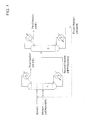
Fig. 1 is a schematic view for explaining a method for separating hexafluoropropylene oxide (HFPO) from hexafluoropropylene (HFP) in an embodiment of the present invention. - The method for separating hexafluoropropylene oxide (HFPO) from hexafluoropropylene (HFP) in an embodiment of the present invention will be described in detail below.
- First, a mixture including HFPO and HFP, and a solvent are prepared.
- The mixture used in the present embodiment includes HFPO and HFP. There is no particular limitation on the mixing ratio of HFPO and HFP For easier understanding, the present embodiment will be hereinafter described on the assumption that the mixture is composed of two components of HFPO and HFP. However, the present embodiment is not limited thereto, and the mixture may contain a small amount of other component(s).
- Although there is no particular limitation on such the mixture, the mixture may be obtained by, for example, oxidizing HFP to form HFPO with the use of HFP as a raw material, and optionally subjecting a resultant reaction mixture to a post-treatment. In this case, the mixing molar ratio of HFPO and HFP is typically 1 : about 0.1 to 9.
- With respect to the solvent, the larger relative volatility of HFPO to HFP it has, the more preferable it is.
- As such the solvent, it is possible to use at least one of a fluorine-containing compound represented by the following general formula (X):
CnHaFb (X)
wherein n, a and b are integers which satisfy: n = 3 to 8, o ≤ a ≤ 2n + 1, and 1 ≤ b ≤ 2n + 2. - In order to use the fluorine-containing compound as the solvent, the boiling point thereof is preferably not less than -5°C and not more than 100°C, and more preferably not less than 10°C and not more than 90°C.
- The above fluorine-containing compound is a fluorine-containing saturated compound, and may be either a non-cyclic compound or a cyclic compound. Particularly, hydrofluorocarbon (HFC) is preferably used, and examples thereof include 1,1,1,3,3-pentafluoropropane (HFC-245fa, boiling point of 15.3°C), 1,1,1,3,3-pentafluorobutane (HFC-365mfc, boiling point of 40.2°C), 1,1,1,2,2,3,4,5,5,5-decafluoropentane (HFC-43-10mee, boiling point of 55°C), 1,1,2,2,3,3,4-heptafluorocyclopentane (EFC-C-447ef, boiling point of 82.5°C) and the like.
- Alternatively, 1-bromopropane (boiling point of 71°C) and/or 2-bromopropane (boiling point of 59.4°C) may be used as the solvent.
- Such the solvent has a high relative volatility of HFPO to HFP, and does not exhibit azeotropic phenomenon with HFP and/or HFPO.
- Next, referring to
Fig. 1 , the above-mentioned mixture (HFPO + HFP) and the solvent are supplied to anextractive distillation column 1 to subject the mixture of them to an extractive distillation operation. Generally, the supply section of the solvent is located above the supply section of the above mixture. In theextractive distillation column 1, an intervening part between these supply sections is a concentration section, and with respect to the concentration section an upper section is a solvent recovery section while a lower section is a recovery section. - Any of the above-mentioned solvent has a large affinity with HFP as compared with HFPO, and a volatility of HFP decreases by the addition of the solvent. Therefore, a first fraction including HFPO is discharged from the column top side of the
extractive distillation column 1, while a second fraction including HFP and the solvent is discharged from the column bottom side thereof. Thus, HFPO is obtained in the form of the first fraction. - In the example shown in
Fig. 1 , the first fraction is obtained as a balance resulted by condensing a column top steam fraction in a condenser and refluxing a part of it to theextractive distillation column 1. The second fraction is obtained as a balance resulted by transferring a part of the column bottom liquid fraction to a reboiler, and the part transferred to the reboiler is vaporized by heating and returned to theextractive distillation column 1. - The conditions of the extractive distillation operation can be appropriately selected according to the solvent to be used, the target purity for HFPO in the first fraction and the like. For example, the supply molar ratio of the mixture and the solvent is 1 : about 1 to 30, and preferably 1 : about 5 to 15. In addition, for example, the temperature and the pressure in the
extractive distillation column 1 may be about -5 to 150°C and about 0.2 to 0.5 MPaG (gauge pressure). However, these are illustrative, and the present embodiment is not limited to these conditions. - Next, the second fraction (HFP + solvent) obtained from the
extractive distillation column 1 is supplied to asolvent recovery column 3 and the second fraction is subjected to a distillation operation. - A third fraction including HFP is discharged from the column top side of the
solvent recovery column 3, while a fourth fraction including the solvent is discharged from the column bottom side thereof. Thus, HFP is obtained in the form of the third fraction. - In the example shown in
Fig. 1 , the third fraction is obtained as a balance resulted by condensing a column top steam fraction in a condenser and refluxing a part of it to thesolvent recovery column 3. The fourth fraction is obtained as a balance resulted by transferring a part of the column bottom liquid fraction to a reboiler, and the portion transferred to the reboiler is vaporized by heating and returned to thesolvent recovery column 3. - The conditions of the distillation operation can be appropriately selected according to the solvent to be used, the target purity of for HFP in the third fraction and the like. For example, the temperature and the pressure in the
solvent recovery column 3 may be about -5 to 150°C and about 0.2 to 0.5 MPaG (gauge pressure). However, these are illustrative, and the present embodiment is not limited to these conditions. - As described above, HFPO is separated from the mixture including HFPO and HFP in the form of the first fraction and, furthermore, HFP is separated in the form of the third fraction. The method of the present embodiment can be carried out in a continuous manner, but it is not limited thereto and may be carried out in a batch-wise manner.
- According to the present embodiment, the purity of HFPO in the first fraction can be, for example, about 90% by mole or more, and preferably about 99% by mole or more. The purity of HFP in the third fraction can be, for example, about 90% by mole or more, and preferably about 99% by mole or more.
- The obtained third fraction may be returned to the reaction of forming HFPO from HFP, and thus HFP can be reused as the raw material (not shown). As shown in
Fig, 1 with a dashed-dotted line, the fourth fraction may be supplied to theextractive distillation column 1 optionally together with a fresh solvent, and thus the solvent can be reused. The fourth fraction may include HFPO and HFP in a small amount. By returning the fourth fraction to theextractive distillation column 1 as described above, it is possible to recover HFPO and HFP in the fourth fraction without being wasted. - While one embodiment of the present invention was described above, the present invention is not limited to the above embodiment and various modifications can be made.
- For example, the mixture and the solvent were separately supplied to the extractive distillation column in the above embodiment, but they may be supplied at the same time. Specifically, when the reaction of forming HFPO from HFP is carried out in a reaction solvent and this reaction solvent can also be used as the solvent for the extractive distillation operation, the mixture containing HFP, HFPO and the solvent (= reaction solvent) obtained after the reaction may be supplied to the extractive distillation column. Examples of the solvent which can also be used as the reaction solvent include HFC-365mfc, 1-bromopropane, 2-bromopropane and the like. Furthermore, in this case, the second fraction obtained by the extractive distillation operation may be returned to the reaction of forming HFP from HFO without being subjected to the subsequent distillation operation, and thus HFP and the solvent can be reused as the raw material and the reaction solvent.
- For example, it is not impossible to use, as the solvent, a fluorine-containing ether compound such as hydrofluoroether (C4F9OCH3, C4F9OC2H5, C6F13OCH3, C3HF6-CH(CH3)O-C3HF6), perfluoroether or the like. However, its relative volatility of HFPO to HFP is low as compared with the above fluorine-containing compound or 1-bromopropane and 2-bromopropane.
- With respect to cases using various solvents and no solvent, a relative volatility of HFPO to HFP was determined.
- In an Othmer-type vapor-liquid equilibrium measuring apparatus, 28 g of HFPO, 25 g of HFP and 495 g of HFC-365mfc (CH3 CF2 CH2 CF3) as a solvent were respectively charged. When a liquid phase temperature was adjusted so that the pressure becomes 0.5 MPaG (gauge pressure), a liquid phase temperature was 71.8°C. After a lapse of 3 hours or more under the above conditions, a condensate liquid of the vapor phase portion and a liquid of the liquid phase portion were sampled, and these were respectively measured by a gas chromatograph. The molar ratio of HFP and HFPO was measured from the obtained data and the relative volatility of HFPO to HFP was determined as 2.67. These conditions and results are shown in Table 1.
- The same procedures as in the case of the above (1) were carried out, except that the conditions were slightly changed while using, as a solvent, 1-bromopropane in place of HFC-365mfc, and the relative volatility of HFP to HFP was determined. The conditions and results are shown in Table 1.
- The same procedures as in the case of the above (1) were carried out, except that the conditions were slightly changed while using no solvent, and the relative volatility of HFPO to HFP was determined. The conditions and results are shown in Table 1.
- The same procedures as in the case of the above (1) were carried out, except that the conditions were slightly changed while using, as a solvent, hydrofluoroether under the trade name of "HFP7200" (C4F9OC2H5, manufactured by 3M Company) in place of HFC-365mfc, and the relative volatility of HFPO to HFP was determined. The conditions and results are shown in Table 1.
- The same procedures as in the case of the above (1) were carried our, except that the conditions were slightly changed while using, as a solvent, dichloromethane in place of HFC-365mfc, and the relative volatility of HFPO to HFP was determined. The conditions and results are shown in Table 1.
-
Table 1 No. Solvent Charge amount Pressure (MPaG) Temperature (°C) Relative volatility HFP (g) HFPO (g) Solvent (g) 1) HFC-365mfc 25 28 495 0.5 71.8 2.67 2) 1-bromopropane 25 28 411 0.5 37.5 1.78 3) None 105 117 - 0.5 20.1 1.07 4) HFE7200 25 28 883 0.5 65.3 1.16 5) Dichloromethane 25 28 284 0.5 23.5 1.42 - Referring to Table 1, in the cases of using HFC-365mfC and 1-bromopropane as the solvent, a very high relative volatility was obtained as compared with the case of using no solvent. Therefore, it is understood that HFP-365mfc and 1-bromopropane are able to be preferably used as the solvent in the present invention. In contrast, in the cases of using HFE7200 and dichloromethane as the solvent, a very high relative volatility was not obtained as compared with the case of using no solvent.
- A case conducting the present invention in accordance with the
Embodiment 1 described in the above with reference to Fig. was simulated.
Extractive distillation was presumed to be carried out by continuously supplying a mixture of HFPO and HFP (in a molar ratio of 1:1) from the lower part of the concentration section at a rate of 106 g per hour to an extractive distillation column equipped with a solvent recovery section with about 7 plates, a concentration section with about 15 plates and a recovery section with 10 plates; continuously supplying HFC-365mfc as a solvent from the lower part of the solvent recovery section at a rate of 595 g per hour; continuously discharging a first fraction at a rate of 56 g per hour from the column top side while controlling a reflux ratio at 16; and continuously discharging a second fraction at a rate of 645 g per hour from the column bottom side. During the operation, the pressure in the extractive distillation column (in the system) was set at 0.2 MPaG (gauge pressure), and the column top temperature resulted in 0°C and the column bottom temperature resulted in 59°C.
The molar fraction of HFPO in the first fraction obtained from the extractive distillation column resulted in 0.995. The first fraction resulted in containing 3 ppm by mole of the solvent.
On the other hand, the molar fraction of HFP in the second fraction obtained from the extractive distillation column resulted in 0.077, and a balance was substantially made off HFC-365mfc.
Recovery distillation was presumed to be carried out by continuously supplying the thus obtained second fraction to a solvent recovery column equipped with about 14 plates at the position of the 5th plate from the bottom at a rate of 645 g per hour; continuously discharging a third fraction at a rate of 50 g per hour from the column top side while controlling a reflux ratio at 10; and continuously discharging a fourth fraction at a rate of 595 g per hour from the column bottom side. During the operation, the pressure in the solvent recovery column (in the system) was set at 0.2 MPaG (gauge pressure), and the column top temperature resulted in -3°C and the column bottom temperature resulted in 75°C.
The molar fraction of HFP in the third fraction obtained from the solvent recovery column resulted in 0.995 or more.
On the other hand, the molar fraction of HFC-365mfc in the fourth fraction obtained from the solvent recovery column resulted in 0.999 or more.
The obtained fourth fraction was presumed to be recycled to the extractive distillation column. - Hexafluoropropylene oxide separated by the method of the present invention can be used in the production of fluorine-containing compounds such as perfluorovinylether, and also can be used as a lubricating oil or a heating medium in the form of an oligomer.
-
- 1
- Extractive distillation column
- 3
- Solvent recovery column
Claims (6)
- A method for separating hexafluoropropylene oxide from hexafluoropropylene, which comprises subjecting a mixture including hexafluoropropylene oxide and hexafluoropropylene to an extractive distillation operation using, as a solvent, at least one of a fluorine-containing saturated compound represented by the following general formula (X):
CnHaFb (X)
wherein n, a and b are integers which satisfy: n = 3 to 8, 0 ≤ a ≤ 2n + 1, and 1 ≤ b ≤ 2n + 2,
thereby separating into a first fraction including hexafluoropropylene oxide and a second fraction including hexafluoropropylene and the solvent. - The method according to claim 1, wherein the fluorine-containing saturated compound has a boiling point not less than -5°C and not more than 100°C under 0.1 MPa.
- The method according to claim 1 or 2, wherein the fluorine-containing saturated compound contains hydrogen.
- The method according to claim 3, wherein the fluorine-containing saturated compound is selected from the group consisting of 1,1,1,3,3-pentafluoropropane, 1,1,1,3,3-pentafluorobutan.e, 1,1,1,2,2,3,4,5,5,5-decafluoropentane, and 1,1,2,2,3,3,4-heptafluorocyclopentane.
- The method according to claim 1, wherein at least one of 1-bromopropane and 2-bromopropane is used as the solvent in place of said at least one of the fluorine-containing saturated compound represented by the general formula (X).
- The method according to any one of claims 1 to 5, further comprises subjecting the second fraction obtained by the extractive distillation operation to a distillation operation thereby separating into a third fraction including hexafluoropropylene and a fourth fraction including the solvent.
Applications Claiming Priority (2)
| Application Number | Priority Date | Filing Date | Title |
|---|---|---|---|
| JP2009065633 | 2009-03-18 | ||
| PCT/JP2010/052404 WO2010106865A1 (en) | 2009-03-18 | 2010-02-18 | Method for separating hexafluoropropylene oxide from hexafluoropropylene |
Publications (3)
| Publication Number | Publication Date |
|---|---|
| EP2409971A1 true EP2409971A1 (en) | 2012-01-25 |
| EP2409971A4 EP2409971A4 (en) | 2016-03-23 |
| EP2409971B1 EP2409971B1 (en) | 2017-05-10 |
Family
ID=42739531
Family Applications (1)
| Application Number | Title | Priority Date | Filing Date |
|---|---|---|---|
| EP10753360.6A Active EP2409971B1 (en) | 2009-03-18 | 2010-02-18 | Method for separating hexafluoropropylene oxide from hexafluoropropylene |
Country Status (5)
| Country | Link |
|---|---|
| US (1) | US8877017B2 (en) |
| EP (1) | EP2409971B1 (en) |
| JP (1) | JP5267657B2 (en) |
| CN (1) | CN102356073B (en) |
| WO (1) | WO2010106865A1 (en) |
Families Citing this family (3)
| Publication number | Priority date | Publication date | Assignee | Title |
|---|---|---|---|---|
| EP2550247B1 (en) * | 2010-07-23 | 2014-08-20 | Daikin Industries, Ltd. | Purification method of 2,3,3,3-tetrafluoropropene |
| CN104209086B (en) * | 2014-06-13 | 2017-06-27 | 郑州大学 | Adsorption separation agent and separation method that can be used to separate mixed gas of hexafluoropropylene and hexafluoropropylene oxide |
| CN116020152B (en) * | 2022-12-30 | 2023-08-01 | 滨州黄海科学技术研究院有限公司 | System and method for continuously separating hexafluoropropylene dimer and hexafluoropropylene trimer |
Family Cites Families (16)
| Publication number | Priority date | Publication date | Assignee | Title |
|---|---|---|---|---|
| DE1251300B (en) * | 1964-12-29 | 1967-10-05 | E I du Pont de Nemours and Company Wilmington Del (V St A) | Process for the purification of hexafluoropropylene epoxide with separation of hexafluoropropylene |
| US4134796A (en) * | 1977-11-17 | 1979-01-16 | Asahi Glass Company Ltd. | Method of purifying hexafluoropropylene oxide |
| DE3107967A1 (en) * | 1981-03-03 | 1982-09-16 | Hoechst Ag, 6000 Frankfurt | "METHOD FOR PRODUCING PURE HEXAFLUORPROPYLENOXIDE" |
| EP0064293B1 (en) * | 1981-05-06 | 1986-12-10 | Asahi Kasei Kogyo Kabushiki Kaisha | Process for the production of hexafluoropropylene oxide |
| JP3785652B2 (en) * | 1995-07-10 | 2006-06-14 | 旭硝子株式会社 | Separation method of hexafluoropropylene oxide and hexafluoropropylene |
| JPH09136882A (en) * | 1995-09-12 | 1997-05-27 | Asahi Glass Co Ltd | Method for separating hexafluoropropylene and hexafluoropropylene oxide |
| WO2003042268A1 (en) * | 2001-11-13 | 2003-05-22 | Daikin Industries, Ltd. | Process for producing synthetic resin foam |
| EP1768941B1 (en) * | 2004-06-23 | 2015-01-21 | ExxonMobil Chemical Patents Inc. | Methods for separating mixture components |
| CN1955169A (en) * | 2005-10-24 | 2007-05-02 | 山东东岳神舟新材料有限公司 | Synthetic method of epoxy propane hexafluoride |
| CN101583582B (en) * | 2006-09-08 | 2013-09-11 | 纳幕尔杜邦公司 | Azeotropic composition comprising 1,1,1,2,3-pentafluoropropene and hydrogen fluoride and use thereof |
| KR100816878B1 (en) * | 2006-10-16 | 2008-03-27 | 한국화학연구원 | High efficiency hexafluoropropylene oxide manufacturing method |
| US20100016615A1 (en) | 2006-10-24 | 2010-01-21 | Hideki Nakaya | Process for production of hexafluoropropylene oxide |
| JP2009020765A (en) * | 2007-07-12 | 2009-01-29 | Hitachi Computer Peripherals Co Ltd | Read / write method and computer system using the read / write method |
| JP2009136882A (en) * | 2007-12-03 | 2009-06-25 | Nadex Co Ltd | Device for shaping electrode tip |
| CN101367778B (en) * | 2008-09-28 | 2012-06-13 | 方海滔 | Industrialized manufacturing technique for hexafluoropropylene oxide |
| ZA200907387B (en) * | 2008-10-27 | 2010-07-28 | Univ Kwazulu Natal | Recovery of components making up a liquid mixture |
-
2010
- 2010-02-18 US US13/256,949 patent/US8877017B2/en active Active
- 2010-02-18 JP JP2011504784A patent/JP5267657B2/en active Active
- 2010-02-18 CN CN201080012128.XA patent/CN102356073B/en active Active
- 2010-02-18 WO PCT/JP2010/052404 patent/WO2010106865A1/en not_active Ceased
- 2010-02-18 EP EP10753360.6A patent/EP2409971B1/en active Active
Non-Patent Citations (1)
| Title |
|---|
| See references of WO2010106865A1 * |
Also Published As
| Publication number | Publication date |
|---|---|
| US8877017B2 (en) | 2014-11-04 |
| JPWO2010106865A1 (en) | 2012-09-20 |
| CN102356073A (en) | 2012-02-15 |
| EP2409971B1 (en) | 2017-05-10 |
| US20120006672A1 (en) | 2012-01-12 |
| CN102356073B (en) | 2014-10-29 |
| JP5267657B2 (en) | 2013-08-21 |
| WO2010106865A1 (en) | 2010-09-23 |
| EP2409971A4 (en) | 2016-03-23 |
Similar Documents
| Publication | Publication Date | Title |
|---|---|---|
| RU2485086C2 (en) | Azeotropic compositions containing 3,3,3-trifluoropropene and hydrogen fluoride and methods for separation thereof | |
| EP2247560B1 (en) | Processes for separation of 1,3,3,3-tetrafluoropropene from hydrogen fluoride by azeotropic distillation | |
| JP5826819B2 (en) | Separation of near-boiling compounds by adding a third compound | |
| EP2247561B1 (en) | Processes for separation of 2,3,3,3-tetrafluoropropene from hydrogen fluoride by azeotropic distillation | |
| US9000238B2 (en) | Processes for separation of fluoroolefins from hydrogen fluoride by azeotropic distillation | |
| US9302964B2 (en) | Method for purifying tetrafluoropropene | |
| KR102690745B1 (en) | An azeotropic or similar azeotropic composition containing 1,1,2-trifluoroethane, 1-chloro-2,2-difluoroethane or 1,2-dichloro-1-fluoroethane and hydrogen fluoride | |
| CN101583582B (en) | Azeotropic composition comprising 1,1,1,2,3-pentafluoropropene and hydrogen fluoride and use thereof | |
| JP2018002603A (en) | Process for separating chloromethane and hexafluoropropene, and process for producing chloromethane | |
| JP2018002602A (en) | Process for separating 2,3,3,3-tetrafluoropropene and hexafluoropropene, and process for producing 2,3,3,3-tetrafluoropropene | |
| US8877017B2 (en) | Method for separating hexafluoropropylene oxide from hexafluoropropylene | |
| KR101191713B1 (en) | Azeotrope or azeotrope-like compositions of 1,1,1,3,3-pentachloropropane and carbon tetrachloride | |
| US10934235B2 (en) | Method of purifying (Z)-1-chloro-2,3,3,3-tetrafluoropropene | |
| US6303838B1 (en) | Separating 1,1,1,3,3-pentafluoropropane from hydrogen fluoride |
Legal Events
| Date | Code | Title | Description |
|---|---|---|---|
| PUAI | Public reference made under article 153(3) epc to a published international application that has entered the european phase |
Free format text: ORIGINAL CODE: 0009012 |
|
| 17P | Request for examination filed |
Effective date: 20111012 |
|
| AK | Designated contracting states |
Kind code of ref document: A1 Designated state(s): AT BE BG CH CY CZ DE DK EE ES FI FR GB GR HR HU IE IS IT LI LT LU LV MC MK MT NL NO PL PT RO SE SI SK SM TR |
|
| DAX | Request for extension of the european patent (deleted) | ||
| RIC1 | Information provided on ipc code assigned before grant |
Ipc: C07C 21/18 20060101ALI20151021BHEP Ipc: C07D 301/32 20060101AFI20151021BHEP Ipc: B01D 3/40 20060101ALI20151021BHEP Ipc: C07C 17/386 20060101ALI20151021BHEP Ipc: C07D 303/08 20060101ALI20151021BHEP |
|
| RA4 | Supplementary search report drawn up and despatched (corrected) |
Effective date: 20160222 |
|
| RIC1 | Information provided on ipc code assigned before grant |
Ipc: B01D 3/40 20060101ALI20160216BHEP Ipc: C07C 21/18 20060101ALI20160216BHEP Ipc: C07D 303/08 20060101ALI20160216BHEP Ipc: C07C 17/386 20060101ALI20160216BHEP Ipc: C07D 301/32 20060101AFI20160216BHEP |
|
| GRAP | Despatch of communication of intention to grant a patent |
Free format text: ORIGINAL CODE: EPIDOSNIGR1 |
|
| STAA | Information on the status of an ep patent application or granted ep patent |
Free format text: STATUS: GRANT OF PATENT IS INTENDED |
|
| INTG | Intention to grant announced |
Effective date: 20161129 |
|
| GRAS | Grant fee paid |
Free format text: ORIGINAL CODE: EPIDOSNIGR3 |
|
| GRAA | (expected) grant |
Free format text: ORIGINAL CODE: 0009210 |
|
| STAA | Information on the status of an ep patent application or granted ep patent |
Free format text: STATUS: THE PATENT HAS BEEN GRANTED |
|
| AK | Designated contracting states |
Kind code of ref document: B1 Designated state(s): AT BE BG CH CY CZ DE DK EE ES FI FR GB GR HR HU IE IS IT LI LT LU LV MC MK MT NL NO PL PT RO SE SI SK SM TR |
|
| REG | Reference to a national code |
Ref country code: GB Ref legal event code: FG4D |
|
| REG | Reference to a national code |
Ref country code: AT Ref legal event code: REF Ref document number: 892174 Country of ref document: AT Kind code of ref document: T Effective date: 20170515 Ref country code: CH Ref legal event code: EP |
|
| REG | Reference to a national code |
Ref country code: IE Ref legal event code: FG4D |
|
| REG | Reference to a national code |
Ref country code: DE Ref legal event code: R096 Ref document number: 602010042258 Country of ref document: DE |
|
| REG | Reference to a national code |
Ref country code: NL Ref legal event code: MP Effective date: 20170510 |
|
| REG | Reference to a national code |
Ref country code: LT Ref legal event code: MG4D |
|
| REG | Reference to a national code |
Ref country code: AT Ref legal event code: MK05 Ref document number: 892174 Country of ref document: AT Kind code of ref document: T Effective date: 20170510 |
|
| PG25 | Lapsed in a contracting state [announced via postgrant information from national office to epo] |
Ref country code: AT Free format text: LAPSE BECAUSE OF FAILURE TO SUBMIT A TRANSLATION OF THE DESCRIPTION OR TO PAY THE FEE WITHIN THE PRESCRIBED TIME-LIMIT Effective date: 20170510 Ref country code: ES Free format text: LAPSE BECAUSE OF FAILURE TO SUBMIT A TRANSLATION OF THE DESCRIPTION OR TO PAY THE FEE WITHIN THE PRESCRIBED TIME-LIMIT Effective date: 20170510 Ref country code: GR Free format text: LAPSE BECAUSE OF FAILURE TO SUBMIT A TRANSLATION OF THE DESCRIPTION OR TO PAY THE FEE WITHIN THE PRESCRIBED TIME-LIMIT Effective date: 20170811 Ref country code: HR Free format text: LAPSE BECAUSE OF FAILURE TO SUBMIT A TRANSLATION OF THE DESCRIPTION OR TO PAY THE FEE WITHIN THE PRESCRIBED TIME-LIMIT Effective date: 20170510 Ref country code: NO Free format text: LAPSE BECAUSE OF FAILURE TO SUBMIT A TRANSLATION OF THE DESCRIPTION OR TO PAY THE FEE WITHIN THE PRESCRIBED TIME-LIMIT Effective date: 20170810 Ref country code: FI Free format text: LAPSE BECAUSE OF FAILURE TO SUBMIT A TRANSLATION OF THE DESCRIPTION OR TO PAY THE FEE WITHIN THE PRESCRIBED TIME-LIMIT Effective date: 20170510 Ref country code: LT Free format text: LAPSE BECAUSE OF FAILURE TO SUBMIT A TRANSLATION OF THE DESCRIPTION OR TO PAY THE FEE WITHIN THE PRESCRIBED TIME-LIMIT Effective date: 20170510 |
|
| PG25 | Lapsed in a contracting state [announced via postgrant information from national office to epo] |
Ref country code: BG Free format text: LAPSE BECAUSE OF FAILURE TO SUBMIT A TRANSLATION OF THE DESCRIPTION OR TO PAY THE FEE WITHIN THE PRESCRIBED TIME-LIMIT Effective date: 20170810 Ref country code: PL Free format text: LAPSE BECAUSE OF FAILURE TO SUBMIT A TRANSLATION OF THE DESCRIPTION OR TO PAY THE FEE WITHIN THE PRESCRIBED TIME-LIMIT Effective date: 20170510 Ref country code: SE Free format text: LAPSE BECAUSE OF FAILURE TO SUBMIT A TRANSLATION OF THE DESCRIPTION OR TO PAY THE FEE WITHIN THE PRESCRIBED TIME-LIMIT Effective date: 20170510 Ref country code: NL Free format text: LAPSE BECAUSE OF FAILURE TO SUBMIT A TRANSLATION OF THE DESCRIPTION OR TO PAY THE FEE WITHIN THE PRESCRIBED TIME-LIMIT Effective date: 20170510 Ref country code: LV Free format text: LAPSE BECAUSE OF FAILURE TO SUBMIT A TRANSLATION OF THE DESCRIPTION OR TO PAY THE FEE WITHIN THE PRESCRIBED TIME-LIMIT Effective date: 20170510 Ref country code: IS Free format text: LAPSE BECAUSE OF FAILURE TO SUBMIT A TRANSLATION OF THE DESCRIPTION OR TO PAY THE FEE WITHIN THE PRESCRIBED TIME-LIMIT Effective date: 20170910 |
|
| REG | Reference to a national code |
Ref country code: FR Ref legal event code: PLFP Year of fee payment: 9 |
|
| PG25 | Lapsed in a contracting state [announced via postgrant information from national office to epo] |
Ref country code: RO Free format text: LAPSE BECAUSE OF FAILURE TO SUBMIT A TRANSLATION OF THE DESCRIPTION OR TO PAY THE FEE WITHIN THE PRESCRIBED TIME-LIMIT Effective date: 20170510 Ref country code: DK Free format text: LAPSE BECAUSE OF FAILURE TO SUBMIT A TRANSLATION OF THE DESCRIPTION OR TO PAY THE FEE WITHIN THE PRESCRIBED TIME-LIMIT Effective date: 20170510 Ref country code: CZ Free format text: LAPSE BECAUSE OF FAILURE TO SUBMIT A TRANSLATION OF THE DESCRIPTION OR TO PAY THE FEE WITHIN THE PRESCRIBED TIME-LIMIT Effective date: 20170510 Ref country code: SK Free format text: LAPSE BECAUSE OF FAILURE TO SUBMIT A TRANSLATION OF THE DESCRIPTION OR TO PAY THE FEE WITHIN THE PRESCRIBED TIME-LIMIT Effective date: 20170510 Ref country code: EE Free format text: LAPSE BECAUSE OF FAILURE TO SUBMIT A TRANSLATION OF THE DESCRIPTION OR TO PAY THE FEE WITHIN THE PRESCRIBED TIME-LIMIT Effective date: 20170510 |
|
| REG | Reference to a national code |
Ref country code: DE Ref legal event code: R097 Ref document number: 602010042258 Country of ref document: DE |
|
| PG25 | Lapsed in a contracting state [announced via postgrant information from national office to epo] |
Ref country code: SM Free format text: LAPSE BECAUSE OF FAILURE TO SUBMIT A TRANSLATION OF THE DESCRIPTION OR TO PAY THE FEE WITHIN THE PRESCRIBED TIME-LIMIT Effective date: 20170510 |
|
| PLBE | No opposition filed within time limit |
Free format text: ORIGINAL CODE: 0009261 |
|
| STAA | Information on the status of an ep patent application or granted ep patent |
Free format text: STATUS: NO OPPOSITION FILED WITHIN TIME LIMIT |
|
| 26N | No opposition filed |
Effective date: 20180213 |
|
| PG25 | Lapsed in a contracting state [announced via postgrant information from national office to epo] |
Ref country code: SI Free format text: LAPSE BECAUSE OF FAILURE TO SUBMIT A TRANSLATION OF THE DESCRIPTION OR TO PAY THE FEE WITHIN THE PRESCRIBED TIME-LIMIT Effective date: 20170510 |
|
| REG | Reference to a national code |
Ref country code: CH Ref legal event code: PL |
|
| PG25 | Lapsed in a contracting state [announced via postgrant information from national office to epo] |
Ref country code: MC Free format text: LAPSE BECAUSE OF FAILURE TO SUBMIT A TRANSLATION OF THE DESCRIPTION OR TO PAY THE FEE WITHIN THE PRESCRIBED TIME-LIMIT Effective date: 20170510 |
|
| GBPC | Gb: european patent ceased through non-payment of renewal fee |
Effective date: 20180218 |
|
| REG | Reference to a national code |
Ref country code: IE Ref legal event code: MM4A |
|
| REG | Reference to a national code |
Ref country code: BE Ref legal event code: MM Effective date: 20180228 |
|
| PG25 | Lapsed in a contracting state [announced via postgrant information from national office to epo] |
Ref country code: CH Free format text: LAPSE BECAUSE OF NON-PAYMENT OF DUE FEES Effective date: 20180228 Ref country code: LI Free format text: LAPSE BECAUSE OF NON-PAYMENT OF DUE FEES Effective date: 20180228 Ref country code: LU Free format text: LAPSE BECAUSE OF NON-PAYMENT OF DUE FEES Effective date: 20180218 |
|
| PG25 | Lapsed in a contracting state [announced via postgrant information from national office to epo] |
Ref country code: IE Free format text: LAPSE BECAUSE OF NON-PAYMENT OF DUE FEES Effective date: 20180218 |
|
| PG25 | Lapsed in a contracting state [announced via postgrant information from national office to epo] |
Ref country code: GB Free format text: LAPSE BECAUSE OF NON-PAYMENT OF DUE FEES Effective date: 20180218 Ref country code: BE Free format text: LAPSE BECAUSE OF NON-PAYMENT OF DUE FEES Effective date: 20180228 |
|
| PG25 | Lapsed in a contracting state [announced via postgrant information from national office to epo] |
Ref country code: MT Free format text: LAPSE BECAUSE OF NON-PAYMENT OF DUE FEES Effective date: 20180218 |
|
| PG25 | Lapsed in a contracting state [announced via postgrant information from national office to epo] |
Ref country code: TR Free format text: LAPSE BECAUSE OF FAILURE TO SUBMIT A TRANSLATION OF THE DESCRIPTION OR TO PAY THE FEE WITHIN THE PRESCRIBED TIME-LIMIT Effective date: 20170510 |
|
| PG25 | Lapsed in a contracting state [announced via postgrant information from national office to epo] |
Ref country code: PT Free format text: LAPSE BECAUSE OF FAILURE TO SUBMIT A TRANSLATION OF THE DESCRIPTION OR TO PAY THE FEE WITHIN THE PRESCRIBED TIME-LIMIT Effective date: 20170510 Ref country code: HU Free format text: LAPSE BECAUSE OF FAILURE TO SUBMIT A TRANSLATION OF THE DESCRIPTION OR TO PAY THE FEE WITHIN THE PRESCRIBED TIME-LIMIT; INVALID AB INITIO Effective date: 20100218 |
|
| PG25 | Lapsed in a contracting state [announced via postgrant information from national office to epo] |
Ref country code: CY Free format text: LAPSE BECAUSE OF FAILURE TO SUBMIT A TRANSLATION OF THE DESCRIPTION OR TO PAY THE FEE WITHIN THE PRESCRIBED TIME-LIMIT Effective date: 20170510 Ref country code: MK Free format text: LAPSE BECAUSE OF NON-PAYMENT OF DUE FEES Effective date: 20170510 |
|
| P01 | Opt-out of the competence of the unified patent court (upc) registered |
Effective date: 20230525 |
|
| PGFP | Annual fee paid to national office [announced via postgrant information from national office to epo] |
Ref country code: FR Payment date: 20251231 Year of fee payment: 17 |
|
| PGFP | Annual fee paid to national office [announced via postgrant information from national office to epo] |
Ref country code: DE Payment date: 20251230 Year of fee payment: 17 |
|
| PGFP | Annual fee paid to national office [announced via postgrant information from national office to epo] |
Ref country code: IT Payment date: 20260122 Year of fee payment: 17 |