EP2409167B1 - Verfahren und vorrichtung zur filterung von energieverbrauchskurven und zuweisung des verbrauchs zu gerätekategorien - Google Patents
Verfahren und vorrichtung zur filterung von energieverbrauchskurven und zuweisung des verbrauchs zu gerätekategorien Download PDFInfo
- Publication number
- EP2409167B1 EP2409167B1 EP10723162.3A EP10723162A EP2409167B1 EP 2409167 B1 EP2409167 B1 EP 2409167B1 EP 10723162 A EP10723162 A EP 10723162A EP 2409167 B1 EP2409167 B1 EP 2409167B1
- Authority
- EP
- European Patent Office
- Prior art keywords
- cycles
- power
- category
- appliances
- variation
- Prior art date
- Legal status (The legal status is an assumption and is not a legal conclusion. Google has not performed a legal analysis and makes no representation as to the accuracy of the status listed.)
- Active
Links
Images




Classifications
-
- H—ELECTRICITY
- H02—GENERATION; CONVERSION OR DISTRIBUTION OF ELECTRIC POWER
- H02J—CIRCUIT ARRANGEMENTS OR SYSTEMS FOR SUPPLYING OR DISTRIBUTING ELECTRIC POWER; SYSTEMS FOR STORING ELECTRIC ENERGY
- H02J3/00—Circuit arrangements for AC mains or AC distribution networks
- H02J3/003—Load forecast, e.g. methods or systems for forecasting future load demand
-
- H—ELECTRICITY
- H02—GENERATION; CONVERSION OR DISTRIBUTION OF ELECTRIC POWER
- H02J—CIRCUIT ARRANGEMENTS OR SYSTEMS FOR SUPPLYING OR DISTRIBUTING ELECTRIC POWER; SYSTEMS FOR STORING ELECTRIC ENERGY
- H02J3/00—Circuit arrangements for AC mains or AC distribution networks
-
- G—PHYSICS
- G01—MEASURING; TESTING
- G01R—MEASURING ELECTRIC VARIABLES; MEASURING MAGNETIC VARIABLES
- G01R21/00—Arrangements for measuring electric power or power factor
- G01R21/133—Arrangements for measuring electric power or power factor by using digital technique
-
- G—PHYSICS
- G01—MEASURING; TESTING
- G01R—MEASURING ELECTRIC VARIABLES; MEASURING MAGNETIC VARIABLES
- G01R21/00—Arrangements for measuring electric power or power factor
- G01R21/133—Arrangements for measuring electric power or power factor by using digital technique
- G01R21/1331—Measuring real or reactive component, measuring apparent energy
-
- G—PHYSICS
- G01—MEASURING; TESTING
- G01R—MEASURING ELECTRIC VARIABLES; MEASURING MAGNETIC VARIABLES
- G01R21/00—Arrangements for measuring electric power or power factor
- G01R21/133—Arrangements for measuring electric power or power factor by using digital technique
- G01R21/1333—Arrangements for measuring electric power or power factor by using digital technique adapted for special tariff measuring
- G01R21/1336—Measuring overconsumption
-
- G—PHYSICS
- G01—MEASURING; TESTING
- G01R—MEASURING ELECTRIC VARIABLES; MEASURING MAGNETIC VARIABLES
- G01R21/00—Arrangements for measuring electric power or power factor
- G01R21/133—Arrangements for measuring electric power or power factor by using digital technique
- G01R21/1333—Arrangements for measuring electric power or power factor by using digital technique adapted for special tariff measuring
- G01R21/1338—Measuring maximum demand
-
- G—PHYSICS
- G06—COMPUTING OR CALCULATING; COUNTING
- G06F—ELECTRIC DIGITAL DATA PROCESSING
- G06F2218/00—Aspects of pattern recognition specially adapted for signal processing
- G06F2218/12—Classification; Matching
- G06F2218/16—Classification; Matching by matching signal segments
-
- G—PHYSICS
- G06—COMPUTING OR CALCULATING; COUNTING
- G06Q—INFORMATION AND COMMUNICATION TECHNOLOGY [ICT] SPECIALLY ADAPTED FOR ADMINISTRATIVE, COMMERCIAL, FINANCIAL, MANAGERIAL OR SUPERVISORY PURPOSES; SYSTEMS OR METHODS SPECIALLY ADAPTED FOR ADMINISTRATIVE, COMMERCIAL, FINANCIAL, MANAGERIAL OR SUPERVISORY PURPOSES, NOT OTHERWISE PROVIDED FOR
- G06Q50/00—Information and communication technology [ICT] specially adapted for implementation of business processes of specific business sectors, e.g. utilities or tourism
- G06Q50/06—Energy or water supply
-
- Y—GENERAL TAGGING OF NEW TECHNOLOGICAL DEVELOPMENTS; GENERAL TAGGING OF CROSS-SECTIONAL TECHNOLOGIES SPANNING OVER SEVERAL SECTIONS OF THE IPC; TECHNICAL SUBJECTS COVERED BY FORMER USPC CROSS-REFERENCE ART COLLECTIONS [XRACs] AND DIGESTS
- Y02—TECHNOLOGIES OR APPLICATIONS FOR MITIGATION OR ADAPTATION AGAINST CLIMATE CHANGE
- Y02B—CLIMATE CHANGE MITIGATION TECHNOLOGIES RELATED TO BUILDINGS, e.g. HOUSING, HOUSE APPLIANCES OR RELATED END-USER APPLICATIONS
- Y02B70/00—Technologies for an efficient end-user side electric power management and consumption
- Y02B70/30—Systems integrating technologies related to power network operation and communication or information technologies for improving the carbon footprint of the management of residential or tertiary loads, i.e. smart grids as climate change mitigation technology in the buildings sector, including also the last stages of power distribution and the control, monitoring or operating management systems at local level
- Y02B70/3225—Demand response systems, e.g. load shedding, peak shaving
-
- Y—GENERAL TAGGING OF NEW TECHNOLOGICAL DEVELOPMENTS; GENERAL TAGGING OF CROSS-SECTIONAL TECHNOLOGIES SPANNING OVER SEVERAL SECTIONS OF THE IPC; TECHNICAL SUBJECTS COVERED BY FORMER USPC CROSS-REFERENCE ART COLLECTIONS [XRACs] AND DIGESTS
- Y04—INFORMATION OR COMMUNICATION TECHNOLOGIES HAVING AN IMPACT ON OTHER TECHNOLOGY AREAS
- Y04S—SYSTEMS INTEGRATING TECHNOLOGIES RELATED TO POWER NETWORK OPERATION, COMMUNICATION OR INFORMATION TECHNOLOGIES FOR IMPROVING THE ELECTRICAL POWER GENERATION, TRANSMISSION, DISTRIBUTION, MANAGEMENT OR USAGE, i.e. SMART GRIDS
- Y04S20/00—Management or operation of end-user stationary applications or the last stages of power distribution; Controlling, monitoring or operating thereof
- Y04S20/20—End-user application control systems
- Y04S20/222—Demand response systems, e.g. load shedding, peak shaving
Definitions
- the present invention generally relates to a method for filtering electric power consumption curves, particularly in residential environments, in order to be able to allocate the power consumption of a consumption site to a particular class of energy consumption. electrical appliances.
- the purpose of implementing the method according to the invention is to allocate the power consumption of a site to such or such category of devices, in particular to be able to monitor, and potentially reduce, the consumption of each category of electrical appliances.
- the invention finds particular application in the field of control of the consumption of electrical energy by individuals and / or companies.
- reducing the consumption of electrical energy at a consumption site could first involve improving the allocation of daily consumption to the various devices that are used on this site.
- each electrical device is provided with a power meter that reads the electrical power consumed. It is thus possible to determine the power consumption per appliance or group of appliances.
- this method has a high cost both because of the additional equipment employed and because of the need to install and parameterize the devices for measuring the power consumed with a greater level of detail than that provided in aggregate by the electricity meter connected between the power supply and the consumption site.
- LESLIE K NORFORD AND AL “Non-intrusive electrical load monitoring in commercial buildings based on steady-state and transient load-detection algorithms", ENERGY AND BUILDINGS, LAUSANNE, CH, (1996-01-01 ) describes a non-intrusive technique for analyzing the power consumption of a plurality of electrical appliances operating at a consumption site, by filtering a load curve representing the electrical consumption of said appliances as a function of time.
- a general object of the invention is to propose a method for analyzing the load curve of an electrical installation, and a device implementing said method, which are able to overcome the disadvantages of the methods and systems known in the art. state of the art.
- a particular object of the invention is to propose a method capable of extracting and then separating the consumption of electrical apparatus operating in an installation, without any form of intrusion, simply from the analysis and treatment of the daily load curves. .
- Another aim of the invention is to propose a method for analyzing or filtering an electric charge curve, which makes it possible to allocate on average more than 85% of the electrical consumption to well-identified categories of apparatus, and in any case more than 70% of the consumption at any moment, despite the absence of a manual learning phase of the electrical devices present on the site, or the absence of a priori knowledge of the details of the electrical installation and devices connected to it.
- Another aim of the invention is to propose a method and a device for analyzing consumption which is very economical and which does not require any additional installation, apart from a simple box for acquiring the charging near the electric meter, and for the treatment of said load curve, either locally on the site or remotely centrally.
- the principle of the invention lies in the ability to extract and separate devices without any form of intrusion, from global daily load curves. In order to achieve this extraction, it is necessary to define, as a first step, an innovative classification of the devices, from consumption cycles characteristic of the devices or types of devices.
- an automatic learning phase makes it possible to separate and create a relative partition of the devices that the user has used.
- This partition makes it possible to recover information in power (active, reactive, apparent), in time, in tension, in intensity, in impedance or others, making it possible to reconstruct a great majority of the cycles produced by a device in function.
- This reconstruction phase is unique because it is based on a hierarchical principle of choice of combinations of possible powers. Criteria and thresholds specific to each class of apparatus are evaluated, making it possible to take into account the power specificities of the apparatus.
- the method imposes an order of presentation of the filtering algorithms of the load curve, in order to substantially reduce the errors of allocation of cycles.
- the step of searching and extracting the power variation cycles characteristic of a given class of apparatus consists in defining characteristic bit codes corresponding to the power variations of this class of apparatus and then subtracting from the curve digitized load, the characteristic binary codes thus defined and to classify them either in a set of valid cycles corresponding to the operating model of an apparatus, or in a set of cycles provisionally rejected, then to reinject the cycles temporarily rejected in the curve load before searching for power variation cycles for another device class.
- the power and time characteristics of the cycles extracted are compared with the predefined power and time criteria for this class, and those of the cycles which have characteristics. in power and time inconsistent with the criteria set are provisionally rejected, the other cycles are definitively validated as belonging to an apparatus of the given class.
- the creation of a provisional partition consisting of incomplete subsets of valid power variation cycles for each apparatus includes steps of grouping valid power variation cycles having substantially the same values of the power and time criteria of each group of cycles represents the cycles of a device of the class that has worked on the load curve, then to represent the provisional partition in the form of an information matrix where each line represents a device and each column contains the valid extracted cycles belonging to the devices.
- the learning step consists in calculating the values of a set of power and time criteria associated with the valid cycles of each device, then statistically analyzing these values, and storing the statistics obtained in memory, in the form of an information vector associated with each device.
- the reconstruction step consists in reconstituting for each device, the complete or almost complete set of power variation cycles emitted by the device between its ignition and its extinction, integrating chronologically into all the valid cycles. of this apparatus, cycles selected from all the cycles provisionally rejected, this selection being made using criteria and thresholds from learning.
- the step of creating a definitive partition consists in updating each subset of cycles representing a device of the filtered class, with the missing cycles as reconstructed during the reconstruction step. We get at the end of the update the consumption share of the class corresponding to this device, and the remaining unallocated power variations are reinjected into the remaining charge curve.
- the power and time criteria are self-adaptive and vary from one load curve to another. This makes it possible to increase the efficiency of the method for analyzing successive charge curves.
- the method according to the invention comprises a step of aggregating the electrical consumption of each class of apparatus from the final partition of the cycles extracted, so as to produce a summary report indicating the power consumption, or the proportion of power consumption, appliances of each class during a period of consumption analysis.
- the load curve is digitized by periods of time less than or equal to one second.
- the so-called electric pump class is defined by a consumed power variation cycle successively comprising a first positive power variation, a second negative power variation, and a third negative power variation.
- the so-called class of electrical appliances of large household appliances is defined by a cycle of power consumption variation comprising successively at least four power variations, namely a first positive power variation, a second negative power variation, a third positive power variation. , and a fourth negative power variation.
- the so-called microwave oven class is defined by four types of distinct cycles of power variation, the first type of cycle having a positive power variation followed by a negative variation, the second type having two positive variations followed by a negative variation, the third type of cycle comprising a positive variation followed by two negative variations, and the fourth type of cycle comprising two successions each consisting of a positive variation followed by a negative variation.
- the so-called electrical resistance class is defined by a consumed power variation cycle comprising successively a first positive power variation followed by a second negative power variation.
- the digitized charge curve is successively filtered using a specific algorithm for each device class, and the succession of said algorithms is ordered.
- the filtering method preferably successively implements the filtering algorithm relating to the class of pumps, then the filtering algorithm relating to the class of microwave ovens, and then the filtering algorithm relating to the class of major appliances, then the filtering algorithm relating to the class of resistors. This order minimizes the number of cycles wrongly allocated to a device, and therefore increases the performance of the filtering process.
- the method according to the invention can be implemented in its entirety on the consumption site, or partly on the consumption site and partly on a remote processing site.
- the step of acquiring the charge curve is performed locally, and the digitized values representative of the charge curve are then processed locally in a treatment box disposed at the consumption site.
- the step of acquiring the charge curve is performed locally, and the binary values representative of the charge curve are then transmitted to a remote processing center where the filtering steps of the load curve.
- the subject of the invention is also a processing device intended to be connected to the power supply line of a consumption site, characterized in that it comprises software capable of implementing the filtering method according to FIG. invention.
- the load curve is subjected to an iterative process, the objective of which is to distribute the overall consumption of the site between several categories or classes of appliances, without it being known at first sight what is the nature of the electrical appliances in operation on the site.
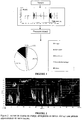
- the distribution of consumption is then presented in tabular form, or, as shown in figure 1 , in a graphical form of sectors giving a quick visual indication of the consumption to be attributed to each class of apparatus.
- the objective is to obtain a 70% minimum rate of correct classification of devices, and a classification rate higher than 85% on average.
- various factors make it impossible to allocate 100% of an overall electricity consumption to the different appliances, but a significant classification rate must be achieved to satisfy a certain level of energy consumption. information for the user who makes the analysis device sufficiently credible.
- a measurement system (not shown) having the ability to record all of the electrical variations that occur on a consumer's power grid over a given period of time with one-second sampling is used.
- This system is provided with an intensity sensor which can be embodied by amperemetric clamps and a voltage sensor embodied for example by a transformer (whose value is known) connected to a socket of the network. These variations are represented by a graph called "load curve.
- figure 2 there is shown in more detail an extract of a load curve representing the active power recorded over a period of sixteen hours.
- the electrical network of the particular is powered by an alternating current of frequency 50 Hz for example, and whose voltage is theoretically 220 V for example in a series of countries.
- alternating current of frequency 50 Hz for example
- voltage is theoretically 220 V for example in a series of countries.
- the use of different frequencies and voltages does not change anything fundamentally to the extent of the power consumed.
- the devices consist mainly of electromagnetic receivers (coils, motors, etc.). Most receivers are not purely resistive but they behave either inductive or capacitive. This implies a phase shift between current and voltage. It is therefore necessary to take into account the power factor ( cos ( ⁇ ) ) determined by the phase shift angle ⁇ between the nominal voltage and the nominal current.
- the invention is not limited to the classification of the consumption of domestic electrical appliances, but can easily be extended by those skilled in the art, to other types of electrical appliances, especially in industrial environments, which will undoubtedly give rise to additional classifications.
- the figure 3A represents a typical load curve of devices of the pump class.
- the class "Pump” characterizes the devices having a compressive type operation. When the device operates, it produces a regular cycle defined by a positive power variation (denoted ⁇ P 1> 0) and two negative power variations (denoted ⁇ P 2 ⁇ 0, ⁇ P 3 ⁇ 0).
- ⁇ P 1> 0 positive power variation
- ⁇ P 2 ⁇ 0, ⁇ P 3 ⁇ 0 two negative power variations
- there are devices such as the refrigerator, the vacuum cleaner, all types of pumps, etc.
- the figure 3B represents a typical load curve of the electrical resistors.
- the class "Resistance” characterizes devices equipped with a resistance or a universal motor. These devices generate a power cycle defined by a positive power variation (noted ⁇ P 1 > 0) followed by a negative power variation ( ⁇ P 2 ⁇ 0).
- appliances such as the oven, the coffee maker, the kettle, the convectors, the water heater, the bulbs, etc., can be found in residential areas.
- the figure 3C represents a typical load curve of microwave ovens.
- the microwave oven is a device that is classed alone in a class called "Microwave" because its power behavior is defined by four distinct power cycles that separate it from other devices.
- a microwave oven can generate cycles corresponding to the cycle model of the class "Resistance", that is to say two variations of power. However, the time intervals between the different cycles are not as regular as in the case of cycles generated by resistive devices. This type of cycle is the first category of variations that the microwave oven generates.
- the microwave oven is the only electrical appliance to be defined by four possible power cycles. It has been found that when it operates, the microwave will not produce only one of four possible cycles. Several types of cycles can alternate in minutes. It is also this alternation of cycles of power, different in time, which makes it possible to discriminate this apparatus compared to the apparatuses of the other classes.
- appliances such as: washing machine, dishwasher, dryer.
- the load curve is filtered to extract the consumption of the appliances corresponding to said class.
- the extraction is based on the search for characteristic power variation cycles that made it possible to define the class.
- a cycle "100” may have been effectively generated by a device of the class "Pumps", or by other different devices, but the superposition of power variation cycles also gives a code "100".
- the characterization of the class of pumps is associated with the code "100”, an additional characterization on the basis of power criteria linked to power variations, and criteria of time of occurrence of these power variations in the cycle. These power and time criteria are set in advance based on the analysis prerequisite for a multitude of devices, and these criteria fixed in power and time are invariants for each class of devices.
- the first power variation ⁇ P 1 oscillates in a range of around 100 watts around the average power variation ⁇ P 1 of all domestic refrigerators on the market.
- each device of a class is defined by a subset of cycles containing a certain number of cycles that it has produced between its ignition and its extinction.
- the algorithm of the class realizes a learning. It is a synthesis of statistical information on the consumption of the devices, and this statistical information is then grouped into information vectors, as explained in more detail below.
- the subsets of cycles are very rarely complete, that is to say that the algorithm first rejected a number of cycles produced by the devices of the class because they did not correspond, in a first, the power and time criteria for the class. This rejection occurs especially in the case where several devices have worked together and whose power cycles have mixed.
- the integration and reconstruction of all the cycles generated by a device, between its ignition and extinction, is therefore a so-called reconstruction phase.
- This phase retrieves the data from the training and reconstructs the missing cycles of power variation for each subset of the score. After the reconstruction phase, it is possible to calculate the power consumed by each device, and not the consumption of all devices in this class.
- the first filtering algorithm corresponding to class 1
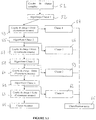
- the first filtering algorithm is applied to the whole of the load curve. Since the first algorithm corresponds to that of the class of pumps, it will be like looking for all the codes "100" in the complete load curve, extracting them by subtracting the load curve, and storing them in a first class rated class 1.
- algorithm 2 is applied at 55 to the residual charge curve 53 already filtered by algorithm 1, that is to say the charge curve minus the cycles corresponding to class 1.
- the filtering by algorithm 2 gives rise to the search in the curve of residual charge, digital codes corresponding to the second class of devices. These codes are classed as 56 in class 2, and a new residual charge curve is obtained at 57, from which all the codes corresponding to the power variations of the apparatus of the second class have been subtracted.
- step 58 to 63 is applied to the codes of the remaining classes, namely classes 3 and 4 assuming the classification is done on four classes of devices.
- Step 1 ( Figure 4): search and extraction cycles.
- the algorithm traverses the load curve coded in binary form to filter the cycles corresponding to the class i studied.
- binary codes to be searched for in the load curve are defined.
- a cycle is composed of several power variations, defined by the following code: ⁇ 1 if ⁇ P i > 0 0 if not
- a load curve results in power variations grouped together in a table denoted CC .
- the class i algorithm searches for and extracts from the array CC the code or codes corresponding to class i, as summarized in the table above.
- Step 2 ( Figure 4): validation of extracted cycles.
- the algorithm analyzes the cycles to validate or reject them based on an invariant criterion of the class.
- the invariant criteria used are power and time criteria associated with the cycles. The power and time characteristics of the cycles are therefore compared with the predefined power and time criteria.
- the power variations observed for a cycle have values that can be compared with expected values for a device class or for a device.
- the validation of a cycle is then carried out with a criterion defined as a power combination associated with all the power variations of the cycles, in particular the value of the first power variation of the cycle.
- a first analysis is performed on the cycles extracted from the load curve to validate initially that these cycles correspond to devices of the class concerned, and to reject the cycles incompatible with the fixed criteria of power or time , on which the algorithm can not therefore make a precise choice.
- a valid cycle for an apparatus is a cycle that has the correct succession of power variations (i.e., the correct code), and the expected power and time characteristics for that apparatus.
- Step 3 ( Figure 4): Creating the first temporary device classification
- a first statistical analysis of the power variations that constitute the validated cycles makes it possible to create a partition of the cycles attributed to a class of devices, where each subset represents the cycles of a device of the class that has operated on the load curve.
- each line represents a device (or subset denoted SS i ) and each column contains the valid extracted cycles belonging to the devices.
- Step 4 ( Figure 4): Local learning cycles
- step 4 represents the second operating part of the algorithm, and constitutes a fundamental step in the classification of the devices.
- the information obtained at the end of this step allows the algorithm to evaluate the power variations to be taken into account to reconstruct the complete operating model of an electrical device.
- the algorithm will analyze the cycles with the following statistical tools: average, median, variance, maximum, minimum.
- Step 5 ( Figure 4): rebuilding the complete set of cycles for each device
- This device corresponds to a row of the matrix ECv of valid cycles.
- the algorithm of the method according to the invention traverses the set of rejected cycles ECr for each device, in order to find the power variations corresponding to the cycles which were rejected at first, but which belong well to a subset of the score, given the values of the criteria from the learning step.
- reconstruction phase Given the different power and time criteria derived from learning, for each class there is a reconstruction phase defined with its own criteria and its own thresholds.
- the reconstruction phase applies iteratively to all the subsets (thus devices) created with the learning.
- Each algorithm of a class bases its reconstruction phase on the principle of a method of decision support multicriteria, including type AHP, acronym for "Analytic Hierarchy Process" in English terminology. This type of method is known to those skilled in the art and will not be described in detail.
- the "Pump" class has cycles of power variations characterized by three power variations: ⁇ P1> 0, ⁇ P2 ⁇ 0 and ⁇ P3 ⁇ 0.
- Step 6 ( Figure 4): final classification and updates
- the algorithm updates for each device class, each subset of cycles with the missing cycles that were rebuilt.
- the class is completed with the update of the missing cycles and the size of the ECr set is reduced.
- the purpose of the filter algorithm step is to produce a reliable classification of devices belonging to the same class and to minimize the size of the class "Other", ie the number of Power events not assigned to a device class or device.
- the power and time criteria take values that we call "thresholds".
- thresholds The definition or calculation of these thresholds allows the algorithm to make a choice with respect to a power variation belonging to the set of rejected cycles.
- the thresholds are of different natures: there are fixed thresholds, and thresholds self-adapted during the execution of the algorithm.
- thresholds are set according to the experience gained through the study of a baseline of devices and their consumption in operation. These fixed thresholds are invariants of the class studied. They will be applied to certain criteria of the class, and they will remain unchanged regardless of the subset of cycles studied. These thresholds are in the form of a range of values. The definition of an interval of possible values allows the algorithm some flexibility in the analysis of the characteristics of a variation of power, so as to avoid an arbitrary choice that may lead to misclassification.
- the majority of the thresholds are used, in the form of combinations between the fixed thresholds and the self-adapted thresholds. These combinations make it possible to take into account for each power variation analyzed, the characteristics of the subset of cycles, but also the general characteristics of the class studied.
- the function of the auto-adapted thresholds is to allow the algorithm to adapt to the load curve and the real devices that are present. As a result, there is no rigid decision rule but rather ranges of values allowing flexibility in the choice of power variations.
- the learning files are more complete in the analyzed information, and make it possible to refine the thresholds of the criteria.
- the invention overcomes the problem and achieves the desired goals.
- the invention has shown that it is possible to create an iterative process capable of extracting power and time signatures for each class of devices, and to distribute the devices of the site in several predefined classes, simply by filtering the overall load curve, without any other prior information on the devices, provided they have only previously a set of classes defined from a reference base of electrical devices.
- the method according to the invention makes it possible to obtain a rate of allocation of consumption to a class of apparatus, greater than 85% on average, and greater than 70%. % whatever the case.
- the implementation of the method according to the invention simply requires the implementation of a simple electronic box disposed at the site electric meter, and provided with software for acquiring the load curve and filtering it as described above, it being understood that the treatment itself can be performed locally on the site, or remotely centrally.
Landscapes
- Engineering & Computer Science (AREA)
- Power Engineering (AREA)
- Supply And Distribution Of Alternating Current (AREA)
- Management, Administration, Business Operations System, And Electronic Commerce (AREA)
- Electrotherapy Devices (AREA)
Claims (19)
- Analyseverfahren des Stromverbrauchs einer Vielzahl von an einem Verbrauchsstandort funktionierenden elektronischen Geräten per Filterung einer Lastkurve, die den Stromverbrauch der genannten Geräte in Abhängigkeit von der Zeit darstellt, umfassend die folgenden Stufen:- vor der Filterung im eigentlichen Sinne der Lastkurve:- Abspeichern und Digitalisieren der Lastkurve derart, dass eine per Zeitperioden digitalisierte Lastkurve erhalten wird;- Definieren einer Gruppe von Geräteklassen, wobei jede Klasse durch ähnliche Zyklen von Leistungsvariationen definiert ist;- Definieren eines Filteralgorithmus der jeder der genannten Geräteklasse dedizierten Lastkurve für jede Geräteklasse, wobei der genannte Algorithmus geeignet ist, Zyklen der Leistungsvariation der digitalisierten Lastkurve zu extrahieren und der genannten Geräteklasse zuzuordnen;- während der Filterung der digitalisierten Lastkurve:- sukzessives Verwenden der jeder Geräteklasse dedizierten Filteralgorithmen, um ab der digitalisierten Lastkurve die Zyklen der Variation der von den elektrischen Geräten verbrauchten Leistung zu identifizieren und zusammenzufassen;
wobei das Verfahren einerseits dadurch gekennzeichnet ist, dass die digitalisierte Lastkurve mithilfe eines spezifischen Algorithmus für jede Geräteklasse gemäß einer geordneten Folge von Filterungsalgorithmen sukzessive gefiltert ist und das Verfahren andererseits dadurch gekennzeichnet ist, dass die Filterungsstufe im eigentlichen Sinne der digitalisierten Lastkurve für eine bestimmte Geräteklasse die folgenden Operationen umfasst:- Suche und Extraktion ab der Lastkurve der Zyklen der charakteristischen Leistungsvariation der bestimmten Geräteklasse;- Validierung der in Abhängigkeit von den Leistungskriterien und den vordefinierten Zeiten extrahierten Zyklen und Verteilung der extrahierten Zyklen in einer Gruppe von gültigen Zyklen, die dem Betriebsmodell in Leistung und in Zeit eines Geräts entsprechen, und einer Gruppe von vorläufig abgelehnten Zyklen;- Anlegen einer vorläufigen Unterteilung, die aus unvollständigen Teilgruppen von gültigen Zyklen gebildet ist, wobei jede unvollständige Teilgruppe Zyklen eines einzigen Geräts umfasst;- lokales Lernen der gültigen Zyklen jeder vorläufigen Unterteilung derart, dass charakteristische Kriterien der gültigen Zyklen definiert werden;- ausgehend von den aus dem lokalen Lernen stammenden Kriterien Wiederaufbau des kompletten oder quasi-kompletten chronologischen Funktionsmodells jedes Geräts durch Zuteilen dazu der zuvor vorläufig abgelehnten Zyklen der Leistungsvariation;- Aktualisieren der Klassifizierung und des Lernens in Abhängigkeit von der Wiederaufbaustufe derart, dass eine endgültige Unterteilung der extrahierten Zyklen angelegt wird, wobei jede Unterteilung dem Verbrauch eines Geräts entspricht. - Verfahren gemäß Anspruch 1, dadurch gekennzeichnet, dass die Such- und Extraktionsstufe der für eine bestimmte Geräteklasse charakteristischen Zyklen der Leistungsvariation in der Definition der charakteristischen binären Codes, die den Leistungsvariationen dieser Geräteklasse entsprechen, dann in der Subtraktion der auf diese Weise definierten charakteristischen binären Codes aus der digitalisierten Lastkurve und deren Klassifizierung entweder in eine Gruppe von gültigen Zyklen, die dem Funktionsmodell eines Geräts entsprechen, oder in eine Gruppe von vorläufig abgelehnten Zyklen, dann dem erneuten Zuführen der vorläufig abgelehnten Zyklen in die Lastkurve vor der Suche der zu einer anderen Geräteklasse relativen Zyklen der Leistungsvariation besteht.
- Verfahren gemäß Anspruch 1, dadurch gekennzeichnet, dass die Leistungs- und Zeitmerkmale der extrahierten Zyklen zum Validieren der extrahierten Zyklen für eine bestimmte Geräteklasse mit den für diese Klasse vordefinierten Leistungs- und Zeitkriterien verglichen werden, und die Zyklen, die mit den festgelegten Kriterien inkompatible Leistungs- und Zeitmerkmale aufweisen, vorläufig abgelehnt werden, die anderen Kriterien endgültig als zu einem Gerät der bestimmten Klasse zugehörig validiert werden.
- Verfahren gemäß Anspruch 1, dadurch gekennzeichnet, dass das Anlegen einer vorläufigen Unterteilung, die aus unvollständigen Teilgruppen von für jedes Gerät gültigen Zyklen der Leistungsvariation gebildet ist, Stufen umfasst, die in der Zusammenfassung der gültigen Zyklen der Leistungsvariation bestehen, die deutlich dieselben Werte der Leistungs- und Zeitkriterien derart aufweisen, dass jede Gruppe von Zyklen die Zyklen eines Geräts der Klasse aufweist, die auf der Leistungskurve funktioniert hat, dann in der Darstellung der vorläufigen Unterteilung in Form einer Informationsmatrix, in der jede Zeile ein Gerät und jede Spalte die gültigen extrahierten Zyklen, die zu den Geräten gehören, darstellt.
- Verfahren gemäß Anspruch 1, dadurch gekennzeichnet, dass die Lernstufe in der Berechnung der Werte einer Gruppe von Leistungs- und Zeitkriterien, die den gültigen Zyklen jedes Geräts zugeordnet sind, dann in der statistischen Analyse dieser Werte und in der Speicherung der erhaltenen Statistiken im Speicher in Form eines jedem Gerät zugeordneten Informationsvektors besteht.
- Verfahren gemäß Anspruch 1, dadurch gekennzeichnet, dass die Wiederaufbaustufe im Wiederaufbau der kompletten oder quasi-kompletten Gruppe der Zyklen der Leistungsvariation für dieses Gerät zwischen seinem Einschalten und seinem Ausschalten durch chronologische Integration in die Gruppe der gültigen Zyklen dieses Geräts, der aus der Gruppe der vorläufig abgelehnten Zyklen ausgewählten Zyklen für jedes Gerät besteht, wobei diese Auswahl mithilfe von aus dem Lernen stammenden Kriterien und Schwellenwerten erfolgt.
- Verfahren gemäß Anspruch 1, dadurch gekennzeichnet, dass die Stufe des Anlegens einer endgültigen Unterteilung in der Aktualisierung jeder Teilgruppe von ein Gerät der gefilterten Klasse darstellenden Zyklen mit fehlenden Zyklen besteht, wie sie z. B. in der Wiederaufbaustufe wiederaufgebaut wurden.
- Verfahren gemäß irgendeinem der Ansprüche 1 bis 7, dadurch gekennzeichnet, dass die Leistungs- und Zeitkriterien autoadaptiv sind und von einer Lastkurve zur anderen variieren.
- Verfahren gemäß Anspruch 1, dadurch gekennzeichnet, dass es eine Stufe umfasst, die in der Zusammenfassung des jeweiligen Stromverbrauchs jeder Geräteklasse ab der endgültigen Unterteilung der extrahierten Zyklen derart besteht, dass eine zusammenfassende Aufstellung erzeugt wird, die den Stromverbrauch oder den Anteil des Stromverbrauchs der Geräte jeder Klasse während eines Analysezeitraums des Verbrauchs angibt.
- Verfahren gemäß Anspruch 1, dadurch gekennzeichnet, dass die Lastkurve nach Zeitperioden kleiner als oder gleich einer Sekunde digitalisiert ist.
- Verfahren gemäß einem der voranstehenden Ansprüche, dadurch gekennzeichnet, dass die Gruppe der vordefinierten Geräteklassen wenigstens eine der aus den folgenden ausgewählten Klassen umfasst:- die als elektrische Pumpen bezeichnet Klasse;- die als elektrische Widerstände bezeichnete Klasse;- die als Mikrowellenöfen bezeichnete Klasse;- die als elektrische Geräte großer Elektrohaushaltsgeräte bezeichnete Klasse;- die Klasse der anderen elektrischen Geräte, die nicht zu einer der voranstehenden Klassen gehören.
- Verfahren gemäß Anspruch 11, dadurch gekennzeichnet, dass die als elektrische Pumpen bezeichnete Klasse durch einen Zyklus der verbrauchten Leistungsvariation definiert ist, der sukzessive eine erste positive Leistungsvariation, eine zweite negative Leistungsvariation und eine dritte negative Leistungsvariation umfasst.
- Verfahren gemäß Anspruch 11, dadurch gekennzeichnet, dass die als elektrische Geräte großer Elektrohaushaltsgeräte bezeichnete Klasse durch einen Zyklus der verbrauchten Leistungsvariation definiert ist, die sukzessive wenigstens vier Leistungsvariationen umfasst, und zwar eine erste positive Leistungsvariation, eine zweite negative Leistungsvariation, eine dritte positive Leistungsvariation und eine vierte negative Leistungsvariation.
- Verfahren gemäß Anspruch 11, dadurch gekennzeichnet, dass die als Mikrowellenöfen bezeichnete Klasse durch vier unterschiedliche Typen von Leistungsvariationen definiert ist, wobei der erste Zyklustyp eine positive Leistungsvariation gefolgt von einer negativen Variation umfasst, der zweite Zyklustyp zwei positive Variationen gefolgt von einer negativen Variation umfasst, der dritte Zyklustyp eine positive Variation gefolgt von zwei negativen Variationen umfasst und der vierte Zyklustyp zwei Folgen umfasst, die jeweils aus einer positiven Variation gefolgt von einer negativen Variation gebildet ist.
- Verfahren gemäß Anspruch 11, dadurch gekennzeichnet, dass die als elektrische Widerstände bezeichnete Klasse durch einen Zyklus der verbrauchten Leistungsvariation definiert ist, der sukzessive eine erste positive Leistungsvariation gefolgt von einer zweiten negativen Leistungsvariation umfasst.
- Verfahren gemäß Anspruch 15, dadurch gekennzeichnet, dass es sukzessive den Filterungsalgorithmus relativ zur Klasse der Pumpen, dann den Filterungsalgorithmus relativ zur Klasse der Mikrowellenöfen, dann den Filterungsalgorithmus relativ zur Klasse der großen Elektrohaushaltsgeräte relativ zur Klasse der Widerstände umsetzt.
- Verfahren gemäß irgendeinem der voranstehenden Ansprüche, dadurch gekennzeichnet, dass die Erwerbsstufen der Lastkurve und der Filterung der Lastkurve lokal an dem Verbrauchsstandort realisiert sind.
- Verfahren gemäß irgendeinem der Ansprüche 1 bis 17, dadurch gekennzeichnet, dass die Erwerbsstufe der Lastkurve lokal realisiert ist und dass die die Lastkurve darstellenden binären Werte anschließend auf ein entferntes Verarbeitungszentrum übertragen werden, wo die Filterungsstufen der Lastkurve durchgeführt werden.
- Verarbeitungsvorrichtung, die dazu bestimmt ist, an eine Stromversorgungsleitung eines Verbrauchsstandortes angeschlossen zu sein, dadurch gekennzeichnet, dass sie eine Software umfasst, die geeignet ist, das Verfahren gemäß irgendeinem der voranstehenden Ansprüche umzusetzen.
Applications Claiming Priority (2)
| Application Number | Priority Date | Filing Date | Title |
|---|---|---|---|
| FR0901311 | 2009-03-20 | ||
| PCT/FR2010/000233 WO2010106253A2 (fr) | 2009-03-20 | 2010-03-20 | Procédé et dispositif de filtrage de courbes de consommation électrique et d'allocation de consommation à des classes d'appareils |
Publications (2)
| Publication Number | Publication Date |
|---|---|
| EP2409167A2 EP2409167A2 (de) | 2012-01-25 |
| EP2409167B1 true EP2409167B1 (de) | 2017-01-25 |
Family
ID=41349276
Family Applications (1)
| Application Number | Title | Priority Date | Filing Date |
|---|---|---|---|
| EP10723162.3A Active EP2409167B1 (de) | 2009-03-20 | 2010-03-20 | Verfahren und vorrichtung zur filterung von energieverbrauchskurven und zuweisung des verbrauchs zu gerätekategorien |
Country Status (4)
| Country | Link |
|---|---|
| US (1) | US9558404B2 (de) |
| EP (1) | EP2409167B1 (de) |
| ES (1) | ES2617223T3 (de) |
| WO (1) | WO2010106253A2 (de) |
Families Citing this family (24)
| Publication number | Priority date | Publication date | Assignee | Title |
|---|---|---|---|---|
| GB2476456B (en) | 2009-12-18 | 2013-06-19 | Onzo Ltd | Utility data processing system |
| GB2476927B (en) * | 2009-11-12 | 2012-01-11 | Onzo Ltd | Event identification |
| GB2477366B (en) | 2009-11-12 | 2013-06-19 | Onzo Ltd | Data storage and transfer |
| GB2491109B (en) | 2011-05-18 | 2014-02-26 | Onzo Ltd | Identification of a utility consumption event |
| FR2976360B1 (fr) | 2011-06-08 | 2014-01-03 | Smart Impulse | Procede d'analyse de la consommation d'electricite d'un site equipe d'une pluralite d'equipements electriques |
| US8725303B2 (en) * | 2011-07-08 | 2014-05-13 | Sharp Laboratories Of America, Inc. | System and method for the multi-dimensional representation of energy control |
| US20130232151A1 (en) * | 2012-03-05 | 2013-09-05 | Green Charge Networks Llc | Aggregation of Load Profiles for Consumption Management Systems |
| FR2999034B1 (fr) * | 2012-12-04 | 2020-04-17 | Smart Impulse | Procede de separation de la consommation d'electricite d'une pluralite d'equipements electriques de meme nature |
| FR3005357B1 (fr) * | 2013-05-06 | 2017-02-17 | Smart Impulse | Procede et systeme d'analyse de la consommation d'electricite |
| US10942205B2 (en) | 2013-05-06 | 2021-03-09 | Smart Impulse | Method and system for analyzing electricity consumption |
| FR3007843B1 (fr) * | 2013-06-27 | 2016-12-09 | Somfy Sas | Procede et dispositif de determination de la phase d’un signal alternatif |
| FR3017975A1 (fr) * | 2014-02-26 | 2015-08-28 | Electricite De France | Estimation de la consommation electrique d'un equipement donne parmi un ensemble d'equipements electriques |
| CA3204845A1 (en) * | 2014-08-15 | 2016-02-18 | Ecolab Usa Inc. | Cip wash summary and library |
| US11070058B2 (en) * | 2014-10-26 | 2021-07-20 | Green Power Labs Inc. | Forecasting net load in a distributed utility grid |
| CA2964806C (en) * | 2014-10-26 | 2021-04-20 | Dmitriy ANICHKOV | Forecasting net load in a distributed utility grid |
| DE102016111351A1 (de) * | 2016-06-21 | 2017-12-21 | Emh Metering Gmbh & Co. Kg | Elektrisches Haushaltsgerät mit einer Datenübertragungseinrichtung und Vorrichtung zum Empfangen von Daten von einem solchen Gerät |
| US10999652B2 (en) | 2017-05-24 | 2021-05-04 | Engie Storage Services Na Llc | Energy-based curtailment systems and methods |
| US10658841B2 (en) | 2017-07-14 | 2020-05-19 | Engie Storage Services Na Llc | Clustered power generator architecture |
| US11381081B2 (en) * | 2018-09-28 | 2022-07-05 | Clarity Grid Solutions, Inc. | Systems and methods for energy-related load optimization |
| CN111596550B (zh) * | 2019-02-20 | 2022-09-09 | 青岛海尔洗衣机有限公司 | 家居系统的控制方法 |
| CN111311431B (zh) * | 2020-01-19 | 2022-05-13 | 国网福建省电力有限公司经济技术研究院 | 一种基于分段斜率的负荷曲线形态聚类方法 |
| EP4249853B1 (de) * | 2022-03-22 | 2025-06-11 | Tata Consultancy Services Limited | Verfahren und system zur bestimmung des leistungslastverteilungsprofils eines gebäudes |
| TWI837819B (zh) * | 2022-09-12 | 2024-04-01 | 財團法人資訊工業策進會 | 用電行為分析裝置及用電行為分析方法 |
| FR3151406B1 (fr) * | 2023-07-21 | 2025-10-03 | Veolia Environnement | Procédé d’estimation d’au moins une puissance consommée par un sous-ensemble |
Family Cites Families (2)
| Publication number | Priority date | Publication date | Assignee | Title |
|---|---|---|---|---|
| US4858141A (en) * | 1986-04-14 | 1989-08-15 | Massachusetts Institute Of Technology | Non-intrusive appliance monitor apparatus |
| EP1296147B1 (de) * | 2000-04-12 | 2007-07-18 | Central Research Institute of Electric Power Industry | System und verfahren zur abschätzung des stromverbrauchs eines elektrischen geräts und abnormalitätswarnungssystem damit |
-
2010
- 2010-03-20 US US13/254,294 patent/US9558404B2/en active Active
- 2010-03-20 EP EP10723162.3A patent/EP2409167B1/de active Active
- 2010-03-20 WO PCT/FR2010/000233 patent/WO2010106253A2/fr not_active Ceased
- 2010-03-20 ES ES10723162.3T patent/ES2617223T3/es active Active
Non-Patent Citations (1)
| Title |
|---|
| None * |
Also Published As
| Publication number | Publication date |
|---|---|
| US9558404B2 (en) | 2017-01-31 |
| US20120059607A1 (en) | 2012-03-08 |
| ES2617223T3 (es) | 2017-06-15 |
| EP2409167A2 (de) | 2012-01-25 |
| WO2010106253A4 (fr) | 2010-12-23 |
| WO2010106253A3 (fr) | 2010-11-18 |
| WO2010106253A2 (fr) | 2010-09-23 |
Similar Documents
| Publication | Publication Date | Title |
|---|---|---|
| EP2409167B1 (de) | Verfahren und vorrichtung zur filterung von energieverbrauchskurven und zuweisung des verbrauchs zu gerätekategorien | |
| CA3113153A1 (fr) | Reconstruction d'une topologie d'un reseau de distribution electrique | |
| EP3172548B1 (de) | Verfahren zur detektion von anomalien in einem verteilungsnetzwerk, insbesondere für trinkwasser | |
| EP3089888A1 (de) | Verfahren, vorrichtung und system zur messung des integritätszustandes einer batterie in einem elektro- oder hybridfahrzeug während des betriebs und verfahren zur erstellung eines modells für solch eine messung | |
| FR2991076A1 (fr) | Procede de traitement d'un ensemble de quadruplets de valeurs relatifs a des points de fonctionnement d'un accumulateur electrochimique, procede de determination d'un etat d'energie a partir des donnees issues du procede de traitement, support d'enregistrement, programme informatique et dispositif | |
| EP4124942B1 (de) | Verfahren und system zur verarbeitung von persönlichen daten unter verwendung von homomorphic verschlüsselung | |
| WO2014181062A1 (fr) | Procede et systeme d'analyse de la consommation d'electricite | |
| EP4253973A1 (de) | Verfahren zum sortieren einer batterieanordnung auf basis eines automatischen klassifizierungsmodells | |
| FR3028117A1 (fr) | Procede de diagnostic d'un systeme photovoltaique | |
| WO2021009364A1 (fr) | Procédé d'identification de données aberrantes dans d'un jeu de données d'entrée acquises par au moins un capteur | |
| EP3511781A1 (de) | Vorrichtung und verfahren zur erhebung, speicherung, auswertung sowie zugänglichmachung der auswerteergebnisse von daten von uhren | |
| FR3080456A1 (fr) | Procede d'association de chaque compteur d'une pluralite de compteurs a un depart triphase d'un transformateur, procede de determination de la topologie d'un reseau et dispositif associe | |
| EP4684222A1 (de) | Verfahren zur erkennung der anwesenheit eines lichtbogens und zugehörige vorrichtung | |
| EP0855038B1 (de) | Diagnose von Netzen von Bauelementen unter Verwendung einer Bänder-Modellierung | |
| WO2023237498A1 (fr) | Dispositif de traitement de donnees par voie d'apprentissage, procede, programme et systeme correspondant | |
| EP4386403B1 (de) | Verfahren und vorrichtung zur bestimmung eines die zukünftigen nutzung einer batterie repräsentativen belastungsprofils für eine bestimmte anwendung | |
| FR3124615A1 (fr) | Procédé d’échange sécurisé de données. | |
| FR3067501B1 (fr) | Procede de traitement de la courbe de charge | |
| WO2023241896A1 (fr) | Détection d'anomalies pour la maintenance applicative de dispositifs | |
| EP2921867A1 (de) | Methode zur Extraktion von elektrischen Leistungssignalen aus einem gemischten Signal, das eine Vielzahl von verschiedenen elektrischen Geräten mit Strom versorgt | |
| FR3010206A1 (fr) | Procede de gestion d'une base de donnees utilisateurs sur une plate-forme de contenus multimedias | |
| WO2015193502A1 (fr) | Procede de creation d'une structure de donnees representative d'une consommation de fluide d'au moins un equipement, dispositif et programme correspondant | |
| EP3298542A1 (de) | Verfahren zur identifizierung einer für den verbrauch einer flüssigkeit repräsentativen datenstruktur, entsprechende vorrichtung und computerprogramm | |
| FR3163179A1 (fr) | Procédé de détermination d’indicateurs représentatifs d’anomalies, dispositif et programme correspondant. | |
| FR3149423A1 (fr) | Procédé de reconstruction d’un spectre de masse |
Legal Events
| Date | Code | Title | Description |
|---|---|---|---|
| PUAI | Public reference made under article 153(3) epc to a published international application that has entered the european phase |
Free format text: ORIGINAL CODE: 0009012 |
|
| 17P | Request for examination filed |
Effective date: 20111020 |
|
| AK | Designated contracting states |
Kind code of ref document: A2 Designated state(s): AT BE BG CH CY CZ DE DK EE ES FI FR GB GR HR HU IE IS IT LI LT LU LV MC MK MT NL NO PL PT RO SE SI SK SM TR |
|
| DAX | Request for extension of the european patent (deleted) | ||
| REG | Reference to a national code |
Ref country code: DE Ref legal event code: R079 Ref document number: 602010039785 Country of ref document: DE Free format text: PREVIOUS MAIN CLASS: G01R0021133000 Ipc: G06K0009000000 |
|
| GRAP | Despatch of communication of intention to grant a patent |
Free format text: ORIGINAL CODE: EPIDOSNIGR1 |
|
| RIC1 | Information provided on ipc code assigned before grant |
Ipc: G06K 9/00 20060101AFI20160906BHEP Ipc: G01R 21/133 20060101ALI20160906BHEP Ipc: H02J 3/00 20060101ALI20160906BHEP |
|
| INTG | Intention to grant announced |
Effective date: 20160923 |
|
| GRAS | Grant fee paid |
Free format text: ORIGINAL CODE: EPIDOSNIGR3 |
|
| GRAA | (expected) grant |
Free format text: ORIGINAL CODE: 0009210 |
|
| AK | Designated contracting states |
Kind code of ref document: B1 Designated state(s): AT BE BG CH CY CZ DE DK EE ES FI FR GB GR HR HU IE IS IT LI LT LU LV MC MK MT NL NO PL PT RO SE SI SK SM TR |
|
| REG | Reference to a national code |
Ref country code: GB Ref legal event code: FG4D Free format text: NOT ENGLISH |
|
| REG | Reference to a national code |
Ref country code: CH Ref legal event code: EP |
|
| REG | Reference to a national code |
Ref country code: AT Ref legal event code: REF Ref document number: 864517 Country of ref document: AT Kind code of ref document: T Effective date: 20170215 |
|
| REG | Reference to a national code |
Ref country code: IE Ref legal event code: FG4D Free format text: LANGUAGE OF EP DOCUMENT: FRENCH |
|
| REG | Reference to a national code |
Ref country code: DE Ref legal event code: R096 Ref document number: 602010039785 Country of ref document: DE |
|
| REG | Reference to a national code |
Ref country code: FR Ref legal event code: PLFP Year of fee payment: 8 |
|
| REG | Reference to a national code |
Ref country code: NO Ref legal event code: T2 Effective date: 20170125 |
|
| REG | Reference to a national code |
Ref country code: LT Ref legal event code: MG4D |
|
| REG | Reference to a national code |
Ref country code: NL Ref legal event code: MP Effective date: 20170125 |
|
| REG | Reference to a national code |
Ref country code: ES Ref legal event code: FG2A Ref document number: 2617223 Country of ref document: ES Kind code of ref document: T3 Effective date: 20170615 Ref country code: AT Ref legal event code: MK05 Ref document number: 864517 Country of ref document: AT Kind code of ref document: T Effective date: 20170125 |
|
| PG25 | Lapsed in a contracting state [announced via postgrant information from national office to epo] |
Ref country code: NL Free format text: LAPSE BECAUSE OF FAILURE TO SUBMIT A TRANSLATION OF THE DESCRIPTION OR TO PAY THE FEE WITHIN THE PRESCRIBED TIME-LIMIT Effective date: 20170125 |
|
| PG25 | Lapsed in a contracting state [announced via postgrant information from national office to epo] |
Ref country code: GR Free format text: LAPSE BECAUSE OF FAILURE TO SUBMIT A TRANSLATION OF THE DESCRIPTION OR TO PAY THE FEE WITHIN THE PRESCRIBED TIME-LIMIT Effective date: 20170426 Ref country code: HR Free format text: LAPSE BECAUSE OF FAILURE TO SUBMIT A TRANSLATION OF THE DESCRIPTION OR TO PAY THE FEE WITHIN THE PRESCRIBED TIME-LIMIT Effective date: 20170125 Ref country code: FI Free format text: LAPSE BECAUSE OF FAILURE TO SUBMIT A TRANSLATION OF THE DESCRIPTION OR TO PAY THE FEE WITHIN THE PRESCRIBED TIME-LIMIT Effective date: 20170125 Ref country code: LT Free format text: LAPSE BECAUSE OF FAILURE TO SUBMIT A TRANSLATION OF THE DESCRIPTION OR TO PAY THE FEE WITHIN THE PRESCRIBED TIME-LIMIT Effective date: 20170125 Ref country code: IS Free format text: LAPSE BECAUSE OF FAILURE TO SUBMIT A TRANSLATION OF THE DESCRIPTION OR TO PAY THE FEE WITHIN THE PRESCRIBED TIME-LIMIT Effective date: 20170525 |
|
| PG25 | Lapsed in a contracting state [announced via postgrant information from national office to epo] |
Ref country code: BG Free format text: LAPSE BECAUSE OF FAILURE TO SUBMIT A TRANSLATION OF THE DESCRIPTION OR TO PAY THE FEE WITHIN THE PRESCRIBED TIME-LIMIT Effective date: 20170425 Ref country code: AT Free format text: LAPSE BECAUSE OF FAILURE TO SUBMIT A TRANSLATION OF THE DESCRIPTION OR TO PAY THE FEE WITHIN THE PRESCRIBED TIME-LIMIT Effective date: 20170125 Ref country code: PT Free format text: LAPSE BECAUSE OF FAILURE TO SUBMIT A TRANSLATION OF THE DESCRIPTION OR TO PAY THE FEE WITHIN THE PRESCRIBED TIME-LIMIT Effective date: 20170525 Ref country code: LV Free format text: LAPSE BECAUSE OF FAILURE TO SUBMIT A TRANSLATION OF THE DESCRIPTION OR TO PAY THE FEE WITHIN THE PRESCRIBED TIME-LIMIT Effective date: 20170125 Ref country code: PL Free format text: LAPSE BECAUSE OF FAILURE TO SUBMIT A TRANSLATION OF THE DESCRIPTION OR TO PAY THE FEE WITHIN THE PRESCRIBED TIME-LIMIT Effective date: 20170125 Ref country code: SE Free format text: LAPSE BECAUSE OF FAILURE TO SUBMIT A TRANSLATION OF THE DESCRIPTION OR TO PAY THE FEE WITHIN THE PRESCRIBED TIME-LIMIT Effective date: 20170125 |
|
| REG | Reference to a national code |
Ref country code: DE Ref legal event code: R097 Ref document number: 602010039785 Country of ref document: DE |
|
| PG25 | Lapsed in a contracting state [announced via postgrant information from national office to epo] |
Ref country code: EE Free format text: LAPSE BECAUSE OF FAILURE TO SUBMIT A TRANSLATION OF THE DESCRIPTION OR TO PAY THE FEE WITHIN THE PRESCRIBED TIME-LIMIT Effective date: 20170125 Ref country code: SK Free format text: LAPSE BECAUSE OF FAILURE TO SUBMIT A TRANSLATION OF THE DESCRIPTION OR TO PAY THE FEE WITHIN THE PRESCRIBED TIME-LIMIT Effective date: 20170125 Ref country code: CZ Free format text: LAPSE BECAUSE OF FAILURE TO SUBMIT A TRANSLATION OF THE DESCRIPTION OR TO PAY THE FEE WITHIN THE PRESCRIBED TIME-LIMIT Effective date: 20170125 Ref country code: RO Free format text: LAPSE BECAUSE OF FAILURE TO SUBMIT A TRANSLATION OF THE DESCRIPTION OR TO PAY THE FEE WITHIN THE PRESCRIBED TIME-LIMIT Effective date: 20170125 |
|
| PG25 | Lapsed in a contracting state [announced via postgrant information from national office to epo] |
Ref country code: SM Free format text: LAPSE BECAUSE OF FAILURE TO SUBMIT A TRANSLATION OF THE DESCRIPTION OR TO PAY THE FEE WITHIN THE PRESCRIBED TIME-LIMIT Effective date: 20170125 Ref country code: DK Free format text: LAPSE BECAUSE OF FAILURE TO SUBMIT A TRANSLATION OF THE DESCRIPTION OR TO PAY THE FEE WITHIN THE PRESCRIBED TIME-LIMIT Effective date: 20170125 Ref country code: MC Free format text: LAPSE BECAUSE OF FAILURE TO SUBMIT A TRANSLATION OF THE DESCRIPTION OR TO PAY THE FEE WITHIN THE PRESCRIBED TIME-LIMIT Effective date: 20170125 |
|
| PLBE | No opposition filed within time limit |
Free format text: ORIGINAL CODE: 0009261 |
|
| STAA | Information on the status of an ep patent application or granted ep patent |
Free format text: STATUS: NO OPPOSITION FILED WITHIN TIME LIMIT |
|
| REG | Reference to a national code |
Ref country code: IE Ref legal event code: MM4A |
|
| 26N | No opposition filed |
Effective date: 20171026 |
|
| PG25 | Lapsed in a contracting state [announced via postgrant information from national office to epo] |
Ref country code: LU Free format text: LAPSE BECAUSE OF NON-PAYMENT OF DUE FEES Effective date: 20170320 |
|
| REG | Reference to a national code |
Ref country code: FR Ref legal event code: PLFP Year of fee payment: 9 |
|
| PG25 | Lapsed in a contracting state [announced via postgrant information from national office to epo] |
Ref country code: IE Free format text: LAPSE BECAUSE OF NON-PAYMENT OF DUE FEES Effective date: 20170320 Ref country code: SI Free format text: LAPSE BECAUSE OF FAILURE TO SUBMIT A TRANSLATION OF THE DESCRIPTION OR TO PAY THE FEE WITHIN THE PRESCRIBED TIME-LIMIT Effective date: 20170125 |
|
| PG25 | Lapsed in a contracting state [announced via postgrant information from national office to epo] |
Ref country code: MT Free format text: LAPSE BECAUSE OF FAILURE TO SUBMIT A TRANSLATION OF THE DESCRIPTION OR TO PAY THE FEE WITHIN THE PRESCRIBED TIME-LIMIT Effective date: 20170125 |
|
| PG25 | Lapsed in a contracting state [announced via postgrant information from national office to epo] |
Ref country code: HU Free format text: LAPSE BECAUSE OF FAILURE TO SUBMIT A TRANSLATION OF THE DESCRIPTION OR TO PAY THE FEE WITHIN THE PRESCRIBED TIME-LIMIT; INVALID AB INITIO Effective date: 20100320 |
|
| PG25 | Lapsed in a contracting state [announced via postgrant information from national office to epo] |
Ref country code: CY Free format text: LAPSE BECAUSE OF NON-PAYMENT OF DUE FEES Effective date: 20170125 |
|
| PG25 | Lapsed in a contracting state [announced via postgrant information from national office to epo] |
Ref country code: MK Free format text: LAPSE BECAUSE OF FAILURE TO SUBMIT A TRANSLATION OF THE DESCRIPTION OR TO PAY THE FEE WITHIN THE PRESCRIBED TIME-LIMIT Effective date: 20170125 |
|
| PG25 | Lapsed in a contracting state [announced via postgrant information from national office to epo] |
Ref country code: TR Free format text: LAPSE BECAUSE OF FAILURE TO SUBMIT A TRANSLATION OF THE DESCRIPTION OR TO PAY THE FEE WITHIN THE PRESCRIBED TIME-LIMIT Effective date: 20170125 |
|
| REG | Reference to a national code |
Ref country code: DE Ref legal event code: R079 Ref document number: 602010039785 Country of ref document: DE Free format text: PREVIOUS MAIN CLASS: G06K0009000000 Ipc: G06V0010000000 |
|
| REG | Reference to a national code |
Ref country code: NO Ref legal event code: LIS Free format text: EXCLUSIVE LICENSE Name of requester: QUALISTEO, 300 ROUTES DES CRETES, 06560 VALBONNE |
|
| REG | Reference to a national code |
Ref country code: GB Ref legal event code: 732E Free format text: REGISTERED BETWEEN 20231102 AND 20231108 |
|
| REG | Reference to a national code |
Ref country code: BE Ref legal event code: QB Free format text: DETAILS LICENCE: LICENCE, NEW LICENCE REGISTRATION Name of requester: QUALISTEO Effective date: 20231013 |
|
| REG | Reference to a national code |
Ref country code: DE Ref legal event code: R088 Ref document number: 602010039785 Country of ref document: DE |
|
| REG | Reference to a national code |
Ref country code: ES Ref legal event code: GD2A Effective date: 20240704 |
|
| PGFP | Annual fee paid to national office [announced via postgrant information from national office to epo] |
Ref country code: NO Payment date: 20250327 Year of fee payment: 16 |
|
| PGFP | Annual fee paid to national office [announced via postgrant information from national office to epo] |
Ref country code: BE Payment date: 20250326 Year of fee payment: 16 |
|
| PGFP | Annual fee paid to national office [announced via postgrant information from national office to epo] |
Ref country code: FR Payment date: 20250328 Year of fee payment: 16 |
|
| PGFP | Annual fee paid to national office [announced via postgrant information from national office to epo] |
Ref country code: GB Payment date: 20250327 Year of fee payment: 16 |
|
| PGFP | Annual fee paid to national office [announced via postgrant information from national office to epo] |
Ref country code: DE Payment date: 20250425 Year of fee payment: 16 |
|
| PGFP | Annual fee paid to national office [announced via postgrant information from national office to epo] |
Ref country code: ES Payment date: 20250528 Year of fee payment: 16 |
|
| PGFP | Annual fee paid to national office [announced via postgrant information from national office to epo] |
Ref country code: IT Payment date: 20250326 Year of fee payment: 16 |
|
| PGFP | Annual fee paid to national office [announced via postgrant information from national office to epo] |
Ref country code: CH Payment date: 20250425 Year of fee payment: 16 |