EP2408809B1 - Peptides modulant l'activite de l'igf-1 et leurs applications - Google Patents
Peptides modulant l'activite de l'igf-1 et leurs applications Download PDFInfo
- Publication number
- EP2408809B1 EP2408809B1 EP10716555.7A EP10716555A EP2408809B1 EP 2408809 B1 EP2408809 B1 EP 2408809B1 EP 10716555 A EP10716555 A EP 10716555A EP 2408809 B1 EP2408809 B1 EP 2408809B1
- Authority
- EP
- European Patent Office
- Prior art keywords
- ser
- igf
- bond
- peptide
- seq
- Prior art date
- Legal status (The legal status is an assumption and is not a legal conclusion. Google has not performed a legal analysis and makes no representation as to the accuracy of the status listed.)
- Active
Links
Images


Classifications
-
- C—CHEMISTRY; METALLURGY
- C09—DYES; PAINTS; POLISHES; NATURAL RESINS; ADHESIVES; COMPOSITIONS NOT OTHERWISE PROVIDED FOR; APPLICATIONS OF MATERIALS NOT OTHERWISE PROVIDED FOR
- C09D—COATING COMPOSITIONS, e.g. PAINTS, VARNISHES OR LACQUERS; FILLING PASTES; CHEMICAL PAINT OR INK REMOVERS; INKS; CORRECTING FLUIDS; WOODSTAINS; PASTES OR SOLIDS FOR COLOURING OR PRINTING; USE OF MATERIALS THEREFOR
- C09D5/00—Coating compositions, e.g. paints, varnishes or lacquers, characterised by their physical nature or the effects produced; Filling pastes
- C09D5/02—Emulsion paints including aerosols
-
- B—PERFORMING OPERATIONS; TRANSPORTING
- B32—LAYERED PRODUCTS
- B32B—LAYERED PRODUCTS, i.e. PRODUCTS BUILT-UP OF STRATA OF FLAT OR NON-FLAT, e.g. CELLULAR OR HONEYCOMB, FORM
- B32B27/00—Layered products comprising a layer of synthetic resin
-
- C—CHEMISTRY; METALLURGY
- C09—DYES; PAINTS; POLISHES; NATURAL RESINS; ADHESIVES; COMPOSITIONS NOT OTHERWISE PROVIDED FOR; APPLICATIONS OF MATERIALS NOT OTHERWISE PROVIDED FOR
- C09D—COATING COMPOSITIONS, e.g. PAINTS, VARNISHES OR LACQUERS; FILLING PASTES; CHEMICAL PAINT OR INK REMOVERS; INKS; CORRECTING FLUIDS; WOODSTAINS; PASTES OR SOLIDS FOR COLOURING OR PRINTING; USE OF MATERIALS THEREFOR
- C09D147/00—Coating compositions based on homopolymers or copolymers of compounds having one or more unsaturated aliphatic radicals, at least one having two or more carbon-to-carbon double bonds; Coating compositions based on derivatives of such polymers
-
- A—HUMAN NECESSITIES
- A61—MEDICAL OR VETERINARY SCIENCE; HYGIENE
- A61K—PREPARATIONS FOR MEDICAL, DENTAL OR TOILETRY PURPOSES
- A61K38/00—Medicinal preparations containing peptides
-
- C—CHEMISTRY; METALLURGY
- C07—ORGANIC CHEMISTRY
- C07K—PEPTIDES
- C07K14/00—Peptides having more than 20 amino acids; Gastrins; Somatostatins; Melanotropins; Derivatives thereof
- C07K14/435—Peptides having more than 20 amino acids; Gastrins; Somatostatins; Melanotropins; Derivatives thereof from animals; from humans
- C07K14/575—Hormones
- C07K14/65—Insulin-like growth factors, i.e. somatomedins, e.g. IGF-1, IGF-2
-
- C—CHEMISTRY; METALLURGY
- C07—ORGANIC CHEMISTRY
- C07K—PEPTIDES
- C07K14/00—Peptides having more than 20 amino acids; Gastrins; Somatostatins; Melanotropins; Derivatives thereof
- C07K14/435—Peptides having more than 20 amino acids; Gastrins; Somatostatins; Melanotropins; Derivatives thereof from animals; from humans
- C07K14/575—Hormones
- C07K14/655—Somatostatins
Definitions
- the invention relates to modulator peptides of IGF-1.
- the cancer process which results in uncontrolled cell proliferation, is often the expression of overexpression of growth factors and / or their receptors in the same cell (Moyse et al., 1985, Cassoni et al. Hanahan et al 2000).
- growth factors are represented by peptides capable of stimulating S-phase entry and, ultimately, cell division. This is the case of IGFs (Insulin-like Growth Factors) (Pardee 1989, Cross et al 1991).
- IGF-1 in particular, synthesized after growth hormone (GH) stimulation, acts as an endocrine hormone, and can even be seen as the true growth hormone (Laron, 2001). Acting also by a paracrine / autocrine mechanism, this hormone has an important role in the child whose growth it stimulates, while in the adult it increases the anabolism.
- GH growth hormone
- IGF-1R The specific receptor of this hormone (IGF-1R) is expressed on many different cell types and therefore several tissues of the body depend on the action of IGF-1: we can mention the liver, the kidneys, the lung muscles, bone tissue and cartilage, but also nervous tissue. Moreover, IGF-1 has insulin-like effects since it can bind - with low activity - to the insulin receptor, it regulates the development of nerve cells, and regulates DNA synthesis.
- IGF-1 The binding of IGF-1 to the receptor induces an intracellular signal that stimulates cell growth and proliferation (Perona, 2006). This activity makes IGF-1 both a potent inhibitor of apoptosis (programmed cell death) and an activator of protein synthesis (Yanochko et al 2006, Col ⁇ n et al 2007, Inoue et al 2005). Finally, under certain conditions, IGF-1 may have the dual role of inducing apoptosis and stimulating cell proliferation (Fu et al 2007, Rabinovsky 2004a).
- the IGF signaling network plays a crucial role in tumor progression, including in the metastatic phenomenon (Hofmann et al 2005), and many experimental but also epidemiological studies tend to establish a significant correlation between a high level of IGF -1 and / or its receptor and the increased risk or even the establishment of a cancerous proliferation (Vella et al 2001, Talapatra et al 2001, Kucab et al 2003, Kambhampati et al 2005, Bjorndahl et al 2005, Gennigens et al 2006, Velcheti et al 2006, Yanochko et al 2006, Sisci et al 2007, Samani et al 2007).
- IGF-1 is a growth hormone mediator
- its production may be delayed or inhibited upstream of growth hormone (GH) production by somatostatin.
- Somatostatin (Somatotrope Release Inhibiting Factor, or SRIF), secreted in the hypothalamus, is a natural antagonist of GHRH (neuropeptide stimulating GH synthesis).
- GHRH neuropeptide stimulating GH synthesis
- SRIF has an inhibitory effect on the synthesis of IGF-1.
- SRIF also has an action on the periphery, notably by acting as a digestive hormone by inhibiting, for example, the secretion of gastro-intestinal and pancreatic hormones.
- SRIF is capable of inhibiting angiogenesis, which represents a potential clinical interest for the indirect control of tumor growth (Ferjoux et al 2000).
- angiogenesis represents a potential clinical interest for the indirect control of tumor growth
- VEGF Vascular Endothelial Growth Factor
- SRIF analogs are only possible in cancers expressing SRIF receptors.
- efficacy of clinically used SRIF analogues has been explicitly demonstrated only in the treatment of neuroendocrine, gastroenteropancreatic, brain, breast, prostate and lung tumors (Ferjoux et al 2000).
- level and the expression profile of SRIF receptors vary enormously in the different carcinomas.
- Somatostatin analogue molecules inhibitors of the "IGF system” (Pawlikowski M. et al., 2004), have been proposed. These include BIM 23A387, Octreotide and Lanreotide (two 8-mer peptides). These molecules modulate the expression of the receptor or its ligand, and are interesting candidates in the therapy of different types of cancer and acromegaly.
- the bispecific synthesis ligand BIM-23244 (Rani C., 2004, Rani C., 2006, Pandit A., 2008), is capable of inhibiting the secretion of growth hormone in somatotropic adenomas.
- These peptides are useful for modulating, preferably stimulating, cell proliferation in vitro.
- the invention also relates to a pharmaceutical composition
- a pharmaceutical composition comprising at least one such peptide as an active ingredient, in combination with one or more physiologically acceptable excipients.
- the subject of the present invention is also a peptide as defined herein for use as a medicament.
- modulation refers to an inhibitory and / or activating activity of the peptides of the invention on the functions of IGF-1.
- inhibitory is meant any inhibitory effect on IGF-1 synthesis and / or expression of IGF-1R including inhibition and / or downregulation reducing activity, activation, functions and / or expression of IGF-1.
- activation is meant any potentiating, stimulating or activating effect of IGF-1 synthesis and / or expression of IGF-1R including activation and / or upregulation of activity, functions and / or expression of IGF-1.
- An inhibitory and / or activating effect of a peptide is studied by measuring the expression of IGF-1 and / or IGF-1R. It is also possible to study the inhibition and / or activation induced by a peptide of the invention by means of cell culture expressing IGF-1 and / or IGF-1R.
- patient refers to any human or non-human animal, preferably a mammal, including male, female, adult, and / or child in need of treatment modulating IGF-1 synthesis and / or receptor expression. IGF-1.
- treatment includes both curative and prophylactic treatment of a disease.
- a curative treatment is defined as a treatment resulting in a cure or treatment that alleviates, improves and / or eliminates, reduces and / or stabilizes the symptoms of an illness or the suffering it causes.
- Prophylactic treatment includes both treatment leading to disease prevention and treatment that reduces and / or delays the incidence or risk of disease.
- Conservative substitution expresses any replacement of one amino acid residue by another, without altering the general conformation or the function of the peptide.
- Conservative substitution includes, but is not limited to, replacement with an amino acid having similar properties (such as, for example, shape, polarity, hydrogen bonding potential, acidity, basicity, hydrophobicity and the like) .
- Amino acids with similar properties are well known in the art. For example, arginine, histidine and lysine are basic hydrophilic amino acids and may be interchangeable.
- isoleucine, a hydrophobic amino acid can be replaced by leucine, methionine or valine.
- Neutral hydrophilic amino acids that can be substituted for each other include asparagine, glutamine, serine and threonine.
- substituted and modified the invention includes amino acids that have been altered or modified with respect to a naturally occurring amino acid.
- substantially homologous sequence includes any sequence subject to one or more conservative substitution (s).
- a conservative substitution is known in the art as a substitution of one amino acid for another having similar properties.
- Examples of conservative substitutions are given in Table 1 below: ⁇ b> Table 1.
- the peptides according to the invention may be prepared by any of the conventional peptide synthesis techniques, namely in particular by chemical synthesis or genetic recombination.
- the peptides are obtained by chemical synthesis. More preferably, the peptides are obtained either by successive condensation of the amino acid residues in the required order, or by condensation of the residues on a previously formed fragment already containing several amino acids in the appropriate order, or else by condensation.
- several pre-prepared fragments taking care to protect, beforehand, all the reactive functions carried by the amino acid residues, except for the amine and carboxyl functions involved in the peptide bond during the condensation, and in particular by the technique of solid phase synthesis of Merrifield.
- X 1 is a lysine residue
- X 2 is a threonine residue
- X 3 is an aspartate residue
- the peptide comprises the following amino acid sequence:
- the N- and / or C-termini are protected from proteolysis.
- the N-terminus may be in the form of an acetyl, and / or the C-terminus may be in the form of an amide group.
- the above peptide designated P70 can be in the form Acetyl-SNFGSRKFSYKAKFWTDVTTSELG-Amide
- the invention also provides substantially homologous peptides derived from sequence (I) by one or more conservative substitution (s).
- Two amino acid sequences are said to be “substantially homologous” or “substantially similar” when one or more amino acid residues are replaced by one or more biologically similar residues, or where more than 80% of the amino acids are identical, or preferably when more than 90% of the residues are identical (functionally identical).
- Similar or homologous sequences are preferably identified by alignment using, for example, the "Pileup" program GCG (Genetics Computer Group, Program Manual for the Package GCG, Version 7, Madison, Wisconsin), or any other program known to those skilled in the art (BLAST, FASTA, etc.)
- all the amino acid residues of the peptides can belong to the L (levorotatory) series.
- the amino acid of the sequence (I) it is also possible, whatever the amino acid of the sequence (I), to substitute the D form (dextrorotatory) for the L form.
- certain amino acids - which are located in positions 11 to 18 in sequence (I) and in particular tryptophan in the 15-position belong to the D series, so as to give the peptides better resistance to the action of peptidases.
- the peptides in accordance with the invention are covalently bound, at their C-terminus or a lysine residue, to one or more molecules of polyethylene glycol (PEG), and in particular of a PEG of PM 1500 or 4000, suitable for increasing the plasma half-life and decreasing the therapeutic dose to be administered.
- PEG polyethylene glycol
- the peptides of the invention are introduced into biodegradable polymers or co-polymers forming microspheres, for example poly (D, L-lactide-co-glycolide ( US2007 / 0184015, SoonKap Hahn et al. ).
- the peptides of the invention very different from the endogenous somatostatin (native) or peptides previously described, have a "hairpin" (or ⁇ -hairpin) molecular conformation that is very stable in a physiological medium as well as in a hydrophobic medium.
- no condition of the medium can induce a transition of the ⁇ -helical peptide conformation.
- this "hairpin" conformation makes it possible to correctly expose, just in the center of the elbow formed by the folding of the peptide sequence, two amino acids (Phe-Trp) on the four contiguous amino acids (Phe-Trp-Lys). -Thr) considered in SRIF as major for the binding to the receivers.
- Phe-Trp two amino acids
- Phe-Trp-Lys four contiguous amino acids
- -Thr considered in SRIF as major for the binding to the receivers.
- the peptides of the invention have a bi-phasic effect. They are thus capable, depending on the concentration used, of stimulating or inhibiting the production of IGF-1 as well as the expression of its receptor (IGF-1 R). In vitro, these effects have the effect of either stimulating or inhibiting cell proliferation.
- tyrosine kinase receptors [Leiser et al 1986, Schlessinger 1988], G protein-coupled receptors (GPCRs), neurotransmitters, hormones and chemokines [Winding et al., 1993, Chidiac et al., 1996, Bronnikov et al. 1999, Cuthbert 2003, Hornigold et al., 2003, Griffin et al., 2003, Fuh et al., 1992, Talmadge 1998] and in particular concerning GnRH and its analogues [Browning JY et al., 1983, Ho MN et al.
- the peptides of the invention are thus useful for stimulating cell proliferation in vitro , for example in the context of cultures of chondrocytes, keratocytes or hepatocytes or for the preparation of tissues of medical interest.
- the peptides according to the invention find many applications, in vitro and in vivo, in particular in human medicine or in veterinary medicine.
- the peptides of the invention may be administered by any known route of administration, including the following routes: systemic (parenteral, intravenous, etc.), oral, rectal, topical, subcutaneous, intrapulmonary (see Agu et al, 2001). and intranasal. According to a preferred embodiment, the peptides of the invention are administered intranasally.
- an example of a dose adapted to stimulate the synthesis of IGF-1 and / or the expression of the IGF-1 receptor is a dose at a concentration of the order of 10 -7 M
- an example of dose adapted to inhibit IGF-1 synthesis and / or IGF-1 receptor expression is a dose at a concentration of at least 10 -6 M.
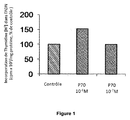
- the FIGURE 1 is a graph showing the effect of P70 on the incorporation of [H 3 ] Thymidine into DNA.
- the FIGURE 2 is a graph showing the effect of P70 on the expression of IGF-1R evaluated by measuring the optical density.
- FIGURE 3 shows the effect of P70 on the expression of IGF-1R on a primary culture of newborn mouse mandibular chondrocytes by immunohistochemistry.
- FIGURE 4 shows the effect of P70 on the synthesis of IGF-1 on a primary culture of mandibular chondrocytes of newborn mice by immunohistochemistry.
- FIGURE 5 shows the effect of P70 on the production of Type II Collagen on a primary culture of mandibular chondrocytes of newborn mice, by immunohistochemistry.
- the FIGURE 6 shows the effect of P70 on the chondrogenesis process on a primary culture of newborn mouse mandibular chondrocytes.
- the arrows show the cartilage formation nodules.
- the inventors In order to evaluate the capacity of the peptide to proliferate the cells, the inventors have implemented a test capable of showing the incorporation of [H 3 ] Thymidine during the duplication of the DNA according to the method of Kurz et al. ., 1997. This test was adapted to the model used by the inventors, namely a primary culture of mouse embryonic chondrocytes.
- the chondrocytes obtained by dissociation of mouse mandible condyles (MCDC), were incubated in a culture medium capable of allowing chondrogenesis, in particular 5 ⁇ 10 5 cells / ml were incubated with 1 ⁇ Ci [ 3 H] -thymidine / ml of medium (Amersham, code TRA120, stock 1mCi / ml, specific activity Ci Ci / mmol) for 3 hours at 37 ° C in a DMEM medium (Dulbecco's modified Eagle medium) not containing fetal saline serum (FCS) but supplemented with 100 ⁇ g / ml of ascorbic acid, 1 mmol / L of calcium chloride, 10 mmol / L of ⁇ -glyceroposphate, and antibiotics.
- DMEM medium Dulbecco's modified Eagle medium
- FCS fetal saline serum
- the inventors have studied the effect of P70 on the synthesis of IGF-1 and on the expression of its receptor (IGF-1R) by means of chondrocytes in culture.
- the inventors were able to show that the peptide has a significant effect of stimulating the production of IGF-1 and the expression of its receptor (IGF-1R) when the chondrocytes were incubated with a low concentration of peptide (10 - 7 M) ( Figure 2 ).
- the peptide substantially inhibits the production of IGF-1 and its receptor.
- Immunohistochemistry (IHC) on a primary 5-day chondrocyte culture ( Figure 3 ) the inventors also show that the peptide P70 inhibits the expression of the IGF-1 receptor at 10 -6 M (inhibition of 36.8% at a high concentration of peptide) while it stimulates the expression of this same receptor at 10 -7 M (23.8% increase at a low peptide concentration).
- P70 inhibits the synthesis of IGF-1 at 10 -6 M (30% inhibition at a high peptide concentration) and stimulates it at 10 -7 M (90% increase at a low peptide concentration).
- Chondrocytes from mouse embryos obtained according to the same protocol as the previous examples were cultured and incubated at a concentration of 10 -7 M peptide P70.
- the 5 th day of culture, the inventors show by immunochemistry (marking by specific anti-type II collagen antibody) that the peptide significantly stimulates the production of type II collagen, a major component of the extracellular matrix for the production of articular cartilage ( Figure 5 ). Indeed, a 150% increase is observed compared to the untreated control.
Landscapes
- Chemical & Material Sciences (AREA)
- Health & Medical Sciences (AREA)
- Organic Chemistry (AREA)
- Life Sciences & Earth Sciences (AREA)
- Zoology (AREA)
- Molecular Biology (AREA)
- Gastroenterology & Hepatology (AREA)
- Endocrinology (AREA)
- Biochemistry (AREA)
- Biophysics (AREA)
- General Health & Medical Sciences (AREA)
- Genetics & Genomics (AREA)
- Medicinal Chemistry (AREA)
- Toxicology (AREA)
- Proteomics, Peptides & Aminoacids (AREA)
- Wood Science & Technology (AREA)
- Engineering & Computer Science (AREA)
- Materials Engineering (AREA)
- Diabetes (AREA)
- Dispersion Chemistry (AREA)
- Medicines That Contain Protein Lipid Enzymes And Other Medicines (AREA)
- Peptides Or Proteins (AREA)
Description
- L'invention concerne des peptides modulateurs de l'IGF-1.
- Le processus cancéreux, qui se traduit par une prolifération cellulaire non contrôlée, est souvent l'expression d'une surexpression de facteurs de croissance et/ou de leurs récepteurs dans une même cellule (Moyse et al. 1985, Cassoni et al. 2006, Hanahan et al. 2000).
- De nombreux facteurs, agissant en réseau, sont responsables de la progression du cycle cellulaire et de la prolifération cellulaire. En particulier, un groupe de ces facteurs, dits de « croissance », sont représentés par des peptides capables de stimuler l'entrée en phase S et, in fine, la division cellulaire. C'est le cas des IGF (Insulin-like Growth Factors) (Pardee 1989, Cross et al. 1991).
- L'IGF-1, en particulier, synthétisée après stimulation par l'hormone de croissance (Growth Hormone, GH), agit comme une hormone endocrine, et peut même être vue comme la véritable hormone de croissance (Laron, 2001). Agissant également selon un mécanisme paracrine/autocrine, cette hormone a un rôle important chez l'enfant dont elle stimule la croissance, tandis que chez l'adulte elle augmente l'anabolisme.
- Le récepteur spécifique de cette hormone (IGF-1R) est exprimé sur de nombreux types cellulaires différents et donc plusieurs tissus de l'organisme dépendent de l'action de L'IGF-1 : on peut citer le foie, les reins, le poumon, les muscles, le tissu osseux et le cartilage, mais aussi le tissu nerveux. Par ailleurs l'IGF-1 a des effets proches de l'insuline puisque il peut se lier - avec une faible activité - au récepteur de l'insuline, il régule le développement des cellules nerveuses, et régule la synthèse de l'ADN.
- La liaison de l'IGF-1 au récepteur induit un signal intracellulaire qui stimule la croissance et la prolifération cellulaire (Perona, 2006). Cette activité fait de l'IGF-1 à la fois un puissant inhibiteur de l'apoptose (mort cellulaire programmée) et un activateur de la synthèse protéique (Yanochko et al 2006, Colòn et al 2007, Inoue et al 2005). Enfin, dans certaines conditions, l'IGF-1 peut avoir le double rôle d'inducteur de l'apoptose et de stimulateur de la prolifération cellulaire (Fu et al 2007, Rabinovsky 2004 a).
- Le réseau de signalisation de l'IGF a un rôle crucial dans la progression tumorale, y compris dans le phénomène métastatique (Hofmann et al 2005), et de nombreux travaux expérimentaux mais aussi épidémiologiques tendent à établir une corrélation significative entre un taux important de IGF-1 et/ou de son récepteur et le risque accru, voire l'établissement d'une prolifération cancéreuse (Vella et al 2001, Talapatra et al 2001, Kucab et al 2003, Kambhampati et al 2005, Bjorndahl et al 2005, Gennigens et al 2006, Velcheti et al 2006, Yanochko et al 2006, Sisci et al 2007, Samani et al 2007). D'une façon générale, le rôle de l'axe GH/IGF-1 dans l'oncogenèse et surtout dans la stimulation de la progression tumorale est donc bien établi, comme le montrent de nombreux travaux épidémiologiques et une étude très récente montrant qu'une déficience congénitale de l'IGF-1 semble protéger du développement d'un cancer (Sheva et al 2007).
- Des études cliniques sur des molécules inhibitrices de l'activité IGF montrent le grand intérêt que peut avoir leur utilisation dans différents types de cancer, leur effet thérapeutique agissant en synergie avec la chimiothérapie et l'irradiation (Min et al 2005, Carmiraud et al 2005, Chinnavian et al 2006, Wu et al 2006, Deutsh et al 2005, Warshamana-Greene et al 2005). L'IGF-1 étant un médiateur de l'hormone de croissance, sa production peut être retardée ou inhibée en amont de la production de l'hormone de croissance (GH), par la somatostatine.
- La Somatostatine (Somatotrope Release Inhibiting Factor, ou SRIF), sécrétée dans l'hypothalamus, est un antagoniste naturel de la GHRH (neuropeptide stimulant la synthèse de GH). En particulier, en inhibant la GH, le SRIF a un effet d'inhibition sur la synthèse de l'IGF-1. Mais le SRIF a également une action à la périphérie, notamment en agissant comme une hormone digestive en inhibant, par exemple, la sécrétion des hormones gastro-intestinales et pancréatiques.
- La capacité du SRIF et de ses analogues synthétiques à inhiber la prolifération cellulaire et à déclencher la mort cellulaire par des mécanismes indirects ou directs est mise à profit dans plusieurs protocoles thérapeutiques visant différents types de cancers en clinique humaine. De plus, le SRIF est capable d'inhiber l'angiogénèse, ce qui représente un intérêt potentiel en clinique pour le contrôle indirect de la croissance des tumeurs (Ferjoux et al 2000). En effet, les tumeurs s'alimentent par la néovascularisation (angiogénèse), or les analogues de SRIF, qui inhibent la prolifération cellulaire, ont également un effet indirect d'inhibition sur la sécrétion de facteurs de croissance comme le Vascular Endothelial Growth Factor (VEGF), tout en réduisant la chimiotaxie monocytaire (Dasgupta 2004, Garcia de la Torre et al. 2002).
- Cependant, l'utilisation d'analogues du SRIF n'est possible que dans les cancers exprimant les récepteurs du SRIF. Ainsi l'efficacité des analogues du SRIF utilisés en clinique a été explicitement démontrée seulement dans le traitement des tumeurs neuroendocrines, gastroentéropancréatiques, du cerveau, du sein, de la prostate et du poumon (Ferjoux et al 2000). Par ailleurs, il ne faut pas oublier que le taux et le profil d'expression de récepteurs du SRIF varient énormément dans les différents carcinomes.
- Des molécules analogues de la somatostatine, inhibitrices du «système IGF» (Pawlikowski M. et al., 2004), ont été proposées. Il s'agit notamment du BIM 23A387, de l'Octreotide et du Lanreotide (deux peptides 8-mères). Ces molécules modulent l'expression du récepteur ou de son ligand, et sont des candidats intéressants dans la thérapie de différents types de cancer et de l'acromégalie. Autre exemple, le ligand de synthèse bispécifique, BIM-23244 (Rani C., 2004, Rani C., 2006, Pandit A., 2008), est capable d'inhiber la sécrétion de l'hormone de croissance dans les adénomes somatotropes.
- Les inventeurs proposent maintenant de nouveaux peptides capables de moduler les effets de l'IGF-1. Ces peptides comprennent la séquence de 20 à 24 acides aminés (I) ci-après :
Pa-X1-Phe-Trp-X2-X3-Pb (SEQ ID NO: 1) (I)
dans laquelle : - Pa représente une séquence comprenant 10 à 12 acides aminés choisie parmi les séquences :
- Phe-Gly-Ser-Arg-Lys-Phe-Ser-Tyr-Lys-Ala (SEQ ID NO: 3)
- Asn-Phe-Gly-Ser-Arg-Lys-Phe-Ser-Tyr-Lys-Ala (SEQ ID NO: 4)
- Ser-Asn-Phe-Gly-Ser-Arg-Lys-Phe-Ser-Tyr-Lys-Ala (SEQ ID NO: 5)
- X1 est un résidu lysine, arginine ou histidine ;
- X2 est un résidu thréonine ou lysine ;
- X3 est un résidu aspartate ou glutamate ; et
- Pb représente une séquence comprenant 5 à 7 acides aminés choisie parmi les séquences :
- Val-Thr-Thr-Ser-Glu (SEQ ID NO: 6)
- Val-Thr-Thr-Ser-Glu-Leu (SEQ ID NO: 7)
- Val-Thr-Thr-Ser-Glu-Leu-Gly (SEQ ID NO: 8)
- Il est également compris dans l'invention un peptide résistant à la protéolyse dérivé de la séquence (i) par modifications de l'extrémité N-terminale sous forme d'un acétyle, et/ou de l'extrémité C-terminale sous forme d'un groupe amide et/ou d'au moins une liaison peptidique modifiée et remplacée par une liaison (CH2-NH), une liaison (NH-CO), une liaison (CH2-O), une liaison (CH2-S), une liaison (CH2-CH2), une liaison (CO-CH2), une liaison (CHOH-CH2), une liaison (N-N), une liaison alcéne-E ou encore une liaison CH=CH), ou un peptide homologue défini comme étant dérivé de la séquence (I) par une ou plusieurs substitution(s) conservative(s) et présentant plus de 80% des acides aminés identiques à la séquence (I).
- Ces peptides sont utiles pour moduler, de préférence stimuler, une prolifération cellulaire in vitro.
- L'invention a également pour objet une composition pharmaceutique comprenant au moins un tel peptide en tant que principe actif, en association avec un ou plusieurs excipients physiologiquement acceptables.
- La présente invention a aussi pour objet un peptide, tel que défini ici, pour une utilisation à titre de médicament.
- Le terme "modulation" se réfère à une activité inhibitrice et/ou activatrice des peptides de l'invention sur les fonctions de l'IGF-1.
- Par "inhibition" on entend tout effet inhibiteur sur la synthèse de IGF-1 et/ou l'expression de IGF-1R incluant une inhibition et/ou une régulation négative réduisant l'activité, l'activation, les fonctions et/ou l'expression de IGF-1. Par "activation" on entend tout effet potentialisant, stimulant ou activant la synthèse de IGF-1 et/ou l'expression de IGF-1R incluant une activation et/ou une régulation positive de l'activité, des fonctions et/ou de l'expression de IGF-1. Un effet inhibiteur et/ou activateur d'un peptide est étudié par des mesures de l'expression de IGF-1 et/ou de IGF-1R. Il est également possible d'étudier l'inhibition et/ou l'activation induite par un peptide de l'invention au moyen de culture cellulaire exprimant IGF-1 et/ou IGF-1R.
- Le terme "patient" se réfère à tout animal humain ou non humain, de préférence un mammifère, incluant male, femelle, adulte et/ou enfant nécessitant un traitement modulant la synthèse de IGF-1 et/ou de l'expression du récepteur de IGF-1.
- Le terme "traitement" ou "thérapie" comprend aussi bien un traitement curatif qu'un traitement prophylactique d'une maladie. Un traitement curatif est défini par un traitement aboutissant à une guérison ou un traitement allégeant, améliorant et/ou éliminant, réduisant et/ou stabilisant les symptômes d'une maladie ou la souffrance qu'elle provoque. Un traitement prophylactique comprend aussi bien un traitement aboutissant à la prévention d'une maladie qu'un traitement réduisant et/ou retardant l'incidence d'une maladie ou le risque qu'elle survienne.
- L'expression "substitution conservative" exprime tout remplacement d'un résidu acide aminé par un autre, sans altération de la conformation générale ni de la fonction du peptide. La substitution conservative inclut, sans s'y limiter, le remplacement par un acide aminé ayant des propriétés similaires (comme par exemple la forme, la polarité, le potentiel de liaison hydrogène, l'acidité, la basicité, l'hydrophobicité et autres). Les acides aminés ayant des propriétés similaires sont bien connus dans l'art. Par exemple, l'arginine, l'histidine et la lysine sont des acides aminés hydrophiles basiques et peuvent être interchangeables. De la même façon, l'isoleucine, un acide amine hydrophobe, peut être remplacé par une leucine, une méthionine ou une valine. Les acides aminés hydrophiles neutres pouvant se substituer les uns les autres incluent l'asparagine, la glutamine, la sérine et la thréonine. Par "substitué" et "modifié " l'invention comprend les acides aminés ayant été altéré ou modifié par rapport à un acide aminé trouvé dans la nature. L'expression "séquence substantiellement homologue" comprend toute séquence soumise à une ou plusieurs substitution(s) conservative(s).
- Ainsi, dans le contexte de la présente invention, une substitution conservative est connue dans l'art comme une substitution d'un acide aminé par un autre ayant des propriétés similaires. Des exemples de substitutions conservatives sont donnés dans le tableau 1 ci-dessous :
Tableau 1. Substitutions conservatives I Caractéristique de la chaîne latérale Acide aminé Non polaire G A P I L V Polaire non chargée C S T M N Q Polaire chargée D E K R Aromatique H F W Y autre N Q D E - Selon Lehninger, 1975, les acides aminés conservatifs peuvent également être groupés comme illustré dans le tableau 2 ci-dessous :
Table 2. Substitutions conservatives II Caractéristique de la chaîne latérale Acide aminé Non polaire (hydrophobe) A. Aliphatique : A L I V P B. Aromatique : F W C. Contenant un sulfuryle : M D. Autre G Polaire non chargée A. Hydroxyle : S T Y B. Amides : N Q C. Sulfhydryle : C D. Autre G Chargée positivement (basique) K R H Chargée négativement (acide) D E - Encore une autre alternative de substitution conservative est présentée dans le tableau 3 ci-dessous:
Table 3. Substitutions Conservatives III Résidu d'origine Exemple de substitution Ala (A) Val (V), Leu (L), Ile(I) Arg (R) Lys (K), Gln (Q), Asn (N) Asn (N) Gln (Q), His (H), Lys (K), Arg (R) Asp (D) Glu (E) Cys(C) Ser (S) Gln (Q) Asn (N) Glu (E) Asp (D) His (H) Asn (N), Gln (Q), Lys (K), Arg (R) Ile(I) Leu (L), Val (V), Met (M), Ala (A), Phe (F) Leu (L) Ile(I), Val (V), Met (M), Ala (A), Phe (F) Lys (K) Arg (R), Gln (Q), Asn (N) Met (M) Leu (L), Phe (F), Ile(I) Phe (F) Leu (L), Val (V), Ile(I), Ala (A) Pro (P) Gly (G) Ser (S) Thr (T) Thr (T) Ser (S) Trp (W) Tyr (Y) Tyr (Y) Trp (W), Phe (F), Thr (T), Ser (S) Val (V) Ile(I), Leu (L), Met (M), Phe (F), Ala (A) - Les peptides conformes à l'invention peuvent être préparés par toutes les techniques classiques de synthèse peptidique, à savoir notamment par synthèse chimique ou recombinaison génétique. Dans un mode de réalisation préféré, les peptides sont obtenus par synthèse chimique. De préférence encore, les peptides sont obtenus soit par condensation successive des résidus d'acides aminés dans l'ordre requis, soit par condensation des résidus sur un fragment préalablement formé et contenant déjà plusieurs acides aminés dans l'ordre approprié, ou encore par condensation de plusieurs fragments préalablement préparés, en prenant soin de protéger, au préalable, toutes les fonctions réactives portées par les résidus d'acides aminés, excepté les fonctions amine et carboxyle engagées dans la liaison peptidique lors de la condensation, et notamment par la technique de synthèse en phase solide de Merrifield.
- Les peptides de l'invention sont capables de moduler les effets de l'IGF-1. Ces peptides comprennent, ou sont constitués, de la séquence de 20 à 24 acides aminés (I) ci-après :
Pa-X1-Phe-Trp-X2-X3-Pb (SEQ ID NO :1) (I)
dans laquelle : - Pa représente une séquence comprenant 10 à 12 acides aminés choisie parmi les séquences :
- Phe-Gly-Ser-Arg-Lys-Phe-Ser-Tyr-Lys-Ala (SEQ ID NO: 3)
- Asn-Phe-Gly-Ser-Arg-Lys-Phe-Ser-Tyr-Lys-Ala (SEQ ID NO: 4)
- Ser-Asn-Phe-Gly-Ser-Arg-Lys-Phe-Ser-Tyr-Lys-Ala (SEQ ID NO: 5)
- X1 est un résidu lysine, arginine ou histidine ;
- X2 est un résidu thréonine ou lysine ;
- X3 est un résidu aspartate ou glutamate ; et
- Pb représente une séquence comprenant 5 à 7 acides aminés choisie parmi les séquences :
- Val-Thr-Thr-Ser-Glu (SEQ ID NO: 6)
- Val-Thr-Thr-Ser-Glu-Leu (SEQ ID NO: 7)
- Val-Thr-Thr-Ser-Glu-Leu-Gly (SEQ ID NO: 8)
- De préférence, X1 est un résidu lysine, X2 est un résidu thréonine, et X3 est un résidu aspartate.
- Dans un mode de réalisation préféré, le peptide comprend la séquence d'acides aminés suivante :
- De préférence, les extrémités N- et/ou C-terminales sont protégées de la protéolyse. Par exemple, l'extrémité N-terminale peut être sous la forme d'un acétyle, et/ou l'extrémité C-terminale peut être sous la forme d'un groupe amide. Toute modification visant à rendre résistants les peptides de l'invention est envisagée, par exemple des peptides dans lesquels au moins une liaison peptidique est modifiée et remplacée par une liaison (CH2NH), une liaison (NHCO), une liaison (CH2-O), une liaison (CH2-S), une liaison (CH2CH2), une liaison (CO-CH2), une liaison (CHOH-CH2), une liaison (N-N), une liaison alcène-E ou encore une liaison -CH=CH.
- Tous les peptides modifiés chimiquement pour résister à la protéolyse sont compris dans la présente invention.
- Par exemple le peptide ci-dessus désigné P70 peut être sous la forme
Acétyl-SNFGSRKFSYKAKFWTDVTTSELG-Amide - L'invention prévoit également des peptides substantiellement homologues dérivés de la séquence (I) par une ou plusieurs substitution(s) conservative(s). Deux séquences d'acides aminés sont dites « substantiellement homologues »ou « substantiellement similaires » quant un ou plusieurs résidus acides aminés sont remplacés par un ou plusieurs résidus similaires d'un point de vue biologique, ou lorsque plus de 80% des acides aminés sont identiques, ou de manière préférée lorsque plus de 90% des résidus sont identiques (fonctionnellement identique). Les séquences similaires ou homologues sont de préférence identifiées par alignement en utilisant, par exemple, le programme « Pileup » GCG (Genetics Computer Group, manuel de programme pour le Package GCG, Version 7, Madison, Wisconsin), ou tout autre programme connu par l'homme du métier (BLAST, FASTA, etc.)
- Conformément à l'Invention, tous les résidus acides aminés des peptides peuvent appartenir à la série L (lévogyre). Toutefois, il est également possible, quelque soit l'acide aminé de la séquence (I), de substituer la forme D (dextrogyre) à la forme L. En particulier il est envisagé que certains acides aminés - lesquels sont situés en positions 11 à 18 dans la séquence (I) et notamment le tryptophane en position 15- appartiennent à la série D, de manière à conférer aux peptides une meilleure résistance à l'action des peptidases.
- Avantageusement, les peptides conformes à l'invention sont liés de façon covalente, au niveau de leur extrémité C-terminale ou d'un résidu lysine, à une ou plusieurs molécule(s) de polyéthylène glycol (PEG), et notamment d'un PEG de PM 1500 ou 4000, propre à augmenter la demi-vie plasmatique et à diminuer la dose thérapeutique à administrer. Cette liaison peut être réalisée comme décrit par Abuchowski et al. (J. Biol. Chenu., 1977,252 : 3582-3586). Selon un autre mode de réalisation, les peptides de l'invention sont introduits dans des polymères ou des co-polymères biodégradables formant des microsphères, par exemple le poly(D,L-lactide-co-glycolide (
US2007/0184015, SoonKap Hahn et al ). - Les peptides de l'invention, très différents de la somatostatine endogène (native) ou des peptides précédemment décrits, présentent une conformation moléculaire en « épingle à cheveux » (ou ß-hairpin) très stable en milieu physiologique comme en milieu hydrophobe. Avantageusement, aucune condition du milieu ne peut induire une transition de la conformation peptidique en hélice α.
- En outre, cette conformation en « épingle à cheveux » permet de bien exposer, juste au centre du coude formé par le repliement de la séquence peptidique, deux acides aminés (Phe-Trp) sur les quatre acides aminés contigus (Phe-Trp-Lys-Thr) considérés dans SRIF comme majeurs pour la liaison aux récepteurs. Sans vouloir être liés par une hypothèse, les inventeurs pensent que dans la séquence des peptides de l'invention, une attraction de type électrostatique entre l'acide aminé en position 13 et l'acide aminé en position 17 permet de reproduire une sorte de « coude », en faisant assumer au peptide entier une conformation de type ß (conformation ß de type VIII).
- Les peptides de l'invention présentent un effet bi-phasique. Ils sont ainsi capables, selon la concentration utilisée, de stimuler ou d'inhiber la production de IGF-1 ainsi que l'expression de son récepteur (IGF-1 R). In vitro, ces effets ont pour conséquence soit de stimuler soit d'inhiber la prolifération cellulaire.
- Cet effet bi-phasique, ou « effet en cloche » d'une molécule biologique, qui en fonction de la dose utilisée se traduit en un effet agoniste ou antagoniste, est bien connu pour d'autres molécules et dans différents systèmes biologiques (enzymes [Gamage et al. 2003, He et al. 2003], canaux ioniques et co-transporteurs [Arias et al. 1996, Lombardi et al. 2001, Borst et al. 2002, Incerpi et al. 2003], transporteurs [Henry et al. 2002], récepteurs de tyrosine kinases [Leiser et al. 1986, Schlessinger 1988], récepteurs couplés aux protéines G (GPCRs), neurotransmetteurs, hormones et chemokines [Winding et al. 1993, Chidiac et al. 1996, Bronnikov et al. 1999, Cuthbert 2003, Hornigold et al. 2003, Griffin et al. 2003, Fuh et al. 1992, Talmadge 1998] et en particulier concernant la GnRH et ses analogues [Browning J.Y et al.1983, Ho M.N. et al.1997, Barbarino A et al.1982, Imai, A et al.1993, Kang, Sung K et al.2000 et 2001, Gründker C et al. 2003, Leung P.C.K et al. 2003, Bhasin S. et al. 2008].
- Les peptides de l'invention sont ainsi utiles pour stimuler in vitro une prolifération cellulaire, par exemple dans le cadre de cultures de chondrocytes, de kératocytes ou d'hépatocytes ou pour la préparation de tissus d'intérêt médical.
- Compte tenu de leurs propriétés remarquables, les peptides conformes à l'invention trouvent de nombreuses applications, in vitro et in vivo, notamment en médecine humaine ou en médecine vétérinaire.
- Les peptides de l'invention peuvent être utilisés à une dose adaptée
- soit pour stimuler la synthèse de IGF-1 et/ou l'expression du récepteur de l'IGF-1 ;
- soit pour inhiber la synthèse de IGF-1 et/ou l'expression du récepteur de l'IGF-1.
- La stimulation de la synthèse de l'IGF-1 et/ou de l'expression de son récepteur est recherchée notamment dans les cas suivants :
- lorsque les peptides sont utilisés en tant que substitut de l'hormone de croissance. Les peptides sont en effet particulièrement utiles dans toutes les indications thérapeutiques liées à un déficit complet ou partiel, congénital ou acquis, de l'hormone de croissance endogène ou de l'IGF-1, et notamment dans le traitement des retards structuraux chez l'enfant ou chez l'adulte. D'autres applications thérapeutiques comprennent par exemple le syndrome de Turner, le syndrome de Prader-Willi, l'insuffisance rénale chronique. Les peptides de l'invention sont en particulier utiles dans les affections dans lesquelles une augmentation de la masse musculaire peut être recherchée comme les états cachectiques liés au syndrome d'immuno-déficience aquise (SIDA) ou au cancer. Les peptides sont également utiles dans le domaine vétérinaire, notamment dans l'élevage bovin, porcin, de moutons, de chevaux, etc.
- dans le traitement thérapeutique du syndrome métabolique, tel que l'obésité ou le diabète de type II (notamment en abaissant le taux des lipides sanguins et en améliorant le métabolisme du glucose), ainsi que pour stimuler ou restaurer les défenses immunitaires, en particulier chez les sujets âgés ou immunodéprimés, ou pour le traitement de maladies autoimmunes (telles que diabète de type I) et/ou neuro-dégénératives (telles que la sclérose en plaque).
- L'inhibition de la synthèse de l'IGF-1 et/ou de l'expression de son récepteur est recherchée notamment dans les cas suivants :
- lorsque les peptides sont utilisés en tant que substitut de la somatostatine, comme par exemple dans des pathologies pour lesquelles l'octréotide et le lantréotide sont prescrits. L'effet biologique alors recherché peut, entre autre, être : une inhibition de la sécrétion hypophysaire de GH, une inhibition de la sécrétion biliaire, des sécrétions endocrines et exocrines pancréatiques et gastro-intestinales. Les peptides peuvent par exemple être utilisés en tant que substitut de la somatostatine pour le traitement de la maladie d'Alzheimer.
- dans le traitement de l'acromégalie, en particulier chez des patients pour lesquels la chirurgie et/ou le traitement par radiation n'est pas adapté. Le traitement par les peptides de l'invention a alors pour but de normaliser les taux sériques d'IGF-1.
- dans le traitement d'un cancer, en particulier mais sans s'y limiter, pour le traitement du cancer du sein, du pancréas ou de la prostate ou pour le traitement d'un adénome hypophysaire, ou d'une tumeur endocrine digestive. Les peptides de l'invention peuvent également traiter les métastases (en particulier les métastases gastro-intestinales). Il est également envisagé d'utiliser les peptides de l'invention à une dose inhibitrice pour traiter des symptomes (diarrhée, flushs) associés à des tumeurs endocrines digestives.
- Les peptides de l'invention peuvent être administrés par toute voie d'administration connue, incluant les voies : systémique (parentérale, intraveineuse...), orale, rectale, topique, sous-cutané, intrapulmonaire (voir Agu et al, 2001) et intranasale. Selon un mode de réalisation préféré, les peptides de l'invention sont administrés par voie intranasale.
- In vitro, un exemple de dose adaptée pour stimuler la synthèse de IGF-1 et/ou l'expression du récepteur de l'IGF-1 est une dose à une concentration de l'ordre de 10-7M, et un exemple de dose adaptée pour inhiber la synthèse de IGF-1 et/ou l'expression du récepteur de l'IGF-1 est une dose à une concentration d'au moins 10-6M.
- Les doses correspondantes in vivo sont ajustées de manière classique en fonction de l'effet souhaité, et de la pathologie visée :
- Une dose efficace pour stimuler in vivo la synthèse de l'IGF-1 et/ou l'expression de son récepteur inclut une concentration de moins de 100 µg par jour, de préférence de 10 µg à 100 µg par jour. De manière préférée, la dose journalière efficace est comprise entre 10 µg et 50 µg. Une dose efficace pour inhiber in vivo la synthèse de l'IGF-1 et/ou l'expression de son récepteur inclut une concentration d'au moins 300 µg par jour, de préférence de 300 µg à 3 mg par jour. De manière préférée, la dose journalière efficace est comprise entre 1 mg et 3 mg, de manière encore plus préférée la dose journalière efficace est comprise entre 2 mg et 3 mg. Pour une administration intranasale ou intrapulmonaire, ou encore pour des formulations à libération prolongée, les doses stimulatrices et/ou inhibitrices à prévoir peuvent être de 10 à 100 fois inférieures. Ces administrations peuvent être répétées sur de longues périodes, de préférence sur une période allant de 3 à 6 mois.
- La présente Invention sera mieux comprise à l'aide du complément de description qui suit et qui se réfère à des exemples de mise en évidence de l'activité biologique d'un peptide conforme à l'Invention.
- La séquence du peptide de l'invention utilisé dans les exemples et les figures de la présente demande - nommé P70 - consiste en la séquence en acides aminés suivante :
- Acetyl-SNFGSRKFSYKAKFWTDVTTSELG-amide (SEQ ID NO : 2)
- Il doit être bien entendu, toutefois, que ces exemples sont donnés uniquement à titre d'illustrations de l'objet de l'Invention et n'en constituent en aucune manière une limitation.
- La
FIGURE 1 est un graphe montrant l'effet de P70 sur l'incorporation de [H3] Thymidine dans l'ADN. - La
FIGURE 2 est un graphe montrant l'effet de P70 sur l'expression de l'IGF-1R évalué par mesure de la densité optique. - La
FIGURE 3 montre l'effet de P70 sur l'expression de l'IGF-1R sur une culture primaire de chondrocytes de mandibule de souris nouveau-né, par immunohistochimie. - La
FIGURE 4 montre l'effet de P70 sur la synthèse de l'IGF-1 sur une culture primaire de chondrocytes de mandibule de souris nouveau-né, par immunohistochimie LaFIGURE 5 montre l'effet de P70 sur la production de Collagène de type II sur une culture primaire de chondrocytes de mandibule de souris nouveau-né, par immunohistochimie. - La
FIGURE 6 montre l'effet de P70 sur le processus de chondrogénèse sur une culture primaire de chondrocytes de mandibule de souris nouveau-né. Les flèches montrent les nodules de formation de cartilage. - Les effets biologiques des peptides de l'invention sont démontrés dans un modèle de culture primaire de chondrocytes de mandibule de souris nouveau-né.
- Afin d'évaluer la capacité du peptide à faire proliférer les cellules, les inventeurs ont mis en oeuvre un test capable de montrer l'incorporation de [H3] Thymidine au cours de la duplication de l'ADN selon la méthode de Kurz et al., 1997. Ce test a été adapté au modèle utilisé par les inventeurs, à savoir une culture primaire de chondrocytes embryonnaires de souris.
- Les chondrocytes, obtenus par dissociation de condyles de mandibule de souris (MCDC) ont été incubés dans un milieu de culture aptes à permettre la chondrogénèse, en particulier, 5 x 10⁵ cellules/ml ont été incubés avec 1µCi [3H]-thymidine/ml de milieu (Amersham, code TRA120, stock 1mCi/ml, activité spécifique 5 Ci/mmol) pendant 3 heures à 37°C dans un milieu DMEM (Dulbecco's modified Eagle medium) ne contenant pas de sérum de voeu foetal (FCS) mais supplémenté avec 100 µg/ml d'acide ascorbic,1 mmol/L de chlorure de calcium, 10 mmol/L de ß-glyceroposphate, et antibiotiques. Le même milieu, dans lequel ont été ajoutés pendant 2 minutes 5µl de [3H]-thymidine, est utilisé comme contrôle négatif. Après avoir jeté le surnageant et lavé 2 fois les cellules avec une solution physiologique tamponnée à pH 7.0 (PBS), les cellules sont lavées deux fois (pendant 5 minutes) avec du méthanol. Ensuite les cellules sont lavées trois fois avec une solution froide de 10% d'acide tri chlore acétique (TCA). Après avoir lavé encore deux fois les cellules avec du DDW, les cellules sont mises dans 200 µl de NaOH 0.3M pendant 15 minutes. Les cellules ont été ensuite transférées dans 3 ml d'un liquide à scintillation neutralisé avec 200 µl de HCl 0.3M. Enfin, après avoir été fortement vortexées, les échantillons contenant les cellules ont été placées dans un compteur bêta pendant 1 minute.
- Les résultats obtenus montrent (
Figure 1 ) que le peptide P70 a un effet de stimulation de la prolifération des chondrocytes de 53% supérieure au contrôle non traité (chondrocytes n'ayant été incubés avec aucun peptide ni autre facteur de croissance), à la concentration la plus forte (10-6M), alors que cet effet de stimulation n'est pas observé à une concentration plus faible (10-7M). - Les inventeurs ont étudié l'effet de P70 sur la synthèse de l'IGF-1 et sur l'expression de son récepteur (IGF-1R) au moyen de chondrocytes en culture. Les inventeurs ont pu montrer que le peptide a un effet important de stimulation de la production de l'IGF-1 et de l'expression de son récepteur (IGF-1R) quand les chondrocytes sont incubés avec une faible concentration de peptide (10-7 M) (
Figure 2 ). - En revanche, à une concentration plus élevée (10-6M), le peptide inhibe sensiblement la production de l'IGF-1 et de son récepteur.
- Par immunohistochimie (IHC) sur une culture primaire de chondrocytes de 5 jours (
Figure 3 ) les inventeurs montrent également que le peptide P70 inhibe l'expression du récepteur d'IGF-1 à 10-6 M (inhibition de 36,8% à une forte concentration de peptide) tandis qu'il stimule l'expression de ce même récepteur à 10-7 M (augmentation de 23,8 % à une faible concentration de peptide). De même (Figure 4 ), P70 inhibe la synthèse de IGF-1 à 10-6M (inhibition de 30% à une haute concentration de peptide) et il la stimule à 10-7M (augmentation de 90 % à une faible concentration de peptide). - Les chondrocytes d'embryons de souris obtenus selon le même protocole que les exemples précédents, ont été mis en culture et incubés à une concentration de 10-7 M du peptide P70. Au 5ème jour de culture, les inventeurs montrent par immunochimie (marquage par anticorps spécifiques anti-collagène de type II) que le peptide stimule significativement une production de collagène de type II, composant majeur de la matrice extracellulaire servant à la production du cartilage articulaire (
Figure 5 ). En effet, une augmentation de 150% est observée par rapport au témoin (control) non traité. - Dans la
Figure 6 l'effet du peptide, P70 à la concentration de 10-7M, a été comparé à des chondrocytes non traités (contrôle). Il apparaît clairement qu'au 7ème jour d'incubation, en présence du peptide, on assiste à une accélération de la formation de nodules de cartilage. Le développement des nodules cartilagineux (volume/culture) est accéléré de 85%. - Le peptide P70 présente un profil bi-phasique :
- à faible concentration (10-7M) :
- il stimule la différentiation cellulaire, notamment en accélérant les premières phases de la chondrogenèse (voir
Fig. 5 - expression du Collagène de type II- etFig. 6 -chondrogenèse-) - il stimule la production de l'IGF-1 et l'expression du récepteur de l'IGF-1 (voir
Fig. 2 -Densité optique- etFig. 3 -immunohistochimie-) et la synthèse de IGF-1 (voirFig. 4 - immunohistochimie).
- il stimule la différentiation cellulaire, notamment en accélérant les premières phases de la chondrogenèse (voir
- à haute concentration (10-6M) :
- il stimule la prolifération cellulaire (voir
Fig. 1 -incorporation de thymidine tritiée-) - il inhibe la production de IGF-1 (voir
Fig. 4 -immunohistochimie-) et l'expression du récepteur de l'IGF-1 (voirFig. 2 -Densité optique- etFig. 3 -immunohistochimie-)
- il stimule la prolifération cellulaire (voir
-
- Arias HR: (1996) Agonist self-inhibitory binding site of the nicotinic acetylcholine receptor. J Neurosci Res, 44:97-105.
- Agu RU, Ugwoke MI, Armand M, Kinget R, Verbeke N. The lung as a route for systemic delivery of therapeutic proteins and peptides. Respir Res. 2001;2(4):198-209. Epub 2001 Apr 12
- Barbarino A, De Marinis L., Mancini A., Giustacchini M.,Alcini A.E. (1982) Biphasic effect of estradiol on luteinizing hormone response to gonadotropin-releasing hormone in castrated men, Metabolism 31(8):755-8
- Bhasin S, Heber D, Steiner B, Peterson M, Blaisch B, Campfield L A, Swerdloff R.S. (2008) Hormonal effects of GnRH agonist in the human male : II. Testosterone enhances gonadotrophin suppression induced by GnRH agonist. Clinical Endocrinologyy 20: 119-128
- Bjorndahl M. et al. (2005). "Insulin-like growth factor 1 and 2 induce lymphangiogenesis in vivo. PNAS USA 102, 15593-15598.
- Borst P, Elferink RO: Mammalian ABC transporters in health and disease. Annu Rev Biochem 2002, 71:537-592.
- Bronnikov GE, Zhang SJ, Cannon B, Nedergaard J (1999) A dual component analysis explains the distinctive kinetics of cAMP accumulation in brown adipocytes. J Biol Chem, 274:37770-37780.
- Browning J.Y., R. D'Agata, A. Steinberger, H.E. Grotjan Jr and E. Steinberger (1983) Biphasic effect of gonadotropin-releasing hormone and its agonist analog (HOE766) on in vitro testosterone production by purified rat Leydig cells, Endocrinology, Vol 113, 985-991
- Camiraud A. et al. (2005). "Inhibition of insulin-like growth factor-1 receptor signalling enhances growth-inhibitory and proapoptotic effects of gefitinib (Iressa) in human breast cancer cells". Breast Cancer Res. 7, R570-579.
- Cassoni P. et al. (2006). "Grelin and cortistatin in lung cancer:expression of peptides and related eceptors in human primary tymors in vitro effect on the H345 small cell carcinoma cell line". J. Endocrinol. Invest. 29, 781-790.
- Chidiac P, Nouet S, Bouvier M (1996) Agonist-induced modulation of inverse agonist efficacy at the beta 2-adrenergic receptor. Mol Pharmacol, 50:662-669.
- Chinnavian P. et al. (2006). "Radiation and new molecular agents, pert II: targeting HDAC, HSPçà, IGF-1R, PI3K, and Ras". Semin. Radiat. Oncol. 16, 59-64.
- Colòn E. et al. (2007).Insulin-like growth factor-1 is an important antiapoptotic factor for rat leydig cells during postnatal development. Endocrinology 148, 128-139.
- Cross M., T.M. Dexter (1991). "Growth factors in development, transformation, and tumorigenesis". Cell 64, 271-280
- Cuthbert AW: (2003) Benzoquinolines and chloride secretion in murine colonic epithelium. Br J Pharmacol, 138:1528-1534.
- Dasgupta 2004, (2004) « Somatostatin analogues : multiple roles in cellular proliferation, neoplasia, and angiogenesis » Pharmacol Ther 102 (1): 61-85
- Deutsch E. et al. (2005). "New strategies to interfere with radiation response : "biomodulation" of radiation therapy". Cancer Radiother. 9, 69-76.
- Ferjoux G., C. Bousquet, P. Cordelier et al. (2000). "Signal transduction of somatostatin receptors negatively controling cell proliferation". J. Physiol. (Paris) 94, 205-210.
- Fu P. et al. (2007). "Insulin-like growth factor induces apoptosis as well as proliferation in LIM1215 colon cancer cells". J. Cell. Biochem. 100, 56-68.
- Fuh G, Cunningham BC, Fukunaga R, Nagata S, Goeddel DV, Wells JA (1992) Rational design of potent antagonists to the human growth hormone receptor. Science, 256:1677-80.
- Gamage NU, Duggleby RG, Barnett AC, Tresillian M, Latham CF, Liyou NE, McManus ME, Martin JL (2003) Structure of a human carcinogen-converting enzyme, SULT1A1. Structural and kinetic implications of substrate inhibition. J Biol Chem, 278:7655-7662
- Garcia de la Torre N, Wass JA, Turner HE, (2002) « Antiangiogenic effects of somatostatin analogues" Clin Endocrinol 2002 57(4): 425-441 Review
- Gennigens C., C. Menetrier-Caux, J.P. Droz (2006). "Insulin-like growth factor (IGF) family and prostate cancer". Crit. Rev. Oncol. Hematol. 58,124-145
- Griffin MT, Hsu JC, Shehnaz D, Ehlert FJ: Comparison of the pharmacological antagonism of M2 and M3 muscarinic receptors expressed in isolation and in combination. Biochem Pharmacol 2003, 65:1227-1241.
- Gründker C. and G. Emons (2003) Role of gonadotropin-releasing hormone (GnRH) in ovarian cancer. Reproductive Biology and Endocrinology 1:65
- Hanahan D. , R.A. Weinberg (2000). "The hallmarks of cancer". Cell 100, 57-70.
- He YA, Roussel F, Halpert JR (2003) Analysis of homotropic and heterotropic cooperativity of diazepam oxidation by CYP3A4 using site-directed mutagenesis and kinetic modeling. Arch Biochem Biophys, 409:92-101.
- Henry ER, Bettati S, Hofrichter J, Eaton WA (2002) A tertiary two-state allosteric model for hemoglobin. Biophys Chem, 98:149-164.
- Ho M.N., Delgado C.H., Owens G.A., Steller M.A. (1997) Insulin-like growth factor-II participates in the biphasic effect of a gonadotropin-releasing hormone agonist on ovarian cancer cell growth, Fertility and Sterility Volume 67, Number 5, May 1997 , pp. 870-876(7)
- Hofmann F., C. Garcia-Echeverria (2005). "Blocking insulin-like growth factor-1 receptor as a strategy for targeting cancer". DDT 10, 1041-1047.
- Hornigold DC, Mistry R, Raymond PD, Blank JL, Challiss RA (2003) Evidence for cross-talk between M2 and M3 muscarinic acetylcholine receptors in the regulation of second messenger and extracellular signal-regulated kinase signalling pathways in Chinese hamster ovary cells. Br J Pharmacol, 138:1340-1350.
- Imai, A, lida, K, Tamaya, T (1993) Gonadotropin-releasing hormone has a biphasic action on aromatase activity through protein kinase C in granulosa cells. Int-J-Fertil-Menopausal-Stud. 38(1): 50-56
- Incerpi S, D'Arezzo S, Marino M, Musanti R, Pallottini V, Pascolini A, Trentalance A (2003) Short-term activation by low 17beta-estradiol concentrations of the Na+/H+ exchanger in rat aortic smooth muscle cells: physiopathological implications. Endocrinology, 144:4315-4324.
- Inoue A. et al. (2005). "Insulin-growth factor-1 stimulated DNA replication in mouse endometrial stromal cells". J. Reprod. Dev. 51, 305-313.
- Kambhampati S. et al. (2005). "Growth factors involved in prostate carcinogenesis". Front. Biosci. 10, 1355-1367.
- Kang, Sung K.; Cheng, Kwai W.; Nathwani, Parimal S.; Choi, Kyung-Chul; Leung, Peter C. K.(2000) Autocrine Role of Gonadotropin-Releasing Hormone and Its Receptor in Ovarian Cancer Cell Growth. Endocrine. 13(3):297-304
- Kang S.K., C-J Tai, P S. Nathwani and P.C. K. Leung (2001) Differential regulation of two forms of Gonadotrophin-related hormone messenger ribonucleic acid in human granulosa-luteal cells. Endocrinology 142: 1182-1192
- Kucab J.E., S.E. Dunn (2003). "Role of IGF-1R in mediating breast cancer invasion and metastasis". Breast Dis. 17, 41-47
- Kurz B, Schünke M, (1997) « Articular chondrocytes and synoviocytes in culture : influence of antioxidants on lipid peroxidation and proliferation." Ann. Anat. 1997, 179: 439-446
- Laron Z. (2001). "Insulin-like growth factor 1 (IGF-1) : a growth hormone". J. Clin. Pathol. Mol. Pathol. 54, 311-316.
- Lehninger, (1975) Biochemistry, Second Edition, Worth Publishers, Inc. New-York: NY., pp. 71-77.
- Leiser J, Conn PM, Blum JJ: (1986) Interpretation of dose-response curves for luteinizing hormone release by gonadotropinreleasing hormone, related peptides, and leukotriene C4 according to a hormone/receptor/effector model. Proc Natl Acad Sci U S A, 83:5963-7.
- Leung P.C.K., C.K.Cheng and Z. Xiao-Ming (2003) Multi-factorial role of GnRH-I and GnRH-II in the human ovary. Molecular and Cellular Endocrinology 202: 145-153
- Lombardi G, Dianzani C, Miglio G, Canonico PL, Fantozzi R: Characterization of ionotropic glutamate receptors in human lymphocytes. Br J Pharmacol 2001, 133:936-944.
- Min Y. et al. (2005). "Insulin_like growth factor I receptor blockade enhances chemotherapy and radiation responses and inhibits tumor growth in human gastric cancer xenografts". Gut 54, 591-60.
- Moyse E. et al. (1985). "Somatostatin receptors in human growth hormone and prolactin-secreting pituitary adenomas". J. Clin. Endocrinol. Metab. 61, 98-103.
- Pandit A., fay N., Border L., Valéry C., Cherif-Cheikh R., Robert B., Artzner F., Paternoster M. J. (2008) Pept. Sci., 14, 66-75.
- Pardee A.B. (1989). "G1 events and regulation of cell proliferation". Science 246, 603-608
- Pawlikowski M. et Malen-Mucha G. Current Opinion in Pharmacology (2004), 4, 608-613.
- Perona R. (2006). "Cell signaling: growth factors and tyrosine kinase receptors". Clin. Transl. Oncol. 8, 77-82I.
- Rabinovsky E.D. (2004). "The multifunctional role of IGF-1 in peripheral nerve regeneration". Neurol. Res. 26, 204-210.
- Rani C., Durrer L., Koerber S.C., Erchegyi J., Reubi J.C., Rivier J., Riek R. J. Med. Chem. (2004), 48, 523-533
- Rani C., Durrer L., Koerber S.C., Erchegyi J., Reubi J.C., Rivier J., Riek R. J. Med. Chem. (2006), 49, 4487-4496
- Samani A.A. et al. (2007). "The Role of the IGF System in Cancer Growth and Metastasis: Overview and Recent Insights". Endocrine Reviews 28, 20-47.
- Schlessinger J (1998) Signal transduction by allosteric receptor oligomerization. Trends Biochem Sci, 13:443-447.
- Shevah O., Z. Laron (2007). "Patients with congenital deficiency of IGF-1 seem protected from the development of malignancies: A preliminary report". Growth Horm IGF Res. 17, 54-57.
- Sisci D., E. Surmacz (2007). "Crosstalk between IGF Signaling and Steroid Hormone Receptors in Breast". Cancer Curr. Pharm. Des.13, 705-717.
- Talapatra S., C. B. Thmpson (2001). "Growth factor Signaling in Cell Survival: Implications for Cancer". Treatment JPET, 298, 873-878.
- Talmadge JE (1998) Pharmacodynamic aspects of peptide administration biological response modifiers. Adv Drug Deliv Rev, 241-252
- Velcheti V, Govindan R (2006). "Insulin-like growth factor and lung cancer". Journal of thoracic oncology : official publication of the International Association for the Study of Lung Cancer 1 (7): 607-10.
- Vella V. et al. (2001). "The IGF system in thyroid cancer: new concepts". J. Clin. Pathol.: Mol. Pathol. 54, 121-125
- Warshamana-Greene G.S. et al. (2005). "The insulin-like growth factor-I receptor kinase inhibitor, NVP-ADW742, sensitized small cell lung cancer cell lines to the effects of chemotherapy". Clin. Cancer. Res. 11, 1563-1571.
- Winding B, Bindslev N (1993) Desensitization and reactivation of ACh-regulated exocrine secretion in hen tracheal epithelium. Am J Physiol, 264:C342-C351.
- Wu X. Z., D. Chen, G. R. Xie (2007). "Bone marrow-derived cells: roles in solid tumor". Neoplasma 54, 1-6.
- Yanochko G.M., W. Eckhart (2006). "Type I insulin-like growth factor receptor overexpression induces proliferation and anti-apoptotic signaling in a three-dimensional culture model of breast epithelial cells". Breast Cancer Res. 8, R18.
-
- <110> Université Pierre et Marie Curie
- <120> PEPTIDES MODULANT L'ACTIVITE DE L'IGF-1 ET LEURS APPLICATIONS
- <130> B855
- <160> 8
- <170> PatentIn version 3.3
- <210> 1
<211> 7
<212> PRT
<213> artificial séquence - <220>
<223> SEQ ID NO: 1_ formule (I) - <220>
<221> MISC_FEATURE
<222> (1) .. (1)
<223> Xaa est une séquence comprenant 10 à 12 acides aminés choisie parmi: Phe-Gly-Ser-Arg-Lys-Phe-Ser-Tyr-Lys-Ala (a), Asn+(a), Ser-Asn+(a), ou une séquence substantiellement homologue - <220>
<221> MISC_FEATURE
<222> (2)..(2)
<223> Xaa est un résidu lysine, arginine ou histidine - <220>
<221> MISC_FEATURE
<222> (5) .. (5)
<223> Xaa est un résidu thréonine ou lysine - <220>
<221> MISC_FEATURE
<222> (6).. (6)
<223> Xaa est un résidu aspartate ou glutamate - <220>
<221> MISC_FEATURE
<222> (7) .. (7)
<223> Xaa est une séquence comprenant 5 à 7 acides aminés choisie parmi: Val-Thr-Thr-Ser-Glu, Val-Thr-Thr-Ser-Glu-Leu, Val-Thr-Thr-Ser-Glu-Leu-Gly, ou une séquence substantiellement homologue - <400> 1

- <210> 2
<211> 24
<212> PRT - <220>
<223> SEQ ID NO: 2_ formule (II) _ P70 - <400> 2

- <210> 3
<211> 10
<212> PRT
<213> artificial sequence - <220>
<223> SEQ ID NO: 3 - <400> 3

- <210> 4
<211> 11
<212> PRT
<213> artificial sequence - <220>
<223> SEQ ID NO: 4 - <400> 4

- <210> 5
<211> 12
<212> PRT
<213> artificial sequence - <220>
<223> SEQ ID NO: 5 - <400> 5

- <210> 6
<211> 5
212> PRT - <220>
<223> SEQ ID NO: 6 - <400> 6

- <210> 7
<211> 6
<212> PRT
<213> artificial sequence - <220>
<223> SEQ ID NO: 7 - <400> 7

- <210> 8
<211> 7
<212> PRT
<213> artificial sequence - <220>
<223> SEQ ID NO: 8 - <400> 8

Claims (15)
- Peptide comprenant la séquence de 20 à 24 acides aminés (I) suivante :
Pa-X1-Phe-Trp-X2-X3-Pb (SEQ ID NO: 1) (I)
dans laquelle :- Pa représente une séquence comprenant 10 à 12 acides aminés choisie parmi les séquences :Phe-Gly-Ser-Arg-Lys-Phe-Ser-Tyr-Lys-Ala (SEQ ID NO: 3)Asn-Phe-Gly-Ser-Arg-Lys-Phe-Ser-Tyr-Lys-Ala (SEQ ID NO: 4)Ser-Asn-Phe-Gly-Ser-Arg-Lys-Phe-Ser-Tyr-Lys-Ala (SEQ ID NO: 5)- X1 est un résidu lysine, arginine ou histidine ;- X2 est un résidu thréonine ou lysine ;- X3 est un résidu aspartate ou glutamate ; et- Pb représente une séquence comprenant 5 à 7 acides aminés choisie parmi les séquences :un peptide résistant à la protéolyse défini comme étant dérivé de la séquence (I) par modifications de l'extrémité N-terminale sous forme d'un acétyle, et/ou de l'extrémité C-terminale sous forme d'un groupe amide et/ou d'au moins une liaison peptidique modifiée et remplacée par une liaison (CH2NH), une liaison (NHCO), une liaison (CH2-O), une liaison (CH2-S), une liaison (CH2CH2), une liaison (CO-CH2), une liaison (CHOH-CH2), une liaison (N-N), une liaison alcène-E ou encore une liaison -CH=CH, ou un peptide homologue défini comme étant dérivé de la séquence (I) par une ou plusieurs substitution(s) conservative(s) et présentant plus de 80% des acides aminés identiques à la séquence (I).Val-Thr-Thr-Ser-Glu (SEQ ID NO: 6)Val-Thr-Thr-Ser-Glu-Leu (SEQ ID NO: 7)Val-Thr-Thr-Ser-Glu-Leu-Gly (SEQ ID NO: 8), ou - Peptide selon la revendication 1, dans lequel X1 est un résidu lysine, X2 est un résidu thréonine et X3 est un résidu aspartate.
- Peptide selon la revendication 2, consistant en la séquence SNFGSRKFSYKAKFWTDVTTSELG. (SEQ ID NO: 2)
- Composition pharmaceutique comprenant un peptide selon l'une des revendications 1 à 3 en tant que principe actif, en association avec un ou plusieurs excipients pharmaceutiquement acceptables.
- Utilisation du peptide selon l'une des revendications 1 à 3, pour moduler une prolifération cellulaire in vitro.
- Peptide selon l'une des revendications 1 à 3, à titre de médicament.
- Peptide selon l'une des revendications 1 à 3, pour une utilisation à une dose adaptée pour stimuler la synthèse de IGF-1 et/ou l'expression du récepteur de l'IGF-1.
- Peptide selon la revendication 7, utilisé in vivo à une dose journalière efficace de moins de 100 µg, de préférence de 10 µg à 100 µg, de préférence encore de 10 µg et 50 µg.
- Peptide selon l'une des revendications 1 à 3, pour une utilisation en tant que substitut de l'hormone de croissance.
- Peptide selon l'une des revendications 1 à 3, pour une utilisation dans le traitement de l'insuffisance rénale chronique, du syndrome de Turner ou du syndrome de Prader-Willi, ou
dans le traitement thérapeutique du syndrome métabolique, de maladies autoimmunes et/ou neurodégénératives. - Peptide selon l'une des revendications 1 à 3, pour une utilisation en tant qu'agent neurotrophique et/ou neuroprotecteur.
- Peptide selon l'une des revendications 1 à 3, pour une utilisation à une dose adaptée pour inhiber la synthèse de IGF-1 et/ou l'expression du récepteur de l'IGF-1.
- Peptide selon la revendication 12, pour une utilisation in vivo à une dose journalière efficace d'au moins 300 µg par jour, de préférence de 300 µg à 3 mg par jour, de préférence encore de 1 mg à 3 mg, de manière encore plus préférée de 2 mg à 3 mg.
- Peptide selon l'une des revendications 1 à 3, pour une utilisation en tant que substitut à la somatostatine.
- Peptide selon l'une des revendications 1 à 3, pour une utilisation dans le traitement de la maladie d'Alzheimer, ou pour une utilisation dans le traitement de l'acromégalie ou du cancer, en particulier dans le traitement de métastases.
Applications Claiming Priority (2)
| Application Number | Priority Date | Filing Date | Title |
|---|---|---|---|
| FR0951754A FR2943346B1 (fr) | 2009-03-19 | 2009-03-19 | Peptides modulant l'activite de l'igf-1 et leurs applications |
| PCT/FR2010/050490 WO2010106294A1 (fr) | 2009-03-19 | 2010-03-18 | Peptides modulant l'activite de l'igf-1 et leurs applications |
Publications (2)
| Publication Number | Publication Date |
|---|---|
| EP2408809A1 EP2408809A1 (fr) | 2012-01-25 |
| EP2408809B1 true EP2408809B1 (fr) | 2013-10-30 |
Family
ID=41278633
Family Applications (1)
| Application Number | Title | Priority Date | Filing Date |
|---|---|---|---|
| EP10716555.7A Active EP2408809B1 (fr) | 2009-03-19 | 2010-03-18 | Peptides modulant l'activite de l'igf-1 et leurs applications |
Country Status (7)
| Country | Link |
|---|---|
| US (1) | US8802815B2 (fr) |
| EP (1) | EP2408809B1 (fr) |
| JP (1) | JP2012524713A (fr) |
| CA (1) | CA2755778C (fr) |
| ES (1) | ES2444492T3 (fr) |
| FR (1) | FR2943346B1 (fr) |
| WO (1) | WO2010106294A1 (fr) |
Families Citing this family (4)
| Publication number | Priority date | Publication date | Assignee | Title |
|---|---|---|---|---|
| US8609573B2 (en) | 2005-01-12 | 2013-12-17 | Toyota Motor Engineering & Manufacturing North America, Inc. | Photocatalytic methods for preparation of electrocatalyst materials |
| GB201018125D0 (en) | 2010-10-26 | 2010-12-08 | Marealis As | Peptide |
| JP6934814B2 (ja) * | 2014-11-19 | 2021-09-15 | ノボピクシス,インコーポレーテッド | At2r活性を調節するための組成物および方法 |
| CN110642937B (zh) * | 2019-10-11 | 2021-04-06 | 南开大学 | 多肽衍生物、纳米纤维及其应用 |
-
2009
- 2009-03-19 FR FR0951754A patent/FR2943346B1/fr not_active Expired - Fee Related
-
2010
- 2010-03-18 JP JP2012500300A patent/JP2012524713A/ja not_active Withdrawn
- 2010-03-18 US US13/257,332 patent/US8802815B2/en active Active
- 2010-03-18 ES ES10716555.7T patent/ES2444492T3/es active Active
- 2010-03-18 EP EP10716555.7A patent/EP2408809B1/fr active Active
- 2010-03-18 CA CA2755778A patent/CA2755778C/fr active Active
- 2010-03-18 WO PCT/FR2010/050490 patent/WO2010106294A1/fr not_active Ceased
Also Published As
| Publication number | Publication date |
|---|---|
| WO2010106294A1 (fr) | 2010-09-23 |
| FR2943346B1 (fr) | 2011-05-06 |
| CA2755778C (fr) | 2021-03-09 |
| CA2755778A1 (fr) | 2010-09-23 |
| US8802815B2 (en) | 2014-08-12 |
| FR2943346A1 (fr) | 2010-09-24 |
| EP2408809A1 (fr) | 2012-01-25 |
| JP2012524713A (ja) | 2012-10-18 |
| ES2444492T3 (es) | 2014-02-25 |
| US20120149640A1 (en) | 2012-06-14 |
Similar Documents
| Publication | Publication Date | Title |
|---|---|---|
| JP7541600B2 (ja) | Gipアゴニスト化合物及び方法 | |
| DK2277890T3 (en) | Peptide which is able to extend the half-life of a peptide of interest in the plasma | |
| CA2157766A1 (fr) | Analogues de peptide yy et leurs utilisations | |
| JP4177224B2 (ja) | 胃切除術を受けた個体の低体重及び低体脂肪量を治療するためのグレリンの使用 | |
| US20070027073A1 (en) | Long-acting derivatives of pyy agonists | |
| KR20110114568A (ko) | 디펩티드 링크된 약효 물질 | |
| US20150175665A1 (en) | Analogues of glucose-dependent insulinotropic polypeptide (gip) modified at n-terminal | |
| JPH0720993B2 (ja) | 生長因子 | |
| KR20110043688A (ko) | 포도당 의존적인 인슐린 분비 자극성 폴리펩타이드 유사체 | |
| JP6772317B2 (ja) | アポリポタンパク質模倣体及びその使用 | |
| Moody et al. | Thymosin α1 down-regulates the growth of human non-small cell lung cancer cells in vitro and in vivo | |
| CN115867308A (zh) | 延时作用的酰化胰岛素化合物 | |
| EP4361173A2 (fr) | Analogues peptidiques de gip à action prolongée | |
| CA2755778C (fr) | Peptides modulant l'activite de l'igf-1 et leurs applications | |
| JP2002530432A (ja) | Gh−rh阻害igf−iおよびiiの拮抗類似体 | |
| EP3604538A1 (fr) | Dérivé d'adrénomédulline à durée d'action longue | |
| JP2000507925A (ja) | 骨形成活性を有する合成ペプチド及び疑似ペプチド及びそれらを含有する医薬製剤 | |
| Guo et al. | Effect of gastrin-releasing peptide analogues on gastrin and somatostatin release from isolated rat stomach | |
| CN101432294B (zh) | 类似于生长激素的肽性促分泌素的化合物以及包含其的制剂及用途 | |
| US9657080B2 (en) | Methods for treating diseases with peptides that inhibit IGF-1 | |
| US9464128B2 (en) | Site-specific pegylated linear salmon calcitonin analogues | |
| JP2021525261A (ja) | 代謝疾患の治療におけるigfbp−2のヘパリン結合ドメイン | |
| FR2833012A1 (fr) | Peptides agonistes de l'hormone de croissance et leurs applications | |
| Rosenblatt | 1984 Gordon Research Conference on Chemistry and Biology of Peptides Held at Santa Barbara, California on 5-10 February 1984. | |
| JPH08253498A (ja) | ボンベシン類似体 |
Legal Events
| Date | Code | Title | Description |
|---|---|---|---|
| PUAI | Public reference made under article 153(3) epc to a published international application that has entered the european phase |
Free format text: ORIGINAL CODE: 0009012 |
|
| 17P | Request for examination filed |
Effective date: 20110927 |
|
| AK | Designated contracting states |
Kind code of ref document: A1 Designated state(s): AT BE BG CH CY CZ DE DK EE ES FI FR GB GR HR HU IE IS IT LI LT LU LV MC MK MT NL NO PL PT RO SE SI SK SM TR |
|
| DAX | Request for extension of the european patent (deleted) | ||
| 17Q | First examination report despatched |
Effective date: 20120628 |
|
| GRAP | Despatch of communication of intention to grant a patent |
Free format text: ORIGINAL CODE: EPIDOSNIGR1 |
|
| INTG | Intention to grant announced |
Effective date: 20130516 |
|
| GRAS | Grant fee paid |
Free format text: ORIGINAL CODE: EPIDOSNIGR3 |
|
| GRAA | (expected) grant |
Free format text: ORIGINAL CODE: 0009210 |
|
| AK | Designated contracting states |
Kind code of ref document: B1 Designated state(s): AT BE BG CH CY CZ DE DK EE ES FI FR GB GR HR HU IE IS IT LI LT LU LV MC MK MT NL NO PL PT RO SE SI SK SM TR |
|
| REG | Reference to a national code |
Ref country code: GB Ref legal event code: FG4D Free format text: NOT ENGLISH |
|
| REG | Reference to a national code |
Ref country code: CH Ref legal event code: EP |
|
| REG | Reference to a national code |
Ref country code: AT Ref legal event code: REF Ref document number: 638458 Country of ref document: AT Kind code of ref document: T Effective date: 20131115 |
|
| REG | Reference to a national code |
Ref country code: IE Ref legal event code: FG4D Free format text: LANGUAGE OF EP DOCUMENT: FRENCH |
|
| REG | Reference to a national code |
Ref country code: DE Ref legal event code: R096 Ref document number: 602010011325 Country of ref document: DE Effective date: 20131224 |
|
| REG | Reference to a national code |
Ref country code: NL Ref legal event code: T3 |
|
| REG | Reference to a national code |
Ref country code: ES Ref legal event code: FG2A Ref document number: 2444492 Country of ref document: ES Kind code of ref document: T3 Effective date: 20140225 |
|
| REG | Reference to a national code |
Ref country code: AT Ref legal event code: MK05 Ref document number: 638458 Country of ref document: AT Kind code of ref document: T Effective date: 20131030 |
|
| REG | Reference to a national code |
Ref country code: LT Ref legal event code: MG4D |
|
| PG25 | Lapsed in a contracting state [announced via postgrant information from national office to epo] |
Ref country code: FI Free format text: LAPSE BECAUSE OF FAILURE TO SUBMIT A TRANSLATION OF THE DESCRIPTION OR TO PAY THE FEE WITHIN THE PRESCRIBED TIME-LIMIT Effective date: 20131030 Ref country code: HR Free format text: LAPSE BECAUSE OF FAILURE TO SUBMIT A TRANSLATION OF THE DESCRIPTION OR TO PAY THE FEE WITHIN THE PRESCRIBED TIME-LIMIT Effective date: 20131030 Ref country code: IS Free format text: LAPSE BECAUSE OF FAILURE TO SUBMIT A TRANSLATION OF THE DESCRIPTION OR TO PAY THE FEE WITHIN THE PRESCRIBED TIME-LIMIT Effective date: 20140228 Ref country code: NO Free format text: LAPSE BECAUSE OF FAILURE TO SUBMIT A TRANSLATION OF THE DESCRIPTION OR TO PAY THE FEE WITHIN THE PRESCRIBED TIME-LIMIT Effective date: 20140130 Ref country code: LT Free format text: LAPSE BECAUSE OF FAILURE TO SUBMIT A TRANSLATION OF THE DESCRIPTION OR TO PAY THE FEE WITHIN THE PRESCRIBED TIME-LIMIT Effective date: 20131030 Ref country code: SE Free format text: LAPSE BECAUSE OF FAILURE TO SUBMIT A TRANSLATION OF THE DESCRIPTION OR TO PAY THE FEE WITHIN THE PRESCRIBED TIME-LIMIT Effective date: 20131030 |
|
| PG25 | Lapsed in a contracting state [announced via postgrant information from national office to epo] |
Ref country code: CY Free format text: LAPSE BECAUSE OF FAILURE TO SUBMIT A TRANSLATION OF THE DESCRIPTION OR TO PAY THE FEE WITHIN THE PRESCRIBED TIME-LIMIT Effective date: 20131030 Ref country code: AT Free format text: LAPSE BECAUSE OF FAILURE TO SUBMIT A TRANSLATION OF THE DESCRIPTION OR TO PAY THE FEE WITHIN THE PRESCRIBED TIME-LIMIT Effective date: 20131030 Ref country code: LV Free format text: LAPSE BECAUSE OF FAILURE TO SUBMIT A TRANSLATION OF THE DESCRIPTION OR TO PAY THE FEE WITHIN THE PRESCRIBED TIME-LIMIT Effective date: 20131030 |
|
| PG25 | Lapsed in a contracting state [announced via postgrant information from national office to epo] |
Ref country code: PT Free format text: LAPSE BECAUSE OF FAILURE TO SUBMIT A TRANSLATION OF THE DESCRIPTION OR TO PAY THE FEE WITHIN THE PRESCRIBED TIME-LIMIT Effective date: 20140228 |
|
| PG25 | Lapsed in a contracting state [announced via postgrant information from national office to epo] |
Ref country code: EE Free format text: LAPSE BECAUSE OF FAILURE TO SUBMIT A TRANSLATION OF THE DESCRIPTION OR TO PAY THE FEE WITHIN THE PRESCRIBED TIME-LIMIT Effective date: 20131030 |
|
| REG | Reference to a national code |
Ref country code: DE Ref legal event code: R097 Ref document number: 602010011325 Country of ref document: DE |
|
| PG25 | Lapsed in a contracting state [announced via postgrant information from national office to epo] |
Ref country code: PL Free format text: LAPSE BECAUSE OF FAILURE TO SUBMIT A TRANSLATION OF THE DESCRIPTION OR TO PAY THE FEE WITHIN THE PRESCRIBED TIME-LIMIT Effective date: 20131030 Ref country code: CZ Free format text: LAPSE BECAUSE OF FAILURE TO SUBMIT A TRANSLATION OF THE DESCRIPTION OR TO PAY THE FEE WITHIN THE PRESCRIBED TIME-LIMIT Effective date: 20131030 Ref country code: SK Free format text: LAPSE BECAUSE OF FAILURE TO SUBMIT A TRANSLATION OF THE DESCRIPTION OR TO PAY THE FEE WITHIN THE PRESCRIBED TIME-LIMIT Effective date: 20131030 Ref country code: RO Free format text: LAPSE BECAUSE OF FAILURE TO SUBMIT A TRANSLATION OF THE DESCRIPTION OR TO PAY THE FEE WITHIN THE PRESCRIBED TIME-LIMIT Effective date: 20131030 |
|
| PLBE | No opposition filed within time limit |
Free format text: ORIGINAL CODE: 0009261 |
|
| STAA | Information on the status of an ep patent application or granted ep patent |
Free format text: STATUS: NO OPPOSITION FILED WITHIN TIME LIMIT |
|
| PG25 | Lapsed in a contracting state [announced via postgrant information from national office to epo] |
Ref country code: DK Free format text: LAPSE BECAUSE OF FAILURE TO SUBMIT A TRANSLATION OF THE DESCRIPTION OR TO PAY THE FEE WITHIN THE PRESCRIBED TIME-LIMIT Effective date: 20131030 |
|
| 26N | No opposition filed |
Effective date: 20140731 |
|
| PG25 | Lapsed in a contracting state [announced via postgrant information from national office to epo] |
Ref country code: LU Free format text: LAPSE BECAUSE OF FAILURE TO SUBMIT A TRANSLATION OF THE DESCRIPTION OR TO PAY THE FEE WITHIN THE PRESCRIBED TIME-LIMIT Effective date: 20140318 |
|
| REG | Reference to a national code |
Ref country code: DE Ref legal event code: R097 Ref document number: 602010011325 Country of ref document: DE Effective date: 20140731 |
|
| REG | Reference to a national code |
Ref country code: IE Ref legal event code: MM4A |
|
| PG25 | Lapsed in a contracting state [announced via postgrant information from national office to epo] |
Ref country code: IE Free format text: LAPSE BECAUSE OF NON-PAYMENT OF DUE FEES Effective date: 20140318 |
|
| PG25 | Lapsed in a contracting state [announced via postgrant information from national office to epo] |
Ref country code: SI Free format text: LAPSE BECAUSE OF FAILURE TO SUBMIT A TRANSLATION OF THE DESCRIPTION OR TO PAY THE FEE WITHIN THE PRESCRIBED TIME-LIMIT Effective date: 20131030 |
|
| PG25 | Lapsed in a contracting state [announced via postgrant information from national office to epo] |
Ref country code: MT Free format text: LAPSE BECAUSE OF FAILURE TO SUBMIT A TRANSLATION OF THE DESCRIPTION OR TO PAY THE FEE WITHIN THE PRESCRIBED TIME-LIMIT Effective date: 20131030 |
|
| REG | Reference to a national code |
Ref country code: FR Ref legal event code: PLFP Year of fee payment: 7 |
|
| PG25 | Lapsed in a contracting state [announced via postgrant information from national office to epo] |
Ref country code: SM Free format text: LAPSE BECAUSE OF FAILURE TO SUBMIT A TRANSLATION OF THE DESCRIPTION OR TO PAY THE FEE WITHIN THE PRESCRIBED TIME-LIMIT Effective date: 20131030 |
|
| PG25 | Lapsed in a contracting state [announced via postgrant information from national office to epo] |
Ref country code: MC Free format text: LAPSE BECAUSE OF FAILURE TO SUBMIT A TRANSLATION OF THE DESCRIPTION OR TO PAY THE FEE WITHIN THE PRESCRIBED TIME-LIMIT Effective date: 20131030 |
|
| PG25 | Lapsed in a contracting state [announced via postgrant information from national office to epo] |
Ref country code: BG Free format text: LAPSE BECAUSE OF FAILURE TO SUBMIT A TRANSLATION OF THE DESCRIPTION OR TO PAY THE FEE WITHIN THE PRESCRIBED TIME-LIMIT Effective date: 20131030 Ref country code: GR Free format text: LAPSE BECAUSE OF FAILURE TO SUBMIT A TRANSLATION OF THE DESCRIPTION OR TO PAY THE FEE WITHIN THE PRESCRIBED TIME-LIMIT Effective date: 20140131 |
|
| PG25 | Lapsed in a contracting state [announced via postgrant information from national office to epo] |
Ref country code: TR Free format text: LAPSE BECAUSE OF FAILURE TO SUBMIT A TRANSLATION OF THE DESCRIPTION OR TO PAY THE FEE WITHIN THE PRESCRIBED TIME-LIMIT Effective date: 20131030 Ref country code: HU Free format text: LAPSE BECAUSE OF FAILURE TO SUBMIT A TRANSLATION OF THE DESCRIPTION OR TO PAY THE FEE WITHIN THE PRESCRIBED TIME-LIMIT; INVALID AB INITIO Effective date: 20100318 Ref country code: BE Free format text: LAPSE BECAUSE OF FAILURE TO SUBMIT A TRANSLATION OF THE DESCRIPTION OR TO PAY THE FEE WITHIN THE PRESCRIBED TIME-LIMIT Effective date: 20140331 |
|
| PG25 | Lapsed in a contracting state [announced via postgrant information from national office to epo] |
Ref country code: IT Free format text: LAPSE BECAUSE OF NON-PAYMENT OF DUE FEES Effective date: 20160318 |
|
| REG | Reference to a national code |
Ref country code: FR Ref legal event code: PLFP Year of fee payment: 8 |
|
| PG25 | Lapsed in a contracting state [announced via postgrant information from national office to epo] |
Ref country code: IT Free format text: LAPSE BECAUSE OF NON-PAYMENT OF DUE FEES Effective date: 20160318 |
|
| PGRI | Patent reinstated in contracting state [announced from national office to epo] |
Ref country code: IT Effective date: 20170710 |
|
| REG | Reference to a national code |
Ref country code: FR Ref legal event code: PLFP Year of fee payment: 9 |
|
| PG25 | Lapsed in a contracting state [announced via postgrant information from national office to epo] |
Ref country code: MK Free format text: LAPSE BECAUSE OF FAILURE TO SUBMIT A TRANSLATION OF THE DESCRIPTION OR TO PAY THE FEE WITHIN THE PRESCRIBED TIME-LIMIT Effective date: 20131030 |
|
| PGFP | Annual fee paid to national office [announced via postgrant information from national office to epo] |
Ref country code: CH Payment date: 20220427 Year of fee payment: 13 |
|
| PGFP | Annual fee paid to national office [announced via postgrant information from national office to epo] |
Ref country code: NL Payment date: 20220926 Year of fee payment: 13 |
|
| PGFP | Annual fee paid to national office [announced via postgrant information from national office to epo] |
Ref country code: ES Payment date: 20220922 Year of fee payment: 13 Ref country code: IT Payment date: 20220929 Year of fee payment: 13 |
|
| REG | Reference to a national code |
Ref country code: CH Ref legal event code: PL |
|
| REG | Reference to a national code |
Ref country code: NL Ref legal event code: MM Effective date: 20230401 |
|
| PG25 | Lapsed in a contracting state [announced via postgrant information from national office to epo] |
Ref country code: NL Free format text: LAPSE BECAUSE OF NON-PAYMENT OF DUE FEES Effective date: 20230401 |
|
| PG25 | Lapsed in a contracting state [announced via postgrant information from national office to epo] |
Ref country code: LI Free format text: LAPSE BECAUSE OF NON-PAYMENT OF DUE FEES Effective date: 20230331 Ref country code: CH Free format text: LAPSE BECAUSE OF NON-PAYMENT OF DUE FEES Effective date: 20230331 |
|
| REG | Reference to a national code |
Ref country code: ES Ref legal event code: FD2A Effective date: 20240507 |
|
| PG25 | Lapsed in a contracting state [announced via postgrant information from national office to epo] |
Ref country code: ES Free format text: LAPSE BECAUSE OF NON-PAYMENT OF DUE FEES Effective date: 20230319 |
|
| PG25 | Lapsed in a contracting state [announced via postgrant information from national office to epo] |
Ref country code: ES Free format text: LAPSE BECAUSE OF NON-PAYMENT OF DUE FEES Effective date: 20230319 |
|
| PG25 | Lapsed in a contracting state [announced via postgrant information from national office to epo] |
Ref country code: IT Free format text: LAPSE BECAUSE OF NON-PAYMENT OF DUE FEES Effective date: 20230318 |
|
| PGFP | Annual fee paid to national office [announced via postgrant information from national office to epo] |
Ref country code: GB Payment date: 20250926 Year of fee payment: 16 |
|
| PGFP | Annual fee paid to national office [announced via postgrant information from national office to epo] |
Ref country code: FR Payment date: 20250926 Year of fee payment: 16 |
|
| PGFP | Annual fee paid to national office [announced via postgrant information from national office to epo] |
Ref country code: DE Payment date: 20250929 Year of fee payment: 16 |