EP2408258A1 - Method for establishing an IP session while negotiating an audio channel over CS communication - Google Patents
Method for establishing an IP session while negotiating an audio channel over CS communication Download PDFInfo
- Publication number
- EP2408258A1 EP2408258A1 EP10169284A EP10169284A EP2408258A1 EP 2408258 A1 EP2408258 A1 EP 2408258A1 EP 10169284 A EP10169284 A EP 10169284A EP 10169284 A EP10169284 A EP 10169284A EP 2408258 A1 EP2408258 A1 EP 2408258A1
- Authority
- EP
- European Patent Office
- Prior art keywords
- service
- user equipment
- gateway
- media server
- remote
- Prior art date
- Legal status (The legal status is an assumption and is not a legal conclusion. Google has not performed a legal analysis and makes no representation as to the accuracy of the status listed.)
- Withdrawn
Links
Images



Classifications
-
- H—ELECTRICITY
- H04—ELECTRIC COMMUNICATION TECHNIQUE
- H04L—TRANSMISSION OF DIGITAL INFORMATION, e.g. TELEGRAPHIC COMMUNICATION
- H04L65/00—Network arrangements, protocols or services for supporting real-time applications in data packet communication
- H04L65/10—Architectures or entities
- H04L65/1016—IP multimedia subsystem [IMS]
-
- H—ELECTRICITY
- H04—ELECTRIC COMMUNICATION TECHNIQUE
- H04L—TRANSMISSION OF DIGITAL INFORMATION, e.g. TELEGRAPHIC COMMUNICATION
- H04L65/00—Network arrangements, protocols or services for supporting real-time applications in data packet communication
- H04L65/1066—Session management
- H04L65/1069—Session establishment or de-establishment
-
- H—ELECTRICITY
- H04—ELECTRIC COMMUNICATION TECHNIQUE
- H04L—TRANSMISSION OF DIGITAL INFORMATION, e.g. TELEGRAPHIC COMMUNICATION
- H04L65/00—Network arrangements, protocols or services for supporting real-time applications in data packet communication
- H04L65/1066—Session management
- H04L65/1083—In-session procedures
-
- H—ELECTRICITY
- H04—ELECTRIC COMMUNICATION TECHNIQUE
- H04W—WIRELESS COMMUNICATION NETWORKS
- H04W76/00—Connection management
- H04W76/10—Connection setup
- H04W76/15—Setup of multiple wireless link connections
- H04W76/16—Involving different core network technologies, e.g. a packet-switched [PS] bearer in combination with a circuit-switched [CS] bearer
Definitions
- the invention pertains to telecommunication field and concerns method for establishing an IP session while negotiating an audio channel over CS communication between a user equipment and a remote server.
- the invention also concerns a gateway intended for establishing an IP session between a User Equipment and a remote media server during an audio channel negotiation over CS communication between the user equipment and the gateway.
- the invention also concerns a User Equipment adapted to cooperate with the gateway for implementing said method.
- Transfer of audio data within an IP session may allow a thin client user to use the audio device of its remote PC, or may allow an IT helpdesk person with a thin client to assist a PC user by taking control of his PC, while speaking to the remote user, or may allow a user with a thin client terminal to control the remote PC (desktop) by the voice through a speech recognition program.
- the known solutions for establishing voice or video call session are based on CS (Circuit-Switched) or on IP using SIP (Session Initiation Protocol) procedures.
- the procedures allow establishment of rich CS/PS services between communication devices such as mobile user equipments a remote servers.
- Document EP1804455 presents how to add real-time video exchange during a CS call
- document EP1744569 presents a method and a system for implementing communication for a CSI terminal to combine CS and IMS (IP Multimedia S ubsystem) services.
- 3GPP TS 22.279, V8.0.0 describes the Combined CS and IMS and introduces service capability detection for flexible service combination
- 3GPP TS 24.279 presents the implementation of the CSI function using CSI user agent.
- the technologies to interconnect CS media plane with PS (IP) media plane are also well known.
- Document W02009060325 presents a remote user agent (RUA) capable of interconnecting CS data path to PS data path
- document EP 1744569 presents a CS/IMS interworking call connection.
- UUA remote user agent
- CS and IMS such as described by 3GPP CSI specification raised the same issue as described previously and also add a second signaling protocol used for the CS channel.
- IP service like a thin client connection, or a voice mail service
- the object of the invention is achieved by means of a method for establishing an IP session while negotiating an audio channel over CS communication between a User Equipment (UE) and a remote media server.
- UE User Equipment
- the method according to the invention comprises the following steps:
- the IP service is a thin client connection during which a thin client on the user equipment can transfer the microphone and speaker sound with an audio CS connection to a remote PC.
- the remote PC can be either a physical PC, or a virtualized PC on a server.
- the IP service is a thin client connection during which a thin client user assists with an audio connection a PC Remote user by taking control of his PC while speaking to the remote user.
- the method according to the invention is implemented by means of a User Equipment (UE) cooperating with an gateway and adapted for establishing an IP session with a remote media server while negotiating an audio channel over CS communication, the User Equipment (UE) characterized by a first connection module adapted to receive IP connection parameters of the IP service from the gateway in response to a CS call session setup request transmitted from the User Equipment to the gateway in order to initiate the IP session with the remote media server without requiring further re-negotiation phase.
- UE User Equipment
- the User Equipment further comprises a caller number configured and provisioned by the operator of the IP service to the User Equipment (UE).
- the gateway is adapted, upon reception of an audio channel CS setup request, for checking the user equipment IP service right, providing the IP service connection parameters to the user equipment, forwarding the audio call to the remote media server.
- the gateway comprises:
- FIG. 1 illustrating a wireless communication network architecture 1 in which a User Equipment (UE) 2 is configured to communicate with a remote media server 4 through a gateway 6.
- UE User Equipment
- the UE 2 comprises an antenna 10, a first transceiver circuit 12, an identification interface 14, a first controller card 16, and a first memory 18 comprising an operating system 22, a CS Call Leg module 24, and a first Connection Broker Service module 26 and user applications 27.
- the UE 2 also comprises a first network interface 28 for communicating with the gateway 6.
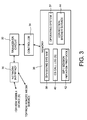
- the gateway 6 comprises a second network interface 30 for communicating with the UE 2, a second transceiver circuit 32, a second controller card 34, and a second memory 36.
- the second memory 36 comprises an operating system 37, a service database 38, a second a CS call Leg(s) module 40, an SIP (Session Initiation Protocol) module 42, and a second Connection Brokers Service module 44.
- the Connection Brokers service module 44 perform tasks consisting of receiving incoming CS call from the UE 2, validating the user right and providing the connection parameters to the user, providing the ability for the user to connect to a specific virtual machine (VM), virtual client, PC blade or terminal services server, providing the ability for the user to access multiple VM pools, monitoring the activity level of a given virtual machine and setting status to active or inactive, handling reassignment of a virtual machine when the user disconnects.
- VM virtual machine
- the gateway 6 forwards the CS call to the remote media server either on another CS Call leg or on a SIP call leg depending on whether the remote media server is accessible through CS or SIP call procedures.
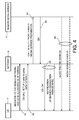
- Figure 4 illustrates the messages exchanged between the UE 2, the gateway 6 at one hand, and between the gateway 6 and the remote media server 4 on the other hand for providing IP services to the UE 2 using only the previously established CS call.
- the method according to the invention relies on specific configuration of the gateway 6 and the UE 2 in which the gateway 6, preferably located in the Mobile communication network of the operator, is aware of IP services that may be requested by the UE 2.
- the UE 2 is allocated an IP address after registering to the mobile communication network 1.
- the UE 2 transmits a CS call setup request to the gateway 6.
- the UE 2 requests a connection to a service using the CS call setup procedure and runs a software program within the first service Connection Broker Service module 26 to receive from the gateway the IP service connection parameters on a specific port known and/or previously configured by the operator of the service.
- IP service connection parameters comprise service identifier, IP address, port number, and potentially other service parameters based on the service identifier.
- IP service connection parameters comprise list of supported desktop resolution, or a list of possible preferred thin client user session identifier. This later identifier would allow a user to be redirected to the most suitable Thin Client Server (e.g. based on subscription, application preferences, etc.)
- a Software module installed in the gateway 6 determines from the caller number and eventually other CS message parameters, ascertains via the second Connection Broker Service module 44, whether there is an IP service for this audio call (e.g. thin client connection, etc%), and if so, determines the service to start and retrieves the service connection parameters from the service database 38.
- IP service e.g. thin client connection, etc.
- the gateway 6 completes the received CS call setup request with the service connection information and forwards the CS call setup request and the packet based media service to the remote media server 4.
- the remote media server 4 acknowledges the reception of the completed CS call setup request and of the packet based media service.
- the gateway 6 forwards the acknowledgement message to the UE 2 and the IP service connection parameters to the UE 2.
- the UE 2 and the remote media server 4 exchange audio traffic information.
- the Connection Broker Service module 26 establishes the service connection to the remote media server with the IP service connection parameters and potentially other service parameters based on the service identifier. For example, when the IP service is a thin client connection, IP service connection parameters comprise list of supported desktop resolution, or a list of possible preferred thin client user session identifier. This later identifier would allow a user to be redirected to the most suitable Thin Client Server (e.g. based on subscription, application preferences, etc.)
- the method according to the invention uses CS call setup protocol usually supported on any mobile phone.
- the idea relates to an alternative CSI procedure (for IP media services that are combined with CS call services). More particularly a CS call is performed by indicating a calling number that is analyzed by a gateway in order to allocate and prepare an IP service that is notified to the UE 2 on CS call completion. So a single and fast IP setup connection is provided.
- Figure 5 illustrates an example in which a person with a thin client assists a PC user by taking control of his PC, while speaking to the remote user through its PC speaker.
- the first Connection Broker Service module 26 is accessible through HTTP protocol and XML specific formats comprising description of the media session parameters (service identifier, IP address, port number, and other service parameters depending on the service identifier).
- the remote IP service parameters (Thin Client Server IP address, port, resolution, encoding format ...) are sent by the gateway 6 to UE 2 using HTTP push message. There is no further SIP negotiation of the IP service as it is assumed that the gateway already knows the default preferred parameters of the UE 2. In addition IP parameters can be further adapted during the Remote desktop connection.
- the UE 2 transmits a CS call setup request to the gateway 6.
- the gateway 6 converts the CS call setup request in a SIP/SDP (Session Initiation Protocol/Session Description Protocol) comprising thin client session parameters retrieved from the service database 38, and transfers it to the Thin Client Server 4.
- SIP/SDP Session Initiation Protocol/Session Description Protocol
- Thin Client Server 4 acknowledges reception of the completed SIP invite
- the gateway 6 forwards the acknowledgement message to the UE 2 along with a HTTP/XML push message (step 78).
- the UE 2 exchange audio call with the gateway 6 over CS while a Remote Desktop Connection using for example e.g. RDP (for Remote Desktop Protocol) or a VNC program (for Virtual Network Computing) or an ICA (for Independent Computing Architecture) is established between the UE 6 and the Thin Client Server 4.
- a Remote Desktop Connection using for example e.g. RDP (for Remote Desktop Protocol) or a VNC program (for Virtual Network Computing) or an ICA (for Independent Computing Architecture) is established between the UE 6 and the Thin Client Server 4.
- the method according to the invention assumes that the gateway 6 already knows these capabilities. Therefore, there is no long negotiation phase and it is up to the terminal to decide to establish the IP connection or to cancel to call. This is advantageous in the case where the service is started statically without requiring further re-negotiation phase.
- the user of the UE 2 may cancel the audio call while maintaining the IP service path active.
- the method according to the invention is suitable for any other IP service requiring an audio channel at startup.
Landscapes
- Engineering & Computer Science (AREA)
- Multimedia (AREA)
- Computer Networks & Wireless Communication (AREA)
- Signal Processing (AREA)
- Business, Economics & Management (AREA)
- General Business, Economics & Management (AREA)
- Telephonic Communication Services (AREA)
Abstract
The invention concerns a method for establishing an IP session while negotiating an audio channel over CS communication between a User Equipment and a remote media server.
The method according to the invention comprises the following steps:
- storing in a database (38) of a gateway (6) configuration information comprising at least the user equipment caller number, the IP address allocated to the user equipment (2), The IP service usable by the UE and
upon reception of a CS setup request from the communication device,
- verifying by the gateway (6) whether an IP service can be associated with the CS communication, and,
- if so, forwarding, the CS setup request or converted CS setup request to SIP call, from the gateway to the remote media server ,
- forwarding the IP service connection parameters from the gateway to the user equipment.
- initiating the IP session between the user equipment and the remote media server without requiring further re-negotiation phase.
- storing in a database (38) of a gateway (6) configuration information comprising at least the user equipment caller number, the IP address allocated to the user equipment (2), The IP service usable by the UE and
upon reception of a CS setup request from the communication device,
- verifying by the gateway (6) whether an IP service can be associated with the CS communication, and,
- if so, forwarding, the CS setup request or converted CS setup request to SIP call, from the gateway to the remote media server ,
- forwarding the IP service connection parameters from the gateway to the user equipment.
- initiating the IP session between the user equipment and the remote media server without requiring further re-negotiation phase.
Description
- The invention pertains to telecommunication field and concerns method for establishing an IP session while negotiating an audio channel over CS communication between a user equipment and a remote server.
- The invention also concerns a gateway intended for establishing an IP session between a User Equipment and a remote media server during an audio channel negotiation over CS communication between the user equipment and the gateway.
- The invention also concerns a User Equipment adapted to cooperate with the gateway for implementing said method.
- Transmission of audio within an IP session has opened a number of perspectives for the use of audio in various fields such as home automation, remote technical assistance or the control remote devices in the medical field. For example, in thin client sessions, transfer of audio data within an IP session may allow a thin client user to use the audio device of its remote PC, or may allow an IT helpdesk person with a thin client to assist a PC user by taking control of his PC, while speaking to the remote user, or may allow a user with a thin client terminal to control the remote PC (desktop) by the voice through a speech recognition program.
- The known solutions for establishing voice or video call session are based on CS (Circuit-Switched) or on IP using SIP (Session Initiation Protocol) procedures. The procedures allow establishment of rich CS/PS services between communication devices such as mobile user equipments a remote servers.
- Document
EP1804455 presents how to add real-time video exchange during a CS call, and documentEP1744569 presents a method and a system for implementing communication for a CSI terminal to combine CS and IMS (IP Multimedia Subsystem) services. 3GPP TS 22.279, V8.0.0 describes the Combined CS and IMS and introduces service capability detection for flexible service combination, and 3GPP TS 24.279 presents the implementation of the CSI function using CSI user agent. The technologies to interconnect CS media plane with PS (IP) media plane are also well known. For instance DocumentW02009060325 presents a remote user agent (RUA) capable of interconnecting CS data path to PS data path and documentEP 1744569 presents a CS/IMS interworking call connection. - The solutions disclosed in the above prior art documents are designed for dynamic (re)negotiation of an ongoing session, including the use of CS as it allows to have allocated resources at constant bit rate. A drawback of such solutions comes from the fact that in case the thin client terminal uses SIP/IMS for establishing the channels, the signaling phase can be very long as many messages can be exchanged although such negotiation signaling is required to dynamically establish additional media channels during a session. Moreover, the negotiation signaling requires also a significant complexity like the support of SIP signaling with SDP parameters on the terminal compared to CS signaling.
- Using CS and IMS such as described by 3GPP CSI specification raised the same issue as described previously and also add a second signaling protocol used for the CS channel. Furthermore, for an IP service (like a thin client connection, or a voice mail service) it is expected to use a solution that may be supported by any terminal and in particular terminal not supporting SIP/IMS signaling and that allows reducing the establishment setup time with a simple configuration on the terminal.
- The object of the invention is achieved by means of a method for establishing an IP session while negotiating an audio channel over CS communication between a User Equipment (UE) and a remote media server.
- The method according to the invention comprises the following steps:
- storing in a database of an gateway configuration information comprising at least the user equipment caller number, the IP services allowed to the user equipment (UE), and, upon reception of a CS setup request from the communication device,
- verifying by the gateway whether an IP service can be associated with the CS communication, and,
- if so, forwarding the CS setup request from the gateway to the remote media server, or convert the CS setup to a SIP call,
- forwarding the IP service connection parameters from the gateway to the user equipment,
- initiating the IP session between the user equipment and the remote media server without requiring further re-negotiation phase.
- In a first embodiment of the invention, the IP service is a thin client connection during which a thin client on the user equipment can transfer the microphone and speaker sound with an audio CS connection to a remote PC. The remote PC can be either a physical PC, or a virtualized PC on a server.
- In a second embodiment of the invention, the IP service is a thin client connection during which a thin client user assists with an audio connection a PC Remote user by taking control of his PC while speaking to the remote user.
- The method according to the invention is implemented by means of a User Equipment (UE) cooperating with an gateway and adapted for establishing an IP session with a remote media server while negotiating an audio channel over CS communication, the User Equipment (UE) characterized by a first connection module adapted to receive IP connection parameters of the IP service from the gateway in response to a CS call session setup request transmitted from the User Equipment to the gateway in order to initiate the IP session with the remote media server without requiring further re-negotiation phase.
- The User Equipment (UE) further comprises a caller number configured and provisioned by the operator of the IP service to the User Equipment (UE).
- The gateway is adapted, upon reception of an audio channel CS setup request, for checking the user equipment IP service right, providing the IP service connection parameters to the user equipment, forwarding the audio call to the remote media server.
- To this end, the gateway comprises:
- means for receiving a CS call setup request transmitted from the User Equipment,
- means for verifying whether or not an IP service can be associated with the CS communication,
- means for forwarding the CS setup request to the remote media server, or convert the CS setup to SIP call, and,
- means for sending back the IP service connection parameters from the gateway to the user equipment in order to initiate the IP session between the user equipment and the remote media server without requiring further re-negotiation phase.
- The invention will be better understood from the following description, taken as a non-limiting example, with reference to the attached figures in which:
-
figure 1 schematically represents a wireless communication network architecture in which the method according to the invention may be used, -
figure 2 schematically represents the structure of a User Equipment implementing the method according to the invention, -
figure 3 schematically represents the structure of an gateway intended to cooperate with the User Equipment offigure 2 for implementing the method according to the invention, -
figure 4 schematically represents the flow chart of messages exchanging between gateway, the User Equipment, and the remote media server for implementing the method according to the invention, -
figure 5 schematically represents an implementation example of the invention in which the remote server is a Thin Client Server. - The method according to the invention will be described by reference to
figure 1 illustrating a wirelesscommunication network architecture 1 in which a User Equipment (UE) 2 is configured to communicate with aremote media server 4 through agateway 6. - As shown at
figure 2 , theUE 2 comprises anantenna 10, a first transceiver circuit 12, anidentification interface 14, afirst controller card 16, and afirst memory 18 comprising anoperating system 22, a CSCall Leg module 24, and a first ConnectionBroker Service module 26 anduser applications 27. The UE 2 also comprises afirst network interface 28 for communicating with thegateway 6. - Referring now to
figure 3 , thegateway 6 comprises asecond network interface 30 for communicating with theUE 2, asecond transceiver circuit 32, asecond controller card 34, and asecond memory 36. Thesecond memory 36 comprises anoperating system 37, aservice database 38, a second a CS call Leg(s)module 40, an SIP (Session Initiation Protocol)module 42, and a second ConnectionBrokers Service module 44. - The Connection
Brokers service module 44 perform tasks consisting of receiving incoming CS call from the UE 2, validating the user right and providing the connection parameters to the user, providing the ability for the user to connect to a specific virtual machine (VM), virtual client, PC blade or terminal services server, providing the ability for the user to access multiple VM pools, monitoring the activity level of a given virtual machine and setting status to active or inactive, handling reassignment of a virtual machine when the user disconnects. - It is to be noted that the
gateway 6 forwards the CS call to the remote media server either on another CS Call leg or on a SIP call leg depending on whether the remote media server is accessible through CS or SIP call procedures. -
Figure 4 illustrates the messages exchanged between the UE 2, thegateway 6 at one hand, and between thegateway 6 and theremote media server 4 on the other hand for providing IP services to the UE 2 using only the previously established CS call. - The method according to the invention relies on specific configuration of the
gateway 6 and the UE 2 in which thegateway 6, preferably located in the Mobile communication network of the operator, is aware of IP services that may be requested by the UE 2. - At
step 50, the UE 2 is allocated an IP address after registering to themobile communication network 1. - At
step 52, the UE 2 transmits a CS call setup request to thegateway 6. The UE 2 requests a connection to a service using the CS call setup procedure and runs a software program within the first service ConnectionBroker Service module 26 to receive from the gateway the IP service connection parameters on a specific port known and/or previously configured by the operator of the service. IP service connection parameters comprise service identifier, IP address, port number, and potentially other service parameters based on the service identifier. For example, when the IP service is a thin client connection, IP service connection parameters comprise list of supported desktop resolution, or a list of possible preferred thin client user session identifier. This later identifier would allow a user to be redirected to the most suitable Thin Client Server (e.g. based on subscription, application preferences, etc.) - Upon reception of the incoming CS call setup request on the CS Call leg, a Software module installed in the
gateway 6 determines from the caller number and eventually other CS message parameters, ascertains via the second ConnectionBroker Service module 44, whether there is an IP service for this audio call (e.g. thin client connection, etc...), and if so, determines the service to start and retrieves the service connection parameters from theservice database 38. - At
step 54, thegateway 6 completes the received CS call setup request with the service connection information and forwards the CS call setup request and the packet based media service to theremote media server 4. - At
step 56, theremote media server 4 acknowledges the reception of the completed CS call setup request and of the packet based media service. - At
step 58, thegateway 6 forwards the acknowledgement message to the UE 2 and the IP service connection parameters to the UE 2. - At
step 60, The UE 2 and theremote media server 4 exchange audio traffic information. The ConnectionBroker Service module 26 establishes the service connection to the remote media server with the IP service connection parameters and potentially other service parameters based on the service identifier. For example, when the IP service is a thin client connection, IP service connection parameters comprise list of supported desktop resolution, or a list of possible preferred thin client user session identifier. This later identifier would allow a user to be redirected to the most suitable Thin Client Server (e.g. based on subscription, application preferences, etc.) - The method according to the invention uses CS call setup protocol usually supported on any mobile phone.
- In other words, the idea relates to an alternative CSI procedure (for IP media services that are combined with CS call services). More particularly a CS call is performed by indicating a calling number that is analyzed by a gateway in order to allocate and prepare an IP service that is notified to the
UE 2 on CS call completion. So a single and fast IP setup connection is provided. -
Figure 5 illustrates an example in which a person with a thin client assists a PC user by taking control of his PC, while speaking to the remote user through its PC speaker. - In this example, the first Connection
Broker Service module 26 is accessible through HTTP protocol and XML specific formats comprising description of the media session parameters (service identifier, IP address, port number, and other service parameters depending on the service identifier). The remote IP service parameters (Thin Client Server IP address, port, resolution, encoding format ...) are sent by thegateway 6 toUE 2 using HTTP push message. There is no further SIP negotiation of the IP service as it is assumed that the gateway already knows the default preferred parameters of theUE 2. In addition IP parameters can be further adapted during the Remote desktop connection. - At
step 70, theUE 2 transmits a CS call setup request to thegateway 6. - At
step 72, thegateway 6 converts the CS call setup request in a SIP/SDP (Session Initiation Protocol/Session Description Protocol) comprising thin client session parameters retrieved from theservice database 38, and transfers it to theThin Client Server 4. - At
step 74,Thin Client Server 4 acknowledges reception of the completed SIP invite, atstep 76, thegateway 6 forwards the acknowledgement message to theUE 2 along with a HTTP/XML push message (step 78). - At
step 80, TheUE 2 exchange audio call with thegateway 6 over CS while a Remote Desktop Connection using for example e.g. RDP (for Remote Desktop Protocol) or a VNC program (for Virtual Network Computing) or an ICA (for Independent Computing Architecture) is established between theUE 6 and theThin Client Server 4. - Compared to 3GPP TS 24279 where capabilities information must be exchanged between the
UE 2 and theremote media server 4, the method according to the invention assumes that thegateway 6 already knows these capabilities. Therefore, there is no long negotiation phase and it is up to the terminal to decide to establish the IP connection or to cancel to call. This is advantageous in the case where the service is started statically without requiring further re-negotiation phase. - In addition if a service does not require a voice or audio traffic channel, the user of the
UE 2 may cancel the audio call while maintaining the IP service path active. - The method according to the invention is suitable for any other IP service requiring an audio channel at startup.
Claims (7)
- Method for establishing an IP session while negotiating an audio channel over CS communication between a user equipment (2) and a remote media server (4), characterized by:- storing in a database (38) of a gateway (6) configuration information comprising at least the user equipment caller number, the IP service allowed to the user equipment (2), and ,
upon reception of a CS setup request from the user equipment (2),- verifying by the gateway (6) whether the IP service can be associated with the CS communication, and,- if so, forwarding the CS setup request from the gateway (6) to the remote media server (4), or convert the CS setup to a SIP call,- forwarding the IP service connection parameters from the gateway (6) to the user equipment (2) .- initiating the IP session between the user equipment (2) and the remote media server (4) without requiring further re-negotiation phase. - Method according to claim 1 wherein the IP service is a thin client connection during which a thin client on the user equipment (2) transfers the microphone and speaker sound with an audio CS connection to a remote PC
- Method according to claim 2 wherein the remote PC can be either a physical PC, or a virtualized PC on a server.
- Method according to claim 1 wherein the IP service is a thin client connection during which a thin client user assists a PC Remote user by taking control of his PC while speaking to the remote user.
- User Equipment (2) cooperating with a gateway adapted to establish an IP session with a remote media server (4) while negotiating an audio channel over CS communication, the User Equipment (2) characterized by a first Connection Broker Service module (26) adapted to receive IP service connection parameters of the IP service from the gateway (6) in response to a CS call setup request transmitted from the User Equipment (2) to the gateway (6) in order to initiate the IP service between the user equipment (2) and the remote media server (4) without requiring further re-negotiation phase.
- User Equipment (2) according to claim 5 further comprising a caller number are configured and provisioned by the operator of the IP service.
- A gateway intended for establishing an IP service between a User Equipment (2) and a remote media server (4) during an audio channel negotiation over CS communication between the user equipment (2) and the gateway (4) for resources, characterized by:- means for receiving a CS call setup request transmitted from the User Equipment (2),- means for verifying whether or not an IP service can be associated with the CS communication,- means for forwarding, the CS setup request or converted CS setup request to SIP call, to the remote media server (4), and- means for sending back IP service connection parameters of the IP service to the user equipment (2) in order to initiate the IP service between the user equipment (2) and the remote media server (4) without requiring further re-negotiation phase.
Priority Applications (1)
| Application Number | Priority Date | Filing Date | Title |
|---|---|---|---|
| EP10169284A EP2408258A1 (en) | 2010-07-12 | 2010-07-12 | Method for establishing an IP session while negotiating an audio channel over CS communication |
Applications Claiming Priority (1)
| Application Number | Priority Date | Filing Date | Title |
|---|---|---|---|
| EP10169284A EP2408258A1 (en) | 2010-07-12 | 2010-07-12 | Method for establishing an IP session while negotiating an audio channel over CS communication |
Publications (1)
| Publication Number | Publication Date |
|---|---|
| EP2408258A1 true EP2408258A1 (en) | 2012-01-18 |
Family
ID=43125611
Family Applications (1)
| Application Number | Title | Priority Date | Filing Date |
|---|---|---|---|
| EP10169284A Withdrawn EP2408258A1 (en) | 2010-07-12 | 2010-07-12 | Method for establishing an IP session while negotiating an audio channel over CS communication |
Country Status (1)
| Country | Link |
|---|---|
| EP (1) | EP2408258A1 (en) |
Citations (3)
| Publication number | Priority date | Publication date | Assignee | Title |
|---|---|---|---|---|
| EP1744569A1 (en) | 2004-09-30 | 2007-01-17 | Huawei Technologies Co., Ltd. | Method and system of realizing communication |
| EP1804455A1 (en) | 2005-12-27 | 2007-07-04 | Siemens S.p.A. | Method and system to exchange videos in real-time taken by one's cellular handset during two-party voice calls |
| WO2009060325A1 (en) | 2007-11-06 | 2009-05-14 | Alcatel Lucent | A method for the delivery of media streaming services in a mobile communication system |
-
2010
- 2010-07-12 EP EP10169284A patent/EP2408258A1/en not_active Withdrawn
Patent Citations (3)
| Publication number | Priority date | Publication date | Assignee | Title |
|---|---|---|---|---|
| EP1744569A1 (en) | 2004-09-30 | 2007-01-17 | Huawei Technologies Co., Ltd. | Method and system of realizing communication |
| EP1804455A1 (en) | 2005-12-27 | 2007-07-04 | Siemens S.p.A. | Method and system to exchange videos in real-time taken by one's cellular handset during two-party voice calls |
| WO2009060325A1 (en) | 2007-11-06 | 2009-05-14 | Alcatel Lucent | A method for the delivery of media streaming services in a mobile communication system |
Similar Documents
| Publication | Publication Date | Title |
|---|---|---|
| US9866672B2 (en) | Method and apparatus for assisted emergency calls | |
| EP2779579B1 (en) | Method and apparatuses for realizing voip call in cloud computing environment | |
| EP4391611B1 (en) | Information transmission method and apparatus | |
| EP2847960B1 (en) | Method, device, and system for connecting to a communication device | |
| US20090113460A1 (en) | Systems and methods for providing a generic interface in a communications environment | |
| US20150022619A1 (en) | System and method for sharing multimedia content using a television receiver during a voice call | |
| EP2833597A1 (en) | Apparatus and method for communications involving a legacy device | |
| EP2663054A2 (en) | Methods and systems of advanced real-time IP communication in a mobile terminal | |
| EP2377286B1 (en) | A method of and a network server and mobile user equipment for providing chat/voip services in a mobile telecommunications network | |
| EP3172880B1 (en) | Method of and communications handling equipment for controlling communication session establishment in a multimedia communications network. | |
| EP3515032B1 (en) | Port multiplexing method and server in video conference system and computer storage medium | |
| CN105122761B (en) | Local control of additional media sessions for packet-based calls | |
| US8346941B2 (en) | Method for transmitting data from and to a control device | |
| US20200186636A1 (en) | Enabling call transfer using headset | |
| JP2010516131A (en) | Method for discovering a telephone-based web server, and electronic equipment and computer program related to the method | |
| US11102349B2 (en) | Method for automatic start up of a communication terminal configured for voice communication on a communication terminal configured for text communication | |
| CN101594623B (en) | Method and equipment for monitoring voice over internet protocol call | |
| WO2023083336A1 (en) | Information transmission method and apparatus, network device and called end device | |
| EP2200254A1 (en) | Mobile network system and guidance message providing method | |
| US10681090B2 (en) | Method for telecommunication and communication terminal | |
| KR20170034016A (en) | Apparatus and method for transmitting of message reception information in wireless communication system | |
| KR20180077720A (en) | Apparatus and method for interworking between call based on id and call based on phone number | |
| JP2010183521A (en) | Communication media conversion system, method and program | |
| KR20060010071A (en) | File Transfer System and Method During Voice Call | |
| KR100914598B1 (en) | Method for Service Chatting Picture Between SIP Session and 3G-324M Session, and Converter therefor |
Legal Events
| Date | Code | Title | Description |
|---|---|---|---|
| AK | Designated contracting states |
Kind code of ref document: A1 Designated state(s): AL AT BE BG CH CY CZ DE DK EE ES FI FR GB GR HR HU IE IS IT LI LT LU LV MC MK MT NL NO PL PT RO SE SI SK SM TR |
|
| AX | Request for extension of the european patent |
Extension state: BA ME RS |
|
| PUAI | Public reference made under article 153(3) epc to a published international application that has entered the european phase |
Free format text: ORIGINAL CODE: 0009012 |
|
| STAA | Information on the status of an ep patent application or granted ep patent |
Free format text: STATUS: THE APPLICATION IS DEEMED TO BE WITHDRAWN |
|
| 18D | Application deemed to be withdrawn |
Effective date: 20120719 |