EP2407510A1 - Vinyl chloride resin composition - Google Patents
Vinyl chloride resin composition Download PDFInfo
- Publication number
- EP2407510A1 EP2407510A1 EP10750687A EP10750687A EP2407510A1 EP 2407510 A1 EP2407510 A1 EP 2407510A1 EP 10750687 A EP10750687 A EP 10750687A EP 10750687 A EP10750687 A EP 10750687A EP 2407510 A1 EP2407510 A1 EP 2407510A1
- Authority
- EP
- European Patent Office
- Prior art keywords
- acid
- group
- vinyl chloride
- aforementioned
- tert
- Prior art date
- Legal status (The legal status is an assumption and is not a legal conclusion. Google has not performed a legal analysis and makes no representation as to the accuracy of the status listed.)
- Granted
Links
Classifications
-
- C—CHEMISTRY; METALLURGY
- C08—ORGANIC MACROMOLECULAR COMPOUNDS; THEIR PREPARATION OR CHEMICAL WORKING-UP; COMPOSITIONS BASED THEREON
- C08K—Use of inorganic or non-macromolecular organic substances as compounding ingredients
- C08K5/00—Use of organic ingredients
- C08K5/16—Nitrogen-containing compounds
- C08K5/34—Heterocyclic compounds having nitrogen in the ring
Definitions
- the present invention relates to a vinyl chloride-based resin composition.
- the present invention relates to a vinyl chloride-based resin composition having superior weatherability and heat aging resistance, in which a hindered amine compound having a specific carbonate skeleton and a perchlorate are used in combination.
- Vinyl chloride-based resins such as vinyl chloride resin have excellent flame retardancy and chemical resistance; therefore, they are used in a variety of applications such as building materials, agricultural and industrial equipment materials and automobile parts.
- vinyl chloride-based resins have a drawback in that they are thermally degraded to cause dehydrochlorination which results in reduction in the mechanical strength and occurrence of coloration, thereby impairing their marketability.
- additives such as organic phosphite compounds, epoxy compounds, phenolic antioxidants, benzophenone-based or benzotriazole-based UV absorbers and hindered amine-based light stabilizers, are used in combination.
- Patent Document 1 a low-basic hindered amine compound having a carbonate skeleton is proposed.
- Patent Document 1 WO 2005/082852
- an object of the present invention is to provide a vinyl chloride-based resin composition having superior weatherability.
- the present inventors intensively studied to discover that the aforementioned object can be attained by using a hindered amine compound having a specific carbonate skeleton and a perchlorate in combination, thereby completing the present invention.
- R in the aforementioned Formula (I) be a C 4 -C 22 alkyl group, n be 2, and R 1 be a C 2 -C 12 alkylene group.
- n be 1 and R 1 be a group represented by the aforementioned Formula (III) (wherein, R is a C 10 -C 22 alkyl group).
- the vinyl chloride resin composition according to the present invention be used in powder molding. It is also preferred that the vinyl chloride resin composition according to the present invention be used in an automobile seat.
- a vinyl chloride-based resin composition which has superior weatherability and heat aging resistance and may be suitably used in automobile seats can be provided.
- the vinyl chloride-based resin composition according to the present invention (hereinafter, also referred to as “the composition”) will now be explained in detail.
- the polymerization method of the vinyl chloride-based resin used in the present invention is not particularly restricted and it is produced by bulk polymerization, solution polymerization, suspension polymerization, emulsion polymerization or the like.
- the vinyl chloride-based resin used in the present invention include vinyl chloride-based resins such as polyvinyl chloride, chlorinated polyvinyl chloride, polyvinylidene chloride, chlorinated polyethylene, vinyl chloride-vinyl acetate copolymers, vinyl chloride-ethylene copolymers, vinyl chloride-propylene copolymers, vinyl chloride-styrene copolymers, vinyl chloride-isobutylene copolymers, vinyl chloride-vinylidene chloride copolymers, vinyl chloride-styrene-maleic anhydride ternary copolymers, vinyl chloride-styreneacrylonitrile copolymers, vinyl chloride-butadiene copolymers, vinyl chloride-isoprene cop
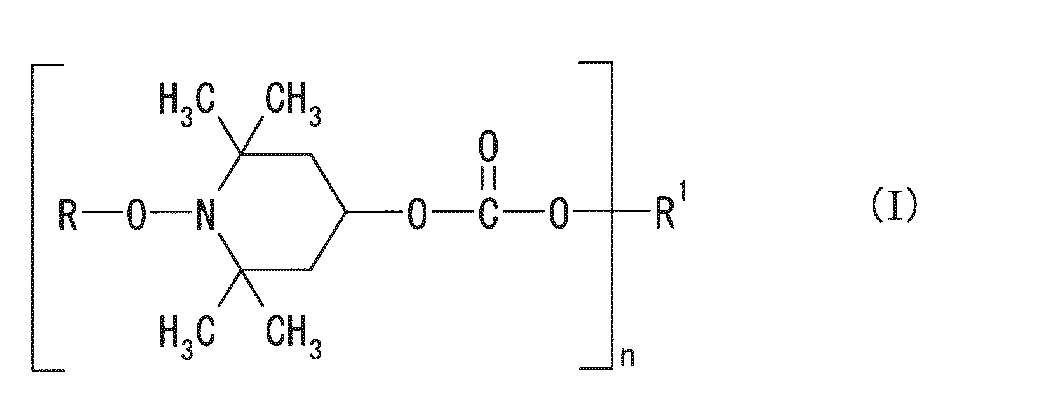
- the hindered amine compound used as the component (a) in the present invention is a hindered amine compound having a carbonate skeleton, which is represented by the aforementioned Formula (I) or (II).
- Examples of the C 1 -C 30 alkyl group represented by R in the aforementioned Formulae (I) and (II) include linear or branched alkyl groups such as methyl, ethyl, propyl, isopropyl, butyl, isobutyl, sec-butyl, tert-butyl, pentyl, sec-pentyl, tert-pentyl, hexyl, heptyl, octyl, isooctyl, 2-ethylhexyl, tert-octyl, nonyl, isononyl, decyl, undecyl, dodecyl, tridecyl, tetradecyl, pentadecyl, hexadecyl, heptadecyl and octadecyl; and cycloalkyl groups such as cyclohexyl group.
- Examples of the C 1 -C 30 hydroxyalkyl group represented by R in the aforementioned Formulae (I) and (II) include 2-hydroxyethyl, 2-hydroxypropyl, 2-hydroxybutyl and 2-hydroxy-2-methylpropyl.
- the aforementioned R may be the same or different for every units in the number of n.
- Examples of the C 2 -C 30 alkenyl group represented by R in the aforementioned Formulae (I) and (II) include those alkenyl groups corresponding to the aforementioned alkyl groups, such as vinyl, allyl, butenyl, pentenyl and oleyl.
- R 1 represents a C 1 -C 22 alkyl group, a C 2 -C 22 alkenyl group or a group represented by the aforementioned Formula (III).
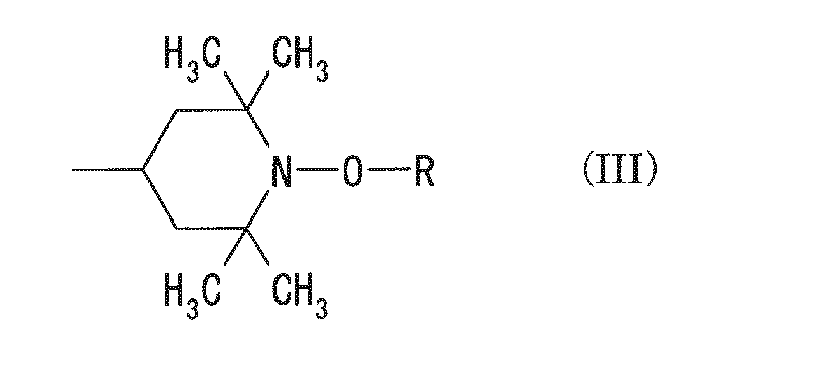
- R in the Formula (III) examples include the same compounds as those exemplified for the R in the Formula (I); however, the R in the Formula (III) may be the same as or different from the R in the Formula (I). It is preferred that R be a C 10 -C 22 alkyl group.
- Examples of the aforementioned polyhydroxy compound include ethylene glycol, propylene glycol, 1,3-propanediol, 1,2-butanediol, 1,3-butanediol, 1,4-butanediol, neopentyl glycol, 1,6-hexanediol, 1,3-cyclohexanediol, 1,4-cyclohexanediol, hydrogenated product of bisphenol A, hydrogenated product of bisphenol F, diethylene glycol, triethylene glycol, glycerine, trimethylolpropane, pentaerythritol and dipentaerythritol.
- R 2 represents a hydrogen atom, a C 1 -C 22 alkyl group or a C 2 -C 22 alkenyl group.
- Examples of the C 1 -C 22 alkyl group represented by the aforementioned R 2 include, among those alkyl groups exemplified for the aforementioned R, those having the defined number of carbon atoms.
- Examples of the C 2 -C 22 alkenyl group represented by R 2 in the aforementioned Formula (II) include, among those alkenyl groups exemplified for the aforementioned R, those having the defined number of carbon atoms. Further, the aforementioned R 2 may be the same or different for every units in the number of n.
- A represents a single bond, a linear or branched C 1 -C 12 alkylene group or an alkylene group having an ether bond.
- alkylene group examples include methylene, 1,2-ethylene, 1,2-propylene, 1,3-propylene, tetramethylene, 1,2-butylene, 1,3-butylene, pentamethylene, 2,2-dimethyl trimethylene, hexamethylene and octamethylene.
- Examples of the linear or branched C 1 -C 12 alkylene group having an ether bond which is represented by A in the aforementioned Formula (II), include: -CH 2 CH 2 -O-CH 2 CH 2 -; -CH 2 CH(CH 3 )-O-CH 2 CH(CH 3 )-; and -CH 2 CH 2 -O-CH 2 CH 2 -O-CH 2 CH 2 -.
- the aforementioned A may be the same or different for every units in the number of n (n is 2 to 6).
- examples of the compound represented by the aforementioned Formula (I) include the following Compound Nos. 1 to 6 and Compound No. 13, and examples of the compound represented by the aforementioned Formula (II) include the following Compound Nos. 7 to 12.
- the present invention is not restricted by the following compounds by any means.
- the content of the aforementioned component (a) is 0.001 to 10 parts by mass, preferably 0.01 to 5 parts by mass, with respect to 100 parts by mass of the vinyl chloride-based resin.
- the component (a) is used in an amount of less than 0.001 parts by mass, the effect of the addition thereof may not be sufficiently exhibited, and an amount of greater than 10 parts by mass may cause considerable coloration; therefore, such amounts are not preferred.
- the component (b) used in the present invention is at least one selected from the group consisting of metal perchlorates, ammonium perchlorates, perchloric acid-treated hydrotalcites and perchloric acid-treated silicates.
- metals constituting the aforementioned metal perchlorates include lithium, sodium, potassium, calcium, magnesium, strontium, barium, zinc, cadmium, lead and aluminum.
- the aforementioned metal perchlorates may be an anhydride or a hydrate salt.
- the aforementioned metal perchlorates may also be dissolved in an alcohol-based or ester-based solvent such as butyl diglycol or butyl diglycol adipate, or may be a dehydrate thereof.
- ammonium perchlorates may also be an anhydride or a hydrate salt.
- perchloric acid-treated hydrotalcites are a perchloric acid-modified product in which a part or the entirety of carbonic acid of a hydrotalcite compound is substituted with perchloric acid.
- hydrotalcite compounds are a carbonic acid double salt compound of magnesium and/or zinc and aluminum, preferably a compound represented by the Formula (IV) below: Mg x1 Zn x2 Ah(OH) 2(x1+x2)+4 ⁇ CO 3 ⁇ mH 2 O (IV) (wherein, x1 and x2 each represents a number satisfying the conditions shown by the following equations and m represents a real number: 0 ⁇ x2/x1 ⁇ 10,2 ⁇ x1 + x2 ⁇ 20).
- the aforementioned hydrotalcite compounds may be either a naturally-occurring one or a synthetic product.
- Examples of the method of synthesizing the aforementioned synthetic product include those known methods described in, for example, JP 46-2280B , JP 50-30039B , JP 51-29129B and Japanese Unexamined Patent Application Publication No. S61-174270 .
- the aforementioned hydrotalcite compounds can be used without any restriction on the presence or absence of crystal structure, crystal grain system or crystal water, and the amount thereof.
- the aforementioned perchloric acid-treated hydrotalcites may be used upon coating its surface with a higher fatty acid such as stearic acid, a higher fatty acid metal salt such as alkali metal oleate, an organic sulfonic acid metal salt such as alkali metal dodecylbenzene sulfonate, a higher fatty acid amide, a higher fatty acid ester, a wax or the like.
- a higher fatty acid such as stearic acid
- a higher fatty acid metal salt such as alkali metal oleate
- an organic sulfonic acid metal salt such as alkali metal dodecylbenzene sulfonate
- a higher fatty acid amide such as stearic acid
- a higher fatty acid metal salt such as alkali metal oleate
- an organic sulfonic acid metal salt such as alkali metal dodecylbenzene sulfonate
- the aforementioned perchloric acid-treated hydrotalcites can be easily produced, for example, by adding hydrotalcite to a dilute aqueous solution of perchloric acid and stirring the thus obtained mixture, and subsequently, as required, filtering, dehydrating or drying the resultant.
- the molar ratio of the aforementioned hydrotalcite and the aforementioned perchloric acid is arbitrarily selected; however, in general, it is preferred that perchloric acid be used in an amount of 0.1 to 2 moles with respect to 1 mole of the hydrotalcite.
- perchloric acid-treated silicates examples include metal silicates such as calcium silicate, magnesium silicate, barium silicate and zinc silicate and a variety of siliceous clay minerals, as well as treated products thereof, for example, those obtained by treating natural or synthetic silicate with perchloric acid solution, such as kaolin, bentonite, mica powder, talc, diatomaceous earth, acidic clay, activated clay and zeolite.
- perchloric acid-treated silicates treated products of calcium silicate, magnesium silicate, barium silicate, kaolin, bentonite, talc, acidic clay, activated clay and zeolite are preferred.
- the aforementioned perchloric acid-treated silicates can be easily produced, for example, by adding silicate to a dilute aqueous solution of perchloric acid and stirring the thus obtained mixture, and subsequently, as required, filtering, dehydrating or drying the resultant.
- the molar ratio of the aforementioned silicate and perchloric acid is arbitrarily selected; however, in general, it is preferred that perchloric acid be used in an amount of 0.1 to 2 moles with respect to 1 mole of the silicate.
- the content of the aforementioned component (b) is 0.001 to 10 parts by mass, preferably 0.01 to 5 parts by mass, more preferably 0.05 to 3 parts by mass, with respect to 100 parts by mass of the vinyl chloride-based resin.
- the aforementioned content is less than 0.001 parts by mass, there is hardly any effect of the component (b), and a content of greater than 10 parts by mass does not provide any effect, but rather may even have an adverse impact on the heat resistance and colorability.
- a plasticizer generally used in vinyl chloride-based resins may be added, and examples thereof include phthalate-based plasticizers such as dibutyl phthalate, butylhexyl phthalate, diheptyl phthalate, dioctyl phthalate, diisononyl phthalate, diisodecyl phthalate, dilauryl phthalate, dicyclohexyl phthalate and dioctyl terephthalate; adipate-based plasticizers such as dioctyl adipate, diisononyl adipate, diisodecyl adipate and di(butyl diglycol)adipate; phosphate-based plasticizers such as triphenyl phosphate, tricresyl phosphate, trixylenyl phosphate, tri(isopropylphenyl)phosphate, triethyl
- the content of the aforementioned plasticizer is determined as required; however, usually, the plasticizer is used in an amount of 0 to 200 parts by mass, particularly 10 to 80 parts by mass, with respect to 100 parts by mass of the vinyl chloride-based resin.
- additives generally used in vinyl chloride-based resin compositions
- examples of such additives include metal salts of organic carboxylic acids, phenols and organophosphates; zeolite compounds; hydrotalcite compounds; ⁇ -diketone compounds; epoxy compounds; polyalcohols; phenol-based, phosphorus-based and sulfur-based antioxidants; UV absorbers, hindered amine-based light stabilizers; and other inorganic metal compounds.
- metals constituting the aforementioned metal salts of organic carboxylic acids, phenols and organophosphates include lithium, potassium, sodium, calcium, magnesium, barium, aluminum and zinc.
- organic carboxylic acids examples include monocarboxylic acids such as acetic acid, propionic acid, butyric acid, valeric acid, caproic acid, enanthic acid, caprylic acid, pelargonic acid, 2-ethylhexanoic acid, neodecanoic acid, capric acid, undecanoic acid, lauric acid, tridecanoic acid, myristic acid, palmitic acid, isostearic acid, stearic acid, 12-hydroxystearic acid, behenic acid, montanoic acid, benzoic acid, monochlorobenzoic acid, p-tert-butyl benzoic acid, dimethylhydroxy benzoic acid, 3,5-di-tert-butyl-4-hydroxy benzoic acid, toluic acid, dimethyl benzoic acid, ethyl benzoic acid, cuminic acid, n-propyl benzoic acid, aminobenzoic acid, N,N-dimethyla
- examples of the aforementioned phenols include tert-butylphenol, nonylphenol, dinonyl phenol, cyclohexylphenol, phenylphenol, octylphenol, phenol, cresol, xylenol, n-butylphenol, isoamylphenol, ethylphenol, isopropylphenol, isooctylphenol, 2-ethylhexylphenol, tert-nonylphenol, decylphenol, tert-octylphenol, isohexylphenol, octadecylphenol, diisobutylphenol, methyl propyl phenol, diamylphenol, methyl isohexyl phenol and methyl-tert-octyl phenol.
- organophosphates include mono- or di-octyl phosphate, mono- or di-dodecyl phosphate, mono- or di-octadecyl phosphate, mono- or di-(nonylphenyl)phosphate, nonylphenyl phosphonate, stearyl phosphonate, mono- or di-octyl phosphite and mono- or di-octadecyl phosphite.
- the aforementioned metal salts of organic carboxylic acids, phenols and organophosphates may also be an acidic salt, neutral salt, basic salt or perbasic complex which is obtained by partially or entirely neutralizing the base of a basic salt with carbonic acid.
- the aforementioned zeolite compounds is an aluminosilicate of alkali or alkaline earth metal which has a unique three-dimensional zeolite crystal structure, and representative examples thereof include A-type, X-type, Y-type and P-type zeolites, monodenite, analcite, sodalite-family aluminosilicates, clinoptilolite, erionite and chabazite.
- These zeolite compounds may be either a hydrate having crystal water (so-called zeolite water) or an anhydride in which the crystal water is removed.
- zeolites having a particle diameter of 0.1 to 50 ⁇ m may be used and those having a particle diameter of 0.5 to 10 ⁇ m are particularly preferred.
- the aforementioned hydrotalcite compound is a carbonic acid double salt compound of magnesium and/or zinc and aluminum, which is already described in detail in the paragraphs relating to the perchloric acid-treated hydrotalcites.
- the aforementioned hydrotalcite compound is a compound represented by the aforementioned Formula (IV).
- the aforementioned hydrotalcite compound may also be used upon coating its surface with a higher fatty acid such as stearic acid, a higher fatty acid metal salt such as alkali metal oleate, an organic sulfonic acid metal salt such as alkali metal dodecylbenzene sulfonate, a higher fatty acid amide, a higher fatty acid ester, a wax or the like.
- a higher fatty acid such as stearic acid
- a higher fatty acid metal salt such as alkali metal oleate
- an organic sulfonic acid metal salt such as alkali metal dodecylbenzene sulfonate
- a higher fatty acid amide such as stearic acid
- a higher fatty acid metal salt such as alkali metal oleate
- an organic sulfonic acid metal salt such as alkali metal dodecylbenzene sulfonate
- a higher fatty acid amide such as
- Examples of the aforementioned ⁇ -diketone compounds include dehydroacetic acid, dibenzoylmethane, palmitoylbenzoylmethane and stearoylbenzoylmethane, and metal salts of these compounds are also equally useful.
- epoxy compounds examples include bisphenol-type and novolak-type epoxy resins, epoxidized soybean oil, epoxidized linseed oil, epoxidized tung oil, epoxidized fish oil, epoxidized beef tallow oil, epoxidized castor oil, epoxidized safflower oil, epoxidized tall oil fatty acid octyl, epoxidized linseed oil fatty acid butyl, methyl epoxystearate, butyl epoxystearate, 2-ethylhexyl epoxy stearate, stearyl epoxystearate, tris(epoxypropyl)isocyanurate, 3-(2-xenoxy)-1,2-epoxypropane, epoxidized polybutadiene, bisphenol-A diglycidyl ether, vinylcyclohexene diepoxide, dicyclopentadiene diepoxide, 3,4-epoxycyclohe
- Examples of the aforementioned polyalcohols include pentaerythritol, dipentaerythritol, sorbitol, mannitol, trimethylolpropane, ditrimethylolpropane, stearic acid partial ester of pentaerythritol or dipentaerythritol, bis(dipentaerythritol)adipate, glycerin, diglycerin, and tris(2-hydroxyethyl)isocyanurate.
- Examples of the aforementioned phosphorous-based antioxidant include triphenyl phosphite, tris(2,4-di-tert-butylphenyl)phosphite, tris(nonylphenyl)phosphite, tris(dinonylphenyl)phosphite, tris(mono-, di-mixed nonylphenyl)phosphite, bis(2-tert-butyl-4,6-dimethylphenyl) ⁇ ethyl phosphite, diphenyl acid phosphite, 2,2'-methylenebis(4,6-di-tert-butylphenyl)octyl phosphite, diphenyldecyl phosphite, phenyldiisodecyl phosphite, tributyl phosphite, tris(2-ethylhexyl)phosphite, tri
- phenolic antioxidant examples include 2,6-di-tert-butyl-p-cresol, 2,6-diphenyl-4-octadecyloxyphenol, stearyl(3,5-di-tert-butyl-4-hydroxyphenyl)-propionate, distearyl(3,5-di-tert-butyl-4-hydroxybenzyl)phosphonate, thiodiethylene glycol-bis[(3,5-di-tert-butyl-4-hydroxyphenyl)propionate], 1,6-hexamethylenebis[(3,5-di-tert-butyl-4-hydroxyphenyl)propionate], 1,6-hexamethylenebis[(3,5-di-tert-butyl-4-hydroxyphenyl)propionic acid amide], 4,4'-thiobis(6-tert-butyl-m-cresol), 2,2'-methylenebis(4-methyl-6-tert-butylphenol), 2,2
- sulfur-based antioxidants examples include dialkyl thiodipropionates such as dilauryl, dimyristyl and distearyl thiodipropionates; and ⁇ -alkylmercapto propionic acid esters of polyols such as pentaerythritol tetra( ⁇ -dodecylmercaptopropionate).
- UV absorbers examples include 2-hydroxybenzophenones such as 2,4-dihydroxybenzophenone, 2-hydroxy-4-methoxybenzophenone, 2-hydroxy-4-octoxybenzophenone and 5,5'-methylenebis(2-hydroxy-4-methoxybenzophenone); 2-(2'-hydroxyphenyl)benzotriazoles such as 2-(2'-hydroxy-5'-methylphenyl)benzotriazole, 2-(2'-hydroxy-3',5'-di-tert-butylphenyl)benzotriazole, 2-(2'-hydroxy-3',5'-di-tert-butylphenyl)-5-chlorobenzotriazole, 2-(2'-hydroxy-3'-tert-butyl-5'-methylphenyl)-5-chlorobenzotriazole, 2-(2'-hydroxy-5'-tert-octylphenyl)benzotriazole, 2-(2'-hydroxy-3',5'-dicumy
- hindered amine-based light stabilizers examples include 2,2,6,6-tetramethyl-4-piperidyl stearate, 1,2,2,6,6-pentamethyl-4-piperidyl stearate, 2,2,6,6-tetramethyl-4-piperidylbenzoate, N-(2,2,6,6-tetramethyl-4-piperidyl)dodecyl succinimide, 1-[(3,5-di-tert-butyl-4-hydroxyphenyl)propionyloxyethyl]-2,2,6,6-tetramethyl-4-piperidyl-(3,5-di-tert-butyl-4-hydroxyphenyl)propionate, bis(2,2,6,6-tetramethyl-4-piperidyl)sebacate, bis(1,2,2,6,6-pentamethyl-4-piperidyl)sebacate, bis(1,2,2,6,6-pentamethyl-4-piperidyl)-2-butyl-2-(
- inorganic metal compounds examples include inorganic acid salts (e.g. oxides, hydroxides, halides, perchlorates, carbonates, sulfates, nitrates, silicates and phosphates) of those metal species exemplified as the metals constituting the aforementioned metal salts of organic carboxylic acids and the like; and basic salts thereof.
- inorganic acid salts e.g. oxides, hydroxides, halides, perchlorates, carbonates, sulfates, nitrates, silicates and phosphates
- a filler(s) such as calcium carbonate, silica, clay, glass beads, mica, sericite, glass flakes, asbestos, wollastonite, potassium titanate, PMF, gypsum fibers, xonotlite, MOS, phosphate fibers, glass fibers, carbon fibers and aramid fibers
- a pigment(s) such as titanium oxide, red iron oxide, chrome yellow, ultramarine, carbon black, azo-based pigments, phthalocyanine-based pigments, quinacridone-based pigments and dioxazine pigments may be used.
- an impact resistance-improving agent, cross-linking agent, foaming agent, antistatic agent, anti-clouding agent, anti-plateout agent, surface treatment agent, lubricant, flame retardant, fluorescent agent, antifungal agent, sterilizer, metal inactivator, mold release agent and/or processing aid may be blended as required.
- composition according to the present invention can be used independently of the processing method of the vinyl chloride-based resin.
- the composition according to the present invention may be suitably used in calendering processing, roll processing, extrusion molding, melt-rolling, injection molding, pressure molding, paste processing, powder molding and foam molding.
- composition according to the present invention can be used in building materials such as wall materials, floor materials, window frames, corrugated panels and rain gutters; automotive interior and exterior materials; fish and food packaging materials such as trays; and miscellaneous goods such as packings, gaskets, hoses, pipes, joints, sheets and toys.
- building materials such as wall materials, floor materials, window frames, corrugated panels and rain gutters
- automotive interior and exterior materials such as trays
- fish and food packaging materials such as trays
- miscellaneous goods such as packings, gaskets, hoses, pipes, joints, sheets and toys.
- the composition according to the present invention can be suitably used in automobile seats.
- Heat aging resistance test In accordance with JIS K7113, a test piece defined therein was prepared from the thus obtained sheet and it was subjected to tensile test to measure elongation (%). In addition, after lining the thus obtained sheet with urethane and promoting aging of the resultant at 120°C for 500 hours, the urethane lining was removed and a test piece was prepared, which was subjected to tensile test to measure elongation (%). From the result thereof, retained elongation (elongation of the test piece after aging / elongation of the test piece before aging ⁇ 100, %) was determined.
Landscapes
- Chemical & Material Sciences (AREA)
- Health & Medical Sciences (AREA)
- Chemical Kinetics & Catalysis (AREA)
- Medicinal Chemistry (AREA)
- Polymers & Plastics (AREA)
- Organic Chemistry (AREA)
- Compositions Of Macromolecular Compounds (AREA)
Abstract
or by the following Formula (II):

Description
- The present invention relates to a vinyl chloride-based resin composition. Particularly, the present invention relates to a vinyl chloride-based resin composition having superior weatherability and heat aging resistance, in which a hindered amine compound having a specific carbonate skeleton and a perchlorate are used in combination.
- Vinyl chloride-based resins such as vinyl chloride resin have excellent flame retardancy and chemical resistance; therefore, they are used in a variety of applications such as building materials, agricultural and industrial equipment materials and automobile parts. However, vinyl chloride-based resins have a drawback in that they are thermally degraded to cause dehydrochlorination which results in reduction in the mechanical strength and occurrence of coloration, thereby impairing their marketability.
- In order to solve the above-described drawback, a variety of stabilizers have been developed, and in particular, mixtures and the like of a lead or cadmium compound and a barium compound have been known to have superior stabilizing effect. However, in recent years, the trend is toward restricting the use of lead compounds and cadmium compounds from the safety standpoint, so that such stabilization by a lead or cadmium compound is now being replaced by stabilization provided by combinatory use of a highly safe zinc compound and an organic acid salt of alkaline earth metal or an inorganic compound such as hydrotalcite or zeolite.
- Yet, since such low toxic stabilizers alone cannot provide sufficient stabilizing effect, in order to improve the resistance to light, heat, oxidation and the like, a variety of additives, such as organic phosphite compounds, epoxy compounds, phenolic antioxidants, benzophenone-based or benzotriazole-based UV absorbers and hindered amine-based light stabilizers, are used in combination.
- Furthermore, in Patent Document 1, a low-basic hindered amine compound having a carbonate skeleton is proposed.
- Patent Document 1:
WO 2005/082852 - However, there have been more demands for a vinyl chloride resin composition having high weatherability for use in automobile seats and the like. In addition, even when the hindered amine compound according to Patent Document 1 was individually added to a vinyl chloride-based resin, there was room for improvement.
- Therefore, an object of the present invention is to provide a vinyl chloride-based resin composition having superior weatherability.
- In order to solve the aforementioned problems, the present inventors intensively studied to discover that the aforementioned object can be attained by using a hindered amine compound having a specific carbonate skeleton and a perchlorate in combination, thereby completing the present invention.
- That is, the vinyl chloride resin composition according to the present invention comprises, with respect to 100 parts by mass of a vinyl chloride-based resin, (a) 0.001 to 10 parts by mass of at least one hindered amine compound and (b) 0.001 to 10 parts by mass of at least one selected from the group consisting of metal perchlorates, ammonium perchlorates, perchloric acid-treated hydrotalcites and perchloric acid-treated silicates, the hindered amine compound being represented by the following Formula (I):


or by the following Formula (II):
- In the vinyl chloride resin composition according to the present invention, it is preferred that R in the aforementioned Formula (I) be a C4-C22 alkyl group, n be 2, and R1 be a C2-C12 alkylene group.
- Further, in the vinyl chloride resin composition according to the present invention, it is preferred that, in the aforementioned Formula (I), n be 1 and R1 be a group represented by the aforementioned Formula (III) (wherein, R is a C10-C22 alkyl group).
- Still further, it is preferred that the vinyl chloride resin composition according to the present invention be used in powder molding. It is also preferred that the vinyl chloride resin composition according to the present invention be used in an automobile seat.
- According to the present invention, a vinyl chloride-based resin composition which has superior weatherability and heat aging resistance and may be suitably used in automobile seats can be provided.
- The vinyl chloride-based resin composition according to the present invention (hereinafter, also referred to as "the composition") will now be explained in detail.
- The polymerization method of the vinyl chloride-based resin used in the present invention is not particularly restricted and it is produced by bulk polymerization, solution polymerization, suspension polymerization, emulsion polymerization or the like. Examples of the vinyl chloride-based resin used in the present invention include vinyl chloride-based resins such as polyvinyl chloride, chlorinated polyvinyl chloride, polyvinylidene chloride, chlorinated polyethylene, vinyl chloride-vinyl acetate copolymers, vinyl chloride-ethylene copolymers, vinyl chloride-propylene copolymers, vinyl chloride-styrene copolymers, vinyl chloride-isobutylene copolymers, vinyl chloride-vinylidene chloride copolymers, vinyl chloride-styrene-maleic anhydride ternary copolymers, vinyl chloride-styreneacrylonitrile copolymers, vinyl chloride-butadiene copolymers, vinyl chloride-isoprene copolymers, vinyl chloride-chlorinated propylene copolymers, vinyl chloride-vinylidene chloride-vinyl acetate ternary copolymers, vinyl chloride-maleic acid ester copolymers, vinyl chloride-methacrylic acid ester copolymers, vinyl chloride-acrylonitrile copolymers, copolymers of vinyl chloride and various vinyl ethers; blend products of these resins with each other; and blend products, block copolymers, graft copolymers and the like of these resins with other chlorine-free synthetic resins such as acrylonitrile-styrene copolymer, acrylonitrile-butadienestyrene copolymer, ethylene-vinyl acetate copolymer, ethylene-ethyl(meth)acrylate copolymer and polyester.
- The hindered amine compound used as the component (a) in the present invention is a hindered amine compound having a carbonate skeleton, which is represented by the aforementioned Formula (I) or (II).
- Examples of the C1-C30 alkyl group represented by R in the aforementioned Formulae (I) and (II) include linear or branched alkyl groups such as methyl, ethyl, propyl, isopropyl, butyl, isobutyl, sec-butyl, tert-butyl, pentyl, sec-pentyl, tert-pentyl, hexyl, heptyl, octyl, isooctyl, 2-ethylhexyl, tert-octyl, nonyl, isononyl, decyl, undecyl, dodecyl, tridecyl, tetradecyl, pentadecyl, hexadecyl, heptadecyl and octadecyl; and cycloalkyl groups such as cyclohexyl group.
- Examples of the C1-C30 hydroxyalkyl group represented by R in the aforementioned Formulae (I) and (II) include 2-hydroxyethyl, 2-hydroxypropyl, 2-hydroxybutyl and 2-hydroxy-2-methylpropyl.
- The aforementioned R may be the same or different for every units in the number of n.
- Examples of the C2-C30 alkenyl group represented by R in the aforementioned Formulae (I) and (II) include those alkenyl groups corresponding to the aforementioned alkyl groups, such as vinyl, allyl, butenyl, pentenyl and oleyl.
- In the aforementioned Formula (I), when n = 1, R1 represents a C1-C22 alkyl group, a C2-C22 alkenyl group or a group represented by the aforementioned Formula (III).
- Examples of the C1-C22 alkyl group which is represented by R1 when n = 1 in the aforementioned Formula (I) include methyl, ethyl, propyl, isopropyl, butyl, isobutyl, sec-butyl, tert-butyl, pentyl, sec-pentyl, tert-pentyl, hexyl, heptyl, octyl, isooctyl, 2-ethylhexyl, tert-octyl, nonyl, isononyl, decyl, undecyl, dodecyl, tridecyl, tetradecyl, pentadecyl, hexadecyl, heptadecyl, octadecyl and behenyl.
- Examples of the C2-C22 alkenyl group which is represented by R1 when n = 1 in the aforementioned Formula (I) include those alkenyl groups corresponding to the aforementioned alkyl groups, such as vinyl, allyl, butenyl, pentenyl and oleyl.
- In cases where, in the aforementioned Formula (I), n = 1 and R1 represents a group represented by the aforementioned Formula (III), examples of the R in the Formula (III) include the same compounds as those exemplified for the R in the Formula (I); however, the R in the Formula (III) may be the same as or different from the R in the Formula (I). It is preferred that R be a C10-C22 alkyl group.
- Examples of the n-valent C2-C20 organic group which is represented by R1 when n = 2 to 6 in the aforementioned Formula (I) include, in addition to alkylene groups and the like, residues obtained by removing hydroxy group of a n-valent polyhydroxy compound.
- Examples of the aforementioned polyhydroxy compound include ethylene glycol, propylene glycol, 1,3-propanediol, 1,2-butanediol, 1,3-butanediol, 1,4-butanediol, neopentyl glycol, 1,6-hexanediol, 1,3-cyclohexanediol, 1,4-cyclohexanediol, hydrogenated product of bisphenol A, hydrogenated product of bisphenol F, diethylene glycol, triethylene glycol, glycerine, trimethylolpropane, pentaerythritol and dipentaerythritol.
- In the aforementioned Formula (II), R2 represents a hydrogen atom, a C1-C22 alkyl group or a C2-C22 alkenyl group.
- Examples of the C1-C22 alkyl group represented by the aforementioned R2 include, among those alkyl groups exemplified for the aforementioned R, those having the defined number of carbon atoms.
- Examples of the C2-C22 alkenyl group represented by R2 in the aforementioned Formula (II) include, among those alkenyl groups exemplified for the aforementioned R, those having the defined number of carbon atoms. Further, the aforementioned R2 may be the same or different for every units in the number of n.
- In the aforementioned Formula (II), A represents a single bond, a linear or branched C1-C12 alkylene group or an alkylene group having an ether bond.
- Examples of the aforementioned alkylene group include methylene, 1,2-ethylene, 1,2-propylene, 1,3-propylene, tetramethylene, 1,2-butylene, 1,3-butylene, pentamethylene, 2,2-dimethyl trimethylene, hexamethylene and octamethylene.
- Examples of the linear or branched C1-C12 alkylene group having an ether bond, which is represented by A in the aforementioned Formula (II), include:
-CH2CH2-O-CH2CH2-;
-CH2CH(CH3)-O-CH2CH(CH3)-; and
-CH2CH2-O-CH2CH2-O-CH2CH2-.
- The aforementioned A may be the same or different for every units in the number of n (n is 2 to 6).
- In the aforementioned Formula (II), X represents -C(=O)-, a linear or branched C4-C40 alkylene group having -C(=O)O- at terminal, a linear or branched C4-C40 alkylene group having -C(=O)O- at terminal and an ether bond in an intermediate position, a linear or branched C4-C40 alkylene group having a carbonate bond, or a C6-C30 organic group having -O-C(=O)- in the number of 3 to 6 at terminal.
- Examples of the C4-C40 alkylene group having a -C(=O)O- bond at terminal, which is represented by X in the aforementioned Formula (II), include:
-C(=O)-O-(CH2)p-O-C(=O)-
(wherein, p is a number of 2 to 40). - Examples of the alkylene group having a carbonate bond, which is represented by X in the aforementioned Formula (II), include:
-C(=O)-R3-O-C(=O)-O-R3-C(=O)-
(wherein, R3 represents a C2-C18 alkylene group). - Further, examples of the organic group having -O-C(=O)- in the number of 3 to 6 at terminal, which is represented by X in the aforementioned Formula (II) include the following groups:


- More particularly, examples of the compound represented by the aforementioned Formula (I) include the following Compound Nos. 1 to 6 and Compound No. 13, and examples of the compound represented by the aforementioned Formula (II) include the following Compound Nos. 7 to 12. However, the present invention is not restricted by the following compounds by any means.


- The content of the aforementioned component (a) is 0.001 to 10 parts by mass, preferably 0.01 to 5 parts by mass, with respect to 100 parts by mass of the vinyl chloride-based resin. When the component (a) is used in an amount of less than 0.001 parts by mass, the effect of the addition thereof may not be sufficiently exhibited, and an amount of greater than 10 parts by mass may cause considerable coloration; therefore, such amounts are not preferred.
- The component (b) used in the present invention is at least one selected from the group consisting of metal perchlorates, ammonium perchlorates, perchloric acid-treated hydrotalcites and perchloric acid-treated silicates.
- Examples of metals constituting the aforementioned metal perchlorates include lithium, sodium, potassium, calcium, magnesium, strontium, barium, zinc, cadmium, lead and aluminum. The aforementioned metal perchlorates may be an anhydride or a hydrate salt. In addition, the aforementioned metal perchlorates may also be dissolved in an alcohol-based or ester-based solvent such as butyl diglycol or butyl diglycol adipate, or may be a dehydrate thereof.
- Further, the aforementioned ammonium perchlorates may also be an anhydride or a hydrate salt.
- Furthermore, the aforementioned perchloric acid-treated hydrotalcites are a perchloric acid-modified product in which a part or the entirety of carbonic acid of a hydrotalcite compound is substituted with perchloric acid.
- The aforementioned hydrotalcite compounds are a carbonic acid double salt compound of magnesium and/or zinc and aluminum, preferably a compound represented by the Formula (IV) below:
Mgx1Znx2Ah(OH)2(x1+x2)+4·CO3·mH2O (IV)
(wherein, x1 and x2 each represents a number satisfying the conditions shown by the following equations and m represents a real number: 0 ≤ x2/x1 < 10,2 ≤ x1 + x2 < 20). - The aforementioned hydrotalcite compounds may be either a naturally-occurring one or a synthetic product. Examples of the method of synthesizing the aforementioned synthetic product include those known methods described in, for example,
JP 46-2280B JP 50-30039B JP 51-29129B S61-174270 - Further, the aforementioned perchloric acid-treated hydrotalcites may be used upon coating its surface with a higher fatty acid such as stearic acid, a higher fatty acid metal salt such as alkali metal oleate, an organic sulfonic acid metal salt such as alkali metal dodecylbenzene sulfonate, a higher fatty acid amide, a higher fatty acid ester, a wax or the like.
- The aforementioned perchloric acid-treated hydrotalcites can be easily produced, for example, by adding hydrotalcite to a dilute aqueous solution of perchloric acid and stirring the thus obtained mixture, and subsequently, as required, filtering, dehydrating or drying the resultant. In this case, the molar ratio of the aforementioned hydrotalcite and the aforementioned perchloric acid is arbitrarily selected; however, in general, it is preferred that perchloric acid be used in an amount of 0.1 to 2 moles with respect to 1 mole of the hydrotalcite.
- Examples of the aforementioned perchloric acid-treated silicates include metal silicates such as calcium silicate, magnesium silicate, barium silicate and zinc silicate and a variety of siliceous clay minerals, as well as treated products thereof, for example, those obtained by treating natural or synthetic silicate with perchloric acid solution, such as kaolin, bentonite, mica powder, talc, diatomaceous earth, acidic clay, activated clay and zeolite. Among these perchloric acid-treated silicates, treated products of calcium silicate, magnesium silicate, barium silicate, kaolin, bentonite, talc, acidic clay, activated clay and zeolite are preferred.
- The aforementioned perchloric acid-treated silicates can be easily produced, for example, by adding silicate to a dilute aqueous solution of perchloric acid and stirring the thus obtained mixture, and subsequently, as required, filtering, dehydrating or drying the resultant. The molar ratio of the aforementioned silicate and perchloric acid is arbitrarily selected; however, in general, it is preferred that perchloric acid be used in an amount of 0.1 to 2 moles with respect to 1 mole of the silicate.
- The content of the aforementioned component (b) is 0.001 to 10 parts by mass, preferably 0.01 to 5 parts by mass, more preferably 0.05 to 3 parts by mass, with respect to 100 parts by mass of the vinyl chloride-based resin. When the aforementioned content is less than 0.001 parts by mass, there is hardly any effect of the component (b), and a content of greater than 10 parts by mass does not provide any effect, but rather may even have an adverse impact on the heat resistance and colorability.
- In the vinyl chloride-based resin composition according to the present invention, a plasticizer generally used in vinyl chloride-based resins may be added, and examples thereof include phthalate-based plasticizers such as dibutyl phthalate, butylhexyl phthalate, diheptyl phthalate, dioctyl phthalate, diisononyl phthalate, diisodecyl phthalate, dilauryl phthalate, dicyclohexyl phthalate and dioctyl terephthalate; adipate-based plasticizers such as dioctyl adipate, diisononyl adipate, diisodecyl adipate and di(butyl diglycol)adipate; phosphate-based plasticizers such as triphenyl phosphate, tricresyl phosphate, trixylenyl phosphate, tri(isopropylphenyl)phosphate, triethyl phosphate, tributyl phosphate, trioctyl phosphate, tri(butoxyethyl)phosphate and octyldiphenyl phosphate; polyester-based plasticizers using ethylene glycol, diethylene glycol, triethylene glycol, 1,2-propylene glycol, 1,3-propylene glycol, 1,3-butanediol, 1,4-butanediol, 1,5-hexanediol, 1,6-hexanediol, neopentyl glycol or the like as polyalcohol, and oxalic acid, malonic acid, succinic acid, glutaric acid, adipic acid, pimelic acid, suberic acid, azelaic acid, sebacic acid, phthalic acid, isophthalic acid, terephthalic acid or the like as dibasic acid, in which polyester-based plasticizers a monohydric alcohol or monocarboxylic acid is used as a stopper, as required; and other plasticizers such as trimellitic acid-based plasticizers, pyromellitic acid-based plasticizers, tetrahydrophthalic acid-based plasticizers, azelaic acid-based plasticizers, sebacic acid-based plasticizers, stearic acid-based plasticizers, citric acid-based plasticizers, biphenyl tetracarboxylic acid ester-based plasticizers and chlorine-based plasticizers.
- The content of the aforementioned plasticizer is determined as required; however, usually, the plasticizer is used in an amount of 0 to 200 parts by mass, particularly 10 to 80 parts by mass, with respect to 100 parts by mass of the vinyl chloride-based resin.
- Further, in the composition according to the present invention, other additive(s) generally used in vinyl chloride-based resin compositions may be added, and examples of such additives include metal salts of organic carboxylic acids, phenols and organophosphates; zeolite compounds; hydrotalcite compounds; β-diketone compounds; epoxy compounds; polyalcohols; phenol-based, phosphorus-based and sulfur-based antioxidants; UV absorbers, hindered amine-based light stabilizers; and other inorganic metal compounds.
- Examples of metals constituting the aforementioned metal salts of organic carboxylic acids, phenols and organophosphates include lithium, potassium, sodium, calcium, magnesium, barium, aluminum and zinc.
- Examples of the aforementioned organic carboxylic acids include monocarboxylic acids such as acetic acid, propionic acid, butyric acid, valeric acid, caproic acid, enanthic acid, caprylic acid, pelargonic acid, 2-ethylhexanoic acid, neodecanoic acid, capric acid, undecanoic acid, lauric acid, tridecanoic acid, myristic acid, palmitic acid, isostearic acid, stearic acid, 12-hydroxystearic acid, behenic acid, montanoic acid, benzoic acid, monochlorobenzoic acid, p-tert-butyl benzoic acid, dimethylhydroxy benzoic acid, 3,5-di-tert-butyl-4-hydroxy benzoic acid, toluic acid, dimethyl benzoic acid, ethyl benzoic acid, cuminic acid, n-propyl benzoic acid, aminobenzoic acid, N,N-dimethylamino benzoic acid, acetoxy benzoic acid, salicylic acid, p-tert-octyl salicylic acid, elaidic acid, oleic acid, linoleic acid, linolenic acid, thioglycolic acid, mercaptopropionic acid and octyl mercaptopropionic acid; dicarboxylic acids such as oxalic acid, malonic acid, succinic acid, glutaric acid, adipic acid, pimelic acid, suberic acid, azelaic acid, sebacic acid, phthalic acid, isophthalic acid, terephthalic acid, hydroxy phthalic acid, chlorophthalic acid, amino phthalic acid, maleic acid, fumaric acid, citraconic acid, methaconic acid, itaconic acid, aconitic acid and thiodipropionic acid, or monoester or monoamide compounds of these dicarboxylic acids; and tri- or tetra-carboxylic acids such as butane tricarboxylic acid, butane tetracarboxylic acid, hemimellitic acid, trimellitic acid, mellophanic acid and pyromellitic acid, or di- or tri-ester compounds of these tri- or tetra-carboxylic acids.
- Further, examples of the aforementioned phenols include tert-butylphenol, nonylphenol, dinonyl phenol, cyclohexylphenol, phenylphenol, octylphenol, phenol, cresol, xylenol, n-butylphenol, isoamylphenol, ethylphenol, isopropylphenol, isooctylphenol, 2-ethylhexylphenol, tert-nonylphenol, decylphenol, tert-octylphenol, isohexylphenol, octadecylphenol, diisobutylphenol, methyl propyl phenol, diamylphenol, methyl isohexyl phenol and methyl-tert-octyl phenol.
- Further, examples of the aforementioned organophosphates include mono- or di-octyl phosphate, mono- or di-dodecyl phosphate, mono- or di-octadecyl phosphate, mono- or di-(nonylphenyl)phosphate, nonylphenyl phosphonate, stearyl phosphonate, mono- or di-octyl phosphite and mono- or di-octadecyl phosphite.
- Further, the aforementioned metal salts of organic carboxylic acids, phenols and organophosphates may also be an acidic salt, neutral salt, basic salt or perbasic complex which is obtained by partially or entirely neutralizing the base of a basic salt with carbonic acid.
- The aforementioned zeolite compounds is an aluminosilicate of alkali or alkaline earth metal which has a unique three-dimensional zeolite crystal structure, and representative examples thereof include A-type, X-type, Y-type and P-type zeolites, monodenite, analcite, sodalite-family aluminosilicates, clinoptilolite, erionite and chabazite. These zeolite compounds may be either a hydrate having crystal water (so-called zeolite water) or an anhydride in which the crystal water is removed. Further, zeolites having a particle diameter of 0.1 to 50 µm may be used and those having a particle diameter of 0.5 to 10 µm are particularly preferred.
- The aforementioned hydrotalcite compound is a carbonic acid double salt compound of magnesium and/or zinc and aluminum, which is already described in detail in the paragraphs relating to the perchloric acid-treated hydrotalcites. Preferably, the aforementioned hydrotalcite compound is a compound represented by the aforementioned Formula (IV).
- Further, the aforementioned hydrotalcite compound may also be used upon coating its surface with a higher fatty acid such as stearic acid, a higher fatty acid metal salt such as alkali metal oleate, an organic sulfonic acid metal salt such as alkali metal dodecylbenzene sulfonate, a higher fatty acid amide, a higher fatty acid ester, a wax or the like.
- Examples of the aforementioned β-diketone compounds include dehydroacetic acid, dibenzoylmethane, palmitoylbenzoylmethane and stearoylbenzoylmethane, and metal salts of these compounds are also equally useful.
- Examples of the aforementioned epoxy compounds include bisphenol-type and novolak-type epoxy resins, epoxidized soybean oil, epoxidized linseed oil, epoxidized tung oil, epoxidized fish oil, epoxidized beef tallow oil, epoxidized castor oil, epoxidized safflower oil, epoxidized tall oil fatty acid octyl, epoxidized linseed oil fatty acid butyl, methyl epoxystearate, butyl epoxystearate, 2-ethylhexyl epoxy stearate, stearyl epoxystearate, tris(epoxypropyl)isocyanurate, 3-(2-xenoxy)-1,2-epoxypropane, epoxidized polybutadiene, bisphenol-A diglycidyl ether, vinylcyclohexene diepoxide, dicyclopentadiene diepoxide, 3,4-epoxycyclohexyl-6-methylepoxycyclohexane carboxylate and bis(3,4-epoxycyclohexyl)adipate.
- Examples of the aforementioned polyalcohols include pentaerythritol, dipentaerythritol, sorbitol, mannitol, trimethylolpropane, ditrimethylolpropane, stearic acid partial ester of pentaerythritol or dipentaerythritol, bis(dipentaerythritol)adipate, glycerin, diglycerin, and tris(2-hydroxyethyl)isocyanurate.
- Examples of the aforementioned phosphorous-based antioxidant include triphenyl phosphite, tris(2,4-di-tert-butylphenyl)phosphite, tris(nonylphenyl)phosphite, tris(dinonylphenyl)phosphite, tris(mono-, di-mixed nonylphenyl)phosphite, bis(2-tert-butyl-4,6-dimethylphenyl)·ethyl phosphite, diphenyl acid phosphite, 2,2'-methylenebis(4,6-di-tert-butylphenyl)octyl phosphite, diphenyldecyl phosphite, phenyldiisodecyl phosphite, tributyl phosphite, tris(2-ethylhexyl)phosphite, tridecyl phosphite, trilauryl phosphite, dibutyl acid phosphite, dilauryl acid phosphite, trilauryl trithiophosphite, bis(neopentyl glycol)· 1,4-cyclohexane dimethyl diphosphite, bis(2,4-di-tert-butylphenyl)pentaerythritol diphosphite, bis(2,6-di-tert-butyl-4-methylphenyl)pentaerythritol diphosphite, distearyl pentaerythritol diphosphite, tetra(C12-15 mixed alkyl)-4,4'-isopropylidene diphenylphosphite, bis[2,2'-methylenebis(4,6-diamylphenyl)]·isopropylidene diphenylphosphite, hydrogenated-4,4'-isopropylidene diphenol polyphosphite, tetra(tridecyl)·4,4'-butylidenebis(2-tert-butyl-5-methylphenol)diphosphite, hexa(tridecyl)·1,1 ,3-tris(2-methyl-5-tert-butyl-4-hydroxyphenyl)butane·triphosphonite, 9,10-dihydro-9-oxa-10-phosphaphenanthrene-10-oxide and 2-butyl-2-ethylpropanediol-2,4,6-tri-tert-butylphenol monophosphite.
- Examples of the aforementioned phenolic antioxidant include 2,6-di-tert-butyl-p-cresol, 2,6-diphenyl-4-octadecyloxyphenol, stearyl(3,5-di-tert-butyl-4-hydroxyphenyl)-propionate, distearyl(3,5-di-tert-butyl-4-hydroxybenzyl)phosphonate, thiodiethylene glycol-bis[(3,5-di-tert-butyl-4-hydroxyphenyl)propionate], 1,6-hexamethylenebis[(3,5-di-tert-butyl-4-hydroxyphenyl)propionate], 1,6-hexamethylenebis[(3,5-di-tert-butyl-4-hydroxyphenyl)propionic acid amide], 4,4'-thiobis(6-tert-butyl-m-cresol), 2,2'-methylenebis(4-methyl-6-tert-butylphenol), 2,2'-methylenebis(4-ethyl-6-tert-butylphenol), bis[3,3-bis(4-hydroxy-3-tert-butylphenyl)butylic acid]glycol ester, 4,4'-butylidenebis(6-tert-butyl-m-cresol), 2,2'-ethylidenebis(4,6-di-tert-butylphenol), 2,2'-ethylidenebis(4-sec-butyl-6-tert-butylphenol), 1, 1,3-tris(2-methyl-4-hydroxy-5-tert-butylphenyl)butane, bis[2-tert-butyl-4-methyl-6-(2-hydroxy-3-tert-butyl-5-methylbenzyl)phenyl]terephthalate, 1,3,5-tris(2,6-dimethyl-3-hydroxy-4-tert-butylbenzyl)isocyanurate, 1,3,5-tris(3,5-di-tert-butyl-4-hydroxybenzyl)isocyanurate, 1,3,5-tris(3,5-di-tert-butyl-4-hydroxybenzyl)-2,4,6-trimethylbenzene, 1,3,5-tris[(3,5-di-tert-butyl-4-hydroxyphenyl)propionyloxyethyl]isocyanurate, tetrakis[methylene-3-(3,5-di-tert-butyl-4-hydroxyphenyl)propionate]methane, 2-tert-butyl-4-methyl-6-(2-acryloyloxy-3-tert-butyl-5-methylbenzyl)phenol, 3,9-bis[1,1-dimethyl-2-{(3-tert-butyl-4-hydroxy-5-methylphenyl)propionyloxy}ethyl]-2,4,8,10-tetraoxaspiro[5.5]undecane and triethylene glycol-bis[(3-tert-butyl-4-hydroxy-5-methylphenyl)propionate].
- Examples of the aforementioned sulfur-based antioxidants include dialkyl thiodipropionates such as dilauryl, dimyristyl and distearyl thiodipropionates; and β-alkylmercapto propionic acid esters of polyols such as pentaerythritol tetra(β-dodecylmercaptopropionate).
- Examples of the aforementioned UV absorbers include 2-hydroxybenzophenones such as 2,4-dihydroxybenzophenone, 2-hydroxy-4-methoxybenzophenone, 2-hydroxy-4-octoxybenzophenone and 5,5'-methylenebis(2-hydroxy-4-methoxybenzophenone); 2-(2'-hydroxyphenyl)benzotriazoles such as 2-(2'-hydroxy-5'-methylphenyl)benzotriazole, 2-(2'-hydroxy-3',5'-di-tert-butylphenyl)benzotriazole, 2-(2'-hydroxy-3',5'-di-tert-butylphenyl)-5-chlorobenzotriazole, 2-(2'-hydroxy-3'-tert-butyl-5'-methylphenyl)-5-chlorobenzotriazole, 2-(2'-hydroxy-5'-tert-octylphenyl)benzotriazole, 2-(2'-hydroxy-3',5'-dicumylphenyl)benzotriazole and 2,2'-methylenebis(4-tert-octyl-6-benzotriazolyl)phenol; benzoates such as phenyl salicylate, resorcinol monobenzoate, 2,4-di-tert-butylphenyl-3',5'-di-tert-butyl-4'-hydroxybenzoate and hexadecyl-3,5-di-tert-butyl-4-hydroxybenzoate; substituted oxanilides such as 2-ethyl-2'-ethoxyoxanilide and 2-ethoxy-4'-dodecyloxanilide; and cyanoacrylates such as ethyl-α-cyano-β,β-diphenyl acrylate and methyl-2-cyano-3-methyl-3-(p-methoxyphenyl)acrylate.
- Examples of the aforementioned hindered amine-based light stabilizers include 2,2,6,6-tetramethyl-4-piperidyl stearate, 1,2,2,6,6-pentamethyl-4-piperidyl stearate, 2,2,6,6-tetramethyl-4-piperidylbenzoate, N-(2,2,6,6-tetramethyl-4-piperidyl)dodecyl succinimide, 1-[(3,5-di-tert-butyl-4-hydroxyphenyl)propionyloxyethyl]-2,2,6,6-tetramethyl-4-piperidyl-(3,5-di-tert-butyl-4-hydroxyphenyl)propionate, bis(2,2,6,6-tetramethyl-4-piperidyl)sebacate, bis(1,2,2,6,6-pentamethyl-4-piperidyl)sebacate, bis(1,2,2,6,6-pentamethyl-4-piperidyl)-2-butyl-2-(3,5-di-tert-butyl-4-hydroxybenzyl)malonate, N,N'-bis(2,2,6,6-tetramethyl-4-piperidyl)hexamethylenediamine, tetra(2,2,6,6-tetramethyl-4-piperidyl)butane tetracarboxylate, tetra(1,2,2,6,6-pentamethyl-4-piperidyl)butane tetracarboxylate, bis(2,2,6,6-tetramethyl-4-piperidyl)·di(tridecyl)butane tetracarboxylate, bis(1,2,2,6,6-pentamethyl-4-piperidyl)·di(tridecyl)butane tetracarboxylate, 3,9-bis[1,1-dimethyl-2-{tris(2,2,6,6-tetramethyl-4-piperidyloxycarbonyloxy)butylcarbonyloxy}ethyl]-2,4,8,10-tetraoxaspiro[5.5]undecane, 3,9-bis[1,1-dimethyl-2-{tris(1,2,2,6,6-pentamethyl-4-piperidyloxycarbonyloxy)butylcarbonyloxy}ethyl]-2,4,8,10-tetraoxaspiro[5.5]undecane, 1,5,8,12-tetrakis[4,6-bis{N-(2,2,6,6-tetramethyl-4-piperidyl)butylamino}-1,3,5-triazine-2-yl]-1,5,8,12-tetraazadodecane, 1-(2-hydroxyethyl)-2,2,6,6-tetramethyl-4-piperidinol/dimethyl succinate condensate, 2-tert-octylamino-4,6-dichloro-s-triazine/N,N'-bis(2,2,6,6-tetramethyl-4-piperidyl)hexamethylenediamine condensate and N,N'-bis(2,2,6,6-tetramethyl-4-piperidyl)hexamethylenediamine/dibromoethane condensate.
- Examples of the aforementioned inorganic metal compounds include inorganic acid salts (e.g. oxides, hydroxides, halides, perchlorates, carbonates, sulfates, nitrates, silicates and phosphates) of those metal species exemplified as the metals constituting the aforementioned metal salts of organic carboxylic acids and the like; and basic salts thereof.
- Further, in the composition according to the present invention, for example, a filler(s) such as calcium carbonate, silica, clay, glass beads, mica, sericite, glass flakes, asbestos, wollastonite, potassium titanate, PMF, gypsum fibers, xonotlite, MOS, phosphate fibers, glass fibers, carbon fibers and aramid fibers; and/or a pigment(s) such as titanium oxide, red iron oxide, chrome yellow, ultramarine, carbon black, azo-based pigments, phthalocyanine-based pigments, quinacridone-based pigments and dioxazine pigments may be used.
- In addition, in the composition according to the present invention, an impact resistance-improving agent, cross-linking agent, foaming agent, antistatic agent, anti-clouding agent, anti-plateout agent, surface treatment agent, lubricant, flame retardant, fluorescent agent, antifungal agent, sterilizer, metal inactivator, mold release agent and/or processing aid may be blended as required.
- Further, the composition according to the present invention can be used independently of the processing method of the vinyl chloride-based resin. For example, the composition according to the present invention may be suitably used in calendering processing, roll processing, extrusion molding, melt-rolling, injection molding, pressure molding, paste processing, powder molding and foam molding.
- The composition according to the present invention can be used in building materials such as wall materials, floor materials, window frames, corrugated panels and rain gutters; automotive interior and exterior materials; fish and food packaging materials such as trays; and miscellaneous goods such as packings, gaskets, hoses, pipes, joints, sheets and toys. Particularly, the composition according to the present invention can be suitably used in automobile seats.
- The vinyl chloride-based resin composition according to the present invention will now be described in more detail by way of examples; however, the present invention is not limited thereto.
- The following composition was blended by a Henschel mixer and the resultant was then roll-kneaded under a condition of 190°C × 30 rpm × 0.6 mm ×5 minutes to prepare a sheet. The weatherability test described below was carried out on the thus obtained sheet. The results thereof are shown in Table 1 below.
(Formulation) (Parts by mass) Vinyl chloride resin 100 Pyromellitic acid tetra (C9-11 mixed alkyl ester) 72 Tricresyl phosphate 10 Epoxidized soybean oil 3 Barium-zinc based liquid stabilizer 2.5 Tetra(C12-15 mixed alkyl)-4,4'-isopropylidene diphenylphosphite 0.8 Test compound (see Table 1) (see Table 1) - Weatherability test: The thus obtained sheet was placed in a Metal Weather weatherability tester (60 mW/cm2, no shower; temperature: 63°C; humidity: 30% RH) and the yellowness of the sheet was measured after 60 hours.
- Heat aging resistance test: In accordance with JIS K7113, a test piece defined therein was prepared from the thus obtained sheet and it was subjected to tensile test to measure elongation (%). In addition, after lining the thus obtained sheet with urethane and promoting aging of the resultant at 120°C for 500 hours, the urethane lining was removed and a test piece was prepared, which was subjected to tensile test to measure elongation (%). From the result thereof, retained elongation (elongation of the test piece after aging / elongation of the test piece before aging × 100, %) was determined.

- After subjecting a vinyl chloride-based resin composition having the following formulation to 130°C × 2 hour dry-up in a Geer oven at 130°C, the resultant was stirred for 15 minutes using a raikai mixer to prepare a compound. A chromium mirror plate was placed in a 300°C-Geer oven and taken out after about 15 minutes. Thereafter, at the time point where the temperature of the mirror plate became 240°C, the compound was promptly spread in a uniform thickness and left to stand for 10 seconds. After inverting the die and leaving it to stand as it was for 30 seconds, the die was immersed in a water bath and cooled to prepare a sheet.
(Formulation) (Parts by mass) Suspension-polymerized vinyl chloride resin 90 Vinyl chloride resin paste 10 Trimellitic acid triester 80 Epoxidized soybean oil 3 12-hydroxystearate oligomer 0.2 Ivory pigment 5 Magnesium-zinc based powder stabilizer 2.8 Tetra(C12-15 mixed alkyl)-4,4'-isopropylidene diphenylphosphite 0.5 Test compound (see Table 2) (see Table 2) - Weatherability test: The thus obtained sheet was placed in an 83°C fade meter to measure the time required for discoloration. The results thereof are shown in Table 2 below.

- As clearly seen from the aforementioned Examples, in the case where a hindered amine compound having a specific carbonate skeleton was used alone (Comparative Example 1-1), the heat aging resistance properties were inferior and in those cases where a perchlorate was used alone (Comparative Examples 1-2 and 2-1), the weatherability was inferior. Even in those cases where a hindered amine compound and a perchlorate were used in combination, when a compound which is different from the hindered amine compound according to the present invention having a specific carbonate skeleton according to the present invention was used in combination (Comparative Examples 1-3, 1-4, 2-2 and 2-3), the weatherability-improving effect was small.
- In contrast, in those cases where the hindered amine compound having a specific carbonate skeleton and a perchlorate were used in combination (Examples 1-1 to 1-5 and 2-1), a resin composition which has superior heat aging resistance properties and markedly improved weatherability was obtained.
Claims (5)
- A vinyl chloride-based resin composition, which comprises, with respect to 100 parts by mass of a vinyl chloride-based resin, (a) 0.001 to 10 parts by mass of at least one hindered amine compound and (b) 0.001 to 10 parts by mass of at least one selected from the group consisting of metal perchlorates, ammonium perchlorates, perchloric acid-treated hydrotalcites and perchloric acid-treated silicates, said hindered amine compound being represented by the following Formula (I):


or by the following Formula (II):
- The vinyl chloride-based resin composition according to claim 1, wherein, in said Formula (I), R is a C4-C22 alkyl group, n is 2, and R1 is a C2-C12 alkylene group.
- The vinyl chloride-based resin composition according to claim 1, wherein, in said Formula (I), n is 1 and R1 is a group represented by said Formula (III) (wherein, R is a C10-C22 alkyl group).
- The vinyl chloride-based resin composition according to claim 1, characterized by being used in powder molding.
- The vinyl chloride-based resin composition according to claim 1, characterized by being used in an automobile seat.
Applications Claiming Priority (2)
| Application Number | Priority Date | Filing Date | Title |
|---|---|---|---|
| JP2009057618A JP2010209238A (en) | 2009-03-11 | 2009-03-11 | Vinyl chloride-based resin composition |
| PCT/JP2010/052961 WO2010103933A1 (en) | 2009-03-11 | 2010-02-25 | Vinyl chloride resin composition |
Publications (3)
| Publication Number | Publication Date |
|---|---|
| EP2407510A1 true EP2407510A1 (en) | 2012-01-18 |
| EP2407510A4 EP2407510A4 (en) | 2013-12-18 |
| EP2407510B1 EP2407510B1 (en) | 2016-12-21 |
Family
ID=42728223
Family Applications (1)
| Application Number | Title | Priority Date | Filing Date |
|---|---|---|---|
| EP10750687.5A Not-in-force EP2407510B1 (en) | 2009-03-11 | 2010-02-25 | Vinyl chloride resin composition |
Country Status (6)
| Country | Link |
|---|---|
| US (1) | US20110319537A1 (en) |
| EP (1) | EP2407510B1 (en) |
| JP (1) | JP2010209238A (en) |
| KR (1) | KR20110131279A (en) |
| CN (1) | CN102348753A (en) |
| WO (1) | WO2010103933A1 (en) |
Families Citing this family (3)
| Publication number | Priority date | Publication date | Assignee | Title |
|---|---|---|---|---|
| JP2015124317A (en) * | 2013-12-26 | 2015-07-06 | 東ソー株式会社 | Vinyl chloride resin for paste processing and vinyl chloride resin composition for paste processing using the same |
| JP7261790B2 (en) * | 2018-03-26 | 2023-04-20 | 株式会社Adeka | Vinyl chloride resin composition for waterproof sheet and waterproof sheet |
| JP7152125B2 (en) * | 2018-09-12 | 2022-10-12 | ロンシール工業株式会社 | Polyvinyl chloride resin film |
Family Cites Families (14)
| Publication number | Priority date | Publication date | Assignee | Title |
|---|---|---|---|---|
| JPS5030039B1 (en) | 1967-07-17 | 1975-09-27 | ||
| JPS462280B1 (en) | 1966-07-25 | 1971-01-20 | ||
| JPS5129129B1 (en) | 1970-12-31 | 1976-08-24 | ||
| JPS61174270A (en) | 1985-01-29 | 1986-08-05 | Kyowa Chem Ind Co Ltd | Rust-inhibiting or discoloration-resistant synthetic resin composition and agent |
| JPH0621211B2 (en) * | 1985-08-13 | 1994-03-23 | 旭電化工業株式会社 | Vinyl chloride resin composition |
| JP2669761B2 (en) * | 1993-02-15 | 1997-10-29 | 電気化学工業株式会社 | Powdery cement dispersant and method for producing the same |
| JPH07278388A (en) * | 1994-04-08 | 1995-10-24 | Asahi Denka Kogyo Kk | Stabilized chlorine-containing resin composition |
| KR101135833B1 (en) * | 2004-03-02 | 2012-04-16 | 가부시키가이샤 아데카 | Weakly basic hindered amines having carbonate skeletons, synthetic resin compositions, and coating compositions |
| JP2007269911A (en) * | 2006-03-30 | 2007-10-18 | Adeka Corp | Rubber composition |
| JP5264080B2 (en) * | 2007-01-23 | 2013-08-14 | 株式会社Adeka | Vinyl chloride resin composition for powder molding |
| JP5078401B2 (en) * | 2007-03-27 | 2012-11-21 | 株式会社Adeka | Tarpaulin |
| JP5361217B2 (en) * | 2008-02-29 | 2013-12-04 | 株式会社Adeka | Woody synthetic resin composition with improved weather resistance and molded article thereof |
| WO2009113389A1 (en) * | 2008-03-10 | 2009-09-17 | 株式会社Adeka | Synthetic resin composition, and automotive interior/exterior material comprising the same |
| JP5225888B2 (en) * | 2009-02-18 | 2013-07-03 | 株式会社Adeka | Ultraviolet absorber composition with improved light resistance and synthetic resin composition containing the same |
-
2009
- 2009-03-11 JP JP2009057618A patent/JP2010209238A/en active Pending
-
2010
- 2010-02-25 WO PCT/JP2010/052961 patent/WO2010103933A1/en not_active Ceased
- 2010-02-25 KR KR1020117023844A patent/KR20110131279A/en not_active Ceased
- 2010-02-25 EP EP10750687.5A patent/EP2407510B1/en not_active Not-in-force
- 2010-02-25 US US13/255,730 patent/US20110319537A1/en not_active Abandoned
- 2010-02-25 CN CN2010800115490A patent/CN102348753A/en active Pending
Also Published As
| Publication number | Publication date |
|---|---|
| US20110319537A1 (en) | 2011-12-29 |
| KR20110131279A (en) | 2011-12-06 |
| EP2407510B1 (en) | 2016-12-21 |
| WO2010103933A1 (en) | 2010-09-16 |
| CN102348753A (en) | 2012-02-08 |
| EP2407510A4 (en) | 2013-12-18 |
| JP2010209238A (en) | 2010-09-24 |
Similar Documents
| Publication | Publication Date | Title |
|---|---|---|
| KR20140008337A (en) | Vinyl chloride resin composition | |
| EP2711393A1 (en) | Vinyl chloride resin composition for injection molding | |
| JP4942513B2 (en) | Vinyl chloride resin composition | |
| EP2607423B1 (en) | Vinyl chloride resin composition | |
| EP2599830B1 (en) | Vinyl-chloride-based resin composition for transparent product | |
| EP2392618B1 (en) | Vinyl chloride resin composition | |
| EP2407510B1 (en) | Vinyl chloride resin composition | |
| JP6689573B2 (en) | Method for producing trimellitic acid triester plasticizer | |
| JP2012021122A (en) | Vinyl chloride-based resin composition | |
| EP2045291B1 (en) | Vinyl chloride resin composition | |
| JP3511220B2 (en) | Vinyl chloride resin composition for vehicles | |
| JP5264080B2 (en) | Vinyl chloride resin composition for powder molding | |
| JP5258058B2 (en) | Molding method of vinyl chloride resin composition | |
| JPH07278388A (en) | Stabilized chlorine-containing resin composition | |
| JP2008274032A (en) | Hydrotalcite and synthetic resin composition containing the hydrotalcite |
Legal Events
| Date | Code | Title | Description |
|---|---|---|---|
| PUAI | Public reference made under article 153(3) epc to a published international application that has entered the european phase |
Free format text: ORIGINAL CODE: 0009012 |
|
| 17P | Request for examination filed |
Effective date: 20111011 |
|
| AK | Designated contracting states |
Kind code of ref document: A1 Designated state(s): AT BE BG CH CY CZ DE DK EE ES FI FR GB GR HR HU IE IS IT LI LT LU LV MC MK MT NL NO PL PT RO SE SI SK SM TR |
|
| DAX | Request for extension of the european patent (deleted) | ||
| A4 | Supplementary search report drawn up and despatched |
Effective date: 20131114 |
|
| RIC1 | Information provided on ipc code assigned before grant |
Ipc: C08K 3/00 20060101ALI20131108BHEP Ipc: C08K 5/34 20060101ALI20131108BHEP Ipc: C08K 5/00 20060101ALI20131108BHEP Ipc: C08K 13/02 20060101ALI20131108BHEP Ipc: C08K 3/24 20060101ALI20131108BHEP Ipc: C08K 3/16 20060101ALI20131108BHEP Ipc: C08L 27/06 20060101AFI20131108BHEP Ipc: C08K 5/3435 20060101ALI20131108BHEP |
|
| RAP1 | Party data changed (applicant data changed or rights of an application transferred) |
Owner name: ADEKA CORPORATION |
|
| GRAP | Despatch of communication of intention to grant a patent |
Free format text: ORIGINAL CODE: EPIDOSNIGR1 |
|
| INTG | Intention to grant announced |
Effective date: 20160822 |
|
| GRAS | Grant fee paid |
Free format text: ORIGINAL CODE: EPIDOSNIGR3 |
|
| GRAA | (expected) grant |
Free format text: ORIGINAL CODE: 0009210 |
|
| AK | Designated contracting states |
Kind code of ref document: B1 Designated state(s): AT BE BG CH CY CZ DE DK EE ES FI FR GB GR HR HU IE IS IT LI LT LU LV MC MK MT NL NO PL PT RO SE SI SK SM TR |
|
| REG | Reference to a national code |
Ref country code: GB Ref legal event code: FG4D |
|
| REG | Reference to a national code |
Ref country code: CH Ref legal event code: EP |
|
| REG | Reference to a national code |
Ref country code: IE Ref legal event code: FG4D |
|
| REG | Reference to a national code |
Ref country code: FR Ref legal event code: PLFP Year of fee payment: 8 |
|
| REG | Reference to a national code |
Ref country code: AT Ref legal event code: REF Ref document number: 855464 Country of ref document: AT Kind code of ref document: T Effective date: 20170115 |
|
| REG | Reference to a national code |
Ref country code: DE Ref legal event code: R096 Ref document number: 602010038984 Country of ref document: DE |
|
| PG25 | Lapsed in a contracting state [announced via postgrant information from national office to epo] |
Ref country code: LV Free format text: LAPSE BECAUSE OF FAILURE TO SUBMIT A TRANSLATION OF THE DESCRIPTION OR TO PAY THE FEE WITHIN THE PRESCRIBED TIME-LIMIT Effective date: 20161221 |
|
| REG | Reference to a national code |
Ref country code: LT Ref legal event code: MG4D |
|
| REG | Reference to a national code |
Ref country code: NL Ref legal event code: MP Effective date: 20161221 |
|
| PG25 | Lapsed in a contracting state [announced via postgrant information from national office to epo] |
Ref country code: LT Free format text: LAPSE BECAUSE OF FAILURE TO SUBMIT A TRANSLATION OF THE DESCRIPTION OR TO PAY THE FEE WITHIN THE PRESCRIBED TIME-LIMIT Effective date: 20161221 Ref country code: SE Free format text: LAPSE BECAUSE OF FAILURE TO SUBMIT A TRANSLATION OF THE DESCRIPTION OR TO PAY THE FEE WITHIN THE PRESCRIBED TIME-LIMIT Effective date: 20161221 Ref country code: GR Free format text: LAPSE BECAUSE OF FAILURE TO SUBMIT A TRANSLATION OF THE DESCRIPTION OR TO PAY THE FEE WITHIN THE PRESCRIBED TIME-LIMIT Effective date: 20170322 Ref country code: NO Free format text: LAPSE BECAUSE OF FAILURE TO SUBMIT A TRANSLATION OF THE DESCRIPTION OR TO PAY THE FEE WITHIN THE PRESCRIBED TIME-LIMIT Effective date: 20170321 |
|
| REG | Reference to a national code |
Ref country code: AT Ref legal event code: MK05 Ref document number: 855464 Country of ref document: AT Kind code of ref document: T Effective date: 20161221 |
|
| PG25 | Lapsed in a contracting state [announced via postgrant information from national office to epo] |
Ref country code: FI Free format text: LAPSE BECAUSE OF FAILURE TO SUBMIT A TRANSLATION OF THE DESCRIPTION OR TO PAY THE FEE WITHIN THE PRESCRIBED TIME-LIMIT Effective date: 20161221 Ref country code: HR Free format text: LAPSE BECAUSE OF FAILURE TO SUBMIT A TRANSLATION OF THE DESCRIPTION OR TO PAY THE FEE WITHIN THE PRESCRIBED TIME-LIMIT Effective date: 20161221 |
|
| PG25 | Lapsed in a contracting state [announced via postgrant information from national office to epo] |
Ref country code: NL Free format text: LAPSE BECAUSE OF FAILURE TO SUBMIT A TRANSLATION OF THE DESCRIPTION OR TO PAY THE FEE WITHIN THE PRESCRIBED TIME-LIMIT Effective date: 20161221 |
|
| PG25 | Lapsed in a contracting state [announced via postgrant information from national office to epo] |
Ref country code: SK Free format text: LAPSE BECAUSE OF FAILURE TO SUBMIT A TRANSLATION OF THE DESCRIPTION OR TO PAY THE FEE WITHIN THE PRESCRIBED TIME-LIMIT Effective date: 20161221 Ref country code: CZ Free format text: LAPSE BECAUSE OF FAILURE TO SUBMIT A TRANSLATION OF THE DESCRIPTION OR TO PAY THE FEE WITHIN THE PRESCRIBED TIME-LIMIT Effective date: 20161221 Ref country code: EE Free format text: LAPSE BECAUSE OF FAILURE TO SUBMIT A TRANSLATION OF THE DESCRIPTION OR TO PAY THE FEE WITHIN THE PRESCRIBED TIME-LIMIT Effective date: 20161221 Ref country code: IS Free format text: LAPSE BECAUSE OF FAILURE TO SUBMIT A TRANSLATION OF THE DESCRIPTION OR TO PAY THE FEE WITHIN THE PRESCRIBED TIME-LIMIT Effective date: 20170421 Ref country code: RO Free format text: LAPSE BECAUSE OF FAILURE TO SUBMIT A TRANSLATION OF THE DESCRIPTION OR TO PAY THE FEE WITHIN THE PRESCRIBED TIME-LIMIT Effective date: 20161221 |
|
| PG25 | Lapsed in a contracting state [announced via postgrant information from national office to epo] |
Ref country code: SM Free format text: LAPSE BECAUSE OF FAILURE TO SUBMIT A TRANSLATION OF THE DESCRIPTION OR TO PAY THE FEE WITHIN THE PRESCRIBED TIME-LIMIT Effective date: 20161221 Ref country code: BG Free format text: LAPSE BECAUSE OF FAILURE TO SUBMIT A TRANSLATION OF THE DESCRIPTION OR TO PAY THE FEE WITHIN THE PRESCRIBED TIME-LIMIT Effective date: 20170321 Ref country code: PL Free format text: LAPSE BECAUSE OF FAILURE TO SUBMIT A TRANSLATION OF THE DESCRIPTION OR TO PAY THE FEE WITHIN THE PRESCRIBED TIME-LIMIT Effective date: 20161221 Ref country code: AT Free format text: LAPSE BECAUSE OF FAILURE TO SUBMIT A TRANSLATION OF THE DESCRIPTION OR TO PAY THE FEE WITHIN THE PRESCRIBED TIME-LIMIT Effective date: 20161221 Ref country code: PT Free format text: LAPSE BECAUSE OF FAILURE TO SUBMIT A TRANSLATION OF THE DESCRIPTION OR TO PAY THE FEE WITHIN THE PRESCRIBED TIME-LIMIT Effective date: 20170421 Ref country code: ES Free format text: LAPSE BECAUSE OF FAILURE TO SUBMIT A TRANSLATION OF THE DESCRIPTION OR TO PAY THE FEE WITHIN THE PRESCRIBED TIME-LIMIT Effective date: 20161221 Ref country code: IT Free format text: LAPSE BECAUSE OF FAILURE TO SUBMIT A TRANSLATION OF THE DESCRIPTION OR TO PAY THE FEE WITHIN THE PRESCRIBED TIME-LIMIT Effective date: 20161221 |
|
| REG | Reference to a national code |
Ref country code: DE Ref legal event code: R097 Ref document number: 602010038984 Country of ref document: DE |
|
| PG25 | Lapsed in a contracting state [announced via postgrant information from national office to epo] |
Ref country code: MC Free format text: LAPSE BECAUSE OF FAILURE TO SUBMIT A TRANSLATION OF THE DESCRIPTION OR TO PAY THE FEE WITHIN THE PRESCRIBED TIME-LIMIT Effective date: 20161221 |
|
| REG | Reference to a national code |
Ref country code: CH Ref legal event code: PL |
|
| PLBE | No opposition filed within time limit |
Free format text: ORIGINAL CODE: 0009261 |
|
| STAA | Information on the status of an ep patent application or granted ep patent |
Free format text: STATUS: NO OPPOSITION FILED WITHIN TIME LIMIT |
|
| PG25 | Lapsed in a contracting state [announced via postgrant information from national office to epo] |
Ref country code: CH Free format text: LAPSE BECAUSE OF NON-PAYMENT OF DUE FEES Effective date: 20170228 Ref country code: LI Free format text: LAPSE BECAUSE OF NON-PAYMENT OF DUE FEES Effective date: 20170228 |
|
| 26N | No opposition filed |
Effective date: 20170922 |
|
| GBPC | Gb: european patent ceased through non-payment of renewal fee |
Effective date: 20170321 |
|
| REG | Reference to a national code |
Ref country code: IE Ref legal event code: MM4A |
|
| PG25 | Lapsed in a contracting state [announced via postgrant information from national office to epo] |
Ref country code: DK Free format text: LAPSE BECAUSE OF FAILURE TO SUBMIT A TRANSLATION OF THE DESCRIPTION OR TO PAY THE FEE WITHIN THE PRESCRIBED TIME-LIMIT Effective date: 20161221 |
|
| PG25 | Lapsed in a contracting state [announced via postgrant information from national office to epo] |
Ref country code: LU Free format text: LAPSE BECAUSE OF NON-PAYMENT OF DUE FEES Effective date: 20170225 |
|
| REG | Reference to a national code |
Ref country code: FR Ref legal event code: PLFP Year of fee payment: 9 |
|
| PG25 | Lapsed in a contracting state [announced via postgrant information from national office to epo] |
Ref country code: IE Free format text: LAPSE BECAUSE OF NON-PAYMENT OF DUE FEES Effective date: 20170225 Ref country code: SI Free format text: LAPSE BECAUSE OF FAILURE TO SUBMIT A TRANSLATION OF THE DESCRIPTION OR TO PAY THE FEE WITHIN THE PRESCRIBED TIME-LIMIT Effective date: 20161221 Ref country code: GB Free format text: LAPSE BECAUSE OF NON-PAYMENT OF DUE FEES Effective date: 20170321 |
|
| PGFP | Annual fee paid to national office [announced via postgrant information from national office to epo] |
Ref country code: FR Payment date: 20180223 Year of fee payment: 9 |
|
| PG25 | Lapsed in a contracting state [announced via postgrant information from national office to epo] |
Ref country code: MT Free format text: LAPSE BECAUSE OF NON-PAYMENT OF DUE FEES Effective date: 20170225 |
|
| PG25 | Lapsed in a contracting state [announced via postgrant information from national office to epo] |
Ref country code: HU Free format text: LAPSE BECAUSE OF FAILURE TO SUBMIT A TRANSLATION OF THE DESCRIPTION OR TO PAY THE FEE WITHIN THE PRESCRIBED TIME-LIMIT; INVALID AB INITIO Effective date: 20100225 |
|
| PG25 | Lapsed in a contracting state [announced via postgrant information from national office to epo] |
Ref country code: CY Free format text: LAPSE BECAUSE OF NON-PAYMENT OF DUE FEES Effective date: 20161221 |
|
| PG25 | Lapsed in a contracting state [announced via postgrant information from national office to epo] |
Ref country code: MK Free format text: LAPSE BECAUSE OF FAILURE TO SUBMIT A TRANSLATION OF THE DESCRIPTION OR TO PAY THE FEE WITHIN THE PRESCRIBED TIME-LIMIT Effective date: 20161221 |
|
| PG25 | Lapsed in a contracting state [announced via postgrant information from national office to epo] |
Ref country code: FR Free format text: LAPSE BECAUSE OF NON-PAYMENT OF DUE FEES Effective date: 20190228 |
|
| PG25 | Lapsed in a contracting state [announced via postgrant information from national office to epo] |
Ref country code: TR Free format text: LAPSE BECAUSE OF FAILURE TO SUBMIT A TRANSLATION OF THE DESCRIPTION OR TO PAY THE FEE WITHIN THE PRESCRIBED TIME-LIMIT Effective date: 20161221 |
|
| PGFP | Annual fee paid to national office [announced via postgrant information from national office to epo] |
Ref country code: BE Payment date: 20200219 Year of fee payment: 11 |
|
| REG | Reference to a national code |
Ref country code: BE Ref legal event code: MM Effective date: 20210228 |
|
| PG25 | Lapsed in a contracting state [announced via postgrant information from national office to epo] |
Ref country code: BE Free format text: LAPSE BECAUSE OF NON-PAYMENT OF DUE FEES Effective date: 20210228 |
|
| P01 | Opt-out of the competence of the unified patent court (upc) registered |
Effective date: 20230522 |
|
| PGFP | Annual fee paid to national office [announced via postgrant information from national office to epo] |
Ref country code: DE Payment date: 20240219 Year of fee payment: 15 |
|
| REG | Reference to a national code |
Ref country code: DE Ref legal event code: R119 Ref document number: 602010038984 Country of ref document: DE |
|
| PG25 | Lapsed in a contracting state [announced via postgrant information from national office to epo] |
Ref country code: DE Free format text: LAPSE BECAUSE OF NON-PAYMENT OF DUE FEES Effective date: 20250902 |