EP2404647A1 - Method for extracting organic compounds from granulated cork - Google Patents
Method for extracting organic compounds from granulated cork Download PDFInfo
- Publication number
- EP2404647A1 EP2404647A1 EP10382188A EP10382188A EP2404647A1 EP 2404647 A1 EP2404647 A1 EP 2404647A1 EP 10382188 A EP10382188 A EP 10382188A EP 10382188 A EP10382188 A EP 10382188A EP 2404647 A1 EP2404647 A1 EP 2404647A1
- Authority
- EP
- European Patent Office
- Prior art keywords
- gases
- supercritical fluid
- extraction
- extractor
- cork
- Prior art date
- Legal status (The legal status is an assumption and is not a legal conclusion. Google has not performed a legal analysis and makes no representation as to the accuracy of the status listed.)
- Granted
Links
- 239000007799 cork Substances 0.000 title claims abstract description 77
- 150000002894 organic compounds Chemical class 0.000 title claims abstract description 27
- 238000000034 method Methods 0.000 title claims description 106
- 239000007789 gas Substances 0.000 claims abstract description 113
- 238000000605 extraction Methods 0.000 claims abstract description 85
- 239000012530 fluid Substances 0.000 claims abstract description 82
- 230000008569 process Effects 0.000 claims description 74
- 239000007788 liquid Substances 0.000 claims description 25
- 210000004072 lung Anatomy 0.000 claims description 21
- 238000011084 recovery Methods 0.000 claims description 17
- CURLTUGMZLYLDI-UHFFFAOYSA-N Carbon dioxide Chemical compound O=C=O CURLTUGMZLYLDI-UHFFFAOYSA-N 0.000 claims description 15
- 239000001569 carbon dioxide Substances 0.000 claims description 11
- 229910002092 carbon dioxide Inorganic materials 0.000 claims description 11
- 239000000203 mixture Substances 0.000 claims description 10
- 238000009434 installation Methods 0.000 claims description 9
- 238000011068 loading method Methods 0.000 claims description 7
- GQPLMRYTRLFLPF-UHFFFAOYSA-N nitrous oxide Inorganic materials [O-][N+]#N GQPLMRYTRLFLPF-UHFFFAOYSA-N 0.000 claims description 6
- 238000000926 separation method Methods 0.000 claims description 5
- 238000010924 continuous production Methods 0.000 claims description 4
- 238000003860 storage Methods 0.000 claims description 4
- 150000001298 alcohols Chemical class 0.000 claims description 3
- 230000006978 adaptation Effects 0.000 claims description 2
- 150000001335 aliphatic alkanes Chemical class 0.000 claims description 2
- 150000001336 alkenes Chemical class 0.000 claims description 2
- 230000008859 change Effects 0.000 claims description 2
- 239000002826 coolant Substances 0.000 abstract description 8
- 238000001704 evaporation Methods 0.000 abstract description 8
- 238000009833 condensation Methods 0.000 abstract description 3
- 230000005494 condensation Effects 0.000 abstract description 3
- XLYOFNOQVPJJNP-UHFFFAOYSA-N water Substances O XLYOFNOQVPJJNP-UHFFFAOYSA-N 0.000 description 13
- 239000008187 granular material Substances 0.000 description 9
- 239000000463 material Substances 0.000 description 8
- 230000008020 evaporation Effects 0.000 description 7
- 150000001875 compounds Chemical class 0.000 description 6
- IZUPBVBPLAPZRR-UHFFFAOYSA-N pentachlorophenol Chemical compound OC1=C(Cl)C(Cl)=C(Cl)C(Cl)=C1Cl IZUPBVBPLAPZRR-UHFFFAOYSA-N 0.000 description 6
- 239000006184 cosolvent Substances 0.000 description 5
- 238000010438 heat treatment Methods 0.000 description 5
- 238000004519 manufacturing process Methods 0.000 description 5
- 239000000126 substance Substances 0.000 description 5
- KBPLFHHGFOOTCA-UHFFFAOYSA-N 1-Octanol Chemical compound CCCCCCCCO KBPLFHHGFOOTCA-UHFFFAOYSA-N 0.000 description 4
- 241000196324 Embryophyta Species 0.000 description 3
- LFQSCWFLJHTTHZ-UHFFFAOYSA-N Ethanol Chemical compound CCO LFQSCWFLJHTTHZ-UHFFFAOYSA-N 0.000 description 3
- 235000009430 Thespesia populnea Nutrition 0.000 description 3
- 244000299492 Thespesia populnea Species 0.000 description 3
- JZABSYYZGLCMMZ-UHFFFAOYSA-N carbamic acid;2-(hydroxymethyl)-2-methylpropane-1,3-diol Chemical compound NC(O)=O.NC(O)=O.NC(O)=O.OCC(C)(CO)CO JZABSYYZGLCMMZ-UHFFFAOYSA-N 0.000 description 3
- 238000001816 cooling Methods 0.000 description 3
- 230000003134 recirculating effect Effects 0.000 description 3
- 238000000194 supercritical-fluid extraction Methods 0.000 description 3
- BJEPYKJPYRNKOW-REOHCLBHSA-N (S)-malic acid Chemical compound OC(=O)[C@@H](O)CC(O)=O BJEPYKJPYRNKOW-REOHCLBHSA-N 0.000 description 2
- BBABSCYTNHOKOG-UHFFFAOYSA-N 1,2,3,4,5-pentachloro-6-methoxybenzene Chemical compound COC1=C(Cl)C(Cl)=C(Cl)C(Cl)=C1Cl BBABSCYTNHOKOG-UHFFFAOYSA-N 0.000 description 2
- FUUHMSUPRUNWRQ-UHFFFAOYSA-N 1,2,3,4-tetrachloro-5-methoxybenzene Chemical compound COC1=CC(Cl)=C(Cl)C(Cl)=C1Cl FUUHMSUPRUNWRQ-UHFFFAOYSA-N 0.000 description 2
- YXTRCOAFNXQTKL-UHFFFAOYSA-N 2,4,6-tribromoanisole Chemical compound COC1=C(Br)C=C(Br)C=C1Br YXTRCOAFNXQTKL-UHFFFAOYSA-N 0.000 description 2
- BSWWXRFVMJHFBN-UHFFFAOYSA-N 2,4,6-tribromophenol Chemical compound OC1=C(Br)C=C(Br)C=C1Br BSWWXRFVMJHFBN-UHFFFAOYSA-N 0.000 description 2
- WCVOGSZTONGSQY-UHFFFAOYSA-N 2,4,6-trichloroanisole Chemical compound COC1=C(Cl)C=C(Cl)C=C1Cl WCVOGSZTONGSQY-UHFFFAOYSA-N 0.000 description 2
- 102000013830 Calcium-Sensing Receptors Human genes 0.000 description 2
- 108010050543 Calcium-Sensing Receptors Proteins 0.000 description 2
- FEWJPZIEWOKRBE-JCYAYHJZSA-N Dextrotartaric acid Chemical compound OC(=O)[C@H](O)[C@@H](O)C(O)=O FEWJPZIEWOKRBE-JCYAYHJZSA-N 0.000 description 2
- FEWJPZIEWOKRBE-UHFFFAOYSA-N Tartaric acid Natural products [H+].[H+].[O-]C(=O)C(O)C(O)C([O-])=O FEWJPZIEWOKRBE-UHFFFAOYSA-N 0.000 description 2
- BJEPYKJPYRNKOW-UHFFFAOYSA-N alpha-hydroxysuccinic acid Natural products OC(=O)C(O)CC(O)=O BJEPYKJPYRNKOW-UHFFFAOYSA-N 0.000 description 2
- -1 aromatic organic compounds Chemical class 0.000 description 2
- 238000011109 contamination Methods 0.000 description 2
- 230000018044 dehydration Effects 0.000 description 2
- 238000006297 dehydration reaction Methods 0.000 description 2
- 238000011049 filling Methods 0.000 description 2
- 239000008240 homogeneous mixture Substances 0.000 description 2
- 230000002209 hydrophobic effect Effects 0.000 description 2
- 238000002955 isolation Methods 0.000 description 2
- 239000007791 liquid phase Substances 0.000 description 2
- 239000001630 malic acid Substances 0.000 description 2
- 235000011090 malic acid Nutrition 0.000 description 2
- 230000007246 mechanism Effects 0.000 description 2
- 239000012071 phase Substances 0.000 description 2
- 238000005057 refrigeration Methods 0.000 description 2
- 230000001105 regulatory effect Effects 0.000 description 2
- 239000002904 solvent Substances 0.000 description 2
- 238000004659 sterilization and disinfection Methods 0.000 description 2
- 235000002906 tartaric acid Nutrition 0.000 description 2
- 239000011975 tartaric acid Substances 0.000 description 2
- CLYZNABPUKUSDX-UHFFFAOYSA-N trichloromethoxybenzene Chemical compound ClC(Cl)(Cl)OC1=CC=CC=C1 CLYZNABPUKUSDX-UHFFFAOYSA-N 0.000 description 2
- 238000005406 washing Methods 0.000 description 2
- ITXDBGLYYSJNPK-UHFFFAOYSA-N 1,2,3,5-Tetrachloro-4-methoxybenzene Chemical compound COC1=C(Cl)C=C(Cl)C(Cl)=C1Cl ITXDBGLYYSJNPK-UHFFFAOYSA-N 0.000 description 1
- QGRPVMLBTFGQDQ-UHFFFAOYSA-N 1-chloro-2-methoxybenzene Chemical class COC1=CC=CC=C1Cl QGRPVMLBTFGQDQ-UHFFFAOYSA-N 0.000 description 1
- 241000894006 Bacteria Species 0.000 description 1
- OKTJSMMVPCPJKN-UHFFFAOYSA-N Carbon Chemical compound [C] OKTJSMMVPCPJKN-UHFFFAOYSA-N 0.000 description 1
- 102100029158 Consortin Human genes 0.000 description 1
- 206010013786 Dry skin Diseases 0.000 description 1
- WQZGKKKJIJFFOK-GASJEMHNSA-N Glucose Natural products OC[C@H]1OC(O)[C@H](O)[C@@H](O)[C@@H]1O WQZGKKKJIJFFOK-GASJEMHNSA-N 0.000 description 1
- 101000771062 Homo sapiens Consortin Proteins 0.000 description 1
- 235000011449 Rosa Nutrition 0.000 description 1
- 229910000831 Steel Inorganic materials 0.000 description 1
- 230000002745 absorbent Effects 0.000 description 1
- 239000002250 absorbent Substances 0.000 description 1
- 235000013334 alcoholic beverage Nutrition 0.000 description 1
- 230000004075 alteration Effects 0.000 description 1
- 238000004458 analytical method Methods 0.000 description 1
- 230000000844 anti-bacterial effect Effects 0.000 description 1
- 239000007864 aqueous solution Substances 0.000 description 1
- 230000001174 ascending effect Effects 0.000 description 1
- 238000004500 asepsis Methods 0.000 description 1
- WQZGKKKJIJFFOK-VFUOTHLCSA-N beta-D-glucose Chemical compound OC[C@H]1O[C@@H](O)[C@H](O)[C@@H](O)[C@@H]1O WQZGKKKJIJFFOK-VFUOTHLCSA-N 0.000 description 1
- 239000011230 binding agent Substances 0.000 description 1
- 230000005540 biological transmission Effects 0.000 description 1
- 238000009835 boiling Methods 0.000 description 1
- 229910052799 carbon Inorganic materials 0.000 description 1
- OKTJSMMVPCPJKN-YPZZEJLDSA-N carbon-10 atom Chemical compound [10C] OKTJSMMVPCPJKN-YPZZEJLDSA-N 0.000 description 1
- 238000010276 construction Methods 0.000 description 1
- 239000000356 contaminant Substances 0.000 description 1
- 230000001276 controlling effect Effects 0.000 description 1
- 230000001419 dependent effect Effects 0.000 description 1
- 239000000645 desinfectant Substances 0.000 description 1
- 238000001035 drying Methods 0.000 description 1
- 239000000428 dust Substances 0.000 description 1
- 230000000694 effects Effects 0.000 description 1
- 235000019441 ethanol Nutrition 0.000 description 1
- 238000005243 fluidization Methods 0.000 description 1
- 230000002538 fungal effect Effects 0.000 description 1
- 239000008103 glucose Substances 0.000 description 1
- 235000001727 glucose Nutrition 0.000 description 1
- 238000005469 granulation Methods 0.000 description 1
- 230000003179 granulation Effects 0.000 description 1
- 230000005484 gravity Effects 0.000 description 1
- 239000001963 growth medium Substances 0.000 description 1
- 238000002347 injection Methods 0.000 description 1
- 239000007924 injection Substances 0.000 description 1
- 239000011872 intimate mixture Substances 0.000 description 1
- 150000002576 ketones Chemical class 0.000 description 1
- 239000000155 melt Substances 0.000 description 1
- 230000008018 melting Effects 0.000 description 1
- 238000002844 melting Methods 0.000 description 1
- QSHDDOUJBYECFT-UHFFFAOYSA-N mercury Chemical compound [Hg] QSHDDOUJBYECFT-UHFFFAOYSA-N 0.000 description 1
- 229910052753 mercury Inorganic materials 0.000 description 1
- 229910052751 metal Inorganic materials 0.000 description 1
- 239000002184 metal Substances 0.000 description 1
- 244000005700 microbiome Species 0.000 description 1
- 229930014626 natural product Natural products 0.000 description 1
- 239000000575 pesticide Substances 0.000 description 1
- 238000010992 reflux Methods 0.000 description 1
- 239000000523 sample Substances 0.000 description 1
- 238000004904 shortening Methods 0.000 description 1
- 239000007787 solid Substances 0.000 description 1
- 238000007711 solidification Methods 0.000 description 1
- 230000008023 solidification Effects 0.000 description 1
- 229910001220 stainless steel Inorganic materials 0.000 description 1
- 239000010935 stainless steel Substances 0.000 description 1
- 230000003068 static effect Effects 0.000 description 1
- 239000010959 steel Substances 0.000 description 1
- 230000001954 sterilising effect Effects 0.000 description 1
- 238000000859 sublimation Methods 0.000 description 1
- 230000008022 sublimation Effects 0.000 description 1
- 239000004094 surface-active agent Substances 0.000 description 1
- 239000002699 waste material Substances 0.000 description 1
- 238000003466 welding Methods 0.000 description 1
Images



Classifications
-
- B—PERFORMING OPERATIONS; TRANSPORTING
- B27—WORKING OR PRESERVING WOOD OR SIMILAR MATERIAL; NAILING OR STAPLING MACHINES IN GENERAL
- B27K—PROCESSES, APPARATUS OR SELECTION OF SUBSTANCES FOR IMPREGNATING, STAINING, DYEING, BLEACHING OF WOOD OR SIMILAR MATERIALS, OR TREATING OF WOOD OR SIMILAR MATERIALS WITH PERMEANT LIQUIDS, NOT OTHERWISE PROVIDED FOR; CHEMICAL OR PHYSICAL TREATMENT OF CORK, CANE, REED, STRAW OR SIMILAR MATERIALS
- B27K7/00—Chemical or physical treatment of cork
-
- B—PERFORMING OPERATIONS; TRANSPORTING
- B01—PHYSICAL OR CHEMICAL PROCESSES OR APPARATUS IN GENERAL
- B01D—SEPARATION
- B01D11/00—Solvent extraction
- B01D11/02—Solvent extraction of solids
- B01D11/0203—Solvent extraction of solids with a supercritical fluid
-
- B—PERFORMING OPERATIONS; TRANSPORTING
- B01—PHYSICAL OR CHEMICAL PROCESSES OR APPARATUS IN GENERAL
- B01D—SEPARATION
- B01D11/00—Solvent extraction
- B01D11/02—Solvent extraction of solids
- B01D11/0215—Solid material in other stationary receptacles
- B01D11/0223—Moving bed of solid material
-
- B—PERFORMING OPERATIONS; TRANSPORTING
- B01—PHYSICAL OR CHEMICAL PROCESSES OR APPARATUS IN GENERAL
- B01D—SEPARATION
- B01D11/00—Solvent extraction
- B01D11/02—Solvent extraction of solids
- B01D11/0292—Treatment of the solvent
- B01D11/0296—Condensation of solvent vapours
-
- B—PERFORMING OPERATIONS; TRANSPORTING
- B27—WORKING OR PRESERVING WOOD OR SIMILAR MATERIAL; NAILING OR STAPLING MACHINES IN GENERAL
- B27K—PROCESSES, APPARATUS OR SELECTION OF SUBSTANCES FOR IMPREGNATING, STAINING, DYEING, BLEACHING OF WOOD OR SIMILAR MATERIALS, OR TREATING OF WOOD OR SIMILAR MATERIALS WITH PERMEANT LIQUIDS, NOT OTHERWISE PROVIDED FOR; CHEMICAL OR PHYSICAL TREATMENT OF CORK, CANE, REED, STRAW OR SIMILAR MATERIALS
- B27K5/00—Treating of wood not provided for in groups B27K1/00, B27K3/00
- B27K5/007—Treating of wood not provided for in groups B27K1/00, B27K3/00 using pressure
- B27K5/008—Supercritical or high pressure fluids
-
- B—PERFORMING OPERATIONS; TRANSPORTING
- B01—PHYSICAL OR CHEMICAL PROCESSES OR APPARATUS IN GENERAL
- B01D—SEPARATION
- B01D11/00—Solvent extraction
- B01D2011/007—Extraction using a solvent in the gas phase
-
- B—PERFORMING OPERATIONS; TRANSPORTING
- B27—WORKING OR PRESERVING WOOD OR SIMILAR MATERIAL; NAILING OR STAPLING MACHINES IN GENERAL
- B27K—PROCESSES, APPARATUS OR SELECTION OF SUBSTANCES FOR IMPREGNATING, STAINING, DYEING, BLEACHING OF WOOD OR SIMILAR MATERIALS, OR TREATING OF WOOD OR SIMILAR MATERIALS WITH PERMEANT LIQUIDS, NOT OTHERWISE PROVIDED FOR; CHEMICAL OR PHYSICAL TREATMENT OF CORK, CANE, REED, STRAW OR SIMILAR MATERIALS
- B27K2240/00—Purpose of the treatment
- B27K2240/10—Extraction of components naturally occurring in wood, cork, straw, cane or reed
Definitions
- Said extraction is performed by dispersively applying a supercritical fluid comprising at least two different gases in a supercritical state.
- heating chambers are preferably arranged (in the view of the section A-A indicated as (7.6) and in the perspective view as several compartments of the assembly (7.7)), to maintain or vary the temperature conditions of the process within the extractor.
Landscapes
- Life Sciences & Earth Sciences (AREA)
- Chemical & Material Sciences (AREA)
- Chemical Kinetics & Catalysis (AREA)
- Engineering & Computer Science (AREA)
- Wood Science & Technology (AREA)
- Forests & Forestry (AREA)
- Extraction Or Liquid Replacement (AREA)
Abstract
Description
- The present invention relates to a method for extracting organic compounds present in granulated cork.
- Said extraction is performed by dispersively applying a supercritical fluid comprising at least two different gases in a supercritical state.
- Another preferred extraction comprises a first extraction step by dispersively applying vapor and then a second extraction step by dispersively applying a supercritical fluid comprising at least two gases in a supercritical state.
- Cork is a natural product derived from the bark of the cork tree. Among its most prominent features it is highlighted that has very low weight, is highly elastic, porous, expandable maintaining its original form, and is impermeable to liquids and permeable to gases. Therefore the cork has been used for many years for manufacturing caps for containers containing liquids, especially wine and other alcoholic beverages.
- For manufacturing such caps, the bark taken from the tree is subjected to various making and selection processes, most of them mechanics, in order to achieve the maximum number of caps that meet the different requirements demanded by the market.
- During said making process significant amounts of cork parts are removed, either because do not meet the appearance conditions required by the cap, or because clear contamination signs are appreciated, or due to its shape and size. The useless bark parts together with the sawdust or cork dust produced in the cap manufacture is considered to be around 100,000 tons per year. Said material, meeting all the characteristics of the cork, has been used to produce a granulated cork, which after certain operations and with the use of binders achieves to manufacture cork caps of different types and sizes, completing the cap demand existing in the world and which is estimated in more than 15,000 million annually.
- Before being cut up, the natural cork has a density ranging between 130 and 250 grams per cubic decimeter (dm3) in terms of quality and origin of the bark. Once cleaned and cut up into granules, the granules that are commonly used for cap manufacturing have a size from 1 to 8 mm with a density between 55 and 70 grams per dm3.
- One of the problems of using natural cork is the presence of aromatic organic compounds that deteriorate the cork quality and that additionally undesirable alter the quality and the natural organoleptic properties of liquids contained in containers capped by caps made of cork. This contamination of aromatic organic compounds has been produced in the cork tree itself, when its bark absorbs halophenols that are transported by the atmosphere or by rain; or either accidentally reaching the cork tree or by the use of pesticides comprising halophenols.
- These contaminant organic compounds are part of the haloanisoles group, such as methylisobomeol and its derivatives, geosmine methyltio-ethyl-pyrazine, alcohols, unsaturated ketones and among all, the chloroanisoles such as 2,4,6-trichlosoanisole (TCA) and 2,3,4,6-tetrachloroanisol (TeCA) have to be outlined. The physicochemical characteristics of each one of the compounds are listed in Table 1.
Table 1. Physicochemical characteristics of several halophenoles and haloanisoles. Molecule (No CASR*) Melt point in °C at 760mmHg# Boil point in °C at 760mmHg# Vapor pressure (mmHg#) LOG P Octanol/ Water$ Water solubility (mg/l) Henry CNST (L·atm/ mol) Molecular weight TCA (87-40-1) 61.5 241.0 0.0228 4.11 10.0 130.0 211.48 TCP (88-06-2) 69.0 246.0 0.008 3.69 800.0 2.6 197.45 TBA (607-99-8) 88.0 298.0 0.644 x 10⁻³ 4.48 0.994 20.2 344.83 TBP (118-79-6) 95.5 286.0 0.303 x 10⁻³ 4.13 70.0 0.035 330.80 TeCA (938-86-3) 84.0 - 0.00319 4.51 1.35 96.1 245.92 TeCP (58-90-2) 70.0 150.0+ 6.66 x 10⁻³ 4.45 23.0 8.84 231.89 PCA (1825-21-4) 107.0 - 109.0 - 0.592 x 10⁻³ 5.45 0.354 1930.0 280.37 PCP (87-86-5) 174.0 309.5 1.1 × 10⁻³ 5.12 14.0 0.025 266.34 Source: PhysProp Database Syrres Inc. (2008)
TCA = 2,4,6-trichloroanisole TeCA = 2,3,4,5-tetrachloroanisole
TCP = 2,4,6-trichlorophenole TeCP = 2,3,4,6-tetrachlorophenole
TBA = 2,4,6-tribromoanisole PCA = pentachloroanisole
TBP = 2,4,6-tribromophenole PCP = pentachlorophenole
* No CASR = Number registered in the CAS, in English the Chemical Abstracts Service, a unique numerical identifier for chemical compounds.
# mmHg = pressure unit expressed in Torr, pressure exerted at the base of one-millimeter mercury column.
$ LOG P Octanol/Water= the divisional coefficient. It is the ratio of the concentrations of a compound at its two phases within a mixture of two balanced immiscible solvents; in this case a hydrophobic and a hydrophilic solvent.
+ The boiling temperature of TeCP indicated is a pressure or 1.5 mmHg. - Several methods for extracting these compounds from the cork have been described, starting with a former method described by F. Bordas in 1904 wherein cork pieces are heated for 10 minutes in a container heated at 120°C, followed by a vacuum application, subsequently applying high pressure and then heating again up to 130°C for 10 minutes.
- According to another method described by Champcork, a vapor with a temperature of 130°C is applied to cork pieces under a pressure of 180 kPa for 18 to 20 minutes, then enabling the return of the atmospheric pressure allowing leaking out the vapor.
- These two methods have several disadvantages, including a low efficiency in the extraction of organic compounds, in comparison with the use of granulated cork, a varied extraction by not homogeneously applying vapor, heat and/or pressure, a partial efficiency against microorganisms, and the use of chemicals products harmful to the environment and/or humans. In addition, the pressure and temperature conditions to which the sheets are subjected produce unwanted deformations.
- According to the Rosa and Montebelo system, the cork is treated using vapor injection at different pressure and temperature conditions, usually in containers with mechanical movement forwarding the cork by pushing, wherein the cork is inserted into a transport system using a load mouth and another of unload, maintaining the product under certain conditions and times. In this way, an extraction of organic compounds up to 60% according only to the initial content is achieved, which in many occasions does not reach the levels of organic compounds allowed for the cork. In addition, facilities utilizing this system do not always control the emission of extracted products or temperature and vapor quality conditions, the latter to prevent excessive humidity of the cork which would require subsequent dryings, whereby this system is incomplete.
- The document
WO2005/025825 describes a extraction process using compressed gases at temperatures between 10 and 120°C and pressures between 10 and 600 bars, characterized in that the extraction is carried out under isobaric conditions, the compressed gas is loaded in radial or axial directions by the material and the extracted load is combined with an absorbent material. - In the speech of D. Chouchi entitled "SFE of trichloroanisole from cork" for the 4th international symposium on supercritical fluids a continuous extraction process of trichloroanisole (TCA) using CO2 at a supercritical state in two types of cork: caps soaked in a mixture of tartaric acid, malic acid and alcohol; and caps soaked in a culture medium based on tartaric acid, malic acid and glucose for 3 weeks in an oven at 37°C and optionally cultured with bacteria or mold, has been described. The extraction was performed at a temperature of 40°C and a pressure of 14 mPa (140 bars), generating an extraction yield of the TCA from 75 to 95%.
- The document
WO 98/16288 - The document
FR 2798879 - The main problem with these four documents is the time in that a supercritical fluid has to be used in order to reach acceptable levels of organic compounds in the cork. Moreover, the addition of water as cosolvent, which causes a disinfection and/or asepsis described in the state of the art, whereas the addition of water is because the cork is processed with low humidities and a very high amount of CO2 leading to a dehydration and subsequently alterations on the physical characteristics of the cork. Another inconvenience is the requirement of having to use closed containers of the type of autoclaves which are prepared for the pressures and temperatures to which the cork is subjected. These containers make the cork into the container remains static and preferential currents of the fluid are produced, carrying out an impartial extraction of the cork therein. Likewise, a material load and unload is required, having to depressurize the container between each load, which brings with it a processing time rise, a high waste of gases and when lowering the pressure below the triple point of then CO2 its solidification in the form of carbon snow which tends to agglomerate the cork is produced, and in the same way producing a strong dehydration.
- The present invention applies an extraction using a supercritical fluid comprising at least two gases in a supercritical state, without the need of adding any cosolvent or water, and also at least one of the gases having disinfectant properties.
- In addition, the extraction using a supercritical fluid is combined with an extraction by continuously applying vapor, increasing the efficiency and reducing the costs of the assembly extraction compared to each type of extraction separately.
- For each one of the extractions, extractors fixed to a vibratory base are used, which causes the extraction to be uniformly performed over the entire granulated cork.
- In order to continuously apply the two extractions, the cork is vertically moved from one extractor to another using at least one stopper that further adapts the cork to pressure and temperature changes existing in each extractor.
- The present invention relates to a method for extracting organic compounds present in granulated cork by dispersively applying a supercritical fluid comprising at least two different gases in a supercritical state.
- Another preferred extraction comprises a first extraction step by dispersively applying vapor and a then second extraction step by dispersively applying a supercritical fluid comprising at least two gases in a supercritical state.
- Said extraction is performed in extractors supported on vibratory bases and the movement of the granulated cork between one extractor and another is performed using at least one stopper.
- The gases proceeding from the extraction are recirculated through several different reticulation circuits to make the maximum use of gases. One of the components in which the recirculation consists is a vertical condenser with conical body with the larger surface at the top and the smaller surface on the bottom.
- Different particular modes for carrying out this invention, defined by the dependent claims 2 to 14, 16 and 19 to 23, are considered by reference within this description.
- The present specification is complemented with the following preferred and not limitative figures of the invention.
-
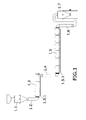
Figure 1 squematically relates to the process for extracting organic compounds from granulated cork according to one of the preferred embodiments of the invention. This embodiment refers to the load of the granulated cork into a load hopper (1.1), the movement by a first stopper (1.2), extraction using vapor in a first extractor (1.3), the movement by a second stopper (1.4), extraction using a supercritical fluid in a second extractor (1.5), the movement by a third stopper (1.6) and unload from the storage hopper (1.7). -
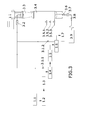
Figure 2 squematically details the process for washing the gases with a pressure lower than 10 bar proceeding from the extraction process according toFigure 1 in a conventional gas-washing-tower (2.2). In said gas-washing tower, a residue mixture proceeding from the process described inFigures 4 and5 (2.3) further exists. -
Figure 3 schematically details the gas recovery by driving gases with a pressure between 10 and 60 bars proceeding from the extraction process according toFigure 1 toward a recovery condenser (3.3), located above a recovery lung (3.4) wherein the gases are condensed and circulated using a pump (3.7) toward the process described inFigures 4 and5 (3.9). -
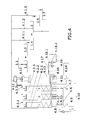
Figure 4 schematically comprises the first option for recirculating a supercritical fluid through the separation of gases in process separators (4.2.1, 4.2.2 and 4.2.3), wherein the extracted residues are driven to a reservoir (4.7) and then to the process described inFigure 2 (4.9), collectively referred as (4.10). The gases from the last process separator are driven to a process condenser (4.12), are condensed and stored in a process lung (4.13), wherein the liquid proceeding from the process described inFigure 3 is mixed (4.14). The liquid that subsequently comes out of the process lung passes through two pumps (4.18.1 and 4.18.2) and passes through a heater (4.19) for being introduced as a supercritical fluid in the extraction process into the second extractor (1.5). -
Figure 5 schematically comprises the second option for recirculating a supercritical fluid using the separation of gases as described inFigure 4 , collectively referred as (4.10). UnlikeFigure 4 , the gases proceeding from the last separator process are mixed with the liquefied gases proceeding from the process described inFigure 3 (4.14), which have previously been evaporated in the cooler (5.4) which is located after the compressors (5.3), wherewith a significant energy saving is achieved. The mixture of gases is then introduced as the supercritical fluid in the extraction process into the second extractor (1.5). -
Figure 6 is a perspective and sectional view that illustrates a stopper (6), the stopper (1.2) (1.4) or (1.6) being detailed as example. -
Figure 7 is an elevational, side, perspective, and A-A' sectional view that sets forth an extractor, the extractor (1.5) being detailed as example. -
Figure 8 is a perspective, plant, and A-A' sectional view that shows a condenser, the condenser (3.3) or (4.12) being detailed as example, indicating that the larger surface is located at the top and the smaller surface is located at the bottom. - For the purpose to simplify the process and being able to more precisely specify each component, each part has been numbered correlatively to the numbering of its corresponding figures. In the preferred embodiment of the invention each part is described in more detail.
- The whole invention departs from granulated cork with different sizes preferably between 0.5 and 10 mm, optionally proceeding from cork granulation.
- The present invention relates to the extraction of organic compounds from granulated cork by dispersively applying a supercritical fluid, wherein said supercritical fluid comprises at least two different gases in a supercritical state.
- A preferred and not limitative embodiment of the invention is the use of at least carbon dioxide (CO2) and nitrous protoxide (N2O), both in a supercritical state, preferably in proportions ranging from 90% to 40% for CO2 and 10% to 60% for N2O, respectively. These gases are completely compatible with each other and the union of their properties improves the behavior in the extraction and especially in the depressurization, avoiding the "sublimation" effect, because they have very similar critical point, but a triple point with different temperatures and pressures. One of the gases has fungal characteristics that confer it sterilization or bactericidal capacity, which gives an added characteristic of greater efficiency, in comparison with, for example, the assumption of the water as cosolvent.
- One or several gases can be added to this mixture of two gases, as long as these may be combined with the CO2 and N2O in a supercritical state. Compounds meeting this requirement preferably proceed from the alkanes, alkenes, or organic alcohols family of such as ethanol.
- The extraction process is performed in an extractor, which will be separately disclosed in more detail later in a paragraph, wherein the supercritical fluid is applied at pressures between75 and 150 bars, at temperatures between 60 and 90°C preferably for more than 10 minutes. The extractor pressure is regulated through the use of individual valves in the supercritical fluid injectors and therefore several pressures can be applied along the extractor. Similarly the temperature inside the extractor is controlled through the presence of at least one heating-jacket. The extractor used for the extraction using a supercritical fluid comprises several jackets, each one regulated by its own vapor or heater fluid inlet and outlet, whereby each section can have a different temperature. The use of several pressures and temperatures in sections along the extractor causes that each organic compound that may be present in the granulated cork can be melted according to its own physical-chemical characteristics, previously disclosure.
- The contact of the granulated cork with the supercritical fluid within the extractor is increased by dispersively injecting the supercritical fluid through the injectors, optionally being two injectors at each outlet in the extractor, by applying a vibration to the extractor and optionally varying the extractor angle. All this provides a turbulence that causes the extraction to be much more effective, uniformly for all the cork, and in a shorter time.
- Another preferred and not limitative embodiment of the invention is to combine the extraction by dispersively applying vapor and a subsequent extraction using a supercritical fluid in a dispersed manner, previously described. This combination is further continuously performed, avoiding the use of several facilities, with problems and time losses in loading and unloading at each step and the increased capacity for capturing the gases proceeding from the process.
- The process would then follow the following steps: a first extraction step by applying vapor in a first extractor, very similar to the extractor for the extraction using a supercritical fluid but with some differences described later in a paragraph, and a second extraction step by applying a supercritical fluid, previously disclosed.
- The vapor application is performed at a pressure between 1 and 10 bars and at a temperature above 80°C preferably for more than 5 minutes.
- The application of a vapor extraction before the supercritical fluid extraction, especially in a continuous process, has as advantages that in the first step up to 70% of extractions are easily, quickly and cheaply achieved, whereas the cannulae in the cork have already been expanded by applying vapor at temperatures and pressures necessary for this extraction. This makes that during the supercritical fluid extraction a low content of organic compounds initially exists and the entire cork is more easily penetrated with the supercritical fluid, reducing the process to lower cost levels and increasing the yield of the extraction.
- In order to perform the two continuous extractions a stopper is used. This stopper carries out a movement and adaptation of the granulated cork to the pressure and temperature changes between the first and second extractors. Said stopper is described in more detail in a separate paragraph.
- A preferred and not limitative embodiment of the invention is illustrated in
Figure 1 . - The granulated cork is loaded into a load hopper (1.1), preferably continuously, from which, and through a first stopper (1.2) is dosed into a first extractor (1.3). The extraction is performed in this first extractor, using vapor according to the previous specifications, injected through a manifold (1.3.1) and subsequently through injectors going from the manifold to inside the extractor. The cork is then moved to a second stopper (1.4) and dosed into a second extractor (1.5). The extraction is performed in this second extractor using a supercritical fluid according to the previous specifications, comprising at least two different gases in a supercritical state, injected through another manifold (1.5.1) and subsequently through the injectors going from the manifold to inside the extractor. The cork is moved by a third stopper (1.6) optionally toward a shift tube to be unloaded into a storage hopper (1.7).
- It is clear that the amount and dimensions of the elements is optional and depend among others on the characteristics of each plant, factory and preferences.
- In order to recycle to the maximum the gases proceeding from the embodiment of the invention previously described, and taking into account that the use of for example a supercritical fluid normally increases the cost of extractions with said fluids, several circuits illustrated in
Figures 2 to 5 have been installed. - In
figure 2 the driving of gases with a pressure less than 10 bars is indicated. These gases come from the first, second and third stopper ((1.2) (1.4) and (1.6), respectively) and from the first extractor (1.3) and are preferably coupled to a common conduit, preferably using control valves ((2.1.1), (2.1.2) (2.1.3) and (2.1.4), one at each outlet). This conduit goes to a conventional washing-tower (2.2), wherein the gases are dissolved into water, preventing their pouring into the atmosphere. - In the washing-tower (2.2) a water rain (2.2.1) wherein products capable of dissolving the dissolved organic compounds have been incorporated, canceling or reducing their hydrophobic nature, is applied.
- The bottom of the tower has a liquid height higher than 1,000 mm. Therein, the residues coming from the process separators described in
Figure 4 (indicated by the square (2.3)) are injected through diffusers (2.2.2) located within the core of the washing-tower (2.2) lower reservoir. Said residues are mixed and absorbed by the liquid (2.2.3) of the tower. Periodically, the produced sludges in the facility are drawn off and dried in order to completely control the disposal to an authorized dumper. - In
Figure 3 the driving of gases with pressures between 10 and 60 bars coming from the second stopper (1.4) and third stopper (1.6) is indicated, which are preferably coupled to a common pipe, preferably using control valves ((3.1 1) and (3.1.2), at each outlet). The gases in the manifold pass through a filter (3.2) to be driven to the recovery condenser (3.3) wherein the gases are condensed and poured into in the recovery lung (3.4). - In order to maintain the supercritical fluid compositions in the desired percentage, analyses on the fluid in the recovery lung (3.4) are periodically, manually or automatically, performed. When necessary, three different liquefied gases from the external supplying reservoirs are added through valves (3.5.1) (3.5.2) and (3.5.3), in an example of using three different gases in the extraction using the supercritical fluid.
- Liquids proceeding from the recovery lung (3.4) are suctioned through a piston pump (3.7) and then passed through a non-return valve (3.8) that hinders the liquefied gases from returning to the pump (3.7) and to the recovery lung (3.4). The liquefied gases are finally directed to the process described in
Figures 4 and5 . - In
Figure 4 the driving of gases with pressures above 60 bars is indicated. These gases come from the second stopper (1.4), the second extractor (1.5) and the third stopper (1.6) and are preferably coupled to a common conduit, preferably using control valves ((4.1.1) (4.1.2) and (4.1.3) at each outlet). The common conduit drives the gases toward a first process separator (4.2.1). - In this separator a height adjustable to a heater liquid which makes that separated organic compounds remain in a liquid state at the bottom of the process separator, whereas the gases pass through the upper outlet toward the next process separator (4.2.2) using a control valve (4.3.1), is applied. Optionally, there are several separators in series, illustrated in
Figure 4 as 3 separators in series. - In each one of these separators the pressure and temperature conditions are varied, in order to separate the organic compounds, trying to maintain the temperature above the melt point thereof in order to maintain them in a liquid state.
- The liquids of each process separator are intermittently purged into small containers located at the bottom thereof (4.5) using control valves (4.4). From these small containers the liquid is poured into an accumulating tank (4.7) using another control valve (4.6). From the accumulating tank the liquids are pumped through a pump (4.8) with a suitable pressure to the process described in
Figure 2 (indicated by a square (4.9). - The process described for the process separators is the same in this
Figure 4 andFigure 5 , whereby the assembly of the two figures has been indicated as the assembly (4.10). - From the last process separator, wherein there is preferably a pressure between 40 and 60 bars, there are two options for recirculating the gases coming from this. On one hand a "liquid phase" process, described later with the illustration in
Figure 4 , and a "gas phase" process, described later with the illustration inFigure 5 , can be applied. With the two options conditions between 75 and 150 bars and between 60 and 90°C are achieved by using the gases in the extraction through supercritical fluids. The decision between one and other system will depend on the size of the plant and will be decided based on economic terms regarding to the investment and consumption. - Continuing with
Figure 4 and the recirculation process in "liquid phase", the gases coming from the last process separator are directed to a process condenser (4.12) using a control valve (4.3.2) and one or more filters (4.11). The process condenser (4.12) is placed over a process lung (4.13) wherein the condensed and liquefied gases are poured into the process condenser (4.12), described in detail in a separate paragraph. Liquefied gases coming from the process described inFigure 3 (indicated as a square (4.14)) are added to the process lung (4.13) in order to recycle the fluids to the maximum, achieving a near complete recovery by reducing the process costs. - The liquefied gas coming from the process lung (4.13) is circulated through at least one bypass valve (4.15) through at least one filter (4.16), passing by a flowrate controller (4.17), to at least one pump (indicated in
Figure 4 as a choice of two pumps in parallel ((4.18.1) and (4.18.2)) that provides the adequate pressure to the gas assembly. Since the supercritical gases coming from this process do not have the adequate temperature for being used in the extraction using a supercritical fluid, these pass earlier through a heater (4.19) to then be injected into the second extractor (1.5). - In
figure 5 , the driving of gasses with pressures above 60 bars through the same valves thanFigure 4 ((4.1.1) (4.1.2) and (4.1.3) ) is indicated, and are conducted to the process separators as disclosure inFigure 4 and indicated as the assembly (4.10). - The gases coming from the last process separator are channeled through at least one filter (5.1) to be sucked using at least one non-lubricated piston compressor (5.3), passing earlier through another filter (5.2). The compressor (5.3) compresses the gas from the gasified pressure to the process pressure, in a single step, since the pressure differential to be reached is perfectly possible in this type of compressors.
- The fluid compressed and already in supercritical conditions, reaches temperatures above 100°C whereby its cooling must be carried out using a refrigerator (5.4), which can be water or a coolant fluid, up to the desired temperature for the extraction using a fluid supercritical in the extractor (1.5). For cooling, the evaporation of the liquefied gas mixture coming from the process described in
Figure 3 , indicated by the square (4.14), and which is mixed with the gas coming from the last process separator for maintaining the flowrate required for the process, can also be used. Finally, the gas mixture is injected from the cooler as the supercritical fluid in the second extractor (1.5). - The dissipated energy from the cooling can also be used, for example, for heating the process separators ((4.2.1) (4.2.2) and (4.2.3).
- Although the use of several control valves for exiting the gases from the stoppers and extractors has been mentioned, it is understood that these may be the same, as long as the gasses with different pressures are channeled to their respective separators, condensers and washing-towers.
-
Figure 6 schematically illustrates in perspective a preferred design of one of the stoppers (6). - The first stopper (1.2) must carry the load from the hopper at atmospheric pressure into the first extractor (1.3) that operates at pressures between 1 to 10 bars. The second stopper (1.4) carries the load from the first extractor (1.3) to the second extractor (1.5), adapting the granulated cork to the change of pressures up to 150 bars. The third stopper (1.6) guides the charge from the second extractor (1.5) toward a tube directed to the storage hopper (1.7), wherein an atmospheric or optionally a minimally elevated pressure exists.
- In the sectional view it is indicated that each stopper has a body (6.1) constructed by the joint of a vertical pipe section, optionally with the same diameter than the extractors located anteriorly and/or posteriorly, and a curve of 90º (6.2) of the same material and diameter. This curve can be located at the bottom or the top of the stopper, depending on whether it is a loading (for example, stopper (1.2)) or unloading (for example, stopper (1.6)) stopper.
- Then, each stopper comprises at least two closure seat (6.3), at least one upper valve (6.4), at least one lower valve (6.5) and actuating pistons ((6.4.1) and (6.5.1)) corresponding to each valve, presented on the outer part of the stopper in order allow the movement of the cork therein.
- Optionally, in the sloping part of the cone of each valve (6.4) and (6.5) there is a slot (6.6) wherein an elastic element shaped like a ring providing a hermetic closure when lifting up the piston against the closure seat, is fitted.
- In the vertical cylindrical body is at least one link (6.7) for the gas inlet and outlet, which are optionally separated by different links, and optionally at least one sleeve (6.8) for mounting two conventional level detectors.
- At the free end of the stopper curve is a fixed or flexible flange (6.9) and at the other end will be a fixed or flexible link (6.10). The option of using a fixed or flexible flange or link will depend on the need for shifting or not the vibrations from the extractors to the stoppers.
- By using this design of the stoppers and making the most use of the process pressures in the anterior and posterior extractors, if any, a closure and tight separation between each process step within the stoppers are produced. The closure system is guaranteed by using the closure seats (6.3) and valves (6.4 and 6.5), allowing the work in the process conditions, thus facilitating a filling and discharge in a short time and in a quick sequence. In addition, the stopper has at least a fluidization system for the granule, which facilitates its decanting.
- The vertical movement of the valves (6.4) and (6.5) in the stoppers is carried out by the following mechanisms:
- The driving pistons ((6.4.1) and (6.5.1), respectively);
- The hermetic closure that is produced by the very pressure of the supercritical fluid (in case that the bottom of the second (1.4) and the top of the third stopper (1.6)). For this, some valves controlled by programming the corresponding stopper are used, which also mark the sequence of loads per time unit and, therefore, the granule amount passing to the next component. The hermetic closure also produces the residual fluid evacuation, once performed each load.
- The vibration of the extractor if the stopper is connected through a flexible connection to a stopper;
- The gravity itself.
- While loading the stopper, a filling of vapor or supercritical fluid coming from the first (1.3) or second extractor (1.5), respectively, which must be evacuated by the gas outlet (6.7) (and/or inlet) link is produced, for then being processed according to their pressures in the processes previously described.
-
Figure 7 illustrates a preferred embodiment of an extractor for extracting organic compounds from granulated cork using a supercritical fluid in an elevation, side, perspective, and A-A' sectional view. - This is a tube (7.1), preferably weldless, cylindrical, hollow, made of stainless steel AISI 316L, diameter and length of which, will depend on the flowrate of the granule to be treated and on the processing or residence time of the granule therein, wherein the tube is supported on at least one platform provided with a vibration system (7.2) and optionally with a mechanism for varying its horizontality. Only the vibration system advances the granule from loading to unloading, which together with the horizontal variation allows adjusting the speed. This vibratory movement produces a ballistic trajectory to each grain in the longitudinal direction, but also as being the extractor cylindrical, the granules that are in the tube walls are subjected to a fall toward the center producing a very homogeneous mixture and joined to the function of the injectors, and thus achieving that each granule has an intimate contact with the supercritical fluid. This feature reduces to half or less the processing time and increases the yield of the extraction.
- At least, at the ends of said tube, some flanges (7.3) area arranged, wherewith the tube is secured to the vibratory base, and can be joined to the inlet (or load) and outlet (or unload) stoppers using a flexible or fixed element.
- At the bottom of the extractor, and preferably in a row, at least one injector (7.4) is inserted, function of which is to introduce the supercritical fluid. These injectors are fed from the injector manifold (7.4.2) through flexible pipes, being the control valves (7.4.1) just after said manifold.
- At the top of the extractor is at least one outlet (7.5) wherein the gases with melted organic compounds come out, passing through a special filter (7.5.1) made of sintered steel in order to prevent the exit of solids, and joined to a manifold (7.5.2).
- For each outlet there are preferably two inlet injectors, alternating the position to achieve a perfect circulation of dense gases and therefore a very high extraction. In addition, together with the movement of the extractor through the vibration, an intimate and homogeneous mixture of the granulated cork with the gases in supercritical state is enabled, shortening the time and increasing the extraction efficiency.
- Around the outside of said tube several heating chambers are preferably arranged (in the view of the section A-A indicated as (7.6) and in the perspective view as several compartments of the assembly (7.7)), to maintain or vary the temperature conditions of the process within the extractor.
- Each chamber will have its corresponding inlet of heater fluid (7.8), which can be either water or vapor, and its outlet for water or condensate (7.9). Each outlet and inlet optionally has its own control valve, along with a thermostat and/or pressure switch. Each inlet and outlet tube is flexible and comes to its respective manifold ((7.8.1) and (7.9.1), respectively).
- These chambers, along with the valves for controlling the gas inlet and outlet, make the extractor to have sections with different pressures and temperatures all along being able to extract different organic compounds from the granulated cork according to its physical-chemical properties, previously mentioned.
- Around the heating chambers, at least one isolation layer (7.10) is arranged, which in addition of preventing heat losses, maintains the temperature conditions. The tube, heating chamber and isolation layer assembly is indicated as the assembly (7.11).
- The gases coming from this extractor will have a pressure above 60 bars, whereby are channeled toward the first process separator (4.2.1) described in
Figures 4 and5 . - The construction features of the extractor for the extraction using vapor are identical, varying some details. The thickness of the first extractor (1.3) must withstand pressures of up to 10 bars and temperatures above 80°C, and the second extractor (1.5) pressures up to 150 bars and temperatures between 60 and 90°C. Also the length of the first extractor (1.3) may be less than the length of the second extractor (1.5), because the vapor processing times are lower than those of the supercritical fluid process. The dimensions of each extractor may be calculated by any skilled in the art and will not be set forth in detail in this description.
- The diameter can optionally be the same between the two extractors if it is chosen to use stoppers also with the same diameter and thus utilizing the same diameter for the entire process, if a same or similar process to that described for
Figure 1 is followed. - The injectors (7.4) inject vapor instead of supercritical fluid and the use of valves at the outlet thereof (7.4.1) is not essential, although is optional. By first applying an extraction using vapor, it results in melting and extracting much part of the organic compounds present in the granulated cork, and the cork cannulae are opened, facilitating the extraction using a supercritical fluid subsequently applied according to the invention previously described.
- As the temperature in this extractor is not necessarily different at several parts along the extractor, a single heating-jacket (7.6) can be used.
- The gases coming from this extractor are less than 10 bars, whereby are channeled toward the gas washing-tower (2.2) described in
Figure 2 . - As indicated in the processes of
Figures 3 and4 , the condenser ((3.3) or (4.12)) is the responsible one for condensing the gases with a pressure between 10 and 60 bars inFigure 3 , and coming from the last process separator inFigure 4 . InFigure 8 a preferred embodiment example for one of the two or both condensers are illustrated. - The condenser has a conical shaped body (8.1) vertically positioned and welded at its bottom to a plate and at top to a Klopper type bottom. The conical shape of the body causes a large evaporation surface, which reduces the surface tension, increasing the evaporation capacity.
- Within the body is a coolant liquid (8.2) wherein an exchanger tube bundle (8.3) is immersed. This tube bundle is joined by welding to an upper plate (8.3.1), whereby the gas is introduced, a lower plate (8.3.2), which is the plate welded to the conical body, whereby the condensate is poured to the lower lung (8.4).
- The exchanger tubes are preferably mounted in a vertical position and inside of which a helical coil (8.3.4) has been introduced, which in addition of avoiding the usual condensate layer reducing the transmission, causes swirls in the gas, increasing the number of Reynolds and therefore the yield of condensation. The tubes are optionally also knurled at their outer face (8.3.5), wherewith the generation of gas bags hindering an effectively evaporation is avoid.
- For knurling is understood in this invention that the metal on the outer face of the exchanger tubes is engraved in order to increase the contact surface of the gas inside the tube with the cooler fluid.
- In the body there is also at least one baffle (8.6) which directs the evaporated gases to the outside of the tubes, significantly increasing the evaporation capacity, which would be obstructed by vapor bags with vertical ascending along the tubes.
- In order to measure the level of the coolant liquid, there is a level meter, immersed at the top level of the coolant liquid and protruding from the outer top of the body (8.7)
- To the Klopper type bottom, joined to the condenser body, the upper plate of the tube bundle has been joined on the inner and lower part, and a cylindrical ferrule on the top forming the gas inlet manifold (8.8). In addition there are two holes wherein two vertical tubes of large section (8.9) have been separately welded. The function of these tubes is to evacuate the gas coming from the evaporation of the coolant liquid wherein the tubes are immersed, and replacing the evaporated liquid.
- The evacuated gas is directed to a reservoir (8.10) in which due to the higher volume expansion and drop separation plate (8.10.1), remains in conditions to be sucked by the refrigeration compressor (8.10.2) located apart, without the risk of carrying along drops.
- In the same reservoir and below the plate (8.10.1) a tube (8.10.3) whereby the coolant liquid necessary for maintaining the coolant liquid level (8.2) in the body (8.1) is supplied, is incorporated; controlled by the level probe (8.7), which optionally sends a signal to a valve located on the refrigeration facility. Said tube (8.10.3) is provided with holes made in the center and directed to the plate (8.10.1) so that the possible drops produced in the expansion; do not mix with gas to be sucked by the compressor.
- The way of building the condenser allows performing different sizes and power, by only changing the number and length of the exchanger tubes and therefore increasing the size of the plates ((8.3.1) and (8.3.2)) and of the body (8.1).
- The condenser is preferably located on a lung in order to avoid problems when the temperature of said lung is punctually raised and when the evaporation occurs as a result of the pressure increasing. The reflux gas would be introduced in the vertical tubes of the condenser, wherewith a quickly condensation would be produced and thus a self-regulation of the balanced conditions of the gases. All this thanks to the power flexibility achieved by the tube exchangers when being immersed.
Claims (29)
- Method for extracting organic compounds from granulated cork characterized in that it comprises an extraction step by dispersively applying a supercritical fluid comprising at least two gases in a supercritical state.
- Method according to claim 1 characterized in that it comprises previously to the extraction by dispersively applying a supercritical fluid, an extraction step by applying vapor.
- Method according to claim 2 characterized in that it comprises previously to the extraction by applying vapor, a step for loading the granulated cork.
- Method according to claim 2 characterized in that the extraction step by applying vapor and the extraction by applying a supercritical fluid are continuously performed, without interruptions between both steps.
- Method according to claim 3 characterized in that the loading step and the extraction by applying vapor are continuously performed, without interruptions between both steps.
- Method according to claim 1 characterized in that the supercritical fluid comprises at least carbon dioxide and nitrous protoxide, both in a supercritical state.
- Method according to claim 6 characterized in that the supercritical fluid comprises at least carbon dioxide and nitrous protoxide in proportions ranging from 90% to 40% and 10% to 60%, respectively.
- Method according to any of claims 1, 6 or 7 characterized in that other gases from the family of alkanes, alkenes, or organic alcohols are added to the dispersed application of a supercritical fluid.
- Method according to any of claims 1, 2, 6, 7 or 8 characterized in that in the extraction step by applying a supercritical fluid, the supercritical fluid is applied at pressures between 75 and 150 bars, at temperatures between 60 and 90°C.
- Method according to any of claims 2 or 4 characterized in that in the extraction step by applying vapor, the vapor is applied at pressures between 1 and 10 bars, and a temperature above 80°C.
- Method according to any of claims 1, 2, 4, 9 or 10 characterized in that any of the extraction steps is performed under vibration.
- Method according to any of claims 1 to 5 characterized in that it presents some additional steps performed between the step for loading the granulated cork and the extraction step by applying vapor, between the extraction step by applying vapor and the extraction step by applying a supercritical fluid and after the extraction step by applying a supercritical fluid, wherein the cork is vertically moved and adapted to the pressure and temperature change in a controlled manner.
- Method according to claims 2 or 12 characterized in that the gases with a pressure less than 10 bars coming from the continuous process for extracting organic compounds from granulated cork are driven to at least one conventional gas washing-tower by actuating the control valves.
- Method according to claim 12 characterized in that the gases with a pressure between 10 and 60 bars coming from the continuous process for extracting organic compounds from granulated cork are driven to at least one recovery condenser by actuating the control valves.
- Method according to claims 1 or 12 characterized in that the gases with a pressure higher than 60 bars coming from the continuous process for extracting organic compounds from granulated cork are driven to at least one process separator by actuating the control valves.
- Method according to claim 15 characterized in that the gases driven to at least one process separator are subjected to a separation in precipitated fluids and gases, wherein the fluids are poured into at least one container and transported to at least one conventional gas washing-tower, and the gases are processed in one or more additional processes separators located in series.
- Method according to claim 16 characterized in that the gases coming from the last process separator are filtered through at least one filter, and condensed in at least one process condenser, wherein the gases are mixed with the gases coming from at least one recovery lung, subsequently these are filtered again through at least one filter, pumped using at least one pump and heated using at least one heater to finally be injected as the supercritical fluid in the extraction step using a supercritical fluid.
- Method according to claim 16 characterized in that the gases coming from the last process separator are filtered through at least one filter, compressed in at least one non-lubricated compressor, cooled in at least one cooler, that utilizes the gases coming from at least one recovery lung that are then mixed with the gasses from the last process separator, wherein the gases coming from the cooler are injected as the supercritical fluid in the extraction step using a supercritical fluid.
- Stopper for carrying out a vertical movement and an adaptation for the granulated cork to the pressure and temperature changes during the method according to claim 12 characterized in that it comprises at least two closure seats forming at least one upper inner stopper and one lower inner stopper.
- Stopper according to claim 19 characterized in that it consists of a body built by the joint of at least one vertical pipe section and at least a 90-degree curve at the bottom or top, wherein the vertical pipe section has at least one link for gas inlet or outlet, at least one sleeve for mounting at least one level detector.
- Condenser for condensing the gases according to claim 14 or 17 characterized in that the body has a conical shape with the larger surface at the top and the smaller surface at the bottom, and placed in a vertical position.
- Installation for carrying out a method for extracting organic compounds from granulated cork according to claims 1, 2 and 12 characterized in that it comprises at least a first extractor for carrying out an extraction by applying vapor, a stopper for carrying out the vertical movement and adapting the granulated cork to the pressure and temperature changes, as described in claims 19 or 20, and a second extractor for carrying out an extraction by applying a supercritical fluid.
- Installation according to claim 22 characterized in that it further comprises at least one load hopper, located previously to the first extractor, at least one second stopper between the hopper and said first extractor, at least a third stopper located subsequently to the second extractor, and at least one storage hopper.
- Installation according to any of claims 22 or 23 characterized in that it further comprises at least one conventional gas washing-tower wherein the gases come with a pressure less than 10 bars and the condensed liquids coming from at least one process separator, at least one process separator wherein the gases come with a pressure above 60 bars, at least one recovery condenser according to claim 21, wherein the gases come with a pressure between 10 and 60 bars, located on a recovery lung.
- Installation according to claim 24 characterized in that the recovery lung has at least two inlets with control valves, each for different gases in a liquid form.
- Installation according to claim 25 characterized in that the lung has a composition meter of the liquid that is inside.
- Installation according to claim 24 characterized in that it further presents a filter at the outlet of the last process separator, followed by at least one process condenser according to claim 21 located on a process lung, the latter comprising at least one inlet for the liquids coming from the recovery lung and at least one outlet for driving them to at least one filter, followed by at least two pumps, followed by at least one heater that drives the gases for being finally injected as a supercritical fluid in the extraction step using a supercritical fluid.
- Installation according to claim 24 characterized in that it comprises a filter at the outlet of the last process separator, at least one compressor comprising at least one inlet for the gases coming from said process separator and another for the gases coming from the recovery lung and least one outlet, followed by at least one cooler that drives the gases for being finally injected as a supercritical fluid in the extraction step using a supercritical fluid.
- Processed granulated cork characterized in that it is obtained through the method according to any of claims 1 to 18.
Priority Applications (1)
| Application Number | Priority Date | Filing Date | Title |
|---|---|---|---|
| EP10382188A EP2404647B1 (en) | 2010-07-08 | 2010-07-08 | Method for extracting organic compounds from granulated cork |
Applications Claiming Priority (1)
| Application Number | Priority Date | Filing Date | Title |
|---|---|---|---|
| EP10382188A EP2404647B1 (en) | 2010-07-08 | 2010-07-08 | Method for extracting organic compounds from granulated cork |
Publications (2)
| Publication Number | Publication Date |
|---|---|
| EP2404647A1 true EP2404647A1 (en) | 2012-01-11 |
| EP2404647B1 EP2404647B1 (en) | 2013-03-27 |
Family
ID=43251855
Family Applications (1)
| Application Number | Title | Priority Date | Filing Date |
|---|---|---|---|
| EP10382188A Not-in-force EP2404647B1 (en) | 2010-07-08 | 2010-07-08 | Method for extracting organic compounds from granulated cork |
Country Status (1)
| Country | Link |
|---|---|
| EP (1) | EP2404647B1 (en) |
Cited By (8)
| Publication number | Priority date | Publication date | Assignee | Title |
|---|---|---|---|---|
| CN103041614A (en) * | 2012-11-30 | 2013-04-17 | 广东医学院 | Device and method for extracting and concentrating traditional Chinese medicine |
| EP2799199A4 (en) * | 2011-12-30 | 2015-09-16 | Invest De La Ind Agroalimentaria Asoc De | METHOD FOR EXTRACTING VARIOUS UNBREASIBLE COMPOUNDS FROM THE CORK |
| WO2018089042A1 (en) * | 2016-11-14 | 2018-05-17 | Ag Equipment Ip Holding Co, Inc | Mobile supercritical extractor system with evaporator chamber having cones and related methods |
| CN110559684A (en) * | 2019-09-16 | 2019-12-13 | 西南石油大学 | two-stage skid-mounted separation device for continuously extracting oil-based components from oil-containing solid waste by adopting supercritical carbon dioxide |
| TWI709429B (en) * | 2020-04-29 | 2020-11-11 | 謝慧萍 | Constant pressure crystallization and granulation system for dense fluid extracts |
| CN112426744A (en) * | 2020-11-07 | 2021-03-02 | 江苏高科制药设备有限公司 | Clamping flow control type supercritical extraction pharmaceutical equipment |
| CN118634524A (en) * | 2024-08-16 | 2024-09-13 | 拓璞生物科技有限公司 | A method for extracting traditional Chinese medicine using a moving bed |
| FR3169468A1 (en) | 2024-12-10 | 2026-06-12 | Centre National De La Recherche Scientifique | Process for extracting a phenolic fraction from cork, and use of this fraction in intumescent compositions |
Families Citing this family (1)
| Publication number | Priority date | Publication date | Assignee | Title |
|---|---|---|---|---|
| EP4146364A1 (en) | 2020-05-07 | 2023-03-15 | Amorim Cork, S.A. | Process and system for decontaminating cork material |
Citations (14)
| Publication number | Priority date | Publication date | Assignee | Title |
|---|---|---|---|---|
| DE616592C (en) * | 1935-08-01 | Fried Krupp Grusonwerk Akt Ges | Device for conveying compressed air | |
| US2491060A (en) * | 1946-03-12 | 1949-12-13 | French Oil Mill Machinery | Recovery and cleaning of condensable gases |
| LU45849A1 (en) * | 1964-04-10 | 1964-06-10 | ||
| GB2089403A (en) * | 1980-12-15 | 1982-06-23 | Milchem Inc | Method and apparatus for washing particulate material |
| DE3631236A1 (en) * | 1986-09-13 | 1988-03-24 | Krupp Gmbh | Method for sealing off the entry and exit openings of a lock space and a sealing unit suitable for carrying out the method |
| EP0264484A1 (en) * | 1986-10-23 | 1988-04-27 | Kaffee-Veredelungs-Werk Koffeinfrei Kaffee G.m.b.H. & Co. | Process for decaffeinating natural products, particularly green coffee or tea |
| EP0448472A1 (en) * | 1990-03-23 | 1991-09-25 | Jean-Pierre Martel | Device for treating plant materials with at least one inclination device |
| EP0616838A1 (en) * | 1993-03-25 | 1994-09-28 | Akzo Nobel N.V. | Hollow fibers cleaning process |
| WO1998016288A1 (en) | 1996-10-14 | 1998-04-23 | Commissariat A L'energie Atomique | Extracting method and plant using a supercritical fluid |
| FR2798879A1 (en) | 1999-09-27 | 2001-03-30 | Commissariat Energie Atomique | PROCESS FOR TREATING AND EXTRACTING ORGANIC COMPOUNDS FROM THE CORK WITH A DENSE FLUID UNDER PRESSURE |
| WO2004014436A1 (en) * | 2002-08-13 | 2004-02-19 | Amorim & Irmãos, S.A. | Cork product treatment system and apparatuses by extraction of compounds dragged in water vapour |
| WO2005025825A1 (en) | 2003-09-10 | 2005-03-24 | Degussa Ag | Method for the extraction of cork-containing material |
| DE102004002159A1 (en) * | 2004-01-15 | 2005-08-11 | Fraunhofer-Gesellschaft zur Förderung der angewandten Forschung e.V. | Removal of contamination from polymers, especially for recycling, involves injection and removal of supercritical carbon dioxide in extruder |
| US20070122307A1 (en) * | 2003-08-07 | 2007-05-31 | Chip-Centro De Higienizacao Por Ionizacao De Produtos | "Process for eliminating/reducing compounds with a musty taste/odour in materials that are to come into contact with foodstuffs and in foods or drinks" |
-
2010
- 2010-07-08 EP EP10382188A patent/EP2404647B1/en not_active Not-in-force
Patent Citations (14)
| Publication number | Priority date | Publication date | Assignee | Title |
|---|---|---|---|---|
| DE616592C (en) * | 1935-08-01 | Fried Krupp Grusonwerk Akt Ges | Device for conveying compressed air | |
| US2491060A (en) * | 1946-03-12 | 1949-12-13 | French Oil Mill Machinery | Recovery and cleaning of condensable gases |
| LU45849A1 (en) * | 1964-04-10 | 1964-06-10 | ||
| GB2089403A (en) * | 1980-12-15 | 1982-06-23 | Milchem Inc | Method and apparatus for washing particulate material |
| DE3631236A1 (en) * | 1986-09-13 | 1988-03-24 | Krupp Gmbh | Method for sealing off the entry and exit openings of a lock space and a sealing unit suitable for carrying out the method |
| EP0264484A1 (en) * | 1986-10-23 | 1988-04-27 | Kaffee-Veredelungs-Werk Koffeinfrei Kaffee G.m.b.H. & Co. | Process for decaffeinating natural products, particularly green coffee or tea |
| EP0448472A1 (en) * | 1990-03-23 | 1991-09-25 | Jean-Pierre Martel | Device for treating plant materials with at least one inclination device |
| EP0616838A1 (en) * | 1993-03-25 | 1994-09-28 | Akzo Nobel N.V. | Hollow fibers cleaning process |
| WO1998016288A1 (en) | 1996-10-14 | 1998-04-23 | Commissariat A L'energie Atomique | Extracting method and plant using a supercritical fluid |
| FR2798879A1 (en) | 1999-09-27 | 2001-03-30 | Commissariat Energie Atomique | PROCESS FOR TREATING AND EXTRACTING ORGANIC COMPOUNDS FROM THE CORK WITH A DENSE FLUID UNDER PRESSURE |
| WO2004014436A1 (en) * | 2002-08-13 | 2004-02-19 | Amorim & Irmãos, S.A. | Cork product treatment system and apparatuses by extraction of compounds dragged in water vapour |
| US20070122307A1 (en) * | 2003-08-07 | 2007-05-31 | Chip-Centro De Higienizacao Por Ionizacao De Produtos | "Process for eliminating/reducing compounds with a musty taste/odour in materials that are to come into contact with foodstuffs and in foods or drinks" |
| WO2005025825A1 (en) | 2003-09-10 | 2005-03-24 | Degussa Ag | Method for the extraction of cork-containing material |
| DE102004002159A1 (en) * | 2004-01-15 | 2005-08-11 | Fraunhofer-Gesellschaft zur Förderung der angewandten Forschung e.V. | Removal of contamination from polymers, especially for recycling, involves injection and removal of supercritical carbon dioxide in extruder |
Cited By (10)
| Publication number | Priority date | Publication date | Assignee | Title |
|---|---|---|---|---|
| EP2799199A4 (en) * | 2011-12-30 | 2015-09-16 | Invest De La Ind Agroalimentaria Asoc De | METHOD FOR EXTRACTING VARIOUS UNBREASIBLE COMPOUNDS FROM THE CORK |
| CN103041614A (en) * | 2012-11-30 | 2013-04-17 | 广东医学院 | Device and method for extracting and concentrating traditional Chinese medicine |
| WO2018089042A1 (en) * | 2016-11-14 | 2018-05-17 | Ag Equipment Ip Holding Co, Inc | Mobile supercritical extractor system with evaporator chamber having cones and related methods |
| US10556192B2 (en) | 2016-11-14 | 2020-02-11 | AG Equipment IP Holding Co, Inc. | Mobile supercritical extractor system with evaporator chamber having cones and related methods |
| CN110559684A (en) * | 2019-09-16 | 2019-12-13 | 西南石油大学 | two-stage skid-mounted separation device for continuously extracting oil-based components from oil-containing solid waste by adopting supercritical carbon dioxide |
| TWI709429B (en) * | 2020-04-29 | 2020-11-11 | 謝慧萍 | Constant pressure crystallization and granulation system for dense fluid extracts |
| CN112426744A (en) * | 2020-11-07 | 2021-03-02 | 江苏高科制药设备有限公司 | Clamping flow control type supercritical extraction pharmaceutical equipment |
| CN118634524A (en) * | 2024-08-16 | 2024-09-13 | 拓璞生物科技有限公司 | A method for extracting traditional Chinese medicine using a moving bed |
| FR3169468A1 (en) | 2024-12-10 | 2026-06-12 | Centre National De La Recherche Scientifique | Process for extracting a phenolic fraction from cork, and use of this fraction in intumescent compositions |
| EP4759865A1 (en) | 2024-12-10 | 2026-06-17 | Centre National de la Recherche Scientifique | Process for the extraction of a phenolic fraction from cork, and use of this fraction in intumescent compositions |
Also Published As
| Publication number | Publication date |
|---|---|
| EP2404647B1 (en) | 2013-03-27 |
Similar Documents
| Publication | Publication Date | Title |
|---|---|---|
| EP2404647B1 (en) | Method for extracting organic compounds from granulated cork | |
| US11230687B2 (en) | Device and method for producing a dealcoholized beverage | |
| US11541329B2 (en) | Liquid carbon dioxide and cosolvent biomass extraction method and system | |
| EP2476412B1 (en) | Apparatus for precipitation of small medicament particles into use containers | |
| AU2017279750B2 (en) | Plant for dealcoholising alcoholic beverages | |
| EP2018900A2 (en) | Method for degassing a liquid | |
| KR101584529B1 (en) | Solution treatment device | |
| KR20040075859A (en) | Method for absorbing vapours and gasses from pressure vessels. | |
| EP3586936B1 (en) | Separation method for ethanol water mixture | |
| CN1198673C (en) | Apparatus and methods for removing solvent resides | |
| KR100665559B1 (en) | Method and apparatus for reclaiming used solvent | |
| CN104010709A (en) | Degasser and method for degassing | |
| JP2003190892A (en) | Multi hermetic cleaning and vacuum drying method and apparatus | |
| CN105194903A (en) | Herbal concentrated solution production process | |
| FR2970878A1 (en) | VOC RECOVERY DEVICE BASED ON VACUUM EVAPORATION AND ASSOCIATED METHOD | |
| EP1212127B1 (en) | Apparatus and method for removing solvent residues | |
| US20090183797A1 (en) | Removing Volatile Vapors From A Storage Vessel | |
| US9068154B2 (en) | Method and equipment for removing dissolved oxygen from grapes or other plant products and for maintaining them in a controlled atmosphere in mechanical means for harvesting, transport and storage | |
| CN1324261A (en) | Vacuum distillation system and use thereof the concentrating organic-aqueous solvent mixtures | |
| WO2021224093A1 (en) | Process and system for decontaminating cork material | |
| US8034159B2 (en) | Method for removing hydrocarbons from a vapour-gas mixture and a device for carrying out said method | |
| PT116340B (en) | PROCESS AND SYSTEM FOR EXTRACTING 2,4,6-TRICHLOROANISOLE (TCA) FROM CORK MATERIAL | |
| CN100486720C (en) | Multi-purpose closed cleaning and vacuum drying method and device thereof | |
| KR102283485B1 (en) | Method for munufacturing high purity dimethylamine | |
| DE19607792A1 (en) | Adsorption cooling process |
Legal Events
| Date | Code | Title | Description |
|---|---|---|---|
| AK | Designated contracting states |
Kind code of ref document: A1 Designated state(s): AL AT BE BG CH CY CZ DE DK EE ES FI FR GB GR HR HU IE IS IT LI LT LU LV MC MK MT NL NO PL PT RO SE SI SK SM TR |
|
| AX | Request for extension of the european patent |
Extension state: BA ME RS |
|
| PUAI | Public reference made under article 153(3) epc to a published international application that has entered the european phase |
Free format text: ORIGINAL CODE: 0009012 |
|
| 17P | Request for examination filed |
Effective date: 20120425 |
|
| GRAP | Despatch of communication of intention to grant a patent |
Free format text: ORIGINAL CODE: EPIDOSNIGR1 |
|
| RIN1 | Information on inventor provided before grant (corrected) |
Inventor name: SANJUAN BLASCO, GERMAN |
|
| GRAS | Grant fee paid |
Free format text: ORIGINAL CODE: EPIDOSNIGR3 |
|
| GRAA | (expected) grant |
Free format text: ORIGINAL CODE: 0009210 |
|
| AK | Designated contracting states |
Kind code of ref document: B1 Designated state(s): AL AT BE BG CH CY CZ DE DK EE ES FI FR GB GR HR HU IE IS IT LI LT LU LV MC MK MT NL NO PL PT RO SE SI SK SM TR |
|
| REG | Reference to a national code |
Ref country code: GB Ref legal event code: FG4D |
|
| REG | Reference to a national code |
Ref country code: CH Ref legal event code: EP |
|
| REG | Reference to a national code |
Ref country code: AT Ref legal event code: REF Ref document number: 602993 Country of ref document: AT Kind code of ref document: T Effective date: 20130415 |
|
| REG | Reference to a national code |
Ref country code: IE Ref legal event code: FG4D |
|
| REG | Reference to a national code |
Ref country code: DE Ref legal event code: R096 Ref document number: 602010005794 Country of ref document: DE Effective date: 20130516 |
|
| PG25 | Lapsed in a contracting state [announced via postgrant information from national office to epo] |
Ref country code: NO Free format text: LAPSE BECAUSE OF FAILURE TO SUBMIT A TRANSLATION OF THE DESCRIPTION OR TO PAY THE FEE WITHIN THE PRESCRIBED TIME-LIMIT Effective date: 20130627 Ref country code: LT Free format text: LAPSE BECAUSE OF FAILURE TO SUBMIT A TRANSLATION OF THE DESCRIPTION OR TO PAY THE FEE WITHIN THE PRESCRIBED TIME-LIMIT Effective date: 20130327 Ref country code: SE Free format text: LAPSE BECAUSE OF FAILURE TO SUBMIT A TRANSLATION OF THE DESCRIPTION OR TO PAY THE FEE WITHIN THE PRESCRIBED TIME-LIMIT Effective date: 20130327 Ref country code: BG Free format text: LAPSE BECAUSE OF FAILURE TO SUBMIT A TRANSLATION OF THE DESCRIPTION OR TO PAY THE FEE WITHIN THE PRESCRIBED TIME-LIMIT Effective date: 20130627 |
|
| REG | Reference to a national code |
Ref country code: AT Ref legal event code: MK05 Ref document number: 602993 Country of ref document: AT Kind code of ref document: T Effective date: 20130327 |
|
| REG | Reference to a national code |
Ref country code: LT Ref legal event code: MG4D |
|
| PG25 | Lapsed in a contracting state [announced via postgrant information from national office to epo] |
Ref country code: FI Free format text: LAPSE BECAUSE OF FAILURE TO SUBMIT A TRANSLATION OF THE DESCRIPTION OR TO PAY THE FEE WITHIN THE PRESCRIBED TIME-LIMIT Effective date: 20130327 Ref country code: GR Free format text: LAPSE BECAUSE OF FAILURE TO SUBMIT A TRANSLATION OF THE DESCRIPTION OR TO PAY THE FEE WITHIN THE PRESCRIBED TIME-LIMIT Effective date: 20130628 Ref country code: LV Free format text: LAPSE BECAUSE OF FAILURE TO SUBMIT A TRANSLATION OF THE DESCRIPTION OR TO PAY THE FEE WITHIN THE PRESCRIBED TIME-LIMIT Effective date: 20130327 Ref country code: SI Free format text: LAPSE BECAUSE OF FAILURE TO SUBMIT A TRANSLATION OF THE DESCRIPTION OR TO PAY THE FEE WITHIN THE PRESCRIBED TIME-LIMIT Effective date: 20130327 |
|
| REG | Reference to a national code |
Ref country code: NL Ref legal event code: VDEP Effective date: 20130327 |
|
| PG25 | Lapsed in a contracting state [announced via postgrant information from national office to epo] |
Ref country code: HR Free format text: LAPSE BECAUSE OF FAILURE TO SUBMIT A TRANSLATION OF THE DESCRIPTION OR TO PAY THE FEE WITHIN THE PRESCRIBED TIME-LIMIT Effective date: 20130327 Ref country code: BE Free format text: LAPSE BECAUSE OF FAILURE TO SUBMIT A TRANSLATION OF THE DESCRIPTION OR TO PAY THE FEE WITHIN THE PRESCRIBED TIME-LIMIT Effective date: 20130327 |
|
| PG25 | Lapsed in a contracting state [announced via postgrant information from national office to epo] |
Ref country code: AT Free format text: LAPSE BECAUSE OF FAILURE TO SUBMIT A TRANSLATION OF THE DESCRIPTION OR TO PAY THE FEE WITHIN THE PRESCRIBED TIME-LIMIT Effective date: 20130327 Ref country code: EE Free format text: LAPSE BECAUSE OF FAILURE TO SUBMIT A TRANSLATION OF THE DESCRIPTION OR TO PAY THE FEE WITHIN THE PRESCRIBED TIME-LIMIT Effective date: 20130327 Ref country code: IS Free format text: LAPSE BECAUSE OF FAILURE TO SUBMIT A TRANSLATION OF THE DESCRIPTION OR TO PAY THE FEE WITHIN THE PRESCRIBED TIME-LIMIT Effective date: 20130727 Ref country code: RO Free format text: LAPSE BECAUSE OF FAILURE TO SUBMIT A TRANSLATION OF THE DESCRIPTION OR TO PAY THE FEE WITHIN THE PRESCRIBED TIME-LIMIT Effective date: 20130327 Ref country code: CZ Free format text: LAPSE BECAUSE OF FAILURE TO SUBMIT A TRANSLATION OF THE DESCRIPTION OR TO PAY THE FEE WITHIN THE PRESCRIBED TIME-LIMIT Effective date: 20130327 Ref country code: PT Free format text: LAPSE BECAUSE OF FAILURE TO SUBMIT A TRANSLATION OF THE DESCRIPTION OR TO PAY THE FEE WITHIN THE PRESCRIBED TIME-LIMIT Effective date: 20130729 Ref country code: SK Free format text: LAPSE BECAUSE OF FAILURE TO SUBMIT A TRANSLATION OF THE DESCRIPTION OR TO PAY THE FEE WITHIN THE PRESCRIBED TIME-LIMIT Effective date: 20130327 Ref country code: ES Free format text: LAPSE BECAUSE OF FAILURE TO SUBMIT A TRANSLATION OF THE DESCRIPTION OR TO PAY THE FEE WITHIN THE PRESCRIBED TIME-LIMIT Effective date: 20130708 Ref country code: NL Free format text: LAPSE BECAUSE OF FAILURE TO SUBMIT A TRANSLATION OF THE DESCRIPTION OR TO PAY THE FEE WITHIN THE PRESCRIBED TIME-LIMIT Effective date: 20130327 |
|
| PG25 | Lapsed in a contracting state [announced via postgrant information from national office to epo] |
Ref country code: CY Free format text: LAPSE BECAUSE OF FAILURE TO SUBMIT A TRANSLATION OF THE DESCRIPTION OR TO PAY THE FEE WITHIN THE PRESCRIBED TIME-LIMIT Effective date: 20130327 Ref country code: PL Free format text: LAPSE BECAUSE OF FAILURE TO SUBMIT A TRANSLATION OF THE DESCRIPTION OR TO PAY THE FEE WITHIN THE PRESCRIBED TIME-LIMIT Effective date: 20130327 |
|
| PLBI | Opposition filed |
Free format text: ORIGINAL CODE: 0009260 |
|
| PG25 | Lapsed in a contracting state [announced via postgrant information from national office to epo] |
Ref country code: DK Free format text: LAPSE BECAUSE OF FAILURE TO SUBMIT A TRANSLATION OF THE DESCRIPTION OR TO PAY THE FEE WITHIN THE PRESCRIBED TIME-LIMIT Effective date: 20130327 |
|
| PLAX | Notice of opposition and request to file observation + time limit sent |
Free format text: ORIGINAL CODE: EPIDOSNOBS2 |
|
| REG | Reference to a national code |
Ref country code: DE Ref legal event code: R119 Ref document number: 602010005794 Country of ref document: DE |
|
| 26 | Opposition filed |
Opponent name: DIAM BOUCHAGE SAS Effective date: 20140102 |
|
| PG25 | Lapsed in a contracting state [announced via postgrant information from national office to epo] |
Ref country code: MC Free format text: LAPSE BECAUSE OF FAILURE TO SUBMIT A TRANSLATION OF THE DESCRIPTION OR TO PAY THE FEE WITHIN THE PRESCRIBED TIME-LIMIT Effective date: 20130327 Ref country code: IT Free format text: LAPSE BECAUSE OF FAILURE TO SUBMIT A TRANSLATION OF THE DESCRIPTION OR TO PAY THE FEE WITHIN THE PRESCRIBED TIME-LIMIT Effective date: 20130327 |
|
| REG | Reference to a national code |
Ref country code: DE Ref legal event code: R026 Ref document number: 602010005794 Country of ref document: DE Effective date: 20140102 |
|
| REG | Reference to a national code |
Ref country code: IE Ref legal event code: MM4A |
|
| REG | Reference to a national code |
Ref country code: DE Ref legal event code: R119 Ref document number: 602010005794 Country of ref document: DE Effective date: 20140201 |
|
| REG | Reference to a national code |
Ref country code: FR Ref legal event code: ST Effective date: 20140331 |
|
| PG25 | Lapsed in a contracting state [announced via postgrant information from national office to epo] |
Ref country code: DE Free format text: LAPSE BECAUSE OF NON-PAYMENT OF DUE FEES Effective date: 20140201 |
|
| PG25 | Lapsed in a contracting state [announced via postgrant information from national office to epo] |
Ref country code: FR Free format text: LAPSE BECAUSE OF NON-PAYMENT OF DUE FEES Effective date: 20130731 |
|
| PG25 | Lapsed in a contracting state [announced via postgrant information from national office to epo] |
Ref country code: IE Free format text: LAPSE BECAUSE OF NON-PAYMENT OF DUE FEES Effective date: 20130708 |
|
| REG | Reference to a national code |
Ref country code: CH Ref legal event code: PL |
|
| GBPC | Gb: european patent ceased through non-payment of renewal fee |
Effective date: 20140708 |
|
| PG25 | Lapsed in a contracting state [announced via postgrant information from national office to epo] |
Ref country code: LI Free format text: LAPSE BECAUSE OF NON-PAYMENT OF DUE FEES Effective date: 20140731 Ref country code: CH Free format text: LAPSE BECAUSE OF NON-PAYMENT OF DUE FEES Effective date: 20140731 |
|
| PG25 | Lapsed in a contracting state [announced via postgrant information from national office to epo] |
Ref country code: GB Free format text: LAPSE BECAUSE OF NON-PAYMENT OF DUE FEES Effective date: 20140708 Ref country code: SM Free format text: LAPSE BECAUSE OF FAILURE TO SUBMIT A TRANSLATION OF THE DESCRIPTION OR TO PAY THE FEE WITHIN THE PRESCRIBED TIME-LIMIT Effective date: 20130327 |
|
| PG25 | Lapsed in a contracting state [announced via postgrant information from national office to epo] |
Ref country code: MT Free format text: LAPSE BECAUSE OF FAILURE TO SUBMIT A TRANSLATION OF THE DESCRIPTION OR TO PAY THE FEE WITHIN THE PRESCRIBED TIME-LIMIT Effective date: 20130327 Ref country code: TR Free format text: LAPSE BECAUSE OF FAILURE TO SUBMIT A TRANSLATION OF THE DESCRIPTION OR TO PAY THE FEE WITHIN THE PRESCRIBED TIME-LIMIT Effective date: 20130327 |
|
| PG25 | Lapsed in a contracting state [announced via postgrant information from national office to epo] |
Ref country code: MK Free format text: LAPSE BECAUSE OF FAILURE TO SUBMIT A TRANSLATION OF THE DESCRIPTION OR TO PAY THE FEE WITHIN THE PRESCRIBED TIME-LIMIT Effective date: 20130327 Ref country code: HU Free format text: LAPSE BECAUSE OF FAILURE TO SUBMIT A TRANSLATION OF THE DESCRIPTION OR TO PAY THE FEE WITHIN THE PRESCRIBED TIME-LIMIT; INVALID AB INITIO Effective date: 20100708 Ref country code: LU Free format text: LAPSE BECAUSE OF NON-PAYMENT OF DUE FEES Effective date: 20130708 |
|
| PLCK | Communication despatched that opposition was rejected |
Free format text: ORIGINAL CODE: EPIDOSNREJ1 |
|
| PLBN | Opposition rejected |
Free format text: ORIGINAL CODE: 0009273 |
|
| STAA | Information on the status of an ep patent application or granted ep patent |
Free format text: STATUS: OPPOSITION REJECTED |
|
| 27O | Opposition rejected |
Effective date: 20151013 |
|
| PG25 | Lapsed in a contracting state [announced via postgrant information from national office to epo] |
Ref country code: AL Free format text: LAPSE BECAUSE OF FAILURE TO SUBMIT A TRANSLATION OF THE DESCRIPTION OR TO PAY THE FEE WITHIN THE PRESCRIBED TIME-LIMIT Effective date: 20130327 |