EP2403093A2 - Method and apparatus for control battery and specification determining method of battery - Google Patents
Method and apparatus for control battery and specification determining method of battery Download PDFInfo
- Publication number
- EP2403093A2 EP2403093A2 EP11005278A EP11005278A EP2403093A2 EP 2403093 A2 EP2403093 A2 EP 2403093A2 EP 11005278 A EP11005278 A EP 11005278A EP 11005278 A EP11005278 A EP 11005278A EP 2403093 A2 EP2403093 A2 EP 2403093A2
- Authority
- EP
- European Patent Office
- Prior art keywords
- battery
- unit
- battery control
- frequency
- control quantity
- Prior art date
- Legal status (The legal status is an assumption and is not a legal conclusion. Google has not performed a legal analysis and makes no representation as to the accuracy of the status listed.)
- Granted
Links
Images



Classifications
-
- H—ELECTRICITY
- H02—GENERATION; CONVERSION OR DISTRIBUTION OF ELECTRIC POWER
- H02J—ELECTRIC POWER NETWORKS; CIRCUIT ARRANGEMENTS OR SYSTEMS FOR SUPPLYING OR DISTRIBUTING ELECTRIC POWER; SYSTEMS FOR STORING ELECTRIC ENERGY
- H02J3/00—Circuit arrangements for AC mains or AC distribution networks
- H02J3/28—Arrangements for balancing of the load in networks by storage of energy
- H02J3/32—Arrangements for balancing of the load in networks by storage of energy using batteries or super capacitors with converting means
-
- H—ELECTRICITY
- H02—GENERATION; CONVERSION OR DISTRIBUTION OF ELECTRIC POWER
- H02J—ELECTRIC POWER NETWORKS; CIRCUIT ARRANGEMENTS OR SYSTEMS FOR SUPPLYING OR DISTRIBUTING ELECTRIC POWER; SYSTEMS FOR STORING ELECTRIC ENERGY
- H02J13/00—Circuit arrangements for providing remote monitoring or remote control of equipment in a power distribution network
- H02J13/12—Monitoring network conditions, e.g. electrical magnitudes or operational status
-
- H—ELECTRICITY
- H02—GENERATION; CONVERSION OR DISTRIBUTION OF ELECTRIC POWER
- H02J—ELECTRIC POWER NETWORKS; CIRCUIT ARRANGEMENTS OR SYSTEMS FOR SUPPLYING OR DISTRIBUTING ELECTRIC POWER; SYSTEMS FOR STORING ELECTRIC ENERGY
- H02J13/00—Circuit arrangements for providing remote monitoring or remote control of equipment in a power distribution network
- H02J13/18—Circuit arrangements for providing remote monitoring or remote control of equipment in a power distribution network characterised by the remotely-controlled equipment, e.g. converters or transformers
- H02J13/333—Circuit arrangements for providing remote monitoring or remote control of equipment in a power distribution network characterised by the remotely-controlled equipment, e.g. converters or transformers the equipment forming part of substations
-
- Y—GENERAL TAGGING OF NEW TECHNOLOGICAL DEVELOPMENTS; GENERAL TAGGING OF CROSS-SECTIONAL TECHNOLOGIES SPANNING OVER SEVERAL SECTIONS OF THE IPC; TECHNICAL SUBJECTS COVERED BY FORMER USPC CROSS-REFERENCE ART COLLECTIONS [XRACs] AND DIGESTS
- Y02—TECHNOLOGIES OR APPLICATIONS FOR MITIGATION OR ADAPTATION AGAINST CLIMATE CHANGE
- Y02B—CLIMATE CHANGE MITIGATION TECHNOLOGIES RELATED TO BUILDINGS, e.g. HOUSING, HOUSE APPLIANCES OR RELATED END-USER APPLICATIONS
- Y02B70/00—Technologies for an efficient end-user side electric power management and consumption
- Y02B70/30—Systems integrating technologies related to power network operation and communication or information technologies for improving the carbon footprint of the management of residential or tertiary loads, i.e. smart grids as climate change mitigation technology in the buildings sector, including also the last stages of power distribution and the control, monitoring or operating management systems at local level
-
- Y—GENERAL TAGGING OF NEW TECHNOLOGICAL DEVELOPMENTS; GENERAL TAGGING OF CROSS-SECTIONAL TECHNOLOGIES SPANNING OVER SEVERAL SECTIONS OF THE IPC; TECHNICAL SUBJECTS COVERED BY FORMER USPC CROSS-REFERENCE ART COLLECTIONS [XRACs] AND DIGESTS
- Y02—TECHNOLOGIES OR APPLICATIONS FOR MITIGATION OR ADAPTATION AGAINST CLIMATE CHANGE
- Y02B—CLIMATE CHANGE MITIGATION TECHNOLOGIES RELATED TO BUILDINGS, e.g. HOUSING, HOUSE APPLIANCES OR RELATED END-USER APPLICATIONS
- Y02B70/00—Technologies for an efficient end-user side electric power management and consumption
- Y02B70/30—Systems integrating technologies related to power network operation and communication or information technologies for improving the carbon footprint of the management of residential or tertiary loads, i.e. smart grids as climate change mitigation technology in the buildings sector, including also the last stages of power distribution and the control, monitoring or operating management systems at local level
- Y02B70/3225—Demand response systems, e.g. load shedding, peak shaving
-
- Y—GENERAL TAGGING OF NEW TECHNOLOGICAL DEVELOPMENTS; GENERAL TAGGING OF CROSS-SECTIONAL TECHNOLOGIES SPANNING OVER SEVERAL SECTIONS OF THE IPC; TECHNICAL SUBJECTS COVERED BY FORMER USPC CROSS-REFERENCE ART COLLECTIONS [XRACs] AND DIGESTS
- Y02—TECHNOLOGIES OR APPLICATIONS FOR MITIGATION OR ADAPTATION AGAINST CLIMATE CHANGE
- Y02E—REDUCTION OF GREENHOUSE GAS [GHG] EMISSIONS, RELATED TO ENERGY GENERATION, TRANSMISSION OR DISTRIBUTION
- Y02E10/00—Energy generation through renewable energy sources
- Y02E10/50—Photovoltaic [PV] energy
- Y02E10/56—Power conversion systems, e.g. maximum power point trackers
-
- Y—GENERAL TAGGING OF NEW TECHNOLOGICAL DEVELOPMENTS; GENERAL TAGGING OF CROSS-SECTIONAL TECHNOLOGIES SPANNING OVER SEVERAL SECTIONS OF THE IPC; TECHNICAL SUBJECTS COVERED BY FORMER USPC CROSS-REFERENCE ART COLLECTIONS [XRACs] AND DIGESTS
- Y02—TECHNOLOGIES OR APPLICATIONS FOR MITIGATION OR ADAPTATION AGAINST CLIMATE CHANGE
- Y02E—REDUCTION OF GREENHOUSE GAS [GHG] EMISSIONS, RELATED TO ENERGY GENERATION, TRANSMISSION OR DISTRIBUTION
- Y02E10/00—Energy generation through renewable energy sources
- Y02E10/70—Wind energy
- Y02E10/76—Power conversion electric or electronic aspects
-
- Y—GENERAL TAGGING OF NEW TECHNOLOGICAL DEVELOPMENTS; GENERAL TAGGING OF CROSS-SECTIONAL TECHNOLOGIES SPANNING OVER SEVERAL SECTIONS OF THE IPC; TECHNICAL SUBJECTS COVERED BY FORMER USPC CROSS-REFERENCE ART COLLECTIONS [XRACs] AND DIGESTS
- Y02—TECHNOLOGIES OR APPLICATIONS FOR MITIGATION OR ADAPTATION AGAINST CLIMATE CHANGE
- Y02E—REDUCTION OF GREENHOUSE GAS [GHG] EMISSIONS, RELATED TO ENERGY GENERATION, TRANSMISSION OR DISTRIBUTION
- Y02E60/00—Enabling technologies; Technologies with a potential or indirect contribution to GHG emissions mitigation
-
- Y—GENERAL TAGGING OF NEW TECHNOLOGICAL DEVELOPMENTS; GENERAL TAGGING OF CROSS-SECTIONAL TECHNOLOGIES SPANNING OVER SEVERAL SECTIONS OF THE IPC; TECHNICAL SUBJECTS COVERED BY FORMER USPC CROSS-REFERENCE ART COLLECTIONS [XRACs] AND DIGESTS
- Y02—TECHNOLOGIES OR APPLICATIONS FOR MITIGATION OR ADAPTATION AGAINST CLIMATE CHANGE
- Y02E—REDUCTION OF GREENHOUSE GAS [GHG] EMISSIONS, RELATED TO ENERGY GENERATION, TRANSMISSION OR DISTRIBUTION
- Y02E70/00—Other energy conversion or management systems reducing GHG emissions
- Y02E70/30—Systems combining energy storage with energy generation of non-fossil origin
-
- Y—GENERAL TAGGING OF NEW TECHNOLOGICAL DEVELOPMENTS; GENERAL TAGGING OF CROSS-SECTIONAL TECHNOLOGIES SPANNING OVER SEVERAL SECTIONS OF THE IPC; TECHNICAL SUBJECTS COVERED BY FORMER USPC CROSS-REFERENCE ART COLLECTIONS [XRACs] AND DIGESTS
- Y04—INFORMATION OR COMMUNICATION TECHNOLOGIES HAVING AN IMPACT ON OTHER TECHNOLOGY AREAS
- Y04S—SYSTEMS INTEGRATING TECHNOLOGIES RELATED TO POWER NETWORK OPERATION, COMMUNICATION OR INFORMATION TECHNOLOGIES FOR IMPROVING THE ELECTRICAL POWER GENERATION, TRANSMISSION, DISTRIBUTION, MANAGEMENT OR USAGE, i.e. SMART GRIDS
- Y04S10/00—Systems supporting electrical power generation, transmission or distribution
- Y04S10/12—Monitoring or controlling equipment for energy generation units, e.g. distributed energy generation [DER] or load-side generation
- Y04S10/123—Monitoring or controlling equipment for energy generation units, e.g. distributed energy generation [DER] or load-side generation the energy generation units being or involving renewable energy sources
-
- Y—GENERAL TAGGING OF NEW TECHNOLOGICAL DEVELOPMENTS; GENERAL TAGGING OF CROSS-SECTIONAL TECHNOLOGIES SPANNING OVER SEVERAL SECTIONS OF THE IPC; TECHNICAL SUBJECTS COVERED BY FORMER USPC CROSS-REFERENCE ART COLLECTIONS [XRACs] AND DIGESTS
- Y04—INFORMATION OR COMMUNICATION TECHNOLOGIES HAVING AN IMPACT ON OTHER TECHNOLOGY AREAS
- Y04S—SYSTEMS INTEGRATING TECHNOLOGIES RELATED TO POWER NETWORK OPERATION, COMMUNICATION OR INFORMATION TECHNOLOGIES FOR IMPROVING THE ELECTRICAL POWER GENERATION, TRANSMISSION, DISTRIBUTION, MANAGEMENT OR USAGE, i.e. SMART GRIDS
- Y04S10/00—Systems supporting electrical power generation, transmission or distribution
- Y04S10/14—Energy storage units
-
- Y—GENERAL TAGGING OF NEW TECHNOLOGICAL DEVELOPMENTS; GENERAL TAGGING OF CROSS-SECTIONAL TECHNOLOGIES SPANNING OVER SEVERAL SECTIONS OF THE IPC; TECHNICAL SUBJECTS COVERED BY FORMER USPC CROSS-REFERENCE ART COLLECTIONS [XRACs] AND DIGESTS
- Y04—INFORMATION OR COMMUNICATION TECHNOLOGIES HAVING AN IMPACT ON OTHER TECHNOLOGY AREAS
- Y04S—SYSTEMS INTEGRATING TECHNOLOGIES RELATED TO POWER NETWORK OPERATION, COMMUNICATION OR INFORMATION TECHNOLOGIES FOR IMPROVING THE ELECTRICAL POWER GENERATION, TRANSMISSION, DISTRIBUTION, MANAGEMENT OR USAGE, i.e. SMART GRIDS
- Y04S10/00—Systems supporting electrical power generation, transmission or distribution
- Y04S10/30—State monitoring, e.g. fault, temperature monitoring, insulator monitoring, corona discharge
-
- Y—GENERAL TAGGING OF NEW TECHNOLOGICAL DEVELOPMENTS; GENERAL TAGGING OF CROSS-SECTIONAL TECHNOLOGIES SPANNING OVER SEVERAL SECTIONS OF THE IPC; TECHNICAL SUBJECTS COVERED BY FORMER USPC CROSS-REFERENCE ART COLLECTIONS [XRACs] AND DIGESTS
- Y04—INFORMATION OR COMMUNICATION TECHNOLOGIES HAVING AN IMPACT ON OTHER TECHNOLOGY AREAS
- Y04S—SYSTEMS INTEGRATING TECHNOLOGIES RELATED TO POWER NETWORK OPERATION, COMMUNICATION OR INFORMATION TECHNOLOGIES FOR IMPROVING THE ELECTRICAL POWER GENERATION, TRANSMISSION, DISTRIBUTION, MANAGEMENT OR USAGE, i.e. SMART GRIDS
- Y04S20/00—Management or operation of end-user stationary applications or the last stages of power distribution; Controlling, monitoring or operating thereof
- Y04S20/20—End-user application control systems
- Y04S20/221—General power management systems
-
- Y—GENERAL TAGGING OF NEW TECHNOLOGICAL DEVELOPMENTS; GENERAL TAGGING OF CROSS-SECTIONAL TECHNOLOGIES SPANNING OVER SEVERAL SECTIONS OF THE IPC; TECHNICAL SUBJECTS COVERED BY FORMER USPC CROSS-REFERENCE ART COLLECTIONS [XRACs] AND DIGESTS
- Y04—INFORMATION OR COMMUNICATION TECHNOLOGIES HAVING AN IMPACT ON OTHER TECHNOLOGY AREAS
- Y04S—SYSTEMS INTEGRATING TECHNOLOGIES RELATED TO POWER NETWORK OPERATION, COMMUNICATION OR INFORMATION TECHNOLOGIES FOR IMPROVING THE ELECTRICAL POWER GENERATION, TRANSMISSION, DISTRIBUTION, MANAGEMENT OR USAGE, i.e. SMART GRIDS
- Y04S20/00—Management or operation of end-user stationary applications or the last stages of power distribution; Controlling, monitoring or operating thereof
- Y04S20/20—End-user application control systems
- Y04S20/222—Demand response systems, e.g. load shedding, peak shaving
Definitions
- the present invention relates to an apparatus and a method for controlling a battery and a battery specification determination method, and more specifically to a battery control apparatus and method and a battery specification determination method, both suitably used in a system connected with distributed power generations.
- JP-A-9-135536 Another technique is known which involves monitoring a generation state of the generator and a load state of the system and, based on these information, controlling a discharging state of the battery. This technique is disclosed in JP-A-8-308104 .
- Fluctuation components in the system include short-, medium- and long-cycle components.
- the technology disclosed in JP-A-9-135536 and JP-A-8-308104 deals with all of these components in controlling the battery. To compensate for the short-cycle fluctuations that change in relatively short cycles, a fast response is required of control, tending to make the battery and the control apparatus expensive. For the long-cycle fluctuations that change in relatively long cycles, the battery is required to have a correspondingly large capacity, which in turn tends to make the battery expensive.
- Another drawback of the conventional technology described above is its inability to control the battery according to the battery installation location, making it impossible to perform an appropriate control at all times according to load variations.
- a further drawback is that the above-mentioned conventional technology tends to make the battery capacity relatively large, with the result that appropriate battery specifications have not been able to be obtained.
- this invention provides a battery control apparatus to control a battery connected to a power system, comprising: a load data collection unit 1-1 to collect load data in the system; a component extraction unit 1-3 to extract from the load data components larger than a predetermined frequency; and a control unit 1-5 to control the battery based on the extracted components.
- the invention provides a battery control apparatus to control a battery connected to a power distribution system that is connected with a plurality of loads and a plurality of distributed power generations, wherein the battery is installed in a section between a pole-mounted transformer and a branch point of a low-voltage distribution line, the battery control apparatus comprising: a communication network 8 to acquire measurement data through communication channels from a meter installed in the section between the pole-mounted transformer and the branch point of the low-voltage distribution line; and a battery control quantity determination device 1 to determine a control quantity for the battery based on the measurement data acquired from the communication network.
- the invention provides a battery control apparatus to control a battery connected to a power distribution system that is connected with a plurality of loads and a plurality of distributed power generations, wherein the battery is installed in a section between a feeder and a branch point of a high-voltage distribution line, the battery control apparatus comprising: a communication network 8 to acquire measurement data through communication channels from a meter installed in the section between the feeder and the branch point of a high-voltage distribution line; and a battery control quantity determination device 1 to determine a control quantity for the battery based on the measurement data acquired from the communication network.
- the invention provides a battery control apparatus to control a battery connected to a power distribution system that is connected with a plurality of loads and a plurality of distributed power generations, wherein the battery is installed on a terminal side of a branch point of a low-voltage distribution line
- the battery control apparatus comprising: a communication network 8 to acquire measurement data through communication channels from a meter installed on the terminal side of the branch point of the low-voltage distribution line; and a battery control quantity determination device 1 to determine a control quantity for the battery based on the measurement data acquired from the communication network.
- the invention provides a battery specification determination method comprising the steps of: collecting loads in a system as load data; extracting components larger than a predetermined frequency from the load data; and based on the extracted components, determining specifications of the battery connected to the system.
- One construction of this invention takes advantage of the fact that, since short-cycle components fluctuate quickly, they are often canceled by other interconnected distribution systems and that long-cycle components can be controlled by the generator side forecasting a large load fluctuation pattern in advance. So the extraction of only the intermediate-cycle components allows for an efficient control of the batteries. Another construction of this invention allows for the battery control according to the location of the battery. Yet another construction of this invention can reduce the capacity of the battery and produce appropriate specifications of the battery.
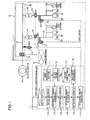
- Fig. 1 shows a configuration of an optimal battery control system 10 for a distribution system as one embodiment of this invention.
- the optimal battery control system 10 comprises a battery 13 installed on a feeder 16 of a utility power distribution system, batteries 21, 22 installed between pole-mounted transformers 14, 15 and branch points of low-voltage power distribution lines 18, a communication network 8 to transmit data measured by meters 12, 23, 24, and a battery control quantity determination device 1 that determines a battery control quantity from the data acquired from the communication network.
- the battery control quantity determination device 1 comprises: a load data collection unit 1-1 to gather an overall power data obtained by combining an energy demand of a plurality of loads 25, 26, 28, 29 and an output power of distributed generations 27, 30; a frequency conversion unit 1-2 to perform a frequency analysis based on the acquired load data; a BPF cutoff frequency determination unit 1-8 to tune a bandpass filter (BPF) in a frequency converted from battery response speed information 1-7; an intermediate-cycle component extraction unit 1-3 to extract intermediate-cycle components by using cutoff frequencies; a BPF cutoff frequency learning unit 1-9 to learn the BPF cutoff frequency; a frequency inverse conversion unit 1-4 to inversely convert the extracted intermediate-cycle components; a battery control quantity calculation unit 1-5 to determine a battery control quantity; a battery control command unit 1-6 to issue a control command based on the determined control quantity; a battery control command transmission unit 1-11 to transmit a control signal to the batteries 13, 21, 22; and a battery capacity determination unit 1-10 to determine the capacity of the batteries according to the output from the intermediate-
- Fig. 2 shows one-day load curves of all loads connected to a pole-mounted transformer during summer and intermediate seasons.
- Fig. 3 shows amounts of power produced in one day by a photovoltaic power generation, a form of a distributed generation 27, during the summer and intermediate seasons.
- Fig. 4 shows load curves during the summer and intermediate seasons measured by the meter 23 in the pole-mounted transformer 14, each load curve representing a combination of the amount of power consumed by the loads 25, 26 and the amount of power generated by the distributed generation (photovoltaic power generation) 27.
- Components ranging from a cutoff frequency 1 to a cutoff frequency 2 are extracted from the frequency conversion result by the intermediate-cycle component extraction unit 1-3. That is, those components with frequencies lower than the cutoff frequency 1 are cut off or attenuated to a degree virtually equivalent to a cutoff. Components with frequencies higher than the cutoff frequency 2 are similarly cut off or attenuated to a degree virtually equivalent to a cutoff.
- the intermediate-cycle components (those between the cutoff frequency 1 and the cutoff frequency 2) are extracted by a bandpass filter (BPF).
- BPF bandpass filter
- the BPF cutoff frequency determination unit 1-8 determines the cutoff frequency 1 and the cutoff frequency 2 by referring to the battery response speed information 1-7.
- the cutoff frequency 1 and the cutoff frequency 2 are shifted toward a shorter frequency side; and if it is slow, the cutoff frequencies 1, 2 are shifted toward a longer frequency side.
- the result of learning by the BPF cutoff frequency learning unit 1-9 is reflected on the cutoff frequencies.
- the cutoff frequency 1 is set at 0.0005 Hz and the cutoff frequency 2 at 0.03 Hz. It is desired that the cutoff frequency 1 be learned in a range of 000005 Hz to 0.005 Hz and the cutoff frequency 2 in a range of 0.003 Hz to 0. 1 Hz.
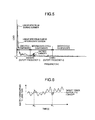
- the frequency components to be extracted are determined by the BPF cutoff frequency determination unit 1-8 according to load fluctuation patterns, i.e., the load variation characteristics of each region. Further, since load fluctuation components may change due to external factors, such as changes made in the configuration of the distribution system or seasonal variations, the BPF cutoff frequency determination unit 1-8 may be provided with a function to have the BPF cutoff frequency learning unit 1-9 execute learning in a way that allows for making changes in the cutoff frequencies as the load fluctuation components vary. Extracting only the intermediate-cycle components obviates the need to compensate for the components with small frequencies (long-cycle components), such as shown in Fig. 5 , making it possible to reduce the capacity of the battery.
- the BPF cutoff frequency learning unit 1-9 checks if, in the linear spectrum of Fig. 5 , there is any component larger than a predetermined level in a range that is a predetermined frequency lower than the cutoff frequency 1 (near the cutoff frequency 1). If so, the BPF cutoff frequency learning unit 1-9 makes the cutoff frequency 1 lower so that the component of interest is included.
- the BPF cutoff frequency learning unit 1-9 also checks if, in the linear spectrum of Fig. 5 , there is any component larger than a predetermined level in a range that is a predetermined frequency higher than the cutoff frequency 2 (near the cutoff frequency 2). If so, it makes the cutoff frequency 2 higher so that the component of interest is included.
- the BPF cutoff frequency determination unit 1-8 stores an average value of each component over the last 12 months and determines a frequency of the largest (peak) component among them. Similarly, it also stores an average value of each component over the past three months and determines a frequency of the largest (peak) component among them. From a difference between the frequency of the 12-month average peak and the frequency of the 3-month average peak, correction amounts for the cutoff frequency 1 and the cutoff frequency 2 are calculated. This calculation of the correction amounts is executed, for example, four times a year (March, June, September and December). The adoption of the changes in the cutoff frequency 1 and the cutoff frequency 2 in the actual control will be made nine months later. In other words, the calculated correction amounts will not be used for nine months. Instead of updating the cutoff frequencies 1 and 2 nine months later, the cutoff frequencies may be changed whenever an event occurs, as when the distribution system is changed or the maximum value changed, or at the change of the seasons.
- the spectrum between the cutoff frequency 1 and the cutoff frequency 2 is accumulated, for example, every few tens of minutes over one year by the intermediate-cycle component extraction unit 1-3, and the battery capacity determination unit 1-10 sets the battery capacity equal to the largest component (or a predetermined amount larger than that component) in the spectrum of Fig. 5 .
- the battery capacity determination unit 1-10 determines as the battery capacity the largest among the load fluctuations of the extracted intermediate-cycle components. That is, the capacity shown in Fig. 5 needs only to be provided.
- the frequency inverse conversion unit 1-4 performs an inverse Fourier transform on the components ranging from the cutoff frequency 1 to the cutoff frequency 2 extracted by the intermediate-cycle component extraction unit 1-3 by Equation (2) below.
- the inverse Fourier transform may use an inverse fast Fourier transform.
- f x ⁇ - ⁇ ⁇ f ⁇ ⁇ e 2 ⁇ ⁇ ix ⁇ ⁇ d ⁇ , where x : time s , ⁇ : frequency Hz
- the battery control quantity calculation unit 1-5 calculates the control quantity.
- the result of inverse Fourier transform is shown in Fig. 6 . It is seen that the electric power supplied to loads P (kW), the result of the inverse Fourier transform, changes with time (s). For example, the result of the inverse Fourier transform at time to (s) in Fig. 6 is Po kW, which is compared with a target power P* (e.g., 5 kW). If it is greater than the target power P* (e.g., 5 kW), the battery control quantity calculation unit 1-5 calculates the battery control quantity such that the batteries 21, 22 can absorb the difference (P* ⁇ P 0 ) (by charging) to bring the component in question, the result of the inverse Fourier transform, down to the target power P* (e.g., 5 kW).
- a target power P* e.g., 5 kW
- the battery control quantity calculation unit 1-5 calculates the battery control quantity such that the batteries 21, 22 can absorb the difference (P* ⁇ P 0 ) (by charging) to bring the component in question, the result
- the battery control quantity is determined such that the batteries 21, 22 can supply the difference (P* ⁇ P 1 ) (by discharging) to bring the component in question, the result of the inverse Fourier transform, up to the target power P* (e.g., 5 kW).
- the control has been described to be performed to cause the result of the inverse Fourier transform to become the predetermined value (5 kW)
- the target power P* may be changed to 5+ ⁇ P kW
- the target power P* may be changed to 5 ⁇ P kW.
- the predetermined value is set at 5 kW in this example, it may be any desired value that can change properly according to the season and the time in one day.
- the battery control quantity may, of course, be corrected according to the condition of the batteries 21, 22. That is, the battery control is done to limit discharging if the amount of energy stored in the batteries is small and to limit charging if the stored energy is close to their upper limit. Further, when the battery control command unit 1-6 instructs the transmission of this control quantity, the battery control command transmission unit 1-11 issues a command to the batteries 21, 22.
- the installed batteries 21, 22 allow the control quantity to be determined for individual pole-mounted transformers, assuring an optimum control. This allows for reductions in the battery capacity and in the line capacity of the distribution lines, alleviating burdens on the distribution system and reducing facility management cost.
- Fig. 7 shows load curves in summer and intermediate seasons measured at the meter 12 on the feeders 16.
- the amount of electric energy supplied to a section ranging from the feeders 16 to a branch point of the high-voltage distribution line 17 in Fig. 1 is transmitted to the communication network 8 every few seconds, from which it is collected by the load data collection unit 1-1.
- the frequency conversion unit 1-2 performs a frequency analysis on the collected load data as shown in Fig. 8 to determine intermediate-cycle components to be extracted.
- the intermediate-cycle components to be extracted are those ranging from the cutoff frequency 1 to the cutoff frequency 2.
- the intermediate-cycle component extraction unit 1-3 has the BPF cutoff frequency determination unit 1-8 determine the frequency components to be extracted according to the load fluctuation pattern, i.e., regional load variation characteristics. Further, since load fluctuation components may change due to external factors, such as changes made in the configuration of the distribution system or seasonal variations, the BPF cutoff frequency determination unit 1-8 may be provided with a function to have the BPF cutoff frequency learning unit 1-9 execute learning in a way that allows for making changes in the cutoff frequencies as the load fluctuation components vary.
- the intermediate-cycle components to be extracted are those that fluctuate every few tens of seconds to every few tens of minutes.
- Extracting only the intermediate-cycle components obviates the need to compensate for the components with small frequencies (long-cycle components), such as shown in Fig. 8 , making it possible to reduce the capacity of the battery.
- the battery control quantity calculation unit 1-5 and the battery capacity determination unit 1-10 determine the largest of load fluctuations of the extracted intermediate-cycle components as the control quantity. That is, the control quantity shown in Fig. 8 needs only to be guaranteed.
- the command value determined by the battery control command unit 1-6 is sent from the battery control command transmission unit 1-11 to the battery 13 for its control. With this configuration, it is possible to determine the control quantity for the installed battery 13 on each feeder 16, allowing for an optimum control. This offers the following advantages.
- the installing of the battery only in a section between the feeder and a branch point of the high-voltage distribution line or in a section between the pole-mounted transformer and a branch point of the low-voltage distribution line can reduce the capacity of the battery and also the line capacity of the distribution line. This in turn alleviates the burden on the distribution lines, leading to a reduced facility management cost.
- the advantage of installing the battery on the feeder 16 is the ability to compensate for the fluctuations that cannot be absorbed by the low-voltage power distribution line 18.
- Fig. 9 is a configuration diagram of the optimal battery control system 10 for a power distribution system as one embodiment of this invention.
- the optimal battery control system 10 comprises a battery 32 installed on the terminal side of the low-voltage distribution line downstream of the pole-mounted transformer in the distribution system; a communication network 8 for transmitting data measured by the meter 31; and a battery control quantity determination device 1 for determining the battery control quantity based on the data acquired from the communication network.
- Fig. 10 shows load curves measured by the meter 31 during summer and intermediate seasons.
- the amount of load measured by the meter 31 of Fig. 9 is sent to the communication network 8 every few seconds, from which it is collected by the load data collection unit 1-1.
- the frequency conversion unit 1-2 Based on the collected data of load, the frequency conversion unit 1-2 performs a frequency conversion, such as shown in Fig. 10 , to determine intermediate-cycle components to be extracted.
- the intermediate-cycle components are extracted by the intermediate-cycle component extraction unit 1-3. Since the frequency components to be extracted can be determined by the cutoff frequencies, the BPF cutoff frequency determination unit 1-8 is made to determine the frequency components to be extracted according to the load fluctuation pattern, i.e., regional load variation characteristics.
- the BPF cutoff frequency determination unit 1-8 may be provided with a function to have the BPF cutoff frequency learning unit 1-9 execute learning in a way that allows for making changes in the cutoff frequencies as the load fluctuation components vary.
- the intermediate-cycle components to be extracted are those that fluctuate every few tens of seconds to every few tens of minutes. Extracting only the intermediate-cycle components obviates the need to compensate for the components with small frequencies (long-cycle components), such as shown in Fig. 11 , making it possible to reduce the capacity of the battery by the battery capacity determination unit 1-10.
- the battery control quantity calculation unit 1-5 determines the largest of load fluctuations of the extracted intermediate-cycle components as the control quantity. That is, the control quantity shown in Fig. 11 needs only to be guaranteed. Further, the control quantity determined by the battery control quantity calculation unit 1-5 is fed to the battery control command unit 1-6 and then transmitted by the battery control command transmission unit 1-11 to the battery 13 for its control.
- This configuration allows the control quantity for the installed battery 32 to be determined as in the configuration of Fig. 1 , allowing for optimal control.
- the battery capacity may become larger when the battery 32 is installed on the load side of the branch point of the low-voltage distribution line than when the battery 21 is installed in a section between the pole-mounted transformer 14 and the branch point of the low-voltage power distribution line 18 or when the battery 13 is installed in a section between the feeder 16 and the branch point of the high-voltage distribution line 17, the battery capacity can be made smaller than when all load fluctuation components are compensated.
- the control of only the intermediate-cycle fluctuation components of a combination of loads and distributed generations, such as photovoltaic power, wind power and fuel cells, by the batteries can not only reduce the battery capacity but eliminate the need to enhance the control response.
- the short-cycle components and the long-cycle components are absorbed by the distribution system side. Since the short-cycle components fluctuate rapidly and their control responses are fast, they may be canceled by other interconnected distribution systems.
- the fast fluctuations can also be absorbed by governors of generators such as thermal generators.
- the reason for excluding the long-cycle components from the battery control is that since they may extend as long as a few tens of minutes, they can be controlled by the generators forecasting a large load fluctuation pattern in advance and that the compensation for even the long-cycle components can result in an increased battery capacity.
- the advantageous effect similar to what has been described above can be produced when the batteries are located either in a section between the pole-mounted transformer and the branch point of the low-voltage distribution line, in a section between the feeder and the branch point of the high-voltage distribution line or on the terminal side of the branch point of the low-voltage distribution line, or at combined locations of two or more of them.
- the loads and the distributed generations be managed in a simplified manner by a small control quantity but an increased number of distributed generations can also be introduced.
- the batteries in a low-voltage distribution line where a plurality of loads and distributed power generations are located, or in sections from a transformer or feeder to a branch point the power flow fluctuations in a plurality of loads and distributed generations, such as photovoltaic power, wind power and fuel cells, can be shared with the power distribution system so that only the intermediate-cycle components can be absorbed by the batteries. This in turn can reduce the battery capacities. Further, since the fluctuation components can be absorbed by the batteries, the burden on power system equipment, such as transformer capacities and distribution line capacities, can be reduced, resulting in a reduced overall facility cost.
Landscapes
- Engineering & Computer Science (AREA)
- Power Engineering (AREA)
- Supply And Distribution Of Alternating Current (AREA)
- Remote Monitoring And Control Of Power-Distribution Networks (AREA)
- Charge And Discharge Circuits For Batteries Or The Like (AREA)
Abstract
Description
- The present invention relates to an apparatus and a method for controlling a battery and a battery specification determination method, and more specifically to a battery control apparatus and method and a battery specification determination method, both suitably used in a system connected with distributed power generations.
- Distributed generations such as photovoltaic power generation and wind power generation are currently drawing attention but the amount of electricity produced by these power generations is influenced by natural environments. To secure stability in power distribution systems by minimizing power flow variations caused by the distributed generations, a technology has been known which adjusts a demand/supply balance in the distribution systems by installing batteries on the terminal load side of pole-mounted transformers in the distribution system.
- One such technology has been known which controls the battery to reverse a stable power flow according to the amount of power generation. This technique is disclosed in, for example,
JP-A-9-135536 JP-A-8-308104 - Fluctuation components in the system include short-, medium- and long-cycle components. The technology disclosed in
JP-A-9-135536 JP-A-8-308104 - Another drawback of the conventional technology described above is its inability to control the battery according to the battery installation location, making it impossible to perform an appropriate control at all times according to load variations.
- A further drawback is that the above-mentioned conventional technology tends to make the battery capacity relatively large, with the result that appropriate battery specifications have not been able to be obtained.
- It is therefore an object of this invention to solve at least one of the problems inherent in the conventional technology and provide, as one illustrative problem solving means, a battery control apparatus and method and a battery specification determination method that are able to minimize system fluctuations by building a relatively inexpensive system.
- To achieve the above objective, this invention provides a battery control apparatus to control a battery connected to a power system, comprising: a load data collection unit 1-1 to collect load data in the system; a component extraction unit 1-3 to extract from the load data components larger than a predetermined frequency; and a control unit 1-5 to control the battery based on the extracted components.
- Alternatively, the invention provides a battery control apparatus to control a battery connected to a power distribution system that is connected with a plurality of loads and a plurality of distributed power generations, wherein the battery is installed in a section between a pole-mounted transformer and a branch point of a low-voltage distribution line, the battery control apparatus comprising: a communication network 8 to acquire measurement data through communication channels from a meter installed in the section between the pole-mounted transformer and the branch point of the low-voltage distribution line; and a battery control
quantity determination device 1 to determine a control quantity for the battery based on the measurement data acquired from the communication network. - Alternatively, the invention provides a battery control apparatus to control a battery connected to a power distribution system that is connected with a plurality of loads and a plurality of distributed power generations, wherein the battery is installed in a section between a feeder and a branch point of a high-voltage distribution line, the battery control apparatus comprising: a communication network 8 to acquire measurement data through communication channels from a meter installed in the section between the feeder and the branch point of a high-voltage distribution line; and a battery control
quantity determination device 1 to determine a control quantity for the battery based on the measurement data acquired from the communication network. - Alternatively, the invention provides a battery control apparatus to control a battery connected to a power distribution system that is connected with a plurality of loads and a plurality of distributed power generations, wherein the battery is installed on a terminal side of a branch point of a low-voltage distribution line, the battery control apparatus comprising: a communication network 8 to acquire measurement data through communication channels from a meter installed on the terminal side of the branch point of the low-voltage distribution line; and a battery control
quantity determination device 1 to determine a control quantity for the battery based on the measurement data acquired from the communication network. - Alternatively, the invention provides a battery specification determination method comprising the steps of: collecting loads in a system as load data; extracting components larger than a predetermined frequency from the load data; and based on the extracted components, determining specifications of the battery connected to the system.
- One construction of this invention takes advantage of the fact that, since short-cycle components fluctuate quickly, they are often canceled by other interconnected distribution systems and that long-cycle components can be controlled by the generator side forecasting a large load fluctuation pattern in advance. So the extraction of only the intermediate-cycle components allows for an efficient control of the batteries. Another construction of this invention allows for the battery control according to the location of the battery. Yet another construction of this invention can reduce the capacity of the battery and produce appropriate specifications of the battery.
- Other objects, features and advantages of the invention will become apparent from the following description of the embodiments of the invention taken in conjunction with the accompanying drawings.
-
-
Fig. 1 is a configuration diagram showing an optimal battery control system as one embodiment of this invention. -
Fig. 2 shows an example pattern of power demand measured in a pole-mounted transformer during summer and intermediate seasons. -
Fig. 3 shows a pattern of a photovoltaic power generation as one form of a distributed generation connected to a distributed power system during summer and intermediate seasons. -
Fig. 4 shows an example pattern of power demand measured in a pole-mounted transformer during summer and intermediate seasons, which represents a sum of power demands from a plurality of loads and an amount of a photovoltaic power generation as one form of distributed generation. -
Fig. 5 shows a relationship between a frequency and a power demand that are broken down into short-, medium- and long-cycle components by a frequency analysis performed on the total power demand measured in a pole-mounted transformer during summer and intermediate seasons. -
Fig. 6 shows a result of inverse Fourier transform of power demand as related to time. -
Fig. 7 shows an example pattern of power demand measured in a feeder during summer and intermediate seasons. -
Fig. 8 shows an example relationship between a frequency and a power demand that are broken down into short-, medium- and long-cycle components by a frequency analysis performed on the power demand measured in the feeder during summer and intermediate seasons. -
Fig. 9 is a configuration of another optimal battery control system as one embodiment of this invention. -
Fig. 10 shows an example pattern of power demand during summer and intermediate seasons when a battery is installed on the terminal side of a branch point of a low-voltage distribution line. -
Fig. 11 shows a relationship between a frequency and a power demand that are broken down into short-, medium- and long-cycle components by a frequency analysis performed on the power demand measured by a meter during summer and intermediate seasons when the battery is installed on the terminal side of the branch point of the low-voltage distribution line. -
Fig. 1 shows a configuration of an optimalbattery control system 10 for a distribution system as one embodiment of this invention. InFig. 1 , the optimalbattery control system 10 comprises a battery 13 installed on afeeder 16 of a utility power distribution system, batteries 21, 22 installed between pole-mountedtransformers power distribution lines 18, a communication network 8 to transmit data measured bymeters quantity determination device 1 that determines a battery control quantity from the data acquired from the communication network. - The battery control
quantity determination device 1 comprises: a load data collection unit 1-1 to gather an overall power data obtained by combining an energy demand of a plurality ofloads distributed generations - First, a method will be explained for determining the specification (capacity) and the control quantity of the battery 21 from the
meter 23 installed between the pole-mountedtransformer 14 and a branch point of the low-voltage distribution line. - To take into account differences in control amount between a summer season and an intermediate season, explanations will be given about data of both seasons.
-
Fig. 2 shows one-day load curves of all loads connected to a pole-mounted transformer during summer and intermediate seasons.Fig. 3 shows amounts of power produced in one day by a photovoltaic power generation, a form of a distributedgeneration 27, during the summer and intermediate seasons.Fig. 4 shows load curves during the summer and intermediate seasons measured by themeter 23 in the pole-mountedtransformer 14, each load curve representing a combination of the amount of power consumed by theloads - In the case of the photovoltaic power generation, it is seen from
Fig. 4 that the power demand decreases because of power generation during the day. The amount of power consumed, measured by themeter 23 between the pole-mountedtransformer 14 and a branch point of the low-voltagepower distribution line 18 inFig. 1 is transmitted every few minutes to the communication network 8, from which it is collected by the load data collection unit 1-1. Based on the collected data on the load, a frequency analysis is preformed by the frequency conversion unit 1-2. The frequency conversion is executed using a Fourier transform expressed by Equation (1) below. As the Fourier transform, a fast Fourier transform may be used.
- Components ranging from a
cutoff frequency 1 to acutoff frequency 2 are extracted from the frequency conversion result by the intermediate-cycle component extraction unit 1-3. That is, those components with frequencies lower than thecutoff frequency 1 are cut off or attenuated to a degree virtually equivalent to a cutoff. Components with frequencies higher than thecutoff frequency 2 are similarly cut off or attenuated to a degree virtually equivalent to a cutoff. Here, the intermediate-cycle components (those between thecutoff frequency 1 and the cutoff frequency 2) are extracted by a bandpass filter (BPF). Thecutoff frequency 1 and thecutoff frequency 2 can be determined by the BPF cutoff frequency determination unit 1-8. - The BPF cutoff frequency determination unit 1-8 determines the
cutoff frequency 1 and thecutoff frequency 2 by referring to the battery response speed information 1-7. Here, if the battery response speed is fast, thecutoff frequency 1 and thecutoff frequency 2 are shifted toward a shorter frequency side; and if it is slow, thecutoff frequencies cutoff frequency 1 is set at 0.0005 Hz and thecutoff frequency 2 at 0.03 Hz. It is desired that thecutoff frequency 1 be learned in a range of 000005 Hz to 0.005 Hz and thecutoff frequency 2 in a range of 0.003 Hz to 0. 1 Hz. - The frequency components to be extracted are determined by the BPF cutoff frequency determination unit 1-8 according to load fluctuation patterns, i.e., the load variation characteristics of each region. Further, since load fluctuation components may change due to external factors, such as changes made in the configuration of the distribution system or seasonal variations, the BPF cutoff frequency determination unit 1-8 may be provided with a function to have the BPF cutoff frequency learning unit 1-9 execute learning in a way that allows for making changes in the cutoff frequencies as the load fluctuation components vary. Extracting only the intermediate-cycle components obviates the need to compensate for the components with small frequencies (long-cycle components), such as shown in
Fig. 5 , making it possible to reduce the capacity of the battery. - The BPF cutoff frequency learning unit 1-9 checks if, in the linear spectrum of
Fig. 5 , there is any component larger than a predetermined level in a range that is a predetermined frequency lower than the cutoff frequency 1 (near the cutoff frequency 1). If so, the BPF cutoff frequency learning unit 1-9 makes thecutoff frequency 1 lower so that the component of interest is included. - The BPF cutoff frequency learning unit 1-9 also checks if, in the linear spectrum of
Fig. 5 , there is any component larger than a predetermined level in a range that is a predetermined frequency higher than the cutoff frequency 2 (near the cutoff frequency 2). If so, it makes thecutoff frequency 2 higher so that the component of interest is included. - Data of components between the
cutoff frequency 1 and thecutoff frequency 2 is gathered every few tens of seconds over a whole year by the intermediate-cycle component extraction unit 1-3. This data is saved year after year. - The BPF cutoff frequency determination unit 1-8 stores an average value of each component over the last 12 months and determines a frequency of the largest (peak) component among them. Similarly, it also stores an average value of each component over the past three months and determines a frequency of the largest (peak) component among them. From a difference between the frequency of the 12-month average peak and the frequency of the 3-month average peak, correction amounts for the
cutoff frequency 1 and thecutoff frequency 2 are calculated. This calculation of the correction amounts is executed, for example, four times a year (March, June, September and December). The adoption of the changes in thecutoff frequency 1 and thecutoff frequency 2 in the actual control will be made nine months later. In other words, the calculated correction amounts will not be used for nine months. Instead of updating thecutoff frequencies - The spectrum between the
cutoff frequency 1 and thecutoff frequency 2 is accumulated, for example, every few tens of minutes over one year by the intermediate-cycle component extraction unit 1-3, and the battery capacity determination unit 1-10 sets the battery capacity equal to the largest component (or a predetermined amount larger than that component) in the spectrum ofFig. 5 . - That is, the battery capacity determination unit 1-10 determines as the battery capacity the largest among the load fluctuations of the extracted intermediate-cycle components. That is, the capacity shown in
Fig. 5 needs only to be provided. - Next, a procedure for the battery control command transmission unit 1-11 to send the control quantity determined by the battery control command unit 1-6 to the battery 21 for its control will be described as follows.
- The frequency inverse conversion unit 1-4 performs an inverse Fourier transform on the components ranging from the
cutoff frequency 1 to thecutoff frequency 2 extracted by the intermediate-cycle component extraction unit 1-3 by Equation (2) below. The inverse Fourier transform may use an inverse fast Fourier transform.
- Based on the result of the inverse Fourier transform, the battery control quantity calculation unit 1-5 calculates the control quantity.
- The result of inverse Fourier transform is shown in
Fig. 6 . It is seen that the electric power supplied to loads P (kW), the result of the inverse Fourier transform, changes with time (s). For example, the result of the inverse Fourier transform at time to (s) inFig. 6 is Po kW, which is compared with a target power P* (e.g., 5 kW). If it is greater than the target power P* (e.g., 5 kW), the battery control quantity calculation unit 1-5 calculates the battery control quantity such that the batteries 21, 22 can absorb the difference (P* ― P0) (by charging) to bring the component in question, the result of the inverse Fourier transform, down to the target power P* (e.g., 5 kW). - If, at time t1 (s) the result of the inverse Fourier transform is P1 kW and smaller than the target power P* (e.g., 5 kW), the battery control quantity is determined such that the batteries 21, 22 can supply the difference (P* ― P1) (by discharging) to bring the component in question, the result of the inverse Fourier transform, up to the target power P* (e.g., 5 kW).
- Although in the above explanation the control has been described to be performed to cause the result of the inverse Fourier transform to become the predetermined value (5 kW), if a duration in which the inverse Fourier transform result is larger than, for example, 5 kW continues, the target power P* may be changed to 5+ΔP kW Further, if a duration in which the inverse Fourier transform result is smaller than the predetermined value (5 kW), the target power P* may be changed to 5―ΔP kW. Although the predetermined value is set at 5 kW in this example, it may be any desired value that can change properly according to the season and the time in one day.
- The battery control quantity may, of course, be corrected according to the condition of the batteries 21, 22. That is, the battery control is done to limit discharging if the amount of energy stored in the batteries is small and to limit charging if the stored energy is close to their upper limit. Further, when the battery control command unit 1-6 instructs the transmission of this control quantity, the battery control command transmission unit 1-11 issues a command to the batteries 21, 22.
- With this configuration, the installed batteries 21, 22 allow the control quantity to be determined for individual pole-mounted transformers, assuring an optimum control. This allows for reductions in the battery capacity and in the line capacity of the distribution lines, alleviating burdens on the distribution system and reducing facility management cost.
- Next, as another embodiment, a method of determining the control quantity of the battery 13 based on a reading of a
meter 12 installed at a branch point between thefeeders 16 and the high-voltage distribution line. Portions similar to the corresponding ones in the preceding embodiment will be omitted from the following explanation that covers only the portions different from the first embodiment. -
Fig. 7 shows load curves in summer and intermediate seasons measured at themeter 12 on thefeeders 16. The amount of electric energy supplied to a section ranging from thefeeders 16 to a branch point of the high-voltage distribution line 17 inFig. 1 is transmitted to the communication network 8 every few seconds, from which it is collected by the load data collection unit 1-1. The frequency conversion unit 1-2 performs a frequency analysis on the collected load data as shown inFig. 8 to determine intermediate-cycle components to be extracted. The intermediate-cycle components to be extracted are those ranging from thecutoff frequency 1 to thecutoff frequency 2. Since the frequency components to be extracted can be determined by the cutoff frequencies of the BPF cutoff frequency determination unit 1-8, the intermediate-cycle component extraction unit 1-3 has the BPF cutoff frequency determination unit 1-8 determine the frequency components to be extracted according to the load fluctuation pattern, i.e., regional load variation characteristics. Further, since load fluctuation components may change due to external factors, such as changes made in the configuration of the distribution system or seasonal variations, the BPF cutoff frequency determination unit 1-8 may be provided with a function to have the BPF cutoff frequency learning unit 1-9 execute learning in a way that allows for making changes in the cutoff frequencies as the load fluctuation components vary. The intermediate-cycle components to be extracted are those that fluctuate every few tens of seconds to every few tens of minutes. Extracting only the intermediate-cycle components obviates the need to compensate for the components with small frequencies (long-cycle components), such as shown inFig. 8 , making it possible to reduce the capacity of the battery. Next, the battery control quantity calculation unit 1-5 and the battery capacity determination unit 1-10 determine the largest of load fluctuations of the extracted intermediate-cycle components as the control quantity. That is, the control quantity shown inFig. 8 needs only to be guaranteed. Further, the command value determined by the battery control command unit 1-6 is sent from the battery control command transmission unit 1-11 to the battery 13 for its control. With this configuration, it is possible to determine the control quantity for the installed battery 13 on eachfeeder 16, allowing for an optimum control. This offers the following advantages. In a case where the battery cannot be installed in the pole-mountedtransformer 14 because of problems in terms of right of way and cost, the installing of the battery only in a section between the feeder and a branch point of the high-voltage distribution line or in a section between the pole-mounted transformer and a branch point of the low-voltage distribution line can reduce the capacity of the battery and also the line capacity of the distribution line. This in turn alleviates the burden on the distribution lines, leading to a reduced facility management cost. The advantage of installing the battery on thefeeder 16 is the ability to compensate for the fluctuations that cannot be absorbed by the low-voltagepower distribution line 18. - Next, a method will be explained which determines the control quantity for the
battery 32, based on a reading of ameter 31 that is installed in a section on the terminal side of the branch point of the low-voltagepower distribution line 18 downstream of the pole-mountedtransformer 14. -
Fig. 9 is a configuration diagram of the optimalbattery control system 10 for a power distribution system as one embodiment of this invention. InFig. 9 the optimalbattery control system 10 comprises abattery 32 installed on the terminal side of the low-voltage distribution line downstream of the pole-mounted transformer in the distribution system; a communication network 8 for transmitting data measured by themeter 31; and a battery controlquantity determination device 1 for determining the battery control quantity based on the data acquired from the communication network. -
Fig. 10 shows load curves measured by themeter 31 during summer and intermediate seasons. The amount of load measured by themeter 31 ofFig. 9 is sent to the communication network 8 every few seconds, from which it is collected by the load data collection unit 1-1. Based on the collected data of load, the frequency conversion unit 1-2 performs a frequency conversion, such as shown inFig. 10 , to determine intermediate-cycle components to be extracted. The intermediate-cycle components are extracted by the intermediate-cycle component extraction unit 1-3. Since the frequency components to be extracted can be determined by the cutoff frequencies, the BPF cutoff frequency determination unit 1-8 is made to determine the frequency components to be extracted according to the load fluctuation pattern, i.e., regional load variation characteristics. Further, since load fluctuation components may change due to external factors, such as changes made in the configuration of the distribution system or seasonal variations, the BPF cutoff frequency determination unit 1-8 may be provided with a function to have the BPF cutoff frequency learning unit 1-9 execute learning in a way that allows for making changes in the cutoff frequencies as the load fluctuation components vary. The intermediate-cycle components to be extracted are those that fluctuate every few tens of seconds to every few tens of minutes. Extracting only the intermediate-cycle components obviates the need to compensate for the components with small frequencies (long-cycle components), such as shown inFig. 11 , making it possible to reduce the capacity of the battery by the battery capacity determination unit 1-10. Next, the battery control quantity calculation unit 1-5 determines the largest of load fluctuations of the extracted intermediate-cycle components as the control quantity. That is, the control quantity shown inFig. 11 needs only to be guaranteed. Further, the control quantity determined by the battery control quantity calculation unit 1-5 is fed to the battery control command unit 1-6 and then transmitted by the battery control command transmission unit 1-11 to the battery 13 for its control. - This configuration allows the control quantity for the installed
battery 32 to be determined as in the configuration ofFig. 1 , allowing for optimal control. Although there is a concern that the battery capacity may become larger when thebattery 32 is installed on the load side of the branch point of the low-voltage distribution line than when the battery 21 is installed in a section between the pole-mountedtransformer 14 and the branch point of the low-voltagepower distribution line 18 or when the battery 13 is installed in a section between thefeeder 16 and the branch point of the high-voltage distribution line 17, the battery capacity can be made smaller than when all load fluctuation components are compensated. - In the embodiments of this invention, with the battery installed in a section between the pole-mounted transformer and the branch point of the low-voltage distribution line, or in a section between the feeder and the branch point of the high-voltage distribution line, or on the terminal side of the branch point of the low-voltage distribution line, the control of only the intermediate-cycle fluctuation components of a combination of loads and distributed generations, such as photovoltaic power, wind power and fuel cells, by the batteries can not only reduce the battery capacity but eliminate the need to enhance the control response. Here, it is assumed that the short-cycle components and the long-cycle components are absorbed by the distribution system side. Since the short-cycle components fluctuate rapidly and their control responses are fast, they may be canceled by other interconnected distribution systems. The fast fluctuations can also be absorbed by governors of generators such as thermal generators. The reason for excluding the long-cycle components from the battery control is that since they may extend as long as a few tens of minutes, they can be controlled by the generators forecasting a large load fluctuation pattern in advance and that the compensation for even the long-cycle components can result in an increased battery capacity. The advantageous effect similar to what has been described above can be produced when the batteries are located either in a section between the pole-mounted transformer and the branch point of the low-voltage distribution line, in a section between the feeder and the branch point of the high-voltage distribution line or on the terminal side of the branch point of the low-voltage distribution line, or at combined locations of two or more of them.
- By controlling the power flow in the distribution system for each low-voltage distribution line, for each transformer and for each feeder, not only can the loads and the distributed generations be managed in a simplified manner by a small control quantity but an increased number of distributed generations can also be introduced. Further, by putting the batteries in a low-voltage distribution line where a plurality of loads and distributed power generations are located, or in sections from a transformer or feeder to a branch point, the power flow fluctuations in a plurality of loads and distributed generations, such as photovoltaic power, wind power and fuel cells, can be shared with the power distribution system so that only the intermediate-cycle components can be absorbed by the batteries. This in turn can reduce the battery capacities. Further, since the fluctuation components can be absorbed by the batteries, the burden on power system equipment, such as transformer capacities and distribution line capacities, can be reduced, resulting in a reduced overall facility cost.
- It should be further understood by those skilled in the art that although the foregoing description has been made on embodiments of the invention, the invention is not limited thereto and various changes and modifications may be made without departing from the spirit of the invention and the scope of the appended claims.
Claims (15)
- A battery control apparatus to control a battery connected to a power system, comprising:a load data collection unit (1-1) to collect load data in the system;a component extraction unit (1-3) to extract from the load data components larger than a predetermined frequency; anda control unit (1-5) to control the battery based on the extracted components.
- A battery control apparatus according to claim 1,
wherein the predetermined frequency is taken to be a first frequency and a frequency larger than the first frequency is taken to be a second frequency;
wherein the load data collection unit (1-1) collects components ranging from the first frequency to the second frequency. - A battery control apparatus according to claim 1, wherein the component extraction results in the load data being obtained in the form of a frequency spectrum.
- A battery control apparatus according to claim 1, further comprising a learning unit (1-9) to learn the frequencies.
- A battery control apparatus according to claim 1,
wherein the component extraction is performed through a Fourier transform; wherein the battery control acquires a command value through an inverse Fourier transform. - A battery control apparatus to control a battery connected to a power distribution system that is connected with a plurality of loads and a plurality of distributed power generations, wherein the battery is installed in a section between a pole-mounted transformer and a branch point of a low-voltage distribution line, the battery control apparatus comprising:a communication network (8) to acquire measurement data through communication channels from a meter installed in the section between the pole-mounted transformer and the branch point of the low-voltage distribution line; anda battery control quantity determination device (1) to determine a control quantity for the battery based on the measurement data acquired from the communication network.
- A battery control apparatus according to claim 6, wherein the battery control quantity determination device (1) comprises:a load data collection unit (1-1) to collect measurement data acquired from the communication network;a frequency analysis unit (1-2) to perform a frequency analysis on the data collected by the load data collection unit (1-1);a BPF parameter tuning determination unit (1-8) to tune parameters of a bandpass filter based on a result of the frequency analysis done by the frequency analysis unit (1-2);a BPF parameter learning unit (1-9) to collect and learn the parameter data from the BPF parameter tuning determination unit (1-8);an intermediate-cycle component extraction unit (1-3) to extract intermediate-cycle components determined by the BPF parameter tuning determination unit (1-8);a battery control quantity calculation unit (1-5) to determine a control quantity for the battery from the intermediate-cycle components extracted by the intermediate-cycle component extraction unit (1-3); anda battery control command transmission unit (1-11) to transmit the control quantity determined by the battery control quantity determination unit (1-5) to the battery.
- A battery control apparatus to control a battery connected to a power distribution system that is connected with a plurality of loads and a plurality of distributed power generations, wherein the battery is installed in a section between a feeder and a branch point of a high-voltage distribution line, the battery control apparatus comprising:a communication network (8) to acquire measurement data through communication channels from a meter installed in the section between the feeder and the branch point of a high-voltage distribution line; anda battery control quantity determination device (1) to determine a control quantity for the battery based on the measurement data acquired from the communication network.
- A battery control apparatus according to claim 8 wherein the battery control quantity determination device (1) comprises:a load data collection unit (1-1) to collect measurement data acquired from the communication network;a frequency analysis unit (1-2) to perform a frequency analysis on the data collected by the load data collection unit (1-1);a BPF parameter tuning determination unit (1-8) to tune parameters of a bandpass filter based on a result of the frequency analysis done by the frequency analysis unit (1-2);a BPF parameter learning unit (1-9) to collect and learn the parameter data from the BPF parameter tuning determination unit (1-8);an intermediate-cycle component extraction unit (1-3) to extract intermediate-cycle components determined by the BPF parameter tuning determination unit (1-8);a battery control quantity calculation unit (1-5) to determine a control quantity for the battery from the intermediate-cycle components extracted by the intermediate-cycle component extraction unit (1-3); anda battery control command transmission unit (1-11) to transmit the control quantity determined by the battery control quantity determination unit (1-5) to the battery.
- A battery control apparatus to control a battery connected to a power distribution system that is connected with a plurality of loads and a plurality of distributed power generations, wherein the battery is installed on a terminal side of a branch point of a low-voltage distribution line, the battery control apparatus comprising:a communication network (8) to acquire measurement data through communication channels from a meter installed on the terminal side of the branch point of the low-voltage distribution line; anda battery control quantity determination device (1) to determine a control quantity for the battery based on the measurement data acquired from the communication network.
- A battery control apparatus according to claim 10, wherein the battery control quantity determination device (1) comprises:a load data collection unit (1-1) to collect measurement data acquired from the communication network;a frequency analysis unit (1-2) to perform a frequency analysis on the data collected by the load data collection unit (1-1);a BPF parameter tuning determination unit (1-8) to tune parameters of a bandpass filter based on a result of the frequency analysis done by the frequency analysis unit (1-2);a BPF parameter learning unit (1-9) to collect and learn the parameter data from the BPF parameter tuning determination unit (1-8);an intermediate-cycle component extraction unit (1-3) to extract intermediate-cycle components determined by the BPF parameter tuning determination unit (1-8);a battery control quantity calculation unit (1-5) to determine a control quantity for the battery from the intermediate-cycle components extracted by the intermediate-cycle component extraction unit (1-3); anda battery control command transmission unit (1-11) to transmit the control quantity determined by the battery control quantity determination unit (1-5) to the battery.
- A battery control method comprising the steps of:collecting loads in a system as load data;extracting components larger than a predetermined frequency from the load data; andbased on the extracted components, controlling the battery connected to the system.
- A battery specification determination method comprising the steps of:collecting loads in a system as load data;extracting components larger than a predetermined frequency from the load data; andbased on the extracted components, determining specifications of the battery connected to the system.
- A battery control apparatus according to any of claims 1 to 11 further comprising any feature of any other of claims 1 to 11.
- A method according to one of claims 12 and 13 further comprising any feature of the other of claims 12 and 13.
Applications Claiming Priority (1)
| Application Number | Priority Date | Filing Date | Title |
|---|---|---|---|
| JP2010148472A JP5386444B2 (en) | 2010-06-30 | 2010-06-30 | Storage battery control device, storage battery control method, and storage battery specification determination method |
Publications (3)
| Publication Number | Publication Date |
|---|---|
| EP2403093A2 true EP2403093A2 (en) | 2012-01-04 |
| EP2403093A3 EP2403093A3 (en) | 2016-11-30 |
| EP2403093B1 EP2403093B1 (en) | 2019-05-22 |
Family
ID=44898263
Family Applications (1)
| Application Number | Title | Priority Date | Filing Date |
|---|---|---|---|
| EP11005278.4A Not-in-force EP2403093B1 (en) | 2010-06-30 | 2011-06-28 | Method and apparatus for control battery and specification determining method of battery |
Country Status (4)
| Country | Link |
|---|---|
| US (1) | US8831790B2 (en) |
| EP (1) | EP2403093B1 (en) |
| JP (1) | JP5386444B2 (en) |
| CN (1) | CN102315667B (en) |
Cited By (2)
| Publication number | Priority date | Publication date | Assignee | Title |
|---|---|---|---|---|
| CN105610199A (en) * | 2016-01-22 | 2016-05-25 | 华北电力科学研究院有限责任公司 | Method and device for determining wind-solar ratio considering grid constraints |
| NO20150349A1 (en) * | 2015-03-20 | 2016-08-22 | Kongsberg Maritime As | Dynamic hybrid control |
Families Citing this family (10)
| Publication number | Priority date | Publication date | Assignee | Title |
|---|---|---|---|---|
| JP6088737B2 (en) * | 2012-02-16 | 2017-03-01 | 株式会社日立製作所 | Power system operation method, operation device, and storage battery management device |
| CN103730902B (en) * | 2013-11-26 | 2015-09-23 | 国家电网公司 | A kind of energy-storage system for stabilizing honourable power fluctuation is exerted oneself guidance method and device |
| US10554065B2 (en) * | 2013-11-29 | 2020-02-04 | Hitachi, Ltd. | Battery control apparatus |
| JP6100187B2 (en) * | 2014-03-07 | 2017-03-22 | 株式会社 日立産業制御ソリューションズ | Generation power rapid decrease sign detection device, photovoltaic power generation system, generated power rapid decrease sign detection method, and program |
| JP6372690B2 (en) * | 2014-09-08 | 2018-08-15 | 清水建設株式会社 | Power management system and power management method |
| JP2016059135A (en) * | 2014-09-08 | 2016-04-21 | 清水建設株式会社 | Power management system and power management method |
| JP2016059136A (en) * | 2014-09-08 | 2016-04-21 | 清水建設株式会社 | Power management system and power management method |
| CA2923930C (en) * | 2015-03-19 | 2019-09-17 | Battelle Memorial Institute | Primary frequency control through simulated droop control with electric loads |
| CN105871302B (en) * | 2016-04-26 | 2017-10-20 | 华北电力科学研究院有限责任公司 | Honourable electric power Transmission Corridor capacity determining methods and device |
| KR102735760B1 (en) * | 2022-10-11 | 2024-11-27 | 가천대학교 산학협력단 | Monitoring device for Low-Voltage DC Distribution Network, the control method thereof, and Monitoring System for Low-Voltage DC Distribution Network |
Citations (2)
| Publication number | Priority date | Publication date | Assignee | Title |
|---|---|---|---|---|
| JPH08308104A (en) | 1995-05-11 | 1996-11-22 | Hitachi Ltd | Distributed power system and control method thereof |
| JPH09135536A (en) | 1995-11-07 | 1997-05-20 | Hitachi Ltd | Grid connection system |
Family Cites Families (20)
| Publication number | Priority date | Publication date | Assignee | Title |
|---|---|---|---|---|
| US4961151A (en) * | 1983-09-29 | 1990-10-02 | Engelhard Corporation | Fuel cell/battery control system |
| US5083039B1 (en) * | 1991-02-01 | 1999-11-16 | Zond Energy Systems Inc | Variable speed wind turbine |
| JP3352662B2 (en) * | 2000-02-03 | 2002-12-03 | 関西電力株式会社 | Power system stabilizing apparatus and power system stabilizing method using secondary battery system |
| US7149605B2 (en) * | 2003-06-13 | 2006-12-12 | Battelle Memorial Institute | Electrical power distribution control methods, electrical energy demand monitoring methods, and power management devices |
| EP1744058A1 (en) * | 2004-05-07 | 2007-01-17 | Mitsubishi Denki Kabushiki Kaisha | Wind power generation evaluation system and prediction control service system for wind power generator |
| JP2006204081A (en) * | 2004-12-24 | 2006-08-03 | Hitachi Ltd | Supply and demand adjustment method, system and service by distributed power supply |
| WO2006090538A1 (en) * | 2005-02-22 | 2006-08-31 | Kyushu Institute Of Technology | System stability control method and system for electric power system |
| JP4858799B2 (en) * | 2005-03-02 | 2012-01-18 | 清水建設株式会社 | Control method of distributed power supply |
| JP4852885B2 (en) * | 2005-05-24 | 2012-01-11 | 株式会社明電舎 | Load following operation control method with multiple types of distributed power supply |
| JP4733503B2 (en) * | 2005-11-15 | 2011-07-27 | 大阪瓦斯株式会社 | Control system |
| WO2007094054A1 (en) * | 2006-02-15 | 2007-08-23 | Mitsubishi Denki Kabushiki Kaisha | Power system stabilizing system |
| JP4432938B2 (en) * | 2006-06-07 | 2010-03-17 | 富士電機システムズ株式会社 | Power stabilization system using power storage device and control device thereof |
| EP1892536B1 (en) * | 2006-08-22 | 2012-04-11 | Delphi Technologies, Inc. | Battery monitoring system |
| JP4895735B2 (en) * | 2006-09-08 | 2012-03-14 | 清水建設株式会社 | How to build a microgrid system |
| DE602007009878D1 (en) * | 2007-06-08 | 2010-11-25 | Abb Research Ltd | TANDS OF A TEMPORARY POWER SUPPLY SYSTEM |
| JP4904597B2 (en) * | 2008-01-24 | 2012-03-28 | 清水建設株式会社 | Power storage facility determination method and power storage facility determination program |
| US8452462B2 (en) * | 2008-05-09 | 2013-05-28 | Meidensha Corporation | System stabilizing device |
| EP2200144A1 (en) * | 2008-12-19 | 2010-06-23 | Siemens Aktiengesellschaft | Arrangement to stabilise an electric power grid |
| JP5310003B2 (en) * | 2009-01-07 | 2013-10-09 | 新神戸電機株式会社 | Lead storage battery control system for wind power generation |
| JP5435633B2 (en) * | 2009-09-03 | 2014-03-05 | 清水建設株式会社 | Control method of distributed power supply |
-
2010
- 2010-06-30 JP JP2010148472A patent/JP5386444B2/en not_active Expired - Fee Related
-
2011
- 2011-06-28 EP EP11005278.4A patent/EP2403093B1/en not_active Not-in-force
- 2011-06-29 CN CN201110178687.4A patent/CN102315667B/en not_active Expired - Fee Related
- 2011-06-29 US US13/171,685 patent/US8831790B2/en active Active
Patent Citations (2)
| Publication number | Priority date | Publication date | Assignee | Title |
|---|---|---|---|---|
| JPH08308104A (en) | 1995-05-11 | 1996-11-22 | Hitachi Ltd | Distributed power system and control method thereof |
| JPH09135536A (en) | 1995-11-07 | 1997-05-20 | Hitachi Ltd | Grid connection system |
Cited By (5)
| Publication number | Priority date | Publication date | Assignee | Title |
|---|---|---|---|---|
| NO20150349A1 (en) * | 2015-03-20 | 2016-08-22 | Kongsberg Maritime As | Dynamic hybrid control |
| NO338463B1 (en) * | 2015-03-20 | 2016-08-22 | Kongsberg Maritime As | Dynamic hybrid control |
| US10170912B2 (en) | 2015-03-20 | 2019-01-01 | Kongsberg Maritime As | Dynamic hybrid control |
| CN105610199A (en) * | 2016-01-22 | 2016-05-25 | 华北电力科学研究院有限责任公司 | Method and device for determining wind-solar ratio considering grid constraints |
| CN105610199B (en) * | 2016-01-22 | 2018-01-02 | 华北电力科学研究院有限责任公司 | Consider the scene proportioning determination method and its device of rack constraint |
Also Published As
| Publication number | Publication date |
|---|---|
| CN102315667B (en) | 2015-06-17 |
| JP5386444B2 (en) | 2014-01-15 |
| EP2403093B1 (en) | 2019-05-22 |
| US20120004787A1 (en) | 2012-01-05 |
| CN102315667A (en) | 2012-01-11 |
| EP2403093A3 (en) | 2016-11-30 |
| JP2012016103A (en) | 2012-01-19 |
| US8831790B2 (en) | 2014-09-09 |
Similar Documents
| Publication | Publication Date | Title |
|---|---|---|
| EP2403093A2 (en) | Method and apparatus for control battery and specification determining method of battery | |
| Gu et al. | Review of system strength and inertia requirements for the national electricity market of Australia | |
| Wang et al. | Real-time coordinated voltage control of PV inverters and energy storage for weak networks with high PV penetration | |
| US9690267B2 (en) | Selective droop response control for a wind turbine power plant | |
| EP2957012B1 (en) | A method of operating a wind turbine plant | |
| US7908036B2 (en) | Power production control system and method | |
| US7069117B2 (en) | Electrical power distribution control systems and processes | |
| KR101403063B1 (en) | Wind power generation system, and wind power generator extension method for wind power generation system | |
| US9954370B2 (en) | Electrical grid control system, electrical grid control method, and power conversion apparatus | |
| US8963353B1 (en) | System and method to minimize grid spinning reserve losses by pre-emptively sequencing power generation equipment to offset wind generation capacity based on geospatial regional wind conditions | |
| US20130166090A1 (en) | Power converter and methods of controlling the same | |
| WO2016109618A1 (en) | Utility scale renewable energy system controls for ramp-rate, voltage, and frequency management | |
| US20150081124A1 (en) | System And Method To Minimize Grid Spinning Reserve Losses By Pre-Emptively Sequencing Power Generation Equipment To Offset Solar Generation Capacity Based On Geospatial Regional Solar And Cloud Conditions | |
| KR20160145707A (en) | Frequency response | |
| Chavan et al. | Effect of vertical wind shear on flicker in wind farm | |
| Gevorgian et al. | Ramping performance analysis of the Kahuku wind-energy battery storage system | |
| EP2869422A1 (en) | Method and system for monitoring a grid voltage in a low voltage grid | |
| Kondoh | Direct load control for wind power integration | |
| JP6936071B2 (en) | Power generation equipment control method and power generation equipment control device | |
| Brown et al. | Solar power integration on the Seychelles Islands | |
| Al Riyami et al. | Integration of 50MW Dhofar Wind Farm Intermittency in System Planning & Operation | |
| Holttinen et al. | Power system impacts of wind power | |
| Murphy | Grid-tie arrangements for micro-generation under EN50438; An Irish evaluation | |
| Zhang et al. | Operation and control strategies of wind power in West Inner Mongolia Power Grid | |
| BUNDA | SPECIFIC ASPECTS IN THE DESIGN OF HYBRID SYSTEMS POWERING THE TELECOMMUNICATIONS TOWERS |
Legal Events
| Date | Code | Title | Description |
|---|---|---|---|
| 17P | Request for examination filed |
Effective date: 20111027 |
|
| AK | Designated contracting states |
Kind code of ref document: A2 Designated state(s): AL AT BE BG CH CY CZ DE DK EE ES FI FR GB GR HR HU IE IS IT LI LT LU LV MC MK MT NL NO PL PT RO RS SE SI SK SM TR |
|
| AX | Request for extension of the european patent |
Extension state: BA ME |
|
| PUAI | Public reference made under article 153(3) epc to a published international application that has entered the european phase |
Free format text: ORIGINAL CODE: 0009012 |
|
| RIC1 | Information provided on ipc code assigned before grant |
Ipc: H02J 3/24 20060101ALI20160718BHEP Ipc: H02J 13/00 20060101ALI20160718BHEP Ipc: H02J 3/32 20060101AFI20160718BHEP |
|
| PUAL | Search report despatched |
Free format text: ORIGINAL CODE: 0009013 |
|
| AK | Designated contracting states |
Kind code of ref document: A3 Designated state(s): AL AT BE BG CH CY CZ DE DK EE ES FI FR GB GR HR HU IE IS IT LI LT LU LV MC MK MT NL NO PL PT RO RS SE SI SK SM TR |
|
| AX | Request for extension of the european patent |
Extension state: BA ME |
|
| RIC1 | Information provided on ipc code assigned before grant |
Ipc: H02J 3/24 20060101ALI20161026BHEP Ipc: H02J 13/00 20060101ALI20161026BHEP Ipc: H02J 3/32 20060101AFI20161026BHEP |
|
| GRAP | Despatch of communication of intention to grant a patent |
Free format text: ORIGINAL CODE: EPIDOSNIGR1 |
|
| STAA | Information on the status of an ep patent application or granted ep patent |
Free format text: STATUS: GRANT OF PATENT IS INTENDED |
|
| RIC1 | Information provided on ipc code assigned before grant |
Ipc: H02J 3/46 20060101ALN20181107BHEP Ipc: H02J 3/24 20060101ALI20181107BHEP Ipc: H02J 3/32 20060101AFI20181107BHEP Ipc: H02J 13/00 20060101ALN20181107BHEP |
|
| INTG | Intention to grant announced |
Effective date: 20181207 |
|
| GRAS | Grant fee paid |
Free format text: ORIGINAL CODE: EPIDOSNIGR3 |
|
| GRAA | (expected) grant |
Free format text: ORIGINAL CODE: 0009210 |
|
| STAA | Information on the status of an ep patent application or granted ep patent |
Free format text: STATUS: THE PATENT HAS BEEN GRANTED |
|
| AK | Designated contracting states |
Kind code of ref document: B1 Designated state(s): AL AT BE BG CH CY CZ DE DK EE ES FI FR GB GR HR HU IE IS IT LI LT LU LV MC MK MT NL NO PL PT RO RS SE SI SK SM TR |
|
| REG | Reference to a national code |
Ref country code: GB Ref legal event code: FG4D |
|
| REG | Reference to a national code |
Ref country code: CH Ref legal event code: EP |
|
| REG | Reference to a national code |
Ref country code: IE Ref legal event code: FG4D |
|
| REG | Reference to a national code |
Ref country code: DE Ref legal event code: R096 Ref document number: 602011059111 Country of ref document: DE |
|
| REG | Reference to a national code |
Ref country code: AT Ref legal event code: REF Ref document number: 1137255 Country of ref document: AT Kind code of ref document: T Effective date: 20190615 |
|
| REG | Reference to a national code |
Ref country code: NL Ref legal event code: MP Effective date: 20190522 |
|
| REG | Reference to a national code |
Ref country code: LT Ref legal event code: MG4D |
|
| PG25 | Lapsed in a contracting state [announced via postgrant information from national office to epo] |
Ref country code: AL Free format text: LAPSE BECAUSE OF FAILURE TO SUBMIT A TRANSLATION OF THE DESCRIPTION OR TO PAY THE FEE WITHIN THE PRESCRIBED TIME-LIMIT Effective date: 20190522 Ref country code: PT Free format text: LAPSE BECAUSE OF FAILURE TO SUBMIT A TRANSLATION OF THE DESCRIPTION OR TO PAY THE FEE WITHIN THE PRESCRIBED TIME-LIMIT Effective date: 20190922 Ref country code: ES Free format text: LAPSE BECAUSE OF FAILURE TO SUBMIT A TRANSLATION OF THE DESCRIPTION OR TO PAY THE FEE WITHIN THE PRESCRIBED TIME-LIMIT Effective date: 20190522 Ref country code: LT Free format text: LAPSE BECAUSE OF FAILURE TO SUBMIT A TRANSLATION OF THE DESCRIPTION OR TO PAY THE FEE WITHIN THE PRESCRIBED TIME-LIMIT Effective date: 20190522 Ref country code: HR Free format text: LAPSE BECAUSE OF FAILURE TO SUBMIT A TRANSLATION OF THE DESCRIPTION OR TO PAY THE FEE WITHIN THE PRESCRIBED TIME-LIMIT Effective date: 20190522 Ref country code: NL Free format text: LAPSE BECAUSE OF FAILURE TO SUBMIT A TRANSLATION OF THE DESCRIPTION OR TO PAY THE FEE WITHIN THE PRESCRIBED TIME-LIMIT Effective date: 20190522 Ref country code: SE Free format text: LAPSE BECAUSE OF FAILURE TO SUBMIT A TRANSLATION OF THE DESCRIPTION OR TO PAY THE FEE WITHIN THE PRESCRIBED TIME-LIMIT Effective date: 20190522 Ref country code: NO Free format text: LAPSE BECAUSE OF FAILURE TO SUBMIT A TRANSLATION OF THE DESCRIPTION OR TO PAY THE FEE WITHIN THE PRESCRIBED TIME-LIMIT Effective date: 20190822 Ref country code: FI Free format text: LAPSE BECAUSE OF FAILURE TO SUBMIT A TRANSLATION OF THE DESCRIPTION OR TO PAY THE FEE WITHIN THE PRESCRIBED TIME-LIMIT Effective date: 20190522 |
|
| PG25 | Lapsed in a contracting state [announced via postgrant information from national office to epo] |
Ref country code: RS Free format text: LAPSE BECAUSE OF FAILURE TO SUBMIT A TRANSLATION OF THE DESCRIPTION OR TO PAY THE FEE WITHIN THE PRESCRIBED TIME-LIMIT Effective date: 20190522 Ref country code: GR Free format text: LAPSE BECAUSE OF FAILURE TO SUBMIT A TRANSLATION OF THE DESCRIPTION OR TO PAY THE FEE WITHIN THE PRESCRIBED TIME-LIMIT Effective date: 20190823 Ref country code: LV Free format text: LAPSE BECAUSE OF FAILURE TO SUBMIT A TRANSLATION OF THE DESCRIPTION OR TO PAY THE FEE WITHIN THE PRESCRIBED TIME-LIMIT Effective date: 20190522 Ref country code: BG Free format text: LAPSE BECAUSE OF FAILURE TO SUBMIT A TRANSLATION OF THE DESCRIPTION OR TO PAY THE FEE WITHIN THE PRESCRIBED TIME-LIMIT Effective date: 20190822 |
|
| REG | Reference to a national code |
Ref country code: AT Ref legal event code: MK05 Ref document number: 1137255 Country of ref document: AT Kind code of ref document: T Effective date: 20190522 |
|
| PG25 | Lapsed in a contracting state [announced via postgrant information from national office to epo] |
Ref country code: CZ Free format text: LAPSE BECAUSE OF FAILURE TO SUBMIT A TRANSLATION OF THE DESCRIPTION OR TO PAY THE FEE WITHIN THE PRESCRIBED TIME-LIMIT Effective date: 20190522 Ref country code: SK Free format text: LAPSE BECAUSE OF FAILURE TO SUBMIT A TRANSLATION OF THE DESCRIPTION OR TO PAY THE FEE WITHIN THE PRESCRIBED TIME-LIMIT Effective date: 20190522 Ref country code: RO Free format text: LAPSE BECAUSE OF FAILURE TO SUBMIT A TRANSLATION OF THE DESCRIPTION OR TO PAY THE FEE WITHIN THE PRESCRIBED TIME-LIMIT Effective date: 20190522 Ref country code: AT Free format text: LAPSE BECAUSE OF FAILURE TO SUBMIT A TRANSLATION OF THE DESCRIPTION OR TO PAY THE FEE WITHIN THE PRESCRIBED TIME-LIMIT Effective date: 20190522 Ref country code: DK Free format text: LAPSE BECAUSE OF FAILURE TO SUBMIT A TRANSLATION OF THE DESCRIPTION OR TO PAY THE FEE WITHIN THE PRESCRIBED TIME-LIMIT Effective date: 20190522 Ref country code: EE Free format text: LAPSE BECAUSE OF FAILURE TO SUBMIT A TRANSLATION OF THE DESCRIPTION OR TO PAY THE FEE WITHIN THE PRESCRIBED TIME-LIMIT Effective date: 20190522 |
|
| REG | Reference to a national code |
Ref country code: CH Ref legal event code: PL |
|
| REG | Reference to a national code |
Ref country code: DE Ref legal event code: R097 Ref document number: 602011059111 Country of ref document: DE |
|
| PG25 | Lapsed in a contracting state [announced via postgrant information from national office to epo] |
Ref country code: MC Free format text: LAPSE BECAUSE OF FAILURE TO SUBMIT A TRANSLATION OF THE DESCRIPTION OR TO PAY THE FEE WITHIN THE PRESCRIBED TIME-LIMIT Effective date: 20190522 Ref country code: SM Free format text: LAPSE BECAUSE OF FAILURE TO SUBMIT A TRANSLATION OF THE DESCRIPTION OR TO PAY THE FEE WITHIN THE PRESCRIBED TIME-LIMIT Effective date: 20190522 Ref country code: IT Free format text: LAPSE BECAUSE OF FAILURE TO SUBMIT A TRANSLATION OF THE DESCRIPTION OR TO PAY THE FEE WITHIN THE PRESCRIBED TIME-LIMIT Effective date: 20190522 |
|
| PLBE | No opposition filed within time limit |
Free format text: ORIGINAL CODE: 0009261 |
|
| REG | Reference to a national code |
Ref country code: BE Ref legal event code: MM Effective date: 20190630 |
|
| STAA | Information on the status of an ep patent application or granted ep patent |
Free format text: STATUS: NO OPPOSITION FILED WITHIN TIME LIMIT |
|
| PG25 | Lapsed in a contracting state [announced via postgrant information from national office to epo] |
Ref country code: TR Free format text: LAPSE BECAUSE OF FAILURE TO SUBMIT A TRANSLATION OF THE DESCRIPTION OR TO PAY THE FEE WITHIN THE PRESCRIBED TIME-LIMIT Effective date: 20190522 |
|
| 26N | No opposition filed |
Effective date: 20200225 |
|
| PG25 | Lapsed in a contracting state [announced via postgrant information from national office to epo] |
Ref country code: IE Free format text: LAPSE BECAUSE OF NON-PAYMENT OF DUE FEES Effective date: 20190628 Ref country code: PL Free format text: LAPSE BECAUSE OF FAILURE TO SUBMIT A TRANSLATION OF THE DESCRIPTION OR TO PAY THE FEE WITHIN THE PRESCRIBED TIME-LIMIT Effective date: 20190522 |
|
| PG25 | Lapsed in a contracting state [announced via postgrant information from national office to epo] |
Ref country code: BE Free format text: LAPSE BECAUSE OF NON-PAYMENT OF DUE FEES Effective date: 20190630 Ref country code: LU Free format text: LAPSE BECAUSE OF NON-PAYMENT OF DUE FEES Effective date: 20190628 Ref country code: CH Free format text: LAPSE BECAUSE OF NON-PAYMENT OF DUE FEES Effective date: 20190630 Ref country code: LI Free format text: LAPSE BECAUSE OF NON-PAYMENT OF DUE FEES Effective date: 20190630 Ref country code: SI Free format text: LAPSE BECAUSE OF FAILURE TO SUBMIT A TRANSLATION OF THE DESCRIPTION OR TO PAY THE FEE WITHIN THE PRESCRIBED TIME-LIMIT Effective date: 20190522 |
|
| PG25 | Lapsed in a contracting state [announced via postgrant information from national office to epo] |
Ref country code: FR Free format text: LAPSE BECAUSE OF NON-PAYMENT OF DUE FEES Effective date: 20190722 |
|
| PG25 | Lapsed in a contracting state [announced via postgrant information from national office to epo] |
Ref country code: CY Free format text: LAPSE BECAUSE OF FAILURE TO SUBMIT A TRANSLATION OF THE DESCRIPTION OR TO PAY THE FEE WITHIN THE PRESCRIBED TIME-LIMIT Effective date: 20190522 |
|
| PG25 | Lapsed in a contracting state [announced via postgrant information from national office to epo] |
Ref country code: IS Free format text: LAPSE BECAUSE OF FAILURE TO SUBMIT A TRANSLATION OF THE DESCRIPTION OR TO PAY THE FEE WITHIN THE PRESCRIBED TIME-LIMIT Effective date: 20190922 |
|
| PG25 | Lapsed in a contracting state [announced via postgrant information from national office to epo] |
Ref country code: HU Free format text: LAPSE BECAUSE OF FAILURE TO SUBMIT A TRANSLATION OF THE DESCRIPTION OR TO PAY THE FEE WITHIN THE PRESCRIBED TIME-LIMIT; INVALID AB INITIO Effective date: 20110628 Ref country code: MT Free format text: LAPSE BECAUSE OF FAILURE TO SUBMIT A TRANSLATION OF THE DESCRIPTION OR TO PAY THE FEE WITHIN THE PRESCRIBED TIME-LIMIT Effective date: 20190522 |
|
| PG25 | Lapsed in a contracting state [announced via postgrant information from national office to epo] |
Ref country code: MK Free format text: LAPSE BECAUSE OF FAILURE TO SUBMIT A TRANSLATION OF THE DESCRIPTION OR TO PAY THE FEE WITHIN THE PRESCRIBED TIME-LIMIT Effective date: 20190522 |
|
| PGFP | Annual fee paid to national office [announced via postgrant information from national office to epo] |
Ref country code: GB Payment date: 20220506 Year of fee payment: 12 Ref country code: DE Payment date: 20220505 Year of fee payment: 12 |
|
| REG | Reference to a national code |
Ref country code: DE Ref legal event code: R119 Ref document number: 602011059111 Country of ref document: DE |
|
| GBPC | Gb: european patent ceased through non-payment of renewal fee |
Effective date: 20230628 |
|
| PG25 | Lapsed in a contracting state [announced via postgrant information from national office to epo] |
Ref country code: DE Free format text: LAPSE BECAUSE OF NON-PAYMENT OF DUE FEES Effective date: 20240103 Ref country code: GB Free format text: LAPSE BECAUSE OF NON-PAYMENT OF DUE FEES Effective date: 20230628 |