EP2402307A1 - Dual-terminal amide hydrogelling agent - Google Patents
Dual-terminal amide hydrogelling agent Download PDFInfo
- Publication number
- EP2402307A1 EP2402307A1 EP10746201A EP10746201A EP2402307A1 EP 2402307 A1 EP2402307 A1 EP 2402307A1 EP 10746201 A EP10746201 A EP 10746201A EP 10746201 A EP10746201 A EP 10746201A EP 2402307 A1 EP2402307 A1 EP 2402307A1
- Authority
- EP
- European Patent Office
- Prior art keywords
- formula
- hydrogel
- integer
- oxygen atom
- hydrocarbon group
- Prior art date
- Legal status (The legal status is an assumption and is not a legal conclusion. Google has not performed a legal analysis and makes no representation as to the accuracy of the status listed.)
- Granted
Links
- 0 CC(C1C)C(*)=C(*)C=C1C(**)=O Chemical compound CC(C1C)C(*)=C(*)C=C1C(**)=O 0.000 description 2
Images



Classifications
-
- C—CHEMISTRY; METALLURGY
- C07—ORGANIC CHEMISTRY
- C07C—ACYCLIC OR CARBOCYCLIC COMPOUNDS
- C07C235/00—Carboxylic acid amides, the carbon skeleton of the acid part being further substituted by oxygen atoms
- C07C235/42—Carboxylic acid amides, the carbon skeleton of the acid part being further substituted by oxygen atoms having carbon atoms of carboxamide groups bound to carbon atoms of six-membered aromatic rings and singly-bound oxygen atoms bound to the same carbon skeleton
- C07C235/44—Carboxylic acid amides, the carbon skeleton of the acid part being further substituted by oxygen atoms having carbon atoms of carboxamide groups bound to carbon atoms of six-membered aromatic rings and singly-bound oxygen atoms bound to the same carbon skeleton with carbon atoms of carboxamide groups and singly-bound oxygen atoms bound to carbon atoms of the same non-condensed six-membered aromatic ring
- C07C235/48—Carboxylic acid amides, the carbon skeleton of the acid part being further substituted by oxygen atoms having carbon atoms of carboxamide groups bound to carbon atoms of six-membered aromatic rings and singly-bound oxygen atoms bound to the same carbon skeleton with carbon atoms of carboxamide groups and singly-bound oxygen atoms bound to carbon atoms of the same non-condensed six-membered aromatic ring having the nitrogen atom of at least one of the carboxamide groups bound to an acyclic carbon atom of a hydrocarbon radical substituted by singly-bound oxygen atoms
-
- C—CHEMISTRY; METALLURGY
- C12—BIOCHEMISTRY; BEER; SPIRITS; WINE; VINEGAR; MICROBIOLOGY; ENZYMOLOGY; MUTATION OR GENETIC ENGINEERING
- C12N—MICROORGANISMS OR ENZYMES; COMPOSITIONS THEREOF; PROPAGATING, PRESERVING, OR MAINTAINING MICROORGANISMS; MUTATION OR GENETIC ENGINEERING; CULTURE MEDIA
- C12N5/00—Undifferentiated human, animal or plant cells, e.g. cell lines; Tissues; Cultivation or maintenance thereof; Culture media therefor
- C12N5/0068—General culture methods using substrates
-
- C—CHEMISTRY; METALLURGY
- C12—BIOCHEMISTRY; BEER; SPIRITS; WINE; VINEGAR; MICROBIOLOGY; ENZYMOLOGY; MUTATION OR GENETIC ENGINEERING
- C12N—MICROORGANISMS OR ENZYMES; COMPOSITIONS THEREOF; PROPAGATING, PRESERVING, OR MAINTAINING MICROORGANISMS; MUTATION OR GENETIC ENGINEERING; CULTURE MEDIA
- C12N2533/00—Supports or coatings for cell culture, characterised by material
- C12N2533/30—Synthetic polymers
Definitions
- the present invention relates to hydrogelating agents having novel chemical structures and composition, and hydrogel based on the same.
- Low-molecular-weight gelator forms gel by the self-assembly due to intramolecular interaction and captures solvent molecules in the three-dimensional network (see, for example, Non Patent Literature 1).
- a low-molecular-weight gelator can be designed, it is expected to be applied to various fields such as a separation membrane, a sensor, a catalyst, an electronic material and a biomaterial (see, for example, Non Patent Literature 2).
- Patent Literature 1 We have already synthesized benzamide derivatives which have long alkyloxy chains at 3-, 4- and 5-positions (see Patent Literature 1) having a novel structure and found that a part of the synthesized compounds could gelate organic solvents. Furthermore, we found that the gelation depended on their chemical structures (see Patent Literature 2).
- hydrogel in which water is gelated is more desirable than organogel in which an organic solvent is gelated.
- organogel in which an organic solvent is gelated There are not many reports on low-molecular-weight hydrogel (see, for example, Non Patent Literature 3).
- the obtained hydrogel is used as a biomaterial, it is desirable that the hydrogel itself has biocompatibility. There are not many reports from this point of view either.
- hydrogel In the case of cell culture, hydrogel must be formed at a cell culture temperature.
- hydrogel which is solution state (sol) at a temperature lower than or close to a room temperature and gels at a cell culture temperature, is highly useful, because cultured cells can be collected by lowing the temperature after cell culture (see, for example, Patent Literature 7).
- hydrogel which is liquid state (sol) around a room temperature to a cell culture temperature and gels at a cell storage temperature, is preferred. Hydrogel behavior can be controlled like these has been desired.
- An object of the present invention is to provide hydrogelating agents having novel chemical structures and composition, and hydrogel based on the same.
- the present inventors have synthesized benzamide derivatives represented by Formula (0) and having oligo- or poly(ethylene glycol) and long-chain alkyloxy moieties, and found that they formed hydrogel ( JP 2009-84272 A ).
- the inventors newly and separately synthesized compounds represented by Formula (1), which have benzamide moieties at both terminals of oligo- or poly(ethylene glycol) and the formation of hydrogel was checked.
- the inventors found that the behavior is completely different from that of the compounds represented by Formula (0).
- the inventors found that the gelation temperature and the strength of gel can be controlled by mixing the two types of compounds. Based on the findings, the present invention was accomplished.
- R 1 represents a hydrocarbon group having 8 to 22 carbon atoms and bonded via an oxygen atom;
- R 2 represents H or a hydrocarbon group having 1 to 22 carbon atoms and bonded via an oxygen atom;
- R 3 represents H or a hydrocarbon group having 1 to 22 carbon atoms and bonded via an oxygen atom; and R 2 and R 3 are not H at the same time.
- R 1 represents a hydrocarbon group having 8 to 22 carbon atoms and bonded via an oxygen atom;
- R 2 represents H or a hydrocarbon group having 1 to 22 carbon atoms and bonded via an oxygen atom;
- R 3 represents H or a hydrocarbon group having 1 to 22 carbon atoms and bonded via an oxygen atom; and R 2 and R 3 are not H at the same time.
- the present invention provides a hydrogelating agent containing a benzamide derivative represented by Formula (1) and a benzamide derivative represented by Formula (2):
- the present invention provides a benzamide derivative represented by Formula (3):
- the present invention also provides a hydrogelating agent containing a benzamide derivative represented by Formula (3) and a benzamide derivative represented by Formula (4):
- X represents OH or NH 2 ;
- k2 represents an integer of 0 to 4;
- m2 represents an integer of 7 to 100; and
- n2 represents an integer of 2 to 6;
- R 4 and R 6 represent a hydrocarbon group having 12 to 18 carbon atoms and bonded via an oxygen atom;
- R 5 represents H or a hydrocarbon group having 1 to 18 carbon atoms and bonded via an oxygen atom, and further provides hydrogel containing the hydrogelating agent and water.
- the present invention provides hydrogel containing a benzamide derivative represented by Formula (1); hydrogel containing a benzamide derivative represented by Formula (1) and a benzamide derivative represented by Formula (2); hydrogel containing a benzamide derivative represented by Formula (3); or hydrogel containing a benzamide derivative represented by Formula (3) and a benzamide derivative represented by Formula (4), wherein a sol-to-gel transition temperature associated with temperature rise is 10°C or more and 40°C or less; and a method for culturing cells using the hydrogel.
- the present invention provides a hydrogelating agent containing a benzamide derivative represented by Formula (5) and a benzamide derivative represented by Formula (6); and hydrogel containing the hydrogelating agent and water and having a sol-to-gel transition temperature of 10°C or more and 40°C or less, and preferably 20°C or more and 35°C or less associated with temperature rise; and a method for culturing cells using the hydrogel.
- the present invention provides hydrogel containing a benzamide derivative represented by Formula (1); hydrogel containing a benzamide derivative represented by Formula (1) and a benzamide derivative represented by Formula (2); hydrogel containing a benzamide derivative represented by Formula (3); or hydrogel containing a benzamide derivative represented by Formula (3) and a benzamide derivative represented by Formula (4), wherein a sol-to-gel transition temperature associated with temperature drop is -5°C or more and 35°C or less; and a method for storing cells using the hydrogel.
- the present invention provides a hydrogelating agent containing a benzamide derivative represented by Formula (7) and a benzamide derivative represented by Formula (8); and hydrogel containing the hydrogelating agent and water and having a sol-to-gel transition temperature of -5°C or more and 35°C or less and preferably 0°C or more and 20°C or less associated with temperature drop; and a method of culturing cells using the hydrogel.
- the present invention adds a new variety of molecules to compounds having oligo- or poly(ethylene glycol) as a partial structure which self-assemble into hydrogel and is suitable for three-dimensional culture of cells, etc.
- the present invention relates to a benzamide derivative represented by the following Formula (9).
- k1 represents an integer of 0 to 4;
- m1 represents 1 to 100, preferably 7 to 100; and
- n1 represents 1 to 6, preferably 2 to 6;
- R 1 represents a hydrocarbon group having 8 to 22 carbon atoms, preferably 12 to 18 carbon atoms and bonded via an oxygen atom;
- R 2 represents H or a hydrocarbon group having 1 to 22 carbon atoms, preferably 1 to 18 carbon atoms and bonded via an oxygen atom;
- R 3 represents H or a hydrocarbon group having 1 to 22 carbon atoms, preferably 1 to 18 carbon atoms and bonded via an oxygen atom; and
- R 2 and R 3 are not H at the same time.
- R 1 and R 3 represents a hydrocarbon group having 12 to 18 carbon atoms and bonded via an oxygen atom;
- R 2 represents H or a hydrocarbon group having 1 to 18 carbon atoms and bonded via an oxygen atom
- a compound having a benzamide group at both terminals and represented by Formula (1), Formula (3), Formula (5), Formula (7) or Formula (9) will also be referred to as a "dual-terminal amide compound” or a “dual-terminal amide derivative” and a compound having a benzamide group only at one of the terminals and represented by Formula (2), Formula (4), Formula (6) or Formula (8) will also be referred to as a "uni-terminal amide compound” or a "uni-terminal amide derivative".
- n1 is preferably 2 or more.
- a benzamide derivative represented by Formula (1) can be obtained, for example, by the amide condensation of a benzoic acid derivative having hydrocarbon groups via an oxygen atom with a derivative of oligo- and poly(ethylene glycol) having amino groups at both terminals.
- a condensing agent such as a carbodiimide derivative can be used.
- an acid anhydride, an acid chloride and an activated ester of the benzoic acid derivative can also be used.
- k1 and n1 can be adjusted according to a synthetic method of a derivative of oligo- or poly(ethylene glycol) having amino groups at both terminals. Furthermore, depending upon starting materials or reaction conditions, a compound having a benzamide group at both terminals and a compound having a benzamide group only at one terminal may be produced as a composition. Even in this case, if necessary, a known fractionation method such as high performance liquid chromatography can be used to separate one of them from the composition or to obtain a composition in which the proportion of one of them has been increased.
- a derivative of oligo- or poly(ethylene glycol) having amino groups at both terminals is obtained by sequentially tosylating or mesylating both terminals of a commercially available oligo- or poly(ethylene glycol), iodinating the tosyl or the mesyl group, converting the iodine group into a phthalimide and deprotecting with hydrazine.
- the tosyl or the mesyl group is azidated and then reduced to obtain a similar compound.
- mesylation of an ethylene glycol oligomer or polymer makes it easier to obtain a compound having amino groups at both terminals ( J. Am. Chem. Soc., 2009, Vol. 131, p. 2110-2112 ).
- the compound is obtained by protecting one of the terminals of commercially available oligo- or poly(ethylene glycol), tosylating the other terminal, condensing with other oligo- or poly(ethylene glycol), which will provide a required length in total, and after deprotection and the condensation ( J. Org. Chem., 2004, Vol. 69, p. 639-647 ).
- the resultant compound is sequentially tosylating or mesylating both terminals, iodinating the tosyl or the mesyl group, converting the iodine group into phthalimide and deprotecting with hydrazine ( Biochemistry, 1980, Vol. 19, p. 4595-4600 ) to obtain a compound having amino groups at both terminals.
- a benzoic acid derivative having the same hydrocarbon groups bonded to the 3-, 4- and 5-position via an oxygen atom is obtained by etherifying a 3,4,5-trihydroxybenzoic acid ester and hydrolyzing the ester.
- a benzoic acid derivative having hydrogen at the 5-position and having the same hydrocarbon group bonded to the 3- and the 4-position via an oxygen atom is obtained by simultaneously etherifying the 3- and 4-positions of 3,4-dihydroxybenzoic acid ester, used as a starting material and hydrolyzing the ester. Furthermore, a benzoic acid derivative having a different hydrocarbon group bonded to the 3-position and the 4-position via an oxygen atom is obtained, for example, by taking an advantage of difference in reactivity between the 3-position and the 4-position, more specifically, by selectively etherifying the 4-position, subsequently, etherifying the 3-position with a different hydrocarbon group from that used for the 4-position, followed by hydrolyzing the ester.
- a benzoic acid derivative having the 5-position hydrocarbon group, which is different from those bonded to the 3- and the 4-position, via an oxygen atom is obtained, for example, by protecting the 3- and the 4-position of 3,4,5-trihydroxybenzoic acid ester, by the selective crosslinking of a boronic acid derivative to the 3- and 4-positions, etherifying the 5-position, deprotecting the boronic acid derivative, etherifying the 3- and the 4-position in the same manner as above, followed by the hydrolysis of the ester.
- a benzoic acid derivative having hydrogen at the 4-position and the hydrocarbon group bonded to the 3- and the 5-position via an oxygen atom is obtained by simultaneously etherifying the 3- and the 5-position of 3,5-dihydroxybenzoic acid ester, used as a starting material, followed by hydrolyzing the ester. Furthermore, a benzoic acid derivative having a different hydrocarbon group bonded to the 3-position and the 5-position via an oxygen atom is obtained, for example, by performing etherification by supplying a hydrocarbon reagent, which is less than the equivalent, isolating a benzoic acid derivative having one of the hydroxyl groups etherified, etherifying the remaining hydroxyl group with a different hydrocarbon reagent, followed by the hydrolysis of the ester.
- a benzoic acid derivative having the 4-positon hydrocarbon group, which is different from those of the 3- and the 5-position, via an oxygen atom is obtained, for example, by taking advantage of difference in reactivity of the 4-position of 3,4,5-trihydroxybenzoic acid ester, more specifically, first by etherifying the 4-position, and then etherifying the 3- and the 5-position in the same manner as above, followed by the hydrolysis of the ester.
- a dual-terminal amide compound represented by Formula (1) can be singly used as a hydrogelating agent. Alternatively this can be used in the form of a composition with a uni-terminal amide compound represented, for example, by Formula (2) as a hydrogelating agent (hereinafter also referred to as a "mixed hydrogelating agent").
- a benzamide derivative represented by Formula (2) can be synthesized in the same synthetic route as a benzamide derivative represented by Formula (1); however, both benzamide derivatives may be separately synthesized and mixed. Alternatively, if they are obtained in the form of a composition during the synthesis process of the former or latter, the composition may be used.
- a mixed hydrogelating agent can be prepared by mixing a dual-terminal amide compound represented by Formula (1) and a uni-terminal amide compound represented by Formula (2) in an arbitrary mixing ratio.
- the mixed hydrogelating agent preferably contains a dual-terminal amide derivative and a uni-terminal amide derivative in a mixing ratio of larger than 1:8.
- Hydrogel can be produced by suspending an appropriate amount of hydrogelating agent containing a benzamide derivative represented by Formula (1) as an active ingredient or a hydrogelating agent containing a mixture of a benzamide derivative represented by Formula (1) and a benzamide derivative represented by Formula (2) as an active ingredient, in water, and directly heating the suspension to a temperature at which the hydrogel is used, or once heating the suspension to a temperature at which the hydrogelating agent is dissolved and then cooling to room temperature, or by further heating to a higher temperature, or by further cooling to a lower temperature. Methods for preparing hydrogel are not limited to these.
- the proportion of a hydrogelating agent in hydrogel is preferably within the range of 0.5 to 25 wt% in view of the hydrogel formation and the cost.
- the proportion of water in hydrogel is preferably within the range of 75 to 99.5 wt%.
- components such as an antiseptic agent other than a hydrogelating agent and water may be added as long as a significant effect is not exerted on the hydrogel formation.
- the transition temperature of gelation can be controlled.
- the transition temperature of gelation associated with temperature drop can be lowered by reducing the concentration of a hydrogelating agent.
- the transition temperature of gelation associated with temperature rise can be lowered by increasing the concentration of a hydrogelating agent.
- hydrogel having a desired gel transition temperature can be obtained by appropriately changing the composition ratio of a dual-terminal amide compound and a uni-terminal
- the hydrogel provided by the present invention can be used for culturing and storing cells.
- the "cells” used herein are referred to "discrete single cells”, “cell aggregate”, “a part of tissue composed of cells”, “tissue composed of cells”, and the like.
- Cells can be cultured on hydrogel, which forms hydrogel at a temperature at which cells are cultured.
- cells can be cultured within hydrogel if the hydrogel is present in a sol state at a low temperature. More specifically, cells are seeded in the sol-state and the hydrogel is formed at a cell culture temperature. In this manner, the cells are cultured in the hydrogel.
- cultured cells can be separated and collected by removing them from the surface.
- cultured cells can be separated and collected by lowering a temperature to return the hydrogel in a sol state.
- composition ratio of a dual-terminal amide compound represented by Formula (5) and a uni-terminal amide compound represented by Formula (6) contained in a mixed hydrogelating agent can be selected such that the sol-to-gel transition temperature associated with temperature rise becomes close to room temperature (25°C).
- the aforementioned cell culture method can be realized by using the hydrogel.
- the hydrogelating agent is present in a gel state at a high temperature side (37°C) suitable for culturing animal cells and in a sol state at a low temperature side suitable for collecting cells (Example 12).
- a hydrogelating agent transferring from sol to gel by lowering temperature is used.
- cells can be stored by pouring a sol-state hydrogelating agent solution onto cells and lowering a temperature to form hydrogel or by mixing cells in soft hydrogel, or by seeding cells in sol-state gel from room temperature to a cell culture temperature and then lowering a temperature to form hydrogel.
- the cells stored under hydrogel can be collected by physically removing the hydrogel or diluting the hydrogel with cell culture medium.
- the cells stored within hydrogel can be collected by diluting the hydrogel with cell culture medium or by raising a temperature to convert the hydrogel into a sol state.
- composition ratio of a dual-terminal amide compound represented by Formula (7) and a uni-terminal amide compound represented by Formula (8) contained in a mixed hydrogelating agent can be selected such that the sol-to-gel transition temperature associated with temperature drop becomes close to room temperature (25°C).
- the aforementioned cell storing method can be realized by using the hydrogel.
- a cell storing method for storing cells in gel at a low temperature of 30°C or less and collecting cells at a cell culture temperature of 37°C can be realized (Example 8).
- EDC ⁇ HCl is an abbreviation for water soluble carbodiimide hydrochloride, HOBt for 1-hydroxybenzotriazole hydrate and PEG for polyethylene glycol.
- PEG having a molecular weight of 1540 was used as a starting material. Two hydroxyl groups at both terminals of PEG were mesylated according to the method described in a literature ( J. Am. Chem. Soc., 2009, Vol. 131, p. 2110-2112 ) and then azidated. The azide was reduced to give PEG-diamine having a molecular weight of 1540 (80.0 g, 52.0 mmol). PEG-diamine was dissolved in methylene chloride (350 ml) and then triethylamine was added to adjust pH to 6.
- reaction solution was washed with 1 N hydrochloric acid, aqueous saturated sodium bicarbonate and brine, and dried over sodium sulfate.
- the solvent was removed in vacuo and the residue was further treated with activated charcoal to give a desired compound (116.7 g, yield 84%).
- the viscoelasticity of aqueous sample solutions was measured.
- the sample concentrations were adjusted to 5 wt%, 10 wt%, 15 wt% and 20 wt%.
- the aqueous sample solutions were stored in a freezer.
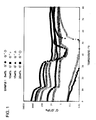
- the rheological measurement was performed by use of ARES-G2 (TA Instruments, Japan). Parallel plates (50 mm) were used and a frequency was set to be 1 Hz. Measurement was performed while raising the temperature of the aqueous sample solutions from 0 to 80°C at a temperature raising rate of 3°C/min. The results are shown in Fig. 1 .
- G' indicates a storage modulus
- G" indicates a loss modulus.
- G' > G" indicates a gel state
- G' ⁇ G" indicates a sol state
- G' G" indicates a gel transition point.
- the hydrogelating agent obtained in Example 1 formed hydrogel at a wide concentration range, at least 5 wt% or more.
- the hydrogelating agent formed gel at 48°C or more at a concentration of 5 wt%, and the hydrogelating agent provides hydrogel at a wider temperature range at other concentrations.
- PEG having a molecular weight of 2000 was used as a starting material. Two hydroxyl groups at both terminals of PEG were mesylated according to the method described in a literature ( J. Am. Chem. Soc., 2009, Vol. 131, p. 2110-2112 ) and then azidated. The azide was reduced to obtain PEG-diamine having molecular weight of 2000 (80.0 g, 40.0 mmol). PEG-diamine was dissolved in methylene chloride (350 ml), and triethylamine was added to adjust pH to 6.
- a methylene chloride solution (350 ml) of acid chloride (50.0 g, 84.1 mmol), which was obtained by the reaction between 3,5-bis(tetradecyloxy)-4-methoxybenzoic acid and thionyl chloride according to the method described in a literature ( Org. Lett., 2004, Vol. 6, p. 4171-4174 ), was added dropwise over 20 minutes. Further, triethylamine was added and the mixture was stirred at room temperature for 2 hours while keeping pH around 9. The reaction solution was washed with 1 N hydrochloric acid, aqueous saturated sodium bicarbonate and brine and dried over sodium sulfate.
- Example 3 To analyze the sol-gel transition behavior of the compound obtained in Example 3, the viscoelasticity of aqueous sample solutions was measured. The sample concentrations were adjusted to 5 wt%, 10 wt%, 1 5 wt% and 20 wt%. The rheological measurement was performed in the same manner as in Example 2. The results are shown in Fig. 2 . As a result, it was found that the compound (hydrogelating agent) obtained in Example 3 formed hydrogel at a wide concentration range, at least 5 wt% or more, and at a wide temperature range.
- the activated ester (59.3 g) unpurified was directly dissolved in pyridine (350 ml) and mixed with a pyridine solution (400 ml) of PEG-diamine having molecular weight of 2000 (88.0 g, 44.0 mmol), which was obtained by mesylating the two hydroxyl groups at both terminals of PEG having a molecular weight of 2000 used as a starting material, azidating and reducing according to the method described in a literature ( J. Am. Chem. Soc., 2009, Vol. 131, p. 2110-2112 ). Furthermore, dimethylaminopyridine (528 mg, 4.32 mmol) was added and stirred at 4°C for 2 hours and further stirred at room temperature for 2 hours.
- reaction mixture was poured into 1 N hydrochloric acid (1000 ml) under ice cooling and extracted with chloroform. The organic layer was washed with 1 N hydrochloric acid and brine and dried over sodium sulfate. The solvent was removed in vacuo and the residue was dissolved in methanol and washed with hexane. Methanol was evaporated to give a desired composition (43.9 g).
- Example 5 To analyze the sol-gel transition behavior of the composition obtained in Example 5, the viscoelasticity of aqueous sample solutions was measured. The sample concentrations were adjusted to 5 wt%, 10 wt%, 15 wt% and 20 wt%. The rheological measurement was performed in the same manner as in Example 2. The results are shown in Fig. 3 .
- the composition (hydrogelating agent) obtained in Example 5 forms hydrogel at a wide concentration range of at least 5 wt% or more.
- hydrogel changed from sol to gel by raising temperature.
- the gel transition point varied depending on the concentration and decreased from 66°C, to 52°C, to 44°C and to 41°C.
- viscoelasticity of the compound obtained in Example 3, the composition obtained in Example 5, and the mixture of them was measured.
- Samples containing the compound and the composition in the ratios of 0:4, 1:3, 2:2, 3:1 and 4:0 were prepared and the total concentrations of them in the samples were set to be 5 wt%, 10 wt% and 20 wt%. The results are shown in Fig. 4 to Fig. 6 .
- a mixed hydrogelating agent showed a temperature dependency different from that of the individual hydrogelating agents.
- the sol-to-gel transition temperature of the hydrogelating agent obtained in Example 5 is 52°C at the concentration of 10 wt% is lowered to 40°C by mixing 25% of the hydrogelating agent obtained in Example 3. It was found that the gel formation temperature can be controlled by mixing hydrogelating agents. Furthermore, the strength of gel, which correlates with G', can also be controlled by changing a mixing ratio.
- the mono-tosylated PEG (3.346 g, 1.95 mmol) of a molecular weight of 1540 was dissolved in acetonitrile (15 ml), and sodium azide (0.1904 g, 2.93 mmol) was added and refluxed for 32 hours. After completion of the reaction, the solution was cooled to room temperature and water (20 ml) was added. Dichloromethane was added and the organic phase was extracted and dried over anhydrous sodium sulfate. After filtration, the solvent was removed in vacuo to give the mono-azidated PEG (2.889 g, 1.82 mmol, 93%) of a molecular weight of 1540.
- 3,5-Bis(tetradecyloxy)-4-methoxybenzoic acid (0.173 g, 0.300 mmol) was dissolved in dichloromethane (5 ml), and HOBt (0.0504 g, 0.360 mmol) and EDC ⁇ HCl (0.0690 g, 0.360 mmol) were added and stirred at room temperature for one hour.
- a dichoromethane solution (5 ml) of the mono-amino PEG derivative (0.490 g, 0.314 mmol) of a molecular weight of 1540 was added dropwise by use of a dropping funnel and further stirred for one hour.
- MALDI-TOF/MS measurement of the product was made by using Shimadzu AXIMA CFR plus in the conditions: nitrogen laser (337 nm), reflectron mode, cation detection, cumulated number: 500 times, ionization auxiliary agent: an acetone solution of sodium iodide (1 mg/ ml), matrix: dithranol chloroform solution (10 mg/ ml), sample concentration: 1 mg/ml (chloroform solution), scan range: m/z 1-5000.
- composition obtained by the same synthetic method as in Example 7 was subjected to HPLC analysis (column: DAISO PAK SP-200-5-C4-P, column temperature: 40°C, solvent: an aqueous 70-99% acetonitrile solution, 0.1% TFA, linear concentration gradient, flow rate: 1.0 ml/min).
- HPLC analysis column temperature: DAISO PAK SP-200-5-C4-P, column temperature: 40°C, solvent: an aqueous 70-99% acetonitrile solution, 0.1% TFA, linear concentration gradient, flow rate: 1.0 ml/min.
- a composition containing a dual-terminal amide compound corresponding to Formula (1) and a uni-terminal amide compound corresponding to Formula (2) in a ratio of 0.48:1 was obtained.
- the viscoelasticity of aqueous sample solutions was measured.
- the concentrations of the composition were adjusted to 1 wt%, 2 wt%, 8 wt% and 15 wt%. After sufficiently stirred to give uniform solution, the aqueous sample solutions were stored in a freezer. Measurement was performed by AR-G2 (TA Instruments, Japan). Parallel plates (40 mm) were used and a frequency was set to be 1 Hz. Measurement was performed while raising the temperature of the aqueous sample solutions from 0°C to 80°C at a temperature raising rate of 3°C/min. The results are shown in Fig. 7 .
- the hydrogelating agent formed hydrogel at a wide concentration range of at least 2 wt% or more and at a wide temperature range.
- the solution was sol state at a concentration of 2 wt% at 37°C, the temperature usually used for animal cell culture, and changed into gel at a temperature of 30°C or less.
- the hydrogel has an appropriate temperature property for storing cells.
- Hepatic cell storage was studied using a lot of the hydrogelating agent obtained in the same synthetic method as in Example 7 and the same lot that was subjected to the rheological measurement in Example 8.
- Rat hepatic cells (6 ⁇ 10 5 cells) were enclosed in hydrogel prepared to contain a hydrogelating agent at a concentration of 2 w/v% (2 g of the hydrogelating agent in 100 ml of water) together with cell culture medium, placed in an Eppendorftube and stored in a refrigerator overnight. The next day, the cells were collected, seeded in a 24-well plate and cultured in a medium for hepatic cells. The medium was exchanged every day. After removing the culture supernatant, 1 ml of fresh medium was added and cultured for 3 days.
- the cells were ultrasonically pulverized and the amount of DNA was measured.
- the DNA amount of a control without the agent was 14.7 ⁇ 2.6 ⁇ g/ml
- the DNA amount of the sample with the hydrogelating agent was 17.4 ⁇ 1.5 ⁇ g/ml. Since the DNA amount increases in proportional to the number of cells, it was demonstrated that hydrogel could be used for storing hepatic cells.
- Cartilage cell storage was studied using a lot of the hydrogelating agent obtained in the same synthetic method as in Example 7 and the same lot that was subjected to the rheological measurement in Example 8.
- Rabbit cartilage cells (1.2 ⁇ 10 6 cells) were enclosed in hydrogel prepared to contain the hydrogelating agent at a concentration of 2 w/v% together with cell culture medium, placed in an Eppendorf tube and stored in a refrigerator overnight. The next day, the cells were collected, seeded in a 24-well plate and cultured in a medium for cartilage cells. The medium was exchanged at a frequency of twice a week. After removing the culture supernatant by aspiration, 1 ml of fresh medium was added and cultured for 3 weeks.
- the culture solution was removed by aspiration, and the cells were washed with 0.5 ml of PBS (-).
- the cells were enzymatically decomposed by 1 ml of a protease (bromelain) solution at 60°C for 30 minutes.
- the DNA amount of the treated solution was measured.
- the DNA amount of a control without the agent was 10.5 ⁇ 0.0 ⁇ g/ml
- the DNA amount of the sample with the hydrogelating agent was 17.8 ⁇ 1.7 ⁇ g/ml. Since the DNA amount increases in proportional to the number of cells, it was demonstrated that hydrogel could be used for storing cartilage cells.
- PEG (4.00 g, 2.00 mmol) of a molecular weight of 2000 was dissolved in pyridine (10 ml) and p-toluenesulfonyl chloride (0.76 g, 4.00 mmol) was added and stirred at room temperature for 3 hours. After completion of the reaction, chloroform (100 ml) was added and neutralization was performed with 1M HCl (100 ml). The solution was washed with aqueous 4% NaHCO 3 and brine. The organic phase was dried over anhydrous sodium sulfate. After filtration, the solvent was removed in vacuo.
- the mono-tosylated PEG (4.140 g, 1.92 mmol) of a molecular weight of 2000 was dissolved in acetonitrile (20 ml), and sodium azide (0.195 g, 3.00 mmol) was added and refluxed for 32 hours. After completion of the reaction, the solution was cooled to room temperature and water (20 ml) was added. Dichloromethane was added and the organic phase was extracted and dried over anhydrous sodium sulfate. After filtration, the solvent was removed in vacuo to give mono-azidated PEG (3.280 g, 1.62 mmol, 84%) of a molecular weight of 2000.
- the mono-azidated PEG (1.537 g, 0.759 mmol) of a molecular weight of 2000 was dissolved in pyridine (5 ml), and triphenylphosphine (0.394 g, 1.50 mmol) was added and stirred at room temperature for 2 hours. After completion of the reaction, aqueous 28% NH 4 OH (10 ml) was added and allowed to stand for 2 hours. The solvent was removed in vacuo to give a product mono-amino PEG of a molecular weight of 2000.
- composition obtained by the same synthetic method as in Example 11 was subjected to HPLC analysis (column: DAISO PAK SP-200-5-C4-P, column temperature: 40°C, solvent: an aqueous 70-99% acetonitrile solution, 0.1% TFA, linear concentration gradient, flow rate: 1.0 ml/min).
- HPLC analysis column temperature: DAISO PAK SP-200-5-C4-P, column temperature: 40°C, solvent: an aqueous 70-99% acetonitrile solution, 0.1% TFA, linear concentration gradient, flow rate: 1.0 ml/min.
- composition 1 containing a dual-terminal amide compound corresponding to Formula (1) and a uni-terminal amide compound corresponding to Formula (2) in a ratio of 0.16:1 was obtained.
- the viscoelasticity of aqueous sample solutions was measured.
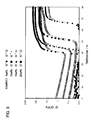
- composition 1 was adjusted to 1 wt%, 2 wt%, 8 wt% and 15 wt%. After sufficiently stirred to give uniform solution, the aqueous sample solutions were stored in a freezer. Rheological measurement was performed in the same manner as in Example 8. The results are shown in Fig. 8 .
- composition 2 was obtained containing a dual-terminal amide compound corresponding to Formula (1) and a uni-terminal amide compound corresponding to Formula (2) in a ratio of 0.45: 1.
- the concentration of composition 2 was adjusted to 1 wt%, 2 wt%, 8 wt% and 15 wt%. After sufficiently stirred to give uniform solution, the aqueous sample solutions were stored in a freezer. Rheological measurement was performed in the same manner as in Example 8. The results are shown in Fig. 9 .
- gel transition temperature can be controlled by changing the mixing ratio of a uni-terminal amide derivative and a dual-terminal amide derivative, corresponding to the results of gel transition temperature control by a mixing ratio according to Example 6.
- the gel transition temperature of composition 2 (15 wt% concentration) containing a compound corresponding to Formula (1) and a compound corresponding to Formula (2) in a ratio of 0.45:1 is around 23°C. It was thus demonstrated that composition 2 provides ideal hydrogel for cell culture carrier, which is gel state at 37°C, the temperature usually used for culturing animal cells, and changes into sol state at a low temperature for collecting cells.
- the hydrogel provided by the present invention has oligo- or poly(ethylene glycol) moiety, which is known to be biocompatible, and can be used in three-dimensional cell culture, separation/purification of cells and proteins and controlled release of a proteinaceous pharmaceutical product, etc.
Landscapes
- Chemical & Material Sciences (AREA)
- Organic Chemistry (AREA)
- Health & Medical Sciences (AREA)
- Life Sciences & Earth Sciences (AREA)
- Engineering & Computer Science (AREA)
- Bioinformatics & Cheminformatics (AREA)
- Zoology (AREA)
- Biotechnology (AREA)
- Biomedical Technology (AREA)
- Genetics & Genomics (AREA)
- Wood Science & Technology (AREA)
- Microbiology (AREA)
- Cell Biology (AREA)
- Biochemistry (AREA)
- General Engineering & Computer Science (AREA)
- General Health & Medical Sciences (AREA)
- Polyethers (AREA)
- Medicinal Preparation (AREA)
- Organic Low-Molecular-Weight Compounds And Preparation Thereof (AREA)
Abstract
Description
- The present invention relates to hydrogelating agents having novel chemical structures and composition, and hydrogel based on the same.
- Low-molecular-weight gelator forms gel by the self-assembly due to intramolecular interaction and captures solvent molecules in the three-dimensional network (see, for example, Non Patent Literature 1).
- Since a low-molecular-weight gelator can be designed, it is expected to be applied to various fields such as a separation membrane, a sensor, a catalyst, an electronic material and a biomaterial (see, for example, Non Patent Literature 2).
- We have already synthesized benzamide derivatives which have long alkyloxy chains at 3-, 4- and 5-positions (see Patent Literature 1) having a novel structure and found that a part of the synthesized compounds could gelate organic solvents. Furthermore, we found that the gelation depended on their chemical structures (see Patent Literature 2).
- However, for the biomaterial application, it is apparent that hydrogel in which water is gelated is more desirable than organogel in which an organic solvent is gelated. There are not many reports on low-molecular-weight hydrogel (see, for example, Non Patent Literature 3). Furthermore, if the obtained hydrogel is used as a biomaterial, it is desirable that the hydrogel itself has biocompatibility. There are not many reports from this point of view either.
- We have synthesized 3,4,5-long-alkyloxy-chain benzamide derivatives having oligo- or poly(ethylene glycol) moiety. We have disclosed that these compounds can be used for imparting biocompatibility to medical materials, etc. (see Patent Literature 3), and that these compounds gelates organic solvents (see Patent Literature 4). Besides these, we further found that these compounds formed hydrogel (see
Patent Literatures 5, 6). However, to optimize the physical properties of hydrogel, preparation processes according to the purpose and use, the development of novel hydrogelating agents has been desired. - With the recent progress in the stem cell study, the application of hydrogel to cell culture has attracted much attention (see, for example, Non Patent Literature 4). In the case of cell culture, hydrogel must be formed at a cell culture temperature. In particular, hydrogel, which is solution state (sol) at a temperature lower than or close to a room temperature and gels at a cell culture temperature, is highly useful, because cultured cells can be collected by lowing the temperature after cell culture (see, for example, Patent Literature 7). Conversely, for storing cells, hydrogel, which is liquid state (sol) around a room temperature to a cell culture temperature and gels at a cell storage temperature, is preferred. Hydrogel behavior can be controlled like these has been desired.
-
- Patent Literature 1:
JP 2001-122889 A - Patent Literature 2:
JP 2004-262809 A - Patent Literature 3:
JP 2005-232061 A - Patent Literature 4:
JP 2005-232278 A - Patent Literature 5:
JP 2007-217551 A - Patent Literature 6:
JP 2009-84272 A - Patent Literature 7:
JP 1994-141851 A -
- Non Patent Literature 1: Chem. Rev., 1997, Vol. 97, p. 3133-3159
- Non Patent Literature 2: Angew. Chem. Int. Ed., 2000, Vol. 39, p. 2263-2266
- Non Patent Literature 3: Chem. Rev., 2004, Vol. 104, p. 1201-1217
- Non Patent Literature 4: Nature, 2009, Vol. 462, p. 433-441
- An object of the present invention is to provide hydrogelating agents having novel chemical structures and composition, and hydrogel based on the same.
- The present inventors have synthesized benzamide derivatives represented by Formula (0) and having oligo- or poly(ethylene glycol) and long-chain alkyloxy moieties, and found that they formed hydrogel (
JP 2009-84272 A
In the present invention, the inventors newly and separately synthesized compounds represented by Formula (1), which have benzamide moieties at both terminals of oligo- or poly(ethylene glycol) and the formation of hydrogel was checked. As a result, the inventors found that the behavior is completely different from that of the compounds represented by Formula (0). Furthermore, the inventors found that the gelation temperature and the strength of gel can be controlled by mixing the two types of compounds. Based on the findings, the present invention was accomplished.
-

More specifically, the present invention provides a benzamide derivative represented by Formula (1), a hydrogelating agent containing the derivative, and hydrogel containing the hydrogelating agent and water. -

Furthermore, the present invention provides a hydrogelating agent containing a benzamide derivative represented by Formula (1) and a benzamide derivative represented by Formula (2): -

and provides hydrogel containing the hydrogelating agent and water.
Furthermore, the present invention provides a benzamide derivative represented by Formula (3): -

and provides a hydrogelating agent containing the derivative and hydrogel containing the hydrogelating agent and water. - The present invention also provides a hydrogelating agent containing a benzamide derivative represented by Formula (3) and a benzamide derivative represented by Formula (4):
-

- wherein X represents OH or NH2; k2 represents an integer of 0 to 4;, m2 represents an integer of 7 to 100; and n2 represents an integer of 2 to 6; R4 and R6 represent a hydrocarbon group having 12 to 18 carbon atoms and bonded via an oxygen atom; R5 represents H or a hydrocarbon group having 1 to 18 carbon atoms and bonded via an oxygen atom,
and further provides hydrogel containing the hydrogelating agent and water. - Furthermore, the present invention provides hydrogel containing a benzamide derivative represented by Formula (1); hydrogel containing a benzamide derivative represented by Formula (1) and a benzamide derivative represented by Formula (2); hydrogel containing a benzamide derivative represented by Formula (3); or hydrogel containing a benzamide derivative represented by Formula (3) and a benzamide derivative represented by Formula (4), wherein a sol-to-gel transition temperature associated with temperature rise is 10°C or more and 40°C or less; and a method for culturing cells using the hydrogel.
- Particularly, the present invention provides a hydrogelating agent containing a benzamide derivative represented by Formula (5) and a benzamide derivative represented by Formula (6); and hydrogel containing the hydrogelating agent and water and having a sol-to-gel transition temperature of 10°C or more and 40°C or less, and preferably 20°C or more and 35°C or less associated with temperature rise; and a method for culturing cells using the hydrogel.
-

- wherein k1 is 0; m1 is 42 to 45; n1 is 2; R1 is OC14H49; R2 is OCH3; and R3 is OC14F49.
-

- Furthermore, the present invention provides hydrogel containing a benzamide derivative represented by Formula (1); hydrogel containing a benzamide derivative represented by Formula (1) and a benzamide derivative represented by Formula (2); hydrogel containing a benzamide derivative represented by Formula (3); or hydrogel containing a benzamide derivative represented by Formula (3) and a benzamide derivative represented by Formula (4), wherein a sol-to-gel transition temperature associated with temperature drop is -5°C or more and 35°C or less; and a method for storing cells using the hydrogel.
- Particularly, the present invention provides a hydrogelating agent containing a benzamide derivative represented by Formula (7) and a benzamide derivative represented by Formula (8); and hydrogel containing the hydrogelating agent and water and having a sol-to-gel transition temperature of -5°C or more and 35°C or less and preferably 0°C or more and 20°C or less associated with temperature drop; and a method of culturing cells using the hydrogel.
-

-

- The present invention adds a new variety of molecules to compounds having oligo- or poly(ethylene glycol) as a partial structure which self-assemble into hydrogel and is suitable for three-dimensional culture of cells, etc.
-
- [
Fig. 1] Fig. 1 shows the results of rheological measurements of the hydrogelating agent obtained in Example 1. - [
Fig. 2] Fig. 2 shows the results of rheological measurements of the hydrogelating agent obtained in Example 3. - [
Fig. 3] Fig. 3 shows the results of rheological measurements of the hydrogelating agent obtained in Example 5. - [
Fig. 4] Fig. 4 shows the results of rheological measurements of the mixture of hydrogelating agents obtained in Example 3 and Example 5 (hydrogelating-agent concentration: 20 wt%). - [
Fig. 5] Fig. 5 shows the results of rheological measurements of the mixture of hydrogelating agents obtained in Example 3 and Example 5 (hydrogelating-agent concentration: 10 wt%). - [
Fig. 6] Fig. 6 shows the results of rheological measurements of the mixture of hydrogelating agents obtained in Example 3 and Example 5 (hydrogelating-agent concentration: 5 wt%). - [
Fig. 7] Fig. 7 shows the results of rheological measurements of the hydrogelating agent, which was obtained by the same synthetic method as in Example 7 and contains a compound corresponding to Formula (1) and a compound corresponding to Formula (2) in a ratio of about 0.48:1. - [
Fig. 8] Fig. 8 shows the results of rheological measurements of the hydrogelating agent, which was obtained by the same synthetic method as in Example 11 and contains a compound corresponding to Formula (1) and a compound corresponding to Formula (2) in a ratio of about 0.16:1. - [
Fig. 9] Fig. 9 shows the results of rheological measurements of the hydrogelating agent, which was obtained by the same synthetic method as in Example 11 and contains a compound corresponding to Formula (1) and a compound corresponding to Formula (2) in a ratio of about 0.45:1. - The present invention relates to a benzamide derivative represented by the following Formula (9).

- Hereinafter, a compound having a benzamide group at both terminals and represented by Formula (1), Formula (3), Formula (5), Formula (7) or Formula (9) will also be referred to as a "dual-terminal amide compound" or a "dual-terminal amide derivative" and a compound having a benzamide group only at one of the terminals and represented by Formula (2), Formula (4), Formula (6) or Formula (8) will also be referred to as a "uni-terminal amide compound" or a "uni-terminal amide derivative".
- Note that, in view of hydrogel formation around room temperature, m1 is preferably 7 or more; the number of carbon atoms of R1 is preferably 12 to 18; and the number of carbon atoms of each of R2 and R3 is preferably 18 or less. In view of the synthesis process, n1 is preferably 2 or more.
- A benzamide derivative represented by Formula (1) can be obtained, for example, by the amide condensation of a benzoic acid derivative having hydrocarbon groups via an oxygen atom with a derivative of oligo- and poly(ethylene glycol) having amino groups at both terminals. In the condensation, a condensing agent such as a carbodiimide derivative can be used. In addition, an acid anhydride, an acid chloride and an activated ester of the benzoic acid derivative can also be used.
- At this time, k1 and n1 can be adjusted according to a synthetic method of a derivative of oligo- or poly(ethylene glycol) having amino groups at both terminals. Furthermore, depending upon starting materials or reaction conditions, a compound having a benzamide group at both terminals and a compound having a benzamide group only at one terminal may be produced as a composition. Even in this case, if necessary, a known fractionation method such as high performance liquid chromatography can be used to separate one of them from the composition or to obtain a composition in which the proportion of one of them has been increased.
- A derivative of oligo- or poly(ethylene glycol) having amino groups at both terminals is obtained by sequentially tosylating or mesylating both terminals of a commercially available oligo- or poly(ethylene glycol), iodinating the tosyl or the mesyl group, converting the iodine group into a phthalimide and deprotecting with hydrazine. Alternatively, following tosylation or mesylation, the tosyl or the mesyl group is azidated and then reduced to obtain a similar compound. Particularly, mesylation of an ethylene glycol oligomer or polymer makes it easier to obtain a compound having amino groups at both terminals (J. Am. Chem. Soc., 2009, Vol. 131, p. 2110-2112).
- Furthermore, in the case of oligo- or poly(ethylene glycol) having a length not commercially available, the compound is obtained by protecting one of the terminals of commercially available oligo- or poly(ethylene glycol), tosylating the other terminal, condensing with other oligo- or poly(ethylene glycol), which will provide a required length in total, and after deprotection and the condensation (J. Org. Chem., 2004, Vol. 69, p. 639-647). The resultant compound is sequentially tosylating or mesylating both terminals, iodinating the tosyl or the mesyl group, converting the iodine group into phthalimide and deprotecting with hydrazine (Biochemistry, 1980, Vol. 19, p. 4595-4600) to obtain a compound having amino groups at both terminals.
- A benzoic acid derivative having the same hydrocarbon groups bonded to the 3-, 4- and 5-position via an oxygen atom is obtained by etherifying a 3,4,5-trihydroxybenzoic acid ester and hydrolyzing the ester.
- A benzoic acid derivative having hydrogen at the 5-position and having the same hydrocarbon group bonded to the 3- and the 4-position via an oxygen atom is obtained by simultaneously etherifying the 3- and 4-positions of 3,4-dihydroxybenzoic acid ester, used as a starting material and hydrolyzing the ester. Furthermore, a benzoic acid derivative having a different hydrocarbon group bonded to the 3-position and the 4-position via an oxygen atom is obtained, for example, by taking an advantage of difference in reactivity between the 3-position and the 4-position, more specifically, by selectively etherifying the 4-position, subsequently, etherifying the 3-position with a different hydrocarbon group from that used for the 4-position, followed by hydrolyzing the ester.
- A benzoic acid derivative having the 5-position hydrocarbon group, which is different from those bonded to the 3- and the 4-position, via an oxygen atom is obtained, for example, by protecting the 3- and the 4-position of 3,4,5-trihydroxybenzoic acid ester, by the selective crosslinking of a boronic acid derivative to the 3- and 4-positions, etherifying the 5-position, deprotecting the boronic acid derivative, etherifying the 3- and the 4-position in the same manner as above, followed by the hydrolysis of the ester.
- A benzoic acid derivative having hydrogen at the 4-position and the hydrocarbon group bonded to the 3- and the 5-position via an oxygen atom is obtained by simultaneously etherifying the 3- and the 5-position of 3,5-dihydroxybenzoic acid ester, used as a starting material, followed by hydrolyzing the ester. Furthermore, a benzoic acid derivative having a different hydrocarbon group bonded to the 3-position and the 5-position via an oxygen atom is obtained, for example, by performing etherification by supplying a hydrocarbon reagent, which is less than the equivalent, isolating a benzoic acid derivative having one of the hydroxyl groups etherified, etherifying the remaining hydroxyl group with a different hydrocarbon reagent, followed by the hydrolysis of the ester.
- A benzoic acid derivative having the 4-positon hydrocarbon group, which is different from those of the 3- and the 5-position, via an oxygen atom is obtained, for example, by taking advantage of difference in reactivity of the 4-position of 3,4,5-trihydroxybenzoic acid ester, more specifically, first by etherifying the 4-position, and then etherifying the 3- and the 5-position in the same manner as above, followed by the hydrolysis of the ester.
- A dual-terminal amide compound represented by Formula (1) can be singly used as a hydrogelating agent. Alternatively this can be used in the form of a composition with a uni-terminal amide compound represented, for example, by Formula (2) as a hydrogelating agent (hereinafter also referred to as a "mixed hydrogelating agent"). Note that in the case of a composition, a benzamide derivative represented by Formula (2) can be synthesized in the same synthetic route as a benzamide derivative represented by Formula (1); however, both benzamide derivatives may be separately synthesized and mixed. Alternatively, if they are obtained in the form of a composition during the synthesis process of the former or latter, the composition may be used.
- A mixed hydrogelating agent can be prepared by mixing a dual-terminal amide compound represented by Formula (1) and a uni-terminal amide compound represented by Formula (2) in an arbitrary mixing ratio. However, to obtain a remarkable effect of mixing a dual-terminal amide compound, the mixed hydrogelating agent preferably contains a dual-terminal amide derivative and a uni-terminal amide derivative in a mixing ratio of larger than 1:8.
- Hydrogel can be produced by suspending an appropriate amount of hydrogelating agent containing a benzamide derivative represented by Formula (1) as an active ingredient or a hydrogelating agent containing a mixture of a benzamide derivative represented by Formula (1) and a benzamide derivative represented by Formula (2) as an active ingredient, in water, and directly heating the suspension to a temperature at which the hydrogel is used, or once heating the suspension to a temperature at which the hydrogelating agent is dissolved and then cooling to room temperature, or by further heating to a higher temperature, or by further cooling to a lower temperature. Methods for preparing hydrogel are not limited to these.
The proportion of a hydrogelating agent in hydrogel is preferably within the range of 0.5 to 25 wt% in view of the hydrogel formation and the cost. Furthermore, the proportion of water in hydrogel is preferably within the range of 75 to 99.5 wt%. Furthermore, components such as an antiseptic agent other than a hydrogelating agent and water may be added as long as a significant effect is not exerted on the hydrogel formation. - By controlling the mixing ratio of a dual-terminal amide compound represented by Formula (1) and a uni-terminal amide compound represented by Formula (2), the transition temperature of gelation can be controlled. For example, the gel transition temperature of 52°C of the mixed hydrogelating agent containing a dual-terminal amide compound represented by Formula (1), wherein k1 = 0, m1 = 42 to 45, n1 = 2, R1 = R3 = OC14H29 and R2 = OCH3, and a uni-terminal amide compound represented by Formula (2), wherein X = NH2, k2 = 0, m2 = 42 to 45, n2 = 2, R4 = R6 = OC14H29 and R5 = OCH3, in a ratio of about 1:3 (uni-terminal amide:dual-terminal amide = 67:33) can be lowered to 40°C by adding the dual-terminal amide compound to become the about 1:8 composition (uni-terminal amide:dual-terminal amide = 89:11) at a concentration of 10 wt% (Example 6).
Furthermore, the transition temperature of gelation associated with temperature drop can be lowered by reducing the concentration of a hydrogelating agent. For example, in a mixed hydrogelating agent containing the dual-terminal amide compound 2 represented by Formula (1) wherein k1 = 0, m1 = 29 to 32, n1 = 2, R1 = R3 = OC14H29 and R2 = OCH3 anduni-terminal amide compound 2 represented by Formula (2) wherein X = OH, k2 = 0, m2 = 29 to 32, n2 = 2, R4 = R6 = OC14H29 and R5 = OCH3 in a ratio of 0.48:1, a gel transition temperature (gel at a low temperature side, sol at a high temperature side) can be lowered from 52°C at a concentration of 8 wt% to 32°C at the concentration of 2 wt% (Example 8). - Furthermore, the transition temperature of gelation associated with temperature rise can be lowered by increasing the concentration of a hydrogelating agent. For example, in the hydrogelating agent containing the dual-terminal amide compound represented by Formula (1) wherein k1 = 0, m1 = 42 to 45, n1 = 2, R1 = R3 = OC14H29 and R2 = OCH3 and the uni-terminal amide compound represented by Formula (2) wherein X = OH, k2 = 0, m2 = 42 to 45, n2 = 2, R4 = R6 = OC14H29 and R5 = OCH3 in a ratio of 0.45:1, a gel transition temperature (sol at a low temperature side, gel at a high temperature side) can be lowered from 41°C at a concentration of 8 wt% to 23°C at the concentration to 15 wt% (Example 12).
Likewise, hydrogel having a desired gel transition temperature can be obtained by appropriately changing the composition ratio of a dual-terminal amide compound and a uni-terminal amide compound and the concentration of a hydrogelating agent. - The hydrogel provided by the present invention can be used for culturing and storing cells. The "cells" used herein are referred to "discrete single cells", "cell aggregate", "a part of tissue composed of cells", "tissue composed of cells", and the like.
- Cells can be cultured on hydrogel, which forms hydrogel at a temperature at which cells are cultured. Alternatively, cells can be cultured within hydrogel if the hydrogel is present in a sol state at a low temperature. More specifically, cells are seeded in the sol-state and the hydrogel is formed at a cell culture temperature. In this manner, the cells are cultured in the hydrogel. In the case where cells are cultured on hydrogel, cultured cells can be separated and collected by removing them from the surface. In contrast, in the case where cells are cultured within hydrogel, cultured cells can be separated and collected by lowering a temperature to return the hydrogel in a sol state.
- For example, the composition ratio of a dual-terminal amide compound represented by Formula (5) and a uni-terminal amide compound represented by Formula (6) contained in a mixed hydrogelating agent, and the composition ratio of the hydrogelating agent and water contained in hydrogel can be selected such that the sol-to-gel transition temperature associated with temperature rise becomes close to room temperature (25°C). The aforementioned cell culture method can be realized by using the hydrogel.
- More specifically, for example, a hydrogelating agent containing a dual-terminal amide compound represented by Formula (1) wherein k1 = 0, m1 = 42 to 45, n1 = 2, R1 = R3 = OC14H29 and R2 = OCH3, and a uni-terminal amide compound represented by Formula (2) wherein X = OH, k2 = 0, m2 = 42 to 45, n2 = 2, R4 = R6 = OC14H29 and R5 = OCH3 in a ratio of 0.45:1, has a gel transition temperature of near 23°C at a concentration of 15 wt%. The hydrogelating agent is present in a gel state at a high temperature side (37°C) suitable for culturing animal cells and in a sol state at a low temperature side suitable for collecting cells (Example 12).
- For storing cells, a hydrogelating agent transferring from sol to gel by lowering temperature is used. For example, cells can be stored by pouring a sol-state hydrogelating agent solution onto cells and lowering a temperature to form hydrogel or by mixing cells in soft hydrogel, or by seeding cells in sol-state gel from room temperature to a cell culture temperature and then lowering a temperature to form hydrogel. The cells stored under hydrogel can be collected by physically removing the hydrogel or diluting the hydrogel with cell culture medium. The cells stored within hydrogel can be collected by diluting the hydrogel with cell culture medium or by raising a temperature to convert the hydrogel into a sol state.
- For example, the composition ratio of a dual-terminal amide compound represented by Formula (7) and a uni-terminal amide compound represented by Formula (8) contained in a mixed hydrogelating agent, and the composition ratio of the hydrogelating agent and water contained in hydrogel can be selected such that the sol-to-gel transition temperature associated with temperature drop becomes close to room temperature (25°C). The aforementioned cell storing method can be realized by using the hydrogel.
More specifically, for example, a hydrogelating agent containing a dual-terminal amide compound represented by Formula (1) wherein k1 = 0, m1 = 29 to 32, n1 = 2, R1 = R3 = OC14H29 and R2 = OCH3, and a uni-terminal amide compound represented by Formula (2) wherein X = OH, k2 = 0, m2 = 29 to 32, n2 = 2, R4 = R6 = OC14H29 and R5 = OCH3 in a ratio of 0.48:1, is in a sol state at 37°C at a concentration of 2 wt% and in a gel state at 30°C or less. Thus, a cell storing method for storing cells in gel at a low temperature of 30°C or less and collecting cells at a cell culture temperature of 37°C can be realized (Example 8). - The present invention will be further specifically described below, but the present invention is not limited to the following description.
- Note that hereinafter, EDC·HCl is an abbreviation for water soluble carbodiimide hydrochloride, HOBt for 1-hydroxybenzotriazole hydrate and PEG for polyethylene glycol.
- PEG having a molecular weight of 1540 was used as a starting material. Two hydroxyl groups at both terminals of PEG were mesylated according to the method described in a literature (J. Am. Chem. Soc., 2009, Vol. 131, p. 2110-2112) and then azidated. The azide was reduced to give PEG-diamine having a molecular weight of 1540 (80.0 g, 52.0 mmol). PEG-diamine was dissolved in methylene chloride (350 ml) and then triethylamine was added to adjust pH to 6. To the solution, a methylene chloride solution (350 ml) of acid chloride (65.0 g, 109 mmol), which was obtained by the reaction between 3,5-bis(tetradecyloxy)-4-methoxybenzoic acid (Bioorg. Med. Chem., 2002, Vol. 10, p. 4013-4022) and thionyl chloride according to the method described in a literature (Org. Lett., 2004, Vol. 6, p. 4171-4174), was added dropwise over 20 minutes. Triethylamine was further added and further stirred at room temperature for 2 hours while keeping pH at near 9. The reaction solution was washed with 1 N hydrochloric acid, aqueous saturated sodium bicarbonate and brine, and dried over sodium sulfate. The solvent was removed in vacuo and the residue was further treated with activated charcoal to give a desired compound (116.7 g, yield 84%).
1H-NMR (CDCl3) δ = 7.02 (4H, s, 2,6-H), 6.92 (2H, br-t, NH), 4.02 (8H, t, J = 6.6 Hz, 3,5-OCH2), 3.84 (6H, s, 4-OCH3), 3.70∼3.55 (∼128H, m, CH2OCH2), 1.80 (8H, quintet, J = 7.6 Hz, 3,5-OCCH2), 1.44 (8H, quintet, J = 7.2 Hz, 3,5-OC2CH2), 1.36∼1.22 (80H, m, 3,5-OC3C10H20), 0.86 (12H, t, J = 6.8 Hz, 3.5-OC13CH3). - To analyze the sol-gel transition behavior of the dual-terminal amide compound obtained in Example 1, the viscoelasticity of aqueous sample solutions was measured. The sample concentrations were adjusted to 5 wt%, 10 wt%, 15 wt% and 20 wt%. After sufficiently stirred, the aqueous sample solutions were stored in a freezer. The rheological measurement was performed by use of ARES-G2 (TA Instruments, Japan). Parallel plates (50 mm) were used and a frequency was set to be 1 Hz. Measurement was performed while raising the temperature of the aqueous sample solutions from 0 to 80°C at a temperature raising rate of 3°C/min.
The results are shown inFig. 1 . In the figure, G' indicates a storage modulus, G" indicates a loss modulus. G' > G" indicates a gel state; G' < G" indicates a sol state and G' = G" indicates a gel transition point. - As a result, it was found that the hydrogelating agent obtained in Example 1 formed hydrogel at a wide concentration range, at least 5 wt% or more. The hydrogelating agent formed gel at 48°C or more at a concentration of 5 wt%, and the hydrogelating agent provides hydrogel at a wider temperature range at other concentrations.
- PEG having a molecular weight of 2000 was used as a starting material. Two hydroxyl groups at both terminals of PEG were mesylated according to the method described in a literature (J. Am. Chem. Soc., 2009, Vol. 131, p. 2110-2112) and then azidated. The azide was reduced to obtain PEG-diamine having molecular weight of 2000 (80.0 g, 40.0 mmol). PEG-diamine was dissolved in methylene chloride (350 ml), and triethylamine was added to adjust pH to 6. To the solution, a methylene chloride solution (350 ml) of acid chloride (50.0 g, 84.1 mmol), which was obtained by the reaction between 3,5-bis(tetradecyloxy)-4-methoxybenzoic acid and thionyl chloride according to the method described in a literature (Org. Lett., 2004, Vol. 6, p. 4171-4174), was added dropwise over 20 minutes. Further, triethylamine was added and the mixture was stirred at room temperature for 2 hours while keeping pH around 9. The reaction solution was washed with 1 N hydrochloric acid, aqueous saturated sodium bicarbonate and brine and dried over sodium sulfate. The solvent was removed in vacuo and the residue was further treated with activated charcoal to give a desired compound (101.2 g, yield 81%).
1H-NMR (CDCl3) δ = 7.01 (4H, s, 2,6-H), 6.80 (2H, br-t, NH), 4.02 (8H, t, J = 6.6 Hz, 3,5-OCH2), 3.84 (6H, s, 4-OCH3), 3.70∼3.50 (∼180H, m, CH2OCH2), 1.79 (8H, quintet, J = 7.2 Hz, 3,5-OCCH2), 1.44 (8H, quintet, J = 7.6 Hz, 3,5-OC2CH2), 1.38∼1.20 (80H, m, 3,5-OC3C10H20), 0.87 (12H, t, J = 6.8 Hz, 3,5-OC13CH3). - To analyze the sol-gel transition behavior of the compound obtained in Example 3, the viscoelasticity of aqueous sample solutions was measured. The sample concentrations were adjusted to 5 wt%, 10 wt%, 1 5 wt% and 20 wt%. The rheological measurement was performed in the same manner as in Example 2. The results are shown in
Fig. 2 .
As a result, it was found that the compound (hydrogelating agent) obtained in Example 3 formed hydrogel at a wide concentration range, at least 5 wt% or more, and at a wide temperature range. - To a methylene chloride solution (525 ml) of acid chloride (52.4 g, 88.1 mmol), which was obtained by the reaction between 3,5-bis(tetradecyloxy)-4-methoxybenzoic acid and thionyl chloride according to the method described in a literature (Org. Lett., 2004, Vol. 6, p. 4171-4174), N-hydroxysuccinimide (10.2 g, 88.6 mmol) was added at room temperature and stirred for 2 hours. After the solvent was removed in vacuo, activated ester (75.2 g) was obtained.
- The activated ester (59.3 g) unpurified was directly dissolved in pyridine (350 ml) and mixed with a pyridine solution (400 ml) of PEG-diamine having molecular weight of 2000 (88.0 g, 44.0 mmol), which was obtained by mesylating the two hydroxyl groups at both terminals of PEG having a molecular weight of 2000 used as a starting material, azidating and reducing according to the method described in a literature (J. Am. Chem. Soc., 2009, Vol. 131, p. 2110-2112). Furthermore, dimethylaminopyridine (528 mg, 4.32 mmol) was added and stirred at 4°C for 2 hours and further stirred at room temperature for 2 hours.
The reaction mixture was poured into 1 N hydrochloric acid (1000 ml) under ice cooling and extracted with chloroform. The organic layer was washed with 1 N hydrochloric acid and brine and dried over sodium sulfate. The solvent was removed in vacuo and the residue was dissolved in methanol and washed with hexane. Methanol was evaporated to give a desired composition (43.9 g). - 1H-NMR (CDCl3) δ = 7.02 (2H, s, 2,6-H), 6.92 (1H, br-t, NH), 4.02 (4H, t, J = 6.6 Hz, 3,5-OCH2), 3.84 (3H, s, 4-OCH3), 3.70∼3.50 (∼180H, m, CH2OCH2), 1.80 (4H, quintet, J = 7.2 Hz, 3,5-OCCH2), 1.44 (4H, quintet, J = 7.6 Hz, 3,5-OC2CH2), 1.38∼1.20 (40H, m, 3,5-OC3C10H20), 0.86 (6H, t, J = 6.8 Hz, 3,5-OC13CH3).
As a result of HPLC analysis (column: DAISO PAK SP-200-5-C4-P, column temperature: 40°C, solvent: an aqueous 70-99% acetonitrile solution, 0.1% TFA, linear concentration gradient, flow rate: 1.0 ml/min), it was found that the product was a composition containing a uni-terminal amide compound represented by Formula (2) wherein X = NH2, k2 = 0, m2 = 42 to 45, n2 = 2, R4 = R6 = OC14H29 and R5 = OCH3 and a dual-terminal amide compound represented by Formula (1) wherein k1 = 0, m1 = 42 to 45, n1 = 2, R1 = R3 = OC14H29 and R2 = OCH3 in a molar ratio of about 8:1. - To analyze the sol-gel transition behavior of the composition obtained in Example 5, the viscoelasticity of aqueous sample solutions was measured. The sample concentrations were adjusted to 5 wt%, 10 wt%, 15 wt% and 20 wt%. The rheological measurement was performed in the same manner as in Example 2. The results are shown in
Fig. 3 . - As a result, it was found that the composition (hydrogelating agent) obtained in Example 5 forms hydrogel at a wide concentration range of at least 5 wt% or more. In all of the cases, hydrogel changed from sol to gel by raising temperature. The gel transition point varied depending on the concentration and decreased from 66°C, to 52°C, to 44°C and to 41°C.
Similarly, viscoelasticity of the compound obtained in Example 3, the composition obtained in Example 5, and the mixture of them was measured. Samples containing the compound and the composition in the ratios of 0:4, 1:3, 2:2, 3:1 and 4:0 were prepared and the total concentrations of them in the samples were set to be 5 wt%, 10 wt% and 20 wt%. The results are shown inFig. 4 to Fig. 6 . - It was found that a mixed hydrogelating agent showed a temperature dependency different from that of the individual hydrogelating agents. Following discussion will be made particularly on the gel transition temperature of hydrogelating agent obtained in Example 5.
For example, the sol-to-gel transition temperature of the hydrogelating agent obtained in Example 5 is 52°C at the concentration of 10 wt% is lowered to 40°C by mixing 25% of the hydrogelating agent obtained in Example 3. It was found that the gel formation temperature can be controlled by mixing hydrogelating agents. Furthermore, the strength of gel, which correlates with G', can also be controlled by changing a mixing ratio. - PEG (3.08 g, 2.00 mmol) having a molecular weight of 1540 was dissolved in pyridine (10 ml) and p-toluenesulfonyl chloride (0.76 g, 4.00 mmol) was added and stirred at room temperature for 2 hours. After completion of the reaction, chloroform (100 ml) was added and neutralization was performed with 1 M HCl (100 ml). The solution was washed with aqueous 4% NaHCO3 and brine. The organic phase was dried over anhydrous sodium sulfate. After filtration, the solvent was removed in vacuo. The residue was purified by silica gel column chromatography (chloroform:methanol = 10:1) to give mono-tosylated PEG (3.346 g, 1.95 mmol, 98%) of a molecular weight of 1540.
- 1H-NMR (CDCl3) δ = 7.80 (2H, d, J = 8.4 Hz, 2,6-H of TsO), 7.34 (2H, d, J = 8.0 Hz, 3,5-H of Ts), 4.16 (2H, t, J = 5.0 Hz, CH2OTs), 3.83∼3.45 (∼138H, m, OCH2 × 69), 2.45 (3H, s, 4-CH3 of Ts).
- The mono-tosylated PEG (3.346 g, 1.95 mmol) of a molecular weight of 1540 was dissolved in acetonitrile (15 ml), and sodium azide (0.1904 g, 2.93 mmol) was added and refluxed for 32 hours. After completion of the reaction, the solution was cooled to room temperature and water (20 ml) was added. Dichloromethane was added and the organic phase was extracted and dried over anhydrous sodium sulfate. After filtration, the solvent was removed in vacuo to give the mono-azidated PEG (2.889 g, 1.82 mmol, 93%) of a molecular weight of 1540.
1H-NMR (CDCl3) δ = 3.83∼3.45 (∼138H, m, OCH2 × 69), 3.39 (2H, t, J = 5.0 Hz, CH2N3).
The mono-azidated PEG (2.889 g, 1.82 mmol) of a molecular weight of 1540 was dissolved in methanol (100 ml), a catalytic amount of platinum dioxide was added and stirred under H2 at room temperature for 2 hours. After completion of the reaction, platinum dioxide was removed on Celite. The solvent was removed in vacuo to give the mono-amino PEG (2.351 g, 1.51 mmol, 83%) of a molecular weight of 1540. - 1H-NMR (CDCl3) δ = 3.83∼3.45 (∼138H, m, OCH2 × 69), 2.86 (2H, t, J = 5.2 Hz, CH2N).
- 3,5-Bis(tetradecyloxy)-4-methoxybenzoic acid (0.173 g, 0.300 mmol) was dissolved in dichloromethane (5 ml), and HOBt (0.0504 g, 0.360 mmol) and EDC·HCl (0.0690 g, 0.360 mmol) were added and stirred at room temperature for one hour. To the dichloromethane solution, a dichoromethane solution (5 ml) of the mono-amino PEG derivative (0.490 g, 0.314 mmol) of a molecular weight of 1540 was added dropwise by use of a dropping funnel and further stirred for one hour. After completion of the reaction, the solution was washed with aqueous 4% NaHCO3 and brine. The organic phase was dried over anhydrous sodium sulfate. After filtration, the solvent was removed in vacuo. The residue was purified by preparatory silica gel thin layer chromatography (chloroform:methanol = 9:1) to give a product (0.370 g, 0.175 mmol, 58%) (calculated as a single compound represented by Formula (2)).
- 1H-NMR (CDCl3) δ = 7.04 (2H, s, 2,6-H), 6.97 (1H, br-t, NH), 4.03 (4H, t, J = 6.6 Hz, 3,5-OCH2), 3.85 (3H, s, 4-OCH3), 3.71∼3.50 (∼128H, m, CH2OCH2), 1.81 (4H, quintet, J = 7.6 Hz, 3,5-OCCH2), 1.46 (4H, quintet, J = 7.2 Hz, 3,5-OC2CH2), 1.36∼1.22 (40H, m, 3,5-OC3C10H20), 0.88 (6H, t, J = 6.8 Hz, 3,5-OC13CH3).
- MALDI-TOF/MS measurement of the product was made by using Shimadzu AXIMA CFR plus in the conditions: nitrogen laser (337 nm), reflectron mode, cation detection, cumulated number: 500 times, ionization auxiliary agent: an acetone solution of sodium iodide (1 mg/ ml), matrix: dithranol chloroform solution (10 mg/ ml), sample concentration: 1 mg/ml (chloroform solution), scan range: m/z 1-5000.
- Besides peaks of compounds having an analogous molecular weight distribution to starting PEG of a molecular weight of 1540 corresponding to a compound represented by Formula (2) wherein X = OH, k2 = 0, m2 = 29 to 32, n2 = 2, R4 = R6 = OC14H29 and R5 = OCH3, another peaks of compounds having a molecular weight larger by 557 and having a similar molecular weight distribution represented by Formula (1) wherein k1 = 0, m1 = 29 to 32, n1 = 2, R1 = R3 = OC14H29 and R2 = OCH3, was detected. Production of the dual-terminal amide derivative was confirmed.
In a lot subjected to analysis, the ratio of peak in height of a uni-terminal amide derivative: a dual-terminal amide derivative was about 5:1. - The composition obtained by the same synthetic method as in Example 7, was subjected to HPLC analysis (column: DAISO PAK SP-200-5-C4-P, column temperature: 40°C, solvent: an aqueous 70-99% acetonitrile solution, 0.1% TFA, linear concentration gradient, flow rate: 1.0 ml/min). As a result, a composition containing a dual-terminal amide compound corresponding to Formula (1) and a uni-terminal amide compound corresponding to Formula (2) in a ratio of 0.48:1 was obtained. To analyze the sol-gel transition of the composition, the viscoelasticity of aqueous sample solutions was measured. The concentrations of the composition were adjusted to 1 wt%, 2 wt%, 8 wt% and 15 wt%. After sufficiently stirred to give uniform solution, the aqueous sample solutions were stored in a freezer. Measurement was performed by AR-G2 (TA Instruments, Japan). Parallel plates (40 mm) were used and a frequency was set to be 1 Hz. Measurement was performed while raising the temperature of the aqueous sample solutions from 0°C to 80°C at a temperature raising rate of 3°C/min. The results are shown in
Fig. 7 . - It was found that the hydrogelating agent formed hydrogel at a wide concentration range of at least 2 wt% or more and at a wide temperature range. Particularly, the solution was sol state at a concentration of 2 wt% at 37°C, the temperature usually used for animal cell culture, and changed into gel at a temperature of 30°C or less. The hydrogel has an appropriate temperature property for storing cells.
- Hepatic cell storage was studied using a lot of the hydrogelating agent obtained in the same synthetic method as in Example 7 and the same lot that was subjected to the rheological measurement in Example 8.
Rat hepatic cells (6 × 10⁵ cells) were enclosed in hydrogel prepared to contain a hydrogelating agent at a concentration of 2 w/v% (2 g of the hydrogelating agent in 100 ml of water) together with cell culture medium, placed in an Eppendorftube and stored in a refrigerator overnight. The next day, the cells were collected, seeded in a 24-well plate and cultured in a medium for hepatic cells. The medium was exchanged every day. After removing the culture supernatant, 1 ml of fresh medium was added and cultured for 3 days.
The cells were ultrasonically pulverized and the amount of DNA was measured. As a result, the DNA amount of a control without the agent was 14.7 ± 2.6 µg/ml, whereas the DNA amount of the sample with the hydrogelating agent was 17.4 ± 1.5 µg/ml. Since the DNA amount increases in proportional to the number of cells, it was demonstrated that hydrogel could be used for storing hepatic cells. - Cartilage cell storage was studied using a lot of the hydrogelating agent obtained in the same synthetic method as in Example 7 and the same lot that was subjected to the rheological measurement in Example 8.
Rabbit cartilage cells (1.2 × 10⁶ cells) were enclosed in hydrogel prepared to contain the hydrogelating agent at a concentration of 2 w/v% together with cell culture medium, placed in an Eppendorf tube and stored in a refrigerator overnight. The next day, the cells were collected, seeded in a 24-well plate and cultured in a medium for cartilage cells. The medium was exchanged at a frequency of twice a week. After removing the culture supernatant by aspiration, 1 ml of fresh medium was added and cultured for 3 weeks. At the final day, the culture solution was removed by aspiration, and the cells were washed with 0.5 ml of PBS (-). The cells were enzymatically decomposed by 1 ml of a protease (bromelain) solution at 60°C for 30 minutes. The DNA amount of the treated solution was measured. As a result, the DNA amount of a control without the agent was 10.5 ± 0.0 µg/ml, whereas the DNA amount of the sample with the hydrogelating agent was 17.8 ± 1.7 µg/ml. Since the DNA amount increases in proportional to the number of cells, it was demonstrated that hydrogel could be used for storing cartilage cells. - PEG (4.00 g, 2.00 mmol) of a molecular weight of 2000 was dissolved in pyridine (10 ml) and p-toluenesulfonyl chloride (0.76 g, 4.00 mmol) was added and stirred at room temperature for 3 hours. After completion of the reaction, chloroform (100 ml) was added and neutralization was performed with 1M HCl (100 ml). The solution was washed with aqueous 4% NaHCO3 and brine. The organic phase was dried over anhydrous sodium sulfate. After filtration, the solvent was removed in vacuo. The residue was purified by silica gel column chromatography (chloroform:methanol = 10:1) to give mono-tosylated PEG (4.140 g, 1.92 mmol, 96%) of a molecular weight of 2000.
1H-NMR (CDCl3) δ = 7.79 (2H, d, J = 8.0 Hz, 2,6-H of TsO), 7.34 (2H, d, J = 8.0 Hz, 3,5-H of Ts), 4.16 (2H, t, J = 5.2 Hz, CH2OTs), 3.83∼3.45 (∼178H, m, OCH2 × 89), 2.45 (3H, s, 4-CH3 of Ts). - The mono-tosylated PEG (4.140 g, 1.92 mmol) of a molecular weight of 2000 was dissolved in acetonitrile (20 ml), and sodium azide (0.195 g, 3.00 mmol) was added and refluxed for 32 hours. After completion of the reaction, the solution was cooled to room temperature and water (20 ml) was added. Dichloromethane was added and the organic phase was extracted and dried over anhydrous sodium sulfate. After filtration, the solvent was removed in vacuo to give mono-azidated PEG (3.280 g, 1.62 mmol, 84%) of a molecular weight of 2000.
- 1H-NMR (CDCl3) δ = 3.83∼3.45 (∼178H, m, OCH2 × 89), 3.39 (2H, t, J = 5.2 Hz, CH2N3).
- The mono-azidated PEG (1.537 g, 0.759 mmol) of a molecular weight of 2000 was dissolved in pyridine (5 ml), and triphenylphosphine (0.394 g, 1.50 mmol) was added and stirred at room temperature for 2 hours. After completion of the reaction, aqueous 28% NH4OH (10 ml) was added and allowed to stand for 2 hours. The solvent was removed in vacuo to give a product mono-amino PEG of a molecular weight of 2000.
- 1H-NMR (CDCl3) δ = 3.83∼3.45 (∼178H, m, OCH2 × 89), 2.86 (2H, t, J = 5.2 Hz, CH2N).
- 3,5-Bis(tetradecyloxy)-4-methoxybenzoic acid (0.202 g, 0.350 mmol) was dissolved in dichloromethane (5 ml), and HOBt (0.060 g, 0.420 mmol) and EDC·HCl (0.081 g, 0.420 mmol) were added and stirred at room temperature for one hour. To the dichloromethane solution, dichloromethane solution (5 ml) of the mono-amino PEG derivative (an excessive amount of unpurified product) of a molecular weight of 2000 was added dropwise by use of a dropping funnel and further stirred for one hour. After completion of the reaction, the solution was washed with aqueous 4% NaHCO3 and brine. The organic phase was dried over anhydrous sodium sulfate. After filtration, the solvent was removed in vacuo. The residue was purified by preparatory silica gel thin layer chromatography (chloroform:methanol = 9:1) to give a product (0.439 g, 0.172 mmol, 49%) (calculated as the single compound represented by Formula (2)).
- 1H-NMR (CDCl3) δ = 7.03 (2H, s, 2,6-H), 6.89 (1H, br-t, NH), 4.03 (4H, t, J = 6.6 Hz, 3,5-OCH2), 3.85 (3H, s, 4-OCH3), 3.71∼3.50 (∼180H, m, CH2OCH2), 1.81 (4H, quintet, J = 7.2 Hz, 3,5-OCCH2), 1.46 (4H, quintet, J = 7.6 Hz, 3,5-OC2CH2), 1.36∼1.22 (40H, m, 3,5-OC3C10H20), 0.88 (6H, t, J = 6.8 Hz, 3,5-OC13CH3).
MALDI-TOF/MS measurement of the product was performed in the same conditions as in Example 7. - Besides peaks of compounds having an analogous molecular weight distribution of starting PEG of a molecular weight of 2000 corresponding to a uni-terminal amide compound represented by Formula (2) wherein X = OH, k2 = 0, m2 = 42 to 45, n2 = 2, R4 = R6 = OC14H29 and R5 = OCH3, another peaks of compounds having a molecular weight larger by 557 and having a similar molecular weight distribution corresponding to a compound represented by Formula (1), wherein k1 = 0, m1 = 42 to 45, n1 = 2, R1 = R3 = OC14H29 and R2 = OCH3, were detected. Production of a dual-terminal amide compound was confirmed.
In a lot subjected to analysis, the ratio of peak in height of a uni-terminal amide derivative:a dual-terminal amide derivative was about 4:1. - The composition obtained by the same synthetic method as in Example 11, was subjected to HPLC analysis (column: DAISO PAK SP-200-5-C4-P, column temperature: 40°C, solvent: an aqueous 70-99% acetonitrile solution, 0.1% TFA, linear concentration gradient, flow rate: 1.0 ml/min). As a result,
composition 1 containing a dual-terminal amide compound corresponding to Formula (1) and a uni-terminal amide compound corresponding to Formula (2) in a ratio of 0.16:1 was obtained. To analyze the sol-gel transition of thecomposition 1, the viscoelasticity of aqueous sample solutions was measured. The concentration ofcomposition 1 was adjusted to 1 wt%, 2 wt%, 8 wt% and 15 wt%. After sufficiently stirred to give uniform solution, the aqueous sample solutions were stored in a freezer. Rheological mesurement was performed in the same manner as in Example 8. The results are shown inFig. 8 .
Similarly,composition 2 was obtained containing a dual-terminal amide compound corresponding to Formula (1) and a uni-terminal amide compound corresponding to Formula (2) in a ratio of 0.45: 1. To analyze the sol-gel transition of thecomposition 2, the viscoelasticity of aqueous sample solutions was measured. The concentration ofcomposition 2 was adjusted to 1 wt%, 2 wt%, 8 wt% and 15 wt%. After sufficiently stirred to give uniform solution, the aqueous sample solutions were stored in a freezer. Rheological measurement was performed in the same manner as in Example 8. The results are shown inFig. 9 . - It was demonstrated that gel transition temperature can be controlled by changing the mixing ratio of a uni-terminal amide derivative and a dual-terminal amide derivative, corresponding to the results of gel transition temperature control by a mixing ratio according to Example 6. Particularly, the gel transition temperature of composition 2 (15 wt% concentration) containing a compound corresponding to Formula (1) and a compound corresponding to Formula (2) in a ratio of 0.45:1 is around 23°C. It was thus demonstrated that
composition 2 provides ideal hydrogel for cell culture carrier, which is gel state at 37°C, the temperature usually used for culturing animal cells, and changes into sol state at a low temperature for collecting cells. - The hydrogel provided by the present invention has oligo- or poly(ethylene glycol) moiety, which is known to be biocompatible, and can be used in three-dimensional cell culture, separation/purification of cells and proteins and controlled release of a proteinaceous pharmaceutical product, etc.
Claims (20)
- A benzamide derivative represented by Formula (1):

- A hydrogelating agent containing a benzamide derivative according to claim 1.
- Hydrogel containing a hydrogelating agent according to claim 2 and water.
- A hydrogelating agent containing a benzamide derivative represented by Formula (1) and a benzamide derivative represented by Formula (2):


- Hydrogel containing a hydrogelating agent according to claim 4 and water.
- The benzamide derivative according to claim 1, represented by Formula (3):

- The hydrogelating agent according to claim 2 containing a benzamide derivative according to claim 6.
- The hydrogel according to claim 3, containing a hydrogelating agent according to claim 7 and water.
- The hydrogelating agent according to claim 4, containing a benzamide derivative represented by Formula (3) and a benzamide derivative represented by Formula (4):


- The hydrogel according to claim 5 containing a hydrogelating agent according to claim 9 and water.
- The hydrogel according to claim 3, 5, 8 or 10, having a sol-to-gel transition temperature of 10°C or more and 40°C or less associated with temperature rise.
- The hydrogelating agent according to claim 4, containing a benzamide derivative represented by Formula (5) and a benzamide derivative represented by Formula (6):


- The hydrogel according to claim 5, containing a hydrogelating agent according to claim 12 and water, and having a sol-to-gel transition temperature of between 10°C or more and 40°C associated with temperature rise.
- The hydrogel according to claim 13, having a sol-to-gel transition temperature of between 20°C or more and 35°C or less associated with temperature rise.
- A method for culturing cells using a hydrogel according to claim 11, 13 or 14.
- The hydrogel according to claim 3, 5, 8 or 10, having a sol-to-gel transition temperature of -5°C or more and 35°C or less associated with temperature drop.
- The hydrogelating agent according to claim 4, containing a benzamide derivative represented by Formula (7) and a benzamide derivative represented by Formula (8):


- The hydrogel according to claim 5, containing a hydrogelating agent according to claim 17 and water, and having a sol-to-gel transition temperature of between -5°C or more and 35°C associated with temperature drop.
- The hydrogel according to claim 18, having a sol-to-gel transition temperature of 0°C or more and 20°C or less associated with temperature drop.
- A method for storing cells using a hydrogel according to claim 16, 18 or 19.
Applications Claiming Priority (2)
| Application Number | Priority Date | Filing Date | Title |
|---|---|---|---|
| JP2009040398 | 2009-02-24 | ||
| PCT/JP2010/052764 WO2010098320A1 (en) | 2009-02-24 | 2010-02-23 | Dual-terminal amide hydrogelling agent |
Publications (3)
| Publication Number | Publication Date |
|---|---|
| EP2402307A1 true EP2402307A1 (en) | 2012-01-04 |
| EP2402307A4 EP2402307A4 (en) | 2014-07-23 |
| EP2402307B1 EP2402307B1 (en) | 2016-12-21 |
Family
ID=42665527
Family Applications (1)
| Application Number | Title | Priority Date | Filing Date |
|---|---|---|---|
| EP10746201.2A Not-in-force EP2402307B1 (en) | 2009-02-24 | 2010-02-23 | Hydrogelling agent |
Country Status (5)
| Country | Link |
|---|---|
| US (1) | US8633022B2 (en) |
| EP (1) | EP2402307B1 (en) |
| JP (1) | JP5604714B2 (en) |
| CN (1) | CN102317253B (en) |
| WO (1) | WO2010098320A1 (en) |
Families Citing this family (3)
| Publication number | Priority date | Publication date | Assignee | Title |
|---|---|---|---|---|
| JP5282227B2 (en) * | 2009-02-24 | 2013-09-04 | 学校法人立命館 | Both-end diamide type hydrogelator |
| CN109321940A (en) * | 2018-11-30 | 2019-02-12 | 西南大学 | A kind of electrochemical oxidation synthesis method of amide and its application |
| CN111073326B (en) * | 2019-12-04 | 2022-03-04 | 沈阳化工大学 | Preparation method of rice hull powder/PBAT composite material |
Family Cites Families (10)
| Publication number | Priority date | Publication date | Assignee | Title |
|---|---|---|---|---|
| JP3190145B2 (en) | 1992-10-30 | 2001-07-23 | 倭 窪田 | Animal tissue culture carrier and animal tissue culture method using the same |
| JP2001122889A (en) | 1999-10-26 | 2001-05-08 | Noguchi Inst | Glycolipid analog compounds |
| US6413507B1 (en) * | 1999-12-23 | 2002-07-02 | Shearwater Corporation | Hydrolytically degradable carbamate derivatives of poly (ethylene glycol) |
| JP3947483B2 (en) * | 2003-02-28 | 2007-07-18 | 財団法人野口研究所 | Diamide type gelling agent |
| JP2005232278A (en) | 2004-02-18 | 2005-09-02 | Noguchi Inst | Gelling agent for template synthesis |
| JP4526832B2 (en) | 2004-02-18 | 2010-08-18 | 財団法人野口研究所 | Biocompatibility imparting agent |
| JP4947512B2 (en) * | 2006-02-16 | 2012-06-06 | 公益財団法人野口研究所 | Biocompatible hydrogel |
| JP2009084272A (en) | 2007-09-10 | 2009-04-23 | Noguchi Inst | Benzamide derivatives, hydrogelators and hydrogels |
| JP5352810B2 (en) * | 2008-09-04 | 2013-11-27 | 学校法人立命館 | Asymmetric hydrogelator |
| JP5282227B2 (en) * | 2009-02-24 | 2013-09-04 | 学校法人立命館 | Both-end diamide type hydrogelator |
-
2010
- 2010-02-23 CN CN201080008051.9A patent/CN102317253B/en not_active Expired - Fee Related
- 2010-02-23 EP EP10746201.2A patent/EP2402307B1/en not_active Not-in-force
- 2010-02-23 WO PCT/JP2010/052764 patent/WO2010098320A1/en not_active Ceased
- 2010-02-23 US US13/201,111 patent/US8633022B2/en not_active Expired - Fee Related
- 2010-02-23 JP JP2011501602A patent/JP5604714B2/en not_active Expired - Fee Related
Also Published As
| Publication number | Publication date |
|---|---|
| EP2402307B1 (en) | 2016-12-21 |
| JPWO2010098320A1 (en) | 2012-09-06 |
| JP5604714B2 (en) | 2014-10-15 |
| CN102317253B (en) | 2014-11-26 |
| WO2010098320A1 (en) | 2010-09-02 |
| CN102317253A (en) | 2012-01-11 |
| US8633022B2 (en) | 2014-01-21 |
| US20110312092A1 (en) | 2011-12-22 |
| EP2402307A4 (en) | 2014-07-23 |
Similar Documents
| Publication | Publication Date | Title |
|---|---|---|
| EP0968227A1 (en) | Dimeric cationic lipids on dicystine basis | |
| JP5949037B2 (en) | Polyoxyethylene derivatives having multiple hydroxyl groups at the ends | |
| JP2006520840A (en) | Activated form of water-soluble polymer | |
| EP1187859A4 (en) | POLYMERGELE, METHOD FOR THE PRODUCTION THEREOF AND THEIR USE IN ELECTRPHORETIC APPLICATIONS | |
| EP2402307B1 (en) | Hydrogelling agent | |
| US20140148410A1 (en) | Supramolecular Nanofibers and Hydrogels Based on Nucleic Acids Functionalized with Nucleobases | |
| CN102911252A (en) | Cationic lipid containing peptide dendrimer, transgenic carrier and preparation method and application of transgenic carrier | |
| JP5866789B2 (en) | Polyfunctional polyoxyalkylene compound, production method thereof and intermediate | |
| US9644076B2 (en) | Cross-linkers for hydrogels, hydrogels including these cross-linkers and applications thereof | |
| EP2511260A1 (en) | Aromatic compound, modification carrier that uses same and is used for synthesizing an oligonucleotide derivative, oligonucleotide derivative, and oligonucleotide construct | |
| JP5352810B2 (en) | Asymmetric hydrogelator | |
| JP5282200B2 (en) | Transparent hydrogelator | |
| WO2013021355A1 (en) | Functionalized calixarene derivatives for cell transfection | |
| JP2009084272A (en) | Benzamide derivatives, hydrogelators and hydrogels | |
| JP5282227B2 (en) | Both-end diamide type hydrogelator | |
| CN103497330A (en) | Amphiphilic molecule hydrogel based on polyamino acid | |
| CN106188230B (en) | A kind of cationic lipid compound and its preparation method and application | |
| CN111662219A (en) | Preparation method and application of a dual-responsive functional molecule containing disulfide bonds, hydrogel microspheres | |
| JP5343282B2 (en) | Double-chain hydrogelator | |
| JP2010083859A (en) | Diamide type hydro-gelling agent | |
| Wölk et al. | Synthesis and DNA transfection properties of new head group modified malonic acid diamides | |
| JP2905875B1 (en) | Polymerizable double-headed glycolipids, fine fibrous aggregates thereof, and methods for producing them | |
| EP3438155B1 (en) | Biodegradable hydrogel having cyclic benzylidene acetal structure | |
| JP2013185086A (en) | Urea type hydrogelling agent | |
| EP2514784A1 (en) | Process for production of organopolysiloxane compound |
Legal Events
| Date | Code | Title | Description |
|---|---|---|---|
| PUAI | Public reference made under article 153(3) epc to a published international application that has entered the european phase |
Free format text: ORIGINAL CODE: 0009012 |
|
| 17P | Request for examination filed |
Effective date: 20110815 |
|
| AK | Designated contracting states |
Kind code of ref document: A1 Designated state(s): AT BE BG CH CY CZ DE DK EE ES FI FR GB GR HR HU IE IS IT LI LT LU LV MC MK MT NL NO PL PT RO SE SI SK SM TR |
|
| DAX | Request for extension of the european patent (deleted) | ||
| A4 | Supplementary search report drawn up and despatched |
Effective date: 20140625 |
|
| RIC1 | Information provided on ipc code assigned before grant |
Ipc: C09K 3/00 20060101ALI20140618BHEP Ipc: C07C 235/48 20060101AFI20140618BHEP |
|
| 17Q | First examination report despatched |
Effective date: 20151124 |
|
| GRAP | Despatch of communication of intention to grant a patent |
Free format text: ORIGINAL CODE: EPIDOSNIGR1 |
|
| RIC1 | Information provided on ipc code assigned before grant |
Ipc: C07C 235/48 20060101AFI20160608BHEP Ipc: C12N 5/00 20060101ALI20160608BHEP |
|
| INTG | Intention to grant announced |
Effective date: 20160701 |
|
| STAA | Information on the status of an ep patent application or granted ep patent |
Free format text: STATUS: GRANT OF PATENT IS INTENDED |
|
| GRAS | Grant fee paid |
Free format text: ORIGINAL CODE: EPIDOSNIGR3 |
|
| GRAA | (expected) grant |
Free format text: ORIGINAL CODE: 0009210 |
|
| STAA | Information on the status of an ep patent application or granted ep patent |
Free format text: STATUS: THE PATENT HAS BEEN GRANTED |
|
| AK | Designated contracting states |
Kind code of ref document: B1 Designated state(s): AT BE BG CH CY CZ DE DK EE ES FI FR GB GR HR HU IE IS IT LI LT LU LV MC MK MT NL NO PL PT RO SE SI SK SM TR |
|
| REG | Reference to a national code |
Ref country code: GB Ref legal event code: FG4D |
|
| REG | Reference to a national code |
Ref country code: CH Ref legal event code: EP |
|
| REG | Reference to a national code |
Ref country code: IE Ref legal event code: FG4D |
|
| REG | Reference to a national code |
Ref country code: AT Ref legal event code: REF Ref document number: 855330 Country of ref document: AT Kind code of ref document: T Effective date: 20170115 |
|
| REG | Reference to a national code |
Ref country code: DE Ref legal event code: R096 Ref document number: 602010038980 Country of ref document: DE |
|
| PG25 | Lapsed in a contracting state [announced via postgrant information from national office to epo] |
Ref country code: LV Free format text: LAPSE BECAUSE OF FAILURE TO SUBMIT A TRANSLATION OF THE DESCRIPTION OR TO PAY THE FEE WITHIN THE PRESCRIBED TIME-LIMIT Effective date: 20161221 |
|
| REG | Reference to a national code |
Ref country code: LT Ref legal event code: MG4D |
|
| REG | Reference to a national code |
Ref country code: NL Ref legal event code: MP Effective date: 20161221 |
|
| PG25 | Lapsed in a contracting state [announced via postgrant information from national office to epo] |
Ref country code: NO Free format text: LAPSE BECAUSE OF FAILURE TO SUBMIT A TRANSLATION OF THE DESCRIPTION OR TO PAY THE FEE WITHIN THE PRESCRIBED TIME-LIMIT Effective date: 20170321 Ref country code: LT Free format text: LAPSE BECAUSE OF FAILURE TO SUBMIT A TRANSLATION OF THE DESCRIPTION OR TO PAY THE FEE WITHIN THE PRESCRIBED TIME-LIMIT Effective date: 20161221 Ref country code: SE Free format text: LAPSE BECAUSE OF FAILURE TO SUBMIT A TRANSLATION OF THE DESCRIPTION OR TO PAY THE FEE WITHIN THE PRESCRIBED TIME-LIMIT Effective date: 20161221 Ref country code: GR Free format text: LAPSE BECAUSE OF FAILURE TO SUBMIT A TRANSLATION OF THE DESCRIPTION OR TO PAY THE FEE WITHIN THE PRESCRIBED TIME-LIMIT Effective date: 20170322 |
|
| REG | Reference to a national code |
Ref country code: AT Ref legal event code: MK05 Ref document number: 855330 Country of ref document: AT Kind code of ref document: T Effective date: 20161221 |
|
| PG25 | Lapsed in a contracting state [announced via postgrant information from national office to epo] |
Ref country code: BE Free format text: LAPSE BECAUSE OF NON-PAYMENT OF DUE FEES Effective date: 20170228 Ref country code: HR Free format text: LAPSE BECAUSE OF FAILURE TO SUBMIT A TRANSLATION OF THE DESCRIPTION OR TO PAY THE FEE WITHIN THE PRESCRIBED TIME-LIMIT Effective date: 20161221 Ref country code: FI Free format text: LAPSE BECAUSE OF FAILURE TO SUBMIT A TRANSLATION OF THE DESCRIPTION OR TO PAY THE FEE WITHIN THE PRESCRIBED TIME-LIMIT Effective date: 20161221 |
|
| PG25 | Lapsed in a contracting state [announced via postgrant information from national office to epo] |
Ref country code: NL Free format text: LAPSE BECAUSE OF FAILURE TO SUBMIT A TRANSLATION OF THE DESCRIPTION OR TO PAY THE FEE WITHIN THE PRESCRIBED TIME-LIMIT Effective date: 20161221 |
|
| PG25 | Lapsed in a contracting state [announced via postgrant information from national office to epo] |
Ref country code: RO Free format text: LAPSE BECAUSE OF FAILURE TO SUBMIT A TRANSLATION OF THE DESCRIPTION OR TO PAY THE FEE WITHIN THE PRESCRIBED TIME-LIMIT Effective date: 20161221 Ref country code: CZ Free format text: LAPSE BECAUSE OF FAILURE TO SUBMIT A TRANSLATION OF THE DESCRIPTION OR TO PAY THE FEE WITHIN THE PRESCRIBED TIME-LIMIT Effective date: 20161221 Ref country code: SK Free format text: LAPSE BECAUSE OF FAILURE TO SUBMIT A TRANSLATION OF THE DESCRIPTION OR TO PAY THE FEE WITHIN THE PRESCRIBED TIME-LIMIT Effective date: 20161221 Ref country code: IS Free format text: LAPSE BECAUSE OF FAILURE TO SUBMIT A TRANSLATION OF THE DESCRIPTION OR TO PAY THE FEE WITHIN THE PRESCRIBED TIME-LIMIT Effective date: 20170421 Ref country code: EE Free format text: LAPSE BECAUSE OF FAILURE TO SUBMIT A TRANSLATION OF THE DESCRIPTION OR TO PAY THE FEE WITHIN THE PRESCRIBED TIME-LIMIT Effective date: 20161221 |
|
| PG25 | Lapsed in a contracting state [announced via postgrant information from national office to epo] |
Ref country code: AT Free format text: LAPSE BECAUSE OF FAILURE TO SUBMIT A TRANSLATION OF THE DESCRIPTION OR TO PAY THE FEE WITHIN THE PRESCRIBED TIME-LIMIT Effective date: 20161221 Ref country code: IT Free format text: LAPSE BECAUSE OF FAILURE TO SUBMIT A TRANSLATION OF THE DESCRIPTION OR TO PAY THE FEE WITHIN THE PRESCRIBED TIME-LIMIT Effective date: 20161221 Ref country code: BE Free format text: LAPSE BECAUSE OF FAILURE TO SUBMIT A TRANSLATION OF THE DESCRIPTION OR TO PAY THE FEE WITHIN THE PRESCRIBED TIME-LIMIT Effective date: 20161221 Ref country code: BG Free format text: LAPSE BECAUSE OF FAILURE TO SUBMIT A TRANSLATION OF THE DESCRIPTION OR TO PAY THE FEE WITHIN THE PRESCRIBED TIME-LIMIT Effective date: 20170321 Ref country code: PT Free format text: LAPSE BECAUSE OF FAILURE TO SUBMIT A TRANSLATION OF THE DESCRIPTION OR TO PAY THE FEE WITHIN THE PRESCRIBED TIME-LIMIT Effective date: 20170421 Ref country code: SM Free format text: LAPSE BECAUSE OF FAILURE TO SUBMIT A TRANSLATION OF THE DESCRIPTION OR TO PAY THE FEE WITHIN THE PRESCRIBED TIME-LIMIT Effective date: 20161221 Ref country code: PL Free format text: LAPSE BECAUSE OF FAILURE TO SUBMIT A TRANSLATION OF THE DESCRIPTION OR TO PAY THE FEE WITHIN THE PRESCRIBED TIME-LIMIT Effective date: 20161221 Ref country code: ES Free format text: LAPSE BECAUSE OF FAILURE TO SUBMIT A TRANSLATION OF THE DESCRIPTION OR TO PAY THE FEE WITHIN THE PRESCRIBED TIME-LIMIT Effective date: 20161221 |
|
| REG | Reference to a national code |
Ref country code: DE Ref legal event code: R097 Ref document number: 602010038980 Country of ref document: DE |
|
| PG25 | Lapsed in a contracting state [announced via postgrant information from national office to epo] |
Ref country code: MC Free format text: LAPSE BECAUSE OF FAILURE TO SUBMIT A TRANSLATION OF THE DESCRIPTION OR TO PAY THE FEE WITHIN THE PRESCRIBED TIME-LIMIT Effective date: 20161221 |
|
| REG | Reference to a national code |
Ref country code: CH Ref legal event code: PL |
|
| PLBE | No opposition filed within time limit |
Free format text: ORIGINAL CODE: 0009261 |
|
| STAA | Information on the status of an ep patent application or granted ep patent |
Free format text: STATUS: NO OPPOSITION FILED WITHIN TIME LIMIT |
|
| PG25 | Lapsed in a contracting state [announced via postgrant information from national office to epo] |
Ref country code: LI Free format text: LAPSE BECAUSE OF NON-PAYMENT OF DUE FEES Effective date: 20170228 Ref country code: CH Free format text: LAPSE BECAUSE OF NON-PAYMENT OF DUE FEES Effective date: 20170228 |
|
| 26N | No opposition filed |
Effective date: 20170922 |
|
| GBPC | Gb: european patent ceased through non-payment of renewal fee |
Effective date: 20170321 |
|
| REG | Reference to a national code |
Ref country code: IE Ref legal event code: MM4A |
|
| PG25 | Lapsed in a contracting state [announced via postgrant information from national office to epo] |
Ref country code: DK Free format text: LAPSE BECAUSE OF FAILURE TO SUBMIT A TRANSLATION OF THE DESCRIPTION OR TO PAY THE FEE WITHIN THE PRESCRIBED TIME-LIMIT Effective date: 20161221 |
|
| REG | Reference to a national code |
Ref country code: FR Ref legal event code: ST Effective date: 20171031 |
|
| PG25 | Lapsed in a contracting state [announced via postgrant information from national office to epo] |
Ref country code: LU Free format text: LAPSE BECAUSE OF NON-PAYMENT OF DUE FEES Effective date: 20170223 |
|
| PG25 | Lapsed in a contracting state [announced via postgrant information from national office to epo] |
Ref country code: FR Free format text: LAPSE BECAUSE OF NON-PAYMENT OF DUE FEES Effective date: 20170228 |
|
| PG25 | Lapsed in a contracting state [announced via postgrant information from national office to epo] |
Ref country code: GB Free format text: LAPSE BECAUSE OF NON-PAYMENT OF DUE FEES Effective date: 20170321 Ref country code: SI Free format text: LAPSE BECAUSE OF FAILURE TO SUBMIT A TRANSLATION OF THE DESCRIPTION OR TO PAY THE FEE WITHIN THE PRESCRIBED TIME-LIMIT Effective date: 20161221 Ref country code: IE Free format text: LAPSE BECAUSE OF NON-PAYMENT OF DUE FEES Effective date: 20170223 |
|
| PGFP | Annual fee paid to national office [announced via postgrant information from national office to epo] |
Ref country code: DE Payment date: 20180301 Year of fee payment: 9 |
|
| PG25 | Lapsed in a contracting state [announced via postgrant information from national office to epo] |
Ref country code: MT Free format text: LAPSE BECAUSE OF NON-PAYMENT OF DUE FEES Effective date: 20170223 |
|
| PG25 | Lapsed in a contracting state [announced via postgrant information from national office to epo] |
Ref country code: HU Free format text: LAPSE BECAUSE OF FAILURE TO SUBMIT A TRANSLATION OF THE DESCRIPTION OR TO PAY THE FEE WITHIN THE PRESCRIBED TIME-LIMIT; INVALID AB INITIO Effective date: 20100223 |
|
| REG | Reference to a national code |
Ref country code: DE Ref legal event code: R119 Ref document number: 602010038980 Country of ref document: DE |
|
| PG25 | Lapsed in a contracting state [announced via postgrant information from national office to epo] |
Ref country code: CY Free format text: LAPSE BECAUSE OF NON-PAYMENT OF DUE FEES Effective date: 20161221 |
|
| PG25 | Lapsed in a contracting state [announced via postgrant information from national office to epo] |
Ref country code: MK Free format text: LAPSE BECAUSE OF FAILURE TO SUBMIT A TRANSLATION OF THE DESCRIPTION OR TO PAY THE FEE WITHIN THE PRESCRIBED TIME-LIMIT Effective date: 20161221 |
|
| PG25 | Lapsed in a contracting state [announced via postgrant information from national office to epo] |
Ref country code: DE Free format text: LAPSE BECAUSE OF NON-PAYMENT OF DUE FEES Effective date: 20190903 |
|
| PG25 | Lapsed in a contracting state [announced via postgrant information from national office to epo] |
Ref country code: TR Free format text: LAPSE BECAUSE OF FAILURE TO SUBMIT A TRANSLATION OF THE DESCRIPTION OR TO PAY THE FEE WITHIN THE PRESCRIBED TIME-LIMIT Effective date: 20161221 |