EP2402302A1 - Process for producing ether compound - Google Patents
Process for producing ether compound Download PDFInfo
- Publication number
- EP2402302A1 EP2402302A1 EP10746125A EP10746125A EP2402302A1 EP 2402302 A1 EP2402302 A1 EP 2402302A1 EP 10746125 A EP10746125 A EP 10746125A EP 10746125 A EP10746125 A EP 10746125A EP 2402302 A1 EP2402302 A1 EP 2402302A1
- Authority
- EP
- European Patent Office
- Prior art keywords
- group
- ether
- metal
- oxide
- producing
- Prior art date
- Legal status (The legal status is an assumption and is not a legal conclusion. Google has not performed a legal analysis and makes no representation as to the accuracy of the status listed.)
- Granted
Links
Images
Classifications
-
- C—CHEMISTRY; METALLURGY
- C07—ORGANIC CHEMISTRY
- C07C—ACYCLIC OR CARBOCYCLIC COMPOUNDS
- C07C41/00—Preparation of ethers; Preparation of compounds having groups, groups or groups
- C07C41/01—Preparation of ethers
- C07C41/02—Preparation of ethers from oxiranes
- C07C41/03—Preparation of ethers from oxiranes by reaction of oxirane rings with hydroxy groups
-
- B—PERFORMING OPERATIONS; TRANSPORTING
- B01—PHYSICAL OR CHEMICAL PROCESSES OR APPARATUS IN GENERAL
- B01J—CHEMICAL OR PHYSICAL PROCESSES, e.g. CATALYSIS OR COLLOID CHEMISTRY; THEIR RELEVANT APPARATUS
- B01J27/00—Catalysts comprising the elements or compounds of halogens, sulfur, selenium, tellurium, phosphorus or nitrogen; Catalysts comprising carbon compounds
- B01J27/02—Sulfur, selenium or tellurium; Compounds thereof
- B01J27/053—Sulfates
Definitions
- the present invention relates to a process for producing ether compounds from a hydroxyl group-containing compound and an epoxy compound in a simplified, efficient manner.
- ⁇ -halohydrin ethers have been produced by reacting a hydroxyl group-containing compound and an epoxy compound, for example, by reacting an alcohol and ⁇ -epihalohydrin in the presence of an acid catalyst.
- an acid catalyst there are known homogeneous Br ⁇ nsted acids, homogeneous Lewis acids, heterogeneous solid acids or the like.
- homogeneous Br ⁇ nsted acids such as sulfuric acid
- problems such as a low conversion rate of the ⁇ -epihalohydrin.
- the methods using the heterogeneous solid acids there are known the method using zirconium phosphoric acid salts (refer to JP 47-20606B ), the method using a composite metal oxide (refer to JP 54-14910A ), the method using an activated clay (refer to JP 7-133269A ) or the like.
- These heterogeneous solid acid catalysts tend to be readily removed.
- the heterogeneous solid acid catalysts generally have a low catalytic activity, there tends to occur such a problem that a large amount of the solid acid catalyst or a large amount of the alcohols must be used in the reaction to produce ⁇ -halohydrin ether with a high yield, and further the reaction time is prolonged.
- USP 4,727 , 199 , USP 4,873,017 and USP 5,025,094 disclose the method in which an epoxy compound and an active hydrogen-containing compound are subjected to alkoxylation reaction in the presence of a heterogeneous catalyst formed of an anion-bonded metal oxide such as a non-crystalline sulfated zirconia, as well as a composition obtained by the method.
- the present invention relates to a process for producing an ether compound which includes the step of reacting a hydroxyl group-containing compound with an epoxy compound in the presence of an oxide of a metal of Group 4 of the Periodic Table on which a sulfate ion is supported, wherein a sum of a diffraction intensity of a (111) crystal lattice plane and a diffraction intensity of a (-111) crystal lattice place of the metal oxide is 2000 cps or larger as measured by subjecting the metal oxide to powder X-ray diffraction analysis.
- the present invention relates to a process for producing an ether compound from a hydroxyl group-containing compound and an epoxy compound in a simplified, efficient manner.
- the present inventors have found that when reacting the hydroxyl group-containing compound with the epoxy compound in the presence of a crystalline oxide of a metal of Group 4 of the Periodic Table on which a sulfate ion is supported, the aimed ether compound can be obtained for a short period of time with an extremely high yield, and after completion of the reaction, the catalyst can be readily removed from the resulting reaction mixture.
- the present invention is directed to a process for producing an ether compound which includes the step of reacting a hydroxyl group-containing compound with an epoxy compound in the presence of an oxide of a metal of Group 4 of the Periodic Table on which a sulfate ion is supported, wherein a sum of a diffraction intensity of a (111) crystal lattice plane and a diffraction intensity of a (-111) crystal lattice place of the metal oxide is 2000 cps or larger as measured by subjecting the metal oxide to powder X-ray diffraction analysis.
- the hydroxyl group-containing compound used in the present invention is not particularly limited, and is preferably a compound represented by the following general formula (1): R 1 -(OA 1 ) n -(OA 2 ) m -OH (1) wherein R 1 is a hydrocarbon group having 1 to 36 carbon atoms; A 1 is an alkanediyl group having 2 to 4 carbon atoms; A 2 is a hydroxyl group-containing alkanediyl group having 2 to 4 carbon atoms; and n and m represent average polymerization degrees of the OA 1 group and the OA 2 group, respectively, in which n is a number of from 0 to 20 and m is a number of from 0 to 2.
- R 1 is (i) a linear, branched or cyclic alkyl group preferably having 2 to 22 carbon atoms, more preferably 4 to 18 carbon atoms and still more preferably 6 to 12 carbon atoms; (ii) a linear, branched or cyclic alkenyl group preferably having 2 to 36 carbon atoms, more preferably 5 to 24 carbon atoms and still more preferably 8 to 18 carbon atoms; or (iii) a substituted or unsubstituted aromatic group.
- R 1 is a branched group
- the number and positions of branched chains thereof are not particularly limited.
- substituent groups which may be bonded to R 1 include halogen atoms such as a fluorine atom and a chlorine atom, a hydroxyl group and an alkoxy group.
- alkyl groups as R 1 include methyl, ethyl, propyl, butyl, pentyl, hexyl, heptyl, octyl, nonyl, decyl, undecyl, dodecyl, tridecyl, tetradecyl, pentadecyl, hexadecyl, heptadecyl, octadecyl, nonadecyl, eicosyl, isopropyl, 2-ethylhexyl, 3,5-dimethylhexyl, 3,5,5-trimethylhexyl, cyclopentyl, cyclohexyl and cyclooctyl groups.
- alkenyl groups as R 1 include allyl, oleyl, linoleyl, cyclopentenyl, cyclohexenyl and cyclooctenyl groups.
- substituted or unsubstituted aromatic groups as R 1 include phenyl, phenyl methyl, 2-methyl phenyl, 3-methyl phenyl, 4-methyl phenyl and naphthyl groups.
- a 1 is a linear or branched alkanediyl group having 2 to 4 carbon atoms, preferably 2 to 3 carbon atoms and more preferably 2 carbon atoms from the viewpoints of good properties of the resulting ether compound as the aimed product.
- Specific example of the alkanediyl group as A 1 include an ethylene group, a trimethylene group and a propane-1,2-diyl group. Among these alkanediyl groups, preferred is an ethylene group.
- a 2 is a hydroxyl group-containing linear or branched alkanediyl group having 2 to 4 carbon atoms, preferably 2 to 3 carbon atoms and more preferably 3 carbon atoms from the viewpoints of good properties of the resulting ether compound as the aimed product.
- Specific example of the hydroxyl group-containing alkanediyl group as A 2 include a hydroxy-propane-1,2-diyl group and the like.
- n is a number of from 0 to 20, preferably from 0 to 8, more preferably from 0 to 3 and still more preferably 0, whereas m is a number of from 0 to 2, preferably 0 or 1 and more preferably 0.
- the plural OA 1 groups and the plural OA 2 groups being present in a molecule of the hydroxyl group-containing compound may be respectively the same or different from each other.
- Suitable examples of the hydroxyl group-containing compound represented by the general formula (1) include (a) alcohols, (b) alkylene glycol monoalkyl ethers and (c) glyceryl ethers.
- Specific examples of the alcohols (a) include methanol, ethanol, propanol, butanol, pentanol, hexanol, heptanol, octanol, nonanol, decanol, undecanol, dodecanol, tetradecanol, hexadecanol, heptadecanol, octadecanol, nonadecanol, eicosanol, isopropanol, 2-ethyl hexanol, 3,5-dimethyl hexanol, isodecanol, isododecanol, allyl alcohol, oleyl alcohol, linolenyl alcohol, cyclopent
- alcohols preferred are one or more alcohols selected from the group consisting of pentanol, octanol, decanol, dodecanol (lauryl alcohol), tetradecanol, hexadecanol and 2-ethyl hexanol.
- alkylene glycol monoalkyl ethers (b) include ethylene glycol monomethyl ether, ethylene glycol monohexyl ether, ethylene glycol monostearyl ether, propylene glycol monomethyl ether, propylene glycol monohexyl ether, propylene glycol monooctyl ether, propylene glycol monododecyl ether, polyethylene glycol monododecyl ether, polyethylene glycol monomyristyl ether, polyethylene glycol monopalmityl ether and polypropylene glycol monododecyl ether.
- glyceryl ethers (c) include ethyl glyceryl ether, hexyl glyceryl ether, 2-ethylhexyl glyceryl ether, octyl glyceryl ether, decyl glyceryl ether, lauryl glyceryl ether, stearyl glyceryl ether, isostearyl glyceryl ether, diglycerol monododecyl ether and ethylene glycol monododecyl monoglycerol ether. These hydroxyl group-containing compounds may be used alone or in combination of any two or more thereof.
- the hydroxyl group-containing compound is preferably used in an amount of from 0.8 to 10.0 mol per 1 mol of the epoxy compound.
- the amount of the hydroxyl group-containing compound used is more preferably from 1.0 to 3.0 mol, still more preferably from 1.0 to 2.0 mol, further still more preferably from 1.1 to 1.8 mol and especially preferably from 1.1 to 1.3 mol per 1 mol of the epoxy compound.
- epoxy compound used in the present invention examples include ⁇ -epihalohydrins such as ⁇ -epichlorohydrin, ⁇ -epibromohydrin and ⁇ -epiiodohydrin, and/or 1,2-epoxy compounds represented by the following general formula (2):
- R 2 is a hydrocarbon group having 1 to 36 carbon atoms;
- a 3 is an alkanediyl group having 2 to 4 carbon atoms;
- p is a number of from 0 to 20; and
- q is a number of 0 or 1.
- hydrocarbon group having 1 to 36 carbon atoms which is represented by R 2 in the general formula (2) are the same as the specific examples and suitable examples of the hydrocarbon group having 1 to 36 carbon atoms which is represented by R 1 in the general formula (1).
- specific examples and suitable examples of the alkanediyl group having 2 to 4 carbon atoms which is represented by A 3 in the general formula (2) are the same as the specific examples and suitable examples of the alkanediyl group having 2 to 4 carbon atoms which is represented by A 1 in the general formula (1).
- p is a number of from 0 to 20.
- p is preferably a number of from 0 to 8, more preferably from 0 to 3 and still more preferably 0, whereas q is a number af 0 or 1, and preferably 1.
- R 2 is an alkyl group having 1 to 36 carbon atoms, preferably 5 to 18 carbon atoms and especially preferably 6 to 12 carbon atoms.
- the epoxy compound suitably used in the present invention include one or more compounds selected from the group consisting of epichlorohydrin, 2-ethylhexyl glycidyl ether and dodecyl glycidyl ether.
- the method of adding the epoxy compound is not particularly limited. For example, various addition methods such as collective (one-time) addition and divided (intermittent) addition, and continuous dropping or divided (intermittent) dropping may be used in the present invention.
- the reaction between the hydroxyl group-containing compound and the epoxy compound is an exothermic reaction.
- the epoxy compound is preferably added to the hydroxyl group-containing compound while stirring by either the divided (intermittent) addition method or the divided (intermittent) dropping method and more preferably by the divided (intermittent) dropping method.
- an oxide of a metal of Group 4 of the Periodic Table on which a sulfate ion is supported which is capable of satisfying such a condition that a sum of a diffraction intensity of a (111) crystal lattice plane and a diffraction intensity of a (-111) crystal lattice place of the metal oxide (hereinafter occasionally referred to merely as "I total ”) is 2000 cps or larger as measured by subjecting the metal oxide to powder X-ray diffraction analysis (hereinafter occasionally referred to merely as a "crystalline sulfated Group 4 metal oxide").
- the "diffraction intensity of a (111) crystal lattice plane” and the “diffraction intensity of a (-111) crystal lattice place” represent a sum of diffraction intensities of the (111) crystal lattice planes which are different in crystal structure from each other, and a sum of diffraction intensities of the (-111) crystal lattice planes which are different in crystal structure from each other, respectively.
- the value of I total is calculated from a peak intensity observed in a powder- X-ray diffraction spectrum as measured under the conditions described in Examples below.
- the metal oxide is defined as being crystalline.
- the value of I total is preferably 2500 cps or larger, more preferably 3000 cps or larger and still more preferably from 3200 to 6000 cps from the viewpoint of a good catalytic activity.
- the Group 4 metal contained in the crystalline sulfated Group 4 metal oxide may be at least one metal selected from the group consisting of titanium, zirconium and hafnium.
- crystalline sulfated Group 4 metal oxides sulfate ion-supporting crystalline zirconium oxide (hereinafter referred to merely as a "crystalline sulfated zirconia") is especially preferred from the viewpoints of a good reactivity, etc.
- the crystalline sulfated zirconia is not a compound having a stoichiometric composition such as zirconia sulfate (Zr(SO 4 ) 2 ), but has been reported to be a compound usually having an atomic ratio of S to Zr of less than 1 (S/Zr ⁇ 1) in which SO 4 is coordinated onto zirconia (refer to " PETEROTECH", Vol. 19, No. 9, p. 733 (1996 )).
- the content of the sulfate ion (SO 4 2- ) in the crystalline sulfated Group 4 metal oxide, in particular, in the crystalline sulfated zirconia, is preferably from 0.1 to 30% by mass, more preferably from 0.1 to 20% by mass, still more preferably from 1 to 20% by mass, further still more preferably from 1.5 to 15% by mass and especially preferably from 2 to 12% by mass from the viewpoint of a high reactivity and a good production stability.
- the method of preparing the crystalline sulfated Group 4 metal oxide used in the present invention is not particularly limited as long as the resulting Group 4 metal oxide has I total which lies within the specific range as defined by the present invention.
- the crystalline sulfated Group 4 metal oxide may be prepared by conventionally known methods such as a liquid phase method and a solid phase method. For example, there may be mentioned the following preparation methods (A) and (B).
- At least one basic compound selected from the group consisting of aqueous ammonia, sodium hydroxide and potassium hydroxide is added to and reacted with a basic metal sulfate compound (compound of a metal of Group 4 of the Periodic Table) such as basic zirconium sulfate to obtain a sulfuric acid-containing hydroxide (hydroxide of a metal of Group 4 of the Periodic Table) such as sulfuric acid-containing zirconium hydroxide.
- the thus obtained sulfuric acid-containing hydroxide may be recovered by known methods such as a co-precipitation method in which the obtained mixture is subjected to filtration, water-washing and then to solid-liquid separation.
- the thus recovered sulfuric acid-containing hydroxide may be dried, if required.
- the resulting sulfuric acid-containing hydroxide (hydroxide of a metal of Group 4 of the Periodic Table) is calcined to thereby obtain the crystalline sulfated Group 4 metal oxide.
- a hydroxide or oxide of a metal of Group 4 of the Periodic Table selected from the group consisting of zirconium hydroxide, hydrous zirconium oxide and zirconium oxide is impregnated with a sulfuric acid compound selected from the group consisting of sulfuric acid, ammonium sulfate and a sulfate ion-containing compound.
- the hydrous zirconium oxide means zirconium hydroxide heat-treated below a temperature at which the zirconium hydroxide is transformed into zirconium oxide.
- the hydroxide or oxide of a metal of Group 4 of the Periodic Table selected from the group consisting of zirconium hydroxide, hydrous zirconium oxide and zirconium oxide as a raw material may have either a crystalline structure, a non-crystalline structure or a mixture of both the structures.
- the product obtained after the impregnation treatment is calcined to obtain the crystalline sulfated Group 4 metal oxide.
- the calcination temperature used for preparing the crystalline sulfated Group 4 metal oxide is preferably from 550 to 750°C, more preferably from 570 to 700°C and still more preferably from 575 to 650°C from the viewpoints of a high reactivity, a good production stability and a high activity upon recycling.
- the calcination time may be appropriately determined according to the calcination temperature, etc., and is preferably from 10 min to 24 h, more preferably from 0.5 to 10 h and still more preferably from 1 to 6 h which is the elapsed time as measured after the time at which the aimed calcination temperature is reached, from the viewpoints of a high reactivity, a good production stability and a high activity upon recycling.
- the calcination atmosphere may be either atmospheric air or an oxidative atmosphere.
- the crystalline sulfated Group 4 metal oxide obtained by carrying out the calcination under the above conditions exhibits a high reactivity as a catalyst for production of the ether compound according to the present invention, and can maintain a high reactivity without any regeneration treatment, etc., even when the catalyst is repeatedly used.
- preferred is the preparation method (B) in which the hydroxide or oxide of a metal of Group 4 of the Periodic Table is used as a raw material.
- the crystalline sulfated Group 4 metal oxide may contain a hydroxide thereof unless the aimed effects of the present invention are adversely affected. From the viewpoints of improvement in catalytic activity, etc., the crystalline sulfated Group 4 metal oxide may further contain and support thereon a metal of Group 10 or 11 of the Periodic Table such as palladium and platinum.
- the configuration of the crystalline sulfated Group 4 metal oxide upon use is not particularly limited.
- the crystalline sulfated Group 4 metal oxide may be used in the form of a powder, may be molded into a pellet shape, a spherical shape, an ellipsoidal shape or a hollow cylindrical shape, or may be wash-coated on a refractory honeycomb carrier.
- the crystalline sulfated Group 4 metal oxide may be dispersed in a reaction mixture or may be allowed to coexist therein as a so-called fixed bed catalyst.
- the crystalline sulfated Group 4 metal oxide may be readily separated or removed therefrom after completion of the reaction by a physical method such as filtration and centrifugal separation.
- the above crystalline sulfated Group 4 metal oxides may be used alone or in combination of any two or more thereof.
- the crystalline sulfated Group 4 metal oxide is preferably used in an amount of from 0.1 to 20% by mass, more preferably from 0.5 to 10% by mass and still more preferably from 2 to 10% by mass on the basis of the epoxy compound from the viewpoints of a high reactivity and a facilitated removal procedure after completion of the reaction. Meanwhile, from the viewpoint of a good industrial convenience, the reaction is preferably carried out in a solvent-free condition. However, when the reaction system is in a highly viscous state or a non-uniform state owing to the kind or amount of the hydroxyl group-containing compound or epoxy compound added, the reaction may be conducted in the presence of an adequate amount of the following suitable solvent.
- the solvent examples include amphipatic solvents such as tetrahydrofuran, dioxane and ethylene glycol dimethyl ether; hydrocarbon-based solvents, e.g., aliphatic hydrocarbons such as hexane, heptane, cyclohexane, methyl cyclohexane, isooctane and hydrogenated triisobutylene, and aromatic hydrocarbons such as benzene, toluene, xylene and ethyl benzene; and silicone-based solvents such as octamethyl cyclotetrasiloxane and decamethyl cyclopentasiloxane.
- amphipatic solvents such as tetrahydrofuran, dioxane and ethylene glycol dimethyl ether
- hydrocarbon-based solvents e.g., aliphatic hydrocarbons such as hexane, heptane, cyclohexane, methyl
- solvents may be used alone or in combination of any two or more thereof. Meanwhile, these solvents are preferably subjected to dehydration or deaeration upon use.
- the solvent is preferably used in an amount of from 0 to 100 times by mass and more preferably from 0 to 10 times by mass on the basis of a total mass of the hydroxyl group-containing compound, the epoxy compound and the sulfated Group 4 metal oxide from the viewpoints of facilitated removal of the solvent, a high reactivity and a high productivity.
- no solvent is used in the reaction.
- the reaction temperature used in the process of the present invention is preferably from 10 to 250°C, more preferably from 10 to 150°C, still more preferably from 60 to 130°C and especially preferably from 80 to 110°C from the viewpoints of reaction time, reaction efficiency, yield, selectivity and quality of the resulting ether compound.
- the reaction pressure is not particularly limited, and the reaction may be carried out under applied pressures, if required.
- the reaction method usable in the process of the present invention may be either a batch method, a semi-batch method or a continuous method, etc.
- the crystalline sulfated Group 4 metal oxide used therein may be readily removed from the reaction solution by a suitable method such as filtration, centrifugal separation and decantation.
- the thus obtained reaction solution may be then subjected to washing treatment, if required, thereby obtaining the ether compound as the aimed product.
- the resulting ether compound may be further purified by an ordinary method such as silica gel column chromatography, distillation and recrystallization.
- the used crystalline sulfated Group 4 metal oxide may be recovered and subjected to regeneration treatments such as calcination, and then reused.
- the used crystalline sulfated Group 4 metal oxide may be reused while maintaining its high catalytic activity without being subjected to any regeneration treatments.
- the sample to be measured has a large particle size, the number of crystals which contribute to X-ray diffraction analysis is lessened, so that a reproducibility of the analysis tends to be deteriorated. Therefore, the sample was fully pulverized and powdered into about 10 ⁇ m in diameter using a agate mortar, etc.
- the sampling plate an aluminum plate, a glass plate, etc.
- the sampling plate was placed on a flat glass plate having a size of 10 cm square and a thickness of about 5 mm in order to reduce an error of a diffraction angle, and the sample was uniformly and evenly filled in a sample filling hole or groove of the sampling plate such that the surface of the sample filled was brought into flush alignment with the surface of the sampling plate.
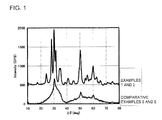
- a 200 mL four-necked flask was charged with 62.5 g (0.48 mol) of 2-ethyl hexanol and 1.91 g of sulfated zirconium oxide (SO 4 /ZrO 2 ; sulfated zirconia available from Wako Pure Chemical Industries, Ltd.; sulfate ion (SO 4 2- ) content: 9.3%; configuration: powder; X-ray diffraction spectrum: refer to FIG. 1 ; I total : 3550 cps), and the contents of the flask were heated to 100°C while introducing nitrogen thereinto and stirring.
- SO 4 /ZrO 2 sulfated zirconia available from Wako Pure Chemical Industries, Ltd.
- SO 4 2- sulfate ion
- a 200 mL four-necked flask was charged with 53.8 g (0.41 mol) of 2-ethyl hexanol and 1.90 g of the sulfated zirconium oxide used in Example 1, and the contents of the flask were heated to 150°C while introducing nitrogen thereinto and stirring.
- 37.0 g (0.20 mol) of 2-ethylhexyl glycidyl ether were dropped into the flask over 3.5 h, and the contents of the flask were continuously stirred as such for 1 h.
- the resulting reaction mixture was cooled to room temperature and then subjected to filtration to remove the sulfated zirconium oxide therefrom.
- a 1000 mL four-necked flask was charged with 500.7 g (3.85 mol) of 2-ethyl hexanol, 3.40 g (0.016 mol) of aluminum triisopropoxide (Al(OiPr) 3 ; available from Kawaken Fine Chemicals Co., Ltd.) as a catalyst and 2.45 g (0.024 mol) of 98% sulfuric acid, and the contents of the flask were heated to 90°C while introducing nitrogen thereinto and stirring.
- 296.5 g (3.21 mol) of epichlorohydrin were dropped into the flask over 3 h, and the contents of the flask were continuously stirred as such for 3 h.
- a 200 mL four-necked flask was charged with 62.6 g (0.48 mol) of 2-ethyl hexanol and 1.89 g "KYOWAAD 700SL" (available from Kyowa Chemical Industry Co., Ltd.; Al 2 O 3 /SiO 2 ; aluminum oxide: 10.5% and silicon oxide: 60.2%), and the contents of the flask were heated to 100°C while introducing nitrogen thereinto and stirring. Next, 37.0 g (0.40 mol) of epichlorohydrin were dropped into the flask over 1.5 h, and the contents of the flask were continuously stirred as such for 3 h.
- KYOWAAD 700SL available from Kyowa Chemical Industry Co., Ltd.; Al 2 O 3 /SiO 2 ; aluminum oxide: 10.5% and silicon oxide: 60.2%
- a 200 mL four-necked flask was charged with 1.84 g of phosphoric acid-supporting zirconium oxide (available from Daiichi Kigenso Kagaku Kogyo Co., Ltd.; phosphoric ion (PO 4 3- ) content: 3.6%; configuration: powder; I total 2560 cps) and 62.6 g (0.48 mol) of 2-ethyl hexanol, and the contents of the flask were heated to 100°C while introducing nitrogen thereinto and stirring. Next, 36.8 g (0.40 mol) of epichlorohydrin were dropped into the flask over 1.5 h, and the contents of the flask were continuously stirred as such for 3 h.
- phosphoric acid-supporting zirconium oxide available from Daiichi Kigenso Kagaku Kogyo Co., Ltd.
- phosphoric ion (PO 4 3- ) content 3.6%
- configuration powder
- I total 2560 cps 6
- a 200 mL four-necked flask was charged with 62.7 g (0.48 mol) of 2-ethyl hexanol and 11.03 g of the phosphoric acid-supporting zirconium oxide used in Comparative Example 3, and the contents of the flask were heated to 100°C while introducing nitrogen thereinto and stirring. Next, 37.1 g (0.40 mol) of epichlorohydrin were dropped into the flask over 1.5 h, and the contents of the flask were continuously stirred as such for 3 h.
- a 200 mL four-necked flask was charged with 62.6 g (0.48 mol) of 2-ethyl hexanol and 1.84 g of sulfated zirconium oxide (available from Daiichi Kigenso Kagaku Kogyo Co., Ltd.; calcined at 400°C ( ⁇ 15°C) for 3 h; sulfate ion (SO 4 2- ) content: 7.8%; configuration: powder; X-ray diffraction spectrum: refer to FIG. 1 ; I total : 1400 cps), and the contents of the flask were heated to 100°C while introducing nitrogen thereinto and stirring.
- a 200 mL four-necked flask was charged with 53.3 g (0.41 mol) of 2-ethyl hexanol and 1.89 g of the sulfated zirconium oxide used in Comparative Example 5, and the contents of the flask were heated to 150°C while introducing nitrogen thereinto and stirring.
- 37.8 g (0.20 mol) of 2-ethylhexyl glycidyl ether were dropped into the flask over 3.5 h, and the contents of the flask were continuously stirred as such for 1 h.
- the resulting reaction mixture was cooled to room temperature and then subjected to filtration to remove the sulfated zirconium oxide therefrom.
- Example 1 in which the yield of the ⁇ -isomer was 90.4%, the sulfated zirconium oxide used therein was able to be readily removed without need of the neutralization treatment as compared to Comparative Example 1, and the selectivity to the aimed product in Example 1 was excellent even as compared to Comparative Example 4 (yield of the ⁇ -isomer: 84.5%) in which the amount of the phosphoric acid-supporting zirconia added in Comparative Example 3 was increased to enhance the yield of the aimed product.
- a 200 mL four-necked flask was charged with 42.8 g (0.32 mol) of 2-ethyl hexanol and 1.24 g of sulfated zirconium oxide (available from Daiichi Kigenso Kagaku Kogyo Co., Ltd.; calcined at 700°C ( ⁇ 15°C) for 3 h; sulfate ion (SO 4 2- ) content: 3.5%; configuration: powder; I total : 5200 cps), and the contents of the flask were heated to 90°C while introducing nitrogen thereinto and stirring.
- sulfated zirconium oxide available from Daiichi Kigenso Kagaku Kogyo Co., Ltd.
- a 200 mL four-necked flask was charged with 43.3 g (0.33 mol) of 2-ethyl hexanol and 1.23 g of sulfated zirconium oxide (available from Daiichi Kigenso Kagaku Kogyo Co., Ltd.; calcined at 600°C ( ⁇ 15°C) for 3 h; sulfate ion (SO 4 2- ) content: 4.1%; configuration: powder; I total : 4700 cps), and the contents of the flask were heated to 90°C while introducing nitrogen thereinto and stirring.
- sulfated zirconium oxide available from Daiichi Kigenso Kagaku Kogyo Co., Ltd.
- a 200 mL four-necked flask was charged with 42.9 g (0.32 mol) of 2-ethyl hexanol and 1.25 g of sulfated zirconium oxide (available from Daiichi Kigenso Kagaku Kogyo Co., Ltd.; calcined at 500°C ( ⁇ 15°C) for 3 h; sulfate ion (SO 4 2- ) content: 3.8%; configuration: powder; I total : 4000 cps), and the contents of the flask were heated to 90°C while introducing nitrogen thereinto and stirring.
- sulfated zirconium oxide available from Daiichi Kigenso Kagaku Kogyo Co., Ltd.
- a 200 mL four-necked flask was charged with 42.7 g (0.32 mol) of 2-methyl hexanol and 1.25 g of sulfated zirconium oxide (available from Daiichi Kigenso Kagaku Kogyo Co., Ltd.; calcined at 450°C ( ⁇ 15°C) for 3 h; sulfate ion (SO 4 2- ) content: 3.8%; configuration: powder; I total : 3950 cps), and the contents of the flask were heated to 90°C while introducing nitrogen thereinto and stirring.
- sulfated zirconium oxide available from Daiichi Kigenso Kagaku Kogyo Co., Ltd.
- a 200 mL four-necked flask was charged with 62.6 g (0.48 mol) of 2-ethyl hexanol and 1.84 g of sulfated zirconium oxide (available from Daiichi Kigenso Kagaku Kogyo Co., Ltd.; calcined at 400°C ( ⁇ 15°C) for 3 h; sulfate ion (SO 4 2- ) content: 3.7%; configuration: powder; I total : 3970 cps), and the contents of the flask were heated to 90°C while introducing nitrogen thereinto and stirring.
- sulfated zirconium oxide available from Daiichi Kigenso Kagaku Kogyo Co., Ltd.
- the process of the present invention it is possible to produce the aimed ether compound for a short period of time with an extremely high yield. Also, after completion of the reaction, the catalyst used therein can be readily removed.
- the ether compound obtained by the process of the present invention can be effectively used with various configurations in the extensive applications such as nonionic surfactants.
- the ether compound may be used in the form of a compound per se, an aqueous solution, an alcohol solution, a dispersion, an emulsion, a hydrous gel, an oily gel, or a mixture or an impregnated or penetrated product with a solid substance such as waxes in various industrial applications such as cosmetics, perfumes, agricultural chemicals and drugs for the purposes of emulsification, solubilization, dispersion, cleaning, foaming, defoaming, penetration, antibacterial effect, etc.
Landscapes
- Chemical & Material Sciences (AREA)
- Organic Chemistry (AREA)
- Chemical Kinetics & Catalysis (AREA)
- Engineering & Computer Science (AREA)
- Materials Engineering (AREA)
- Organic Low-Molecular-Weight Compounds And Preparation Thereof (AREA)
- Low-Molecular Organic Synthesis Reactions Using Catalysts (AREA)
- Catalysts (AREA)
- Epoxy Compounds (AREA)
Abstract
Description
- The present invention relates to a process for producing ether compounds from a hydroxyl group-containing compound and an epoxy compound in a simplified, efficient manner.
- Hitherto, β-halohydrin ethers have been produced by reacting a hydroxyl group-containing compound and an epoxy compound, for example, by reacting an alcohol and α-epihalohydrin in the presence of an acid catalyst. As the acid catalyst, there are known homogeneous Brφnsted acids, homogeneous Lewis acids, heterogeneous solid acids or the like.
However, in the reaction using the homogeneous Brønsted acids such as sulfuric acid, there tend to occur the problems such as a low conversion rate of the α-epihalohydrin.
Also, in the reaction using the homogeneous Lewis acids such as those catalysts containing tin tetrachloride, boron trifluoride, an aluminum alkoxide, phenols or sulfonic acids (refer toJP 10-36307A
Furthermore, in the reactions using the homogeneous Brønsted acid catalysts or Lewis acid catalysts, these catalysts are removed after completion of the reaction through steps including neutralization with alkalis and filtration. In these steps, if the alkalis are used in an excessive amount relative to the acids as the catalysts, the halohydrin ether produced tends to suffer from undesirable decomposition. Therefore, the neutralization step must be strictly controlled, so that the removal of the catalysts becomes extremely complicated. - On the other hand, as the methods using the heterogeneous solid acids, there are known the method using zirconium phosphoric acid salts (refer to
JP 47-20606B JP 54-14910A JP 7-133269A
USP 4,727 ,199 ,USP 4,873,017 andUSP 5,025,094 disclose the method in which an epoxy compound and an active hydrogen-containing compound are subjected to alkoxylation reaction in the presence of a heterogeneous catalyst formed of an anion-bonded metal oxide such as a non-crystalline sulfated zirconia, as well as a composition obtained by the method. - The present invention relates to a process for producing an ether compound which includes the step of reacting a hydroxyl group-containing compound with an epoxy compound in the presence of an oxide of a metal of Group 4 of the Periodic Table on which a sulfate ion is supported, wherein a sum of a diffraction intensity of a (111) crystal lattice plane and a diffraction intensity of a (-111) crystal lattice place of the metal oxide is 2000 cps or larger as measured by subjecting the metal oxide to powder X-ray diffraction analysis.
-
-
FIG. 1 shows an X-ray diffraction spectrum of sulfated zirconium oxide used in Examples 1 and 2, and an X-ray diffraction spectrum of sulfated zirconium oxide used in Comparative Examples 5 and 6. - The present invention relates to a process for producing an ether compound from a hydroxyl group-containing compound and an epoxy compound in a simplified, efficient manner.
The present inventors have found that when reacting the hydroxyl group-containing compound with the epoxy compound in the presence of a crystalline oxide of a metal of Group 4 of the Periodic Table on which a sulfate ion is supported, the aimed ether compound can be obtained for a short period of time with an extremely high yield, and after completion of the reaction, the catalyst can be readily removed from the resulting reaction mixture.
That is, the present invention is directed to a process for producing an ether compound which includes the step of reacting a hydroxyl group-containing compound with an epoxy compound in the presence of an oxide of a metal of Group 4 of the Periodic Table on which a sulfate ion is supported, wherein a sum of a diffraction intensity of a (111) crystal lattice plane and a diffraction intensity of a (-111) crystal lattice place of the metal oxide is 2000 cps or larger as measured by subjecting the metal oxide to powder X-ray diffraction analysis. - The hydroxyl group-containing compound used in the present invention is not particularly limited, and is preferably a compound represented by the following general formula (1):
R1-(OA1)n-(OA2)m-OH (1)
wherein R1 is a hydrocarbon group having 1 to 36 carbon atoms; A1 is an alkanediyl group having 2 to 4 carbon atoms; A2 is a hydroxyl group-containing alkanediyl group having 2 to 4 carbon atoms; and n and m represent average polymerization degrees of the OA1 group and the OA2 group, respectively, in which n is a number of from 0 to 20 and m is a number of from 0 to 2.
In the general formula (1), from the viewpoint of good properties of the ether compound as the aimed product, R1 is (i) a linear, branched or cyclic alkyl group preferably having 2 to 22 carbon atoms, more preferably 4 to 18 carbon atoms and still more preferably 6 to 12 carbon atoms; (ii) a linear, branched or cyclic alkenyl group preferably having 2 to 36 carbon atoms, more preferably 5 to 24 carbon atoms and still more preferably 8 to 18 carbon atoms; or (iii) a substituted or unsubstituted aromatic group. In the case where R1 is a branched group, the number and positions of branched chains thereof are not particularly limited.
In addition, examples of the substituent groups which may be bonded to R1 include halogen atoms such as a fluorine atom and a chlorine atom, a hydroxyl group and an alkoxy group. - Specific examples of the alkyl groups as R1 include methyl, ethyl, propyl, butyl, pentyl, hexyl, heptyl, octyl, nonyl, decyl, undecyl, dodecyl, tridecyl, tetradecyl, pentadecyl, hexadecyl, heptadecyl, octadecyl, nonadecyl, eicosyl, isopropyl, 2-ethylhexyl, 3,5-dimethylhexyl, 3,5,5-trimethylhexyl, cyclopentyl, cyclohexyl and cyclooctyl groups.
Specific examples of the alkenyl groups as R1 include allyl, oleyl, linoleyl, cyclopentenyl, cyclohexenyl and cyclooctenyl groups.
Specific examples of the substituted or unsubstituted aromatic groups as R1 include phenyl, phenyl methyl, 2-methyl phenyl, 3-methyl phenyl, 4-methyl phenyl and naphthyl groups. - In the general formula (1), A1 is a linear or branched alkanediyl group having 2 to 4 carbon atoms, preferably 2 to 3 carbon atoms and more preferably 2 carbon atoms from the viewpoints of good properties of the resulting ether compound as the aimed product. Specific example of the alkanediyl group as A1 include an ethylene group, a trimethylene group and a propane-1,2-diyl group. Among these alkanediyl groups, preferred is an ethylene group.
Also, in the general formula (1), A2 is a hydroxyl group-containing linear or branched alkanediyl group having 2 to 4 carbon atoms, preferably 2 to 3 carbon atoms and more preferably 3 carbon atoms from the viewpoints of good properties of the resulting ether compound as the aimed product. Specific example of the hydroxyl group-containing alkanediyl group as A2 include a hydroxy-propane-1,2-diyl group and the like.
In addition, in the general formula (1), from the viewpoint of good properties of the resulting ether compound as the aimed product, n is a number of from 0 to 20, preferably from 0 to 8, more preferably from 0 to 3 and still more preferably 0, whereas m is a number of from 0 to 2, preferably 0 or 1 and more preferably 0.
The plural OA1 groups and the plural OA2 groups being present in a molecule of the hydroxyl group-containing compound may be respectively the same or different from each other. - Suitable examples of the hydroxyl group-containing compound represented by the general formula (1) include (a) alcohols, (b) alkylene glycol monoalkyl ethers and (c) glyceryl ethers.
Specific examples of the alcohols (a) include methanol, ethanol, propanol, butanol, pentanol, hexanol, heptanol, octanol, nonanol, decanol, undecanol, dodecanol, tetradecanol, hexadecanol, heptadecanol, octadecanol, nonadecanol, eicosanol, isopropanol, 2-ethyl hexanol, 3,5-dimethyl hexanol, isodecanol, isododecanol, allyl alcohol, oleyl alcohol, linolenyl alcohol, cyclopentanol, cyclohexanol, cyclooctanol, phenyl methanol, phenol and naphthol. Among these alcohols, preferred are one or more alcohols selected from the group consisting of pentanol, octanol, decanol, dodecanol (lauryl alcohol), tetradecanol, hexadecanol and 2-ethyl hexanol. - Specific examples of the alkylene glycol monoalkyl ethers (b) include ethylene glycol monomethyl ether, ethylene glycol monohexyl ether, ethylene glycol monostearyl ether, propylene glycol monomethyl ether, propylene glycol monohexyl ether, propylene glycol monooctyl ether, propylene glycol monododecyl ether, polyethylene glycol monododecyl ether, polyethylene glycol monomyristyl ether, polyethylene glycol monopalmityl ether and polypropylene glycol monododecyl ether.
Specific examples of the glyceryl ethers (c) include ethyl glyceryl ether, hexyl glyceryl ether, 2-ethylhexyl glyceryl ether, octyl glyceryl ether, decyl glyceryl ether, lauryl glyceryl ether, stearyl glyceryl ether, isostearyl glyceryl ether, diglycerol monododecyl ether and ethylene glycol monododecyl monoglycerol ether.
These hydroxyl group-containing compounds may be used alone or in combination of any two or more thereof.
The hydroxyl group-containing compound is preferably used in an amount of from 0.8 to 10.0 mol per 1 mol of the epoxy compound. From the viewpoints of a high reactivity of the etherification and a high productivity of the aimed ether compound, the amount of the hydroxyl group-containing compound used is more preferably from 1.0 to 3.0 mol, still more preferably from 1.0 to 2.0 mol, further still more preferably from 1.1 to 1.8 mol and especially preferably from 1.1 to 1.3 mol per 1 mol of the epoxy compound. - Examples of the epoxy compound used in the present invention include α-epihalohydrins such as α-epichlorohydrin, α-epibromohydrin and α-epiiodohydrin, and/or 1,2-epoxy compounds represented by the following general formula (2):
-

- Specific examples and suitable examples of the hydrocarbon group having 1 to 36 carbon atoms which is represented by R2 in the general formula (2) are the same as the specific examples and suitable examples of the hydrocarbon group having 1 to 36 carbon atoms which is represented by R1 in the general formula (1).
In addition, specific examples and suitable examples of the alkanediyl group having 2 to 4 carbon atoms which is represented by A3 in the general formula (2) are the same as the specific examples and suitable examples of the alkanediyl group having 2 to 4 carbon atoms which is represented by A1 in the general formula (1).
In the general formula (2), p is a number of from 0 to 20. From the viewpoint of good properties of the resulting ether compound, p is preferably a number of from 0 to 8, more preferably from 0 to 3 and still more preferably 0, whereas q is a number af 0 or 1, and preferably 1.
Among the 1,2-epoxy compounds represented by the general formula (2), preferred are alkyl glycidyl ethers in which R2 is an alkyl group having 1 to 36 carbon atoms, preferably 5 to 18 carbon atoms and especially preferably 6 to 12 carbon atoms. - Specific examples of the epoxy compound suitably used in the present invention include one or more compounds selected from the group consisting of epichlorohydrin, 2-ethylhexyl glycidyl ether and dodecyl glycidyl ether.
The method of adding the epoxy compound is not particularly limited. For example, various addition methods such as collective (one-time) addition and divided (intermittent) addition, and continuous dropping or divided (intermittent) dropping may be used in the present invention. The reaction between the hydroxyl group-containing compound and the epoxy compound is an exothermic reaction. Therefore, from the viewpoint of well controlling the reaction, the epoxy compound is preferably added to the hydroxyl group-containing compound while stirring by either the divided (intermittent) addition method or the divided (intermittent) dropping method and more preferably by the divided (intermittent) dropping method. - In the present invention, there is used an oxide of a metal of Group 4 of the Periodic Table on which a sulfate ion is supported, which is capable of satisfying such a condition that a sum of a diffraction intensity of a (111) crystal lattice plane and a diffraction intensity of a (-111) crystal lattice place of the metal oxide (hereinafter occasionally referred to merely as "Itotal") is 2000 cps or larger as measured by subjecting the metal oxide to powder X-ray diffraction analysis (hereinafter occasionally referred to merely as a "crystalline sulfated Group 4 metal oxide").
When the crystalline sulfated Group 4 metal oxide has a plurality of crystal structures, there may be present plural crystal lattice planes which are represented by the same Miller index. In such a case, the "diffraction intensity of a (111) crystal lattice plane" and the "diffraction intensity of a (-111) crystal lattice place" represent a sum of diffraction intensities of the (111) crystal lattice planes which are different in crystal structure from each other, and a sum of diffraction intensities of the (-111) crystal lattice planes which are different in crystal structure from each other, respectively. - Itotal of zirconia as the Group 4 metal oxide is represented by the following calculation formula (1):

wherein I28.3 represents a diffraction intensity of a (-111) monoclinic lattice plane of the zirconia (at a diffraction angle 2θ = 28.3°), I30.3 represents a diffraction intensity of a (111) tetragonal lattice plane of the zirconia (at a diffraction angle 2θ = 30.3°), and I31.5 represents a diffraction intensity of a (111) monoclinic lattice plane of the zirconia (at a diffraction angle 2θ = 31.5°) as measured by a powder X-ray diffraction analysis.
The value of Itotal is calculated from a peak intensity observed in a powder- X-ray diffraction spectrum as measured under the conditions described in Examples below. When the value of Itotal is 2000 cps or larger, the metal oxide is defined as being crystalline.
The value of Itotal is preferably 2500 cps or larger, more preferably 3000 cps or larger and still more preferably from 3200 to 6000 cps from the viewpoint of a good catalytic activity. - The Group 4 metal contained in the crystalline sulfated Group 4 metal oxide may be at least one metal selected from the group consisting of titanium, zirconium and hafnium. Among these crystalline sulfated Group 4 metal oxides, sulfate ion-supporting crystalline zirconium oxide (hereinafter referred to merely as a "crystalline sulfated zirconia") is especially preferred from the viewpoints of a good reactivity, etc.
The crystalline sulfated zirconia is not a compound having a stoichiometric composition such as zirconia sulfate (Zr(SO4)2), but has been reported to be a compound usually having an atomic ratio of S to Zr of less than 1 (S/Zr < 1) in which SO4 is coordinated onto zirconia (refer to "PETEROTECH", Vol. 19, No. 9, p. 733 (1996)).
The content of the sulfate ion (SO4 2-) in the crystalline sulfated Group 4 metal oxide, in particular, in the crystalline sulfated zirconia, is preferably from 0.1 to 30% by mass, more preferably from 0.1 to 20% by mass, still more preferably from 1 to 20% by mass, further still more preferably from 1.5 to 15% by mass and especially preferably from 2 to 12% by mass from the viewpoint of a high reactivity and a good production stability. - The method of preparing the crystalline sulfated Group 4 metal oxide used in the present invention is not particularly limited as long as the resulting Group 4 metal oxide has Itotal which lies within the specific range as defined by the present invention. The crystalline sulfated Group 4 metal oxide may be prepared by conventionally known methods such as a liquid phase method and a solid phase method. For example, there may be mentioned the following preparation methods (A) and (B).
- At least one basic compound selected from the group consisting of aqueous ammonia, sodium hydroxide and potassium hydroxide is added to and reacted with a basic metal sulfate compound (compound of a metal of Group 4 of the Periodic Table) such as basic zirconium sulfate to obtain a sulfuric acid-containing hydroxide (hydroxide of a metal of Group 4 of the Periodic Table) such as sulfuric acid-containing zirconium hydroxide. The thus obtained sulfuric acid-containing hydroxide may be recovered by known methods such as a co-precipitation method in which the obtained mixture is subjected to filtration, water-washing and then to solid-liquid separation. The thus recovered sulfuric acid-containing hydroxide may be dried, if required.
Next, the resulting sulfuric acid-containing hydroxide (hydroxide of a metal of Group 4 of the Periodic Table) is calcined to thereby obtain the crystalline sulfated Group 4 metal oxide. - A hydroxide or oxide of a metal of Group 4 of the Periodic Table selected from the group consisting of zirconium hydroxide, hydrous zirconium oxide and zirconium oxide is impregnated with a sulfuric acid compound selected from the group consisting of sulfuric acid, ammonium sulfate and a sulfate ion-containing compound.
Meanwhile, the hydrous zirconium oxide means zirconium hydroxide heat-treated below a temperature at which the zirconium hydroxide is transformed into zirconium oxide. The hydroxide or oxide of a metal of Group 4 of the Periodic Table selected from the group consisting of zirconium hydroxide, hydrous zirconium oxide and zirconium oxide as a raw material may have either a crystalline structure, a non-crystalline structure or a mixture of both the structures.
The product obtained after the impregnation treatment is calcined to obtain the crystalline sulfated Group 4 metal oxide. - The calcination temperature used for preparing the crystalline sulfated Group 4 metal oxide is preferably from 550 to 750°C, more preferably from 570 to 700°C and still more preferably from 575 to 650°C from the viewpoints of a high reactivity, a good production stability and a high activity upon recycling. The calcination time may be appropriately determined according to the calcination temperature, etc., and is preferably from 10 min to 24 h, more preferably from 0.5 to 10 h and still more preferably from 1 to 6 h which is the elapsed time as measured after the time at which the aimed calcination temperature is reached, from the viewpoints of a high reactivity, a good production stability and a high activity upon recycling. The calcination atmosphere may be either atmospheric air or an oxidative atmosphere.
The crystalline sulfated Group 4 metal oxide obtained by carrying out the calcination under the above conditions exhibits a high reactivity as a catalyst for production of the ether compound according to the present invention, and can maintain a high reactivity without any regeneration treatment, etc., even when the catalyst is repeatedly used.
Among these methods for preparation of the catalyst, preferred is the preparation method (B) in which the hydroxide or oxide of a metal of Group 4 of the Periodic Table is used as a raw material. - The crystalline sulfated Group 4 metal oxide may contain a hydroxide thereof unless the aimed effects of the present invention are adversely affected. From the viewpoints of improvement in catalytic activity, etc., the crystalline sulfated Group 4 metal oxide may further contain and support thereon a metal of
Group 10 or 11 of the Periodic Table such as palladium and platinum.
The configuration of the crystalline sulfated Group 4 metal oxide upon use is not particularly limited. The crystalline sulfated Group 4 metal oxide may be used in the form of a powder, may be molded into a pellet shape, a spherical shape, an ellipsoidal shape or a hollow cylindrical shape, or may be wash-coated on a refractory honeycomb carrier.
In the preferred embodiment, the crystalline sulfated Group 4 metal oxide may be dispersed in a reaction mixture or may be allowed to coexist therein as a so-called fixed bed catalyst. When dispersed in the reaction mixture, the crystalline sulfated Group 4 metal oxide may be readily separated or removed therefrom after completion of the reaction by a physical method such as filtration and centrifugal separation.
The above crystalline sulfated Group 4 metal oxides may be used alone or in combination of any two or more thereof.
The crystalline sulfated Group 4 metal oxide is preferably used in an amount of from 0.1 to 20% by mass, more preferably from 0.5 to 10% by mass and still more preferably from 2 to 10% by mass on the basis of the epoxy compound from the viewpoints of a high reactivity and a facilitated removal procedure after completion of the reaction.
Meanwhile, from the viewpoint of a good industrial convenience, the reaction is preferably carried out in a solvent-free condition. However, when the reaction system is in a highly viscous state or a non-uniform state owing to the kind or amount of the hydroxyl group-containing compound or epoxy compound added, the reaction may be conducted in the presence of an adequate amount of the following suitable solvent. - Examples of the solvent include amphipatic solvents such as tetrahydrofuran, dioxane and ethylene glycol dimethyl ether; hydrocarbon-based solvents, e.g., aliphatic hydrocarbons such as hexane, heptane, cyclohexane, methyl cyclohexane, isooctane and hydrogenated triisobutylene, and aromatic hydrocarbons such as benzene, toluene, xylene and ethyl benzene; and silicone-based solvents such as octamethyl cyclotetrasiloxane and decamethyl cyclopentasiloxane.
These solvents may be used alone or in combination of any two or more thereof. Meanwhile, these solvents are preferably subjected to dehydration or deaeration upon use.
The solvent is preferably used in an amount of from 0 to 100 times by mass and more preferably from 0 to 10 times by mass on the basis of a total mass of the hydroxyl group-containing compound, the epoxy compound and the sulfated Group 4 metal oxide from the viewpoints of facilitated removal of the solvent, a high reactivity and a high productivity. Especially preferably, no solvent is used in the reaction. - The reaction temperature used in the process of the present invention is preferably from 10 to 250°C, more preferably from 10 to 150°C, still more preferably from 60 to 130°C and especially preferably from 80 to 110°C from the viewpoints of reaction time, reaction efficiency, yield, selectivity and quality of the resulting ether compound.
The reaction pressure is not particularly limited, and the reaction may be carried out under applied pressures, if required.
The reaction method usable in the process of the present invention may be either a batch method, a semi-batch method or a continuous method, etc. - After completion of the reaction, the crystalline sulfated Group 4 metal oxide used therein may be readily removed from the reaction solution by a suitable method such as filtration, centrifugal separation and decantation. The thus obtained reaction solution may be then subjected to washing treatment, if required, thereby obtaining the ether compound as the aimed product.
If required, the resulting ether compound may be further purified by an ordinary method such as silica gel column chromatography, distillation and recrystallization.
The used crystalline sulfated Group 4 metal oxide may be recovered and subjected to regeneration treatments such as calcination, and then reused. When the calcination temperature used for preparation of the crystalline sulfated Group 4 metal oxide lies within the above-specified range of from 550 to 750°C, the used crystalline sulfated Group 4 metal oxide may be reused while maintaining its high catalytic activity without being subjected to any regeneration treatments. - In the following Examples and Comparative Examples, the terms "%" and "ppm" represent "% by mass" and "ppm by mass", respectively.
- (1) The conversion rates of the hydroxyl group-containing compound and the epoxy compound after completion of the reaction may be analyzed and determined using the following gas chromatographic (GC) apparatus and analytic conditions.
<Gas Chromatographic Apparatus and Analytic Conditions>
GC apparatus: "HP 6850 Series" available from Hewlett Packard Co.
Column: "HP-5" available from J & W Corp., (inner diameter: 0.25 mm; length: 30 m; membrane thickness: 0.25 µm)
Carrier gas: He; 1.0 mL/min
Injection condition: 270°C; split ratio: 1/50
Detection condition: FID method; 300°C
Column temperature condition: held at 50°C for 2 min → raised at 10°C/min → held at 300°C for 5 min -
- (2) The value of Itotal of the Group 4 metal oxide used in the following Examples, etc., indicating an index of a crystallinity thereof was calculated from a diffraction intensity of a (111) crystal lattice plane and a diffraction intensity of a (-111) crystal lattice plane as observed in powder X-ray diffraction crystal diffraction spectra which were obtained under the following measuring conditions using the following sample preparation method and measuring procedures.
(Measuring Conditions)
Measuring apparatus: "Rigaku RINT 2500VC X-RAY diffractometer" available from Rigaku Corp.
X-ray source: Cu/Kα-radiation
Tube voltage: 40 kV; Tube current: 120 mA
Measuring range: 2θ = 10 to 80°
Sample to be measured: A sample was prepared by compressing pellets having an area of 320 mm2 and a thickness of 1 mm according to the following sample preparation method.
X-ray scanning speed: 10°/min - When the sample to be measured has a large particle size, the number of crystals which contribute to X-ray diffraction analysis is lessened, so that a reproducibility of the analysis tends to be deteriorated. Therefore, the sample was fully pulverized and powdered into about 10 µm in diameter using a agate mortar, etc.
When the thus obtained powdered sample was filled in a sampling plate, the sampling plate (an aluminum plate, a glass plate, etc.) was placed on a flat glass plate having a size of 10 cm square and a thickness of about 5 mm in order to reduce an error of a diffraction angle, and the sample was uniformly and evenly filled in a sample filling hole or groove of the sampling plate such that the surface of the sample filled was brought into flush alignment with the surface of the sampling plate. - (3) The contents of a sulfate ion and phosphoric acid in the Group 4 metal oxide were calculated as follows. That is, the contents of sulfur and phosphorus were measured by elemental analysis and converted into amounts of the sulfate ion and phosphoric ion, respectively.
- A 200 mL four-necked flask was charged with 62.5 g (0.48 mol) of 2-ethyl hexanol and 1.91 g of sulfated zirconium oxide (SO4/ZrO2; sulfated zirconia available from Wako Pure Chemical Industries, Ltd.; sulfate ion (SO4 2-) content: 9.3%; configuration: powder; X-ray diffraction spectrum: refer to
FIG. 1 ; Itotal: 3550 cps), and the contents of the flask were heated to 100°C while introducing nitrogen thereinto and stirring. Next, 37.0 g (0.40 mol) of epichlorohydrin were dropped into the flask over 1.5 h, and the contents of the flask were continuously stirred as such for 1 h. The resulting reaction mixture was cooled to room temperature and then subjected to filtration to remove the sulfated zirconium oxide therefrom.
As a result of GC analysis, it was confirmed that the conversion rate of epichlorohydrin as the raw material was 100%; the yield of β-2-ethylhexyl chlorohydrin ether produced (β-isomer) was 90.4% and the yield of α-2-ethylhexyl chlorohydrin ether produced (α-isomer) was 2.7% (total yield: 93.1%); and an excessive addition by-product formed by further adding epichlorohydrin to the above 2-ethylhexyl chlorohydrin ether was produced in an amount of 6.6%. The results are shown in Table 1. - A 200 mL four-necked flask was charged with 53.8 g (0.41 mol) of 2-ethyl hexanol and 1.90 g of the sulfated zirconium oxide used in Example 1, and the contents of the flask were heated to 150°C while introducing nitrogen thereinto and stirring. Next, 37.0 g (0.20 mol) of 2-ethylhexyl glycidyl ether were dropped into the flask over 3.5 h, and the contents of the flask were continuously stirred as such for 1 h. The resulting reaction mixture was cooled to room temperature and then subjected to filtration to remove the sulfated zirconium oxide therefrom.
As a result of GC analysis, it was confirmed that the conversion rate of 2-ethylhexyl glycidyl ether as the raw material was 100%; the yield of 1,3-di-2-ethylhexyl glycerol produced was 83.2% and the yield of 1,2-di-2-ethylhexyl glycerol produced was 2.1% (total yield: 85.3%); and an excessive addition by-product formed by further adding 2-ethylhexyl glycidyl ether to the above 1,2-di-2-ethylhexyl glycerol was produced in an amount of 1.3%. The results are shown in Table 1. - A 3000 mL four-necked flask was charged with 1426.0 g (7.66 mol) of lauryl alcohol ("Kalcol 2098" available from Kao Corp.) and 23.14 g of sulfated zirconium oxide (available from Daiichi Kigenso Kagaku Kogyo Co., Ltd.; calcined at 600°C (±15°C) for 3 h; sulfate ion (SO4 2-) content: 4.1%; configuration: powder; Itotal: 4700 cps), and the contents of the flask were heated to 100°C while introducing nitrogen thereinto and stirring. Next, 463.9 g (5.01 mol) of epichlorohydrin were dropped into the flask over 4 h, and the contents of the flask were continuously stirred as such for 1 h. The resulting reaction mixture was cooled to room temperature and then subjected to filtration to recover the sulfated zirconium oxide therefrom.
As a result of GC analysis, it was confirmed that the conversion rate of epichlorohydrin as the raw material was 100%; and the yield of β-lauryl chlorohydrin ether produced (β-isomer) was 92.0% and the yield of α-lauryl chlorohydrin ether produced (α-isomer) was 2.8% (total yield: 94.8%). - A 1000 mL four-necked flask was charged with 500.7 g (3.85 mol) of 2-ethyl hexanol, 3.40 g (0.016 mol) of aluminum triisopropoxide (Al(OiPr)3; available from Kawaken Fine Chemicals Co., Ltd.) as a catalyst and 2.45 g (0.024 mol) of 98% sulfuric acid, and the contents of the flask were heated to 90°C while introducing nitrogen thereinto and stirring. Next, 296.5 g (3.21 mol) of epichlorohydrin were dropped into the flask over 3 h, and the contents of the flask were continuously stirred as such for 3 h.
As a result of GC analysis, it was confirmed that the conversion rate of epichlorohydrin as the raw material was 100%; the yield of β-2-ethylhexyl chlorohydrin ether produced (β-isomer) was 87.9% and the yield of α-2-ethylhexyl chlorohydrin ether produced (α-isomer) was 1.4% (total yield: 89.3%); and an excessive addition by-product was produced in an amount of 10.2%.
After completion of the reaction, the resulting reaction solution was cooled to 50°C, and 19.23 g (0.048 mol) of a 10% sodium hydroxide aqueous solution was accurately weighed and added to the reaction solution, followed by stirring the reaction solution for 30 min. Thereafter, the thus obtained reaction solution was neutralized with sodium hydroxide to precipitate an aluminum compound. In this procedure, when the amount of sodium hydroxide added was deficient relative to sulfuric acid, the aluminum compound failed to be completely precipitated, whereas when the amount of sodium hydroxide added was excessive relative to sulfuric acid, the yield of the aimed compound was lowered owing to the reaction between the surplus alkali and the halohydrin ether. Therefore, a stoichiometric amount of sodium hydroxide was added to sulfuric acid added to conduct a strict neutralization. The obtained reaction mixture was cooled to room temperature and then subjected to filtration to remove the aluminum compound therefrom. The results are shown in Table 1. - A 200 mL four-necked flask was charged with 62.6 g (0.48 mol) of 2-ethyl hexanol and 1.89 g "KYOWAAD 700SL" (available from Kyowa Chemical Industry Co., Ltd.; Al2O3/SiO2; aluminum oxide: 10.5% and silicon oxide: 60.2%), and the contents of the flask were heated to 100°C while introducing nitrogen thereinto and stirring. Next, 37.0 g (0.40 mol) of epichlorohydrin were dropped into the flask over 1.5 h, and the contents of the flask were continuously stirred as such for 3 h.
As a result of GC analysis, it was confirmed that the conversion rate of epichlorohydrin as the raw material was 46%; the yield of β-2-ethylhexyl chlorohydrin ether produced (β-isomer) was 28.0% and the yield of α-2-ethylhexyl chlorohydrin ether produced (α-isomer) was 1.1% (total yield: 29.1%); and an excessive addition by-product was produced in an amount of 1.6%.
After completion of the reaction, the resulting reaction mixture was cooled to room temperature and then subjected to filtration to remove the catalyst used therefrom. The results are shown in Table 1. - A 200 mL four-necked flask was charged with 1.84 g of phosphoric acid-supporting zirconium oxide (available from Daiichi Kigenso Kagaku Kogyo Co., Ltd.; phosphoric ion (PO4 3-) content: 3.6%; configuration: powder; Itotal 2560 cps) and 62.6 g (0.48 mol) of 2-ethyl hexanol, and the contents of the flask were heated to 100°C while introducing nitrogen thereinto and stirring. Next, 36.8 g (0.40 mol) of epichlorohydrin were dropped into the flask over 1.5 h, and the contents of the flask were continuously stirred as such for 3 h.
As a result of GC analysis, it was confirmed that the conversion rate of epichlorohydrin as the raw material was 42%; the yield of β-2-ethylhexyl chlorohydrin ether produced (β-isomer) was 38.4% and the yield of α-2-ethylhexyl chlorohydrin ether produced (α-isomer) was 0.9% (total yield: 39.3%); and an excessive addition by-product was produced in an amount of 1.5%.
After completion of the reaction, the resulting reaction mixture was cooled to room temperature and then subjected to filtration to remove the catalyst used therefrom. The results are shown in Table 1. - A 200 mL four-necked flask was charged with 62.7 g (0.48 mol) of 2-ethyl hexanol and 11.03 g of the phosphoric acid-supporting zirconium oxide used in Comparative Example 3, and the contents of the flask were heated to 100°C while introducing nitrogen thereinto and stirring. Next, 37.1 g (0.40 mol) of epichlorohydrin were dropped into the flask over 1.5 h, and the contents of the flask were continuously stirred as such for 3 h.
As a result of GC analysis, it was confirmed that the conversion rate of epichlorohydrin as the raw material was 100%; the yield of β-2-ethylhexyl chlorohydrin ether produced (β-isomer) was 84.5% and the yield of α-2-ethylhexyl chlorohydrin ether produced (α-isomer) was 1.7% (total yield: 86.2%); and an excessive addition by-product was produced in an amount of 13.7%.
After completion of the reaction, the resulting reaction mixture was cooled to room temperature and then subjected to filtration to remove the catalyst used therefrom. The results are shown in Table 1. - A 200 mL four-necked flask was charged with 62.6 g (0.48 mol) of 2-ethyl hexanol and 1.84 g of sulfated zirconium oxide (available from Daiichi Kigenso Kagaku Kogyo Co., Ltd.; calcined at 400°C (±15°C) for 3 h; sulfate ion (SO4 2-) content: 7.8%; configuration: powder; X-ray diffraction spectrum: refer to
FIG. 1 ; Itotal: 1400 cps), and the contents of the flask were heated to 100°C while introducing nitrogen thereinto and stirring. Next, 37.0 g (0.40 mol) of epichlorohydrin were dropped into the flask over 1.5 h, and the contents of the flask were continuously stirred as such for 1 h. After completion of the reaction, the resulting reaction mixture was cooled to room temperature and then subjected to filtration to remove the sulfated zirconium oxide therefrom.
As a result of GC analysis, it was confirmed that the conversion rate of epichlorohydrin as the raw material was 56.6%; the yield of β-2-ethylhexyl chlorohydrin ether produced (β-isomer) was 50.7% and the yield of α-2-ethylhexyl chlorohydrin ether produced (α-isomer) was 2.0% (total yield: 52.7%); and an excessive addition by-product formed by further adding epichlorohydrin to the above 2-ethylhexyl chlorohydrin ether was produced in an amount of 0.6%. The results are shown in Table 1. - A 200 mL four-necked flask was charged with 53.3 g (0.41 mol) of 2-ethyl hexanol and 1.89 g of the sulfated zirconium oxide used in Comparative Example 5, and the contents of the flask were heated to 150°C while introducing nitrogen thereinto and stirring. Next, 37.8 g (0.20 mol) of 2-ethylhexyl glycidyl ether were dropped into the flask over 3.5 h, and the contents of the flask were continuously stirred as such for 1 h. After completion of the reaction, the resulting reaction mixture was cooled to room temperature and then subjected to filtration to remove the sulfated zirconium oxide therefrom.
As a result of GC analysis, it was confirmed that the conversion rate of 2-ethylhexyl glycidyl ether as the raw material was 54.0%; the yield of 1,3-di-2-ethylhexyl glycerol produced was 39.4% and the yield of 1,2-di-2-ethylhexyl glycerol produced was 5.4% (total yield: 44.8%); and an excessive addition by-product formed by further adding 2-ethylhexyl glycidyl ether to the above 1,2-di-2-ethylhexyl glycerol was produced in an amount of 0.4%. The results are shown in Table 1. -
TABLE 1 Catalyst Amount of hydroxyl group-containing compound charged (times by mass) Time of dropping → aging (h) Reaction temperature (°C) Conversion rate of epoxy compound (%) Yield of ether compound (%)*2 Method for removal of catalyst Kind Itotal (cps) Amount used*1 (%) Example 1 SO4/ZrO2 3550 5 1.2 1.5 → 1 100 100 93.1 Filtration Example 2 SO4/ZrO2 3550 5 2.0 3.5 → 1 150 100 85.3 Filtration Example 3 SO4/ZrO2 4700 5 1.5 4 → 1 100 100 94.8 Filtration Comparative Example 1 Al(OiPr)3 98% sulfuric acid - 0.5*3 1.2 3 → 3 90 100 89.3 Filtration after neutralization Comparative Example 2 Al2O3/SiO2 - 5 1.2 1.5 → 3 100 46 29.1 Filtration Comparative Example 3 PO4/ZrO2 2560 5 1.2 1.5 → 3 100 42 39.3 Filtration Comparative Example 4 PO4/ZrO2 2560 30 1.2 1.5 → 3 100 100 86.2 Filtration Comparative Example 5 SO4/ZrO2 1400 5 1.2 1.5 → 1 100 57 52.7 Filtration Comparative Example 6 SO4/ZrO2 1400 5 2.0 3.5 → 1 150 54 44.8 Filtration Note
*1: Amount initially used based on the epoxy compound, and when reused, a whole amount of the catalyst recovered was used;
*2: Total yield based on the epoxy compound;
*3: Mol% - From Table 1, it was confirmed that in Comparative Example 1 (in which the aluminum triisopropoxide and sulfuric acid were used), the strict neutralization treatment for removal of the aluminum compound used as the catalyst was needed, and in Comparative Example 2 (in which the aluminum oxide and silicon oxide were used), Comparative Example 3 (in which the phosphoric acid-supporting zirconium oxide was used) and Comparative Examples 5 and 6 (in which the low-crystalline sulfated zirconium oxide was used), the yield of the aimed product was low owing to a low catalytic activity of the catalyst used.
On the other hand, it was confirmed that in Example 1 according to the present invention (in which the yield of the β-isomer was 90.4%), the sulfated zirconium oxide used therein was able to be readily removed without need of the neutralization treatment as compared to Comparative Example 1, and the selectivity to the aimed product in Example 1 was excellent even as compared to Comparative Example 4 (yield of the β-isomer: 84.5%) in which the amount of the phosphoric acid-supporting zirconia added in Comparative Example 3 was increased to enhance the yield of the aimed product. - In each of the following Examples 4 to 8, the catalyst was recovered after used in the reaction, and then used again for the reaction without subjected to any regeneration treatment to study and evaluate a recycling property thereof.
- A 200 mL four-necked flask was charged with 42.8 g (0.32 mol) of 2-ethyl hexanol and 1.24 g of sulfated zirconium oxide (available from Daiichi Kigenso Kagaku Kogyo Co., Ltd.; calcined at 700°C (±15°C) for 3 h; sulfate ion (SO4 2-) content: 3.5%; configuration: powder; Itotal: 5200 cps), and the contents of the flask were heated to 90°C while introducing nitrogen thereinto and stirring. Next, 25.1 g (0.27 mol) of epichlorohydrin were dropped into the flask over 1.5 h, and the contents of the flask were continuously stirred as such for 1 h. After completion of the reaction, the resulting reaction mixture was cooled to room temperature and then subjected to filtration to recover the sulfated zirconium oxide therefrom.
As a result of GC analysis, it was confirmed that the conversion rate of epichlorohydrin as the raw material was 100%; the yield of β-2-ethylhexyl chlorohydrin ether produced (β-isomer) was 90.4% and the yield of α-2-ethylhexyl chlorohydrin ether produced (α-isomer) was 2.7% (total yield: 93.1%); and an excessive addition by-product formed by further adding epichlorohydrin to the above 2-ethylhexyl chlorohydrin ether was produced in an amount of 6.5%.
Further, 43.1 g (0.33 mol) of 2-ethyl hexanol and a whole amount of the hydrous catalyst recovered (1.98 g) were charged into a 200 mL four-necked flask, and the contents of the flask were heated to 90°C while introducing nitrogen thereinto and stirring. Next, 25.3 g (0.27 mol) of epichlorohydrin were dropped into the flask over 1.5 h, and the contents of the flask were continuously stirred as such for 1 h. After completion of the reaction, the resulting reaction mixture was cooled to room temperature and then subjected to filtration to remove the sulfated zirconium oxide therefrom.
As a result of GC analysis, it was confirmed that the conversion rate of epichlorohydrin as the raw material was 100%; the yield of β-2-ethylhexyl chlorohydrin ether produced (β-isomer) was 89.1% and the yield of α-2-ethylhexyl chlorohydrin ether produced (α-isomer) was 2.3% (total yield: 91.4%); and an excessive addition by-product formed by further adding epichlorohydrin to the above 2-ethylhexyl chlorohydrin ether was produced in an amount of 5.9%. The results are shown in Table 2. - A 200 mL four-necked flask was charged with 43.3 g (0.33 mol) of 2-ethyl hexanol and 1.23 g of sulfated zirconium oxide (available from Daiichi Kigenso Kagaku Kogyo Co., Ltd.; calcined at 600°C (±15°C) for 3 h; sulfate ion (SO4 2-) content: 4.1%; configuration: powder; Itotal: 4700 cps), and the contents of the flask were heated to 90°C while introducing nitrogen thereinto and stirring. Next, 25.1 g (0.27 mol) of epichlorohydrin were dropped into the flask over 1.5 h, and the contents of the flask were continuously stirred as such for 1 h. After completion of the reaction, the resulting reaction mixture was cooled to room temperature and then subjected to filtration to recover the sulfated zirconium oxide therefrom.
As a result of GC analysis, it was confirmed that the conversion rate of epichlorohydrin as the raw material was 100%; the yield of β-2-ethylhexyl chlorohydrin ether produced (β-isomer) was 89.4% and the yield of α-2-ethylhexyl chlorohydrin ether produced (α-isomer) was 3.4% (total yield: 92.8%); and an excessive addition by-product formed by further adding epichlorohydrin to the above 2-ethylhexyl chlorohydrin ether was produced in an amount of 6.6%.
Further, 43.5 g (0.33 mol) of 2-ethyl hexanol and a whole amount of the hydrous catalyst recovered (2.66 g) were charged into a 200 mL four-necked flask, and the contents of the flask were heated to 90°C while introducing nitrogen thereinto and stirring. Next, 25.6 g (0.28 mol) of epichlorohydrin were dropped into the flask over 1.5 h, and the contents of the flask were continuously stirred as such for 1 h. After completion of the reaction, the resulting reaction mixture was cooled to room temperature and then subjected to filtration to remove the sulfated zirconium oxide therefrom.
As a result of GC analysis, it was confirmed that the conversion rate of epichlorohydrin as the raw material was 100%; the yield of β-2-ethylhexyl chlorohydrin ether produced (β-isomer) was 88.7% and the yield of α-2-ethylhexyl chlorohydrin ether produced (α-isomer) was 2.3% (total yield: 91.0%); and an excessive addition by-product formed by further adding epichlorohydrin to the above 2-ethylhexyl chlorohydrin ether was produced in an amount of 6.4%. The results are shown in Table 2. - A 200 mL four-necked flask was charged with 42.9 g (0.32 mol) of 2-ethyl hexanol and 1.25 g of sulfated zirconium oxide (available from Daiichi Kigenso Kagaku Kogyo Co., Ltd.; calcined at 500°C (±15°C) for 3 h; sulfate ion (SO4 2-) content: 3.8%; configuration: powder; Itotal: 4000 cps), and the contents of the flask were heated to 90°C while introducing nitrogen thereinto and stirring. Next, 25.7 g (0.28 mol) of epichlorohydrin were dropped into the flask over 1.5 h, and the contents of the flask were continuously stirred as such for 1 h. After completion of the reaction, the resulting reaction mixture was cooled to room temperature and then subjected to filtration to recover the sulfated zirconium oxide therefrom.
As a result of GC analysis, it was confirmed that the conversion rate of epichlorohydrin as the raw material was 100%; the yield of β-2-ethylhexyl chlorohydrin ether produced (β-isomer) was 90.9% and the yield of α-2-ethylhexyl chlorohydrin ether produced (α-isomer) was 3.1% (total yield: 94.0%); and an excessive addition by-product formed by further adding epichlorohydrin to the above 2-ethylhexyl chlorohydrin ether was produced in an amount of 5.9%.
Further, 45.3 g (0.34 mol) of 2-ethyl hexanol and a whole amount of the hydrous catalyst recovered (1.68 g) were charged into a 200 mL four-necked flask, and the contents of the flask were heated to 90°C while introducing nitrogen thereinto and stirring. Next, 24.8 g (0.27 mol) of epichlorohydrin were dropped into the flask over 1.5 h, and the contents of the flask were continuously stirred as such for 5 h. After completion of the reaction, the resulting reaction mixture was cooled to room temperature and then subjected to filtration to remove the sulfated zirconium oxide therefrom.
As a result of GC analysis, it was confirmed that the conversion rate of epichlorohydrin as the raw material was 23.1%; the yield of β-2-ethylhexyl chlorohydrin ether produced (β-isomer) was 21.9% and the yield of α-2-ethylhexyl chlorohydrin ether produced (α-isomer) was 0.7% (total yield: 22.6%); and an excessive addition by-product formed by further adding epichlorohydrin to the above 2-ethylhexyl chlorohydrin ether was produced in an amount of 0.5%. The results are shown in Table 2. - A 200 mL four-necked flask was charged with 42.7 g (0.32 mol) of 2-methyl hexanol and 1.25 g of sulfated zirconium oxide (available from Daiichi Kigenso Kagaku Kogyo Co., Ltd.; calcined at 450°C (±15°C) for 3 h; sulfate ion (SO4 2-) content: 3.8%; configuration: powder; Itotal: 3950 cps), and the contents of the flask were heated to 90°C while introducing nitrogen thereinto and stirring. Next, 25.4 g (0.27 mol) of epichlorohydrin were dropped into the flask over 1.5 h, and the contents of the flask were continuously stirred as such for 1 h. After completion of the reaction, the resulting reaction mixture was cooled to room temperature and then subjected to filtration to recover the sulfated zirconium oxide therefrom.
As a result of GC analysis, it was confirmed that the conversion rate of epichlorohydrin as the raw material was 100%; the yield of β-2-ethylhexyl chlorohydrin ether produced (β-isomer) was 89.1% and the yield of α-2-ethylhexyl chlorohydrin ether produced (α-isomer) was 3.0% (total yield: 92.1%); and an excessive addition by-product formed by further adding epichlorohydrin to the above 2-ethylhexyl chlorohydrin ether was produced in an amount of 6.9%.
Further, 44.7 g (0.34 mol) of 2-ethyl hexanol and a whole amount of the hydrous catalyst recovered (1.80 g) were charged into a 200 mL four-necked flask, and the contents of the flask were heated to 90°C while introducing nitrogen thereinto and stirring. Next, 25.7 g (0.28 mol) of epichlorohydrin were dropped into the flask over 1.5 h, and the contents of the flask were continuously stirred as such for 5 h. After completion of the reaction, the resulting reaction mixture was cooled to room temperature and then subjected to filtration to remove the sulfated zirconium oxide therefrom.
As a result of GC analysis, it was confirmed that the conversion rate of epichlorohydrin as the raw material was 38.4%; the yield of β-2-ethylhexyl chlorohydrin ether produced (β-isomer) was 36.3% and the yield of α-2-ethylhexyl chlorohydrin ether produced (α-isomer) was 1.1% (total yield: 37.4%); and an excessive addition by-product formed by further adding epichlorohydrin to the above 2-ethylhexyl chlorohydrin ether was produced in an amount of 1.0%. The results are shown in Table 2. - A 200 mL four-necked flask was charged with 62.6 g (0.48 mol) of 2-ethyl hexanol and 1.84 g of sulfated zirconium oxide (available from Daiichi Kigenso Kagaku Kogyo Co., Ltd.; calcined at 400°C (±15°C) for 3 h; sulfate ion (SO4 2-) content: 3.7%; configuration: powder; Itotal: 3970 cps), and the contents of the flask were heated to 90°C while introducing nitrogen thereinto and stirring. Next, 37.1 g (0.40 mol) of epichlorohydrin were dropped into the flask over 1.5 h, and the contents of the flask were continuously stirred as such for 1 h. After completion of the reaction, the resulting reaction mixture was cooled to room temperature and then subjected to filtration to recover the sulfated zirconium oxide therefrom.
As a result of GC analysis, it was confirmed that the conversion rate of epichlorohydrin as the raw material was 100%; the yield of β-2-ethylhexyl chlorohydrin ether produced (β-isomer) was 91.5% and the yield of α-2-ethylhexyl chlorohydrin ether produced (α-isomer) was 2.6% (total yield: 94.1%); and an excessive addition by-product formed by further adding epichlorohydrin to the above 2-ethylhexyl chlorohydrin ether was produced in an amount of 5.9%.
Further, 62.0 g (0.48 mol) of 2-ethyl hexanol and a whole amount of the hydrous catalyst recovered (2.16 g) were charged into a 200 mL four-necked flask, and the contents of the flask were heated to 90°C while introducing nitrogen thereinto and stirring. Next, 37.1 g (0.40 mol) of epichlorohydrin were dropped into the flask over 1.5 h, and the contents of the flask were continuously stirred as such for 5 h. After completion of the reaction, the resulting reaction mixture was cooled to room temperature and then subjected to filtration to remove the sulfated zirconium oxide therefrom.
As a result of GC analysis, it was confirmed that the conversion rate of epichlorohydrin as the raw material was 78.4%; the yield of β-2-ethylhexyl chlorohydrin ether produced (β-isomer) was 73.3% and the yield of α-2-ethylhexyl chlorohydrin ether produced (α-isomer) was 2.1% (total yield: 75.4%); and an excessive addition by-product formed by further adding epichlorohydrin to the above 2-ethylhexyl chlorohydrin ether was produced in an amount of 2.8%. The results are shown in Table 2. -
TABLE 2 Catalyst Amount of hydroxyl group-containing compound charged (time by mass) Time of dropping → aging (h) Conversion rate of epoxy compound (%) Yield of ether compound (%)*2 Kind Calcination upon preparation of catalyst Itotal (cps) Amount t used (%)*1 Frequency of use Temperature (°C) Time (h) Example 4 SO4/ZrO2 700±15 3 5200 5 1 1.2 1.5→1 100 93.1 2 1.2 1.5→1 100 91.4 Example 5 SO4/ZrO2 600±15 3 4700 5 1 1.2 1.5→1 100 92.8 2 1.2 1.5→1 100 91.0 Example 6 SO4/ ZrO 3500±15 3 4000 5 1 1.2 1.5→1 100 94.0 2 1.2 1.5→5 23.1 22.6 Example 7 SO4/ZrO4 450±15 3 3950 5 1 1.2 1.5→1 100 92.1 2 1.2 1.5→5 38.4 37.4 Example 8 SO4/ZrO5 400±15 3 3970 5 1 1.2 1.5→1 100 94.1 2 1.2 1.5→5 78.4 75.4 Note
*1: Amount initially used based on the epoxy compound, and when reused, a whole amount of the catalyst recovered was used;
*2: Total yield based on the epoxy compound - From Table 2, it was confirmed that the crystalline sulfated zirconium oxide used as the catalyst upon the production of the ether compound exhibited a high catalytic activity and a high reaction selectivity irrespective of the calcination temperature used for producing the catalyst.
In addition, from the comparison between Examples 4 and 5 and Examples 6 to 8, it was confirmed that when the calcination temperature used upon the production of the catalyst was in the range of from 550 to 750°C, the resulting catalyst exhibited, even when reused, almost the same high catalytic activity and high selectivity as those upon the initial use, and the catalyst also had a high durability and a high recycling property. - In the process of the present invention, it is possible to produce the aimed ether compound for a short period of time with an extremely high yield. Also, after completion of the reaction, the catalyst used therein can be readily removed.
The ether compound obtained by the process of the present invention can be effectively used with various configurations in the extensive applications such as nonionic surfactants. For example, the ether compound may be used in the form of a compound per se, an aqueous solution, an alcohol solution, a dispersion, an emulsion, a hydrous gel, an oily gel, or a mixture or an impregnated or penetrated product with a solid substance such as waxes in various industrial applications such as cosmetics, perfumes, agricultural chemicals and drugs for the purposes of emulsification, solubilization, dispersion, cleaning, foaming, defoaming, penetration, antibacterial effect, etc.
In Examples 3 to 8 and Comparative Examples 5 and 6, there was used the sulfated zirconium oxide available from Daiichi Kigenso Kagaku Kogyo Co., Ltd., which was prepared by the same method as described in
Claims (9)
- A process for producing an ether compound, comprising the step of reacting a hydroxyl group-containing compound with an epoxy compound in the presence of an oxide of a metal of Group 4 of the Periodic Table on which a sulfate ion is supported, wherein a sum of a diffraction intensity of a (111) crystal lattice plane and a diffraction intensity of a (-111) crystal lattice plane of the metal oxide is 2000 cps or larger as measured by subjecting the metal oxide to powder X-ray diffraction analysis.
- The process for producing an ether compound according to claim 1, wherein the hydroxyl group-containing compound is represented by the following general formula (1):
R1-(OA1)n-(OA2)m-OH (1)
wherein R1 is a hydrocarbon group having 1 to 36 carbon atoms; A1 is an alkanediyl group having 2 to 4 carbon atoms; A2 is a hydroxyl group-containing alkanediyl group having 2 to 4 carbon atoms; and n and m represent average polymerization degrees of the OA1 group and the OA2 group, respectively, in which n is a number of from 0 to 20 and m is a number of from 0 to 2. - The process for producing an ether compound according to claim 1 or 2, wherein the epoxy compound is an α-epihalohydrin and/or a 1,2-epoxy compound represented by the following general formula (2):

- The process for producing an ether compound according to claim 3, wherein the 1,2-epoxy compound represented by the general formula (2) is an alkyl glycidyl ether containing an alkyl group having 1 to 36 carbon atoms.
- The process for producing an ether compound according to claim 4, wherein the 1,2-epoxy compound represented by the general formula (2) is 2-ethylhexyl glycidyl ether.
- The process for producing an ether compound according to any one of claims 1 to 5, wherein the metal of Group 4 of the Periodic Table is zirconium.
- The process for producing an ether compound according to any one of claims 1 to 6, wherein a content of the sulfate ion in the oxide of the metal of Group 4 of the Periodic Table on which the sulfate ion is supported is from 0.1 to 30% by mass.
- The process for producing an ether compound according to any one of claims 1 to 7, wherein the oxide of the metal of Group 4 of the Periodic Table on which the sulfate ion is supported is produced by calcining a raw metal compound at a temperature of from 550 to 750°C.
- The process for producing an ether compound according to any one of claims 1 to 8, wherein the oxide of the metal of Group 4 of the Periodic Table on which the sulfate ion is supported is used in an amount of from 0.1 to 20% by mass on the basis of the epoxy compound.
Applications Claiming Priority (3)
| Application Number | Priority Date | Filing Date | Title |
|---|---|---|---|
| JP2009041127 | 2009-02-24 | ||
| JP2009282125A JP5552306B2 (en) | 2009-02-24 | 2009-12-11 | Method for producing ether compound |
| PCT/JP2010/052397 WO2010098244A1 (en) | 2009-02-24 | 2010-02-18 | Process for producing ether compound |
Publications (3)
| Publication Number | Publication Date |
|---|---|
| EP2402302A1 true EP2402302A1 (en) | 2012-01-04 |
| EP2402302A4 EP2402302A4 (en) | 2015-05-27 |
| EP2402302B1 EP2402302B1 (en) | 2017-11-22 |
Family
ID=42665453
Family Applications (1)
| Application Number | Title | Priority Date | Filing Date |
|---|---|---|---|
| EP10746125.3A Not-in-force EP2402302B1 (en) | 2009-02-24 | 2010-02-18 | Process for producing ether compound |
Country Status (6)
| Country | Link |
|---|---|
| US (1) | US20120004470A1 (en) |
| EP (1) | EP2402302B1 (en) |
| JP (1) | JP5552306B2 (en) |
| CN (1) | CN102325745B (en) |
| ES (1) | ES2658165T3 (en) |
| WO (1) | WO2010098244A1 (en) |
Cited By (1)
| Publication number | Priority date | Publication date | Assignee | Title |
|---|---|---|---|---|
| WO2019178306A1 (en) * | 2018-03-16 | 2019-09-19 | Dow Global Technologies Llc | Foam control in food |
Families Citing this family (4)
| Publication number | Priority date | Publication date | Assignee | Title |
|---|---|---|---|---|
| EP3635022B1 (en) * | 2017-05-19 | 2025-05-21 | Etna-Tec, Ltd | Methods for making functionalized fluorinated monomers, fluorinated monomers, and compositions for making the same |
| WO2019177727A1 (en) * | 2018-03-16 | 2019-09-19 | Dow Global Technologies Llc | Foam control |
| JP7595869B2 (en) * | 2020-12-25 | 2024-12-09 | 株式会社MiChS | Method for producing epoxy compound |
| CN117447315A (en) * | 2023-10-13 | 2024-01-26 | 铜陵芃澳科技有限公司 | A kind of preparation method of ethylhexylglycerin |
Family Cites Families (15)
| Publication number | Priority date | Publication date | Assignee | Title |
|---|---|---|---|---|
| JPS596181B2 (en) * | 1979-08-27 | 1984-02-09 | 日本鉱業株式会社 | solid acid catalyst |
| US4727199A (en) * | 1985-07-10 | 1988-02-23 | Union Carbide Corporation | Heterogeneous alkoxylation using anion-bound metal oxides |
| US5025094A (en) * | 1985-07-10 | 1991-06-18 | Union Carbide Chemicals And Plastics Technology Corporation | Heterogeneous alkoxylation using anion-bound metal oxides |
| US4873017A (en) * | 1985-07-10 | 1989-10-10 | Union Carbide Corporation | Heterogeneous alkoxylation using anion-bound metal oxides |
| US5136106A (en) * | 1985-07-10 | 1992-08-04 | Union Carbide Chemicals & Plastics Technology Corporation | Heterogeneous alkoxylation using anion-bound metal oxides |
| ES2223164T3 (en) * | 1998-03-04 | 2005-02-16 | Japan Energy Corporation | SOLID ACID CATALYST, SUCH CATALYZER AND REACTION PREPARATION PROCEDURE USED BY THE INDICATED CATALYST. |
| JPH11263621A (en) * | 1998-03-18 | 1999-09-28 | Daiichi Kigensokagaku Kogyo Co Ltd | Method for producing sulfuric acid-supported zirconia |
| JPH11315043A (en) * | 1998-04-30 | 1999-11-16 | Lion Corp | Method for producing hydroxyether compound and detergent composition |
| JP3544134B2 (en) * | 1999-01-25 | 2004-07-21 | 花王株式会社 | Production method of glyceryl ether |
| US6541073B1 (en) * | 1999-08-31 | 2003-04-01 | Ube Industries, Ltd. | Zirconium oxide and zirconium oxide precursor and process for producing them |
| JP2001179105A (en) * | 1999-12-24 | 2001-07-03 | Petroleum Energy Center | Catalyst for hydrodesulfurization and isomerization of light hydrocarbon oil and method of producing the same |
| JP4439372B2 (en) * | 2004-10-14 | 2010-03-24 | 花王株式会社 | Method for producing ring-opening reaction product of epoxy compound |
| JP4815809B2 (en) * | 2005-01-24 | 2011-11-16 | 東ソー株式会社 | Novel structure containing sulfated zirconia and method for producing the same |
| US7468465B2 (en) * | 2005-05-31 | 2008-12-23 | Exxonmobil Chemical Patents Inc. | Method of making mixed metal oxide containing sulfur |
| JP2008308424A (en) * | 2007-06-13 | 2008-12-25 | Kao Corp | Polyglyceryl ether derivatives |
-
2009
- 2009-12-11 JP JP2009282125A patent/JP5552306B2/en not_active Expired - Fee Related
-
2010
- 2010-02-18 WO PCT/JP2010/052397 patent/WO2010098244A1/en not_active Ceased
- 2010-02-18 ES ES10746125.3T patent/ES2658165T3/en active Active
- 2010-02-18 EP EP10746125.3A patent/EP2402302B1/en not_active Not-in-force
- 2010-02-18 CN CN201080009023.9A patent/CN102325745B/en not_active Expired - Fee Related
- 2010-02-18 US US13/202,643 patent/US20120004470A1/en not_active Abandoned
Non-Patent Citations (1)
| Title |
|---|
| See references of WO2010098244A1 * |
Cited By (2)
| Publication number | Priority date | Publication date | Assignee | Title |
|---|---|---|---|---|
| WO2019178306A1 (en) * | 2018-03-16 | 2019-09-19 | Dow Global Technologies Llc | Foam control in food |
| US11478005B2 (en) | 2018-03-16 | 2022-10-25 | Dow Global Technologies Llc | Foam control |
Also Published As
| Publication number | Publication date |
|---|---|
| CN102325745B (en) | 2014-06-18 |
| EP2402302B1 (en) | 2017-11-22 |
| JP5552306B2 (en) | 2014-07-16 |
| US20120004470A1 (en) | 2012-01-05 |
| EP2402302A4 (en) | 2015-05-27 |
| WO2010098244A1 (en) | 2010-09-02 |
| CN102325745A (en) | 2012-01-18 |
| ES2658165T3 (en) | 2018-03-08 |
| JP2010222340A (en) | 2010-10-07 |
Similar Documents
| Publication | Publication Date | Title |
|---|---|---|
| EP2402302B1 (en) | Process for producing ether compound | |
| EP2003110A9 (en) | Method for producing (poly)glyceryl ether | |
| US4665236A (en) | Alkoxylation process using bimetallic oxo catalyst | |
| EP2107077A1 (en) | New polyether alcohols containing organosiloxane groups by means of alkoxylisation of epoxide functional (poly) organosiloxanes to double metal cyanide (DMC) catalysts and method for its production | |
| EP0082554A1 (en) | Process for the preparation of alkanol alkoxylates | |
| EP3680272B1 (en) | Catalyst system for the preparation of high-molecular weight polyether and application thereof | |
| EP0180266A1 (en) | Alkoxylation process using bimetallic oxo catalyst | |
| DE19702787A1 (en) | Process for the preparation of polyether polyols | |
| CA1260017A (en) | Alkoxylation process using bimetallic oxo catalyst | |
| KR100441458B1 (en) | A process for producing an unsymmetrical chain carbonic ester | |
| DE69611077T2 (en) | Process and catalyst for the production of phenol alkyl ethers | |
| EP2905073A1 (en) | Catalyst mixture for olefin metathesis reactions, method for producing same, and method for producing propylene using same | |
| JP5136849B2 (en) | Polyoxyalkylene-modified organopolysiloxane compound | |
| EP3560912A1 (en) | Method for producing aromatic nitrile compound and method for producing carbonic acid ester | |
| US4689435A (en) | Alkoxylation process using bimetallic oxo catalyst | |
| EP2383307B1 (en) | Process for the preparation of polyglyceryl ether derivatives | |
| CA2685315A1 (en) | Novel alkyloxy-ethers and alkoxylates thereof | |
| CN1087314C (en) | The preparation method of polyoxytetramethylene glycol | |
| JP5517352B2 (en) | Method for producing polyacid supported catalyst | |
| KR20060136439A (en) | Production process of 3-alkoxy-1-propanols, and 3-alkoxy-1-propanols obtained by the production process | |
| KR20070000469A (en) | Production process of 3-alkoxy-1-propanols, and 3-alkoxy-1-propanols obtained by the production process | |
| MXPA98000716A (en) | Preparation of polioxitetrametilengli | |
| KR20130096772A (en) | Metal oxide catalyst for etherification reaction, a method for preparing the same, and a method for the production of linear polyglycerol using the same | |
| JP2008120737A (en) | Method for producing alkylene oxide adduct | |
| JP5833363B2 (en) | Method for producing epoxy compound adduct |
Legal Events
| Date | Code | Title | Description |
|---|---|---|---|
| PUAI | Public reference made under article 153(3) epc to a published international application that has entered the european phase |
Free format text: ORIGINAL CODE: 0009012 |
|
| 17P | Request for examination filed |
Effective date: 20110824 |
|
| AK | Designated contracting states |
Kind code of ref document: A1 Designated state(s): AT BE BG CH CY CZ DE DK EE ES FI FR GB GR HR HU IE IS IT LI LT LU LV MC MK MT NL NO PL PT RO SE SI SK SM TR |
|
| DAX | Request for extension of the european patent (deleted) | ||
| RA4 | Supplementary search report drawn up and despatched (corrected) |
Effective date: 20150428 |
|
| RIC1 | Information provided on ipc code assigned before grant |
Ipc: C07B 61/00 20060101ALI20150421BHEP Ipc: C07C 41/03 20060101AFI20150421BHEP Ipc: B01J 27/053 20060101ALI20150421BHEP Ipc: C07C 43/13 20060101ALI20150421BHEP |
|
| 17Q | First examination report despatched |
Effective date: 20160921 |
|
| GRAP | Despatch of communication of intention to grant a patent |
Free format text: ORIGINAL CODE: EPIDOSNIGR1 |
|
| INTG | Intention to grant announced |
Effective date: 20170714 |
|
| GRAS | Grant fee paid |
Free format text: ORIGINAL CODE: EPIDOSNIGR3 |
|
| GRAA | (expected) grant |
Free format text: ORIGINAL CODE: 0009210 |
|
| AK | Designated contracting states |
Kind code of ref document: B1 Designated state(s): AT BE BG CH CY CZ DE DK EE ES FI FR GB GR HR HU IE IS IT LI LT LU LV MC MK MT NL NO PL PT RO SE SI SK SM TR |
|
| REG | Reference to a national code |
Ref country code: GB Ref legal event code: FG4D |
|
| REG | Reference to a national code |
Ref country code: CH Ref legal event code: EP |
|
| REG | Reference to a national code |
Ref country code: IE Ref legal event code: FG4D |
|
| REG | Reference to a national code |
Ref country code: AT Ref legal event code: REF Ref document number: 948216 Country of ref document: AT Kind code of ref document: T Effective date: 20171215 |
|
| REG | Reference to a national code |
Ref country code: DE Ref legal event code: R096 Ref document number: 602010046894 Country of ref document: DE |
|
| REG | Reference to a national code |
Ref country code: FR Ref legal event code: PLFP Year of fee payment: 9 |
|
| REG | Reference to a national code |
Ref country code: ES Ref legal event code: FG2A Ref document number: 2658165 Country of ref document: ES Kind code of ref document: T3 Effective date: 20180308 |
|
| REG | Reference to a national code |
Ref country code: NL Ref legal event code: MP Effective date: 20171122 |
|
| REG | Reference to a national code |
Ref country code: LT Ref legal event code: MG4D |
|
| REG | Reference to a national code |
Ref country code: AT Ref legal event code: MK05 Ref document number: 948216 Country of ref document: AT Kind code of ref document: T Effective date: 20171122 |
|
| PG25 | Lapsed in a contracting state [announced via postgrant information from national office to epo] |
Ref country code: LT Free format text: LAPSE BECAUSE OF FAILURE TO SUBMIT A TRANSLATION OF THE DESCRIPTION OR TO PAY THE FEE WITHIN THE PRESCRIBED TIME-LIMIT Effective date: 20171122 Ref country code: SE Free format text: LAPSE BECAUSE OF FAILURE TO SUBMIT A TRANSLATION OF THE DESCRIPTION OR TO PAY THE FEE WITHIN THE PRESCRIBED TIME-LIMIT Effective date: 20171122 Ref country code: NL Free format text: LAPSE BECAUSE OF FAILURE TO SUBMIT A TRANSLATION OF THE DESCRIPTION OR TO PAY THE FEE WITHIN THE PRESCRIBED TIME-LIMIT Effective date: 20171122 Ref country code: NO Free format text: LAPSE BECAUSE OF FAILURE TO SUBMIT A TRANSLATION OF THE DESCRIPTION OR TO PAY THE FEE WITHIN THE PRESCRIBED TIME-LIMIT Effective date: 20180222 Ref country code: FI Free format text: LAPSE BECAUSE OF FAILURE TO SUBMIT A TRANSLATION OF THE DESCRIPTION OR TO PAY THE FEE WITHIN THE PRESCRIBED TIME-LIMIT Effective date: 20171122 |
|
| PG25 | Lapsed in a contracting state [announced via postgrant information from national office to epo] |
Ref country code: BG Free format text: LAPSE BECAUSE OF FAILURE TO SUBMIT A TRANSLATION OF THE DESCRIPTION OR TO PAY THE FEE WITHIN THE PRESCRIBED TIME-LIMIT Effective date: 20180222 Ref country code: AT Free format text: LAPSE BECAUSE OF FAILURE TO SUBMIT A TRANSLATION OF THE DESCRIPTION OR TO PAY THE FEE WITHIN THE PRESCRIBED TIME-LIMIT Effective date: 20171122 Ref country code: HR Free format text: LAPSE BECAUSE OF FAILURE TO SUBMIT A TRANSLATION OF THE DESCRIPTION OR TO PAY THE FEE WITHIN THE PRESCRIBED TIME-LIMIT Effective date: 20171122 Ref country code: LV Free format text: LAPSE BECAUSE OF FAILURE TO SUBMIT A TRANSLATION OF THE DESCRIPTION OR TO PAY THE FEE WITHIN THE PRESCRIBED TIME-LIMIT Effective date: 20171122 Ref country code: GR Free format text: LAPSE BECAUSE OF FAILURE TO SUBMIT A TRANSLATION OF THE DESCRIPTION OR TO PAY THE FEE WITHIN THE PRESCRIBED TIME-LIMIT Effective date: 20180223 |
|
| PG25 | Lapsed in a contracting state [announced via postgrant information from national office to epo] |
Ref country code: CY Free format text: LAPSE BECAUSE OF FAILURE TO SUBMIT A TRANSLATION OF THE DESCRIPTION OR TO PAY THE FEE WITHIN THE PRESCRIBED TIME-LIMIT Effective date: 20171122 Ref country code: EE Free format text: LAPSE BECAUSE OF FAILURE TO SUBMIT A TRANSLATION OF THE DESCRIPTION OR TO PAY THE FEE WITHIN THE PRESCRIBED TIME-LIMIT Effective date: 20171122 Ref country code: SK Free format text: LAPSE BECAUSE OF FAILURE TO SUBMIT A TRANSLATION OF THE DESCRIPTION OR TO PAY THE FEE WITHIN THE PRESCRIBED TIME-LIMIT Effective date: 20171122 Ref country code: CZ Free format text: LAPSE BECAUSE OF FAILURE TO SUBMIT A TRANSLATION OF THE DESCRIPTION OR TO PAY THE FEE WITHIN THE PRESCRIBED TIME-LIMIT Effective date: 20171122 Ref country code: DK Free format text: LAPSE BECAUSE OF FAILURE TO SUBMIT A TRANSLATION OF THE DESCRIPTION OR TO PAY THE FEE WITHIN THE PRESCRIBED TIME-LIMIT Effective date: 20171122 |
|
| REG | Reference to a national code |
Ref country code: DE Ref legal event code: R097 Ref document number: 602010046894 Country of ref document: DE |
|
| PG25 | Lapsed in a contracting state [announced via postgrant information from national office to epo] |
Ref country code: PL Free format text: LAPSE BECAUSE OF FAILURE TO SUBMIT A TRANSLATION OF THE DESCRIPTION OR TO PAY THE FEE WITHIN THE PRESCRIBED TIME-LIMIT Effective date: 20171122 Ref country code: RO Free format text: LAPSE BECAUSE OF FAILURE TO SUBMIT A TRANSLATION OF THE DESCRIPTION OR TO PAY THE FEE WITHIN THE PRESCRIBED TIME-LIMIT Effective date: 20171122 Ref country code: IT Free format text: LAPSE BECAUSE OF FAILURE TO SUBMIT A TRANSLATION OF THE DESCRIPTION OR TO PAY THE FEE WITHIN THE PRESCRIBED TIME-LIMIT Effective date: 20171122 Ref country code: SM Free format text: LAPSE BECAUSE OF FAILURE TO SUBMIT A TRANSLATION OF THE DESCRIPTION OR TO PAY THE FEE WITHIN THE PRESCRIBED TIME-LIMIT Effective date: 20171122 |
|
| REG | Reference to a national code |
Ref country code: CH Ref legal event code: PL |
|
| PG25 | Lapsed in a contracting state [announced via postgrant information from national office to epo] |
Ref country code: MC Free format text: LAPSE BECAUSE OF FAILURE TO SUBMIT A TRANSLATION OF THE DESCRIPTION OR TO PAY THE FEE WITHIN THE PRESCRIBED TIME-LIMIT Effective date: 20171122 |
|
| PLBE | No opposition filed within time limit |
Free format text: ORIGINAL CODE: 0009261 |
|
| STAA | Information on the status of an ep patent application or granted ep patent |
Free format text: STATUS: NO OPPOSITION FILED WITHIN TIME LIMIT |
|
| GBPC | Gb: european patent ceased through non-payment of renewal fee |
Effective date: 20180222 |
|
| 26N | No opposition filed |
Effective date: 20180823 |
|
| REG | Reference to a national code |
Ref country code: IE Ref legal event code: MM4A |
|
| REG | Reference to a national code |
Ref country code: BE Ref legal event code: MM Effective date: 20180228 |
|
| PG25 | Lapsed in a contracting state [announced via postgrant information from national office to epo] |
Ref country code: SI Free format text: LAPSE BECAUSE OF FAILURE TO SUBMIT A TRANSLATION OF THE DESCRIPTION OR TO PAY THE FEE WITHIN THE PRESCRIBED TIME-LIMIT Effective date: 20171122 Ref country code: LI Free format text: LAPSE BECAUSE OF NON-PAYMENT OF DUE FEES Effective date: 20180228 Ref country code: LU Free format text: LAPSE BECAUSE OF NON-PAYMENT OF DUE FEES Effective date: 20180218 Ref country code: CH Free format text: LAPSE BECAUSE OF NON-PAYMENT OF DUE FEES Effective date: 20180228 |
|
| PG25 | Lapsed in a contracting state [announced via postgrant information from national office to epo] |
Ref country code: IE Free format text: LAPSE BECAUSE OF NON-PAYMENT OF DUE FEES Effective date: 20180218 |
|
| PG25 | Lapsed in a contracting state [announced via postgrant information from national office to epo] |
Ref country code: GB Free format text: LAPSE BECAUSE OF NON-PAYMENT OF DUE FEES Effective date: 20180222 Ref country code: BE Free format text: LAPSE BECAUSE OF NON-PAYMENT OF DUE FEES Effective date: 20180228 |
|
| PG25 | Lapsed in a contracting state [announced via postgrant information from national office to epo] |
Ref country code: MT Free format text: LAPSE BECAUSE OF NON-PAYMENT OF DUE FEES Effective date: 20180218 |
|
| PG25 | Lapsed in a contracting state [announced via postgrant information from national office to epo] |
Ref country code: TR Free format text: LAPSE BECAUSE OF FAILURE TO SUBMIT A TRANSLATION OF THE DESCRIPTION OR TO PAY THE FEE WITHIN THE PRESCRIBED TIME-LIMIT Effective date: 20171122 |
|
| PG25 | Lapsed in a contracting state [announced via postgrant information from national office to epo] |
Ref country code: PT Free format text: LAPSE BECAUSE OF FAILURE TO SUBMIT A TRANSLATION OF THE DESCRIPTION OR TO PAY THE FEE WITHIN THE PRESCRIBED TIME-LIMIT Effective date: 20171122 Ref country code: HU Free format text: LAPSE BECAUSE OF FAILURE TO SUBMIT A TRANSLATION OF THE DESCRIPTION OR TO PAY THE FEE WITHIN THE PRESCRIBED TIME-LIMIT; INVALID AB INITIO Effective date: 20100218 |
|
| PG25 | Lapsed in a contracting state [announced via postgrant information from national office to epo] |
Ref country code: MK Free format text: LAPSE BECAUSE OF NON-PAYMENT OF DUE FEES Effective date: 20171122 |
|
| PG25 | Lapsed in a contracting state [announced via postgrant information from national office to epo] |
Ref country code: IS Free format text: LAPSE BECAUSE OF FAILURE TO SUBMIT A TRANSLATION OF THE DESCRIPTION OR TO PAY THE FEE WITHIN THE PRESCRIBED TIME-LIMIT Effective date: 20180322 |
|
| PGFP | Annual fee paid to national office [announced via postgrant information from national office to epo] |
Ref country code: ES Payment date: 20230310 Year of fee payment: 14 |
|
| P01 | Opt-out of the competence of the unified patent court (upc) registered |
Effective date: 20230522 |
|
| PGFP | Annual fee paid to national office [announced via postgrant information from national office to epo] |
Ref country code: DE Payment date: 20231228 Year of fee payment: 15 |
|
| PGFP | Annual fee paid to national office [announced via postgrant information from national office to epo] |
Ref country code: FR Payment date: 20240103 Year of fee payment: 15 |
|
| REG | Reference to a national code |
Ref country code: ES Ref legal event code: FD2A Effective date: 20250331 |
|
| PG25 | Lapsed in a contracting state [announced via postgrant information from national office to epo] |
Ref country code: ES Free format text: LAPSE BECAUSE OF NON-PAYMENT OF DUE FEES Effective date: 20240219 |
|
| REG | Reference to a national code |
Ref country code: DE Ref legal event code: R119 Ref document number: 602010046894 Country of ref document: DE |
|
| PG25 | Lapsed in a contracting state [announced via postgrant information from national office to epo] |
Ref country code: DE Free format text: LAPSE BECAUSE OF NON-PAYMENT OF DUE FEES Effective date: 20250902 |
|
| PG25 | Lapsed in a contracting state [announced via postgrant information from national office to epo] |
Ref country code: FR Free format text: LAPSE BECAUSE OF NON-PAYMENT OF DUE FEES Effective date: 20250228 |