EP2401070B1 - Hybrid photocatalysts, the method of their synthesis and use - Google Patents
Hybrid photocatalysts, the method of their synthesis and use Download PDFInfo
- Publication number
- EP2401070B1 EP2401070B1 EP10737643.6A EP10737643A EP2401070B1 EP 2401070 B1 EP2401070 B1 EP 2401070B1 EP 10737643 A EP10737643 A EP 10737643A EP 2401070 B1 EP2401070 B1 EP 2401070B1
- Authority
- EP
- European Patent Office
- Prior art keywords
- aluminosilicate
- use according
- photocatalysts
- organic
- chromophore
- Prior art date
- Legal status (The legal status is an assumption and is not a legal conclusion. Google has not performed a legal analysis and makes no representation as to the accuracy of the status listed.)
- Not-in-force
Links
Images




Classifications
-
- B—PERFORMING OPERATIONS; TRANSPORTING
- B01—PHYSICAL OR CHEMICAL PROCESSES OR APPARATUS IN GENERAL
- B01J—CHEMICAL OR PHYSICAL PROCESSES, e.g. CATALYSIS OR COLLOID CHEMISTRY; THEIR RELEVANT APPARATUS
- B01J35/00—Catalysts, in general, characterised by their form or physical properties
- B01J35/30—Catalysts, in general, characterised by their form or physical properties characterised by their physical properties
- B01J35/39—Photocatalytic properties
-
- B—PERFORMING OPERATIONS; TRANSPORTING
- B01—PHYSICAL OR CHEMICAL PROCESSES OR APPARATUS IN GENERAL
- B01J—CHEMICAL OR PHYSICAL PROCESSES, e.g. CATALYSIS OR COLLOID CHEMISTRY; THEIR RELEVANT APPARATUS
- B01J21/00—Catalysts comprising the elements, oxides, or hydroxides of magnesium, boron, aluminium, carbon, silicon, titanium, zirconium, or hafnium
- B01J21/16—Clays or other mineral silicates
-
- B—PERFORMING OPERATIONS; TRANSPORTING
- B01—PHYSICAL OR CHEMICAL PROCESSES OR APPARATUS IN GENERAL
- B01J—CHEMICAL OR PHYSICAL PROCESSES, e.g. CATALYSIS OR COLLOID CHEMISTRY; THEIR RELEVANT APPARATUS
- B01J29/00—Catalysts comprising molecular sieves
- B01J29/04—Catalysts comprising molecular sieves having base-exchange properties, e.g. crystalline zeolites
- B01J29/049—Pillared clays
Definitions
- the subject of the invention is use of the hybrid photocatalysts based on layered aluminosilicates for the degradation of water pollutants in the natural conditions.
- the photocatalytic method of water purification is applied since 70s. Its primary advantage is the use of renewable and environmentally safe solar energy. As opposed to other methods, which are based on the transfer of the pollutants from one medium to another, the photocatalytic method of water purification leads to the transformation of the pollutants into harmless compounds. It is also a quite universal method, which may be applied for the detoxification of various types of pollutants. Usually it involves application of semiconductors based on TiO 2 , although those containing ZnO, Fe 2 O 3 , CdS, and ZnS are also studied. These photocatalysts are used in photocatalytic oxidation of organic water pollutants, although the mechanisms of their actions are known which are based on the reductive degradation of these pollutants and the removal of heavy metals. Their disadvantage, however, is the fact that most of the reactions they photocatalyze require irradiation with ultraviolet light.
- the layered aluminosilicates are known such as kaolinite, montmorillonite (bentonite) mica, and talc. These minerals are composed of layers of joined tetrahedral SiO 4 groups. The layer of tetrahedral SiO 4 groups is combined with the layer of Al 3+ ions coordinated with six oxygen atoms forming octahedral groups. The layers are arranged in parallel forming piles. The transverse dimension of a layer is several hundred of nanometers, and the distance between them is about 1 nm, therefore these minerals are also termed nanoclays.
- the layer Since a part of Al 3+ ions is replaced with ions with a lower positive charge (Mg 2+ , Fe 2+ ), the layer has a negative charge which is neutralized with the ions occupying the space between layers (so called galleries), such as Na + , Li + , Mg 2+ , or Ca 2+ .
- galleries such as Na + , Li + , Mg 2+ , or Ca 2+ .
- organic cations such as cationic surfactants leads to organically modified clays (organoclays), e.g. organically modified montmorillonite, such as commercially available Cloisite 30B.
- organoclays have very low surface energy, therefore the polymeric chains and the monomer molecules may easily intercalate between organoclay layers. In the case of polymers only hyrophilic polymers may intercalate the layers of unmodified montmorillonite.
- Layered aluminosilicates have many different applications. One of them is the modification of polymer properties.
- the first hybrid polymer-aluminosilicate hybrid materials were obtained in 1986 within the Toyota Central Research and Development Laboratories, Inc.'s (TCRDL) research project [" The discovery of polymer-clay hybrids", Kawasumi, M. J.Polym.Sci. Part A: Polym.Chem., 2004, 42, 819-824 ]. These studies have shown that even a slight addition of an aluminosilicate to the polymer causes significant improvement of thermal and mechanical properties of the polymer.
- the aluminosilicates modified with cationic polymers may be used to remove nonionic and anionic impurities from water by adsorption or by water filtration using foils obtained as described in the publication.
- the impurities are thus not degraded - they are adsorbed by the aluminosilicate and may be removed from water only together with the aluminosilicate.
- said polymeric organic chromophore is a polymer bearing organic chromophoric groups wherein the organic chromophore does not contain complexed metal ions and the organic chromophore is a compound containing a chromophoric group selected from porphyrin, rose bengal, anthracene, pyrene, perylene, tetracene, rubrene, naphthalene, phthalocyanines, coumarins, and methylene blue, is used as a photocatalyst for the photocatalytic degradation of water impurities.
- the photocatalysts are used to remove organic pollutants, particularly phenol, phenol derivatives, chlorinated aromatic pollutants, pesticides, polycyclic aromatic compounds, by their photocatalytic degradation.
- the photocatalysts can be also used for the removal of cyanides by their photocatalytic oxidation to cyanates.
- the photocatalyst contains montmorillonite, kaolinite, hectorite, biotite, mica, talc, or bentonite as the layered aluminosilicate.
- the photocatalyst contains montmorillonite organically modified by the introduction of ammonium cations, given in Scheme 1, into the aluminosilicate layers.
- mezo-tetra(4-carboxyphenyl)porphine (4CP) is used, shown in Scheme 2.
- the polymer bearing the organic chromophores intercalates into the aluminosilicate galleries or the polymer is obtained from monomers intercalated previously into aluminosilicate galleries.
- the process of polymer intercalation is performed by mixing the suspension obtained from the solution of a polymer containing organic chromophores and an aluminosilicate protected from light.
- the process of synthesis of the polymer from monomers intercalated previously into the aluminosilicate layers is carried out by intercalating a monomer or monomers into the aluminosilicate layers and initiating its polymerization or copolymerization using an initiator and/or by heating it to proper temperature.
- a layered aluminosilicate montmorillonite is used, most preferably organically modified by the introduction of ammonium cations into the aluminosilicate layers.
- hybrid photocatalysts according to the invention effectively degrade the impurities of water by oxidation with singlet oxygen and by photoinduced electron transfer. These processes may occur under illumination with light from near ultraviolet or visible spectral range.
- Montmorillonite organically modified with ammonium cations containing easily substituted hydroxyl groups, is the most preferable layered aluminosilicate used to obtain the photocatalysts. Thanks to covalent bonding between the low molecular chromophore with the aluminosilicate, the number of chromophores which can be introduced into the aluminosilicate is much higher than in the case of simple intercalation of the same compound.
- the most preferable porphyrin chromophore is mezo-tetra(4-carboxyphenyl)porphine (4CP) since this chromophore absorbs visible light, it is a sensitizer of the singlet oxygen, does not contain a heavy metal (as opposed to the chromophores used to obtain similar aluminosilicate photocatalysts)), on the other hand, it contains four carboxyl groups, which can be used to immobilize the molecule.
- 4CP mezo-tetra(4-carboxyphenyl)porphine
- More than one chromophore type may be introduced into the aluminosilicate, e.g. naphthalene chromophore and rose bengal chromophore. Both these chromophores are singlet oxygen photosensitizers. Since rose bengal absorbs in the visible range and naphthalene in the UV range of the spectrum, their content in the polymer composition enables absorption in a very wide spectral range and thereby more efficient use of solar energy to for photosensitization reactions.
- the naphthalene chromophore may take part in the reactions involving electron transfer similar the reactions of SNp polymer and may transfer energy to RB chromophore.
- the efficiency of the photocatalyst is additionally increased by the occurrence of the antenna effect which is based on the absorption of the radiation quantum by a chromophore, transfer and migration of the absorbed energy among the chromophores attached to the polymeric chain and final transfer to the reaction centre which constitutes an energy trap.
- the application of the photocatalysts in the photocatalytic method of water purification combines the advantages of the two above mentioned methods: photochemical one, the advantage of which is the fact, that the source of energy required to drive a reaction of photochemical degradation of a pollutant is the solar radiation and adsorption method, which allows physical removal of a pollutant from water.
- photochemical one the advantage of which is the fact, that the source of energy required to drive a reaction of photochemical degradation of a pollutant is the solar radiation and adsorption method, which allows physical removal of a pollutant from water.
- aluminosilicates are used which are inexpensive, easily accessible and nontoxic. Aluminosilicates undergo spontaneous separation from aqueous solution due to sedimentation which facilitates their separation after photoreaction is completed, as opposed to water-soluble photocatalysts which are difficult to remove from water.
- a polymer containing chromophores attached to its chain allows introduction of many different chromophores between the aluminosilicate layers, which cannot be introduced there by another method. Moreover, it limits the aggregation of chromophores thereby improving the efficiency of the catalyst. Since the chromophores attached to the part of polymeric chain which did not undergo intercalation, i.e. that which resides in the solution, may absorb light and consequently become excited, they may initiate degradation of pollutant molecules present in the aqueous phase. The antenna effect, characteristic of chromophores attached to the polymeric chain, additionally increases the efficiency of the photocatalysts. It is important that the chromophores do not contain complexed metal ions, as opposed to similar photocatalysts obtained so far.
- Cloisite® 30B which is a commercially available montmorillonite, modified by introduction of ammonium cations (C30B, Southern Clay Products, USA), montmorillonite K5 (Aldrich), mezo-tetra(4-carboxyphenyl)porphine (Porphyrin Products, Inc.), dimethyl sulfoxide (DMSO, analytical grade, POCh Gliwice), dimethylformamide (DMF, analytical grade, POCh Gliwice), methanol (analytical grade, Lach-Ner), pyridine (analytical grade, Lach-Ner), isobutyl chloroformate (98%, Aldrich), calcium hydride (90-95%, Aldrich), sodium hydrogen carbonate (analytical grade, POCh Gliwice), sodium carbonate (analytical grade, POCh Gliwice), pentachlorophenol (PCP, 99%, Ald
- Phenol (pure, POCh Gliwice) was purified by crystallization in hexane.
- the synthesis was performed in a three-necked flask under nitrogen. 50 mg of mezo-tetra(4-carboxyphenyl)porphine (4CP) was dissolved in 5 ml of dry DMSO, the catalysts , i.e. 120 ⁇ l of pyridine and 30 ⁇ l of isobutyl chloroformate, were added and after 5 minutes a suspension of 0.5 g Cloisite 30 B in 15 ml of dry DMSO was added. The reaction mixture was mixed at 70°C for 4 hours. The product obtained was filtered on a Büchner funnel with a sintered glass disc and washed with methanol till the transparent filtrate was obtained and then the product was dried in a vacuum dryer. A green powder was obtained.
- 4CP mezo-tetra(4-carboxyphenyl)porphine
- Poly(sodium styrenesuphonate- co -2-vinylnaphthalene) was obtained in the radical polymerization using 2,2'-azobis(isobutyronitrile) as an initiator. Polymerization was performed at 60°C in DMSO degassed by a few freeze-pump-thaw cycles.
- the polymerization was continued for 21 h and the polymer was precipitated with 1-butanol, filtered, washed thrice with diethyl ether and dried in a vacuum drier for 40 °C.
- the polymer obtained was dissolved in water and dialysed in deionized water using dialysis tubes with a cut-off value about 12-14 kDa and isolated through freeze-drying.
- the elemental analysis has indicated that the polymer obtained (Formula 3) contained 59 mol% of vinylnaphthalene and 41 mol% of sodium styrenesulphonate.
- the polymer is obtained from monomers intercalated previously into the aluminosilicate layers the procedure described above is modified so that aluminosilicate is added to the concentrated solution of monomers and left for 3-4 days. Then, the initiator is added and, after a few hours, the temperature is raised to 60°C. After the polymerization reaction is completed, the aluminosilicate is filtered out, washed first with methanol and then with water.
- the terpolymer poly(sodium styrenesuphonate- co -2-vinylnaphthalene- co- vinylbenzylchloride) was obtained in the radical polymerization using benzoyl peroxide as an initiator. Polymerization was performed in DMSO. The polymerization mixture was degassed by a few freeze-pump-thaw cycles at 60°C. The polymer was precipitated using an excess of 1-butanol, filtered out, washed with ether, and dried. The polymer was then dissolved in water and dialysed in deionized water using dialysis tubes with a cut-off value about 12-14 kDa and isolated through freeze-drying.
- the method is based on the reaction between the carboxylic groups of rose bengal and the chloromethylene groups of the mers of vinylbenzylchloride in the polymer.
- the reaction of substitution of the polymer with rose bengal was performed at 80 °C for 20 h. Then the reagents were cooled down to room temperature, transferred into the dialysis tube and dialysed in order to remove unreacted rose bengal.
- the polymer substituted with rose bengal was isolated by freeze-drying.
- the analysis of the polymer obtained has shown, that it contains 56.9 mol% of sodium styrenesulphonate, 39.9 mol% of 2-vinylnaphthalene, 2.23 mol% of vinylbenzyl chloride and 5.40 wt% of rose bengal.
- the polymer is obtained from monomers intercalated previously into the aluminosilicate layers the procedure described above is modified so that aluminosilicate is added to the concentrated solution of monomers and left for 3-4 days. Then, the initiator is added and, after a few hours, the temperature is raised to 60°C. After the polymerization reaction is completed, the aluminosilicate is filtered out, washed first with methanol and then with water.
- the example synthesis of the photocatalysts was as follows. 2 mg of the polymer was dissolved in 10 ml of water and 150 mg of Cloisite 30B was added. The suspension was mixed in the dark for 5 days, centrifuged and washed with water until no polymer was detected in the water used for washing by measuring UV-Vis absorption spectrum.
- PCP pentachlorophenol
Landscapes
- Chemical & Material Sciences (AREA)
- Engineering & Computer Science (AREA)
- Materials Engineering (AREA)
- Organic Chemistry (AREA)
- Chemical Kinetics & Catalysis (AREA)
- Dispersion Chemistry (AREA)
- Crystallography & Structural Chemistry (AREA)
- Catalysts (AREA)
Description
- The subject of the invention is use of the hybrid photocatalysts based on layered aluminosilicates for the degradation of water pollutants in the natural conditions.
- The increasing pollution of the human natural environment has been becoming a growing problem, which, if unsolved, will negatively influence longevity and the quality of life. The pollution of water, particularly drinking water, is of immense importance, since quite soon it may become a factor limiting the growth of human civilization, both on global scale and on the scale of particular states, especially those already lacking water.
- On one hand, the development of an universal and inexpensive method of water purification is desired, however, on the other hand, it is extremely difficult taking into account the variety of types of water pollutants, e.g. heavy metals, organic compounds (pesticides, chlorinated aromatic pollutants, antibiotics, surfactants), and bacteria.
- The methods of water purification are very diverse. They are based on processes such as reverse osmosis, ion exchange, adsorption, ultrafiltration, distillation, and photooxidation. The majority of them, however, have limitations, mainly high energy consumption and low efficiency.
- The photocatalytic method of water purification is applied since 70s. Its primary advantage is the use of renewable and environmentally safe solar energy. As opposed to other methods, which are based on the transfer of the pollutants from one medium to another, the photocatalytic method of water purification leads to the transformation of the pollutants into harmless compounds. It is also a quite universal method, which may be applied for the detoxification of various types of pollutants. Usually it involves application of semiconductors based on TiO2, although those containing ZnO, Fe2O3, CdS, and ZnS are also studied. These photocatalysts are used in photocatalytic oxidation of organic water pollutants, although the mechanisms of their actions are known which are based on the reductive degradation of these pollutants and the removal of heavy metals. Their disadvantage, however, is the fact that most of the reactions they photocatalyze require irradiation with ultraviolet light.
- The layered aluminosilicates are known such as kaolinite, montmorillonite (bentonite) mica, and talc. These minerals are composed of layers of joined tetrahedral SiO4 groups. The layer of tetrahedral SiO4 groups is combined with the layer of Al3+ ions coordinated with six oxygen atoms forming octahedral groups. The layers are arranged in parallel forming piles. The transverse dimension of a layer is several hundred of nanometers, and the distance between them is about 1 nm, therefore these minerals are also termed nanoclays. Since a part of Al3+ ions is replaced with ions with a lower positive charge (Mg2+, Fe2+), the layer has a negative charge which is neutralized with the ions occupying the space between layers (so called galleries), such as Na+, Li+, Mg2+, or Ca2+. These ions can be easily exchanged into other cations through ion exchange. Exchanging them with organic cations such as cationic surfactants leads to organically modified clays (organoclays), e.g. organically modified montmorillonite, such as commercially available Cloisite 30B. The organoclays have very low surface energy, therefore the polymeric chains and the monomer molecules may easily intercalate between organoclay layers. In the case of polymers only hyrophilic polymers may intercalate the layers of unmodified montmorillonite.
- The synthesis of the photocatalysts by intercalation of a low molecular chromophore between the layers of the aluminosilicate was reported. The phthalocyanines intercalated into organically modified bentonite were applied for the oxidation of phenol ["Photosensitized oxidation of substituted phenols on aluminum phthalocyanine-intercalated organoclay" Environ.Sci.Technol. 2005, 39(2), 651-657], laponite containing an introduced chromophore which is a complex of bipyridine and Fe2+ ions applied for the degradation of organic pollutants ["Photocatalytic degradation of organic pollutants catalyzed by layered iron(II) bipyridine complex-clay hybrid under visible irradiation", Cheng, M.; Ma, W.; Chen, C.; Yao, J.; Zhao, J. Appl.Catal. B: Environ. 2006, 65(3-4), 217-226], organically modified bentonite containing sulfonated derivative of palladium phthalocyanine was applied for the degradation of 2,4,6-trichlorophenol [Enhanced photodegradation of 2,4,6-trichlorophenol over palladium phthalocyaninesulfonate modified organobentonite", Xiong, Z.; Xu, Y.; Zhu, L.; Zhao, J. Langmuir 2005, 21(23), 10602-10607], montmorillonite containing iron ions which, under irradiation, produced hydroxyl radical able to oxidize benzene [Photochemical formation of hydroxyl radicals catalyzed by montmorillonite", Wu, F.; Li, J.; Peng, Z.; Deng, N. Chemosphere 2008, 72(3), 407-413], aluminosilicates containing intercalated porphyrin containing heavy metal cations ["Polphyrin photochemistry in inorganic/organic hybrid materials: Clays, layered semiconductors, nanotubes and mesoporous materials", Takagi S.; Eguchi M.; Tryk D.A.; Inoue H.; Journal of photochemistry and photobiology C: Photochemistry reviews, 2006, 7 104-126; and "Chromophores in porous silicas and minerals: preparation and optical properties" Schulz-Ekloff G.; Wohrle D.; van Duffel B.; Schoonheydt R.A.; Microporous and Mesoporous Materials, 2002, 51, 91-138]. These photocatalysts, however, contain heavy metals, which may pass into the environment. In the case of photocalytic method of water purification this is a disqualifying disadvantage.
- Layered aluminosilicates have many different applications. One of them is the modification of polymer properties. The first hybrid polymer-aluminosilicate hybrid materials were obtained in 1986 within the Toyota Central Research and Development Laboratories, Inc.'s (TCRDL) research project ["The discovery of polymer-clay hybrids", Kawasumi, M. J.Polym.Sci. Part A: Polym.Chem., 2004, 42, 819-824]. These studies have shown that even a slight addition of an aluminosilicate to the polymer causes significant improvement of thermal and mechanical properties of the polymer.
- The publication "Photochemical preparation of polymer-clay composites", Pczkowska B.; Strzelec S.; J
 drzejewska B.; Linden L-A.; P
 czkowski J., [Applied Clay Science, vol. 25, 2004, 221-227] discloses the composites of clay minerals and polymers containing organic chromophores intercalated in the aluminosilicate galleries. A cationic derivative of rose bengal is proposed as a chromophore and is used as a photoinitiator of the polymerization reaction and not as a photocatalyst. The polymer formed does not contain the dye, as indicated by
Scheme 2 in the publication. The aluminosilicates modified with cationic polymers may be used to remove nonionic and anionic impurities from water by adsorption or by water filtration using foils obtained as described in the publication. The impurities are thus not degraded - they are adsorbed by the aluminosilicate and may be removed from water only together with the aluminosilicate. - The publication "Preparation and spectroscopic charakcterisation of intercalation products of clay and of clay-polypropylene composites with rhodamine B", Aloisi G.G.; Costatino U.; Latterini L.; Nocchetti N.; Camino G.; Frache A. [Journal of Physics and Chemistry of Solids, 67, 2006, 909-914] discloses that rhodamine may intercalate in the aluminosilicate as a dye. It was introduced there to obtain information on the structure of the aluminosilicate by studying its spectral properties (UV-Vis and fluorescence spectra). There is no mention on its application as a photosensitizer.
- The studies on hybrid polymer-aluminosilicate hybrid materials are very intensive. However, till now there are no hybrid materials described containing polymers which are photocatalysts.
- According to the invention a layered aluminosilicate, possibly organically modified, containing polymeric organic chromophores introduced into the aluminosilicate galleries, which are able to absorb visible and/or ultraviolet light and sensitize photochemical reactions, said polymeric organic chromophore is a polymer bearing organic chromophoric groups wherein the organic chromophore does not contain complexed metal ions and the organic chromophore is a compound containing a chromophoric group selected from porphyrin, rose bengal, anthracene, pyrene, perylene, tetracene, rubrene, naphthalene, phthalocyanines, coumarins, and methylene blue, is used as a photocatalyst for the photocatalytic degradation of water impurities.
- Preferably, the photocatalysts are used to remove organic pollutants, particularly phenol, phenol derivatives, chlorinated aromatic pollutants, pesticides, polycyclic aromatic compounds, by their photocatalytic degradation. The photocatalysts can be also used for the removal of cyanides by their photocatalytic oxidation to cyanates.
- Preferably, the photocatalyst contains montmorillonite, kaolinite, hectorite, biotite, mica, talc, or bentonite as the layered aluminosilicate.
- Preferably, as a layered aluminosilicate the photocatalyst contains montmorillonite organically modified by the introduction of ammonium cations, given in
Scheme 1, into the aluminosilicate layers. - Preferably, as a compound containing porphyrin chromophore, mezo-tetra(4-carboxyphenyl)porphine (4CP) is used, shown in
Scheme 2. - The polymer bearing the organic chromophores intercalates into the aluminosilicate galleries or the polymer is obtained from monomers intercalated previously into aluminosilicate galleries.
- The process of polymer intercalation is performed by mixing the suspension obtained from the solution of a polymer containing organic chromophores and an aluminosilicate protected from light. The process of synthesis of the polymer from monomers intercalated previously into the aluminosilicate layers is carried out by intercalating a monomer or monomers into the aluminosilicate layers and initiating its polymerization or copolymerization using an initiator and/or by heating it to proper temperature.
- Preferably, as a layered aluminosilicate montmorillonite is used, most preferably organically modified by the introduction of ammonium cations into the aluminosilicate layers.
- It was found that hybrid photocatalysts according to the invention effectively degrade the impurities of water by oxidation with singlet oxygen and by photoinduced electron transfer. These processes may occur under illumination with light from near ultraviolet or visible spectral range.
- Montmorillonite, organically modified with ammonium cations containing easily substituted hydroxyl groups, is the most preferable layered aluminosilicate used to obtain the photocatalysts. Thanks to covalent bonding between the low molecular chromophore with the aluminosilicate, the number of chromophores which can be introduced into the aluminosilicate is much higher than in the case of simple intercalation of the same compound.
- The most preferable porphyrin chromophore is mezo-tetra(4-carboxyphenyl)porphine (4CP) since this chromophore absorbs visible light, it is a sensitizer of the singlet oxygen, does not contain a heavy metal (as opposed to the chromophores used to obtain similar aluminosilicate photocatalysts)), on the other hand, it contains four carboxyl groups, which can be used to immobilize the molecule.
- More than one chromophore type may be introduced into the aluminosilicate, e.g. naphthalene chromophore and rose bengal chromophore. Both these chromophores are singlet oxygen photosensitizers. Since rose bengal absorbs in the visible range and naphthalene in the UV range of the spectrum, their content in the polymer composition enables absorption in a very wide spectral range and thereby more efficient use of solar energy to for photosensitization reactions. In the case these two molecular groups are attached to the polymeric chain, the naphthalene chromophore may take part in the reactions involving electron transfer similar the reactions of SNp polymer and may transfer energy to RB chromophore. The efficiency of the photocatalyst is additionally increased by the occurrence of the antenna effect which is based on the absorption of the radiation quantum by a chromophore, transfer and migration of the absorbed energy among the chromophores attached to the polymeric chain and final transfer to the reaction centre which constitutes an energy trap.
- According to the invention the application of the photocatalysts in the photocatalytic method of water purification combines the advantages of the two above mentioned methods: photochemical one, the advantage of which is the fact, that the source of energy required to drive a reaction of photochemical degradation of a pollutant is the solar radiation and adsorption method, which allows physical removal of a pollutant from water. As a main material by weight aluminosilicates are used which are inexpensive, easily accessible and nontoxic. Aluminosilicates undergo spontaneous separation from aqueous solution due to sedimentation which facilitates their separation after photoreaction is completed, as opposed to water-soluble photocatalysts which are difficult to remove from water. Application of a polymer containing chromophores attached to its chain allows introduction of many different chromophores between the aluminosilicate layers, which cannot be introduced there by another method. Moreover, it limits the aggregation of chromophores thereby improving the efficiency of the catalyst. Since the chromophores attached to the part of polymeric chain which did not undergo intercalation, i.e. that which resides in the solution, may absorb light and consequently become excited, they may initiate degradation of pollutant molecules present in the aqueous phase. The antenna effect, characteristic of chromophores attached to the polymeric chain, additionally increases the efficiency of the photocatalysts. It is important that the chromophores do not contain complexed metal ions, as opposed to similar photocatalysts obtained so far.
- The subject of the invention was presented in more detail in the embodiments.
- The following materials and reagents were used in the embodiments: Cloisite® 30B, which is a commercially available montmorillonite, modified by introduction of ammonium cations (C30B, Southern Clay Products, USA), montmorillonite K5 (Aldrich), mezo-tetra(4-carboxyphenyl)porphine (Porphyrin Products, Inc.), dimethyl sulfoxide (DMSO, analytical grade, POCh Gliwice), dimethylformamide (DMF, analytical grade, POCh Gliwice), methanol (analytical grade, Lach-Ner), pyridine (analytical grade, Lach-Ner), isobutyl chloroformate (98%, Aldrich), calcium hydride (90-95%, Aldrich), sodium hydrogen carbonate (analytical grade, POCh Gliwice), sodium carbonate (analytical grade, POCh Gliwice), pentachlorophenol (PCP, 99%, Aldrich) have been used without further purification. Phenol (pure, POCh Gliwice) was purified by crystallization in hexane. A 8452A Hewlett-Packard UV-Vis spectrophotometer with a diode array and a Waters liquid chromatograph with a PDA detector were used. The irradiations of samples were performed in a Rayonet photoreactor equipped in lamps emitting at the wavelength of about 350 nm or using a xenon lamp equipped with suitable filters.
- The synthesis was performed in a three-necked flask under nitrogen. 50 mg of mezo-tetra(4-carboxyphenyl)porphine (4CP) was dissolved in 5 ml of dry DMSO, the catalysts , i.e. 120 µl of pyridine and 30 µl of isobutyl chloroformate, were added and after 5 minutes a suspension of 0.5 g Cloisite 30 B in 15 ml of dry DMSO was added. The reaction mixture was mixed at 70°C for 4 hours. The product obtained was filtered on a Büchner funnel with a sintered glass disc and washed with methanol till the transparent filtrate was obtained and then the product was dried in a vacuum dryer. A green powder was obtained.
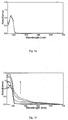
- The possibility of the application of C30-4CP photocatalyst for photochemical removal of water pollutants which are derivatives of phenol. For studies on photocatalytic properties of C30B-4CP phenol was chosen as a model water pollutant. In a control experiment it was demonstrated that phenol irradiated with light of λ>380 nm (and therefore not absorbed by phenol) in the presence of C30B which did not contain 4CP practically does not undergo photochemical reactions (
Fig. 1a - UV spectra of phenol (cphenol=7.3×10⁻⁴ M) irradiated with light of λ>380 nm in the absence of C30B-4CP for 0 (solid line) and 240 min (dashed line)). On the other hand, the spectra of phenol irradiated in the presence of C30B-4CP show noticeable change, i.e. increased absorption in the UV and visible spectral range. This increase is more pronounced in the short wavelength range. Changes of this type in phenol spectra are characteristic of the products of its oxidation (Fig. 1b - Phenol spectra (cphenol=7·3×10-4 M) irradiated with the wavelength of λ>380 nm in the presence of 1.0 g/l C30B-4CP for 0, 30 60, 150, and 240 min). The products of the oxidation of phenol and its derivatives are much less toxic and easily undergo further degradation in the natural environmental conditions. - Poly(sodium styrenesuphonate-co-2-vinylnaphthalene) was obtained in the radical polymerization using 2,2'-azobis(isobutyronitrile) as an initiator. Polymerization was performed at 60°C in DMSO degassed by a few freeze-pump-thaw cycles.
- The polymerization was continued for 21 h and the polymer was precipitated with 1-butanol, filtered, washed thrice with diethyl ether and dried in a vacuum drier for 40 °C.
- The polymer obtained was dissolved in water and dialysed in deionized water using dialysis tubes with a cut-off value about 12-14 kDa and isolated through freeze-drying. The elemental analysis has indicated that the polymer obtained (Formula 3) contained 59 mol% of vinylnaphthalene and 41 mol% of sodium styrenesulphonate. In the case the polymer is obtained from monomers intercalated previously into the aluminosilicate layers the procedure described above is modified so that aluminosilicate is added to the concentrated solution of monomers and left for 3-4 days. Then, the initiator is added and, after a few hours, the temperature is raised to 60°C. After the polymerization reaction is completed, the aluminosilicate is filtered out, washed first with methanol and then with water.
- The terpolymer poly(sodium styrenesuphonate-co-2-vinylnaphthalene-co-vinylbenzylchloride) was obtained in the radical polymerization using benzoyl peroxide as an initiator. Polymerization was performed in DMSO. The polymerization mixture was degassed by a few freeze-pump-thaw cycles at 60°C. The polymer was precipitated using an excess of 1-butanol, filtered out, washed with ether, and dried. The polymer was then dissolved in water and dialysed in deionized water using dialysis tubes with a cut-off value about 12-14 kDa and isolated through freeze-drying. The chromophores of rose bengal were attached using the method developed by Merrifield [Solid Phase Peptide Synthesis. I. The Synthesis of a Tetrapeptide", Merrifield, R.B. J.Am.Chem.Soc. 1963, 85(14), 2149-2154] oraz Blossey'a i wspópracowników [Polymer-based sensitizers for photooxidations", Blossey, E.C.; Neckers, D.C.; Thayer, A.L.; Schaap, A.P. J.AmChem Soc. 1973, 95(17), 5820-5822]. 1973, 95(17), 5820-5822]. The method is based on the reaction between the carboxylic groups of rose bengal and the chloromethylene groups of the mers of vinylbenzylchloride in the polymer. The reaction of substitution of the polymer with rose bengal was performed at 80 °C for 20 h. Then the reagents were cooled down to room temperature, transferred into the dialysis tube and dialysed in order to remove unreacted rose bengal. The polymer substituted with rose bengal was isolated by freeze-drying. The analysis of the polymer obtained (Formula 4) has shown, that it contains 56.9 mol% of sodium styrenesulphonate, 39.9 mol% of 2-vinylnaphthalene, 2.23 mol% of vinylbenzyl chloride and 5.40 wt% of rose bengal. In the case the polymer is obtained from monomers intercalated previously into the aluminosilicate layers the procedure described above is modified so that aluminosilicate is added to the concentrated solution of monomers and left for 3-4 days. Then, the initiator is added and, after a few hours, the temperature is raised to 60°C. After the polymerization reaction is completed, the aluminosilicate is filtered out, washed first with methanol and then with water.

- The example synthesis of the photocatalysts was as follows. 2 mg of the polymer was dissolved in 10 ml of water and 150 mg of Cloisite 30B was added. The suspension was mixed in the dark for 5 days, centrifuged and washed with water until no polymer was detected in the water used for washing by measuring UV-Vis absorption spectrum.
- The studies were carried out on the photocatalyst obtained from Cloisite® C30B containing intercalated SNp polymer.
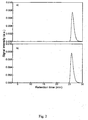
- The possibility to apply C30B-SNp catalyst in the degradation of pentachlorophenol (PCP) as a model organic chlorinated compound was studied. It was shown that the irradiation of PCP solution with the wavelength of 350 nm does not result in its noticeable degradation during 2 hours in the experimental conditions applied [
Fig.2 - HPLC chromatograms of PCP (c=6.5×10⁻⁵ M) nonirradiated (a) and irradiated (b) with the wavelength of 350 nm for 120 min water containing 10% v/v methanol (UV detection, λdet=237 nm)]. - Irradiation of PCP in identical conditions but in the presence of C30B-SNp leads to its fast degradation and the products formed having much shorter retention time, which is characteristic of the formation of dechlorination products [
Fig. 3 - chromatograms of PCP solutions (cPCP=6.5×10⁻⁵ M) in water containing 10% v/v of methanol irradiated (λirr=350 nm) in the presence of C30B-SNp (1.0 g/l) for 0, 5, 20, 60, and 120 min (UV detection, λdet=237 nm)]. - The studies on the application of C30B-SNpRb photocatalyst for the degradation of water pollutants were performed. Phenol and pentachlorophenol were chosen as model pollutants.
- Irradiation of phenol solutions were carried out in the absence and in the presence of C30B-SNpRb photocatalyst. The light with wavelength of λirr>380 nm was used during irradiations, therefore this light was selectively absorbed by RB chromophores and was not absorbed by phenol and naphthyl chromophores. As was already found previously (
Fig.1a ), the irradiation of phenol solutions in these conditions does not result in noticeable changes in their absorption spectra which indicates that phenol does not undergo any photochemical reactions. On the other hand, irradiation of phenol solutions in water in the presence of C30B-SNpRb leads to noticeable changes (Fig. 4 - spectra of phenol solutions (c=5.6×10⁻⁴) in water irradiated in the presence of C30B-SNpRb (1.0 g/l) for 0, 30, 60, 90, and 120 min with the wavelength of λ>380 nm), analogous to those which occur during the irradiation of the phenol solution in the presence of another photocatalyst generating singlet oxygen, i.e. C30B-4CP (Fig. 1b ), indicating that very efficient photooxidation of phenol takes place. - The studies on the degradation of PCP photocatalyzed by C30B-SNpRb were also performed. It was shown that PCP does not undergo degradation when irradiated in degassed solutions with the light of λ>470 nm (
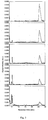
Fig.5 - HPLC chromatograms of PCP (c=6.5 × 10⁻⁵ M) irradiated with λirr> 470 nm light in the absence of C30B-SNpRb in the degassed solution for 0 and 60 min (UV detection, λdet= 302 nm)). - The analysis of chromatograms of PCP irradiated in the degassed solution in the presence of C30B-SNpRb has shown that during 60 minutes its concentration significantly decreased (down to 30% of its initial value) and that low molecular weight compounds are formed, whose concentration also decreases during irradiation (
Fig. 6 - HPLC chromatograms of degassed PCP solutions (c=6.5× 10⁻⁵ M) irradiated with λirr>470 nm light in the presence of C30B-SNpRb (1.0 g/l) for 0, 15, 30, 45, and 60 min (UV detection, λdet=302 nm)). - Analogical experiments were performed in the aerated solutions. Like in the case of degassed solutions, the irradiation of PCP solution with the light absorbed by rose bengal chromophores in the absence of the photocatalyst does not result in noticeable changes of PCP concentration [
Fig.7 - HPLC chromatograms of aerated PCP solutions (c=6.5× 10⁻⁵ M) irradiated with λirr>470 nm light in the absence of the C30B-SNpRb photocatalyst for 0 and 120 min (UV detection, λdet=302 nm)]. - As a result of the irradiation of PCP solutions in identical conditions in the presence of the C30B-SNpRb photocatalyst the PCP concentration decreases below the level of detection within as short as 15 minutes and also in this case low molecular weight products are formed (
Fig.8 - HPLC chromatograms of aerated PCP solutions irradiated with λirr>470 nm light in the presence of the C30B-SNpRb photocatalyst for 0, 15, 30, 60, and 120 min (UV detection, λdet=302 nm)). These products also undergo degradation during irradiation and after 120 minutes of irradiation all of the substances absorbing at the wavelength of 302 nm used for the detection undergo degradation. - The possibility to apply the C30B-SNpRb photocatalyst to degrade PCP was also checked using UV light absorbed by the naphthyl chromophore (λirr=265 nm).
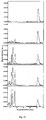
- Irradiation of aerated PCP solutions with λ=265 nm radiation did not result in the changes of its concentration at the radiation intensity used (
Fig. 9 - HPLC chromatograms of aerated PCP solutions irradiated with λirr=265 nm light in the absence of the C30B-SNpRb photocatalyst for 0 and 120 min (UV detection, λdet=302 nm)). - If the same PCP solution is irradiated in the presence of the C30B-SNpRb photocatalyst, a decrease of PCP concentration is observed (
Fig. 10 - HPLC chromatograms of aerated PCP solutions irradiated with λirr=265 nm light in the presence of the C30B-SNpRb photocatalyst for 0, 15, 60, 90, and 120 min (UV detection, λdet=302 nm)). However, it is slower than during irradiation with λirr>470 nm which probably results from the lower intensity of radiation transmitted through the interference filter.
Claims (7)
- Use of a layered aluminosilicate, possibly organically modified, containing polymeric organic chromophores introduced into the aluminosilicate galleries, which are able to absorb visible and/or ultraviolet light and sensitize photochemical reactions, said polymeric organic chromophore is a polymer bearing organic chromophoric groups wherein the organic chromophore does not contain complexed metal ions and the organic chromophore is a compound containing a chromophoric group selected from porphyrin, rose bengal, anthracene, pyrene, perylene, tetracene, rubrene, naphthalene, phthalocyanines, coumarins, and methylene blue, for the photocatalytic degradation of water impurities.
- Use according to claim 1 wherein the photocatalysts are applied for the removal of organic pollutants.
- Use according to claim 1 wherein the photocatalysts are used to remove phenol, phenol derivatives, chlorinated aromatic pollutants, pesticides, and polycyclic aromatic compounds, by their photocatalytic degradation.
- Use according to claim 1 wherein the photocatalysts are applied for the removal of cyanides by their photocatalytic oxidation to cyanates.
- Use according to claim 1 wherein the layered aluminosilicate used is montmorillonite (bentonite), kaolinite, hectorite, biotite, mica, and talc.
- Use according to claim 5 wherein the layered aluminosilicate used is montmorillonite organically modified by the introduction of ammonium cations into the aluminosilicate galleries.
- Use according to claim 1 wherein the porphyrin chromophore is mezo-tetra(4-carboxyphenyl)porphine.
Applications Claiming Priority (3)
| Application Number | Priority Date | Filing Date | Title |
|---|---|---|---|
| PL387345A PL217645B1 (en) | 2009-02-25 | 2009-02-25 | Hybrid photocatalsts, method of obtaining them and their application |
| PL387344A PL217644B1 (en) | 2009-02-25 | 2009-02-25 | Polymer-aluminosilicate hybrid photocatalyst, method of its obtaining and its application |
| PCT/PL2010/000016 WO2010098684A2 (en) | 2009-02-25 | 2010-02-24 | Hybrid photocatalysts, the method of their synthesis and use |
Publications (2)
| Publication Number | Publication Date |
|---|---|
| EP2401070A2 EP2401070A2 (en) | 2012-01-04 |
| EP2401070B1 true EP2401070B1 (en) | 2016-09-21 |
Family
ID=42551121
Family Applications (1)
| Application Number | Title | Priority Date | Filing Date |
|---|---|---|---|
| EP10737643.6A Not-in-force EP2401070B1 (en) | 2009-02-25 | 2010-02-24 | Hybrid photocatalysts, the method of their synthesis and use |
Country Status (3)
| Country | Link |
|---|---|
| US (1) | US8741156B2 (en) |
| EP (1) | EP2401070B1 (en) |
| WO (1) | WO2010098684A2 (en) |
Families Citing this family (2)
| Publication number | Priority date | Publication date | Assignee | Title |
|---|---|---|---|---|
| CN112675862B (en) * | 2021-01-12 | 2023-01-13 | 南开大学 | Preparation method of metal phthalocyanine modified zinc oxide catalyst |
| CN113769784B (en) * | 2021-10-11 | 2024-02-20 | 山东能源集团有限公司 | A method for the degradation of lignin model compounds and an upconversion catalyst |
Family Cites Families (5)
| Publication number | Priority date | Publication date | Assignee | Title |
|---|---|---|---|---|
| US5578136A (en) * | 1994-08-31 | 1996-11-26 | The Procter & Gamble Company | Automatic dishwashing compositions comprising quaternary substituted bleach activators |
| US6818153B2 (en) * | 1998-10-13 | 2004-11-16 | Peter Burnell-Jones | Photocurable thermosetting luminescent resins |
| CA2472583A1 (en) * | 2002-01-08 | 2003-07-17 | Richard W. Compans | Porphyrins with virucidal activity |
| US20060292059A1 (en) * | 2005-06-22 | 2006-12-28 | Dimascio Felice | Catalyst element and use thereof |
| ES2357083T3 (en) * | 2007-08-28 | 2011-04-18 | Basf Se | TIO2 PHOTOACTIVE IN COATING MATERIALS. |
-
2010
- 2010-02-24 WO PCT/PL2010/000016 patent/WO2010098684A2/en not_active Ceased
- 2010-02-24 EP EP10737643.6A patent/EP2401070B1/en not_active Not-in-force
-
2011
- 2011-08-25 US US13/217,946 patent/US8741156B2/en not_active Expired - Fee Related
Also Published As
| Publication number | Publication date |
|---|---|
| US8741156B2 (en) | 2014-06-03 |
| US20110303617A1 (en) | 2011-12-15 |
| WO2010098684A2 (en) | 2010-09-02 |
| EP2401070A2 (en) | 2012-01-04 |
| WO2010098684A3 (en) | 2011-02-24 |
Similar Documents
| Publication | Publication Date | Title |
|---|---|---|
| Nasar et al. | Application of polyaniline-based adsorbents for dye removal from water and wastewater—a review | |
| Jin et al. | A crystalline triazine covalent organic framework with partial fluorination for efficient hydrogen peroxide production toward water treatment | |
| Mahmoodi et al. | Zeolite nanoparticle as a superior adsorbent with high capacity: Synthesis, surface modification and pollutant adsorption ability from wastewater | |
| Heybet et al. | Adsorption of methylene blue dye on sodium alginate/polypyrrole nanotube composites | |
| Zhu et al. | Effective photocatalytic decolorization of methyl orange utilizing TiO2/ZnO/chitosan nanocomposite films under simulated solar irradiation | |
| Pawar et al. | Porous synthetic hectorite clay-alginate composite beads for effective adsorption of methylene blue dye from aqueous solution | |
| Zhou et al. | Preparation of water-compatible molecularly imprinted thiol-functionalized activated titanium dioxide: Selective adsorption and efficient photodegradation of 2, 4-dinitrophenol in aqueous solution | |
| Abukhadra et al. | Heulandite/polyaniline hybrid composite for efficient removal of acidic dye from water; kinetic, equilibrium studies and statistical optimization | |
| Sonawane et al. | Nanocomposites and its applications | |
| Zolfaghari | β-Cyclodextrin incorporated nanoporous carbon: Host–guest inclusion for removal of p-Nitrophenol and pesticides from aqueous solutions | |
| Kim et al. | Heterogeneous photo-Fenton oxidation of methylene blue using CdS-carbon nanotube/TiO2 under visible light | |
| Tang et al. | Heterogeneous photo-Fenton degradation of methylene blue under visible irradiation by iron tetrasulphophthalocyanine immobilized layered double hydroxide at circumneutral pH | |
| Zhao et al. | Oxidized dextran-crosslinked ferrocene-chitosan-PEI composite porous material integrating adsorption and degradation to malachite green | |
| Qiao et al. | Highly efficient and selective removal of lead ions from aqueous solutions by conjugated microporous polymers with functionalized heterogeneous pores | |
| Sultana et al. | Facile synthesis of TiO2/Chitosan nanohybrid for adsorption-assisted rapid photodegradation of an azo dye in water | |
| Patar et al. | Fabrication of CoFe2O4/sulphonated graphene oxide antibacterial nanohybrid and evaluation of its enhanced photocatalytic activity, mechanism and pathway of degradation of textile dyes | |
| Abbasi et al. | Appraisal of the adsorption potential of novel modified gellan gum nanocomposite for the confiscation of methylene blue and malachite green | |
| Youssef et al. | Molten salt synthesis of hierarchically porous carbon for the efficient adsorptive removal of sodium diclofenac from aqueous effluents | |
| Malik et al. | Multicore‒shell nanocomposite formed by encapsulation of WO3 in zeolitic imidazolate framework (ZIF-8): as an efficient photocatalyst | |
| Li et al. | Construction of two-dimensional porphyrin-based fully conjugated microporous polymers as highly efficient photocatalysts | |
| Wang et al. | Quaternized hollow TiO2-enhanced the dye adsorption capacity and photogenerated carrier separation for efficient reactive dye removal | |
| Singh et al. | Chitosan–poly (vinyl alcohol)–ionic liquid-grafted hydrogel for treating wastewater | |
| Li et al. | Enhanced removal of ethidium bromide (EtBr) from aqueous solution using rectorite | |
| Kobaisy et al. | Surface-decorated porphyrinic zirconium-based metal–organic frameworks (MOFs) using post-synthetic self-assembly for photodegradation of methyl orange dye | |
| Patra et al. | Inorganic nanotubes with permanent wall polarization as dual photo-reactors for wastewater treatment with simultaneous fuel production |
Legal Events
| Date | Code | Title | Description |
|---|---|---|---|
| PUAI | Public reference made under article 153(3) epc to a published international application that has entered the european phase |
Free format text: ORIGINAL CODE: 0009012 |
|
| 17P | Request for examination filed |
Effective date: 20110923 |
|
| AK | Designated contracting states |
Kind code of ref document: A2 Designated state(s): AT BE BG CH CY CZ DE DK EE ES FI FR GB GR HR HU IE IS IT LI LT LU LV MC MK MT NL NO PL PT RO SE SI SK SM TR |
|
| DAX | Request for extension of the european patent (deleted) | ||
| 17Q | First examination report despatched |
Effective date: 20120817 |
|
| GRAP | Despatch of communication of intention to grant a patent |
Free format text: ORIGINAL CODE: EPIDOSNIGR1 |
|
| INTG | Intention to grant announced |
Effective date: 20160412 |
|
| GRAS | Grant fee paid |
Free format text: ORIGINAL CODE: EPIDOSNIGR3 |
|
| GRAA | (expected) grant |
Free format text: ORIGINAL CODE: 0009210 |
|
| AK | Designated contracting states |
Kind code of ref document: B1 Designated state(s): AT BE BG CH CY CZ DE DK EE ES FI FR GB GR HR HU IE IS IT LI LT LU LV MC MK MT NL NO PL PT RO SE SI SK SM TR |
|
| RAP1 | Party data changed (applicant data changed or rights of an application transferred) |
Owner name: UNIWERSYTET JAGIELLONSKI |
|
| REG | Reference to a national code |
Ref country code: GB Ref legal event code: FG4D |
|
| RIN1 | Information on inventor provided before grant (corrected) |
Inventor name: NOWAKOWSKA, MARIA Inventor name: DROZD, DOMINIK Inventor name: SZCZUBIALKA, KRZYSZTOF |
|
| REG | Reference to a national code |
Ref country code: CH Ref legal event code: EP |
|
| REG | Reference to a national code |
Ref country code: AT Ref legal event code: REF Ref document number: 830604 Country of ref document: AT Kind code of ref document: T Effective date: 20161015 |
|
| REG | Reference to a national code |
Ref country code: IE Ref legal event code: FG4D |
|
| REG | Reference to a national code |
Ref country code: DE Ref legal event code: R096 Ref document number: 602010036574 Country of ref document: DE |
|
| REG | Reference to a national code |
Ref country code: LT Ref legal event code: MG4D Ref country code: NL Ref legal event code: MP Effective date: 20160921 |
|
| PG25 | Lapsed in a contracting state [announced via postgrant information from national office to epo] |
Ref country code: LT Free format text: LAPSE BECAUSE OF FAILURE TO SUBMIT A TRANSLATION OF THE DESCRIPTION OR TO PAY THE FEE WITHIN THE PRESCRIBED TIME-LIMIT Effective date: 20160921 Ref country code: FI Free format text: LAPSE BECAUSE OF FAILURE TO SUBMIT A TRANSLATION OF THE DESCRIPTION OR TO PAY THE FEE WITHIN THE PRESCRIBED TIME-LIMIT Effective date: 20160921 Ref country code: NO Free format text: LAPSE BECAUSE OF FAILURE TO SUBMIT A TRANSLATION OF THE DESCRIPTION OR TO PAY THE FEE WITHIN THE PRESCRIBED TIME-LIMIT Effective date: 20161221 |
|
| REG | Reference to a national code |
Ref country code: AT Ref legal event code: MK05 Ref document number: 830604 Country of ref document: AT Kind code of ref document: T Effective date: 20160921 |
|
| PG25 | Lapsed in a contracting state [announced via postgrant information from national office to epo] |
Ref country code: NL Free format text: LAPSE BECAUSE OF FAILURE TO SUBMIT A TRANSLATION OF THE DESCRIPTION OR TO PAY THE FEE WITHIN THE PRESCRIBED TIME-LIMIT Effective date: 20160921 Ref country code: SE Free format text: LAPSE BECAUSE OF FAILURE TO SUBMIT A TRANSLATION OF THE DESCRIPTION OR TO PAY THE FEE WITHIN THE PRESCRIBED TIME-LIMIT Effective date: 20160921 Ref country code: GR Free format text: LAPSE BECAUSE OF FAILURE TO SUBMIT A TRANSLATION OF THE DESCRIPTION OR TO PAY THE FEE WITHIN THE PRESCRIBED TIME-LIMIT Effective date: 20161222 Ref country code: LV Free format text: LAPSE BECAUSE OF FAILURE TO SUBMIT A TRANSLATION OF THE DESCRIPTION OR TO PAY THE FEE WITHIN THE PRESCRIBED TIME-LIMIT Effective date: 20160921 |
|
| PG25 | Lapsed in a contracting state [announced via postgrant information from national office to epo] |
Ref country code: EE Free format text: LAPSE BECAUSE OF FAILURE TO SUBMIT A TRANSLATION OF THE DESCRIPTION OR TO PAY THE FEE WITHIN THE PRESCRIBED TIME-LIMIT Effective date: 20160921 Ref country code: RO Free format text: LAPSE BECAUSE OF FAILURE TO SUBMIT A TRANSLATION OF THE DESCRIPTION OR TO PAY THE FEE WITHIN THE PRESCRIBED TIME-LIMIT Effective date: 20160921 |
|
| PG25 | Lapsed in a contracting state [announced via postgrant information from national office to epo] |
Ref country code: CZ Free format text: LAPSE BECAUSE OF FAILURE TO SUBMIT A TRANSLATION OF THE DESCRIPTION OR TO PAY THE FEE WITHIN THE PRESCRIBED TIME-LIMIT Effective date: 20160921 Ref country code: PL Free format text: LAPSE BECAUSE OF FAILURE TO SUBMIT A TRANSLATION OF THE DESCRIPTION OR TO PAY THE FEE WITHIN THE PRESCRIBED TIME-LIMIT Effective date: 20160921 Ref country code: IS Free format text: LAPSE BECAUSE OF FAILURE TO SUBMIT A TRANSLATION OF THE DESCRIPTION OR TO PAY THE FEE WITHIN THE PRESCRIBED TIME-LIMIT Effective date: 20170121 Ref country code: SK Free format text: LAPSE BECAUSE OF FAILURE TO SUBMIT A TRANSLATION OF THE DESCRIPTION OR TO PAY THE FEE WITHIN THE PRESCRIBED TIME-LIMIT Effective date: 20160921 Ref country code: BG Free format text: LAPSE BECAUSE OF FAILURE TO SUBMIT A TRANSLATION OF THE DESCRIPTION OR TO PAY THE FEE WITHIN THE PRESCRIBED TIME-LIMIT Effective date: 20161221 Ref country code: ES Free format text: LAPSE BECAUSE OF FAILURE TO SUBMIT A TRANSLATION OF THE DESCRIPTION OR TO PAY THE FEE WITHIN THE PRESCRIBED TIME-LIMIT Effective date: 20160921 Ref country code: BE Free format text: LAPSE BECAUSE OF FAILURE TO SUBMIT A TRANSLATION OF THE DESCRIPTION OR TO PAY THE FEE WITHIN THE PRESCRIBED TIME-LIMIT Effective date: 20160921 Ref country code: AT Free format text: LAPSE BECAUSE OF FAILURE TO SUBMIT A TRANSLATION OF THE DESCRIPTION OR TO PAY THE FEE WITHIN THE PRESCRIBED TIME-LIMIT Effective date: 20160921 Ref country code: PT Free format text: LAPSE BECAUSE OF FAILURE TO SUBMIT A TRANSLATION OF THE DESCRIPTION OR TO PAY THE FEE WITHIN THE PRESCRIBED TIME-LIMIT Effective date: 20170123 Ref country code: SM Free format text: LAPSE BECAUSE OF FAILURE TO SUBMIT A TRANSLATION OF THE DESCRIPTION OR TO PAY THE FEE WITHIN THE PRESCRIBED TIME-LIMIT Effective date: 20160921 |
|
| REG | Reference to a national code |
Ref country code: DE Ref legal event code: R097 Ref document number: 602010036574 Country of ref document: DE |
|
| PG25 | Lapsed in a contracting state [announced via postgrant information from national office to epo] |
Ref country code: IT Free format text: LAPSE BECAUSE OF FAILURE TO SUBMIT A TRANSLATION OF THE DESCRIPTION OR TO PAY THE FEE WITHIN THE PRESCRIBED TIME-LIMIT Effective date: 20160921 |
|
| PLBE | No opposition filed within time limit |
Free format text: ORIGINAL CODE: 0009261 |
|
| STAA | Information on the status of an ep patent application or granted ep patent |
Free format text: STATUS: NO OPPOSITION FILED WITHIN TIME LIMIT |
|
| PG25 | Lapsed in a contracting state [announced via postgrant information from national office to epo] |
Ref country code: DK Free format text: LAPSE BECAUSE OF FAILURE TO SUBMIT A TRANSLATION OF THE DESCRIPTION OR TO PAY THE FEE WITHIN THE PRESCRIBED TIME-LIMIT Effective date: 20160921 |
|
| 26N | No opposition filed |
Effective date: 20170622 |
|
| PG25 | Lapsed in a contracting state [announced via postgrant information from national office to epo] |
Ref country code: MC Free format text: LAPSE BECAUSE OF FAILURE TO SUBMIT A TRANSLATION OF THE DESCRIPTION OR TO PAY THE FEE WITHIN THE PRESCRIBED TIME-LIMIT Effective date: 20160921 |
|
| REG | Reference to a national code |
Ref country code: CH Ref legal event code: PL |
|
| GBPC | Gb: european patent ceased through non-payment of renewal fee |
Effective date: 20170224 |
|
| PG25 | Lapsed in a contracting state [announced via postgrant information from national office to epo] |
Ref country code: LI Free format text: LAPSE BECAUSE OF NON-PAYMENT OF DUE FEES Effective date: 20170228 Ref country code: CH Free format text: LAPSE BECAUSE OF NON-PAYMENT OF DUE FEES Effective date: 20170228 |
|
| REG | Reference to a national code |
Ref country code: IE Ref legal event code: MM4A |
|
| PG25 | Lapsed in a contracting state [announced via postgrant information from national office to epo] |
Ref country code: SI Free format text: LAPSE BECAUSE OF FAILURE TO SUBMIT A TRANSLATION OF THE DESCRIPTION OR TO PAY THE FEE WITHIN THE PRESCRIBED TIME-LIMIT Effective date: 20160921 |
|
| REG | Reference to a national code |
Ref country code: FR Ref legal event code: ST Effective date: 20171031 |
|
| PG25 | Lapsed in a contracting state [announced via postgrant information from national office to epo] |
Ref country code: LU Free format text: LAPSE BECAUSE OF NON-PAYMENT OF DUE FEES Effective date: 20170224 |
|
| PG25 | Lapsed in a contracting state [announced via postgrant information from national office to epo] |
Ref country code: FR Free format text: LAPSE BECAUSE OF NON-PAYMENT OF DUE FEES Effective date: 20170228 |
|
| PG25 | Lapsed in a contracting state [announced via postgrant information from national office to epo] |
Ref country code: GB Free format text: LAPSE BECAUSE OF NON-PAYMENT OF DUE FEES Effective date: 20170224 Ref country code: IE Free format text: LAPSE BECAUSE OF NON-PAYMENT OF DUE FEES Effective date: 20170224 |
|
| PGFP | Annual fee paid to national office [announced via postgrant information from national office to epo] |
Ref country code: DE Payment date: 20180219 Year of fee payment: 9 |
|
| PG25 | Lapsed in a contracting state [announced via postgrant information from national office to epo] |
Ref country code: MT Free format text: LAPSE BECAUSE OF NON-PAYMENT OF DUE FEES Effective date: 20170224 |
|
| PG25 | Lapsed in a contracting state [announced via postgrant information from national office to epo] |
Ref country code: HU Free format text: LAPSE BECAUSE OF FAILURE TO SUBMIT A TRANSLATION OF THE DESCRIPTION OR TO PAY THE FEE WITHIN THE PRESCRIBED TIME-LIMIT; INVALID AB INITIO Effective date: 20100224 |
|
| REG | Reference to a national code |
Ref country code: DE Ref legal event code: R119 Ref document number: 602010036574 Country of ref document: DE |
|
| PG25 | Lapsed in a contracting state [announced via postgrant information from national office to epo] |
Ref country code: CY Free format text: LAPSE BECAUSE OF NON-PAYMENT OF DUE FEES Effective date: 20160921 |
|
| PG25 | Lapsed in a contracting state [announced via postgrant information from national office to epo] |
Ref country code: MK Free format text: LAPSE BECAUSE OF FAILURE TO SUBMIT A TRANSLATION OF THE DESCRIPTION OR TO PAY THE FEE WITHIN THE PRESCRIBED TIME-LIMIT Effective date: 20160921 |
|
| PG25 | Lapsed in a contracting state [announced via postgrant information from national office to epo] |
Ref country code: DE Free format text: LAPSE BECAUSE OF NON-PAYMENT OF DUE FEES Effective date: 20190903 |
|
| PG25 | Lapsed in a contracting state [announced via postgrant information from national office to epo] |
Ref country code: TR Free format text: LAPSE BECAUSE OF FAILURE TO SUBMIT A TRANSLATION OF THE DESCRIPTION OR TO PAY THE FEE WITHIN THE PRESCRIBED TIME-LIMIT Effective date: 20160921 |
|
| PG25 | Lapsed in a contracting state [announced via postgrant information from national office to epo] |
Ref country code: HR Free format text: LAPSE BECAUSE OF FAILURE TO SUBMIT A TRANSLATION OF THE DESCRIPTION OR TO PAY THE FEE WITHIN THE PRESCRIBED TIME-LIMIT Effective date: 20160921 |