EP2392690A1 - Antibacterial alloy coating composition - Google Patents
Antibacterial alloy coating composition Download PDFInfo
- Publication number
- EP2392690A1 EP2392690A1 EP10164534A EP10164534A EP2392690A1 EP 2392690 A1 EP2392690 A1 EP 2392690A1 EP 10164534 A EP10164534 A EP 10164534A EP 10164534 A EP10164534 A EP 10164534A EP 2392690 A1 EP2392690 A1 EP 2392690A1
- Authority
- EP
- European Patent Office
- Prior art keywords
- antibacterial
- alloy
- coating composition
- coating
- alloy coating
- Prior art date
- Legal status (The legal status is an assumption and is not a legal conclusion. Google has not performed a legal analysis and makes no representation as to the accuracy of the status listed.)
- Withdrawn
Links
- 230000000844 anti-bacterial effect Effects 0.000 title claims abstract description 180
- 229910045601 alloy Inorganic materials 0.000 title claims abstract description 125
- 239000000956 alloy Substances 0.000 title claims abstract description 125
- 239000008199 coating composition Substances 0.000 title claims abstract description 58
- 229910052751 metal Inorganic materials 0.000 claims abstract description 53
- XEEYBQQBJWHFJM-UHFFFAOYSA-N Iron Chemical compound [Fe] XEEYBQQBJWHFJM-UHFFFAOYSA-N 0.000 claims abstract description 48
- PXHVJJICTQNCMI-UHFFFAOYSA-N Nickel Chemical compound [Ni] PXHVJJICTQNCMI-UHFFFAOYSA-N 0.000 claims abstract description 40
- IJGRMHOSHXDMSA-UHFFFAOYSA-N Atomic nitrogen Chemical compound N#N IJGRMHOSHXDMSA-UHFFFAOYSA-N 0.000 claims abstract description 30
- 239000000463 material Substances 0.000 claims abstract description 26
- RYGMFSIKBFXOCR-UHFFFAOYSA-N Copper Chemical compound [Cu] RYGMFSIKBFXOCR-UHFFFAOYSA-N 0.000 claims abstract description 25
- 229910052802 copper Inorganic materials 0.000 claims abstract description 25
- 239000010949 copper Substances 0.000 claims abstract description 25
- 229910052742 iron Inorganic materials 0.000 claims abstract description 24
- VYZAMTAEIAYCRO-UHFFFAOYSA-N Chromium Chemical compound [Cr] VYZAMTAEIAYCRO-UHFFFAOYSA-N 0.000 claims abstract description 22
- 229910052782 aluminium Inorganic materials 0.000 claims abstract description 22
- XAGFODPZIPBFFR-UHFFFAOYSA-N aluminium Chemical compound [Al] XAGFODPZIPBFFR-UHFFFAOYSA-N 0.000 claims abstract description 22
- 229910052804 chromium Inorganic materials 0.000 claims abstract description 22
- 239000011651 chromium Substances 0.000 claims abstract description 22
- 229910017052 cobalt Inorganic materials 0.000 claims abstract description 22
- 239000010941 cobalt Substances 0.000 claims abstract description 22
- GUTLYIVDDKVIGB-UHFFFAOYSA-N cobalt atom Chemical compound [Co] GUTLYIVDDKVIGB-UHFFFAOYSA-N 0.000 claims abstract description 22
- 229910052759 nickel Inorganic materials 0.000 claims abstract description 20
- QVGXLLKOCUKJST-UHFFFAOYSA-N atomic oxygen Chemical compound [O] QVGXLLKOCUKJST-UHFFFAOYSA-N 0.000 claims abstract description 18
- 239000001301 oxygen Substances 0.000 claims abstract description 18
- 229910052760 oxygen Inorganic materials 0.000 claims abstract description 18
- 229910052757 nitrogen Inorganic materials 0.000 claims abstract description 15
- 229910052709 silver Inorganic materials 0.000 claims abstract description 14
- 239000004332 silver Substances 0.000 claims abstract description 14
- ZOXJGFHDIHLPTG-UHFFFAOYSA-N Boron Chemical compound [B] ZOXJGFHDIHLPTG-UHFFFAOYSA-N 0.000 claims abstract description 12
- 229910052796 boron Inorganic materials 0.000 claims abstract description 12
- 229910052720 vanadium Inorganic materials 0.000 claims abstract description 12
- 239000000203 mixture Substances 0.000 claims abstract description 11
- RTAQQCXQSZGOHL-UHFFFAOYSA-N Titanium Chemical compound [Ti] RTAQQCXQSZGOHL-UHFFFAOYSA-N 0.000 claims abstract description 10
- 239000010936 titanium Substances 0.000 claims abstract description 10
- 229910052719 titanium Inorganic materials 0.000 claims abstract description 10
- LEONUFNNVUYDNQ-UHFFFAOYSA-N vanadium atom Chemical compound [V] LEONUFNNVUYDNQ-UHFFFAOYSA-N 0.000 claims abstract 2
- 238000000576 coating method Methods 0.000 claims description 77
- 239000011248 coating agent Substances 0.000 claims description 76
- 239000013078 crystal Substances 0.000 claims description 4
- 150000004767 nitrides Chemical class 0.000 description 34
- 230000000845 anti-microbial effect Effects 0.000 description 23
- 239000010935 stainless steel Substances 0.000 description 23
- 229910001220 stainless steel Inorganic materials 0.000 description 23
- 239000000758 substrate Substances 0.000 description 23
- 238000000034 method Methods 0.000 description 20
- 238000002474 experimental method Methods 0.000 description 18
- 238000010314 arc-melting process Methods 0.000 description 17
- 229910002064 alloy oxide Inorganic materials 0.000 description 14
- 238000004544 sputter deposition Methods 0.000 description 14
- 241000588724 Escherichia coli Species 0.000 description 13
- 241000589517 Pseudomonas aeruginosa Species 0.000 description 13
- 241000191967 Staphylococcus aureus Species 0.000 description 13
- 241000588747 Klebsiella pneumoniae Species 0.000 description 12
- 239000007888 film coating Substances 0.000 description 12
- 238000009501 film coating Methods 0.000 description 12
- GPPXJZIENCGNKB-UHFFFAOYSA-N vanadium Chemical compound [V]#[V] GPPXJZIENCGNKB-UHFFFAOYSA-N 0.000 description 10
- -1 for example Inorganic materials 0.000 description 9
- 238000009472 formulation Methods 0.000 description 9
- 238000002360 preparation method Methods 0.000 description 7
- 241000894006 Bacteria Species 0.000 description 6
- 238000002441 X-ray diffraction Methods 0.000 description 6
- 238000001228 spectrum Methods 0.000 description 6
- 238000004458 analytical method Methods 0.000 description 3
- 238000004140 cleaning Methods 0.000 description 3
- 239000012535 impurity Substances 0.000 description 3
- 229910001092 metal group alloy Inorganic materials 0.000 description 3
- 201000008225 Klebsiella pneumonia Diseases 0.000 description 1
- 206010035717 Pneumonia klebsiella Diseases 0.000 description 1
- 239000003242 anti bacterial agent Substances 0.000 description 1
- 230000001680 brushing effect Effects 0.000 description 1
- 239000000919 ceramic Substances 0.000 description 1
- 238000001035 drying Methods 0.000 description 1
- 230000000694 effects Effects 0.000 description 1
- 230000002708 enhancing effect Effects 0.000 description 1
- 239000011521 glass Substances 0.000 description 1
- 238000010438 heat treatment Methods 0.000 description 1
- 239000004615 ingredient Substances 0.000 description 1
- 150000002484 inorganic compounds Chemical class 0.000 description 1
- 229910010272 inorganic material Inorganic materials 0.000 description 1
- 238000007733 ion plating Methods 0.000 description 1
- 238000002844 melting Methods 0.000 description 1
- 230000008018 melting Effects 0.000 description 1
- 238000010309 melting process Methods 0.000 description 1
- 239000002184 metal Substances 0.000 description 1
- 150000002894 organic compounds Chemical class 0.000 description 1
- 238000010422 painting Methods 0.000 description 1
- 239000004033 plastic Substances 0.000 description 1
- 238000007711 solidification Methods 0.000 description 1
- 230000008023 solidification Effects 0.000 description 1
- 238000005406 washing Methods 0.000 description 1
- XLYOFNOQVPJJNP-UHFFFAOYSA-N water Substances O XLYOFNOQVPJJNP-UHFFFAOYSA-N 0.000 description 1
Images

Classifications
-
- C—CHEMISTRY; METALLURGY
- C23—COATING METALLIC MATERIAL; COATING MATERIAL WITH METALLIC MATERIAL; CHEMICAL SURFACE TREATMENT; DIFFUSION TREATMENT OF METALLIC MATERIAL; COATING BY VACUUM EVAPORATION, BY SPUTTERING, BY ION IMPLANTATION OR BY CHEMICAL VAPOUR DEPOSITION, IN GENERAL; INHIBITING CORROSION OF METALLIC MATERIAL OR INCRUSTATION IN GENERAL
- C23C—COATING METALLIC MATERIAL; COATING MATERIAL WITH METALLIC MATERIAL; SURFACE TREATMENT OF METALLIC MATERIAL BY DIFFUSION INTO THE SURFACE, BY CHEMICAL CONVERSION OR SUBSTITUTION; COATING BY VACUUM EVAPORATION, BY SPUTTERING, BY ION IMPLANTATION OR BY CHEMICAL VAPOUR DEPOSITION, IN GENERAL
- C23C14/00—Coating by vacuum evaporation, by sputtering or by ion implantation of the coating forming material
- C23C14/06—Coating by vacuum evaporation, by sputtering or by ion implantation of the coating forming material characterised by the coating material
- C23C14/14—Metallic material, boron or silicon
-
- A—HUMAN NECESSITIES
- A01—AGRICULTURE; FORESTRY; ANIMAL HUSBANDRY; HUNTING; TRAPPING; FISHING
- A01N—PRESERVATION OF BODIES OF HUMANS OR ANIMALS OR PLANTS OR PARTS THEREOF; BIOCIDES, e.g. AS DISINFECTANTS, AS PESTICIDES OR AS HERBICIDES; PEST REPELLANTS OR ATTRACTANTS; PLANT GROWTH REGULATORS
- A01N59/00—Biocides, pest repellants or attractants, or plant growth regulators containing elements or inorganic compounds
- A01N59/16—Heavy metals; Compounds thereof
-
- A—HUMAN NECESSITIES
- A01—AGRICULTURE; FORESTRY; ANIMAL HUSBANDRY; HUNTING; TRAPPING; FISHING
- A01N—PRESERVATION OF BODIES OF HUMANS OR ANIMALS OR PLANTS OR PARTS THEREOF; BIOCIDES, e.g. AS DISINFECTANTS, AS PESTICIDES OR AS HERBICIDES; PEST REPELLANTS OR ATTRACTANTS; PLANT GROWTH REGULATORS
- A01N59/00—Biocides, pest repellants or attractants, or plant growth regulators containing elements or inorganic compounds
- A01N59/16—Heavy metals; Compounds thereof
- A01N59/20—Copper
-
- C—CHEMISTRY; METALLURGY
- C23—COATING METALLIC MATERIAL; COATING MATERIAL WITH METALLIC MATERIAL; CHEMICAL SURFACE TREATMENT; DIFFUSION TREATMENT OF METALLIC MATERIAL; COATING BY VACUUM EVAPORATION, BY SPUTTERING, BY ION IMPLANTATION OR BY CHEMICAL VAPOUR DEPOSITION, IN GENERAL; INHIBITING CORROSION OF METALLIC MATERIAL OR INCRUSTATION IN GENERAL
- C23C—COATING METALLIC MATERIAL; COATING MATERIAL WITH METALLIC MATERIAL; SURFACE TREATMENT OF METALLIC MATERIAL BY DIFFUSION INTO THE SURFACE, BY CHEMICAL CONVERSION OR SUBSTITUTION; COATING BY VACUUM EVAPORATION, BY SPUTTERING, BY ION IMPLANTATION OR BY CHEMICAL VAPOUR DEPOSITION, IN GENERAL
- C23C14/00—Coating by vacuum evaporation, by sputtering or by ion implantation of the coating forming material
- C23C14/22—Coating by vacuum evaporation, by sputtering or by ion implantation of the coating forming material characterised by the process of coating
- C23C14/34—Sputtering
- C23C14/35—Sputtering by application of a magnetic field, e.g. magnetron sputtering
-
- C—CHEMISTRY; METALLURGY
- C23—COATING METALLIC MATERIAL; COATING MATERIAL WITH METALLIC MATERIAL; CHEMICAL SURFACE TREATMENT; DIFFUSION TREATMENT OF METALLIC MATERIAL; COATING BY VACUUM EVAPORATION, BY SPUTTERING, BY ION IMPLANTATION OR BY CHEMICAL VAPOUR DEPOSITION, IN GENERAL; INHIBITING CORROSION OF METALLIC MATERIAL OR INCRUSTATION IN GENERAL
- C23C—COATING METALLIC MATERIAL; COATING MATERIAL WITH METALLIC MATERIAL; SURFACE TREATMENT OF METALLIC MATERIAL BY DIFFUSION INTO THE SURFACE, BY CHEMICAL CONVERSION OR SUBSTITUTION; COATING BY VACUUM EVAPORATION, BY SPUTTERING, BY ION IMPLANTATION OR BY CHEMICAL VAPOUR DEPOSITION, IN GENERAL
- C23C30/00—Coating with metallic material characterised only by the composition of the metallic material, i.e. not characterised by the coating process
Definitions
- the present invention relates to an alloy coating, and more particularly to an antibacterial alloy coating composition.
- the surfaces of the supplies are generally coated with a layer of a material with antibacterial property, for example, which may be an inorganic compound, organic compound, or natural antibacterial agent.
- a material with antibacterial property has poor adhesion, so that when these supplies are subjected to brushing, solarization, friction, or even heating and drying etc. for several times, the antibacterial materials on the surfaces of the supplies will scale off gradually, and it can well be imagined the antibacterial abilities of the materials will decrease significantly or even disappear completely. Thus, the antibacterial functions are lost.
- the technical persons in the related field at present are intended to solve the problem of developing a material with both high antimicrobial activity and long-time antibacterial property.
- the present invention provides an antibacterial alloy coating composition, whereby the requirements of both high antimicrobial activity.
- the present invention discloses an antibacterial alloy coating composition.
- the antibacterial alloy coating composition comprises an antibacterial material and an alloy, and the alloy consists of at least more than four metallic elements and at least one non-metallic element.
- the antibacterial material is, for example, copper or silver, and the atomic percentage content thereof is about 1.7% to 26.8% of the total content.
- These metallic elements mentioned above are selected from the group consisting of iron, cobalt, chromium, nickel, aluminum, vanadium, and titanium, and the non-metallic element is selected from the group consisting of boron, oxygen, and nitrogen.
- the atomic percentage content of the foregoing alloy is about 73.2% to 98.3% of the total content.
- the antibacterial alloy coating composition disclosed in the present invention has an excellent antibacterial effect indeed, its antimicrobial activity is up to 5.2, and its antimicrobial percentage is also up to more than 99.6%.
- the hardness of the antibacterial alloy coating prepared from the antibacterial alloy coating composition of the present invention can also be up to more than about 10 Gpa. It can be known from this, utilizing the antibacterial alloy coating composition with special formulation of the present invention to be coated on the hygienic or medical devices, not only the hardness of these devices is increased, but also the antibacterial effect on the surfaces of the devices is improved, thereby the application of the devices can be enhanced.
- the antibacterial alloy coating composition of the present invention is applied to a surface of a device.
- a method for applying an antibacterial alloy on the surface of the device such as coating or painting, firstly utilizes a process such as vacuum arc melting process or high frequency melting process to melt or synthesize a target, subsequently the target is subjected to a coating process such as vacuum sputtering process or vacuum arc ion plating process, but the method is not limited to this.
- the described device may be, for example, a dishware, knife tool, hygienic device, or medical device, and the material of the device may be, but are not limited to, metal, ceramic, plastic, glass etc..
- the present invention is illustrated by way of the vacuum arc melting process and the vacuum sputtering process, and the device selected is a stainless steel substrate.
- the antibacterial alloy coating composition disclosed in the present invention comprises an antibacterial material and an alloy, and the alloy consists of at least more than four metallic elements and at least one non-metallic element.
- the antibacterial material is, for example, copper or silver, and the atomic percentage content thereof is about 1.7% to 26.8% of the total content.
- the metallic elements are selected from the group consisting of iron, cobalt, chromium, nickel, aluminum, vanadium, and titanium, and the non-metallic element is selected from the group consisting of boron, oxygen, and nitrogen.
- the atomic percentage content of the foregoing metal alloy is 73.2% to 98.3% of the total content
- the atomic percentage content of the metallic elements are 65.2% to 98% of the total content
- the atomic percentage content of the non-metallic element is 0.3% to 16.7% of the total content.
- antibacterial alloy coating compositions of the present invention are described in detail by various embodiments, and their coating properties and antibacterial effect are discussed where the antibacterial alloy coating compositions in these embodiments are coated on the surfaces of the devices.
- Table 1 shows the antibacterial alloy coating compositions in the various embodiments, in which different antibacterial materials and alloys are used respectively, and these materials and alloys are mixed in different proportions.
- the antibacterial material in the antibacterial alloy coating composition is copper
- the metallic elements in the alloy consist of five metallic elements of aluminum, cobalt, chromium, iron, and nickel.
- the atomic percentage content of copper is 16.6%
- the atomic percentage contents of iron, cobalt, chromium, nickel, and aluminum are sequentially 16.6%, 16.6%, 16.6%, 16.6%, and 16.6%.
- this embodiment further comprises minor non-metallic element, for example, 0.4% oxygen.
- an antibacterial alloy coating composition was formulated in the foregoing proportion. Thereafter, a target was prepared by a vacuum arc melting process. Before performing the vacuum arc melting process, a stainless steel substrate to be coated was subjected to a washing process to remove impurities on the surface of the stainless steel substrate. Then, the formulated antibacterial alloy coating composition was placed in a water cooled copper mold for arc melting and solidification, re-melted repeatedly for several times to allow these ingredients to be mixed homogeneously, and finally solidified to form a calce-like ingot. The cake-like ingot was machined to form a target. In other words, the target was a target of the antibacterial alloy coating composition.
- the target was placed on a RF magnetron sputter and subjected to a vacuum sputtering process for film coating on the surface of the stainless steel substrate.
- the film coating process was operated under a pressure of 1 x 10 -4 Torr and at a temperature of 200 ⁇ , and the coating time was about 20 minutes.
- an antibacterial alloy coating was formed on the surface of the stainless steel substrate.
- the thickness of the antibacterial alloy coating was 10 nm to 2,000 mn.
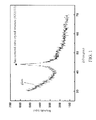
- FIG. 1 is an X-ray diffraction spectrum of the antibacterial alloy coating in embodiment 1 of the present invention.
- the antibacterial alloy coating has a face-centered cubic (FCC) crystal structure.
- FCC face-centered cubic
- Table 2 shows the antibacterial analytical values of the antibacterial alloy coating prepared in embodiment 1 of the present invention.
- the antimicrobial activity of the antibacterial alloy coating is up to 5.2, and the antimicrobial percentage is also up to more than 99.999%. Therefore, the coating of the antibacterial alloy coating composition of the present invention has a very good antibacterial effect on the surface of the device indeed.
- the antibacterial material in the antibacterial alloy coating composition is copper, and the metallic elements in the alloy consist of five metallic elements of iron, cobalt, chromium, nickel, and aluminum.
- the atomic percentage content of copper is 15.8%, and the atomic percentage contents of iron, cobalt, chromium, nickel, and aluminum are sequentially 15.9%. 15.9%. 16.0%, 17.2%, and 14.2%.
- this embodiment further comprises minor non-metallic element, for example, oxygen.
- the difference between embodiment 2 and embodiment 1 is only in that, when carrying out the vacuum sputtering process, oxygen with different partial pressure is introduced to form an antibacterial alloy oxide coating, the detailed description of which is as follows.
- An antibacterial alloy coating composition was firstly formulated in the foregoing proportion. Thereafter, a target was prepared by a vacuum arc melting process, and before performing the vacuum arc melting process, a stainless steel substrate to be coated was washed to remove impurities on the surface of the stainless steel substrate. Subsequently, a target was prepared with the formulated antibacterial alloy coating composition, and the detailed description of the vacuum arc melting process is as described in embodiment 1, so it is not described here any more. Thereafter, the target was placed on a RF magnetron sputter and subjected to a vacuum sputtering process under oxygen with a partial pressure of 5% for film coating on the surface of the stainless steel substrate. The film coating process was preformed under an oxygen partial pressure of 5% and at a temperature of 200 ⁇ , and the coating time was about 30 minutes. Thus, an antibacterial alloy oxide coating was formed on the surface of the stainless steel substrate.
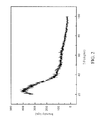
- FIG. 2 is an X-ray diffraction spectrum of the antibacterial alloy oxide coating in embodiment 2 of the present invention.
- the antibacterial alloy oxide coating comprises a crystal structure and contains partial amorphous structure.
- the hardness of the antibacterial alloy oxide coating was tested by a pencil-scratch hardness test, and as known from the test result, the hardness of the antibacterial alloy oxide coating prepared in embodiment 2 is 8 H.
- Table 3 shows the antibacterial antimicrobial activity of the antibacterial alloy oxide coating prepared in embodiment 2 of the present invention.
- the antimicrobial activity of the antibacterial alloy oxide coating is up to 5.0, and the-antimicrobial percentage is also up to more than 99.999%. Therefore, the coating of the antibacterial alloy oxide coating composition of the present invention has a very good antibacterial effect on the surface of the device indeed.
- Table 3 Antibacterial analytical values of the antibacterial alloy oxide coating prepared in embodiment 2 Bacteria species Control group Bacteria number after 24 h Sample group Bacteria number after 24 h antimicrobial activity antimicrobial percentage (%) staphylococcus aureus 2.2 x 10 6 ⁇ 10 5.29 99.999 E. coli 1.2 x 10 6 ⁇ 10 5.01 99.999 Klebsiella pneumoniae 1.9 x 10 6 ⁇ 10 5.14 99.999 pseudomonas aeruginosa 2 x 10 6 ⁇ 10 6.11 99.9999
- the antibacterial material in the antibacterial alloy coating composition is copper
- the metallic elements in the alloy consist of five metallic elements of iron, cobalt, chromium, nickel, and aluminum.
- the atomic percentage content of copper is 15.7%
- the atomic percentage contents of iron, cobalt, chromium, nickel, and aluminum are sequentially 15.9%, 16.1%, 15.6%, 17.6%, and 14.3%.
- this embodiment further comprises minor non-metallic elements, for example, oxygen and nitrogen.
- an antibacterial alloy coating composition was firstly formulated in the foregoing proportion. Thereafter, a target was prepared by a vacuum arc melting process, and before performing the vacuum arc melting process, a stainless steel substrate to be coated was washed to remove impurities on the surface of the stainless steel substrate. Subsequently, a target was prepared with the formulated antibacterial alloy coating composition, and the detailed description of the vacuum arc melting process is as described in embodiment 1, so it is not described here any more.
- the target was placed on a RF magnetron sputter and subjected to a vacuum sputtering process under nitrogen with a partial pressure of 4.7% for film coating on the surface of the stainless steel substrate.
- a vacuum sputtering process under nitrogen with a partial pressure of 4.7% for film coating on the surface of the stainless steel substrate.
- FIG. 3 is an X-ray diffraction spectrum of the antibacterial alloy nitride coating in embodiment 3 of the present invention.
- the antibacterial alloy nitride coating comprises a FCC crystal structure and an amorphous structure.
- the hardness of the antibacterial alloy nitride coating was tested by a (indenter) hardness test, and as known from the test result, the hardness of the antibacterial alloy nitride coating prepared in embodiment 3 is 14 GPa.
- the antibacterial alloy nitride coating was subjected to an antibacterial experiment.
- the-antimicrobial activity of the antibacterial alloy nitride coating is up to more than 5.0, and the antimicrobial percentage is also up to more than 99.999%. Therefore, the coating of the antibacterial alloy nitride coating composition of the present invention has a very good antibacterial effect on the surface of the device indeed.
- the antibacterial materials in the antibacterial alloy coating composition are copper and silver
- the metallic elements in the alloy consist of six metallic elements of iron, cobalt, chromium, nickel, aluminum, and titanium.
- the atomic percentage contents of copper and silver are 0.5% and 1.2%
- the atomic percentage contents of iron, cobalt, chromium, nickel, aluminum, and titanium are sequentially 35.4%, 21.1%, 19.8%, 19.3%, 1.2%, and 1.2%.
- this embodiment further comprises minor non-metallic elements, for example, oxygen (0.2%) and nitrogen (0.1 %).
- An antibacterial alloy coating composition was formulated in the foregoing proportion. After the formulation was completed, a target was prepared by the vacuum arc melting process as described in embodiment 1. Then, the target was placed on a RF magnetron sputter to carry out a vacuum sputtering process for film coating on a surface of a stainless steel substrate. The detailed description of the preparation method steps is as described in embodiment 1, so it is not described here any more.
- the hardness of the antibacterial alloy nitride coating was tested by a (indenter) hardness test, and as known from the test result, the hardness of the antibacterial alloy oxide coating prepared in embodiment 4 is 10 GPa. Further, the antibacterial alloy nitride coating was subjected to an antibacterial experiment, and as known from the result of the antibacterial experiment, for staphylococcus aureus, E. coli, Klebsiella pneumoniae, and pseudomonas aeruginosa, the antimicrobial activity) of the antibacterial alloy nitride coating is up to more than 5.0, and the-antimicrobial percentage is also up to more than 98.6%. Therefore, the coating of the antibacterial alloy nitride coating composition of the present invention has a very good antibacterial effect on the surface of the device indeed.
- the antibacterial materials in the antibacterial alloy coating composition are copper and silver
- the metallic elements in the alloy consist of five metallic elements of iron, cobalt, chromium, nickel, and titanium.
- the atomic percentage contents of copper and silver are 6.5% and 9.5%
- the atomic percentage contents of iron, cobalt, chromium, nickel, and titanium are sequentially 34.5%, 10.1%, 14.2%, 14.3%, and 10.5%.
- this embodiment further comprises minor non-metallic elements, for example, oxygen (0.3%) and nitrogen (0.1%).
- An antibacterial alloy coating composition was formulated in the foregoing proportion. After the formulation was completed, a target was prepared by the vacuum arc melting process as described in embodiment 1. Then, the target was placed on a RF magnetron sputter and subjected to a vacuum sputtering process for film coating on a surface of a stainless steel substrate. The detailed description of the preparation method steps is as described in embodiment 1, so it is not described here any more.
- the antibacterial alloy nitride coating was subjected to an antibacterial experiment, and as known from the result of the antibacterial experiment, for staphylococcus aureus, E. coli, Klebsiella pneumoniae, and pseudomonas aeruginosa, the antimicrobial percentage of the antibacterial alloy nitride coating is also up to more than 99.6%. Therefore, the coating of the antibacterial alloy nitride coating composition of the present invention has a very good antibacterial effect on the surface of the device indeed.
- the antibacterial material in the antibacterial alloy coating composition is copper
- the metallic elements in the alloy consist of seven metallic elements of iron, cobalt, chromium, nickel, aluminum, vanadium etc.
- the non-metallic element is boron.
- the atomic percentage content of copper is 10.2%
- the atomic percentage contents of iron, cobalt, chromium, nickel, aluminum, vanadium, and boron are sequentially 21.1 %, 0.5%, 27.7%, 28.4%, 5.6%, 0.5%, and 5.6%.
- this embodiment further comprises minor non-metallic elements, for example, oxygen (0.2%) and nitrogen (0.2%).
- An antibacterial alloy coating composition was formulated in the foregoing proportion. After the formulation was completed, a target was prepared by the vacuum arc melting process as described in embodiment 1. Then, the target was placed on a RF magnetron sputter to carry out a vacuum sputtering process for film coating on a surface of a stainless steel substrate. The detailed description of the preparation method steps is as described in embodiment 1, so it is not described here any more.
- the antibacterial alloy nitride coating was subjected to an antibacterial experiment, and as known from the result of the antibacterial experiment, for staphylococcus aureus, E. coli, Klebsiella pneumoniae, and pseudomonas aeruginosa, the antimicrobial percentage of the antibacterial alloy nitride coating is also up to more than 99.99%. Therefore, the coating of the antibacterial alloy nitride coating composition of the present invention has a very good antibacterial effect on the surface of the device indeed.
- the antibacterial materials in the antibacterial alloy coating composition are copper and silver
- the metallic elements in the alloy consist of seven metallic elements of iron, cobalt, chromium, nickel, aluminum, vanadium etc.
- the non-metallic element is boron.
- the atomic percentage contents of copper and silver are 2.3% and 13.9%
- the atomic percentage contents of iron, cobalt, chromium, nickel, aluminum, vanadium, and boron are sequentially 33.5%, 6.7%, 0.6%, 16.7%, 6.9%, 8.9%, and 10.2%.
- this embodiment further comprises minor non-metallic elements, for example, oxygen (0.2%) and nitrogen (0.1 %).
- An antibacterial alloy coating composition was formulated in the foregoing proportion. After the formulation was completed, a target was prepared by the vacuum arc melting process as described in embodiment 1. Then, the target was placed on a RF magnetron sputter to carry out a vacuum sputtering process for film coating on a surface of a stainless steel substrate. The detailed description of the preparation method steps is as described in embodiment 1, so it is not described here any more.
- the antibacterial alloy nitride coating was subjected to an antibacterial experiment.
- the antimicrobial percentage of the antibacterial alloy nitride coating is also up to more than 99.2%. Therefore, the coating of the antibacterial alloy nitride coating composition of the present invention has a very good antibacterial effect on the surface of the device indeed.
- the antibacterial material in the antibacterial alloy coating composition is copper
- the metal alloys in the alloy consist of seven metallic elements of iron, cobalt, chromium, nickel, aluminum, vanadium etc.
- the non-metallic element is boron.
- the atomic percentage content of copper is 5.4%
- the atomic percentage contents of iron, cobalt, chromium, nickel, aluminum, vanadium, and boron are sequentially 18.7%, 1.2%, 25.4%, 0.7%, 16.5%, 15.4%, and 16.4%.
- this embodiment further comprises minor non-metallic elements, for example, oxygen (0.2%) and nitrogen (0.1%).
- An antibacterial alloy coating composition was formulated in the foregoing proportion. After the formulation was completed, a target was prepared by the vacuum arc melting process as described in embodiment 1. Then, the target was placed on a RF magnetron sputter to carry out a vacuum sputtering process for film coating on a surface of a stainless steel substrate. The detailed description of the preparation method steps is as described in embodiment 1, so it is not described here any more.
- the antibacterial alloy nitride coating was subjected to an antibacterial experiment, and as known from the result, for staphylococcus aureus, E. coli, Klelisiella pneumoniae, and pseudomonas aeruginosa, the antimicrobial percentage of the antibacterial alloy nitride coating is also up to more than 99.9%. Therefore, the coating of the antibacterial alloy nitride coating composition of the present invention has a very good antibacterial effect on the surface of the device indeed.
- the antibacterial materials in the antibacterial alloy coating composition are copper and silver
- the metal alloys in the alloy consist of five metallic elements of iron, aluminum, vanadium, titanium etc.
- the non-metallic element is boron.
- the atomic percentage contents of copper and silver are 25.6% and 0.6%
- the atomic percentage contents of iron, aluminum, vanadium, titanium, and boron are sequentially 34.4%, 22.5%, 1.5%, 14.5%, and 0.6%.
- this embodiment further comprises minor non-metallic elements, for example, oxygen (0.2%) and nitrogen (0.1%).
- An antibacterial alloy coating composition was formulated in the foregoing proportion. After the formulation was completed, a target was prepared by the vacuum arc melting process as described in embodiment 1. Then, the target was placed on a RF magnetron sputter to carry out a vacuum sputtering process for film coating on a surface of a stainless steel substrate. The detailed description of the preparation method steps is as described in embodiment 1, so it is not described here any more.
- the antibacterial alloy nitride coating was subjected to an antibacterial experiment, and for staphylococcus aureus, E. coli, Klebsiella pneumoniae, and pseudomonas aeruginosa, the antimicrobial percentage of the antibacterial alloy nitride coating is also up to more than 99.999%. Therefore, the coating of the antibacterial alloy nitride coating composition of the present invention has a very good antibacterial effect on the surface of the device indeed.
- the antibacterial materials in the antibacterial alloy coating composition are copper and silver
- the metallic elements in the alloy consist of four metallic elements of iron, cobalt, chromium, and aluminum
- the alloy further comprises non-metallic elements, for example, oxygen and nitrogen.
- the atomic percentage contents of copper and silver are 24.5% and 2.3%
- the atomic percentage contents of iron, cobalt, chromium, and aluminum are sequentially 20.5%, 5.6%, 7.5%, and 31.6%.
- An antibacterial alloy coating composition was formulated in the foregoing proportion. After the formulation was completed, a target was prepared by the vacuum arc melting process as described in embodiment 1. Then, the target was placed on a RF magnetron sputter and subjected to a vacuum sputtering process under oxygen with a partial pressure of 7.9% and nitrogen with a partial pressure of 0.1%, for film coating on a surface of a stainless steel substrate.
- the detailed description of the preparation method steps is as described in embodiment 1, so it is not described here any more.
- the antibacterial alloy nitride coating was subjected to an antibacterial experiment.
- the antimicrobial percentage of the antibacterial alloy nitride coating is also up to more than 99.999%. Therefore, the coating of the antibacterial alloy nitride coating composition of the present invention has a very good antibacterial effect on the surface of the device indeed.
- the results of the antibacterial experiments show that, for staphylococcus aureus, E. coli, Klebsiella pneumoniae, and pseudomonas aeruginosa, the antimicrobial activity of the antibacterial alloy coating is up to 5.2, and the antimicrobial percentage is also up to more than 99.6%. Therefore, the coating of the antibacterial alloy nitride coating composition of the present invention has a very good antibacterial effect on the surface of the device indeed. Further, the hardness of the antibacterial alloy coating prepared from the antibacterial alloy coating composition of the present invention may be also up to more than 10 Gpa. Therefore, utilizing the improved antibacterial property of the special formulations of the present invention, the hardness of these devices can be changed, and further the antibacterial effect on the surfaces of the devices can be increased significantly, thereby enhancing the application of the devices.
Landscapes
- Chemical & Material Sciences (AREA)
- Life Sciences & Earth Sciences (AREA)
- Engineering & Computer Science (AREA)
- Chemical Kinetics & Catalysis (AREA)
- Materials Engineering (AREA)
- Mechanical Engineering (AREA)
- Metallurgy (AREA)
- Organic Chemistry (AREA)
- Agronomy & Crop Science (AREA)
- Inorganic Chemistry (AREA)
- Pest Control & Pesticides (AREA)
- Plant Pathology (AREA)
- Health & Medical Sciences (AREA)
- Dentistry (AREA)
- General Health & Medical Sciences (AREA)
- Wood Science & Technology (AREA)
- Zoology (AREA)
- Environmental Sciences (AREA)
- Physical Vapour Deposition (AREA)
Abstract
An antibacterial alloy coating composition is applied to a surface of a device. The composition comprises an antibacterial material and an alloy. The alloy consists of more than four metallic elements and at least one non-metallic element. The antibacterial material is, for example, copper, silver, or a combination thereof, and the atomic percentage content thereof is 1.7% to 26.8% of the total content. These metallic elements are selected from the group consisting of iron, cobalt, chromium, nickel, aluminum, vanadium, and titanium. The non-metallic element is selected from the group consisting of boron, oxygen, and nitrogen.
Description
- The present invention relates to an alloy coating, and more particularly to an antibacterial alloy coating composition.
- With the economic development and the improvement of the life quality, people pay more attention to cleaning and hygiene. Hygienic requirements increase gradually for the devices used in daily life (such as kitchen wares and hygienic facilities), especially for the medical supplies for which the hygienic requirements are very high. In various items of cleaning and hygiene, the antimicrobial activity has become one of the important indicator items of cleaning and hygiene. Thus, there does exist a need for the devices with antibacterial functions in the present life.
- For the supplies with antibacterial functions on the market at present, the surfaces of the supplies are generally coated with a layer of a material with antibacterial property, for example, which may be an inorganic compound, organic compound, or natural antibacterial agent. However, such a material with antibacterial property has poor adhesion, so that when these supplies are subjected to brushing, solarization, friction, or even heating and drying etc. for several times, the antibacterial materials on the surfaces of the supplies will scale off gradually, and it can well be imagined the antibacterial abilities of the materials will decrease significantly or even disappear completely. Thus, the antibacterial functions are lost.
- Therefore, the technical persons in the related field at present are intended to solve the problem of developing a material with both high antimicrobial activity and long-time antibacterial property.
- The present invention provides an antibacterial alloy coating composition, whereby the requirements of both high antimicrobial activity.
- The present invention discloses an antibacterial alloy coating composition. The antibacterial alloy coating composition comprises an antibacterial material and an alloy, and the alloy consists of at least more than four metallic elements and at least one non-metallic element. The antibacterial material is, for example, copper or silver, and the atomic percentage content thereof is about 1.7% to 26.8% of the total content. These metallic elements mentioned above are selected from the group consisting of iron, cobalt, chromium, nickel, aluminum, vanadium, and titanium, and the non-metallic element is selected from the group consisting of boron, oxygen, and nitrogen. Next, the atomic percentage content of the foregoing alloy is about 73.2% to 98.3% of the total content.
- Thus, the antibacterial alloy coating composition disclosed in the present invention has an excellent antibacterial effect indeed, its antimicrobial activity is up to 5.2, and its antimicrobial percentage is also up to more than 99.6%. Further, the hardness of the antibacterial alloy coating prepared from the antibacterial alloy coating composition of the present invention can also be up to more than about 10 Gpa. It can be known from this, utilizing the antibacterial alloy coating composition with special formulation of the present invention to be coated on the hygienic or medical devices, not only the hardness of these devices is increased, but also the antibacterial effect on the surfaces of the devices is improved, thereby the application of the devices can be enhanced.
- The foregoing description related to the content of the invention and the following description for the embodiments of the invention are used to demonstrate and explain the principle of the present invention, and provide a further explanation for the claims of the present invention.
- The present invention will become more fully understood from the detailed description given herein below for illustration only, and thus are not limitative of the present invention, and wherein:
-
FIG. 1 is an X-ray diffraction spectrum of the antibacterial alloy coating in embodiment 1 of the present invention; -
FIG. 2 is an X-ray diffraction spectrum of the antibacterial alloy oxide coating inembodiment 2 of the present invention; and -
FIG. 3 is an X-ray diffraction spectrum of the antibacterial alloy nitride coating in embodiment 3 of the present invention. - The antibacterial alloy coating composition of the present invention is applied to a surface of a device. A method for applying an antibacterial alloy on the surface of the device, such as coating or painting, firstly utilizes a process such as vacuum arc melting process or high frequency melting process to melt or synthesize a target, subsequently the target is subjected to a coating process such as vacuum sputtering process or vacuum arc ion plating process, but the method is not limited to this. The described device may be, for example, a dishware, knife tool, hygienic device, or medical device, and the material of the device may be, but are not limited to, metal, ceramic, plastic, glass etc.. The present invention is illustrated by way of the vacuum arc melting process and the vacuum sputtering process, and the device selected is a stainless steel substrate.
- Further, the antibacterial alloy coating composition disclosed in the present invention comprises an antibacterial material and an alloy, and the alloy consists of at least more than four metallic elements and at least one non-metallic element. The antibacterial material is, for example, copper or silver, and the atomic percentage content thereof is about 1.7% to 26.8% of the total content. The metallic elements are selected from the group consisting of iron, cobalt, chromium, nickel, aluminum, vanadium, and titanium, and the non-metallic element is selected from the group consisting of boron, oxygen, and nitrogen. Next, the atomic percentage content of the foregoing metal alloy is 73.2% to 98.3% of the total content, the atomic percentage content of the metallic elements are 65.2% to 98% of the total content, and the atomic percentage content of the non-metallic element is 0.3% to 16.7% of the total content.
- Hereinafter, the antibacterial alloy coating compositions of the present invention are described in detail by various embodiments, and their coating properties and antibacterial effect are discussed where the antibacterial alloy coating compositions in these embodiments are coated on the surfaces of the devices. Table 1 shows the antibacterial alloy coating compositions in the various embodiments, in which different antibacterial materials and alloys are used respectively, and these materials and alloys are mixed in different proportions.


- In this embodiment 1, the antibacterial material in the antibacterial alloy coating composition is copper, and the metallic elements in the alloy consist of five metallic elements of aluminum, cobalt, chromium, iron, and nickel. As shown in table 1 above, the atomic percentage content of copper is 16.6%, and the atomic percentage contents of iron, cobalt, chromium, nickel, and aluminum are sequentially 16.6%, 16.6%, 16.6%, 16.6%, and 16.6%. Moreover, as shown in table 1, this embodiment further comprises minor non-metallic element, for example, 0.4% oxygen.
- Firstly, an antibacterial alloy coating composition was formulated in the foregoing proportion. Thereafter, a target was prepared by a vacuum arc melting process. Before performing the vacuum arc melting process, a stainless steel substrate to be coated was subjected to a washing process to remove impurities on the surface of the stainless steel substrate. Then, the formulated antibacterial alloy coating composition was placed in a water cooled copper mold for arc melting and solidification, re-melted repeatedly for several times to allow these ingredients to be mixed homogeneously, and finally solidified to form a calce-like ingot. The cake-like ingot was machined to form a target. In other words, the target was a target of the antibacterial alloy coating composition. Thereafter, the target was placed on a RF magnetron sputter and subjected to a vacuum sputtering process for film coating on the surface of the stainless steel substrate. The film coating process was operated under a pressure of 1 x 10⁻⁴ Torr and at a temperature of 200□, and the coating time was about 20 minutes. Thus, an antibacterial alloy coating was formed on the surface of the stainless steel substrate. The thickness of the antibacterial alloy coating was 10 nm to 2,000 mn.
- Then, an analysis for the coating property of the antibacterial alloy coating was performed on the surface of the stainless steel substrate, and the result is shown in
FIG. 1 . -
FIG. 1 is an X-ray diffraction spectrum of the antibacterial alloy coating in embodiment 1 of the present invention. As known from the analytical result, the antibacterial alloy coating has a face-centered cubic (FCC) crystal structure. Subsequently, the hardness of the antibacterial alloy coating was tested by a scratch hardness test, and as known from the test result, the hardness of the antibacterial alloy coating prepared in embodiment 1 is 8.6 Gpa. - Further, the antibacterial alloy coating was subjected to an antibacterial experiment. Table 2 shows the antibacterial analytical values of the antibacterial alloy coating prepared in embodiment 1 of the present invention. As known from the result of the antibacterial experiment in table 2, for staphylococcus aureus, E. coli, Klebsiella pneumoniae, and pseudomonas aeruginosa, the antimicrobial activity of the antibacterial alloy coating is up to 5.2, and the antimicrobial percentage is also up to more than 99.999%. Therefore, the coating of the antibacterial alloy coating composition of the present invention has a very good antibacterial effect on the surface of the device indeed.
Table 2 Antibacterial analytical values of the antibacterial alloy coating prepared in embodiment 1 Bacteria species Control group Bacteria number after 24 h Sample group Bacteria number after 24 h antimicrobial activity antimicrobial percentage (%) staphylococcus aureus 2.1x10⁶ <10 5.32 >99.999 E. coli 1.1 x 10⁶ <10 5.04 >99.999 Klebsiella pneumoniae 1.6 x 10⁶ <10 5.20 >99.999 pseudomonas aeruginosa 1.9 x10⁶ <10 6.28 >99.9999 - In this
embodiment 2, the antibacterial material in the antibacterial alloy coating composition is copper, and the metallic elements in the alloy consist of five metallic elements of iron, cobalt, chromium, nickel, and aluminum. As shown in table 1 above, the atomic percentage content of copper is 15.8%, and the atomic percentage contents of iron, cobalt, chromium, nickel, and aluminum are sequentially 15.9%. 15.9%. 16.0%, 17.2%, and 14.2%. Moreover, as shown in table 1, this embodiment further comprises minor non-metallic element, for example, oxygen. In particular, the difference betweenembodiment 2 and embodiment 1 is only in that, when carrying out the vacuum sputtering process, oxygen with different partial pressure is introduced to form an antibacterial alloy oxide coating, the detailed description of which is as follows. - An antibacterial alloy coating composition was firstly formulated in the foregoing proportion. Thereafter, a target was prepared by a vacuum arc melting process, and before performing the vacuum arc melting process, a stainless steel substrate to be coated was washed to remove impurities on the surface of the stainless steel substrate. Subsequently, a target was prepared with the formulated antibacterial alloy coating composition, and the detailed description of the vacuum arc melting process is as described in embodiment 1, so it is not described here any more. Thereafter, the target was placed on a RF magnetron sputter and subjected to a vacuum sputtering process under oxygen with a partial pressure of 5% for film coating on the surface of the stainless steel substrate. The film coating process was preformed under an oxygen partial pressure of 5% and at a temperature of 200□, and the coating time was about 30 minutes. Thus, an antibacterial alloy oxide coating was formed on the surface of the stainless steel substrate.
- Then, an analysis for the coating property of the antibacterial alloy oxide coating was performed on the surface of the stainless steel substrate, and the result is shown in
FIG. 2. FIG. 2 is an X-ray diffraction spectrum of the antibacterial alloy oxide coating inembodiment 2 of the present invention. As known from the analytical result, the antibacterial alloy oxide coating comprises a crystal structure and contains partial amorphous structure. Subsequently, the hardness of the antibacterial alloy oxide coating was tested by a pencil-scratch hardness test, and as known from the test result, the hardness of the antibacterial alloy oxide coating prepared inembodiment 2 is 8 H. - Further, the antibacterial alloy oxide coating was subjected to an antibacterial experiment. Table 3 shows the antibacterial antimicrobial activity of the antibacterial alloy oxide coating prepared in
embodiment 2 of the present invention. As known from the result of the antibacterial experiment in table 3, for staphylococcus aureus, E. coli, Klebsiella pneumonia, and pseudomonas aeruginosa, the antimicrobial activity of the antibacterial alloy oxide coating is up to 5.0, and the-antimicrobial percentage is also up to more than 99.999%. Therefore, the coating of the antibacterial alloy oxide coating composition of the present invention has a very good antibacterial effect on the surface of the device indeed.Table 3 Antibacterial analytical values of the antibacterial alloy oxide coating prepared in embodiment 2Bacteria species Control group Bacteria number after 24 h Sample group Bacteria number after 24 h antimicrobial activity antimicrobial percentage (%) staphylococcus aureus 2.2 x 10⁶ <10 5.29 99.999 E. coli 1.2 x 10⁶ <10 5.01 99.999 Klebsiella pneumoniae 1.9 x 10⁶ <10 5.14 99.999 pseudomonas aeruginosa 2 x 10⁶ <10 6.11 99.9999 - In this embodiment 3, the antibacterial material in the antibacterial alloy coating composition is copper, and the metallic elements in the alloy consist of five metallic elements of iron, cobalt, chromium, nickel, and aluminum. As shown in table 1 above, the atomic percentage content of copper is 15.7%, and the atomic percentage contents of iron, cobalt, chromium, nickel, and aluminum are sequentially 15.9%, 16.1%, 15.6%, 17.6%, and 14.3%. Moreover, as shown in table 1, this embodiment further comprises minor non-metallic elements, for example, oxygen and nitrogen.
- Next, the difference between embodiment 3 and embodiment 1 is only in that, when carrying out the vacuum sputtering process, nitrogen with different partial pressure is introduced to form an antibacterial alloy nitride coating, the detailed description of which is as follows. An antibacterial alloy coating composition was firstly formulated in the foregoing proportion. Thereafter, a target was prepared by a vacuum arc melting process, and before performing the vacuum arc melting process, a stainless steel substrate to be coated was washed to remove impurities on the surface of the stainless steel substrate. Subsequently, a target was prepared with the formulated antibacterial alloy coating composition, and the detailed description of the vacuum arc melting process is as described in embodiment 1, so it is not described here any more. Thereafter, the target was placed on a RF magnetron sputter and subjected to a vacuum sputtering process under nitrogen with a partial pressure of 4.7% for film coating on the surface of the stainless steel substrate. Thus, an antibacterial alloy nitride coating was formed on the surface of the stainless steel substrate.
- Then, an analysis for the coating property of the antibacterial alloy nitride coating was performed on the surface of the stainless steel substrate, and the result is shown in
FIG 3. FIG. 3 is an X-ray diffraction spectrum of the antibacterial alloy nitride coating in embodiment 3 of the present invention. As known from the analytical result, the antibacterial alloy nitride coating comprises a FCC crystal structure and an amorphous structure. Subsequently, the hardness of the antibacterial alloy nitride coating was tested by a (indenter) hardness test, and as known from the test result, the hardness of the antibacterial alloy nitride coating prepared in embodiment 3 is 14 GPa. - Further, the antibacterial alloy nitride coating was subjected to an antibacterial experiment. As known from the result of the antibacterial experiment, for staphylococcus aureus, E. coli, Klebsiella pneumoniae, and pseudomonas aeruginosa, the-antimicrobial activity of the antibacterial alloy nitride coating is up to more than 5.0, and the antimicrobial percentage is also up to more than 99.999%. Therefore, the coating of the antibacterial alloy nitride coating composition of the present invention has a very good antibacterial effect on the surface of the device indeed.
- In this
embodiment 4, the antibacterial materials in the antibacterial alloy coating composition are copper and silver, and the metallic elements in the alloy consist of six metallic elements of iron, cobalt, chromium, nickel, aluminum, and titanium. As shown in table 1 above, the atomic percentage contents of copper and silver are 0.5% and 1.2%, and the atomic percentage contents of iron, cobalt, chromium, nickel, aluminum, and titanium are sequentially 35.4%, 21.1%, 19.8%, 19.3%, 1.2%, and 1.2%. Moreover, this embodiment further comprises minor non-metallic elements, for example, oxygen (0.2%) and nitrogen (0.1 %). - An antibacterial alloy coating composition was formulated in the foregoing proportion. After the formulation was completed, a target was prepared by the vacuum arc melting process as described in embodiment 1. Then, the target was placed on a RF magnetron sputter to carry out a vacuum sputtering process for film coating on a surface of a stainless steel substrate. The detailed description of the preparation method steps is as described in embodiment 1, so it is not described here any more.
- Then, the hardness of the antibacterial alloy nitride coating was tested by a (indenter) hardness test, and as known from the test result, the hardness of the antibacterial alloy oxide coating prepared in
embodiment 4 is 10 GPa. Further, the antibacterial alloy nitride coating was subjected to an antibacterial experiment, and as known from the result of the antibacterial experiment, for staphylococcus aureus, E. coli, Klebsiella pneumoniae, and pseudomonas aeruginosa, the antimicrobial activity) of the antibacterial alloy nitride coating is up to more than 5.0, and the-antimicrobial percentage is also up to more than 98.6%. Therefore, the coating of the antibacterial alloy nitride coating composition of the present invention has a very good antibacterial effect on the surface of the device indeed. - In this embodiment 5, the antibacterial materials in the antibacterial alloy coating composition are copper and silver, and the metallic elements in the alloy consist of five metallic elements of iron, cobalt, chromium, nickel, and titanium. As shown in table 1 above, the atomic percentage contents of copper and silver are 6.5% and 9.5%, and the atomic percentage contents of iron, cobalt, chromium, nickel, and titanium are sequentially 34.5%, 10.1%, 14.2%, 14.3%, and 10.5%. Moreover, this embodiment further comprises minor non-metallic elements, for example, oxygen (0.3%) and nitrogen (0.1%).
- An antibacterial alloy coating composition was formulated in the foregoing proportion. After the formulation was completed, a target was prepared by the vacuum arc melting process as described in embodiment 1. Then, the target was placed on a RF magnetron sputter and subjected to a vacuum sputtering process for film coating on a surface of a stainless steel substrate. The detailed description of the preparation method steps is as described in embodiment 1, so it is not described here any more.
- Further, the antibacterial alloy nitride coating was subjected to an antibacterial experiment, and as known from the result of the antibacterial experiment, for staphylococcus aureus, E. coli, Klebsiella pneumoniae, and pseudomonas aeruginosa, the antimicrobial percentage of the antibacterial alloy nitride coating is also up to more than 99.6%. Therefore, the coating of the antibacterial alloy nitride coating composition of the present invention has a very good antibacterial effect on the surface of the device indeed.
- In this embodiment 6, the antibacterial material in the antibacterial alloy coating composition is copper, the metallic elements in the alloy consist of seven metallic elements of iron, cobalt, chromium, nickel, aluminum, vanadium etc., and the non-metallic element is boron. As shown in table 1 above, the atomic percentage content of copper is 10.2%, and the atomic percentage contents of iron, cobalt, chromium, nickel, aluminum, vanadium, and boron are sequentially 21.1 %, 0.5%, 27.7%, 28.4%, 5.6%, 0.5%, and 5.6%. Moreover, this embodiment further comprises minor non-metallic elements, for example, oxygen (0.2%) and nitrogen (0.2%).
- An antibacterial alloy coating composition was formulated in the foregoing proportion. After the formulation was completed, a target was prepared by the vacuum arc melting process as described in embodiment 1. Then, the target was placed on a RF magnetron sputter to carry out a vacuum sputtering process for film coating on a surface of a stainless steel substrate. The detailed description of the preparation method steps is as described in embodiment 1, so it is not described here any more.
- Further, the antibacterial alloy nitride coating was subjected to an antibacterial experiment, and as known from the result of the antibacterial experiment, for staphylococcus aureus, E. coli, Klebsiella pneumoniae, and pseudomonas aeruginosa, the antimicrobial percentage of the antibacterial alloy nitride coating is also up to more than 99.99%. Therefore, the coating of the antibacterial alloy nitride coating composition of the present invention has a very good antibacterial effect on the surface of the device indeed.
- In this embodiment 7, the antibacterial materials in the antibacterial alloy coating composition are copper and silver, the metallic elements in the alloy consist of seven metallic elements of iron, cobalt, chromium, nickel, aluminum, vanadium etc., and the non-metallic element is boron. As shown in table 1 above, the atomic percentage contents of copper and silver are 2.3% and 13.9%, and the atomic percentage contents of iron, cobalt, chromium, nickel, aluminum, vanadium, and boron are sequentially 33.5%, 6.7%, 0.6%, 16.7%, 6.9%, 8.9%, and 10.2%. Moreover, this embodiment further comprises minor non-metallic elements, for example, oxygen (0.2%) and nitrogen (0.1 %).
- An antibacterial alloy coating composition was formulated in the foregoing proportion. After the formulation was completed, a target was prepared by the vacuum arc melting process as described in embodiment 1. Then, the target was placed on a RF magnetron sputter to carry out a vacuum sputtering process for film coating on a surface of a stainless steel substrate. The detailed description of the preparation method steps is as described in embodiment 1, so it is not described here any more.
- Further, the antibacterial alloy nitride coating was subjected to an antibacterial experiment. As known from the result, for staphylococcus aureus, E. coli, Klebsiella pneumoniae, and pseudomonas aeruginosa, the antimicrobial percentage of the antibacterial alloy nitride coating is also up to more than 99.2%. Therefore, the coating of the antibacterial alloy nitride coating composition of the present invention has a very good antibacterial effect on the surface of the device indeed.
- In this
embodiment 8, the antibacterial material in the antibacterial alloy coating composition is copper, the metal alloys in the alloy consist of seven metallic elements of iron, cobalt, chromium, nickel, aluminum, vanadium etc., and the non-metallic element is boron. As shown in table 1 above, the atomic percentage content of copper is 5.4%, and the atomic percentage contents of iron, cobalt, chromium, nickel, aluminum, vanadium, and boron are sequentially 18.7%, 1.2%, 25.4%, 0.7%, 16.5%, 15.4%, and 16.4%. Moreover, this embodiment further comprises minor non-metallic elements, for example, oxygen (0.2%) and nitrogen (0.1%). - An antibacterial alloy coating composition was formulated in the foregoing proportion. After the formulation was completed, a target was prepared by the vacuum arc melting process as described in embodiment 1. Then, the target was placed on a RF magnetron sputter to carry out a vacuum sputtering process for film coating on a surface of a stainless steel substrate. The detailed description of the preparation method steps is as described in embodiment 1, so it is not described here any more.
- Further, the antibacterial alloy nitride coating was subjected to an antibacterial experiment, and as known from the result, for staphylococcus aureus, E. coli, Klelisiella pneumoniae, and pseudomonas aeruginosa, the antimicrobial percentage of the antibacterial alloy nitride coating is also up to more than 99.9%. Therefore, the coating of the antibacterial alloy nitride coating composition of the present invention has a very good antibacterial effect on the surface of the device indeed.
- In this embodiment 9, the antibacterial materials in the antibacterial alloy coating composition are copper and silver, the metal alloys in the alloy consist of five metallic elements of iron, aluminum, vanadium, titanium etc., and the non-metallic element is boron. As shown in table 1 above, the atomic percentage contents of copper and silver are 25.6% and 0.6%, and the atomic percentage contents of iron, aluminum, vanadium, titanium, and boron are sequentially 34.4%, 22.5%, 1.5%, 14.5%, and 0.6%. Moreover, this embodiment further comprises minor non-metallic elements, for example, oxygen (0.2%) and nitrogen (0.1%).
- An antibacterial alloy coating composition was formulated in the foregoing proportion. After the formulation was completed, a target was prepared by the vacuum arc melting process as described in embodiment 1. Then, the target was placed on a RF magnetron sputter to carry out a vacuum sputtering process for film coating on a surface of a stainless steel substrate. The detailed description of the preparation method steps is as described in embodiment 1, so it is not described here any more.
- Further, the antibacterial alloy nitride coating was subjected to an antibacterial experiment, and for staphylococcus aureus, E. coli, Klebsiella pneumoniae, and pseudomonas aeruginosa, the antimicrobial percentage of the antibacterial alloy nitride coating is also up to more than 99.999%. Therefore, the coating of the antibacterial alloy nitride coating composition of the present invention has a very good antibacterial effect on the surface of the device indeed.
- In this embodiment 10, the antibacterial materials in the antibacterial alloy coating composition are copper and silver, the metallic elements in the alloy consist of four metallic elements of iron, cobalt, chromium, and aluminum, and the alloy further comprises non-metallic elements, for example, oxygen and nitrogen. As shown in table 1 above, the atomic percentage contents of copper and silver are 24.5% and 2.3%, and the atomic percentage contents of iron, cobalt, chromium, and aluminum are sequentially 20.5%, 5.6%, 7.5%, and 31.6%.
- An antibacterial alloy coating composition was formulated in the foregoing proportion. After the formulation was completed, a target was prepared by the vacuum arc melting process as described in embodiment 1. Then, the target was placed on a RF magnetron sputter and subjected to a vacuum sputtering process under oxygen with a partial pressure of 7.9% and nitrogen with a partial pressure of 0.1%, for film coating on a surface of a stainless steel substrate. The detailed description of the preparation method steps is as described in embodiment 1, so it is not described here any more.
- Further, the antibacterial alloy nitride coating was subjected to an antibacterial experiment. For staphylococcus aureus, E. coli, Klebsiella pneumoniae, and pseudomonas aeruginosa, the antimicrobial percentage of the antibacterial alloy nitride coating is also up to more than 99.999%. Therefore, the coating of the antibacterial alloy nitride coating composition of the present invention has a very good antibacterial effect on the surface of the device indeed.
- As known from the experiment results described above, utilizing the antibacterial alloy coating prepared from the antibacterial alloy coating composition of the present invention, the results of the antibacterial experiments show that, for staphylococcus aureus, E. coli, Klebsiella pneumoniae, and pseudomonas aeruginosa, the antimicrobial activity of the antibacterial alloy coating is up to 5.2, and the antimicrobial percentage is also up to more than 99.6%. Therefore, the coating of the antibacterial alloy nitride coating composition of the present invention has a very good antibacterial effect on the surface of the device indeed. Further, the hardness of the antibacterial alloy coating prepared from the antibacterial alloy coating composition of the present invention may be also up to more than 10 Gpa. Therefore, utilizing the improved antibacterial property of the special formulations of the present invention, the hardness of these devices can be changed, and further the antibacterial effect on the surfaces of the devices can be increased significantly, thereby enhancing the application of the devices.
Claims (7)
- An antibacterial alloy coating composition, comprising:an antibacterial material, which is selected from a group consisting of copper, silver, and a mixture thereof, wherein the atomic percentage content of the antibacterial material is 1.7% to 26.8% of the total content; andan alloy, which consists of at least more than four metallic elements and at least one non-metallic element, wherein these metallic elements are selected from a group consisting of iron, cobalt, chromium, nickel, aluminum, vanadium, and titanium, and the non-metallic element is selected from a group consisting of boron, oxygen, and nitrogen.
- The antibacterial alloy coating composition according to claim 1, wherein the atomic percentage content of the alloy is 73.2% to 98.3% of the total content.
- The antibacterial alloy coating composition according to claim 2, wherein the atomic percentage content of the metallic elements is 65.2% to 98% of the total content.
- The antibacterial alloy coating composition according to claim 2, wherein the atomic percentage content of the non-metallic element is 0.3% to 16.7% of the total content.
- The antibacterial alloy coating composition according to claim 1, wherein the antibacterial alloy coating comprises a face-centered cubic (FCC) crystal structure.
- The antibacterial alloy coating composition according to claim 5, wherein the antibacterial alloy coating further comprises an amorphous structure.
- The antibacterial alloy coating composition according to claim 1, wherein the thickness of the antibacterial alloy coating is 10 nm to 2,000 nm.
Priority Applications (1)
| Application Number | Priority Date | Filing Date | Title |
|---|---|---|---|
| EP10164534A EP2392690A1 (en) | 2010-05-31 | 2010-05-31 | Antibacterial alloy coating composition |
Applications Claiming Priority (1)
| Application Number | Priority Date | Filing Date | Title |
|---|---|---|---|
| EP10164534A EP2392690A1 (en) | 2010-05-31 | 2010-05-31 | Antibacterial alloy coating composition |
Publications (1)
| Publication Number | Publication Date |
|---|---|
| EP2392690A1 true EP2392690A1 (en) | 2011-12-07 |
Family
ID=42937472
Family Applications (1)
| Application Number | Title | Priority Date | Filing Date |
|---|---|---|---|
| EP10164534A Withdrawn EP2392690A1 (en) | 2010-05-31 | 2010-05-31 | Antibacterial alloy coating composition |
Country Status (1)
| Country | Link |
|---|---|
| EP (1) | EP2392690A1 (en) |
Cited By (6)
| Publication number | Priority date | Publication date | Assignee | Title |
|---|---|---|---|---|
| CN102851666A (en) * | 2012-09-27 | 2013-01-02 | 厦门建霖工业有限公司 | Method for processing surfaces of composite antimicrobial coatings coated with copper layer substrates |
| US20160331365A1 (en) * | 2015-05-15 | 2016-11-17 | National Taiwan University Of Science And Technology | Thin film metallic glass coated needle |
| EP3205631A1 (en) * | 2016-02-15 | 2017-08-16 | Glas Trösch Holding AG | Antimicrobial glass coating |
| CN113755718A (en) * | 2021-06-02 | 2021-12-07 | 北京航空航天大学 | A kind of TiZrNbCuAg antibacterial alloy and preparation method thereof |
| KR20220047182A (en) * | 2020-10-08 | 2022-04-15 | 코오롱인더스트리 주식회사 | Alloy, alloy powder and alloy coated body having antimicrobial activity |
| EP4205548A4 (en) * | 2020-10-08 | 2024-10-16 | Kolon Industries, Inc. | ALLOY, ALLOY POWDER, AND ALLOY COATED BODY HAVING ANTIMICROBIAL ACTIVITY |
Citations (2)
| Publication number | Priority date | Publication date | Assignee | Title |
|---|---|---|---|---|
| US4822567A (en) * | 1986-11-07 | 1989-04-18 | Sankin Kogyo Kabushiki Kaisha | Antibiotic alloys |
| WO2007034167A2 (en) * | 2005-09-20 | 2007-03-29 | Mantis Deposition Limited | Antibacterial surface coatings |
-
2010
- 2010-05-31 EP EP10164534A patent/EP2392690A1/en not_active Withdrawn
Patent Citations (2)
| Publication number | Priority date | Publication date | Assignee | Title |
|---|---|---|---|---|
| US4822567A (en) * | 1986-11-07 | 1989-04-18 | Sankin Kogyo Kabushiki Kaisha | Antibiotic alloys |
| WO2007034167A2 (en) * | 2005-09-20 | 2007-03-29 | Mantis Deposition Limited | Antibacterial surface coatings |
Non-Patent Citations (4)
| Title |
|---|
| CHEN ET AL: "Nanostructured nitride films of multi-element high-entropy alloys by reactive DC sputtering", SURFACE AND COATINGS TECHNOLOGY, vol. 200, no. 5-6, 16 September 2005 (2005-09-16), ELSEVIER, AMSTERDAM [NL], pages 1361 - 1365, XP005173153, ISSN: 0257-8972, DOI: 10.1016/J.SURFCOAT.2005.08.081 * |
| CHEN T K ET AL: "Nanostructured nitride films of multi-element high-entropy alloys by reactive DC sputtering", SURFACE AND COATINGS TECHNOLOGY, vol. 188-189, 2 November 2004 (2004-11-02), ELSEVIER, AMSTERDAM [NL], pages 193 - 200, XP004622208, ISSN: 0257-8972, DOI: 10.1016/J.SURFCOAT.2004.08.023 * |
| EWALD A ET AL: "Antimicrobial titanium/silver PVD coatings on titanium", BIOMEDICAL ENGINEERING ONLINE, vol. 5, no. 1, 24 March 2006 (2006-03-24), BIOMED CENTRAL LTD, LONDON [GB], pages 22, XP021018047, ISSN: 1475-925X, DOI: 10.1186/1475-925X-5-22 * |
| TIAN X B ET AL: "Antibacterial copper-containing titanium nitride films produced by dual magnetron sputtering", SURFACE AND COATINGS TECHNOLOGY, vol. 201, no. 19-20, 12 March 2007 (2007-03-12), ELSEVIER, AMSTERDAM [NL], pages 8606 - 8609, XP022161896, ISSN: 0257-8972, DOI: 10.1016/J.SURFCOAT.2006.09.322 * |
Cited By (11)
| Publication number | Priority date | Publication date | Assignee | Title |
|---|---|---|---|---|
| CN102851666A (en) * | 2012-09-27 | 2013-01-02 | 厦门建霖工业有限公司 | Method for processing surfaces of composite antimicrobial coatings coated with copper layer substrates |
| CN102851666B (en) * | 2012-09-27 | 2014-05-07 | 厦门建霖工业有限公司 | Method for processing surfaces of composite antimicrobial coatings coated with copper layer substrates |
| US20160331365A1 (en) * | 2015-05-15 | 2016-11-17 | National Taiwan University Of Science And Technology | Thin film metallic glass coated needle |
| US9840798B2 (en) * | 2015-05-15 | 2017-12-12 | National Taiwan University Of Science And Technology | Thin film metallic glass coated needle |
| EP3205631A1 (en) * | 2016-02-15 | 2017-08-16 | Glas Trösch Holding AG | Antimicrobial glass coating |
| US10130097B2 (en) | 2016-02-15 | 2018-11-20 | Glas Troesch Holding Ag | Antimicrobial glass coating |
| KR20220047182A (en) * | 2020-10-08 | 2022-04-15 | 코오롱인더스트리 주식회사 | Alloy, alloy powder and alloy coated body having antimicrobial activity |
| KR102565924B1 (en) | 2020-10-08 | 2023-08-11 | 코오롱인더스트리 주식회사 | Alloy, alloy powder and alloy coated body having antimicrobial activity |
| EP4205548A4 (en) * | 2020-10-08 | 2024-10-16 | Kolon Industries, Inc. | ALLOY, ALLOY POWDER, AND ALLOY COATED BODY HAVING ANTIMICROBIAL ACTIVITY |
| CN113755718A (en) * | 2021-06-02 | 2021-12-07 | 北京航空航天大学 | A kind of TiZrNbCuAg antibacterial alloy and preparation method thereof |
| CN113755718B (en) * | 2021-06-02 | 2022-07-01 | 北京航空航天大学 | A kind of TiZrNbCuAg antibacterial alloy and preparation method thereof |
Similar Documents
| Publication | Publication Date | Title |
|---|---|---|
| JP5039087B2 (en) | Antibacterial alloy coating composition | |
| Liu et al. | Effect of Cu content on the antibacterial activity of titanium–copper sintered alloys | |
| JP2008506040A (en) | Materials for conductive wires made from copper alloys | |
| US20110293742A1 (en) | Antibacterial alloy coating composition | |
| CA2297091A1 (en) | Stainless steel having antibacterial properties and manufacturing method therefore | |
| US6391253B1 (en) | Stainless steel having excellent antibacterial property and method for producing the same | |
| JP3710589B2 (en) | Ag-containing antibacterial stainless steel sheet and manufacturing method | |
| JP2017206725A (en) | Ferritic stainless steel and manufacturing method thereof | |
| JP6477127B2 (en) | Copper alloy rod and copper alloy member | |
| CN104583446A (en) | Long-lasting antibacterial metallic surfaces and methods for their production | |
| EP4129646A1 (en) | Antibacterial member | |
| KR101796191B1 (en) | Copper alloy with excellent antibiosis, discoloration-resistance and formability, and method for producing same | |
| JP3309769B2 (en) | Cu-containing stainless steel sheet and method for producing the same | |
| KR20140057897A (en) | Copper alloy materials for brassware and method for production same | |
| KR100516260B1 (en) | Stainless steel material with excellent antibacterial property and process for producing the same | |
| JP7491828B2 (en) | Decorative member, method for manufacturing decorative member, and watch including decorative member | |
| JP4038832B2 (en) | Stainless steel material with excellent antibacterial properties and method for producing the same | |
| JP2001254151A (en) | Ag-CONTAINING MARTENSITIC STAINLESS STEEL EXCELLENT IN ANTIBACTERIAL PROPERTY AND ITS PRODUCING METHOD | |
| JP3165422B2 (en) | Stainless steel material excellent in antibacterial property and method for producing the same | |
| KR102565924B1 (en) | Alloy, alloy powder and alloy coated body having antimicrobial activity | |
| JP2014122400A (en) | Hard film excellent in cohesion resistance to soft metal | |
| CN101781765A (en) | Antibacterial Alloy Coating Composition | |
| JP2022014495A (en) | Antibacterial member | |
| JPH11256284A (en) | Ferritic stainless steel excellent in antibacterial characteristic | |
| JP2954868B2 (en) | Method for improving antibacterial properties of Cu-containing stainless steel |
Legal Events
| Date | Code | Title | Description |
|---|---|---|---|
| AK | Designated contracting states |
Kind code of ref document: A1 Designated state(s): AL AT BE BG CH CY CZ DE DK EE ES FI FR GB GR HR HU IE IS IT LI LT LU LV MC MK MT NL NO PL PT RO SE SI SK SM TR |
|
| AX | Request for extension of the european patent |
Extension state: BA ME RS |
|
| PUAI | Public reference made under article 153(3) epc to a published international application that has entered the european phase |
Free format text: ORIGINAL CODE: 0009012 |
|
| 17P | Request for examination filed |
Effective date: 20120328 |
|
| STAA | Information on the status of an ep patent application or granted ep patent |
Free format text: STATUS: THE APPLICATION IS DEEMED TO BE WITHDRAWN |
|
| 18D | Application deemed to be withdrawn |
Effective date: 20141202 |