EP2391168A1 - Mobile communication method and wireless base station - Google Patents
Mobile communication method and wireless base station Download PDFInfo
- Publication number
- EP2391168A1 EP2391168A1 EP10733593A EP10733593A EP2391168A1 EP 2391168 A1 EP2391168 A1 EP 2391168A1 EP 10733593 A EP10733593 A EP 10733593A EP 10733593 A EP10733593 A EP 10733593A EP 2391168 A1 EP2391168 A1 EP 2391168A1
- Authority
- EP
- European Patent Office
- Prior art keywords
- base station
- radio base
- radio resource
- radio
- control information
- Prior art date
- Legal status (The legal status is an assumption and is not a legal conclusion. Google has not performed a legal analysis and makes no representation as to the accuracy of the status listed.)
- Withdrawn
Links
Images




Classifications
-
- H—ELECTRICITY
- H04—ELECTRIC COMMUNICATION TECHNIQUE
- H04L—TRANSMISSION OF DIGITAL INFORMATION, e.g. TELEGRAPHIC COMMUNICATION
- H04L5/00—Arrangements affording multiple use of the transmission path
- H04L5/003—Arrangements for allocating sub-channels of the transmission path
- H04L5/0058—Allocation criteria
- H04L5/0073—Allocation arrangements that take into account other cell interferences
-
- H—ELECTRICITY
- H04—ELECTRIC COMMUNICATION TECHNIQUE
- H04L—TRANSMISSION OF DIGITAL INFORMATION, e.g. TELEGRAPHIC COMMUNICATION
- H04L5/00—Arrangements affording multiple use of the transmission path
- H04L5/003—Arrangements for allocating sub-channels of the transmission path
- H04L5/0032—Distributed allocation, i.e. involving a plurality of allocating devices, each making partial allocation
- H04L5/0035—Resource allocation in a cooperative multipoint environment
-
- H—ELECTRICITY
- H04—ELECTRIC COMMUNICATION TECHNIQUE
- H04L—TRANSMISSION OF DIGITAL INFORMATION, e.g. TELEGRAPHIC COMMUNICATION
- H04L5/00—Arrangements affording multiple use of the transmission path
- H04L5/003—Arrangements for allocating sub-channels of the transmission path
- H04L5/0053—Allocation of signalling, i.e. of overhead other than pilot signals
-
- H—ELECTRICITY
- H04—ELECTRIC COMMUNICATION TECHNIQUE
- H04W—WIRELESS COMMUNICATION NETWORKS
- H04W72/00—Local resource management
- H04W72/20—Control channels or signalling for resource management
-
- H—ELECTRICITY
- H04—ELECTRIC COMMUNICATION TECHNIQUE
- H04W—WIRELESS COMMUNICATION NETWORKS
- H04W72/00—Local resource management
- H04W72/20—Control channels or signalling for resource management
- H04W72/21—Control channels or signalling for resource management in the uplink direction of a wireless link, i.e. towards the network
-
- H—ELECTRICITY
- H04—ELECTRIC COMMUNICATION TECHNIQUE
- H04W—WIRELESS COMMUNICATION NETWORKS
- H04W72/00—Local resource management
- H04W72/20—Control channels or signalling for resource management
- H04W72/23—Control channels or signalling for resource management in the downlink direction of a wireless link, i.e. towards a terminal
-
- H—ELECTRICITY
- H04—ELECTRIC COMMUNICATION TECHNIQUE
- H04W—WIRELESS COMMUNICATION NETWORKS
- H04W72/00—Local resource management
- H04W72/20—Control channels or signalling for resource management
- H04W72/27—Control channels or signalling for resource management between access points
-
- H—ELECTRICITY
- H04—ELECTRIC COMMUNICATION TECHNIQUE
- H04W—WIRELESS COMMUNICATION NETWORKS
- H04W16/00—Network planning, e.g. coverage or traffic planning tools; Network deployment, e.g. resource partitioning or cells structures
- H04W16/24—Cell structures
- H04W16/32—Hierarchical cell structures
-
- H—ELECTRICITY
- H04—ELECTRIC COMMUNICATION TECHNIQUE
- H04W—WIRELESS COMMUNICATION NETWORKS
- H04W72/00—Local resource management
- H04W72/12—Wireless traffic scheduling
- H04W72/1263—Mapping of traffic onto schedule, e.g. scheduled allocation or multiplexing of flows
Definitions
- the present invention relates to a mobile communication method and a radio base station.
- a mobile station that communicates with the macro radio base station MBS is referred to as “macro mobile station MUE (Macro User Equipment) " and a mobile station that communicates with the femto radio base station FBS is referred to as “femto mobile station FUE (Femto User Equipment)”.
- macro mobile station MUE Micro User Equipment
- femto mobile station FUE Femto User Equipment
- a cell under the control of the femto radio base station FBS may also be referred to as "CSG (Closed Subscriber Group) cell".
- CSG Cell Under the control of the femto radio base station FBS
- connection is permitted only to a specific mobile station belonging to the CSG.
- An example therefor is that the CSG is set to each family and only the family is permitted to connect to the CSG cell installed at their home.
- the mobile station to which the connection is permitted is limited to the CSG member. Given this fact, it is easily imaged a case where a mobile station with no access right to the CSG cell is present in the vicinity of the CSG cell and a communication is performed by connecting to another cell, e.g., a cell under the control of the macro radio base station MBS.
- the above-described mobile communication system has a problem in that when the macro radio base station MBS and the femto radio base station FBS are operated in the same frequency band, it is probable that a significant quality deterioration or a capacity decrease occur.
- the femto mobile station FUE transmits an uplink signal at the same time by using the same radio resource, then the femto radio base station FBS experiences the interference from the macro mobile station MUE1 and thus it is probable that the uplink signal from the femto mobile station FUE cannot be correctly received.
- the macro mobile station MUE1 when the macro mobile station MUE1 receives a downlink signal from the macro radio base station MBS, if the femto radio base station FBS transmits the downlink signal to the femto mobile station FUE at the same time by using the same radio resource, then it is probable that the macro mobile station MUE1 cannot correctly receive the downlink signal from the macro radio base station MBS.
- a second aspect of the present invention is summarized as a radio base station that functions as a first radio base station in a mobile communication system in which the first radio base station and a second radio base station are mixed, including: a radio resource assignment unit configured to assign a radio resource for a control channel through which downlink control information or uplink control information is transmitted to the first mobile station that is in communication in a first cell under the control of the first radio base station; and a notification unit configured to notify, to the second radio base station, scheduling information including information specifying the radio resource assigned by the radio resource assignment unit.
- the mobile communication system includes: macro radio base stations MBS1 to MBS3; femto radio base stations FBS1 to FBS3; a gateway apparatus HGW (Home eNB Gateway) that collectively controls the femto radio base stations FBS1 to FBS3; and a mobile switching center MME (Mobility Management Equipment) that collectively controls the macro radio base stations MBS1 to MBS3 and is connected to the gateway apparatus HGW.
- HGW Home eNB Gateway
- MME Mobility Management Equipment
- the femto radio base stations FBS1 to FBS3 and the gateway apparatus HGW are connected by an S1 interface
- the gateway apparatus HGW and the mobile switching center MME are connected by an S1 interface
- the macro radio base stations MBS1 to MBS3 and the mobile switching center MME are connected by an S1 interface
- the macro radio base stations MBS1 to MBS3 are connected with each other by an X2 interface.
- the femto radio base stations FBS1 to FBS3 may be connected with each other by an X2 interface. Further, the femto radio base stations FBS1 to FBS3 and the mobile switching center MME may be connected by the S2 interface without the gateway apparatus HGW therebetween.
- the radio resource assignment unit 11 is configured to assign a radio resource for a control channel through which downlink control information or uplink control information is transmitted to a first mobile station (hereinafter, referred to as "macro mobile stationMUE") that is in communication in a macro cell (first cell) under the control of the macro radio base station MBS.
- a macro mobile stationMUE a first mobile station that is in communication in a macro cell (first cell) under the control of the macro radio base station MBS.
- the radio resource assignment unit 11 is configured to assign a radio resource for a PUSCH (Physical Uplink Shared Channel), i.e an RB (Resource Block), as a radio resource for a data channel through which uplink data (transport block) is transmitted, to the macro mobile station MUE.
- PUSCH Physical Uplink Shared Channel
- RB Resource Block
- the radio resource assignment unit 11 is configured to assign a radio resource for a PDSCH (Physical Downlink Shared Channel), i.e., a resource block, as the radio resource for a data channel through which the downlink data (transport block) is transmitted, to the macro mobile station MUE.
- PDSCH Physical Downlink Shared Channel
- the mobile communication system is configured such that HARQ retransmission control is applied to a PUSCH and a PDSCH, but the HARQ retransmission control is not adapted to a PUCCH, a PCFICH, a PHICH, and a PDCCH.
- the mobile communication system when it fails to receive the uplink control information transmitted via a PUCCH and the downlink control information transmitted via a PCFICH, a PHICH, and a PDCCH, these data are not rescued by the HARQ retransmission control.
- the radio base station eNB fails to receive the uplink control information (CQI (Channel Quality Indicator)) transmitted via a PUCCH, ACK/NACK for the downlink data, and a scheduling request (SR: Scheduling Request, etc.), then AMC (Adaptive Modulation and Coding) control, transmission power control, HARQ retransmission control, and a radio resource assignment (scheduling) process cannot be appropriately performed, and as a result, a radio efficiency deteriorates.
- CQI Channel Quality Indicator
- securing the quality of a control channel i.e., inhibiting interference against the control channel, is considered important.
- the radio resource assignment unit 11 is configured to assign the radio resource for a PUCCH (Physical Uplink Control Channel) as a radio resource for a control channel through which the uplink control information is transmitted, to the macro mobile station MUE.
- PUCCH Physical Uplink Control Channel
- the radio resource assignment unit 11 is configured to assign radio resources within a resource block at the both ends in a system bandwidth as the radio resource for a PUCCH, and a resource block inside this resource block as the radio resource for a PUSCH.
- the radio resource for a PUCCH is specified by the resource block and the code.
- the resource block is specified by an OFDM symbol or time resource and a sub-carrier or frequency resource.
- the radio resource assignment unit 11 is configured to determine a radio resource assigned to the macro mobile station MUE, by the "Intra- subframe hopping", as illustrated in Fig. 3 , between a first half portion (slot) and a second half portion (slot) within a single sub-frame.
- a resource number is allotted to the resource block that can serve the radio resource for a PUCCH in a sequential manner from both ends of the system bandwidth; a radio resource of which the resource number is small is firstly assigned as the radio resource for a PUCCH through which CQI is transmitted; and then the rest of the radio resources is assigned as the radio resource for a PUCCH through which downlink ACK/NACK is transmitted and the radio resource for PUCCH through which SR is transmitted.
- the radio resource assignment unit 11 is configured to assign to the macro mobile station MUE a radio resource for a PCFICH (Physical Control Format Indicator Channel), a radio resource for a PHICH (Physical Hybrid ARQ Indicator Channel), and a radio resource for a PDCCH (Physical Downlink Control Channel), as the radio resource for a control channel through which the downlink control information is transmitted.
- PCFICH Physical Control Format Indicator Channel
- PHICH Physical Hybrid ARQ Indicator Channel
- PDCCH Physical Downlink Control Channel
- the radio resource assignment unit 11 is configured to assign radio resources within first to third forefront OFDM symbols within a single sub-frame as the radio resource for a PCFICH, the radio resource for a PHICH, and the radio resource for a PDCCH, and to assign the radio resources within the rest of the OFDM symbol as the radio resource for a PDSCH.
- the PCFICH is a control channel through which information is transmitted for indicating the number of forefront OFDM symbols (one OFDM symbol to three OFDM symbols) within a single sub-frame to be assigned as the radio resource for a PCFICH, the radio resource for a PHICH, and the radio resource for a PDCCH.
- the assignment position of the radio resource for a PCFICH is fixed.
- the radio resource for a PCFICH is configured to be assigned repeatedly four times in a frequency direction within forefront OFDM symbols within a single sub-frame.
- the position in a frequency direction is determined by cell identification information (PCI: Physical Cell ID) specifying each cell.
- PCI Physical Cell ID
- the PHICH is a control channel through which ACK/NACK for downlink data transmitted via a PUSCH to which the HARQ retransmission control is applied is transmitted.
- the radio resource for a PHICH is configured to be assigned repeatedly three times in a frequency direction within an OFDM symbol defined by a PCFICH.
- the number of PHICH groups (the number of channels) and the number of OFDM symbols used in the radio resource for a PHICH are set, it is possible to adjust the capacity of the radio resource for a PHICH.
- MIB Master Infomation Block
- broadcast information from the radio base station eNB to the mobile station UE.
- the PDCCH is a control channel used for notifying the radio resource for a PDSCH and assignment results (DL Grant and UL Grant) of the radio resource for a PUSCH.
- a PDCCH is used also for transmitting information mapped to a BCCH (Broadcast Control Channel), information mapped to a PCCH (Paging Control Channel), an RA (Random Access) response, and a transmission power control command in a PUCCH and a PUSCH.
- BCCH Broadcast Control Channel
- PCCH Physical Control Channel
- RA Random Access
- a region to which the radio resource for a PDCCH can be assigned is divided into a small unit called "CCE (Control Channel Element)", and as a radio resource for each PDCCH, a radio resource including one, two, four, or eight CCEs is assigned.
- the number of CCEs is determined by "Aggregation Level" selected by a propagation environment, for example.
- the number of PDCCHs that can be multiplexed within a single sub-frame is determined by the "Aggregation Level", the number of the OFDM symbols, and a setting content on a PHICH. Further, formats of a PDCCH can be various formats (Format 0/1/1a/1b/lc/1d/2/2a/3/3a) depending on the purpose.
- the MUE notification unit 12 is configured to notify, to the macro mobile station MUE, the assignment result of the radio resource by the radio resource assignment unit 11.
- the MUE notification unit 12 is configured to notify, to the macro mobile station MUE, the assignment results (DL Grant and UL Grant) of the radio resource for a PDSCH and the radio resource for a PUSCH, via a PDCCH.
- the FBS notification unit 13 is configured to notify, to the femto radio base station FBS (second radio base station), the scheduling information including the assignment result of the radio resource (information specifying this radio resource) by the radio resource assignment unit 11.
- the FBS notification unit 13 may be configured to notify, to the femto radio base station FBS, scheduling information including the number of OFDM symbols notified by a PCFICH and the content of "PHICH-Configuration" (setting content on a PHICH), illustrated in Fig. 6 , as the assignment result of the radio resource (information specifying this radio resource) by the radio resource assignment unit 11.
- the FBS notification unit 13 may be configured to notify, to the femto radio base station FBS, scheduling information including an assignment result of the SRS (Sounding Reference Signaol) in the uplink, an assignment result of "Semi-Persistent Scheduling Resource", etc. , as the assignment result of the radio resource by the radio resource assignment unit 11 (information specifying this radio resource).
- SRS Sounding Reference Signaol
- Semi-Persistent Scheduling Resource etc.
- the configurations of the femto radio base stations FBS1 to FBS3 will be explained.
- the femto radio base stations FBS1 to FBS3 are basically the same in configuration, and are explained collectively as the femto radio base station FBS (second radio base station), below.
- the femto radio base station FBS includes a scheduling information reception unit 21, a radio resource assignment unit 22, and an FUE notification unit 23.
- the scheduling information reception unit 21 is configured to receive scheduling information transmitted by the macro radio base station MBS.
- the radio resource assignment unit 22 is configured to assign the radio resource for a PUSCH, i.e., the resource block, to the second mobile station (hereinafter, referred to as "femto mobile station FUE") that is in communication in the femto cell (second cell) under , as the radio resource for a data channel through which the uplink is transmitted.
- FUE the second mobile station
- the radio resource assignment unit 22 is configured to assign the radio resource for a PDSCH, i.e., the resource block, to the femto mobile station FUE, as the radio resource for a data channel through which downlink data is transmitted.
- the radio resource assignment unit 22 is configured to assign the radio resource for a control channel through which the femto mobile station FUE transmits the downlink control information or the uplink control information, based on the scheduling information received by the scheduling information reception unit 21.
- the radio resource assignment unit 22 is configured to assign the radio resource for a PCFICH, the radio resource for a PHICH, and the radio resource for a PDCCH to the macro mobile station MUE as the radio resource for a control channel through which the downlink control information is transmitted.
- each mobile station UE is configured to perform "blind detection” in order to receive the downlink control information destined to each mobile station UE via a PDCCH.
- a region in which the radio resource for a PDCCH destined to the mobile station UE should be searched i.e. , a region to be merely searched, for receiving the downlink control information, is limited for each mobile station UE in order to decrease a processing amount in each mobile station UE.
- each mobile station UE may suffice to perform "blind detention" only on "Common Search Space” and "UE-Specific Search Space” for each mobile station, i.e., the radio resource for a PDCCH may be searched only in "Common Search Space” and "UE-Specific Search Space” for each mobile station.
- each mobile station UE may suffice to perform "blind detection” in a particular CCE, by using a combination of "Aggregation Level” or "format of a PDCCH” of a particular pattern.
- the "Common Search Space” is defined in the 3GPP standard TS36.213, and is a region in which the radio resource for a PDCCH for transmitting the information mapped to a BCCH, the information mapped to a PCCH, the RA response, etc., should be searched in all the mobile stations UE.
- the "UE-Specific Search Space" for each mobile station is defined in the 3GPP standard TS36.213, and is determined by UE-ID (C-RNTI: Cell-Radio Network Temporary Identity) specifying each mobile station UE.
- C-RNTI Cell-Radio Network Temporary Identity
- the radio resource assignment unit 22 may be configured to assign the above-described radio resource so that the region (UE-Specific Search Space) in which the macro mobile station MUE searches for receiving the downlink control information and the region (UE-Specific Search Space) in which the femto mobile station FUE searches for receiving the downlink control information do not overlap.
- step S1001 the macro radio base station MBS assigns the radio resource for a control channel through which the downlink control information and the uplink control information are transmitted, to the macro mobile station MUE.
- step S1002 the macro radio base station MBS notifies, to the macro mobile station MUE, the radio resource via a PDCCH, and in step S1003, notifies, to the femto radio base station FBS, the scheduling information including the information specifying the radio resource.
- the femto radio base station FBS assigns the above-described radio resource so that the "UE-Specific Search Space" of the macro mobile station MUE and the "UE-Specific Search Space" of the femto mobile station FUE do not overlap.
- step S1005 the femto radio base station FBS notifies, to the femto mobile station FUE, the radio resource via a PDCCH.
- the mobile communication method may be used in a mobile communication system of an LTE scheme, the control channel through which the uplink control information is transmitted may include a PUCCH, and the control channel through which the downlink control information is transmitted may include a PDCCH.
- a second aspect of the embodiment is summarized as a radio base station that functions as a macro radio base station MBS in a mobile communication system in which the macro radio base station MBS and a femto radio base station FBS are mixed and includes: a radio resource assignment unit 11 configured to assign a radio resource for a control channel through which downlink control information or uplink control information is transmitted to the macro mobile station MUE that is in communication in a macro cell under the control of the macro radio base station MBS; and a notification unit 13 configured to notify, to the femto radio base station FBS, scheduling information including information specifying the radio resource assigned by the radio resource assignment unit 11.
- a third aspect of the embodiment is summarized as a radio base station that functions as a femto radio base station FBS in a mobile communication system in which a macro radio base station MBS and the femto radio base station FBS are mixed and the macro radio base station MBS includes: a scheduling information reception unit 21 configured to receive, when the macro mobile station MUE that is in communication in a macro cell under the control of the macro radio base station MBS assigns a radio resource for a control channel through which downlink control information or uplink control information is transmitted, the scheduling information including information specifying the radio resources from the macro radio base station MBS; and a radio resource assignment unit 22 configured to assign a radio resource for a control channel through which the femto mobile station FUE that is in communication in a femto cell under the control of the femto radio base station FBS transmits downlink control information or uplink control information based on the scheduling information.
- the radio resource assignment unit 22 may be configured to assign the above-described radio resource so that a region (UE-Specific Search Space) in which the macro mobile station MUE searches for receiving the downlink control information and a region (UE-Specific Search Space) in which the femto mobile station FUE searches for receiving the downlink control information do not overlap.
- the mobile communication system may be a mobile communication system of an LTE scheme
- the control channel through which the uplink control information is transmitted may include a PUCCH
- the control channel through which the downlink control information is transmitted may include a PDCCH.
- the software module may be arranged in a storing medium of an arbitrary format such as RAM(Random Access Memory), a flash memory, ROM(Read Only Memory), EPROM (Erasable Programmable ROM), EEPROM (Electronically Erasable and Programmable ROM), a register, a hard disk, a removable disk, and CD-ROM.
- RAM Random Access Memory
- flash memory ROM(Read Only Memory)
- EPROM Erasable Programmable ROM
- EEPROM Electrical Erasable and Programmable ROM
- register a hard disk, a removable disk, and CD-ROM.
- Such a storing medium is connected to the processor so that the processor can write and read information into and from the storing medium.
- Such a storing medium may also be accumulated in the processor.
- Such a storing medium and processor may be arranged in ASIC.
- Such ASIC may be arranged in the macro radio base station MBS, the femto radio base station FBS, the macro mobile station MUE and the femto mobile station FUE.
- a storing medium and processor may be arranged in the macro radio base station MBS, the femto radio base station FBS, the macro mobile station MUE and the femto mobile station FUE.
Landscapes
- Engineering & Computer Science (AREA)
- Signal Processing (AREA)
- Computer Networks & Wireless Communication (AREA)
- Mobile Radio Communication Systems (AREA)
Abstract
Description
- The present invention relates to a mobile communication method and a radio base station.
- As illustrated in
Fig. 10 , it is considered to introduce an operation of a mobile communication system in which a macro radio base station MBS (Macro Base Station, also referred to as "eNodeB" or "eNB") and a femto radio base station FBS (Femto Base Station, also referred to as "HeNB" or "HNB") are mixed. - In this case, a mobile station that communicates with the macro radio base station MBS is referred to as "macro mobile station MUE (Macro User Equipment) " and a mobile station that communicates with the femto radio base station FBS is referred to as "femto mobile station FUE (Femto User Equipment)".
- Further, a cell under the control of the femto radio base station FBS may also be referred to as "CSG (Closed Subscriber Group) cell". In the CSG cell, connection is permitted only to a specific mobile station belonging to the CSG. An example therefor is that the CSG is set to each family and only the family is permitted to connect to the CSG cell installed at their home. In the CSG cell, the mobile station to which the connection is permitted is limited to the CSG member. Given this fact, it is easily imaged a case where a mobile station with no access right to the CSG cell is present in the vicinity of the CSG cell and a communication is performed by connecting to another cell, e.g., a cell under the control of the macro radio base station MBS.
- Thus, in an environment where the femto radio base station FBS and the macro radio base station MBS are mixed, there is a case where the macro mobile station MUE exists within the coverage of the femto radio base station FBS.
- However, the above-described mobile communication system has a problem in that when the macro radio base station MBS and the femto radio base station FBS are operated in the same frequency band, it is probable that a significant quality deterioration or a capacity decrease occur.
- Particularly, when the macro mobile station MUE is present in the vicinity of the femto radio base station FBS, interference between the macro mobile station MUE and the femto radio base station FBS is a problem.
- Particularly, when the macro mobile station MUE does not have the access right to the CSG cell under the control of the femto radio base station FBS and performs a notification in the immediate vicinity of the femto radio base station FBS, an interference between the macro mobile station MUE and the femto radio base station FBS is a serious problem.
- In the example of
Fig. 10 , even in the case of the macro mobile stations MUE1 and MUE2 connecting to the same macro radio base station MBS, the interference between the macro mobile station MUE 2 and the femto radio base station FBS is not a serious problem because the distance between the two is large; however, the interference between the macro mobile station MUE1 and the femto radio base station FBS is a serious problem because the distance between the two is small. - For example, when the macro mobile station MUE1 transmits an uplink signal, if the femto mobile station FUE transmits an uplink signal at the same time by using the same radio resource, then the femto radio base station FBS experiences the interference from the macro mobile station MUE1 and thus it is probable that the uplink signal from the femto mobile station FUE cannot be correctly received.
- Similarly, when the macro mobile station MUE1 receives a downlink signal from the macro radio base station MBS, if the femto radio base station FBS transmits the downlink signal to the femto mobile station FUE at the same time by using the same radio resource, then it is probable that the macro mobile station MUE1 cannot correctly receive the downlink signal from the macro radio base station MBS.
- Therefore, the present invention is intended to overcome the above-described problem. An object of the present invention is to provide a mobile communication method and a radio base station, capable of inhibiting an influence of an interference in a mobile communication system where a macro radio base station MBS (first radio base station) and a femto radio base station FBS (second radio base station) are mixed.
- A first aspect of the present invention is summarized as a mobile communication method, including the steps of: (A) notifying, from a first radio base station to a second radio base station, scheduling information including information specifying a radio resource for a control channel through which a first mobile station that is in communication in a first cell under the control of the first radio base station transmits downlink control information or uplink control information, when the first radio base station assigns the radio resource; and (B) assigning, at the second radio base station, a radio resource for a control channel through which a second mobile station that is in communication in a second cell under the control of the second radio base station transmits downlink control information or uplink control information based on the scheduling information.
- A second aspect of the present invention is summarized as a radio base station that functions as a first radio base station in a mobile communication system in which the first radio base station and a second radio base station are mixed, including: a radio resource assignment unit configured to assign a radio resource for a control channel through which downlink control information or uplink control information is transmitted to the first mobile station that is in communication in a first cell under the control of the first radio base station; and a notification unit configured to notify, to the second radio base station, scheduling information including information specifying the radio resource assigned by the radio resource assignment unit.
- A second aspect of the present invention is summarized as a radio base station that functions as a second radio base station in a mobile communication system in which a first radio base station and the second radio base station are mixed, including: a scheduling information reception unit configured to receive scheduling information including information specifying a radio resource from the first radio base station, when the first radio base station assigns a radio resource for a control channel through which the first mobile station that is in communication in a first cell under the control of the first radio base station transmits downlink control information or uplink control information; and a radio resource assignment unit configured to assign a radio resource for a control channel through which the second mobile station that is in communication in a second cell under the control of the second radio base station transmits downlink control information or uplink control information, based on the scheduling information.
- As described above, according to the present invention, it is possible to provide a mobile communication method and a radio base station, capable of inhibiting an influence of an interference in a mobile communication system where a macro radio base station MBS (first radio base station) and a femto radio base station FBS (second radio base station) are mixed.
-
- [
Fig. 1] Fig. 1 is a diagram showing the entire configuration of a mobile communication system according to a first embodiment of the present invention. - [
Fig. 2] Fig. 2 is a functional block diagram of a macro radio base station according to the first embodiment of the present invention. - [
Fig. 3] Fig. 3 is a diagram illustrating one example of a radio resource for a PUCCH and a radio resource for a PUSCH assigned by the macro radio base station according to the first embodiment of the present invention. - [
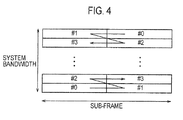
Fig. 4] Fig. 4 is a diagram illustrating one example of a radio resource for a PUCCH and a radio resource for a PUTSCH assigned by the macro radio base station according to the first embodiment of the present invention. - [
Fig. 5] Fig. 5 is a diagram illustrating one example of a radio resource for a PCFICH, a radio resource for a PHICH, and a radio resource for a PDCCH assigned by the macro radio base station according to the first embodiment of the present invention. - [
Fig. 6] Fig. 6 is a diagram explaining one example of "PHICH Configuration" included in MBS assignment radio resource information notified to a femto radio base station from the macro radio base station according to the first embodiment of the present invention. - [
Fig. 7] Fig. 7 is a functional block diagram of a femto radio base station according to the first embodiment of the present invention. - [
Fig. 8] Fig. 8 is a diagram explaining "UE-specific Search Space" used in a mobile communication system according to the first embodiment of the present invention. - [
Fig. 9] Fig. 9 is a sequence chart illustrating an operation of the mobile communication system according to the first embodiment of the present invention. - [
Fig. 10] Fig. 10 is a diagram explaining problems inherent in a conventional mobile communication system. - With reference to
Fig. 1 to Fig. 8 , the configuration of a mobile communication system according to a first embodiment of the present invention will be explained. - As illustrated in
Fig. 1 , the mobile communication system according to this embodiment includes: macro radio base stations MBS1 to MBS3; femto radio base stations FBS1 to FBS3; a gateway apparatus HGW (Home eNB Gateway) that collectively controls the femto radio base stations FBS1 to FBS3; and a mobile switching center MME (Mobility Management Equipment) that collectively controls the macro radio base stations MBS1 to MBS3 and is connected to the gateway apparatus HGW. - The femto radio base stations FBS1 to FBS3 and the gateway apparatus HGW are connected by an S1 interface, the gateway apparatus HGW and the mobile switching center MME are connected by an S1 interface, the macro radio base stations MBS1 to MBS3 and the mobile switching center MME are connected by an S1 interface, and the macro radio base stations MBS1 to MBS3 are connected with each other by an X2 interface.
- In this case, the femto radio base stations FBS1 to FBS3 may be connected with each other by an X2 interface. Further, the femto radio base stations FBS1 to FBS3 and the mobile switching center MME may be connected by the S2 interface without the gateway apparatus HGW therebetween.
- Hereinafter, with reference to
Fig. 2 , the configuration of the macro radio base stations MBS1 to MBS3 will be explained. In this case, the macro radio base stations MBS1 to MBS3 are basically the same in configuration, and are explained collectively as a macro radio base station MBS (first radio base station). - As illustrated in
Fig. 2 , the macro radio base station MBS includes a radioresource assignment unit 11, anMUE notification unit 12, and anFBS notification unit 13. - The radio
resource assignment unit 11 is configured to assign a radio resource for a control channel through which downlink control information or uplink control information is transmitted to a first mobile station (hereinafter, referred to as "macro mobile stationMUE") that is in communication in a macro cell (first cell) under the control of the macro radio base station MBS. - Further, the radio
resource assignment unit 11 is configured to assign a radio resource for a PUSCH (Physical Uplink Shared Channel), i.e an RB (Resource Block), as a radio resource for a data channel through which uplink data (transport block) is transmitted, to the macro mobile station MUE. - Moreover, the radio
resource assignment unit 11 is configured to assign a radio resource for a PDSCH (Physical Downlink Shared Channel), i.e., a resource block, as the radio resource for a data channel through which the downlink data (transport block) is transmitted, to the macro mobile station MUE. - In this case, the mobile communication system according to this embodiment is configured such that HARQ retransmission control is applied to a PUSCH and a PDSCH, but the HARQ retransmission control is not adapted to a PUCCH, a PCFICH, a PHICH, and a PDCCH.
- That is, in the mobile communication system according to this embodiment, even if it fails to receive downlink data transmitted via a PDCCH and uplink data transmitted via a PUCCH, it is possible to rescue these data by the HARQ retransmission control.
- On the other hand, in the mobile communication system according to this embodiment, when it fails to receive the uplink control information transmitted via a PUCCH and the downlink control information transmitted via a PCFICH, a PHICH, and a PDCCH, these data are not rescued by the HARQ retransmission control.
- For example, if the radio base station eNB fails to receive the uplink control information (CQI (Channel Quality Indicator)) transmitted via a PUCCH, ACK/NACK for the downlink data, and a scheduling request (SR: Scheduling Request, etc.), then AMC (Adaptive Modulation and Coding) control, transmission power control, HARQ retransmission control, and a radio resource assignment (scheduling) process cannot be appropriately performed, and as a result, a radio efficiency deteriorates.
- Therefore, in the mobile communication system according to this embodiment, securing the quality of a control channel, i.e., inhibiting interference against the control channel, is considered important.
- Specifically, the radio
resource assignment unit 11 is configured to assign the radio resource for a PUCCH (Physical Uplink Control Channel) as a radio resource for a control channel through which the uplink control information is transmitted, to the macro mobile station MUE. - As illustrated in
Fig. 3 andFig. 4 , the radioresource assignment unit 11 is configured to assign radio resources within a resource block at the both ends in a system bandwidth as the radio resource for a PUCCH, and a resource block inside this resource block as the radio resource for a PUSCH. - As illustrated in
Fig. 3 , it is configured such that a code multiplex is performed in the resource block for a PUCCH. Therefore, the radio resource for a PUCCH is specified by the resource block and the code. It is noted that the resource block is specified by an OFDM symbol or time resource and a sub-carrier or frequency resource. - Further, the radio
resource assignment unit 11 is configured to determine a radio resource assigned to the macro mobile station MUE, by the "Intra- subframe hopping", as illustrated inFig. 3 , between a first half portion (slot) and a second half portion (slot) within a single sub-frame. - As illustrated in
Fig. 4 , a resource number is allotted to the resource block that can serve the radio resource for a PUCCH in a sequential manner from both ends of the system bandwidth; a radio resource of which the resource number is small is firstly assigned as the radio resource for a PUCCH through which CQI is transmitted; and then the rest of the radio resources is assigned as the radio resource for a PUCCH through which downlink ACK/NACK is transmitted and the radio resource for PUCCH through which SR is transmitted. - Moreover, the radio
resource assignment unit 11 is configured to assign to the macro mobile station MUE a radio resource for a PCFICH (Physical Control Format Indicator Channel), a radio resource for a PHICH (Physical Hybrid ARQ Indicator Channel), and a radio resource for a PDCCH (Physical Downlink Control Channel), as the radio resource for a control channel through which the downlink control information is transmitted. - As illustrated in
Fig. 5 , the radioresource assignment unit 11 is configured to assign radio resources within first to third forefront OFDM symbols within a single sub-frame as the radio resource for a PCFICH, the radio resource for a PHICH, and the radio resource for a PDCCH, and to assign the radio resources within the rest of the OFDM symbol as the radio resource for a PDSCH. - The PCFICH is a control channel through which information is transmitted for indicating the number of forefront OFDM symbols (one OFDM symbol to three OFDM symbols) within a single sub-frame to be assigned as the radio resource for a PCFICH, the radio resource for a PHICH, and the radio resource for a PDCCH.
- The assignment position of the radio resource for a PCFICH, is fixed. The radio resource for a PCFICH is configured to be assigned repeatedly four times in a frequency direction within forefront OFDM symbols within a single sub-frame. The position in a frequency direction is determined by cell identification information (PCI: Physical Cell ID) specifying each cell.
- The PHICH is a control channel through which ACK/NACK for downlink data transmitted via a PUSCH to which the HARQ retransmission control is applied is transmitted. The radio resource for a PHICH is configured to be assigned repeatedly three times in a frequency direction within an OFDM symbol defined by a PCFICH.
- Further, when the number of PHICH groups (the number of channels) and the number of OFDM symbols used in the radio resource for a PHICH are set, it is possible to adjust the capacity of the radio resource for a PHICH. These settings are configured to be notified by a MIB (Master Infomation Block) or broadcast information, from the radio base station eNB to the mobile station UE.
- The PDCCH is a control channel used for notifying the radio resource for a PDSCH and assignment results (DL Grant and UL Grant) of the radio resource for a PUSCH.
- It is configured such that as the radio resource for a PDCCH, a radio resource to which the radio resource for a PCFICH and the radio resource for a PHICH are not assigned is assigned, of the radio resource within the OFDM symbol defined by a PCFICH.
- Moreover, in addition to notifying the assignment result of the dedicated radio resources (the radio resource for PDSCH, the radio resource for PUSCH, etc.) for each mobile station UE, a PDCCH is used also for transmitting information mapped to a BCCH (Broadcast Control Channel), information mapped to a PCCH (Paging Control Channel), an RA (Random Access) response, and a transmission power control command in a PUCCH and a PUSCH.
- It is noted that a region to which the radio resource for a PDCCH can be assigned is divided into a small unit called "CCE (Control Channel Element)", and as a radio resource for each PDCCH, a radio resource including one, two, four, or eight CCEs is assigned. In this case, the number of CCEs is determined by "Aggregation Level" selected by a propagation environment, for example.
- The number of PDCCHs that can be multiplexed within a single sub-frame is determined by the "Aggregation Level", the number of the OFDM symbols, and a setting content on a PHICH. Further, formats of a PDCCH can be various formats (
Format 0/1/1a/1b/lc/1d/2/2a/3/3a) depending on the purpose. - The
MUE notification unit 12 is configured to notify, to the macro mobile station MUE, the assignment result of the radio resource by the radioresource assignment unit 11. For example, theMUE notification unit 12 is configured to notify, to the macro mobile station MUE, the assignment results (DL Grant and UL Grant) of the radio resource for a PDSCH and the radio resource for a PUSCH, via a PDCCH. - The
FBS notification unit 13 is configured to notify, to the femto radio base station FBS (second radio base station), the scheduling information including the assignment result of the radio resource (information specifying this radio resource) by the radioresource assignment unit 11. - For example, the
FBS notification unit 13 may be configured to notify, to the femto radio base station FBS, scheduling information including the number of OFDM symbols notified by a PCFICH and the content of "PHICH-Configuration" (setting content on a PHICH), illustrated inFig. 6 , as the assignment result of the radio resource (information specifying this radio resource) by the radioresource assignment unit 11. - It is noted that the
FBS notification unit 13 may be configured to notify, to the femto radio base station FBS, scheduling information including an assignment result of the SRS (Sounding Reference Signaol) in the uplink, an assignment result of "Semi-Persistent Scheduling Resource", etc. , as the assignment result of the radio resource by the radio resource assignment unit 11 (information specifying this radio resource). - Hereinafter, with reference to
Fig. 7 , the configurations of the femto radio base stations FBS1 to FBS3 will be explained. In this case, the femto radio base stations FBS1 to FBS3 are basically the same in configuration, and are explained collectively as the femto radio base station FBS (second radio base station), below. - As illustrated in
Fig. 7 , the femto radio base station FBS includes a schedulinginformation reception unit 21, a radioresource assignment unit 22, and anFUE notification unit 23. - The scheduling
information reception unit 21 is configured to receive scheduling information transmitted by the macro radio base station MBS. - The radio
resource assignment unit 22 is configured to assign the radio resource for a PUSCH, i.e., the resource block, to the second mobile station (hereinafter, referred to as "femto mobile station FUE") that is in communication in the femto cell (second cell) under , as the radio resource for a data channel through which the uplink is transmitted. - Further, the radio
resource assignment unit 22 is configured to assign the radio resource for a PDSCH, i.e., the resource block, to the femto mobile station FUE, as the radio resource for a data channel through which downlink data is transmitted. - Further, the radio
resource assignment unit 22 is configured to assign the radio resource for a control channel through which the femto mobile station FUE transmits the downlink control information or the uplink control information, based on the scheduling information received by the schedulinginformation reception unit 21. - Specifically, the radio
resource assignment unit 22 is configured to assign the radio resource for a PUCCH to the macro mobile station MUE as the radio resource for a control channel through which the uplink control information is transmitted. - Moreover, the radio
resource assignment unit 22 is configured to assign the radio resource for a PCFICH, the radio resource for a PHICH, and the radio resource for a PDCCH to the macro mobile station MUE as the radio resource for a control channel through which the downlink control information is transmitted. - It is noted that each mobile station UE is configured to perform "blind detection" in order to receive the downlink control information destined to each mobile station UE via a PDCCH. However, there are too many combinations of "Aggregation Level" or "format of a PDCCH", and thus, a region in which the radio resource for a PDCCH destined to the mobile station UE should be searched, i.e. , a region to be merely searched, for receiving the downlink control information, is limited for each mobile station UE in order to decrease a processing amount in each mobile station UE.
- Specifically, as illustrated in
Fig. 8 , each mobile station UE may suffice to perform "blind detention" only on "Common Search Space" and "UE-Specific Search Space" for each mobile station, i.e., the radio resource for a PDCCH may be searched only in "Common Search Space" and "UE-Specific Search Space" for each mobile station. - That is, each mobile station UE may suffice to perform "blind detection" in a particular CCE, by using a combination of "Aggregation Level" or "format of a PDCCH" of a particular pattern.
- It is noted that the "Common Search Space" is defined in the 3GPP standard TS36.213, and is a region in which the radio resource for a PDCCH for transmitting the information mapped to a BCCH, the information mapped to a PCCH, the RA response, etc., should be searched in all the mobile stations UE.
- On the other hand, the "UE-Specific Search Space" for each mobile station is defined in the 3GPP standard TS36.213, and is determined by UE-ID (C-RNTI: Cell-Radio Network Temporary Identity) specifying each mobile station UE.
- In this case, the radio
resource assignment unit 22 may be configured to assign the above-described radio resource so that the region (UE-Specific Search Space) in which the macro mobile station MUE searches for receiving the downlink control information and the region (UE-Specific Search Space) in which the femto mobile station FUE searches for receiving the downlink control information do not overlap. - With reference to
Fig. 9 , the operation of the mobile communication system according to the first embodiment of the present invention will be explained. - As illustrated in
Fig. 9 , in step S1001, the macro radio base station MBS assigns the radio resource for a control channel through which the downlink control information and the uplink control information are transmitted, to the macro mobile station MUE. - In step S1002, the macro radio base station MBS notifies, to the macro mobile station MUE, the radio resource via a PDCCH, and in step S1003, notifies, to the femto radio base station FBS, the scheduling information including the information specifying the radio resource.
- In step S1004, the femto radio base station FBS assigns the radio resource for a control channel through which the downlink control information and the uplink control information are transmitted, to the femto mobile station FUE.
- In this case, the femto radio base station FBS assigns the above-described radio resource so that the "UE-Specific Search Space" of the macro mobile station MUE and the "UE-Specific Search Space" of the femto mobile station FUE do not overlap.
- In step S1005, the femto radio base station FBS notifies, to the femto mobile station FUE, the radio resource via a PDCCH.
- Based on the mobile communication system according to the first embodiment of the present invention, the macro radio base station MBS can notify, to the femto radio base station FBS, the scheduling information, and thus, it is possible to effectively decrease the interference in the femto radio base station FBS.
- The above-mentioned characteristics of the embodiment may be expressed as follow:
- A first aspect of this embodiment is summarized as a mobile communication method which includes the steps of: (A) notifying, from a macro radio base station MBS (first radio base station) to a femto radio base station FBS (second radio base station), scheduling information including information specifying a radio resource for a control channel through which a macro mobile station MUE (first mobile station) that is in communication in a macro cell (first cell) under the control of the macro radio base station MBS transmits downlink control information or uplink control information, when a macro radio base station MBS (first radio base station) assigns the radio resource; and (B) assigning, at the femto radio base station FBS, a radio resource for a control channel through which a femto mobile station FUE (second mobile station) that is in communication in a femto cell (second cell) under the control of the femto radio base station FBS transmits downlink control information or uplink control information based on the scheduling information.
- In the first aspect of the embodiment, in the step (B), the femto radio base station FBS may assign the above-described radio resource so that a region (UE-Specific Search Space) in which the macro mobile station MUE searches for receiving the downlink control information and a region (UE-Specific Search Space) in which the femto mobile station FUE searches for receiving the downlink control information do not overlap.
- In the first aspect of the embodiment, the mobile communication method may be used in a mobile communication system of an LTE scheme, the control channel through which the uplink control information is transmitted may include a PUCCH, and the control channel through which the downlink control information is transmitted may include a PDCCH.
- A second aspect of the embodiment is summarized as a radio base station that functions as a macro radio base station MBS in a mobile communication system in which the macro radio base station MBS and a femto radio base station FBS are mixed and includes: a radio
resource assignment unit 11 configured to assign a radio resource for a control channel through which downlink control information or uplink control information is transmitted to the macro mobile station MUE that is in communication in a macro cell under the control of the macro radio base station MBS; and anotification unit 13 configured to notify, to the femto radio base station FBS, scheduling information including information specifying the radio resource assigned by the radioresource assignment unit 11. - A third aspect of the embodiment is summarized as a radio base station that functions as a femto radio base station FBS in a mobile communication system in which a macro radio base station MBS and the femto radio base station FBS are mixed and the macro radio base station MBS includes: a scheduling
information reception unit 21 configured to receive, when the macro mobile station MUE that is in communication in a macro cell under the control of the macro radio base station MBS assigns a radio resource for a control channel through which downlink control information or uplink control information is transmitted, the scheduling information including information specifying the radio resources from the macro radio base station MBS; and a radioresource assignment unit 22 configured to assign a radio resource for a control channel through which the femto mobile station FUE that is in communication in a femto cell under the control of the femto radio base station FBS transmits downlink control information or uplink control information based on the scheduling information. - In the third aspect of the embodiment, the radio
resource assignment unit 22 may be configured to assign the above-described radio resource so that a region (UE-Specific Search Space) in which the macro mobile station MUE searches for receiving the downlink control information and a region (UE-Specific Search Space) in which the femto mobile station FUE searches for receiving the downlink control information do not overlap. - In the second aspect and the third aspect of the embodiment, the mobile communication system may be a mobile communication system of an LTE scheme, the control channel through which the uplink control information is transmitted may include a PUCCH, and the control channel through which the downlink control information is transmitted may include a PDCCH.
- The operation of the above-described macro radio base station MBS, the femto radio base station FBS, the macro mobile station MUE and the femto mobile station FUE may be implemented by a hardware, may also be implemented by a software module executed by a processor, and may further be implemented by the combination of the both.
- The software module may be arranged in a storing medium of an arbitrary format such as RAM(Random Access Memory), a flash memory, ROM(Read Only Memory), EPROM (Erasable Programmable ROM), EEPROM (Electronically Erasable and Programmable ROM), a register, a hard disk, a removable disk, and CD-ROM.
- Such a storing medium is connected to the processor so that the processor can write and read information into and from the storing medium. Such a storing medium may also be accumulated in the processor. Such a storing medium and processor may be arranged in ASIC. Such ASIC may be arranged in the macro radio base station MBS, the femto radio base station FBS, the macro mobile station MUE and the femto mobile station FUE. As a discrete component, such a storing medium and processor may be arranged in the macro radio base station MBS, the femto radio base station FBS, the macro mobile station MUE and the femto mobile station FUE.
- Thus, the present invention has been explained in detail by using the above-described embodiments; however, it is obvious that for persons skilled in the art, the present invention is not limited to the embodiments explained herein. The present invention can be implemented as a corrected, modified mode without departing from the gist and the scope of the present invention defined by the claims. Therefore, the description of the specification is intended for explaining the example only and does not impose any limited meaning to the present invention.
Claims (7)
- A mobile communication method, comprising the steps of:(A) notifying, from a first radio base station to a second radio base station, scheduling information including information specifying a radio resource for a control channel through which a first mobile station that is in communication in a first cell under the control of the first radio base station transmits downlink control information or uplink control information, when the first radio base station assigns the radio resource; and(B) assigning, at the second radio base station, a radio resource for a control channel through which a second mobile station that is in communication in a second cell under the control of the second radio base station transmits downlink control information or uplink control information based on the scheduling information.
- The mobile communication method according to claim 1, wherein
in the step (B), the second radio base station assigns the radio resource so that a region in which the first mobile station searches for receiving the downlink control information and a region in which the second mobile station searches for receiving the downlink control information do not overlap. - The mobile communication method according to claim 1, wherein
the mobile communication method is a mobile communication method used in a mobile communication system of an LTE (Long Term Evolurion) scheme,
the control channel through which the uplink control information is transmitted includes a PUCCH (Physical Uplink Control Channel), and
the control channel through which the downlink control information is transmitted includes a PDCCH (Physical Downlink Control Channel). - A radio base station that functions as a first radio base station in a mobile communication system in which the first radio base station and a second radio base station are mixed, comprising:a radio resource assignment unit configured to assign a radio resource for a control channel through which downlink control information or uplink control information is transmitted to the first mobile station that is in communication in a first cell under the control of the first radio base station; anda notification unit configured to notify, to the second radio base station, scheduling information including information specifying the radio resource assigned by the radio resource assignment unit.
- A radio base station that functions as a second radio base station in a mobile communication system in which a first radio base station and the second radio base station are mixed, comprising:a scheduling information reception unit configured to receive scheduling information including information specifying a radio resource from the first radio base station, when the first radio base station assigns a radio resource for a control channel through which the first mobile station that is in communication in a first cell under the control of the first radio base station transmits downlink control information or uplink control information; anda radio resource assignment unit configured to assign a radio resource for a control channel through which the second mobile station that is in communication in a second cell under the control of the second radio base station transmits downlink control information or uplink control information, based on the scheduling information.
- The radio base station according to claim 5, wherein
the radio resource assignment unit is configured to assign the radio resource so that a region in which the first mobile station searches for receiving the downlink control information and a region in which the second mobile station searches for receiving the downlink control information do not overlap. - The radio base station according to any one of claims 4 to 6, wherein
the mobile communication system is a mobile communication system of an LTE (Long Term Evolurion) scheme,
the control channel through which the uplink control information is transmitted includes a PUCCH (Physical Uplink Control Channel), and
the control channel through which the downlink control information is transmitted includes a PDCCH (Physical Downlink Control Channel).
Applications Claiming Priority (2)
| Application Number | Priority Date | Filing Date | Title |
|---|---|---|---|
| JP2009014491A JP5180109B2 (en) | 2009-01-26 | 2009-01-26 | Mobile communication method and radio base station |
| PCT/JP2010/050960 WO2010084987A1 (en) | 2009-01-26 | 2010-01-26 | Mobile communication method and wireless base station |
Publications (2)
| Publication Number | Publication Date |
|---|---|
| EP2391168A1 true EP2391168A1 (en) | 2011-11-30 |
| EP2391168A4 EP2391168A4 (en) | 2017-08-02 |
Family
ID=42356037
Family Applications (1)
| Application Number | Title | Priority Date | Filing Date |
|---|---|---|---|
| EP10733593.7A Withdrawn EP2391168A4 (en) | 2009-01-26 | 2010-01-26 | Mobile communication method and wireless base station |
Country Status (8)
| Country | Link |
|---|---|
| US (1) | US8830928B2 (en) |
| EP (1) | EP2391168A4 (en) |
| JP (1) | JP5180109B2 (en) |
| KR (1) | KR20110108384A (en) |
| CN (1) | CN102293042A (en) |
| AU (1) | AU2010207198A1 (en) |
| BR (1) | BRPI1007473A2 (en) |
| WO (1) | WO2010084987A1 (en) |
Cited By (5)
| Publication number | Priority date | Publication date | Assignee | Title |
|---|---|---|---|---|
| EP2775749A4 (en) * | 2011-11-03 | 2015-03-04 | Kyocera Corp | MOBILE COMMUNICATION SYSTEM AND MOBILE COMMUNICATION METHOD |
| US9106384B2 (en) | 2011-07-01 | 2015-08-11 | Panasonic Intellectual Property Corporation Of America | Receiver apparatus, transmitter apparatus, setting method, and determining method |
| EP2642809A4 (en) * | 2010-11-18 | 2016-01-20 | Fujitsu Ltd | BASE STATION DEVICE, COMMUNICATION SYSTEM, AND COMMUNICATION METHOD |
| EP2824955A4 (en) * | 2012-03-05 | 2016-01-27 | Sony Corp | COMMUNICATION CONTROL DEVICE, COMMUNICATION CONTROL METHOD, AND BASE STATION |
| US10425949B2 (en) | 2012-06-27 | 2019-09-24 | Sony Corporation | Methods and apparatus for communicating resource information with a terminal device |
Families Citing this family (36)
| Publication number | Priority date | Publication date | Assignee | Title |
|---|---|---|---|---|
| JP5046904B2 (en) * | 2007-12-13 | 2012-10-10 | 株式会社エヌ・ティ・ティ・ドコモ | Mobile communication system, base station apparatus, user apparatus and method |
| US20130269684A1 (en) | 2012-04-16 | 2013-10-17 | Dance Pharmaceuticals, Inc. | Methods and systems for supplying aerosolization devices with liquid medicaments |
| US10525214B2 (en) | 2010-01-12 | 2020-01-07 | Dance Biopharm Inc. | Preservative-free single dose inhaler system |
| US9545488B2 (en) | 2010-01-12 | 2017-01-17 | Dance Biopharm Inc. | Preservative-free single dose inhaler systems |
| US8950394B2 (en) | 2010-01-12 | 2015-02-10 | Dance Biopharm Inc. | Preservative-free single dose inhaler systems |
| US20110194513A1 (en) * | 2010-02-10 | 2011-08-11 | Electronics And Telecommunications Research Institute | Method for controlling transmitting power of control channel of csg pico base station |
| US20120063321A1 (en) * | 2010-03-17 | 2012-03-15 | Texas Instruments Incorporated | CFI Signaling for Heterogeneous Networks with Multiple Component Carriers in LTE-Advanced |
| CA2793053C (en) * | 2010-03-25 | 2016-08-16 | Sharp Kabushiki Kaisha | Communication method, mobile station apparatus, base station apparatus and mobile communication system |
| JP5122612B2 (en) * | 2010-08-03 | 2013-01-16 | 株式会社エヌ・ティ・ティ・ドコモ | Radio base station apparatus and transmission power control method |
| KR101285512B1 (en) | 2010-10-22 | 2013-07-17 | 주식회사 엘지화학 | Display device compring conductive pattern |
| WO2012067430A2 (en) * | 2010-11-16 | 2012-05-24 | 엘지전자 주식회사 | Method and apparatus for providing control information |
| JP5303538B2 (en) | 2010-11-19 | 2013-10-02 | 株式会社日立製作所 | Wireless communication system and wireless communication method |
| WO2012086135A1 (en) * | 2010-12-21 | 2012-06-28 | パナソニック株式会社 | Transmission device and transmission control method |
| CN103339981B (en) * | 2011-01-31 | 2018-04-06 | 富士通株式会社 | Wireless communication system, base station, mobile station and wireless communication method |
| KR101579357B1 (en) * | 2011-01-31 | 2015-12-21 | 후지쯔 가부시끼가이샤 | Wireless communication system, base station, mobile station, and wireless communication method |
| CN102111802B (en) * | 2011-02-28 | 2013-12-04 | 上海华为技术有限公司 | Method and network equipment adopting same for measuring error information transmission |
| WO2012124113A1 (en) * | 2011-03-17 | 2012-09-20 | 富士通株式会社 | Wireless base station device, wireless communication method for wireless base station device, and wireless communication system |
| JP5720771B2 (en) * | 2011-03-17 | 2015-05-20 | 富士通株式会社 | Radio base station apparatus, radio communication method in radio base station apparatus, and radio communication system |
| WO2012127586A1 (en) | 2011-03-18 | 2012-09-27 | 富士通株式会社 | Wireless communication system, mobile station, base station, and wireless communication method |
| US9118452B2 (en) | 2011-03-28 | 2015-08-25 | Lg Electronics Inc. | Method for transmitting an uplink signal, method for receiving an uplink signal, user equipment, and base station |
| KR20140050666A (en) * | 2011-07-22 | 2014-04-29 | 엘지전자 주식회사 | Method and apparatus for transmitting uplink control information in a wireless communication system |
| US9301292B2 (en) | 2011-09-05 | 2016-03-29 | Lg Electronics Inc. | Method of indicating a control channel in a wireless access system, base station for the same and user equipment for the same |
| US9276709B2 (en) | 2011-11-08 | 2016-03-01 | Futurewei Technologies, Inc. | System and method for interference management in cellular networks |
| US9049730B2 (en) * | 2011-11-14 | 2015-06-02 | Qualcomm Incorporated | Uplink data transmission with interference mitigation |
| WO2013125882A1 (en) * | 2012-02-21 | 2013-08-29 | Lg Electronics Inc. | Method and apparatus for optimizing a limited feedback in a wireless access system supporting a distributed antenna (da) technicue |
| WO2013155680A1 (en) * | 2012-04-18 | 2013-10-24 | Renesas Mobile Corporation | Mechanism for controlling discovery of small cells |
| CN108901072B (en) | 2012-06-27 | 2023-05-12 | 索尼公司 | Communication control device, communication control method, and communication device |
| US8744464B2 (en) * | 2012-09-12 | 2014-06-03 | Verizon Patent And Licensing Inc. | Interference coordination in heterogeneous networks |
| US20150237545A1 (en) | 2012-10-30 | 2015-08-20 | Sony Corporation | Communication control device, program, communication control method, and terminal device |
| KR102083024B1 (en) * | 2013-04-29 | 2020-03-02 | 주식회사 팬택 | Method and apparatus of small cell autonomous configuration to avoid inter-cell interference |
| US9248246B2 (en) * | 2013-09-27 | 2016-02-02 | Cellco Partnership | Category 1 M2M device data transmission via a long term evolution network |
| WO2017164057A1 (en) * | 2016-03-23 | 2017-09-28 | 株式会社Nttドコモ | Base station and transmission method |
| CN108023708B (en) * | 2016-11-03 | 2022-09-13 | 中兴通讯股份有限公司 | Information sending method, device, system and related equipment |
| US10986647B2 (en) | 2017-05-04 | 2021-04-20 | At&T Intellectual Property I, L.P. | Management of group common downlink control channels in a wireless communications system |
| JP6894042B2 (en) * | 2017-08-11 | 2021-06-23 | 京セラ株式会社 | Mitigating aircraft communication interference by sharing scheduling information with neighboring base stations |
| ES3052243T3 (en) * | 2021-04-01 | 2026-01-02 | Zte Corp | Method and system for resource configuration |
Family Cites Families (16)
| Publication number | Priority date | Publication date | Assignee | Title |
|---|---|---|---|---|
| JPH0491522A (en) * | 1990-08-06 | 1992-03-25 | Nippon Telegr & Teleph Corp <Ntt> | Mobile communication equipment |
| JP2000308124A (en) * | 1999-04-26 | 2000-11-02 | Mitsubishi Electric Corp | Control channel allocation method |
| JP2003259413A (en) * | 2002-03-01 | 2003-09-12 | Matsushita Electric Ind Co Ltd | Base station device and communication terminal device |
| EP1605619A4 (en) * | 2003-02-28 | 2012-01-11 | Ntt Docomo Inc | RADIOCOMMUNICATION SYSTEM AND METHOD |
| DE602005015721D1 (en) * | 2005-06-15 | 2009-09-10 | Alcatel Lucent | Uplink interference coordination method in monofrequency networks, base station and mobile network therefor |
| JP5080481B2 (en) * | 2005-10-04 | 2012-11-21 | テレフオンアクチーボラゲット エル エム エリクソン(パブル) | Selection of radio network control station for IP-connected radio base station |
| JP5108450B2 (en) * | 2007-10-22 | 2012-12-26 | 株式会社エヌ・ティ・ティ・ドコモ | Wireless communication system, wireless communication method, base station, and wireless terminal |
| US9014155B2 (en) * | 2007-11-19 | 2015-04-21 | Rajarshi Gupta | Access point configuration schemes |
| US8260206B2 (en) * | 2008-04-16 | 2012-09-04 | Qualcomm Incorporated | Methods and apparatus for uplink and downlink inter-cell interference coordination |
| JP2009267815A (en) * | 2008-04-25 | 2009-11-12 | Nippon Telegr & Teleph Corp <Ntt> | Interference amount estimating method, radio communication method, radio communication system, and radio communication apparatus |
| US8554147B2 (en) * | 2008-05-22 | 2013-10-08 | Qualcomm Incorporated | System and method to enable resource partitioning in wireless networks |
| US9974065B2 (en) * | 2008-06-25 | 2018-05-15 | Qualcomm Incorporated | Dynamic control blanking in heterogeneous networks |
| US8965429B2 (en) * | 2008-08-08 | 2015-02-24 | Nokia Siemens Networks Oy | Fine-grain and backward-compliant resource allocation |
| WO2010036167A1 (en) * | 2008-09-23 | 2010-04-01 | Telefonaktiebolaget L M Ericsson (Publ) | Method and arrangements in a cellular network with femtocells |
| US8768257B2 (en) * | 2008-12-09 | 2014-07-01 | Lg Electronics Inc. | Method and apparatus for releasing blank zone by macro base station in wireless communication system |
| KR101605346B1 (en) * | 2009-01-23 | 2016-03-23 | 삼성전자주식회사 | Method and apparatus for controlling power of mobile terminal at femto cell |
-
2009
- 2009-01-26 JP JP2009014491A patent/JP5180109B2/en not_active Expired - Fee Related
-
2010
- 2010-01-26 AU AU2010207198A patent/AU2010207198A1/en not_active Abandoned
- 2010-01-26 KR KR1020117018289A patent/KR20110108384A/en not_active Abandoned
- 2010-01-26 US US13/146,040 patent/US8830928B2/en not_active Expired - Fee Related
- 2010-01-26 CN CN2010800054016A patent/CN102293042A/en active Pending
- 2010-01-26 EP EP10733593.7A patent/EP2391168A4/en not_active Withdrawn
- 2010-01-26 BR BRPI1007473A patent/BRPI1007473A2/en not_active IP Right Cessation
- 2010-01-26 WO PCT/JP2010/050960 patent/WO2010084987A1/en not_active Ceased
Non-Patent Citations (1)
| Title |
|---|
| See references of WO2010084987A1 * |
Cited By (8)
| Publication number | Priority date | Publication date | Assignee | Title |
|---|---|---|---|---|
| EP2642809A4 (en) * | 2010-11-18 | 2016-01-20 | Fujitsu Ltd | BASE STATION DEVICE, COMMUNICATION SYSTEM, AND COMMUNICATION METHOD |
| US9106384B2 (en) | 2011-07-01 | 2015-08-11 | Panasonic Intellectual Property Corporation Of America | Receiver apparatus, transmitter apparatus, setting method, and determining method |
| EP2775749A4 (en) * | 2011-11-03 | 2015-03-04 | Kyocera Corp | MOBILE COMMUNICATION SYSTEM AND MOBILE COMMUNICATION METHOD |
| EP2824955A4 (en) * | 2012-03-05 | 2016-01-27 | Sony Corp | COMMUNICATION CONTROL DEVICE, COMMUNICATION CONTROL METHOD, AND BASE STATION |
| US9374830B2 (en) | 2012-03-05 | 2016-06-21 | Sony Corporation | Communication control device, communication control method, and base station |
| AU2013228834B2 (en) * | 2012-03-05 | 2017-05-04 | Sony Corporation | Communication control device, communication control method, and base station |
| US9794948B2 (en) | 2012-03-05 | 2017-10-17 | Sony Corporation | Communication control device, communication control method, and base station |
| US10425949B2 (en) | 2012-06-27 | 2019-09-24 | Sony Corporation | Methods and apparatus for communicating resource information with a terminal device |
Also Published As
| Publication number | Publication date |
|---|---|
| US8830928B2 (en) | 2014-09-09 |
| AU2010207198A1 (en) | 2011-08-25 |
| JP2010171885A (en) | 2010-08-05 |
| EP2391168A4 (en) | 2017-08-02 |
| US20120069803A1 (en) | 2012-03-22 |
| KR20110108384A (en) | 2011-10-05 |
| JP5180109B2 (en) | 2013-04-10 |
| CN102293042A (en) | 2011-12-21 |
| BRPI1007473A2 (en) | 2016-02-16 |
| WO2010084987A1 (en) | 2010-07-29 |
Similar Documents
| Publication | Publication Date | Title |
|---|---|---|
| US8830928B2 (en) | Mobile communication method and radio base station | |
| US10368336B2 (en) | Evolved multimedia broadcast multicast service on enhanced component carriers | |
| JP6321068B2 (en) | User terminal and wireless communication method | |
| CN114554609B (en) | Uplink Scheduling for Licensed Assisted Access | |
| US8583128B2 (en) | Apparatus and method for mapping physical control channels | |
| KR101798066B1 (en) | Downlink control management in an unlicensed or shared spectrum | |
| US8971241B2 (en) | Techniques for supporting relay operation in wireless communication systems | |
| US8879437B2 (en) | Backward compatible LTE system design for asymmetric uplink/downlink spectrum | |
| CN106576359B (en) | Method and apparatus for supporting coexistence in unlicensed bands of cells of different operators in a wireless communication system | |
| US20170026943A1 (en) | Method for allocating resources in a wireless communication system and a device for the same | |
| EP4018762A1 (en) | Channel access priority for nr-u data bearers | |
| US20150043415A1 (en) | Systems and Methods for Configuring Transmissions in a Wireless Network | |
| US20160360550A1 (en) | Low latency under time division duplex and flexible frequency division duplex | |
| JPWO2017170678A1 (en) | User terminal, radio base station, and radio communication method | |
| KR20180063159A (en) | Method, apparatus and system for channel access in a license-exempt band | |
| CN112703807A (en) | Granting supplemental uplink as fallback to unlicensed uplink and downlink | |
| US10637600B2 (en) | Method for uplink transmission in unlicensed band, and device using same | |
| KR20170051427A (en) | Low-latency, low-bandwidth and low duty cycle operation in a wireless communication system | |
| WO2012173445A2 (en) | Method for transceiving data in wireless access system and terminal therefor | |
| US11632774B2 (en) | Systems and methods for determining cancellation timeline for user equipment with mixed processing capabilities | |
| US11722287B2 (en) | Flexible time division duplexing subframe structure with latency reduction | |
| KR20190056363A (en) | User terminal and wireless communication method | |
| JP2018137792A (en) | User terminal and radio communication method | |
| EP3337273A1 (en) | User terminal, wireless base station, wireless communication method, and wireless communication system | |
| EP2584851A1 (en) | Base station device, mobile terminal device, and communication control method |
Legal Events
| Date | Code | Title | Description |
|---|---|---|---|
| PUAI | Public reference made under article 153(3) epc to a published international application that has entered the european phase |
Free format text: ORIGINAL CODE: 0009012 |
|
| 17P | Request for examination filed |
Effective date: 20110810 |
|
| AK | Designated contracting states |
Kind code of ref document: A1 Designated state(s): AT BE BG CH CY CZ DE DK EE ES FI FR GB GR HR HU IE IS IT LI LT LU LV MC MK MT NL NO PL PT RO SE SI SK SM TR |
|
| DAX | Request for extension of the european patent (deleted) | ||
| RA4 | Supplementary search report drawn up and despatched (corrected) |
Effective date: 20170704 |
|
| RIC1 | Information provided on ipc code assigned before grant |
Ipc: H04W 72/04 20090101AFI20170628BHEP Ipc: H04W 92/20 20090101ALI20170628BHEP |
|
| STAA | Information on the status of an ep patent application or granted ep patent |
Free format text: STATUS: THE APPLICATION IS DEEMED TO BE WITHDRAWN |
|
| 18D | Application deemed to be withdrawn |
Effective date: 20180201 |