EP2391069B1 - Verfahren zur kontrolle einer mehrfachkanalkaskade von medienkontrollserver, gerät und system dafür - Google Patents
Verfahren zur kontrolle einer mehrfachkanalkaskade von medienkontrollserver, gerät und system dafür Download PDFInfo
- Publication number
- EP2391069B1 EP2391069B1 EP10743419.3A EP10743419A EP2391069B1 EP 2391069 B1 EP2391069 B1 EP 2391069B1 EP 10743419 A EP10743419 A EP 10743419A EP 2391069 B1 EP2391069 B1 EP 2391069B1
- Authority
- EP
- European Patent Office
- Prior art keywords
- channel
- cascaded
- media control
- control server
- target channel
- Prior art date
- Legal status (The legal status is an assumption and is not a legal conclusion. Google has not performed a legal analysis and makes no representation as to the accuracy of the status listed.)
- Active
Links
Images

Classifications
-
- H—ELECTRICITY
- H04—ELECTRIC COMMUNICATION TECHNIQUE
- H04N—PICTORIAL COMMUNICATION, e.g. TELEVISION
- H04N21/00—Selective content distribution, e.g. interactive television or video on demand [VOD]
- H04N21/20—Servers specifically adapted for the distribution of content, e.g. VOD servers; Operations thereof
- H04N21/23—Processing of content or additional data; Elementary server operations; Server middleware
- H04N21/239—Interfacing the upstream path of the transmission network, e.g. prioritizing client content requests
- H04N21/2393—Interfacing the upstream path of the transmission network, e.g. prioritizing client content requests involving handling client requests
-
- H—ELECTRICITY
- H04—ELECTRIC COMMUNICATION TECHNIQUE
- H04L—TRANSMISSION OF DIGITAL INFORMATION, e.g. TELEGRAPHIC COMMUNICATION
- H04L65/00—Network arrangements, protocols or services for supporting real-time applications in data packet communication
- H04L65/40—Support for services or applications
- H04L65/403—Arrangements for multi-party communication, e.g. for conferences
-
- H—ELECTRICITY
- H04—ELECTRIC COMMUNICATION TECHNIQUE
- H04L—TRANSMISSION OF DIGITAL INFORMATION, e.g. TELEGRAPHIC COMMUNICATION
- H04L65/00—Network arrangements, protocols or services for supporting real-time applications in data packet communication
- H04L65/60—Network streaming of media packets
- H04L65/61—Network streaming of media packets for supporting one-way streaming services, e.g. Internet radio
-
- H—ELECTRICITY
- H04—ELECTRIC COMMUNICATION TECHNIQUE
- H04L—TRANSMISSION OF DIGITAL INFORMATION, e.g. TELEGRAPHIC COMMUNICATION
- H04L65/00—Network arrangements, protocols or services for supporting real-time applications in data packet communication
- H04L65/80—Responding to QoS
-
- H—ELECTRICITY
- H04—ELECTRIC COMMUNICATION TECHNIQUE
- H04L—TRANSMISSION OF DIGITAL INFORMATION, e.g. TELEGRAPHIC COMMUNICATION
- H04L69/00—Network arrangements, protocols or services independent of the application payload and not provided for in the other groups of this subclass
- H04L69/14—Multichannel or multilink protocols
-
- H—ELECTRICITY
- H04—ELECTRIC COMMUNICATION TECHNIQUE
- H04N—PICTORIAL COMMUNICATION, e.g. TELEVISION
- H04N21/00—Selective content distribution, e.g. interactive television or video on demand [VOD]
- H04N21/40—Client devices specifically adapted for the reception of or interaction with content, e.g. set-top-box [STB]; Operations thereof
- H04N21/47—End-user applications
- H04N21/478—Supplemental services, e.g. displaying phone caller identification, shopping application
- H04N21/4788—Supplemental services, e.g. displaying phone caller identification, shopping application communicating with other users, e.g. chatting
-
- H—ELECTRICITY
- H04—ELECTRIC COMMUNICATION TECHNIQUE
- H04N—PICTORIAL COMMUNICATION, e.g. TELEVISION
- H04N21/00—Selective content distribution, e.g. interactive television or video on demand [VOD]
- H04N21/60—Network structure or processes for video distribution between server and client or between remote clients; Control signalling between clients, server and network components; Transmission of management data between server and client, e.g. sending from server to client commands for recording incoming content stream; Communication details between server and client
- H04N21/65—Transmission of management data between client and server
- H04N21/658—Transmission by the client directed to the server
- H04N21/6587—Control parameters, e.g. trick play commands, viewpoint selection
-
- H—ELECTRICITY
- H04—ELECTRIC COMMUNICATION TECHNIQUE
- H04N—PICTORIAL COMMUNICATION, e.g. TELEVISION
- H04N7/00—Television systems
- H04N7/14—Systems for two-way working
- H04N7/15—Conference systems
- H04N7/152—Multipoint control units therefor
-
- H—ELECTRICITY
- H04—ELECTRIC COMMUNICATION TECHNIQUE
- H04L—TRANSMISSION OF DIGITAL INFORMATION, e.g. TELEGRAPHIC COMMUNICATION
- H04L65/00—Network arrangements, protocols or services for supporting real-time applications in data packet communication
- H04L65/60—Network streaming of media packets
- H04L65/61—Network streaming of media packets for supporting one-way streaming services, e.g. Internet radio
- H04L65/612—Network streaming of media packets for supporting one-way streaming services, e.g. Internet radio for unicast
Definitions
- the present invention relates to the field of communications, and more particularly, to a method, a device, and a system for controlling multichannel cascade between two media control servers.
- a media control server for example, a multipoint control unit (MCU)
- MCU multipoint control unit
- one cascaded channel is available between any two cascaded MCUs, and the cascaded channel can be used to transmit one channel of media signals.
- one cascaded channel is available between MCU1 and MCU2, terminals T1 and T2 are connected to ports of MCU1; MCU1 could transmit only one channel of video/audio signals of T1 or T2 to the cascaded MCU2, so that a terminal connected to MCU2 can establish video communication with T1 or T2 at the same time. Therefore, such single-channel based cascading cannot be used to implement services such as TV wall and continuous presence, thereby limiting the applications of a multipoint conferencing system.
- at least two cascaded channels can be established between any two cascaded MCUs. In this way, multiple channels of media signals can be transmitted between the MCUs to implement services such as TV wall and continuous presence.
- WO/2008/020479 rates to a multichannel data transfer apparatus and method wherein especially the number of channels can be dynamically increased or reduced in a multichannel compressed image transfer.
- a multichannel data transfer apparatus is connected to a transfer path where a plurality of connected nodes have their respective transfer channels and transmit compressed data in a predetermined period in accordance with bandwidths assigned to the respective channels.
- WO/1992/021187 relates to dynamic channel allocation in an ISDN line which is implemented above a Level II link layer protocol (LAP-D).
- the preferred embodiment comprises programming operating on a computing platform system including a communication coprocessor system.
- the programming includes a channel management module (CMM) (302) and a virtual channel module (VCM) (304) to implement dynamic channel allocation.
- CMS channel management module
- VCM virtual channel module
- CN 1885785 A discloses a method and system for operating cascaded media control servers configured in a multichannel cascasde.
- the embodiments of the present invention provide a method, a device, and a system for controlling multichannel cascade between two media control servers to save bandwidth resources.
- An embodiment of the present invention discloses a method for controlling multichannel cascade between two cascaded media control servers.
- the method includes:
- An embodiment of the present invention further discloses a device for controlling multichannel cascade between two cascaded media control servers.
- the device is a cascaded media control server.
- the device includes:
- each cascaded channel can transmit media signals from different terminals at different time. This saves cascaded channels and improves the utilization of cascaded channels, thereby saving channel resources.
- corresponding policies are provided to control the preemption of a channel. This further enhances the application and flexibility of multichannel cascade-based conferencing.
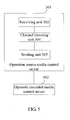
- FIG 1 is a flow chart of a method for controlling multichannel cascade between two media control servers according to Embodiment 1 of the present invention.
- the method includes the following steps:
- a priority level can be allocated for each rule; when a condition for a high-priority rule is met, the high-priority rule is directly used as the preemption rule. For example, if the preceding rules (a) and (b) are used as the preemption rules, the priority level set for rule (a) can be higher than the priority level set for rule (b).
- the channel is directly chosen as the target channel; if a channel whose service type is the same as that of the media signals of the target terminal is unavailable, the channel used by a lower-level media control server is chosen as the target channel from all the channels multichannel-cascaded with the opposite cascaded media control server.
- the preemption rules include two rules. If the preemption rules include three or more rules, a method similar to the preceding method can be used, which is not described here.
- Step 103 Send information about the determined target channel to the opposite cascaded media control server so as to enable the opposite cascaded media control server to carry out code stream switching according to the information about the target channel, where:
- each cascaded channel can transmit media signals from different terminals at different time. This saves cascaded channels and improves the utilization of cascaded channels, thereby saving channel resources.
- corresponding policies are provided to control the preemption of a channel. This further enhances the application and flexibility of multichannel-cascade based conferencing.
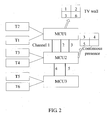
- FIG 2 is a structural schematic diagram of three-level cascade networking.
- FIG 2 can also be deemed a part of complex cascade networking (the MCUs in FIG 2 can also cascade other MCUs through multichannel cascading and be connected to more conference terminals, and more cascaded channels can be established between the MCUs).
- the involved MCUs and conference terminals are marked with M and T numbers; in FIG 2 , before a conference starts, IDs 1, 2, and 3 are respectively allocated for MCU1, MCU2, and MCU3, and M and T numbers are allocated for all the terminals under each MCU.
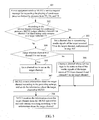
- FIG 3 is a flow chart of a method for controlling multichannel cascade between two media control servers according to Embodiment 2 of the present invention.
- this embodiment describes a method for controlling multichannel cascade between two media control servers, where the media control server is an MCU.
- the media control server is an MCU.
- each cascaded channel needs to be controlled, and a channel needs to be specified for transmitting media signals of a service requested by the user equipment.
- the method includes the following steps:
- the three channels between MCU1 and MCU2 are respectively named channel 1, channel 2 and channel 3, and channel 1, channel 2 (the word “channel” is not shown in FIG 2 ), and channel 3 (the word “channel” is not shown in FIG 2 ) are set as level-1 cascaded channel;
- the two channels between MCU2 and MCU3 are respectively named channel 4 and channel 5, and these channels are set as level-2 cascaded channel;
- T3, T4 and T5 are the target terminals of the continuous presence service.
- the user equipment can be a device or system that initiates the service operation, a terminal or service management console connected to the MCU, or a processing module inside the MCU.
- Step 302 According to the service request message for continuous presence, MCU2 judges whether channel 4 or channel 5 is transmitting code streams of the target terminal T5. If channel 4 or channel 5 is transmitting code streams of the target terminal T5, proceed to step 303; if channel 4 or channel 5 is not transmitting code streams of the target terminal T5, proceed to step 304.
- MCU2 judges whose data is being transmitted by channel 4 and channel 5 according to M and T numbers corresponding to data streams transmitted over channel 4 and channel 5. For example, MCU2 records the terminals whose data is transmitted by channel 4 and channel 5. If it is judged that the ⁇ M, T> mark corresponding to the code stream transmitted over channel 4 under MCU3 is ⁇ 3, 1>, it indicates that channel 4 is transmitting media code streams of the target terminal T5.
- Step 303 Set a channel that is transmitting media signals of the target terminal T5 as the target channel, and then proceed to step 307.
- channel 4 or channel 5 When either channel 4 or channel 5 is transmitting the media signals of the target terminal T5, the channel is set as the target channel; when both channel 4 and channel 5 are transmitting the media signals of the target terminal T5, either of them is chosen as the target channel.
- Step 304 Judge whether channel 4 or channel 5 is currently not in use; if channel 4 or channel 5 is currently not in use, proceed to step 305; if both channel 4 and channel 5 are currently in use, proceed to step 306.
- channel 4 or channel 5 is currently not in use can be judged based on information about the media code streams transmitted over the channels recorded in MCU3.
- MCU3 stores corresponding ID information. When a channel is in use, the corresponding ID is 1; when a channel is not in use, the corresponding ID is 0. In this way, whether a channel is not in use can be judged by obtaining the usage ID of the channel recorded by MCU3.
- Step 305 Set the channel not in use as the target channel, and then proceed to step 307.
- channel 4 or channel 5 is not in use, the channel is set as the target channel; if both channel 4 and channel 5 are not in use, either of them is chosen as the target channel.
- Step 306 Choose a channel whose service type is the same as that of the media signals of the target terminal T5 from channel 4 and channel 5 as the target channel, and then proceed to step 307.
- MCU2 records the M and T numbers of the terminal corresponding to the media signals transmitted over each channel and the identification bit of the service information corresponding to the media signals transmitted over the channel.
- the following service information can be set for media signals: continuous presence, TV wall, and video, and two bits can be used to indicate a service type.
- the identification bits corresponding to the continuous presence, TV wall, and video services can be respectively set to 01, 10, and 11. If the ⁇ M, T> mark of the target terminal of the media signals transmitted over channel 5 is recorded as ⁇ 3, 2> in MCU3, and the identification bits of the type of the service transmitted over channel 5 are recorded as 01, it indicates that the service type of channel 5 is the same as that of the media signals of the target terminal T5.
- channel 5 can be chosen as the target channel. If both channel 4 and channel 5 are being used, the channel whose service type is the same as that of the media signals of the target terminal T5 is chosen as the target channel. For example, if the service type of the media signals transmitted over channel 4 is also continuous presence, channel 4 is set as the target channel.
- the service types may include: continuous presence, TV wall, and video.
- a channel of a lower cascade level can also be chosen from channel 4 and channel 5 as the target channel.
- channel 4 is chosen from channel 4 and channel 5 as the target channel.
- the service levels can be preset, and then the channel transmitting a lower level of service can be chosen from channel 4 and channel 5 as the target channel.
- the service level of continuous presence can be preset to be higher than the service level of TV wall. In this case, if channel 4 transmits the data of the continuous presence service and channel 5 transmits the data of the TV wall service, channel 5 is chosen as the target channel.
- one channel can be randomly chosen from channel 4 and channel 5 as the target channel, which does not affect the implementation of the solution.
- Step 307 MCU2 creates information about the target channel according to the preceding settings, and sends the information about the target channel to MCU3.
- the information about the target channel includes:
- Service type set for the target channel It indicates the service type of the data transmitted over the target channel.
- the service type is continuous presence.
- Type of the data code stream (primary stream, secondary stream, or other stream): It indicates the type of the data code stream transmitted over the target channel, which can be primary stream, secondary stream, or other stream.
- Step 308 MCU3 receives the information about the target channel from MCU2 and then carries out code stream switching according to the information about the target channel.
- MCU3 sends the code stream of the terminal T5 to channel 4 as primary stream for the continuous presence service according to the ID of the target channel, the service type set for the target channel, the type of data code stream, and the ID of the conference terminal corresponding to the data code stream carried in the information about the target channel.
- the information about the target channel may further include: a device ID of the operation source media control server and a level of the media control server.
- the device ID of the operation source media control server indicates the media control server that performs the setting operation, so that the opposite cascaded media control server can return the operation response message to the operation source media control server.
- the media control server is an MCU, so the device ID of the media control server is the M number of the MCU; the M number is 2, indicating that the setting operation is performed by MCU2.
- MCU3 After carrying out code stream switching, MCU3 returns the operation result to the operation source control server MCU2 indicated by the device ID of the operation source media control server.
- An MCU level identifies a level of an MCU. It can be configured based on the cascade relationship or specified by the user. For example, the highest level of the MCU is 100, which decreases at a step of 10 for other lower-level MCUs. In this embodiment, the level of MCU1 is 100, that of MCU2 is 90, and that of MCU3 is 80.
- choosing a target channel includes the following steps:
- the result of setting a target channel can be displayed in this embodiment.
- a topology of multiple channels can be created, which can be displayed graphically or in other manner.
- each cascaded channel can transmit media signals from different terminals at different time. This saves cascaded channels and improves the utilization of cascaded channels, thereby saving channel resources.
- corresponding policies are provided to control the preemption of a channel. This further enhances the application and flexibility of multichannel-cascade based conferencing.
- the solution may further include displaying the result of the multichannel control, so as to visually present information about the multiple channels between the MCUs visually.
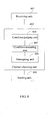
- an embodiment of the present invention further provides a device for controlling multichannel cascade between two media control servers. See FIG 4 , which is a structural diagram of a device for controlling multichannel cascade between two media control servers according to Embodiment 3 of the present invention.
- the device includes a receiving unit 401, a channel choosing unit 402, and a sending unit 403. The following describes in detail the internal structure and connection relationship of the device in combination with the operating principle of the device.
- the receiving unit 401 is configured to receive a service request message.
- the service request message may come from a conference terminal, a corresponding conference management console, or an internal unit of a corresponding media control server.
- the channel choosing unit 402 is configured to choose a target channel from all the channels multichannel-cascaded with an opposite cascaded media control server according to a preset channel usage rule.
- the sending unit 403 is configured to send information about the determined target channel to the opposite cascaded media control server so as to enable the opposite cascaded media control server to carry out code stream switching according to the information about the target channel.
- the channel choosing unit 402 may include a condition judging unit 404, a condition executing unit 405, and a preempting unit 406, wherein:
- the preset condition for setting a target channel includes:
- the preceding conditions may exist separately or be combined. If the preceding conditions are combined, that is, a channel among all the channels multichannel-cascaded with an opposite cascaded media control server is transmitting the media signals of the target terminal and another channel among such channels is not in use, a target channel can be chosen by the user equipment or based on the resource-saving principle.
- the preempting unit 406 preempts a target channel according to the preset preemption rule.
- the preemption rule includes:
- preemption rules may exist separately or be combined.
- a channel can be preempted based on certain criteria or conditions, for example:
- the embodiment of the present invention may further include a displaying unit for displaying the result of the multichannel control.
- each cascaded channel can transmit media signals from different terminals at different time. This saves cascaded channels and improves the utilization of cascaded channels, thereby saving channel resources. In addition, corresponding policies are provided to control the preemption of a channel. This further enhances the application and flexibility of multichannel-cascade based conferencing.
- the solution may further include displaying the result of the multichannel control, so as to visually present information about the multiple channels between the MCUs visually.
- An embodiment of the present invention further provides a system for controlling multichannel cascade between two media control servers. See FIG. 5 , which is a structural diagram of a system for controlling multichannel cascade between two media control servers according to Embodiment 4 of the present invention.
- the system includes a multichannel-cascaded operation source media control server 501 and an opposite cascaded media control server 502, wherein:
- the operation source media control server 501 includes:
- each cascaded channel can transmit media signals from different terminals at different time. This saves cascaded channels and improves the utilization of cascaded channels, thereby saving channel resources.
- corresponding policies are provided to control the preemption of a channel. This further enhances the application and flexibility of multichannel-cascade based conferencing.
Landscapes
- Engineering & Computer Science (AREA)
- Multimedia (AREA)
- Signal Processing (AREA)
- Computer Networks & Wireless Communication (AREA)
- Computer Security & Cryptography (AREA)
- General Engineering & Computer Science (AREA)
- Telephonic Communication Services (AREA)
- Two-Way Televisions, Distribution Of Moving Picture Or The Like (AREA)
- Data Exchanges In Wide-Area Networks (AREA)
Claims (9)
- Verfahren zum Steuern einer Mehrfachkanalkaskade zwischen zwei kaskadierten Medienkontrollservern (501, 502), umfassend:Empfangen, an einem kaskadierten Medienkontrollserver (501), einer Dienstanforderungsnachricht;Wählen, durch den kaskadierten Medienkontrollserver (501), eines Zielkanals aus allen mit einem gegenüberliegenden kaskadierten Medienkontrollserver (502) mehrkanalig kaskadierten Kanälen gemäß der Dienstanforderungsnachricht und einer voreingestellten Kanalnutzungsregel; undSenden, durch den kaskadierten Medienköntrollserver (501), von Informationen über den bestimmten Zielkanal an den gegenüberliegenden kaskadierten Medienkontrollserver (502), um dem gegenüberliegenden kaskadierten Medienkontrollserver (502) zu ermöglichen, Codestromschalten ("Code Stream Switching") gemäß den Informationen über den Zielkanal auszuführen;wobei das Wählen eines Zielkanals aus allen mit dem gegenüberliegenden kaskadierten Medienkontrollserver (502) mehrkanalig kaskadierten Kanälen gemäß der voreingestellten Kanalnutzungsregel umfasst:Beurteilen, ob eine voreingestellte Bedingung zum Einstellen eines Zielkanals erfüllt ist; undfalls die voreingestellte Bedingung zum Einstellen eines Zielkanals erfüllt ist, Einstellen eines Zielkanals; falls die voreingestellte Bedingung zum Einstellen eines Zielkanals nicht erfüllt ist, Vorbelegen eines Zielkanals gemäß einer voreingestellten Vorbelegungsregel.
- Verfahren gemäß Anspruch 1, wobei die voreingestellte Bedingung zum Einstellen eines Zielkanals umfasst:ob ein Kanal unter allen mit dem gegenüberliegenden kaskadierten Medienkontrollserver (502) mehrkanalig kaskadierten Kanälen Mediensignale eines Zielendgeräts überträgt;und/oderob ein Kanal unter allen mit dem gegenüberliegenden kaskadierten Medienkontrollserver (502) mehrkanalig kaskadierten Kanälen nicht verwendet wird.
- Verfahren gemäß Anspruch 1, wobei die Vorbelegungsregel eines oder mehrere der folgenden umfasst:Wählen eines Kanals, dessen Diensttyp derselbe ist wie jener der Mediensignale des Zielendgeräts, als den Zielkanal aus allen mit dem gegenüberliegenden kaskadierten Medienkontrollserver (502) mehrkanalig kaskadierten Kanälen;Wählen eines Kanals, der von einem Medienkontrollserver einer niedrigeren Ebene verwendet wird, als den Zielkanal aus allen mit dem gegenüberliegenden kaskadierten Medienkontrollserver (502) mehrkanalig kaskadierten Kanälen;Voreinstellen von Dienstebenen für verschiedene Diensttypen und Wählen eines Kanals des Dienstes der niedrigsten Ebene als den Zielkanal aus allen mit dem gegenüberliegenden kaskadierten Medienkontrollserver (502) mehrkanalig kaskadierten Kanälen; undzufälliges Vorbelegen eines Kanals als den Zielkanal, falls ein kritischer Dienst angefordert wird.
- Verfahren gemäß Anspruch 1, wobei die Informationen über den Zielkanal ferner umfassen können: eine ID des Zielkanals, einen für den Zielkanal eingestellten Diensttyp, einen Typ eines Datencodestroms und eine ID eines dem Datencodestrom entsprechenden Konferenz-Endgeräts.
- Verfahren gemäß Anspruch 1, wobei die Informationen über die Zielinformationen ferner eine Vorrichtungs-ID eines Operationsquellen-Medienkontrollservers und eine Ebene des Medienkontrollservers umfassen.
- Vorrichtung (501) zum Steuern einer Mehrfachkanalkaskade zwischen zwei kaskadierten Medienkontrollservern, wobei die Vorrichtung ein kaskadierter Medienkontrollserver ist, umfassend:eine Empfangseinheit (503), die ausgelegt ist, eine Dienstanforderungsnachricht zu empfangen;eine Kanalwähleinheit (504), die ausgelegt ist, einen Zielkanal aus allen mit einem gegenüberliegenden kaskadierten Medienkontrollserver (502) mehrkanalig kaskadierten Kanälen gemäß der empfangenen Dienstanforderungsnachricht und einer voreingestellten Kanalnutzungsregel zu wählen; undeine Sendeeinheit (505), die ausgelegt ist, Informationen über den bestimmten Zielkanal an den gegenüberliegenden kaskadierten Medienkontrollserver (502) zu senden, um dem gegenüberliegenden kaskadierten Medienkontrollserver (502) zu ermöglichen, Codestromschalten gemäß den Informationen über den Zielkanal auszuführen;wobei die Kanalwähleinheit (504) umfasst:eine Bedingungsbeurteilungseinheit (404), die ausgelegt ist zu beurteilen, ob eine voreingestellte Bedingung erfüllt ist;eine Bedingungsausführungseinheit (405), die ausgelegt ist, einen Zielkanal einzustellen, nachdem die Bedingungsbeurteilungseinheit urteilt, dass die voreingestellte Bedingung erfüllt ist; undeine Vorbelegungseinheit (406), die ausgelegt ist, einen Zielkanal gemäß einer voreingestellten Vorbelegungsregel vorzubelegen, nachdem die Bedingungsbeurteilungseinheit urteilt, dass die voreingestellte Bedingung nicht erfüllt ist.
- Vorrichtung gemäß Anspruch 6, wobei die voreingestellte Bedingung umfasst:ob irgendein Kanal unter allen mit dem gegenüberliegenden kaskadierten Medienkontrollserver (502) mehrkanalig kaskadierten Kanälen Mediensignale eines Zielendgeräts überträgt;und/oderob irgendein Kanal unter allen mit dem gegenüberliegenden kaskadierten Medienkontrollserver (502) mehrkanalig kaskadierten Kanälen nicht verwendet wird.
- Vorrichtung gemäß Anspruch 6, wobei die Vorbelegungsregel eines oder mehrere der folgenden umfasst:Wählen eines Kanals, dessen Diensttyp derselbe ist wie jener der Mediensignale des Zielendgeräts, als den Zielkanal aus allen mit dem gegenüberliegenden kaskadierten Medienkontrollserver (502) mehrkanalig kaskadierten Kanälen;Wählen eines Kanals, der von einem Medienkontrollserver einer niedrigeren Ebene verwendet wird, als den Zielkanal aus allen mit dem gegenüberliegenden kaskadierten Medienkontrollserver (502) mehrkanalig kaskadierten Kanälen;Voreinstellen von Dienstebenen für verschiedene Diensttypen und Wählen eines Kanals des Dienstes der niedrigsten Ebene als den Zielkanal aus allen mit dem gegenüberliegenden kaskadierten Medienkontrollserver (502) mehrkanalig kaskadierten Kanälen; undzufälliges Vorbelegen eines Kanals als den Zielkanal, falls ein kritischer Dienst angefordert wird.
- System zum Steuern einer Mehrfachkanalkaskade zwischen zwei kaskadierten Medienkontrollservern (501, 502), umfassend einen mehrkanalig kaskadierten Operationsquellen-Medienkontrollserver (501) gemäß Anspruch 6 und einen gegenüberliegenden kaskadierten Medienkontrollserver (502); wobei der gegenüberliegende kaskadierte Medienkontrollserver (502) ausgelegt ist, die Informationen über den bestimmten Zielkanal zu empfangen und das Codestromschalten gemäß den voreingestellten Informationen über den Zielkanal auszuführen.
Applications Claiming Priority (3)
| Application Number | Priority Date | Filing Date | Title |
|---|---|---|---|
| CN200910006999 | 2009-02-23 | ||
| CN2009101338029A CN101540872B (zh) | 2009-02-23 | 2009-03-31 | 媒体控制服务器多通道级联的控制方法、装置和系统 |
| PCT/CN2010/070662 WO2010094238A1 (zh) | 2009-02-23 | 2010-02-11 | 媒体控制服务器多通道级联的控制方法、装置和系统 |
Publications (3)
| Publication Number | Publication Date |
|---|---|
| EP2391069A1 EP2391069A1 (de) | 2011-11-30 |
| EP2391069A4 EP2391069A4 (de) | 2012-08-08 |
| EP2391069B1 true EP2391069B1 (de) | 2015-08-12 |
Family
ID=41123829
Family Applications (1)
| Application Number | Title | Priority Date | Filing Date |
|---|---|---|---|
| EP10743419.3A Active EP2391069B1 (de) | 2009-02-23 | 2010-02-11 | Verfahren zur kontrolle einer mehrfachkanalkaskade von medienkontrollserver, gerät und system dafür |
Country Status (6)
| Country | Link |
|---|---|
| US (1) | US8392535B2 (de) |
| EP (1) | EP2391069B1 (de) |
| CN (1) | CN101540872B (de) |
| ES (1) | ES2551382T3 (de) |
| RU (1) | RU2502205C2 (de) |
| WO (1) | WO2010094238A1 (de) |
Families Citing this family (15)
| Publication number | Priority date | Publication date | Assignee | Title |
|---|---|---|---|---|
| CN101540872B (zh) * | 2009-02-23 | 2012-07-04 | 华为终端有限公司 | 媒体控制服务器多通道级联的控制方法、装置和系统 |
| CN101998105B (zh) * | 2009-08-31 | 2013-06-12 | 华为终端有限公司 | 媒体控制服务器级联系统及控制多媒体码流的方法和装置 |
| CN102457699B (zh) * | 2010-10-20 | 2015-08-12 | 中兴通讯股份有限公司 | 远景呈现系统及其级联方法 |
| CN102547210B (zh) * | 2010-12-24 | 2014-09-17 | 华为终端有限公司 | 级联会议中级联会场的处理方法、装置及系统 |
| CN102348098A (zh) * | 2011-11-10 | 2012-02-08 | 苏州阔地网络科技有限公司 | 一种视频会议服务器资源的分配方法及系统 |
| CN102611562B (zh) * | 2012-02-06 | 2015-06-03 | 华为技术有限公司 | 一种建立多级联通道的方法及装置 |
| CN103686219B (zh) * | 2012-09-24 | 2017-09-29 | 华为技术有限公司 | 一种视频会议录播的方法、设备及系统 |
| WO2014078744A2 (en) * | 2012-11-16 | 2014-05-22 | Vid Scale, Inc. | Systems and methods for implementing model-based qoe scheduling |
| NO341411B1 (no) | 2013-03-04 | 2017-10-30 | Cisco Tech Inc | Virtuelle endepunkter i videokonferanser |
| CN104869098A (zh) * | 2014-02-20 | 2015-08-26 | 深圳市爱科赛科技有限公司 | 一种通过级联服务器进行数据传输的方法及装置 |
| CN107172480A (zh) * | 2017-05-26 | 2017-09-15 | 青岛海信电器股份有限公司 | 解复用器的数据传输处理方法及装置 |
| CN111726557A (zh) * | 2019-03-19 | 2020-09-29 | 西安诺瓦电子科技有限公司 | 设备通道控制方法、装置和多设备系统以及视频处理器 |
| CN110808853B (zh) * | 2019-10-24 | 2022-09-06 | 浙江大华技术股份有限公司 | 面向云计算产品的统一运维方法 |
| CN114125361A (zh) * | 2021-11-24 | 2022-03-01 | 北京融讯科创技术有限公司 | 一种数据处理方法、装置、设备以及存储介质 |
| CN121098463A (zh) * | 2025-09-09 | 2025-12-09 | 四川创智联恒科技有限公司 | Ifft处理方法、系统、电子设备、存储介质及程序产品 |
Family Cites Families (18)
| Publication number | Priority date | Publication date | Assignee | Title |
|---|---|---|---|---|
| CA2109836C (en) * | 1991-05-23 | 2000-10-17 | Cheng-Hsu Ko | Dynamic channel allocation method and system for integrated services digital network |
| US6307868B1 (en) * | 1995-08-25 | 2001-10-23 | Terayon Communication Systems, Inc. | Apparatus and method for SCDMA digital data transmission using orthogonal codes and a head end modem with no tracking loops |
| US6728238B1 (en) * | 1998-05-06 | 2004-04-27 | Remote Switch Systems, Inc. | Dynamic allocation of voice and data channels in a time division multiplexed telecommunications system |
| CN1134936C (zh) * | 2001-02-06 | 2004-01-14 | 华为技术有限公司 | 一种视讯业务的实现方法 |
| US7076204B2 (en) * | 2001-10-30 | 2006-07-11 | Unwired Technology Llc | Multiple channel wireless communication system |
| US7130282B2 (en) * | 2002-09-20 | 2006-10-31 | Qualcomm Inc | Communication device for providing multimedia in a group communication network |
| CN1279759C (zh) * | 2003-01-03 | 2006-10-11 | 华为技术有限公司 | 实现线路动态级联的系统和方法 |
| US7848229B2 (en) * | 2003-05-16 | 2010-12-07 | Siemens Enterprise Communications, Inc. | System and method for virtual channel selection in IP telephony systems |
| KR20050028354A (ko) * | 2003-09-17 | 2005-03-23 | 삼성전자주식회사 | 직교 주파수 분할 다중 방식을 사용하는 이동 통신시스템에서 동적 채널 할당 시스템 및 방법 |
| CN1630293A (zh) | 2003-12-19 | 2005-06-22 | 华为技术有限公司 | 一种通讯系统中多通道数据传输的方法和装置 |
| US8582584B2 (en) * | 2005-10-04 | 2013-11-12 | Time Warner Cable Enterprises Llc | Self-monitoring and optimizing network apparatus and methods |
| US7800642B2 (en) | 2006-03-01 | 2010-09-21 | Polycom, Inc. | Method and system for providing continuous presence video in a cascading conference |
| CN100454820C (zh) * | 2006-07-04 | 2009-01-21 | 华为技术有限公司 | Mcu级联系统和该系统的创建及通信方法 |
| CN101110865B (zh) | 2006-07-19 | 2011-05-11 | 中兴通讯股份有限公司 | 一种实现多通道语音调度的系统和方法 |
| EP2053797B1 (de) * | 2006-08-16 | 2012-10-31 | Fujitsu Limited | Mehrkanal-datentransfervorrichtung und verfahren |
| CN100454821C (zh) * | 2006-09-07 | 2009-01-21 | 华为技术有限公司 | 一种视频会议系统多mcu之间资源共享的方法 |
| CN101316351B (zh) | 2008-06-20 | 2010-08-04 | 华为终端有限公司 | 多点控制单元级联系统及其通信方法、装置 |
| CN101540872B (zh) * | 2009-02-23 | 2012-07-04 | 华为终端有限公司 | 媒体控制服务器多通道级联的控制方法、装置和系统 |
-
2009
- 2009-03-31 CN CN2009101338029A patent/CN101540872B/zh active Active
-
2010
- 2010-02-11 WO PCT/CN2010/070662 patent/WO2010094238A1/zh not_active Ceased
- 2010-02-11 ES ES10743419.3T patent/ES2551382T3/es active Active
- 2010-02-11 RU RU2011138952/08A patent/RU2502205C2/ru active
- 2010-02-11 EP EP10743419.3A patent/EP2391069B1/de active Active
-
2011
- 2011-08-23 US US13/215,854 patent/US8392535B2/en active Active
Also Published As
| Publication number | Publication date |
|---|---|
| US8392535B2 (en) | 2013-03-05 |
| ES2551382T3 (es) | 2015-11-18 |
| WO2010094238A1 (zh) | 2010-08-26 |
| EP2391069A4 (de) | 2012-08-08 |
| CN101540872A (zh) | 2009-09-23 |
| RU2502205C2 (ru) | 2013-12-20 |
| RU2011138952A (ru) | 2013-04-10 |
| EP2391069A1 (de) | 2011-11-30 |
| US20110307585A1 (en) | 2011-12-15 |
| CN101540872B (zh) | 2012-07-04 |
Similar Documents
| Publication | Publication Date | Title |
|---|---|---|
| US8392535B2 (en) | Method, device and system for controlling multichannel cascade between two media control servers | |
| EP0986216B1 (de) | Übertragungssystem, Verfahren und Vorrichtung für Bandbreiteverwaltung | |
| US6018360A (en) | Method of switching a call to a multipoint conference call in a H.323 communication compliant environment | |
| US5461611A (en) | Quality of service management for source routing multimedia packet networks | |
| EP2429123A1 (de) | Verfahren, vorrichtung und gerät zur einstellung von ressourcendelegationen in einem netzwerk | |
| US5673393A (en) | Managing bandwidth over a computer network having a management computer that allocates bandwidth to client computers upon request | |
| JPH0758809A (ja) | データ伝送のサービス品質を保証するシステム及び方法 | |
| US7817632B2 (en) | Access control for multicast channel request | |
| CN109474715B (zh) | 一种基于视联网的资源配置方法和装置 | |
| EP2704355B1 (de) | Verfahren, vorrichtung und system zur herstellung eines mehrfach verschachtelten kanals | |
| WO2006044098A1 (en) | Method for sessions including multiple resources | |
| US9001700B2 (en) | Scheduling and resourcing allocation across multiple domains | |
| CN109194915B (zh) | 一种视频数据的处理方法和系统 | |
| CN109743522B (zh) | 基于视联网的通信方法和装置 | |
| CN112311610B (zh) | 一种非ip体系下实现qos保障的通信方法和装置 | |
| CN110650171A (zh) | 一种视联网业务调度系统及方法 | |
| CN111049833B (zh) | 端口复用控制方法、装置、服务器及存储介质 | |
| CN110475160B (zh) | 一种跨视联网传输视频数据方法和装置 | |
| CN117834801A (zh) | 区域间级联带宽分配方法及其系统 | |
| CN111131251B (zh) | 基于视联网的会议数据传输方法、系统、设备及介质 | |
| CN109194896B (zh) | 一种视联网终端的呼叫方法和系统 | |
| US9391850B2 (en) | Method and apparatus for quality-of-service (QoS) management | |
| CN116248685A (zh) | 一种负载均衡方法和负载均衡系统、电子设备及存储介质 | |
| CN118612387A (zh) | 业务处理方法、端口分配方法、装置、电子设备及介质 | |
| CN116962371A (zh) | 一种控制视频流量传输方法、系统、用户设备及交换机 |
Legal Events
| Date | Code | Title | Description |
|---|---|---|---|
| PUAI | Public reference made under article 153(3) epc to a published international application that has entered the european phase |
Free format text: ORIGINAL CODE: 0009012 |
|
| 17P | Request for examination filed |
Effective date: 20110825 |
|
| AK | Designated contracting states |
Kind code of ref document: A1 Designated state(s): AT BE BG CH CY CZ DE DK EE ES FI FR GB GR HR HU IE IS IT LI LT LU LV MC MK MT NL NO PL PT RO SE SI SK SM TR |
|
| DAX | Request for extension of the european patent (deleted) | ||
| A4 | Supplementary search report drawn up and despatched |
Effective date: 20120706 |
|
| RIC1 | Information provided on ipc code assigned before grant |
Ipc: H04L 29/06 20060101ALI20120702BHEP Ipc: H04L 12/56 20060101AFI20120702BHEP |
|
| REG | Reference to a national code |
Ref country code: DE Ref legal event code: R079 Ref document number: 602010026620 Country of ref document: DE Free format text: PREVIOUS MAIN CLASS: H04L0012560000 Ipc: H04L0029060000 |
|
| GRAP | Despatch of communication of intention to grant a patent |
Free format text: ORIGINAL CODE: EPIDOSNIGR1 |
|
| RIC1 | Information provided on ipc code assigned before grant |
Ipc: H04L 29/06 20060101AFI20150212BHEP |
|
| INTG | Intention to grant announced |
Effective date: 20150226 |
|
| GRAS | Grant fee paid |
Free format text: ORIGINAL CODE: EPIDOSNIGR3 |
|
| GRAA | (expected) grant |
Free format text: ORIGINAL CODE: 0009210 |
|
| AK | Designated contracting states |
Kind code of ref document: B1 Designated state(s): AT BE BG CH CY CZ DE DK EE ES FI FR GB GR HR HU IE IS IT LI LT LU LV MC MK MT NL NO PL PT RO SE SI SK SM TR |
|
| REG | Reference to a national code |
Ref country code: GB Ref legal event code: FG4D |
|
| REG | Reference to a national code |
Ref country code: CH Ref legal event code: EP |
|
| REG | Reference to a national code |
Ref country code: AT Ref legal event code: REF Ref document number: 742997 Country of ref document: AT Kind code of ref document: T Effective date: 20150815 |
|
| REG | Reference to a national code |
Ref country code: IE Ref legal event code: FG4D |
|
| REG | Reference to a national code |
Ref country code: DE Ref legal event code: R096 Ref document number: 602010026620 Country of ref document: DE |
|
| REG | Reference to a national code |
Ref country code: ES Ref legal event code: FG2A Ref document number: 2551382 Country of ref document: ES Kind code of ref document: T3 Effective date: 20151118 |
|
| REG | Reference to a national code |
Ref country code: FR Ref legal event code: PLFP Year of fee payment: 7 |
|
| REG | Reference to a national code |
Ref country code: LT Ref legal event code: MG4D |
|
| REG | Reference to a national code |
Ref country code: AT Ref legal event code: MK05 Ref document number: 742997 Country of ref document: AT Kind code of ref document: T Effective date: 20150812 |
|
| REG | Reference to a national code |
Ref country code: NL Ref legal event code: MP Effective date: 20150812 |
|
| PG25 | Lapsed in a contracting state [announced via postgrant information from national office to epo] |
Ref country code: NO Free format text: LAPSE BECAUSE OF FAILURE TO SUBMIT A TRANSLATION OF THE DESCRIPTION OR TO PAY THE FEE WITHIN THE PRESCRIBED TIME-LIMIT Effective date: 20151112 Ref country code: LT Free format text: LAPSE BECAUSE OF FAILURE TO SUBMIT A TRANSLATION OF THE DESCRIPTION OR TO PAY THE FEE WITHIN THE PRESCRIBED TIME-LIMIT Effective date: 20150812 Ref country code: LV Free format text: LAPSE BECAUSE OF FAILURE TO SUBMIT A TRANSLATION OF THE DESCRIPTION OR TO PAY THE FEE WITHIN THE PRESCRIBED TIME-LIMIT Effective date: 20150812 Ref country code: FI Free format text: LAPSE BECAUSE OF FAILURE TO SUBMIT A TRANSLATION OF THE DESCRIPTION OR TO PAY THE FEE WITHIN THE PRESCRIBED TIME-LIMIT Effective date: 20150812 Ref country code: GR Free format text: LAPSE BECAUSE OF FAILURE TO SUBMIT A TRANSLATION OF THE DESCRIPTION OR TO PAY THE FEE WITHIN THE PRESCRIBED TIME-LIMIT Effective date: 20151113 |
|
| PG25 | Lapsed in a contracting state [announced via postgrant information from national office to epo] |
Ref country code: HR Free format text: LAPSE BECAUSE OF FAILURE TO SUBMIT A TRANSLATION OF THE DESCRIPTION OR TO PAY THE FEE WITHIN THE PRESCRIBED TIME-LIMIT Effective date: 20150812 Ref country code: IS Free format text: LAPSE BECAUSE OF FAILURE TO SUBMIT A TRANSLATION OF THE DESCRIPTION OR TO PAY THE FEE WITHIN THE PRESCRIBED TIME-LIMIT Effective date: 20151212 Ref country code: SE Free format text: LAPSE BECAUSE OF FAILURE TO SUBMIT A TRANSLATION OF THE DESCRIPTION OR TO PAY THE FEE WITHIN THE PRESCRIBED TIME-LIMIT Effective date: 20150812 Ref country code: PL Free format text: LAPSE BECAUSE OF FAILURE TO SUBMIT A TRANSLATION OF THE DESCRIPTION OR TO PAY THE FEE WITHIN THE PRESCRIBED TIME-LIMIT Effective date: 20150812 Ref country code: AT Free format text: LAPSE BECAUSE OF FAILURE TO SUBMIT A TRANSLATION OF THE DESCRIPTION OR TO PAY THE FEE WITHIN THE PRESCRIBED TIME-LIMIT Effective date: 20150812 Ref country code: PT Free format text: LAPSE BECAUSE OF FAILURE TO SUBMIT A TRANSLATION OF THE DESCRIPTION OR TO PAY THE FEE WITHIN THE PRESCRIBED TIME-LIMIT Effective date: 20151214 |
|
| PG25 | Lapsed in a contracting state [announced via postgrant information from national office to epo] |
Ref country code: NL Free format text: LAPSE BECAUSE OF FAILURE TO SUBMIT A TRANSLATION OF THE DESCRIPTION OR TO PAY THE FEE WITHIN THE PRESCRIBED TIME-LIMIT Effective date: 20150812 |
|
| PG25 | Lapsed in a contracting state [announced via postgrant information from national office to epo] |
Ref country code: CZ Free format text: LAPSE BECAUSE OF FAILURE TO SUBMIT A TRANSLATION OF THE DESCRIPTION OR TO PAY THE FEE WITHIN THE PRESCRIBED TIME-LIMIT Effective date: 20150812 Ref country code: SK Free format text: LAPSE BECAUSE OF FAILURE TO SUBMIT A TRANSLATION OF THE DESCRIPTION OR TO PAY THE FEE WITHIN THE PRESCRIBED TIME-LIMIT Effective date: 20150812 Ref country code: IT Free format text: LAPSE BECAUSE OF FAILURE TO SUBMIT A TRANSLATION OF THE DESCRIPTION OR TO PAY THE FEE WITHIN THE PRESCRIBED TIME-LIMIT Effective date: 20150812 Ref country code: EE Free format text: LAPSE BECAUSE OF FAILURE TO SUBMIT A TRANSLATION OF THE DESCRIPTION OR TO PAY THE FEE WITHIN THE PRESCRIBED TIME-LIMIT Effective date: 20150812 Ref country code: DK Free format text: LAPSE BECAUSE OF FAILURE TO SUBMIT A TRANSLATION OF THE DESCRIPTION OR TO PAY THE FEE WITHIN THE PRESCRIBED TIME-LIMIT Effective date: 20150812 |
|
| REG | Reference to a national code |
Ref country code: DE Ref legal event code: R097 Ref document number: 602010026620 Country of ref document: DE |
|
| PG25 | Lapsed in a contracting state [announced via postgrant information from national office to epo] |
Ref country code: BE Free format text: LAPSE BECAUSE OF NON-PAYMENT OF DUE FEES Effective date: 20160229 Ref country code: RO Free format text: LAPSE BECAUSE OF FAILURE TO SUBMIT A TRANSLATION OF THE DESCRIPTION OR TO PAY THE FEE WITHIN THE PRESCRIBED TIME-LIMIT Effective date: 20150812 |
|
| PLBE | No opposition filed within time limit |
Free format text: ORIGINAL CODE: 0009261 |
|
| STAA | Information on the status of an ep patent application or granted ep patent |
Free format text: STATUS: NO OPPOSITION FILED WITHIN TIME LIMIT |
|
| 26N | No opposition filed |
Effective date: 20160513 |
|
| PG25 | Lapsed in a contracting state [announced via postgrant information from national office to epo] |
Ref country code: SI Free format text: LAPSE BECAUSE OF FAILURE TO SUBMIT A TRANSLATION OF THE DESCRIPTION OR TO PAY THE FEE WITHIN THE PRESCRIBED TIME-LIMIT Effective date: 20150812 |
|
| PG25 | Lapsed in a contracting state [announced via postgrant information from national office to epo] |
Ref country code: LU Free format text: LAPSE BECAUSE OF FAILURE TO SUBMIT A TRANSLATION OF THE DESCRIPTION OR TO PAY THE FEE WITHIN THE PRESCRIBED TIME-LIMIT Effective date: 20160211 Ref country code: MC Free format text: LAPSE BECAUSE OF FAILURE TO SUBMIT A TRANSLATION OF THE DESCRIPTION OR TO PAY THE FEE WITHIN THE PRESCRIBED TIME-LIMIT Effective date: 20150812 |
|
| REG | Reference to a national code |
Ref country code: CH Ref legal event code: PL |
|
| GBPC | Gb: european patent ceased through non-payment of renewal fee |
Effective date: 20160211 |
|
| PG25 | Lapsed in a contracting state [announced via postgrant information from national office to epo] |
Ref country code: LI Free format text: LAPSE BECAUSE OF NON-PAYMENT OF DUE FEES Effective date: 20160229 Ref country code: CH Free format text: LAPSE BECAUSE OF NON-PAYMENT OF DUE FEES Effective date: 20160229 |
|
| REG | Reference to a national code |
Ref country code: IE Ref legal event code: MM4A |
|
| PG25 | Lapsed in a contracting state [announced via postgrant information from national office to epo] |
Ref country code: BE Free format text: LAPSE BECAUSE OF FAILURE TO SUBMIT A TRANSLATION OF THE DESCRIPTION OR TO PAY THE FEE WITHIN THE PRESCRIBED TIME-LIMIT Effective date: 20150812 |
|
| REG | Reference to a national code |
Ref country code: FR Ref legal event code: PLFP Year of fee payment: 8 |
|
| PG25 | Lapsed in a contracting state [announced via postgrant information from national office to epo] |
Ref country code: IE Free format text: LAPSE BECAUSE OF NON-PAYMENT OF DUE FEES Effective date: 20160211 Ref country code: GB Free format text: LAPSE BECAUSE OF NON-PAYMENT OF DUE FEES Effective date: 20160211 |
|
| PG25 | Lapsed in a contracting state [announced via postgrant information from national office to epo] |
Ref country code: MT Free format text: LAPSE BECAUSE OF FAILURE TO SUBMIT A TRANSLATION OF THE DESCRIPTION OR TO PAY THE FEE WITHIN THE PRESCRIBED TIME-LIMIT Effective date: 20150812 |
|
| REG | Reference to a national code |
Ref country code: FR Ref legal event code: PLFP Year of fee payment: 9 |
|
| PG25 | Lapsed in a contracting state [announced via postgrant information from national office to epo] |
Ref country code: HU Free format text: LAPSE BECAUSE OF FAILURE TO SUBMIT A TRANSLATION OF THE DESCRIPTION OR TO PAY THE FEE WITHIN THE PRESCRIBED TIME-LIMIT; INVALID AB INITIO Effective date: 20100211 Ref country code: SM Free format text: LAPSE BECAUSE OF FAILURE TO SUBMIT A TRANSLATION OF THE DESCRIPTION OR TO PAY THE FEE WITHIN THE PRESCRIBED TIME-LIMIT Effective date: 20150812 Ref country code: CY Free format text: LAPSE BECAUSE OF FAILURE TO SUBMIT A TRANSLATION OF THE DESCRIPTION OR TO PAY THE FEE WITHIN THE PRESCRIBED TIME-LIMIT Effective date: 20150812 |
|
| PG25 | Lapsed in a contracting state [announced via postgrant information from national office to epo] |
Ref country code: MT Free format text: LAPSE BECAUSE OF FAILURE TO SUBMIT A TRANSLATION OF THE DESCRIPTION OR TO PAY THE FEE WITHIN THE PRESCRIBED TIME-LIMIT Effective date: 20160229 Ref country code: TR Free format text: LAPSE BECAUSE OF FAILURE TO SUBMIT A TRANSLATION OF THE DESCRIPTION OR TO PAY THE FEE WITHIN THE PRESCRIBED TIME-LIMIT Effective date: 20150812 Ref country code: MK Free format text: LAPSE BECAUSE OF FAILURE TO SUBMIT A TRANSLATION OF THE DESCRIPTION OR TO PAY THE FEE WITHIN THE PRESCRIBED TIME-LIMIT Effective date: 20150812 |
|
| PG25 | Lapsed in a contracting state [announced via postgrant information from national office to epo] |
Ref country code: BG Free format text: LAPSE BECAUSE OF FAILURE TO SUBMIT A TRANSLATION OF THE DESCRIPTION OR TO PAY THE FEE WITHIN THE PRESCRIBED TIME-LIMIT Effective date: 20150812 |
|
| REG | Reference to a national code |
Ref country code: DE Ref legal event code: R081 Ref document number: 602010026620 Country of ref document: DE Owner name: HUAWEI DEVICE CO., LTD., DONGGUAN, CN Free format text: FORMER OWNER: HUAWEI DEVICE CO., LTD., SHENZHEN, GUANGDONG, CN |
|
| REG | Reference to a national code |
Ref country code: ES Ref legal event code: PC2A Owner name: HUAWEI DEVICE (SHENZHEN) CO., LTD. Effective date: 20190308 |
|
| REG | Reference to a national code |
Ref country code: ES Ref legal event code: PC2A Owner name: HUAWEI DEVICE CO., LTD. Effective date: 20190321 |
|
| REG | Reference to a national code |
Ref country code: DE Ref legal event code: R079 Ref document number: 602010026620 Country of ref document: DE Free format text: PREVIOUS MAIN CLASS: H04L0029060000 Ipc: H04L0065000000 |
|
| PGFP | Annual fee paid to national office [announced via postgrant information from national office to epo] |
Ref country code: FR Payment date: 20251231 Year of fee payment: 17 |
|
| PGFP | Annual fee paid to national office [announced via postgrant information from national office to epo] |
Ref country code: ES Payment date: 20260305 Year of fee payment: 17 |
|
| PGFP | Annual fee paid to national office [announced via postgrant information from national office to epo] |
Ref country code: DE Payment date: 20251230 Year of fee payment: 17 |