EP2388164A2 - Vehicle headlamp system, control device, vehicle headlamp, and control method of vehicle headlamp - Google Patents
Vehicle headlamp system, control device, vehicle headlamp, and control method of vehicle headlamp Download PDFInfo
- Publication number
- EP2388164A2 EP2388164A2 EP11165777A EP11165777A EP2388164A2 EP 2388164 A2 EP2388164 A2 EP 2388164A2 EP 11165777 A EP11165777 A EP 11165777A EP 11165777 A EP11165777 A EP 11165777A EP 2388164 A2 EP2388164 A2 EP 2388164A2
- Authority
- EP
- European Patent Office
- Prior art keywords
- light distribution
- distribution pattern
- vehicle
- opposite lane
- irradiation
- Prior art date
- Legal status (The legal status is an assumption and is not a legal conclusion. Google has not performed a legal analysis and makes no representation as to the accuracy of the status listed.)
- Granted
Links
Images



Classifications
-
- B—PERFORMING OPERATIONS; TRANSPORTING
- B60—VEHICLES IN GENERAL
- B60Q—ARRANGEMENT OF SIGNALLING OR LIGHTING DEVICES, THE MOUNTING OR SUPPORTING THEREOF OR CIRCUITS THEREFOR, FOR VEHICLES IN GENERAL
- B60Q1/00—Arrangement of optical signalling or lighting devices, the mounting or supporting thereof or circuits therefor
- B60Q1/02—Arrangement of optical signalling or lighting devices, the mounting or supporting thereof or circuits therefor the devices being primarily intended to illuminate the way ahead or to illuminate other areas of way or environments
- B60Q1/04—Arrangement of optical signalling or lighting devices, the mounting or supporting thereof or circuits therefor the devices being primarily intended to illuminate the way ahead or to illuminate other areas of way or environments the devices being headlights
- B60Q1/14—Arrangement of optical signalling or lighting devices, the mounting or supporting thereof or circuits therefor the devices being primarily intended to illuminate the way ahead or to illuminate other areas of way or environments the devices being headlights having dimming means
- B60Q1/1415—Dimming circuits
- B60Q1/1423—Automatic dimming circuits, i.e. switching between high beam and low beam due to change of ambient light or light level in road traffic
-
- B—PERFORMING OPERATIONS; TRANSPORTING
- B60—VEHICLES IN GENERAL
- B60Q—ARRANGEMENT OF SIGNALLING OR LIGHTING DEVICES, THE MOUNTING OR SUPPORTING THEREOF OR CIRCUITS THEREFOR, FOR VEHICLES IN GENERAL
- B60Q2300/00—Indexing codes for automatically adjustable headlamps or automatically dimmable headlamps
- B60Q2300/05—Special features for controlling or switching of the light beam
- B60Q2300/056—Special anti-blinding beams, e.g. a standard beam is chopped or moved in order not to blind
-
- B—PERFORMING OPERATIONS; TRANSPORTING
- B60—VEHICLES IN GENERAL
- B60Q—ARRANGEMENT OF SIGNALLING OR LIGHTING DEVICES, THE MOUNTING OR SUPPORTING THEREOF OR CIRCUITS THEREFOR, FOR VEHICLES IN GENERAL
- B60Q2300/00—Indexing codes for automatically adjustable headlamps or automatically dimmable headlamps
- B60Q2300/40—Indexing codes relating to other road users or special conditions
- B60Q2300/41—Indexing codes relating to other road users or special conditions preceding vehicle
-
- B—PERFORMING OPERATIONS; TRANSPORTING
- B60—VEHICLES IN GENERAL
- B60Q—ARRANGEMENT OF SIGNALLING OR LIGHTING DEVICES, THE MOUNTING OR SUPPORTING THEREOF OR CIRCUITS THEREFOR, FOR VEHICLES IN GENERAL
- B60Q2300/00—Indexing codes for automatically adjustable headlamps or automatically dimmable headlamps
- B60Q2300/40—Indexing codes relating to other road users or special conditions
- B60Q2300/42—Indexing codes relating to other road users or special conditions oncoming vehicle
-
- B—PERFORMING OPERATIONS; TRANSPORTING
- B60—VEHICLES IN GENERAL
- B60Q—ARRANGEMENT OF SIGNALLING OR LIGHTING DEVICES, THE MOUNTING OR SUPPORTING THEREOF OR CIRCUITS THEREFOR, FOR VEHICLES IN GENERAL
- B60Q2300/00—Indexing codes for automatically adjustable headlamps or automatically dimmable headlamps
- B60Q2300/40—Indexing codes relating to other road users or special conditions
- B60Q2300/45—Special conditions, e.g. pedestrians, road signs or potential dangers
Definitions
- FIG. 1 is a schematic vertical sectional view illustrating the internal structure of a vehicle lamp system related to Embodiment 1.
- a vehicle lamp system 200 of the present embodiment is a light distribution variable headlight system in which a pair of headlight units are symmetrically arranged on the right and left sides of a vehicle in a vehicle width direction. Since the headlight units arranged on the right and left have substantially the same configuration except that the headlight units have a bilaterally symmetrical structure, the structure of the right headlight unit 210R will be described, and description of the left headlight unit will be appropriately omitted. In addition, in a case where respective members of the left headlight unit are described, the respective members will be designated by the same reference numerals as those of corresponding members of the headlight unit 210R for convenience of description.
- the swivel actuator 222 can be constituted by, for example, a stepping motor.
- a solenoid or the like can also be used.
- a swivel actuator 222 is fixed to a unit bracket 224.
- a leveling actuator 226 arranged outside the lamp body 212 is connected to a unit bracket 224.
- the leveling actuator 226 is constituted by, for example, a motor or the like which extends or retracts a rod 226a in the direction of an arrow M or N.
- the lamp unit 10 oscillates so as to take a rearward tilted posture about the pivot mechanism 218a.
- the lamp unit 10 oscillates so as to take a forward tilted posture about the pivot mechanism 218a.
- a light distribution pattern formed by the headlight units 210L and 210R can be switched according to the operation content of a light switch 304 by a driver.
- the irradiation controllers 228L and 228R control the motor 238 via the variable shade controller 232 according to the operation of the light switch 304, thereby determining a light distribution pattern formed by the lamp unit 10.
- the vehicle controller 302 can also acquire shape information or form information regarding a road, installation information regarding a road sign, or the like from a navigation system 314.
- the irradiation controllers 228L, and 228R can control the leveling actuator 226, the swivel actuator 222, the motor 238, and the like, thereby smoothly forming the light distribution pattern suitable for a road being traveled along.
- Such a control mode may be referred to as a navigation sensitive mode.
- the automatic formation control of a light distribution pattern including the various control modes described above is performed, for example, in a case where automatic formation control of a light distribution pattern is instructed by the light switch 304.
- the V-beam light distribution pattern Lo3 can be formed, for example, by overlapping a basic low-beam light distribution pattern Lo1L (for convenience of description, a symbol “L” is given after a symbol for each light distribution pattern in light distribution patterns formed by the headlight unit 210L and a symbol “R” is given after a symbol for each light distribution pattern in light distribution patterns formed by the headlight unit 210R; the same is true in the following) formed by the headlight unit 210L, and a Dover low-beam light distribution pattern Lo2R formed by the headlight unit 210R.
- a basic low-beam light distribution pattern Lo1L for convenience of description, a symbol “L” is given after a symbol for each light distribution pattern in light distribution patterns formed by the headlight unit 210L and a symbol “R” is given after a symbol for each light distribution pattern in light distribution patterns formed by the headlight unit 210R; the same is true in the following
- a Dover low-beam light distribution pattern Lo2R formed by the headlight
- the shading region is formed by the non-irradiation region above the horizontal line H of the left piece high-beam light distribution pattern Hi2L and the right piece high-beam light distribution pattern Hi3R, and high-beam regions on both sides of the shading region are formed by the irradiation region above the horizontal line H of the left piece high-beam light distribution pattern Hi2L and the right piece high-beam light distribution pattern Hi3R.
- the range of the shading region can be changed in the vehicle width direction by making the lamp units 10 of the headlight units 210L and 210R swivel to move at least one of the left piece high-beam light distribution pattern Hi2L and the right piece high-beam light distribution pattern Hi3R in the vehicle width direction (horizontal direction). That is, the split light distribution pattern is a light distribution pattern which has an irradiation region on the opposite lane side above the horizontal line H.
- Fig. 5 is a schematic view illustrating formation control of a light distribution pattern by the vehicle lamp system related to Embodiment 1.
- the oncoming vehicle 400 may receive glare due to the light which irradiates the opposite lane side beyond the shading body 410.
- the oncoming vehicle 400 is apt to receive the glare.
- the vehicle controller 302 may estimate that the shading body 410 is present.
- the irradiation controllers 228L and 228R execute the ADB mode, using the normal pattern group control map, and determine a light distribution pattern to be formed, from a normal pattern group according to the position of a vehicle in front (S14). Then, the irradiation controllers 228L and 228R form the determined light distribution pattern (S 13), and the main routine is ended.
- the vehicle lamp system 200 related to Embodiment 2 determines that there is a shading body in a case where a light spot of a predetermined time or less is detected, and avoids formation of a light distribution pattern which has an irradiation region on the opposite lane side above the horizontal line H.
- the present embodiment will be described below.
- the same components as Embodiment 1 will be designated by the same reference numerals, and the description and illustration thereof will be appropriately omitted.
- the shading body 410 is a planting consisting of a plurality of trees planted along a road
- the light of the headlight 402 of the oncoming vehicle 400 can be momentarily viewed from gaps between the trees or from gaps between leaves of each tree.
- the shading body 410 is a shading wall or the like in which a plurality of wall materials is coupled together
- the light of the headlight 402 of the oncoming vehicle 400 can be momentarily viewed from gaps between adjacent wall materials.
- the light of the headlight 402 of the oncoming vehicle 400 can be momentarily viewed even depending on road profile, such as a case where there are undulations on a road ahead of the subject vehicle.
Landscapes
- Engineering & Computer Science (AREA)
- Mechanical Engineering (AREA)
- Lighting Device Outwards From Vehicle And Optical Signal (AREA)
Abstract
Description
- Apparatuses and methods consistent with the present invention relate to a vehicle lamp system, a control device, a vehicle lamp, and a control method of the vehicle lamp, and particularly, to a vehicle lamp system, a control device, a vehicle lamp, and a control method of the vehicle lamp which are used for automobiles or the like.
- Generally, a vehicle lamp system used for a vehicle headlight is able to switch between a low beam and a high beam. The low beam illuminates the area nearby with a predetermined luminance so that glare is not imparted to a front vehicle, which can include an oncoming vehicle or a leading vehicle, and is used when the vehicle travels mainly in an urban area. On the other hand, the high beam illuminates a wide range ahead or a distant area with relatively high illuminance, and is used in a case where a vehicle travels at high speed on a road where there are few vehicles in front.
- Although the high beam is comparatively better in terms of driver visibility than the low beam, there is a problem in that glare can be imparted to drivers of other vehicles. Accordingly, the low beam is often used particularly when traveling at night in an urban area and a high-beam light source is not used when the low beam is used. Nevertheless, the demand to improve driver visibility of a road when the low beam is used persists.
- On the other hand,
JP-A-2010-000957 -
- [Patent Document 1]
JP-A-2010-000957 - When automatic formation control of an added light distribution pattern according to the position of the vehicle in front is performed, a method of detecting the vehicle in front on the basis of light spots, such as a headlight or a tail light of the vehicle in front, can be considered. However, in this method, there is a possibility that the vehicle in front cannot be detected depending on the conditions around the subject vehicle. For example, a shading body, such as a greening fence or a plant, may be provided along the road between a subject lane and an opposite lane depending on the road. In this situation, the headlights of a front vehicle in the opposite lane side, i.e., an oncoming vehicle may be hidden by the shading body, and the oncoming vehicle cannot be detected.
- In a case where the above automatic formation control of a light distribution pattern is executed under such conditions, the oncoming vehicle is considered to be absent irrespective of whether the oncoming vehicle is actually present, and a light distribution pattern which has a high beam region on the opposite lane side is formed. Then, there is a possibility that a portion of the formed light distribution pattern irradiates the opposite lane side over the shading body, and thereby, glare is imparted to the oncoming vehicle. Particularly, in a case where the oncoming vehicle is a truck with a high seat position, glare is apt to be imparted to the oncoming vehicle.
- Exemplary embodiments of the invention have been made in view of such problems, and an embodiment of the invention may provide a technique capable of forming an appropriate light distribution pattern in a case where automatic formation control of a light distribution pattern according to the position of a vehicle in front on a road where a shading body is present between a subject lane and an opposite lane is implemented.
- Thus, a vehicle lamp system according to an embodiment of the invention comprises:
- a vehicle lamp capable of forming a light distribution pattern which has an irradiation region on an opposite lane side above a horizontal line; and
- a controller controlling the vehicle lamp,
- wherein the controller avoids formation of the light distribution pattern when a shading body is present along a road between a subject vehicle and an opposite lane.
- According to the embodiment of the invention, it is possible to form an appropriate light distribution pattern when automatic formation control of a light distribution pattern according to the position of a vehicle in front on a road where a shading body is present between a subject lane and an opposite lane is implemented.
- The controller may control the vehicle lamp according to the position of a vehicle in front recognized based on a light spot detected ahead of a subject vehicle, and avoid formation of the light distribution pattern in a case where the light spot of a predetermined time or less is detected. Further, the controller may avoid formation of the light distribution pattern when the detection of the light spot for the predetermined time or less is performed more than or equal to a predetermined number of times within a unit time. According to these embodiments, it is possible to form an appropriate light distribution pattern with the cheaper structure in a case where automatic formation control of a light distribution pattern according to the position of a front vehicle on a road where a shading body is present.
- Further, a control device according to an embodiment of the invention is a control device for a vehicle lamp capable of forming a light distribution pattern which has an irradiation region on an opposite lane side above a horizontal line,
wherein the control device avoids output of a control signal forming the light distribution pattern when a shading body is present along a road between a subject vehicle and an opposite lane. - Furthermore, a vehicle lamp according to an embodiment of the invention is a vehicle lamp capable of forming a light distribution pattern which has an irradiation region on an opposite lane side above a horizontal line,
wherein the vehicle lamp avoids formation of the light distribution pattern when a shading body is present along a road between a subject vehicle and an opposite lane. - Further, a control method according to an embodiment of the invention is a control method of a vehicle lamp capable of forming a light distribution pattern which has an irradiation region on an opposite lane side above a horizontal line,
wherein the control method avoids formation of the light distribution pattern when a vehicle which travels on an opposite lane is not detectable. - According to these embodiments of the invention, it is possible to form an appropriate light distribution pattern when automatic formation control of a light distribution pattern according to the position of a front vehicle on a road where a shading body is present between a subject lane and an opposite lane is implemented.
- According to embodiments of the invention, it is possible to form an appropriate light distribution pattern when automatic formation control of a light distribution pattern according to the position of a front vehicle on a road where a shading body is present between a subject lane and an opposite lane is implemented.
-
-
Fig. 1 is a schematic vertical sectional view illustrating the internal structure of a vehicle lamp system related to Embodiment 1. -
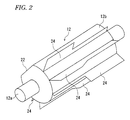
Fig. 2 is a schematic perspective view of the rotary shade. -
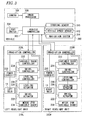
Fig. 3 is a functional block diagram illustrating the cooperation between an irradiation controller of a headlight unit, and a vehicle controller on the side of the vehicle. -
Figs. 4A-4F are views illustrating shapes of light distribution patterns. -
Fig. 5 is a schematic view illustrating formation control of a light distribution pattern by the vehicle lamp system related to Embodiment 1. -
Fig. 6 is a control flow chart of the formation of a light distribution pattern in the vehicle lamp system related to Embodiment 1. -
Fig. 7 is a schematic view illustrating formation control of a light distribution pattern by the vehicle lamp system related toEmbodiment 2. - Aspects of the invention will now be described below, with reference to the drawings, which show embodiments thereof. The same or equivalent constituent elements, members, and processes in the respective drawings will be designated by the same reference numerals, and duplicate description thereof will be appropriately omitted. Additionally, the embodiments shown do not limit the invention but are merely illustrative, and all features or combinations described in the embodiments are not necessarily limited as being essential to the invention.
-
Fig. 1 is a schematic vertical sectional view illustrating the internal structure of a vehicle lamp system related to Embodiment 1. A vehicle lamp system 200 of the present embodiment is a light distribution variable headlight system in which a pair of headlight units are symmetrically arranged on the right and left sides of a vehicle in a vehicle width direction. Since the headlight units arranged on the right and left have substantially the same configuration except that the headlight units have a bilaterally symmetrical structure, the structure of theright headlight unit 210R will be described, and description of the left headlight unit will be appropriately omitted. In addition, in a case where respective members of the left headlight unit are described, the respective members will be designated by the same reference numerals as those of corresponding members of theheadlight unit 210R for convenience of description. - The
headlight unit 210R has alamp body 212 having an opening on the front side of the vehicle, and atranslucent cover 214 which covers the opening. Thelamp body 212 has adetachable cover 212a which can be removed, for example, when replacing of abulb 14 on the rear side of the vehicle. Alamp chamber 216 is formed by thelamp body 212 and thetranslucent cover 214. A lamp unit 10 (vehicle lamp) which irradiates light toward the front of the vehicle is housed in thelamp chamber 216. - A portion of the
lamp unit 10 is formed with alamp bracket 218 which has apivot mechanism 218a which becomes the center of oscillation in up, down, right, and left directions of thelamp unit 10. Thelamp bracket 218 is screwed to aiming adjustingscrew 220 rotatably supported by the wall surface of thelamp body 212. Accordingly, thelamp unit 10 is fixed to a predetermined position within thelamp chamber 216 determined in the adjusted state of the aiming adjustingscrew 220, and its posture can be changed to a forward tilted posture, a rearward tilted posture, or the like about thepivot mechanism 218a on the basis of the position. - Additionally, a
rotary shaft 222a of aswivel actuator 222 for constituting a light distribution variable headlight for a curved road (Adaptive Front-lighting System: AFS) or the like which illuminates a traveling direction, such as when traveling along a curved road, is fixed to a lower surface of thelamp unit 10. Theswivel actuator 222 swivels thelamp unit 10 about thepivot mechanism 218a in the traveling direction, on the basis of data of a steering amount provided from the vehicle side, the shape data of a road being traveled along provided from a navigation system, and the relationship in relative position between a preceding vehicle including an oncoming vehicle and a leading vehicle, and a subject vehicle. As a result, the irradiation region of thelamp unit 10 is directed not to the front of the vehicle but to the edge of a curve of a curved road, thereby improving driver front visibility. Theswivel actuator 222 can be constituted by, for example, a stepping motor. In addition, in a case where the swivel angle has a fixed value, a solenoid or the like can also be used. - A
swivel actuator 222 is fixed to aunit bracket 224. A levelingactuator 226 arranged outside thelamp body 212 is connected to aunit bracket 224. The levelingactuator 226 is constituted by, for example, a motor or the like which extends or retracts arod 226a in the direction of an arrow M or N. In a case where therod 226a is extended in the direction of the arrow M, thelamp unit 10 oscillates so as to take a rearward tilted posture about thepivot mechanism 218a. On the contrary, in a case where therod 226a is retracted in the direction of the arrow N, thelamp unit 10 oscillates so as to take a forward tilted posture about thepivot mechanism 218a. When thelamp unit 10 takes a rearward tilted posture, leveling adjustment of directing the optical axis O upward can be performed. Additionally, when thelamp unit 10 takes a forward tilted posture, leveling adjustment of directing the optical axis O downward can be performed. By implementing such leveling adjustment, optical-axis adjustment according to the posture of the vehicle can be performed. As a result, the reaching distance of front irradiation light by the vehicle lamp system 200 can be adjusted to an optimal distance. - In addition, this leveling adjustment can also be executed according to a vehicle posture when the vehicle is traveling. For example, in a case where a vehicle accelerates while the vehicle travels, the vehicle posture becomes a rearward tilted posture. On the contrary, in case where the vehicle decelerates, the vehicle posture becomes a forward tilted posture. Accordingly, the irradiation direction of the vehicle lamp system 200 also fluctuates up and down in response to the posture state of the vehicle, and the front irradiation distance becomes long or short. Thus, the reaching distance of the front irradiation can be optimally adjusted even when traveling by executing the leveling adjustment of the
lamp unit 10 in real time on the basis ofa vehicle posture. This may be referred to as "auto-leveling". - An irradiation controller 228 (controller or control device) which executes control of turning the
lamp unit 10 on/off or control of formation of a light distribution pattern is arranged on the inner wall surface of thelamp chamber 216 below thelamp unit 10. In the case ofFig. 1 , anirradiation controller 228R for controlling theheadlight unit 210R is arranged. Theirradiation controller 228R also performs control of theswivel actuator 222, the levelingactuator 226, or the like. - The
lamp unit 10 can include an aiming adjusting mechanism. For example, an aiming pivot mechanism (not shown) which becomes the center of oscillation when aiming adjustment is arranged at a connecting portion between therod 226a of the levelingactuator 226 and theunit bracket 224. Additionally, the aforementioned aiming adjustingscrews 220 are arranged at a distance from each other in the vehicle width direction at thelamp bracket 218. For example, if the two aiming adjustingscrews 220 are rotated in the counterclockwise direction, thelamp unit 10 takes a forward tilted posture about the aiming pivot mechanism so that the optical axis O is adjusted downward. Similarly, if the two aiming adjustingscrews 220 are rotated in the clockwise direction, thelamp unit 10 takes a rearward tilted posture about the aiming pivot mechanism so that the optical axis O is adjusted upward. Additionally, if the aiming adjustingscrew 220 on the left in the vehicle width direction is rotated in the counterclockwise direction, thelamp unit 10 takes a right-turning posture about the aiming pivot mechanism so that the optical axis O is adjusted rightward. Additionally, if the aiming adjustingscrew 220 on the right in the vehicle width direction is rotated in the counterclockwise direction, thelamp unit 10 takes a left-turning posture about the aiming pivot mechanism so that the optical axis O is adjusted leftward. This aiming adjustment is performed on the shipment of a vehicle or the inspection of a vehicle or when replacing theheadlight unit 210R. Also, theheadlight unit 210R is adjusted to a posture determined in the design, and control of the formation of a light distribution pattern of the present embodiment is performed on the basis of this posture. - The
lamp unit 10 includes ashade mechanism 18 including arotary shade 12, abulb 14 serving as a light source, alamp housing 17 which supports areflector 16 on the inner wall thereof, and aprojection lens 20. As thebulb 14, for example, an incandescent bulb, a halogen lamp, a discharge bulb, an LED, or the like can be used. The present embodiment shows an example in which thebulb 14 is constituted by a halogen lamp. Thereflector 16 reflects the light emitted from thebulb 14. Also, the light from thebulb 14 and the light reflected by thereflector 16 are partially guided to theprojection lens 20 via therotary shade 12. In addition, illustration of theshade plates 24 which will be described below is omitted inFig. 1 . -
Fig. 2 is a schematic perspective view of the rotary shade. Therotary shade 12 is a cylindrical member which is rotatable about arotating shaft 12a. Additionally, therotary shade 12 has acutout portion 22 which is partially cut out in the axial direction, and holds a plurality of plate-shapedshade plates 24 at an outerperipheral surface 12b excluding thecutout portion 22. Therotary shade 12 can move thecutout portion 22 or any one of theshade plates 24 to a rear focal position of theprojection lens 20 on the optical axis O according to the angle of rotation thereof. This forms a light distribution pattern according to the shape of ridgeline portions of theshade plates 24 arranged on the optical axis O. For example, a low-beam light distribution pattern or a light distribution pattern partially including the features of a high-beam light distribution pattern can be formed by moving any one of theshade plates 24 of therotary shade 12 on the optical axis 0, thereby shading a portion of the light radiated from thebulb 14. Additionally, a high-beam light distribution pattern can be formed by moving thecutout portion 22 on the optical axis O, thereby bringing the light radiated from thebulb 14 into non-shaded light. - The
rotary shade 12 is rotatable by, for example, the running of a motor, and can move theshade plates 24 or thecutout portion 22 for forming a desired light distribution pattern on the optical axis O by controlling the rotational amount of the motor. In addition, only a shading function may be given to therotary shade 12 by omitting thecutout portion 22 of the outerperipheral surface 12b of therotary shade 12. Also, in a case where a high-beam light distribution pattern is formed, for example, the solenoid or the like is driven so that therotary shade 12 is retracted from the position of the optical axis O. By adopting such a configuration, for example, even if the motor which rotates therotary shade 12 has failed, the rotary shade is fixed in a low-beam light distribution pattern or a light distribution pattern similar thereto. That is, it is possible to prevent with certainty therotary shade 12 from being fixed in a posture for forming a high-beam light distribution pattern, thereby realizing a fail-safe function. - Returning to
Fig. 1 , at least a portion of thereflector 16 is formed in the shape of an elliptical spherical surface, and this elliptical spherical surface is set so that the cross-sectional shape including the optical axis O of thelamp unit 10 becomes at least a portion of an elliptical shape. The elliptical spherical portion of thereflector 16 has a first focal point substantially at the center of thebulb 14, and has a second focal point on a rear focal plane of theprojection lens 20. - The
projection lens 20 is arranged on the optical axis O which extends the longitudinal direction of the vehicle. Thebulb 14 is arranged behind a rear focal plane which is a focal plane including a rear focus of theprojection lens 20. Theprojection lens 20 includes a planoconvex aspheric lens whose front surface is a convex surface and whose rear surface is a plane surface, and projects a light source image formed on a rear focal plane onto a virtual vertical screen ahead of the vehicle lamp system 200 as an inverted image. In addition, the configuration of thelamp unit 10 is not particularly limited thereto, and may be a reflective lamp unit which does not have theprojection lens 20 or the like. -
Fig. 3 is a functional block diagram illustrating the cooperation of operation between an irradiation controller of a headlight unit configured as described above, and a vehicle controller on the side of the vehicle. In addition, since the configuration of theright headlight unit 210R and theleft headlight unit 210L are basically the same as described above, only theheadlight unit 210R side will be described, and description of theheadlight unit 210L side will be omitted. - The
irradiation controller 228R of theheadlight unit 210R controls apower circuit 230 on the basis of the information obtained from thevehicle controller 302 mounted on thevehicle 300, and executes turning-on control of thebulb 14. Additionally, theirradiation controller 228R controls avariable shade controller 232, aswivel controller 234, and a levelingcontroller 236 on the basis of the information obtained from thevehicle controller 302. Thevariable shade controller 232 controls rotation of themotor 238 connected to therotating shaft 12a of therotary shade 12 via a gear mechanism, and moves a desiredshade plate 24 orcutout portion 22 on the optical axis O. In addition, rotational information showing the rotational state of therotary shade 12 is provided to thevariable shade controller 232 from a detection sensor, such as an encoder included in themotor 238 or therotary shade 12. This produces an accurate rotational control by feedback control. - The
swivel controller 234 controls theswivel actuator 222 so as to adjust the angle of the optical axis O of thelamp unit 10 with respect to the vehicle width direction. For example, the optical axis O of thelamp unit 10 is directed to the advancing direction from the optical axis when turning, such as traveling along a curved road or right or left turning travel. Additionally, the levelingcontroller 236 controls the levelingactuator 226 to adjust the optical axis of thelamp unit 10 with respect to the up-and-down direction of the vehicle. For example, the posture of thelamp unit 10 is adjusted according to the forward tilting, and rearward tilting of the vehicle posture during acceleration and deceleration, thereby adjusting the reaching distance of the front irradiation light to an optimal distance. Thevehicle controller 302 provides the same information even regarding theheadlight unit 210L, and theirradiation controller 228L (controller or control device) provided in theheadlight unit 210L performs the same control as theirradiation controller 228R. - In the present embodiment, a light distribution pattern formed by the
headlight units light switch 304 by a driver. In this case, theirradiation controllers motor 238 via thevariable shade controller 232 according to the operation of thelight switch 304, thereby determining a light distribution pattern formed by thelamp unit 10. - The
headlight units light switch 304, thereby forming a light distribution pattern which is optimal for the state of thevehicle 300 or the conditions around the vehicle. For example, in a case where it is not possible to detect that a leading vehicle, an oncoming vehicle, a pedestrian, or the like is present ahead of a subject vehicle, theirradiation controllers vehicle controller 302, and a low-beam light distribution pattern is formed by thelamp unit 10. For example, in a case where it is possible to detect that a leading vehicle, an oncoming vehicle, a pedestrian, or the like is not present ahead of a subject vehicle, theirradiation controllers rotary shade 12 is formed. Additionally, in a case where it is possible to form a special high-beam light distribution pattern or a special low-beam light distribution pattern which will be described below in addition to a low-beam light distribution pattern and a high-beam light distribution pattern, an optimal light distribution pattern in consideration of a preceding vehicle may be formed according to the presence of the preceding vehicle. Such control mode may be referred to as an ADB (Adaptive Driving Beam) mode. - In order to detect an object, such as a leading vehicle, an oncoming vehicle, or the like, in this way, a
camera 306, such as a stereoscopic camera, is connected to thevehicle controller 302 as the recognition means of an object. The image frame data taken by thecamera 306 is subjected to predetermined image processing, such as object recognition processing, in animage processor 308, and the recognition result is provided to thevehicle controller 302. For example, in a case where the data including feature points showing a vehicle held in advance by thevehicle controller 302 is present in the recognition result data provided from theimage processor 308, thevehicle controller 302 recognizes the presence of the vehicle, thereby providing the information to theirradiation controllers irradiation controllers vehicle controller 302, thereby forming an optimal light distribution pattern in consideration of the vehicle. Here, the above "feature points showing a vehicle" are, for example, a light spot with a predetermined luminous intensity or more which appears in an estimated presence region of the headlight of a preceding vehicle or a beacon light, such as a tail light. Additionally, for example, in a case where the data including feature points showing a pedestrian which is held in advance is present in the recognition result data provided from theimage processor 308, thevehicle controller 302 provides the information to theirradiation controllers irradiation controllers - Additionally, the
vehicle controller 302 can also acquire the information from asteering sensor 310, avehicle speed sensor 312, and the like which are typically mounted on thevehicle 300. Thereby, theirradiation controllers vehicle 300, or can change the direction of the optical axis O to change a light distribution pattern simply and easily. For example, in a case where thevehicle controller 302 has determined that the vehicle is turning on the basis of the information from thesteering sensor 310, theirradiation controllers vehicle controller 302 can select ashade plate 24 for forming a light distribution pattern which improves the field of view in a turning direction. Additionally, the field of view may be improved by controlling theswivel actuator 222 by theswivel controller 234 to direct the optical axis O of thelamp unit 10 to a turning direction, without changing the rotational state of therotary shade 12. Such a control mode may be referred to as a turning sensitive mode. - Additionally, when the vehicle travels at high speed at night, it is preferable that the front of the subject vehicle may be illuminated so that an oncoming vehicle or a leading vehicle which is approaching from a distant area, or a road sign, a message board, or the like can be recognized as soon as possible. Thus, when the
vehicle controller 302 has determined that the vehicle is traveling at high speed on the basis of the information from thevehicle speed sensor 312, theirradiation controllers shade plate 24 for forming a low-beam light distribution pattern in an expressway mode in which a portion of the shape of the low-beam light distribution pattern is changed. The same control can also be realized by controlling the levelingactuator 226 by the levelingcontroller 236 to change thelamp unit 10 to a forward tilted posture. The auto-leveling control during acceleration or deceleration by the above-describedleveling actuator 226 is the control of keeping the irradiation distance constant. If the height of a cut-off line is positively controlled using this control, the control equivalent to the control of rotating therotary shade 12 to select a different cut-off line can be performed. Such a control mode may be referred to as a speed sensitive mode. - Additionally, the
vehicle controller 302 is also able to acquire the information from an inter-vehicle distance sensor (not shown) which is mounted on thevehicle 300, and theirradiation controllers vehicle controller 302 has determined that the preceding vehicle is relatively far away on the basis of the information from the inter-vehicle sensor, theirradiation controllers actuator 226 by the levelingcontroller 236, thereby changing thelamp unit 10 to a rearward tilted posture. By slightly raising the cut-off line of the low-beam light distribution pattern thereby, driver visibility can be improved while preventing glare from being imparted to the preceding vehicle. A light distribution pattern formed by such control may be referred to as a dynamic cut-off line light distribution pattern. - In addition, the adjustment of the optical axis of the
lamp unit 10 can also be performed without using theswivel actuator 222 and the levelingactuator 226. For example, the visibility in a desired direction may be improved by turning thelamp unit 10 or bringing the lamp unit into a forward tilted posture or rearward tilted posture so as to execute aiming control in real time. - In addition, the
vehicle controller 302 can also acquire shape information or form information regarding a road, installation information regarding a road sign, or the like from anavigation system 314. By acquiring these kinds of information in advance, theirradiation controllers actuator 226, theswivel actuator 222, themotor 238, and the like, thereby smoothly forming the light distribution pattern suitable for a road being traveled along. Such a control mode may be referred to as a navigation sensitive mode. The automatic formation control of a light distribution pattern including the various control modes described above is performed, for example, in a case where automatic formation control of a light distribution pattern is instructed by thelight switch 304. - Next, a light distribution pattern which can be formed by the
lamp unit 10 of each of theheadlight units Figs. 4A to 4F are explanatory views showing the shapes of light distribution patterns. In addition,Figs. 4A to 4F show a light distribution pattern formed on a virtual vertical screen which is arranged at a predetermined position ahead of a lamp, for example, at a position 25 m ahead of the lamp. - As described above, the
headlight unit 210L and theheadlight unit 210R have substantially the same configuration and it is accordingly possible to form the same light distribution pattern. Additionally, as shown inFig. 1 , since theprojection lens 20 includes a planoconvex aspheric lens whose front surface is a convex surface and whose rear surface is a plane surface, respective light distribution patterns excluding the high-beam light distribution pattern have images in which light source images including the portions shaded by theshade plates 24 corresponding to these patterns are inverted vertically and horizontally. Accordingly, the cut-off line shapes of the respective light distribution patterns and the ridgeline shapes of therespective shade plates 24 correspond to each other. - The light distribution pattern shown in
Fig. 4A is a basic low-beam light distribution pattern Lo1. The basic low-beam light distribution pattern Lo1 is a light distribution pattern which has been considered so that glare is not imparted to a preceding vehicle or a pedestrian while driving on the left-hand side. The basic low-beam light distribution pattern Lo1 has: an opposite-lane-side cut-off line, which extends parallel to a horizontal line, which is on the right of a vertical line of an upper end thereof, a subject-lane-side cut-off line, which extends parallel to the horizontal line at a position higher than the opposite-lane-side cut-off line, on the left of the vertical line, and an oblique cut-off line which connects both the cutoff lines between the opposite-lane-side cut-off line and the subject-lane-side cut-off line, respectively. The oblique cut-off line extends at an inclination angle of 45° obliquely in the upper left direction from the point of intersection between the opposite-lane-side cut-off line and the vertical line V. - The light distribution pattern shown in
Fig. 4B is a Dover-low-beam light distribution pattern Lo2 which forms a so-called "Dover low beam". The Dover low-beam light distribution pattern Lo2 is a light distribution pattern which has been considered so that glare is not imparted to a preceding vehicle or a pedestrian while driving on the right-hand side. The Dover-low-beam light distribution patterns Lo2 is line-symmetrical to the basic low-beam light distribution pattern Lo1 with the vertical line as a symmetrical axis. - The light distribution pattern shown in
Fig. 4C is a high-beam light distribution pattern Hi1. The high-beam light distribution pattern Hi1 is a light distribution pattern which illuminates a front wide range and a distant area, and is formed, for example, when it is not necessary to consider glare imparted to a preceding vehicle or a pedestrian. Specifically, the high-beam light distribution pattern is formed in a case where neither a preceding vehicle nor a pedestrian is present or in a case where the preceding vehicle is present at a long distance to such a degree that glare is not received even if the preceding vehicle or the like forms the high-beam light distribution pattern Hi1. That is, the high-beam light distribution pattern Hi1 is a light distribution pattern which has an irradiation region on the opposite lane side above the horizontal line H. - The light distribution pattern shown in
Fig. 4D is a left high-beam light distribution pattern Hi2 which forms a so-called "left piece high beam". The left piece high-beam light distribution pattern Hi2 is a special high-beam light distribution pattern which shades the opposite lane side of the high-beam light distribution pattern Hi1 while driving on the left-hand side and is radiated in a high-beam region only on the subject lane side. That is, the left piece high-beam light distribution pattern Hi2 is a light distribution pattern which has an irradiation region on the subject lane side above the horizontal line H and a non-irradiation region on the opposite lane side, respectively. The left piece high-beam light distribution pattern Hi2 is preferably used in a case where neither a preceding vehicle nor a pedestrian is present in the subject lane, and an oncoming vehicle or a pedestrian is present in the opposite lane, and can increase driver visibility by irradiation of a high beam only on the subject lane side without imparting glare to an oncoming vehicle or a pedestrian. - The light distribution pattern shown in
Fig. 4E is a right piece high-beam light distribution pattern Hi3 which forms a so-called "right piece high beam". The right piece high-beam light distribution pattern Hi3 is a special high-beam light distribution pattern which shades the subject lane side of the high-beam light distribution pattern Hi1 while driving on the left and is radiated in a high-beam region only on the opposite lane side. That is, the right piece high-beam light distribution pattern Hi3 is a light distribution pattern which has an irradiation region on the opposite lane side above the horizontal line H and a non-irradiation region on the subject, respectively. The right piece high-beam light distribution pattern Hi3 is preferably used in a case where neither an oncoming vehicle nor a pedestrian is present in the opposite lane, and a preceding vehicle or a pedestrian is present in the subject lane, and can increase driver's visibility by irradiation of a high beam only on the opposite lane side without imparting glare to a preceding vehicle or a pedestrian. - The light distribution pattern shown in
Fig. 4F is a V-beam light distribution pattern Lo3 which forms a so-called "V-beam". The V-beam light distribution pattern Lo3 is a special low-beam light distribution pattern in which both the subject lane side cut-off line and the opposite-lane-side cut-off line is comparable in height to the horizontal line H and which has intermediate features between a low beam and a high beam. The V-beam light distribution pattern Lo3 can be formed, for example, by overlapping a basic low-beam light distribution pattern Lo1L (for convenience of description, a symbol "L" is given after a symbol for each light distribution pattern in light distribution patterns formed by theheadlight unit 210L and a symbol "R" is given after a symbol for each light distribution pattern in light distribution patterns formed by theheadlight unit 210R; the same is true in the following) formed by theheadlight unit 210L, and a Dover low-beam light distribution pattern Lo2R formed by theheadlight unit 210R. - As described above, the basic low-beam light distribution pattern Lo1L has an oblique cut-off line, and the Dover low-beam light distribution pattern Lo2R is line-symmetrical to the basic low-beam light distribution pattern Lo1L. Therefore, the V-beam light distribution pattern Lo3 has a substantially V-shaped shading region formed by two oblique cut-off lines below the horizontal line H of a central portion. Additionally, since the basic low-beam light distribution pattern Lo1L and the Dover low-beam light distribution pattern Lo2R are overlapped on each other, the optical irradiation region of the V-beam light distribution pattern Lo3 on the opposite lane side is moved upward higher than the optical irradiation region of the basic low-beam light distribution pattern Lo1 on the opposite lane side. On the other hand, as for the Dover low-beam light distribution pattern Lo2, the optical irradiation region on the subject lane side moves upward. Accordingly, the V-beam light distribution pattern Lo3 becomes a light distribution pattern which can improve driver visibility more than the basic low-beam light distribution pattern Lo1 and the Dover low-beam light distribution pattern Lo2. The V-beam light distribution pattern Lo3 can increase driver visibility by the light irradiation to a height comparable to the horizontal line without imparting glare to a preceding vehicle or a pedestrian which is relatively far away.
- The vehicle lamp system 200 related to the present embodiment can form a so-called split light distribution pattern, in addition to the above-described various light distribution patterns. This split light distribution pattern is a special high-beam light distribution pattern which has a shading region in a central portion above the horizontal line H and has high-beam regions on both sides of the shading region in the horizontal direction. The split light distribution pattern can be formed, for example, by overlapping a left piece high-beam light distribution pattern Hi2L formed by the
headlight unit 210L and a right piece high-beam light distribution pattern Hi3R formed by theheadlight unit 210R. In this case, the shading region is formed by the non-irradiation region above the horizontal line H of the left piece high-beam light distribution pattern Hi2L and the right piece high-beam light distribution pattern Hi3R, and high-beam regions on both sides of the shading region are formed by the irradiation region above the horizontal line H of the left piece high-beam light distribution pattern Hi2L and the right piece high-beam light distribution pattern Hi3R. The range of the shading region can be changed in the vehicle width direction by making thelamp units 10 of theheadlight units - For example, when the
vehicle controller 302 detects the presence of a preceding vehicle using the information obtained from thecamera 306 in a state where the automatic formation control, for example, an ADB mode of a light distribution pattern is instructed by thelight switch 304, theirradiation controllers vehicle controller 302 determine whether or not the preceding vehicle is within a range where the shading region can be formed. In a case where the vehicle in front is within a range where the shading region can be formed, theirradiation controllers irradiation controllers vehicle controller 302. When the vehicle in front is out of the range where the shading region can be formed, theirradiation controllers irradiation controllers - Subsequently, an example of the light distribution pattern formation control by the vehicle lamp system 200 including the above-described configuration will be described.
Fig. 5 is a schematic view illustrating formation control of a light distribution pattern by the vehicle lamp system related to Embodiment 1. - The vehicle lamp system 200 related to the present embodiment executes the control of avoiding formation of a light distribution pattern which has an irradiation region on the opposite lane side above the horizontal line H in a case where a vehicle which travels in the opposite lane cannot be detected.
- As described above, in the vehicle lamp system 200 related to the present embodiment, automatic formation control of a light distribution pattern is executed according to the position of a vehicle in front which is recognized on the basis of a light spot which is present in image frame data captured by the
camera 306. Accordingly, a case where a vehicle which travels in the opposite lane in this control cannot be detected, as shown inFig. 5 , can include, for example a case where ashading body 410, such as a shading wall, a planting, or a greening fence, is present along the road between the subject lane and the opposite lane. In a case where theshading body 410 is present between the subject lane and the opposite lane, as seen from the subject vehicle, aheadlight 402 of theoncoming vehicle 400 may be hidden by theshading body 410. As a result, there is a concern that the oncomingvehicle 400 may not be recognized. In this case, theirradiation controllers vehicle 400 is present in actuality. The light distribution pattern which has an irradiation region on the opposite lane side above the horizontal line H can include, for example, the high-beam light distribution pattern Hi1, the right piece high-beam light distribution pattern Hi3, and the split light distribution pattern. - If the light distribution pattern, which has an irradiation region on the opposite lane side above the horizontal line H is formed, the irradiation region on the opposite lane side above the light distribution pattern irradiates the opposite lane side beyond the
shading body 410. Thereby, the oncomingvehicle 400 may receive glare due to the light which irradiates the opposite lane side beyond theshading body 410. Particularly, as shown inFig. 5 , in a case where the oncomingvehicle 400 is a truck or the like with a high seat position, the oncomingvehicle 400 is apt to receive the glare. - Thus, in the present embodiment, the
irradiation controllers shading body 410 is present along a road between the subject lane and the opposite lane. Thereby, even in a case where automatic formation control of a light distribution pattern according to the position of a vehicle in front is executed under conditions where the presence of theoncoming vehicle 400 is hardly detected since theshading body 410 is present, an appropriate light distribution pattern can be formed to avoid imparting glare to a vehicle in front. - The presence of the
shading body 410 can be determined, for example, on the basis of the information obtained from thenavigation system 314. The determination of the presence of theshading body 410 is implemented by thevehicle controller 302. In a case where it is determined that the subject vehicle is traveling on a road where the possibility of the presence of theshading body 410 is high such as an elevated road, a bypass road, or a highway from the information from thenavigation system 314, thevehicle controller 302 estimates that theshading body 410 is present, and transmits this information to theirradiation controllers irradiation controllers shading body 410 is estimated to be present. In a case where it is determined that the information on a place where theshading body 410 is provided is included in thenavigation system 314, thevehicle controller 302 may determine the presence of theshading body 410 using this body information. - Additionally, for example, the
vehicle controller 302 may hold data including a feature point showing theshading body 410, and may determine that theshading body 410 is present in a case where this feature point is present in an image captured by thecamera 306. Moreover, the presence of theshading body 410 may be determined using a sensor, such as a laser radar sensor, which can detect an object around the subject vehicle. Additionally, in a case where a median strip is positioned between the subject vehicle and the opposite lane, theshading body 410 is often provided in the median strip. Thus, in a case where thevehicle controller 302 has determined from the information of thenavigation system 314 that the subject vehicle is traveling on a road where the median strip is provided or in a case where the median strip is detected by thecamera 306 or the like, the vehicle controller may estimate that theshading body 410 is present. - In this way, the
irradiation controllers shading body 410 is present, and so as not to form the light distribution pattern. Therefore, even in a case where theshading body 410 is present, glare can be prevented from being imparted to theoncoming vehicle 400. - For example, the
irradiation controllers irradiation controllers 228L and the 228R implement formation control of a light distribution pattern according to the position of a vehicle in front using the normal pattern group control map in a case where theshading body 410 is not present, and implements formation control of a light distribution pattern according to the position of a vehicle in front using the avoiding pattern group control map in a case where theshading body 410 is present. In the state shown inFig. 5 , theshading body 410 is present, and the precedingvehicle 420 is present in a relatively distant area. Therefore, theirradiation controllers -
Fig. 6 is a control flow chart of the formation of a light distribution pattern in the vehicle lamp system related to Embodiment 1. In the flow chart ofFig. 6 , the procedure of each part is shown by combinations of S (initial of Step) that means a step, and a numeral. Additionally, in a case where a certain determination processing is executed by the processing shown by a combination of S and a numeral and the determination result is positive, for example, (Y of S10) is shown by adding Y (initial of Yes). On the other hand, in a case where the determination result is negative, for example, (N of S10) is shown by adding N (initial of No). Theirradiation controllers - First, the
irradiation controllers irradiation controllers shading body 410 is present has been received from the vehicle controller 302 (S11). - lf the shading body presence information (Y of S11) is present, the
irradiation controllers irradiation controllers - If there is no shading body presence information (N of S11), the
irradiation controllers irradiation controllers - As described above, in the vehicle lamp system 200 related to the present embodiment, the
irradiation controllers irradiation controllers - The vehicle lamp system 200 related to
Embodiment 2 determines that there is a shading body in a case where a light spot of a predetermined time or less is detected, and avoids formation of a light distribution pattern which has an irradiation region on the opposite lane side above the horizontal line H. The present embodiment will be described below. In addition, since the main components of the vehicle lamp system 200, the shapes of light distribution patterns which can be formed, and the like are the same as those of Embodiment 1, the same components as Embodiment 1 will be designated by the same reference numerals, and the description and illustration thereof will be appropriately omitted. -
Fig. 7 is a schematic view illustrating formation control of a light distribution pattern by the vehicle lamp system related toEmbodiment 2. - As shown in
Fig. 7 , for example, in a case where theshading body 410 is a planting consisting of a plurality of trees planted along a road, the light of theheadlight 402 of theoncoming vehicle 400 can be momentarily viewed from gaps between the trees or from gaps between leaves of each tree. Additionally, for example, even in a case where theshading body 410 is a shading wall or the like in which a plurality of wall materials is coupled together, the light of theheadlight 402 of theoncoming vehicle 400 can be momentarily viewed from gaps between adjacent wall materials. Additionally, there is a case where the light of theheadlight 402 of theoncoming vehicle 400 can be momentarily viewed even depending on road profile, such as a case where there are undulations on a road ahead of the subject vehicle. - Thus, in the present embodiment, the
irradiation controllers shading body 410 in a case where a light spot of a predetermined time or less is detected, and so as to avoid formation of a light distribution pattern which has an irradiation region on the opposite lane side above the horizontal line H. In the state shown inFig. 7 , theshading body 410 is present and the preceding vehicle is not present. Therefore, theirradiation controllers - Even when a
navigation system 314, a laser radar sensor, or the like are not present, both thecontrollers 302 can determine the presence of theshading body 410. Therefore, in a case where automatic formation control of a light distribution pattern according to a vehicle in front on a road where theshading body 410 is present even in a vehicle on which neither thenavigation system 314 nor the laser radar sensor is mounted, an appropriate light distribution pattern which does not impart glare to theoncoming vehicle 400 can be formed. Additionally, the above-described formation of an appropriate light distribution pattern can be realized with a more inexpensive and simpler configuration compared to the case where the presence of theshading body 410 is determined using thenavigation system 314, the laser radar sensor, or the like. Additionally, the above-described formation of an appropriate light distribution pattern can be realized with a more inexpensive and simpler configuration compared to the case where thevehicle controller 302 is made to hold data including a feature point showing theshading body 410 and detects theshading body 410 from the data of the image captured by thecamera 306. - Additionally, in the vehicle lamp system 200 related to the present embodiment, the
irradiation controllers shading body 410 is present in a case where detection of a light spot of a predetermined time or less is performed even a single time, for example, theshading body 410 may be estimated to be present even in a case where the oncomingvehicle 400 has executed a passing operation. On the other hand, presence of theshading body 410 can be more precisely estimated by estimating that theshading salary 410 is present in a case where detection of a light spot of a predetermined time or less is performed more than or equal to a predetermined number of times. In addition, when it is estimated that theshading body 410 is present in a case where detection of a light spot of a predetermined time or less is performed even a single time, formation of a light distribution pattern which has an irradiation region on the opposite lane side above the horizontal line H can be avoided in a shorter time. Therefore, the possibility of imparting glare to a vehicle in front can be further reduced. Here, the "predetermined time" and the "predetermined number of times" can be appropriately set on the basis of experiments or simulations by a designer. - As described above, in the vehicle lamp system 200 related to the present embodiment, the
irradiation controllers shading body 410 is detected using thenavigation system 314, thecamera 306, or the laser radar sensor can be formed. - The invention is not limited to the above-described embodiments, but the respective embodiments can be combined with each other, or alternations, such as various kinds of design changes, can be made on the basis of the knowledge of those skilled in the art. Embodiments in which such combinations or alternations are made are also included in the scope of the invention. The above-described respective embodiments, and new embodiments produced by combinations between the above-described embodiments and the following modifications have respective effects of the combined embodiments and modifications in combination.
- The traveling state of the subject vehicle, the presence state of a vehicle in front, and the presence of the
shading body 410 may be determined by either thevehicle controller 302 or theirradiation controllers 228. In a case where theirradiation controllers 228 implement the above determination, the information from various sensors or navigation systems is transmitted to theirradiation controllers 228 via thevehicle controller 302. Additionally, in a case where theirradiation controllers 228 implement the above determination, one or both of theirradiation controllers irradiation controllers vehicle controller 302 may perform this determination. In this case, theirradiation controllers bulb 14 on and off, driving of theswivel actuator 222 and themotor 238, and the like on the basis of instructions from thevehicle controller 302.
Claims (6)
- A control device for a vehicle lamp capable of forming a light distribution pattern which has an irradiation region on an opposite lane side above a horizontal line,
wherein the control device avoids output of a control signal forming the light distribution pattern when a shading body is present along a road between a subject vehicle and an opposite lane. - A vehicle lamp system comprising:a vehicle lamp capable of forming a light distribution pattern which has an irradiation region on an opposite lane side above a horizontal line; andthe controller according to claim 1 and controlling the vehicle lamp.
- The vehicle lamp system according to Claim 2,
wherein the controller controls the vehicle lamp according to the position of a vehicle in front recognized based on a light spot detected ahead of a subject vehicle, and avoids formation of the light distribution pattern when the light spot of a predetermined time or less is detected. - The vehicle lamp system according to Claim 3,
wherein the controller avoids formation of the light distribution pattern when the detection of the light spot for the predetermined time or less is performed more than or equal to a predetermined number of times within a unit time. - A vehicle lamp capable of forming a light distribution pattern which has an irradiation region on an opposite lane side above a horizontal line,
wherein the vehicle lamp avoids formation of the light distribution pattern when a shading body is present along a road between a subject vehicle and an opposite lane. - A control method of a vehicle lamp capable of forming a light distribution pattern which has an irradiation region on an opposite lane side above a horizontal line,
wherein the control method avoids formation of the light distribution pattern when a vehicle which travels on an opposite lane is not detectable.
Applications Claiming Priority (1)
| Application Number | Priority Date | Filing Date | Title |
|---|---|---|---|
| JP2010116245A JP5470157B2 (en) | 2010-05-20 | 2010-05-20 | VEHICLE LIGHT SYSTEM, CONTROL DEVICE, VEHICLE LIGHT, AND CONTROL METHOD FOR VEHICLE LIGHT |
Publications (3)
| Publication Number | Publication Date |
|---|---|
| EP2388164A2 true EP2388164A2 (en) | 2011-11-23 |
| EP2388164A3 EP2388164A3 (en) | 2018-04-18 |
| EP2388164B1 EP2388164B1 (en) | 2020-07-15 |
Family
ID=44117751
Family Applications (1)
| Application Number | Title | Priority Date | Filing Date |
|---|---|---|---|
| EP11165777.1A Active EP2388164B1 (en) | 2010-05-20 | 2011-05-12 | Vehicle Headlamp system, control device, vehicle headlamp, and control method of vehicle headlamp |
Country Status (2)
| Country | Link |
|---|---|
| EP (1) | EP2388164B1 (en) |
| JP (1) | JP5470157B2 (en) |
Cited By (6)
| Publication number | Priority date | Publication date | Assignee | Title |
|---|---|---|---|---|
| GB2497393A (en) * | 2011-12-09 | 2013-06-12 | Bosch Gmbh Robert | Method and device for controlling a light emission of a headlight of a vehicle |
| CN105691285A (en) * | 2014-12-11 | 2016-06-22 | 罗伯特·博世有限公司 | Method and control unit for setting a characteristic of a light emission of at least one headlight of a vehicle |
| EP4309954A4 (en) * | 2021-03-16 | 2024-09-04 | Koito Manufacturing Co., Ltd. | Light distribution control device, vehicular lamp system, and light distribution control method |
| WO2024256088A1 (en) * | 2023-06-16 | 2024-12-19 | Mercedes-Benz Group AG | Method for operating a high beam assistant and vehicle |
| WO2024256093A1 (en) * | 2023-06-16 | 2024-12-19 | Mercedes-Benz Group AG | Method for operating a high beam assistant and vehicle |
| WO2026046919A1 (en) * | 2024-08-28 | 2026-03-05 | Valeo Vision | Motor vehicle lighting device |
Families Citing this family (2)
| Publication number | Priority date | Publication date | Assignee | Title |
|---|---|---|---|---|
| JP5882755B2 (en) * | 2012-01-24 | 2016-03-09 | スタンレー電気株式会社 | Lighting control device for vehicle headlamp, vehicle headlamp system |
| JP6968278B2 (en) * | 2018-06-22 | 2021-11-17 | 三菱電機株式会社 | Headlight control device and headlight control method |
Citations (1)
| Publication number | Priority date | Publication date | Assignee | Title |
|---|---|---|---|---|
| JP2010000957A (en) | 2008-06-20 | 2010-01-07 | Koito Mfg Co Ltd | Headlight device for vehicle |
Family Cites Families (2)
| Publication number | Priority date | Publication date | Assignee | Title |
|---|---|---|---|---|
| JPH10175478A (en) * | 1996-12-18 | 1998-06-30 | Koito Mfg Co Ltd | Lighting fixture device for vehicle |
| DE102008025457A1 (en) * | 2008-05-28 | 2009-12-03 | Hella Kgaa Hueck & Co. | Method and device for controlling the light output of a vehicle |
-
2010
- 2010-05-20 JP JP2010116245A patent/JP5470157B2/en not_active Expired - Fee Related
-
2011
- 2011-05-12 EP EP11165777.1A patent/EP2388164B1/en active Active
Patent Citations (1)
| Publication number | Priority date | Publication date | Assignee | Title |
|---|---|---|---|---|
| JP2010000957A (en) | 2008-06-20 | 2010-01-07 | Koito Mfg Co Ltd | Headlight device for vehicle |
Cited By (9)
| Publication number | Priority date | Publication date | Assignee | Title |
|---|---|---|---|---|
| GB2497393A (en) * | 2011-12-09 | 2013-06-12 | Bosch Gmbh Robert | Method and device for controlling a light emission of a headlight of a vehicle |
| CN103158607A (en) * | 2011-12-09 | 2013-06-19 | 罗伯特·博世有限公司 | Method and device for controlling a light emission of a headlight of a vehicle |
| CN105691285A (en) * | 2014-12-11 | 2016-06-22 | 罗伯特·博世有限公司 | Method and control unit for setting a characteristic of a light emission of at least one headlight of a vehicle |
| EP4309954A4 (en) * | 2021-03-16 | 2024-09-04 | Koito Manufacturing Co., Ltd. | Light distribution control device, vehicular lamp system, and light distribution control method |
| US12589686B2 (en) | 2021-03-16 | 2026-03-31 | Koito Manufacturing Co., Ltd. | Light distribution control device, vehicular lamp system, and light distribution control method |
| WO2024256088A1 (en) * | 2023-06-16 | 2024-12-19 | Mercedes-Benz Group AG | Method for operating a high beam assistant and vehicle |
| WO2024256093A1 (en) * | 2023-06-16 | 2024-12-19 | Mercedes-Benz Group AG | Method for operating a high beam assistant and vehicle |
| WO2026046919A1 (en) * | 2024-08-28 | 2026-03-05 | Valeo Vision | Motor vehicle lighting device |
| FR3165836A1 (en) * | 2024-08-28 | 2026-03-06 | Valeo Vision | Automotive vehicle lighting device. |
Also Published As
| Publication number | Publication date |
|---|---|
| EP2388164A3 (en) | 2018-04-18 |
| EP2388164B1 (en) | 2020-07-15 |
| JP2011240871A (en) | 2011-12-01 |
| JP5470157B2 (en) | 2014-04-16 |
Similar Documents
| Publication | Publication Date | Title |
|---|---|---|
| CN102951064B (en) | Vehicle headlamp apparatus and light distribution control method | |
| JP5362460B2 (en) | Vehicle headlamp device | |
| JP5398443B2 (en) | Vehicle headlamp device | |
| JP5546326B2 (en) | Control device, vehicle lamp system, vehicle lamp | |
| JP5424742B2 (en) | Vehicle headlamp device | |
| JP5438405B2 (en) | Vehicle headlamp device | |
| JP5424771B2 (en) | Light distribution control system for vehicle headlamps | |
| EP2388164B1 (en) | Vehicle Headlamp system, control device, vehicle headlamp, and control method of vehicle headlamp | |
| JP5372616B2 (en) | Light distribution control system for vehicle headlamps | |
| JP5552381B2 (en) | Control device, vehicle headlamp system | |
| JP5430282B2 (en) | Light distribution control system for vehicle headlamps | |
| JP2011031808A (en) | Light distribution control system of vehicular headlamp | |
| JP5317871B2 (en) | Vehicle headlamp device | |
| US7021791B1 (en) | Vehicular headlamp apparatus | |
| JP2011240870A (en) | Vehicle headlamp system, control device, and vehicle headlamp | |
| JP5563884B2 (en) | Control device, vehicle lamp system, vehicle lamp | |
| JP5530125B2 (en) | Vehicle headlamp device | |
| EP2384933B1 (en) | Vehicle headlamp system, control device and vehicle headlamp | |
| JP5636483B2 (en) | Light distribution control system for vehicle headlamps | |
| JP2014015170A (en) | Control device, headlight system for vehicle | |
| JP5557611B2 (en) | VEHICLE LIGHT SYSTEM, CONTROL DEVICE, AND VEHICLE LIGHT | |
| JP2011238378A (en) | Lamp fixture system for vehicle, control device, and lamp fixture for vehicle |
Legal Events
| Date | Code | Title | Description |
|---|---|---|---|
| 17P | Request for examination filed |
Effective date: 20110512 |
|
| AK | Designated contracting states |
Kind code of ref document: A2 Designated state(s): AL AT BE BG CH CY CZ DE DK EE ES FI FR GB GR HR HU IE IS IT LI LT LU LV MC MK MT NL NO PL PT RO RS SE SI SK SM TR |
|
| AX | Request for extension of the european patent |
Extension state: BA ME |
|
| PUAI | Public reference made under article 153(3) epc to a published international application that has entered the european phase |
Free format text: ORIGINAL CODE: 0009012 |
|
| PUAL | Search report despatched |
Free format text: ORIGINAL CODE: 0009013 |
|
| AK | Designated contracting states |
Kind code of ref document: A3 Designated state(s): AL AT BE BG CH CY CZ DE DK EE ES FI FR GB GR HR HU IE IS IT LI LT LU LV MC MK MT NL NO PL PT RO RS SE SI SK SM TR |
|
| AX | Request for extension of the european patent |
Extension state: BA ME |
|
| RIC1 | Information provided on ipc code assigned before grant |
Ipc: B60Q 1/14 20060101AFI20180309BHEP |
|
| GRAP | Despatch of communication of intention to grant a patent |
Free format text: ORIGINAL CODE: EPIDOSNIGR1 |
|
| STAA | Information on the status of an ep patent application or granted ep patent |
Free format text: STATUS: GRANT OF PATENT IS INTENDED |
|
| INTG | Intention to grant announced |
Effective date: 20200319 |
|
| GRAS | Grant fee paid |
Free format text: ORIGINAL CODE: EPIDOSNIGR3 |
|
| GRAA | (expected) grant |
Free format text: ORIGINAL CODE: 0009210 |
|
| STAA | Information on the status of an ep patent application or granted ep patent |
Free format text: STATUS: THE PATENT HAS BEEN GRANTED |
|
| AK | Designated contracting states |
Kind code of ref document: B1 Designated state(s): AL AT BE BG CH CY CZ DE DK EE ES FI FR GB GR HR HU IE IS IT LI LT LU LV MC MK MT NL NO PL PT RO RS SE SI SK SM TR |
|
| REG | Reference to a national code |
Ref country code: CH Ref legal event code: EP Ref country code: GB Ref legal event code: FG4D |
|
| REG | Reference to a national code |
Ref country code: DE Ref legal event code: R096 Ref document number: 602011067730 Country of ref document: DE |
|
| REG | Reference to a national code |
Ref country code: IE Ref legal event code: FG4D |
|
| REG | Reference to a national code |
Ref country code: AT Ref legal event code: REF Ref document number: 1290674 Country of ref document: AT Kind code of ref document: T Effective date: 20200815 |
|
| REG | Reference to a national code |
Ref country code: LT Ref legal event code: MG4D |
|
| REG | Reference to a national code |
Ref country code: AT Ref legal event code: MK05 Ref document number: 1290674 Country of ref document: AT Kind code of ref document: T Effective date: 20200715 |
|
| REG | Reference to a national code |
Ref country code: NL Ref legal event code: MP Effective date: 20200715 |
|
| PG25 | Lapsed in a contracting state [announced via postgrant information from national office to epo] |
Ref country code: SE Free format text: LAPSE BECAUSE OF FAILURE TO SUBMIT A TRANSLATION OF THE DESCRIPTION OR TO PAY THE FEE WITHIN THE PRESCRIBED TIME-LIMIT Effective date: 20200715 Ref country code: NO Free format text: LAPSE BECAUSE OF FAILURE TO SUBMIT A TRANSLATION OF THE DESCRIPTION OR TO PAY THE FEE WITHIN THE PRESCRIBED TIME-LIMIT Effective date: 20201015 Ref country code: AT Free format text: LAPSE BECAUSE OF FAILURE TO SUBMIT A TRANSLATION OF THE DESCRIPTION OR TO PAY THE FEE WITHIN THE PRESCRIBED TIME-LIMIT Effective date: 20200715 Ref country code: HR Free format text: LAPSE BECAUSE OF FAILURE TO SUBMIT A TRANSLATION OF THE DESCRIPTION OR TO PAY THE FEE WITHIN THE PRESCRIBED TIME-LIMIT Effective date: 20200715 Ref country code: ES Free format text: LAPSE BECAUSE OF FAILURE TO SUBMIT A TRANSLATION OF THE DESCRIPTION OR TO PAY THE FEE WITHIN THE PRESCRIBED TIME-LIMIT Effective date: 20200715 Ref country code: LT Free format text: LAPSE BECAUSE OF FAILURE TO SUBMIT A TRANSLATION OF THE DESCRIPTION OR TO PAY THE FEE WITHIN THE PRESCRIBED TIME-LIMIT Effective date: 20200715 Ref country code: BG Free format text: LAPSE BECAUSE OF FAILURE TO SUBMIT A TRANSLATION OF THE DESCRIPTION OR TO PAY THE FEE WITHIN THE PRESCRIBED TIME-LIMIT Effective date: 20201015 Ref country code: PT Free format text: LAPSE BECAUSE OF FAILURE TO SUBMIT A TRANSLATION OF THE DESCRIPTION OR TO PAY THE FEE WITHIN THE PRESCRIBED TIME-LIMIT Effective date: 20201116 Ref country code: GR Free format text: LAPSE BECAUSE OF FAILURE TO SUBMIT A TRANSLATION OF THE DESCRIPTION OR TO PAY THE FEE WITHIN THE PRESCRIBED TIME-LIMIT Effective date: 20201016 Ref country code: FI Free format text: LAPSE BECAUSE OF FAILURE TO SUBMIT A TRANSLATION OF THE DESCRIPTION OR TO PAY THE FEE WITHIN THE PRESCRIBED TIME-LIMIT Effective date: 20200715 |
|
| PG25 | Lapsed in a contracting state [announced via postgrant information from national office to epo] |
Ref country code: LV Free format text: LAPSE BECAUSE OF FAILURE TO SUBMIT A TRANSLATION OF THE DESCRIPTION OR TO PAY THE FEE WITHIN THE PRESCRIBED TIME-LIMIT Effective date: 20200715 Ref country code: RS Free format text: LAPSE BECAUSE OF FAILURE TO SUBMIT A TRANSLATION OF THE DESCRIPTION OR TO PAY THE FEE WITHIN THE PRESCRIBED TIME-LIMIT Effective date: 20200715 Ref country code: PL Free format text: LAPSE BECAUSE OF FAILURE TO SUBMIT A TRANSLATION OF THE DESCRIPTION OR TO PAY THE FEE WITHIN THE PRESCRIBED TIME-LIMIT Effective date: 20200715 Ref country code: IS Free format text: LAPSE BECAUSE OF FAILURE TO SUBMIT A TRANSLATION OF THE DESCRIPTION OR TO PAY THE FEE WITHIN THE PRESCRIBED TIME-LIMIT Effective date: 20201115 |
|
| PG25 | Lapsed in a contracting state [announced via postgrant information from national office to epo] |
Ref country code: NL Free format text: LAPSE BECAUSE OF FAILURE TO SUBMIT A TRANSLATION OF THE DESCRIPTION OR TO PAY THE FEE WITHIN THE PRESCRIBED TIME-LIMIT Effective date: 20200715 |
|
| REG | Reference to a national code |
Ref country code: DE Ref legal event code: R097 Ref document number: 602011067730 Country of ref document: DE |
|
| PG25 | Lapsed in a contracting state [announced via postgrant information from national office to epo] |
Ref country code: DK Free format text: LAPSE BECAUSE OF FAILURE TO SUBMIT A TRANSLATION OF THE DESCRIPTION OR TO PAY THE FEE WITHIN THE PRESCRIBED TIME-LIMIT Effective date: 20200715 Ref country code: CZ Free format text: LAPSE BECAUSE OF FAILURE TO SUBMIT A TRANSLATION OF THE DESCRIPTION OR TO PAY THE FEE WITHIN THE PRESCRIBED TIME-LIMIT Effective date: 20200715 Ref country code: EE Free format text: LAPSE BECAUSE OF FAILURE TO SUBMIT A TRANSLATION OF THE DESCRIPTION OR TO PAY THE FEE WITHIN THE PRESCRIBED TIME-LIMIT Effective date: 20200715 Ref country code: IT Free format text: LAPSE BECAUSE OF FAILURE TO SUBMIT A TRANSLATION OF THE DESCRIPTION OR TO PAY THE FEE WITHIN THE PRESCRIBED TIME-LIMIT Effective date: 20200715 Ref country code: RO Free format text: LAPSE BECAUSE OF FAILURE TO SUBMIT A TRANSLATION OF THE DESCRIPTION OR TO PAY THE FEE WITHIN THE PRESCRIBED TIME-LIMIT Effective date: 20200715 Ref country code: SM Free format text: LAPSE BECAUSE OF FAILURE TO SUBMIT A TRANSLATION OF THE DESCRIPTION OR TO PAY THE FEE WITHIN THE PRESCRIBED TIME-LIMIT Effective date: 20200715 |
|
| PLBE | No opposition filed within time limit |
Free format text: ORIGINAL CODE: 0009261 |
|
| STAA | Information on the status of an ep patent application or granted ep patent |
Free format text: STATUS: NO OPPOSITION FILED WITHIN TIME LIMIT |
|
| PG25 | Lapsed in a contracting state [announced via postgrant information from national office to epo] |
Ref country code: AL Free format text: LAPSE BECAUSE OF FAILURE TO SUBMIT A TRANSLATION OF THE DESCRIPTION OR TO PAY THE FEE WITHIN THE PRESCRIBED TIME-LIMIT Effective date: 20200715 |
|
| 26N | No opposition filed |
Effective date: 20210416 |
|
| PG25 | Lapsed in a contracting state [announced via postgrant information from national office to epo] |
Ref country code: SK Free format text: LAPSE BECAUSE OF FAILURE TO SUBMIT A TRANSLATION OF THE DESCRIPTION OR TO PAY THE FEE WITHIN THE PRESCRIBED TIME-LIMIT Effective date: 20200715 |
|
| PG25 | Lapsed in a contracting state [announced via postgrant information from national office to epo] |
Ref country code: SI Free format text: LAPSE BECAUSE OF FAILURE TO SUBMIT A TRANSLATION OF THE DESCRIPTION OR TO PAY THE FEE WITHIN THE PRESCRIBED TIME-LIMIT Effective date: 20200715 |
|
| REG | Reference to a national code |
Ref country code: CH Ref legal event code: PL |
|
| GBPC | Gb: european patent ceased through non-payment of renewal fee |
Effective date: 20210512 |
|
| PG25 | Lapsed in a contracting state [announced via postgrant information from national office to epo] |
Ref country code: CH Free format text: LAPSE BECAUSE OF NON-PAYMENT OF DUE FEES Effective date: 20210531 Ref country code: MC Free format text: LAPSE BECAUSE OF FAILURE TO SUBMIT A TRANSLATION OF THE DESCRIPTION OR TO PAY THE FEE WITHIN THE PRESCRIBED TIME-LIMIT Effective date: 20200715 Ref country code: LU Free format text: LAPSE BECAUSE OF NON-PAYMENT OF DUE FEES Effective date: 20210512 Ref country code: LI Free format text: LAPSE BECAUSE OF NON-PAYMENT OF DUE FEES Effective date: 20210531 |
|
| REG | Reference to a national code |
Ref country code: BE Ref legal event code: MM Effective date: 20210531 |
|
| PG25 | Lapsed in a contracting state [announced via postgrant information from national office to epo] |
Ref country code: IE Free format text: LAPSE BECAUSE OF NON-PAYMENT OF DUE FEES Effective date: 20210512 Ref country code: GB Free format text: LAPSE BECAUSE OF NON-PAYMENT OF DUE FEES Effective date: 20210512 |
|
| PG25 | Lapsed in a contracting state [announced via postgrant information from national office to epo] |
Ref country code: BE Free format text: LAPSE BECAUSE OF NON-PAYMENT OF DUE FEES Effective date: 20210531 |
|
| REG | Reference to a national code |
Ref country code: FR Ref legal event code: PLFP Year of fee payment: 13 |
|
| PG25 | Lapsed in a contracting state [announced via postgrant information from national office to epo] |
Ref country code: HU Free format text: LAPSE BECAUSE OF FAILURE TO SUBMIT A TRANSLATION OF THE DESCRIPTION OR TO PAY THE FEE WITHIN THE PRESCRIBED TIME-LIMIT; INVALID AB INITIO Effective date: 20110512 Ref country code: CY Free format text: LAPSE BECAUSE OF FAILURE TO SUBMIT A TRANSLATION OF THE DESCRIPTION OR TO PAY THE FEE WITHIN THE PRESCRIBED TIME-LIMIT Effective date: 20200715 |
|
| P01 | Opt-out of the competence of the unified patent court (upc) registered |
Effective date: 20230509 |
|
| PG25 | Lapsed in a contracting state [announced via postgrant information from national office to epo] |
Ref country code: MK Free format text: LAPSE BECAUSE OF FAILURE TO SUBMIT A TRANSLATION OF THE DESCRIPTION OR TO PAY THE FEE WITHIN THE PRESCRIBED TIME-LIMIT Effective date: 20200715 |
|
| PG25 | Lapsed in a contracting state [announced via postgrant information from national office to epo] |
Ref country code: MT Free format text: LAPSE BECAUSE OF FAILURE TO SUBMIT A TRANSLATION OF THE DESCRIPTION OR TO PAY THE FEE WITHIN THE PRESCRIBED TIME-LIMIT Effective date: 20200715 |
|
| PGFP | Annual fee paid to national office [announced via postgrant information from national office to epo] |
Ref country code: DE Payment date: 20250402 Year of fee payment: 15 |
|
| PGFP | Annual fee paid to national office [announced via postgrant information from national office to epo] |
Ref country code: FR Payment date: 20250401 Year of fee payment: 15 |
|
| PG25 | Lapsed in a contracting state [announced via postgrant information from national office to epo] |
Ref country code: TR Free format text: LAPSE BECAUSE OF FAILURE TO SUBMIT A TRANSLATION OF THE DESCRIPTION OR TO PAY THE FEE WITHIN THE PRESCRIBED TIME-LIMIT Effective date: 20200715 |