EP2385662B1 - Verbesserte kontinuierliche Phasenmodulation für Satellitenkommunikationen - Google Patents
Verbesserte kontinuierliche Phasenmodulation für Satellitenkommunikationen Download PDFInfo
- Publication number
- EP2385662B1 EP2385662B1 EP11164857.2A EP11164857A EP2385662B1 EP 2385662 B1 EP2385662 B1 EP 2385662B1 EP 11164857 A EP11164857 A EP 11164857A EP 2385662 B1 EP2385662 B1 EP 2385662B1
- Authority
- EP
- European Patent Office
- Prior art keywords
- bits
- sec
- throughput
- pulse
- symbol
- Prior art date
- Legal status (The legal status is an assumption and is not a legal conclusion. Google has not performed a legal analysis and makes no representation as to the accuracy of the status listed.)
- Active
Links
Images


Classifications
-
- H—ELECTRICITY
- H04—ELECTRIC COMMUNICATION TECHNIQUE
- H04L—TRANSMISSION OF DIGITAL INFORMATION, e.g. TELEGRAPHIC COMMUNICATION
- H04L27/00—Modulated-carrier systems
- H04L27/18—Phase-modulated carrier systems, i.e. using phase-shift keying
- H04L27/20—Modulator circuits; Transmitter circuits
- H04L27/2003—Modulator circuits; Transmitter circuits for continuous phase modulation
-
- H—ELECTRICITY
- H04—ELECTRIC COMMUNICATION TECHNIQUE
- H04L—TRANSMISSION OF DIGITAL INFORMATION, e.g. TELEGRAPHIC COMMUNICATION
- H04L1/00—Arrangements for detecting or preventing errors in the information received
- H04L1/004—Arrangements for detecting or preventing errors in the information received by using forward error control
- H04L1/0056—Systems characterized by the type of code used
- H04L1/0059—Convolutional codes
-
- H—ELECTRICITY
- H04—ELECTRIC COMMUNICATION TECHNIQUE
- H04L—TRANSMISSION OF DIGITAL INFORMATION, e.g. TELEGRAPHIC COMMUNICATION
- H04L25/00—Baseband systems
- H04L25/02—Details ; arrangements for supplying electrical power along data transmission lines
- H04L25/03—Shaping networks in transmitter or receiver, e.g. adaptive shaping networks
- H04L25/03828—Arrangements for spectral shaping; Arrangements for providing signals with specified spectral properties
- H04L25/03834—Arrangements for spectral shaping; Arrangements for providing signals with specified spectral properties using pulse shaping
-
- H—ELECTRICITY
- H04—ELECTRIC COMMUNICATION TECHNIQUE
- H04L—TRANSMISSION OF DIGITAL INFORMATION, e.g. TELEGRAPHIC COMMUNICATION
- H04L25/00—Baseband systems
- H04L25/02—Details ; arrangements for supplying electrical power along data transmission lines
- H04L25/03—Shaping networks in transmitter or receiver, e.g. adaptive shaping networks
- H04L25/03828—Arrangements for spectral shaping; Arrangements for providing signals with specified spectral properties
- H04L25/03834—Arrangements for spectral shaping; Arrangements for providing signals with specified spectral properties using pulse shaping
- H04L25/0384—Design of pulse shapes
Definitions
- the present invention relates to satellite communication systems, non-limiting examples of which include Digital Video Broadcasting (DVB) and the physical layer performance of the current DVB-RCS (Digital Video Broadcasting-Return Channel Satellite) standard for satellite communication systems.
- DVD Digital Video Broadcasting
- DVB-RCS Digital Video Broadcasting-Return Channel Satellite
- ACI Adjacent Channel Interference
- Continuous phase modulation is a known method to modulate the data in communication systems.
- Continuous phase modulator modulates the carrier phase in a continuous manner and is known to improve spectral efficiency and power efficiency of the data signal.
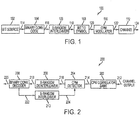
- FIG. 1 illustrates a prior art transmitter 100 for a conventional satellite communication system.
- transmitter 100 which may transmit over a channel 112 includes a bit source 102, a binary convolutional coder 104, a S-random interleaver 106, a bit-to-symbol generator 108 and a CPM 110.
- bit source 102 binary convolutional coder 104
- S-random interleaver 106 bit-to-symbol generator 108
- CPM 110 channel 112
- bit source 102, binary convolutional coder 104, S-random interleaver 106, bit-to-symbol generator 108 and CPM 110 may be combined as a unitary device.
- Bit source 102 is arranged to provide a data bits signal 114 to binary convolutional coder 104.
- Binary convolutional coder 104 is arranged to receive data bits signal 114 from bit source 102 and provide an encoded data bits 116 to S-random interleaver 106.
- S-random interleaver 106 is arranged to receive encoded data bits 116 from binary convolutional coder 104 and provide a scrambled data bits 118 to bit-to-symbol generator 108.
- Bit-to-symbol generator 108 is arranged to receive scrambled data bits 118 from S-random interleaver 106 and provide a data symbols signal 120 to CPM 110.
- CPM 110 is arranged to receive data symbols signal 120 from bit-to-symbol generator 108 and provide a modulated waveform signal 122 to channel 112.
- Channel 112 is arranged to receive modulated waveform 122 from CPM 110 and provide a channel output 124.
- Bit source 102 is operable to provide data bits signal 114 to be transmitted through channel 112.
- Non-limiting examples for bit source 102 include data, images, video, audio, etc.
- Binary convolutional coder 104 is operable to encode data bits signal 114 using a convolutional code and provides forward error correction on data bits 114.
- convolutional coding include recursive and non-recursive, systematic and non-systematic convolutional codes.
- Purpose of forward error correction (FEC) is to improve the capacity of a channel by adding some carefully designed redundant information to the data being transmitted through the channel.
- Binary convolution coding is a form of channel coding to add this redundant information to the data.
- S-random interleaver 106 is operable to scramble the encoded data bits 116 by rearranging the bit sequence in order to improve error rate performance and lower the error floors.
- Interleaving is a process of rearranging the ordering of a data sequence in a one to one deterministic format. The inverse of this process is calling deinterleaving, which restores the received sequence to its original order. Interleaving is used to enhance the error correcting capability of coding.
- Bit-to-symbol generator 108 is operable to convert the scrambled data bits 118 to data symbols signal 120 in preparation for modulation.
- CPM 110 is operable to modulate data symbols signal 120 using a modulation scheme.
- modulation schemes provided by CPM 100 include minimum shift keying (MSK) and Gaussian minimum shift keying (GMSK).
- Modulated data symbols signal 122 is transmitted to external entities (not shown) via channel output 124.
- Channel output 124 may be considered as part of the external entities.
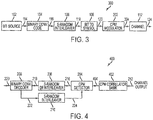
- FIG. 2 illustrates a prior art receiver 200 for a conventional satellite communication system.
- receiver 200 includes a CPM correlator bank 202, a CPM detector 204, a S-random deinterleaver 206, a binary convolutional decoder 208, and a S-random interleaver 210.
- CPM correlator bank 202 CPM detector 204
- S-random deinterleaver 206 S-random deinterleaver 206
- binary convolutional decoder 208 binary convolutional decoder 208
- S-random interleaver 210 are illustrated as distinct devices.
- CPM correlator bank 202 may be combined as a unitary device.
- CPM detector 204 may be combined as a unitary device.
- S-random deinterleaver 206 may be combined as a unitary device.
- binary convolutional decoder 208 may be combined as a unitary device.
- CPM correlator bank 202 is arranged to receive channel output 212 from a transmitting source, for example, channel output 124 from transmitter 100.
- CPM detector 204 is arranged to receive statistical estimates of all possible transmitted CPM waveforms 214 from CPM correlator bank 202 and scrambled estimates of the probability that the transmitted codebits (i.e. bits generated by the convolutional code) are either a 1 or 0 from S-random interleaver 210 and output probability estimates of the transmitted symbols as a detected signal 216 to S-random deinterleaver 206.
- S-random deinterleaver 206 is arranged to receive the updated probability estimates of the transmitted symbols as detected signal 216 from CPM detector 204 and output descrambled probability estimates of the transmitted codebits as a descrambled signal 218 to binary convolutional decoder 208.
- Binary convolutional decoder 208 is arranged to receive descrambled signal 218 from S-random deinterleaver 206 and output a bit sequence 220 to external entities (not shown) and codebit probabilities as decoded signal 222 to S-random interleaver 210.
- S-random interleaver 210 is arranged to receive decoded signal 222 from binary convolutional decoder 208 and output scrambled codebit probabilities as a signal 224 to CPM detector 204.
- CPM correlator bank 202 operates to receive channel output 212 from a transmitting source, for example transmitter 100.
- CPM correlator bank 202 may operate to correlate the received signal with N possible transmitted signals, where N is a finite integer number and depends on the specific choice of CPM modulation parameters.
- CPM correlator bank functions as a matched filter and provides a matrix indicating how closely related the received signal may be to each of those N possible transmitted signals.
- Correlated signal 214 provides a statistical indication as to which one of N possible transmitted signals may be the received signal.
- CPM detector 204 is operable to use the statistics provided by correlated signal 214 to perform decoding of a received signal for providing an estimate of the received symbols.
- decoding algorithms performed by CPM detector 204 includes Viterbi, BCJR, etc.
- CPM detector 204 may also operate to receive scrambled probabilities of the transmitted codebits being either a 1 or a 0 (i.e. bits generated by the convolutional code) as signal 224 from S-random interleaver 210 in order to provide a better estimate of the received signal.
- Every interleaver has a corresponding deinterleaver, which acts on the interleaved data sequence and restores it to its original order.
- the de-interleaving matrix is generally the transpose of the interleaving matrix.
- S-random deinterleaver 206 is operable to descramble the detected signal 216 from CPM detector 204.
- S-random deinterleaver 206 operates to provide the descrambled signal 218 to binary convolutional decoder 208.
- Binary convolutional decoder 208 may operate to use a decoding algorithm to decode using descrambled probabilities from descrambled signal 218 for providing a decoded signal 222 and bit sequence 220.
- decoding algorithms include Viterbi, BCJR, etc.
- S-random interleaver 210 is operable to improve the error rate performance by feeding the scrambled signal 224 back to CPM detector 204.
- the goal of receiver 200 is to recover the received signal such that bit sequence 220 recovered by receiver 200 matches the bit sequence provided by the transmitting source.
- the first pass through CPM detector 204, S-random deinterleaver 206 and binary convolutional decoder 208 provides an estimate of bit sequence 220 which may match with the transmitted bit source.
- the operation of S-random interleaver 210 providing feedback to CPM detector 204 improves the signal estimate with successive iterations though the feedback loop, until recovered information matches information provided by the transmitting source or until a maximum number of iterations are performed, whichever occurs first.
- ACI can seriously impair performance, especially when high bandwidth efficiencies are desired.
- the frequency separation between the adjacent channels (carriers) must be reduced, causing an increase in ACI and resulting in performance degradation.
- a common practice to improve the performance is by applying interference cancellation at the receiver however, this entails a significant increase in the complexity.
- the performance could also be improved using a continuous phase modulation scheme with a more judicious choice of the modulation and channel (error correction).
- the CPM phase pulse and selection of the remaining modulation parameters power spectrum of the CPM signal can be shaped to improve the resilience to ACI.
- An improved CPM scheme for communication systems for increasing error rate performance of information flow.
- An improved CPM scheme should provide an improved resilience to adjacent channel interference and also improve error rate performance for both high and low frame error rates.
- Embodiments of the present invention operate according to the appended claims to provide a CPM scheme exhibiting an improved resilience to adjacent channel interference and also provide an improved error rate performance at both high and low frame error rates using low complexity binary convolutional codes and S-random bit interleaving, and in particular may operate to enhance the physical layer performance of the current DVB-RCS standard for a satellite communication system or any satellite communications system in general.
- a device for use with a bit source which can provide a source data stream.
- the device includes a bit-to-symbol generator and a continuous phase modulator.
- the bit-to-symbol generator can output a symbol stream of a plurality of different types of symbols, wherein the symbol stream is based on the source data stream.
- the continuous phase modulator can output a modulated signal based on the symbol stream.
- the modulated signal is based on an alphabet size of the plurality of different types of symbols, a modulation index h, a pulse shape and a pulse width: wherein q av is a continuous phase modulation phase response of a pulse shape for the modulator as a function of time; wherein q rc is a continuous phase modulation phase response of raised-cosine-shaped pulses as a function of time; wherein q re is a continuous phase modulation phase response of rectangular-shaped pulses as a function of time, and wherein q av is a linear function of q rc and q re .
- Embodiments of the present invention may operate to provide a coded CPM scheme for a wireless communication system as described below.
- the coded CPM scheme may operate to enhance the physical layer performance of the current DVB-RCS standard for satellite communication systems by improving error rate performance for both high and low frame error rates using low-complexity binary convolutional codes and S-random bit interleaving.
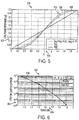
- FIG. 3 illustrates an example transmitter 300, in accordance with an aspect of the present invention.
- Transmitter 300 includes some elements of transmitter 100 of FIG. 1 , mainly, bit source 102, binary convolutional coder 104, S-random interleaver 106, bit-to-symbol generator 108 and channel 112. In place of CPM 110 of transmitter 100, transmitter 300 includes a CPM 302.
- each of bit source 102, binary convolutional coder 104, S-random interleaver 106, bit-to-symbol generator 108, CPM 302 and channel 112 are illustrated as distinct devices. However, at least two of bit source 102, binary convolutional coder 104, S-random interleaver 106, bit-to-symbol generator 108 and CPM 302 may be combined as a unitary device.
- Bit-to-symbol generator 108 is arranged to receive scrambled data bits 118 from S-random interleaver 106 and provide data symbols signal 120 to CPM 302.
- CPM 302 is arranged to receive data symbols signal 120 from bit-to-symbol generator 108 and provide a modulated data symbols signal 304 to channel 112.
- Channel 112 is arranged to receive modulated data symbols signal 304 from CPM 302 and provide channel output 124.
- Bit source 102, binary convolutional coder 104, S-random interleaver 106, bit-to-symbol generator 108 and channel 112 operate as described previously for transmitter 100 with reference to FIG. 1 .
- CPM 302 may operate in accordance with modulator code parameters as described in more detail in the following discussion.
- a symbol sequence may be provided to CPM 302.
- the modulated CPM signal 304 can be represented using one of many possible methods, such as (but not limited to) Rimoldi's decomposition approach, or in terms of Laurent pulses.
- Rimoldi's decomposition approach is followed in order to represent modulated CPM signal 304.
- Rimoldi's decomposition approach allows describing any CPM signal with a rational modulation index using a finite-state machine with a time-invariant trellis.
- Channel 112 may be modeled as zero-mean Additive White Gaussian Noise (AWGN).
- AWGN additive White Gaussian Noise
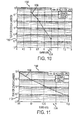
- FIG. 4 illustrates an example receiver 400, in accordance with aspects of the present invention.
- Receiver 400 includes some elements of receiver 200 of FIG. 2 , mainly, CPM detector 204, S-random deinterleaver 206, binary convolutional decoder 208, and S-random interleaver 210. In place of CPM correlator bank 202 of receiver 200, receiver 400 includes a CPM correlator bank 402.
- each of CPM correlator bank 402, CPM detector 204, S-random deinterleaver 206, binary convolutional decoder 208, and S-random interleaver 210 are illustrated as distinct devices. However, at least two of CPM correlator bank 402, CPM detector 204, S-random deinterleaver 206, binary convolutional decoder 208, and S-random interleaver 210 may be combined as a unitary device.
- CPM correlator bank 402 is arranged to receive channel output 212 and output a correlated signal 404 to CPM detector 204.
- CPM detector 204 S-random deinterleaver 206, binary convolutional decoder 208, and S-random interleaver 210 operate as described above for receiver 200 with reference to FIG. 2 .
- CPM detector 204 follows soft-in soft-out (SISO) methodology.
- SISO soft-in soft-out
- CPM detector 204 generates maximum a posteriori (MAP) probabilities for the transmitted bit source by executing BCJR algorithm on the time-invariant trellis describing the modulation.
- MAP maximum a posteriori
- Binary convolutional decoder 208 also performs SISO detection by executing the BCJR algorithm on the trellis describing the convolutional code.
- the constraint length 3 code decodes on a 4 state trellis, whereas the constraint length 4 code requires an 8 state trellis.
- information is exchanged between CPM detector 204 and binary convolutional decoder 208 during successive iterations until recovered information matches information provided by the transmitting source.
- the coded system performance is evaluated at the following six spectral efficiencies: 0.5b/s/Hz, 0.75b/s/Hz, 1.1 b/s/Hz, 1.25b/s/Hz, 1.5b/s/Hz and 1.8 b/s/Hz.
- CPM 302 and CPM correlator bank 402 operate in accordance with an aspect of the present invention for providing a phase response generating an improved FER. Performance of CPM 302 and CPM correlator bank 402 in addition to proposed modulator code parameters will be described in more detail in the following discussion with reference to FIGs. 5-11 .
- FIG. 5 illustrates a graph 500 of CPM phase response with time, in accordance with aspects of the present invention.
- an y -axis 502 represents the CPM phase response in radians and a x -axis 504 represents the time normalized by symbol duration or time multiplied by symbol rate (t/T).
- CPM phase response is represented by a function q(t).
- Graph 500 includes a curve 506 which represents the phase response for a rectangular CPM ( q RE (t) ) and a curve 508 which represents the phase response for a raised-cosine CPM ( q RC (t) ) .
- Curves 506 and 508 are responses from a conventional CPM, such as CPM 110 as described with reference to FIG. 1 .
- Curve 506 illustrates the phase response of a CPM signal having with power spectrum having a narrow main lobe but very large spectrum side lobes.
- Curve 508 illustrates the phase response of a CPM signal yielding a power spectrum which has very small spectral side lobes but very large main lobe.
- the proposed phase response in accordance with an aspect of the present invention, may be illustrated as curve 510, which may be represented as a weighted average of the responses of curves 506 and 508, as described previously with the function q Av (t) .
- Curve 510 illustrates the phase response of a CPM signal whose spectral main lobes and side lobes can be shaped to improve resilience to ACI.
- CPM 302 and CPM correlator bank 402 may operate, in accordance with an aspect of the present invention, in order to provide a phase response using function q Av (t) resulting in an improved FER.
- column 1 displays "b/s/Hz", which indicates transmission rate as bits/sec/Hertz. Typically, as the rate of transmission increases, the amount of energy required also increases.
- the alphabet size is 4, wherein a symbol may be transmitted on one of four positions on a circular circumference, e.g., the 12:00, the 3:00, the 6:00 and the 9:00 positions on a clock.
- the transmitted symbol lies on the 12:00 position of a clock
- the received symbol lies on the 2:00 position of a clock.
- the receiver may incorrectly determine that the transmitted symbol was located on the 3:00 position of a clock.
- the alphabet size is four
- the amount of data/symbol is limited to one of four or twice that in the situation where the alphabet size is two, but the likelihood of determining the correctly transmitted symbol is much smaller than the situation where the alphabet size is two.
- the alphabet size increases, the amount of data that can be transmitted per symbol increases and the probability of incorrectly determining a transmitted symbol also increases.
- h is a parameter that shapes the power spectrum in CPM 302 and CPM correlator bank 402. Further, h also affects the frame error rate performance of CPM. In particular, in a single-carrier system (i.e. when there are no other carriers sharing the channel), a larger h is desirable because it results in an improved error rate performance. However, a larger h also results in the CPM signal having a wider power spectrum. Hence in the presence of adjacent carrier interference, there is a trade-off between the performance improvement from choosing a larger h and the performance degradation resulting from the increase in ACI caused by the wider power spectrum due to a large h.
- Table 1 Different rows in Table 1 indicate the potentially optimum combination of parameters listed in column 2 through column 7 for a particular transmission and reception rate in column 1.
- the proposed CPM scheme using the parameters listed in Table 1 provide improved signal to noise ratio for a given frame error rate. For example, for transmitting and receiving at a rate of 1.1 b/s/Hz, and using: an alphabet size of 4 symbols; a modulation index h of 2/7; a pulse width of 2 and pulse shape based on a AV q function in accordance with an aspect of the present invention; an FEC of (5, 7) octal ; a code rate of 2/3 and a carrier spacing of 1.21 may operate to minimize transmission error and concurrently minimize transmission power.
- any of the parameters from columns 2-7 of Table 1, within the row corresponding to a transmission rate of 1.1 may be modified. However, such a change may operate to increase the transmission error and/or increase the required transmission power needed in order to maintain the desired transmission and reception rate.
- Modulation index h is configured to 2/5.
- Pulse width spans 2 symbol duration and pulse shape based on an AV q function in accordance with an aspect of the present invention;
- FEC is (5, 7) octal is configured indicating a 4 state convolutional code.
- Code rate is configured for 1/2.
- ⁇ f T is configured for 2.0.
- FIG. 6 illustrates a graph 600 of FER with signal to noise ratio E b /N 0 for center carrier at 0.5 b/s/Hz, in accordance with aspects of the present invention.
- an y -axis 602 represents the FER for center carrier (logarithmic scale wherein the error rate does not have a unit) and a x-axis 604 represents the signal to noise ratio or energy/information bit E b /N 0 (logarithmic scale in dB).
- Graph 600 includes a curve 606.
- Graph 600 illustrates the FER performance using the rate 1/2 binary convolutional code with generators (5,7) octal in AWGN for the center carrier at 0.5 b/s/Hz.
- curve 606 represents spectral efficiency for data rate of 0.5 b/s/Hz. Curve 606 indicates that signal to noise ratio increases with lower frame error rates. The FER performance versus signal to noise ratio E b /N 0 for higher data rates will be discussed further.
- Modulation index h is configured to 1/3; a pulse width of 2 symbol duration and pulse shape based on a AV q function in accordance with an aspect of the present invention; FEC is (5, 7) octal is configured indicating a 4 state convolutional code. Code rate is configured for 1/2. ⁇ f T is configured for 1.333.
- FIG. 7 illustrates a graph 700 of FER with signal to noise ratio E b /N 0 for center carrier at 0.75 b/s/Hz, in accordance with aspects of the present invention.
- an y -axis 702 represents the FER for center carrier (logarithmic scale wherein the error rate does not have a unit) and a x -axis 704 represents the signal to noise ratio or energy/information bit E b /N 0 (logarithmic scale in dB).
- Graph 700 includes a curve 706.
- Graph 700 illustrates the FER performance using the rate 1/2 binary convolutional code with generators (5,7) octal in AWGN for the center carrier at 0.75 b/s/Hz.
- curve 706 represents spectral efficiency for data rate of 0.75 b/s/Hz. Curve 706 indicates that signal to noise ratio increases with lower frame error rates. The FER performance versus signal to noise ratio E b /N 0 for higher data rates will be discussed further.
- Modulation index h is configured to 2/7.
- Code rate is configured for 2/3.
- ⁇ f T is configured for 1.21.
- FER performance versus E b /N 0 of CPM 302 using the parameters of row 2 of Table 1 is shown in FIG. 7 .
- FIG. 8 illustrates a graph 800 of FER with signal to noise ratio E b /N 0 for center carrier at 1.1 b/s/Hz, in accordance with aspects of the present invention.
- an y -axis 802 represents the FER for center carrier (logarithmic scale) and a x-axis 804 represents the signal to noise ratio or energy/information bit E b /N 0 (logarithmic scale in dB).
- Graph 800 includes a curve 806.
- Graph 800 shows the FER performance using the rate 2/3 binary convolutional code with generators (5,7) octal in AWGN for the center carrier at 1.1 b/s/Hz.
- curve 806 represents spectral efficiency for data rate of 1.1 b/s/Hz. Curve 806 indicates that signal to noise ratio increases with lower frame error rates. The FER performance versus signal to noise ratio E b /N 0 for higher data rates will be discussed further.
- Modulation index h is configured to 2/7.
- FEC is (5, 7) octal , is configured indicating a 4 state convolutional code.
- Code rate is configured for 2/3.
- ⁇ f T is configured for 1.067.
- FER performance versus E b /N 0 of CPM 302 for these parameters is shown in FIG. 9 .
- FIG. 9 illustrates a graph 900 of FER with signal to noise ratio E b /N 0 for center carrier at 1.25 b/s/Hz, in accordance with aspects of the present invention.
- an y -axis 902 represents the FER for center carrier (logarithmic scale) and a x -axis 904 represents the signal to noise ratio or energy/information bit E b /N 0 (logarithmic scale in dB).
- Graph 900 includes a curve 906.
- Graph 900 shows the FER performance using the rate 2/3 binary convolutional code with generators (5,7) octal in AWGN for the center carrier at 1.25 b/s/Hz.
- curve 906 represents spectral efficiency for data rate of 1.25 b/s/Hz. Curve 906 indicates that signal to noise ratio increases with lower frame error rates. The FER performance versus signal to noise ratio E b /N 0 for even higher data rate will be discussed further.
- Modulation index h is configured to 1/4.
- FEC is (15, 17) octal , is configured indicating a 8 state convolutional code.
- Code rate is configured for 4/5.
- ⁇ f T is configured for 1.0667.
- FER performance versus E b /N 0 of CPM 302 for these parameters is shown FIG. 10 .
- FIG. 10 illustrates a graph 1000 of FER with signal to noise ratio E b /N 0 for center carrier at 1.5 b/s/Hz, in accordance with aspects of the present invention.
- an y -axis 1002 represents the FER for center carrier (logarithmic scale) and a x -axis 1004 represents the signal to noise ratio or energy/information bit E b /N 0 (logarithmic scale in dB).
- Graph 1000 includes a curve 1006.
- Graph 1000 shows the FER performance using the 4/5 binary convolutional code with generators (15,17) octal in AWGN for the center carrier at 1.5 b/s/Hz.
- FIG. 11 illustrates a graph 1100 of FER with signal to noise ratio E b /N 0 for center carrier at 1.8 b/s/Hz, in accordance with aspects of the present invention.
- an y -axis 1102 represents the FER for center carrier (logarithmic scale) and a x -axis 1104 represents the signal to noise ratio or energy/information bit E b /N 0 (logarithmic scale in dB).
- Graph 1100 includes a curve 1106.
- FIGs. 3-4 illustrate transmitter 300 and receiver 400 using proposed CPM scheme, in accordance with aspects of the present invention.
- CPM phase response was calculated and was represented by function q AV .
- the proposed phase response q AV which may be represented as a weighted average of the rectangular and raised-cosine responses, may operate to provide an optimum response for minimizing FER for a given data rate, for example, as shown in Table 1.
- a CPM scheme in accordance with aspects of the present invention, using the parameters listed in Table 1 may operate to provide improved signal to noise ratio for a given frame error rate.
- FER for center carrier was shown with respect to E d /N 0 using the CPM scheme, in accordance with aspects of the present invention, at example data rates of 0.5b/s/Hz 0.75b/s/Hz, 1.1 b/s/Hz, 1.25b/s/Hz and 1.5b/s/Hz and 1.8 b/s/Hz. It should be noted that other data rates may be used in accordance with aspects of the present invention.
- the proposed CPM scheme uses a phase pulse design and combination of modulation parameters to shape the power spectrum of CPM signal in order to improve resilience to adjacent channel interference (ACI). Additionally, it improves error rate performance at both high and low frame error rates using low complexity binary convolutional codes and S-random bit interleaving.
- Phase response using the proposed CPM scheme is a weighted average of the conventional rectangular and raised-cosine responses and provides optimum response to minimize frame error rate for a given data rate.
Landscapes
- Engineering & Computer Science (AREA)
- Computer Networks & Wireless Communication (AREA)
- Signal Processing (AREA)
- Physics & Mathematics (AREA)
- Spectroscopy & Molecular Physics (AREA)
- Power Engineering (AREA)
- Digital Transmission Methods That Use Modulated Carrier Waves (AREA)
- Radio Relay Systems (AREA)
Claims (10)
- Vorrichtung (300), umfassend:einen Bit-zu-Symbol-Generator (108), der betreibbar ist, um einen eine Vielzahl von Symbolen umfassenden Symbolstrom (120) zu erzeugen, wobei der Symbolstrom (120) auf einem Quelldatenstrom (114) basiert,und einen kontinuierlich modulierenden Phasenmodulator (302), der betreibbar ist, um den Symbolstrom (120) auf der Grundlage einer Vielzahl von Modulator-Codeparametern zu modulieren, die eine eine maximale Anzahl von Übertragungssymbolen angebende Alphabetgröße M, einen Modulationsindex h, eine Impulsbreite L, einen Zielimpuls, der eine Kombination aus einem angehobenen Kosinusimpuls und einem rechteckförmigen Impuls wiedergibt, eine Vorwärtsfehlerkorrektur, FEC, eine Coderate R und einen Symbolabstand ΔfT enthalten,wobei qAV eine Phasenantwort der kontinuierlichen Phasenmodulation des Zielimpulses als Funktion der Zeit ist,wobei qRC eine Phasenantwort der kontinuierlichen Phasenmodulation des angehobenen Kosinusimpulses als Funktion der Zeit ist,wobei qRE eine Phasenantwort der kontinuierlichen Phasenmodulation des rechteckförmigen Impulses als Funktion der Zeit ist,wobei qAV eine gewichtete mittlere Kombination aus qRC und qRE auf der Grundlage von jeweiligen Gewichtungsfaktoren αRC und αRE umfasst,wobei der Gewichtsfaktor αRC für einen gegebenen Durchsatz in bits/sec/Hz bestimmt ist, um eine Breite einer Hauptkeule für qAV zu optimieren,und wobei der Gewichtsfaktor αRE bestimmt ist, um einen Pegel von Seitenkeulen für qAV zu optimieren.
- Vorrichtung nach Anspruch 1, wobei die Alphabetgröße M gleich 4 Symbole beträgt, wobei die Impulsbreite 2 beträgt, wobei die FEC-Vorwärtsfehlerkorrektur für einen Durchsatz von 0,5, 0,75, 1,1 oder 1,25 in bits/sec/Hz eine (5,7)octal-Vorwärtsfehlerkorrektur ist und wobei die FEC-Vorwärtsfehlerkorrektur für einen Durchsatz von 1,5 oder 1,8 in bits/sec/Hz eine (15,17)octal-Vorwärtsfehlerkorrektur ist.
- Verfahren, umfassend:Erzeugen mittels eines Bit-zu-Symbol-Generators (108) einen Symbolstrom (120), der eine Vielzahl von Symbolen umfasst, wobei der Symbolstrom (120) auf einem Quelldatenstrom (114) basiert,und Modulieren des Symbolstroms (120) mittels eines kontinuierlich modulierenden Phasenmodulators (302) auf der Grundlage einer Vielzahl von Modulator-Codeparametern, die eine eine maximale Anzahl von Übertragungssymbolen angebende Alphabetgröße M, einen Modulationsindex h, eine Impulsbreite L, einen Zielimpuls, der eine Kombination aus einem angehobenen Kosinusimpuls und einem rechteckförmigen Impuls wiedergibt, eine Vorwärtsfehlerkorrektur, FEC, eine Coderate R und einen Symbolabstand Δ fT enthalten,wobei qAV eine Phasenantwort der kontinuierlichen Phasenmodulation des Zielimpulses als Funktion der Zeit ist,wobei qRC eine Phasenantwort der kontinuierlichen Phasenmodulation des angehobenen Kosinusimpulses als Funktion der Zeit ist,wobei qRE eine Phasenantwort der kontinuierlichen Phasenmodulation des rechteckförmigen Impulses als Funktion der Zeit ist,wobei qAV eine gewichtete mittlere Kombination aus qRC und qRE auf der Grundlage von jeweiligen Gewichtungsfaktoren αRC und αRE umfasst,wobei der Gewichtsfaktor αRC bestimmt wird, um die Breite einer Hauptkeule für qAV zu optimieren,und wobei der Gewichtsfaktor αRE bestimmt wird, um einen Pegel von Seitenkeulen für qAV zu optimieren.
- Verfahren nach Anspruch 3, wobei die Alphabetgröße M gleich 4 Symbole beträgt, wobei die Impulsbreite 2 beträgt, wobei die FEC-Vorwärtsfehlerkorrektur für einen Durchsatz von 0,5, 0,75, 1,1 oder 1,25 (in bits/sec/Hz) eine (5,7)octal-Vorwärtsfehlerkorrektur ist und wobei die FEC-Vorwärtsfehlerkorrektur für einen Durchsatz von 1,5 oder 1,8 in bits/sec/Hz eine (15,17)octal-Vorwärtsfehlerkorrektur ist.
- Vorrichtung (400), umfassend:einen Empfänger, der betreibbar ist, um ein moduliertes Signal (212) zu empfangen,einen Demodulator, der betreibbar ist, um das modulierte Signal (212) zu demodulieren und um ein demoduliertes Signal zu erzeugen und um auf der Grundlage des demodulierten Signals einen eine Vielzahl von Symbolen umfassenden Symbolstrom zu erzeugen,wobei ein durch das modulierte Signal (212) wiedergegebenes Modulationsschema auf einer Vielzahl von Modulator-Codeparametern basiert, die eine eine maximale Anzahl von Übertragungssymbolen angebende Alphabetgröße M, einen Modulationsindex h, eine Impulsbreite L, einen Zielimpuls, der eine Kombination aus einem angehobenen Kosinusimpuls und einen rechteckförmigen Impuls wiedergibt, eine Vorwärtsfehlerkorrektur, FEC, eine Coderate R und einen Symbolabstand ΔfT enthalten,wobei qAV eine Phasenantwort der kontinuierlichen Phasenmodulation des Zielimpulses als Funktion der Zeit ist,wobei qRC eine Phasenantwort der kontinuierlichen Phasenmodulation des angehobenen Kosinusimpulses als Funktion der Zeit ist,wobei qRE eine Phasenantwort der kontinuierlichen Phasenmodulation des rechteckförmigen Impulses als Funktion der Zeit ist,wobei qAV eine gewichtete mittlere Kombination aus qRC und qRE auf der Grundlage von jeweiligen Gewichtungsfaktoren αRC und αRE umfasst,wobei der Gewichtsfaktor αRC bestimmt ist, um eine Breite einer Hauptkeule für qAV zu optimieren,und wobei der Gewichtsfaktor αRE bestimmt ist, um einen Pegel von Seitenkeulen für qAV zu optimieren.
- Vorrichtung nach Anspruch 5, wobei die Alphabetgröße M gleich 4 Symbole beträgt, wobei die Impulsbreite 2 beträgt, wobei die FEC-Vorwärtsfehlerkorrektur für einen Durchsatz von 0,5, 0,75, 1,1 oder 1,25 in bits/sec/Hz eine (5,7)octal-Vorwärtsfehlerkorrektur ist und wobei die FEC-Vorwärtsfehlerkorrektur für einen Durchsatz von 1,5 oder 1,8 in bits/sec/Hz eine (15, 17)octal-Vorwärtsfehlerkorrektur ist.
- Verfahren, umfassend:Empfangen eines modulierten Signals (212),Demodulieren des modulierten Signals (212) mittels eines Demodulators und Erzeugen eines demodulierten Signals und Erzeugen eines eine Vielzahl von Symbolen umfassenden Signalstroms, wobei der Symbolstrom auf dem demodulierten Signal basiert,wobei ein durch das modulierte Signal wiedergegebenes Modulationsschema auf einer Vielzahl von Modulator-Codeparametern basiert, die eine eine maximale Anzahl von Übertragungssymbolen angebende Alphabetgröße M, einen Modulationsindex h, eine Impulsbreite L, einen Zielimpuls, der eine Kombination aus einem angehobenen Kosinusimpuls und einem rechteckförmigen Impuls wiedergibt, eine Vorwärtsfehlerkorrektur, FEC, eine Coderate R und einen Symbolabstand ΔfT enthalten,wobei qAV eine Phasenantwort der kontinuierlichen Phasenmodulation des Zielimpulses als Funktion der Zeit ist,wobei qRC eine Phasenantwort der kontinuierlichen Phasenmodulation des angehobenen Kosinusimpulses als Funktion der Zeit ist,wobei qRE eine Phasenantwort der kontinuierlichen Phasenmodulation des rechteckförmigen Impulses als Funktion der Zeit ist,wobei qAV eine gewichtete mittlere Kombination aus qRC und qRE auf der Grundlage von jeweiligen Gewichtungsfaktoren αRC und αRE umfasst,wobei der Gewichtsfaktor αRC für einen gegebenen Durchsatz in bits/sec/Hz bestimmt wird, um die Breite einer Hauptkeule für qAV zu optimieren,und wobei der Gewichtsfaktor αRE bestimmt wird, um einen Pegel von Seitenkeulen für qAV zu optimieren.
- Verfahren nach Anspruch 7, wobei die Alphabetgröße M gleich 4 Symbole beträgt, wobei die Impulsbreite 2 beträgt, wobei die FEC-Vorwärtsfehlerkorrektur für einen Durchsatz von 0,5, 0,75, 1,1 oder 1,25 in bits/sec/Hz eine (5,7)octal-Vorwärtsfehlerkorrektur ist und wobei die FEC-Vorwärtsfehlerkorrektur für einen Durchsatz von 1,5 oder 1,8 in bits/sec/Hz eine (15,17)octal-Vorwärtsfehlerkorrektur ist.
- Vorrichtung nach Anspruch 2 oder 6,
wobei für den Durchsatz von 0,5 in bits/sec/Hz der Modulationsindex h gleich 2/5, die Coderate R gleich 1/2, der Symbolabstand Δ fT gleich 2,0 und α RE = 0, 02 und α RE = 0, 98 sind oder wobei für den Durchsatz von 0,75 in bits/sec/Hz der Modulationsindex h gleich 1/3, die Coderate R gleich 1/2, der Symbolabstand Δ fT gleich 1,333 und αRE = 0,25 und αRC = 0,75 sind oder wobei für den Durchsatz von 1,1 in bits/sec/Hz der Modulationsindex h gleich 2/7, die Coderate R 2/3, der Symbolabstand Δ fT gleich 1,21 und αRE = 0,25 und αRC = 0,75 sind oder wobei für den Durchsatz von 1,25 in bits/sec/Hz der Modulationsindex h gleich 2/7, die Coderate R gleich 2/3, der Symbolabstand Δ fT gleich 1,067 und αRE = 0,25 und αRC = 0,75 sind oder wobei für den Durchsatz von 1,5 in bits/sec/Hz der Modulationsindex h gleich 1/4, die Coderate R gleich 4/5, der Symbolabstand ΔfT gleich 1,0667 und αRE = 0,25 und αRC = 0,75 sind oder wobei für den Durchsatz von 1,8 in bits/sec/Hz der Modulationsindex h gleich 1/5, die Coderate R gleich 6/7, der Symbolabstand Δ f T gleich 0, 974 und αRE = 0,35 und αRC = 0,65 sind, - Verfahren nach Anspruch 4 oder 8, wobei für den Durchsatz von 0,5 in bits/sec/Hz der Modulationsindex h gleich 2/5, die Coderate R gleich 1/2, der Symbolabstand Δ fT gleich 2,0 und αRE = 0,02 und αRC = 0, 98 sind
oder wobei für den Durchsatz von 0,75 in bits/sec/Hz der Modulationsindex h gleich 1/3, die Coderate R gleich 1/2, der Symbolabstand ΔfT gleich 1,333 und αRE = 0,25 und αRC = 0,75 sind oder wobei für den Durchsatz von 1,1 in bits/sec/Hz der Modulationsindex h gleich 2/7, die Coderate R gleich 2/3, der Symbolabstand Δ fT gleich 1,21 und αRE = 0,25 und αRC = 0,75 sind oder wobei für den Durchsatz von 1,25 in bits/sec/Hz der Modulationsindex h gleich 2/7, die Coderate R gleich 2/3, der Symbolabstand Δ fT gleich 1,067 und αRE = 0,25 und αRC = 0,75 sind oder wobei für den Durchsatz von 1,5 in bits/sec/Hz der Modulationsindex h gleich 1/4, die Coderate gleich R 4/5, der Symbolabstand Δ fT gleich 1,0667 und αRE = 0,25 und αRC = 0,75 sind oder wobei für den Durchsatz von 1,8 in bits/sec/Hz der Modulationsindex h gleich 1/5, die Coderate R gleich 6/7, der Symbolabstand Δ fT gleich 0,974 und αRE = 0,35 und αRC = 0,65 sind.
Applications Claiming Priority (2)
| Application Number | Priority Date | Filing Date | Title |
|---|---|---|---|
| US33107810P | 2010-05-04 | 2010-05-04 | |
| US12/894,358 US8903012B2 (en) | 2010-05-04 | 2010-09-30 | Continuous phase modulation for satellite communications |
Publications (3)
| Publication Number | Publication Date |
|---|---|
| EP2385662A2 EP2385662A2 (de) | 2011-11-09 |
| EP2385662A3 EP2385662A3 (de) | 2014-04-02 |
| EP2385662B1 true EP2385662B1 (de) | 2017-09-06 |
Family
ID=44484947
Family Applications (1)
| Application Number | Title | Priority Date | Filing Date |
|---|---|---|---|
| EP11164857.2A Active EP2385662B1 (de) | 2010-05-04 | 2011-05-04 | Verbesserte kontinuierliche Phasenmodulation für Satellitenkommunikationen |
Country Status (2)
| Country | Link |
|---|---|
| US (1) | US8903012B2 (de) |
| EP (1) | EP2385662B1 (de) |
Families Citing this family (6)
| Publication number | Priority date | Publication date | Assignee | Title |
|---|---|---|---|---|
| US8982933B2 (en) * | 2011-06-27 | 2015-03-17 | Harris Corporation | Communications system including jammer using continuous phase modulation (CPM) and associated methods |
| CN104079517A (zh) * | 2014-06-19 | 2014-10-01 | 哈尔滨工程大学 | 一种基于脉冲函数加权处理的连续相位调制实现方法 |
| CN106160927B (zh) * | 2015-04-09 | 2019-07-12 | 扬智科技股份有限公司 | 解码方法和装置 |
| US9894687B2 (en) * | 2015-11-20 | 2018-02-13 | Hughes Network Systems, Llc | Methods and apparatuses for providing random access communication |
| CN112202699B (zh) * | 2016-01-11 | 2022-01-21 | 中兴通讯股份有限公司 | 多载波系统的数据调制、解调方法、帧生成方法及节点 |
| CN112153703A (zh) | 2016-08-15 | 2020-12-29 | 华为技术有限公司 | 通信系统中传输唤醒包的方法和设备 |
Family Cites Families (8)
| Publication number | Priority date | Publication date | Assignee | Title |
|---|---|---|---|---|
| US5834986A (en) | 1997-10-06 | 1998-11-10 | Trw Inc. | Direct 2nd derivative synthesis method for controlling sidelobe energy in an MSK modulated signal |
| US7430257B1 (en) * | 1998-02-12 | 2008-09-30 | Lot 41 Acquisition Foundation, Llc | Multicarrier sub-layer for direct sequence channel and multiple-access coding |
| US7418043B2 (en) * | 2000-07-19 | 2008-08-26 | Lot 41 Acquisition Foundation, Llc | Software adaptable high performance multicarrier transmission protocol |
| US6968021B1 (en) | 2001-09-24 | 2005-11-22 | Rockwell Collins | Synchronization method and apparatus for modems based on jointly iterative turbo demodulation and decoding |
| US7205859B2 (en) | 2003-03-17 | 2007-04-17 | Harris Corporation | Method and apparatus for sub sample-per-symbol demodulator for a spectrally efficient waveform with an LPI feature |
| WO2005099290A1 (en) * | 2004-04-05 | 2005-10-20 | Nortel Networks Limited | Methods for supporting mimo transmission in ofdm applications |
| US8160166B2 (en) * | 2008-10-01 | 2012-04-17 | Harris Corporation | Orthogonal frequency division multiplexing (OFDM) communications device and method that incorporates low PAPR preamble with circuit for measuring frequency response of the communications channel |
| BR112012010958B1 (pt) * | 2009-11-09 | 2021-09-08 | Sonosite, Inc | Método para operar um sistema de ultrassom e sistema para realizar o método para operar um sistema de ultrassom |
-
2010
- 2010-09-30 US US12/894,358 patent/US8903012B2/en active Active
-
2011
- 2011-05-04 EP EP11164857.2A patent/EP2385662B1/de active Active
Non-Patent Citations (1)
| Title |
|---|
| None * |
Also Published As
| Publication number | Publication date |
|---|---|
| EP2385662A2 (de) | 2011-11-09 |
| EP2385662A3 (de) | 2014-04-02 |
| US8903012B2 (en) | 2014-12-02 |
| US20110274216A1 (en) | 2011-11-10 |
Similar Documents
| Publication | Publication Date | Title |
|---|---|---|
| EP2421213B1 (de) | Phasenimpulssystem und Verfahren zur bandbreiten- und energieeffizienten kontinuierlichen Phasenmodulation | |
| CN102075487B (zh) | 基于多维星座映射的编码调制方法、解调解码方法及系统 | |
| CA2266108C (en) | Iterative demapping | |
| CN103532663B (zh) | 一种跳频喷泉码系统及其传输方法 | |
| EP2385662B1 (de) | Verbesserte kontinuierliche Phasenmodulation für Satellitenkommunikationen | |
| EP3143713B1 (de) | Sender- und empfängervorrichtungen mit wiederholungsdurchführung vor der verschachtelung und punktierung nach der verschachtelung und verfahren dafür | |
| US7620881B2 (en) | System and method for communicating data using iterative equalizing and decoding and recursive inner code | |
| JP2016506647A (ja) | チェック・イレギュラ非システマチックiraコードのエンコーディングおよびデコーディングのシステムおよび方法 | |
| KR20160086394A (ko) | 무선 통신 시스템에서 송신 및 수신 방법 | |
| EP2615759A2 (de) | Verfahren und Vorrichtung zum Senden/Empfangen von Daten unter Verwendung eines Satellitenkanals | |
| US6944206B1 (en) | Rate one coding and decoding methods and systems | |
| EP2429084B1 (de) | Verfahren und Vorrichtung für ein parametrisiertes Verschachtelungsgestaltungsverfahren | |
| US7190730B2 (en) | Methods and devices for sending and receiving information, and systems using them | |
| US6823488B1 (en) | Packet binary convolutional codes | |
| EP0982892A2 (de) | Paketbasierte binäre Faltungscodes | |
| Chang et al. | Iterative channel decoding of FEC-based multiple-description codes | |
| Phoel et al. | Frequency-hop spread spectrum with quadrature amplitude modulation and error-control coding | |
| Remlein | Energy efficient continuous phase modulation signals for satellite intelligent transportation systems | |
| Chen et al. | Network‐turbo‐coding‐based cooperation with distributed space‐time block codes | |
| Milstein et al. | Coding and modulation techniques for frequency-hopped spread-spectrum communications over a pulse-burst jammed Rayleigh fading channel | |
| Liu | Bit-interleaving in fast FH/SSMA systems with M-FSK modulation | |
| Khalili | Design and Simulation of Coded-Modulation Using Turbo Trellis Coding and Multi-Layer Modulations | |
| Mazher et al. | Layered multiplexed-coded relaying: Design and experimental evaluation | |
| Yar et al. | Performance of Reed-Solomon coded M-ary modulation systems with overlapped symbols | |
| Mohamed-Pour | Trellis decoding of block coded modulation and diversity for fading channels |
Legal Events
| Date | Code | Title | Description |
|---|---|---|---|
| AK | Designated contracting states |
Kind code of ref document: A2 Designated state(s): AL AT BE BG CH CY CZ DE DK EE ES FI FR GB GR HR HU IE IS IT LI LT LU LV MC MK MT NL NO PL PT RO RS SE SI SK SM TR |
|
| AX | Request for extension of the european patent |
Extension state: BA ME |
|
| PUAI | Public reference made under article 153(3) epc to a published international application that has entered the european phase |
Free format text: ORIGINAL CODE: 0009012 |
|
| PUAL | Search report despatched |
Free format text: ORIGINAL CODE: 0009013 |
|
| AK | Designated contracting states |
Kind code of ref document: A3 Designated state(s): AL AT BE BG CH CY CZ DE DK EE ES FI FR GB GR HR HU IE IS IT LI LT LU LV MC MK MT NL NO PL PT RO RS SE SI SK SM TR |
|
| AX | Request for extension of the european patent |
Extension state: BA ME |
|
| RIC1 | Information provided on ipc code assigned before grant |
Ipc: H04L 1/00 20060101ALI20140221BHEP Ipc: H04L 25/03 20060101AFI20140221BHEP Ipc: H04L 27/20 20060101ALI20140221BHEP |
|
| 17P | Request for examination filed |
Effective date: 20140804 |
|
| RBV | Designated contracting states (corrected) |
Designated state(s): AL AT BE BG CH CY CZ DE DK EE ES FI FR GB GR HR HU IE IS IT LI LT LU LV MC MK MT NL NO PL PT RO RS SE SI SK SM TR |
|
| REG | Reference to a national code |
Ref country code: DE Ref legal event code: R079 Ref document number: 602011041230 Country of ref document: DE Free format text: PREVIOUS MAIN CLASS: H04L0027200000 Ipc: H04L0025030000 |
|
| GRAP | Despatch of communication of intention to grant a patent |
Free format text: ORIGINAL CODE: EPIDOSNIGR1 |
|
| STAA | Information on the status of an ep patent application or granted ep patent |
Free format text: STATUS: GRANT OF PATENT IS INTENDED |
|
| RIC1 | Information provided on ipc code assigned before grant |
Ipc: H04L 1/00 20060101ALI20170328BHEP Ipc: H04L 25/03 20060101AFI20170328BHEP Ipc: H04L 27/20 20060101ALI20170328BHEP |
|
| INTG | Intention to grant announced |
Effective date: 20170418 |
|
| GRAS | Grant fee paid |
Free format text: ORIGINAL CODE: EPIDOSNIGR3 |
|
| GRAA | (expected) grant |
Free format text: ORIGINAL CODE: 0009210 |
|
| STAA | Information on the status of an ep patent application or granted ep patent |
Free format text: STATUS: THE PATENT HAS BEEN GRANTED |
|
| AK | Designated contracting states |
Kind code of ref document: B1 Designated state(s): AL AT BE BG CH CY CZ DE DK EE ES FI FR GB GR HR HU IE IS IT LI LT LU LV MC MK MT NL NO PL PT RO RS SE SI SK SM TR |
|
| REG | Reference to a national code |
Ref country code: GB Ref legal event code: FG4D |
|
| REG | Reference to a national code |
Ref country code: CH Ref legal event code: EP Ref country code: AT Ref legal event code: REF Ref document number: 927006 Country of ref document: AT Kind code of ref document: T Effective date: 20170915 |
|
| REG | Reference to a national code |
Ref country code: IE Ref legal event code: FG4D |
|
| REG | Reference to a national code |
Ref country code: DE Ref legal event code: R096 Ref document number: 602011041230 Country of ref document: DE |
|
| REG | Reference to a national code |
Ref country code: NL Ref legal event code: MP Effective date: 20170906 |
|
| REG | Reference to a national code |
Ref country code: LT Ref legal event code: MG4D |
|
| PG25 | Lapsed in a contracting state [announced via postgrant information from national office to epo] |
Ref country code: HR Free format text: LAPSE BECAUSE OF FAILURE TO SUBMIT A TRANSLATION OF THE DESCRIPTION OR TO PAY THE FEE WITHIN THE PRESCRIBED TIME-LIMIT Effective date: 20170906 Ref country code: NO Free format text: LAPSE BECAUSE OF FAILURE TO SUBMIT A TRANSLATION OF THE DESCRIPTION OR TO PAY THE FEE WITHIN THE PRESCRIBED TIME-LIMIT Effective date: 20171206 Ref country code: FI Free format text: LAPSE BECAUSE OF FAILURE TO SUBMIT A TRANSLATION OF THE DESCRIPTION OR TO PAY THE FEE WITHIN THE PRESCRIBED TIME-LIMIT Effective date: 20170906 Ref country code: SE Free format text: LAPSE BECAUSE OF FAILURE TO SUBMIT A TRANSLATION OF THE DESCRIPTION OR TO PAY THE FEE WITHIN THE PRESCRIBED TIME-LIMIT Effective date: 20170906 Ref country code: LT Free format text: LAPSE BECAUSE OF FAILURE TO SUBMIT A TRANSLATION OF THE DESCRIPTION OR TO PAY THE FEE WITHIN THE PRESCRIBED TIME-LIMIT Effective date: 20170906 |
|
| REG | Reference to a national code |
Ref country code: AT Ref legal event code: MK05 Ref document number: 927006 Country of ref document: AT Kind code of ref document: T Effective date: 20170906 |
|
| PG25 | Lapsed in a contracting state [announced via postgrant information from national office to epo] |
Ref country code: LV Free format text: LAPSE BECAUSE OF FAILURE TO SUBMIT A TRANSLATION OF THE DESCRIPTION OR TO PAY THE FEE WITHIN THE PRESCRIBED TIME-LIMIT Effective date: 20170906 Ref country code: RS Free format text: LAPSE BECAUSE OF FAILURE TO SUBMIT A TRANSLATION OF THE DESCRIPTION OR TO PAY THE FEE WITHIN THE PRESCRIBED TIME-LIMIT Effective date: 20170906 Ref country code: GR Free format text: LAPSE BECAUSE OF FAILURE TO SUBMIT A TRANSLATION OF THE DESCRIPTION OR TO PAY THE FEE WITHIN THE PRESCRIBED TIME-LIMIT Effective date: 20171207 Ref country code: BG Free format text: LAPSE BECAUSE OF FAILURE TO SUBMIT A TRANSLATION OF THE DESCRIPTION OR TO PAY THE FEE WITHIN THE PRESCRIBED TIME-LIMIT Effective date: 20171206 Ref country code: ES Free format text: LAPSE BECAUSE OF FAILURE TO SUBMIT A TRANSLATION OF THE DESCRIPTION OR TO PAY THE FEE WITHIN THE PRESCRIBED TIME-LIMIT Effective date: 20170906 |
|
| REG | Reference to a national code |
Ref country code: FR Ref legal event code: PLFP Year of fee payment: 8 |
|
| PG25 | Lapsed in a contracting state [announced via postgrant information from national office to epo] |
Ref country code: NL Free format text: LAPSE BECAUSE OF FAILURE TO SUBMIT A TRANSLATION OF THE DESCRIPTION OR TO PAY THE FEE WITHIN THE PRESCRIBED TIME-LIMIT Effective date: 20170906 |
|
| PG25 | Lapsed in a contracting state [announced via postgrant information from national office to epo] |
Ref country code: PL Free format text: LAPSE BECAUSE OF FAILURE TO SUBMIT A TRANSLATION OF THE DESCRIPTION OR TO PAY THE FEE WITHIN THE PRESCRIBED TIME-LIMIT Effective date: 20170906 Ref country code: CZ Free format text: LAPSE BECAUSE OF FAILURE TO SUBMIT A TRANSLATION OF THE DESCRIPTION OR TO PAY THE FEE WITHIN THE PRESCRIBED TIME-LIMIT Effective date: 20170906 Ref country code: RO Free format text: LAPSE BECAUSE OF FAILURE TO SUBMIT A TRANSLATION OF THE DESCRIPTION OR TO PAY THE FEE WITHIN THE PRESCRIBED TIME-LIMIT Effective date: 20170906 |
|
| PG25 | Lapsed in a contracting state [announced via postgrant information from national office to epo] |
Ref country code: IT Free format text: LAPSE BECAUSE OF FAILURE TO SUBMIT A TRANSLATION OF THE DESCRIPTION OR TO PAY THE FEE WITHIN THE PRESCRIBED TIME-LIMIT Effective date: 20170906 Ref country code: AT Free format text: LAPSE BECAUSE OF FAILURE TO SUBMIT A TRANSLATION OF THE DESCRIPTION OR TO PAY THE FEE WITHIN THE PRESCRIBED TIME-LIMIT Effective date: 20170906 Ref country code: SM Free format text: LAPSE BECAUSE OF FAILURE TO SUBMIT A TRANSLATION OF THE DESCRIPTION OR TO PAY THE FEE WITHIN THE PRESCRIBED TIME-LIMIT Effective date: 20170906 Ref country code: SK Free format text: LAPSE BECAUSE OF FAILURE TO SUBMIT A TRANSLATION OF THE DESCRIPTION OR TO PAY THE FEE WITHIN THE PRESCRIBED TIME-LIMIT Effective date: 20170906 Ref country code: EE Free format text: LAPSE BECAUSE OF FAILURE TO SUBMIT A TRANSLATION OF THE DESCRIPTION OR TO PAY THE FEE WITHIN THE PRESCRIBED TIME-LIMIT Effective date: 20170906 Ref country code: IS Free format text: LAPSE BECAUSE OF FAILURE TO SUBMIT A TRANSLATION OF THE DESCRIPTION OR TO PAY THE FEE WITHIN THE PRESCRIBED TIME-LIMIT Effective date: 20180106 |
|
| REG | Reference to a national code |
Ref country code: DE Ref legal event code: R097 Ref document number: 602011041230 Country of ref document: DE |
|
| PLBE | No opposition filed within time limit |
Free format text: ORIGINAL CODE: 0009261 |
|
| STAA | Information on the status of an ep patent application or granted ep patent |
Free format text: STATUS: NO OPPOSITION FILED WITHIN TIME LIMIT |
|
| PG25 | Lapsed in a contracting state [announced via postgrant information from national office to epo] |
Ref country code: DK Free format text: LAPSE BECAUSE OF FAILURE TO SUBMIT A TRANSLATION OF THE DESCRIPTION OR TO PAY THE FEE WITHIN THE PRESCRIBED TIME-LIMIT Effective date: 20170906 |
|
| 26N | No opposition filed |
Effective date: 20180607 |
|
| PG25 | Lapsed in a contracting state [announced via postgrant information from national office to epo] |
Ref country code: SI Free format text: LAPSE BECAUSE OF FAILURE TO SUBMIT A TRANSLATION OF THE DESCRIPTION OR TO PAY THE FEE WITHIN THE PRESCRIBED TIME-LIMIT Effective date: 20170906 |
|
| REG | Reference to a national code |
Ref country code: CH Ref legal event code: PL |
|
| PG25 | Lapsed in a contracting state [announced via postgrant information from national office to epo] |
Ref country code: MC Free format text: LAPSE BECAUSE OF FAILURE TO SUBMIT A TRANSLATION OF THE DESCRIPTION OR TO PAY THE FEE WITHIN THE PRESCRIBED TIME-LIMIT Effective date: 20170906 |
|
| REG | Reference to a national code |
Ref country code: IE Ref legal event code: MM4A |
|
| PG25 | Lapsed in a contracting state [announced via postgrant information from national office to epo] |
Ref country code: LI Free format text: LAPSE BECAUSE OF NON-PAYMENT OF DUE FEES Effective date: 20180531 Ref country code: CH Free format text: LAPSE BECAUSE OF NON-PAYMENT OF DUE FEES Effective date: 20180531 |
|
| PG25 | Lapsed in a contracting state [announced via postgrant information from national office to epo] |
Ref country code: IE Free format text: LAPSE BECAUSE OF NON-PAYMENT OF DUE FEES Effective date: 20180504 |
|
| PG25 | Lapsed in a contracting state [announced via postgrant information from national office to epo] |
Ref country code: MT Free format text: LAPSE BECAUSE OF NON-PAYMENT OF DUE FEES Effective date: 20180504 |
|
| PG25 | Lapsed in a contracting state [announced via postgrant information from national office to epo] |
Ref country code: TR Free format text: LAPSE BECAUSE OF FAILURE TO SUBMIT A TRANSLATION OF THE DESCRIPTION OR TO PAY THE FEE WITHIN THE PRESCRIBED TIME-LIMIT Effective date: 20170906 |
|
| PG25 | Lapsed in a contracting state [announced via postgrant information from national office to epo] |
Ref country code: HU Free format text: LAPSE BECAUSE OF FAILURE TO SUBMIT A TRANSLATION OF THE DESCRIPTION OR TO PAY THE FEE WITHIN THE PRESCRIBED TIME-LIMIT; INVALID AB INITIO Effective date: 20110504 Ref country code: PT Free format text: LAPSE BECAUSE OF FAILURE TO SUBMIT A TRANSLATION OF THE DESCRIPTION OR TO PAY THE FEE WITHIN THE PRESCRIBED TIME-LIMIT Effective date: 20170906 |
|
| PG25 | Lapsed in a contracting state [announced via postgrant information from national office to epo] |
Ref country code: MK Free format text: LAPSE BECAUSE OF NON-PAYMENT OF DUE FEES Effective date: 20170906 Ref country code: CY Free format text: LAPSE BECAUSE OF FAILURE TO SUBMIT A TRANSLATION OF THE DESCRIPTION OR TO PAY THE FEE WITHIN THE PRESCRIBED TIME-LIMIT Effective date: 20170906 |
|
| PG25 | Lapsed in a contracting state [announced via postgrant information from national office to epo] |
Ref country code: AL Free format text: LAPSE BECAUSE OF FAILURE TO SUBMIT A TRANSLATION OF THE DESCRIPTION OR TO PAY THE FEE WITHIN THE PRESCRIBED TIME-LIMIT Effective date: 20170906 |
|
| PGFP | Annual fee paid to national office [announced via postgrant information from national office to epo] |
Ref country code: FR Payment date: 20250310 Year of fee payment: 15 |
|
| PGFP | Annual fee paid to national office [announced via postgrant information from national office to epo] |
Ref country code: GB Payment date: 20250313 Year of fee payment: 15 |
|
| PGFP | Annual fee paid to national office [announced via postgrant information from national office to epo] |
Ref country code: LU Payment date: 20250429 Year of fee payment: 15 |
|
| PGFP | Annual fee paid to national office [announced via postgrant information from national office to epo] |
Ref country code: DE Payment date: 20250311 Year of fee payment: 15 |
|
| PGFP | Annual fee paid to national office [announced via postgrant information from national office to epo] |
Ref country code: BE Payment date: 20250410 Year of fee payment: 15 |